You spent real money on it. You agonized over the pavers, the furniture, the plantings along the fence. And somehow, your family still ends up inside, scrolling on the couch, while the backyard sits out there looking like a magazine spread that nobody wants to actually touch. Sound familiar?
Here’s the thing most homeowners never find out: the way we design outdoor spaces is quietly working against every instinct that makes people want to gather. Not because the design is ugly, often, it’s the opposite. The most beautifully arranged backyards are frequently the emptiest ones, and the psychology behind that is both fascinating and a little uncomfortable to sit with. You’re about to find out exactly why.
In order to come up with the very specific design ideas, we create most designs with the assistance of state-of-the-art AI interior design software. Also, assume links that take you off the site are affiliate links such as links to Amazon. this means we may earn a commission if you buy something.
The Invisible Line in Your Backyard That Your Brain Refuses to Cross
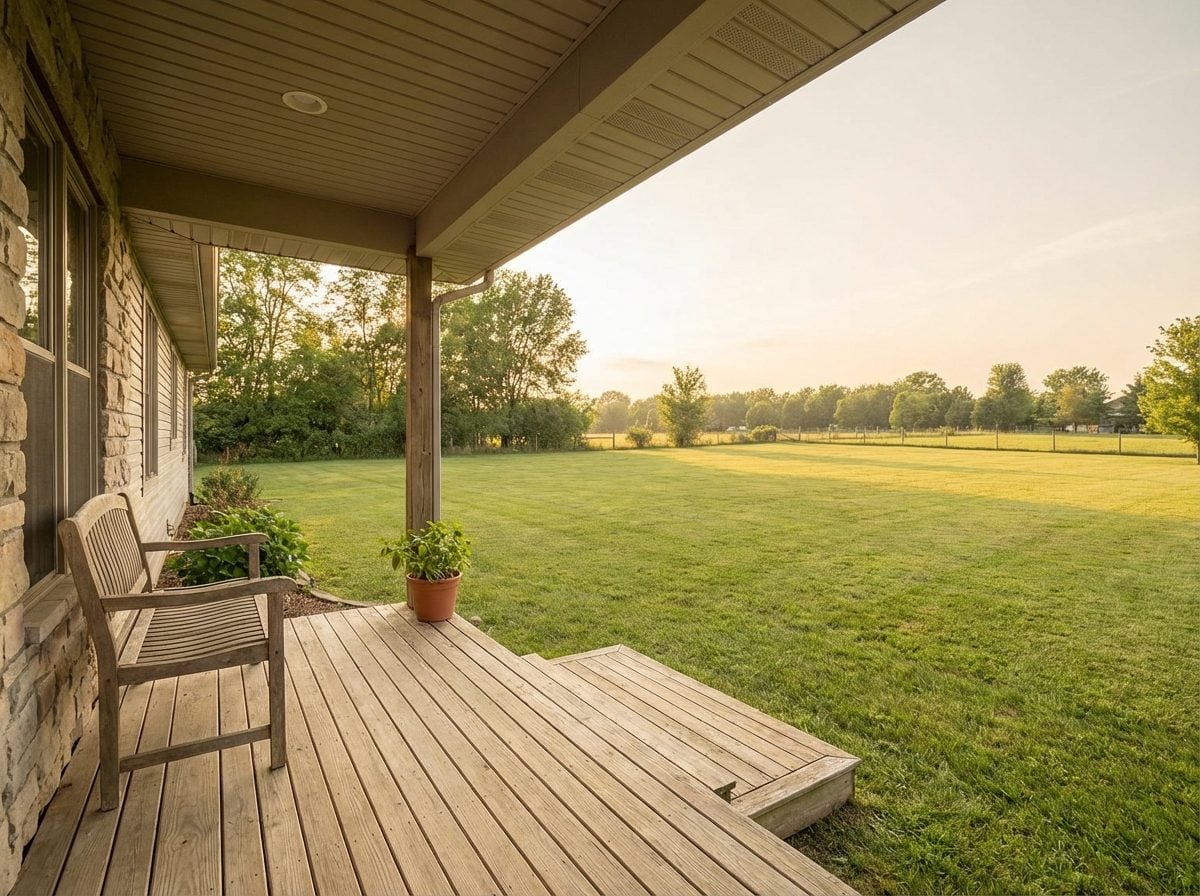
Stand at your back door and look out at your yard. Somewhere between the patio edge and the open lawn, there’s a line you almost never cross without a reason. You don’t notice it, but your nervous system does. It’s the boundary between shelter and exposure, and according to prospect-refuge theory, first outlined by geographer Jay Appleton in his 1975 book The Experience of Landscape, your brain has been calculating that line since before language existed.
Appleton argued that humans instinctively seek environments where they can see without being seen, a survival instinct baked in over millennia of living on open savannas where exposure meant vulnerability. The edge of your patio, backed by the house, shaded by an overhang, offers refuge. The open center of your lawn? Pure exposure. No wonder you linger near the grill and rarely wander out to stand in the middle of the grass.
What makes this so fascinating is that most homeowners have unknowingly built their outdoor spaces backwards, all that pristine open space that looks so inviting in photos, and none of the sheltered perches the brain actually craves. The line isn’t a design choice. It’s a neurological boundary. And your family is bumping up against it every single weekend.
Why the Most Photographed Backyards Are the Loneliest
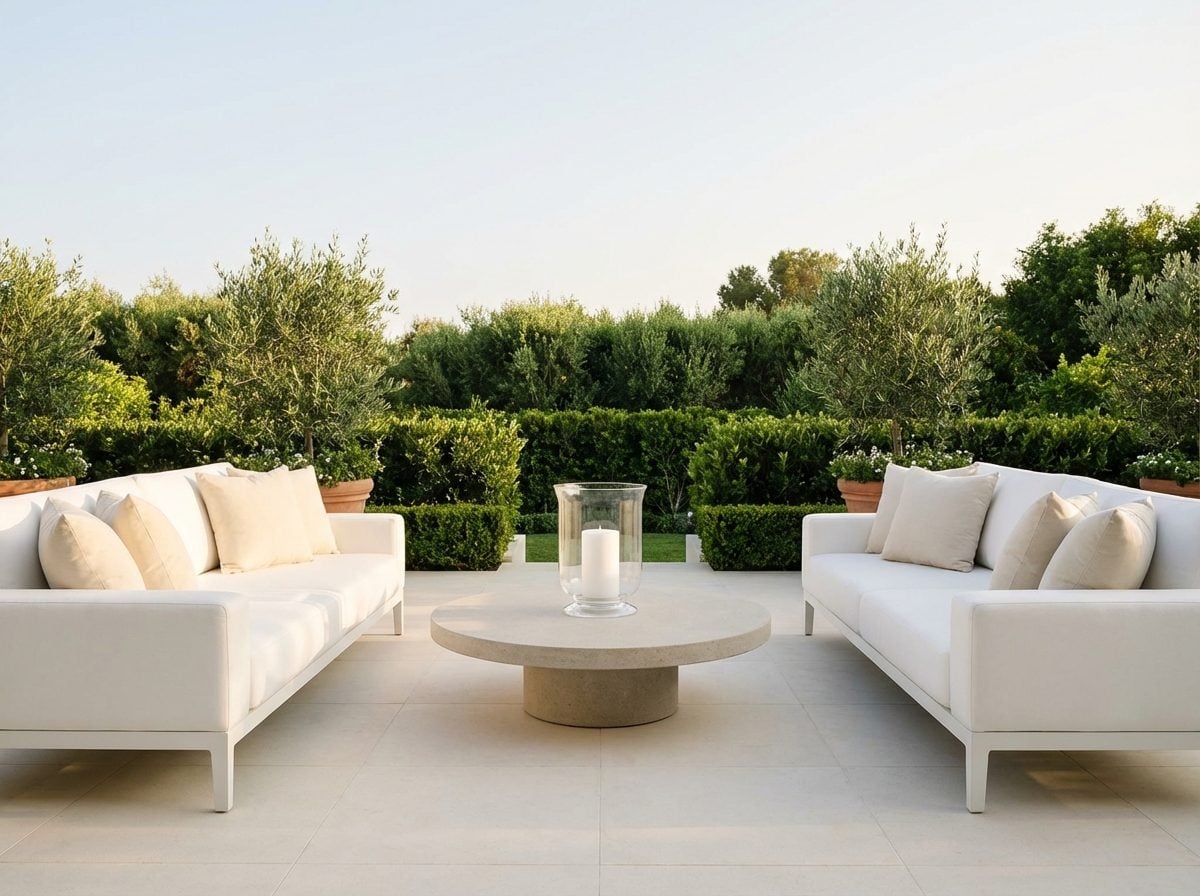
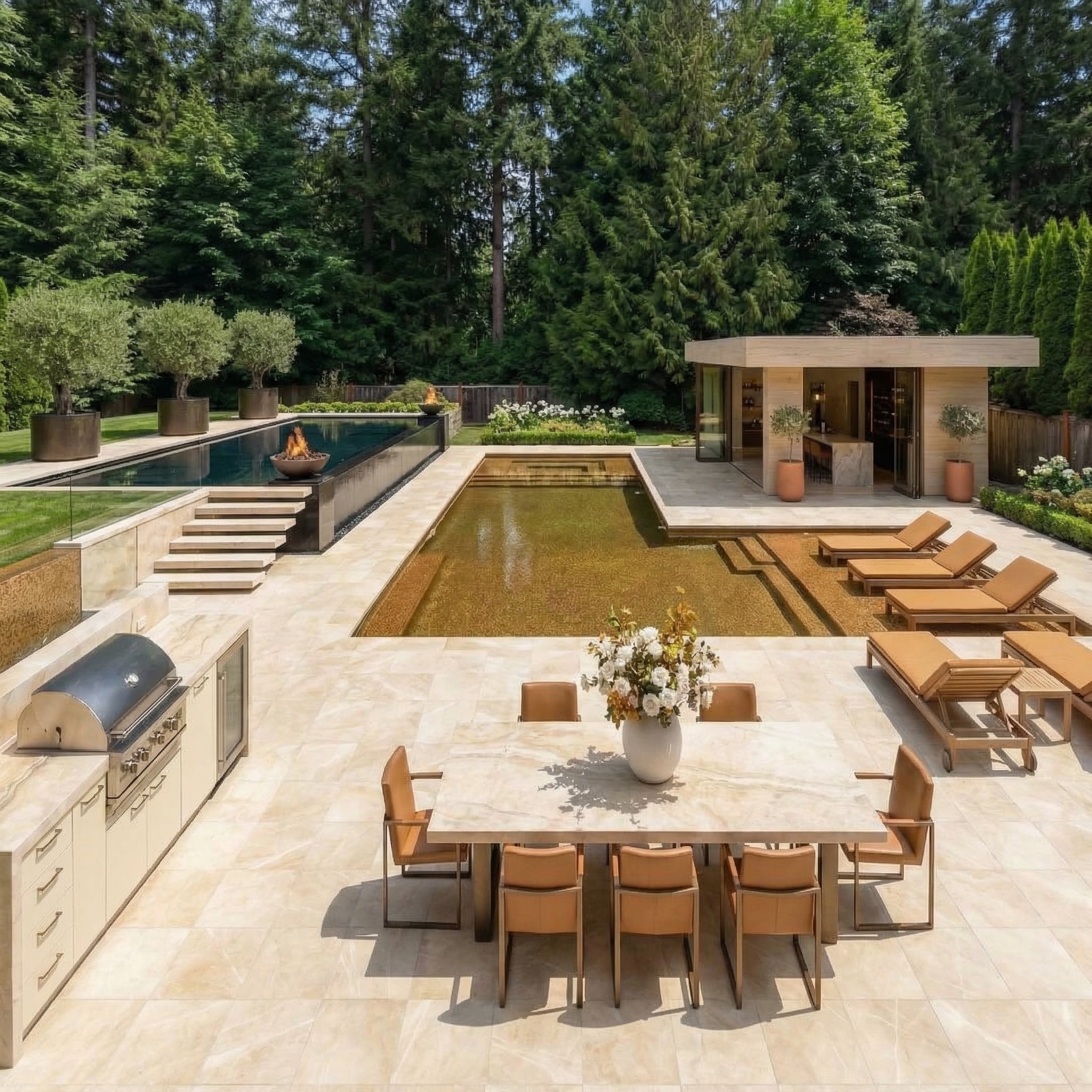
There’s a particular kind of backyard that photographs perfectly and gets used almost never. You’ve seen it on Pinterest: the marble-topped outdoor kitchen, the flawlessly edged lawn, the pristine white sectional that nobody has ever quite slouched on. It looks like a resort. It functions like a display case.
The psychology here is sneaky. When a space signals perfection, your brain shifts from relaxation mode into performance mode. You don’t want to be the one who leaves a ring on the travertine or scuffs the cushion. That mental calculus happens below conscious awareness, a low-level hum of “don’t mess this up” that slowly poisons the whole point of being outside.
Landscape architect Kevin Lenhart of Yardzen put it plainly in an interview with Food52: “The design can be perfect, but if it isn’t activated by actual use, it’s not a success.” A space designed purely to impress resists the mess, noise, and sprawl that real gathering requires. Your family reads those visual cues accurately, and retreats indoors.
The Ancient Human Need Your Patio Layout Is Quietly Violating
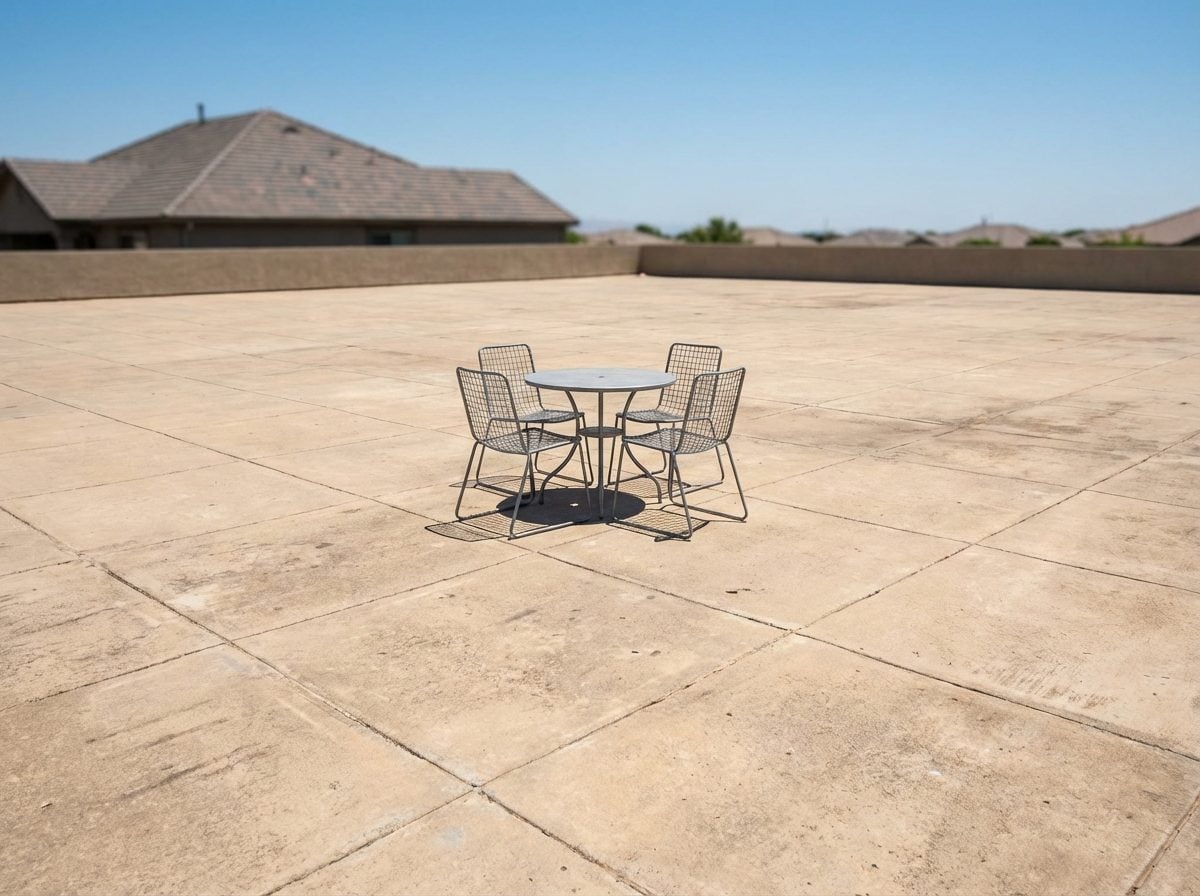
Every time you sit in the dead center of an open patio with nothing behind you, your nervous system registers a faint, unplaceable discomfort. It’s not the temperature. It’s not the chair. It’s your oldest instinct quietly noting that your back is exposed.
Prospect-refuge theory explains that humans are drawn to spaces offering both prospect (a clear view outward) and refuge (a sheltered position with something solid at the back). In practice: the cave-dweller facing the valley, the café-goer who always takes the corner booth, the child who builds a fort and then looks out from it. These aren’t quirks. They’re the same instinct expressed across 200,000 years.
Most patio designs nail prospect, the view, the open sky, but completely neglect refuge. A flat deck floating in the middle of a yard, surrounded by open space on all sides, satisfies the eye in a photograph but fails the nervous system in real life. Research reviewed by Terrapin Bright Green found that refuge spaces, those partially enclosed on three sides with overhead cover, actually lower heart rate and reduce feelings of vulnerability. Your patio layout might be the reason nobody stays long.
What a 1970s Psychologist Discovered About Chairs That Most Homeowners Still Don’t Know
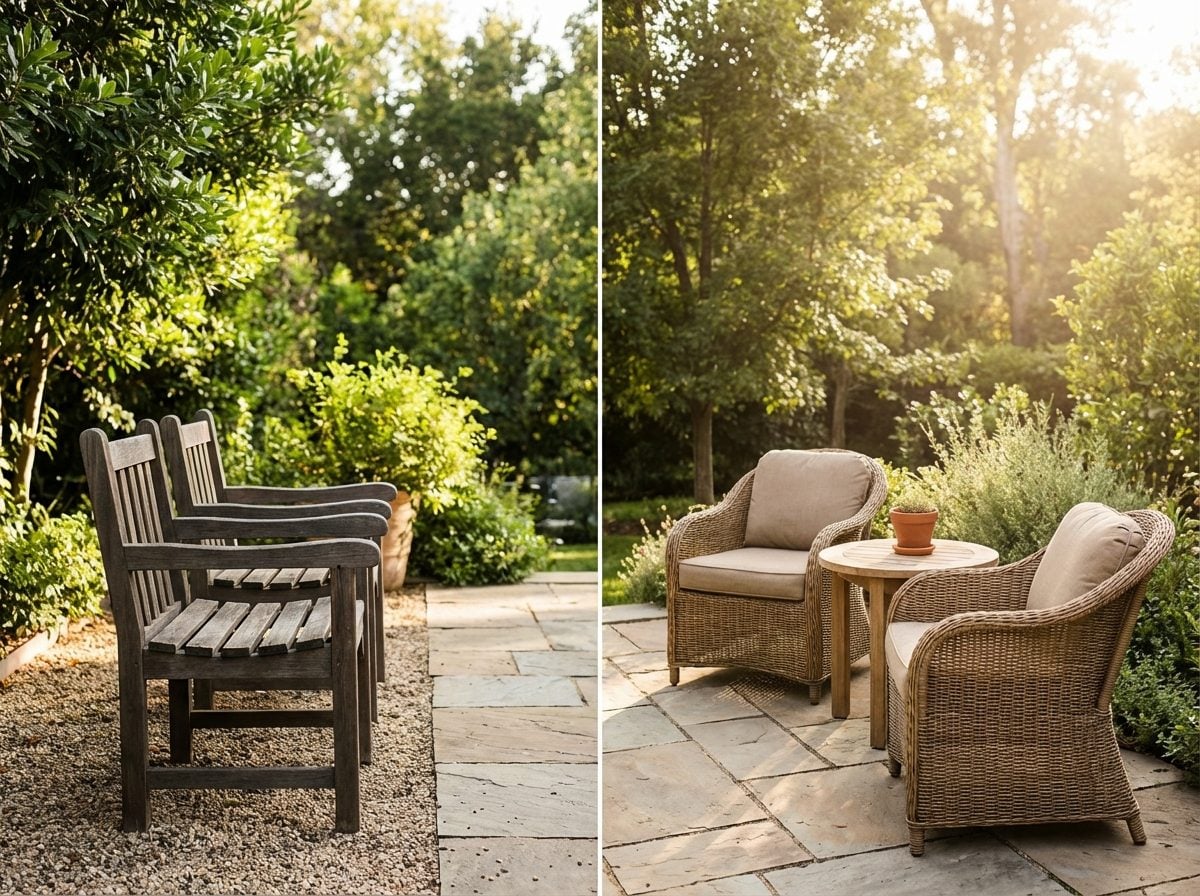
Robert Sommer spent years in the 1960s and 70s watching how people actually arranged themselves in space, in hospitals, cafeterias, libraries, airports, and what he found was quietly revolutionary. In his 1959 paper “Studies in Personal Space” for the journal Sociometry, Sommer documented that the single best seating arrangement for sparking conversation was chairs positioned at a right angle to each other, directly across a corner, not side by side, not face-to-face across a wide table.
He later collaborated with psychiatrist Humphry Osmond to develop two now-famous terms: sociopetal spaces, which draw people together, and sociofugal spaces, which push them apart. As Psychology Town explains, a circular seating arrangement is sociopetal, it invites conversation. A row of chairs all facing the same direction is sociofugal, it shuts it down.
Now walk out to your deck. Are your chairs angled toward each other, inviting easy eye contact? Or are they arranged in a straight line facing the yard, the outdoor equivalent of airport seating? Most patio furniture sets default to symmetrical, forward-facing layouts that look balanced in a showroom and function as a conversation barrier in real life. Sommer figured this out fifty years ago. Most furniture designers still haven’t caught up.
The Reason Your Family Gravitates to the Driveway Instead of the Deck
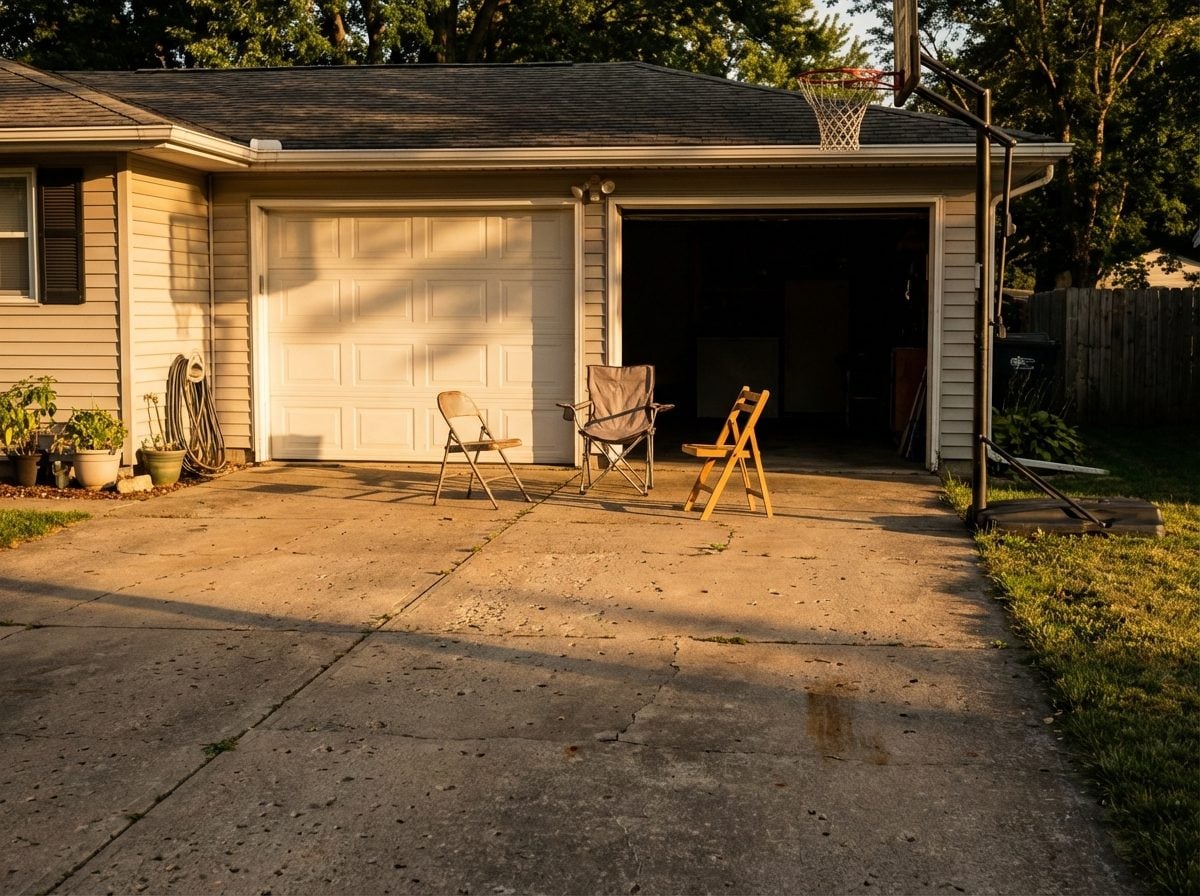
It seems almost embarrassing to admit: you spent thousands on a deck and the kids keep hanging out in the driveway. Your neighbors congregate on the front steps. The adults end up leaning against the car talking for an hour. And somehow that feels more comfortable than the perfectly designed patio out back.
It’s not irrational. It’s environmental psychology in action. A 2022 study on neighbourhood gathering spaces published in ScienceDirect found that informal, semi-public zones, the driveway, the front path, the sidewalk edge, generate more spontaneous social connection than purpose-built private spaces. One participant noted pointedly: “How can you be known if you drive into your garage?”
Driveways are threshold spaces. They’re permeable, neither fully private nor fully public, which lowers the social stakes dramatically. You’re not committing to a “backyard hangout.” You’re just… there. That effortlessness is the whole point. A beautiful backyard requires a decision to go to it. A driveway just happens.
The Furniture Arrangement Mistake That Signals ‘Don’t Get Too Comfortable’
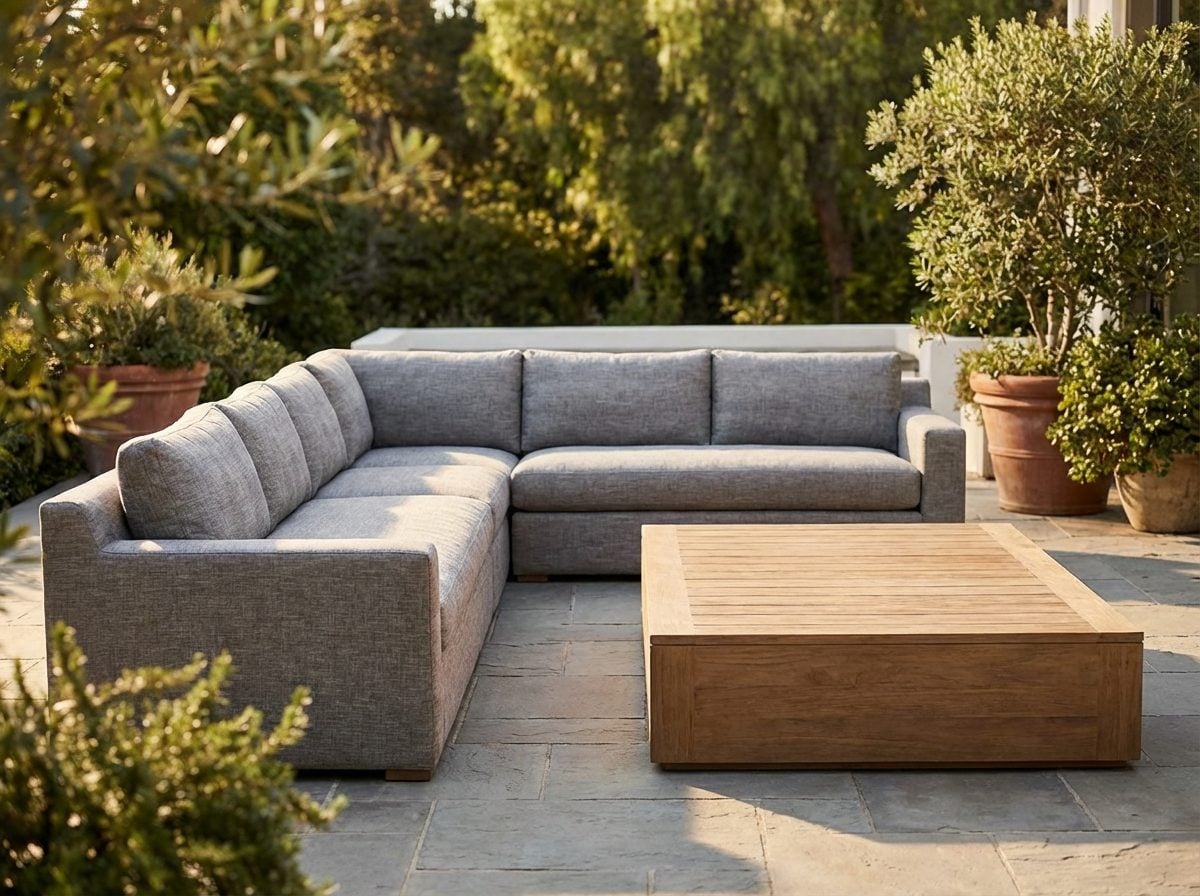
Outdoor sectionals arranged in a perfect square or U-shape look great on a room-planner app. In practice, they create a formal zone with an invisible velvet rope around it. The wider the gap between seats, the less conversation happens, a phenomenon Sommer documented and environmental psychologists have since confirmed across dozens of studies in healthcare, hospitality, and residential design.
The math matters more than you’d think. Comfortable conversation happens within roughly four feet of another person, what proxemics researcher Edward Hall called the “social zone.” Push chairs beyond that distance and the effort required to maintain dialogue increases just enough that people stop trying. Add in wide armrests that create physical separation, and a coffee table so large it turns into a moat, and you’ve built a sociofugal patio without meaning to.
The other mistake: furniture that can’t move. Built-in bench seating looks sharp and stays clean. It also locks people into positions they didn’t choose, at distances they didn’t negotiate. Moveable chairs are a social technology. They let people adjust proximity instinctively, lean in for a quieter conversation, or pull away for a breather, all the micro-adjustments that make a gathering feel genuinely comfortable rather than assigned.
Why Your Brain Reads a Perfect Lawn as a Warning Sign

A chemically perfect lawn, uniform green, zero weeds, pristine edges, is one of the most status-loaded landscapes in American residential design. It also sends a signal your nervous system reads long before your conscious mind catches up: don’t touch this.
Environmental psychologists who study space use have noted that spaces maintained with visible, high-effort perfection trigger behavioral inhibition in the people around them. The psychological mechanism is similar to what happens when you walk into an extremely formal room: you sit up straighter, you speak more quietly, you hesitate before setting your glass down. The perfection of the environment signals that the cost of disruption is high. Your family reads a flawless lawn the same way, and stays off it.
This connects to what landscape designers increasingly call “affordance” in outdoor spaces: the visible cues a landscape gives about what activities it permits. A lawn that looks like a golf green doesn’t afford barefoot running, rolled-on picnics, or spontaneous dog pile wrestling. A lawn with a worn patch, a garden bed that volunteers to be picked through, a tree with low branches, these spaces afford all kinds of things. Perfection repels. A little imperfection invites.
The One Thing Every Beloved Backyard Has That Yours Probably Doesn’t
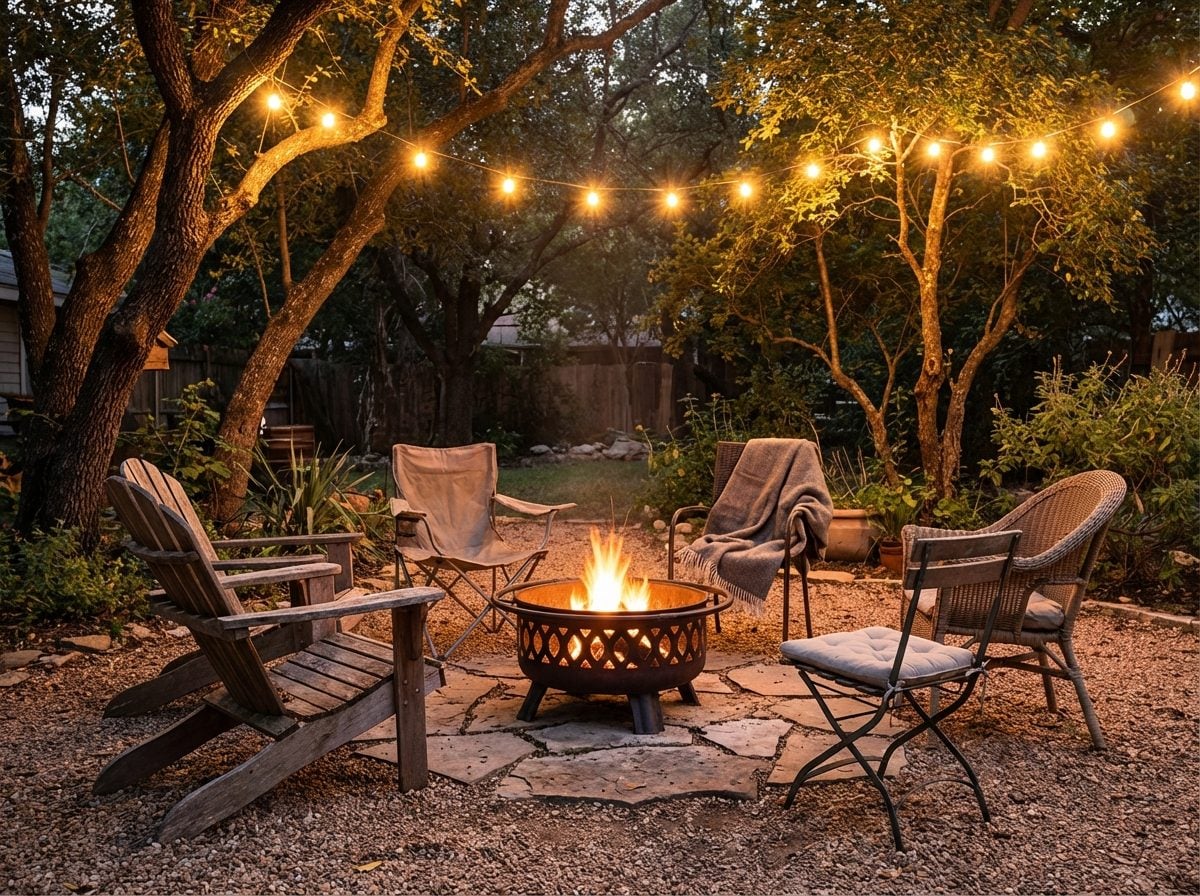
Ask anyone to describe their favorite memory of a backyard, their grandparents’, a childhood neighbor’s, that one friend’s house where everyone always ended up, and the descriptions share a particular quality. There’s always a focal point that isn’t just decorative. A fire pit that people move chairs toward. A hammock slung between two real trees. A vegetable bed people feel invited to pick from. A string of lights that make the space feel like somewhere, not just outside.
Urban designer William H. Whyte called this principle “triangulation” in his landmark studies of how people use public spaces: an external stimulus, something interesting, something active, something that gives strangers or family members a shared point of reference, drops the social barrier and gives people a reason to linger and talk. A fire pit triangulates. A water feature triangulates. A grill in active use triangulates. A pristine architectural planter does not.
Jan Gehl, the Danish architect who spent decades studying how people actually occupy outdoor space, found that the social life of a space depends on whether it generates “optional activities”, the kind that emerge when conditions feel right, not when the design demands it. A fire pit on a cool evening is an optional activity machine. It gives everyone something to look at together, something to tend, and something to talk about. What does your backyard give people to do?
The Psychological Reason Children Abandon Expensive Play Equipment for Dirt Patches
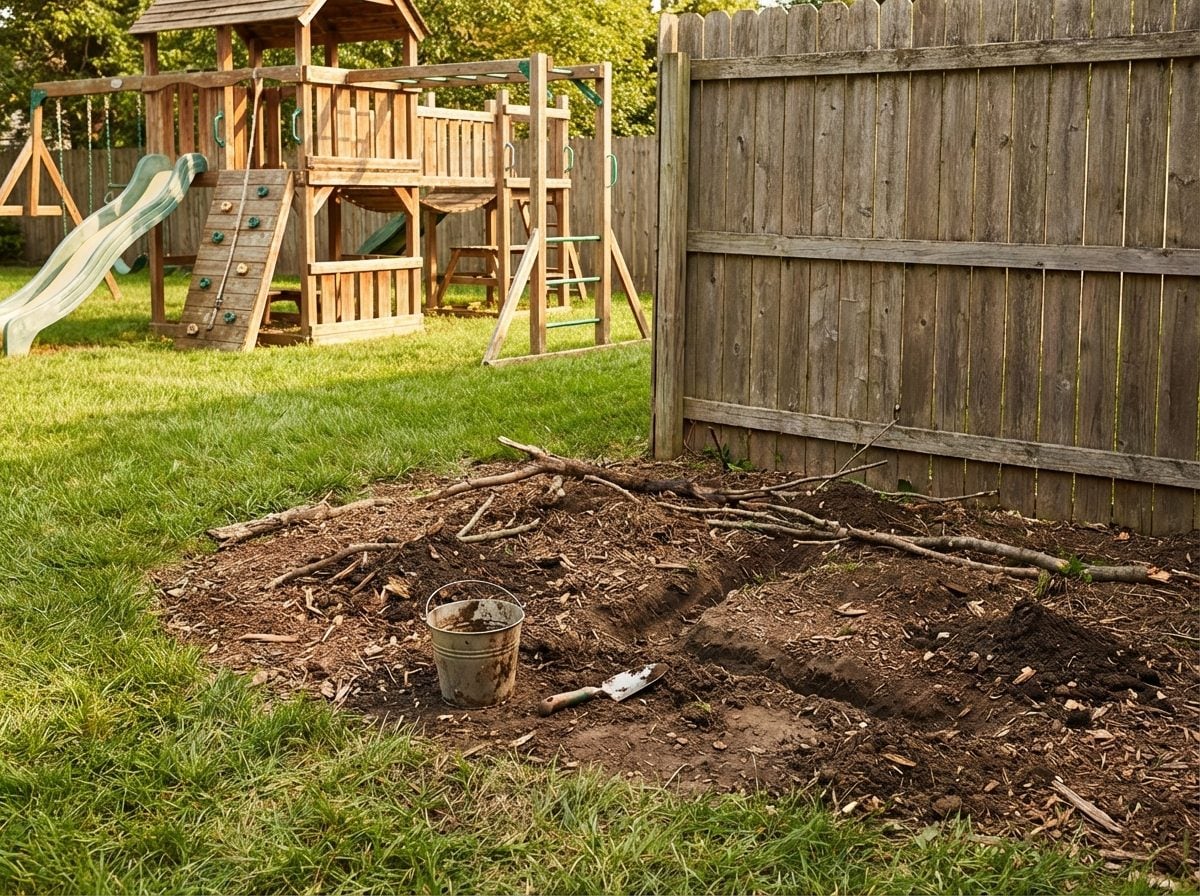
You spent a small fortune on the wooden play structure. It has two slides, a climbing wall, a rope bridge, and a crow’s nest. Your kid played on it for three weeks. Now it stands in the corner of the yard collecting spider webs while your child excavates a mysterious trench near the fence using a stick and pure imagination.
This is not ingratitude. It’s developmental psychology operating exactly as it should. Research on children’s outdoor play preferences consistently finds that if children were given the ability to design their own outdoor spaces, those spaces would be “fully naturalized with plants, trees, flowers, water, dirt, sand, mud, animals and insects”, not plastic climbing structures. As the researchers put it bluntly: “You can build a trench in the sand and dirt… but there’s not much you can do to a jungle gym except climb, hang, or fall off.”
a 2022 study in Frontiers in Psychology examining loose parts and natural play environments in children found that “loose parts”, fluid, manipulable materials like dirt, water, mud, sticks, and rocks, were the primary drivers of diverse, engaged outdoor play. Fixed equipment supports one or two play modes. A dirt patch supports dozens. The expensive play structure is a noun. The dirt patch is a verb.
This also connects to something larger about how your whole backyard might be functioning for your family. Fixed, expensive, purpose-built elements invite specific, pre-scripted behaviors. Loose, flexible, natural elements invite invention. One kind of space tells you what to do. The other lets you decide. Which one sounds more like the backyard people actually fall in love with?
What Campfires, Firepits, and Candles All Trick Your Brain Into Doing
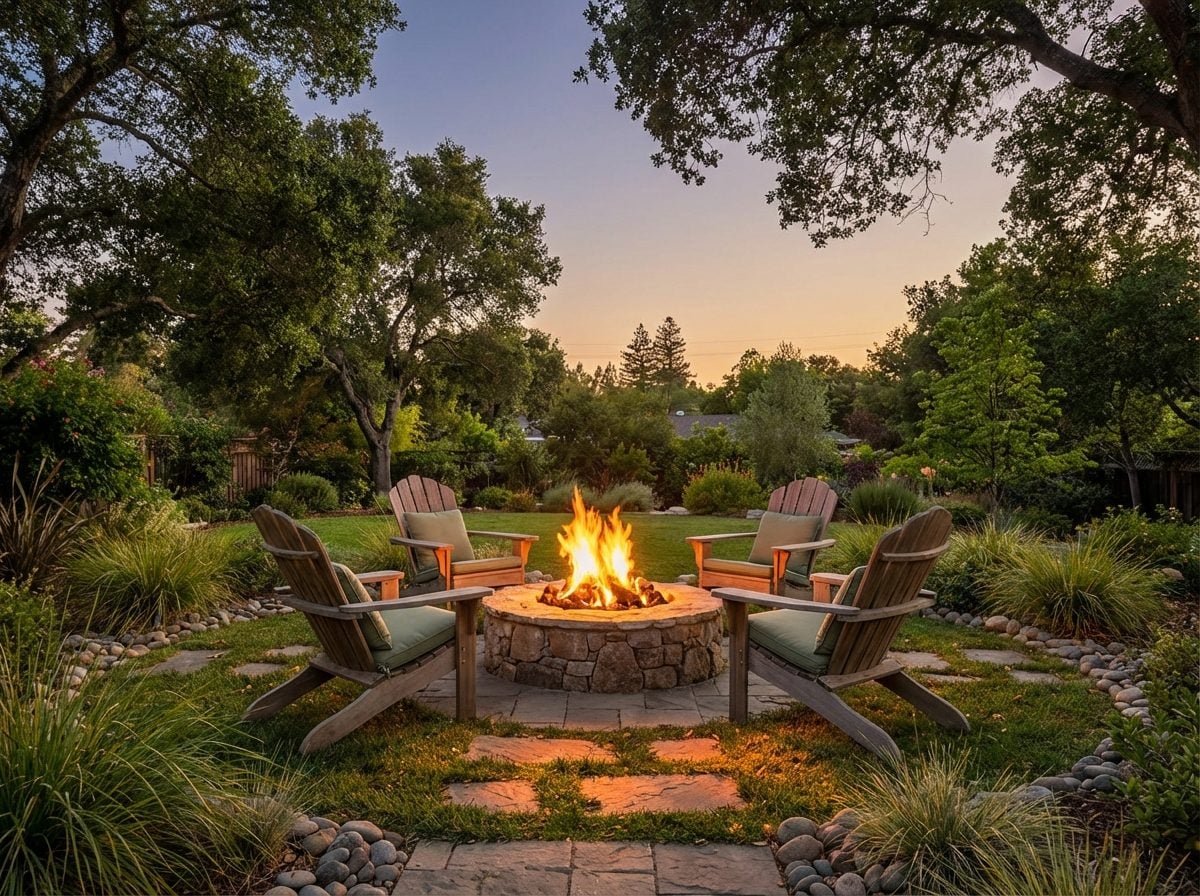
There is something almost embarrassingly predictable about a fire pit. You bring one out onto a patio and within minutes, people who were inside scrolling on their phones are suddenly outside, leaning in, talking. Not just talking, actually talking. Slower sentences. More honesty. A different kind of conversation altogether.
This is not coincidence or ambiance. It is biology. A 2014 study published in Evolutionary Psychology by researcher Christopher Dana Lynn found consistent blood pressure decreases in participants who watched a fire with natural crackling sound, a dose-dependent effect, meaning the longer they watched, the calmer they became. The key word is with sound. Silent fire barely moved the needle. The full audiovisual experience of real flame is what pushes the nervous system into parasympathetic territory: rest, digest, open up.
Anthropologist Polly Wiessner documented something just as striking among the Ju/’hoansi Bushmen of Botswana, finding that firelight conversations at night shifted dramatically toward storytelling, imagination, and social bonding compared to daytime talk dominated by gossip and complaints. a 2014 study in the Proceedings of the National Academy of Sciences on how fire extended the social day and shaped human evening storytelling suggests fire literally extended the social day for early humans, creating new emotional territory that daylight never had. Your backyard fire pit is tapping into 400,000 years of hardwiring. The only question is whether you’re giving people a reason to gather around one.
The ‘Museum Effect’ That’s Slowly Killing Your Outdoor Gatherings
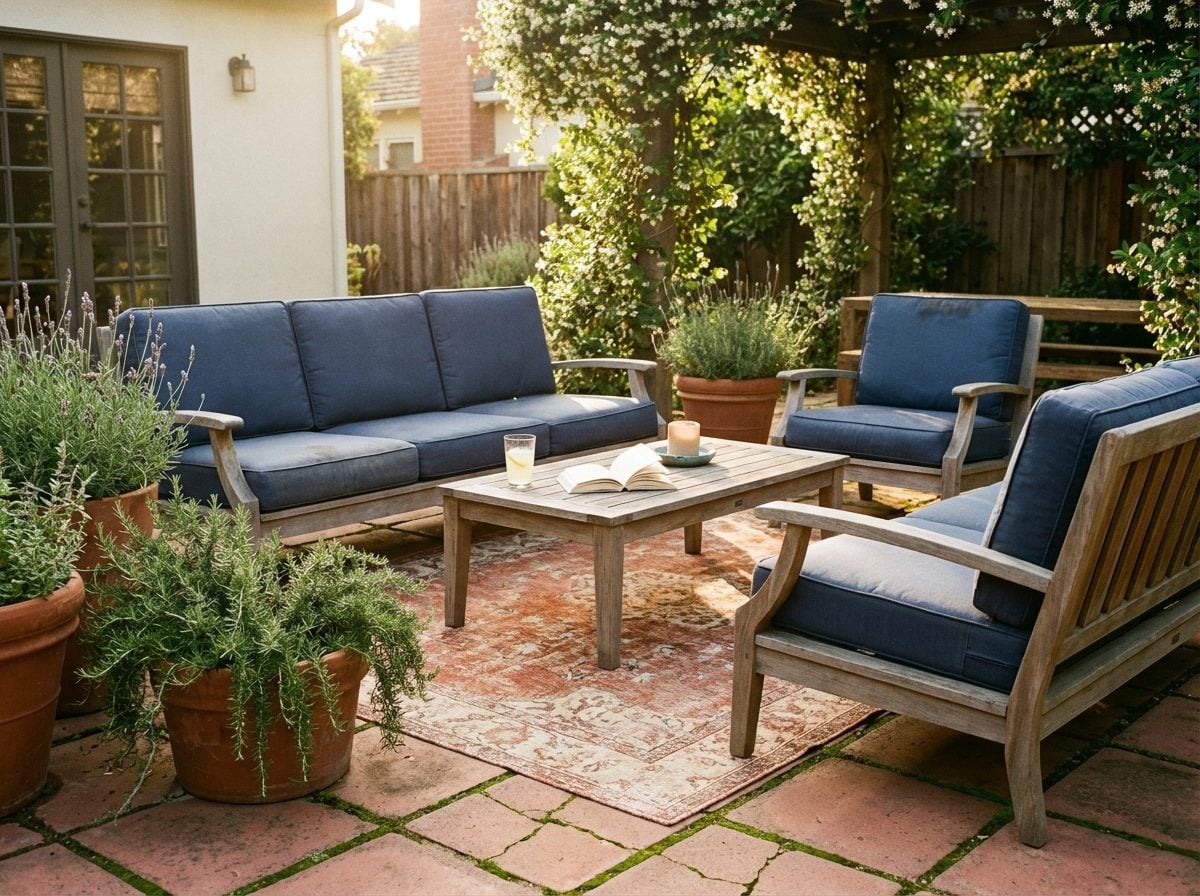
You have probably felt it in someone else’s backyard without having a name for it. The pristine pavers nobody tracks mud onto. The white outdoor sofa with the accent pillows arranged at exact 45-degree angles. The ornamental grasses so precisely spaced they look like a render from a landscape design app. It is all visually composed and completely uninviting.
Designers call it the museum effect: a space so polished and deliberate that it communicates, at a subconscious level, do not disturb this. The psychological mechanism is not complicated. When an environment signals high maintenance, fragility, or aesthetic perfection, the human brain interprets it as a space for observation, not participation. You do not put your feet up in a museum. You do not let the kids run through one. You certainly do not let a barbecue sauce drip land on a pristine linen cushion.
Jan Gehl, the Danish architect whose research into how people actually use outdoor spaces shaped urban planning for decades, argued that what makes people stay in a space is categorically different from what makes them admire it. In his observations of public plazas and parks, summarized in a review of Gehl’s work on the dynamics of social life in outdoor spaces, the critical factor was always adaptability: moveable seating, varied surfaces, zones that invited different kinds of behavior. The most photographed plaza is rarely the most used one. The most used one has a place to lean, somewhere comfortable to sink into, and nothing that makes you feel guilty for existing inside it.
Why Backyards Without Edges Make Everyone Secretly Anxious
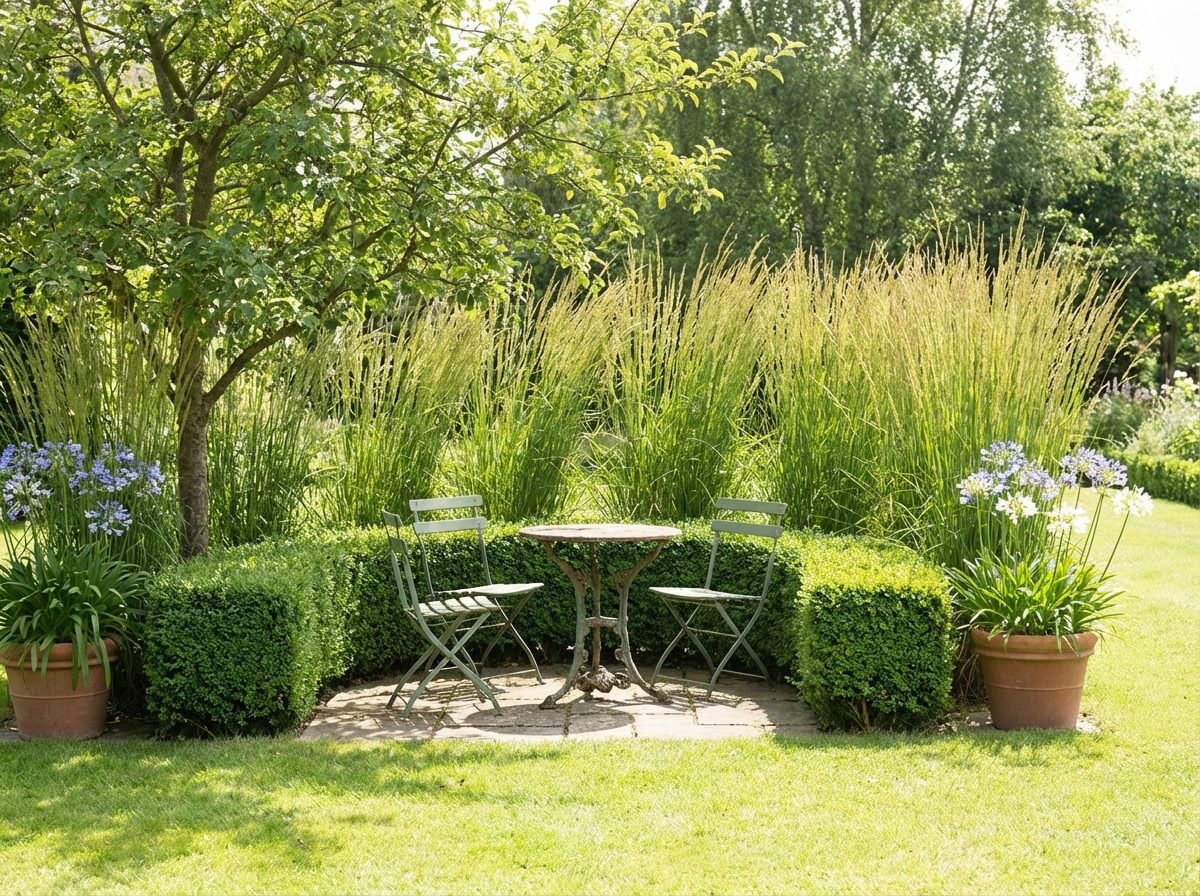
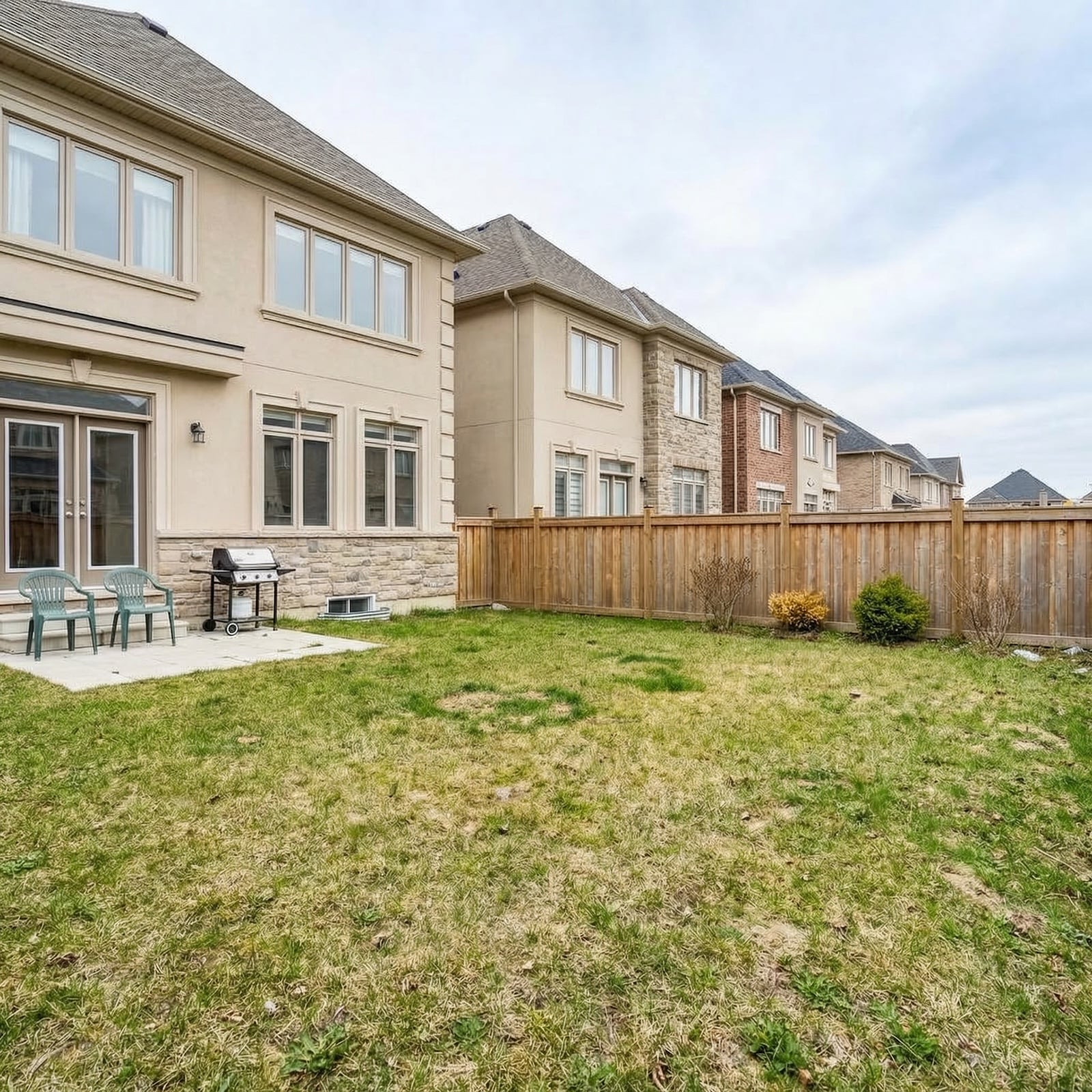
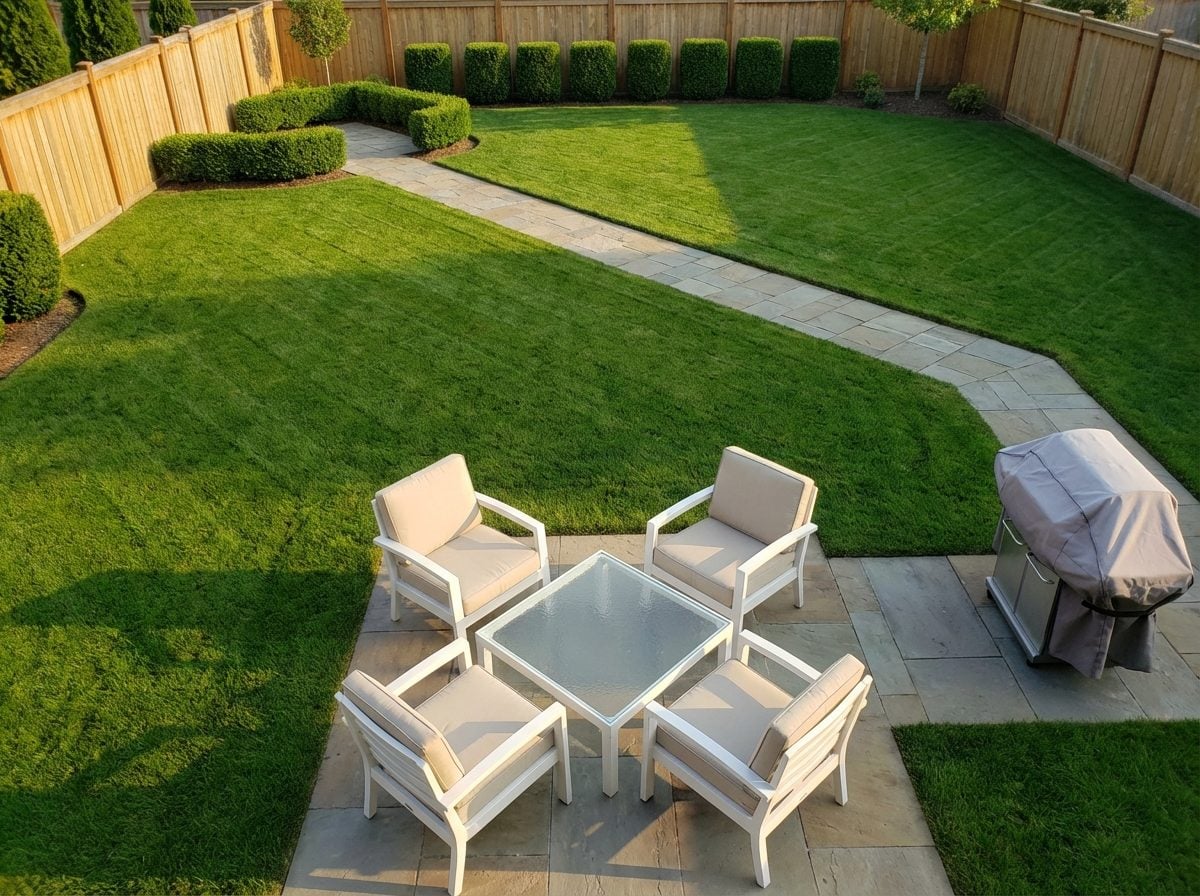
Picture a completely open, flat lawn. No garden beds, no planted borders, no pergola, no fence break. Just turf stretching to the property line. It looks tidy. It photographs well with a wide lens. And yet, nobody wants to sit in the middle of it.
Geographer Jay Appleton formalized this discomfort in 1975 with what he called Prospect-Refuge Theory. A meta-analysis of environmental preference research published in City, Territory and Architecture summarized his core argument: humans derive pleasure and safety from spaces that offer both open views (prospect) and a sense of enclosure behind them (refuge). The ability to see without being fully exposed satisfies something ancient in us, and its absence registers as low-level anxiety we cannot always name.
This is why people gravitate to the edges of any space. Research on outdoor seating behavior found that people consistently choose spots with something solid at their back, a wall, a hedge, a garden bed, even a large planter. A Cornell University study on seating behavior in public spaces observed that when only exposed center-space seating was available, people simply chose not to sit at all. Your flat, edgeless backyard may be doing exactly this: offering nowhere for the nervous system to rest. Adding a simple pergola, a garden bed behind a seating zone, or a low hedge on three sides of a gathering area isn’t decoration. It’s neuroscience.
The Sound Your Backyard Is Missing That Makes People Stay Longer
🔥 Would you like to save this?
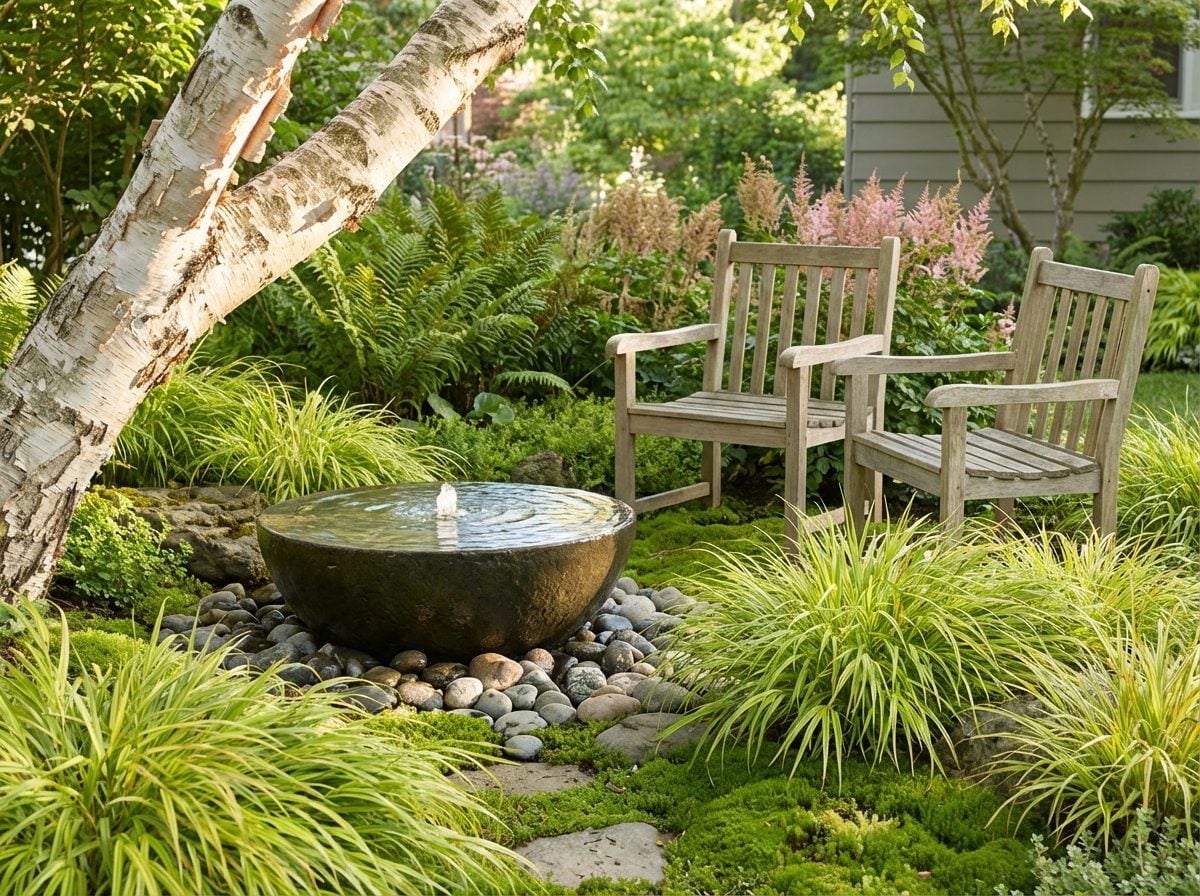
Most backyard design is entirely visual. We obsess over pavers, plant palettes, pergola proportions, things you see in photographs. But what people actually feel when they sit outside is shaped as much by what they hear as what they look at. And most backyards are acoustically empty in the worst possible way: just ambient suburban noise, distant traffic, air conditioning units cycling on and off.
a 2021 meta-analysis in PNAS on the psychological and physiological health benefits of natural sounds, including water found that water sounds produced the largest effect on positive mood and physiological health outcomes, while birdsong had the greatest effect on reducing stress and mental annoyance. Not visual exposure to these things, just the sound of them. A separate study from Sussex University used MRI scanners to compare brain responses to natural versus artificial sounds, finding that natural soundscapes shifted the brain into a more outward-focused, socially open mode compared to urban or mechanical noise, which pulled attention inward and raised physiological arousal.
The practical implication is striking. A small recirculating water feature, not a dramatic waterfall, just a gentle trickle over river stones, can shift the acoustic signature of a backyard enough to meaningfully change how long people stay and how freely they talk. It masks the traffic hum. It provides the brain with something softly engaging to rest on. It signals, at a level below conscious thought: this is a safe, living place. What’s your backyard currently sounding like?
The Surprising Reason Shade Makes People Emotionally Open Up
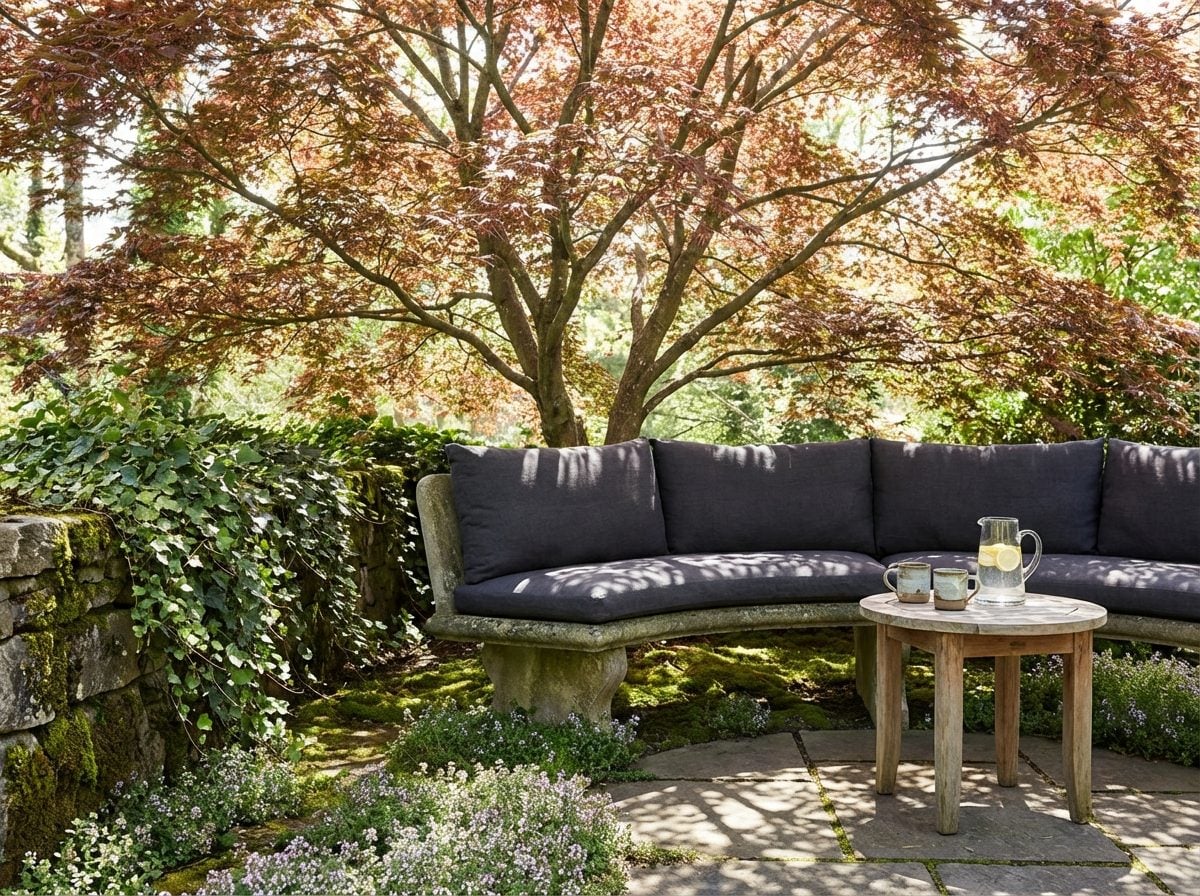
Heat is not just a physical condition, it is an emotional one. Research in environmental psychology has consistently shown that thermal discomfort, particularly heat, drives up irritability, reduces patience, and limits the kind of open, exploratory conversation that makes outdoor gatherings feel meaningful. A 2024 study published in BMC Psychology tracking real-time emotional states during hot weather found that perceived thermal discomfort, not just air temperature, was the key driver of negative emotional states. The study emphasized how individual perception of heat shaped mood far more than the thermometer reading alone.
Shade doesn’t just lower temperature. It changes how the brain processes the social environment. Research into shade psychology suggests that shaded outdoor environments reduce feelings of anxiety, offer the kind of partial enclosure that triggers refuge responses, and allow the mentally fatigued brain to restore itself, making people more emotionally available, not just more physically comfortable.
There is also the prospect-refuge dynamic at work: a shaded seating area, dappled under the canopy of a large tree or a slatted pergola, creates a zone that feels held and private, even in the middle of an open backyard. People lean in more. They stay longer. The conversation turns to things that matter. It is almost too simple, but it tracks with what we know about how bodies and emotions interact with space: cool the body and the social brain opens. Add shade, and you may be adding more than comfort.
Why Your Outdoor Furniture’s Material May Be Telling Guests to Leave
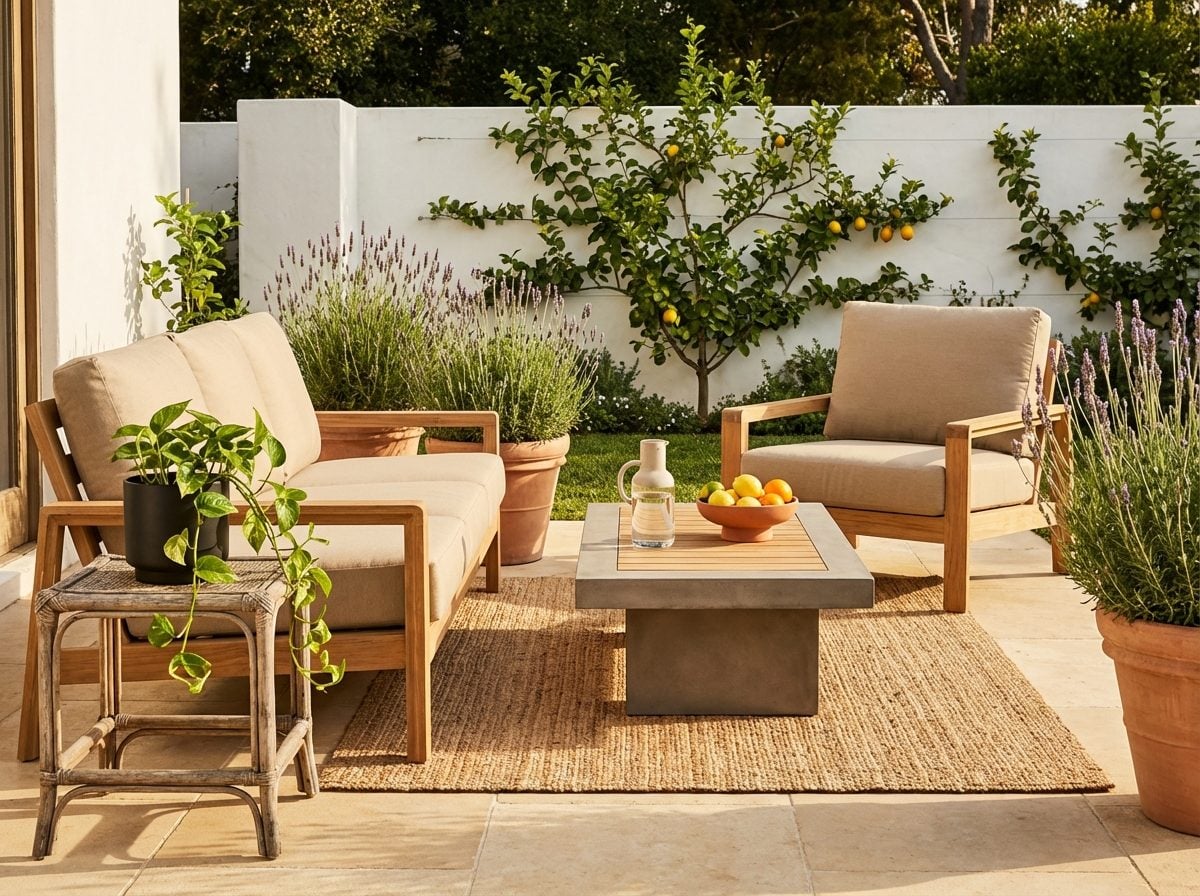
Bare aluminum gets hot in July. Everyone knows this and nobody talks about it enough. You reach for the armrest and flinch. You shift in the chair every few minutes because the seat surface has no give, no warmth, no tactile invitation to settle in. And so, without consciously deciding to, you get up.
Material psychology is real. Research into how furniture materials affect emotional states consistently finds that natural materials, wood, rattan, woven fiber, register as warm, grounding, and physically welcoming, while metal and glass, however elegant they look, can read as cool and impersonal when overdone. The tactile experience of sitting on or touching a surface sends signals that override the visual aesthetic. You can have the most artfully designed patio on the street, but if every surface is heat-conducting powder-coated steel with no cushioning, the subconscious message is: this is not for lingering.
William H. Whyte, whose landmark observations of how people use public spaces shaped urban design globally, noted that moveable seating, chairs people could physically adjust based on sun, shade, or social preference, dramatically increased both time spent in a space and quality of social interaction. Fixed, rigid, uncomfortable outdoor furniture works against this entirely. The best outdoor material choices layer warmth over durability: teak or eucalyptus frames with thick Sunbrella cushions, rattan with weather-resistant wrapping, concrete surfaces softened with outdoor rugs in natural jute or woven polypropylene. Your guests’ bodies are giving you feedback every time they stand up. Listen to it.
The Japanese Concept Your Backyard Is Desperately Missing
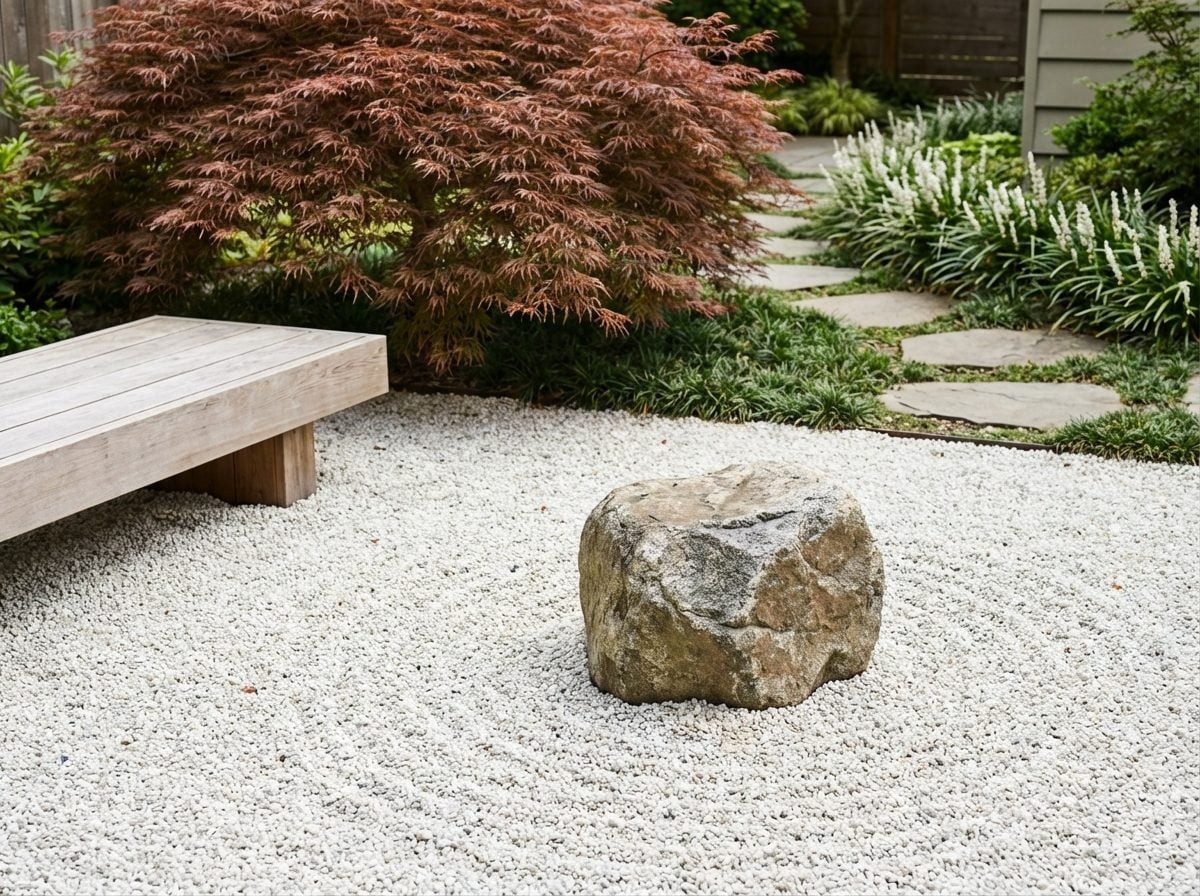
Japanese design has a concept called Ma, written 間, the character for gate and sun together, which refers to the intentional use of negative space: the pause, the gap, the breathing room that gives everything else its meaning. Japan House LA describes Ma as the understanding that we find beauty not in things themselves but in the patterns created by space around them, absence as active presence. In a Japanese garden, a single stone is placed not despite the surrounding emptiness but because of it.
Western backyard design tends to move in the opposite direction. Fill the lawn. Add the pergola, the fire pit, the outdoor kitchen, the raised beds, the play structure, the bistro set, the string lights. Each element is reasonable on its own. The accumulation creates visual noise that the brain reads as cognitive load, too much to process, nowhere to rest the eye, no sense of sequence or intention. Paradoxically, the more features you add, the less anyone feels present in the space.
How Ma Translates to Backyard Design
Ma in outdoor space is not minimalism for its own sake. It is the deliberate design of empty space to give meaning to what remains. This might mean a single specimen tree placed with enough clearing around it that you actually see it. A stretch of gravel or moss between the seating area and the garden beds. A view corridor left intentionally unplanted so the eye has somewhere to travel and rest. The brain needs pause as much as stimulus. Research into the psychology of negative space confirms that visual breathing room reduces cognitive load and evokes calm, order, and openness, precisely the emotional conditions that make people want to stay outside longer. The backyard missing Ma is busy in all the ways that drive people back inside.
How the Distance Between Your Back Door and Your Seating Area Predicts How Often You’ll Use It
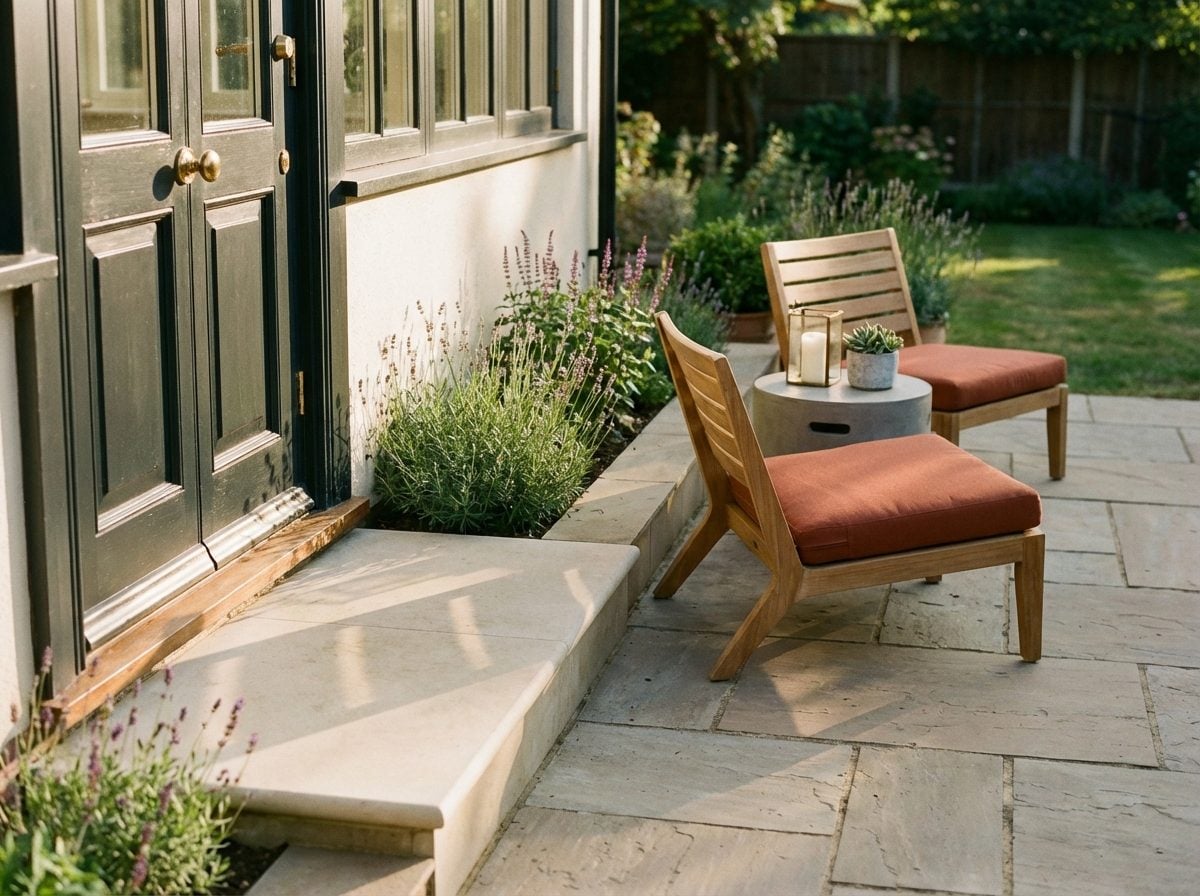
There is a behavioral design principle hiding inside a very simple question: how many steps does it take to get from your back door to a comfortable seat outdoors? If the answer is more than fifteen, your backyard use data is probably telling a story. Long thresholds between the house and the outdoor destination introduce what behavioral scientists call an action threshold, a moment of low-friction decision-making where the small friction of crossing distance tips the scale toward staying inside.
Urban planner William H. Whyte spent years observing how people actually use outdoor spaces, not how they say they would, but what they do. His central finding, documented through thousands of hours of observation in New York City plazas, was deceptively simple: people sit where there are places to sit that are easy and obvious to get to. Proximity and accessibility matter far more than how attractive the destination is in photographs. A hammock strung between two trees at the far end of the garden looks idyllic in a landscape plan. In practice, it gets used three times a summer.
The psychological distance problem compounds this. Research on construal-level theory shows that physical distance and psychological distance operate on the same mental dimension, a seating area that feels far away is also, in some meaningful cognitive sense, an activity that feels effortful, abstract, and less immediately appealing. The fix is almost embarrassingly practical: move your primary seating area closer to the house. Create a secondary seat just outside the door, a single good chair on a small stone pad, that requires almost no decision to use. The outdoor furniture that gets used is almost always the furniture closest to the threshold.
The Psychological Trap of Designing a Backyard Nobody Wants to Mess Up
Here is a pattern that shows up in backyards that get barely used: the outdoor cushions get brought inside every time it clouds over. The lawn is edged with a precision that makes the kids nervous about running across it. The stone pavers are power-washed quarterly. The planters are symmetrical, color-coordinated, and rotated seasonally. It is, in every technical sense, a perfectly maintained outdoor space. And nobody spends time in it.
The design psychology at play is a form of anxiety transfer. When a space communicates that it requires careful stewardship, when every element signals that it was placed deliberately and must remain undisturbed, the brain assigns it to the category of things to be preserved rather than things to be inhabited. This operates well below conscious thought. Your guests are not looking at your immaculate backyard and thinking “I won’t relax here because I might ruin something.” They are simply, mysteriously, not relaxing.
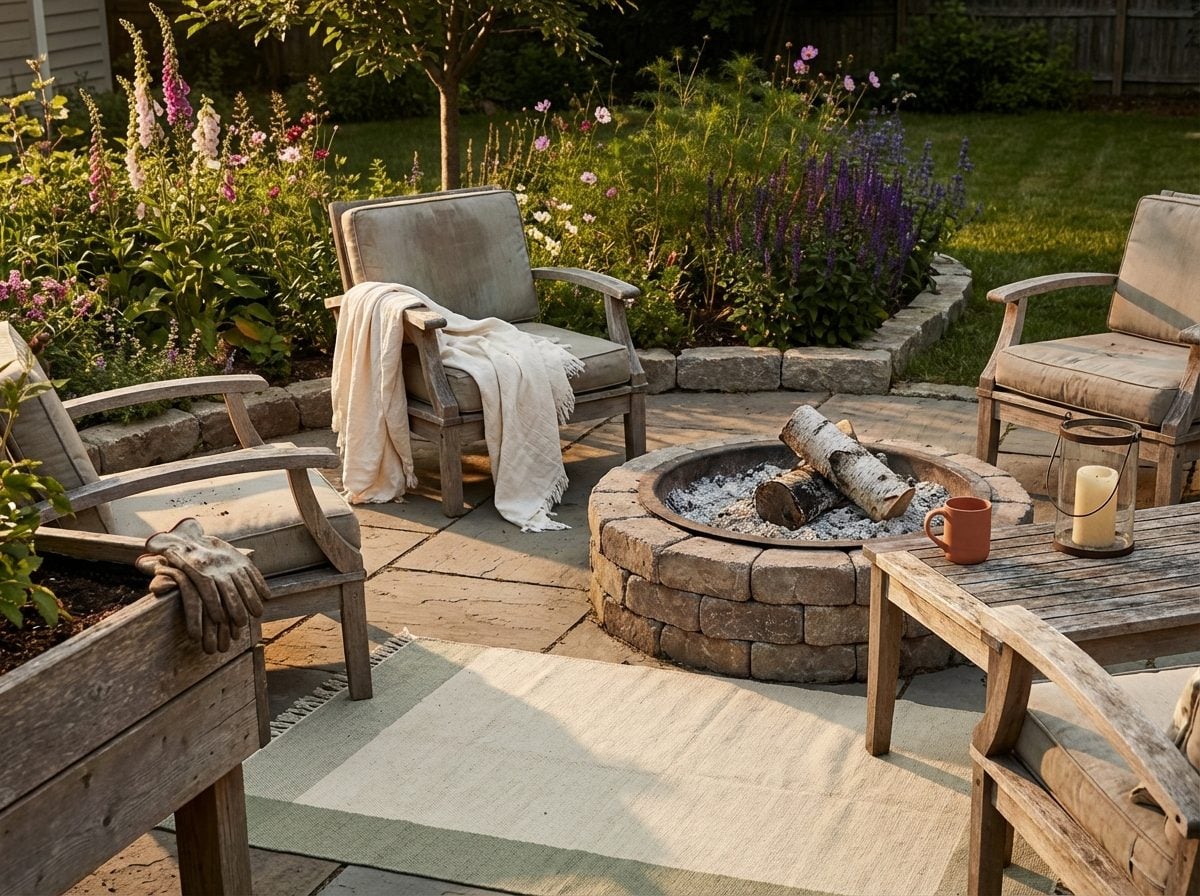
The missing ingredient is permission. Permission to kick off shoes. To move a chair out of the arrangement. To let a wine glass sit on the edge of a planter. To let the kids drag a blanket onto the lawn. Spaces that feel actively lived-in, slightly worn cushions, a rug that has a few grass stains, a fire pit with ash still in it from last week, give people this permission at a glance. They communicate: this space absorbs life, it does not resist it. The backyard trap is designing for the version of yourself who will appear in photographs rather than the version who actually wants to sit outside in bare feet with people you love. You designed it for looking at, not for living in, and that is the mistake that ties every piece of this together.
The Bottom Line
The bottom line is this: your backyard keeps your family apart because it was designed to be looked at, not lived in, optimized for visual appeal and curb-worthy photos rather than the biological cues that make humans feel safe enough to relax, linger, and connect. Every element explored here, the furniture angles, the open exposure, the pristine lawn, the missing focal point, converges on a single psychological truth: belonging requires permission, and most backyards are quietly, unintentionally, withholding it. So tonight, move one chair three feet closer to another, and notice what happens to the conversation.