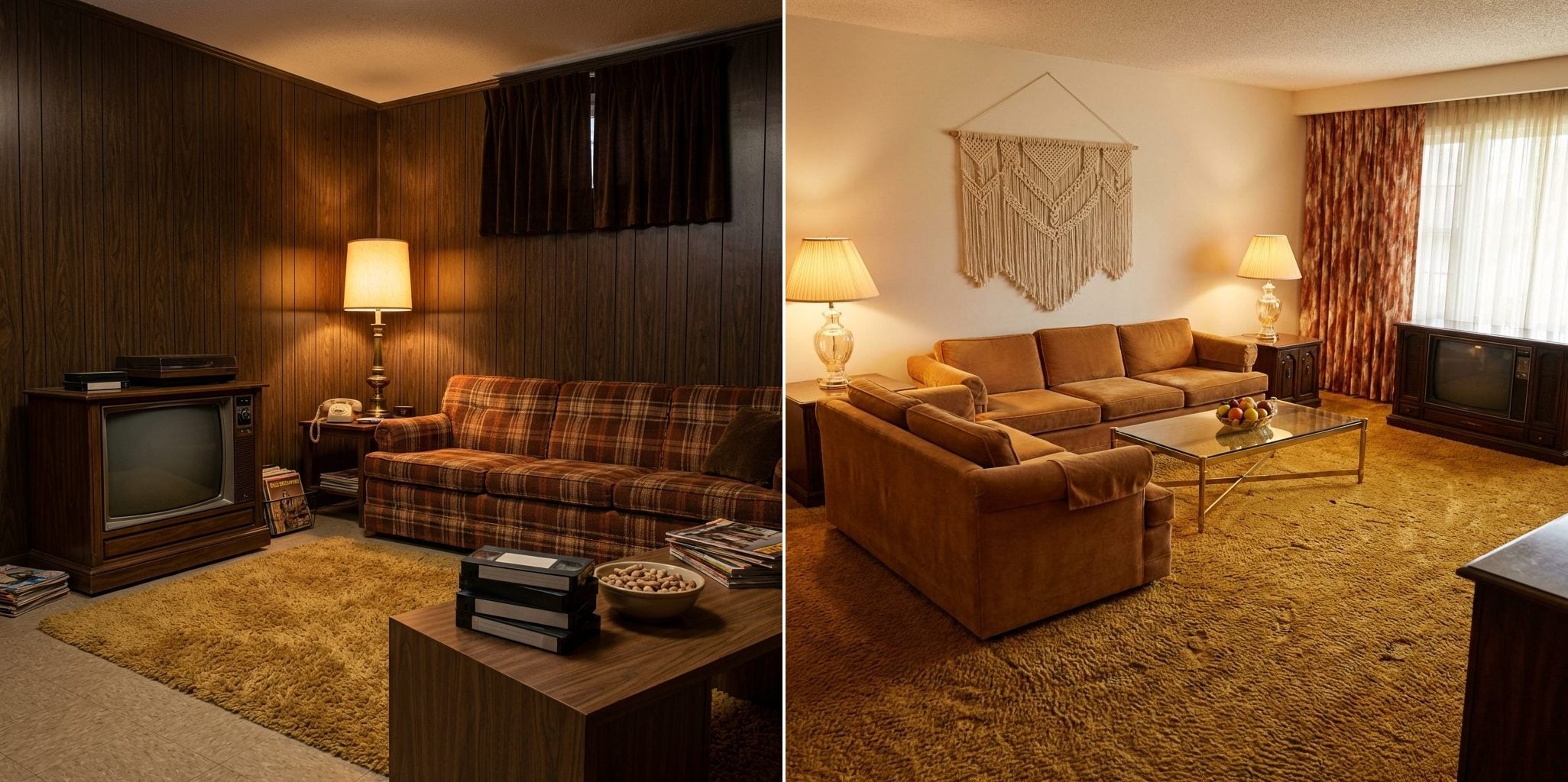
There was a smell to an ’80s house. Carpet, wood polish, maybe a trace of potpourri from a bowl no one ever refreshed. The lights were warm and slightly dim, the rooms felt full, and nothing was staged for a camera that would never come. These were homes that got lived in, loudly, comfortably, without apology. Before open-concept took a sledgehammer to every interior wall, before “clean lines” became the goal, there were rooms that felt like an actual hug. Here are 39 of them.
Wood-Paneled Walls in the Den or Basement
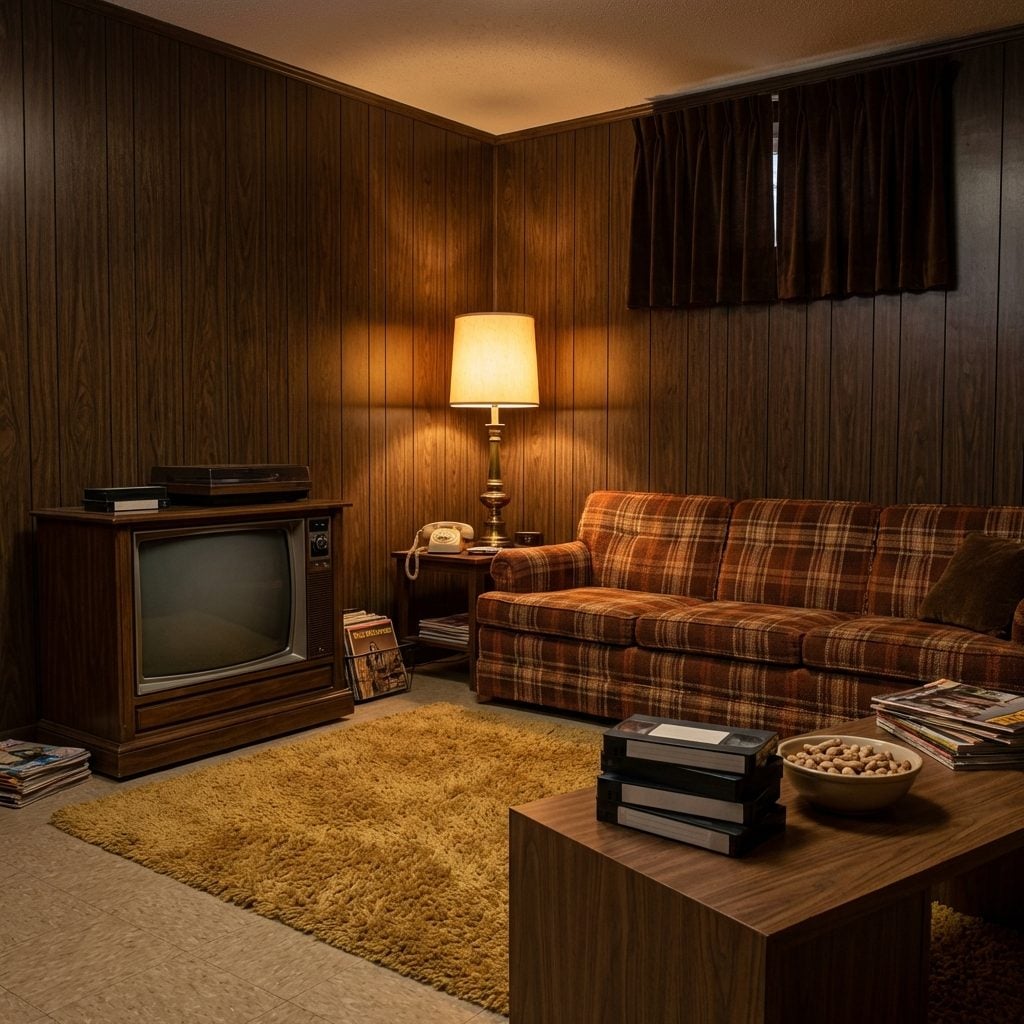
You could smell it before you even hit the bottom step. That particular scent of fake wood grain and slightly damp carpet that meant you’d arrived in the den. The paneling was almost never real wood, it was a thin sheet of something pressed and printed to look like walnut or pine, sold in 4×8 sheets from the hardware store and nailed up over a weekend by someone’s dad who was absolutely certain he was doing a great job.
In order to come up with the very specific design ideas, we create most designs with the assistance of state-of-the-art AI interior design software. Also, assume links that take you off the site are affiliate links such as links to Amazon. this means we may earn a commission if you buy something.
Every panel had that one nail hole at eye level that nobody ever patched. The room was usually dim, always a little cave-like, and completely perfect. That cave feeling wasn’t a design flaw. It was the entire point. No other room in the house felt as private, as contained, as genuinely yours. The wood paneling was doing real psychological work, and we didn’t even know it.
Thick Wall-to-Wall Carpet in Colors That Had Names Like ‘Harvest Gold’ and ‘Burnt Sienna’

It covered everything. Living room, hallway, bedrooms, sometimes the bathroom. The carpet of the 1980s wasn’t a design choice so much as a commitment, a full pledge of allegiance to warmth over practicality. The pile was dense enough to leave footprints, which meant you could always tell which direction someone had walked through a room.
The colors are what really tell the story. Harvest Gold. Avocado. Burnt Sienna. Camel. These weren’t just carpet colors, they were a whole domestic philosophy that said warmth matters more than anything you could spill on it. Bare feet in that carpet on a cold morning was a specific kind of comfort that hardwood floors, for all their current popularity, have never fully replicated.
The Console TV That Was Basically a Piece of Furniture
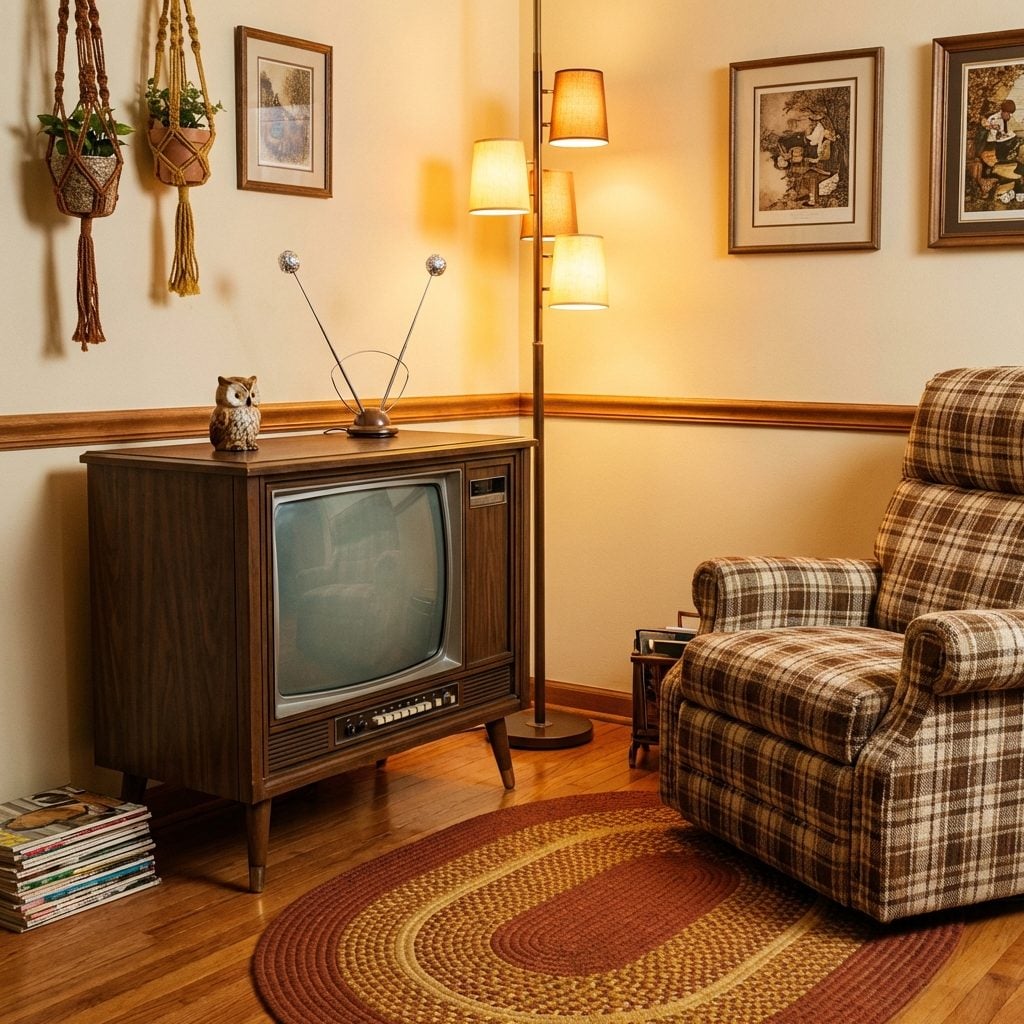
It sat in the corner of the living room like a throne, and in a way, it was. The 1980s console television was a cabinet first and a TV second, a wood-veneer box on four short legs with a screen inset into the front like an afterthought. Some of them had doors you could close over the screen when you weren’t watching, which was the era’s version of a media center design solution.
The thing weighed as much as a refrigerator. Moving day always involved at least one near-disaster on the stairs. Remote controls were just becoming standard, and if you lost one between the cushions it felt like a genuine household emergency. But when that big curved screen lit up with Saturday morning cartoons or the 6 o’clock news, it anchored the whole room in a way that a wall-mounted flat panel simply doesn’t. It had presence.
Crocheted Afghans Draped Over Every Sofa Arm (And Yes, the Recliner Too)
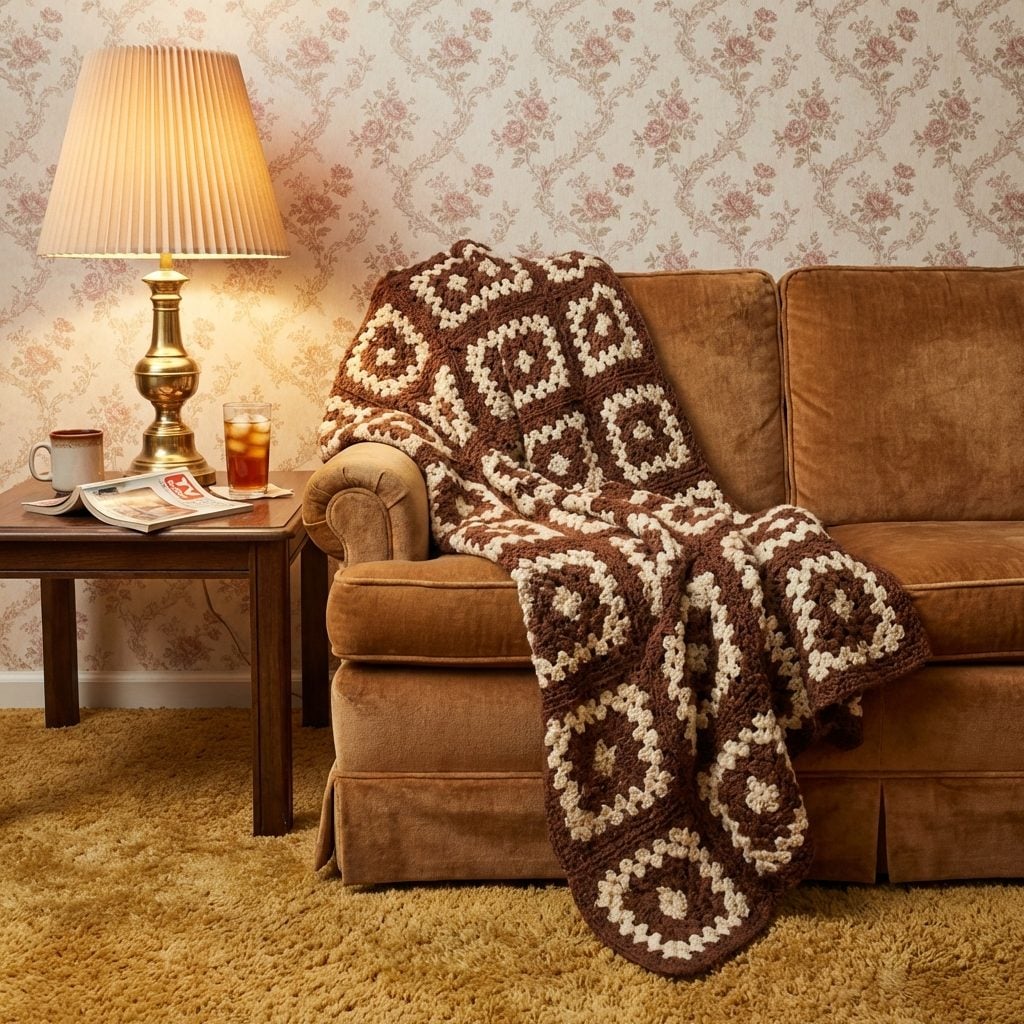
Every grandmother in America had at least three of these, and she made every single one. The crocheted afghan was the 1980s home’s universal signal that someone in this house loves you enough to spend 40 hours on a blanket in variegated brown, orange, and cream yarn. They were always slightly scratchy. You used them anyway.
The draping was never intentional-looking, it was just sort of tossed over the back or the arm of the sofa, one corner trailing down toward the carpet. If company was coming, someone would refold it. If it was just family, it stayed however it landed. That distinction mattered more than it sounds.
The Brick Fireplace With a Chunky Wood Mantel Covered in Family Photos
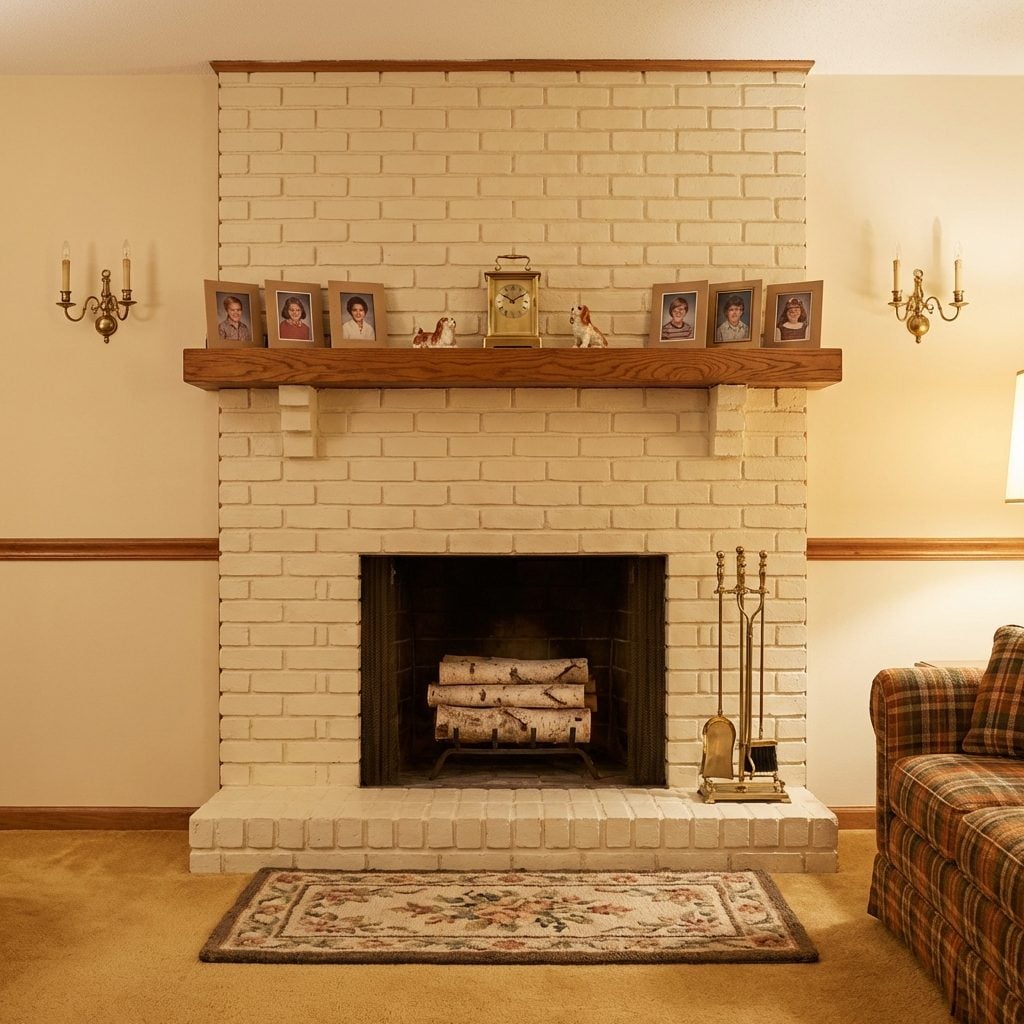
It didn’t always work. By the 1980s, plenty of these fireplaces had been converted to gas, or just quietly abandoned in favor of central heating. But it didn’t matter, the fireplace was still the physical center of the living room in a way that nothing has replaced. The mantel was the family’s display case: school photos in cardboard frames, a brass clock, maybe a ceramic cat, and at least one candle that had never been lit.
The brick itself was usually painted. Cream, or that particular shade of off-white that every house seemed to independently choose. Around the holidays, garland got draped across the mantel with clip-on ornaments, and for about three weeks the whole room smelled like pine. That smell is still a direct line back to being eight years old on Christmas morning.
Wallpaper With Tiny Repeating Patterns Covering Every Single Room
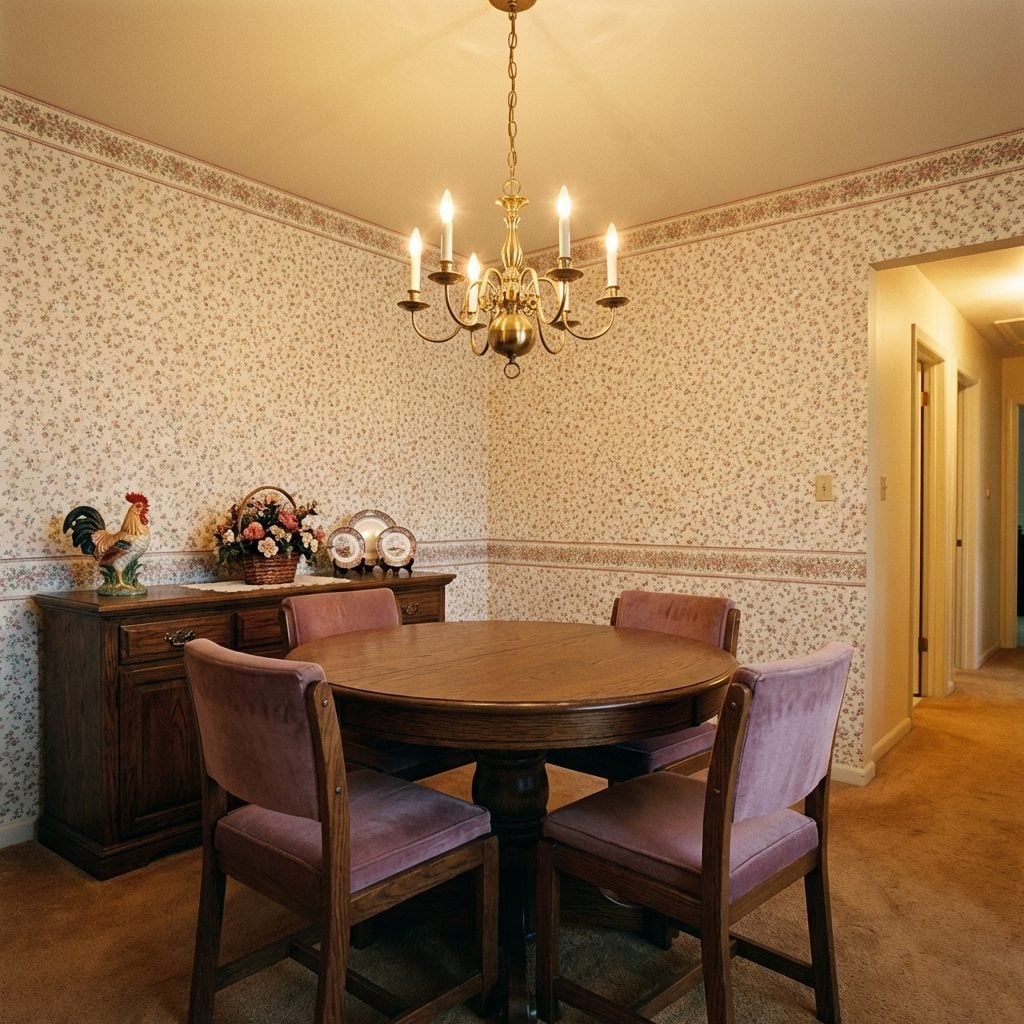
Not one room. Every room. The hallway had a different pattern than the dining room, which had a different pattern than the powder bathroom, where someone had chosen a pattern with small geese wearing ribbons around their necks. Nobody questioned this. It was simply how walls worked in the 1980s.
The paste smell during installation was half the memory, sharp and slightly sweet, filling the house for a week while the new pattern went up.
The most common patterns were small-scale: tiny florals, micro-checks, thin stripes with a small repeating motif, or the Colonial-style toile that showed up in every kitchen that wanted to feel fancy. The seams never quite lined up at the corners. That was fine. Nobody was looking that closely.
A Kitchen With Knotty Pine Cabinets and That Linoleum That Pretended to Be Tile
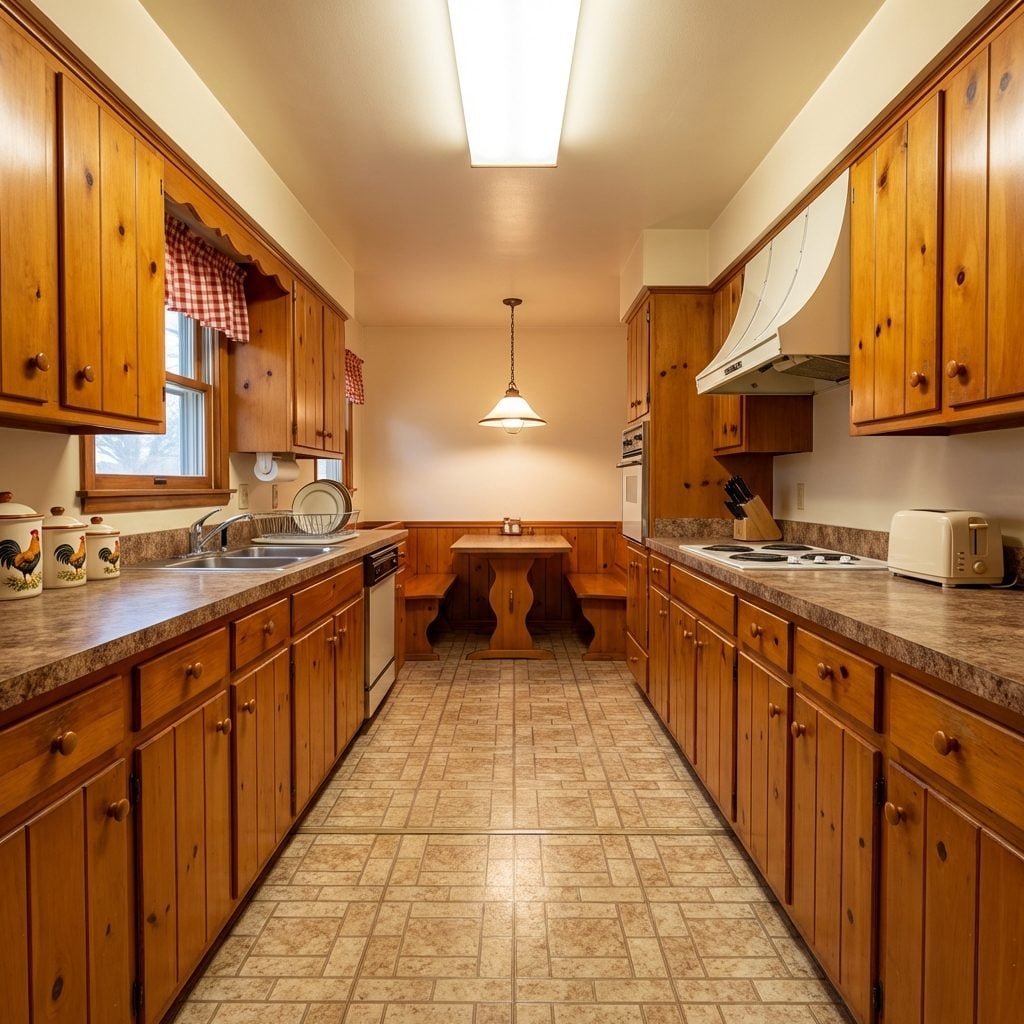
The knotty pine cabinets had a particular amber varnish that deepened over the years until the whole kitchen glowed like the inside of a lantern. Every cabinet door had a small round wooden knob, usually slightly loose, and a magnetic latch that made a satisfying click when you closed it. The grain of the pine had those dark knot circles that you’d trace with a finger while waiting for dinner.
Below it all: linoleum. Specifically, the kind printed to look like ceramic tile in a beige-and-brown pattern that fooled absolutely no one but was deeply comfortable underfoot and would survive anything. It was usually slightly warm from the dishwasher heat, and the seam in the middle of the kitchen floor was always where it started to lift first.
The Waterbed With the Padded Velvet Headboard That Took Three Hours to Fill
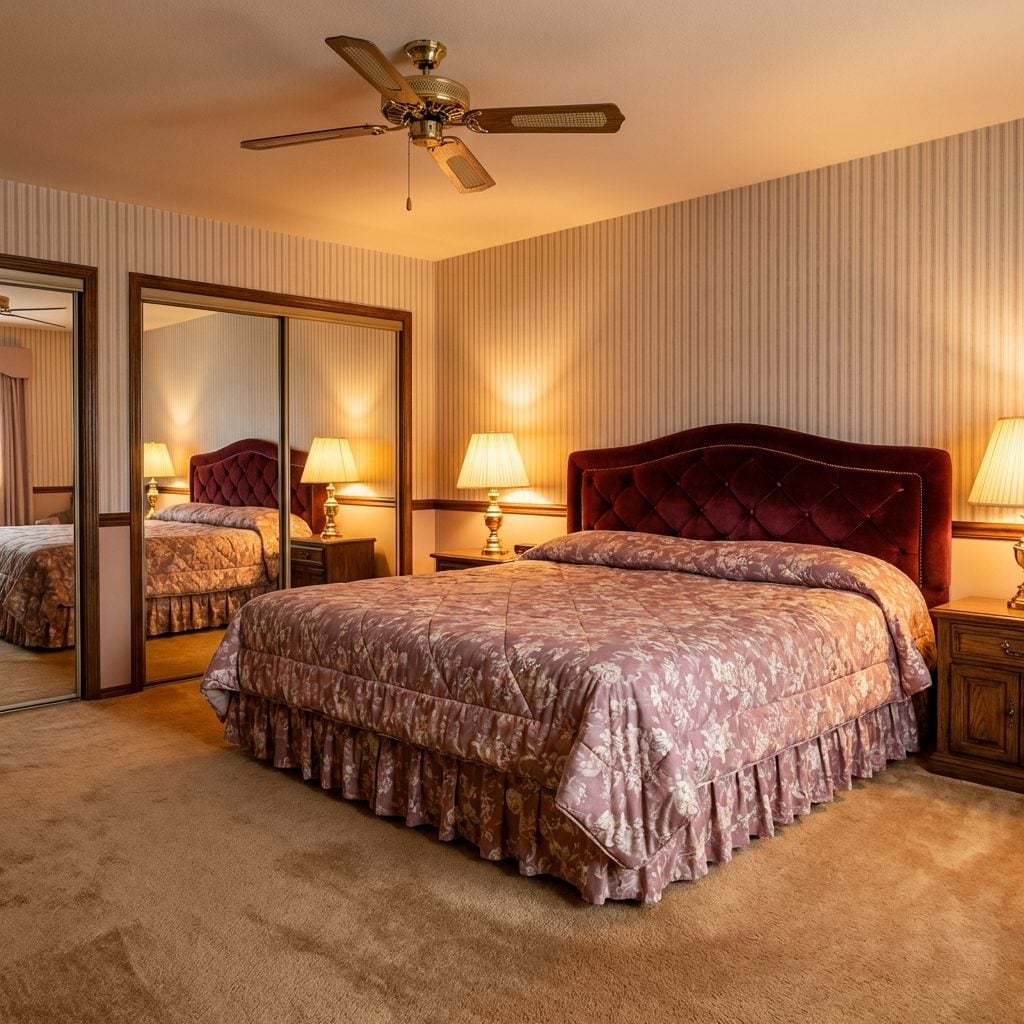
Filling it involved a garden hose run through the bedroom window, a conditioner packet added to prevent mildew inside the vinyl bladder, and an entire Saturday afternoon spent waiting. The waterbed was a commitment in every sense. It weighed approximately 1,500 pounds when full, which meant you had to call the landlord first and you were never truly moving it again.
The padded headboard was almost always velvet, navy, burgundy, or that particular plum color that appeared in 1980s master bedrooms alongside mirrored closet doors and a dust ruffle with a matching bedspread set. The sloshing sound when you got in was either deeply soothing or deeply annoying, and there was no middle ground. People who loved waterbeds loved waterbeds with a loyalty that made no rational sense.
Built-In Bookshelves Stuffed Completely Full of Real Books and Actual Knickknacks
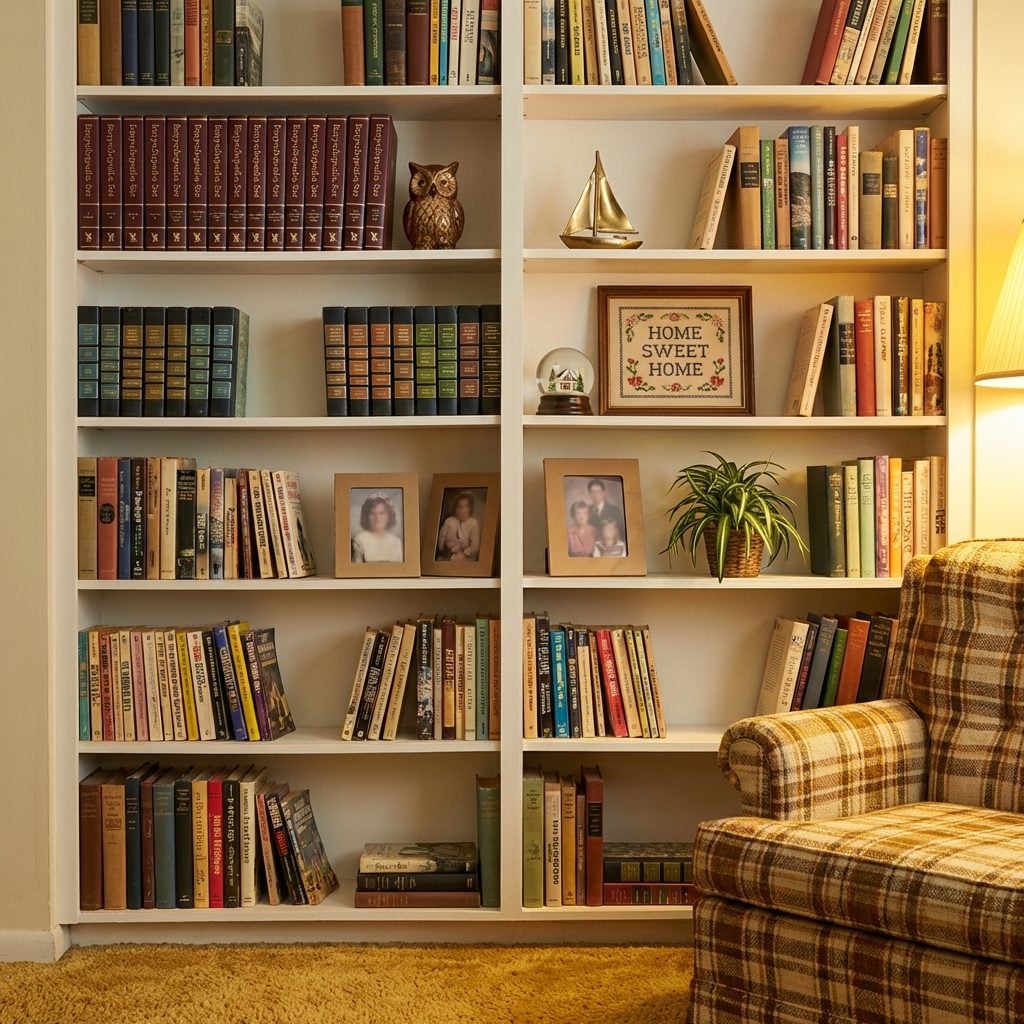
Not styled. Not curated. Just full. The built-in bookshelves of the 1980s home were organized by the logic of accumulation: Reader’s Digest Condensed Books in their matching burgundy sets, a row of encyclopedia volumes missing at least two letters, a few actual novels, some paperback thrillers with bent spines, and then the knickknacks filling every gap. A ceramic owl. A small brass ship. A snow globe from a family vacation in 1977. A framed cross-stitch that someone made and now no one could throw away.
There was no negative space. The 1980s hadn’t discovered negative space yet, and honestly, it was fine. A shelf stuffed to capacity with the physical residue of a family’s actual life reads as warm in a way that a shelf with three objects artfully arranged on it simply does not. This was the original transitional home office aesthetic before anyone called it that.
The Sunken Living Room That Felt Like Its Own Separate World
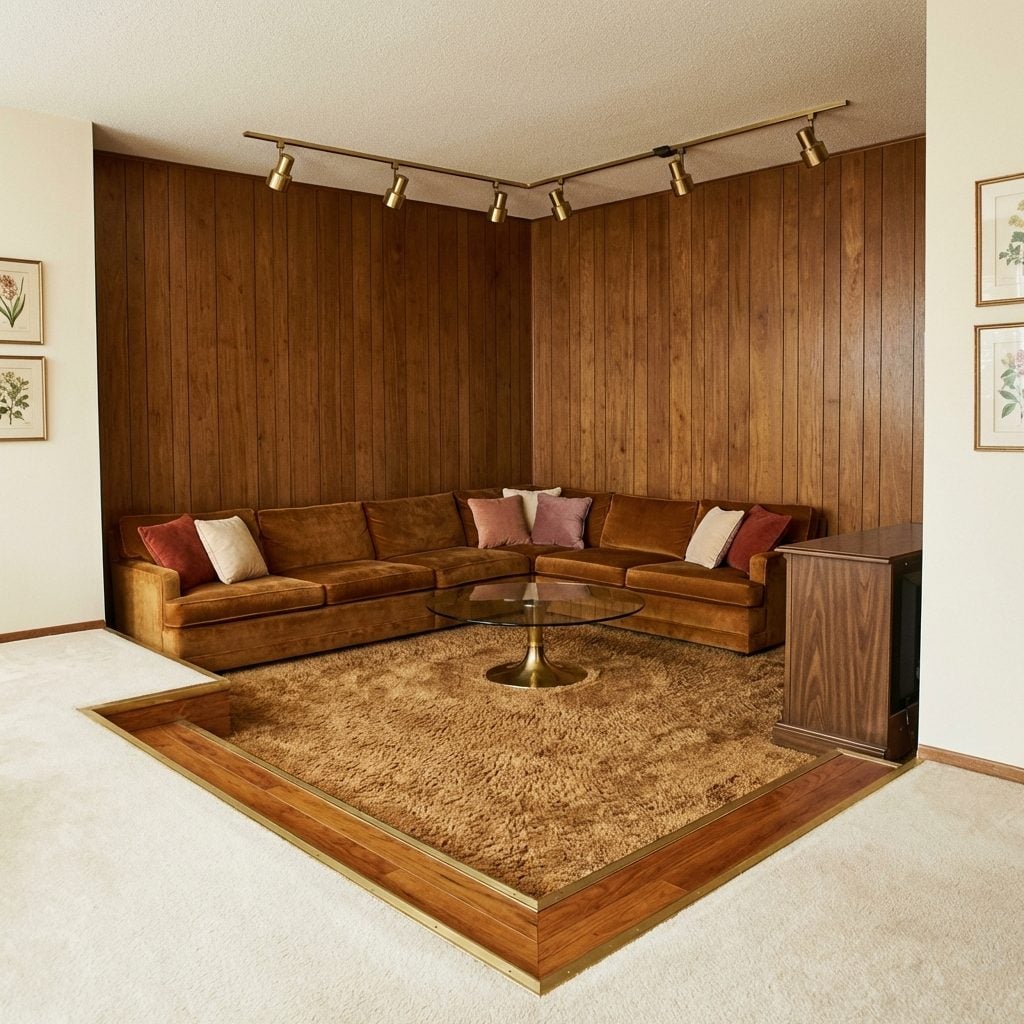
Two or three steps down, and you were somewhere else entirely. The sunken living room was the 1980s home’s architectural statement piece, proof that someone had hired an actual designer, or at minimum had studied a floor plan in a magazine very seriously. The step down created a boundary without a wall, defining the space as the room where you actually sat and talked rather than just passed through.
The furniture inside was always oversized. Sectionals that wrapped around three walls. A glass coffee table with a chrome or brass base. Throw pillows in quantities that seemed impractical until you were actually sitting in there and realized you needed every single one of them. The carpeting in the pit was usually a shade deeper or plusher than the rest of the room, which added to the sense that you were descending into something specifically cozy.
Nobody builds these anymore, liability concerns, open-concept floor plans, and changing taste all conspired against them. But for one golden decade they were the floor plan feature that made a house feel genuinely architectural, and stepping down into one as a kid felt like entering a room that was just for being comfortable in. That’s a harder thing to design than it looks.
The Dedicated Phone Nook With a Padded Bench Seat
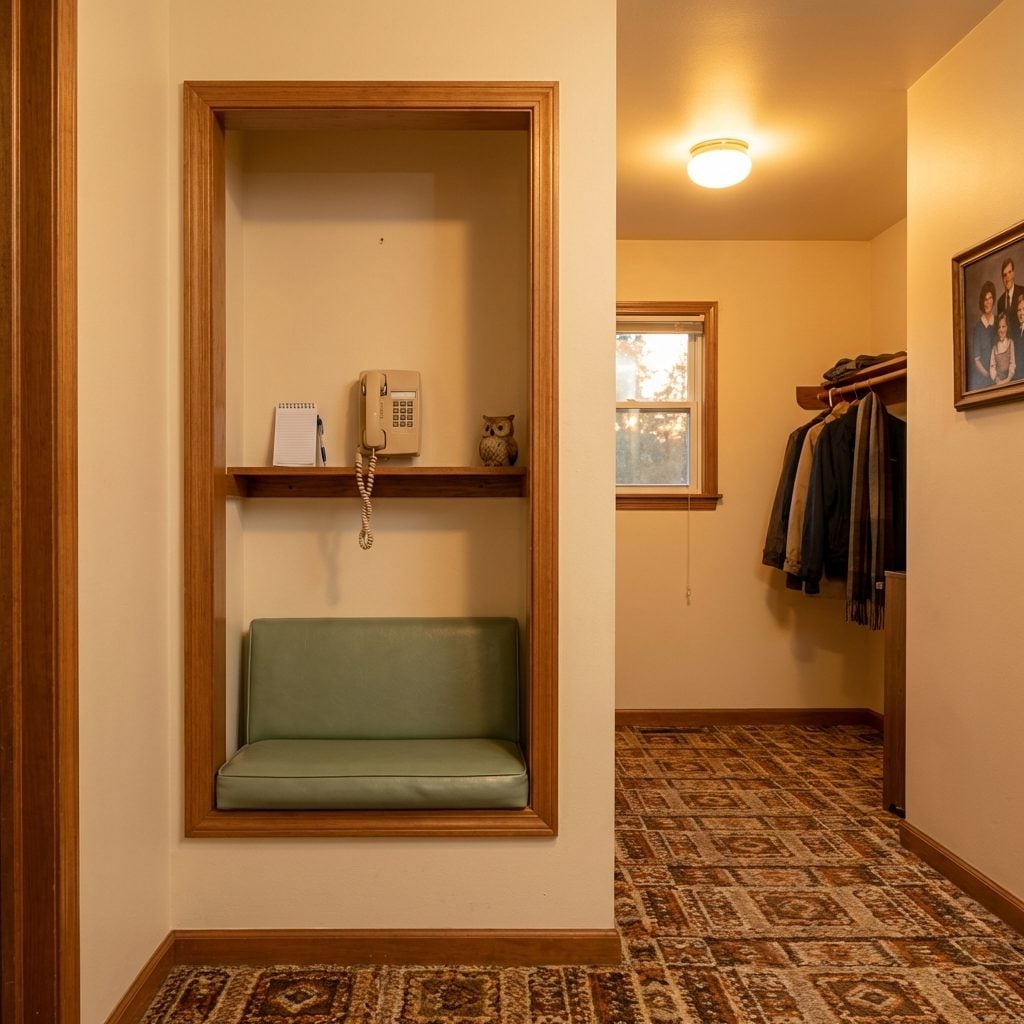
Built right into the hallway wall like the house had always planned for it, the phone nook was a little alcove of domestic ritual. The bench seat was usually upholstered in something practical, a vinyl the color of wheat, or a needlepoint cushion your mom recovered twice. The phone itself sat on a shallow shelf above it, cord coiled like a sleeping snake, a notepad and pen perpetually nearby.
This was the one spot in the house where conversations actually happened. You’d sit down, tuck one leg under you, and stay there for forty-five minutes. No wandering. No speakerphone. Just you, the wall, and whoever was on the other end. The nook disappeared when cordless phones arrived, and something quietly unhurried went with it.
Popcorn Ceilings That Somehow Felt Homey, Not Offensive
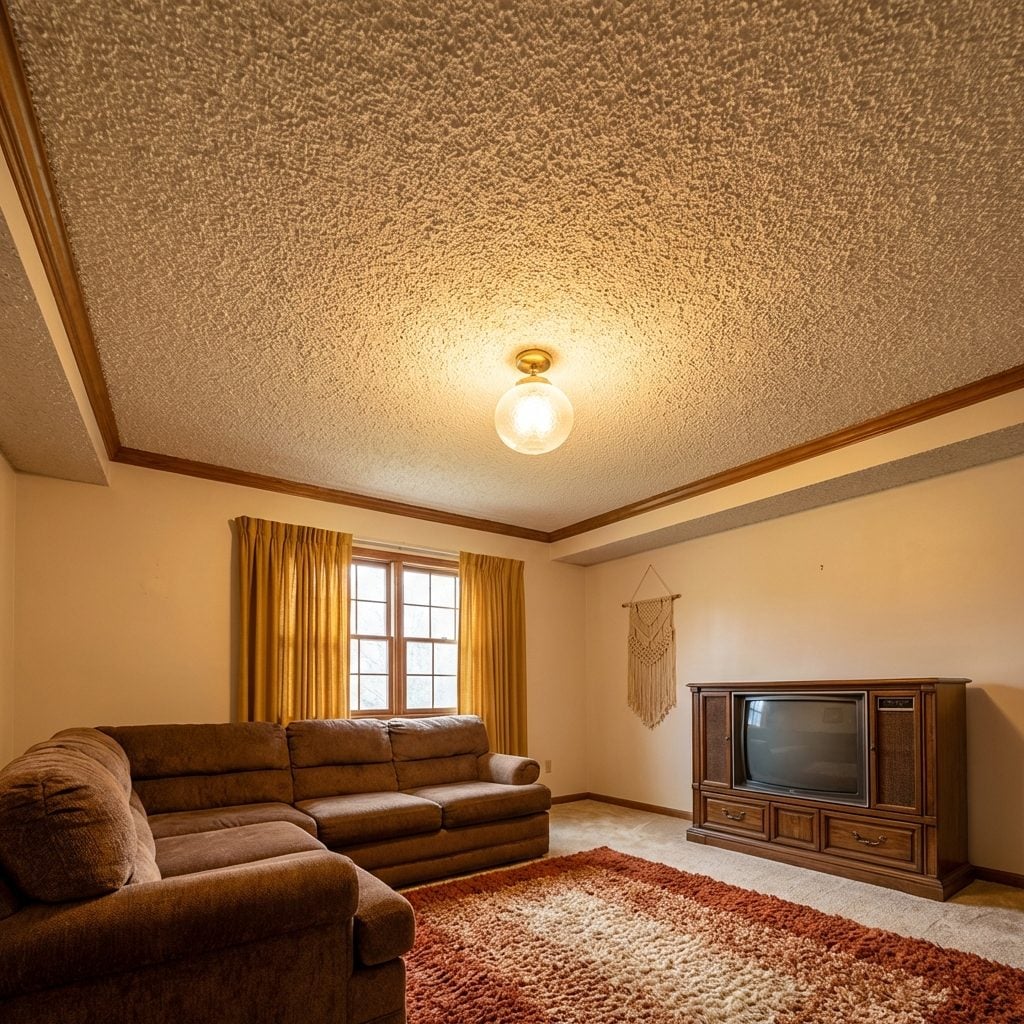
Yes, they collected dust. Yes, they were a nightmare to repaint. And yes, if a piece ever fell into your cereal bowl, you just quietly threw the whole bowl away and never spoke of it. But popcorn ceilings, that rough, stippled texture sprayed across every suburban bedroom and living room in America, had a way of absorbing sound that made rooms feel genuinely quieter and more contained.
Under incandescent light, that texture caught shadows in tiny pockets, giving ceilings a kind of visual warmth that flat drywall never quite replaces. We only started hating them when we learned about asbestos. Before that? Nobody gave them a second thought. They were just the ceiling.
Ceramic Tile Countertops in Harvest Gold or Avocado Green
🔥 Would you like to save this?
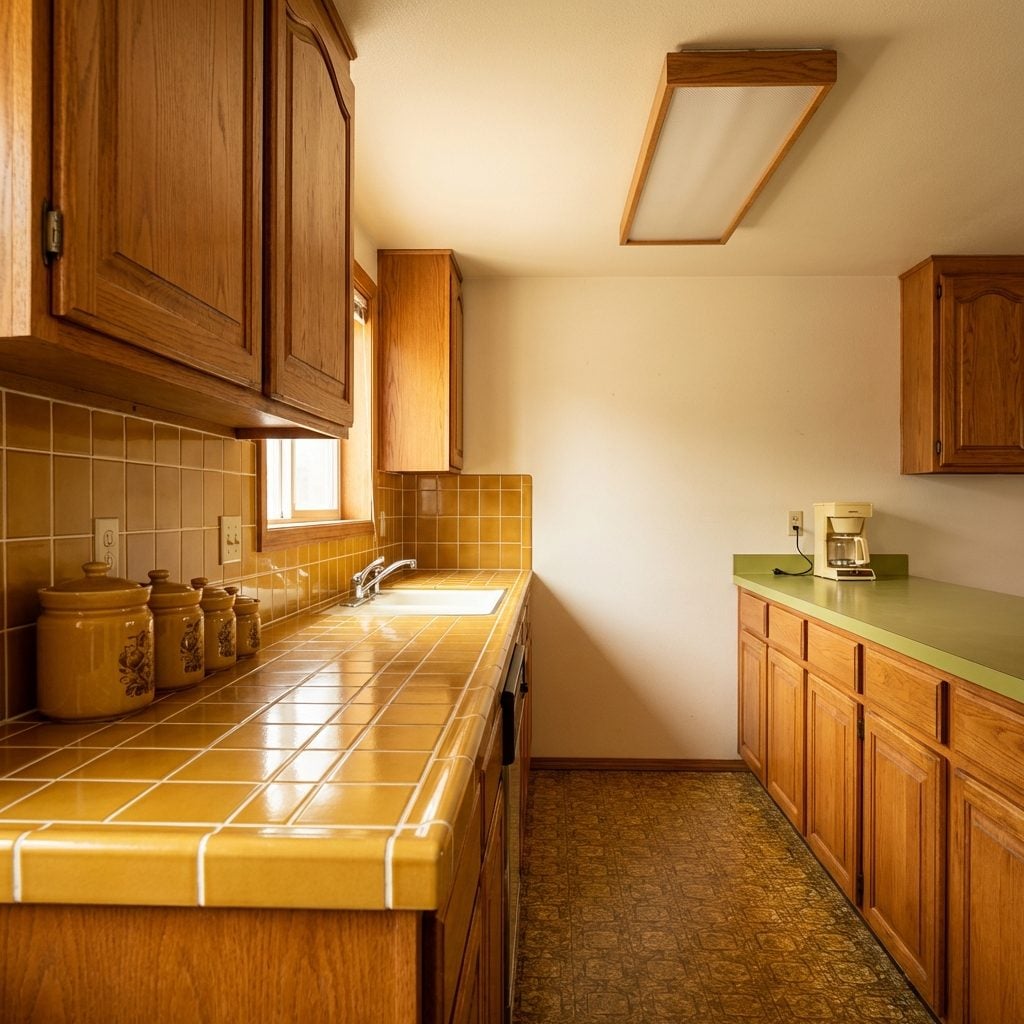
Those grout lines. You know exactly which grout lines. The ones that turned grey no matter what you scrubbed them with, that ran in a grid across every inch of counter space and collected crumbs with a dedication that bordered on professional. Ceramic tile countertops in harvest gold or avocado green were the signature surface of the 1980s kitchen, and they were everywhere.
The tiles themselves were glossy and oddly cheerful. They clicked when you set a coffee mug down. The color names alone, harvest gold, avocado, coppertone, read like a paint chip from a different civilization. They paired with wooden cabinet doors that had routed edges, and together the whole kitchen felt warm and specific and completely uninterested in being trendy.
The Breakfast Nook With Built-In Banquette Seating
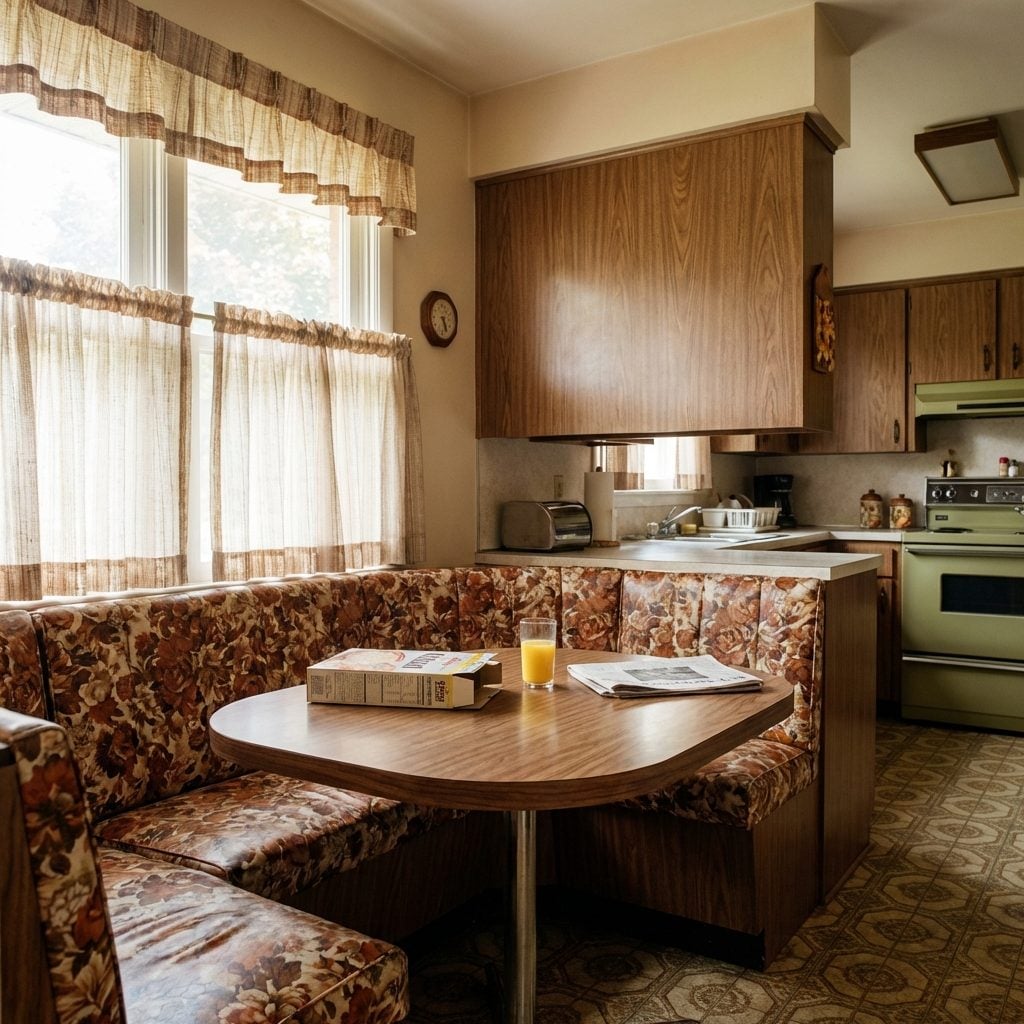
Tucked into the corner where the kitchen met whatever you called the room next to the kitchen, the breakfast nook was its own small world. The banquette seats were always upholstered in something wipeable, a vinyl print with tiny flowers, or a nubby tweed in brown and orange, and underneath those seats was a row of hinged storage compartments nobody ever opened after the first year.
The table was usually round or a rounded rectangle, with a laminate top in a wood grain pattern. Morning light came through a window directly above. This was where cereal happened. Where permission slips got signed at the last minute. Where the radio played during homework and nobody turned it off.
The breakfast nook was never just for breakfast. It was the kitchen’s living room, the place where the day actually started.
Track Lighting Aimed Directly at a Mirrored Wall
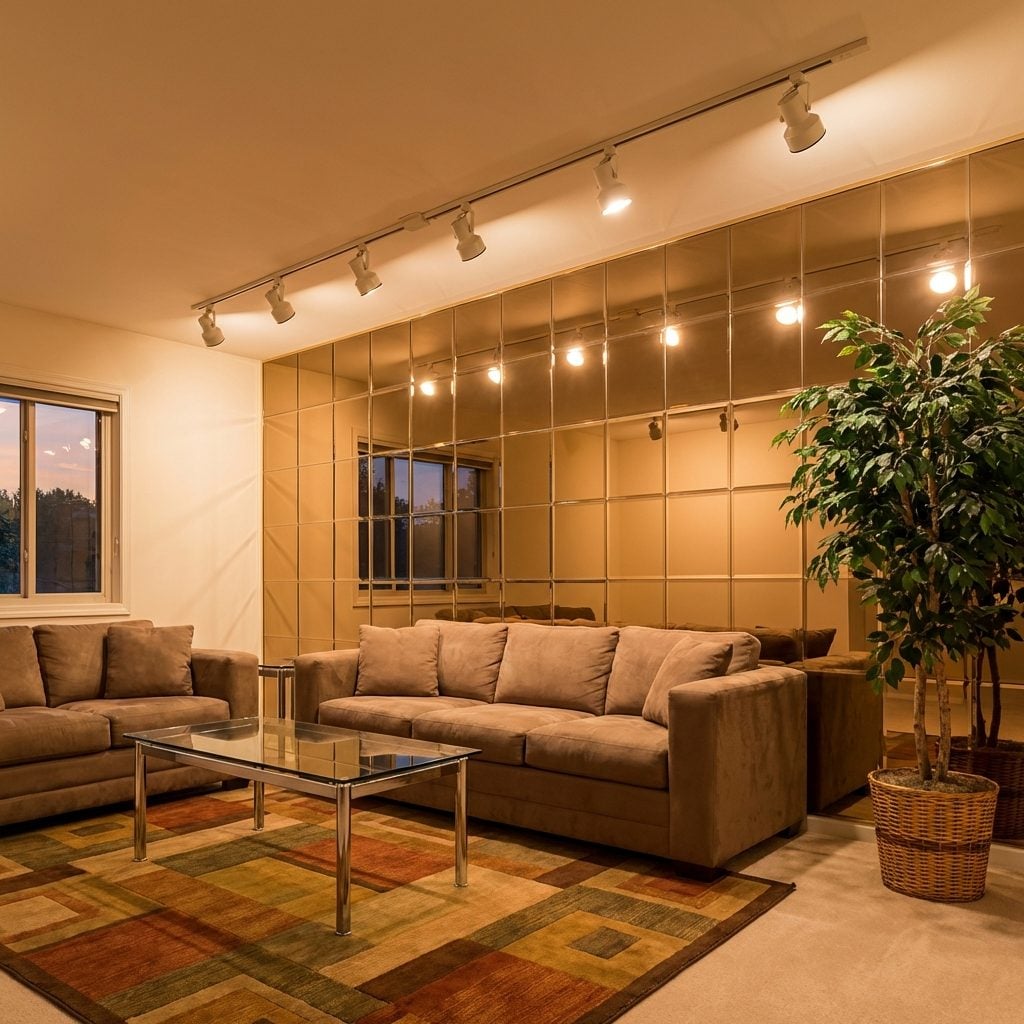
This was the 1980s home design equivalent of a power move. A strip of track lighting on the ceiling, each can-shaped head rotated at a precise angle toward a full wall of mirror tiles, turning a medium-sized living room into something that felt twice the size and three times as glamorous as it had any right to be.
The mirror tiles were usually 12-by-12 inch squares, set in a grid, occasionally with a very slight bronze or smoked tint. The light bounced between them and the warm incandescent bulbs in the track fixtures until the whole room glowed in a way that was deeply flattering and inexplicably dramatic. It was essentially a disco for people who had mortgages.
Sliding Glass Doors With Heavy Curtains Leading to the Wood Deck
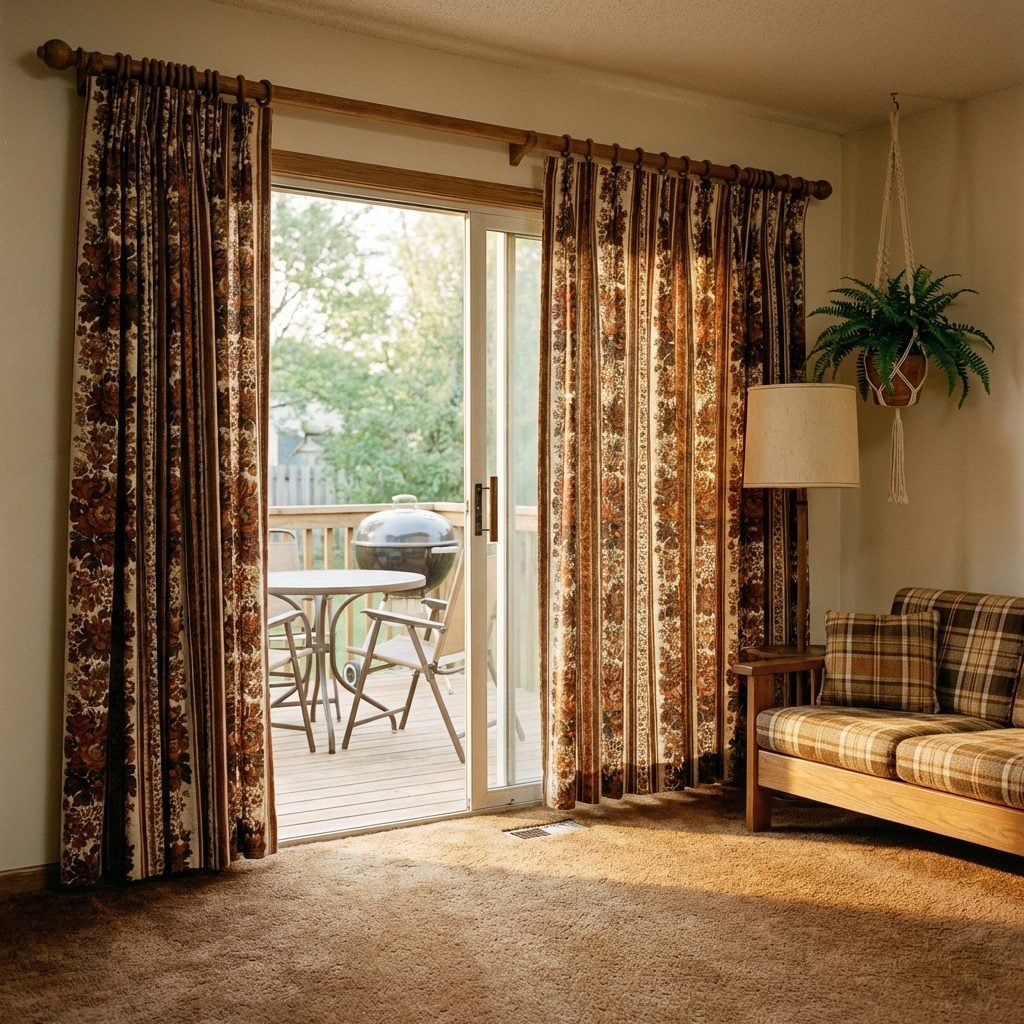
The sliding glass door to the back deck was the house’s main character. It rattled slightly in the frame when the wind picked up. The track at the bottom collected an impressive amount of debris, dead bugs, carpet fuzz, a rogue crayon, and required a specific shoulder-and-hip technique to open smoothly. You just knew how to do it.
The curtains were the real architectural statement: heavy, floor-length panels in a bold print, maybe a large floral, maybe vertical stripes in brown and cream, hanging from a chunky wooden rod. When the afternoon sun came through, the fabric cast colored shadows across the carpet and turned the whole room gold.
Beyond the glass: a pressure-treated wood deck with a round umbrella table, a Weber grill in the corner, and the particular smell of sun-warmed wood that meant summer.
The Shag Rug in Front of the Fireplace Where Everyone Ended Up on the Floor
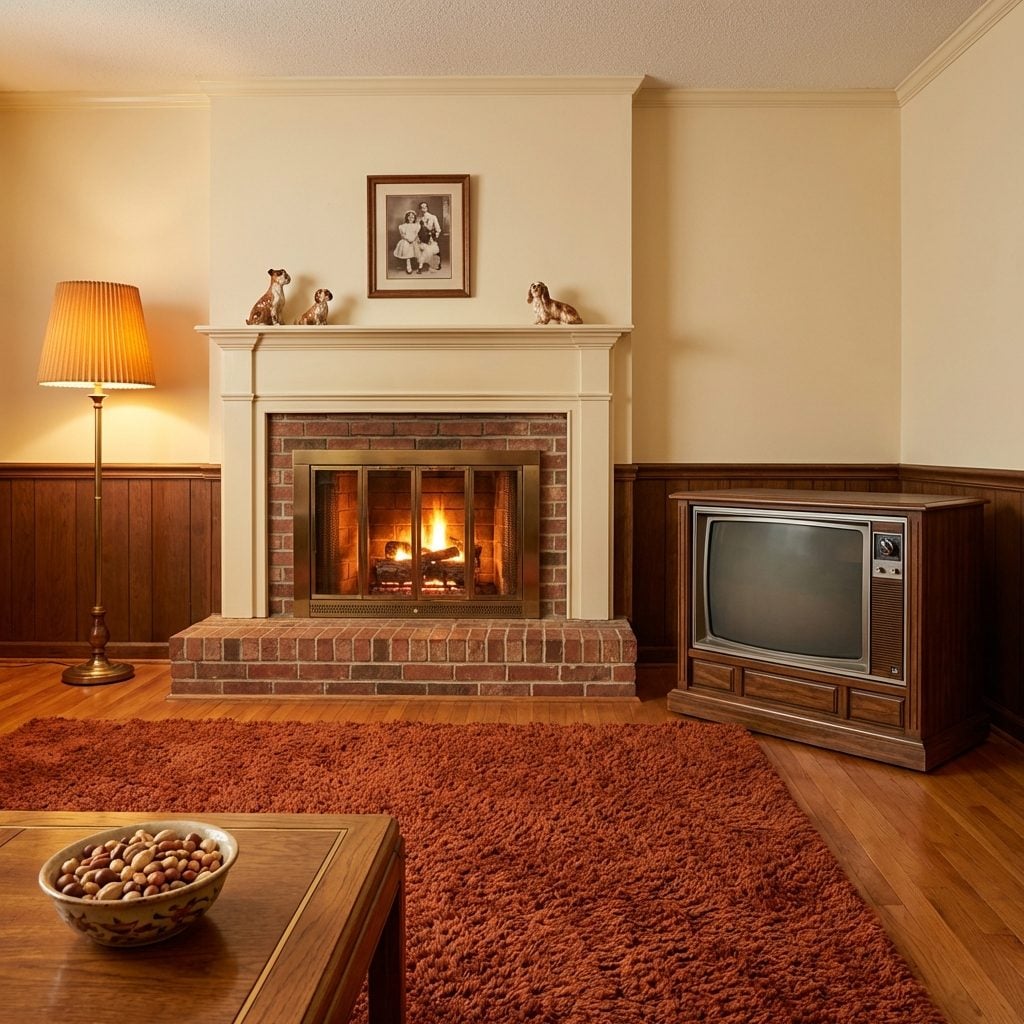
Nobody planned to sit on the floor. And yet, on any given Friday evening in a 1980s house, at least two people were lying on that shag rug in front of the fireplace, propped up on elbows, watching TV. The rug was thick enough to be genuinely comfortable and came in colors that only made sense in the context of that decade: rust, caramel, chocolate brown, occasionally a deep teal that the catalog had called “peacock.”
The fireplace behind it was usually brick, with a raised hearth that served as informal seating overflow. The combination, warm fire, deep-pile rug, low light from a single floor lamp, produced a specific kind of coziness that no home design trend since has quite replicated. It worked because it was unpretentious. You just got down on the floor and stayed there.
The Wet Bar Stocked With a Crystal Decanter Set
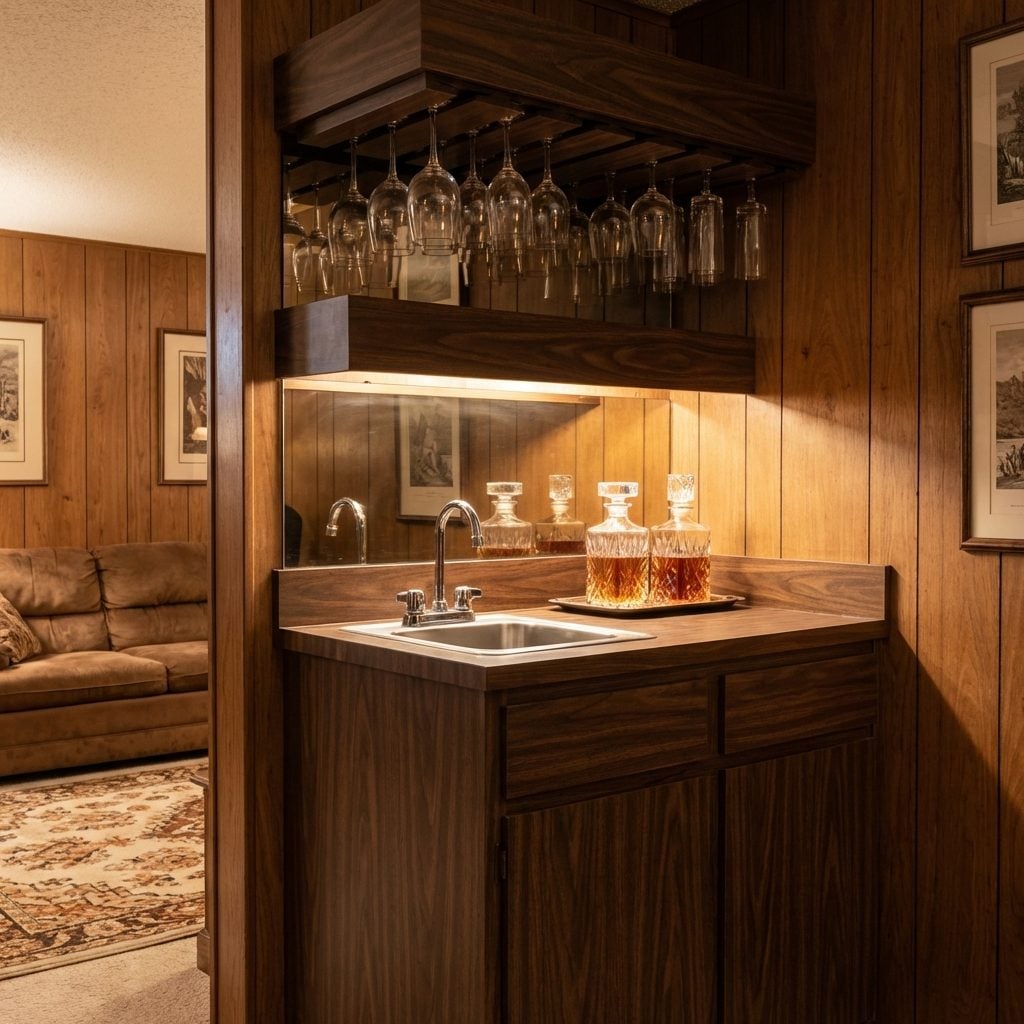
The wet bar was aspirational real estate. Usually built into the corner of the family room or formal living room, it had a small stainless sink, a mirrored back panel, and a row of glasses hanging upside down from a wooden rack overhead. On the counter: a crystal decanter set filled with something amber, arranged with the confidence of people who entertained seriously.
The decanters caught light from the small recessed fixture above the bar and threw tiny rainbows across the laminate countertop. Whether anyone actually used them regularly or they were mostly decorative is a question best left unanswered. What mattered was that they were there, and they made the house feel like the kind of place where things happened.
Macramé Plant Hangers Claiming Every Sunny Corner
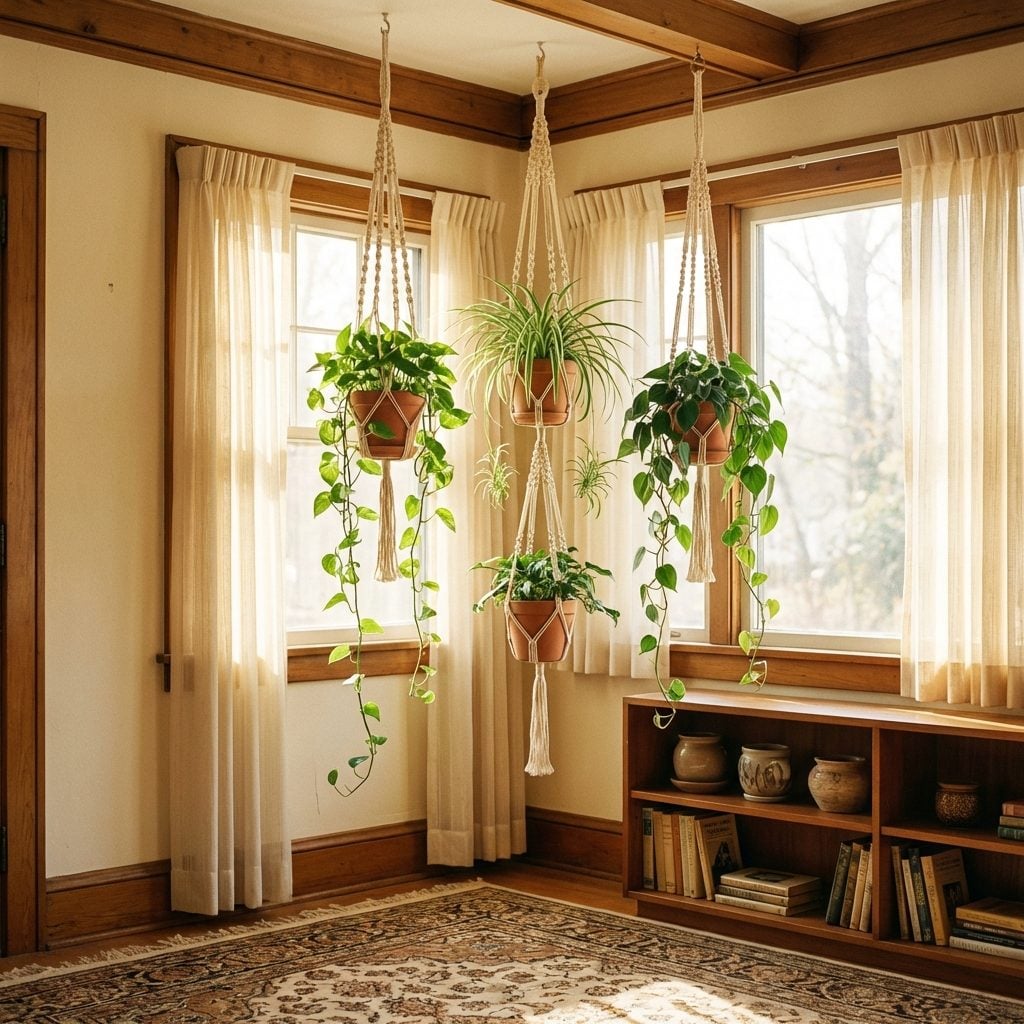
Knotted from natural cotton cord, hanging from a wooden dowel or a single ceiling hook, the macramé plant hanger was the 1980s home’s declaration that it cared about plants and also about craft. They appeared in clusters near windows, in bathroom corners, beside sliding glass doors, in any spot where light pooled and a hanging pot of pothos or spider plant could drape its runners dramatically downward.
Your aunt made hers. Your neighbor bought hers from a craft fair. Either way, they were everywhere, and they worked, visually, in a way that’s easy to forget now. That knotted, organic texture against a cream or wood-paneled wall added something handmade and warm that no transitional home office minimalism has ever quite replaced.
The Bay Window With a Padded Window Seat and a Pile of Throw Pillows
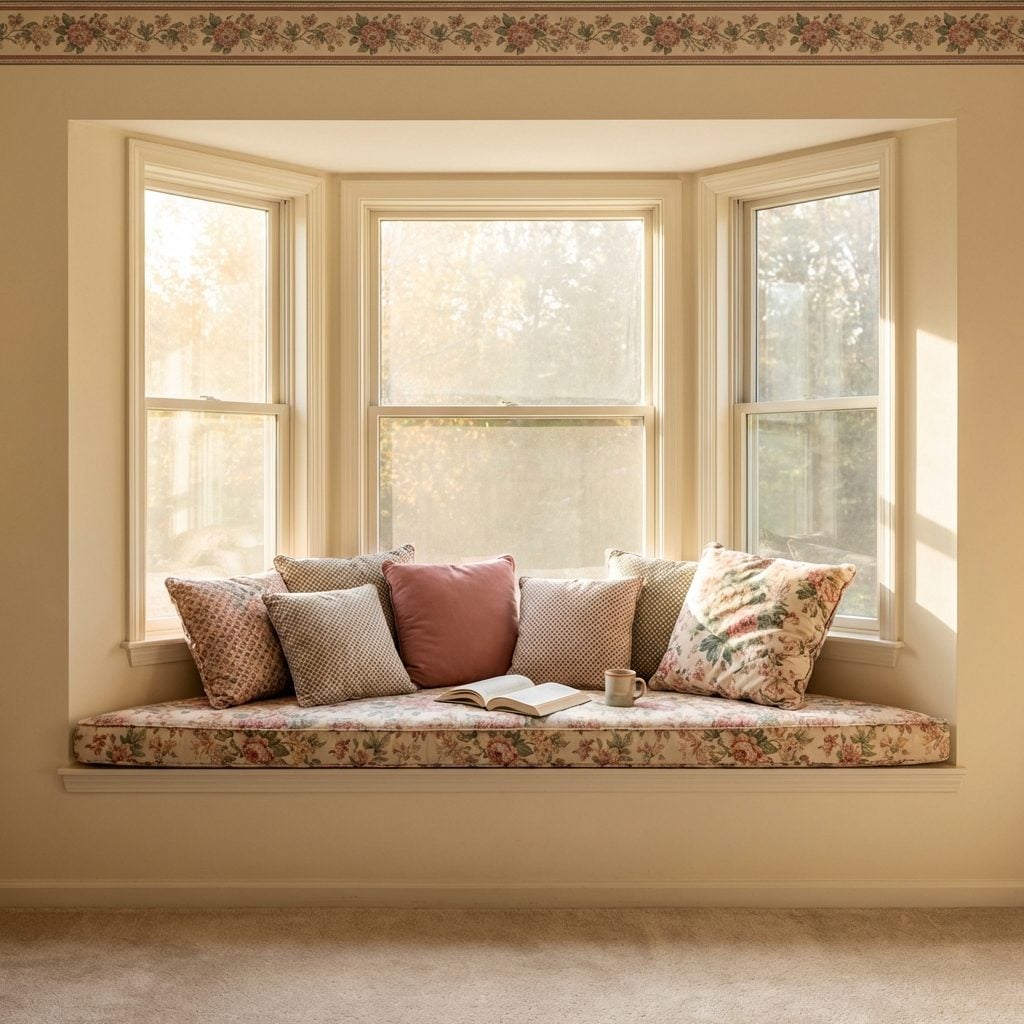
Three angled panes of glass jutting out from the front of the house, capturing light from multiple directions at once, the bay window was the most desirable feature in any 1980s home, and everyone who had one knew it. The built-in window seat below was padded with a cushion in a floral chintz or a small-scale geometric print, and it was covered in throw pillows that never quite matched but always looked intentional together.
This was reading territory. Cat-napping territory. The spot you went to when it was raining and you wanted to watch it without being in it. The window seat cushion always had a slight give that regular chairs never achieved, and the light at midday was the best light in the house.
Wainscoting Painted in Warm Cream or the Palest Butter Yellow
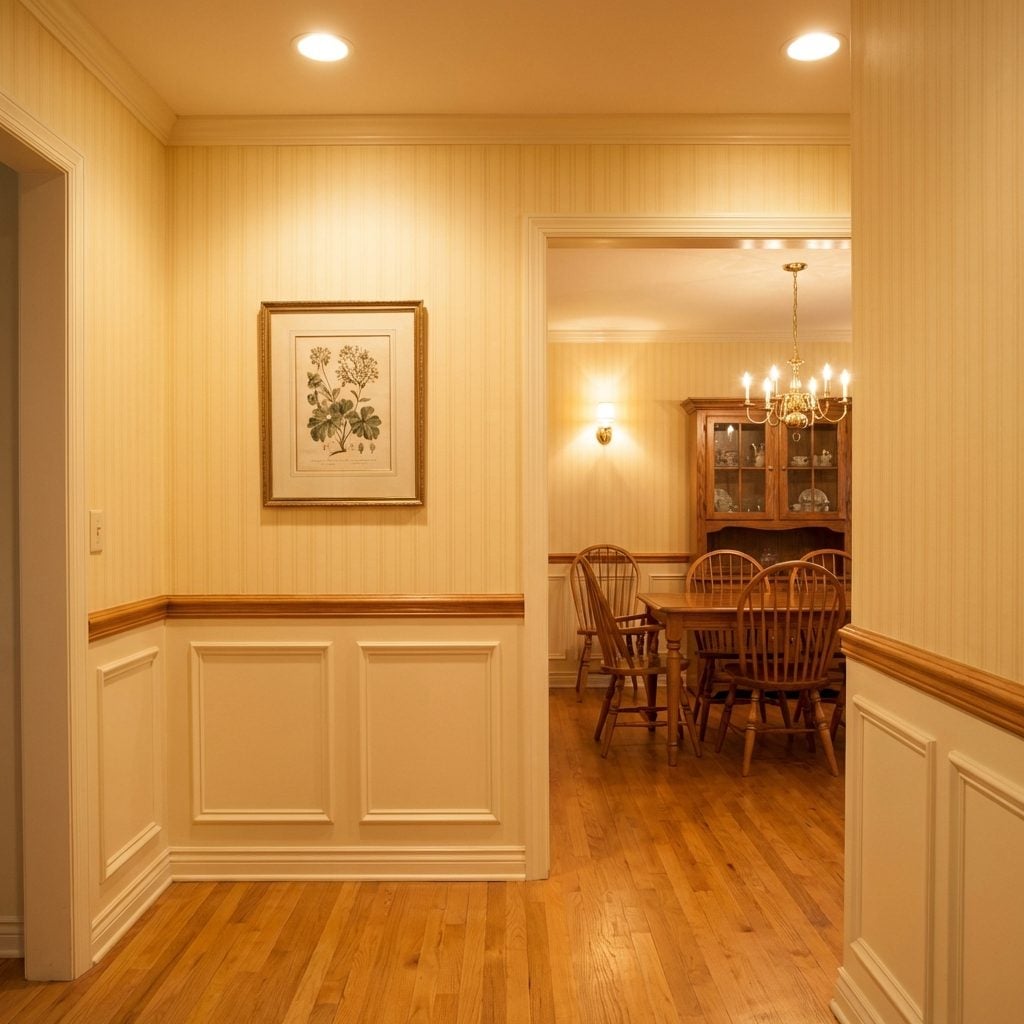
Raised panel wainscoting running chest-high along the walls of the dining room or hallway, painted in a warm cream, an antique white, or occasionally the softest butter yellow, was one of those details that registered subconsciously rather than consciously. You didn’t notice it directly. You just knew the room felt more finished, more solid, more like it meant something.
The paint color mattered. Not a bright white, something warmer, slightly aged, that picked up the amber light from the dining room fixture overhead. The cap rail at the top was where people rested their hands, and you could always find the slight shine of that touch-worn spot near the doorframe.
Drop Ceilings in the Basement Rec Room With Those Wood-Look Panels
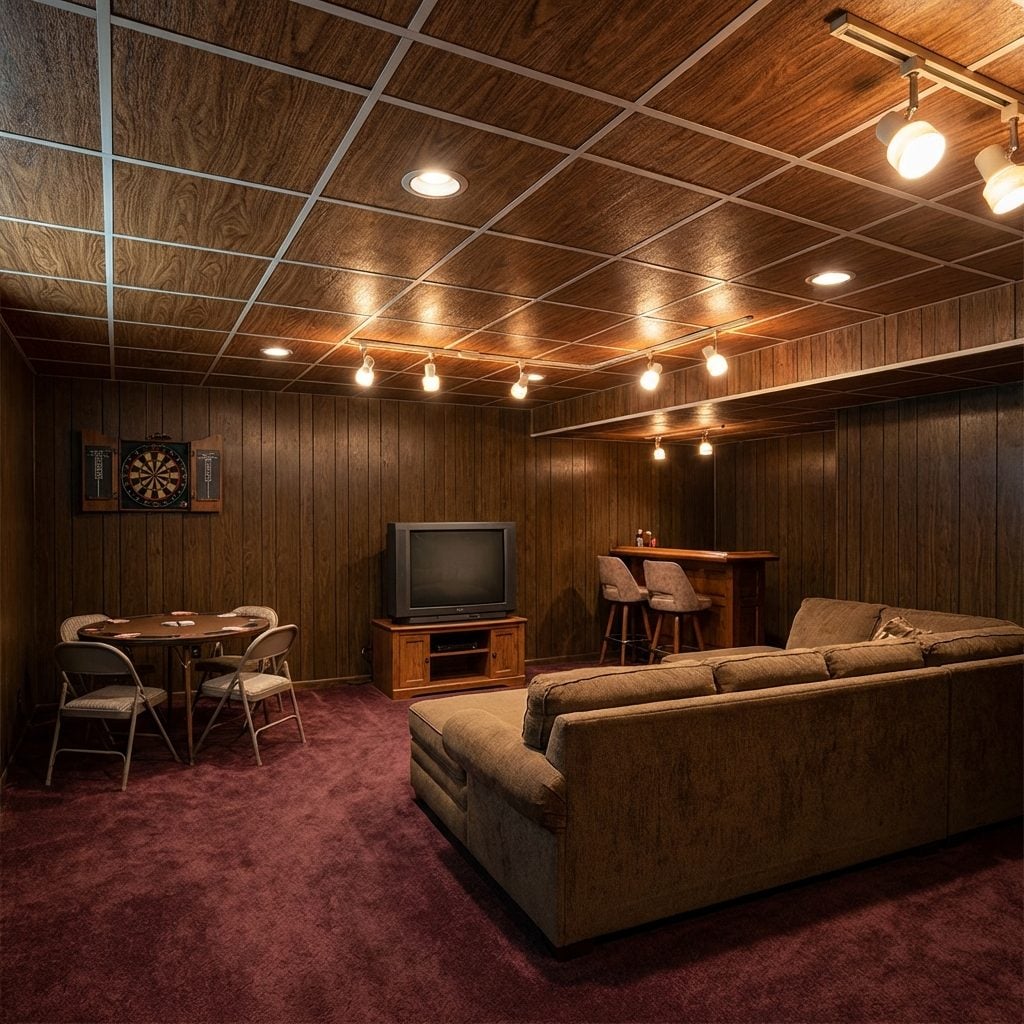
Down the carpeted stairs, through the door that stuck a little in summer, and into the basement rec room, where the ceiling was a grid of suspended metal track holding acoustic tiles that were either flat white or, in the better basements, a wood-grain faux-paneled version that tried very sincerely to class things up. They sagged slightly in the corners. They were soft enough to dent with a finger. One tile was always pushed up at an angle from some exploratory moment years prior.
But that dropped ceiling created something real: it lowered the space, made the room feel enclosed and intentional rather than unfinished, and gave the rec room its own identity separate from the house above. Down here was the other television, the card table, the bar stools, the large home gym corner with the bench press nobody used correctly. The basement was its own country, and the drop ceiling was its sky.
The Laundry Chute That Felt Like a Secret Passage
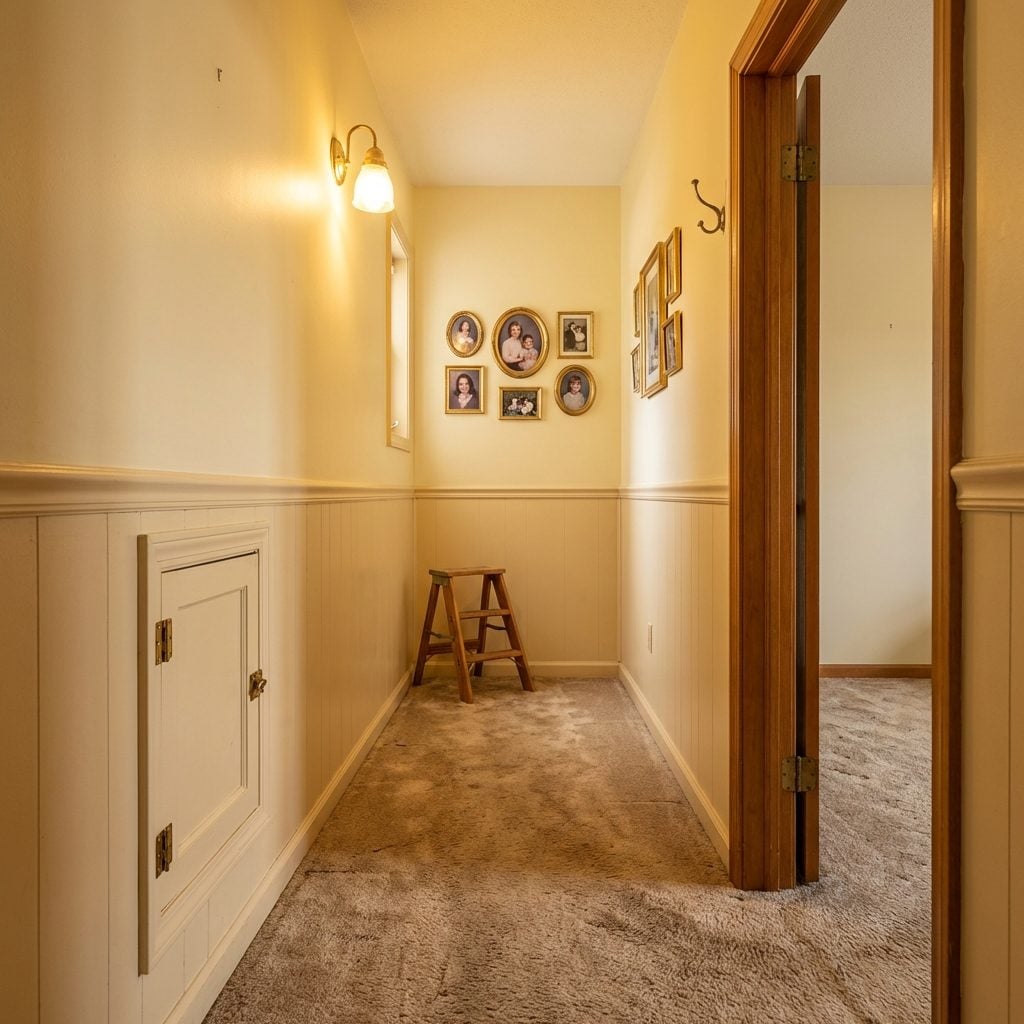
There was a small door in the hallway wall, maybe two feet tall, with a little brass latch. You’d open it, drop a towel in, and hear it swoosh down into the dark. Every kid who grew up in a house with a laundry chute understood instinctively that this was the coolest architectural feature in existence.
The adults saw laundry logistics. We saw a portal. At least one person in every household tried to send something other than clothes down it. At least one person got in trouble for it. The chute almost always delivered into a utility room with a concrete floor and a bare bulb overhead, which somehow made the whole ritual feel even more official.
The Built-In Intercom System That Connected Every Room
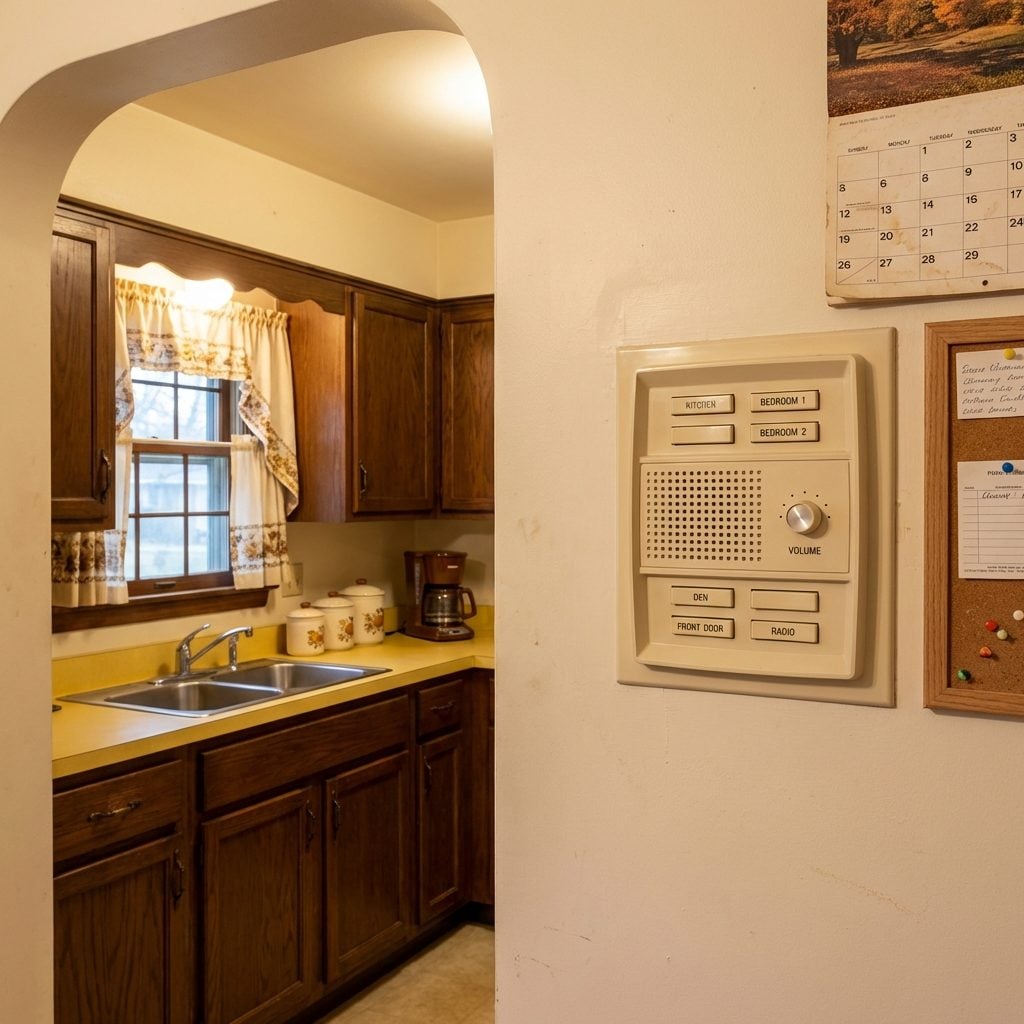
A cream-colored panel mounted next to the light switch, with a row of buttons labeled KITCHEN, MASTER, GARAGE, and one that just said ALL. You pressed the button, held the talk switch, and announced dinner like you were running a small airport.
The sound quality was famously terrible. Every voice came through as a slightly buzzy, muffled version of itself. Yet somehow that made it feel more official. Calling someone on the intercom carried a formality that shouting from the bottom of the stairs simply could not match. By the mid-1990s, most of these had gone silent, left on the wall as a kind of fossil. A few brave homeowners still have them wired up and working, and those people deserve respect.
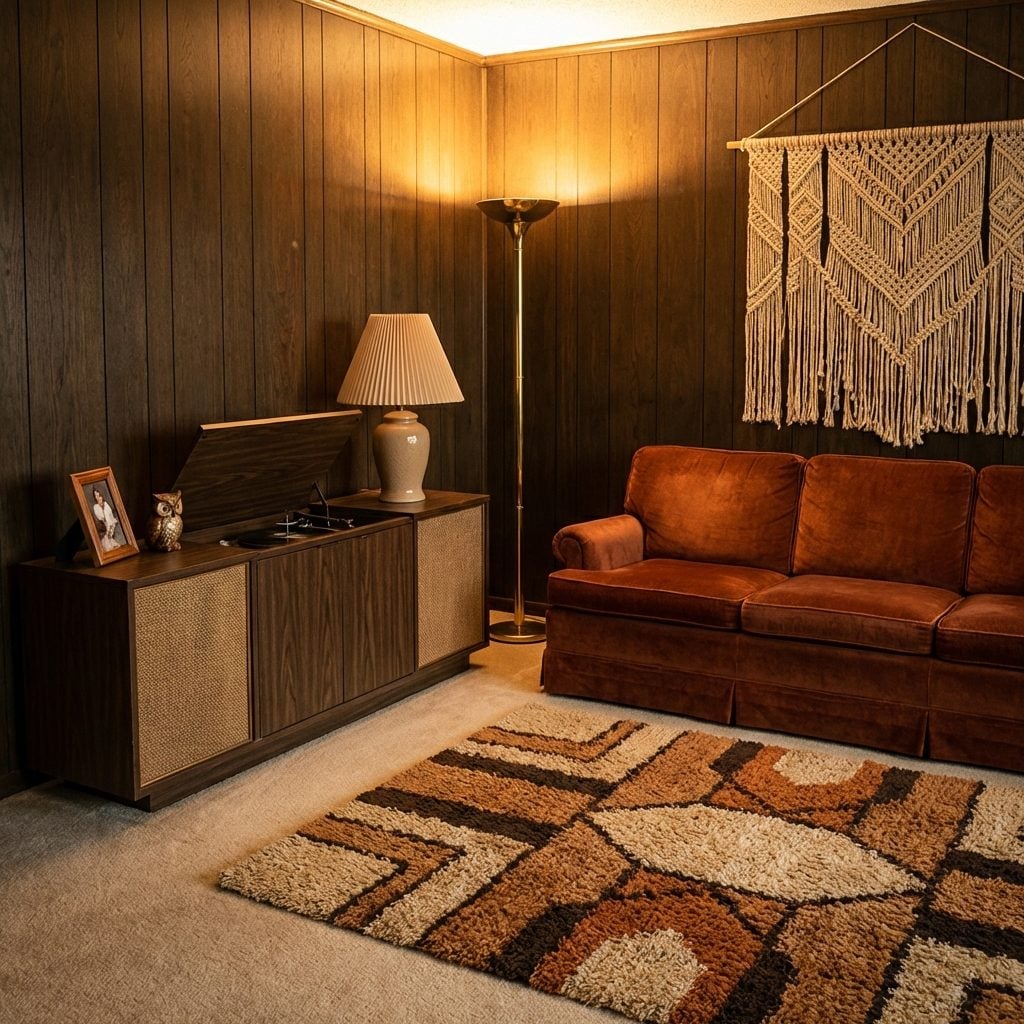
The Cabinet-Style Stereo Console With the Turntable on Top
🔥 Would you like to save this?
It sat in the living room like a piece of furniture, because it was. A long, low wooden cabinet, walnut veneer, with a hinged lid that lifted to reveal the turntable, the needle, and the faint smell of warm dust and old vinyl. The speakers were built into both ends, covered in a woven fabric grille the color of wheat.
This was not portable. This was not casual. Putting on a record on the console stereo was a deliberate act. You selected the album, you placed it, you set the needle with a practiced gentleness. There was no shuffling. No skipping. You committed to the side you chose.
By the late 1980s, the CD player had arrived and the console stereo became a display surface for ceramic figurines and framed photos. But for one golden stretch, it was the most important piece of furniture in the room.
The Formal Dining Room That Only Unlocked on Holidays
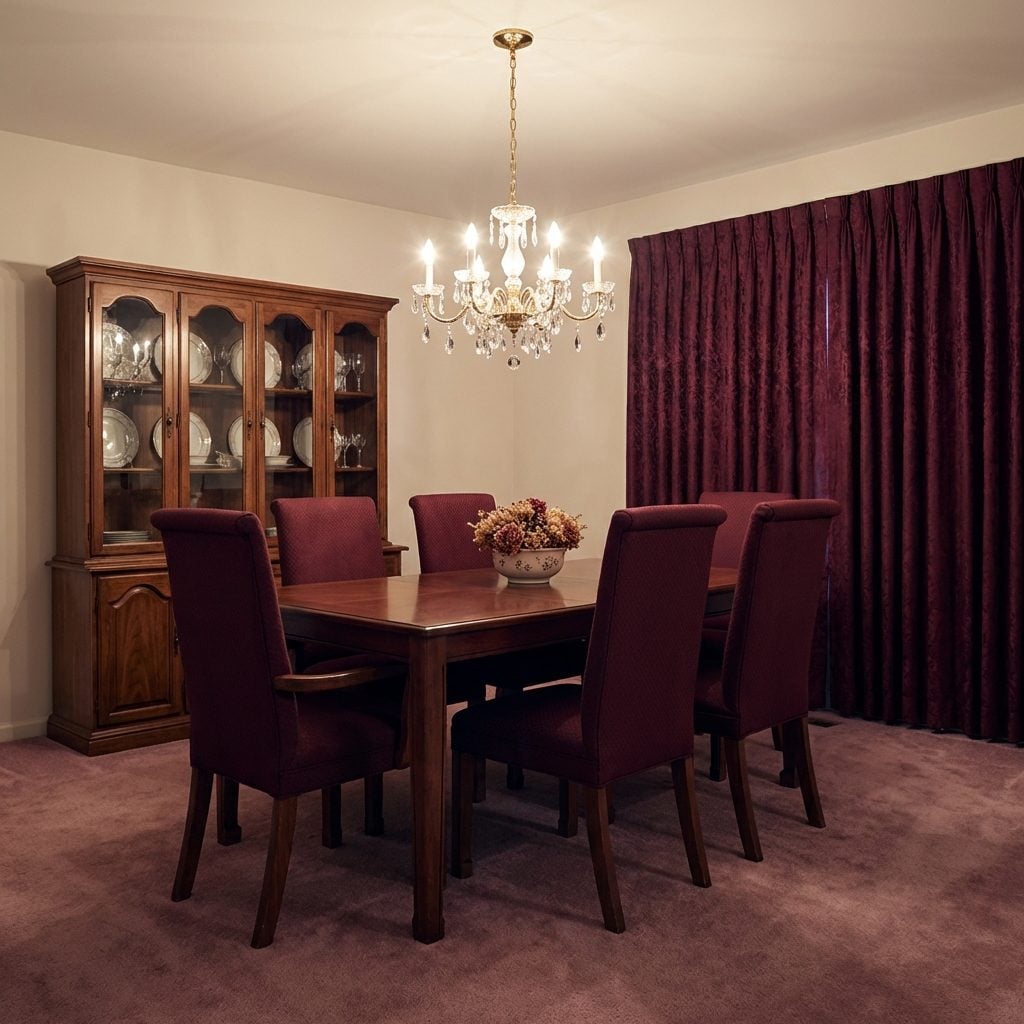
Three hundred and fifty-four days a year, that room sat sealed. Chandelier off. Chairs perfectly placed. A centerpiece of dried flowers or a ceramic bowl of decorative fruit gathering quiet dust on the mahogany table.
Then Thanksgiving arrived and the whole space roared to life. The good china came down. The table got the extra leaf inserted, which required two adults and a small argument. The chandelier blazed. Suddenly the room that existed for no one became the most important room in the house.
The ritual around that room was half the point. Its emptiness on ordinary days made the holidays feel genuinely special. We don’t build formal dining rooms much anymore, and something real was lost when we stopped.
The Glass-Front China Cabinet Displaying Dishes That Never Touched Food
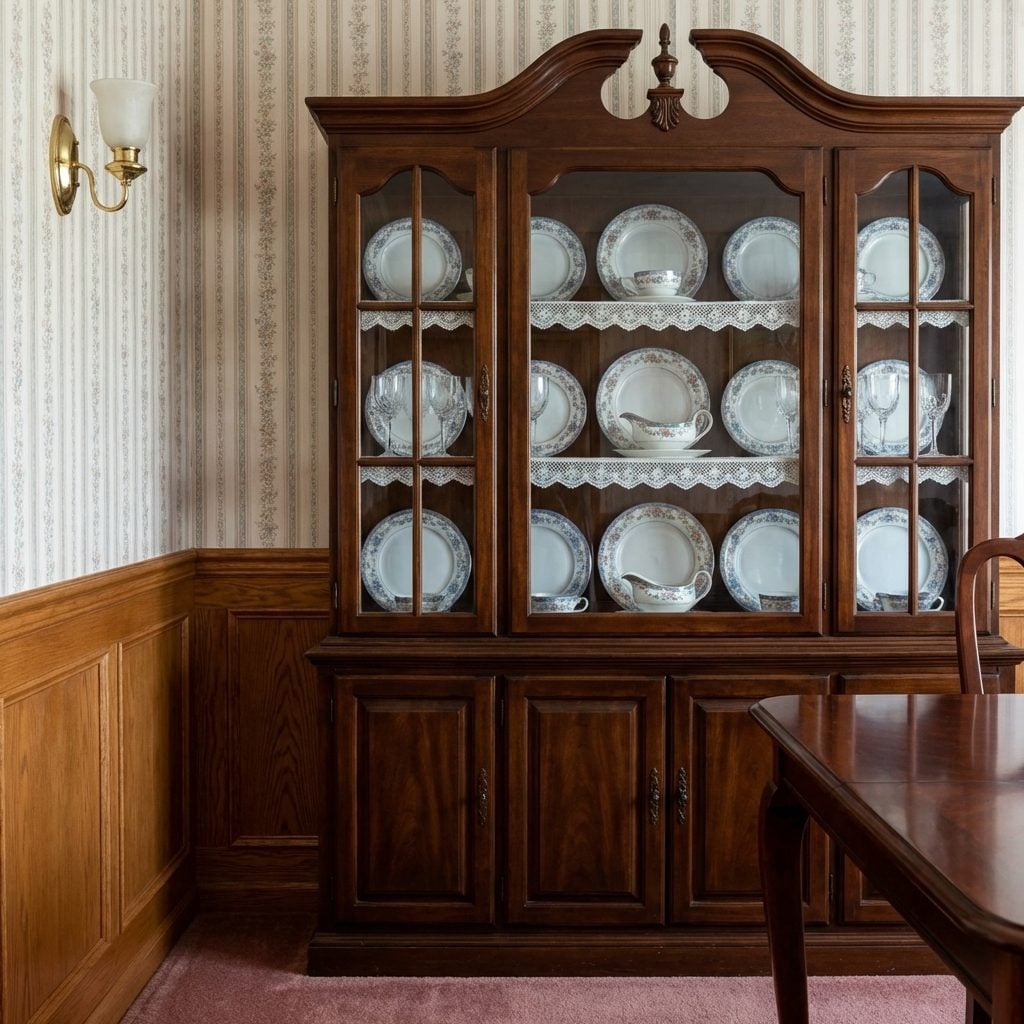
Behind those glass doors lived a parallel life. Fine china in a rose or blue transferware pattern, crystal wine glasses arranged by height, a gravy boat that had maybe seen gravy once, in 1987. Every piece was positioned with intention. Every piece was never, ever touched.
This was aspirational architecture. The cabinet said: we are the kind of people who own things worth displaying. It was also a mild source of childhood anxiety because the glass was always spotless and you were not allowed within arm’s reach without being reminded why.
The Basement Rumpus Room With a Wet Bar and Ping Pong Table
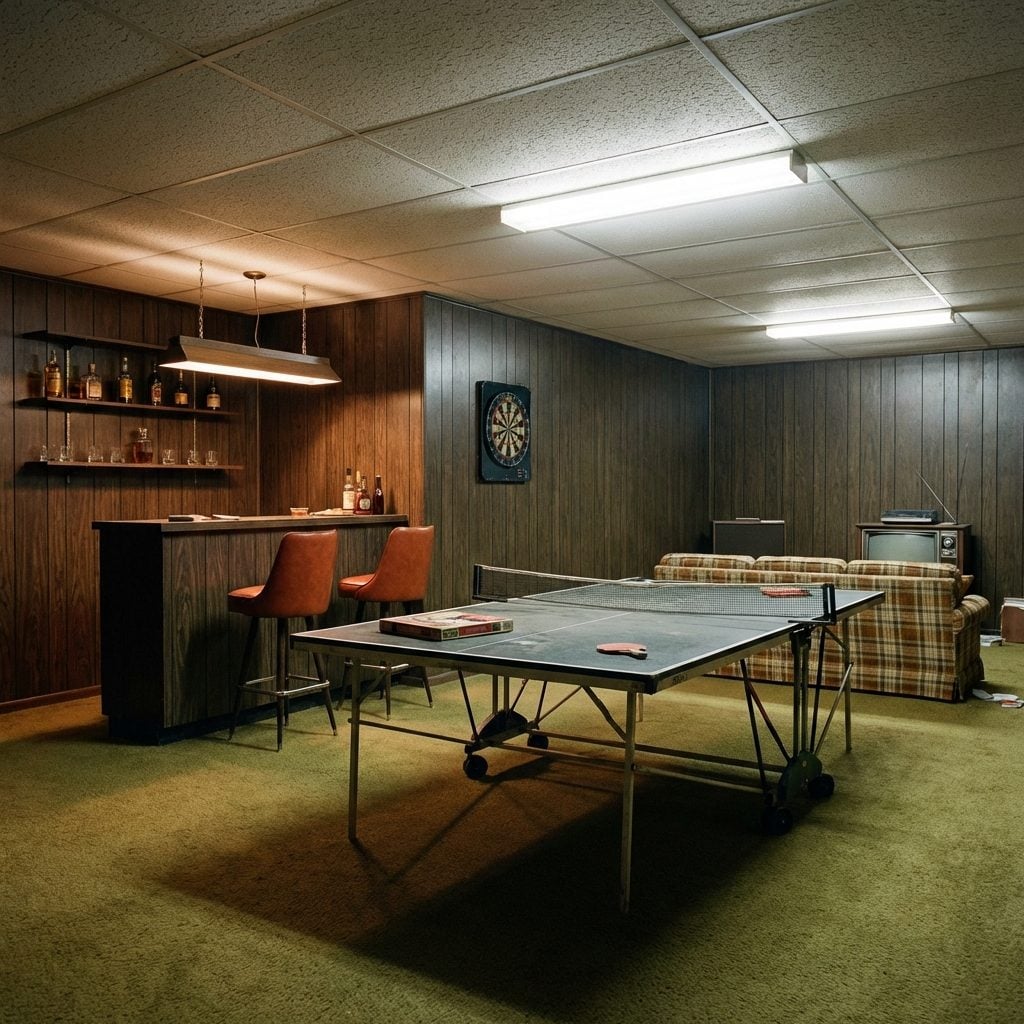
Down the carpeted stairs and around the corner was a completely different universe. Drop ceiling with foam tiles. Wood-paneled walls. A bar in the corner with a laminate top, a bottle of Kahlúa that never quite emptied, and barstools with vinyl seats in a burnt orange or chocolate brown. The ping pong table lived in permanent deployment, net always slightly loose on one side.
Rumpus rooms operated by different rules than the rest of the house. The furniture down here was the stuff that had been replaced upstairs, exiled but not discarded. A plaid sofa. A console TV with a rotary dial. A dartboard with soft darts. This was the room where kids could actually exist without performing tidiness.
The Harvest Gold or Avocado Green Refrigerator Humming Quietly in the Corner
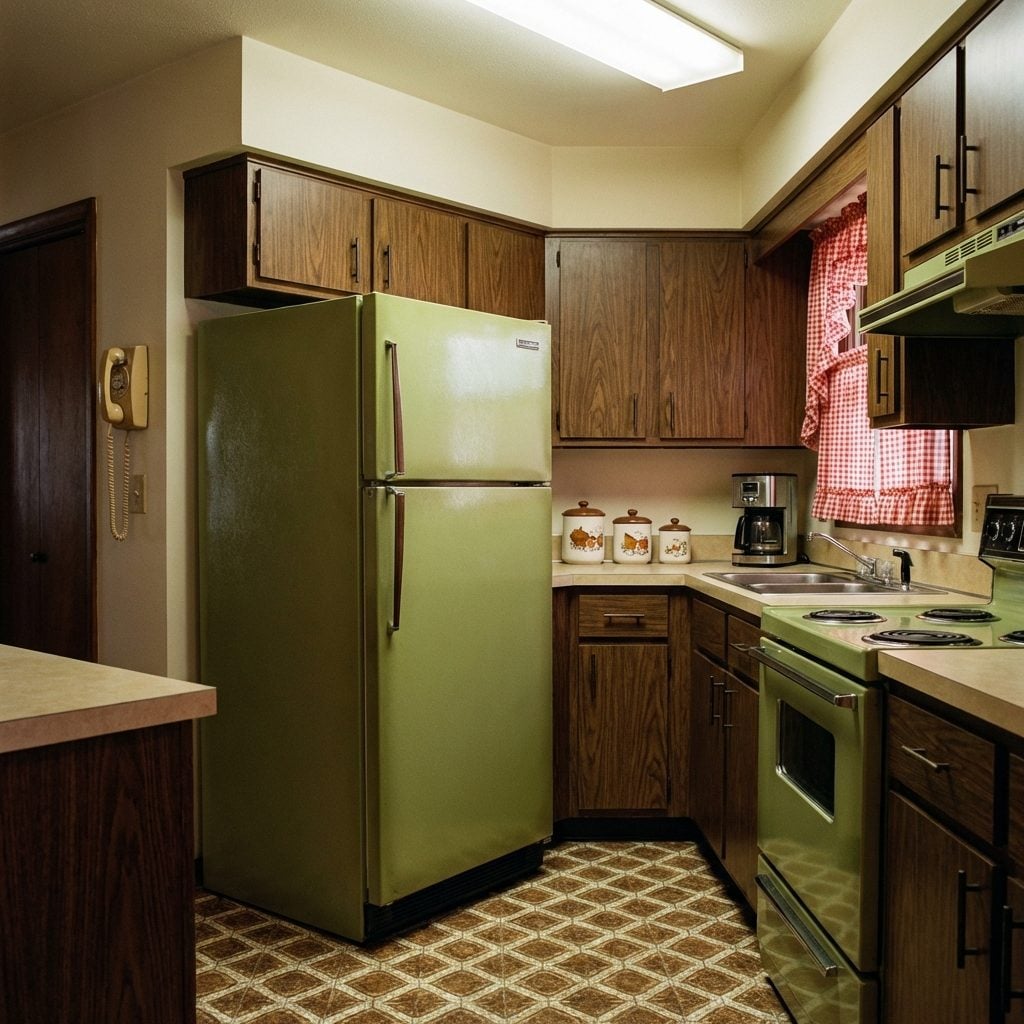
That color should not have worked. It absolutely did not work. And yet for roughly fifteen years, half the kitchens in America were organized around an appliance the color of guacamole or a ripe cantaloupe, and nobody questioned it at all.
The refrigerator hummed. Not a subtle hum, a real, present, constant hum you could hear from the next room. It had a handle that required a firm pull and a seal that exhaled a little puff of cold air when you finally got it open. The interior light was a warm yellow bulb. The butter compartment had a little flip door. There was a vegetable crisper that crisped nothing.
These refrigerators were genuinely heavy, genuinely loud, and genuinely immortal. Many lasted thirty years. The avocado green ones were retired not because they broke but because someone finally decided the color had to go.
Decorative Plates Mounted Directly on the Wall
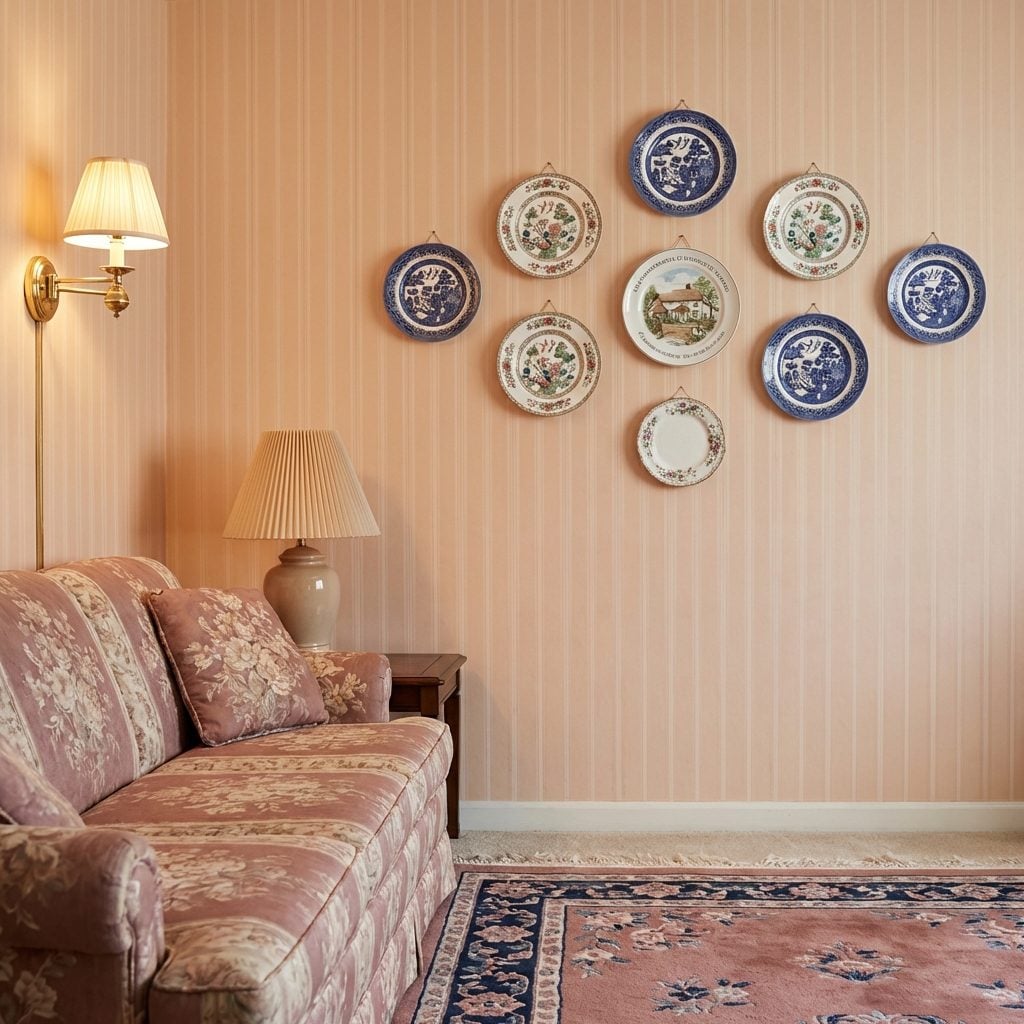
This required both commitment and specialized hardware.
Mounting a plate on a wall meant purchasing a spring-wire plate hanger, wrestling it onto the rim of a porcelain collector plate (possibly from the Franklin Mint, possibly from a souvenir shop in Gatlinburg), and hammering a nail into the exact right spot to keep the thing from tilting. And people did this. For dozens of plates. With intention and pride.
The arrangements were usually diamond or arc formations above a sofa or along a stairwell wall. Blue willow patterns appeared frequently. So did commemorative plates for royal weddings and state capitals. The collective effect was a kind of edible-adjacent gallery wall, and it made complete sense at the time.
Thick Bedroom Drapes That Blocked Every Single Sliver of Light
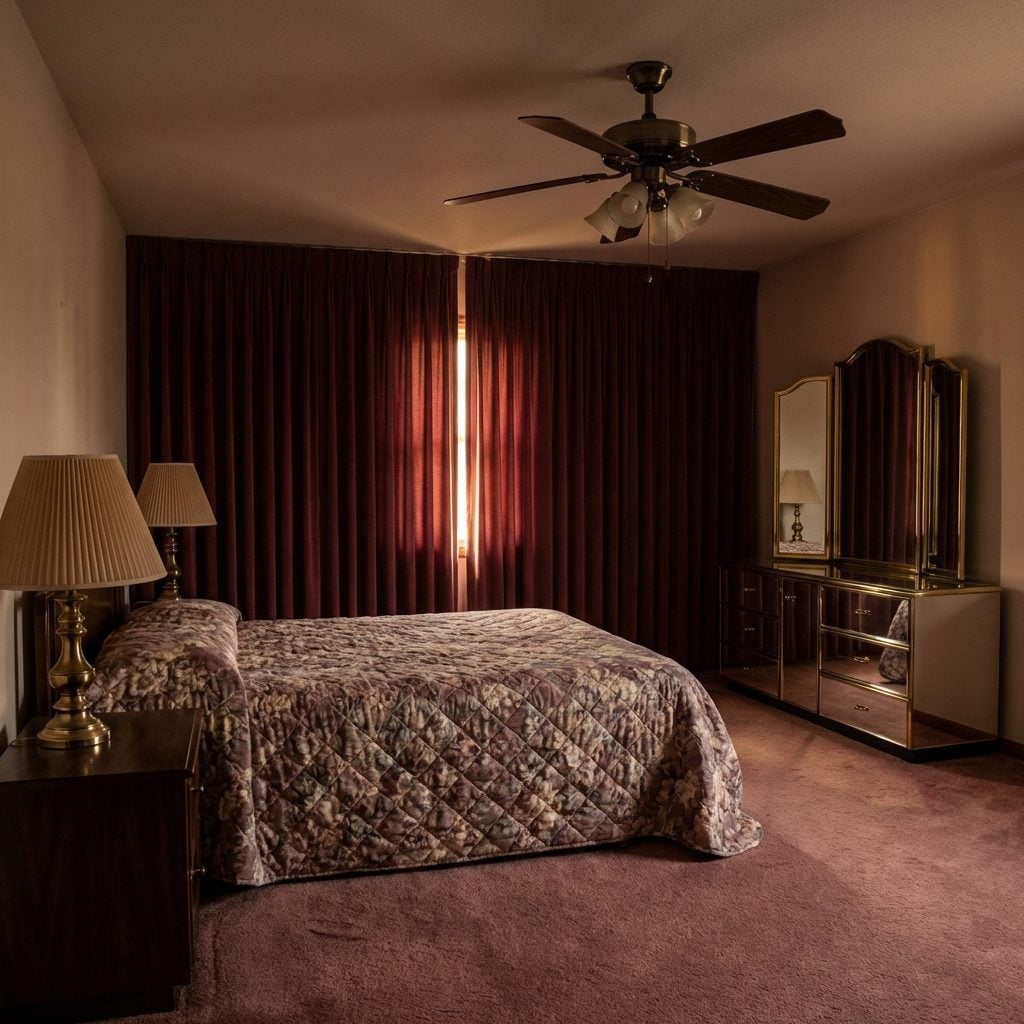
Floor to ceiling. Lined. Often interlined. In a color that could only be described as “deep”, deep burgundy, deep forest green, deep royal blue. When you pulled those drapes closed, it was not dim. It was dark. Truly, completely, 2am-at-noon dark.
They were usually hung on a traverse rod with a pull cord on one side. You could operate them one-handed without getting out of bed if you’d mastered the angle. The fabric was heavy enough that the rods bowed slightly in the middle. On a Saturday morning, with those drapes pulled, you could sleep until eleven without the sun having any say in the matter whatsoever.
A Garage With a Real Workbench and Everything on Its Own Hook
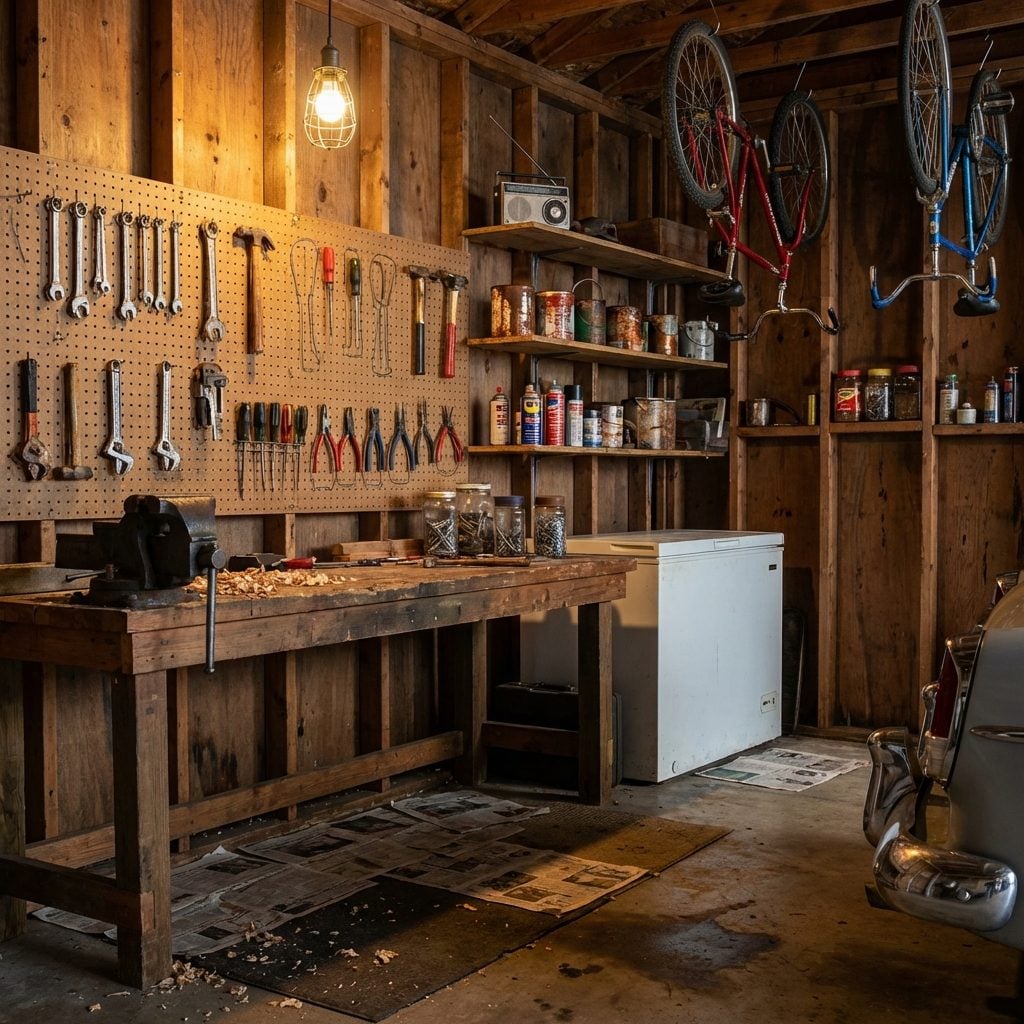
One wall was entirely given over to a plywood workbench, maybe eight feet long, with a wood vise mounted at one end and a pegboard above it stretching nearly to the ceiling. Every tool had an outline traced in marker on the pegboard so you could see immediately what was missing. The organization was specific and personal, a system built over years.
The rest of the garage had its own logic: a chest freezer in one corner, a shelf of paint cans and WD-40, a radio perpetually tuned to AM talk or classic rock. Bikes hung from ceiling hooks. The concrete floor had oil stains with the shape and permanence of continents.
This was the room where things got fixed. Not replaced, not discarded. Fixed. The home design philosophy of the 1980s assumed that a house needed a dedicated space for maintenance, and the garage workbench was its altar.
Warm, Yellow-Toned Light From Table Lamps Instead of Overhead Fixtures
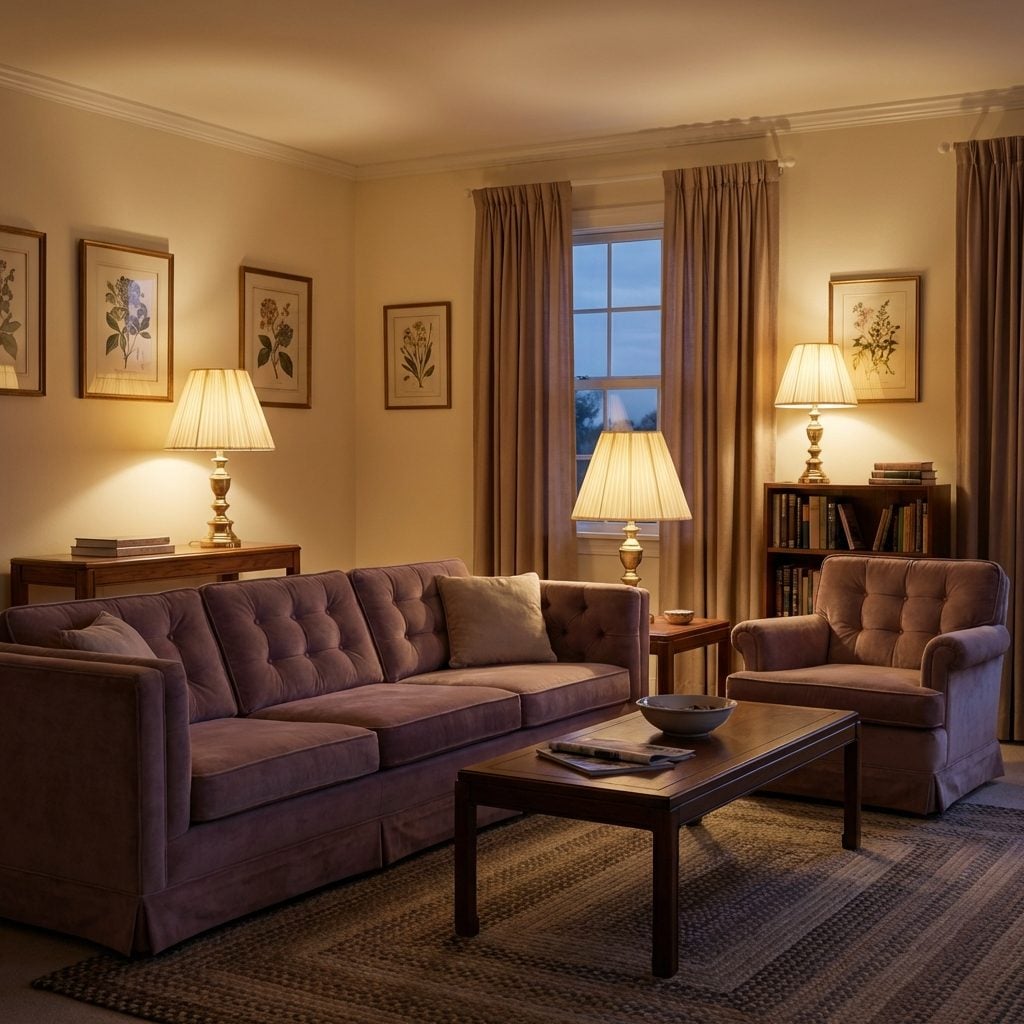
The overhead light in the living room was almost never on. Instead, three or four table lamps around the room created a warm, pooled light that made every corner feel inhabited. The bulbs were incandescent, 60 or 75 watts, behind pleated fabric shades in cream or ivory that glowed like small paper lanterns.
This was not a deliberate lighting design choice. It was just how things were done. Overhead fixtures felt harsh; lamps felt like home. The result was a room where the light came from roughly human height, which meant faces were lit softly from the side. Everyone looked better. The room felt smaller and warmer than it was. Lamp light created a kind of evening quality that made staying in feel genuinely appealing rather than just default.
Family Photos Displayed in Mismatched Frames
🔥 Would you like to save this?
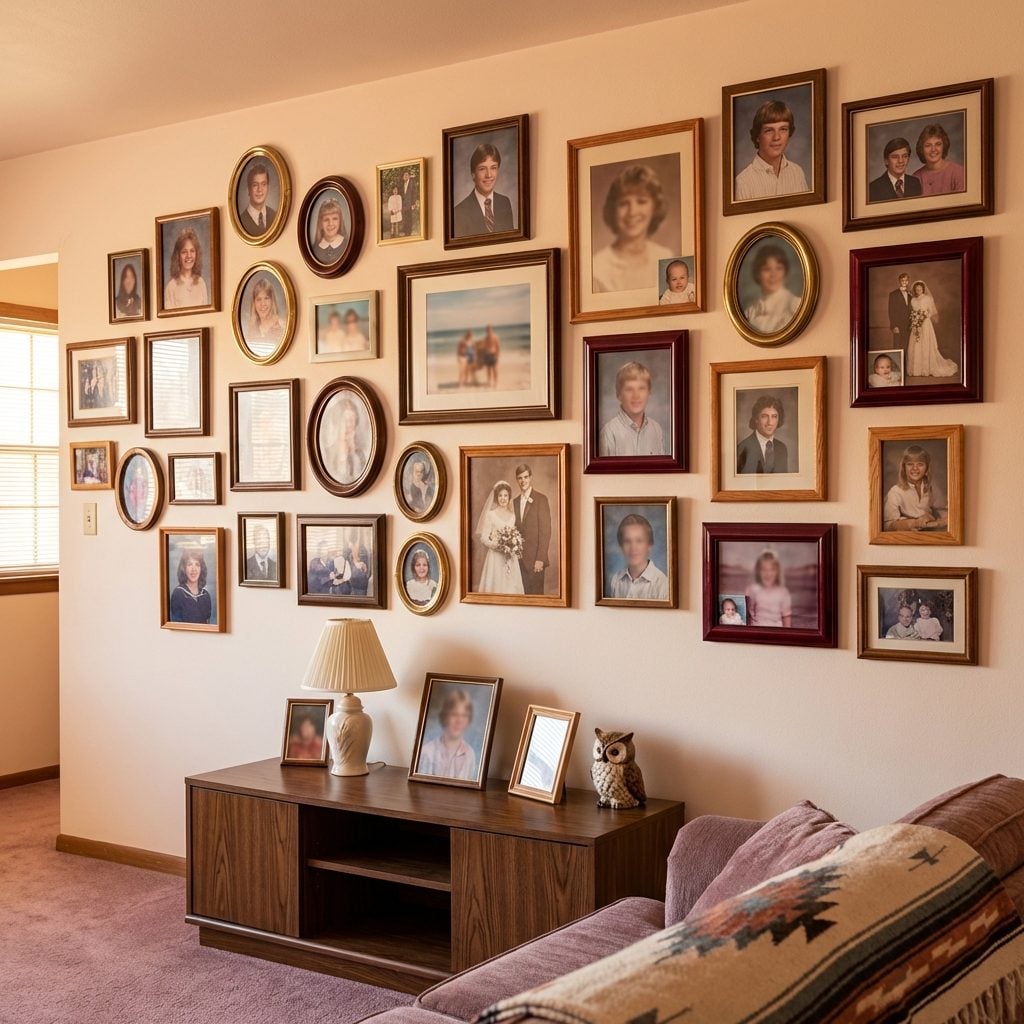
On every wall, every sideboard, every top-of-the-piano surface, there they were. Oval brass frames next to flat wooden ones next to something powder-coated in burgundy. School portraits, vacation snapshots slightly out of focus, a wedding photo in a stand-up frame that had developed a yellowish tint over the years. Nobody coordinated these. They just accumulated.
The mismatching was the whole point, even if nobody called it that. Each frame came from a different moment, a different gift, a different impulse buy at the drugstore. The wall looked chaotic and it looked completely, unmistakably like a family lived there. No gallery-wall template. No uniform matte white. Just proof of people.
The Potpourri Bowl That Perfumed Every Room It Entered
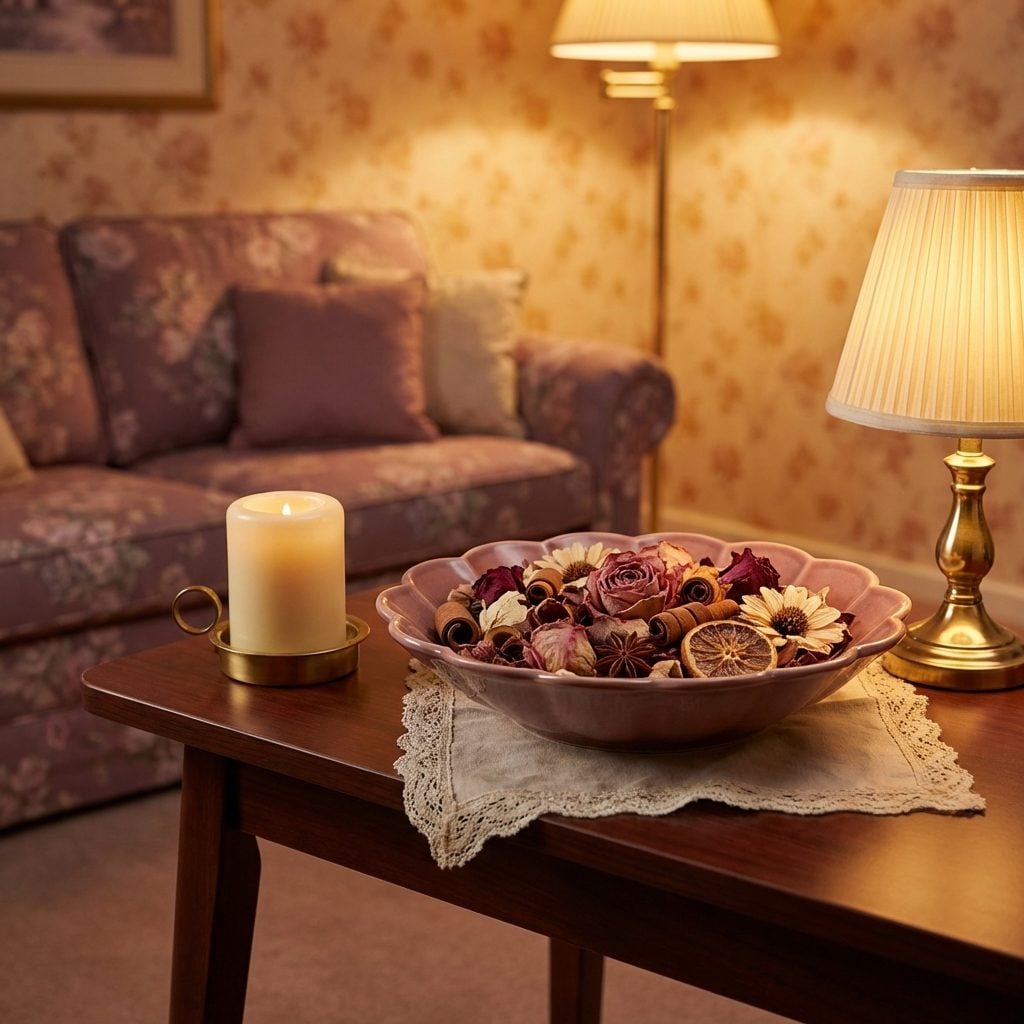
You knew it before you were fully through the door. That warm, slightly-too-sweet blend of dried rose petals, cinnamon sticks, and mystery spice that defined the olfactory signature of roughly 90% of American homes between 1983 and 1992. It sat in a shallow ceramic bowl, usually something with a scalloped edge or a dusty rose glaze, and it just radiated.
Some houses went the scented candle route instead: big pillar candles in frosted glass or the kind shaped like a pumpkin that nobody ever actually burned all the way down. Either way, the fragrance was intentional and constant. This was before plug-in air fresheners colonized every outlet. The bowl sat there like a host, doing its job.
Entryways That Were Honestly Kind of a Mess (and Totally Welcoming Because of It)
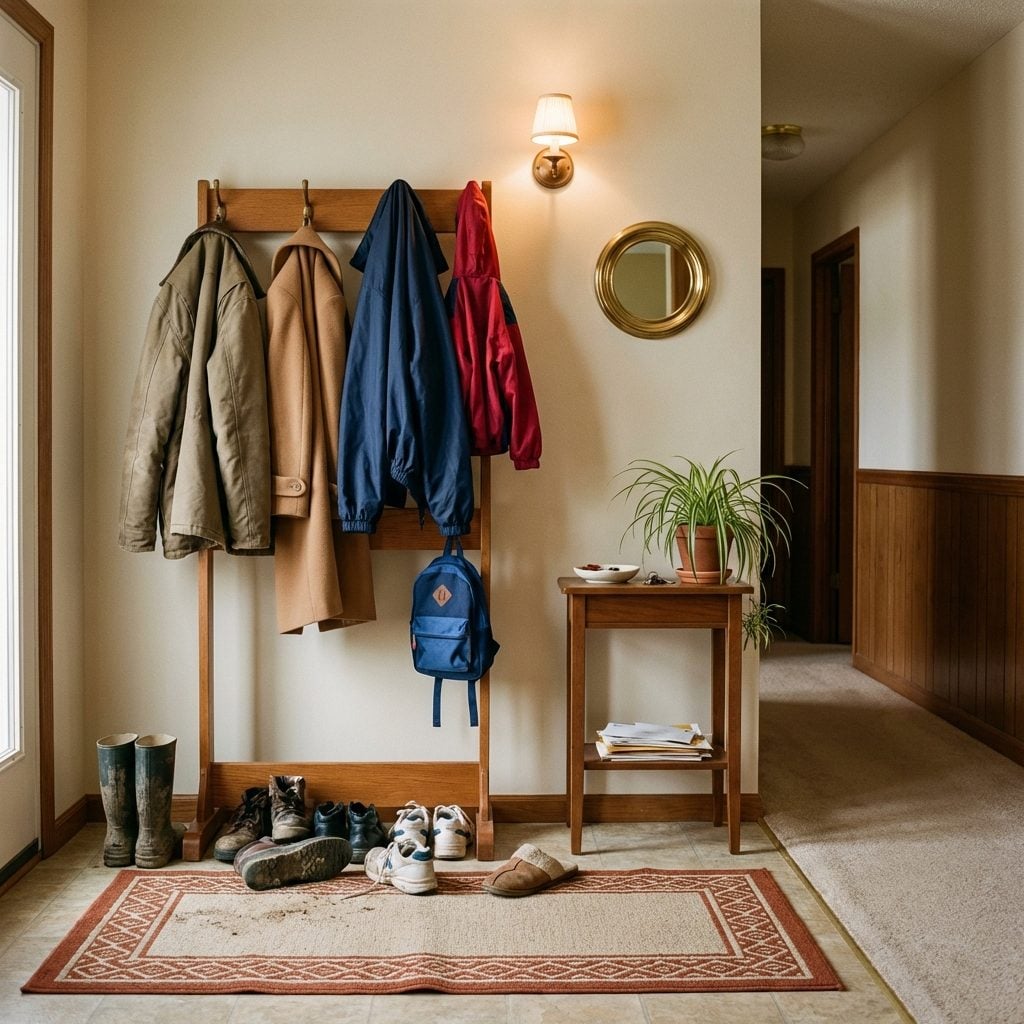
A wooden coat rack near the front door, usually freestanding, usually slightly wobbly, absolutely loaded. Dad’s canvas jacket. Mom’s good coat on the top hook because it had to stay unwrinkled. Two windbreakers that belonged to nobody specifically but somehow everyone. A kid’s backpack hung by one strap. An umbrella that never made it back to its proper place leaning against the wall.
Below that: shoes. Not in a cabinet, not in a designated tray, just shoes. Sneakers with the laces still tied. A pair of galoshes with dried mud from two weeks ago. The entry rug slightly buckled from being stepped on a thousand times in the same spot.
This was the honest first impression of a house where people actually came and went. No home design magazine would have photographed it. That’s exactly what made it feel safe.
Books, Puzzles, and Board Games Stacked Within Arm’s Reach
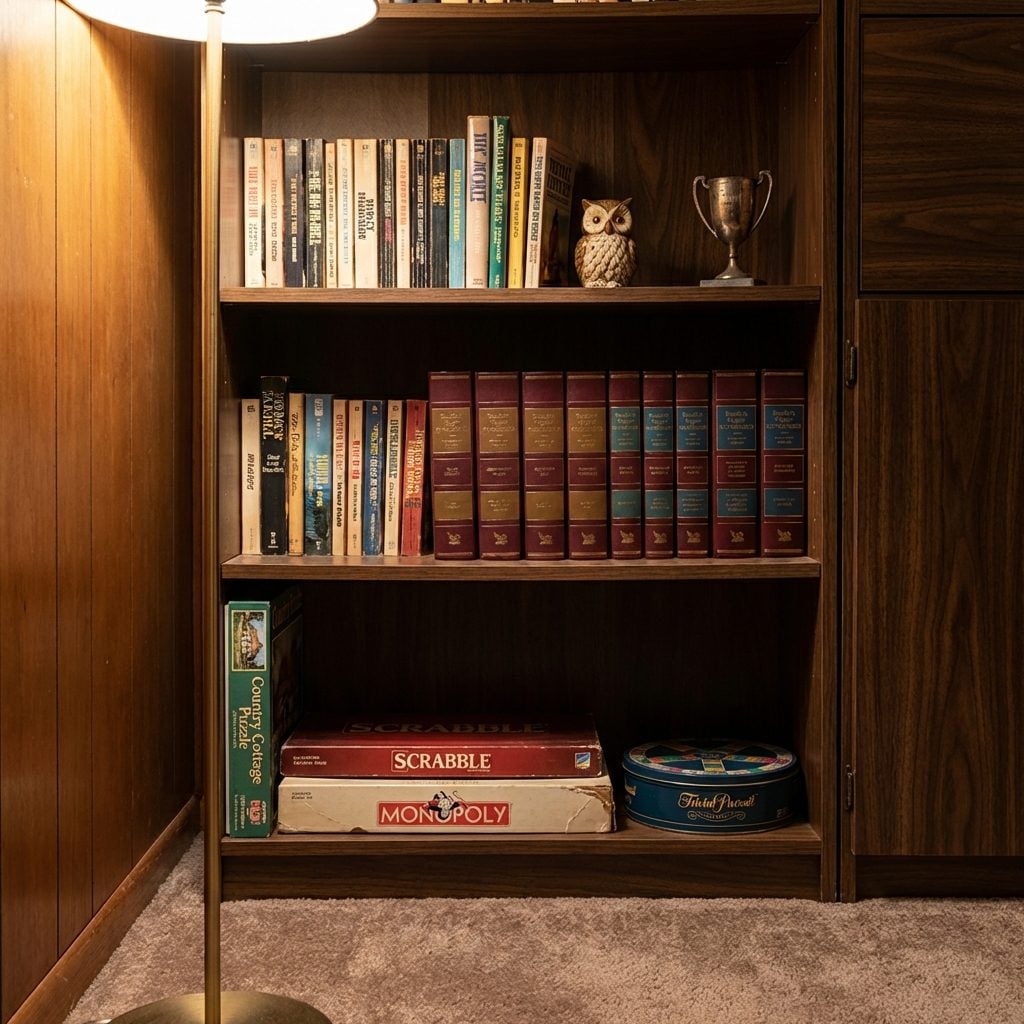
The bookshelf in the family room wasn’t a design statement. It was a record of attention spans. Paperback novels with cracked spines. A Reader’s Digest condensed book collection nobody had read all of but nobody would throw away. A jigsaw puzzle box with a Thomas Kinkage-adjacent country cottage on the lid, lid slightly bent at one corner, stored vertically between the shelf and the wall.
Board games lived in a stack in a closet or on a lower shelf: Scrabble, Life, Monopoly with a missing piece substituted by a random button. Trivial Pursuit in the big round box that barely fit anywhere.
These things were present, physical, and grabbable. On a rainy Saturday afternoon, nobody had to decide what to do. The shelf decided for you.
“The shelf didn’t curate itself. It just grew, year by year, proof that someone in the house was always in the middle of something.”
The Radiator or Baseboard Heater That Ticked, Clinked, and Kept You Company
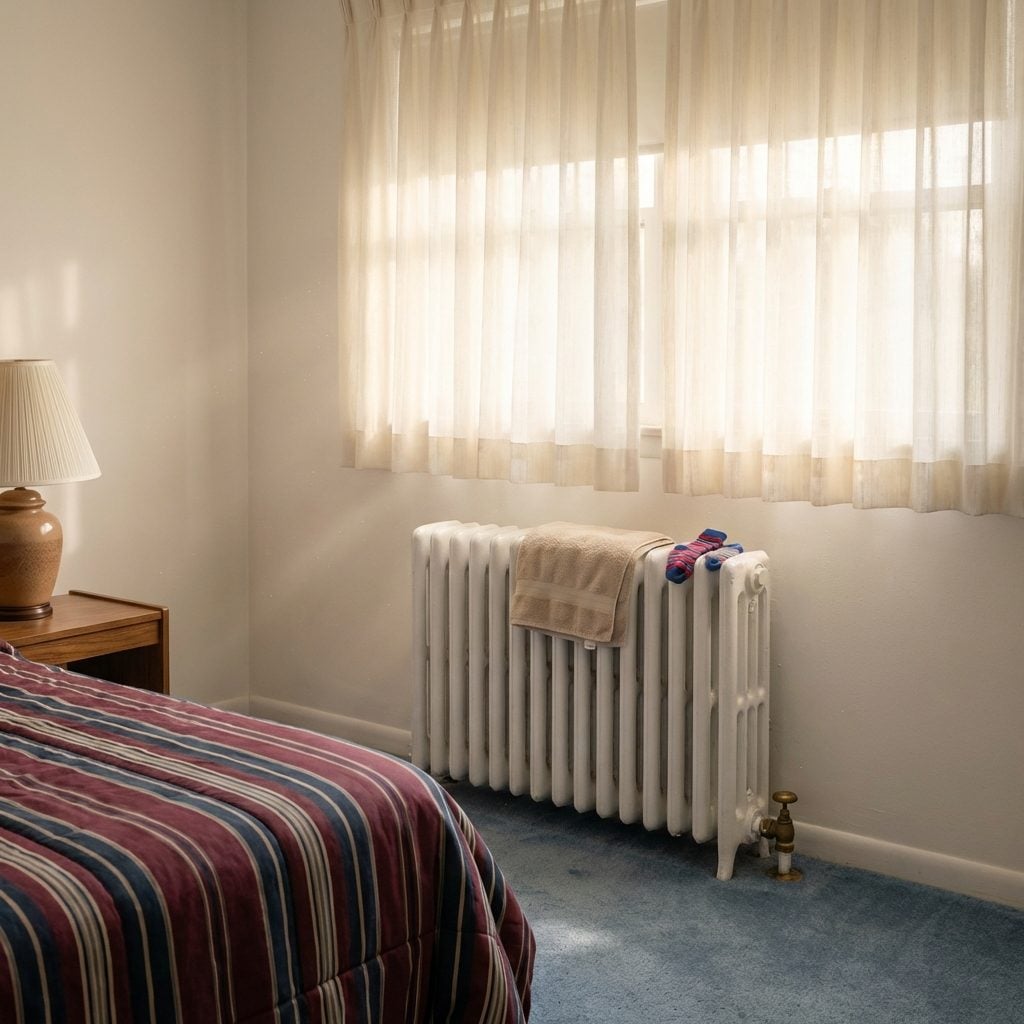
You could hear the house waking up in the morning by the sound of it. A low metallic tick, a small clank, the faint hiss if it was the older steam kind. The baseboard heater along the wall of the bedroom ran warm enough to feel from three feet away, and if you set your socks on top of it before school, they’d be perfectly warm by the time you needed them.
There was something deeply physical about that kind of heat. It came from one spot and radiated outward. You could stand next to it, feel the specific warmth of it on the side of your leg. Forced air just fills a room abstractly. A radiator gave you somewhere to stand.
Every Room Showed Signs of Actual Life
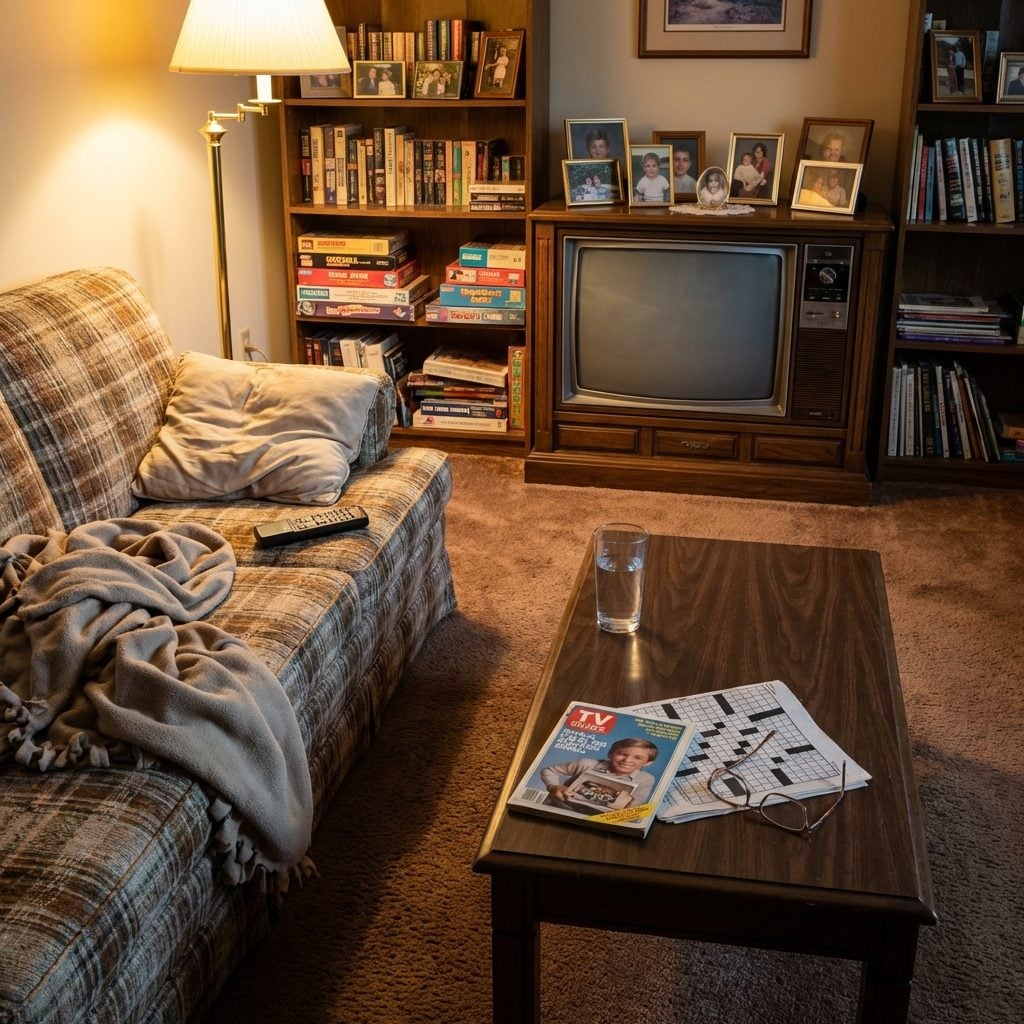
This one is harder to point to because it wasn’t one thing. It was the cumulative effect of everything. The TV remote sitting on the arm of the couch instead of in a designated holder. The half-finished crossword on the coffee table. The reading glasses folded next to them. A glass of water someone meant to take to the kitchen. A throw blanket bunched at one end of the sofa where someone had been sitting recently.
Rooms looked like this because people were in them, constantly. The living room was actually lived in. The dining room table had something on it every single day, not just at holidays.
That sense, the sense that the house was in the middle of being used rather than waiting to be photographed, is maybe what we actually miss. Not the furniture. Not the colors. The evidence of presence.