🔥 Would you like to save this?
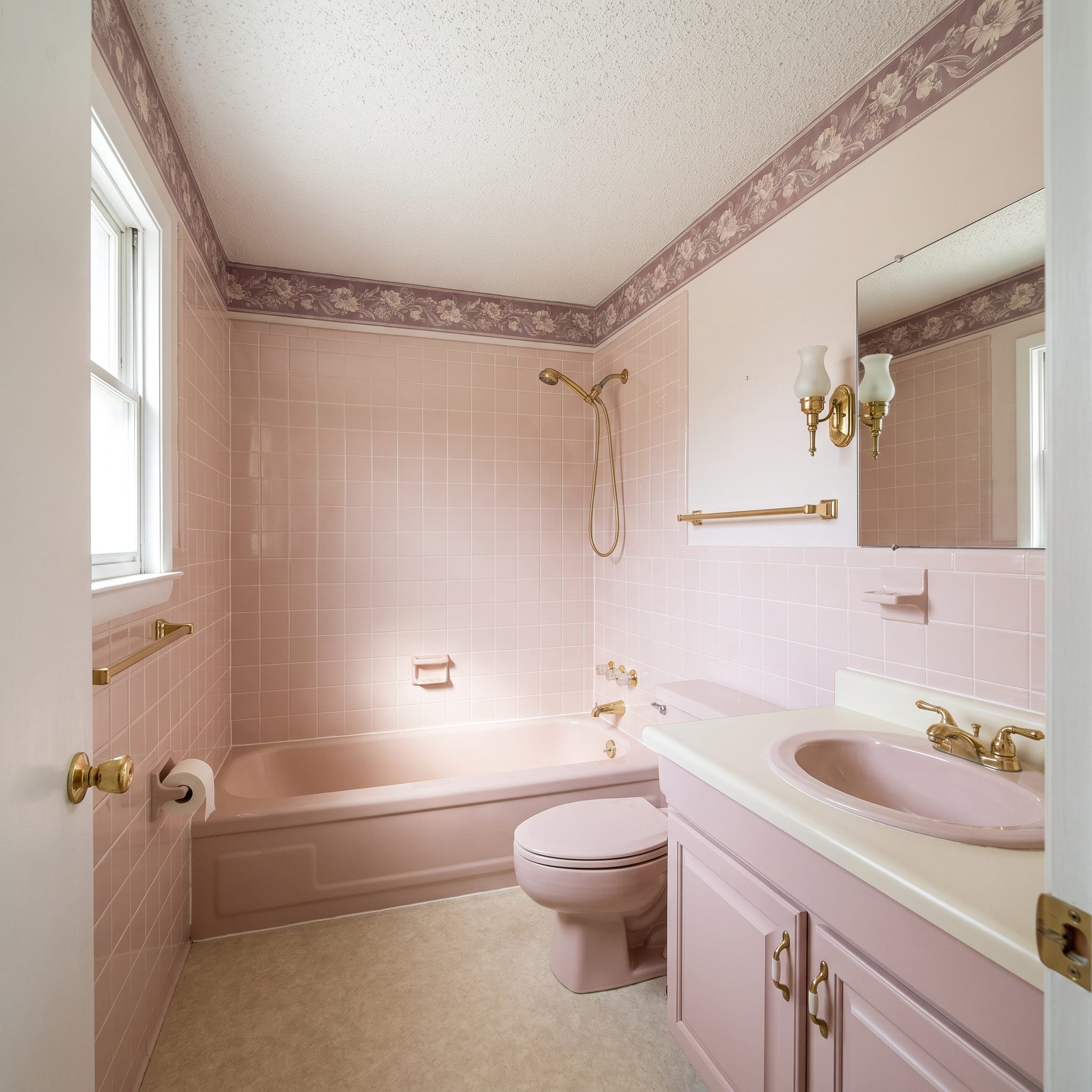
Pepto pink from floor to ceiling. Tile grout the color of an old aspirin. A bathroom that looked exactly the same the day the moving truck left as it did the day the last owner painted their nails in it. You’ve stood in one. Everyone has. It doesn’t offend you so much as wear you down, a room that quit trying decades ago and never bothered to mention it.
That pink tile may look like a dead end, but it gives the renovation a clear starting point. Replace it with quiet stone, reflective white, warm wood, saturated charcoal, or a color that feels deliberate rather than inherited, and the whole room changes. Here are 24 ways to bring it back.
In order to come up with the very specific design ideas, we create most designs with the assistance of state-of-the-art AI interior design software. Also, assume links that take you off the site are affiliate links such as links to Amazon. this means we may earn a commission if you buy something.
24. Floating Vanity Glam in Calacatta Porcelain and Brushed Gold
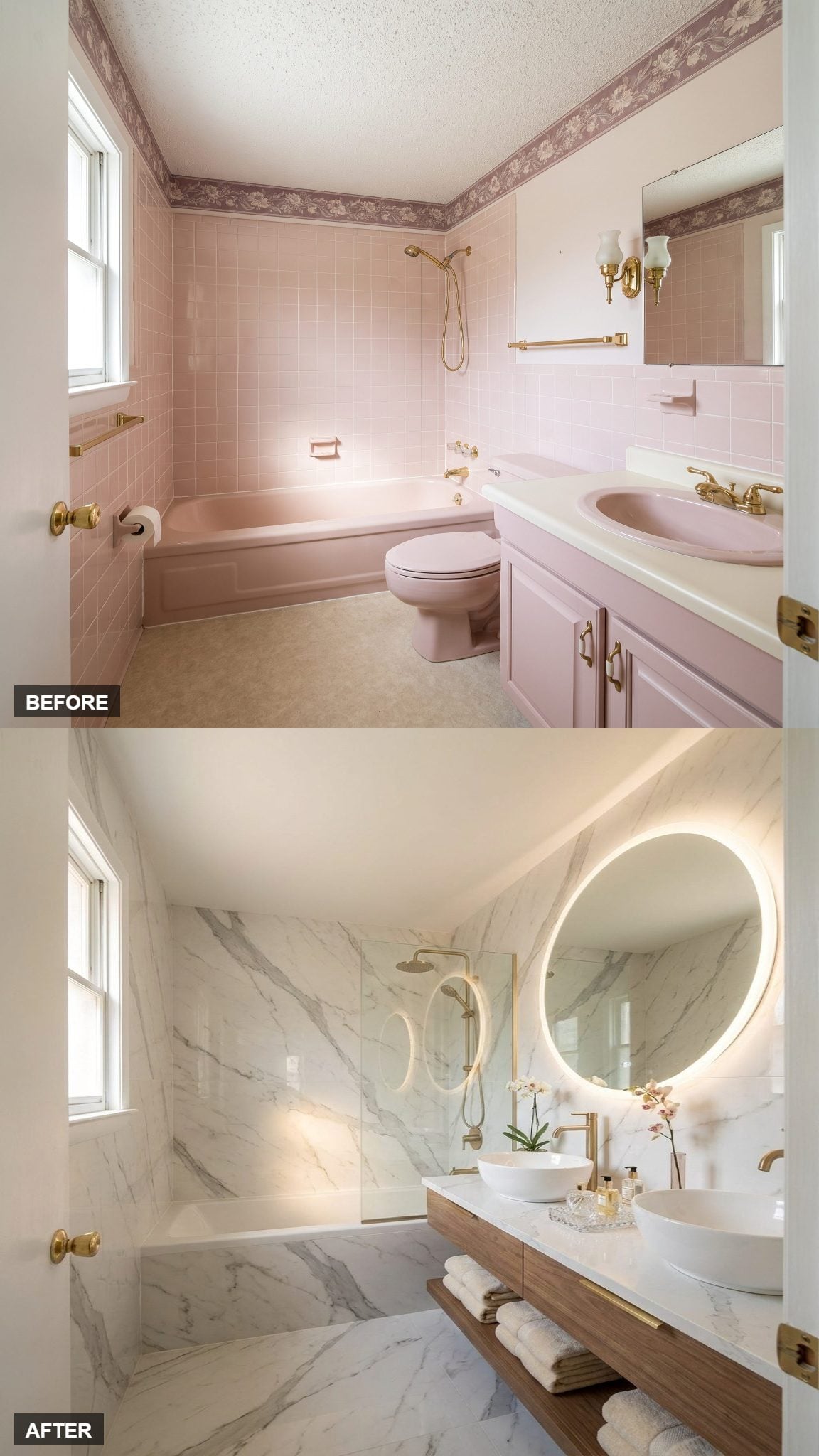
The old pink tile ran everything into a flat, chalky sameness. Contrast gives the new room definition. White Calacatta-look porcelain creates a cleaner background, while brushed-gold fixtures introduce warmth without overpowering the stone.
The floating vanity is the practical move. Lifting the cabinet off the floor exposes more tile and makes the footprint easier to read, while two vessel sinks give the composition a symmetry the original room lacked.
23. Modern Spa Calm in Matte White Porcelain and Warm Wood
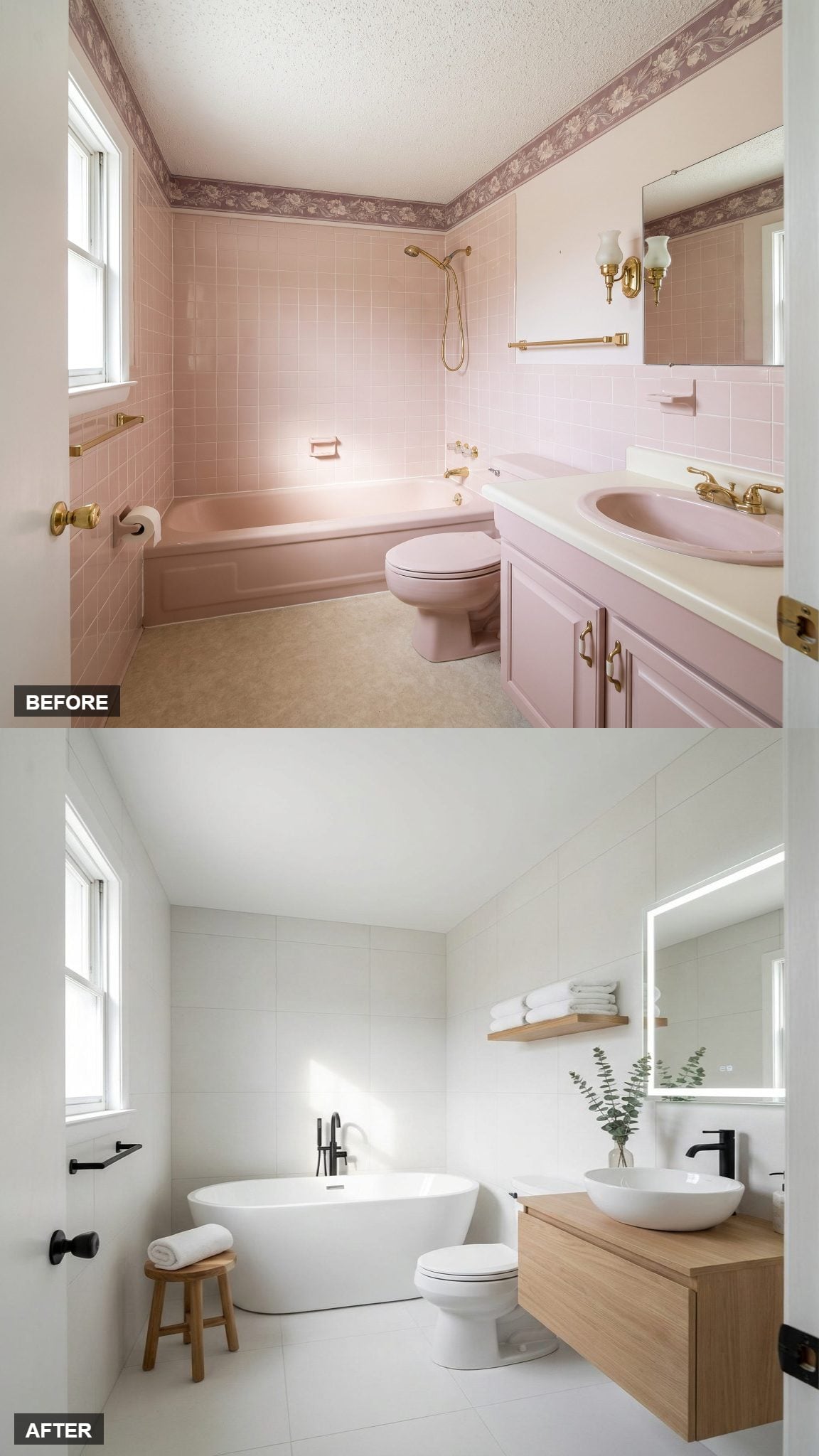
Removing the pink tile allows the architecture to come forward. Matte white porcelain running from floor to ceiling creates a continuous backdrop, with fewer visual interruptions than the original grid of small tiles.
The freestanding oval tub changes the way the floor is perceived. Open space around its curved base keeps the fixture from reading like a solid block, while the wood vanity gives the white room enough variation to avoid looking flat.
22. Hotel Suite Style in Polished Marble-Look Tile and Brass
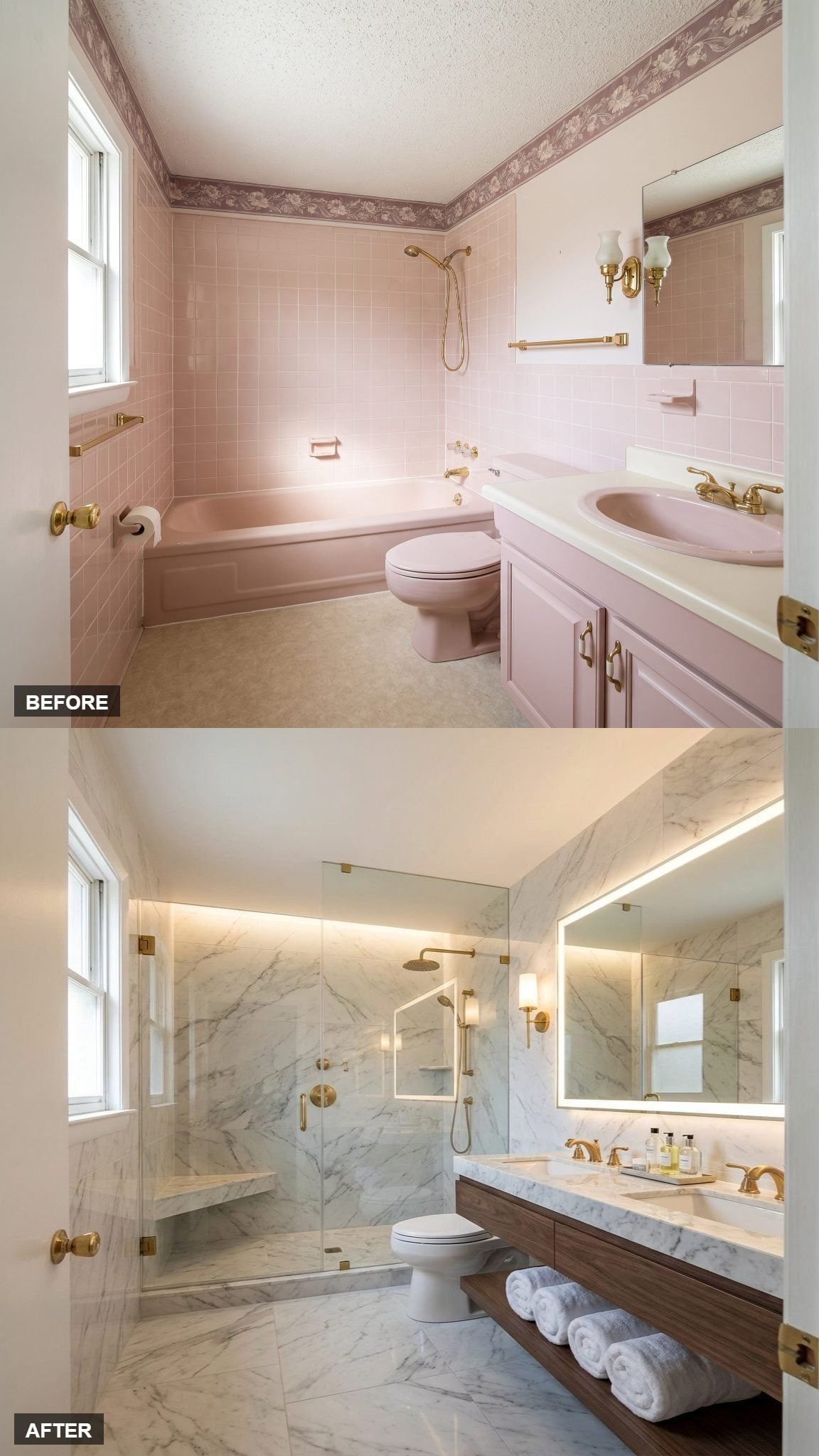
The dual-sink vanity establishes the hotel-suite character immediately. Two basins, matching mirrors, and evenly spaced sconces create the sense that the room was planned as a complete composition rather than assembled one fixture at a time.
Rolled towels on an open shelf and a small tray of glass bottles finish the effect without requiring another permanent design decision. Much of what makes a hotel bathroom feel polished comes from repetition, symmetry, and disciplined staging.
21. Matte Black Accents on Soft White Tile
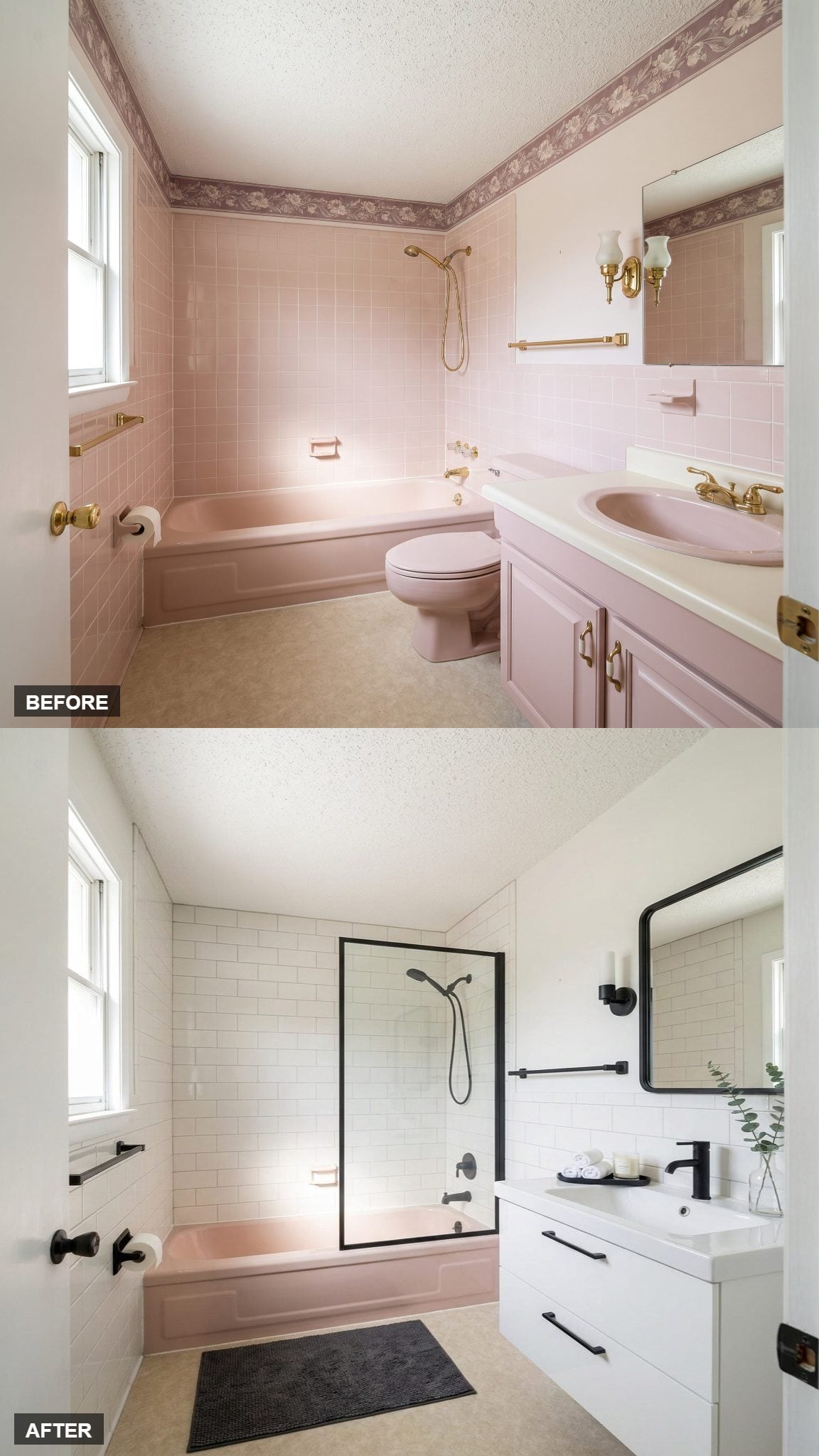
The black-framed shower supplies the line work. Thin dark grids against soft white tile give the room definition without relying on a patterned surface. Where the old pink tile blurred every plane together, this design clearly separates glass, wall, vanity, and mirror.
Restraint keeps the contrast effective. Black appears in the shower frame, faucet, mirror, and mat, but the larger surfaces remain light. That limited repetition makes the hardware feel coordinated rather than thematic.
20. Scandinavian Minimalism in Light Oak and Microcement
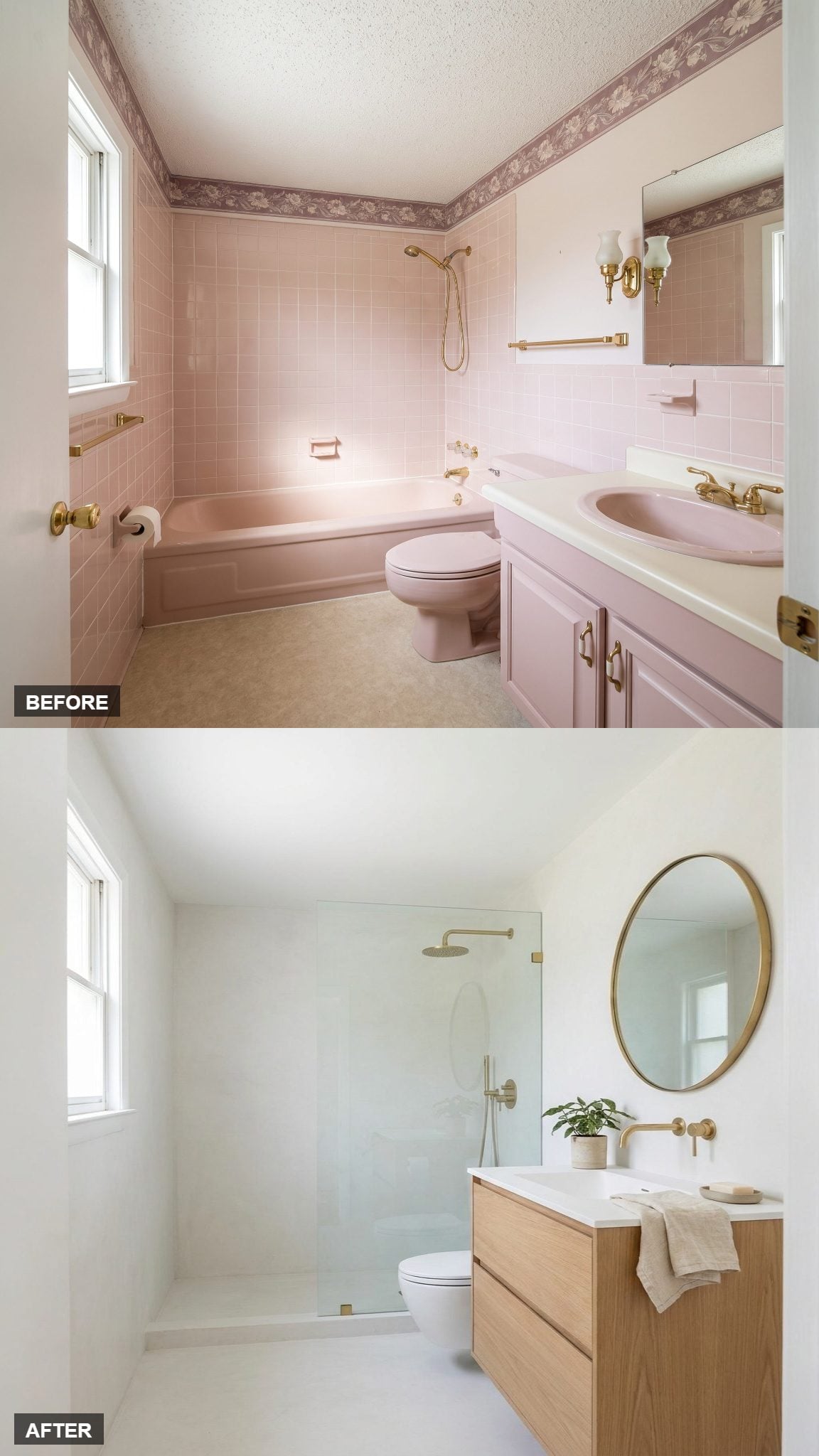
Microcement replaces the old tile grid with a continuous mineral surface. Its subtle variation keeps the walls from looking manufactured, while the absence of conventional grout lines allows corners and transitions to feel less abrupt.
Light oak adds grain and warmth without introducing another strong color. The thin brass mirror becomes a controlled accent rather than the center of attention, leaving the materials to carry the room.
19. Warm Greige Minimalism with a Walk-In Glass Shower
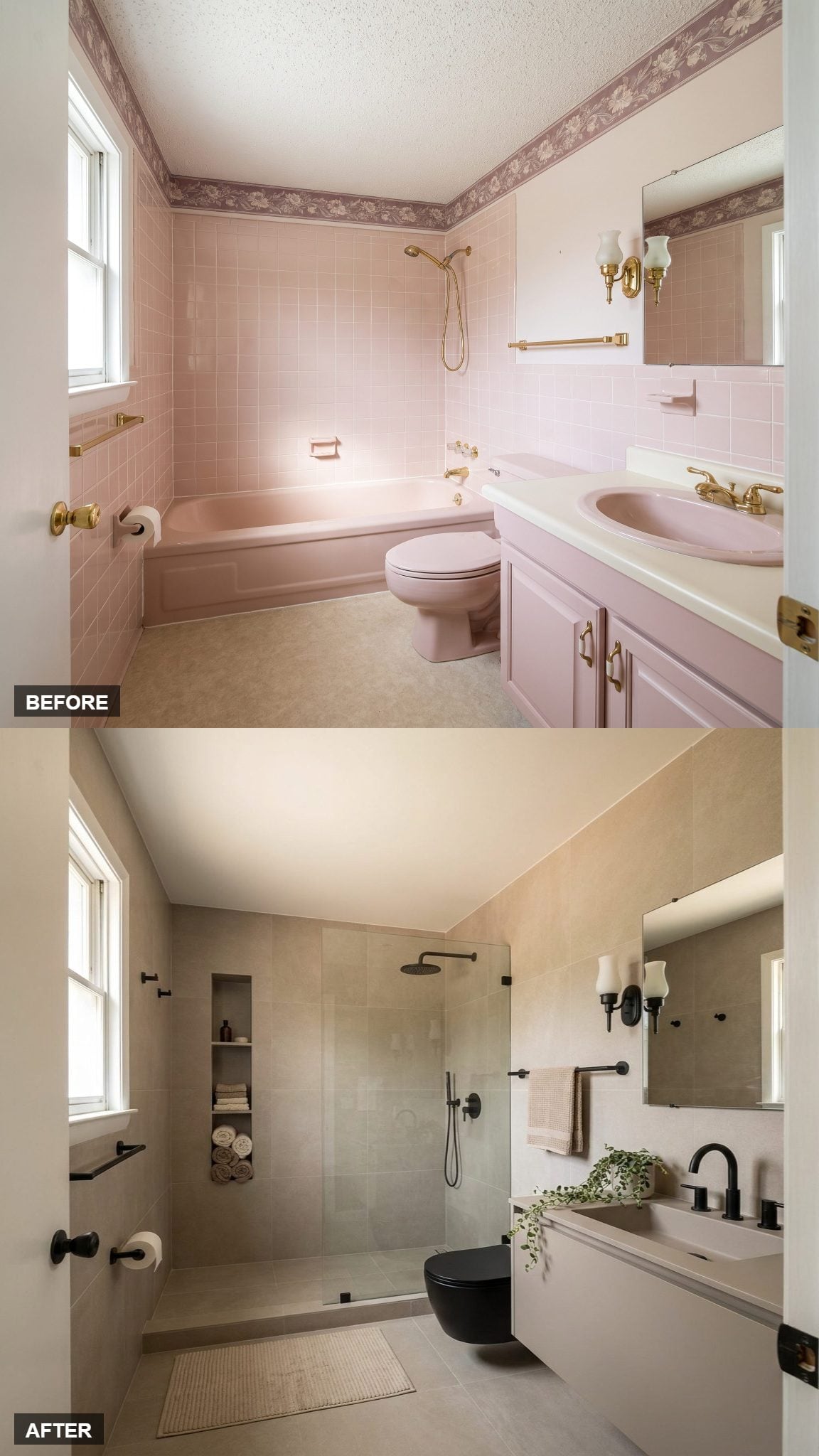
Trading the enclosed tub area for a frameless walk-in shower changes the room more than a new color ever could. Clear glass preserves the full view of the rear wall, so the shower remains part of the room instead of reading as a separate box.
Greige tile gives the large surfaces enough warmth to sit comfortably beside black hardware. The result is subdued, but the strong glass opening and precise fixture placement keep it from feeling generic.
18. Black and White Marble Luxe with a Sculptural Soaking Tub
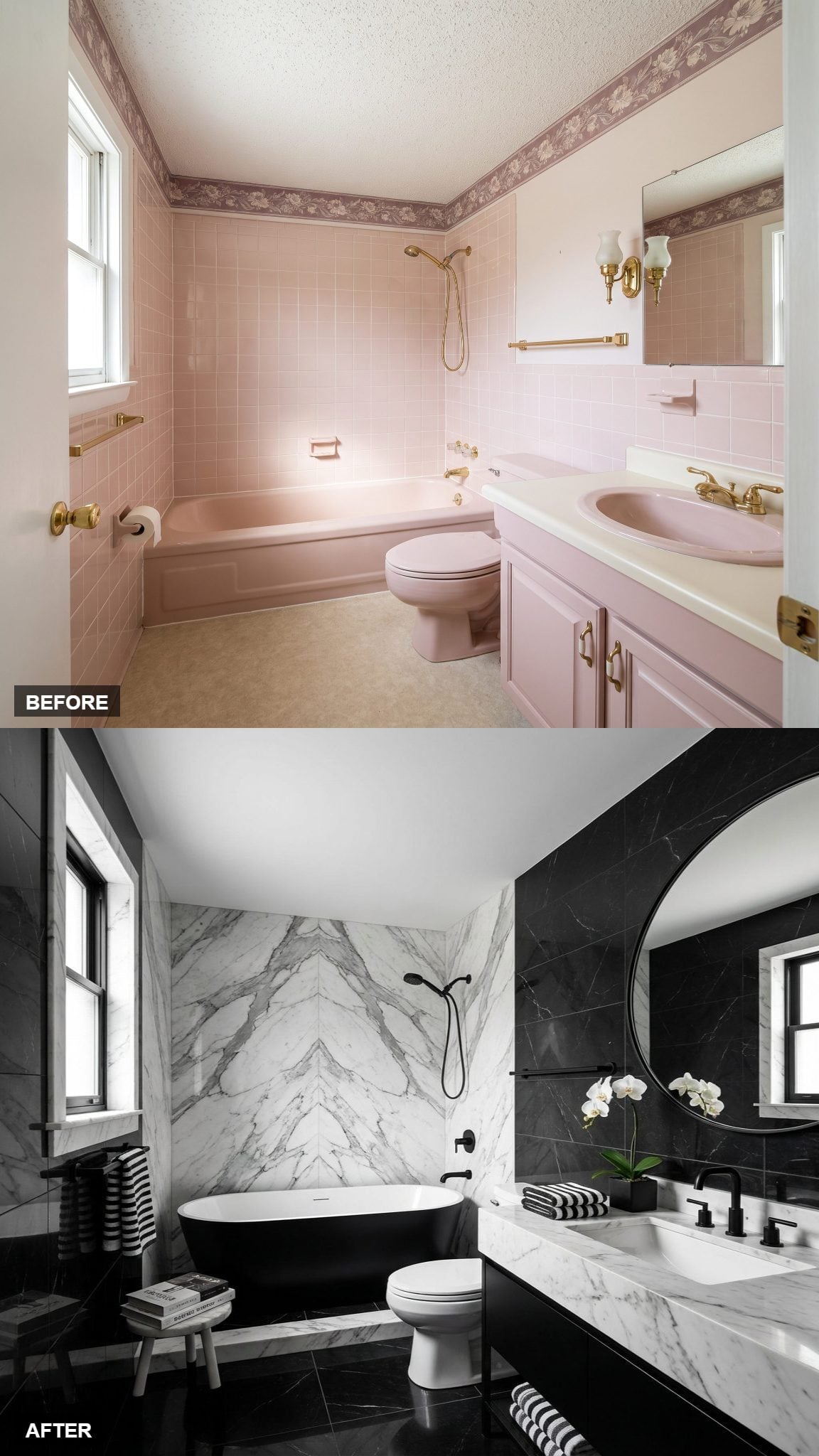
Bookmatched marble is the main event. Sequential slabs are opened and arranged so that the veining mirrors across the center, turning the wall behind the tub into a deliberate composition.
The matte black tub gives that energetic stone pattern a solid visual base. Its low, sculptural silhouette separates the bathing area from the marble without adding another competing pattern.
17. Warm Contemporary in Walnut and Brushed Gold
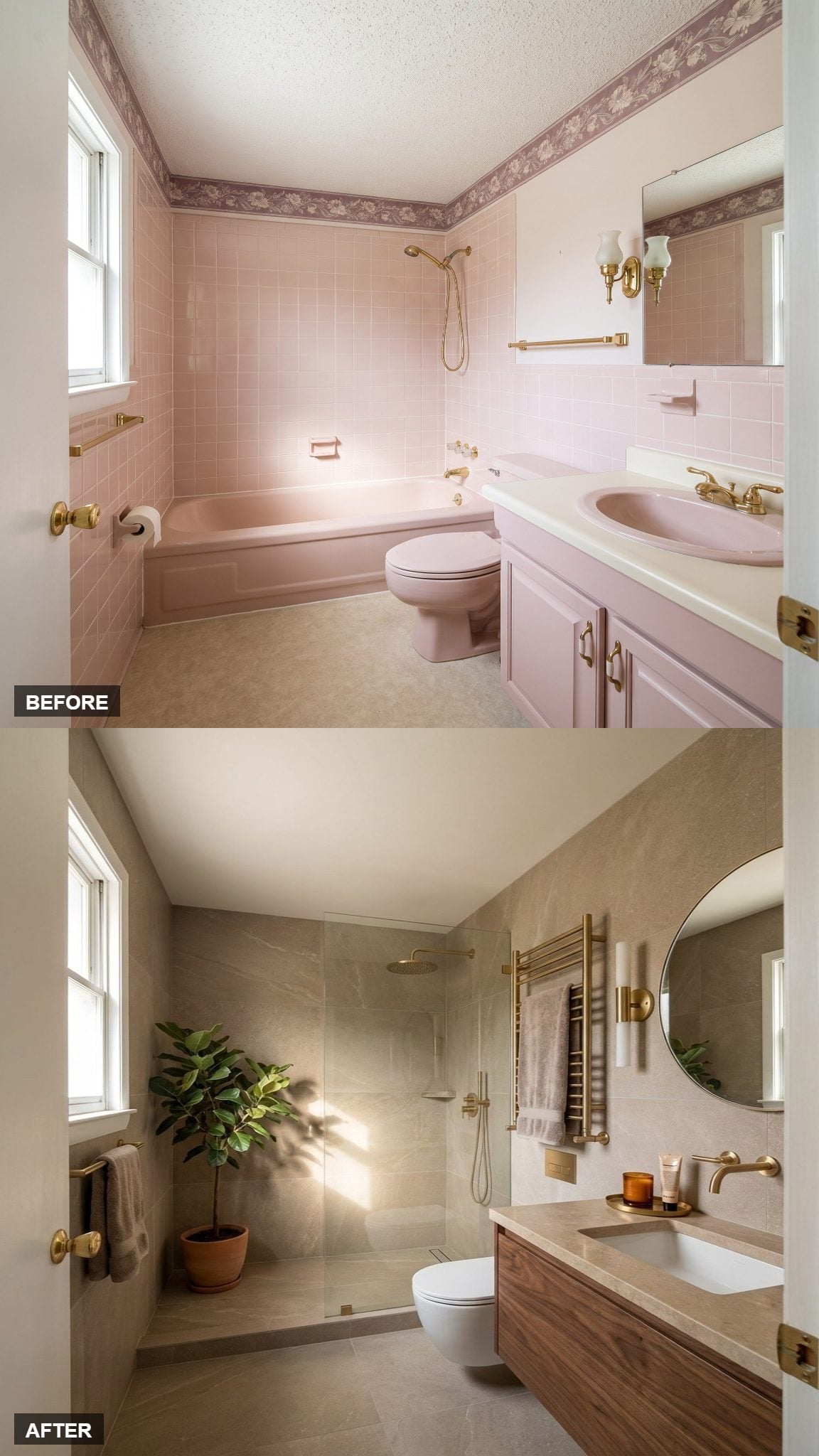
Warm taupe tile gives this bathroom a softer base than the blue-white surfaces that dominate many contemporary renovations. It works especially well with walnut, allowing the grain to remain visible without creating a sharp color break.
Brushed gold adds a controlled gleam, while the heated towel rack adds comfort to the morning routine. It is a relatively contained upgrade compared with replacing the tub, shower, or vanity, although purchase and installation costs depend on the model and available electrical service.
16. Coastal Modern in Blue-Gray Tile and Brushed Nickel
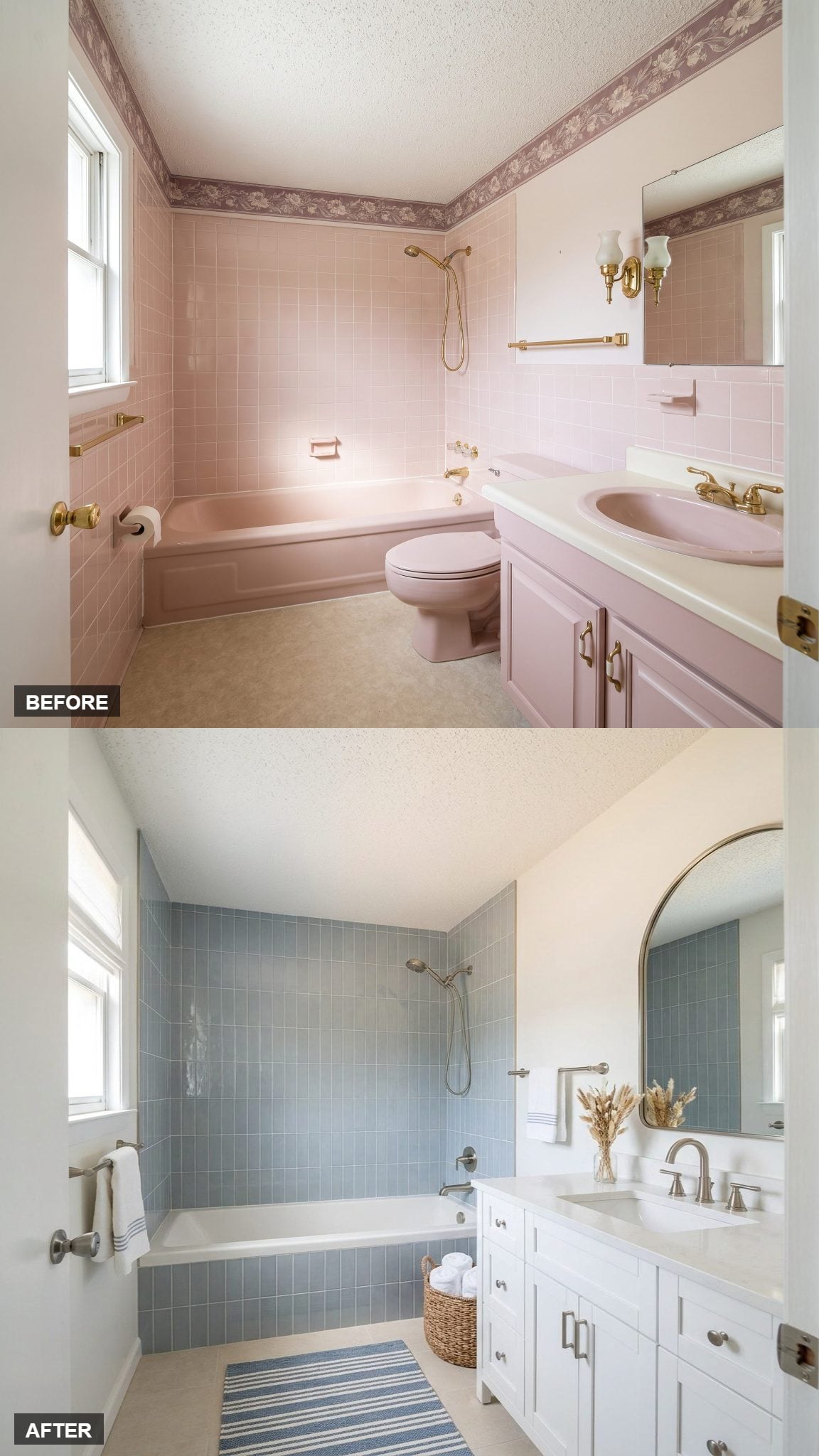
Vertically stacked tile changes the proportions of the wall. The uninterrupted upward lines make the installation feel taller, while the blue-gray color adds character without relying on literal nautical symbols.
The arched mirror interrupts the rectangular tile and cabinetry with one large curve. There is a broader range of blue bathroom decor that uses the same principle: cool color balanced by warm light, natural texture, or restrained contrast. A blue-and-white striped bath mat can reinforce the palette without committing another wall to pattern.
15. Sleek Monochrome in Charcoal Tile and Black-Framed Glass
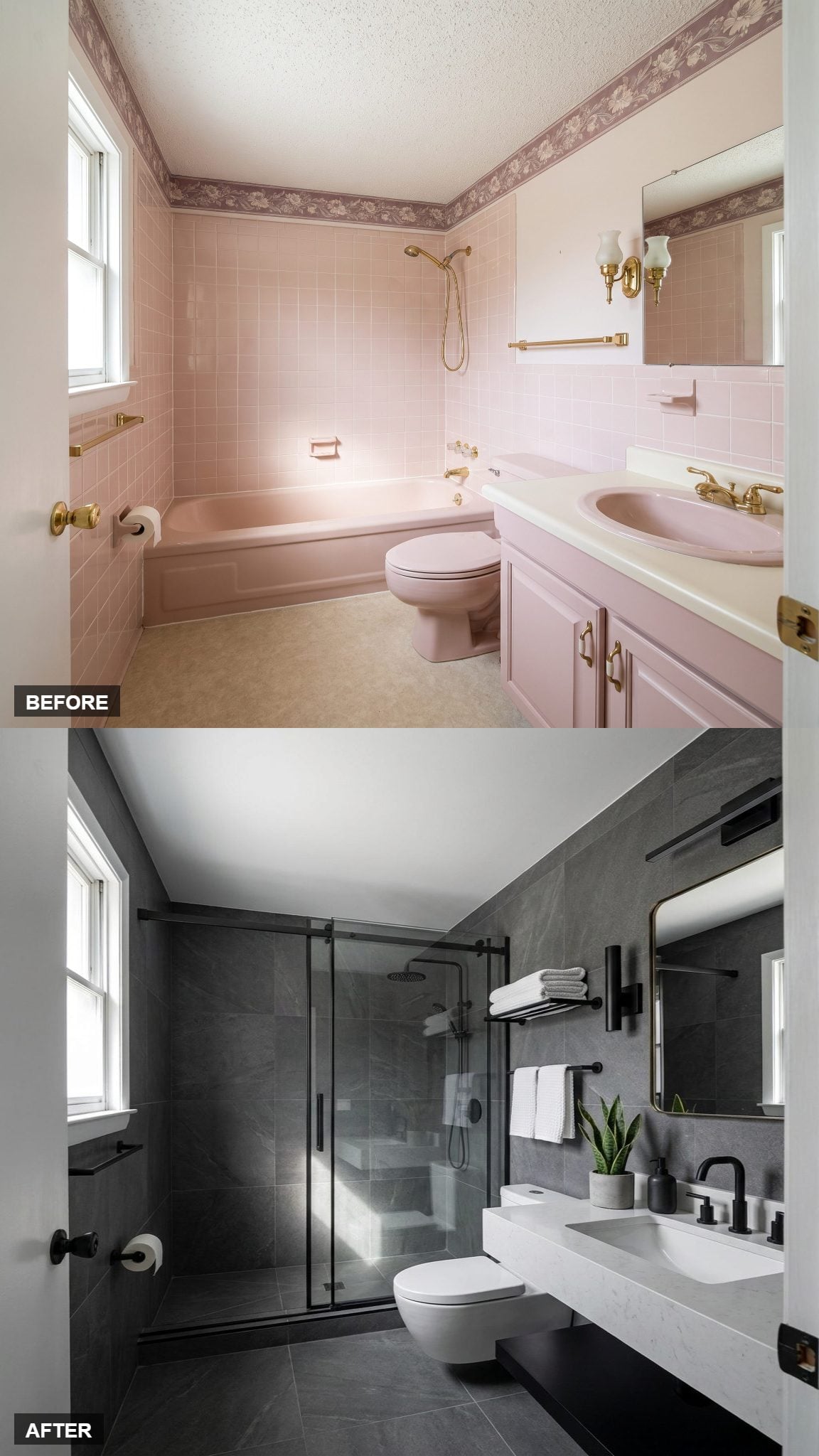
Charcoal walls and a black-framed shower create an industrial edge without requiring exposed pipes or rough masonry. The grid gives the glass enclosure enough presence to stand against the dark tile instead of disappearing into it.
The white stone vanity provides the necessary break. Without that pale horizontal surface, the room could become visually dense. Similar contrast appears throughout strong black interior design, where dark finishes work best when balanced by light, reflection, or open space.
14. Modern Minimal White with a Soft Sage Accent Wall
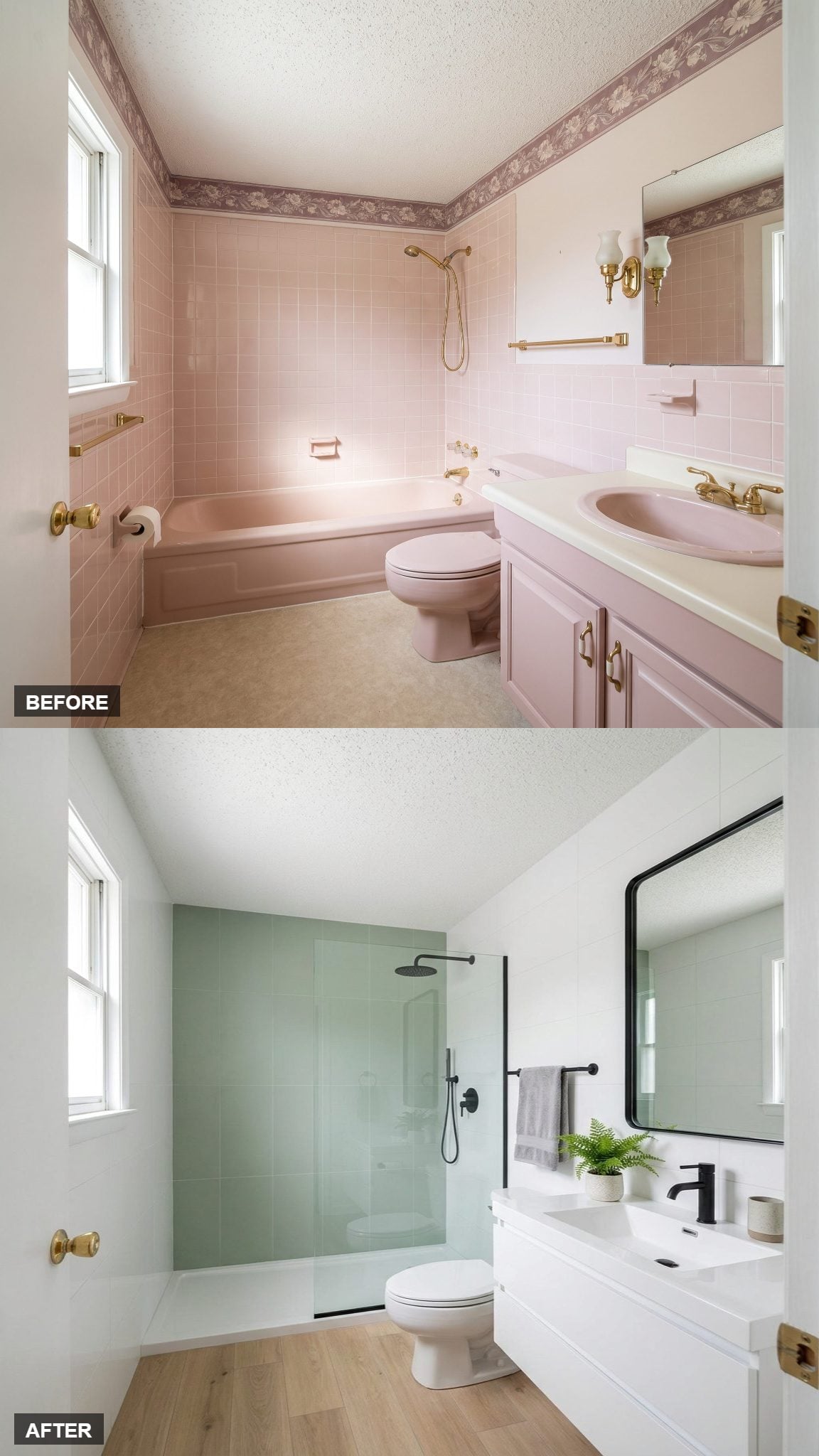
One sage wall gives the white room a clear focal point without reducing its brightness. The green is muted enough to work as a background, but substantial enough that the design no longer depends entirely on fixtures and accessories.
Light oak floor tile warms the palette from below. The same soft-neutral-plus-one-color strategy appears in bright nursery ideas, where a restful accent color keeps pale walls from feeling unfinished.
13. Rainfall Glass Box with Bookmatched Marble and Matte Black
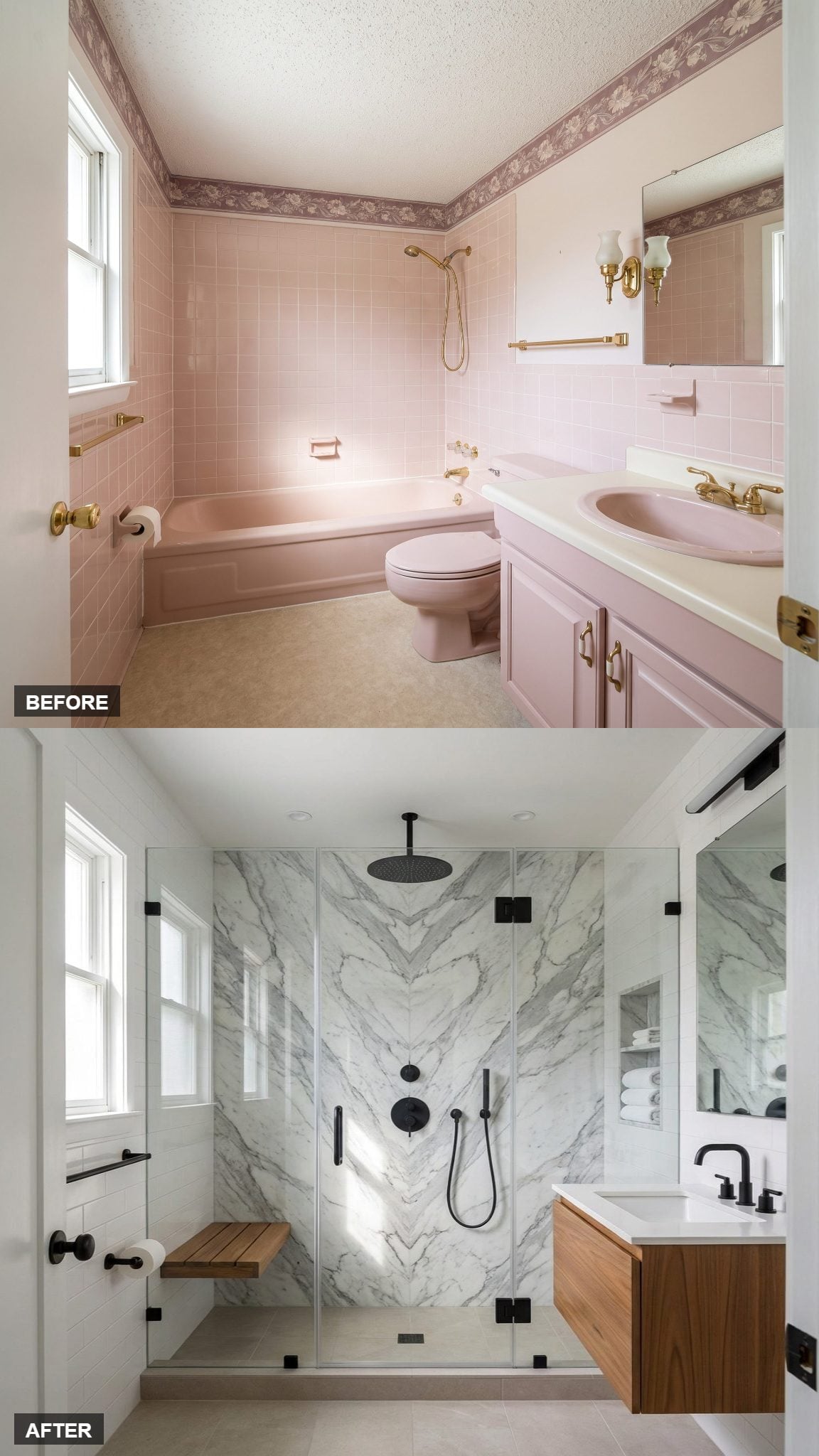
Here, the marble is contained within the shower rather than spread across the entire bathroom. That concentration makes the enclosure feel like a separate architectural volume, framed by clear glass and a slim black outline.
The rainfall head strengthens the sense of a dedicated shower zone, while the teak bench provides a practical place for products, seating, or a folded towel kept clear of the spray. Warm wood also breaks up the hard surfaces without interrupting the black-and-white palette.
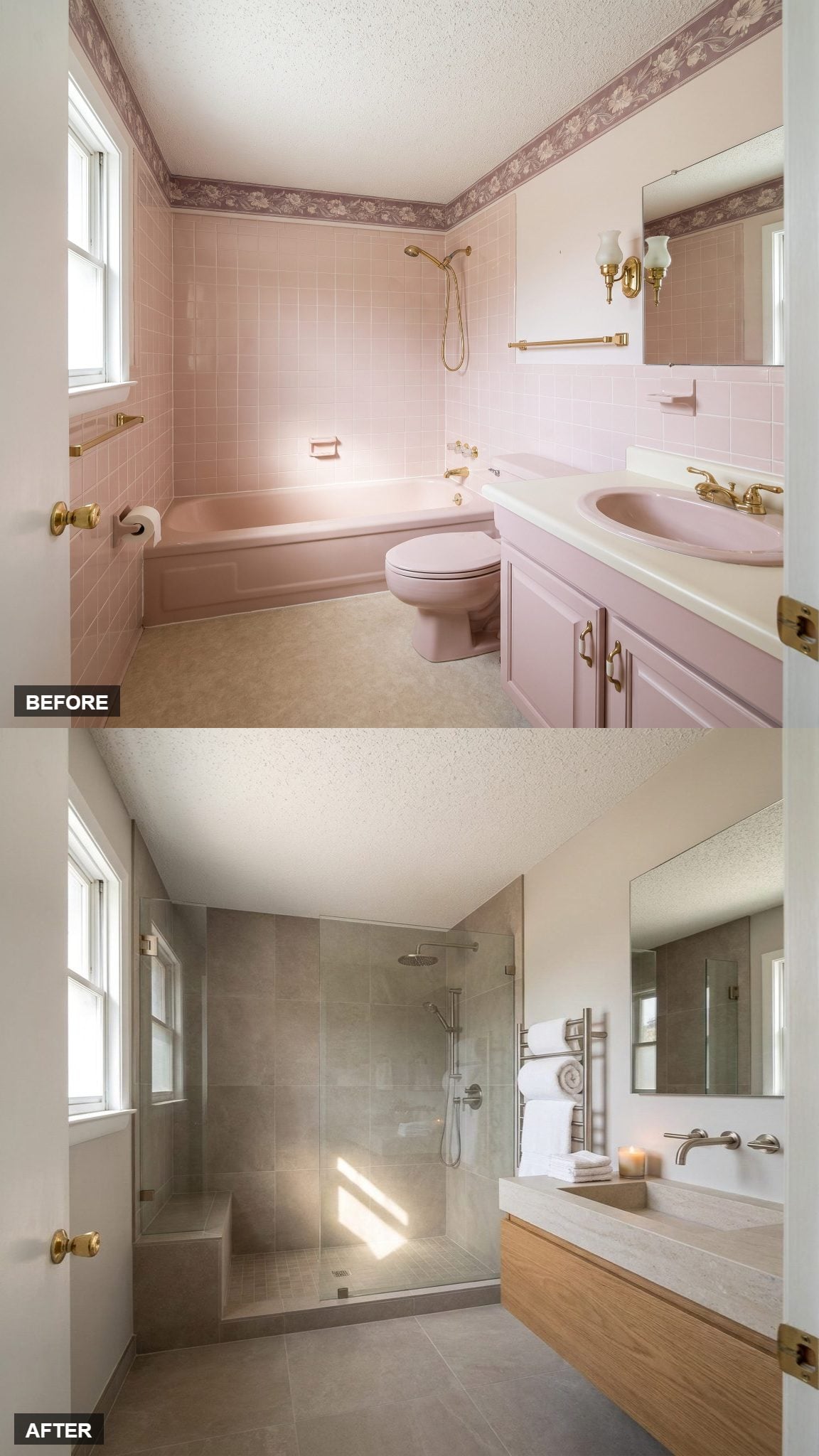
12. Heated Floor Luxury in Warm Gray Porcelain and Oak
🔥 Would you like to save this?
Warm gray porcelain gives the floor a quieter presence than the original pink tile, but the real improvement is beneath the surface. Electric heating cables can take the chill off tile and make the bathroom more comfortable during cold weather.
Oak cabinetry keeps the gray scheme from becoming visually heavy. Before installation, the heating system should be planned around the room size, insulation, electrical capacity, thermostat location, and areas where permanent fixtures will sit.
11. Backlit Mirror Suite in Soft Gray and Matte Black
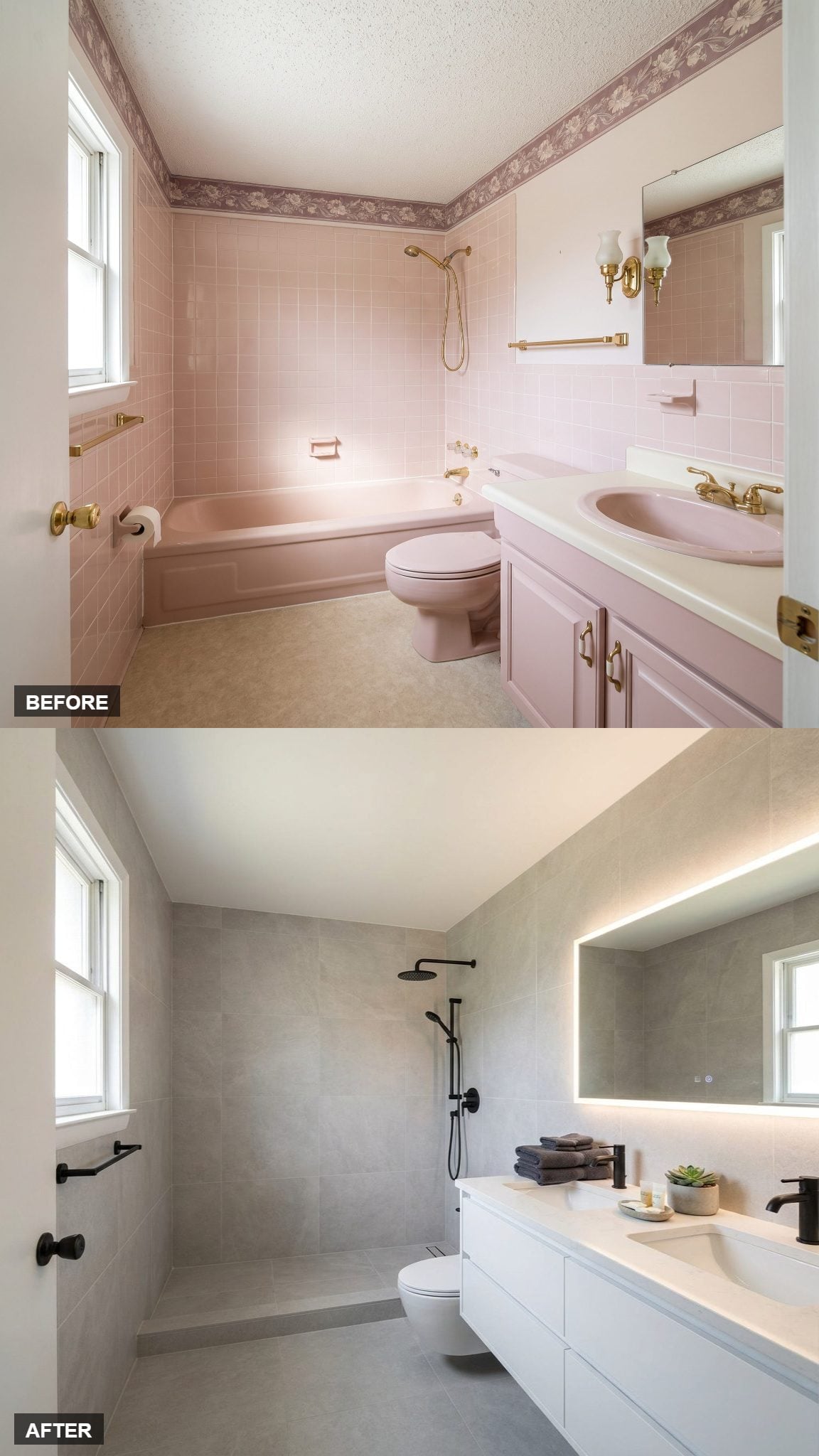
The backlit mirror adds a soft halo around the glass, separating it from the gray wall and supplying ambient light around the vanity. For shaving, makeup, and other detailed tasks, the room would still benefit from front-facing integrated light or sconces positioned near face height.
Gray tile and matte black establish a controlled base, while charcoal towels deepen the palette without adding a new color family. A softer variation could borrow from a low-contrast blue bathroom decor scheme by replacing the gray with a muted blue-gray.
10. Warm Wood and Stone with a Rattan-Framed Mirror
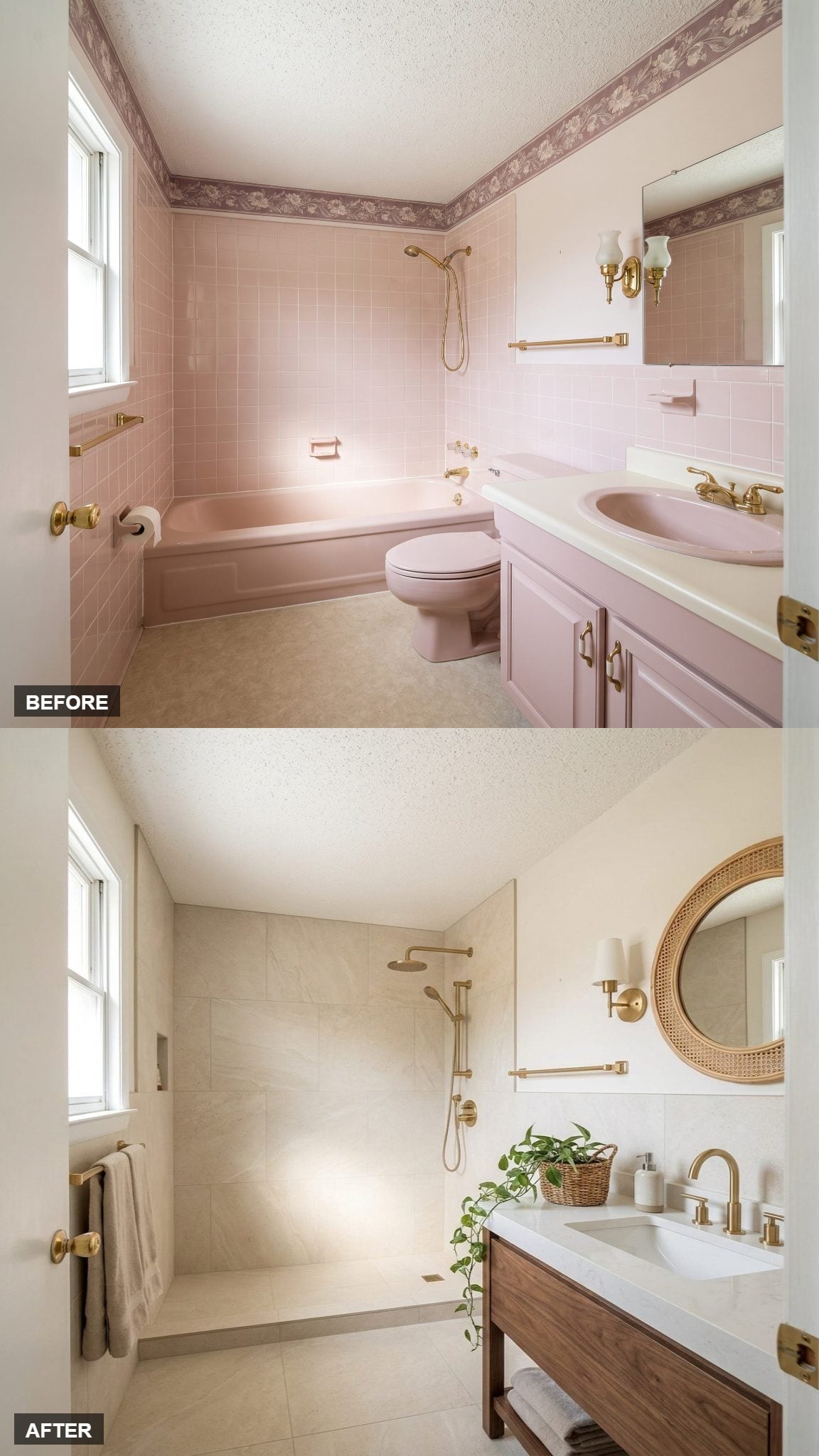
Walnut cabinetry and cream stone establish the warmth of this scheme before any accessories are added. The restrained color range allows wood grain, stone movement, and changing daylight to provide most of the variation.
The rattan-framed mirror is deliberately less formal than the surrounding surfaces. Its woven edge keeps the room from looking overproduced and gives the vanity wall a softer focal point.
9. All-White Serenity with an Oversized Arched Mirror
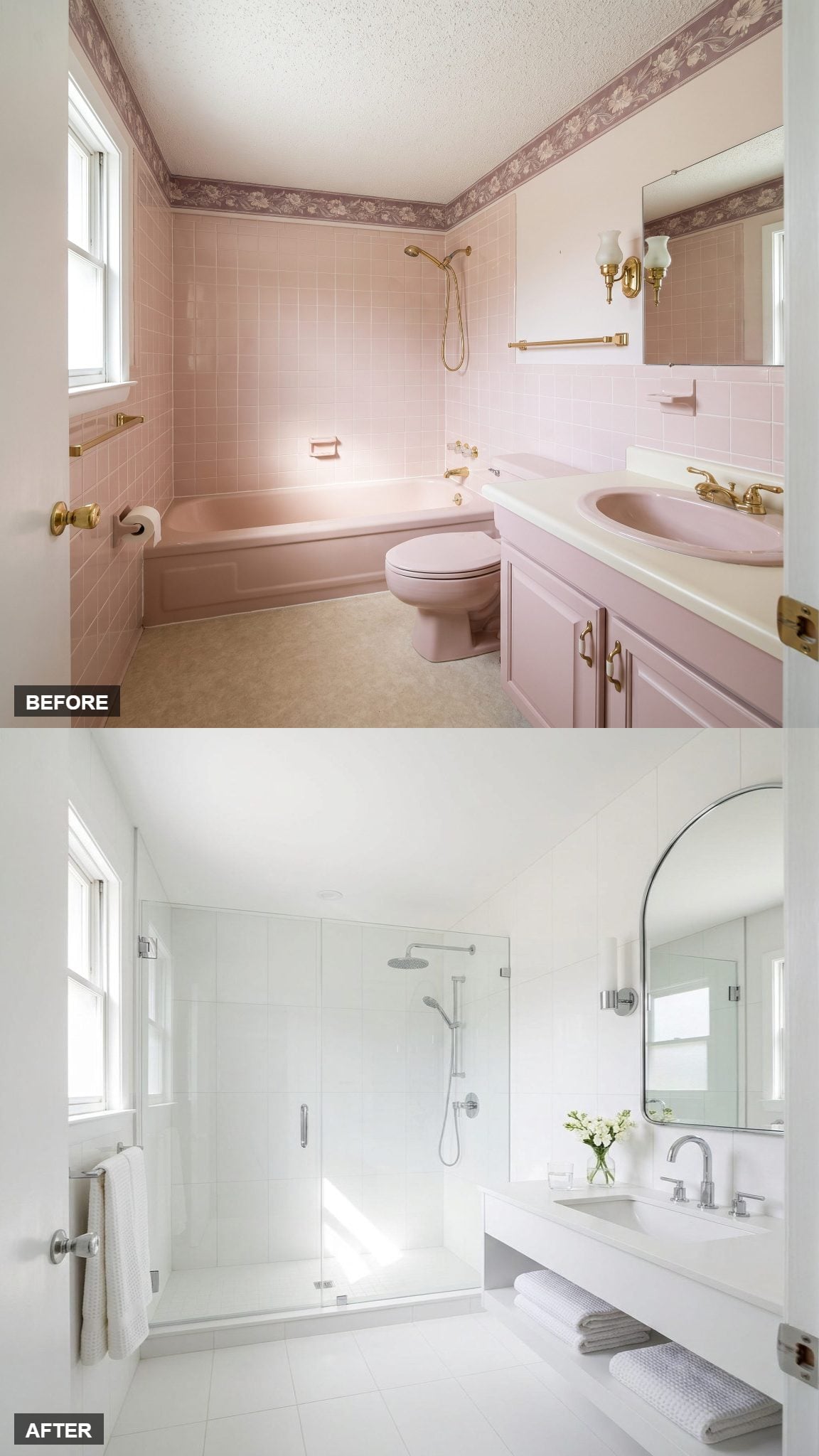
An all-white bathroom depends on variation in sheen and texture. Matte ceramic, glossy tile, woven towels, and a ribbed light fixture create enough difference for the surfaces to remain legible even though the color barely changes.
The oversized arched mirror introduces scale and curvature, preventing the room from becoming a stack of white rectangles. Its reflection also carries light and architectural detail farther across the wall.
8. Terrazzo Modern in Light Speckle and Warm Brass
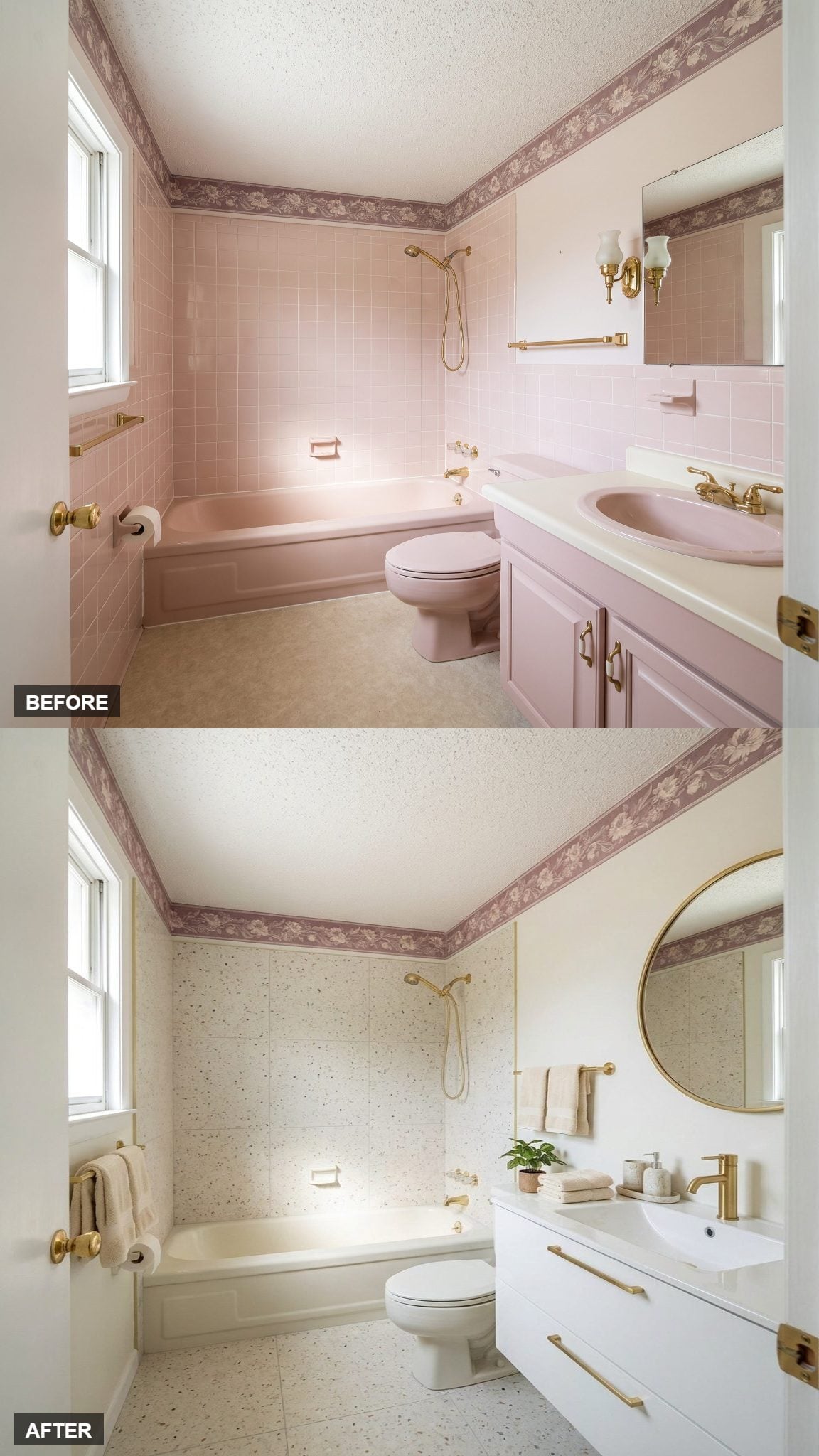
Terrazzo brings color back in a more controlled form. Instead of one unbroken field of pink, small chips distribute several tones across a pale base, giving the floor movement without turning it into a dominant pattern.
Brass picks up the warmer chips and helps the scattered color feel connected to the fixtures. A light, well-sealed terrazzo surface can disguise minor dust and water marks better than a plain dark floor, although maintenance still depends on the finish, sealer, and chip colors. That same playful use of scattered color appears in many bright nursery ideas, where pattern is used to animate an otherwise quiet room.
7. Marble Waterfall Shower in Bookmatched Gray and Brushed Nickel
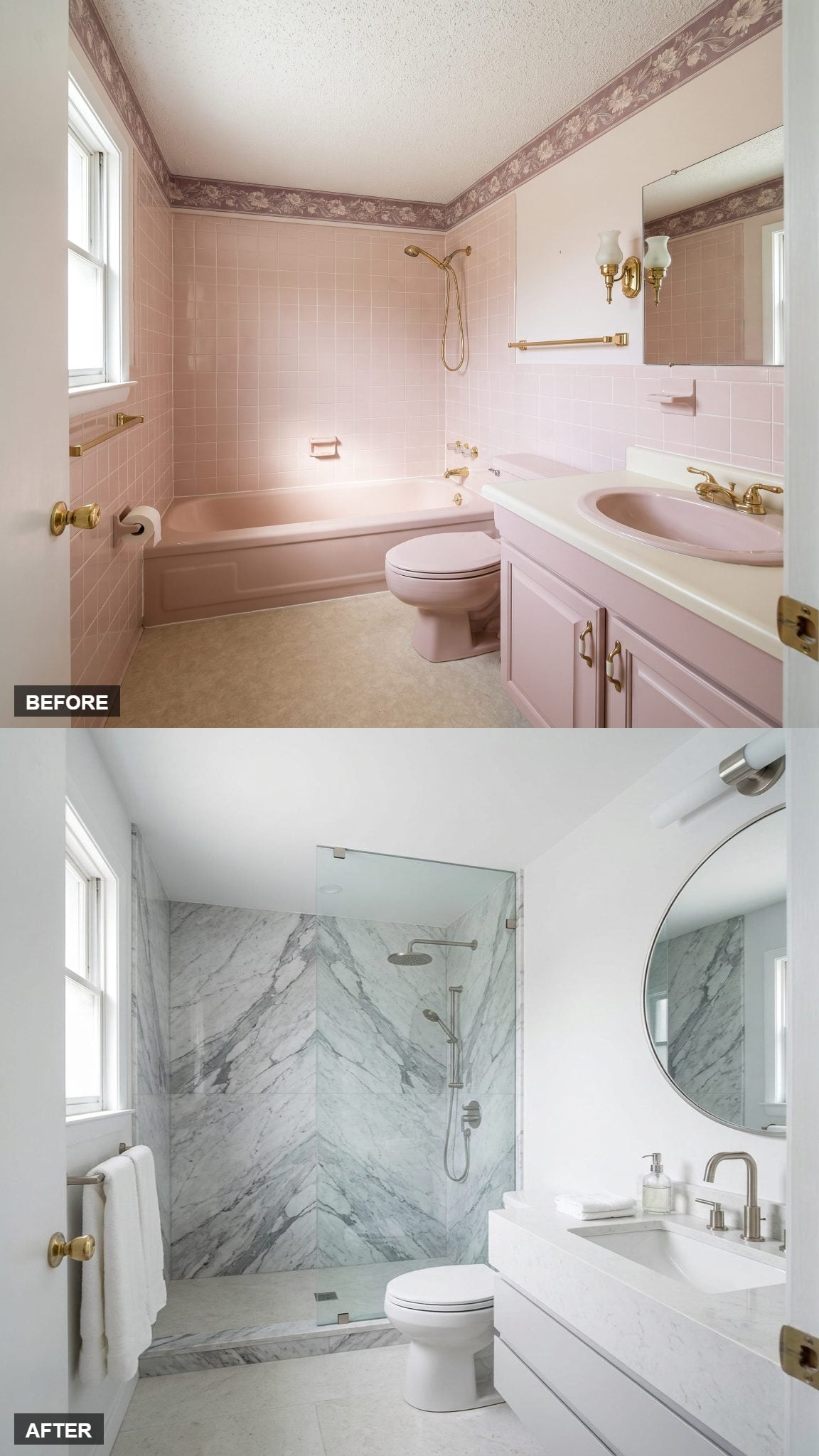
This version uses bookmatched gray marble to create a centered, waterfall-like movement behind the shower fittings. The veining remains active, but the mirrored layout gives that movement an intentional axis rather than allowing it to wander randomly across the wall.
Brushed nickel stays close to the gray tones in the stone, so the hardware supports the composition instead of interrupting it. The metal also offers a softer contrast than black would provide.
6. Champagne Bronze Luxe on Soft Ivory Tile
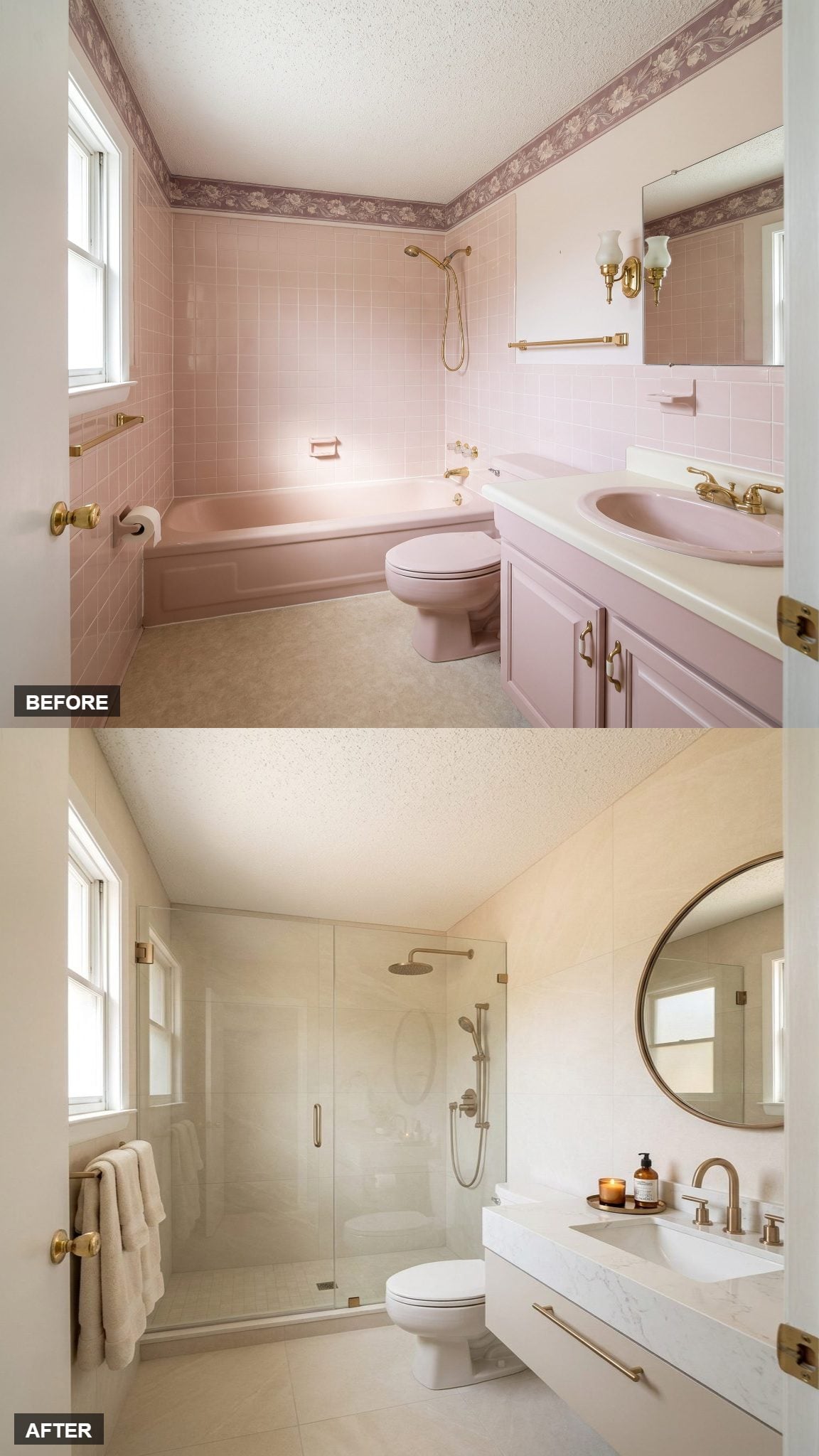
Champagne bronze and soft ivory share warm undertones, allowing the fixtures to stand out without creating a hard color break. The metal reads as decorative, but its muted finish keeps it from approaching the high shine of traditional polished brass.
Pink tile can work beautifully with warm metals when the shades are carefully selected. In this design, however, the ivory background gives the bronze more breathing room and allows the fixtures to become the principal color accent.
5. Statement Stone Wall in Dramatic Veined Slab and Matte Black
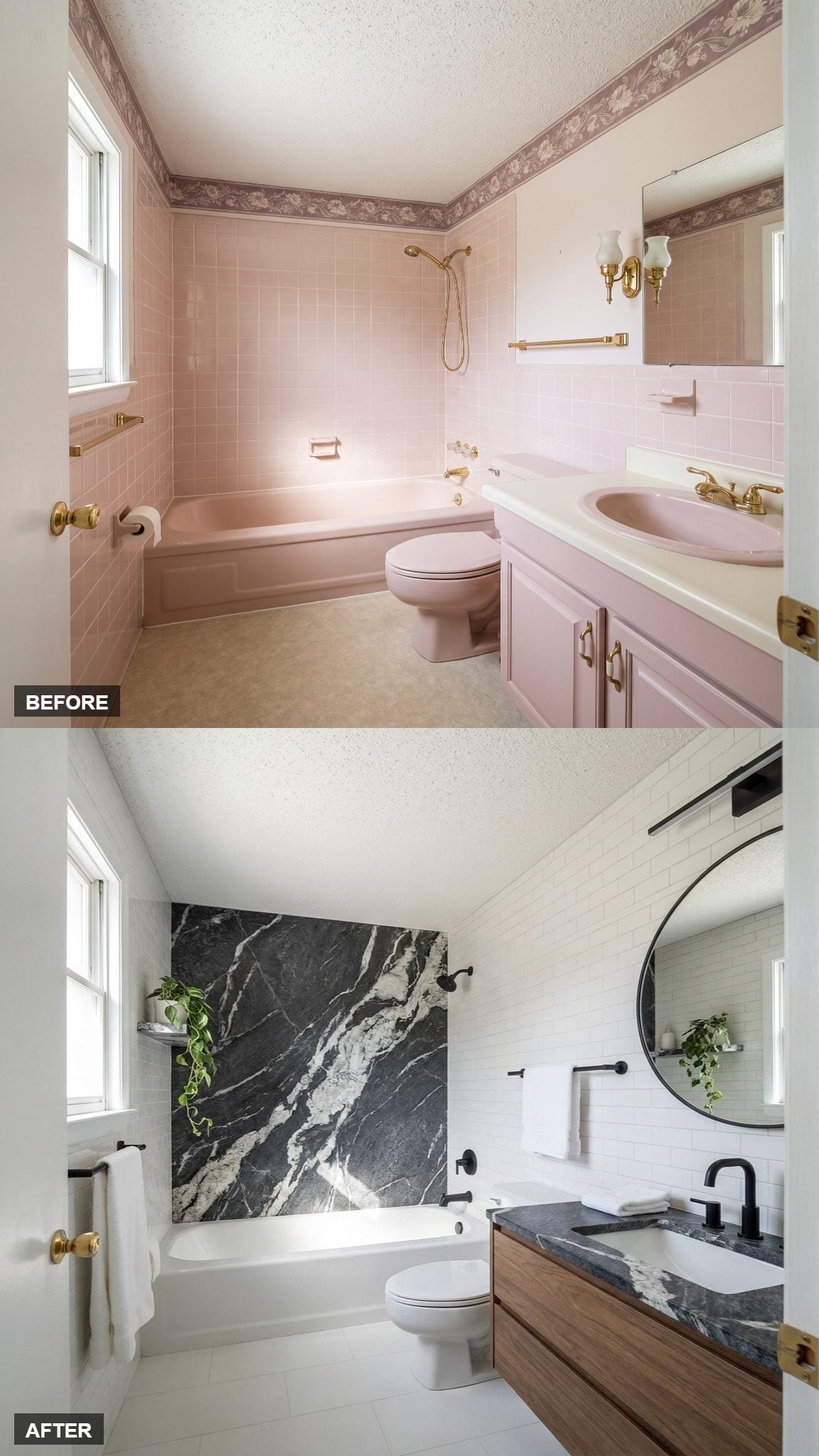
One wall carries the expensive finish, while the remaining surfaces stay restrained. Concentrating the dramatic slab behind the tub creates a focal point without requiring the same material on every wall.
Matte black fixtures repeat the darkest lines in the stone and help connect the tub area to the rest of the bathroom. The finish has lasted longer than many expected, especially when used in limited amounts against pale tile rather than spread across every accessory.
4. Sunlit Minimal Luxe in Pale Oak and White Microcement
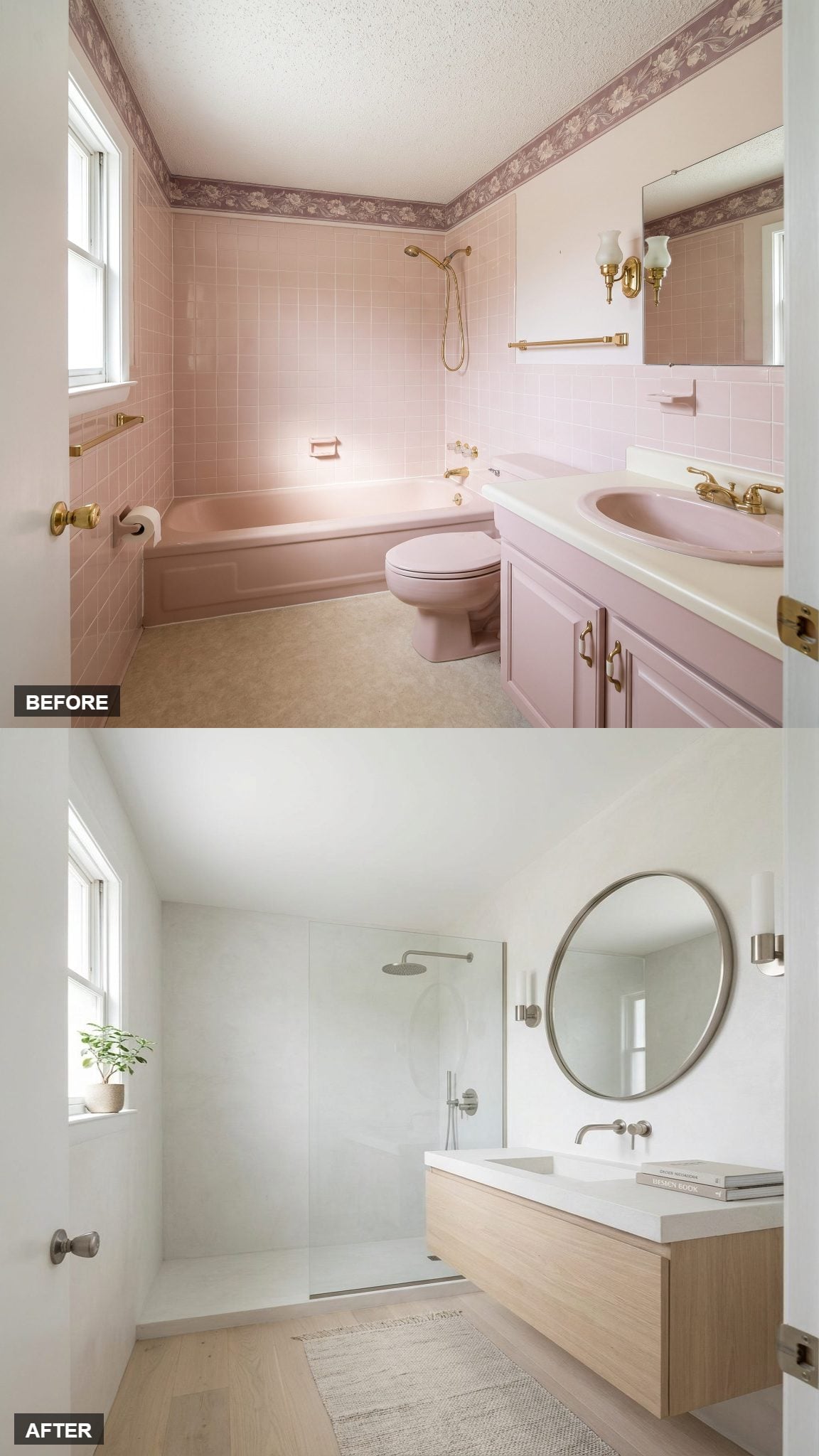
Two primary finishes organize the room: pale oak and white microcement. Limiting the permanent materials allows the shape of the vanity, window, shower, and floor plane to remain easy to read.
Microcement contributes faint mottling, while oak supplies directional grain. The small plant introduces one concentrated note of green and helps connect the interior palette to the daylight coming through the window.
3. Warm Greige Retreat with Matte Black and Waffle-Weave Linen
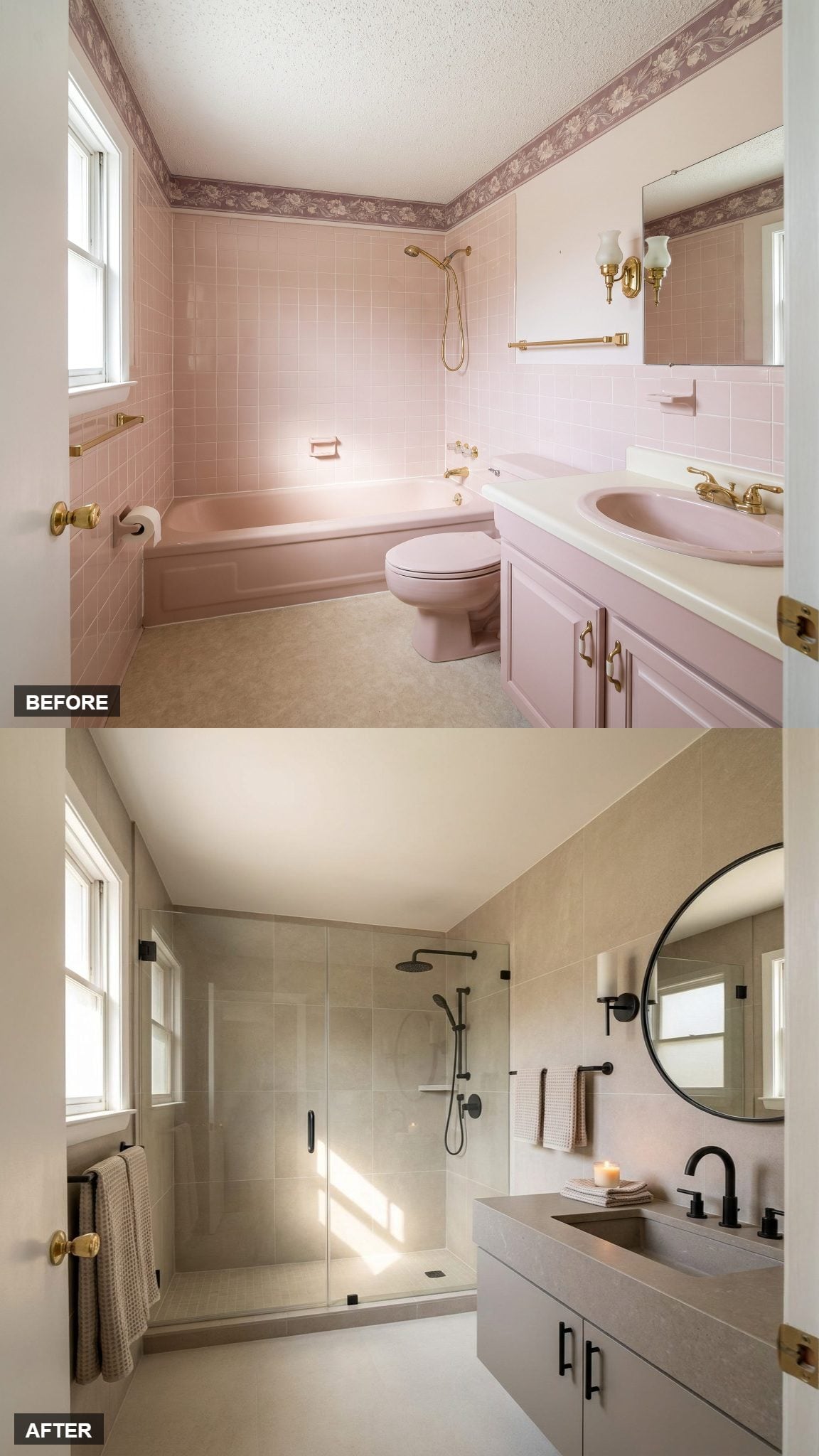
The permanent shell remains simple: warm greige tile, a pale vanity, and thin black fixtures. That neutral foundation leaves room for the bathroom to change through textiles rather than another renovation.
Waffle-weave towels add a flatter, more tailored texture than thick terry cloth, while a bath mat, shower curtain, and small accessories can introduce seasonal color. This is the lower-commitment version of the greige bathroom: the tile stays quiet, and the replaceable layers carry the personality.
2. Modern Zen Retreat in Sand Tile, Light Wood, and Bamboo
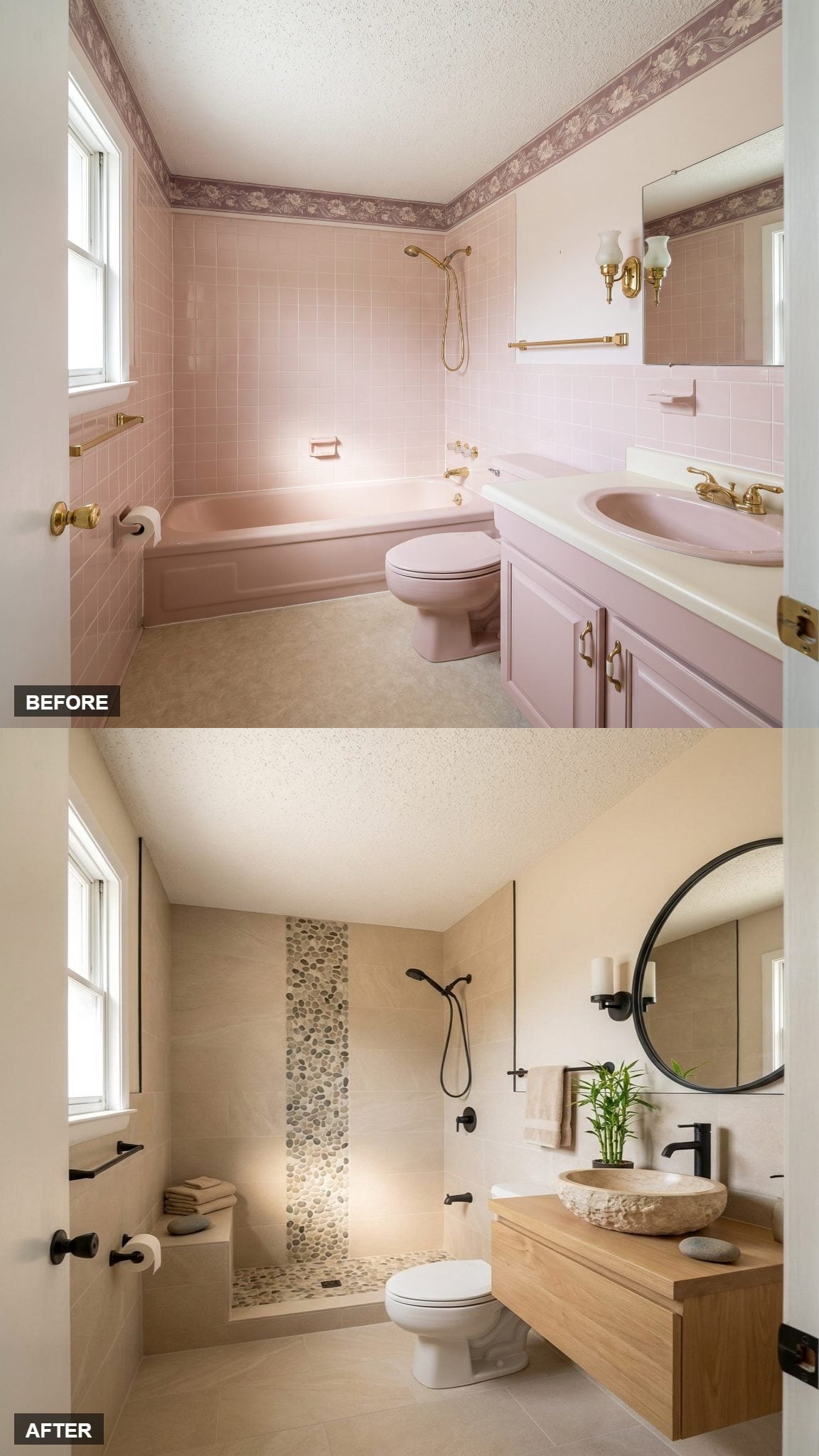
The pebble strip in the shower establishes the natural-material theme. Its irregular shapes break up the smooth sand-colored tile, while the stone vessel sink repeats that tactile quality at vanity height.
Light wood and bamboo accessories keep the room from becoming a collection of beige hard surfaces. Real pebble floors do require careful installation, sufficient drainage, thorough grouting, and regular cleaning around the uneven joints, so the detail should be chosen for more than appearance.
1. Glossy White Modern with Chrome and an Oversized Round Mirror
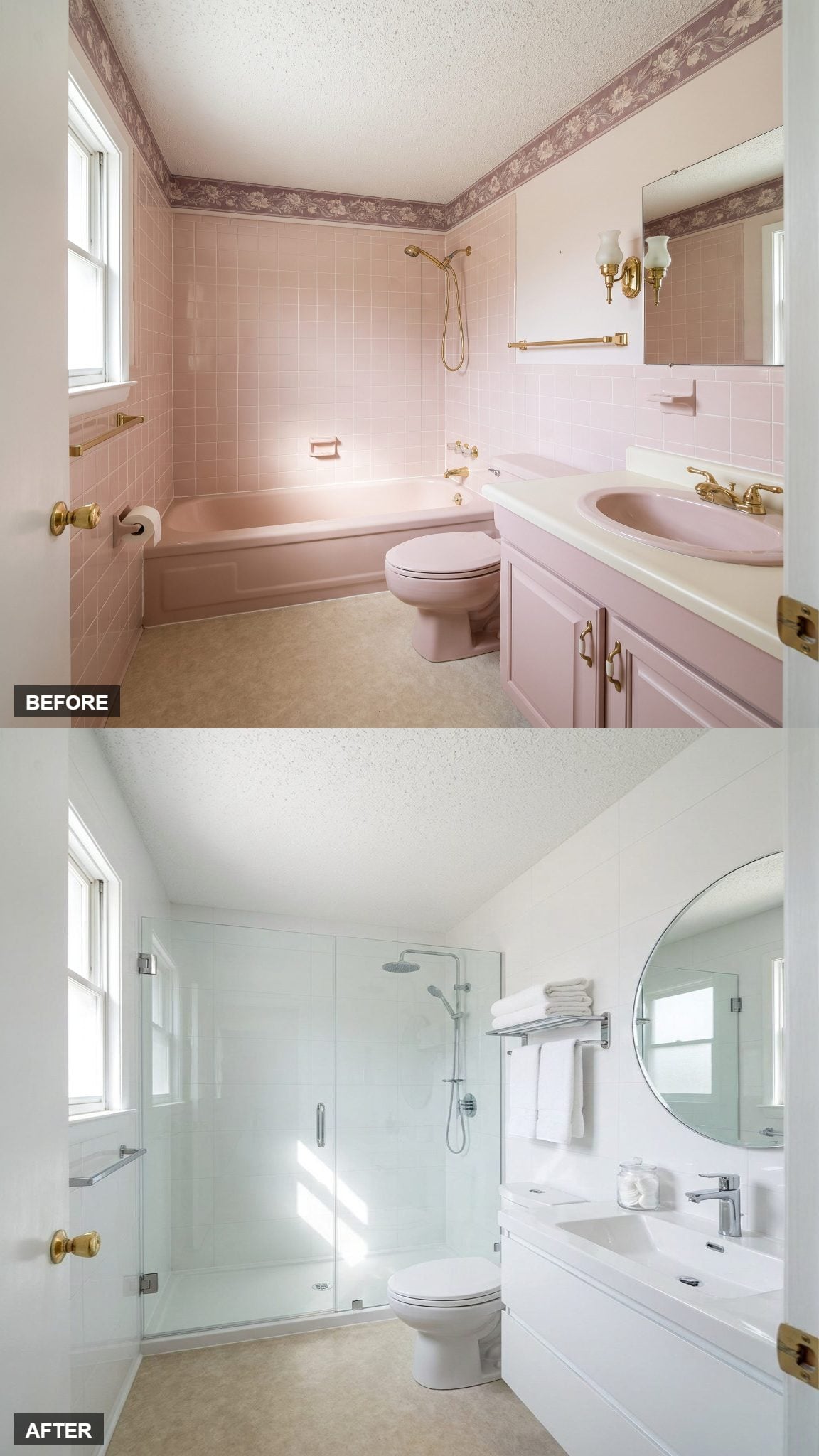
High-gloss tile reflects available daylight across the walls, helping a small bathroom make better use of a limited window. The surface has a brighter, more energetic character than matte white, although it will also show water spots and streaks more readily.
The oversized round mirror reflects the window and carries more of the pale room back into view. Chrome maintains that reflective quality without introducing the dark outlines used in many of the other designs, giving the final scheme a cleaner and more luminous finish.