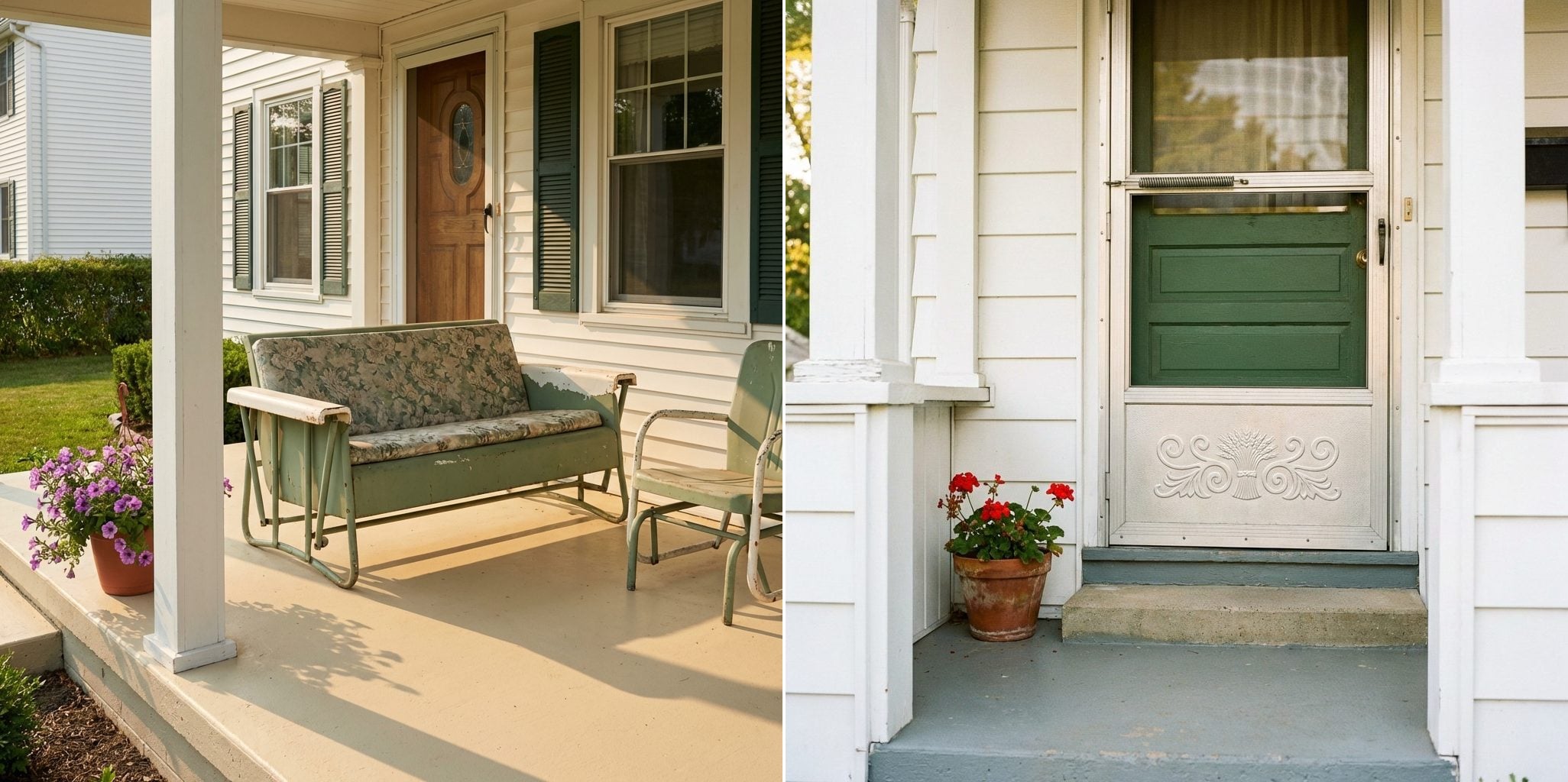
Close your eyes and you can still smell it: fresh-cut grass, a neighbor’s cigarette, and the faint sweetness of petunias in a clay pot. The 1950s front porch wasn’t just a transitional space between the world and your living room. It was the living room, on warm evenings, when the whole neighborhood was out. These details aren’t design history. They’re memory. See how many you actually lived.
The Glider Swing That Creaked Exactly the Same Way at Every House
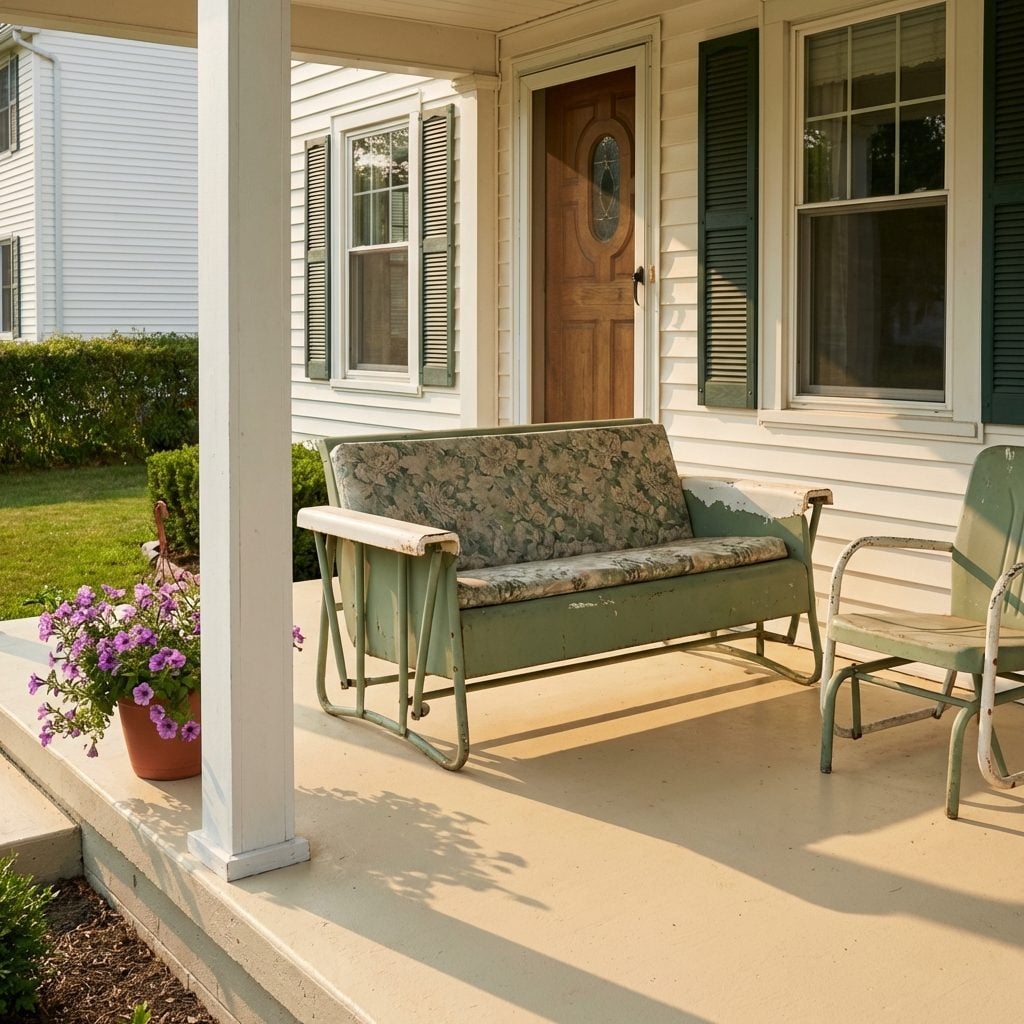
That rhythmic squeak wasn’t a maintenance problem. It was the soundtrack of summer. Every porch glider in America, painted forest green or white with a faint rust bloom at the joints, made exactly that sound, and no one ever oiled it. The vintage metal porch glider was where grownups solved neighborhood disputes and where kids begged to stay out past eight.
In order to come up with the very specific design ideas, we create most designs with the assistance of state-of-the-art AI interior design software. Also, assume links that take you off the site are affiliate links such as links to Amazon. this means we may earn a commission if you buy something.
The upholstery, usually a faded stripe or tiny floral print, had a specific plasticky-canvas smell that baked in the sun. Sitting on it in shorts meant red grid marks on the backs of your thighs. Nobody cared. You’d sit out there until the fireflies appeared.
The Aluminum Screen Door With the Spring That Snapped Back Like a Mousetrap
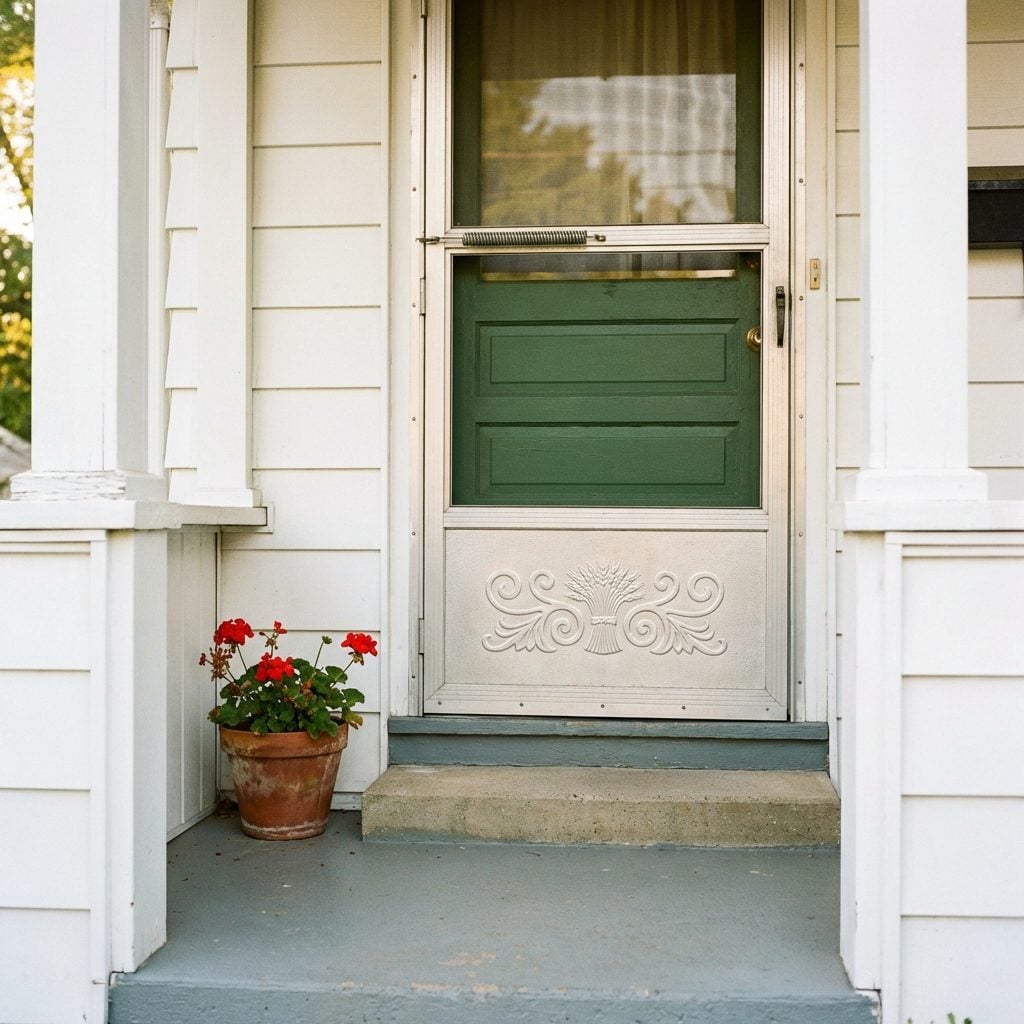
BANG. There it is. You heard it fifty times a day and flinched every single time anyway. The aluminum screen door’s coiled spring tension was calibrated to exactly one setting: violent. No adult in America ever fixed it. “Don’t let the screen door slam” was the most frequently ignored instruction of the entire decade.
The decorative stamped panel at the bottom, usually a sheaf of wheat or a starburst, had nothing to do with keeping bugs out and everything to do with making an aluminum door look like it had been thought about. It fooled nobody and delighted everyone.
The Painted Concrete Porch Floor in That Specific Shade of Gray-Green
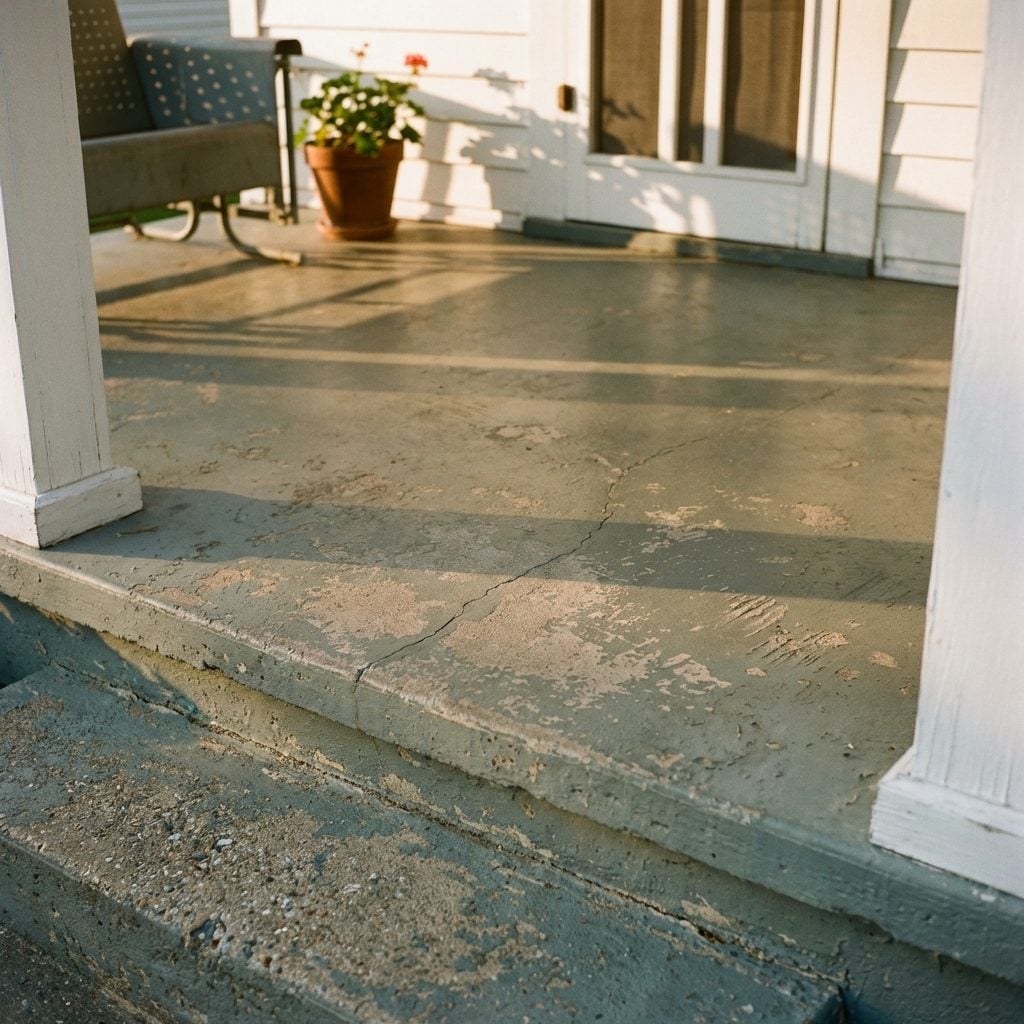
It wasn’t gray. It wasn’t green. It was porch floor color, that specific shade that existed only on 1950s front porches and nowhere else in the world. Hardware stores stocked it under names like “Slate” or “Colonial Green” and every house on the block somehow ended up with the same one.
The surface had texture from the grit mixed in, and by July it radiated heat straight through the soles of your sneakers. By August, there were scuff marks near the door and a worn pale patch exactly where everyone stepped off the last stair. Nobody repainted it for years. It just became more itself.
The Redwood or Cedar Porch Railing With the Rounded Top Rail You’d Run Your Hand Along
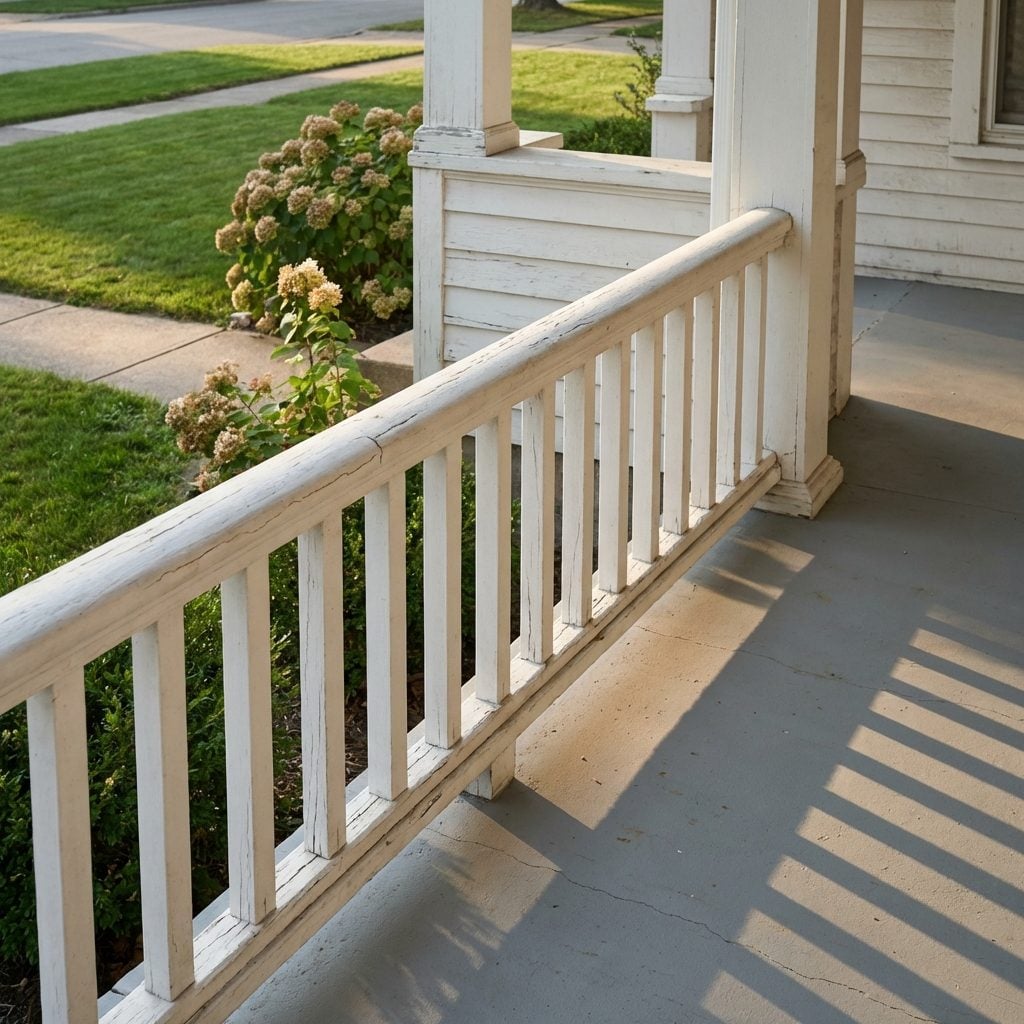
You ran your hand along it every single time you walked up the steps. That top rail, smooth from a dozen coats of enamel paint, slightly cool in the morning and warm by noon, had a satisfying roundness that made you grab it even when you didn’t need the support.
Some rails were redwood. Some were cedar. By the time you were old enough to notice the wood underneath, it had been painted white so many times the grain was just a rumor. The white porch railing was the thing you leaned against while talking to a neighbor and never thought about once.
The Green Canvas Awning That Turned Afternoon Light Into Something Magical
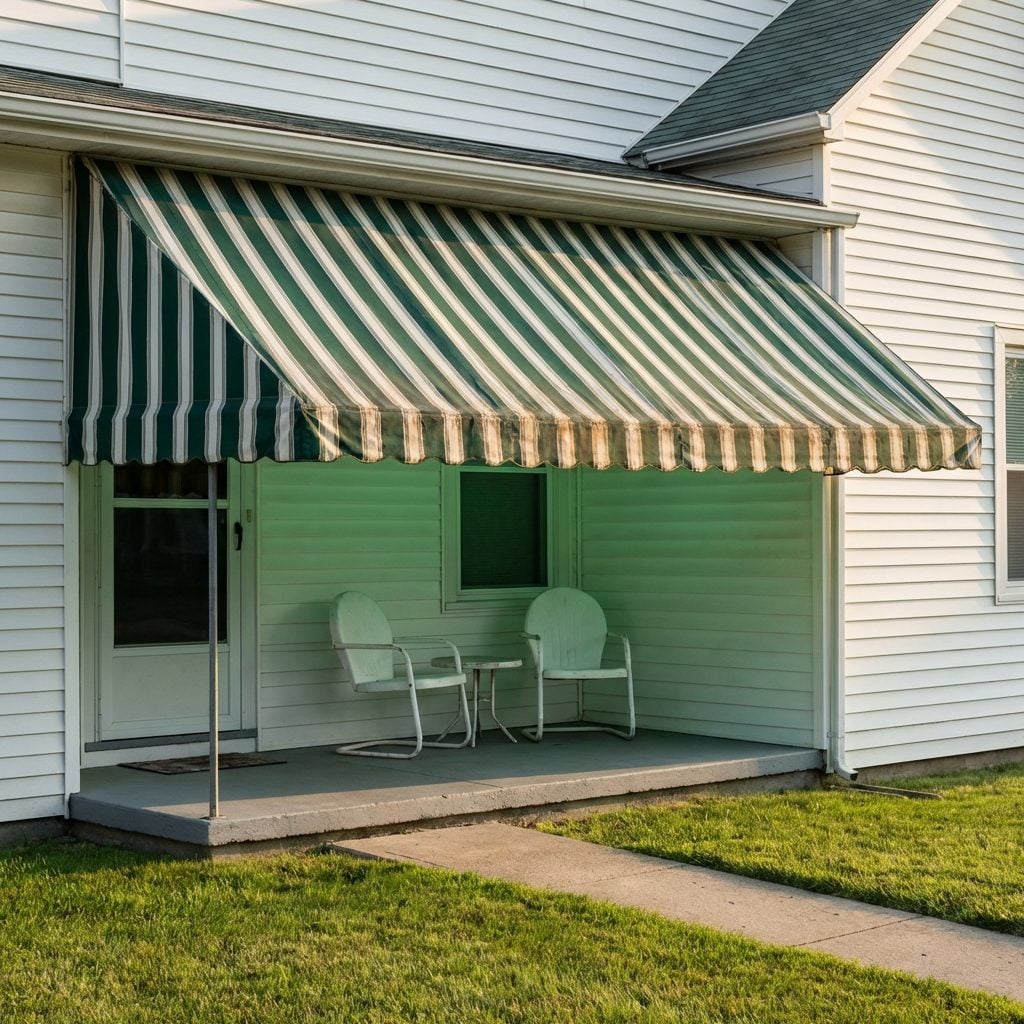
On a July afternoon, stepping under that green canvas awning was like stepping into a different temperature. The light went cool and slightly golden-green, the sun was cut to half-strength, and the whole porch suddenly felt like somewhere you could actually breathe.
Striped ones, forest green and white, were the most common. Solid dark green was more serious, usually on brick houses. They cranked open with a handle that required more force than any child could summon alone. In September they came down; in May they went back up. This was a ritual with the same weight as hanging Christmas lights.
The Concrete Urn Planter With the Red Geraniums That Never, Ever Died
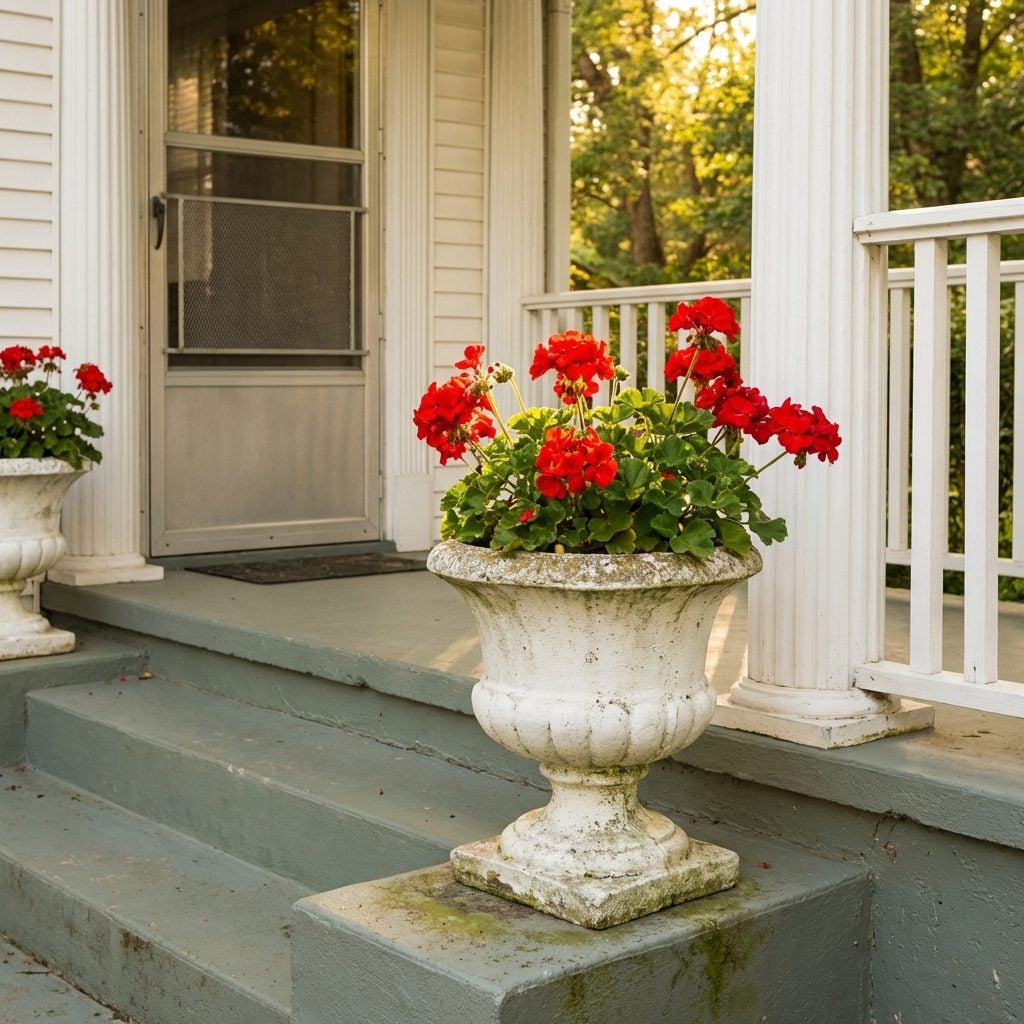
Red geraniums in a concrete urn. It was as close to a law as American home design ever got. The urn was heavy enough that no one moved it once it was positioned, which meant the concrete base left a permanent dark ring on the porch floor. The concrete urn planter didn’t match anything specific, it just looked like a front porch was supposed to look.
What nobody talks about is how those geraniums thrived on complete neglect. Rain, no rain. Fertilizer, no fertilizer. They came back, red and brazen, every single summer.
The Metal House Numbers Nailed Directly Into the Porch Column
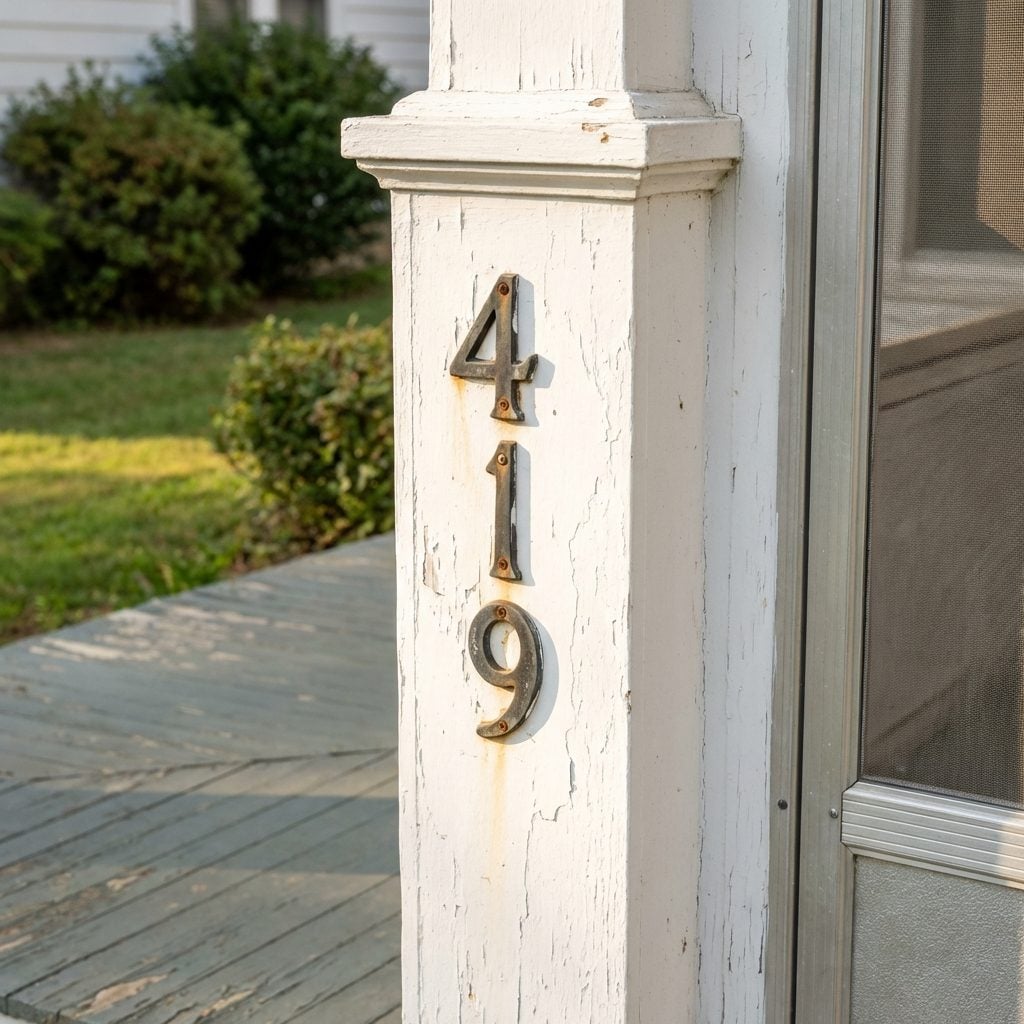
Four inches tall, stamped metal, painted black or left chrome-bright: the house numbers on a 1950s porch column were the most confident design statement on the whole facade. Nobody agonized over them. You went to the hardware store, bought the numbers, nailed them to the column, done. The spacing was eyeballed. It was usually fine.
The screw holes always left tiny rust trails on white paint by the third summer, forming a faint brown halo around each number. This was considered normal. Nobody repainted just because of that.
The Wrought Iron Porch Light With the Amber Glass Globe
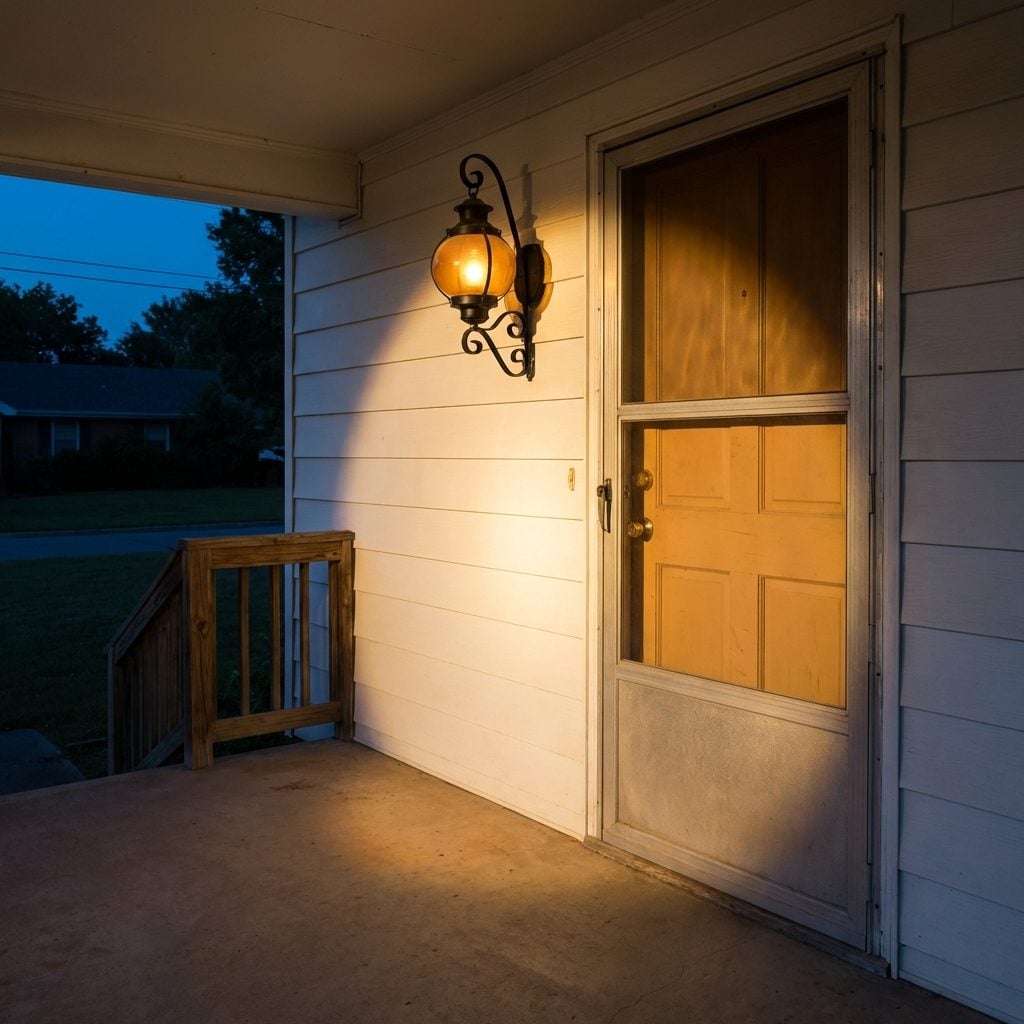
At dusk, that amber globe turned the entire porch into something almost theatrical. The wrought iron bracket, the warm gold light spilling down the door and across the concrete steps, it was never meant to be poetic, and it was completely poetic anyway.
The bulb inside was always a 40-watt incandescent that burned out twice a summer. The replacement ritual involved a step stool, a husband, and the comment “I keep meaning to fix that.” For an updated porch design inspired by this kind of vintage warmth, that amber light is the one detail worth bringing back.
The Milk Box Built Into the Porch Wall (If You Were Lucky Enough to Have One)
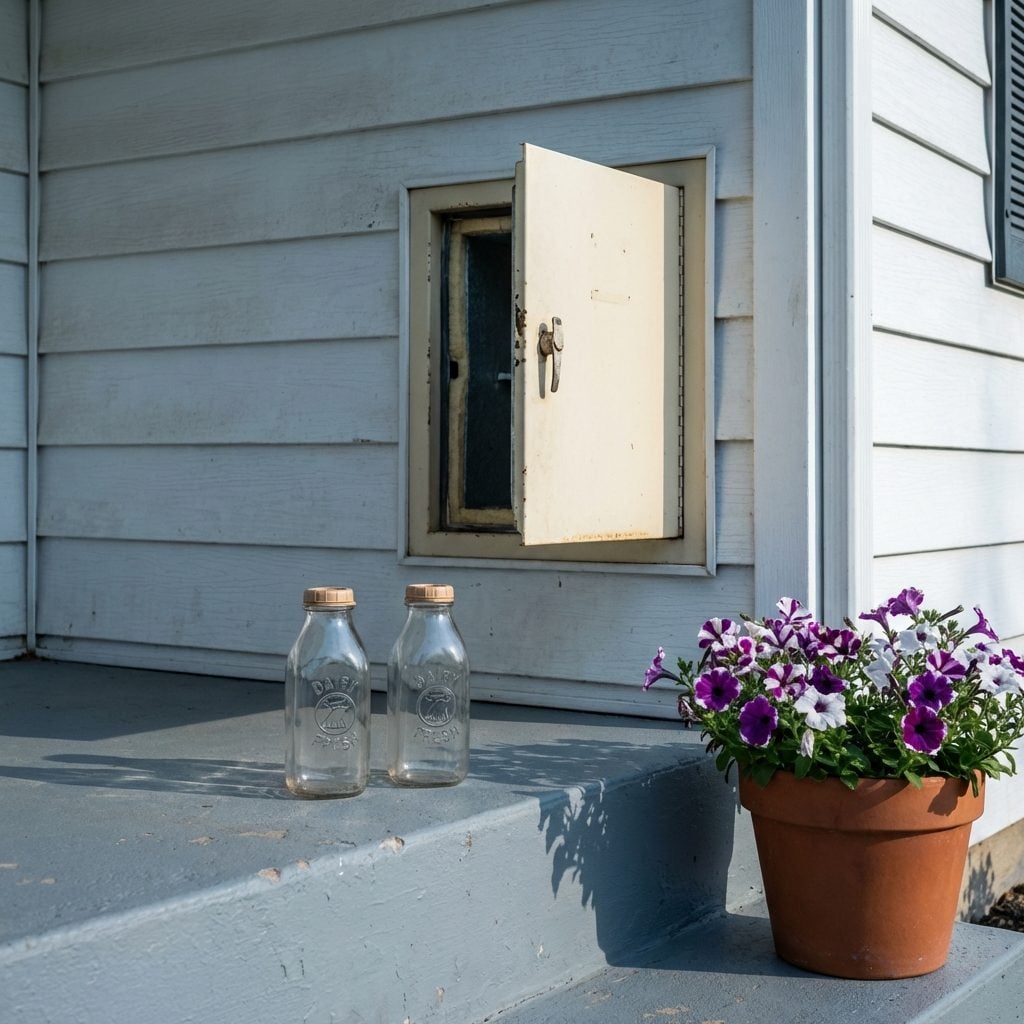
Not every house had one, which meant the ones that did were a source of genuine pride. The milk box was a small metal-doored compartment set right into the porch wall, sized for two quart bottles and nothing else. The milkman opened it from outside; your mother opened it from inside. Nobody had to speak. Nobody had to be awake.
By 1960 they were already becoming vestigial as supermarket milk squeezed out home delivery. By 1970 most were painted shut, used as electrical access panels, or filled with cement. A few are still visible in old neighborhoods if you know what to look for.
The Wicker or Rattan Porch Chair That Left Marks on the Back of Your Legs
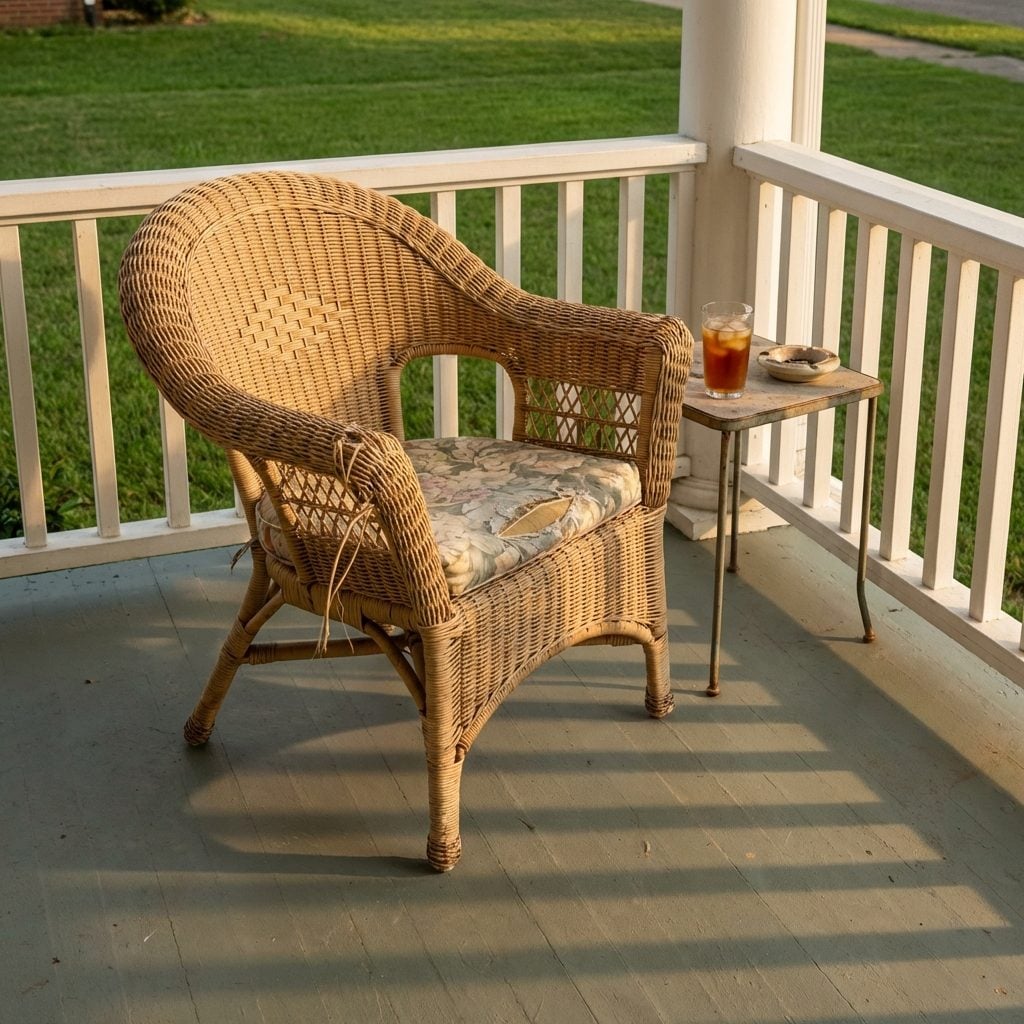
Every grid mark that wicker left on bare skin was a certificate of a long, slow afternoon. The chair itself was sold as “porch furniture” which meant it was too rough for the living room but too nice for the garage. It occupied a social middle ground and nobody questioned this.
“The wicker chair wasn’t comfortable. That wasn’t the point. The point was sitting.”
By mid-summer the cushion had migrated to the back porch, so you sat on the bare wicker directly. The wicker porch chair was where your grandmother shelled peas and where your father read the evening paper. It had protocols.
The “Welcome” Mat Made of Coconut Fiber That Removed No Dirt Whatsoever
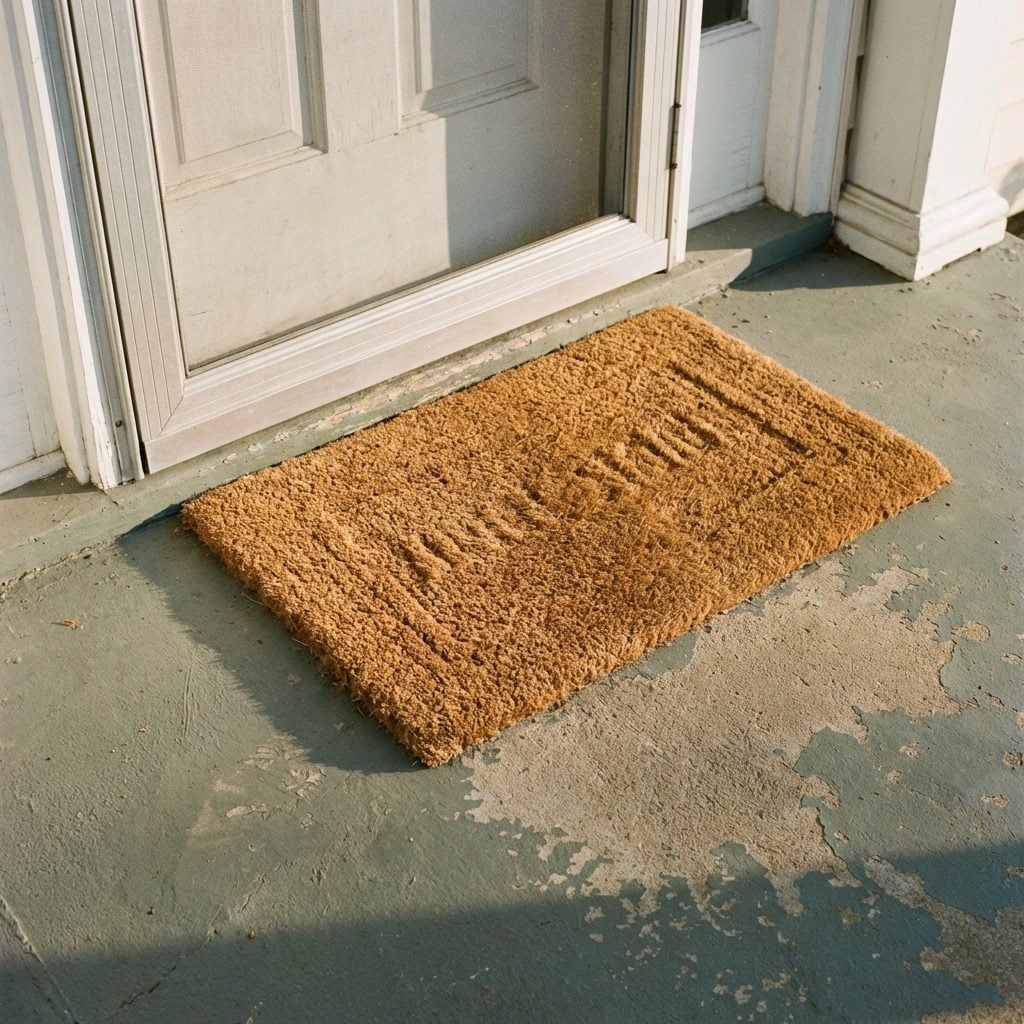
Scratchy, brown, virtually useless, and present on absolutely every front porch in America. The coir doormat was the domestic equivalent of a gesture, it said “this household cares” without actually stopping a single clod of mud. The fiber bristles packed flat within one season and stayed that way for the next fifteen years.
Replacing it was always on a list that also included “fix screen door spring” and “repaint the shutters.” It never happened. The mat just got progressively more abstract until it was essentially a rectangle of compacted fiber with a memory of purpose.
The Painted Porch Ceiling in Haint Blue (And Nobody Knew Why)
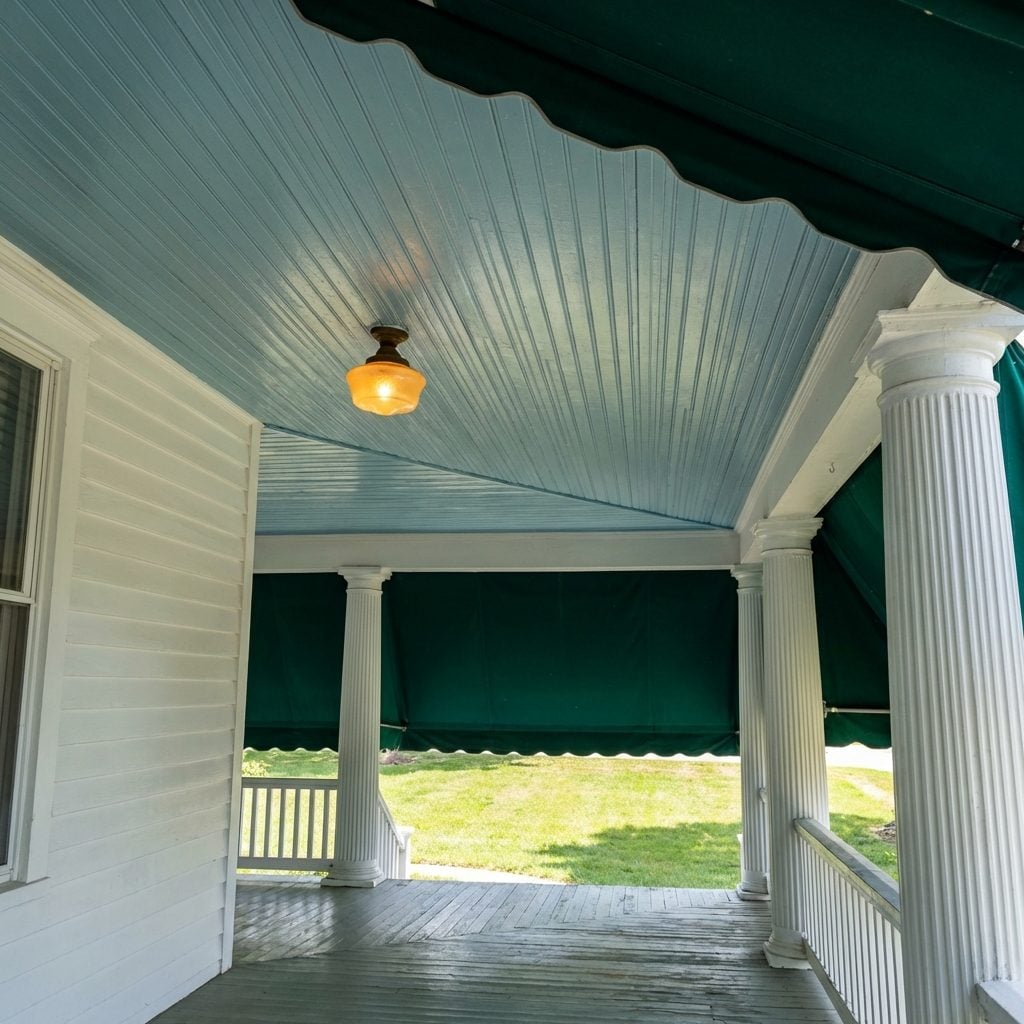
Pale blue. Sky blue. That specific cool, dusty blue that appeared on front porch ceilings from Georgia to Indiana without anyone coordinating it. Some homeowners followed a Southern tradition of painting porch ceilings “haint blue” to confuse insects and spirits. Most just did it because that’s what you did. The result was a porch that felt, somehow, like it was always outdoors and always sheltered at the same time.
The haint blue paint against white columns and a gray floor was a color combination that nobody called “a palette” but that worked every single time. Behavioral researchers now suggest that blue ceilings actually reduce perceived heat. The 1950s homeowner just thought it looked right.
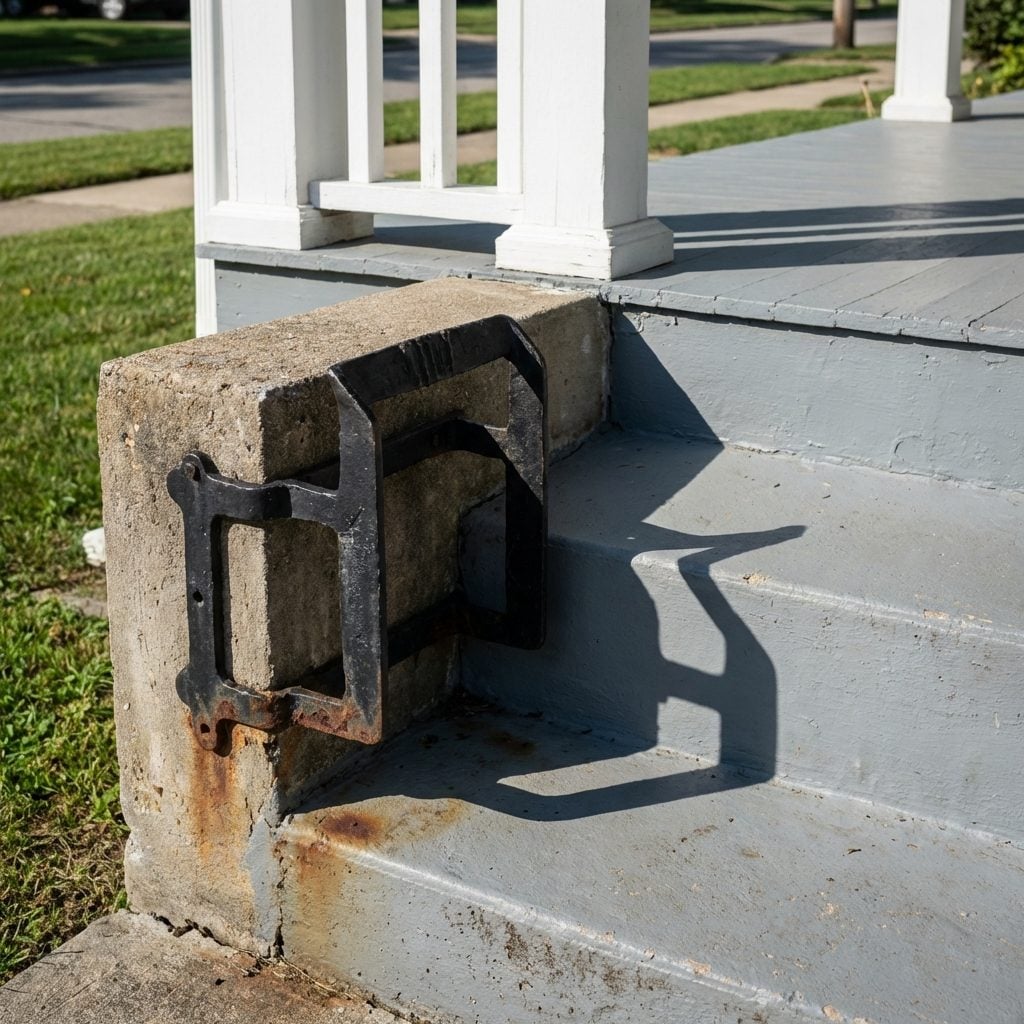
The Cast Iron Boot Scraper Mounted at the Bottom of the Porch Steps
🔥 Would you like to save this?
It was black, it was iron, it looked vaguely medieval, and it sat at the bottom of the porch steps like a small butler who had given up on being cheerful. The boot scraper pre-dated the 1950s by about a century but persisted in older neighborhoods and on houses with any pretension to tradition.
Functionally, it worked. There is no better system for removing mud from the deep treads of a work boot. Kids ran their sneakers across it for sport. Adults actually used it. The rust stain it left on the concrete step became a permanent part of the house.
The Ceramic Rooster or Dog Figurine Guarding the Porch Near the Front Door
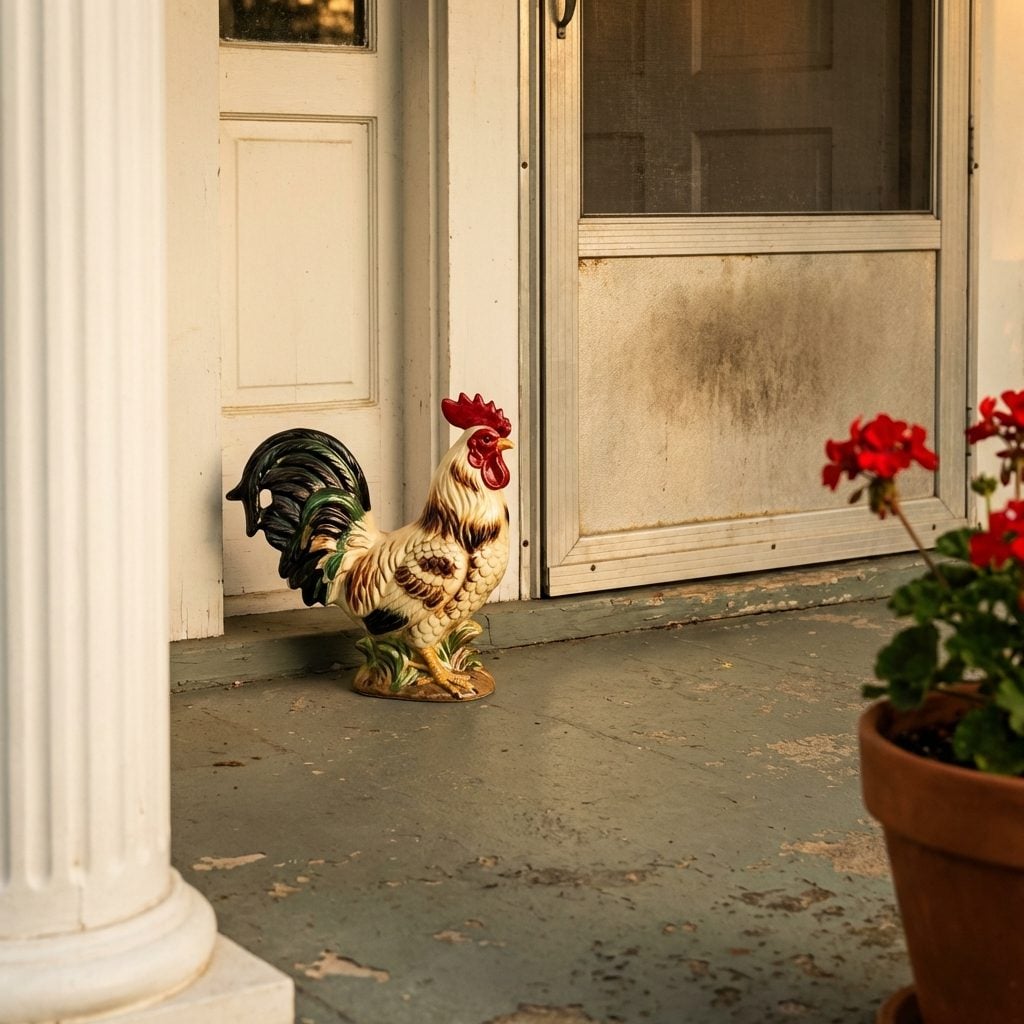
There was no reason for a ceramic rooster to be on a porch in suburban Ohio. There was also no front porch in suburban Ohio without one, or something very close to it. The ceramic porch figurine, rooster, spaniel, duck, small deer, occupied a category of object that existed between decoration and protection, and it asked no questions.
The Mailbox With the Red Flag That the Whole Family Watched for
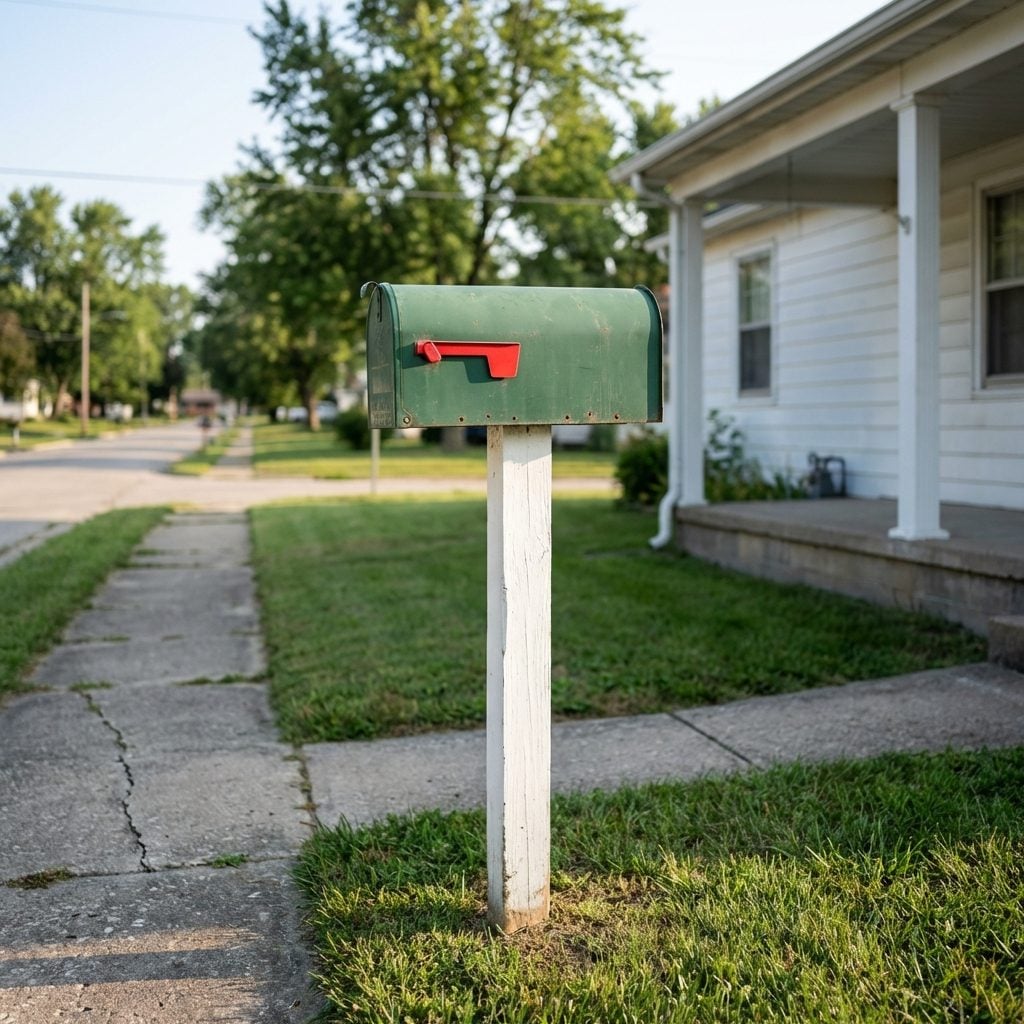
When the flag was up, the whole day had stakes. Either someone in the house had left outgoing mail, meaning something important was in motion, or the postman had been and gone and there were letters. Real letters. The red flag on a 1950s mailbox operated as a tiny narrative device attached to the front of every American home.
The box itself was usually dented on one side, repainted at least twice, and mounted slightly crooked from a long-ago collision with a bicycle. The vintage metal mailbox numbers were either painted directly on the side or applied in those same stick-on reflective numerals that peeled off in the second winter. Nobody replaced them promptly.
The Concrete Porch Floor Painted Battleship Gray (With That One Chipped Corner Nobody Fixed)
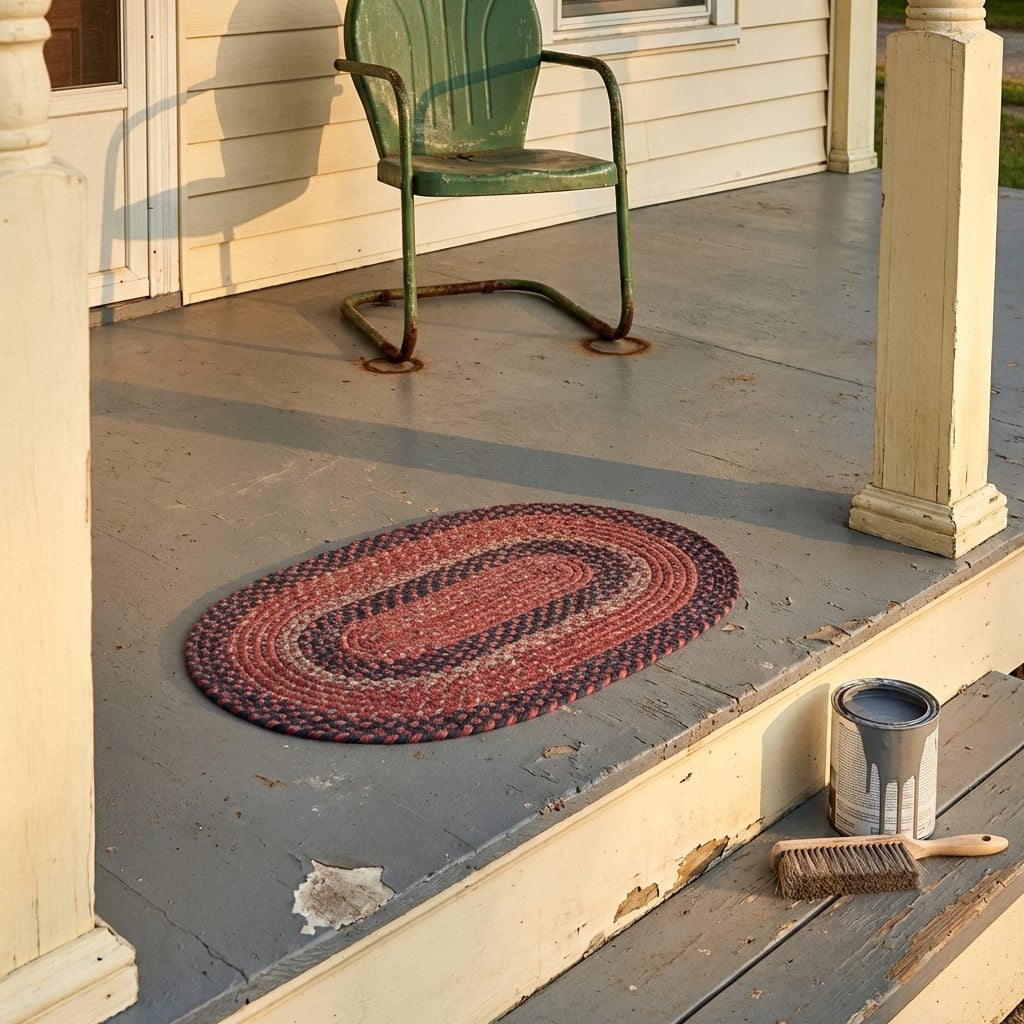
It was almost always the same shade: a flat, dusty gray that somehow looked intentional and neglected at the same time. Every house on the block had it. The paint would bubble and peel near the steps first, then chip at the corners, and every summer someone’s dad would buy a fresh can of porch-and-floor enamel and repaint the whole slab in an afternoon. By October it was chipping again.
The ritual of the annual porch repaint was as reliable as the Fourth of July. The smell of that oil-based enamel in the heat of July, thick, sharp, faintly sweet, was the smell of summer maintenance. Some families went rogue and tried a terra cotta red or a sage green. They were considered adventurous.
The Brass Coach Lantern Mounted Beside the Front Door
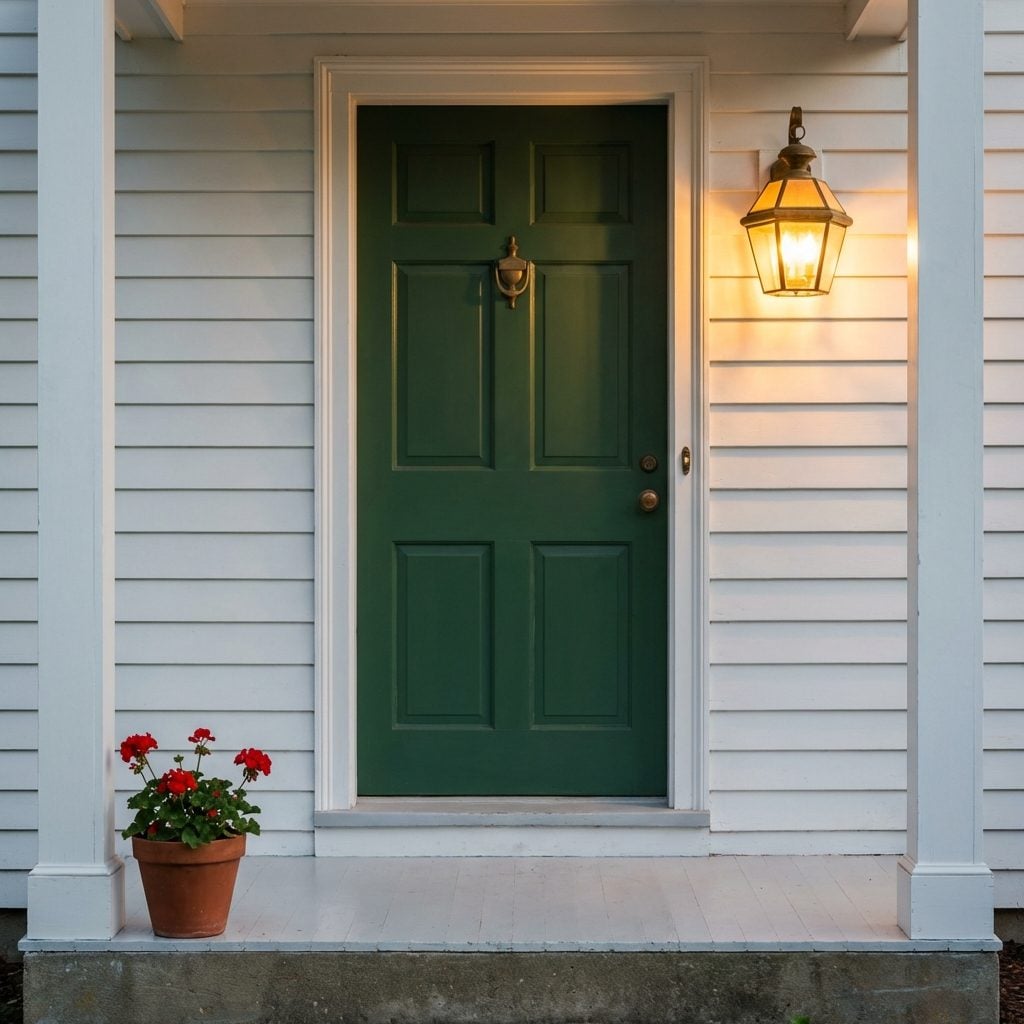
Every front door had one. A single brass or bronze coach lantern, bolted flush to the clapboard siding, usually at eye level just to the right of the door. The fixture was always slightly Colonial in style, even on houses that had no particular Colonial ambitions. Inside the amber glass panels, a single incandescent bulb threw a warm, yellowish pool of light across the porch that felt more welcoming than any chandelier.
These fixtures were virtually indestructible. Half the ones installed in the 1950s are probably still mounted on houses right now. The brass darkened to a deep antique gold over the years, and the amber glass would sometimes crack in a hard winter, but the fixture stayed.
The Wooden Porch Swing Hung on Chains From the Ceiling Joists
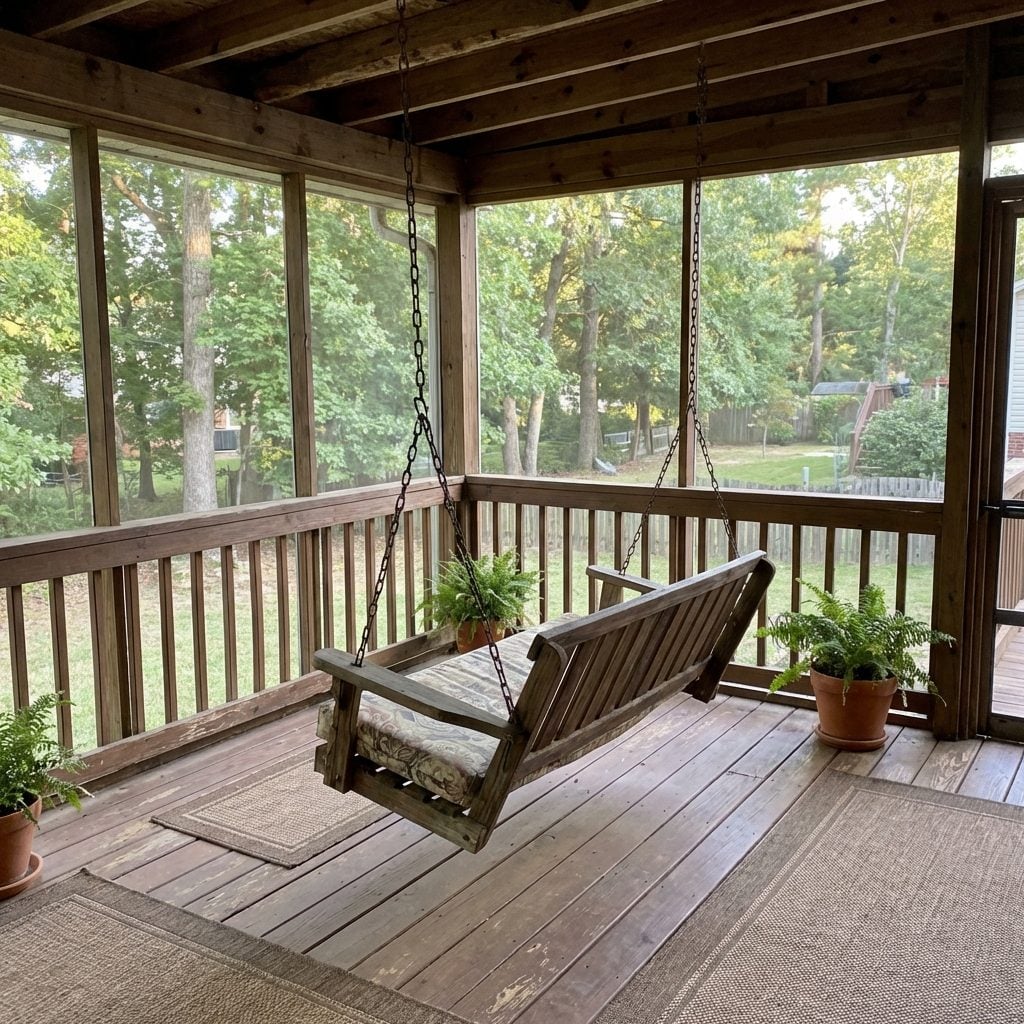
Those chains didn’t just hold the swing, they announced it. You could hear the slow rhythmic creak from halfway down the block, a sound so specific to summer evenings that it might as well have been birdsong. Every chain was slightly different in pitch depending on how old the hardware was, which meant every porch had its own particular song.
The swing itself was usually painted to match the porch trim, which meant it had been painted approximately eleven times and the wood grain had long since disappeared under layers of glossy white or pale gray enamel. The cushion, if there was one, had faded from whatever it originally was into a soft, sun-bleached version of itself. Nobody replaced it. That was the point.
The Galvanized Metal Watering Can Parked Beside the Porch Steps
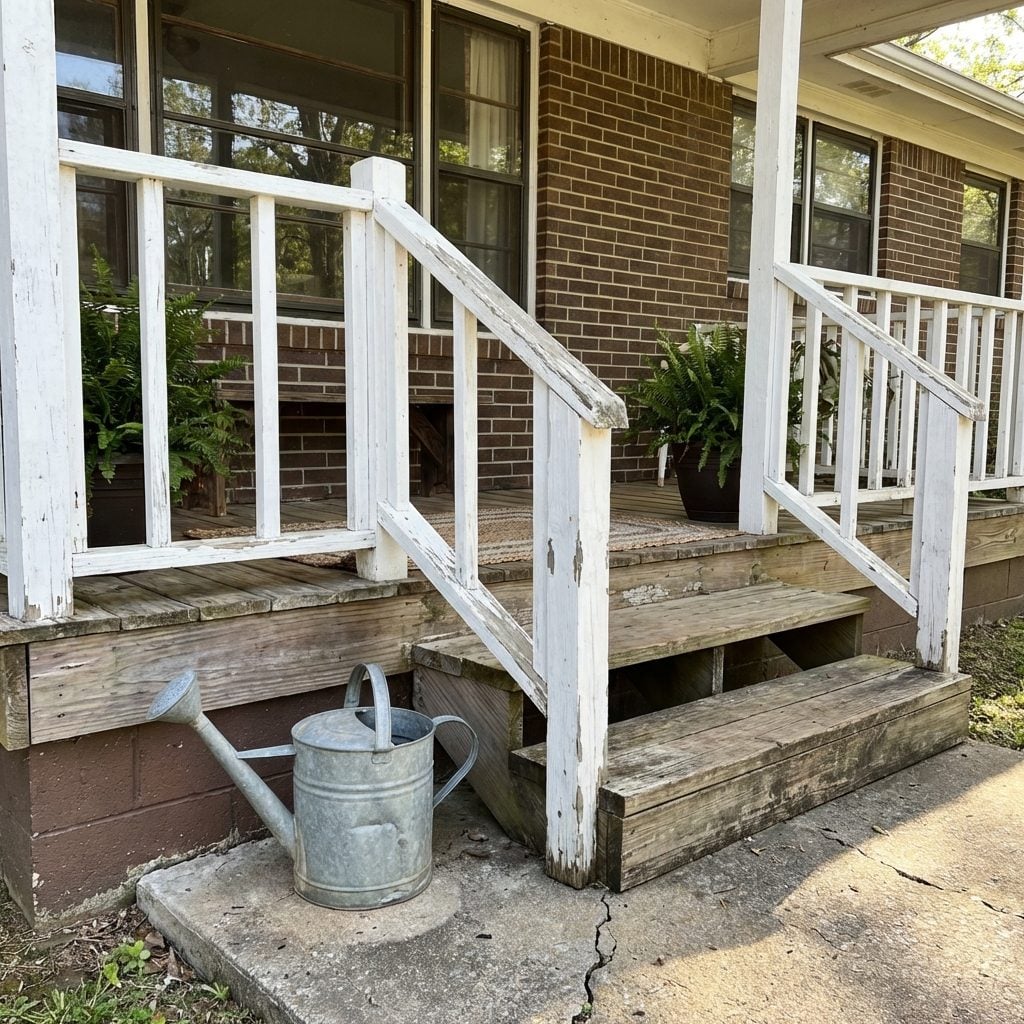
Permanently parked. That watering can never went inside, never got put away, never lived anywhere except that exact spot beside the second step from the bottom. It was dented in at least two places, the spout was slightly bent, and the handle had a wobble that everyone who used it had learned to accommodate without thinking about it.
Galvanized steel watering cans were cheap, durable, and everywhere in the postwar suburban landscape. They were the daily companion to the front-facing garden that every homeowner maintained with quiet competitive pride. The fact that yours was dented just meant you actually used it.
The Rope or Chain-Hung Fern Basket That Dripped Water on Everyone
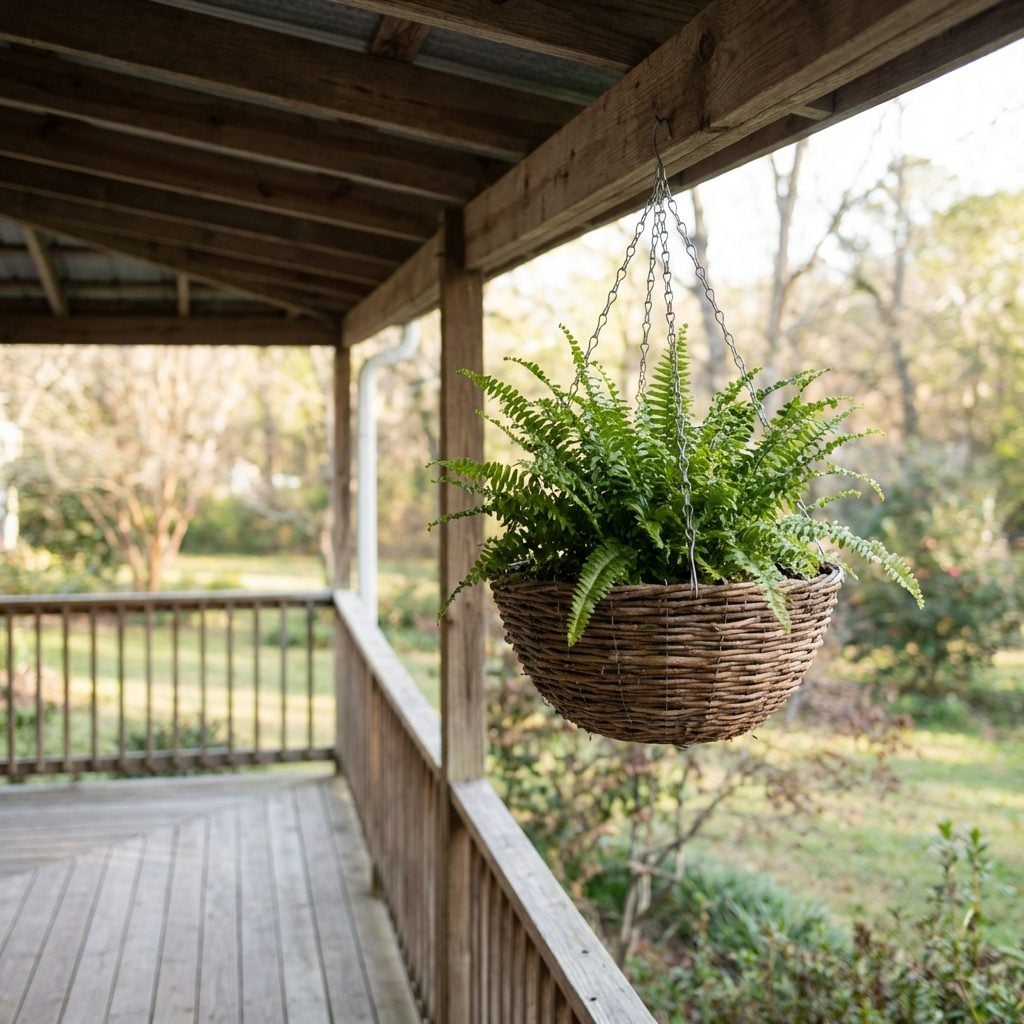
Every porch had at least one. It hung directly above the path between the door and the steps, placed there by someone who prioritized plant placement over human traffic flow, and it dripped on you every single time you walked under it.
The fern itself was usually a Boston fern, full, trailing, impractical, and somehow surviving despite irregular watering and a diet of whatever dribbled out whenever someone over-watered it. The basket was wire lined with coconut coir or moss, and over the seasons it developed a satisfying dark patina from moisture and age.
These baskets were the front porch’s version of a living ornament. They softened the porch structure, added that lush greenery that made a porch design feel genuinely inhabited rather than just furnished. Nobody thought about the dripping until a guest in nice clothes walked under one. Then everyone thought about it.
The Painted Wooden Barrel or Planter Box Flanking the Top Step
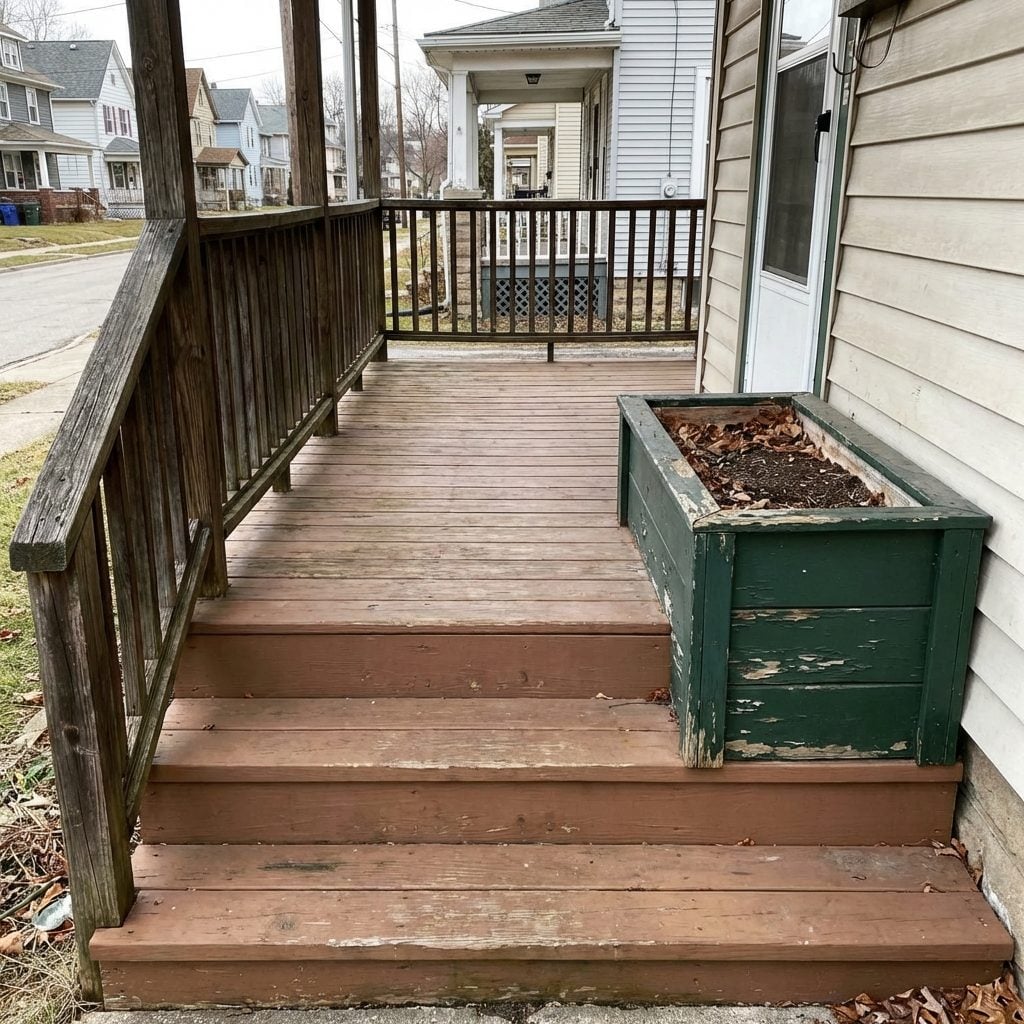
Half-barrels painted white, forest green, or whatever color the porch trim happened to be, these planters were the symmetry move that made a front entrance feel intentional and finished. One on each side of the top step. Petunias or marigolds planted densely enough that the soil was invisible by July.
The wood staves would swell in rain and shrink in heat, and by the third or fourth season the metal bands were doing most of the structural work. Nobody cared. You repainted them when you repainted the porch, planted new annuals every May, and that was the annual ritual that signaled the warm months had officially arrived.