
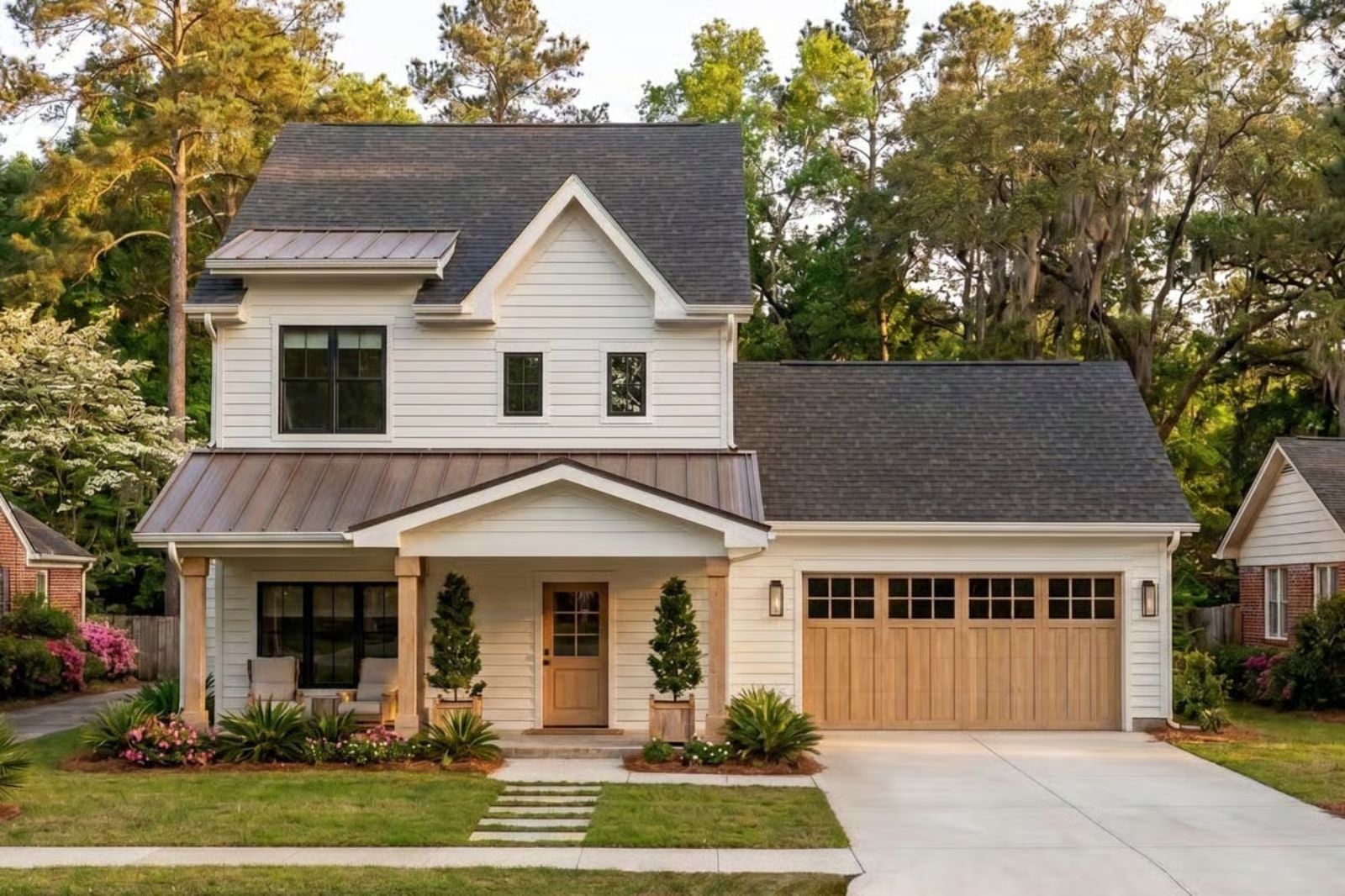
Outgrowing a house rarely happens all at once — it happens the morning you realize the mudroom is the kitchen floor and the front porch sits empty because nobody has a minute to use it. The Willowgate is built around reclaiming that rhythm, with a dedicated mudroom that absorbs the daily collision, a farmhouse kitchen open enough to actually work in, a front porch wide enough to finally sit on, and bedrooms that give each person somewhere to land.
Specifications
- Sq. Ft.: 1,552
- Bedrooms: 3
- Bathrooms: 2.5
Floor Plan – Main Floor
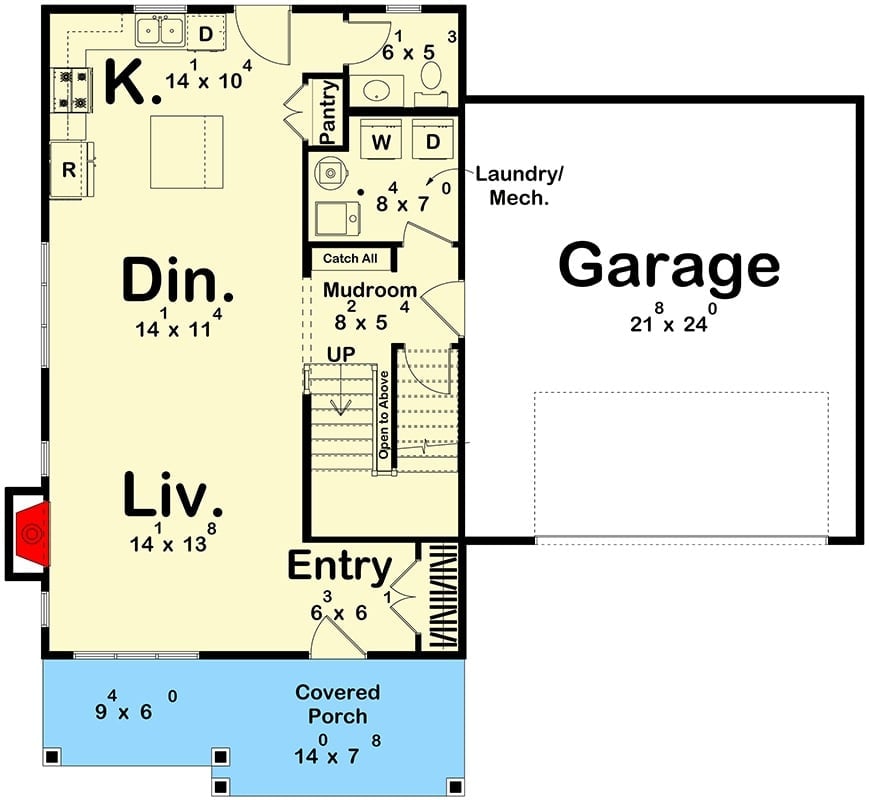
The main floor runs the kitchen, dining, and living rooms in an open row along the left side, with a covered porch stretching the full front width. A central mudroom connects the garage entry to the main living area, with a pantry, laundry, and half bath tucked nearby. Stairs rise from the entry hall.
Floor Plan – Second Floor
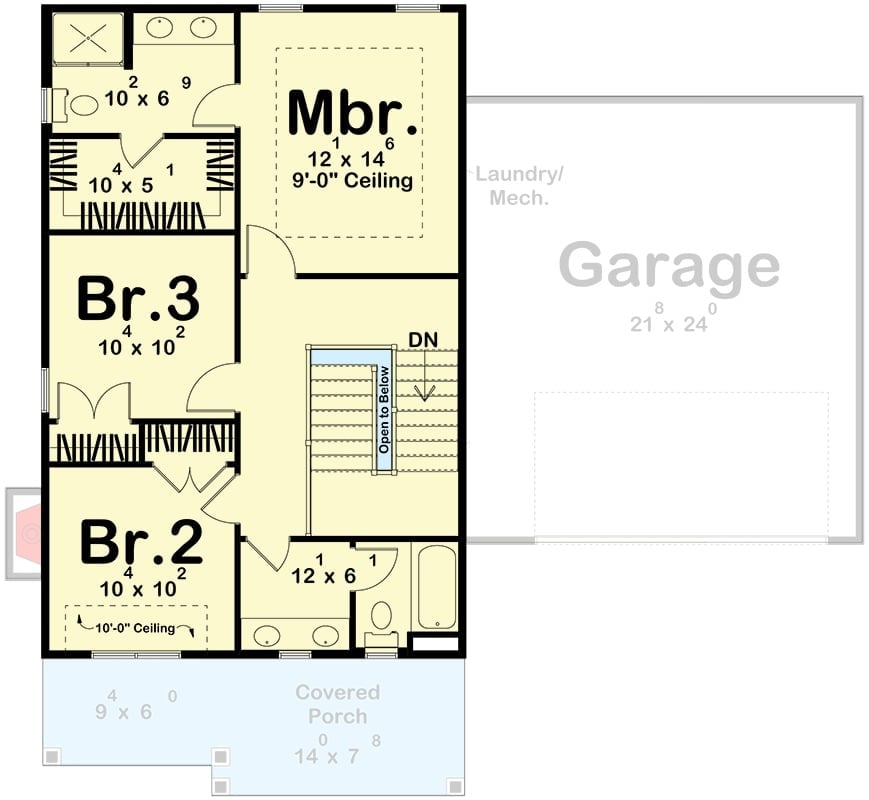
Upstairs: a master suite, two secondary bedrooms, and a shared bath. The staircase opens to the floor below, with laundry and garage access tucked to the right.
Rear Entry Does the Heavy Lifting So the Front Door Doesn’t Have To
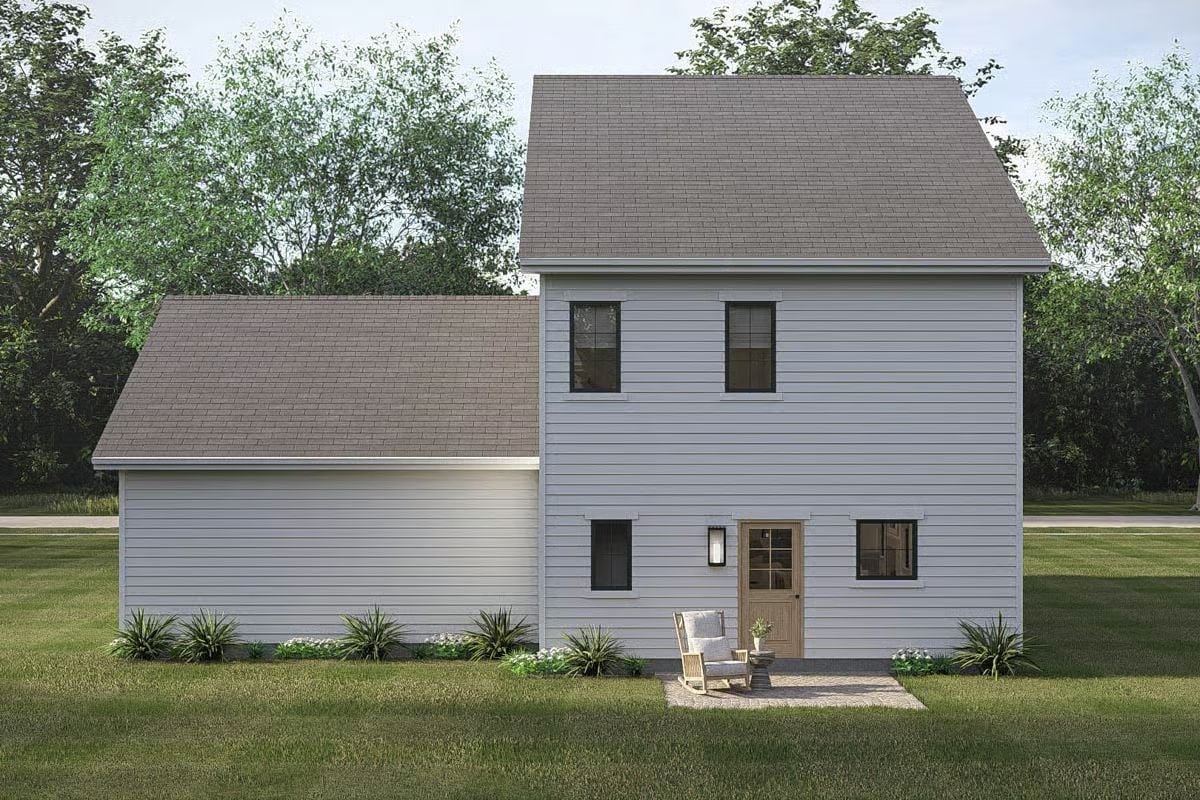
Horizontal lap siding in soft gray keeps the back exterior low-maintenance and calm. A wood-panel door anchors a small patio with a rocking chair — secondary outdoor seating that doesn’t require a full deck commitment, which is a reasonable tradeoff at this square footage.
Why It Works: Placing the rear entry off a small patio rather than a covered porch is a deliberate move for families who need function over square footage. It keeps mud and backpacks out of the main living areas without adding construction cost, and small patios like this one often see more actual use than oversized decks that need constant upkeep.
Inside, the living room shows exactly how the rest of the house earns its keep for a growing family.
Cream Sofa, Fireplace, and Room Enough to Actually Breathe
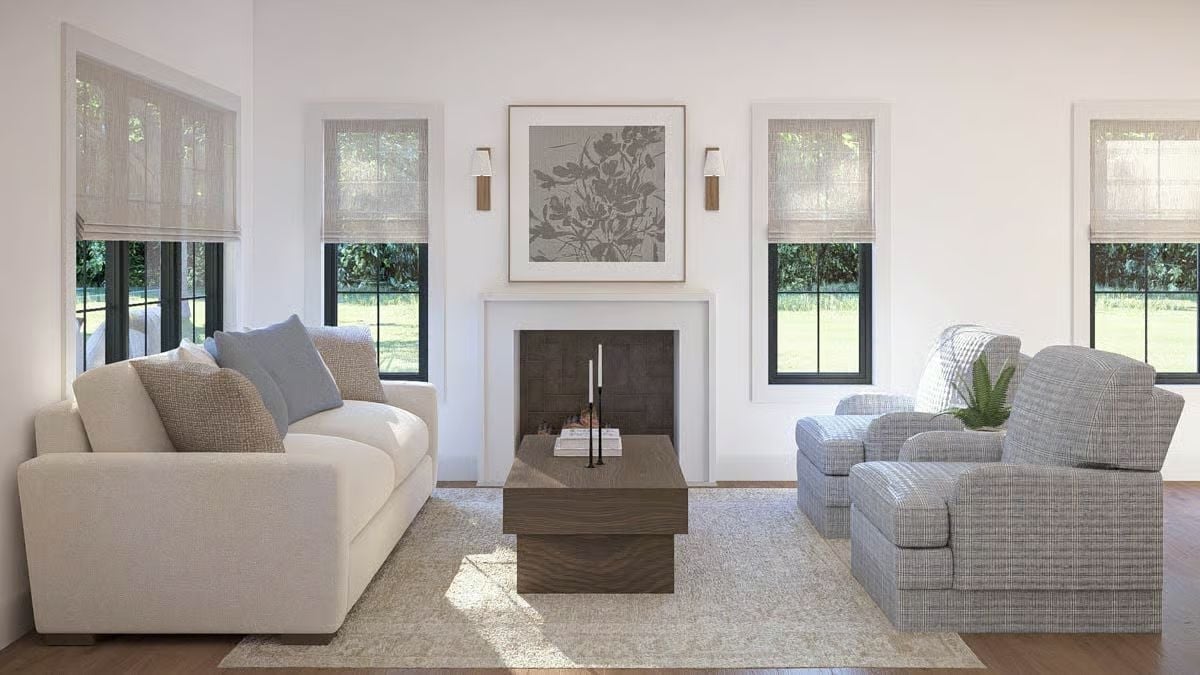
Linen-white walls and a white plaster surround keep things calm. Two oversized armchairs hold their own against the sofa without crowding the coffee table, and the whole room manages something a lot of family living rooms don’t: it feels generous without any one piece doing too much.
Warm Oak Cabinets and Marble Island That Earn Their Keep Every Day
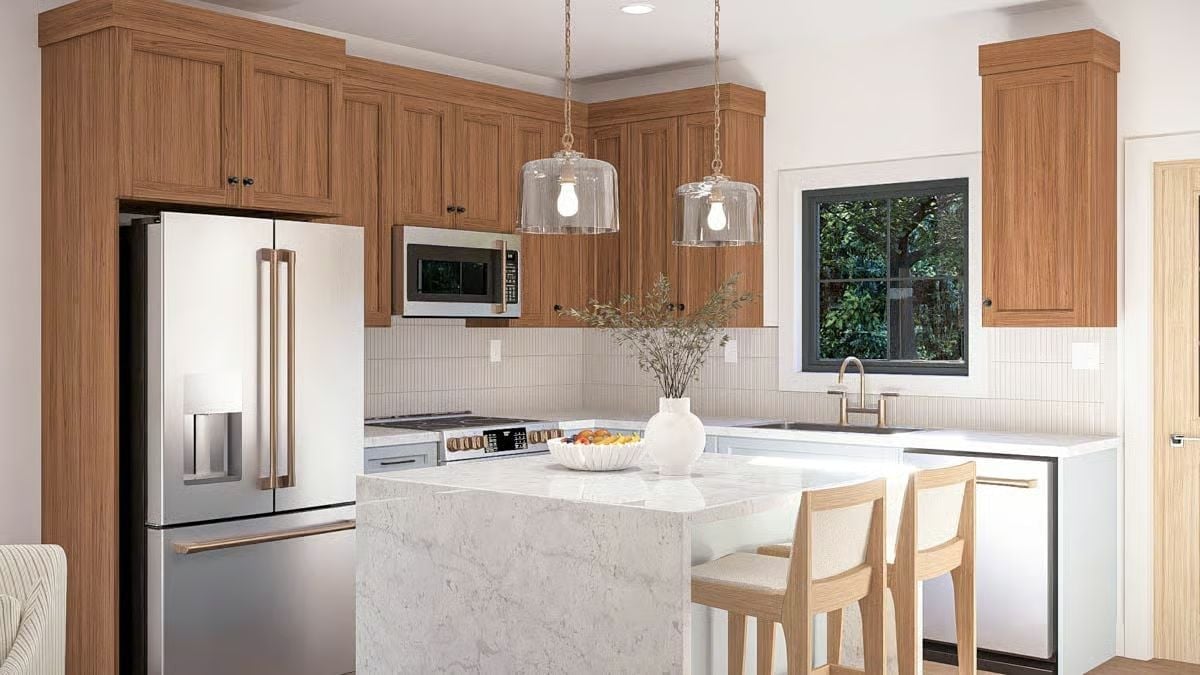
A quartzite waterfall island anchors the layout while two glass pendants drop low enough to actually illuminate prep work rather than just decorate the ceiling. White vertical subway tile and brushed gold hardware keep the oak cabinets from reading too heavy — a balance the stainless appliances quietly reinforce.
Trend Alert: Waterfall-edge islands have moved well beyond trend status into standard practice for family kitchens, partly because the solid slab side takes daily chair scrapes better than painted cabinetry would. Quartzite holds up to heat and acidic foods better than marble while keeping a similar veined look. Worth asking fabricators about remnant slabs too — an island this size can sometimes be cut from a single remnant at a meaningfully lower cost.
Slipcover Chairs and a Round Table That Actually Fit Four People Comfortably
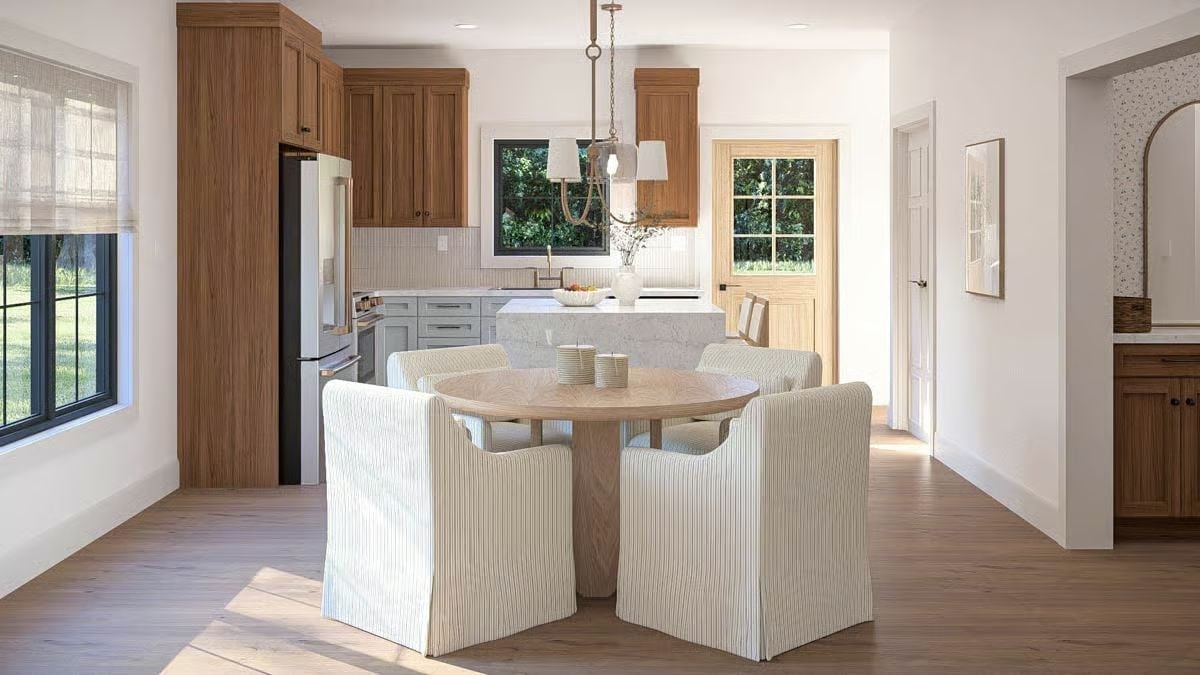
Round tables fix the family dinner problem that rectangular ones create.
Slipcovered chairs in a fine stripe fabric pull away from the table without catching on anyone, which matters more than it sounds at 7 a.m. Light oak floors and warm cabinet tones keep the kitchen and dining zone reading as one connected space. And that pendant’s chain length is doing real work — dropping the fixture low enough to feel intimate without blocking sightlines to the island.
Soft Wallpaper and a Brown Leather Pillow That Keeps the Room from Floating Away
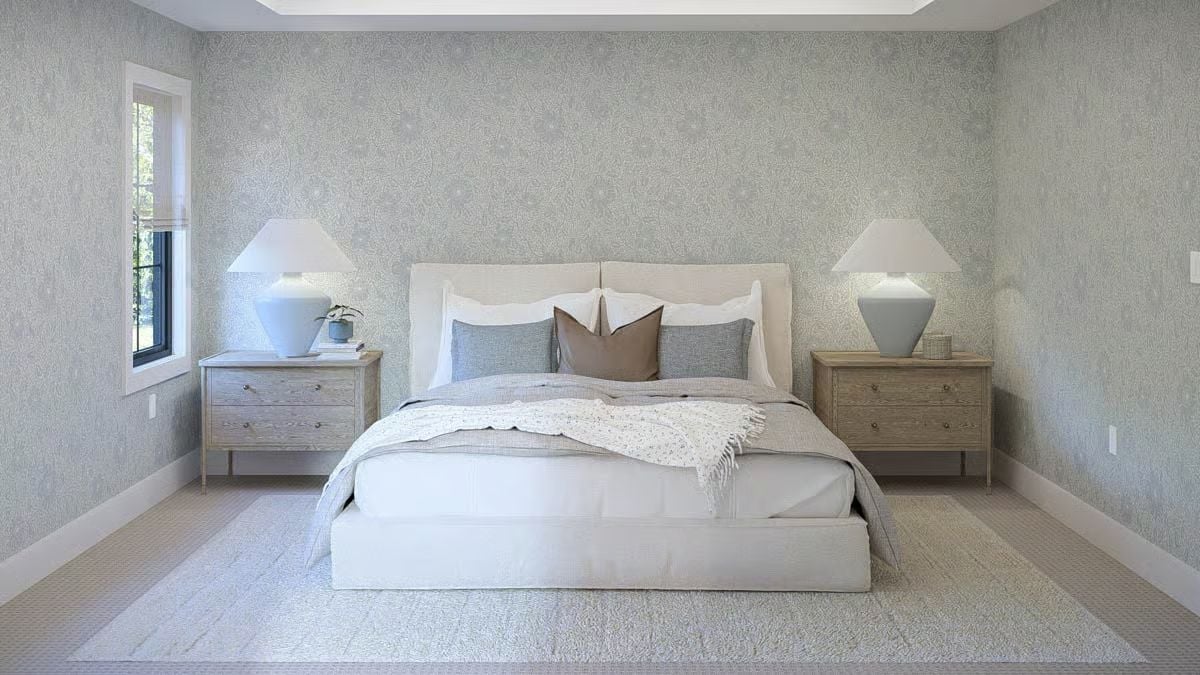
Gray botanical wallpaper, a white upholstered bed, and one cognac lumbar pillow doing the heavy lifting for the whole palette.
Style Tip: Pale rooms can feel unfinished without at least one warm accent to ground them. That cognac pillow pulls the eye and adds contrast without disturbing the quiet palette — and if you’re working with a similar room, one darker pillow often does more than a whole set of coordinated accessories ever would.
Brass Faucets and Warm Oak Vanity That Make Morning Routines Worth Waking Up For
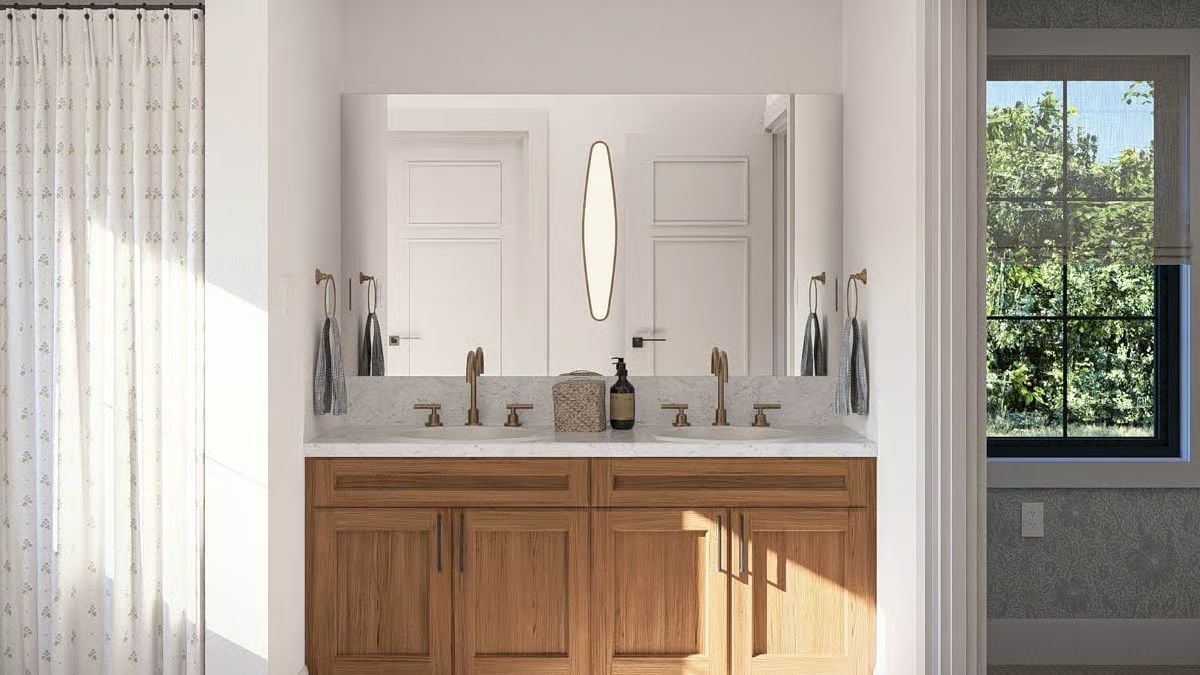
Brushed brass fixtures, a marble slab countertop, and oak cabinetry combine into a double-sink vanity that earns its footprint without feeling overwrought. Not every bathroom pulls that off.
The Psychology Behind This: Double vanities reduce morning conflict, but the real win is psychological ownership. Each person gets a defined zone, which quietly reduces household friction without anyone having to negotiate for mirror time.
Pin It
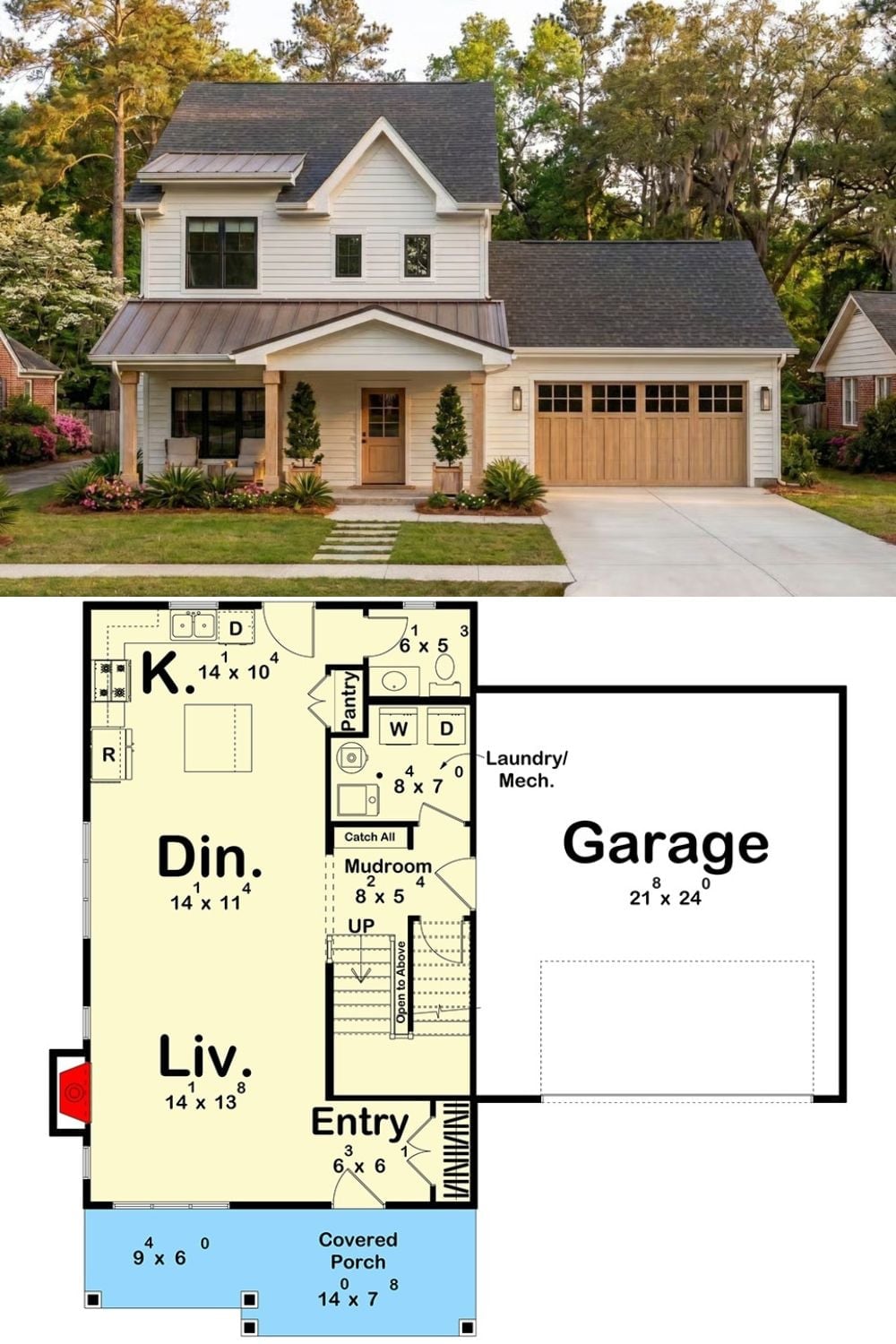
The exterior shows a two-story modern farmhouse with white board-and-batten siding, a covered front porch, and a two-car garage with cedar doors. Below it, the first-floor plan reveals an open kitchen, dining, and living layout on the left, with the mudroom, laundry, half bath, and stair core tucked along the right side.