
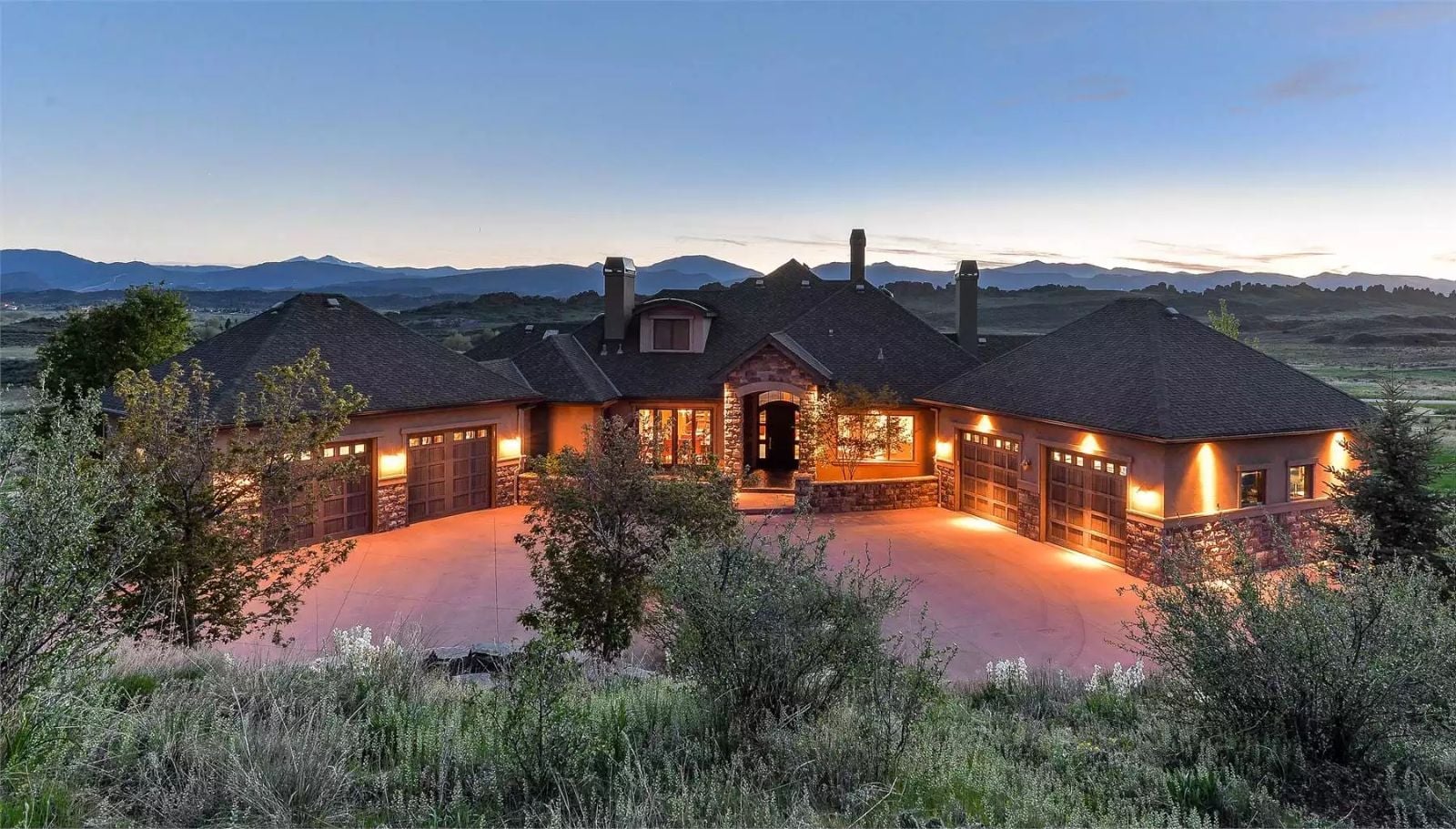
Everyone had a neighbor with a basement setup that made you want to stay forever: worn-in sectional, the movie already loaded, nowhere to be. The Williams Way is built for exactly that feeling — finished after years of earning it — with a dedicated home theater, a wine cellar stocked on your own terms, and a single-story layout that keeps the whole house within reach.
Specifications
- Sq. Ft.: 3,469
- Bedrooms: 2-4
- Bathrooms: 2.5
Floor Plan – Main Floor
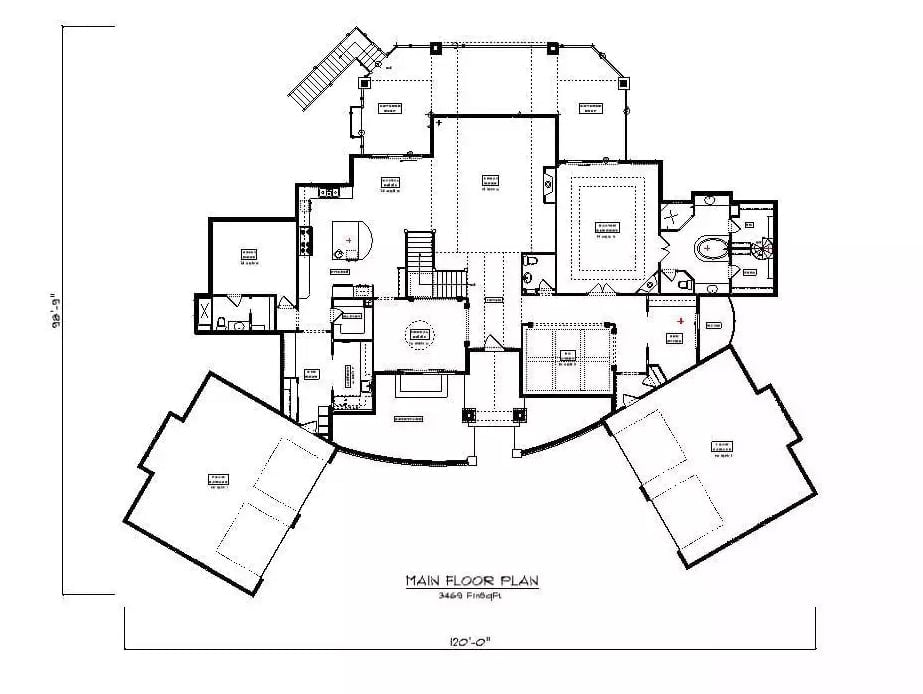
The main floor covers 3,469 square feet organized around a central great room, with a master suite featuring a soaking tub, attached garages on either side, and a curved entry sequence that gives the approach some ceremony.
Floor Plan – Basement
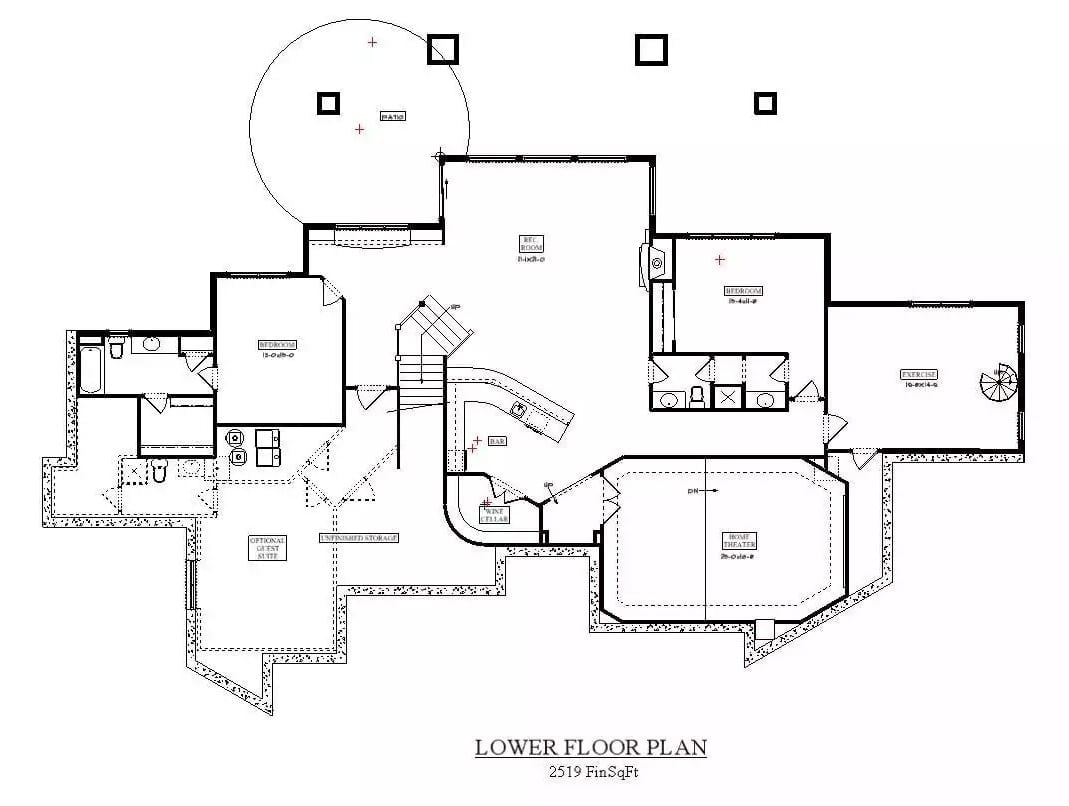
The lower level adds 2,519 square feet below grade: two bedrooms, a home theater, wine cellar, bar, and exercise room, with stairs connecting up and an optional guest suite tucked near unfinished storage at the back.
Stone Columns and a Wall of Glass That Earns the View Behind It
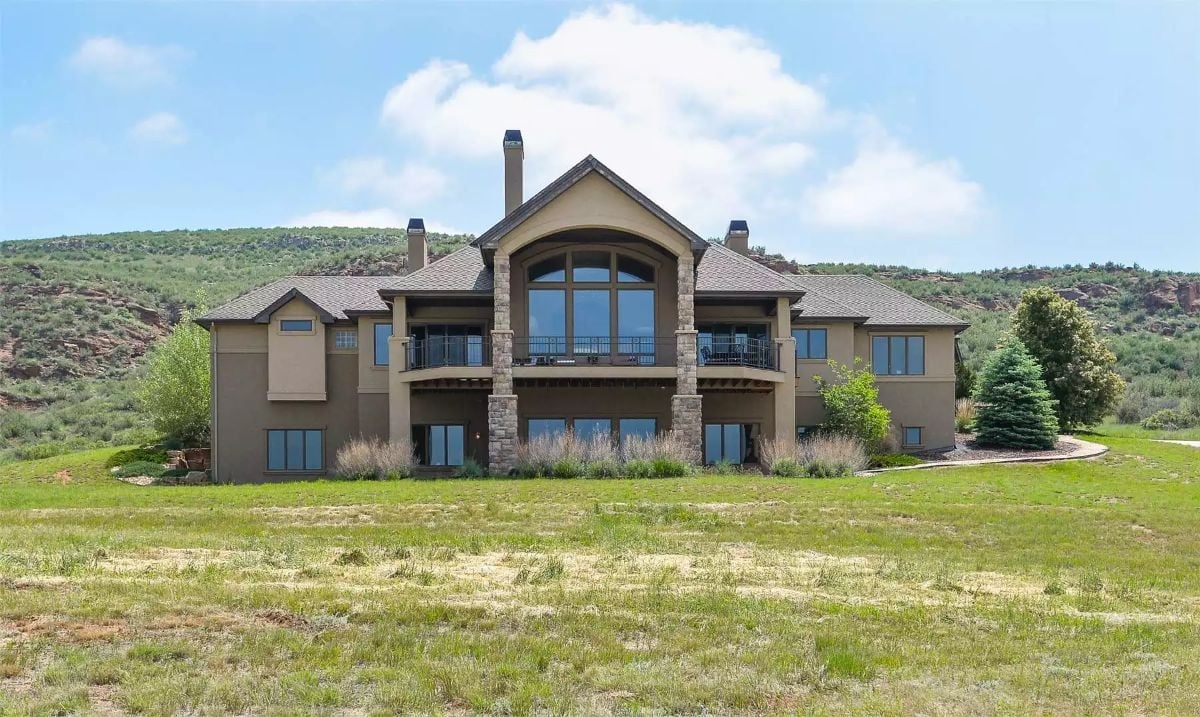
Massive arched windows dominate the upper level, flanked by stone columns that anchor the covered porch below. Warm tan stucco, cedar-colored trim, and a hillside backdrop that no amount of landscaping budget could replicate.
Tall Fireplace Surround and Persian Rugs Doing the Heavy Lifting Here
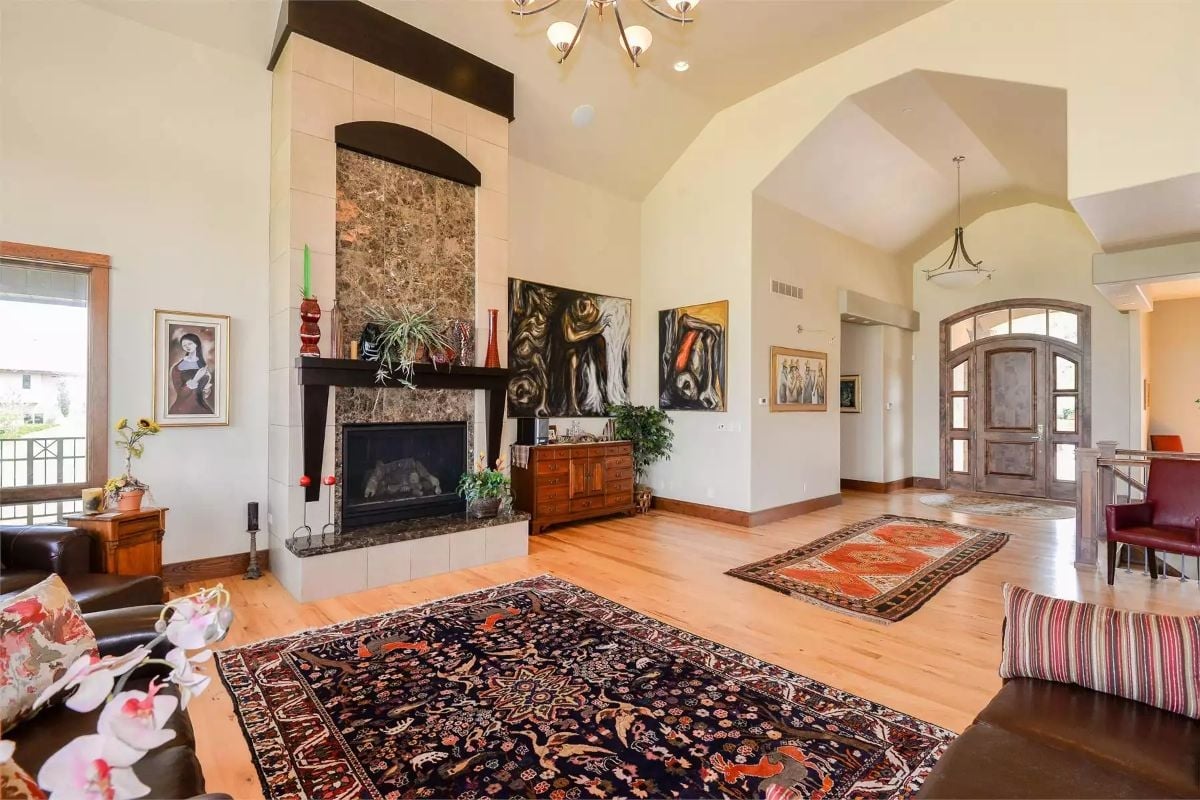
A marble surround climbs nearly to the vaulted ceiling, and two layered Persian rugs hold the seating area together below it. Dark expressive artwork on otherwise bare walls keeps the room from tipping into showroom territory.
Ask Yourself: Could you live with someone else’s art collection on your walls, or would you need the walls to feel like yours before the house felt like home? Self-made buyers often get the bones right and rush the personal touches. Don’t.
Dark Cabinetry and Pendant Lights That Know Exactly Where to Hang
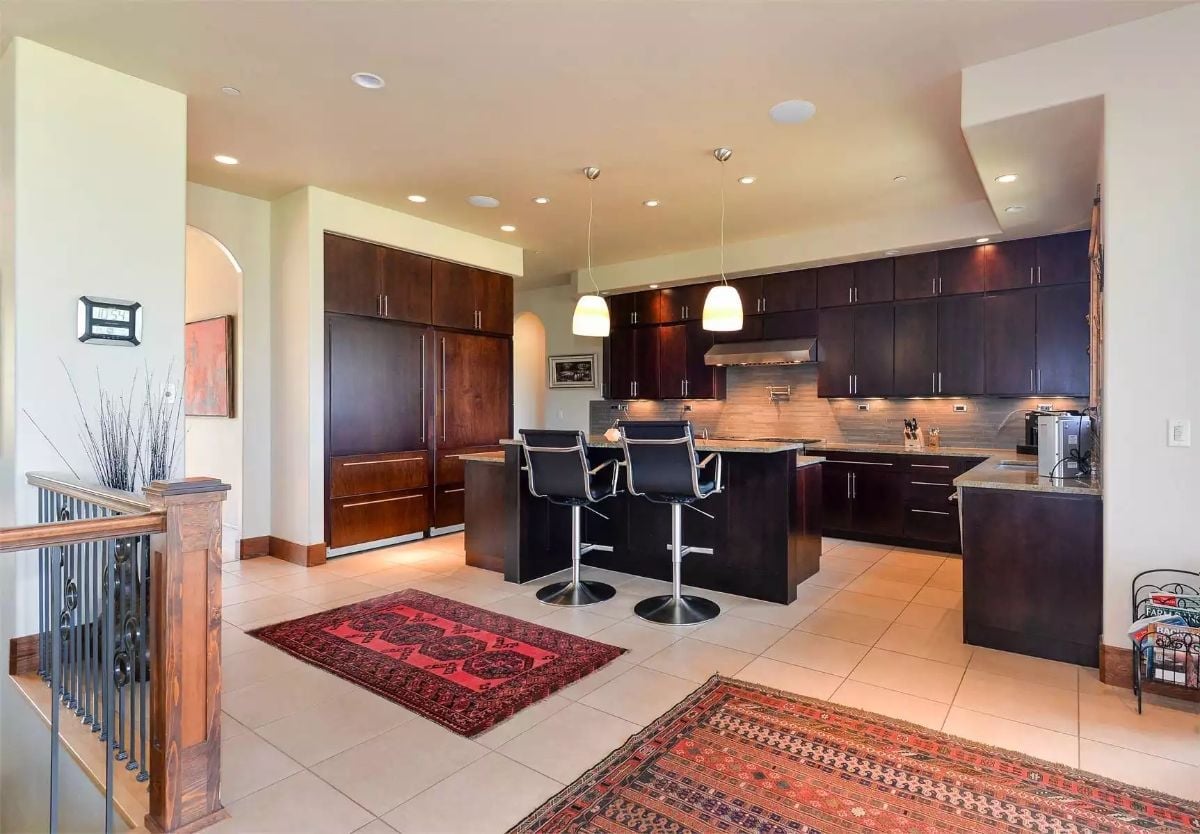
Espresso-finish cabinetry runs floor to ceiling on three walls, with panel-front refrigerator doors that disappear into the millwork. Two globe pendants drop low over the island, where black swivel chairs on pedestal bases keep the seating casual without sacrificing the room’s weight. The Persian rug marks the shift between kitchen and hall without making a production of it.
Pro Tip: Dark lower cabinets paired with light tile floors can make a kitchen feel heavier than intended. Keeping the upper walls and ceiling a warm neutral pushes light back into the space and stops the room from closing in on you.
Arched Entry and an Open Plan That Actually Has Something to Say
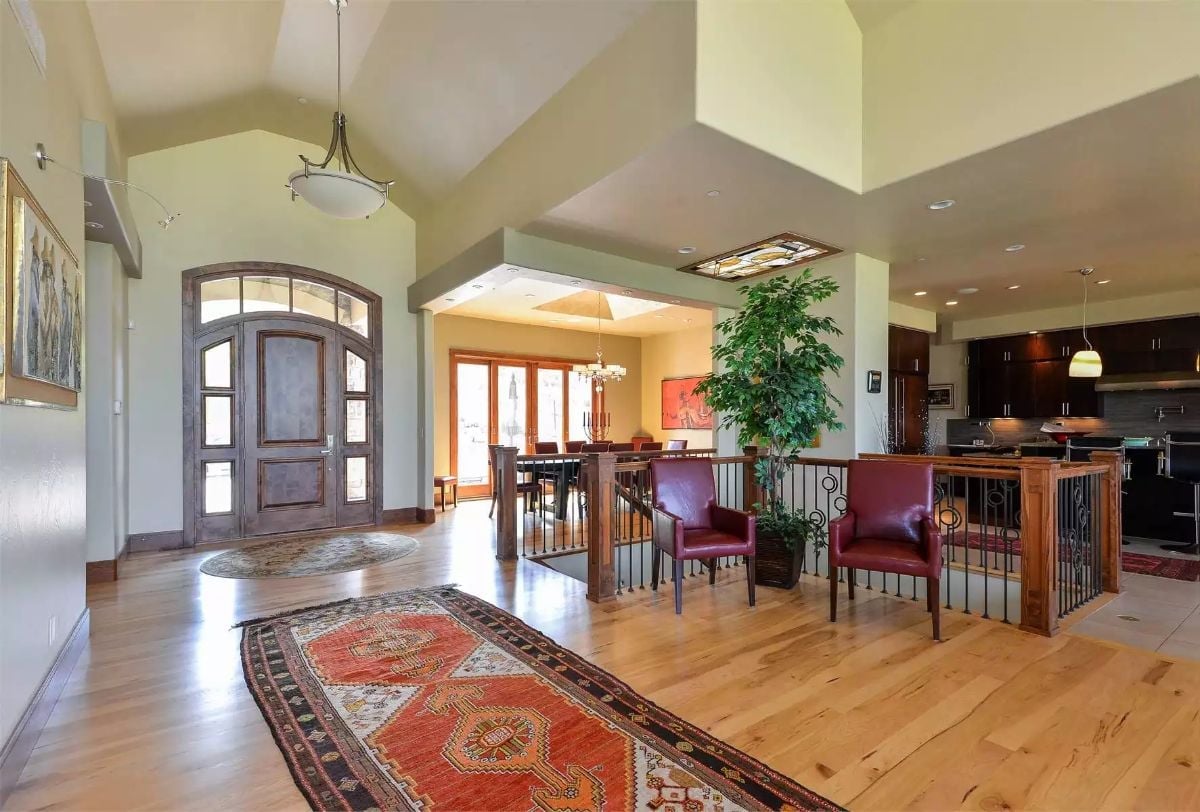
Vaulted ceilings this tall demand commitment from everything below them.
Hardwood floors run wall to wall without interruption, and the Persian runner earns its place by anchoring the entry rather than just decorating it. Two leather chairs sit at the stair rail like a landing zone between kitchen and front door. That indoor tree pulls more visual weight than most furniture would — and it does it quietly.
Warm Art and a Persian Rug That Anchors the Whole Room
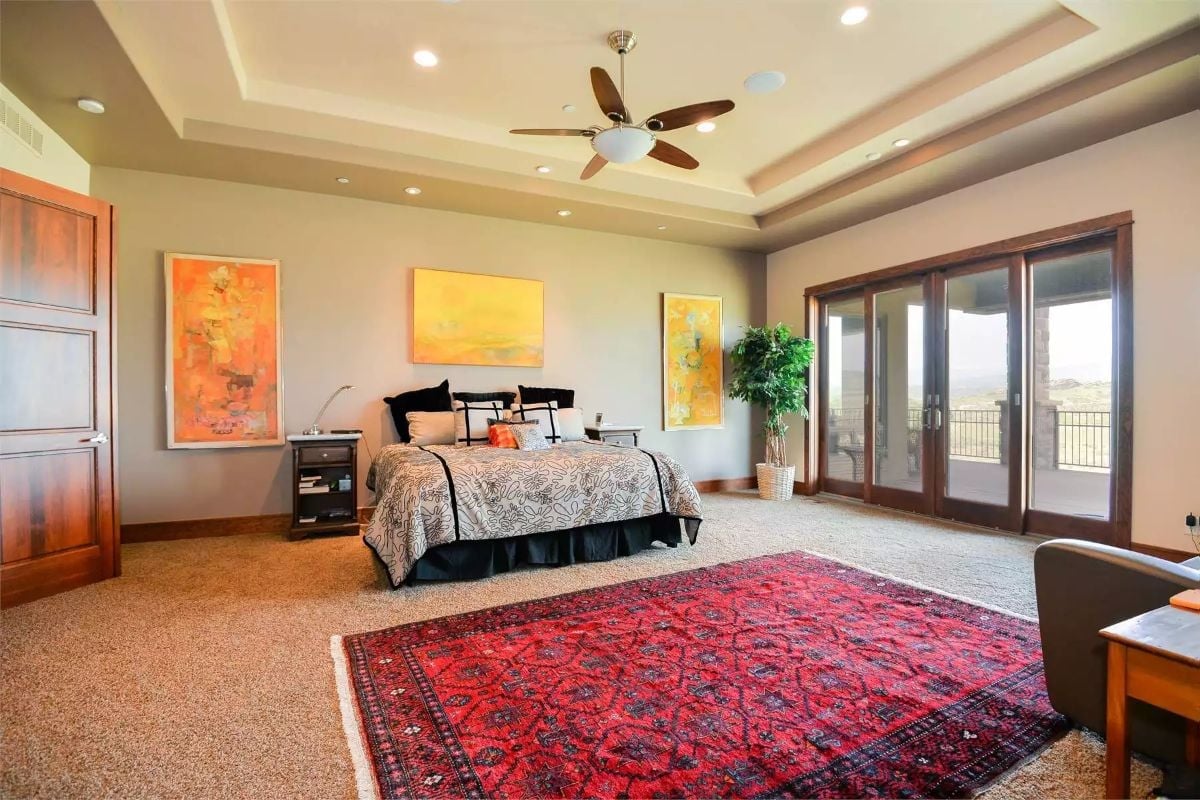
Three orange-and-yellow canvases pull the eye across the wall before the bed even registers. That red Persian rug is doing real work against neutral carpet — not the obvious choice, but it holds the room together. French doors open to a balcony with open sky behind them, and the tray ceiling keeps the scale from tipping into overwhelming.
Designer’s Secret: Layering a bold area rug over wall-to-wall carpet works better than most people expect, but the rug needs to be large enough to feel intentional rather than dropped. Too small, and it reads as an afterthought — which can actually make a big room feel smaller. Size it to at least the width of the bed plus the nightstands.
Freestanding Tub Positioned Where the Room Actually Earns It
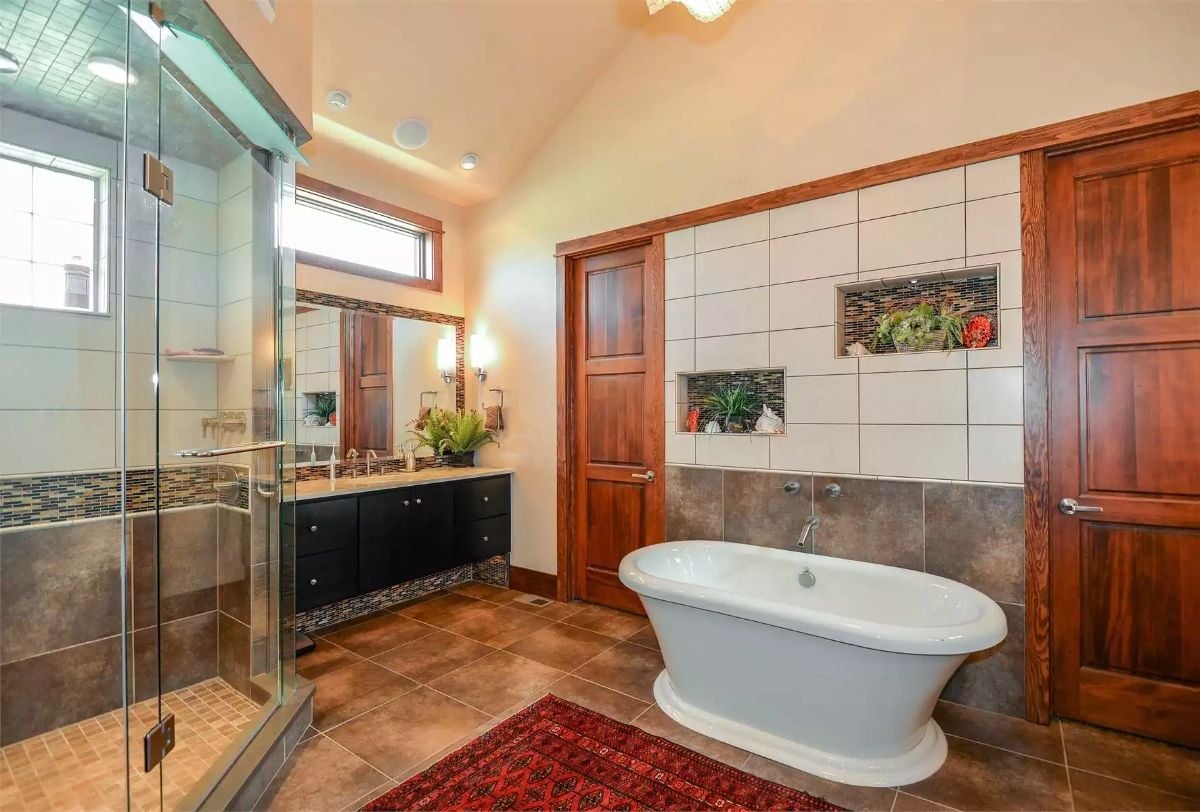
Wall niches with live plants and mosaic tile accents give this bathroom something most don’t have: built-in life. The freestanding tub sits against large-format white tile framed by rich wood trim, and a glass-enclosed shower occupies the opposite corner. A red Persian rug on brown floor tile has no business working this well. But it does.
The Psychology Behind This: Pulling a bathtub away from the wall signals that bathing is meant to be an experience rather than a task. That shift in spatial intention changes how people actually use the room — homeowners with freestanding tubs tend to use them far more than a traditional drop-in model, simply because the design invites them to.
Ceiling-Mounted Projector and Acoustic Panels That Mean Business
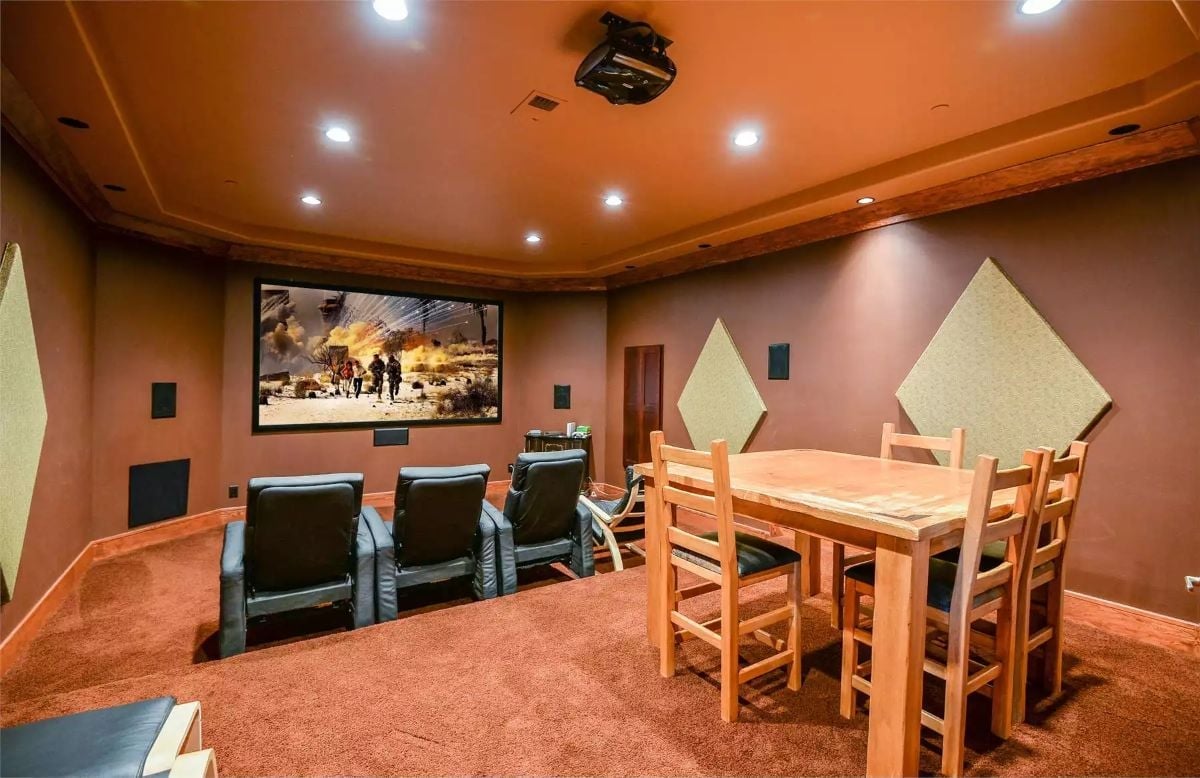
Diamond-shaped acoustic panels line the walls and actually do their job — the sound stays in the room instead of bleeding through the ceiling. Leather recliners face the screen while a wood dining table at the back offers a second way to watch, for anyone who prefers a reason to keep their hands busy.
Diamond-shaped acoustic panels on the walls earn their keep.
Pin It
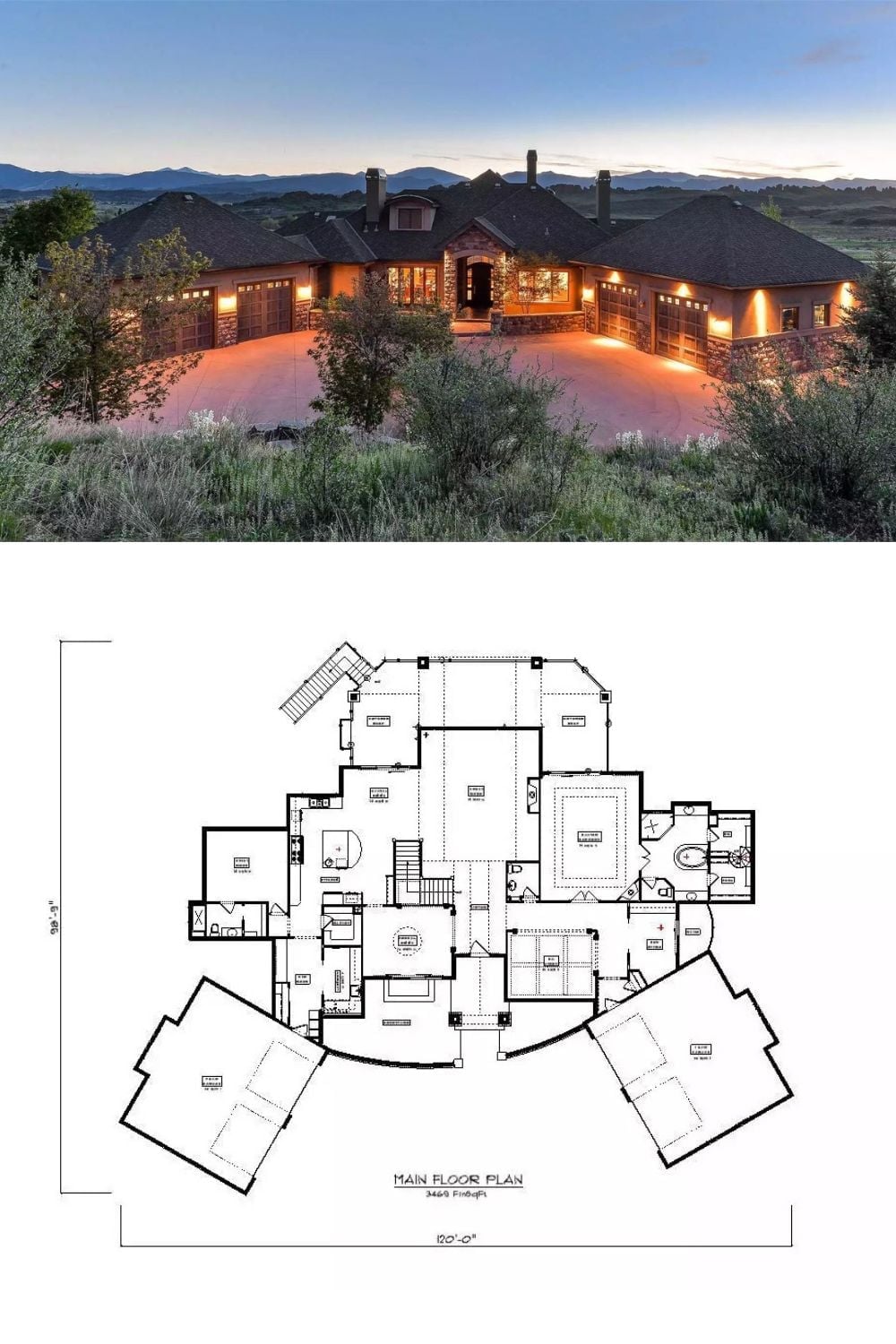
Exterior photo shows a ranch home glowing at dusk against mountain views, paired with a 3,469-square-foot main floor plan below.
Material Matters: Acoustic ceiling panels in home theaters are often treated as an afterthought, but specifying them early lets you coordinate placement with lighting and HVAC before the ceiling is closed. Getting that sequence right saves real money. It’s one of the few finish decisions where order of operations matters more than product selection.