
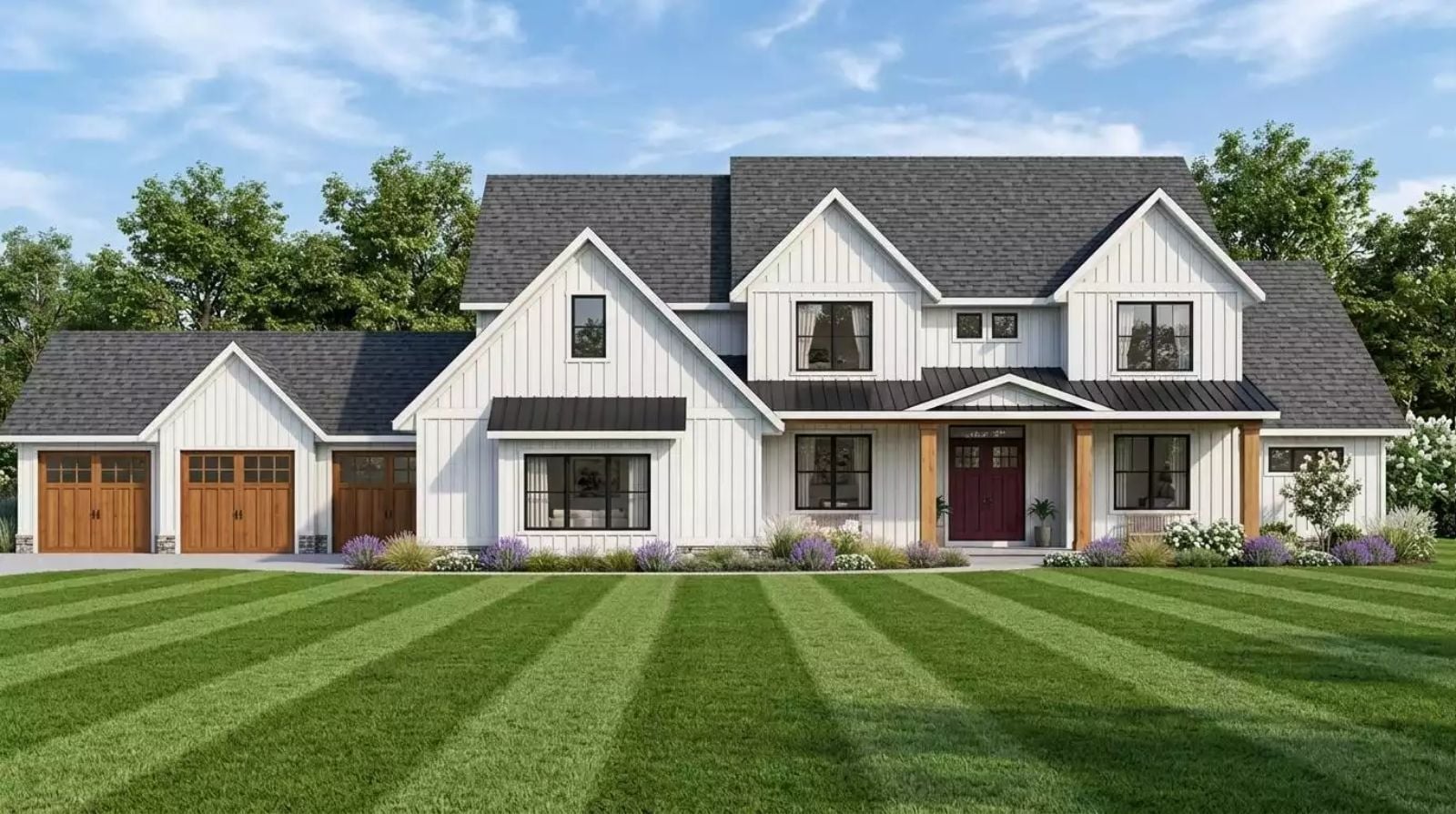
Most farmhouses built for self-made buyers end up as show homes nobody actually lives in — you worked too long for that. The Whitehall Haven is designed around how people actually spend their weekends: a theater room that earns its square footage, a family loft that keeps everyone close without stacking them on top of each other, and a layout that moves the way a house should when five people are all doing different things at once.
Specifications
- Sq. Ft.: 5,196
- Bedrooms: 5
- Bathrooms: 4.5
Floor Plan – Main Floor
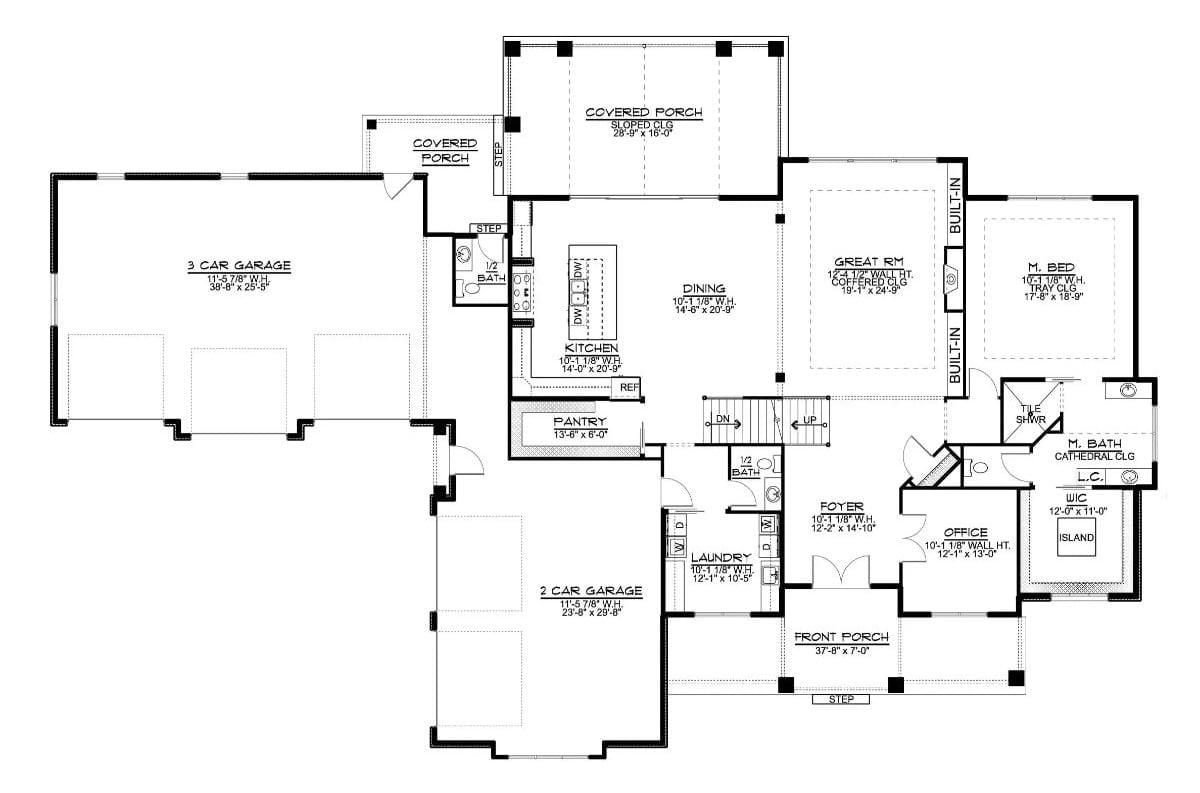
The first floor puts the master suite with its WIC island toward the private end of the plan, while the great room, kitchen with pantry, office, and laundry occupy the active core. Two separate garage bays handle a total of five cars without the whole wing feeling like an afterthought.
Floor Plan – Second Floor
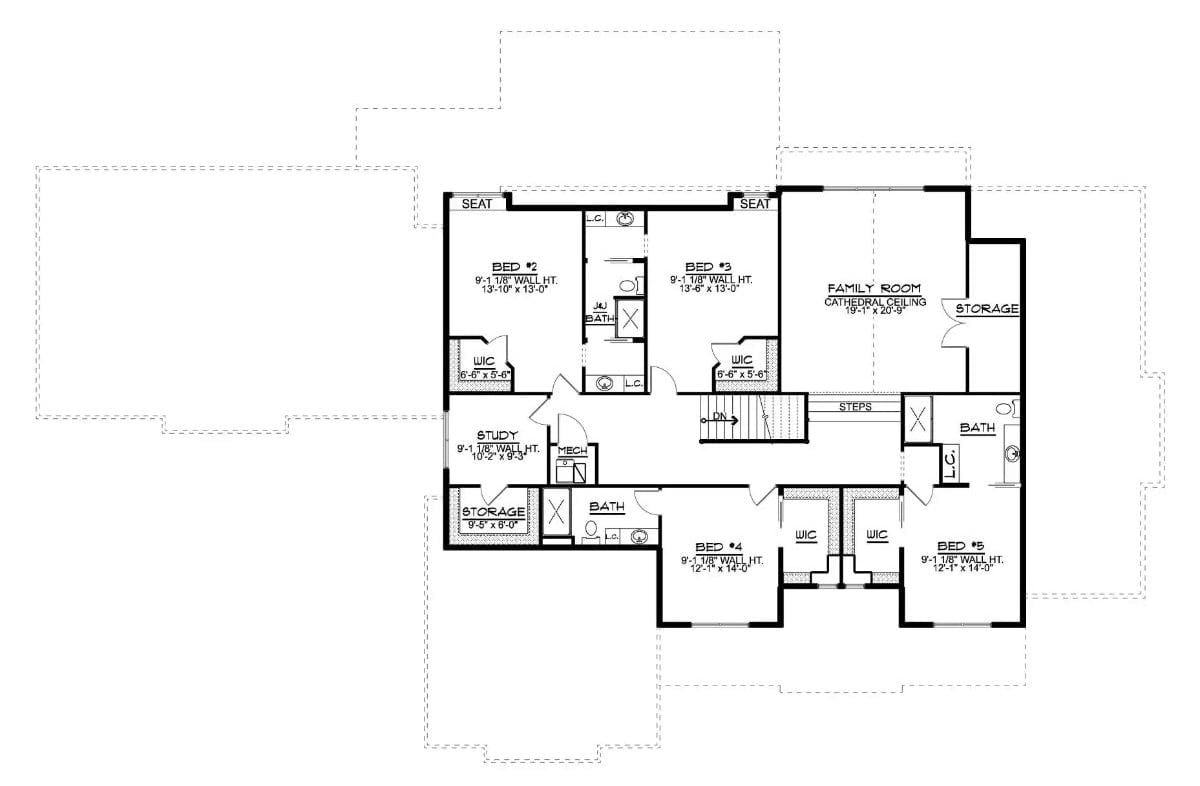
Five bedrooms spread across the upper level, with beds four and five each getting two walk-in closets — which, honestly, most plans this size still manage to skip. A cathedral-ceiling family room anchors the right side of the floor, and a study with storage fills in the corners rather than leaving them dead.
Floor Plan – Basement
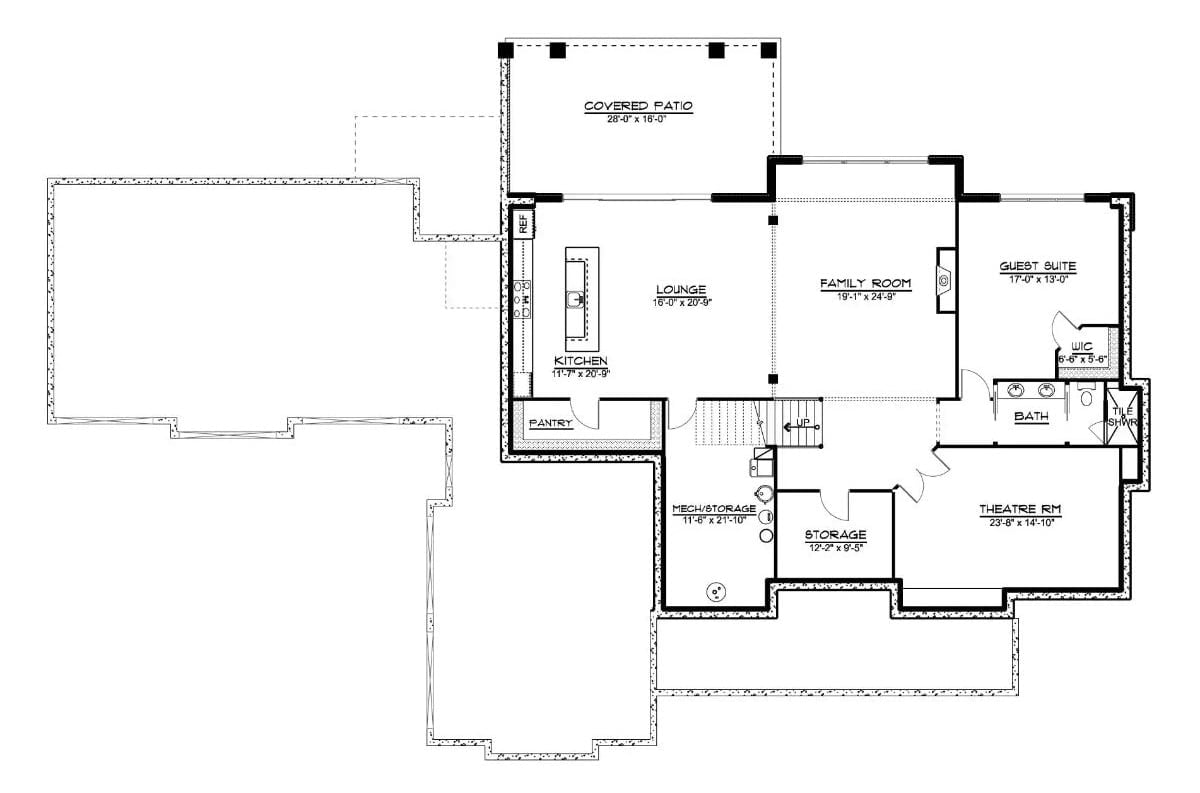
The lower level is organized around a wide family room that opens toward both the lounge and kitchen, so the entertaining zone stays connected rather than fragmenting into separate rooms. A guest suite with WIC and private bath sits to the right. The theatre room, two storage areas, and mechanical space round out the footprint, with a covered patio above.
Material Matters: Basement theatre rooms get their best acoustic performance when walls are decoupled from the framing rather than drywalled directly to studs. Build that detail in before the walls close, because retrofitting it later is genuinely painful. The storage rooms adjacent to the theatre also work well as equipment closets if you plan rough-in conduit early.
Gold Chandelier and Dark Stone Surround Pull the Fireplace Wall Together
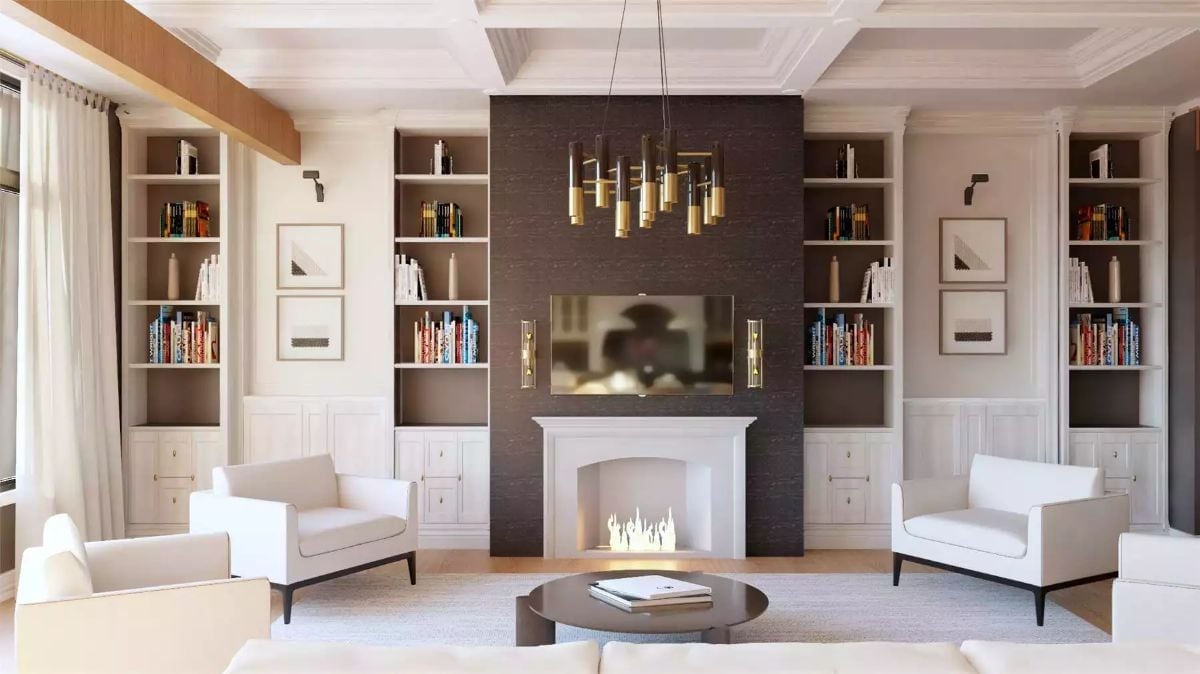
Brass pendant clusters hang above a white mantel, flanked by built-in shelving with cabinet bases below.
Try This: Built-ins like these work harder when the lower cabinets stay closed storage rather than open shelving. Clutter migrates naturally to whatever surface is available, so giving it a door keeps the symmetry intact without requiring constant tidying. If you’re planning something similar, spec the cabinet depth to match your tallest shelf bay so the whole unit reads as one piece.
Moving into the main living area, the open-plan layout starts to show its full scale.
Open-Plan Living Where Wood Beams and White Upholstery Do the Heavy Lifting
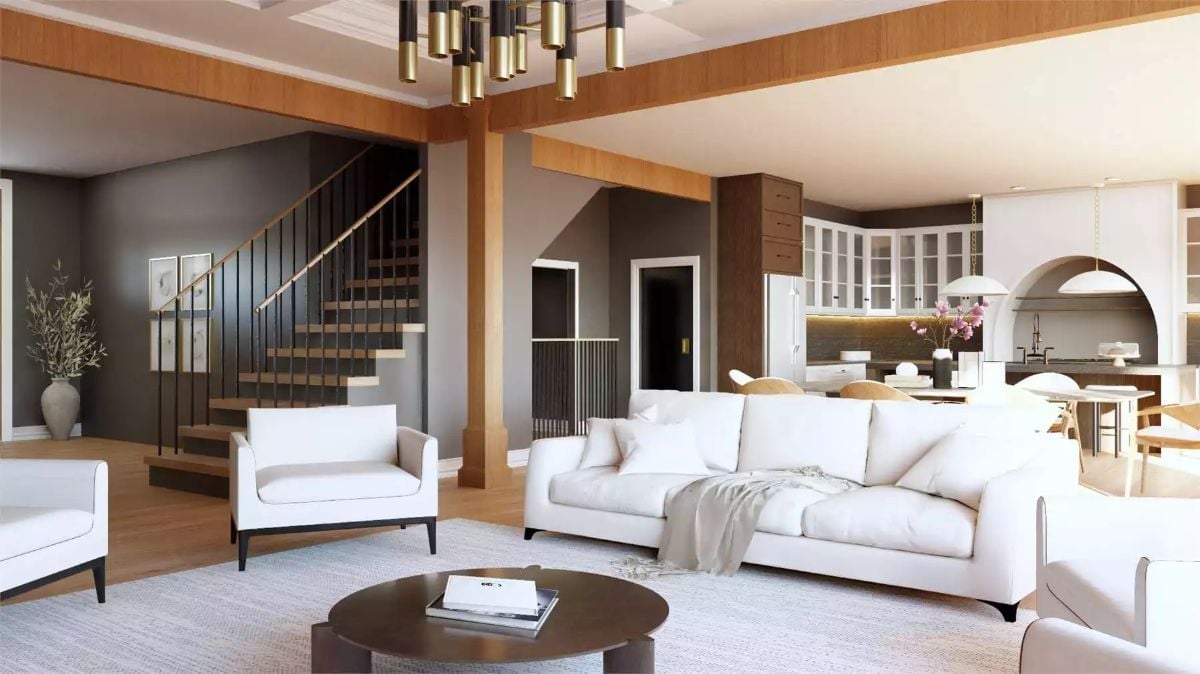
Structural wood columns anchor the ceiling grid while white sofas keep the floor plan readable from across the room. That round dark coffee table is doing more work than it looks like — without it, the all-white seating zone would float.
Arched Hood Niche and Walnut Island Make This Kitchen Worth Building
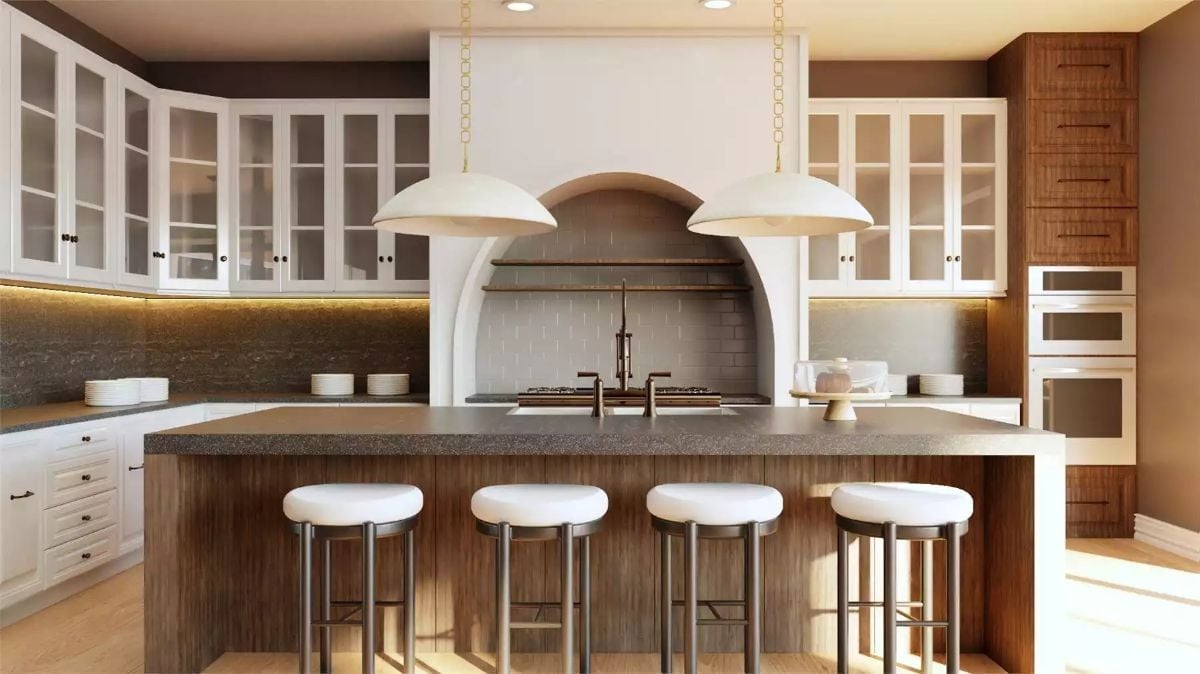
Subway tile wraps the arched cooking niche like plaster, giving the range wall its own architectural moment rather than letting it disappear behind the hood. Four backless stools keep the island social. Under-cabinet lighting warms the dark granite countertop without competing with it.
Quick Fix: Pendant lights hung from chain rather than rigid rods can be adjusted for height after installation, which matters more than people expect once furniture is actually in the room. If your island length changes during construction, chain-hung fixtures don’t require a ceiling box relocation to rebalance the spacing.
Marble Table and Magnolia Branch Anchor an Open Room That Earns Its Square Footage
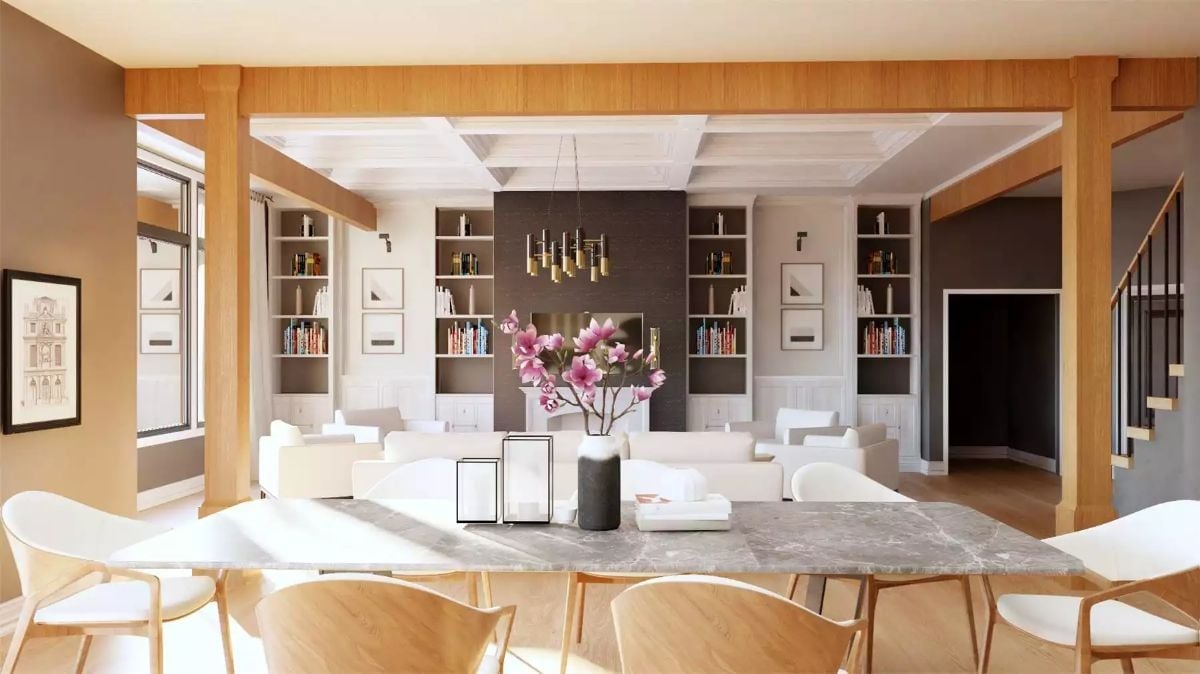
Gray marble at the dining table sets a grounded tone before your eye even reaches the living area. White upholstery holds the seating zone together, symmetrical built-ins frame a dark stone fireplace surround, and that magnolia branch in the matte black vase does real compositional work — the kind of detail that reads as effortless but was clearly a deliberate call. The coffered ceiling pulls it all upward without the room feeling like a showroom.
By The Numbers: Coffered ceilings like this one add visual weight without requiring structural changes, since they’re typically applied over an existing flat ceiling. Builders generally recommend sizing each coffer to roughly match the scale of the furniture below, so the grid doesn’t feel arbitrary from seated eye level.
Warm Taupe Walls and a Low-Profile Bed Frame Make This Bedroom Feel Earned
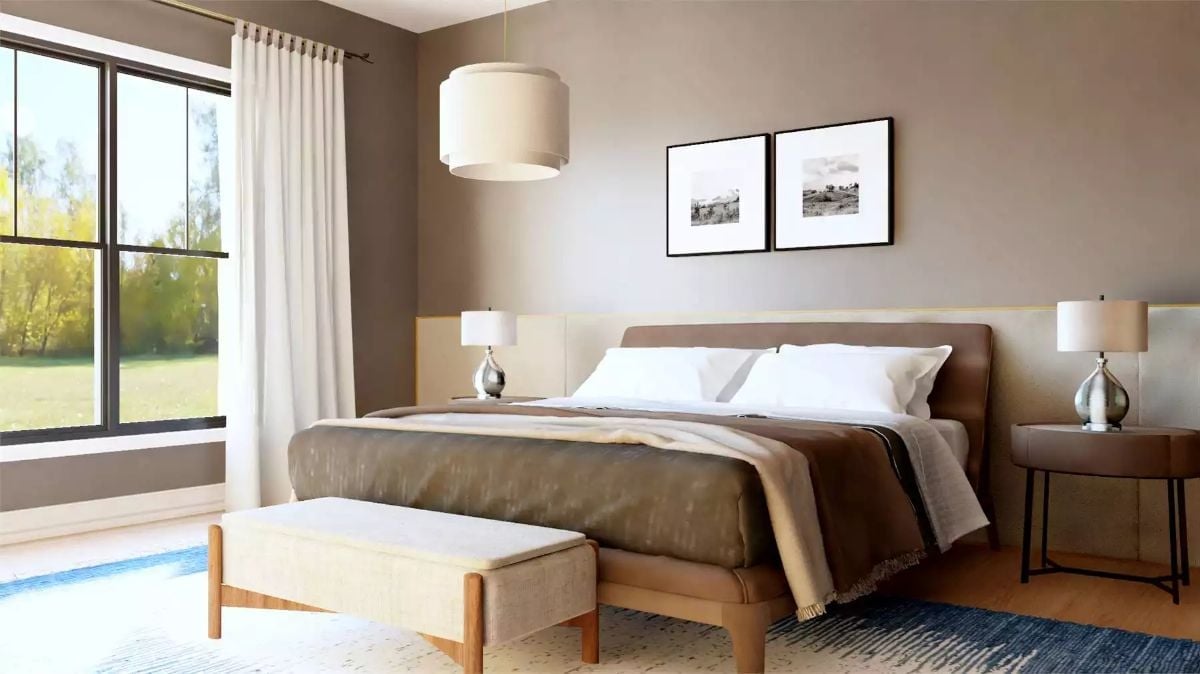
Taupe walls hold warmth without sliding into beige, and matching globe-base lamps anchor both nightstands without looking staged. The bench at the foot of the bed is practical rather than decorative. Framed black-and-white landscape prints keep the wall grounded — considered, not precious.
Did You Know: Pendant drums with double-layer shades like the one centered over this bed diffuse light more evenly than single-layer versions, cutting down on harsh wall shadows at night. In a new build, positioning that junction box a foot closer to the headboard than center-ceiling often produces better task lighting for reading without requiring a secondary lamp.
Oval Mirror and Floating Vanity Give This Bathroom Its Sense of Proportion
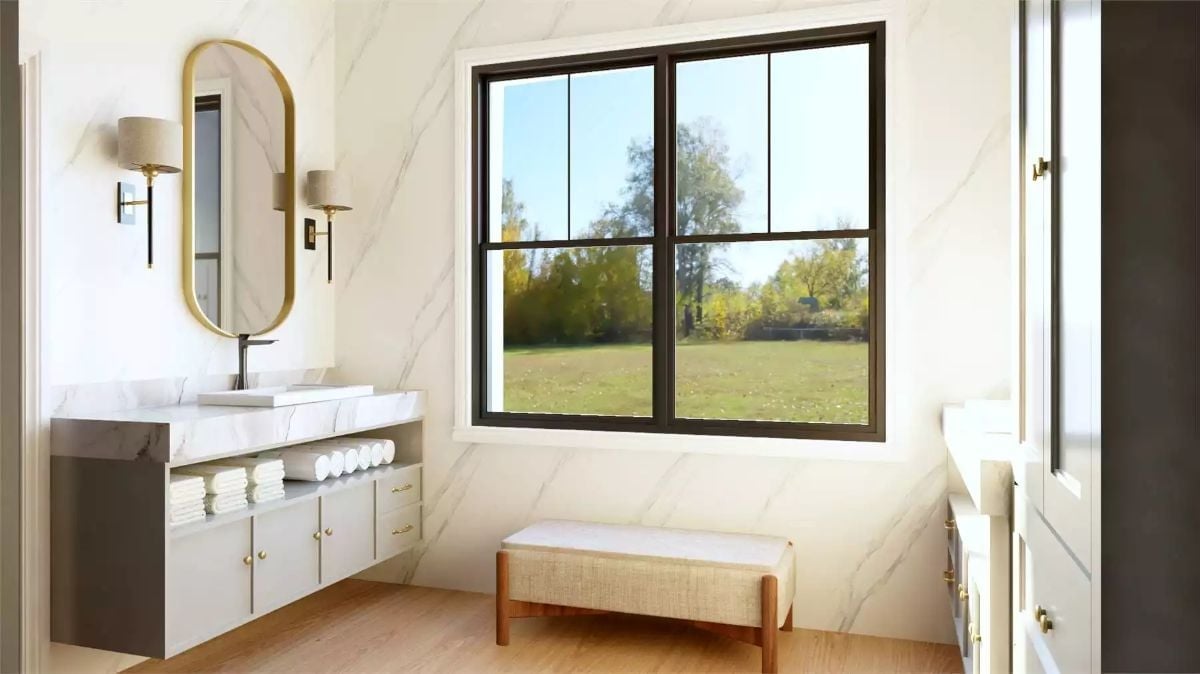
Gold hardware on the cabinet pulls ties directly to the mirror frame, so the two pieces read as a coordinated set rather than a coincidence. Wall sconces on either side handle task lighting cleanly, no medicine cabinet required. Rolled towels stored in the open shelf below keep everyday items reachable without cluttering the countertop — a small decision that makes a real difference in a bathroom this composed.
Pin It
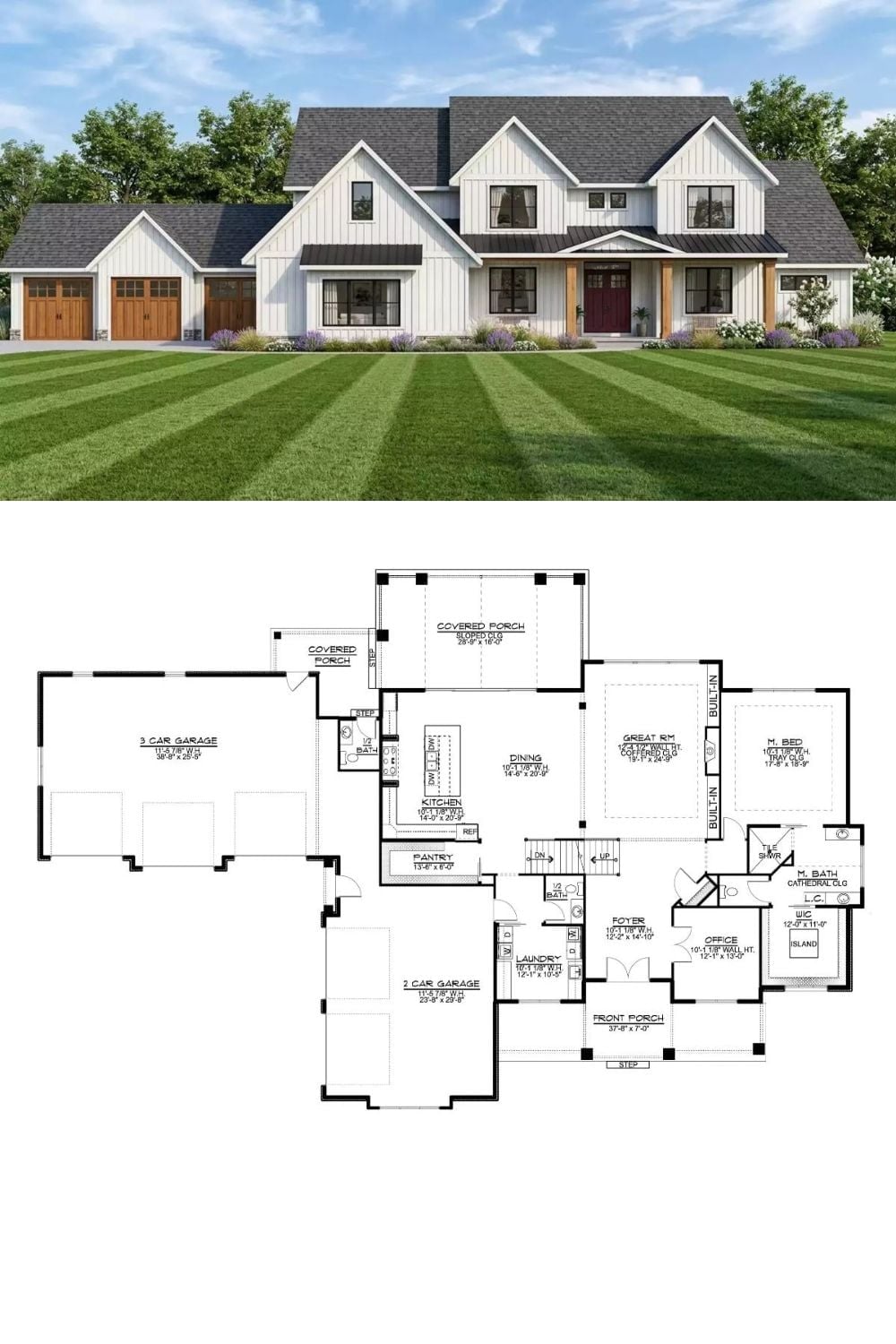
The exterior rendering shows a white board-and-batten farmhouse with a metal roof accent, covered front porch, and a three-car garage wing. Below it, the first-floor plan lays out a master suite tucked to one side, an open great room and dining zone, a walk-in pantry, laundry room, office, and two separate garage entries.