🔥 Would you like to save this?
The powder room of 1970 had absolutely no intention of fading into the background. Open the door and there it was: avocado porcelain, metallic wallpaper, dark wood, a fuzzy toilet lid, maybe a bar of soap molded into a rose that nobody was actually allowed to use. The smallest room in the house behaved as though it had been given the biggest decorating budget — and then challenged to spend every dollar before dinner.
Half a century later, the room has not exactly learned restraint. It has simply changed tactics. Color moved from permanent plumbing fixtures to paint, tile, art, and wallpaper. Heavy cabinetry lifted off the floor. Chrome stopped running the whole show. Mirrors got larger, lighting got softer, and the pieces that once arrived in perfectly matched sets began deliberately disagreeing with one another. Across these 33 before-and-afters, almost nothing escaped the rewrite — except the powder room’s old instinct to steal the show.
In order to come up with the very specific design ideas, we create most designs with the assistance of state-of-the-art AI interior design software. Also, assume links that take you off the site are affiliate links such as links to Amazon. this means we may earn a commission if you buy something.
33. The Avocado Basin That Ran the Room
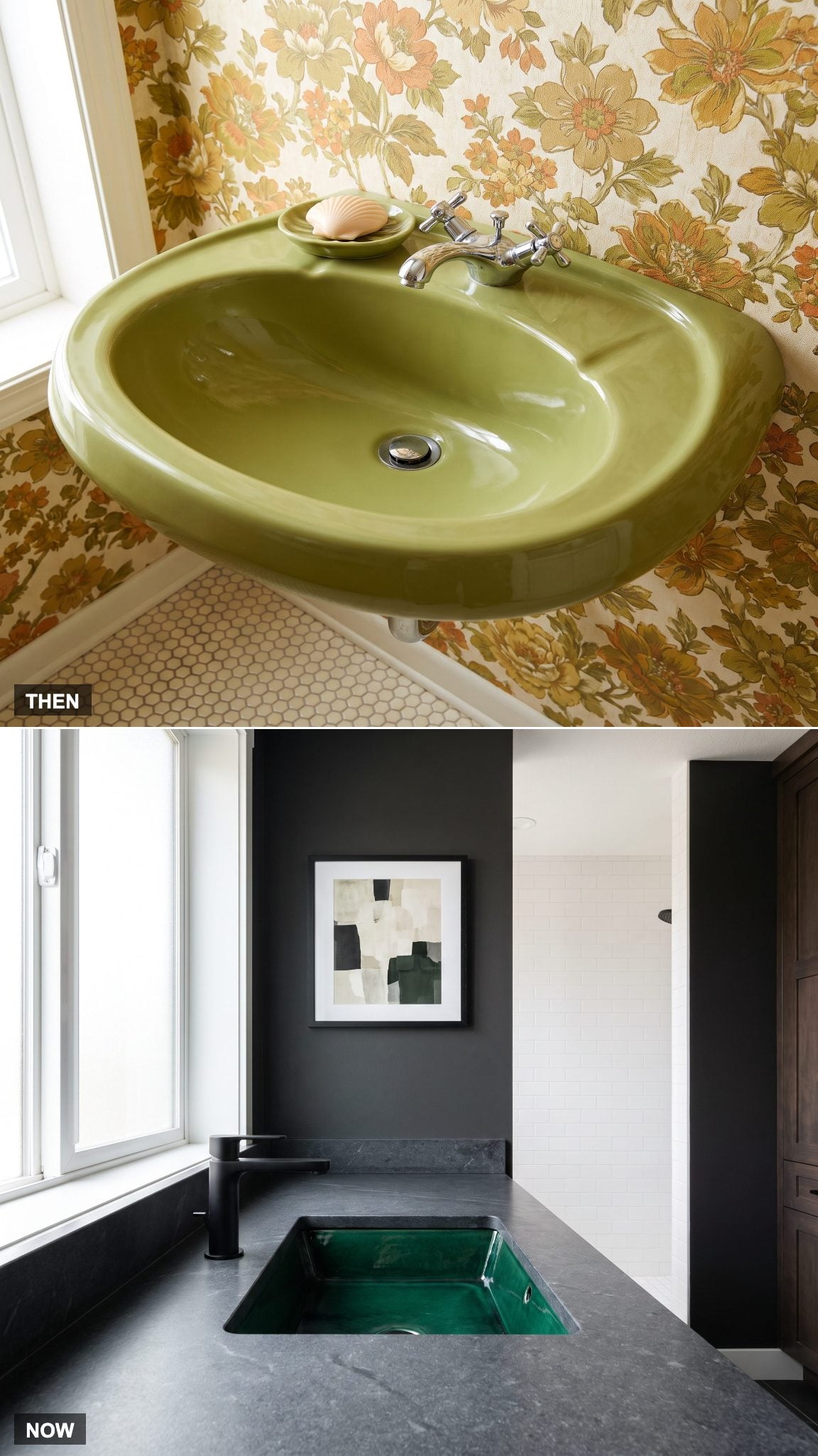
In 1970 the sink could be the color and the color could be the whole point. Avocado, harvest gold, pink, blue — plumbing manufacturers offered coordinated fixtures in confident hues, and once you committed, the basin, toilet, and often the tub were all coming along for the ride.
Now the basin usually retreats into white or becomes a single controlled hit of color against quieter surroundings. The difference is flexibility. Back then the color was baked into the porcelain. Today a vessel sink or painted vanity can deliver the drama without requiring the entire plumbing suite to swear lifelong allegiance to avocado.
32. Floral Wallpaper Took Over the Whole Room
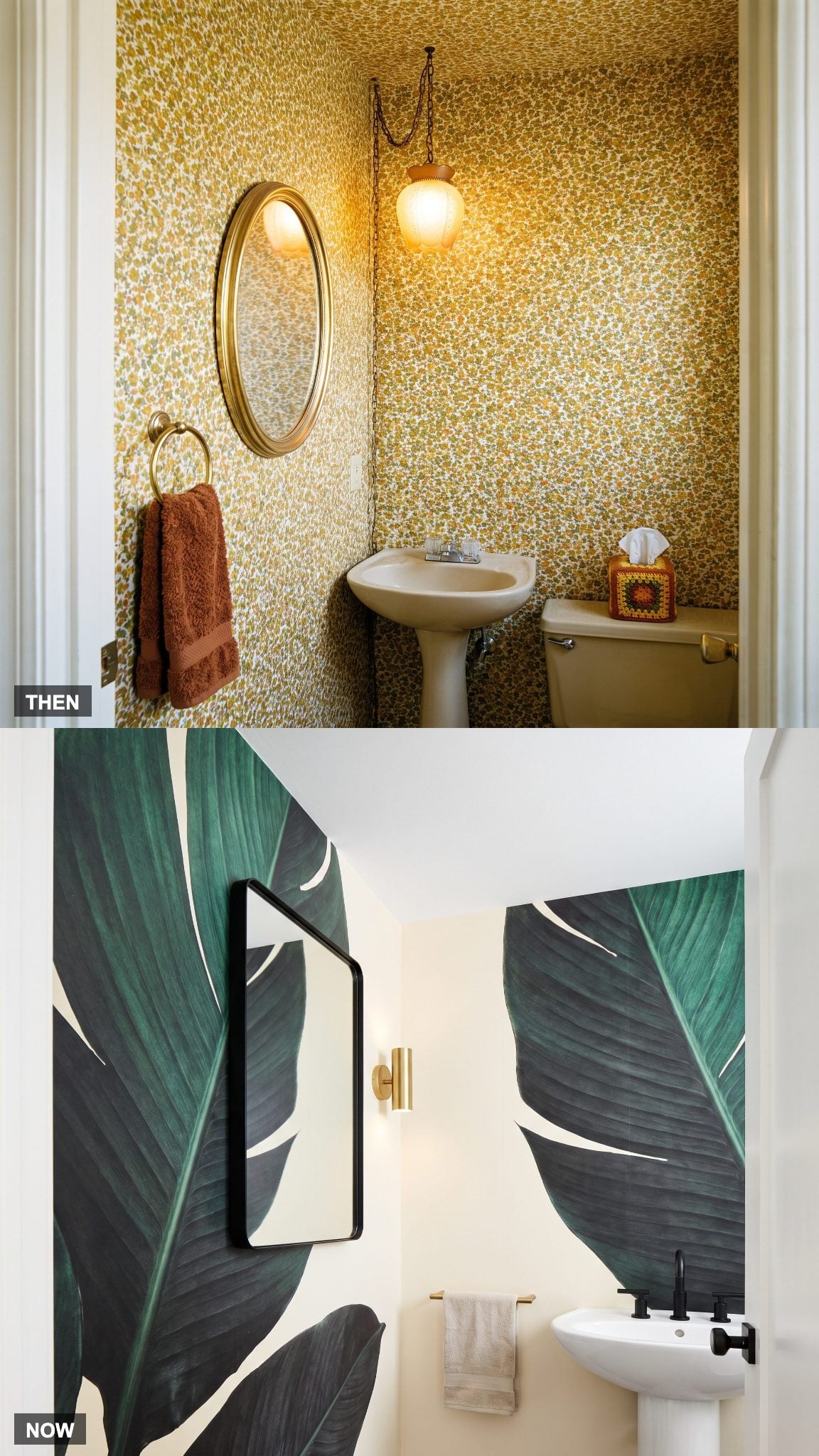
The 1970 powder room did not merely wear wallpaper. It could disappear into it. Tiny florals climbed every wall, wrapped corners, sometimes marched right across the ceiling, and turned four feet of floor space into a full-immersion pattern experiment.
Wallpaper is back, but the scale changed. One enormous botanical leaf, a mural, or a print so large that only fragments fit inside the room can feel calmer than hundreds of tiny repeated flowers. The room is still theatrical. The pattern simply learned to breathe.
That same overscale wallpaper move dresses up a boho guest room beautifully, and the powder room remains one of the easiest places to try it without committing an entire house.
31. The Matching Toilet Joined the Color Scheme
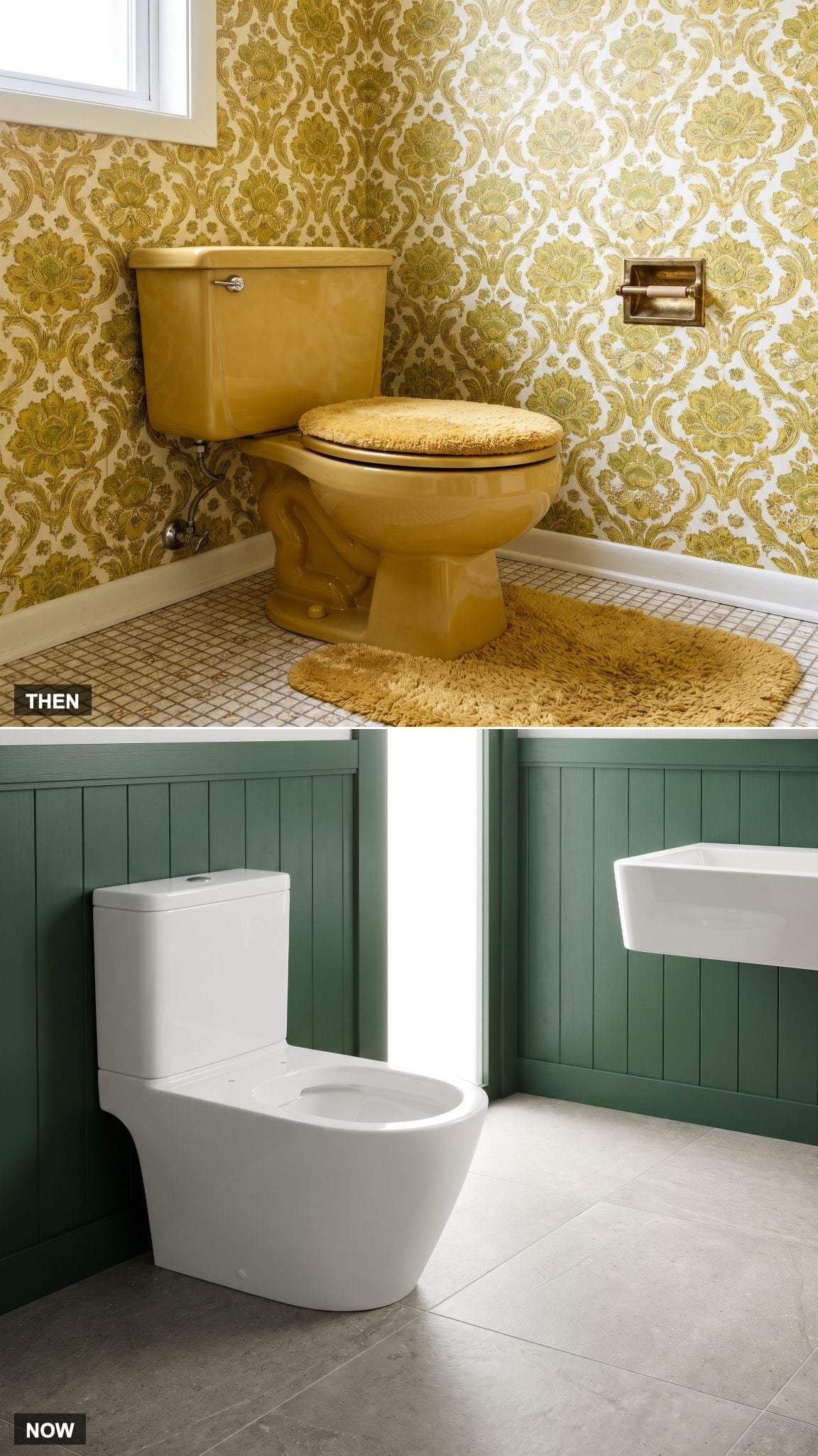
A harvest-gold toilet could sit beneath a matching fuzzy lid while the basin across the room answered in precisely the same shade. Coordination did not stop at the objects anybody particularly wanted to notice.
White toilets dominate contemporary powder rooms for a reason: they recede. Skirted models and cleaner profiles can make the fixture read as a simpler object, leaving the color work to surfaces that are far easier to change later.
30. The Mirror Lost Twenty Pounds of Frame
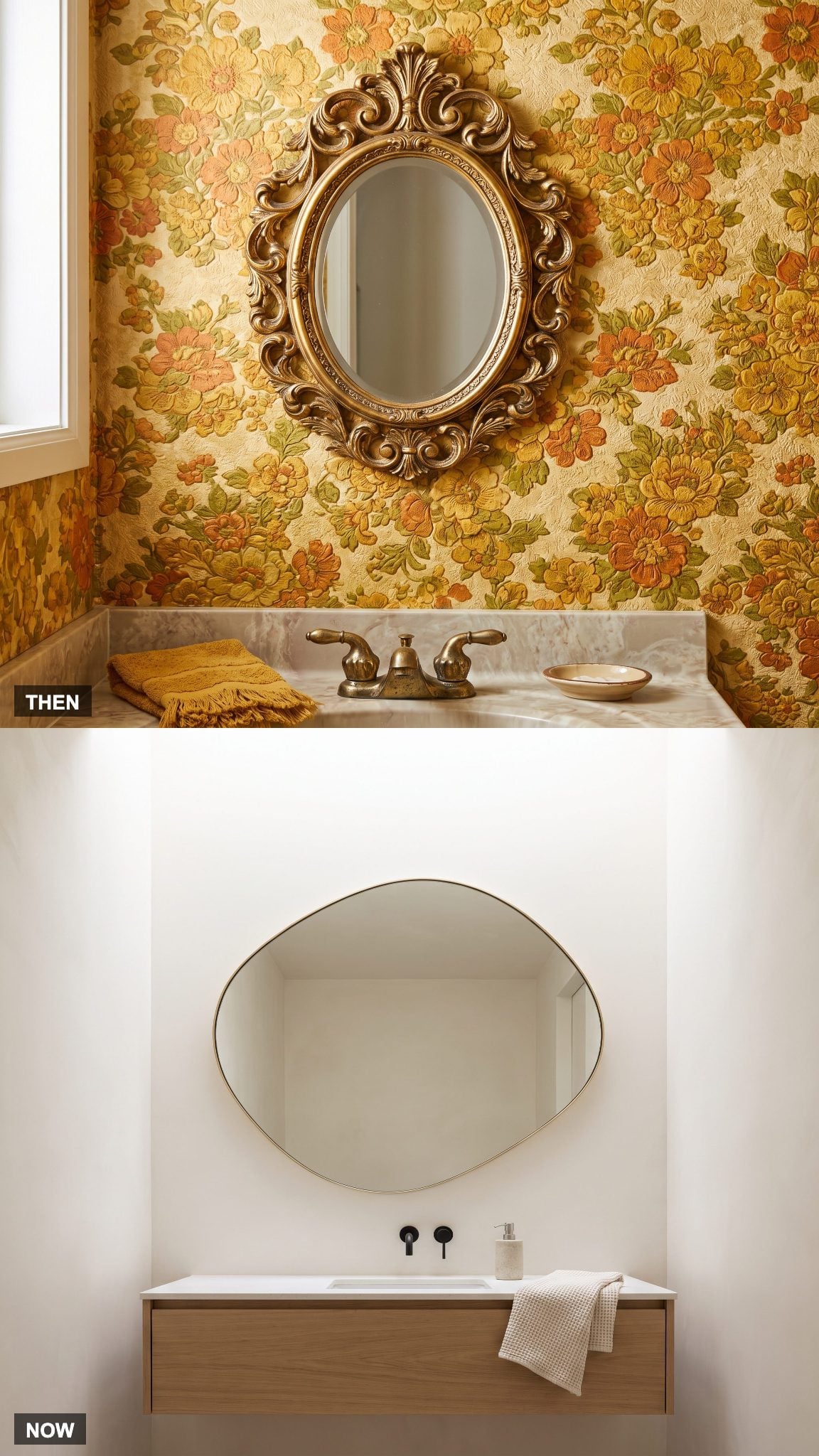
A formal 1970 powder room might give a relatively modest mirror an enormous decorative frame: gilt scrollwork, carved edges, enough visual business around the glass that the reflection became almost incidental.
Now an organic brass-edged mirror can reverse the ratio. More glass, less frame, softer outlines. In a tiny room, the larger reflective surface throws light around while the quieter edge lets the architecture stop competing with the mirror.
29. The Bathroom Carpet Experiment Finally Met Water
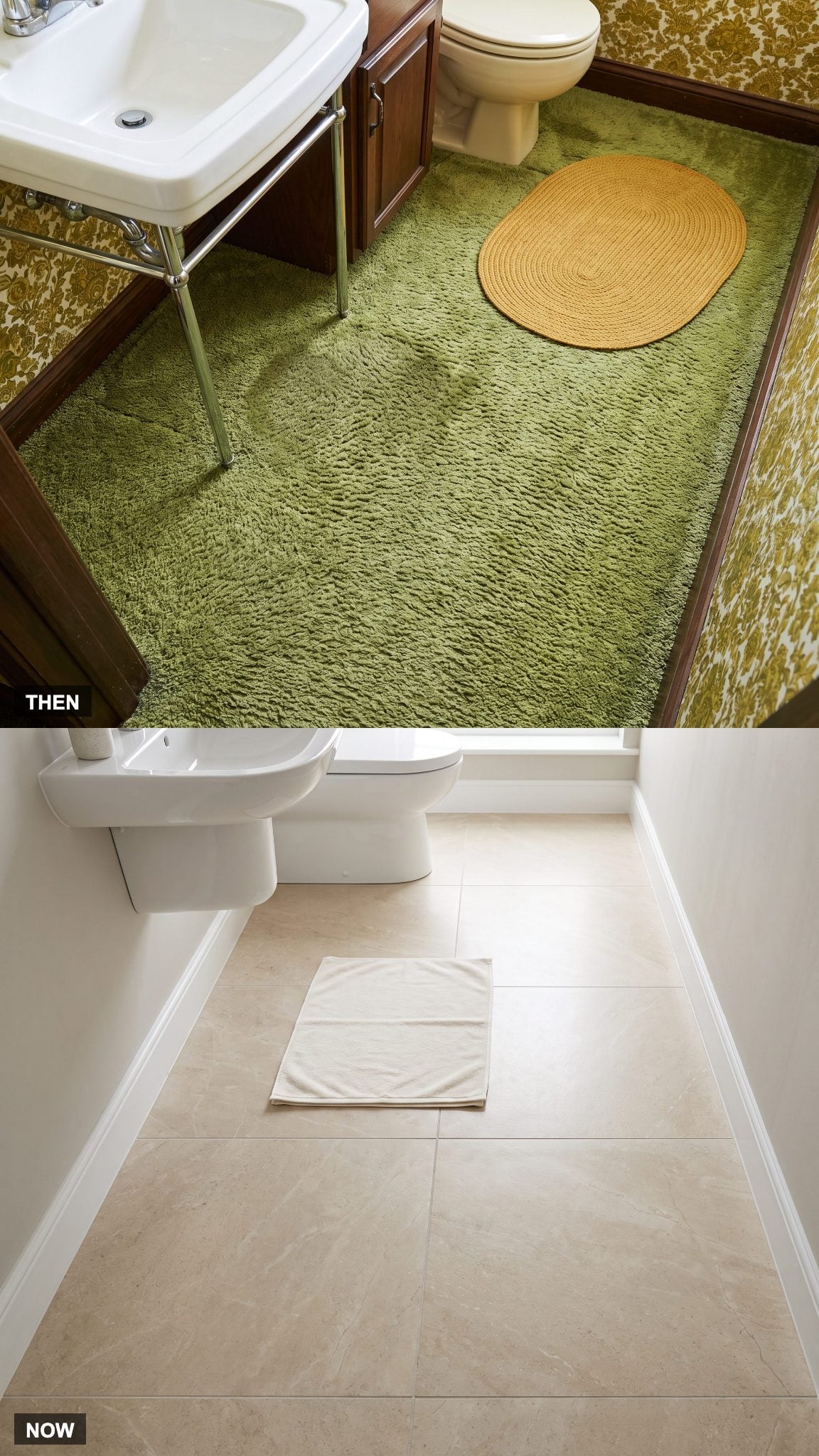
Carpet in a room built around a sink and a toilet remains one of the period’s most optimistic ideas. Plush underfoot, warmer than tile, and absolutely determined to absorb every splash that came its way.
Now the floor can be warm limestone porcelain tile: hard-wearing, wipeable, visually quiet. The room immediately feels less upholstered and considerably less interested in trapping moisture for sentimental reasons.
28. The Wall-Hung Sink Grew Up Into Floating Furniture
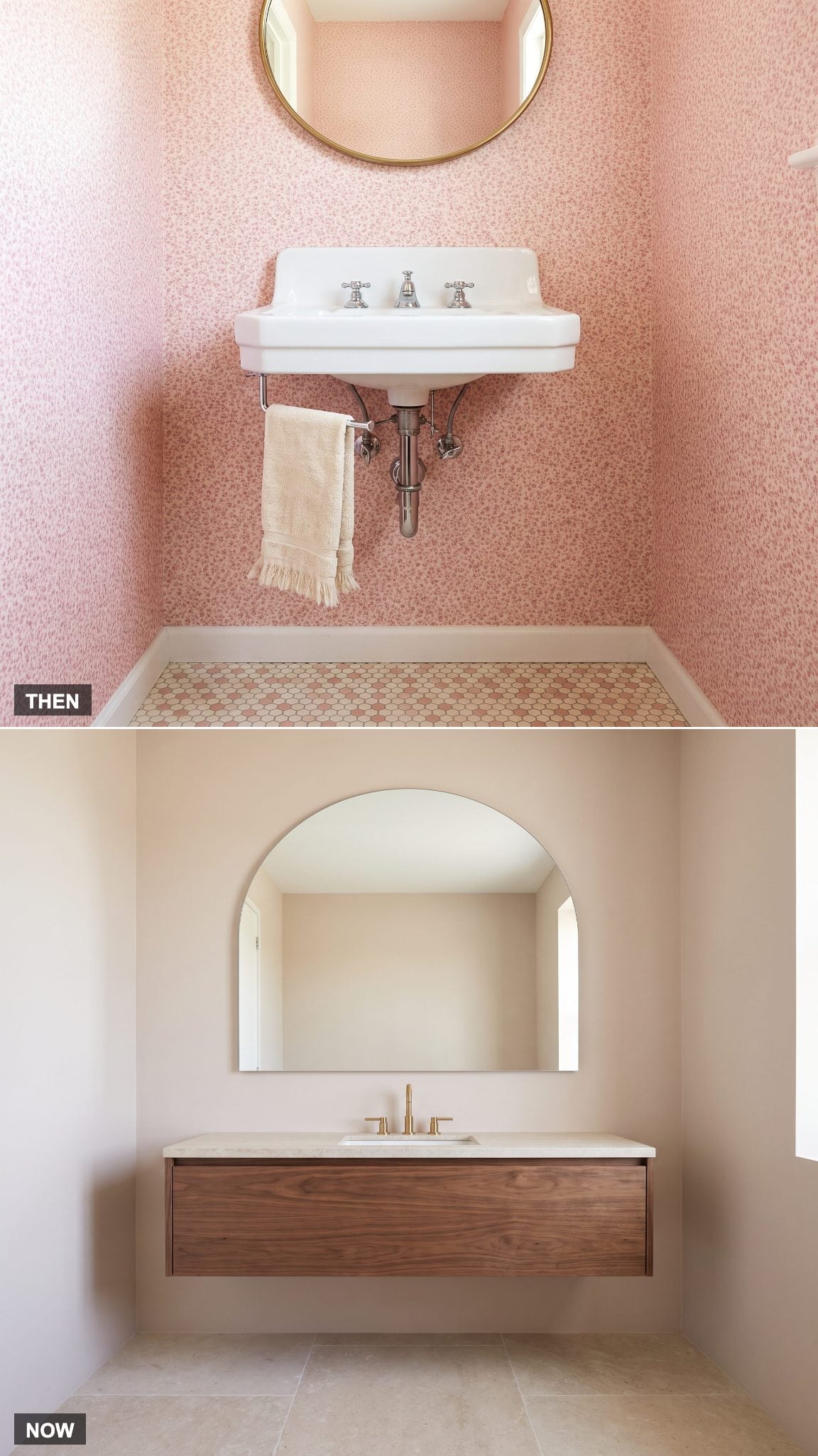
Wall-hung and pedestal sinks were one familiar way to handle a small powder room: plumbing exposed, floor visible, storage practically nonexistent. Elegant when done well, but not especially interested in where you planned to keep the spare toilet paper.
The floating walnut vanity borrows the visual lightness and adds a drawer. It reads more like furniture, keeps the floor visible underneath, and gives the tiny room some badly needed concealment. Coaxing wood grain into warming a small space is one of the smarter ideas in a modern craftsman living room playbook, shrunk here to powder-room scale.
27. Chrome Cross-Handles Made Room for Warmer Metals
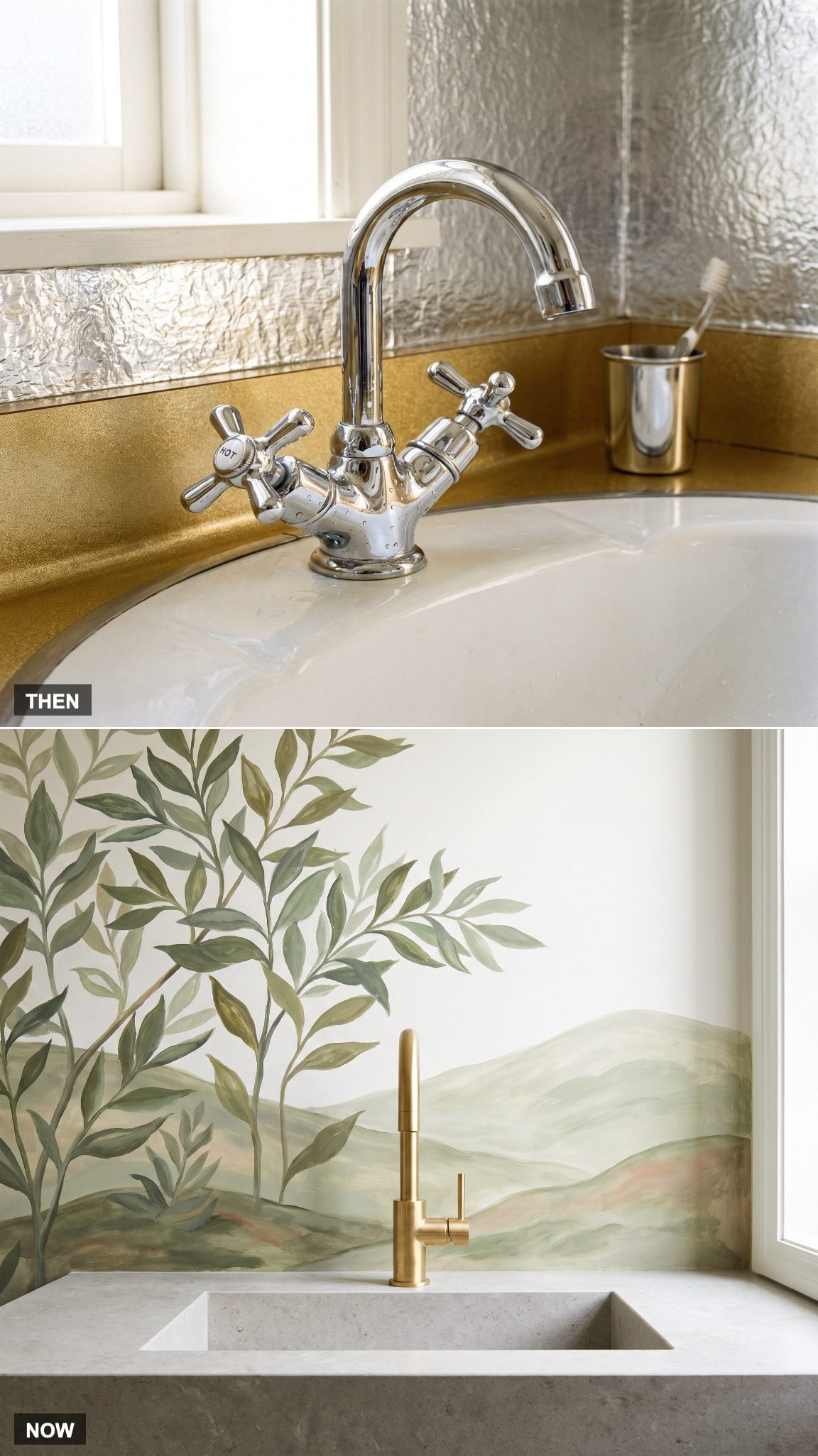
Polished chrome cross-handles were a familiar bathroom sight in the period, though they were never the only option. Manufacturers also offered single-control faucets and other metal finishes. Still, chrome had enormous staying power: bright, practical, and very good at recording every water spot in the room.
The current faucet might be a tall lever in unlacquered brass, matte black, or polished nickel. Brass in particular warms cool stone and pale walls, while the unlacquered version develops a patina instead of fighting to remain factory-new forever.
26. Tiny Hex Tile No Longer Owns the Floor
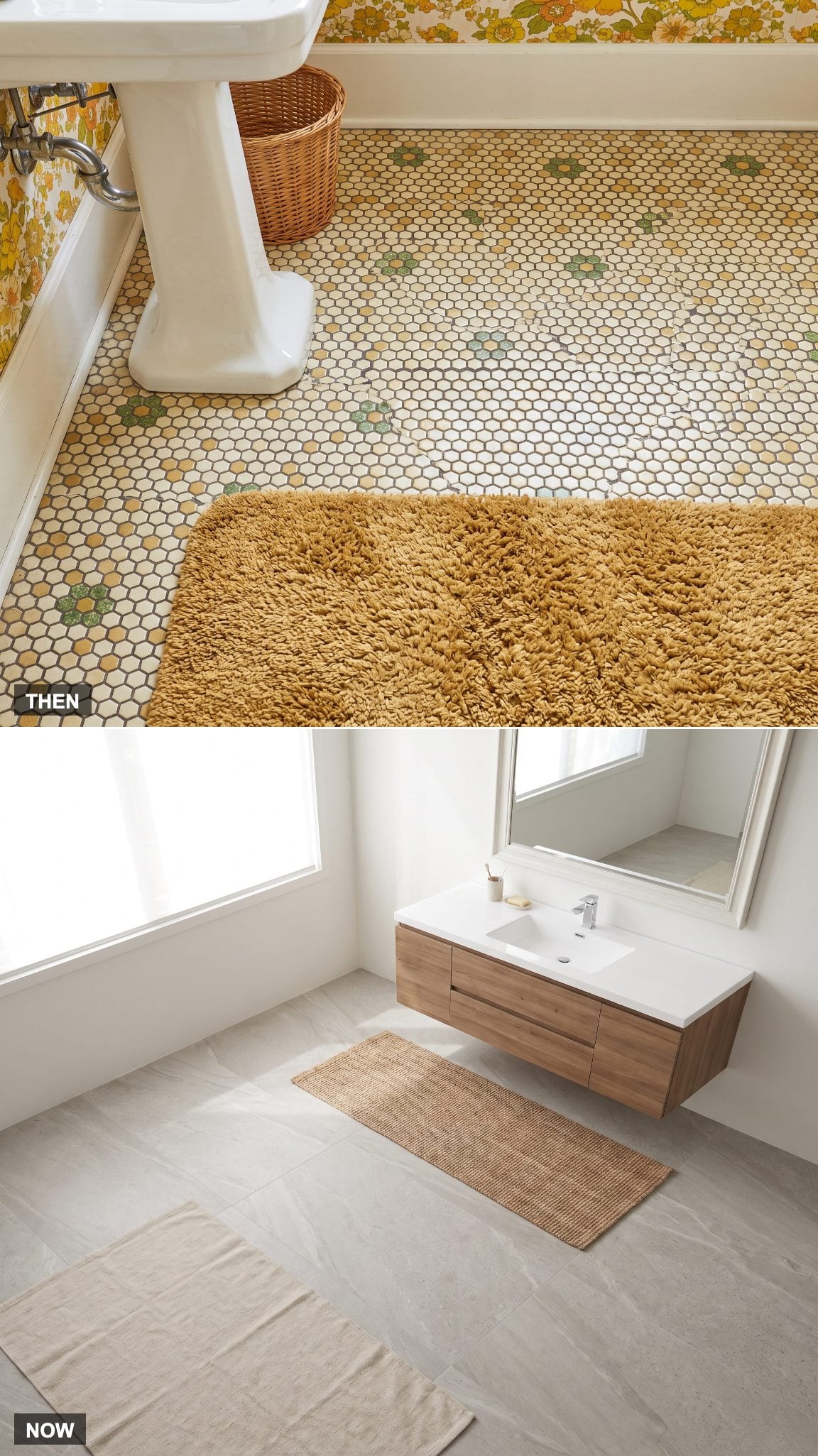
Small mosaics could cover a bathroom floor in hundreds of tiny pieces, sometimes with contrasting flowers or borders worked into the field. Beautiful when fresh, less delightful once the grout became the most labor-intensive surface in the house.
Contemporary powder rooms have far more freedom with scale. Large-format porcelain can nearly erase grout lines, while oversized patterned tile can turn the floor into one bold graphic plane. Small hex tile never disappeared — it simply stopped being the only way to get pattern underfoot.
25. The Hollywood Bulb Bar Left the Dressing Room
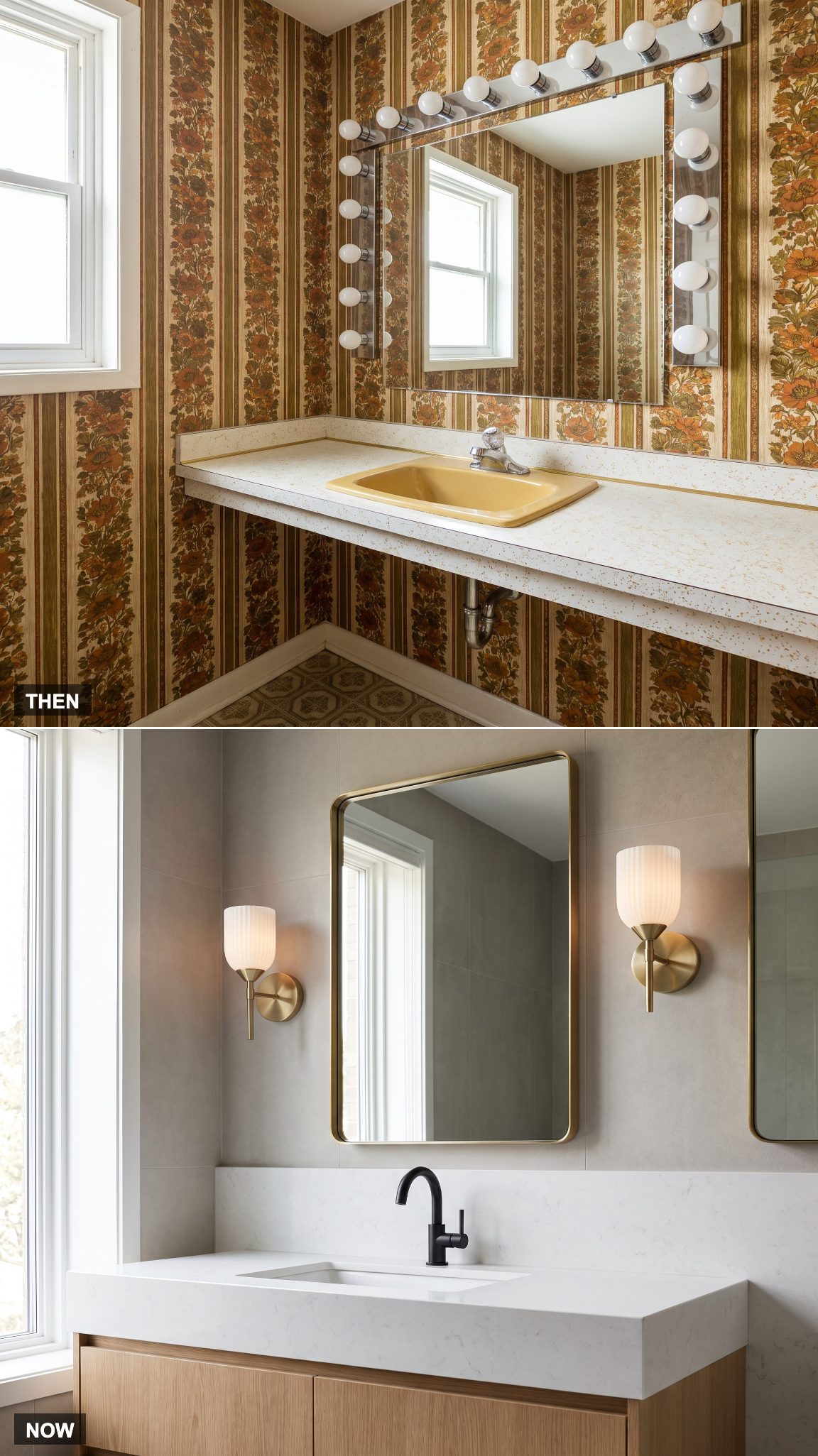
A row of exposed bulbs over the mirror borrowed directly from dressing-room lighting: bright, theatrical, impossible to ignore. It gave the face plenty of illumination and the room absolutely no mystery.
Well-placed fluted brass sconces can bring light closer to face level while becoming decorative objects themselves. The useful shift is not simply bulb bar versus sconce. It is realizing that flattering light works better when the fixture and its position are considered together.
24. Formica Stopped Pretending to Be the Last Word
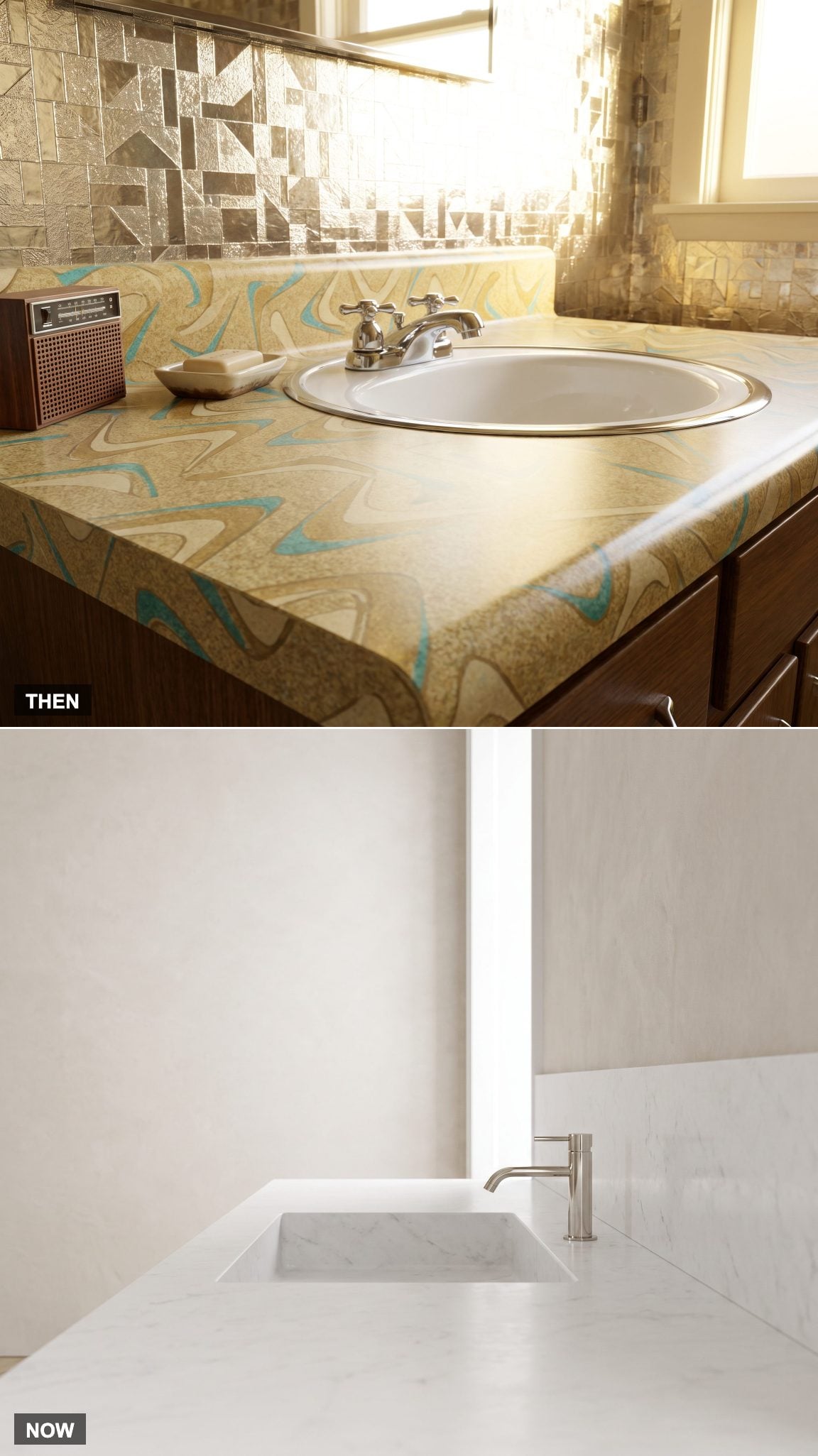
Laminate countertops were everywhere for good reasons: inexpensive, durable, colorful, and easy to wipe down. By 1970 they came in faux stone, speckles, woodgrains, solids, and enough decorative patterns to keep a homeowner happily indecisive for hours.
Now the powder room often gets the material upgrade that would be ruinously expensive across a whole kitchen: a small slab of honed marble, quartz, or stone-look surface with a clean edge and minimal seams. Tiny square footage turns luxury material into a much easier indulgence.
23. Dark Paneling Kept the Vertical Lines and Lost the Cave
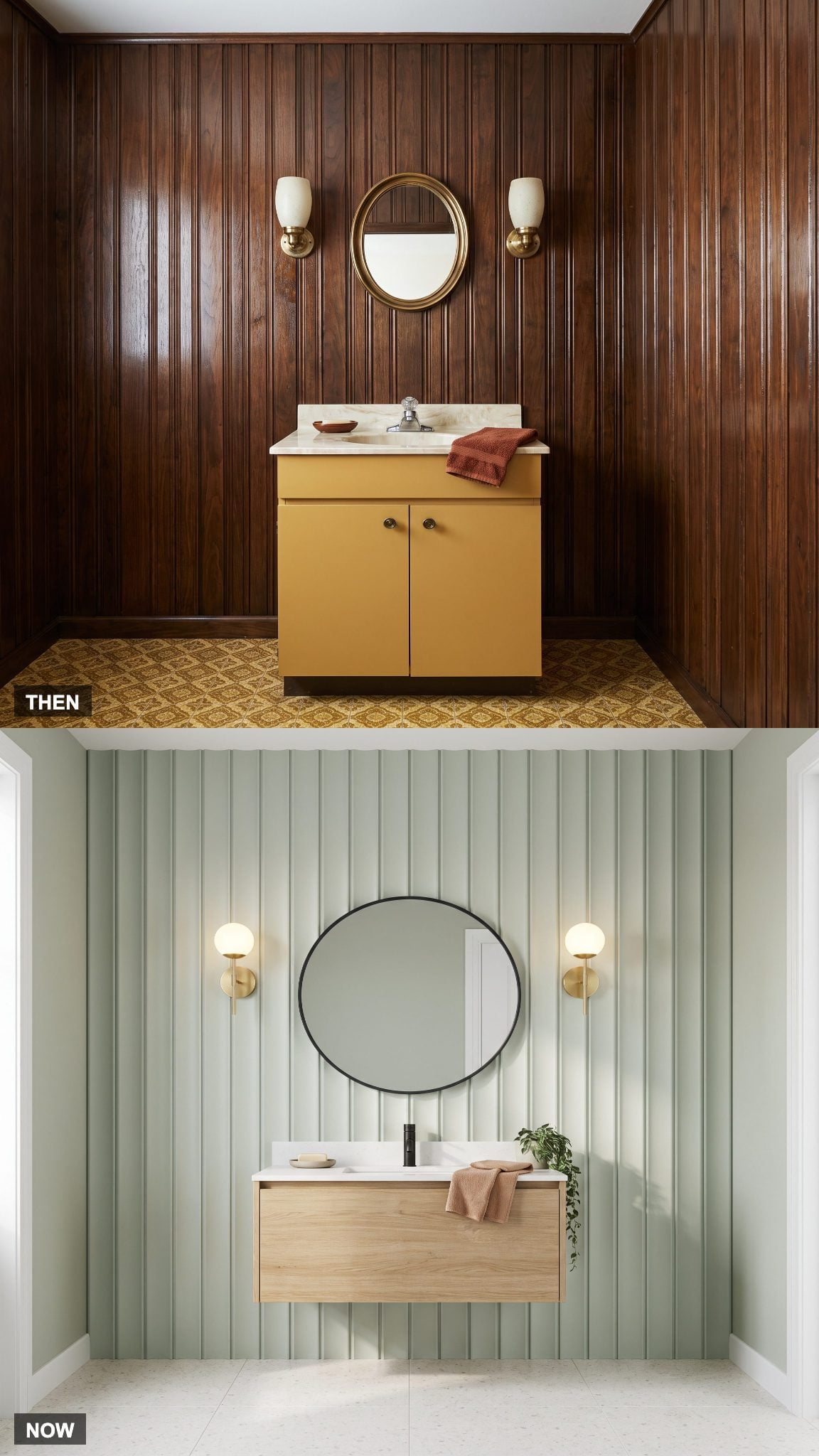
Dark walnut paneling could wrap a powder room floor to ceiling, all groove and grain and shadow. Warm? Absolutely. Subtle? Not remotely. In a windowless room it could feel like standing inside a very expensive cigar box.
Contemporary fluting, reeding, or painted vertical paneling keeps the rhythm while losing some of the visual weight. Soft sage, clay, cream, or another lighter finish lets the grooves create shadow without swallowing the room whole. The texture that once read as rustic in a cool family room gets cleaned up, painted, and brought into the powder room with considerably sharper tailoring.
22. The Fuzzy Toilet Lid Finally Came Off
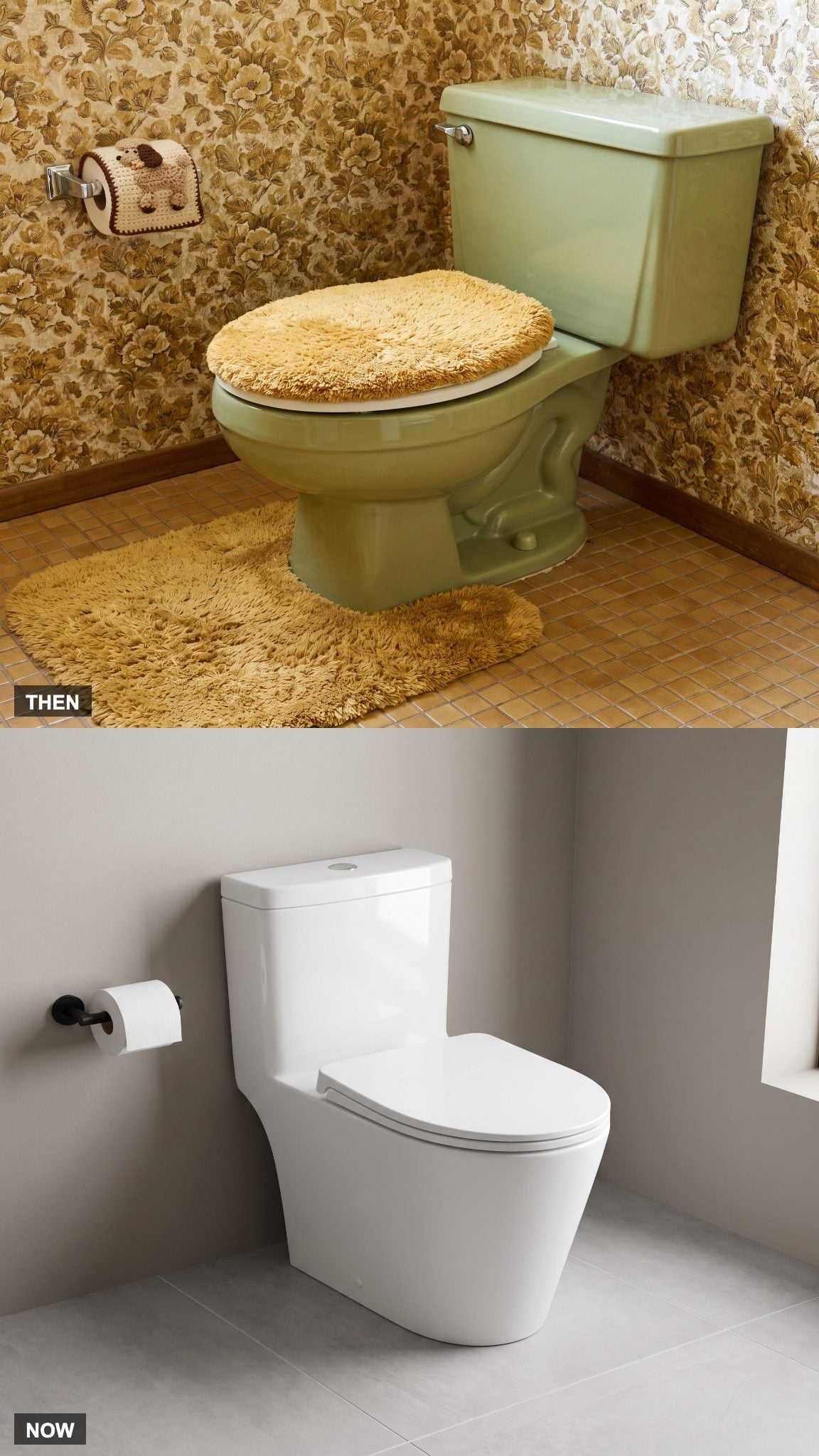
The fuzzy toilet-seat cover made a certain kind of sense in a house where softness was being applied enthusiastically to every available surface. It also matted, slipped, needed laundering, and added one more textile to a fixture that probably did not require dressing.
Now the lid stays bare. Cleaner outline, easier maintenance, nothing to fluff. The toilet has been relieved of its upholstery duties.
21. The Medicine Cabinet Learned to Disappear
🔥 Would you like to save this?
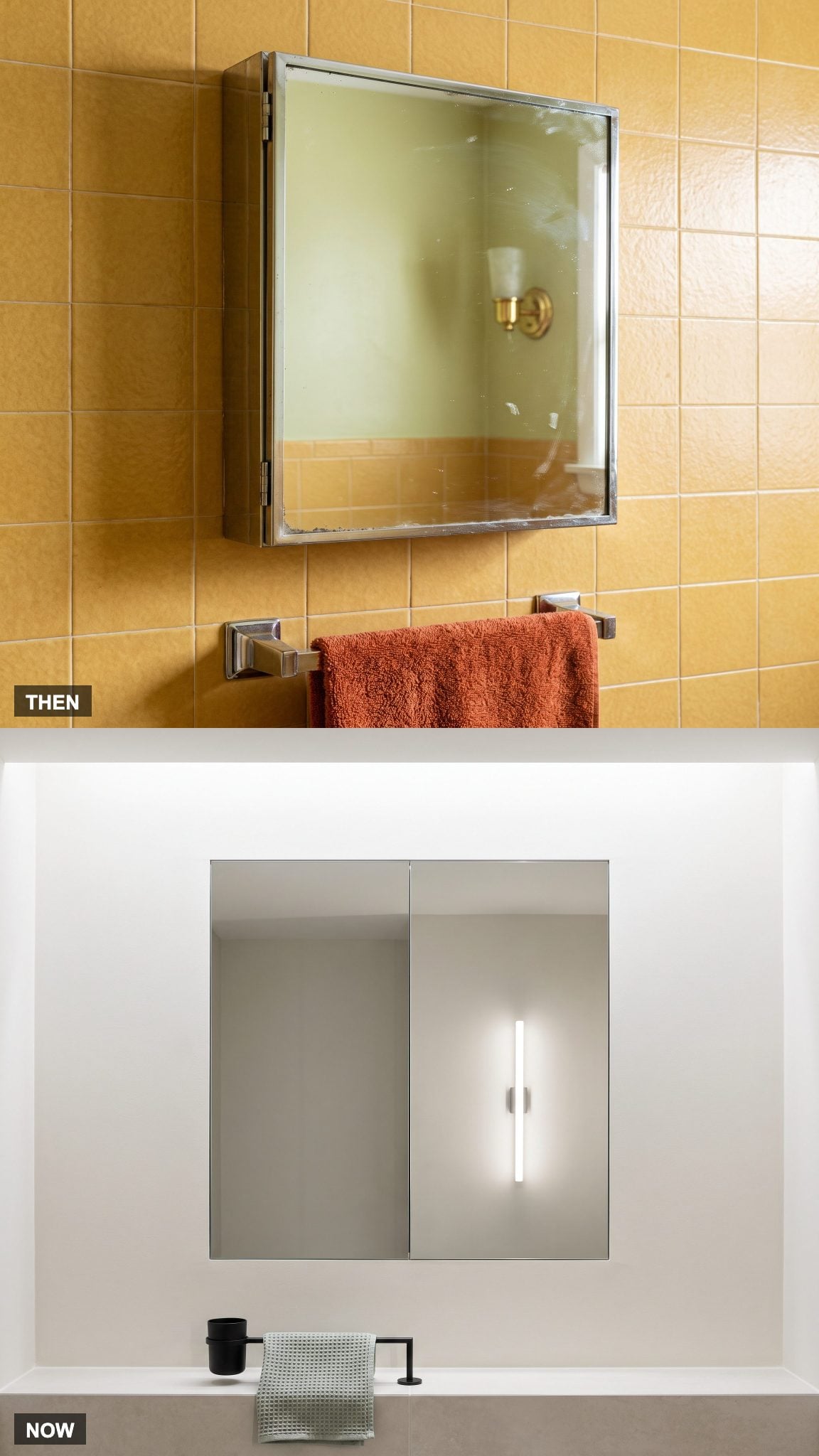
You knew the sound: the slight metallic rattle as the mirrored door swung shut, the box projecting from the wall as though somebody remembered storage after everything else had already been installed.
The recessed version puts the same shelves inside the wall cavity so the mirror can sit nearly flush. Storage stays. Visual bulk leaves. Nobody mourns the rattle.
20. Perfectly Uniform Tile Gave Way to Deliberate Wobble
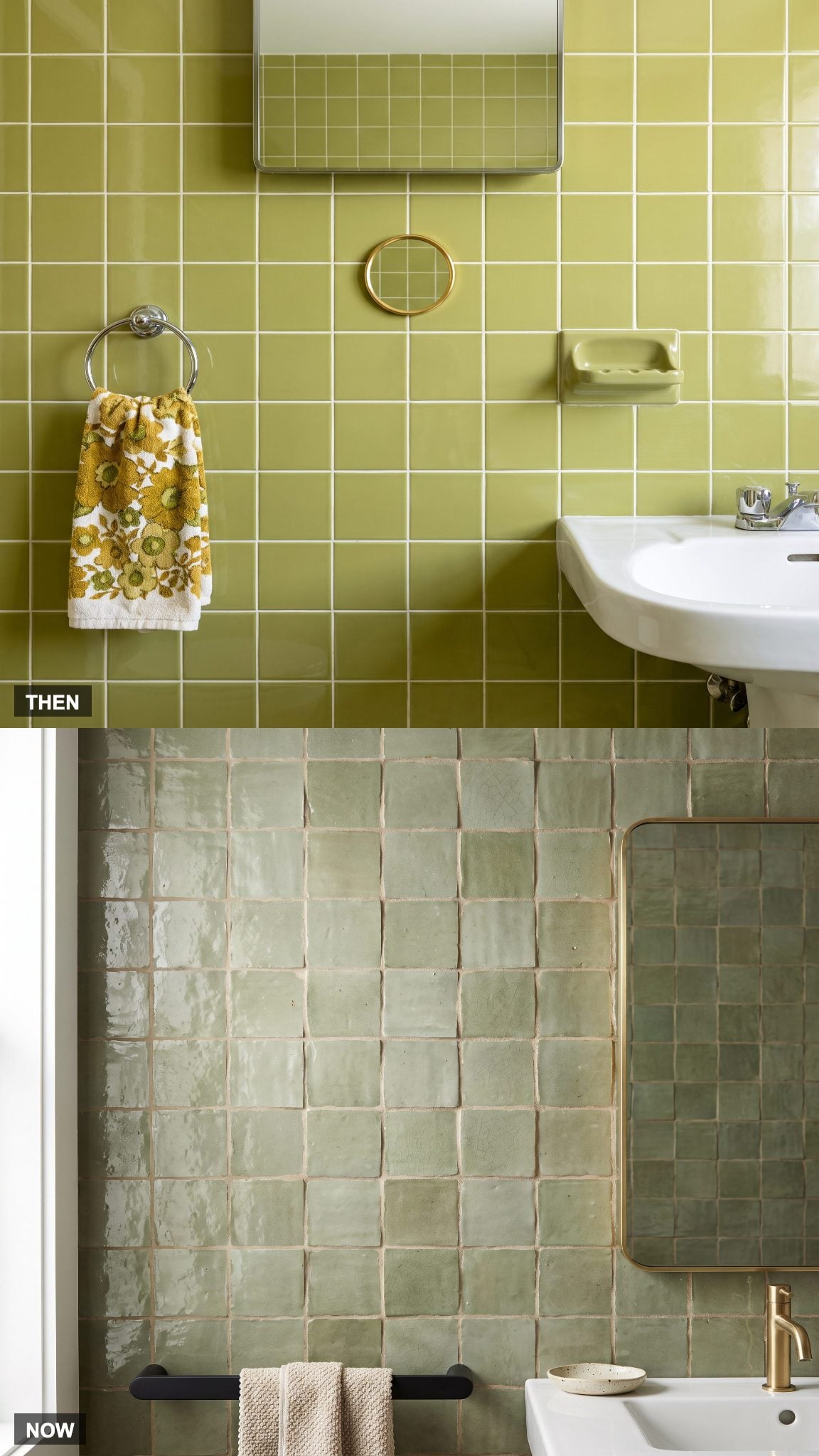
One common bathroom ideal favored uniform ceramic tile: consistent squares, neat grout lines, smooth surfaces, everything lined up obediently from one end of the wall to the other.
The sage zellige tile look now leans into variation. Slight differences in surface, edge, and glaze catch light unevenly so the wall never reads as a perfectly flat grid. Handmade tile and convincing handmade-look versions both use that irregularity as part of the design rather than something to correct.
19. The Artificial Bouquet Lost Half Its Flowers and All Its Dust
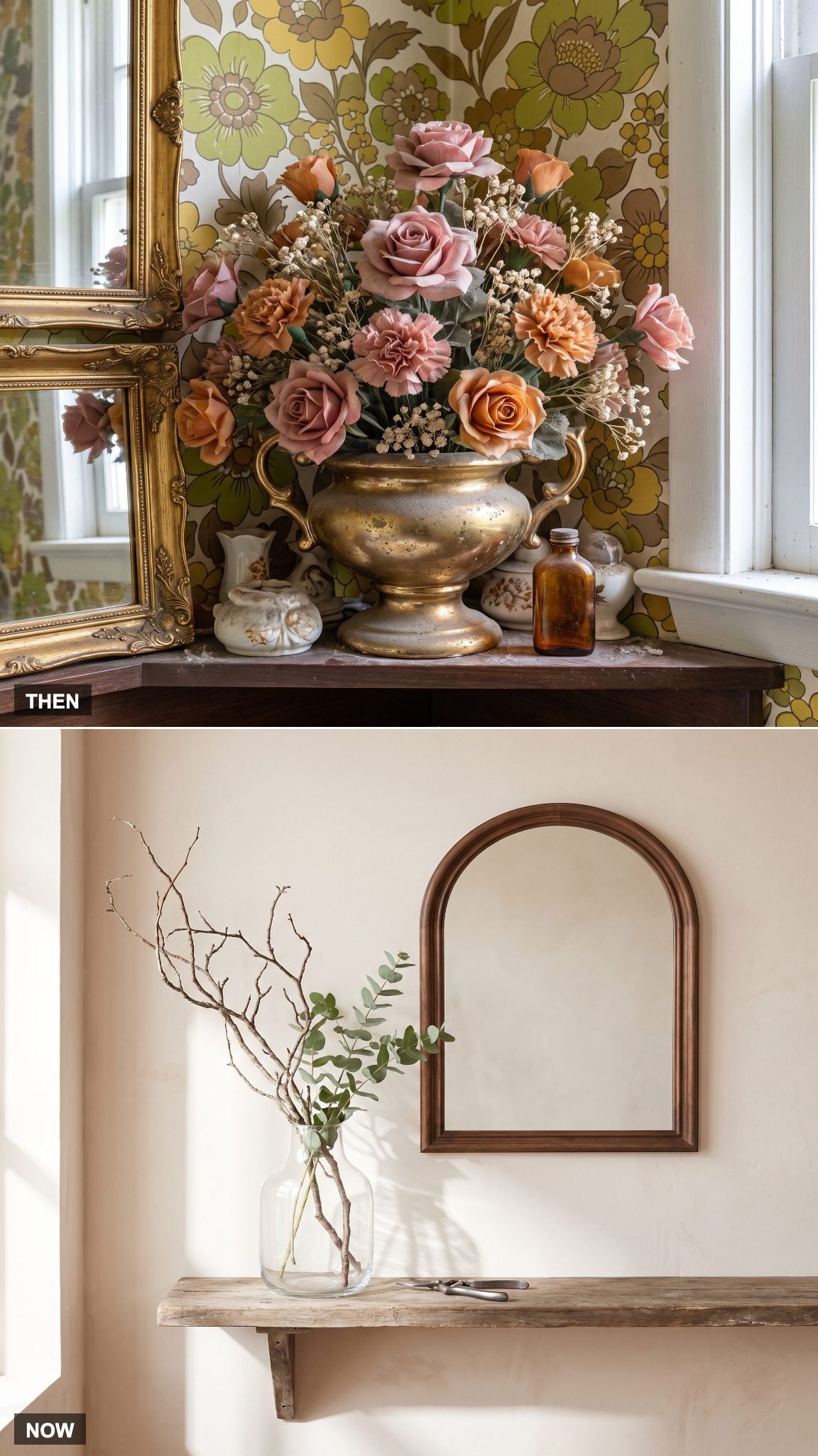
Artificial flowers offered an unbeatable practical advantage: they never died. Unfortunately, some also never looked especially alive. Dust settled into every fold while bright petals slowly faded into colors nature had not technically invented.
Now the gesture is often smaller: a branch in clear glass, one stem of eucalyptus, something sparse enough that the silhouette matters as much as the leaves.
18. The Frosted Globe Stopped Being Invisible
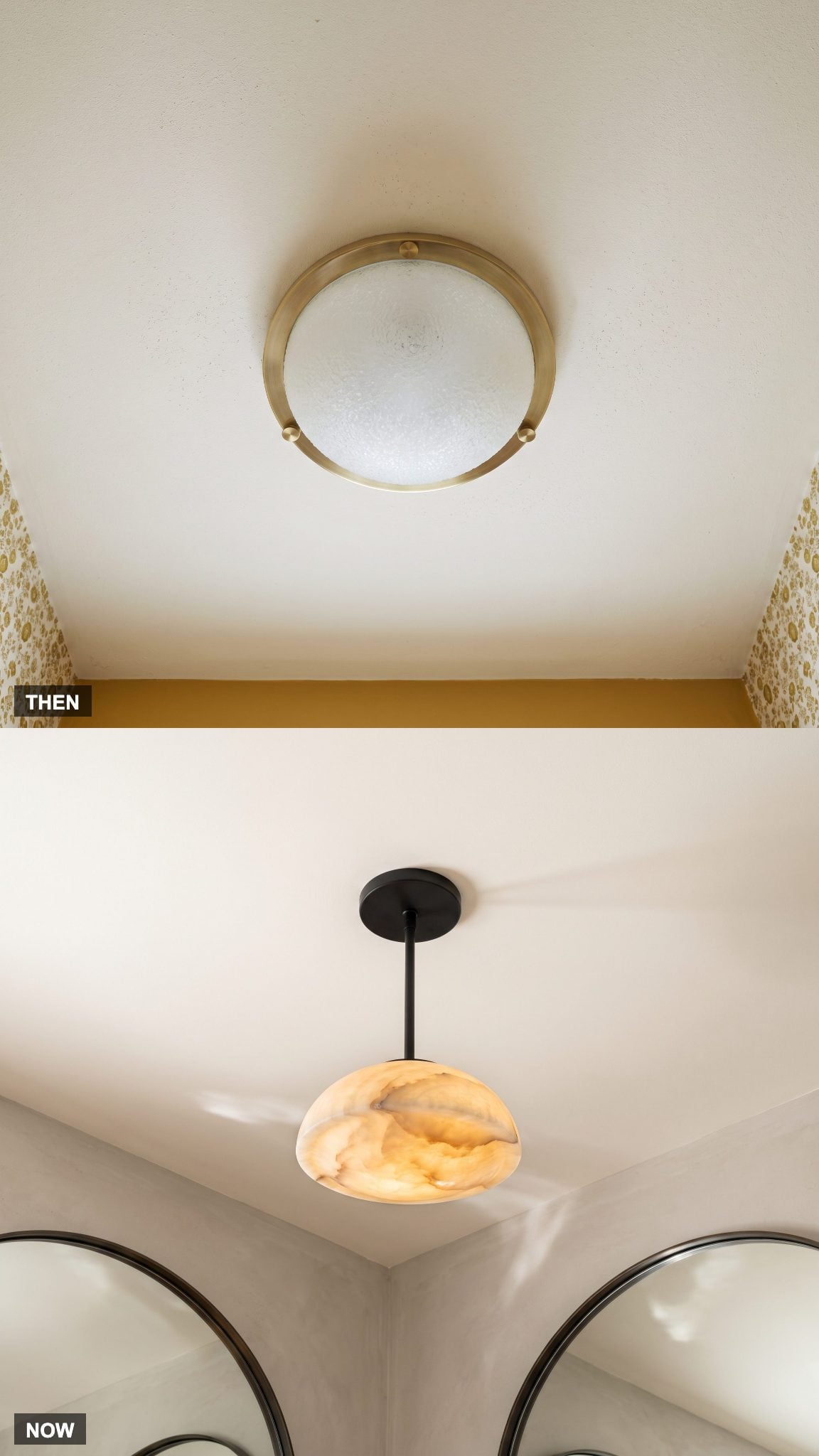
The frosted glass globe was useful precisely because nobody had to think very hard about it. Milky, round, dependable, mounted to the ceiling and then promptly forgotten.
An alabaster pendant treats those few square feet overhead as actual design territory. In a room this small, one fixture can do the work of sculpture without stealing another inch of counter or floor.
17. The Floor-Standing Vanity Finally Lifted Off
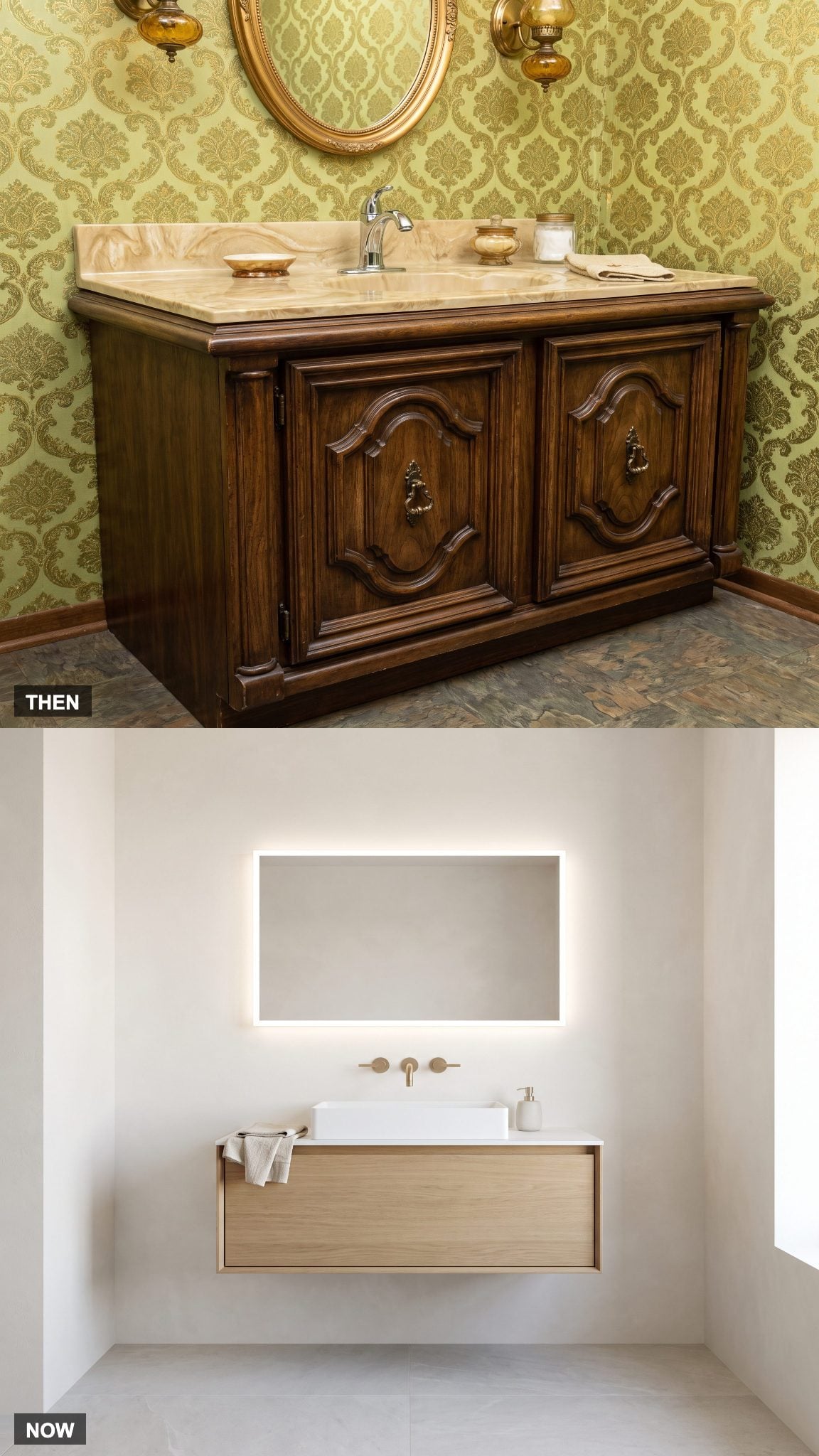
A traditional floor-standing vanity could put a lot of cabinet into a very small room: toe kick, heavy doors, countertop, all of it forming one solid block from floor to basin.
The floating version changes the mass rather than merely the style. Lift the cabinet, expose the floor beneath it, and suddenly the vanity reads as an object inside the room instead of the lower half of the room itself. Same storage problem, much lighter visual footprint.
16. The “Good Towels” Finally Became Legal to Touch
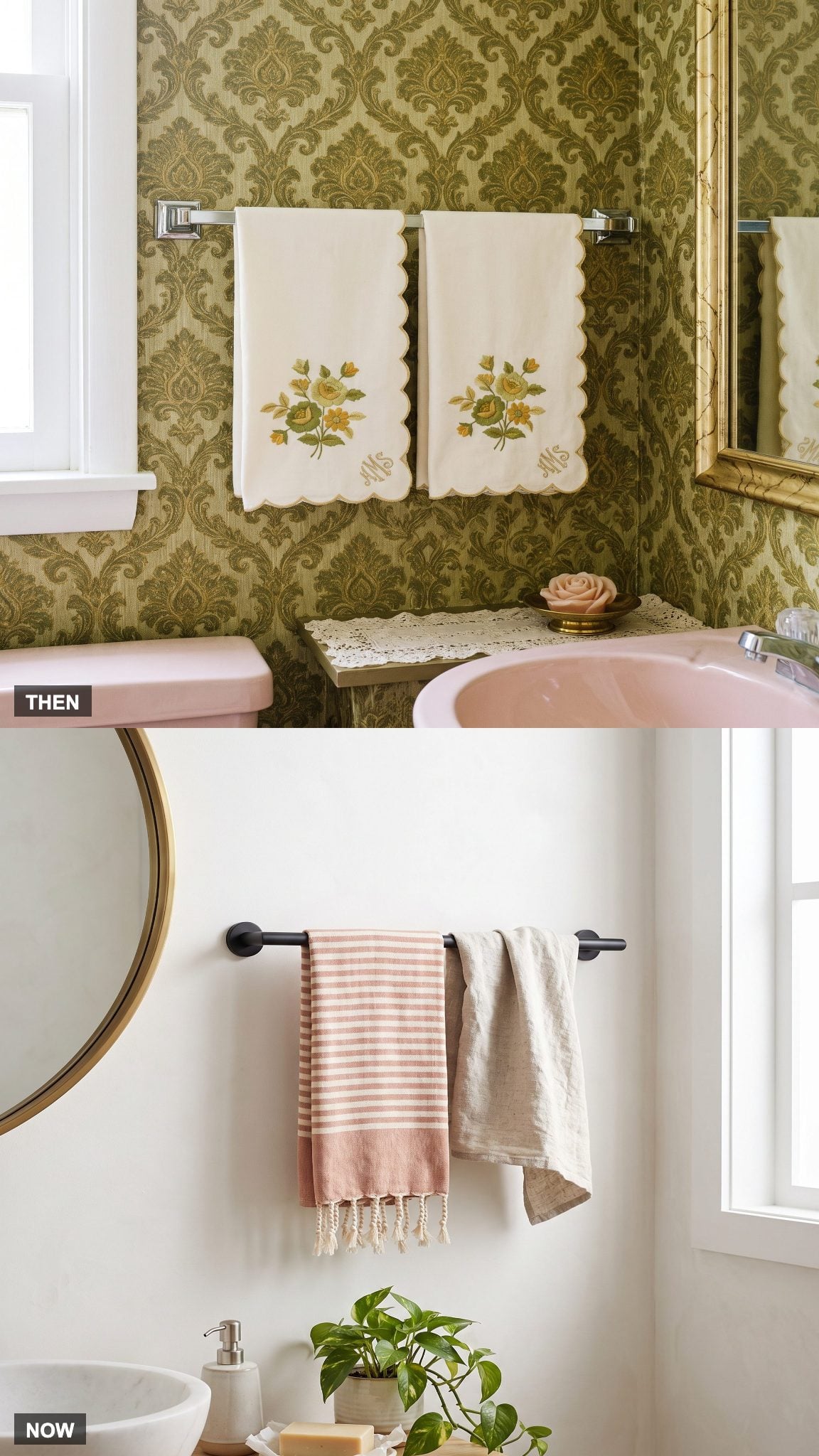
Embroidered, scalloped, monogrammed, carefully arranged: the decorative guest towel could achieve the remarkable feat of being placed beside a sink while radiating a clear message that nobody should actually dry anything on it.
A striped Turkish hand towel or a slubby linen hand towel makes the opposite promise. Use it. Wash it. Let it soften. Utility is no longer considered a decorating failure.
15. Privacy Glass Quit Trying to Be a Pattern
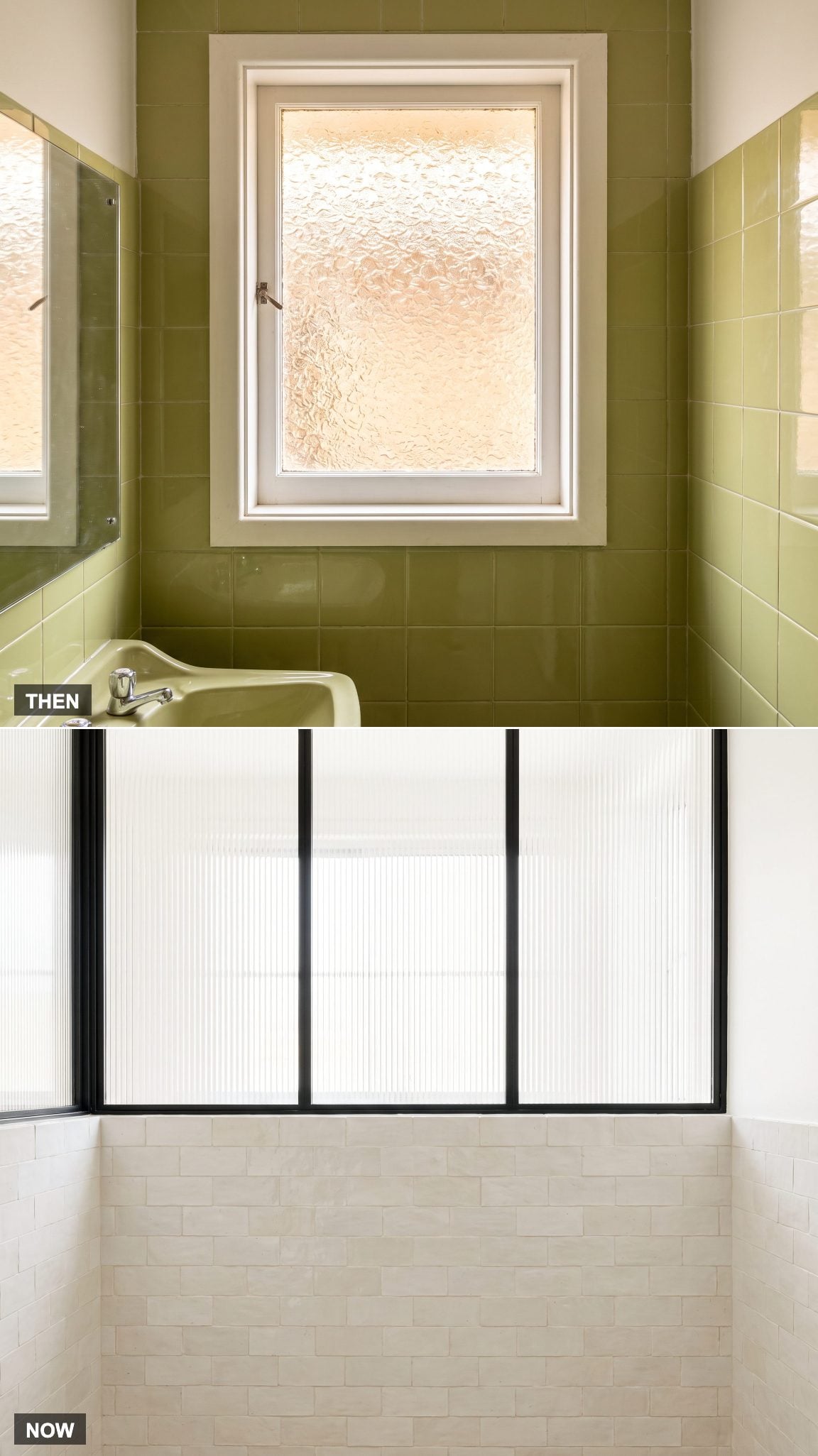
Decorative privacy glass came in a whole vocabulary of textures: pebbles, florals, ripples, amber tones, swirls, and patterns dramatic enough to make the garden outside look like it had been submerged underwater.
The current preference often runs quieter. Reeded, fluted, or softly frosted glass obscures the view while letting daylight through without adding another busy motif to the room.
14. The Chrome Sink Rim Finally Lost Its Job
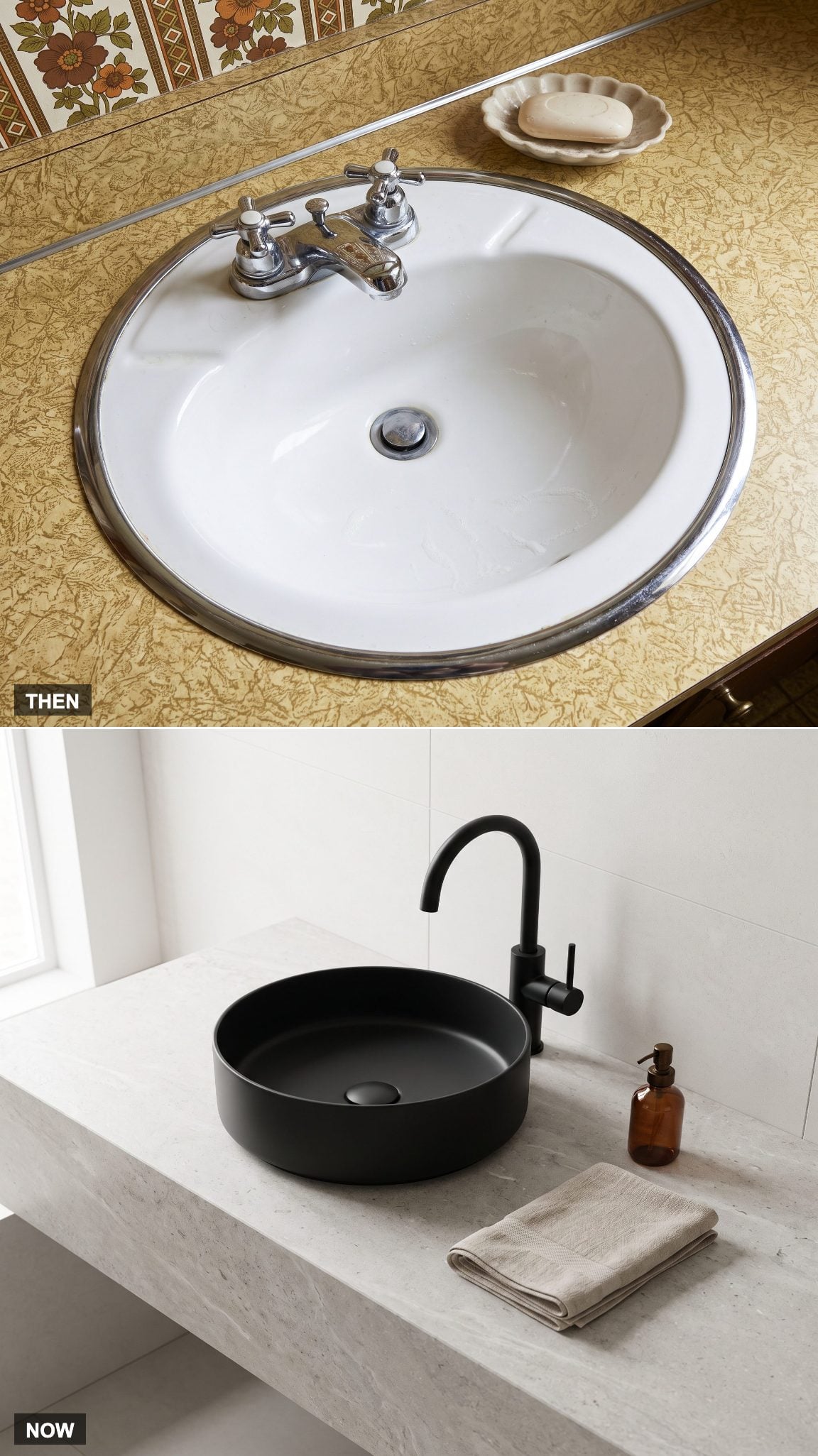
The metal-rimmed drop-in sink was practical engineering made extremely visible. That chrome ring secured the basin and also created a perfect little groove for soap residue to establish a permanent residence.
Design-forward powder rooms now often favor integrated, undermount, or vessel basins that reduce or completely change that perimeter seam. Drop-ins still exist — they simply no longer own the vanity top.
13. The Toilet Rug Released Its Grip
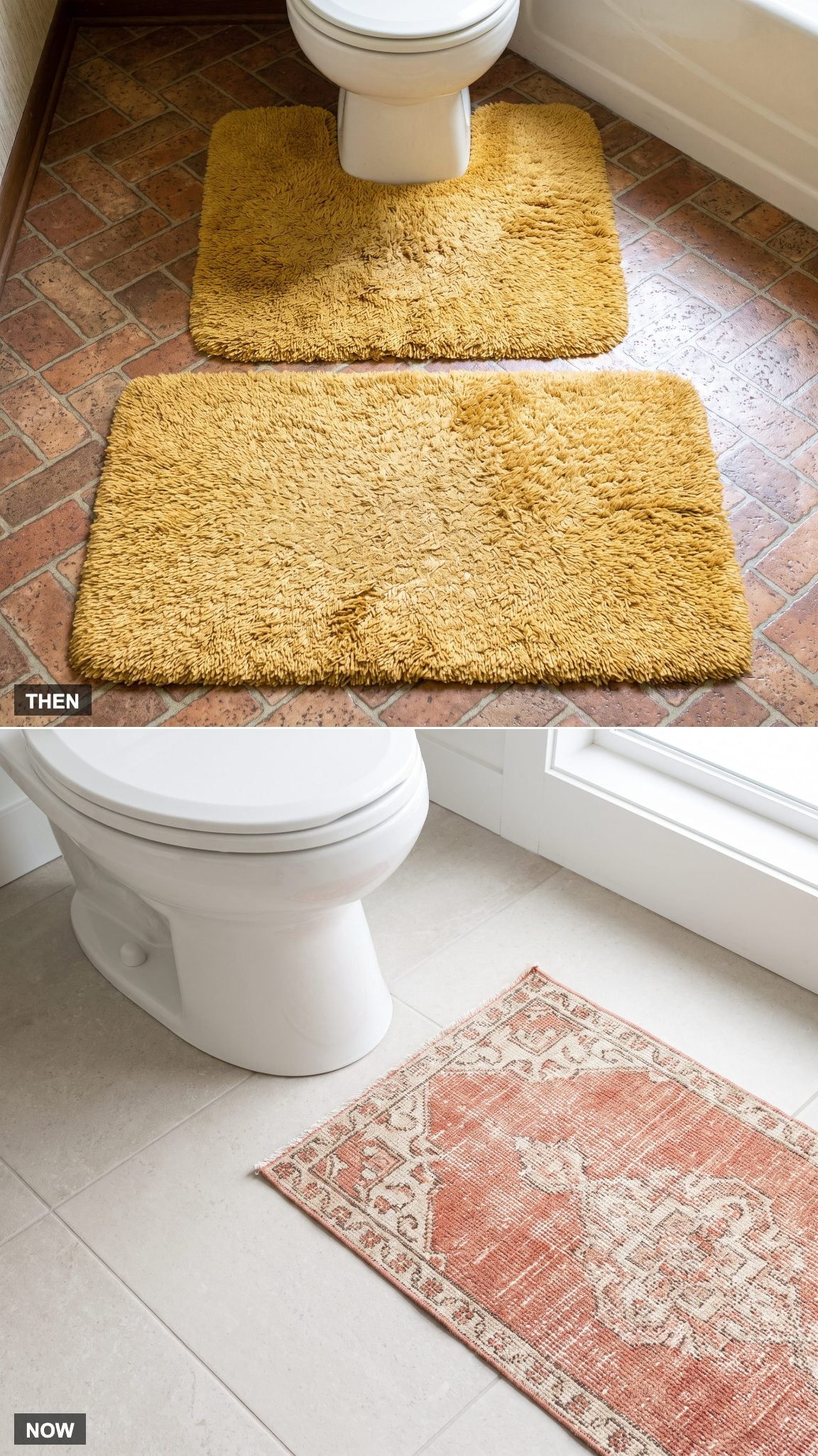
The U-shaped rug curved obediently around the toilet base as though porcelain required its own tiny area carpet. It also created one of the bathroom’s least appealing drying zones.
The modern alternative is a small flat-woven vintage-style washable rug placed nearby rather than wrapped around the fixture: faded terracotta, low pile, machine-washable, no contour, no cling.
12. The Cabinet Wood Came Out of the Shadows
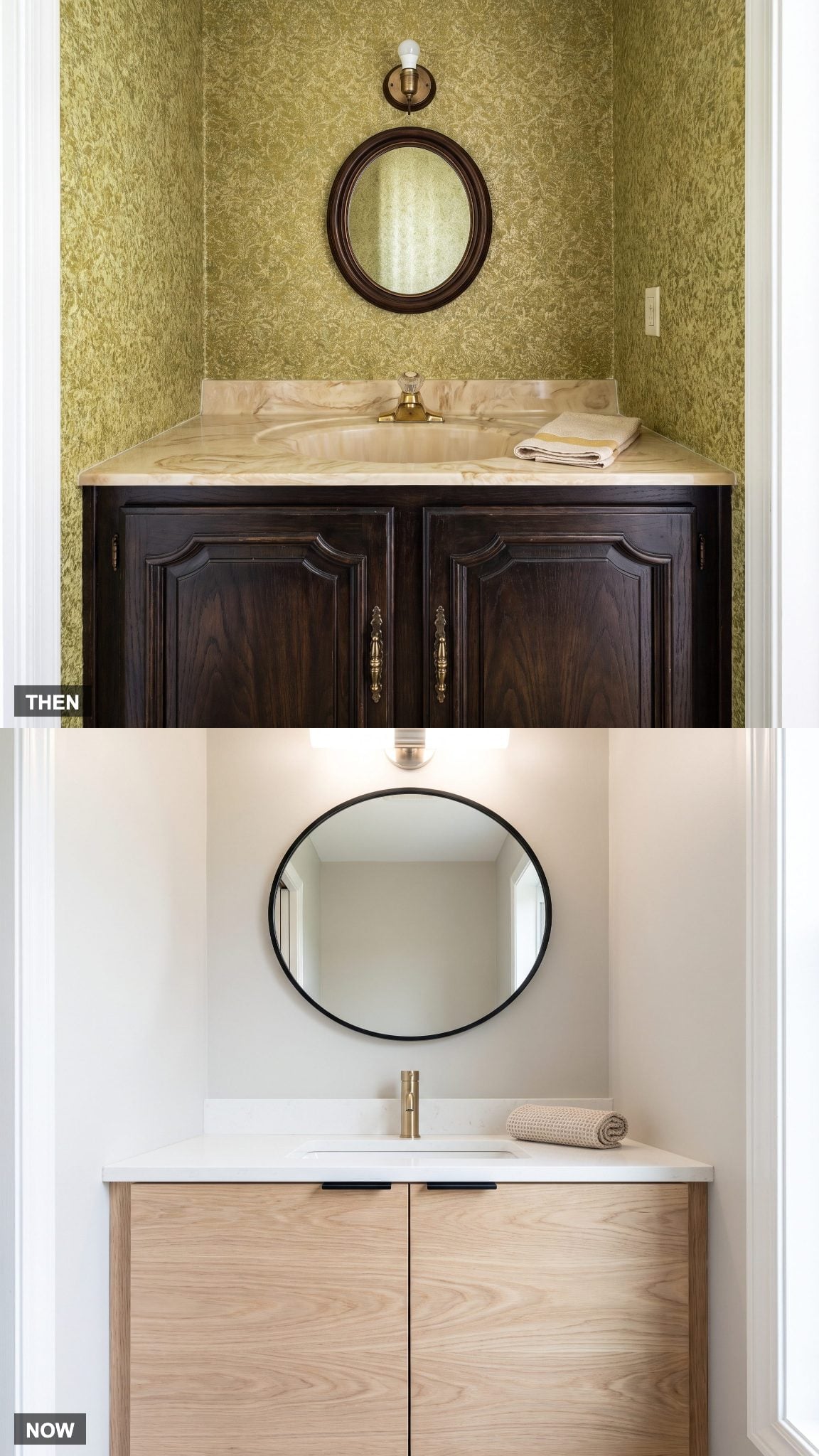
Dark-stained cabinetry could give a powder room instant visual weight: deep brown wood, glossy varnish, plenty of contrast against lighter porcelain. In a small windowless space, that mass could also make the cabinet feel even larger.
Natural oak, walnut, and softly painted fronts give the grain and form more breathing room. Lighter finishes reflect more available light, while medium natural woods bring warmth without necessarily turning the whole lower half of the room into one dark block.
11. The Window Lost Its Ruffles
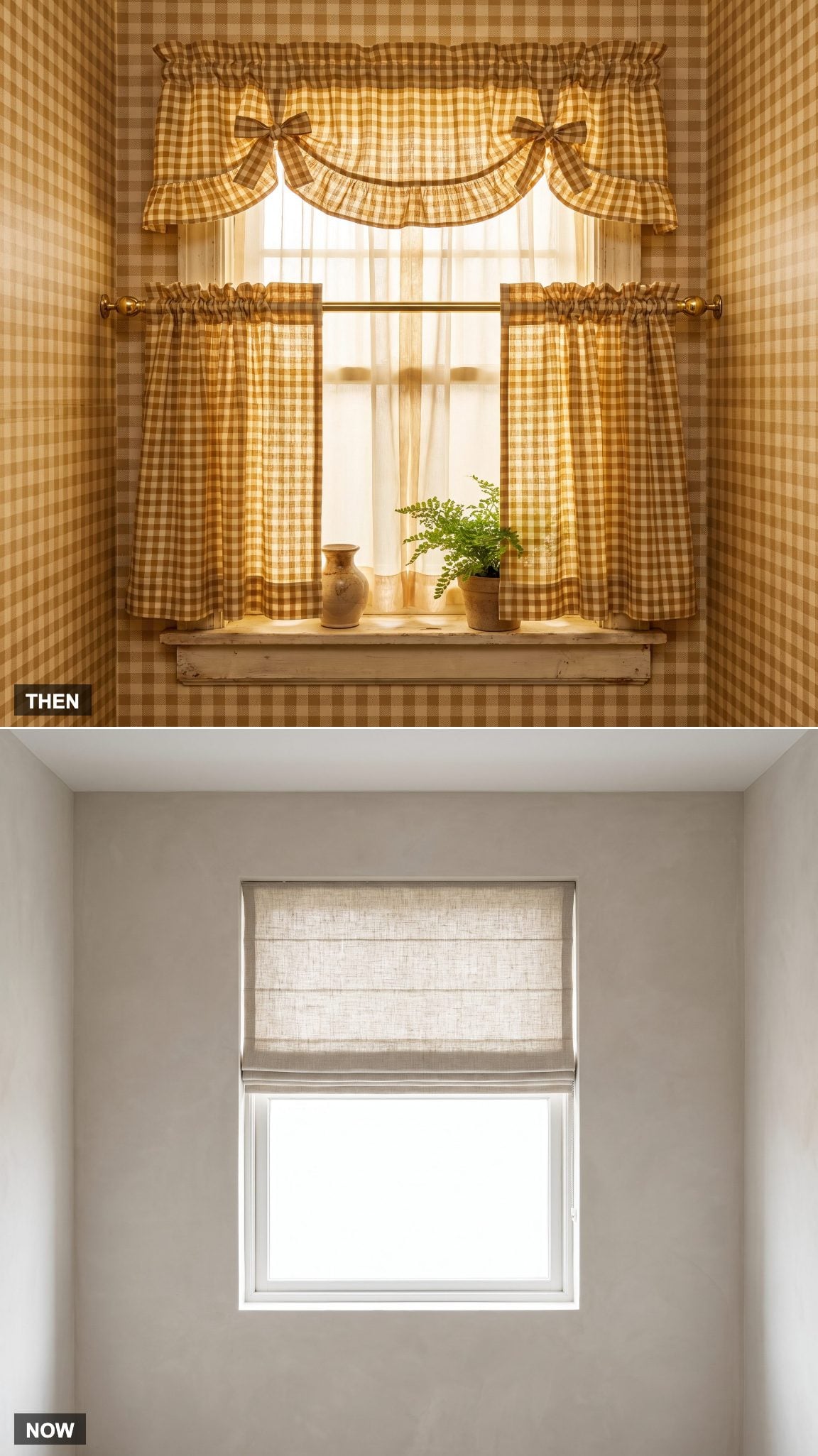
A powder-room window could wear café curtains, a ruffled valance, tie-backs, perhaps another sheer layer behind them — more fabric than the square footage appeared emotionally prepared to support.
Now a flat linen Roman shade, privacy glass, or no treatment at all lets the opening stay visually simple. The window gets to resume being a window instead of a tiny stage production.
10. The Soap Stopped Pretending to Be a Rose
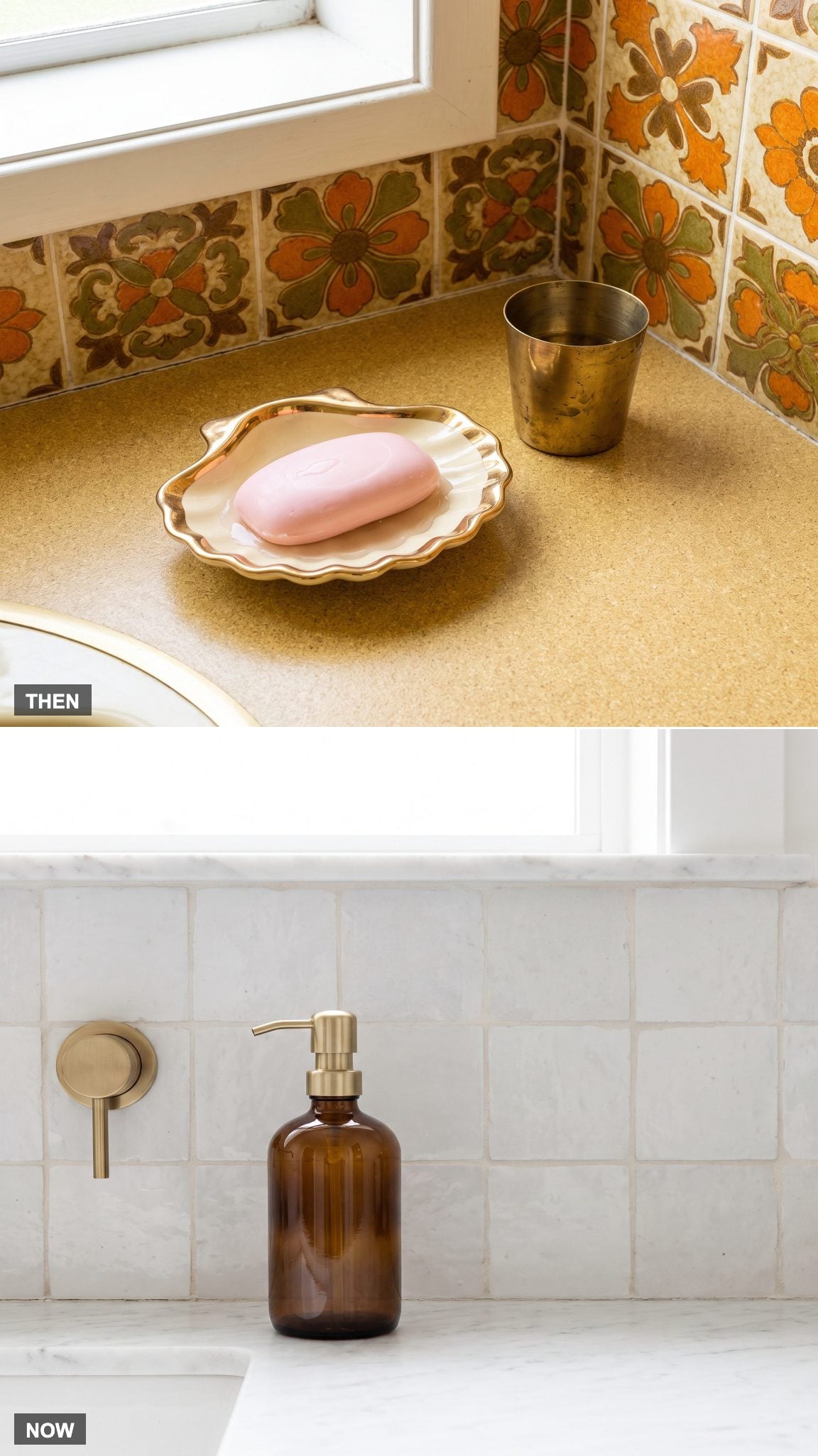
The decorative soap dish could hold an ordinary bar slowly dissolving into its own puddle — or, better yet, a molded flower so pretty nobody wanted to be the first person rude enough to use it.
The refillable amber glass soap dispenser ends the ceremony. Pump, wash, refill. No ornamental bar spending ten years waiting for permission to become soap.
9. Tiny Floral Prints Made Way for One Strange Big Thing
🔥 Would you like to save this?
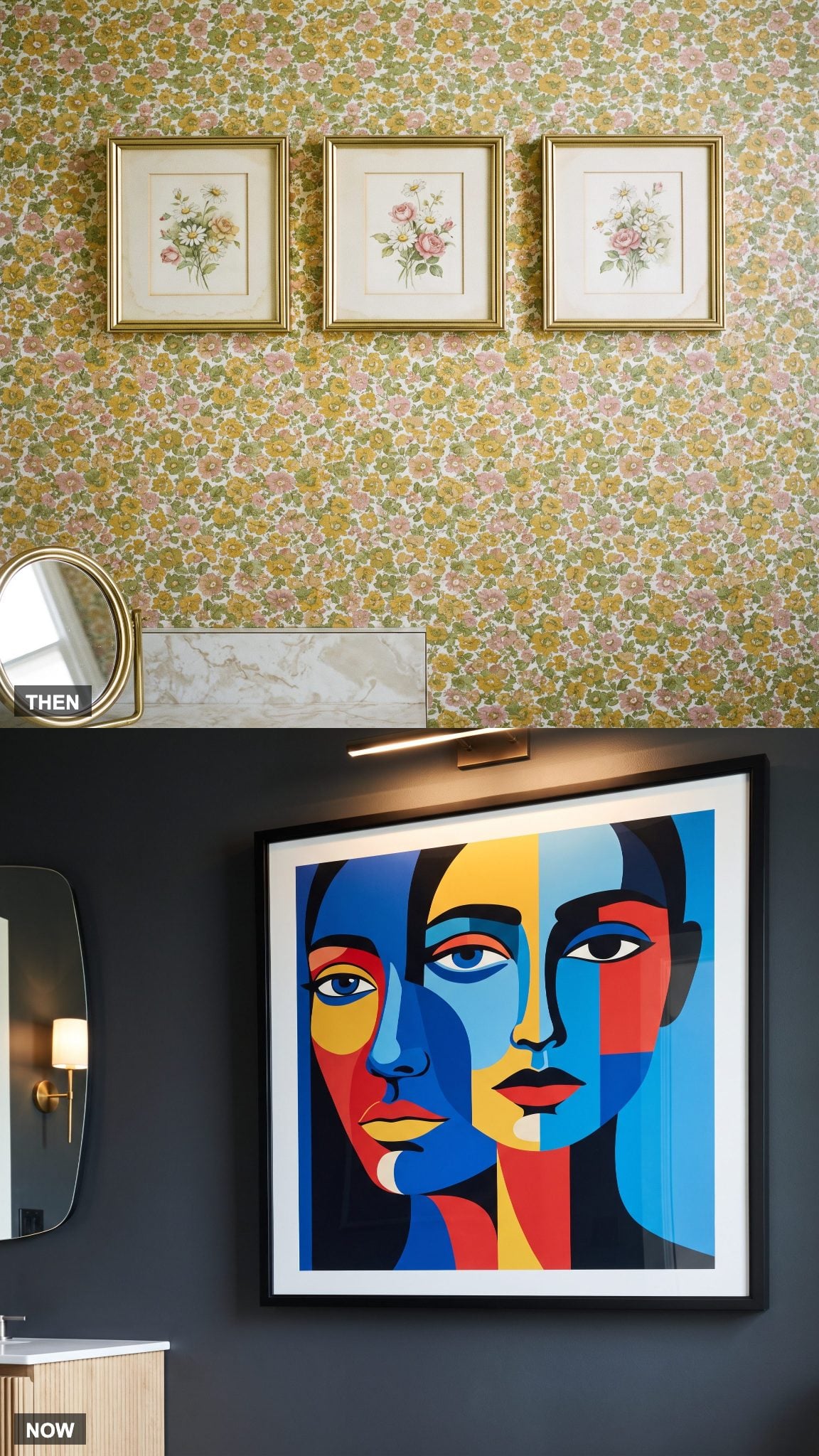
Three little floral prints lined up over floral wallpaper could manage the difficult trick of adding more objects without adding much actual interest. The wall became busier while the art itself practically disappeared.
The powder room is now where oversized and unexpected art earns its keep. One strange portrait. One enormous abstract. One piece that would feel absurdly large anywhere else and suddenly makes perfect sense because the room is so small.
8. Lighting Stopped Treating Every Corner Like Evidence
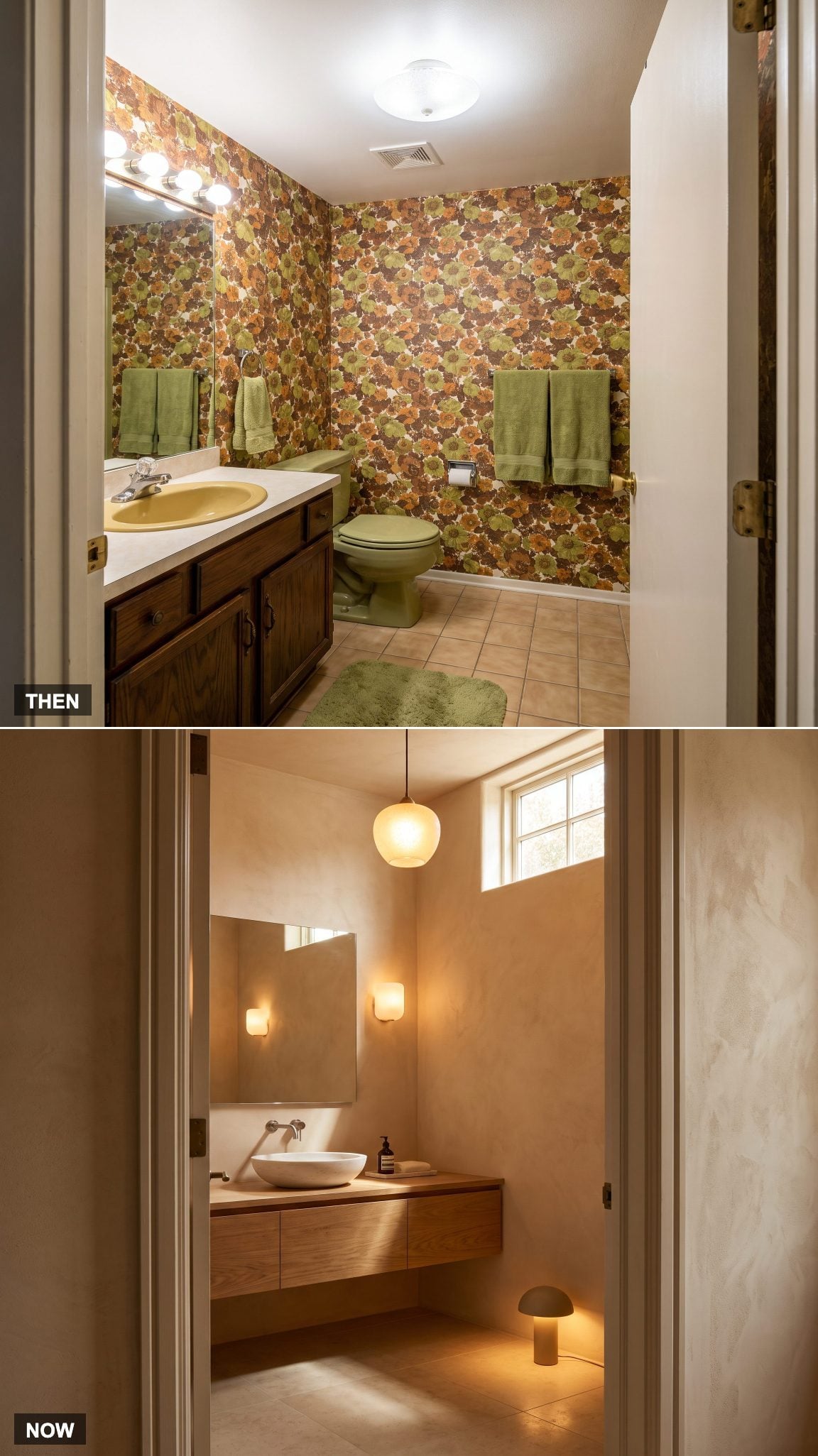
Older powder rooms often relied on straightforward, high-output general lighting: ceiling fixture on, vanity lights on, every surface equally visible and absolutely nowhere for shadow to hide.
Modern rooms are more likely to layer it. Pendant or flush mount for ambient light, sconces at the mirror, perhaps another low source for atmosphere. Instead of one level of brightness everywhere, you get depth.
7. Brass-Plated Knobs Gave Way to Hardware With Some Weight
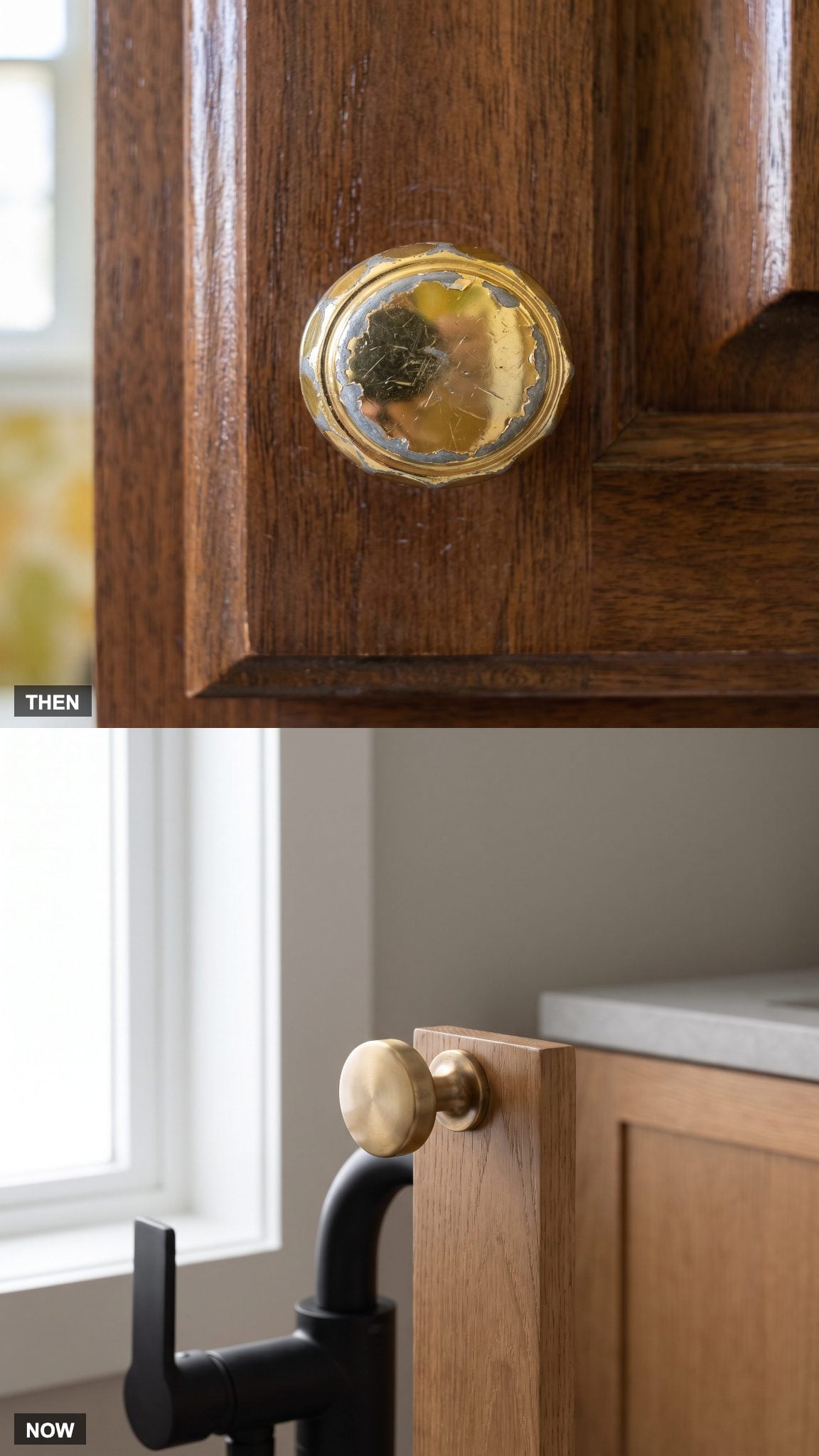
Plated gold-tone knobs offered the look of brass without the price of solid brass. Over time, cheaper finishes could wear through or lose their sheen in precisely the places fingers touched most.
Now the emphasis is as much on material as color. Brushed brass and matte black can share a room, while heavier solid-metal pieces age more gracefully than a thin decorative coating.
6. The Boxed Hardware Set Broke Up
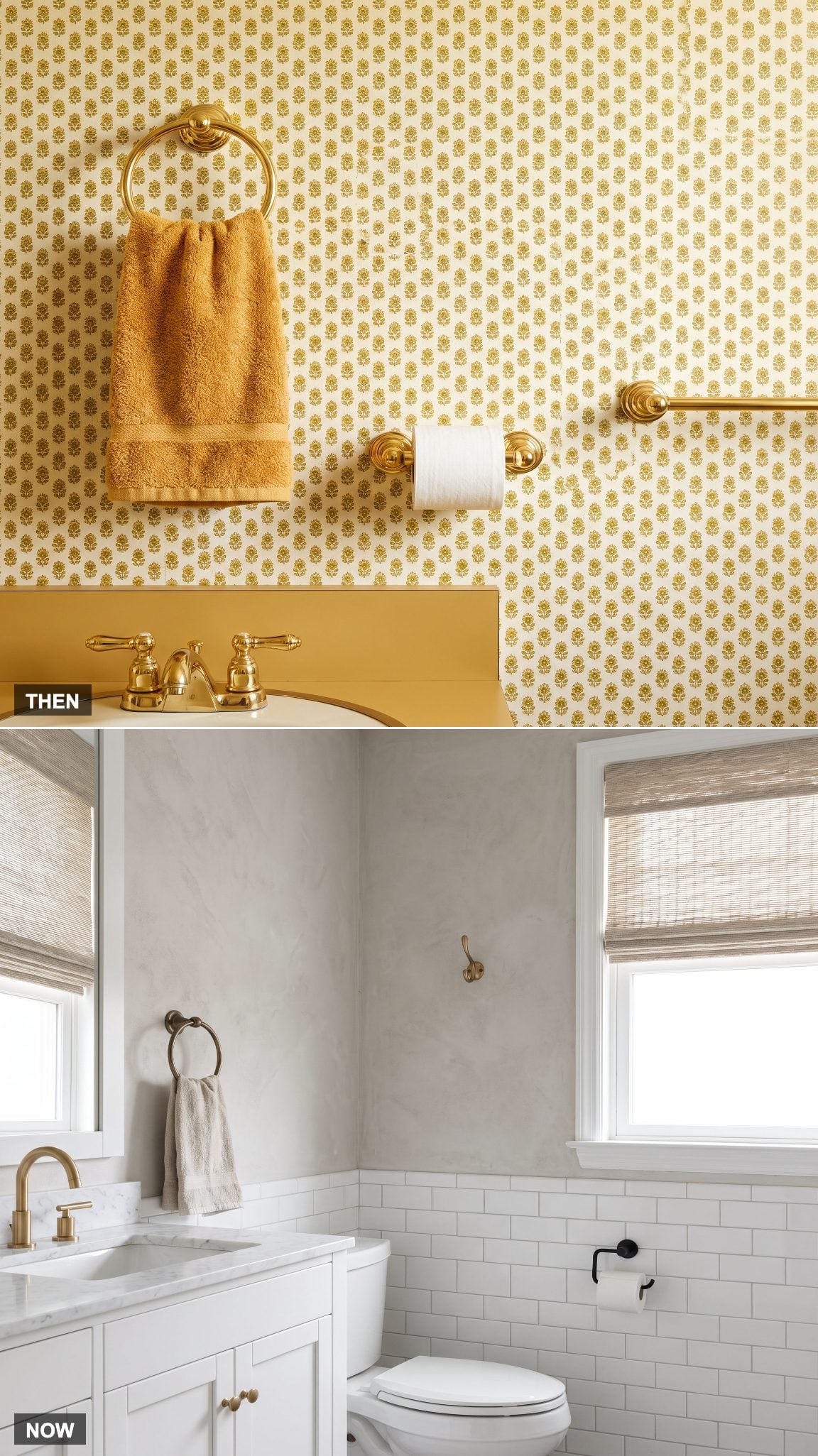
The towel ring, toilet-paper holder, towel bar, and robe hook could once arrive as one obedient family: same finish, same decorative ends, same decision repeated around the room.
Contemporary rooms are more comfortable with relatives instead of identical twins. An aged brass towel ring can live beside a matte black paper holder as long as the broader finish story repeats enough to look intentional.
5. The Countertop Cleared Its Calendar
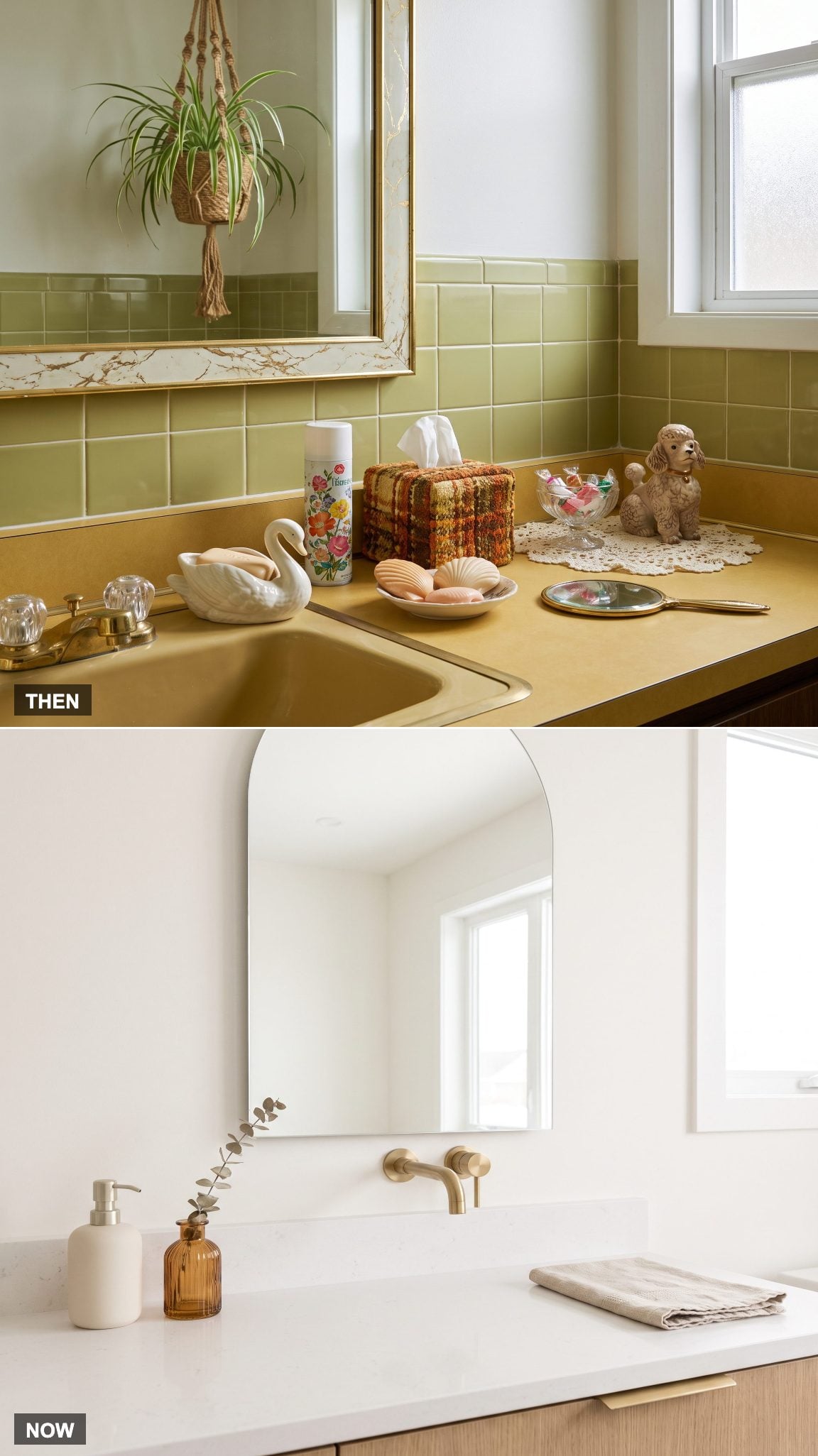
Every horizontal surface was once an invitation. Decorative soaps. Tissue-box covers. Perfume bottles. A ceramic animal supervising the faucet. The room may have been tiny, but apparently that only made the remaining square inches more valuable.
Now the same counter might hold three things: one stem of eucalyptus in amber glass, a matte ceramic soap dispenser, and a folded towel. The empty space is doing part of the decorating.
4. Matching Metals Became a Whole-Material Conversation
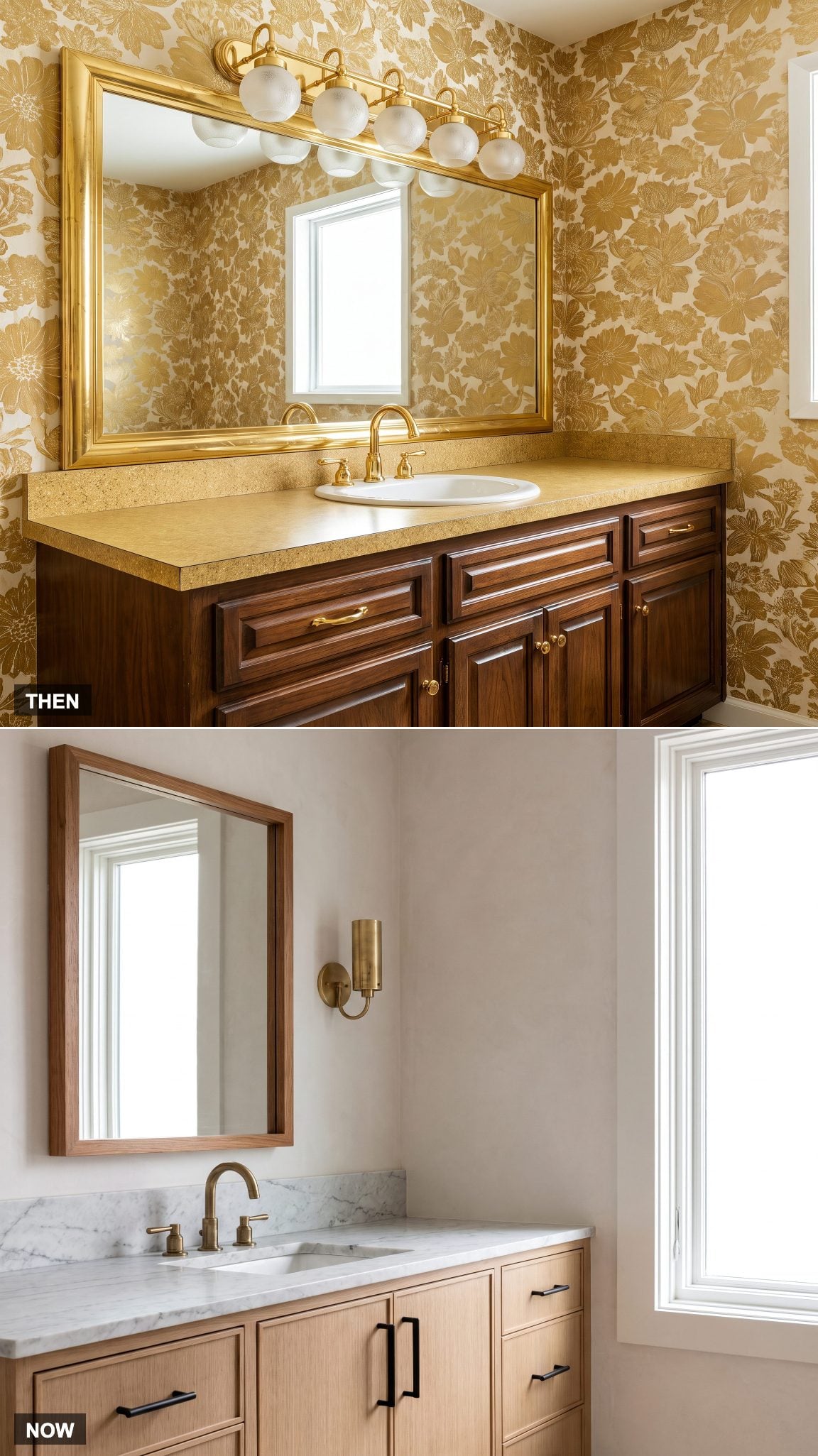
Matching once offered an easy route to order: faucet, mirror frame, pulls, towel hardware, perhaps even the lighting all sharing the same finish and arriving at roughly the same level of shine.
Now the room can build contrast across materials rather than simply alternate metal colors. An aged brass faucet, matte black cabinet pulls, a wood mirror, stone counter, and an unlacquered brass wall sconce create layers of warm, cool, matte, reflective, smooth, and grained surfaces.
The trick is repetition. Two or three finish families can look collected. Seven unrelated ones look like everybody ordered separately.
3. Foil Wallpaper Traded Flash for Texture
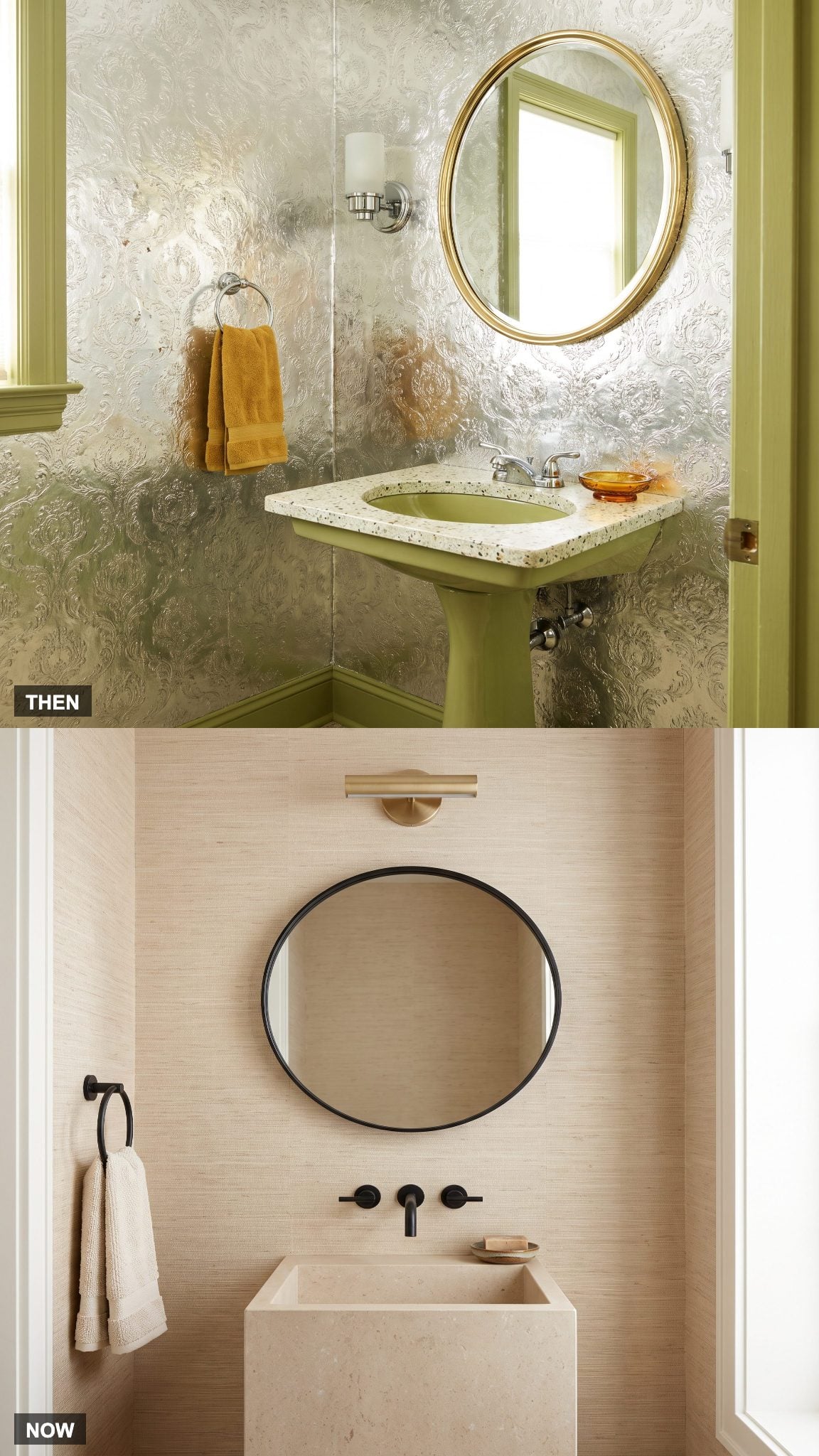
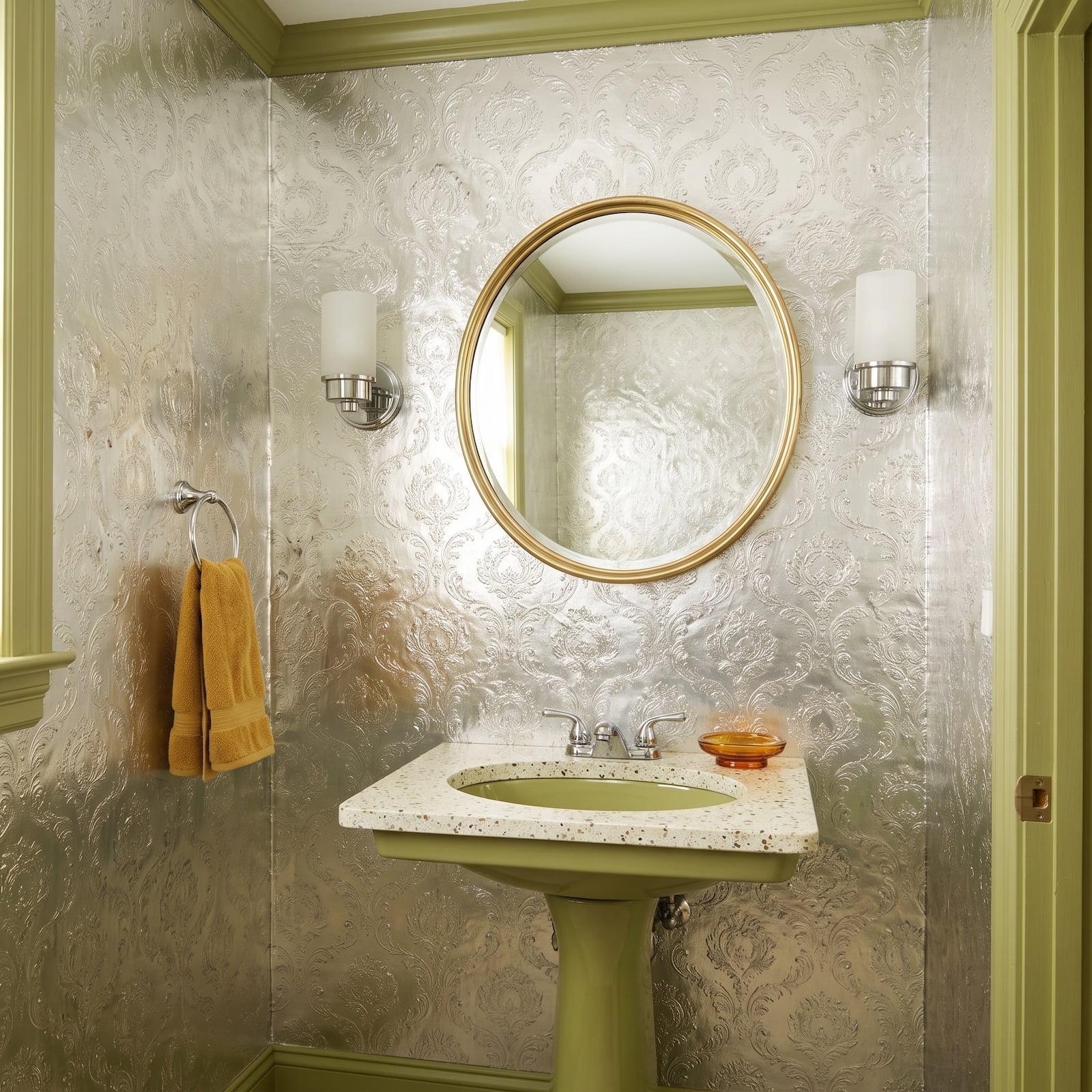
Silver foil wallpaper embossed with damask could bounce light around a tiny room like something important was about to happen in there. Metallic wallcoverings offered instant glamour, though they also had the unfortunate habit of revealing every bump and flaw underneath.
The modern luxury move often goes tactile instead: grasscloth, hand-painted murals, woven surfaces, papers with enough texture to catch shadow instead of throwing every photon back at you. The walls still want attention. They have simply stopped demanding it through a megaphone.
2. The Powder Room Stopped Taking Orders From the Hallway
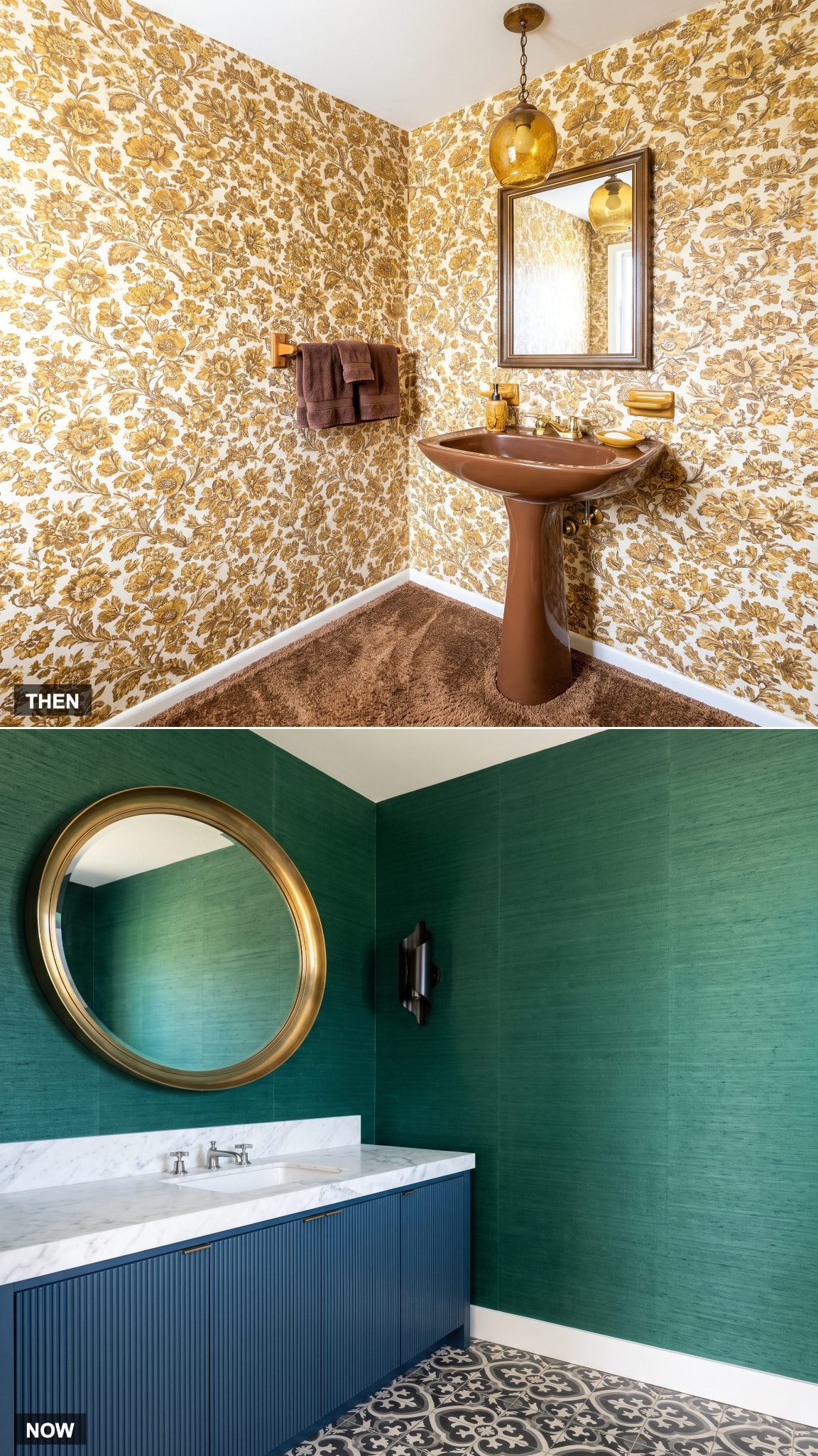
Some 1970 powder rooms were glorious little explosions of color and pattern; others dutifully repeated the palette and materials already moving through the hallway and adjoining rooms. The decade was too visually unruly to reduce to one rule.
What has become especially popular now is treating the powder room as a design laboratory. Small square footage lowers the stakes, so out comes the emerald grasscloth, the fluted blue vanity, and a round brass mirror big enough to dominate one entire wall.
The same nerve you’d want in a cool dining room can show up here first because the experiment occupies forty square feet instead of four hundred.
1. Then the 1970s Came Back — Without Bringing Everything
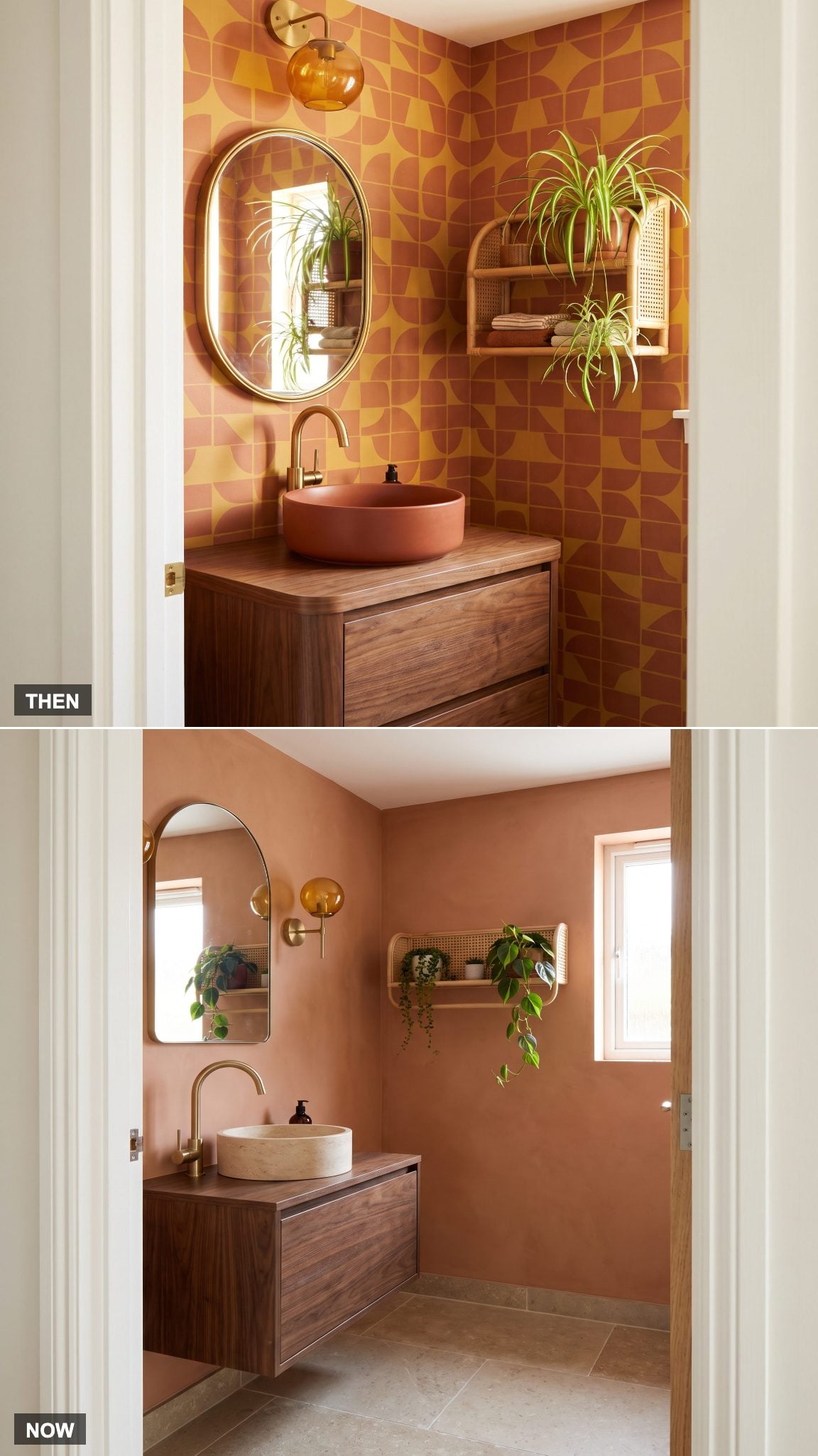
In 1970, terracotta, mustard, walnut, amber glass, rattan, rounded corners, and houseplants could all arrive in the same tiny room with absolutely no interest in pretending they were timeless.
Then the look dated. Then enough time passed for everybody to start missing selected pieces of it. Contemporary designers now pull warm terracotta back into the palette, use real walnut cabinetry, hang amber glass sconces, add a rattan shelf, and stop before the room becomes a museum reconstruction.
That may be the biggest change of all. The old powder room tended to commit. The new one edits. It steals the warmth, texture, color, and nerve — then leaves the carpet, fuzzy toilet lid, matching avocado porcelain, and seven-piece hardware set safely in the archive.
The most interesting rooms do not escape their moment. They know which older moments are worth stealing from.