
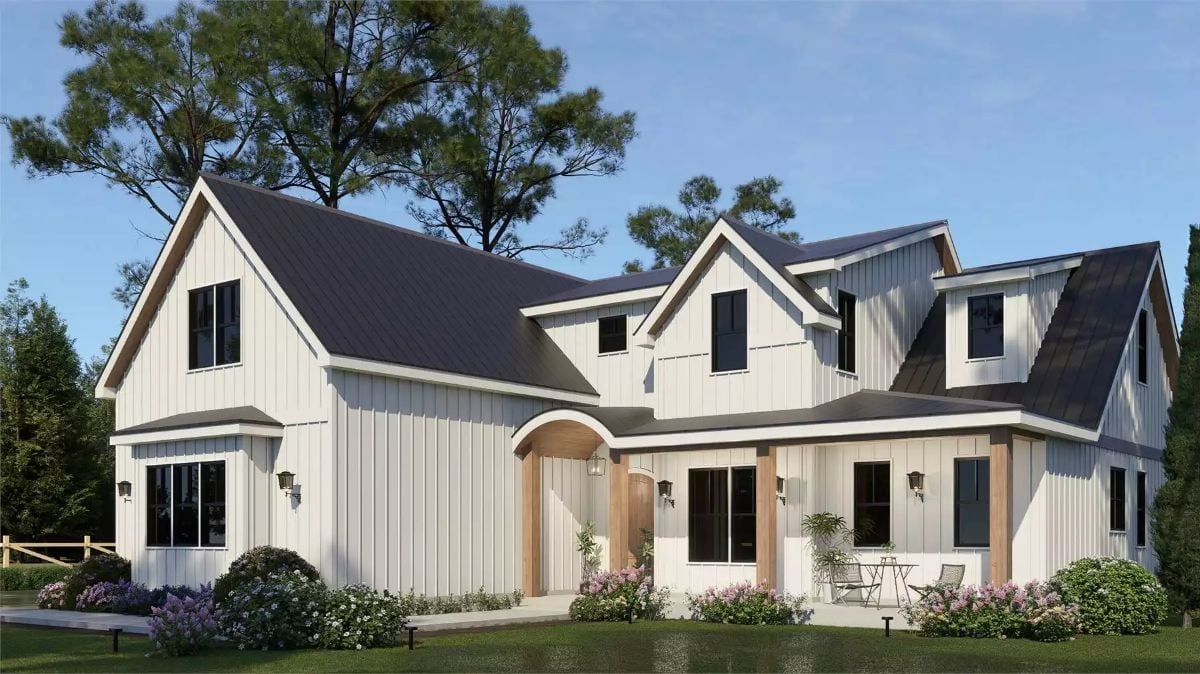
Outgrowing a house isn’t about running out of rooms — it’s about running out of places where everyone can actually disappear: homework spread across the kitchen island, someone needing a door that closes, two different evenings trying to happen in the same open floor plan. The Wharf Crescent is built around that specific problem, with a bonus room that absorbs the overflow, a modern farmhouse layout that keeps the main floor open without surrendering it to chaos, and enough vertical separation that the adults and the kids can both win on a Tuesday night.
Specifications
- Sq. Ft.: 2,616
- Bedrooms: 3
- Bathrooms: 3.5
Floor Plan – Main Floor
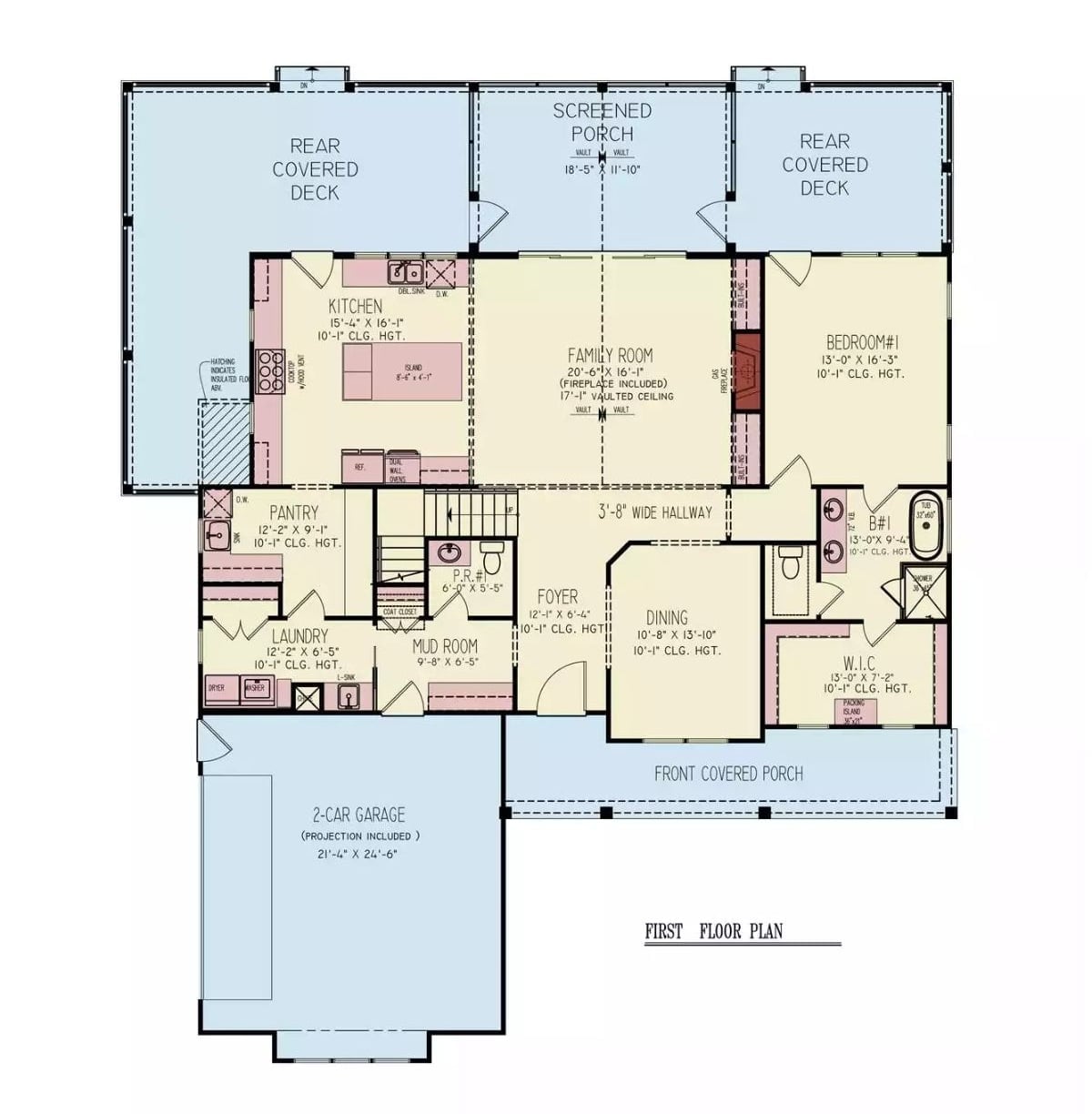
The family room and kitchen sit at the rear of the first floor, flanked by two covered decks and a screened porch — so the back of the house is doing a lot of the living. Bedroom #1 has its own bath and walk-in closet on the right side, which matters more than people realize until they don’t have it. A mud room, pantry, and laundry cluster near the garage entry, keeping that daily decompression zone well away from the main living spaces.
Floor Plan – Second Floor
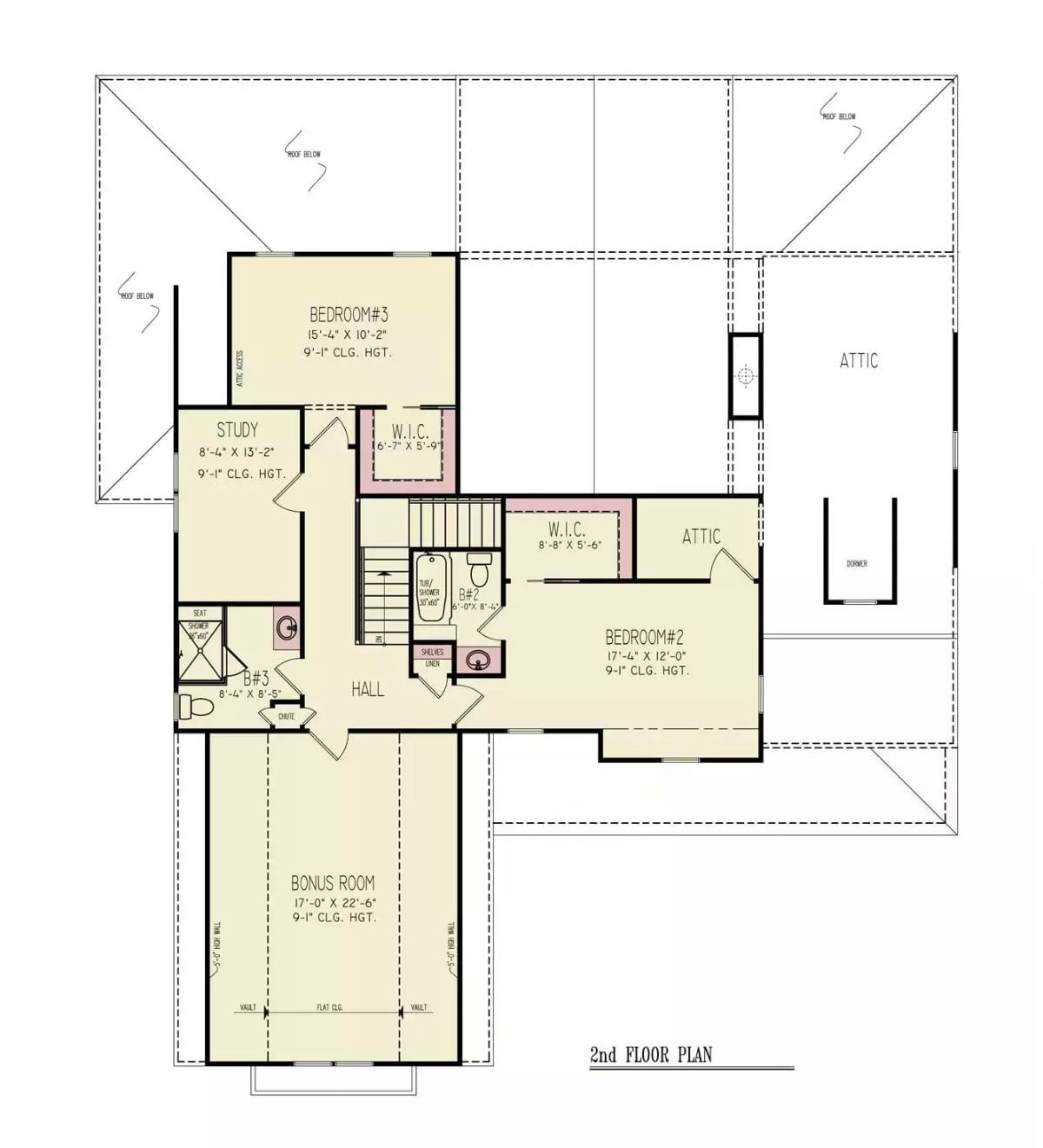
Upstairs: two bedrooms, a study, the bonus room, two walk-in closets, and shared bathrooms. That study is the detail most buyers circle back to.
Branch Chandelier Steals the Room Before You Notice Anything Else
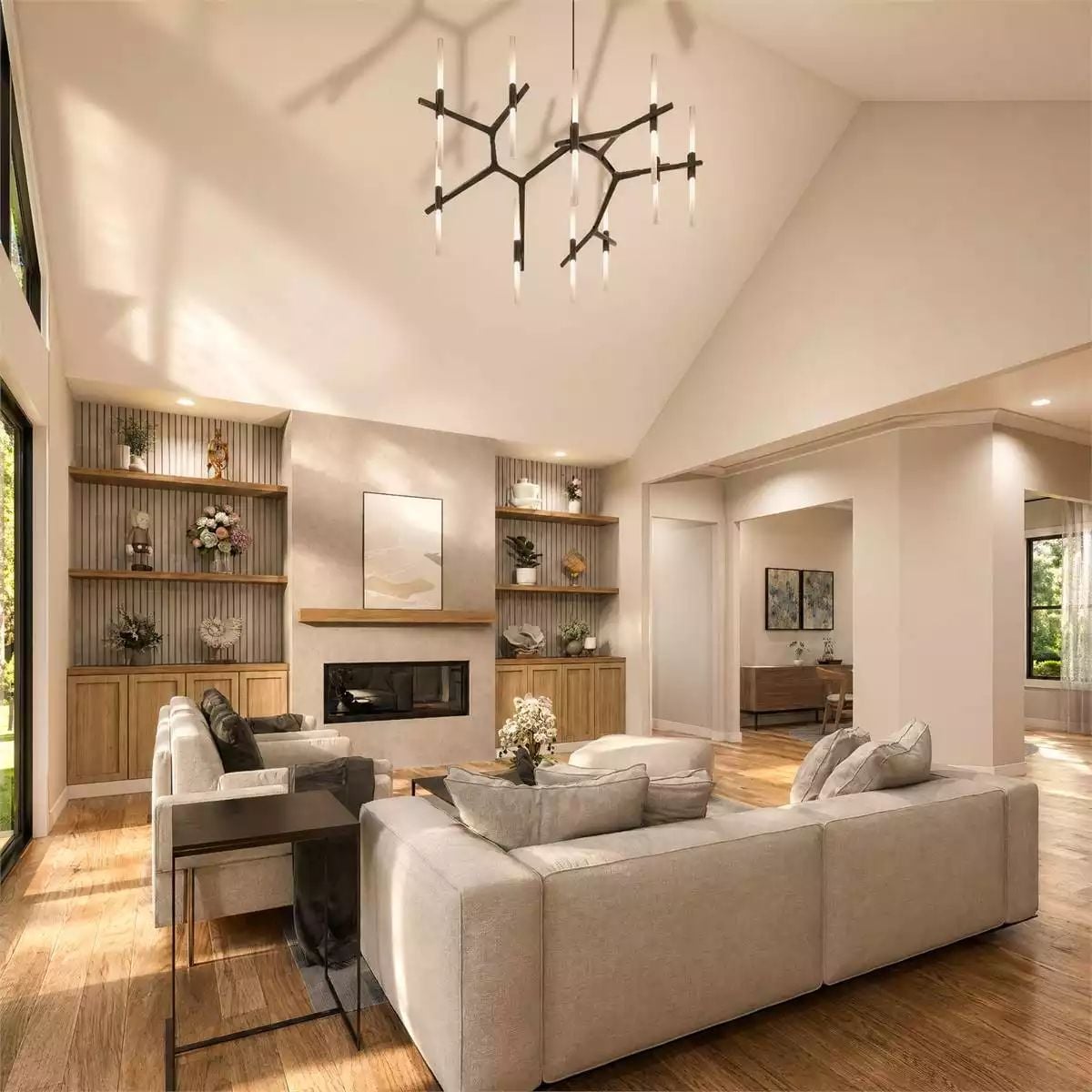
That tree-branch chandelier casts actual shadows on the vaulted ceiling, which does half the decorating work before you’ve looked at anything else. Warm oak floors run wall to wall, grounding the light gray sectional without competing with it. Built-ins flank the linear fireplace, backed with slatted panels that add texture without introducing a competing pattern. The whole room has that quality where it looks deliberate but not labored — which is harder to pull off than it sounds.
Terrazzo Island Wide Enough to Actually Mean Something at Breakfast
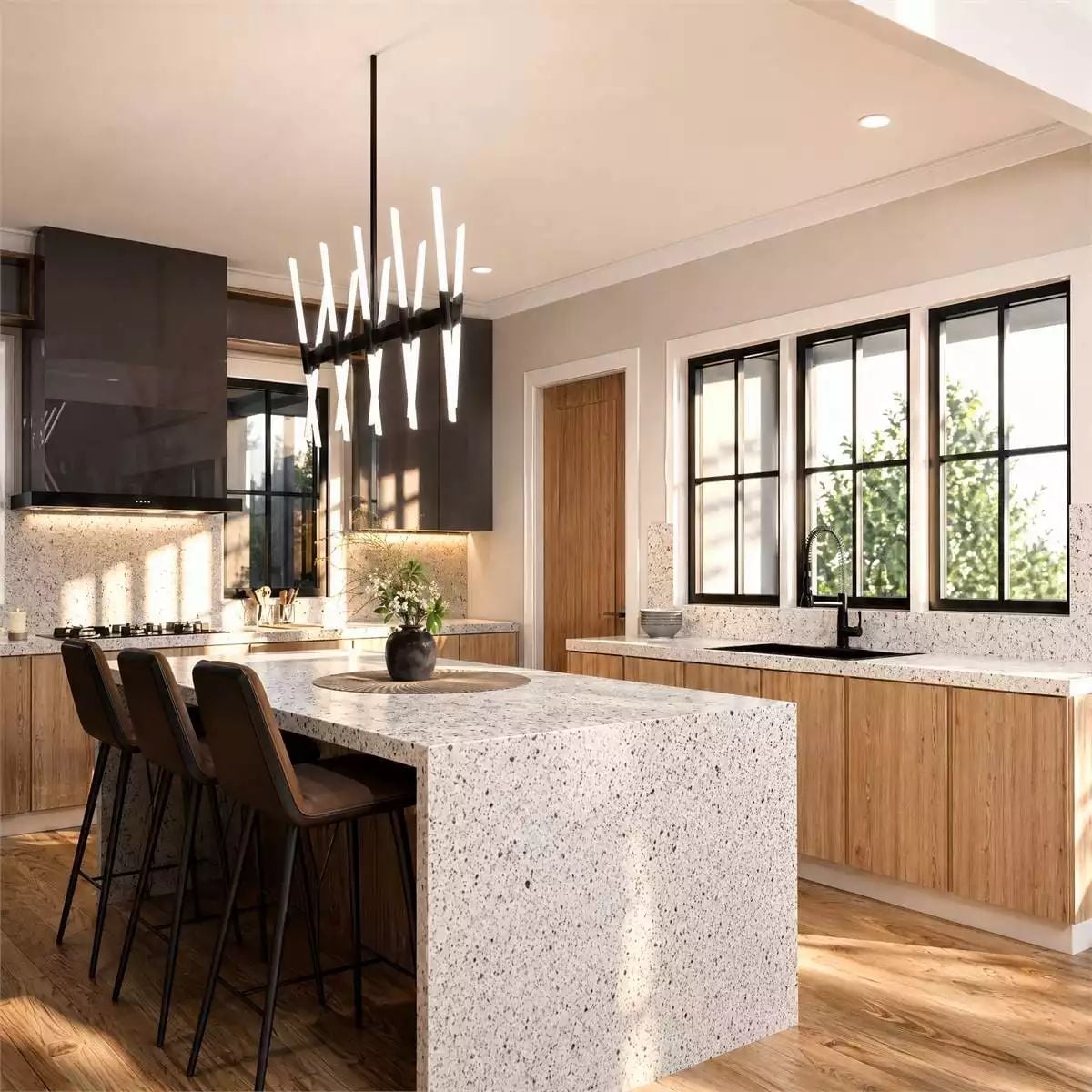
Speckled white terrazzo runs countertop-to-toe on the island, making it read more like furniture than fixture. Brown leather barstools with black legs pull right up to the overhang, and under-cabinet lighting warms the backsplash behind the range. The branch-style pendant overhead ties back to the living room without being too on the nose about it.
Why It Works: Terrazzo’s comeback isn’t accidental. It hides everyday wear far better than solid stone, and the variation in aggregate means no two slabs look alike. Pairing it with flat-front wood cabinetry keeps the palette grounded without tipping into cold.
Cone Pendant Cluster Does the Heavy Lifting Above a Pedestal Table Built to Last
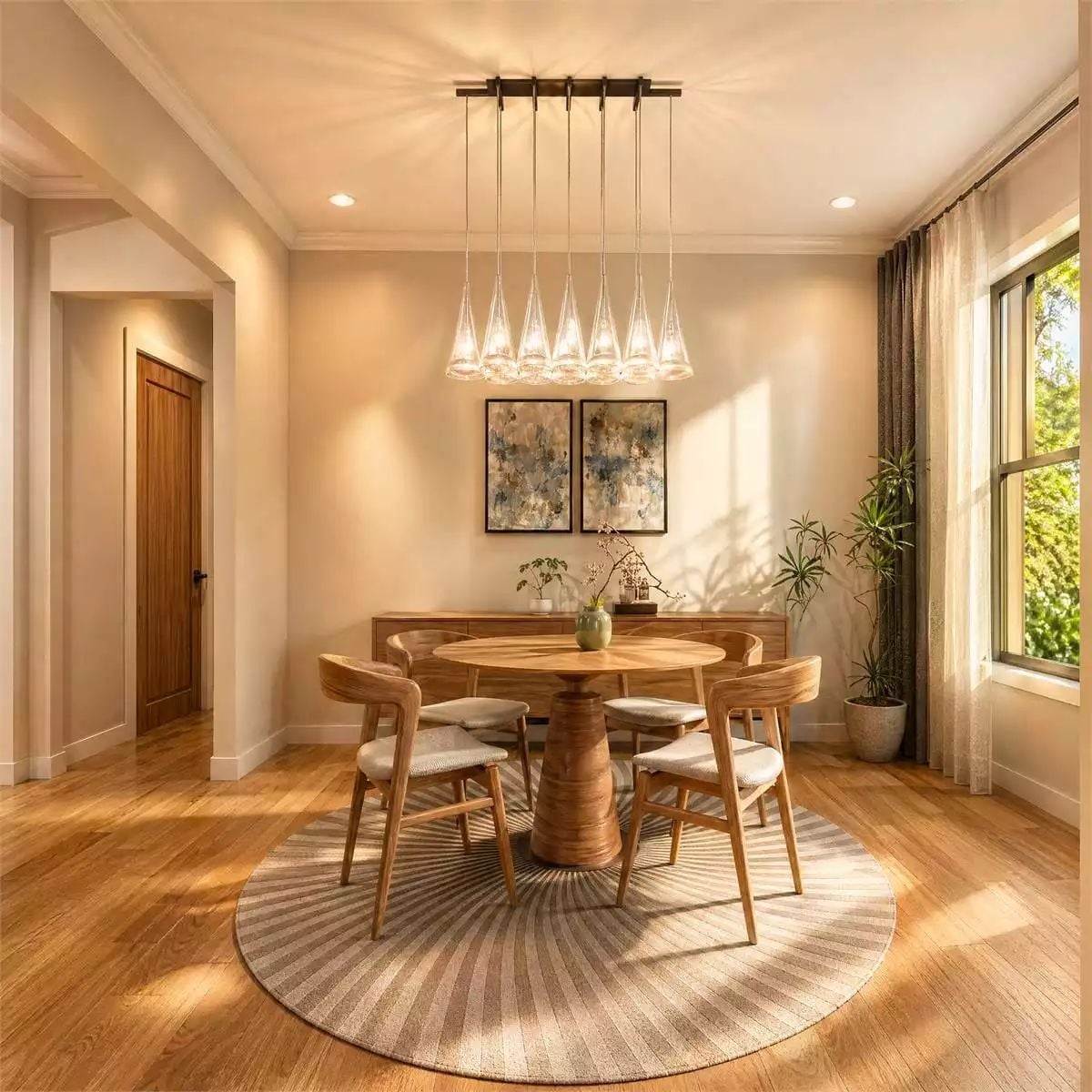
Warm oak moves from the floor straight into the furniture without feeling repetitive — a harder trick than it looks. Six glass cone pendants hang from a single bar mount, casting light patterns across the ceiling that shift as the sun moves through the corner window. Chairs with curved backs and upholstered seats make a long dinner feel less like a endurance test.
Designer’s Secret: Pendant clusters work best when hung lower than instinct suggests. Drop them until the bottom of the shades sits roughly 30 inches above the tabletop and the light actually lands on the food and faces, not the ceiling. Most homeowners hang them six inches too high and wonder why dinner feels dim.
Wood Slat Accent Wall Earns Its Place Between Two Windows
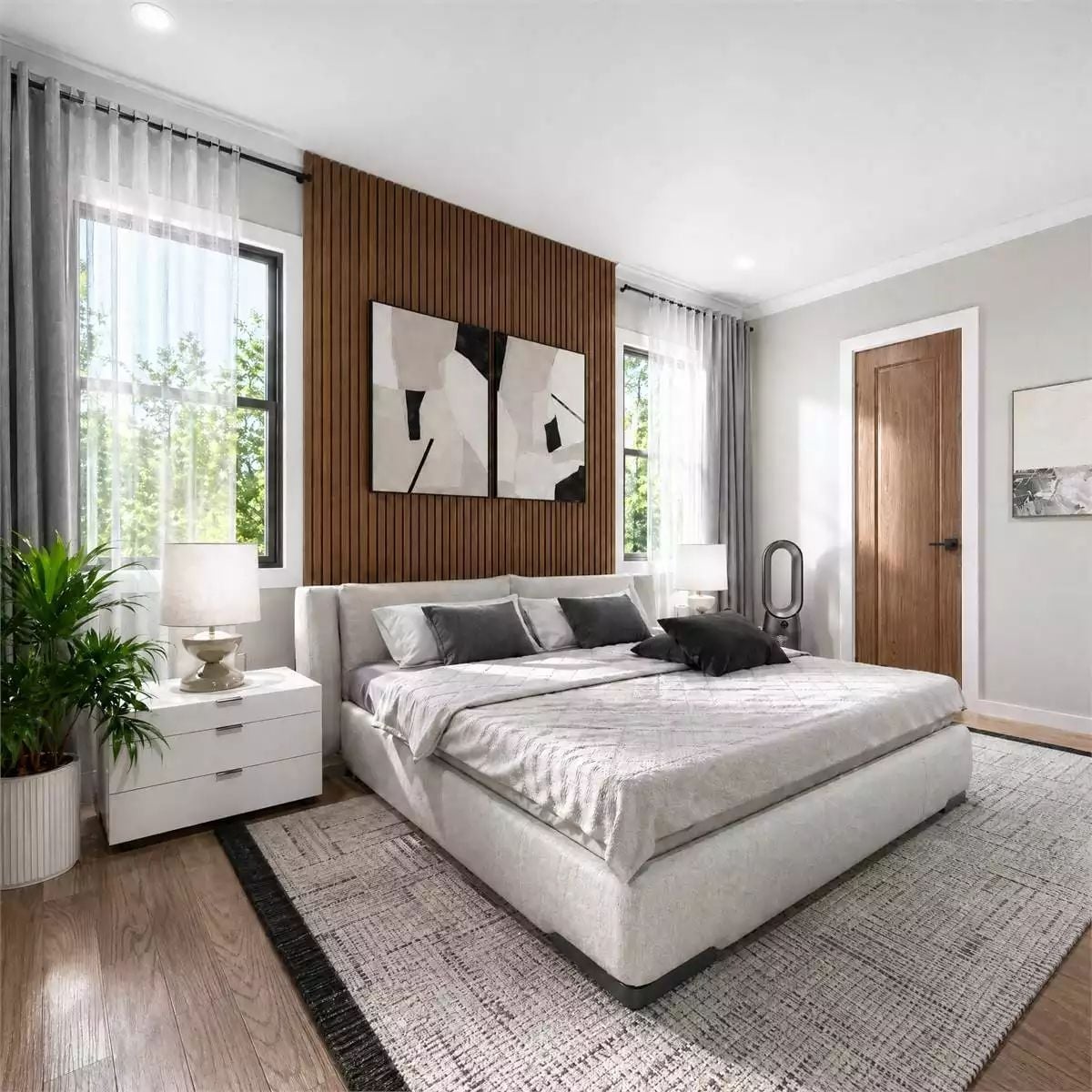
Vertical walnut slats run floor to ceiling behind the bed, anchored by two oversized abstract panels hung without frames. The gray upholstered platform sits low to the ground, white nightstands keeping the left side clean and uncrowded. Natural light from both flanking windows does most of the work — the slats give it something to land on.
By The Numbers: Slatted wood accent walls have surged in popularity partly because they don’t require a full renovation to install. Many panel systems mount directly over drywall, making them a realistic weekend project for someone who’s done it before. Keeping the surrounding walls light gray lets the wood read as a focal point without pulling the room dark.
Moving outside reveals just how much presence this house commands from the yard.
Board-and-Batten Siding and Cedar Posts Put Classic Farmhouse Character on Full Display
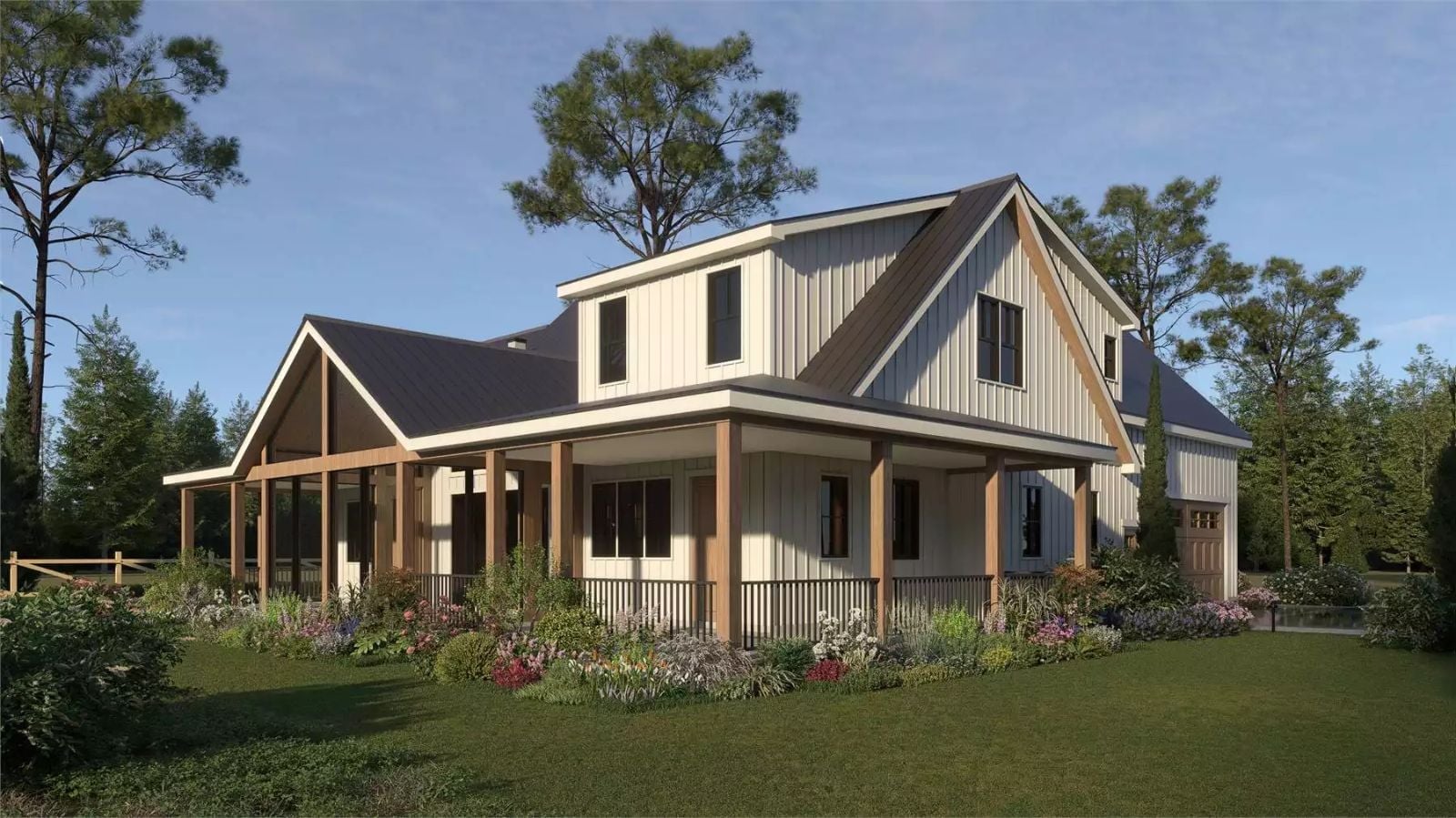
Crisp board-and-batten siding paired with cedar porch columns gives this exterior a grounded, unhurried character that reads well from the street. The wraparound porch is wide enough to actually use. A dormer punches through the roofline above, adding headroom upstairs where families need it most, and lush foundation plantings soften what would otherwise be a very tall, very flat facade.
Pin It
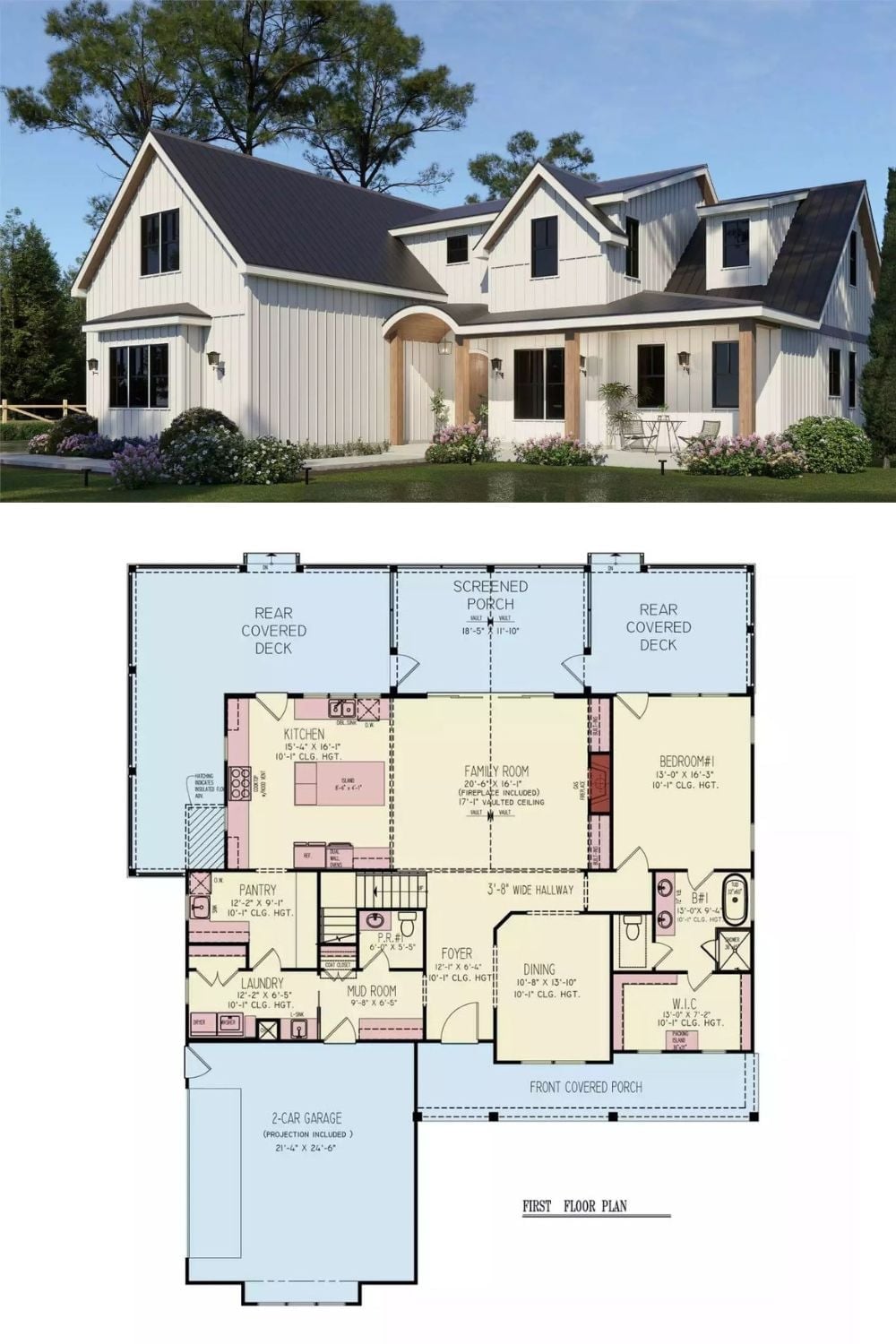
Exterior rendering shows board-and-batten farmhouse styling; floor plan reveals three bedrooms, screened porch, and dual rear covered decks.