🔥 Would you like to save this?
Nobody admits it, but you fell for the kitchen before you ever read the specs. You saw a photo, something caught in your chest, and everything after was just rationalization wearing a budget’s clothes.
Picking a kitchen and picking a partner pull on the same wiring: the infatuation, the stubbornness, that habit of canvassing everyone’s opinion and then ignoring all of it. You’ll see yourself in at least half of these. Probably the ones you wish nobody noticed. The counters and the cabinets are just where it surfaces, and underneath sits the oldest story there is — wanting the right thing while getting in your own way as you reach for it.
In order to come up with the very specific design ideas, we create most designs with the assistance of state-of-the-art AI interior design software. Also, assume links that take you off the site are affiliate links such as links to Amazon. this means we may earn a commission if you buy something.
18. You Picture Thanksgiving Before Measuring Whether the Island Fits
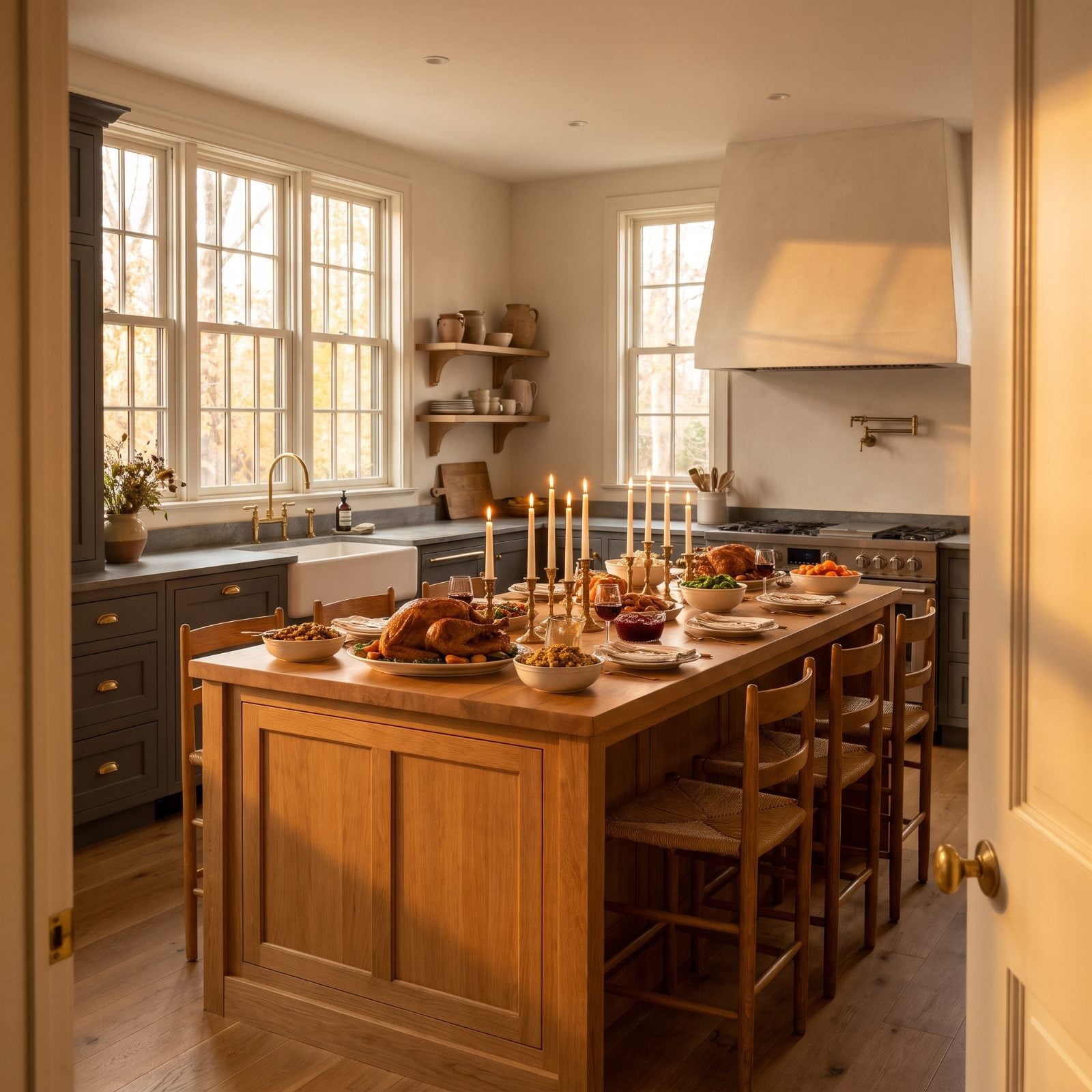
You saw the Thanksgiving table before you saw the floor plan — the whole family gathered around that island, someone’s elbow resting on the warm wood, the turkey cooling. You bought the fantasy of the life you’d live in the room long before anyone pulled out a tape measure.
It’s the exact move that starts half of all relationships. You fall for the future you imagine together, the holidays, the inside jokes, and only later discover whether the two of you fit in the actual hallway. Psychologists call it affective forecasting, and we’re famously terrible at it. We picture the peak moment and skip the ninety ordinary Tuesdays.
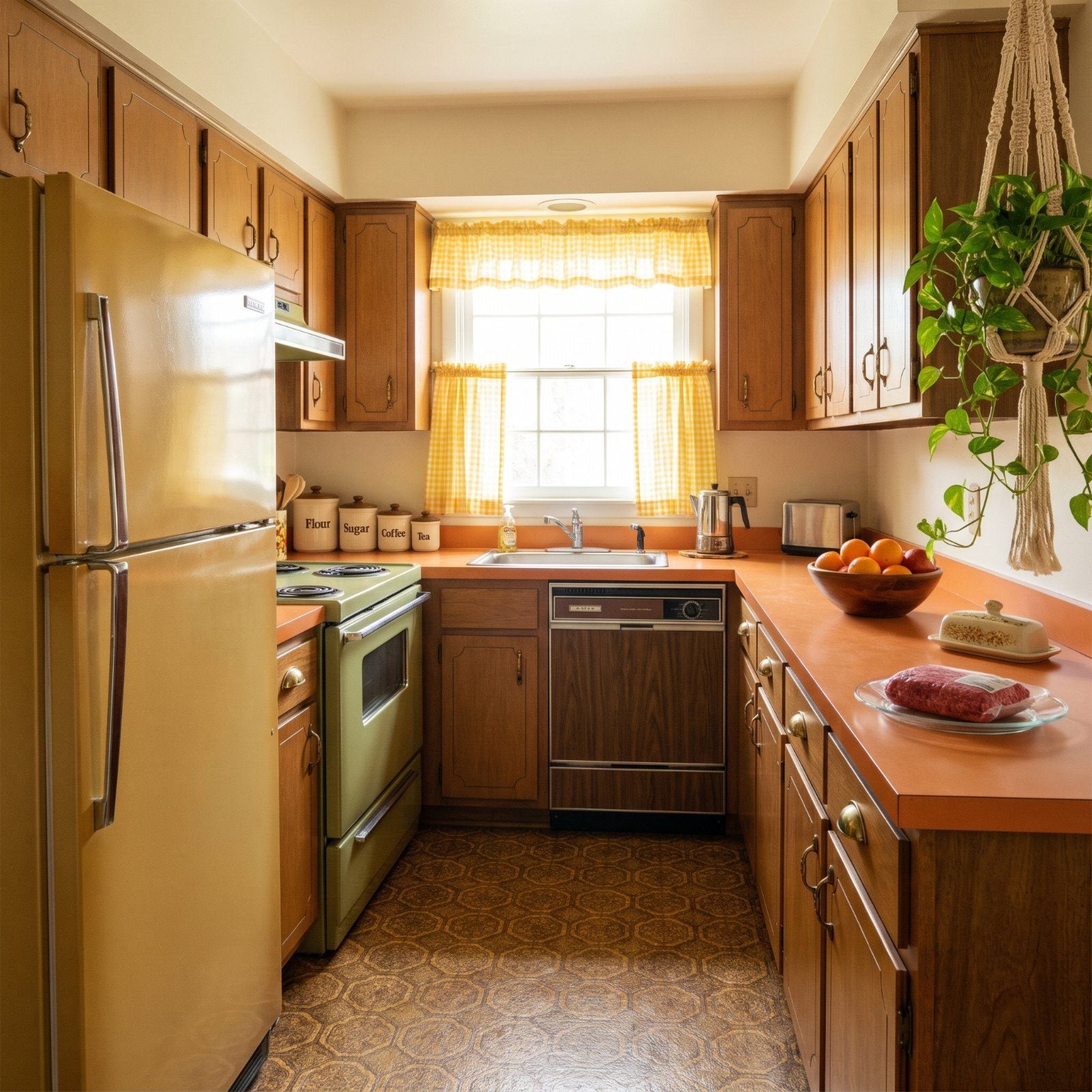
17. Your Childhood Kitchen Keeps Sneaking Into Every Mood Board
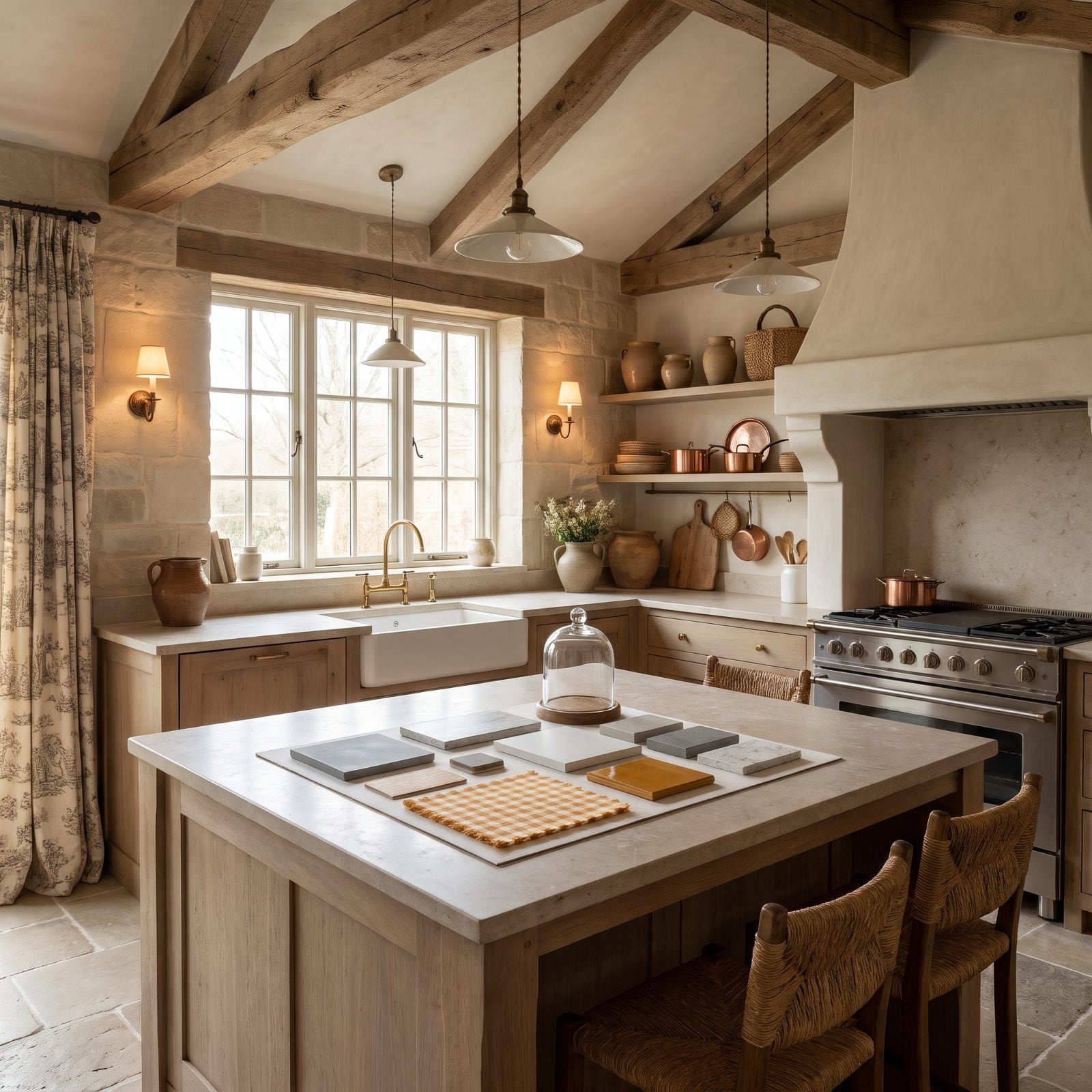
Every board you build has one strange ghost on it. The gingham, the enamel sink, that particular honey color of wood nobody specs anymore. You tell yourself it’s a design choice. It’s your grandmother’s kitchen, and you’ve been chasing the feeling of standing in it since you were six.
We do the same thing with people, reaching for whatever felt like home first — the cadence of a voice, a certain reassuring steadiness — and calling it chemistry. Nostalgia isn’t memory. It’s a filter that strips out the bad linoleum and keeps only the warmth.
A little of that longing makes a kitchen feel loved. Too much and you’ve built a museum to a decade that’s gone. Name the feeling you’re after, then find a modern way to deliver it.
16. Instagram Kitchens Make Your Own Counters Feel Inadequate
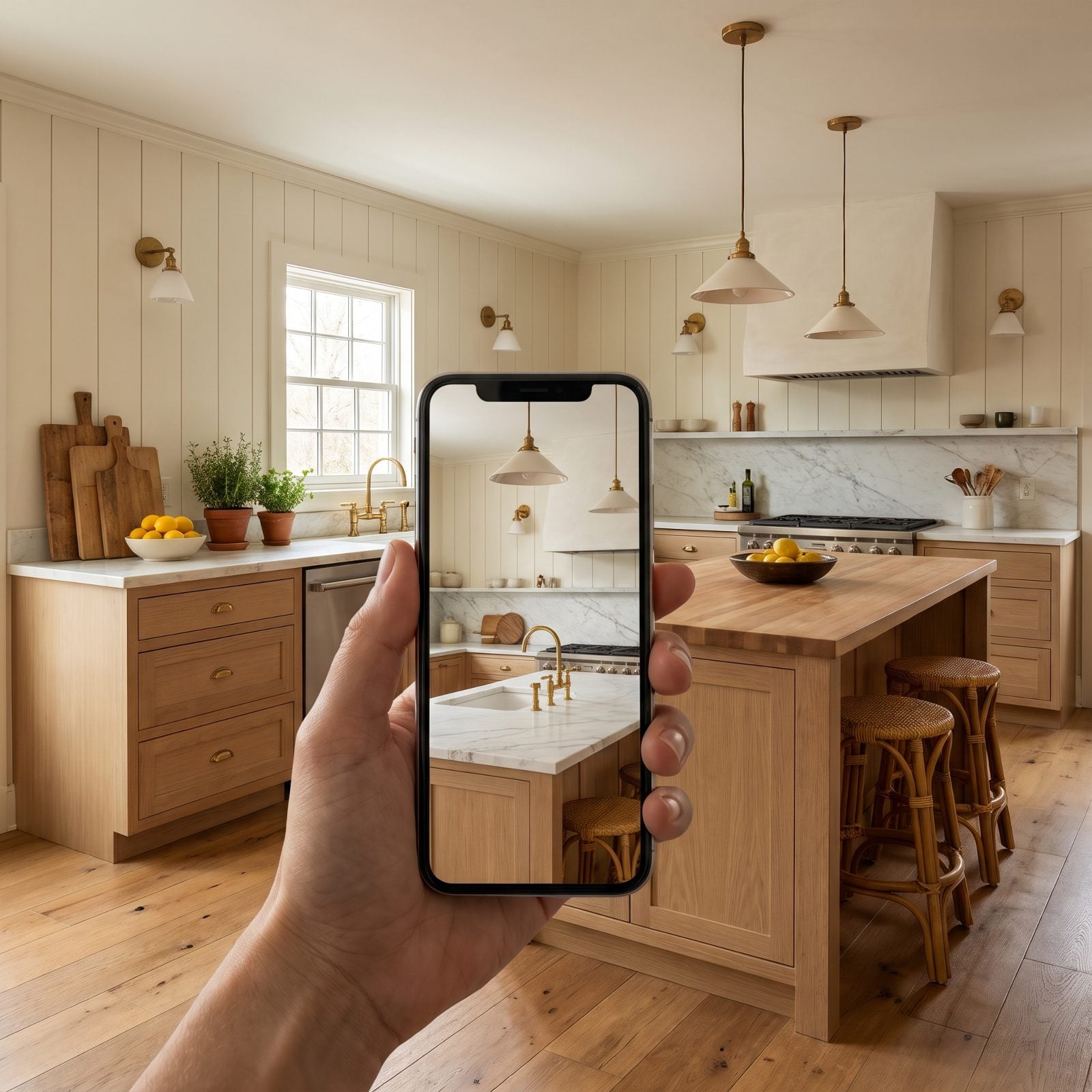
Your counters were fine on Monday. Then you scrolled past a run of kitchens with honed Calacatta and unlacquered brass, and by Tuesday your own perfectly good surface looked like a sad consolation prize.
This is comparison running on tilted ground. You’re measuring your actual kitchen — dishes in the rack, fingerprints on the fridge — against someone’s single best-lit, decluttered, color-graded frame. Same ache that makes a happy relationship suddenly feel lacking the moment you catch another couple’s highlight reel.
Nobody posts the gap between the dishwasher and the wall that never quite got caulked. Want out of the inadequacy spiral? A grounded muted kitchen design you actually chose beats a trend you’re chasing to impress strangers.
You’re comparing your bloopers to everyone else’s trailer.
15. You Visit Another Showroom Because Better Cabinets Might Exist
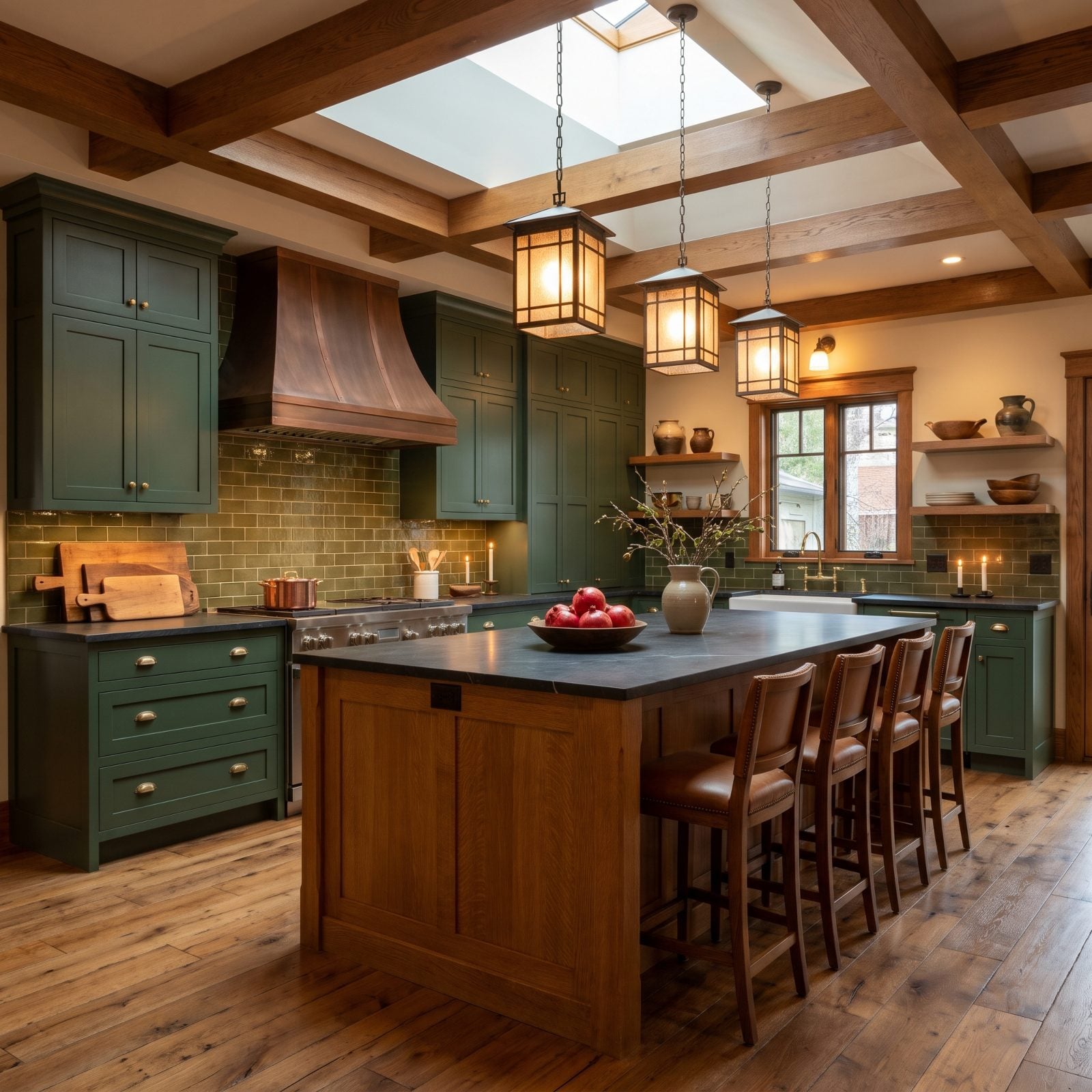
You already found cabinets you liked. Good ones. In your heart you’d practically put down a deposit. Then a little voice piped up — what if the next showroom has something better — so you went. And the one after that.
This is the grass-is-greener loop, and it has a name: maximizing. Maximizers keep hunting for the best possible option and wind up less happy than people who find something good enough and commit. Same restlessness that keeps someone swiping past a perfectly kind match because the roster might hold somebody taller, funnier, richer.
Here’s the cruel part. More options make you less satisfied, not more. Every extra door you compare quietly poisons the one you already loved.
14. The Gorgeous Range Makes You Ignore Every Practical Warning
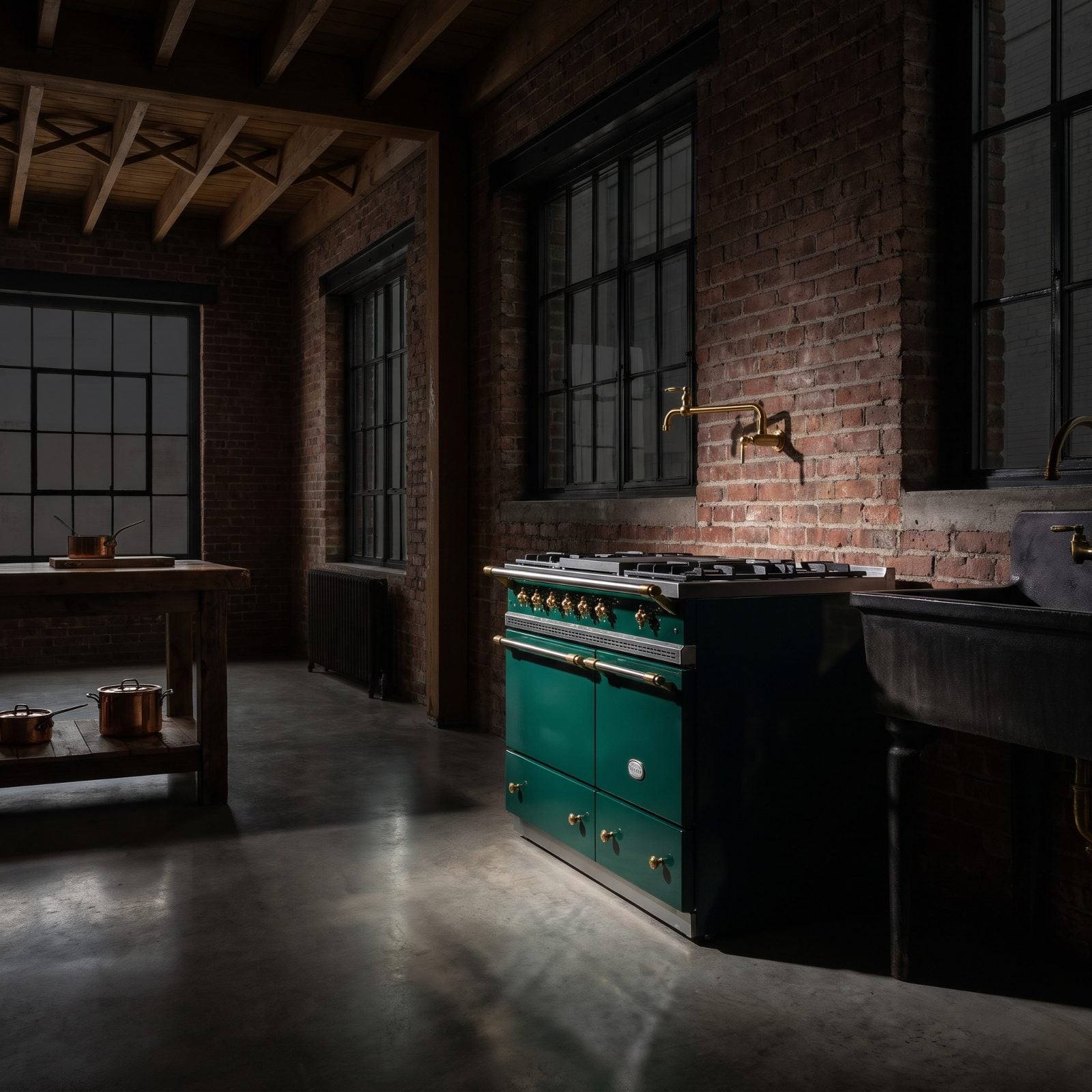
You locked eyes with a range. The big one, the color they only make in Italy, brass knobs that feel like jewelry. Your contractor mentioned the ventilation requirements, the clearance, the fact that it costs more than your first car. You heard none of it.
Infatuation does this. It floods you with a single glorious feeling and switches off the part of your brain that weighs trade-offs. Psychologists call it the halo effect: one gorgeous trait leaks out and coats everything, so you assume the beautiful range must also be practical, easy, worth it. People make the same leap about a dazzling first date.
The warnings weren’t nagging. They were the relationship’s floor plan, and you were too busy admiring the paint.
13. One Bad Backsplash Makes You Dismiss a Brilliant Layout
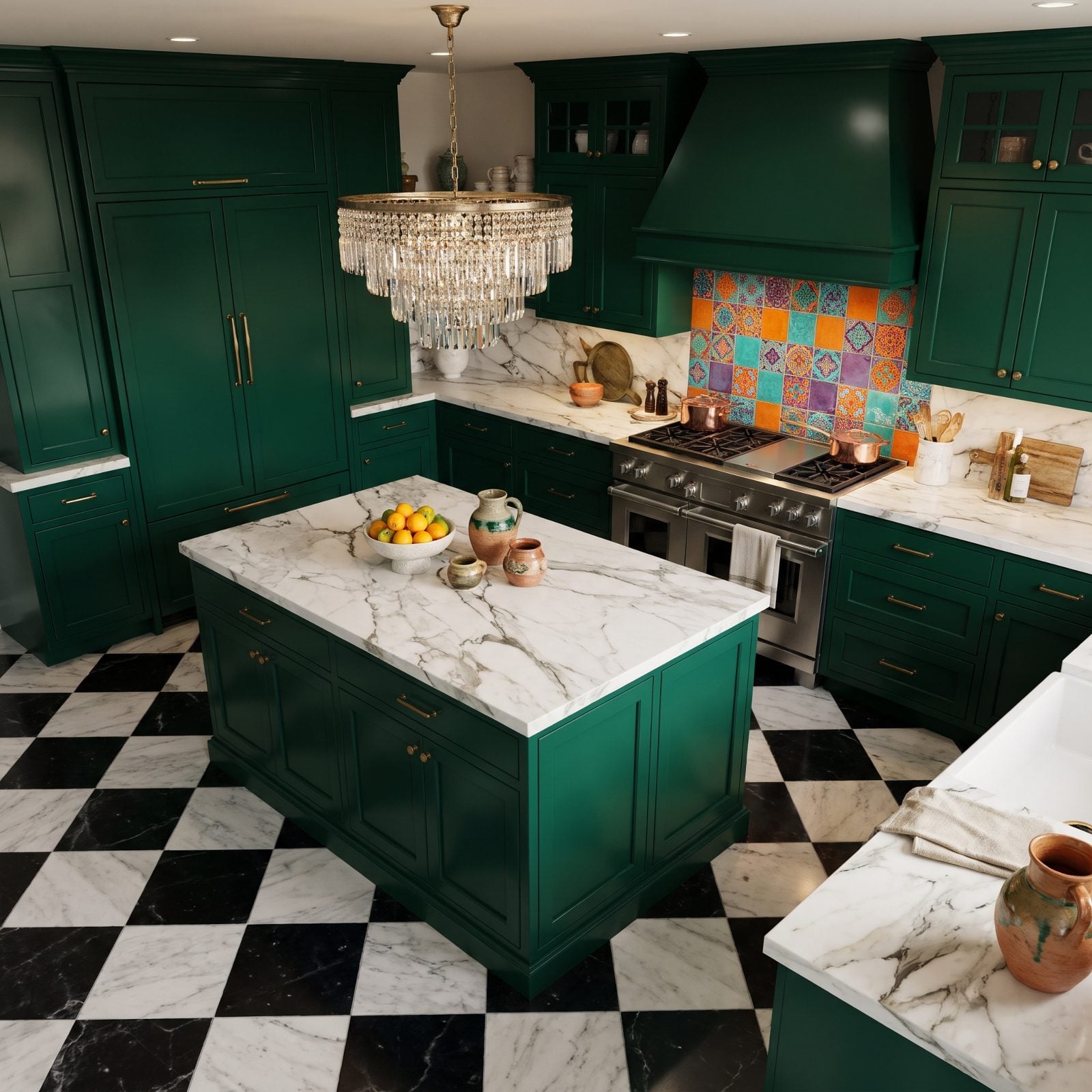
The layout was genius. Perfect work triangle, light from two sides, storage where you’d actually reach for it. But the previous owner picked a backsplash that looked like a bathroom from 1987, and that’s all you could see. You wrote off the whole kitchen over one swappable surface.
This is the halo effect’s evil twin, the horn effect. One glaring flaw bleeds backward and taints everything, even the parts that are excellent. It’s how a great person gets dismissed over one annoying habit on the first date while the deeper compatibility goes unnoticed.
Backsplashes come off in an afternoon. Good bones don’t come along often. Learn the difference between a dealbreaker and a weekend project before you walk.
12. Discontinued Tile Becomes Irresistible When Stock Runs Low
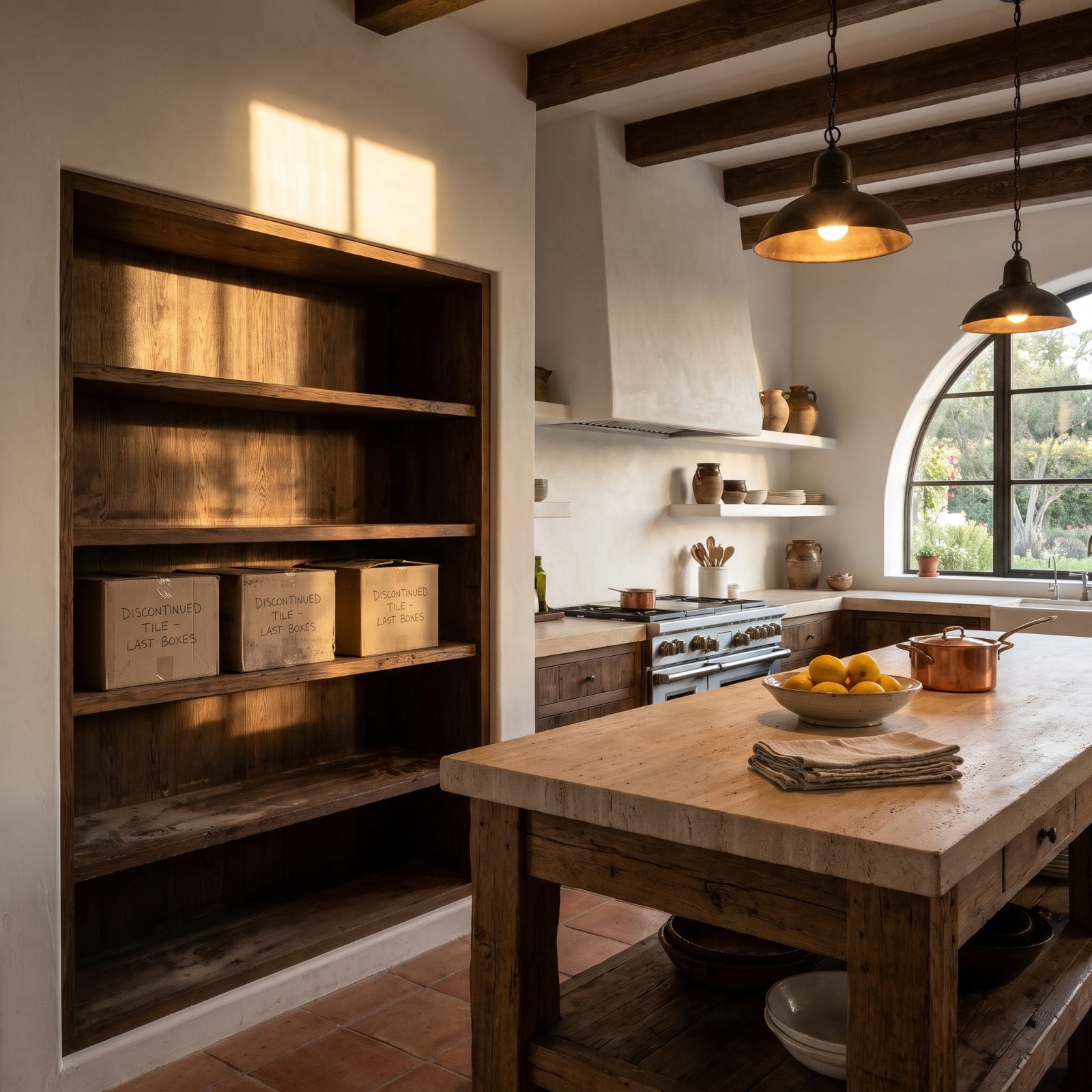
You were lukewarm on the tile. Pretty, maybe. Then the supplier said they had three boxes left and were discontinuing the line, and suddenly it was the only tile that had ever mattered. You bought all three and started redesigning the wall to fit.
Scarcity flips a switch in us. The moment something might vanish, we want it more — often far more than when it was freely available. Loss aversion makes the threat of missing out sting harder than the pleasure of having. Same jolt that makes an indifferent crush suddenly magnetic the second they start pulling away.
11. A Vetoed Red Range Suddenly Becomes the Only Range
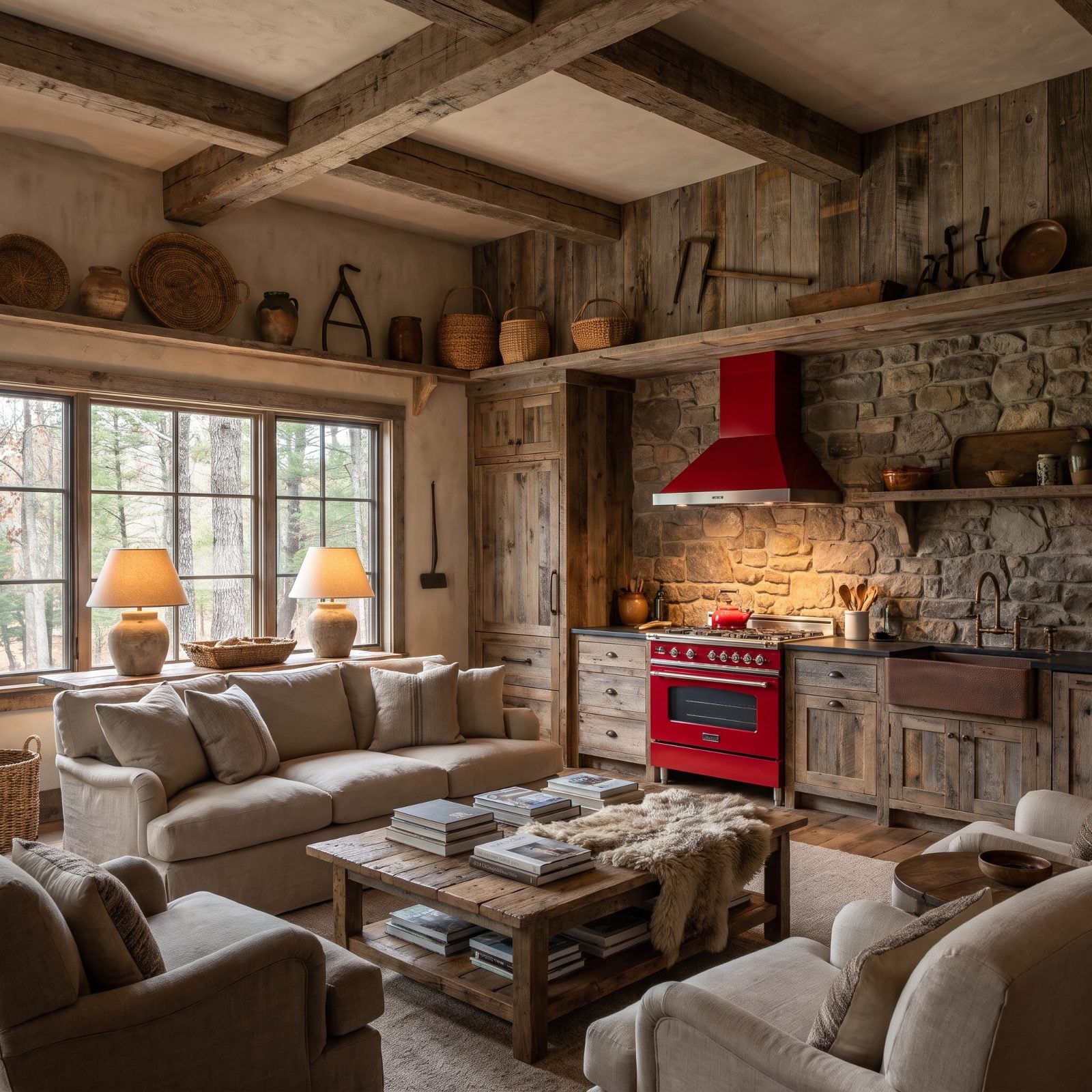
Someone talked you out of the red range. Too bold, they said, you’ll tire of it, resale, all of it. You agreed and moved on to the sensible stainless one. Then you couldn’t stop thinking about the red. Within a week it was the only range you wanted, and the louder the objection had been, the more you wanted it.
Reactance is the name for it. Tell a person they can’t have something, and desire spikes almost on principle. The forbidden option glows brighter the moment it’s forbidden. Parents who dislike a partner have accidentally cemented more romances than they’ve ever prevented.
Sometimes the red range really is the right call. Just make sure you want it for the color, not because someone told you no.
10. You Ask Five Opinions, Then Pick Your First Faucet
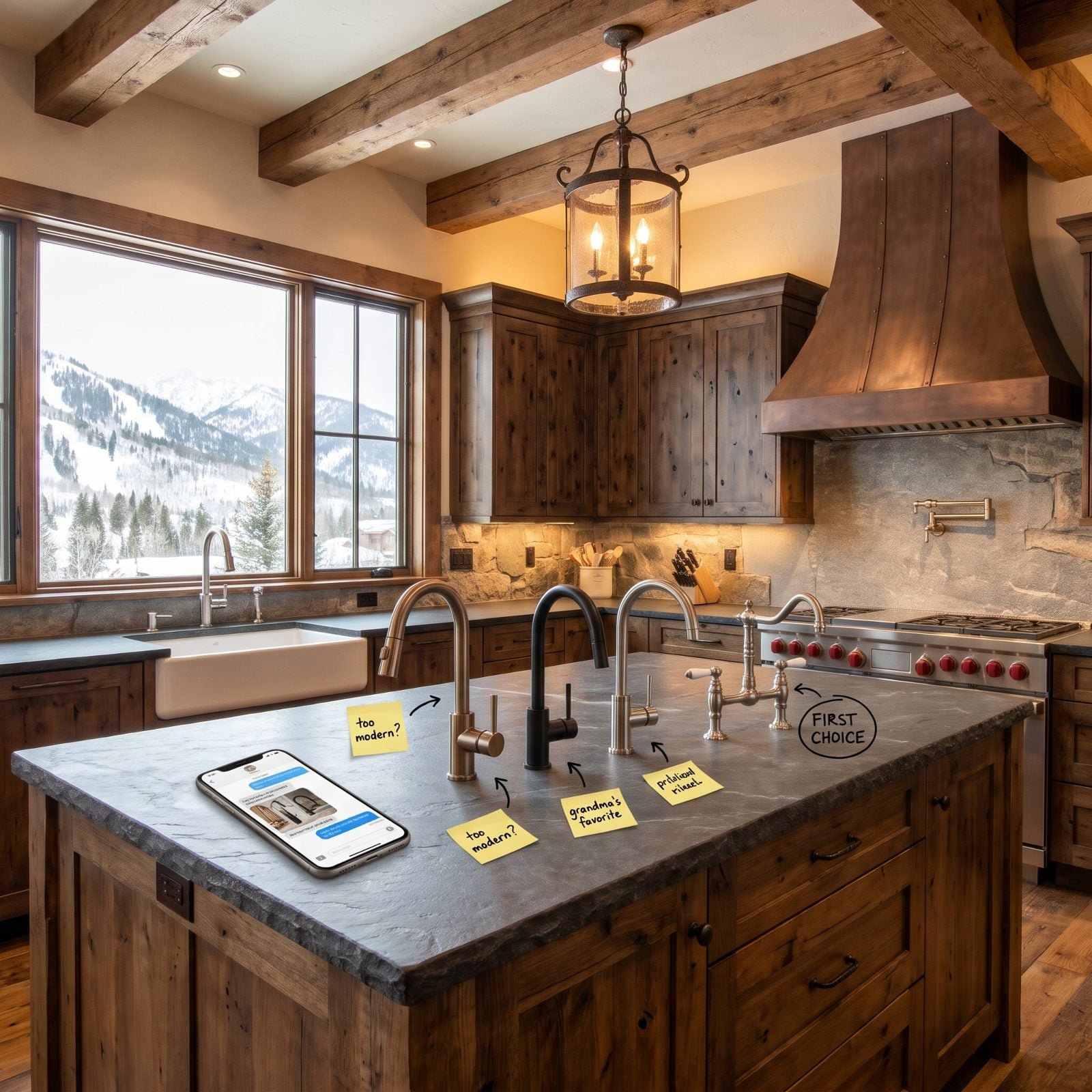
You texted the group chat. You asked your sister, your contractor, the neighbor with the nice kitchen, a stranger in the plumbing aisle. Five opinions, three contradictions, one headache. Then you installed the nickel bridge faucet with the porcelain cross handles you’d quietly liked on day one.
We don’t gather opinions to decide. We gather them to feel safe about a decision we already made — confirmation seeking, it’s called, and it’s exactly why people run a new relationship past every friend they have before admitting they’d already made up their mind at dinner.
Nothing wrong with wanting reassurance. Just notice when you’re shopping for permission instead of information. Your gut picked the faucet. Everyone else was background noise you paid for in favors.
9. You Test Twelve Whites Because Commitment Feels Too Final
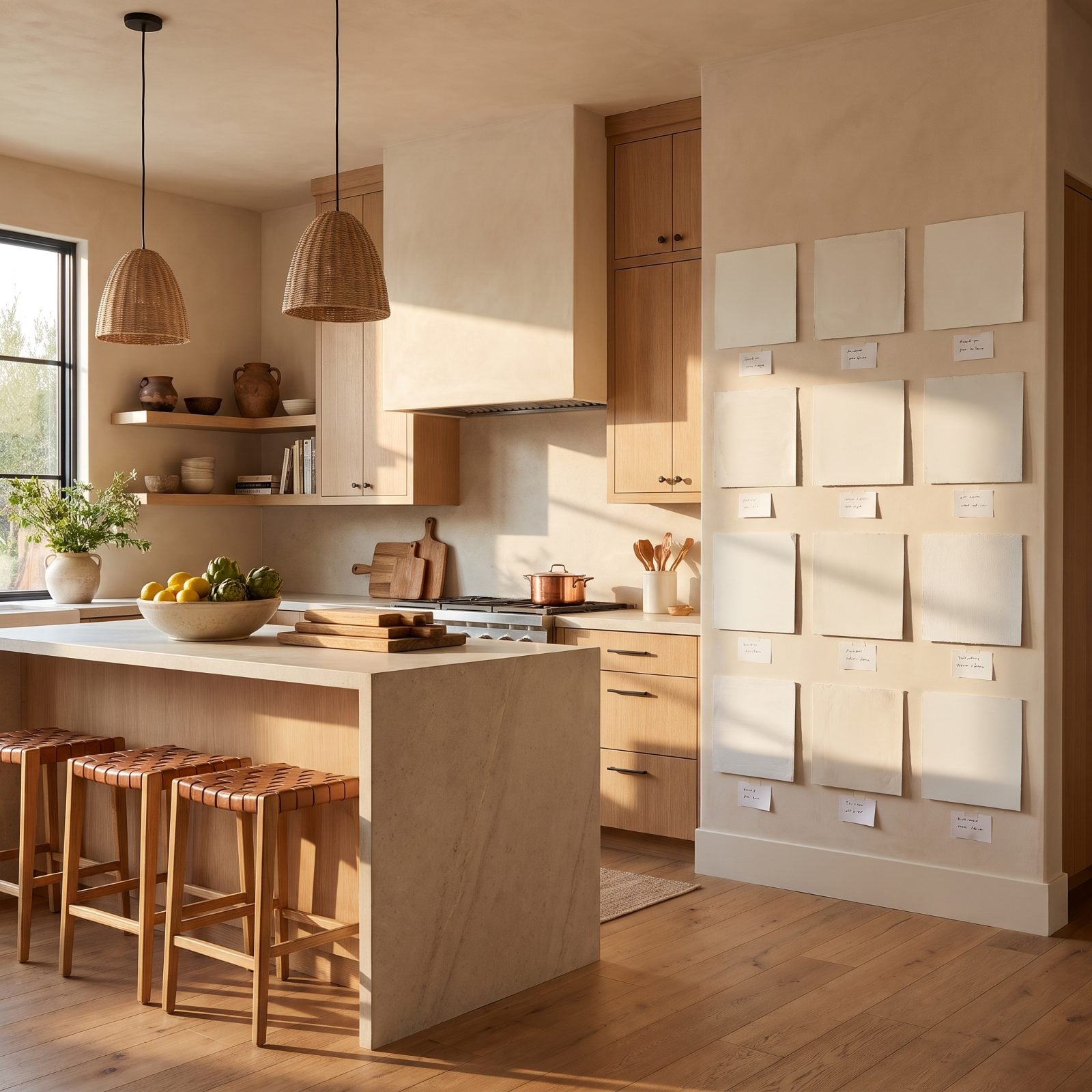
White is white, you said, right before you painted twelve nearly identical squares on the wall and lived with them for three weeks. One too yellow. One too blue at 4 p.m. One perfect until the afternoon light turned on it. You weren’t really choosing a white. You were stalling.
When a decision feels permanent, we inflate the tiny differences to delay the plunge. Choice overload plus fear of finality equals a wall that looks like a swatch factory exploded. It’s the same hesitation that makes someone date for years, perfectly happy, unable to say the final word, because committing means closing every other door forever.
Here’s the secret the paint aisle won’t tell you: most of those whites are indistinguishable once the furniture’s in. The paralysis isn’t about the color. It’s about having to decide at all.
8. You Copy a Chef’s Kitchen Though You Mostly Reheat
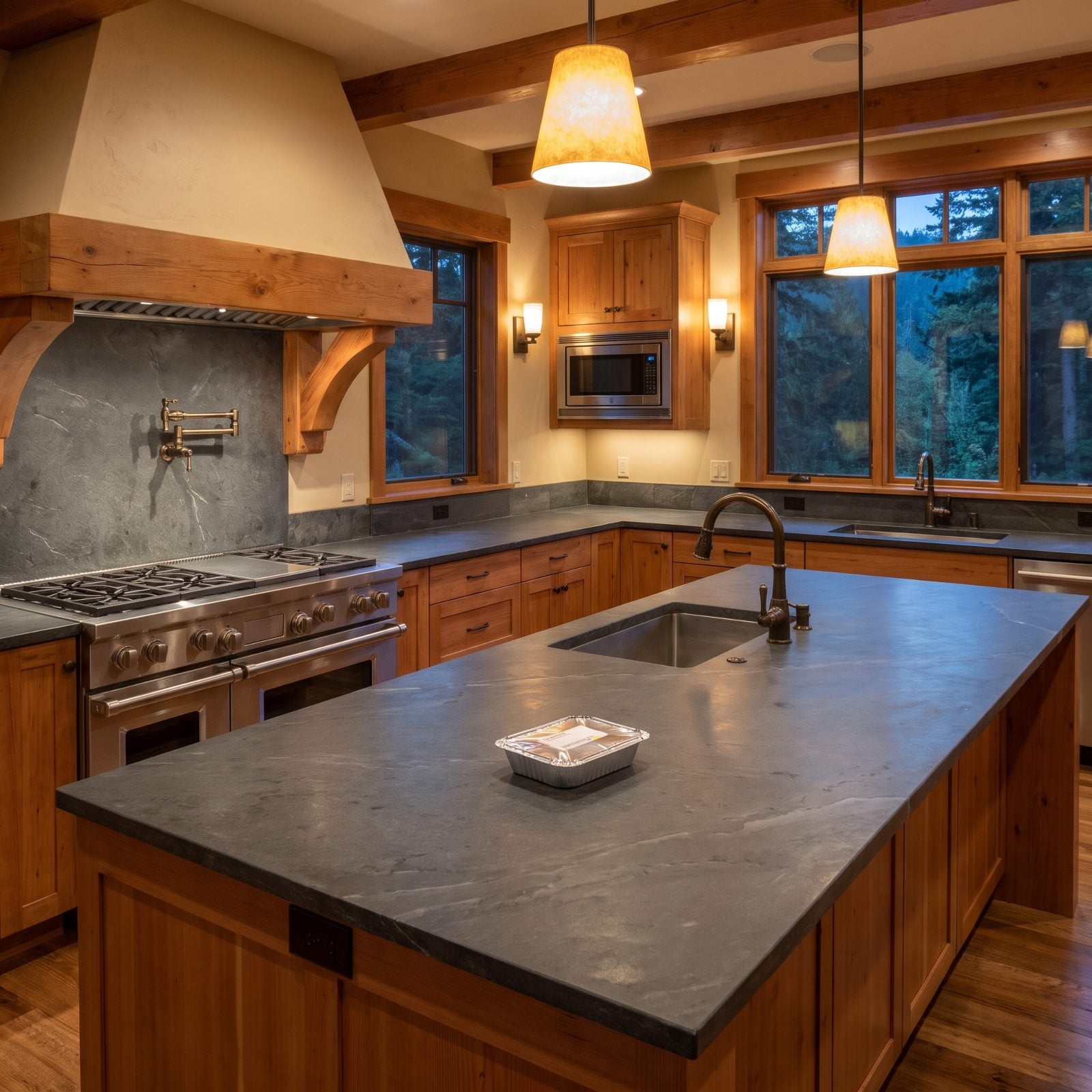
That 48-inch range with the pot filler and dual ovens looks like it belongs to someone who makes stock from scratch. Most nights it heats soup. You bought a kitchen built for a chef you admire more than you resemble — and no, you’re not the only one.
It’s the same wiring that makes people fall for a partner who represents the life they want rather than the life they have. The aspirational version feels like a promise: buy the tools, become the cook; marry the ambition, catch the drive. Psychologists call it identity signalling, and it works on us even when the audience is only ourselves. The craftsman kitchen decor fantasy sells because we’re shopping for a better self, not a better stove.
Nothing wrong with reaching. The honed charcoal soapstone island and dark bronze pulls still make reheating feel civilized. Just know what you’re paying for. Half of it is dinner. The other half is the story you tell about the person who cooks it.
7. A Forever Kitchen for a Life That Won’t Hold Still
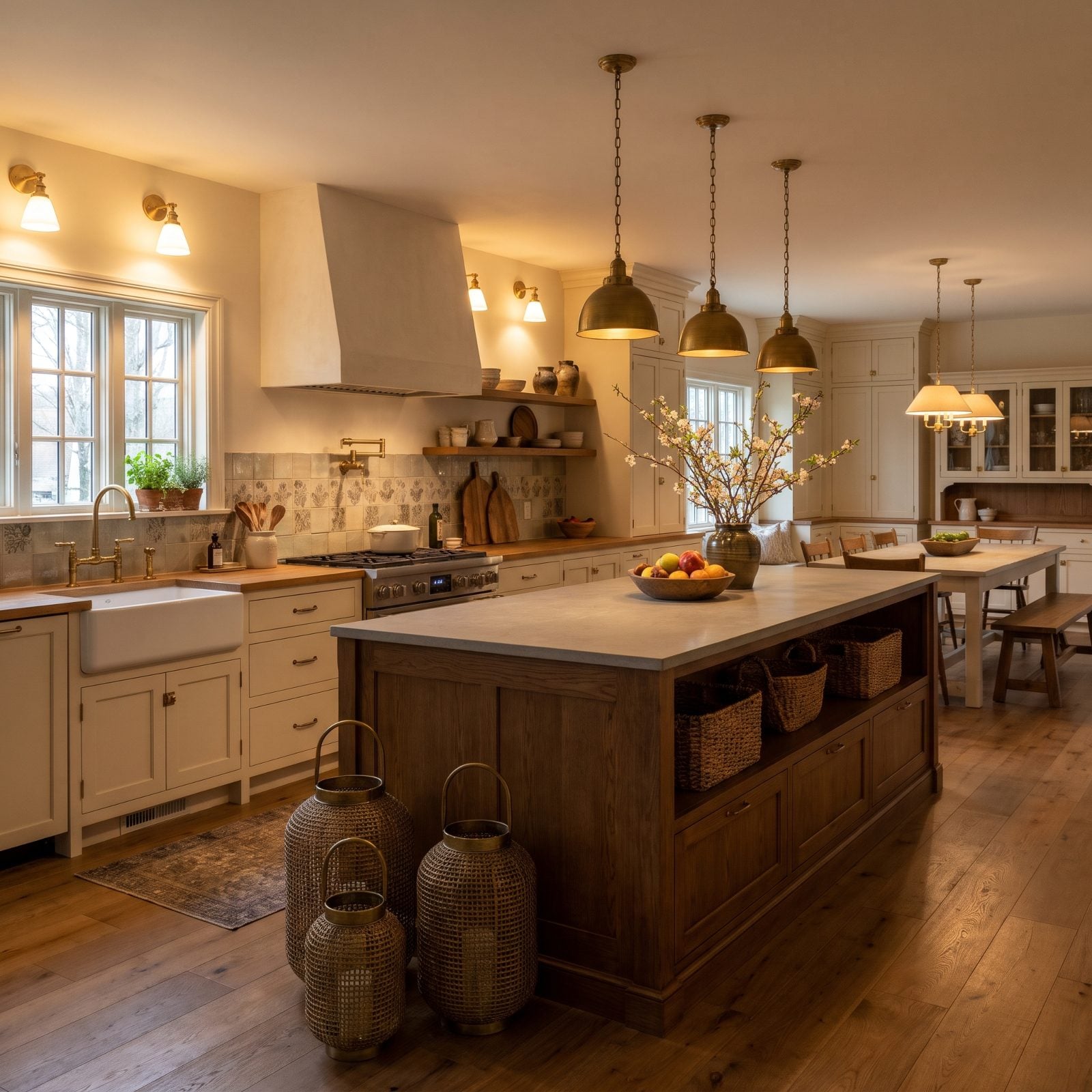
Every element in this kitchen was chosen to last decades. Cream inset cabinets, aged brass latches, a soapstone-topped wood island built for a family that cooks together for the next thirty years. It’s gorgeous. It also assumes a life that holds its shape, and lives rarely do.
Kids leave. Knees give out. The open plan you craved at 45 becomes the room you want to close off at 65. Designing a forever kitchen is the renovation version of planning a forever relationship around who you happen to be on the day you commit. Both ignore the one guarantee: you will change.
Call it the end-of-history illusion wearing an apron. We picture a stable future and build for it, badly underestimating how much the ground shifts beneath us. The fix isn’t to stop planning. It’s to leave room. A muted kitchen design with flexible zones ages better than a rigid showpiece, and the hardwood floor and soapstone counters will outlast the assumptions that chose them. Build for change, not against it.
6. Defending the Awkward Peninsula After the Deposit Clears
🔥 Would you like to save this?
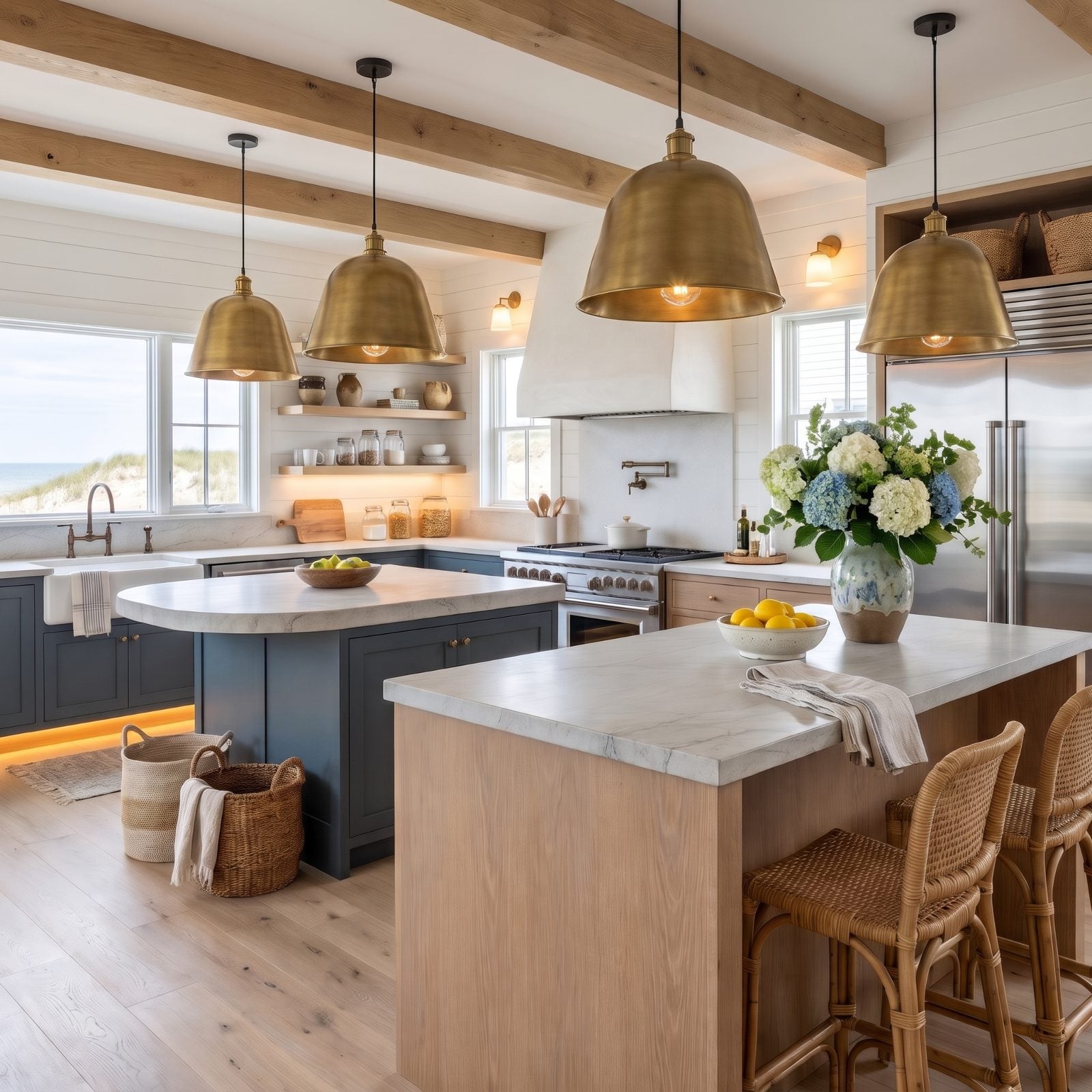
The peninsula crowds the path to the fridge. You know it crowds the path to the fridge. And yet, the second a friend raises an eyebrow, you launch into a full-throated defense of the layout you signed off on.
Welcome to the sunk-cost fallacy with a marble overhang. Once the deposit clears and the white marble is ordered, the brain quietly reassigns the awkward choice from mistake to feature. We defend the flawed kitchen the way people defend a relationship they’ve already poured years into — not because it’s working, but because walking it back would mean admitting the earlier yes was wrong.
The honest move is harder and cheaper: name the flaw before the cabinets ship. A little clearance around a small kitchen makeover saves years of hip-checking the counter on the way to the coffee. Loyalty to a past decision is not the same as the decision being good.
5. Babying the New Counters Until Life Moves Back In
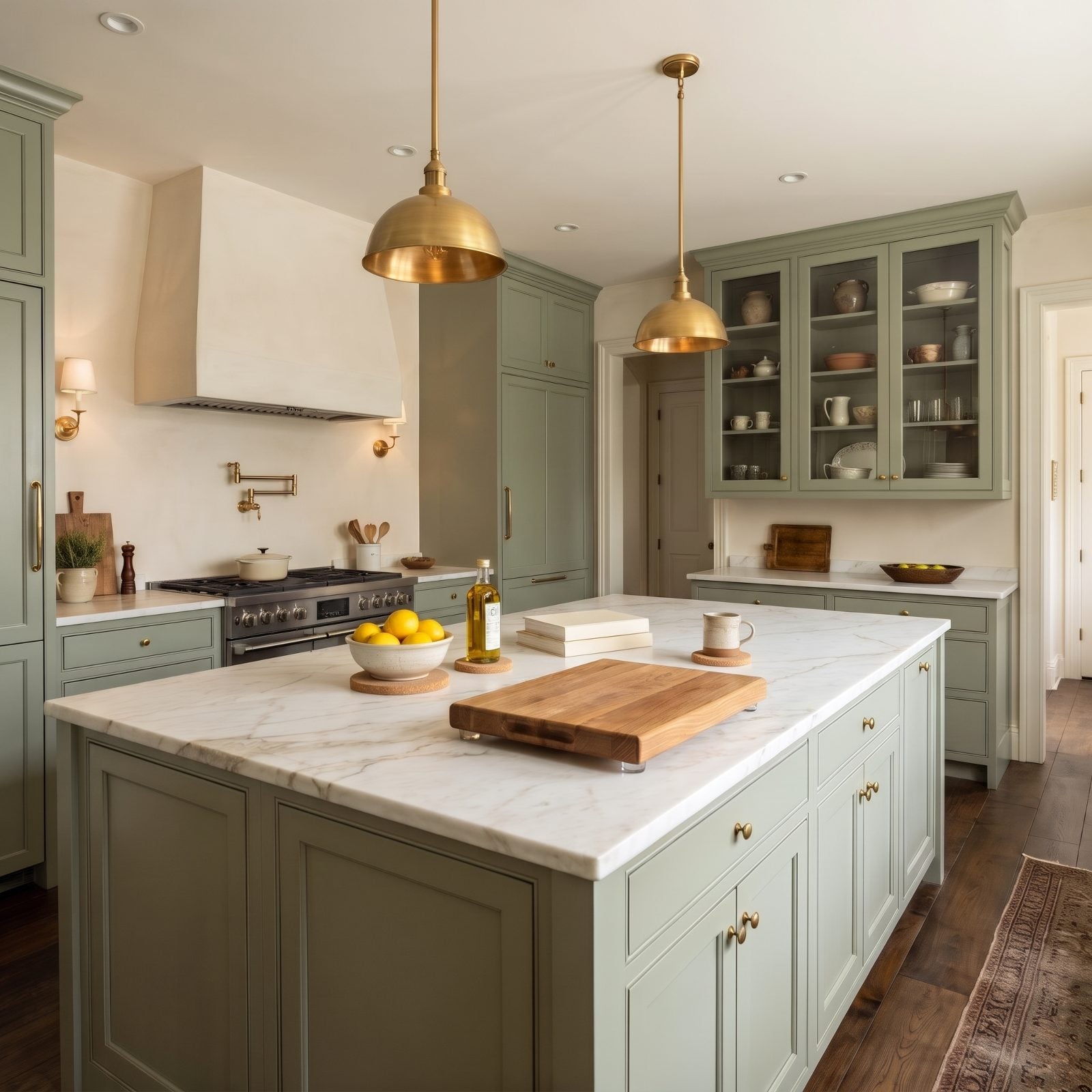
For the first month, nothing touches the marble. Coasters for everything. A cutting board shuffled around like a holy relic, and a bottle of olive oil perched on its own cork coaster as a warning to houseguests.
Then life moves back in. A hot pan here, a splash of red wine there, and the honeymoon ends the way all honeymoons end. The Calacatta that was flawless in the showroom earns its first etch, and something in you loosens.
Here the endowment effect meets hedonic adaptation at full speed. We over-protect what’s new and precious, convinced the shine is the point, and then we adjust. The thrill fades right on schedule, same as the butterflies in any new relationship. The marble was always going to patina. The only question was whether you’d fight it or let the kitchen become yours. Scars are how a surface stops being a showroom.
4. Expecting New Cabinets to Fix the Dinner Scramble
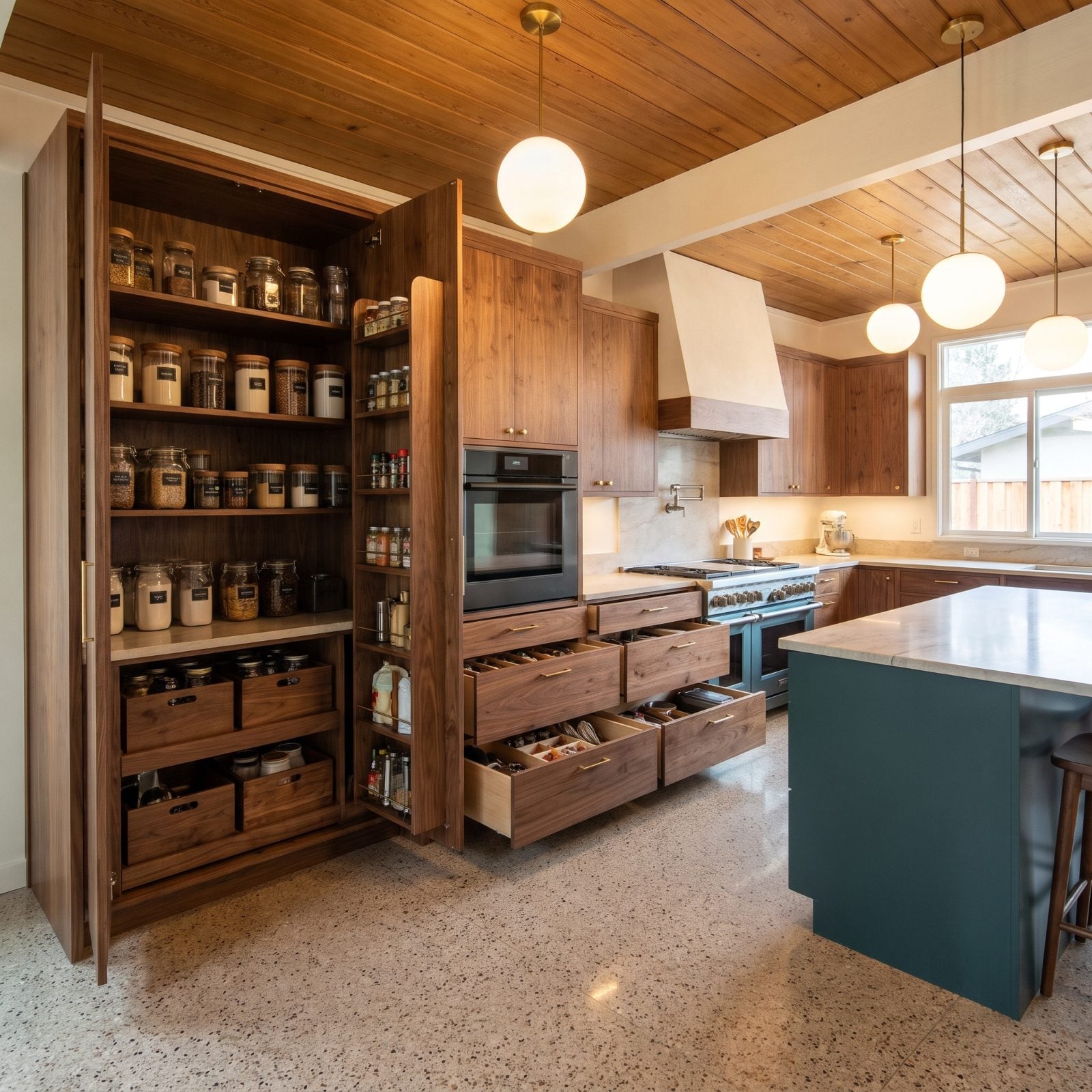
You told yourself the new cabinets would end the 6pm chaos. Soft-close drawers, a pull-out pantry, a place for everything. Order would arrive with the install truck.
Then the walnut veneer goes in, the island gleams, and dinner is still a scramble. Because the scramble was never about storage. It was about time, energy, and four people needing to eat at once.
This is the swap we make everywhere — reaching for an external fix to an internal problem. People do it with relationships too. New partner, new city, same restlessness that followed them from the last one. The teal kitchen cabinets can be flawless and the Tuesday meltdown still happens, because cabinets organize objects, not lives. Beautiful storage is worth having. Just don’t ask it to carry weight it was never built to hold.
3. Fighting About Drawer Pulls When the Budget Is Terrifying
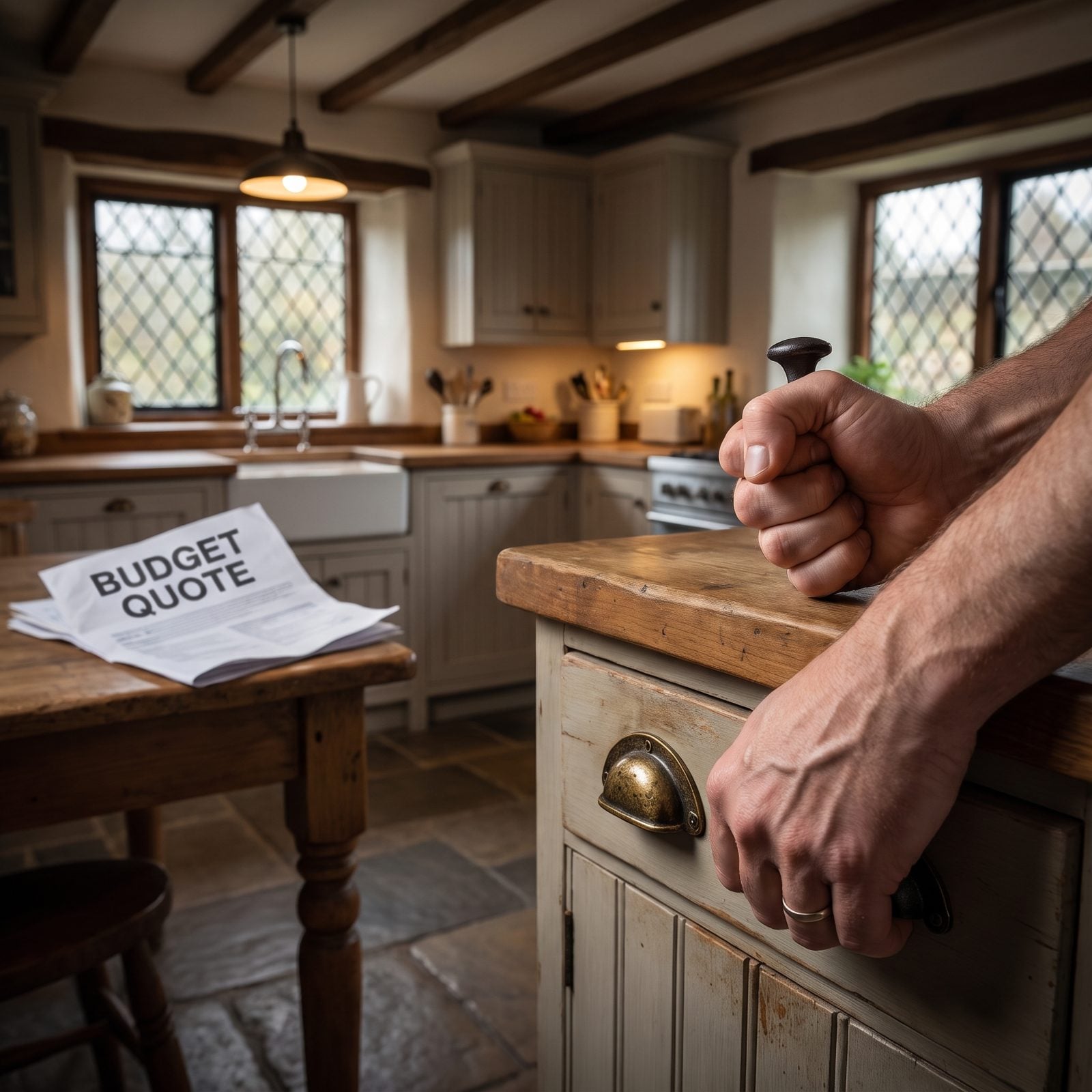
The quote came in higher than feared. And somehow the argument isn’t about the twelve-thousand-dollar overage at all — it’s about whether the drawer pulls should be matte black or aged brass.
You’ve watched this play out at the kitchen table more than once. The big, frightening number is too abstract to fight about, so the anxiety finds a target it can actually touch. Hardware becomes the proxy war.
Displacement, psychologists call it. The real stress is unspeakable, so it reroutes to something small and concrete. Couples do the identical thing when a huge worry surfaces as a blowup over whose turn it was to load the dishwasher. The fight is never about the fight. So next time the pulls become a battlefield, ask what they’re standing in for. Usually it’s the money. Sometimes it’s the fear underneath the money.
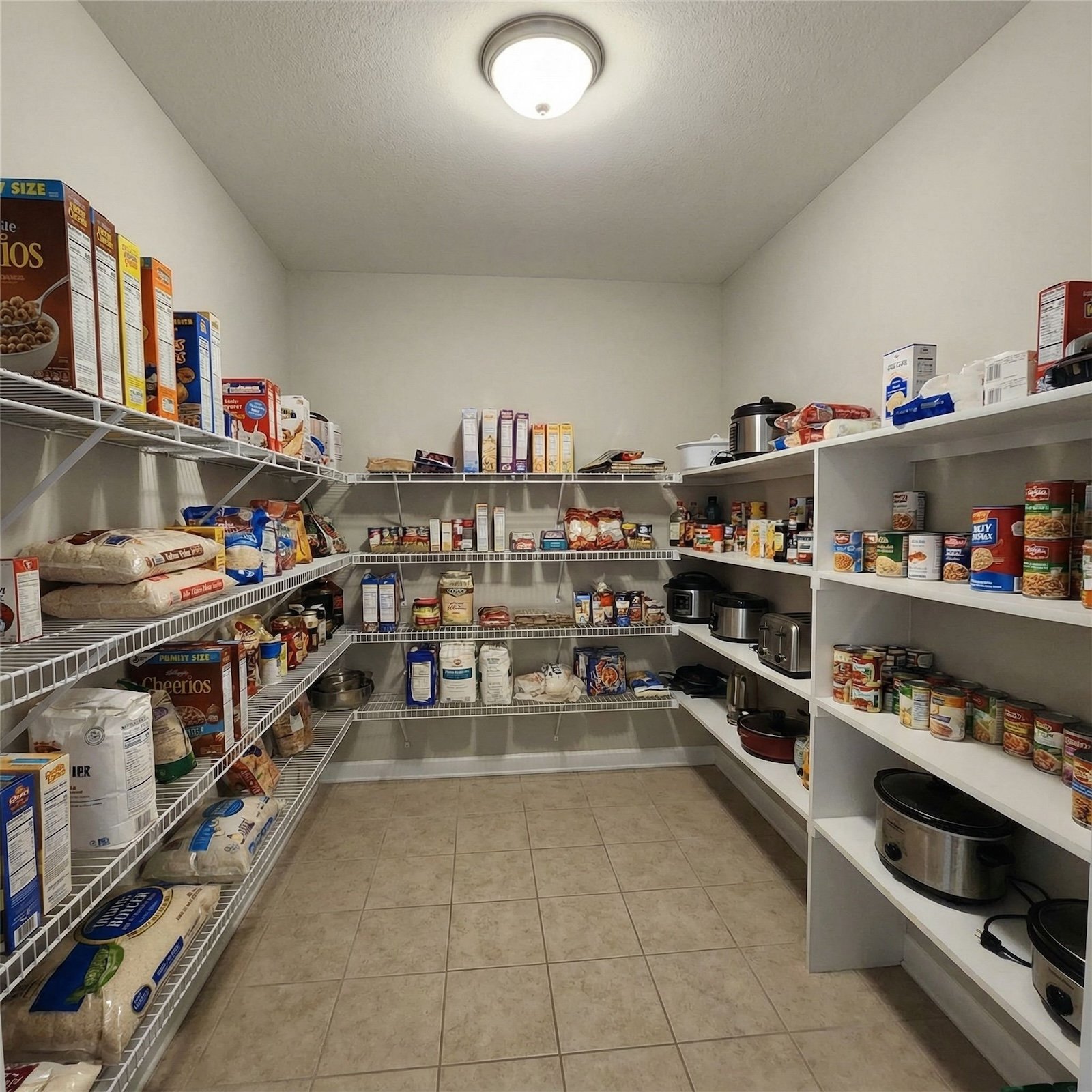
2. Grieving the Walk-In Pantry Your Floor Plan Never Promised
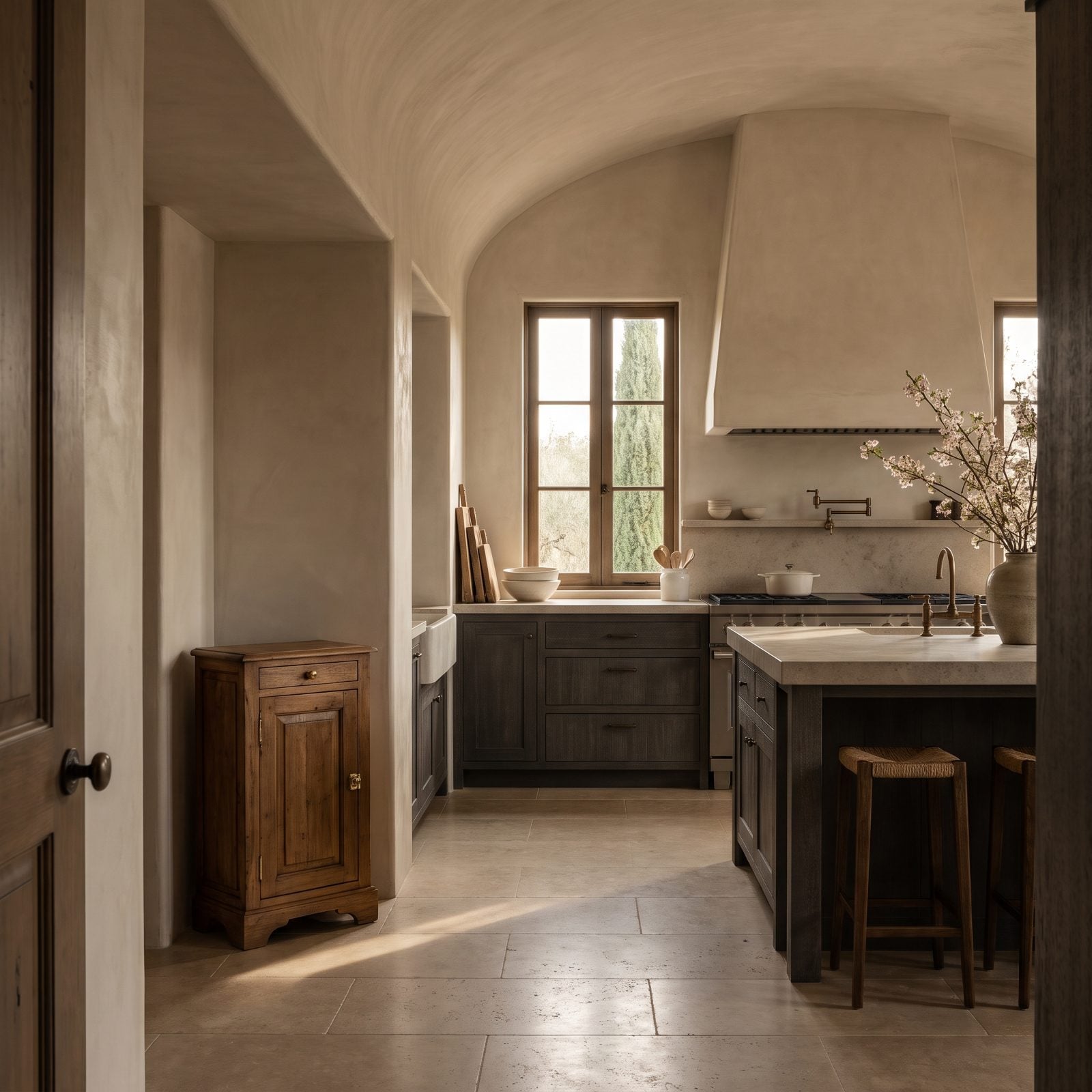
The floor plan was always too small for a walk-in pantry. You knew the square footage going in. And still, standing in the finished kitchen with its dark wood base cabinets and antique cupboard, you mourn the pantry that was never on the table.
We grieve the version we fantasized about, not the one the house could ever deliver. Same ache as missing the relationship you imagined rather than the one standing in front of you. Counterfactual thinking — the mind’s stubborn habit of running a better parallel life — keeps the phantom pantry alive long after the drywall goes up.
Here’s the kindness you owe yourself. Those deep base drawers and that antique cupboard hold more than you’d think, and the mix of plaster niches and open shelving you’ll find in a good mustard kitchen makeover often beats a cramped walk-in anyway. Grief for the imaginary is normal. Just don’t let it rob the real room of the credit it has earned.
1. Accepting the Odd Microwave Spot Because Everything Else Works
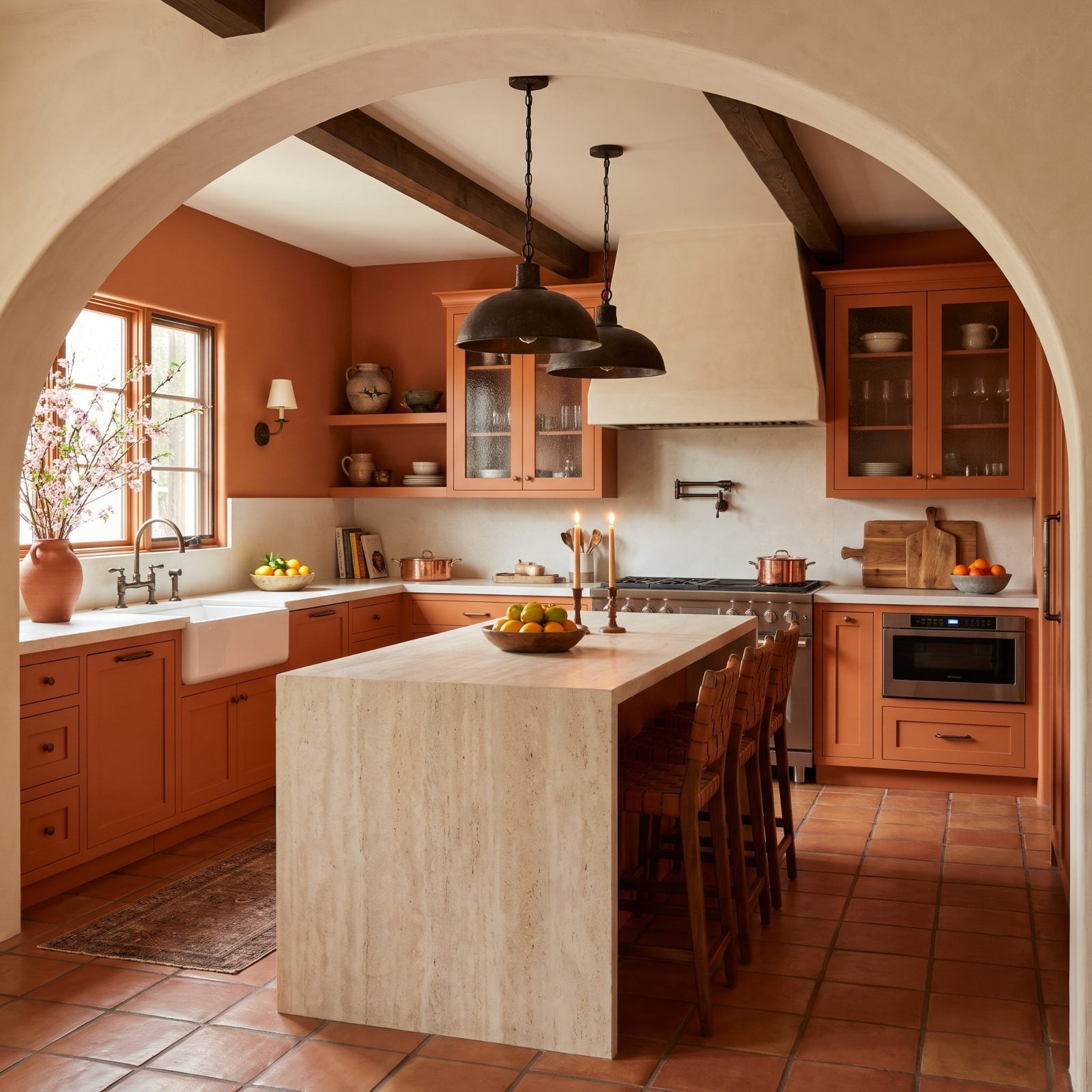
The microwave ended up a little too low. Not where you’d have put it in a perfect world. But the sink is right, the range is right, the light is right, so you let the microwave go.
This is the quiet maturity the whole list was building toward. You accept one real flaw because the rest of the kitchen genuinely works, which happens to be the same calculus behind every relationship that lasts. Nobody gets the complete package. Satisficing — choosing good-enough-and-wonderful over an impossible perfect — is what separates the people who finish renovations from the people who re-plan forever.
The terracotta cabinets and travertine island don’t need the microwave to be perfect. A warm terracotta kitchen palette like this one forgives a small awkward note the way a good marriage forgives the socks on the floor. The flaw you can live with isn’t a failure. It’s the price of actually being done.