
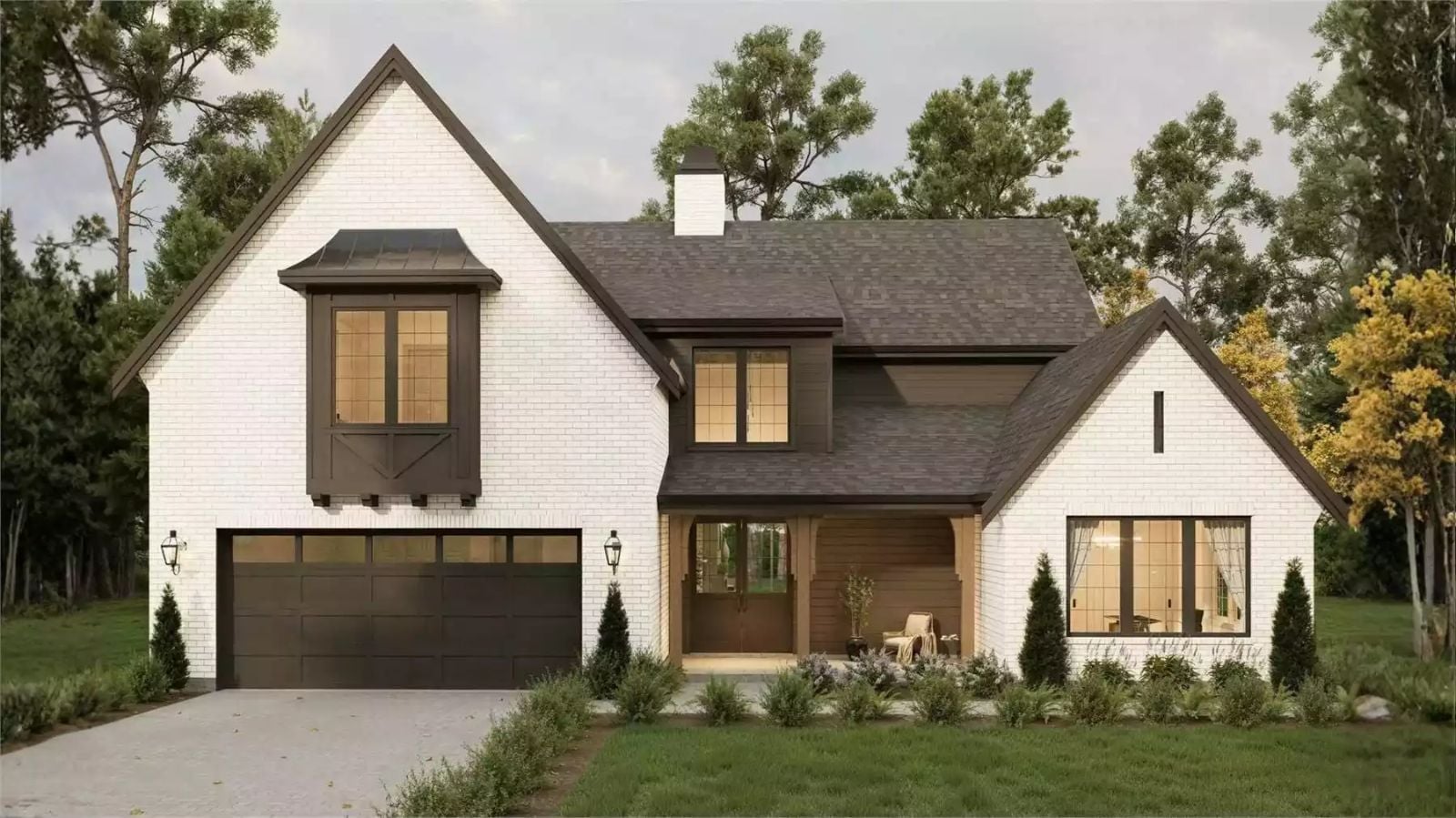
Most European-style houses nail the curb appeal and completely ignore the fact that four kids still need to share two sinks. Village Avenue skips that mistake — homework spread across the island, someone burning toast while another loads the car, two siblings actually getting ready on time because the Jack and Jill bath splits the morning rush down the middle: the whole plan is built around exactly that kind of daily chaos, with a main-floor primary suite, an open family hub, and a layout that keeps parents close without putting everyone on top of each other.
Specifications
- Sq. Ft.: 3,965
- Bedrooms: 4
- Bathrooms: 4
Floor Plan – Main Floor
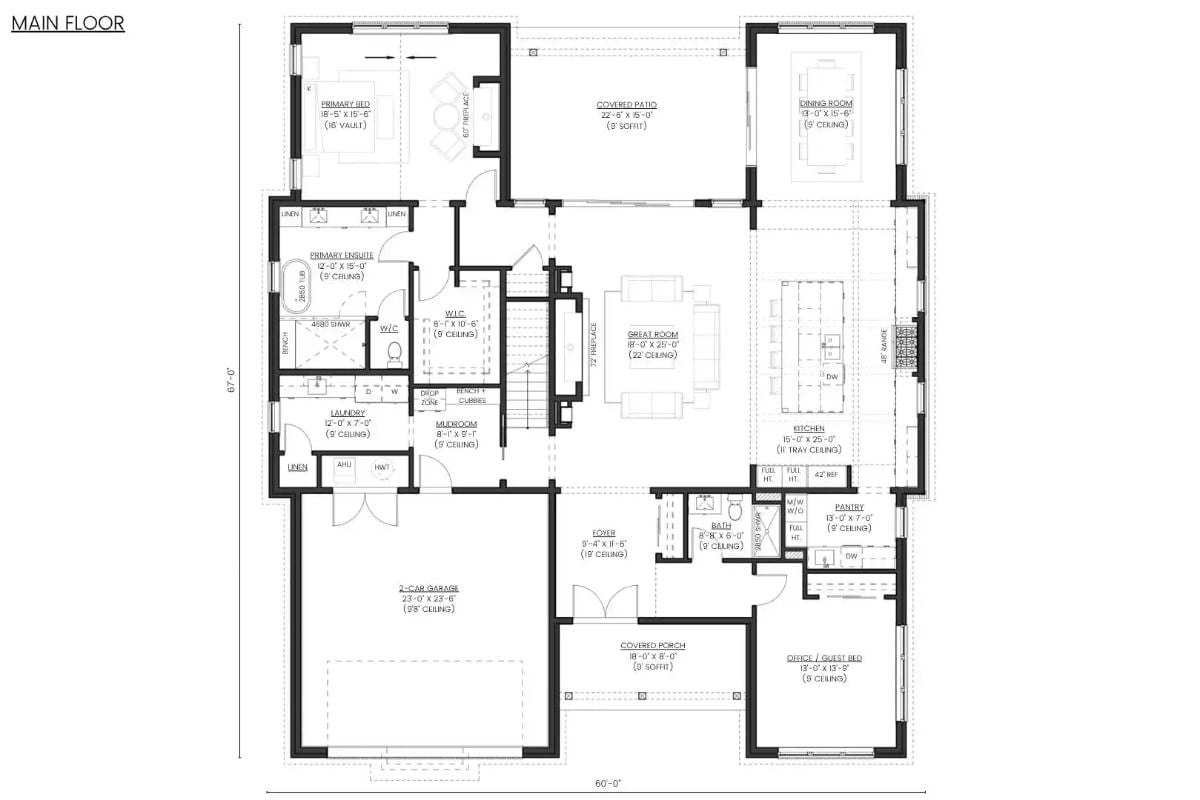
The primary suite sits in the upper left corner of the main floor, well removed from the garage noise and front-entry traffic. A central great room with 22-foot ceilings anchors everything — kitchen and pantry run along the right side, while the foyer, mudroom, and drop zone stitch the garage to the rest of the house without routing anyone through the living spaces to get there.
Floor Plan – Second Floor
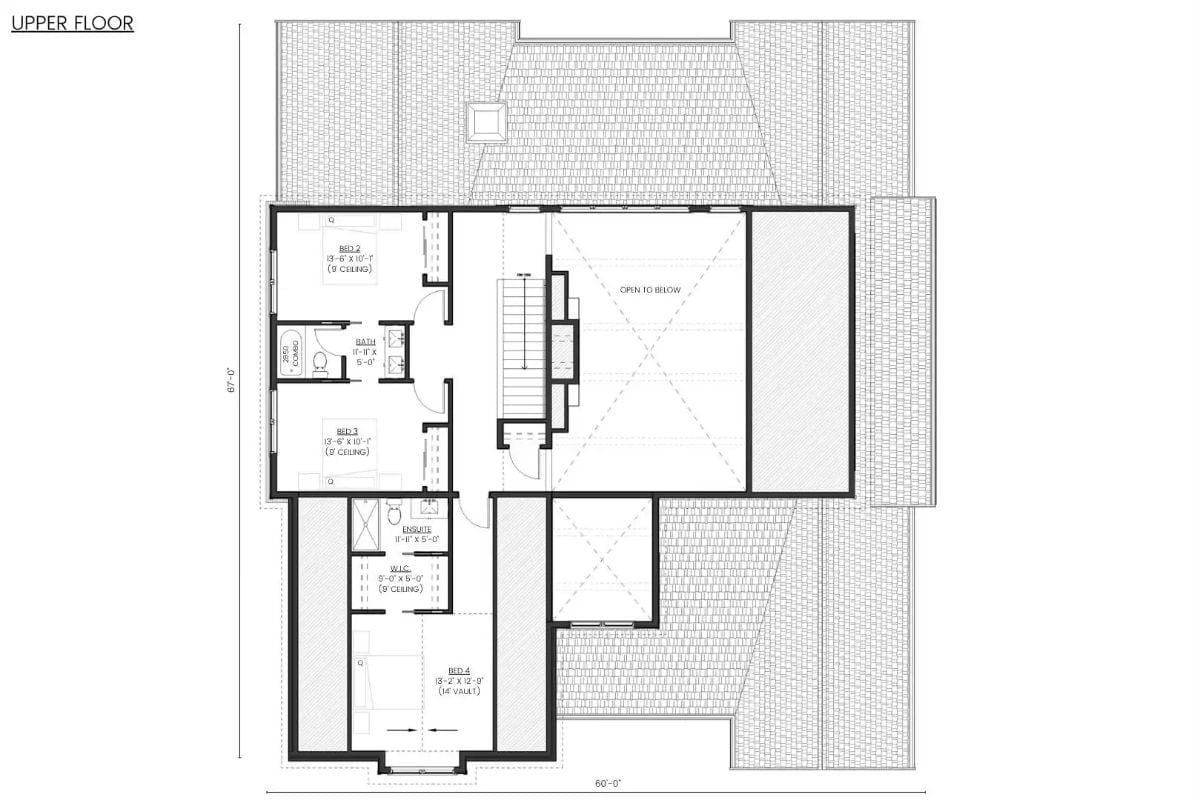
Three bedrooms and two full baths occupy the upper floor’s left wing, with the staircase landing opening onto a generous void that looks down into the great room below. Bed 4 sits at the far end under a 14-foot vault, and Bed 3 gets its own walk-in closet and ensuite. The overall footprint is 60 by 67 feet, which keeps circulation tight without feeling cramped.
Step outside and the rear elevation tells you everything about how this house is meant to be lived in.
White Brick and Dark Trim Pull Off Something Most Exteriors Can’t
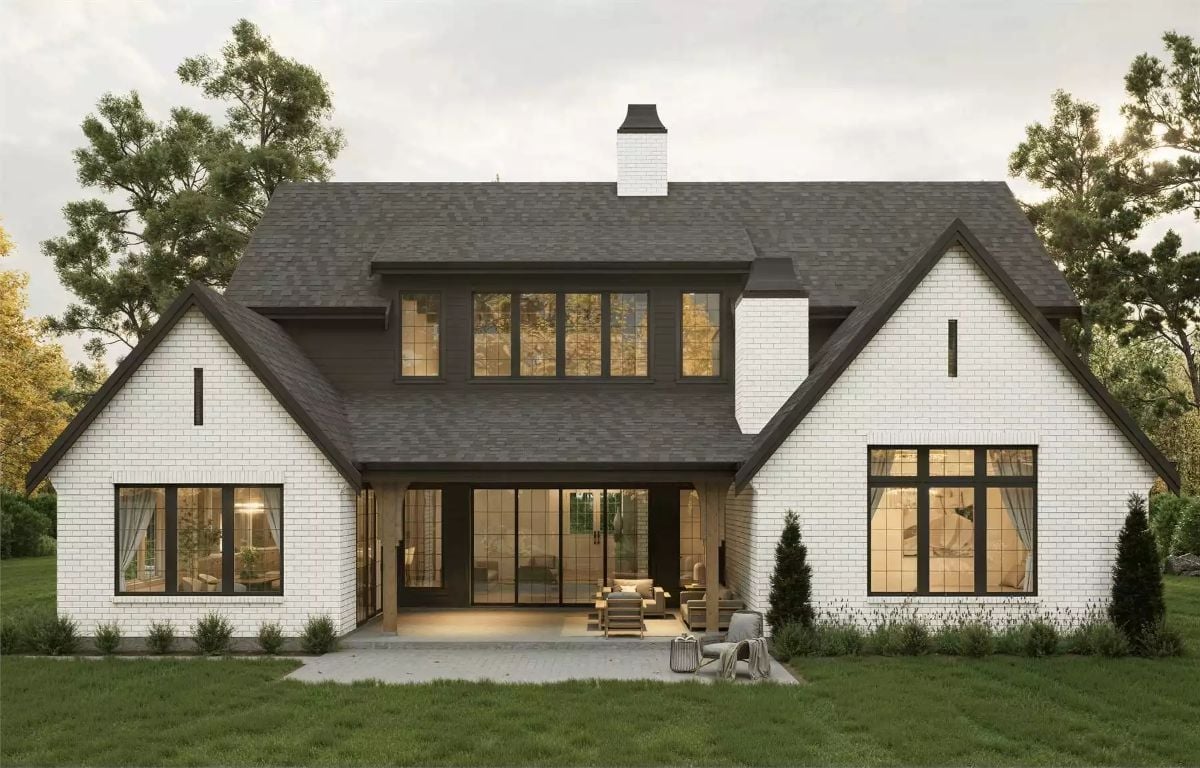
Painted brick holds its crispness against charcoal shingles and dark window frames in a way that stone rarely does — it reads cleaner from a distance and warmer up close. That covered rear patio, already furnished, makes the point plainly: outdoor living was designed in, not bolted on after the fact. Dormer windows above pull natural light deep into the second floor rooms that would otherwise feel dim by midday.
Soaring White Brick and a Linear Fireplace Built for the Whole Family
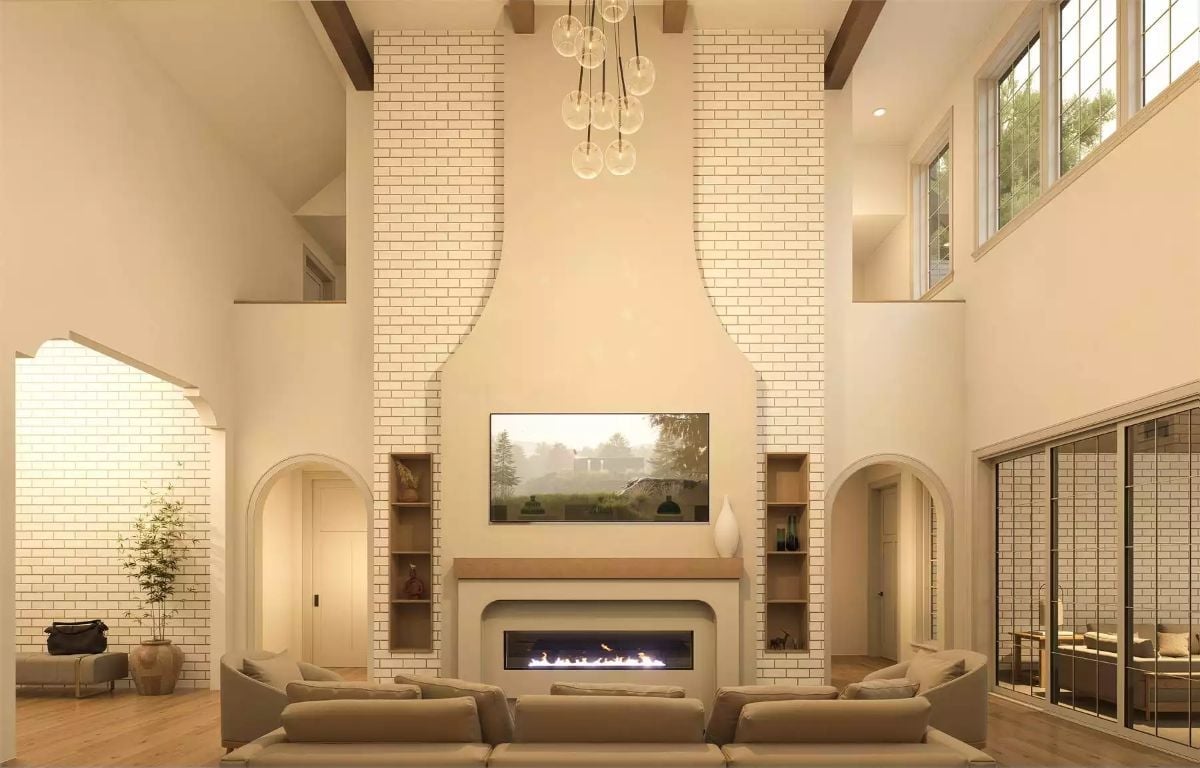
Two floor-to-ceiling brick columns frame a linear gas fireplace and wall-mounted TV, with built-in shelving tucked into the arches on either side. Exposed wood beams and a globe chandelier do the work of keeping a double-height room from turning cold and echoey — which is the quiet battle every great room fights.
Why It Works: Flanking the fireplace with symmetrical arched niches solves a real problem in tall rooms: it grounds the vertical mass and gives the eye somewhere to land before the ceiling takes over. Painted white brick reads warmer than stone but still carries enough texture to justify the scale. The TV above the mantel works here, too, because the room’s height puts the sightline at a reasonable angle from a seated position — something that gets ignored in lower-ceilinged spaces.
Exposed Ceiling Beams and Black Pendants Do the Heavy Lifting Here
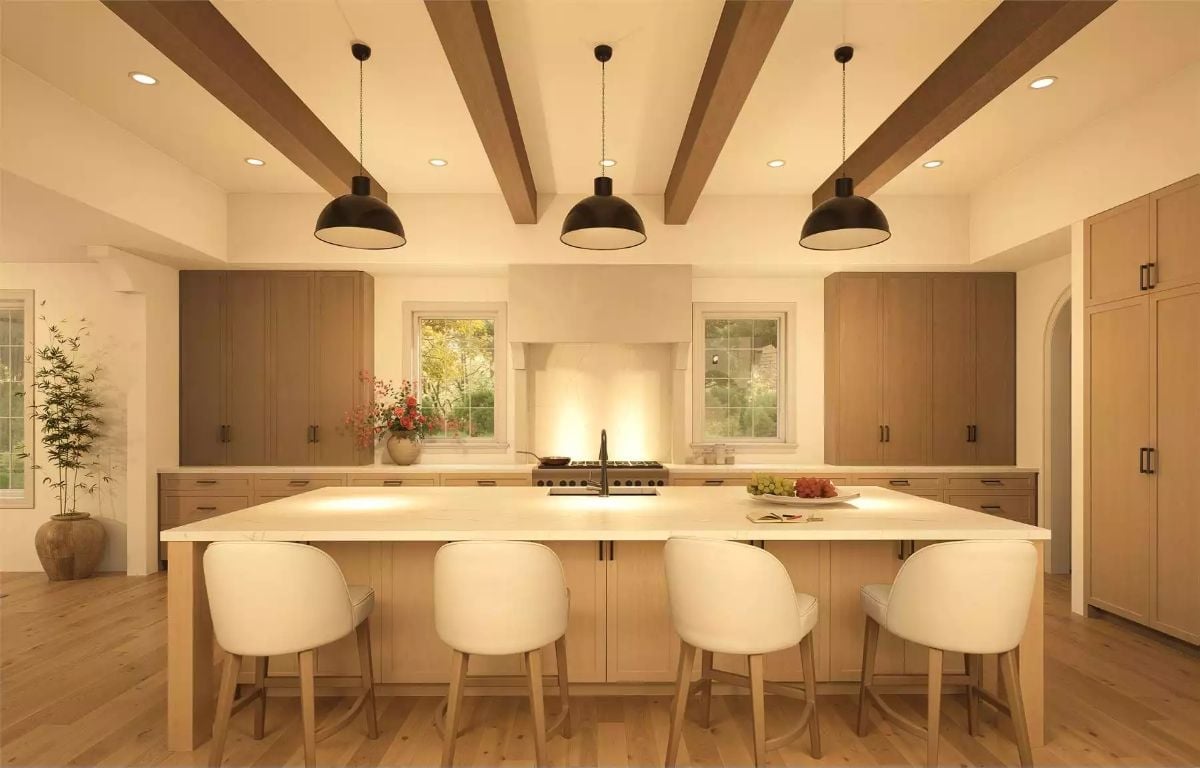
Warm oak cabinetry runs wall to wall without feeling heavy, and most of the credit goes to the white quartzite island countertop, pulling so much light into the center of the room. Four barrel-back stools line up beneath three black dome pendants. Exposed wood ceiling beams add structure overhead without competing with the cabinetry below — the two materials share a warmth that keeps them from fighting each other.
In The Details: Matching your pendant finish to your cabinet hardware is a small move that pays off in a big room like this. Black against warm oak reads intentional rather than industrial, and it keeps the palette from drifting into the kind of safe, forgettable beige that photographs fine and feels like nothing in person.
Pin It
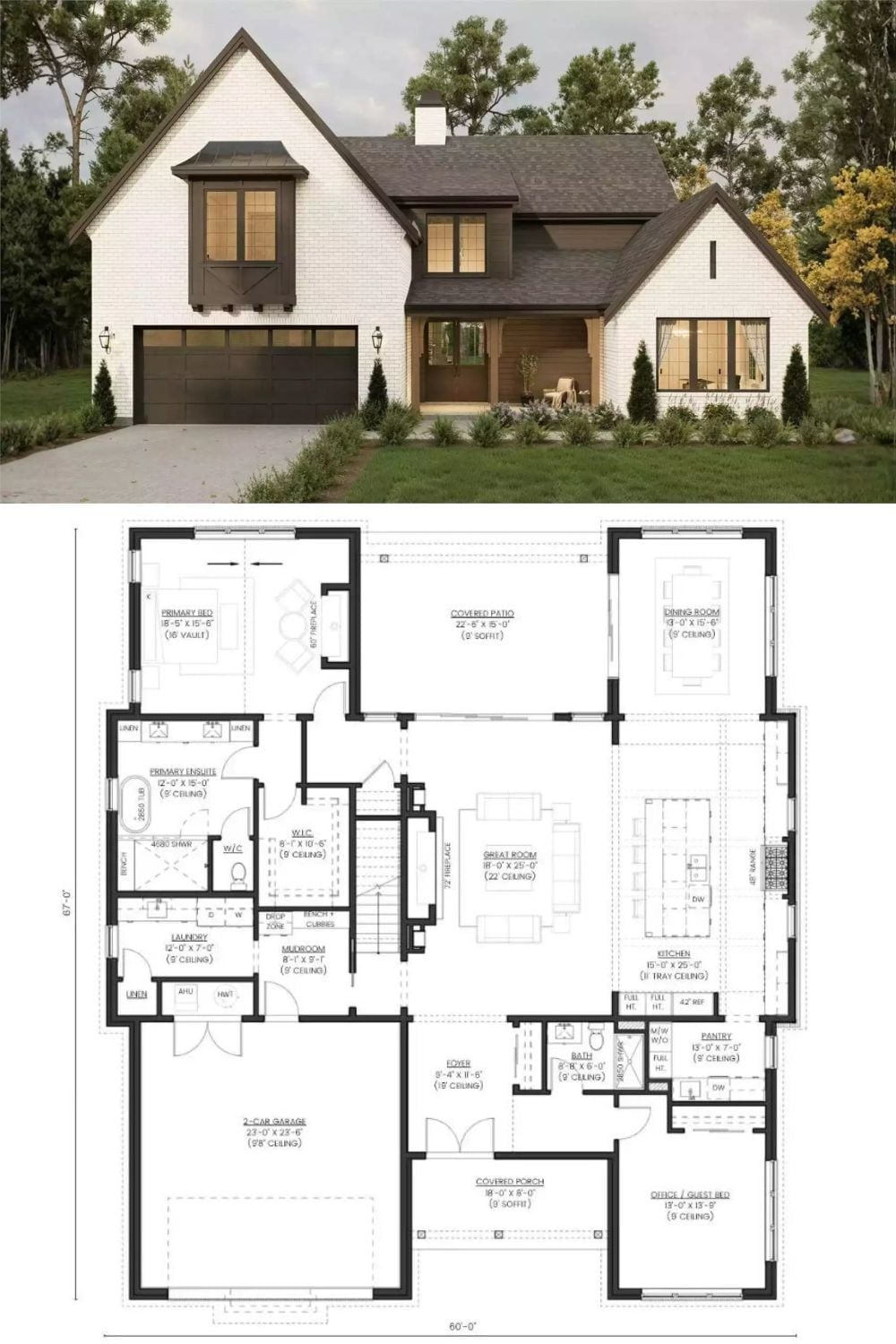
A rendered exterior pairs white brick with dark trim and a covered front porch, while the floor plan below shows a main-floor primary suite, great room with 22-foot ceilings, covered rear patio, office or guest bed, mudroom with drop zone, and a walk-in pantry positioned just off the kitchen.
The Psychology Behind This: Open floor plans work socially because they remove the visual barriers that signal “stay out.” When a kitchen, great room, and dining space share sightlines, people naturally drift toward each other instead of dispersing to separate rooms. Families who cook together, eat together, and end up watching the same thing on a Tuesday night usually do it because the layout made it easy — not because anyone made a plan.