
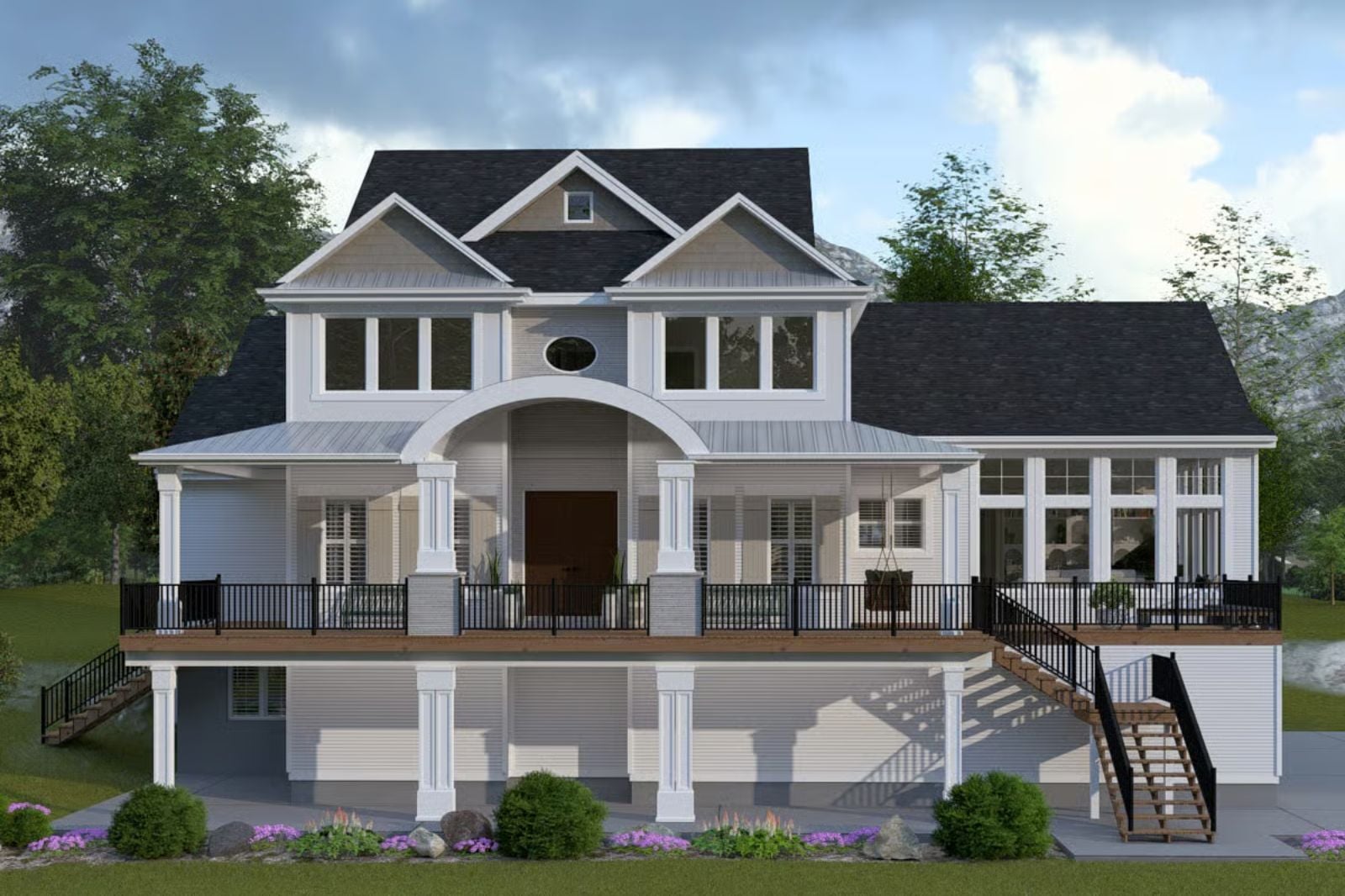
Specifications
- Sq. Ft.: 3,707
- Bedrooms: 3-4
- Bathrooms: 3
Floor Plan
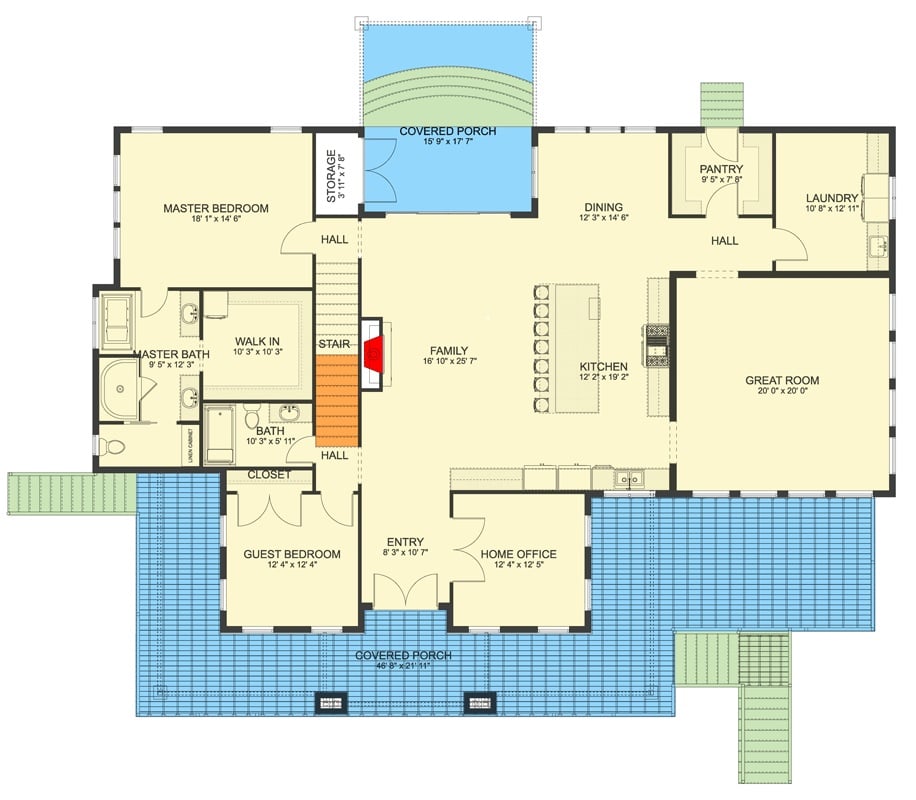
Single-story layout features a master suite, guest bedroom, home office, and open kitchen-family-dining core. A wraparound covered porch wraps the front and side, with stairs suggesting an upper bonus room.
Floor Plan
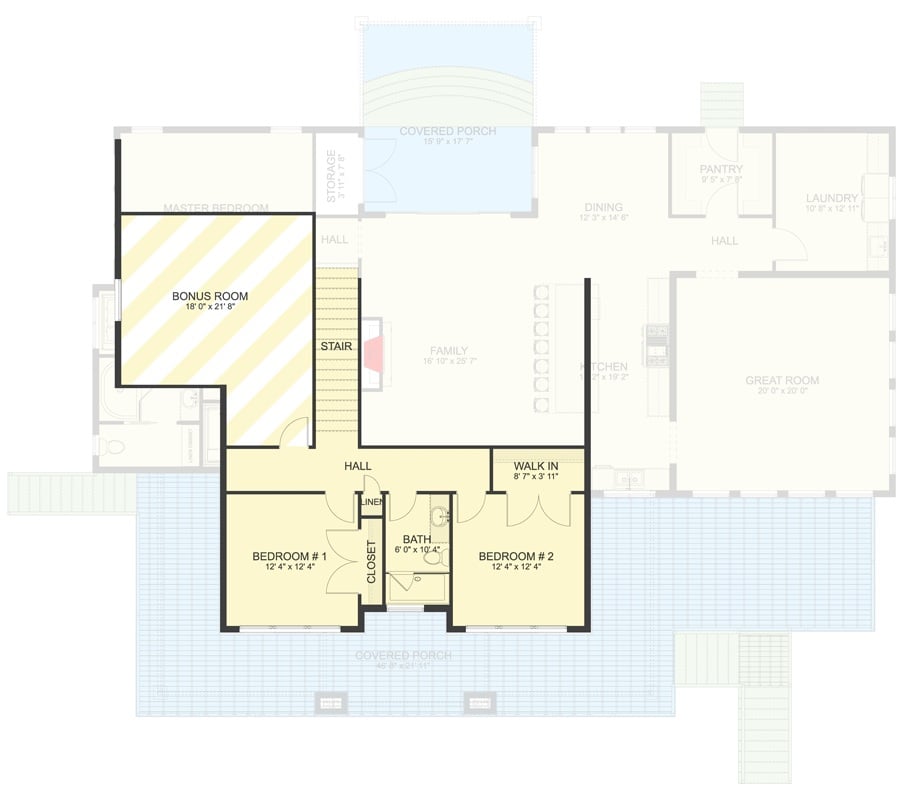
The upper level includes two bedrooms tucked behind a shared bath. The highlighted bonus room sits just off the master bedroom hall, ideal for a home office or playroom. A central stair connects to the family room, which flows toward the kitchen and great room.
Floor Plan
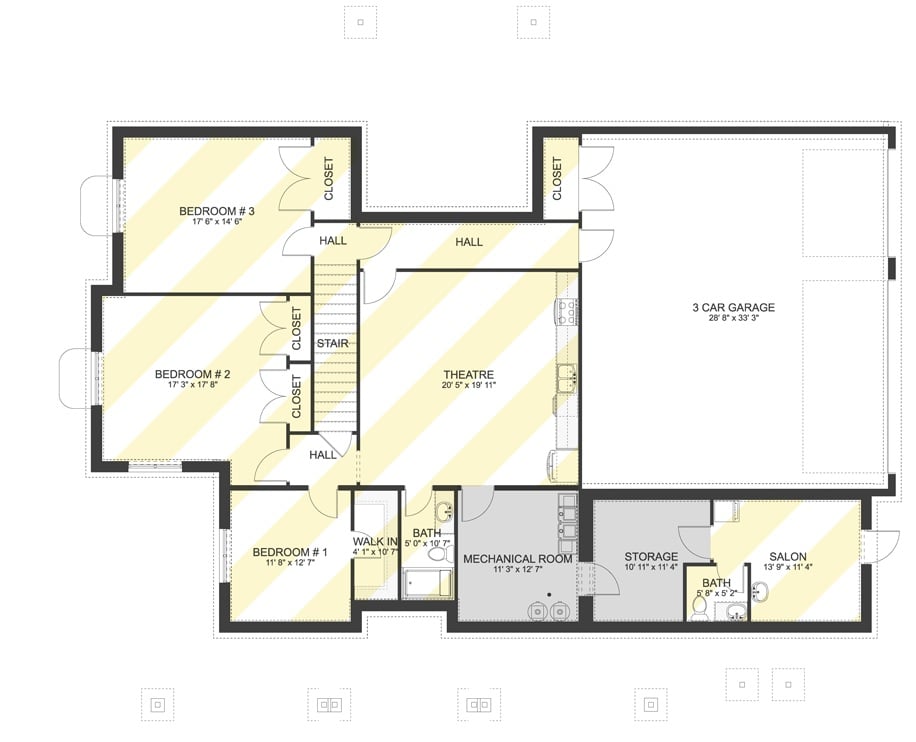
The lower level packs three bedrooms, a theatre, and a salon into a well-organized layout. Bedrooms 2 and 3 share hall access near closet clusters, while Bedroom 1 sits adjacent to a walk-in and full bath. The theatre anchors the center, flanked by mechanical and storage rooms near the three-car garage.
Why It Works: Tucking the theatre between the bedroom wing and garage creates a natural sound buffer without wasting square footage on dedicated media corridors. The salon with its own bath is a rare lower-level feature that functions equally well as a guest suite or home business space.
White Siding and a Dark Roof That Actually Work Together
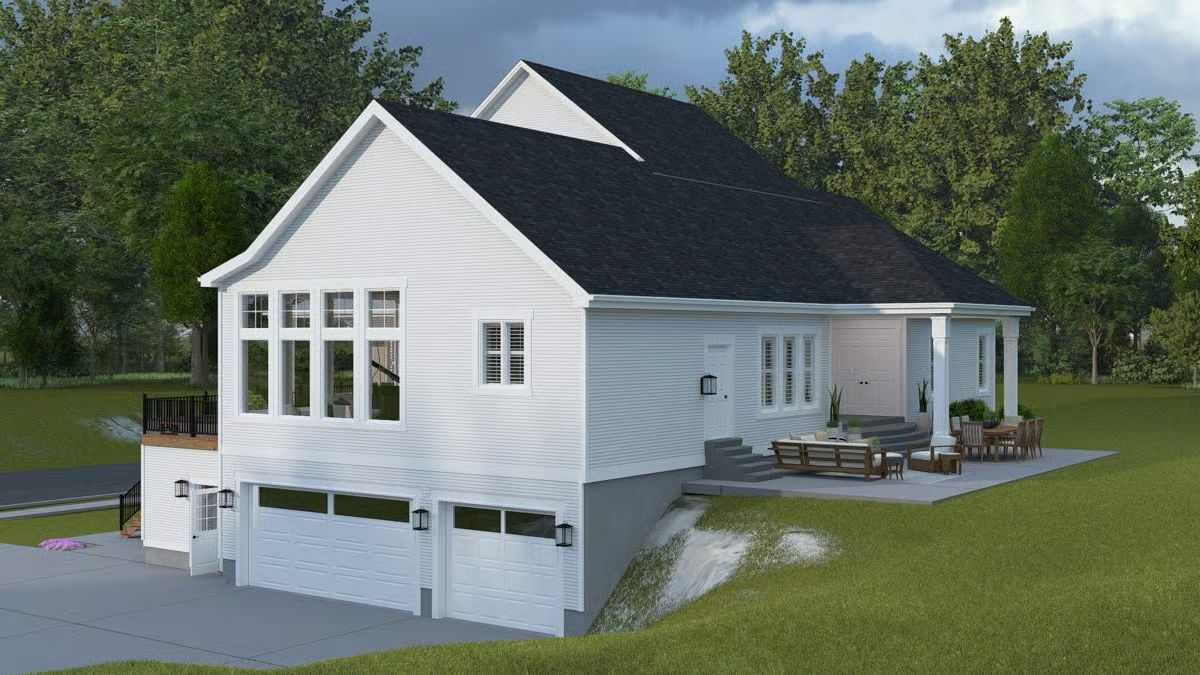
Painted white lap siding keeps the exterior clean without feeling cold, and the dark asphalt shingles give it weight. The covered porch runs along the front with columns and outdoor seating already in place. Garage bays sit below grade on the downhill side. It’s a practical solution for a sloped lot.
- A lower-level garage entry keeps cars off the main living floor
- The covered porch provides shade without requiring a separate pergola structure
- Grade-level access from the porch reduces stair count for daily entry
Wainscoting, Barn Mirror, and a Hallway That Pulls You Straight Through
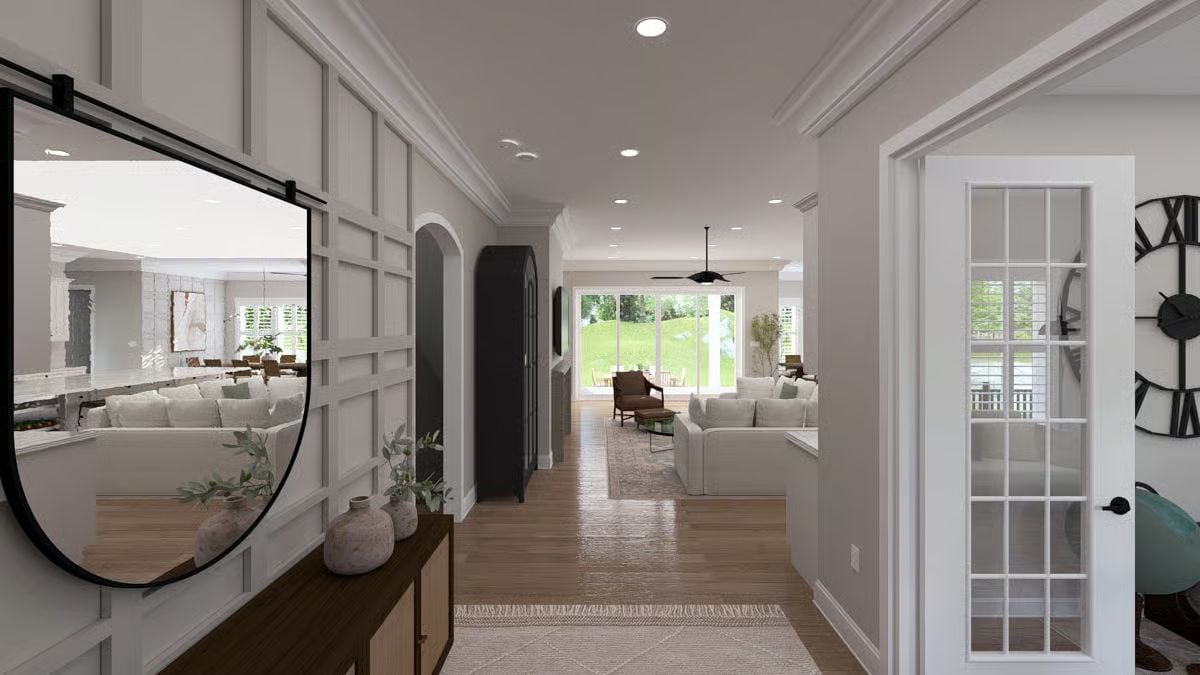
Board-and-batten paneling lines the entry hall from floor to crown molding, giving it real architectural weight. A round barn-style mirror mounted on a sliding track keeps things from feeling too formal. Down the hall, natural light floods in through a wall of windows.
Worth Knowing: Hallways with paneled wainscoting tend to read as more finished than painted drywall alone, because the trim work adds shadow lines that change with the light throughout the day. If you’re considering it, running the panels all the way to the crown molding rather than stopping at chair-rail height makes a noticeably bigger impact in narrower spaces.
Arched Built-Ins and a Fireplace That Earns Every Inch of the Wall
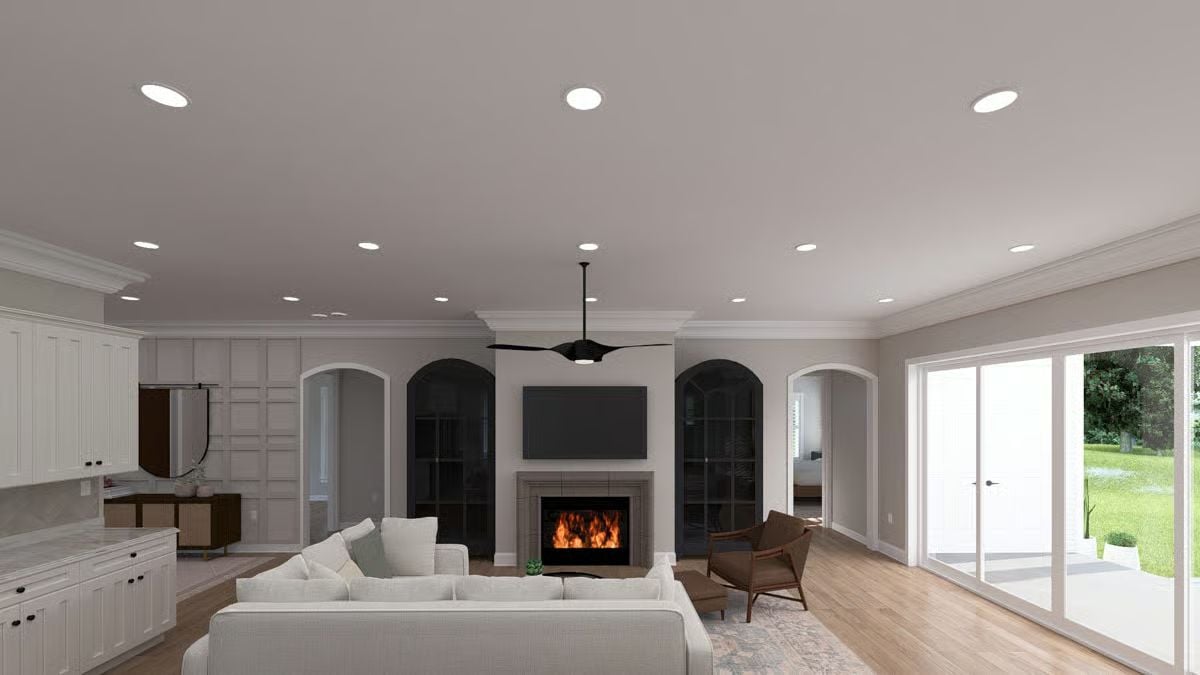
Recessed lighting keeps the ceiling clean while the fireplace wall does the heavy lifting. Paired arched cabinet doors flank the TV on both sides, giving the surround structure without crowding it. Crown molding ties the kitchen and living room together across one continuous ceiling plane.
Why Those Arched Openings Work Harder Than They Look
Repeating the arch motif across the built-ins, the flanking passage openings, and the cabinet doors creates visual consistency that reads as intentional rather than decorative. It’s a detail that often gets credited to expensive millwork, but here it’s mostly achieved through drywall framing and door selection. That repetition is what makes the wall feel designed rather than assembled.
Marble Island, Wine Fridge, and Enough Counter Space to Mean It
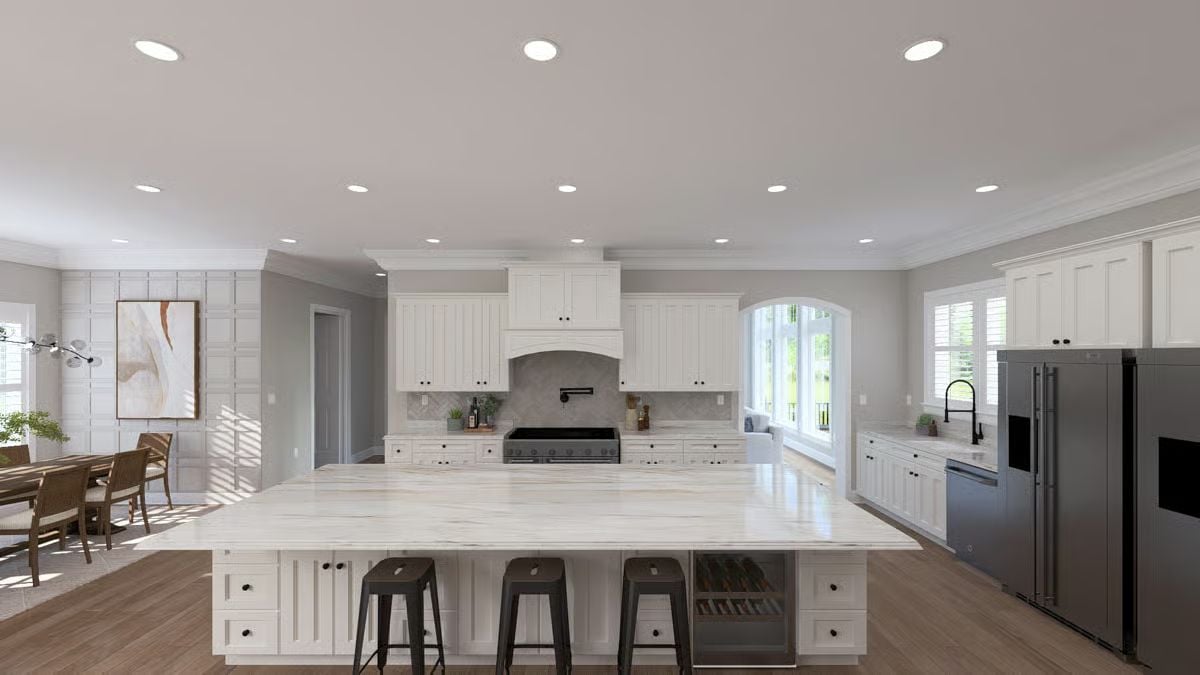
Waterfall-edge quartz on an oversized island does a lot of work here. Three metal stools, a built-in wine cooler, and white shaker cabinetry with black hardware keep everything grounded without fuss.
Pro Tip: Islands with built-in wine fridges work best when they’re positioned away from the range, where heat won’t affect storage temperatures. If you’re planning a similar layout, confirm the fridge vent has clearance on at least one side so it doesn’t cycle constantly trying to compensate.
Woven Chairs, Grid Paneling, and Natural Light That Does the Heavy Lifting
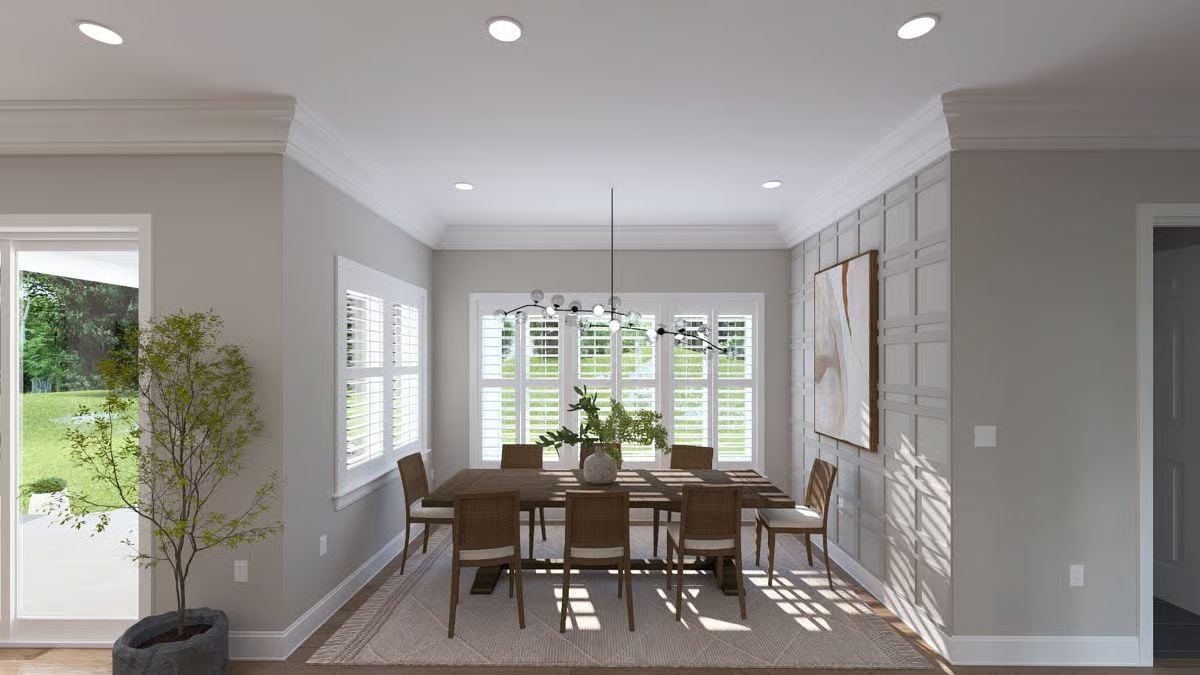
Plantation shutters cast a grid of shadows across the hardwood floor that shifts through the day. Rattan-back dining chairs soften the room without competing with the white grid paneling on the right wall.
The Psychology Behind This: Rooms with strong natural light often don’t need overhead fixtures to feel alive, but having a statement pendant centered above the table gives the eye somewhere to land when the shutters are closed. That layering of light sources keeps a dining room functional after dark without feeling clinical.
Shuttered Windows, Warm Wood, and a Bedroom That Knows How to Rest
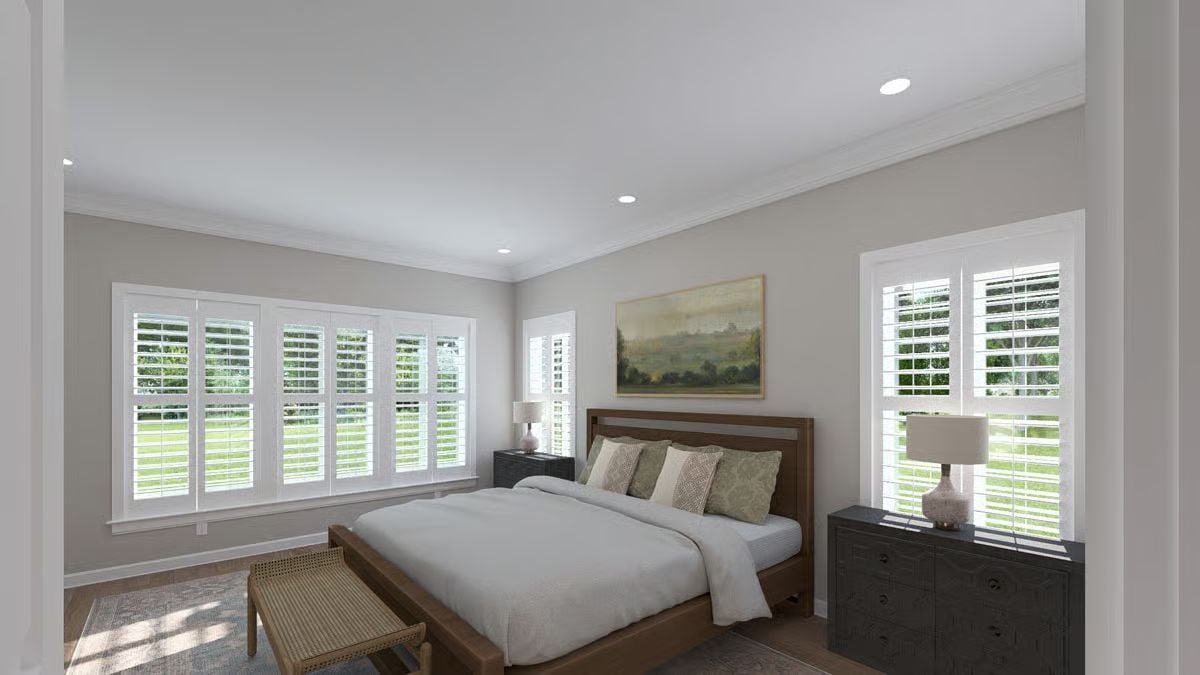
White plantation shutters on three sides keep the light diffused without blocking the view of the greenery outside. The wood bed frame grounds the room without dominating it. Flanking nightstands stay dark and low, which lets the landscape painting above the headboard carry the wall. Simple recessed lighting keeps the ceiling clean.
History Corner: Crown molding became a residential standard in American homes during the Federal period of the late 18th and early 19th centuries, when builders borrowed heavily from classical architecture. Its continued use in traditional-style homes today connects new construction to that lineage without requiring ornate detailing. A simple profile like the one here reads as finished rather than formal.
Black Fixtures, Glass Panel, and a Master Bath That Keeps Its Geometry Clean
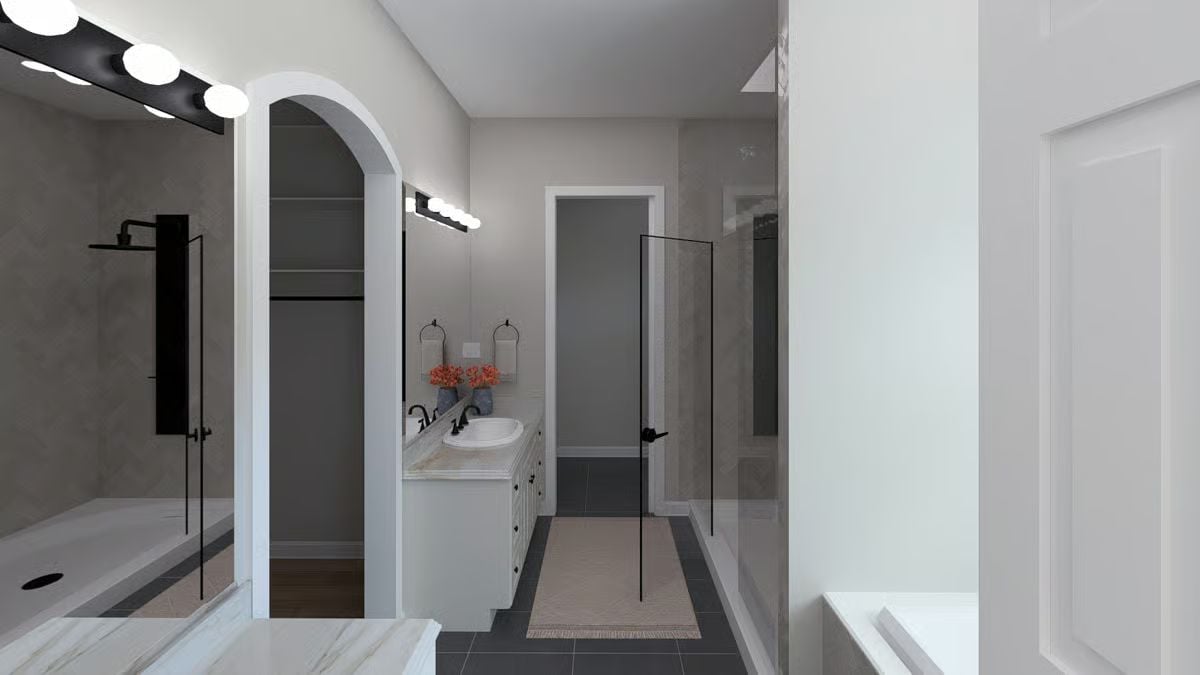
Matte black hardware ties the shower frame, faucets, and towel rings together without feeling forced. The arched closet entry softens what’s otherwise a very linear space.
Pin It
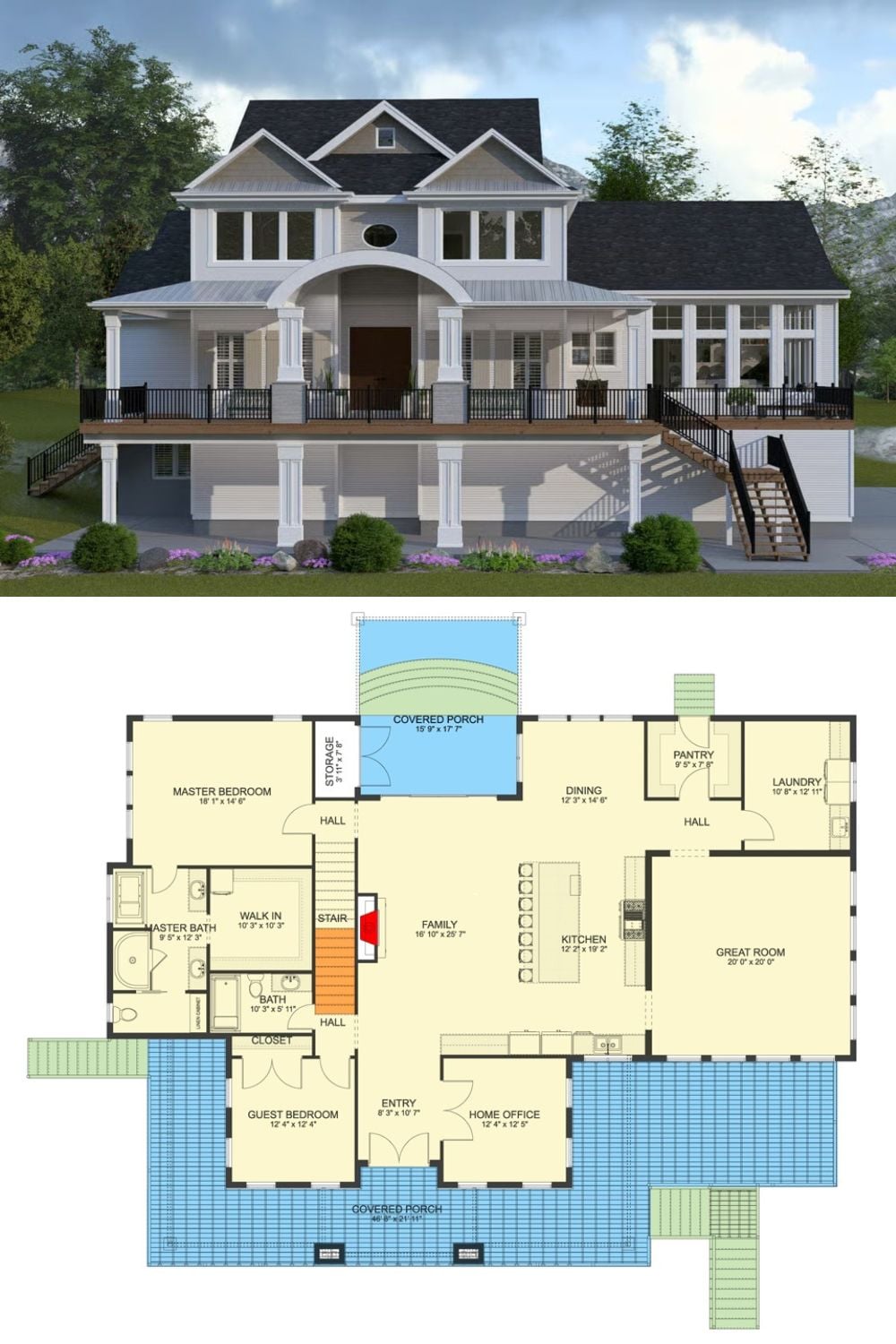
Exterior rendering shows a two-story craftsman with a wraparound porch. Below, the floor plan reveals a master suite, great room, family room, home office, and covered porches on both sides.
