
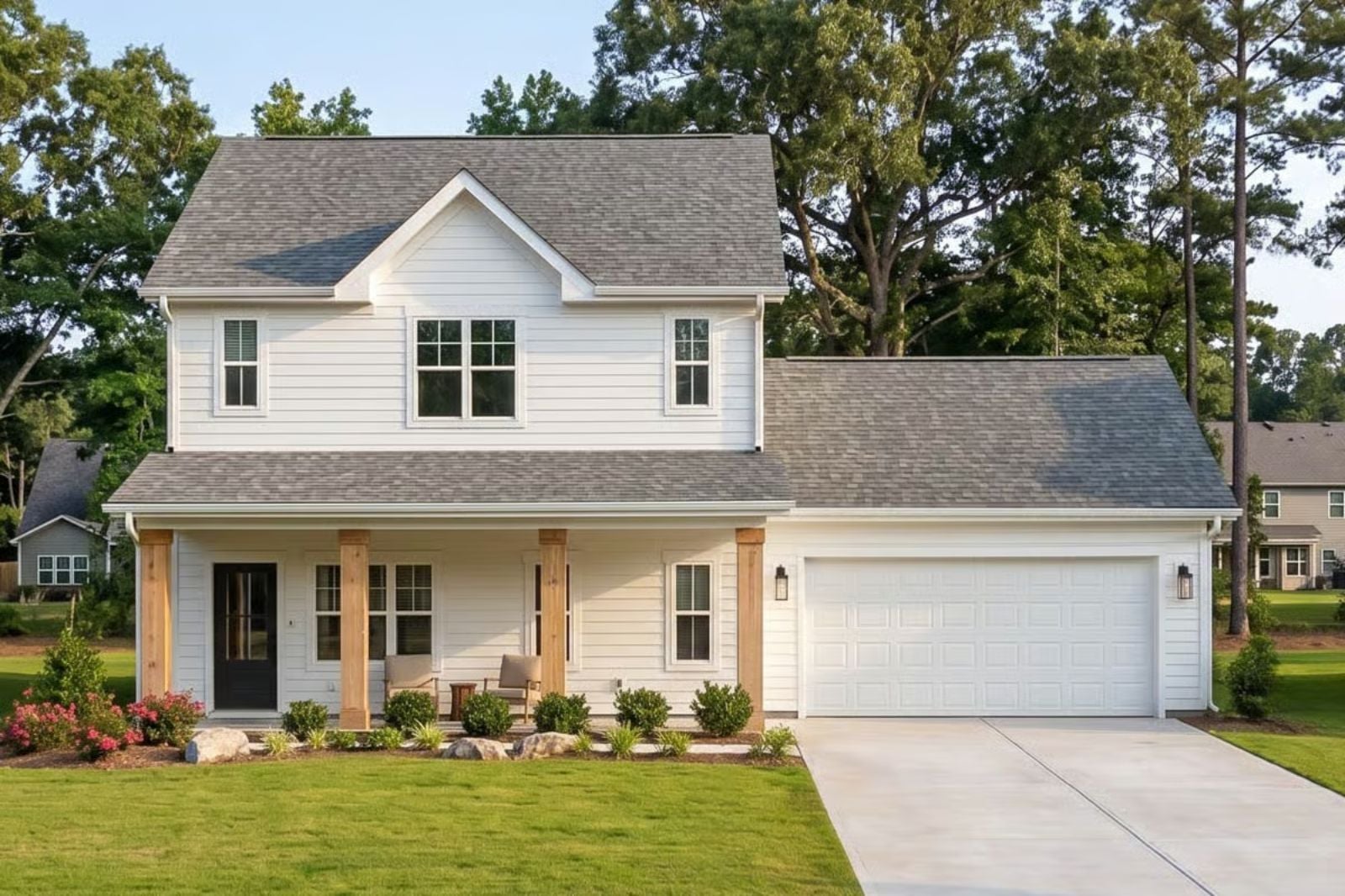
Specifications
- Sq. Ft.: 1,509
- Bedrooms: 3
- Bathrooms: 2.5
Floor Plan
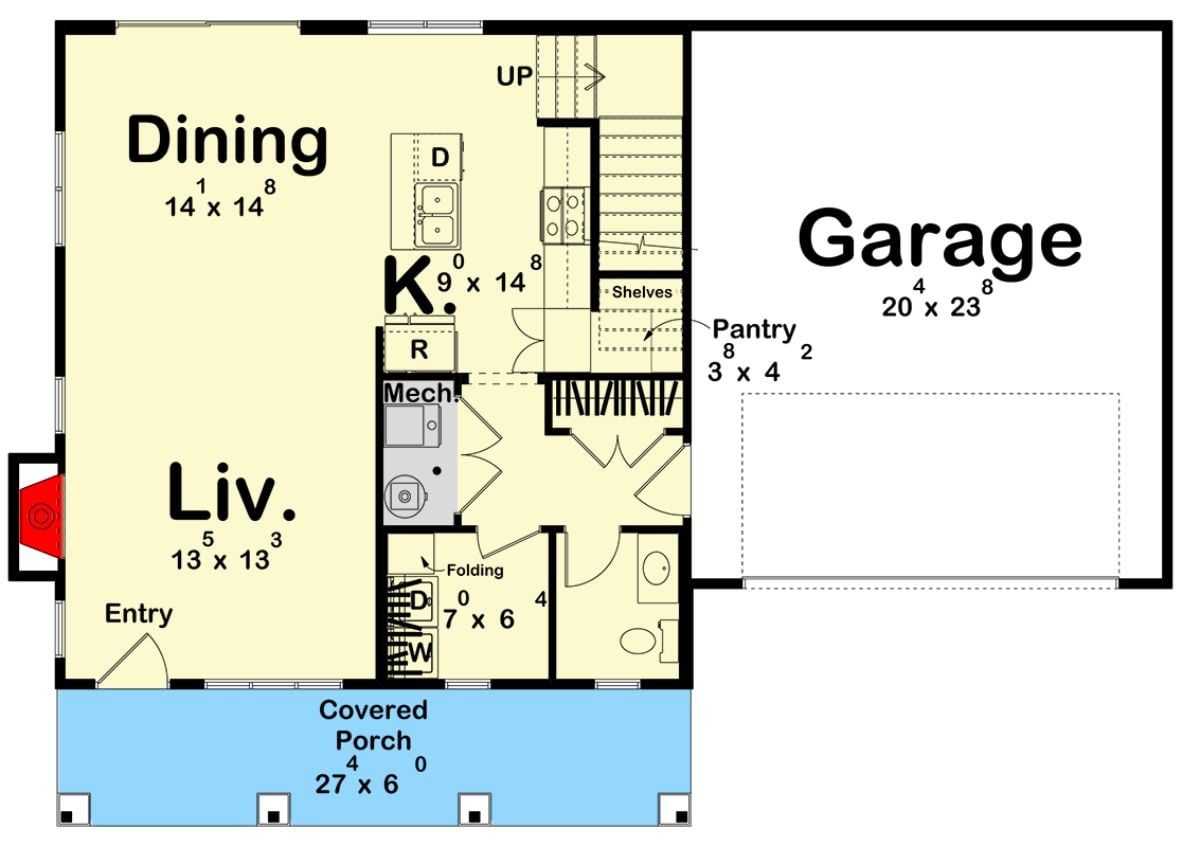
First floor shows open dining and living areas, central kitchen, laundry, bath, pantry, and attached two-car garage.
Floor Plan
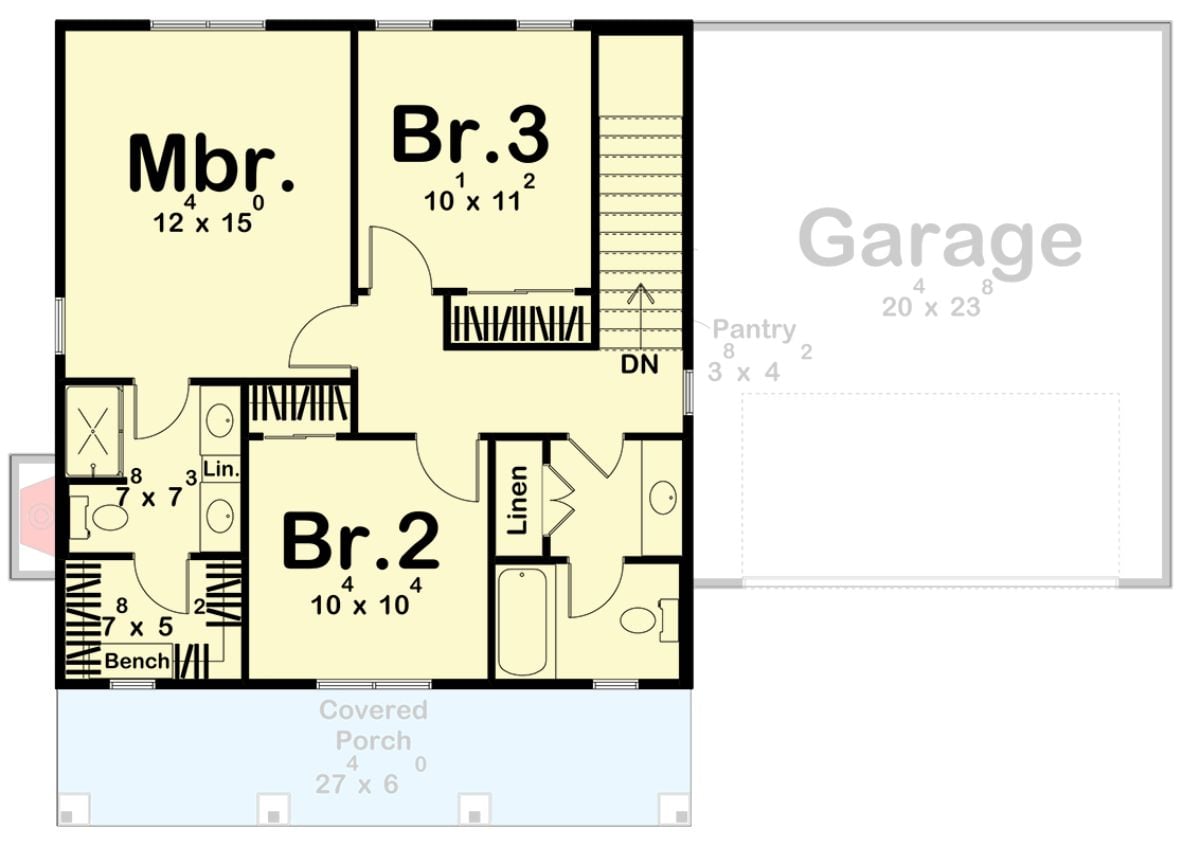
Upstairs holds three bedrooms, two full baths, and a linen closet off the hall. The master sits opposite Br. 2 and Br. 3, with a private bath and stair access nearby. A pantry tucks between the stairwell and garage. Downstairs likely holds the main living. The covered porch spans nearly the full front width.
Rear Patio Access Through Sliding Doors Keeps Indoor-Outdoor Flow Natural
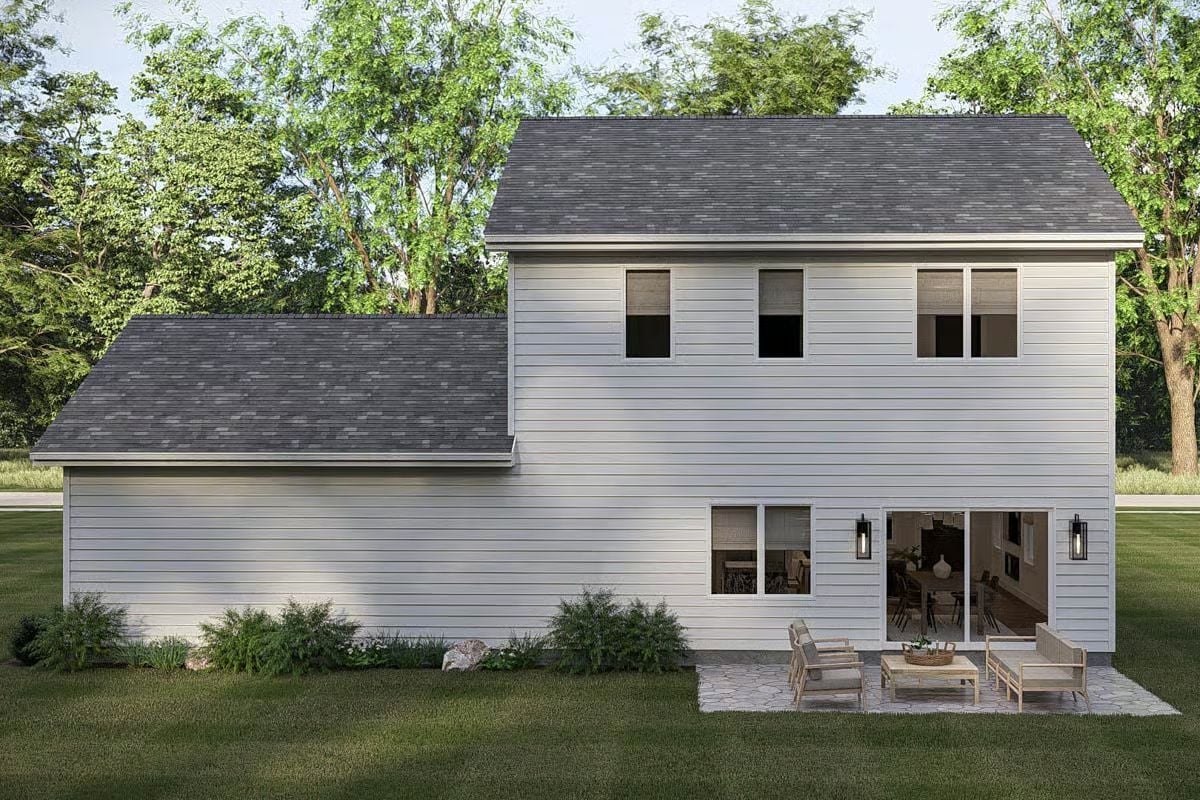
Gray lap siding wraps the two-story rear elevation, where sliding doors open onto a stone patio with wood furniture. Two wall sconces flank the entry.
Leather Chairs and a Linear Fireplace Keep This Living Room Grounded
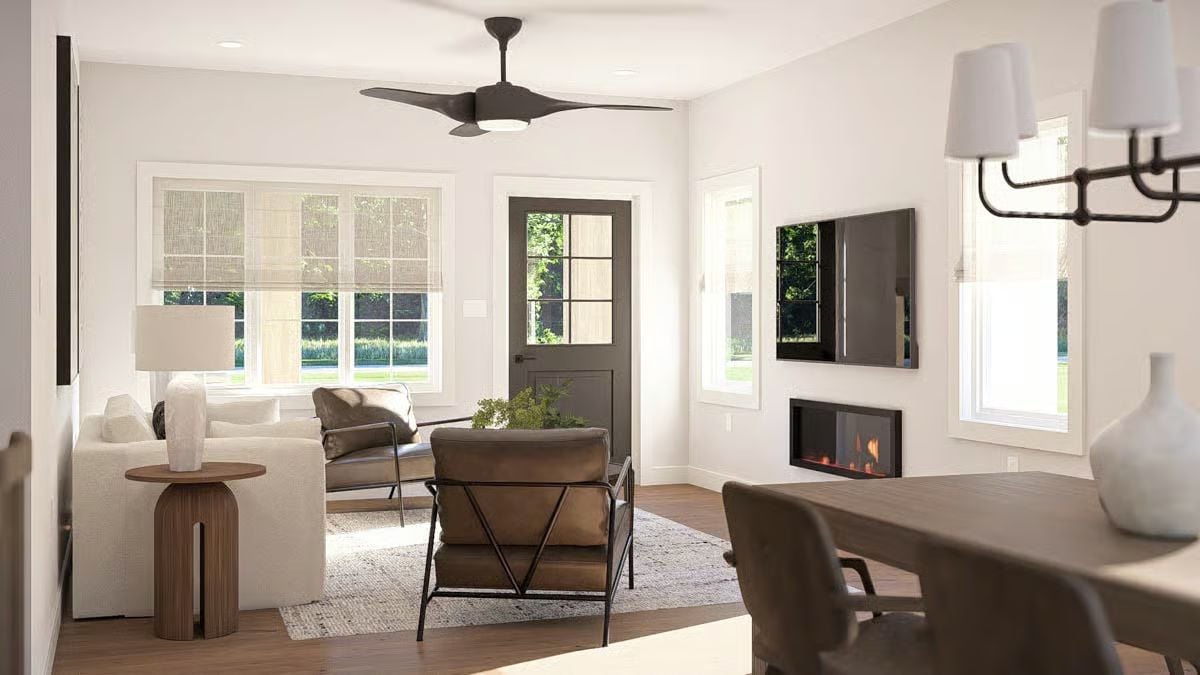
Two leather chairs anchored by black metal frames face a linear fireplace tucked beneath a wall-mounted TV. Natural light pours through Roman shades on three sides. The round wood side table and cream sofa soften the darker finishes. A three-blade ceiling fan ties the earthy palette together without competing for attention.
Did You Know: Linear fireplaces like the one shown here use a sealed combustion system that draws air from outside rather than from inside the room, making them significantly more efficient than traditional open-hearth designs. Because they don’t require a traditional chimney, they can be installed on interior walls, which opens up a lot of flexibility in floor plan placement.
Marble Waterfall Counters and a Herringbone Backsplash Do the Heavy Lifting Here
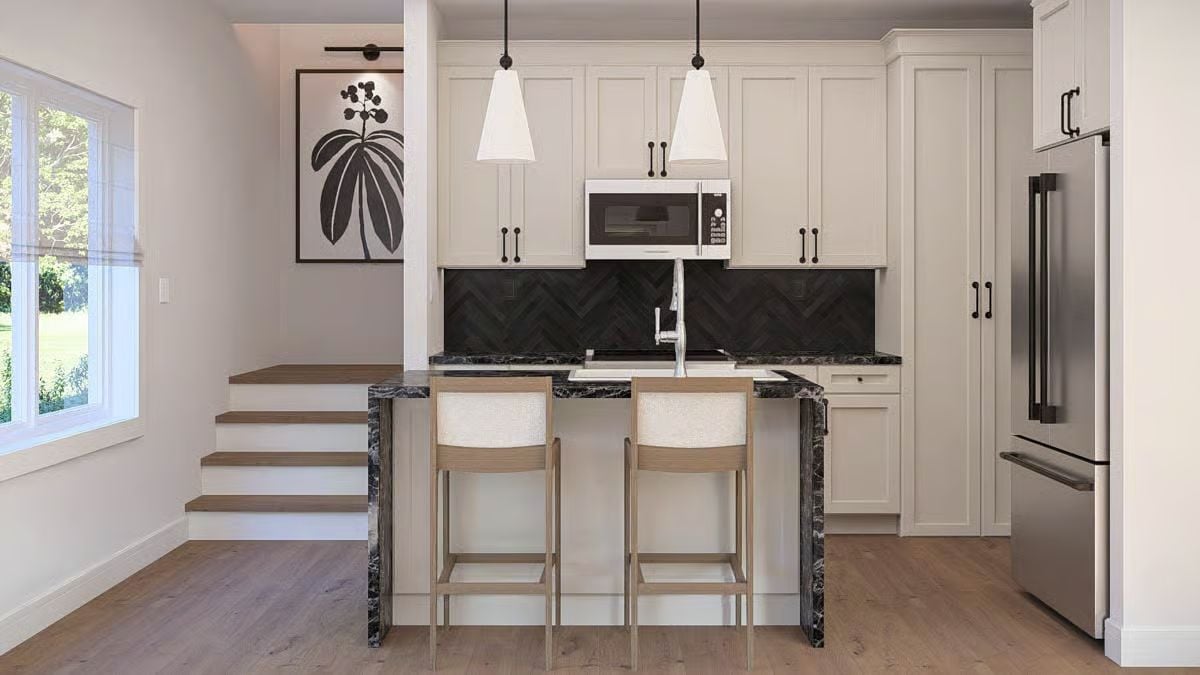
Dark marble wrapped around the peninsula’s waterfall edge makes every other surface work harder to keep up.
The black herringbone backsplash runs the full width of the kitchen wall, creating contrast against off-white cabinetry without needing much else. Two bar stools with wood frames and upholstered backs keep the seating comfortable but low-profile. Black hardware ties the pendant lights to the cabinet pulls. And that sink placement, centered under the faucet with counter space on both sides, is more practical than it looks in a compact kitchen like this.
Moving into the dining area, the open layout between the kitchen and table becomes easier to read.
Herringbone Backsplash and Pendant Row Pull the Kitchen and Dining Room Together
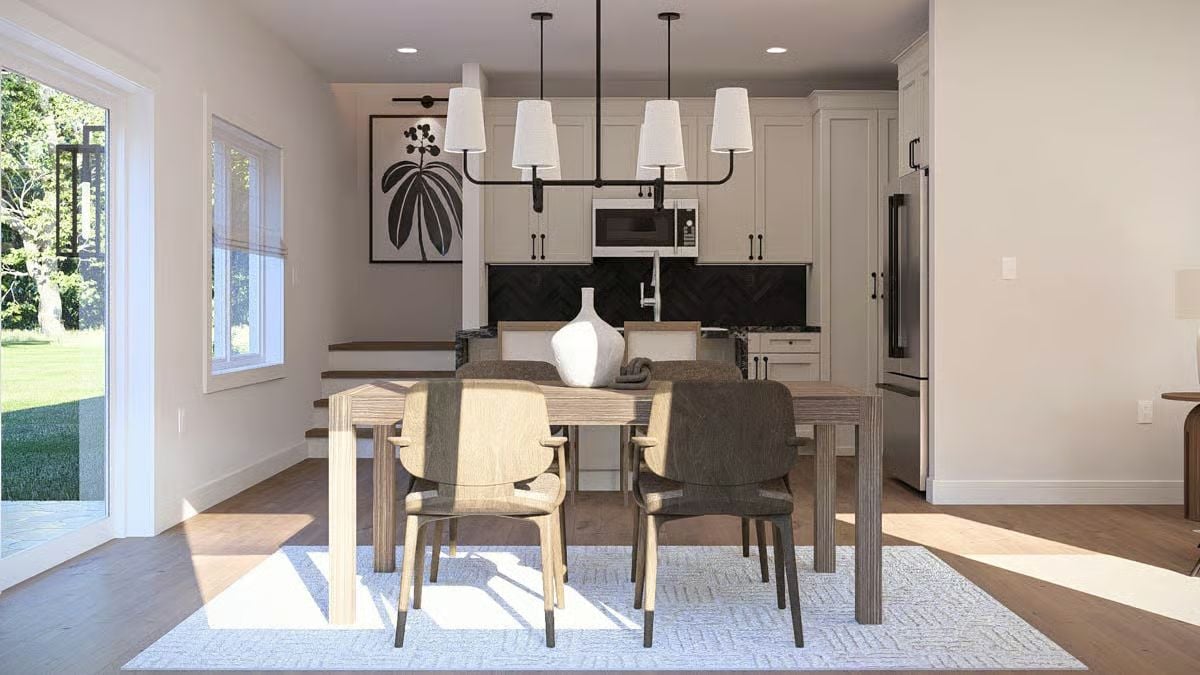
Black herringbone tile runs the full length of the backsplash, while four white drum pendants on a matte black rail anchor the dining table below.
Dark Walnut Nightstands and Cane Headboard Give This Bedroom Real Texture
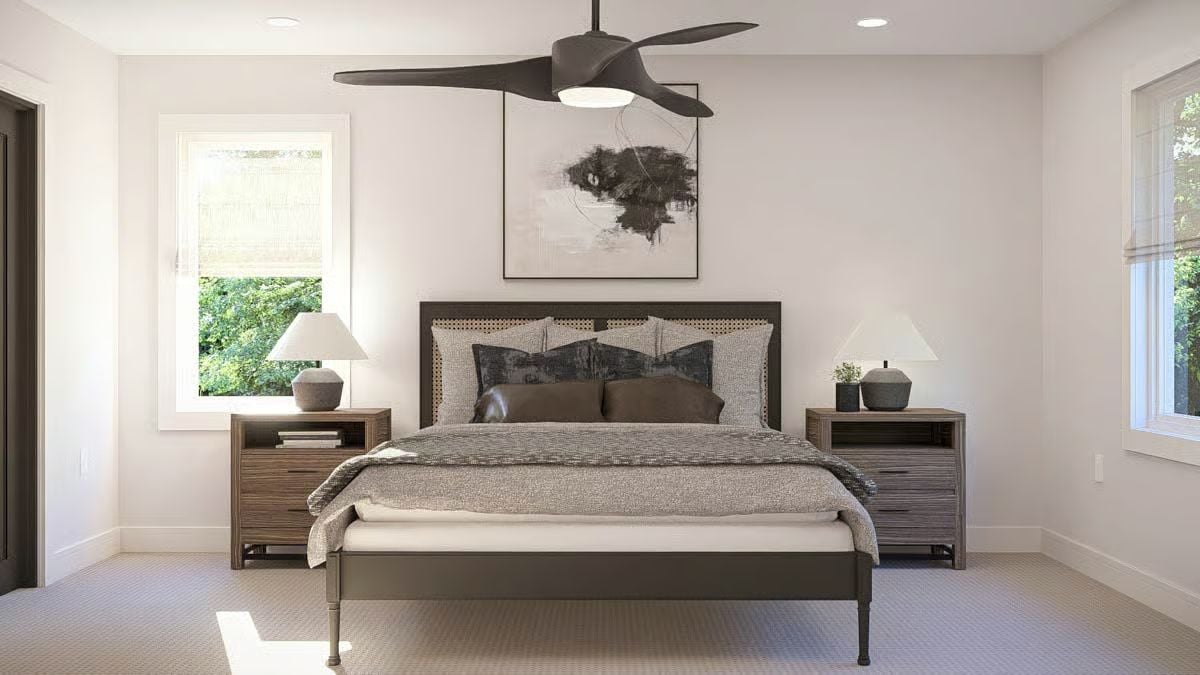
Sculptural three-blade ceiling fan anchors the room without crowding it. Cane insets on the headboard add warmth against white walls and neutral carpet underfoot.
The Psychology Behind This: Neutral bedrooms with low visual contrast tend to reduce cortical arousal before sleep, which is why designers often pull dark accents from furniture rather than walls. Keeping bold color off the walls lets your brain register the space as restful rather than stimulating.
Dark Marble and Warm Sconces Make This Double Vanity Worth the Splurge
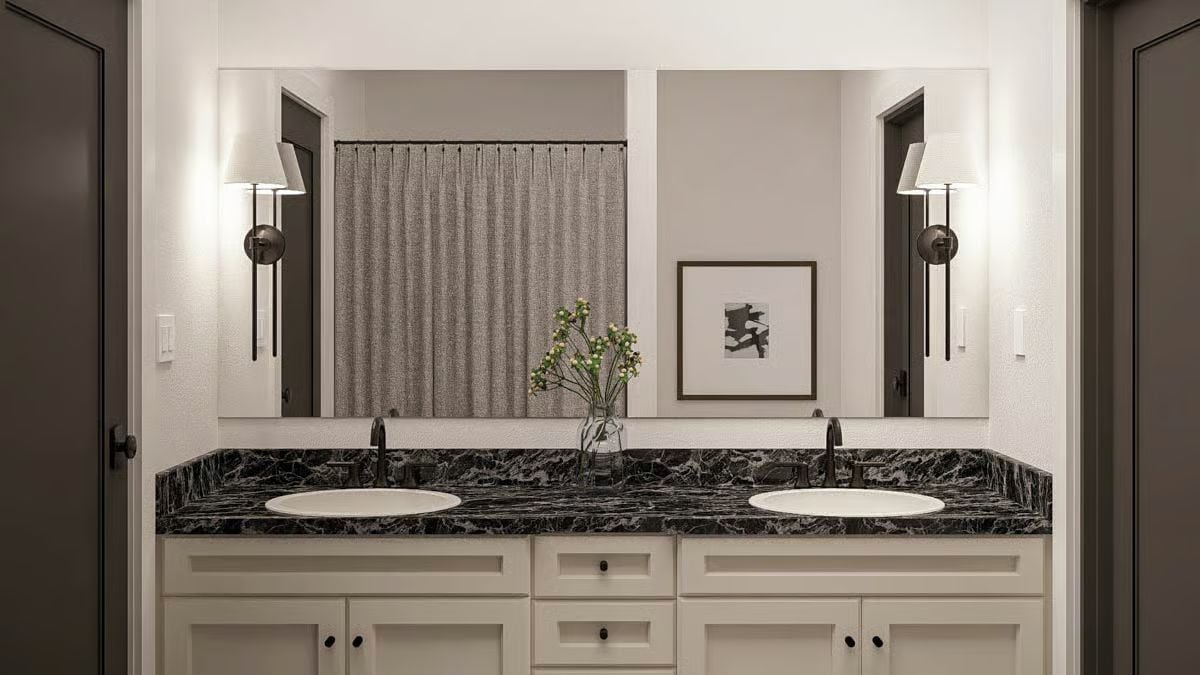
Black marble with white veining runs edge to edge across cream cabinetry, and the contrast is sharp enough that nothing else needs to compete. Oval undermount sinks sit centered under oil-rubbed bronze faucets. Wall sconces flank the mirror at eye level, keeping shadows off your face.
Ask Yourself: Undermount sinks like these are bonded beneath the countertop rather than dropped in from above, which means there’s no rim collecting toothpaste and water around the basin. If you’re choosing between sink mounting styles, that detail alone makes daily cleaning considerably easier.
Pin It
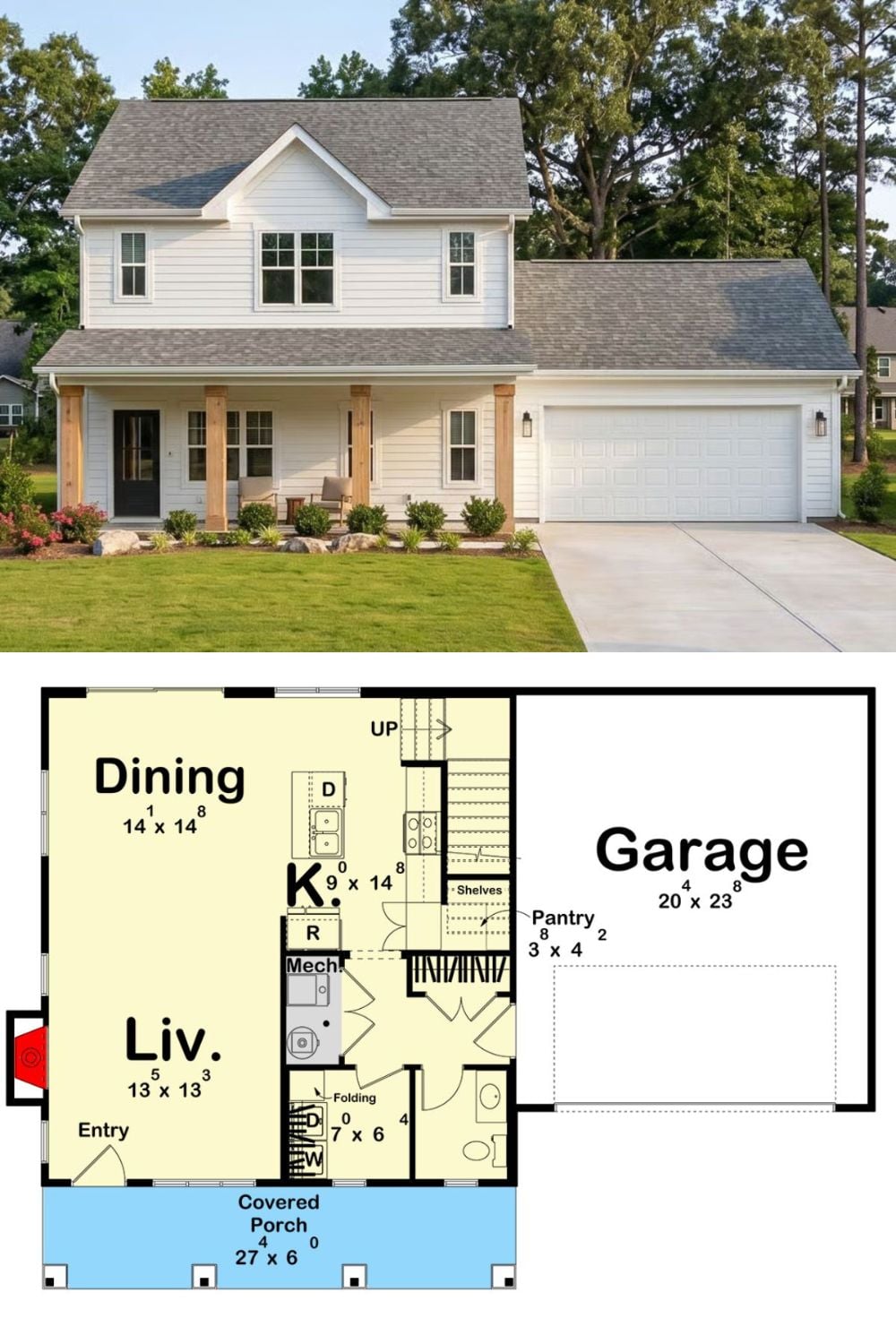
Exterior photo of a white farmhouse pairs with its first-floor layout showing dining, living, kitchen, garage, and covered porch.
History Corner: Covered front porches became a defining feature of American farmhouse architecture in the mid-1800s, largely because they offered shade in regions without reliable indoor cooling. Builders oriented them to catch prevailing breezes, which made the porch a functional room as much as a social one. That practical origin is why the proportions on traditional plans tend to run wide and shallow rather than deep.