
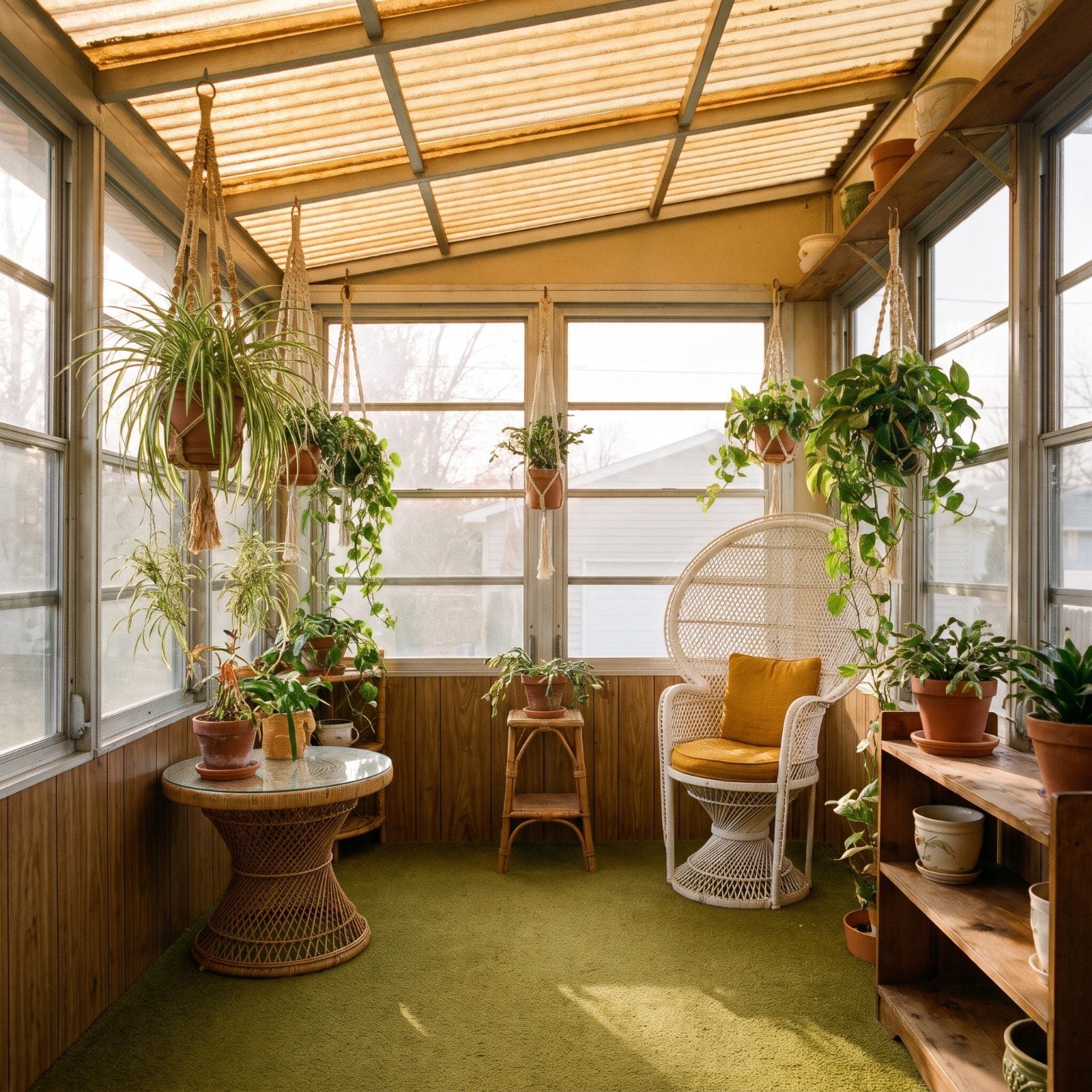
The sunroom always ran about ten degrees too hot in July and smelled like warm vinyl and potting soil. You cranked a window open, a wasp got in, and nobody minded much. That room was where the family ate watermelon over newspaper and where Grandma kept forty plants alive on pure stubbornness.
It had a specific set of parts, and once you see them again the whole room comes flooding back. What follows are the details that made a sunroom a sunroom.
In order to come up with the very specific design ideas, we create most designs with the assistance of state-of-the-art AI interior design software. Also, assume links that take you off the site are affiliate links such as links to Amazon. this means we may earn a commission if you buy something.
37. Louvered Jalousie Windows You Opened with a Little Hand Crank
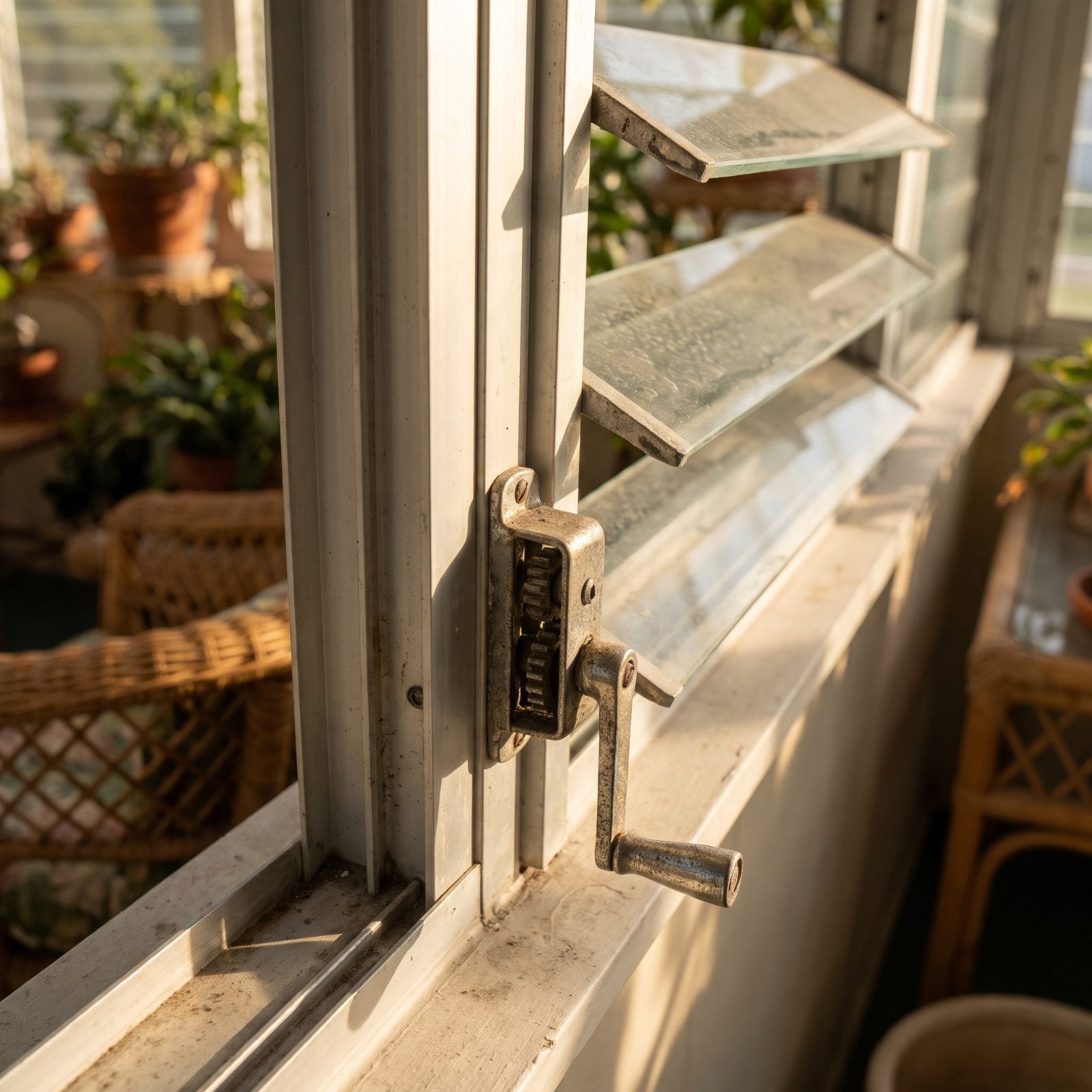
You turned the little crank and the whole wall of glass slats tilted open at once, like venetian blinds that meant it. Jalousie windows were the sunroom’s whole personality: part window, part ventilation system, never quite sealing out a determined mosquito.
They worked because the sunroom was a half-outdoor space and these let you dial the breeze in degrees. On a good day the slats threw striped shadows across the carpet; on a cold day they leaked like a sieve, which is exactly why nobody puts them in anymore. We still think they looked better than anything that replaced them.
36. Bronze-Aluminum Sliding Glass Doors That Stuck Every Single Time
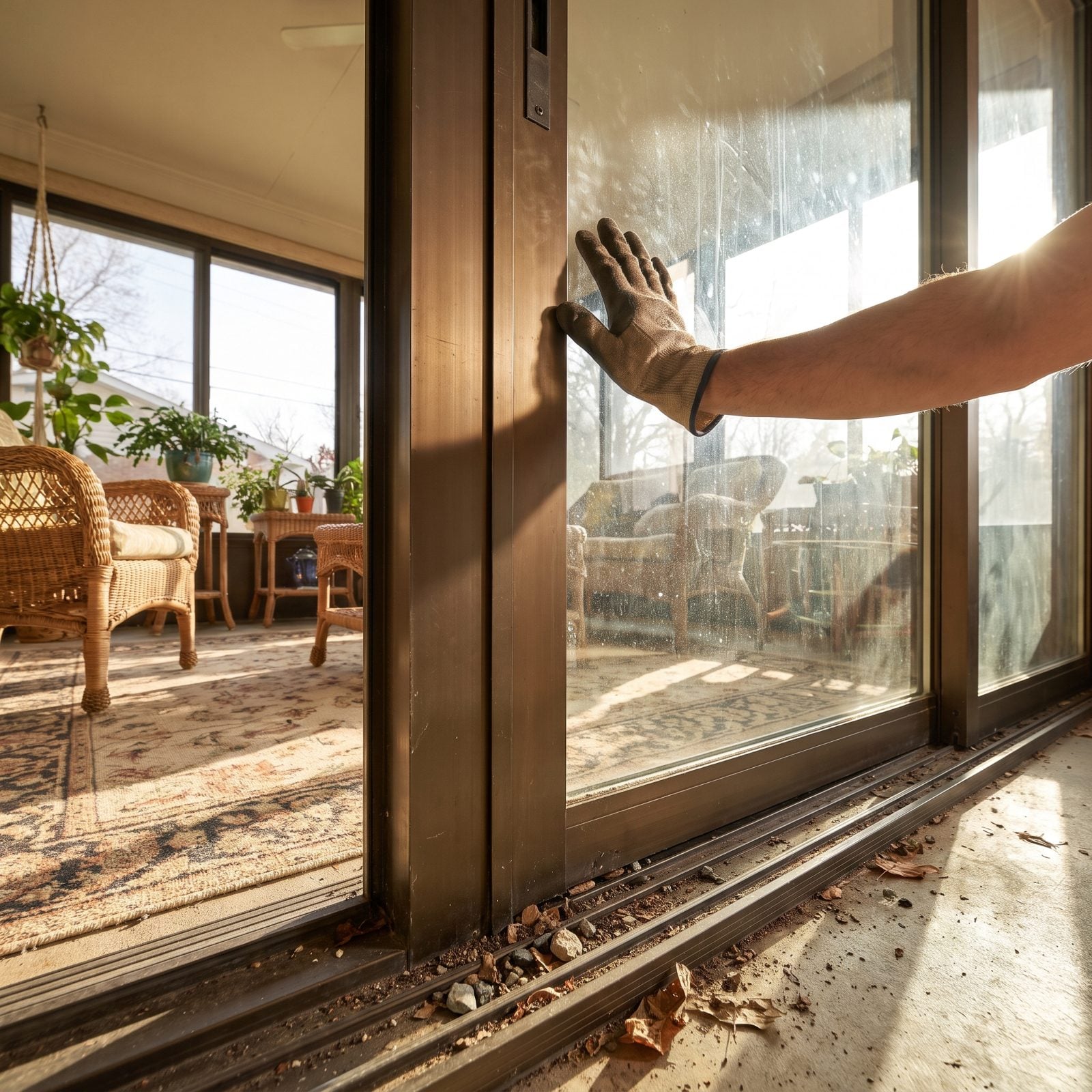
Heavy as a vault door and always one grain of sand away from refusing to budge. The bronze-anodized aluminum frame was the standard sunroom entrance, and you learned to lift and shove in one motion, hip against the glass.
The appeal was obvious: one wall became a doorway to the patio, blurring the line between the carpet and the barbecue. Frames went dark bronze to match everything else in that brown-and-gold decade. Want that patio-to-interior flow done right today? It shows up in a rust sunroom renovation that keeps the glass and loses the draft.
As a glass door repair specialist explains, “One of the most common reasons a sliding glass door is hard to open is dirt and debris accumulating in the bottom track.”
35. Translucent Corrugated Fiberglass Roof Panels Overhead
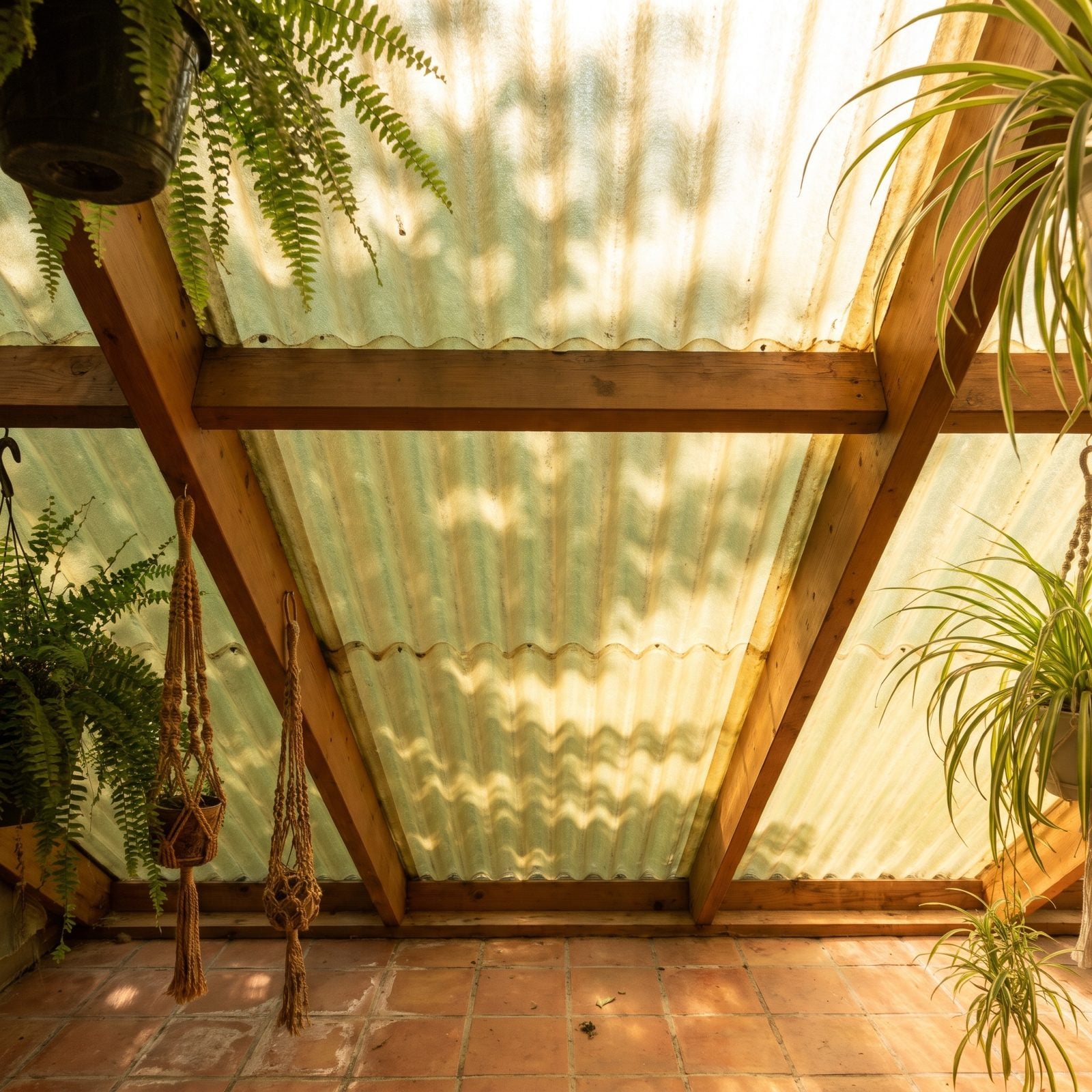
The whole ceiling glowed a soft amber-green when the sun hit it, and when it rained the corrugated fiberglass panels drummed like a tin can orchestra. Everyone in the room took on a faint greenish cast, and nobody questioned it.
These ribbed panels were the cheap, fast way to roof an add-on sunroom — bolted to a frame in an afternoon. They scattered the light instead of blasting it, which is why the room felt soft instead of harsh. The downside: a decade of leaves and pollen left stains you could never scrub out. Charming at the time. A roofer’s nightmare now.
34. Avocado Green Indoor-Outdoor Carpet Glued Right to the Slab
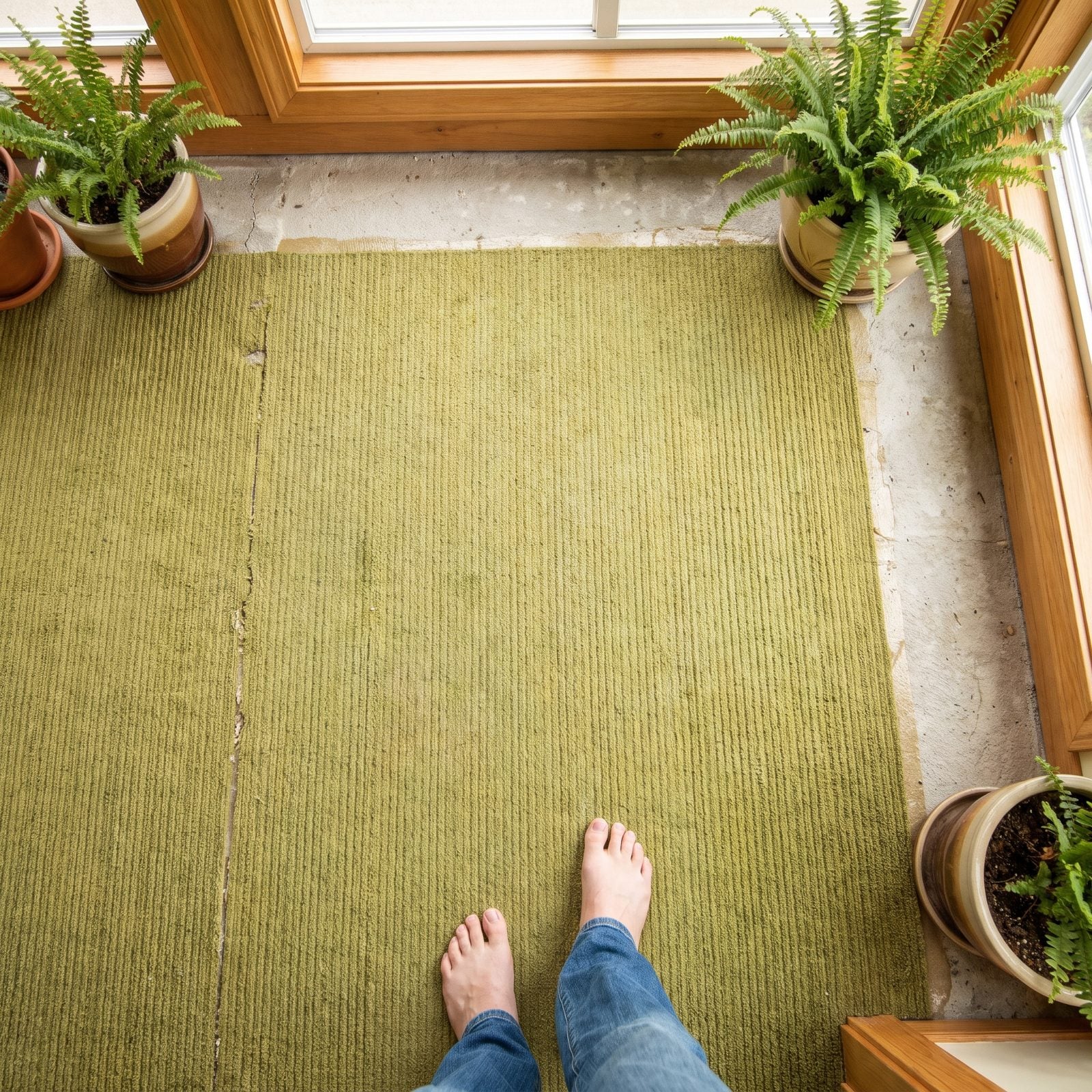
Flat, ribbed, the color of a ripe avocado, and tough enough to hose off. This stuff was glued straight to the concrete slab and it was not coming up without a fight and a putty knife.
It made sense for a room that straddled indoors and out. You could track mud across it, spill a watering can on it, and it just shrugged. The green faded unevenly where the sun hit, going almost olive near the windows. That same earthy palette still anchors a lot of a country game room today, just in better carpet.
What Our Readers Say
- Today, room photos where orange is the main color get fewer hearts from our readers than the other images in the same articles, 28% versus 36%.
- Brown has aged better: among less common interior spaces, images with brown accents earned more hearts from Home Stratosphere readers than the other pictures alongside them.
From Home Stratosphere reader polls and votes.
33. A Built-In Brick Planter Running Along the Wall
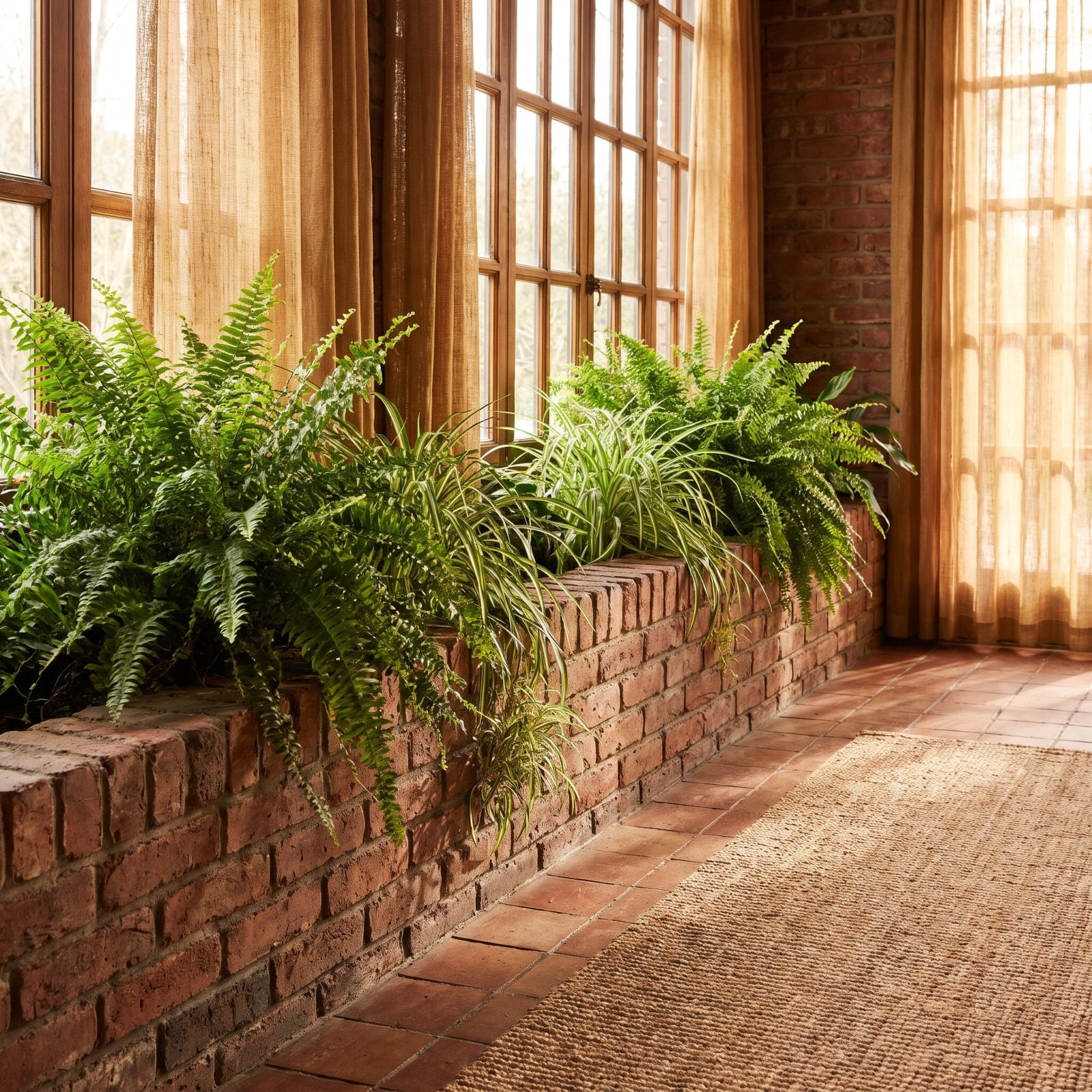
A low brick trough built right into the wall, running under the windows like a permanent flower bed that never saw rain. The soil smelled damp and green all year, and there was always one plant thriving and one slowly dying at the far end.
Builders loved it because it tied the sunroom to the yard without a single pot to knock over. The brick held heat from the day and released it at night, which the ferns appreciated. It was the most committed piece of furniture in the house. You could not rearrange it. You lived with it.
32. An Aluminum Screen Door with a Pneumatic Closer That Hissed, Then Slammed
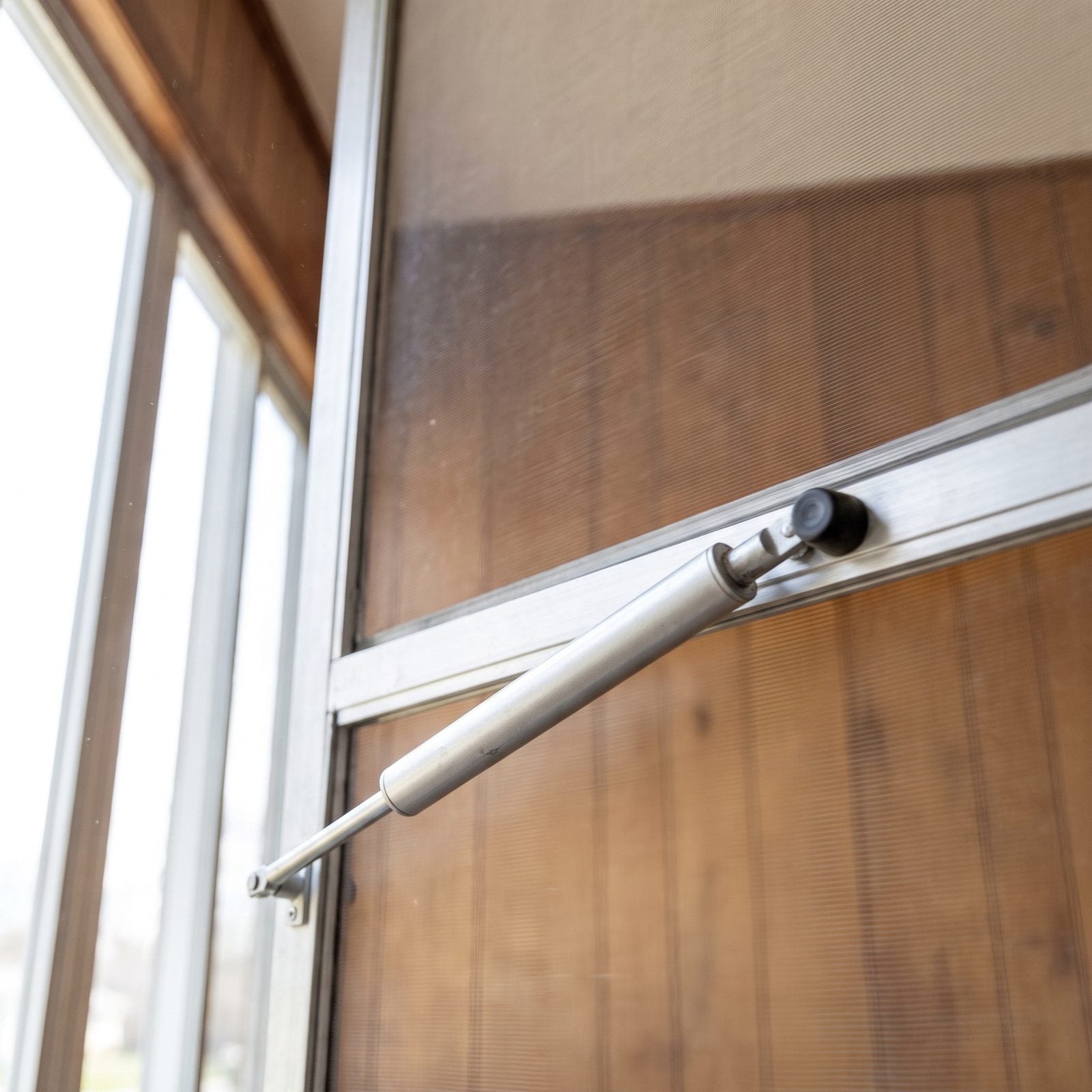
You know the sound. The slow hydraulic hiss as it eased shut, then the final aluminum clap that your mother yelled about every summer. That scrolled grille across the bottom half was pure decoration, and it dented the first time a kid kicked through it.
The pneumatic closer was the genius part — it let the door close on its own so the flies stayed out while the kids ran in and out all day. You could adjust the little screw to make it slam harder or softer, and someone always set it wrong.
No sound says summer like a screen door hissing shut behind a kid who’s already halfway across the yard.
31. Roll-Up Matchstick Bamboo Blinds on a Frayed String
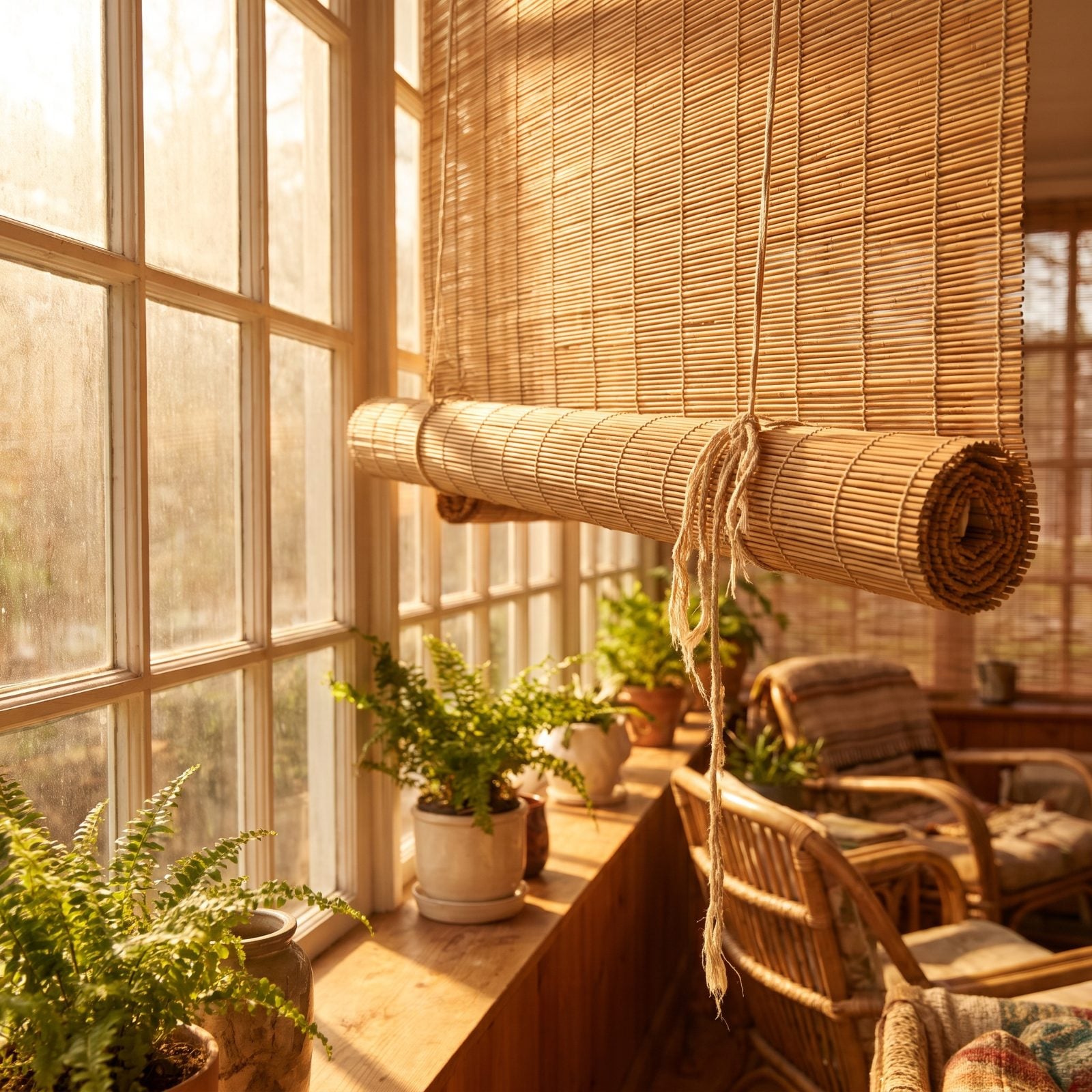
Thin reeds of split bamboo, woven together with cotton string, rolling up on a cord that frayed and eventually snapped around 1978. Sunlight came through the gaps in warm golden stripes, and the whole blind smelled faintly of hay when it got hot.
Cheap, breezy, and exactly right for a room that was half porch. They never fully blocked the light, just softened it. One reed always came loose and poked out at an angle, and you just left it. That filtered, slatted light is still the most relaxing thing a window can do.
30. Orange-and-Brown Floral Café Curtains on a Tension Rod
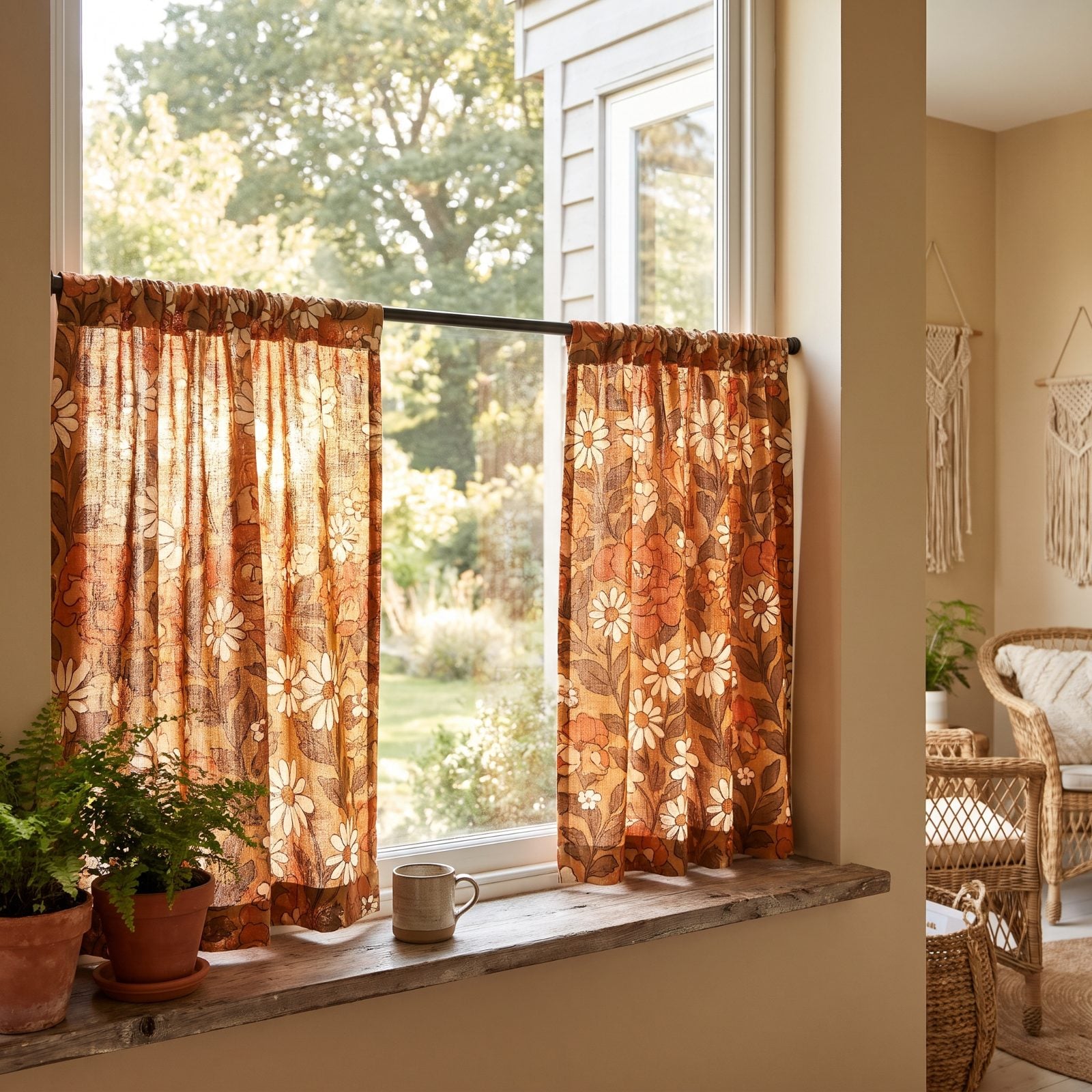
Big stylized daisies in burnt orange and brown, hung on a tension rod across just the bottom half of the window. They gave you privacy from the neighbors while leaving the sunshine free to pour over the top.
Every print in that decade looked like this: oversized flowers in autumn colors, usually on a cotton blend that faded on the sunny side within a couple of summers. Mom sewed them on the machine in the spare room. That exact palette of orange, gold and brown reads as pure 1970s, and it still animates a good eclectic bonus room today.
29. The Pass-Through Window from the Kitchen
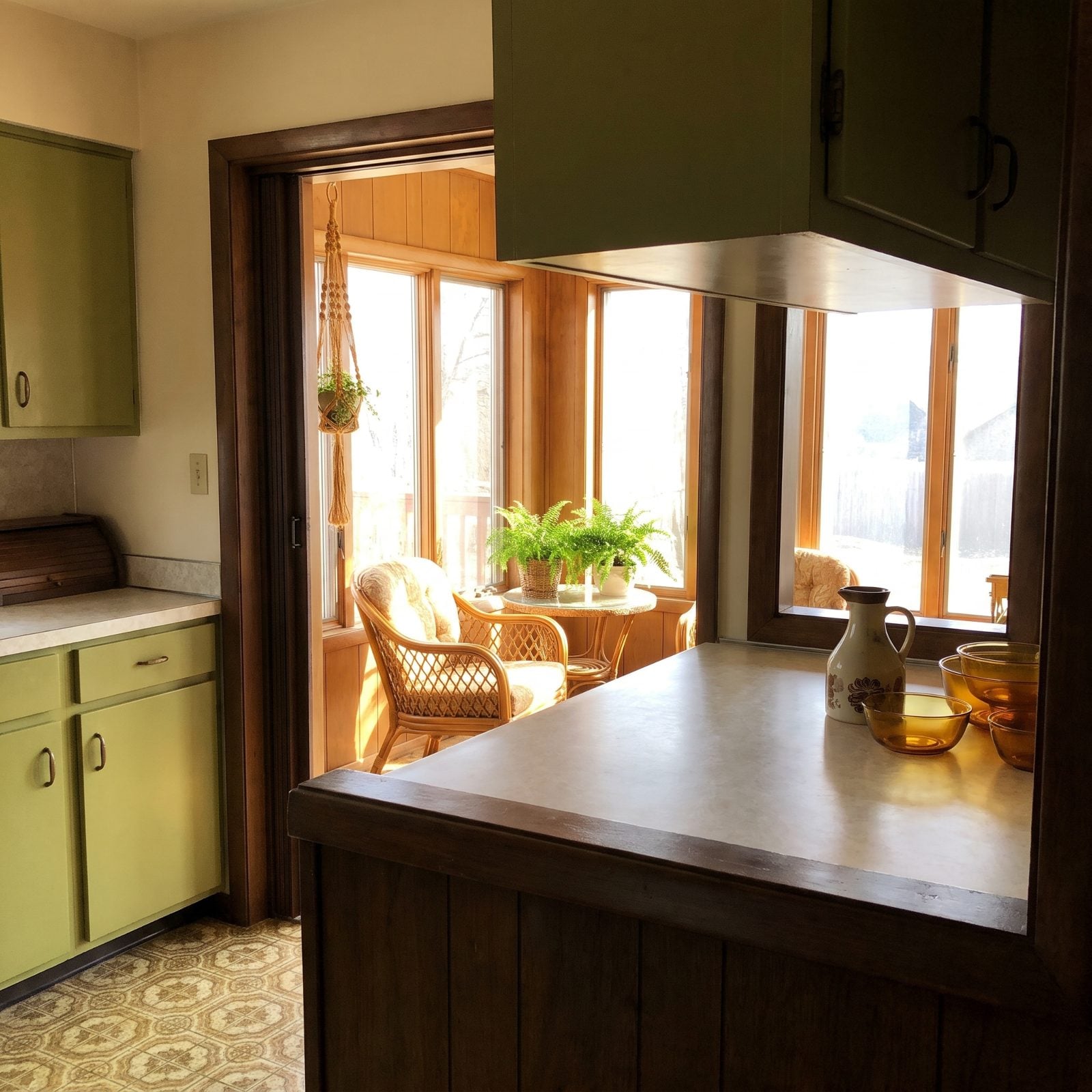
The pass-through ran the social life of the whole house. One person stood at the kitchen sink while another sprawled in the sunroom, and the conversation just kept rolling. Dishes went one way, iced tea the other, and that wall between them finally got out of the way.
Most had a little Formica ledge wide enough for two glasses and a bowl of chips, and some came with folding café doors you could swing shut when the kitchen got loud or the dishes piled up. It was the closest a split-level ever came to open-concept. And it worked.
28. The High-Backed Wicker Peacock Chair
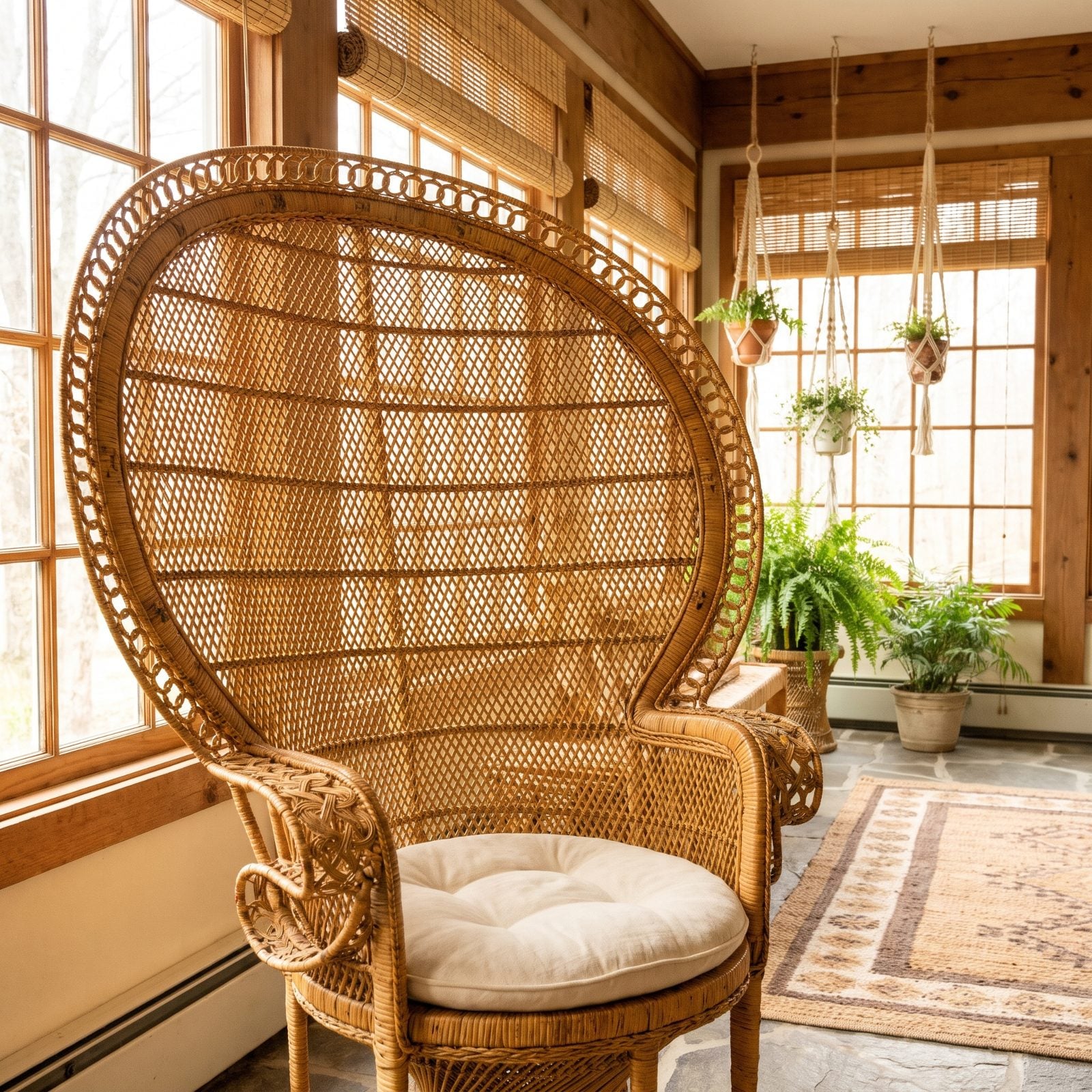
You know the chair. The one that looked like a throne a houseplant might sit on. That towering fanned-out back turned whoever sat in it into the most important person in the room, which is exactly why it ended up in so many sunrooms and so many senior portraits.
The peacock chair was sculpture that happened to double as furniture. It didn’t match anything, and it didn’t need to. You stuck it in a corner, flanked it with ferns, and let it hold court. If your sunroom had one, it was the first thing anyone noticed and the last seat anyone wanted to give up.
27. The Rattan Loveseat with Tropical Floral Cushions
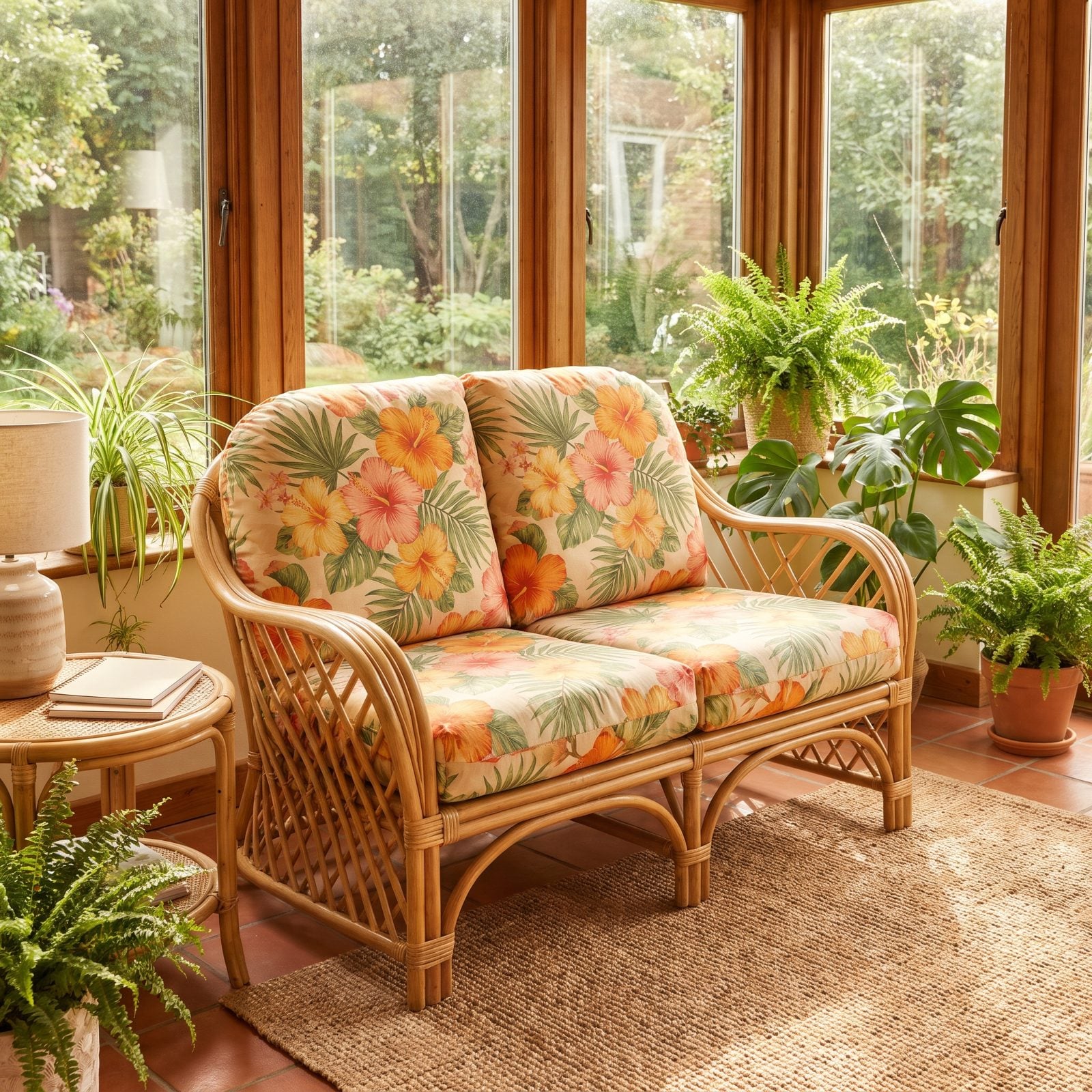
The cushions carried the whole personality. Big splashy hibiscus and palm fronds in orange and green, the kind of print that made an ordinary den feel like a cabana somebody dreamed up on a long flight. The rattan frame curved and bent in ways wood never could, and the whole thing smelled faintly of the garden center it came from.
This was weekend furniture through and through: two people, two mugs of coffee, and a lazy Saturday with the windows open. The eclectic bonus room look owes a lot to loveseats like this, where nothing matched on paper and everything got along in person.
26. The White Wrought-Iron Table with a Glass Top
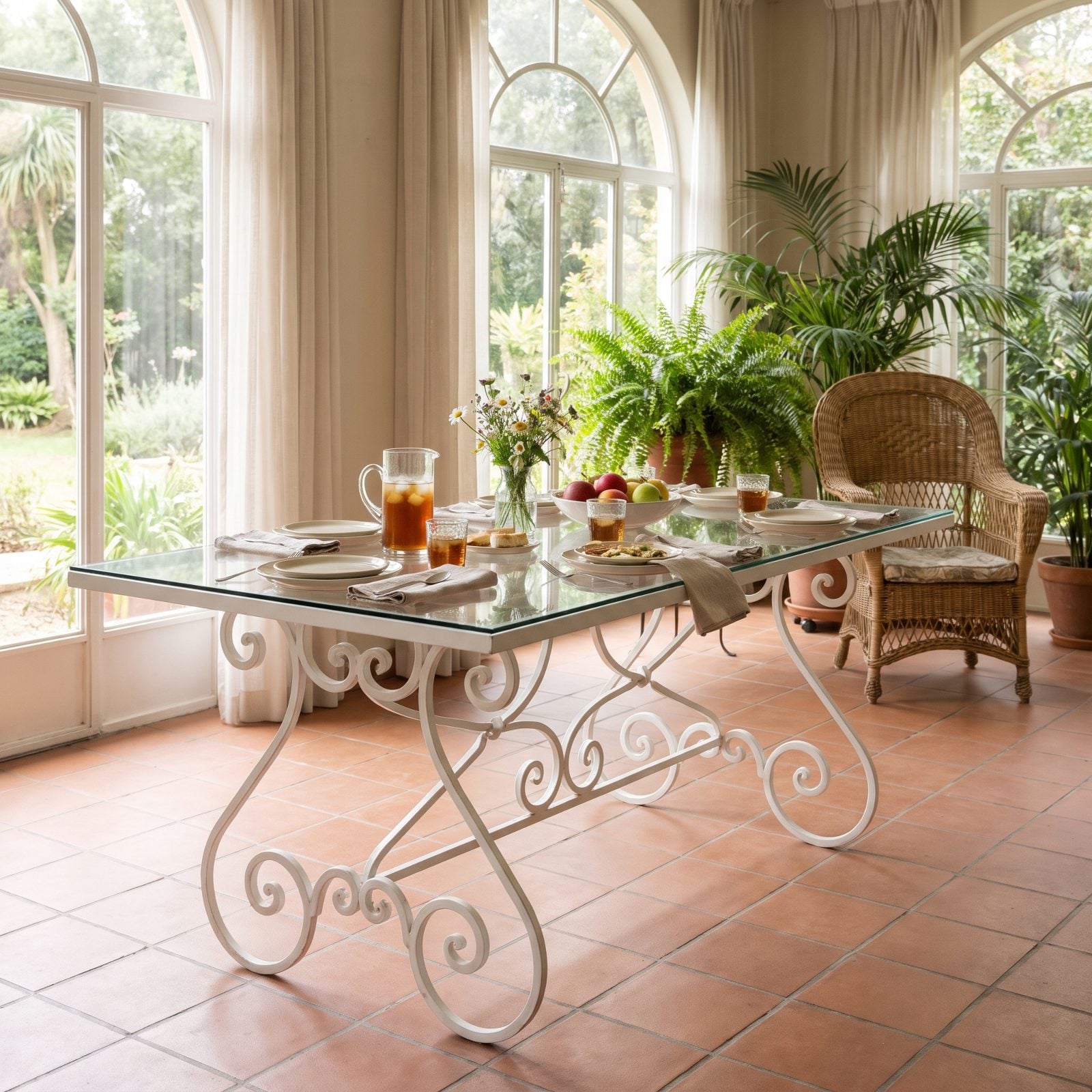
White wrought iron was the fancy option, and everyone knew it. That scrollwork base and the heavy glass top announced that this corner of the sunroom was for grown-up occasions: cards, coffee, the good china on a Sunday afternoon. The paint always chipped at the corners. Nobody ever got around to touching it up.
The glass top was the part that aged you. One summer of fingerprints and a sweating lemonade glass, and you were out there with the Windex every other day. Worth it, though, because light passed straight through, so the table never crowded the room.
25. The Aluminum Folding Chair with Woven Webbing
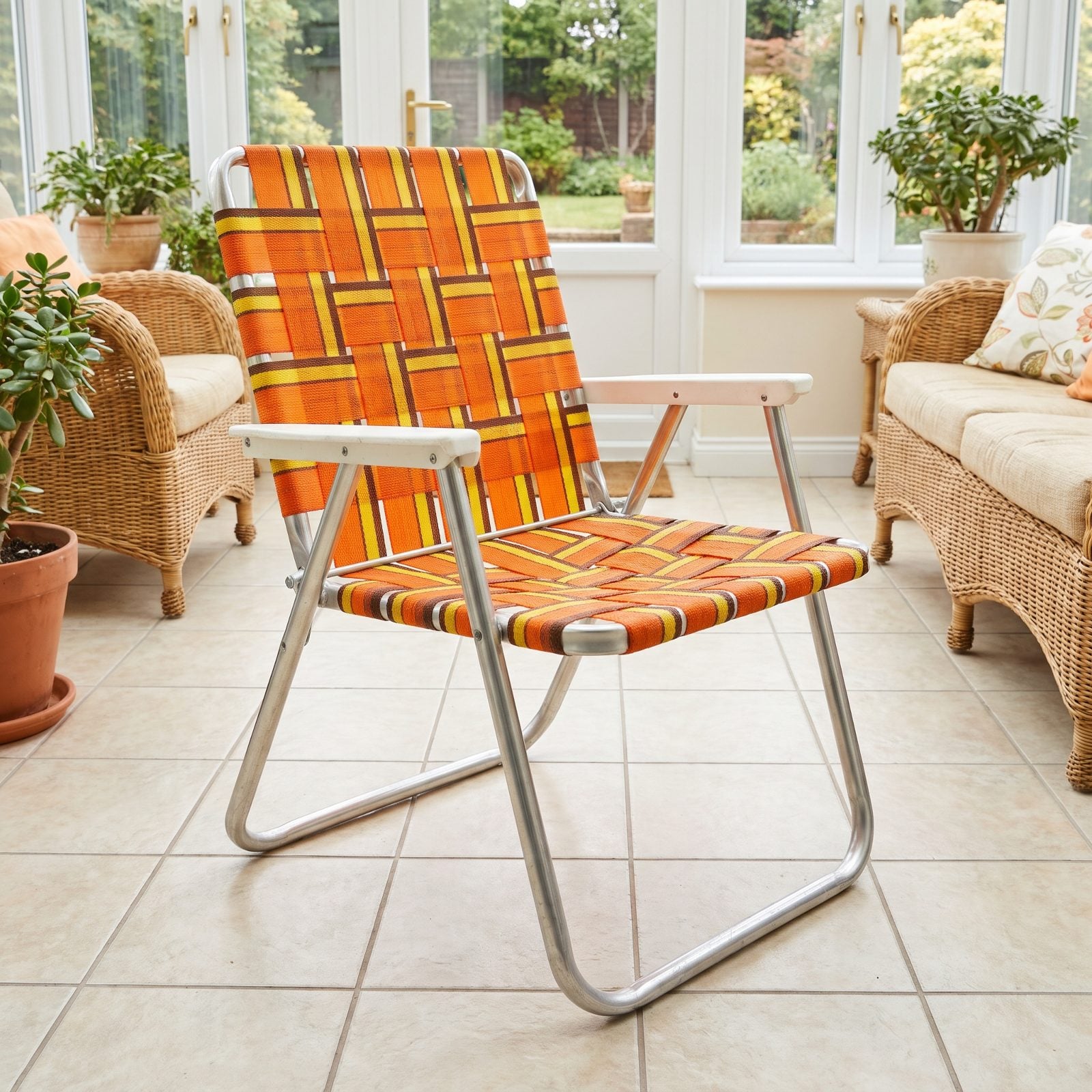
That distinctive aluminum-tube squeak when you snapped it open. The chair weighed almost nothing, folded flat against a wall, and lived somewhere between the sunroom and the backyard its entire life. The webbing came in those unmistakable bands of gold, white, and rust, woven in a basket pattern that left waffle marks on the backs of your legs.
Eventually one strap would fray and snap, and you’d sit lopsided for a season before anyone restrung it. Nobody ever threw these out. They just migrated to the garage.
24. The Vinyl-Strap Patio Chaise
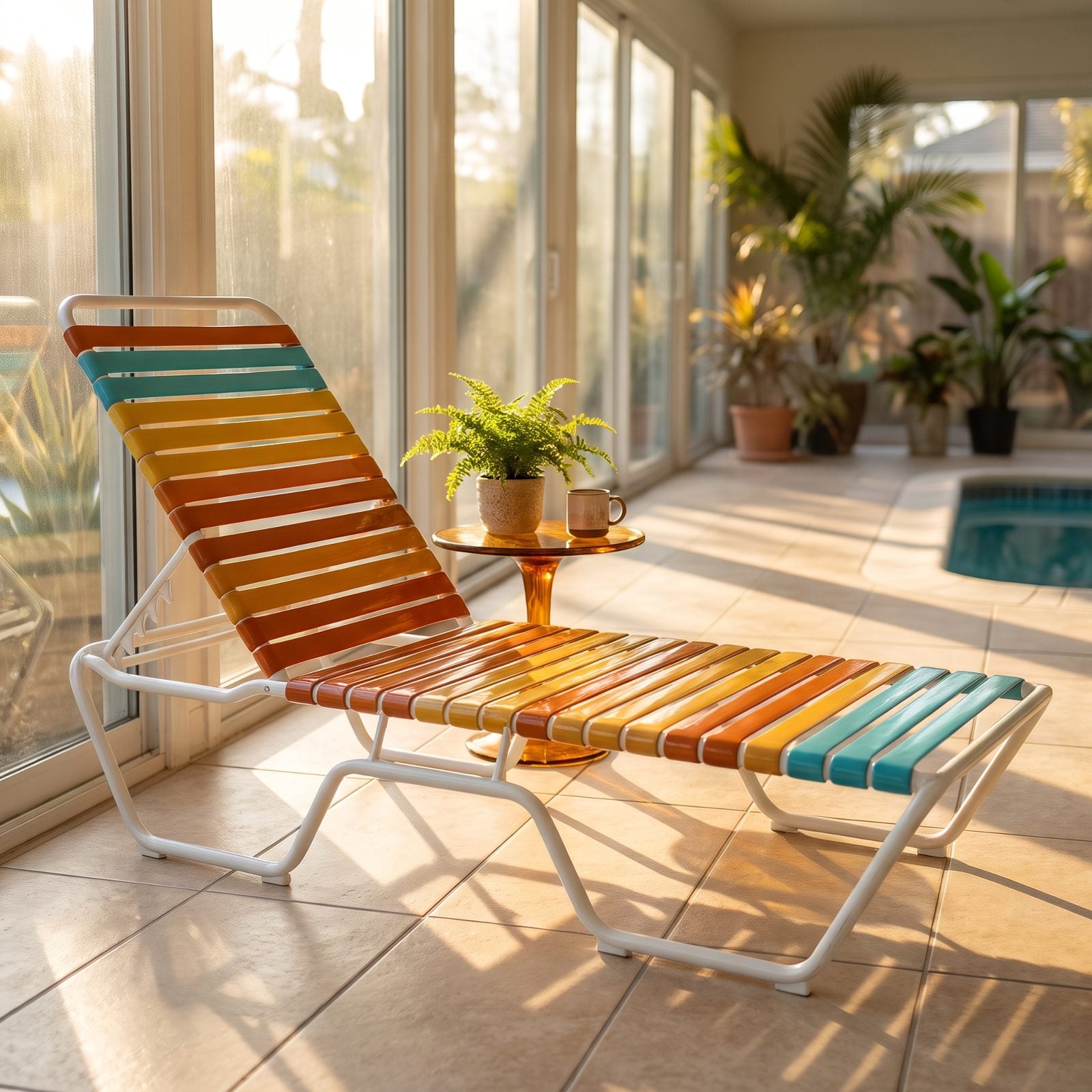
The vinyl-strap chaise was for people who understood that the pool deck just outside the sunroom was the real place to sunbathe. You cranked it back to full recline, aimed it at the sun, and committed to the afternoon. The straps warmed up fast and left those shiny parallel lines across your back.
Orange, yellow and green on a white frame. The classic. And over the years the lower straps stretched and sagged until you sank a little lower than intended, which honestly just made the thing more comfortable.
23. The Chain-Hung Wicker Basket Chair
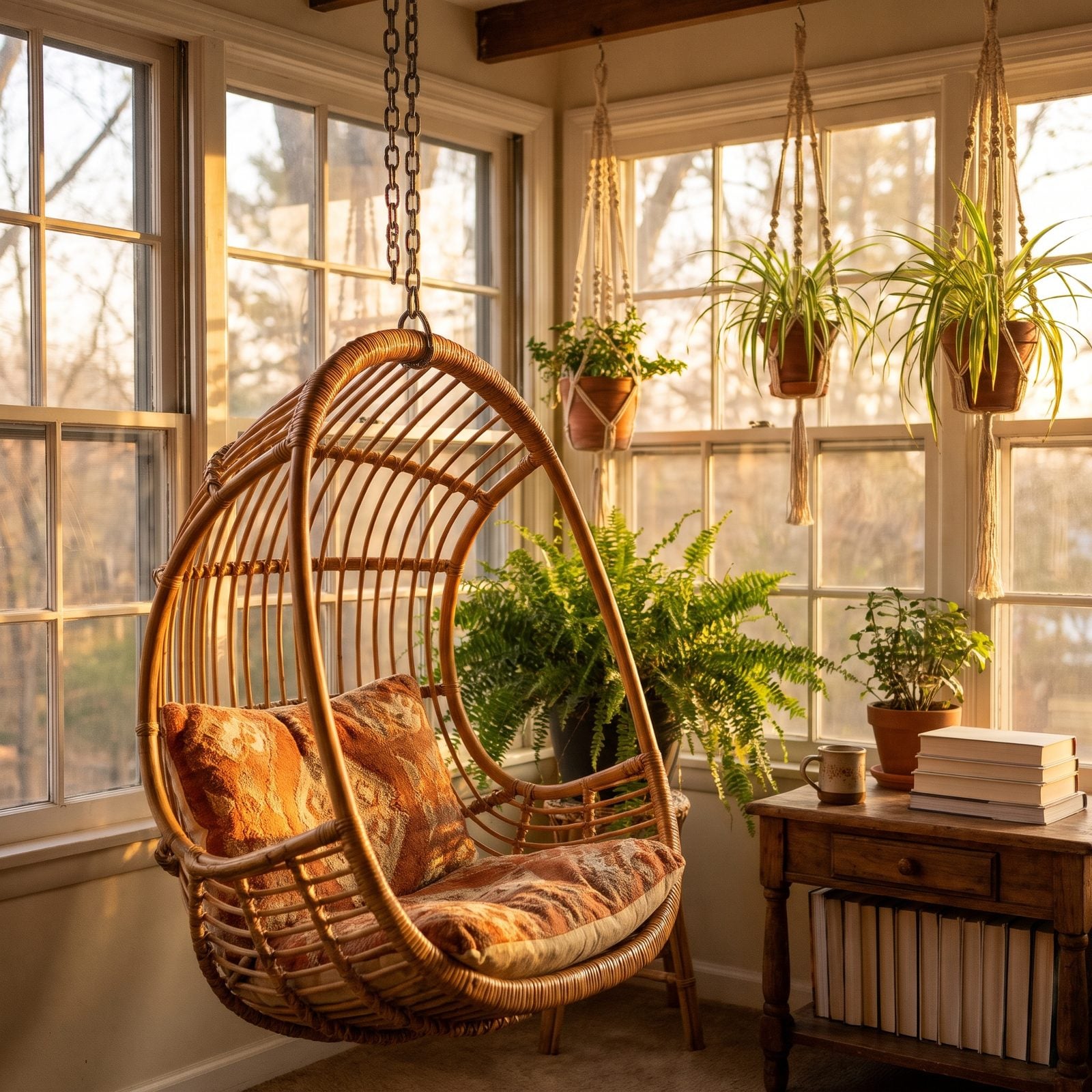
The hanging basket chair was the one every kid in the house fought over. That gentle swing, the way the woven pod wrapped around you like a nest, the slight creak of the chain mount that your parents swore was fine. You curled up sideways with a book or a stack of records and vanished for an hour.
Hanging it was its own saga. Dad up a ladder, hunting for a ceiling joist, everyone holding their breath the first time someone sat down. Once it held, it became the most fought-over seat in the country game room or the sunroom corner, no contest.
22. The Arched Wicker Étagère
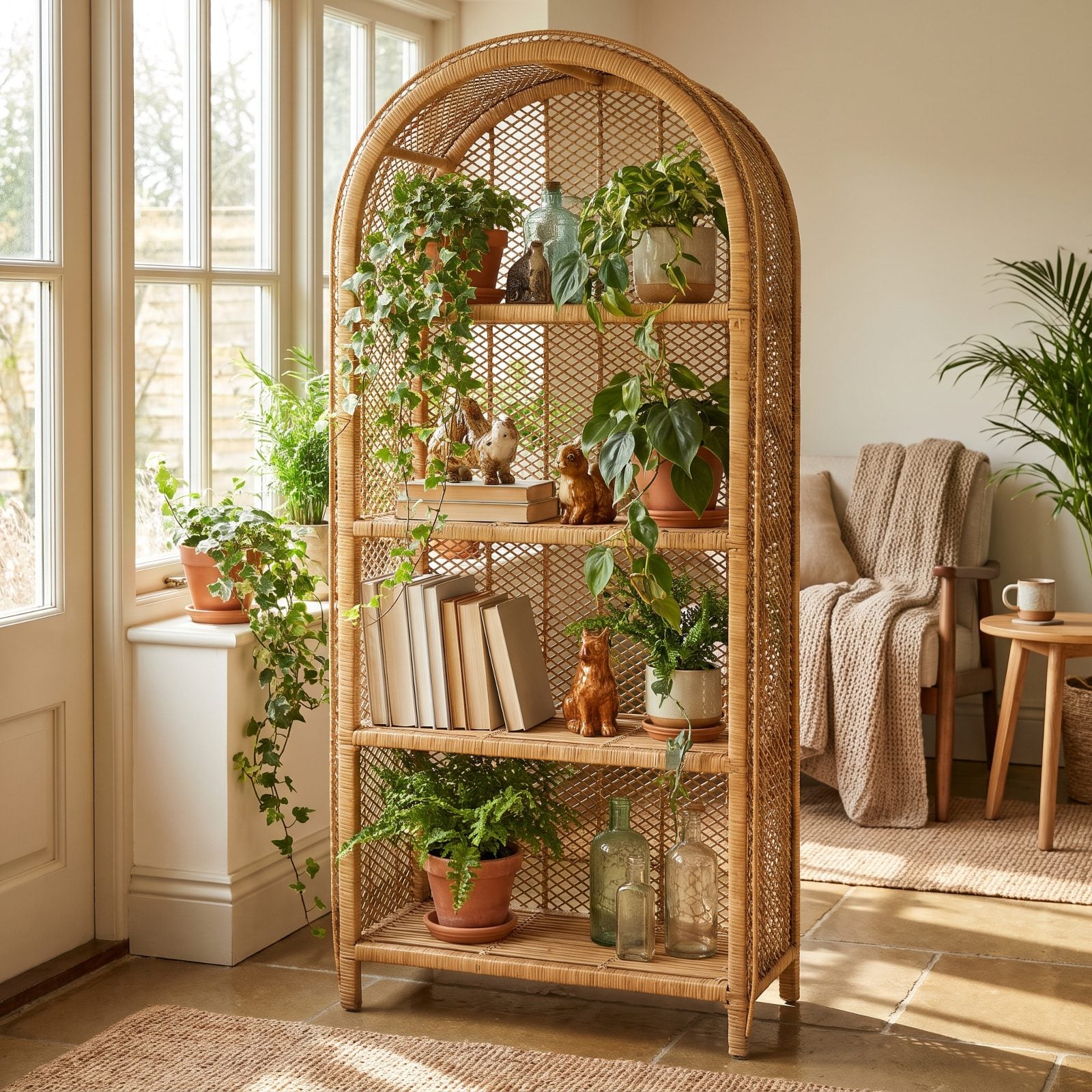
That graceful arched top gave it away. The wicker étagère was where the sunroom stashed its best plants and its odd little treasures: the macramé owl, the shell someone dragged back from Florida, the African violet nobody could keep alive for more than a season.
Open shelving meant everything got the light it needed, and trailing plants spilled down the tiers until the whole piece looked half-alive. These show up constantly in a rust sunroom renovation because the shape still earns its keep. Light, airy, and somehow able to hold a surprising amount of stuff without crowding a room.
21. The Chrome-Legged Formica Dinette Table
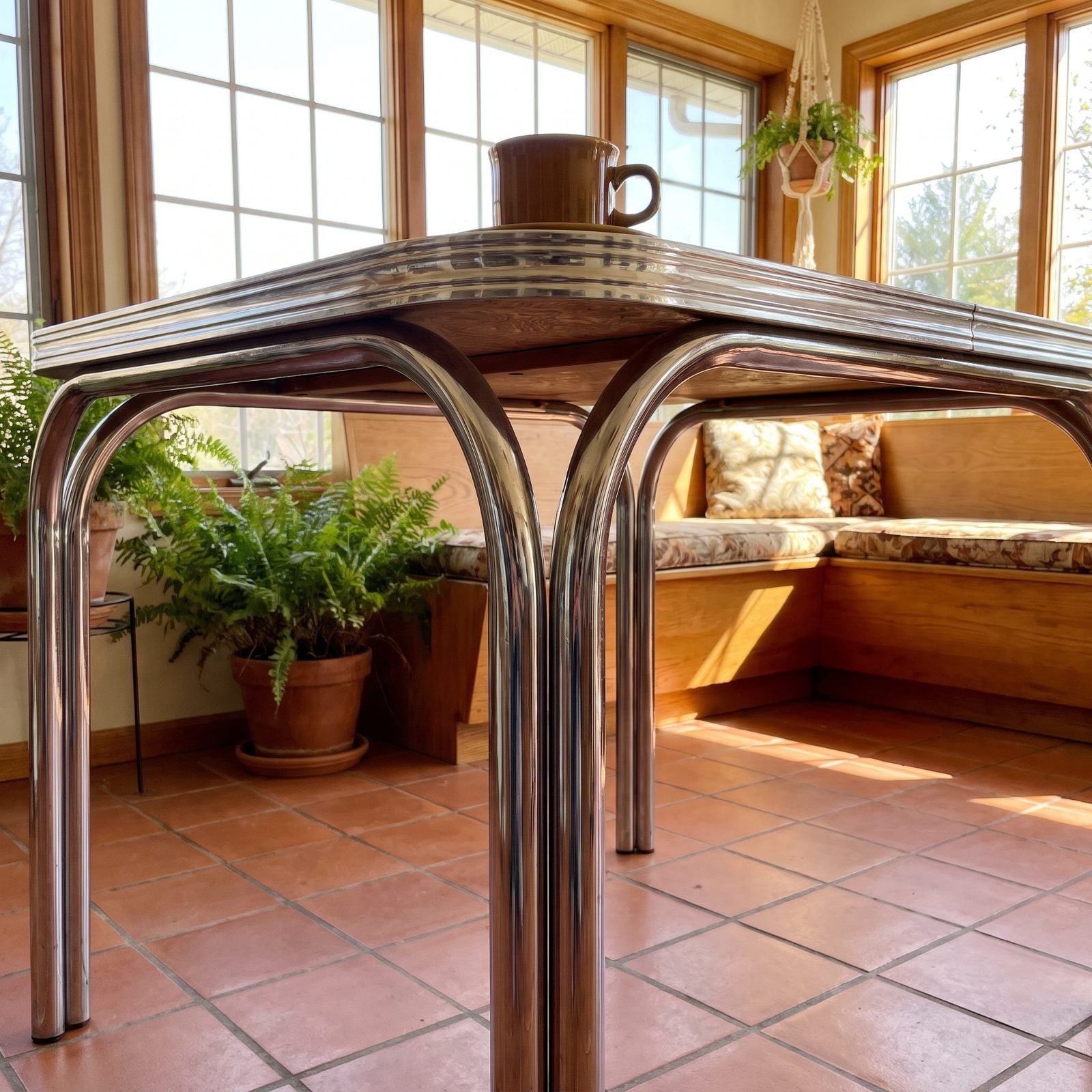
The chrome legs caught the light, and that Formica top could survive a direct nuclear strike. Spills, hot pans, a kid’s craft project gone sideways, you wiped it down and it looked brand new. The boomerang fleck pattern hid everything, which was the whole genius of it.
This was the everyday table, dragged into the sunroom because that was the brightest spot to eat breakfast. The vinyl chair seats cracked at the seams and got patched with tape, and nobody minded one bit.
You could set a hot casserole straight down on that Formica and it wouldn’t leave a mark. Try that on a nice wood table.
20. The Knotted Macramé Plant Hanger
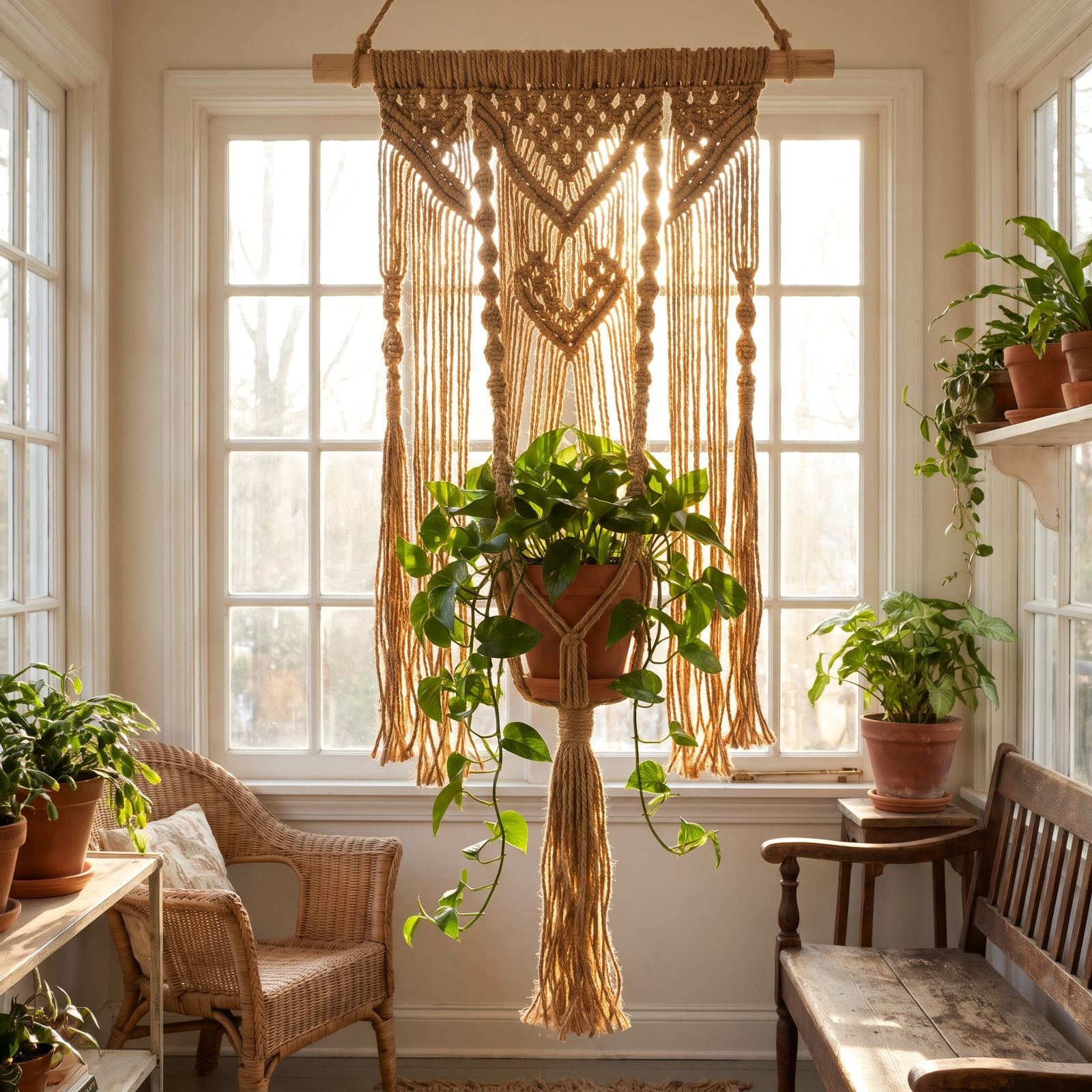
No sunroom was finished until something hung from the ceiling in a nest of knotted jute. The macramé plant hanger turned every spider plant and pothos into a floating sculpture, dangling at precisely the height where you’d eventually walk face-first into it.
Half of them were homemade. Someone in the house took a class at the Y, or bought the cord and a pattern book, and suddenly there were six of them in various stages of ambition scattered around the room. The really serious ones had wooden beads and spiral knots and a plant so overgrown you couldn’t find the pot anymore.
19. A Spider Plant Trailing with Baby Plantlets
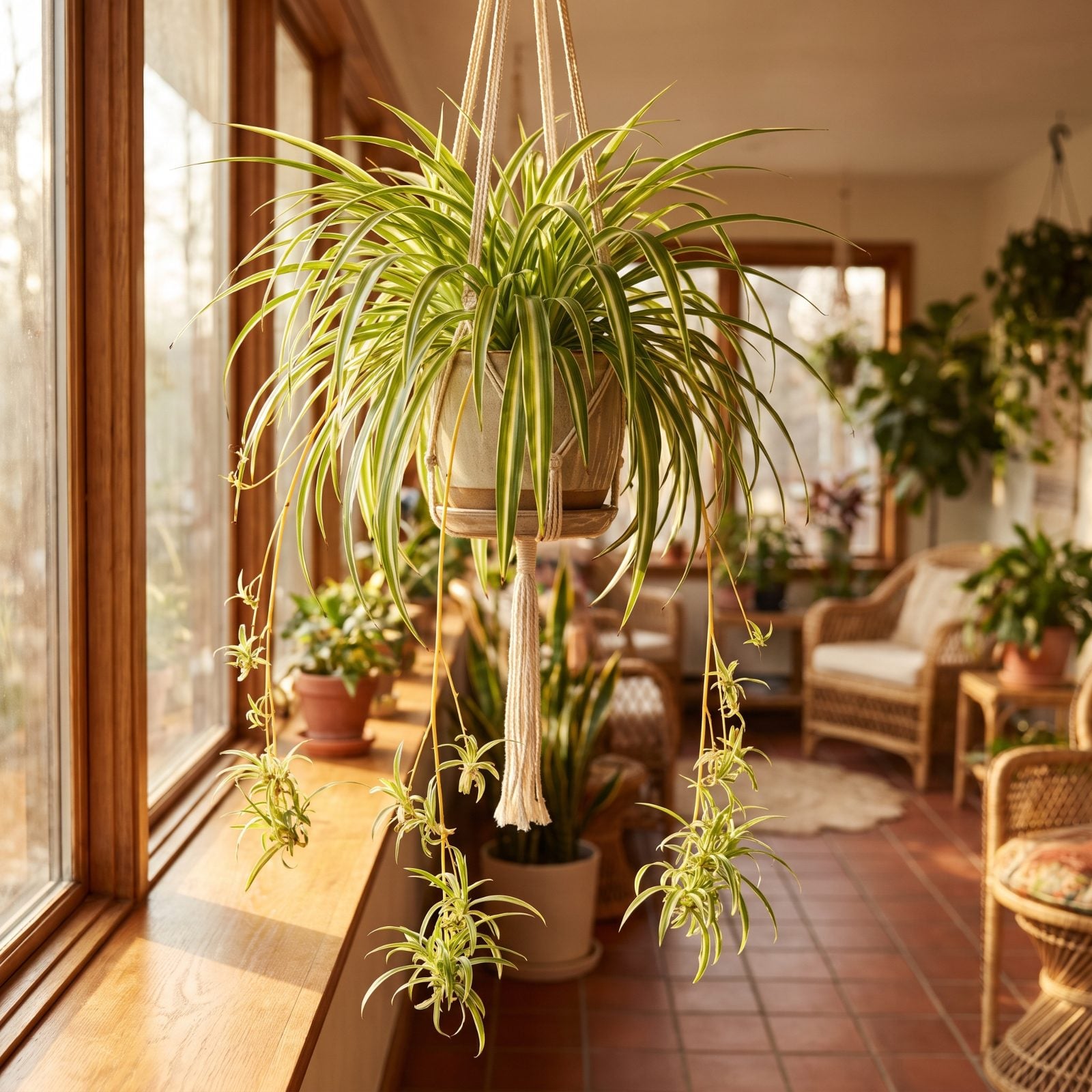
Every sunroom had one, and every one of them was fighting to take over. The spider plant sent out those long wiry runners with little versions of itself dangling at the ends, so the whole thing looked like a plant having babies in public.
You’d snip off a plantlet, stick it in a jar of water on the windowsill, and hand it to a neighbor three weeks later. That was the deal. Nobody bought a spider plant — you inherited one. The variegated stripes caught the afternoon light and the macramé hanger swayed every time the screen door slammed.
Answering a reader’s question, a volunteer master gardener notes that “Spider plant propagation simply involves planting the spiderette in a pot filled with any lightweight potting mix.”
18. A Boston Fern in a Hanging Basket
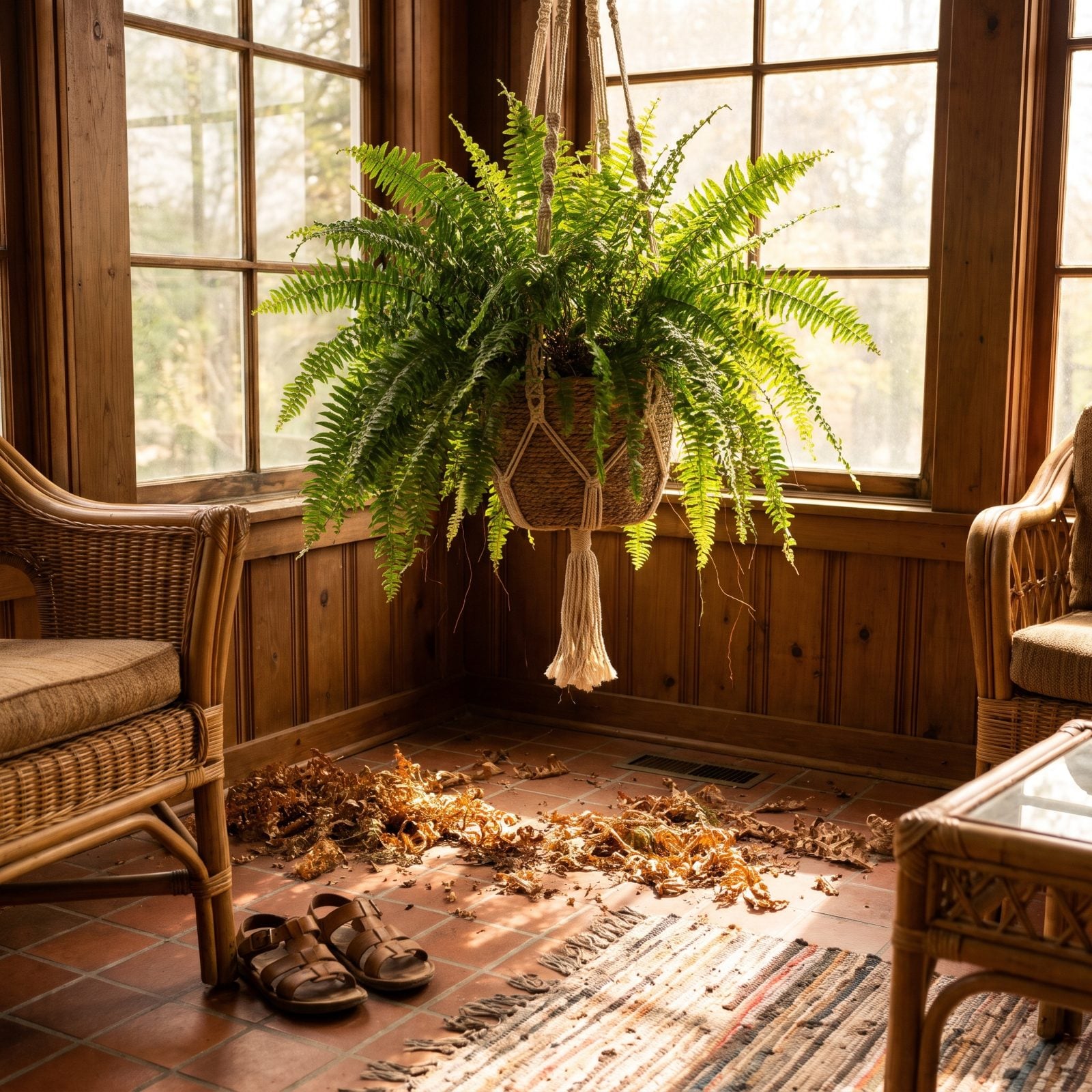
The Boston fern was the diva of the group — gorgeous for about two weeks, then it dropped a carpet of brown fronds all over the floor the second the humidity dipped. You’d sweep up crispy bits every morning and wonder what you did wrong.
It hung in a wicker basket in the corner, right in front of the windows, where the afternoon light streamed through it from behind. When it was happy, nothing looked better arcing over a corduroy chair. When it was unhappy, which was often, it let everyone know.
As a longtime houseplant grower puts it, “Get the watering, humidity or placement wrong though, and those same fronds can quickly turn brown and drop.”
17. A Philodendron Climbing a Moss Pole
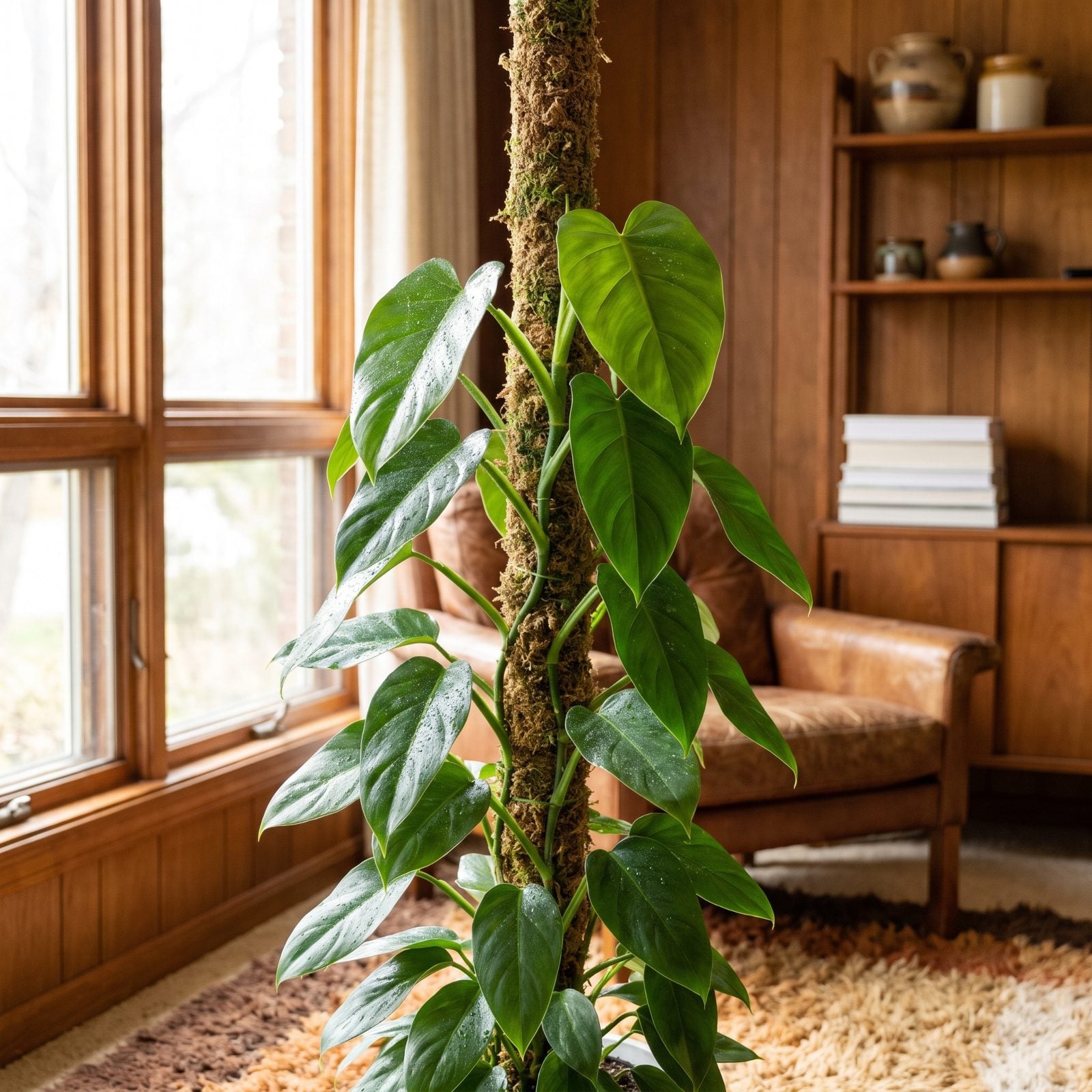
The moss pole was how you convinced a philodendron to grow up instead of flopping everywhere. You misted the mossy column to keep it damp, and the aerial roots would reach out and grab hold like the plant had decided it lived there now.
Those glossy heart-shaped leaves got bigger the higher they climbed, a small reward for keeping the pole wet. The whole setup had a jungle-in-a-ceramic-pot energy that an eclectic bonus room would kill for today.
16. A Lidded Glass Terrarium
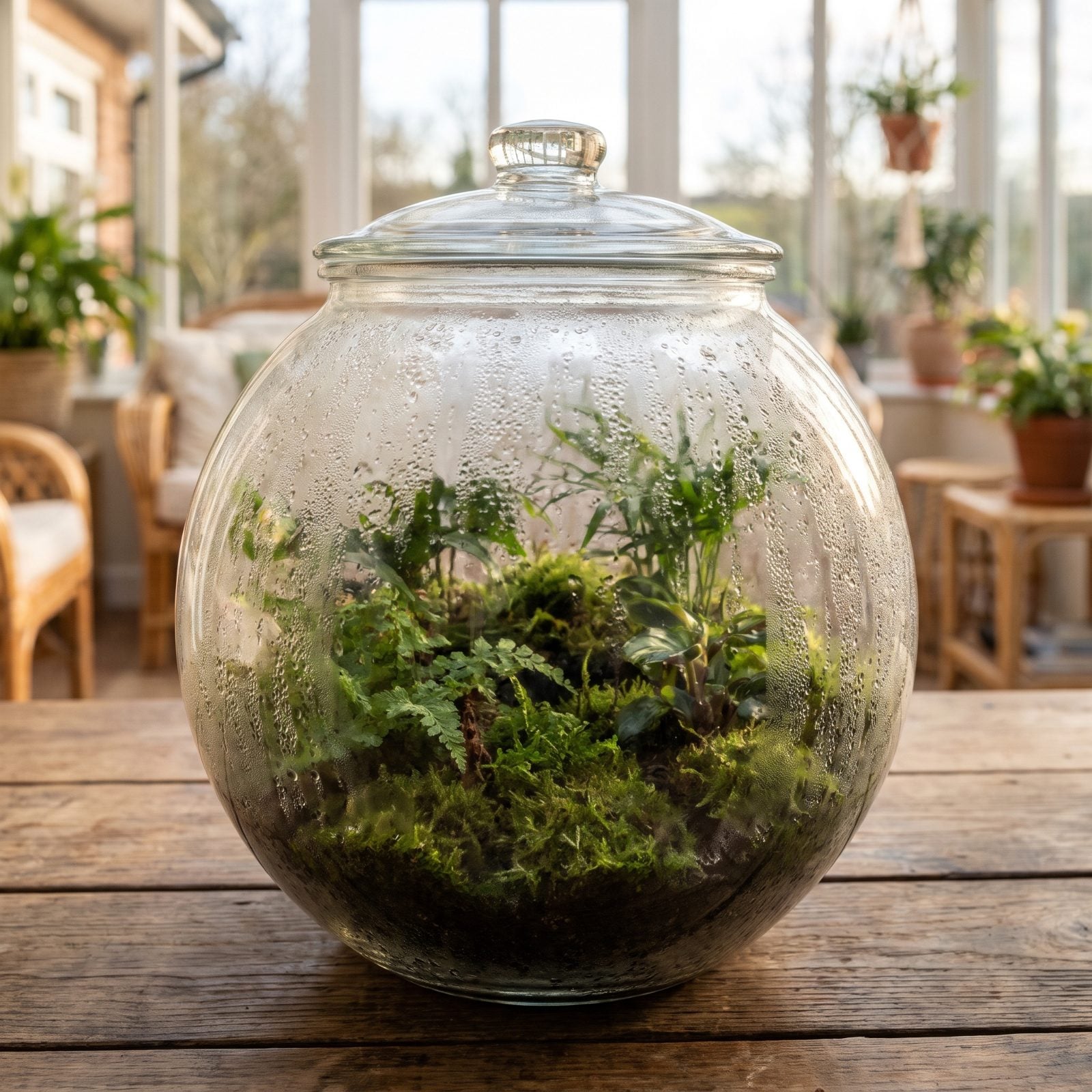
A sealed glass globe with a tiny forest growing inside it, fogged with its own condensation. You barely had to touch it. The thing watered itself, recycling moisture up the sides of the glass like a little rainstorm under a dome.
People kept them on side tables and coffee tables, and everyone who walked past had to lean in and look. The long tweezers and miniature tools that came with them made tending it feel like surgery. Most of us overwatered the first one and drowned the moss. The second one usually took.
15. An Avocado Pit Suspended Over Water with Toothpicks
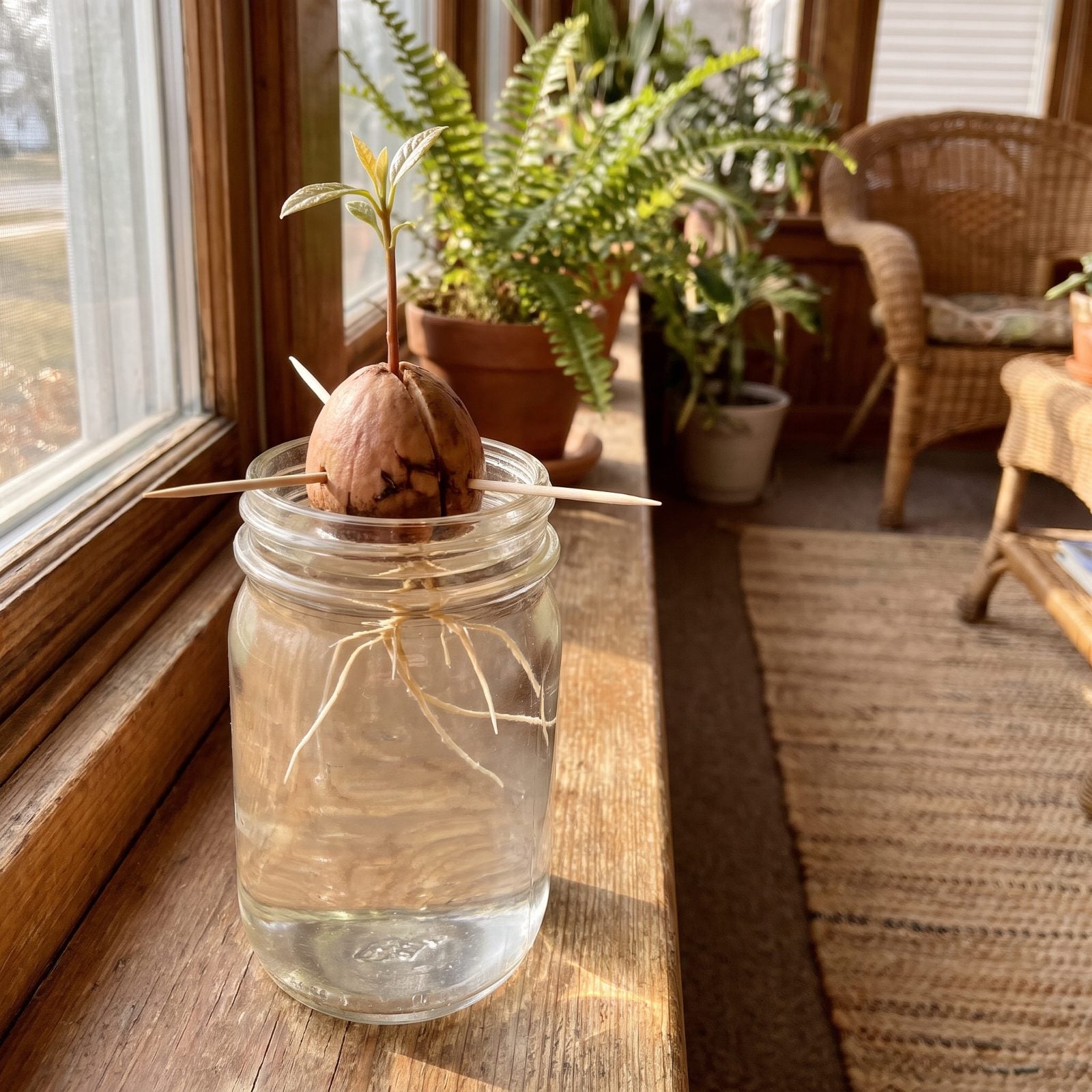
Three toothpicks jabbed into the sides, balanced over a jelly jar of water, bottom half submerged. Every sunroom and kitchen windowsill had one going. Less a houseplant, more a science project that never officially ended.
You waited weeks. The pit would crack, a white root pushed down into the water, and then a green shoot rose up top like a magic trick. Hardly anyone ever got an actual avocado out of it. That was never the point. The point was watching the thing decide to live.
14. A Ceramic Mushroom Planter
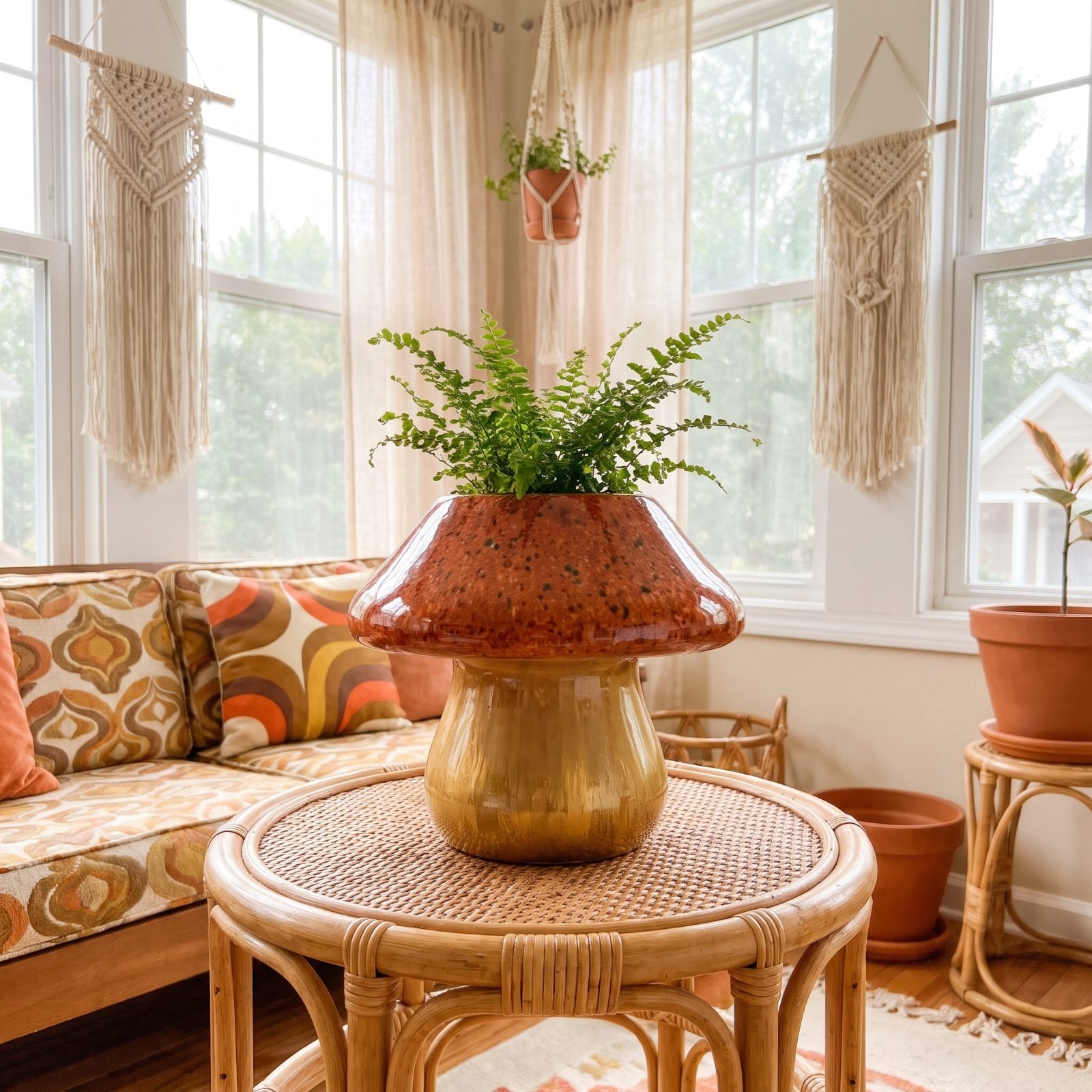
Mushrooms were everywhere in the seventies, and not the subtle kind. The ceramic toadstool planter showed up in rust and mustard glazes with little raised dots on the caps, usually made by somebody’s aunt in a community pottery class.
It held a small trailing plant and sat on the windowsill looking like a storybook prop. Honestly, the whole make-it-yourself craft-fair spirit of the decade lives in this one goofy object. If you want that folk-art warmth back, a contemporary craft room is where it belongs.
In our reader polls, people who would buy a ceramic planter were also more likely to choose a traditional accent chair, 72% versus 39% of everyone else.
13. A Tiered Black-Metal Plant Stand
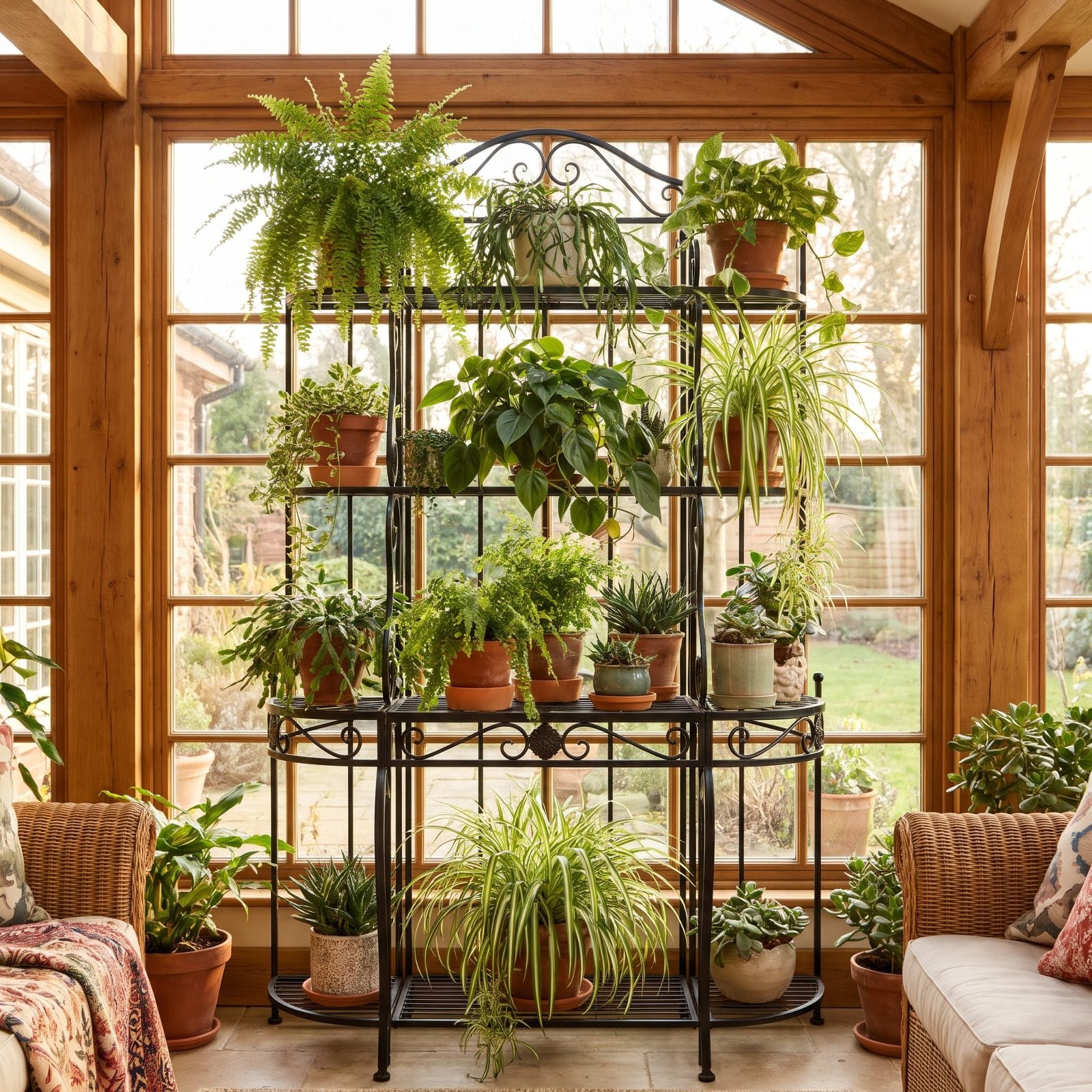
The tiered plant stand solved the real problem of every sunroom: too many plants, not enough windowsill. That black scrolled ironwork rose shelf over shelf in front of the windows and held a whole collection at different heights, each pot getting its own slice of light.
Ivy trailed off the top, violets filled the middle, something bigger anchored the bottom. The stand turned a jumble of random pots into one green display. These wrought-iron stands are quietly back, and they’d suit a country game room just as well as they suited a sunroom in 1976.
12. A Trigger-Style Plastic Plant Mister
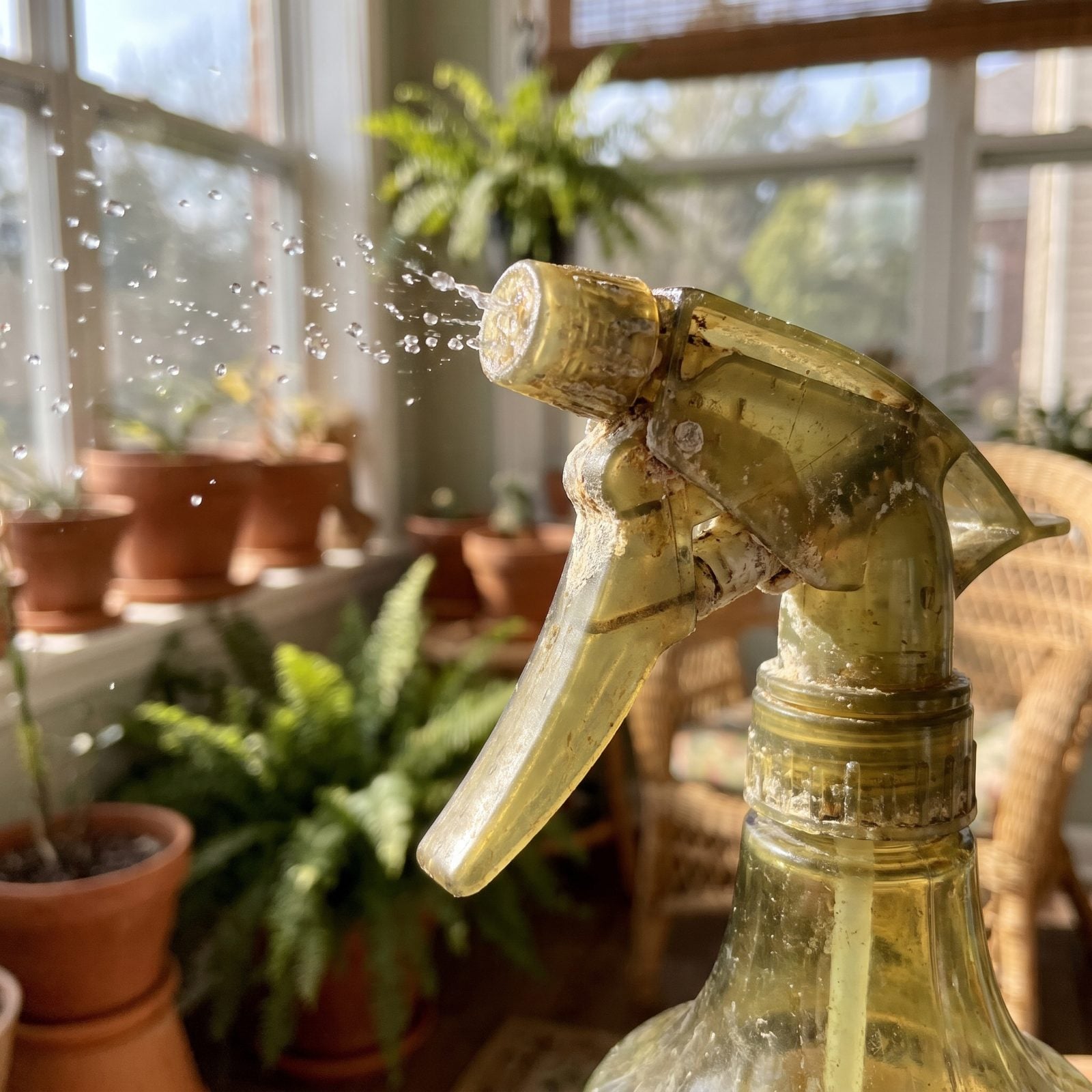
Translucent plastic in amber or avocado, with a trigger that stuck when the gunk built up inside. Misting was half plant care, half meditation. You’d walk the sunroom in the morning fogging ferns and wandering Jews before the coffee was even done.
Half the plants didn’t need it. We did it anyway, because the fine spray hanging in the morning light made the whole room feel alive and tended. That satisfying squeeze of the trigger is a small, specific muscle memory nobody expects to miss.
11. A Smoked-Acrylic Swag Lamp on a Long Chain
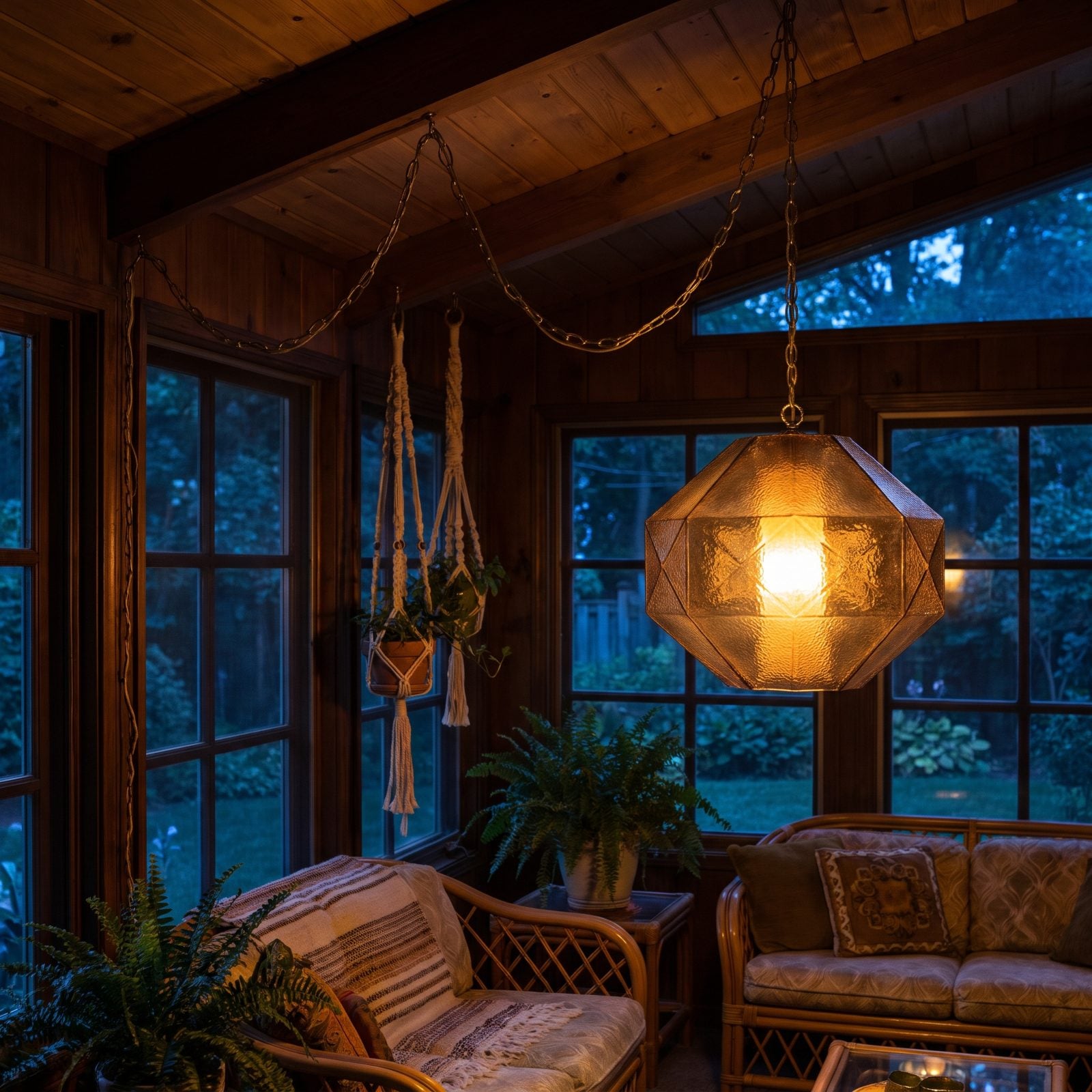
No ceiling junction box? No problem. The swag lamp plugged into the wall and hung from a brass chain you draped across the ceiling to wherever you wanted light. The smoked-acrylic shade glowed amber, throwing honey-colored light over the whole corner.
Instant ambiance with zero electrical work, which is exactly why renters loved it. The warm pool of light under a swag lamp made a reading chair feel like the best seat in the house. That same amber glow would do wonders in a bohemian media room today.
10. A Floor-to-Ceiling Tension Pole Lamp
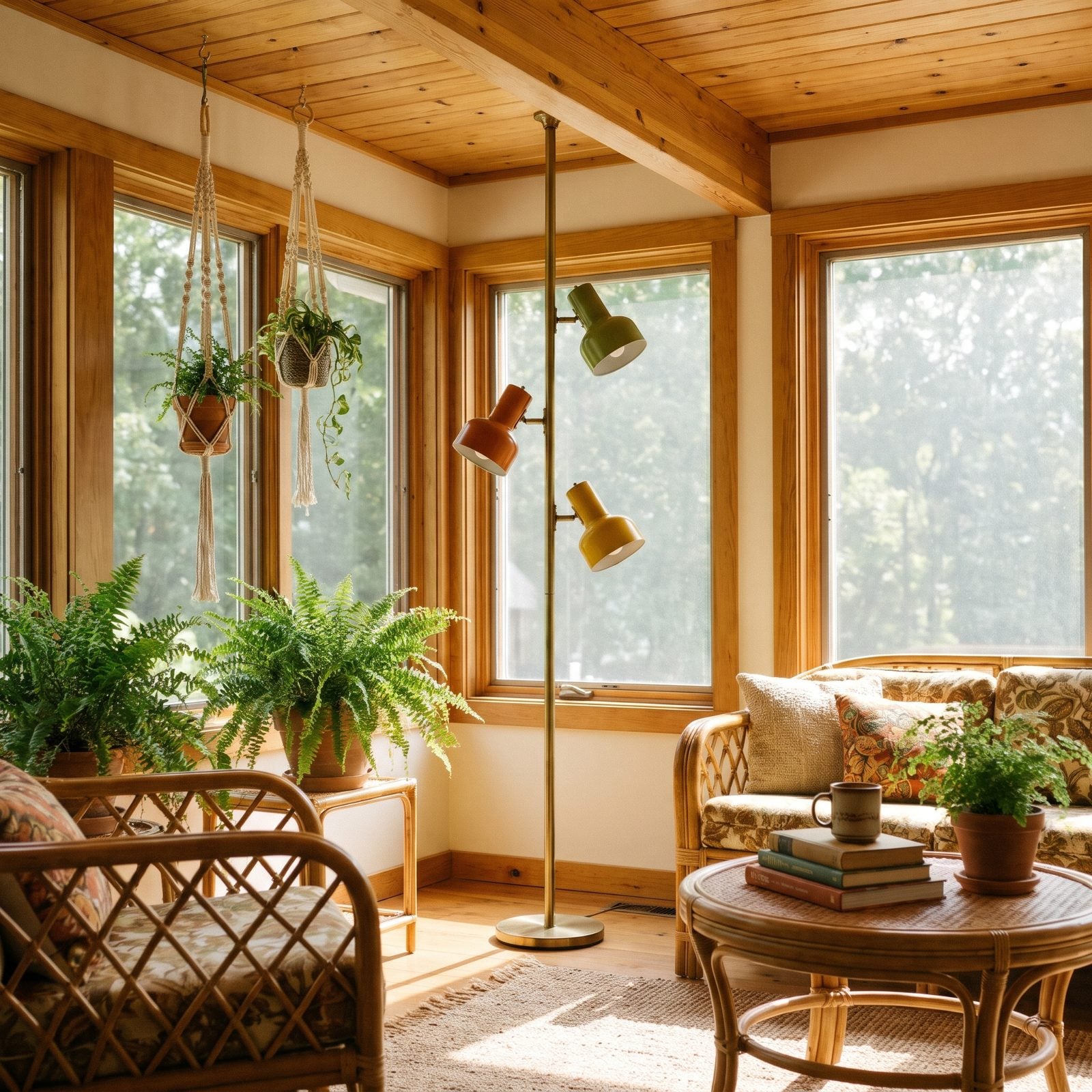
The tension pole lamp wedged itself between floor and ceiling with a spring-loaded top — no drilling, no mounting, just pressure holding it in place. Three cone shades climbed the brass pole at different heights, each one swiveling to aim light wherever you pointed it.
It lived in the corner and did the work of three lamps in the footprint of none. Kids loved spinning the shades. Parents loved not tripping over cords. And when they finally came loose and clattered down at 2 a.m., the whole house woke up. A warm reading corner like this would feel right at home in a charcoal guest room.
9. The Oil-Drip Rain Lamp With a Greek Goddess Standing in the Rain
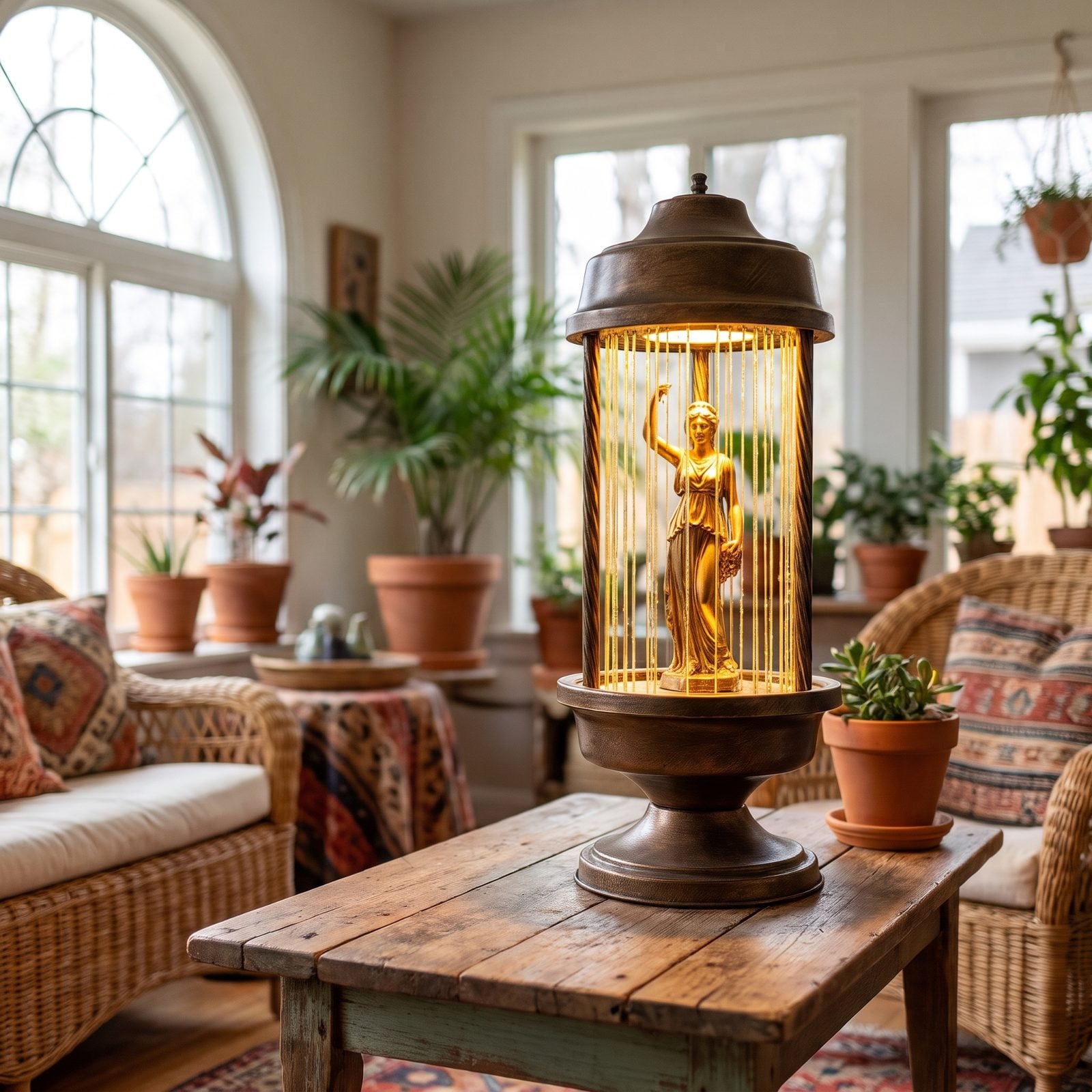
You flipped it on and the whole thing came alive. A small pump pushed liquid up to the top, and it slid down hundreds of fine strands in slow, shimmering beads that looked like rain caught on film. Standing in the middle of the downpour was a plaster goddess with one arm raised, draped in a toga, surrounded by little plastic ferns and never once getting wet.
It was gaudy and hypnotic in equal parts. You could sit on the chaise and watch it for twenty minutes without meaning to, the faint trickling sound blending with the box fan and the crickets outside. These lamps were heavy, finicky, and prone to leaking, which is why so few survived. If you grew up with one, you can still hear that drip.
8. That Starburst Wall Clock Ticking Over the Wicker Settee
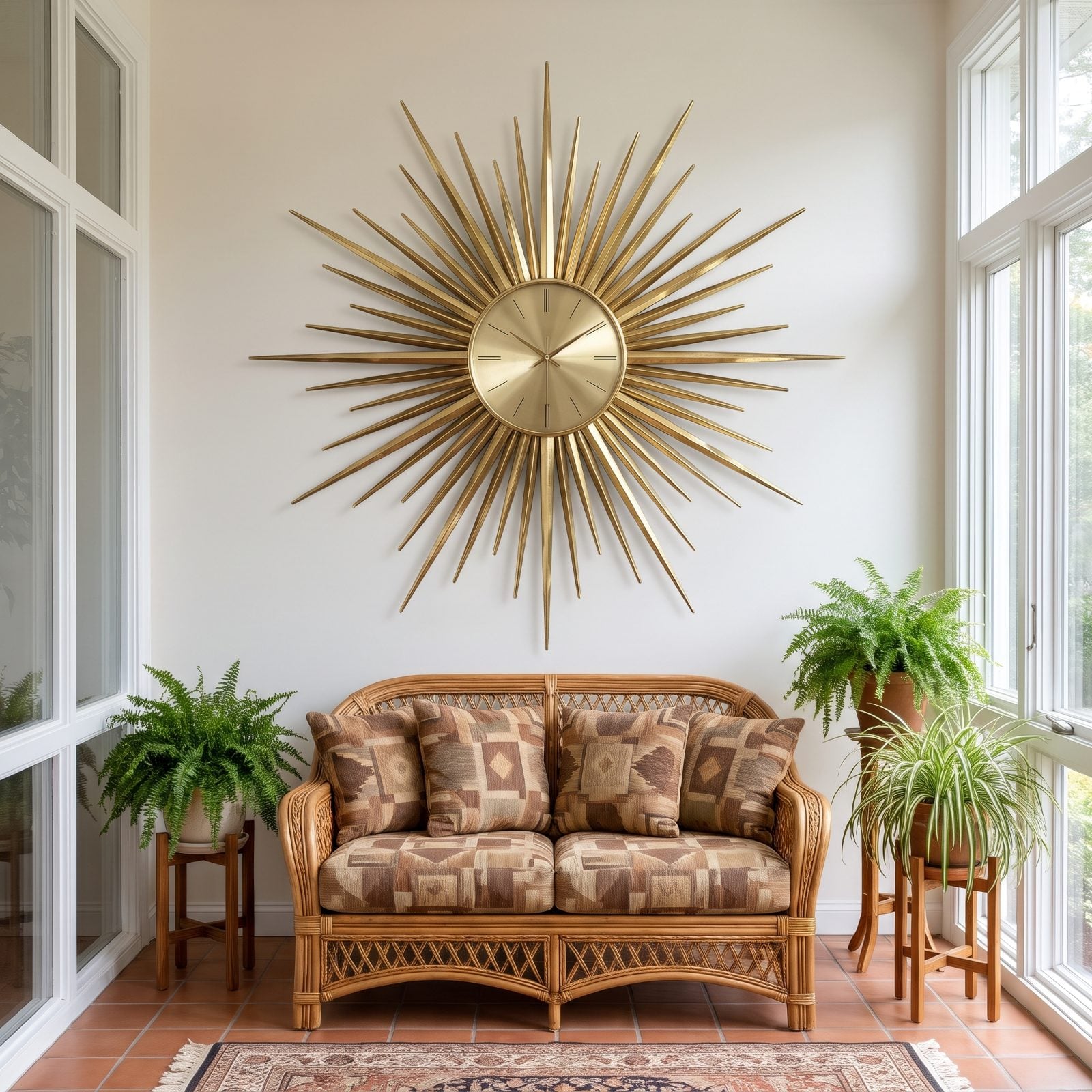
Spiky brass rays fanned out from a little clock face in the center, like the sun had been flattened and pinned to the painted wall between the windows. It hung right over the wicker settee, and on a still afternoon you could hear it ticking from across the room, steady as a heartbeat.
The starburst clock carried a space-age optimism that had been around since the 1950s and was still going strong by the 70s. Half the time it ran a few minutes slow because nobody remembered to swap the battery, and the hands were so thin and stylized you had to squint to read them. Nobody cared. It was jewelry for the wall, and the time was a bonus.
7. The Macramé Owl Hanging That Watched Over Everything
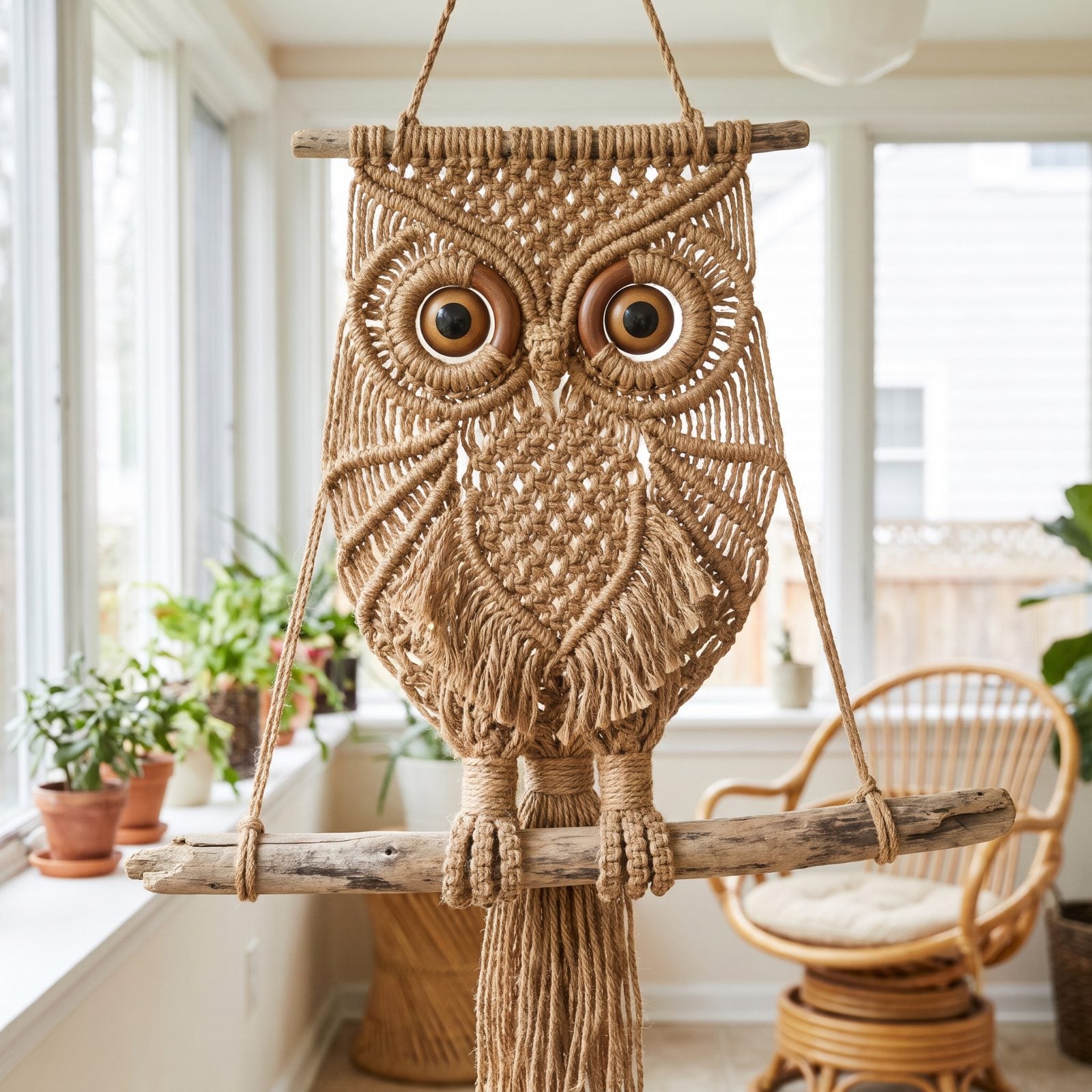
Two wooden rings for eyes, a fringe of knotted jute for feathers, and a little dowel or driftwood branch for a perch. The macramé owl hung on the wall near the plants and stared at you with those wide, round eyes no matter where you sat. Some had wooden beads worked into the chest, some had a tuft of tassels at the bottom, and every single one looked faintly startled.
A lot of them were homemade, knotted by an aunt or a neighbor who had just discovered macramé and couldn’t stop. It was the perfect sunroom craft: earthy, handmade, and the same warm brown as everything else in the room. The jute shed a little fuzz forever and gathered dust in every knot, and it still felt like part of the family.
6. The Heavy Amber-Glass Ashtray You Could Have Thrown Through a Window
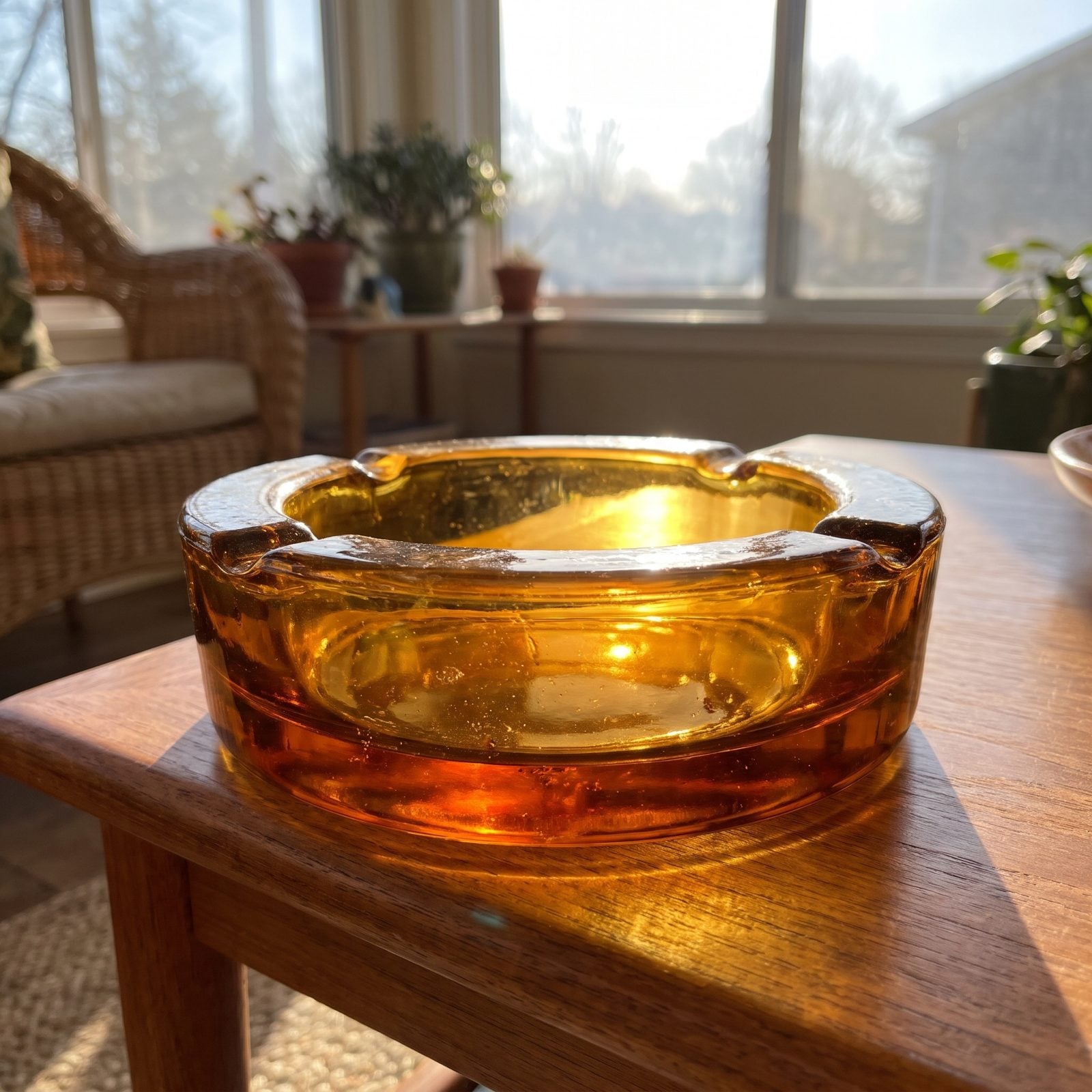
It weighed about as much as a brick and came in a deep honey amber that glowed when the sun hit it. Thick pressed glass, wide grooves around the rim to rest a cigarette, and a bottom so heavy it never once tipped over, even when somebody bumped the table. It sat front and center because smoking indoors was simply what grown-ups did.
Card nights, coffee with the neighbors, Dad reading the paper on Sunday morning, it caught all of it. Somebody emptied it into the trash and wiped it out with a paper towel, and it came back gleaming. These ashtrays were practically indestructible, which is why so many now turn up at estate sales holding paper clips and keys instead of butts.
5. The Colored-Glass Suncatcher That Threw Rainbows on the Shag
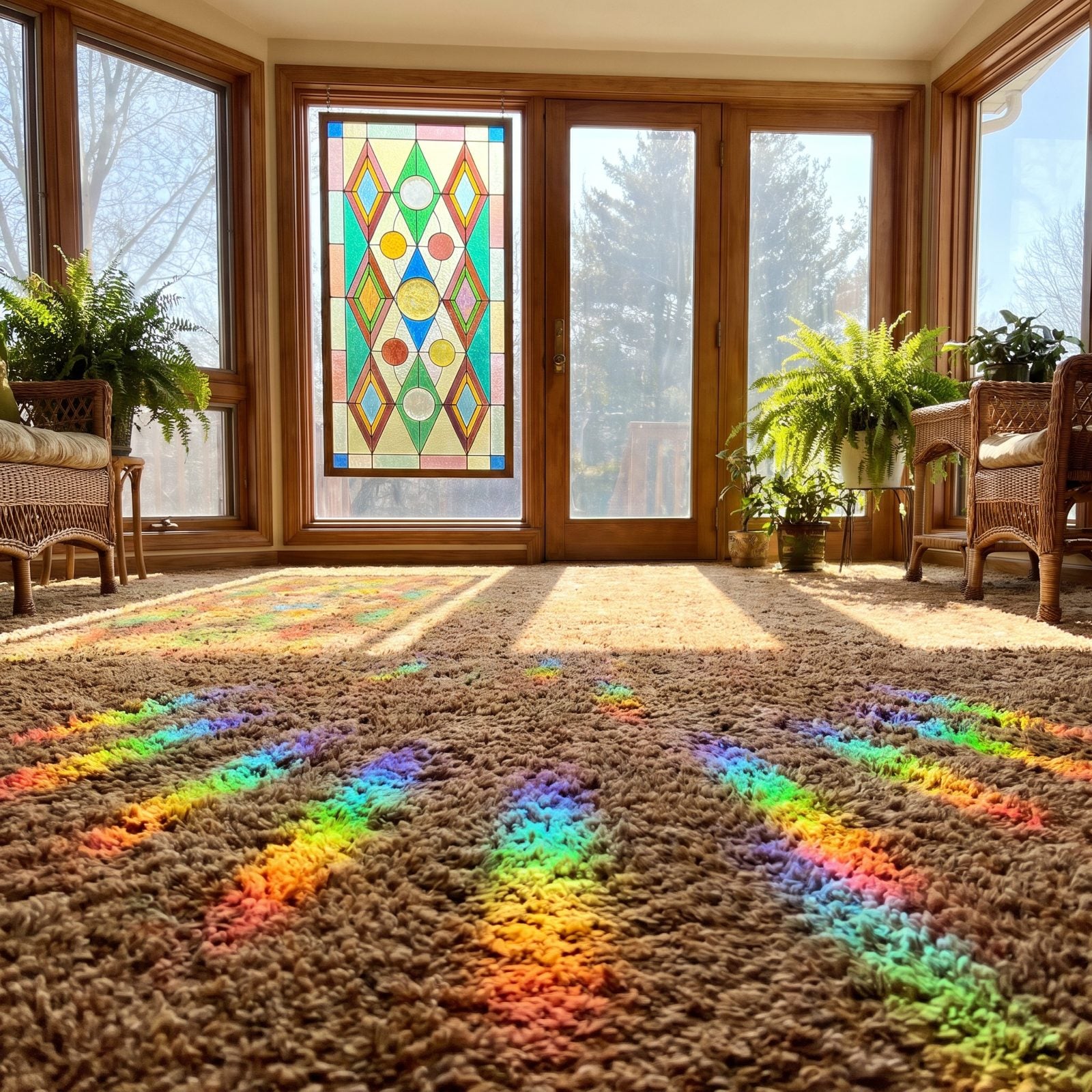
Mid-afternoon the sun would hit it just right and the whole corner of the room turned into a church. Little lozenges of orange and blue slid across the shag carpet, and if you were small enough you tried to catch them in your hands.
Ours was a big rectangular panel of diamonds and ovals, leaded from red, orange, blue and green glass and hung on two thin chains in front of the pane, close enough to the plants that you had to mind it when you watered them. Only the sunroom had enough glass to make it worth hanging. A good one turned ordinary afternoon light into something you actually stopped and looked at.
4. The Portable Black-and-White TV With Rabbit Ears You Nudged for Hours
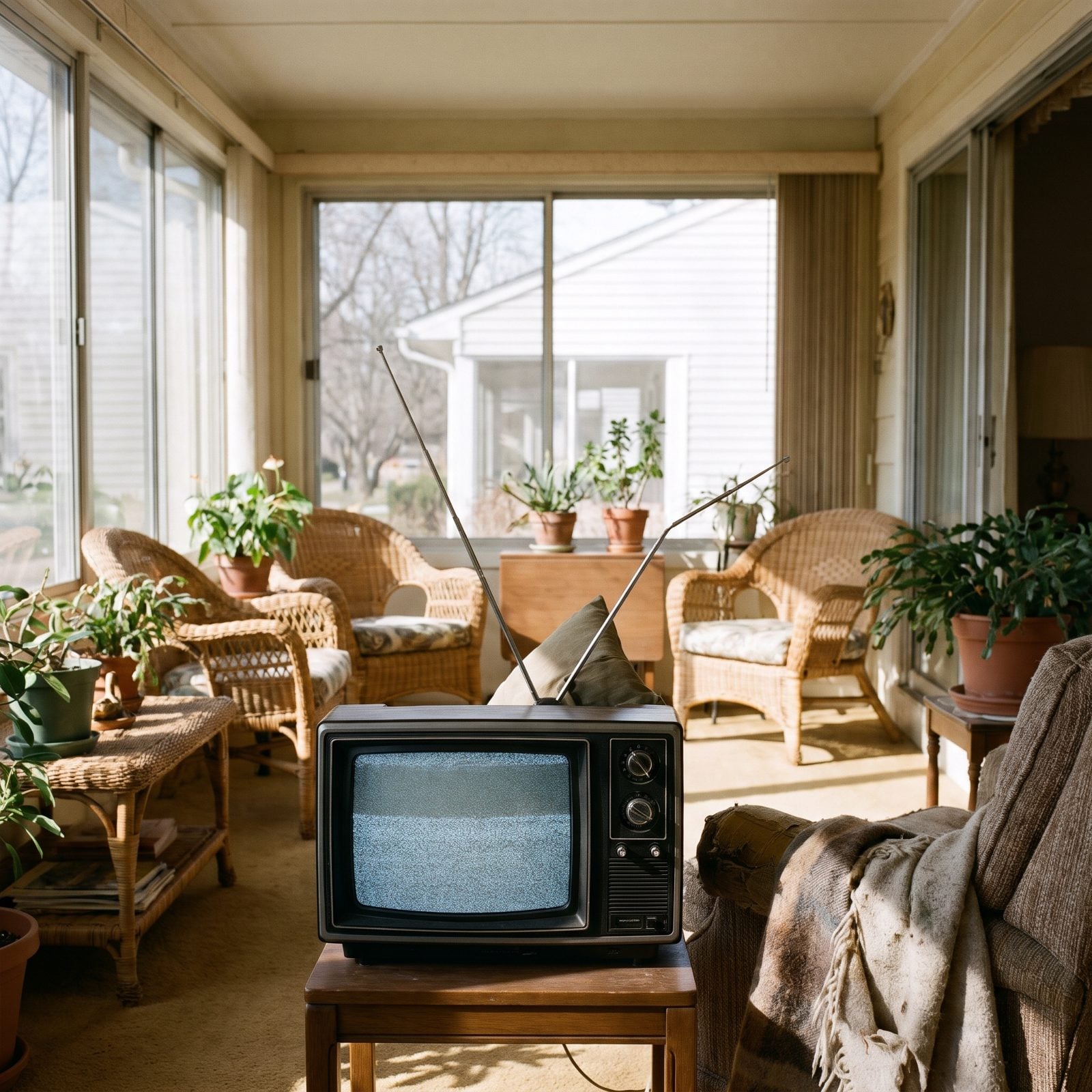
You stood there with one hand on the antenna and your whole body held at a strange angle, because the picture stayed perfect only as long as you personally remained part of the circuit. Step away and the ballgame dissolved into a snowstorm. There was always a wad of aluminum foil crimped onto one rabbit-ear tip, the universal signal that reception here was a negotiation.
The little portable lived in the sunroom because that’s the room you drifted into on a slow Saturday. Grey light, a tinny speaker, and a vertical hold knob you nudged a sixteenth of an inch at a time while the screen rolled. Want that same low-key, catch-whatever’s-on feeling with a bigger screen and no foil? A modern bohemian media room is the grown-up version of that sunroom corner.
3. The 8-Track Stereo With Woodgrain Speakers the Size of End Tables
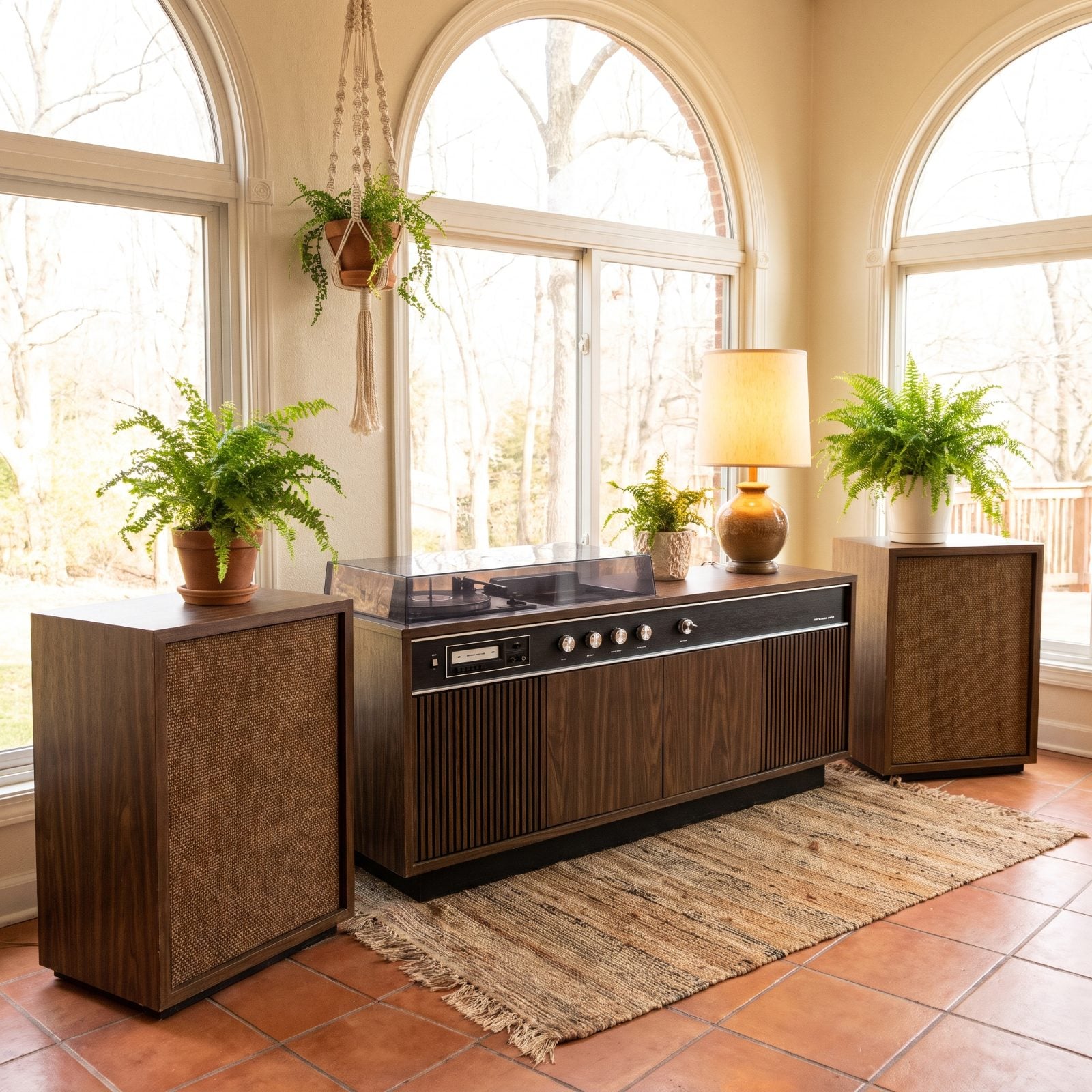
The woodgrain was fake and glorious, a vinyl veneer wrapped over particleboard, and the speakers stood on the floor like squat end tables you were absolutely not allowed to set a drink on. Pushing the chunky cartridge into the slot gave you that satisfying mechanical ka-chunk, and then the music arrived, warm and a little muffled through brown cloth grilles.
Everyone remembers the fade. Right in the middle of a song the track would click over, drop out for a beat, then resume mid-verse, because the album got sliced to fit four tracks of tape and nobody could stop it. We all just learned to live with it. The sunroom caught the overflow of furniture, which is how something this size ended up parked next to the ferns, filling the glass room with Fleetwood Mac on a Sunday.
2. The Metal Box Fan Wedged in the Window, Humming All Summer
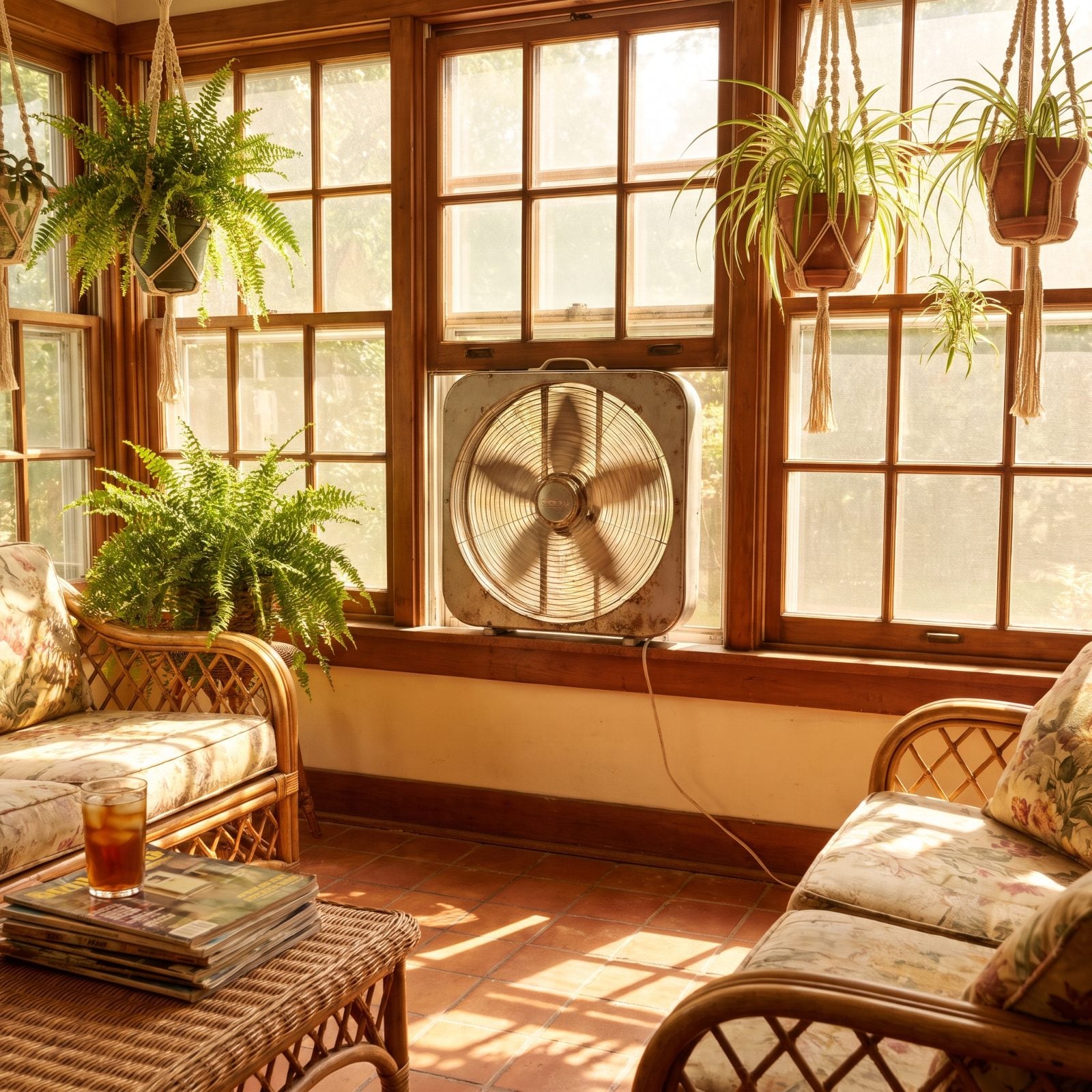
Before central air reached most of these glass rooms, cooling meant a metal box fan heaved into the open window and run on high until September. The enamel housing was a scuffed off-white gone grey with age, the grille collected a grey fuzz of dust and the occasional moth, and the whole machine buzzed at a pitch you stopped hearing by July.
You sat right in front of it. Close enough that talking into the blades turned your voice into that wobbling robot sound every kid discovered within a week of summer. It pulled the evening air through the sunroom and out the other side, the ferns swayed, and you drifted off in a wicker chair with a paperback splayed on your chest. For the modern take on that breezy, light-drenched hideaway, a rust sunroom renovation keeps the glass and the plants and trades the box fan for a quieter ceiling one.
1. The Ribbed Tupperware Beverage Pitcher That Lived on Every Sunroom Table
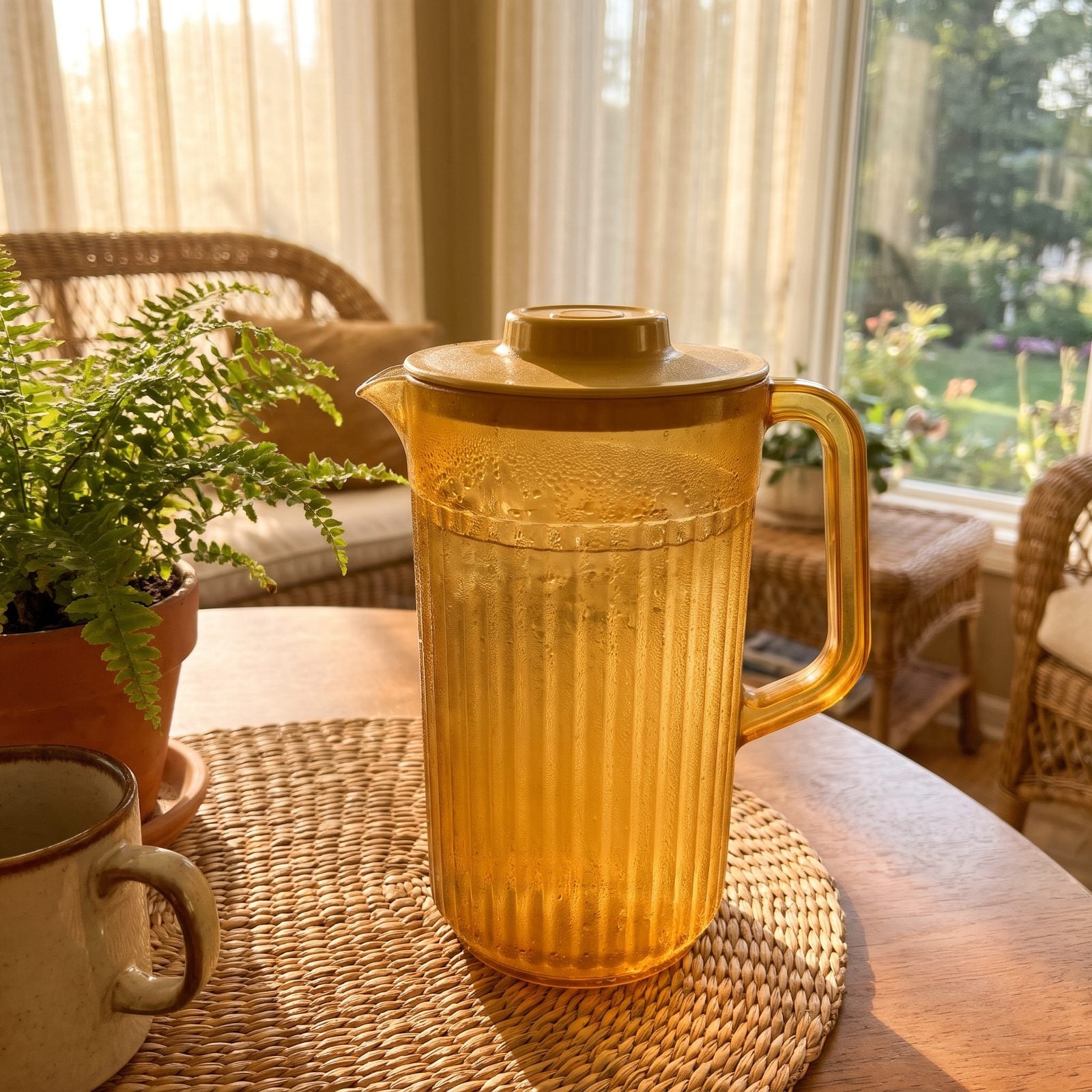
You could identify the color blindfolded. That particular harvest gold plastic had a smell to it, faintly sweet, the kind that lived in every cupboard between the melamine bowls and the lettuce crisper. The ribbing wasn’t decoration — it gave your hand something to grip when the whole thing was slick with condensation and full of Kool-Aid.
The push-button lid was the genius part. Press the raised center, tip it, and it poured from the little lip of a spout, no flap to stick. And nobody ever went looking for the lid, because it snapped on and stayed put. It lived on the sunroom table all summer, refilled with iced tea in the morning and lemonade by afternoon, sweating a permanent ring through the woven placemat into the wooden tabletop that no coaster on earth was ever going to prevent.
We still have one somewhere. The gold has faded to something closer to mustard, the rim is covered in fine scratches, and the thing outlived three refrigerators. Plastic that refuses to die is a funny kind of heirloom. But there it is.