
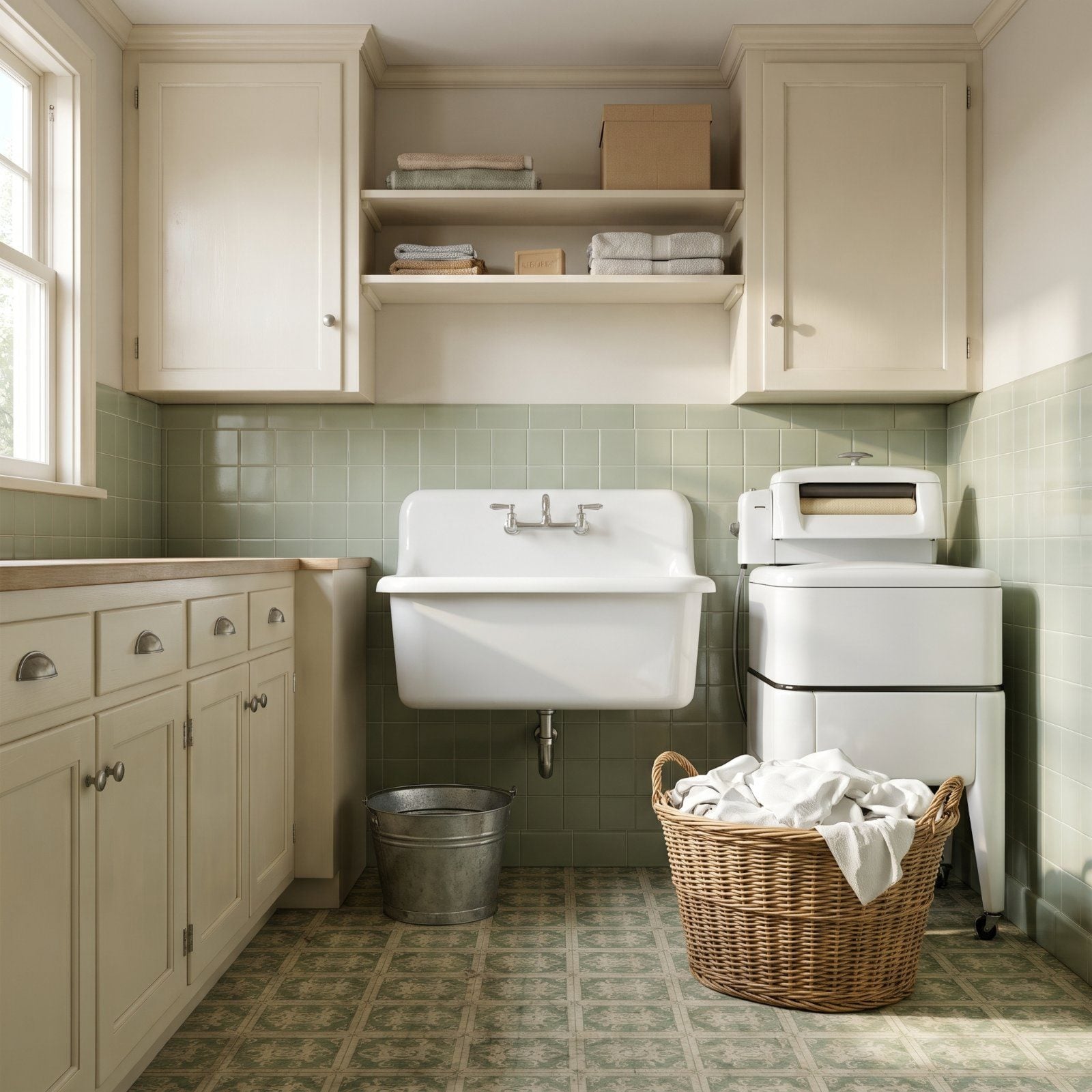
The 1950s laundry room smelled like warm starch and bleach, and it never once pretended to be anything but a working room. No throw pillows. No fake farmhouse signs. Just porcelain, linoleum, and a sink deep enough to bathe a toddler in.
Those rooms solved real problems with features we quietly abandoned somewhere along the way, and the ones below have aged better than almost anything we replaced them with.
In order to come up with the very specific design ideas, we create most designs with the assistance of state-of-the-art AI interior design software. Also, assume links that take you off the site are affiliate links such as links to Amazon. this means we may earn a commission if you buy something.
42. The Deep Double-Basin Porcelain Utility Sink
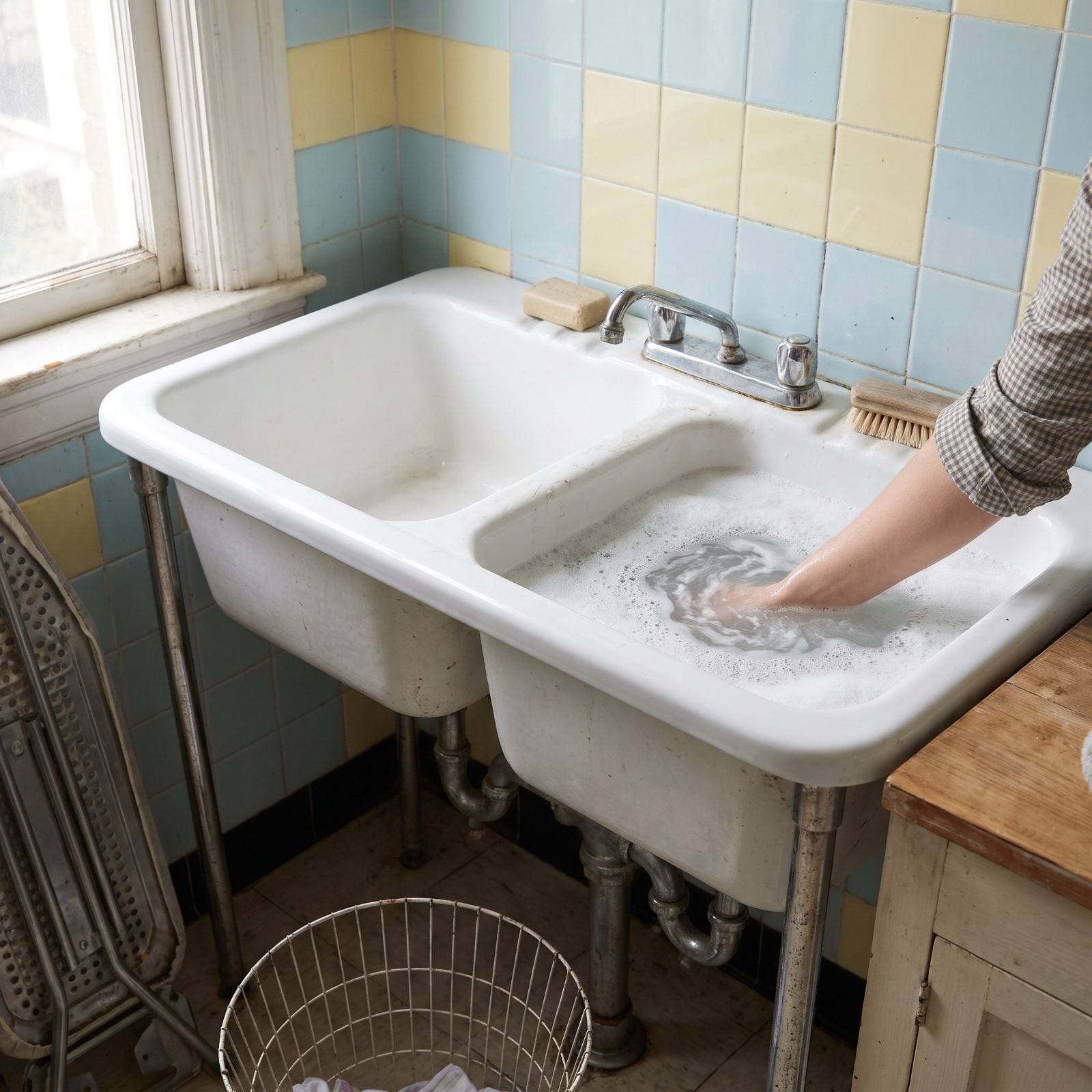
Two basins. One for soaking, one for rinsing, both deep enough to lose your arm up to the elbow. That depth wasn’t decorative — it meant you could hand-wash a wool sweater, soak a stained tablecloth, and still have a basin free for the dripping stuff.
We swapped these for shallow stainless bar sinks that overflow if you so much as fill a watering can. I’ve filled a galvanized bucket in one of these old porcelain basins and never splashed a drop. The modern version can’t say that.
41. High-Clearance Wall-Mounted Laundry Faucets
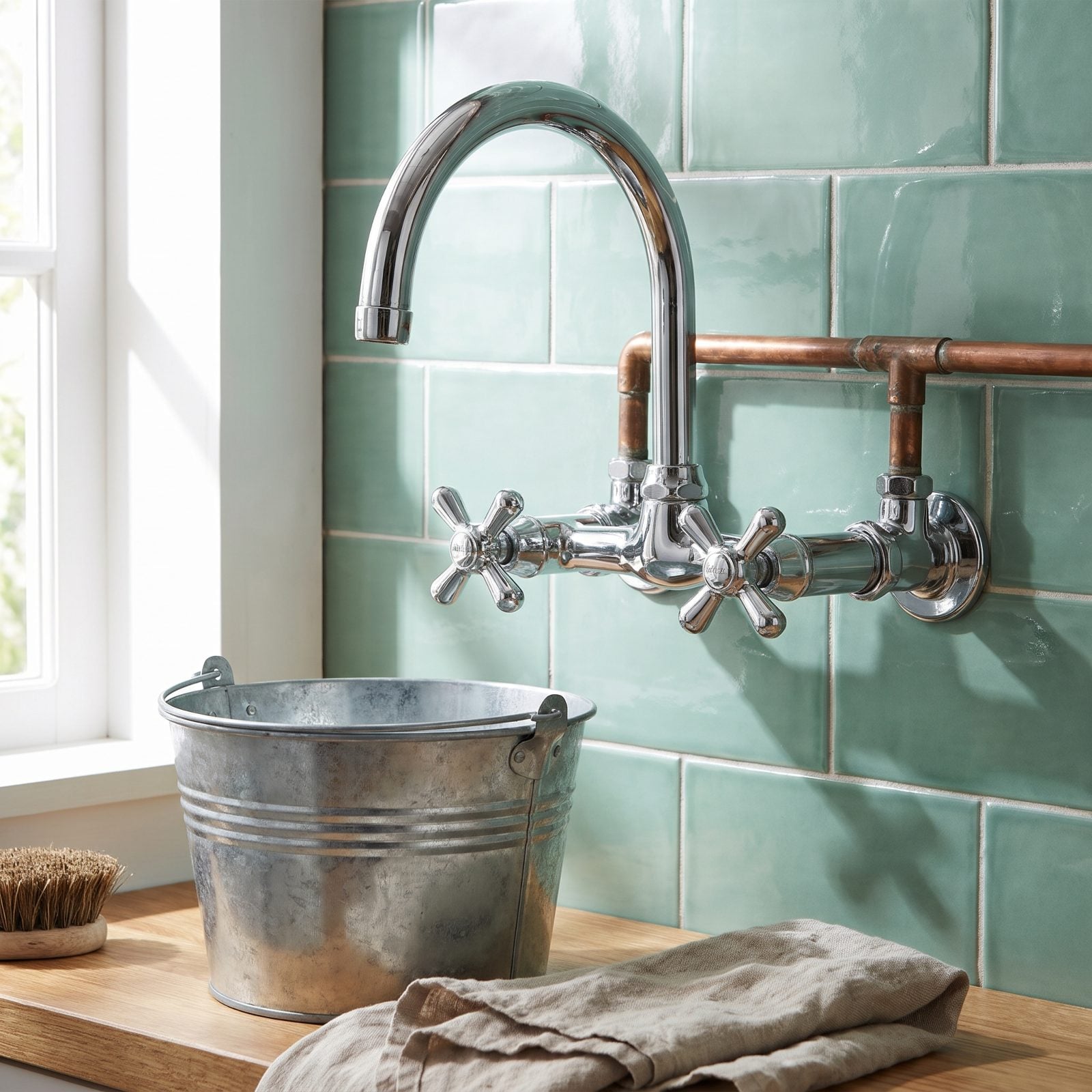
The spout sat high and the handles sat wide, and that combination fit a bucket under the tap without tipping it sideways.
Try filling a mop pail under a modern low-arc faucet. You can’t. You wedge it at an angle, bang it on the spout, and give up halfway. The old wall-mounted ones solved this decades ago by mounting higher — nothing clever, just geometry.
Cross handles also gripped better with wet, soapy hands than the sleek levers we buy now. There’s a reason plumbers still install these in utility spaces. They work.
40. The Integral Ribbed Sink Drainboard
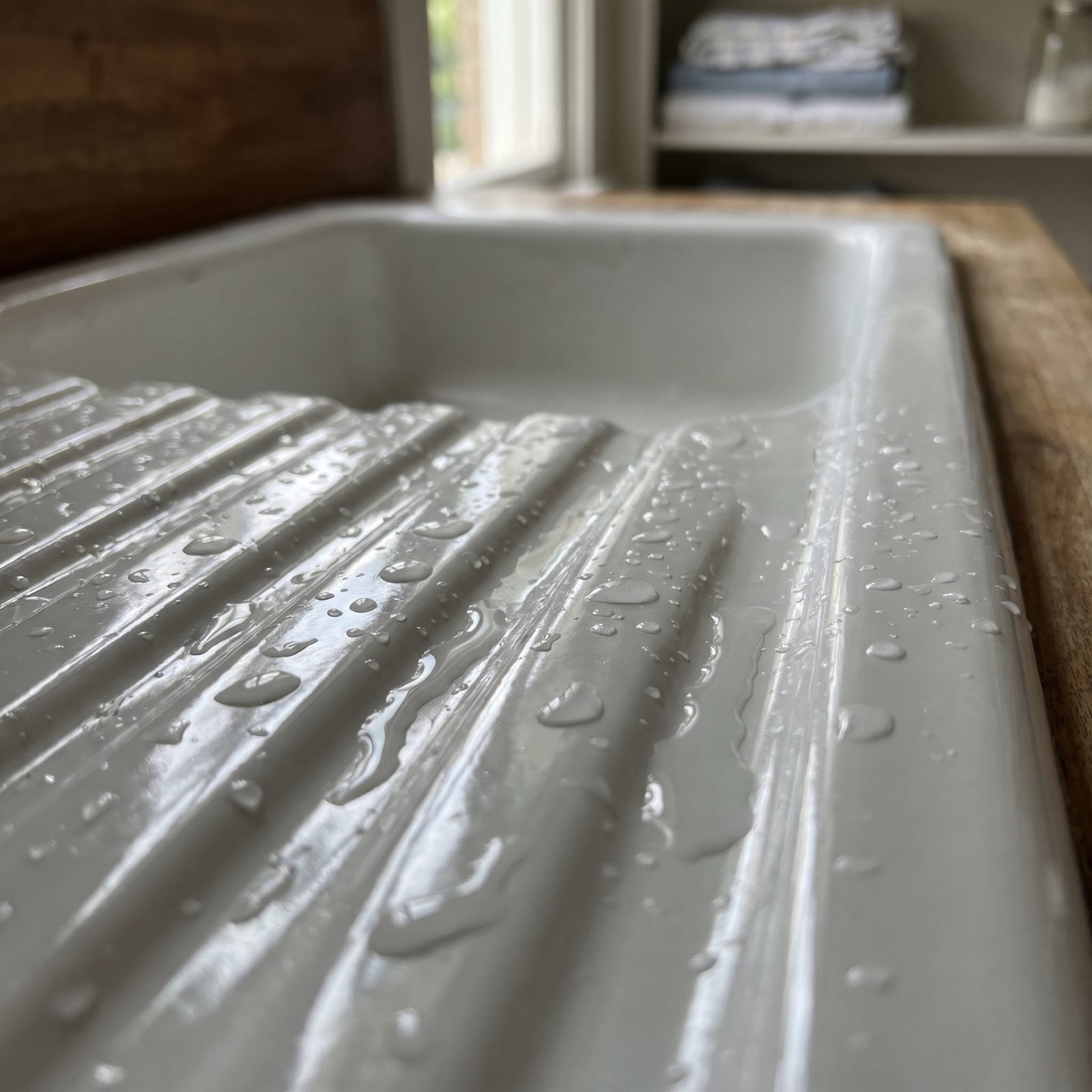
Those molded ribs weren’t an accident. Water hit them, found the grooves, and ran straight back into the basin instead of pooling on the counter or dripping down the cabinet front.
We lost this when counters went flat and separate. Now wet things drip onto laminate and you wipe it up five times a day. The drainboard was built into the sink, so there was nothing to wipe.
39. Floor Drains and Gently Sloped Floors
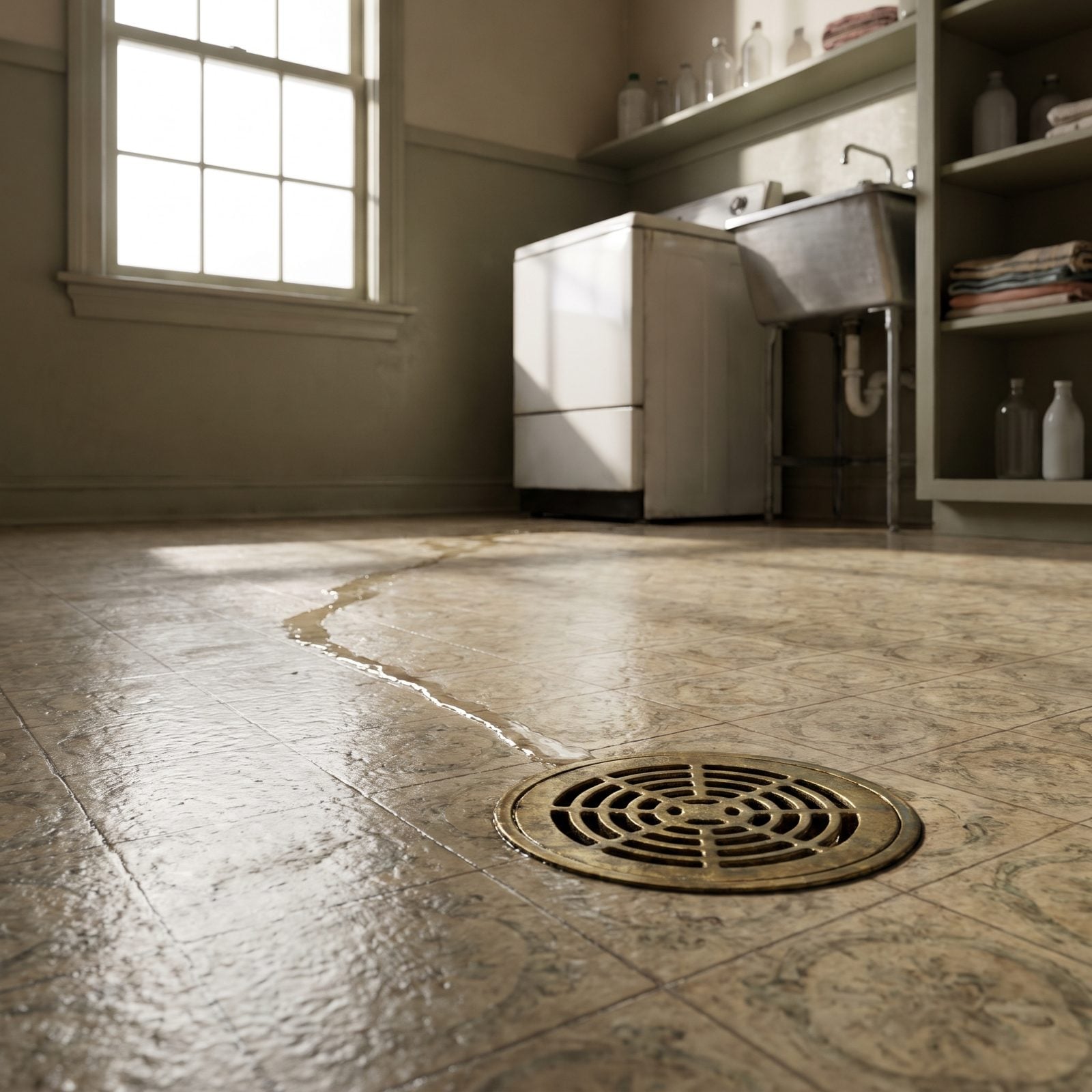
A washer hose bursts at 2 a.m. In a 1950s laundry room, the water found the drain and disappeared. In most modern laundry rooms, it finds the drywall, the subfloor, and eventually your downstairs ceiling.
The gentle slope was the whole trick. You couldn’t even see it, but every drop rolled toward that brass drain ring. I’ve seen flood-ruined laundry rooms in brand-new houses that cost more than my car, and every single one lacked this one cheap feature.
Planning a utility room renovation? This is the one thing I’d fight for.
In its guide to upstairs laundry rooms, a home inspection firm notes that “Building code does NOT require the second floor laundry room to have a floor drain or drain pan but it is advisable to install one to avoid unnecessary water damage down the road should there ever be a leak.”
38. Durable Patterned Linoleum Floors
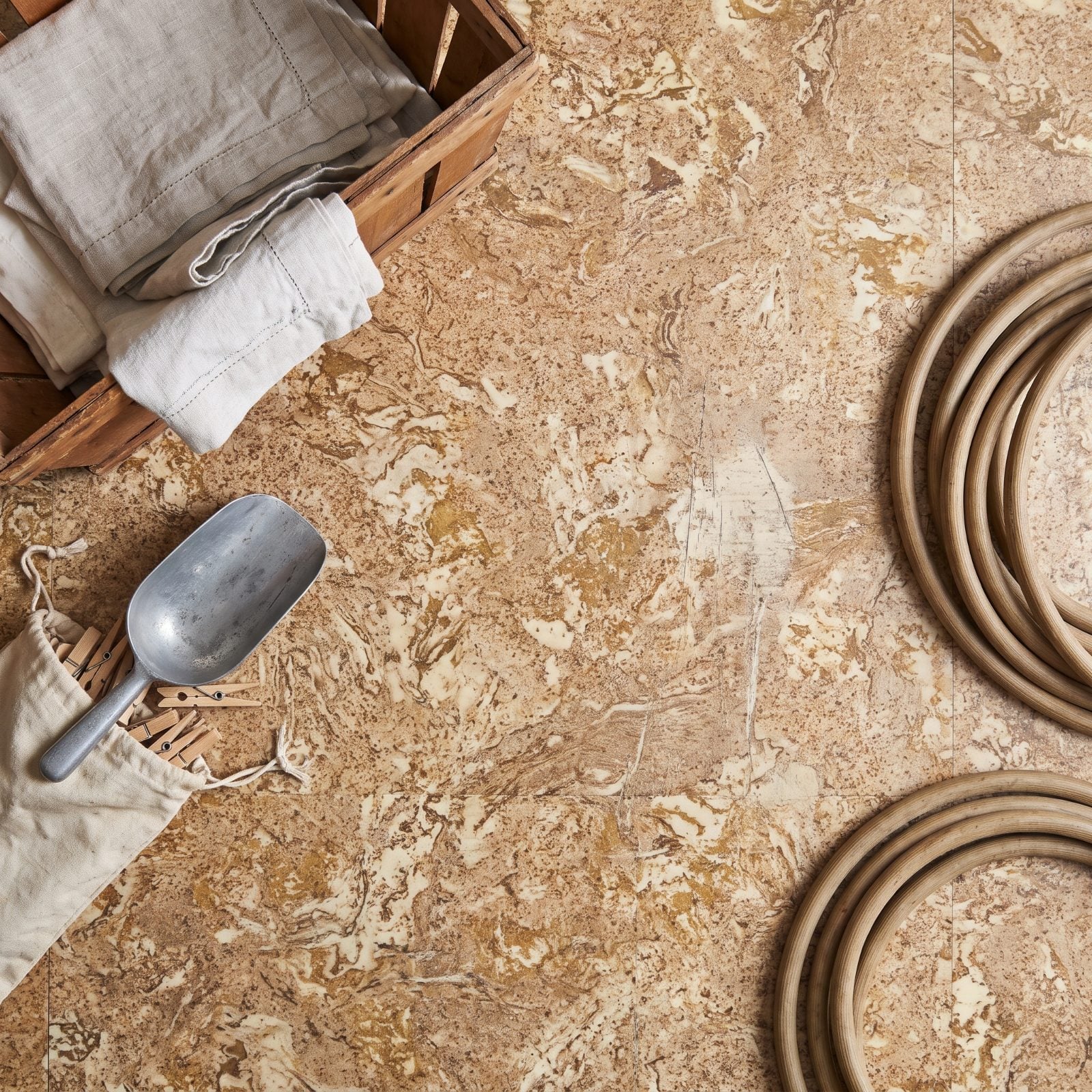
Real linoleum, not vinyl, lasted forty years and got softer underfoot the longer you had it.
Linoleum is linseed oil, cork dust, and pine resin pressed onto burlap. It’s warm, it’s quiet, and bleach drips didn’t eat it alive. The patterns hid every speck of lint, which matters more in a laundry room than anyone admits.
We replaced it with sheet vinyl that cracks at the seams and peels at the edges. The irony? Linoleum is making a comeback as a “green” flooring, when it was never anything but the practical choice to begin with.
37. Coved Baseboards That Made Mopping Easier
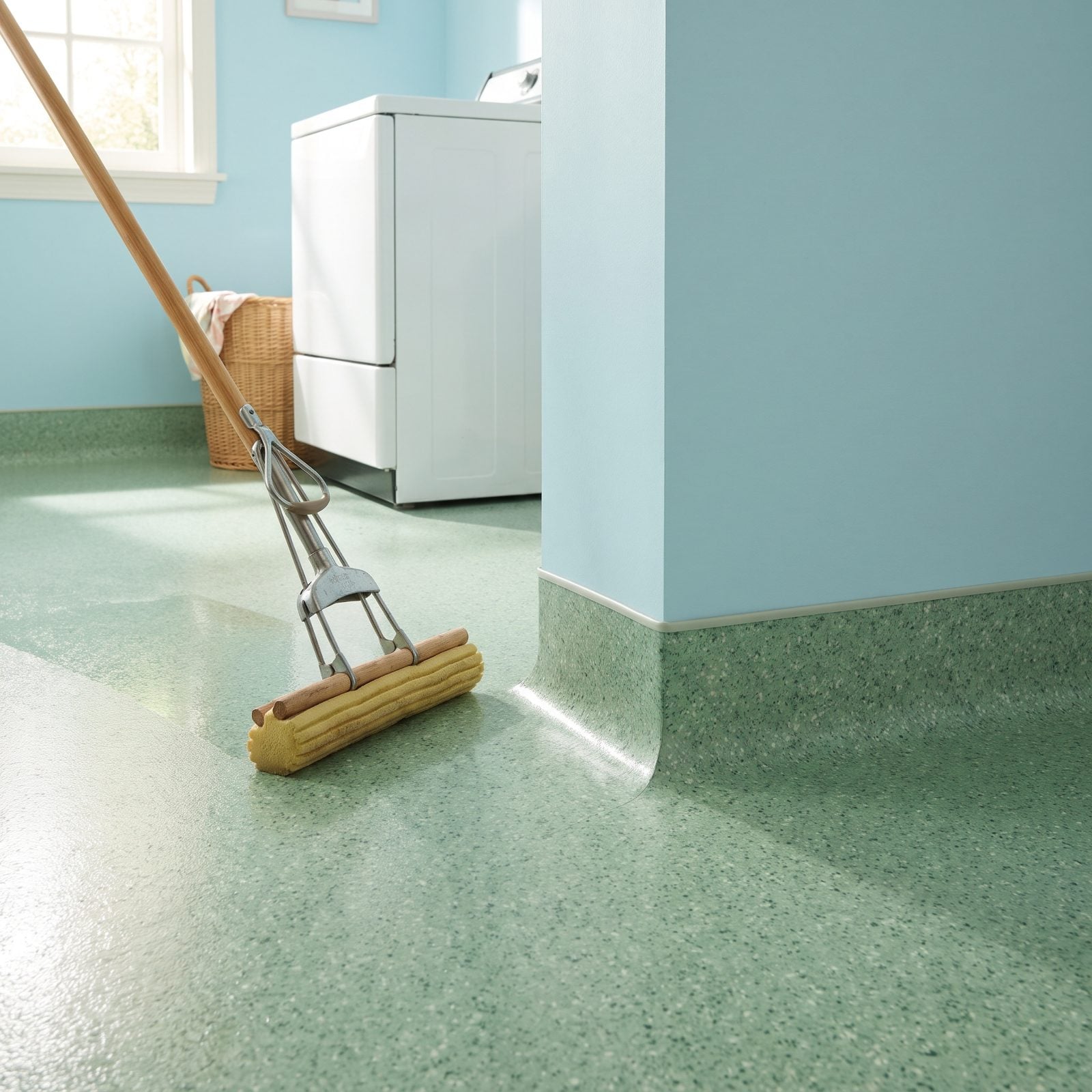
The floor curved up the wall instead of meeting it at a hard right angle. No corner meant no crevice for lint, soap scum, and dust to hide in, so you ran the mop straight up the cove and everything came clean in one pass.
Commercial kitchens still build floors this way. Residential ones mostly don’t — and anyone who has ever dug grey fuzz out of a baseboard corner with a toothpick knows why that’s a loss.
36. Glazed-Tile Splash Wainscoting
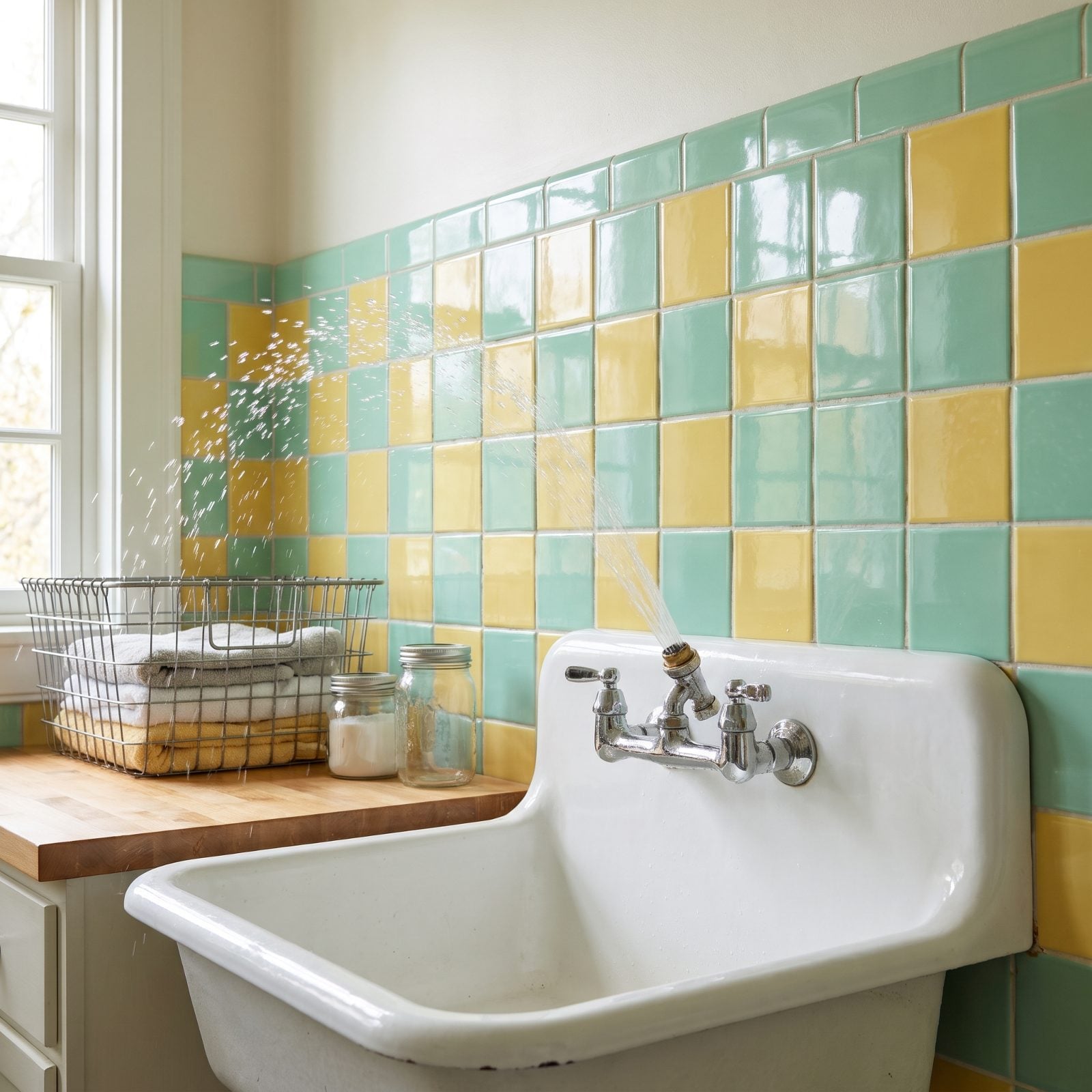
Water sprays everywhere when you wash by hand, so the wall behind and beside the sink got a band of glazed tile up to waist height. The splash hit glass-hard glaze and wiped off with a cloth, and the plaster above stayed dry and unblemished for decades.
Modern laundry rooms often skip this and just paint the wall. Then the paint bubbles, the drywall softens, and someone pays for it later. A simple tile band was cheaper than the repair it prevented.
35. An Operable Window Right Beside the Work Area
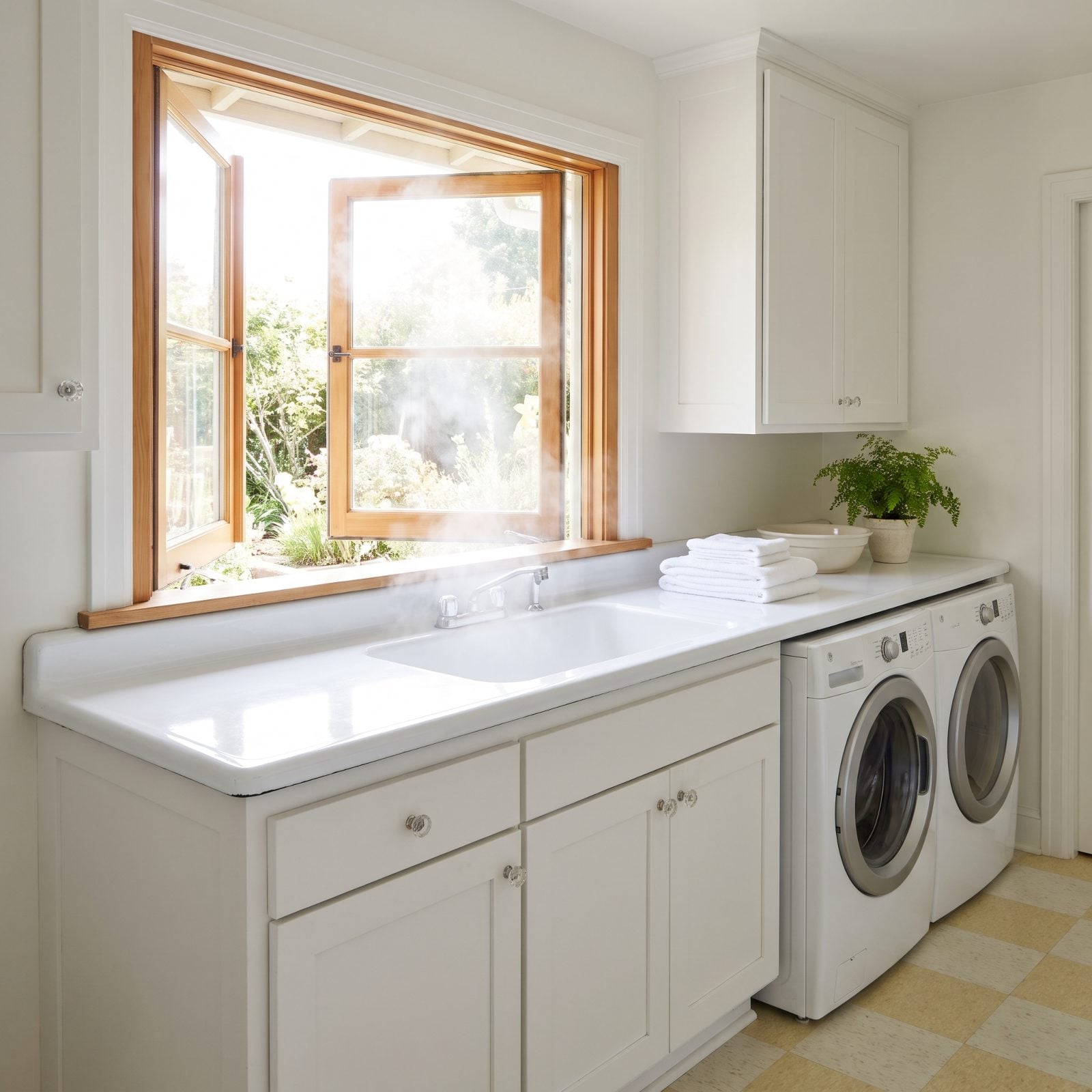
There was almost always a window right where you stood.
Hot water, steam, and bleach fumes need somewhere to go, and a window that actually opened sent them straight outside. It also meant you worked in daylight instead of under a bulb, which matters when you’re inspecting whites for stains.
Half the laundry rooms built today are windowless interior boxes. You run an exhaust fan and hope. The old solution was free, quiet, and gave you something to look at while you scrubbed.
A window that opens does three jobs at once: light, air, and a reason to keep working.
34. Dedicated Laundry-Room Exhaust Venting
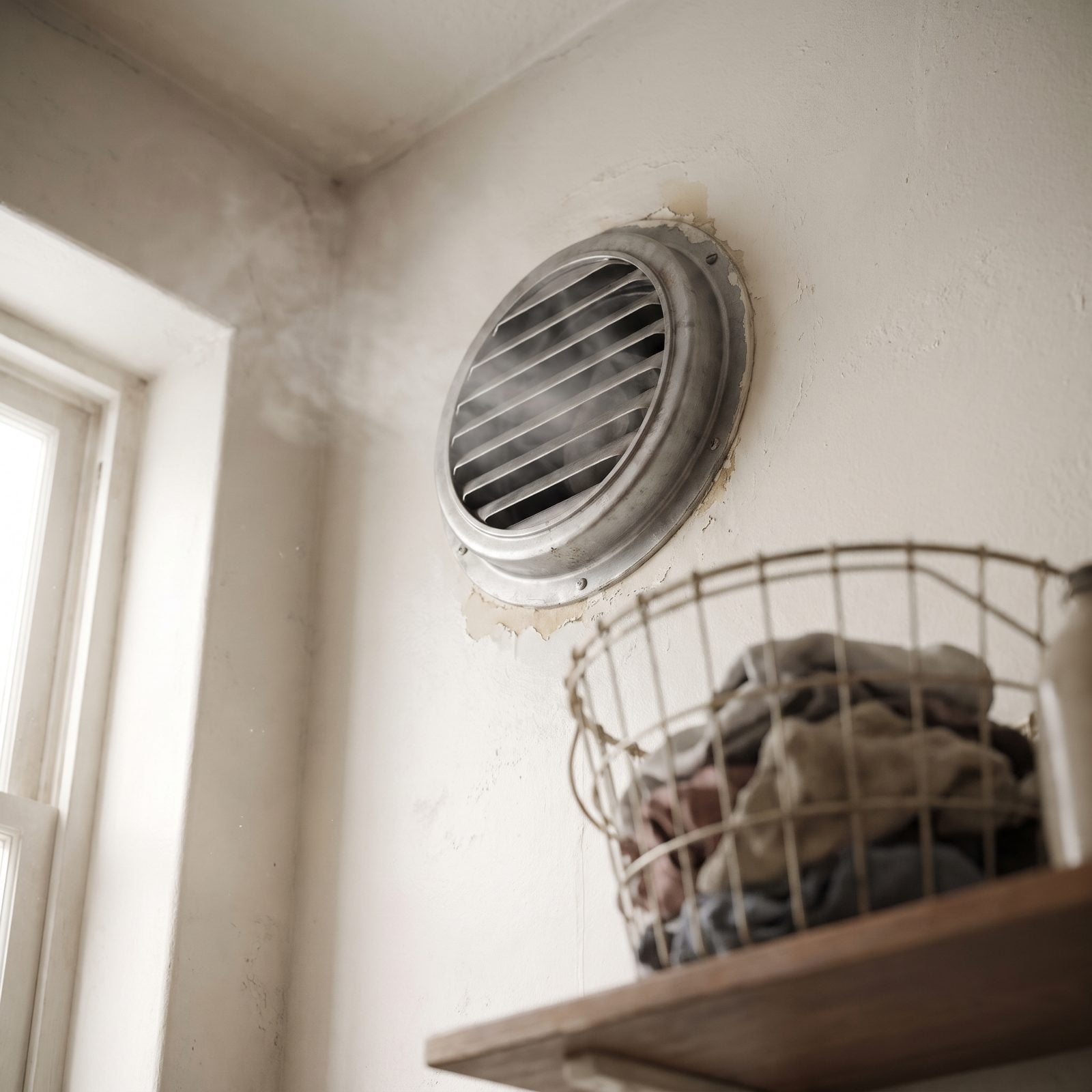
Drying clothes indoors dumps a surprising amount of water into the air as vapor. The old laundry rooms knew this and put a dedicated vent high on the wall to carry the damp straight out.
Skip it and you get the thing nobody wants to name: that musty, slightly sour smell that lives in poorly vented laundry rooms and never fully leaves. Mold loves warm, wet, still air. A proper vent starves it.
Talking about drying a big load of laundry in one small room, a cleaning-service laundry expert warns that “All that water has to go somewhere, and if it’s all concentrated in one space, the air just gets supersaturated with moisture.”
33. A Proper Door That Contained the Noise
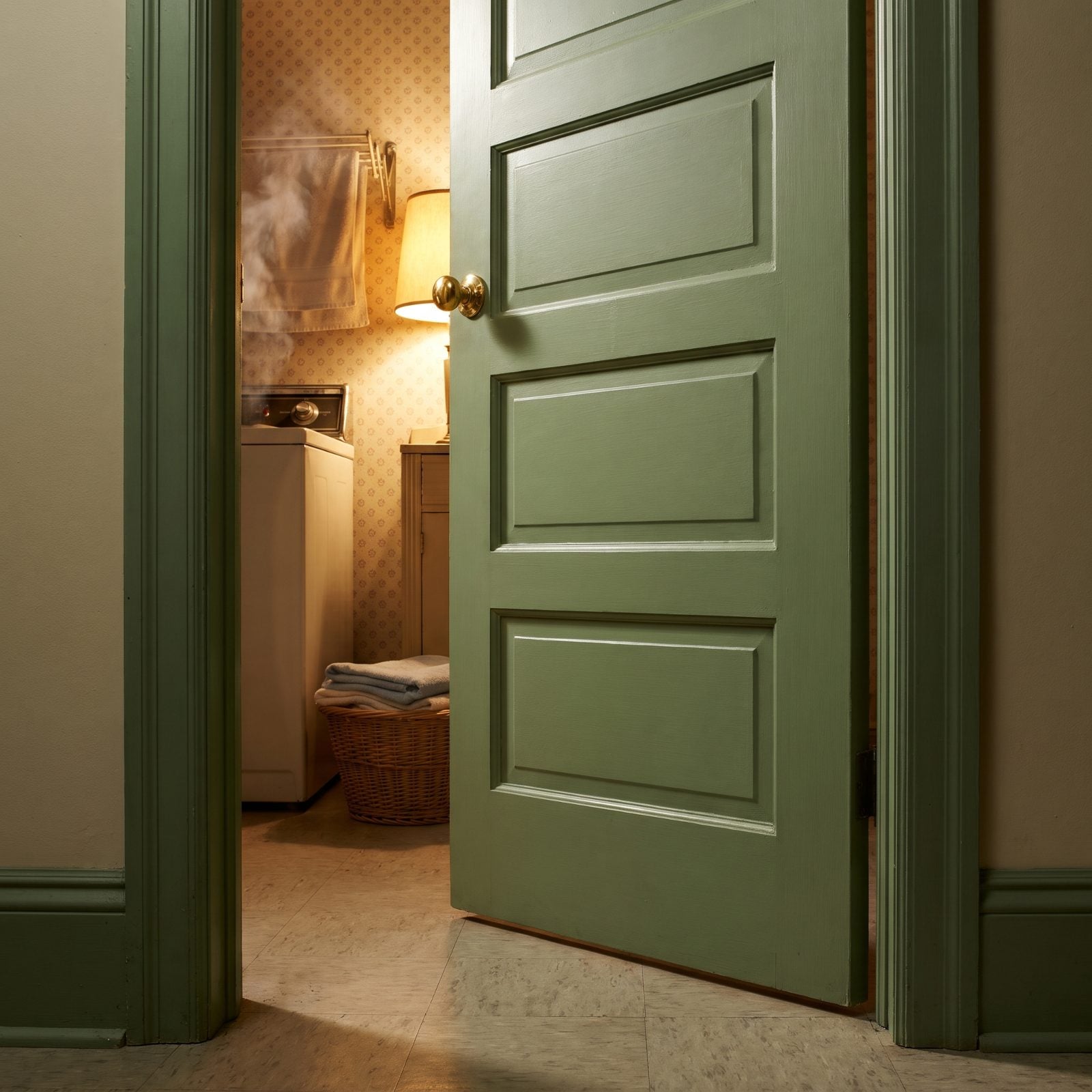
A wringer washer was loud, and the room got a real door to shut it away from the rest of the house. Solid panel, brass knob, ready to close. The racket stayed where it belonged.
Somewhere along the way we decided a louvered bifold or an open nook would do. Then we filled those rooms with spin cycles that walk across the floor at high speed and wondered why the living room sounds like an airport. A real door was never a small thing — it was the difference between a working room and a room you couldn’t ignore.
Of all the features on this list, this is the one I miss most in modern floor plans. Alright, go listen to your laundry from the next room and tell me I’m wrong.
32. Washers Positioned Directly Beside the Sink
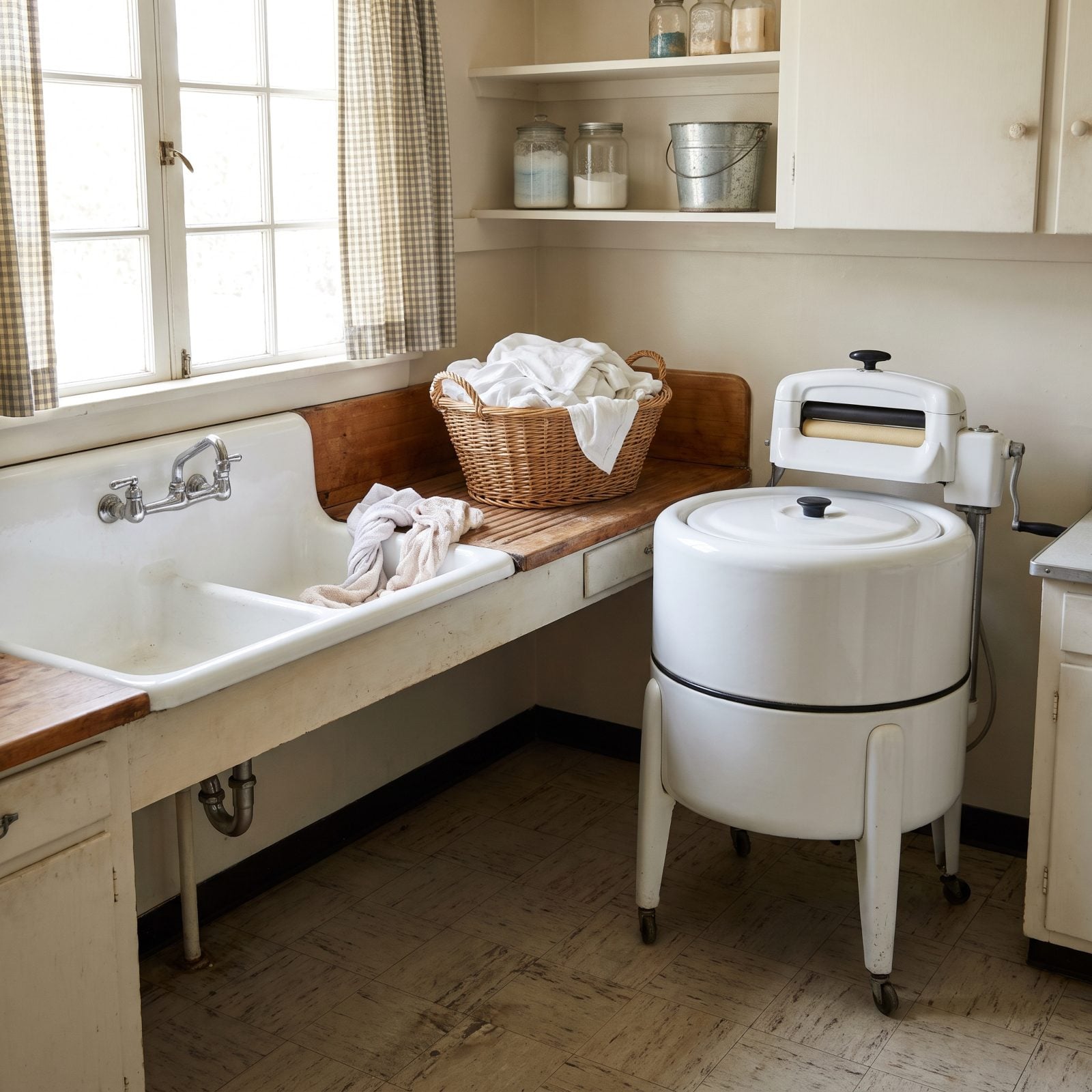
Put the washer within arm’s reach of the sink and suddenly everything flows. You soak the collar in the basin, wring it, drop it straight into the drum. No dripping across the floor, no hauling a loaded basket ten feet to the next station.
That side-by-side layout was pure logic, and it still is. Modern builders scatter the sink and the machine to opposite walls and call it a floor plan. The 1950s version kept the wet work in one tight zone, which is exactly how your hands actually move when you’re fighting a stain at nine at night.
31. Visible and Reachable Water Shutoff Valves
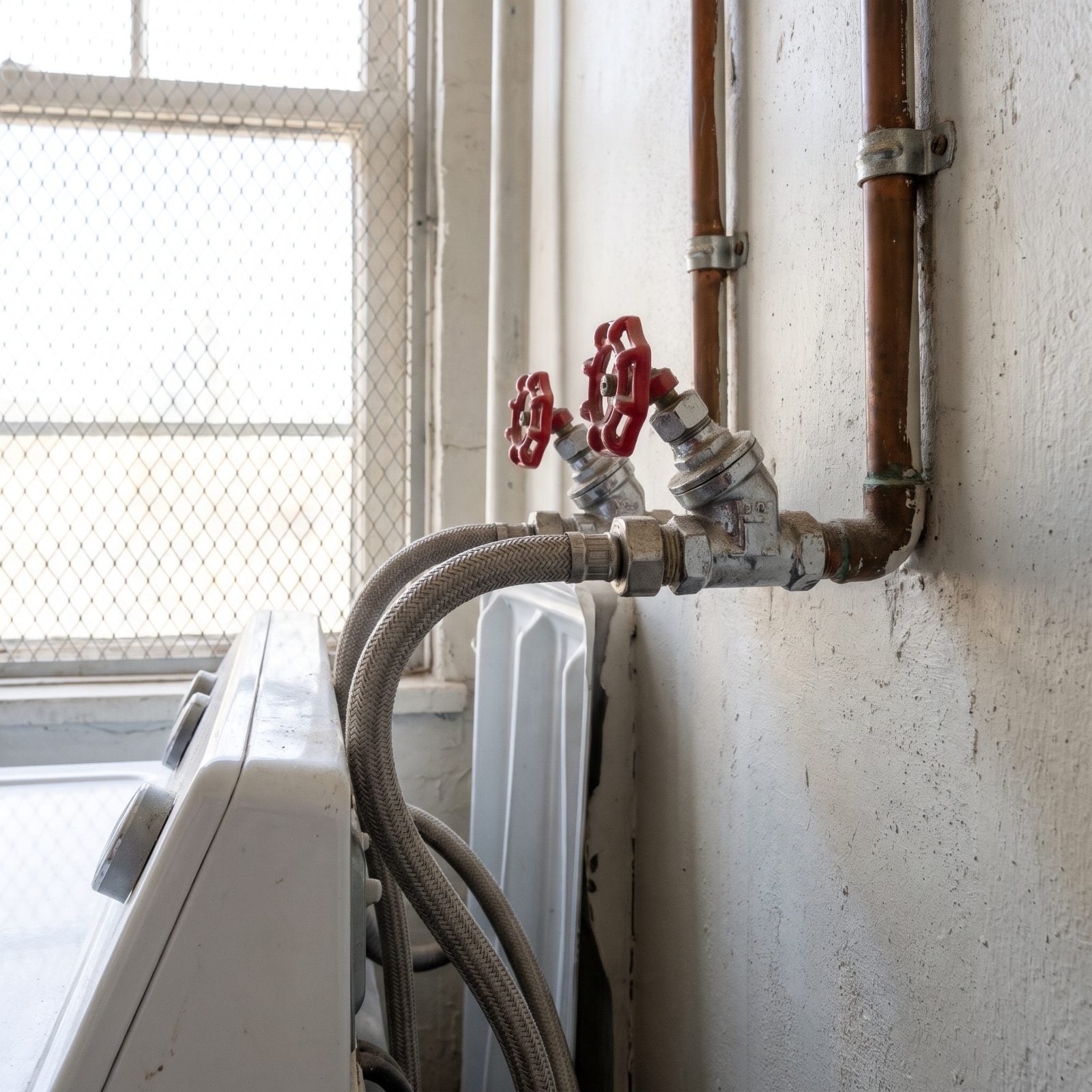
Every valve sat right out in the open, bolted to the wall where you could see it and reach it without a flashlight or a prayer. Hose bursts? You spun the handle and the water stopped. Done.
Compare that to the modern habit of burying shutoffs behind drywall or stuffing them into a cabinet you have to empty first. I’ve watched someone stand in an inch of water hunting for a valve that was technically present, just nowhere a panicking human could reach it. The old houses got this right by refusing to hide the one thing you need when everything’s going sideways.
30. Enough Clearance to Service Every Machine
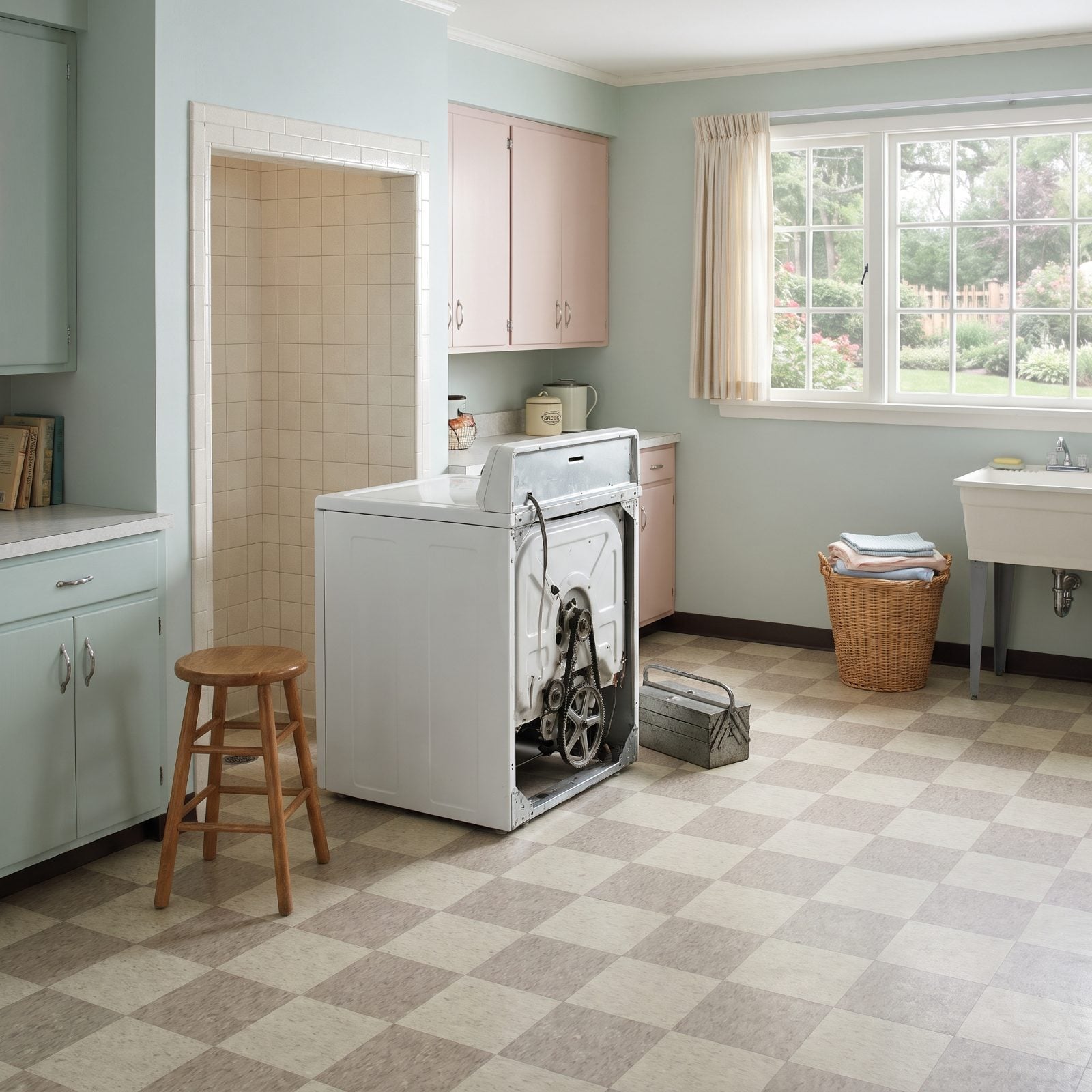
Nobody boxed these machines into a closet with two inches to spare. There was room to walk around, pull a washer out, and get at the back of it when a belt went or a hose cracked.
That breathing room reads as wasted square footage to a builder chasing a spec sheet. It isn’t. A machine you can service is a machine that lasts twice as long, and the open clearance is the difference between a ten-minute fix and a weekend you hand over to a plumber. Any smart utility room renovation still starts here.
29. Laundry Rooms Connected to the Mudroom
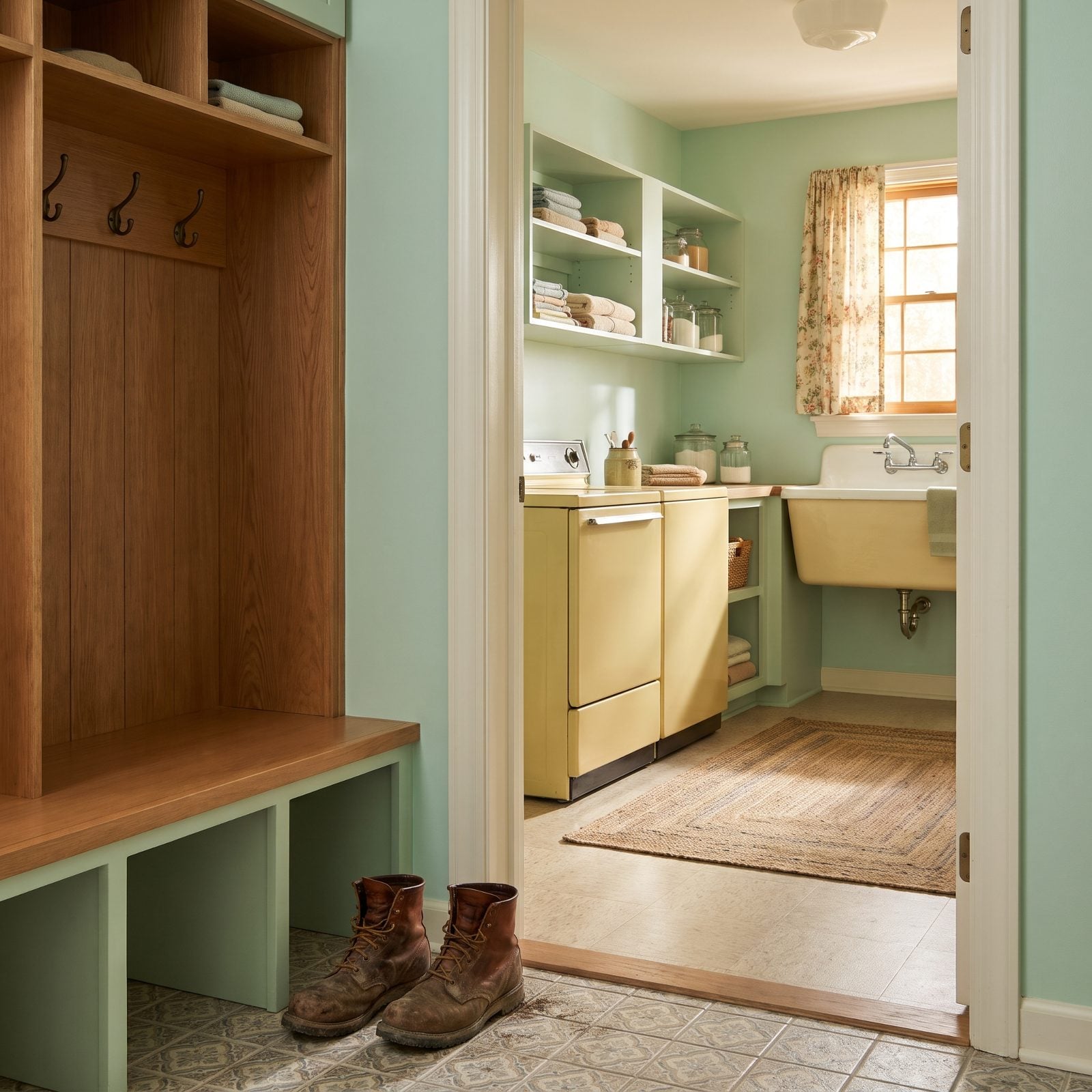
The dirty clothes never made it through the house. You came in from the garden or the garage, peeled off the muddy stuff right there in the mudroom, and the washer waited a few steps away.
Grime got trapped at the entry point instead of tracked across the living room carpet. Builders rediscover this every decade and act like they invented it. They didn’t. People back then already knew the laundry belonged next to the door where the mess walks in.
28. A Direct Door to the Outdoor Clothesline
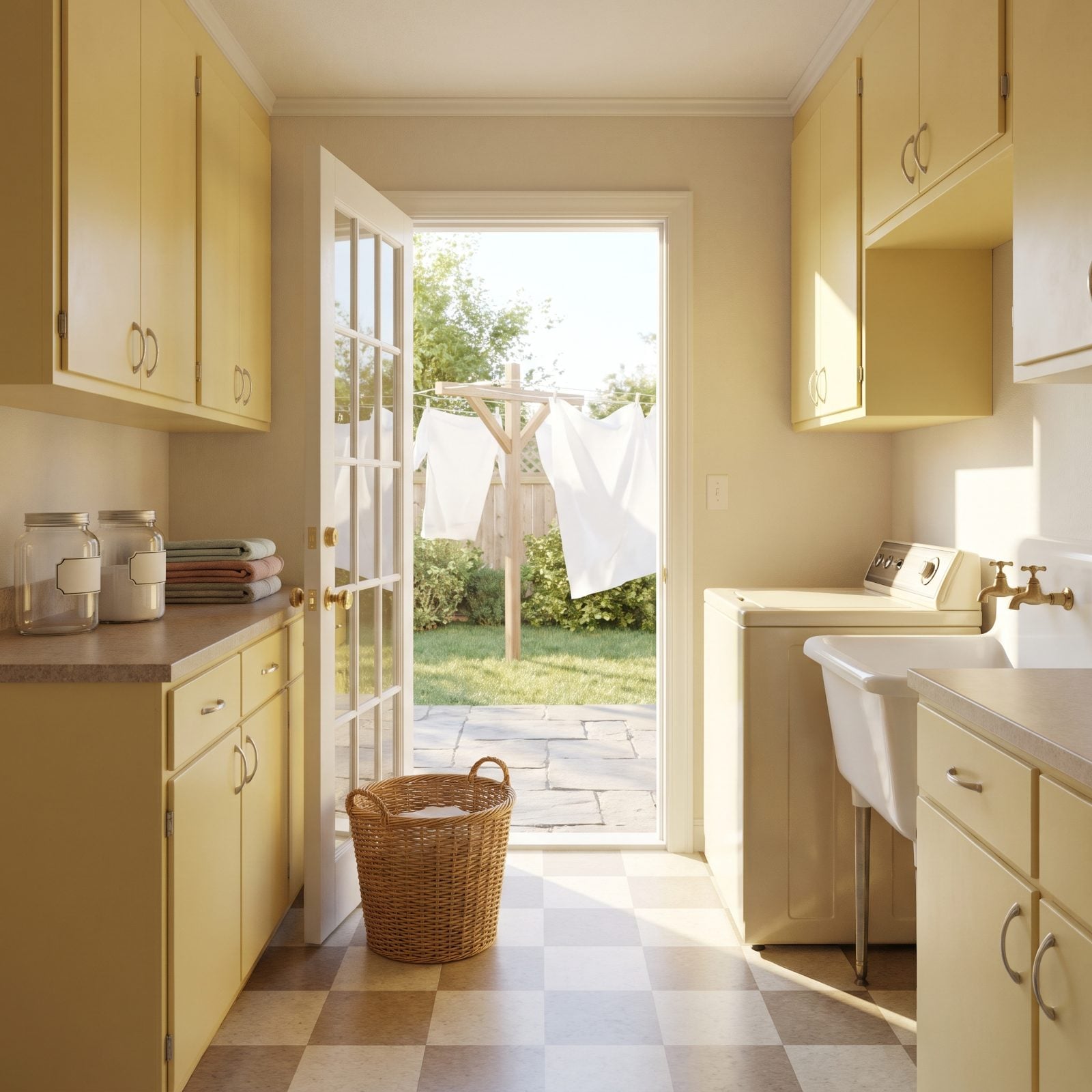
A single door between the washer and the yard. That’s all it took. You pulled the load, grabbed the basket, and stepped straight out to the line without threading through a kitchen or down a hall.
I love this detail because it’s so unglamorous and so right. Wet laundry is heavy and it drips the whole way. The shorter the trip to the line, the less you resent the entire chore. A door placed where the work actually ends beats any amount of clever cabinetry that makes you walk the long way around.
27. Sunny Backyard Clotheslines

Sheets snapping in the wind. That particular smell of linens dried in open air that no dryer sheet has ever managed to fake. The backyard line did the whole job with sunlight and a breeze, and it cost nothing but your time.
UV light bleaches whites and knocks out odor, so the clothes come in smelling like the afternoon itself. People are circling back to this now for the energy savings, and the homeowner from that era would just shrug and tell you they never stopped. A line and a bag of pins still beats a tumble dryer on a clear day.
26. Retractable Indoor Clotheslines
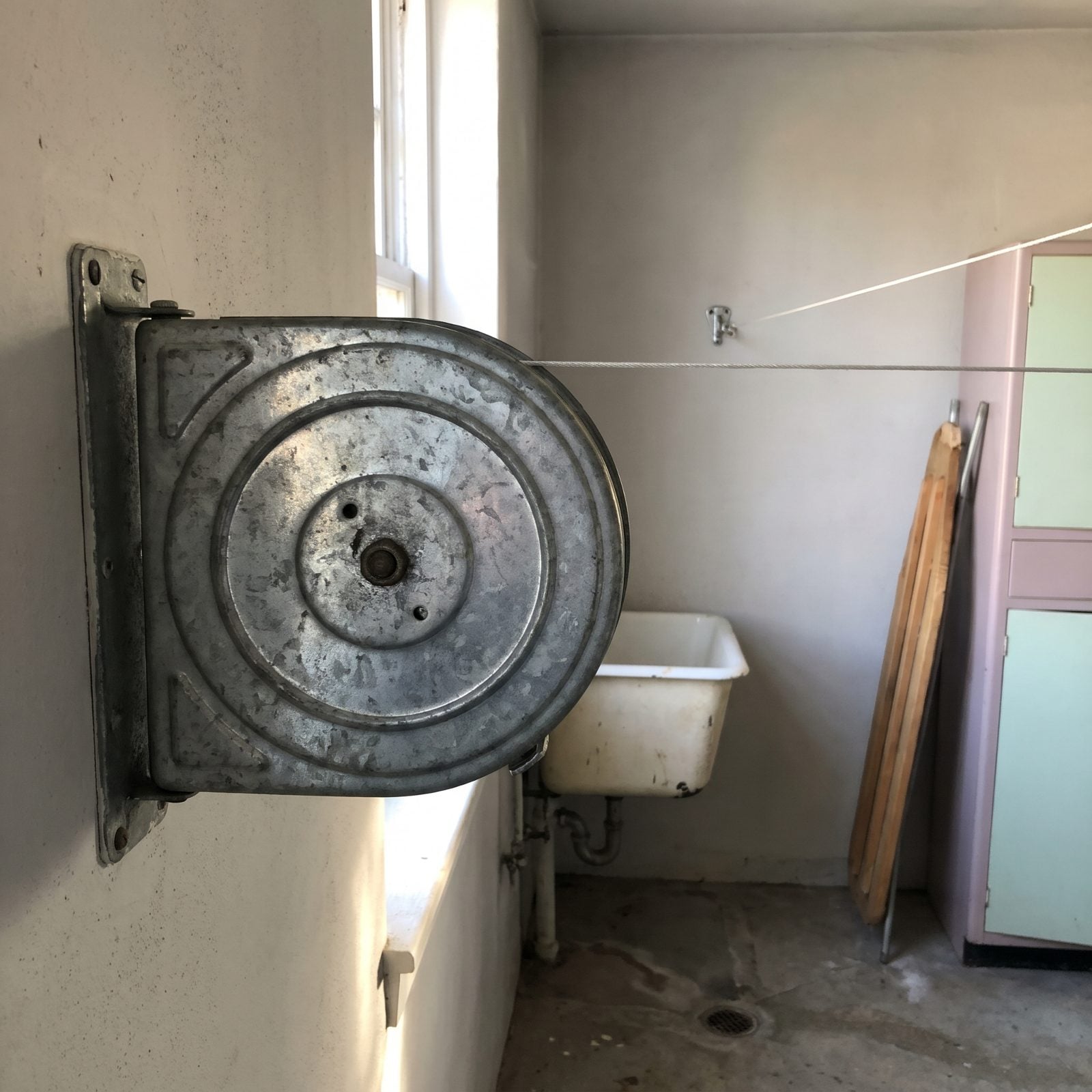
A little galvanized reel on the wall, a line that pulled out across the room, a hook on the far side to catch it. Done drying the delicates? You unclipped, and the whole thing wound back into its housing and vanished.
And that’s the beauty of it. The drying space existed only when you needed it. For small bathrooms and apartments short on floor space, the retractable line solved the hand-wash problem without permanently cluttering anything. A quietly smart answer that tiny-home designers keep stumbling onto as if nobody thought of it first.
25. Flat Mesh Frames for Drying Sweaters
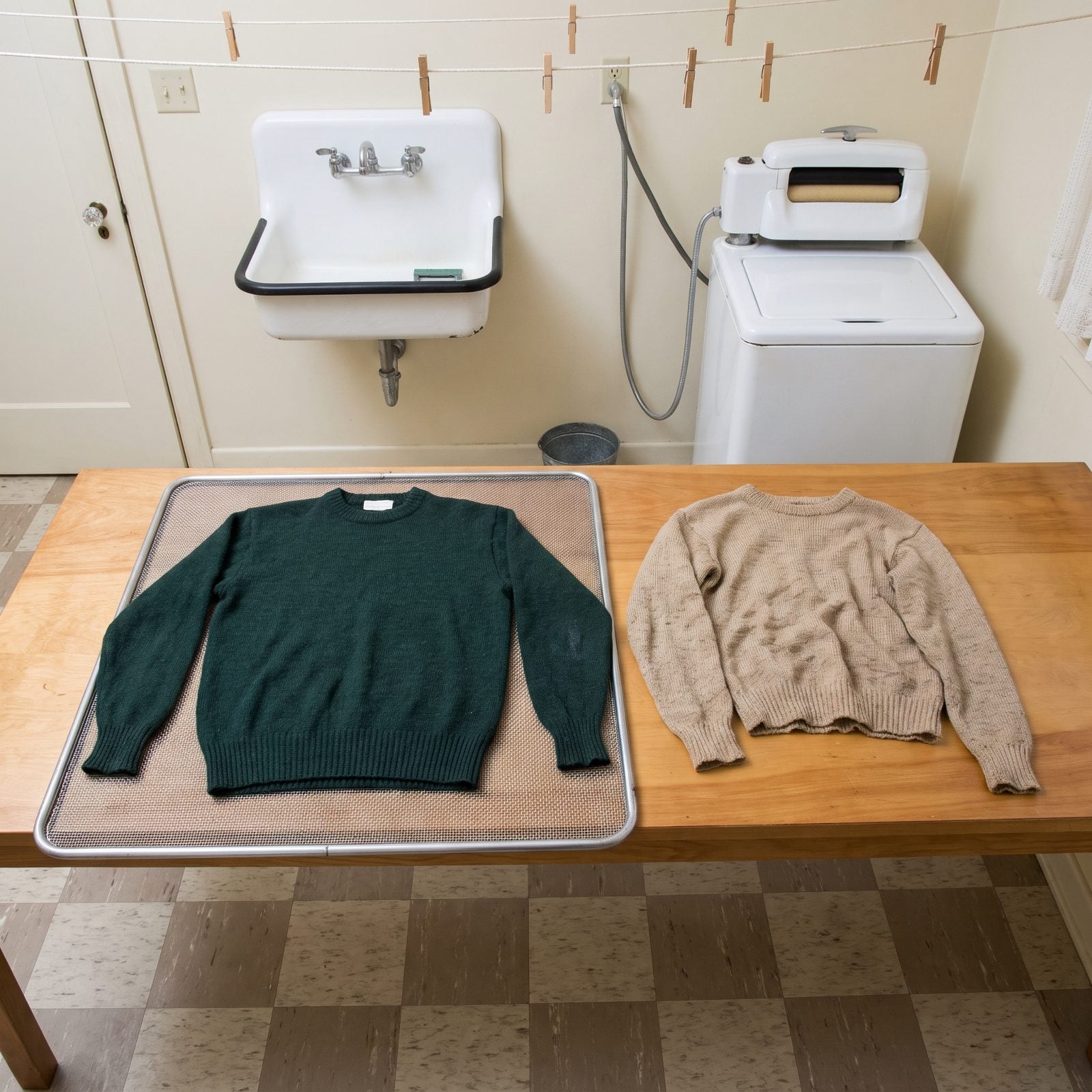
Hang a wet wool sweater and it stretches into a shapeless mess. Everyone learns that the hard way, once. The flat mesh frame fixed it by letting the sweater dry supported on all sides, holding its shape instead of sagging off a hanger into something your arms could fit three of.
Mesh drying racks sell by the thousands today under glossy modern branding, and they do the exact same thing the old frame did. Good design for knitwear hasn’t moved because the problem hasn’t moved. Wool needs to dry flat. Full stop.
24. Hanger Rails Mounted Above the Sink
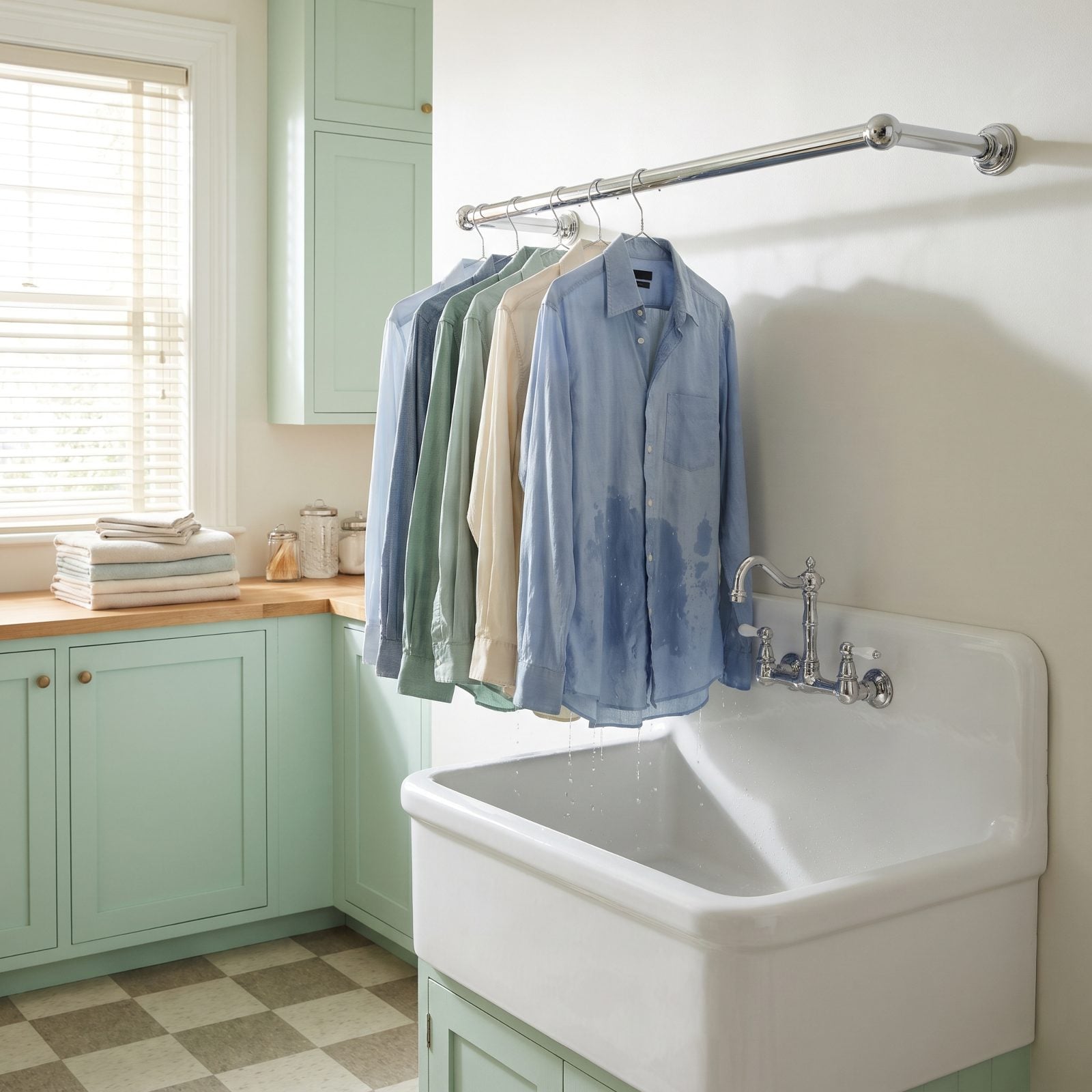
A simple rail bolted to the wall above the sink. You hung the wet shirts straight from the wash, let them drip down into the basin, and skipped the whole ironing-the-wrinkles-out ordeal because they dried on the hanger in good shape.
What I keep coming back to with these rooms is how little they wasted motion. The drip mostly found the sink, with a quick wipe for the counter. The clothes pre-shaped as they dried. No puddle on the floor, no second trip. A length of rail and a few hangers did the work of three gadgets, and it still would. Go find a wall over your sink.
23. Ventilated Built-In Hampers
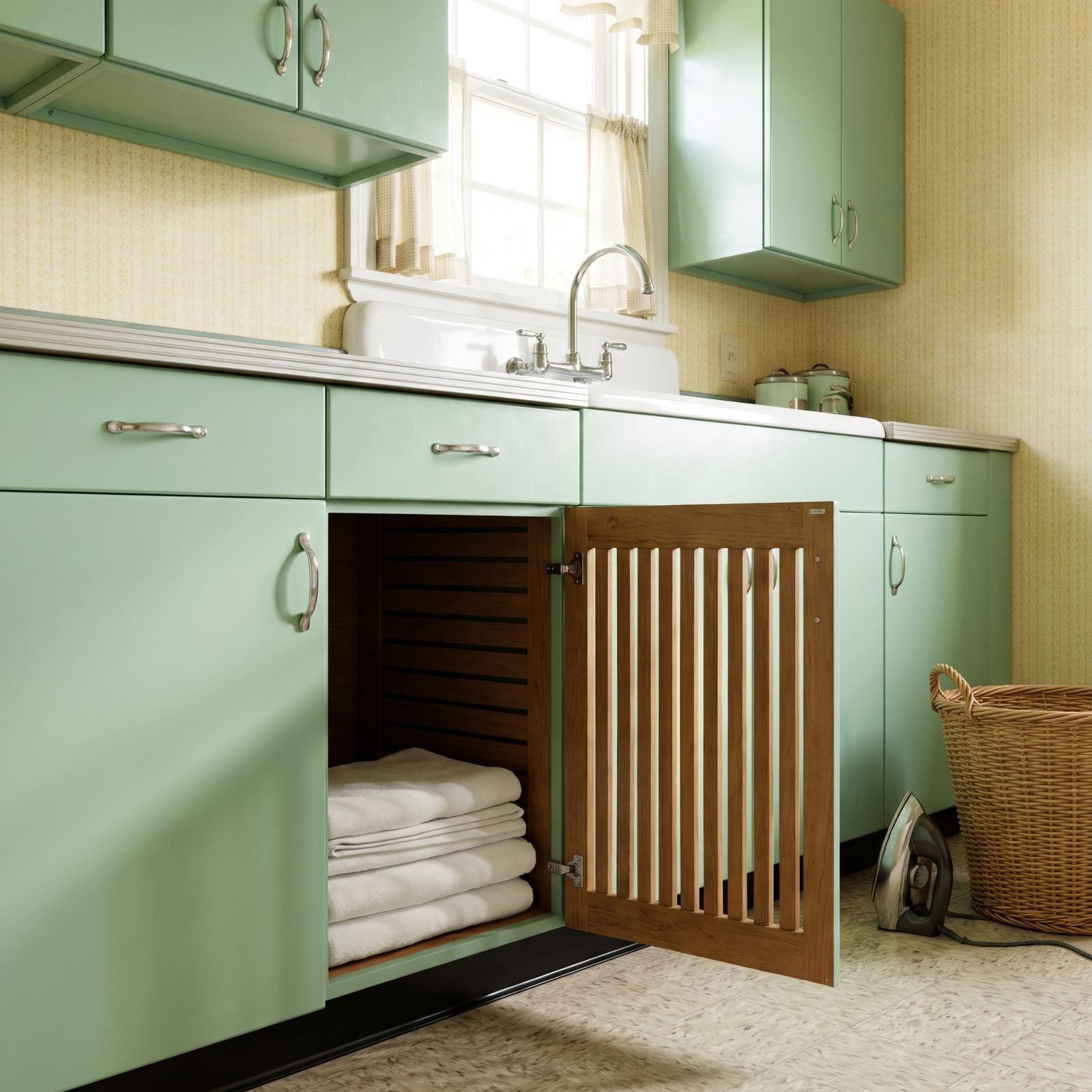
Dirty clothes need air. A damp towel shut in a sealed bin turns sour within a day, and the 1950s builders knew it. So the built-in hamper got a tilt-out front with slats, a caned panel, or a grid of drilled holes, and it lived right in the cabinetry where nobody had to look at a heap of socks on the floor.
Today we toss everything into plastic tubs with tight lids and wonder why the gym clothes smell worse on wash day than they did coming off. The old hamper let moisture escape while the mess stayed hidden behind a cabinet door. It was a small detail, built once and never thought about again, and it kept mildew out of the laundry before the laundry even got washed.
What Our Readers Say
- Built-ins still win people over: hallway photos with built-in storage got hearts 59% of the time from our readers, versus 51% for the other images in the same articles.
- The same goes for dining rooms, where Home Stratosphere readers gave pictures with built-ins more hearts than the other images in those articles, 52% against 42%.
From Home Stratosphere reader polls and votes.
22. Separate Bins for Sorting Wash Loads
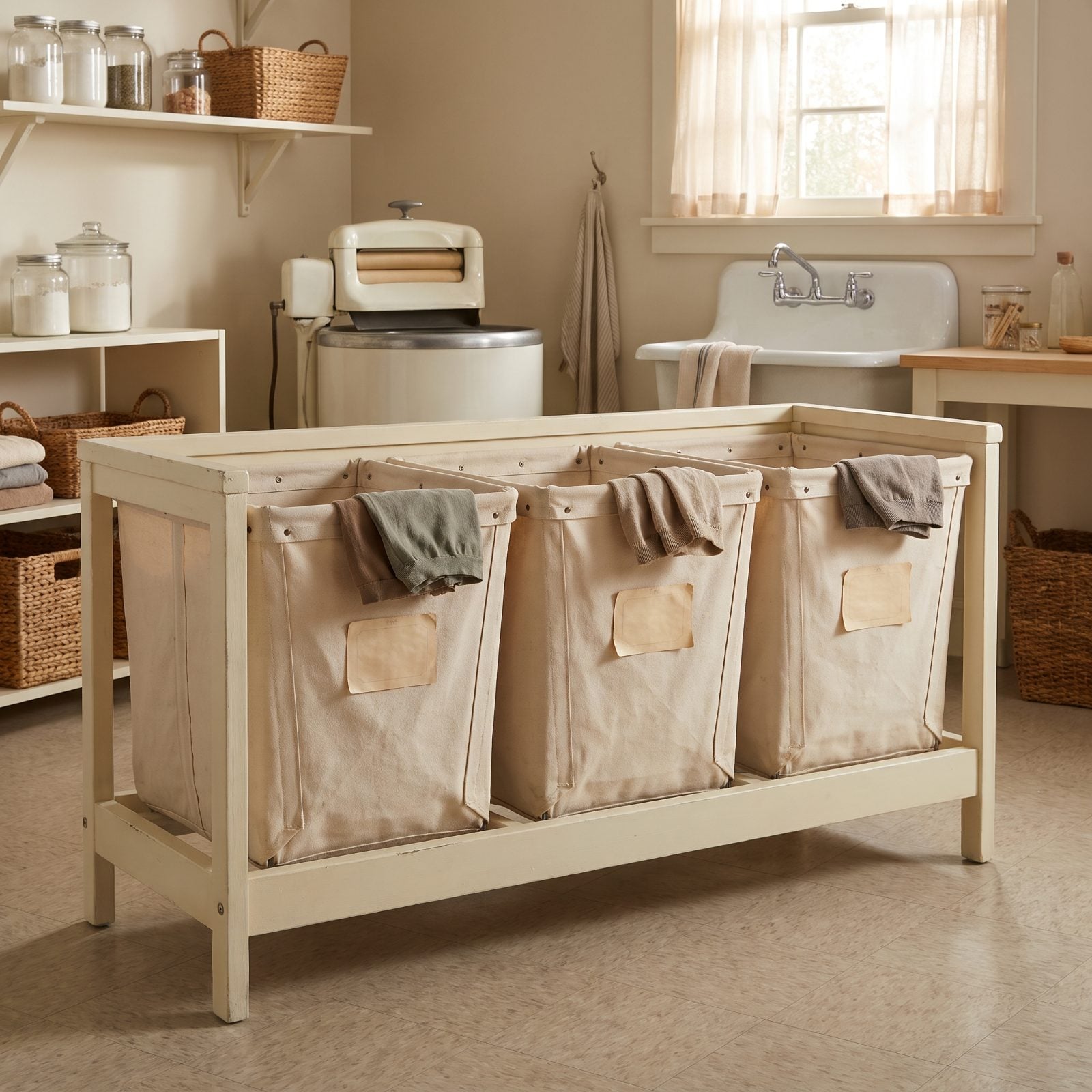
Three canvas bins in a row, each slotted into its own painted wood frame — one for whites, one for colors, one for the work clothes that smelled like the garage. Nobody called it a system. It just was. You walked past, dropped the thing where it belonged, and come wash day the sorting was already done for you without a second thought.
We’ve quietly brought this one back under fancier names. Triple sorters, tilt-out towers, the works. But the logic hasn’t changed a stitch since 1955, and sorting as you go beats sorting all at once on a Saturday morning you’d rather spend elsewhere.
21. Breathable Wicker Laundry Baskets
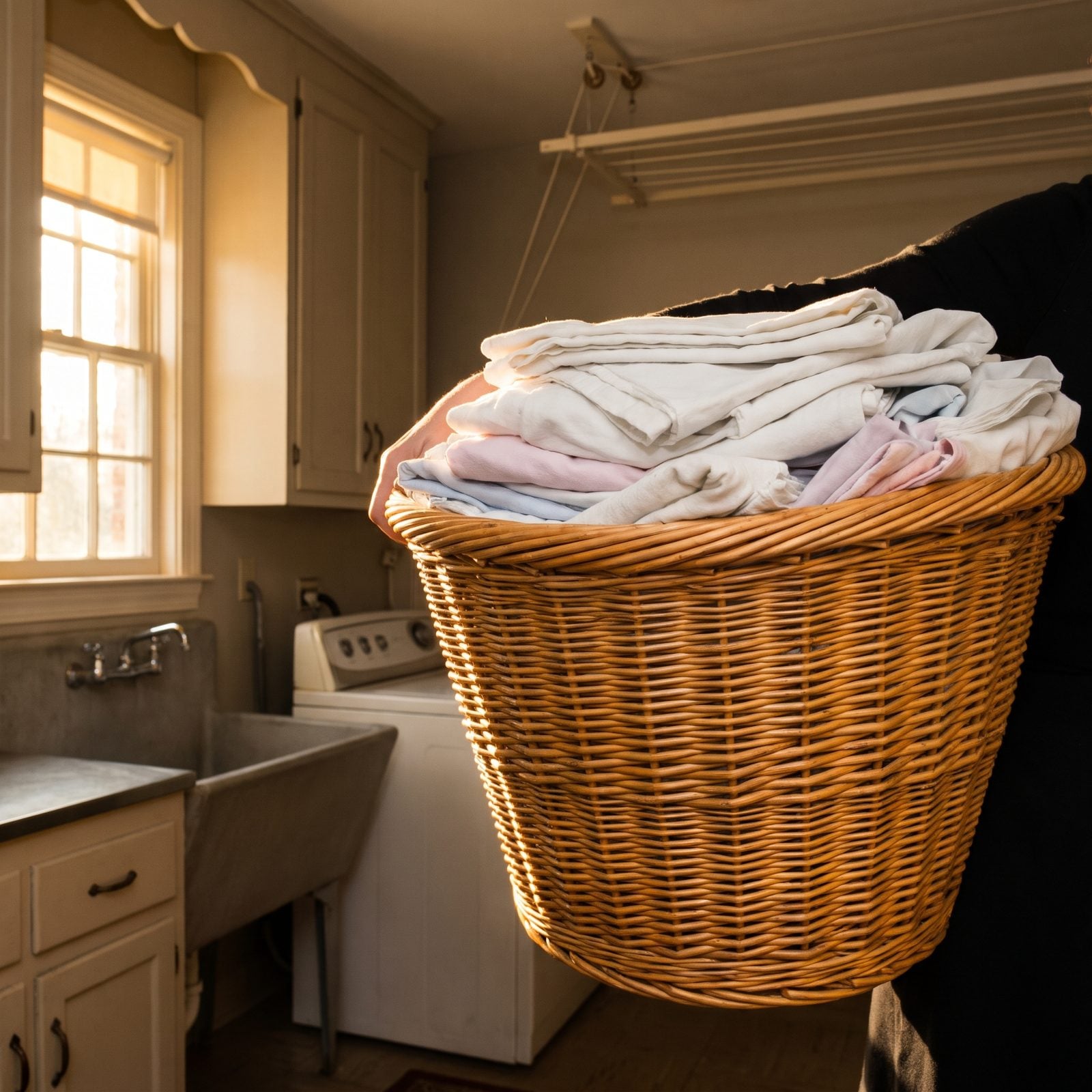
You could hear a wicker basket before you saw it — that dry creak as someone hefted it onto a hip and carried it out to the line. The open weave let damp clothes breathe on the walk outside, so nothing came back smelling like it had sat in a sealed tub too long.
We swapped most of these for plastic and then spent decades wondering why wet towels in a solid bin start to turn. The wicker had it figured out. Airflow. That’s the whole trick.
20. Long Counters Reserved for Folding
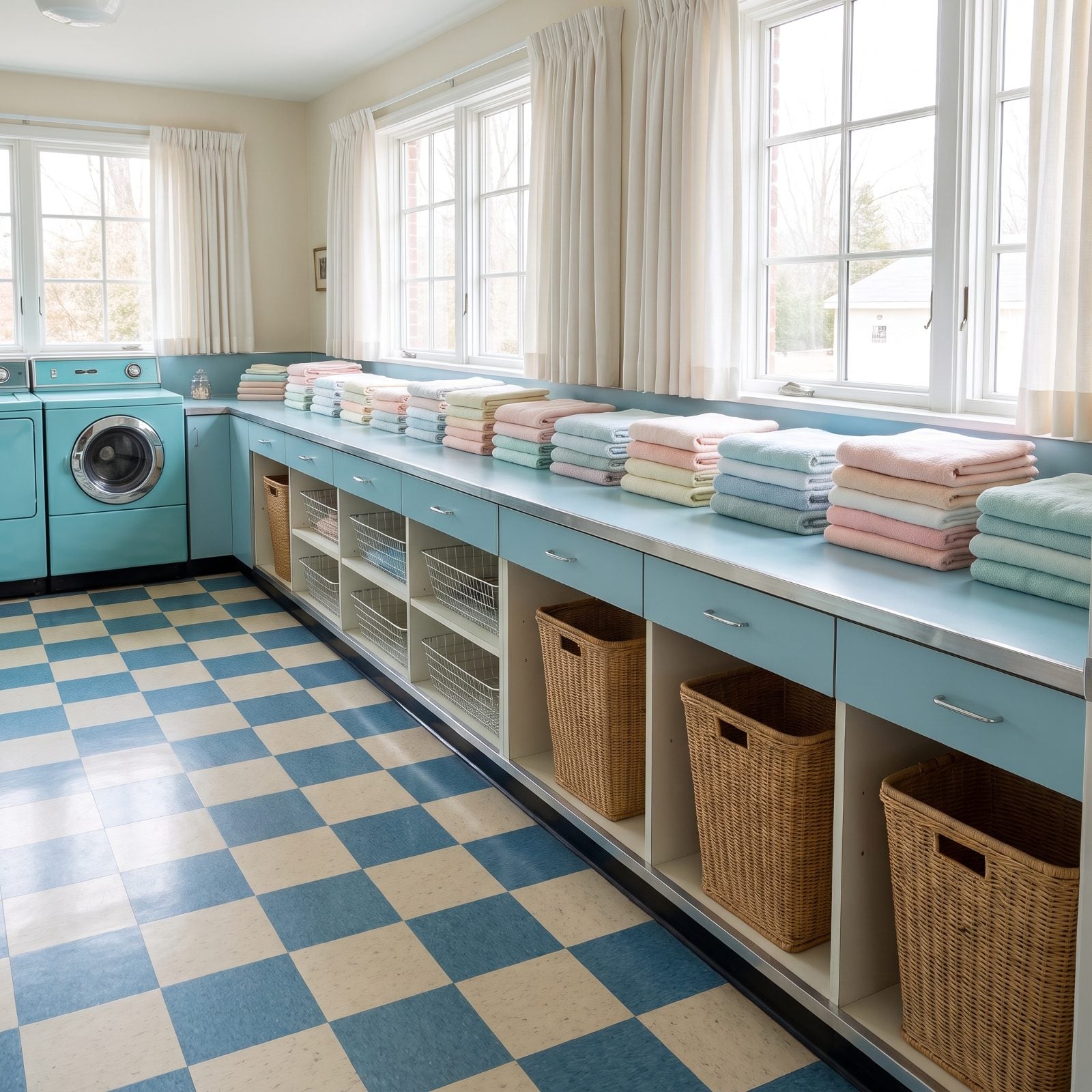
A long, uninterrupted counter that existed for one reason: folding. Nobody parked the mail there or set down a coffee maker. Clothes came warm out of the basket or off the line and went straight onto a clean, waist-high surface wide enough to lay out a full bedsheet and square its corners.
Somewhere along the way the folding station became the top of the dryer, or the bed, or the couch while the TV is on. Ever folded a fitted sheet on a mattress that keeps sagging under your hands? The old counter fixed that, and it kept the clean pile physically apart from the dirty one. A stretch of bare countertop sounds like wasted space until you try doing laundry without it.
19. Built-In Linen Presses for Clean Laundry
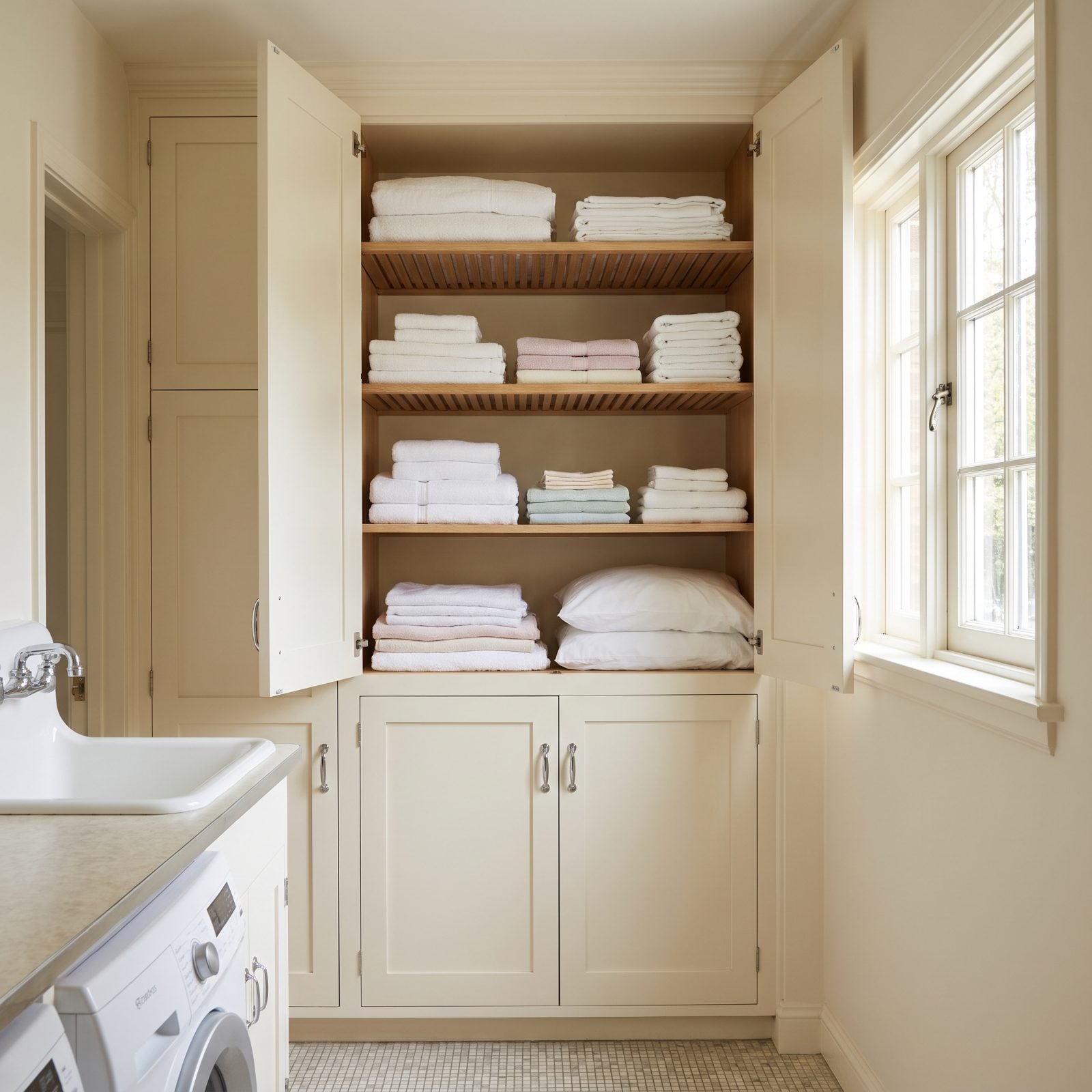
A tall, shallow cabinet with slatted shelves, usually tucked right where the laundry work ended and the hallway began. Clean sheets went in warm and folded, and they stayed there smelling faintly of soap and cedar until someone needed them — the slats keeping air moving so nothing went musty waiting its turn.
The modern version is the hall closet we all cram full and apologize for. The original did it better: a dedicated shelf per set and a door that actually closed on a tidy stack. Ever wrestled a fitted sheet back into a jammed closet? Then you already understand why the linen press earned its keep. A good utility room renovation still leans on this idea more than most people realize.
18. Recessed Ironing-Board Cabinets
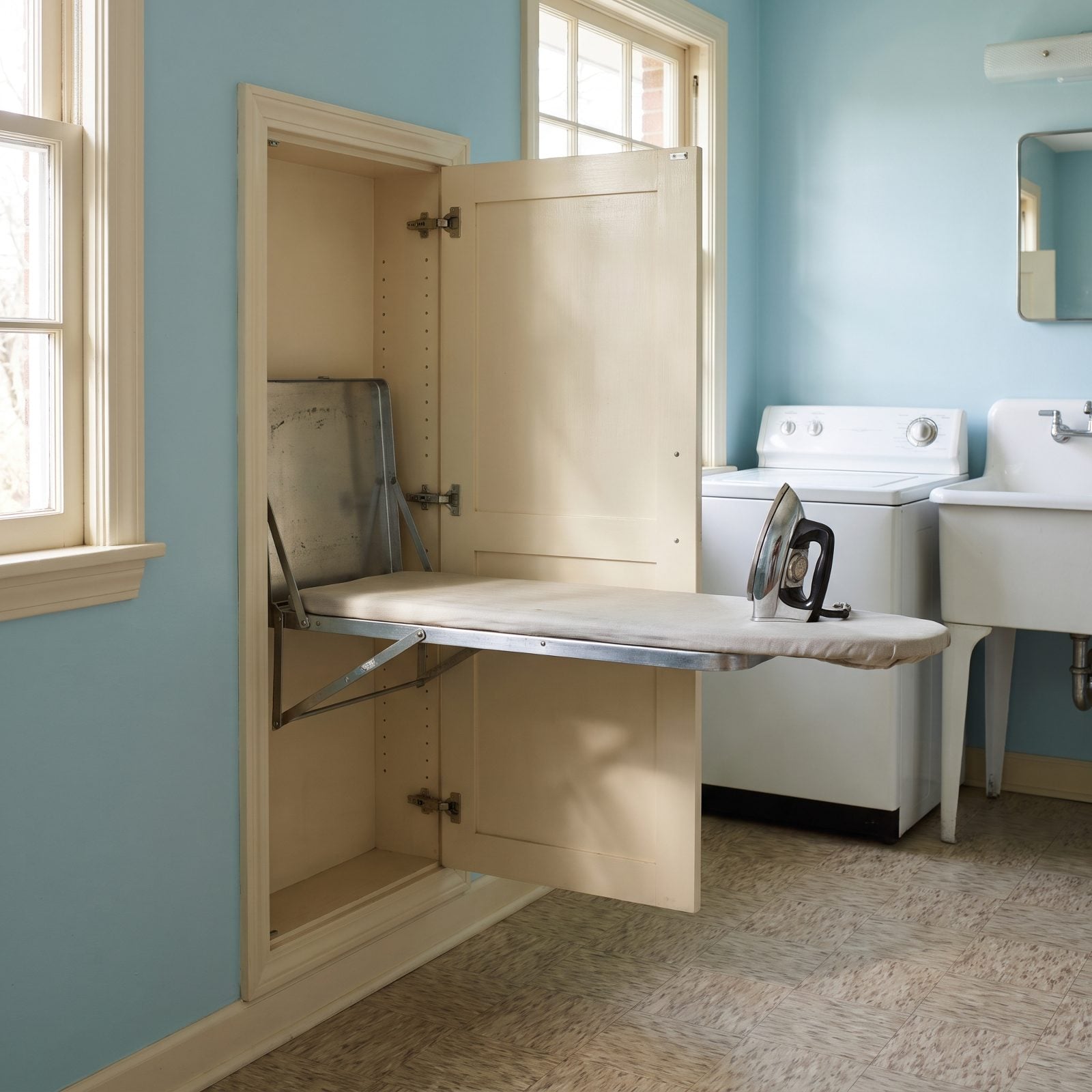
Flip a little latch, swing out a door, and the whole ironing board dropped down from inside the wall, already set to working height. When you finished, it folded back up and vanished — the kitchen or laundry nook got its floor back in a single motion.
This is the kind of built-in that modern compact bedroom design keeps rediscovering. Fold-down furniture feels clever now. It was standard issue seventy years ago.
17. Heatproof Shelves for Resting Hot Irons
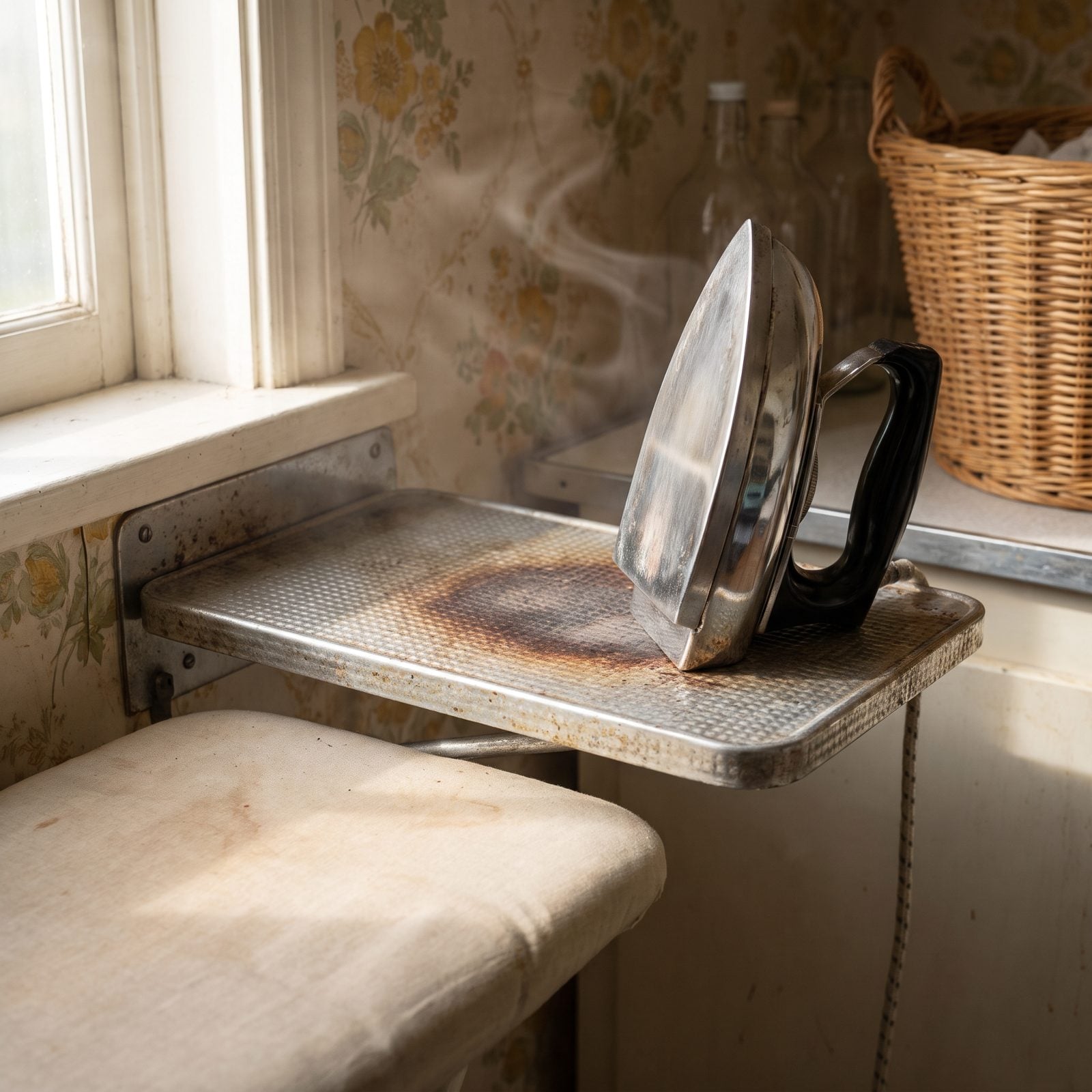
A small shelf, often faced with a sheet of asbestos board or tin, bolted right next to the ironing station so you had somewhere safe to set a scorching iron between passes. No scrambling for a trivet, no burn ring on the good counter — just a dull metal ledge that took the heat and asked no questions.
Modern irons shut themselves off now, which is lovely until you remember how many of us still set a hot iron on a folded towel and hope for the best. The old shelf had more sense than that.
16. Dedicated Iron Outlets with Cord Hooks
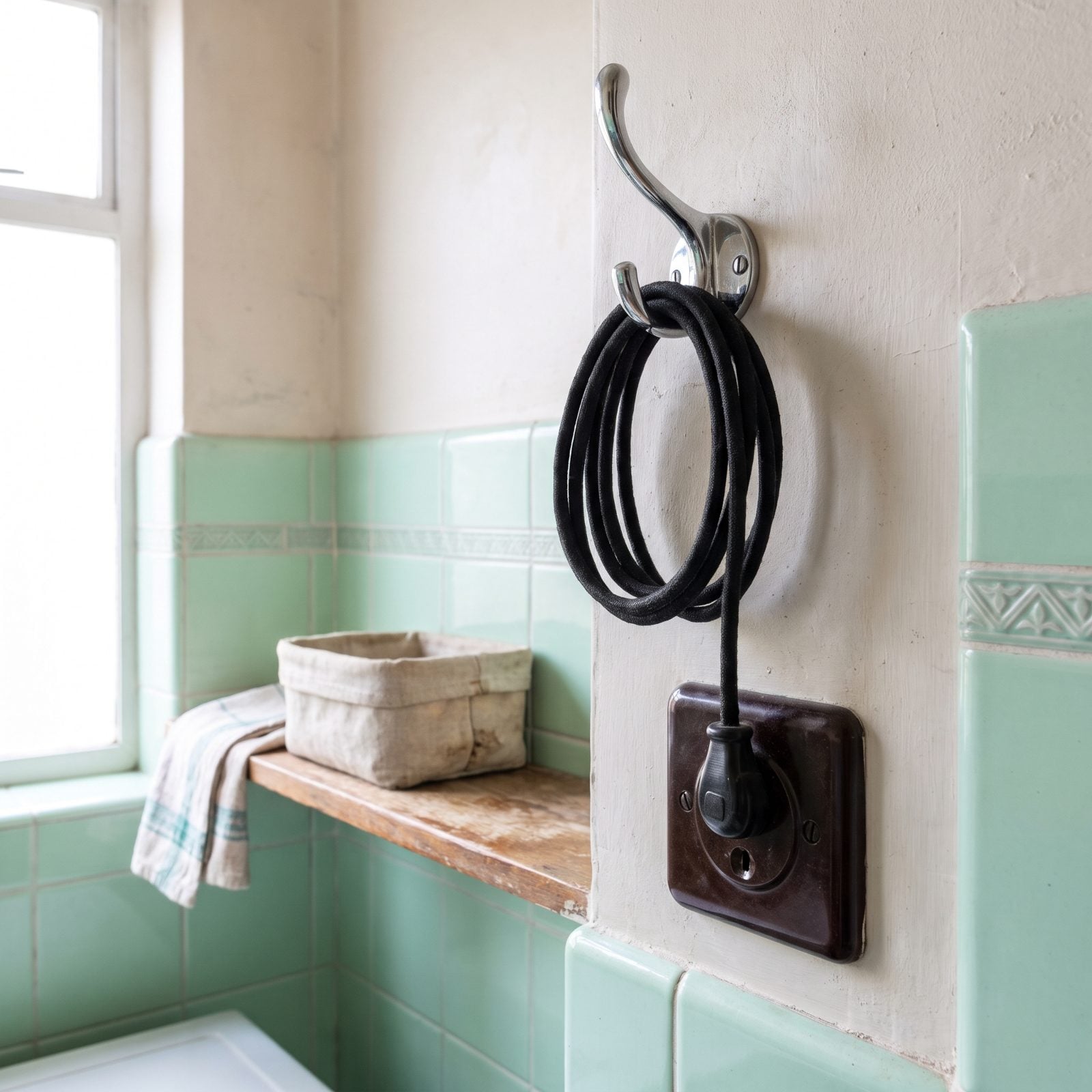
Right at shoulder height beside the ironing spot sat a single outlet, often with a little chrome hook screwed in above it to keep the cord looped up and out of the way. No cord dragging across the board. No iron yanked off the edge by its own tangle. Somebody thought about the mechanics of the job and wired the wall to match.
15. Small Sleeve Boards for Shirts
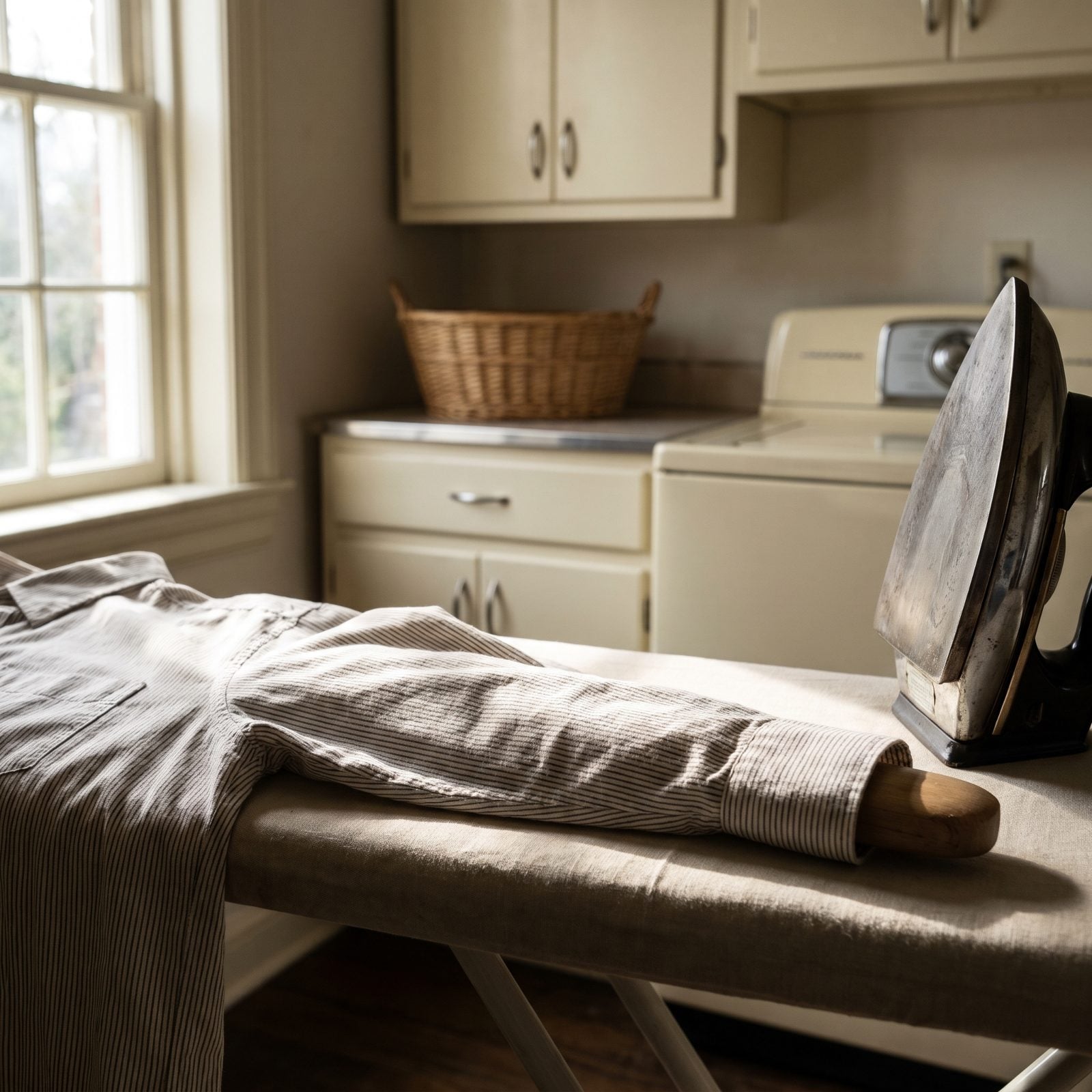
A miniature padded board, narrow enough to slide right up inside a shirt sleeve, that sat on top of the full ironing board. You pressed the cuff and the seam flat without flattening a crease into the arm. One tiny tool that solved a single problem perfectly and did nothing else.
Anyone who’s tried to iron a dress shirt sleeve on a full board knows the quiet rage of folding a crease where there shouldn’t be one. The sleeve board made that impossible. I’d take one back in a heartbeat.
14. Rotary Irons for Sheets and Tablecloths
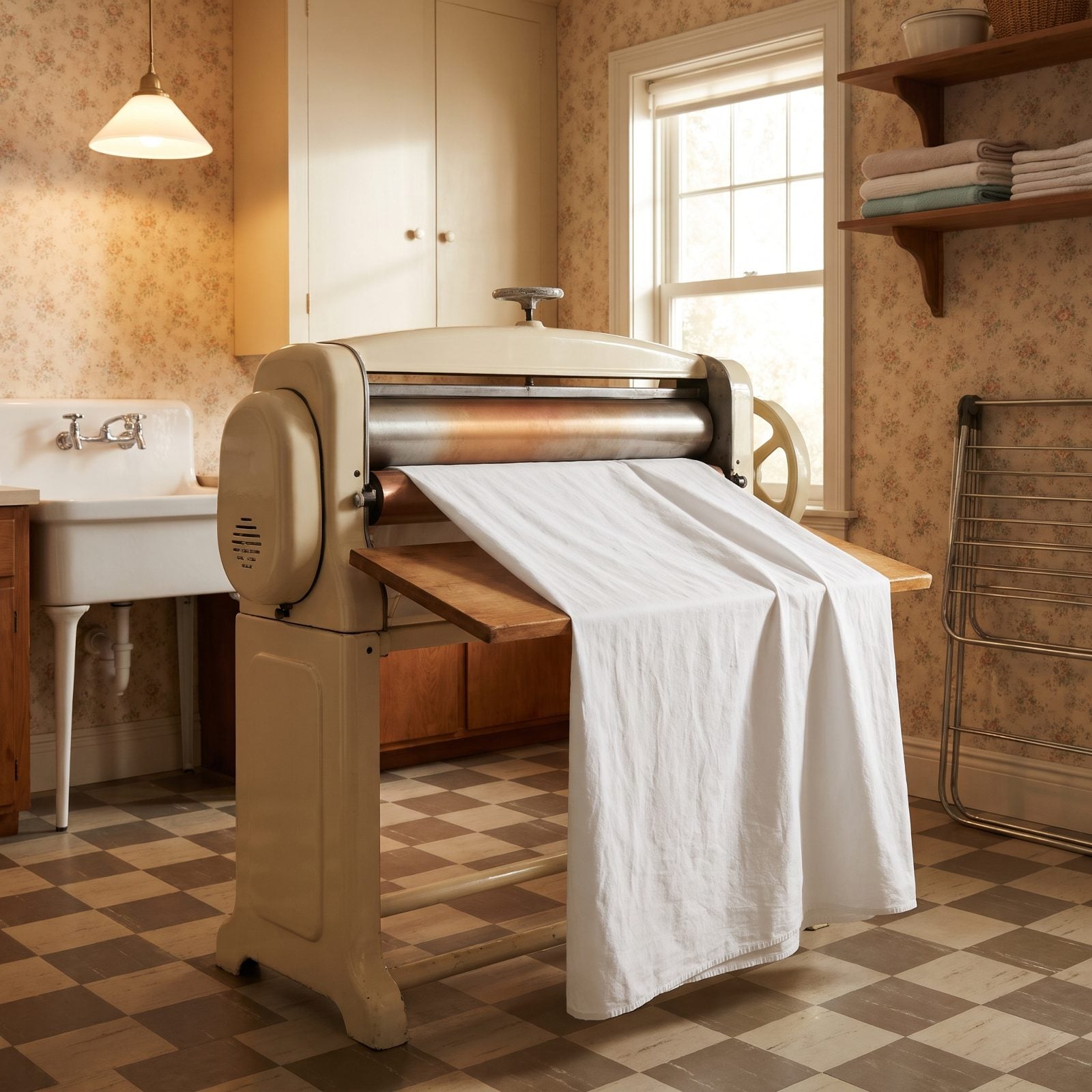
You sat down to use this one. A heated cylinder turned against a padded roller, and you fed sheets and tablecloths through it the way you’d feed paper through a press, so whole flat loads came out smooth and crisp in minutes — no standing, no hunching over a board for an hour.
The mangle, as some called it, was the closest a 1950s laundry room got to automation you could sit down for. It handled the big flat stuff nobody actually enjoyed ironing. We dropped it when wrinkle-free fabrics arrived, but anyone who still presses linen tablecloths by hand knows exactly what we lost.
13. Sturdy Stools for Seated Ironing
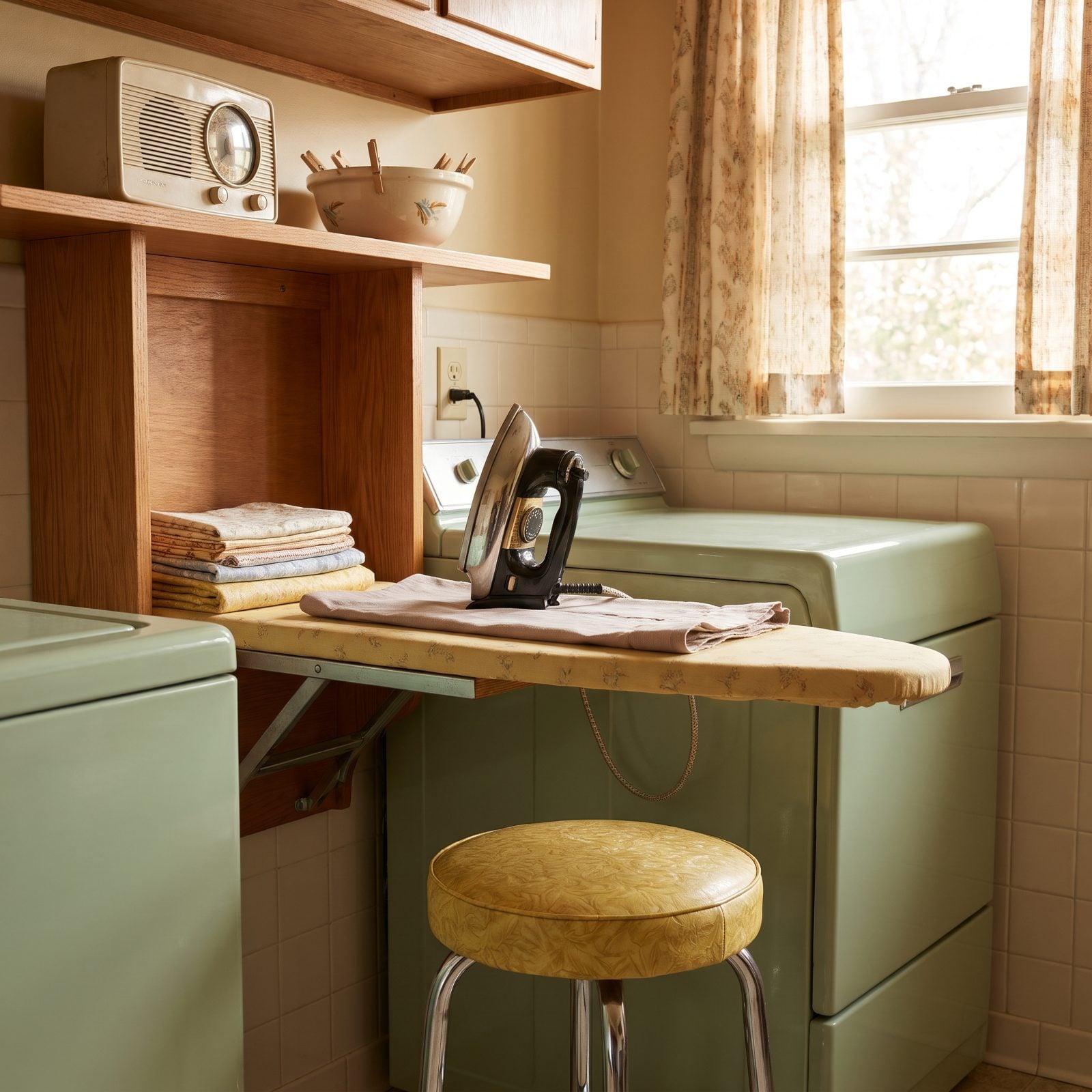
Stand up for an hour straight with a heavy flat iron and your lower back will pay for it — women in the 1950s knew that cold. The stool pulled up to the ironing board wasn’t a luxury but pure practicality wearing a coat of sage-green paint.
Modern ergonomics caught up decades later, yet these rooms had already cracked it. Lower the board a few inches, pull up a seat, and the whole miserable task turns into something you can do for a stretch without your spine filing a formal complaint. I ironed standing for years before I understood why my shoulders hated me. Then I sat down, and the hating stopped.
12. Mending Tables with Built-In Sewing-Machine Cabinets
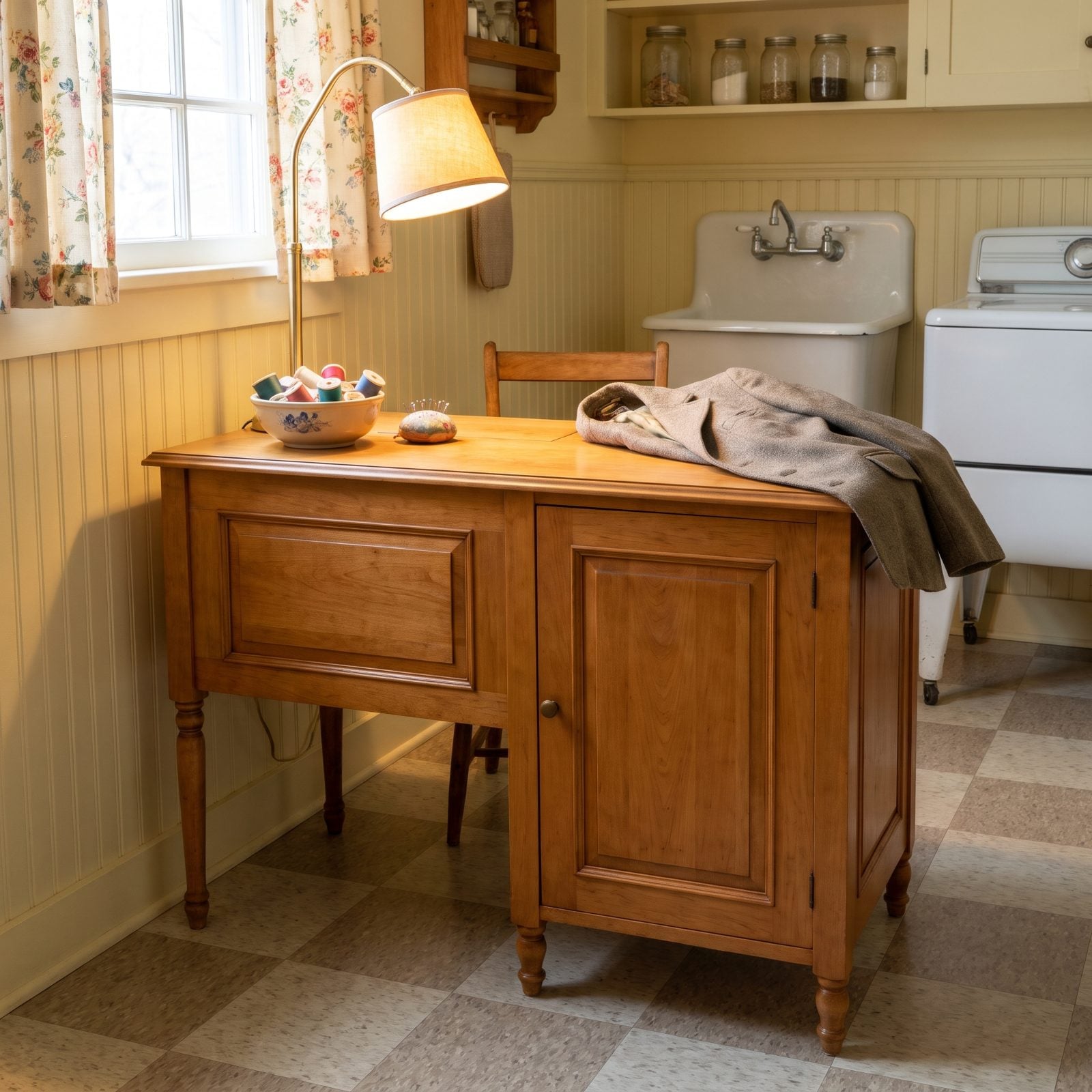
The mending table solved a problem we’ve recreated badly ever since: where does the sewing machine actually live? In the 1950s it was tucked away out of sight beneath a hinged wooden lid, leaving nothing but a plain, flat work surface, and the whole thing passed for an ordinary sturdy oak table with a swing-out cabinet door when you weren’t stitching. No lugging a heavy machine out of a closet, no clearing the dining table and apologizing to the family.
Fold-away furniture feels like a modern obsession. It isn’t. The built-in sewing cabinet was pulling double duty in laundry rooms when your grandmother was a girl — and honestly, it managed the trick better than most of the convertible stuff sold today.
11. Glass Jars for Saving Spare Buttons

Every shirt came with a spare button, and not one of them got thrown away. They went in the jar. That jar sat on a laundry shelf and slowly turned into a strange family archive — bone-white shirt buttons tangled up with navy blazer buttons and the odd brass one off a coat nobody could place.
Fast fashion made us forget all this. A button pops, we toss the shirt. But a jar of spares is still the cheapest repair system ever dreamed up, and there’s a real little hit of satisfaction in matching a lost button on the first try. I keep one now. Not ashamed of it either.
10. Lidded Pails for Soaking Stubborn Laundry
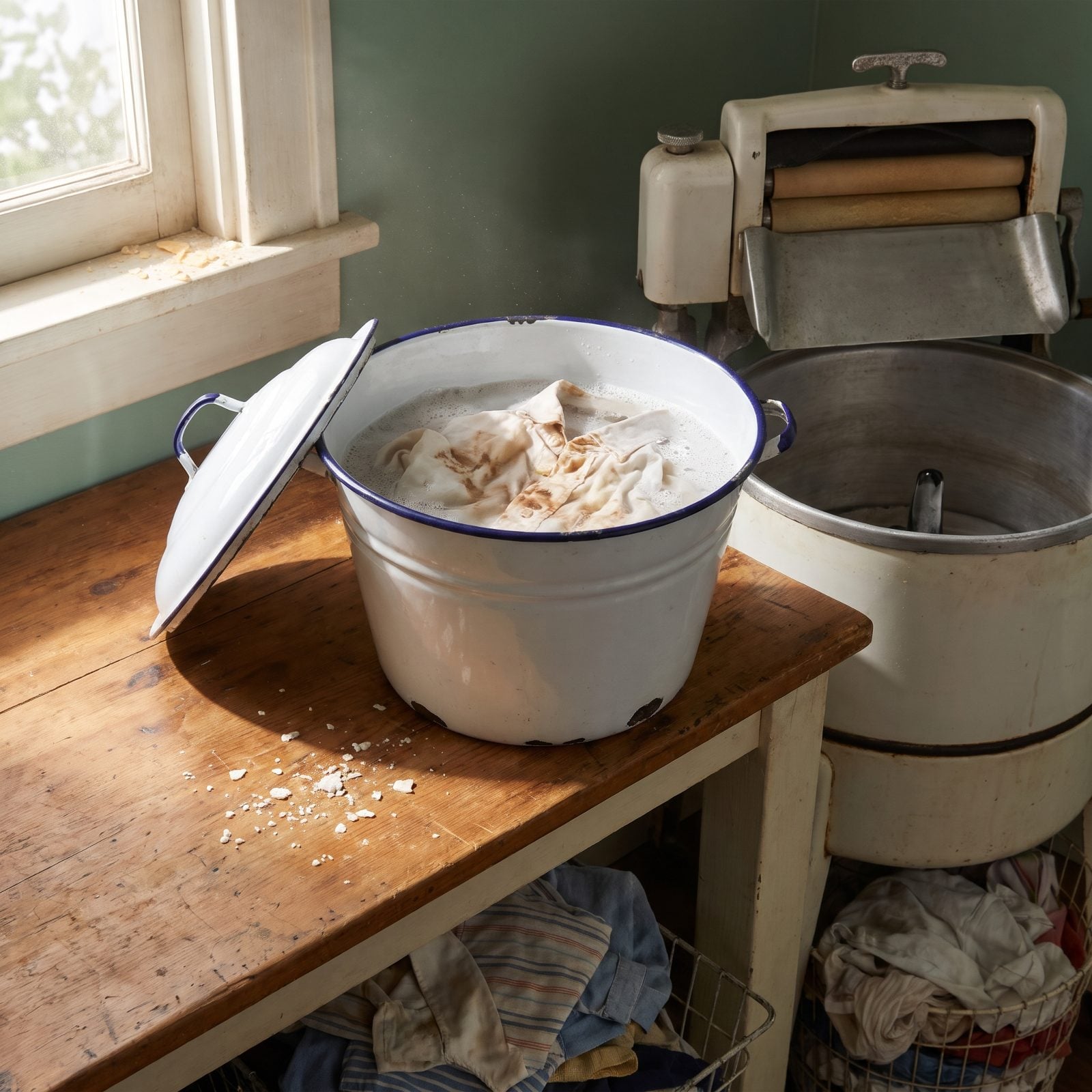
Some stains don’t negotiate. They need time sitting in soapy water, and the lidded pail handed them that time without stinking up the room or gathering dust. You dropped the garment in, snapped the lid on, and walked away until morning.
Modern machines want everything done inside one wash cycle, which is exactly why so much stubborn staining survives and we quietly abandon the garment altogether. A covered soaking pail is low-tech patience. And patience is still the thing that drags ground-in dirt out of a work collar.
9. Galvanized Tubs for Hand-Washing
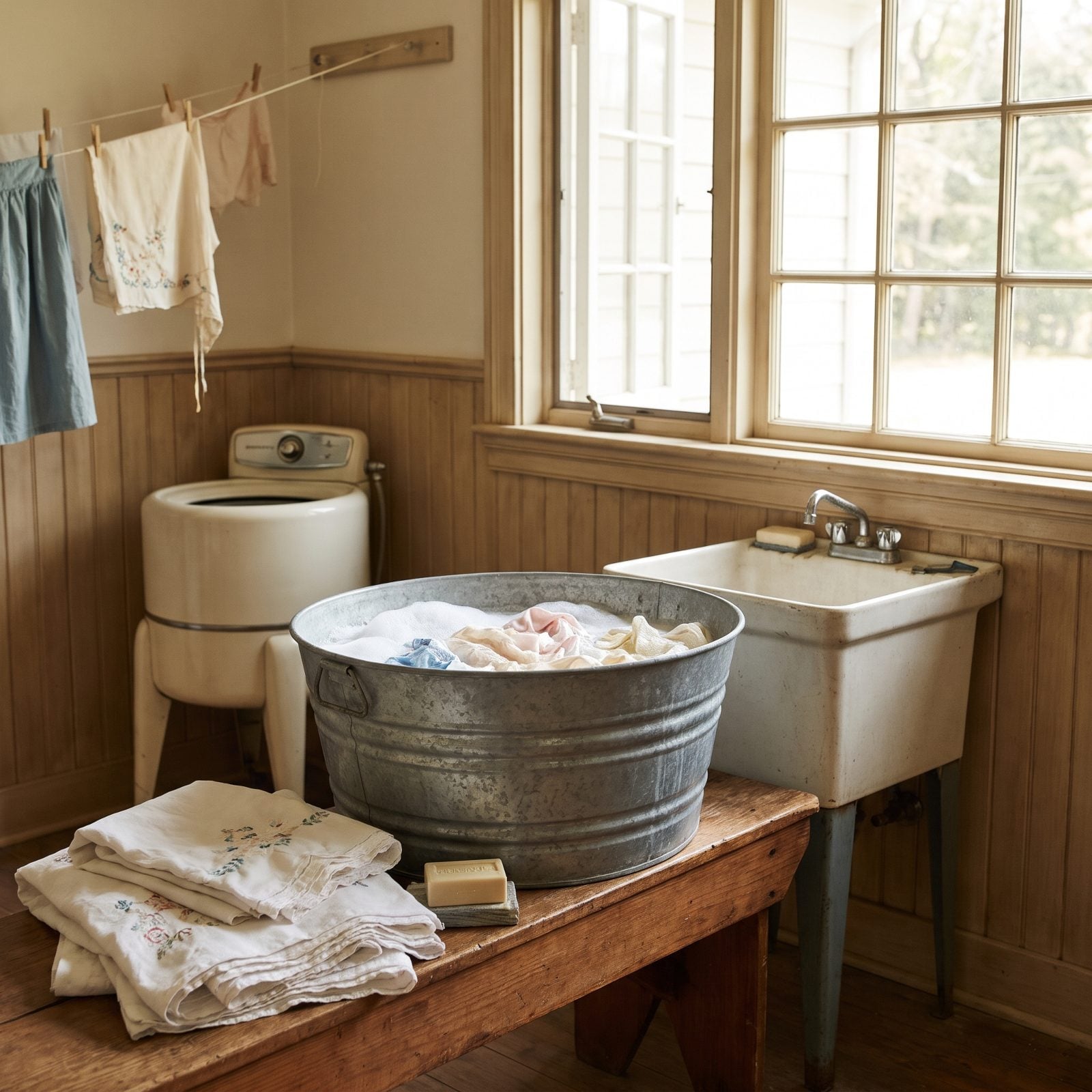
Before anyone trusted a machine with a cashmere sweater or a baby’s delicates, there was the galvanized tub. Fill it, work up a lather, and hand-wash the things no agitator should ever get its hands on. Tough metal, simple shape, lasted decades.
Here’s what slipped away from us: the plain knowledge that some fabrics genuinely need hands, not a drum. A wool sweater sails through a gentle hand-wash and dies screaming in a hot machine cycle. The tub made you slow down for the pieces that mattered.
8. Clear Glass Jars for Soap Flakes
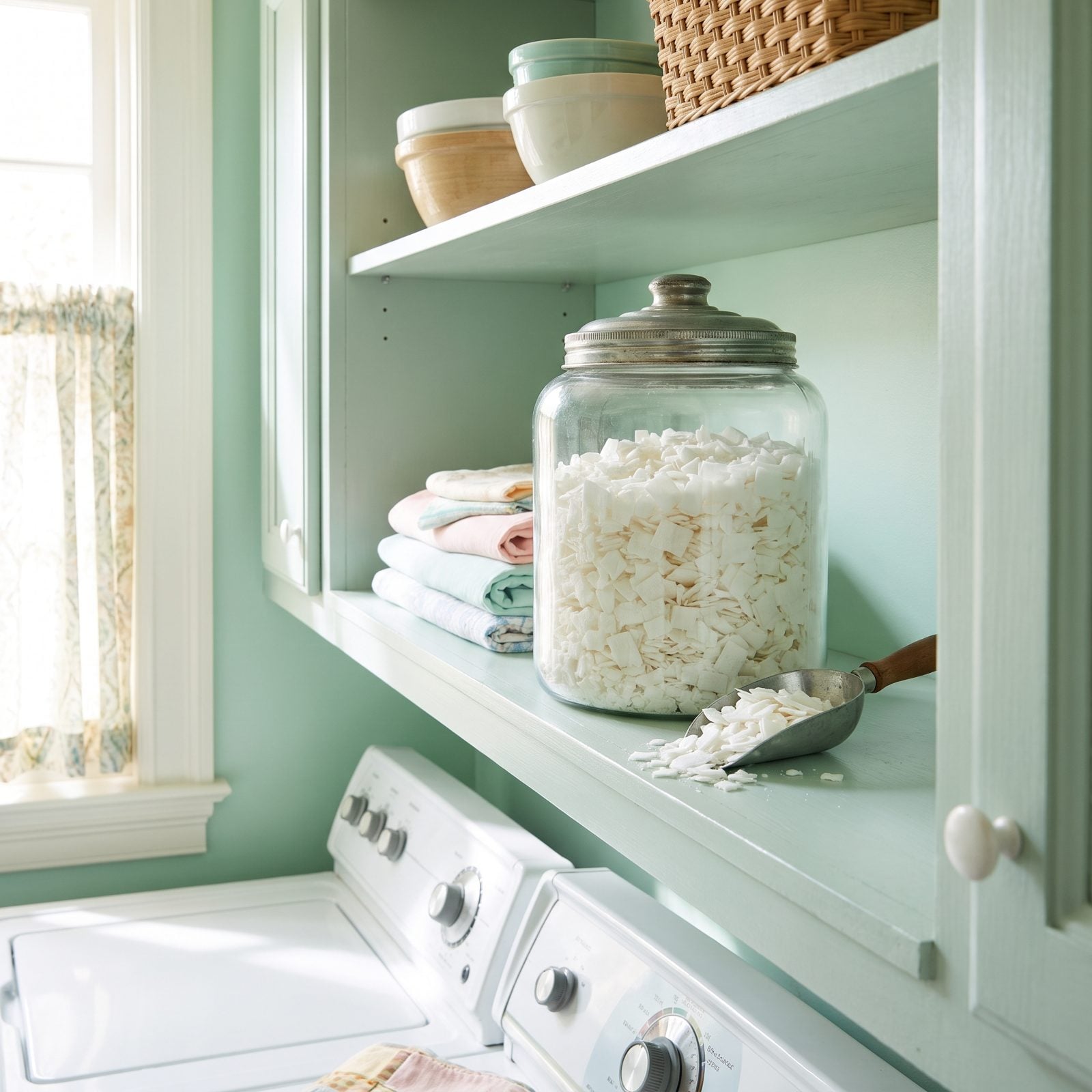
Soap flakes shipped in paper boxes that split, got damp, and clumped into a useless brick by the third week. So people tipped them into a clear glass jar with a scoop, and you could read your supply at a glance. Simple.
We’re circling right back to all of it now with refillable jars and open-shelf detergent storage. Seventy years on, the logic hasn’t budged: keep it dry, keep it visible, keep it easy to scoop. A good-looking jar also makes a working room feel like somebody thought about it rather than just dumping stuff on a counter.
7. Hooks for Scrub Brushes and Laundry Tools
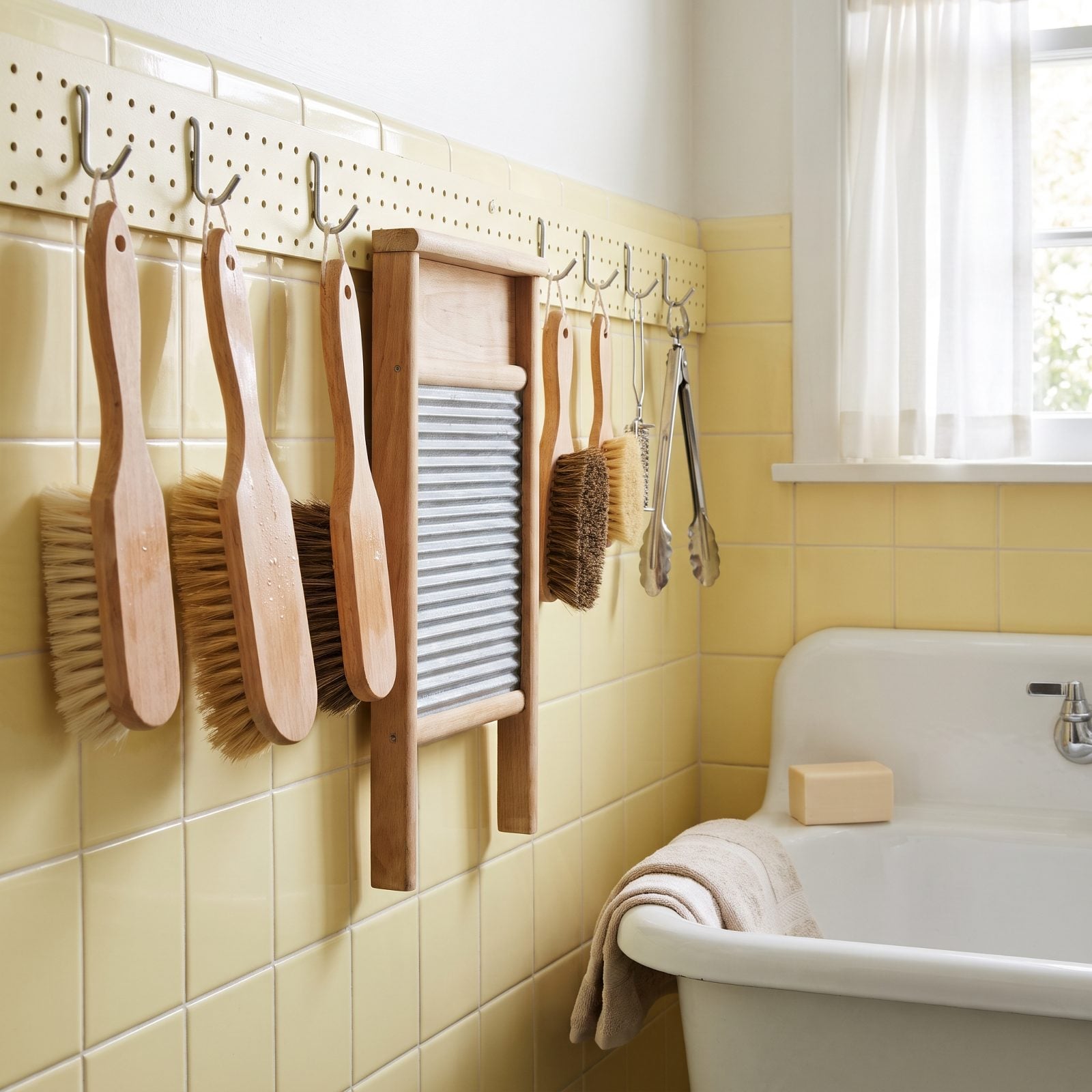
Wet scrub brushes left on a counter breed mildew and that sour smell nobody can quite place. Hung on a hook, they drip, dry, and stay out of the way. A row of iron hooks above the sink kept every tool airborne and visible, which is pretty much the whole game in a room where things get wet.
Organizers now sell us this as “vertical storage” and charge a premium for the same idea a 1950s handyman screwed into the wall for pennies. Hooks dry your tools, free your counters, and flag the gap the moment something goes missing. Hard to improve on.
6. Full-Height Broom Closets
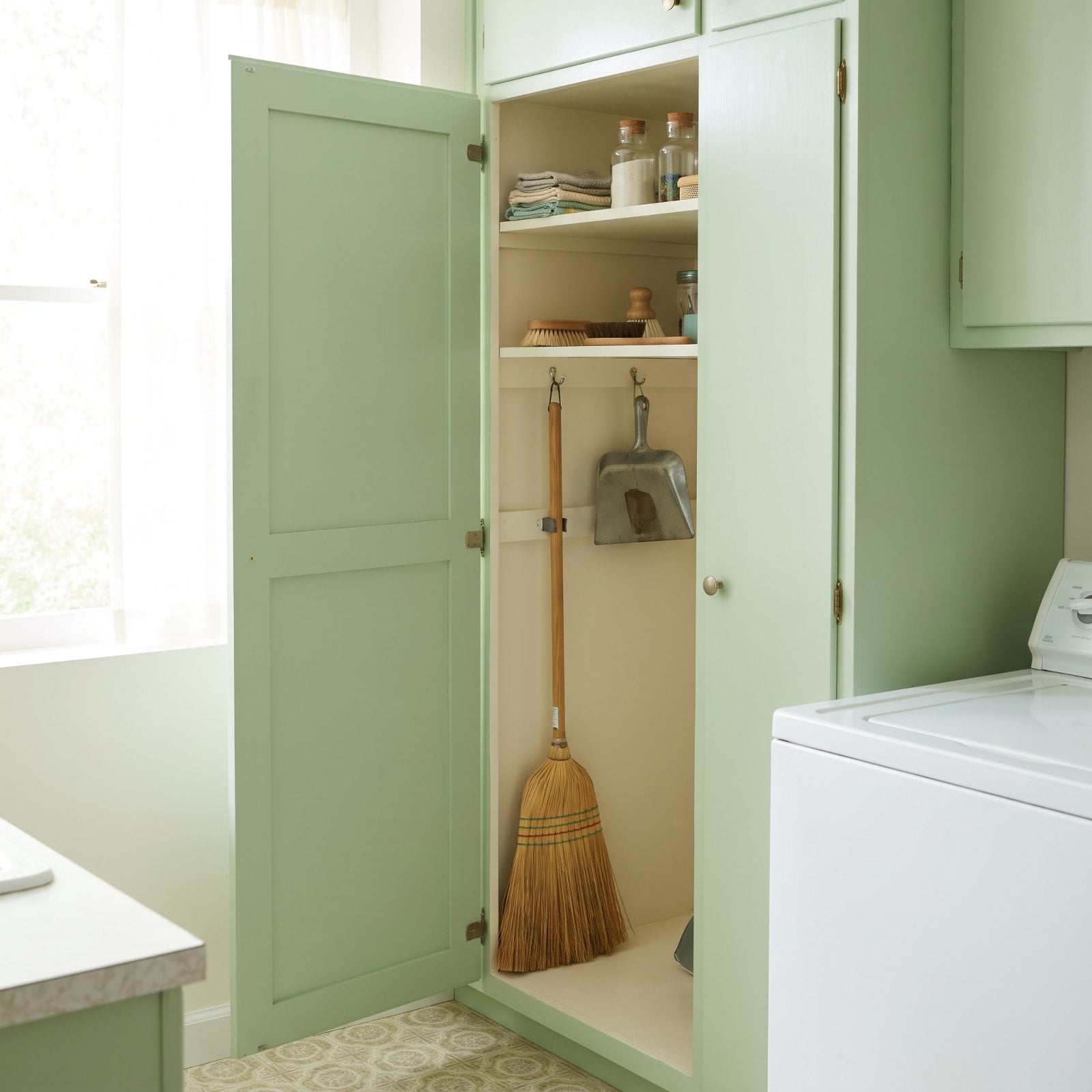
A broom laid flat in a hall closet gets stepped on, bends its bristles, and topples out at you the second you open the door. The full-height broom closet stood everything upright, floor to ceiling, so the broom stayed straight and the mop dried hanging instead of rotting in a corner.
Newer homes ditched this to claw back a few square feet, and we’ve been regretting it ever since — shoving brooms behind doors, tripping over vacuum hoses. A narrow floor-to-ceiling cupboard is one of the most useful square feet in any house. The 1950s knew precisely where to put it: right there in the working heart of the laundry.
5. Upper Cabinets That Ran All the Way to the Ceiling
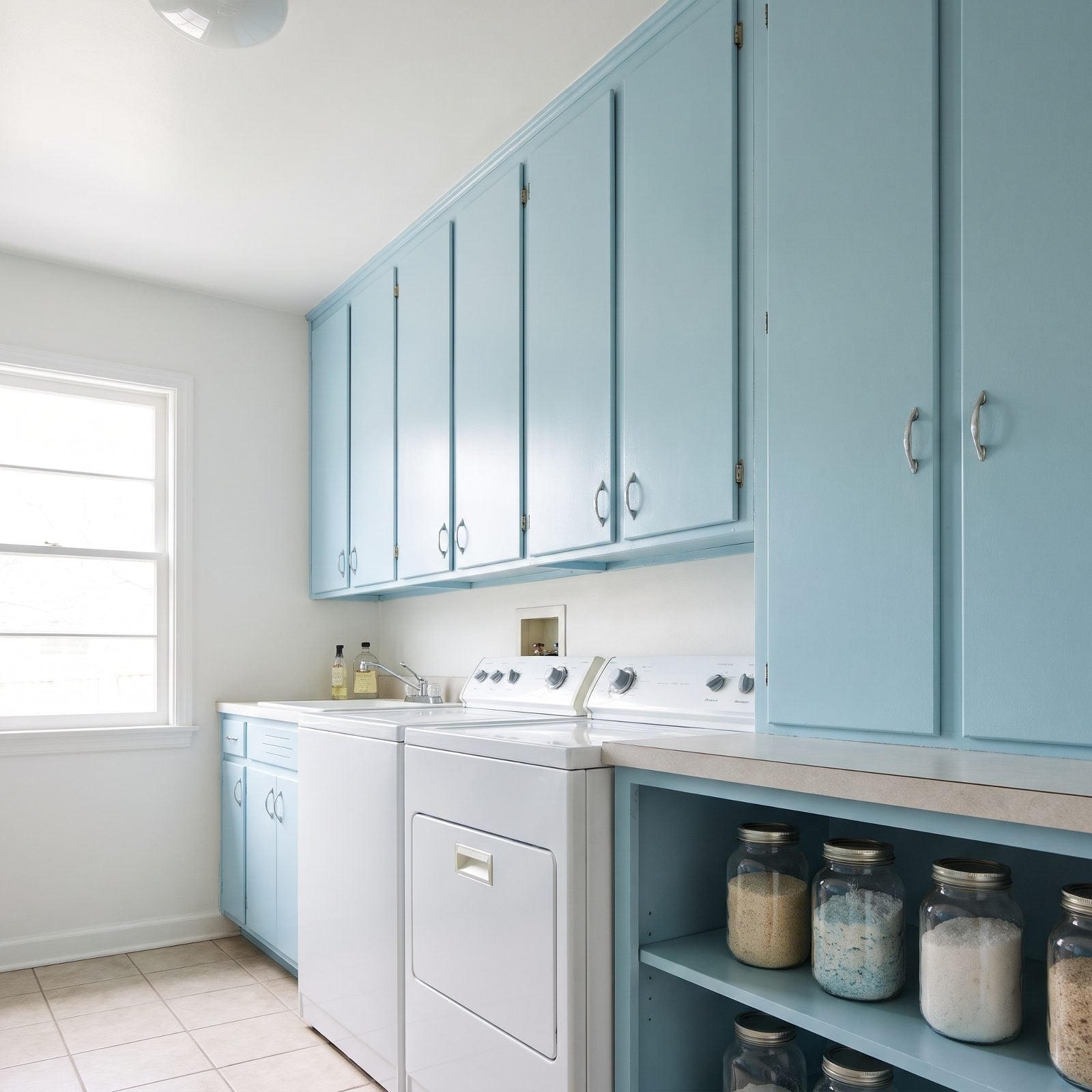
No dust-collecting gap up top. No awkward soffit full of nothing. Fifties cabinets climbed right to the ceiling and claimed every cubic inch of the room.
The top shelf held the things you touched twice a year: seasonal linens, the good tablecloth, the box of rags you never quite threw out. Open shelving loses this contest every time, because stuff left out gets dusty and stuff behind a door stays put. I got it wrong in my own utility room for years, leaving a foot of wall above the cabinets doing nothing but catching grime. A proper utility room renovation treats that upper band as real estate, not decoration.
4. The Milk-Glass Ceiling Globe That Lit the Whole Room Flat and Bright
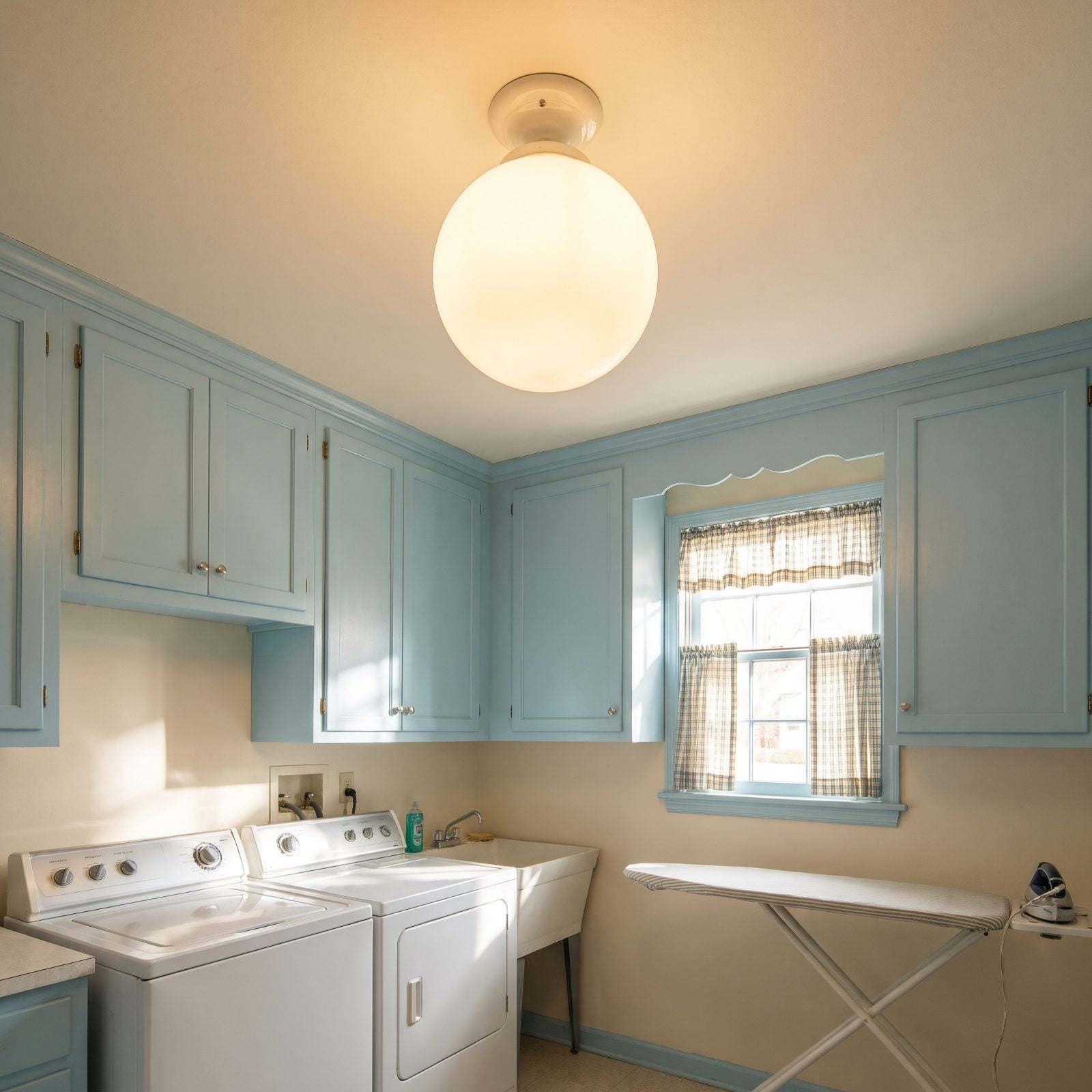
One fixture dead center on the ceiling, a frosted milk-glass globe, and the whole room went bright and shadowless. No moody corners. No squinting at a stain to see whether it lifted.
Those globes threw a flat, generous light that treated the entire room as a workspace, which is exactly what a laundry is. Recessed cans came along later and gave us pools of light with dark gaps between them. Fine for a dark den design, wrong for a place where you’re hunting a grass stain. For a working room, even and ambient still beats dramatic and spotty.
3. The Little Task Lamp Clamped Above the Ironing Board
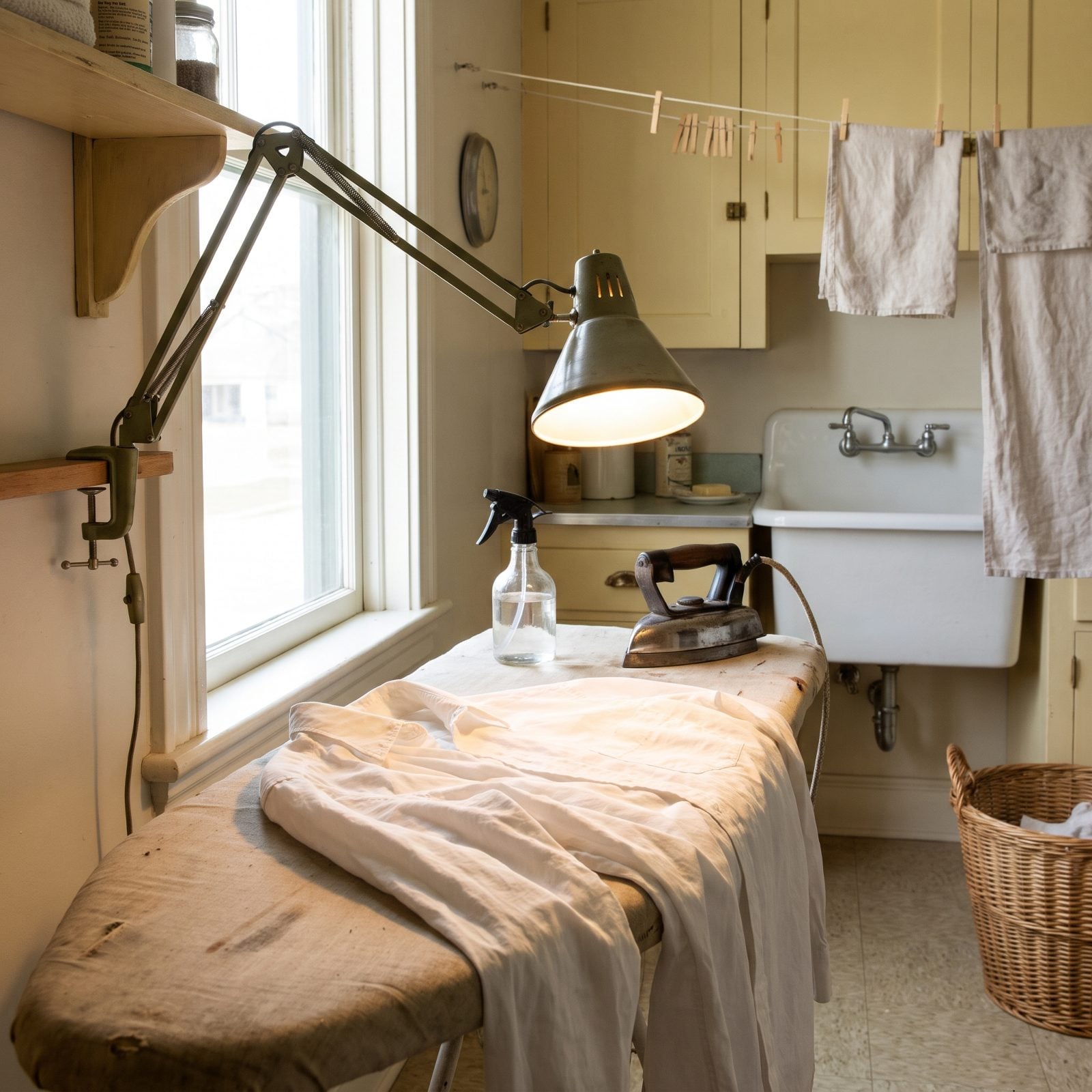
Overhead light is useless for ironing. You need it low, raking across the fabric so wrinkles throw a shadow and you can actually see what you’re fighting. The fifties worked that out and clamped a little gooseneck lamp right over the board.
Focused task light, placed at the exact point of work. Furniture makers do the same thing now under a kitchen island or over a desk, and the principle is older than the lamp:
Ambient light fills a room. Task light shows you the work.
Anyone who irons regularly feels the difference the second they kill the overhead and flip on the clamp.
2. The Big Wall Clock That Timed Every Wash Cycle
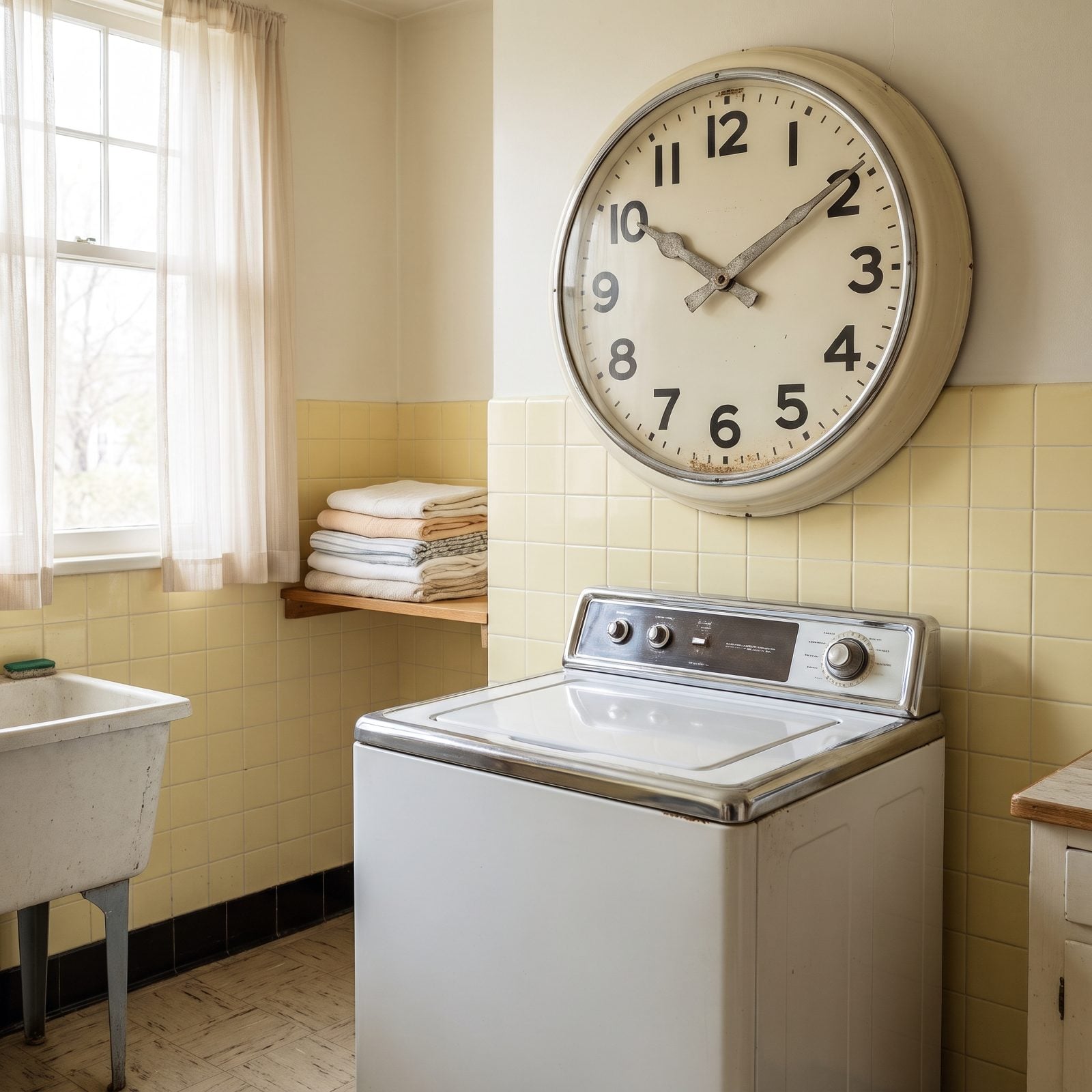
Before a machine beeped at you, you watched the clock. Wringer washers didn’t announce when the soak was done, when the agitation was enough, when the bluing had rinsed clear. So you started the load, noted the time on the big round wall clock, and came back.
That clock ran the whole operation. It’s why laundry rooms rated a proper clock while the rest of the house made do with the kitchen one. A readable wall clock in a work zone still earns its spot. Phone timers get buried under notifications and the load slips your mind entirely. We’ve all pulled a sour, forgotten wash out the next morning and known exactly what happened.
Today, when we asked readers which kitchen wall clock they would buy, modern edged out farmhouse and vintage, with 36% against 31% and 26%.
1. The Laundry Chute That Swallowed Everything From Upstairs
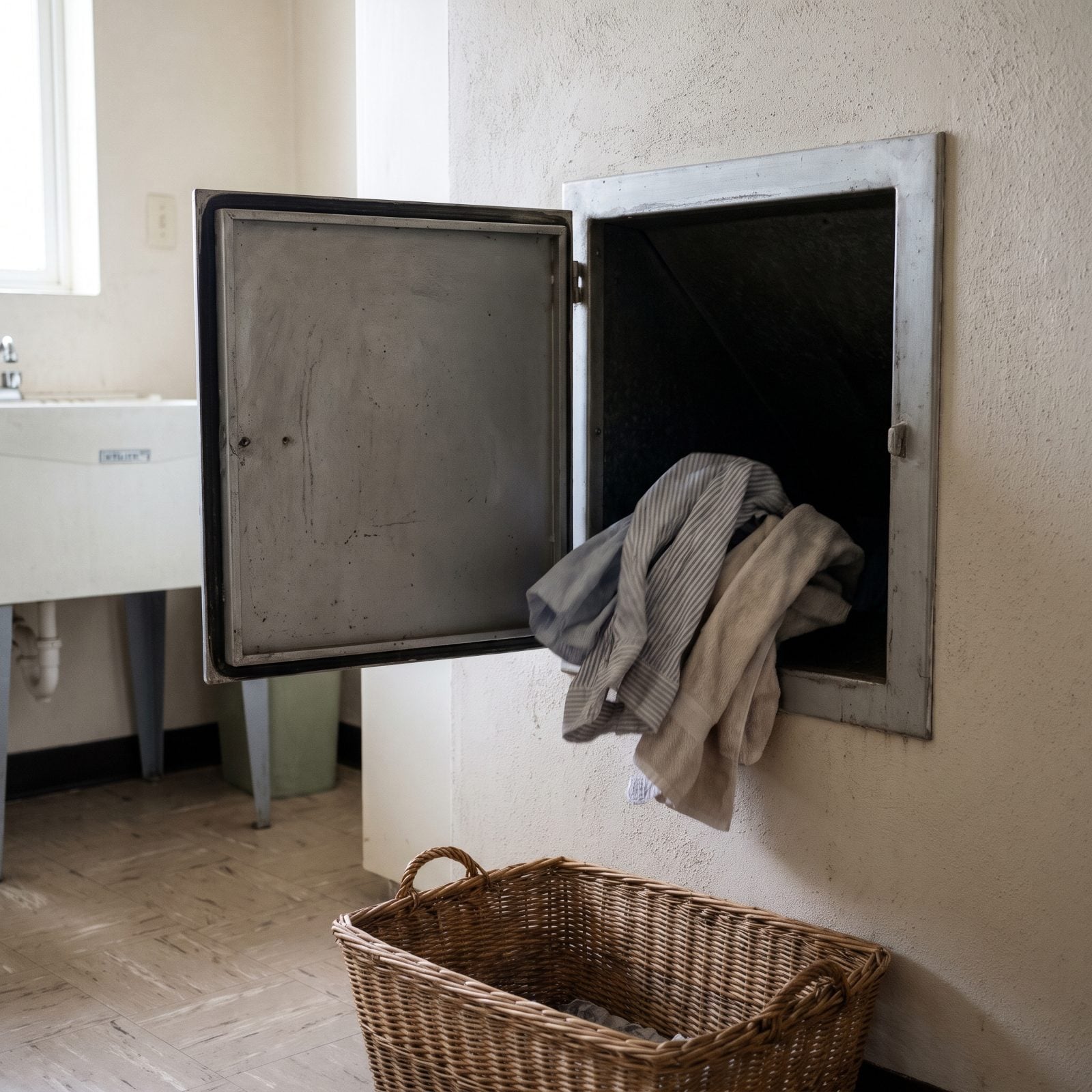
You opened a little metal door upstairs, dropped the dirty clothes into the void, and somewhere below they landed in a basket right next to the washer. No hauling a full hamper down two flights.
The chute was clever because it took the heaviest, most annoying part of laundry out of the job entirely. Gravity did the carrying. Builders quietly dropped the idea once laundry rooms migrated upstairs near the bedrooms, which solved the same problem another way. But in a tall house with the machines in a basement or a preppy basement design? A chute is still the smartest ductwork you’ll ever install.