🔥 Would you like to save this?
The tree comes out of the box and goes wherever there’s a gap. That’s how most living rooms end up with a seven-foot obstacle parked in the exact spot a person needs to walk. A tree is furniture for a month — big, wide, non-negotiable furniture. Put it in the wrong place and you’ll spend December sidestepping branches and apologizing to guests. So we photographed rooms making the most common mistakes, so you can spot yours before the star goes on top.
40. Centering the Tree in the Main Walkway
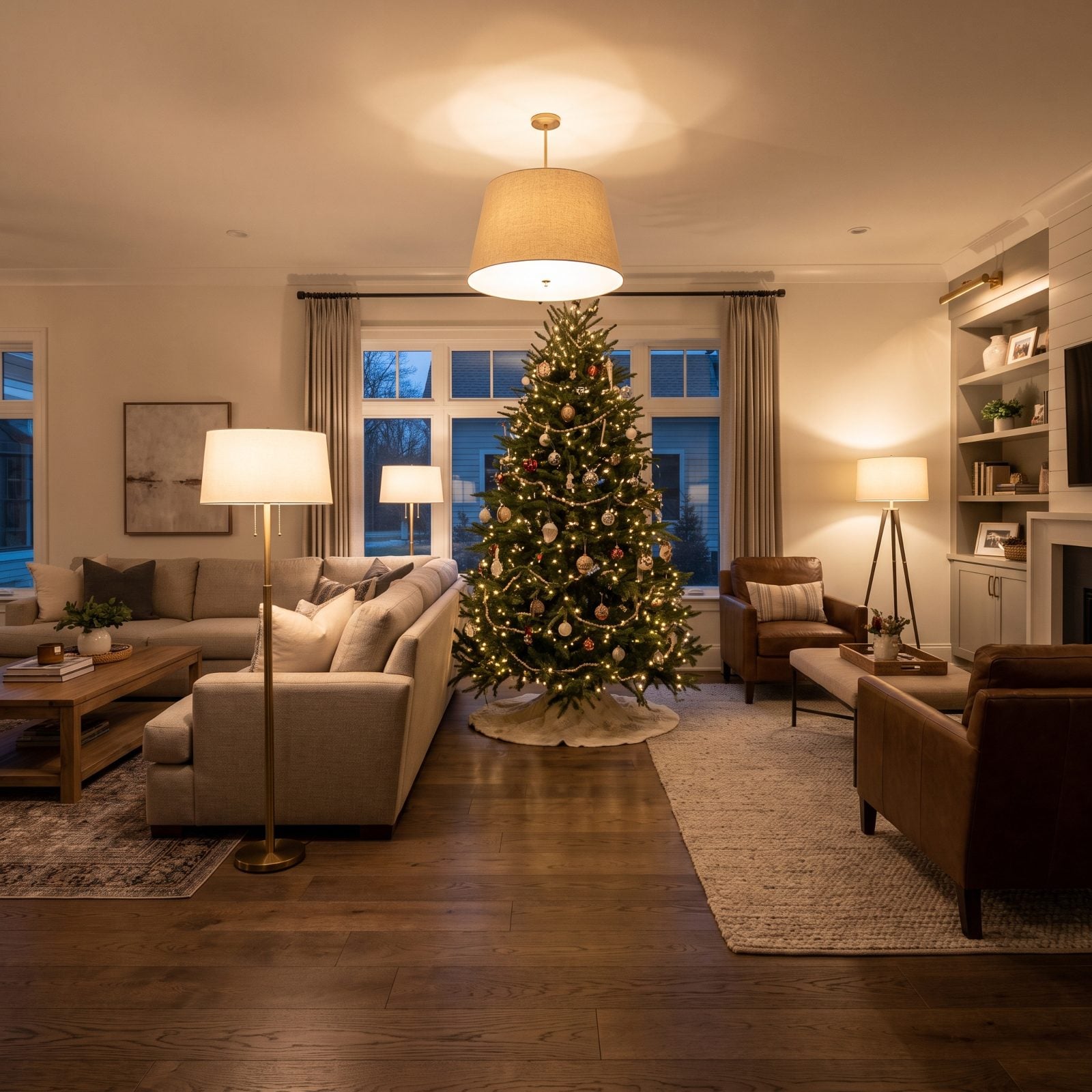
The single most common tree mistake, and the easiest to spot once you know to look. When the tree lands in the natural line people walk from the door to the couch, you’ve built a roundabout in your own living room, and everyone ends up hugging the wall to get past it.
In order to come up with the very specific design ideas, we create most designs with the assistance of state-of-the-art AI interior design software. Also, assume links that take you off the site are affiliate links such as links to Amazon. this means we may earn a commission if you buy something.
A tree wants a corner or a wall it can lean against visually. Walkways need at least 30 to 36 inches of clearance to feel comfortable, and parking the tree in that channel drops you to 20 — which the body registers as a pinch point before anyone says a word about it.
39. Choosing a Tree Too Wide for the Available Floor Space
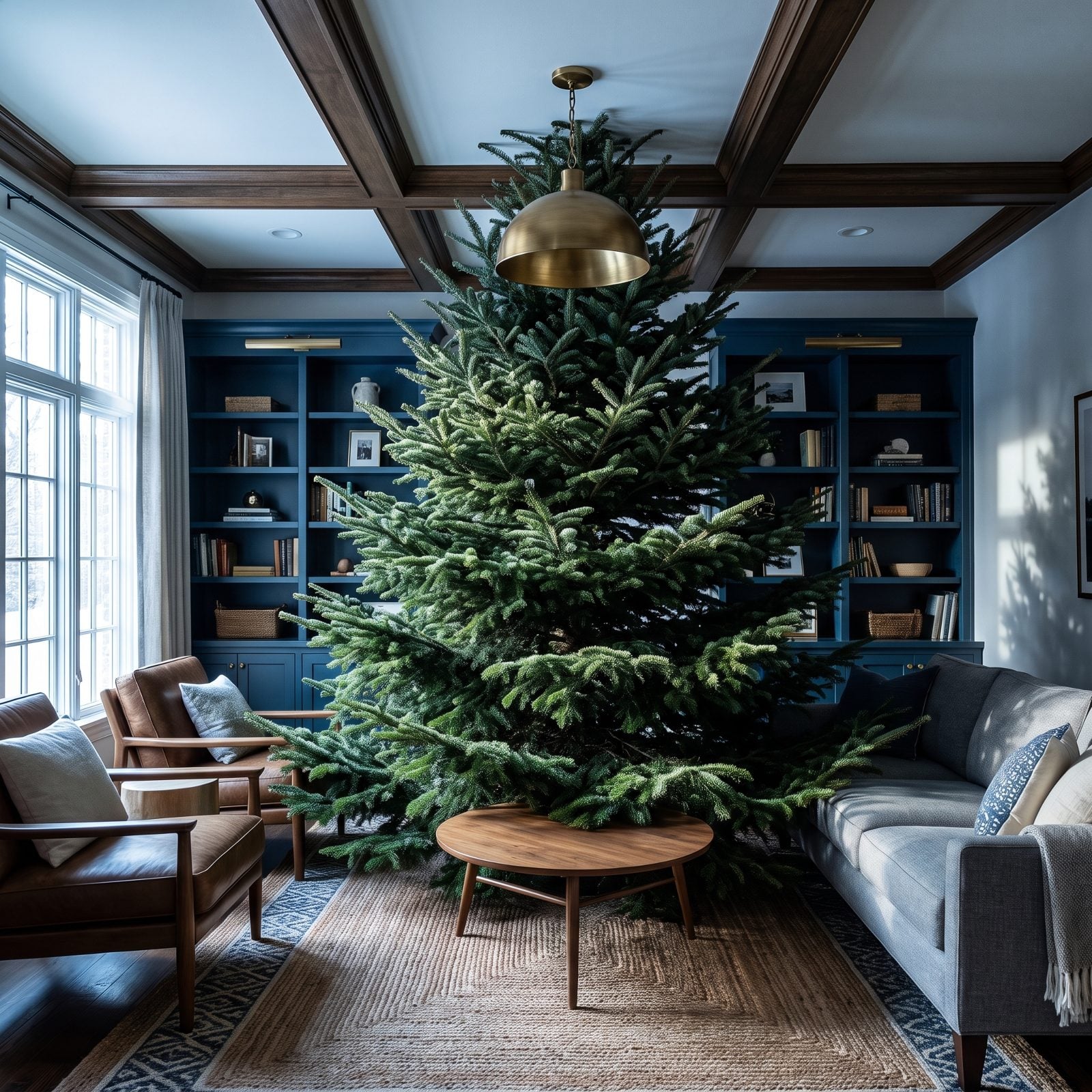
Full trees look glorious in the lot, where the ceiling runs 30 feet high and there’s no furniture around. In a real living room, a wide-based tree eats floor like a parked car. The bottom tier spreads four or five feet across, and suddenly your sofa arm is wearing pine needles.
Measure the diameter, not just the height. A slim or pencil profile gives you the vertical drama without the sprawl, which matters enormously in rooms under about 150 square feet. I’ve watched people wrestle a fat noble fir into a nook it was never going to fit, and it always ends the same way: pushed furniture and a lamp exiled to the hallway.
38. Squeezing It Between the Sofa and Coffee Table
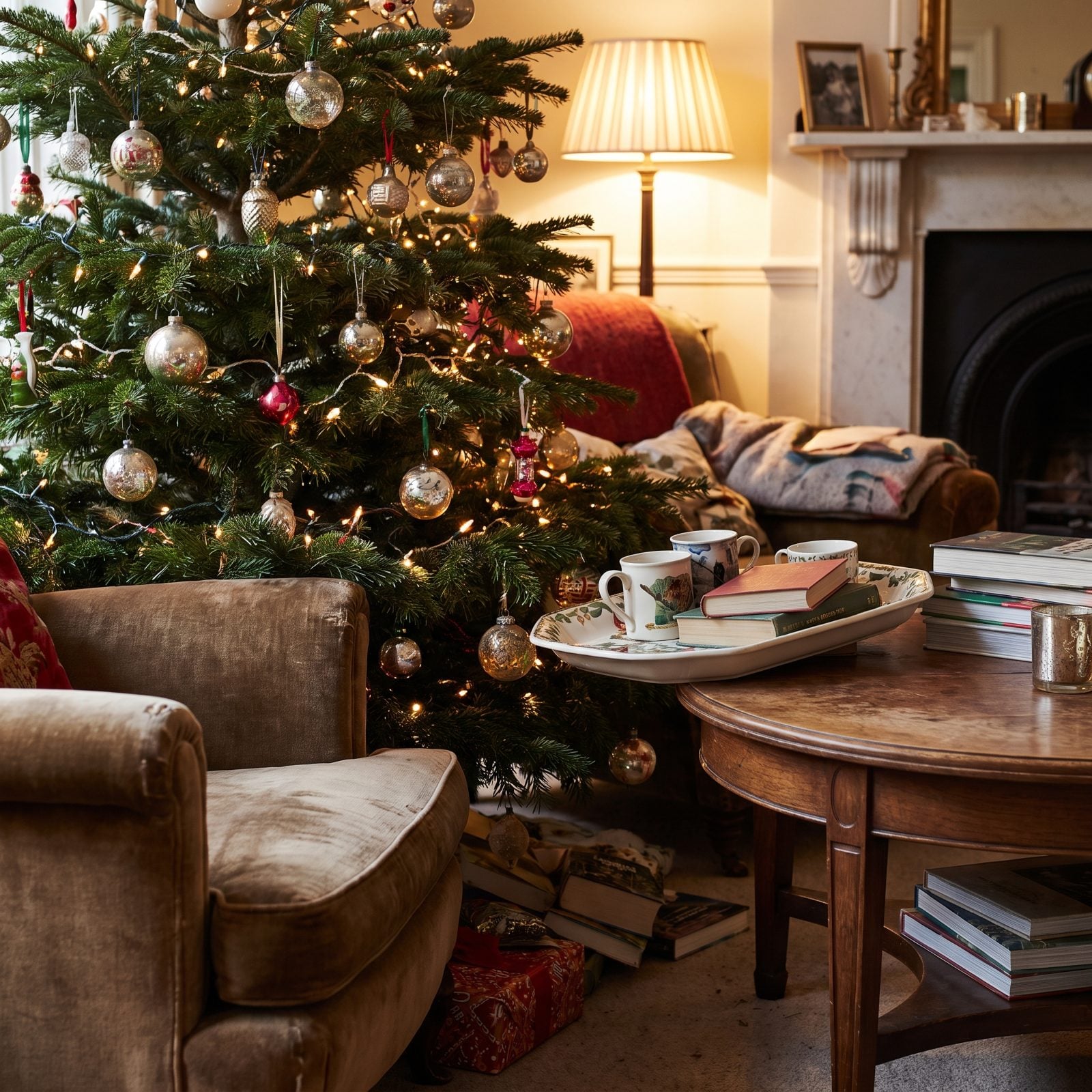
The conversation zone is sacred. That pocket between the sofa and the coffee table is where legs go, where the tray of cocoa lands, where you actually live in the room. Drop a tree in there and you’ve turned a lounge into a waiting area.
It also throws the visual weight off. A tree jammed into the seating cluster competes with the sofa instead of complementing it, and the eye can’t settle. Push it out past the coffee table so the seating group stays intact and the tree becomes a backdrop rather than a bouncer. If you’re styling a compact great room, protecting that central pocket is the difference between snug and stuck.
37. Putting It Inside the Front Door’s Swing
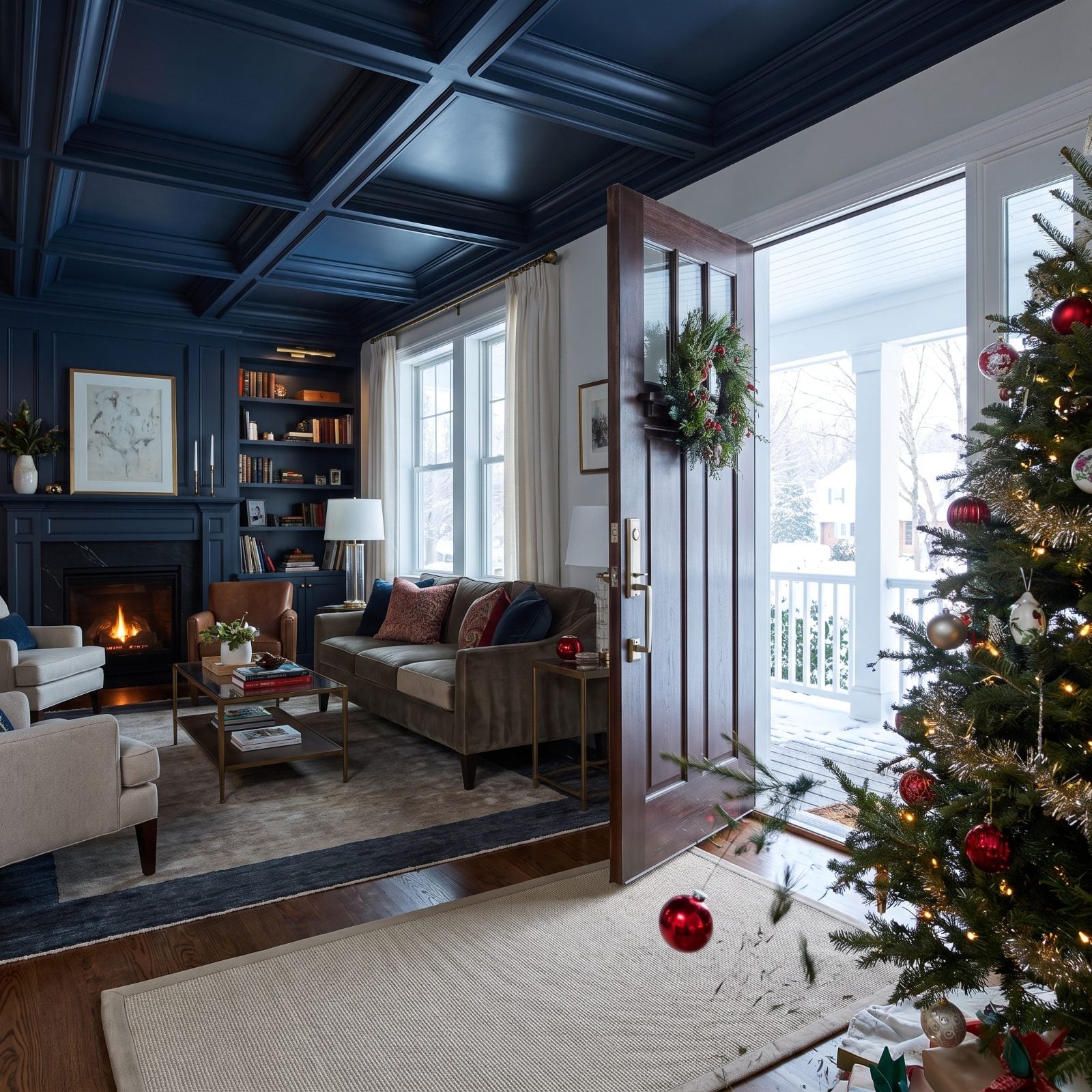
This one announces itself every single time someone arrives. The door swings, the branches shudder, an ornament works loose, and guests do that little sidestep-and-apologize shuffle before they’ve even taken their coat off.
Doors need their full arc, roughly a 90-degree sweep clear of anything. Trees near an entry also collect the worst of the winter draft and the salt tracked in on boots. Set it back so the door opens all the way, or shift it to the far side of the entry entirely.
36. Blocking the Patio or Balcony Door
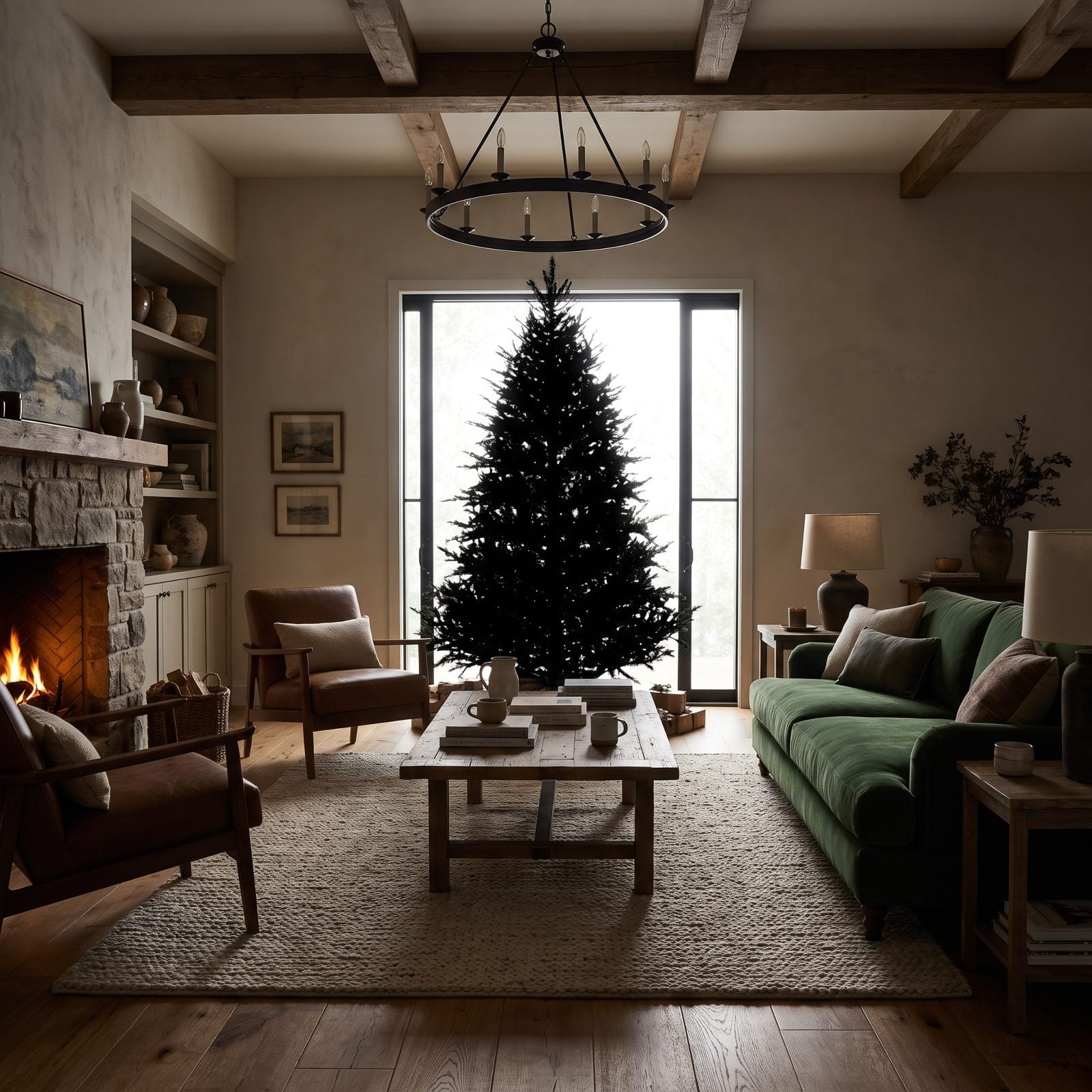
A patio or balcony door is doing three jobs: light, view, and exit. Park a tree in front of it and you’ve killed all three at once. The room goes dimmer, the outdoor view disappears, and there’s a genuine safety issue if that door happens to be a fire exit.
Sliding and swinging glass doors also need a clear track. Branches in the channel mean the door won’t seat properly, and that’s how the cold gets in. Keep the tree off the glass and let the winter light keep pouring through.
35. Closing Off an Open-Plan Passage
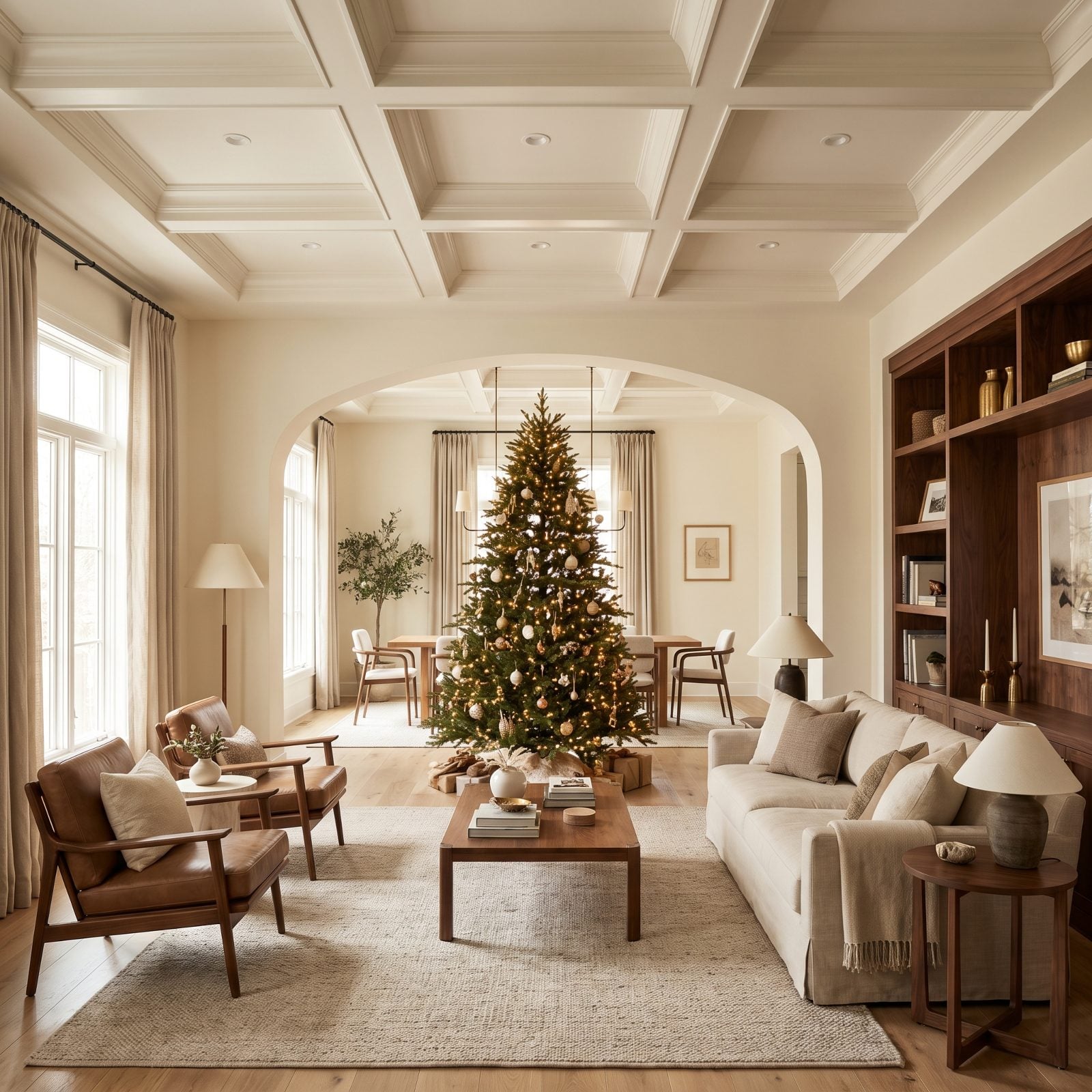
Open-plan living relies on invisible doorways — the spot where the living room hands off to the dining room or kitchen. Plant a tree in that gap and you rebuild the wall you paid to knock down.
Those transition zones carry the most foot traffic in the whole home. Everyone passes through carrying plates, glasses, presents. Choke it to under two feet and the flow of the entire floor stalls. Keep the tree well clear of the pinch, and it becomes a landmark you move around rather than a gate you fight through.
34. Putting It at the Narrowest Point of the Room
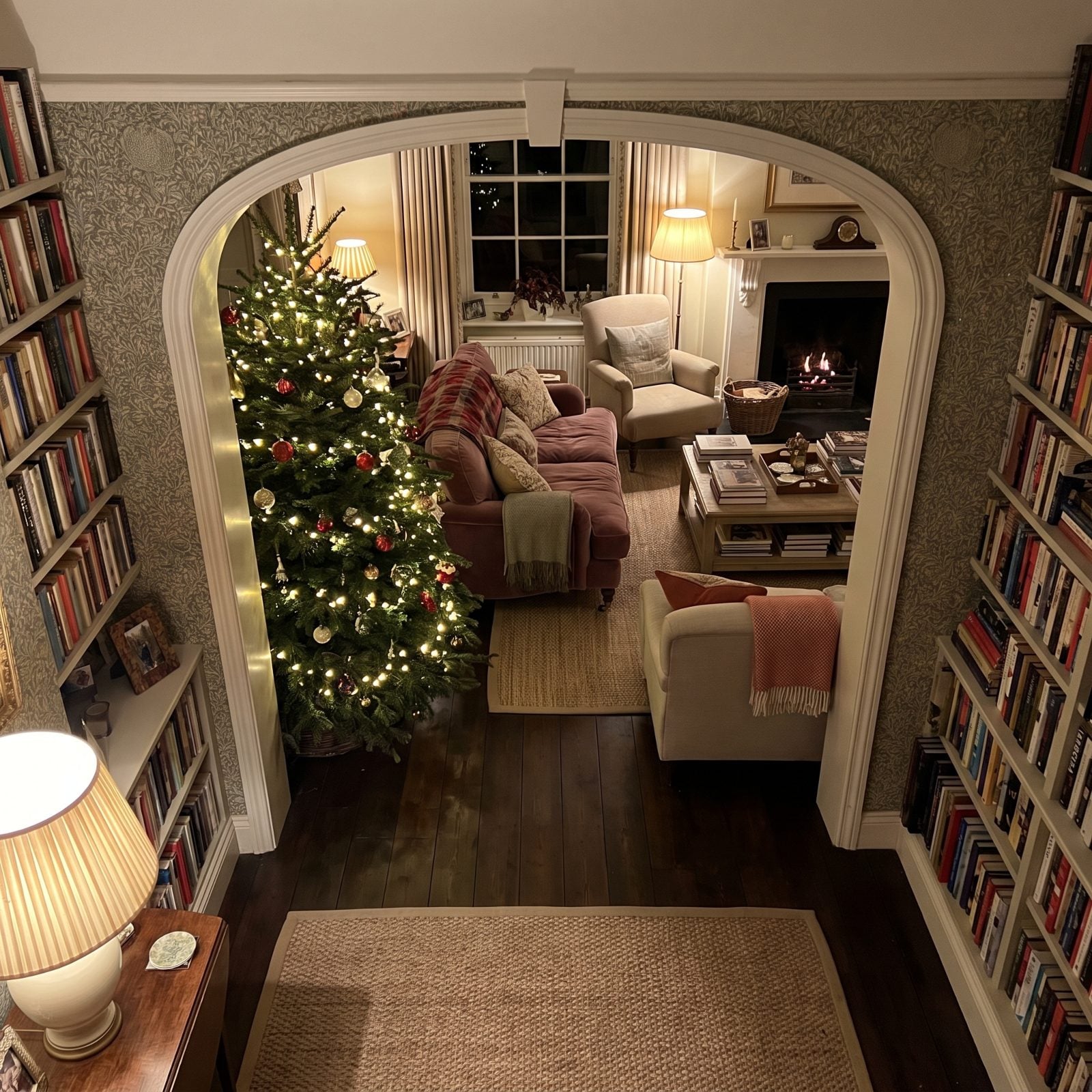
Every room has a waist — the point where the walls or furniture close in tightest. It’s the last place a bulky object belongs, and it’s exactly where a lot of trees land because it feels like a tidy nook.
Put the tree at the room’s widest, most generous point instead. Bulk belongs where there’s air around it. A tree that sits in a roomy zone reads as intentional and grand, while the same tree crammed into that narrow waist reads as a bottleneck the second anyone tries to walk past.
33. Putting It Directly in Front of the Fireplace
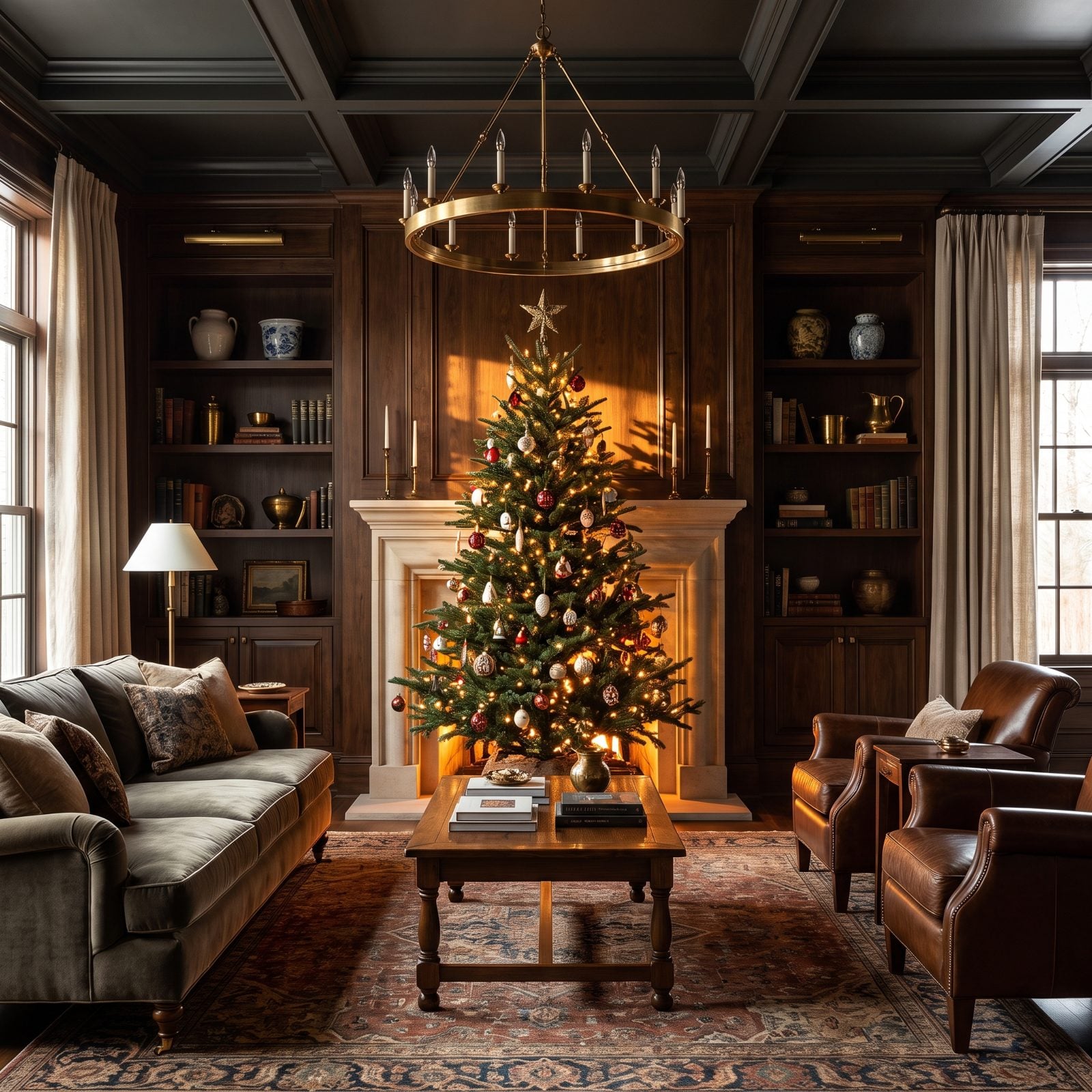
Here’s a tug-of-war nobody wins. The fireplace is a focal point. The tree is a focal point. Stack them on top of each other and they cancel out, plus you’ve now got a very flammable object hovering over an open flame. That alone should settle it.
Fireplaces earn a clear zone of at least three feet. Set the tree beside the hearth so the mantel garland, the stockings, and the firelight all get to breathe. Two focal points sitting near each other is a composition; two focal points fighting for the same square foot is a mess.
32. Obstructing the Main Living Room Window
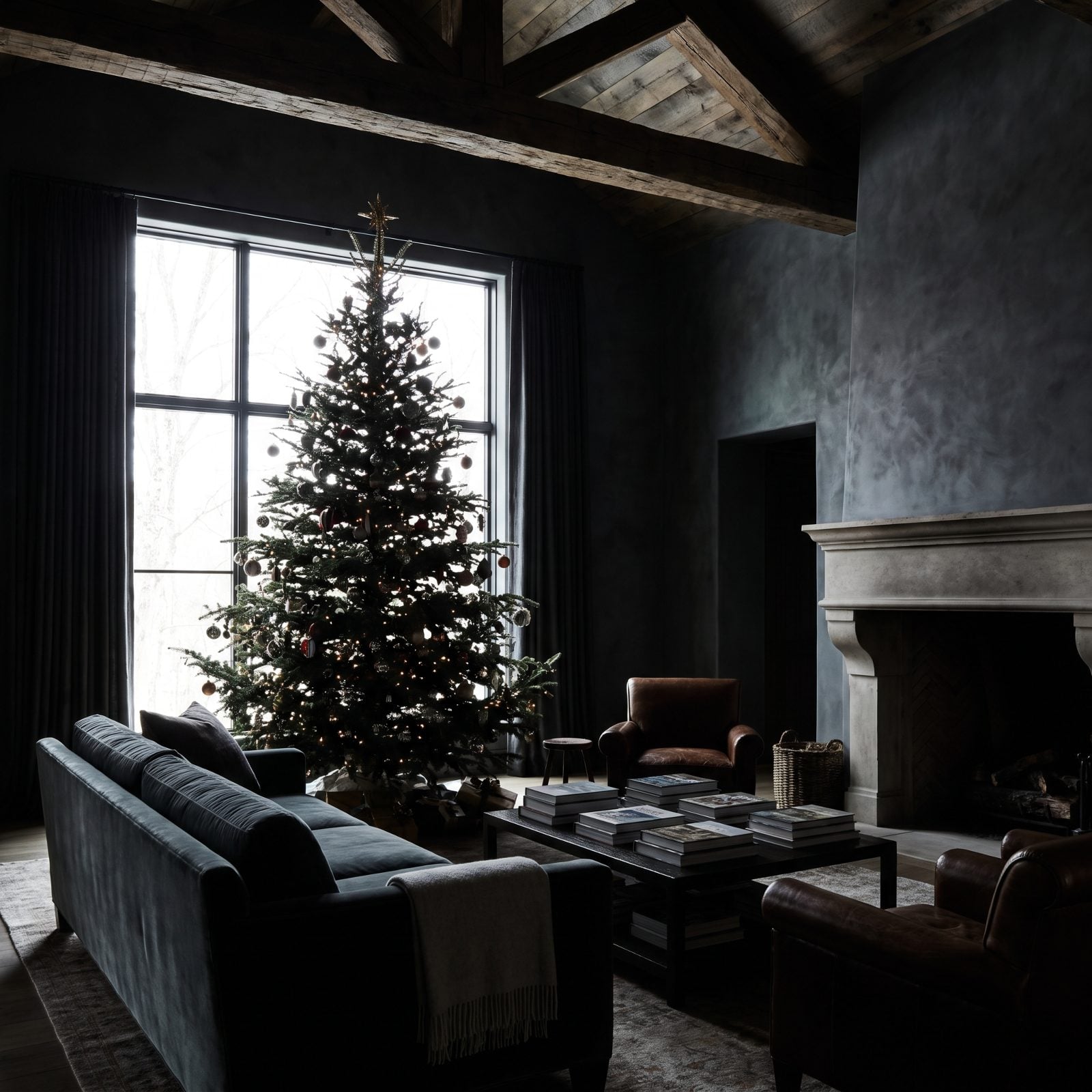
The big window is your best free asset — daylight, view, and the thing that makes a small room feel bigger than it is. Cover it with a tree and the room shrinks in real time, especially on short winter afternoons when every bit of light counts.
There’s a caveat, though. A tree in a bay or picture window can look wonderful from the street at night, all lit up. The move is to keep it to one side of a wide window rather than dead-center over the main pane. You get the exterior show without murdering your daytime light.
31. Using a Tree Too Tall for the Ceiling
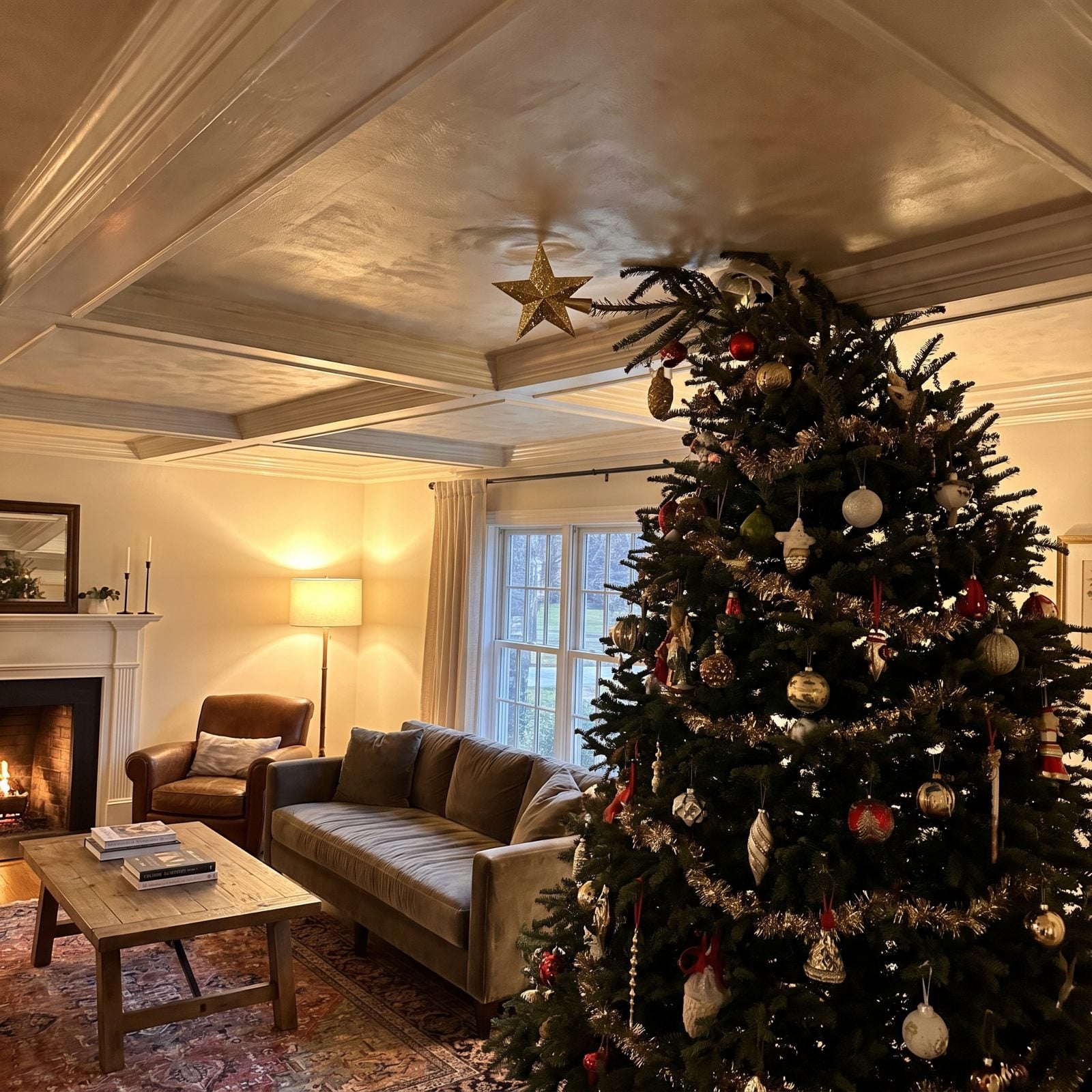
The bent-over topper. You clock it the second you walk in: a tree so tall the crown is folded against the ceiling and the star is riding sideways like it gave up. It makes a standard eight-foot room feel like a lid pressing down.
Leave 6 to 12 inches between the top of the tree, topper included, and the ceiling. That gap is what lets the tree stand proud instead of squashed. Measure your ceiling, subtract a foot for the topper and breathing room, and buy to that number. A slightly shorter tree that stands tall beats a tall tree that’s been crushed into submission, every time.
30. Forcing It Under a Ceiling Fan
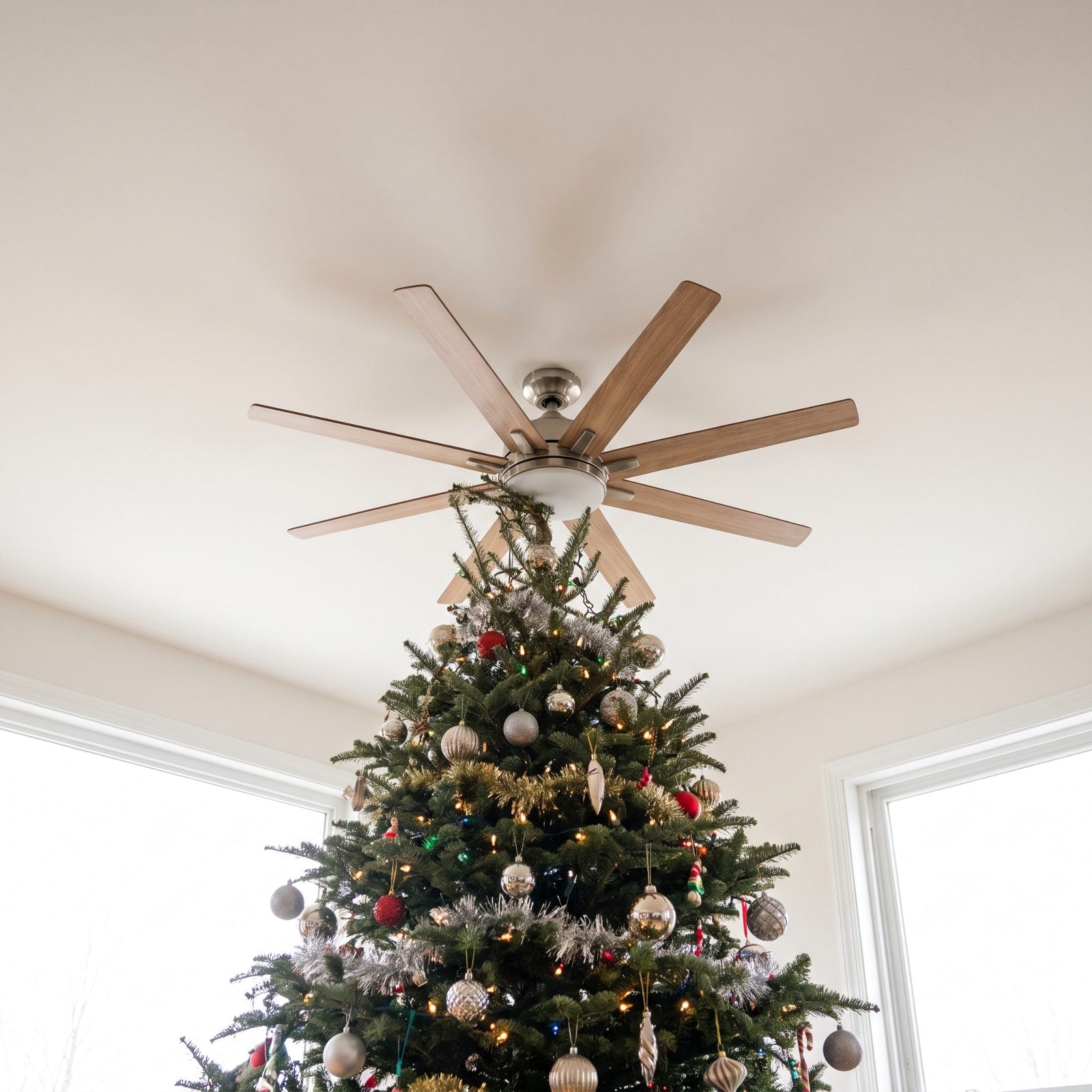
Nobody plans to run a tree into a fan. It happens because the fan sits dead center in the room, and dead center feels like where a tree belongs, so the treetop jams up into the blades and you spend December pretending you don’t notice.
A ceiling fan needs its full sweep clear. Cram a tall tree underneath and it either gets topped like a sad Charlie Brown situation or leans to dodge the blades. Both look off. Push the tree to a corner or a wall where the ceiling is uninterrupted, and let the fan do its job.
29. Letting Branches Overlap the Television Screen
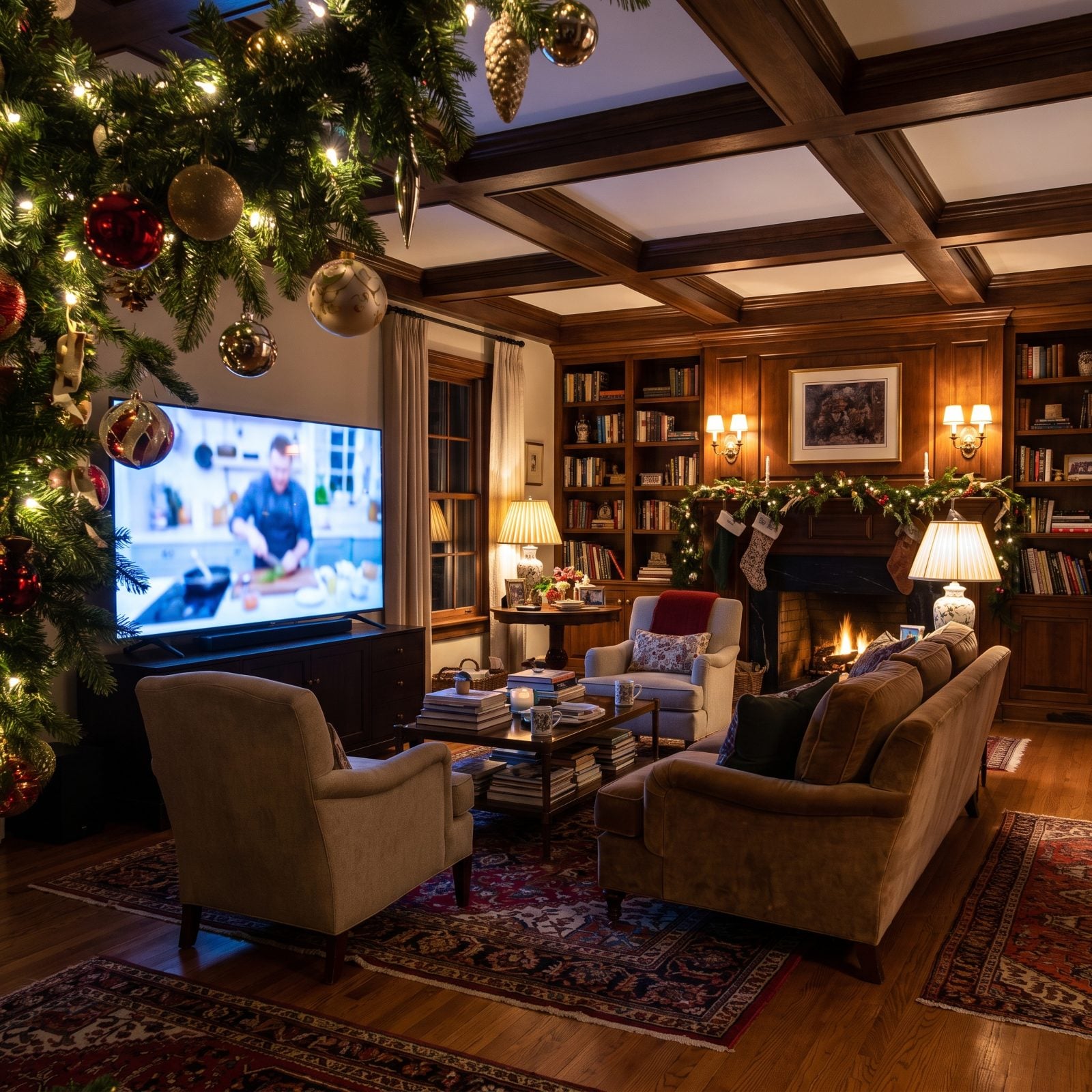
The tree and the TV are both the loudest thing in the room, and they can’t both win. When branches creep over the corner of the screen, your eye never settles. Half the movie you’re staring at an ornament instead of the actors.
Give the screen a full buffer of open wall. If the only spot for the tree sits beside the television, pull it back a foot and let air breathe between them. A slim matte black media console and a decorated tree can share a wall. They just can’t touch.
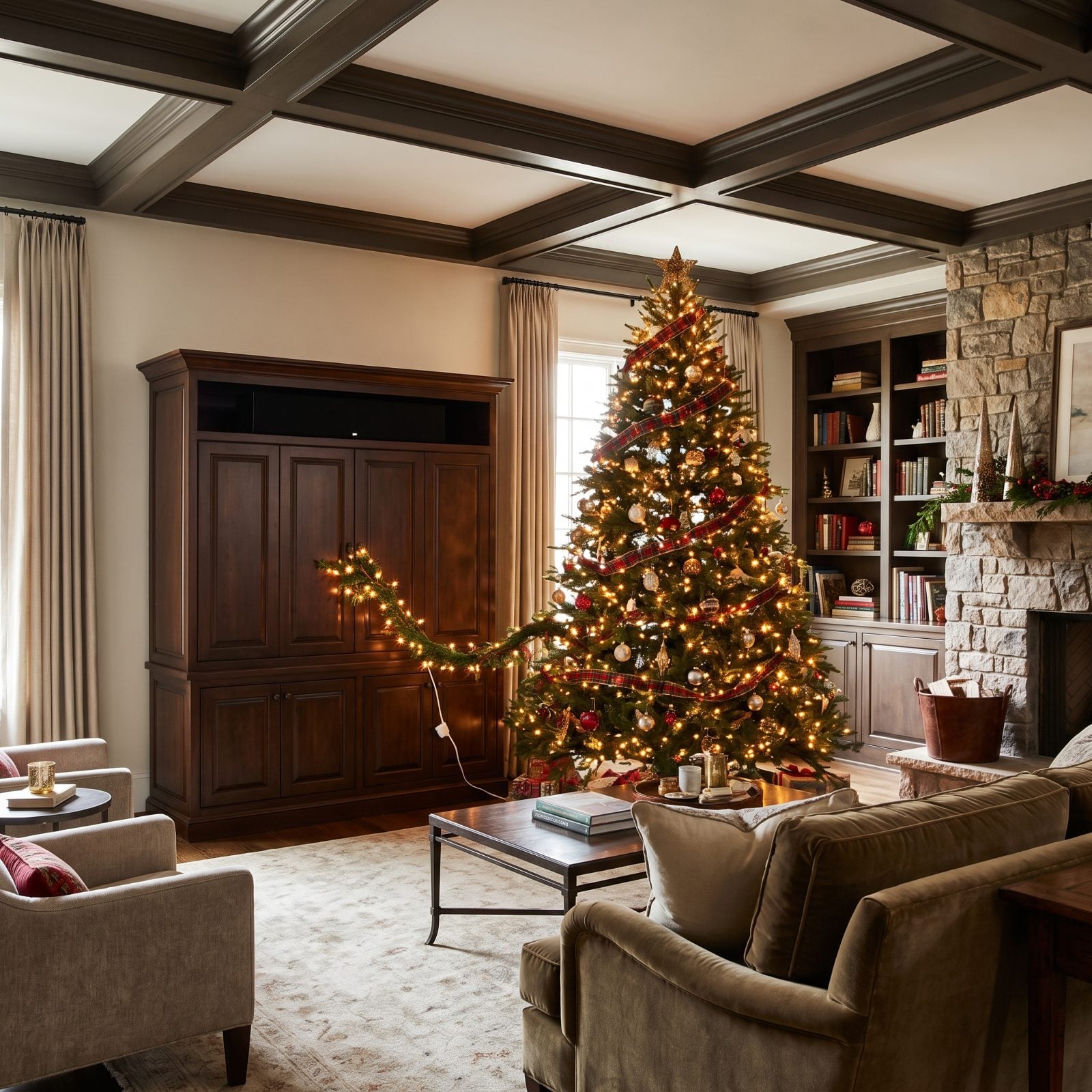
28. Blocking Access to the Media Console
🔥 Would you like to save this?
You know the routine. The router lives in that console, and it drops out on the one night everyone’s home. Now you’re crawling under pine needles to reach a cabinet door that won’t open past two inches.
Park a tree in front of a console and a five-second task becomes a month-long wrestling match. Whatever lives behind those doors — gaming consoles, cables, the good candles — you still need to get to it. Leave the doors a clear swing. Slide the tree far enough left or right that the branches never reach the hardware.
27. Obstructing Cabinet or Console Doors
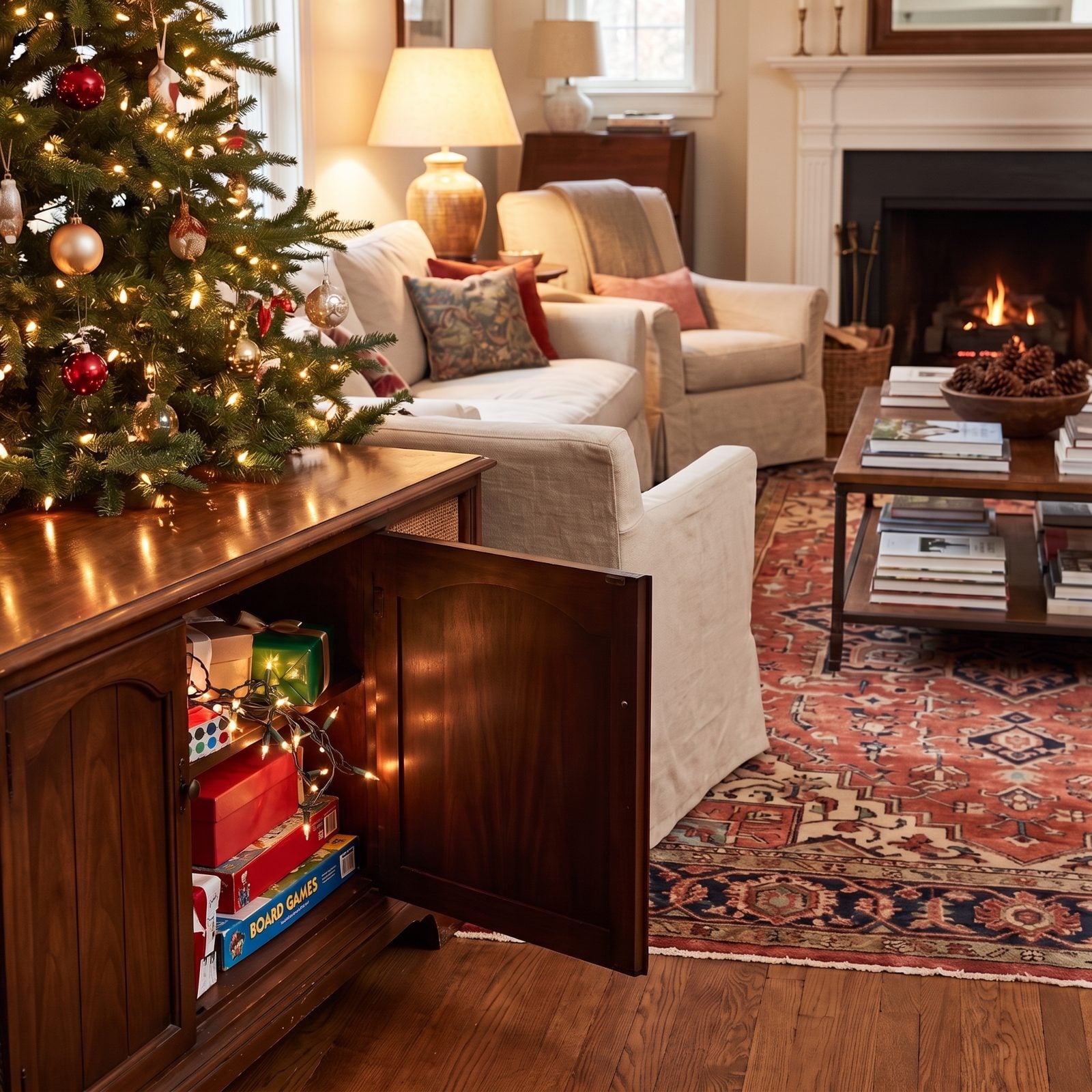
Sideboards and consoles hide the stuff you reach for constantly. Extra glasses, board games, the batteries. A tree that fans across a cabinet door quietly locks all of it away until January.
Here’s the fix that costs nothing. Before you commit to a spot, open every door and drawer in reach and check the swing with the tree in place. That cream slipcovered armchair and a dark wood sideboard make a warm corner — until a tree jams the hardware and turns it into a puzzle you solve every time you want a coaster.
26. Blocking Access to Built-In Shelves

Built-ins are the best surface a living room has. Stand a tree in front of one and you waste both — the shelves vanish behind branches, and the tree’s own ornaments disappear into the shelving that swallows it.
Those white built-in bookshelves want to be seen, and so does the tree. Pull the tree off the shelving line entirely. If your great room has a corner between a window and the built-ins, that’s usually the spot that keeps both features breathing.
25. Preventing Curtains From Opening
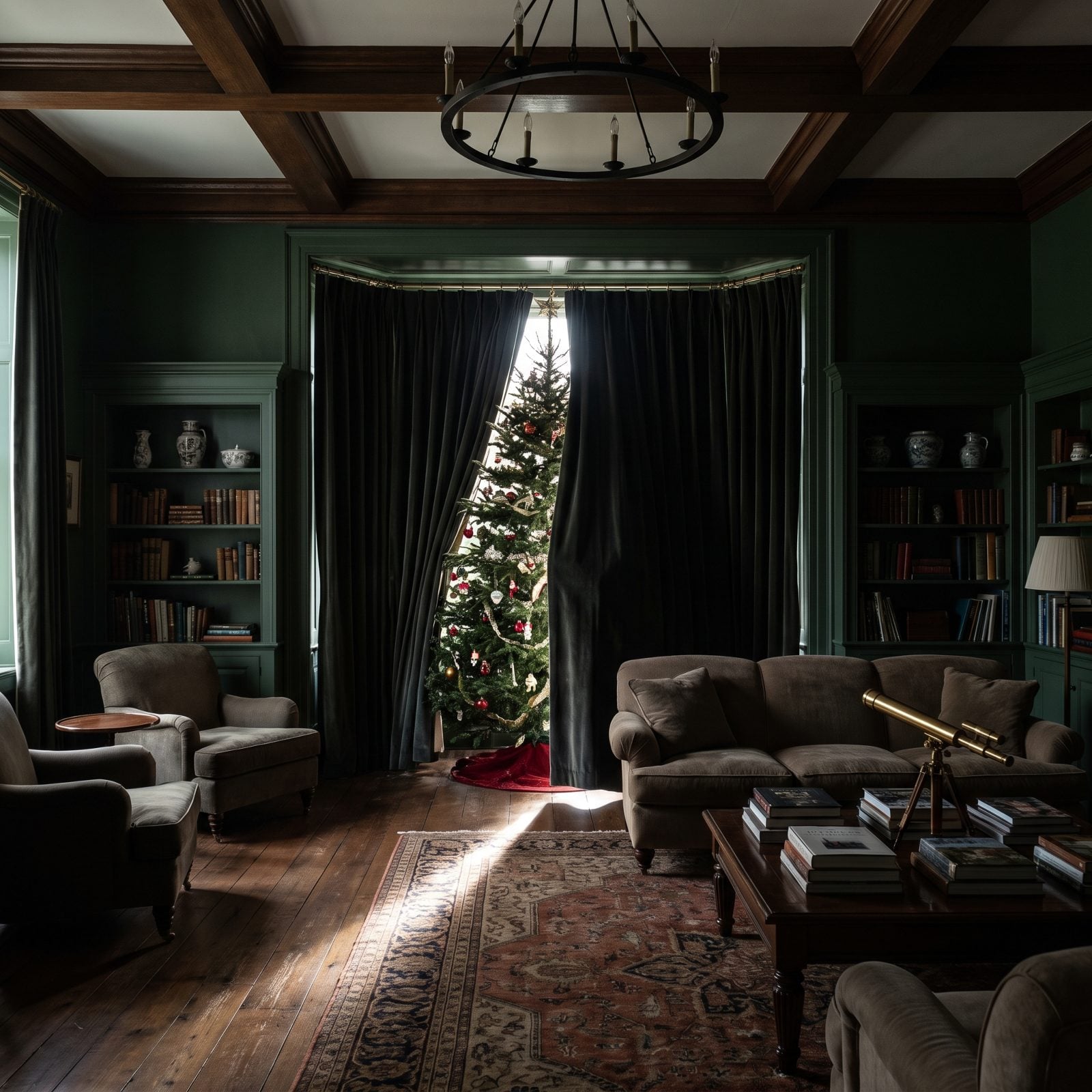
A tree in front of the window looks great from the street. Inside, you’ve traded your one source of daylight for a wall of branches. The curtains can’t slide, the room goes dim, and a small living room shrinks even further with the light choked off.
Natural light decides whether a compact room feels open or boxed in — it’s that big a factor. Set the tree beside the window, not across it. Let the oatmeal linen curtains draw all the way back so morning light and twinkling lights get to coexist.
24. Hiding the Room’s Only Floor Lamp
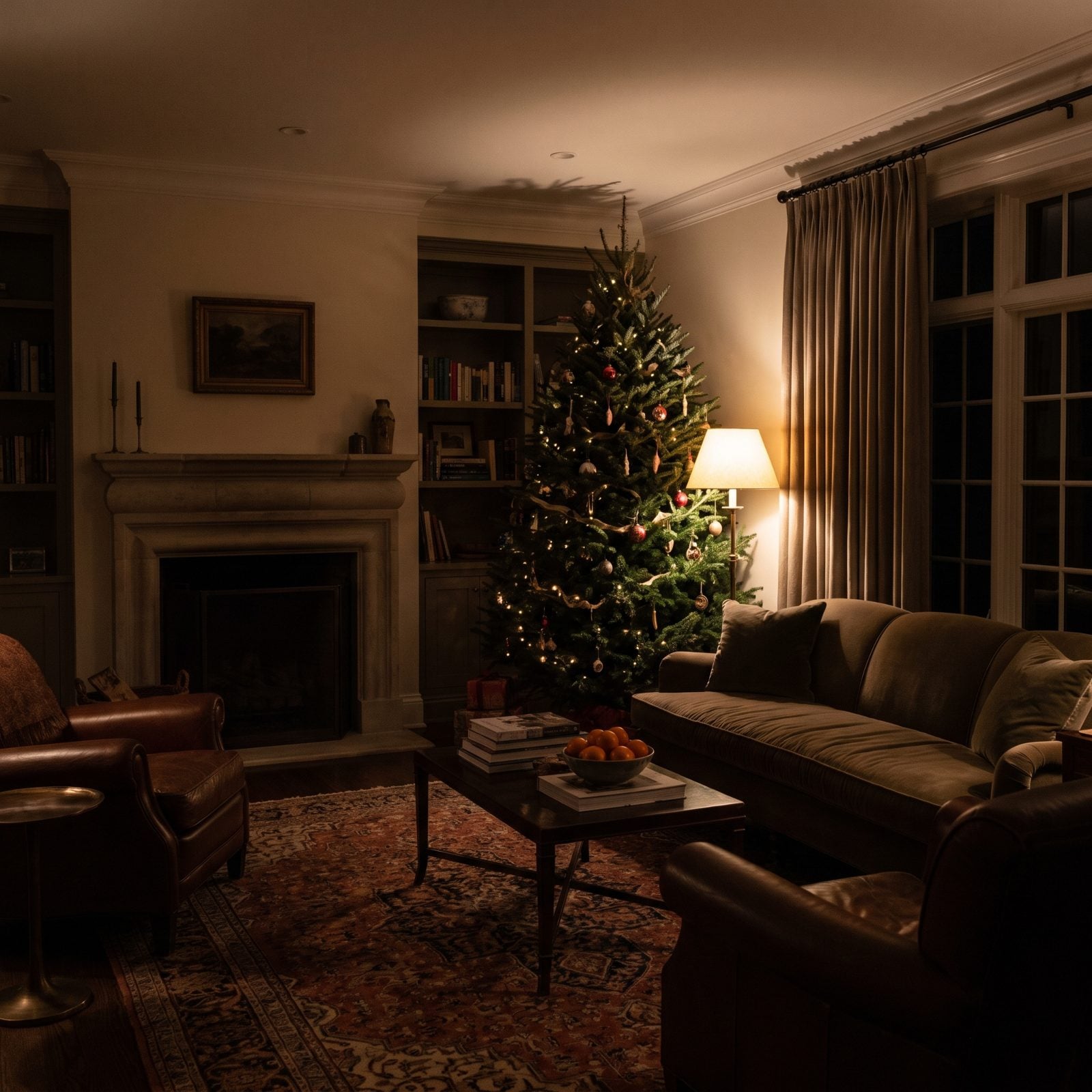
Some living rooms lean on a single floor lamp to carry the whole evening. Park the tree in front of it and you’ve halved your usable light. The corner glows for the tree and nothing else, and you’re reading by phone flashlight.
Trees crave corners, and so do lamps. That’s the conflict. If the tree wins the corner, move the brass arc floor lamp beside the sofa where it still lights the seating. Never let a decoration eat your only real light source. I learned that one the hard way, squinting at a paperback in a room that looked festive and functioned like a cave.
23. Wedging It Between Two Armchairs
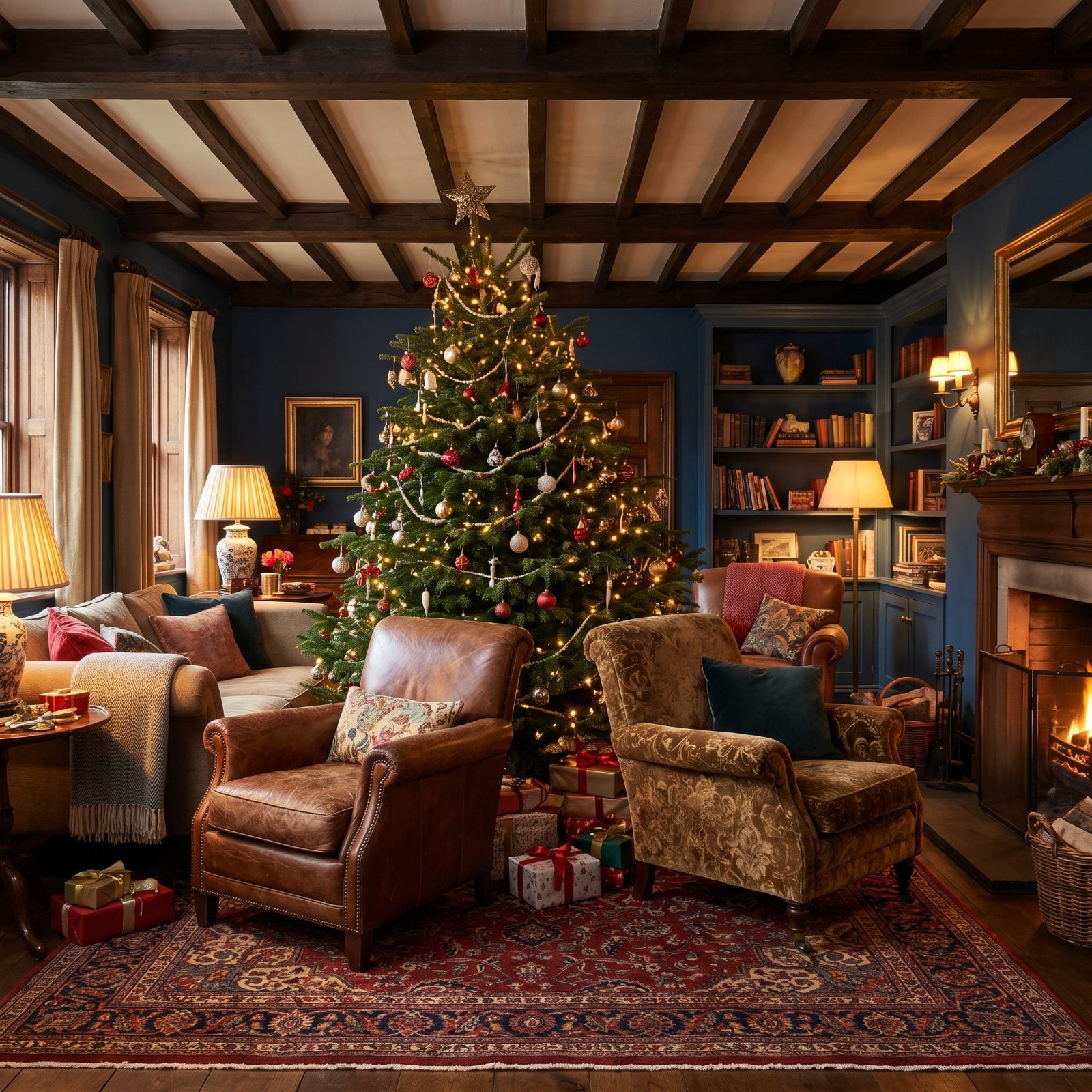
A tree stuffed between two armchairs turns a conversation nook into a standoff. Nobody can pass through, the chairs won’t pull out, and both people end up leaning around pine to talk.
Those mustard velvet armchairs were arranged to face each other for a reason. Drop a tree in the gap and you kill the layout. Keep the seating cluster intact and give the tree its own real estate against a wall or a window nearby.
22. Placing It Too Close to the Sofa Arm
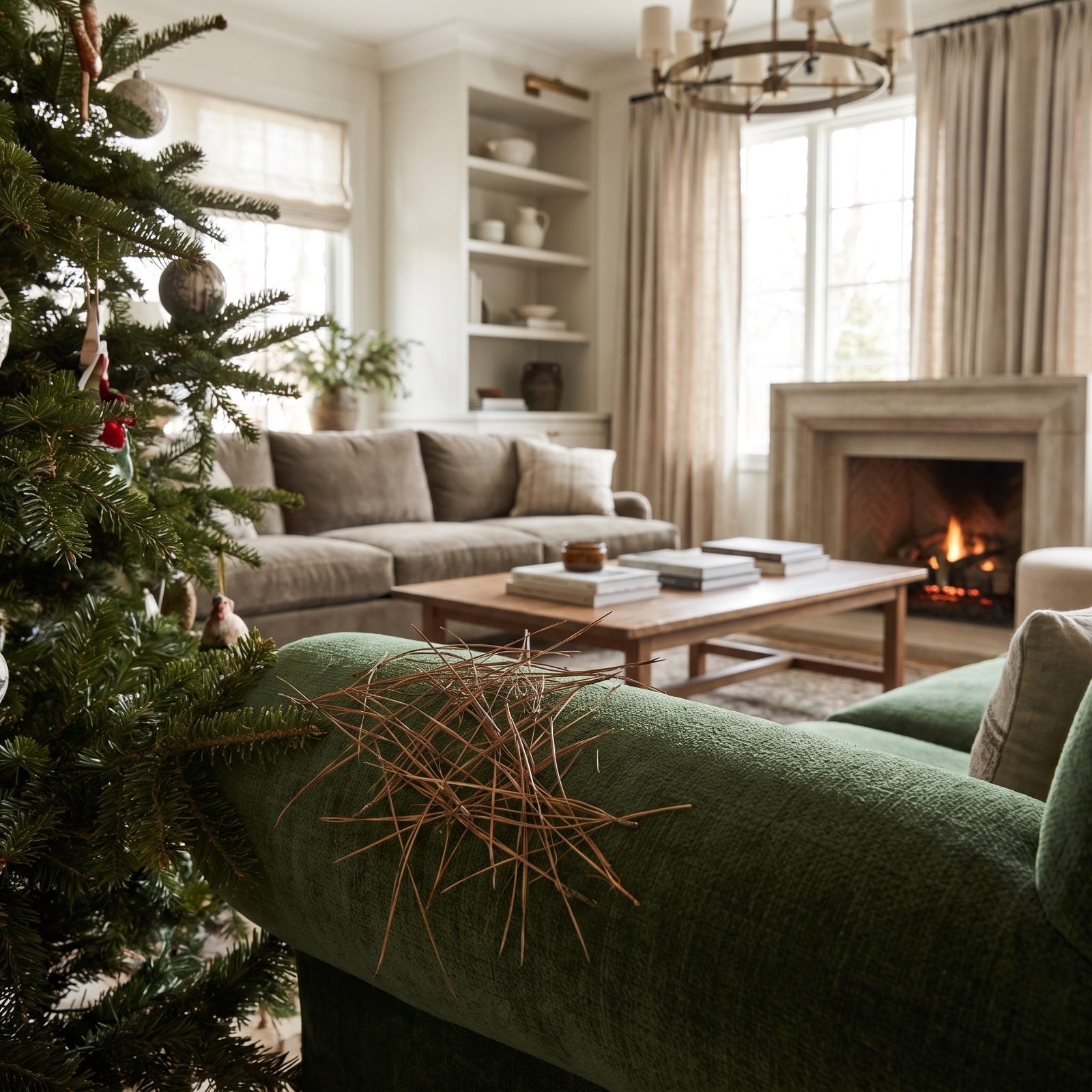
Set a tree right against the sofa arm and you’re signing up for a month of needles down the back of the cushion and branches poking whoever sits on the end. The whole seat becomes the spot nobody chooses.
Trees shed. That’s not a flaw, it’s biology. A foot of clearance between the branches and the slate blue sofa keeps the seating usable and the throw pillows needle-free. It reads better too — a little air around the tree lets both pieces stand on their own instead of merging into one lumpy mass.
21. Crowding It Beside a Full-Size Recliner
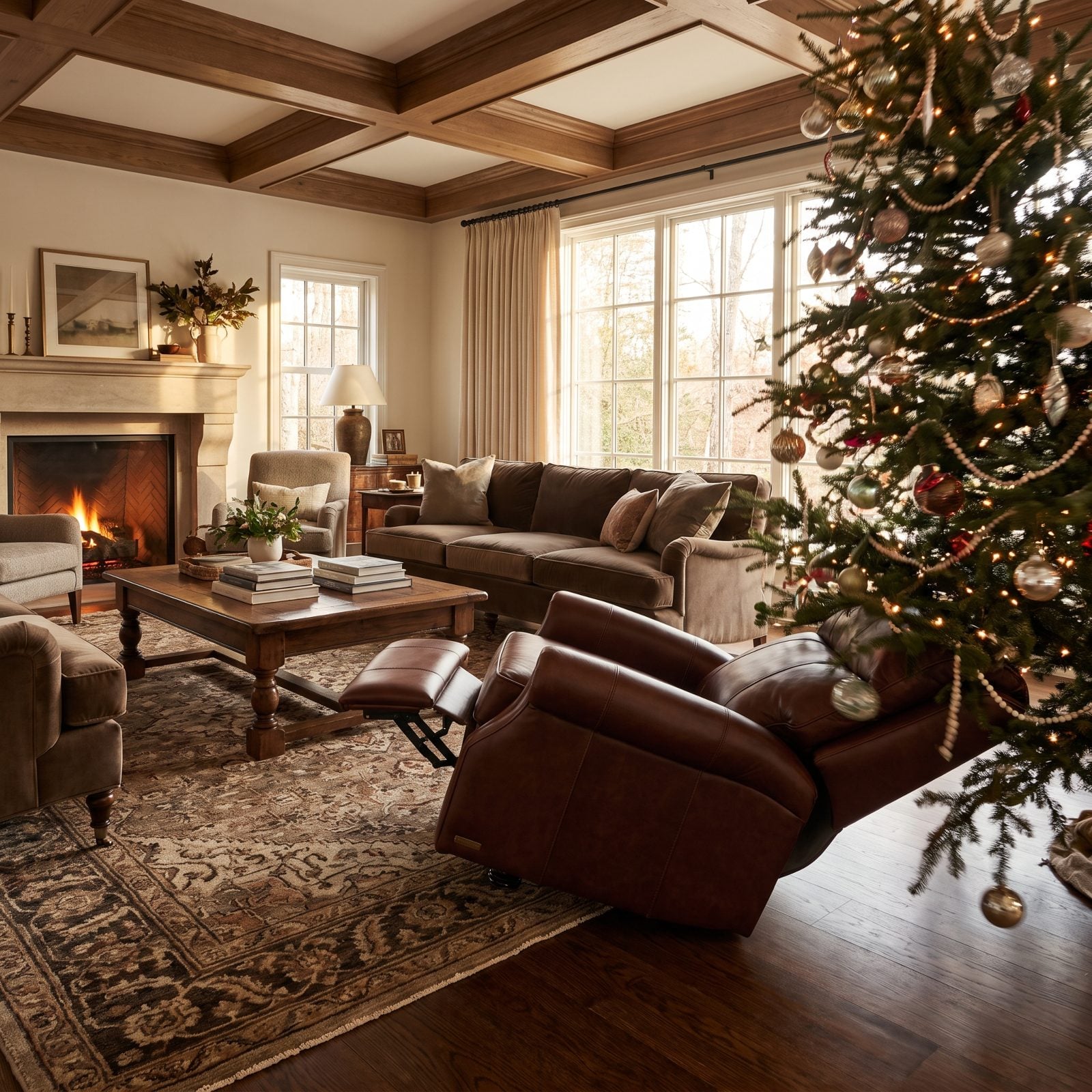
A recliner needs a swing radius most people forget about. It tips back into the branches, kicks the footrest into the walkway, and suddenly the comfiest chair in the house can’t fully open without shoving a tree.
Account for the full range of motion, not the parked footprint. A brown leather recliner at full tilt eats a surprising amount of floor. Give the tree a spot where the reclined headrest clears the lowest branch and the extended footrest still leaves a real path. Crowd it, and you spend December choosing between reclining and knocking ornaments loose. Bad trade in your own living room.
20. Trapping a Side Table Behind the Branches
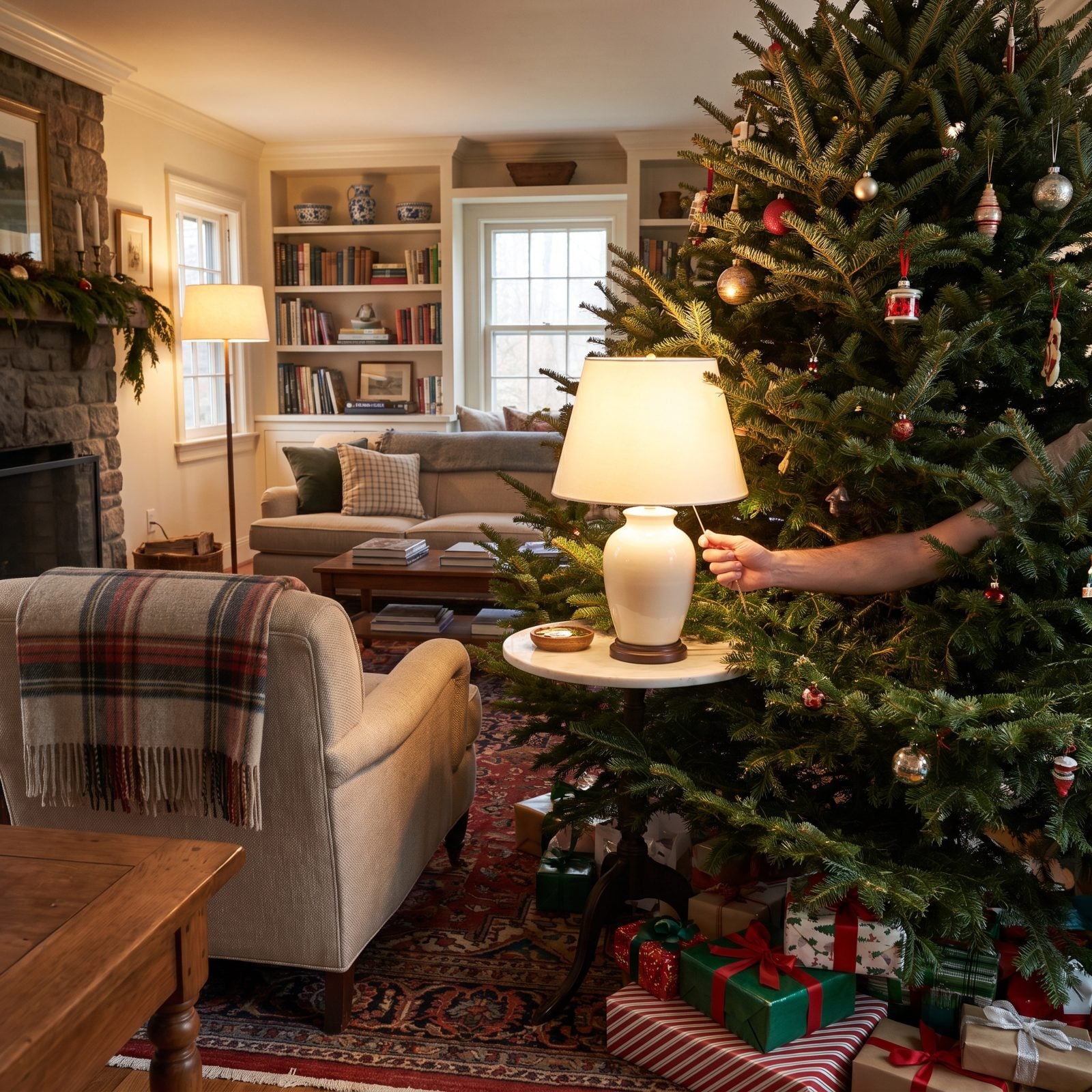
The tree looked great in the corner. Then you noticed the side table lamp lives behind it now, and turning it on means fighting a wall of tinsel every night.
Side tables need clear access on at least one side. Your drink, your book, the lamp switch. Bury that access behind branches and the table quits being furniture — it becomes storage the tree is guarding.
So slide the table out past the tree’s footprint, or shift it to the far end of the sofa for the season. A table you can’t reach is just a shelf you resent.
19. Pinning an Ottoman Between the Tree and Sofa
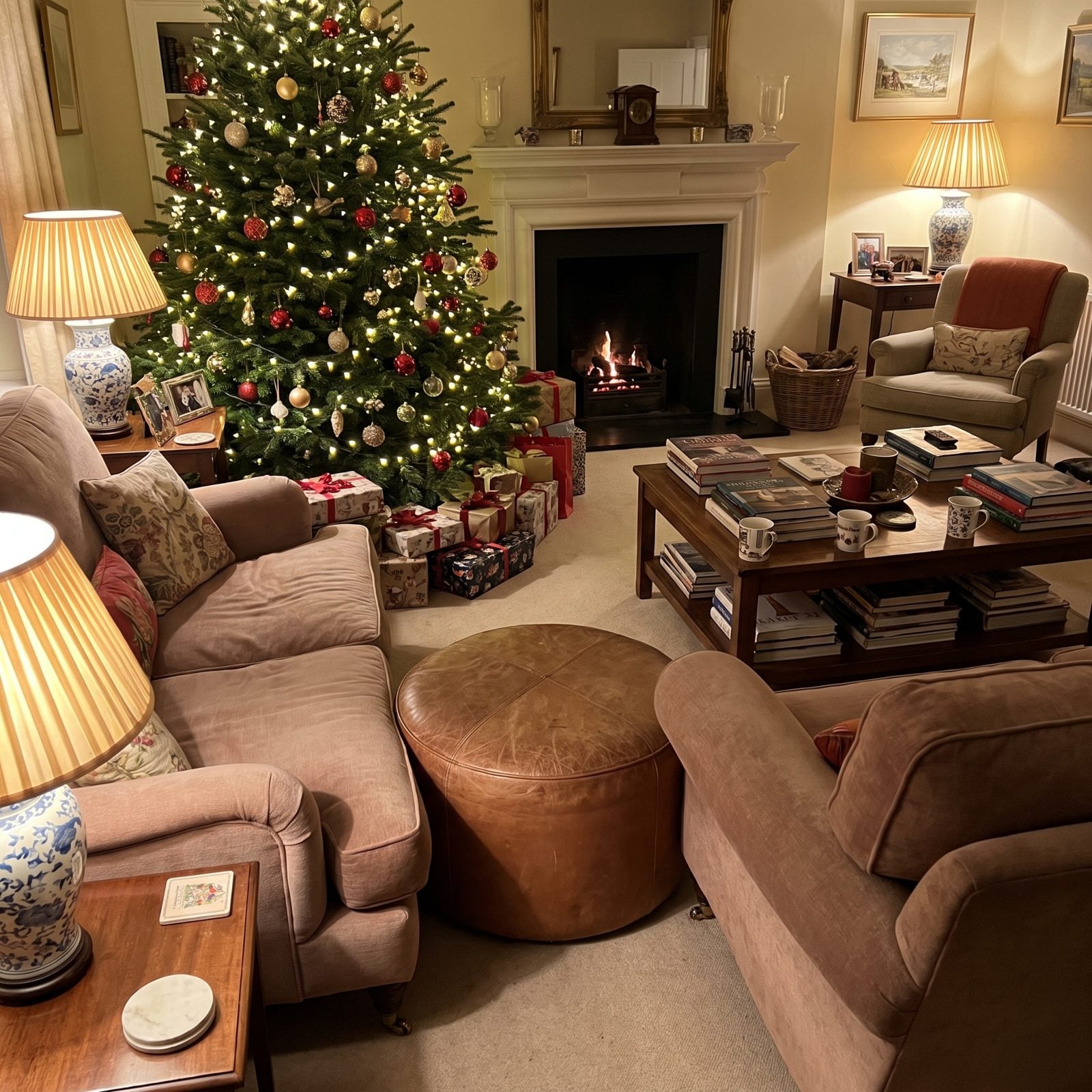
An ottoman needs breathing room to earn its keep — feet up, extra seat, a tray for cocktails. Cram it into the narrow slot between the tree and the sofa and it turns into an obstacle course everyone shins into on the way to the couch.
The math is simple: a comfortable walking path wants at least 30 inches. Two large soft objects fighting for the same square yard leaves nobody happy and one bruised knee.
Float the ottoman across the room where it can actually function, or stash it in the guest room until January. The tree can have the corner. The ottoman can have the rest of the year.
18. Pushing the Dining Table Into the Living Area to Make Room
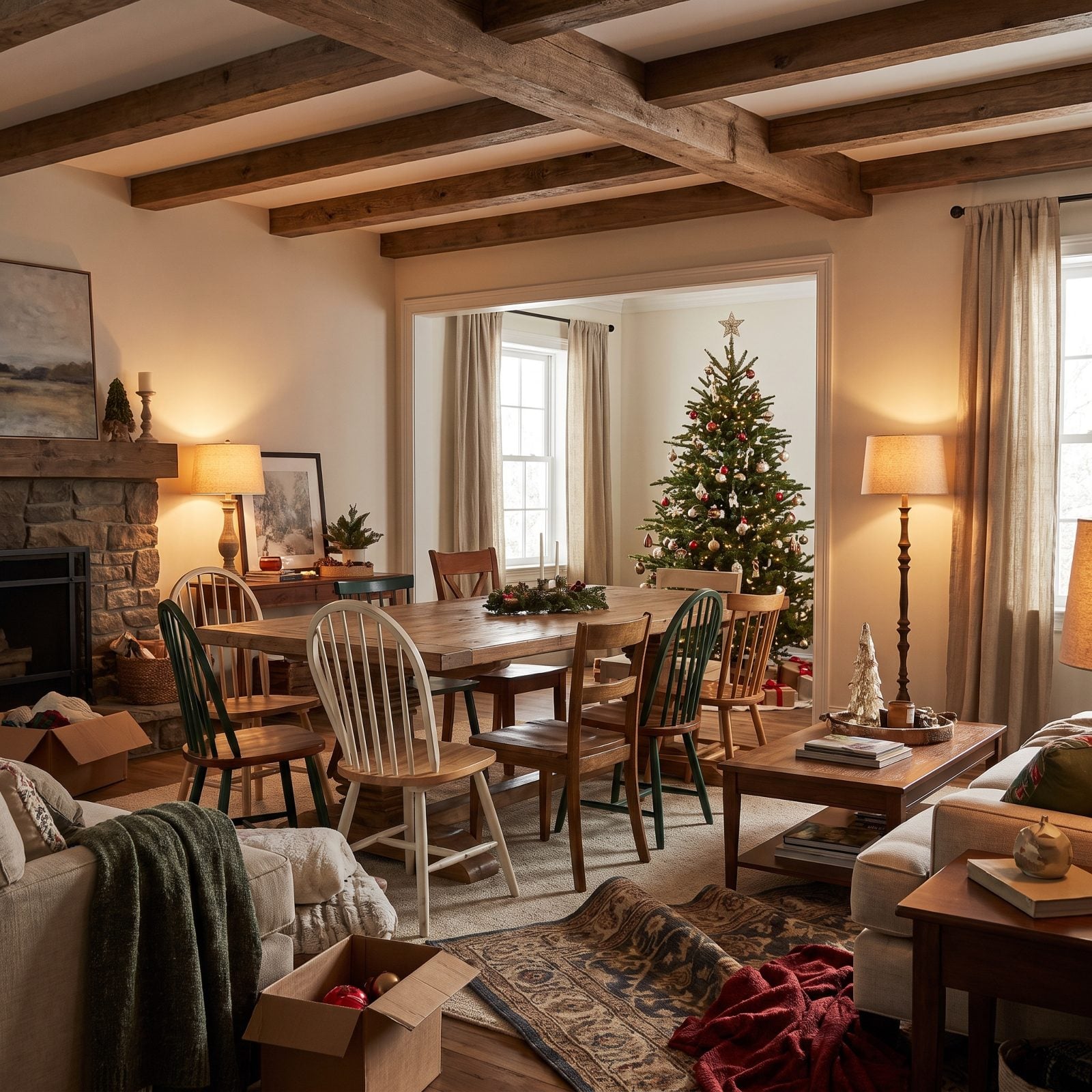
You wanted the tree in the dining nook for the natural light. Fair. But now the dining table has migrated into the living room, and both zones feel wrong.
This is a classic mistake in an open-plan great room. Move one anchor piece and the whole floor plan starts leaning like a shelf with too much weight on one end. The tree wins the argument and everything else loses.
A smaller tree in the corner beats a full-size one that evicts your dinner table. Or set it on a console to reclaim the floor. Real estate is real estate, even in December.
17. Keeping Every Everyday Furniture Piece in Place
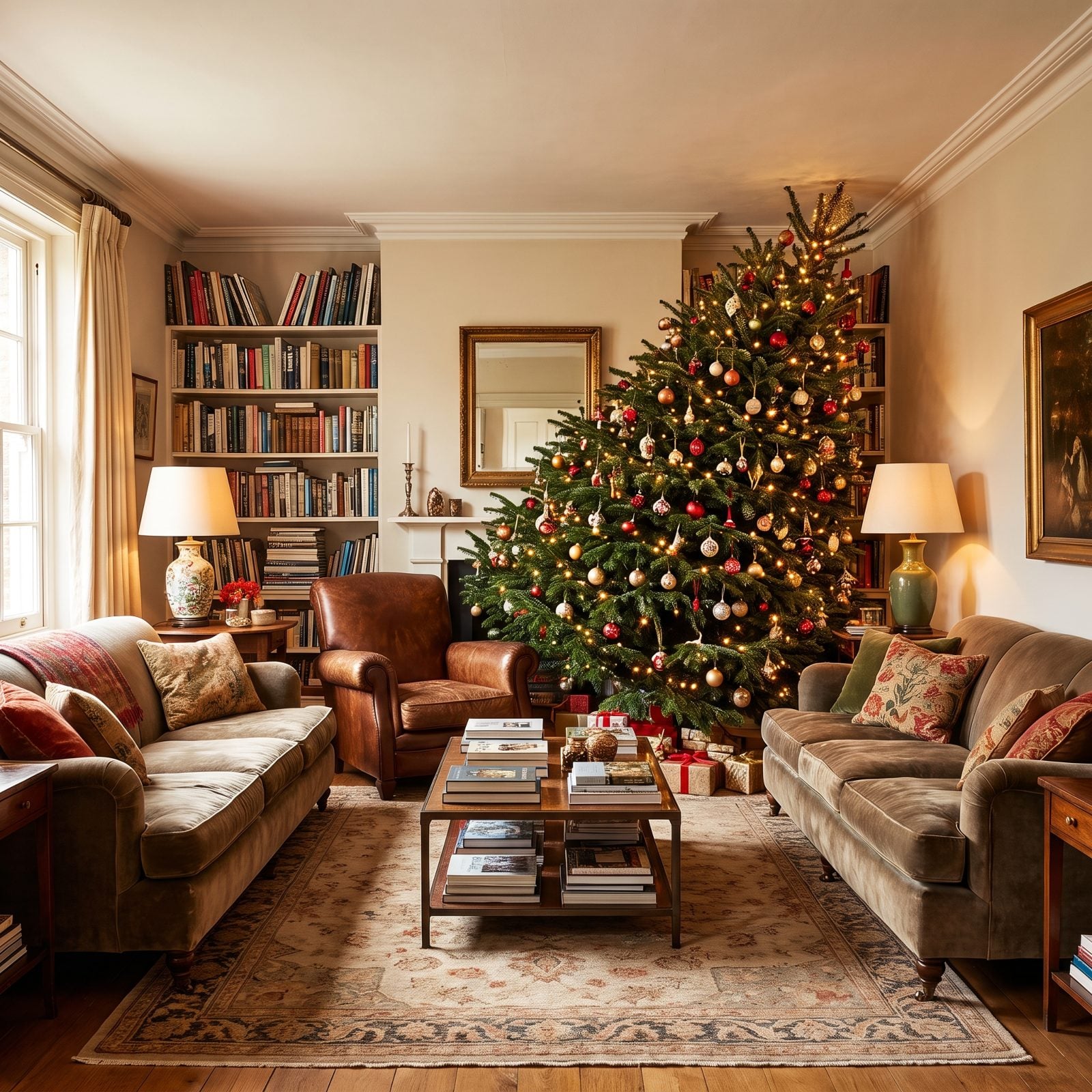
The tree is not a houseplant you can tuck into a gap. It needs its own footprint, and that footprint has to come from somewhere.
Refusing to move a single piece is how you end up with branches shoving into your armchair and a walkway shrunk to shin-scraping width. The room reads as full because it is full. There’s a whole plant in it that wasn’t there in November.
Pick one piece to relocate for the season. An accent chair goes to the bedroom, a side table goes to storage. One small sacrifice buys the tree a real spot and buys you back your circulation.
16. Angling the Tree So Its Widest Side Faces the Room
🔥 Would you like to save this?
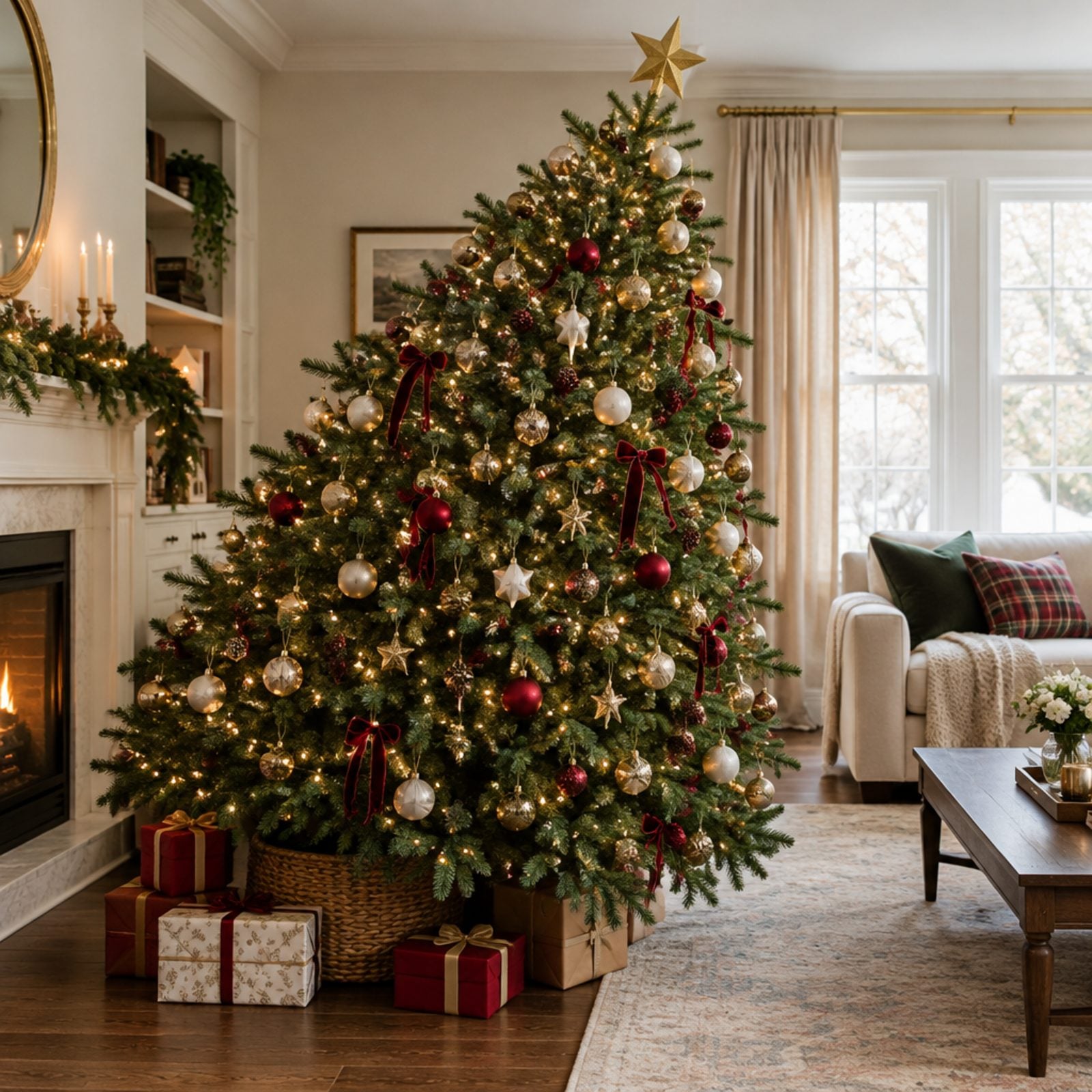
Every artificial tree has a good side and a flat side. Turn the fullest face toward the room and you’re pushing the tree’s bulk out into your walking space instead of into the corner where the room can absorb it.
Flip it. Densest side into the corner, narrower profile toward the room. You lose nothing visually, because you fill the sparse side with your favorite ornaments and nobody clocks the difference. And you reclaim a foot of floor.
15. Positioning It in the Visual Center of a Small Room
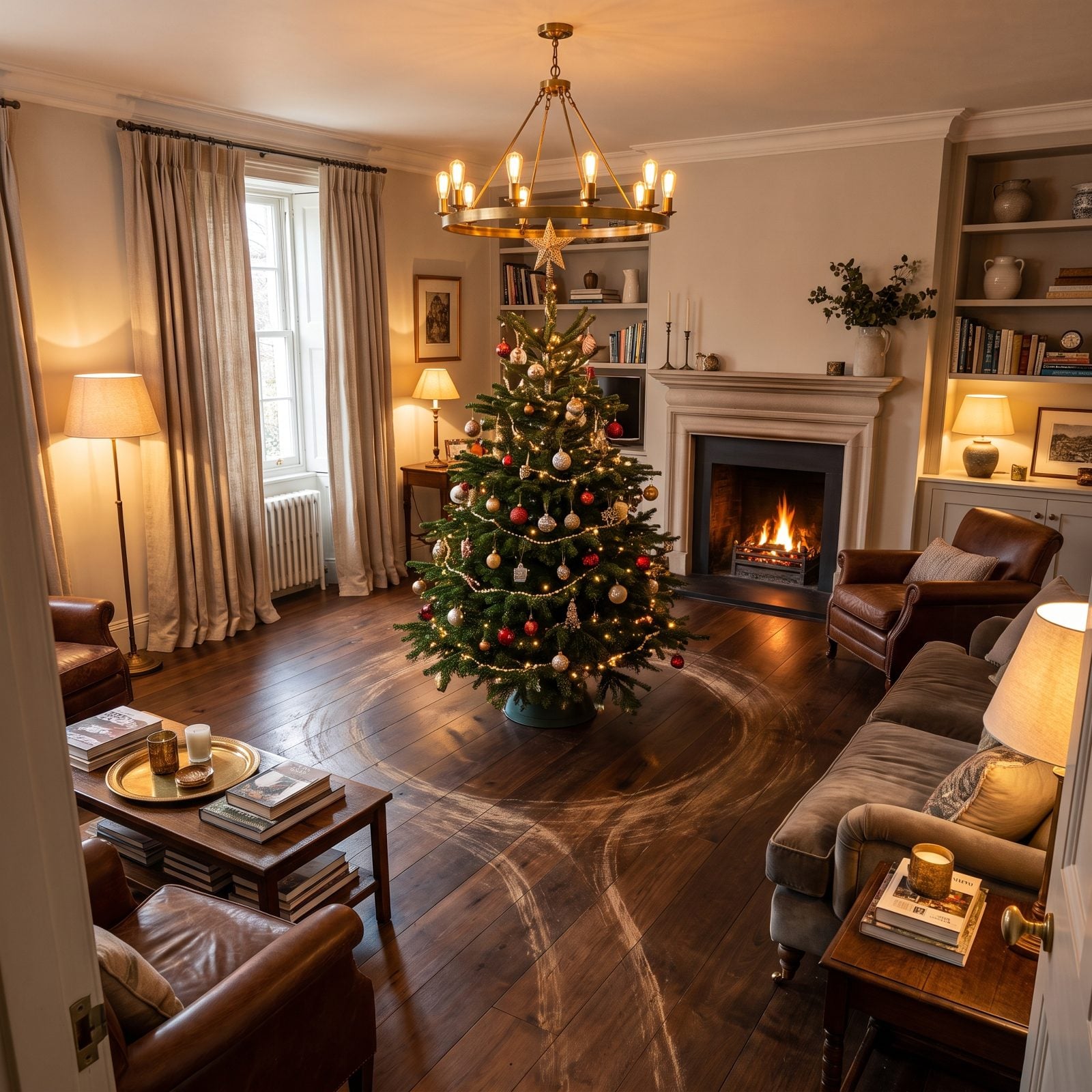
A tree in the middle of a small room reads like a maypole nobody agreed to. It splits the floor in two and you spend all December walking a circle around it.
Center placement earns its keep in a grand foyer with a sweeping staircase. It flops in a small living room where the tree turns into a roundabout. The eye needs somewhere to rest, and a giant object planted mid-floor gives it nowhere.
Corners are your friend. Tucked against two walls, a tree borrows them for backdrop and slips into the architecture instead of fighting it.
14. Blocking the Sightline From the Entry
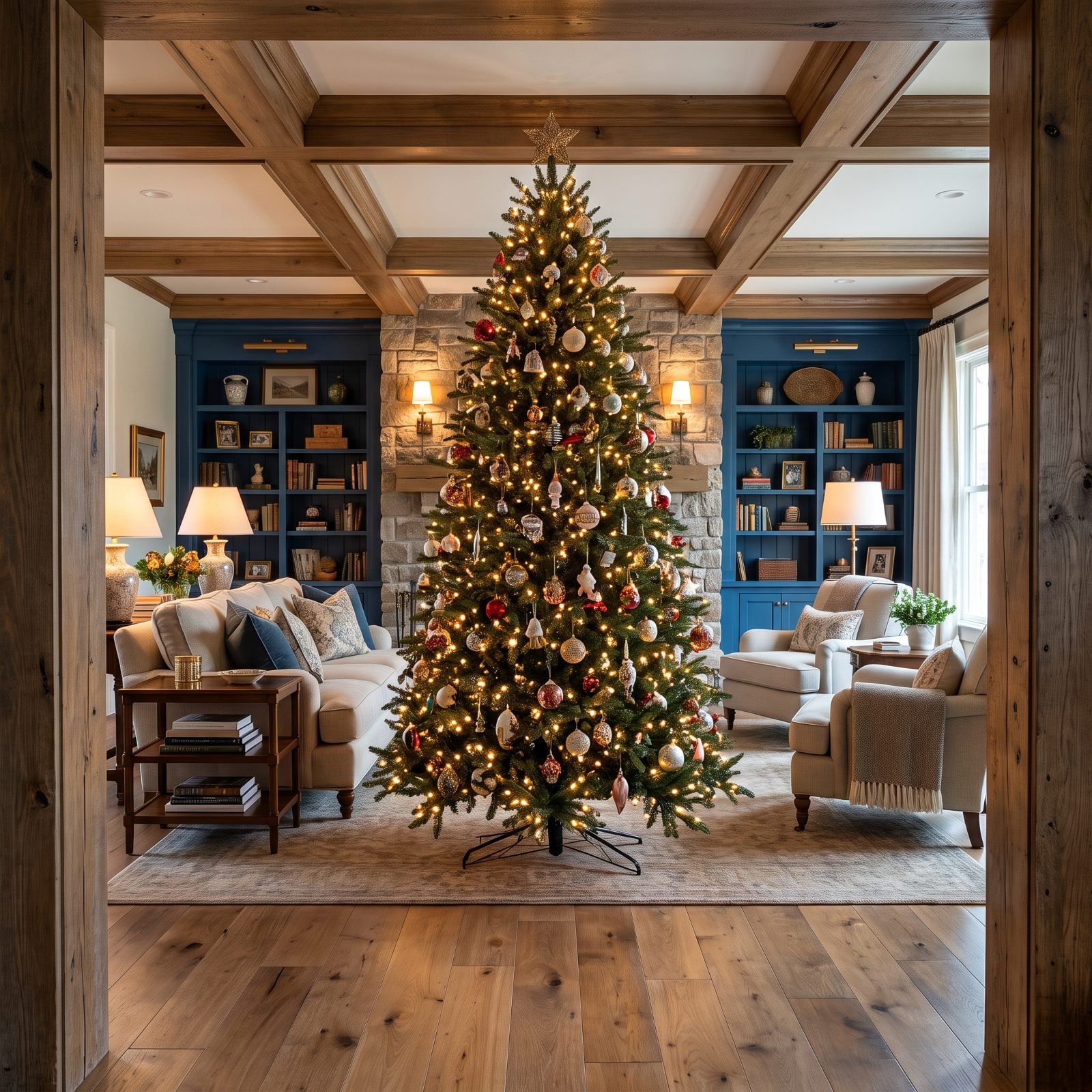
Whatever you see first when you walk in sets the whole tone. Park the tree square in that sightline and every arrival turns into a game of squeeze-past.
An entry sightline wants depth. You should be able to see across the room and understand it in a single glance. Drop a wide tree right in that channel and everything behind it vanishes — the room shrinks and closes off before anyone’s even taken their coat off.
Set the tree just off the entry axis, to one side, where it greets you without barricading you. A tree you walk toward beats a tree you walk around.
13. Interrupting the Sightline to the Fireplace
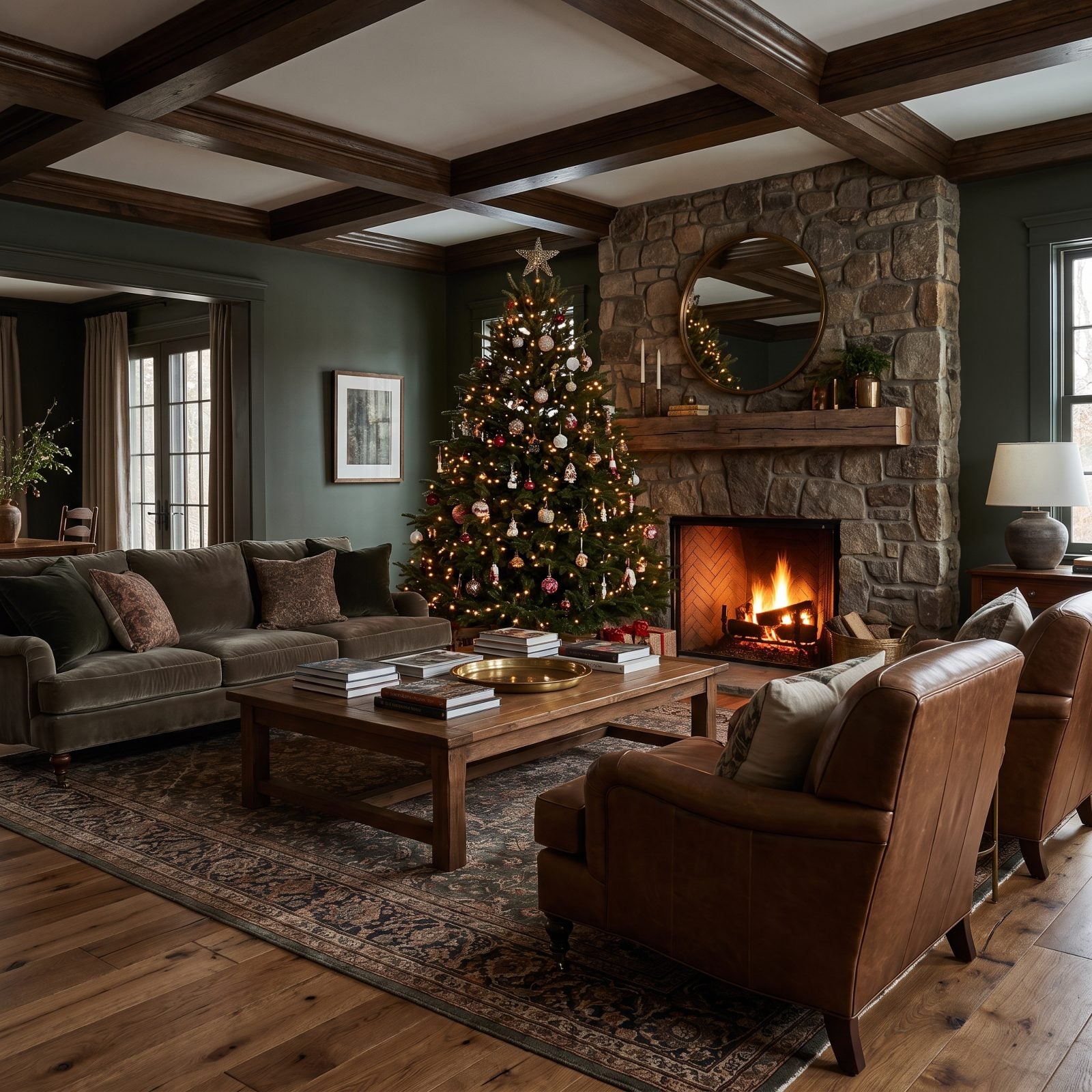
A room can hold one hero. Set the tree in front of the fireplace and you’ve got two headliners shouting over each other — and the fireplace loses, because it can’t move.
The garland-draped mantel and a glowing tree both want to be the thing you look at. Stack them on top of each other and the eye can’t settle. Busier, and somehow smaller.
Give each its own wall. Tree in the corner, fireplace on its axis, and suddenly the room has two moments instead of one pileup. A proper great room inspiration layout has room for both. A small one doesn’t — so take the corner and let the hearth keep its stage.
12. Crowding a Bay Window With an Oversized Tree
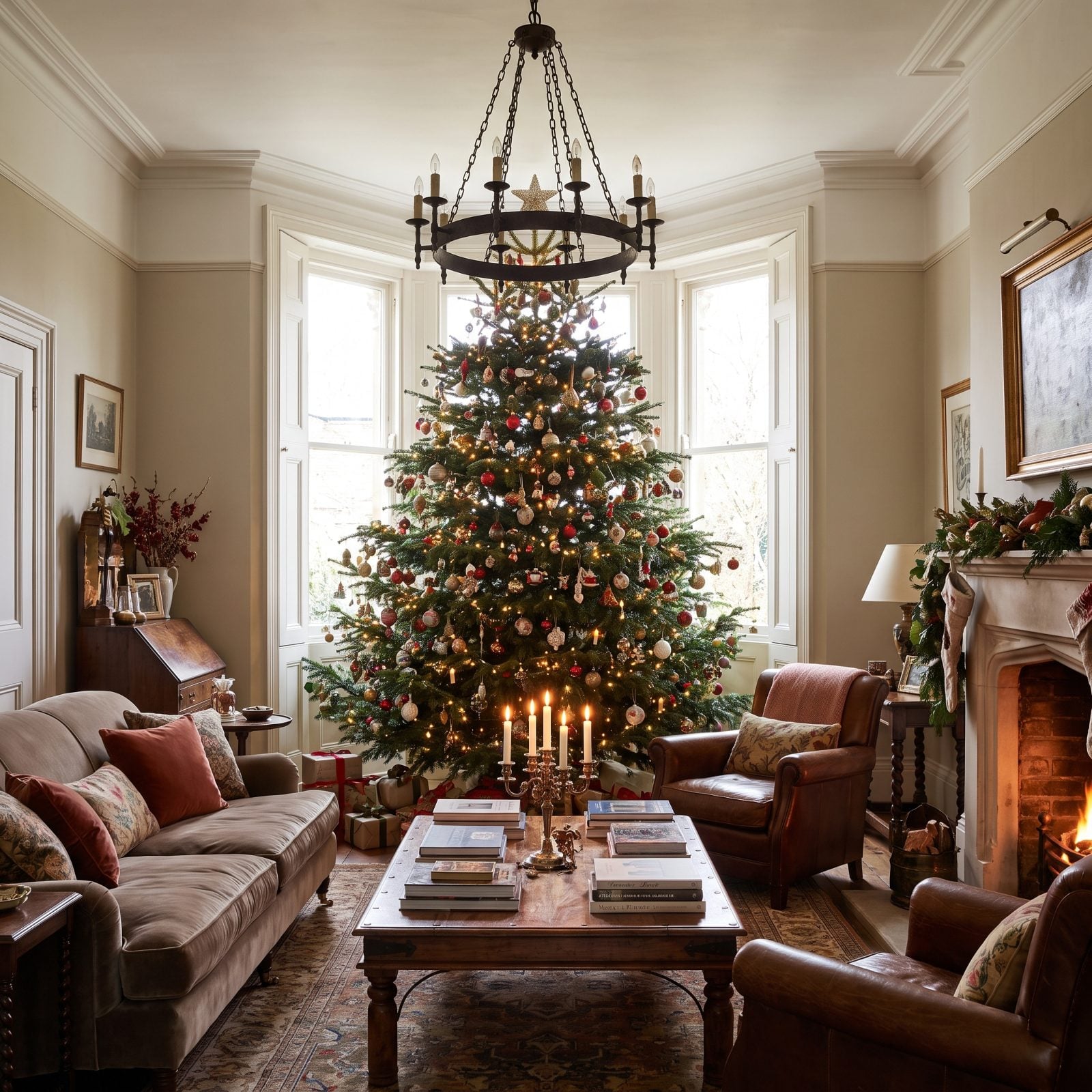
A bay window is a gift — light from three angles, a natural nook, a spot the room already loves. Wedge an oversized tree into it and you cork all of that up.
Bay windows want a tree scaled to the recess, not one that swallows it. Nine feet of branches mashed against the glass blocks the daylight the whole room leans on, and a topper folding against the ceiling never once looks intentional.
A slim or half-tree sized to the bay lets the window keep breathing. You still get the postcard view from the street. You just don’t trade away your best source of light to get it.
11. Filling a Small Alcove With Overhanging Branches
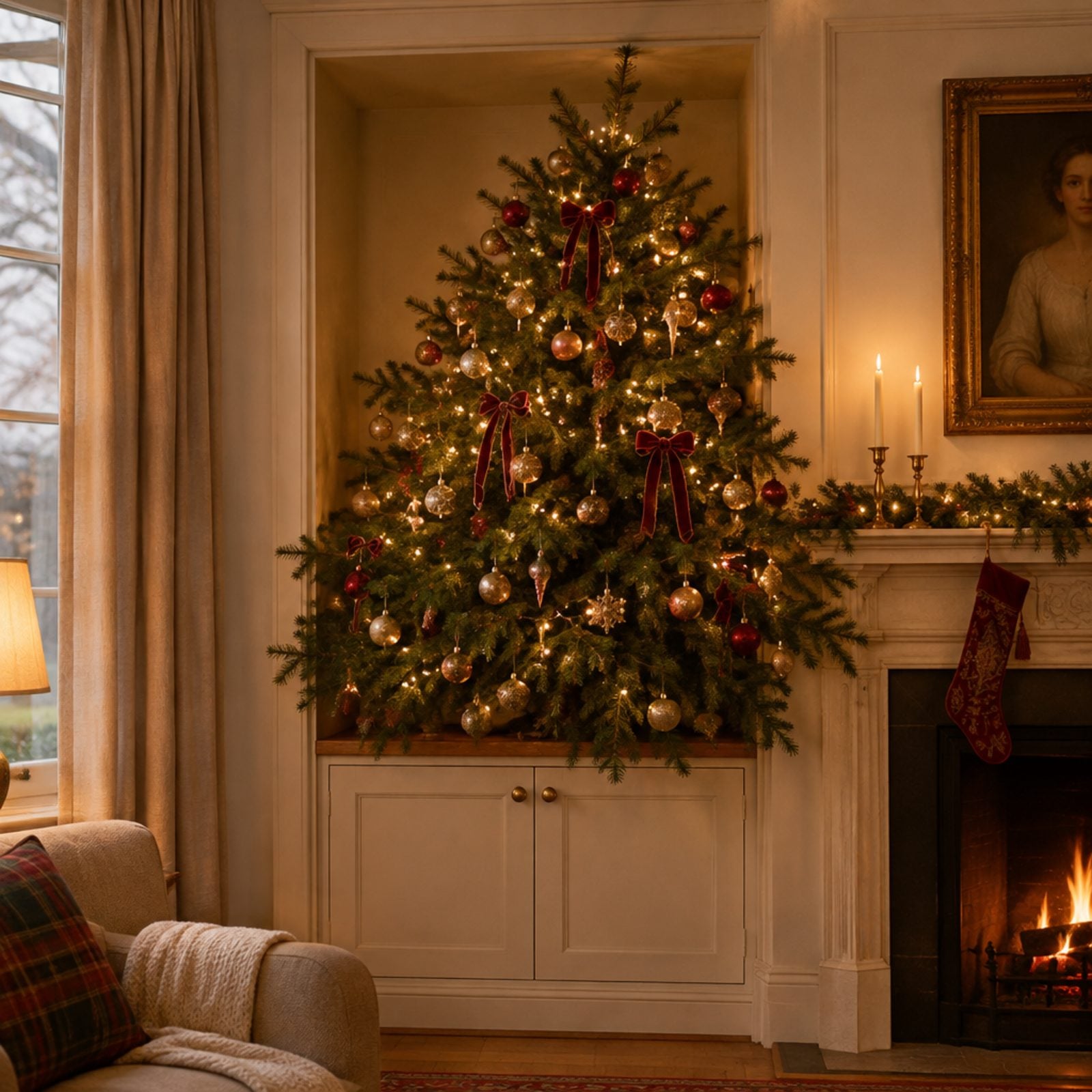
Tucking the tree into an alcove is a smart instinct. The recess frames it like a picture. But the frame only pays off if the tree actually fits inside it.
A full tree in a shallow alcove spills out past the opening, branches shoving toward the curtains on one side and over the mantel on the other and reaching a foot into the walkway. That neat framed look you pictured? Now it’s a plant trying to escape a box.
Measure the alcove — depth and width — before you buy. A narrower tree, or one you thin out on the sides, sits flush inside the recess and looks deliberate. The alcove should hold the tree, not lose the wrestling match with it.
10. Letting the Tree Skirt Spill Into a Walkway
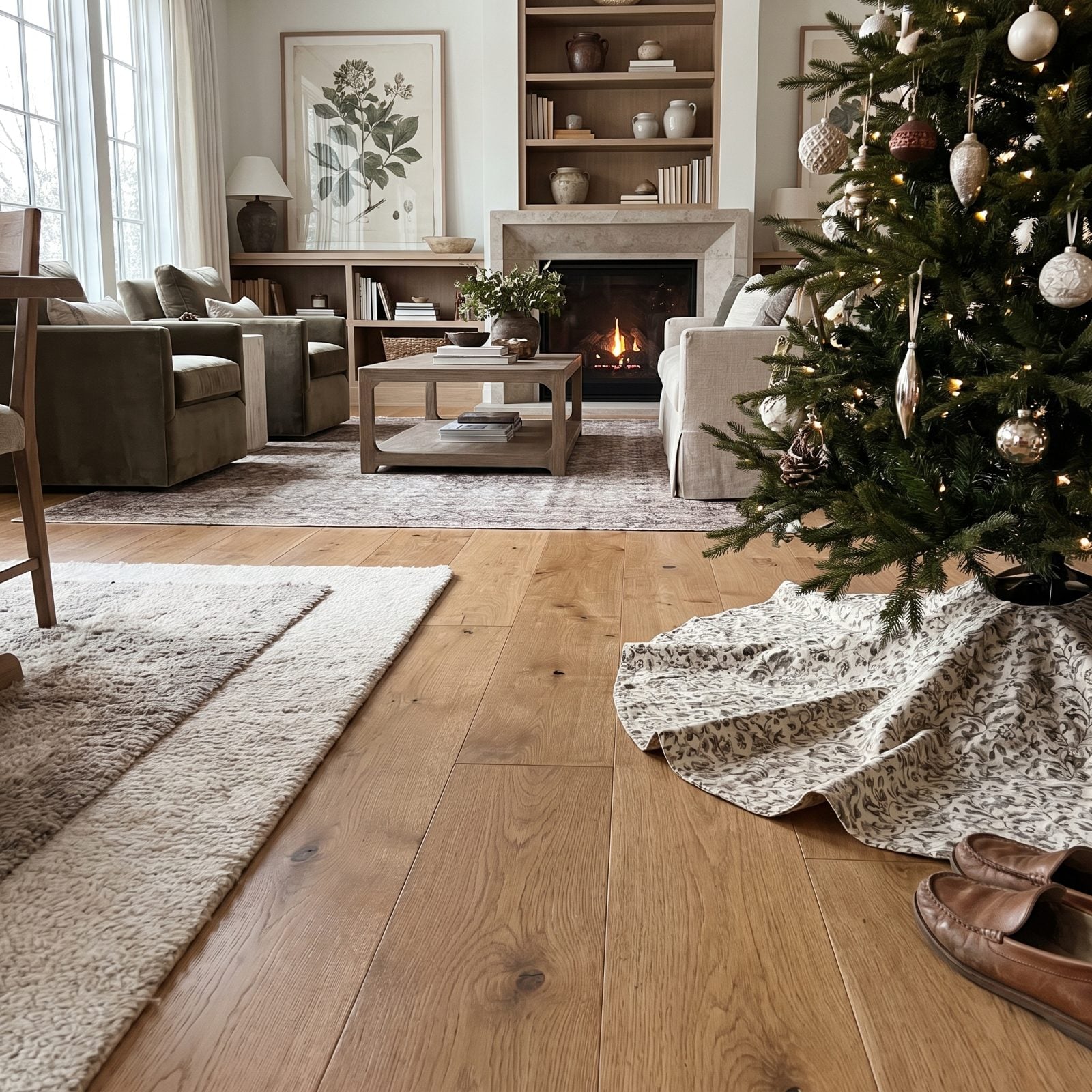
The skirt is the sneaky one. You focus on the tree standing straight and never clock the fabric pooling out around the base, and suddenly a wide velvet skirt in a tight room has stolen eight inches the path to your front door couldn’t spare.
Tuck it in tight to the trunk, or swap it for a fitted woven tree collar that holds a hard edge. Your walkway wants at least 30 inches of clear width, and the skirt is the first thing that quietly nibbles at it.
9. Positioning It Where Gifts Block Circulation
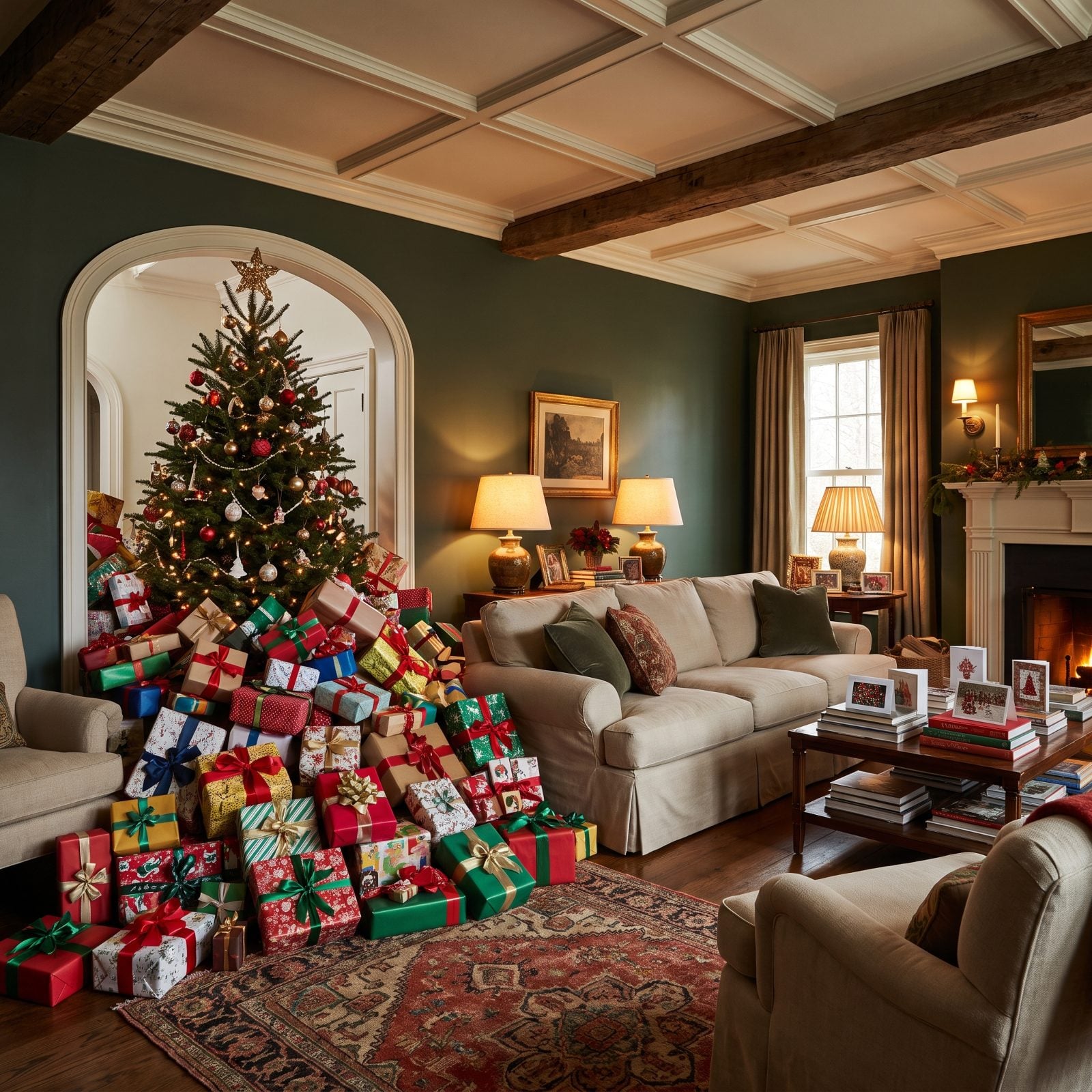
The tree fits fine on December 1. Then the gifts arrive, the pile creeps toward the one doorway everyone uses to reach the dining room, and by the week before Christmas you’re hurdling boxes on your way to the kitchen.
Plan for the gifts, not just the tree. Presents want roughly two feet of spread on every open side, so park the tree where that spread lands against a wall — never across a threshold you walk through daily.
8. Adding a Large Tree Collar in a Tight Corner
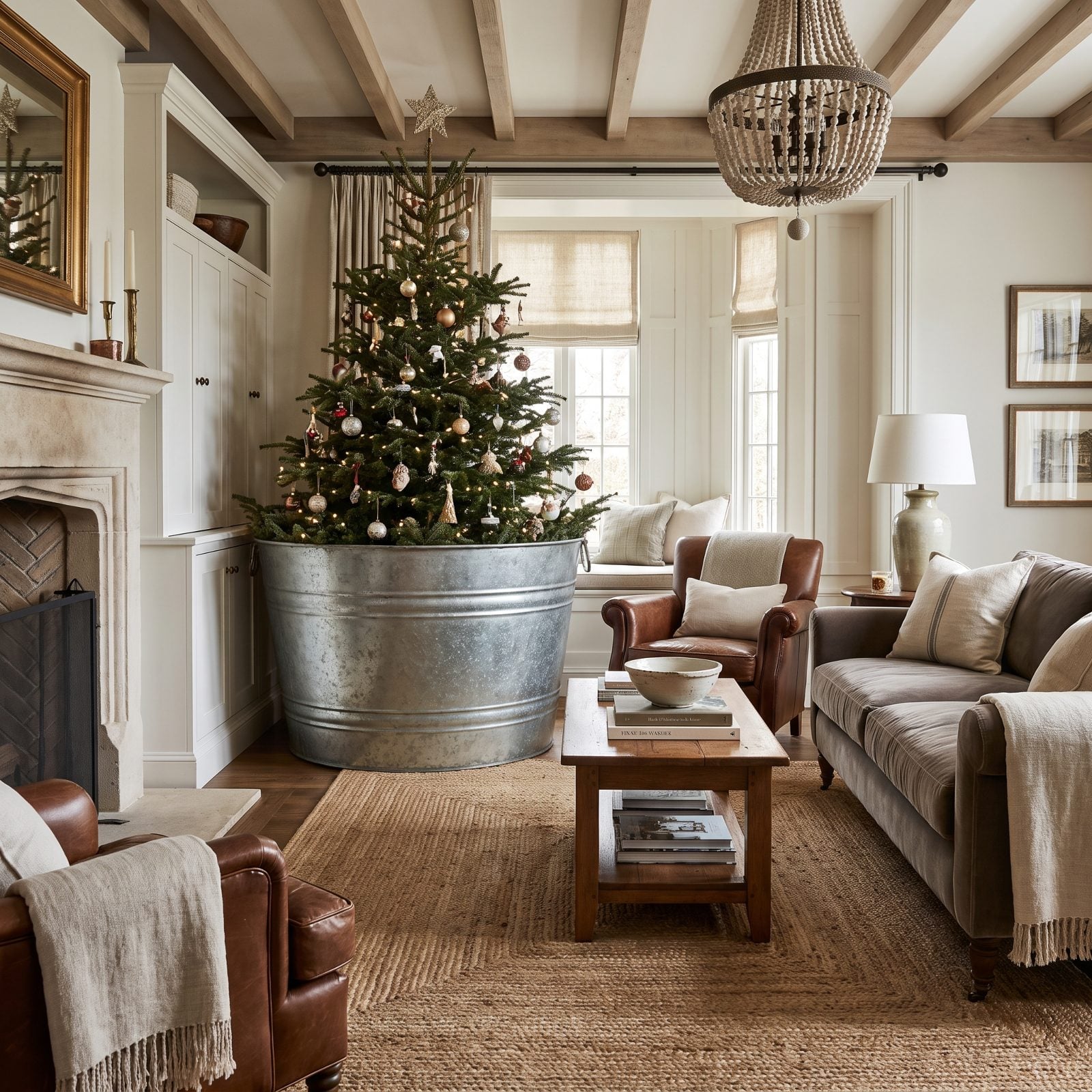
Tree collars had a moment, and the moment made them big. A 26-inch galvanized bucket looks fantastic in a photo of a huge open loft. In your actual corner it eats the floor and shoves the tree’s real width outward.
Match the collar to the space, not the trend. Tight corner? Go with a slim basket tree collar under 18 inches, or skip it and use a fitted skirt. The corner already limits you. Don’t hand it bulk it doesn’t have room for.
7. Layering the Tree Over Already-Busy Holiday Décor
🔥 Would you like to save this?
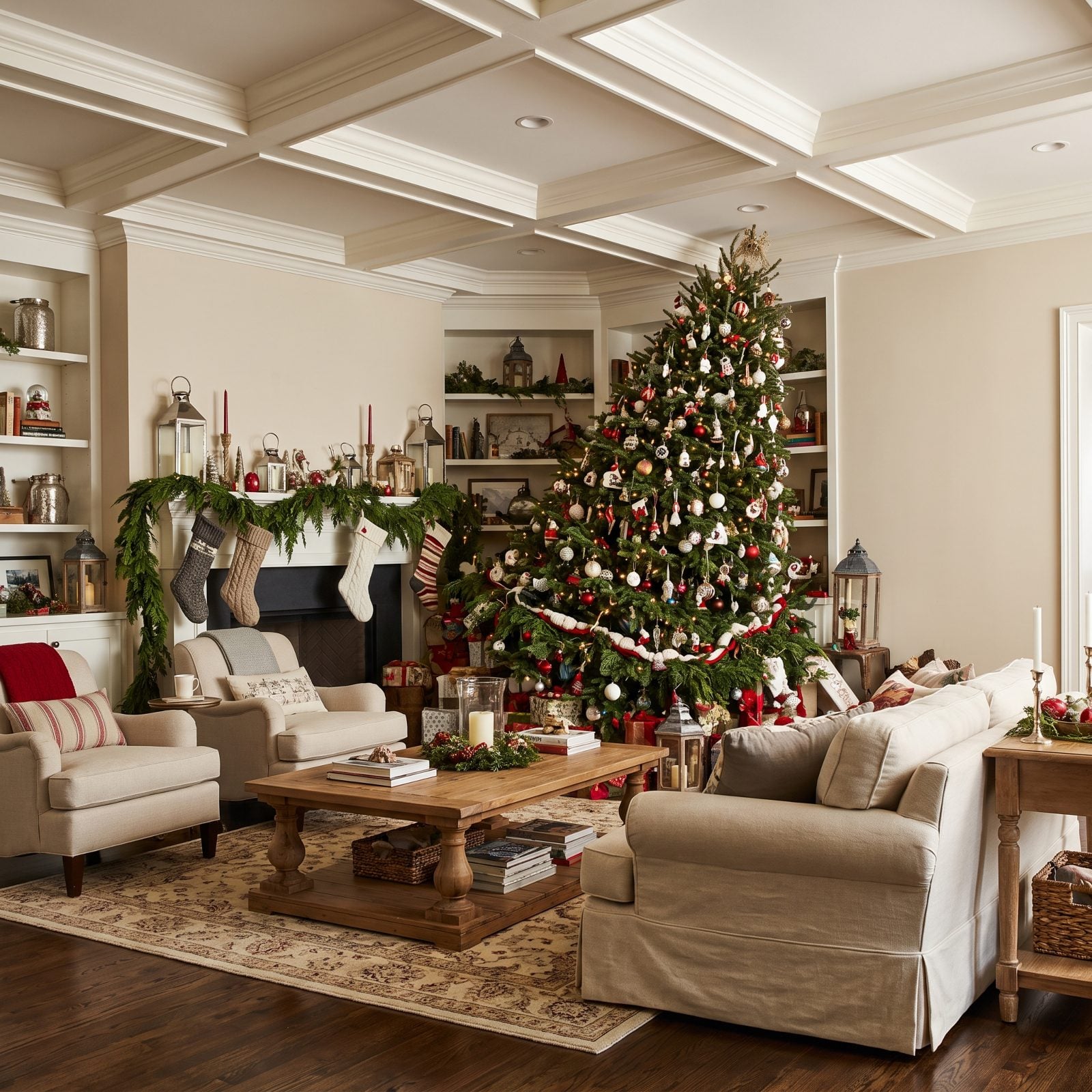
Every surface within four feet of the tree is doing something — garland, lanterns, stockings, a poinsettia, a bowl of spare ornaments. The tree ought to be the loudest thing in the room. Here it’s just one voice in a very crowded choir.
Pick your hero and let it win. If the tree is the star, keep the mantel and tables quiet: one candle, a single bough, some breathing space. Your eye needs somewhere to rest, and honestly, a wall of holiday makes a room feel smaller than any single oversized piece ever could.
6. Running an Extension Cord Across the Main Path
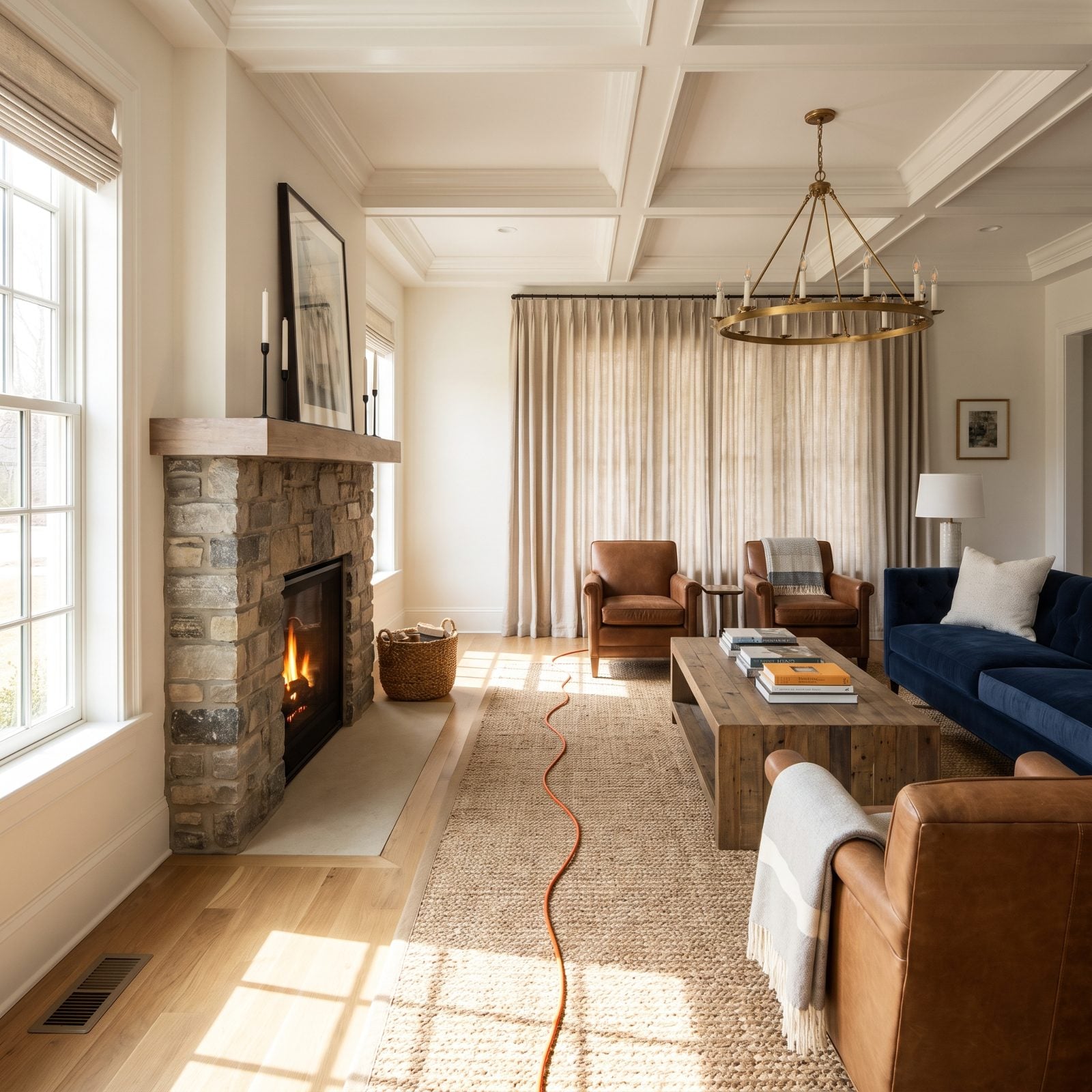
You wanted the tree in the pretty corner. The only outlet is across the room. So a cord snakes over the main path, and now the whole family does the little hop every time they cross the floor.
Solve it before you set the tree down. Run the cord tight along the baseboard and tape it flat, or better, plant the tree within reach of an outlet so nothing crosses open ground. One trip hazard through your great room undoes every bit of styling you did above it.
5. Leaving No Breathing Room Between Branches and Walls
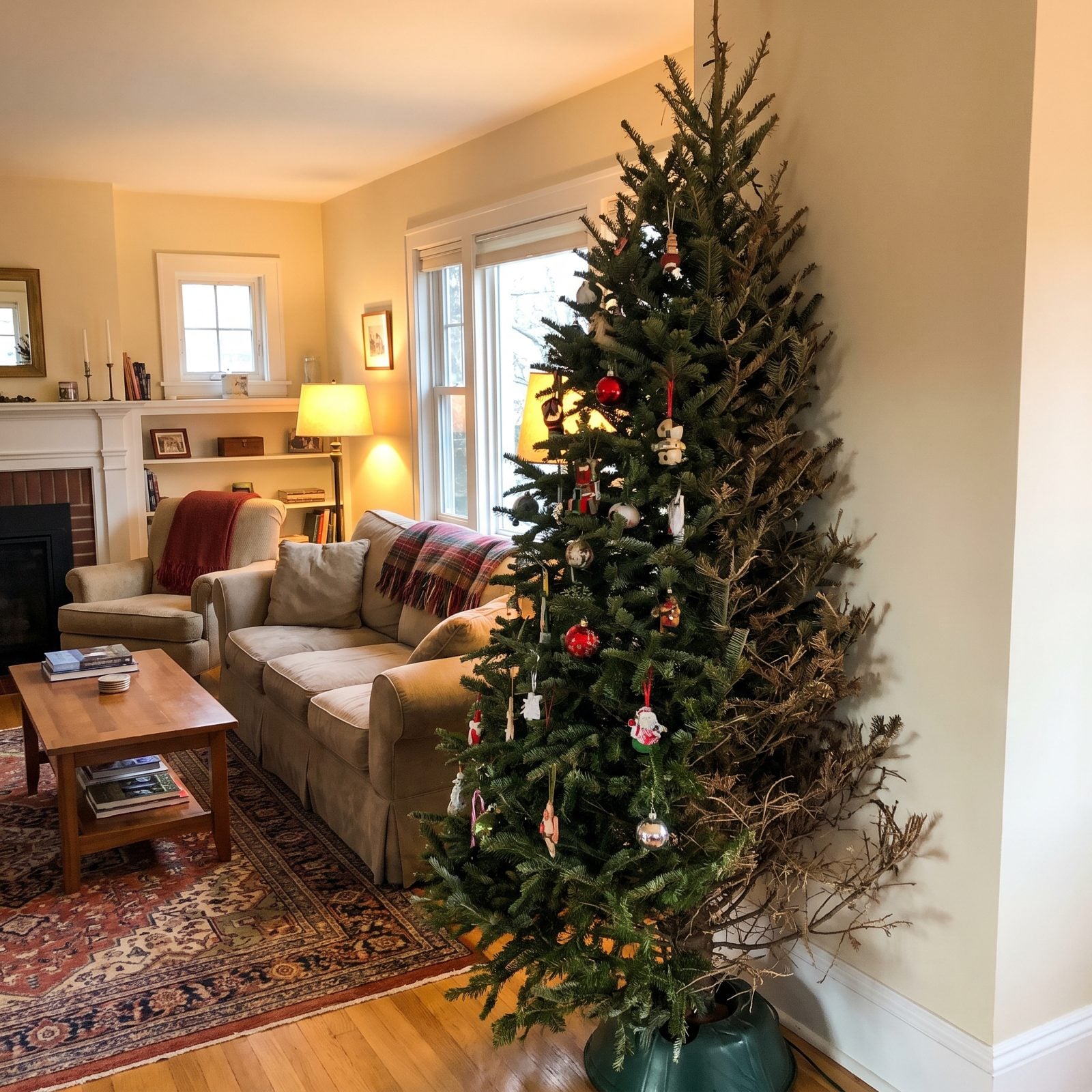
A full tree needs air around it to look full. Cram it into a corner until the branches crush flat against two walls, and it stops reading as a tree — it becomes a shape someone forced into a hole.
Leave a few inches of clearance on every side. The branches spring back to their natural shape, light travels through them, and the tree looks its actual size instead of a squashed version of itself. If it only fits by compressing it, it’s too big for the spot. Simple as that.
4. Placing It Beside a Visually Heavy Display Cabinet
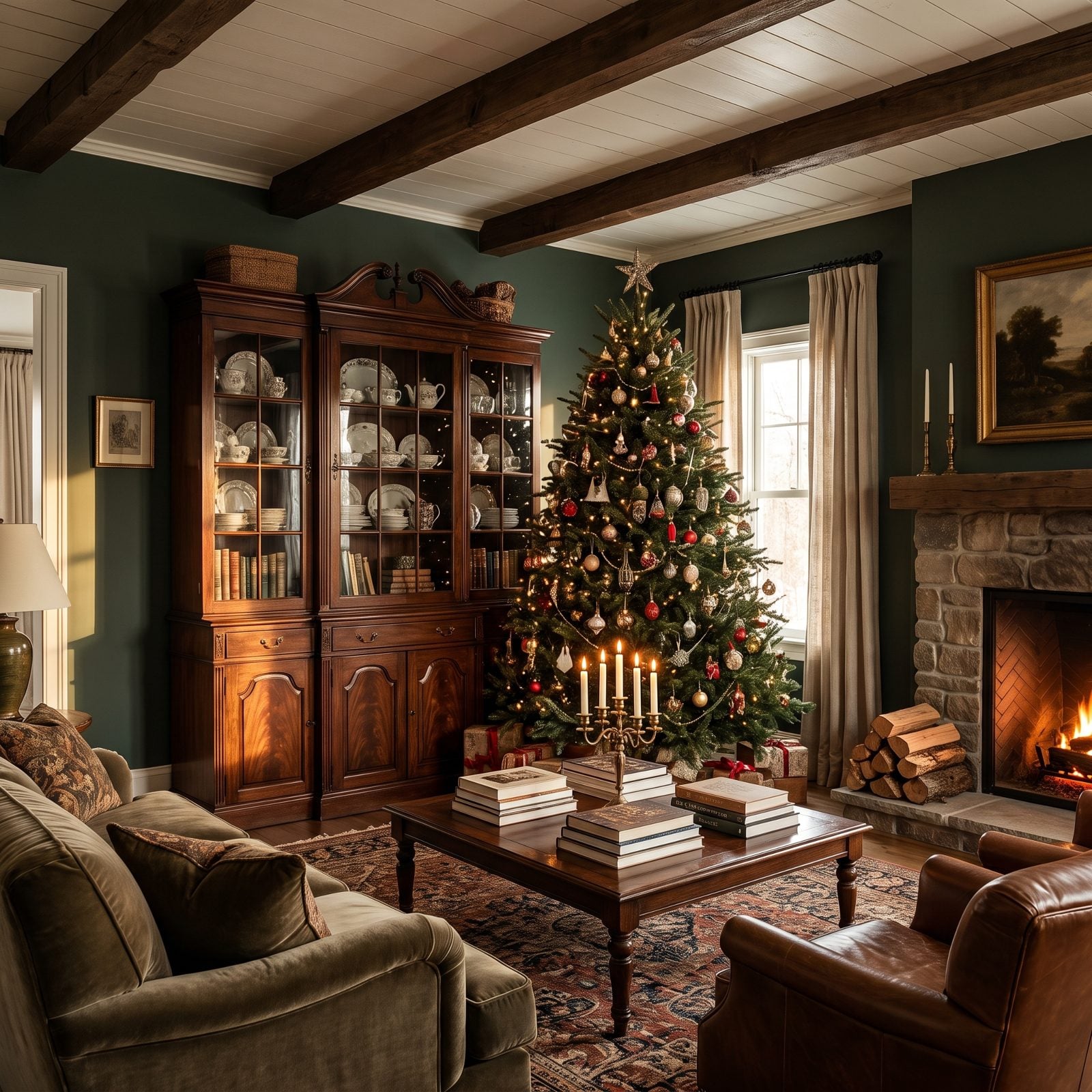
Two heavy things next to each other double their weight. A tall dark cabinet packed with dishware, then a full tree parked right beside it, and half the room sinks while the other side floats. The whole space tips off balance.
Separate your masses. Put the tree on the lighter wall so it counters the cabinet instead of piling onto it — a room reads bigger when visual weight spreads evenly, the same idea behind a well-planned great room inspiration layout where nothing hogs one corner of your eye.
3. Pairing a Full Tree With an Oversized Coffee Table
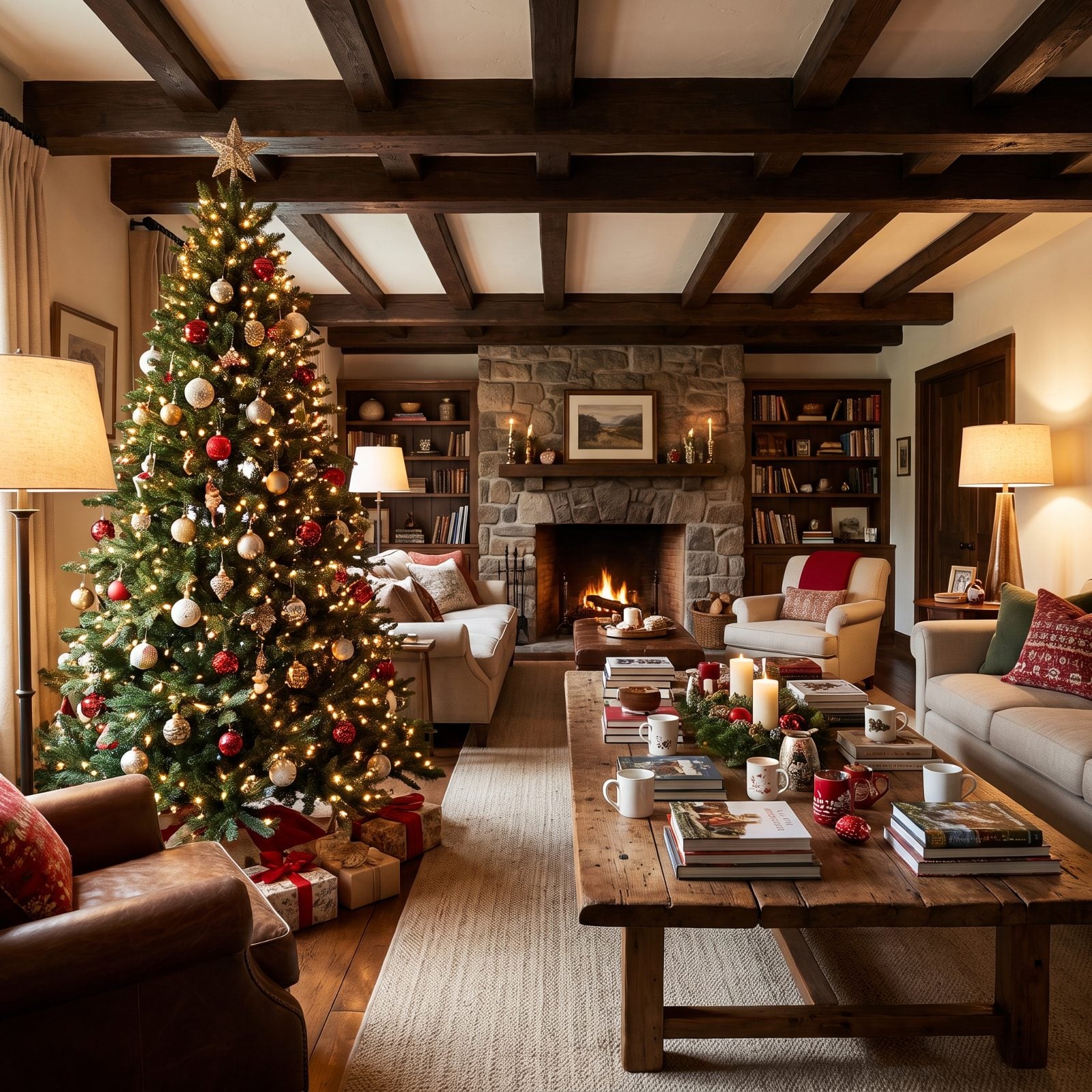
The coffee table earns its keep eleven months a year. Then the tree goes up, the two of them squeeze the walking gap down to 18 inches, and everyone starts sidling through like it’s a crowded subway car.
Something has to move for the season. Slide the big table out, swap in a pair of small nesting tables, or store it until January. You want at least 30 inches to walk comfortably, and two big pieces facing off will never hand you that.
2. Using a Symmetrical Furniture Layout That Leaves No Tree Zone
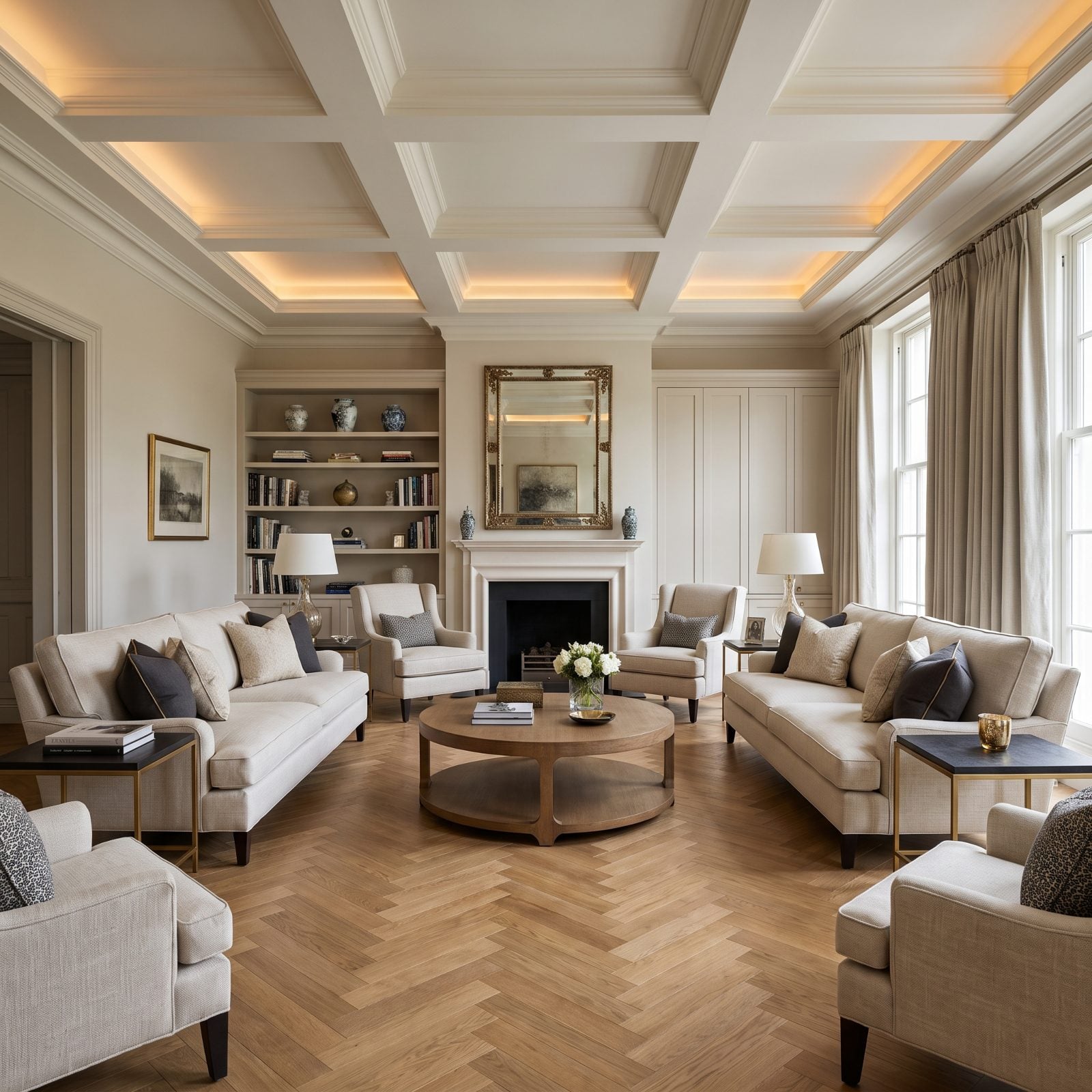
A perfectly mirrored layout looks fantastic until December, when you realize you designed a room with no empty zone. Every wall is claimed, so the tree ends up crammed against a sofa arm, half over a window, practically apologizing for existing.
Leave one flexible pocket when you plan furniture. A corner that holds a plant or a reading chair most of the year becomes the tree’s home in winter. Symmetry is calming, sure — but a layout with no give turns the holidays into a wrestling match. I’ve dragged a whole sectional two feet in December more times than I’ll admit.
1. Choosing Tradition Over the Layout That Actually Fits
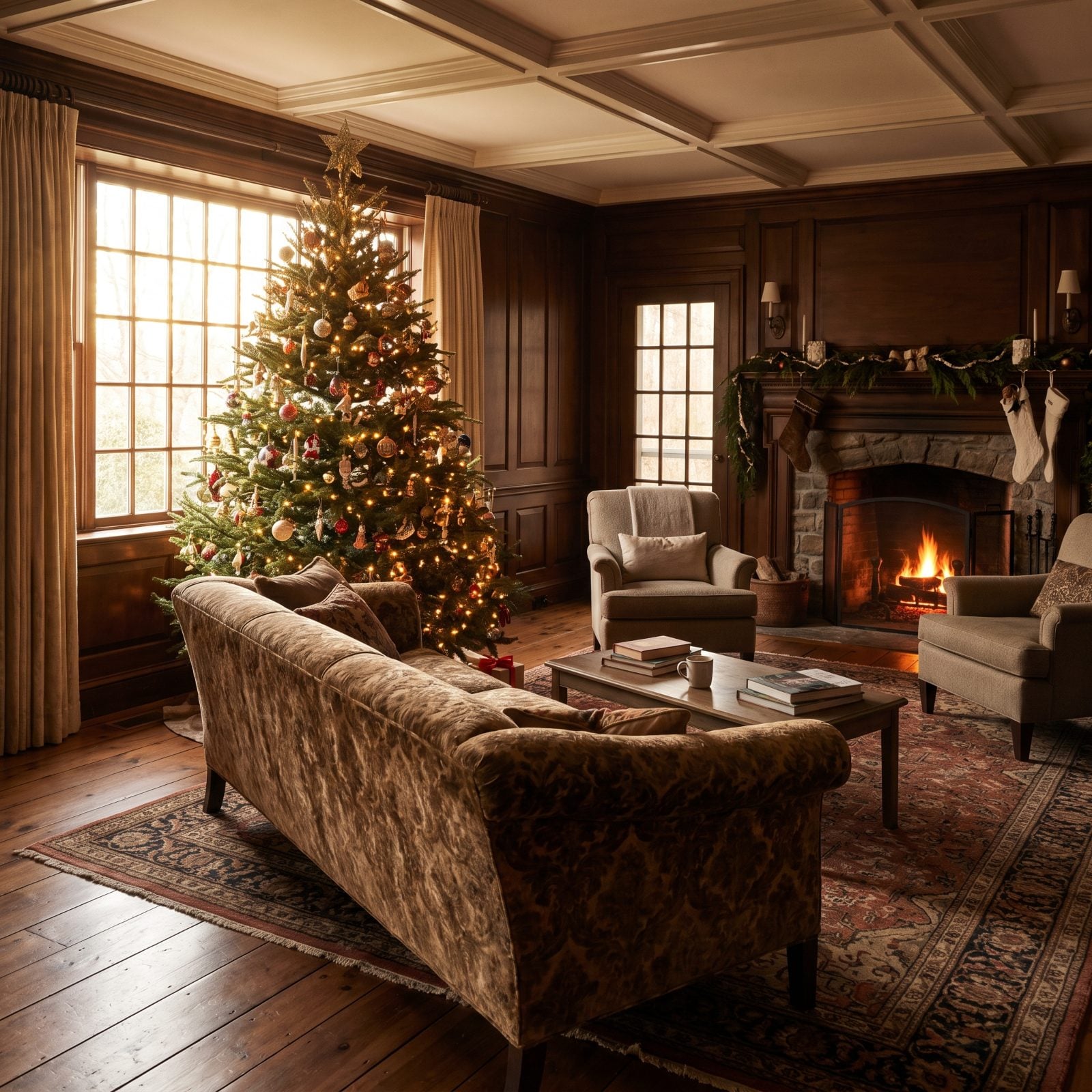
The tree goes by the window because it always has. Never mind that you moved the sofa last spring and the window spot now sits dead center in the path from the door to the couch. Tradition wins, circulation loses.
Let the room you have now decide, not the room you had five years ago. Walk your actual traffic lines, find the spot that stays clear of them, and put the tree there. A slimmer profile or a half tree against a wall keeps the feeling without the logjam. The green velvet sofa and brass lamp already carry the warmth — the tree doesn’t have to stand where it blocks everyone to feel like Christmas.