🔥 Would you like to save this?
A rug is the fastest way to make a dining room feel finished. It’s also the fastest way to wreck it. Pick one two inches too small, or drop it slightly off-center, and suddenly the whole room is at war with itself: chairs snag, doors jam, and the walk to the kitchen turns into an obstacle course. We pulled real dining rooms where the rug is the problem nobody named. Look before you buy. You’ll never eyeball a rug size again.
24. The Undersized Rug That Traps the Back Legs of Every Chair
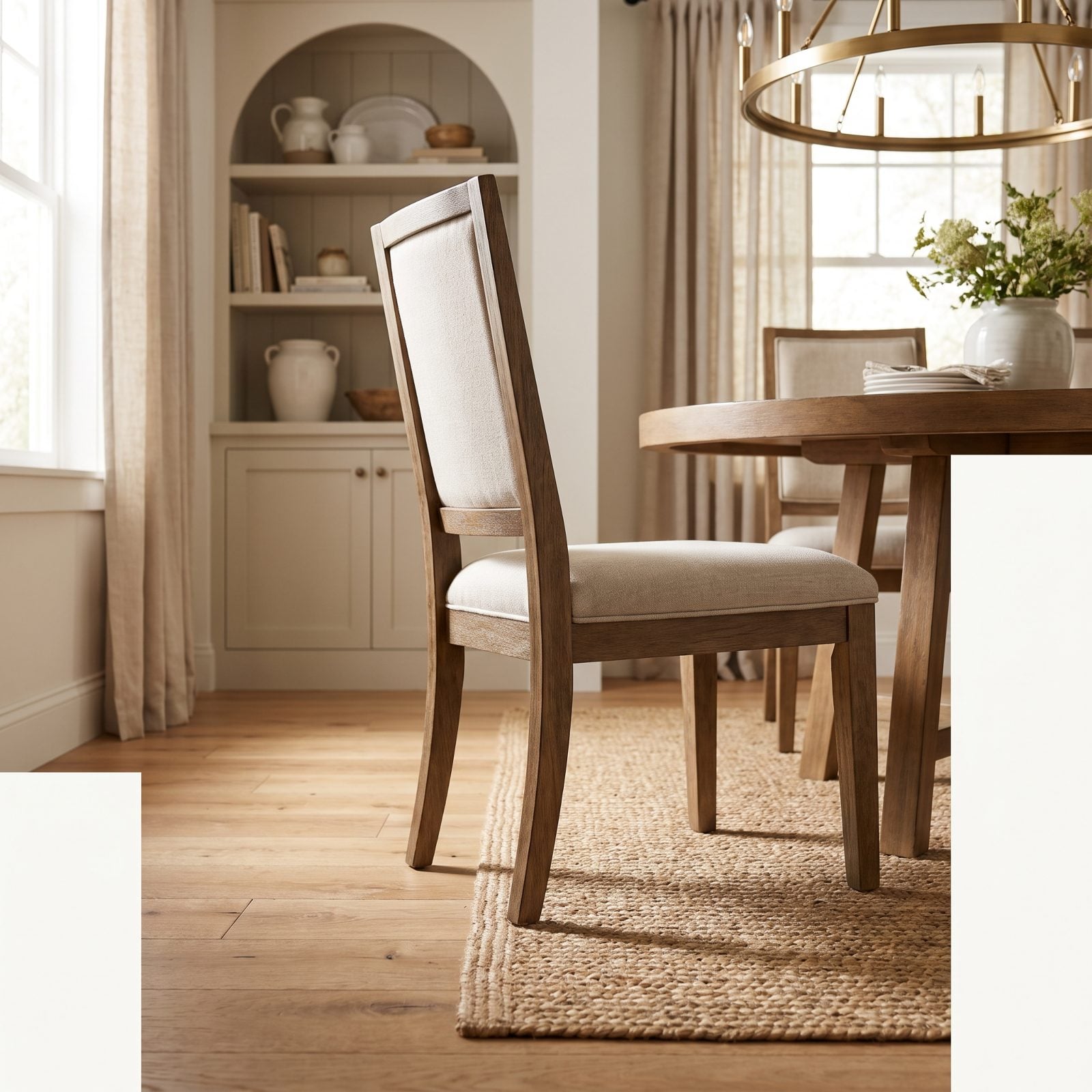
This is the rug mistake almost everyone makes first. The rug looks fine when the chairs are tucked in, but pull one out to actually sit down and the back legs drop off the edge onto bare floor. Now the chair rocks. Every meal becomes a tiny wobble.
In order to come up with the very specific design ideas, we create most designs with the assistance of state-of-the-art AI interior design software. Also, assume links that take you off the site are affiliate links such as links to Amazon. this means we may earn a commission if you buy something.
The fix is boring but non-negotiable: your rug needs at least 24 inches of clearance past the table on all sides, and 36 is better. That’s enough that a chair stays fully planted even when it’s pulled out. Measure your table, add four feet to each dimension, and buy that.
23. The Thick Shag Rug That Makes Dining Chairs Impossible to Move
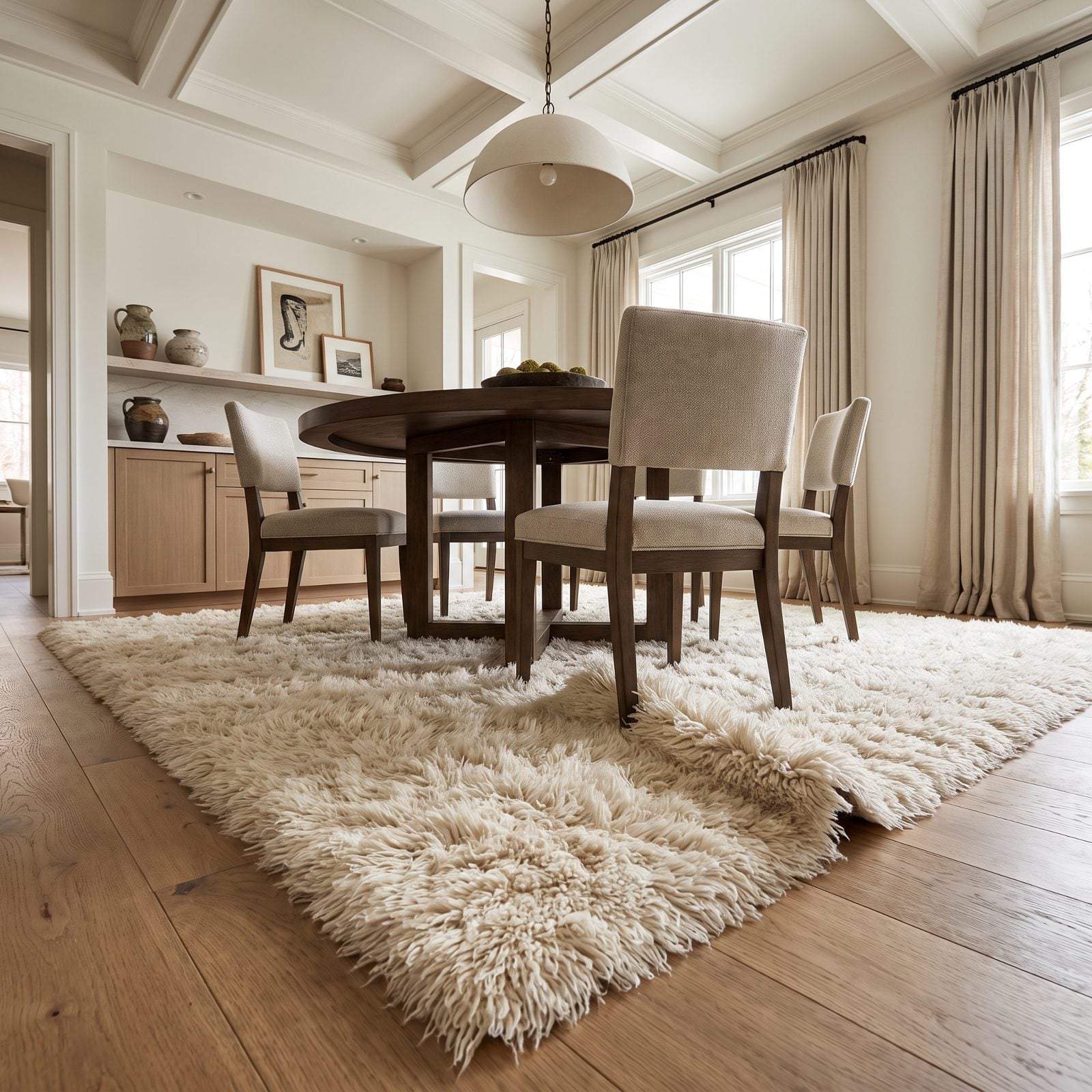
Shag looks incredible in a bedroom. Under a dining table it’s a trap. Chair legs sink into the deep pile, and every time you scoot in for dinner you’re wrestling the furniture out of quicksand. Push too hard and the whole rug bunches.
Dining rooms want a low, flat weave: flatweave wool, jute, or a tight loop pile under half an inch. Chairs glide, crumbs sweep out, and a dropped fork doesn’t vanish into the fibers. Save the shag for somewhere your feet, not your furniture, get to enjoy it.
22. The Oversized Rug That Swallows a Narrow Dining Room
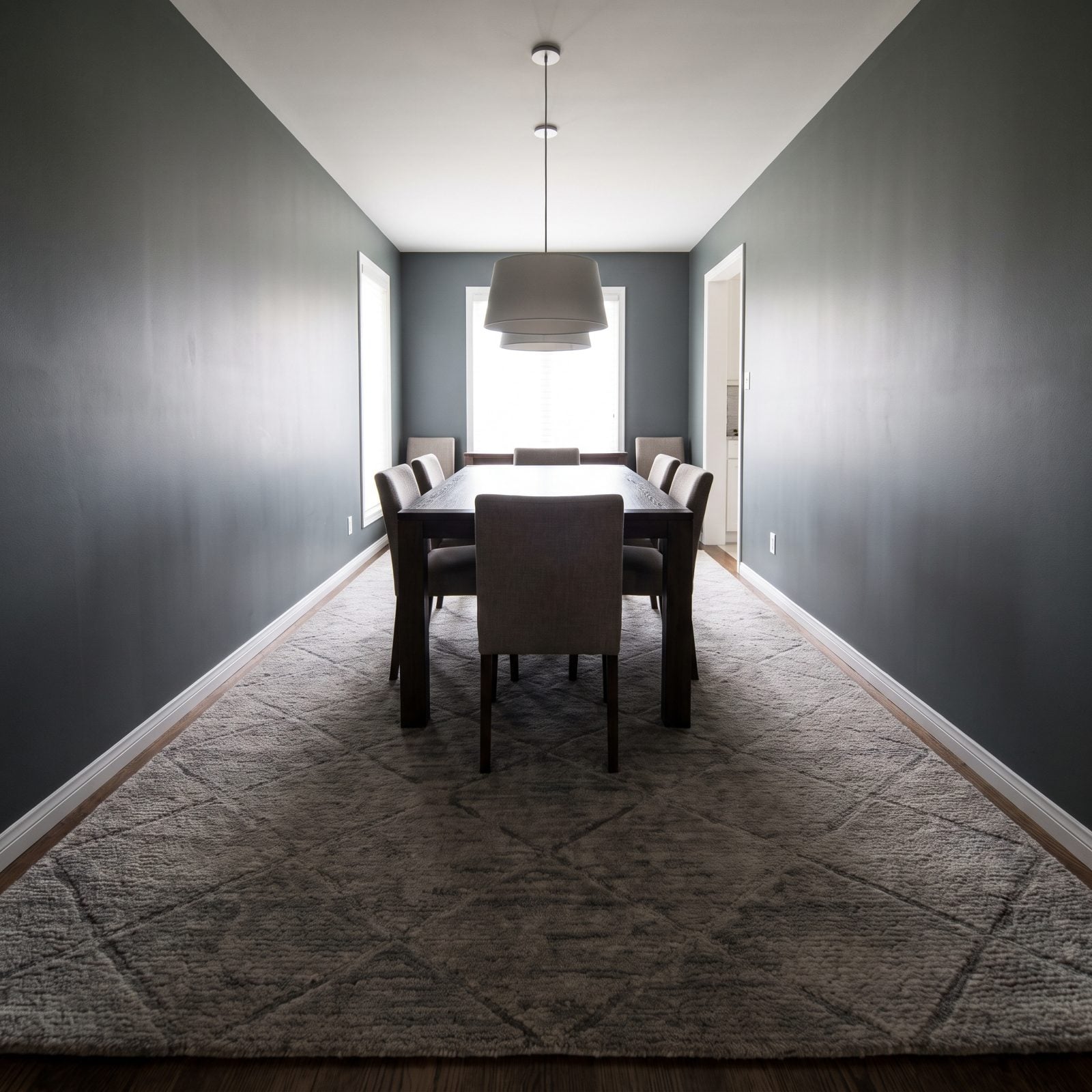
Bigger isn’t always the answer. In a narrow dining room, a rug that runs almost to the baseboards stops reading as a rug at all, and instead looks like a carpet installer measured wrong. That tiny sliver of bare floor around the edge makes the whole room feel like it’s holding its breath.
You want a clean border of exposed floor on every side, ideally 10 to 18 inches. That frame of wood or tile is what tells your eye the rug is intentional. It also gives a slim room some visual air, which matters more the tighter your square footage gets.
21. The Runner Mistakenly Used Beneath a Dining Table
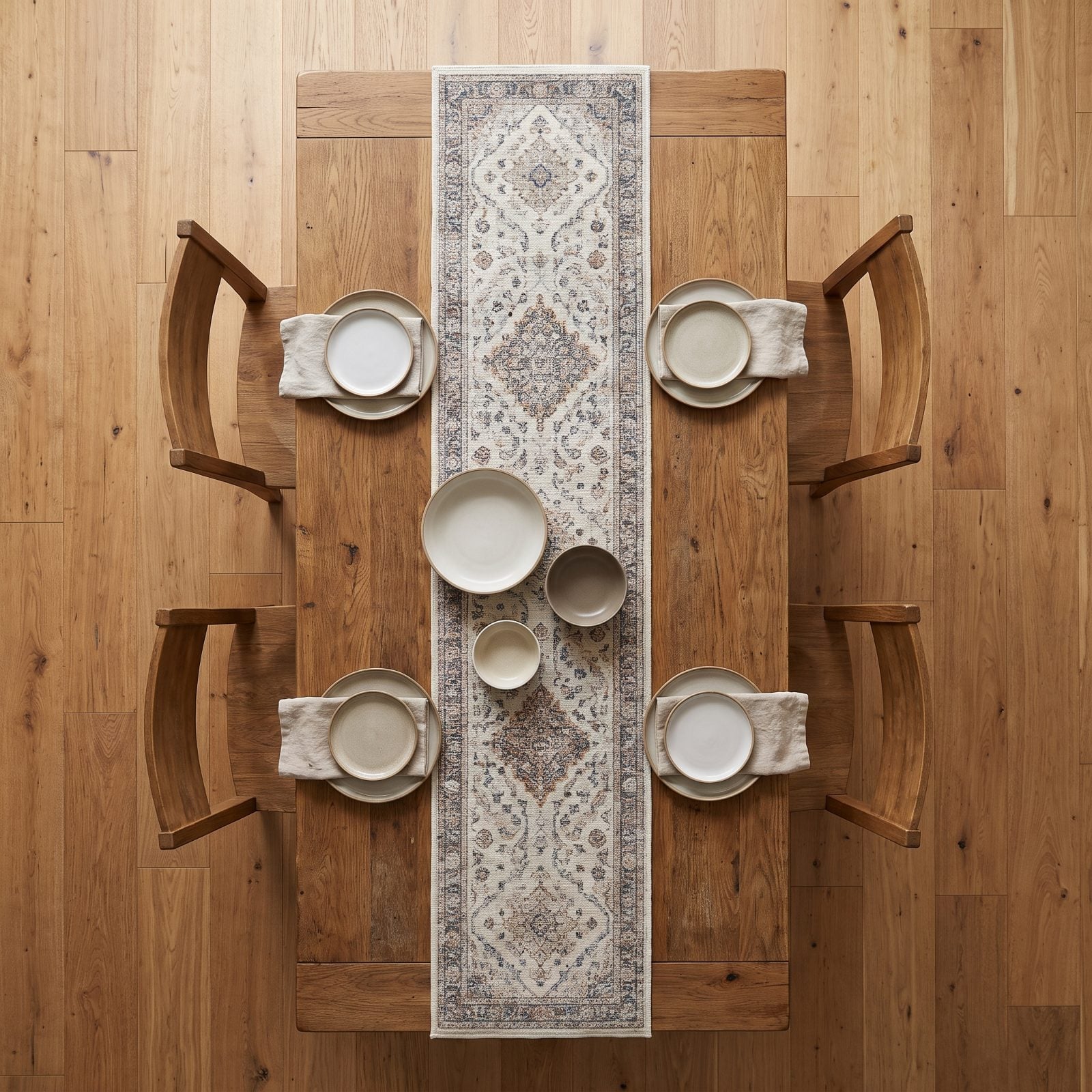
Runners belong in hallways and galley kitchens. Under a dining table, a runner just draws a skinny stripe down the middle while every chair sits stranded on bare floor. It reads as an accident, like someone grabbed the wrong rug from the closet.
The proportions are simply wrong. A dining rug has to span the table width plus all the chairs, and a 30-inch runner can’t do that job for a table that seats six. If you love that runner pattern, look for the same design in a proper room-size format instead.
20. A Round Rug Fighting With a Long Rectangular Table
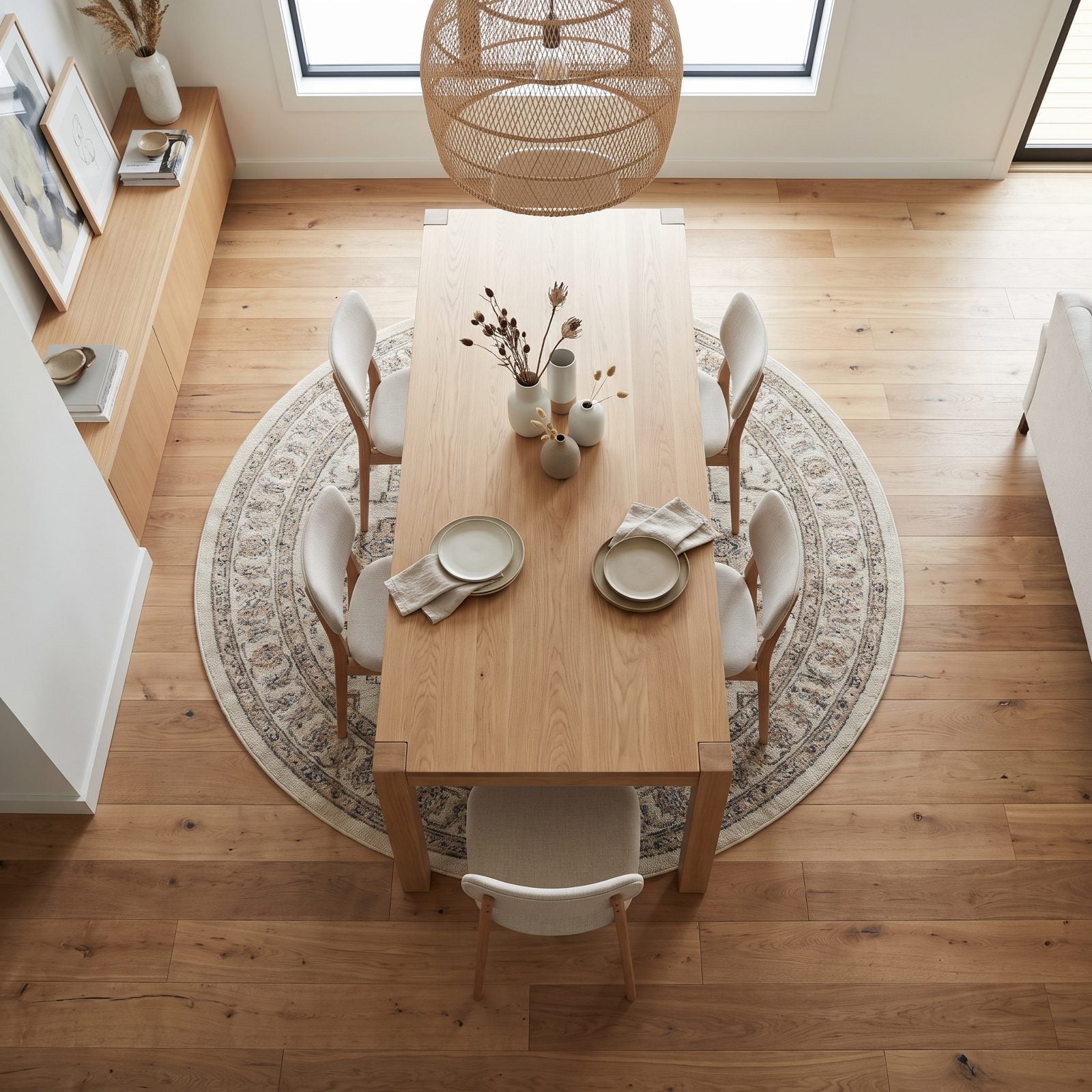
Match your rug shape to your table shape. Put a round rug under a long rectangular table and you get a geometry problem you can’t unsee: the ends of the table shoot out past the curve, the head chairs land on bare floor, and the side chairs sit pretty.
Round rugs are made for round or square tables, where the shapes echo each other. A rectangular table wants a rectangular rug that mirrors its footprint. When the shapes agree, the whole arrangement feels deliberate. When they argue, your eye keeps snagging on the mismatch and never quite settles.
19. A Rug Positioned Off-Center From the Chandelier
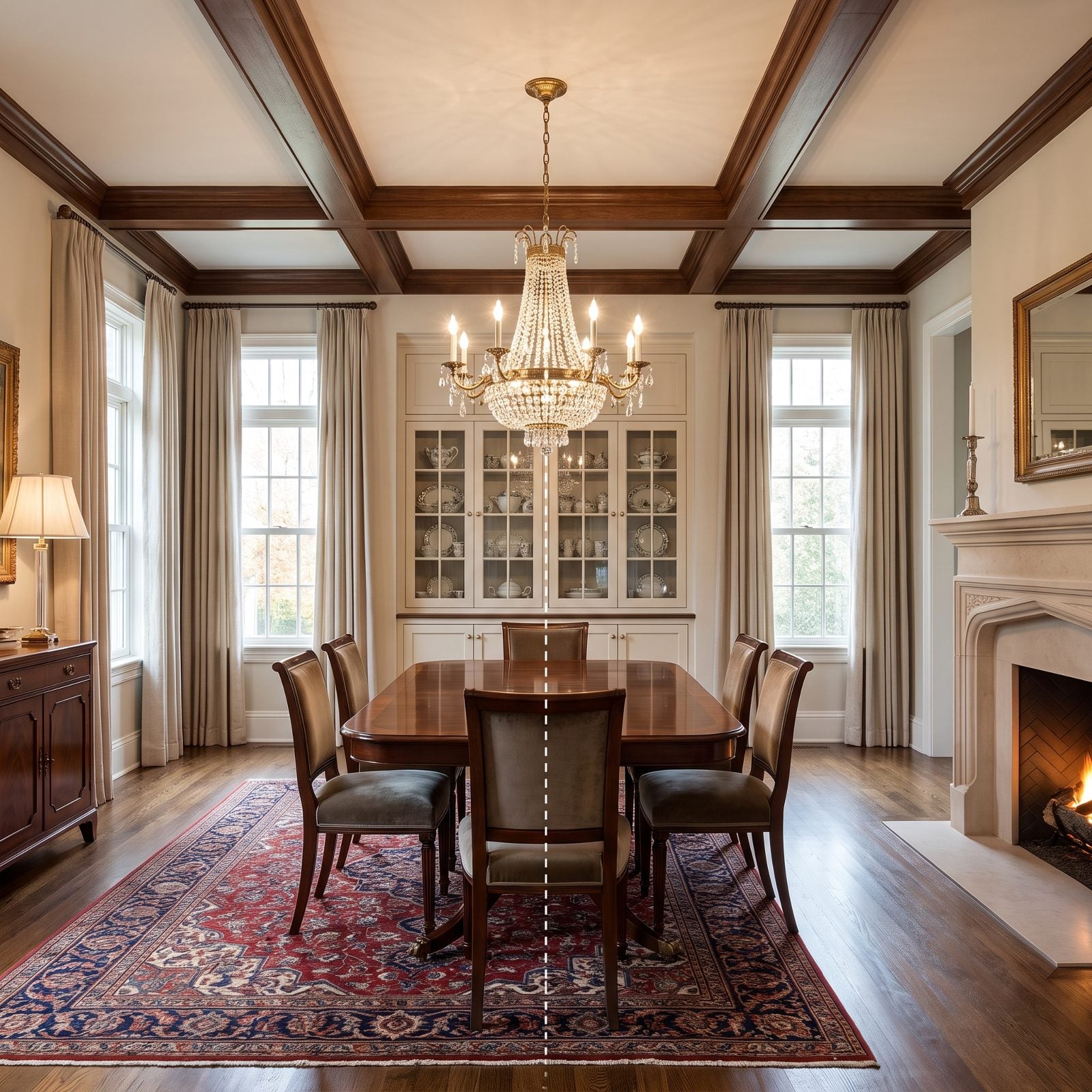
Here’s a mistake that hides in plain sight. The chandelier is dead center over the table, the table is centered in the room, but the rug got dropped a little off, shifted toward one wall, and now nothing lines up. The whole vertical axis, light to table to rug, is out of true.
Center everything on the same point. The chandelier, the table, and the rug should share one invisible plumb line straight through the middle of the room. It’s the kind of alignment nobody consciously notices when it’s right and everybody feels when it’s wrong.
18. A Rug Blocking the Natural Walkway to the Kitchen
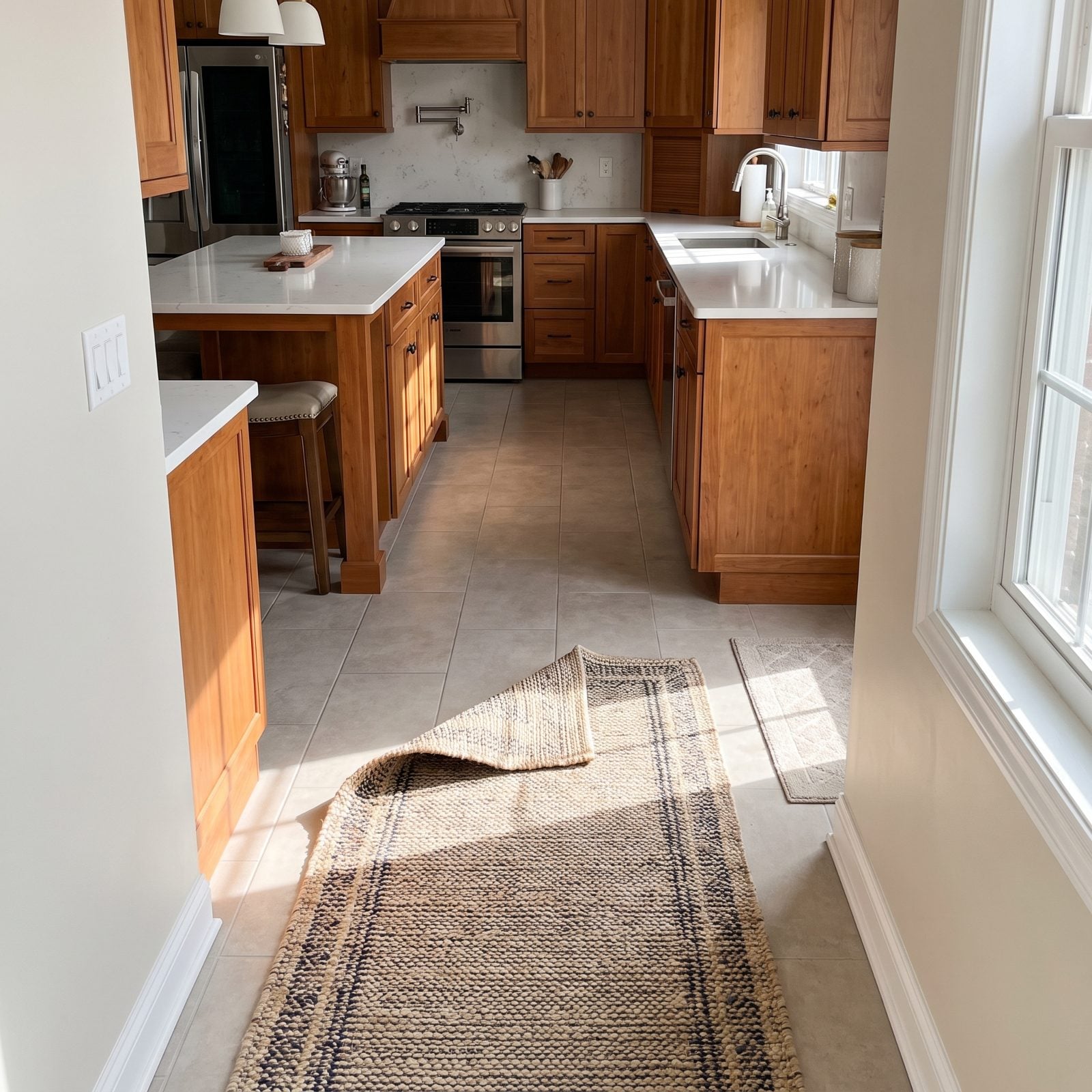
A rug that pokes into the path between the table and the kitchen is a trip waiting to happen. You carry a full plate through that gap a dozen times a day, and when the rug corner sits right in the walking lane it starts to ripple and fold until somebody’s toe finds it.
Plan the rug around your traffic, not just the table. Keep the edges clear of the main routes in and out. If the layout forces overlap, a low-profile rug with a firm pad that won’t creep is the only version worth attempting.
17. A Rug Edge Landing Directly in a Door Swing
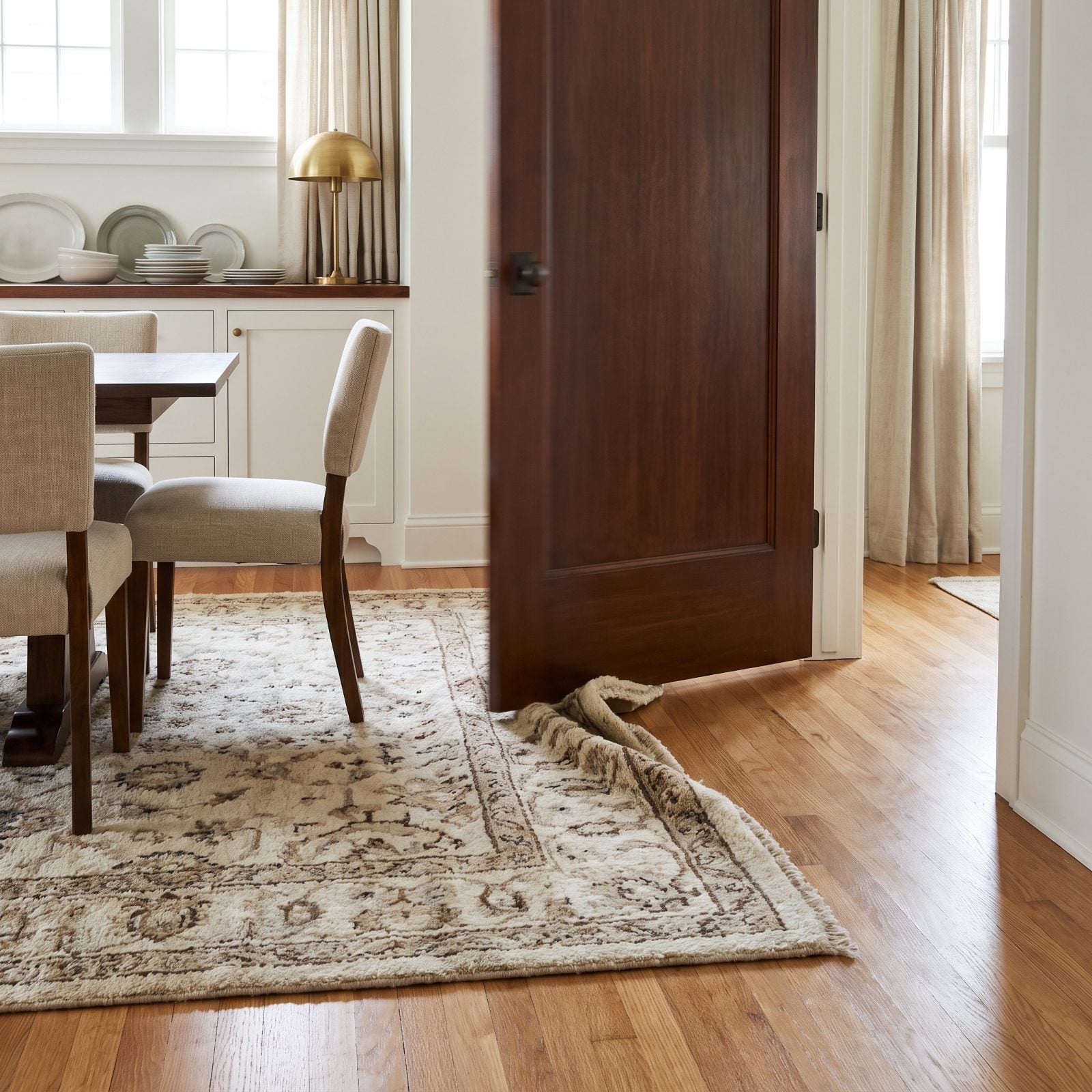
Watch your door swing before you lay the rug. When a rug edge sits inside the arc of a swinging door, the door drags across it every single time, wrinkling the corner and, over months, wearing a shabby track right into the fibers.
Open every door in the room and mark where the bottom edge travels. Your rug has to end before that line, with a little clearance to spare. Two-minute check. Saves a rug you’d otherwise watch fray in slow motion. We’ve ignored it before, and the door won.
16. A Rug Extending Into the Kitchen Work Zone
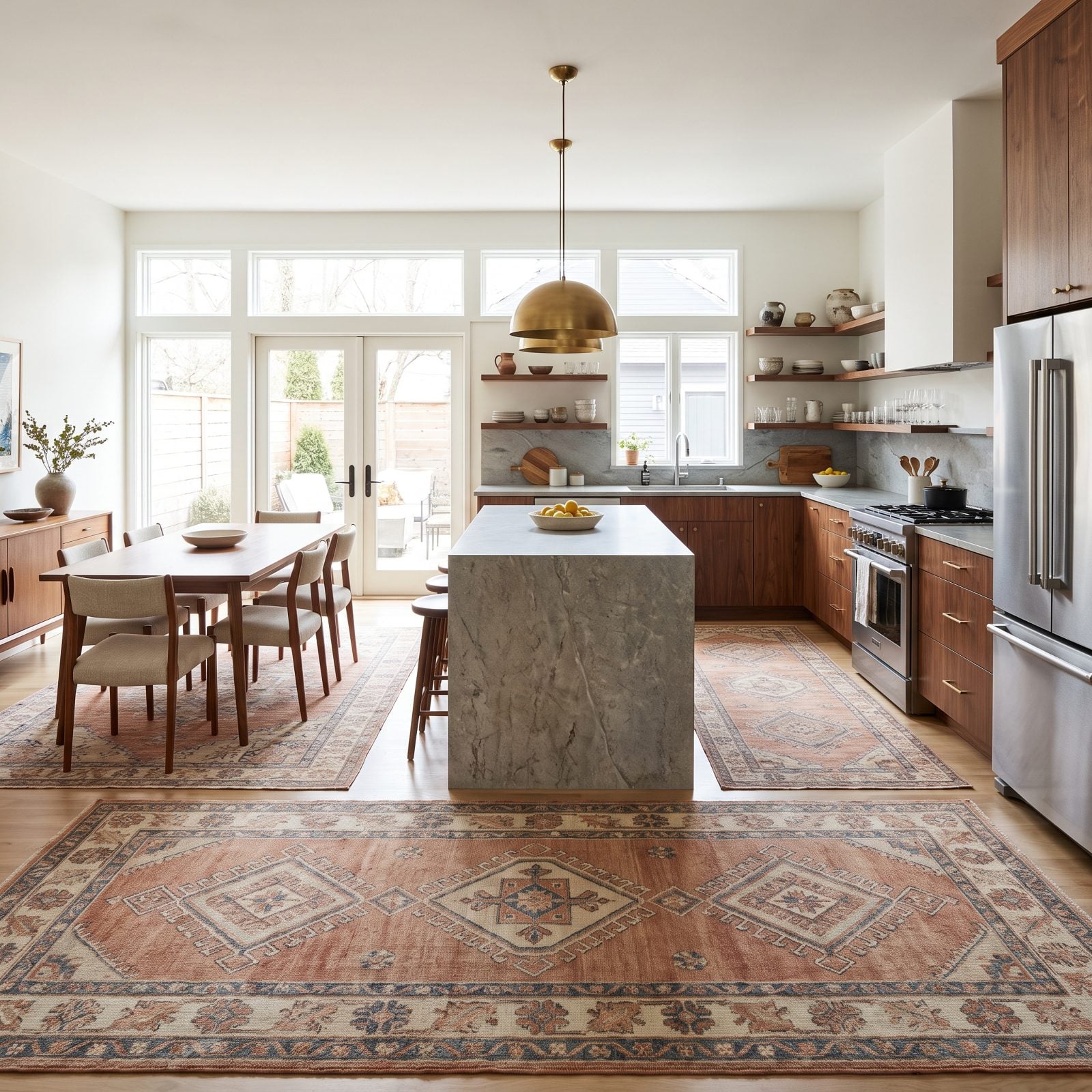
In an open plan, it’s tempting to run one big rug across the whole zone. Don’t let it drift into the kitchen work triangle. The strip in front of the range and sink takes grease, water, and dropped food, so a dining rug there gets ruined fast, and it stops the two areas from reading as separate at all.
Let the rug define the dining zone and stop cleanly where the cooking starts. That edge is doing double duty: protecting the rug and drawing a quiet line that tells your eye where dinner ends and prep begins. The same zoning trick works anywhere two functions share a floor, from a great room to a studio corner.
15. The Dining Rug That Collides With the Living Room Rug
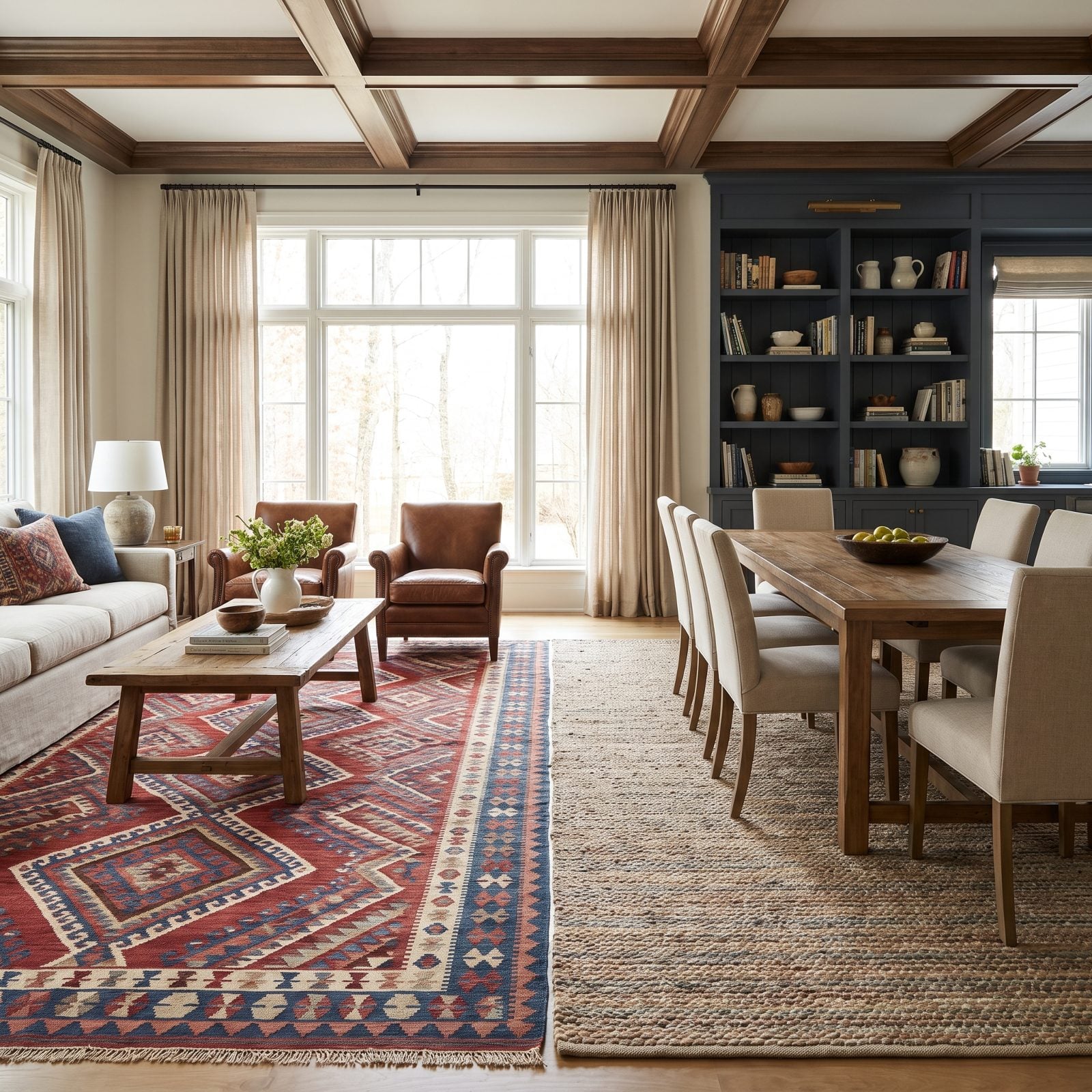
Two rugs meeting in the middle of an open room is where good intentions go to die. Each rug might be fine on its own. Butted up against each other, with clashing patterns and no floor between them, they turn the space into a jumble your eye can’t organize.
Give the two zones a clean strip of bare floor between them, a foot or two at least. That gap does the same job a hallway does, separating the rooms so each rug gets to be its own thing. Keep them in a shared color family, too, so the pairing reads as a conversation rather than a shouting match. When you’re layering rugs across a big open plan, picture how they’d look together in a colorful great room before you commit to either one.
14. The Layered Rugs That Create a Chair-Leg Obstacle Course
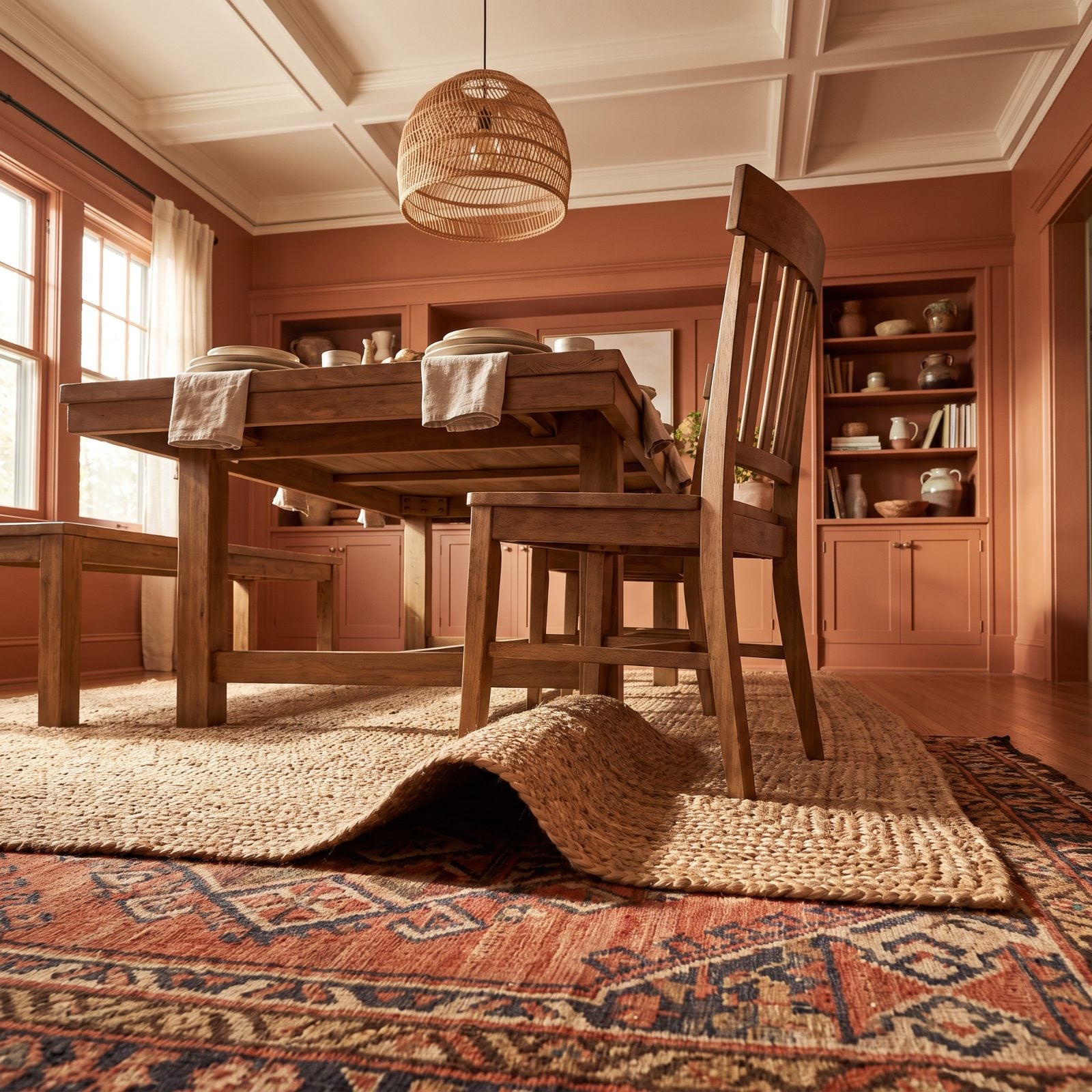
Two rugs, one problem. The top rug’s edge lands right where the chairs need to move, so every pulled-out chair catches on a half-inch lip. You feel it before you see it — that little wobble when you sit down.
Layering works in a living room where furniture stays put. Under a dining table, it turns every meal into a small negotiation with the floor. If you want the layered look, the seams and edges have to clear the chair travel entirely, not split the difference.
13. A Dining Rug Wrinkling Over Carpet
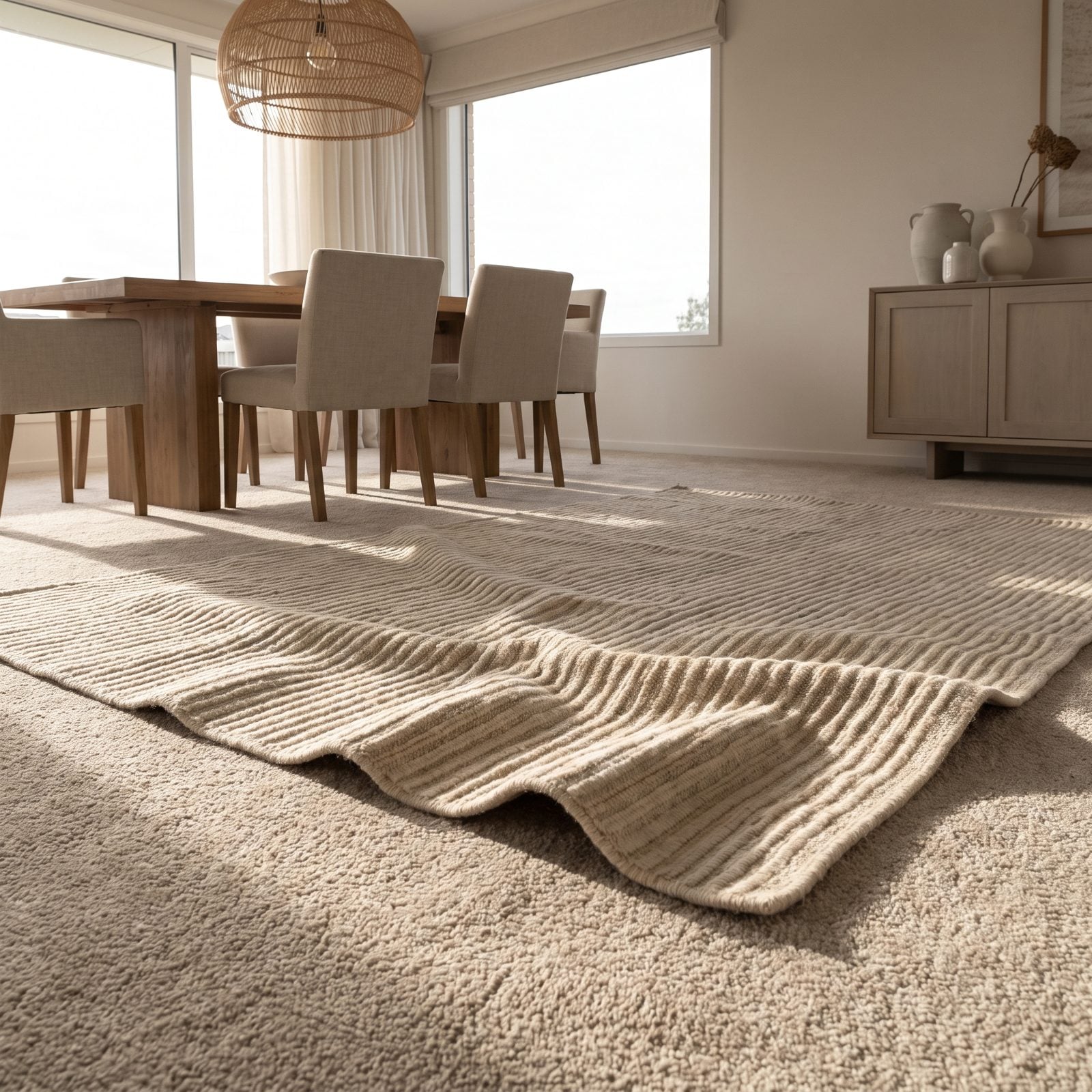
Rug on carpet almost never lies flat. The pile underneath has too much give, so the rug rides and bunches every time a chair moves across it. Within a week you get ridges, and within a month you get a tripping edge that nobody in the house will fully trust again.
If you already have carpet under the table, ask yourself what the second rug is even doing. Usually it’s covering a color you don’t love, and a bound remnant or a fresh carpet is the honest fix. When a rug over carpet can’t be avoided, a low-profile pad with a gripper side buys you some flatness — though it never fully kills the wobble.
12. The Unsecured Rug Sliding Across Polished Hardwood
🔥 Would you like to save this?
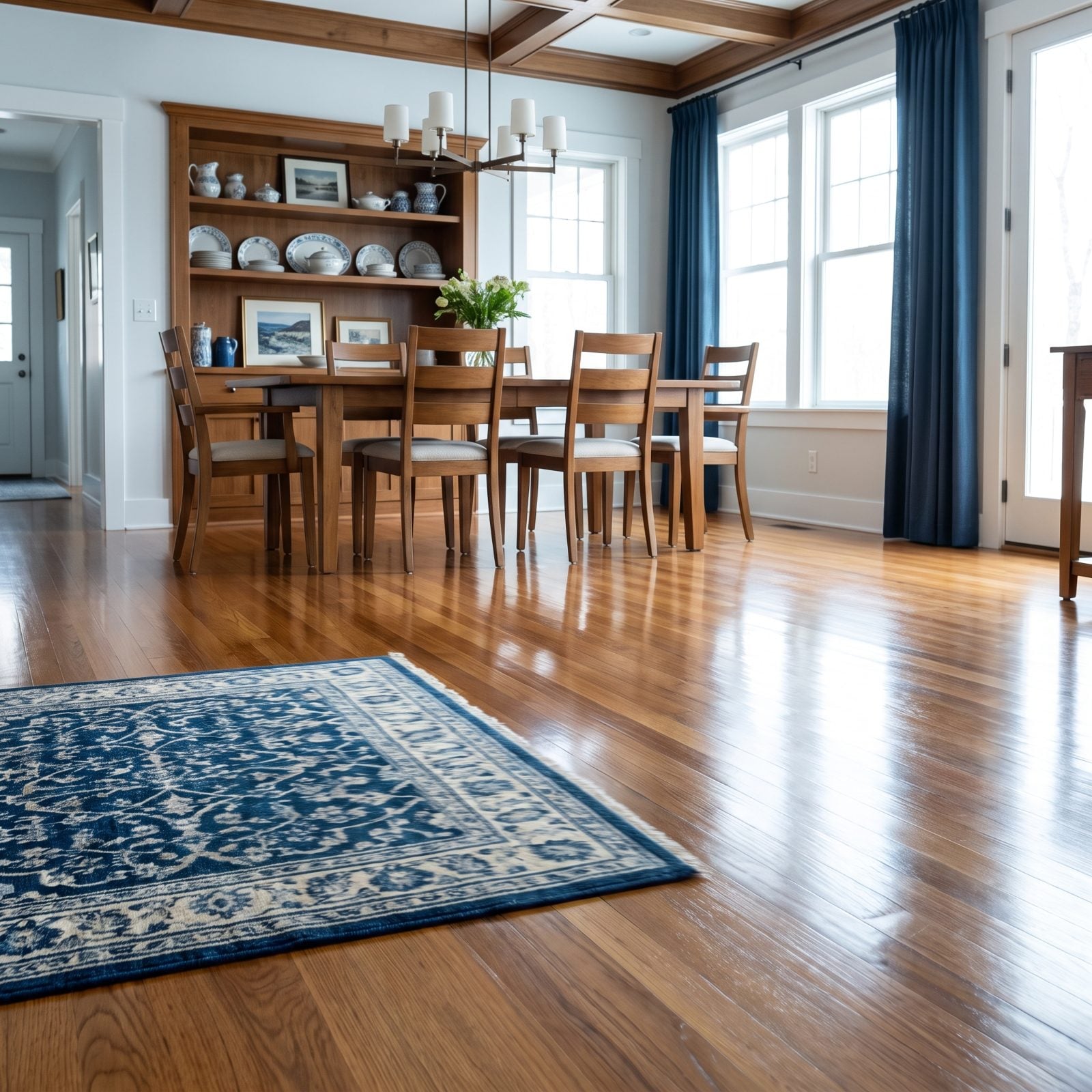
Polished floors and thin rugs are a bad marriage. Without a pad, a flatweave slides a little further every time a chair scrapes back, until the whole thing is off center and one corner is bunched against a leg. You’ve straightened it a hundred times, and it slides again by dinner.
A quality rug pad is the least glamorous purchase in the room and the one that saves you daily. Get the felt-and-rubber kind, cut about an inch smaller than the rug on all sides. It grips the floor, grips the rug, and adds a little cushion underfoot. We skipped it for years and paid for it in re-straightening.
11. A Thin Rug Curling Up at Every Corner
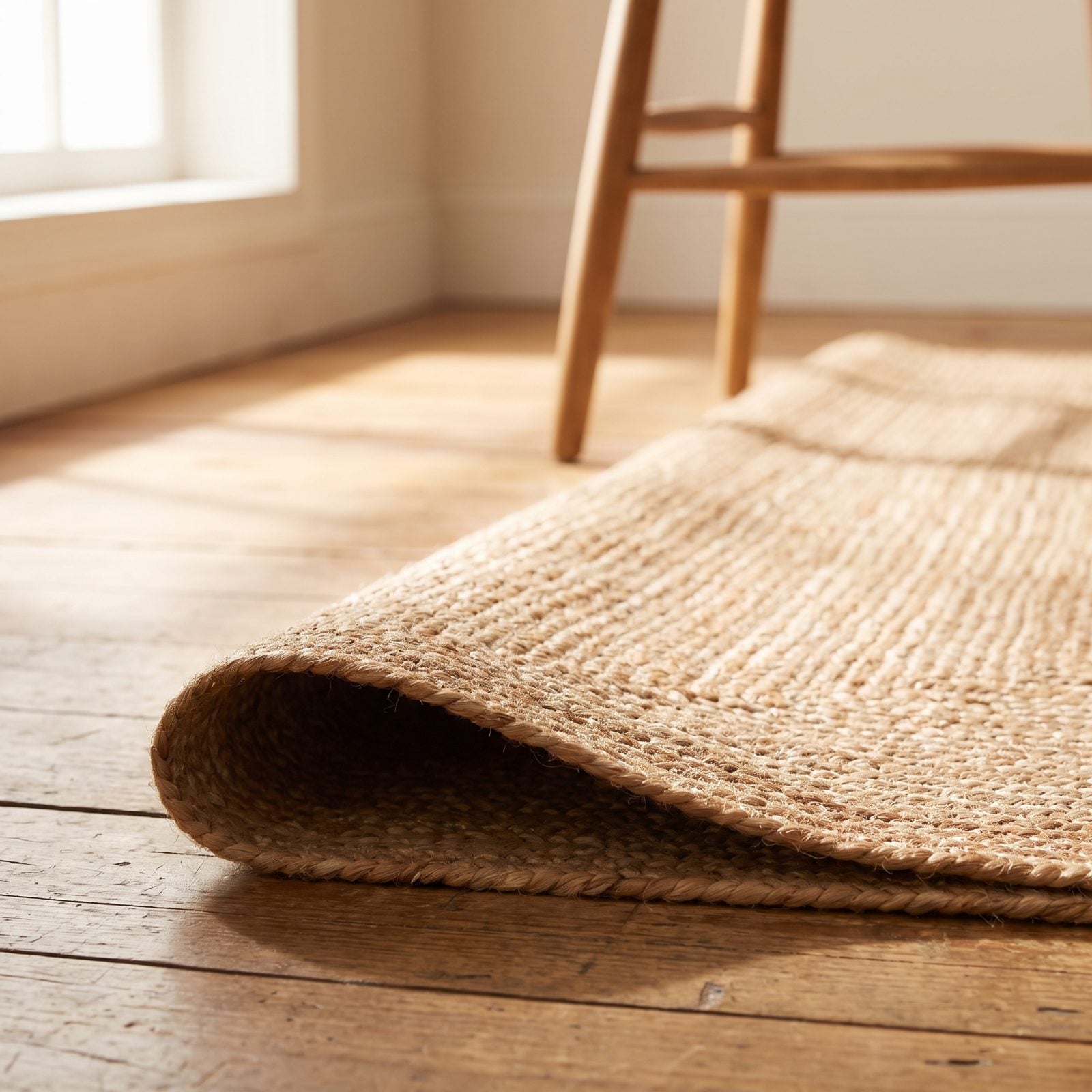
Curling corners are a rug confessing it’s too thin and too light to stay put. Every corner becomes a toe-catch. And it makes even a good room look like an afterthought.
Cheap rugs curl because there’s no weight or backing to hold them down. A pad helps, corner grippers help more, and giving a rolled rug a few days flat with heavy books on the corners helps most. But if it keeps fighting you, that’s the rug quietly telling you its price. The same fussy detail carries just as much weight in a cream dining room as it does anywhere else.
10. A Rug Cut Around a Floor Vent
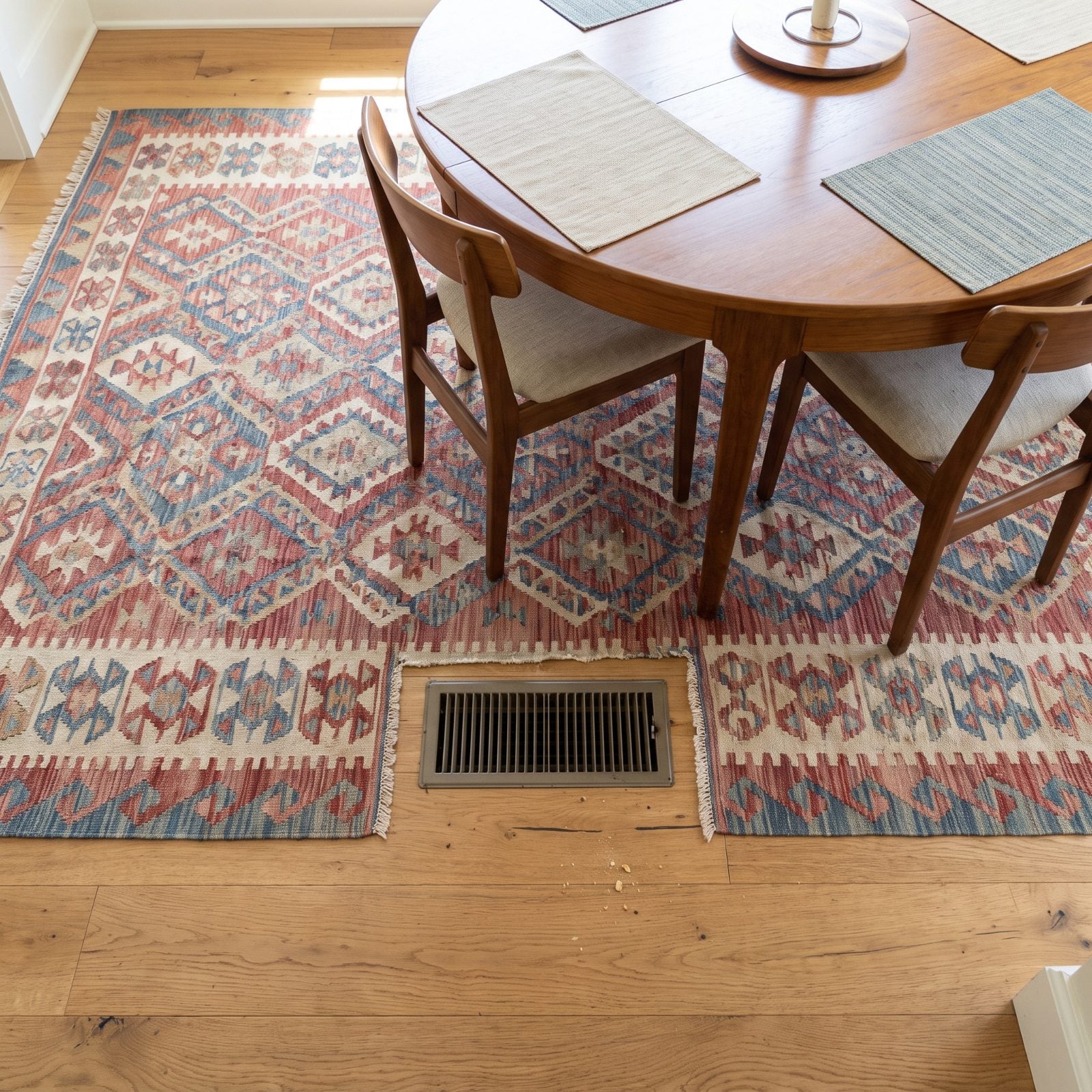
Somebody hit a floor vent and made a decision they couldn’t take back. Now there’s a rectangular bite out of the rug’s edge, the cut is fraying, and the eye goes straight to the notch instead of the table.
Floor vents are a layout problem, not a scissors problem. Size the rug so it stops short of the vent, or shift the whole arrangement a foot so the vent lands in bare floor. If it falls under the rug anyway, a low-profile deflector redirects the air without blocking it. Cutting is the one move you can’t undo.
9. A Cool Gray Rug Draining the Warmth From a Wood Dining Set
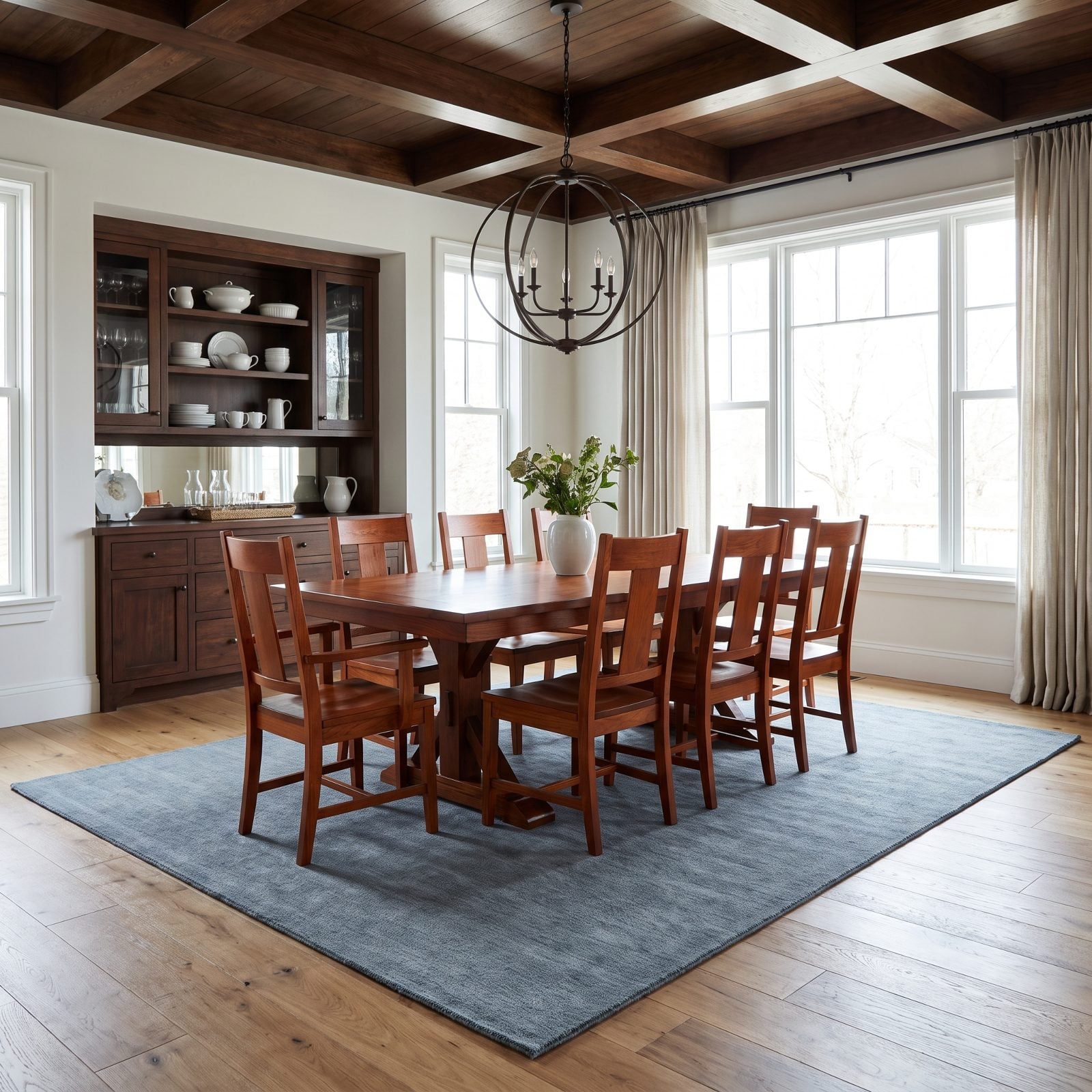
Gray felt safe. Gray always does. But a cool blue-gray under warm cherry and honey oak turns the wood a strange orange and leaves the whole room unable to decide on a temperature.
Warm woods want warm neighbors. A rug in cream, camel, terracotta, or soft olive lets those tones sing instead of fighting them. Love gray? Choose a warm greige with a brown or ochre base rather than a blue one. The undertone is the whole ballgame, and it’s precisely the thing people skip when they shop by the big color name on the label.
8. The Border Pattern Hidden Beneath the Chair Legs
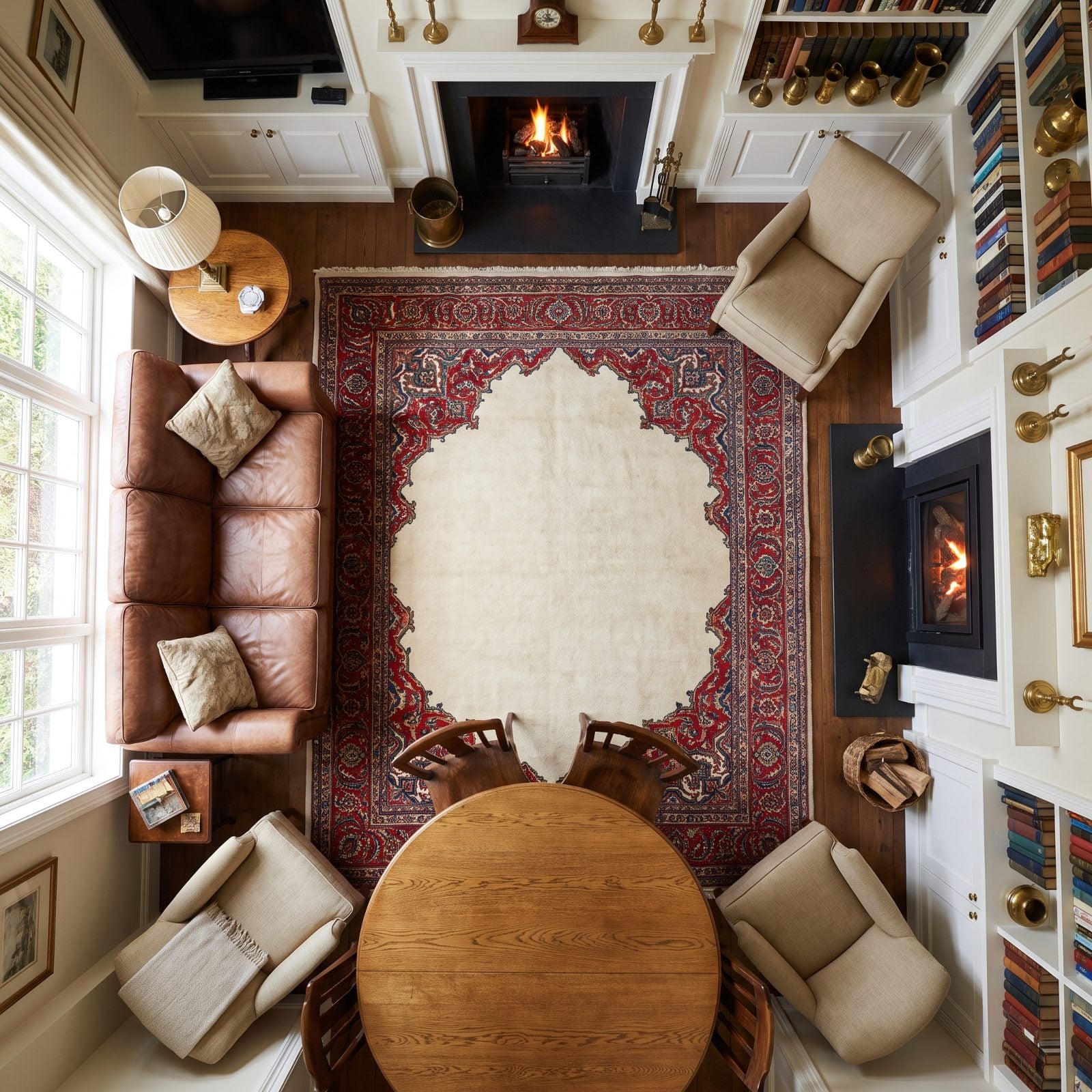
You bought the rug for the border. That intricate edge was the whole reason. And now it’s completely buried under eight chair legs, leaving you staring at the one plain part in the middle.
Bordered rugs need room to show off the border, which means the rug has to extend well past the chairs when they’re pulled out — call it two to two and a half feet beyond the table on all sides. Buy the pattern smaller than the space and it becomes a plain rug you overpaid for.
7. A Busy Rug Disguising the Shape of a Sculptural Table Base
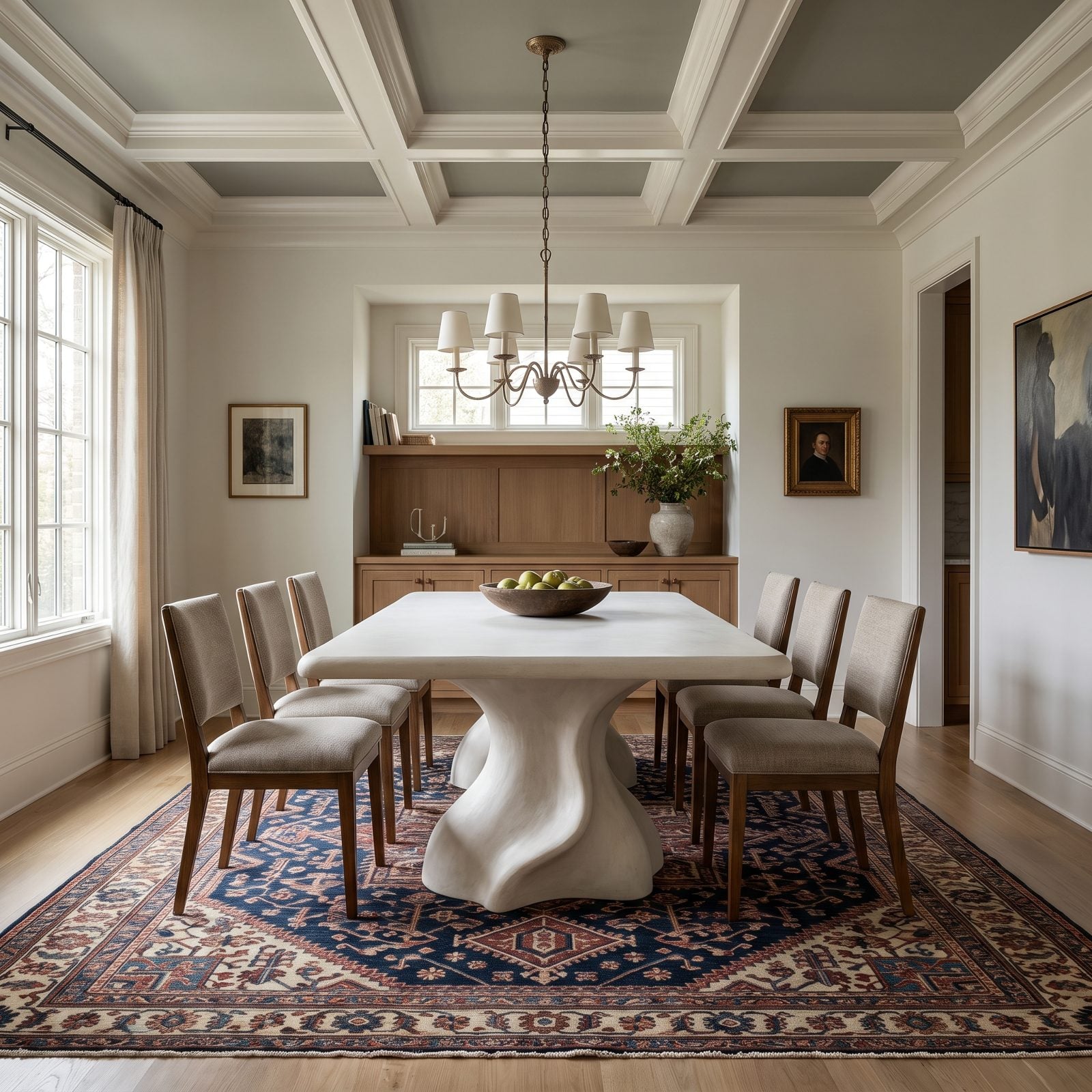
That plaster pedestal cost real money, and it’s vanishing. The rug’s loud geometry runs right behind the base, so the eye can’t separate the sculptural curve from all the pattern noise. You paid for a hero piece and then hid it.
When the table base is the star, the rug plays support. A solid tone, a subtle texture, or a quiet tonal weave gives the base a clean backdrop to stand against. Save the big graphic rug for a room where the furniture is simple and the floor gets to do the talking.
6. The Rug That Covers a Beautiful Floor Medallion
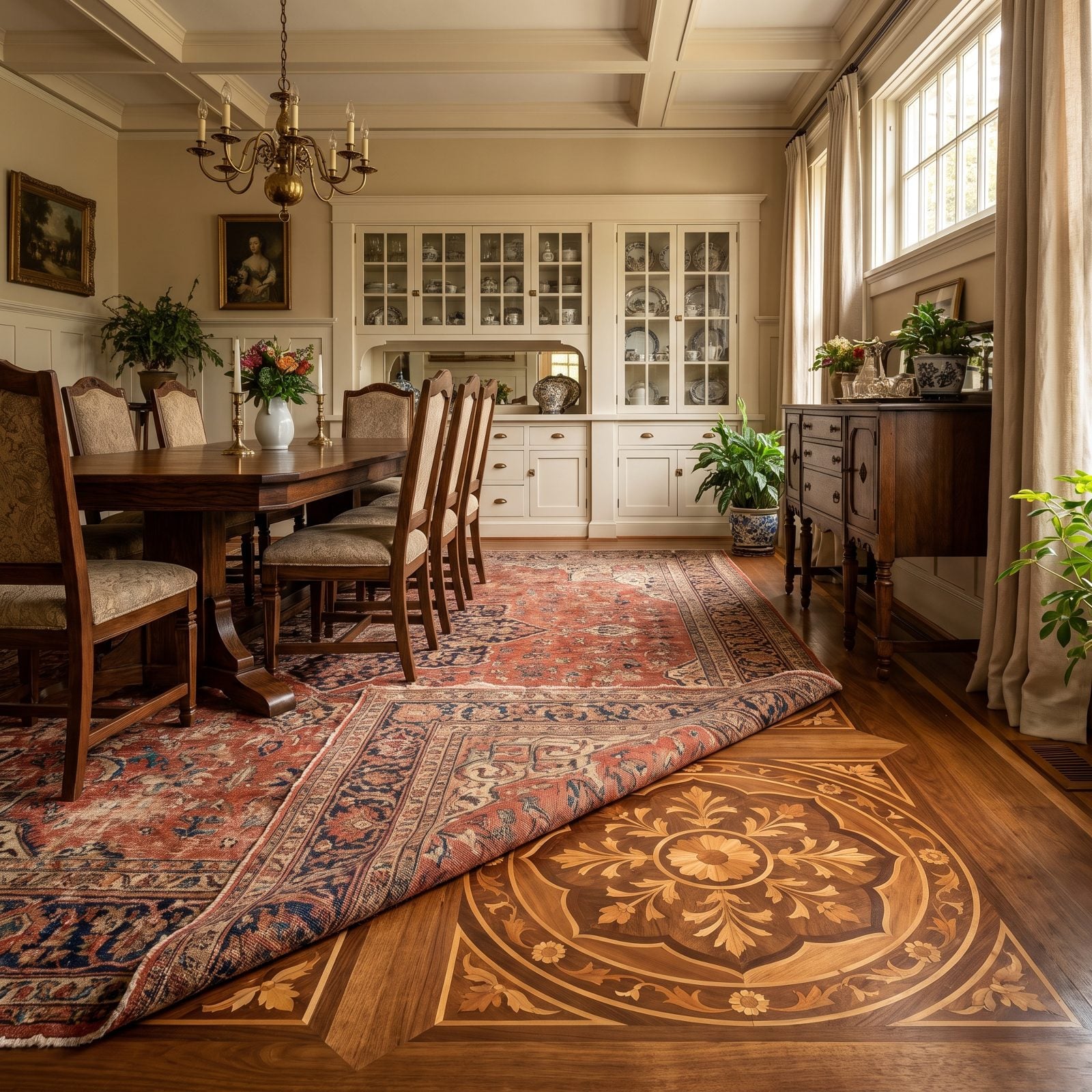
The floor was the best thing in the room, and now it’s under a rug. An inlaid marquetry medallion is the kind of detail people build whole rooms around, and here it’s a thin ring of inlay peeking out at the edges while a plain rug hogs the center.
Some floors just don’t want a rug. If you inherited a medallion or a herringbone worth showing, let the floor be the floor covering. Anchor the table over it with felt pads under the legs and skip the rug entirely. Not every dining room needs one, and a rug that hides your best feature is worse than no rug at all. A formal great room makes the same case about protecting a floor’s best detail.
5. A Traditional Medallion Rug Fighting a Minimalist Table
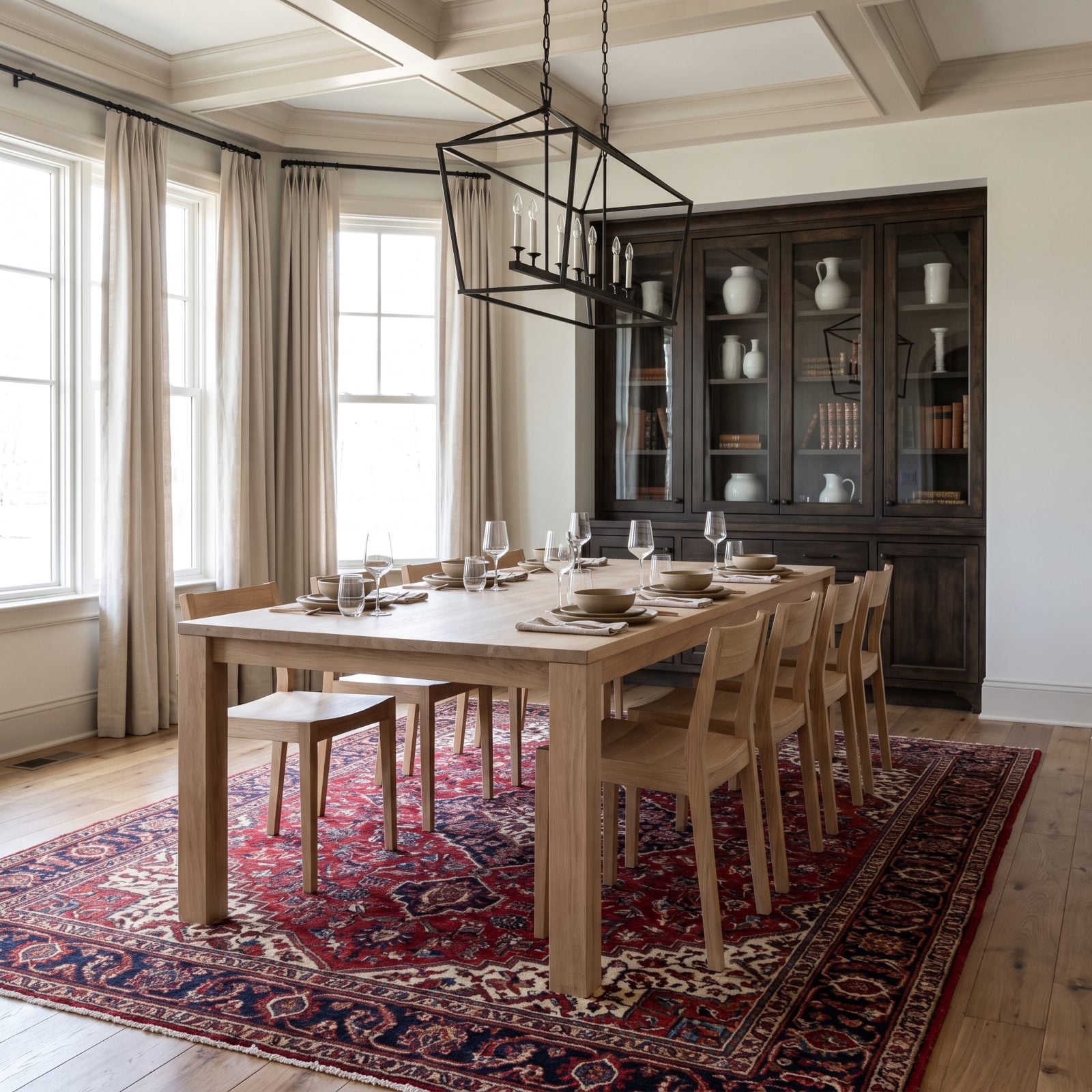
An ornate Persian medallion under a stripped-back oak table is two rooms arguing. The rug wants candlelight and heavy drapes. The table wants blank walls and a single branch in a vase. Neither wins.
Mixing traditional and modern can be wonderful, but it needs a bridge. A faded or overdyed vintage rug reads soft enough to sit under clean lines. A worn kilim or a muted abstract meets minimalism halfway. A crisp, high-contrast classical medallion gives the modern table nothing to hold onto, and the whole thing ends up feeling like a mistake rather than a mix.
4. A Distressed Vintage Rug Making New Furniture Look Dingy
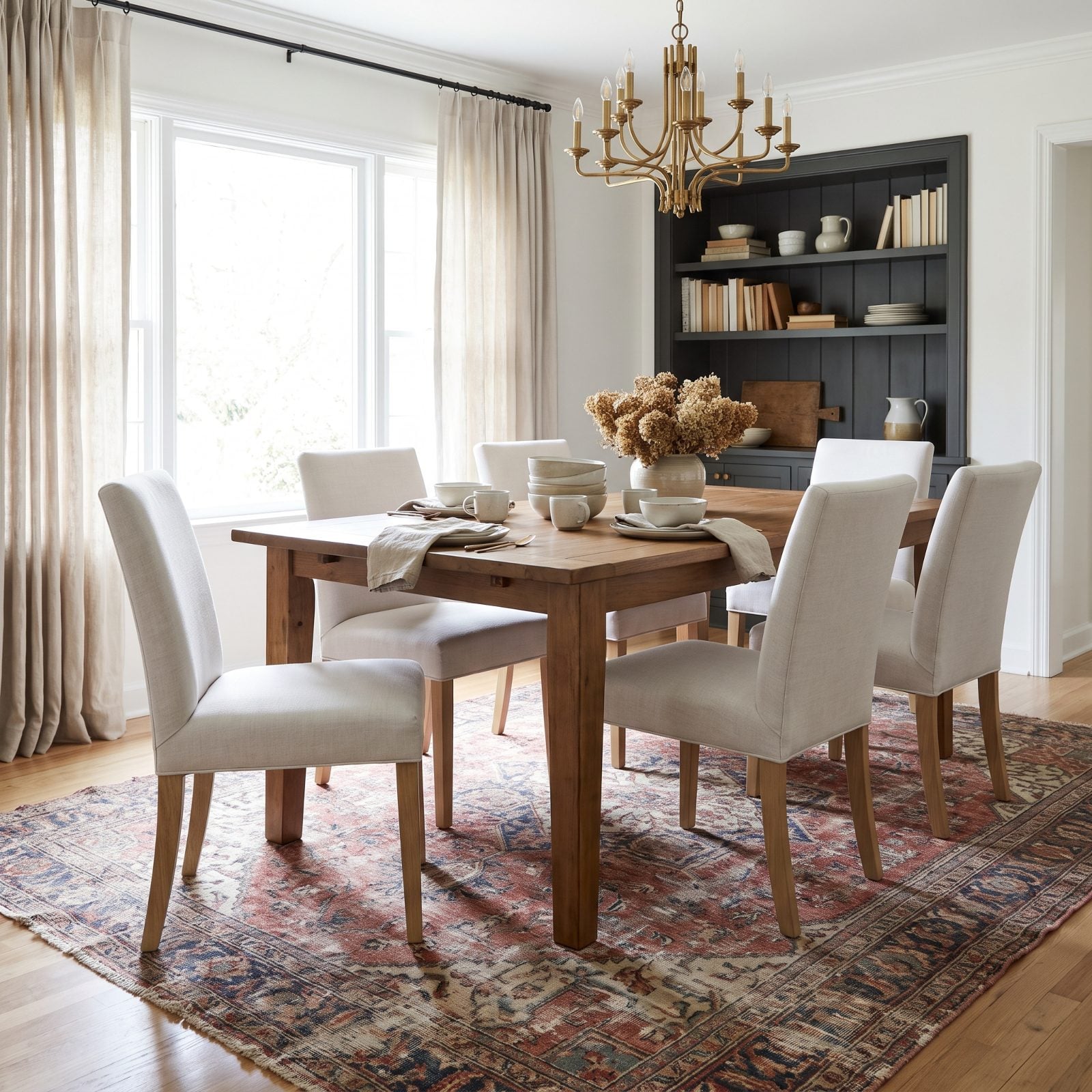
New furniture paired with a genuinely beat-up rug is a pairing that fights itself. The chairs are clean and pale, the rug is worn to the backing in two spots and stained along one edge, and put together the rug doesn’t read as collected. It reads as the thing nobody got around to replacing.
Vintage rugs are worth buying. We love them. But there’s a line between patina and threadbare, and worn-to-the-backing lands well past it. So either find a rug with even wear across the whole field, or bring in furniture with enough age in its finish to meet the old rug halfway. Match the wear levels, not just the colors — that’s the part everyone skips.
3. The Rug That Makes Mismatched Chairs Look More Chaotic
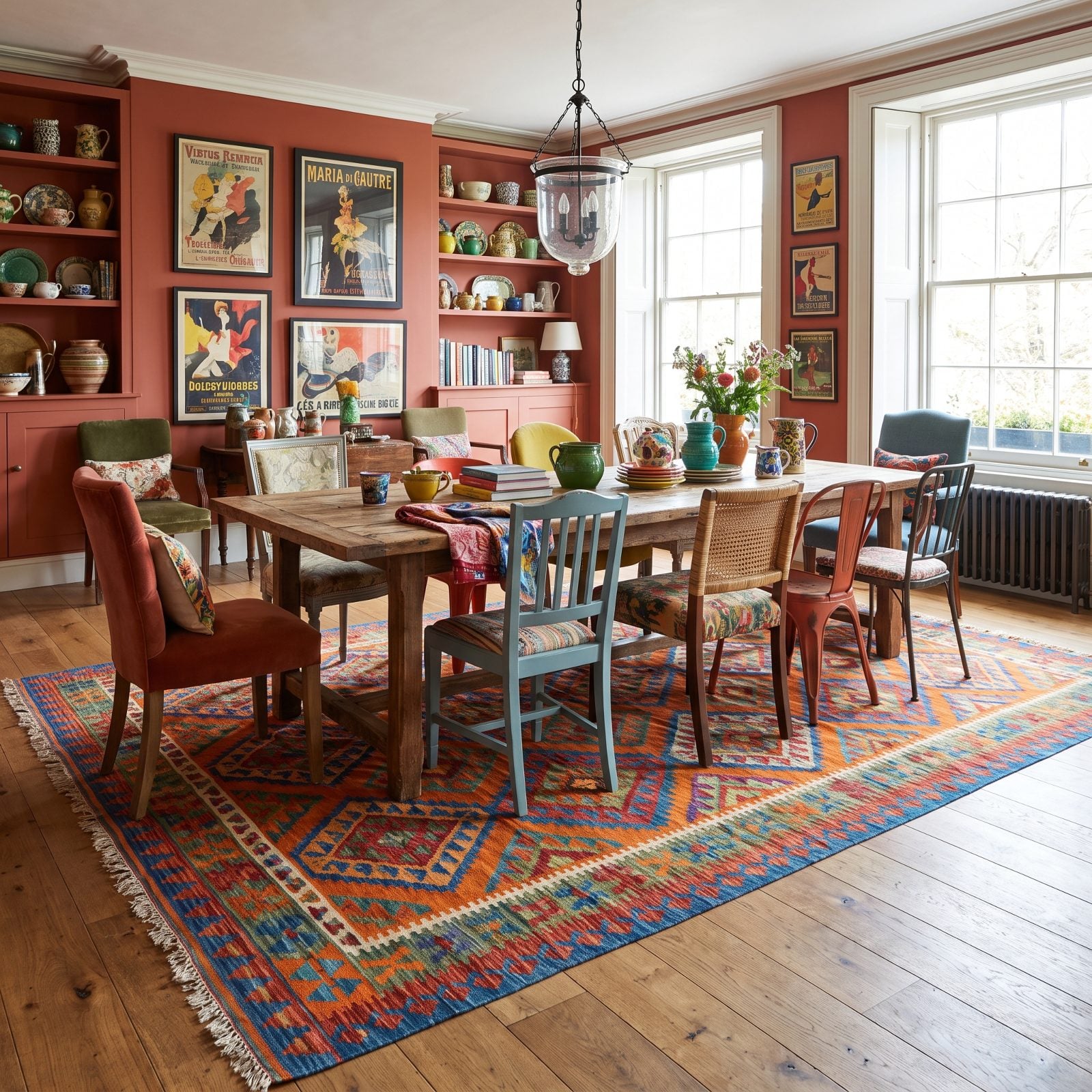
Mismatched chairs can absolutely look intentional, but they need a quiet floor to hold them together. Here the kilim shows up with its own red, teal, mustard, and cream, and suddenly there’s nothing anchoring anything. The chairs stop reading as a mix and start reading as leftovers.
With an eclectic chair collection you want a rug that recedes — solid, tonal, or a pattern subtle enough to blur from six feet away. Let the chairs be the interesting thing. When the floor competes, everything above it looks accidental. A calmer rug would let this same set look collected, the way a cream dining room lets brass hardware carry the whole show.
2. A Half-Rug Solution in an Open-Plan Dining Area
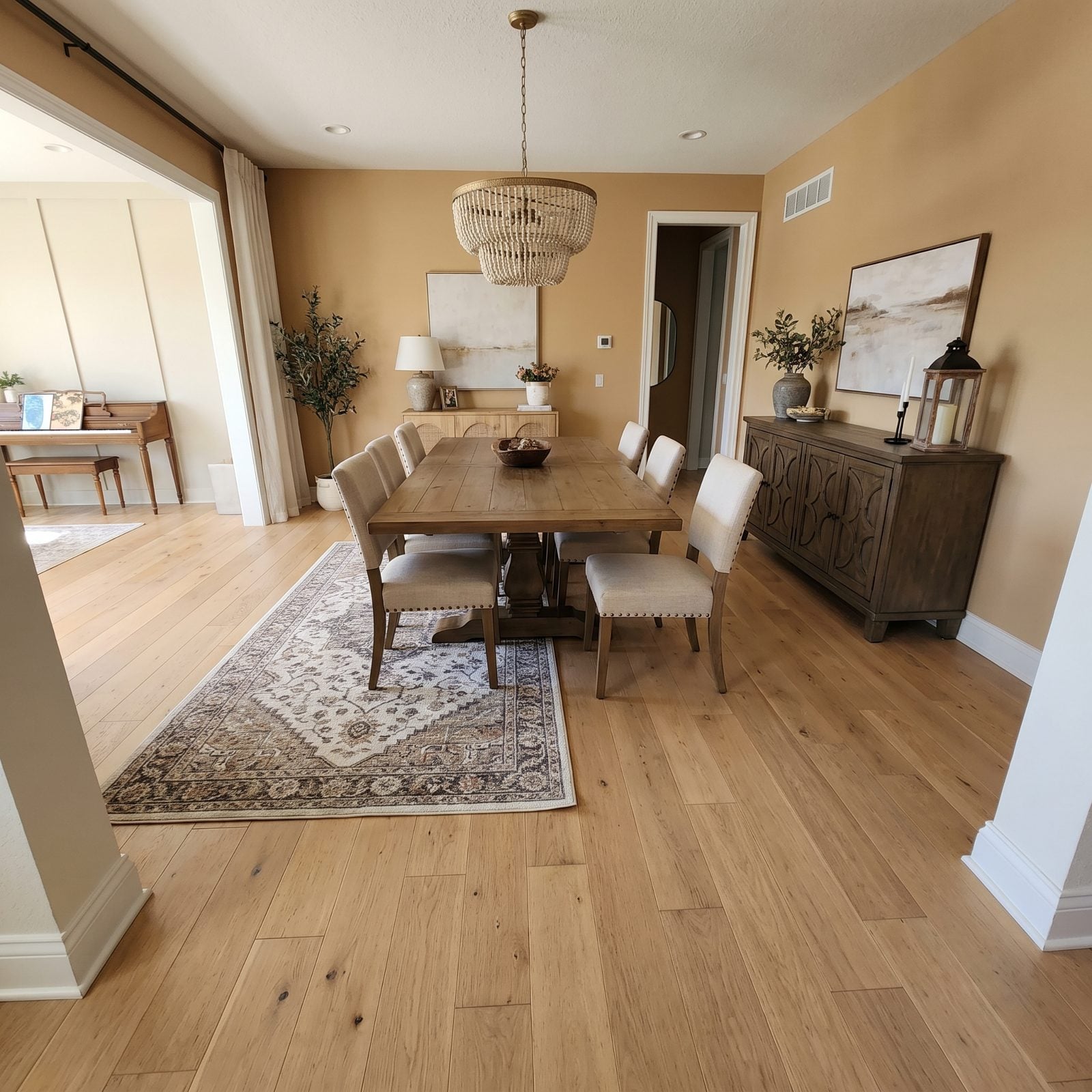
The rug that stops short is the most common rug mistake there is, and we got it wrong for years ourselves. The rule couldn’t be simpler: every chair leg stays on the rug, pulled out or tucked in. Here the front legs make it and the back legs don’t, so every time someone scoots back, the chair snags on the edge.
In an open plan the rug pulls double duty, drawing the boundary of the dining zone against the living area. Undersized, it fails at both jobs at once — it neither seats the furniture nor defines the space. Measure the table, add at least 24 inches on every side, then buy the size up from there.
1. A Graphic Black-and-White Rug Overpowering a Delicate Glass Table
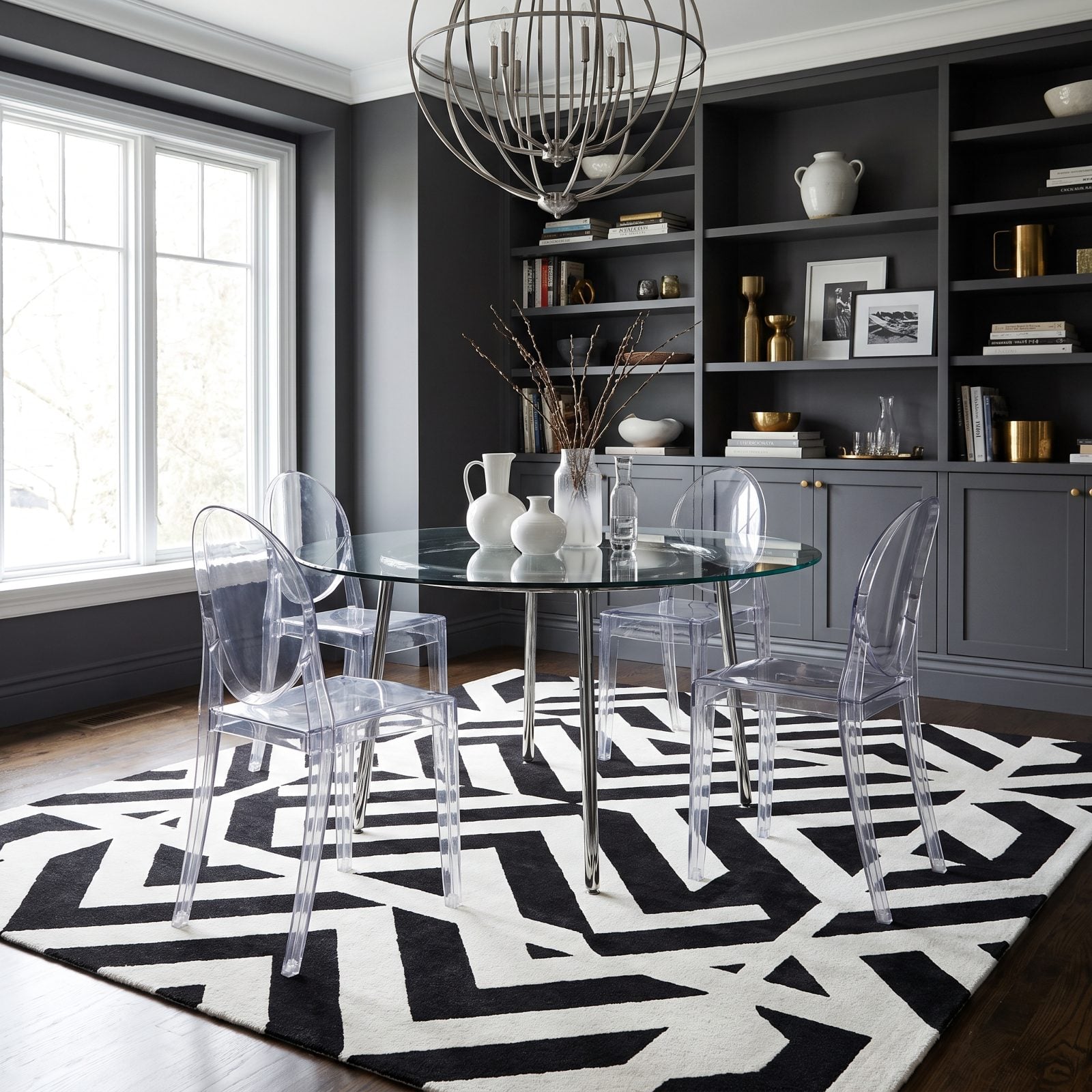
Glass tables have exactly one job: to disappear. That’s the whole appeal — the light footprint, the sense that the room breathes underneath. Then someone parks a bold black-and-white geometric rug beneath one and hands all the attention straight down to the floor. You see the pattern through the top, so the graphic hits you twice.
A delicate table wants a quiet rug, something tonal or a soft texture that gives the eye somewhere to rest. Save the graphic punch for a room with a heavy solid table that can shove back. Here the rug wins in a walk, and those pretty brass legs may as well not exist.