
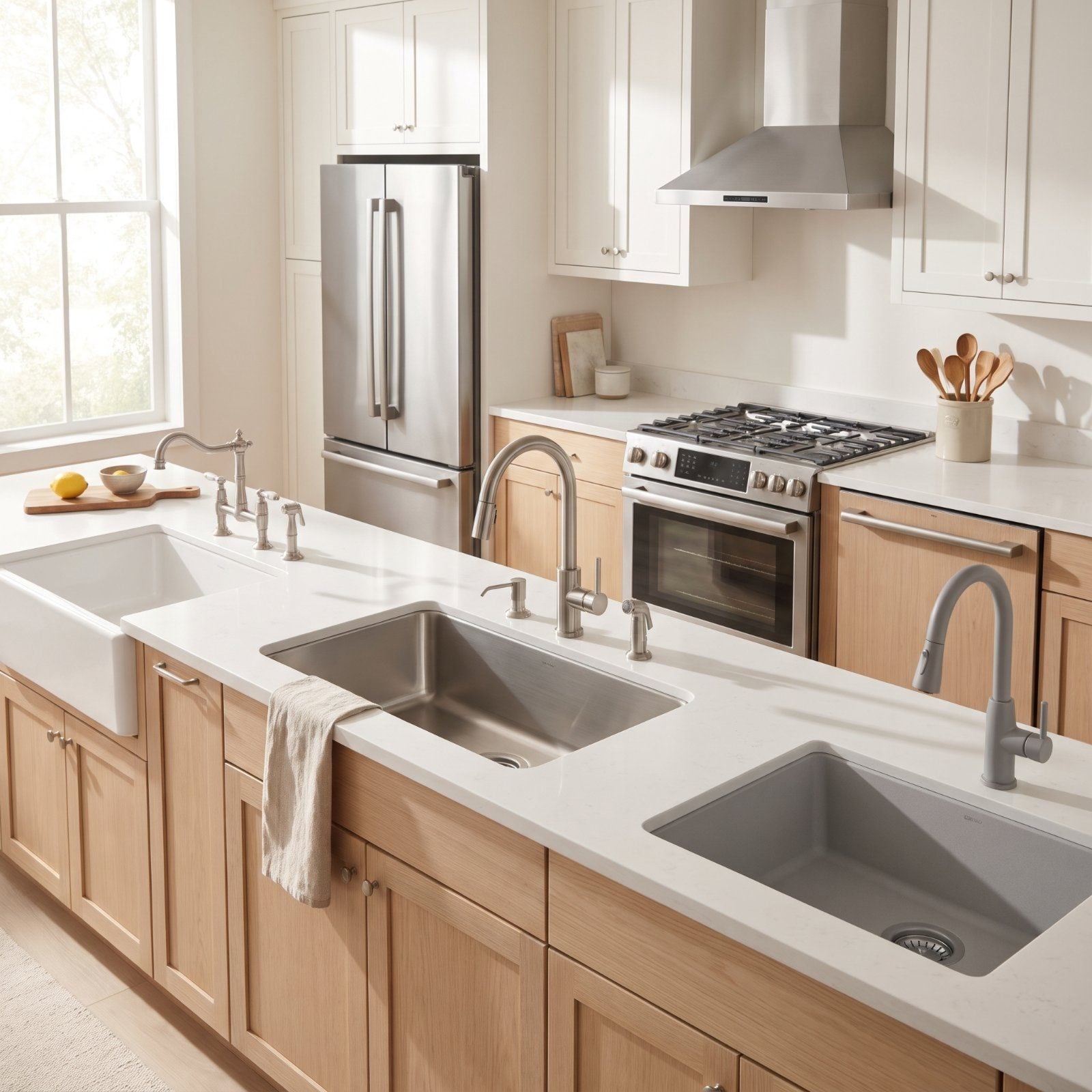
Ask a plumber which sink they’d put in their own kitchen and you’ll get an answer that has nothing to do with Pinterest. They’re thinking about the day it clogs at 9pm, the day a fitting weeps under the cabinet, whether they can reach the drain without dismantling half the base cabinet. Looks matter, sure. But a sink lives under your hands twice a day for fifteen years, and the pretty ones aren’t always the ones that hold up. These rankings weigh the stuff that actually bites you later: weight, drainage, repair access, and whether the thing survives a dropped cast-iron pan.
19. The Deep Single-Bowl Undermount That Plumbers Love Most
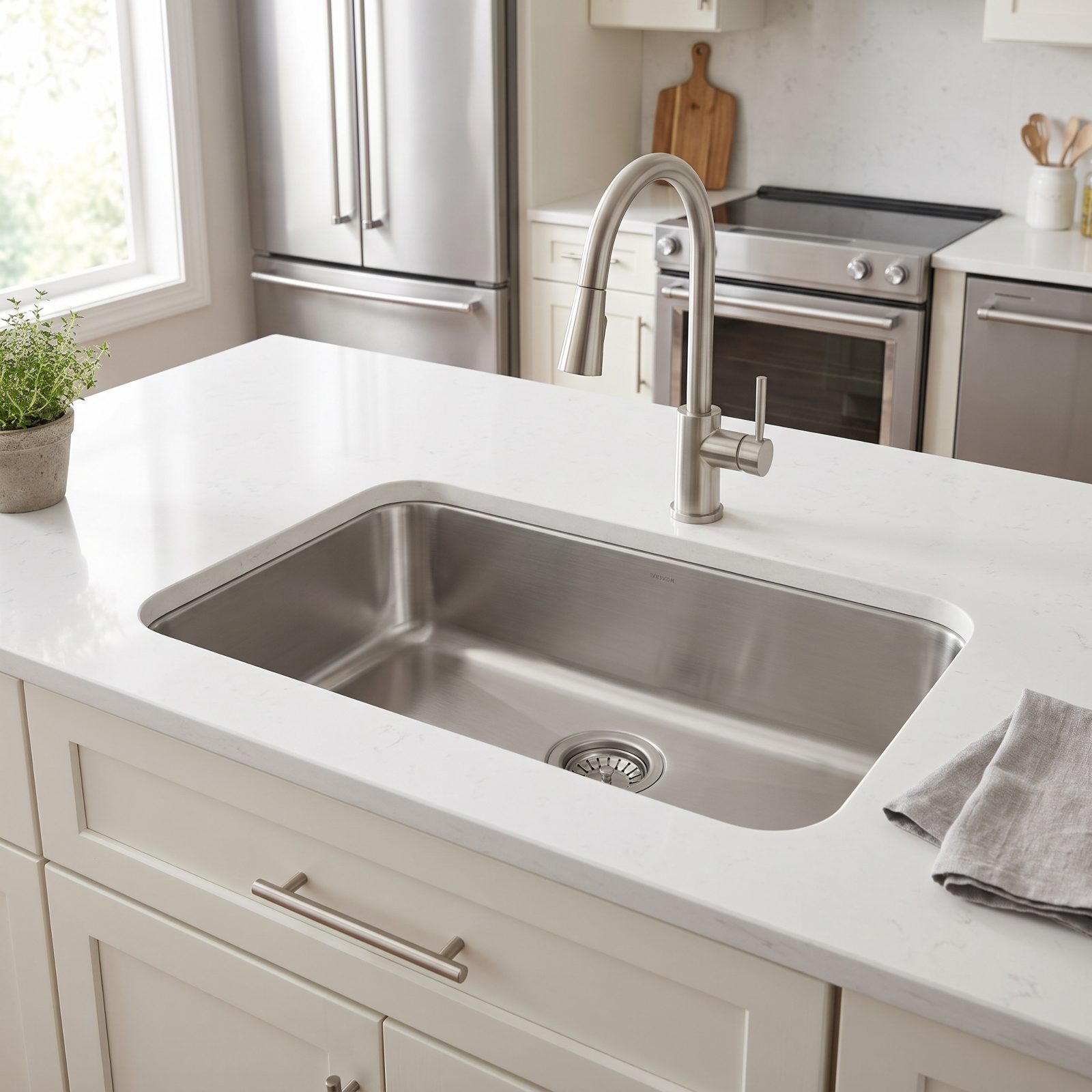
Start here, because it’s the one plumbers point to when you ask. A single deep basin means a front-set drain, a straight shot to the P-trap, and nothing fighting for space under the cabinet. Clogs clear fast, access is easy, and there’s no second bowl crowding the plumbing.
In order to come up with the very specific design ideas, we create most designs with the assistance of state-of-the-art AI interior design software. Also, assume links that take you off the site are affiliate links such as links to Amazon. this means we may earn a commission if you buy something.
Undermount stainless drains without a lip to trap gunk, and 16-gauge steel shrugs off dropped pans. The depth swallows a sheet pan whole, which is exactly what you want from a traditional kitchen that actually gets cooked in.
18. Fireclay Apron-Front Farmhouse: Heavy, Gorgeous, and a Little High-Maintenance
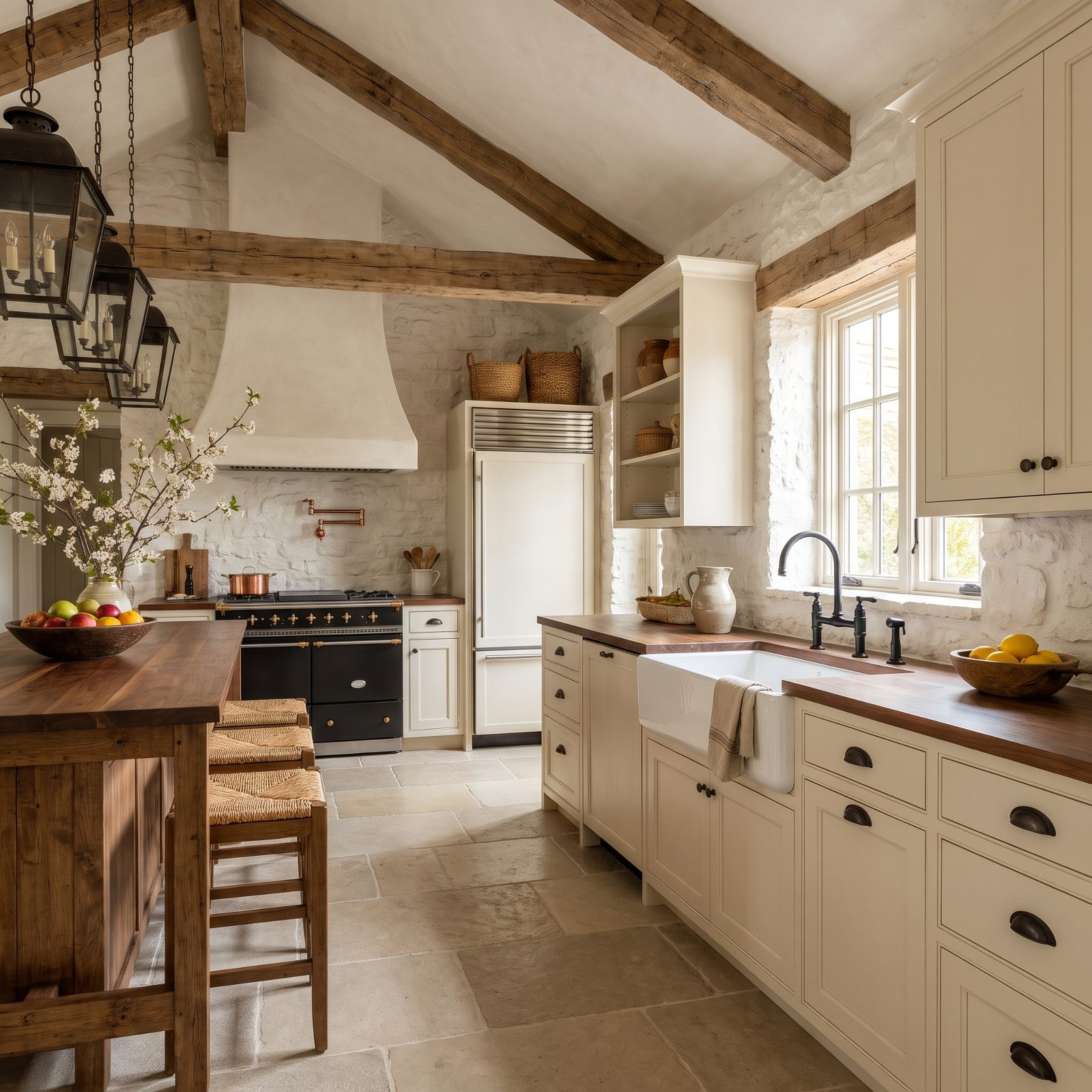
That glossy white apron is the reason farmhouse sinks never went out of style. It’s also a slab of fired ceramic your cabinet has to carry, usually on a custom-built support frame. Not a drop-it-in-Sunday-afternoon job, not even close.
Fireclay is tough and stain-resistant, but it chips if you treat it like a loading dock, and a cracked apron isn’t a repair, it’s a replacement. The single basin drains cleanly and the plumbing stays simple. Just budget for the muscle and the bracing on install day.
Home Stratosphere readers seem to back the looks argument: farmhouse kitchen photos got hearts 68% of the time, versus 60% for the other images in the same articles.
17. Workstation Sinks With the Built-In Ledge Everyone Suddenly Wants
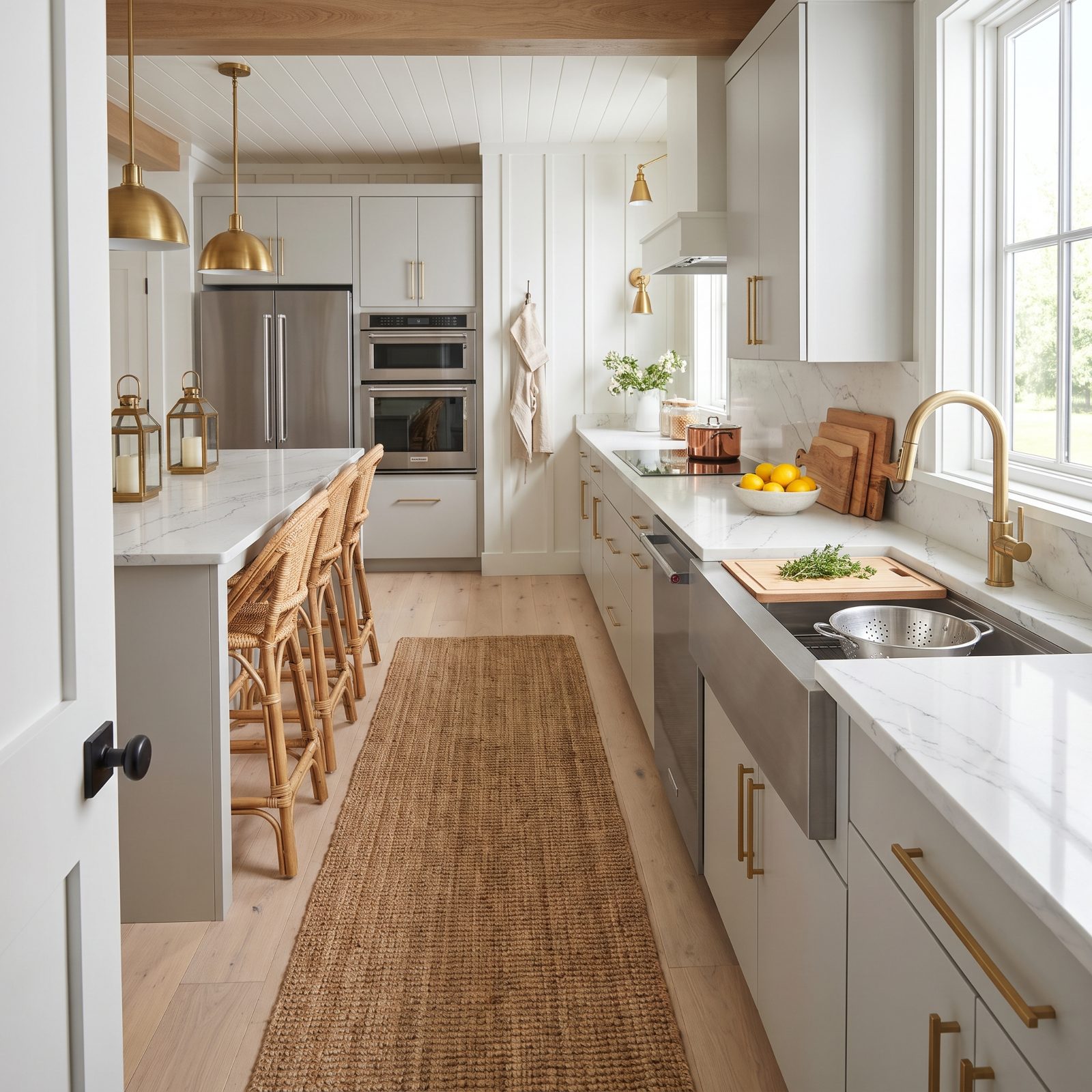
The ledge is the trick. Cutting boards, colanders, and drying racks slide along a built-in track so the sink doubles as prep space. In a small kitchen, that buys you a whole extra zone of counter.
Plumbing-wise it behaves like a deep single bowl, which is to say easy. The accessories are where you overspend, so buy the track and one board and skip the twelve-piece kit.
16. The Triple-Basin Sink and Its Tangle of Pipes
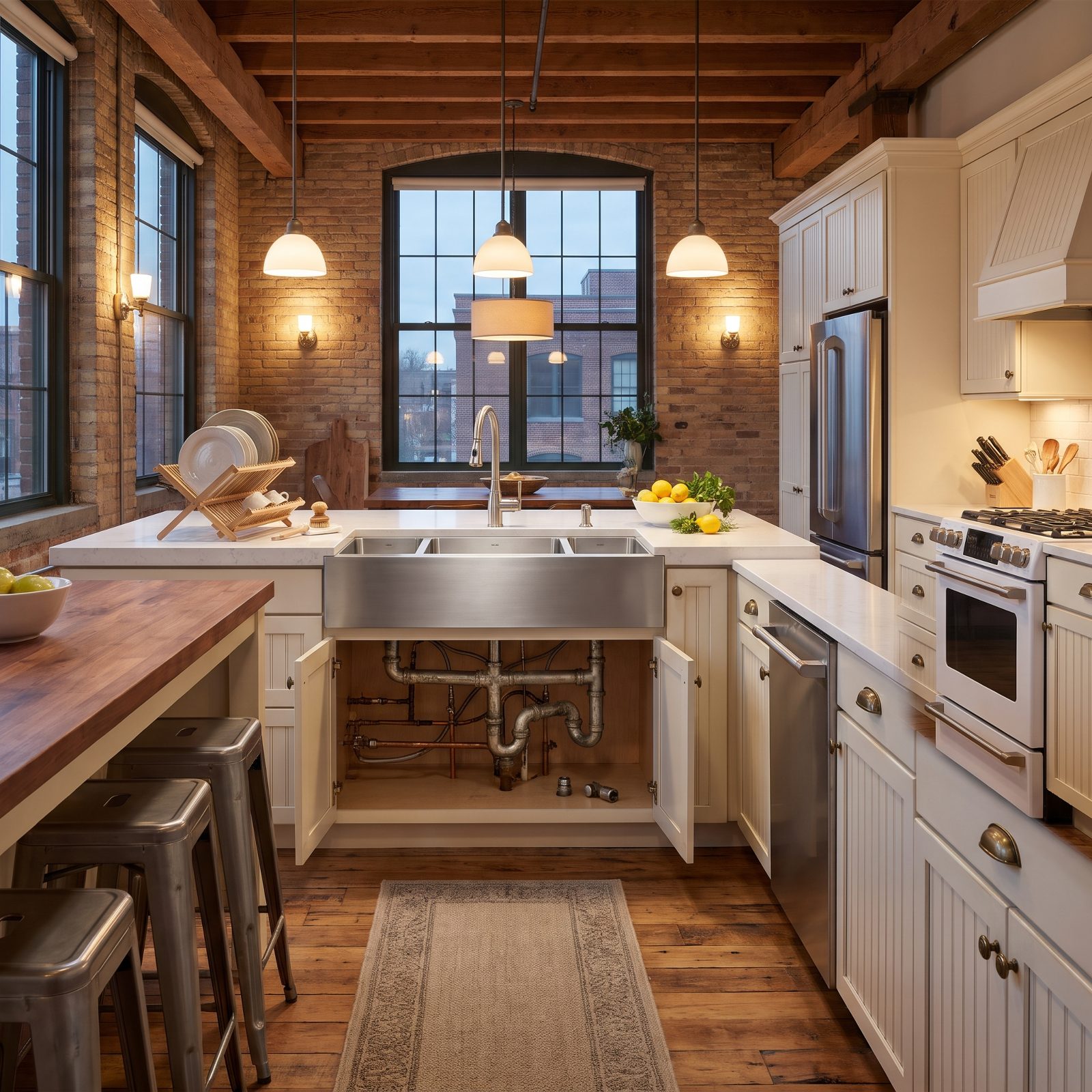
Three bowls sound generous until you look underneath. That’s multiple drains and tailpieces, and a web of waste fittings feeding two separate trap assemblies in a cabinet that was never built for the party. And each basin is smaller, so the big items that need the most water get the least room.
Plumbers put this near the bottom for a reason. More connections means more places to leak, and tighter access when one finally does.
What Our Readers Say
- When we asked readers which sink they would buy for a replacement, 36% chose an undermount, while double basins and farmhouse aprons each drew 29%.
- In our Hot or Not photo matchups, kitchen pictures featuring stone won more of their head-to-head matchups than expected, 63% against the 54% their position alone would predict.
From Home Stratosphere reader polls and votes.
15. Rounded-Corner Stainless: The One You Forget About, Which Is the Point
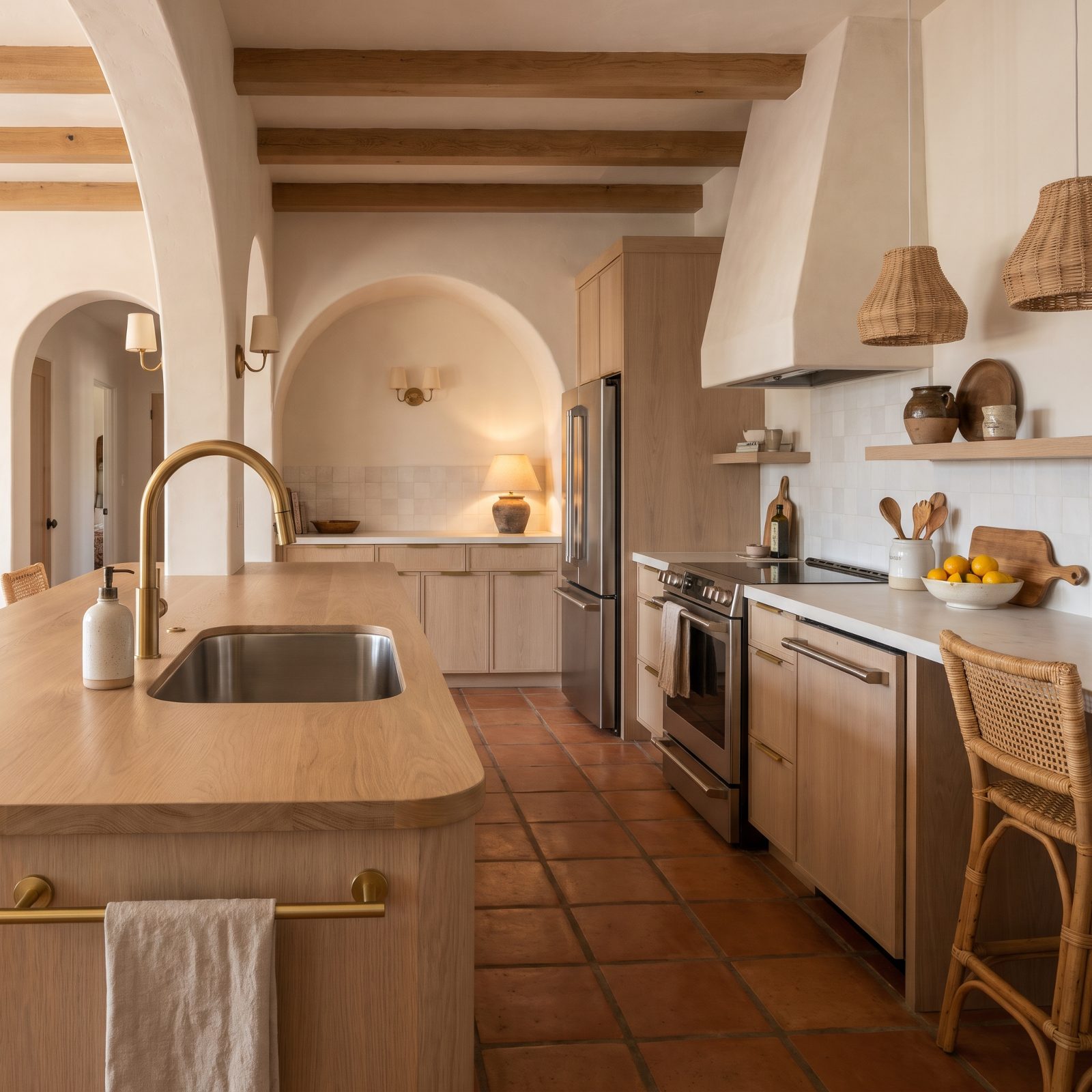
Not glamorous. Just easy to live with.
The gently curved interior corners mean a sponge wipes the whole basin in one pass, with no trapped crumbs and no seams to scrub. The steel takes abuse, the drain runs straight, and there’s nothing to go wrong. This is the sink plumbers install in their own homes when nobody’s photographing it.
14. Stainless With an Integrated Drainboard, Because Dish Racks Are Ugly
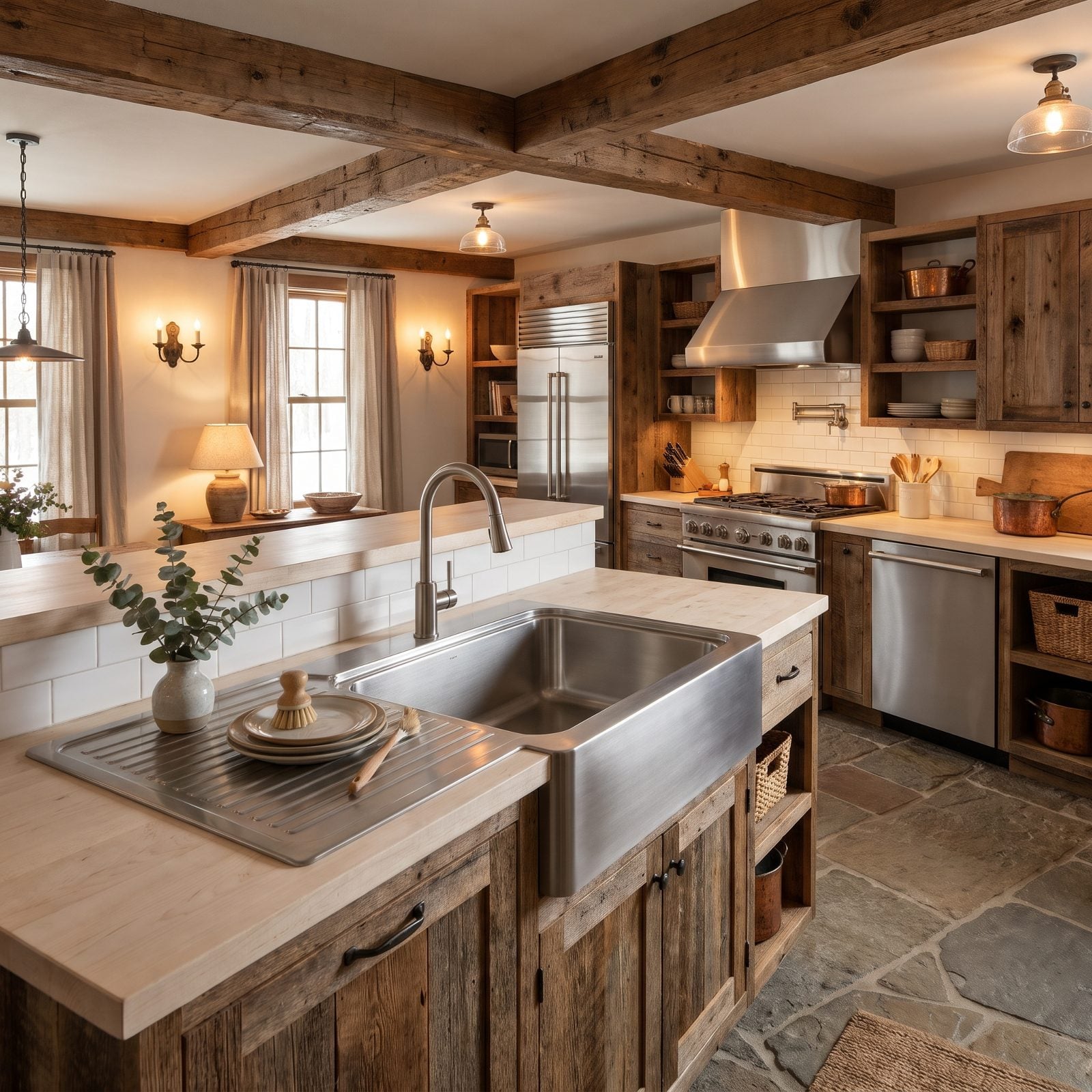
The integrated drainboard is one of those ideas that feels obvious once you’ve used it. Ribbed grooves slope hand-washed dishes back into the basin, so water never pools on your counter and the plastic rack goes back in the cupboard where it belongs.
It’s one continuous piece of steel, so there’s no seam to leak and the plumbing stays as simple as a single bowl. The only cost is counter real estate, since the board eats a chunk of it.
13. Granite Composite Undermount: The Underrated Overachiever
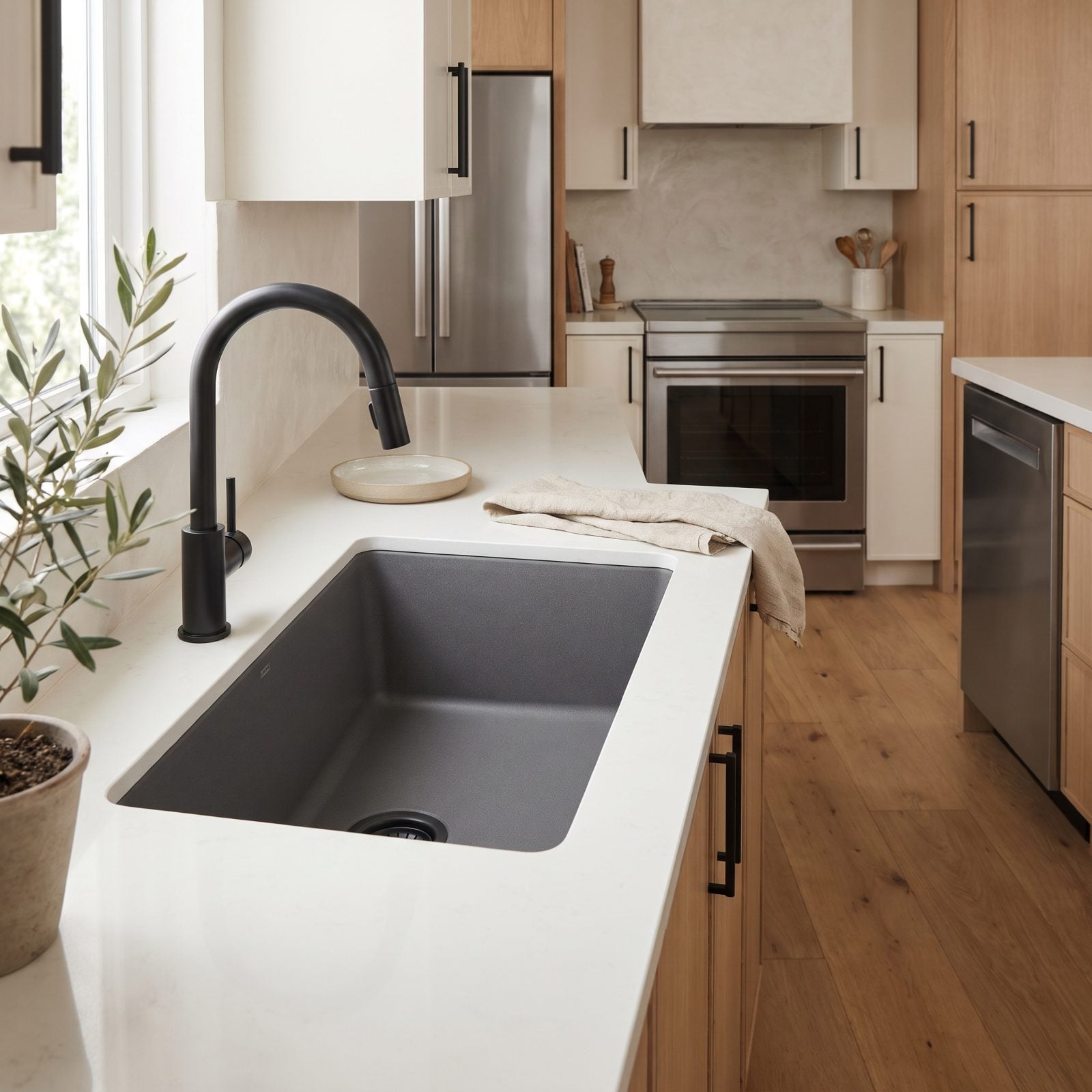
Want the look of stone without the fragility? This is the one. Granite composite is crushed stone bound in resin, dense enough to resist scratches, heat, and stains, and the matte finish hides water spots better than anything stainless ever will.
It’s heavier than steel, so the cabinet needs decent support, but it behaves like a single bowl once it’s in: one drain, straight run, easy access. Drop a mug on it and the mug loses. That quiet toughness is why it keeps climbing the rankings, right alongside the dark kitchen design look it pairs with so well.
12. Porcelain-Enameled Steel Drop-In: The Budget Pick That Earns Its Keep
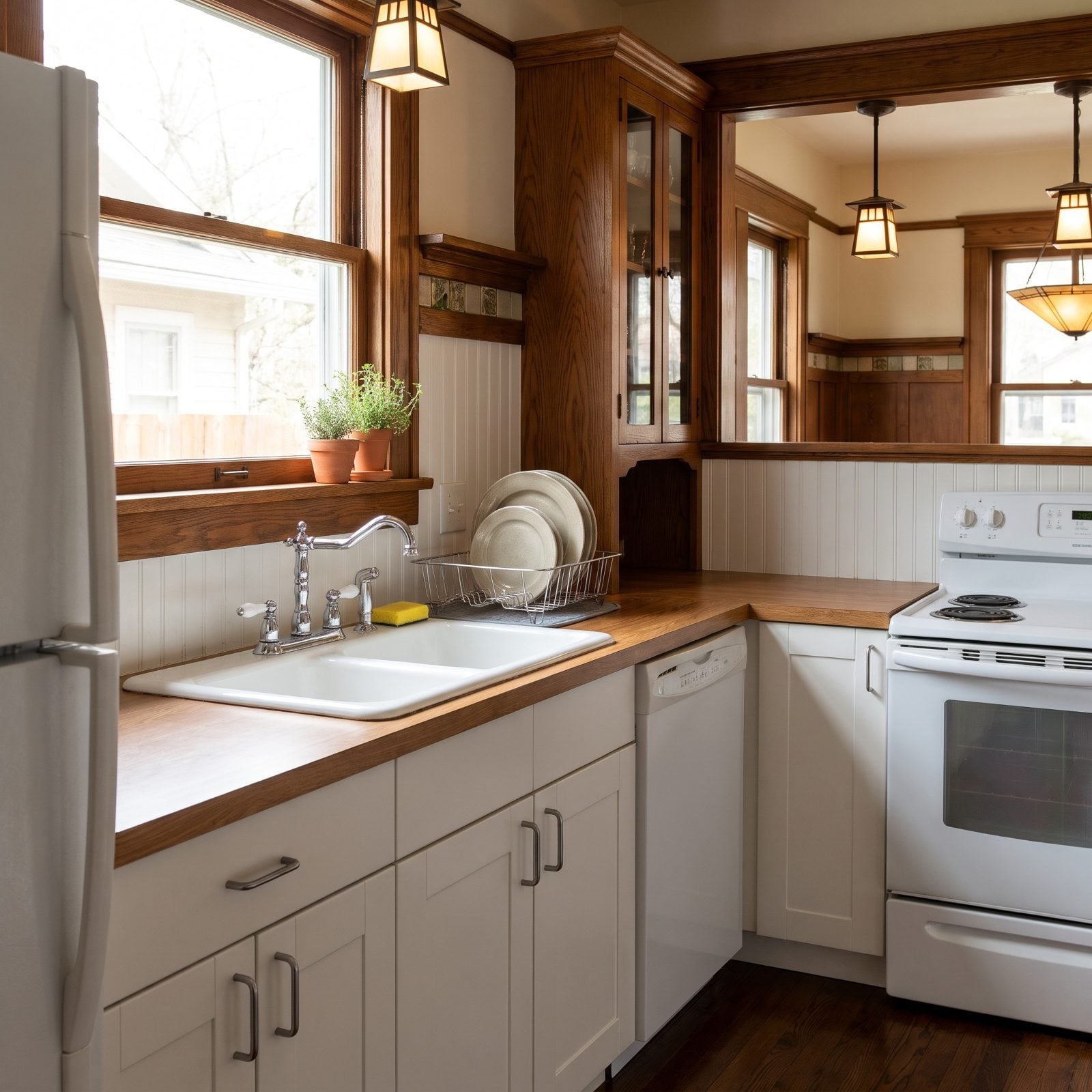
Cheap doesn’t have to mean regrettable. Porcelain-enameled steel drops in from the top, rests on its own rim, and needs no special bracing — a reasonably handy person installs one in an afternoon with a tube of silicone and a screwdriver.
Steel is thin, so it’s noisier than cast iron and the enamel chips a little easier. At this price, though, replacement isn’t a tragedy. For a rental, a first kitchen, or a utility sink out in the garage, it’s the practical call.
11. Seamless Solid-Surface Integrated: One Pour, No Grime Lines
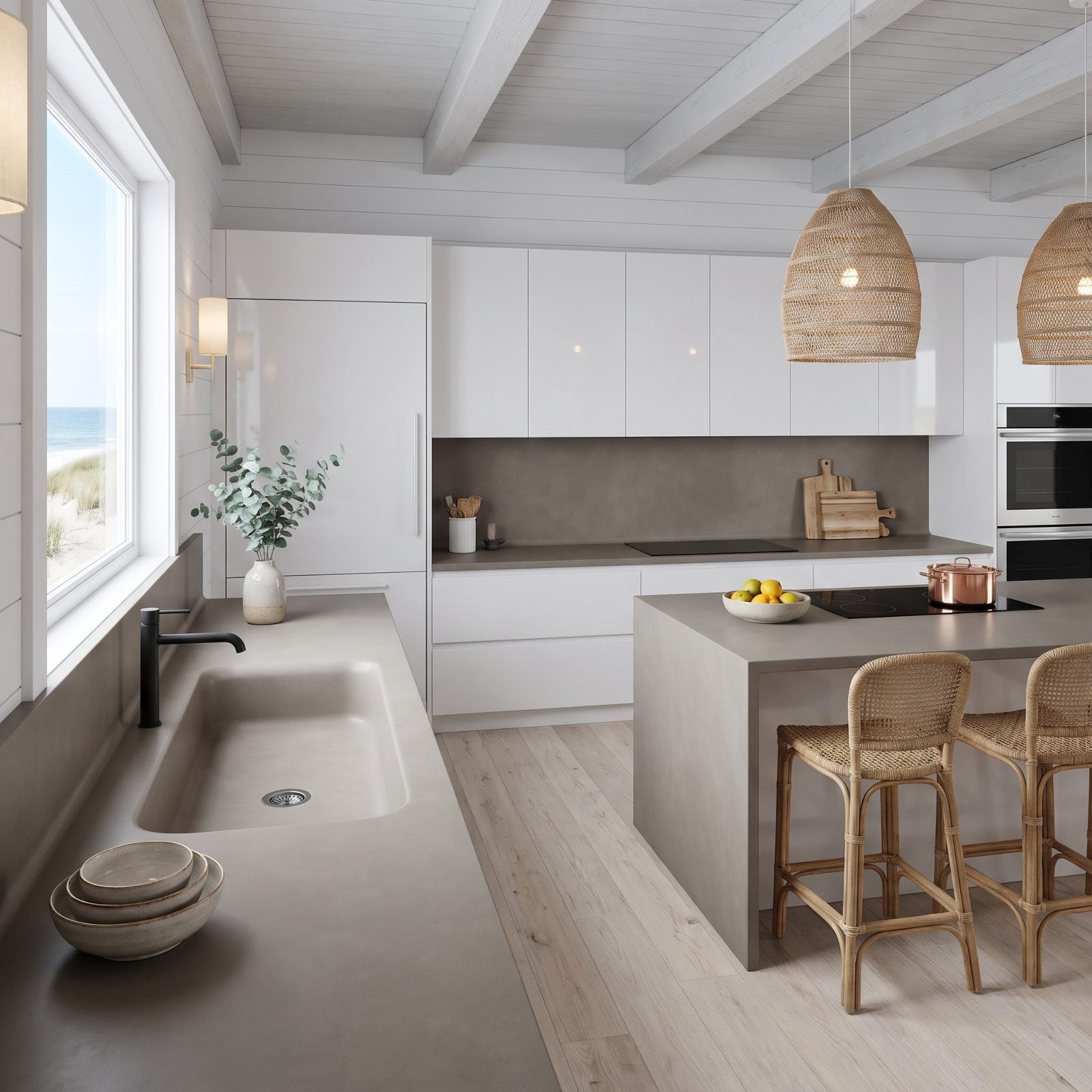
No seam means no grime. The basin and counter are molded as one piece, so there’s no silicone line to grow black, no rim to trap crud, nothing to scrub with a toothbrush at 11pm. If you hate cleaning seams, this is the dream.
Solid surface scratches and can scorch under a hot pan, but here’s the quiet genius: minor scratches sand right out with fine-grit paper, and a pro can buff out a burn mark. Low durability ceiling, high repairability. Fair trade.
10. Carved Soapstone Sink: The Basin That Shrugs Off Everything
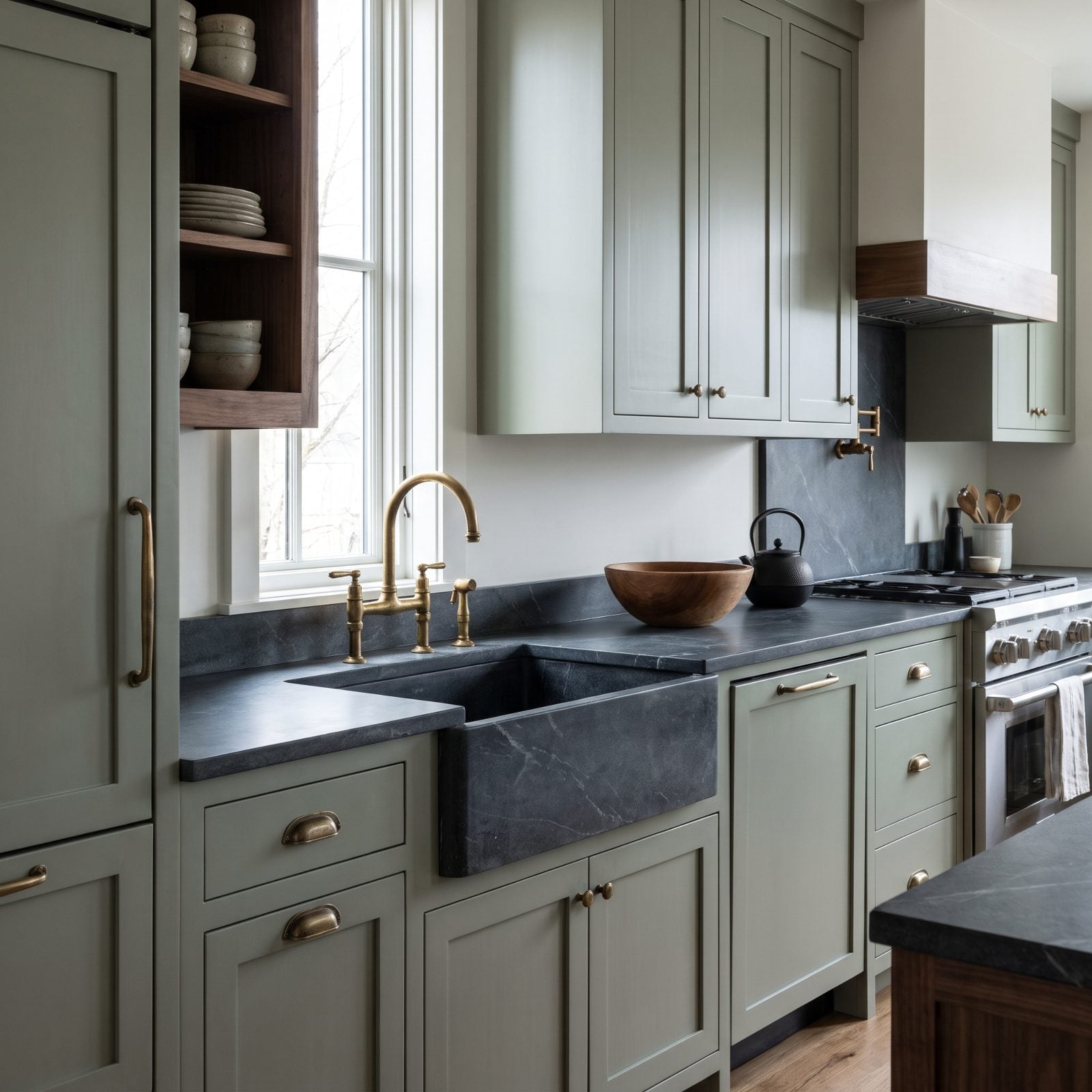
Soapstone doesn’t care what you throw at it. Acids won’t etch it, heat won’t scorch it, and stains sit on the surface instead of soaking in. You can set a boiling pot right next to the basin and nothing happens — for a hardworking kitchen, this is about as durable as a sink gets.
It’s soft, though, so it scratches, and it needs the occasional rub of mineral oil to even out the darkening. The real hurdle is weight and cost. Carving a basin from solid stone is a specialist job, and getting that slab into your kitchen is a full day of grunting.
9. Poured Concrete Trough: Industrial Muscle With a Custom Shape
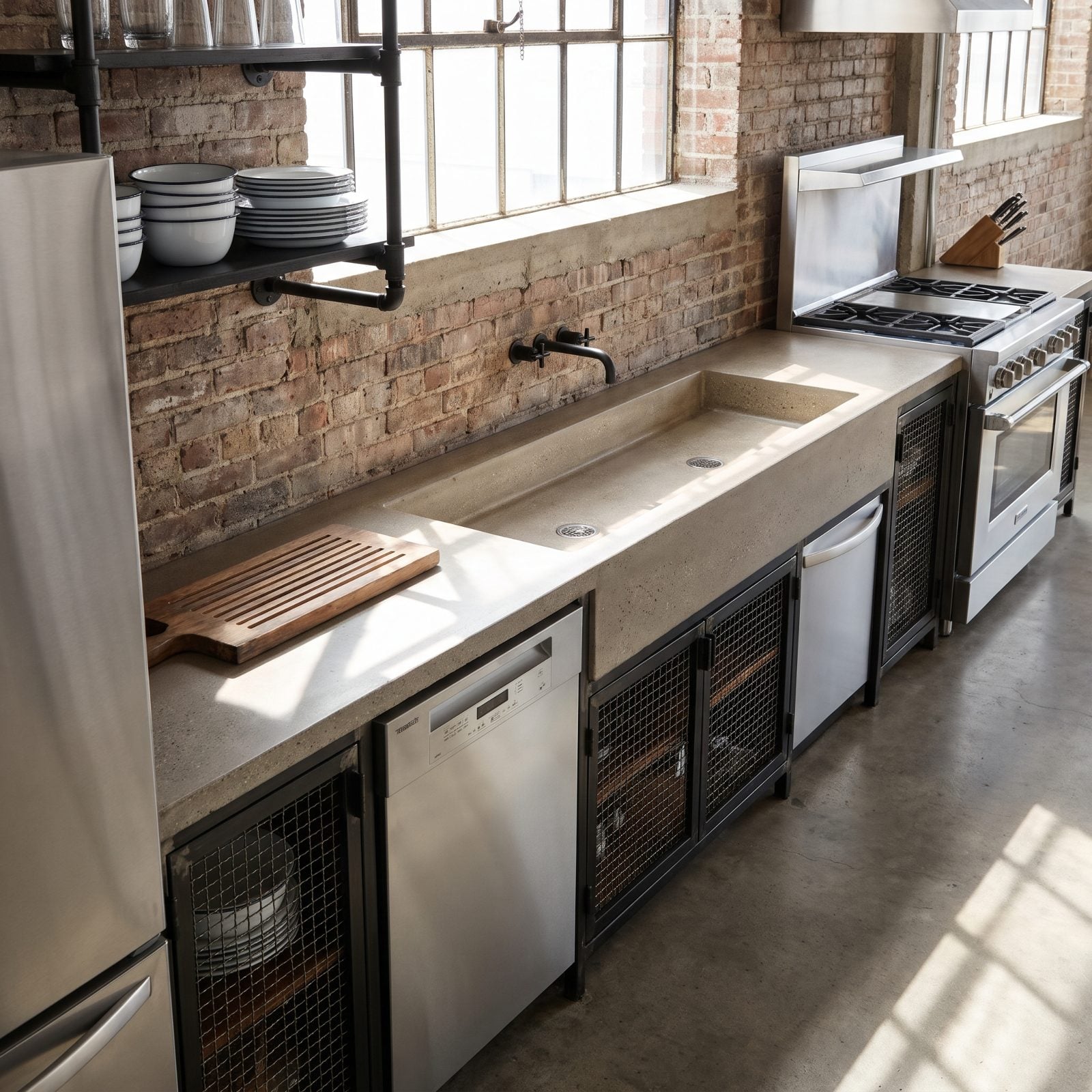
Want a sink shaped exactly how you want it? Concrete gets poured into a form, so the trough can run as long as your counter and sit at whatever depth you like. In an industrial loft, that raw grey slab is the whole look.
Concrete is porous by nature, and that’s the problem. It needs sealing on install and resealing over the years, or it stains and can hairline crack. Done by a real concrete craftsman it lasts decades. Done by a weekend warrior, it’s a sponge with pretensions. I’ve seen both, and the difference is the sealer, every single time.
Not everyone is sold on the raw look, though: kitchen photos featuring concrete got fewer hearts from our readers than the other images in the same articles, 39% versus 56%.
8. Integrated Marble Slab Sink: A Carved Basin for the Few Who Dare
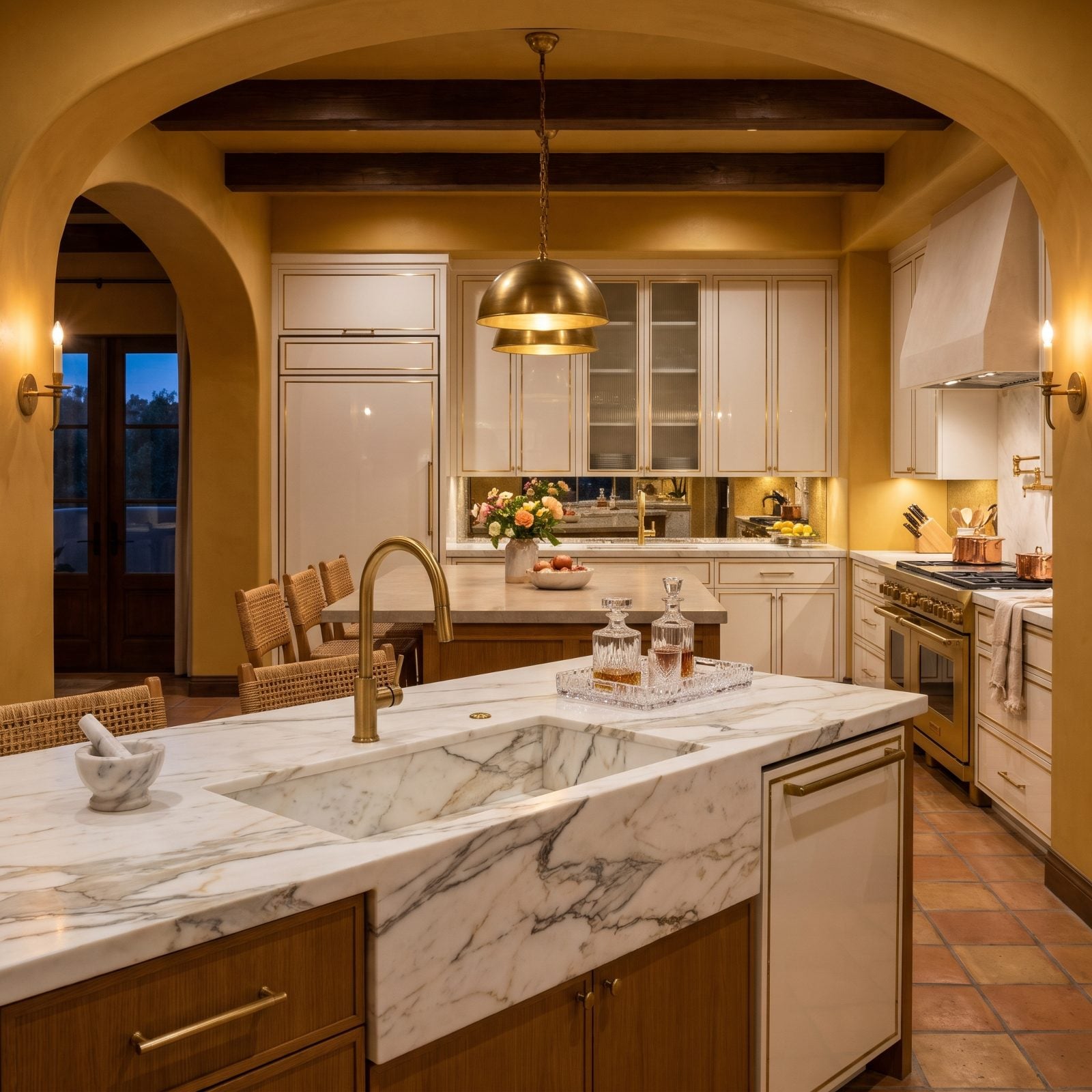
This is the one that makes people stop talking mid-sentence. A single piece of Calacatta carved into both counter and basin, veining running unbroken from surface into bowl. It belongs in the kind of glam kitchen decor that exists to be admired.
Marble is a beautiful sink and a terrible plumber’s friend. Pick your priorities.
Here’s my honest take: as a sink, marble is a bad idea. It etches from a squeeze of lemon, stains from coffee and wine, and chips at the drain. You’ll spend your life sealing it and apologizing to it — spectacular to look at, a daily maintenance chore to live with. If you want it anyway, go in knowing the deal.
7. Round Prep Sink: The Little Second Basin That Pulls Its Weight
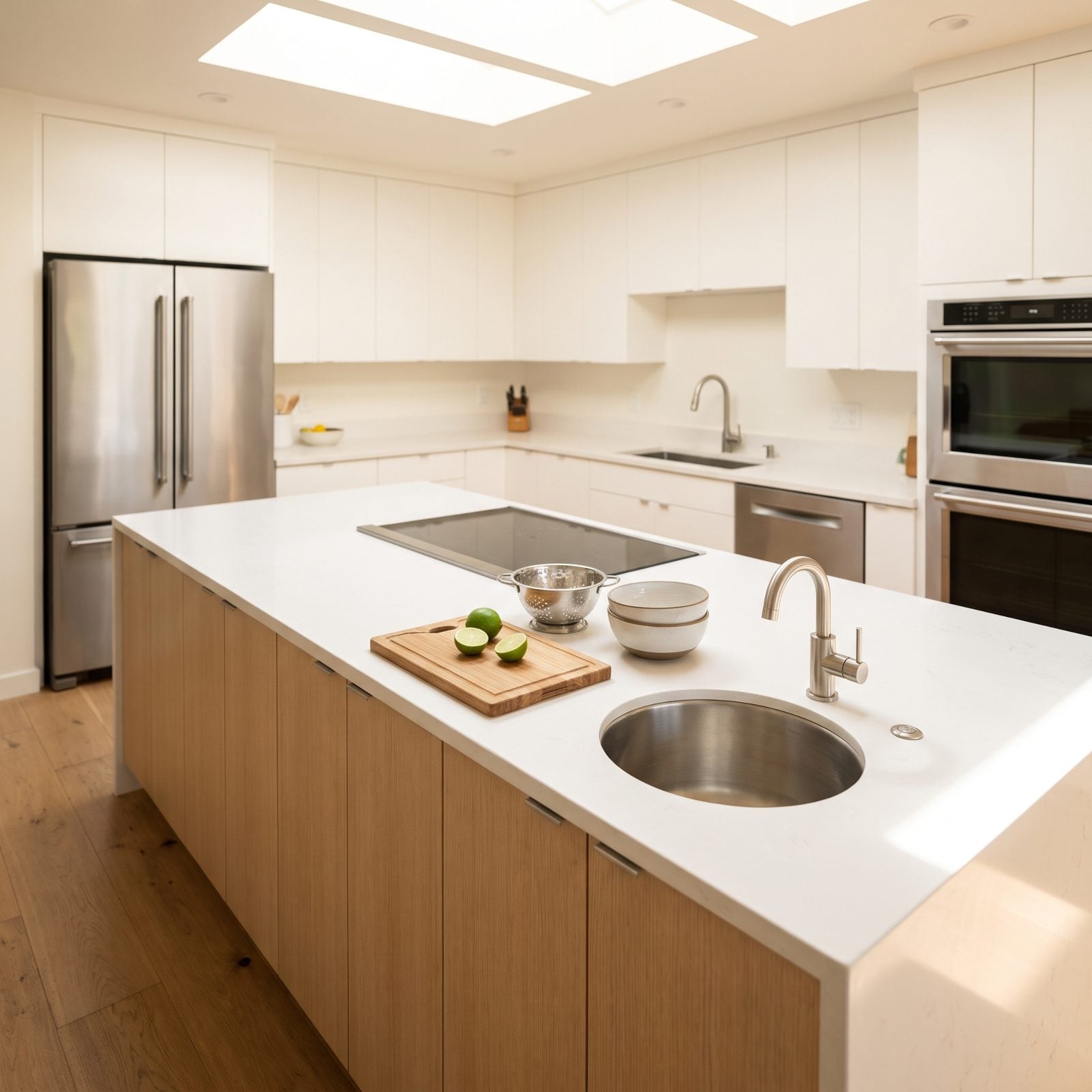
Small, round, and smarter than it looks. A prep sink lives on the island so you can rinse vegetables and fill pots without crossing the kitchen to the main basin. In a two-cook kitchen it ends the constant bumping into each other at one sink.
Round basins install easy, clean easy, and run cheap — though the round shape wastes a little corner space a rectangle would use. Treat it as a helper, not the workhorse, and it earns its spot. Pairs beautifully with any open kitchen inspiration where the island faces the living space.
6. Compact Shallow-Bowl ADA Sink: Accessible, Low, and Surprisingly Practical
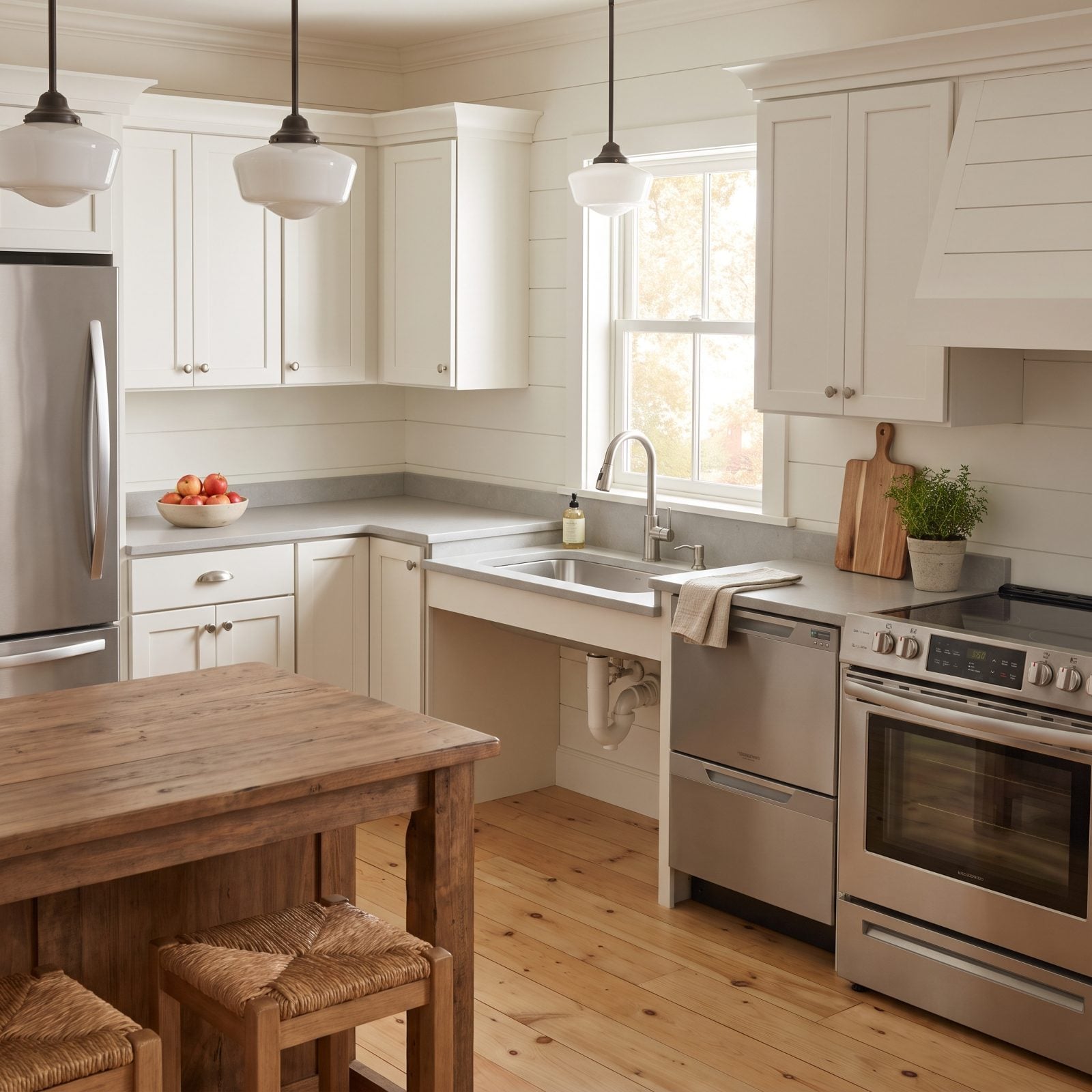
The most underrated sink on this list. A shallow bowl sits higher in the counter so there’s knee clearance underneath, the drain gets pushed to the back to free up leg room, and the whole thing works for anyone seated or anyone who just hates bending over a deep basin.
Shallow means you can’t hide a stock pot in it, and that’s the one real trade. But the rear drain keeps plumbing tidy and repair access stays wide open with no cabinet in the way. Honestly, I’ve come around to thinking everyone should consider one — not just households that strictly need it.
5. Hammered Copper, Undermounted and Doing a Lot
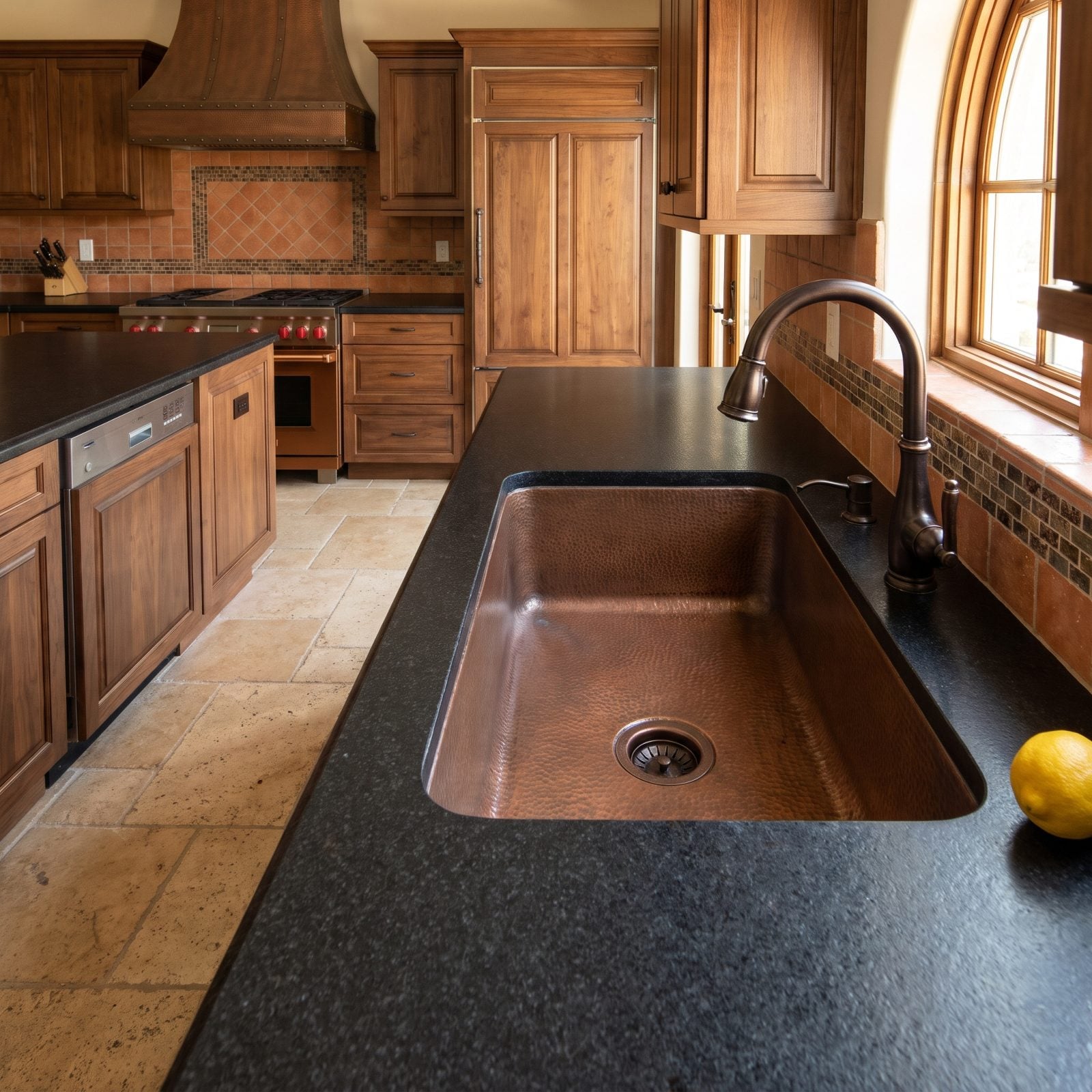
Copper is the showoff of the sink world, and it has earned the title. That hammered surface hides water spots and small dents the way a busy rug hides crumbs.
Here’s the part the brochures skip: copper is a living finish. It darkens, lightens, and shifts depending on what you pour down it. Lemon juice will strip the patina to bright penny in seconds. Some people love that unpredictability. Others find it maddening and reach for a sealed version instead. Undermounting it means wiping crumbs straight into the bowl with no rim to catch them, which is the real daily win. These sit gorgeously in a dark kitchen design where the warm metal has something to glow against.
4. The Rear-Drain Single Bowl and the Case for Moving the Hole
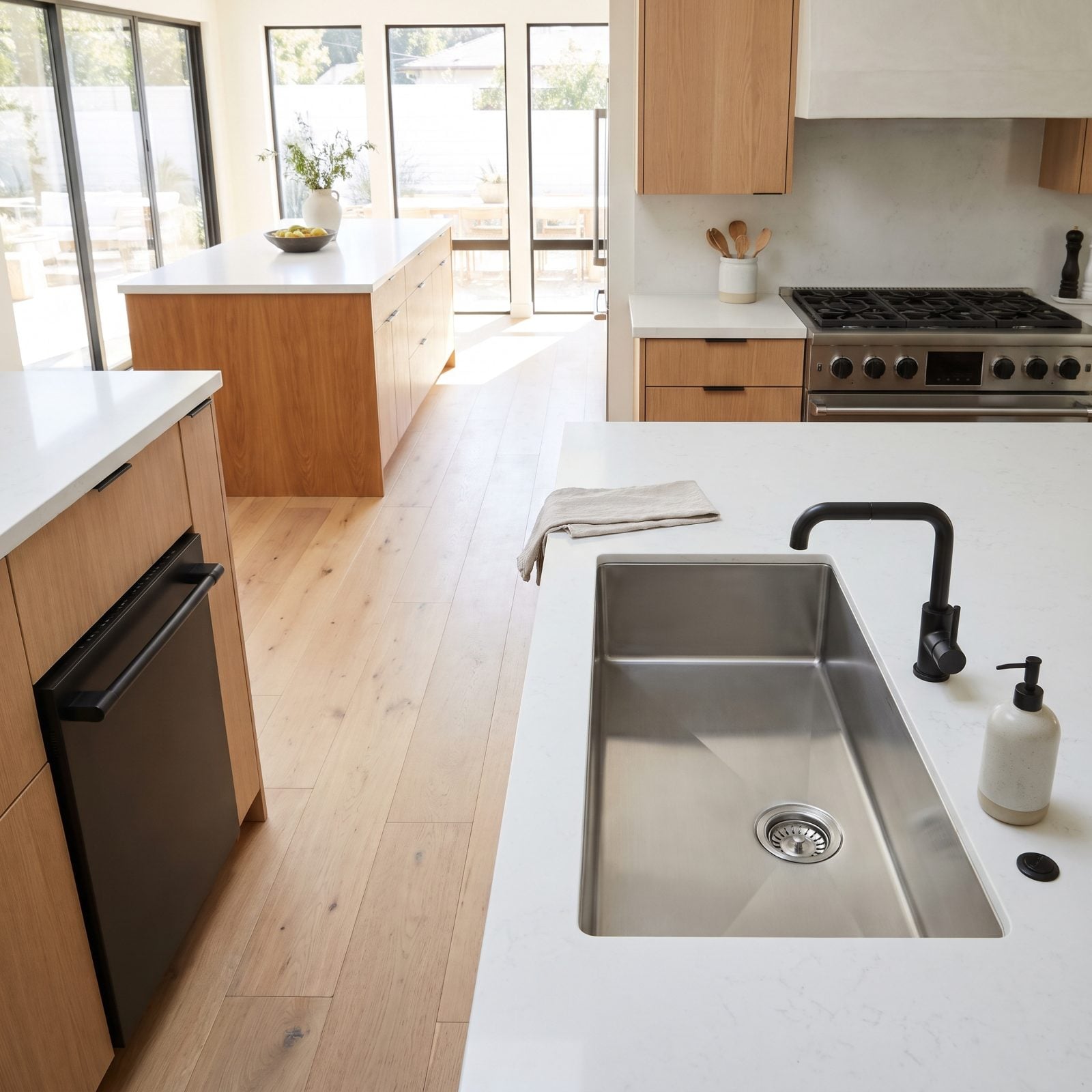
Move the drain off-center toward one end and something clever happens: you get a flat, usable basin floor and a world of storage below.
Plumbers tend to like these. The offset drain tucks the P-trap toward one side of the cabinet instead of eating the whole center space, so your under-sink area actually fits things. Dishes drain better too, because the slope runs away from where you stack them. The only catch? Standing water pools slightly if the install isn’t dead level, so this one rewards a careful setter. Smart pick for a contemporary kitchen where clean lines and hidden storage both matter.
3. D-Shaped and Flat-Walled: More Bowl Than It Looks
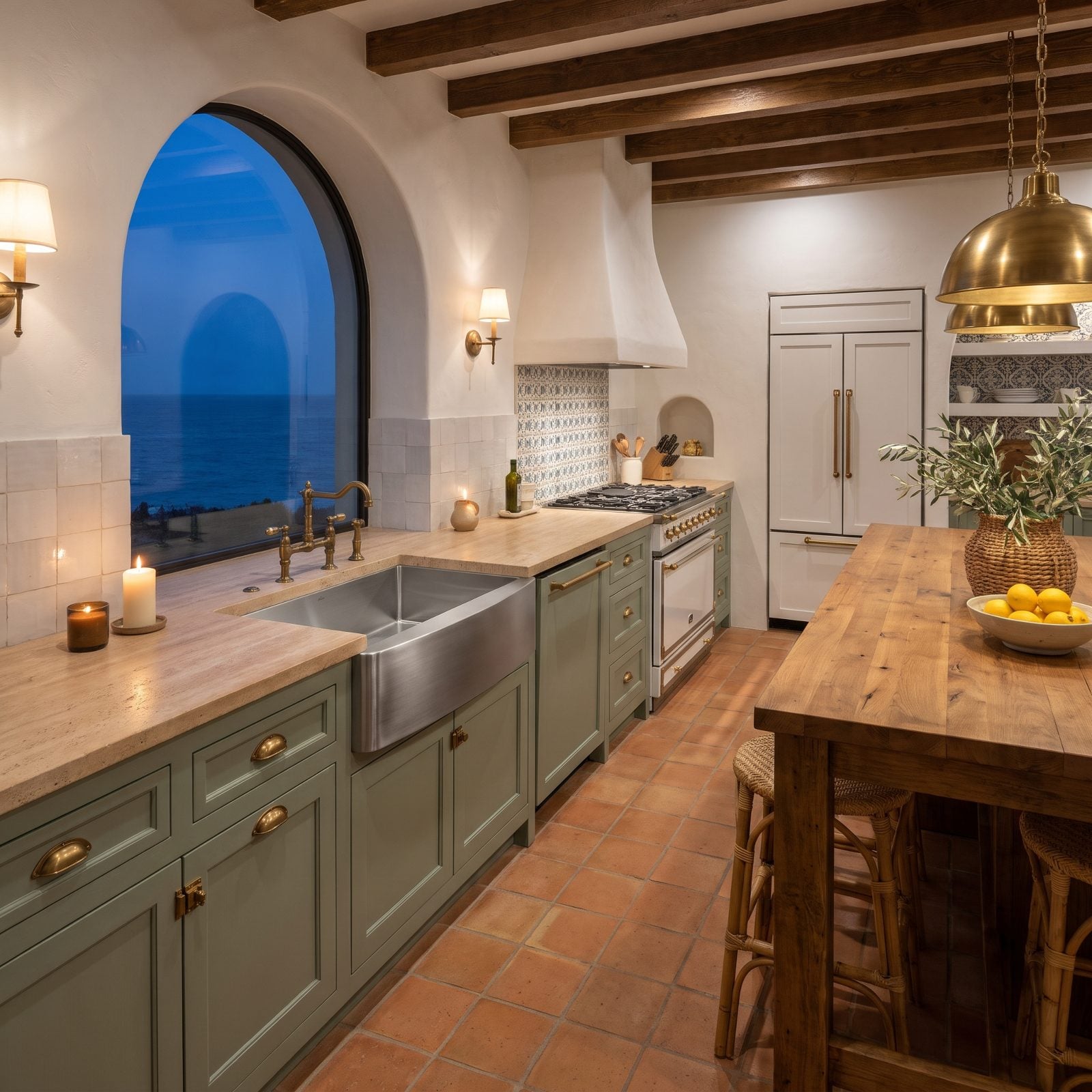
The D shape is the whole trick. This stainless bowl has a flat back wall and a front that curves outward, so it fits a sheet pan more easily than its footprint suggests, which anyone who washes baking trays will appreciate immediately.
These hit the sweet spot on practicality: more usable bottom area than a standard bowl, standard drain placement so no plumber scratches their head, and a stainless apron front that wipes clean in seconds. I’ve watched people pass these over for prettier options and regret it the first time a casserole dish won’t lie flat.
2. The Commercial Utility Sink That Wandered Into a Home Kitchen
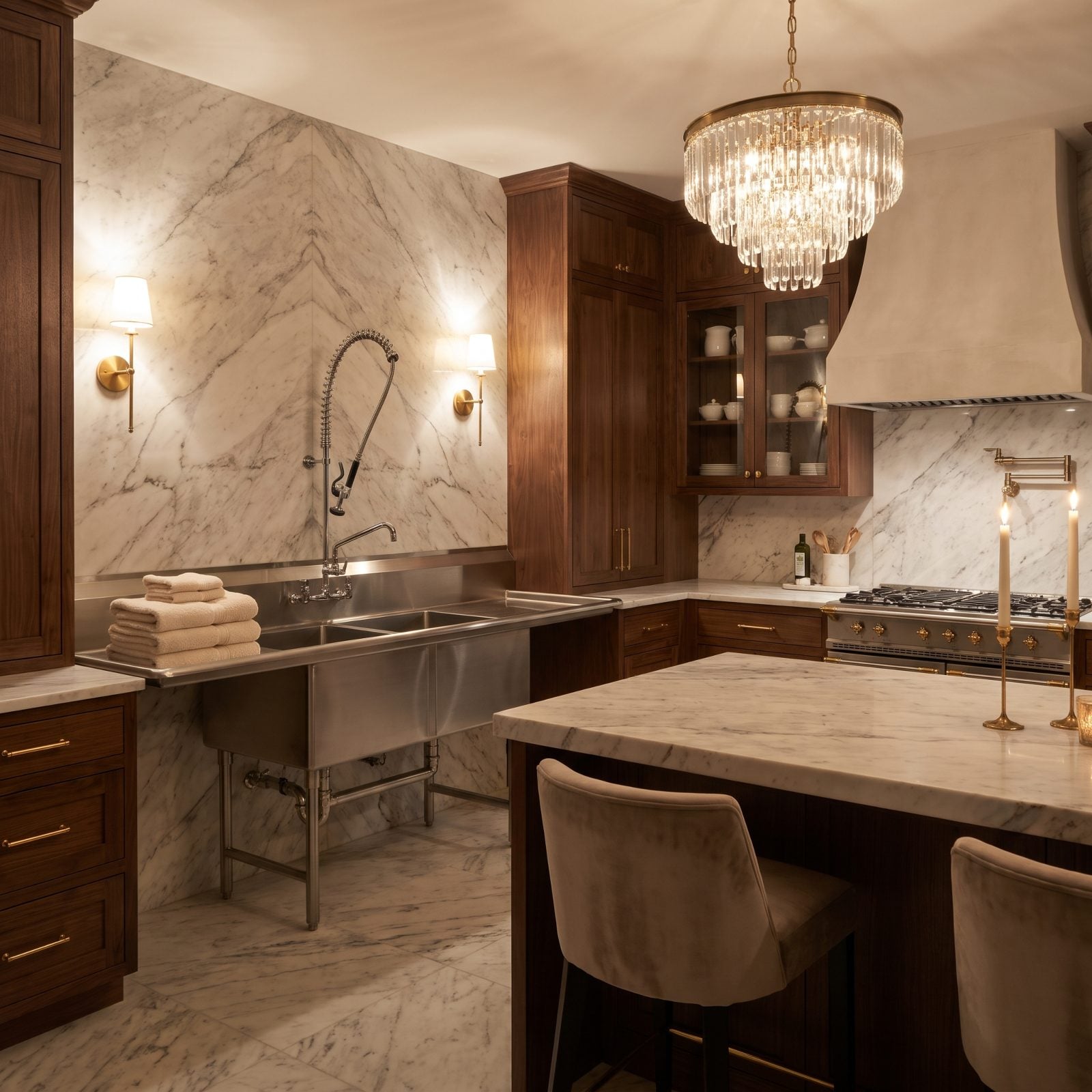
You’ve seen one of these in the back of a restaurant, deep enough to lose a stockpot in. Drop it into a home kitchen and it changes what you can wash.
Durability is off the charts. Commercial-grade stainless shrugs off abuse that would dent a residential sink, and the depth handles roasting pans and sheet trays with room to spare. The downsides are real, though. These things are heavy, loud when water hits bare steel, and the height can leave you hunched if the counter wasn’t built for it. Repair access is excellent, since the plumbing is built to be serviced fast by people who hate downtime.
1. Carved From a Single Block: The Natural-Granite Sink
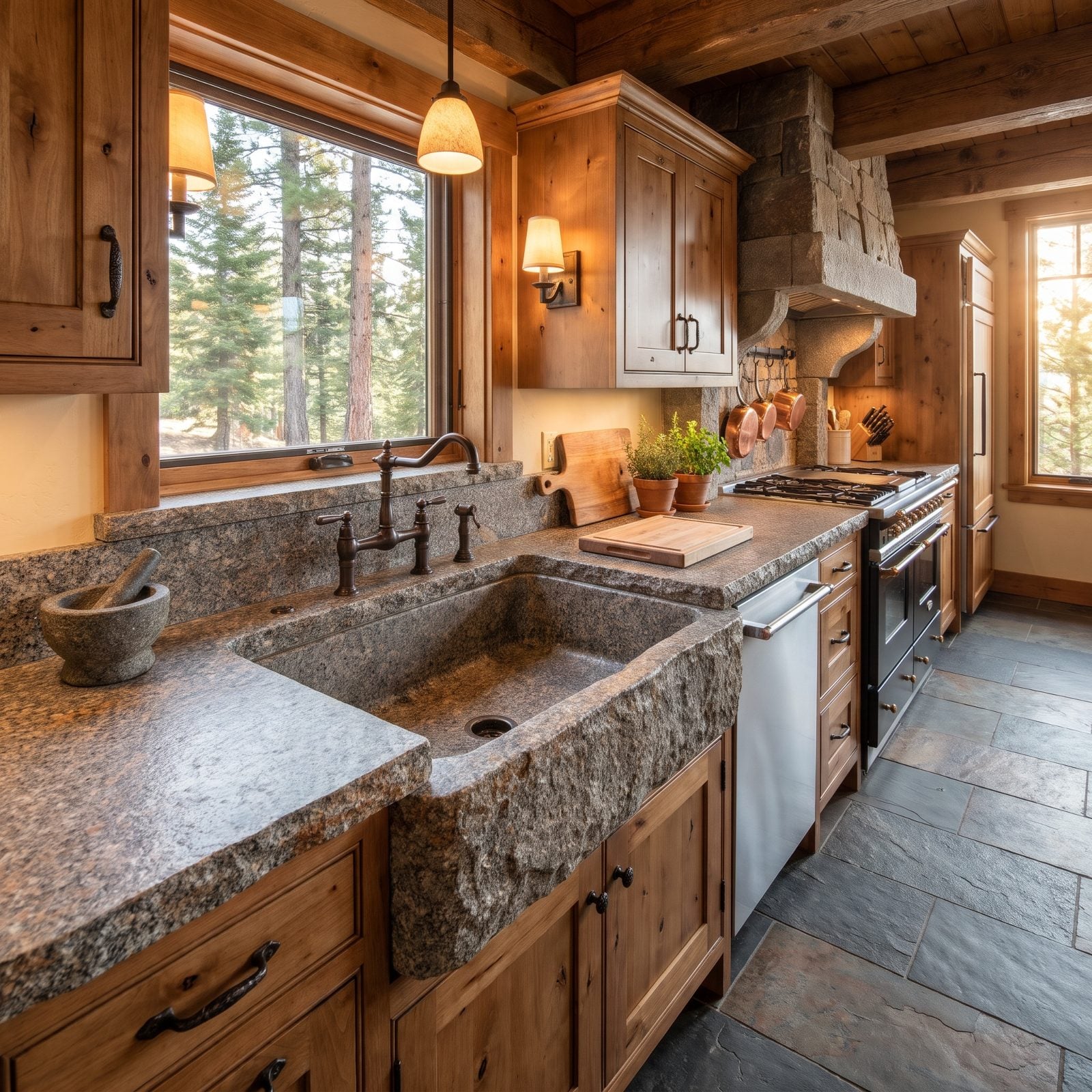
One block of stone, the basin carved as a single piece, with the countertop slabs set alongside it. The basin itself has no seams to fail; the only joints are where the counter meets its rim.
This is the heavyweight champion of durability and the nightmare of installation. A carved granite sink can weigh several hundred pounds, which means reinforced cabinetry, a crew, and a very good reason for the floor beneath to hold it. Drainage stays simple since the drain is cut straight into solid stone. Repair access is fine, but honestly the sink itself is essentially unbreakable, so there’s rarely anything to repair. Seal the stone once in a while and otherwise leave it alone.