
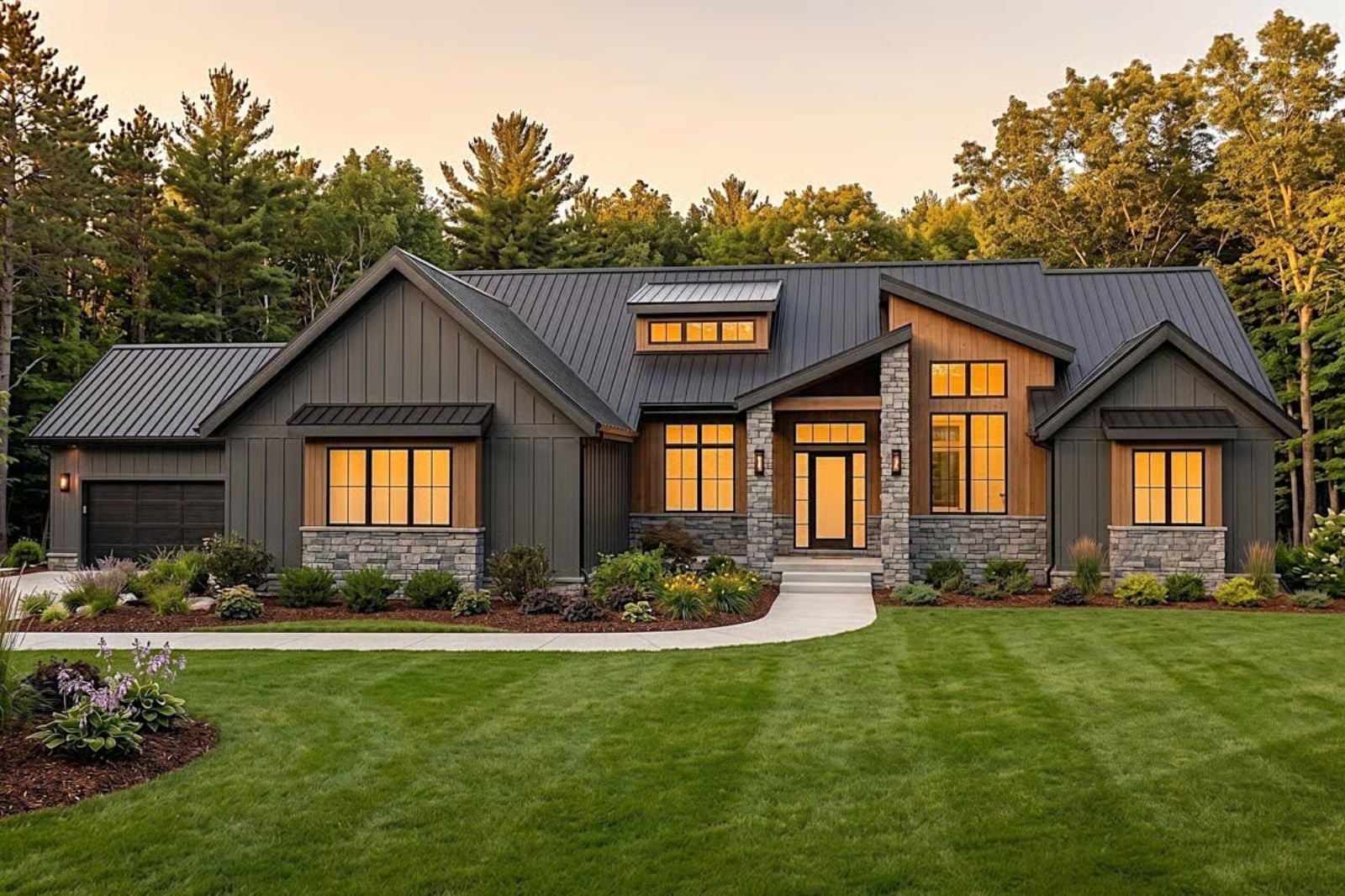
Families are building around the dinner table again, and the floor plans keeping pace are the ones designed to hold a crowd without feeling like a compromise. The Brackenfield delivers exactly that: an open great room that keeps the cook in the conversation, a covered rear porch for the nights that run past ten, a mudroom that absorbs four kids and all their gear, and a four-car garage that ends the argument about who parks where.
Specifications
- Sq. Ft.: 2,491
- Bedrooms: 3
- Bathrooms: 2.5
Floor Plan – Main Floor
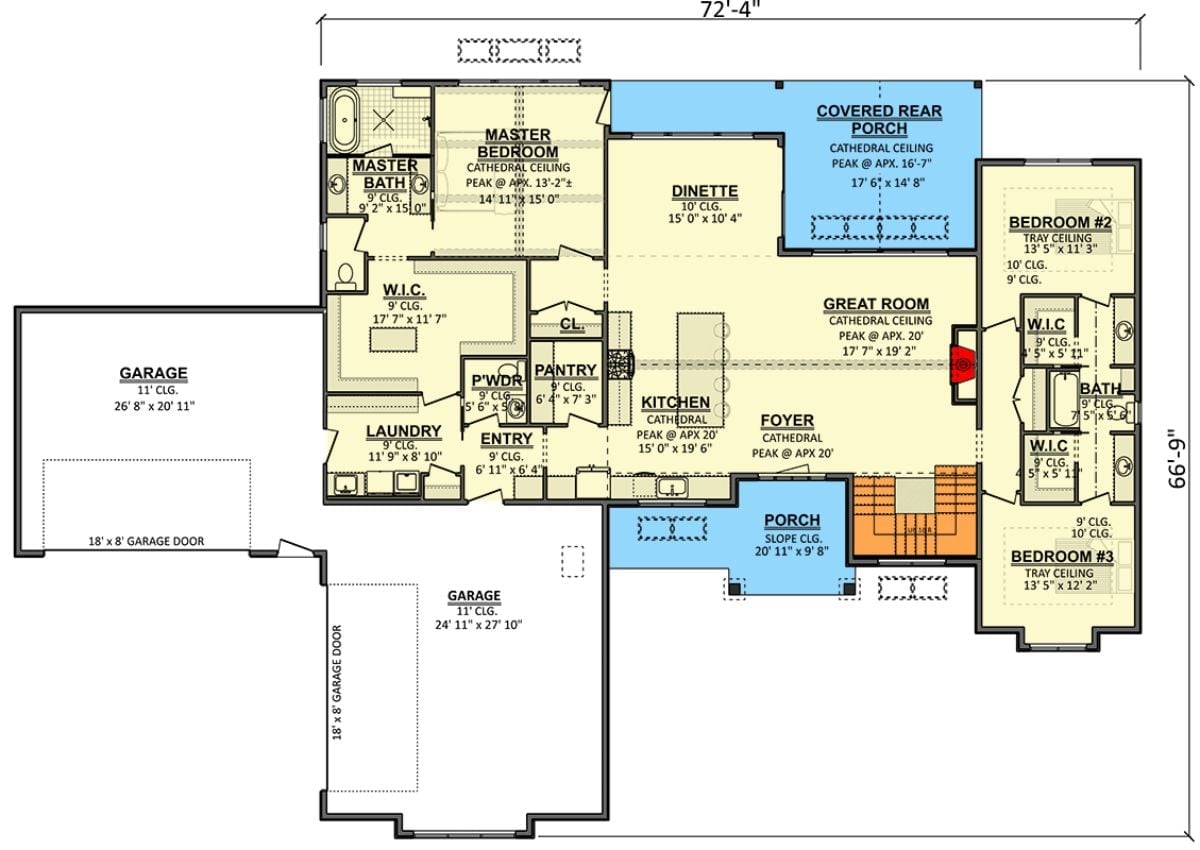
The open great room anchors the layout, connecting kitchen, dinette, and covered rear porch with enough natural flow that you don’t have to think about it.
Dark Siding, Timber Gables, and a Covered Porch Built for Real Outdoor Living
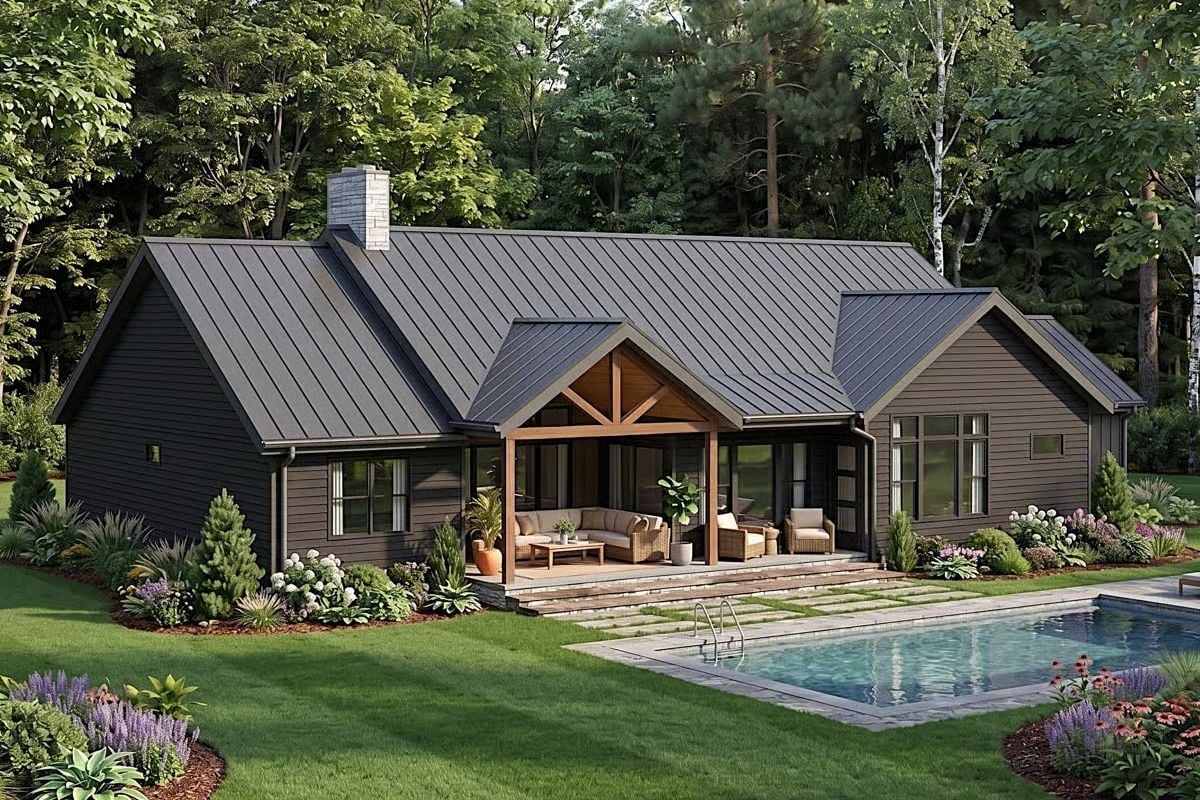
That cedar timber gable framing the covered porch is doing most of the visual work here, and it earns it. Wicker seating sits beneath it, steps drop to a stone-and-grass walkway toward the pool, and mature perennials line the beds along the way. The dark lap siding keeps the whole composition from going too sweet.
Stone Up to the Ridgeline, Beams Overhead, and Somewhere to Actually Sit
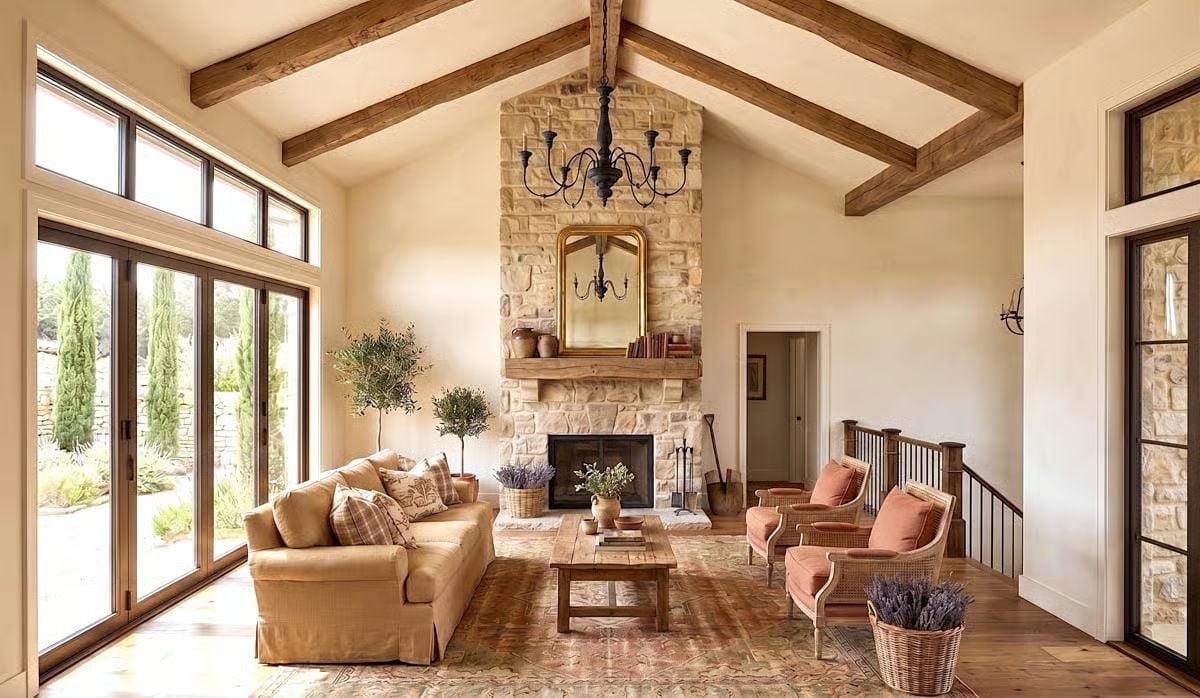
Exposed wood beams follow the pitch of the vaulted ceiling straight down to a floor-to-ceiling stone fireplace — rough-hewn timber mantel, gold mirror catching the chandelier above, wicker baskets of dried lavender at floor level. This room was clearly designed around the fireplace. Everything else just fell into place behind it.
Sage Green Island, Lantern Pendants, and a Hutch That Actually Gets Used
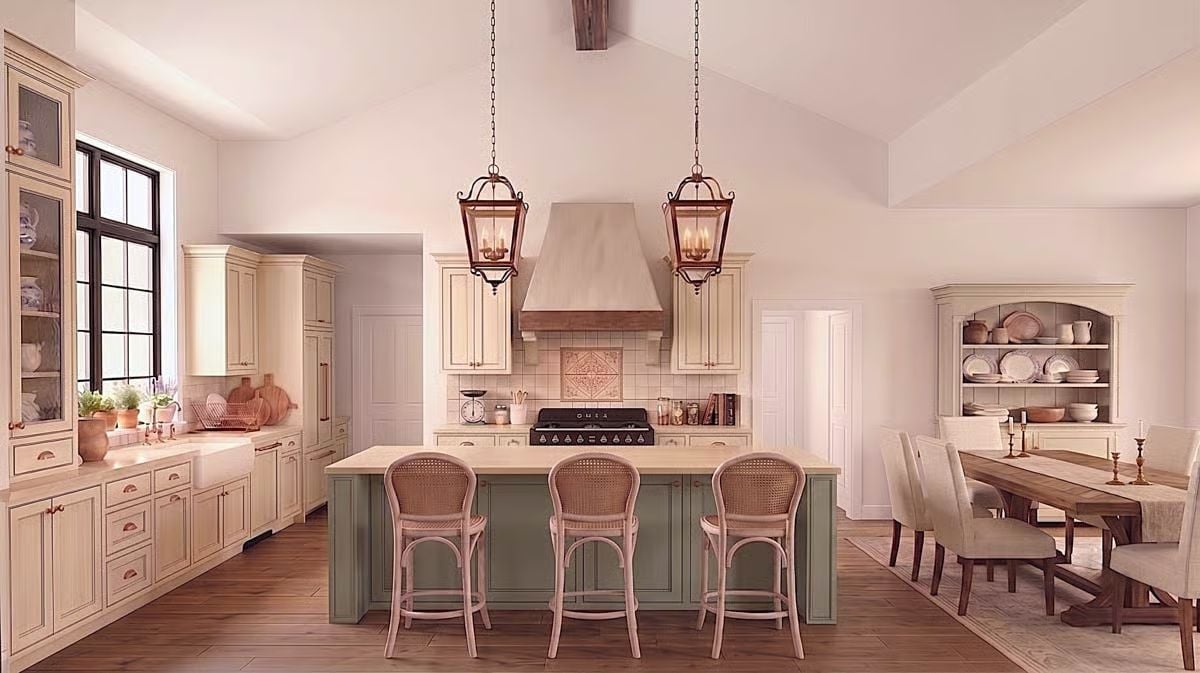
Cane-back barstools pull up to a sage island topped with cream stone, copper-tone lanterns hanging from chains overhead. The hutch isn’t decorative. It’s loaded.
Why the Two-Tone Cabinet Strategy Works Here
Soft cream on the perimeter cabinets, sage on the island — it sounds simple, but the effect is that the island reads like furniture rather than built-in cabinetry, which makes the whole kitchen feel collected instead of spec’d. Painting everything one color would have flattened that out completely. The visual weight stays grounded without boxing the room in, and that’s a harder balance to pull off than it looks.
Vaulted Beams, Garden Views, and a Chandelier That Earns Its Place
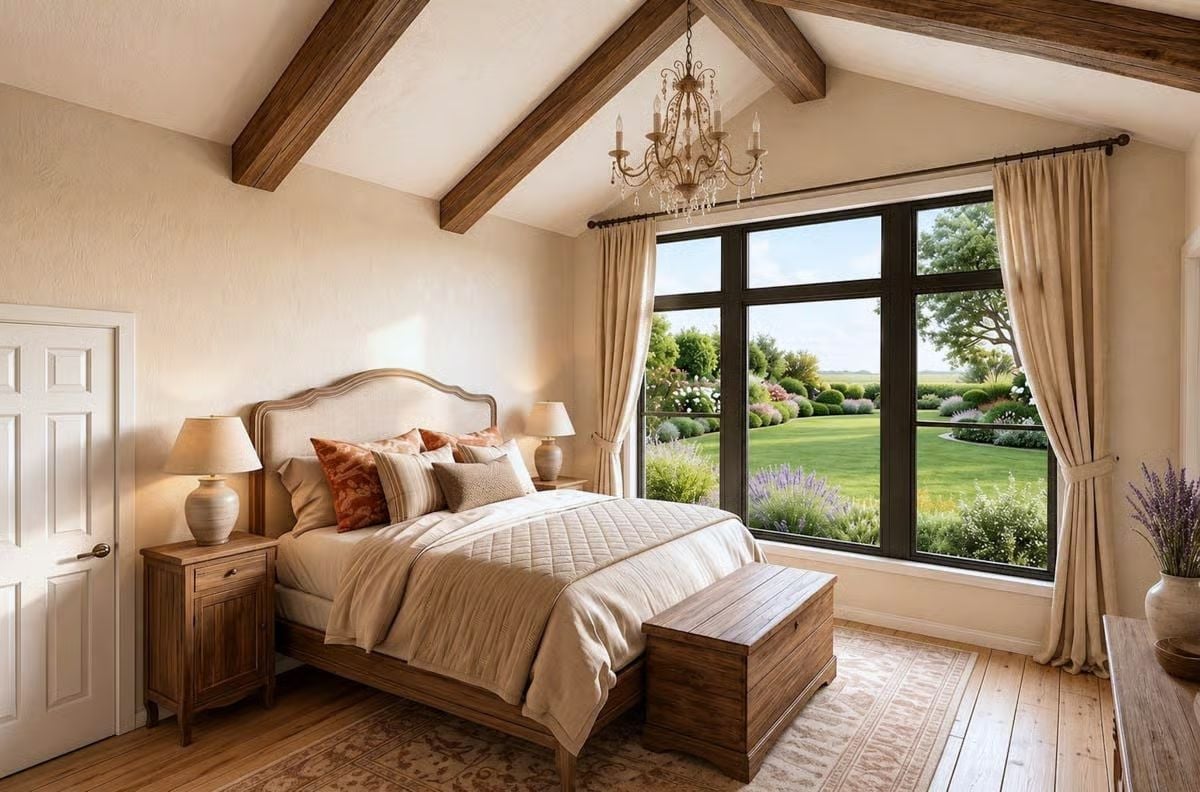
Rough-hewn ceiling beams paired with a delicate crystal chandelier shouldn’t work, and yet here we are. The quilted bedding stays neutral while rust-toned pillows pull color directly from the garden outside the window, so the room and the landscape end up in a quiet conversation with each other.
History Corner: The wood storage chest at the foot of the bed is one of the oldest bedroom furniture traditions in Western homes, dating back centuries as a place to store linens and valuables. Early American farmhouses relied on them heavily before built-in closets became standard. They’ve outlasted nearly every other furniture trend, which says something.
Warm Wood, Oval Mirrors, and a Soaking Tub That Makes the Whole Room Worth It
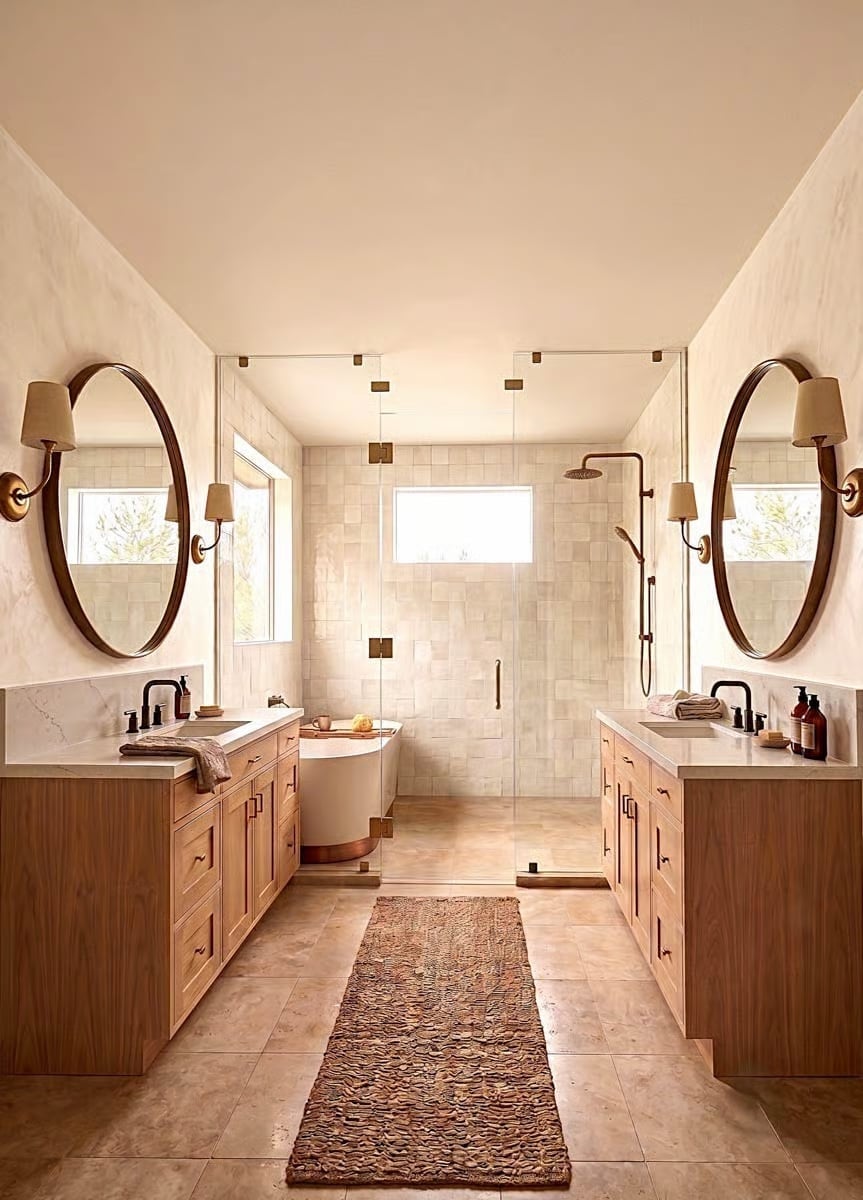
Dual vanities facing each other is one of those layouts that sounds obvious until you actually live with it.
Natural wood cabinetry runs floor to ceiling on both sides, with marble countertops that feel grounded rather than precious. Brass wall sconces sit just outside each mirror — light exactly where you need it, not bouncing off a ceiling fixture three feet away. The freestanding soaking tub tucked inside the glass shower enclosure is an unusual pairing, but in a narrow room it makes immediate sense. Woven runner down the center, travertine-look tile underfoot, matte black faucets pulling everything together without competing with anything.
Sage Cabinets, Patterned Tile, and a Mudroom That Actually Does the Work
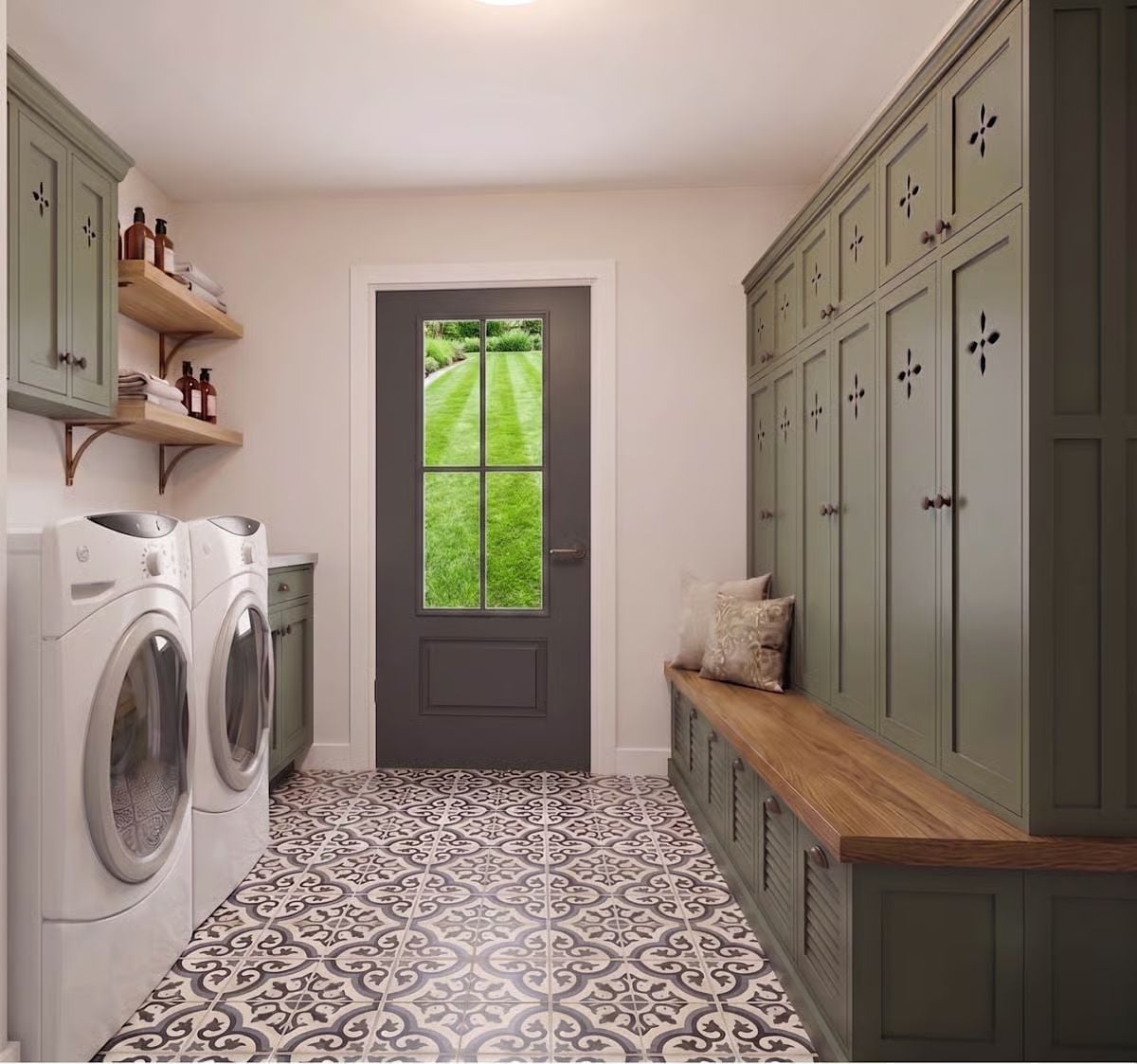
Sage green locker-style cabinetry runs the full length of one wall — wood bench seat, cross-cutout hardware details, encaustic-style floor tile underfoot. Open shelving keeps it from feeling like a storage closet that grew up.
Budget Tip: Locker-style mudroom cabinets with individual doors cost considerably more than open cubbies. If budget is tight, build open cubbies with a shared upper cabinet run instead — you get most of the storage at a fraction of the millwork cost.
Pin It
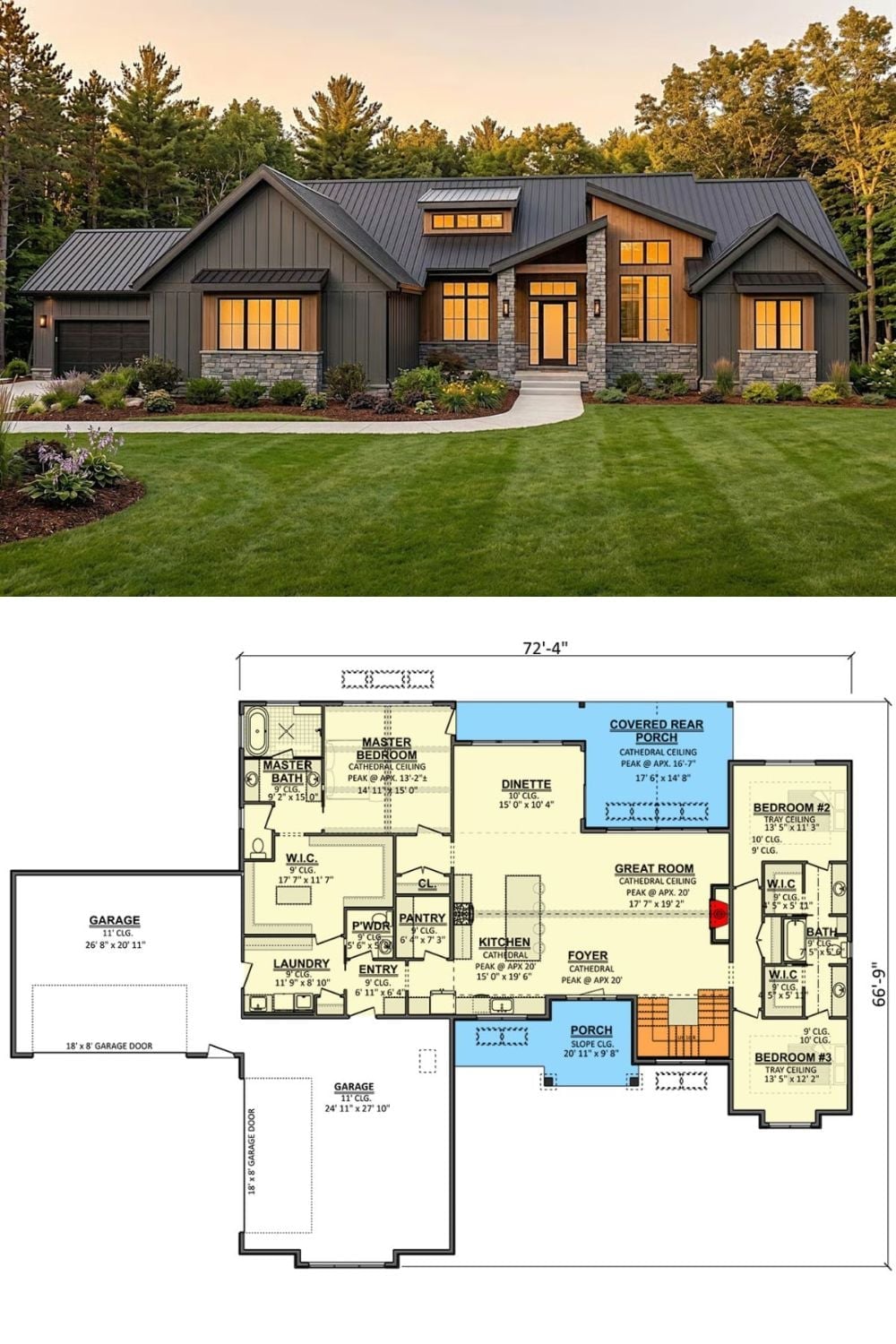
The top image shows the Brackenfield exterior: modern farmhouse with board-and-batten siding, stone accents, and a metal roof. Below it, the floor plan lays out three bedrooms, a cathedral-ceiling great room, a covered rear porch, two garages, and a kitchen open to the dinette.
Fun Fact: Covered rear porches are increasingly designed as year-round spaces rather than seasonal add-ons. The vaulted ceiling in this one peaks at roughly 16 feet 7 inches — enough volume that the porch reads as a genuine extension of the great room rather than something bolted on after the fact. Builders sometimes call these “outdoor rooms,” and the distinction matters more than it sounds when it comes time to furnish and actually use the space.