
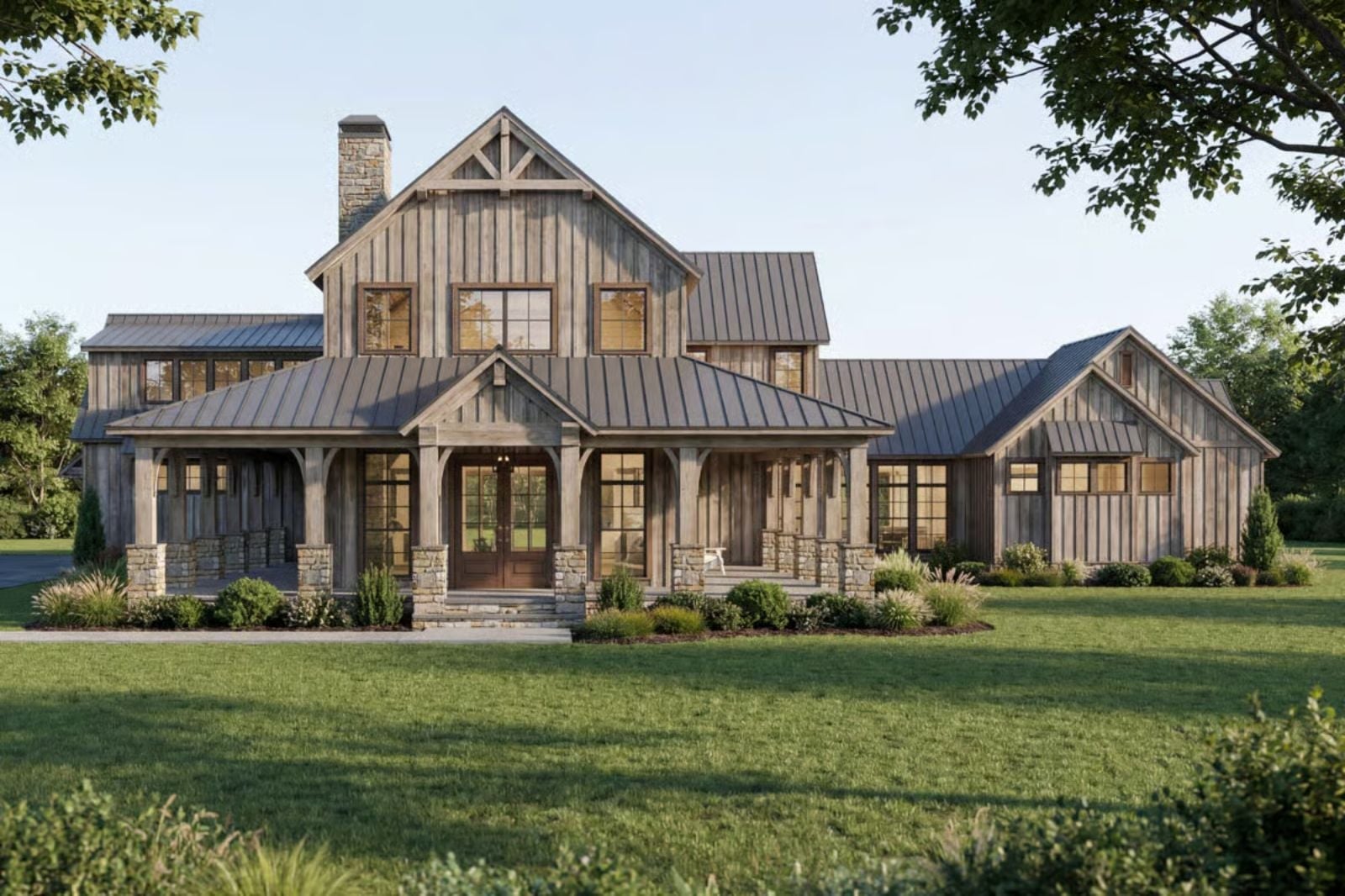
Saturday afternoon in late September, and both grandparents are on the wraparound porch while three grandkids tear through the yard and something is already in the oven. The Millhaven is built around exactly that: a private in-law suite with its own entrance, a farmhouse kitchen big enough for two cooks working at the same time, a mudroom that absorbs the chaos before it hits the main rooms, and a porch wide enough to actually live on.
Specifications
- Sq. Ft.: 5,527
- Bedrooms: 4
- Bathrooms: 4.5
Floor Plan – Main Floor
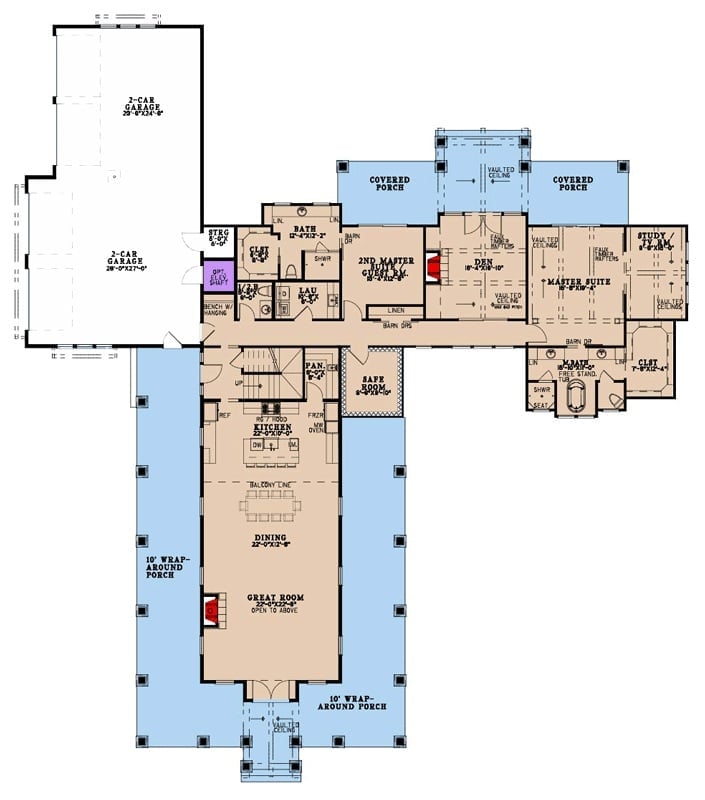
The first floor puts a master suite, second master/guest room, den, safe room, kitchen, dining, great room, and study all within reach of two covered porches connected by wrap-around access.
Floor Plan – Second Floor
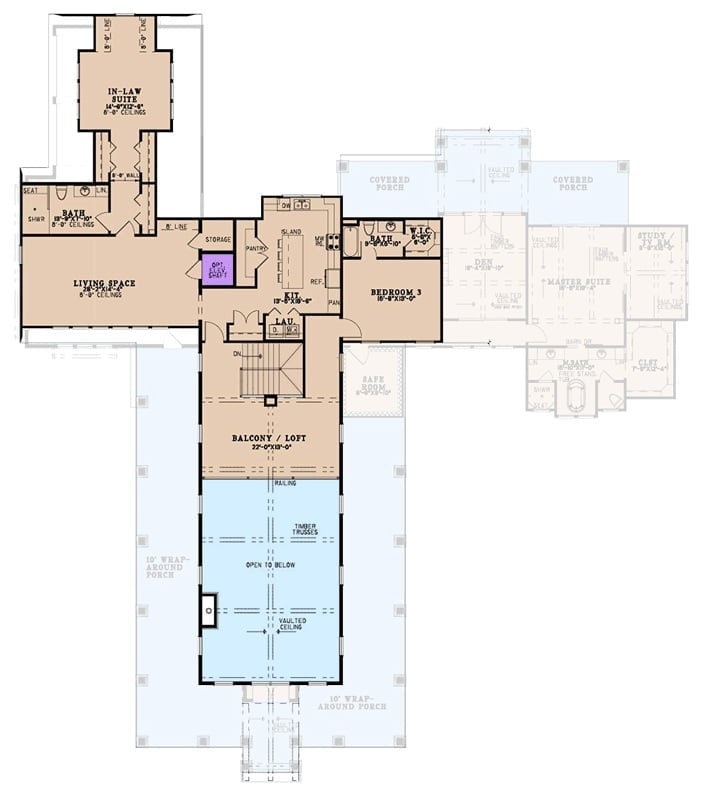
Upstairs, the private in-law suite with its own bath and living space is tucked to the left — well separated from the rest of the house. Bedroom 3, a safe room, and a loft balcony open to below fill the center, while the master suite and den claim the right wing entirely.
History Corner: Multi-generational living is nothing new. In the 19th century, three generations under one farmhouse roof was simply the default, with additions tacked on as families expanded. What this floor plan revives is that tradition — but with a privacy-first layout that older farmhouses, charming as they were, almost never managed to pull off.
Weathered Board-and-Batten and a Metal Roof That Means Business
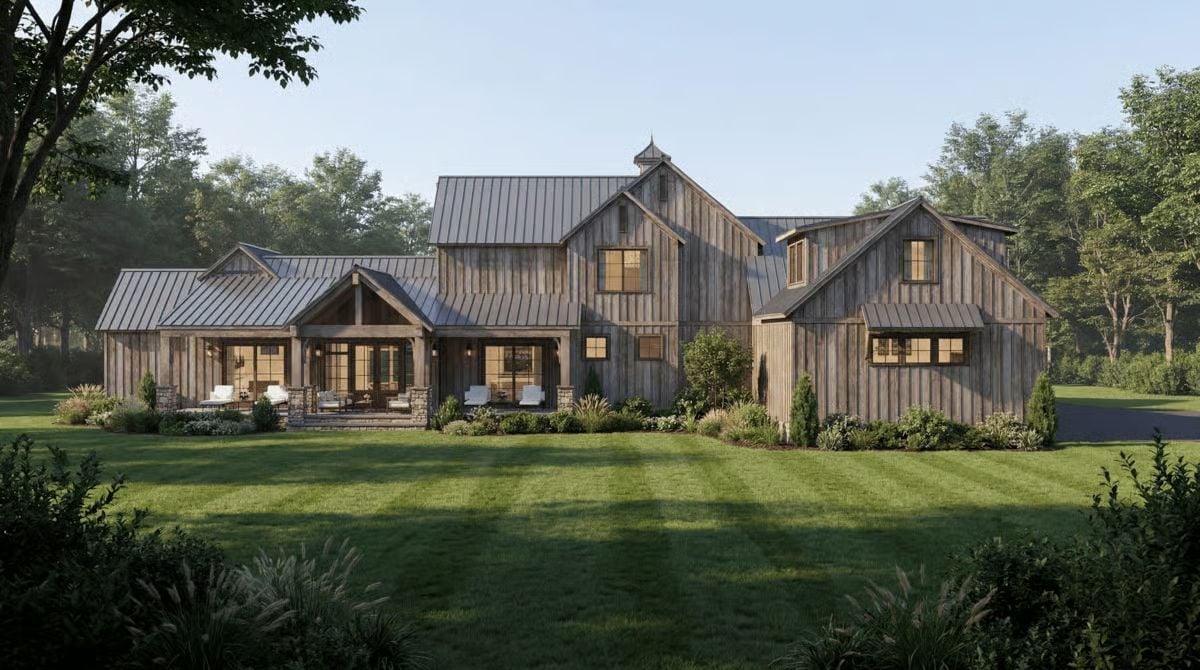
Reclaimed-look vertical siding gives this exterior its aged character without actually being old, which is a reasonable trade. Stone piers anchor the covered porch, white outdoor seating already arranged beneath them, and the standing-seam metal roof handles the weather while pulling the whole facade together — no apologies needed for either choice.
Quick Fix: Designing for multi-generational living means thinking hard about sound, not just square footage. Shared walls between a main house and an in-law suite benefit from insulation rated for acoustic performance rather than thermal value alone — a detail most builders skip unless you ask for it directly.
Stone Fireplace Tower, Clerestory Windows, and a Kitchen That Stays in the Conversation
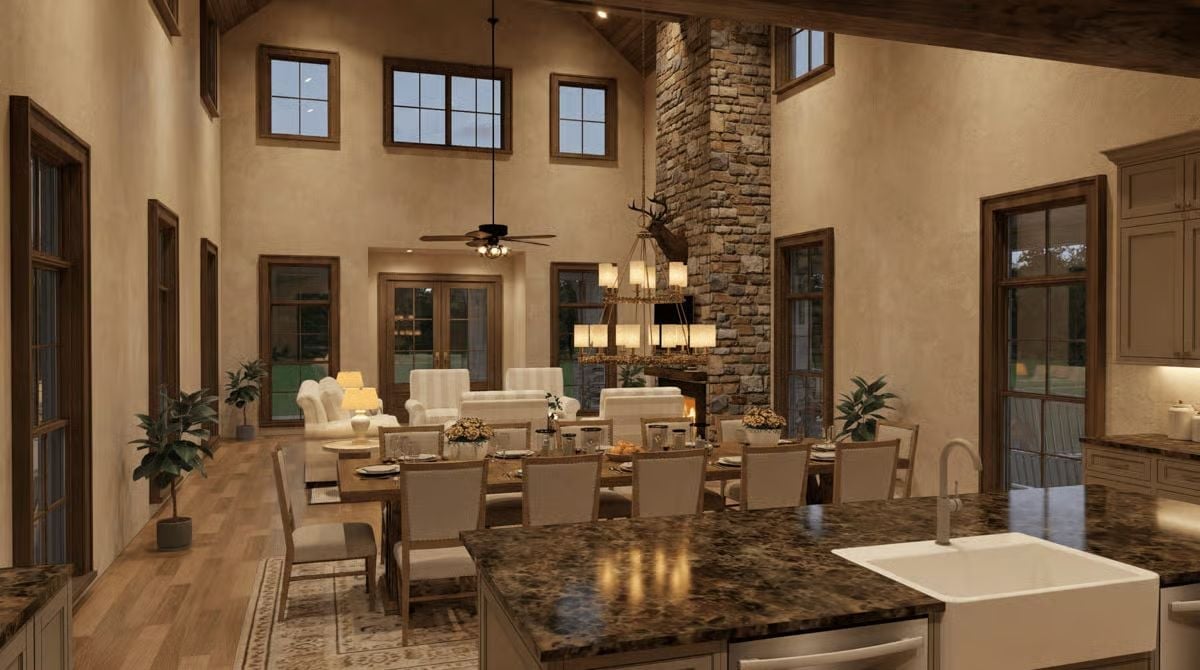
Soaring clerestory windows pull evening light in from two levels, and the floor-to-ceiling stone chimney anchors the great room without swallowing it. Dark granite on the kitchen island contrasts sharply with the apron-front farmhouse sink. That chandelier hanging deliberately low over the dining table does real work here — it keeps the scale human despite the cathedral ceiling doing its best to lose it.
Worth Knowing: Open-concept great rooms work especially well for multi-generational households because nobody gets shuffled off to a separate room during gatherings. The tradeoff is that sound travels just as freely as conversation. Kitchens without upper cabinets on the island side tend to cut the echo effect you’d otherwise get from hard surfaces bouncing noise back and forth across the room.
Exposed Beams, a Chandelier Built Like a Wagon Wheel, and Dinner for Twelve
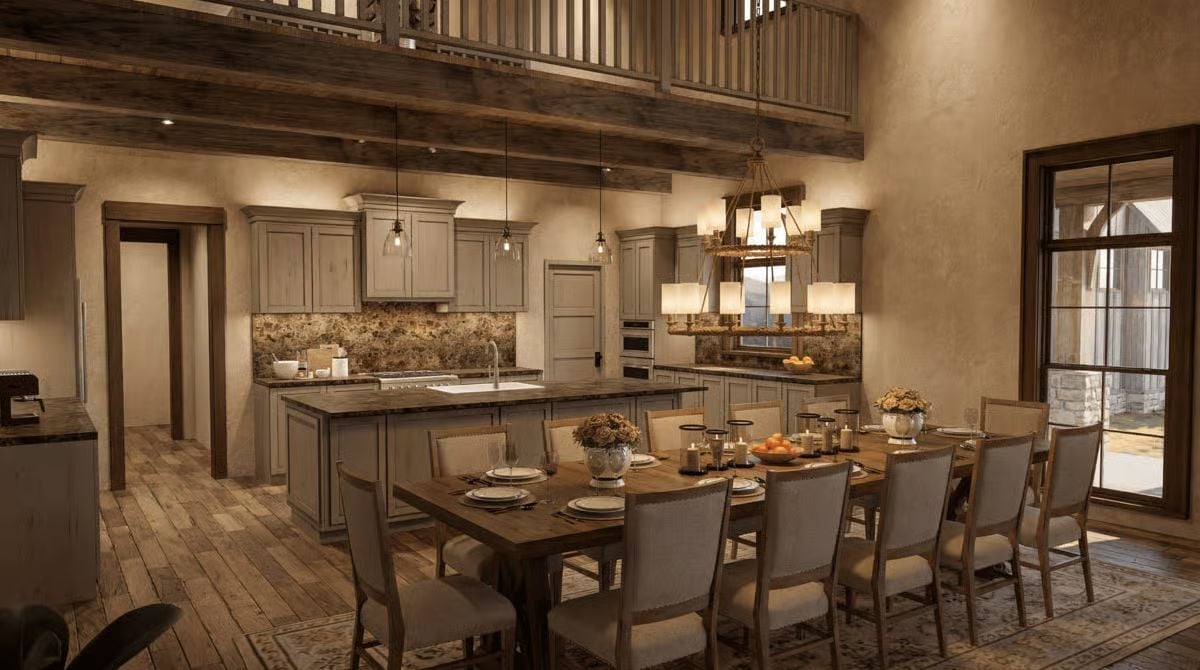
Warm plaster walls and wide-plank floors set the tone before you even register the chandelier overhead. That fixture earns its place — layered drum shades on a rope-and-iron frame that reads rustic without tipping into costume-y territory, which is a harder line to walk than it sounds. The kitchen island doubles as a prep station and a natural place to linger before anyone actually sits down for dinner.
Why the Stone Backsplash Does More Work Than You’d Expect
That slab backsplash running the full length of the kitchen isn’t tile, and in a house built for heavy use, the difference matters. A continuous stone surface means far fewer grout lines to scrub after a big family meal — and when you’re feeding multiple generations with any regularity, that counts for something real. It also grounds the gray cabinetry visually, keeps it from floating loose against the wall without any context.
Clerestory Light, a Stone Chimney Stack, and Seating That Actually Faces Each Other
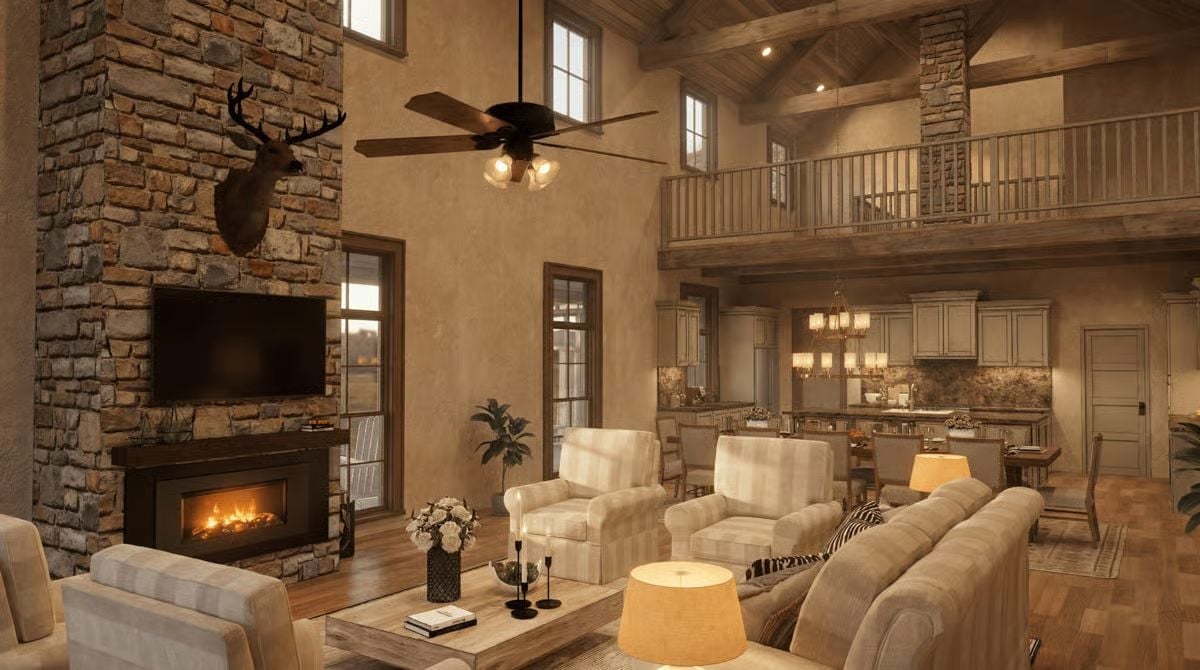
The stone chimney runs past the roofline, with the TV mounted directly into it rather than hovering awkwardly above the mantle on a bracket. Striped armchairs angle toward the sofa instead of deferring to the screen — a small layout decision that changes how the room actually gets used. Behind the sitting area, the kitchen stays visible and connected to everything happening in the great room, which matters more than most floor plans are honest about admitting.
Pin It
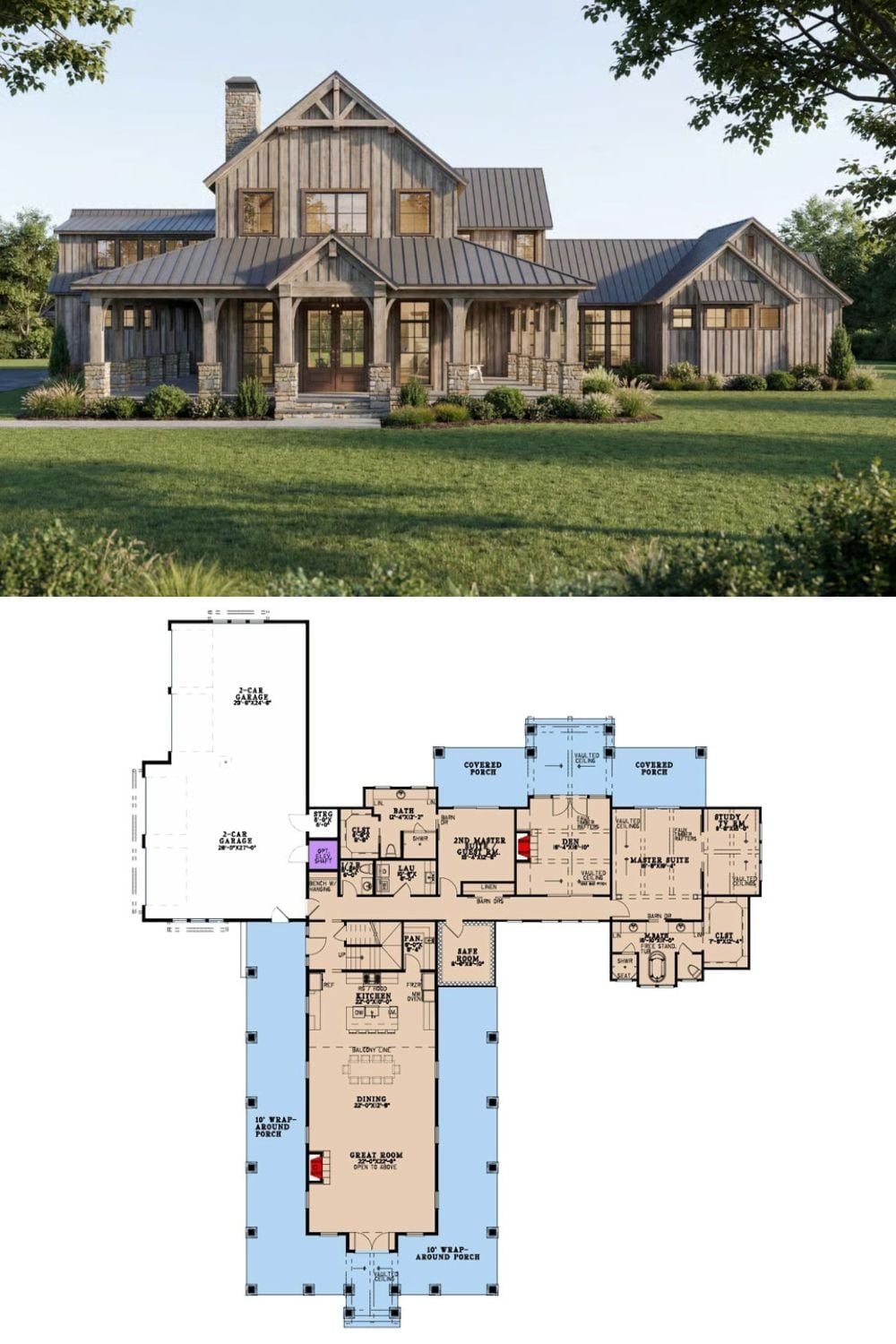
The exterior rendering shows a board-and-batten farmhouse with stone accents and a standing-seam metal roof. The floor plan below lays out four bedrooms, dual master suites, a safe room, and the wrap-around porches connecting it all.