
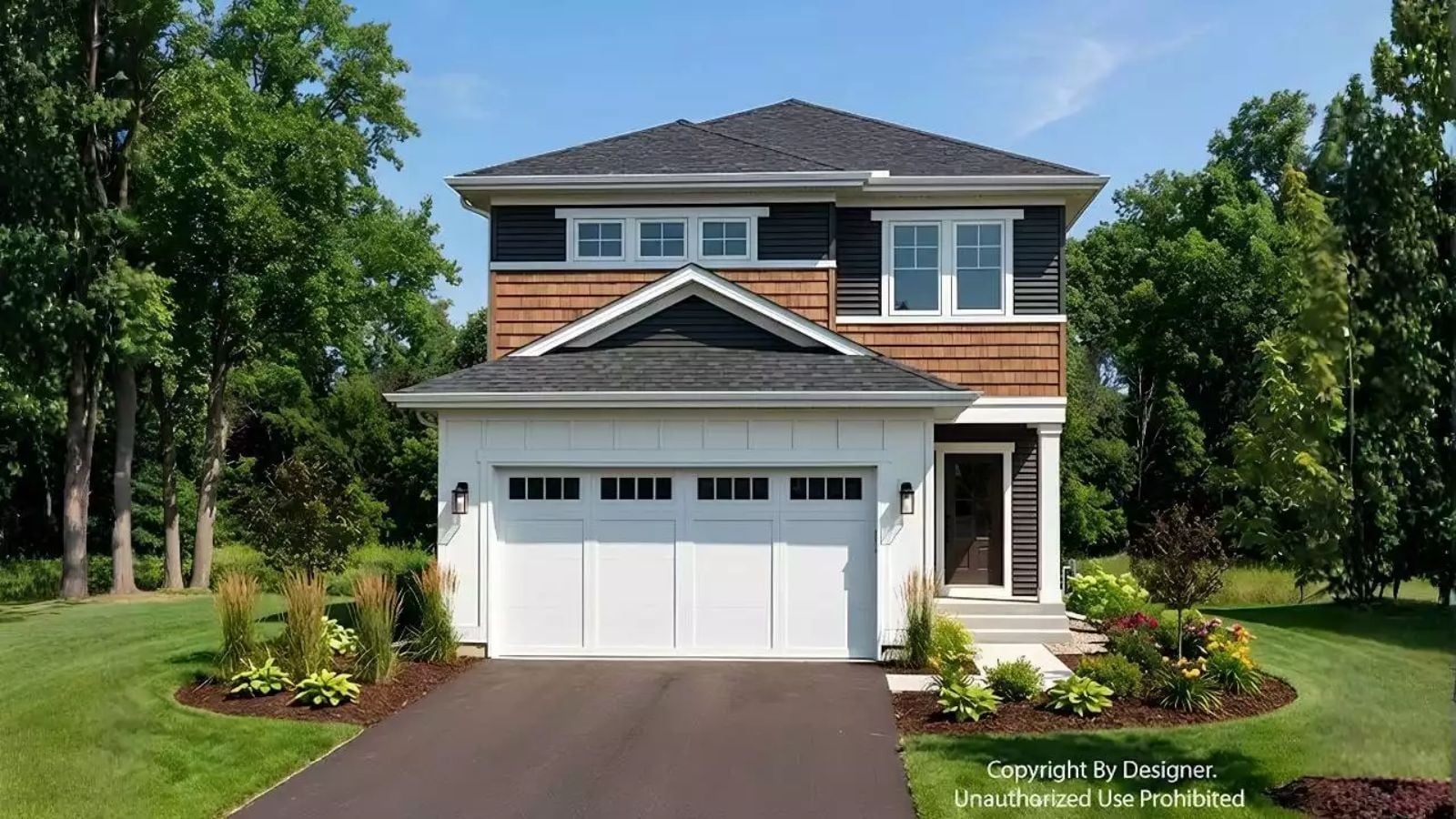
Anyone who has watched their kids do homework on the kitchen counter because there is nowhere else to put them knows exactly why they outgrew the last place. The Meadowcroft is built around that next chapter: a loft that swallows backpacks and algebra, a double garage that finally fits both cars plus the weekend gear, a proper dining room where dinner actually happens at a table, and a traditional layout that holds a full family without everyone on top of each other.
Specifications
- Sq. Ft.: 1,877
- Bedrooms: 3
- Bathrooms: 2.5
Floor Plan – Main Floor
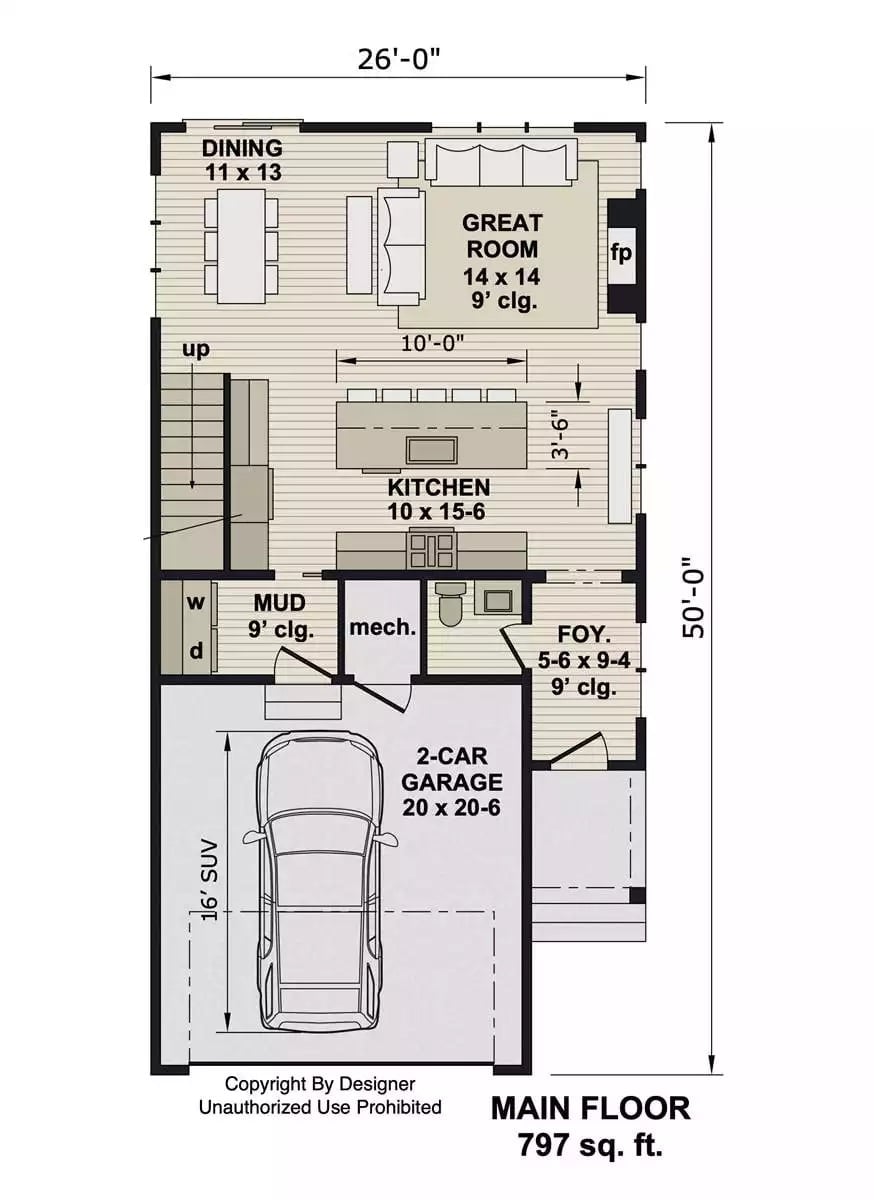
The main floor moves from foyer through kitchen into a combined dining and great room, with a mud room, mechanical room, and 2-car garage anchoring the lower half.
Floor Plan – Second Floor
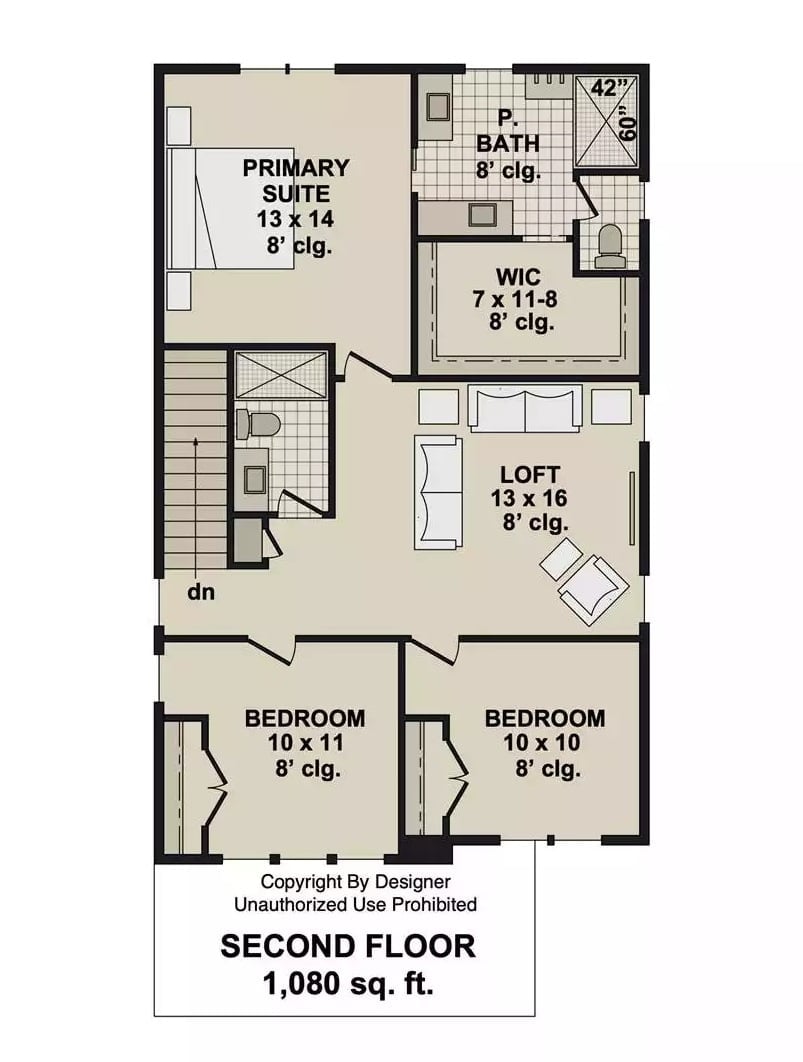
The second floor runs 1,080 square feet across three bedrooms, a central loft, and a primary suite with its own bath and walk-in closet. That loft placement is deliberate — it sits between the two smaller bedrooms and gives each one a buffer rather than a shared wall. Both secondary bedrooms measure roughly 10 by 11 feet, ceilings hold at eight feet throughout, and nothing about the layout feels squeezed.
Geometric Pendant Light Anchors a Foyer Built for First Impressions
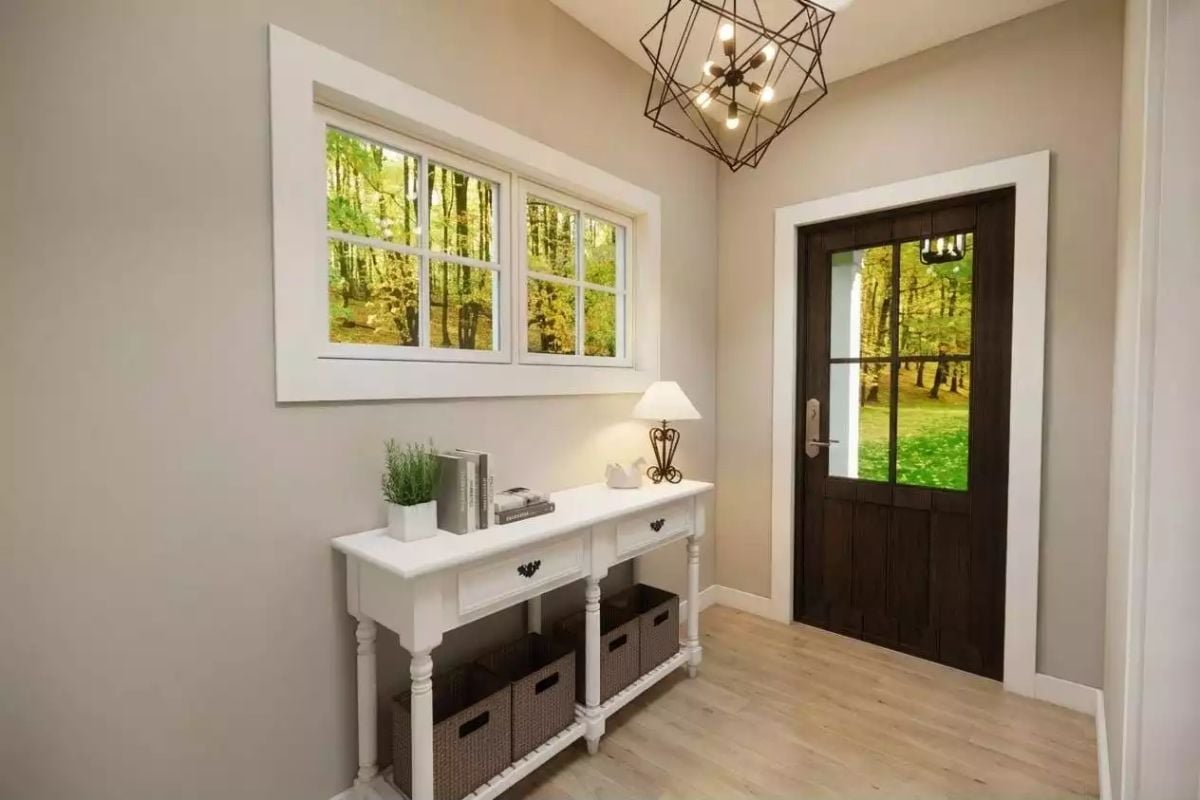
A dark wood entry door with a glass panel faces a white console table with woven storage baskets tucked below — two details that set a tone before anyone makes it past the threshold.
Stone Fireplace Wall Pulls Every Seat in the Room Toward It
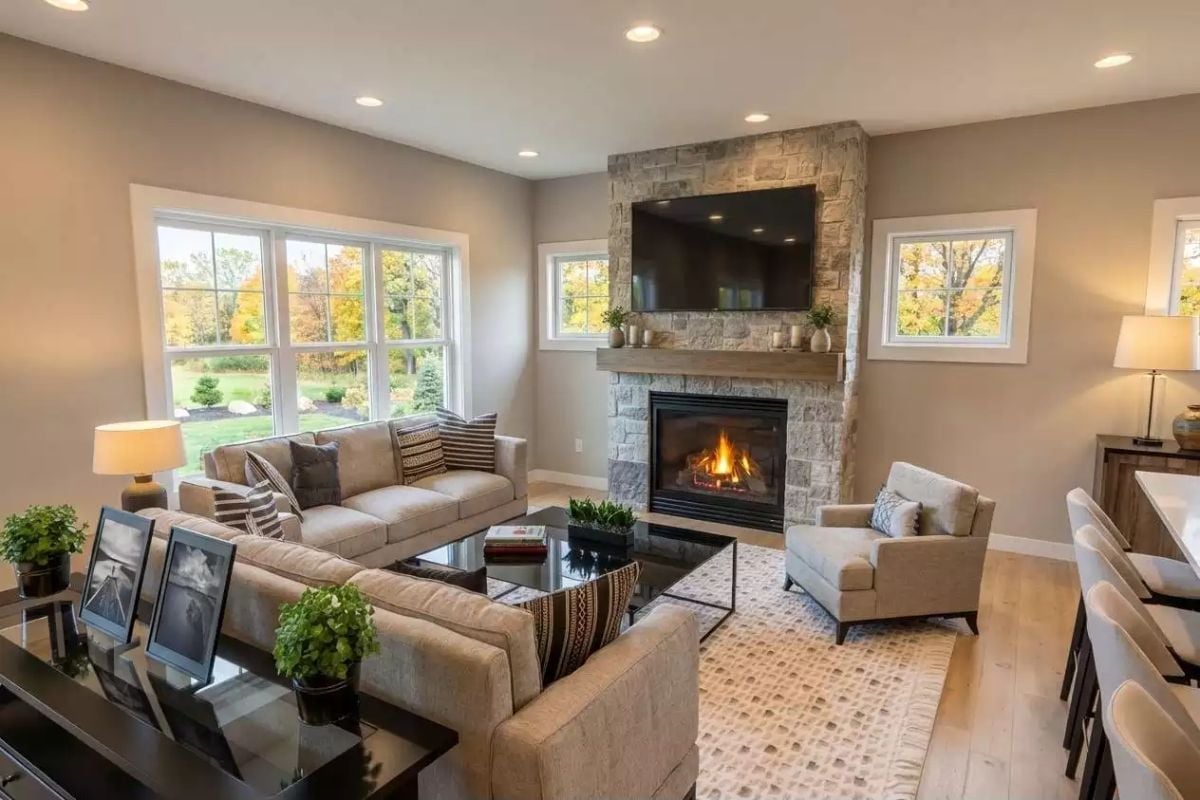
Stacked stone runs floor to ceiling beside a gas insert with a visible flame. Beige upholstery and a glass coffee table keep the palette quiet, which is the right call — the stonework earns enough attention on its own without any competition from the furniture.
Style Math: Warm taupe walls paired with natural stone read as neutral but add texture that paint alone can’t deliver — a practical shortcut to a built-in focal point without blowing a renovation budget. Furniture arranged on a low-pile rug anchors the conversation area without blocking sight lines to the fire.
Skirted Barstools and a Black Island Base Earn Their Place in a White Kitchen
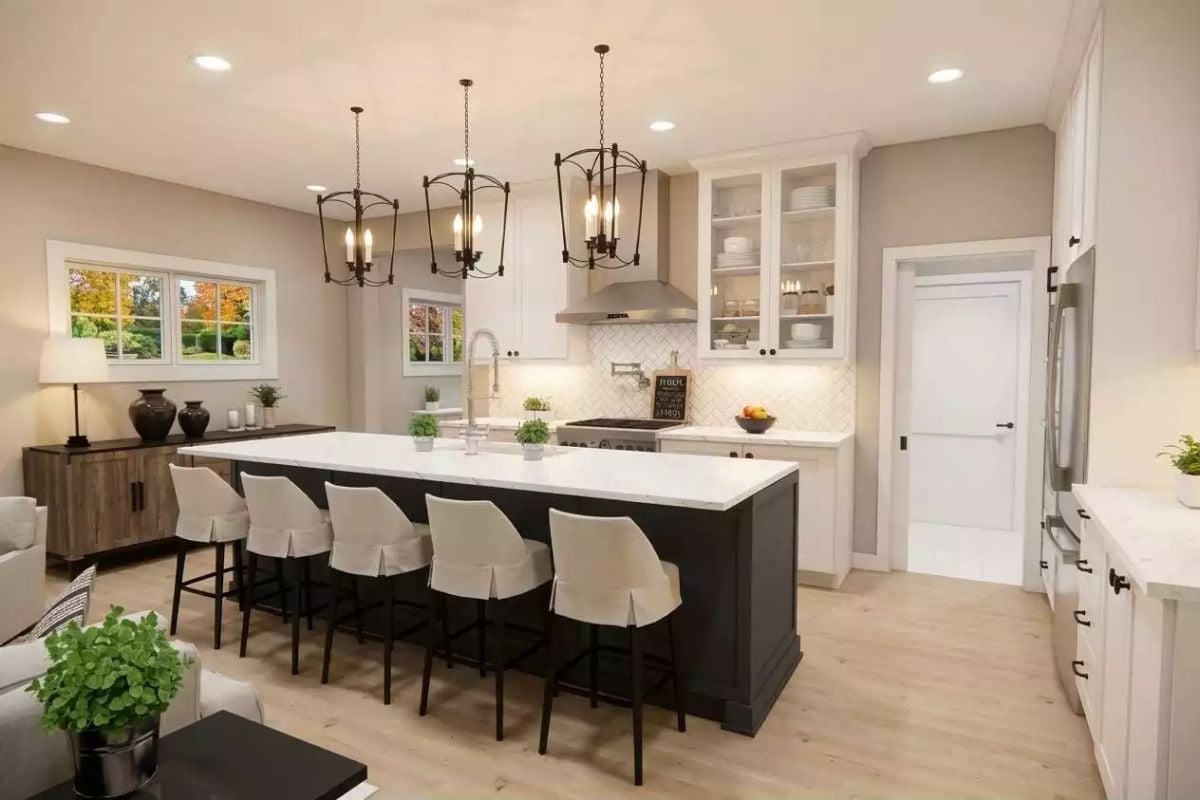
Four skirted barstools line a black island with a waterfall-edge marble top, and the herringbone tile backsplash adds pattern without fighting the cabinet hardware or the lantern pendants overhead.
Why the Island Base Color Actually Matters Here
Painting the island a contrasting dark color while keeping perimeter cabinets white is a practical move, not just a stylistic one. It visually anchors the island so it reads as furniture rather than built-in cabinetry — and that distinction matters in an open-plan layout, where an all-white kitchen can blur into one continuous box. The black base gives the room a stopping point.
Candlelit Chandelier Over a Farmhouse Table Sets the Tone Before Dinner Starts
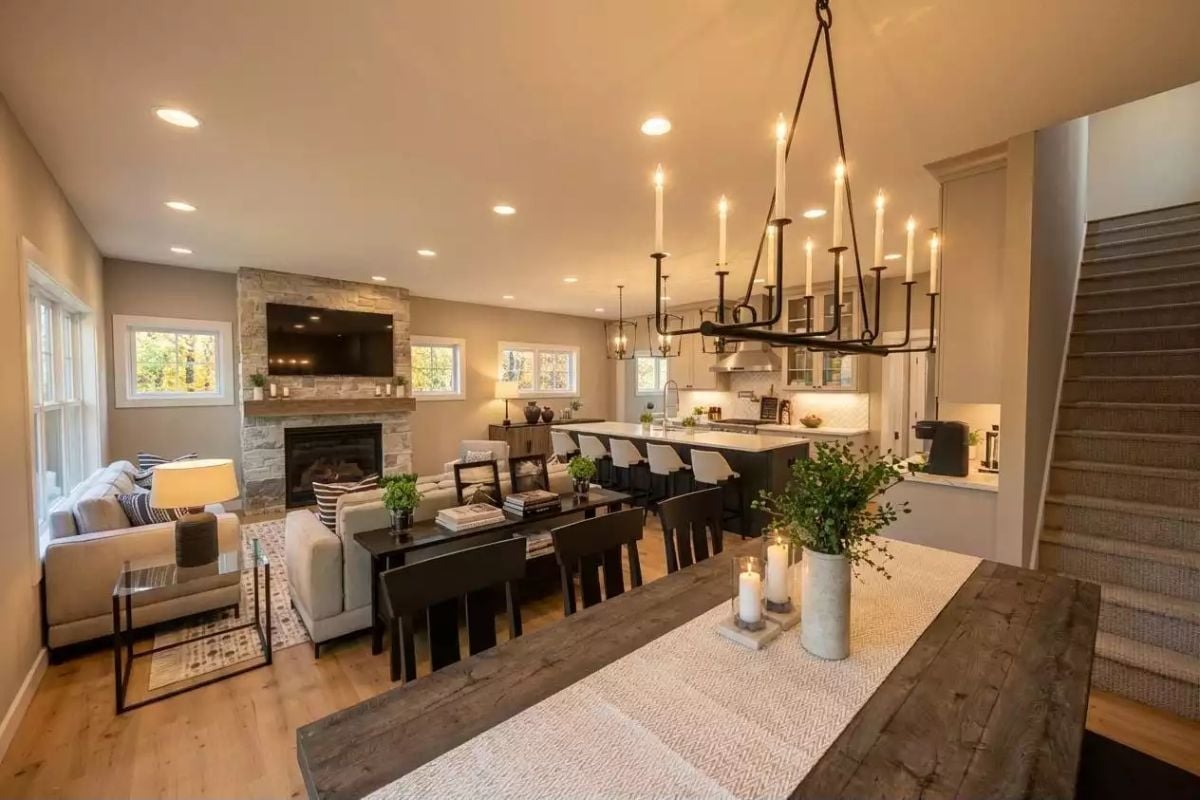
A wrought-iron chandelier with taper candles anchors the dining end of the open-plan space, where hardwood floors run uninterrupted into the kitchen and living room.
Pro Tip: Open-plan layouts work best when each zone has one dominant light source that signals its purpose — a chandelier does that for dining without needing a wall or partition to draw the boundary. Size up rather than down. An undersized fixture in a generous room just disappears.
Move upstairs and the loft proves why families chose this plan over a simpler three-bedroom.
Recessed Lighting and Carpet Make the Loft the Room Everyone Migrates To
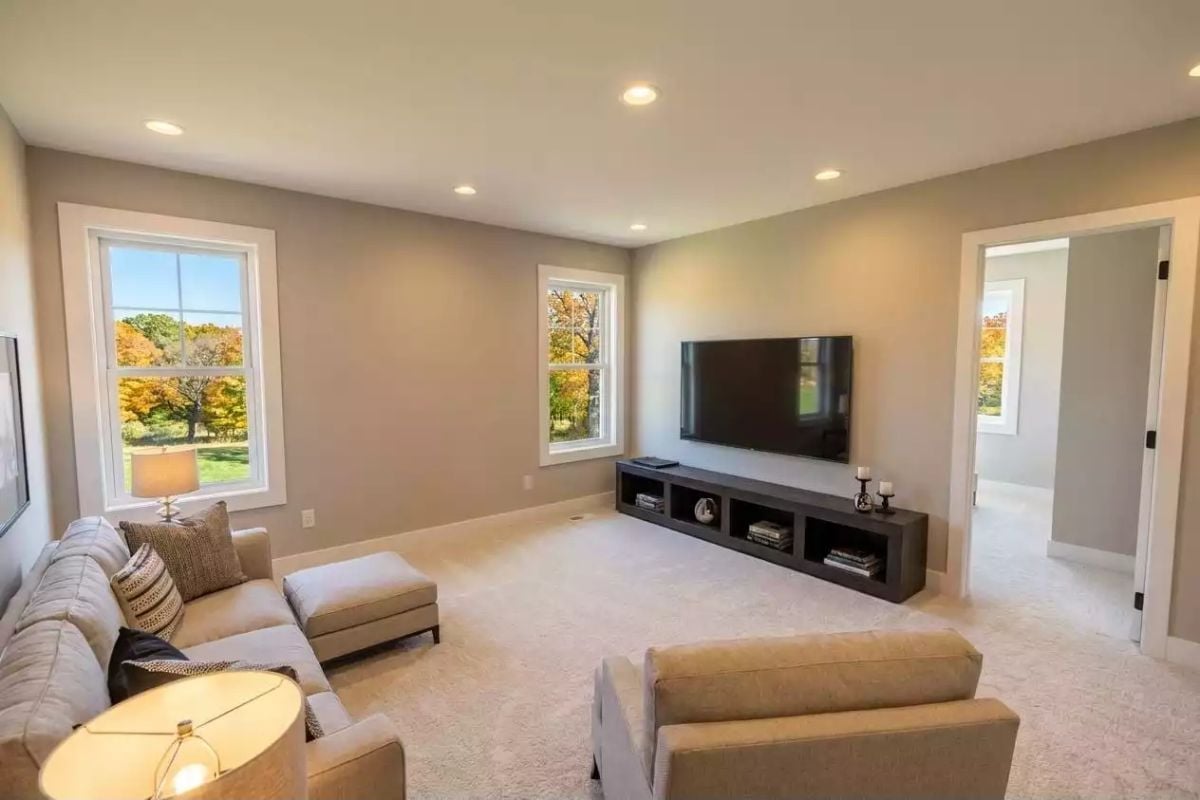
Plush carpet does most of the acoustic heavy lifting, keeping sound from traveling down to the main floor — useful when the loft becomes a homework station at 7 p.m. and a movie room an hour later. The floating media console sits low enough that the wall above it doesn’t feel crowded, and fall color coming through both windows adds more warmth than any lamp could replicate.
Recessed Cans and a Table Lamp Together Solve the Bedroom Lighting Problem
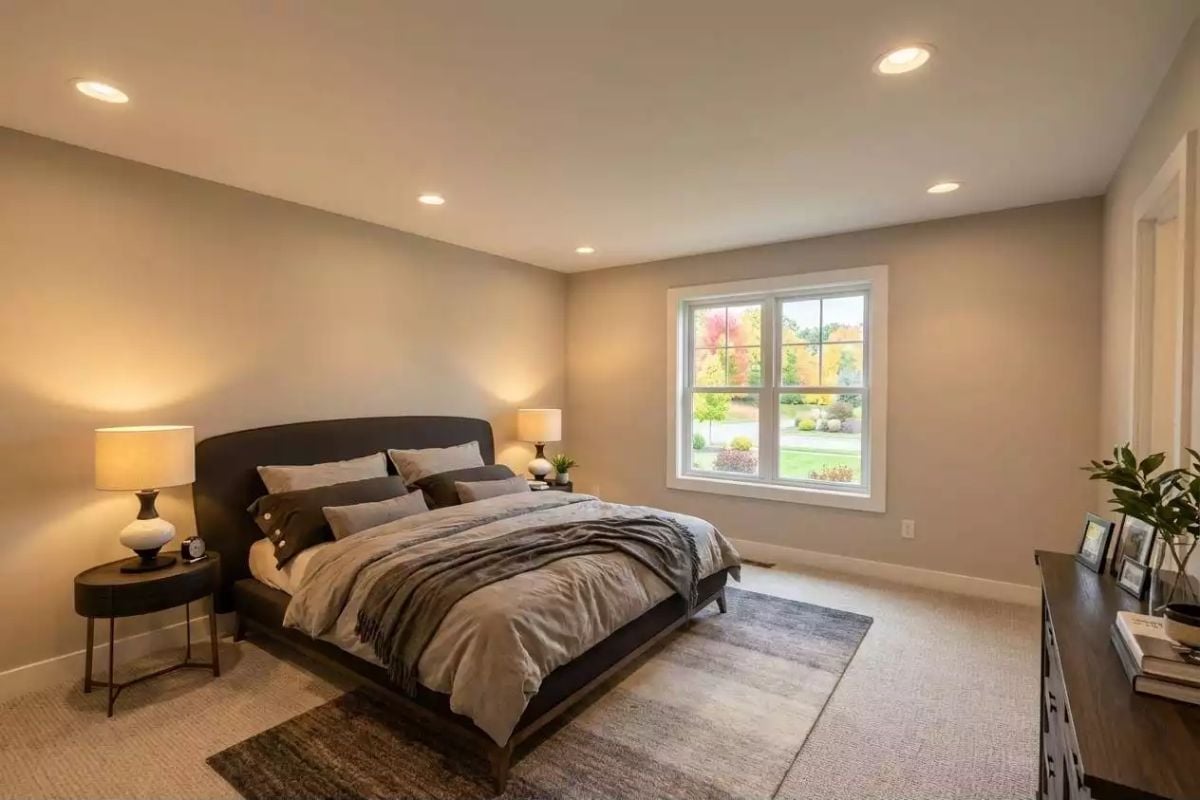
Two light sources, two jobs. The recessed cans handle general illumination while the table lamp on the left throws warm, directional light at eye level — which is where you actually want it when you’re winding down. Gray bedding layered with a chunky throw keeps the palette cohesive without looking staged, and the carpet keeps the room from feeling like a bare box with furniture dropped into it.
Quick Fix: Relying solely on overhead recessed lighting in a bedroom tends to flatten the room and make it harder to wind down at night. Add a lamp on each nightstand and you get a dimmer, warmer option without any rewiring — a small change that makes the room feel finished rather than merely functional.
Marble Tile and a Rain Head Turn a Walk-In Shower Into the Reason You Bought the House
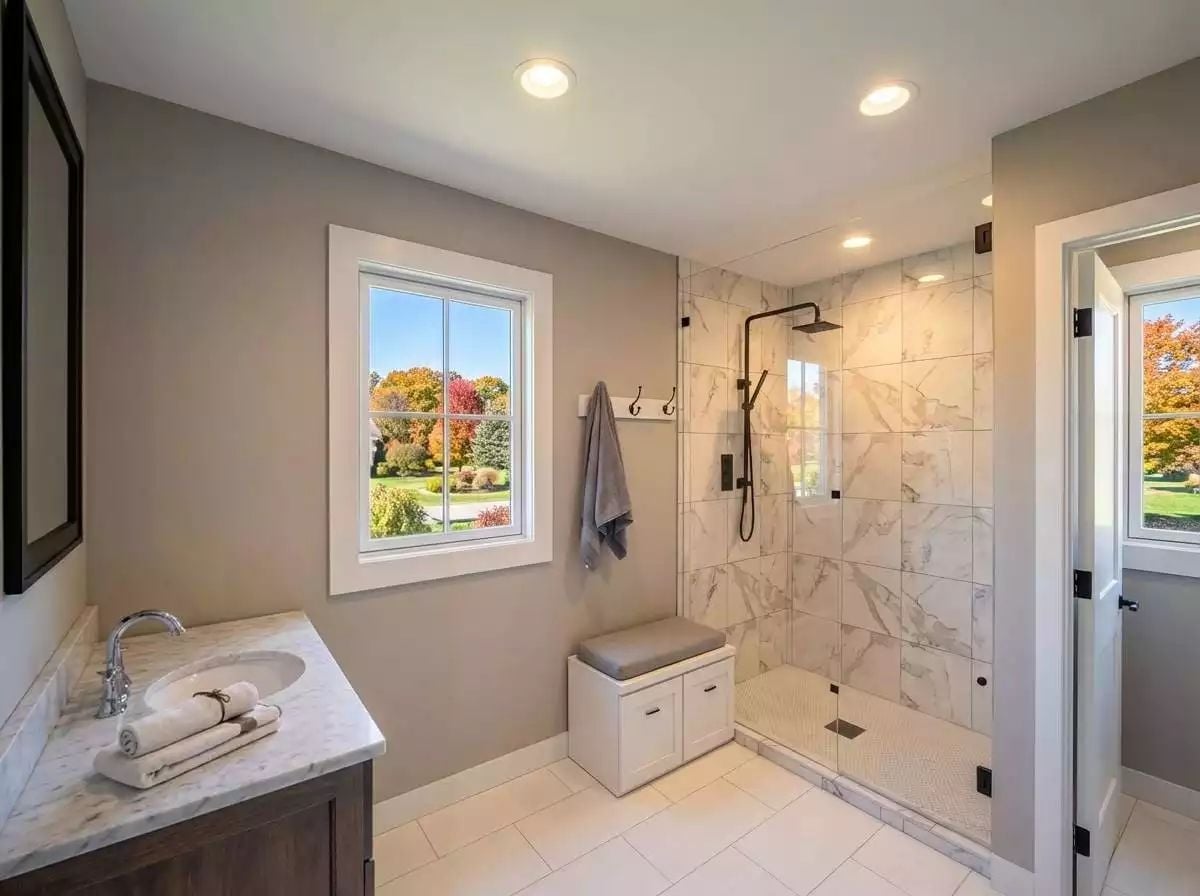
Calacatta-style marble tile wraps the shower walls in slabs large enough to show the full veining pattern, and the matte black fixtures read sharp against all that white. Outside, fall color bleeds through two windows. The room’s warm greige walls meet it without competing — a quieter backdrop that lets the marble do what marble is supposed to do.
Try This: Glass enclosures collect soap scum faster than most people expect. A daily squeegee habit takes under a minute and keeps the tile looking the way it did on move-in day far longer than any cleaning product will.
Pin It
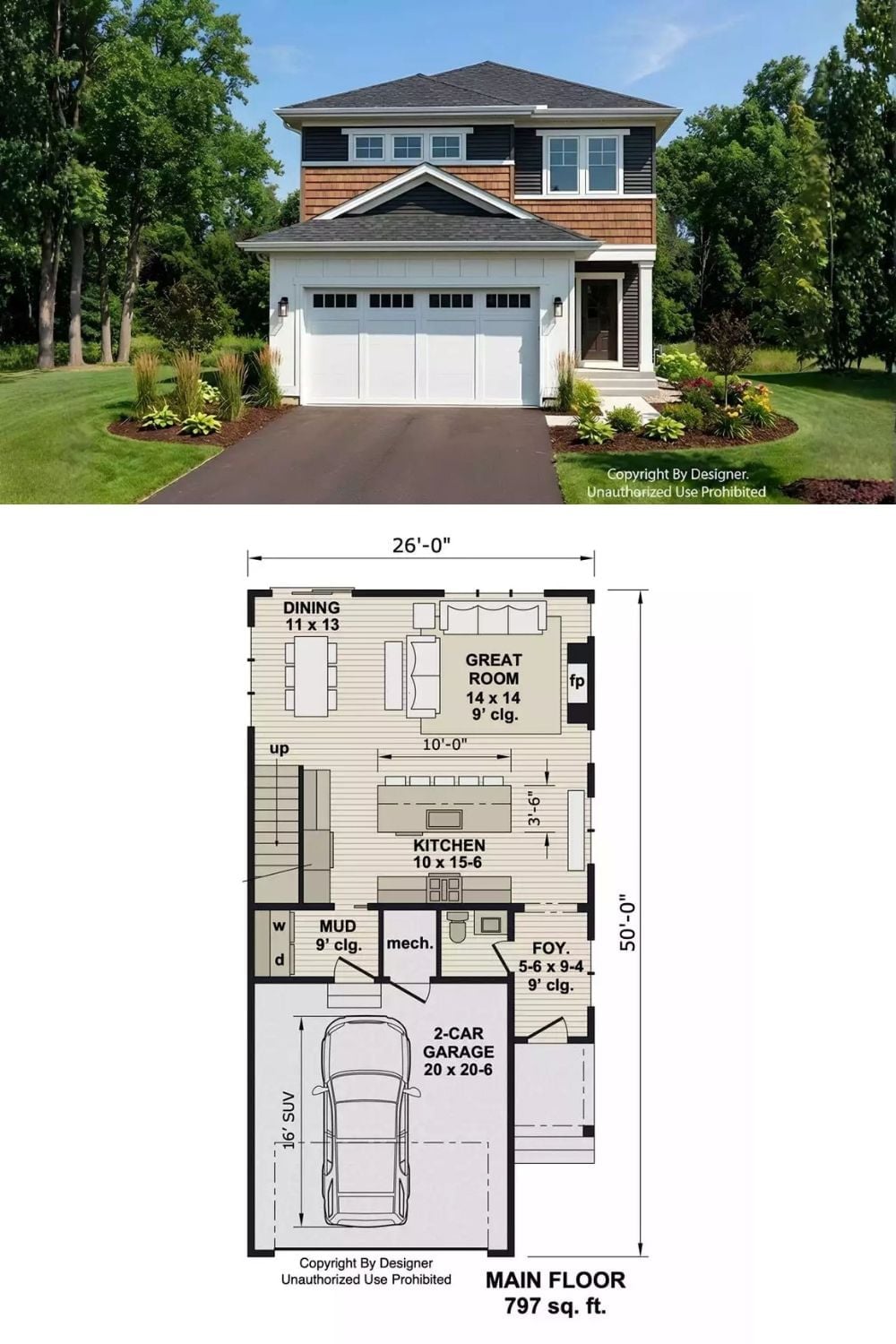
The exterior shows a two-story traditional with cedar shake siding and a two-car garage. The floor plan below details the 797-square-foot main level: great room, kitchen, dining area, mudroom, and foyer laid out in a sequence that actually makes sense to walk through.
Material Matters: Cedar shake siding holds up well in humid climates, but it needs periodic treatment to resist moisture absorption — skip that, and the boards can cup and split within a few seasons. Engineered wood alternatives mimic the look with considerably less upkeep over time.