
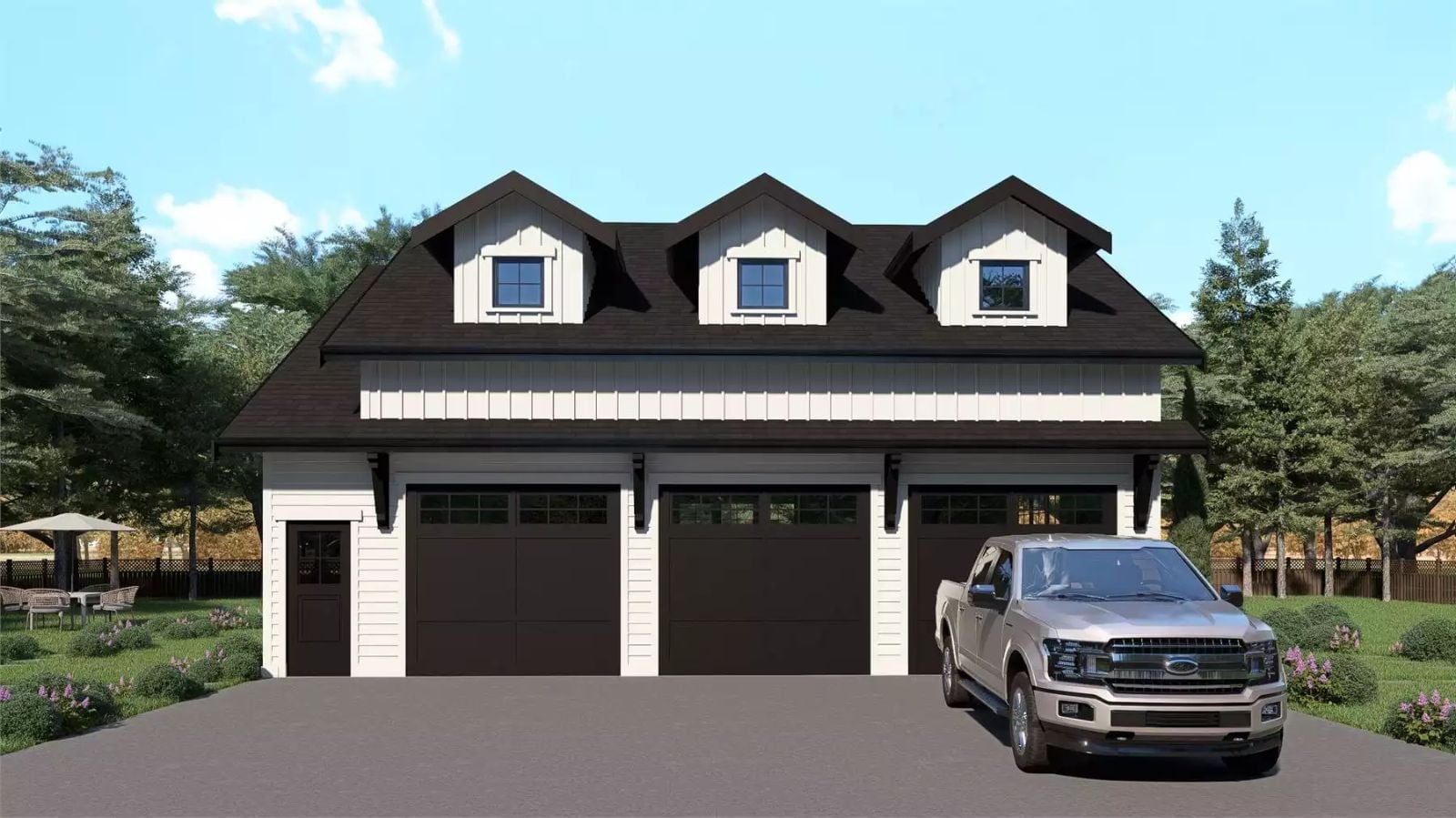
For couples who split weekends between wine country road trips and rebuilding vintage motorcycles, storage and workspace aren’t afterthoughts — they’re the whole point. The Linvale is built around exactly that: a 3-car garage serious enough to double as a workshop, an open living area where Saturday mornings stretch long over coffee, and a country carriage exterior that looks like somewhere worth arriving.
Specifications
- Sq. Ft.: 939
- Bedrooms: 0
- Bathrooms: 1
Floor Plan – Main Floor
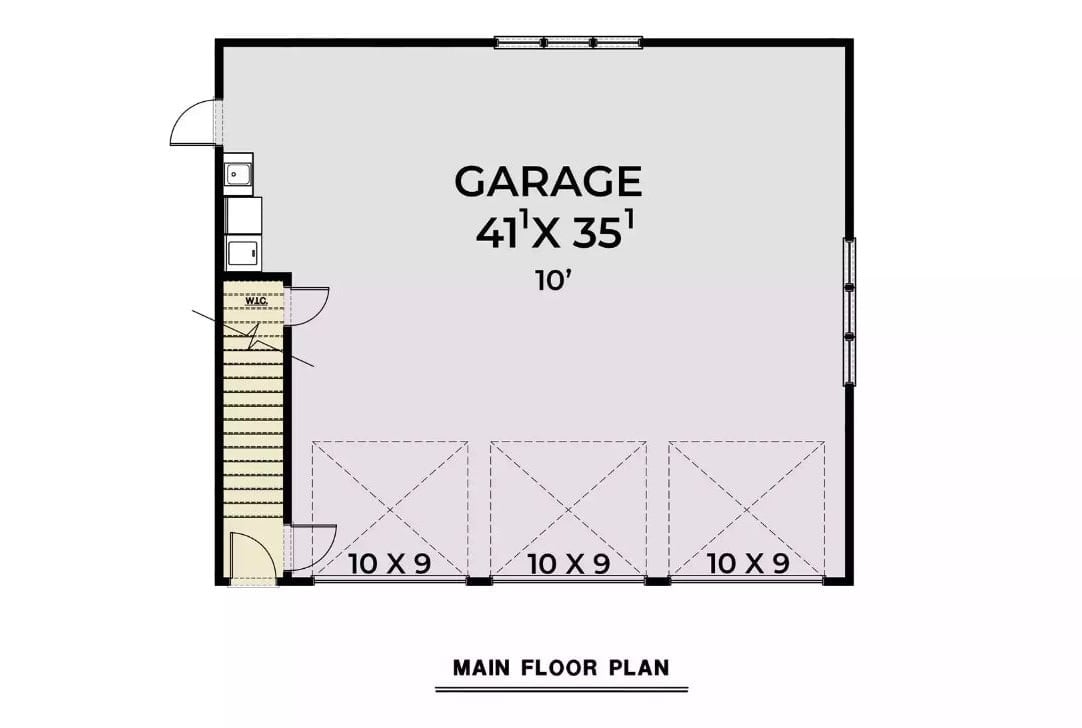
The three-car garage takes up most of the main floor, with a staircase, walk-in closet, and half bath tucked efficiently along the left wall.
Floor Plan – Second Floor
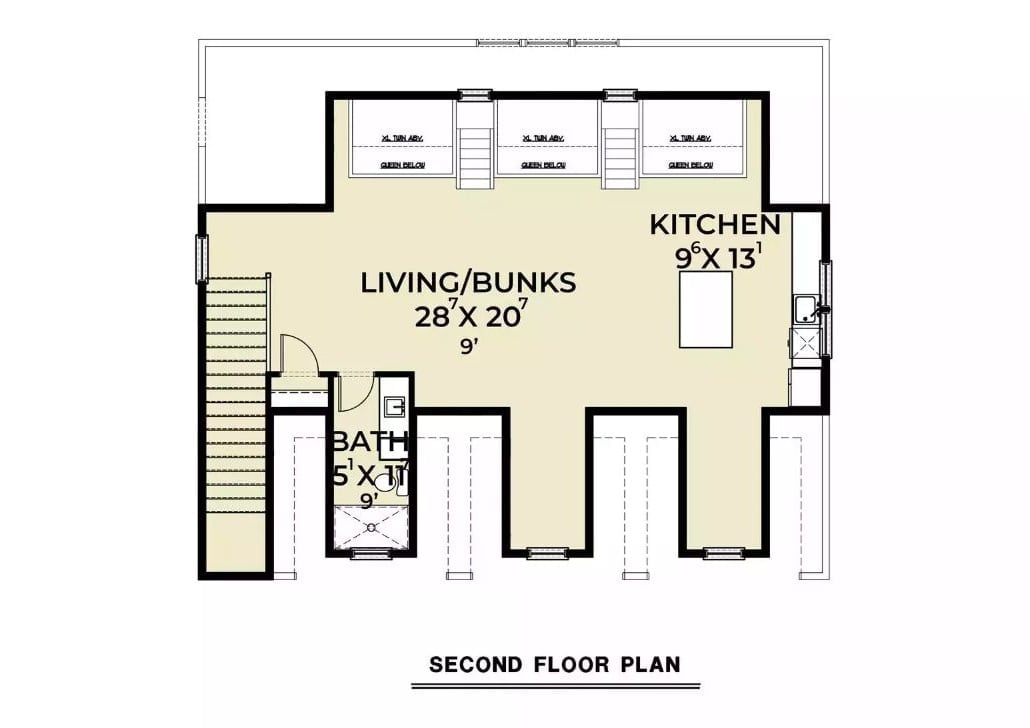
Upstairs, a large combined living and bunk room shares space with a compact kitchen, one full bath, and six built-in bunk beds lined up along the north wall.
In The Details: The bunk arrangement along the north wall is worth a close look. Each bay fits an XL twin above and a queen below, which means this single room can sleep up to twelve people without eating into the living area. That’s a lot of sleeping capacity to pull out of a footprint most people would surrender to a single bedroom.
Gambrel Roofline and Board-and-Batten Siding Make the Rear Elevation Work Hard
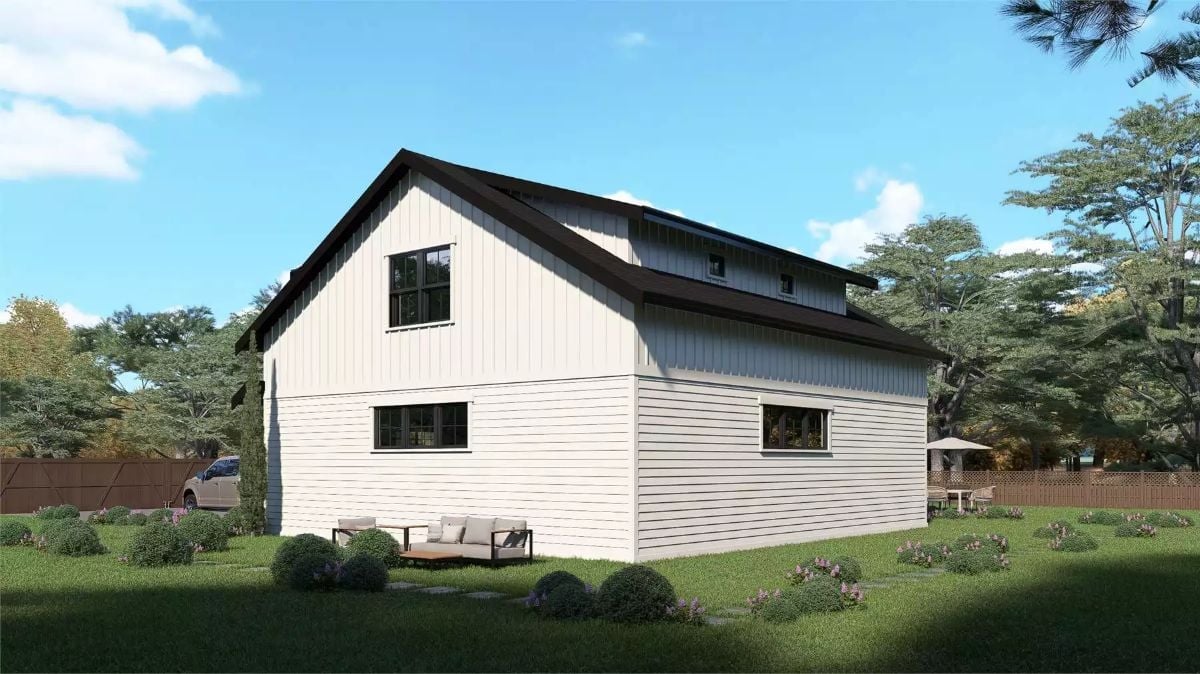
Vertical board-and-batten above the first floor transitions to lap siding below, which breaks up what could’ve been a plain white box. The dark fascia draws the eye up to the roofline without competing with the windows — a small detail that keeps the whole elevation from feeling flat.
History Corner: Carriage houses evolved from 18th-century coach houses built to shelter horse-drawn vehicles alongside the grooms who tended them. When the automobile replaced the horse, builders adapted the form rather than abandoned it, and the gambrel roof carried over as a signature feature that still shows up in garage apartment design today.
Bunk Walls and a Kitchen Island in One Room — Carriage House Logic at Its Best
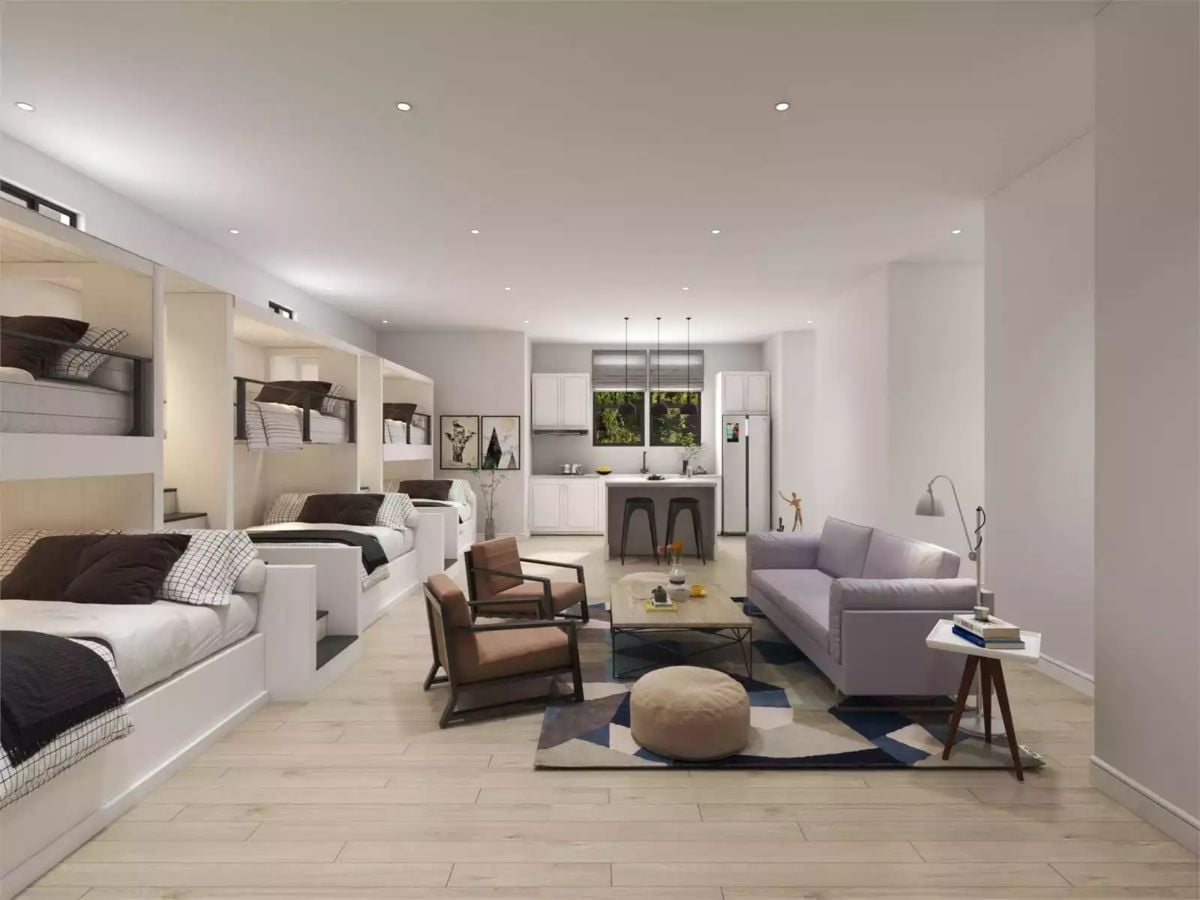
Sleeping six and cooking dinner happen in the same open room, and it works.
Light wood flooring runs the full length without interruption, pulling the bunk alcoves, seating area, and kitchen counter into one readable space. The lavender sofa sits closer to the kitchen than you’d expect, which keeps conversation from feeling cut off at one end of the room. Brown leather chairs anchor the center without competing with either zone.
Pendant Lights Earn Their Keep When the Kitchen Has No Upper Cabinets on the Island Side
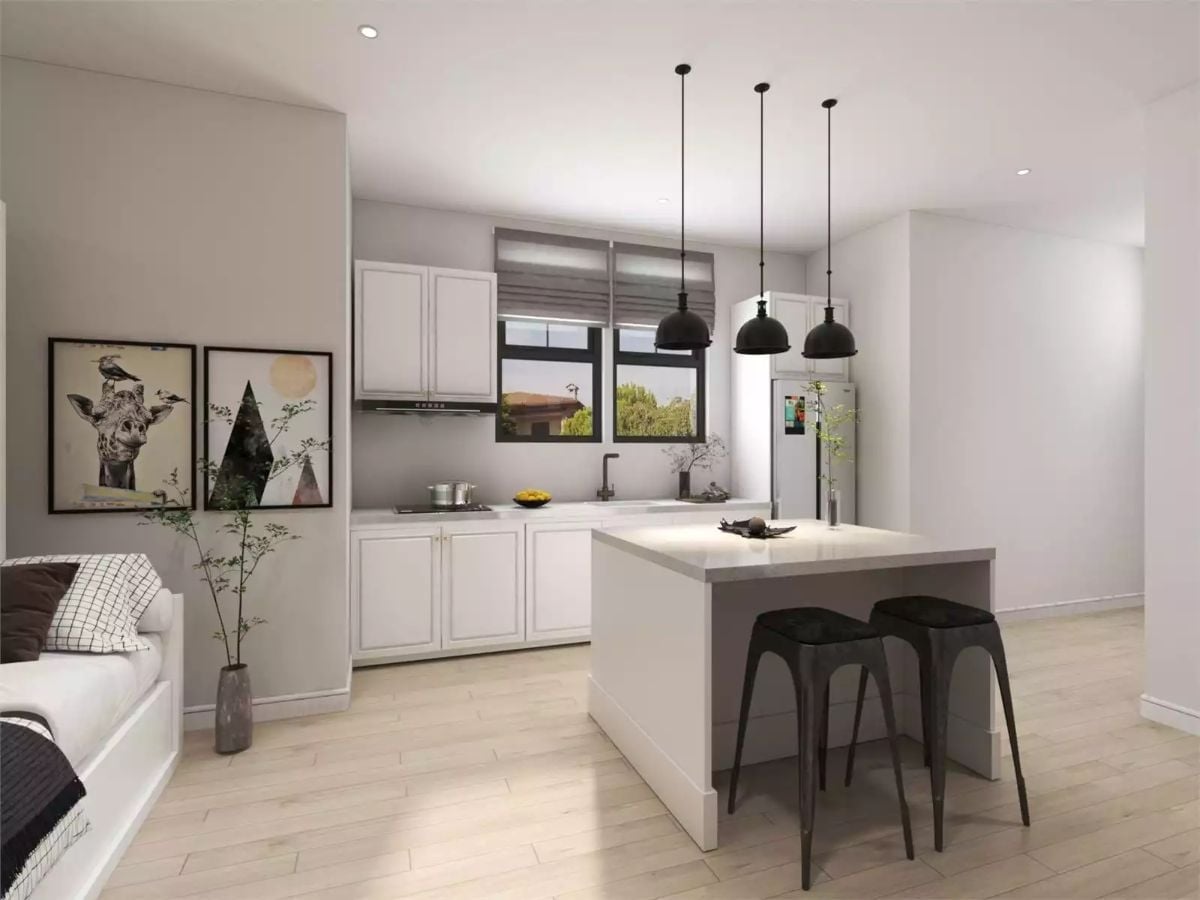
Black dome pendants hung at staggered heights do the work a chandelier would overcomplicate. White shaker cabinets run the full wall behind the cooktop, and the pale stone island countertop gives couples somewhere to eat without dedicating square footage to a separate dining room. Two black stools tuck under cleanly. Compact, but nothing feels squeezed.
Designer’s Secret: Positioning the island perpendicular to the main cabinet wall rather than parallel keeps traffic moving between the kitchen and living area without needing a wide room. It’s a layout trick that pays off especially in open-plan spaces under 600 square feet, where every circulation path has to pull double duty.
Lavender-Gray Sofa Anchors a Living Room That Knows Exactly What It’s Doing
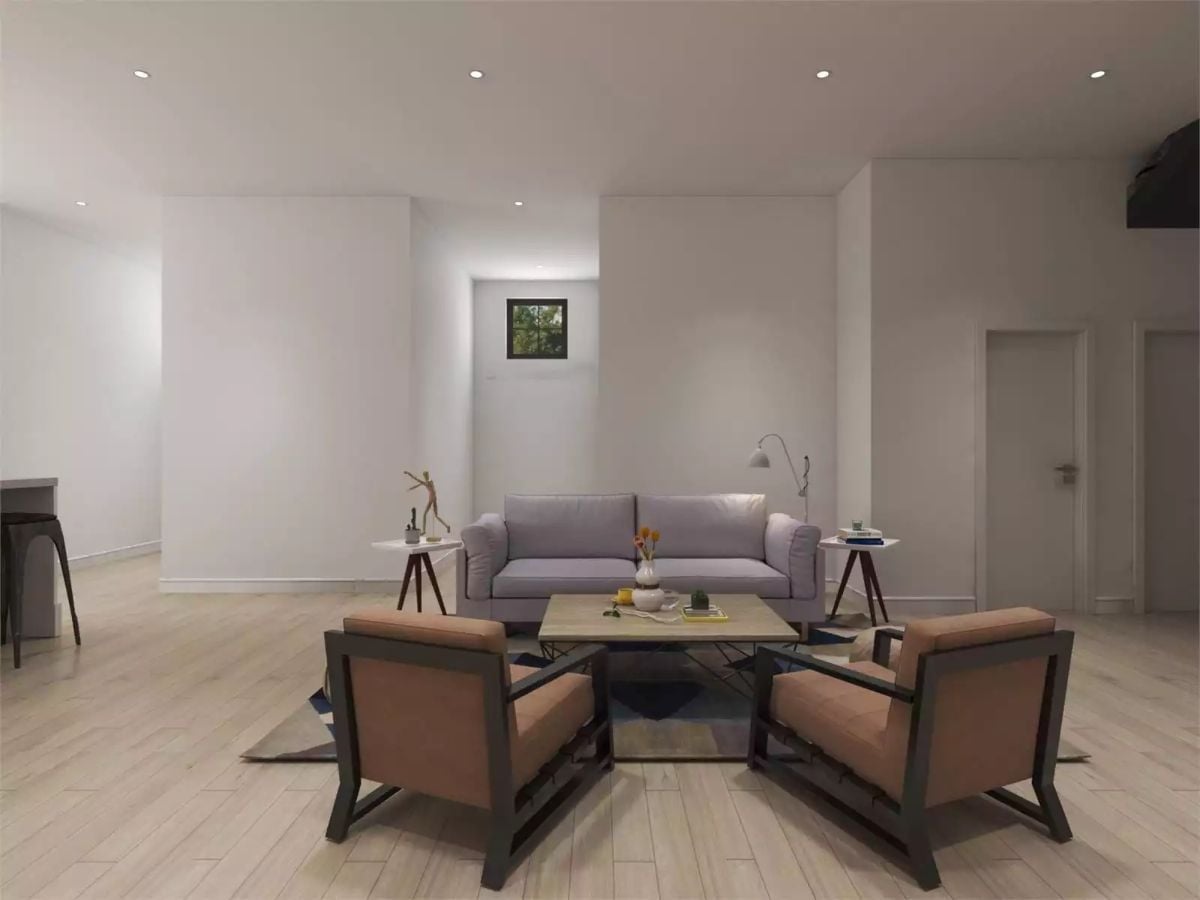
Warm caramel armchairs face a low wood-and-metal coffee table, and the grouping actually functions as a conversation area rather than just looking like one. The pale wood floor keeps everything from going heavy.
Style Tip: Pair warm-toned seating with a cooler sofa fabric and you get contrast without committing to a second color family. And that small sculptural figure on the side table? It’s doing more visual work than a whole row of books would.
Marble Vanity on One Side, Glass Shower on the Other — Wet Zone Logic Done Right
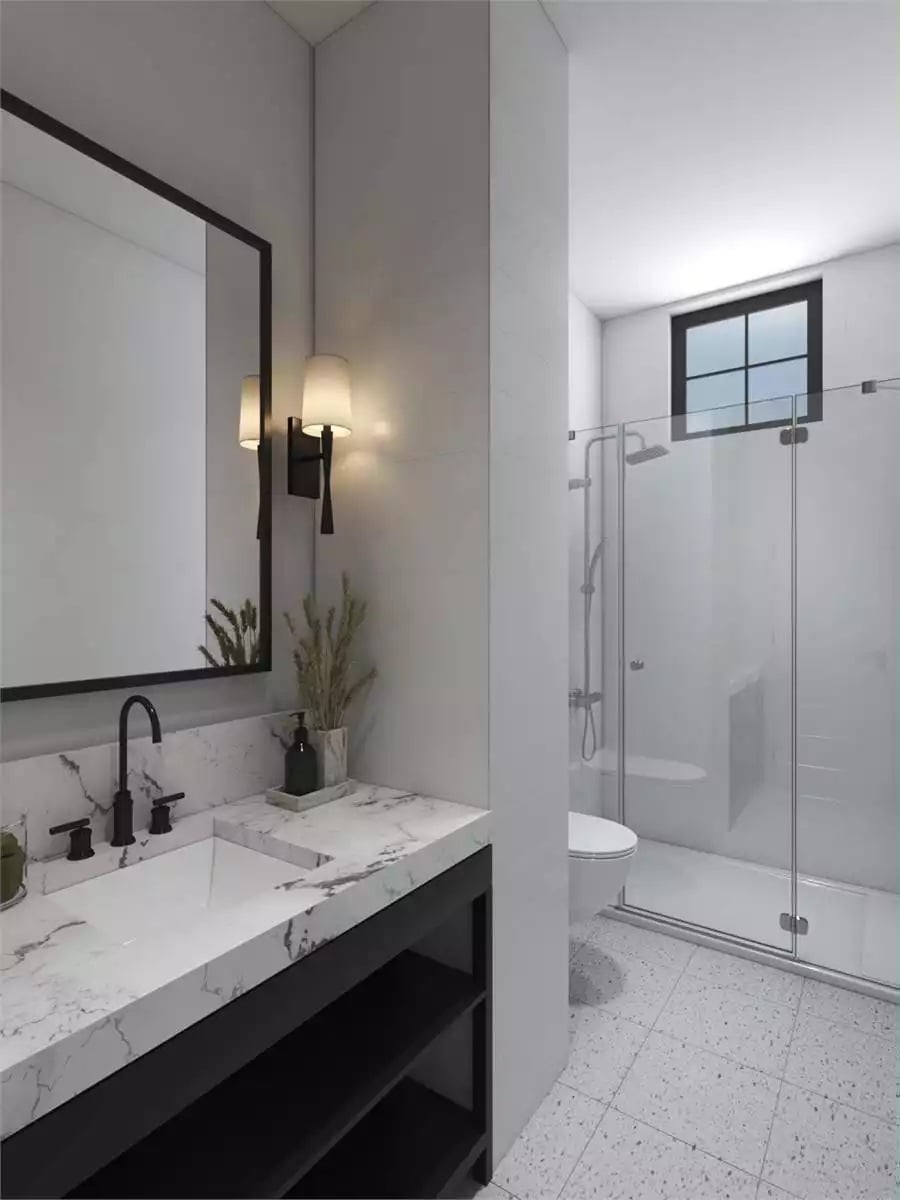
White marble countertop with gray veining pairs with matte black fixtures set slightly off-center from the undermount sink. The half-wall separating the vanity from the toilet and shower keeps sightlines open without giving up privacy where it counts.
The Half-Wall Division
Splitting wet and dry zones with a partial wall rather than a full partition lets borrowed light reach both sides of the room. It also means the vanity sconces do double duty, casting enough ambient light into the shower area to skip a second fixture entirely. Designers lean on this layout in narrower bathrooms where a full wall would leave both zones feeling cramped — and in a carriage house bath this size, that’s not a hypothetical problem.
Garage Living Rooms Are a Thing Now, and This One Makes the Case
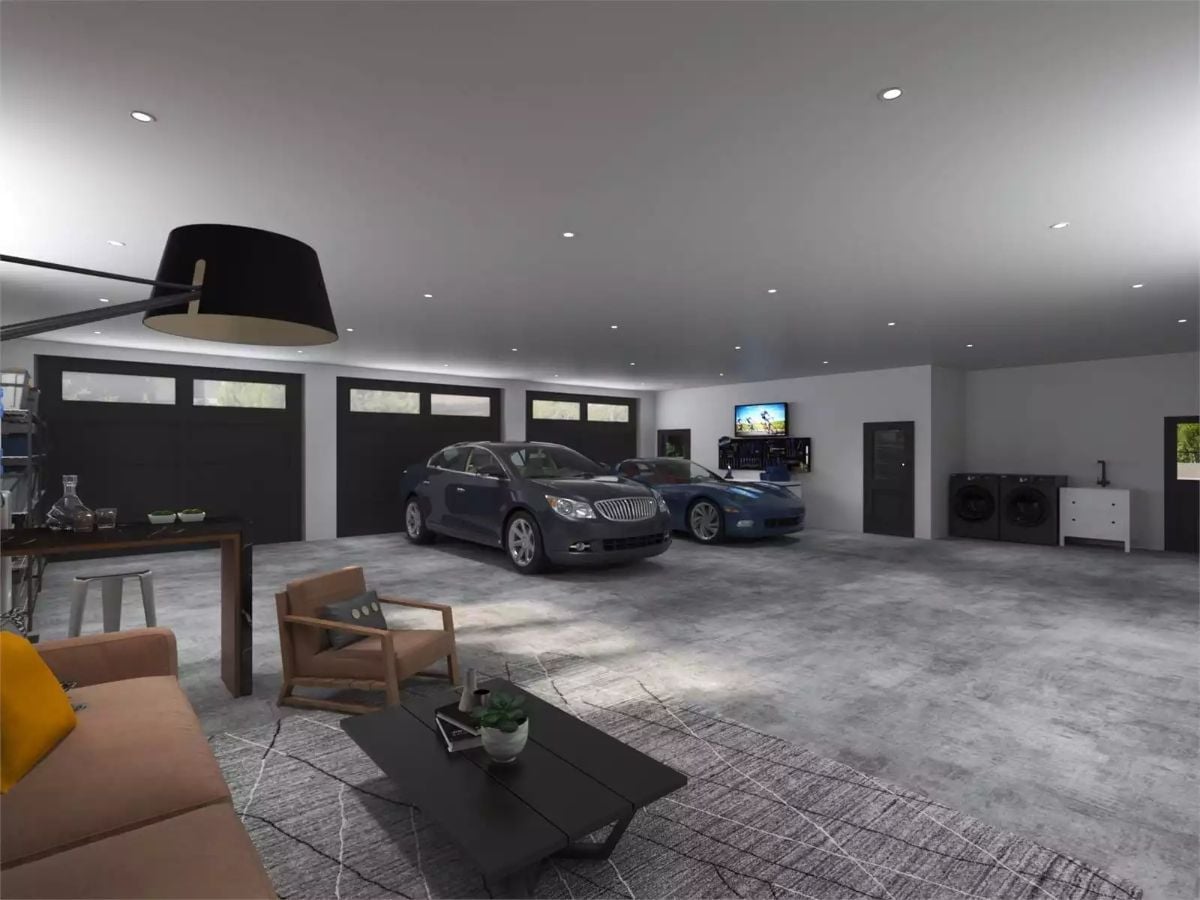
Concrete floors anchor seating arranged around a low coffee table, with two cars parked just a few feet away. That proximity shouldn’t work. It does.
Try This: Epoxy-sealed concrete handles foot traffic, tire marks, and spilled drinks without the upkeep demands of carpet or hardwood. If you want the look without committing to a full epoxy pour, concrete paint with a topcoat sealer gets you most of the way there for considerably less money.
Caramel Leather, a Floor Lamp, and Three Abstract Panels That Actually Agree With Each Other
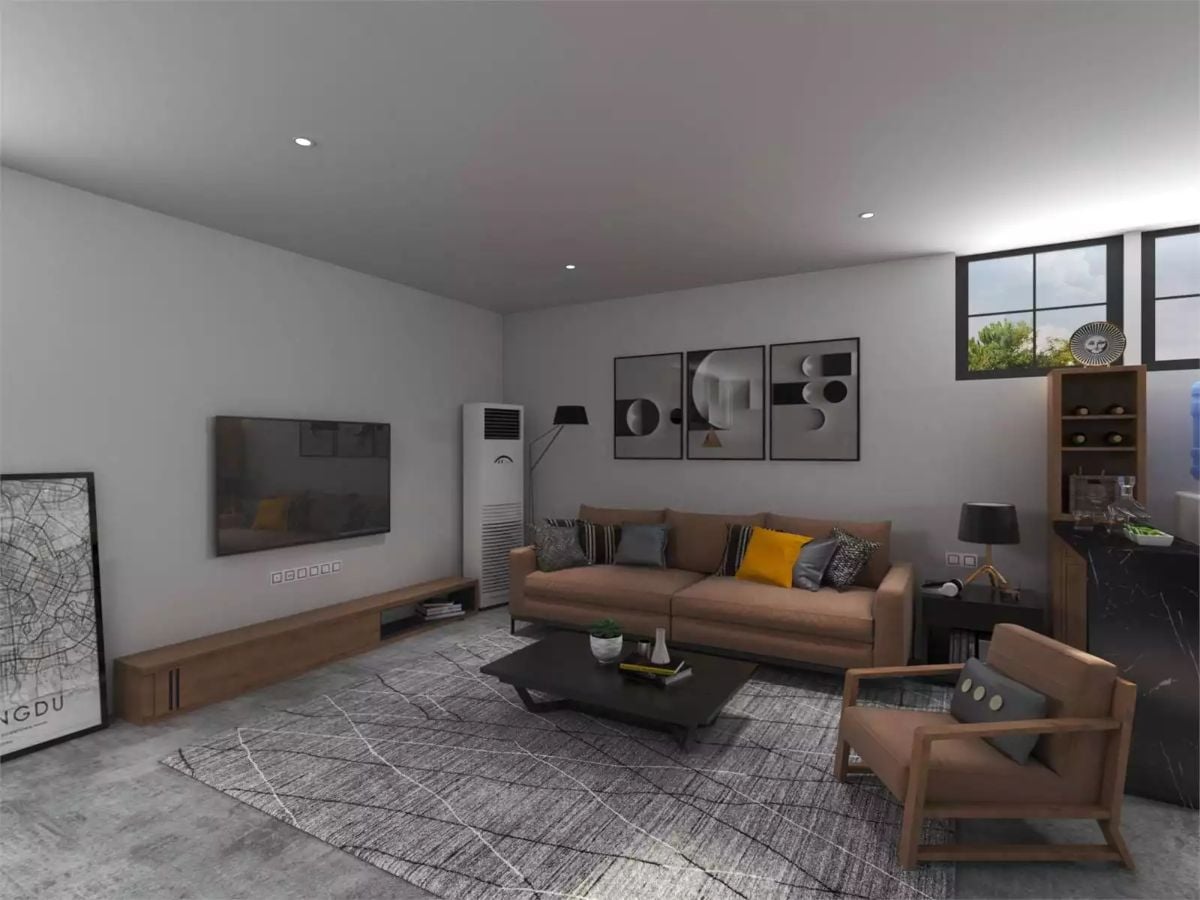
A tan leather sofa anchors the seating area against a wall of geometric art, and the yellow pillow is doing more compositional work than it appears to at first glance. The wood-framed armchair keeps things grounded without simply echoing the sofa.
Pin It
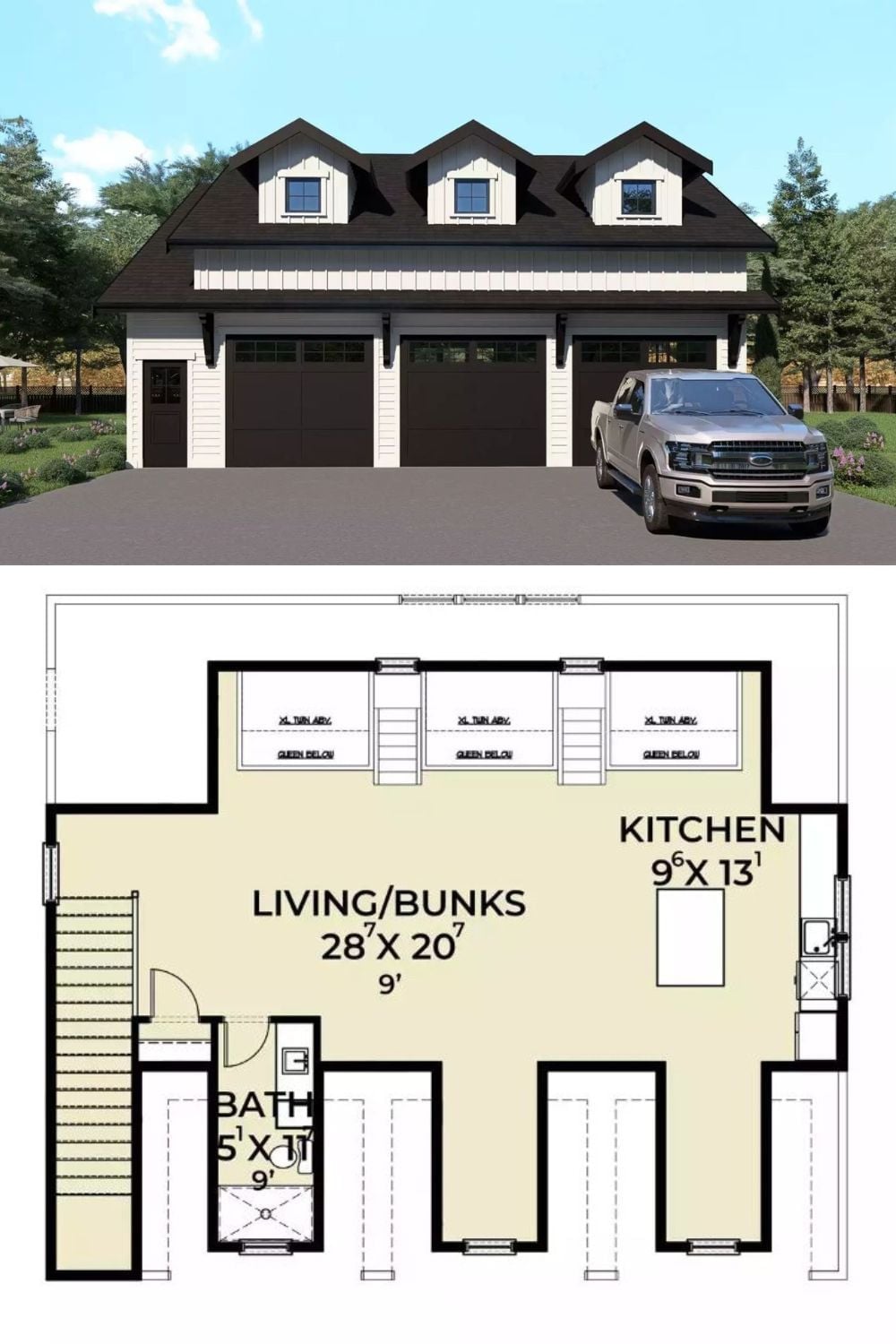
The exterior rendering shows a farmhouse-style three-car garage with dormer windows overhead. Below it, the floor plan reveals a loft apartment with bunk sleeping bays, a kitchen, a bathroom, and stair access from the garage below.