
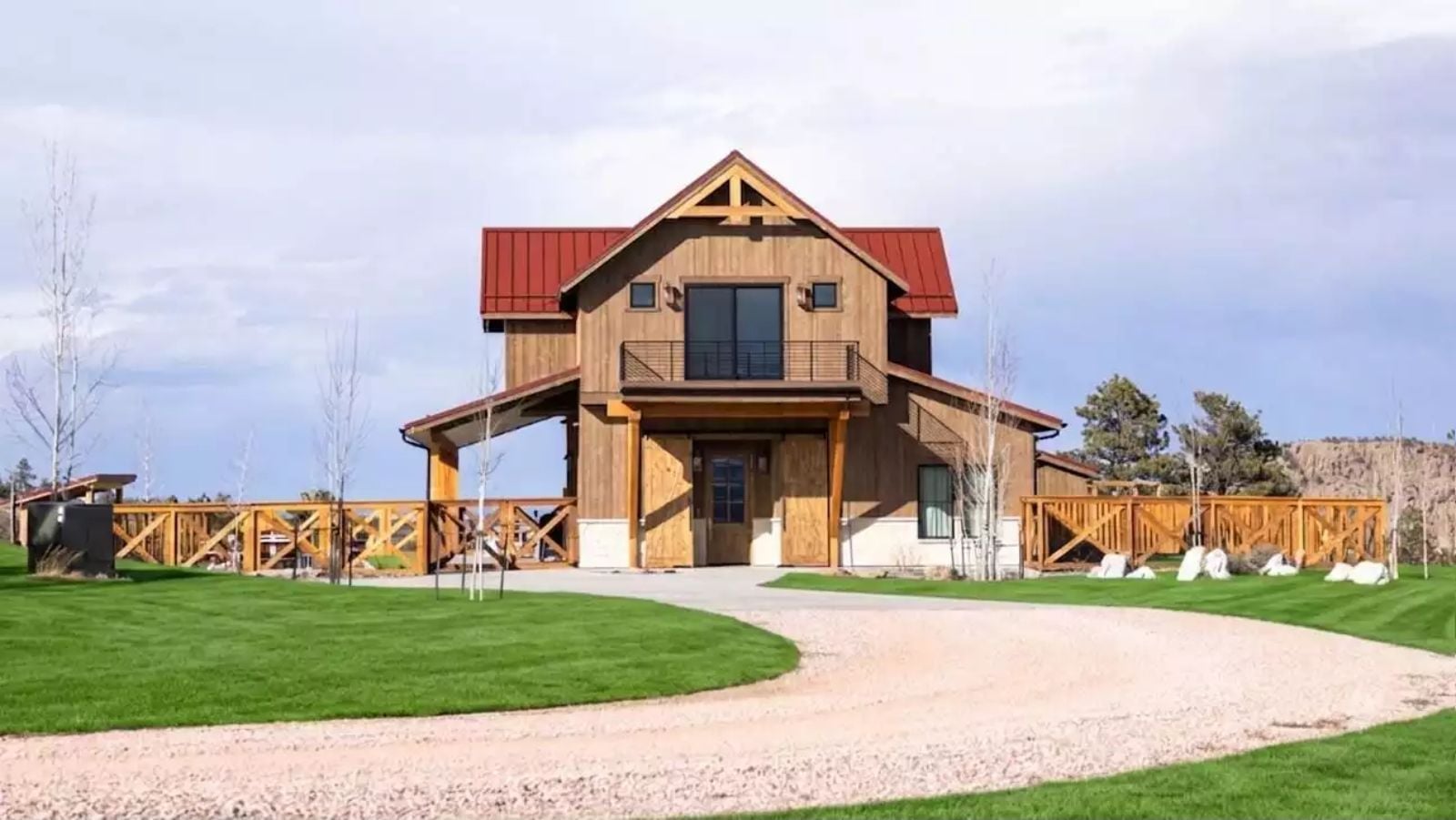
The house you remember from a grandparent’s street had exposed wood beams, a stone fireplace that ran floor to ceiling, and rooms that felt like they were built for staying — Saturday morning coffee in the quiet, a novel left open on the arm of a chair, afternoon light moving slow across the floor. The Highwood View is built around exactly that: a vaulted great room, open-concept living, Craftsman woodwork, and a layout that earns its stillness.
Specifications
- Sq. Ft.: 2,999
- Bedrooms: 2
- Bathrooms: 3
Floor Plan – Main Floor
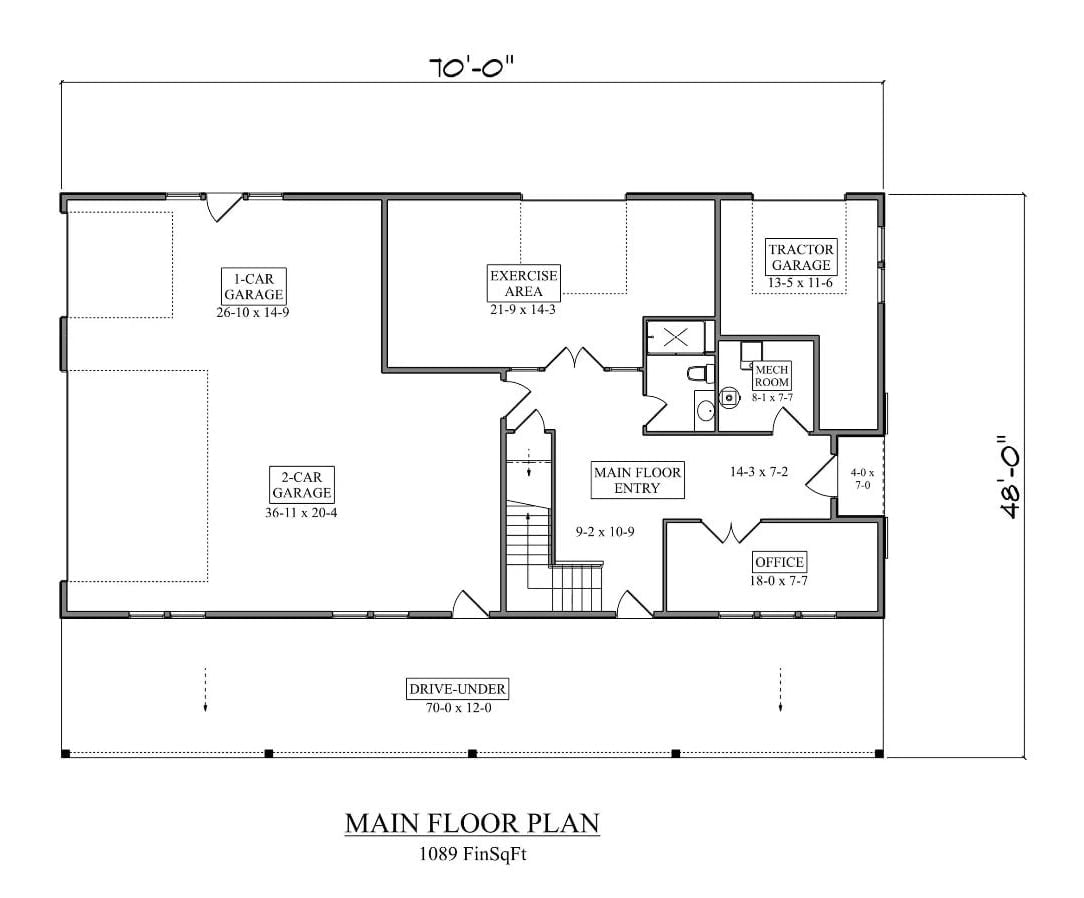
The main floor holds a 2-car garage, 1-car garage, tractor garage, exercise area, office, mechanical room, and entry with stairs — all running beneath a drive-under that spans the full 70-foot width of the home.
Floor Plan – Second Floor
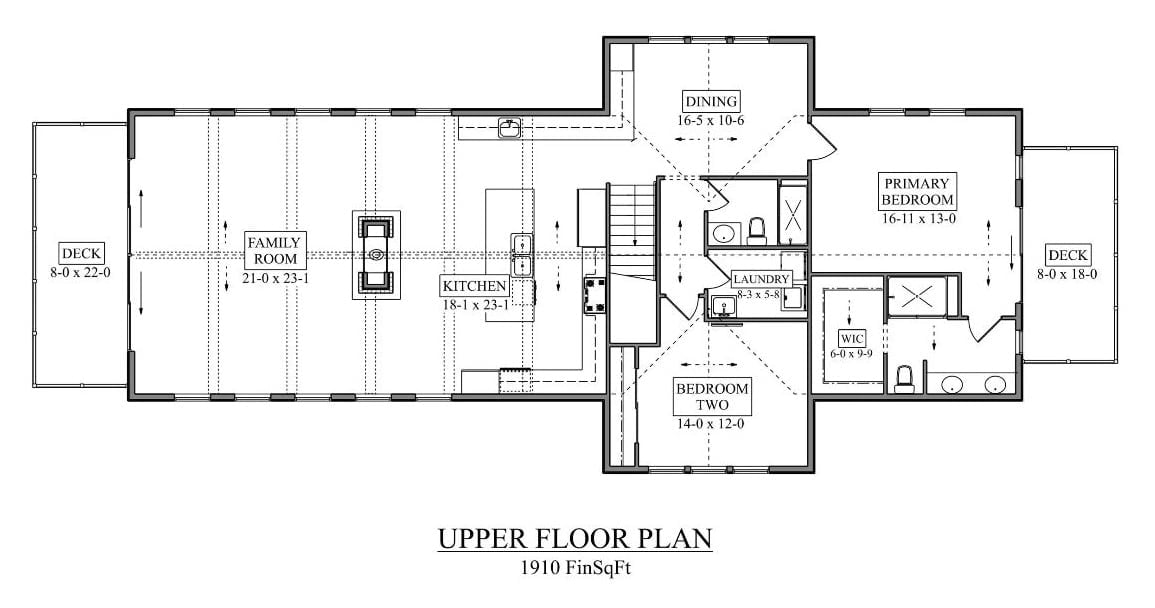
Upper floor living puts the kitchen and family room on the left, with a central stair connecting to dining above. The two bedrooms anchor the right side, and the primary suite gets its own deck access. Laundry lands between the bedrooms — exactly where it should be. Both decks offer serious outdoor square footage.
Stone, Beam, and Fire — Built for People Who Actually Live In Their Homes
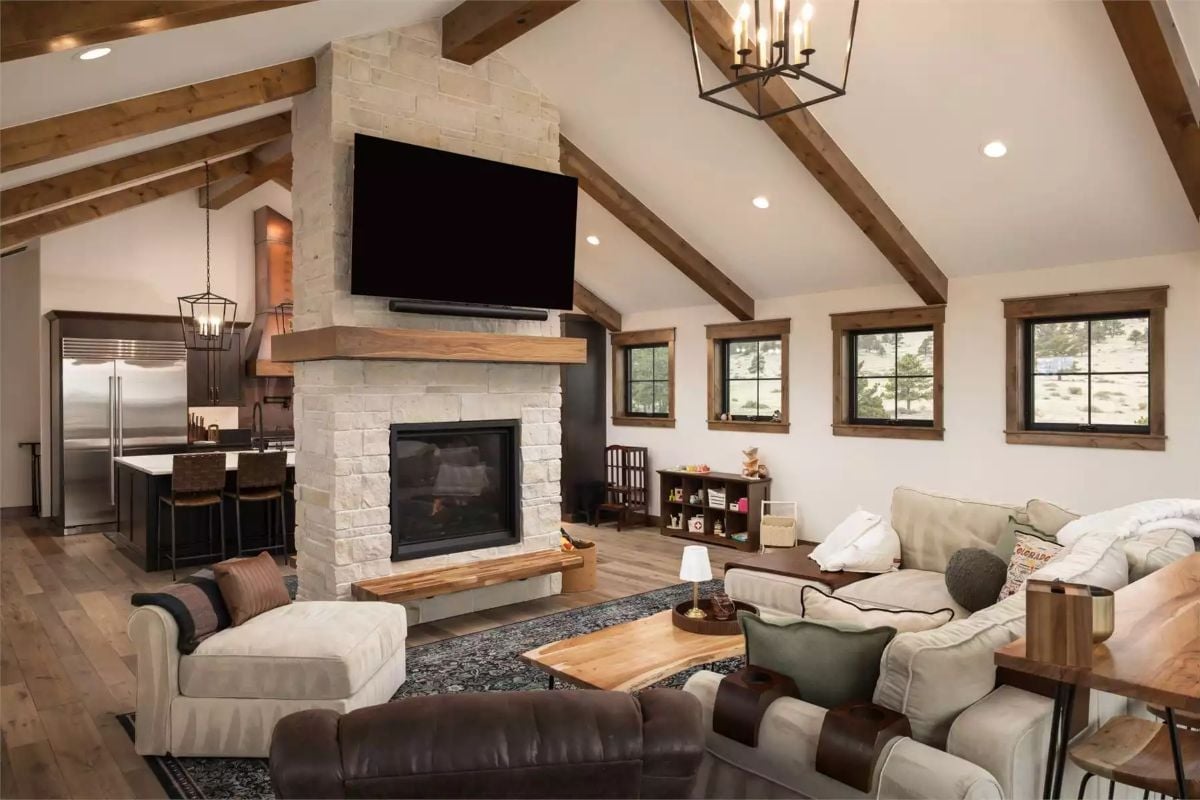
Exposed wood beams climb a cathedral ceiling above a cream sectional and live-edge coffee table, the whole thing anchored by a stacked limestone fireplace with a chunky wood mantel.
Designer’s Secret: That wood mantel isn’t decorative afterthought — it connects the TV mount above to the firebox below so the whole wall reads as one composition rather than three separate decisions. A light stone surround against dark window trim keeps the room from tipping too rustic or too polished. Down at floor level, the live-edge coffee table does similar work: it bridges the cream upholstery and the darker leather pieces without trying to match either one.
Edison Bulbs, Dark Cabinetry, and a Table Built to Last Decades
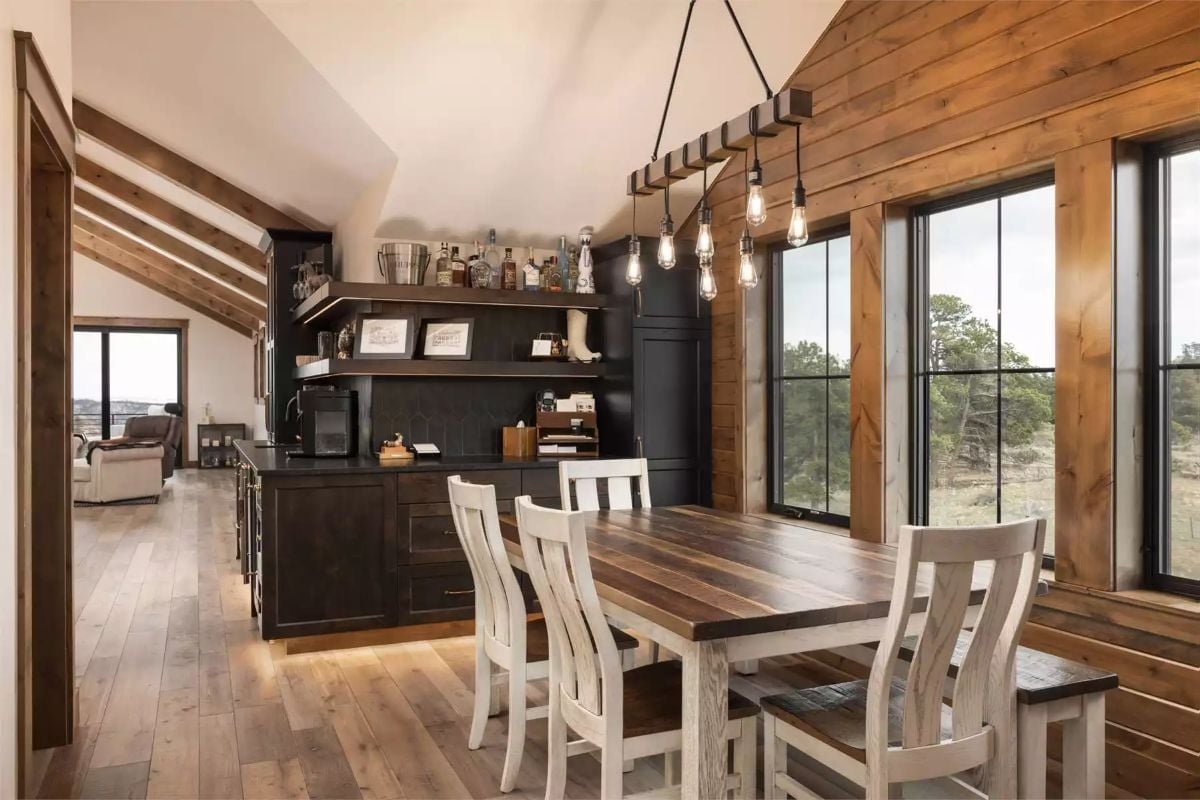
That reclaimed wood dining table earns its place here. Whitewashed chairs keep the room from going too dark against the matte black cabinetry lining the back wall, and the Edison bulb chandelier — hung low on a raw steel frame — reads industrial without overselling it. Open shelving holds liquor bottles and small objects like a working bar, not a display case.
- Under-cabinet LED strip lighting warms the hardwood floor without adding a fixture
- Black window frames tie the cabinetry to the exterior trim, keeping contrast intentional
- Vaulted ceiling height gives the pendant fixture room to hang low without crowding the table
Copper Hood, Woven Leather, and a Marble Island That Earns Its Square Footage
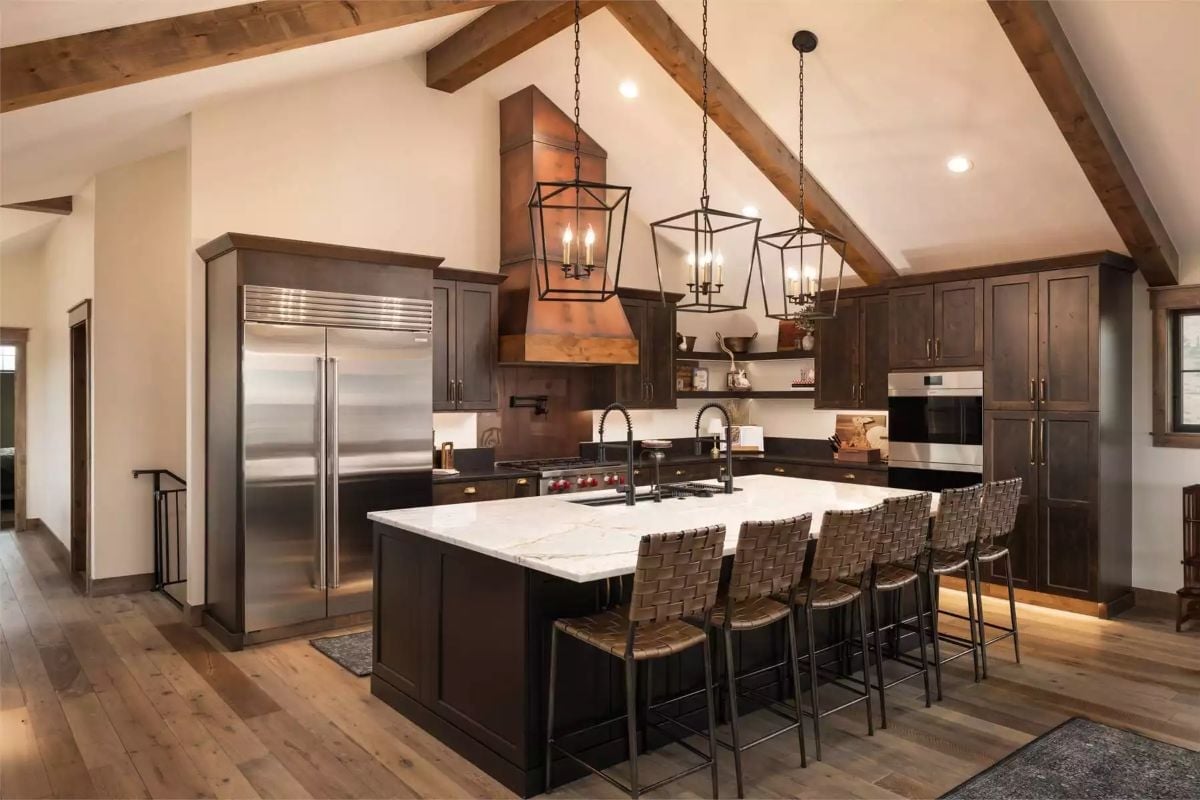
Dark cabinetry gets its warmth from the copper range hood overhead, which pulls the brass hardware tones across the whole kitchen. Four woven leather barstools line the island’s marble top, and the lantern pendants hang low enough to actually light the workspace rather than just gesture at it.
History Corner: Copper became a common material in American kitchens during the 19th century, prized for how quickly it responds to heat changes. The craftsmen who worked it — coppersmiths — practiced a trade that predates modern plumbing by centuries. Its return as a decorative finish in contemporary kitchens isn’t purely aesthetic; it connects back to a long functional history that most other finishes simply don’t have.
Canopy Bed, Mountain Horizon, and a Balcony Door You’ll Leave Open All Morning
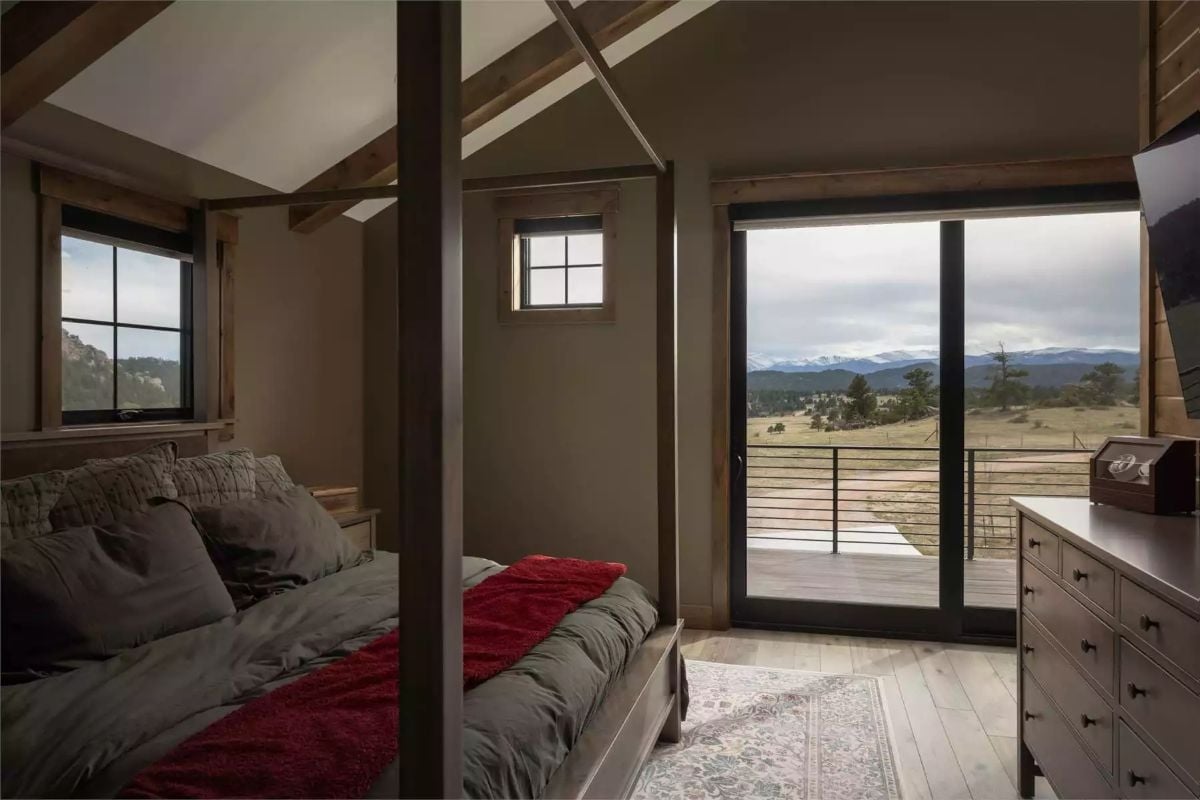
The four-poster bed frames that mountain view like a painting you can walk into. Gray bedding with a red throw keeps it grounded, and the vaulted ceiling with wood beams gives the room enough vertical space that the sliding glass door to the railed deck feels like a natural extension rather than an afterthought. Simple. Earned.
Fun Fact: Sliding glass doors in bedrooms became popular in residential construction during the mid-20th century largely because they allow full-width ventilation without the mechanical complexity of casement or awning windows. In mountain climates, that matters less for cooling and more for pulling in cool morning air without leaving an entire wall exposed to weather.
Brass Pulls, Wall-Mount Faucets, and Cabinetry Dark Enough to Mean It
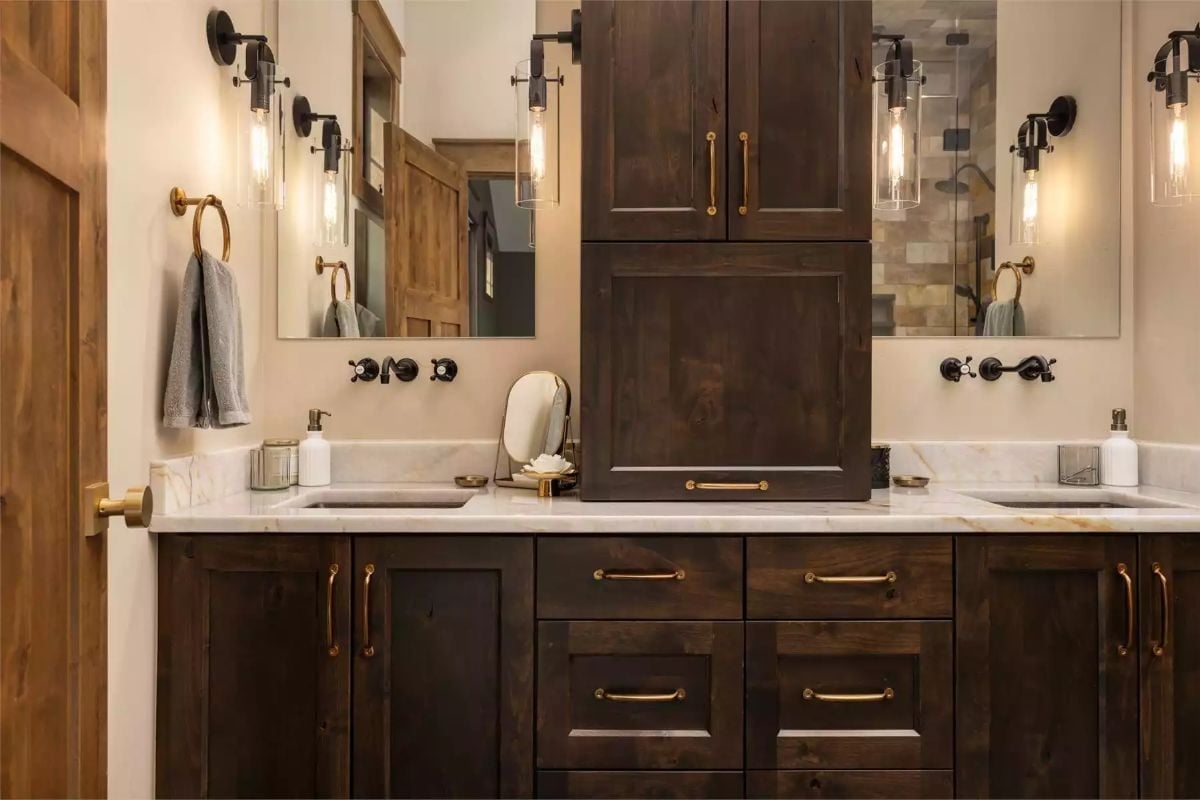
Double undermount sinks sit beneath wall-mounted matte black faucets, with brass hardware on the lower cabinets echoing the sconce fixtures above. The marble countertops carry warm veining that does real work here — without it, all that dark wood would flatten the room out considerably.
Color Story: Espresso-stained cabinetry reads warmer in person than it photographs because the wood grain still shows through the finish. Brass pulls in an unlacquered or lightly coated finish will develop a patina over time — most designers consider that a feature, not a maintenance problem. The cream-toned marble keeps the overall palette from tipping too heavy.
Shiplap, Slate Tile, and a Coat Rack That’s Doing Real Work
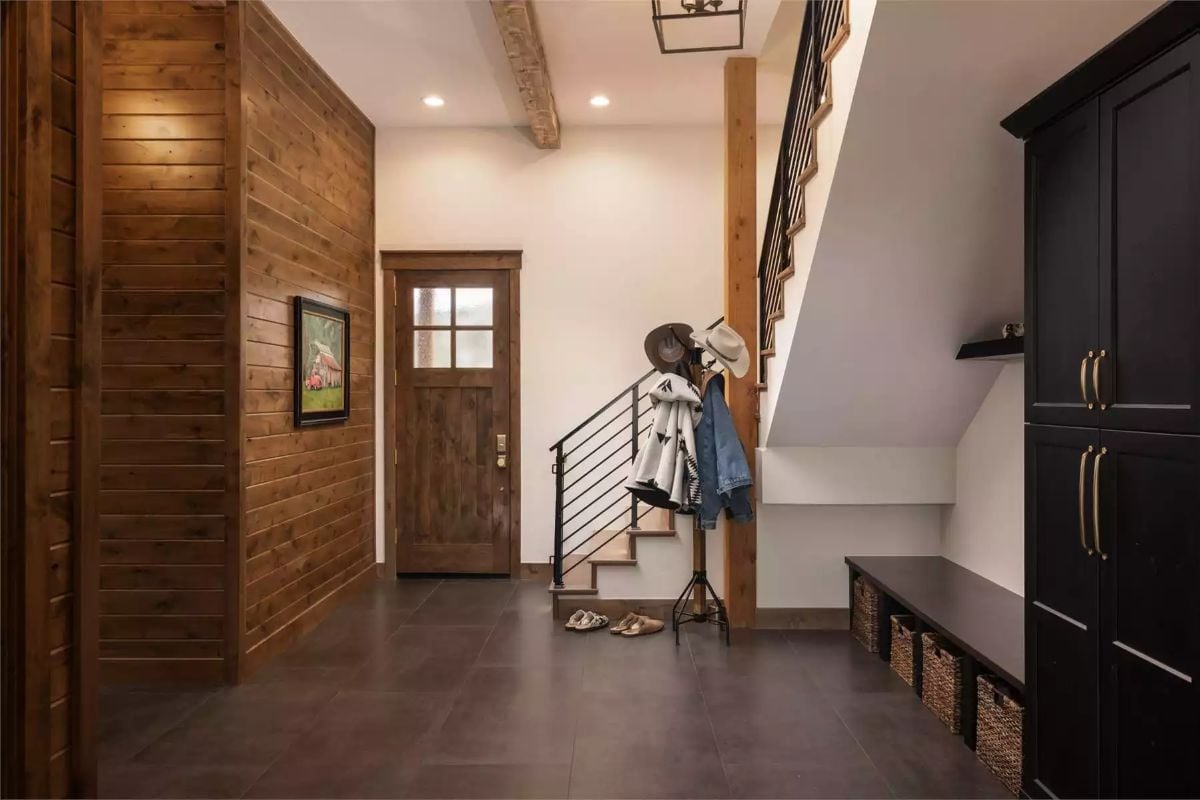
Horizontal shiplap cladding one full wall gives this mudroom entry its character, and large-format slate tile underfoot keeps it from veering decorative. A mudroom that actually functions — good.
Did You Know: Shiplap was originally a functional lumber joint used in shipbuilding and barn construction — nobody put it on interior walls on purpose. It migrated into homes partly because reclaimed barn wood became desirable, and builders discovered the overlapping horizontal boards handled minor wall movement better than drywall in high-traffic entry zones where doors slam and humidity swings constantly.
Live-Edge Bench, Shiplap Walls, and a Front Door Worth Walking Through Every Day
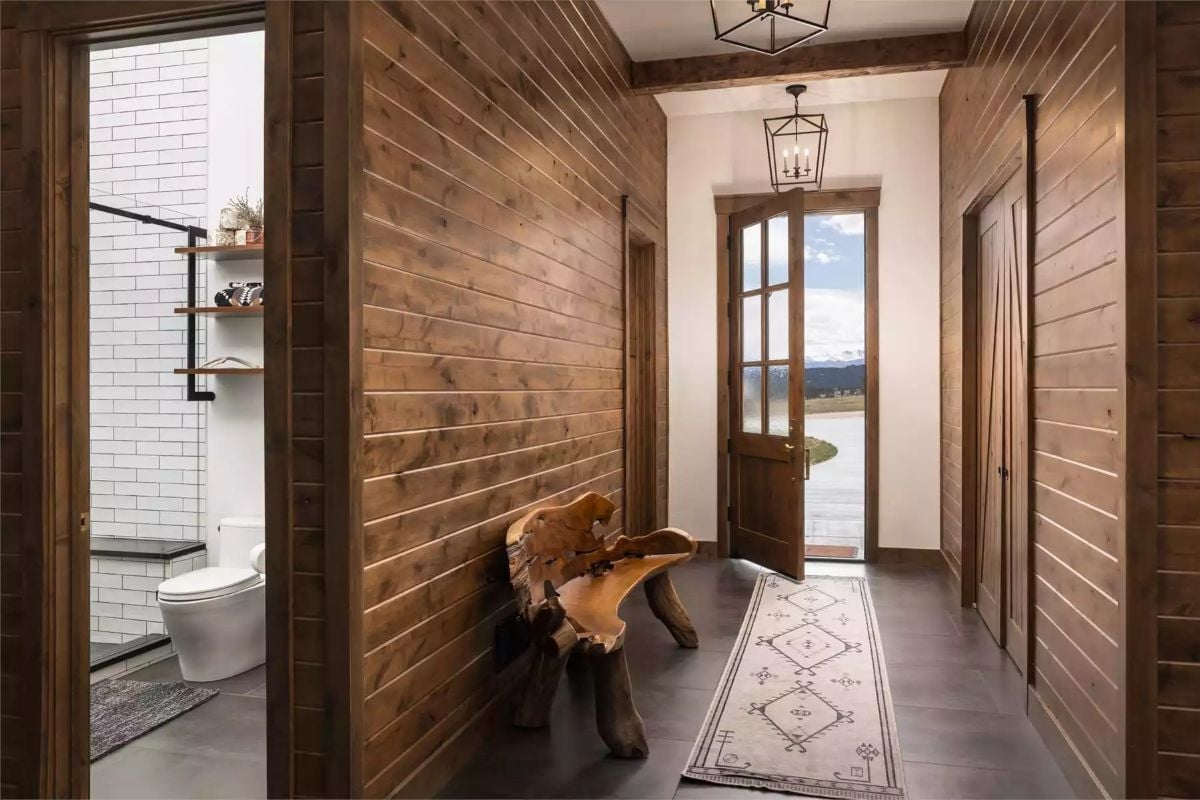
Wood-paneled shiplap runs floor to ceiling here, and it doesn’t feel like a design trend.
Knotty planks cover every wall of this entry corridor, giving the space a weight that paint simply can’t fake. Against the wall sits a live-edge bench with the roots still intact — less like furniture, more like something pulled directly from the property. Wide-plank tile underfoot keeps the palette grounded without competing. And the lantern pendant overhead suits the scale without trying too hard.
bold_hook: Live-edge furniture gets its character from the natural outer edge of the lumber being left intact rather than milled square. No two pieces cut this way are identical — that bench won’t show up in anyone else’s entryway.
Pin It
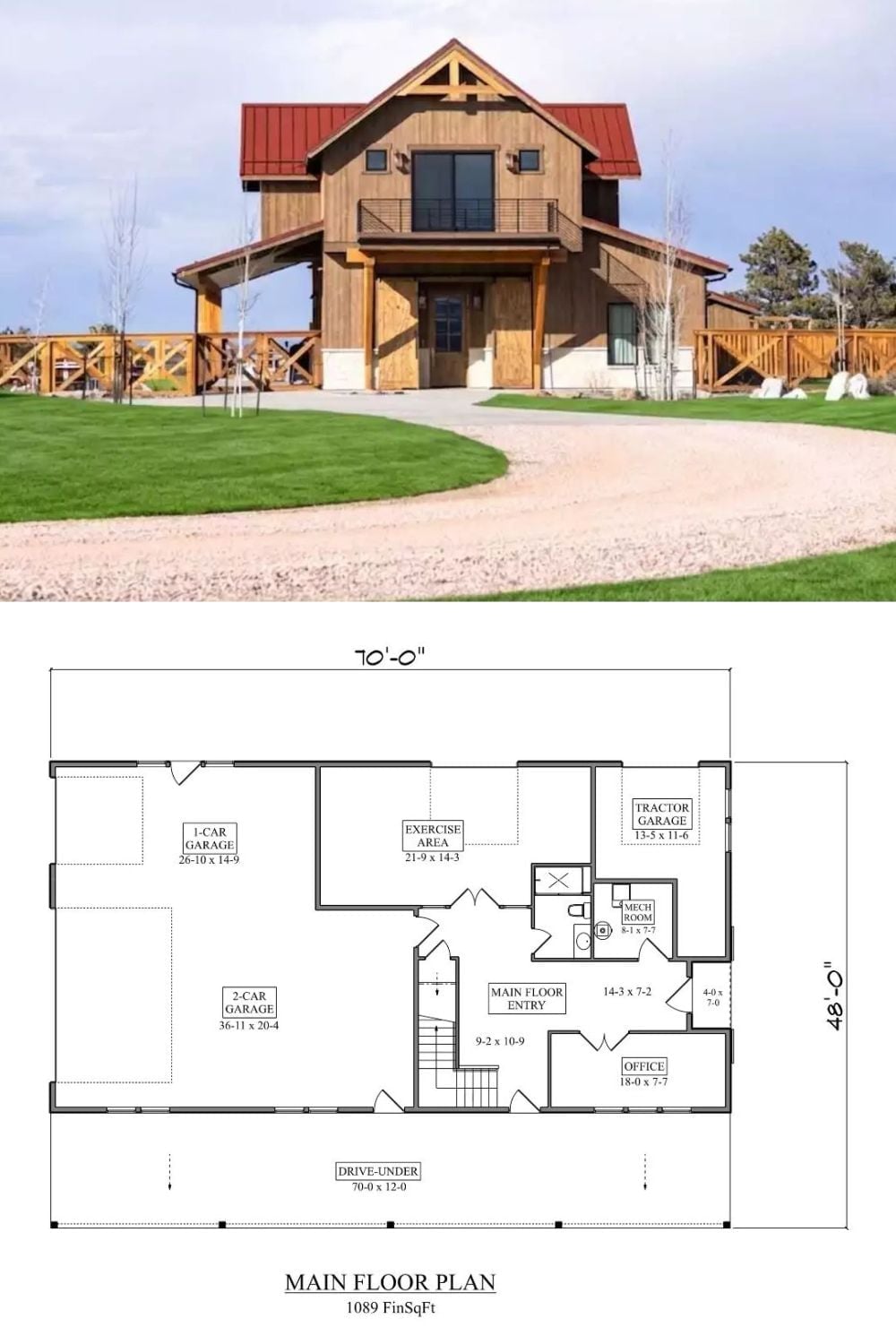
Exterior photo of a barn-style home with red metal roof paired with its 1,089-square-foot main floor plan below.