
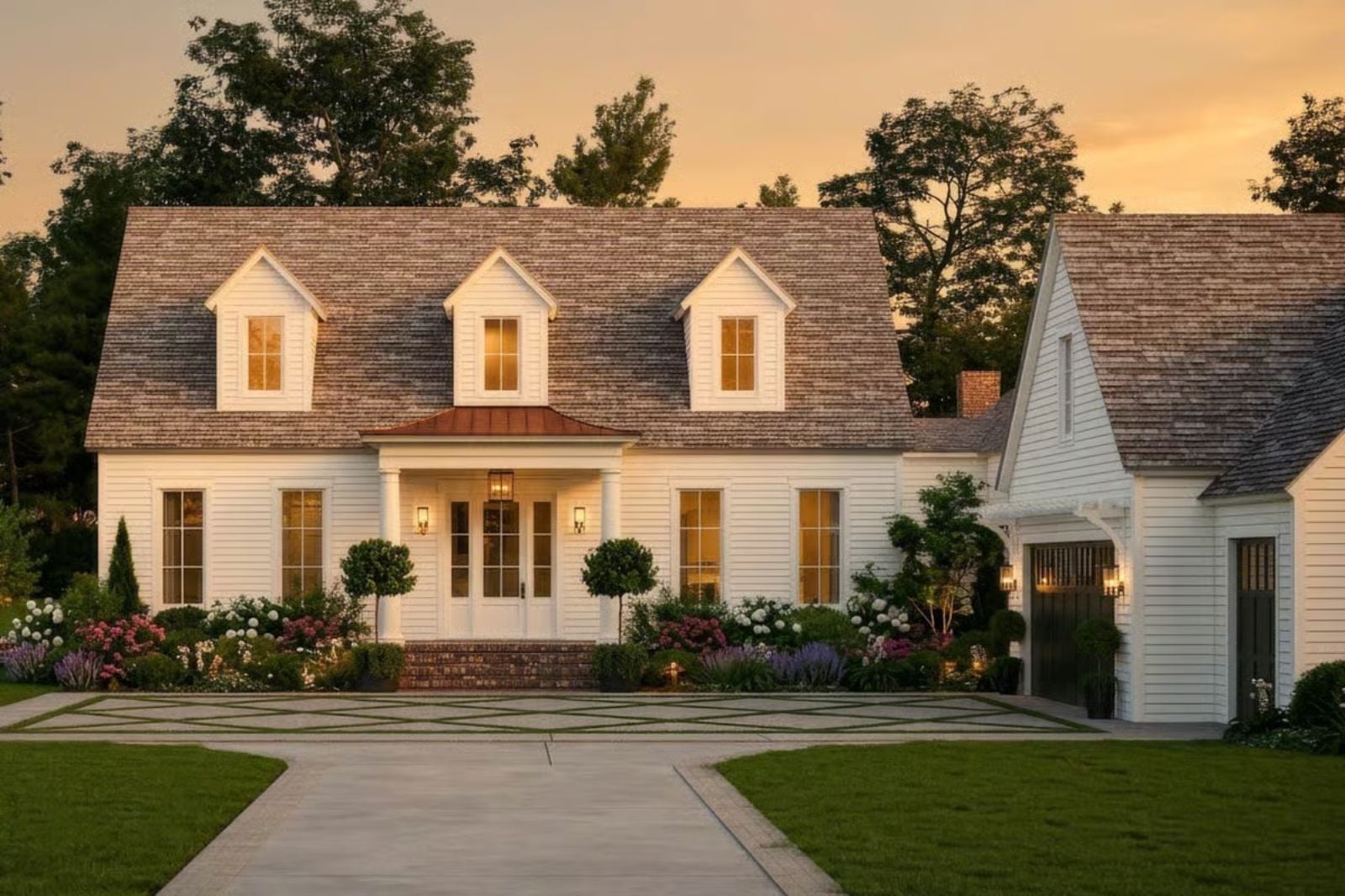
Cape Cod houses have always done more with less — steep stairs, dormers punching light into tight upper rooms, rooflines that look like they mean it from the street. This plan keeps that geometry intact while opening up the main level, stacking a loft overhead that pulls double duty as a reading room or guest overflow, and leaving enough breathing room between the primary suite and the rest of the house that it actually functions like one.
Specifications
- Sq. Ft.: 4,119
- Bedrooms: 3-5
- Bathrooms: 3.5
Floor Plan – Main Floor
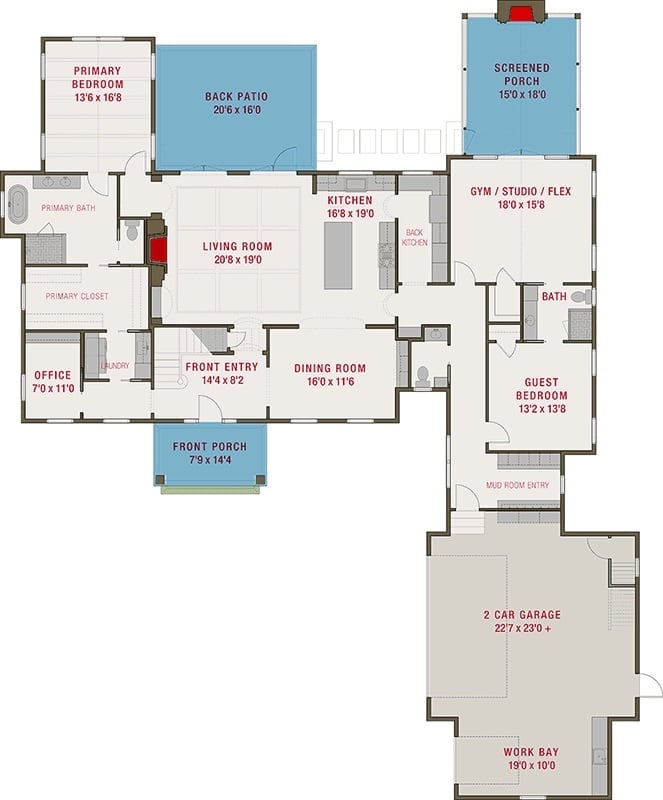
The main level is anchored by a large living room and open kitchen, with the primary suite tucked into its own wing — private bath, generous closet, no shared walls with the busier parts of the house. A guest bedroom, a gym flex space, and a two-car garage with a dedicated work bay fill out the rest of the footprint without everything bleeding together.
Floor Plan – Second Floor
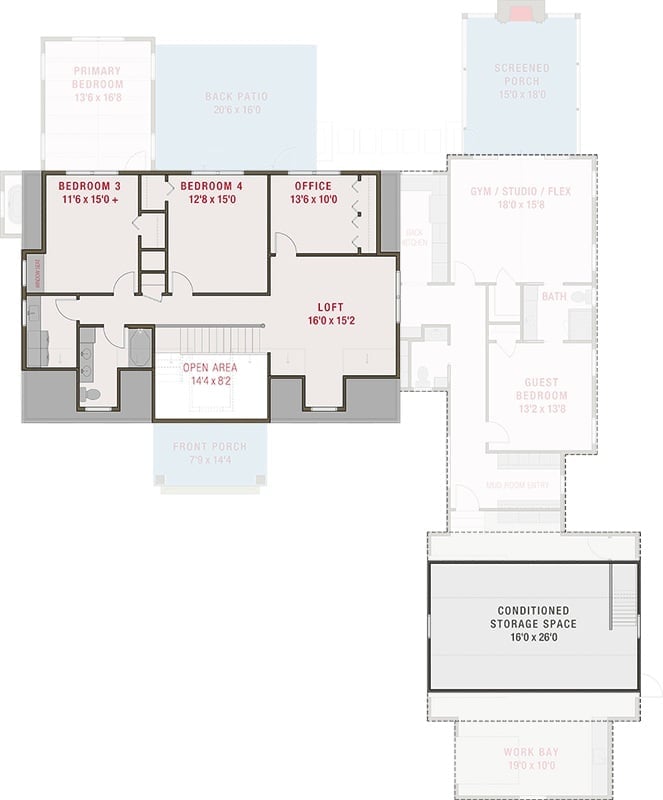
Upstairs holds three bedrooms, an office, and an open loft at 16 by 15 feet — big enough to furnish properly, not just leave empty. The right wing adds a gym, a guest bedroom with its own bath, and a mud room entry that keeps wet gear away from the main living areas. Conditioned storage and the work bay sit at the far end, with front and screened porches bookending the whole plan.
Grand Foyer With Iron Baluster Staircase and Board-and-Batten Walls
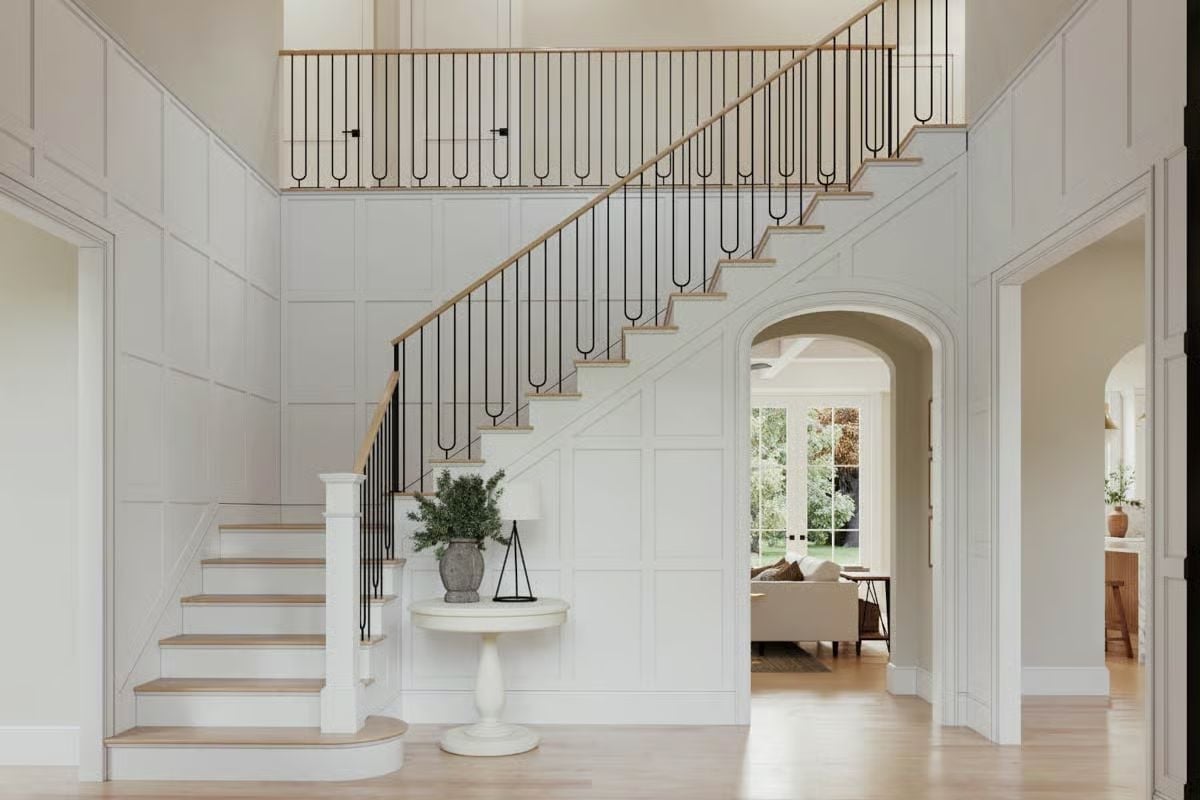
White oak treads pair with matte black iron balusters shaped like tuning forks, and board-and-batten paneling runs the full height of the wall beside them. Through the arch at the back, natural light spills into what looks like a sitting room beyond. It’s a strong first impression — the kind of entry that makes the rest of the house feel intentional before you’ve seen any of it.
Reeded Island Base and Brass Pendants Set the Tone for This Warm Kitchen
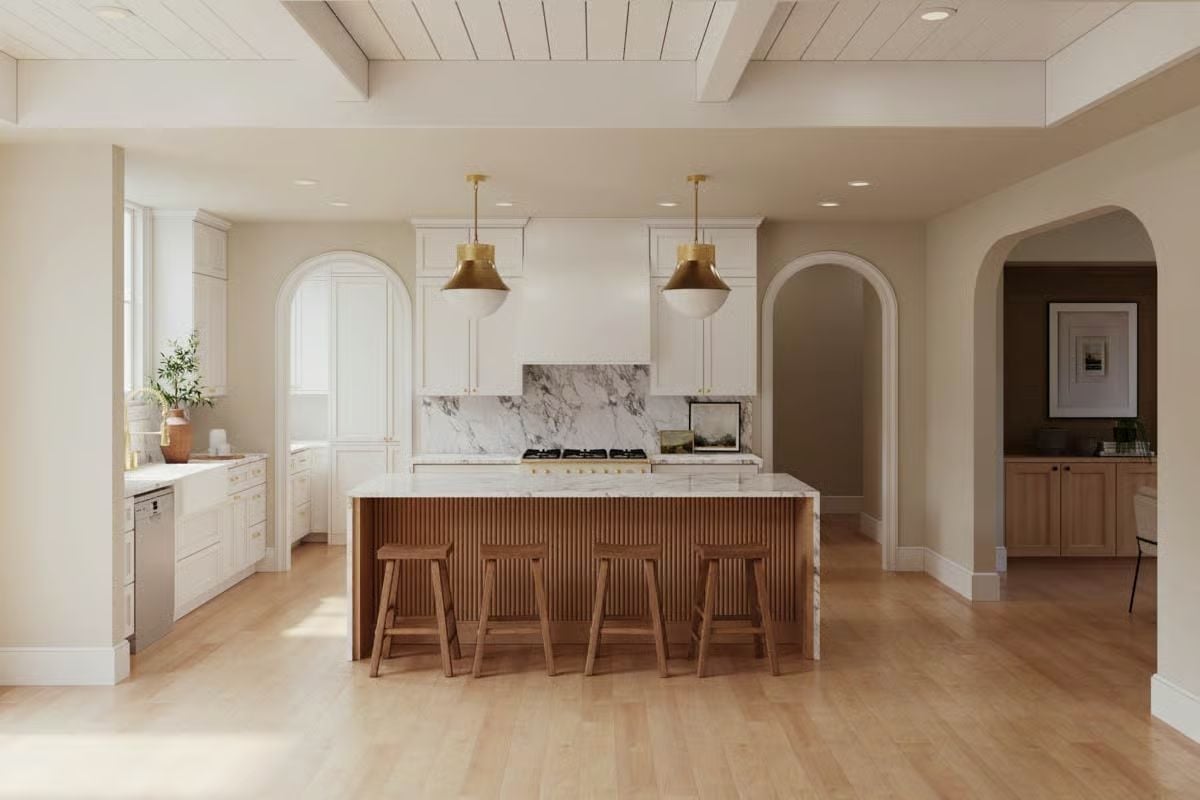
Fluted walnut panels wrap the island base, and the marble slab countertop runs continuously into the backsplash behind the range rather than stopping at the wall. Brass pendant caps hold the palette warm without tipping into gold-everything territory.
Budget Tip: Reeded wood panels on an island base are one of the better DIY upgrades going — source pre-milled MDF trim boards, apply them yourself, and you get most of the look at a fraction of custom millwork pricing. On the fixtures, brass tends to hold up better than brushed nickel in high-humidity spaces, so the pendants here are a practical call as much as a visual one.
Coffered Ceiling and Arched Built-Ins Ground a Warm, Light-Filled Living Room
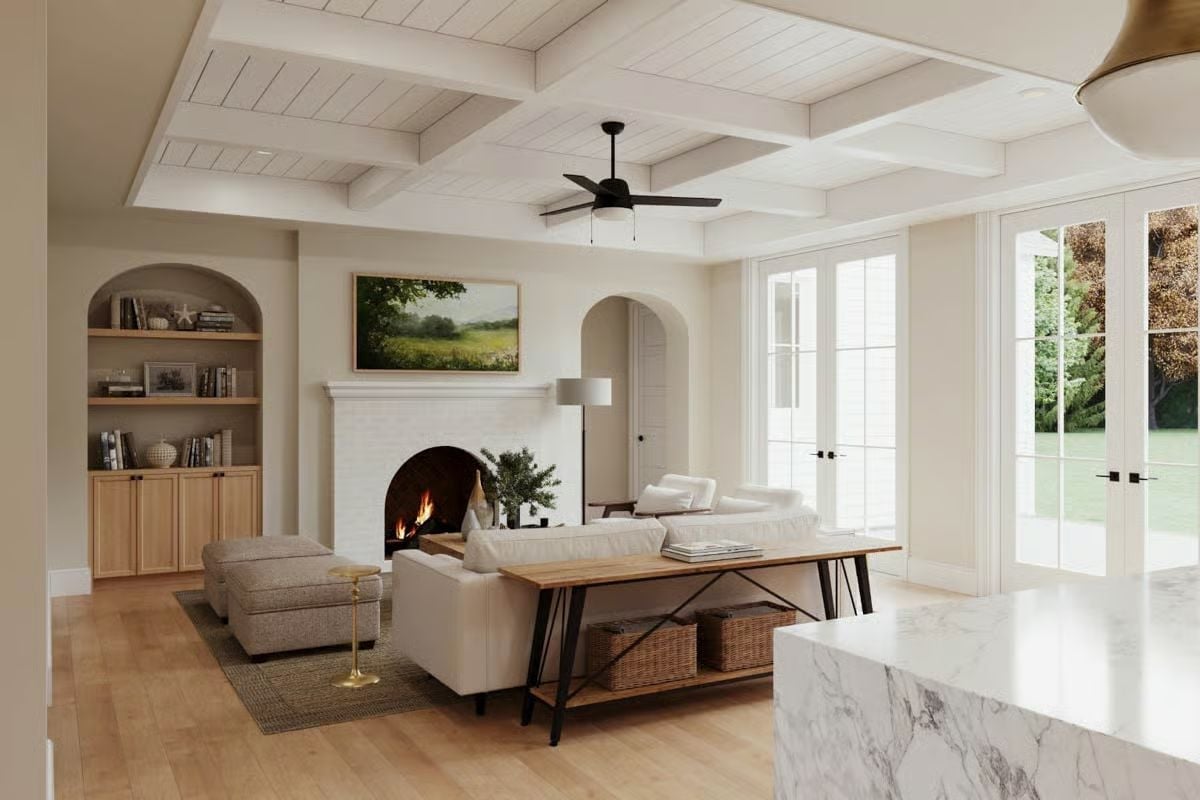
Shiplap panels set inside coffered beams give the ceiling real depth without making the room feel low. Built-in shelving flanks the fireplace inside arched niches, light wood cabinetry running underneath, and French doors on the far wall keep the whole space from going dark despite all the wood and trim. It’s a lot of detail layered into one room — it works because everything is the same value and nothing is competing.
Color Story: Warm whites read completely differently depending on their undertones. The walls here lean greige, which keeps the room from going cold against the natural wood floors without fighting the crisp white ceiling trim. Before you commit to a paint color, hold swatches near your largest light source — what looks neutral on the chip can pull pink or yellow once it’s on the wall at scale.
Paired Nightstands and Natural Wood Keep This Bedroom Grounded
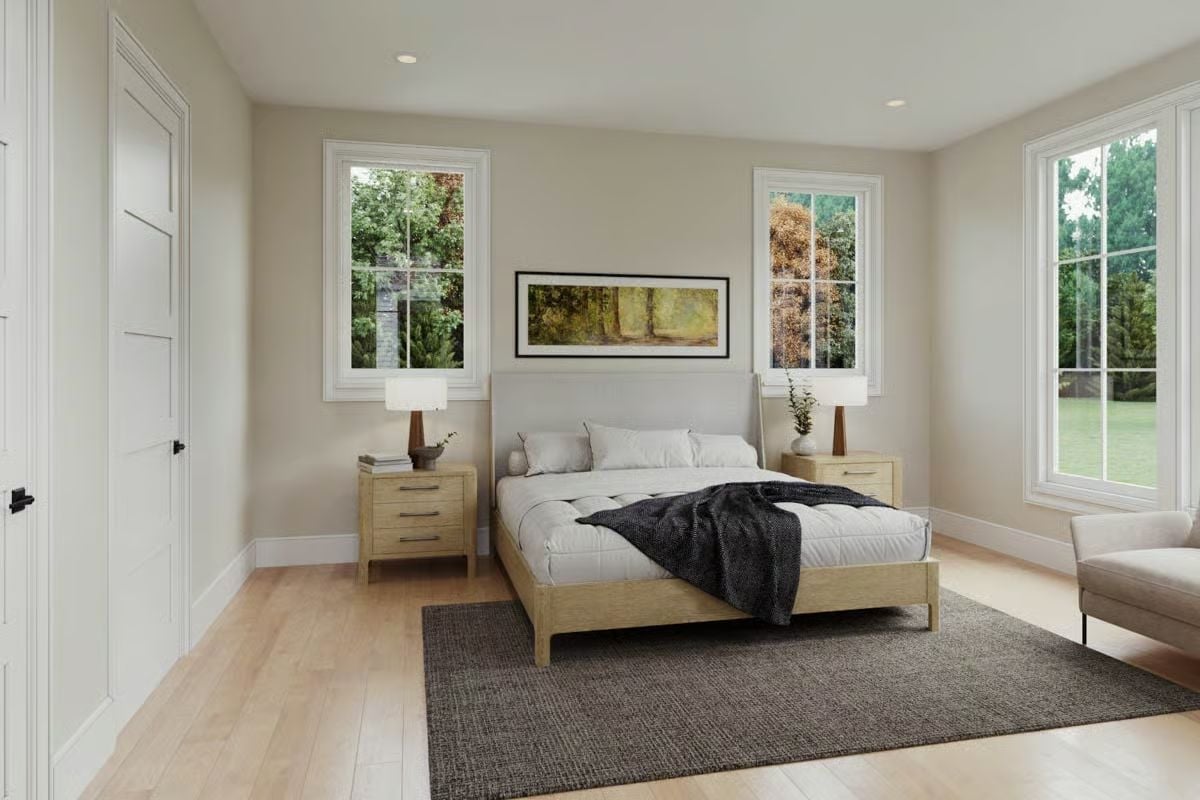
Light oak on the bed frame and matching nightstands sits quietly against the warm greige walls rather than pulling focus. A dark throw adds enough visual weight that the pale bedding doesn’t look like it’s floating, and three windows bring in sufficient daylight that the recessed ceiling fixtures are really just backup. Clean overhead, clean walls — the room earns its calm.
Why Symmetry Works Harder Than Decor Here
Both nightstands carry nearly identical lamps, which draws the eye straight to the artwork centered above the headboard instead of scattering it around the room. That’s a layout decision, not a styling trick, and it’s harder to course-correct once the furniture is set. Minimal accessories only read as intentional when the bones are already doing the organizing.
Now the design moves into the primary bathroom, where the material choices get bolder.
Sage Green Tile and Freestanding Tub Make a Case for Slow Mornings
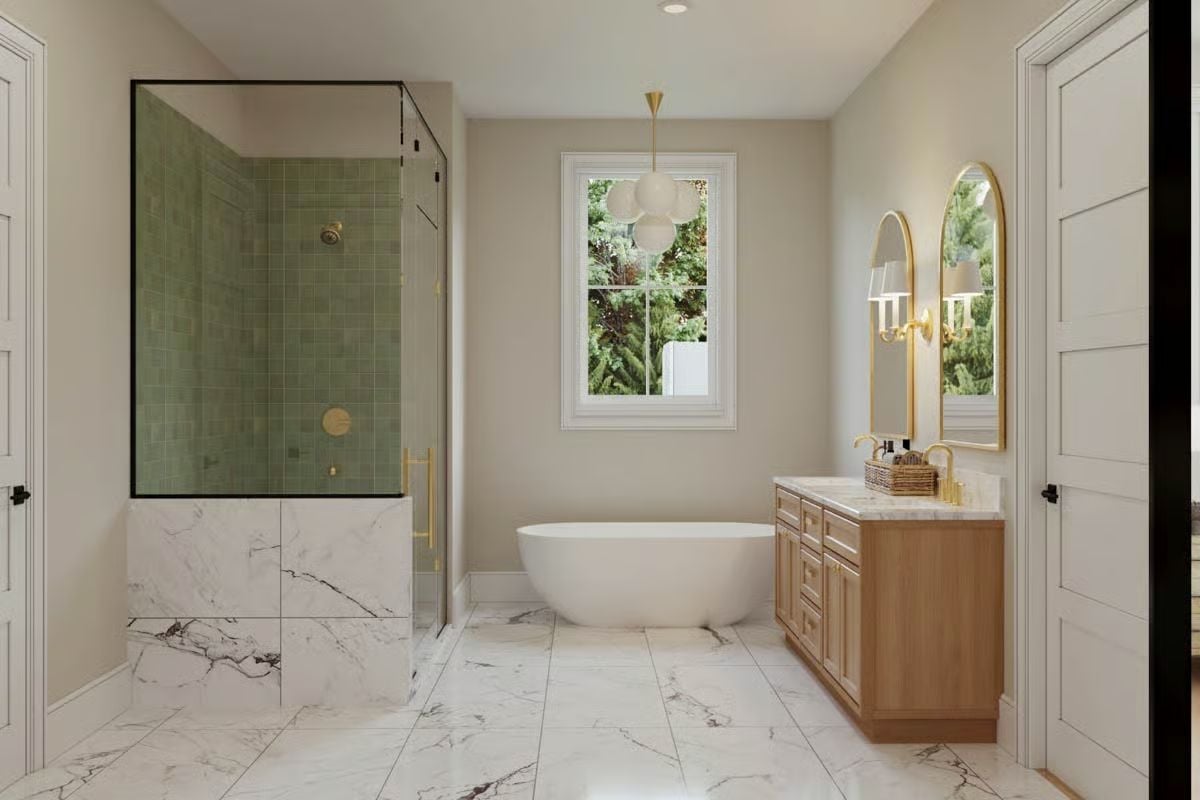
Black-framed glass, sage subway tile, and brass fixtures share the space without any one of them shouting over the others. The freestanding tub sits where it gets the most light, which is exactly where it should be.
Pin It
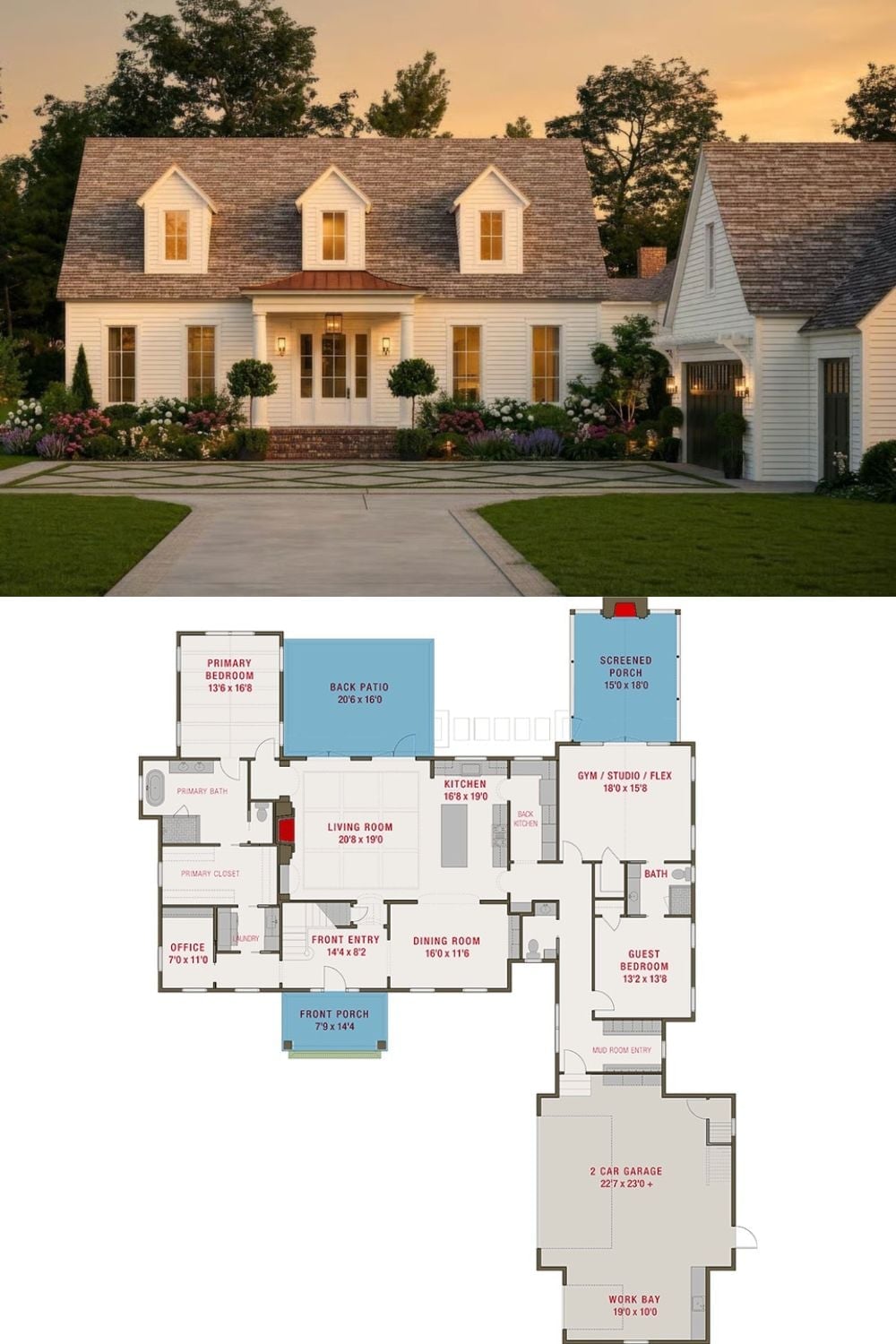
Exterior rendering of a Cape Cod farmhouse paired with its single-story floor plan showing dimensions and room labels.
Worth Knowing: Those three dormers aren’t there just for curb appeal. They pull natural light into upper-level rooms that would otherwise feel like finished attic space — functional square footage that actually earns its keep. If you’re adapting a plan with dormers, get the structural scope early. The framing changes affect the roofline, and that cost has a way of surfacing later than you’d like.