
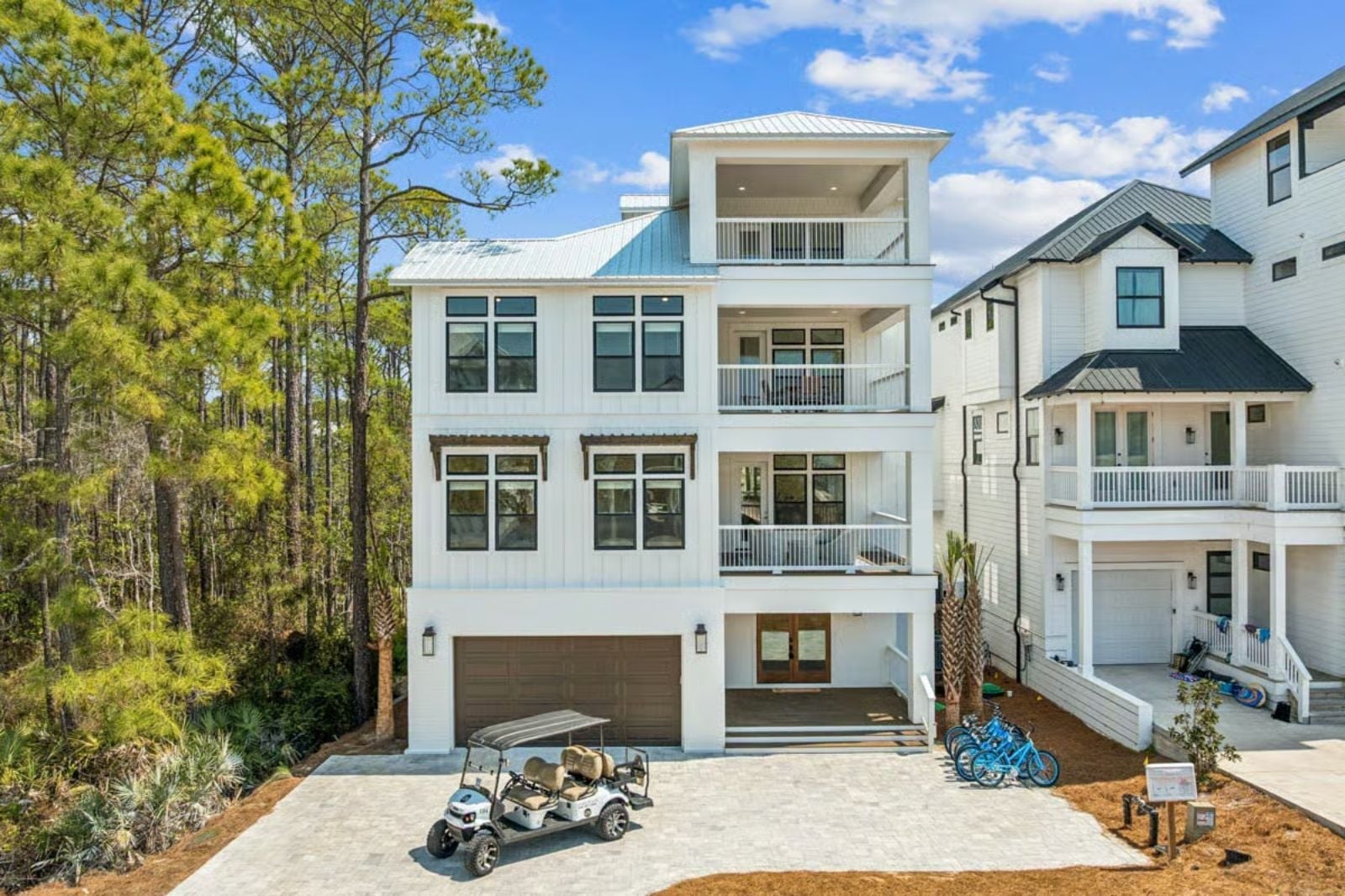
Coastal floor plans have always looked the part, but most weren’t actually built to handle cousins arriving with luggage, teenagers claiming the recreation room before anyone unpacks, or dinner running two hours late because nobody wants to leave. The Harborcrest is designed around exactly that reality: a dedicated recreation room, an elevator that earns its keep on a packed holiday weekend, and a layout generous enough to keep a crowd comfortable without the hosts losing their minds.
Specifications
- Sq. Ft.: 6,249
- Bedrooms: 6
- Bathrooms: 7.5
Floor Plan – Main Floor
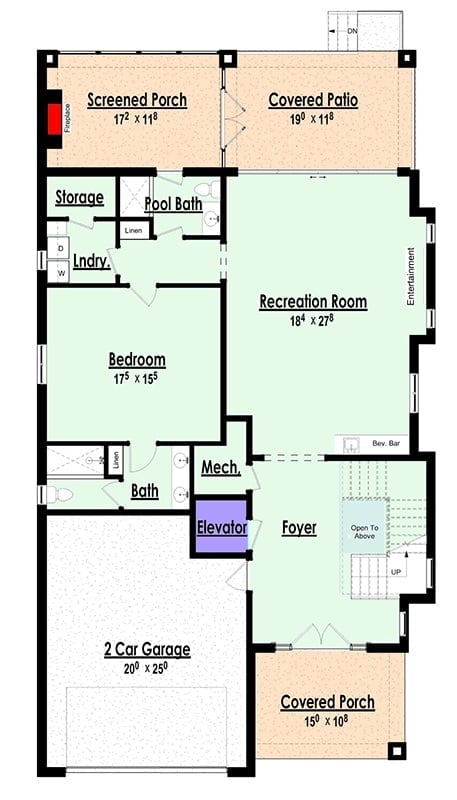
The lower level does serious work. The recreation room runs nearly 28 feet deep, connecting directly to a beverage bar and covered patio — which makes it the obvious social hub the moment anyone walks in. A private bedroom with its own bath sits toward the front for guests who want some separation, while the pool bath, laundry, and storage cluster together in a way that keeps the utility functions out of everyone’s way. The elevator and foyer anchor the center, which is exactly where they should be.
Floor Plan – Second Floor
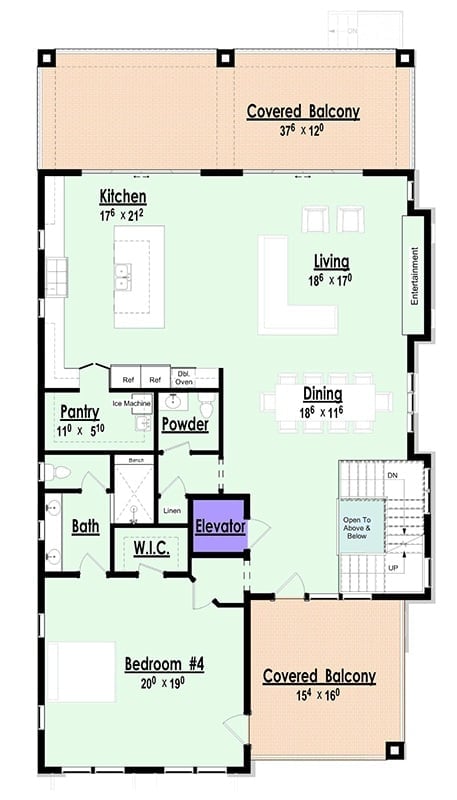
The second floor puts the kitchen, living, and dining zones in an open arrangement, with Bedroom #4 tucked privately below for guests who need a quieter corner. Two covered balconies push the living space outward, and the elevator keeps the core connected across all levels.
Floor Plan – Third Floor
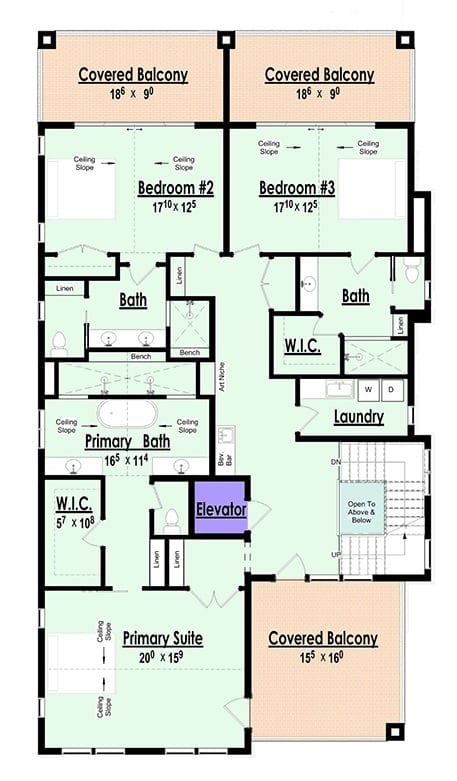
Three bedrooms occupy the upper level, each with its own balcony access and dedicated bath. The primary suite anchors the south end with a sprawling bath and walk-in closet. Bedroom 3 shares its floor space with a laundry room — a detail that sounds minor until you’re doing laundry without hauling bags between floors.
Floor Plan – Fourth Floor
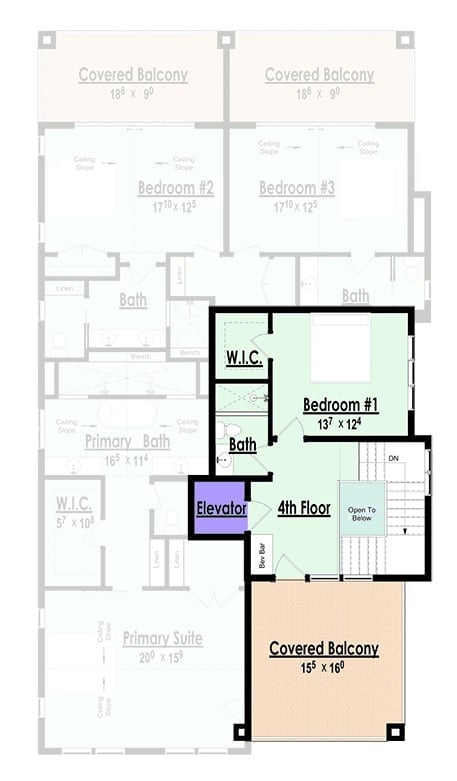
The fourth floor belongs almost entirely to Bedroom #1 — walk-in closet, private bath, covered balcony, and a beverage bar just off the open landing. It functions as a self-contained suite without feeling isolated, which is a harder balance to pull off than it looks on paper.
Style Tip: An elevator on an upper residential floor isn’t just a luxury add-on. It future-proofs the home for aging family members and makes hauling luggage or groceries far less of a production. If you’re building from scratch, roughing in the shaft early costs far less than retrofitting it after the walls are up.
Three Levels of Covered Porches Make Outside Feel Like a Second Living Room
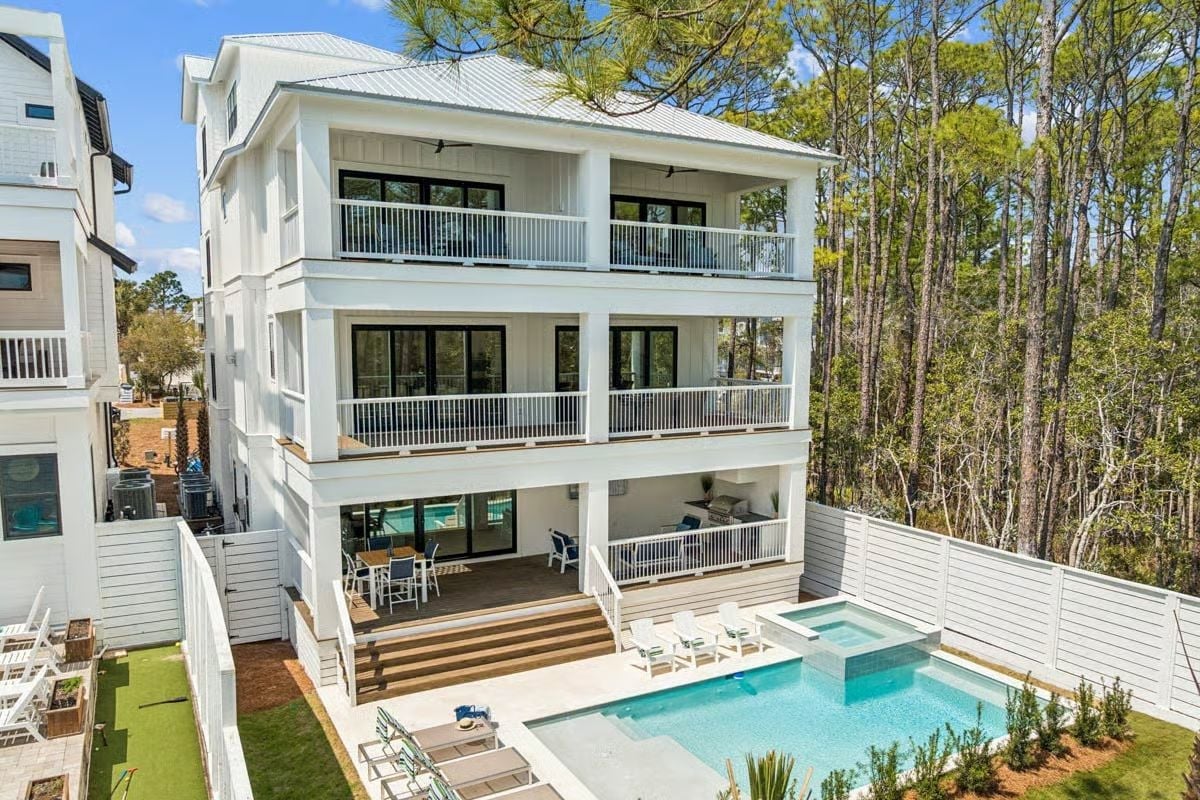
Every floor gets its own outdoor deck, so no one’s fighting for porch space.
White metal railings span two stacked balconies while the ground-level deck steps down to a pool with an attached spa. Ceiling fans are already mounted up top — a small detail that matters more than people expect once the humidity climbs.
Step inside and the outdoor connection becomes even clearer from the living room’s back wall of glass.
Sectional-Scaled Living Room Built Around Real Family Gatherings
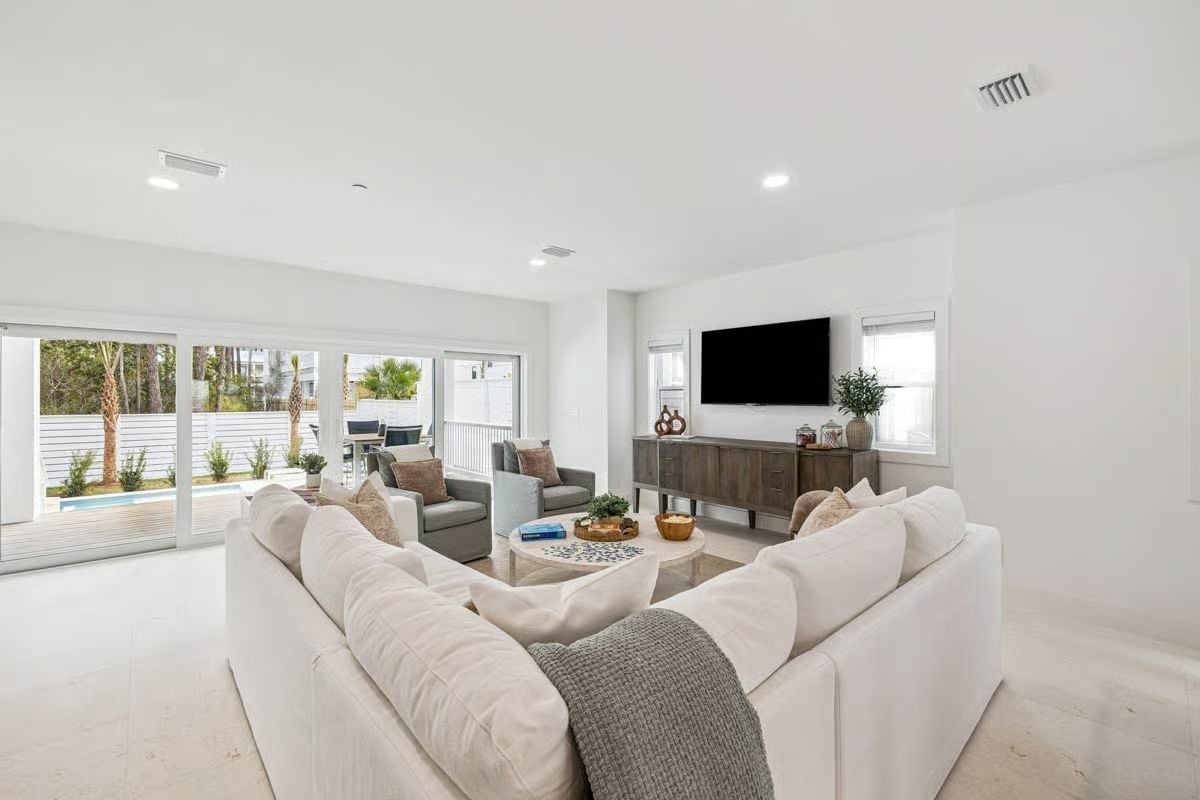
An oversized cloud sectional faces a wall-mounted flatscreen above a wood sideboard with enough drawer storage to actually keep the room tidy. Sliding glass doors frame the pool deck beyond without pulling focus from the seating. Gray accent chairs anchor the conversation zone, and a round coffee table keeps traffic moving around the perimeter rather than through it.
Foyer Built Wide Enough to Actually Welcome People
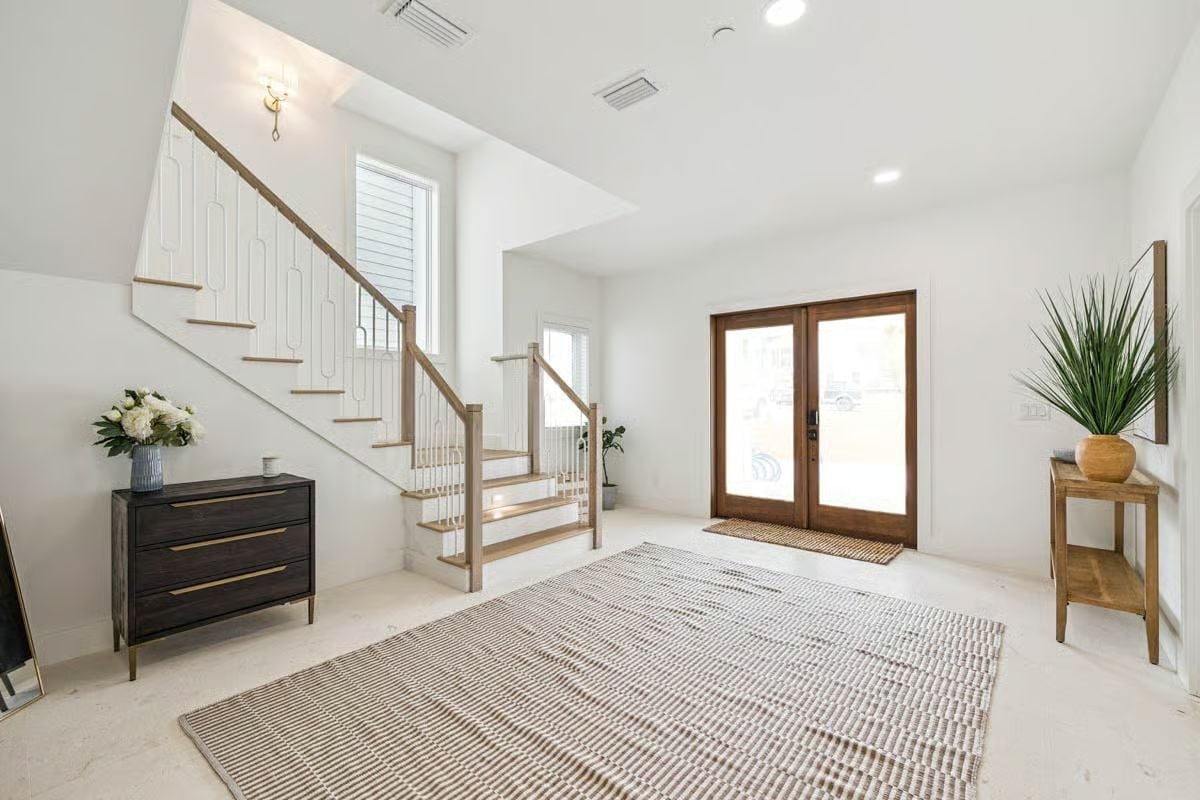
Warm wood double doors, a gold-handled dresser, and a woven rug ground an entry hall that feels like an arrival rather than a bottleneck.
Ask Yourself: Foyer size is easy to underestimate on a floor plan. If two people can’t pass each other comfortably near the front door, the house already feels smaller than it is — before anyone has seen a single other room. A generous entry sets expectations that the rest of the house then gets to meet.
Built-In Shelving and a Linear Fireplace Do a Lot of Heavy Lifting Here
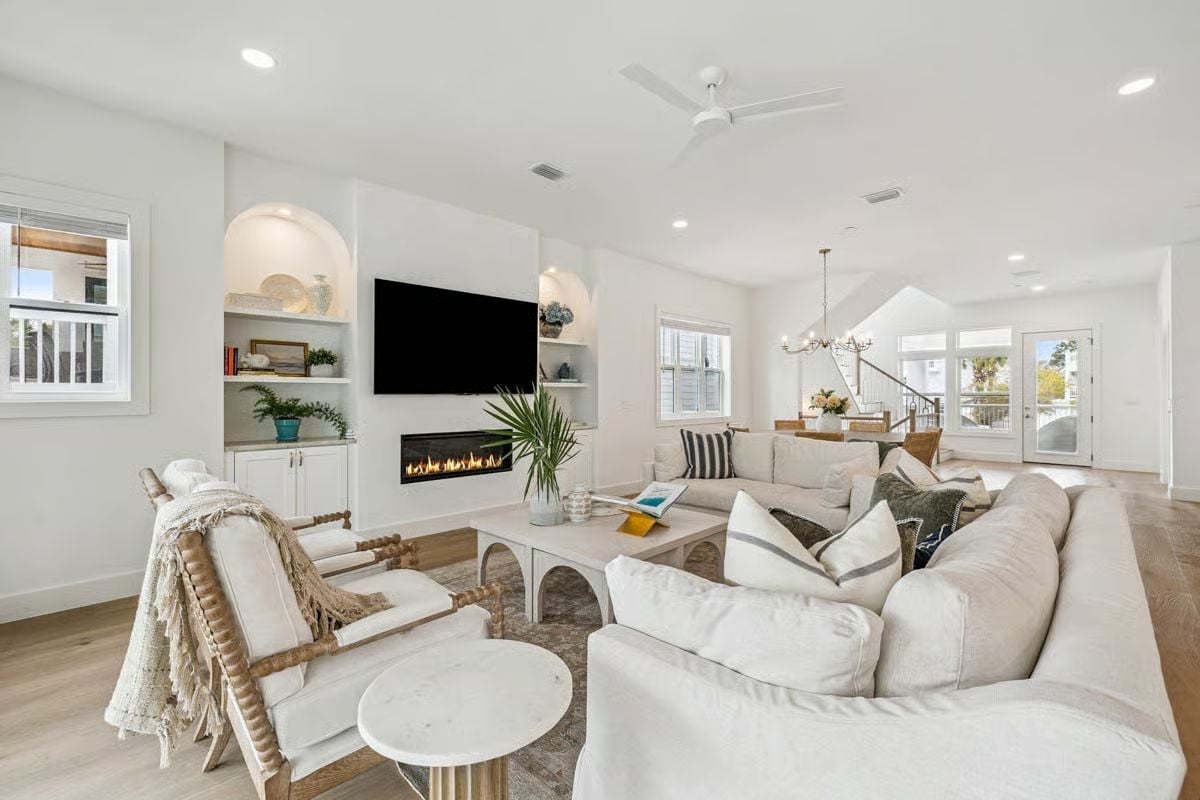
Pale linen upholstery and light wood floors keep the palette quiet, letting the linear gas fireplace read as the room’s clear focal point. Built-in shelving flanks both sides with arched niches above, and the coffee table’s arched base picks up that same detail without making a big deal of it. Rattan accent chairs add just enough texture to keep the room from feeling like a showroom floor.
Fun Fact: Linear fireplaces have been gaining ground over traditional box fireplaces for a straightforward reason: the horizontal format sits naturally below a wall-mounted TV without forcing an awkward height compromise. What looks like a style choice is really just good layout thinking.
Gold-Toned Pendants and a Natural Wood Island Anchor This Kitchen Without Competing
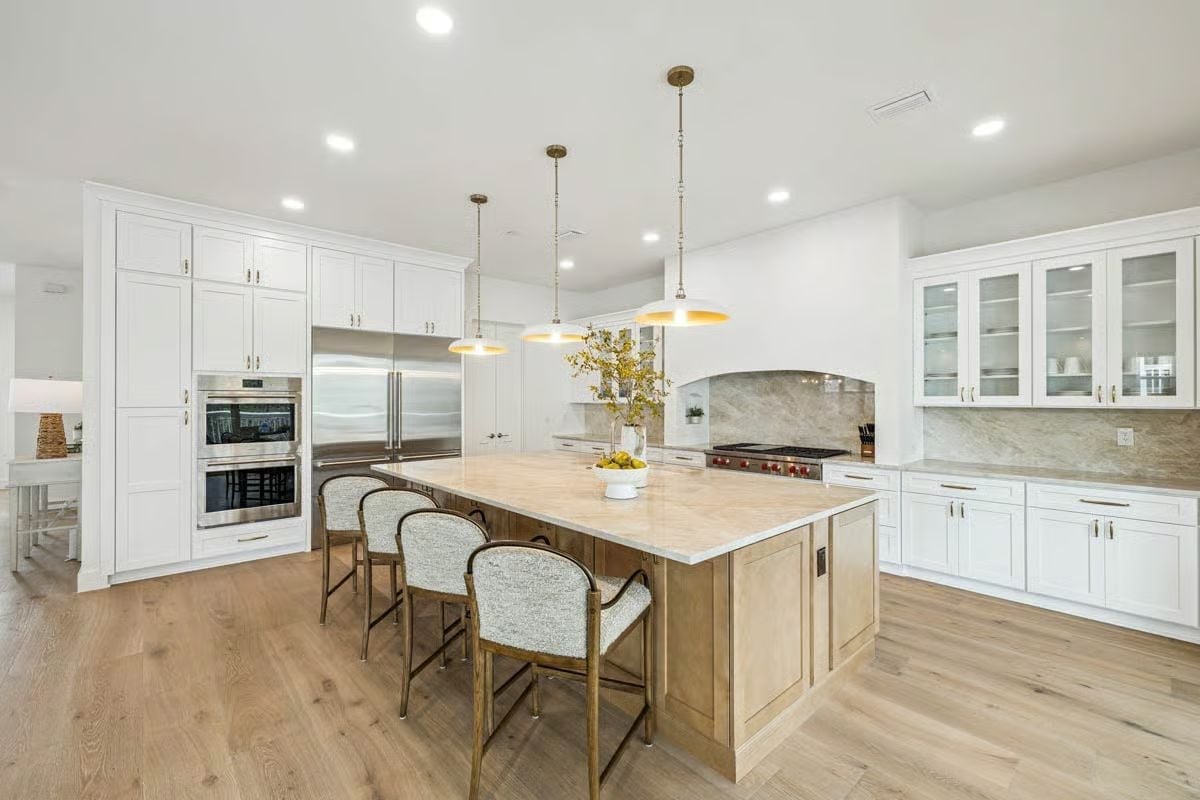
Brass hardware runs through every cabinet pull and pendant rod, tying the white perimeter cabinetry to the lighter wood island base. Three dome pendants hang low enough to actually light the workspace rather than just gesture at it. The upholstered bar stools are a tell — this island gets used for more than food prep.
Pro Tip: A lighter wood tone on the island base does more than look good in photos. In a large open kitchen, it visually reduces the island’s mass so the space doesn’t read as one unbroken slab of cabinetry from end to end.
Light Wood Floors and Layered Windows Pull Morning Sun Deep Into the Room
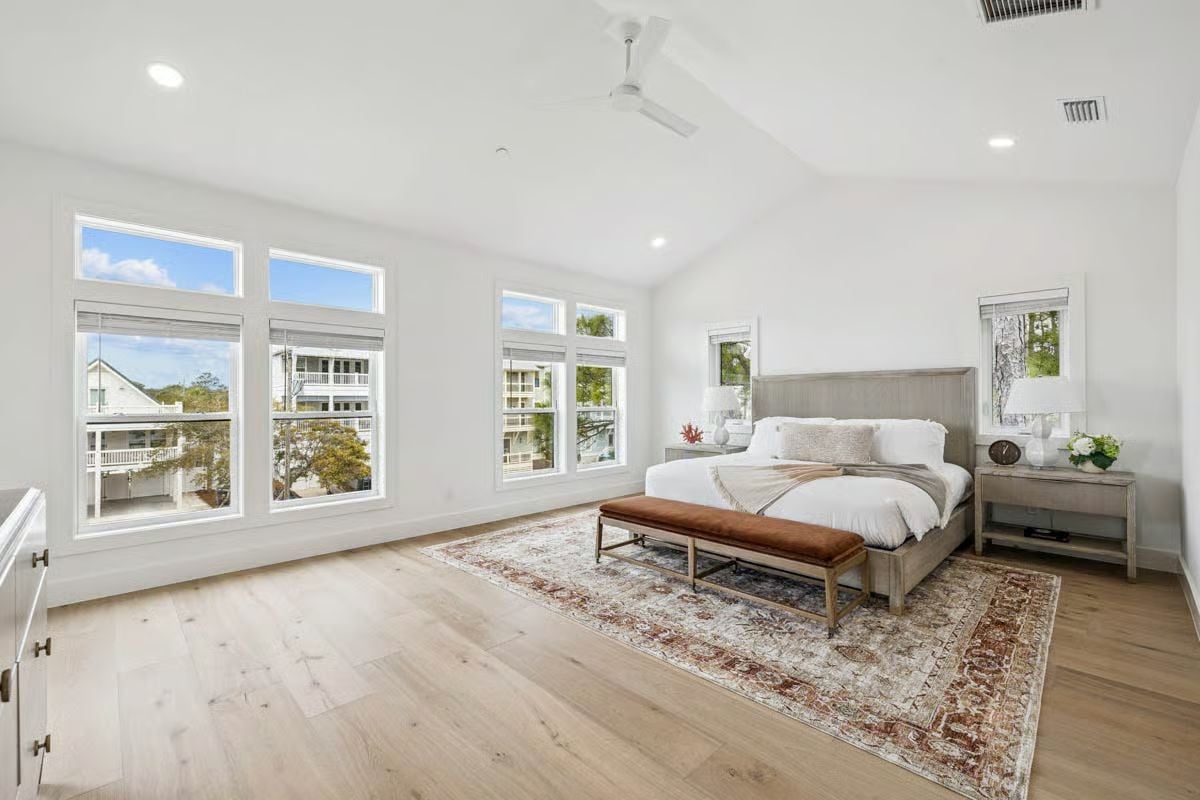
Natural oak flooring and a rust-toned area rug ground the bed without the room feeling like it’s trying too hard. Ceiling fan keeps it practical.
Trend Alert: Bench seating at the foot of a bed has made a quiet comeback in primary suite design. Beyond the look, it solves a real daily problem — somewhere to sit while putting on shoes or set down a bag without using the bed itself. Upholstered versions in leather or boucle tend to hold up better than fabric in rooms that actually get used.
Mosaic Accent Wall and Gold Chandelier Turn a Soaking Tub Into a Destination
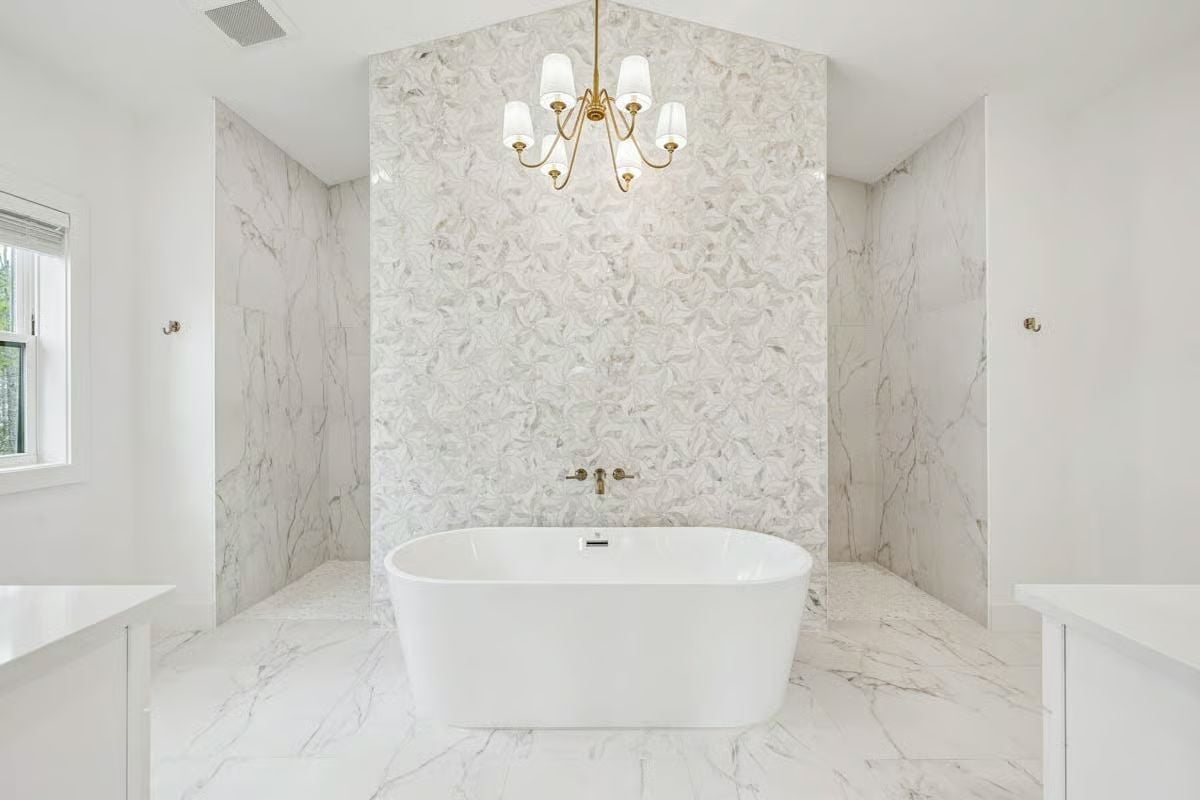
Leaf-patterned mosaic tile covers the entire focal wall behind a freestanding soaking tub, with slab marble running floor to ceiling on the flanking walls. Gold wall-mount faucets and a five-arm chandelier pull the finishes together without overcrowding the space. It’s a lot of material, and somehow it works.
Budget Tip: Freestanding tubs look luxurious, but they’re also easier to install than built-in soaking tubs because they don’t require a surrounding deck or custom framing — which can translate to real labor savings on a renovation budget. Wall-mount faucets, like the ones shown here, eliminate the need to cut into the tub itself, which protects resale value if you ever want to swap the fixture down the road.
Pin It
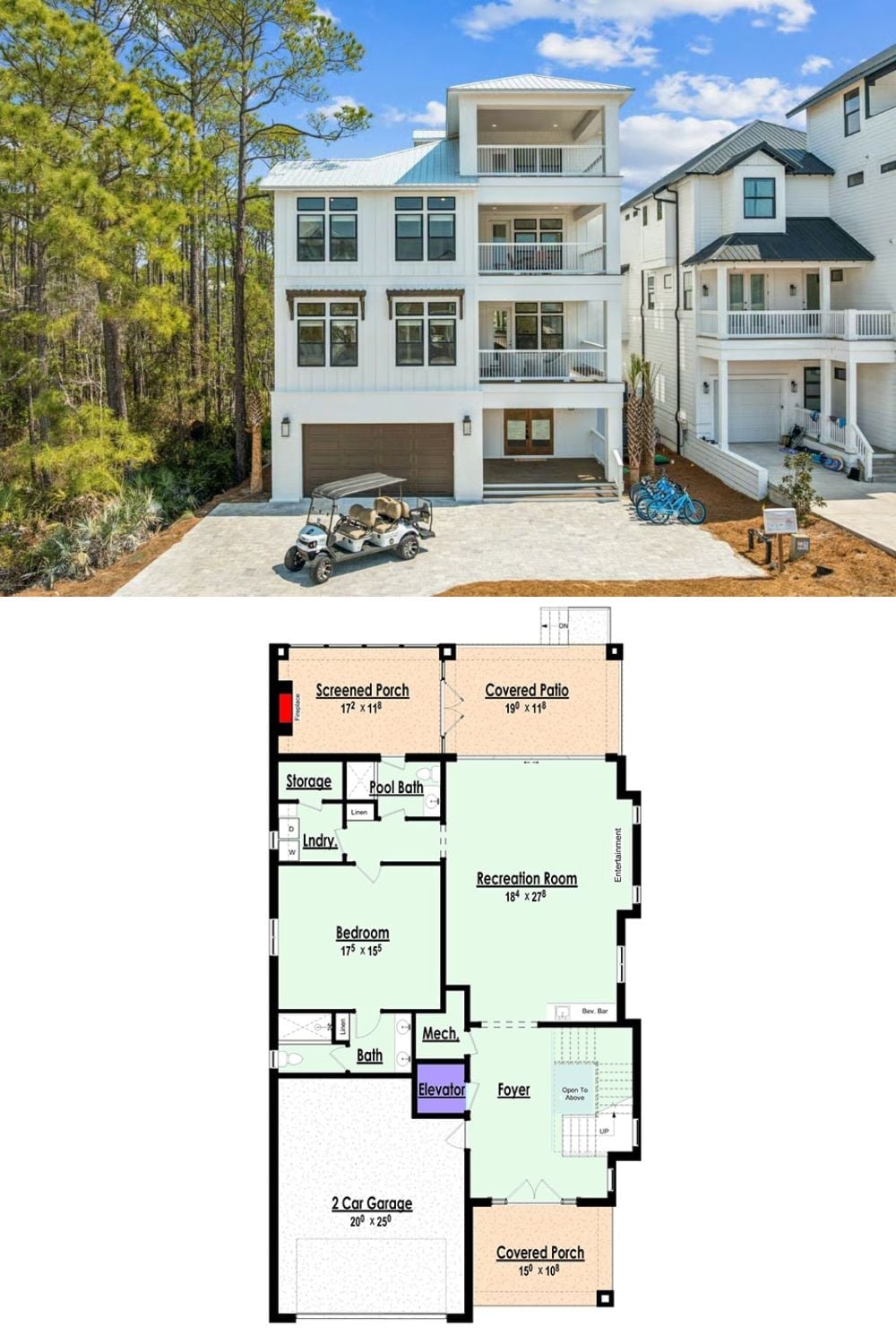
Exterior photo shows a three-story coastal home with a two-car garage and a golf cart parked out front. The floor plan below details the ground level: recreation room, bedroom, elevator, and covered porch.