🔥 Would you like to save this?
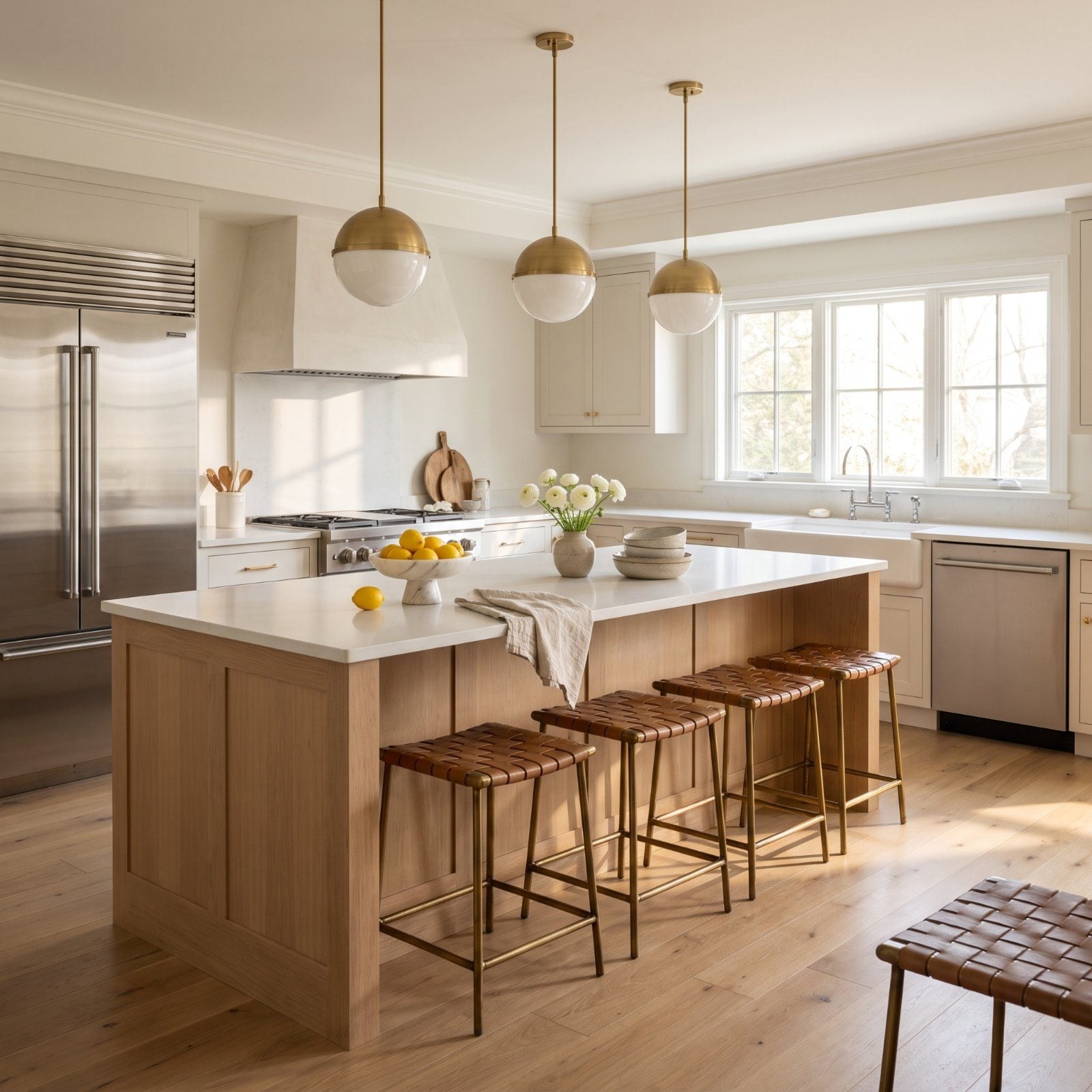
You picked the pendants. Brass, glass, the ones you saved to a board eighteen months ago. Then the electrician asks how high, you say something, and that something is where most kitchen lighting quietly goes wrong. The fixture is perfect. The placement kills it. We’ve watched dozens of otherwise sharp kitchens undone by three inches of chain, a bulb aimed at a diner’s face, or a pendant parked right in the cook’s line of sight. Before you commit that height, look at these kitchens.
21. Pendant Shades Hovering Two Inches Above the Countertop
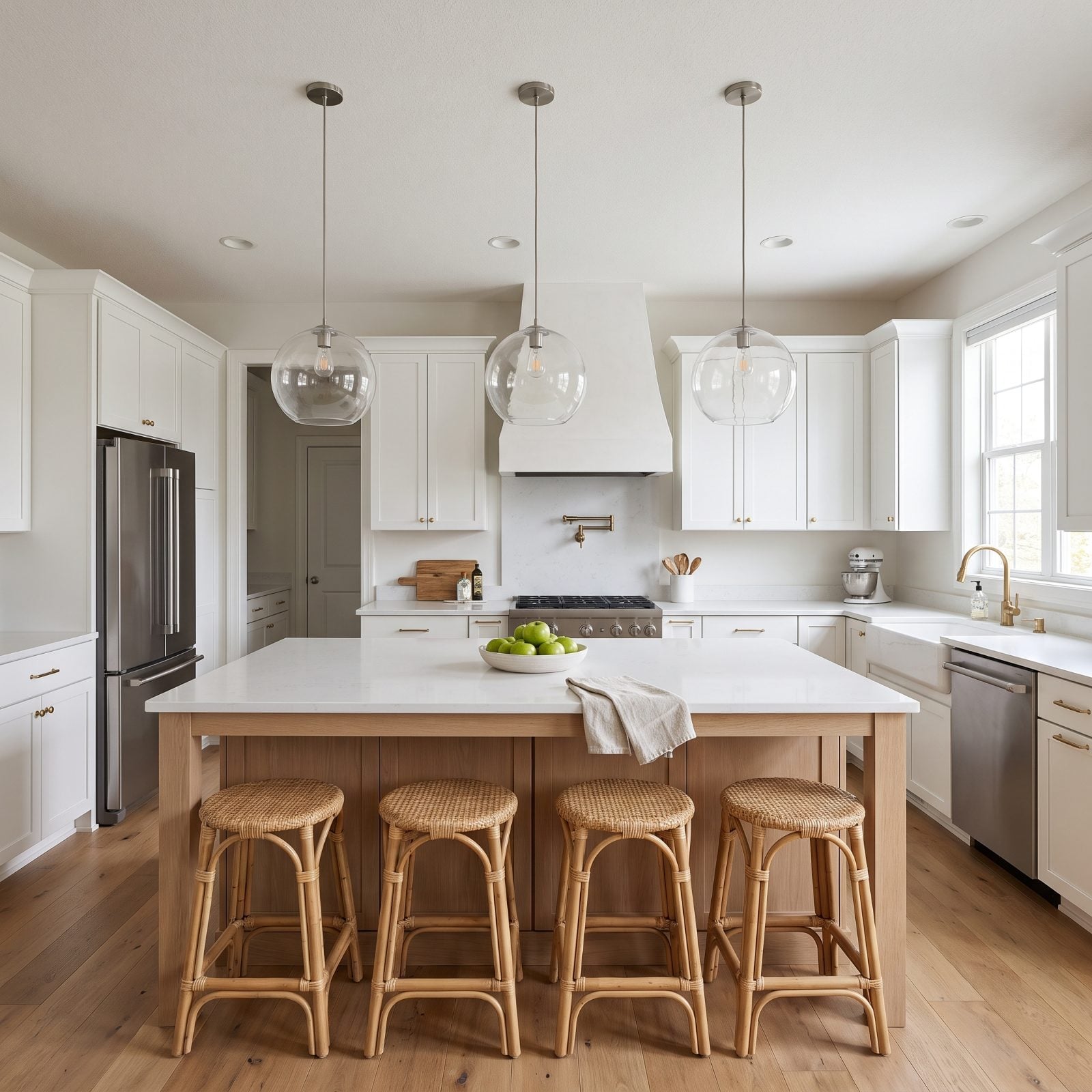
Set a drinking glass on the counter next to one of these and the pendant is barely taller. When shades drop to within a couple inches of the surface, you lose the counter as workspace, and the fixtures read like they’re melting toward the quartz.
In order to come up with the very specific design ideas, we create most designs with the assistance of state-of-the-art AI interior design software. Also, assume links that take you off the site are affiliate links such as links to Amazon. this means we may earn a commission if you buy something.
The rule that actually works: 30 to 36 inches between countertop and the bottom of the shade. Any lower and you can’t slide a mixing bowl under without a game of Operation. Glossy glass makes it worse, since the low hang throws hard reflections straight back up at you.
20. Pendants Parked Directly in the Cook’s Line of Sight
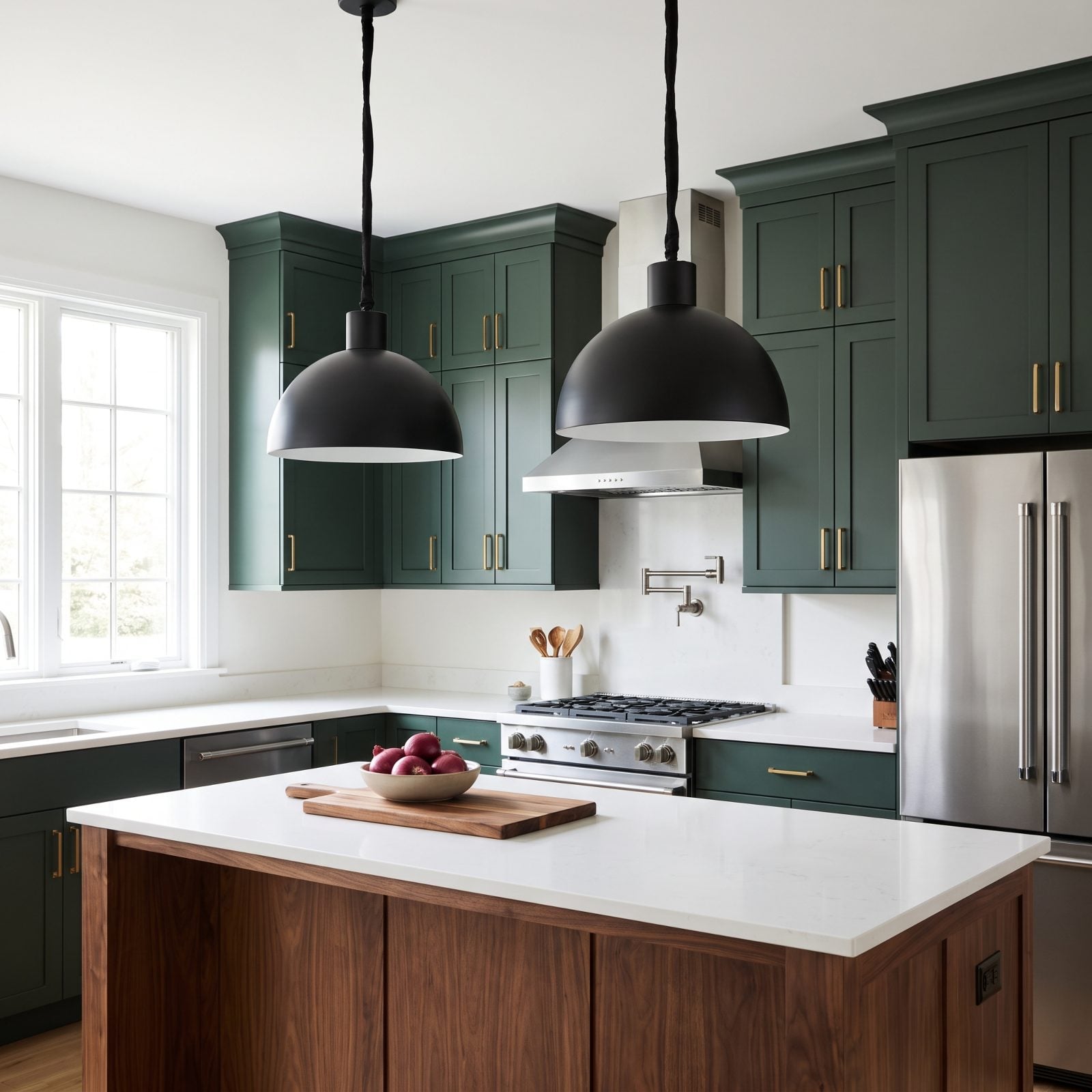
Stand at your range and picture your eyeline shooting across the island to whoever’s sitting there. Now imagine a solid black dome hanging right in it. That’s a whole conversation conducted around a lampshade.
Opaque, wide-bodied pendants are the usual culprits. If you love a solid shade, either raise the hang so the body clears standing eye level, or choose an open-frame or glass fixture that lets the sightline pass through. This dark kitchen inspiration pulls it off because the pendants read as airy silhouettes rather than walls.
19. One Low Pendant That Walls Off the Whole Island
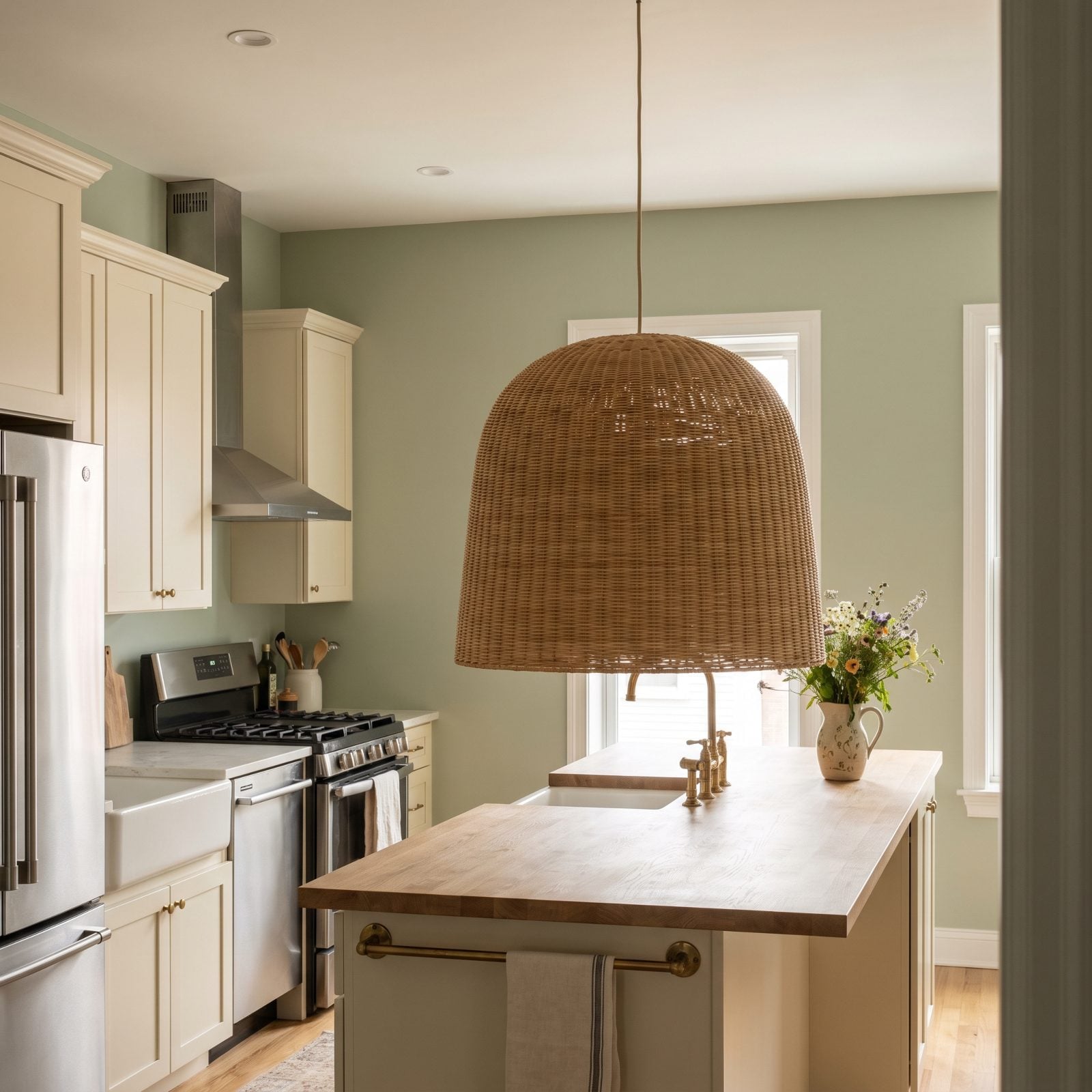
A single big statement pendant looks great on the mood board and terrible in practice when it hangs low enough to split the island in two. Someone on one side, someone on the other, and a rattan drum right in the middle of the chat.
Big fixtures need height and breathing room. If the shade is wide, lift it. Islands over about six feet usually want two or three smaller pendants spaced along the run, not one hero doing the job of three.
18. Bare Bulbs Firing Straight Into Seated Diners’ Eyes
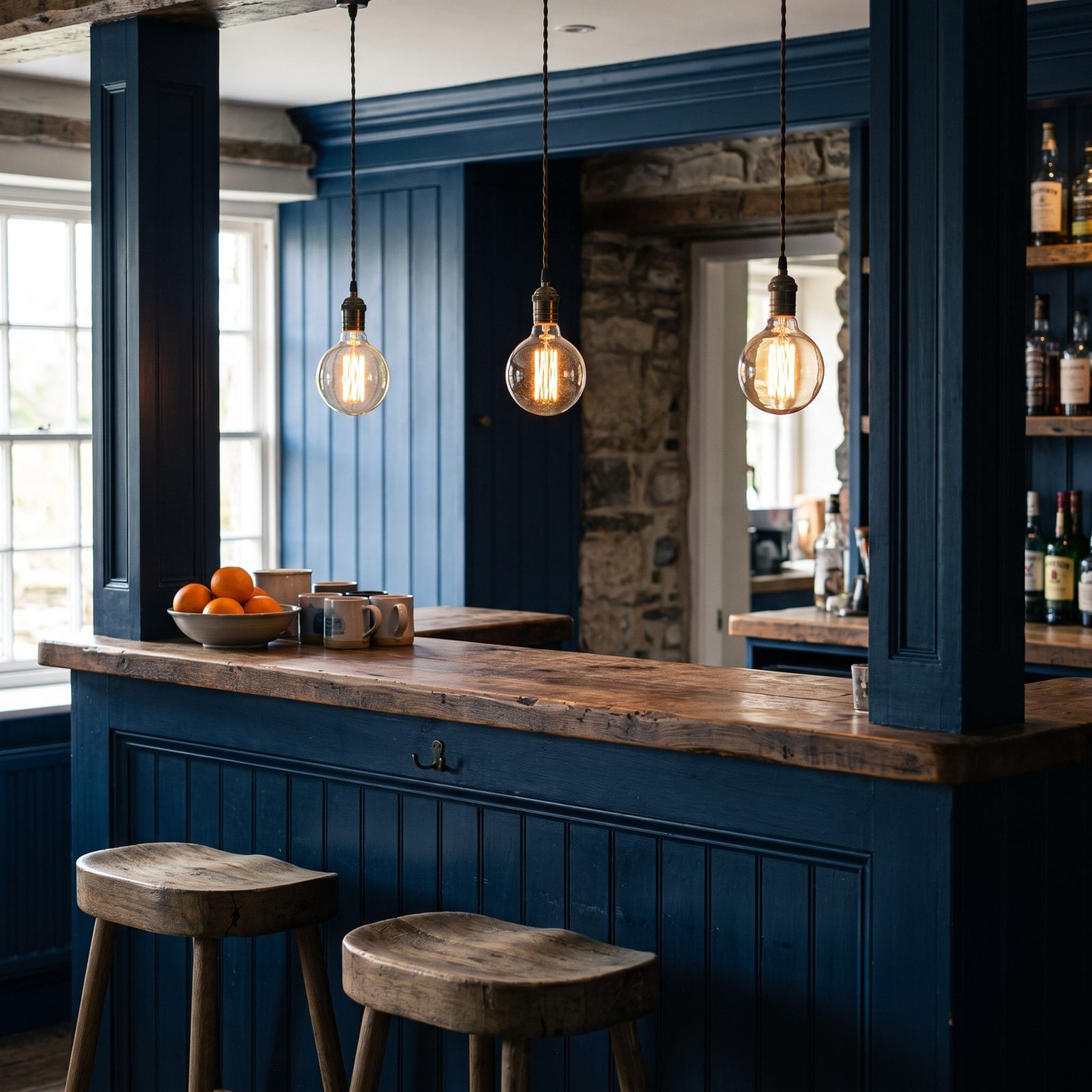
Exposed-bulb pendants had their moment, and we still like them. But a bare filament at seated eye level is a small act of hostility toward anyone eating breakfast there.
The fix is easy, and you don’t have to ditch the look. Use frosted or opal bulbs instead of clear glass, drop the wattage, or add a low-lumen dimmable LED so the filament glows instead of glares. A shade that shields the source at seated height solves it entirely. Test it by sitting down at the stool, not standing over the island admiring your work.
17. Long Pendants Crashing Into a Tall Gooseneck Faucet
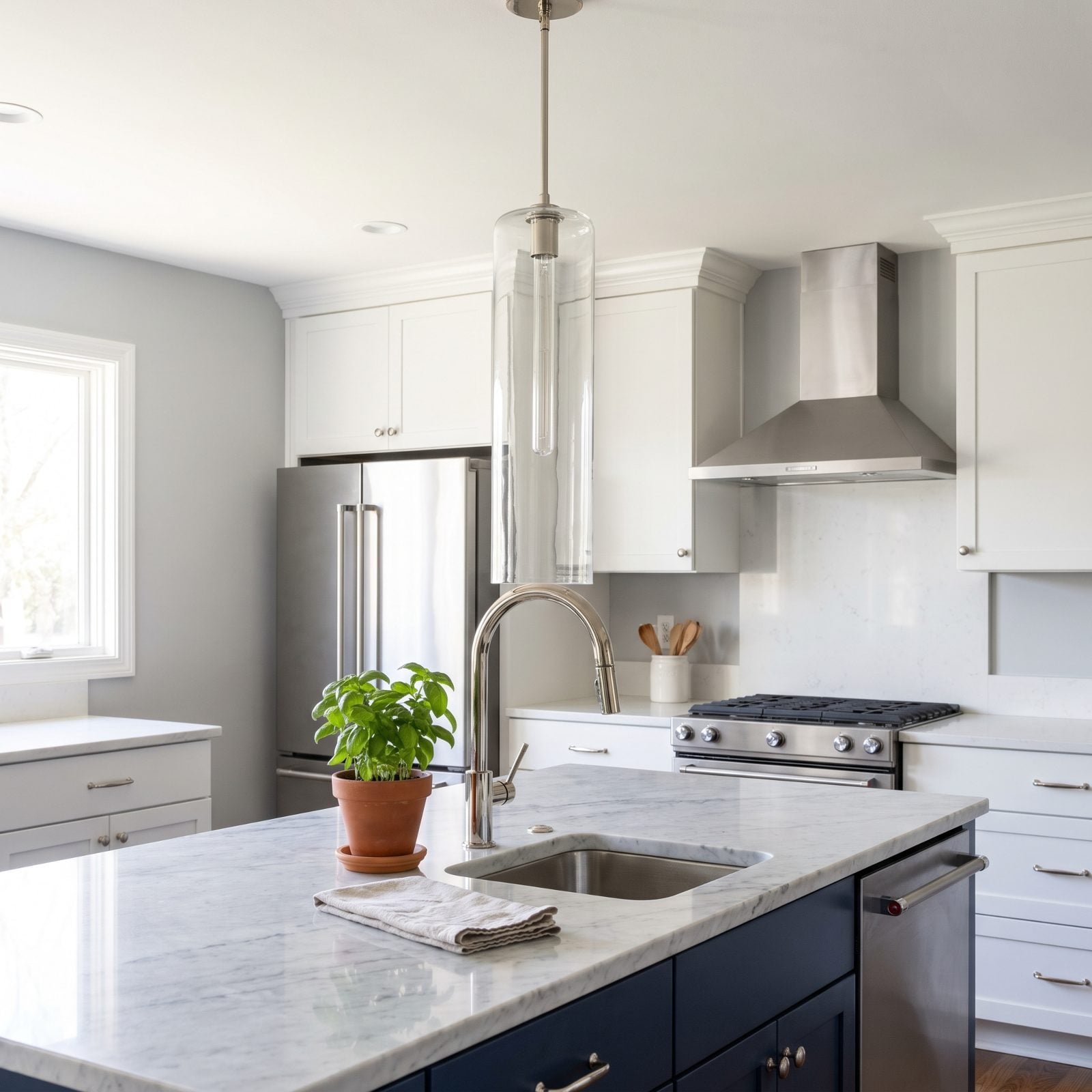
Nobody plans for the faucet. You place the pendant over the prep sink for symmetry, then install a tall gooseneck, and now the two silhouettes are wrestling in the same three cubic feet of air.
Map the faucet height first, especially if you’re running a prep sink on the island. Give at least a hand’s width of clear space between the top of the spout at full arc and the bottom of the pendant. Or shift the pendant off-center so it lights the sink without stacking on top of the fixture.
16. Pendants Hung Low Enough to Erase the Range Hood
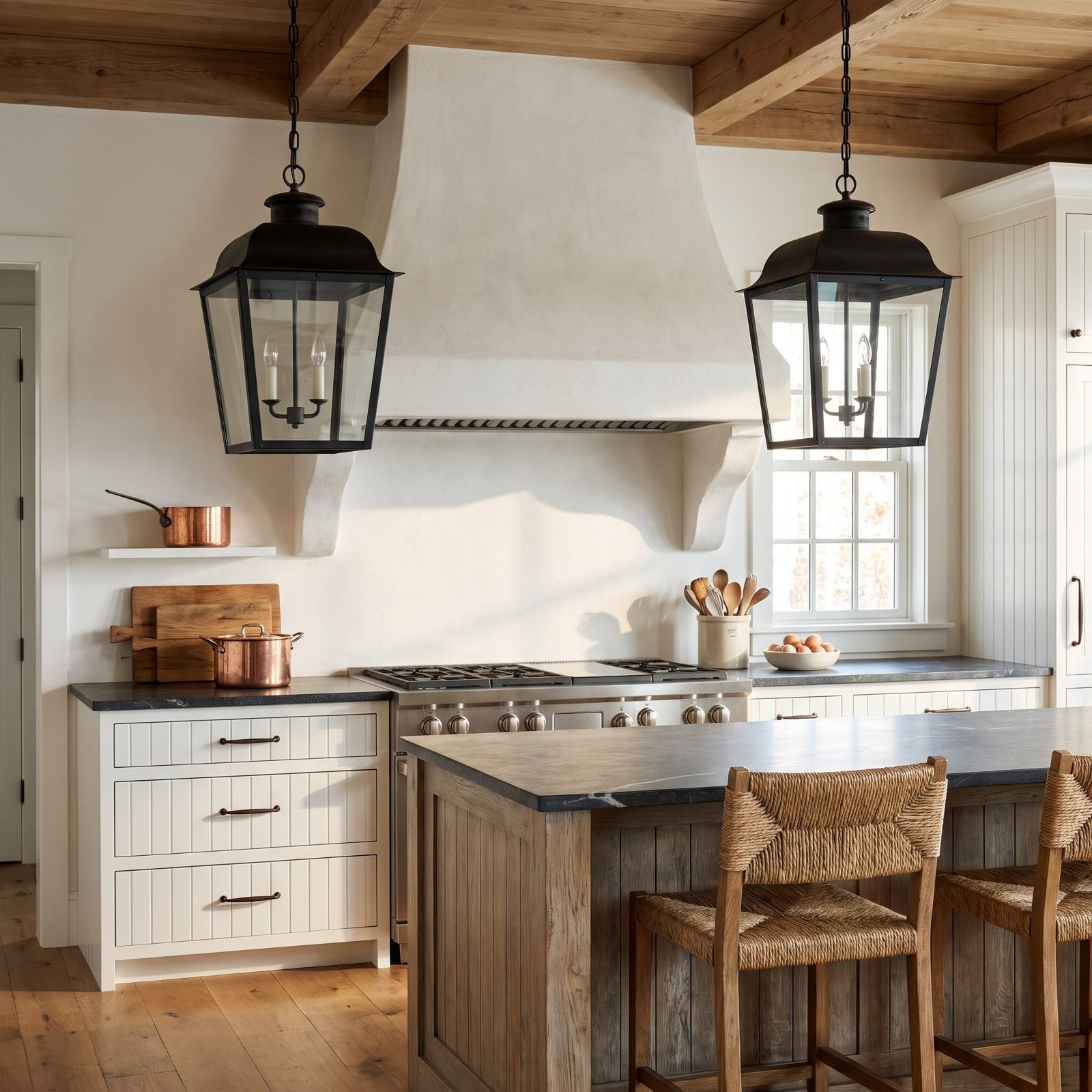
You spent real money on a plaster hood. Then two lanterns hang low enough to slice right across it, and from the stools your architectural centerpiece looks like it’s peeking out from behind a fence.
Hoods are usually the focal point of the back wall, so pendant height should let the shape read clean and uninterrupted from the primary seating angle. Stand where guests sit and look toward the range. If the pendants chop the hood, raise them or narrow the fixtures. That plaster hood is the kind of quiet drama a farmhouse kitchen decor scheme leans on, so don’t bury it.
15. Fixtures Hung Smack in Front of a Kitchen Window
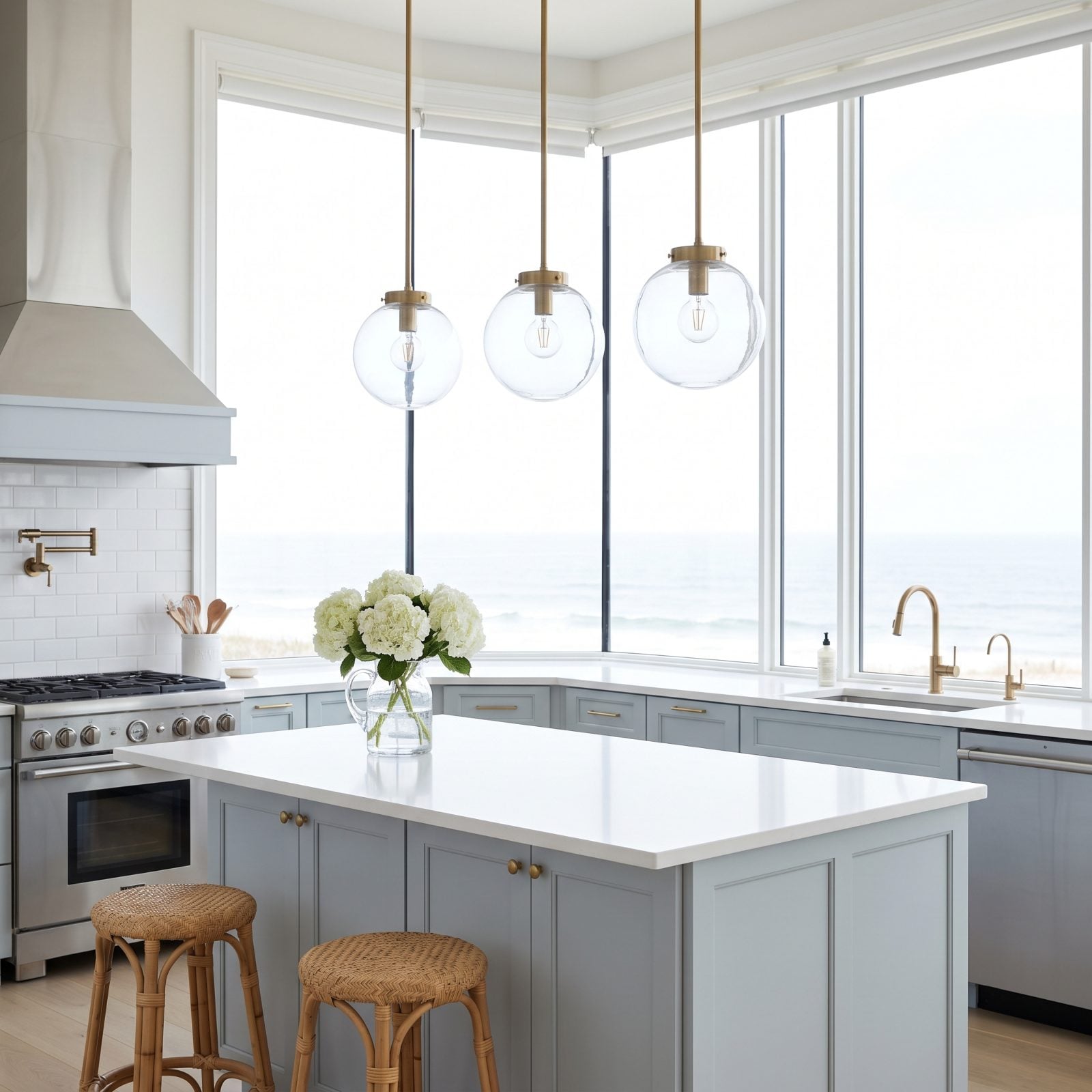
Backlighting is brutal on pendants. Hang a fixture in front of a bright window and it turns into a dark blob, silhouette only, all the glass and brass detail flattened to a shadow.
If the island runs parallel to a window, either raise the pendants above the window head so they clear the opening, or choose clear glass that reads as sparkle against the light instead of a solid shape. Sometimes the honest answer is to move the pendants off the window axis entirely and let the view stay a view.
14. Pendants Blocking the Open Sightline to the Living Room
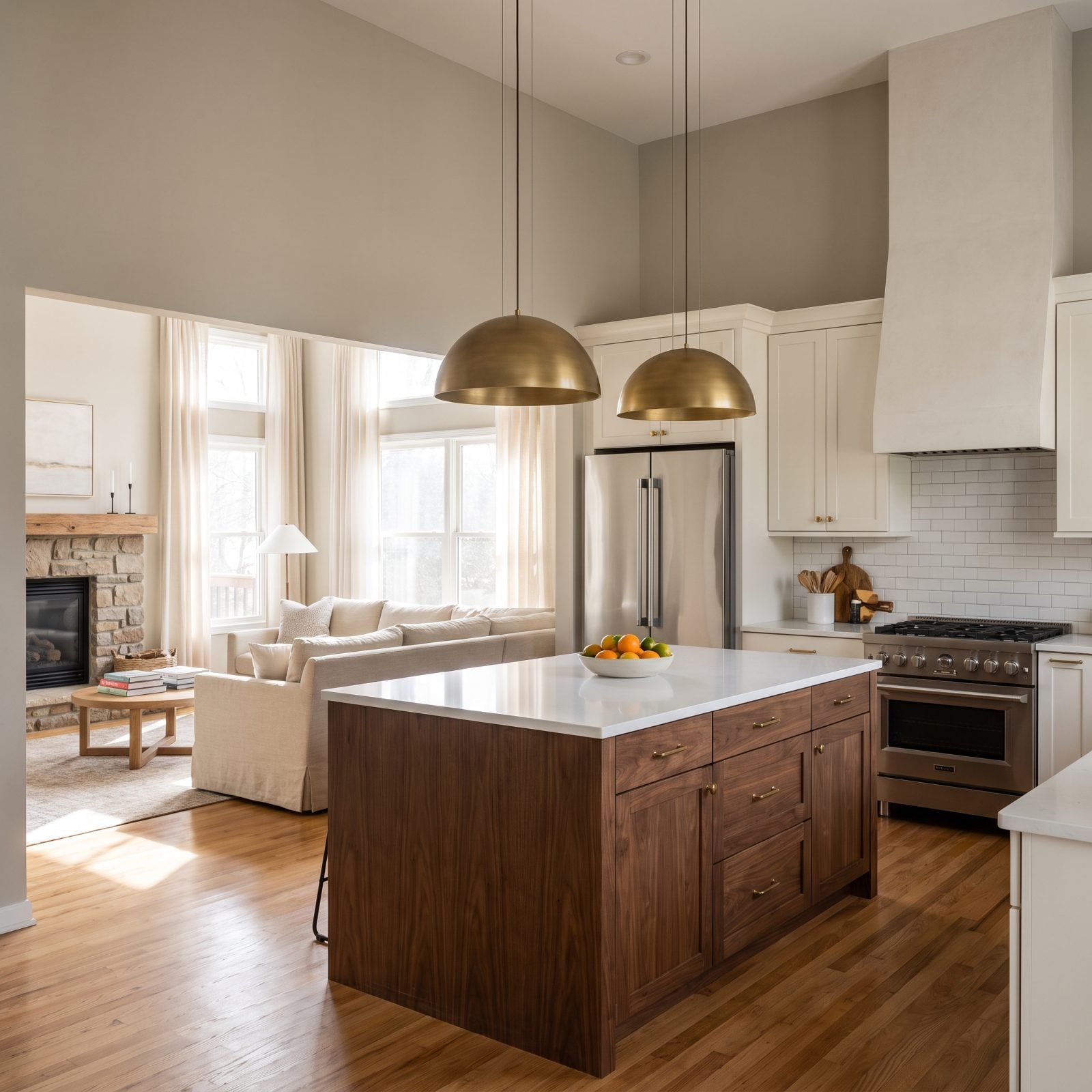
The whole point of open-plan was the sightline. Kitchen to sofa, cook to conversation, one continuous room. Then two low domes over the island chop that connection clean in half.
In open layouts, pendant height is a spatial decision and not just a lighting one. Hang them high enough that a standing adult’s eyeline sails over the top, and lean toward slim or transparent forms in the transition zone. You want to see the fireplace from the range, not a lampshade.
13. Low Pendants Crowding the Heads of Diners on Stools
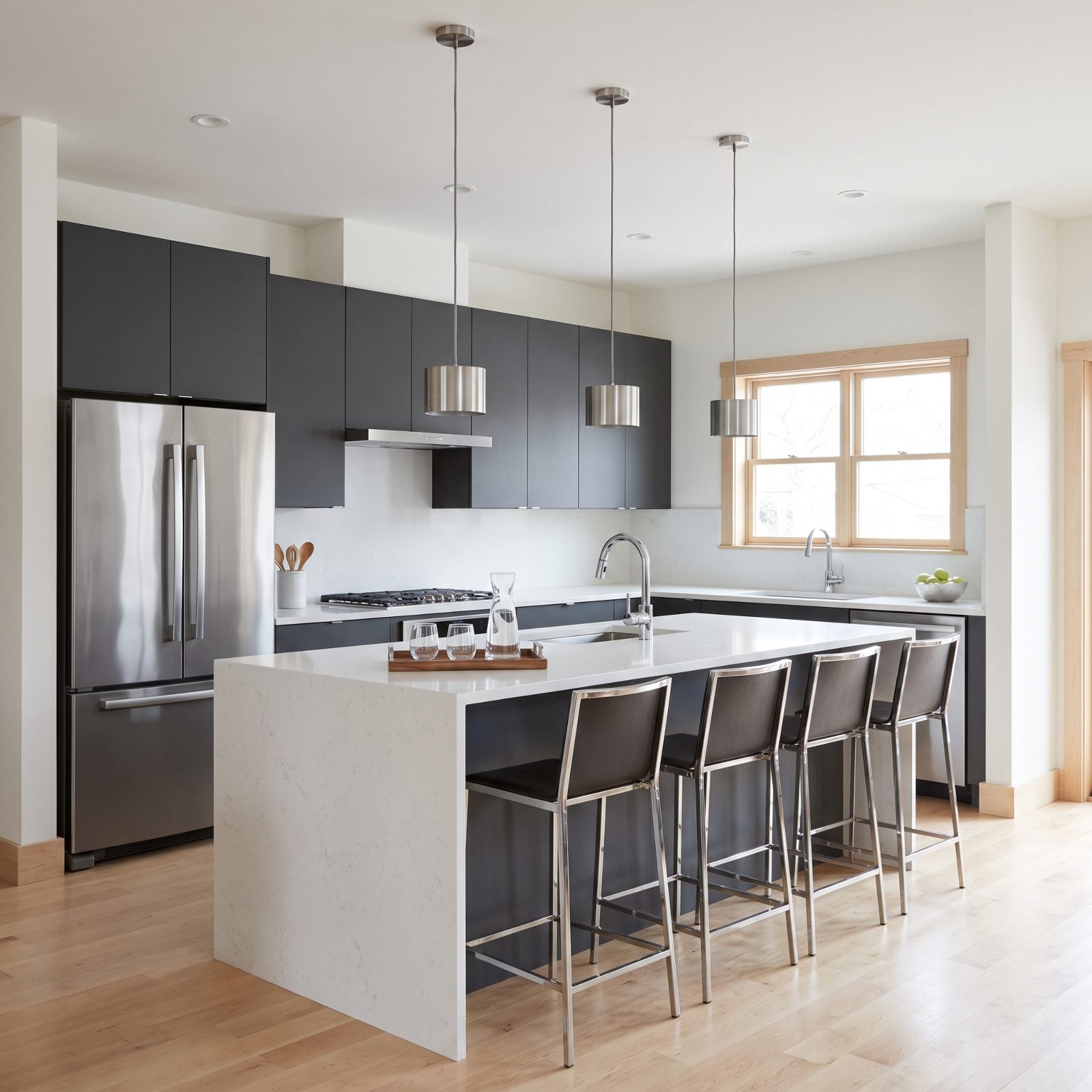
Nobody wants to duck just to sit down for coffee. When pendants hang low over the seating edge, tall guests bump them and everyone else feels the shade breathing down their neck.
Bar seating needs headroom you can feel, not headroom that technically exists on paper. Keep the bottom of the shade well clear of seated head height at the stool, and center pendants over the working counter rather than the overhang where people actually sit. It matters even more on a narrow kitchen renovation, where the seating and the fixtures are already fighting for the same slim footprint.
12. A Row of Pendants Sloping From One End to the Other
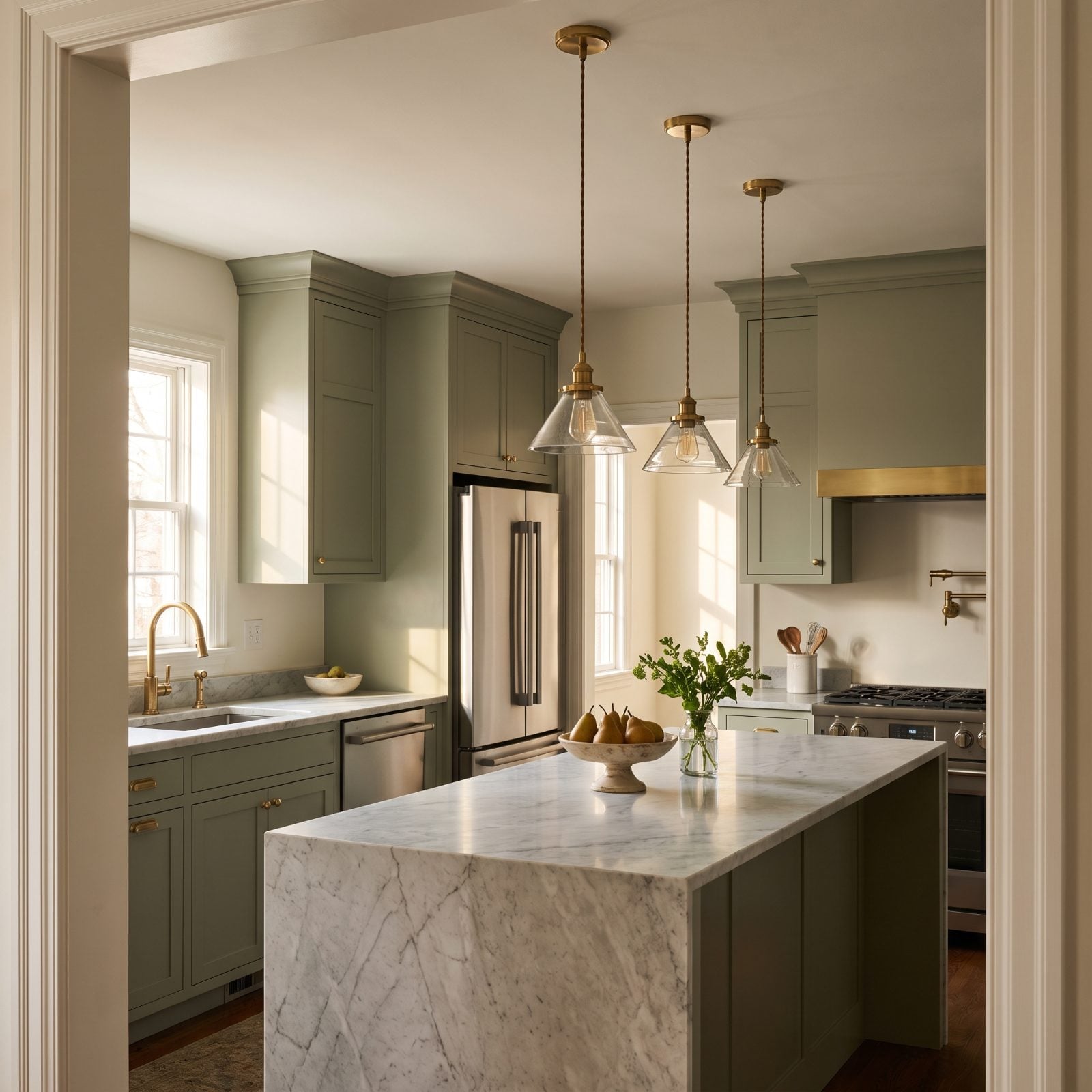
This one’s a gut-punch because everything else is right. Beautiful pendants, correct height, good spacing, and then they’re hung at three different lengths so the whole row tilts like a shelf about to give.
Level is non-negotiable for a matched row. Cords stretch, ceilings aren’t perfectly flat, and installers eyeball it more than they’ll admit. Measure from the finished floor to the bottom of each shade, not from the ceiling, especially if the ceiling has any slope of its own. A laser line across the shade bottoms during install catches it before the drywall’s patched.
11. High Pendants Failing to Light the Work Surface
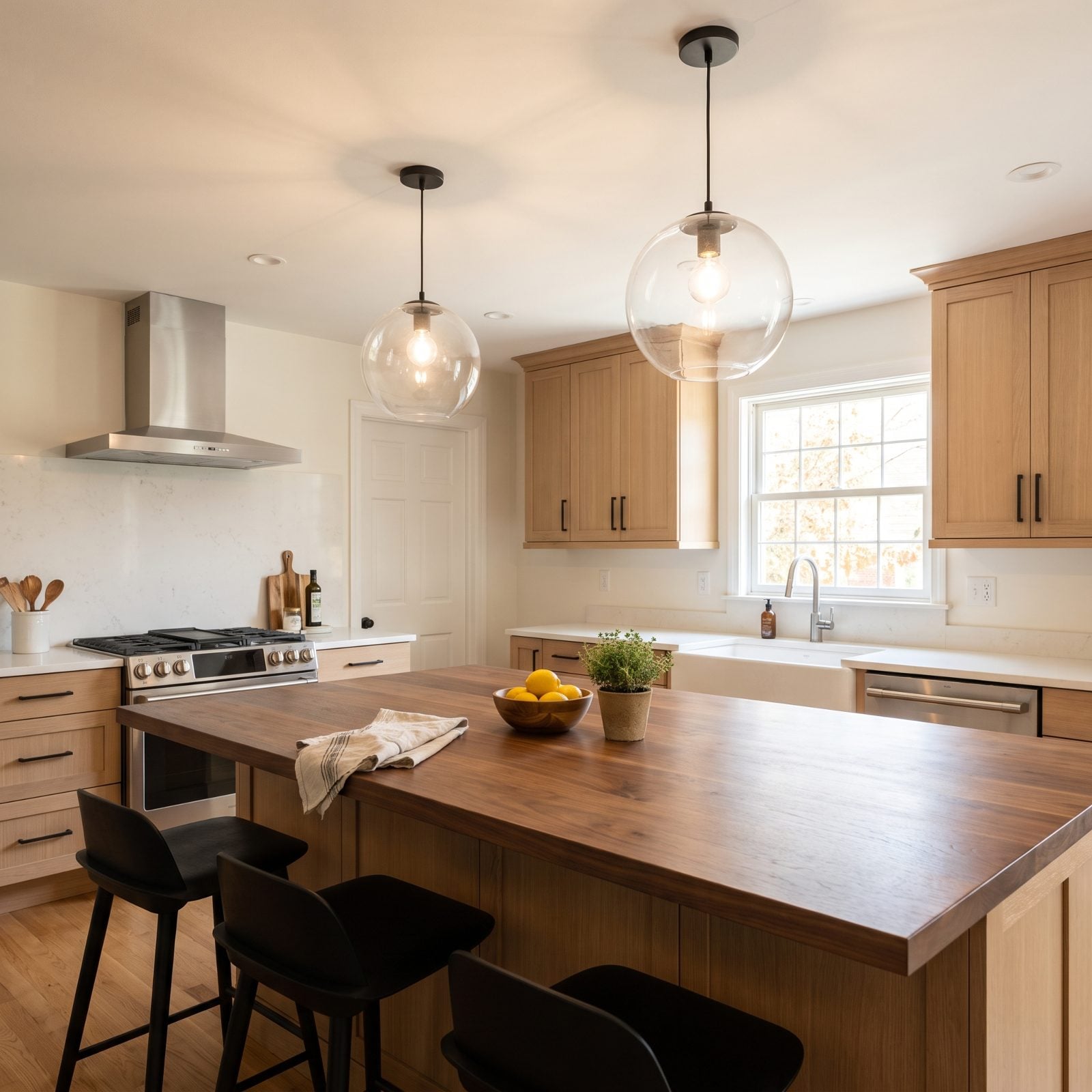
Clear glass globes look great in a magazine. Hang them four feet off the counter, though, and they throw almost no usable light. The bulb sits above your line of sight, the glow drifts toward the ceiling, and the surface where you actually chop onions stays in soft shadow.
The fix is boring and it works. Pull them down. The bottom of a task pendant over an island wants to land somewhere in the low thirties above the counter, and that single move puts the light on the food instead of on the crown molding.
10. Pendants Mounted So High They Look Disconnected
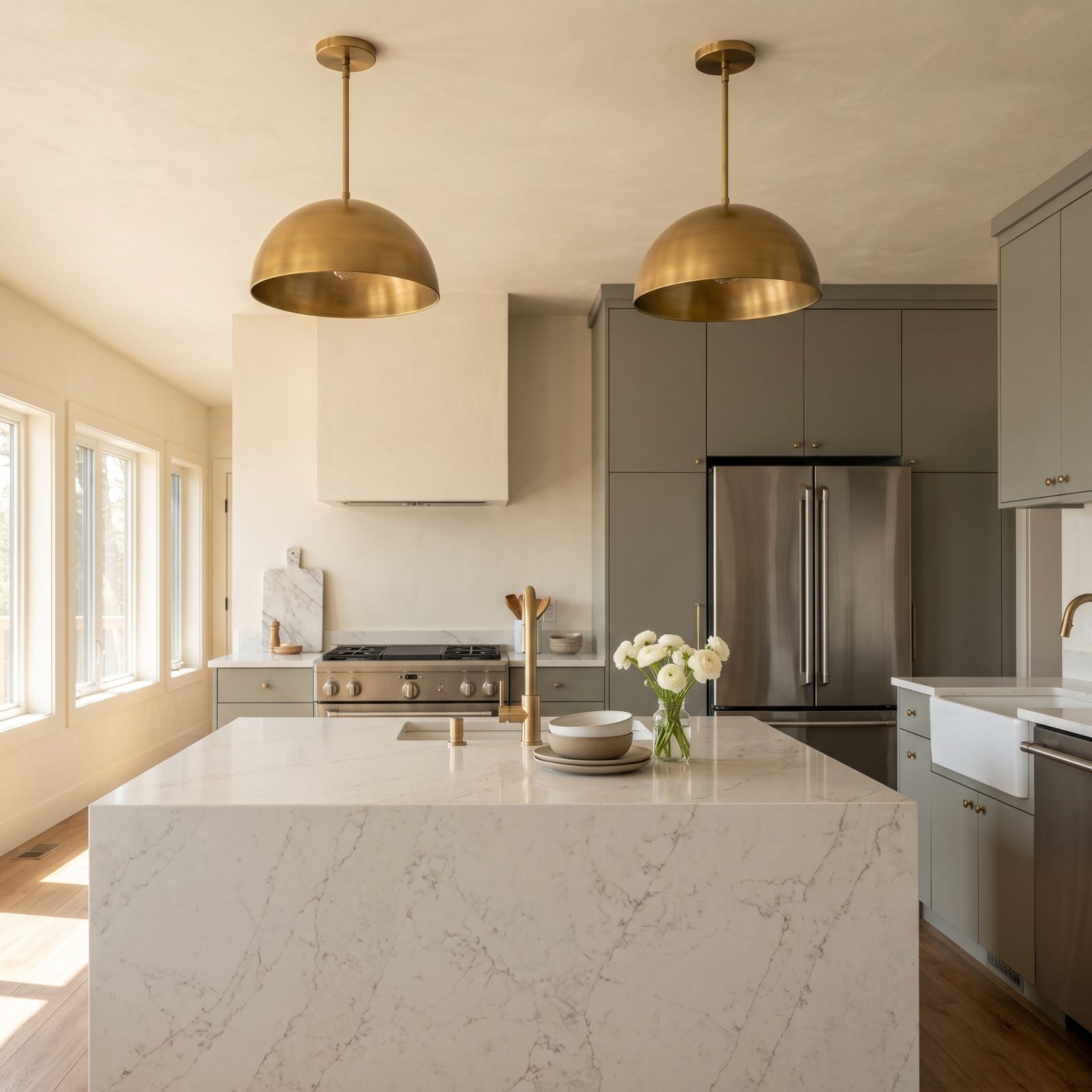
You’ve seen this kitchen. The island is a big handsome slab, and the pendants hover up near the ceiling like they got scared and backed off. There’s a foot and a half of dead air between the fixtures and where they belong, so the whole thing reads as two unrelated ideas sharing a room.
Pendants are supposed to have a conversation with the island. Hung too high, they stop talking to it. Drop them into the visual zone above the counter and suddenly island and lighting become one object instead of two.
9. Tiny Pendants Stranded Near a High Ceiling
🔥 Would you like to save this?
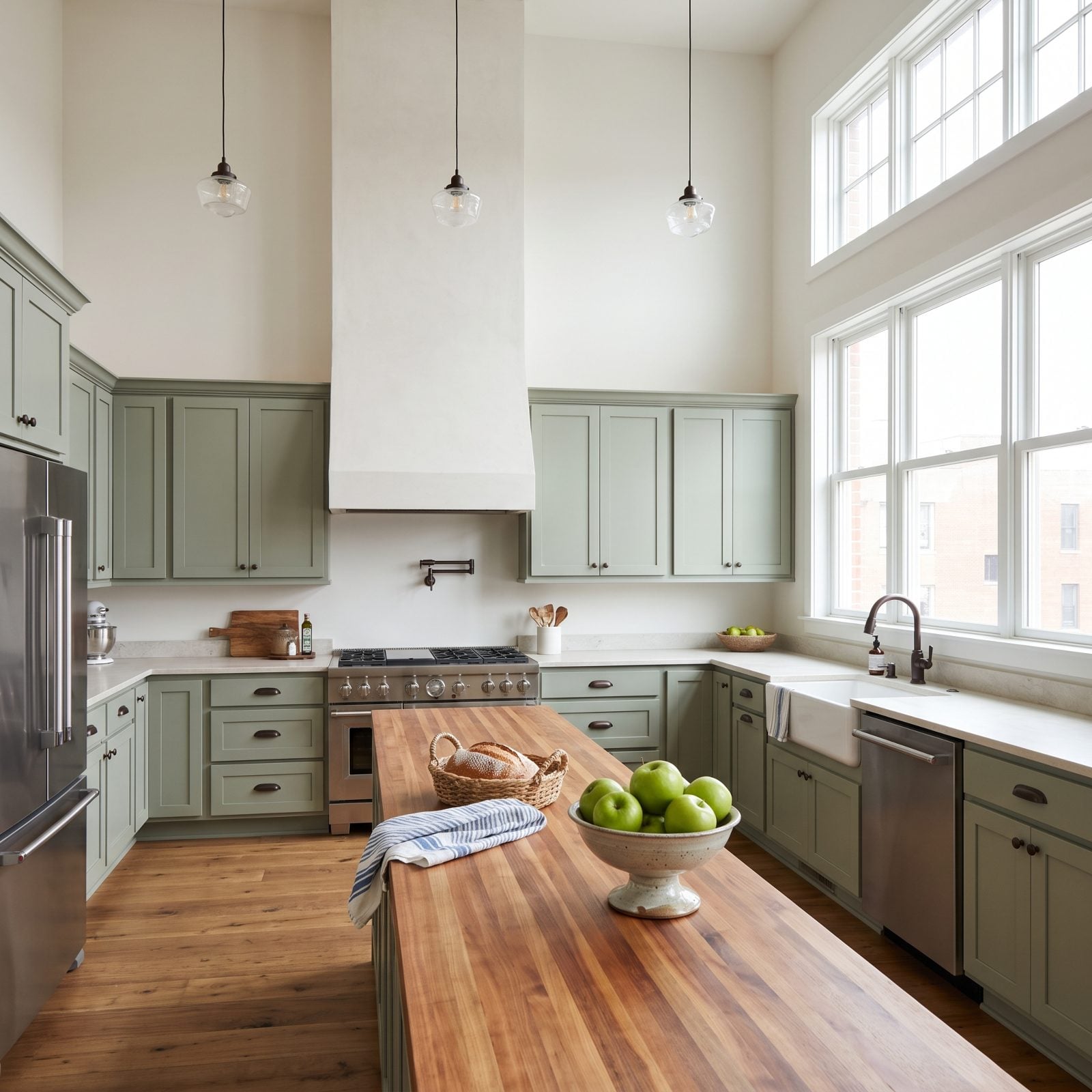
Small fixtures under a tall ceiling get swallowed. It’s a postage stamp on a moving box. The volume of the room reads first, and three six-inch globes floating up there look like someone forgot to finish the job.
Tall ceilings want mass. Go bigger than feels comfortable in the showroom, because the room will shrink whatever you pick. A cluster of larger shades, or one generous fixture, holds its ground where dainty ones just vanish.
8. Oversized Domes Crowding the Island Counter
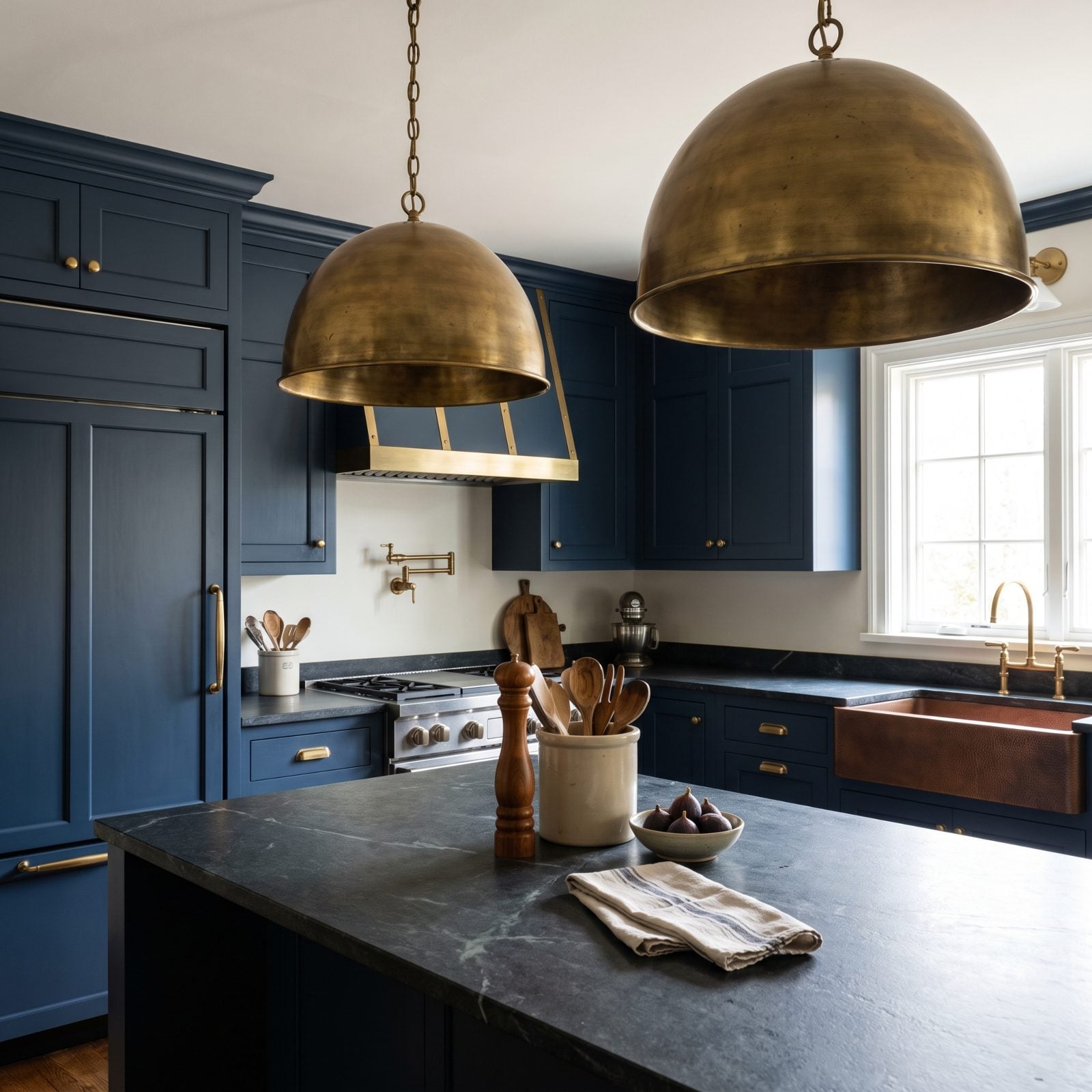
Big pendants have real presence. Hang them too low and that presence turns into a wall. Twenty-inch domes sitting two feet off the counter block the sightline straight across the kitchen, and anyone at the island feels like they’re eating under a helmet.
Scale and drop are two separate decisions, and people conflate them constantly. A large fixture can still hang high enough to clear the visual field. The bigger the shade, the more headroom it needs to keep the island from closing in on you.
7. Wide Shades Hung Too Low to Light the Island Edges
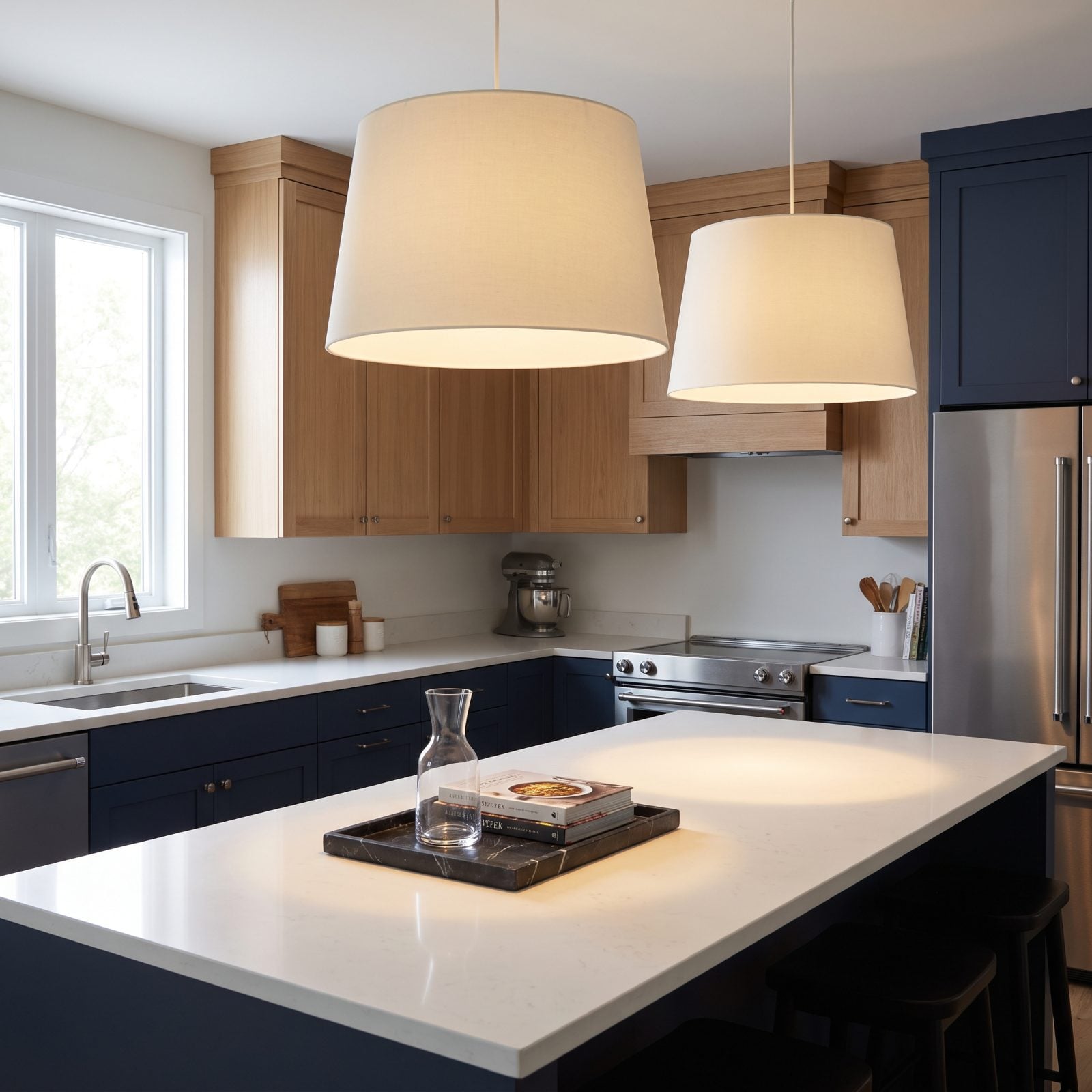
Opaque drum shades funnel light straight down, which is fine until you hang them low over a long island. Then all you get is two tight spotlights and dark ends. The middle photographs beautifully and the corners disappear.
Two things fix it. Raise the shades so the cones of light overlap and spread, or add a third fixture so the coverage stretches the full run. A ten-foot island with only two lights almost always leaves the tips in the dark.
6. Standard Drop Lengths Used Beneath a Vaulted Ceiling
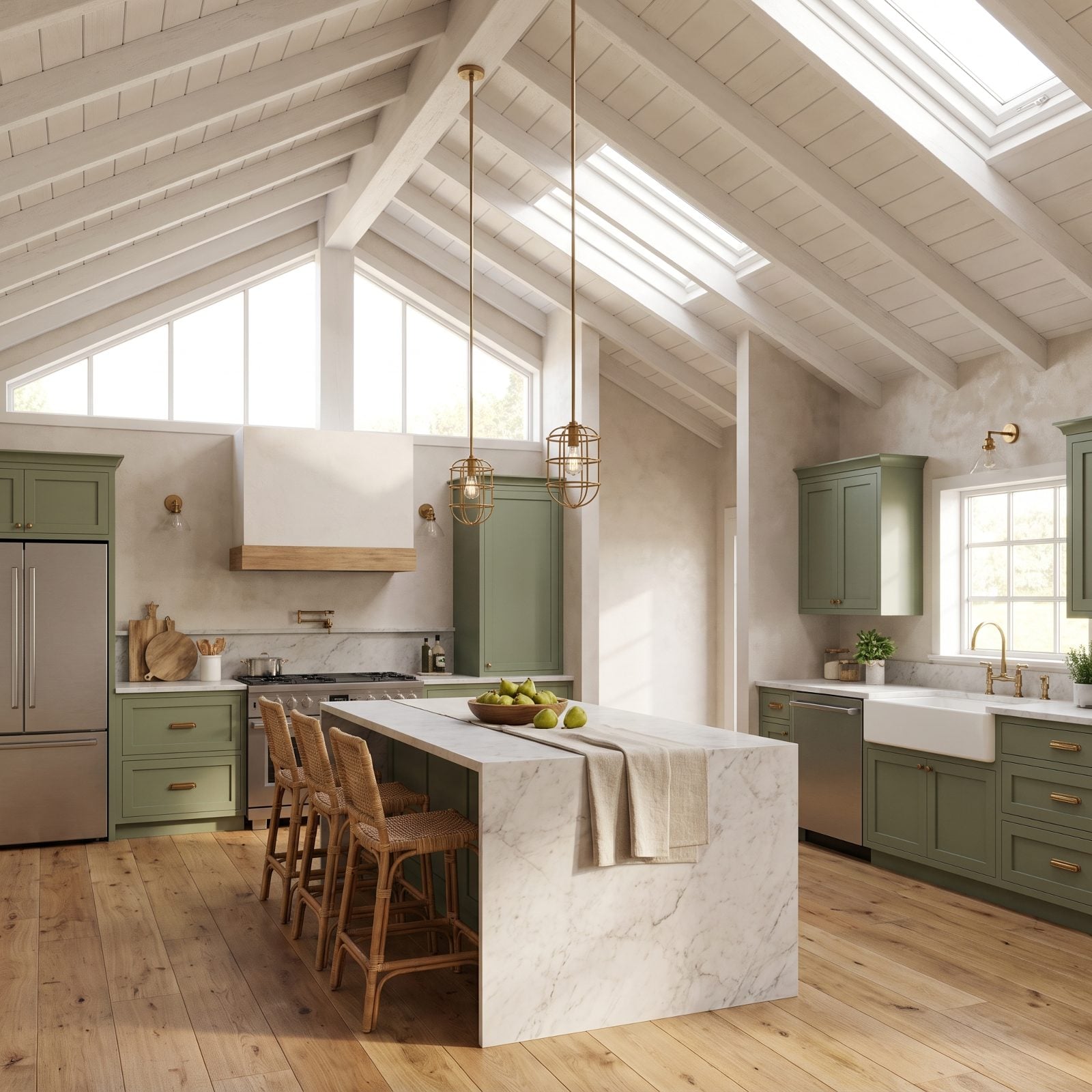
Vaulted ceilings are where off-the-shelf stem lengths go to look silly. A pendant that ships with a two-foot rod is calibrated for an eight-foot flat ceiling. Put it under a vault and it hangs way up in the peak, marooned in all that open air.
Vaults need custom drops. Order longer stems or extra chain and bring the fixture down into the human zone above the island, where it can actually do its job. The empty air above it is what makes a vault a vault. Let the ceiling keep it.
5. Rigid-Rod Pendants Fighting a Sloped Ceiling
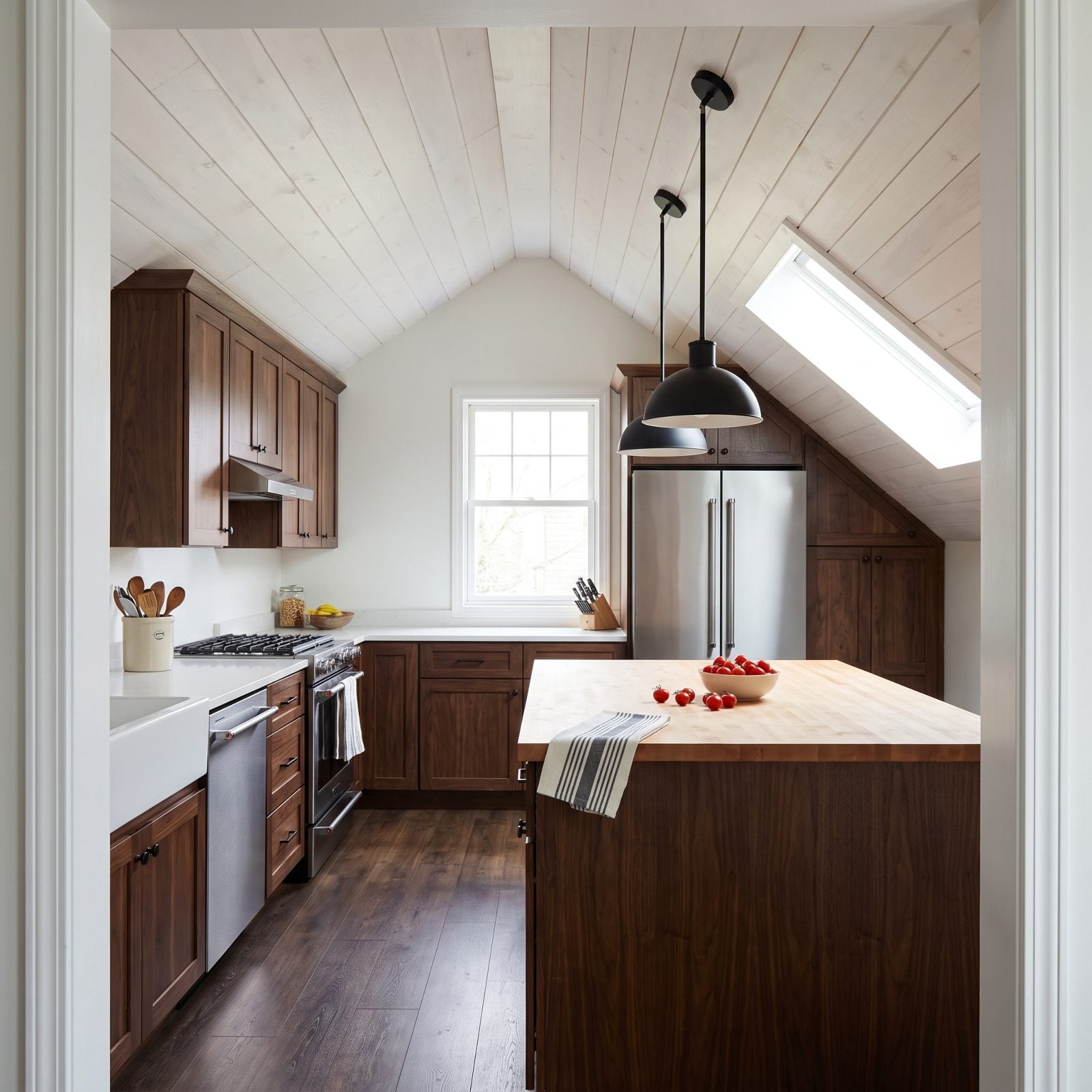
Sloped ceilings and rigid rods do not get along. A straight down-rod is built to meet a flat ceiling at ninety degrees. Screw it into a pitched surface and the fixture either hangs off-plumb or you’re stuck with an angled adapter fighting the geometry the whole way down.
Cords and chains solve this on their own, because gravity keeps a flexible drop perfectly vertical no matter what the ceiling is doing above it. So for anything pitched, pick fixtures that hang free, or spec a proper sloped-ceiling canopy and let the mount do the adjusting instead of your eye.
4. Pendant Canopies Colliding With Ceiling Beams
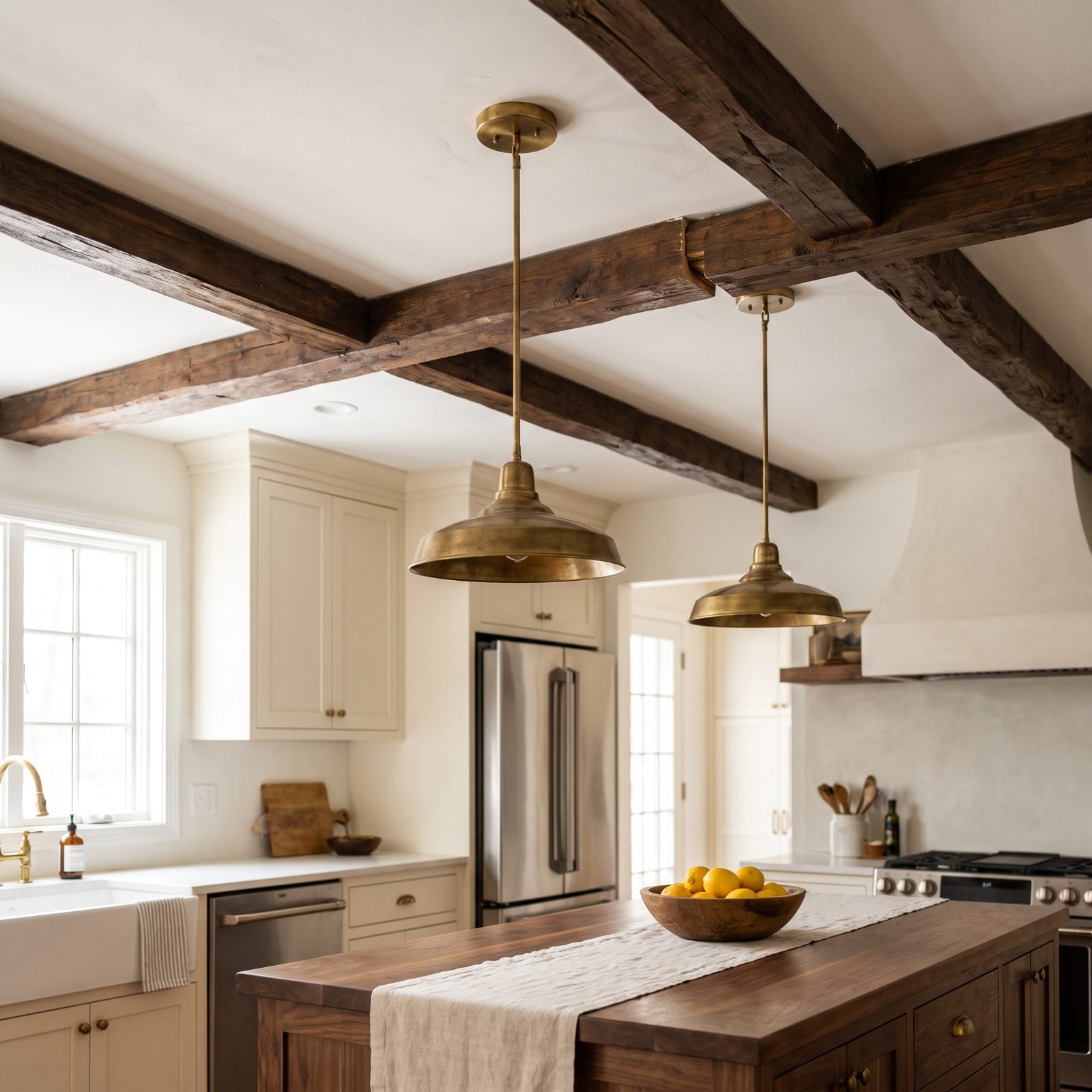
Nobody plans for the beam. They plan the island, plan the pendants, center everything on the island, and then the canopy lands half on a timber and half on plaster and it looks like a mistake because it is one.
Beams win. They’re structural and they’re not moving, so lay out your fixtures around them before you drill. Center each pendant in a clean plaster bay between beams, even if that means it isn’t dead-centered on the island. The eye reads the ceiling grid first and forgives a small island offset.
3. Fixtures Hung Below a Low Bulkhead
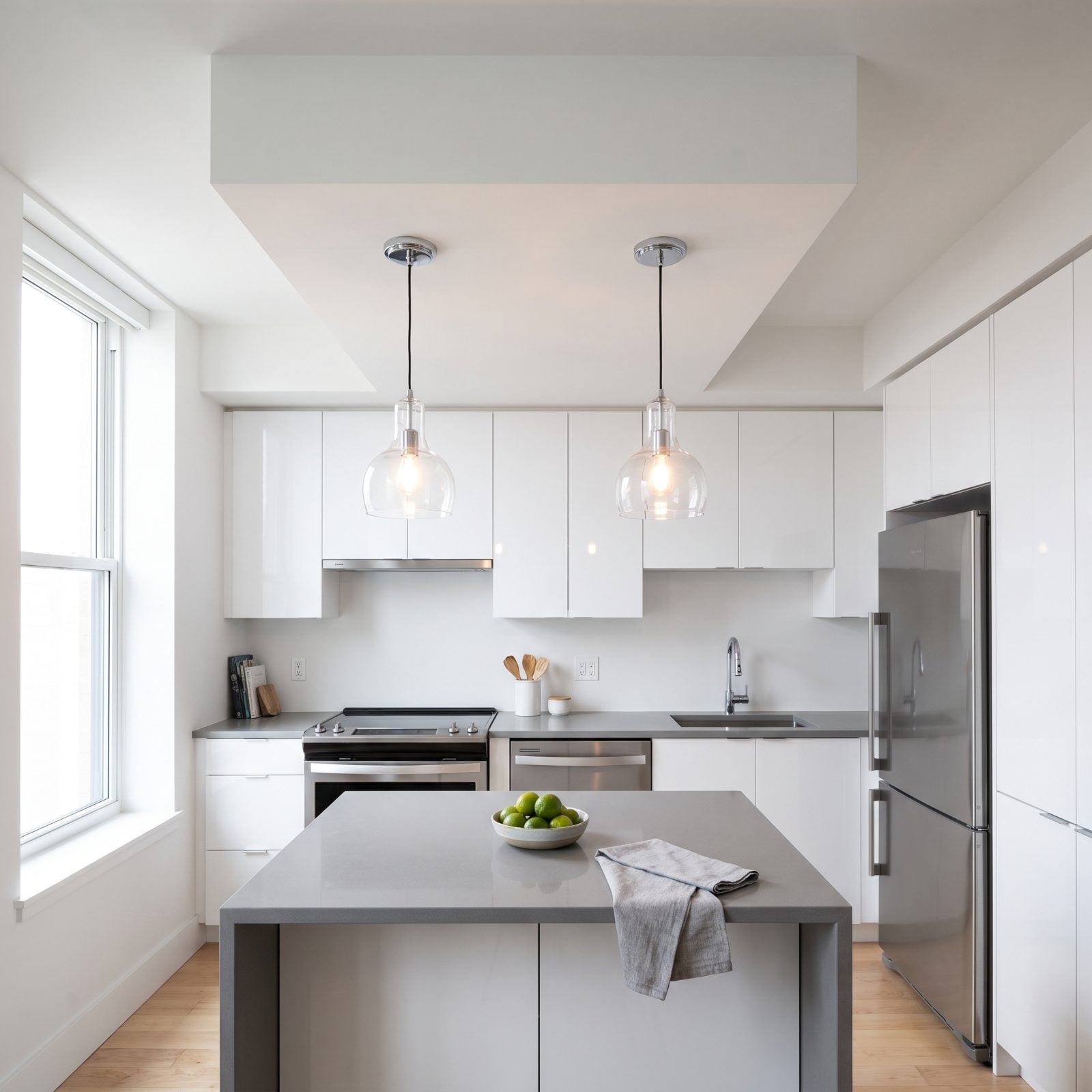
A bulkhead already steals a chunk of your headroom. Then a pendant drops out of the bottom of it and now you’ve got a fixture hanging at forehead height over your own island. In a low-ceiling kitchen, that’s claustrophobia by lighting.
Mounting under a soffit? Count your clearance from the soffit, not the main ceiling. Recessed cans or flush semi-flush fixtures often serve a bulkhead better than anything hanging. And if you insist on a pendant, keep it small, keep it tucked, keep it high.
2. Double-Height Pendants With Excessively Long Empty Cords
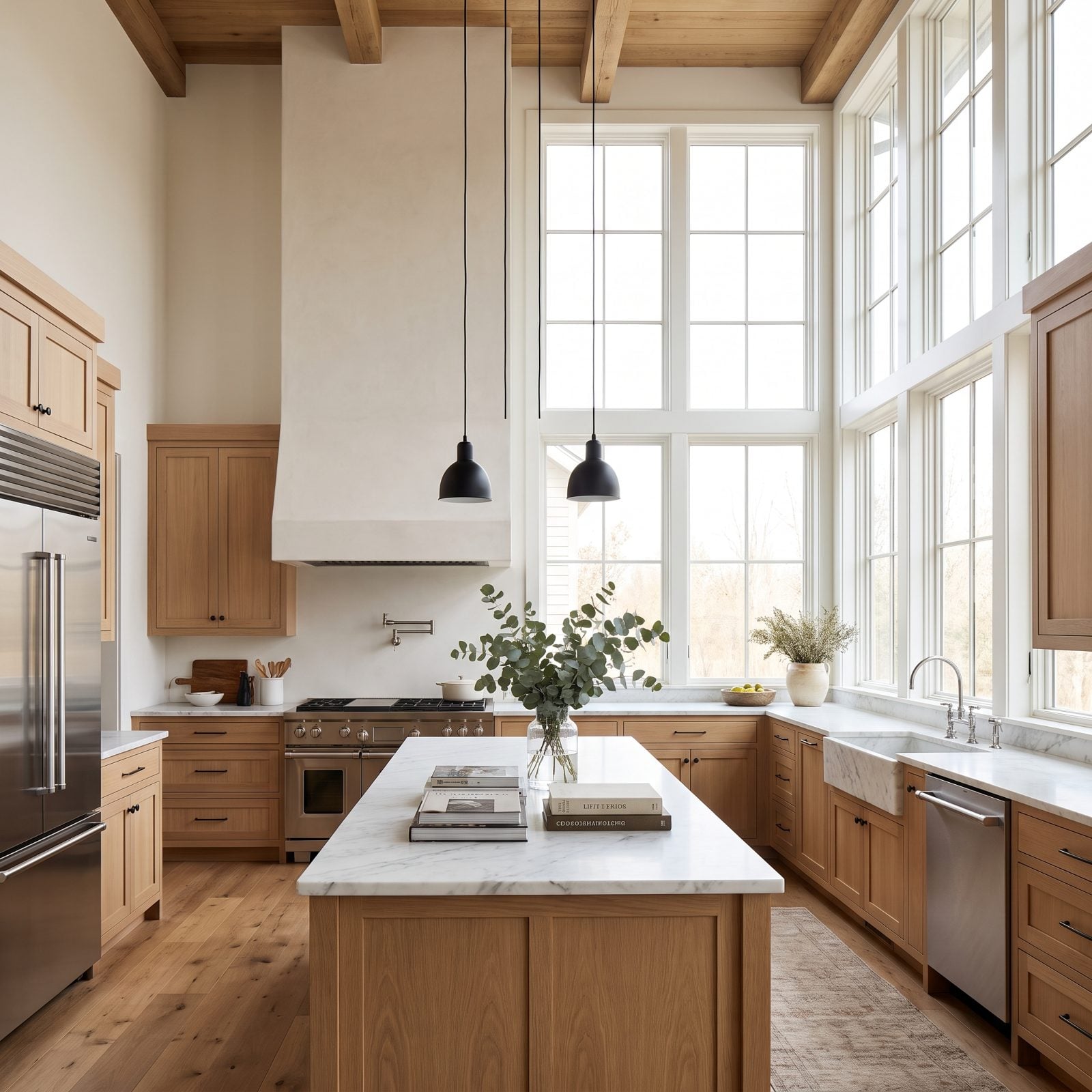
Double-height spaces tempt everyone into a long drop, and the long drop is actually correct. What kills it is the cord. A couple feet of shade dangling under fifteen feet of thin bare cord looks like a spider descending toward your countertop, and your eye goes straight to the empty line instead of the light.
Give a long drop something to look at. Multi-tier chandeliers, stacked orbs, fixtures with visual weight running up the cord — anything that fills that vertical run so it reads as intentional. If the cord is going to be that visible, make it part of the fixture, not just the leash holding it up.
1. Fixtures Hung So Low a Standing Guest Bumps the Glass
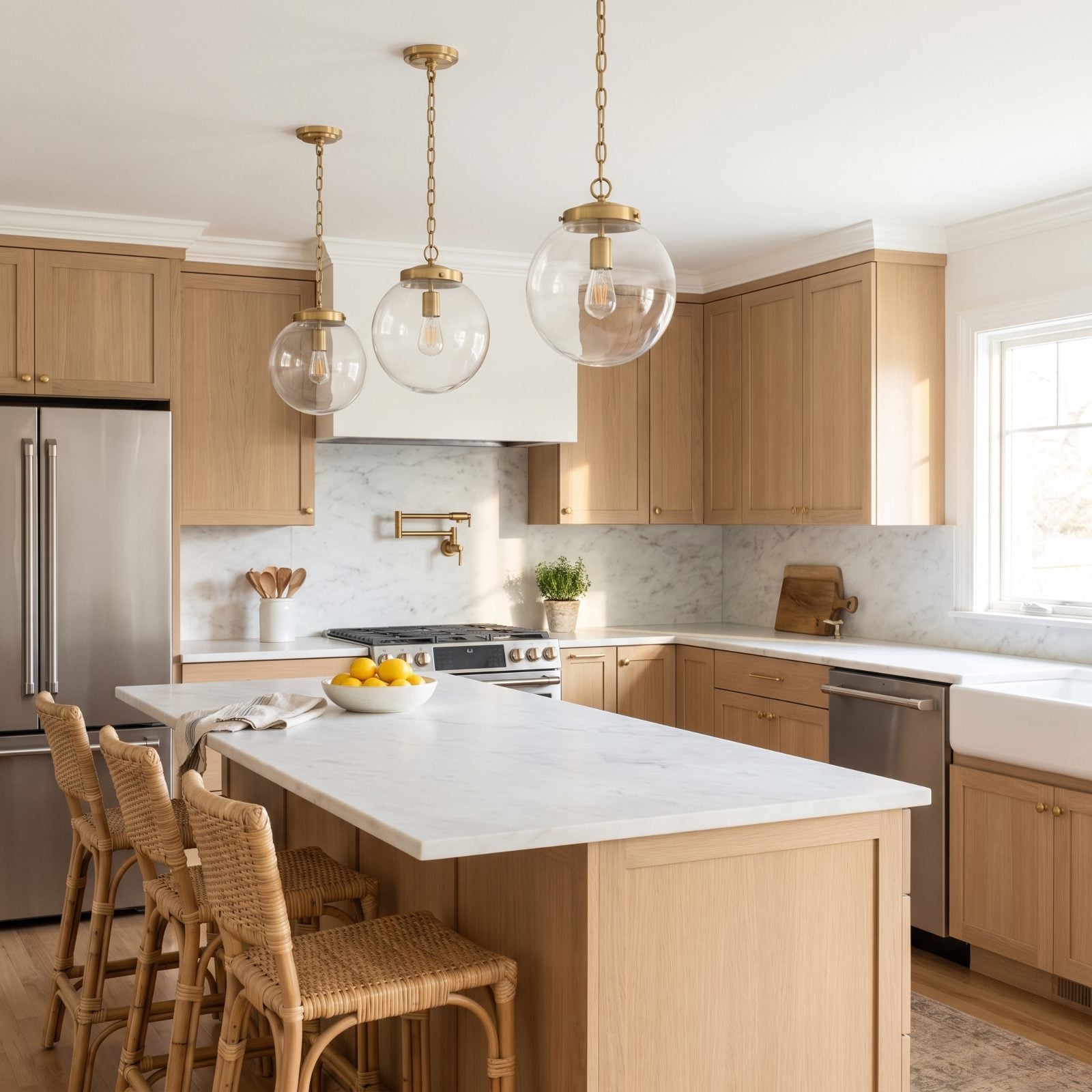
You’ve clocked it at a dinner party. Someone stands to refill a wine glass, tips their head back, and there’s the pendant right at eyebrow level. They flinch. Everybody laughs, and nobody says the real thing, which is that the lights are hung wrong.
Aim for roughly 30 to 36 inches of clearance between the bottom of the fixture and the countertop, which leaves a clear zone for anyone standing at the island. Drop below that and you’ve built a low bridge into a room people walk through constantly. These brass globes look great from across the kitchen. They fail the second a tall guest leans over the marble for a slice of bread.
Then there’s the glass. Put clear glass at head height and every bump becomes a chipped-globe conversation. If the fixture has to sit lower for the room to feel right, hang something soft. A woven shade or a metal cone forgives a shoulder. Glass won’t.