🔥 Would you like to save this?
The screen door slapped shut behind you. Gray poured concrete underfoot, warm from the afternoon sun, and that metal railing carried a rust bloom nobody ever bothered to sand off. Somebody’s transistor radio drifted out through a window. That was one familiar version of the American front porch in 1970: plain, durable, and built to outlast everybody standing on it. More than fifty years later, many of those same footprints have been reworked with different materials, technology, furniture, and expectations. These 28 comparisons show how the porch changed, one detail at a time.
28. Concrete Porch Slabs vs. Decorative Pavers
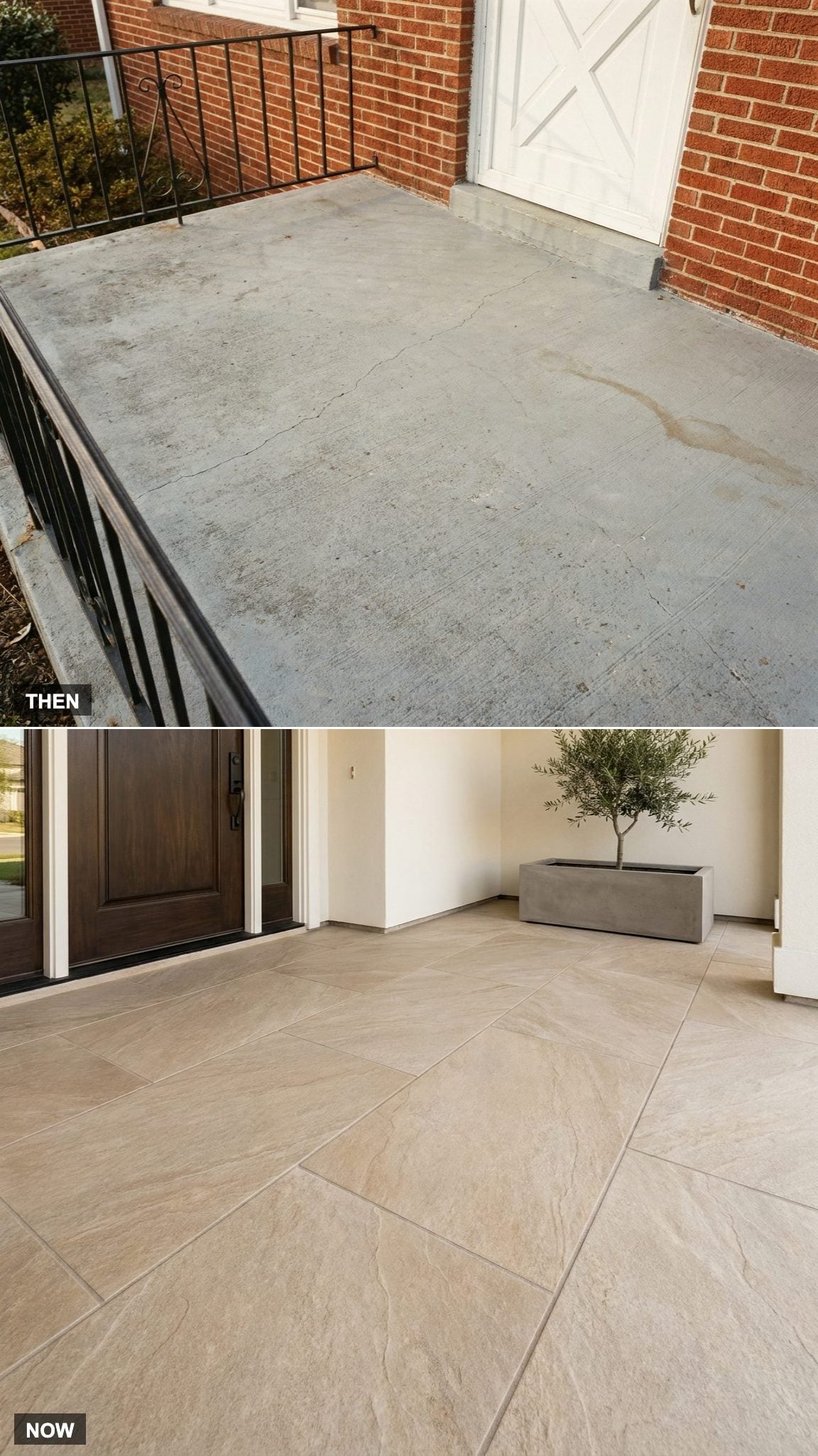
In 1970 the porch floor was poured concrete and that was the end of the conversation. Gray, broom-finished, cracked eventually, and nobody lost sleep over it. It held up, it got swept, it aged like everything else on the block.
In order to come up with the very specific design ideas, we create most designs with the assistance of state-of-the-art AI interior design software. Also, assume links that take you off the site are affiliate links such as links to Amazon. this means we may earn a commission if you buy something.
Now the same surface may be finished with large-format porcelain pavers in warm sand tones, installed with narrow joints suited to the chosen system. Scale is the trick. Large pavers and fewer visible joints can make a small porch feel less divided.
What Our Readers Say
- When Home Stratosphere readers picked their ideal porch, 60% chose a wraparound, 30% went for a full front porch, and only 6% wanted a small entry.
From Home Stratosphere reader polls and votes.
27. Simple Concrete Steps vs. Floating Entry Steps
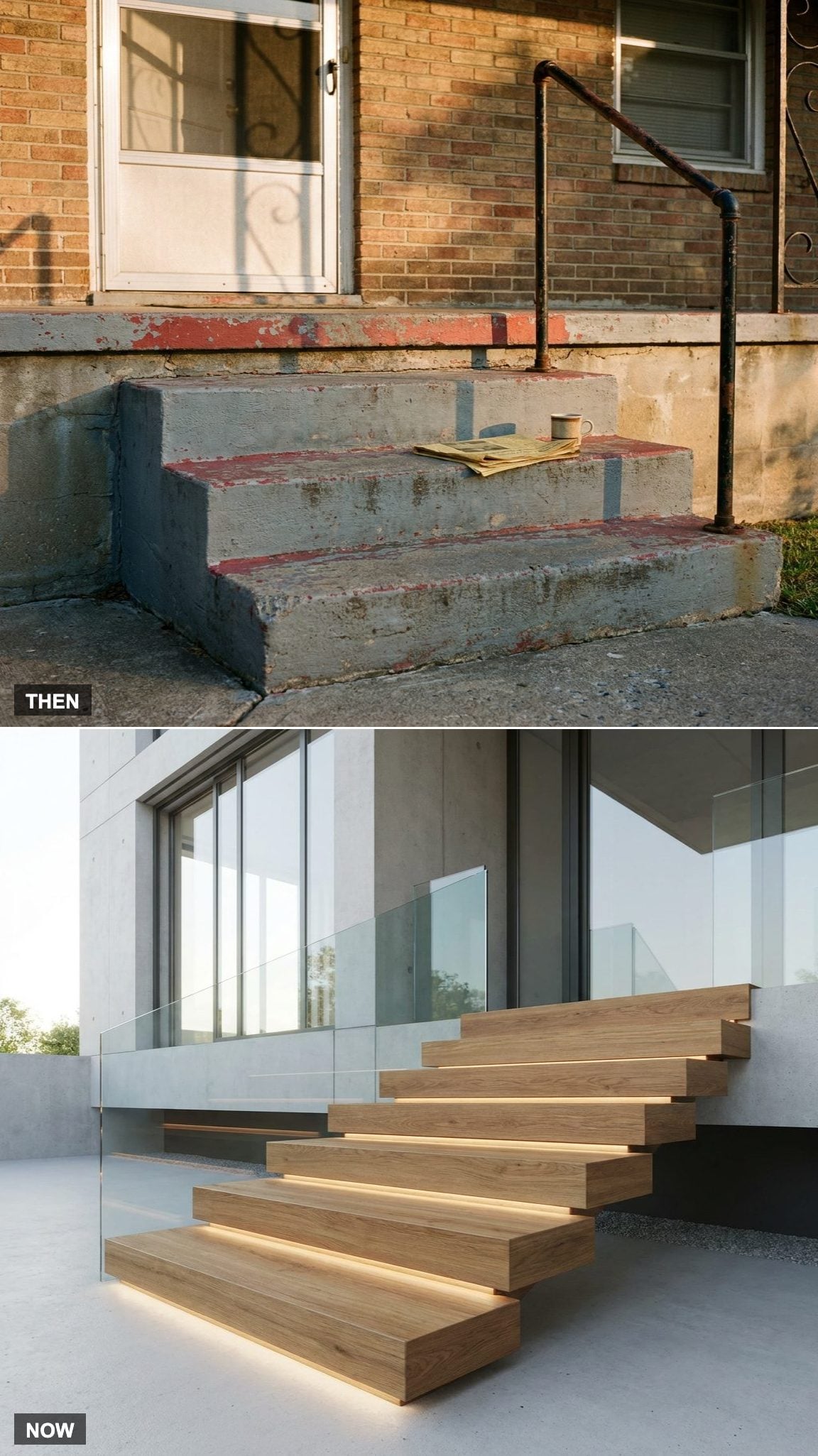
Concrete steps in 1970 were exactly what they sound like: three chunky poured slabs, a red-painted edge that chipped by the second summer, maybe a black pipe handrail if the builder was feeling generous. They did the job and asked for nothing in return, which is more than you can say for most of what got built later.
The modern version appears to float. Wood-look treads sit on a concealed structural system, with a slot of daylight beneath each one and outdoor-rated LED strips tucked below the lip. The effect is lighter and more architectural, although drainage, traction, structure, and local building codes still determine how the steps must be built.
26. Metal Railings vs. Cable or Glass Railings
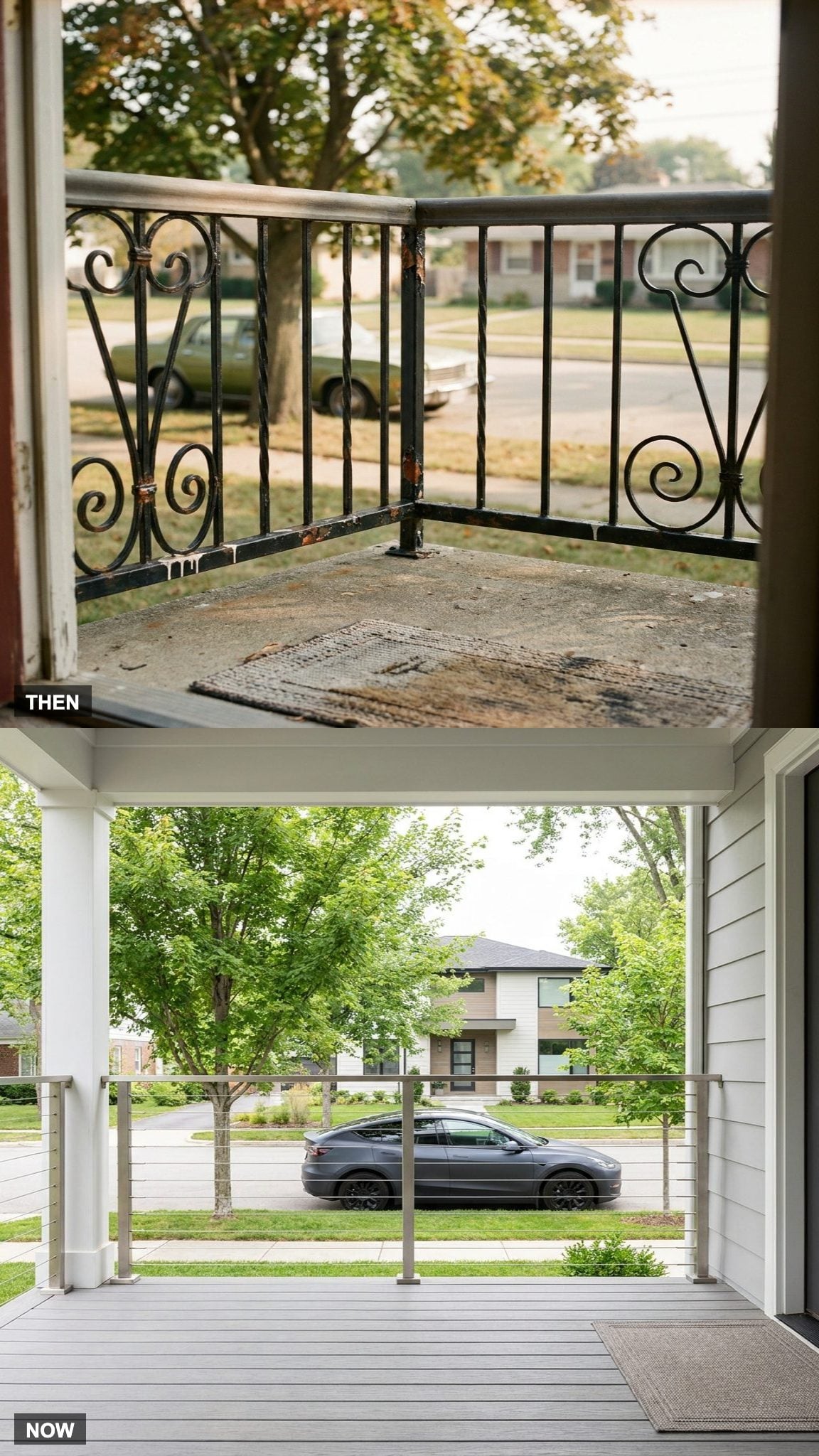
A common 1970 railing was black ornamental steel with scrollwork, and it rusted at the joints where the paint gave up first. It divided the view the way bars divide a window. Sturdy, decorative in a busy way, always a little orange around the welds.
Cable and glass railings threw all that out. Slim stainless cables strung horizontally between brushed posts, or a frameless glass panel, and the view opens right up. You barely register the barrier. You just see out.
25. Painted Wood Floors vs. Composite Decking
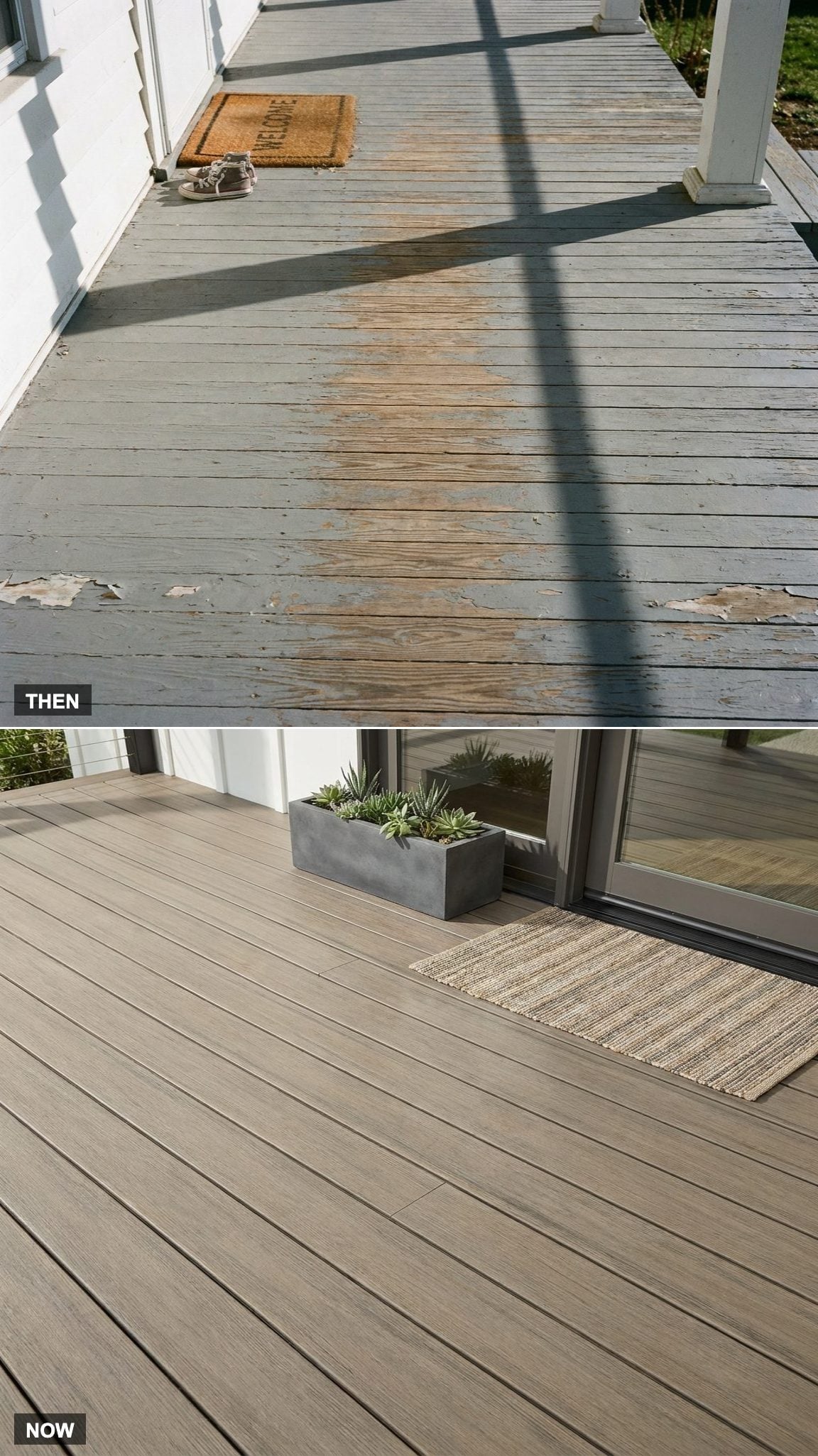
Painted wood porch floors were a chore that never ended. Battleship gray was the default, and by the third summer the main path had worn back to bare wood while the edges flaked. So you repainted, or you learned to live with the wear pattern like a scar.
Composite decking reduced the repainting cycle. Warm greige woodgrain and hidden fasteners deliver a cleaner surface without traditional peeling paint. It still needs cleaning and can stain, scratch, or weather, but rain does not expose bare wood beneath a failed paint film.
24. Brick Porch Columns vs. Clean-Lined Modern Posts
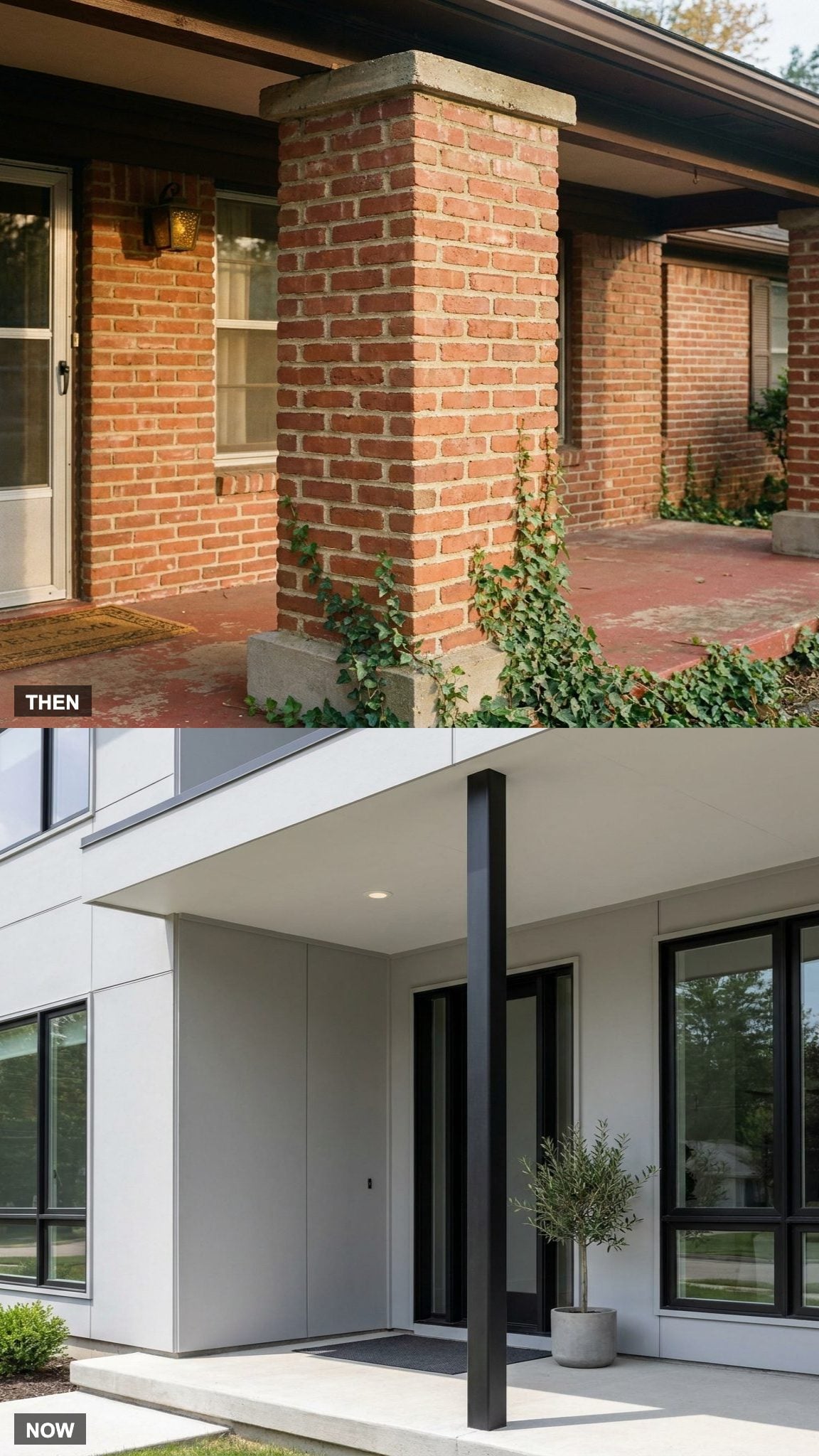
Brick columns anchored the 1970 porch and matched the house because the house was brick too. Warm red-orange, beige mortar, a concrete cap on top, ivy climbing the base. Solid to the point of heavy, like they could stop a truck.
Many modern renovations go the other way. A squared matte-black steel column or a slim smooth-clad wood post holds the same roof but takes up almost no visual weight, so the support recedes and the roof appears lighter.
23. Screen Doors vs. Full-View Storm Doors
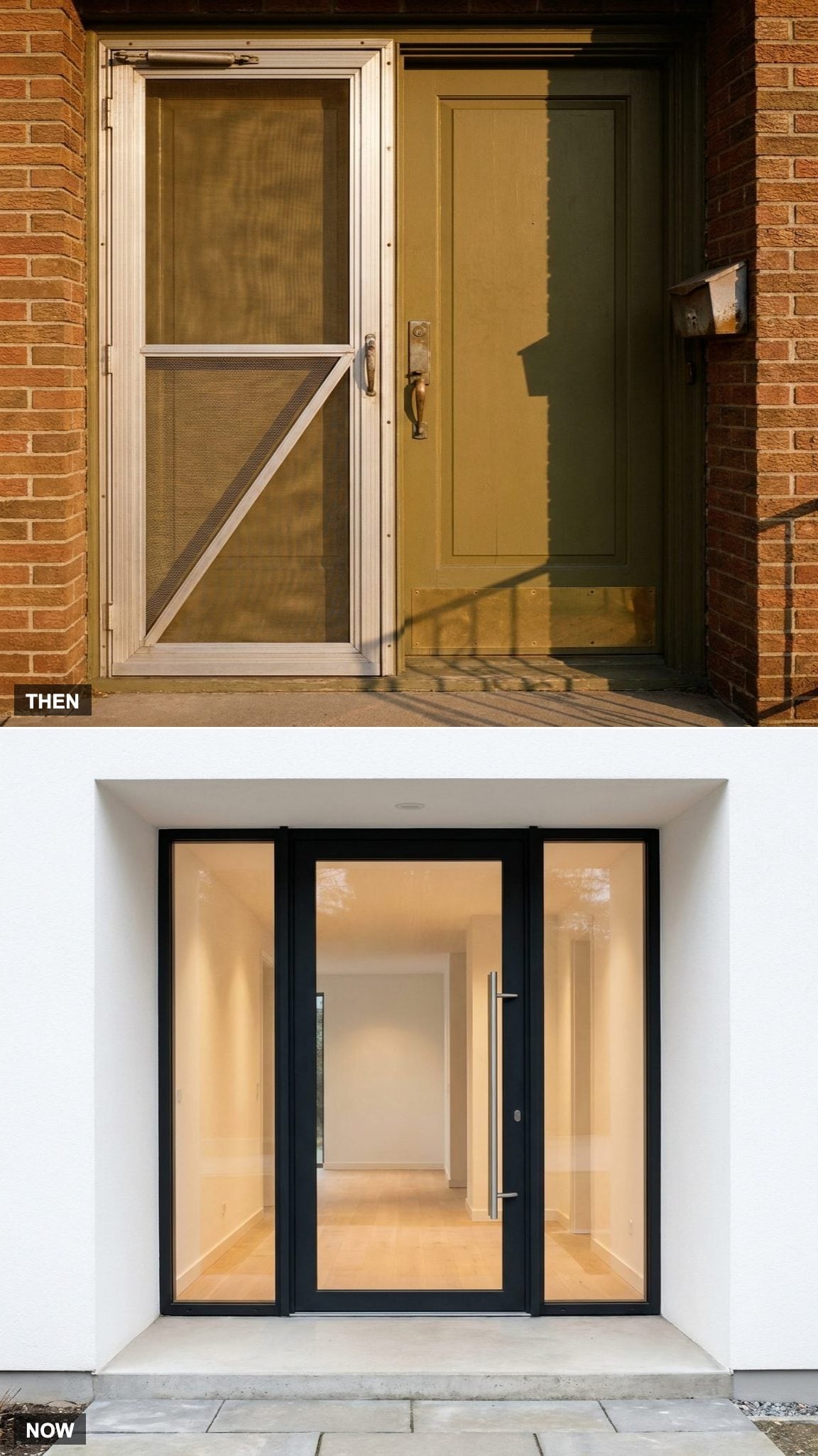
The screen door defined the sound of 1970 summer. Aluminum frame, a diagonal brace across the bottom, that pneumatic closer arm, and the slap it made every single time it swung shut. Kids caught the mesh with a fingernail and got yelled at for it. It kept the flies out and let the breeze in, which was the whole deal.
Full-view storm doors trade some of that visual clutter for light. One large pane in a slim black frame can pull daylight into the hall, and some models still include interchangeable or retractable screens.
The mesh needed cleaning, but the slap of the old screen door remains part of the memory.
22. Solid Wood Front Doors vs. Oversized Statement Doors
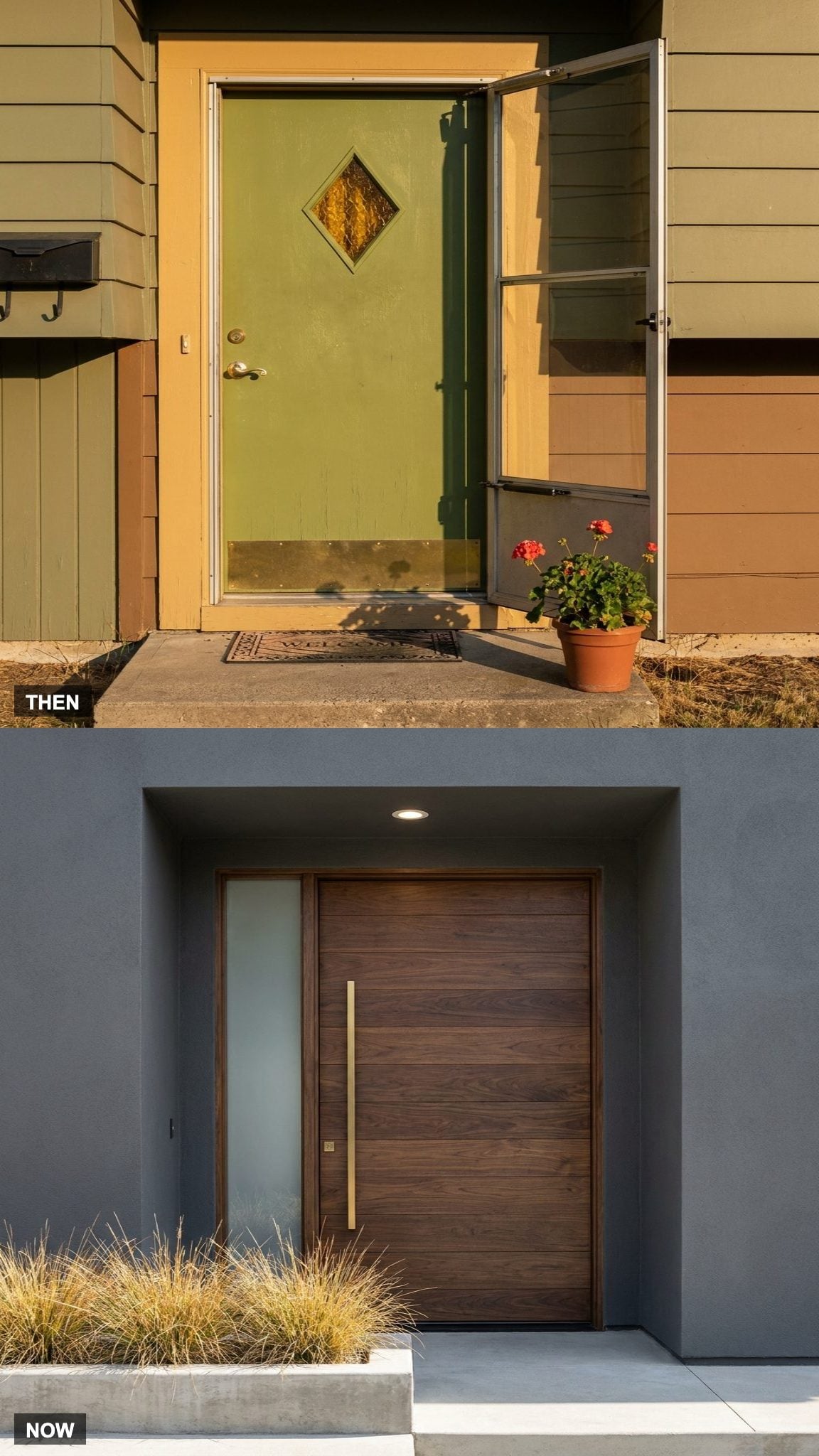
Many 1970 tract homes used a standard-width solid or paneled door, sometimes with a small diamond window, a brass knob, and one of the decade’s earthier paint colors. It said hello politely and got out of the way.
Today’s statement door makes the entrance the focal point. Floor-to-header walnut on a pivot hinge, horizontal grain running the full width, a brushed-brass pull the length of your forearm. First thing you see, and that’s exactly the idea.
When we asked our readers about front doors, 53% picked a bold colour, well ahead of wood at 26% and black at 20%.
21. Basic Porch Lights vs. Smart Outdoor Lighting
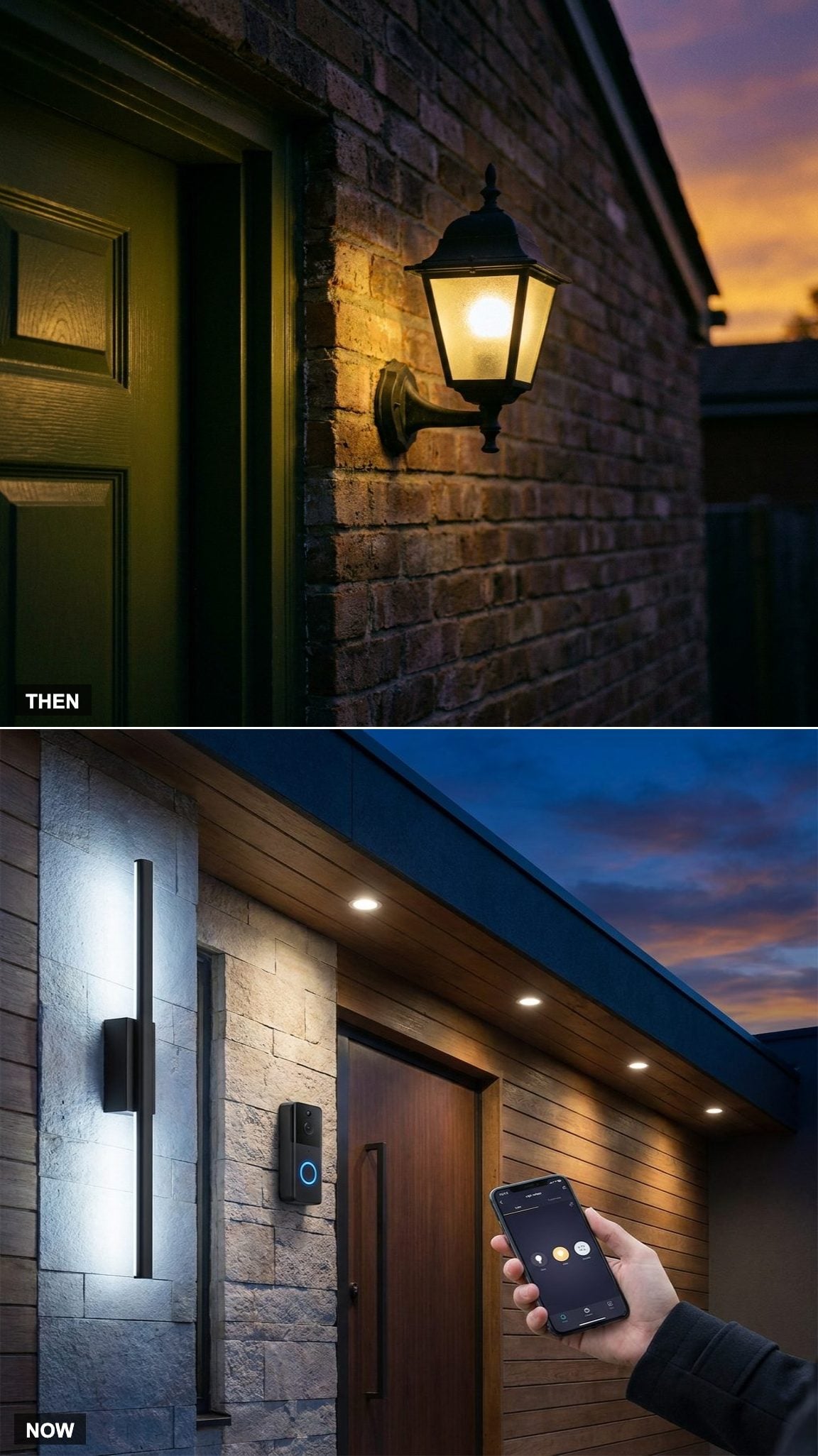
One frosted carriage light beside the door, one incandescent bulb, one switch inside the hall. That was a common porch-lighting setup in 1970. It threw a small pool of yellow onto the top step and left the rest to the moon. On when the streetlights came on, off when you went to bed.
Now the porch runs on an app. A slim LED sconce, a video doorbell with its soft ring of light, recessed downlights washing the wall, all of it scheduled and dimmable from the couch.
20. Porch Swings vs. Outdoor Sectionals
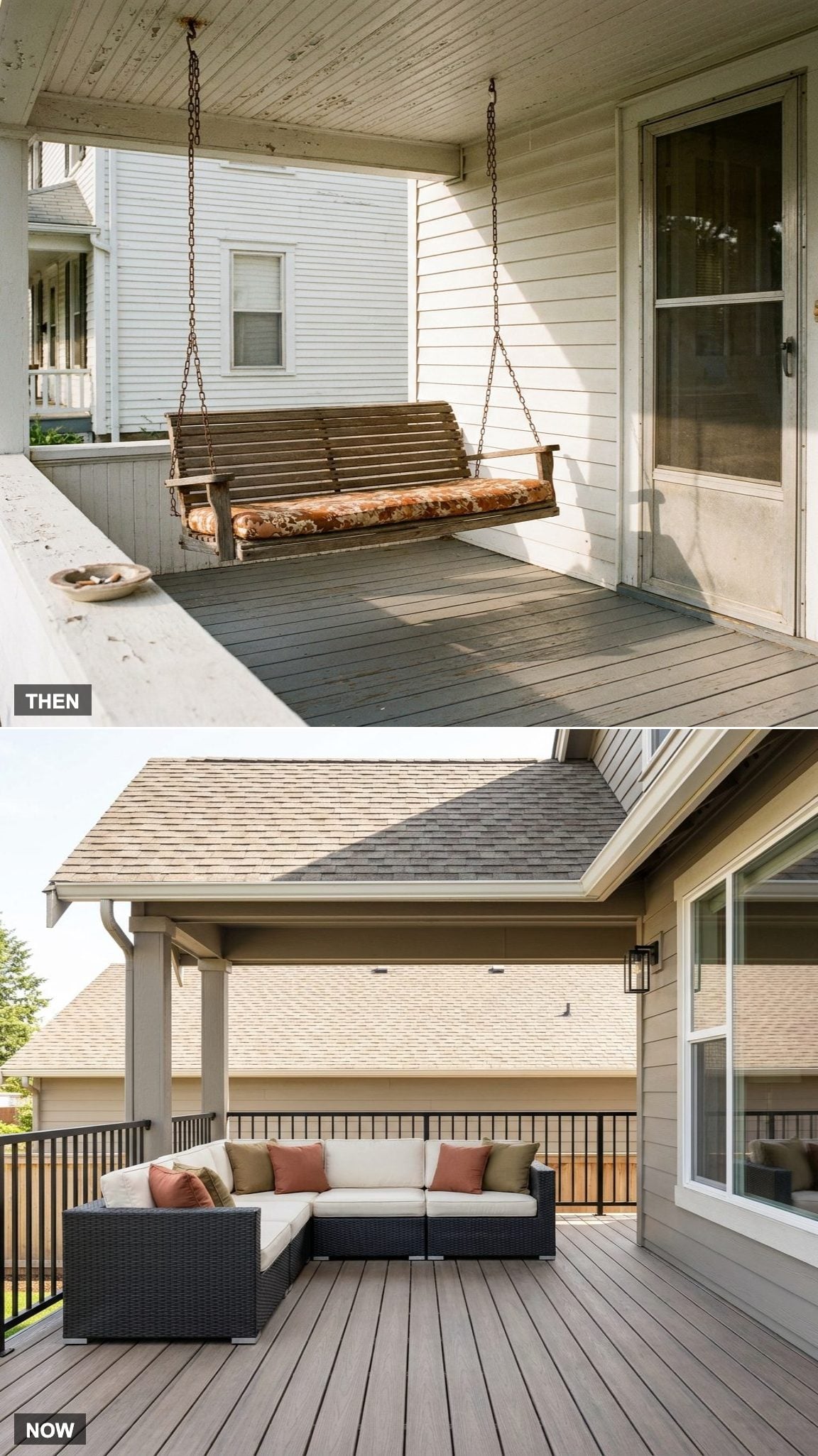
The porch swing was the whole social calendar. One chain-hung bench, room for two, and a squeak that told the neighbors you were home. The cushions were vinyl-backed floral and sticky in July, and nobody minded, because the thing moved and that was the point.
On a larger modern porch, the swing may give way to a sectional that seats six and never budges an inch. All-weather wicker, cushions rated for rain, a spread of terracotta outdoor throw pillows arranged like an indoor living room got shoved outside. Comfortable. Dead still. You gained seating and lost the sway.
19. Metal Gliders vs. Lounge Seating
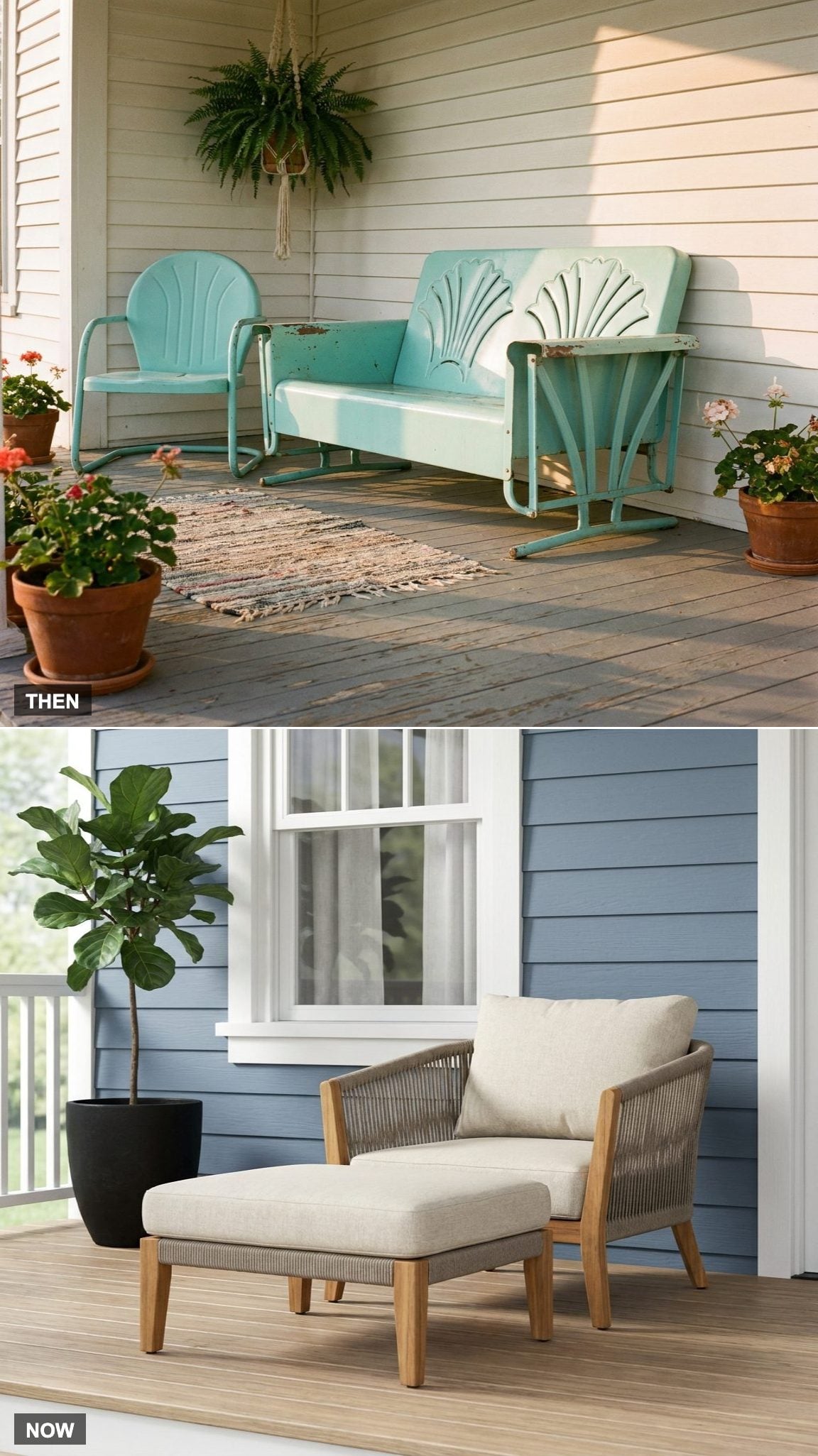
You know the glider. Metal, spring-based, painted some soft candy color, and loud enough that everyone knew when Dad sat down. That fan-back tulip design appeared on porches across the country. It moved front to back on a steel frame and seemed nearly indestructible.
The modern version? A teak lounge chair with an ottoman, cushions the color of oatmeal, built for sinking in rather than gliding. Softer, quieter, and a lot more expensive. The glider had personality baked into its paint. The lounge chair has comfort and not much to say.
18. Folding Lawn Chairs vs. Designer Outdoor Furniture
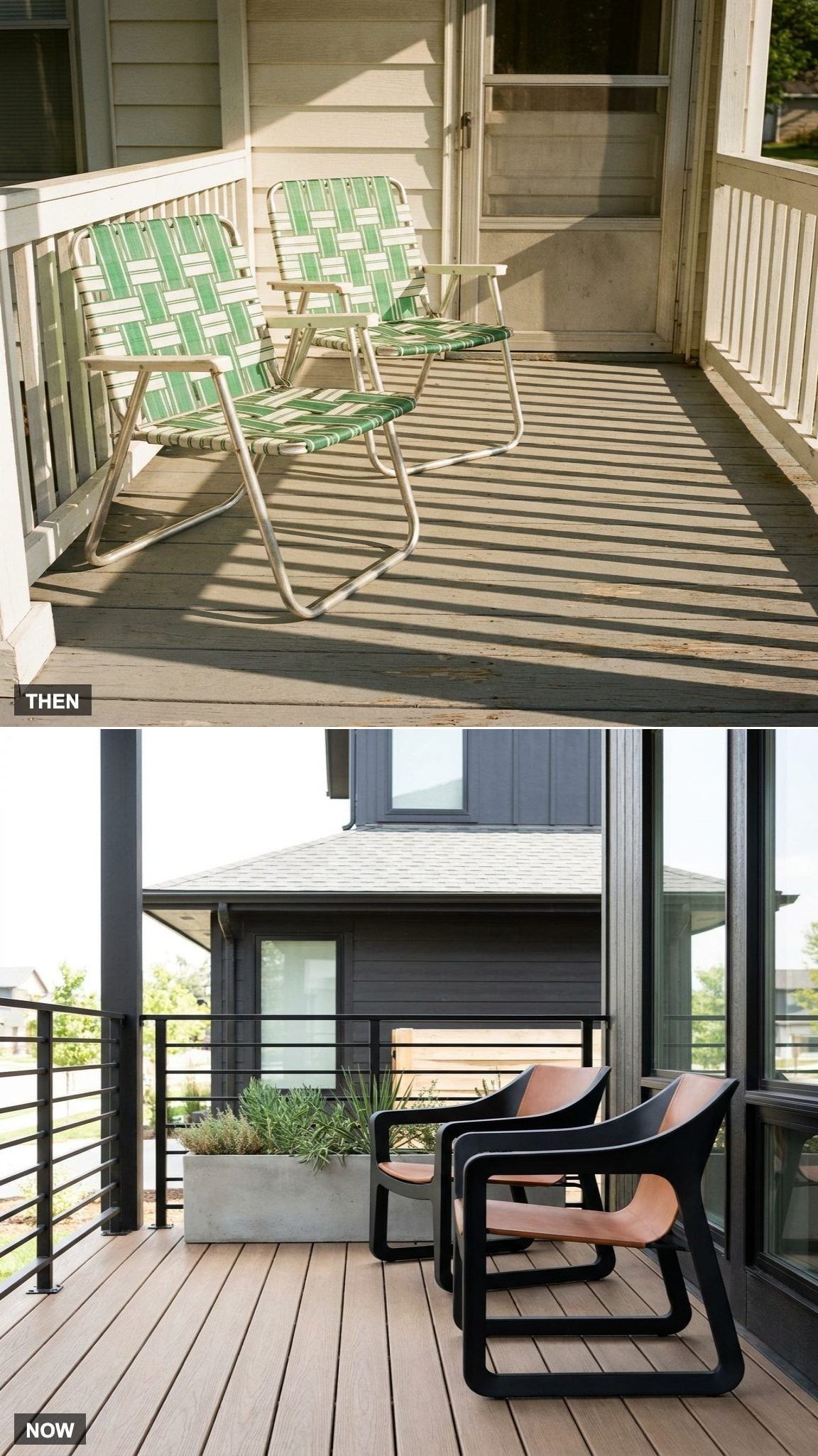
Green and white nylon webbing stretched over an aluminum frame, folded flat, stored in the garage, pulled out whenever company came. That was porch seating for a whole generation. The webbing pinched the backs of your legs and eventually snapped one strand at a time. A basic chair could cost only a few dollars, depending on the year and retailer, and families often kept several for company.
Now those same slots hold black aluminum sling chairs that can cost far more than an entire set of old folding chairs. Sculptural, weatherproof, catalog-ready. Unlike the old folding chairs, these are usually left outside as part of the permanent setup. They live outside and photograph well, which is half the point these days.
17. Small Side Tables vs. Outdoor Coffee Tables
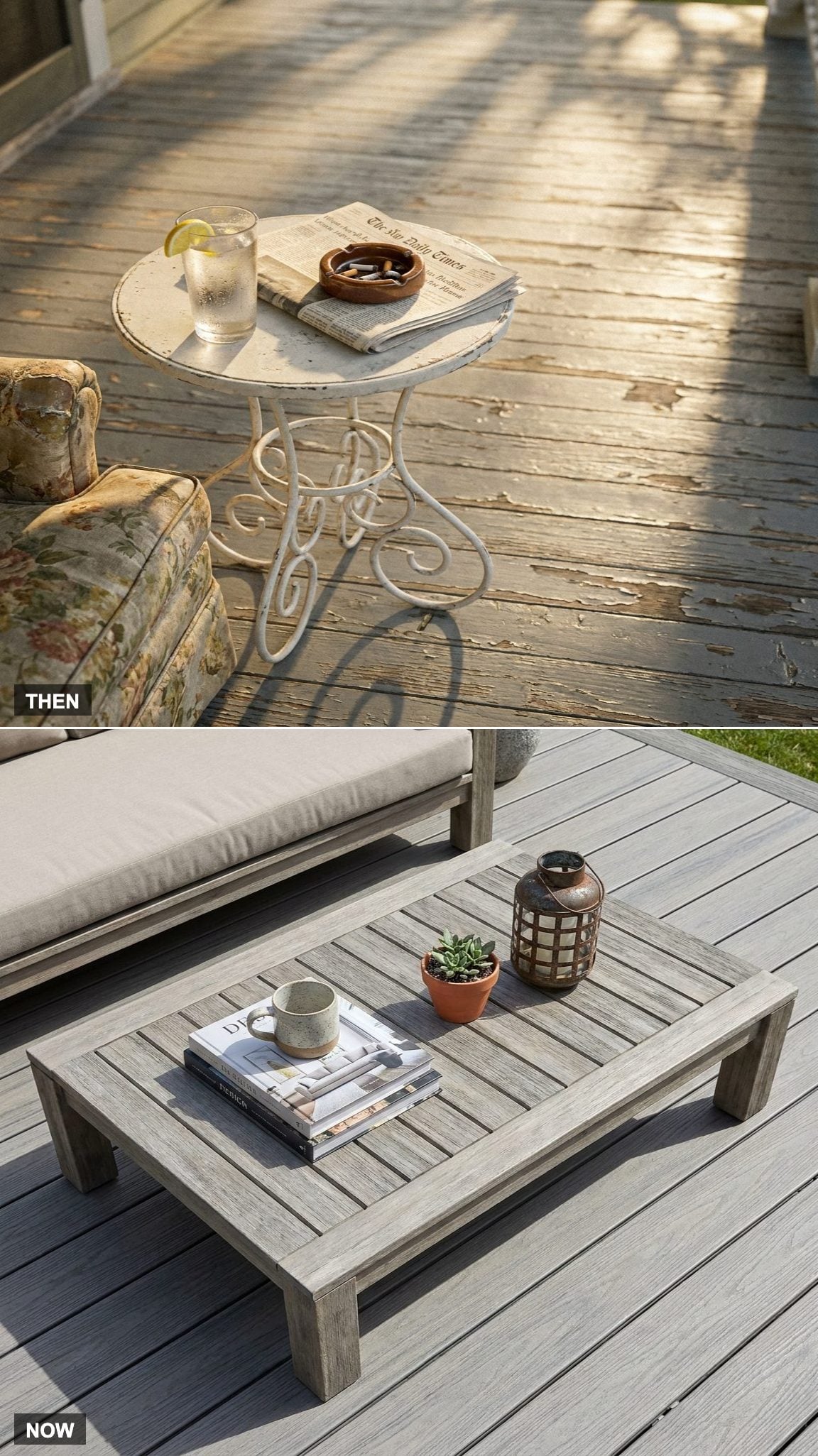
A little wrought-iron side table, painted white, just big enough for a sweating glass and an ashtray. That was the entire surface budget of a 1970 porch. It held one drink, maybe the evening paper, and it wobbled if you leaned on it.
These days you’ll find a broad low coffee table in weathered teak, styled up with a lantern, a stack of books that never actually get read outside, and something in a stoneware pot. Basically a coffee table that decided the outdoors was fair game.
16. Ashtrays on the Porch vs. Fire Tables
🔥 Would you like to save this?
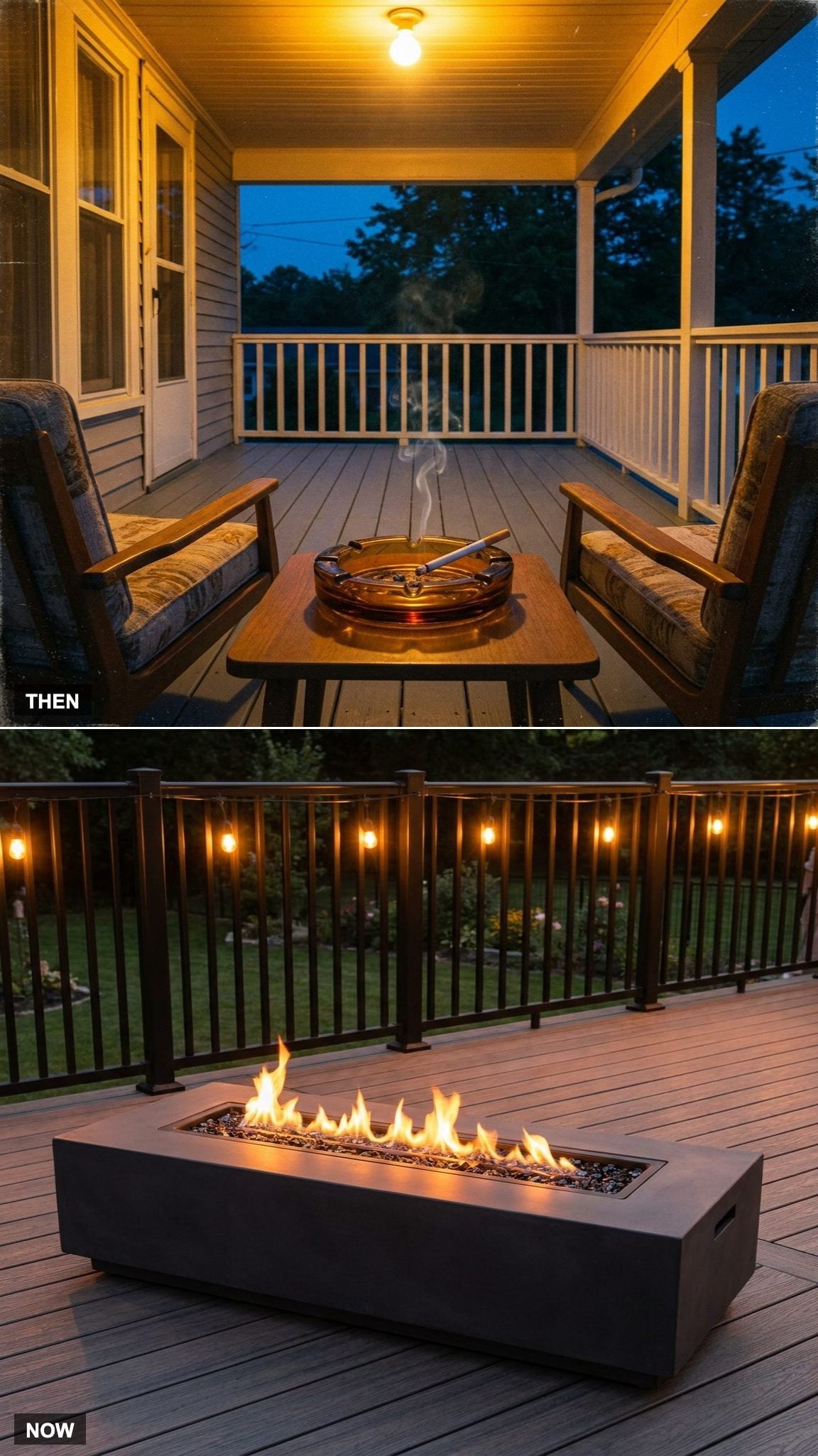
Many porches had one. A heavy amber-glass ashtray, usually a hand-me-down, parked where two chairs met. The whole evening ritual involved smoke curling up into the porch light while people talked. Social, constant, and nobody thought twice about it.
That spot now belongs to a gas fire table, a low concrete trough of flame that throws heat and glow without asking anyone to light up. Same instinct: gather around the small fire and talk, minus the tobacco. The flame handles the mood-setting the cigarette ember used to do.
15. Hanging Ferns vs. Curated Planter Collections
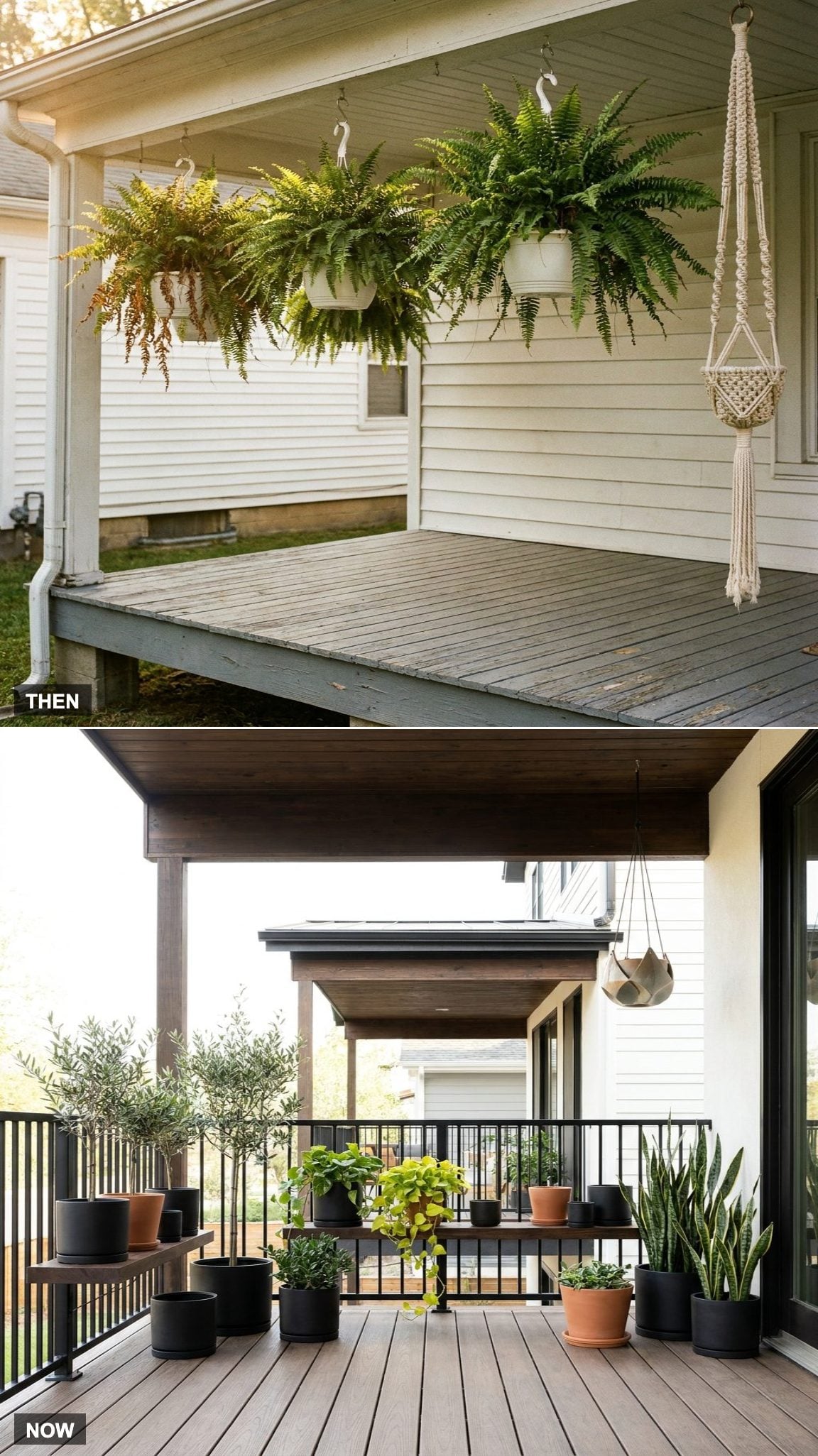
The Boston fern in a white swag pot became a familiar porch sight. Hung from the overhang on an S-hook, watered from a green metal can, dropping fronds all over the boards by August. Usually there were three of them and at least one was always half dead, and nobody replaced it, they just rotated the good one to the front.
The fern has multiplied and organized itself. Now it’s a whole planter collection at staged heights, small trees and trailing greenery in matte pots, arranged with the eye of a florist. More plants, more intention, and honestly a lot more Instagram.
14. Window Flower Boxes vs. Vertical Gardens
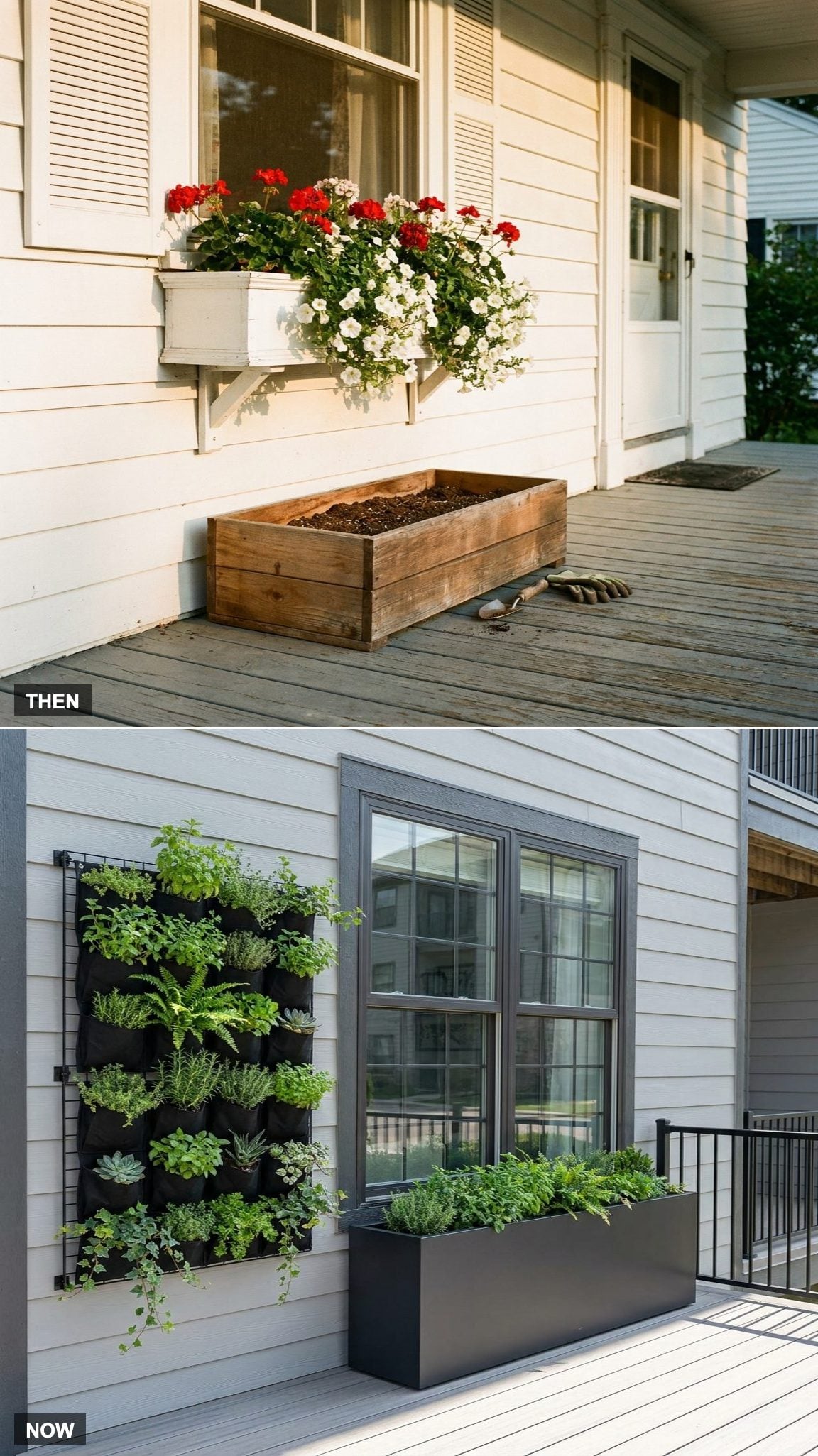
One wooden window box, painted white, stuffed with red geraniums until it went leggy in high summer. That was the flower plan. Charming, a little unruly, gone by first frost. It said somebody here likes to garden without much fuss.
The modern porch went vertical. A whole wall grid of staggered planter pockets, herbs and ferns and trailing greens climbing up the siding like a living mural. More garden per square foot, and it reads like a design feature, turning planting into part of the architecture rather than a small accent beneath one window.
13. Simple Foundation Shrubs vs. Layered Landscaping
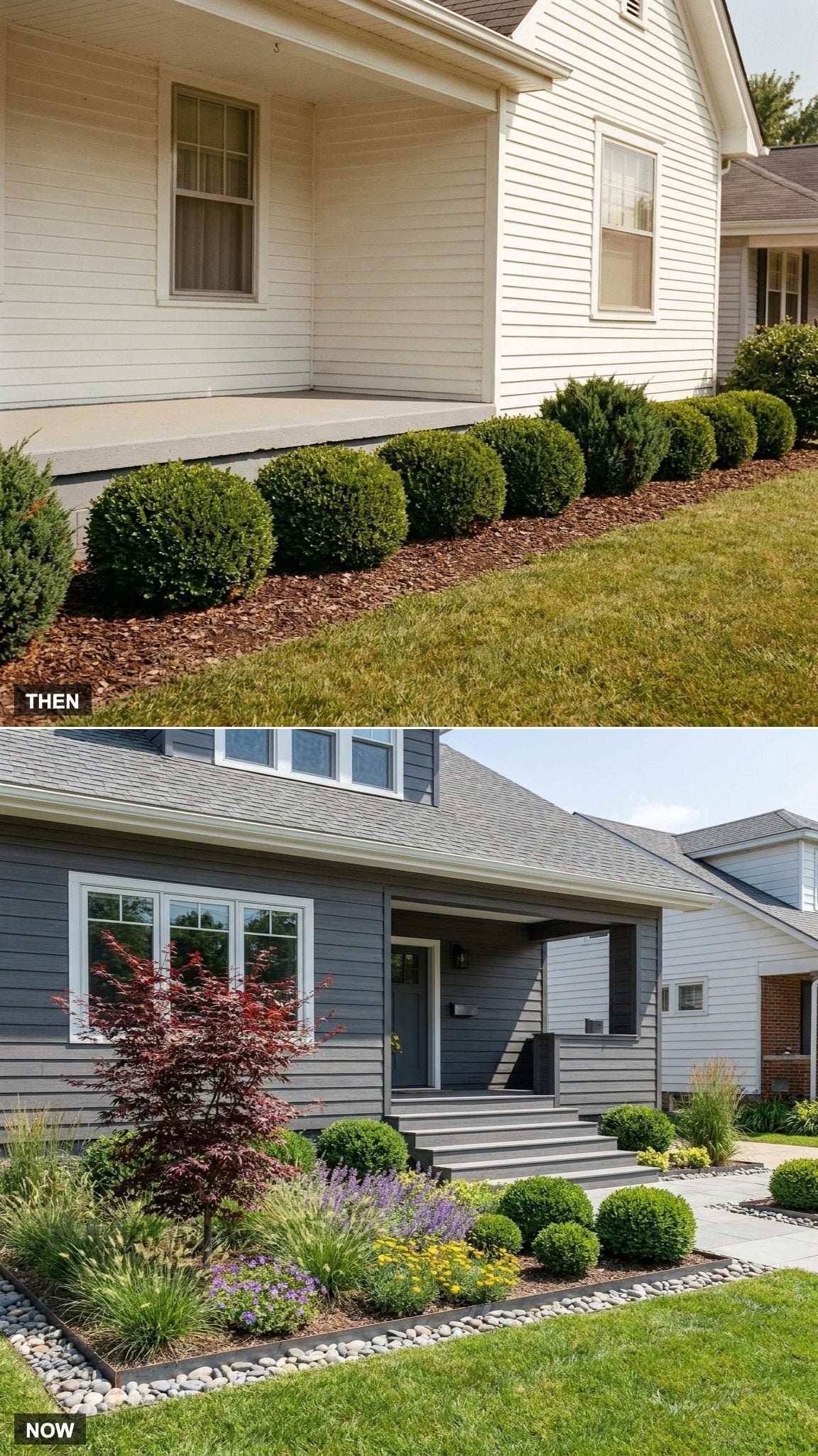
A common postwar foundation planting used a single line of rounded evergreens hugging the base of the house. Boxwood and juniper, often clipped into the same rounded shapes, mulched in dark bark, done. It hid the concrete foundation and kept the maintenance routine straightforward.
Now the same strip may be built in climate-appropriate layers, with taller structure at the back, lower perennials toward the walk, and one focal plant sized to the house. Depth and movement where the old row had a haircut. This kind of layering does wonders in front of a craftsman porch makeover, softening the hard lines of columns and steps.
12. Plain Welcome Mats vs. Personalized Door Mats
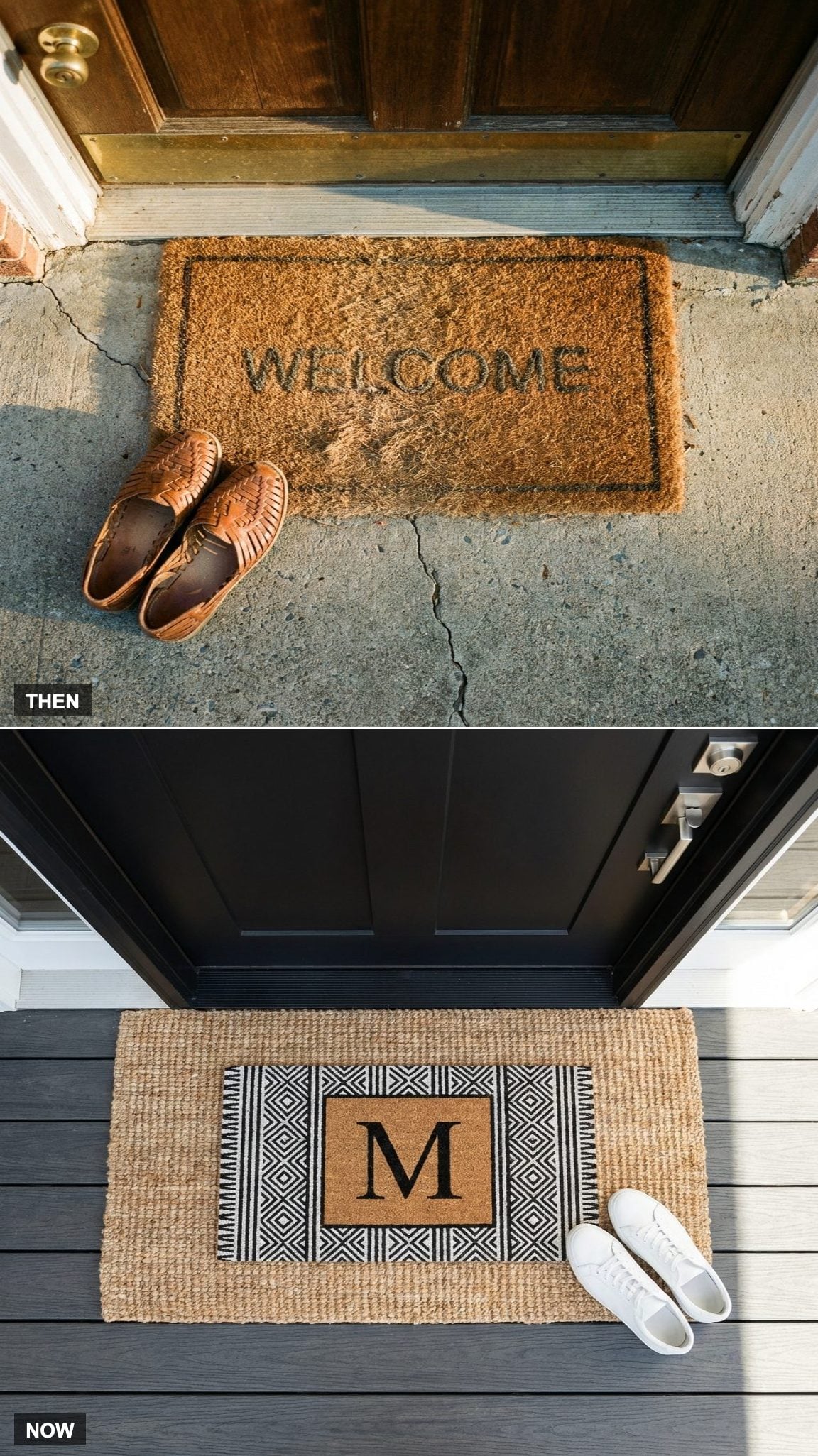
WELCOME. Raised coir letters, worn flat in the middle, one mat doing the whole job of greeting the world. It scraped the mud off your shoes and told everyone the same generic hello. When it wore out, you bought the identical one again.
The doormat got personal and got layered. A big jute base with a smaller monogrammed or geometric mat on top, sometimes a seasonal one swapped in, all of it a tiny statement before anyone rings the bell. A small square of real estate that now carries personal style, which fits right into the styled farmhouse porch decor look everyone’s chasing.
In our reader polls, the doormat people would actually put down was a close call: rubber at 36%, layered at 31%, and classic coir at 28%.
11. Wooden Shutters vs. Modern Exterior Trim
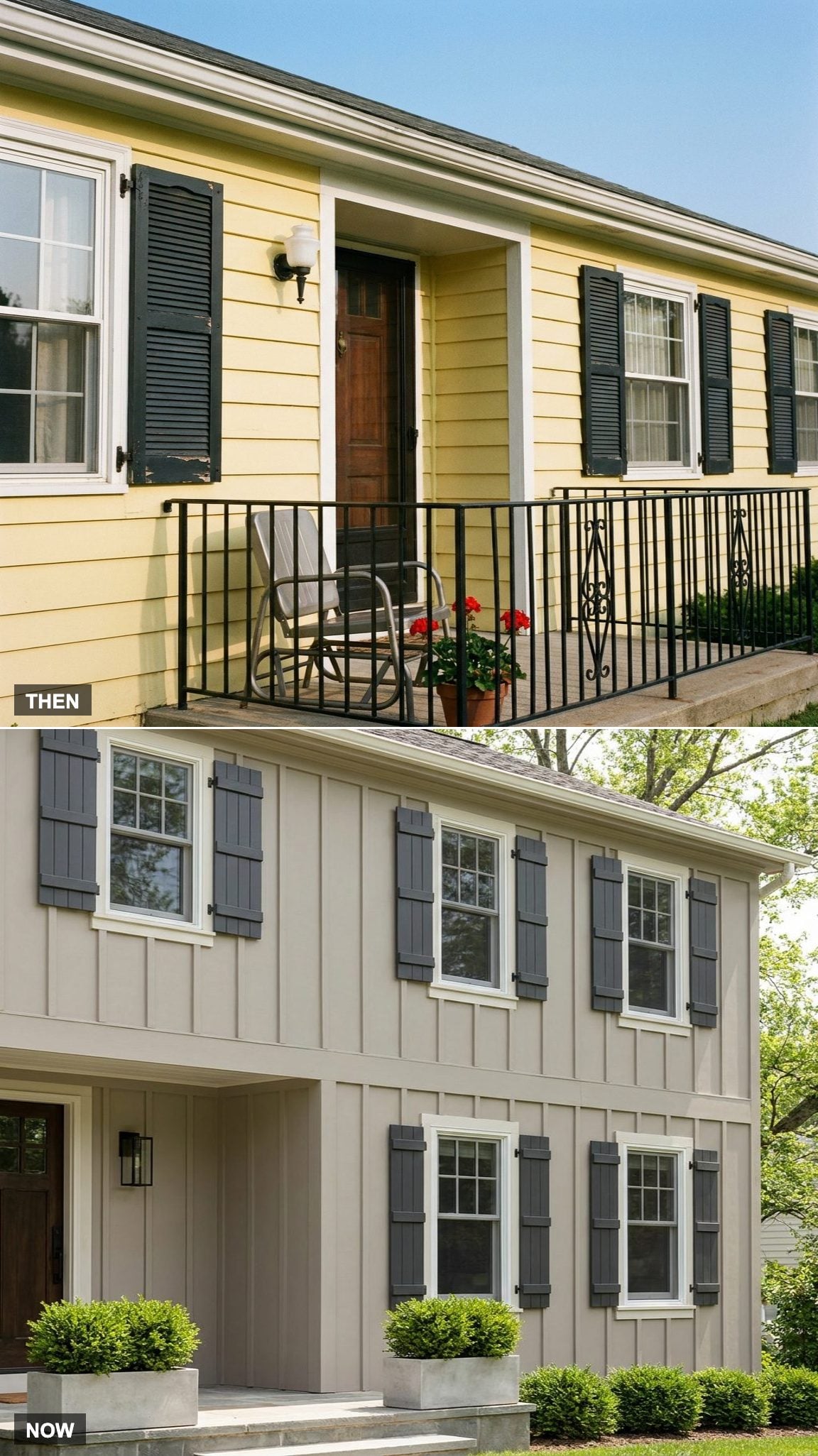
By 1970, many tract-home shutters were already decorative rather than operable. Louvered panels, faux hinges, and a coat of colonial black that flaked at the corners by year three. They framed the windows like eyebrows on a friendly face. Nobody closed them. Everybody painted them.
Many current renovations remove the decorative louvers entirely and shift attention to wider, simpler window trim. Fixed board-and-batten panels in matte charcoal sit against composite casings that never rot, and the louvers are simply gone. What matters now is contrast and clean lines, letting the siding color do the heavy lifting instead of the hardware.
10. Mail Slots vs. Decorative Mailboxes
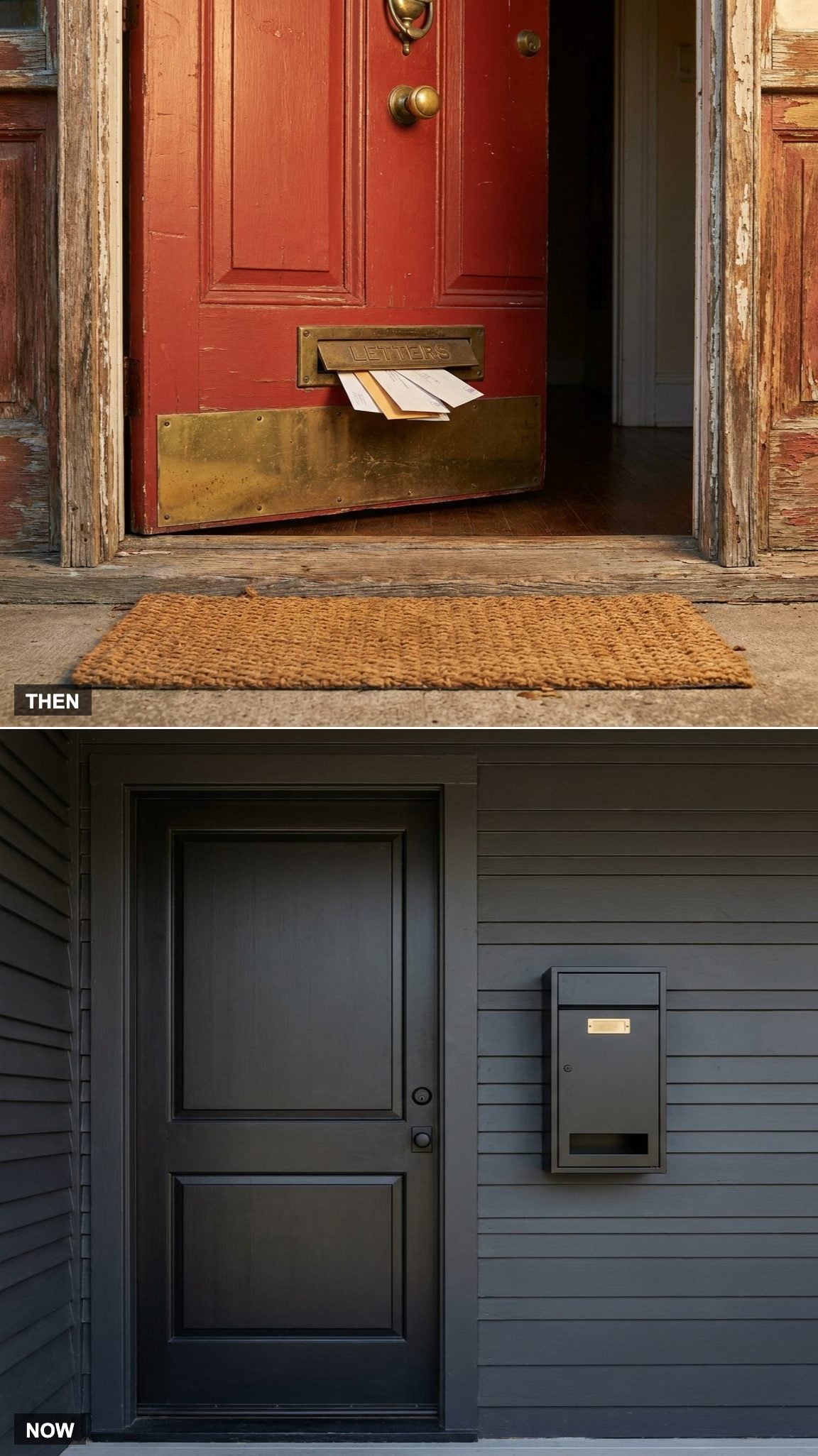
In homes with door delivery, the mail dropped through a brass slot and hit the hardwood with a slap you could hear from the kitchen. A tarnished brass slot, the flap squeaking, sometimes stamped LETTERS in case you forgot what went in it. Great sound. Terrible for drafts.
Today many entrances use a wall-mounted mailbox as a design object beside the door instead. Powder-coated black, slim vertical body, a little number plate, a magazine slot for the catalogs nobody reads. The wall-mounted box eliminates the drafty opening and gives the entry a focal point. Mostly, though, it just makes the porch look like someone meant to do that.
9. House Numbers vs. Oversized Modern Address Displays
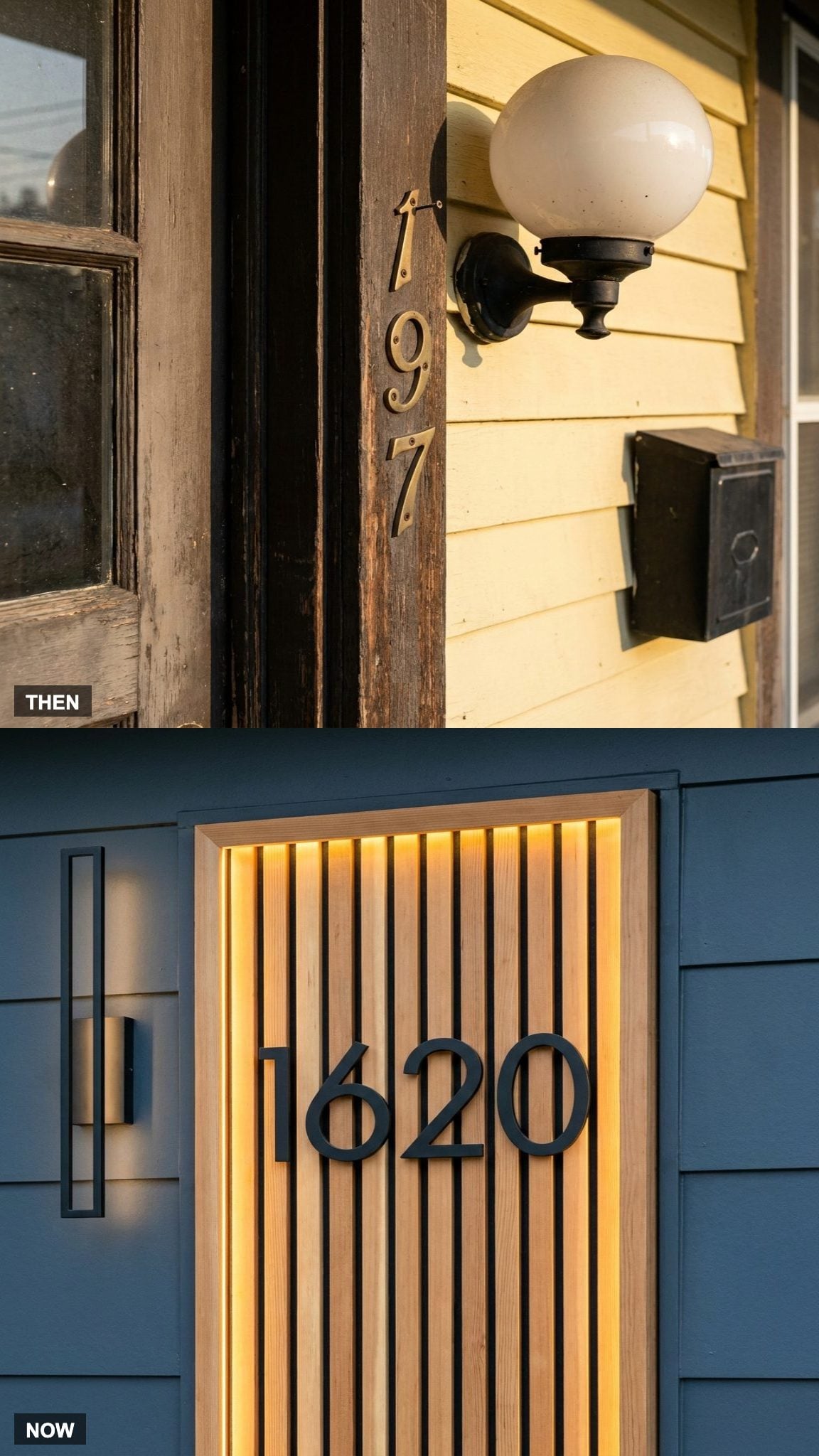
Three-inch brass cursive numbers, screwed onto the trim, one always working itself loose by fall. Half the time you couldn’t read them from the street. Charming up close, useless to the pizza guy at dusk.
Then everything went big and legible. Ten-inch matte-black sans-serif numerals float off a cedar slat panel, sometimes backlit so they read at night. Small change. It does an awful lot of talking about the rest of the house.
8. Doorbells vs. Smart Video Doorbells
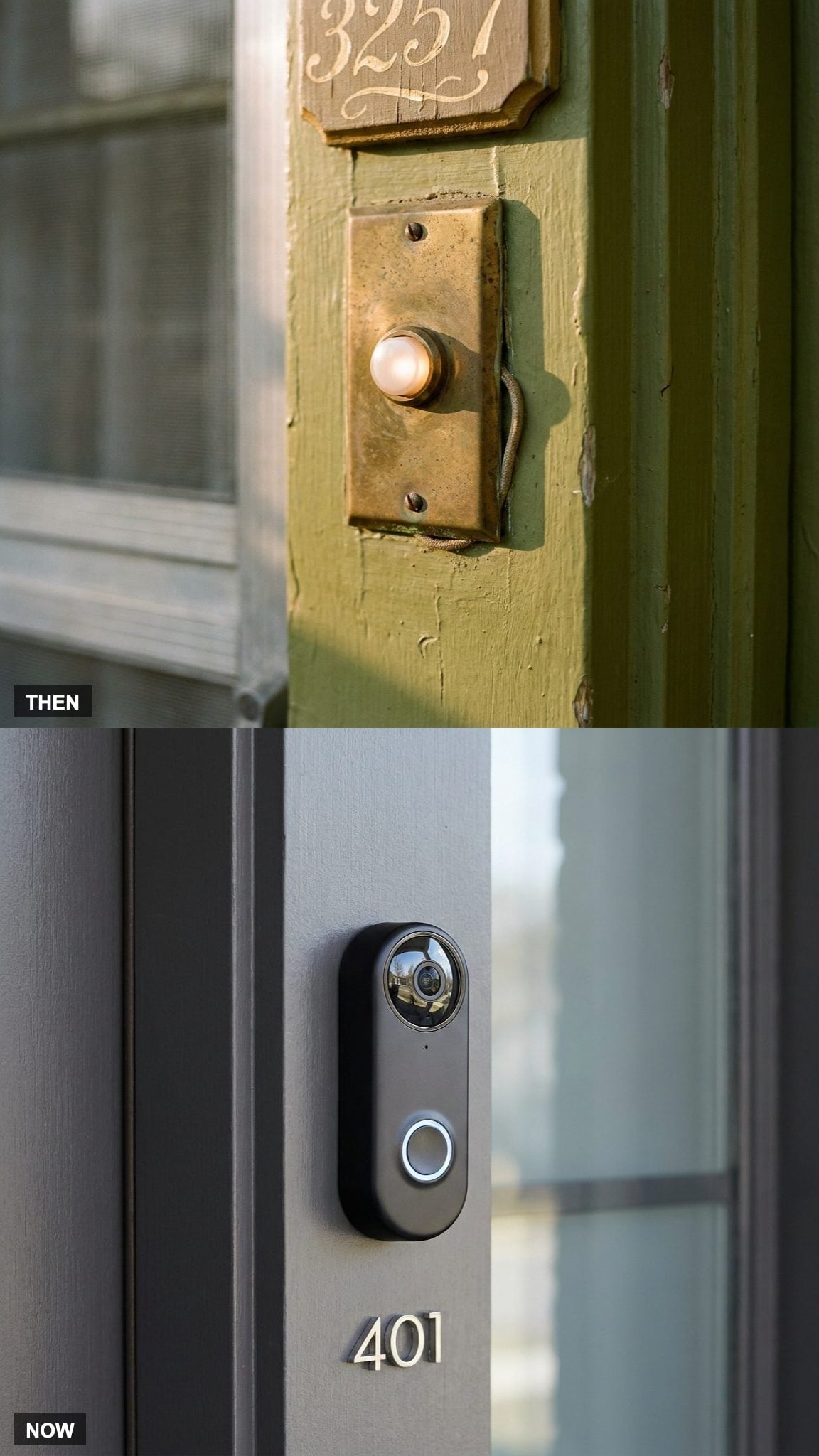
Press the pearly button, hear the two-note chime echo somewhere deep in the house, then wait. That was the whole system. A brass plate, a lit button, and no clue who was on the other side until you cracked the door open.
The smart doorbell rewired the porch. A camera, a glowing ring, and a notification that reaches your phone from three states away. You see the delivery, the neighbor, the stranger, before anyone touches the door.
7. Uncovered Porches vs. Covered Outdoor Living Spaces
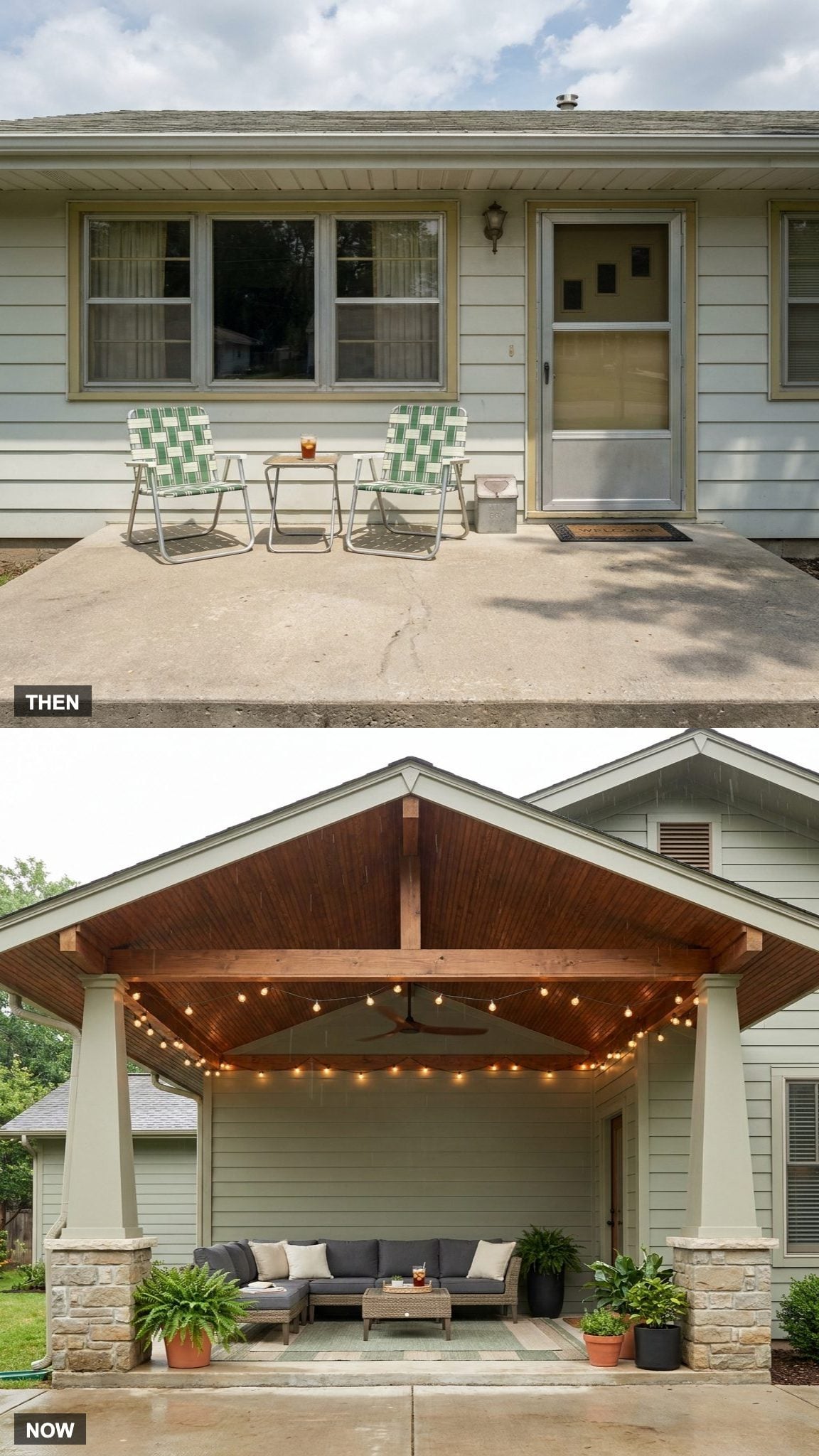
Many postwar ranches and split-level homes offered little more than a bare entry slab under the open sky. You sat on aluminum folding chairs with nylon webbing, drank iced tea, and bolted indoors the second a cloud showed up. The sun found you, and so did the rain.
The covered version turned that slab into a second living room, complete with a tongue-and-groove ceiling, a fan, a sectional as deep and comfortable as indoor furniture, and string lights for the evening. You can sit out in a downpour now and feel a little smug about it. For a small entry slab, adding a properly supported roof can be the change that makes the space usable in more weather.
6. Open Porches vs. Screened-In Porches
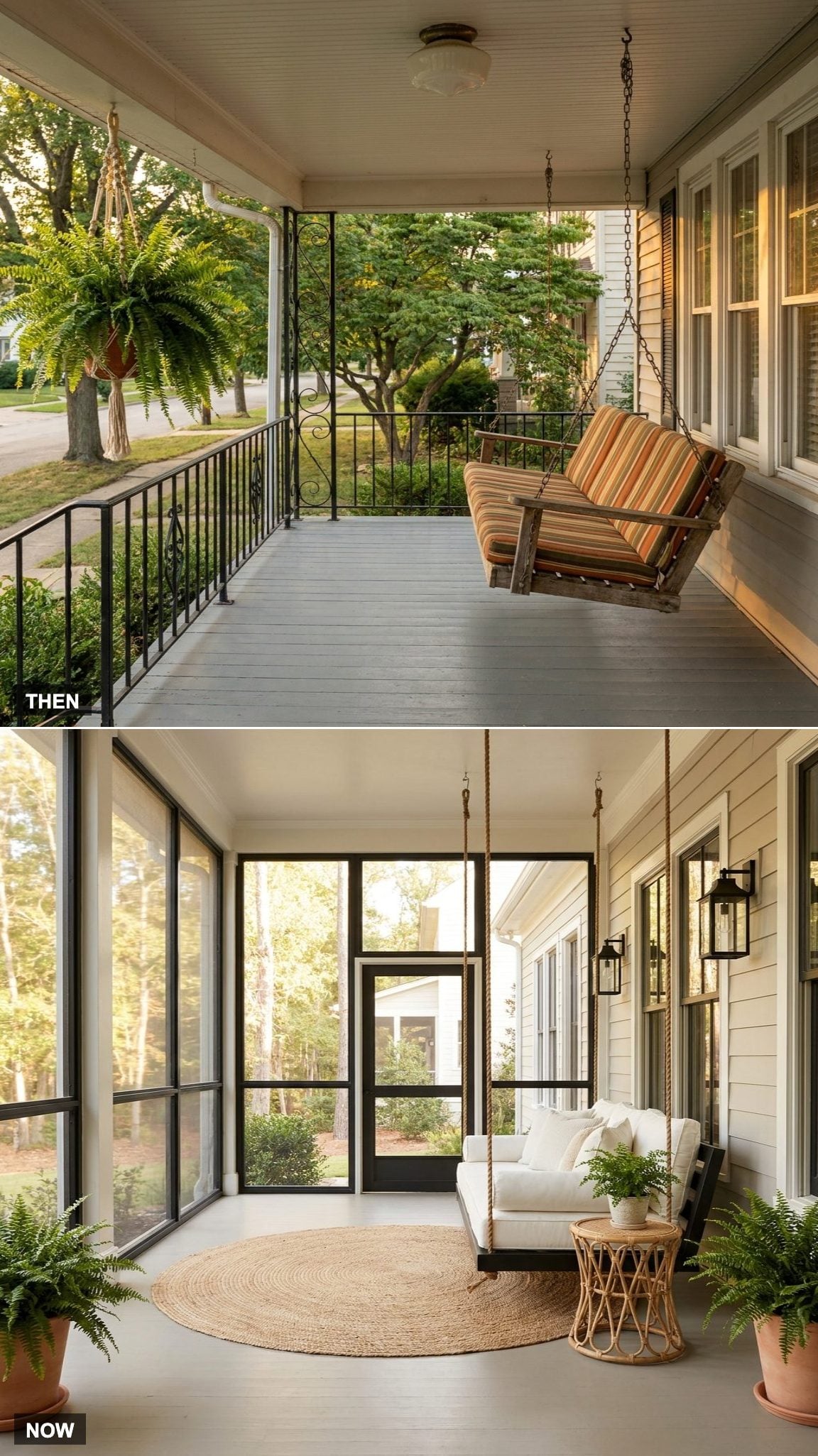
Open on every side, an ornamental steel railing, a swing on chains, and a macrame fern swaying in the breeze. The 1970 porch let everything in—the breeze, the neighbors, the mosquitoes, all of it.
Screening an existing porch remains a practical renovation rather than a new invention. Black-framed panels close off the bugs while keeping the air and the view, so the space finally reads as an actual room: a swing bed with real cushions, an outdoor-rated rug and deeper seating.
5. Family Conversations vs. Smartphone Scrolling
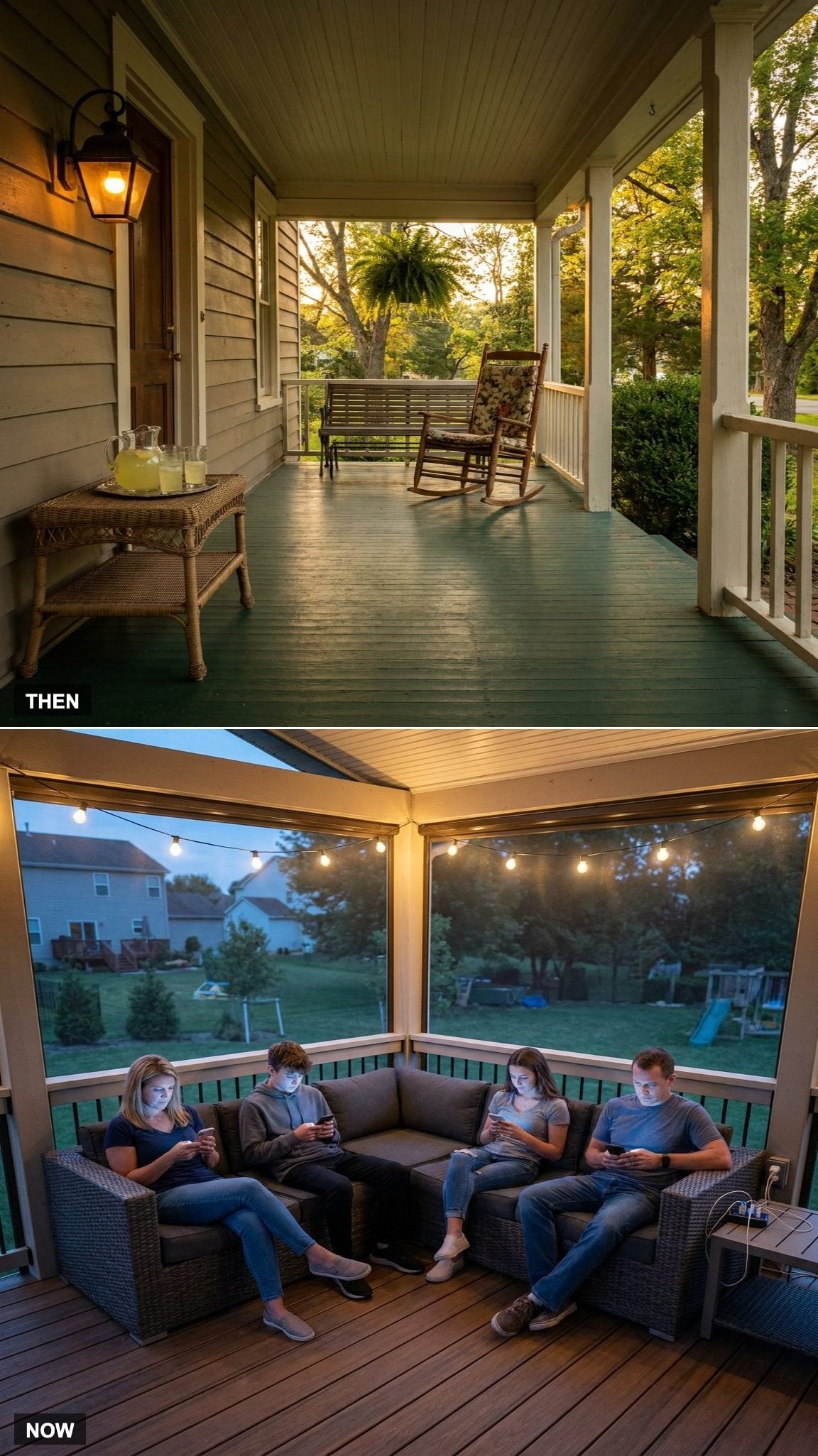
For many families, the porch was one place to land after dinner. Grandmother rocking, kids on the steps, everybody talking over each other with a pitcher of lemonade sweating on the wicker table. No screens, nowhere else to be, no plan to leave.
Now a phone can follow everyone outside, adding another possible distraction to the same gathering place. The same distraction that follows people through the rest of the house now follows them outside. I’ll say the quiet part out loud: the swing still works. The scrolling is a choice.
4. Kids Playing on the Porch vs. Package Deliveries
🔥 Would you like to save this?
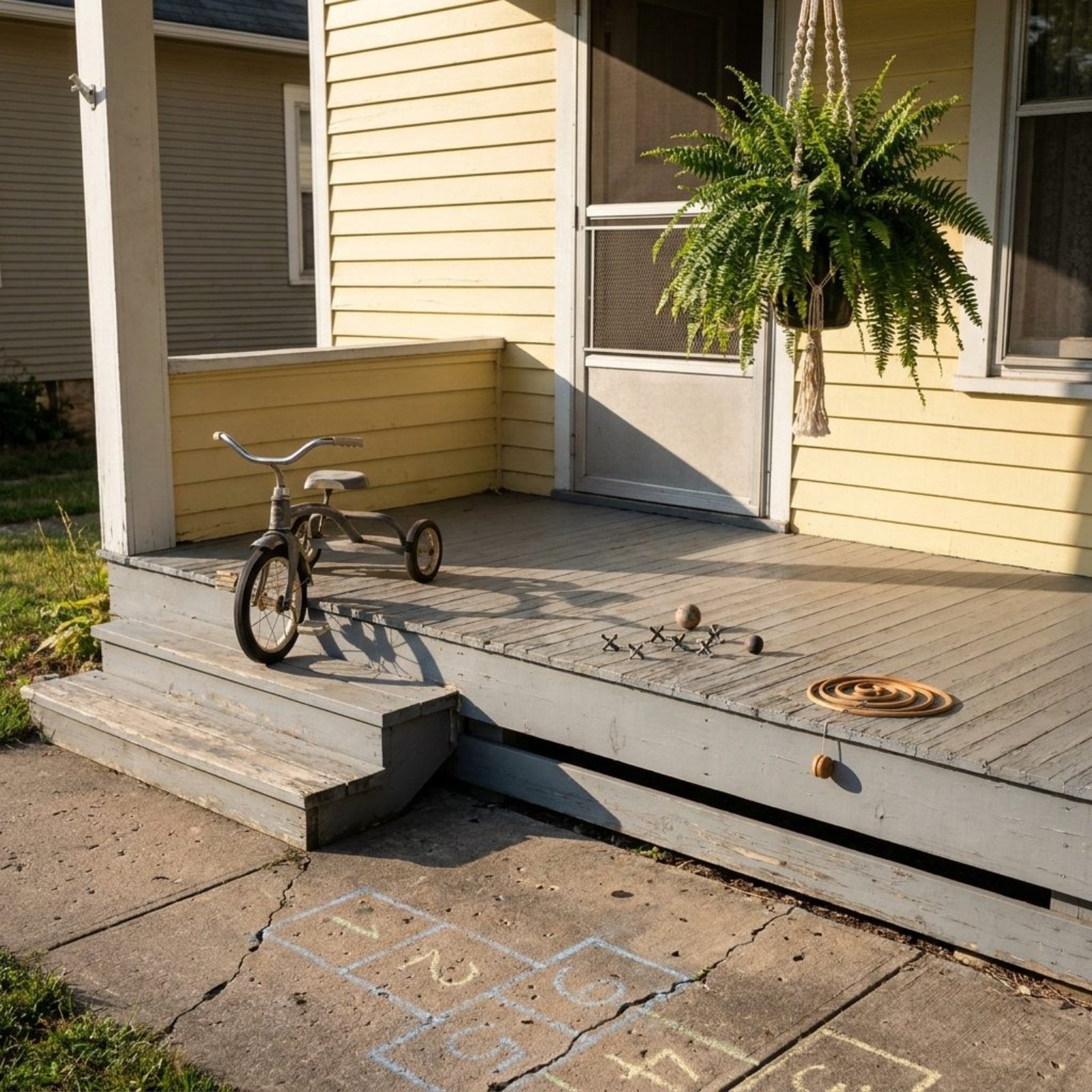
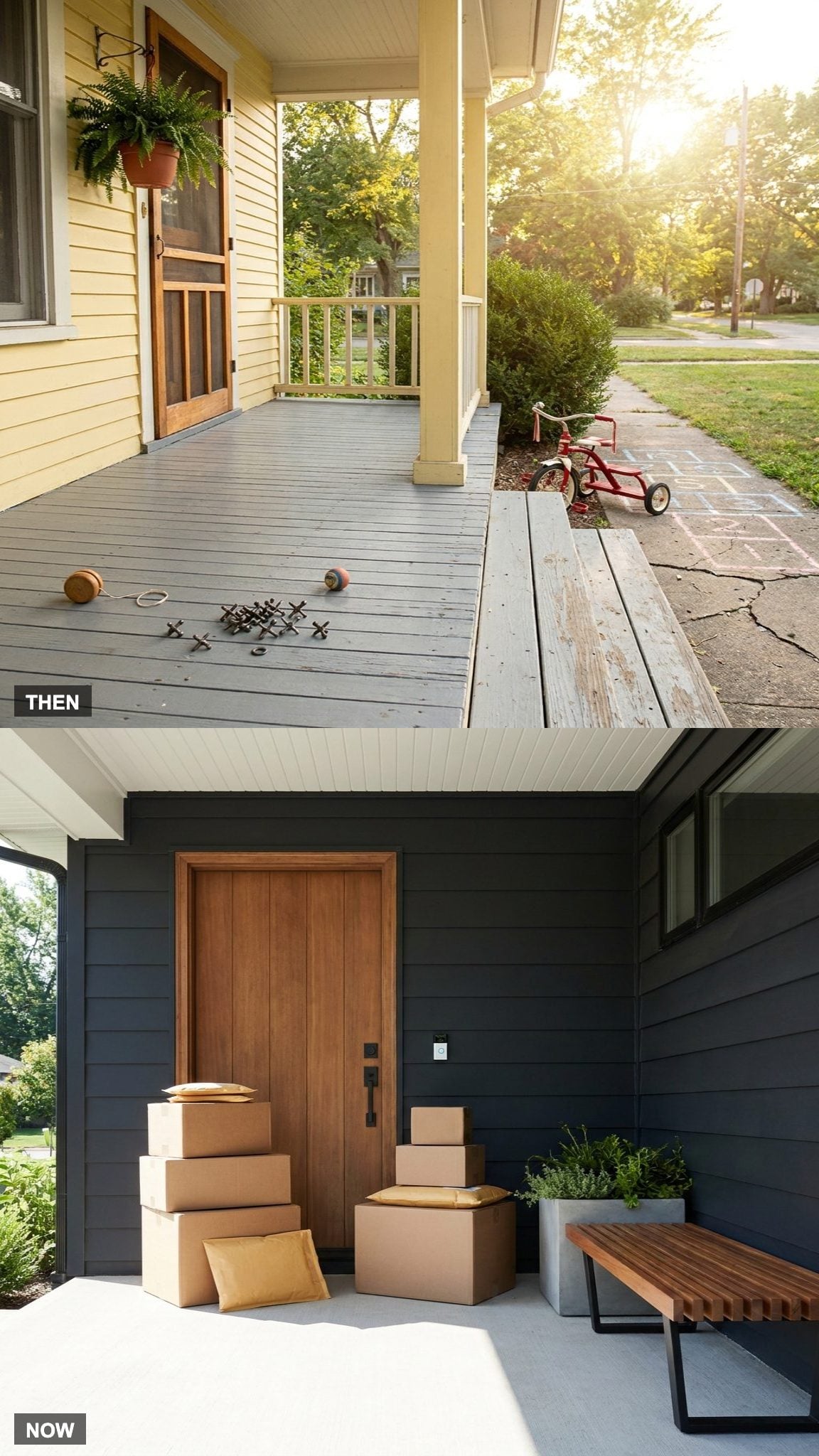
Jacks on the floorboards, a yo-yo, a tricycle parked crooked by the steps, hopscotch chalked on the walk. The porch was a stage for kids in 1970, close enough for a parent to keep half an eye out through the screen door.
These days it does a different job. It receives. A stack of brown boxes by the door, padded mailers, a video doorbell keeping watch over the pile. Same square footage, entirely different traffic. Children still use porches, but package delivery has given the entry another daily job.
3. Seasonal Flag Displays vs. Curated Seasonal Decor
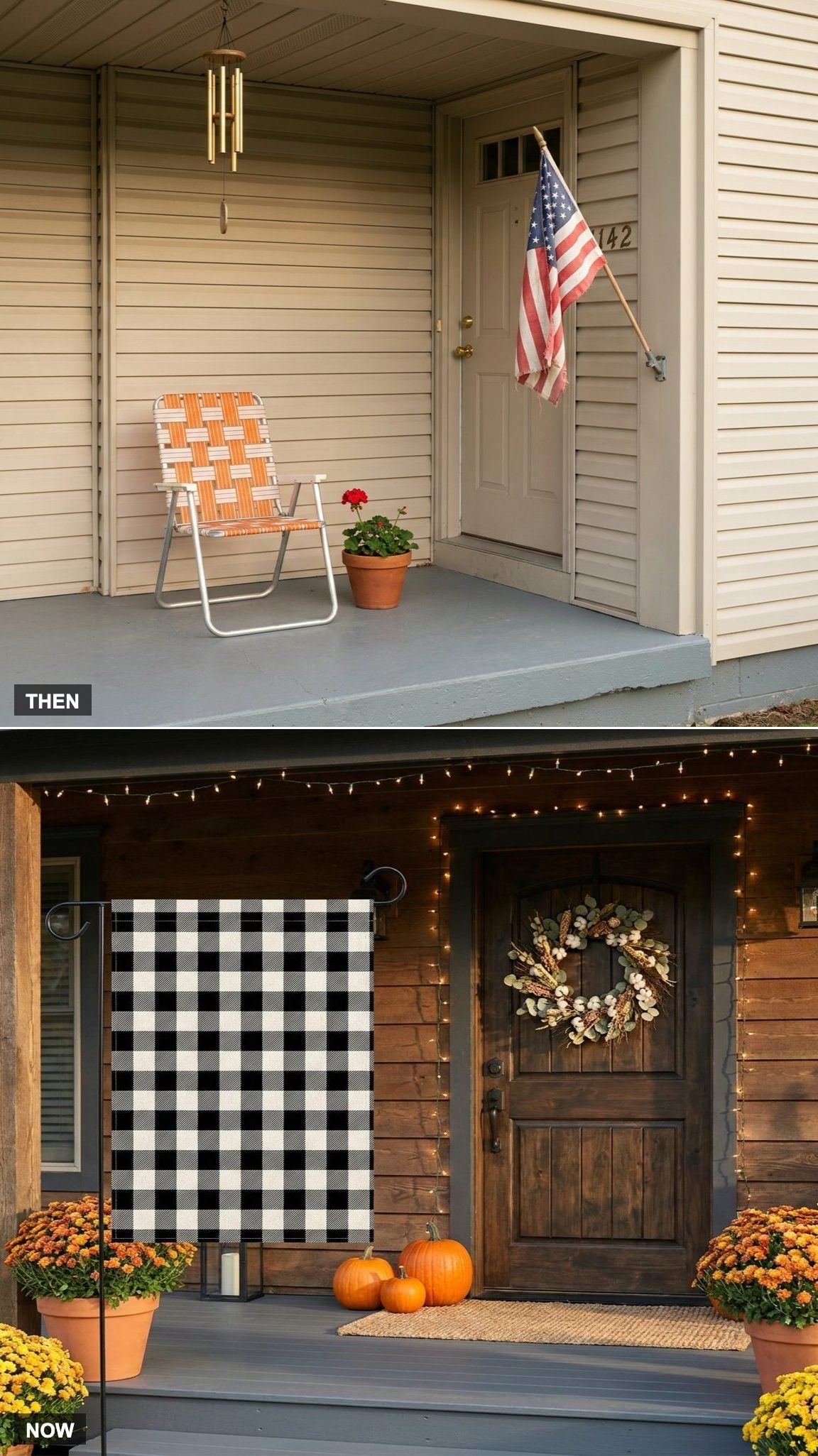
In many 1970 neighborhoods, seasonal decorating might mean a small flag in a bracket by the door, left there until the sun bleached it gray. A wreath, holiday lights, pumpkins, or other familiar decorations might join it as the calendar changed. Nobody thought less of a house for it.
Now the front door tells a full story every eight weeks, and the effort is relentless. Buffalo-check welcome flags, dried eucalyptus wreaths, graduated pumpkins, a jute mat picked to match the wreath that matches the door that matches the season. The farmhouse porch decor movement turned the entry into a rotating stage set. Same square footage, wildly different ambitions.
2. Humble Ceramic Pots vs. Oversized Designer Planters
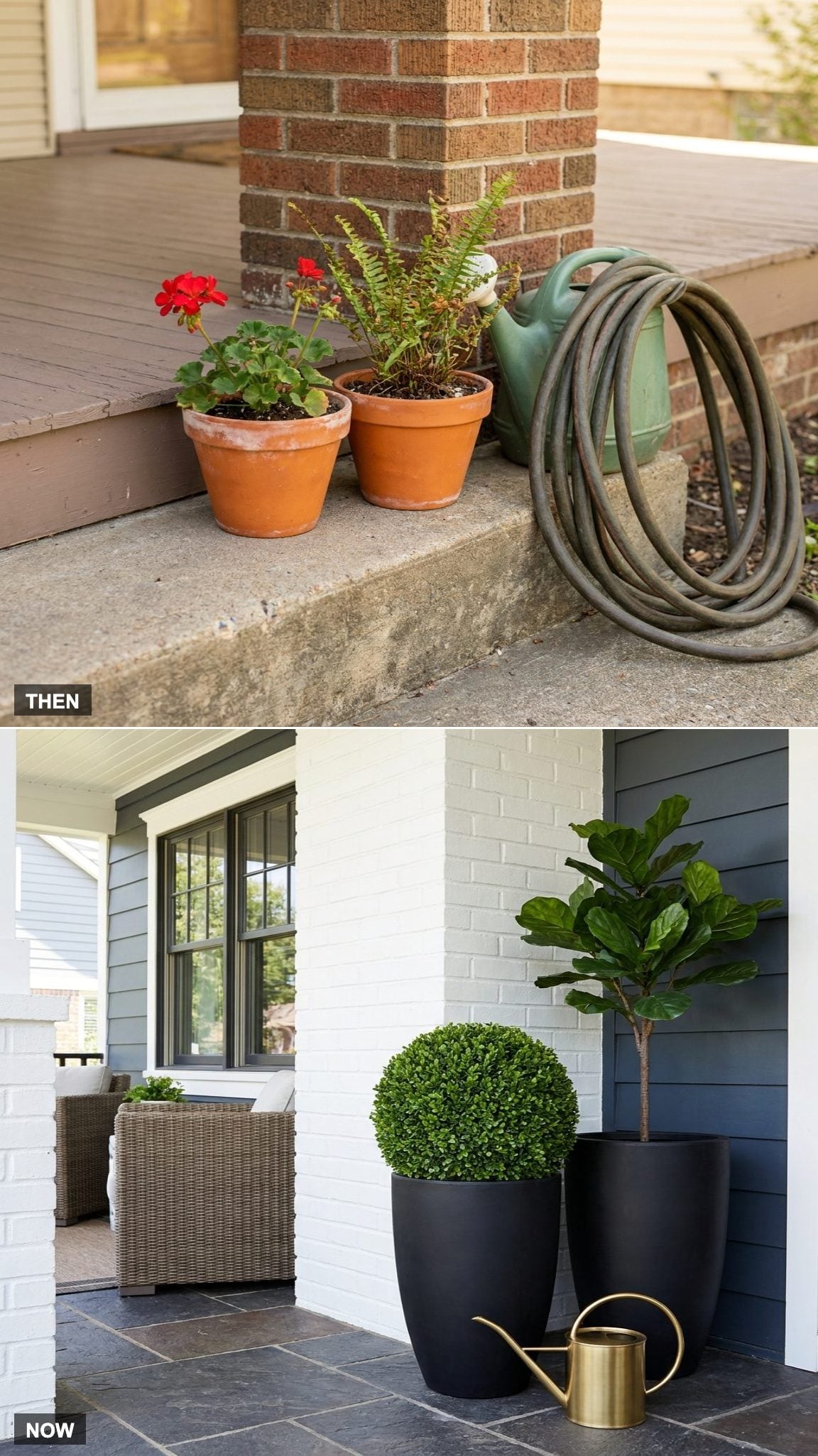
The 1970s porch pot was small, orange, and unbothered—terracotta straight off the nursery shelf with a geranium inside and a hose coiled nearby. Nobody matched them to the paint. They cost a couple of dollars, cracked over the first hard winter, and that was fine.
Today’s planters have opinions. Waist-high matte-black fiberglass, boxwood clipped into spheres, a clipped evergreen or seasonal specimen posing like it pays rent. A single pair can cost more than an entire set of basic 1970s porch furniture. Scale alone changes the entry: larger vessels can hold their own beside a tall door and broad facade.
Asked which pair of front porch planters they would buy, our readers split almost evenly between tall modern and classic urn styles, so it is really a coin toss.
1. The Analog Thermometer vs. Smart Outdoor Sensors
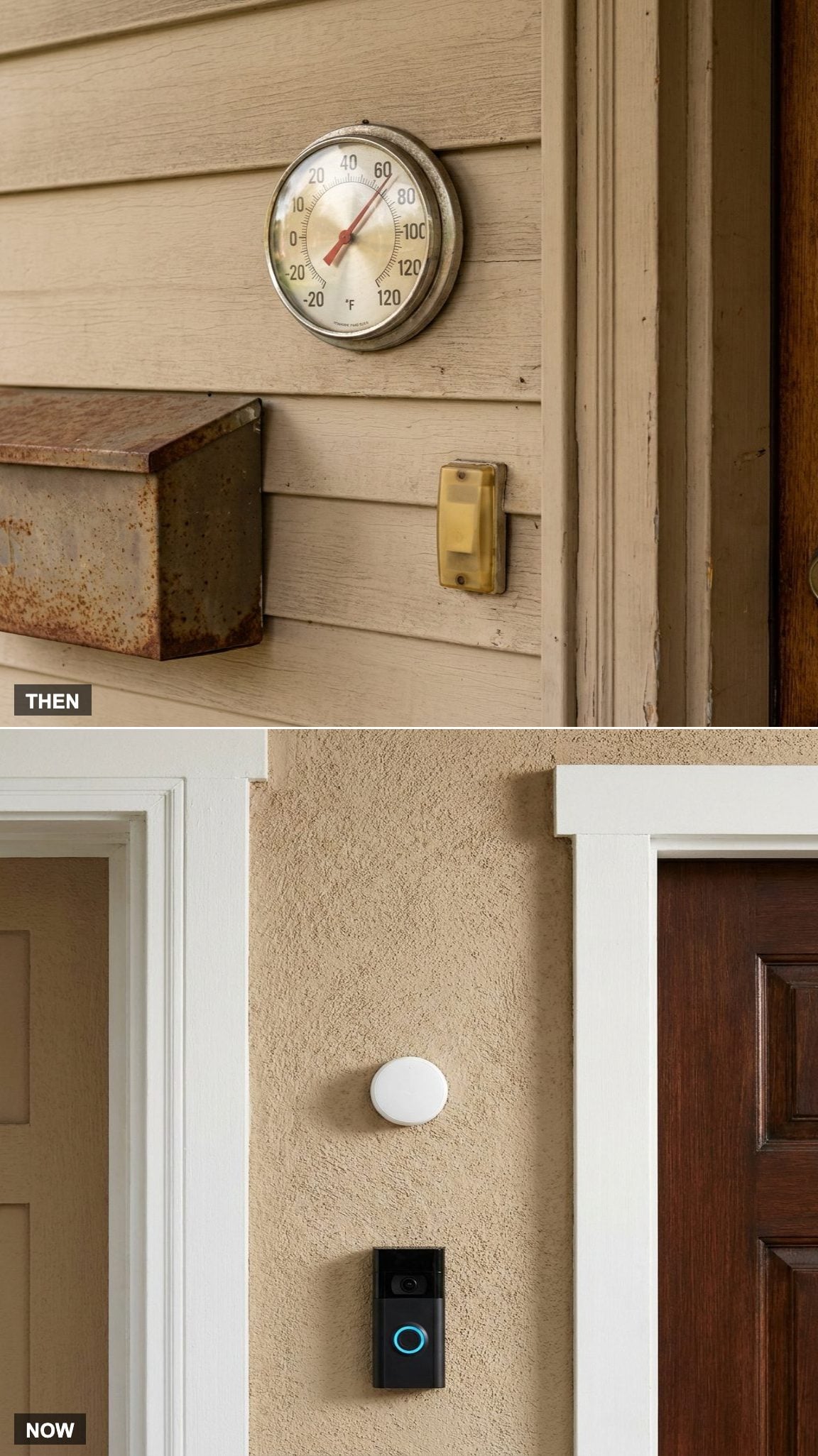
There was a ritual to the porch thermometer. You stepped outside, squinted at the little red needle, and decided whether you needed a jacket. The reading was often wrong—the sun would hit the dial and it read ten degrees warm all summer long—and nobody complained.
Now a compact sensor can feed temperature and humidity to the phone in your pocket, while a fuller weather station adds wind and rainfall data, and a doorbell watches the whole porch besides. The information is better. The ritual is gone.
The porch has gained better materials, more weather protection, and technology that would have looked like science fiction in 1970. The real test is whether all that improvement still leaves room for people to sit down, scuff the cushions, and stay awhile.