
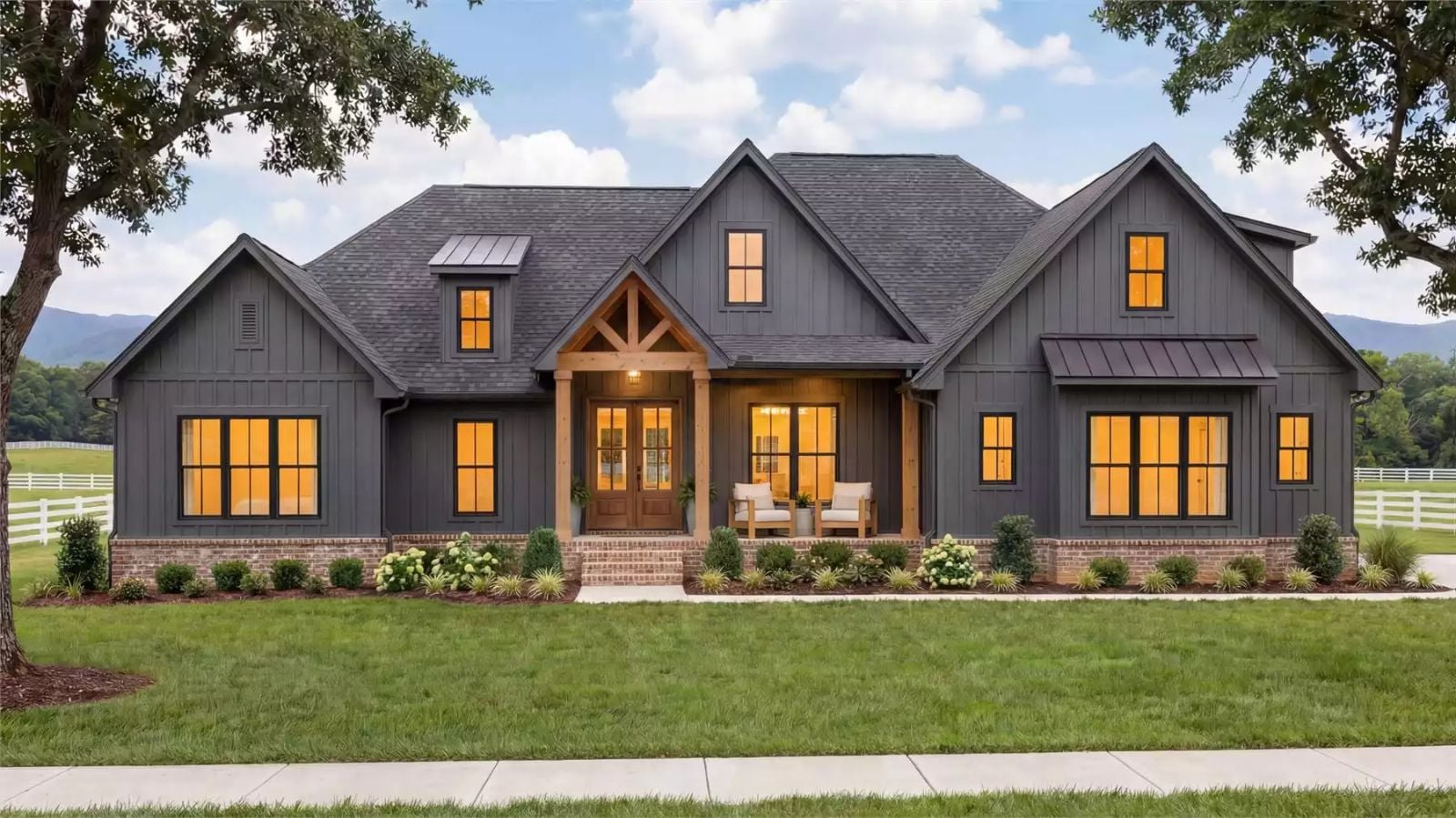
Specifications
- Sq. Ft.: 2,575
- Bedrooms: 4
- Bathrooms: 3.5
Floor Plan
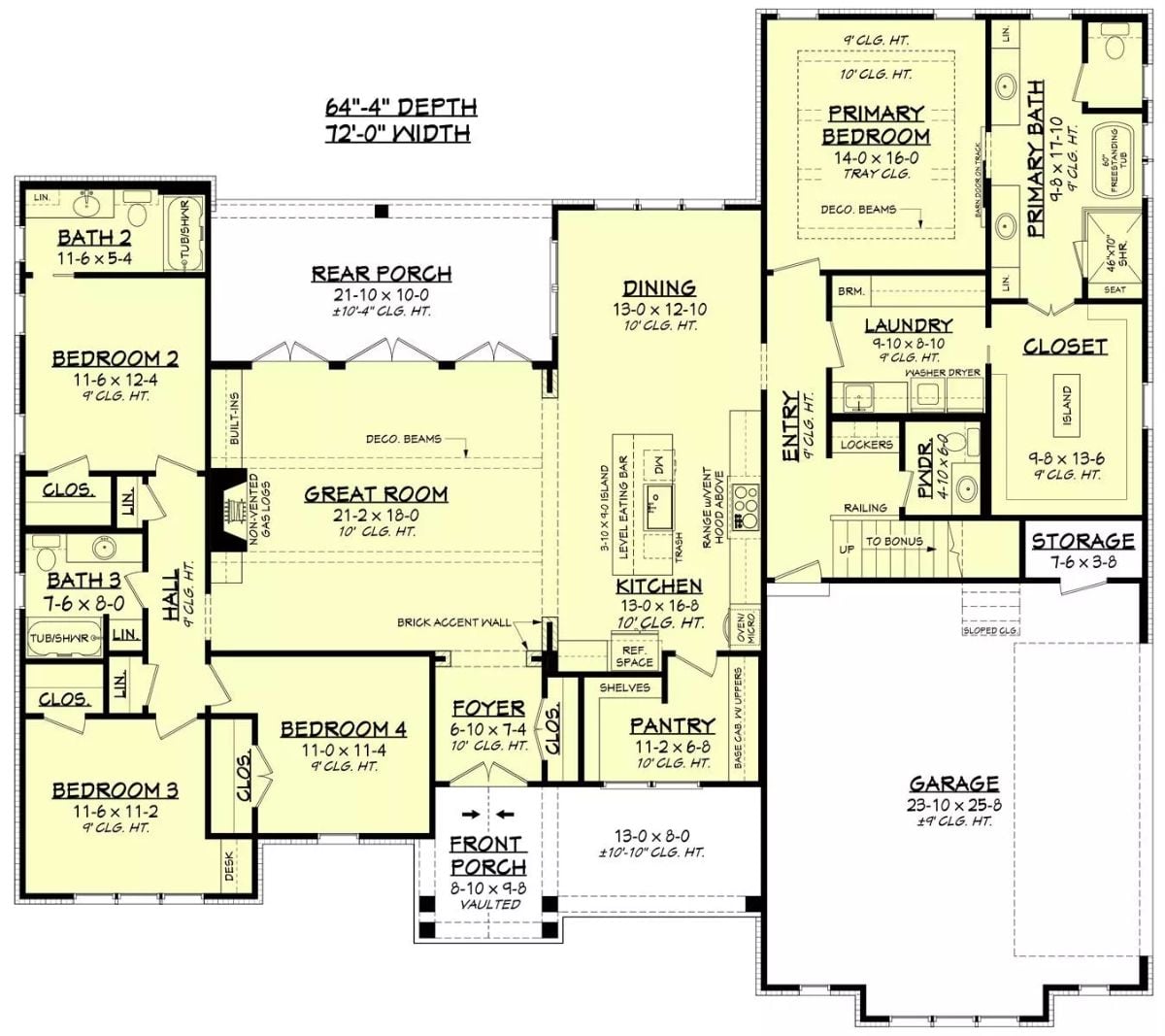
This single-story plan puts four bedrooms on one level, with the primary suite tucked privately to the right. The great room, kitchen, and dining flow together at the center. Dual porches bracket the living wing front and back. A bonus room sits above the garage, accessed from the entry stairs.
Floor Plan
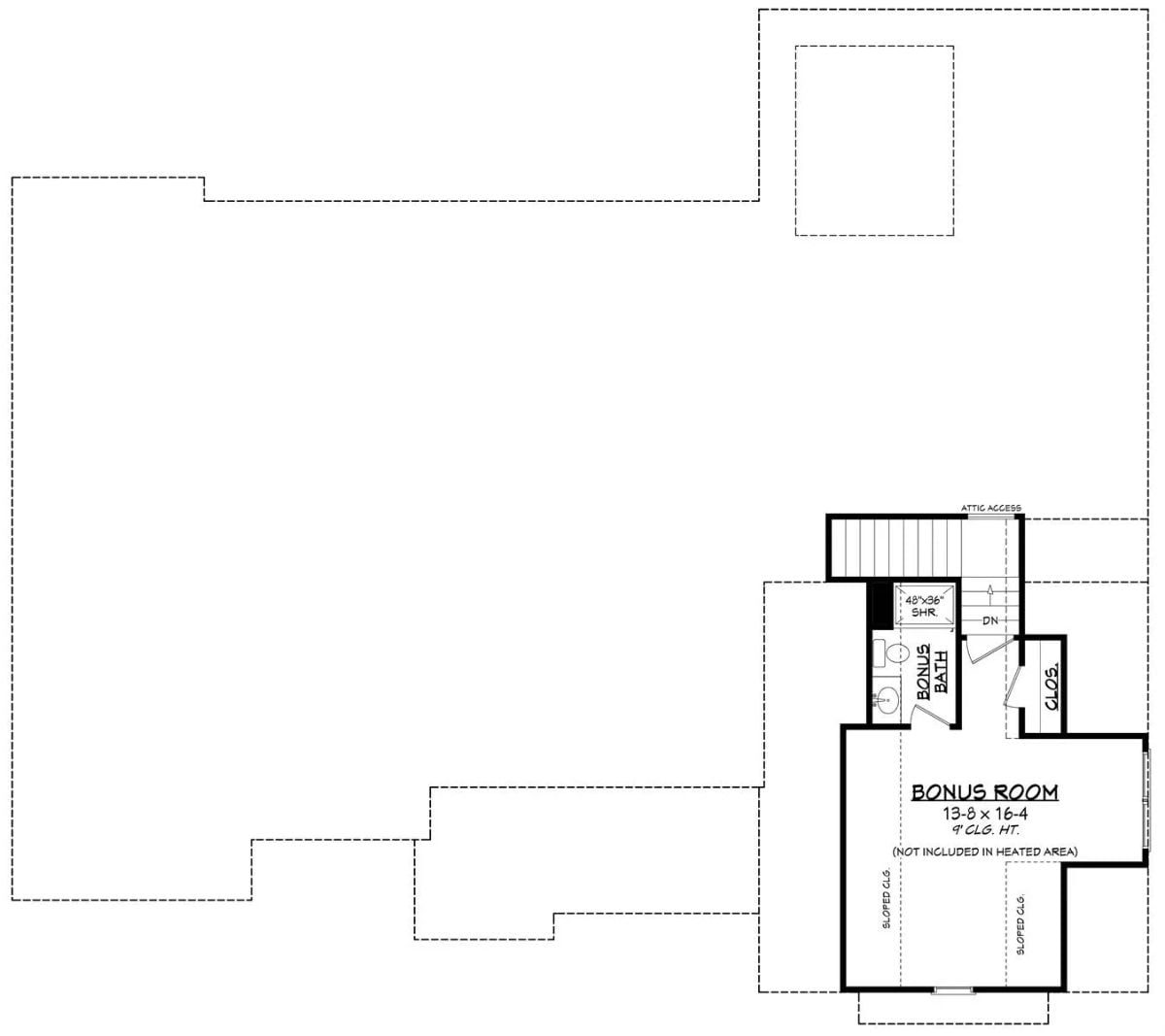
Tucked into the upper level, this bonus floor centers on a 13’8″ x 16’4″ bonus room with sloped ceilings on two sides. A bonus bath with a 48×36 shower and a separate closet keep it functional. Stair access connects down to the main level, and attic access sits just off the landing.
Black French Doors Anchor a Foyer Built Around Warm Antique Gold
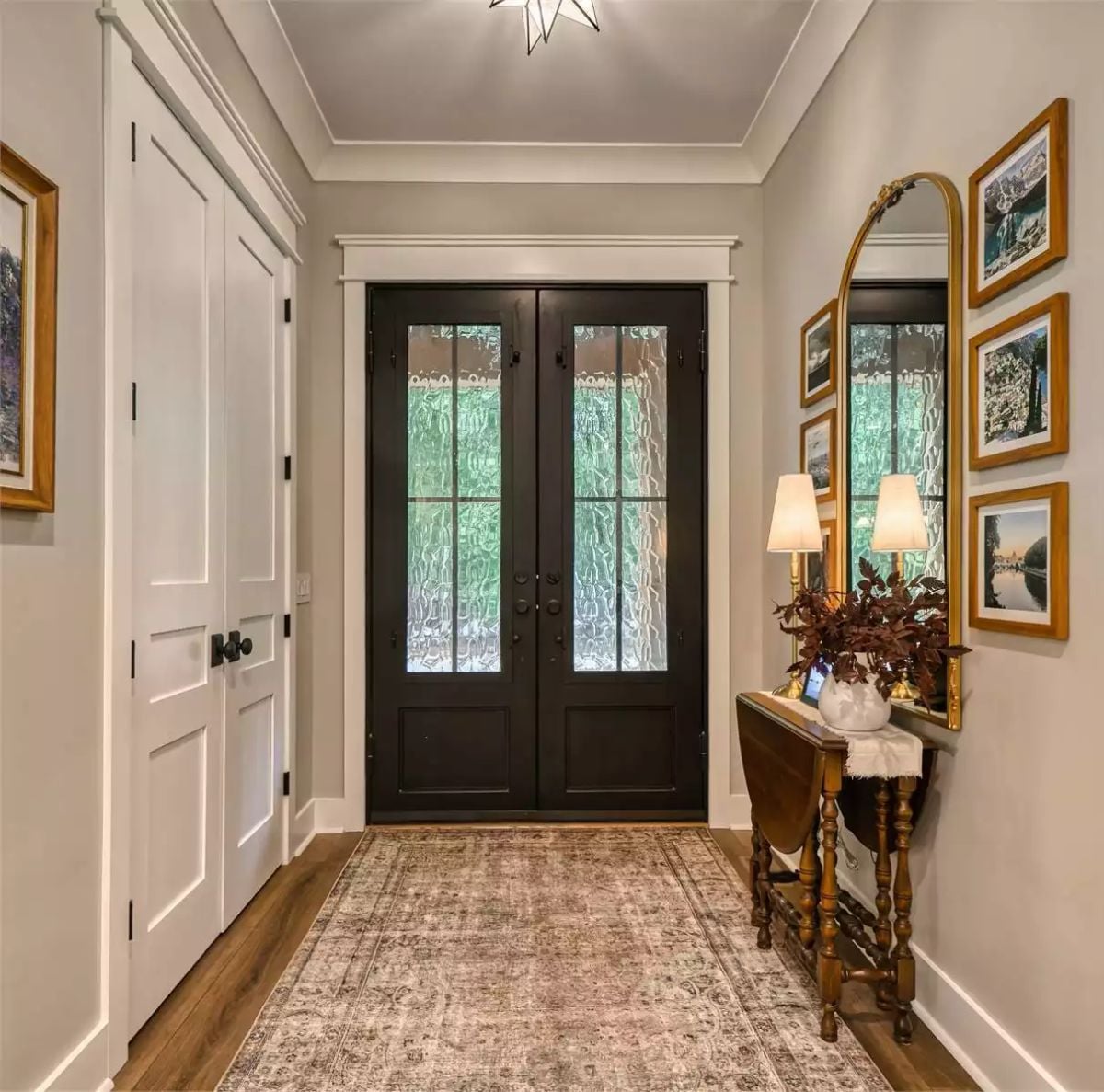
An arched gold mirror and a drop-leaf console table give this foyer real character.
Curved Leather Sofa Pulls the Eye Toward a Built-In Fireplace Wall
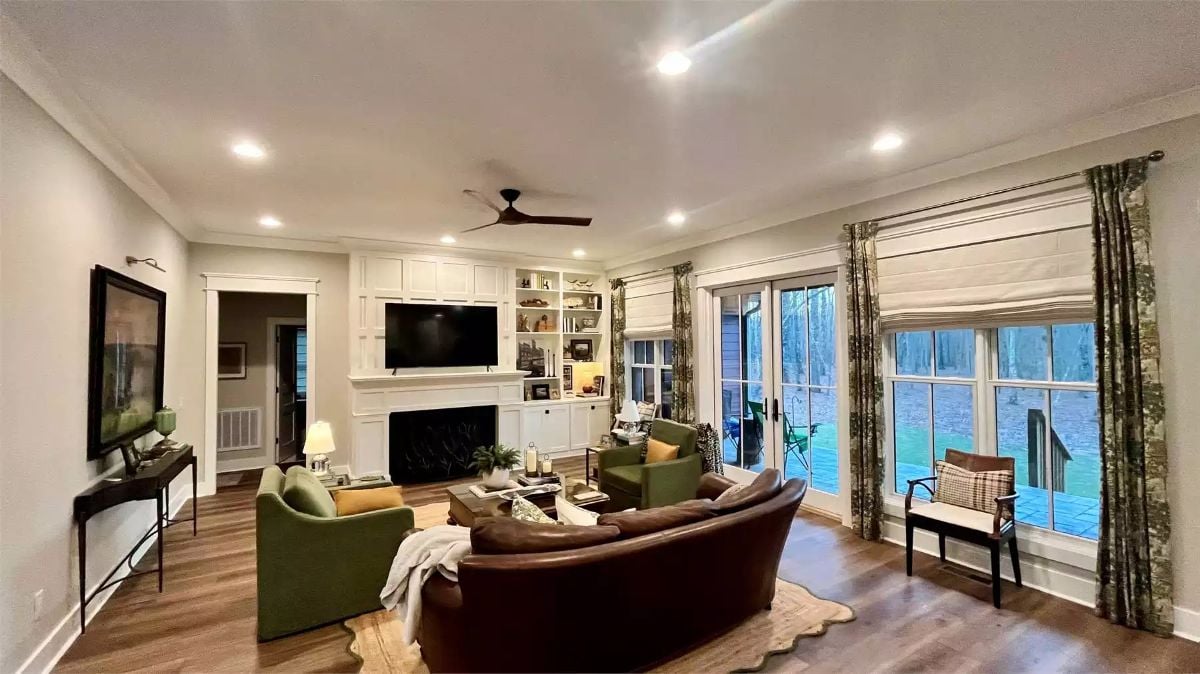
Green velvet chairs anchor the seating group while a curved brown leather sofa draws the room together. White built-ins frame the fireplace and TV. French doors flood the hardwood floors with outdoor light.
Designer’s Secret: Placing a curved sofa opposite a flat fireplace wall is a classic trick for softening rooms that skew boxy. The curve naturally directs everyone’s sightline toward the focal point without needing a rug or console to do the same job. It’s one of those moves that reads as instinct, but it’s actually geometry.
Bookshelf Island and Geometric Pendants Make This Kitchen Worth Lingering In
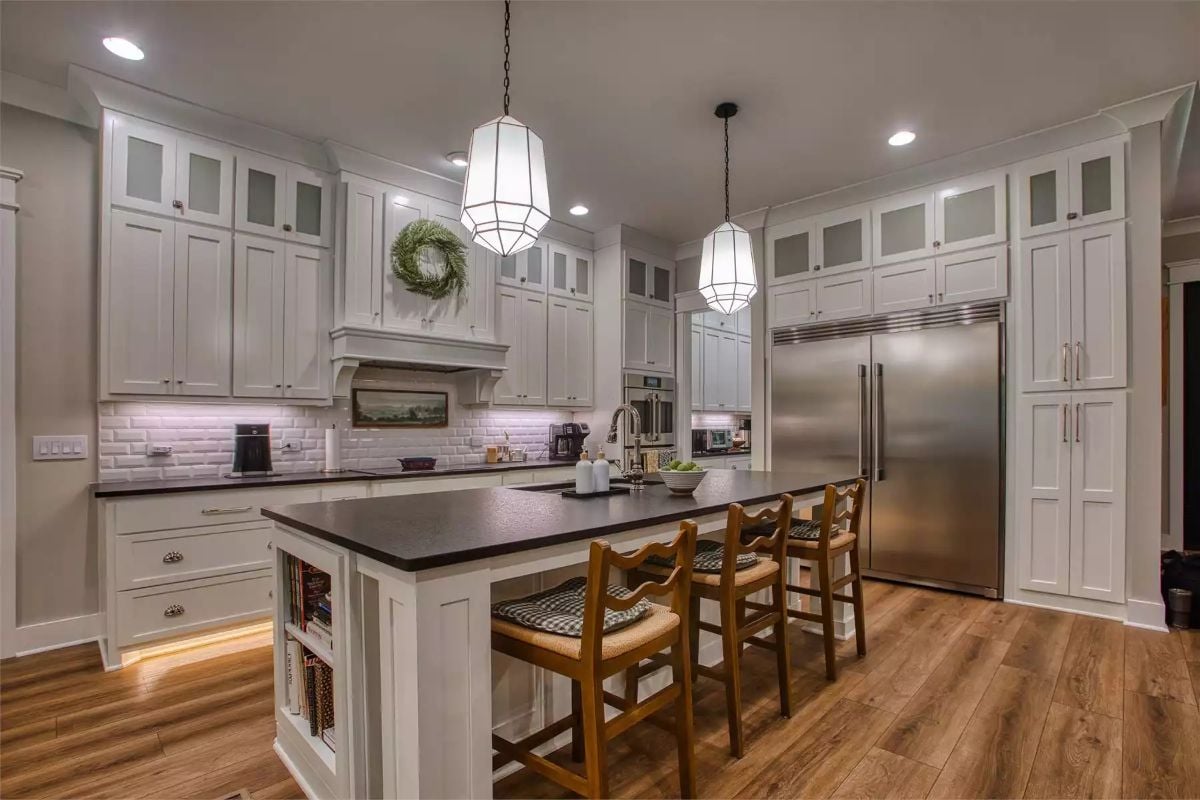
Dark countertops on a white island create contrast that reads from across the room. The built-in bookshelf end panel is a practical detail you don’t often see. Pendant geometry ties it together.
- Island end shelves keep cookbooks off countertops and close at hand
- Under-cabinet lighting does more work here than overhead fixtures alone
- A toe-kick light strip along the island base adds depth without extra switches
Warm Pine and a Teal Sideboard Rewrite the Rules of Farmhouse Dining
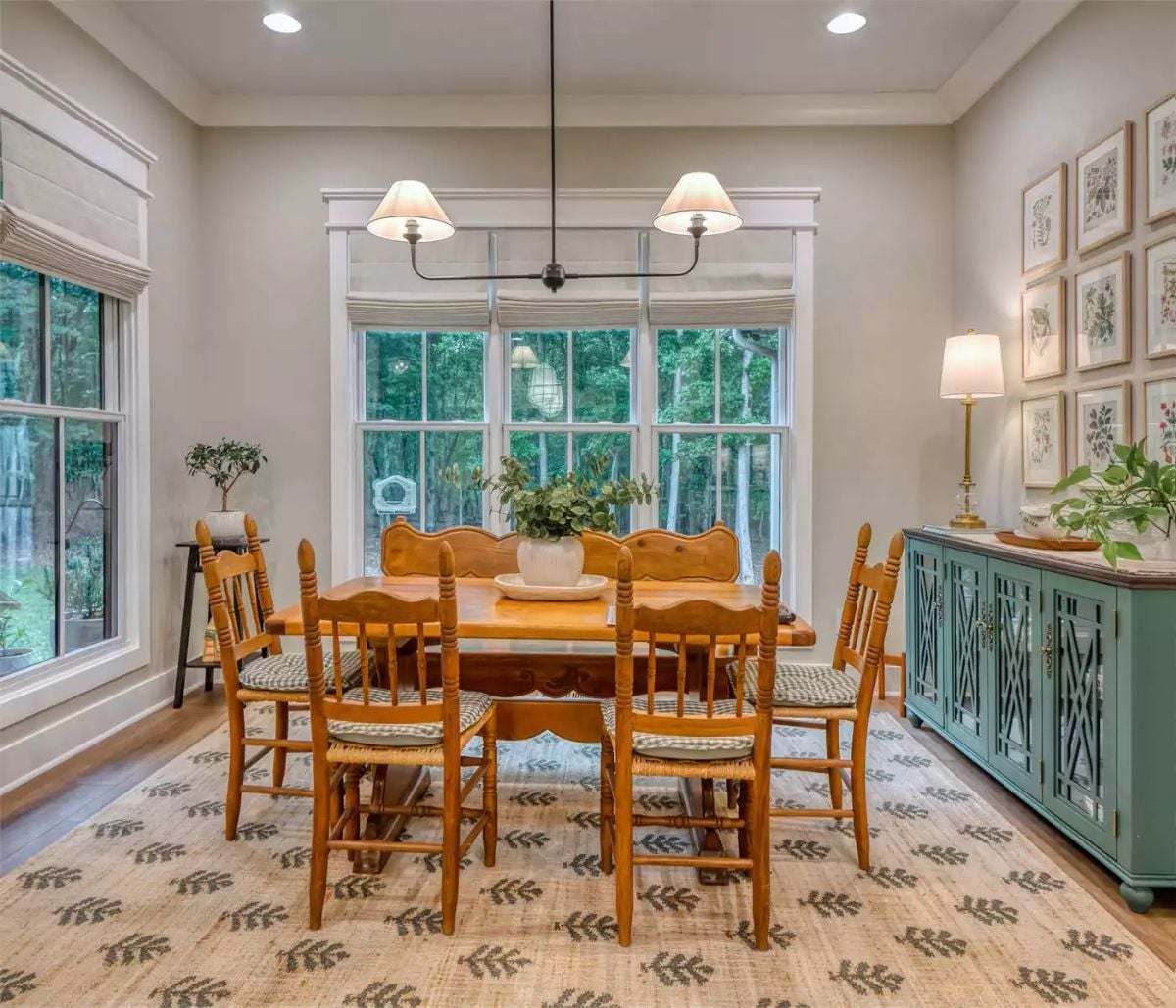
Rush-seat ladder-back chairs around a pine trestle table is a combination that never gets old.
Natural light pours through three tall windows, keeping the warm wood tones from feeling heavy. The teal sideboard with lattice cabinet doors earns its place by breaking the otherwise all-neutral palette. Botanical prints above it complete the corner without crowding it.
Tray Ceiling and Sage Bedding Give This Master Suite a Quiet Authority
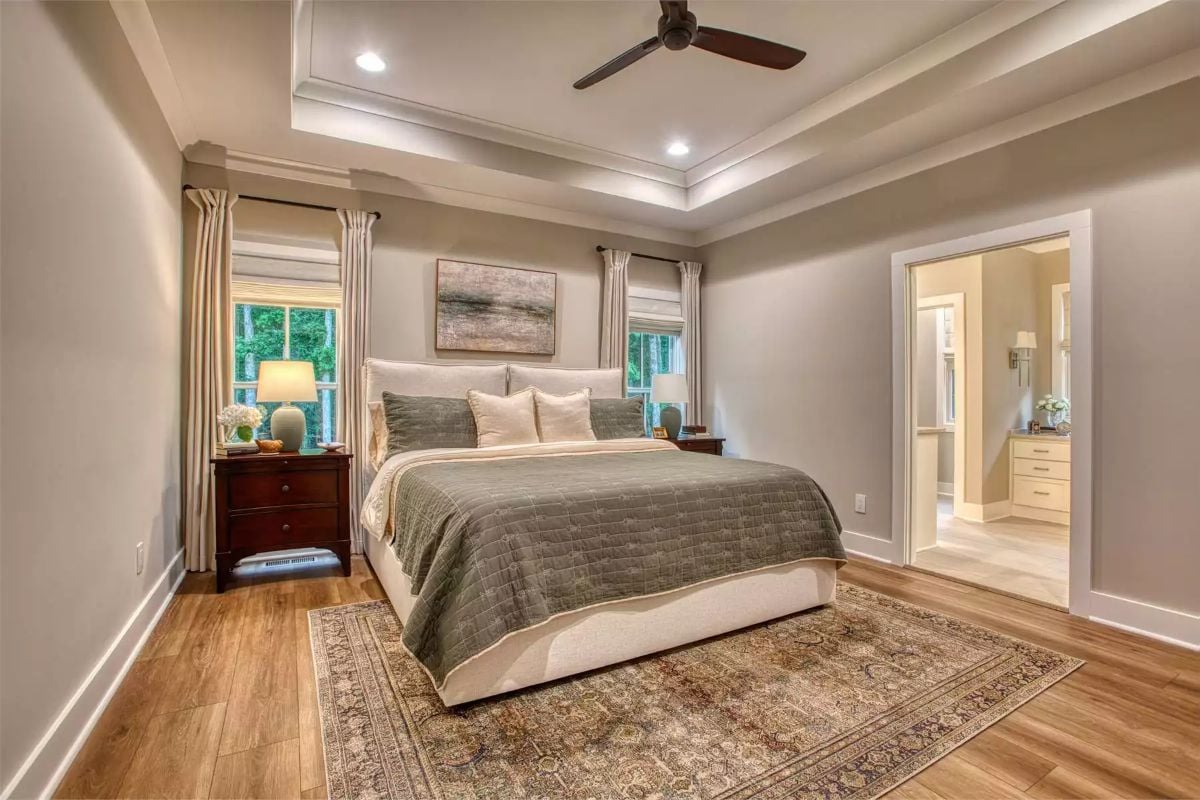
Recessed lighting in the tray ceiling warms the sage quilted bedding below, while a Persian rug anchors the hardwood floor beautifully.
Editor’s Note: Tray ceilings don’t require extra square footage, but they add perceived volume that flat ceilings simply can’t match. If you’re choosing between crown molding and a tray detail, the tray tends to read as a bigger upgrade at resale. The en suite doorway visible here keeps the layout feeling open without borrowing space from the bedroom itself.
Fringe Stool and Sconce Lighting Make This Vanity Nook Feel Finished
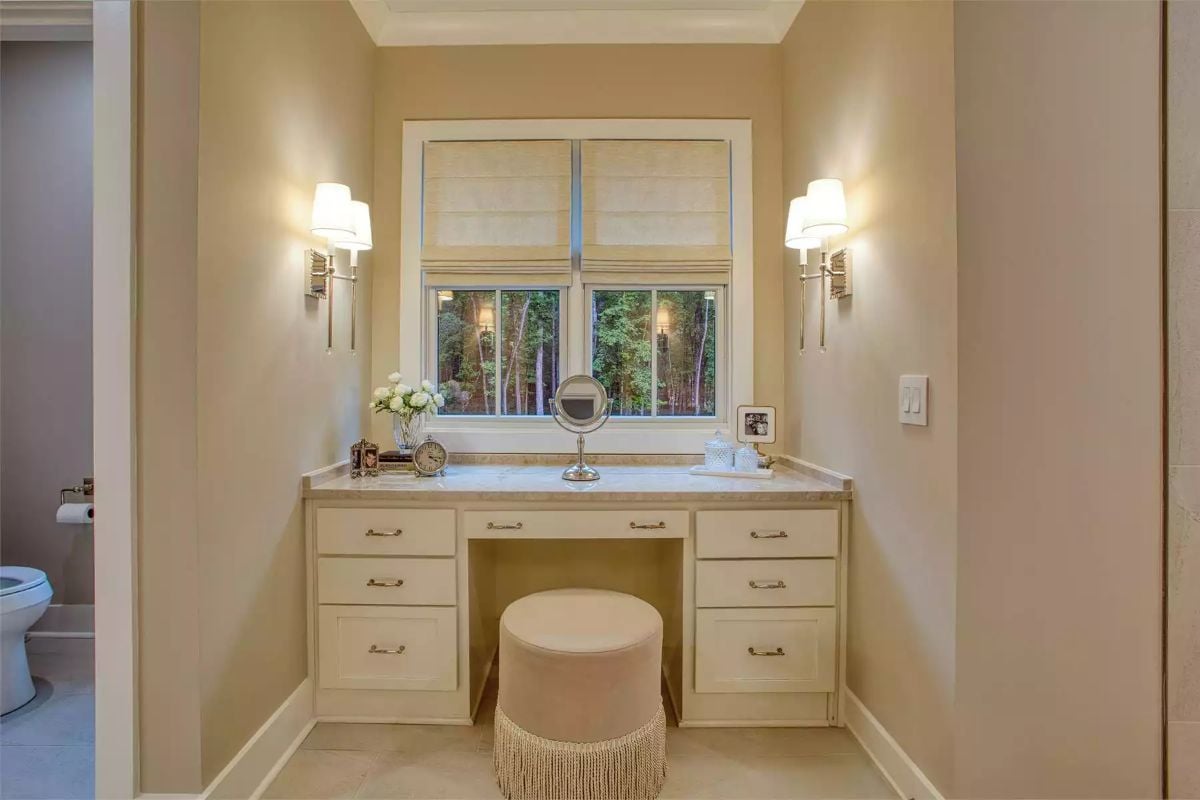
Roman shades soften the window while a fringed ottoman adds unexpected texture below the marble countertop.
Ask Yourself: Before designing a vanity area, decide whether you want natural light or privacy, because a window behind the mirror can work against you during daytime use. Flanking sconces solve the lighting problem regardless of the window situation.
Pin It
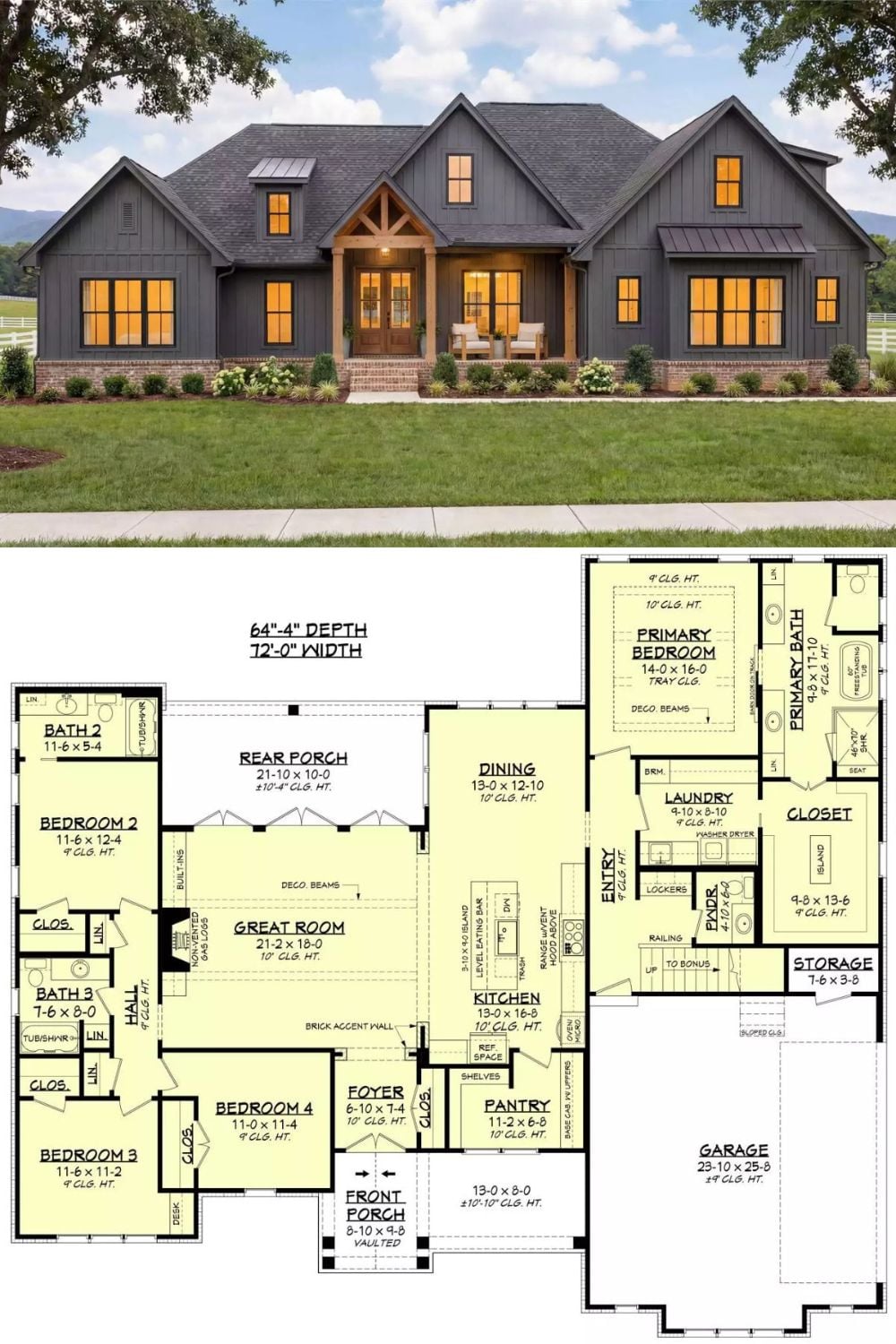
Exterior rendering shows a gray board-and-batten farmhouse with a timber-framed entry porch and dual dormers. Below it, the floor plan reveals a single-story layout spanning 72 feet wide, with four bedrooms, a central great room, a rear porch, and an attached two-car garage. The primary suite sits privately off the right wing.
The Psychology Behind This: Separating the primary suite from the secondary bedrooms on opposite sides of the floor plan isn’t just a layout preference. It creates acoustic and visual privacy that significantly changes how the home feels to live in daily. Families with different schedules tend to notice this benefit most.