🔥 Would you like to save this?
Floor-length curtains have been sold so convincingly as the grown-up answer that anything stopping at the sill can feel vaguely rebellious. Long drapery does have history on its side: in colder houses, substantial curtains helped cut drafts, and generous lengths also carried status, privacy, softness, and drama. None of that turned the floor into a compulsory destination.
In order to come up with the very specific design ideas, we create most designs with the assistance of state-of-the-art AI interior design software. Also, assume links that take you off the site are affiliate links such as links to Amazon. this means we may earn a commission if you buy something.
Architecture keeps getting in the way of the rule anyway. Kitchens have counters. Bedrooms have radiators. Bathrooms have tubs. Window seats occupy the space where the curtain is supposedly meant to fall. Desks, banquettes, HVAC registers, casement cranks, children, muddy boots, and very good old woodwork all have opinions too.
These 33 rooms stop the fabric where the room tells them to. Sometimes that’s halfway down the glass. Sometimes it’s the sill, the apron, the top of a dresser, or just above a radiator. The successful ones have one thing in common: nothing looks as though it ran out of fabric. Short is the decision.
33. Café Curtains That Stop at the Middle of a Kitchen Window
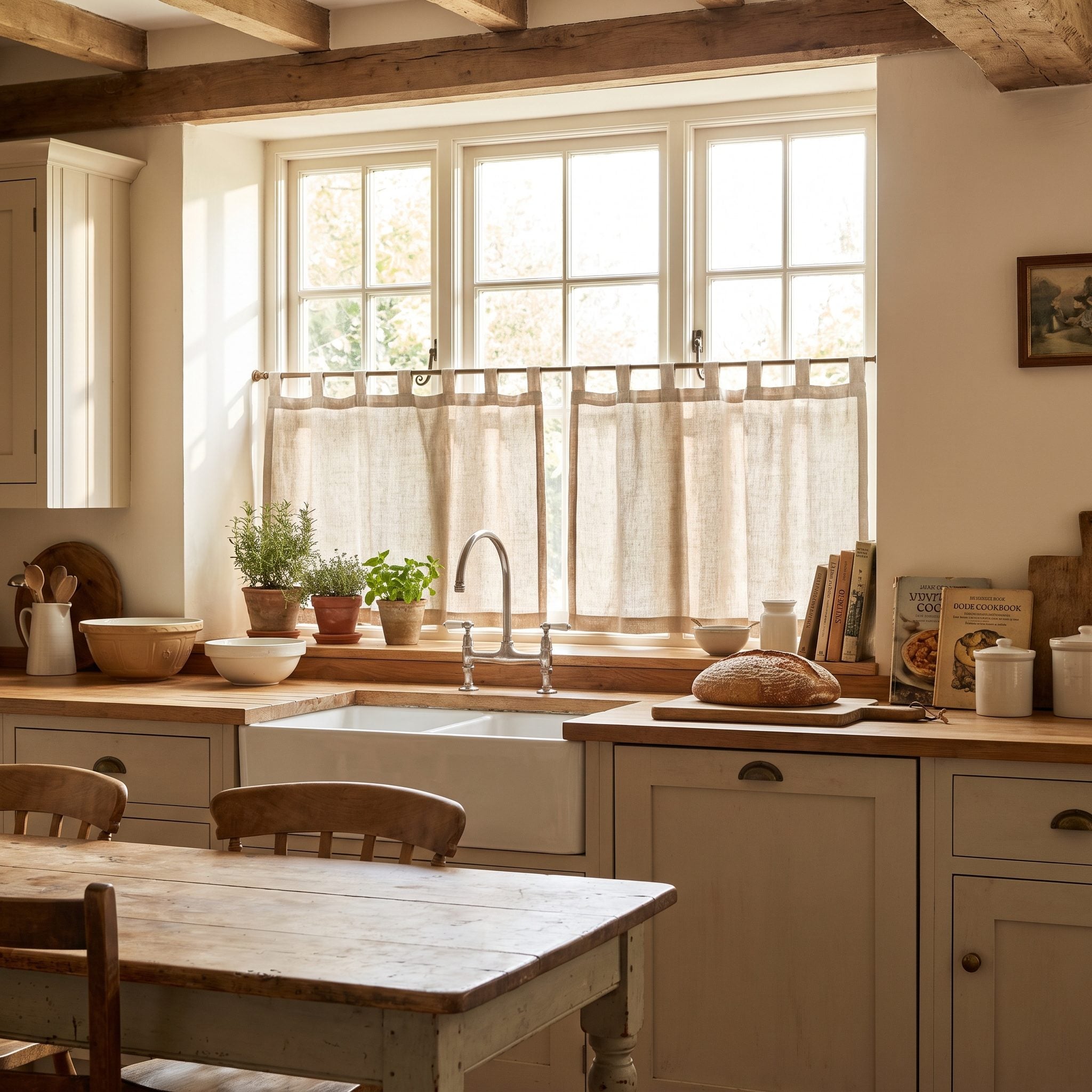
Start with the curtain that never intended to reach the floor.
Half-height café curtains became associated with 19th-century European coffeehouses, particularly in cities such as Vienna and Paris, where the arrangement solved a beautifully specific problem: shield seated patrons from street-level eyes without sacrificing the daylight overhead. Source
That same geometry makes almost absurd sense over a kitchen sink. Cover the lower glass, leave the upper pane open, and privacy arrives without turning breakfast into twilight.
Retail café panels commonly come in relatively short drops such as 24 to 36 inches, though the right length depends on the window and where the rod sits. Source The important measurement isn’t the floor. It’s the sightline.
32. Bedroom Curtains Ending Above a Radiator

An old bedroom can make the floor-length rule physically ridiculous. There sits the window. Directly underneath sits a cast-iron radiator throwing warm air upward. Dropping fabric over both turns the curtain into a heat-management system nobody requested.
Long curtains can interfere with convection by trapping warmed air between the radiator and the window instead of letting it move freely into the room. Source
The better hem clears the radiator altogether. Some heating specialists suggest roughly four to five centimeters of space above the unit as a useful starting point, but radiator type, temperature, curtain material, and manufacturer guidance matter. Source
Hydronic radiators and electric heaters are not interchangeable, either, so blanket claims about what fabric can safely touch are a bad idea. Source
31. Café Curtains Giving a Bathroom Privacy Without Hiding the Light

Bathrooms make an unusually persuasive case for stopping halfway.
A full curtain can give you privacy, certainly. It can also darken the one small window supplying morning light. A café panel handles the more precise problem: cover the part of the glass where a neighbor could actually see you and leave the sky alone.
The historical café-curtain logic transfers almost perfectly from street-facing coffeehouse to bathroom window. Source American kitchens eventually made the treatment familiar, and bathrooms discovered that the same arrangement worked beautifully there too. Source
A slim rod through washed linen or loose cotton keeps the treatment light. The point isn’t nostalgia. The point is seeing the morning without letting the morning see quite so much of you.
30. Curtains Ending Above a Window Seat
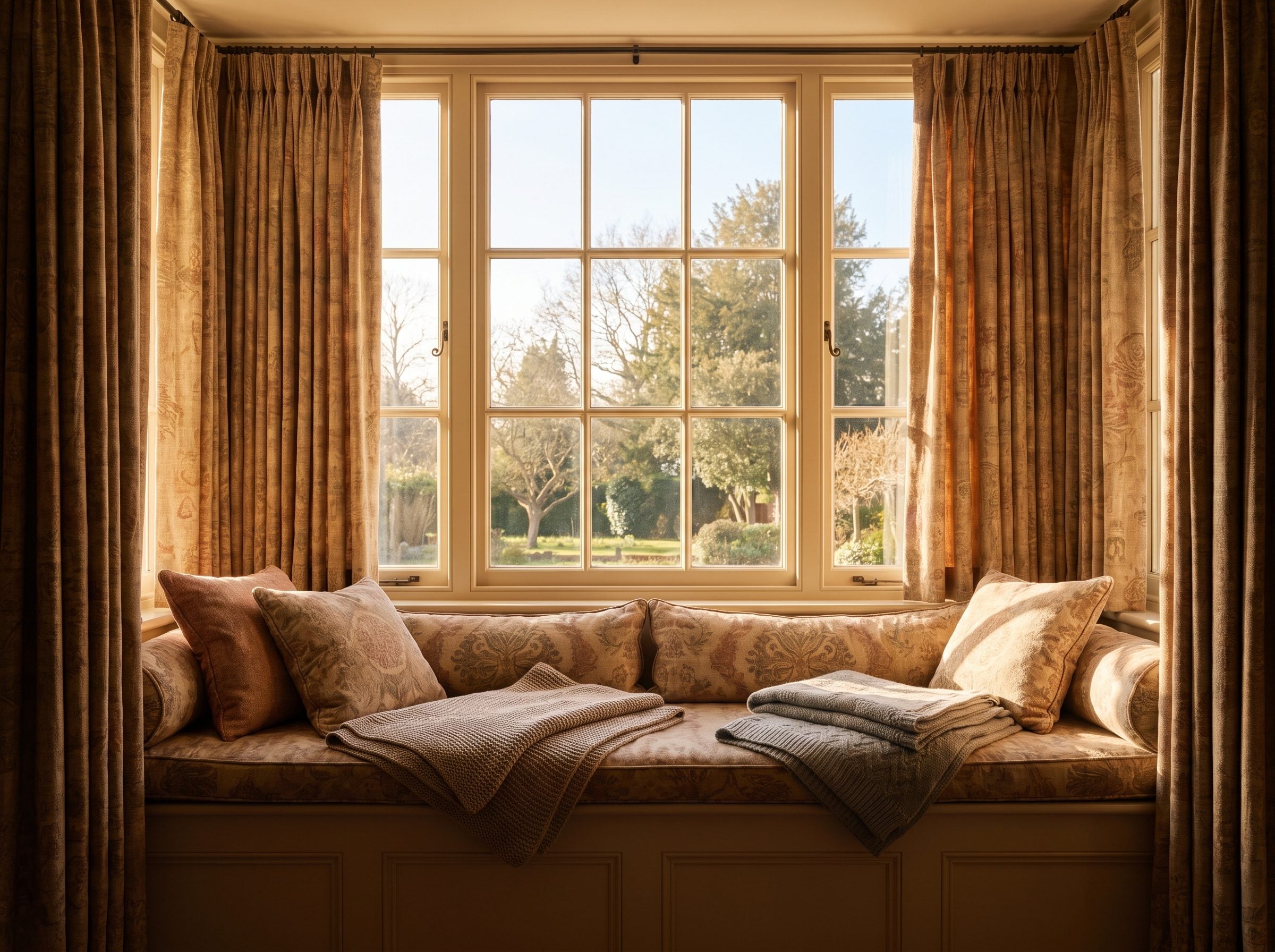
A window seat presents a wonderfully simple objection to floor-length curtains: there is no available floor.
The bench, cushion, pillows, and person holding a coffee have already claimed that territory. Let fabric tumble through all of it and the curtain spends its life being sat on, tucked behind cushions, or dragged back out before somebody can close it.
Stop at the sill or just above the seat instead. The woodwork remains visible, the bench remains usable, and the curtain suddenly looks as though it belongs to the architecture rather than being forced past it.
A soft linen or cotton panel works especially well because it can fall close to the cushion without overwhelming it.
29. Short Linen Curtains Above a Kitchen Sink
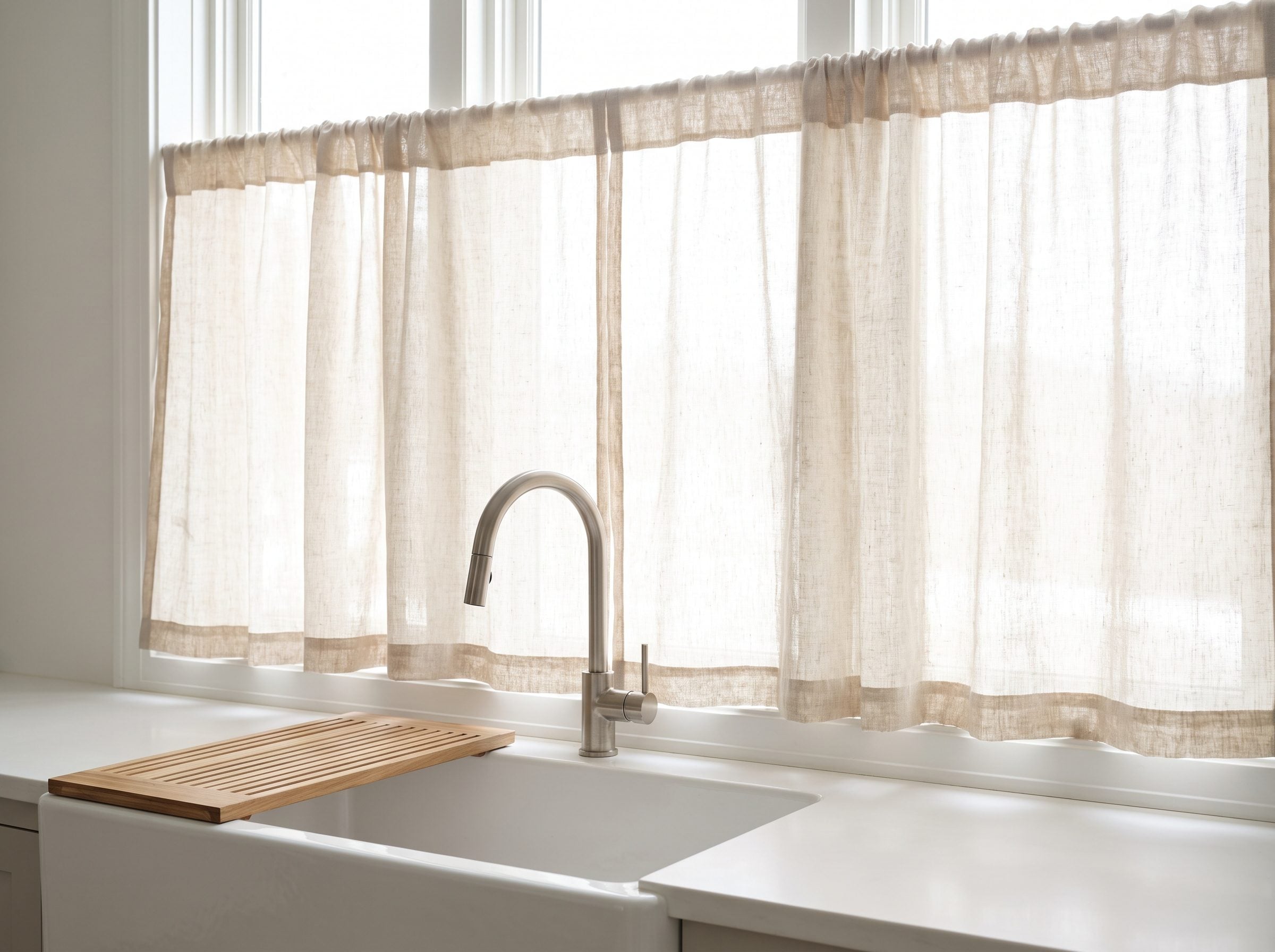
Try introducing four extra feet of linen to a faucet, dish brush, wet counter, and pan of tomato sauce. The curtain will lose.
That is why the sink window is one of the easiest places to stop apologizing for short fabric. The café format gives privacy without dropping cloth into the work zone, and the loose weave of linen keeps the treatment from becoming visually heavy. Source
European cafés helped establish the half-window treatment, and the idea eventually became a familiar American kitchen standard. Source Source
The modern version needs very little decoration: a natural linen café curtain, a slim brass tension rod, and enough restraint to leave the upper pane alone. Contemporary designers have rediscovered the appeal for exactly that reason. Source
28. Sill-Length Curtains Behind a Home-Office Desk

Push a desk against a window and long curtains immediately start negotiating with chair wheels, power strips, knees, dust, and the back edge of the furniture.
Sill-length panels end the negotiation.
The most convincing version relates the curtain hem to the desktop rather than to some abstract rule about drapery. When sill, desk, and fabric finish in the same general horizontal zone, the whole wall reads as deliberate.
Mounting the rod somewhat above and wider than the casing can still give the window height and let the panels stack off the glass. The exact number is less important than the proportion.
A flat linen or cotton keeps the treatment easy. Save the yards of formal pinch-pleat drama for a retro dining room, where an office chair isn’t eating the hem eight hours a day.
27. Bay Windows With Curtains Tailored to Each Window
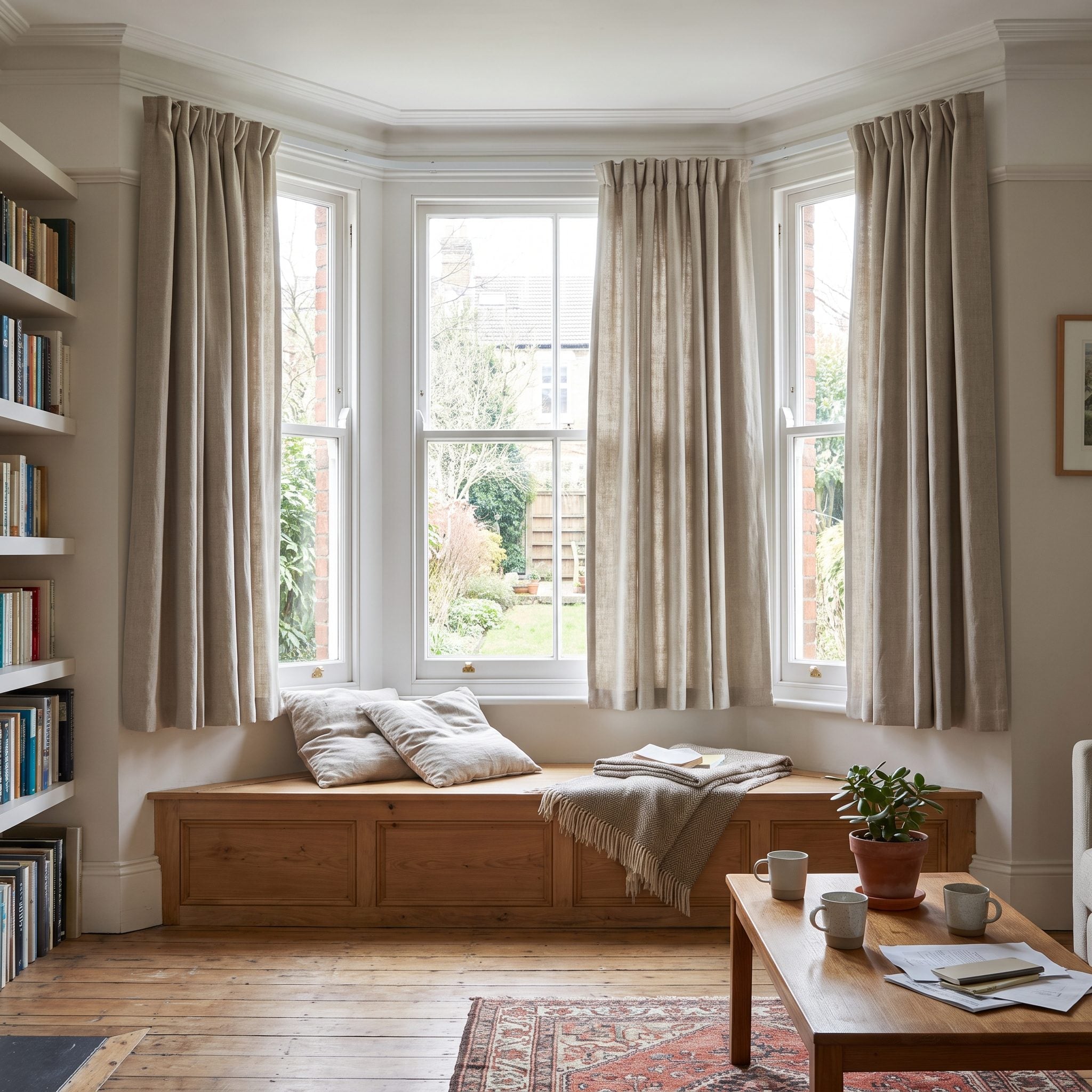
A bay window is one of the best arguments against insisting every panel in a room finish at exactly the same altitude.
Three angled windows can have three different relationships with the furniture underneath them. A center window over a seat may want short panels. Tall flankers with clear floor beneath them can go long. The fabric and hardware can still tie the group together.
That shared top line matters more than identical hems. Keep the rod height, material, and finish consistent and the bay reads as one composition rather than three curtains having an argument.
Café treatments across lower sashes add another option when privacy is needed at street level without sacrificing the upper view.
26. Playroom Curtains That Stay Off the Floor

A playroom floor already has enough on it.
Short panels keep fabric away from spilled juice, crayons, building blocks, vacuum wheels, and the peculiar gray tide mark that develops wherever cloth meets a heavily used floor. They also create an excuse to use a print that might feel exhausting over eight feet of wall.
That is the fun part. A bonus room makeover can take rainbow stripes, oversized dots, or a yellow gingham curtain stopping crisply at the sill.
For child safety, curtain length is secondary to the bigger window-covering issue: cords and accessible loops. The U.S. Consumer Product Safety Commission recommends cordless coverings in homes with young children. Source
25. Short Curtains in a Cottage-Style Living Room
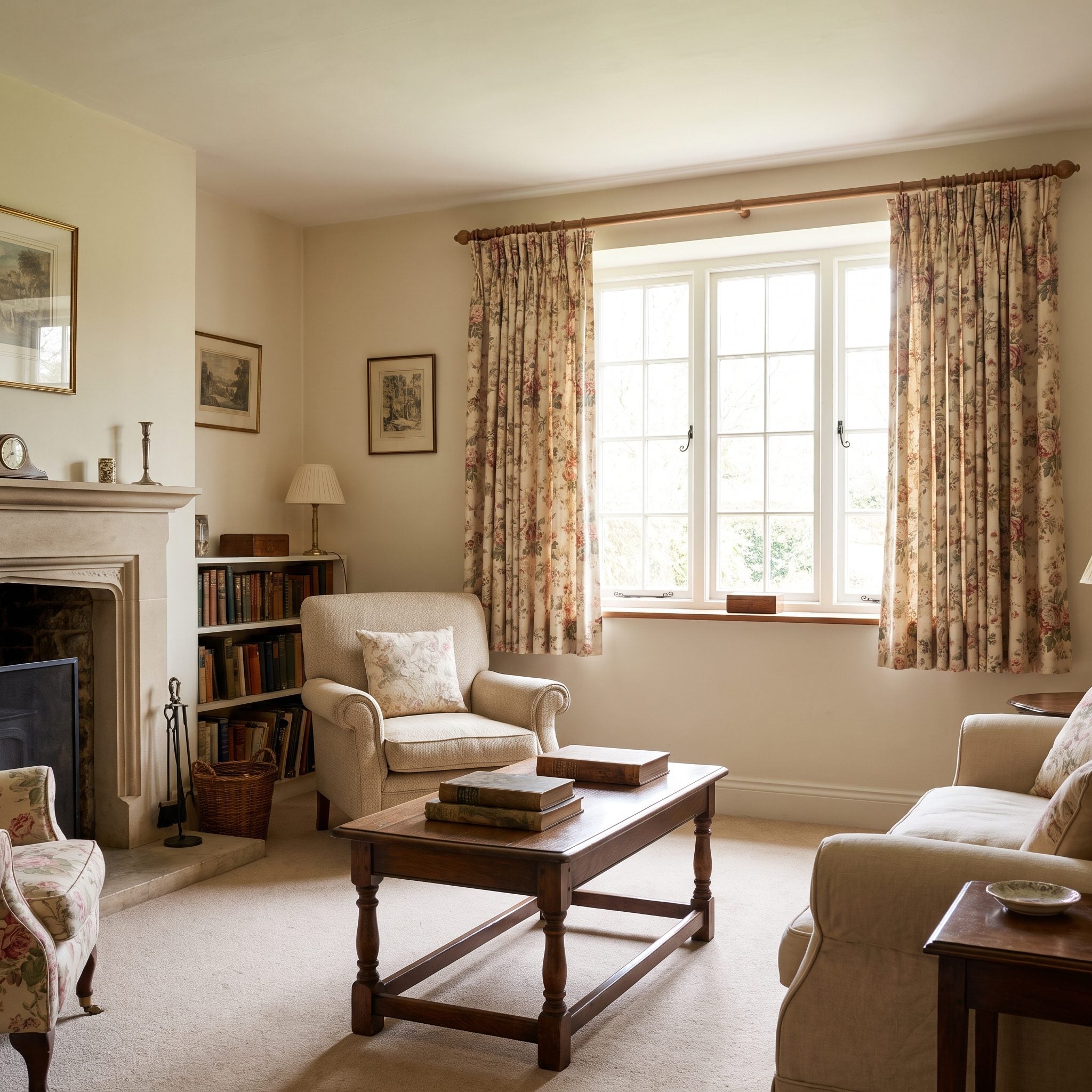
Short curtains don’t have to justify themselves with a sink or heater. Sometimes the room simply looks better with them.
Apron-length panels commonly finish a few inches below the sill, giving the curtain enough drop to feel tailored while leaving the lower wall exposed. Source Four inches is a familiar convention, not divine law.
That relaxed proportion fits cottage interiors especially well: low windows, painted trim, sofas pushed close to walls, old radiators, deep sills, and rooms that improve when nothing looks too ceremonious.
A loose linen curtain panel has the same easy quality that makes a terracotta family room comfortable rather than precious.
24. Laundry-Room Curtains Above Counters and Appliances
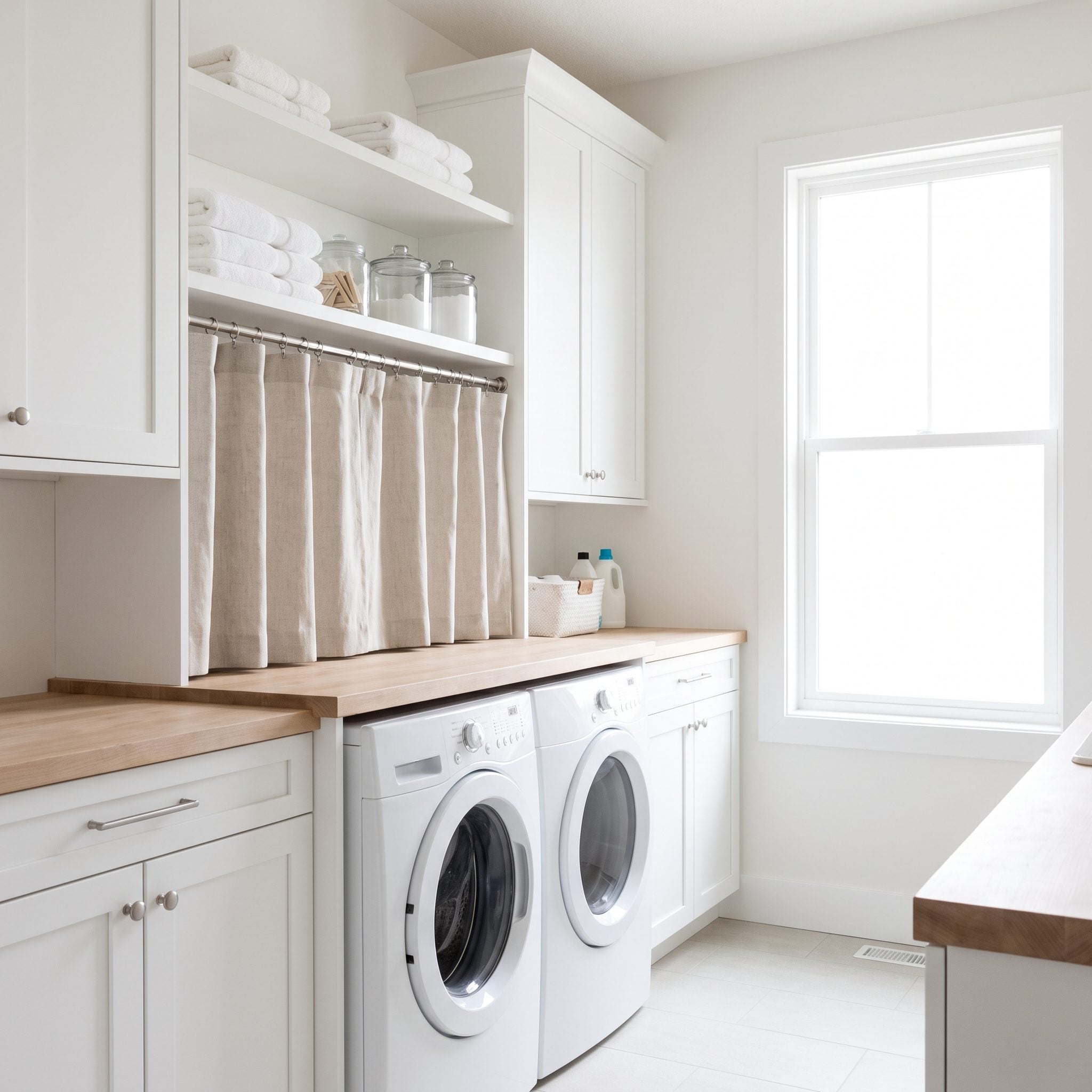
The laundry room has never cared much about drapery orthodoxy.
Counters, machines, utility sinks, detergent, lint, and wet clothing occupy the lower half of the wall. A floor-length curtain behind any of that is simply fabric stored in the least convenient place imaginable.
A café curtain or sill-length pair keeps the softness at the window and leaves the working part of the room alone. Ticking stripe and small gingham are particularly good here because they can survive frequent washing without looking as though they escaped from a formal living room.
A blue gingham café curtain costs little, uses little fabric, and can go straight into the laundry produced by the room it decorates. Efficient enough to be almost suspicious.
23. Short Curtains That Showcase Decorative Window Trim
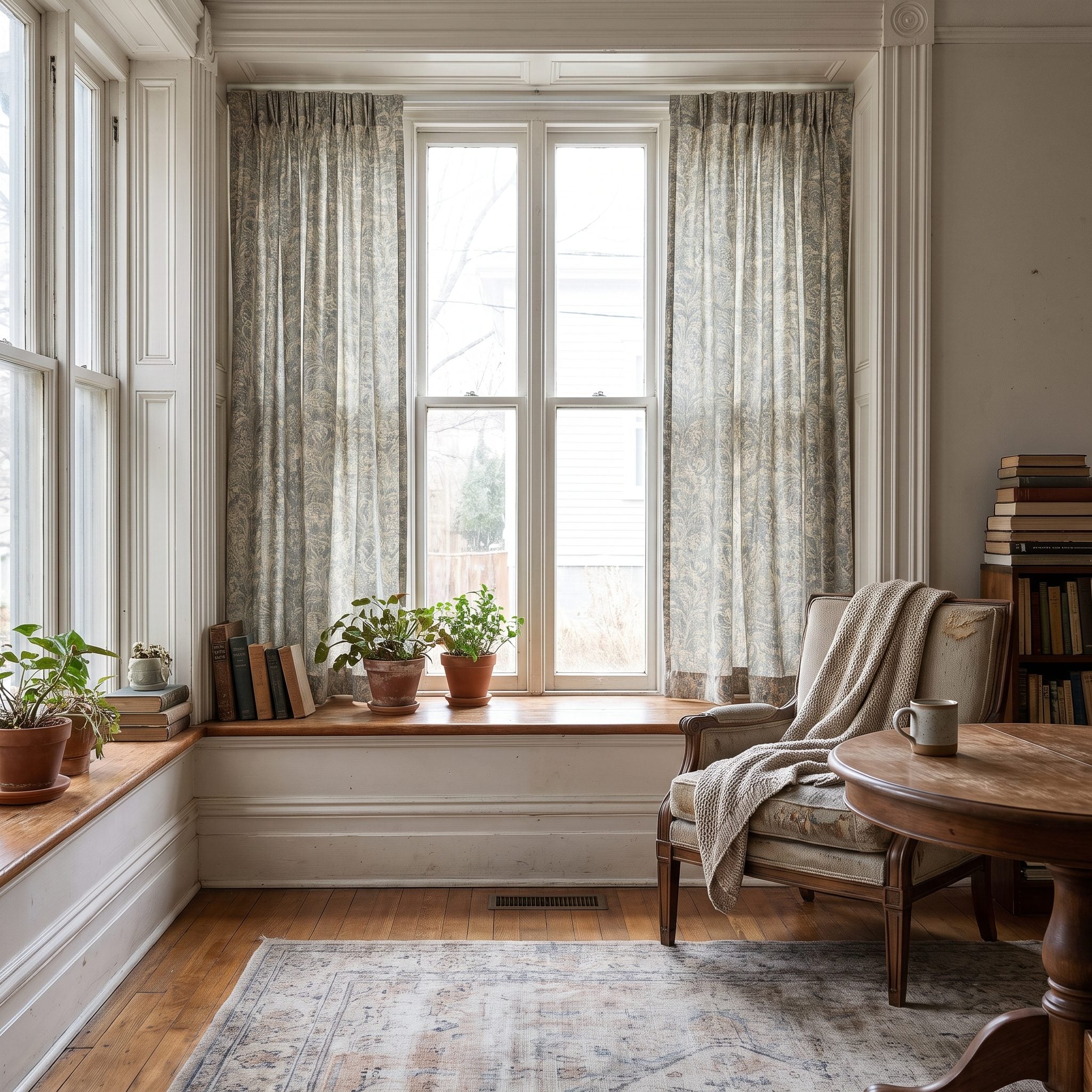
Some windows already arrived dressed.
Victorian and later historic interiors can have fluted casings, rosette blocks, substantial backbands, stained wood, or Craftsman trim that is far too good to bury beneath anonymous yards of fabric. Machine-made millwork helped elaborate trim reach a wider market in the late 19th century, which is why so much good casing survives in older houses.
Short panels can frame that work instead of concealing it. Mounting inside the opening or close to the head casing lets the architecture remain legible.
The history is more complicated than saying drywall suddenly killed trim in one decade. Building practices and fashions changed gradually. The useful design lesson is simpler: if the window surround is one of the best things on the wall, don’t cover it merely because somebody told the hem where to go.
22. Curtains Stopping Above a Baseboard Heater
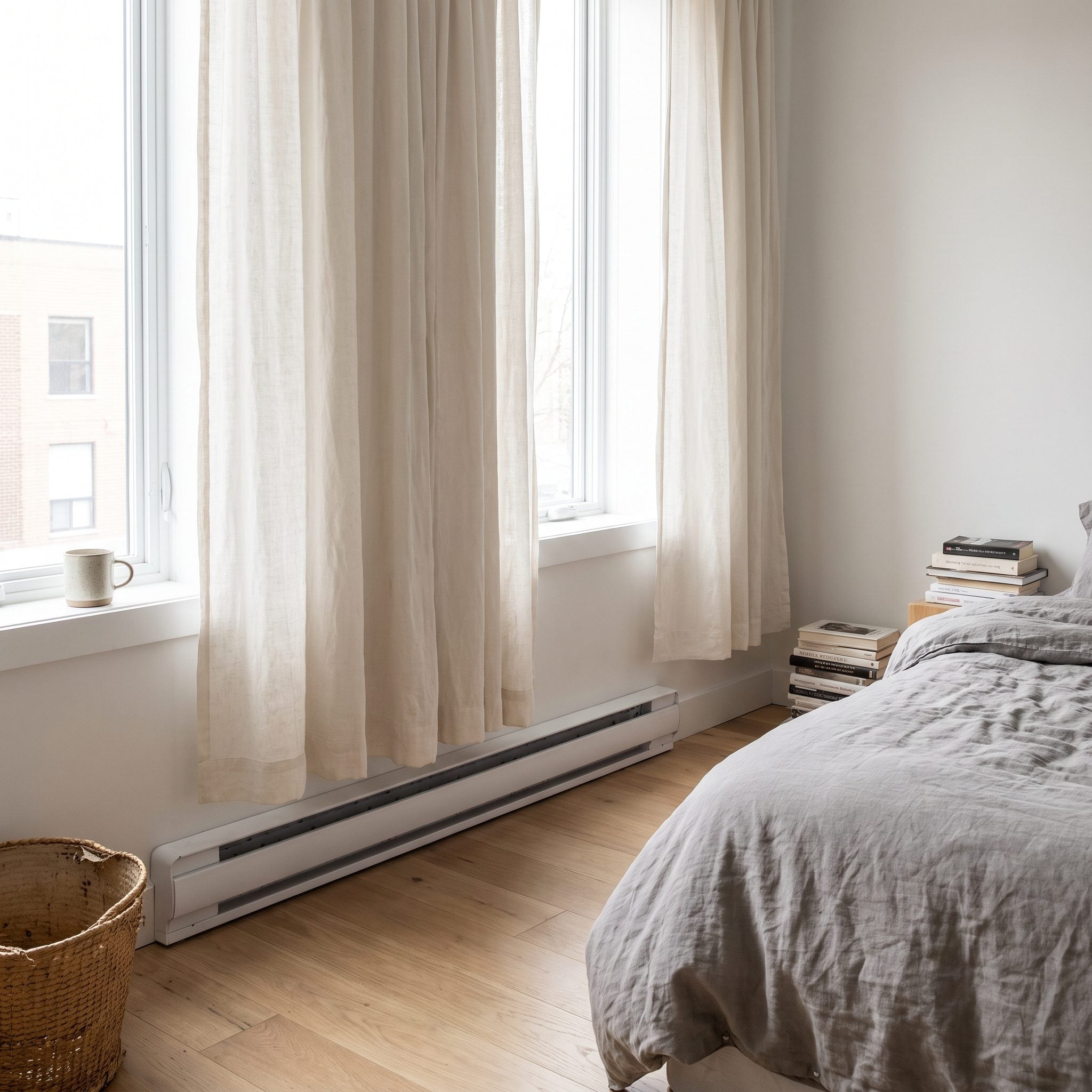
An electric baseboard heater turns curtain length from a style question into an equipment-clearance question.
Fabric should not drape across the heater or interfere with the air entering and leaving it. Some safety guidance cites substantial clearances such as 12 inches, but the manufacturer’s instructions for the specific heater are the number that matters. Source
Baseboards rely on convection, drawing cooler air in and releasing heated air upward. Source Parking a curtain over that path is bad for both safety and performance.
Sill-length panels neatly remove the conflict. Another option is stationary side panels paired with a separate shade for privacy. Source Source
The heater gets air. The window gets fabric. Everybody stops fighting.
21. Half-Window Curtains in a Powder Room

🔥 Would you like to save this?
The smallest room is often the best place to spend recklessly on six square feet of fabric.
A powder-room window may sit over a toilet, vanity, or pedestal sink, leaving no useful path to the floor anyway. A half-window curtain covers the sightline and leaves the upper glass bright.
Because the panel is tiny, pattern suddenly becomes affordable. A block-print café curtain or a scrap of excellent linen can do more for the room than another framed print nobody has wall space for.
Put it on a brass café rod, particularly against a dark navy powder room, and the little piece of fabric suddenly behaves like jewelry.
20. Short Curtains Above a Craft-Room Worktable

A sewing room gives fabric enough jobs without asking the window curtains to join the cutting table.
Long panels behind a work surface collect thread, fight the rotary cutter, brush against bins, and occupy precious inches of counter. Near an iron, less stray fabric is also an uncomplicatedly good idea.
Sill-length panels clear the operation. In a craft room, washable cloth matters more than grandeur, so cotton or linen blend earns its place quickly.
Measure to the architecture and leave enough clearance that the hem does not drag across the work surface.
19. Café Curtains in a Modern Living Room
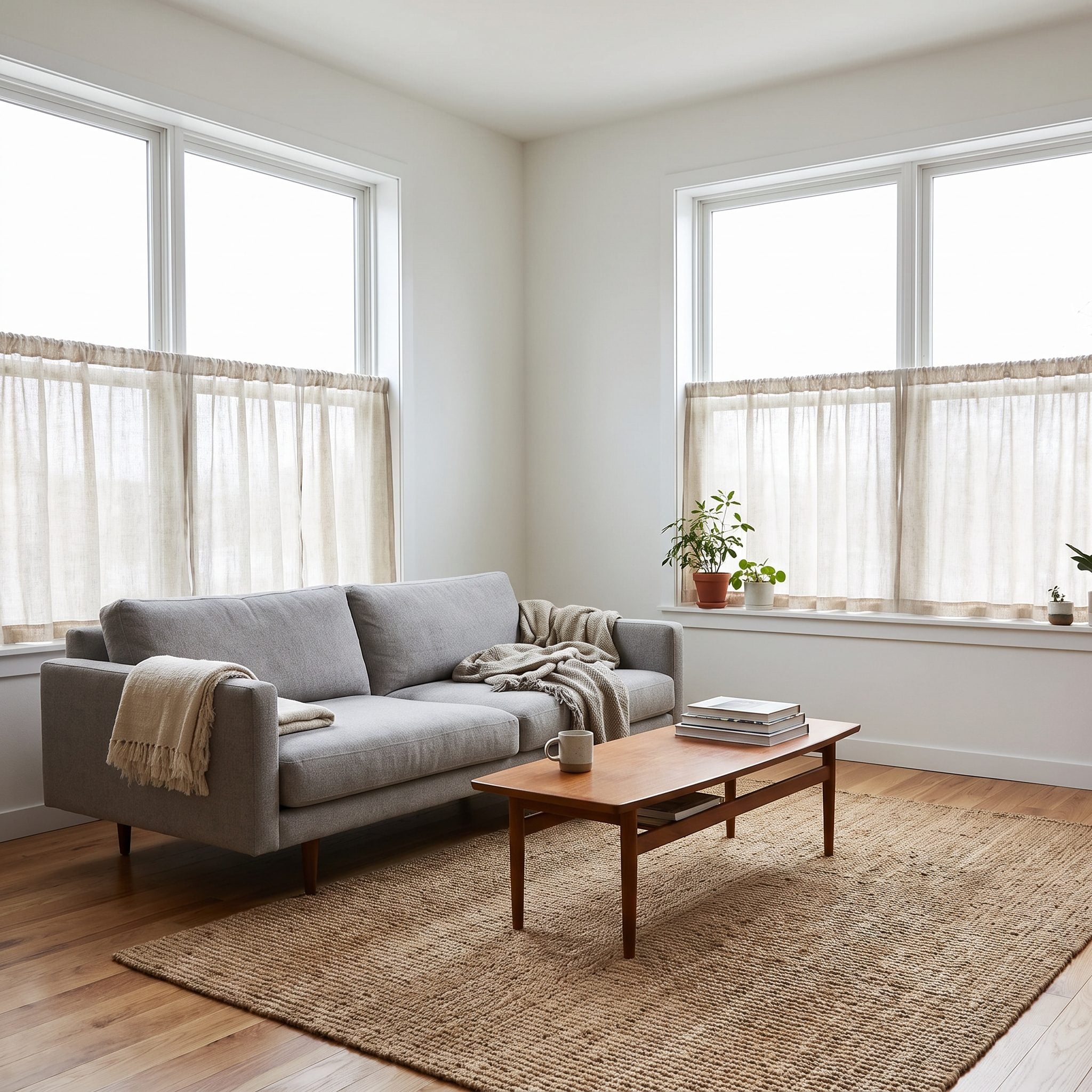
Move the café curtain out of the kitchen and something interesting happens: the treatment stops reading as quaint and starts reading architectural.
A street-facing living room often has the same problem a café had all along. The lower glass exposes the sofa and everyone sitting on it; the upper glass provides the light you paid for when you chose the apartment.
Common ready-made café sizes such as 24 to 36 inches make the look easy to test. Source
Pair a natural linen café curtain with a thin brass rod, keep the furniture low, and the exposed upper window becomes part of the composition rather than evidence that something is missing.
Historical background on the treatment often traces its popularity to European cafés before its migration into domestic interiors. Source You only need to hear that story once. The living room proves the idea survived because the geometry still works.
18. Short Drapery Where a Dresser Sits Directly Below the Window
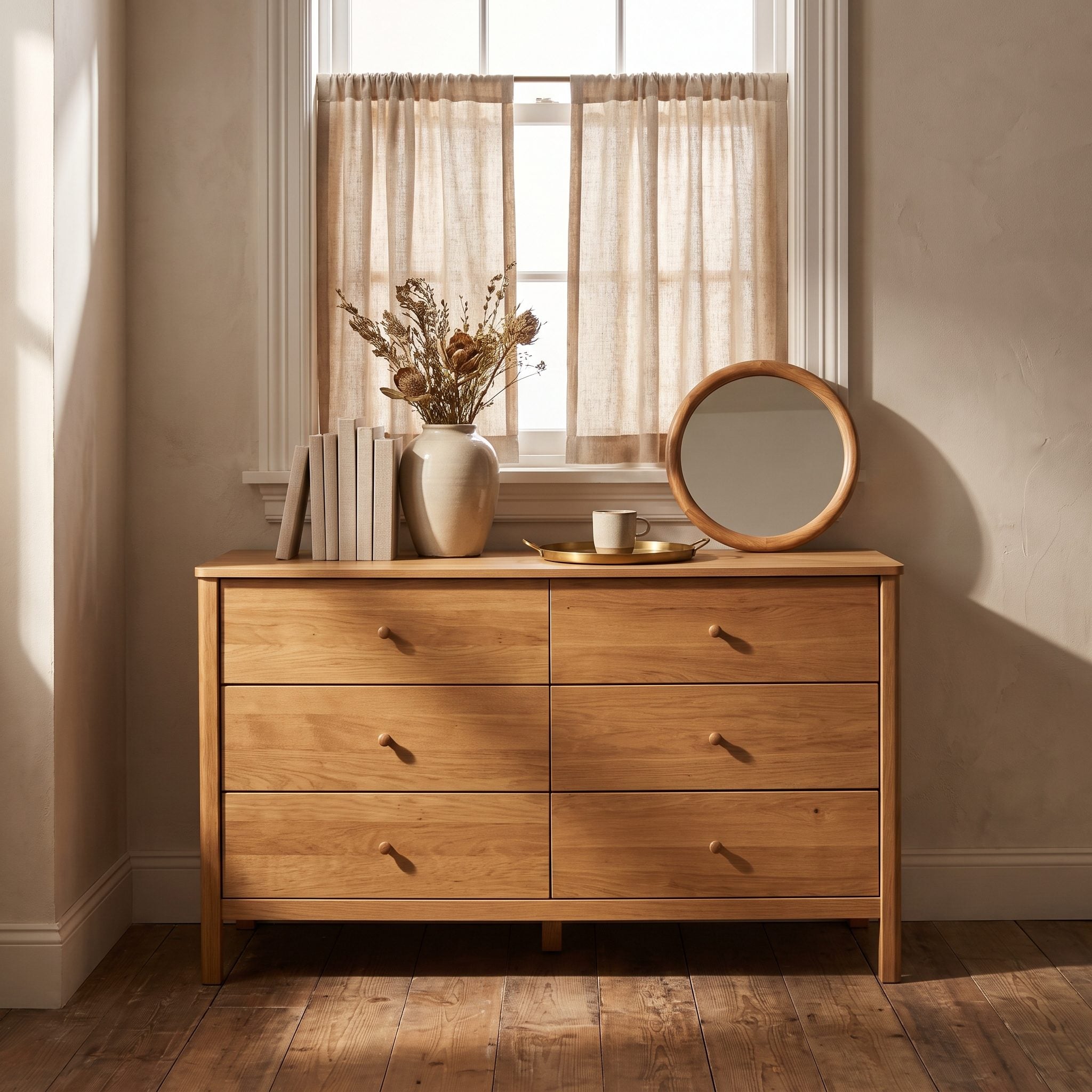
Put a dresser directly under a window and the room has already chosen the curtain’s destination for you.
Floor-length panels either disappear behind the furniture or require a rod so wide that the fabric detours around the dresser like somebody avoiding an ex at a party.
A tailored hem just above the furniture is calmer. The right measurement comes from the actual dresser, not an assumed height from the floor. Leave enough clearance that the curtain never brushes the lamp, cosmetics, sunscreen, or whatever else lives there by Tuesday.
A curtain that has to dodge your furniture was never going to look intentional.
17. Casement Windows That Look Better With Simple Short Panels
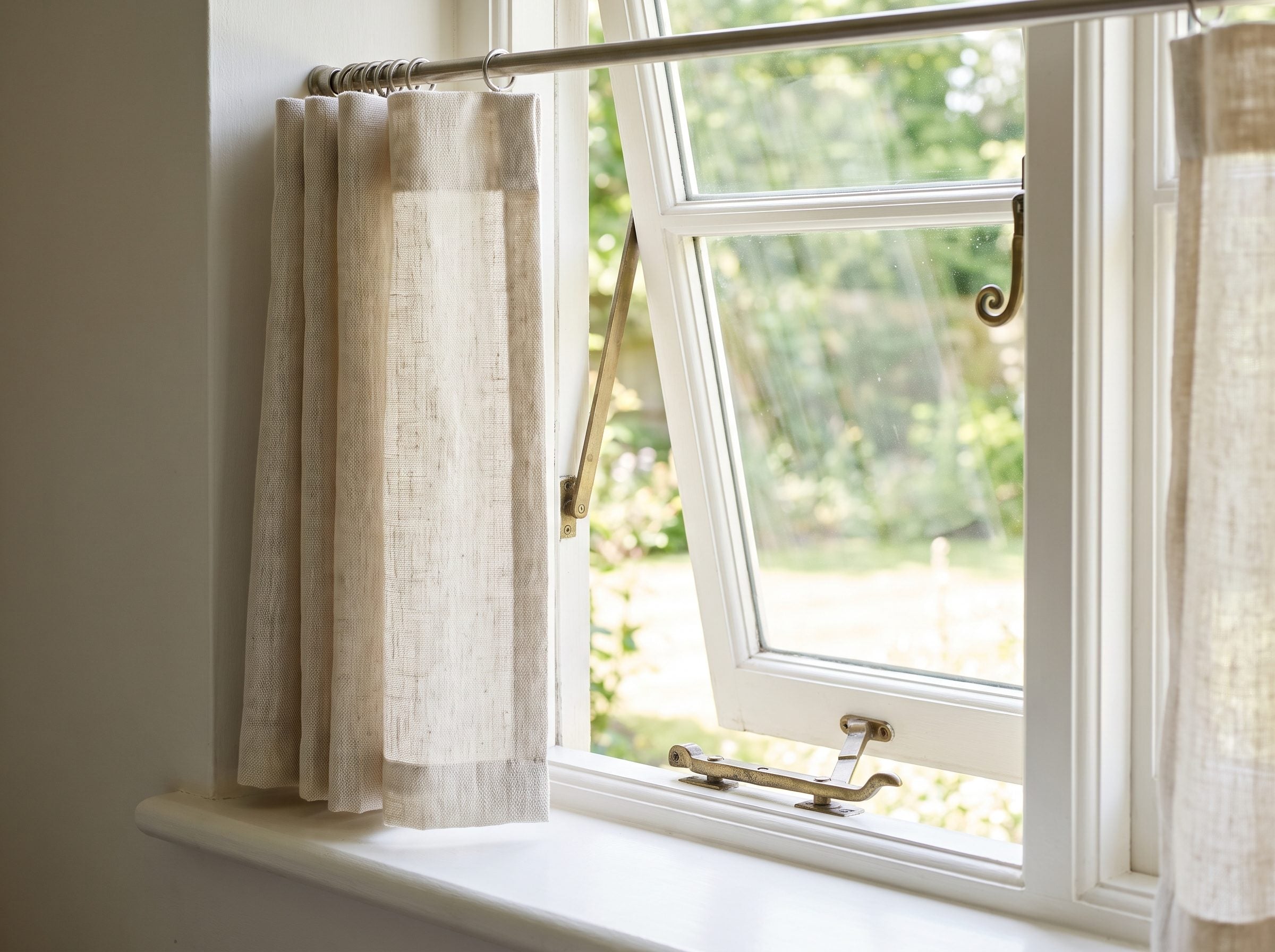
Casement windows do not inherently require short curtains. They do require that fabric stay out of the hardware you actually need to operate.
Side-hinged casements commonly use a crank or handle near the bottom of the frame. Source If a curtain crosses that working zone, opening the window becomes a small daily wrestling match.
Sill- or apron-length panels are one clean answer because they can keep the hardware visible and accessible. Source
There is no need to pretend casements require exotic custom drapery merely because they open outward; ordinary treatments can work when mounted intelligently. Specialty options can certainly become expensive. Source Better to spend the money on the fabric than on solving a problem the fabric created.
16. Mudroom Curtains That Don’t Collect Dirt From the Floor
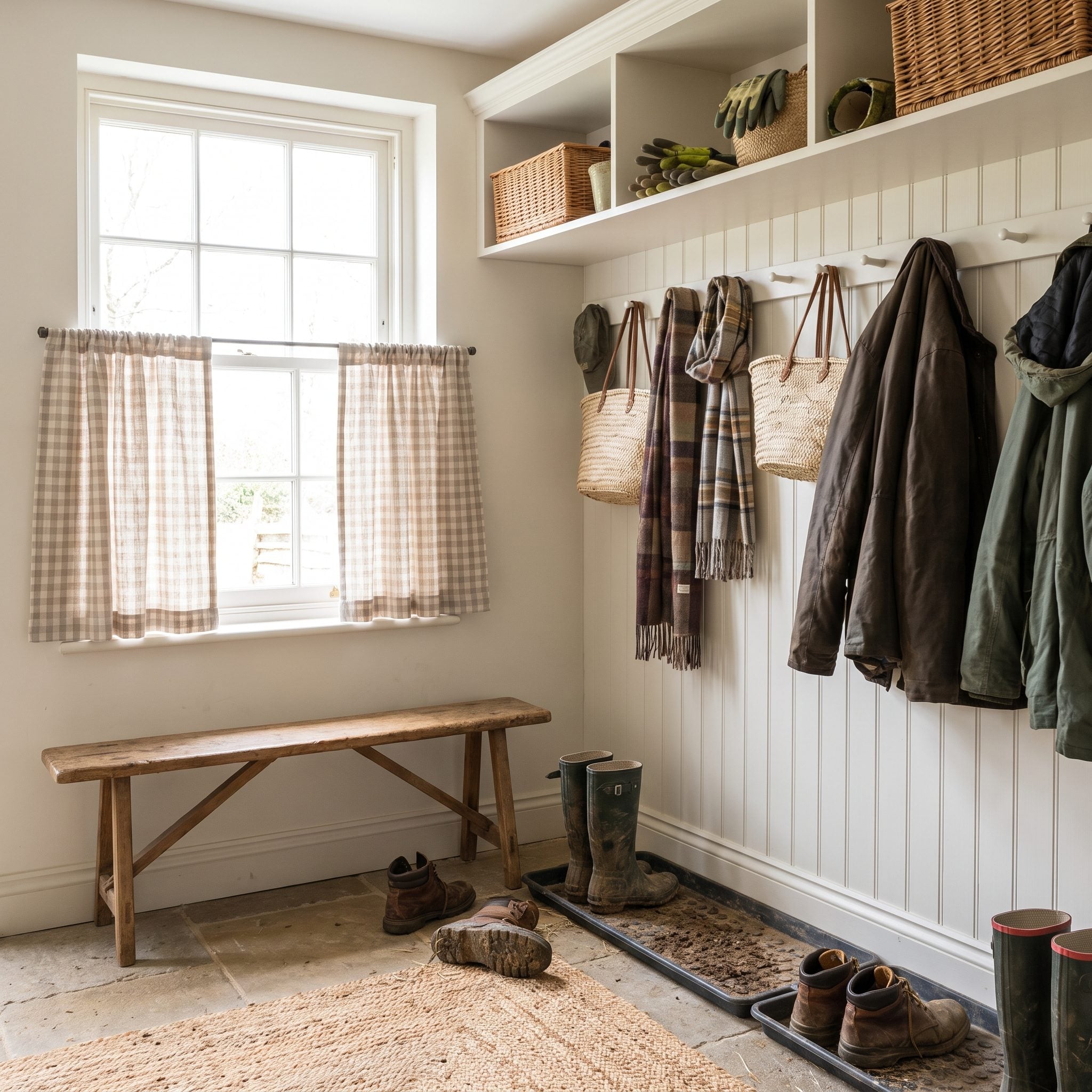
A mudroom floor is where good intentions go to meet road salt.
Boots, dogs, rainwater, gravel, leaves, and whatever followed the children home all end up in the same few square feet. Letting linen pool there is less romance than laundry schedule.
A short cotton or linen panel leaves the dirty territory exposed and washable. A café curtain can cover the lower sash near a back door while preserving enough upper glass to see who is outside.
15. Built-In Banquettes That Make Floor-Length Curtains Impractical
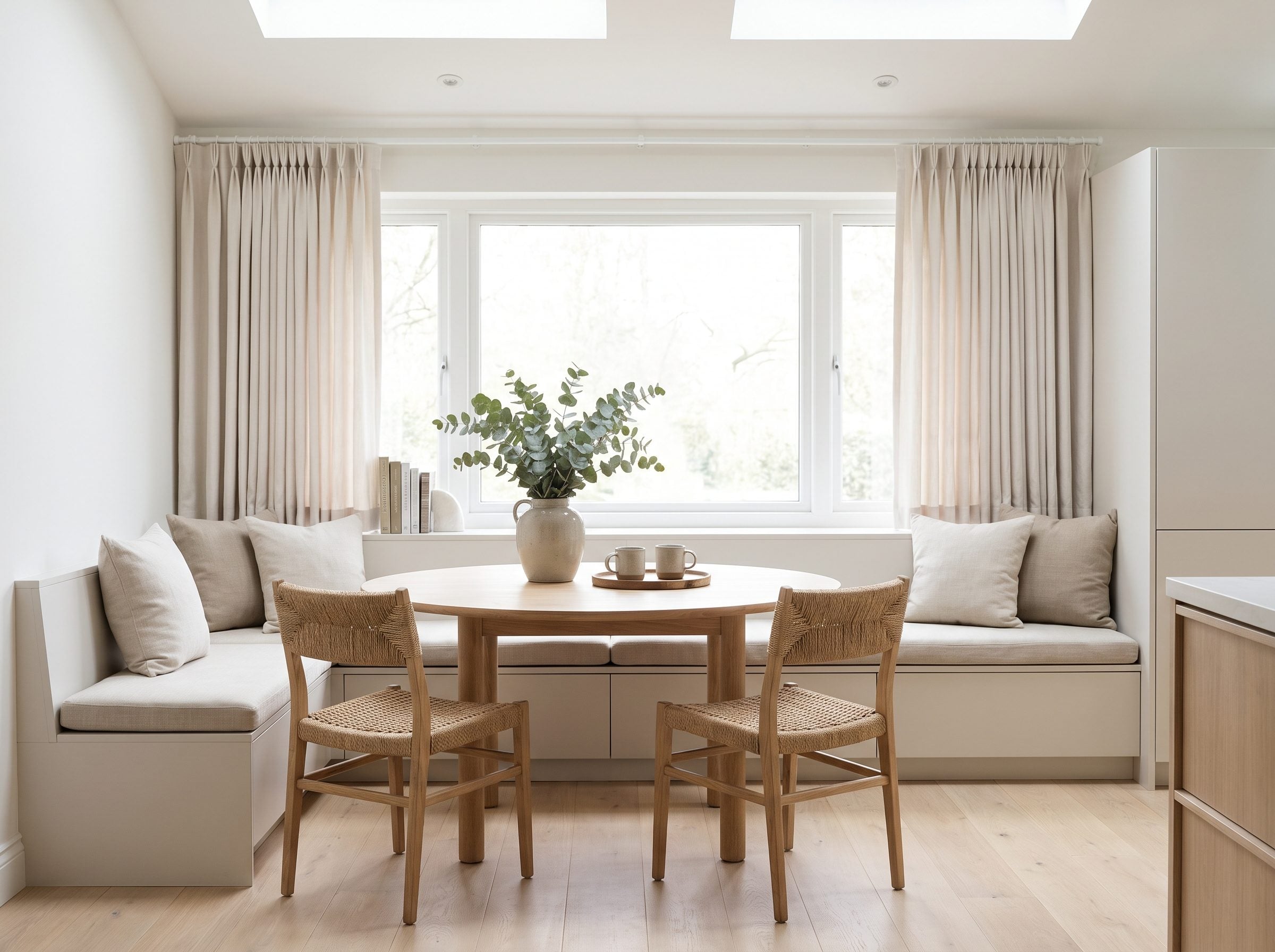
A window seat is for reading. A banquette adds toast, coffee, elbows, crumbs, and somebody sliding sideways to let another person out.
That makes short curtains even more convincing.
The seat back becomes a hard lower boundary, so let the curtain finish above it rather than feeding fabric into the narrow cavity behind the upholstery. Café curtains, short cotton panels, and other compact treatments have long made sense in breakfast nooks because the window is sharing its wall with furniture.
Roman shades and woven blinds can perform the same practical trick, but a pair of linen café curtains keeps the article’s argument intact: fabric does not need to reach the floor to look complete.
The kitchen window simply needs the hem to acknowledge the banquette rather than pretending the bench isn’t there.
14. Curtains Ending at the Sill Above a Kitchen Counter
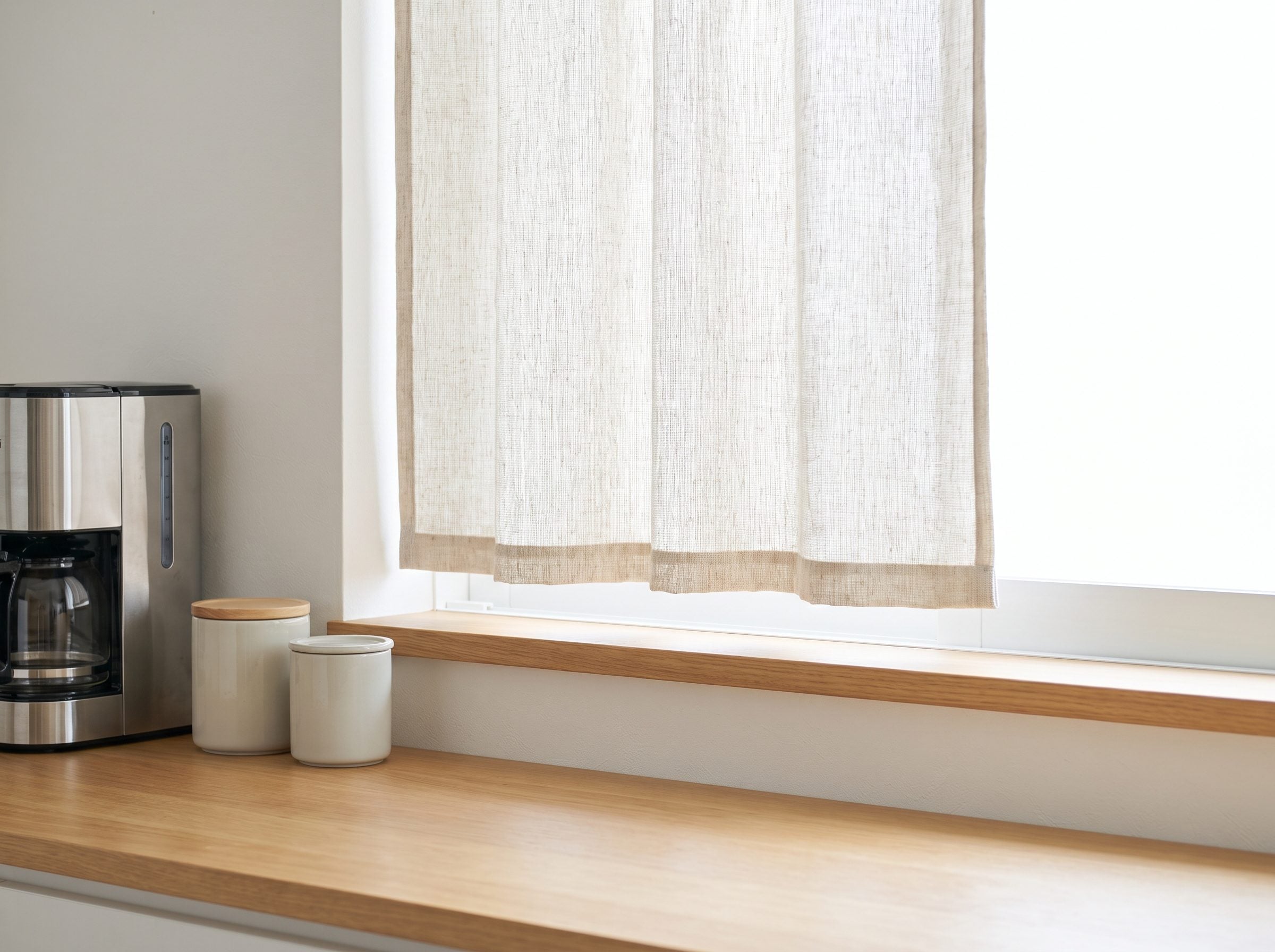
This is not quite the same move as the half-window café curtain.
Here the important decision is the **bottom hem**. A fuller panel can cover more of the glass and still stop at the sill or apron because the countertop below has already occupied the route to the floor.
That short ending keeps fabric out of appliances, food, moisture, and the general debris field of a working counter.
A sill finish or a controlled drop a few inches below it can both work, provided the fabric stays clear of the countertop itself. The visual mistake isn’t shortness. It’s a hem wandering into the work zone for no reason.
The kitchen borrowed short-window treatments enthusiastically because function drove the dimension. Historical accounts of café curtains in European and American kitchens make that abundantly clear. Source
13. Short Curtains Above an HVAC Register
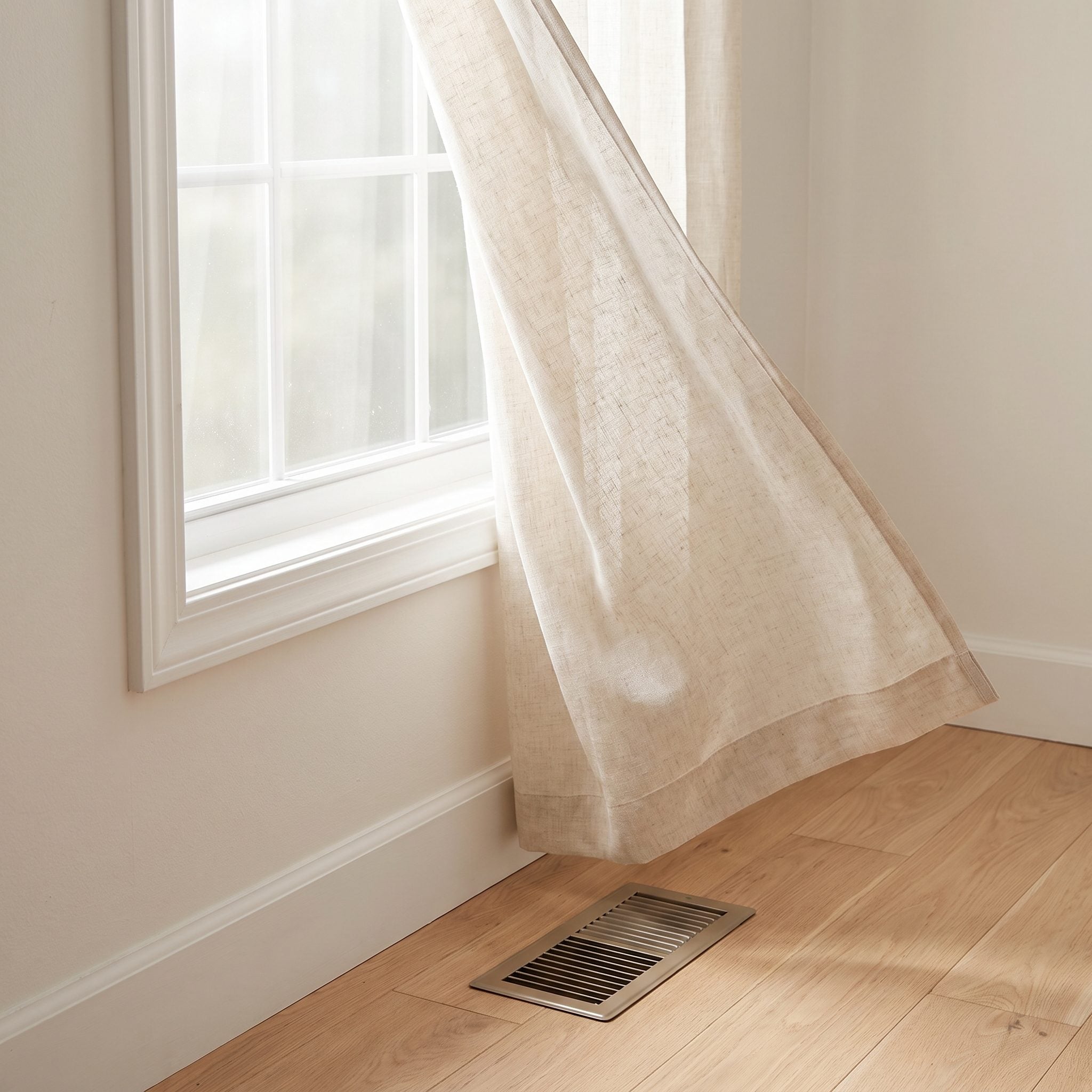
Sometimes the objection to long curtains is a rectangle of metal in the floor.
Supply registers need open airflow. Fabric lying over them can redirect conditioned air behind the curtain or reduce how effectively it reaches the room. General energy-efficiency guidance consistently favors keeping registers and vents unobstructed. Source
A short panel solves the conflict without pretending the vent does not exist.
That does not make every sill-length panel an “apron curtain,” and there is no magic two-inch ventilation number for every HVAC configuration. The operating principle is enough: leave the register open.
12. Short Curtains That Make a Tiny Room Feel Less Fabric-Heavy
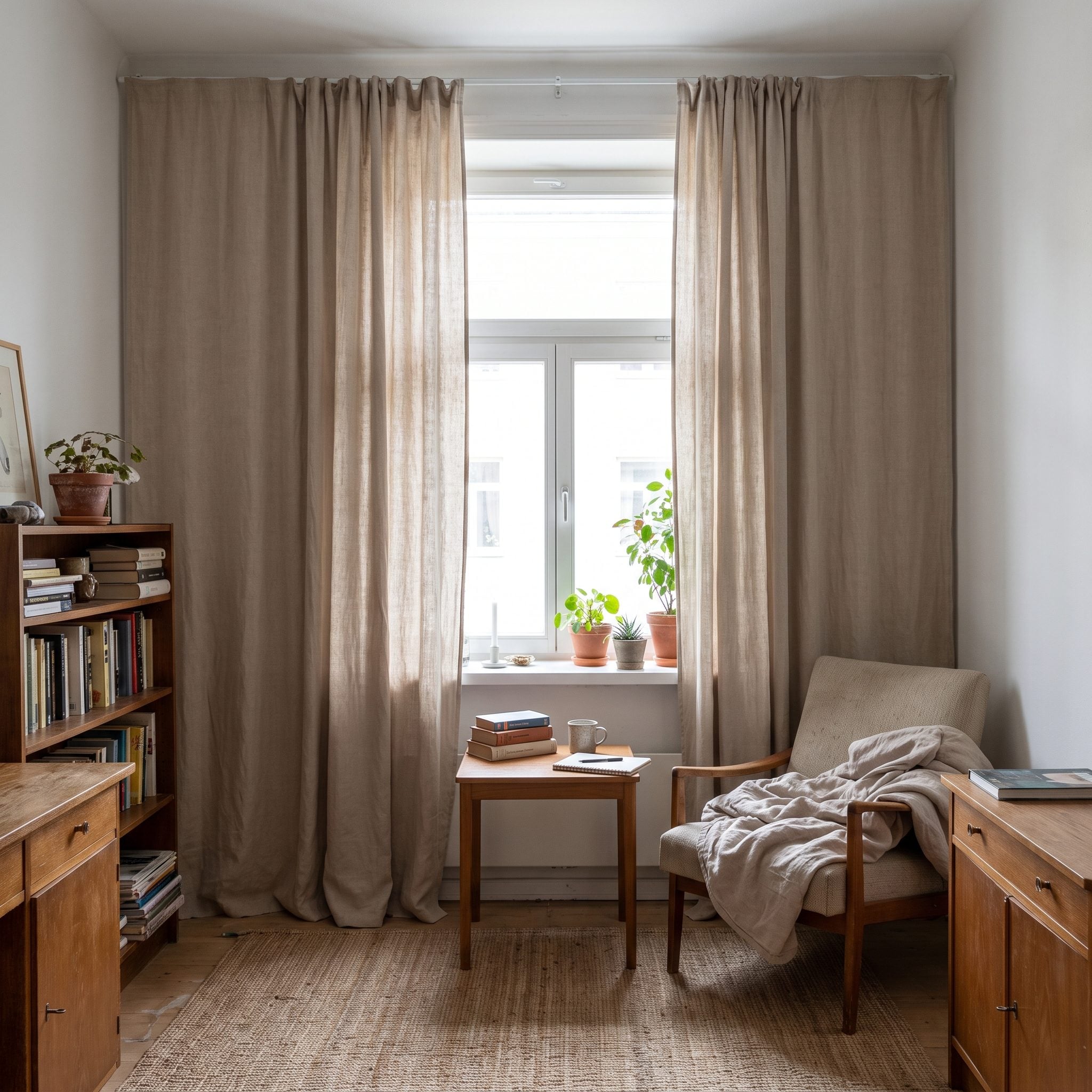
Put enormous drapery into a tiny room and sometimes the fabric becomes the room.
That can be wonderful if theatrical is the goal. If it isn’t, sill-length curtains expose more wall and floor, reduce the visual mass around the opening, and let a small window behave like a window instead of the starting point for a fabric installation.
A powder room, narrow breakfast corner, or laundry nook is particularly good territory for this. The short panel can nearly disappear when its color sits close to the wall, or become the one controlled jolt of pattern.
A navy powder room doesn’t need another eight feet of visual weight merely to prove the curtains were properly educated.
11. Short Curtains That Stay Safely Away From a Bathtub
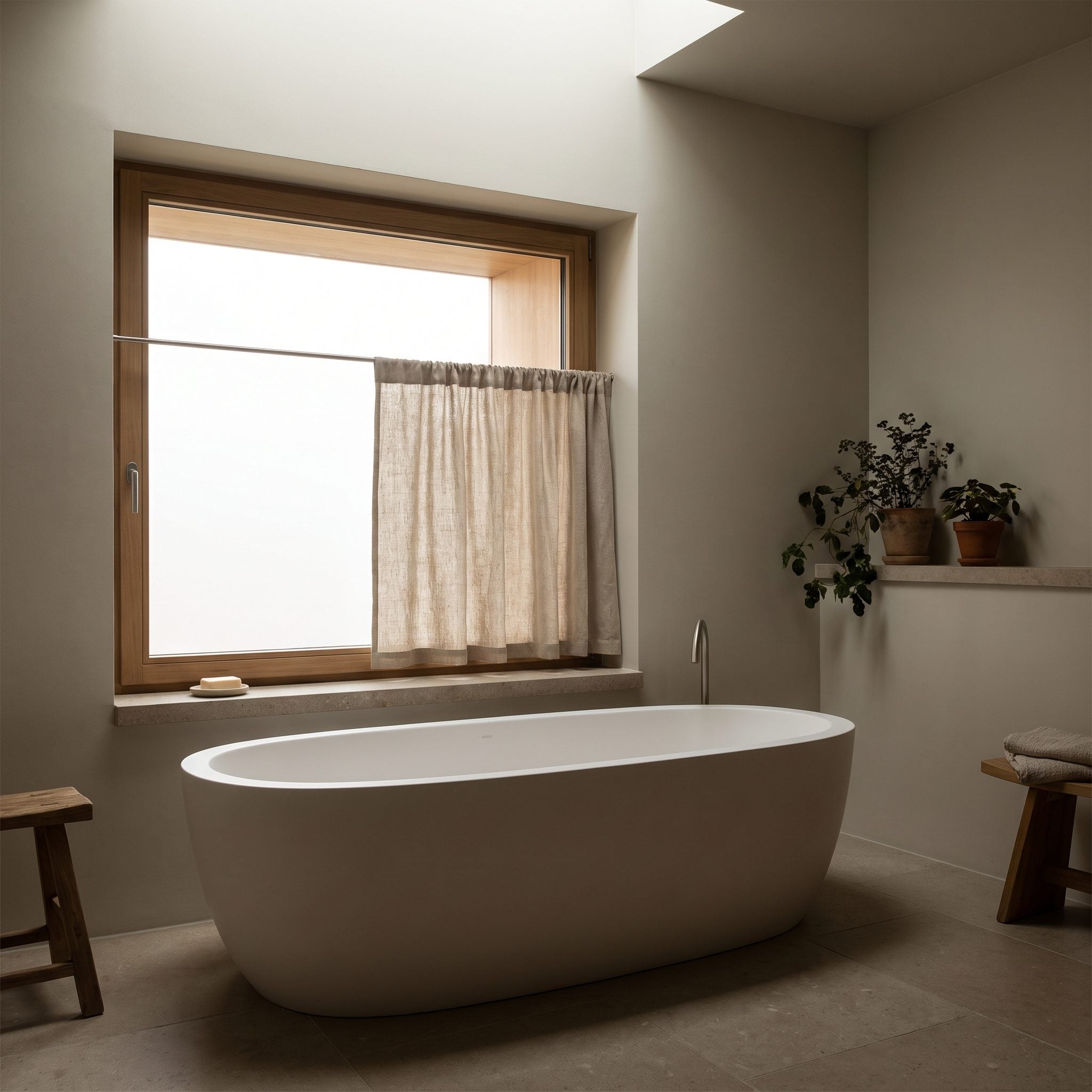
The bathtub doesn’t care how elegant the puddle looked on Pinterest.
Fabric hanging into the splash zone can stay damp, pick up soap, and encourage the mildew and staining that flourish when moisture and poor airflow become roommates. Bathroom ventilation guidance exists precisely because controlling humidity matters. Source
That is guidance, not a building code dictating curtain length.
A sill- or apron-length curtain that remains comfortably clear of the tub keeps the window soft without creating another wet textile in a room already full of them. There is no universal one-foot clearance above the tub rim; the useful test is whether normal bathing can splash the fabric.
Café curtains are particularly good here because they can deliver privacy without extending anywhere near the water.
10. Deep Window Recesses Framed With Sill-Length Curtains

A deep window reveal already supplies depth, shadow, and framing. Covering all of that with a flat sheet of fabric can erase the very architecture that made the opening interesting.
Historic masonry houses are one place deep reveals commonly occur, although they are hardly exclusive to every pre-1940 building or one particular wall system. Thick brick or stone walls can create remarkably sculptural window openings.
A sill-length treatment tucked into or closely framing that recess lets the light rake across the sides and keeps the depth visible.
In an old dining room, a pair of linen curtain panels on a slim brass rod can be enough.
9. Sill-Length Curtains in a Small Apartment
🔥 Would you like to save this?
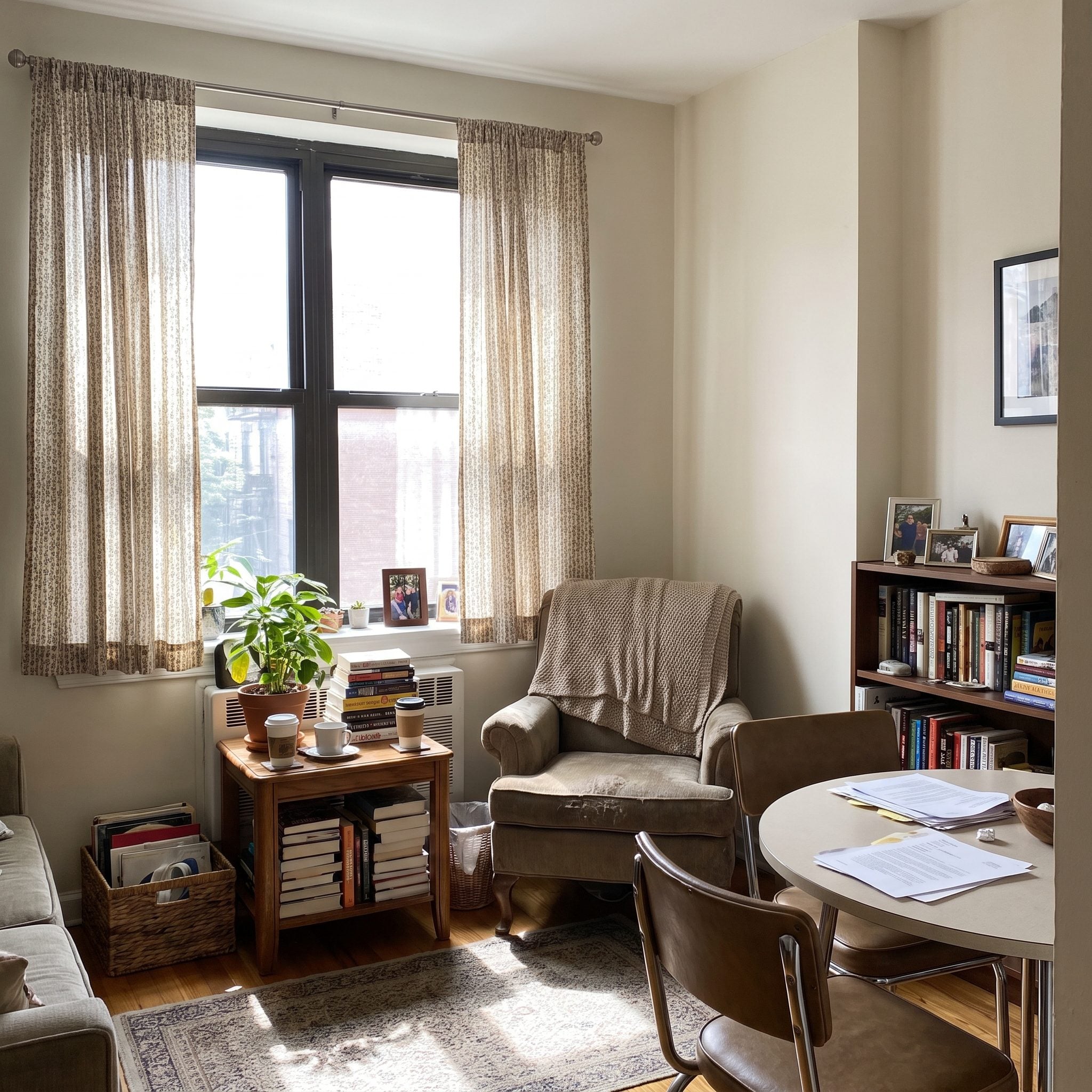
A small apartment doesn’t automatically need short curtains. It does give every unnecessary square foot of fabric a much louder voice.
Sill-length panels leave floor and wall visible, stay out of the vacuum path, and can work around radiators, baseboard heaters, window AC units, bicycles, furniture, or whatever else has been asked to coexist on twelve linear feet of wall.
For renters, the hardware can be part of the appeal. Tension rods and removable mounting options keep the treatment light in every sense.
The visual argument is different from the tiny powder room earlier: here the real luxury is flexibility. Nothing is pooling where you need to park something else.
A short linen treatment can also sit comfortably beside the softer palette of tan curtains elsewhere in a small home without turning every window into the same full-height gesture.
8. A Roman Shade Proves the Floor Was Never the Only Finish Line
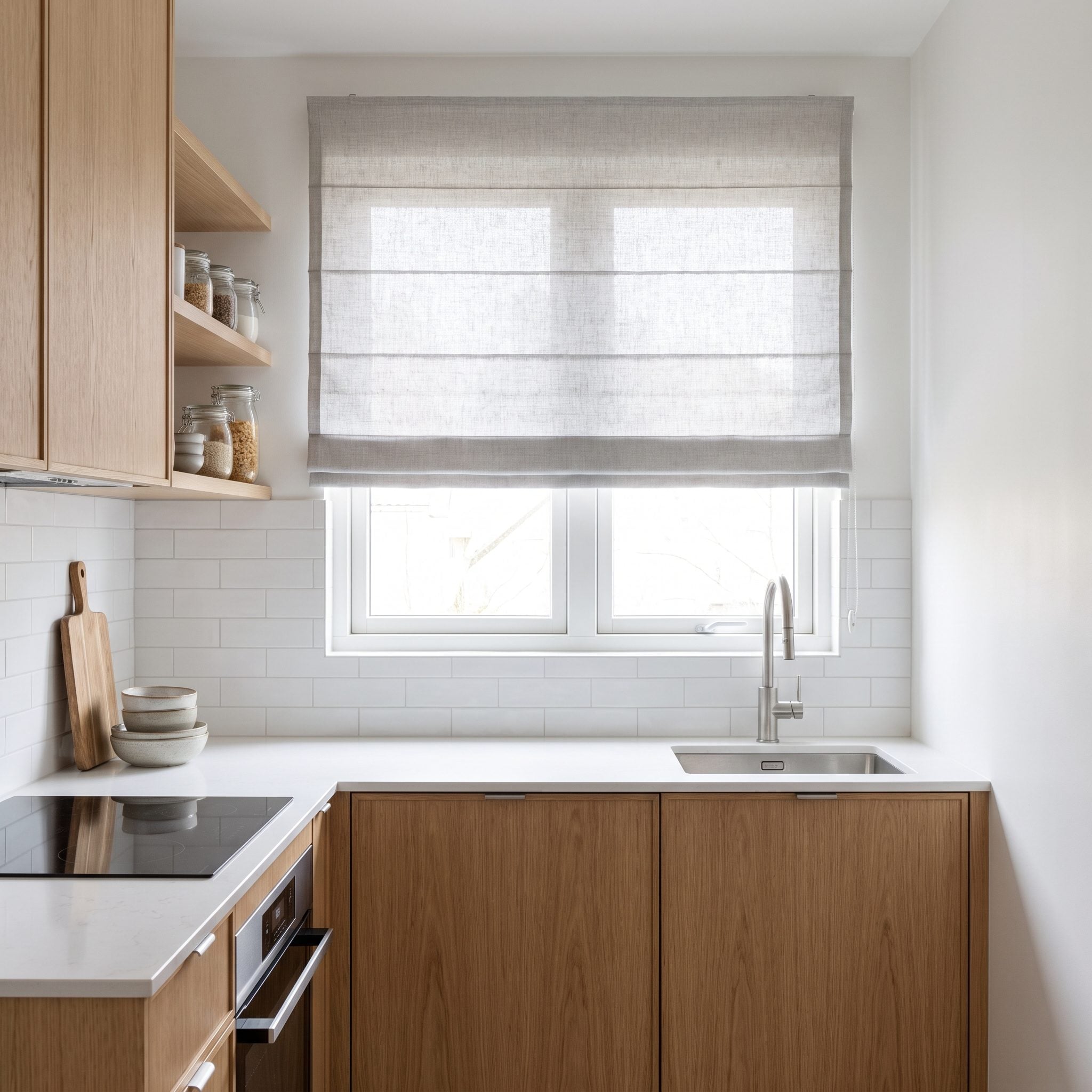
This is the one room in the gallery that makes the argument by showing what happens when the curtain disappears altogether.
A flat Roman shade proves that softness at a window does not depend on fabric traveling to the floor. The cloth can live entirely inside the opening, fold upward when daylight is wanted, and leave every inch of counter below untouched.
That doesn’t necessarily make a Roman shade cheaper than drapery. Custom fabrication, lining, hardware, and installation can make a small shade surprisingly expensive. What it does make it is compact.
For a sink window where full curtains would be absurd, the Roman shade is the useful control experiment. The floor has nothing to do with whether the window looks finished.
7. Café Curtains Paired With an Uncovered Upper Window

By now the history lesson is over. Look instead at the empty glass.
The uncovered upper portion isn’t what remains because the owner cheaped out on fabric. It is the feature. Morning light reaches the counter, the upper sash keeps its architecture, and privacy is concentrated exactly where the street-facing sightline needs it.
The traditional European treatment is sometimes called a brise-bise, literally a “wind-breaker,” and versions of it have long been associated with café and domestic windows. Source
The style later became familiar in American kitchens. Source
Pair a brass tension rod with unlined linen and resist the instinct to add a valance just because there is empty space above. The empty space is why the treatment works.
6. Café Curtains Layered With a Roman Shade
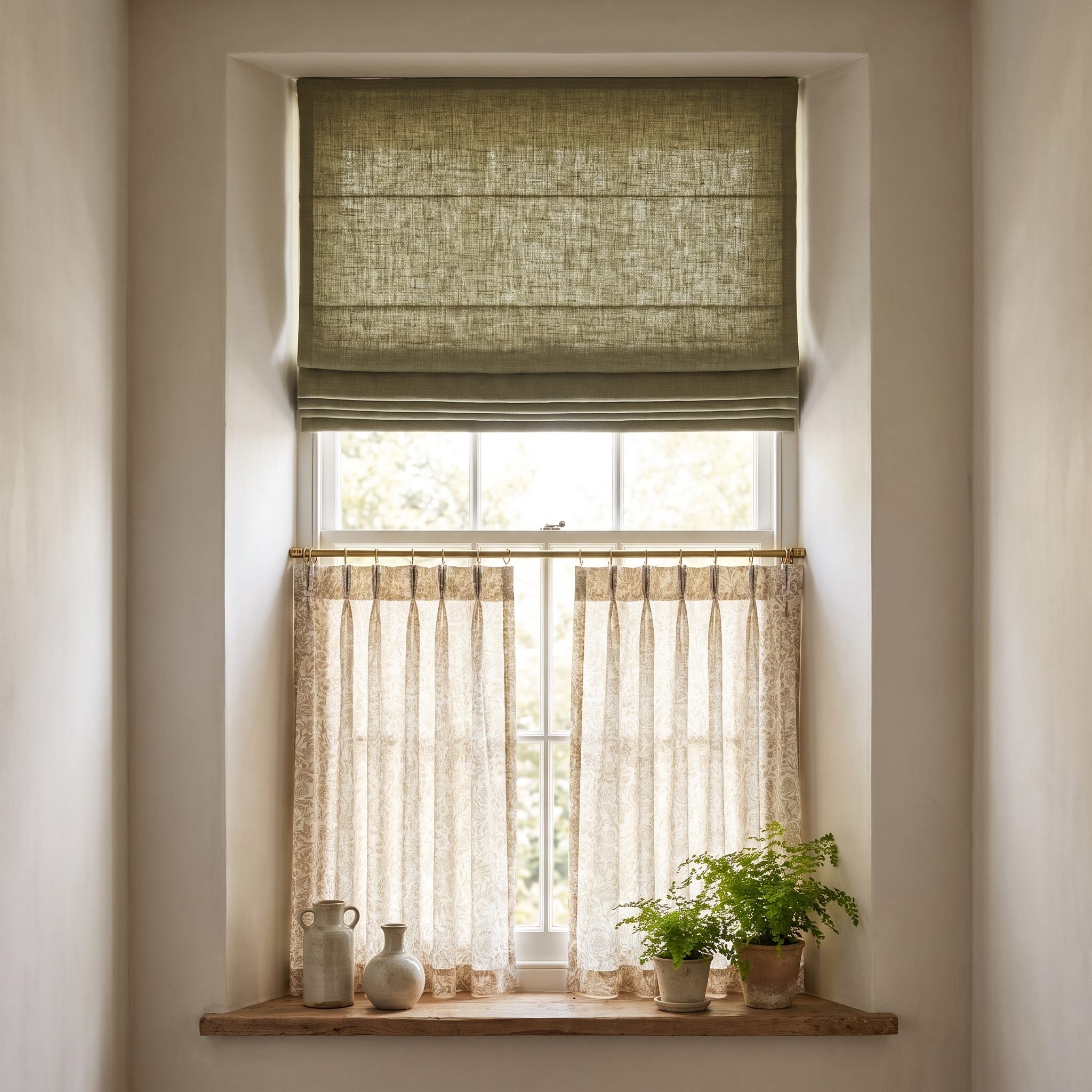
One short curtain can handle daytime privacy. A second layer can handle everything else.
Here the café panel owns the lower glass while the Roman shade above controls stronger sun or additional privacy when needed. If the shade is woven, it may filter rather than black out the light; true blackout requires the appropriate lining or material.
That separation of jobs is what makes the combination elegant. The lower curtain never needs to get longer just because the room occasionally needs more coverage.
A tan curtain beneath a natural woven shade can feel especially cohesive when the rod repeats the cabinet hardware and the shade picks up another material already in the kitchen.
5. Short Curtains Hung Inside the Window Frame
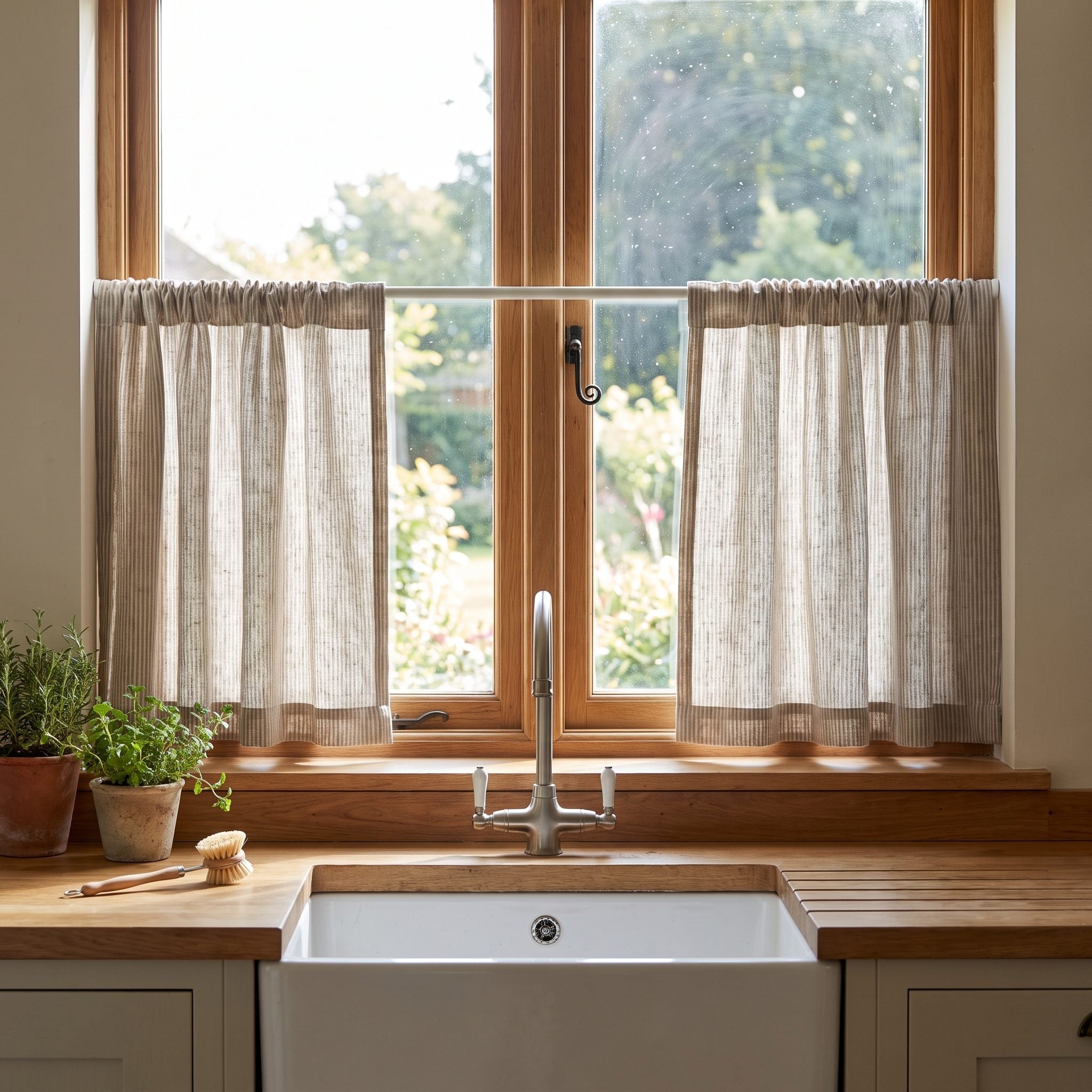
Sometimes the most convincing way to make a short curtain look intentional is to make the hardware belong to the window too.
An inside-mounted rod turns the fabric into part of the opening. No long pole floating across the wall. No heroic attempt to create eight feet of vertical drama from a three-foot sink window. Just trim, glass, rod, cloth.
That compact mounting also works around counters, radiators, and bathrooms where the wall beneath the window already has another job.
European café and brasserie traditions helped popularize the half-height approach, but the modern appeal here is installation rather than history.
A gingham café curtain can feel particularly crisp inside the casing, while the same understated logic works with the neutral curtain palette elsewhere in the house.
Measure the frame. Ignore the floor. For once, the shortest distance really is the point.
4. Relaxed Linen Panels Intentionally Ending Below the Sill
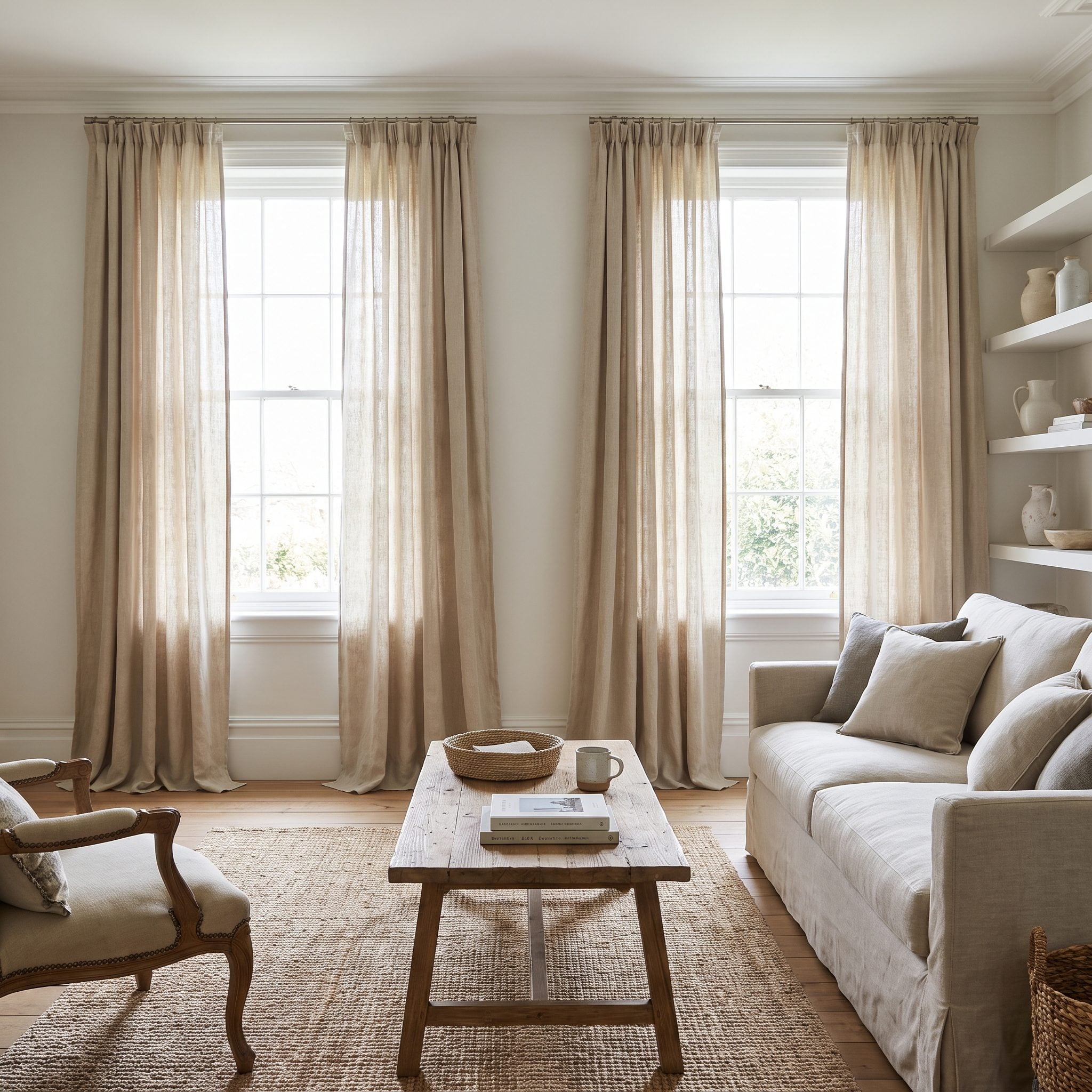
Linen gives short curtains an advantage: the fabric already looks as though it dislikes being bossed around.
It can relax, soften, and change dimension somewhat with humidity, laundering, weave, and finishing, but there is no universal rule that Belgian linen grows exactly an inch or sags half an inch by August.
So don’t order it deliberately too short based on folklore. Let the actual fabric tell you how it behaves.
What does matter is visual commitment. A controlled apron-length drop below the sill feels entirely different from a panel hovering awkwardly several inches above the floor as though someone measured for another house.
A slubby oatmeal linen panel on a brass curtain rod can make three inches below a sill look far more deliberate than ninety-six inches of fabric pooling where nobody needs it.
3. Nursery Curtains Kept Away From the Crib and Little Hands
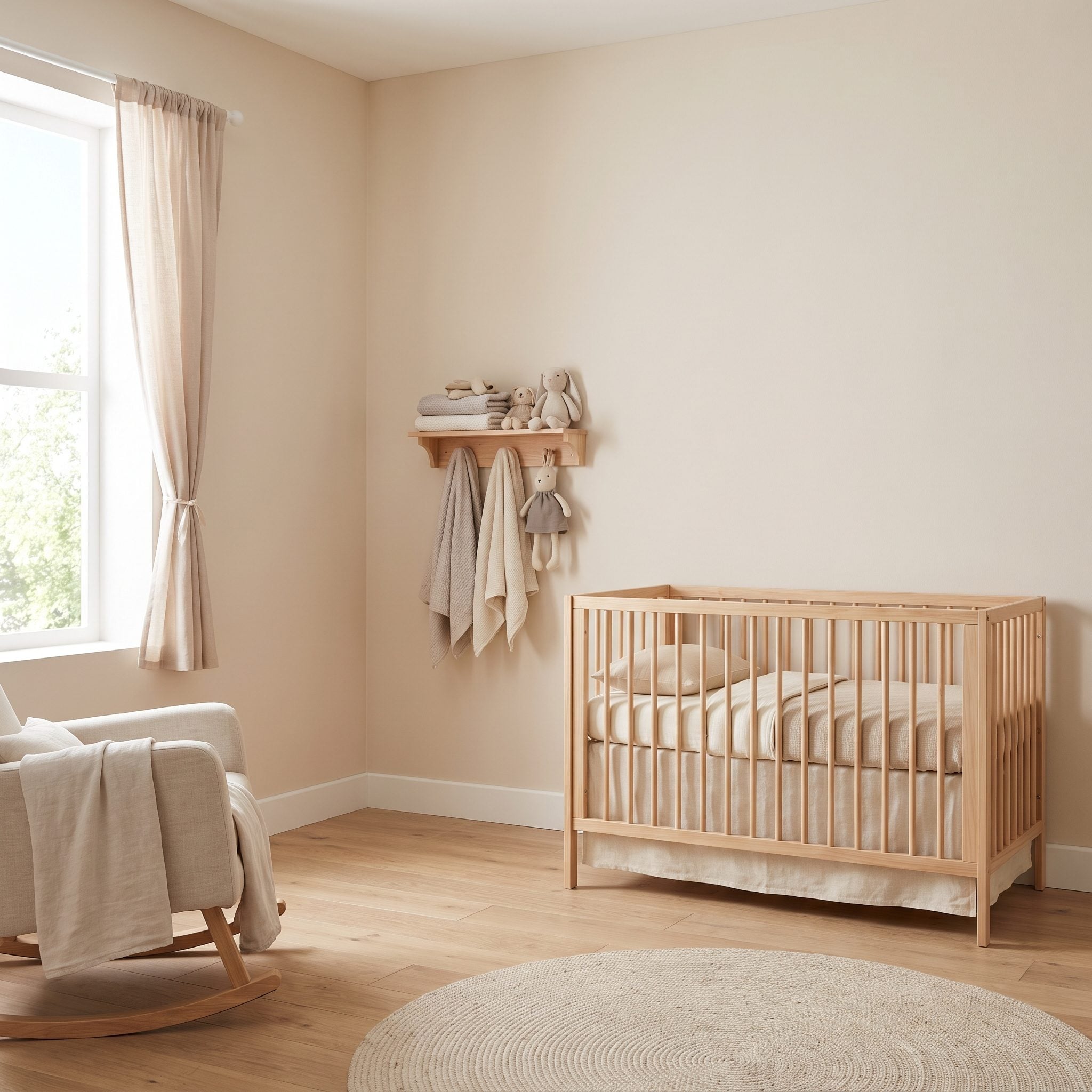
A nursery is where the article’s playful curtain rebellion has to become more precise.
The serious window hazard for young children is **accessible cords and loops**, not the mere fact that a curtain happens to be long. The CPSC documented more than 200 incidents involving children and corded window coverings from 2009 through 2021, with nearly half resulting in death. Source
Earlier research likewise documented fatal strangulations involving window-covering cords. Source
The CPSC’s practical advice is straightforward: use cordless window coverings and keep cribs, beds, and climbable furniture away from windows. Source
Short curtains can still make practical sense because they keep fabric off the floor and away from furniture, but they are not a substitute for cordless hardware and smart crib placement.
2. Patterned Short Curtains Used as a Deliberate Design Feature
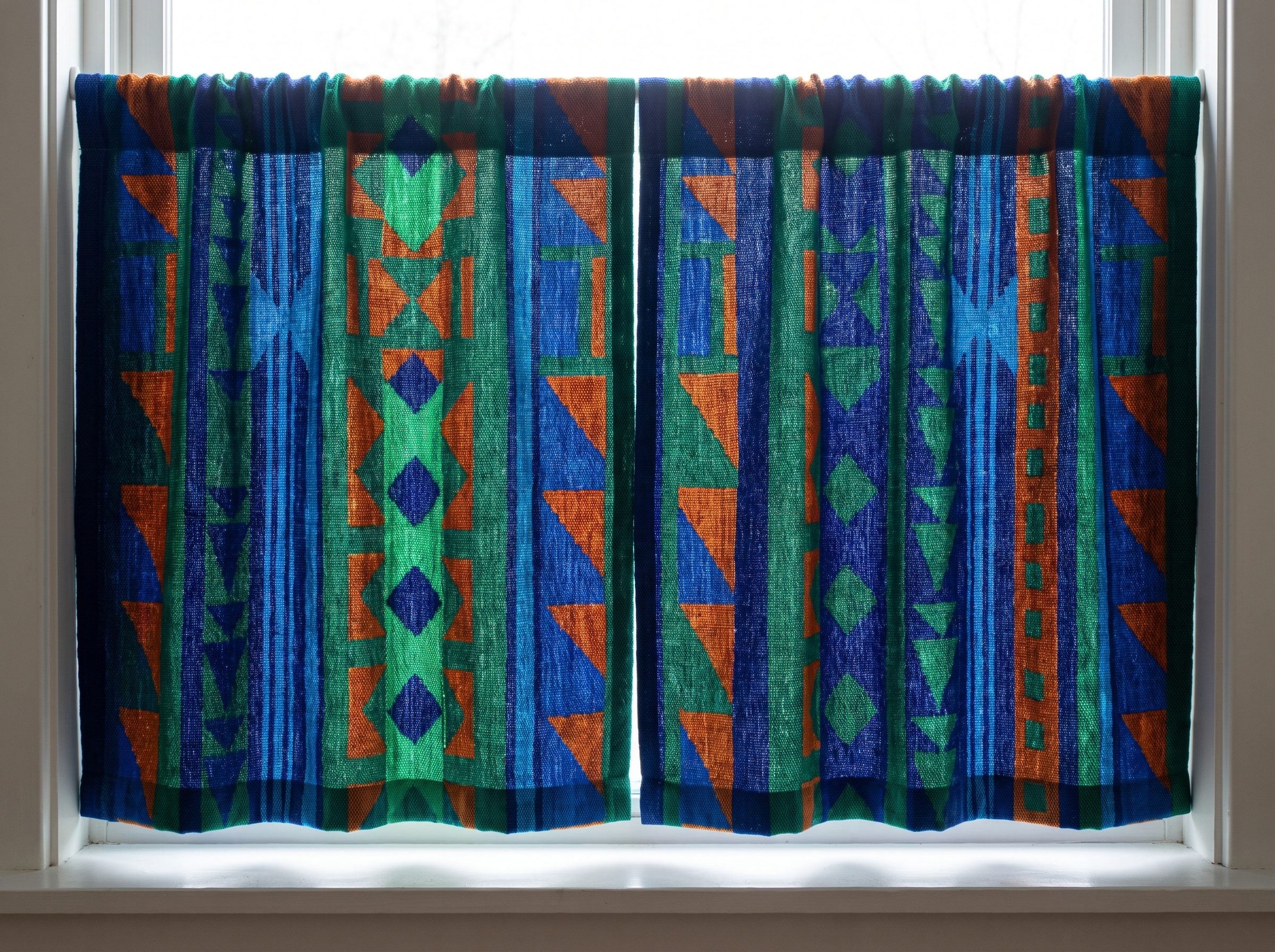
The louder the fabric, the more interesting the short-curtain argument becomes.
A block print contained inside a small window reads almost like framed textile art. The pattern gets enough room to announce itself, then stops before six more repeats turn the wall into an upholstered event.
That doesn’t mean bold prints inherently look wrong at floor length. Sister Parish, Nancy Lancaster, and generations of decorators could make acres of pattern look extraordinary. The point here is **concentration**: a short panel lets a high-energy print become an accent instead of the room’s weather system.
Scale matters. A large botanical shown across two repeats feels different from the same motif running seven feet down the wall.
Try it over a laundry sink, a banquette in a retro dining room, or a reading nook where the fabric gets a clear architectural frame.
The brass rod, crisp hem, and repeated blue-white rhythm in this room make the shortness unmistakably deliberate.
1. Tailored Short Curtains That Look Custom Rather Than Accidentally Too Short
And here is the image that earns the feature spot.
Nothing about these curtains looks as though somebody ordered the wrong size. The fabric has weight. The folds have fullness. The brass rod belongs to the room. Most important, the hem stops at an architectural line you can identify.
Sill length means finishing at or very near the sill. Apron length traditionally carries the fabric somewhat below it, often by a few inches. There is room between those conventions for judgment; the window police will not arrive because the hem missed an imaginary mark by half an inch.
What makes short look custom is commitment.
Cheap, flat fabric can make any curtain look temporary. Lined cotton or linen with a substantial bottom hem hangs differently. Small corner weights can help when appropriate. Fullness depends on heading style and cloth, but roughly 1.5 to 2.5 times the covered width is a useful design range rather than insisting every curtain must meet one fixed multiplier.
That is the whole case for these 33 rooms. A radiator can set the length. So can a sink, a desk, a banquette, a bathtub, a casement crank, a good piece of trim, or nothing more complicated than proportion.
Floor-length curtains can be beautiful. So can curtains that never get anywhere near the floor.
The mistake was never stopping short. It was pretending there was only one place worth stopping.