
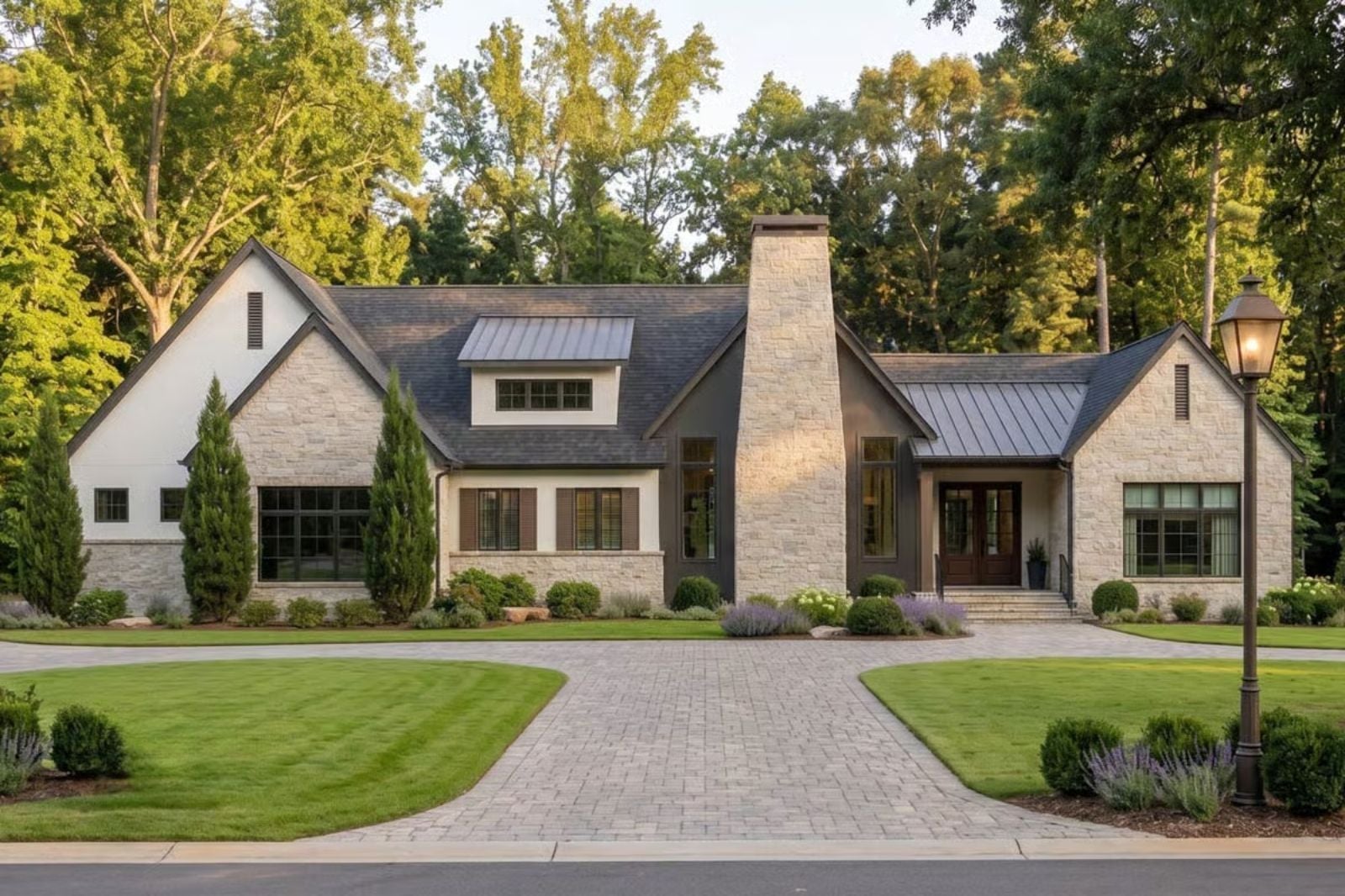
Self-made people rarely dream about ceiling heights — they dream about a home that actually works: an office with a door that closes before a seven o’clock call, a kitchen that doesn’t flinch at a Friday dinner for twelve, and a finished basement theater that earns its square footage on a Saturday night. The Crestline is built around exactly that — a single-story main level that runs lean and clean, and a finished basement that doubles the life of the house below it.
Specifications
- Sq. Ft.: 2,895
- Bedrooms: 3
- Bathrooms: 2.5
Floor Plan – Main FLoor
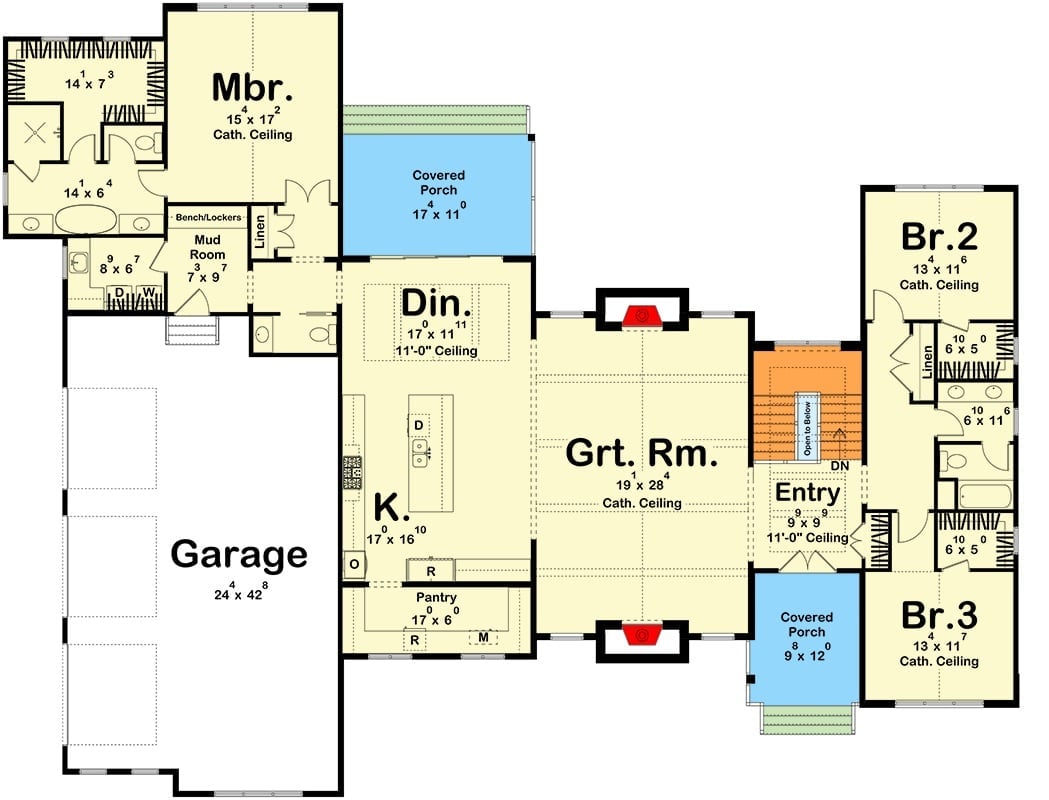
A central great room anchored by a cathedral ceiling holds the main level together. The master suite sits privately off the garage side, two secondary bedrooms share a wing near the entry, and the kitchen, dining, and pantry flow into each other without any awkward transitions.
Floor Plan – Basement
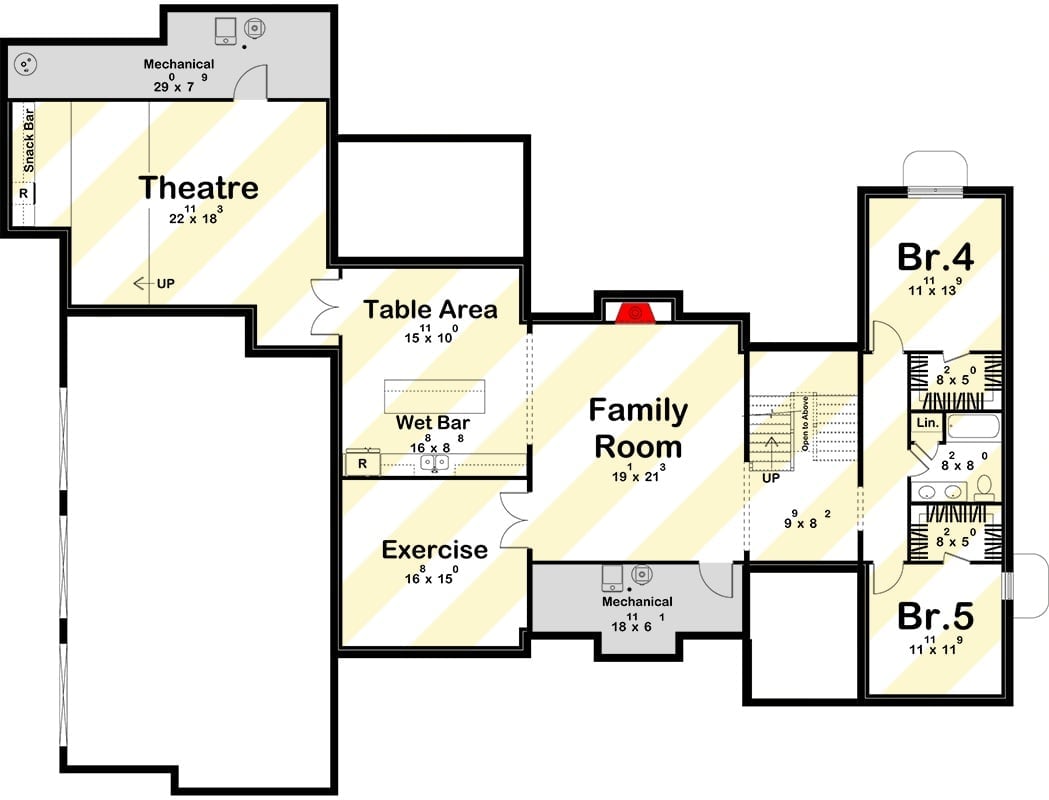
The basement is doing a lot. A dedicated theatre room, wet bar, table area, exercise room, and open family room all share the footprint, with two bedrooms and a full bath tucked into the right wing. Mechanical rooms are pushed efficiently to both ends, and stairs connect up to the main level. An “open to above” void keeps the whole thing from feeling buried.
Outdoor Fireplace Chimney Anchors a Backyard Built for Actual Living
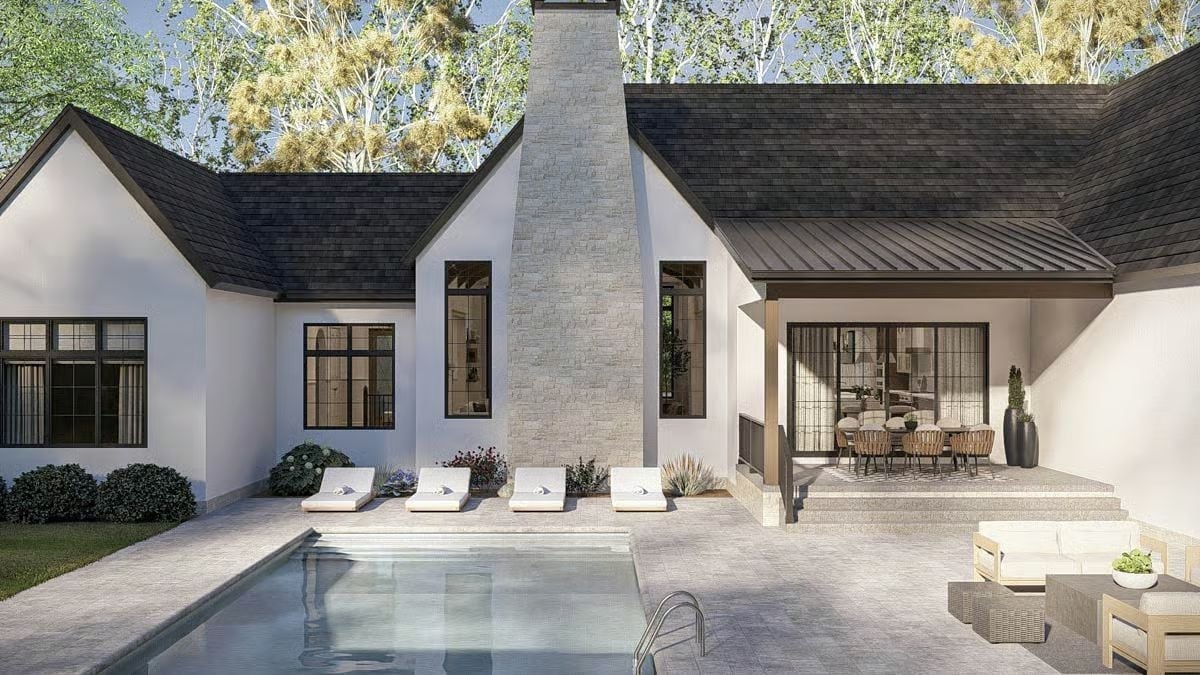
That stone chimney rises well above the roofline, and it gives the whole rear facade something to organize around — two distinct roof forms that would otherwise sit in competition. Four lounge chairs line the pool without crowding it. The covered dining porch is raised one step, which separates the eating zone from the deck cleanly and without needing a wall to do it. White stucco and dark window frames keep the palette from drifting.
- Stone chimney doubles as the visual anchor between two distinct roof forms
- Raised covered porch creates separation from pool deck without enclosing the space
- Black-framed windows tie the exterior together across both roof sections
Arched Passageway Pulls Afternoon Light Down the Whole Hallway
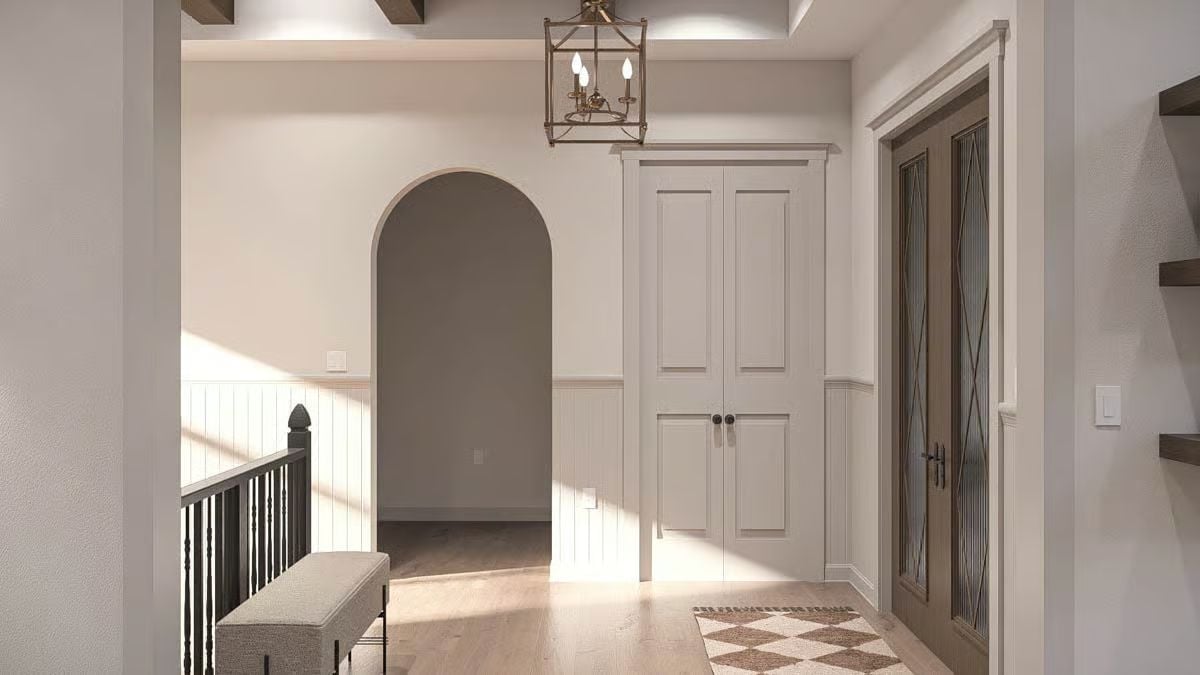
Wainscoting runs the length of the corridor, anchoring the space without competing with the arched opening behind it. The arch frames a darker alcove beyond, and that contrast actually works in the hallway’s favor — your eye travels through rather than stopping. A brass lantern pendant and hardwood floors keep things warm, and the checkered jute rug near the entry earns its spot rather than just filling square footage.
History Corner: Arched interior doorways trace back to Roman architecture, where the form was prized for distributing weight across masonry walls. By the 19th century, builders were using them purely for character in residential homes. Today they’re back, driven by renewed interest in Mediterranean and Spanish Colonial revival styles.
Stacked Stone Fireplace Wall Earns Every Inch of That Vaulted Ceiling
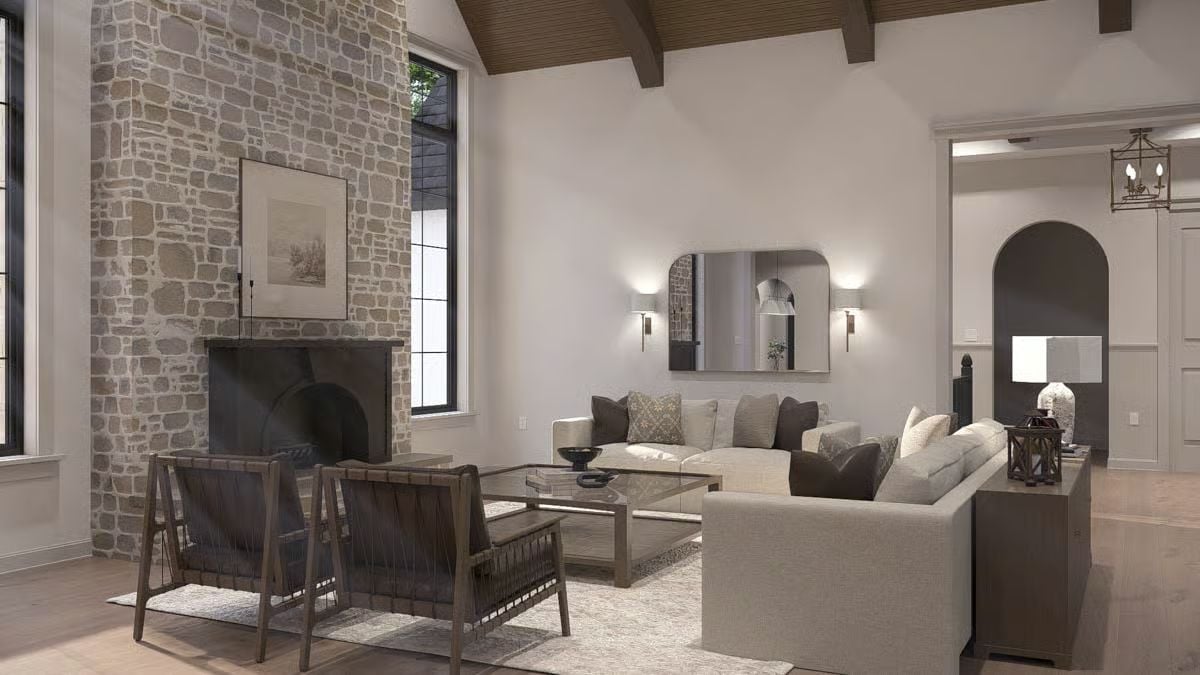
Rough-cut stone climbs floor to ceiling beside a dark steel firebox, grounded by exposed wood beams overhead and light oak floors below.
Why That Stone Selection Works With the Beams
The fireplace surround uses irregular, hand-laid fieldstone rather than uniform ashlar cuts. That roughness echoes the raw texture of the wood ceiling beams in a way that feels intentional rather than accidental — both materials carry visible tool marks and natural variation, so neither one reads like a showroom prop. Smooth plaster walls on either side stay out of the conversation entirely, letting the stone claim the room without crowding it.
Brass Bridge Faucet Centered on an Island That Seats Five Comfortably
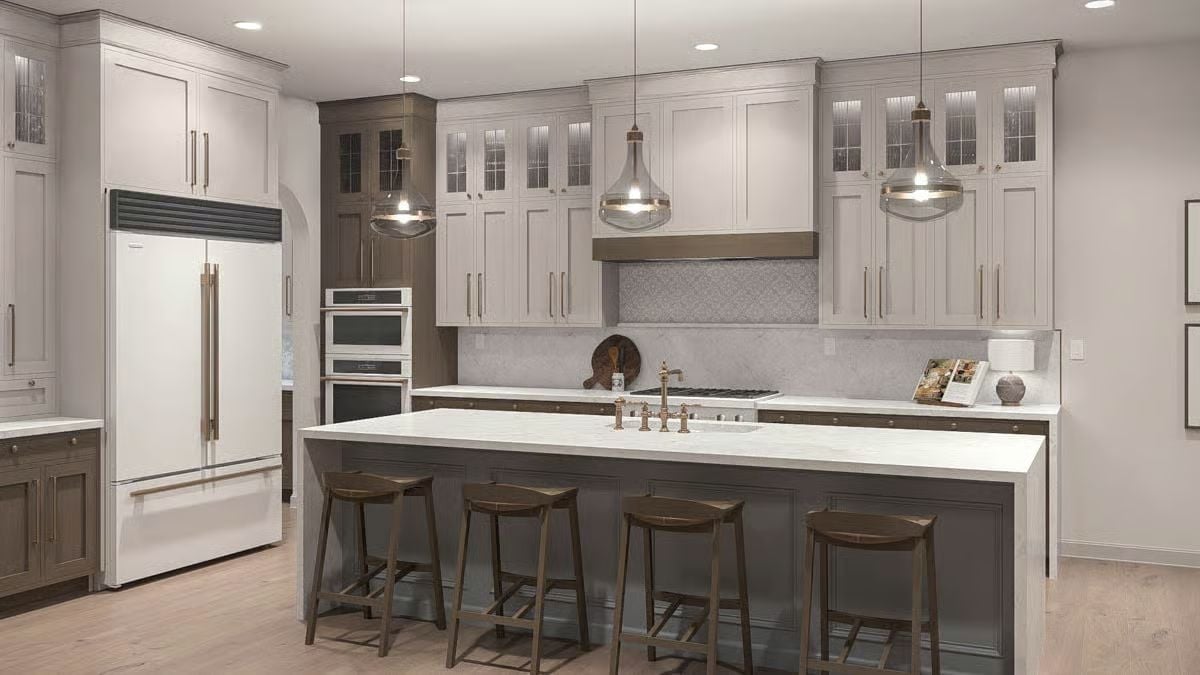
Teardrop glass pendants hang over white quartzite, while bronze barstools anchor the gray island base.
Designer’s Secret: Mixing cabinet finishes — gray island against lighter perimeter cabinets — draws the eye inward and makes a large kitchen feel organized rather than sprawling. Designers use it to create zones in an open kitchen without building walls. The warm bronze hardware ties both finishes together without forcing them to match.
Oval Pedestal Table Under Triple Pendants Does the Heavy Lifting Here
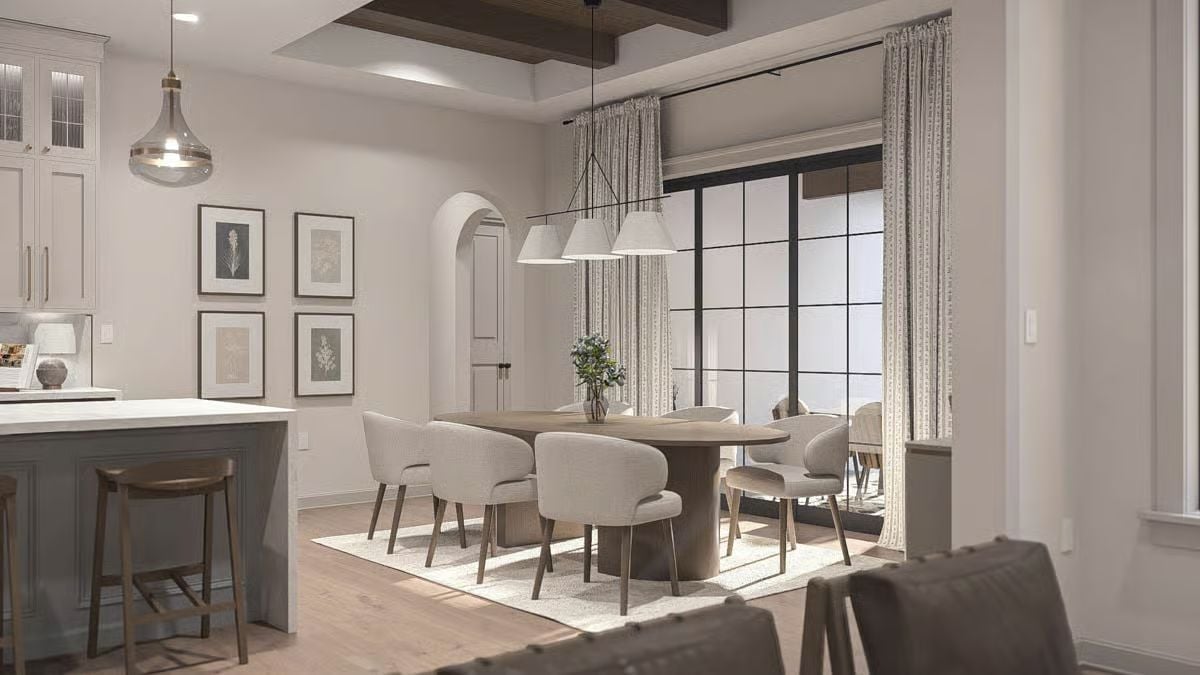
Linen chairs wrap a wood pedestal table with no sharp corners, and the steel-frame glass door pulls the room toward daylight without sacrificing warmth. Simple combination. Hard to mess up.
Trend Alert: Pedestal dining tables are gaining ground over four-leg styles because they free up seating on all sides — nobody’s straddling a corner leg. It’s a quiet shift, but anyone who’s hosted a dinner party around a traditional table feels the difference immediately. Pair one with upholstered chairs and the whole room reads softer.
Vaulted Ceiling and Roman Shade Layering Give This Bedroom Quiet Authority
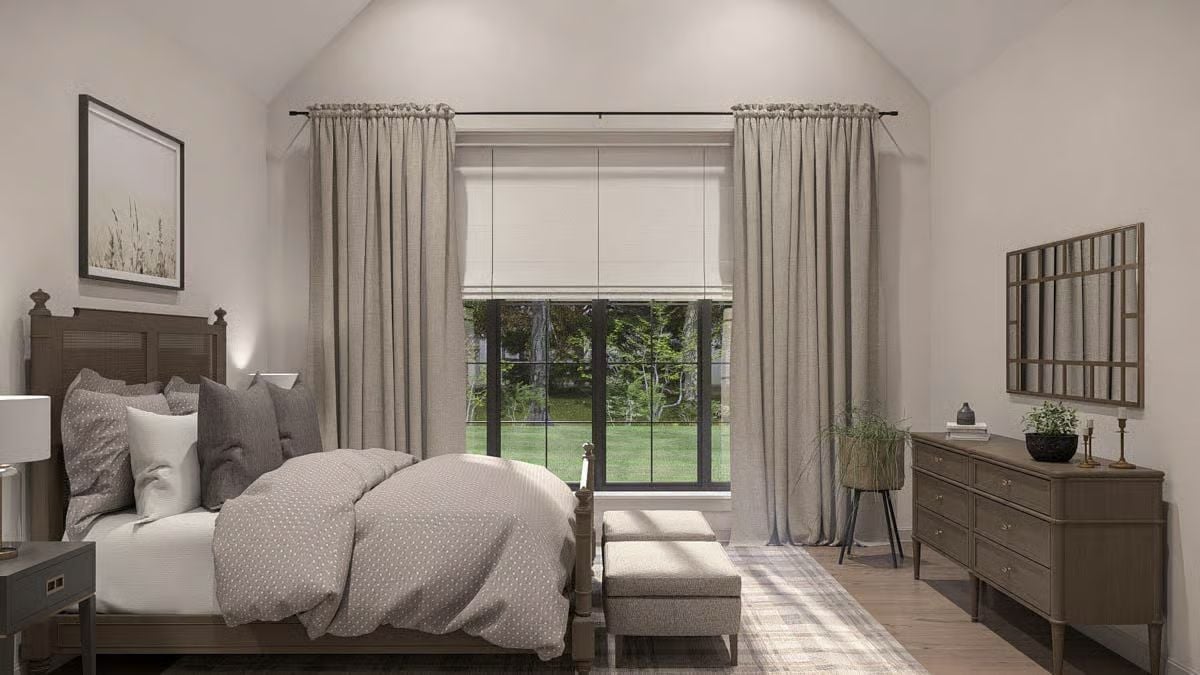
Gray-brown furniture throughout keeps the palette cohesive without tipping into matchy territory. The layered window treatment does real work: a white Roman shade handles light and privacy while floor-length drape panels soften the surround. Cane-panel headboard detail holds its own against the crisp walls, and the bench at the footboard is practical — not decorative filler.
Editor’s Note: Layering a Roman shade with side panels is one of the more practical window treatments for a bedroom because each component handles a different job. The shade manages light and privacy while the panels frame the window and add warmth. You can adjust either one independently depending on the time of day.
Dual Vanities Flanking a Freestanding Tub Make Symmetry Do Real Work
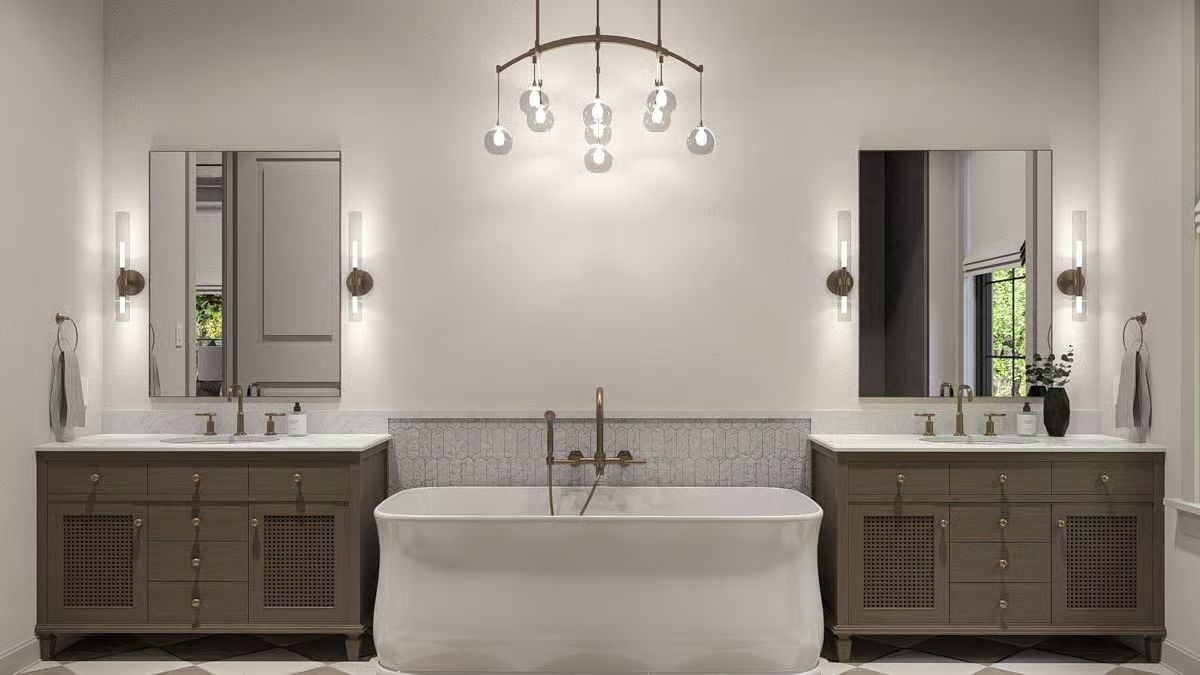
Brass wall-mount faucets position the tub as a focal point rather than an afterthought. Cane-front cabinet doors on both vanities keep the dark wood from reading too heavy — a small detail that matters more than it sounds in a room this size. Above, a pendant chandelier with glass globes at staggered heights draws the eye upward without crowding the sconces flanking each mirror.
Did You Know: Freestanding tubs mounted against a tiled half-wall rather than centered in open floor space are a practical compromise that designers increasingly favor. The wall provides plumbing access without a full floor-mounted rough-in, which can add real cost and complexity to the build. It also gives the tub visual grounding so it doesn’t float awkwardly in a large room.
Pin It
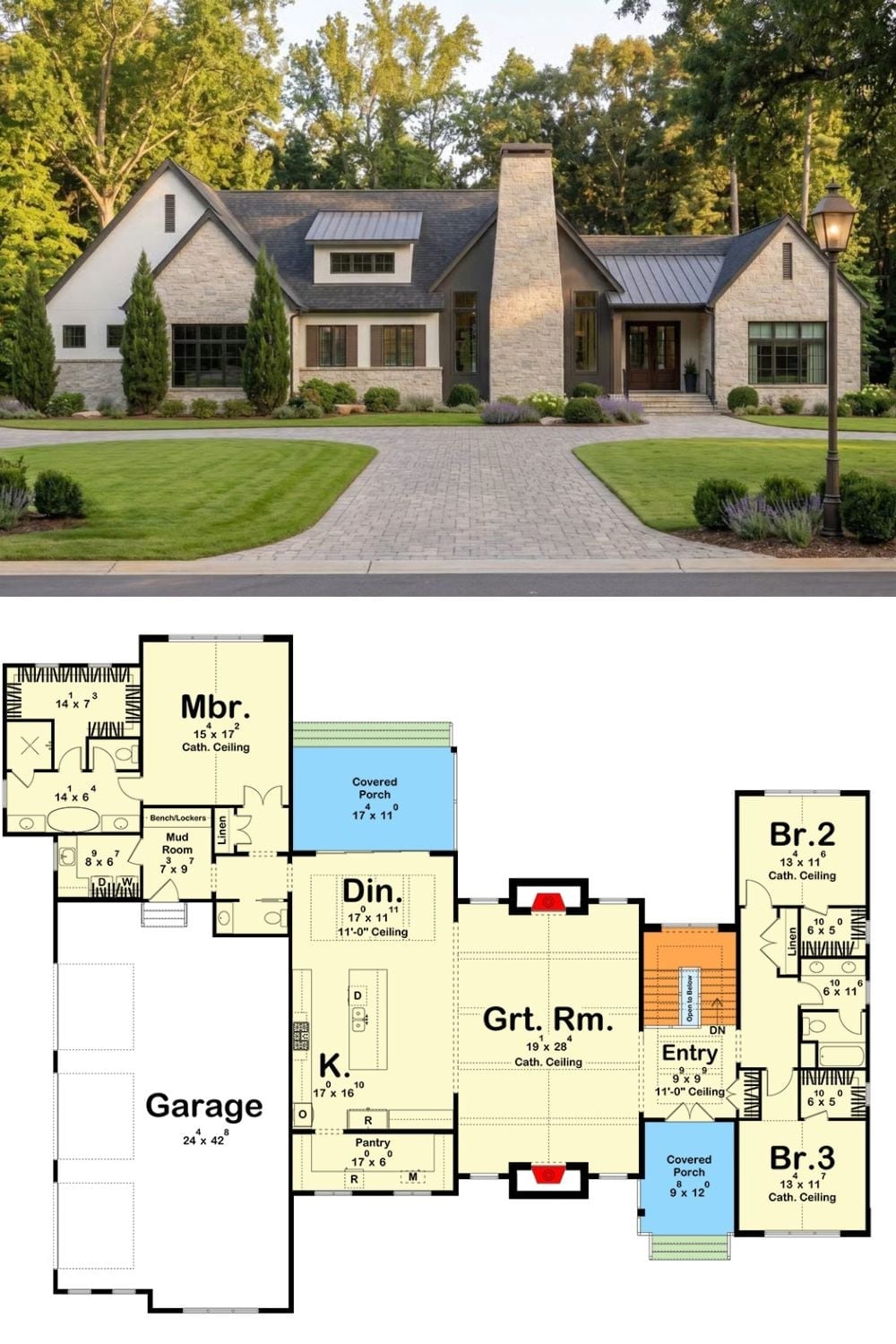
Exterior photo shows a modern transitional home with stone cladding and a circular paver driveway. The floor plan below reveals three bedrooms, a great room, mud room, and attached three-car garage.