🔥 Would you like to save this?
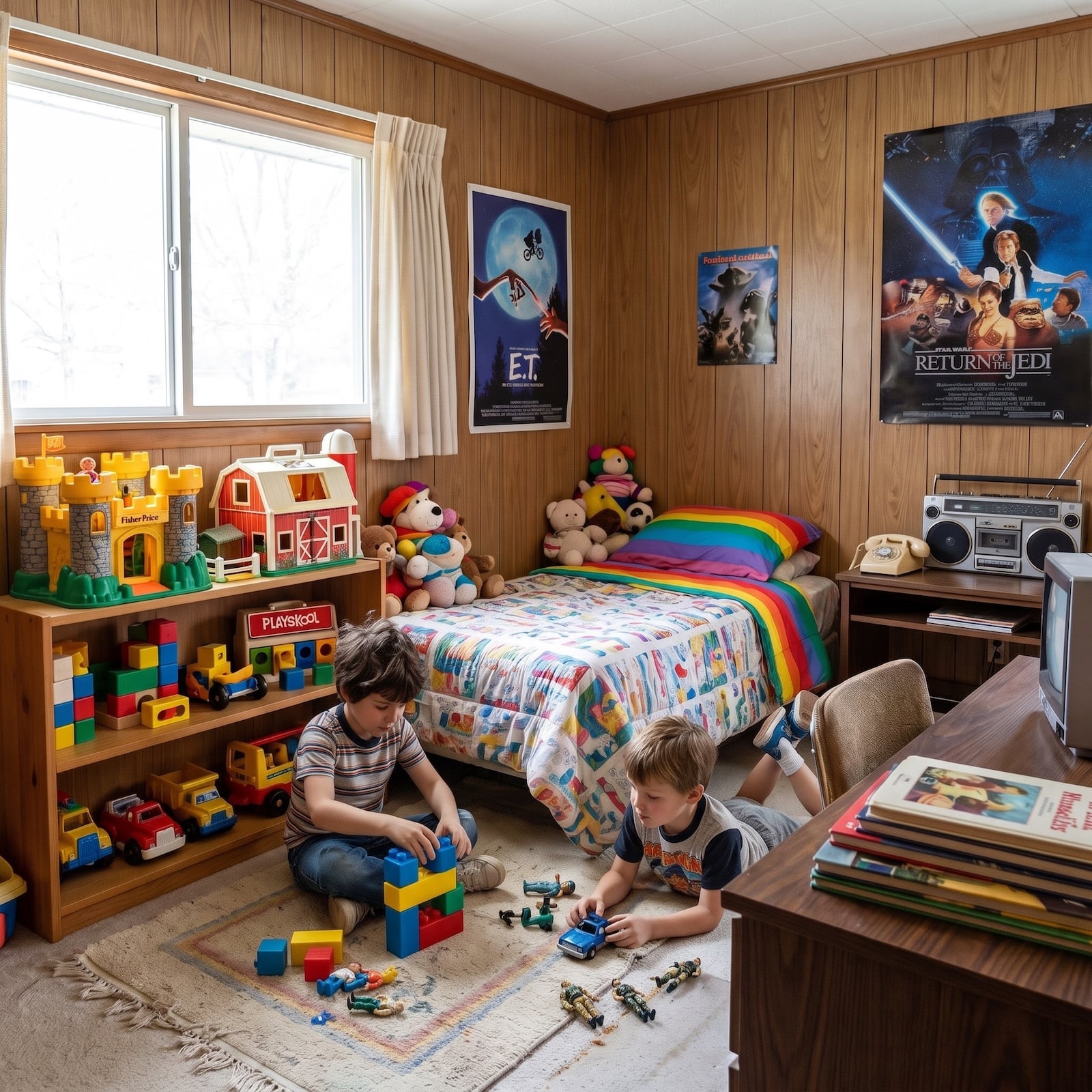
Start with an empty bedroom sometime around 1983. Four walls. One window. A ceiling light nobody particularly liked. Now start spending. The bed needs a mattress. The mattress needs sheets. The sheets need the character bedspread that suddenly matters more than anything else in the room. A desk appears, then a lamp, then a shelf, then a clock radio glowing red beside the bed. Before long there are posters taped crookedly to the paneling, cassette cases multiplying under the nightstand and enough plastic on the floor to make walking barefoot a tactical decision.
Then come the toys, and that is where the arithmetic gets interesting. A Barbie could cost less than five dollars at Sears in 1983 while her Dream House approached ninety. A G.I. Joe figure was a few dollars; the seven-foot U.S.S. Flagg aircraft carrier was $109.99. Castle Grayskull was $24.99. A Cabbage Patch Kid carried a $25 price tag during the Christmas frenzy of 1983. An NES Deluxe Set arrived at $179.99 in its 1985 test-market debut. None of those numbers looks enormous from 2026 until you remember that the federal minimum wage sat at $3.35 an hour for almost the entire decade.
In order to come up with the very specific design ideas, we create most designs with the assistance of state-of-the-art AI interior design software. Also, assume links that take you off the site are affiliate links such as links to Amazon. this means we may earn a commission if you buy something.
A kid’s bedroom was rarely bought in one magnificent shopping trip anyway. It accumulated. The furniture came first or arrived secondhand. Birthday money added the toys. Christmas supplied the expensive electronics. Grandparents contributed an afghan nobody had requested and everybody eventually loved. Posters cost a few dollars. Cars cost pocket change. Records, tapes, cartridges and accessories kept nibbling away long after the supposedly big purchase was over. By the time the room looked properly inhabited, the receipt existed only in fragments scattered across years.
These 38 price tags rebuild that room one object at a time. Some numbers come straight out of period retail and catalog pricing; others represent the ordinary ranges shoppers encountered across the decade as models and stores changed. The surprising part isn’t simply that things cost less. It’s where the money went, what counted as a splurge, what stayed cheap enough for allowance money, and how quickly a bedroom full of ordinary stuff became a small private economy. Pull up the toy chest. We’re doing the inventory.
A little inspiration can turn into a serious renovation plan—check today’s home equity rates if financing is on your mind.
38. A Twin Bed and Headboard: $40 to $60 for the Room’s Main Event
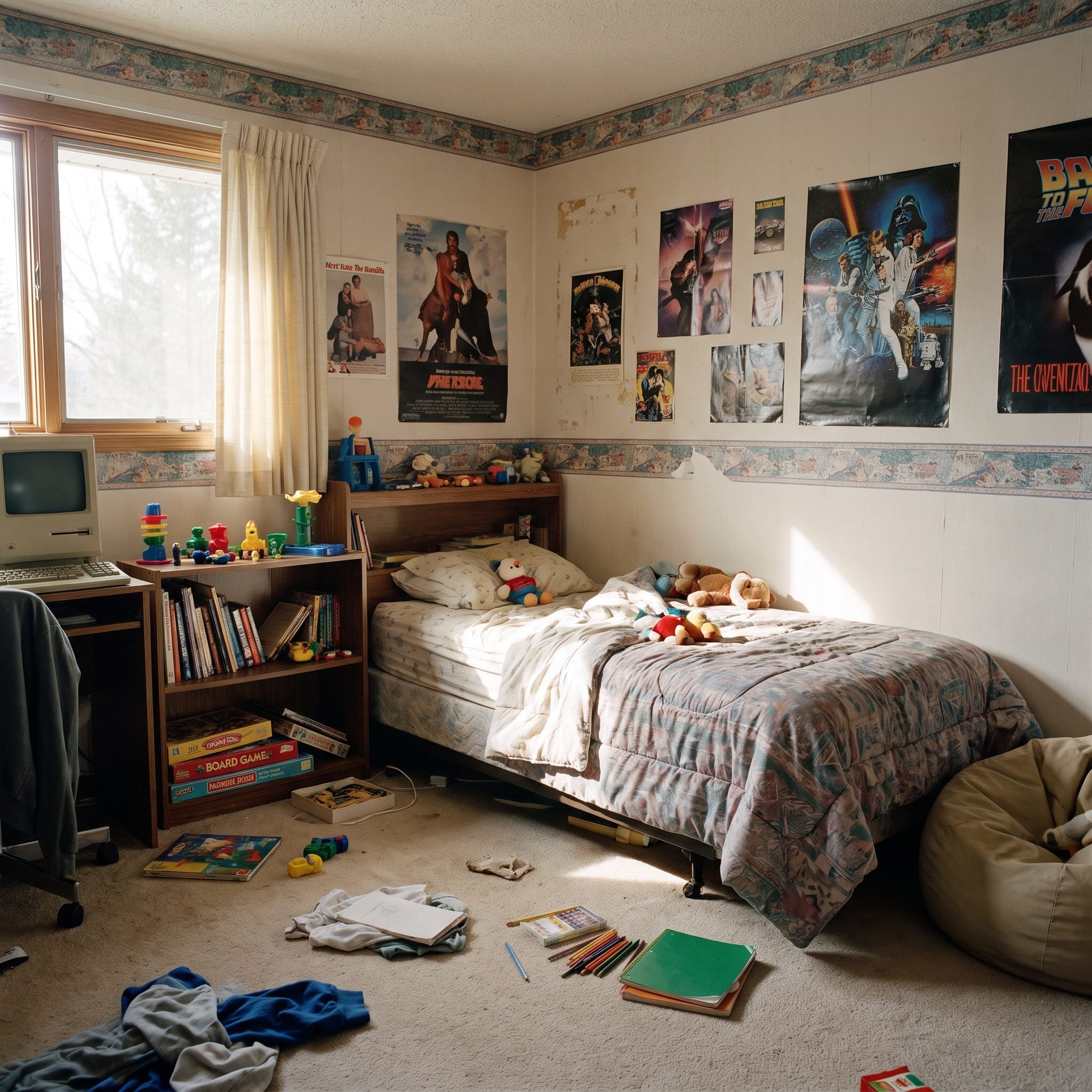
Before the toys, before the posters, before anybody argued about whether the stereo was too loud, there had to be somewhere to sleep. Basic twin frames and inexpensive headboards sold in the $40 to $60 range in the early 1980s, depending on whether you wanted plain metal, simple wood or something with enough spindles to qualify as furniture.
The aesthetic was not complicated. Maple stain. Tubular metal. Maybe a few turned posts. Nobody was building a coral bedroom around the thing. The bed occupied the wall that made the most sense, and the rest of childhood worked around it.
37. Atari 2600: $139 in January 1983, $99 by May
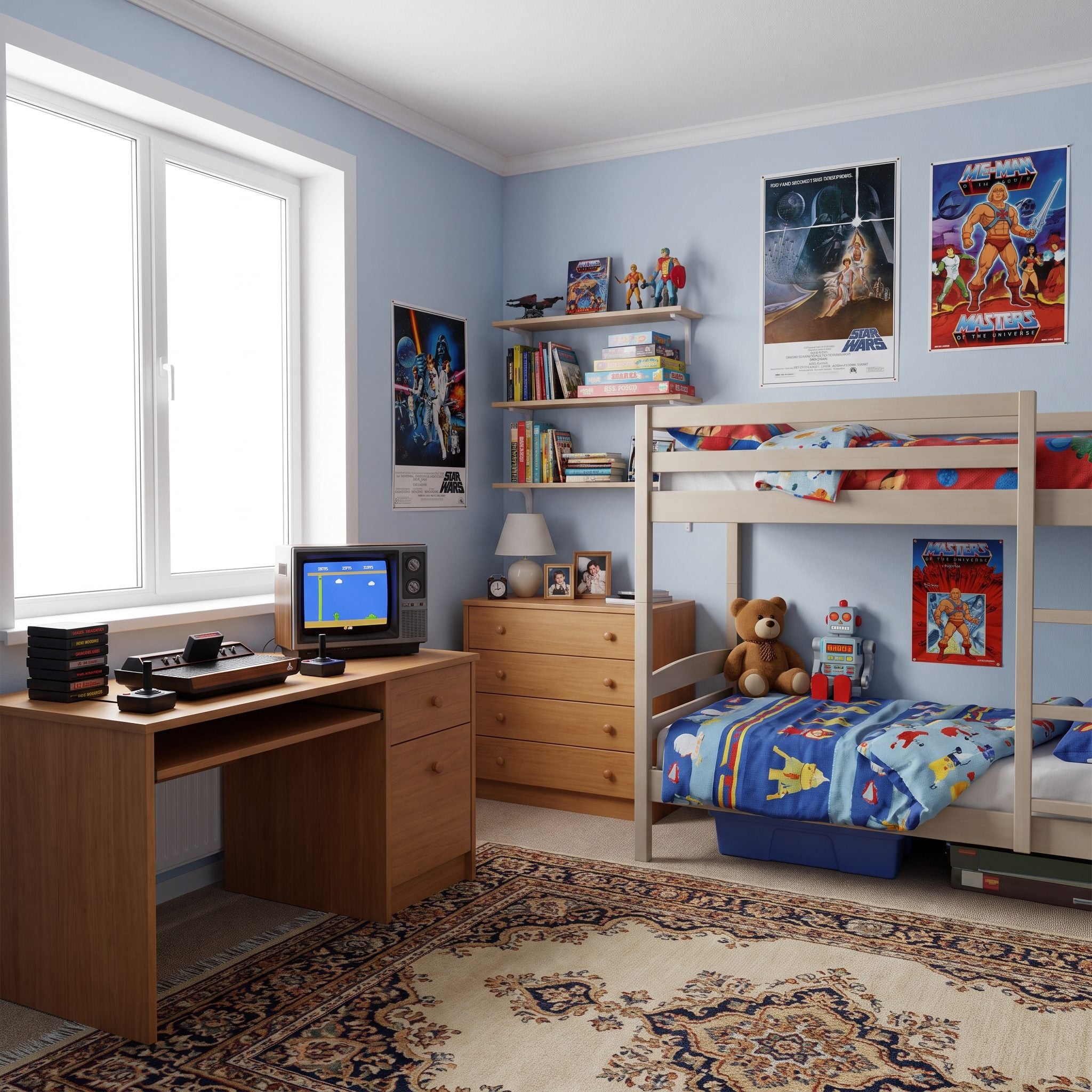
Nothing demonstrates the speed of the early-’80s video-game market quite like Atari pricing. The console had originally launched years earlier at $199, but by January 1983 the VCS/2600 was selling around $139. By the end of May, amid a vicious price war and a collapsing game market, that figure had fallen to $99.
Imagine being the kid who had spent months lobbying for one only to watch the price tumble after it finally entered the house. The console still owned the room, of course. Combat still got played. Joysticks still got yanked sideways with unnecessary force. But somewhere, a parent was looking at the new sale flyer with narrowed eyes.
36. The Bedspread That Took Over the Room for $15 to $30
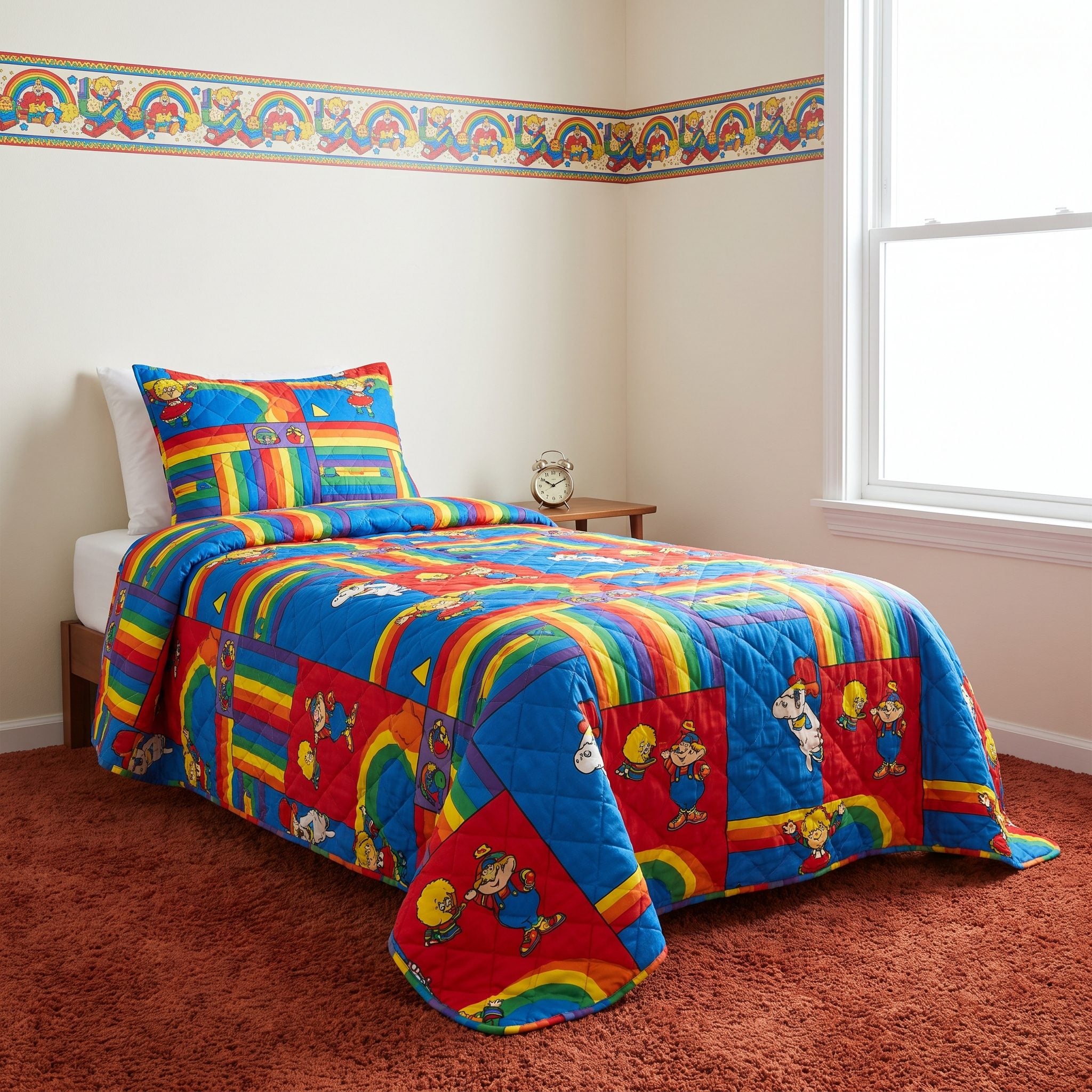
This was where a room stopped belonging to the parents and started belonging to the kid. A licensed character spread or loud printed twin cover could land around $15 to $30, depending on the fabric, brand and character stamped across several square yards of polyester.
Space scenes, racing cars, cartoon characters, rainbows, geometric explosions in colors nobody had formally introduced to one another. The furniture could remain completely generic. One bedspread took care of the autobiography.
35. The Dresser-and-Mirror Set: $100 to $150 and Built to Outlast the Posters
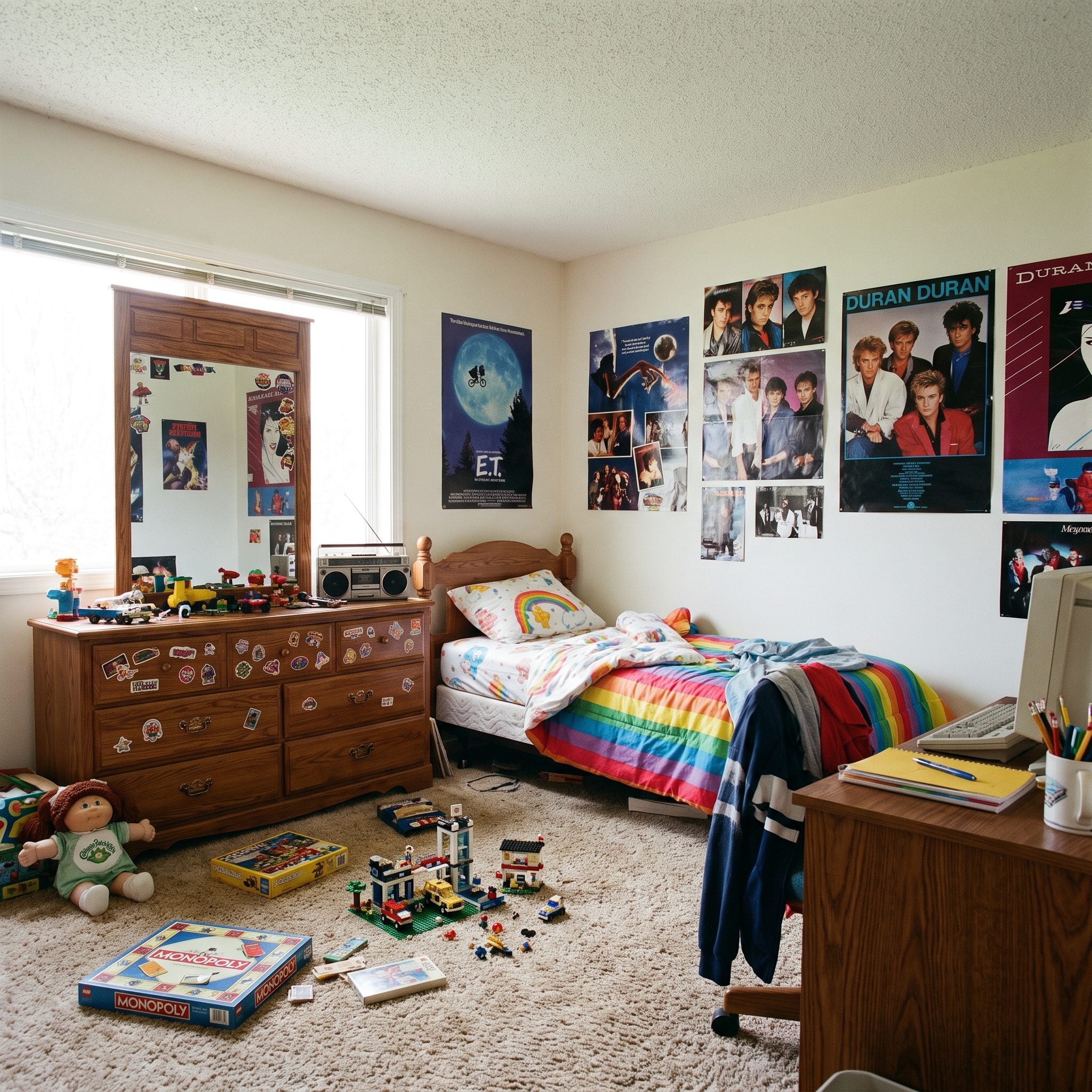
Now spend real furniture money. A modest dresser-and-mirror combination sat in the $100 to $150 neighborhood in the middle of the decade, especially once you moved beyond the cheapest ready-to-assemble pieces.
Laminate, veneer, brass-colored pulls, a mirror screwed firmly to the back. The drawers held T-shirts until adolescence rearranged the priorities and the mirror became the busier half of the purchase.
These were the pieces that tended to survive the room around them. Posters disappeared. Toys went to cousins. The dresser moved to a guest room and quietly kept working for another twenty years.
34. Hot Wheels and Matchbox: A Dollar at a Time Until the Shoebox Was Full
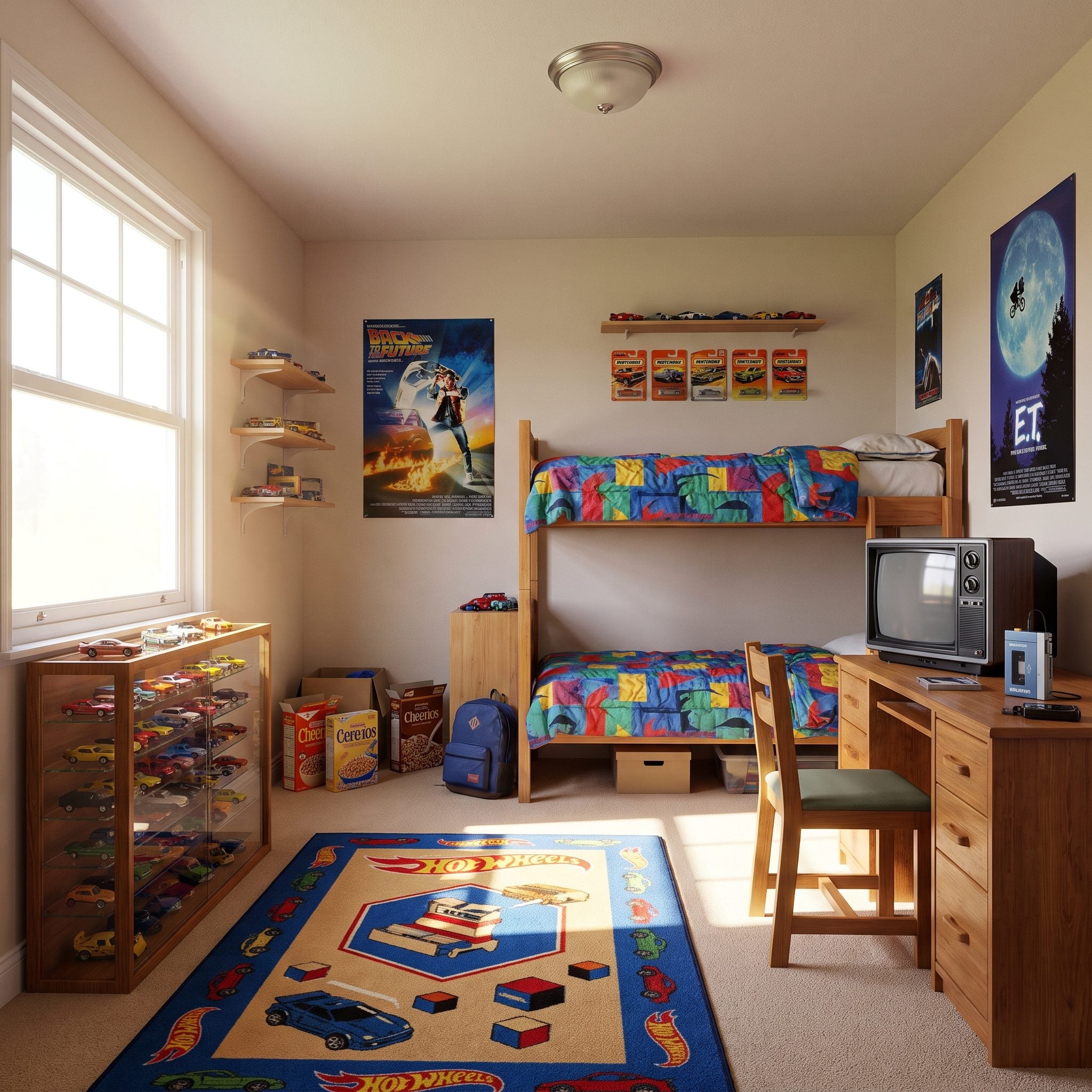
Here was the dangerous price point: about a dollar a car. Cheap enough to ask for. Cheap enough for an adult to say yes. Cheap enough that nobody noticed the collection becoming an infrastructure project.
One car was nothing. Ten cars were still manageable. Then there was a shoebox full of them, followed by orange track, connectors, launchers and the one battered favorite that somehow always won.
33. Ruffles at the Window: $15 to $30 for Curtains and a Valance
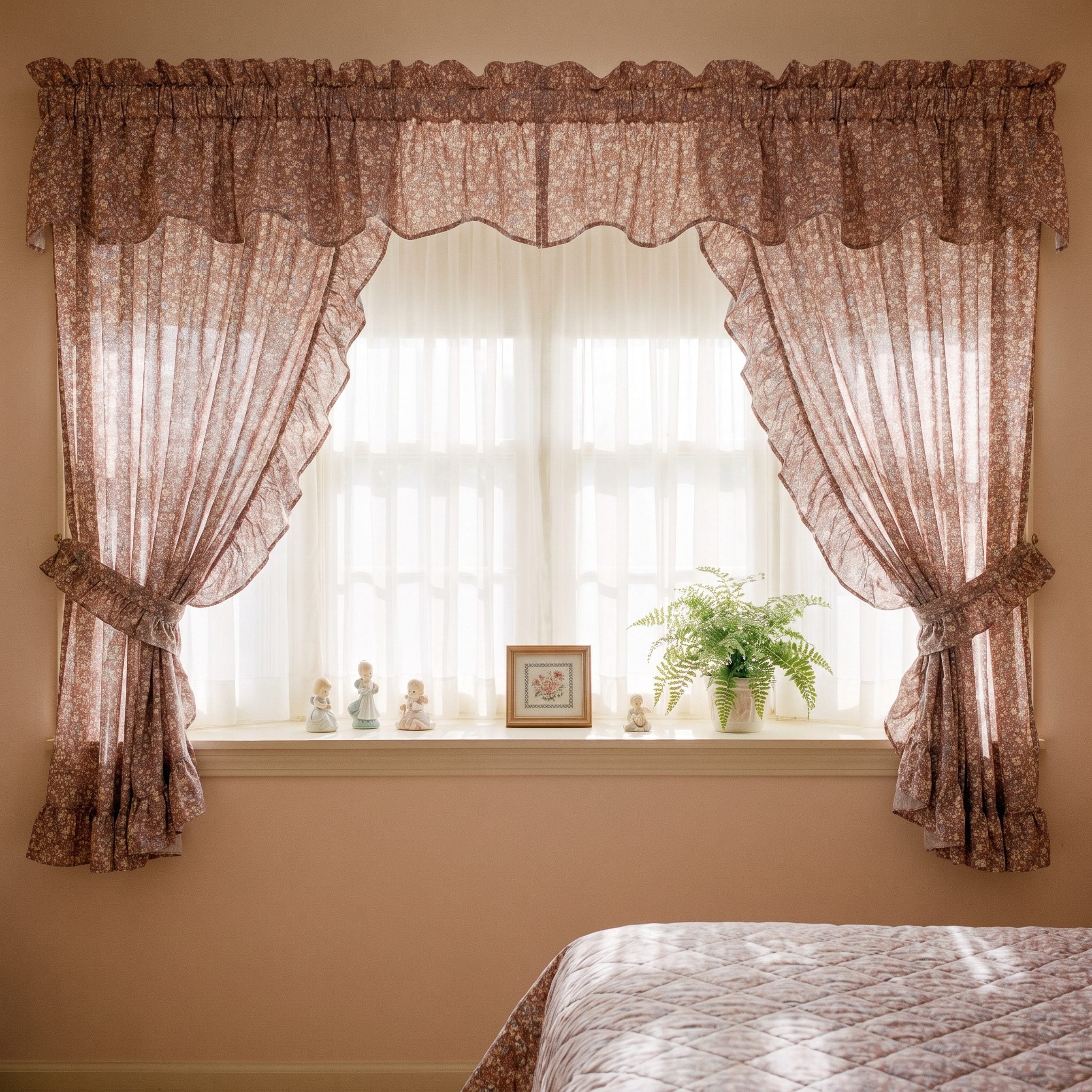
Ready-made curtain sets and valances sold in the $15 to $30 range, with elaborate ruffles, tiebacks and Priscilla-style panels pushing the price upward. Plenty of families skipped the package entirely and made them from yardage at home.
The payoff was enormous for such a small part of the budget. Match the window to the bedspread and suddenly the bedroom looked planned. Not professionally designed, certainly. Planned was achievement enough.
The same basic trick still turns up in a cottage bedroom renovation: repeat one textile or color at opposite sides of the room and let the eye make the connection.
32. Your Bedroom Soundtrack Started at $20; the Boombox Took It Higher
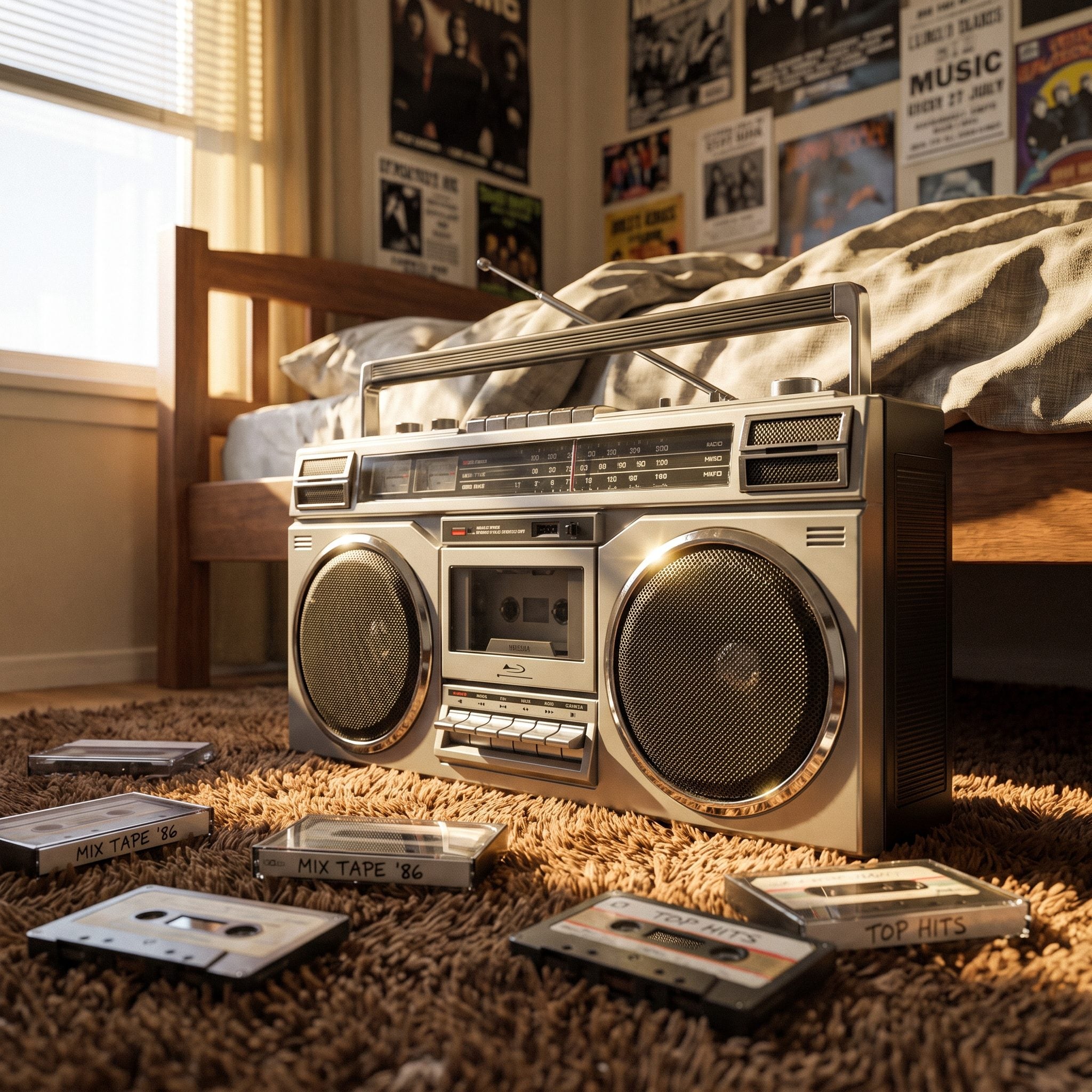
Sears advertised stereo personal cassette players from $19.99 to $49.99 in 1983. Move into a larger portable stereo with dual decks, detachable speakers or enough chrome buttons to resemble flight controls and the price climbed quickly.
This was more than another object on the shelf. It changed what the bedroom was for. You could shut the door, turn up the radio, tape songs, replay them until the cassette hiss became part of the music and discover that three minutes and forty seconds could alter an entire afternoon.
Dual decks were the luxury move. Dub one tape onto another and suddenly the room contained a tiny recording industry. That’s a small game room‘s worth of power sitting on a dresser.
31. Homework Headquarters: $40 to $70 for a Desk and Chair
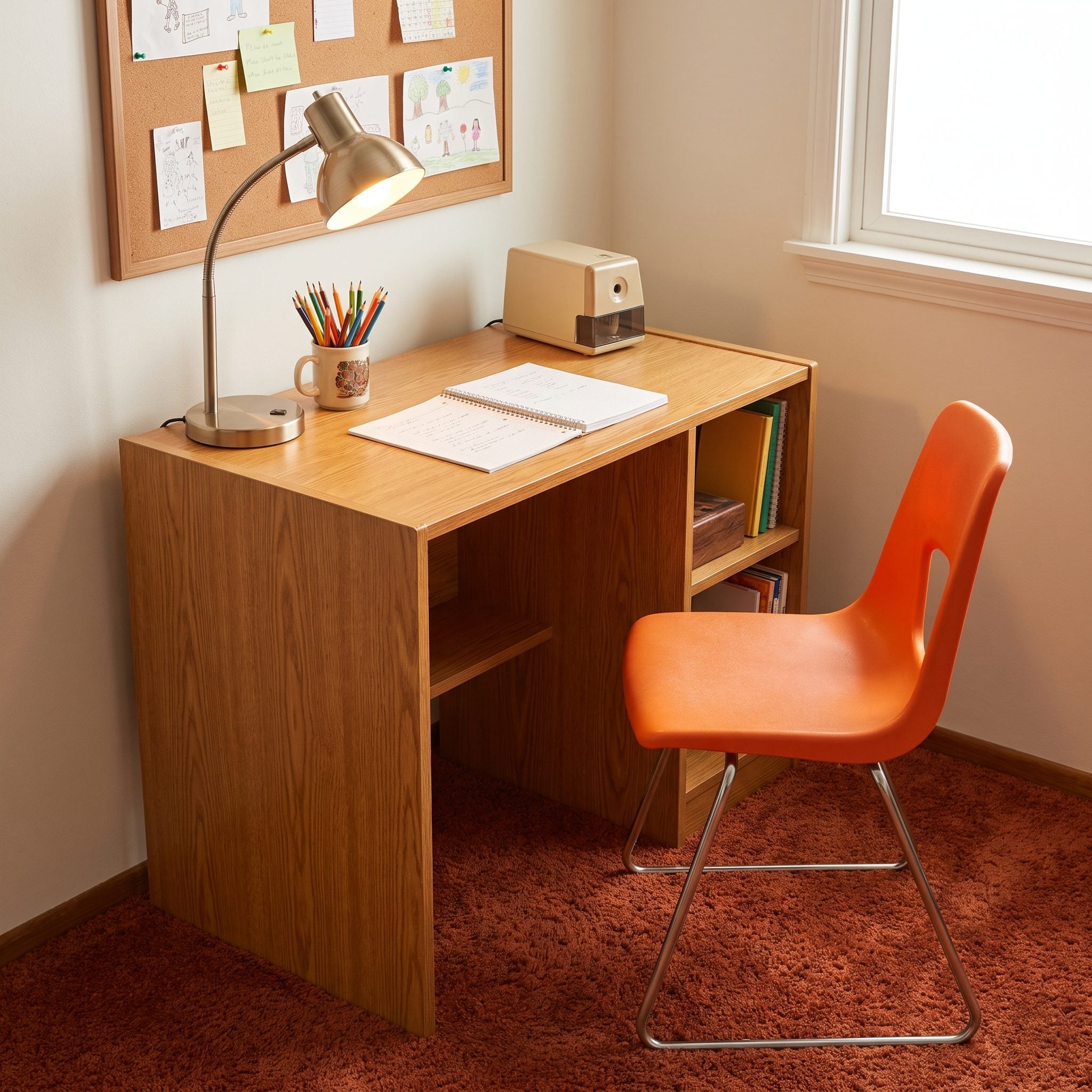
A simple child’s or student desk with a chair sold for $40 to $70, with basic ready-to-assemble desks sitting near the bottom of that range. On paper, this was the serious corner of the room.
In practice, the desk hosted homework, model glue, Lego cities, cassette surgery, drawings, comic books, half-finished science projects and one drawer containing nineteen dried-out markers but no usable pencil.
The molded-plastic chair helped. Orange, harvest yellow, avocado, primary blue. It announced itself from across the room and usually acquired at least one mysterious crack before high school.
30. The $25 Cabbage Patch Kid Nobody Could Find in 1983
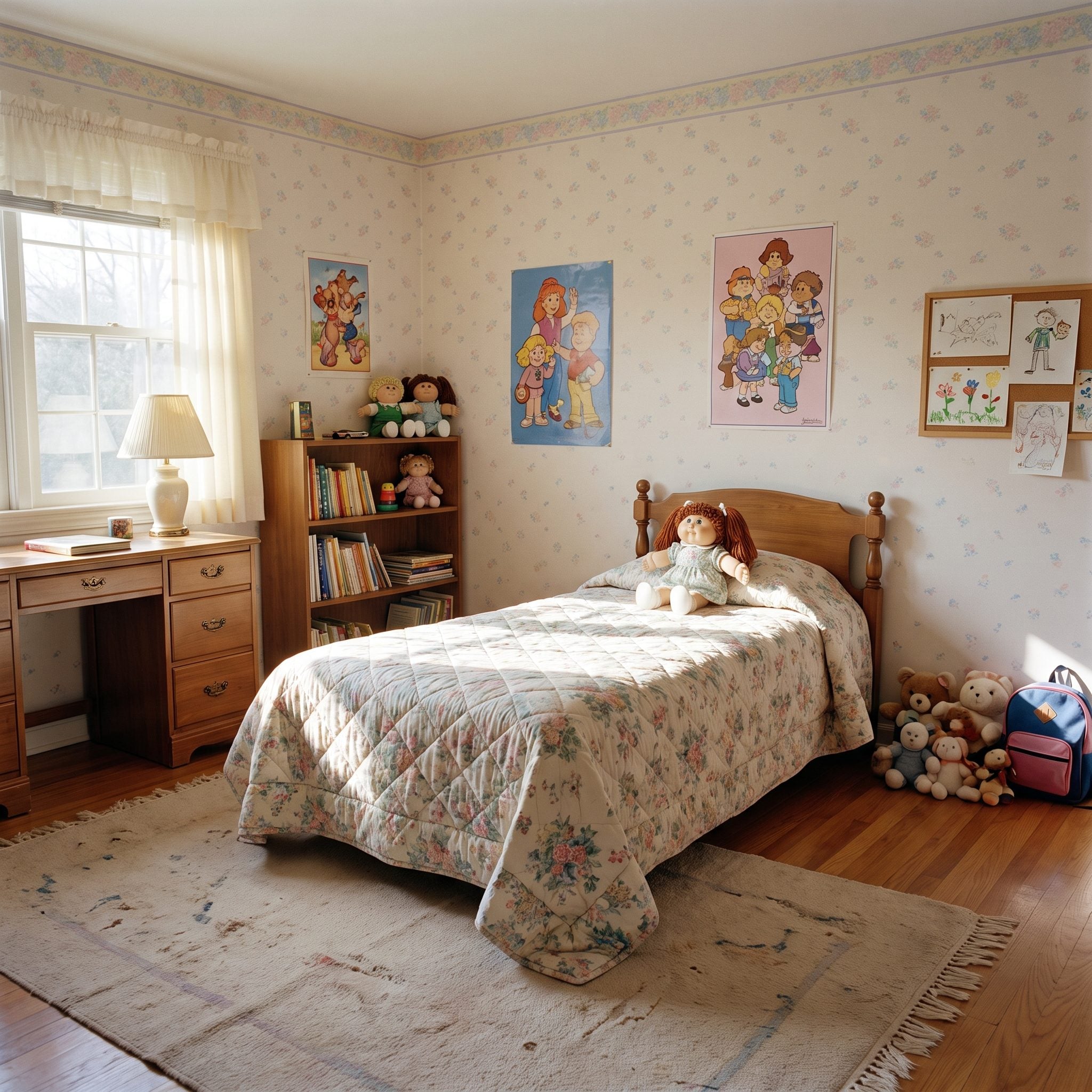
The official number was $25. TIME reported that price during the frenzy of December 1983, when the difficult part was not paying for a Cabbage Patch Kid. It was locating one before somebody else did.
Thousands of shoppers showed up for tiny shipments. Stores saw pushing, grabbing and outright brawls. The secondary market sent prices soaring far above retail. A doll that normally cost less than many electronic toys became the object around which Christmas temporarily lost its manners.
The adoption certificate was the masterstroke. This was not merely a doll in the language of the brand. It had a name. A birthday. Papers. You adopted it. Twenty-five dollars bought both plastic-and-cloth and an administrative procedure.
29. One $25-to-$40 Bookcase Held Half the Room
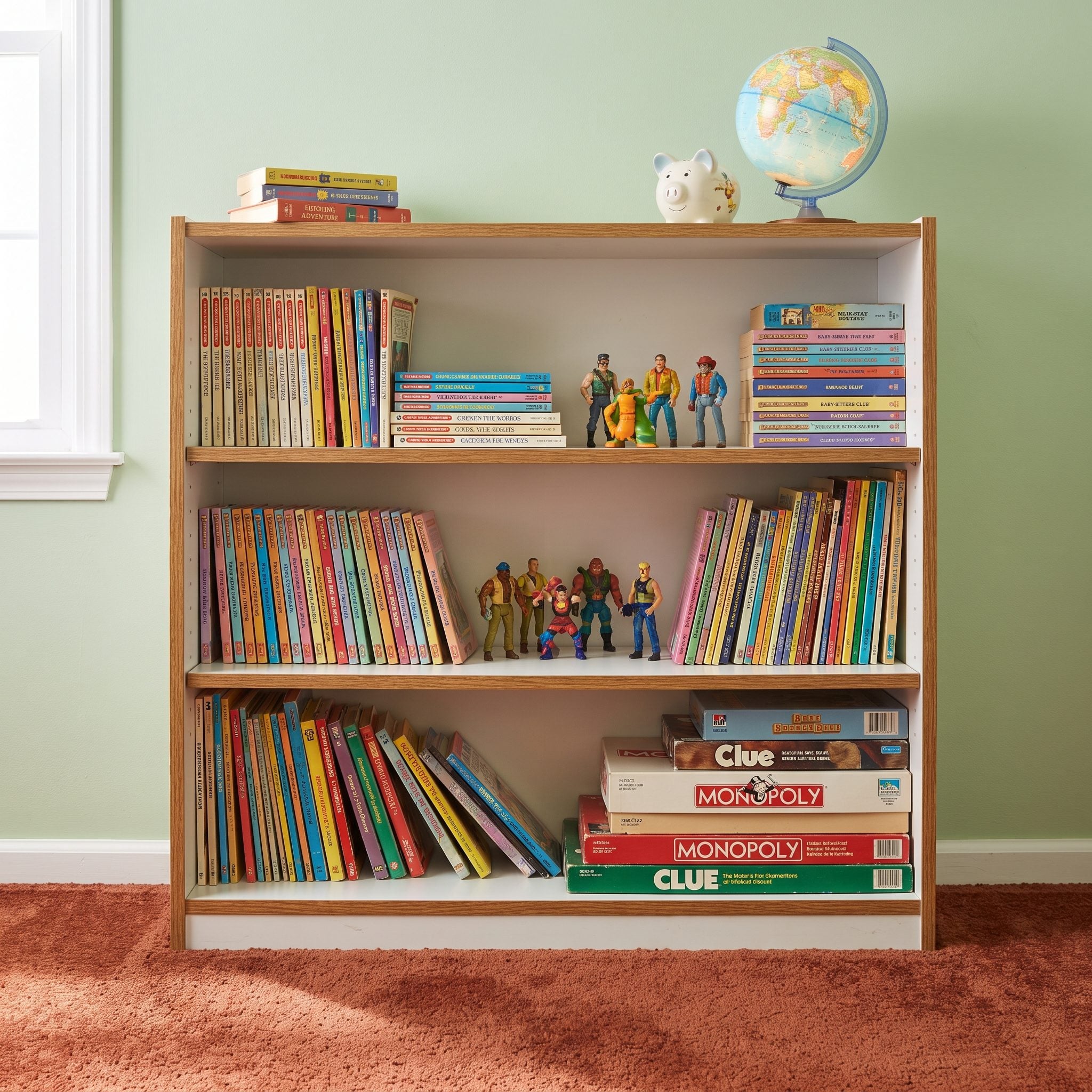
Basic ready-to-assemble bookcases lived in the bargain end of furniture retail. A modest three- or four-shelf unit sold for $25 to $40, depending on size and finish.
Particleboard. Faux wood grain. Cam fasteners. One shelf that began perfectly horizontal and spent the next decade slowly reconsidering the arrangement.
Books went on top, games in the middle, toys underneath. A kid’s entire current civilization could fit into one narrow tower. Put the same collection beside a navy bed ideas setup today and somebody would call the arrangement curated. In 1984 it was where the stuff fit.
28. $2 to $6 Posters: The Cheapest Way to Claim the Walls
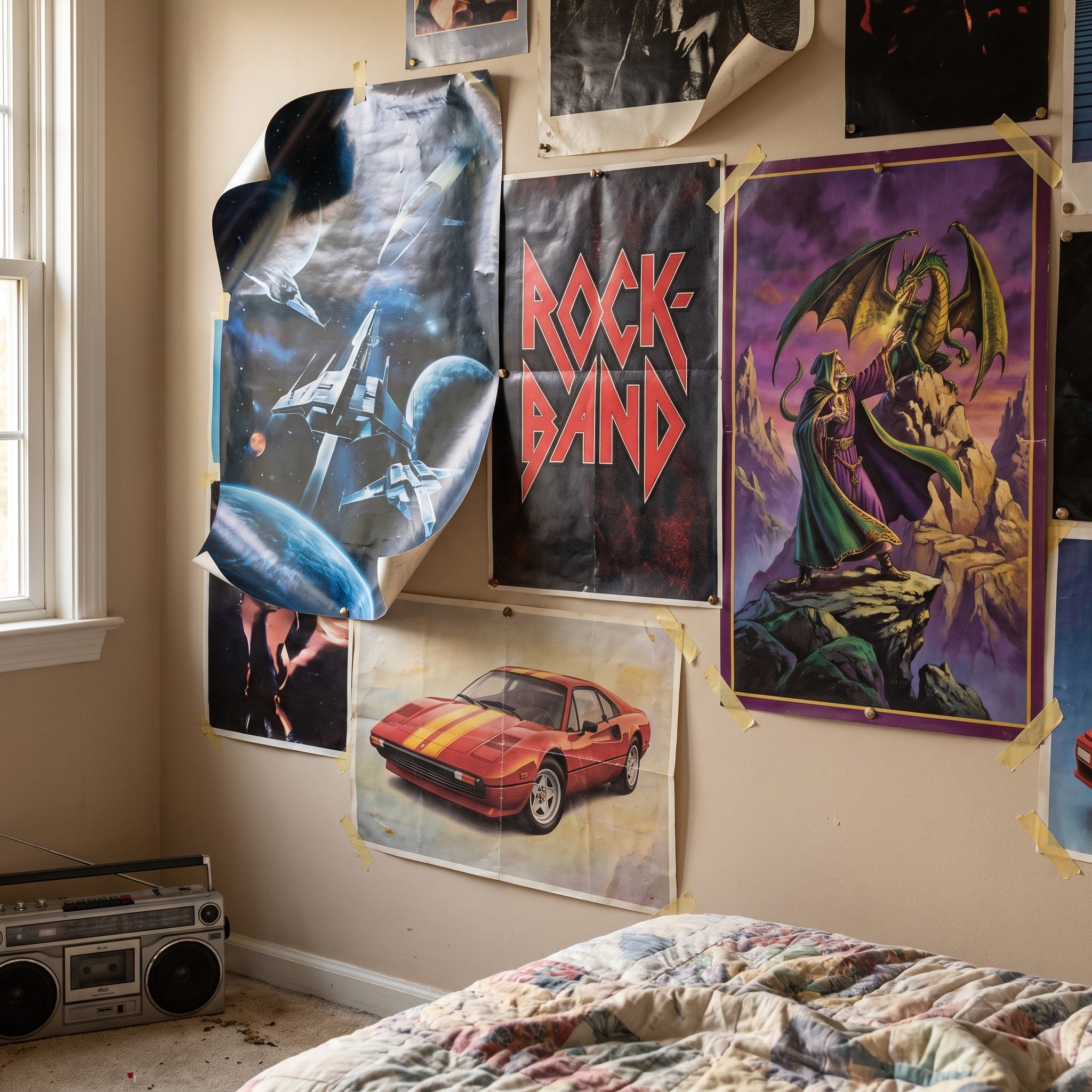
For a few dollars, the walls could declare independence. Movie posters, bands, sports heroes and cartoon characters generally sat at the cheap end of bedroom decoration: $2 to $6 for the kind of poster that left the store rolled into a tube.
Magazine pull-outs were cheaper still. Tiger Beat, music magazines and comic publications supplied the bedroom wall one staple at a time.
The hanging system was equally sophisticated: transparent tape, thumbtacks or that gummy adhesive that eventually left four dark squares on the paint. Nobody had yet invented the phrase gallery wall, which was probably for the best.
27. Nintendo’s 1985 Deluxe Set Cost $179.99 and Came Armed With R.O.B.
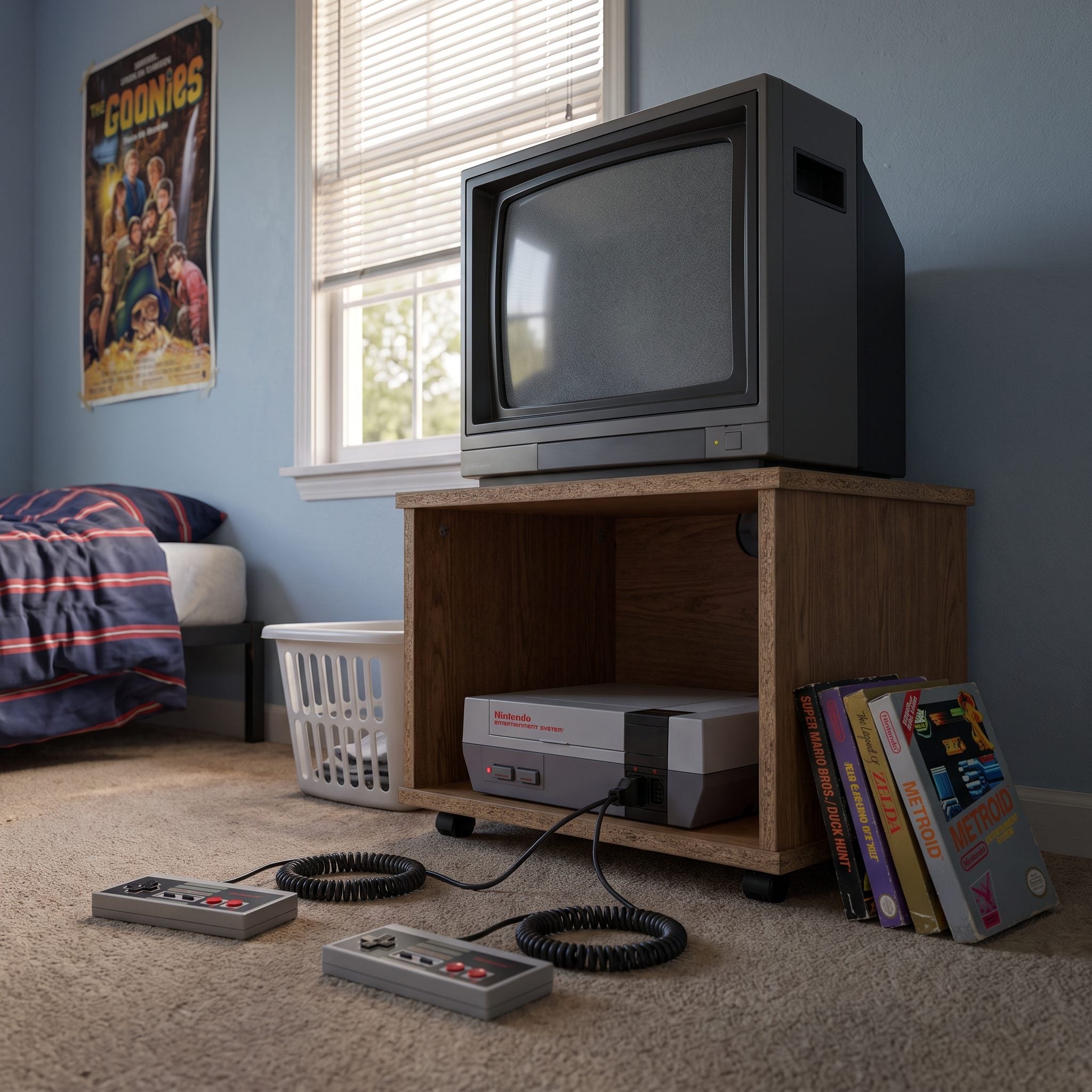
The NES entered its 1985 American test markets with a Deluxe Set priced at $179.99. That box included the console, two controllers, the Zapper, R.O.B., Gyromite and Duck Hunt. Nintendo was not tiptoeing back into a market Atari had recently helped set on fire. It arrived carrying a robot.
By the nationwide era, less elaborate configurations brought the entry price closer to the $100 mark. The hardware was only the beginning, of course. Once the console was under the television, the cartridges began requesting their own budget.
This was the point when the bedroom started behaving like a command center. Television. Console. Games. Posters. The navy bed ideas could wait. Bowser was involved.
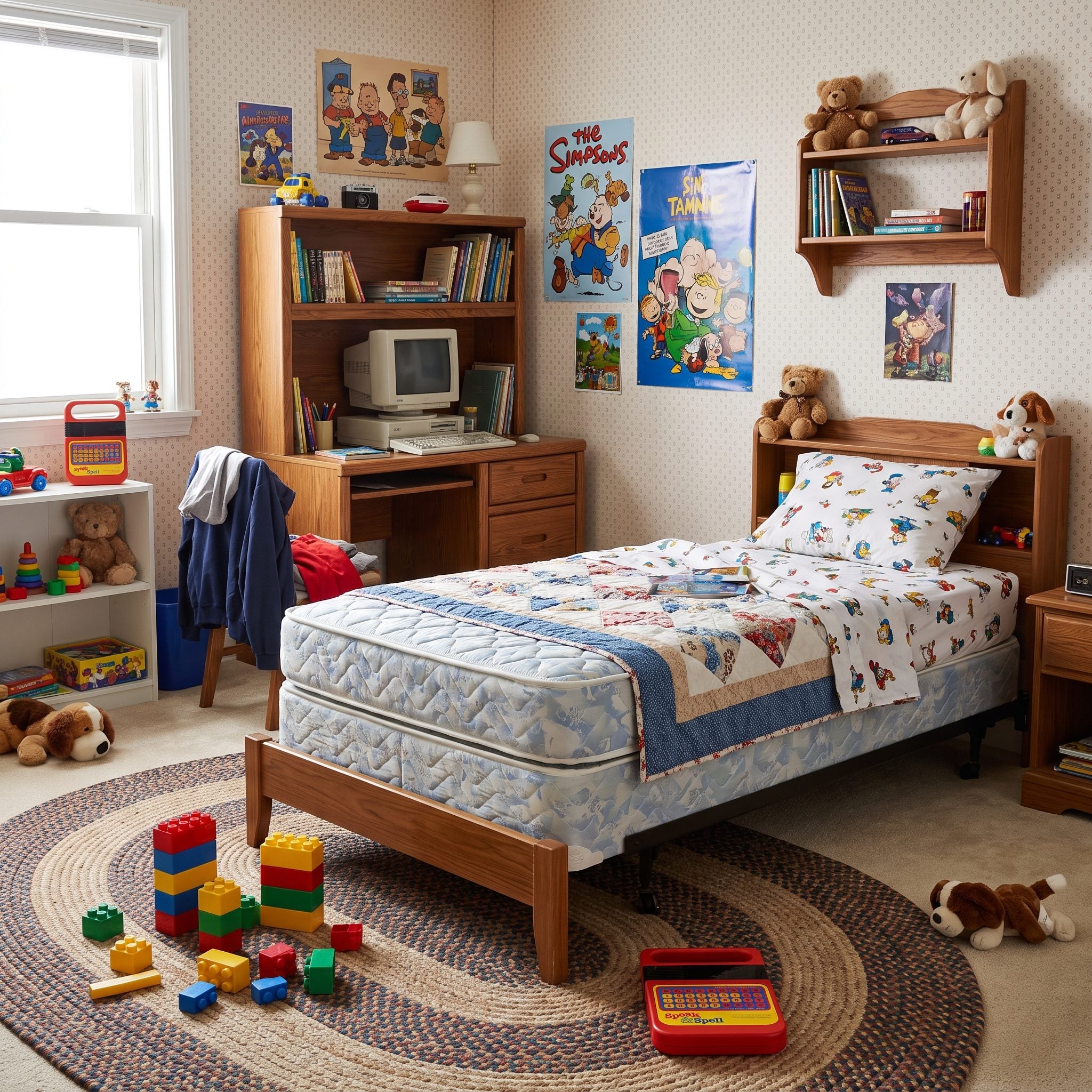
26. The Mattress and Box Spring Took Another $80 to $120
🔥 Would you like to save this?
A modest twin mattress and foundation ran $80 to $120 through the middle of the decade, with premium sets naturally running higher.
The ordinary kid version was not a technological marvel. Quilted ticking, innersprings, a box foundation underneath and strict parental instructions that this was a bed, not a trampoline. Those instructions were treated as preliminary suggestions.
Eventually something squeaked. Then something sagged. Then the mattress got flipped and the entire process started over.
25. Barbie Was $4.99. The Dream House Was $89.99.
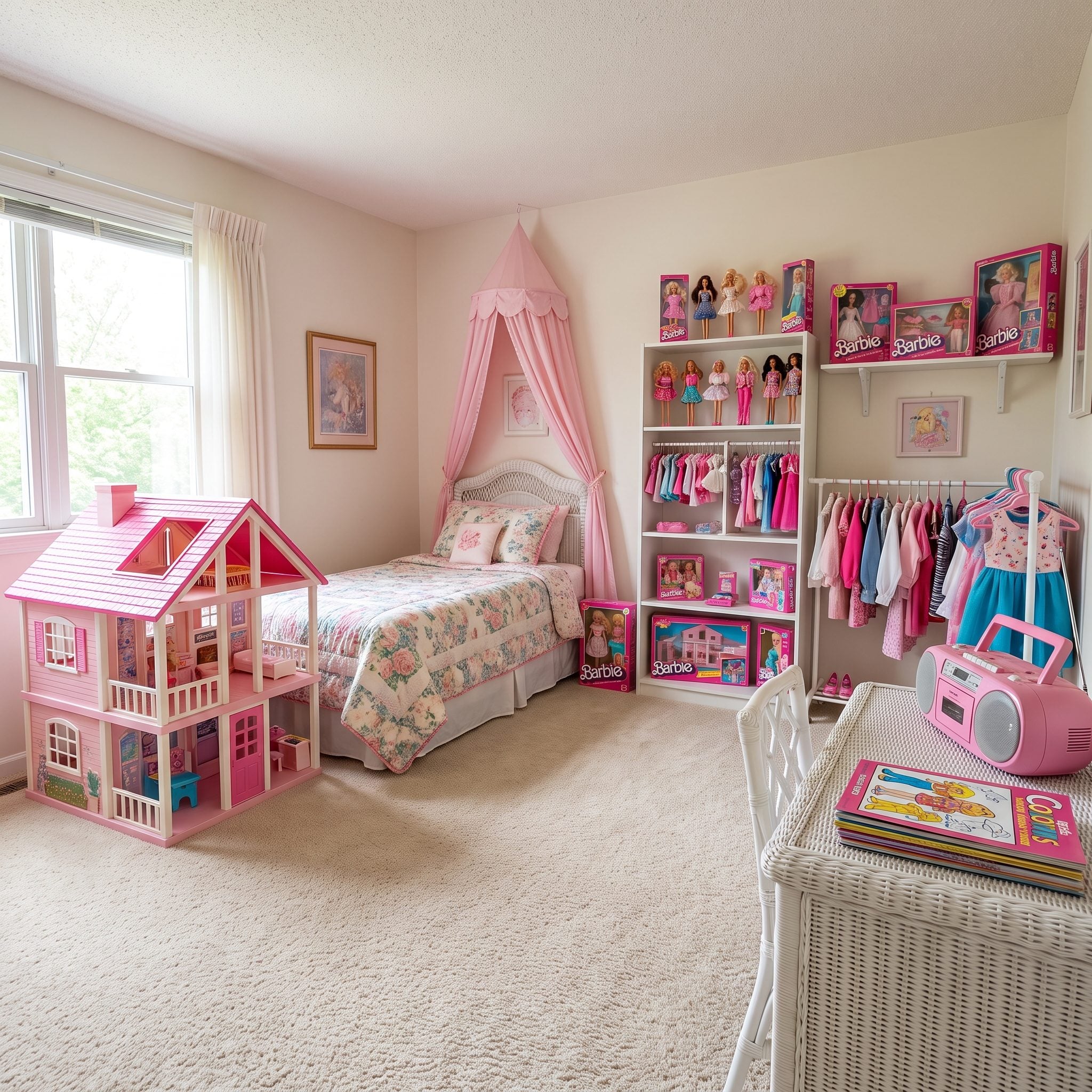
Here is one of the clearest examples of how toy-room spending actually worked. Sears listed Barbie and Ken dolls at $4.99 in 1983. The Barbie Dream House in the same year’s catalog was $89.99.
That spread tells the story. The doll was accessible. Then came clothes, furniture, vehicles, accessories and architecture. Three dollars here, ten dollars there, another outfit because apparently Malibu required a separate wardrobe.
By the time the pink corner of the bedroom looked complete, the original doll was practically the down payment. Arrange all of it against a coral bedroom today and the styling suddenly looks strangely prescient.
24. $10 to $20 Bought the Lamp That Stayed On After Bedtime
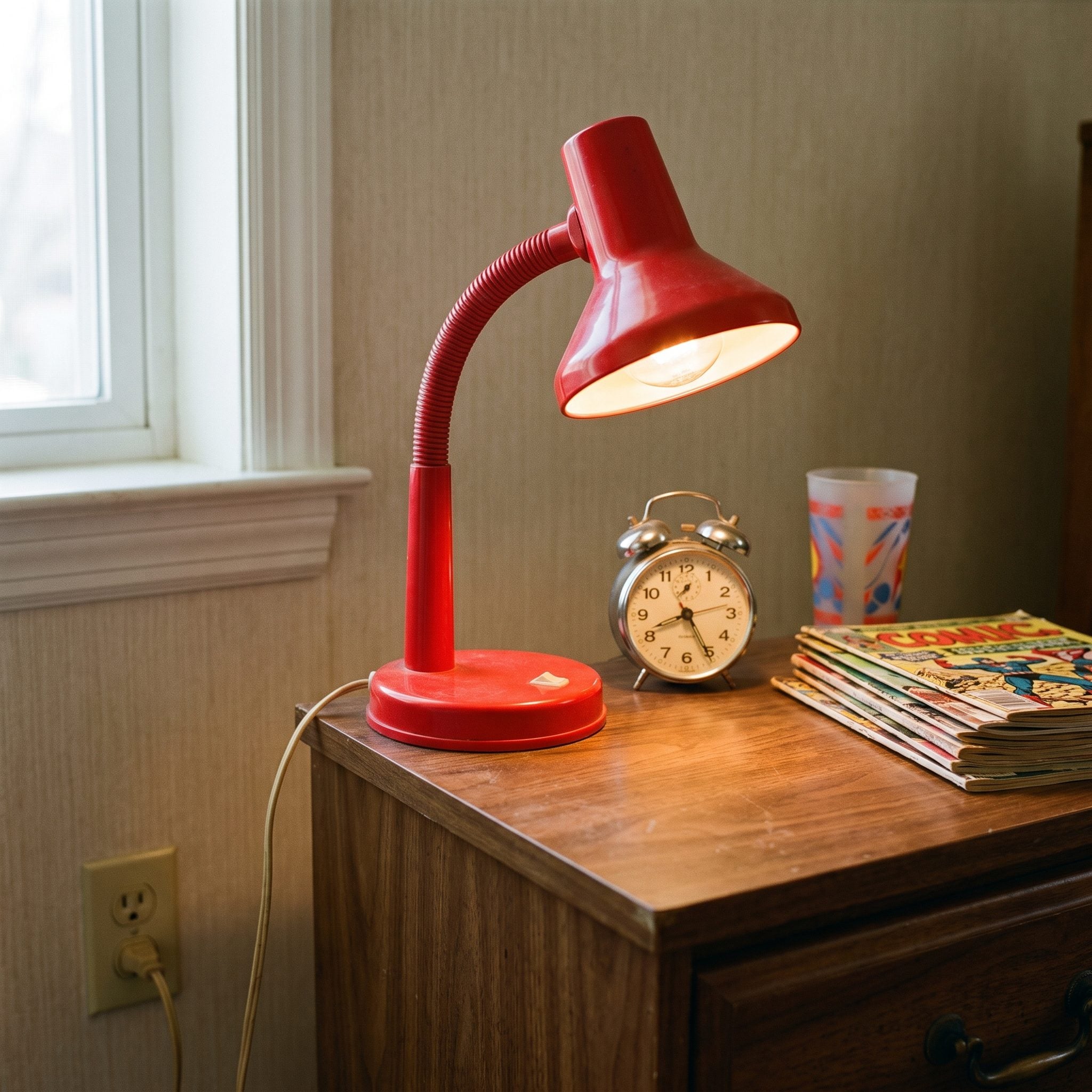
A simple bedroom or desk lamp sold for $10 to $20. Plastic goosenecks sat near the bottom; ceramic bases, decorative shades and novelty designs climbed from there.
The job description was extensive. Homework light. Reading-under-the-covers accomplice. Shadow-maker. Late-night beacon. The thing somebody shouted about from the hallway because apparently electricity had become your personal responsibility.
A brass desk lamp costs considerably more now. Its basic assignment remains unchanged.
23. G.I. Joe Started at $3. The U.S.S. Flagg Ended at $109.99.
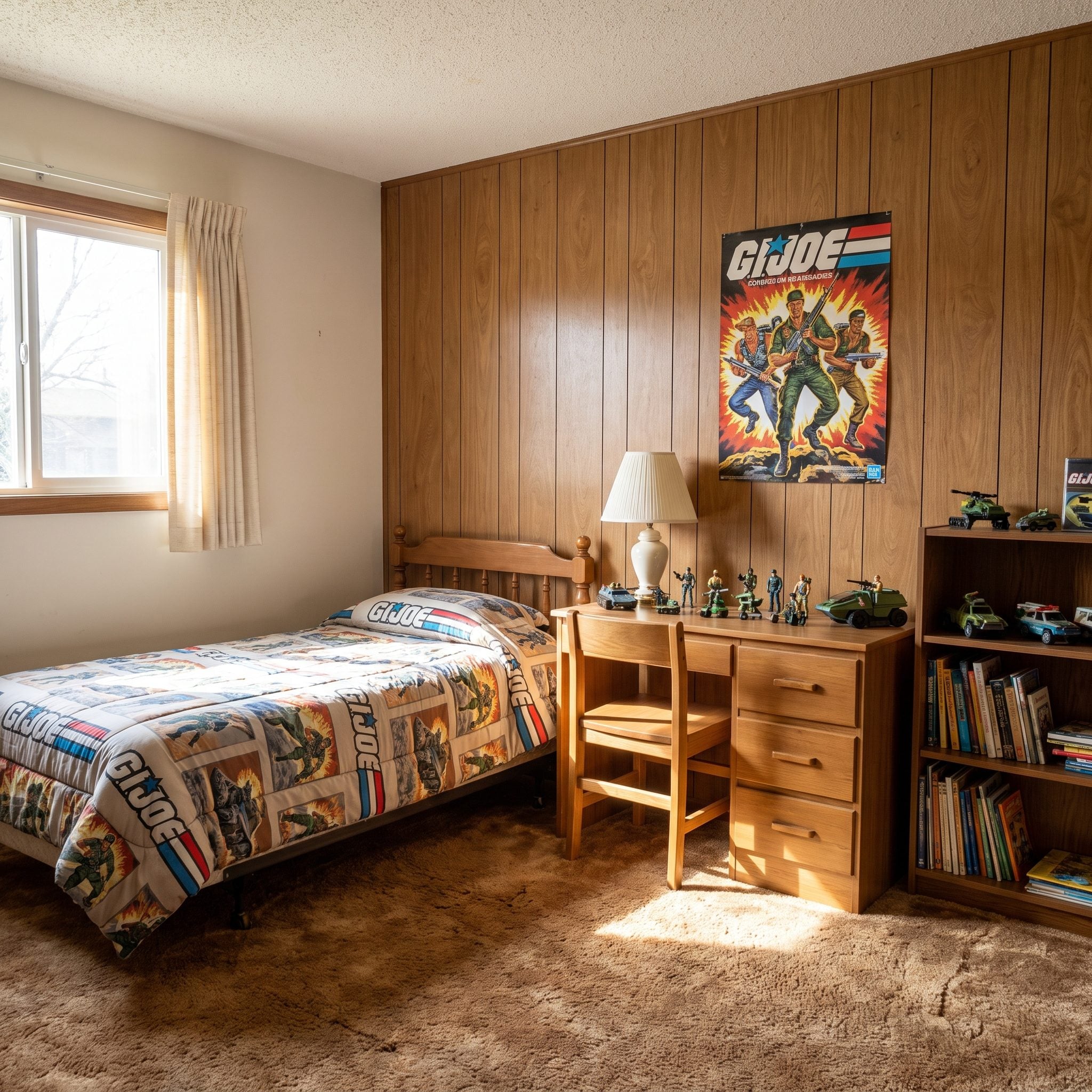
A basic 3¾-inch G.I. Joe figure lived around the $3 mark in the middle of the decade. Then Hasbro demonstrated what could happen when nobody in product development asked whether the child’s bedroom had zoning restrictions.
The U.S.S. Flagg arrived in 1985 at $109.99. More than seven feet long, it was less an accessory than a territorial claim. Small vehicles filled the enormous space between those two price points, making the line perfect for both allowance money and Christmas negotiations.
The Flagg became famous partly because so many kids saw it and so few actually had one. It occupied the same category as a backyard pool or a pony: theoretically obtainable, personally unlikely.
22. $40 to $60 for the Toy Chest That Made the Floor Disappear
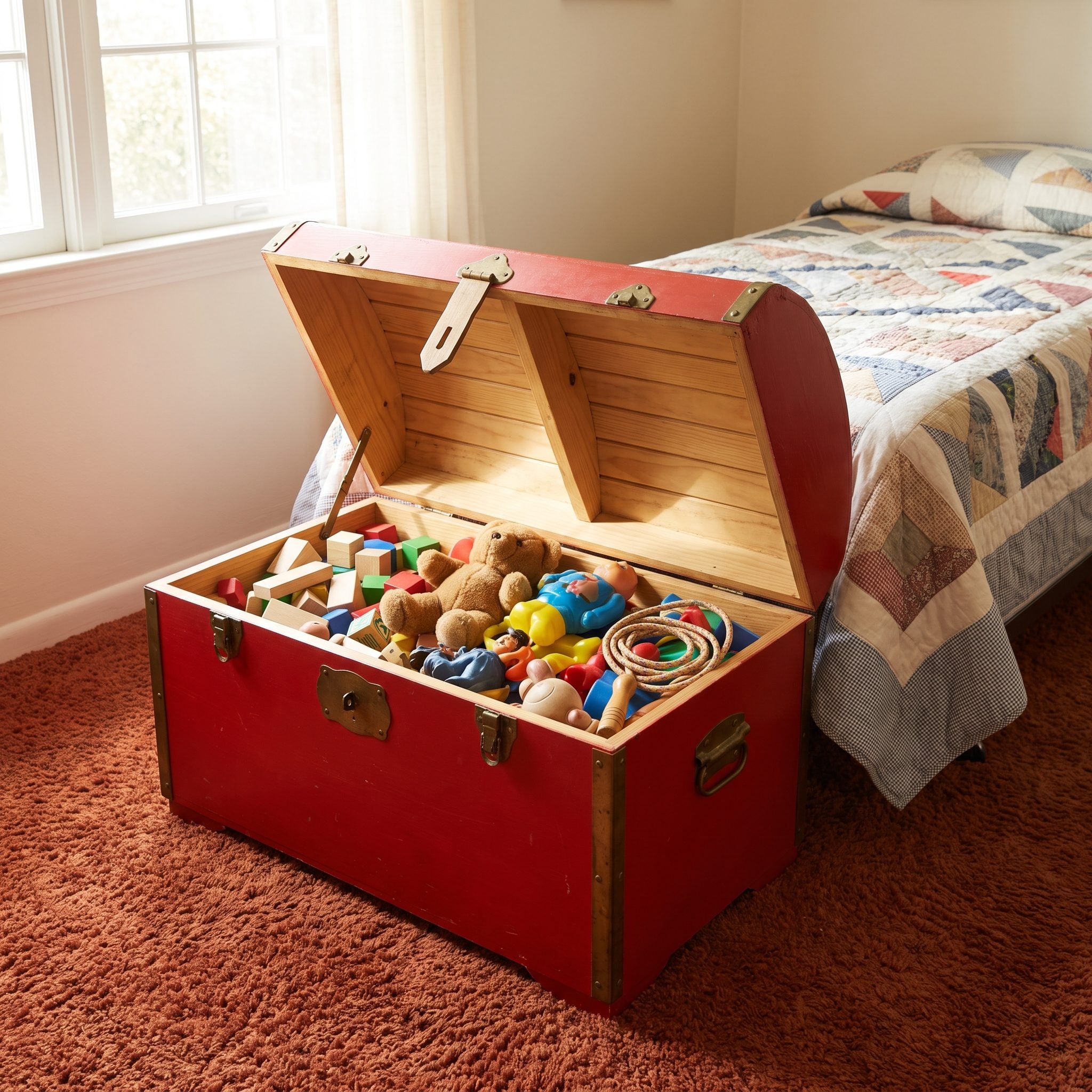
A basic wooden toy chest ran $40 to $60, whether factory finished or sold as plain wood ready for somebody’s ambitious Saturday with a paintbrush.
Its operating system was simple. Open lid. Sweep floor contents inside with both arms. Close lid. Announce room clean.
The heavy lids had a less charming side. By 1983, safety efforts were already pushing manufacturers toward lid-support mechanisms that prevented toy-chest tops from dropping freely. Childhood storage had finally met engineering.
21. The $29.99 Clock Radio That Glowed Red All Night
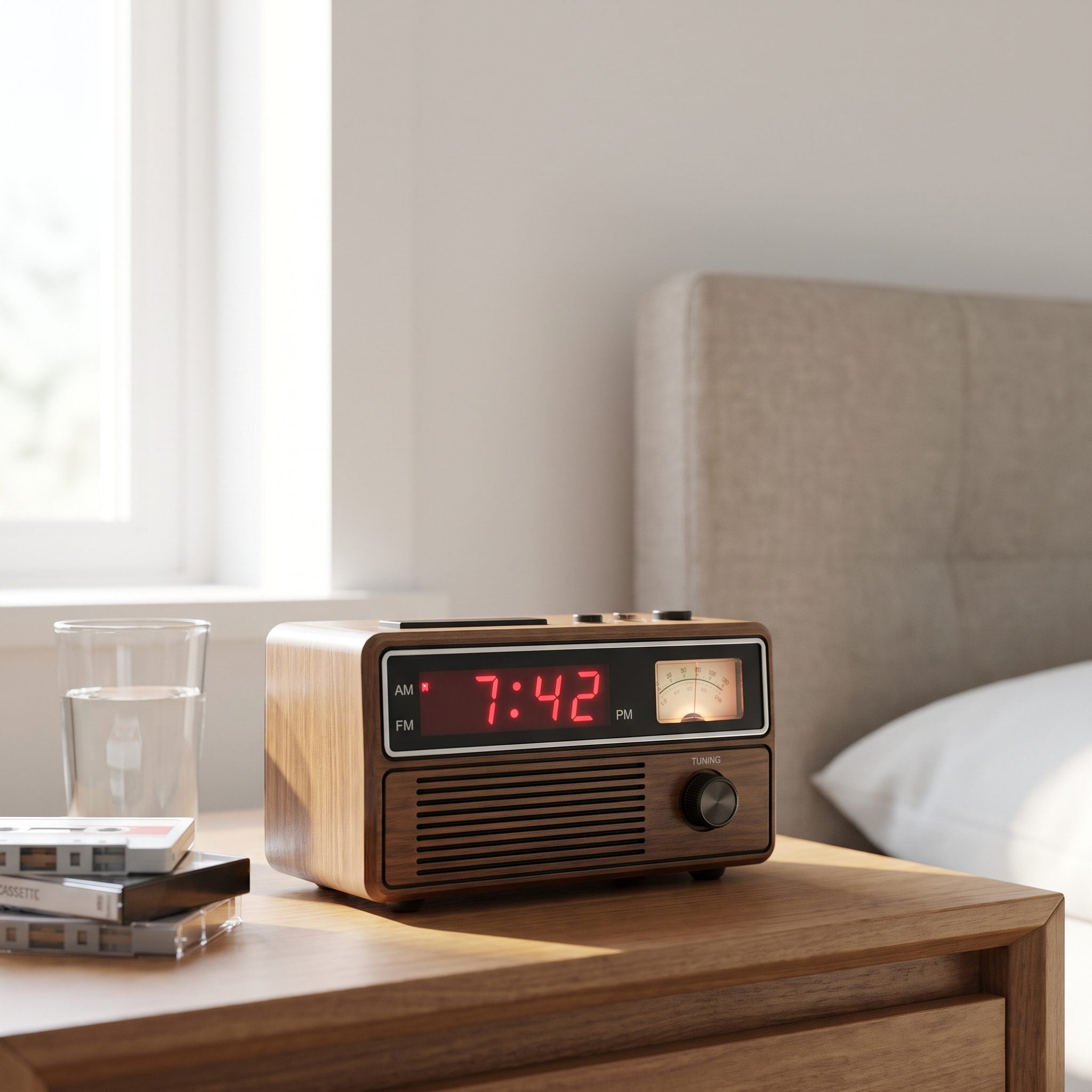
Sears listed an AM/FM digital clock radio at $29.99 in 1983. For the money, the nightstand acquired glowing red numbers, a buzzer and the possibility of waking to a song instead of a mechanical attack.
The radio mattered after lights-out. Turn the volume low, wait through songs you didn’t care about, hope the DJ played the one you did, then fall asleep halfway through it anyway.
The red digits stayed on all night. So did the strange knowledge that 2:47 a.m. existed even though nobody had asked.
20. LEGO: Pocket-Money Sets at One End, $40-Plus Boxes at the Other
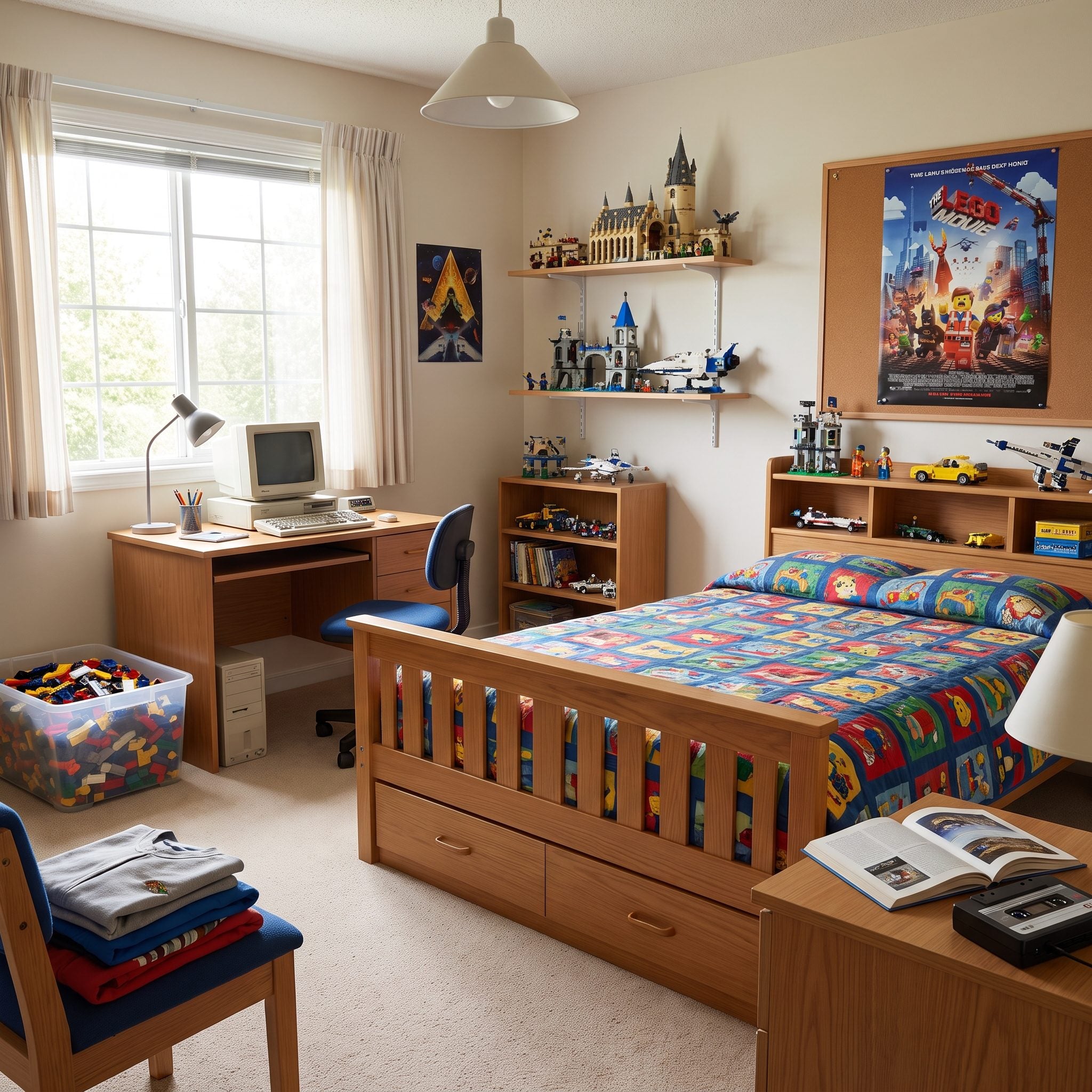
LEGO covered almost every level of a kid’s economy. Tiny sets cost only a few dollars. Mid-sized Town, Space and Castle boxes moved through the teens and twenties, while substantial sets reached $40 and beyond.
The real advantage was what happened after the box art stopped mattering. A spaceship became a house. The house became something with six wheels. Two unrelated sets were merged into an object nobody at LEGO headquarters had ever contemplated.
19. $10 to $15 Put Matching Sheets on the Twin Bed
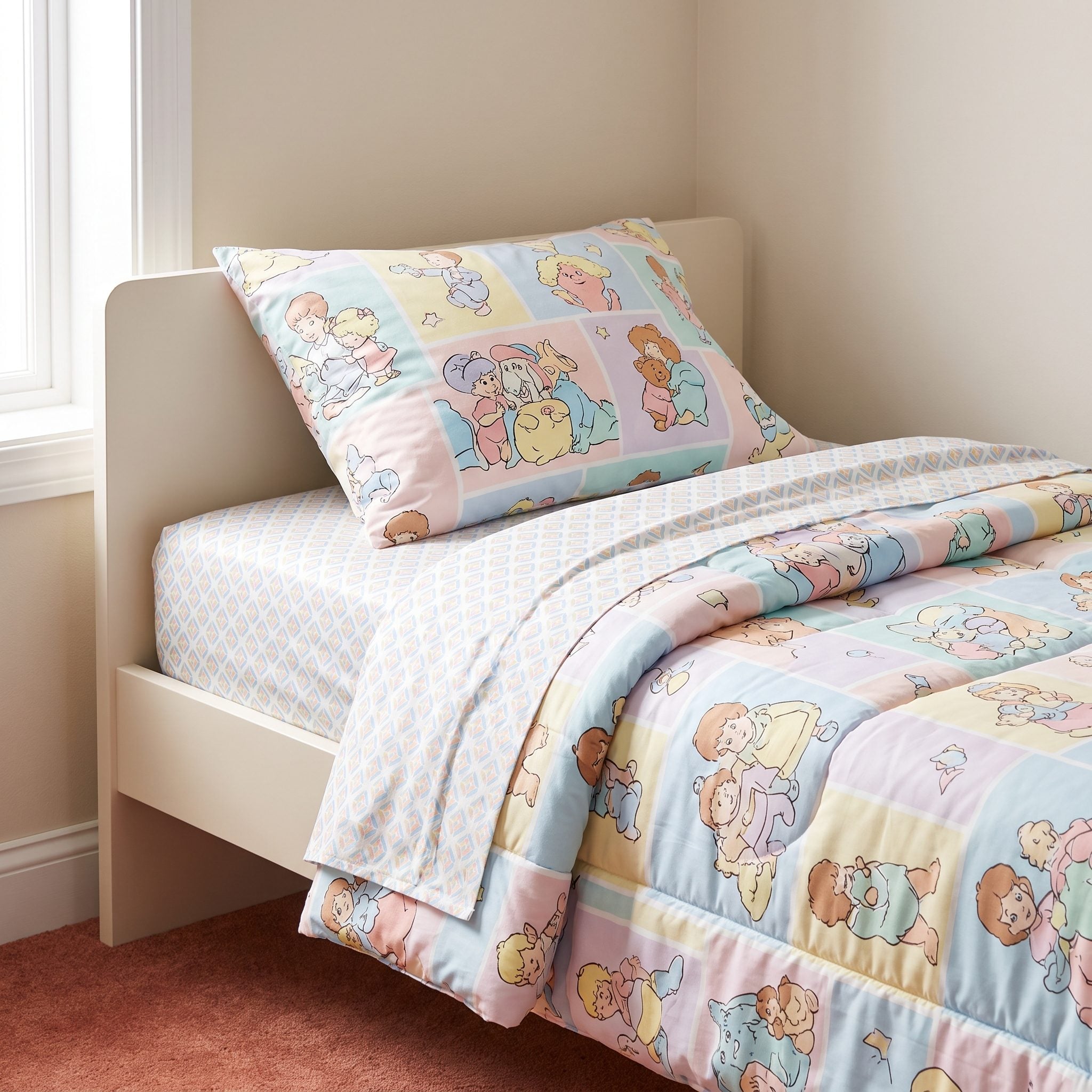
$10 to $15 bought a flat sheet, fitted sheet and pillowcase for a twin bed. Coordinated bedding cost more if licensing or elaborate prints entered the room, but this was the basic price neighborhood.
Percale dominated. Fresh from the package, it could have the texture of office paper. Give it enough wash cycles and eventually it surrendered.
Matching the bedspread was optional after the original set wore out. That was when Star Wars pillowcases met floral sheets and nobody lost a minute of sleep over the aesthetic consequences.
18. A Bedroom TV Meant Finding $150 to $300
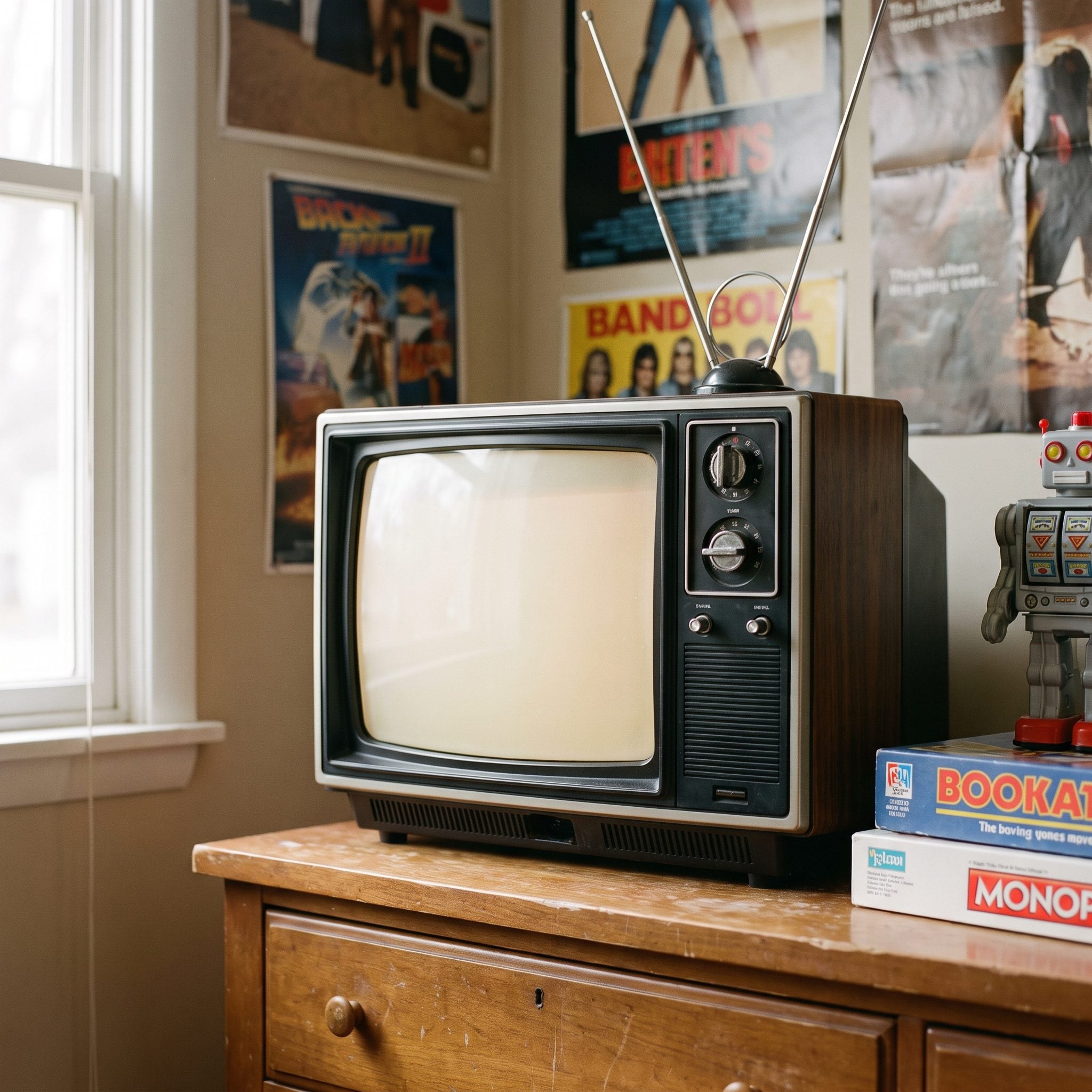
A small color television was an expensive bedroom upgrade. Compact sets occupied the $150 to $300 neighborhood, while larger premium models went well beyond it; a 19-inch Sony Trinitron advertised through Sears in 1983 was $349.
This was not an ordinary accessory. A television in the bedroom changed the social order. Saturday cartoons without leaving the blankets. Video games without negotiating for the family set. Late-night programming watched at a volume barely above silence.
The rabbit ears were part of the contract. One channel came in beautifully if the left antenna pointed toward the ceiling fan and nobody moved.
17. Care Bears Brought $8 to $15 Worth of Feelings to the Bed
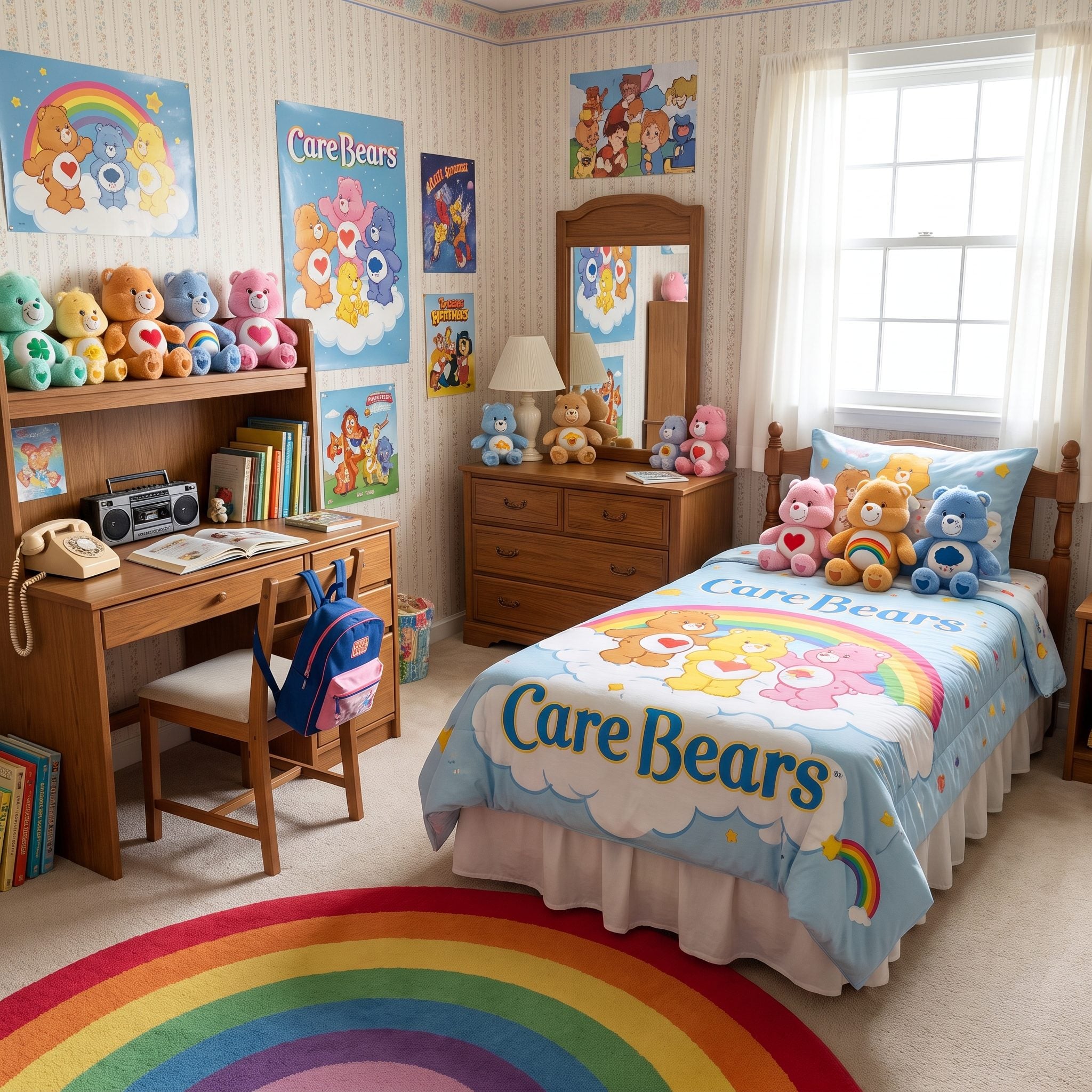
The first Care Bears plush toys arrived in 1983 with prices varying by size and retailer. Smaller versions started around $8, while larger plush bears pushed into the mid-teens.
The belly badge did most of the identifying work. Cheer Bear had a rainbow. Grumpy Bear got the cloud. Suddenly one stuffed bear was not necessarily enough because emotional specialization had entered the toy aisle.
16. The $5-to-$12 Corkboard Was the Original Bedroom Feed
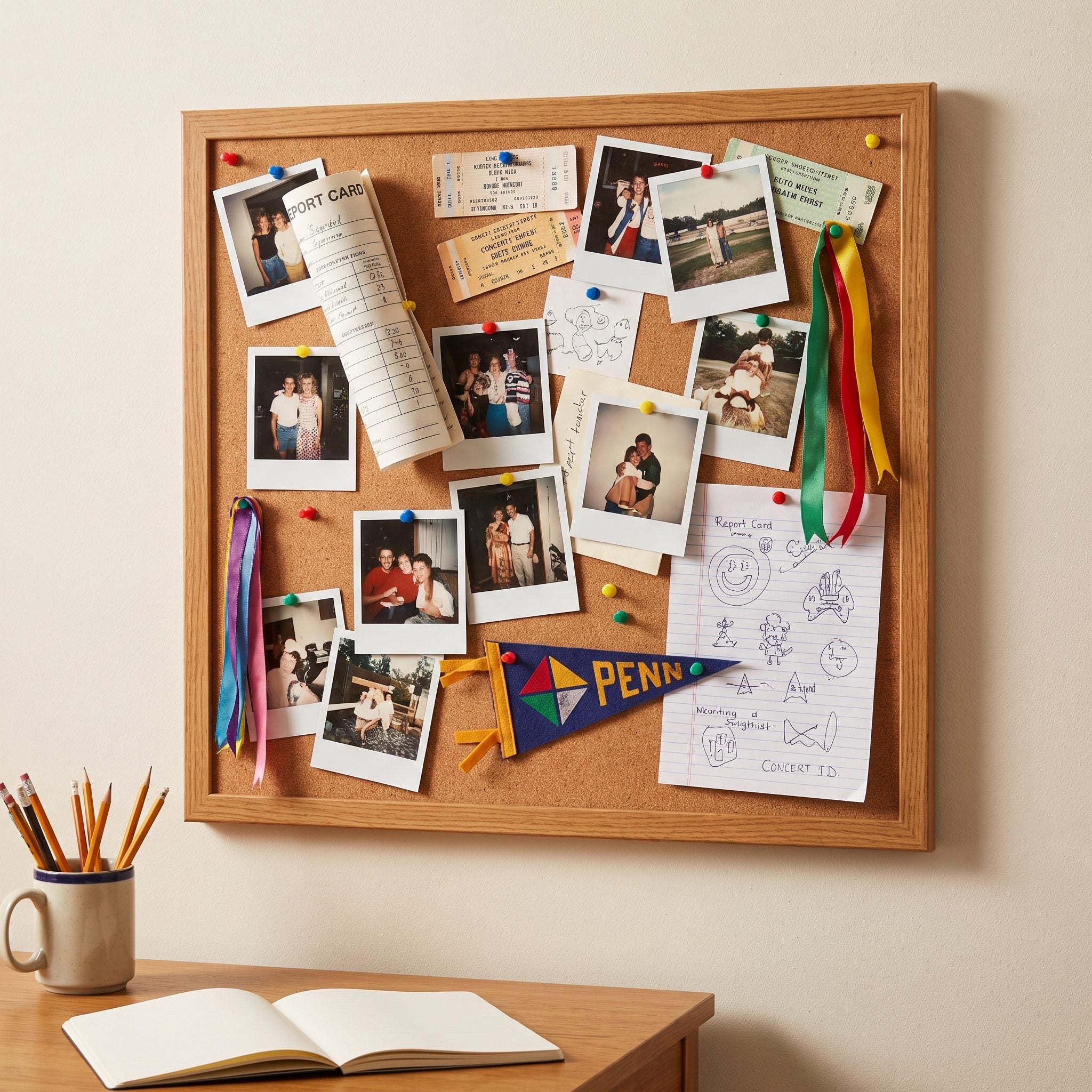
A modest framed corkboard cost $5 to $12, depending on size. Pushpins added pocket change and the contents were free, which made this one of the cheapest ways to turn blank wall space into biography.
Report card. Movie stub. Birthday card. Polaroid. Team schedule. A note folded four times for reasons of national security. The whole year ended up pinned to brown cork above the desk.
15. Transformers Ran $10 to $30; Optimus Prime Was the Big Ask
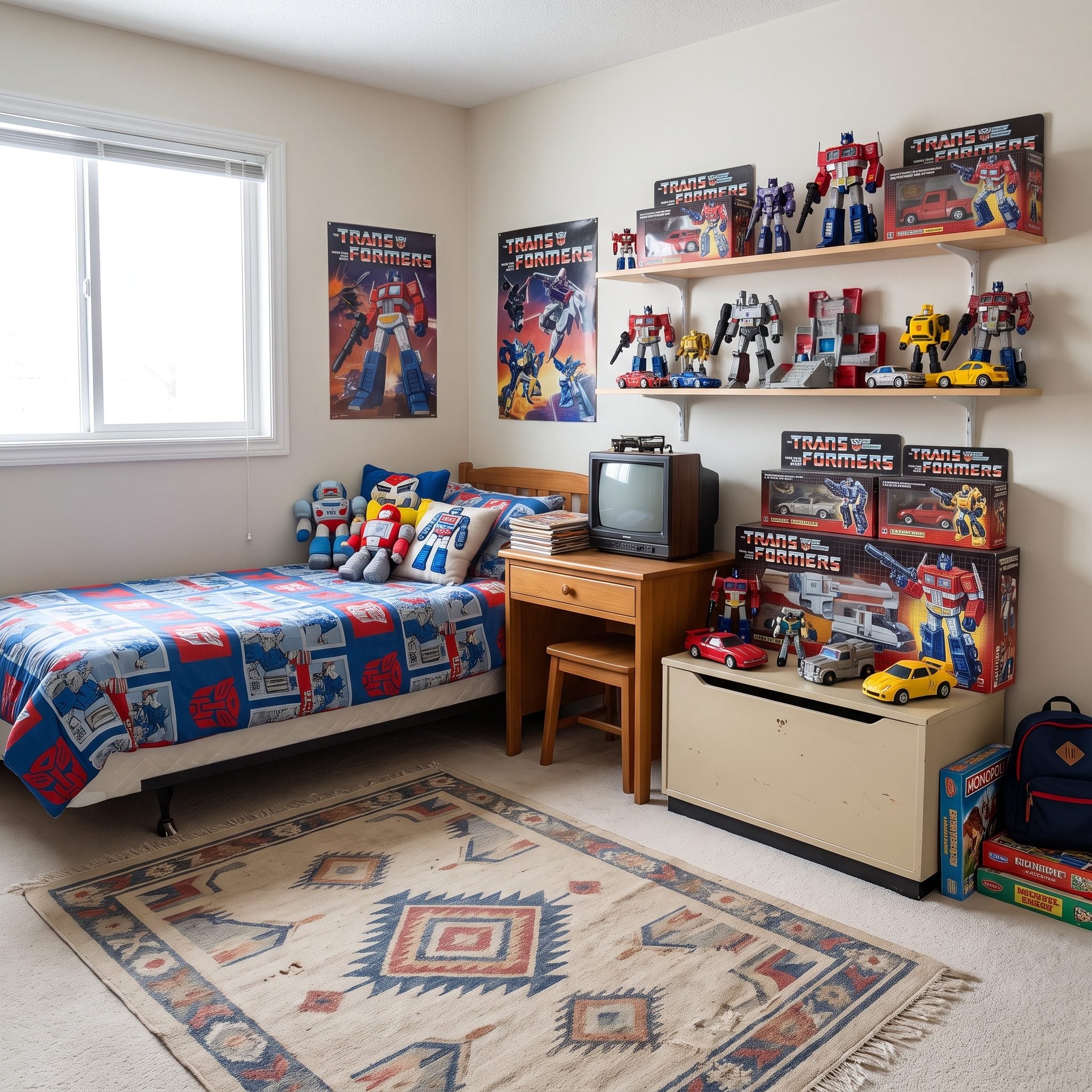
Transformers occupied more expensive territory than the simplest action figures. Retail records from 1984 show many figures in the low teens, while Optimus Prime sold for $20 to $27 depending on the store.
The extra money bought engineering. Robot became vehicle. Vehicle became robot. Then the instructions disappeared and the same toy became a puzzle requiring one increasingly irritated adult.
Prime was the prize: red cab, trailer, metal parts and enough moving pieces to make every successful transformation feel like a minor mechanical certification.
14. The $20-to-$30 Nightstand Had One Small Job and Twelve Side Hustles
🔥 Would you like to save this?
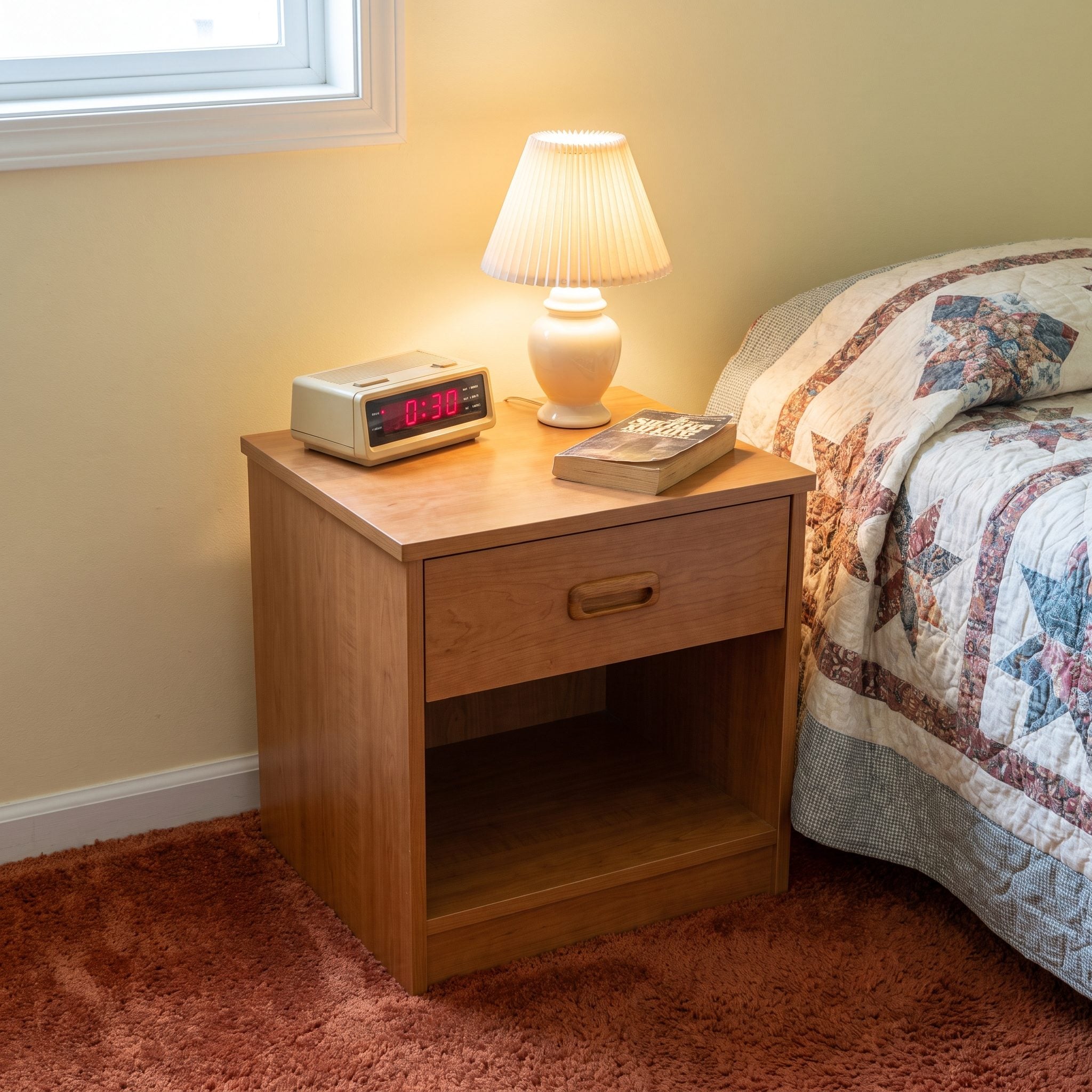
The nightstand was minor furniture with an important portfolio. Basic ready-to-assemble versions ran $20 to $30. One drawer if you were lucky. An open shelf underneath if somebody in product design was feeling generous.
Alarm clock. Lamp. Library book. Water glass. Retainer case. The flashlight allegedly required for emergencies but mostly used after bedtime.
Small price, small footprint, enormous responsibility.
13. He-Man Was $5 to $6; Castle Grayskull Was $24.99
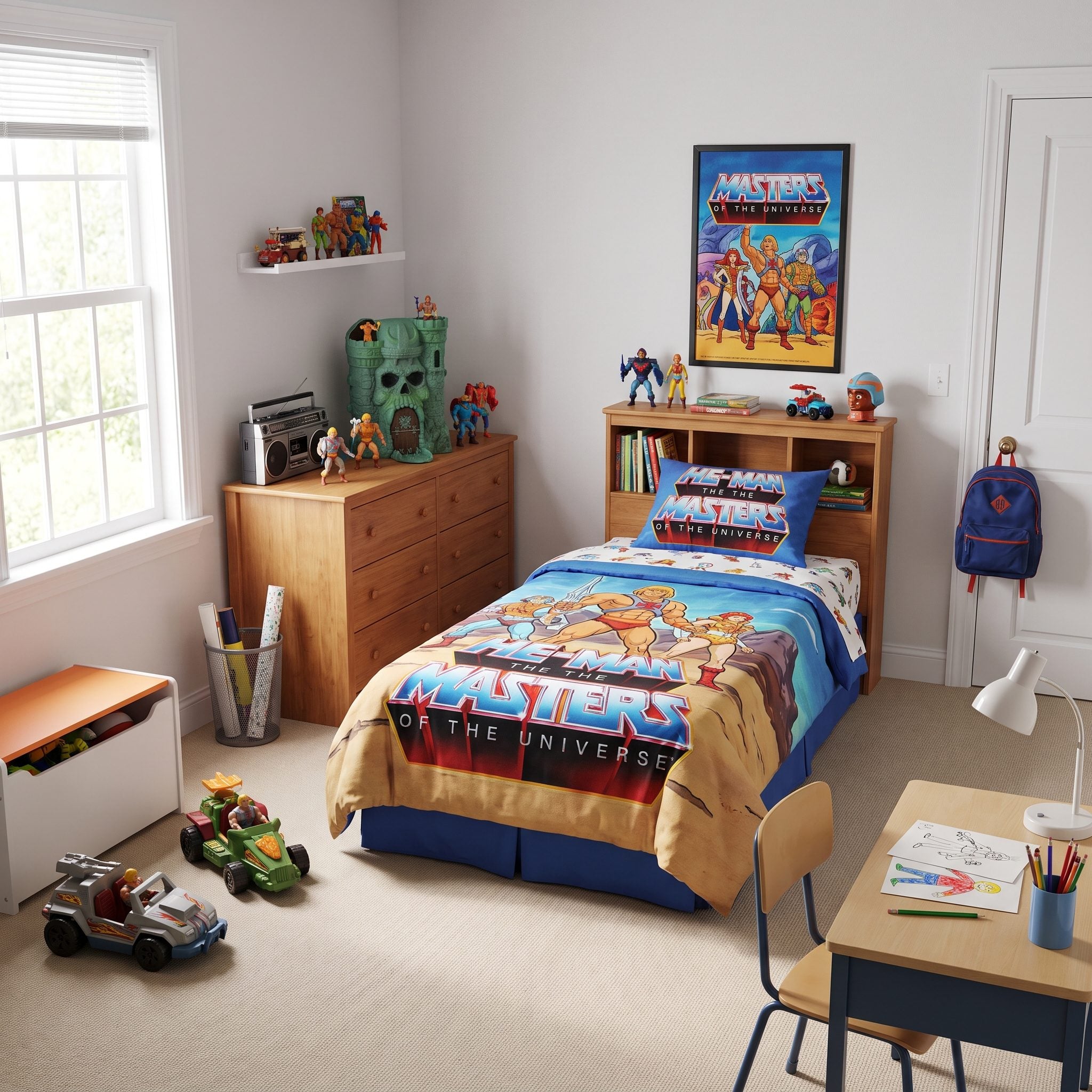
Masters of the Universe figures generally sat around $5 to $6, but the geography cost extra. Castle Grayskull sold for $24.99 in the 1983 Sears Wish Book. Snake Mountain arrived in the 1984 book at $42.99.
Once a castle entered the room, the carpet ceased to be carpet. It became Eternia. Chair legs were cliffs. The bed was a mountain range. The space under the dresser belonged to Skeletor for reasons never adequately explained.
The figures were affordable enough to multiply. The playsets were what turned the collection into a landscape.
12. The Afghan Cost $10 to $15 in Yarn and Hours Nobody Counted
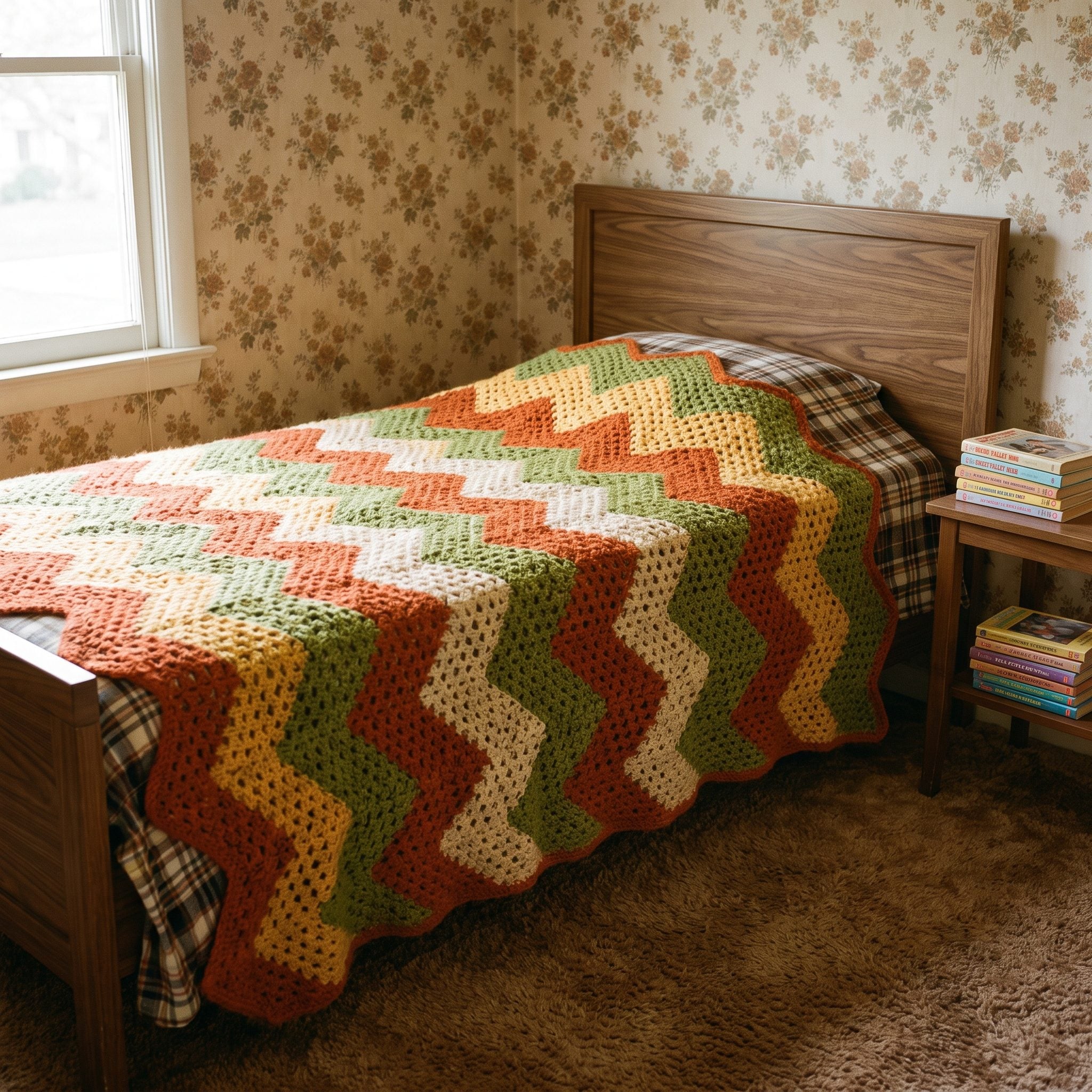
The afghan was often the one major textile that did not arrive from a store. A handful of inexpensive acrylic skeins put the material cost at $10 to $15, depending on size, pattern and how ambitious the color changes became.
Then came the labor, which family economics traditionally priced at zero and memory eventually priced much higher.
Granny squares had already become wildly popular in the 1970s, and cheap, durable acrylic yarn carried them comfortably into the ’80s. The colors rarely consulted the rest of the bedroom before moving in.
11. Every NES Cartridge Wanted Another $30 to $50
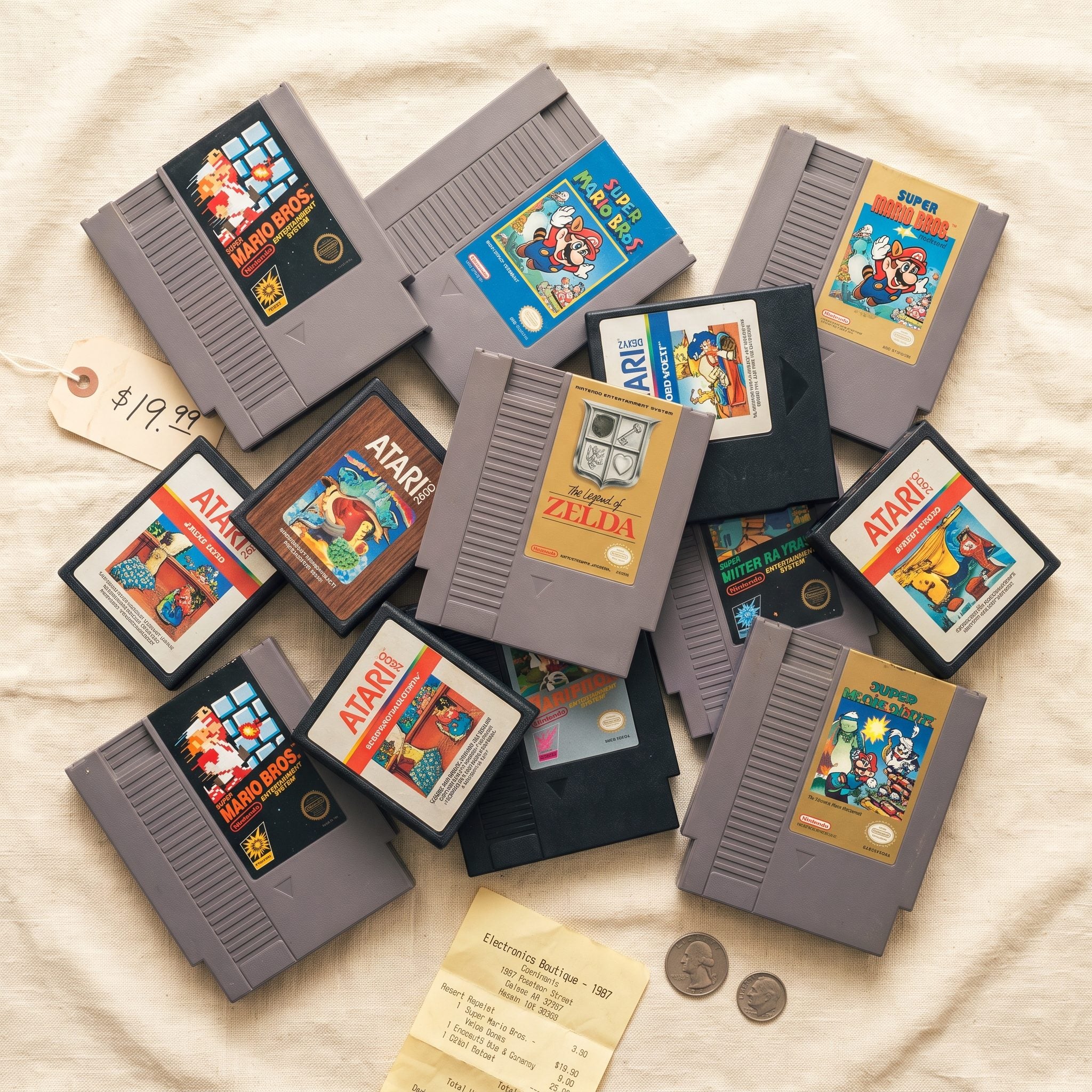
The console opened the door. The cartridges walked through carrying invoices. NES games commonly sold in the $30 to $50 range, with major titles toward the top: Super Mario Bros. has been documented at $29.99 in 1985, while The Legend of Zelda carried a $49.99 price in 1986.
That changed how kids acquired games. Birthday. Christmas. Saving. Borrowing. Trading. Renting for a weekend and discovering on Sunday evening that you had made nowhere near enough progress.
The plastic cartridge looked indestructible. The emotional state created by losing a save was not.
10. My Little Pony Started Cheap. The Playsets Had Other Plans.
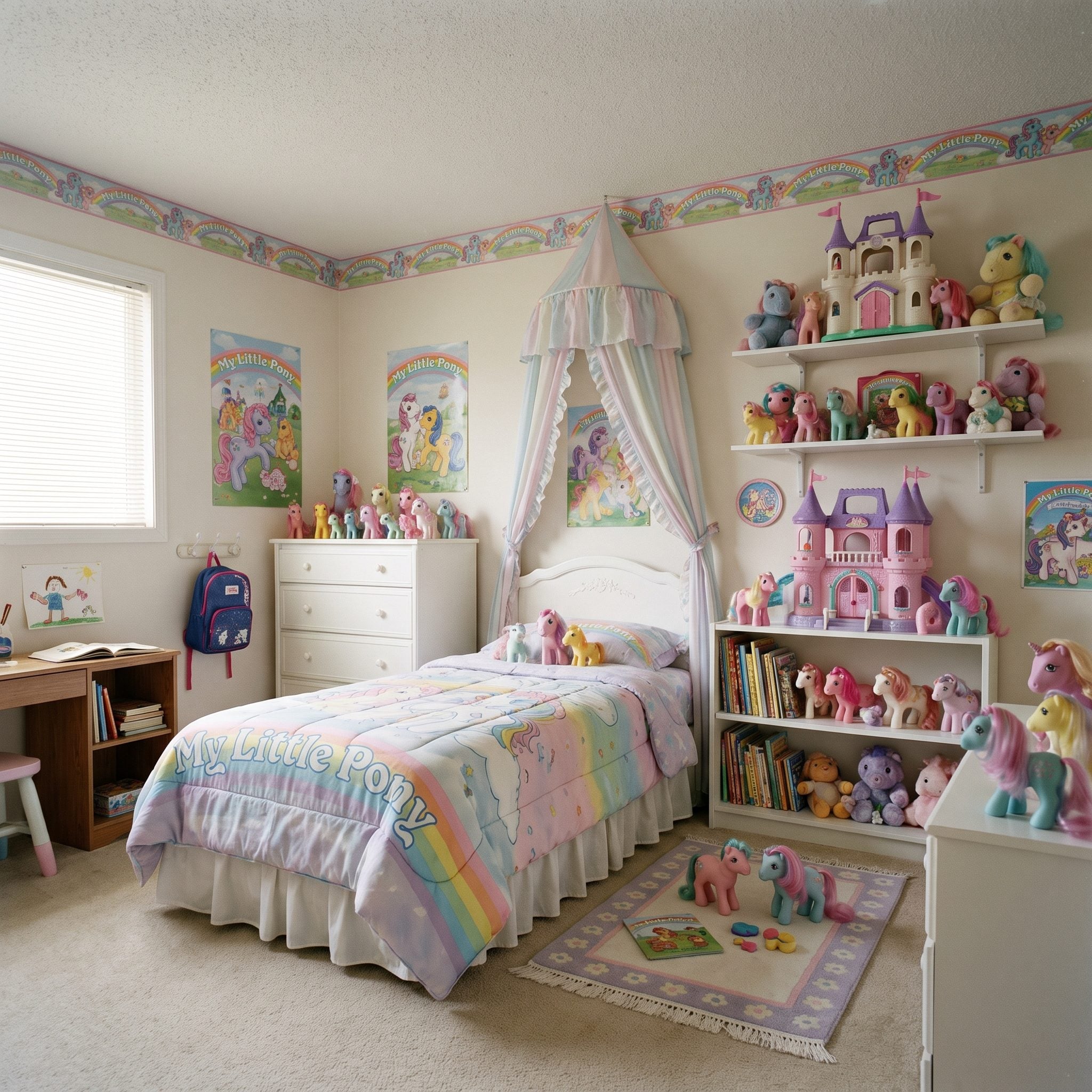
Individual My Little Pony figures lived in affordable gift territory at a few dollars each. As usual, the economics became more ambitious once the houses, castles and accessory packs arrived.
Paradise Estate, introduced in the 1985–86 line, was practically suburban development in pastel plastic: nursery, kitchen, bedroom, living room, pool, patio and enough tiny furnishings to disappear beneath actual bedroom furniture.
The collection looked deceptively gentle. Lavender. Mint. Pink. Combable hair. Meanwhile the shelf was quietly becoming a lavender bedroom makeover funded one pony at a time.
9. $3 to $6 Plastic Bins Tried to Organize the Chaos
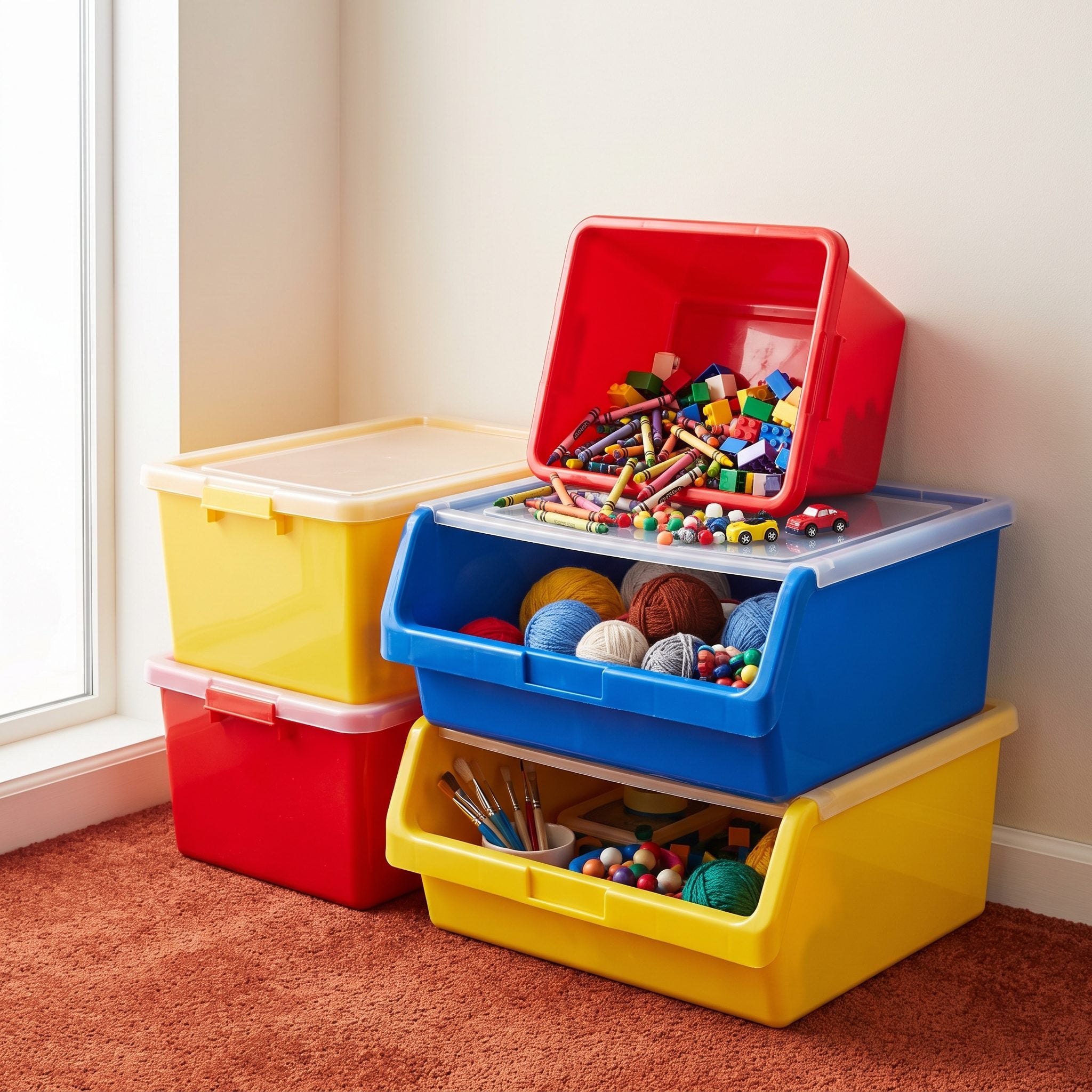
Molded storage bins cost $3 to $6 apiece, making them cheap enough to multiply along with the toys they were supposedly containing.
Red. Yellow. Blue. Green. No attempt at subtlety. Crayons in one, cars in another, Lego in a third, miscellaneous plastic debris in the bin nobody willingly investigated.
They nested when empty, stacked when full and cracked if a child mistook storage equipment for seating. Which a child inevitably did.
8. Board Games Lived in the $8-to-$12 Sweet Spot
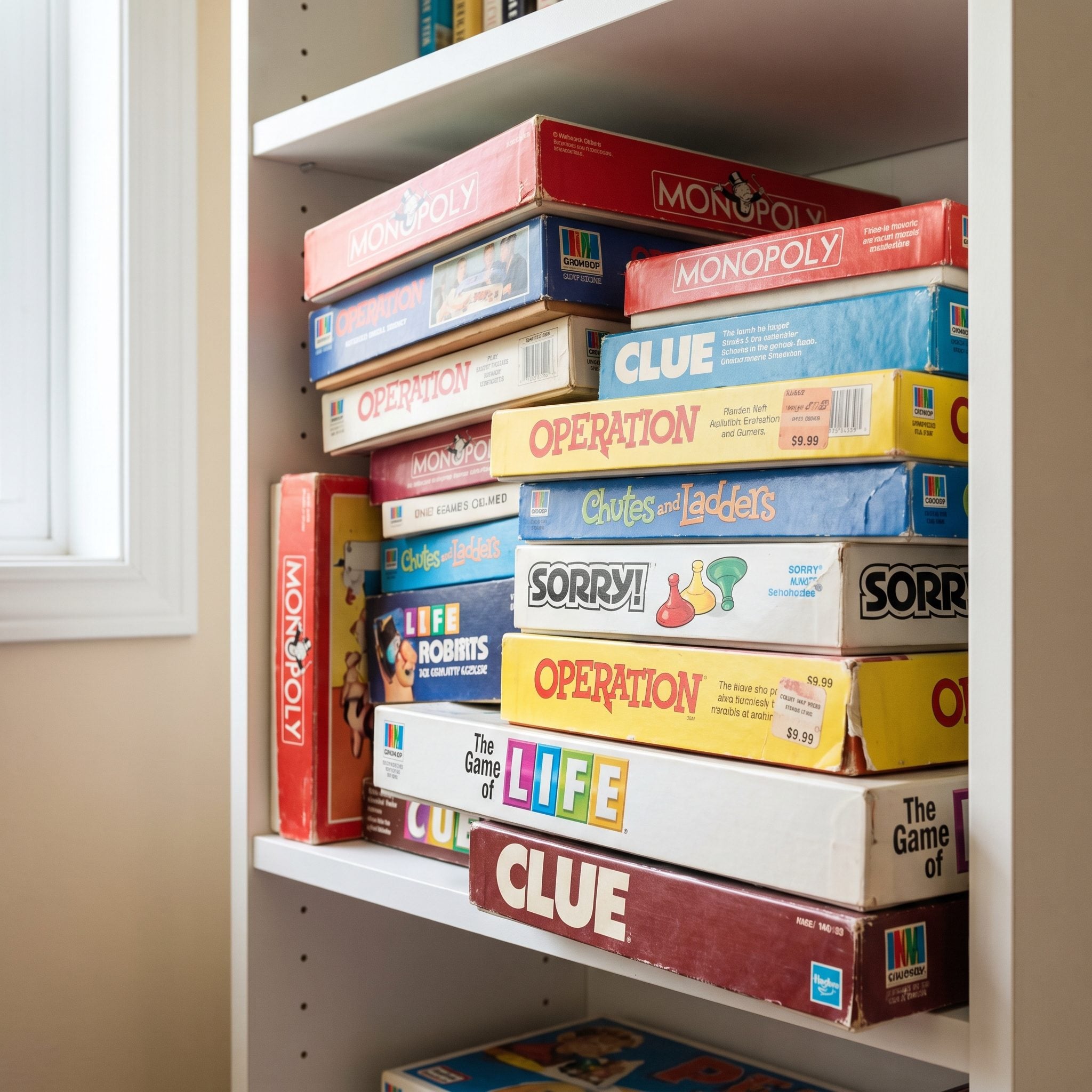
Ten dollars is a very good shorthand for an ordinary board game in 1983. Sears listed Battleship at $9.99 and Hungry Hungry Hippos at $11.99, neatly bracketing the familiar $8 to $12 range.
The boxes themselves became part of the bedroom architecture. Monopoly under Clue under Battleship under something whose lid no longer closed because the board had been folded incorrectly in 1986 and nobody had recovered.
7. Every Cassette Album Took Another $6 to $9
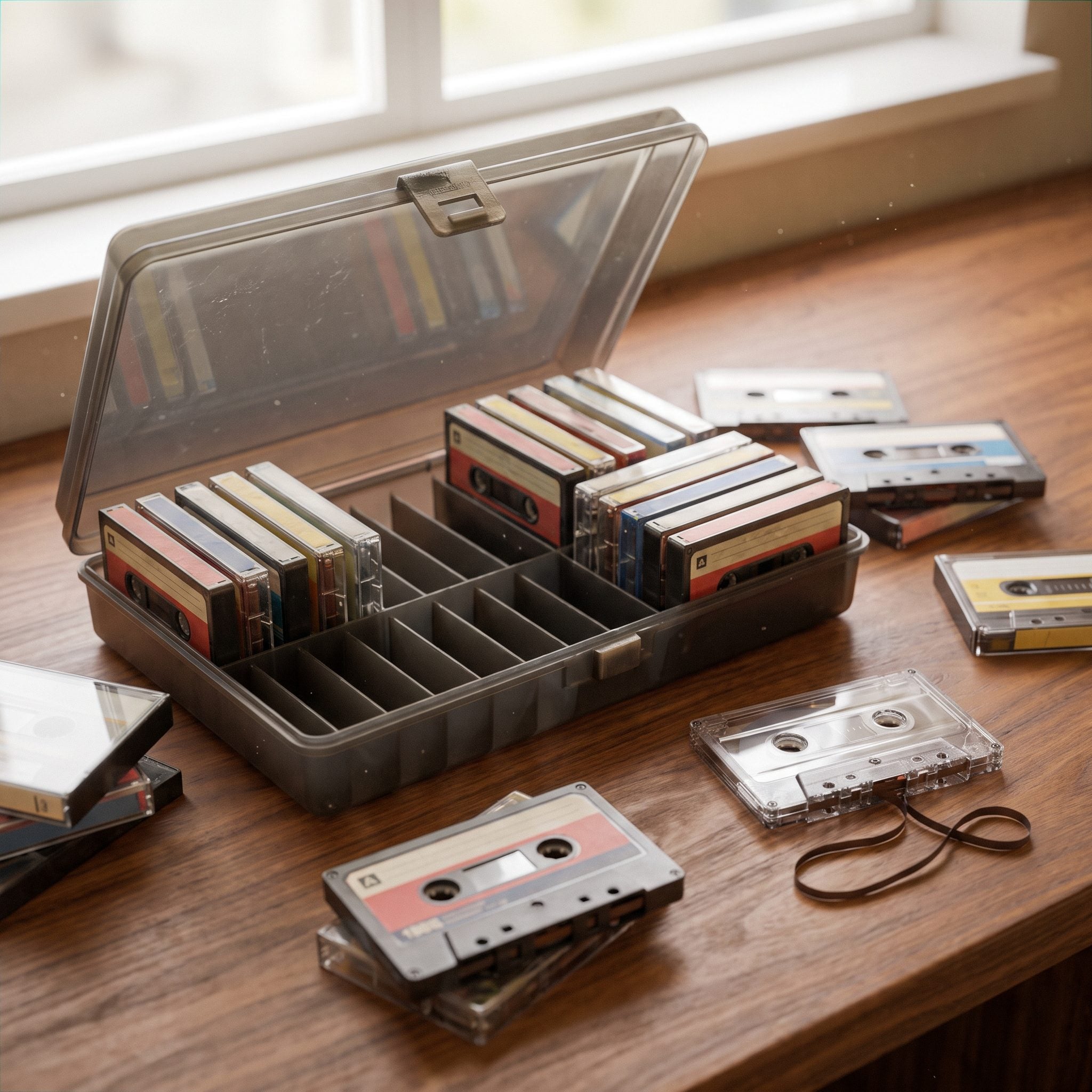
A prerecorded album on cassette commonly cost $6 to $9. Blank tapes cost less, and a storage case capable of holding a modest collection added another small purchase to the ecosystem.
The blank tape was where the real bedroom economy flourished. You could turn one purchase into hours of radio recordings, homemade compilations and badly handwritten labels that became meaningless three months later.
Finger poised over RECORD. DJ still talking. Song intro disappearing. Rage. Rewind. Try again tomorrow.
6. The $8-to-$15 Alarm Clock Was Built to Ruin 7 A.M.
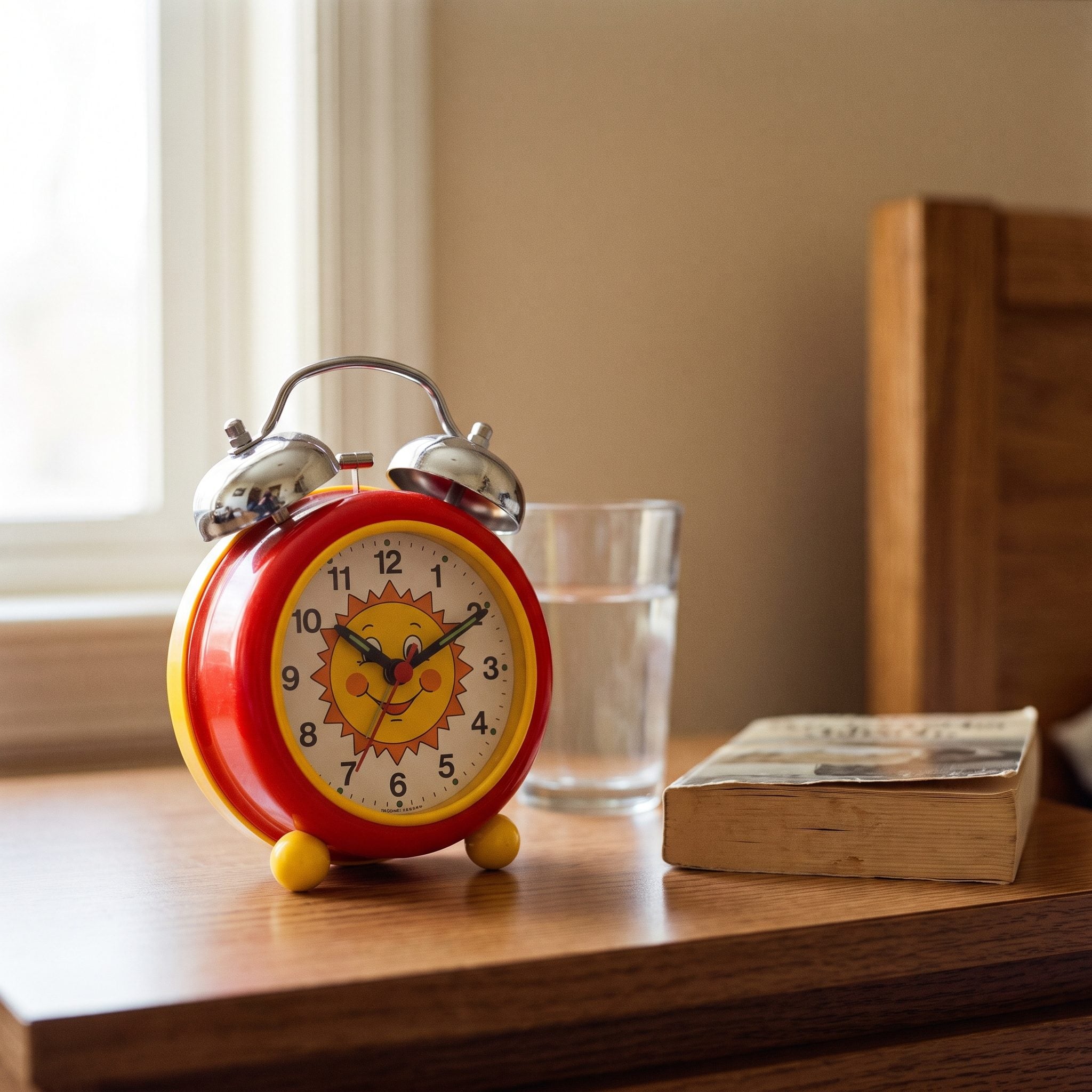
A novelty or character alarm clock cost $8 to $15, while plain wind-up twin-bell models could be cheaper.
The bells were savagely effective. A tiny striker hammered between two metal domes with the subtlety of a railroad crossing inside the skull. The first achievement of every morning was making it stop.
Digital clocks were rapidly taking over, but the wind-up version remained perfectly capable of terrorizing a bedroom without a single microchip.
5. Fisher-Price and Playskool: $15 to $30 for a Big Plastic World
🔥 Would you like to save this?
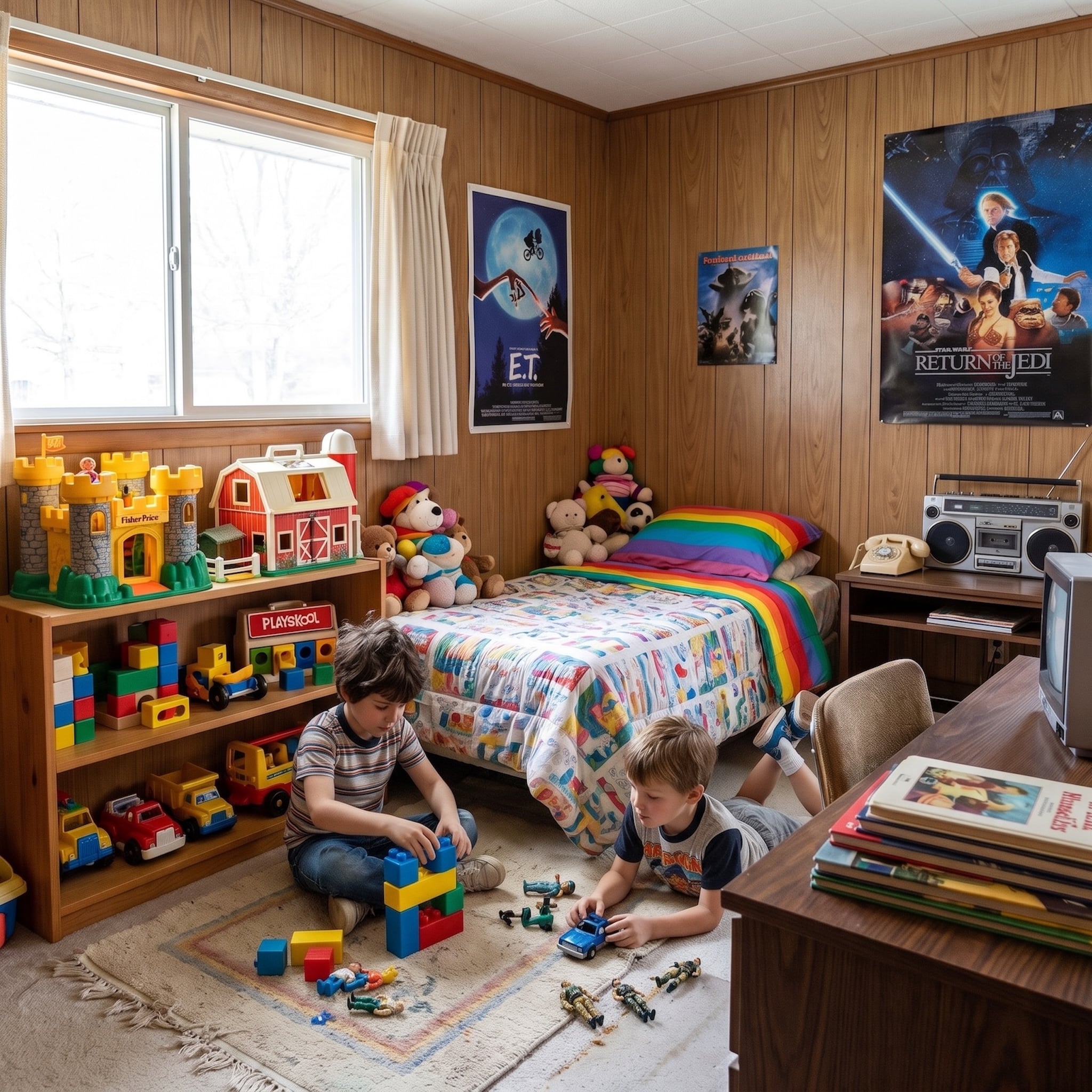
Now the feature-image toys get their turn. A substantial Fisher-Price or Playskool playset lived in the $15 to $30 range, putting the barn, garage or similar big plastic set squarely into birthday-present territory rather than casual checkout money.
The construction was wonderfully overqualified for the customer. Chunky pieces. Thick walls. Few delicate mechanisms. A two-year-old could conduct a structural test that would have destroyed lesser products and the barn would simply wait for the next sibling.
That durability made the price easier to justify. One playset could survive siblings, moves, years in a basement and eventual rediscovery by somebody’s grandchildren.
The Little People barn’s famous moo when the door opened was not strictly necessary. Neither was childhood.
4. $1.50 to $3 Paperbacks Turned One Shelf Into a Series Addiction
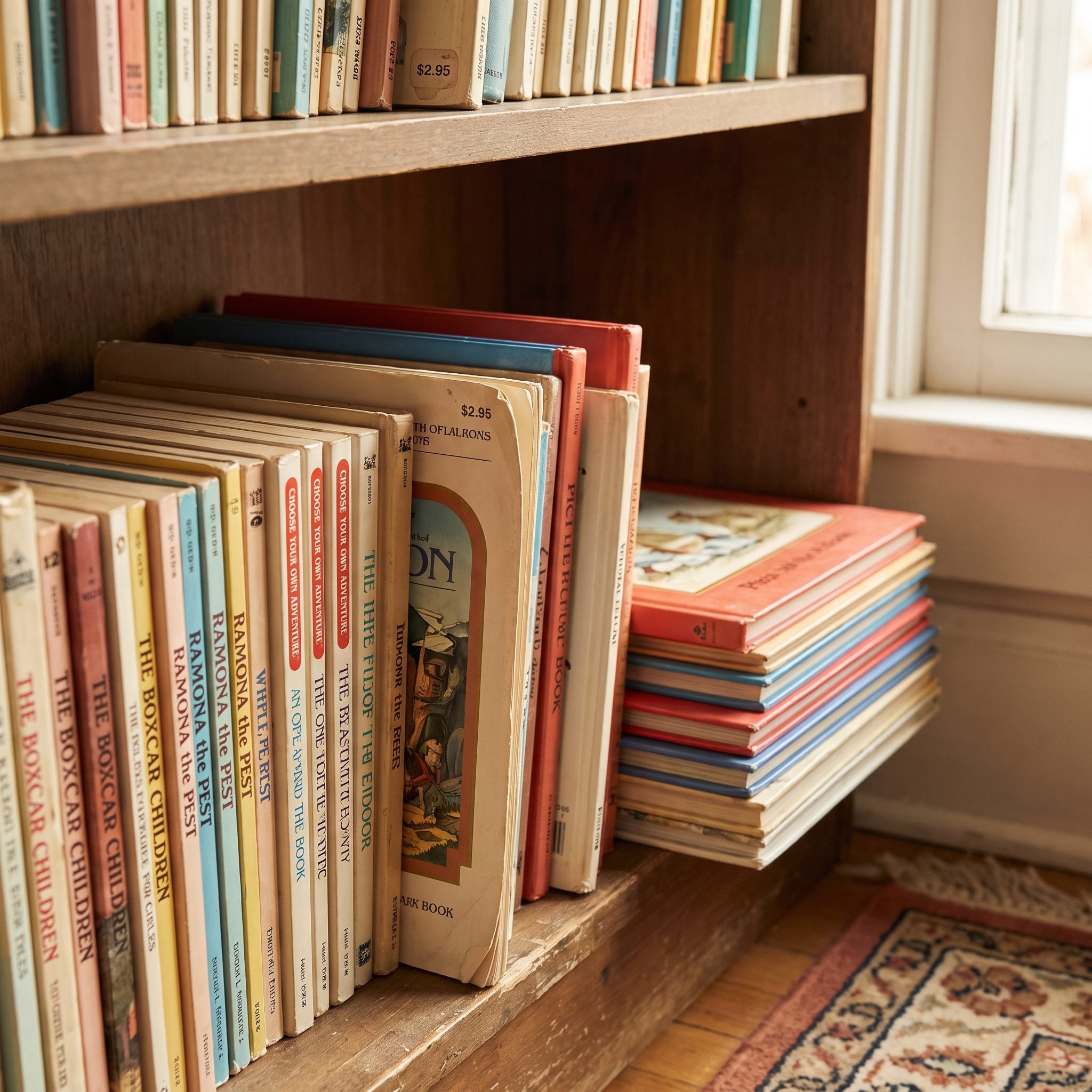
Paperback children’s books sold for $1.50 to $3, which is how one innocent title turned into twenty numbered spines lined up on a shelf.
Series publishing understood children perfectly. Finish one and the final pages politely informed you that another adventure already existed. Suddenly the Scholastic flyer was not advertising. It was logistics.
A five-dollar bill at a school book fair could still produce a satisfying little stack. The covers curled. The spines cracked. Favorite volumes looked as though somebody had carried them through a minor war, which was more or less the point.
3. $3 to $6 Bought a Rainy Afternoon of Puzzles and Cards
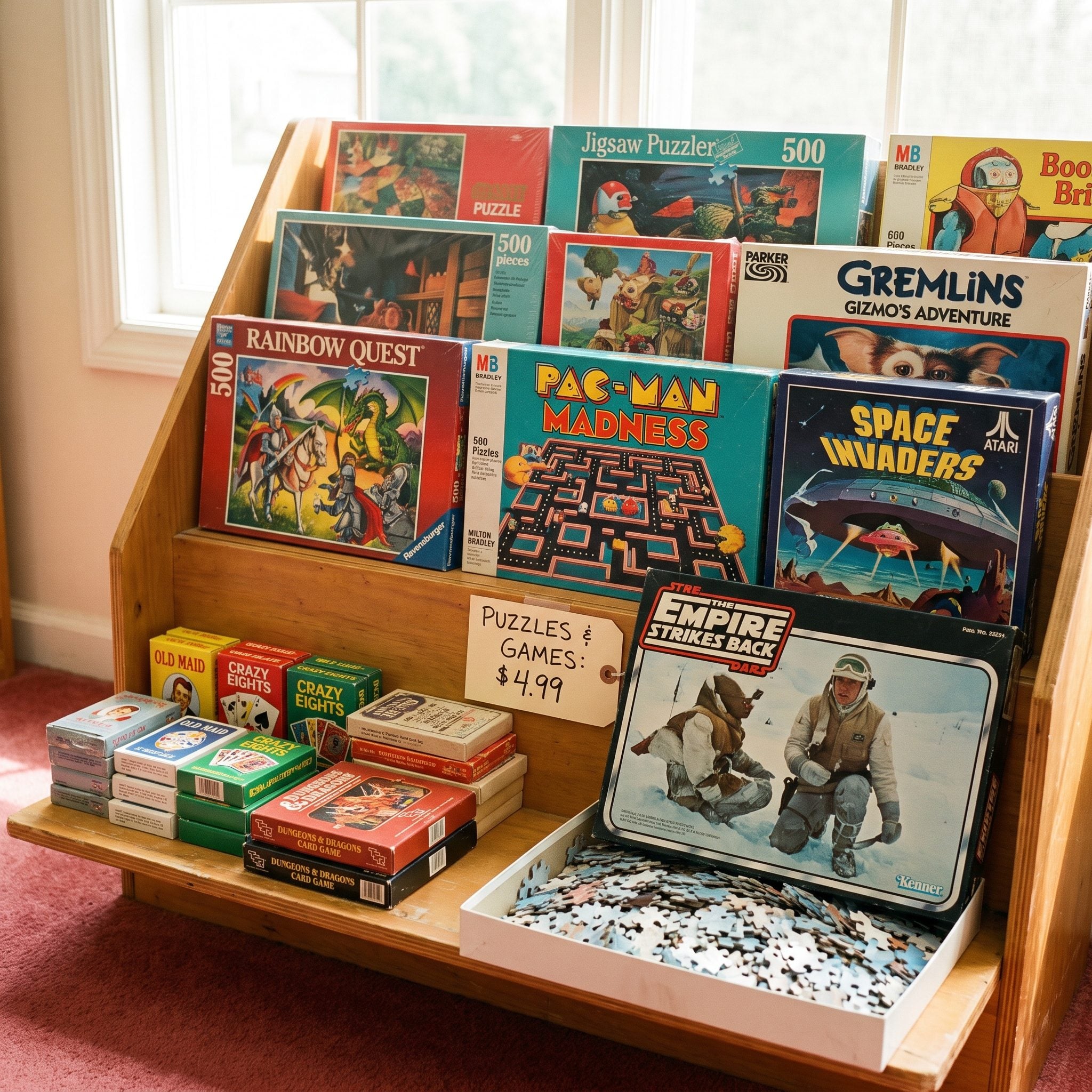
At $3 to $6, card games and basic puzzles lived in the beautifully low-risk part of the toy budget. They were cheap enough for an ordinary treat and substantial enough to consume a rainy afternoon.
Uno barely needed an introduction. Go Fish required nothing more sophisticated than literacy and the willingness to accuse relatives of lying. Jigsaw puzzles required one additional ingredient: accepting that a single piece would eventually disappear beneath a piece of furniture.
The missing piece would be found years later, naturally, when nobody remembered which puzzle it belonged to.
2. Five Dollars Could Stock the Art Corner
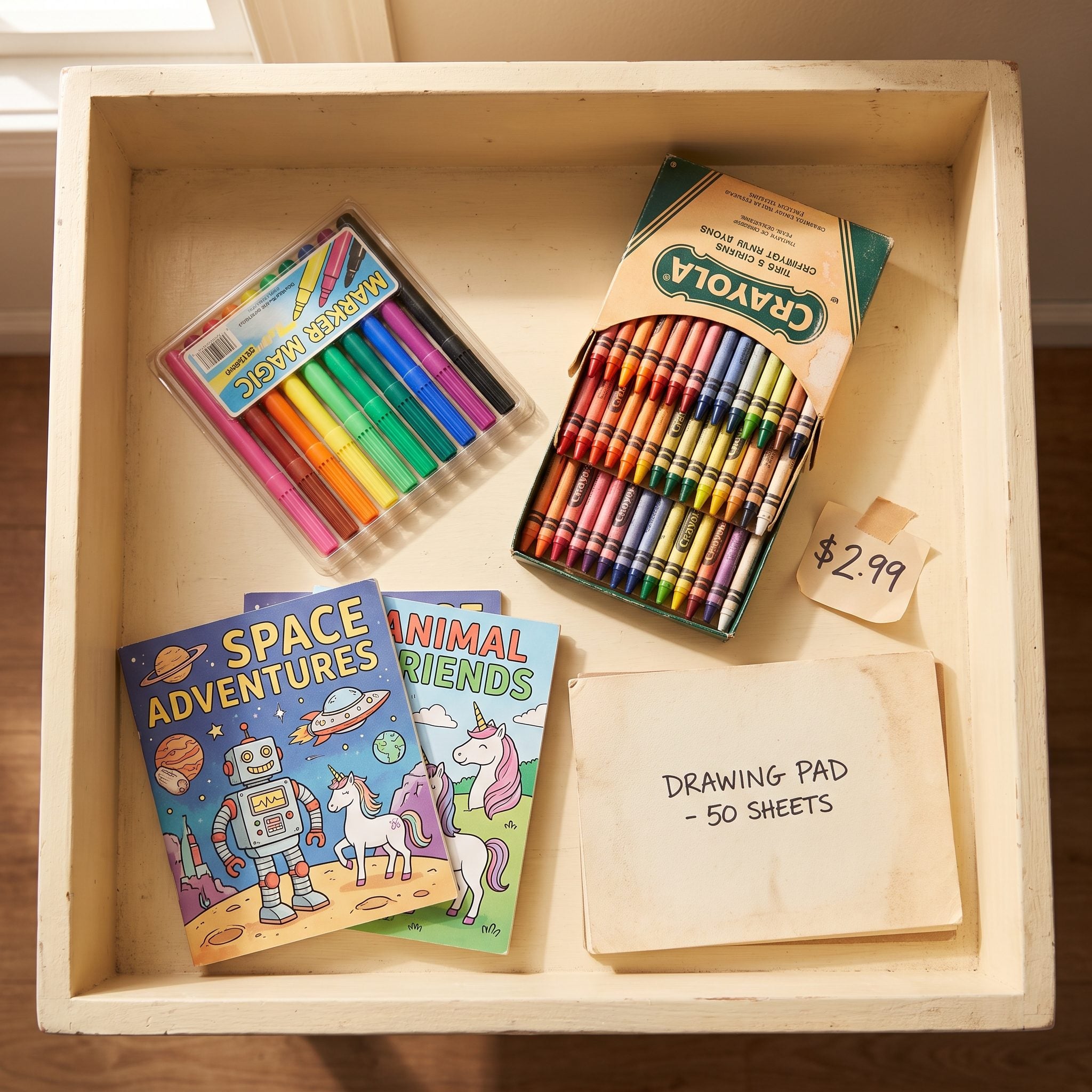
$5 could stock a small pile of coloring supplies: crayons, an inexpensive coloring book and a modest pack of markers, depending on brand and size.
The 64-count crayon box with the built-in sharpener occupied a higher social class. That was not merely crayons. That was inventory.
Kept within reach, art supplies could colonize an entire desk. Put them beside a coral bedroom art table and the only unresolved question was how much of the coloring would remain on paper.
1. The Toy Basket: $1 Here, $3 There, and Suddenly a Small Fortune
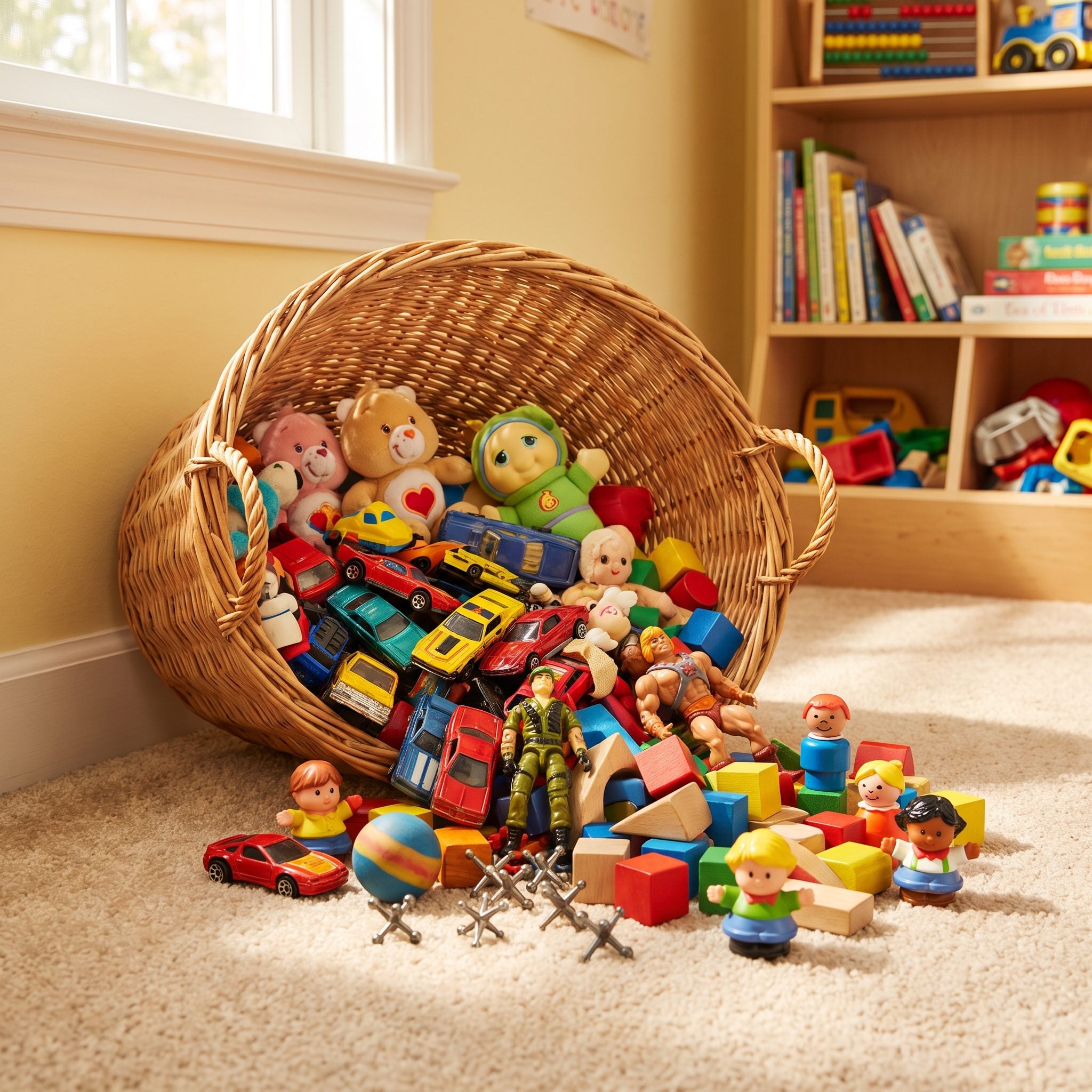
No catalog ever sold the finished version of this. The overflowing toy basket was assembled one cheap object at a time: a little car, a figure, blocks from an old set, a party favor, jacks, cereal-box prizes, something traded at school and one plastic component nobody could identify but nobody was allowed to throw away.
That is why it belongs at the end of the receipt. The big purchases were memorable because they happened at once. The small ones slipped through almost invisibly. A dollar here, three dollars there, five dollars on a birthday trip, repeated for years until the cheapest corner of the bedroom contained more individual purchases than anything else in the house.
The finished 1980s kid’s room was never really about one dramatic shopping spree. It was accumulation with a bed in the middle. Furniture established the borders. Christmas supplied the expensive hardware. Allowance money filled the gaps. Grandparents added textiles. Posters climbed the walls. Toys spread across the floor until storage itself became something else that had to be purchased.
And somehow every room ended up looking different, even when half the country seemed to own the same plastic barn, the same red-numbered clock radio and at least one cassette with handwriting nobody could decipher. Thirty-eight price tags later, that’s the part the old catalogs can’t quite capture: the objects were mass-produced. The room they became wasn’t.