
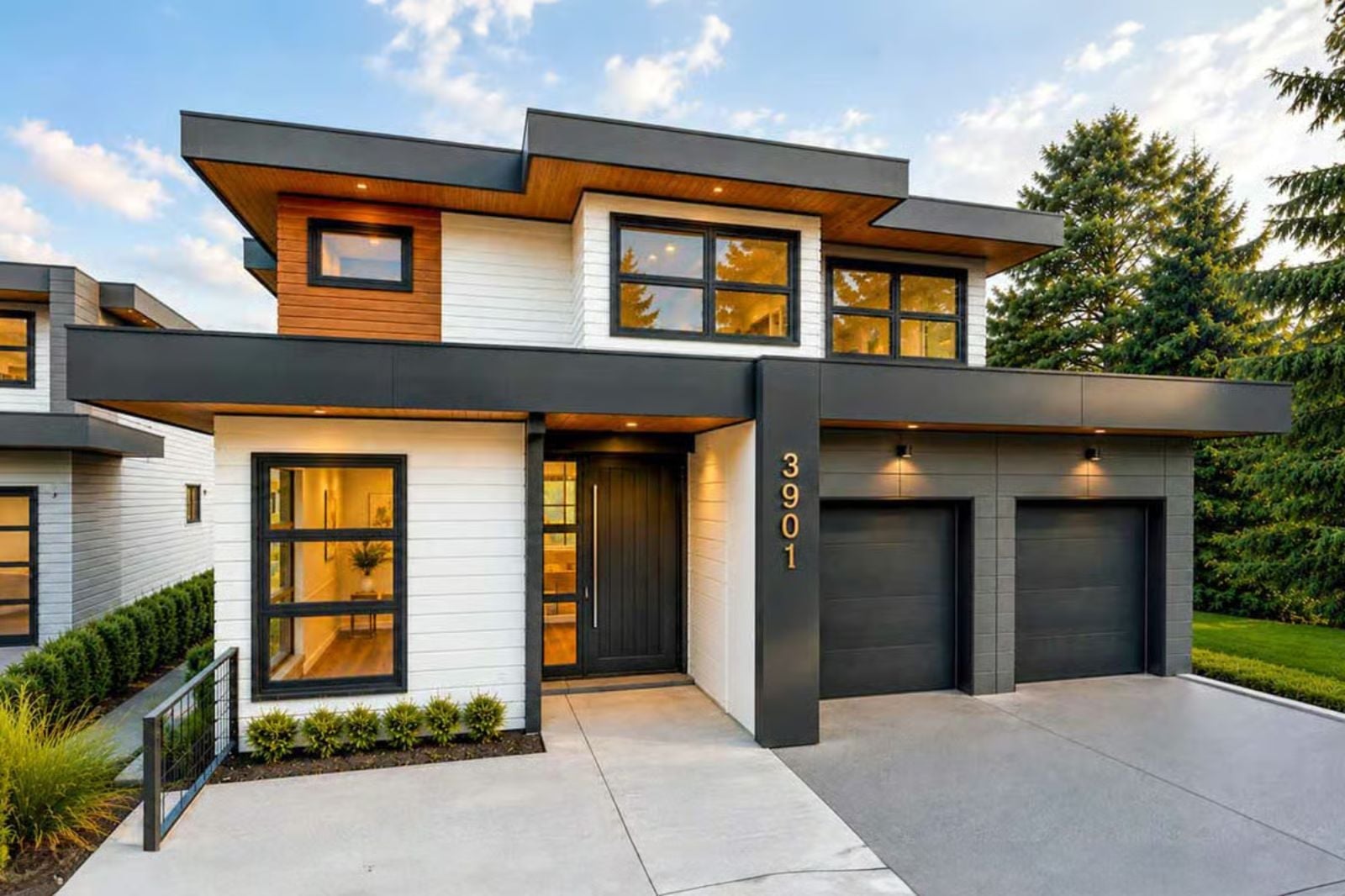
Every architect who has designed a multigenerational home will tell you the same thing: the walkout basement either saves the relationship or the whole plan falls apart. The Overton gets this right with a suite that opens to grade, a clean break between the main living floor and the lower level, and an open plan upstairs where two coffeemakers can run in the morning without anyone crossing paths until they’re ready.
Specifications
- Sq. Ft.: 4,508
- Bedrooms: 3
- Bathrooms: 3.5
Floor Plan – Main Floor
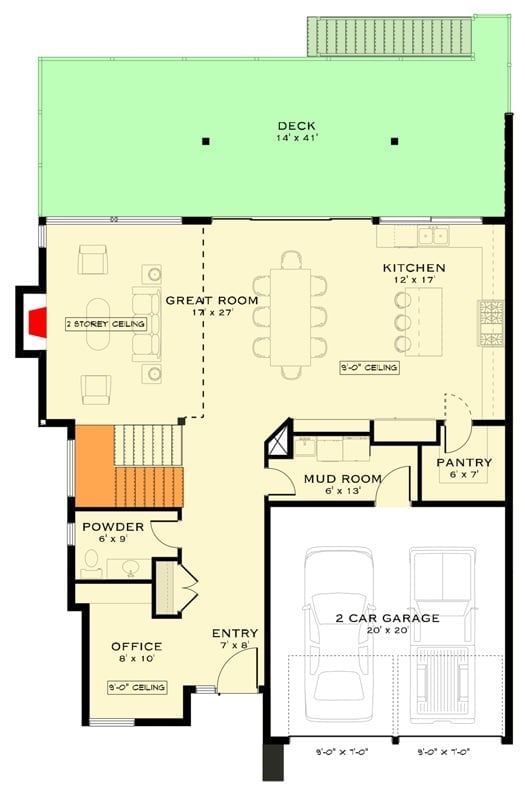
Main floor shows great room, kitchen, mud room, pantry, office, powder room, entry, and two-car garage with deck access.
Floor Plan – Second Floor
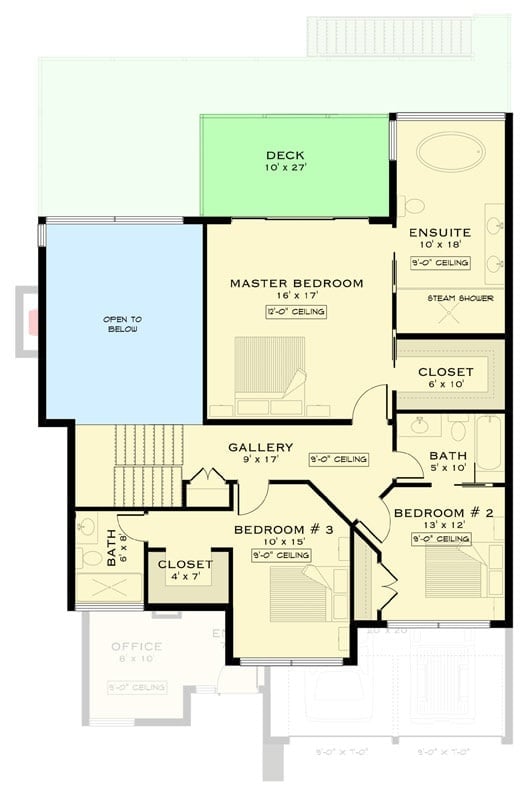
The master bedroom anchors the upper level with a 12-foot ceiling and a private ensuite with a steam shower. Three bedrooms total, connected by a gallery that handles traffic without forcing people through each other’s space. An office and separate bath tucked near the stairwell round out a floor that could genuinely work for someone staying long-term — not just visiting.
Floor Plan – Basement
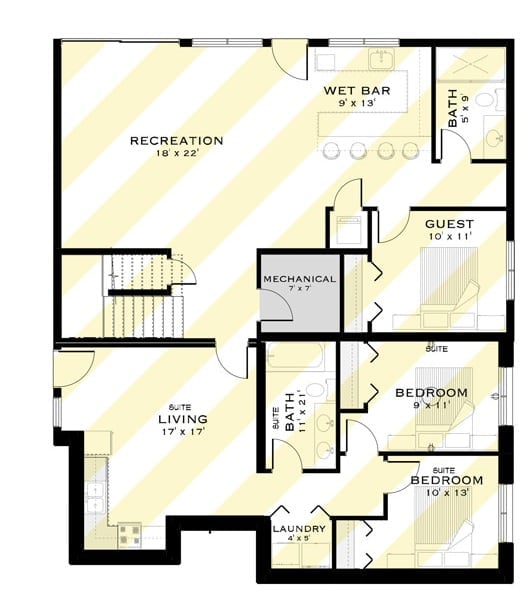
Lower level holds a recreation room, suite living area, two suite bedrooms, guest room, wet bar, two bathrooms, mechanical room, and laundry.
Ask Yourself: Notice how the suite living area and suite bedrooms cluster together on the lower level — that grouping gives everyone their own territory without needing a separate entrance off the street. The real question worth sitting with: one bathroom split between two suite bedrooms sounds fine until someone is actually living down there full time.
Dark Garage Doors and Warm Wood Trim Pull the Whole Facade Together
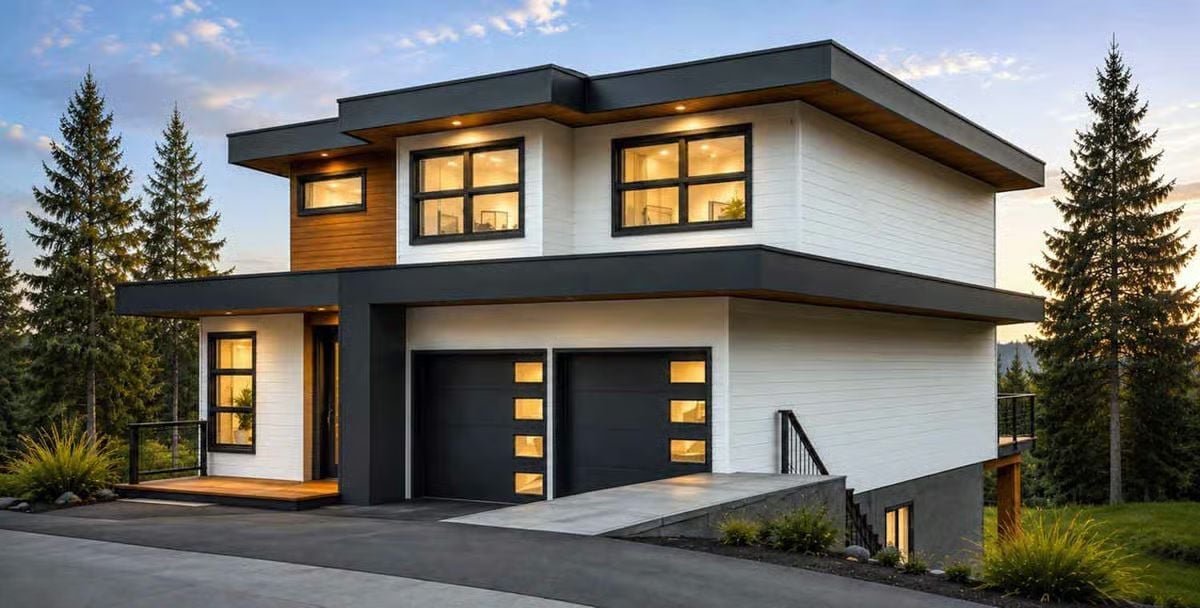
Flat roofline, black-framed windows, and cedar accent panels give this exterior its edge. At dusk, the illuminated garage door panels pick up the glow from inside in a way that feels deliberate rather than accidental — which, given how often exterior lighting is an afterthought, is worth pointing out.
Fun Fact: A walkout suite on a sloped lot gets natural light on two sides, something a standard below-grade unit almost never manages. Builders call this a “daylight basement,” and for anyone living down there full time, the difference is significant. If your in-laws are on the fence about the move, that detail tends to settle it.
Snow-Capped Views Through Glass That Takes Up Half the Wall
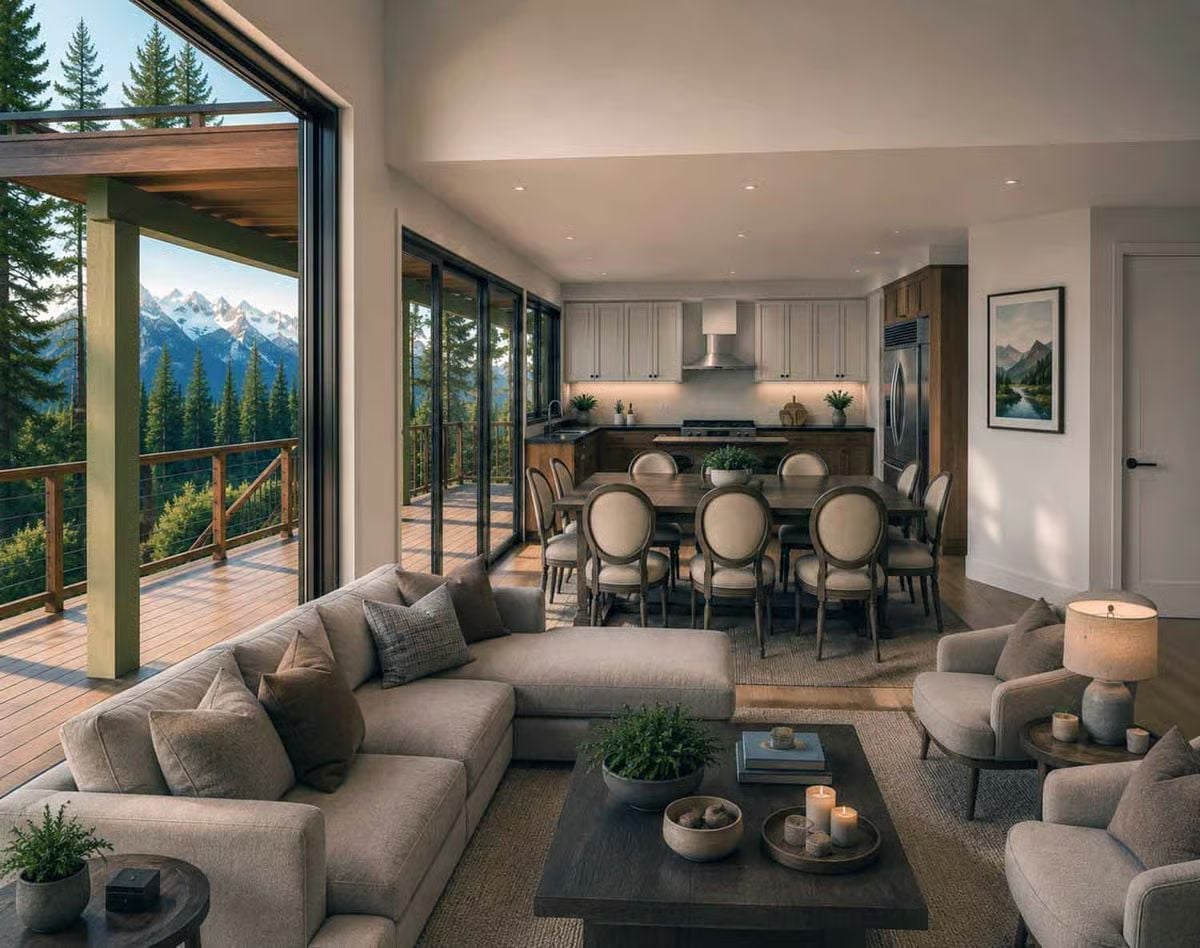
Floor-to-ceiling sliding doors don’t just frame the mountains outside, they make them feel like part of the room.
Cable railing on the deck keeps sightlines clear from inside. The sectional sits low — nothing blocking the view — and the round-back dining chairs soften what would otherwise be a lot of wood and stone competing for attention.
Fireplace Lit, Mountains Out the Window, Nowhere Else You’d Rather Be
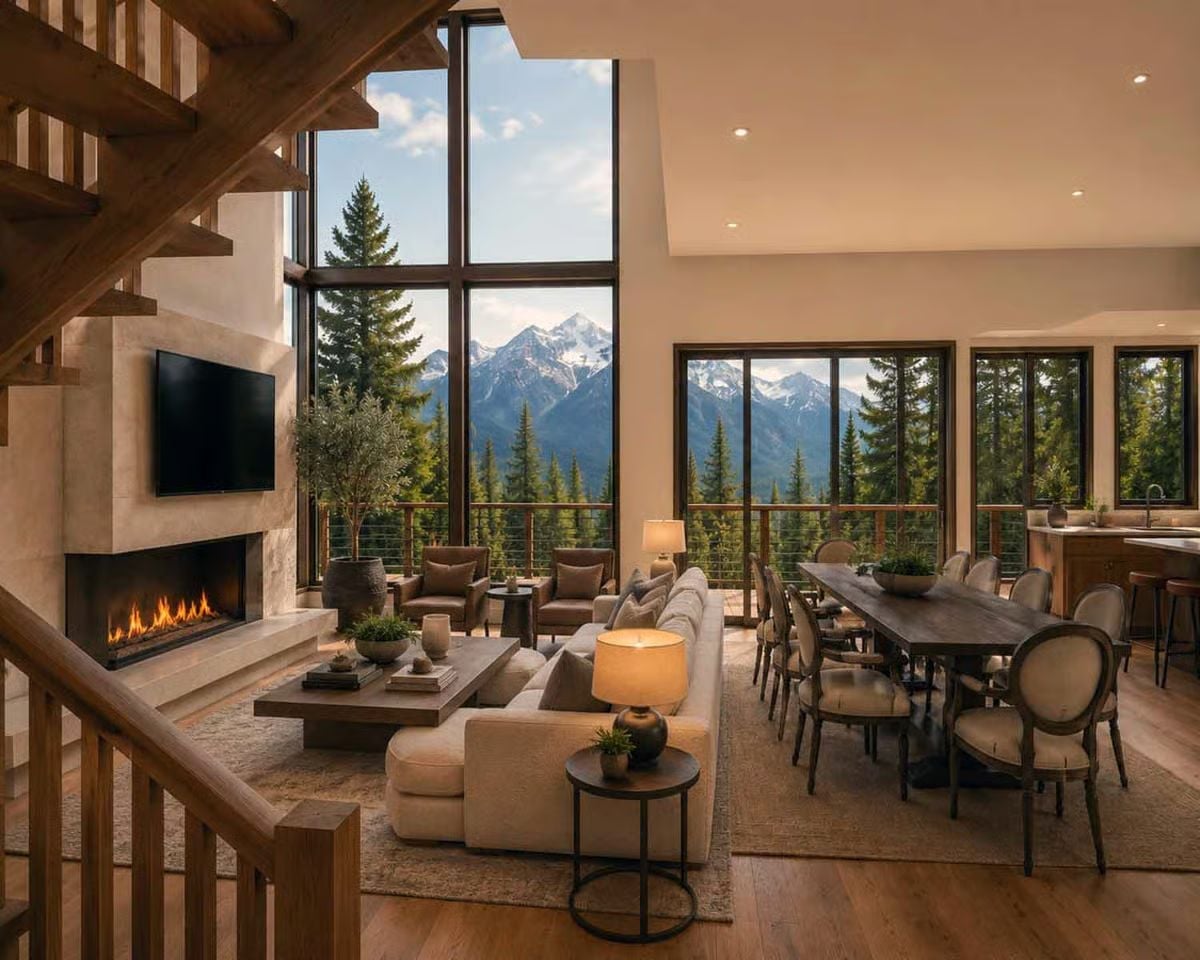
Warm hardwood floors and a limestone fireplace surround anchor the living area. The glass behind them does the rest, pulling snowcapped peaks into the room as if the wall were never there to begin with.
History Corner: Open-plan great rooms took hold in North American residential design during the postwar era, largely because smaller households had no use for a formal parlor walled off from the kitchen. Mountain lodge architecture refined the concept later by pairing open plans with oversized glazing, turning whatever was outside into the room’s main event.
Up in the main bedroom, the view does most of the heavy lifting.
Snow-Capped Peaks Visible From Bed, No Alarm Clock Required
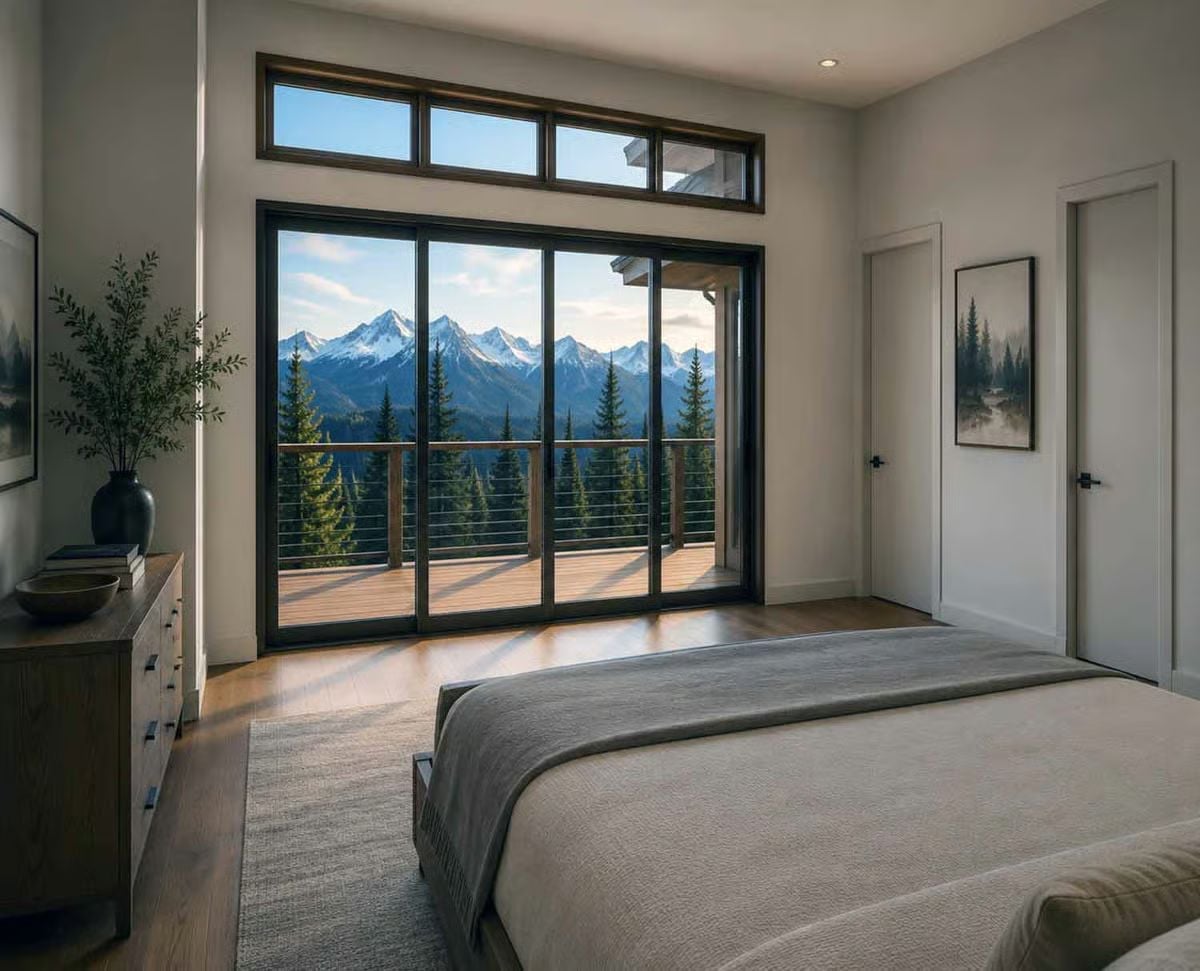
Sliding glass doors open onto a private deck with cable rail. Dark bronze frames set off pine forest and snowcapped ridgeline beyond — the kind of morning view that makes you briefly forget you share this house with several other people.
Pin It
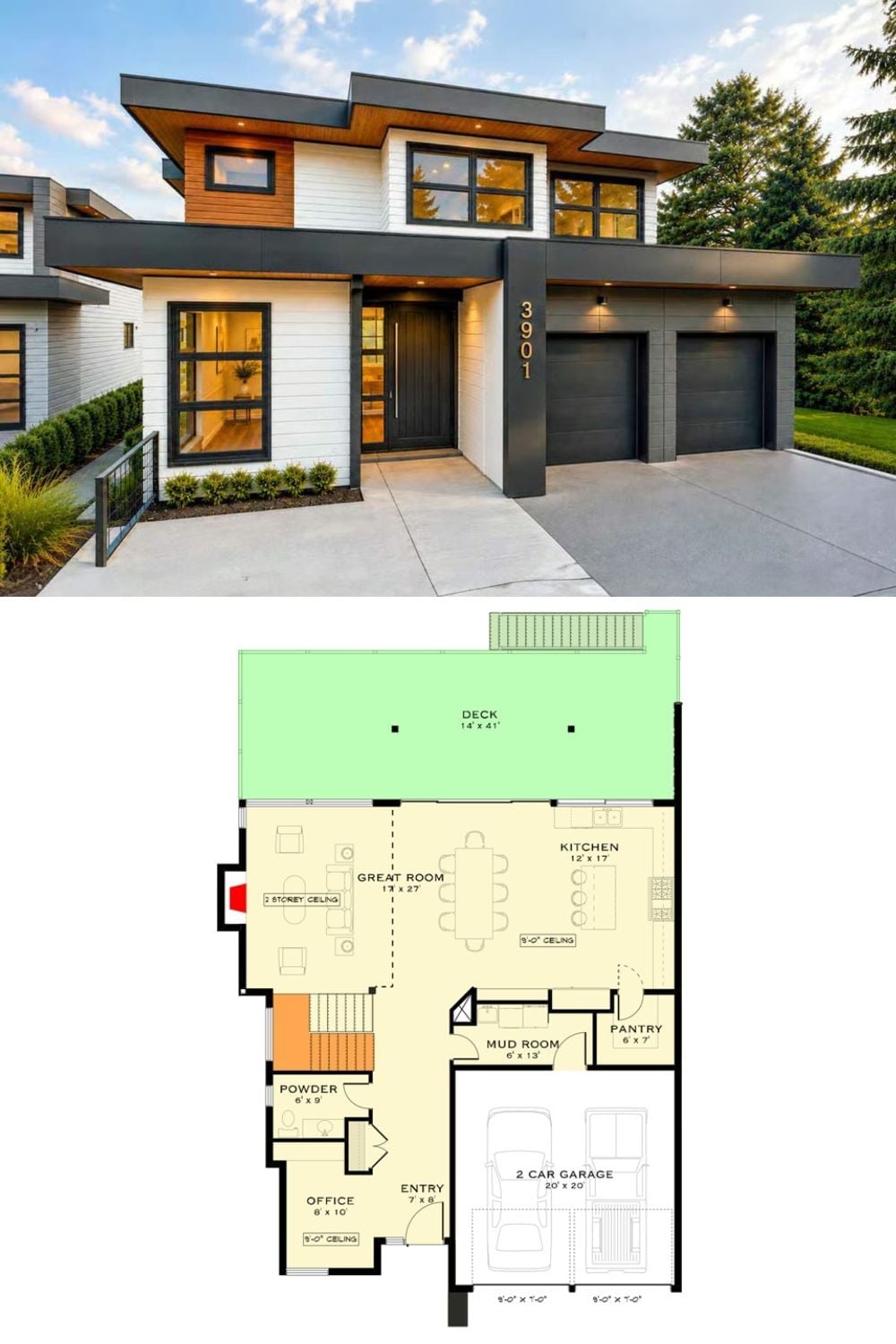
Exterior photo shows a modern two-story home with wood and dark trim accents; floor plan below details the main level layout including garage, great room, kitchen, and deck.