
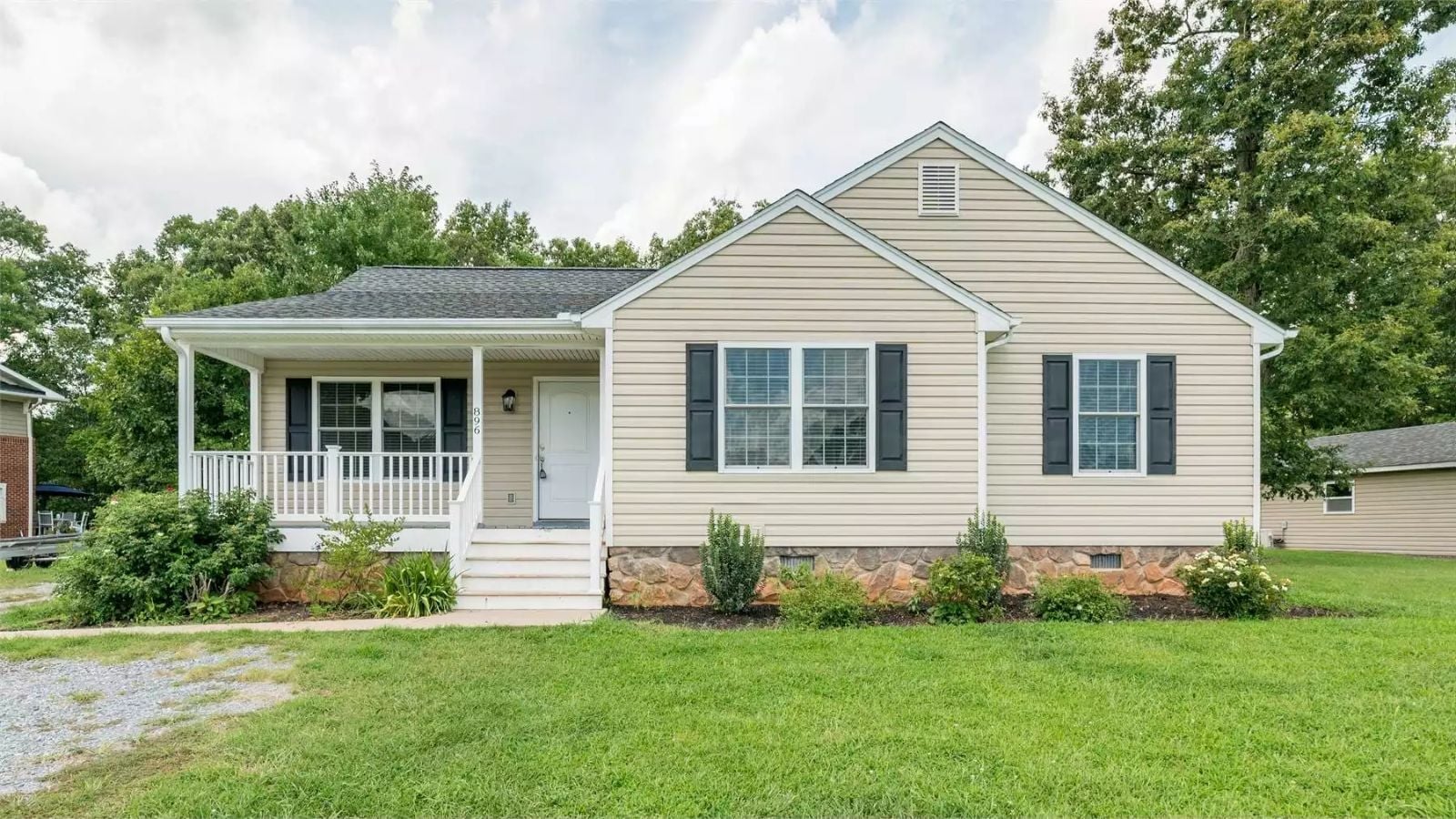
Some front porches stay with you for decades — the one at your grandparents’ house where people sat after dinner until the fireflies came out, where neighbors stopped at the sidewalk and actually talked. The Caldwell Court is built around that instinct, with a covered front deck wide enough for real chairs, an open living area that draws people toward the kitchen, and a single-story layout where everything lands exactly where you reach for it.
Specifications
- Sq. Ft.: 1,446
- Bedrooms: 3
- Bathrooms: 2
Floor Plan
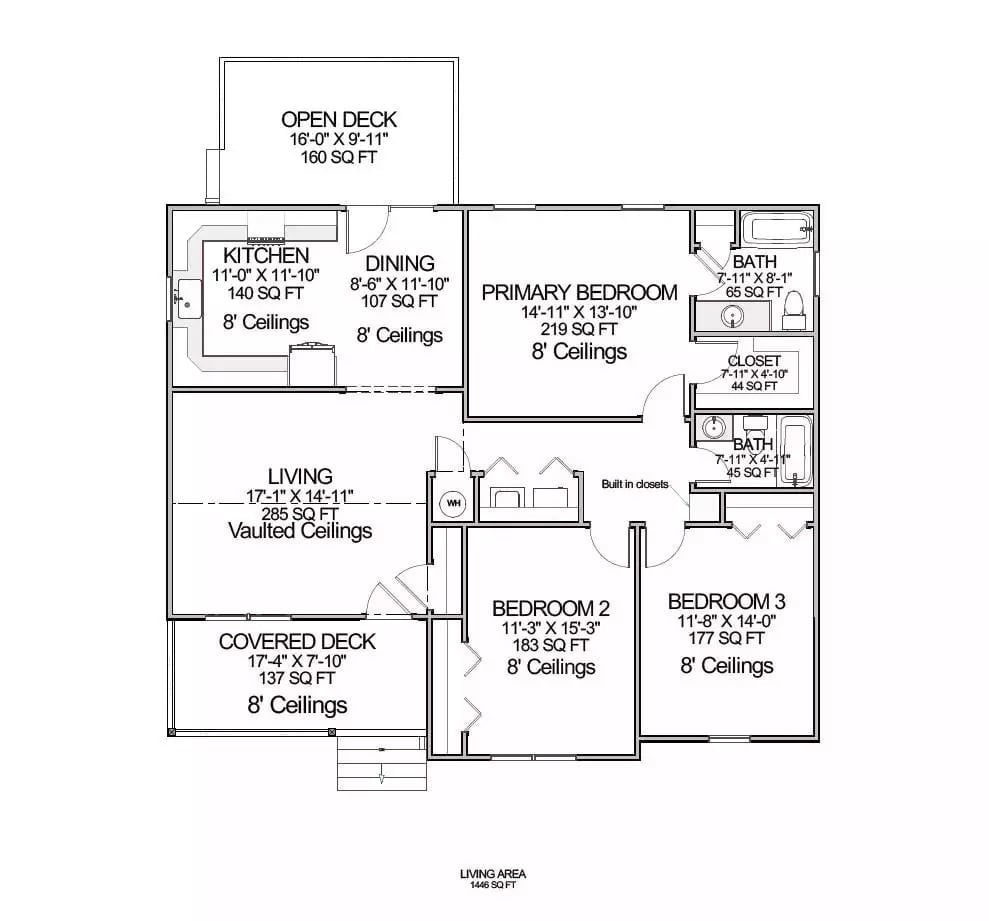
Three bedrooms occupy the right side of the plan, with the primary suite positioned near two dedicated baths and a proper closet. Living and dining flow open toward the kitchen, and vaulted ceilings in the living room — along with the covered front deck — give the whole thing more character than the square footage suggests.
Floor Plan

The foundation plan shows two support columns, crawlspace construction, and a stepped footprint that points to an L-shaped layout. Beam lines mark the structural load points sitting beneath what’s likely the main living area.
Quick Fix: Crawlspace foundations cost less to build than full basements and give you real access to plumbing and wiring without excavating. Most homeowners don’t think about that until a pipe goes, at which point they’re very glad it’s not a slab.
Fresh Deck, Stone Skirt, and a Back Door Worth Walking Through
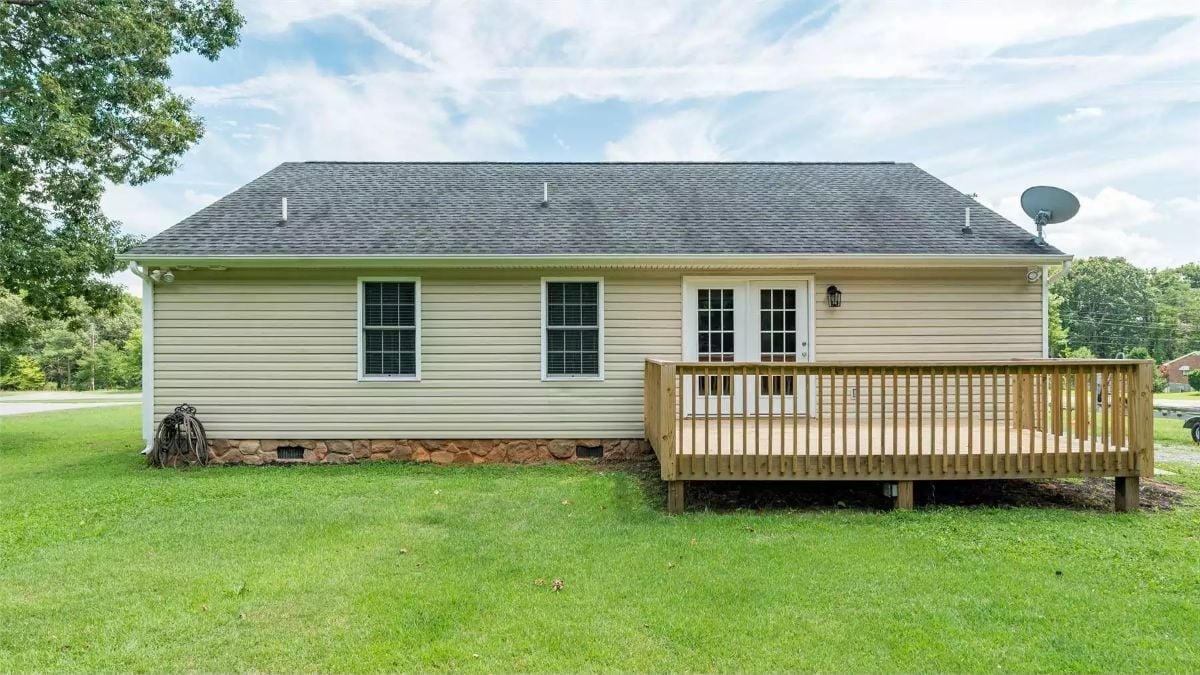
New pressure-treated decking sits at door height, making the back entry feel deliberate rather than tacked on. Crawlspace vents punctuate the stone foundation skirt running the full width of the house.
Why Deck Height Matters More Than Deck Size
A deck flush with the interior floor level erases the threshold. You don’t step down, you step out — and that distinction changes how often people actually use the space. Builders who get this treat the deck as a room extension; those who don’t bolt on a platform for resale and call it done. The difference is obvious the moment you walk through the door.
Vaulted Ceiling, Hardwood Floors, and a Fan That Actually Fits the Room
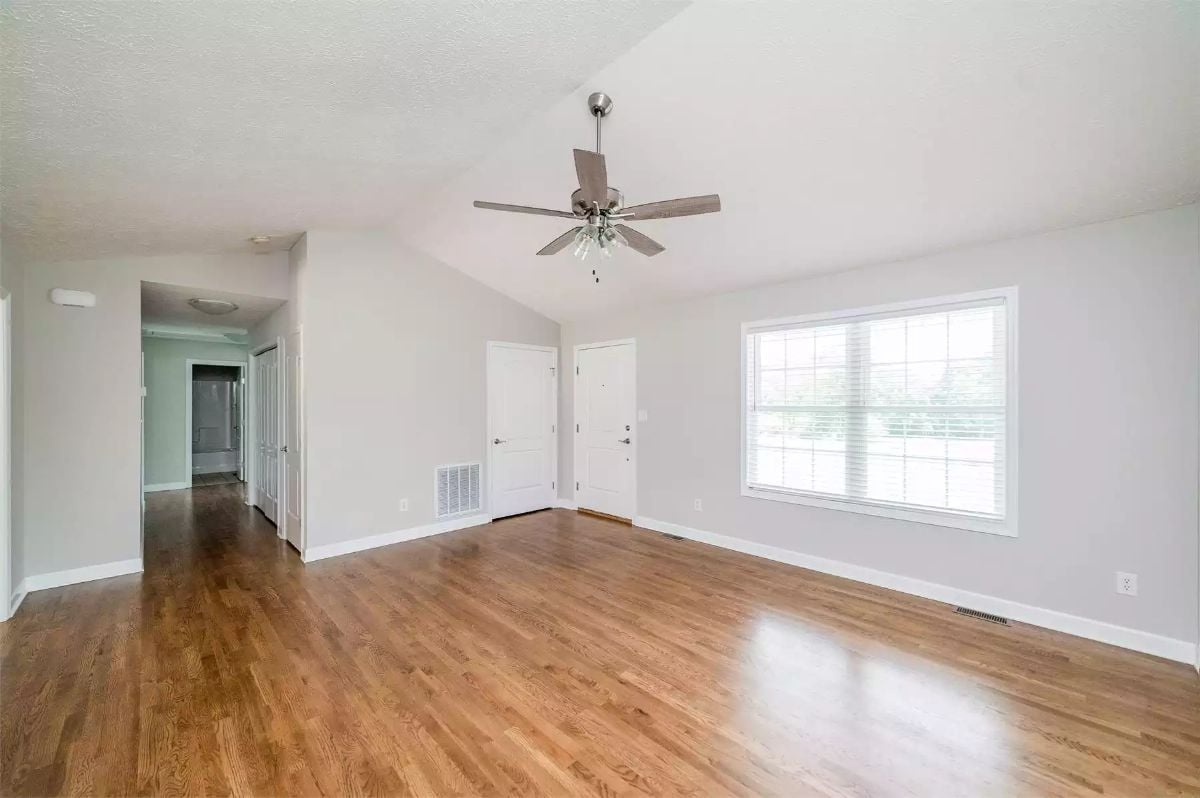
Hardwood floors run the full length of the main living area, catching light from the side window in a way that reads wider than the actual square footage. The vaulted ceiling gives the five-blade fan proper clearance, and two doors in the back corner — a closet and an entry point — are worth marking on any floor plan before furniture shopping starts.
- Vaulted ceilings reduce the need for overhead lighting during daytime hours
- Hardwood floors hold up better in high-traffic living areas than carpet over time
- A dedicated floor vent near the entry doors helps regulate temperature at the point where outside air enters most
Stainless Appliances, Warm Maple Cabinets, and Enough Counter Run to Actually Cook
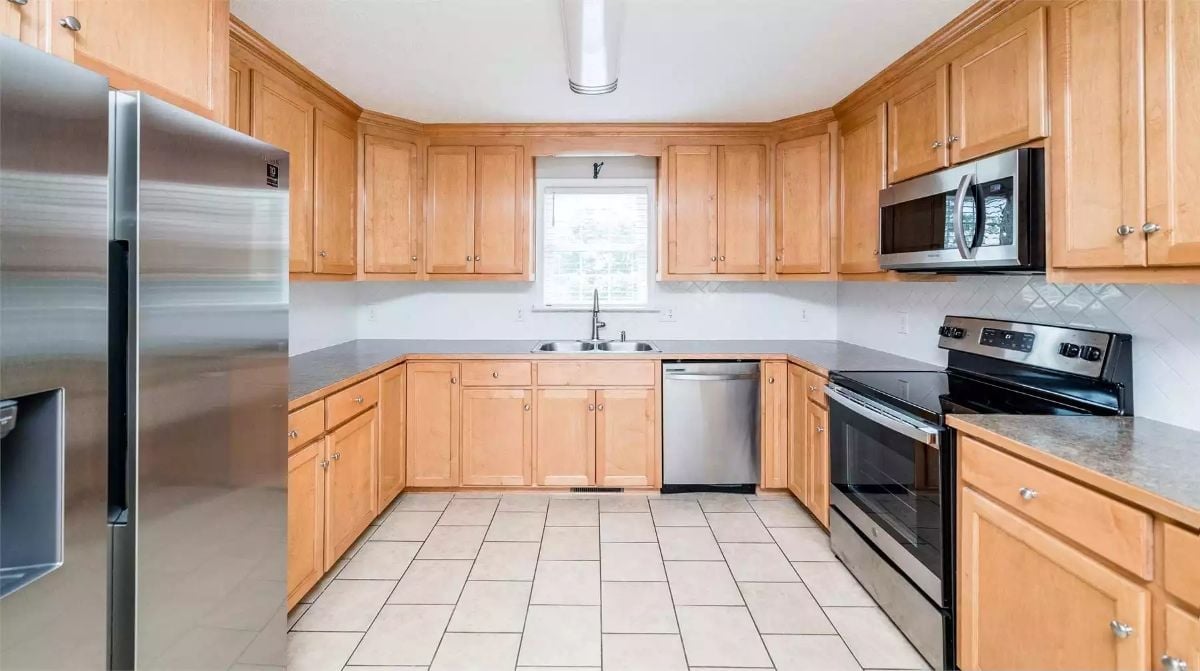
Maple cabinetry wraps three walls in a U-shape that keeps the workspace tight and efficient — everything within arm’s reach, nothing wasted. Gray laminate counters read darker against the light tile floor, and all three appliances are stainless, with the over-range microwave pulling double duty as a vent hood.
Ask Yourself: If you’re inheriting a kitchen with laminate counters, don’t dismiss them outright. Solid laminate holds up well under daily use and costs a fraction of stone — a practical starting point if a full renovation isn’t in the budget yet.
Carpet, Closets, and an Ensuite That Actually Makes Sense
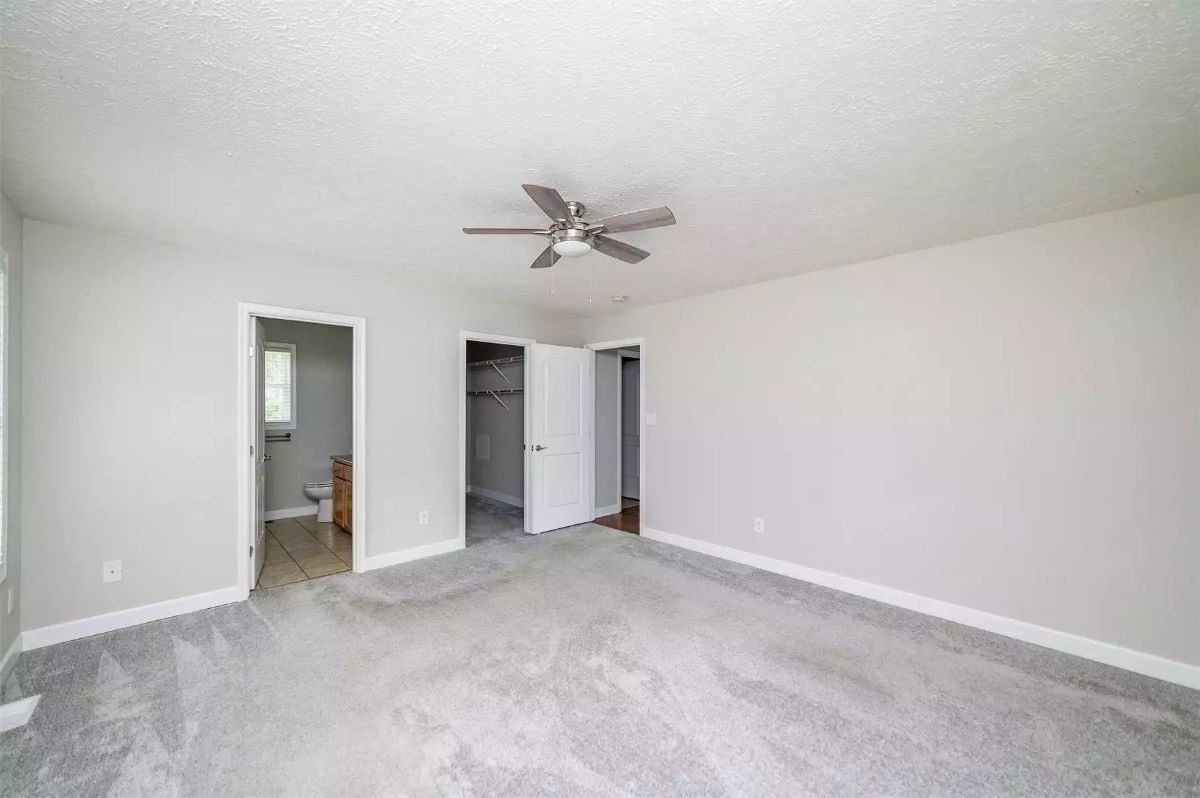
Gray carpet runs wall to wall beneath a five-blade ceiling fan, with two closet openings flanking a center door and the ensuite bathroom visible to the left.
Material Matters: Carpet in a primary bedroom isn’t a consolation prize. Cut-pile absorbs sound better than hard flooring, which matters when you’re sharing walls with family members or sleeping above an active living area. And if it’s looking tired, a full replacement typically costs less than refinishing hardwood.
Granite Counters, Globe Sconces, and a Double-Sink Vanity That Earns Its Footprint
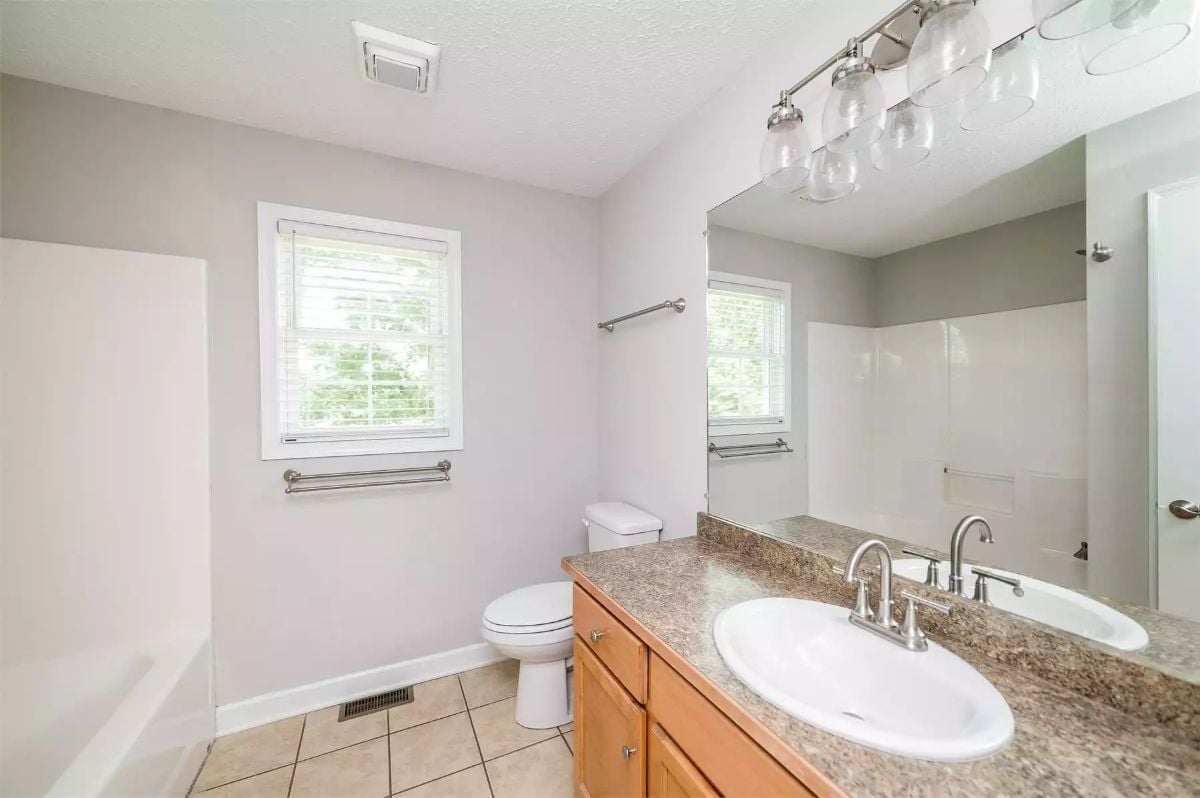
Dark granite on warm oak cabinetry gives the vanity genuine visual weight. Brushed-nickel globe sconces keep the light even across both sinks, and the combination of tile floors, a white tub surround, and a window with actual tree coverage outside makes this feel like a room people use rather than one they photograph.
Style Math: Undermount sinks are easier to wipe down than drop-in models because there’s no rim collecting water and soap residue. If you’re buying a home with existing granite, check for consistent sealing around the sink cutout — that’s where most countertop damage quietly begins.
Amana Washer and Dryer, Wire Shelving, and a Laundry Room That Actually Has Space
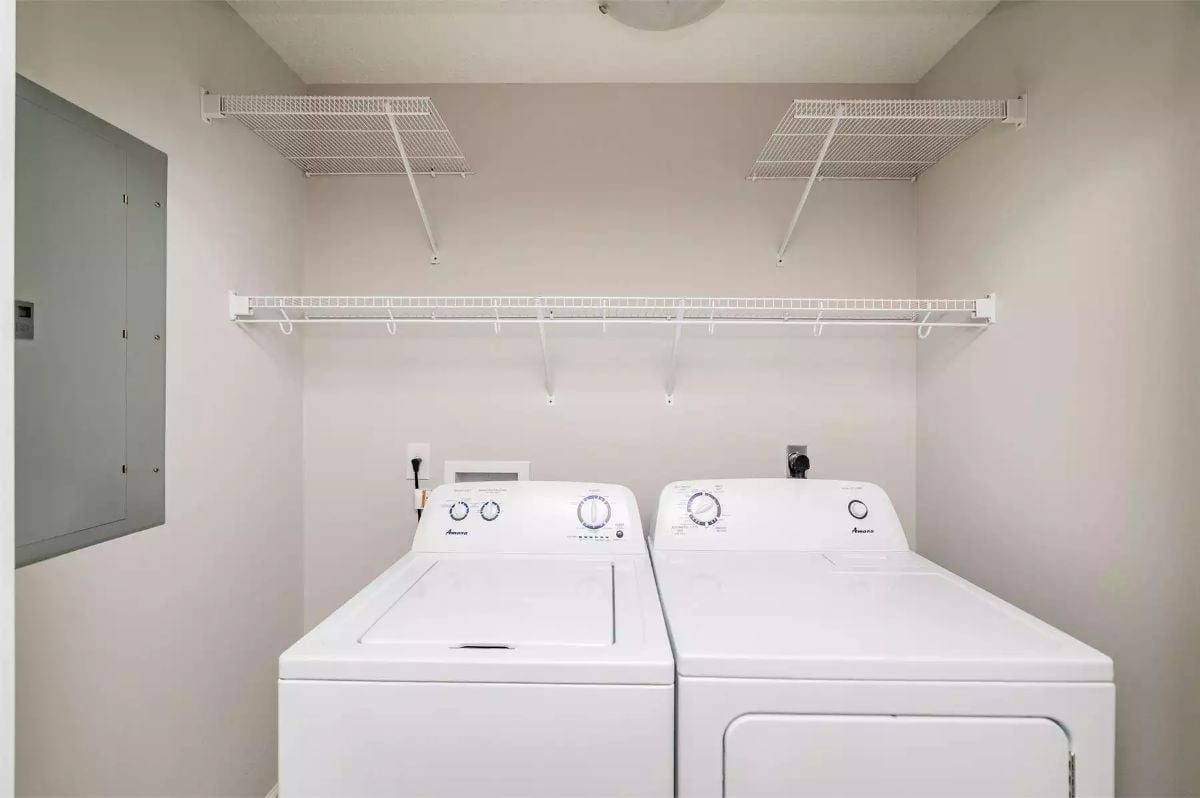
Side-by-side Amana top-loaders sit beneath wire shelving with a hanging rod built in. Freshly dried dress shirts can go straight from the machine to the rod without a trip to another room — a small thing that turns out to matter a lot on a Tuesday night.
Color Story: White on white reads clinical in photos but works hard in a laundry room. Walls, appliances, and shelving sharing the same tone means dirt and lint show up immediately rather than blending into darker contrast — which is exactly what you want in a room built around keeping things clean.
Pin It
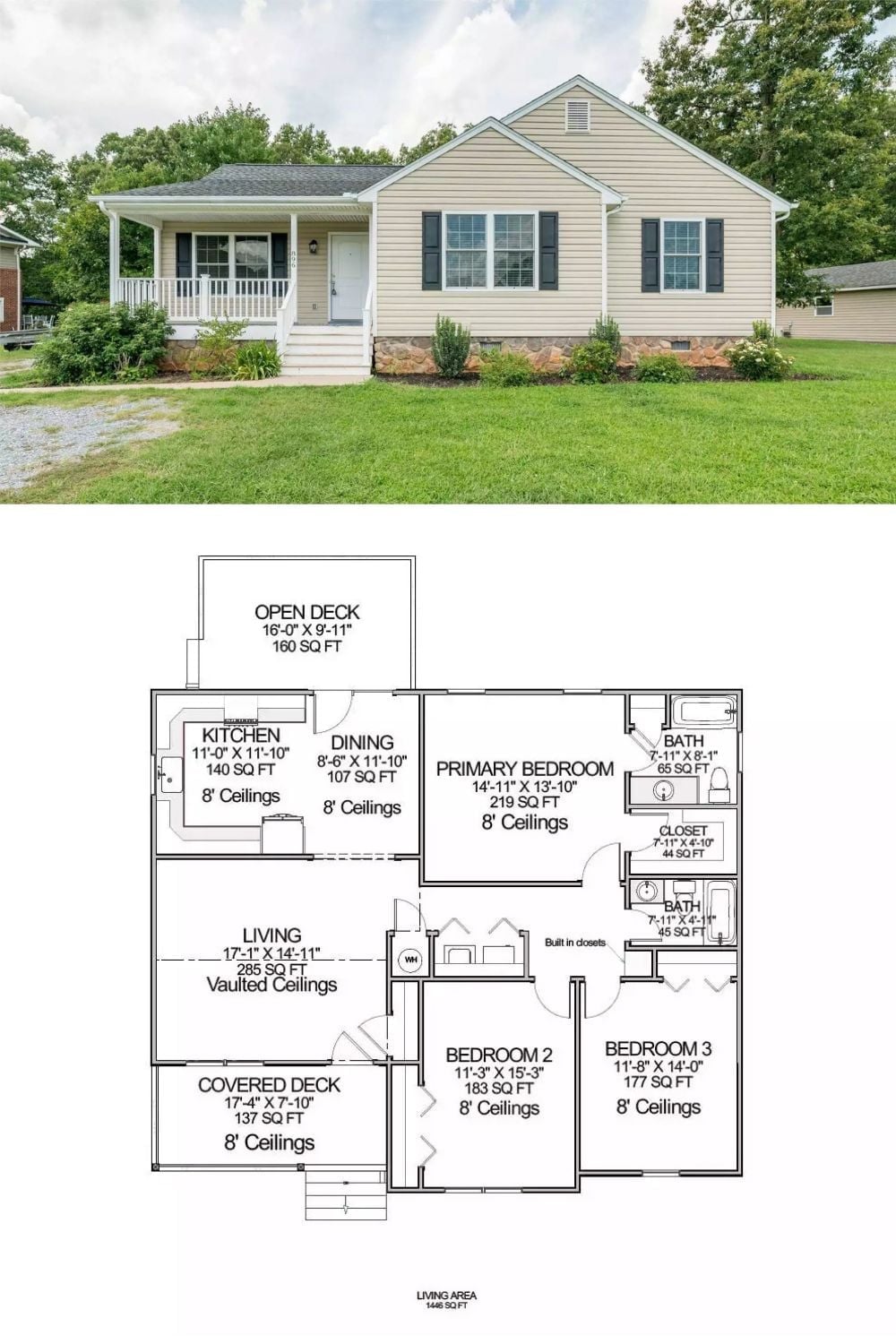
Exterior photo of a beige ranch with covered porch paired with a detailed three-bedroom floor plan below.