
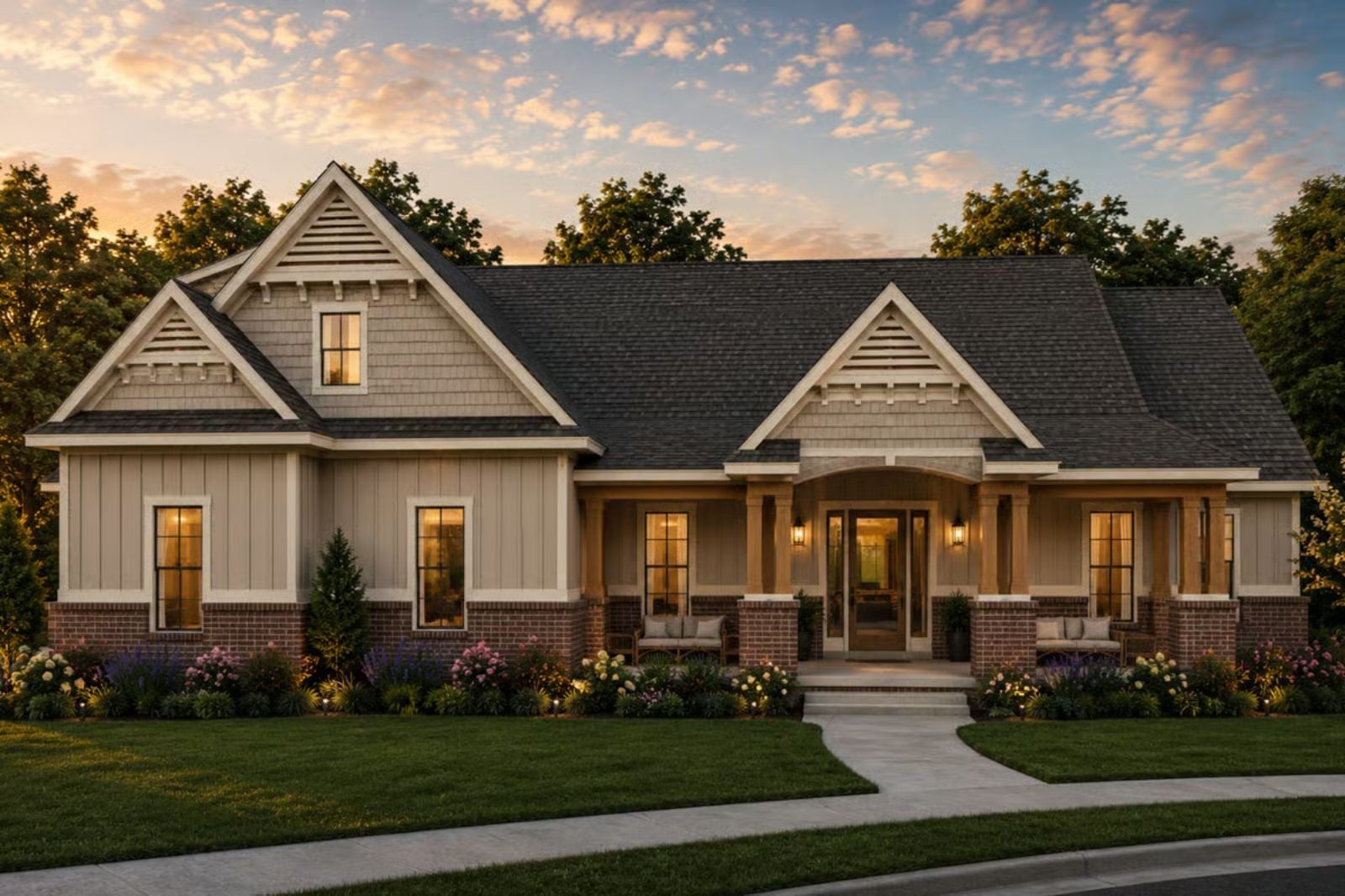
Moving a parent into your home is a decision that gets made in a hospital parking lot, not over months of careful planning — and suddenly you need two primary suites, a loft where the grandkids can disappear, and enough separation that two adults can make coffee at seven in the morning without negotiating the kitchen. The Brentwood is built around exactly that: dual main-floor primaries, a country farmhouse layout that keeps shared space genuinely shared, and a loft that gives everyone somewhere to land.
Specifications
- Sq. Ft.: 4,236
- Bedrooms: 4
- Bathrooms: 4
Floor Plan – Main Floor
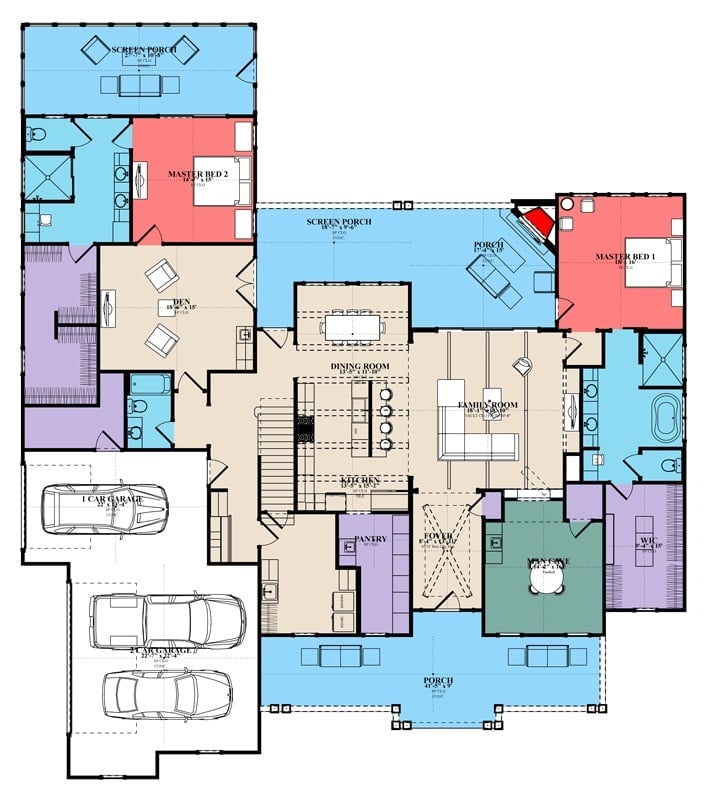
Dual primary suites anchor opposite wings, with a central kitchen-dining-family core, den, pantry, foyer, and covered porches on three sides.
Floor Plan – Second Floor
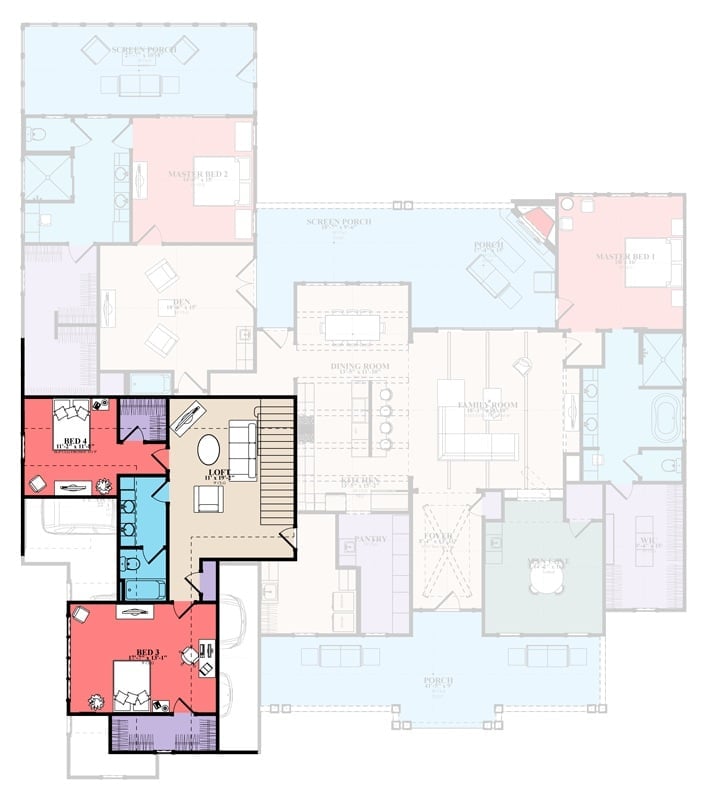
The outlined section highlights the upper-floor wing containing Bed 3, Bed 4, and a shared bath, connected through a loft that bridges the addition to the main staircase. Down on the ground level, the two primaries sit at opposite ends of the plan — far enough apart that they read as genuinely separate households sharing a roof rather than adjacent rooms sharing a wall. The loft is flexible enough to absorb whatever a multigenerational family needs it to be, which is usually more valuable than a room with a fixed purpose.
Crossed Beams, Lantern Light, and an Entryway That Sets the Tone Early
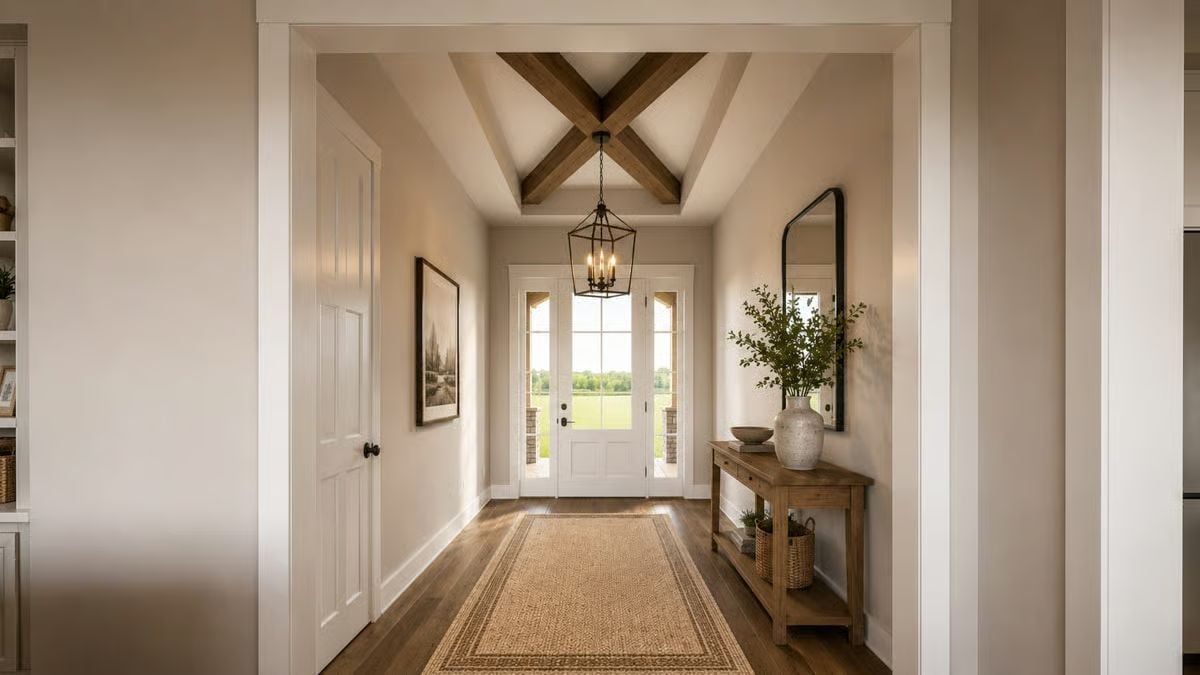
Exposed wood ceiling beams cross at the center of the foyer, anchoring a black iron lantern pendant above a jute runner. Sidelights flank the front door and push natural light deep into the entry. To the right, a raw-wood console holds a ceramic vase with branches — simple, grounded, and not trying too hard.
Editor’s Note: Lantern-style pendants have made a comeback in farmhouse entries because they scale well in double-height or vaulted spaces without crowding the ceiling plane. The open frame scatters light rather than pooling it directly below, which is particularly useful in narrow hallways that need to feel wider than they actually are.
Bentwood Chairs and a Beam That Actually Earns Its Keep
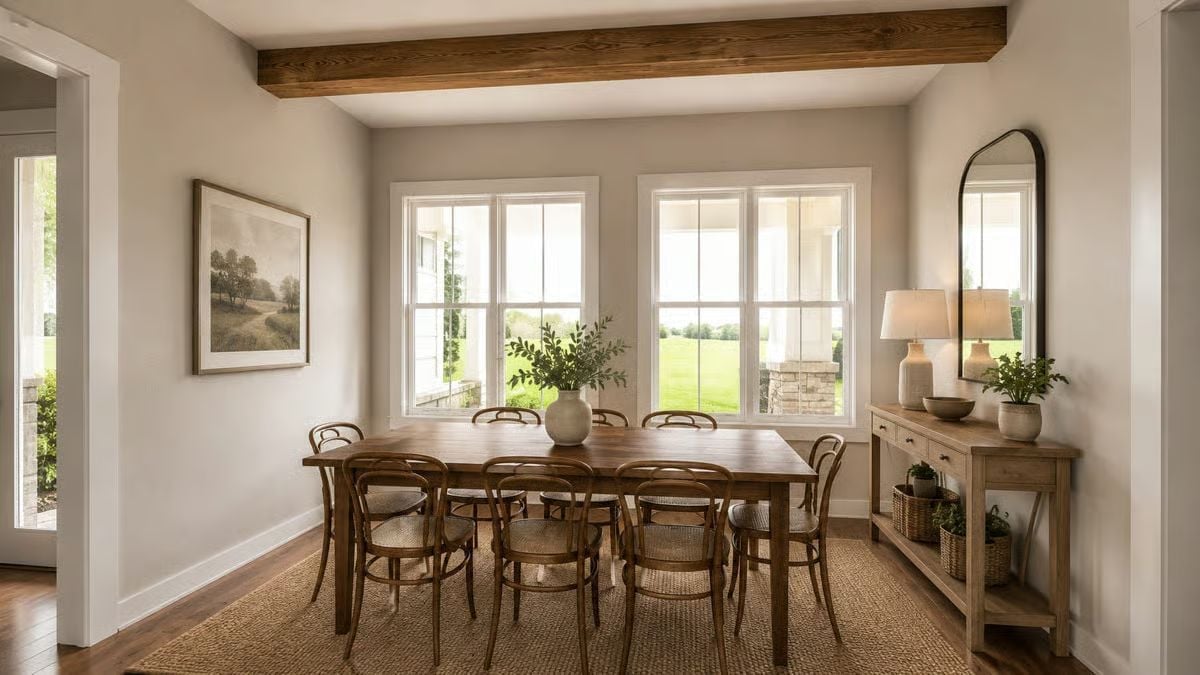
Thonet-style bentwood chairs pull up to a solid wood farmhouse table centered on a jute rug, and the exposed ceiling beam overhead reads structural because it probably is. Natural light comes in from both windows and does most of the heavy lifting.
Scissor Trusses, Built-Ins, and a Sofa You Won’t Want to Leave
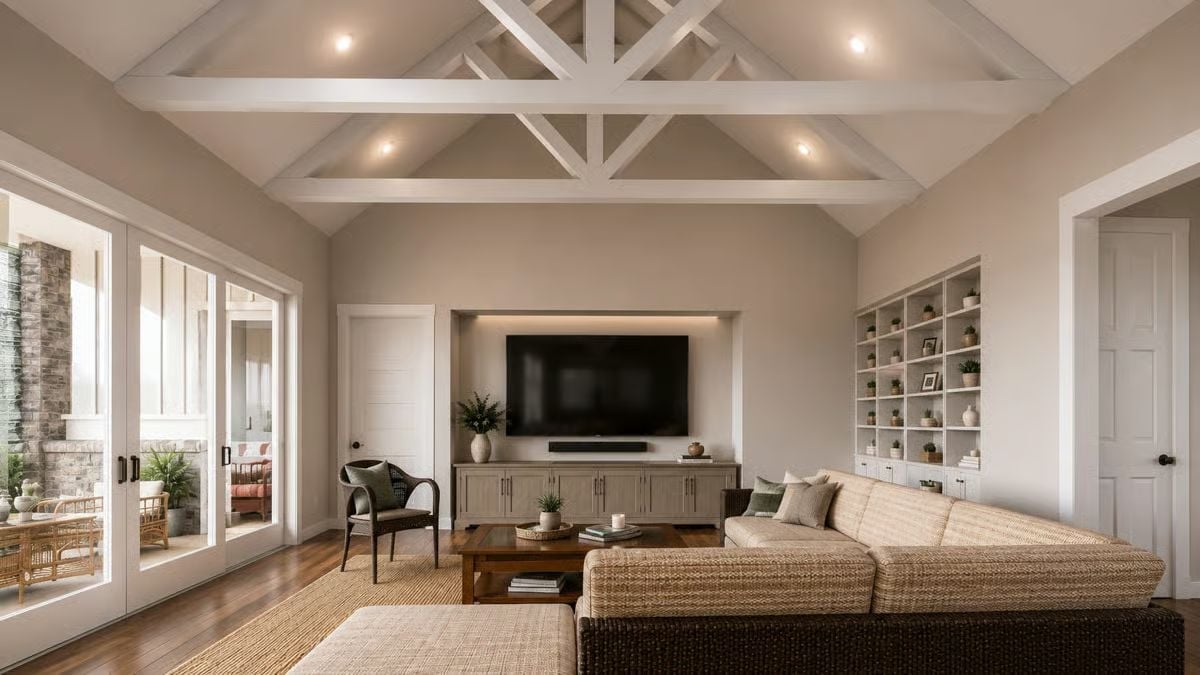
White-painted scissor trusses pull the eye upward while a built-in media niche with LED underlighting holds its own on the far wall. Woven textures throughout keep the whole thing from floating off into catalog territory.
Worth Knowing: Scissor trusses are a structural choice, not a decorative one — they allow vaulted ceilings without sacrificing the roof pitch above, which matters a lot for country farmhouse designs where steep rooflines define the exterior. If you’re comparing plans, check whether exposed trusses are load-bearing or purely ornamental, because that affects what you can change or add down the road.
Beamed Ceiling, Marble Island, and Barstools Worth Sitting In
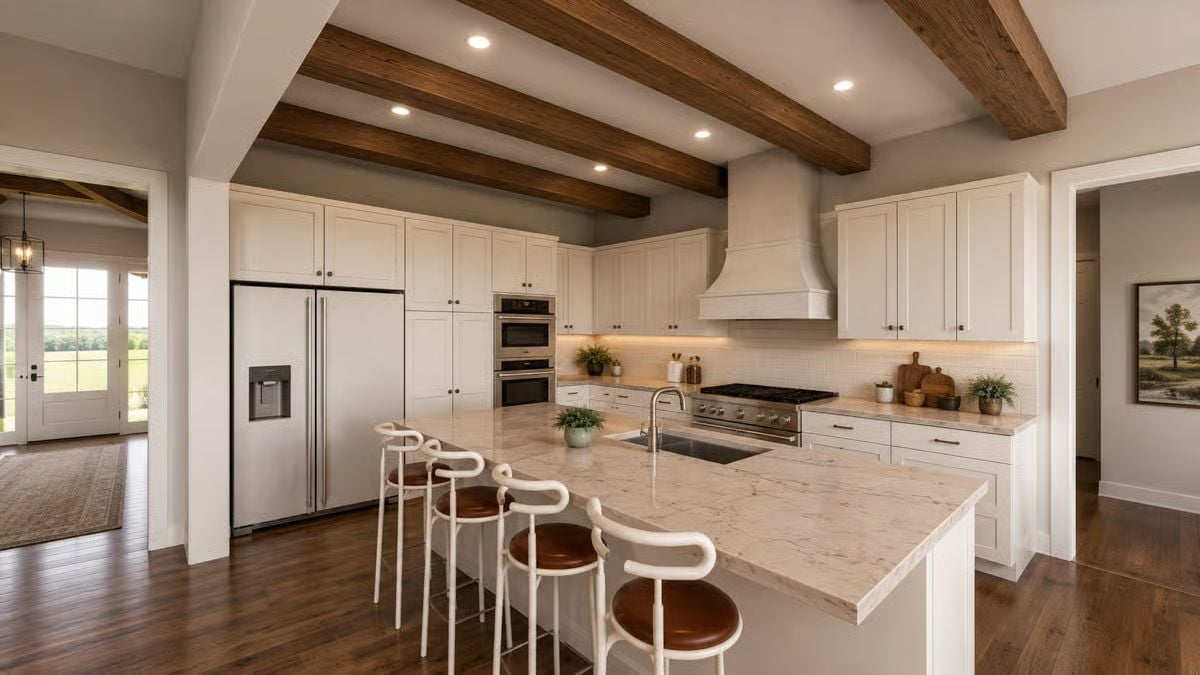
Dark wood ceiling beams do the work here that paint and tile simply can’t — they give the eye a defined ceiling plane without dropping the height. Leather-seated barstools line a waterfall-edge island, and the custom plaster hood ties the white cabinetry together without disappearing into it. Without the beams, all that white would read as one flat wash of cream. With them, the contrast holds.
Why Exposed Ceiling Beams Work So Hard in Open Kitchens
Faux wood beams have gotten significantly better in recent years, making this look achievable without sourcing reclaimed timber or involving structural engineers. Here, the dark walnut-toned beams run the length of the kitchen and create just enough contrast against the cabinetry below to keep the space from feeling flat. It’s a detail that photographs well but also genuinely changes how the room feels to stand in — which isn’t always the same thing.
Brass Fixtures, Tall Towers, and a Vanity Built for Two People Who Won’t Share
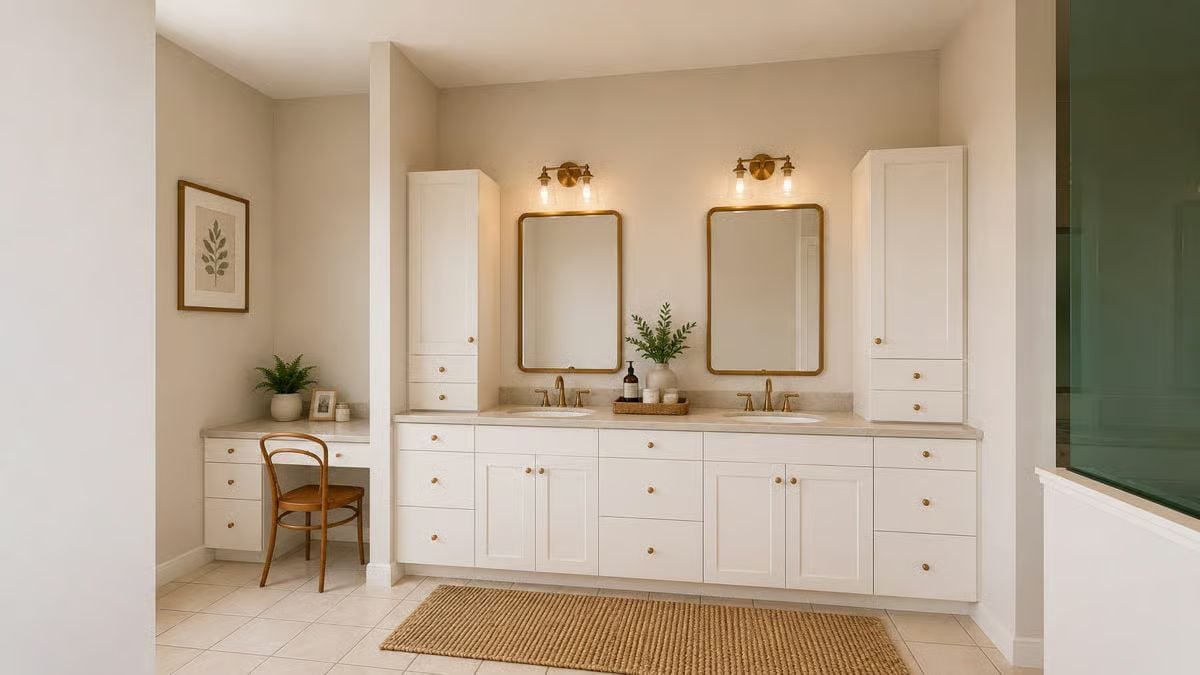
Gold-framed mirrors and brass sconces anchor each sink without competing with each other. Floor-to-ceiling linen towers flank both ends of the vanity, giving each person real storage rather than a token drawer. The small makeup desk tucked into the alcove beside the bentwood chair is the kind of quiet detail that only registers once you’ve lived without it.
Ask Yourself: Before locking in your vanity layout, think honestly about whether you and your partner use the bathroom at the same time each morning. If the answer is yes, dedicated towers and separate mirrors aren’t a luxury — they’re what keeps a shared space functional before the first cup of coffee.
Brass Rods, Woven Baskets, and a Closet Island That Pulls Its Weight
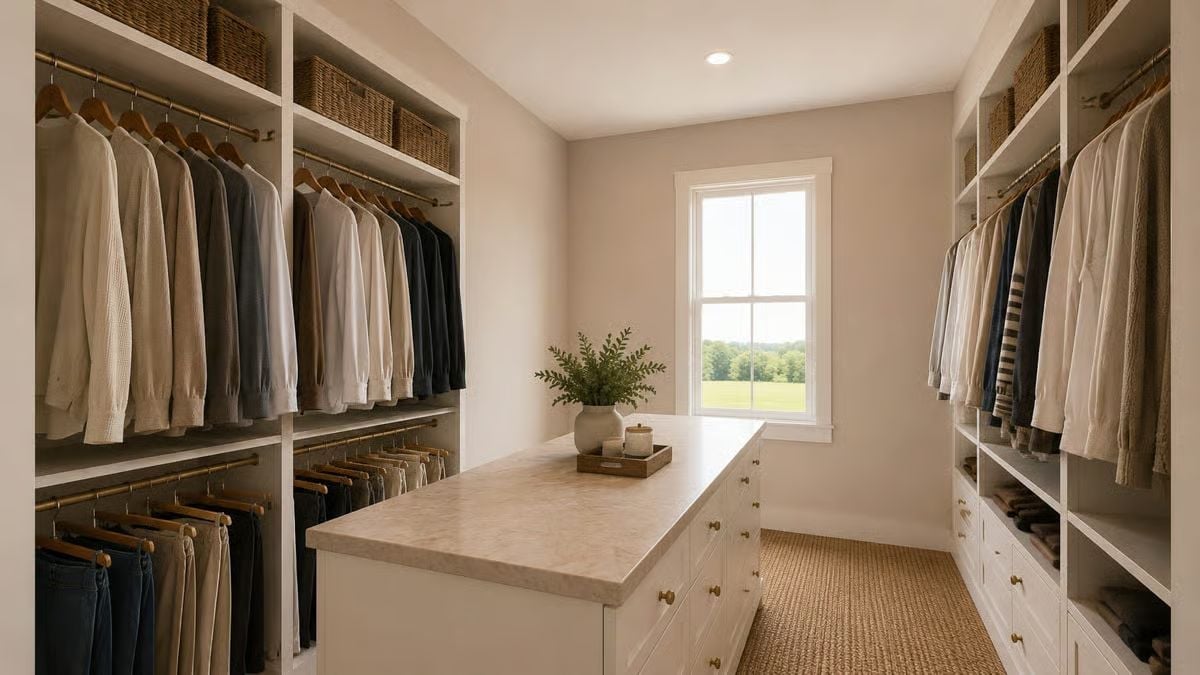
Matching wood hangers aren’t just aesthetic — uniform hangers reclaim rod space that mismatched plastic quietly eats up over time. Pants hang low on a dedicated lower rod, and the marble-top island adds a flat surface that most walk-in closets never think to include but everyone immediately appreciates.
Pro Tip: Closet islands work best when they’re lower than standard counter height — closer to 34 inches — so you can lay out clothing without hunching over. Plan for at least 36 inches of clearance on each side for comfortable movement, and put drawer storage beneath rather than open shelving; in that footprint, drawers almost always win.
Pin It
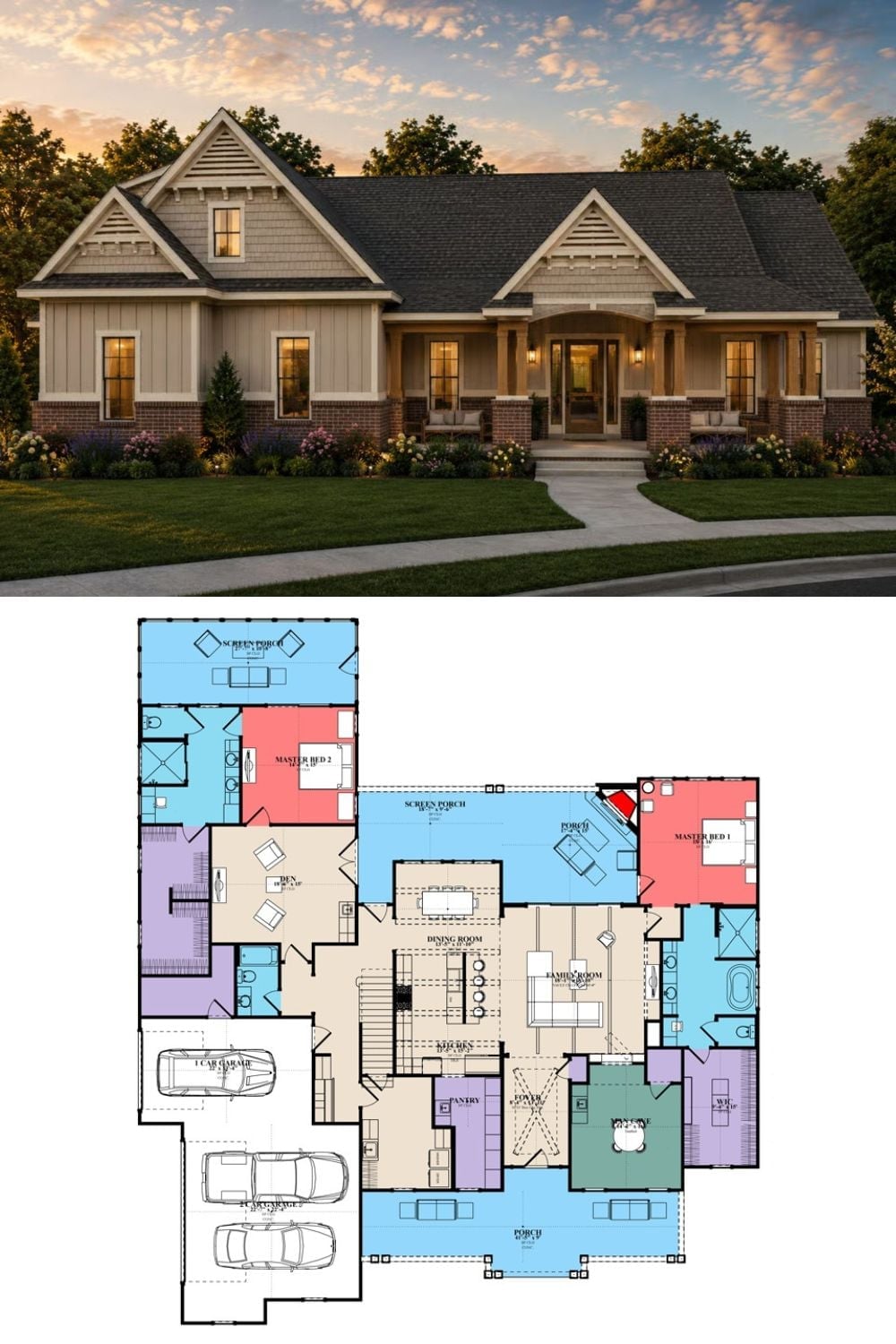
Craftsman exterior rendering paired with a color-coded floor plan showing dual primary suites, screened porches, a den, and separate garage bays on one level.
Transition: Two primary suites on the same floor sounds like the solution until you’re actually living it — shared laundry, one kitchen, and walls that aren’t as thick as you hoped will create friction faster than the square footage suggests. Study where the suites sit relative to each other on the plan. Distance from the shared core matters more than the size of either suite.