
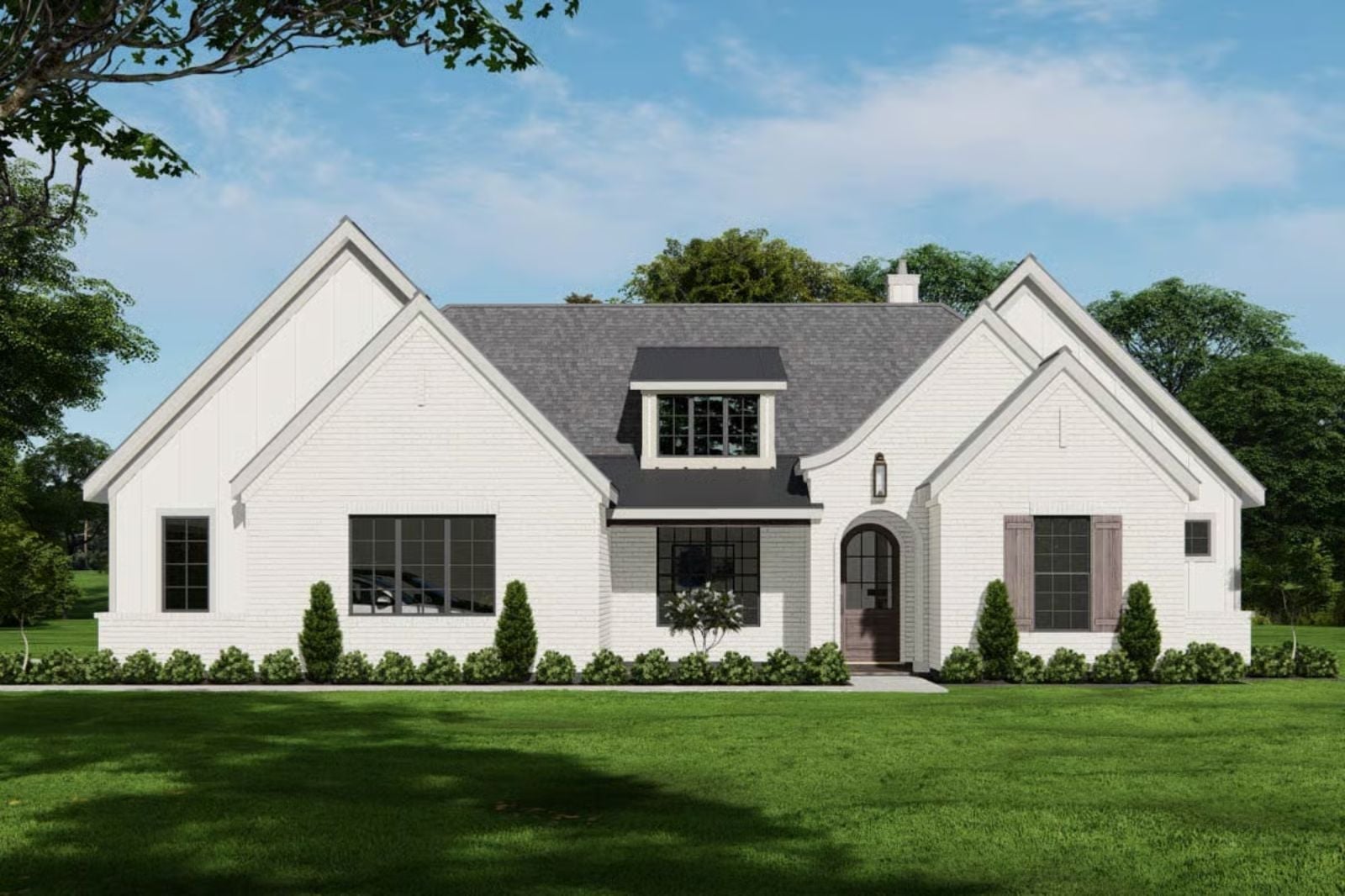
Anyone who has ever talked their partner into a third glass of wine just to stretch the evening a little longer knows the real reason people fall for a fireplace. The Belvoir is built around exactly that: a Jack and Jill bath that keeps two people moving without collision, a traditional cottage exterior worth coming home to on a gray afternoon, and a single-story layout that keeps every room close enough to hear the fire settle.
Specifications
- Sq. Ft.: 2,230
- Bedrooms: 3
- Bathrooms: 2.5
Floor Plan – Main Floor
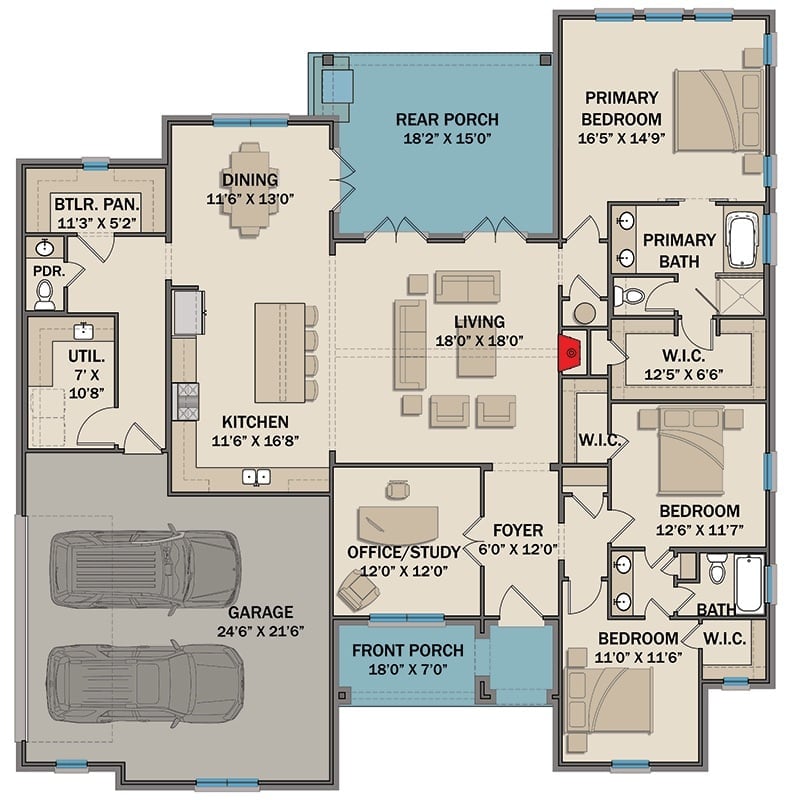
Three bedrooms on a single story, with the primary suite tucked away from the two secondary rooms that share a Jack and Jill bath between them. The living room opens directly onto the rear porch, and the kitchen and dining room flow off to one side in a way that keeps the common areas connected without collapsing them into one undifferentiated space. A foyer, office, and butler’s pantry fill out the rest.
Covered Porch Built for Staying Outside Just a Little Longer
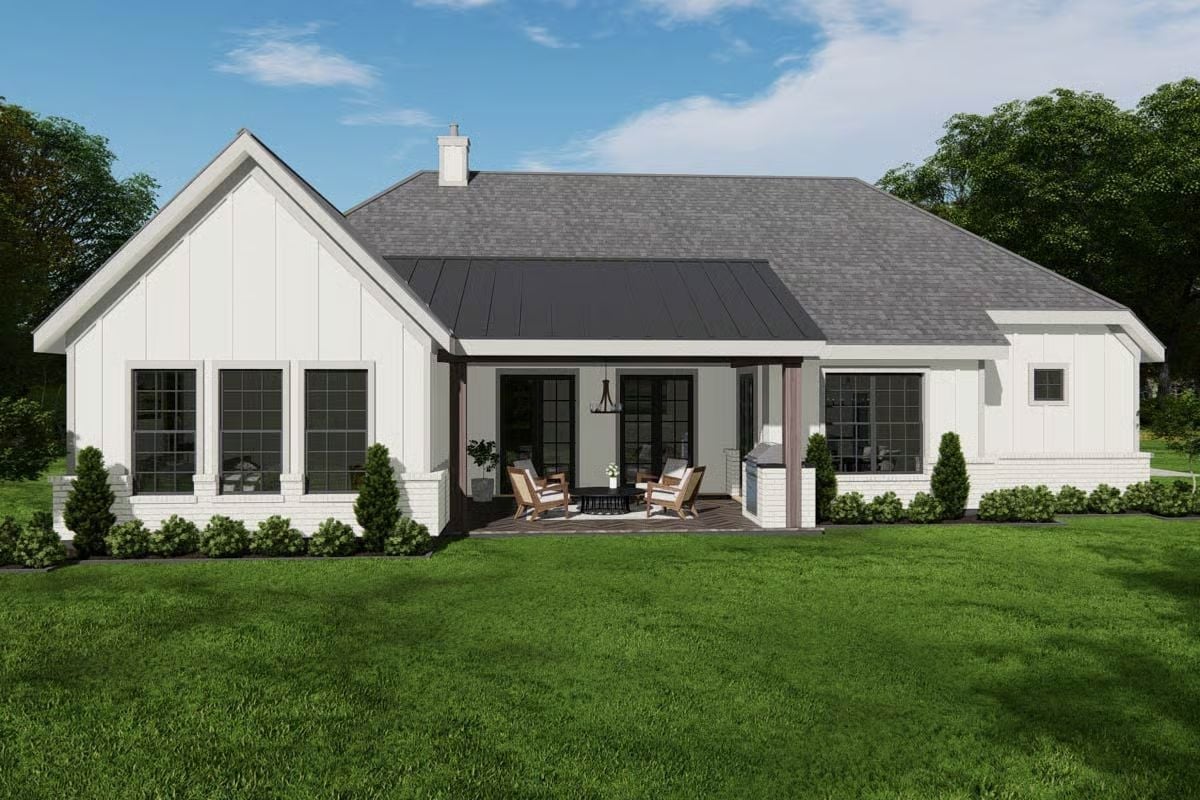
Board-and-batten siding wraps the exterior in crisp white, with painted brick at the corners doing the grounding work. Out back, two wood-framed chairs are pulled close to a round fire table under a dark metal roof panel that runs low enough to keep the whole seating area genuinely sheltered rather than decoratively so. It’s a rear elevation that earns its fire table.
Cream Chairs, Blue Sofa, and a Chandelier That Means Business
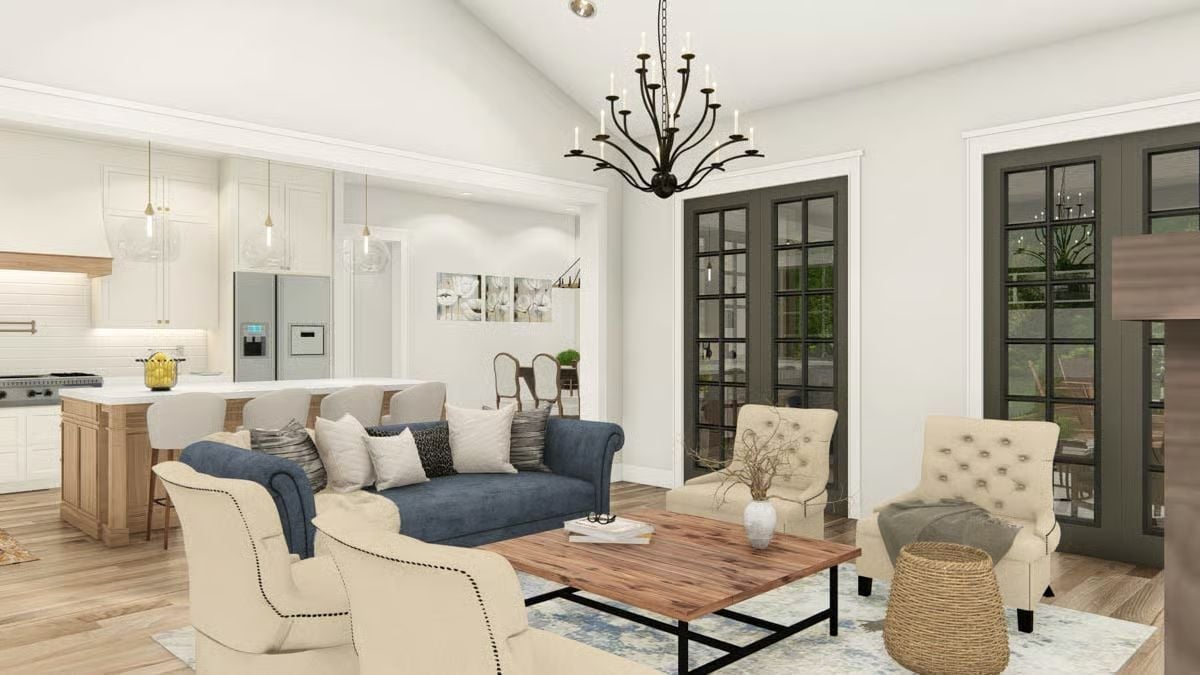
A wrought-iron candle chandelier anchors the vaulted ceiling while a navy sofa grounds the neutral seating arrangement below. The contrast does the heavy lifting — neither piece would read as well without the other.
Common Mistake: Homeowners often push the coffee table too far from the sofa, then can’t figure out why the room feels off. Standard guidance puts it 14 to 18 inches from the seat edge — close enough to set a drink down without leaning. The wood-topped table here looks right because it’s pulled in tight, not drifting in the middle of the rug.
Stone Up to the Roofline Changes Everything About a Fireplace Wall
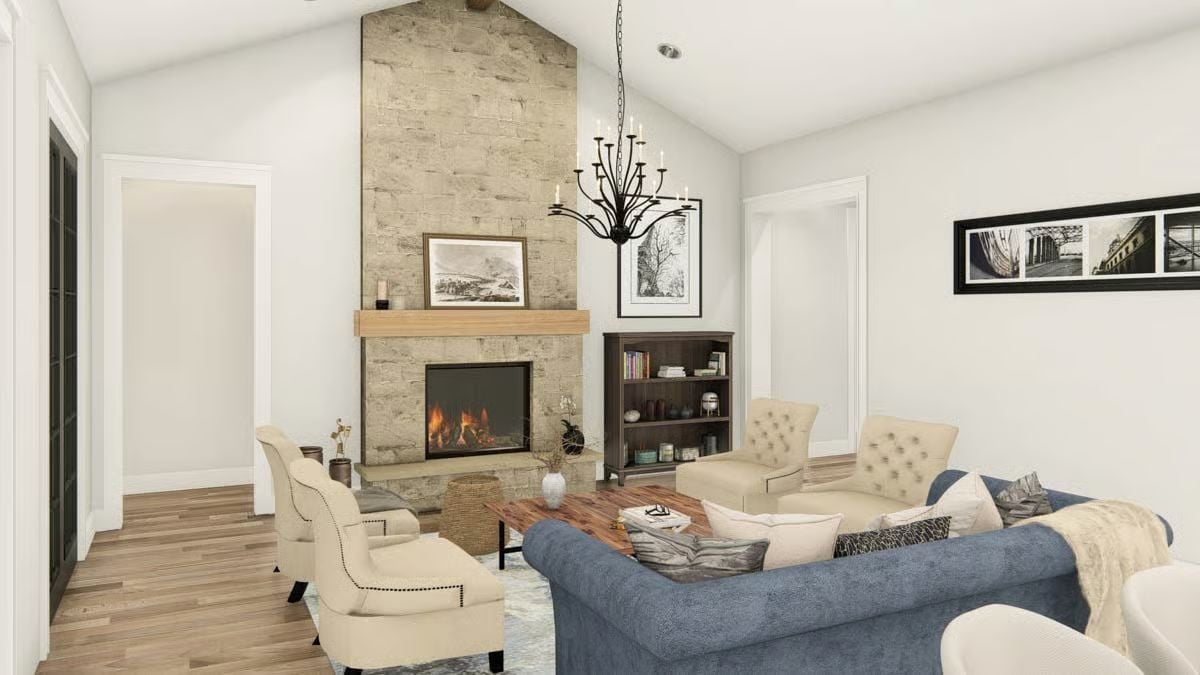
Running stone all the way to the peak gives the fireplace a visual weight that no drywall surround can fake. The wood beam mantel grounds it without softening it too much. Cream wingbacks and a blue sofa keep the seating honest — present enough to anchor the room, restrained enough not to compete with the stonework.
Style Math: Dropping one dark wood piece — that bookcase, for instance — into a room full of light upholstery gives the eye somewhere specific to land. Rooms that skip this tend to look finished on paper and flat in person.
Light Wood Island Base in an All-White Kitchen Earns Its Keep
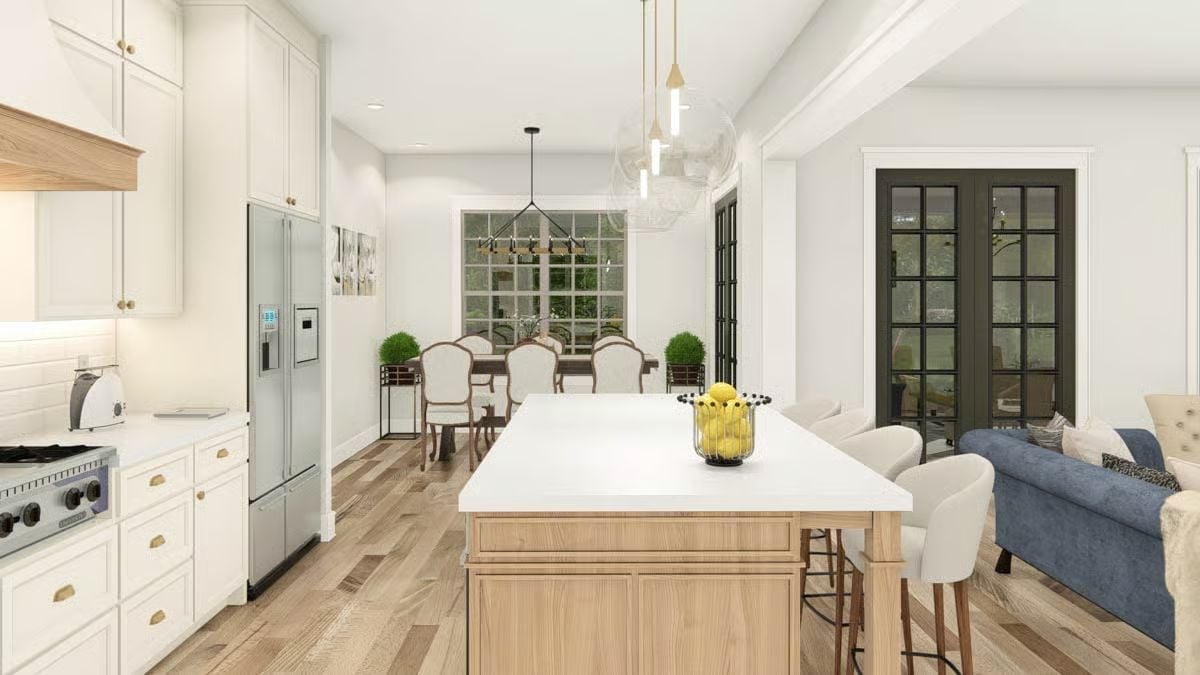
Natural wood on the island base is what keeps this kitchen from reading like a showroom. White shaker cabinets and brass pulls handle the rest of the palette, and the pendant cluster over the island — clear glass globes staggered at different heights — pulls the eye down toward the work surface rather than letting it wander. Stools tuck under the overhang cleanly, which matters when the dining area is only a few steps away, and traffic needs a clear path through.
- Vary pendant heights to draw the eye down toward a work surface, not up toward the ceiling.
- A natural wood element grounds an all-white kitchen better than adding a second wall color does.
- Leave enough stool clearance under the overhang so seating doesn’t block traffic flow into the dining zone.
Rectangular Chandelier Over a Farmhouse Table That Actually Fits the Room
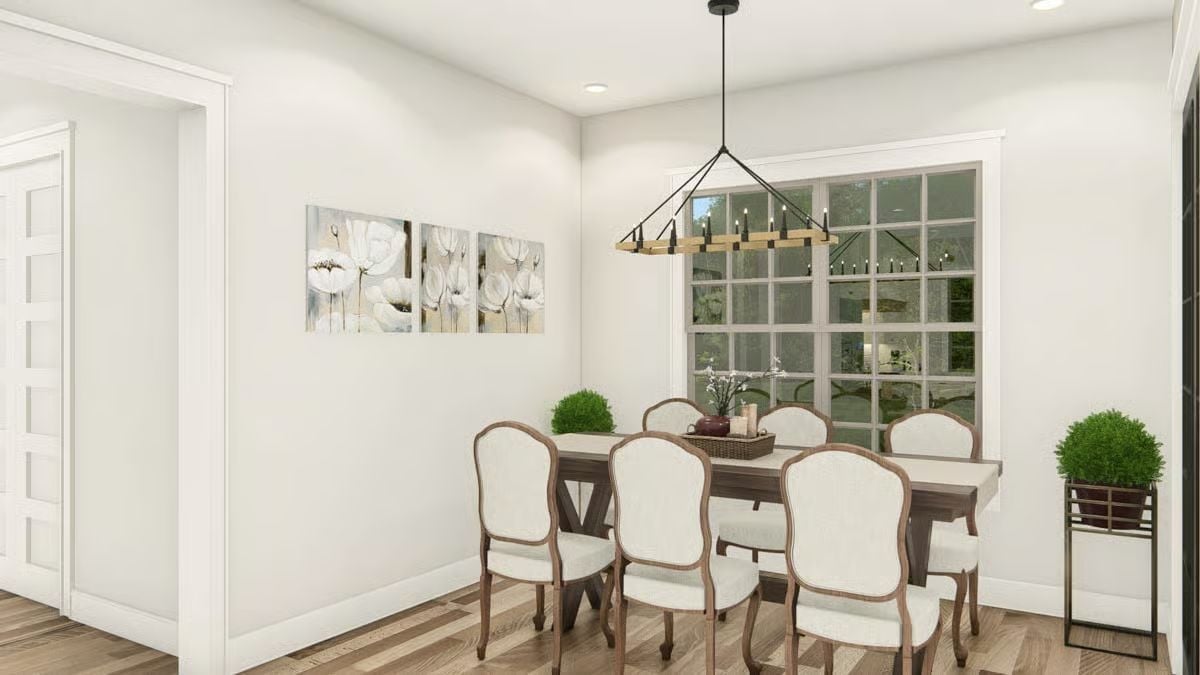
Upholstered French-style chairs, a dark wood trestle table, a linear iron-and-wood chandelier overhead. The pieces are different enough to hold interest and similar enough in tone to stay out of each other’s way.
Why It Works: Fixture sizing trips up more dining rooms than almost any other decision. For a rectangular table, the chandelier should run roughly half to two-thirds the table’s length — any shorter and it reads as an afterthought. The wood-and-iron fixture here gets the proportion right without crowding the grid window behind it.
Pin It
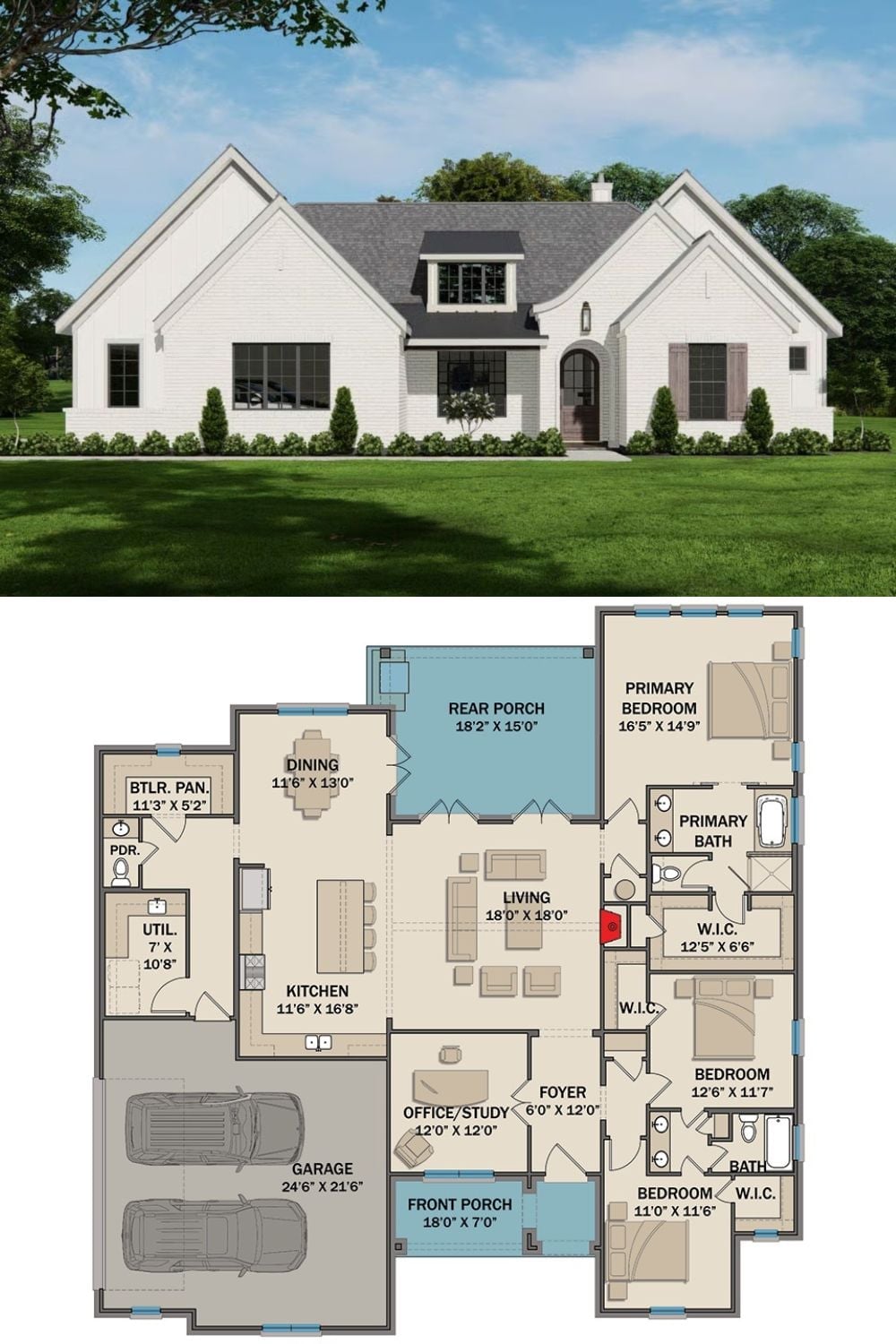
The top image shows the exterior rendering: a white brick cottage with a steep roofline and arched entry. Below it, the floor plan lays out three bedrooms, a Jack and Jill bath, a rear porch, and a central living space that connects to both the kitchen and dining areas.