
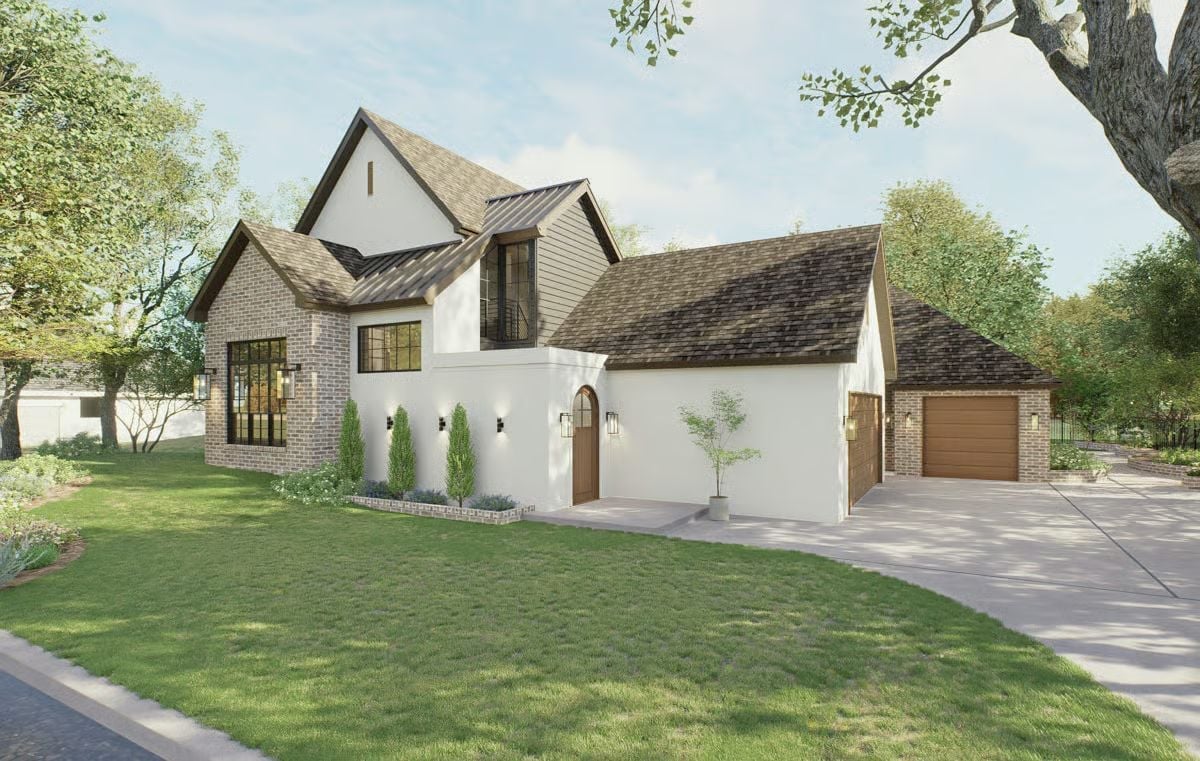
Her mother arrives with two suitcases and a slow cooker on a Friday in March, and suddenly the question of where everyone actually lives becomes urgent. The Belvoir Court is built around exactly that tension: a private in-law suite, a walled courtyard sitting between the two worlds, and just enough separation to keep the peace — and the wine glass at a reasonable distance from the kitchen.
Specifications
- Sq. Ft.: 3,321
- Bedrooms: 4
- Bathrooms: 3.5
Floor Plan – Main Floor
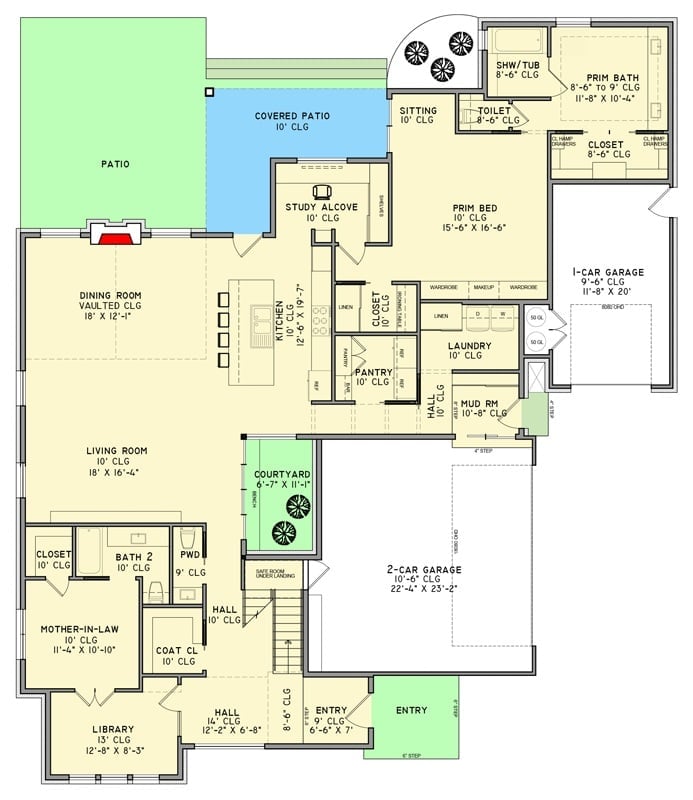
Kitchen, dining, and living areas connect in an open layout, while the primary suite sits well apart from the mother-in-law bedroom, library, and bath clustered near the front entry.
Floor Plan – Second Floor
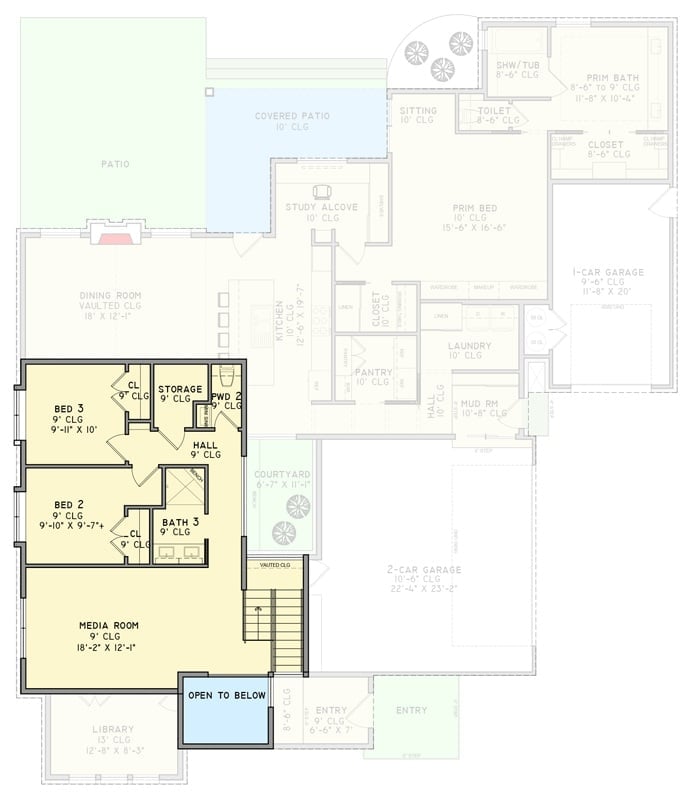
The upper level holds the primary suite, two secondary bedrooms, a media room, and a library tucked into the corner, with the courtyard and covered patio providing outdoor flow below.
Brick, Stucco, and a Backyard That Actually Invites You to Sit Down
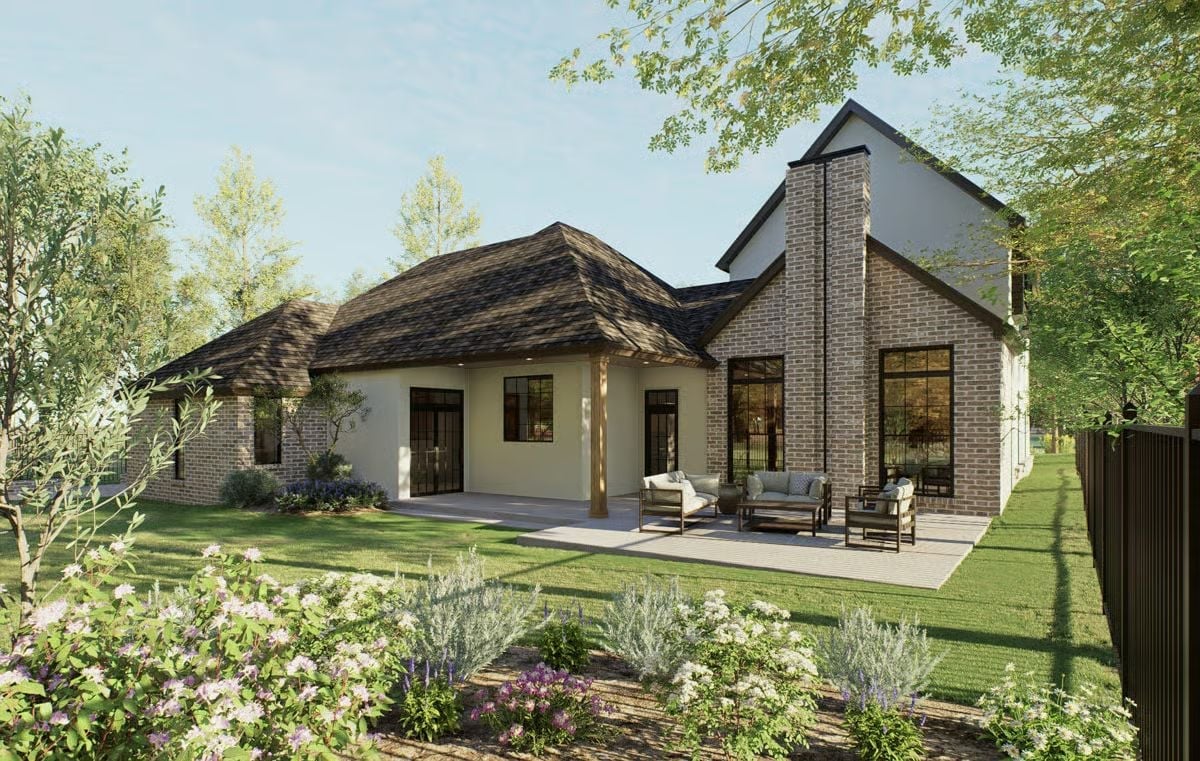
Painted stucco panels contrast with warm brick on the rear elevation. Black-framed windows and a covered patio with wood post details do the work of anchoring the outdoor seating area without overcomplicating it.
History Corner: European cottage architecture pulls from French Provincial and English country traditions, both of which found their way into American residential design during the postwar housing boom of the late 1940s and 1950s. Steep rooflines, brick facades, and covered loggias were adapted from rural European farmhouses and manor homes rather than invented whole cloth. Builders in the American South took to the style early, and it remains a dominant choice in upscale suburban development across the region today.
Arched Entry Door, Raw Wood Bench, and Stairs That Mean Business
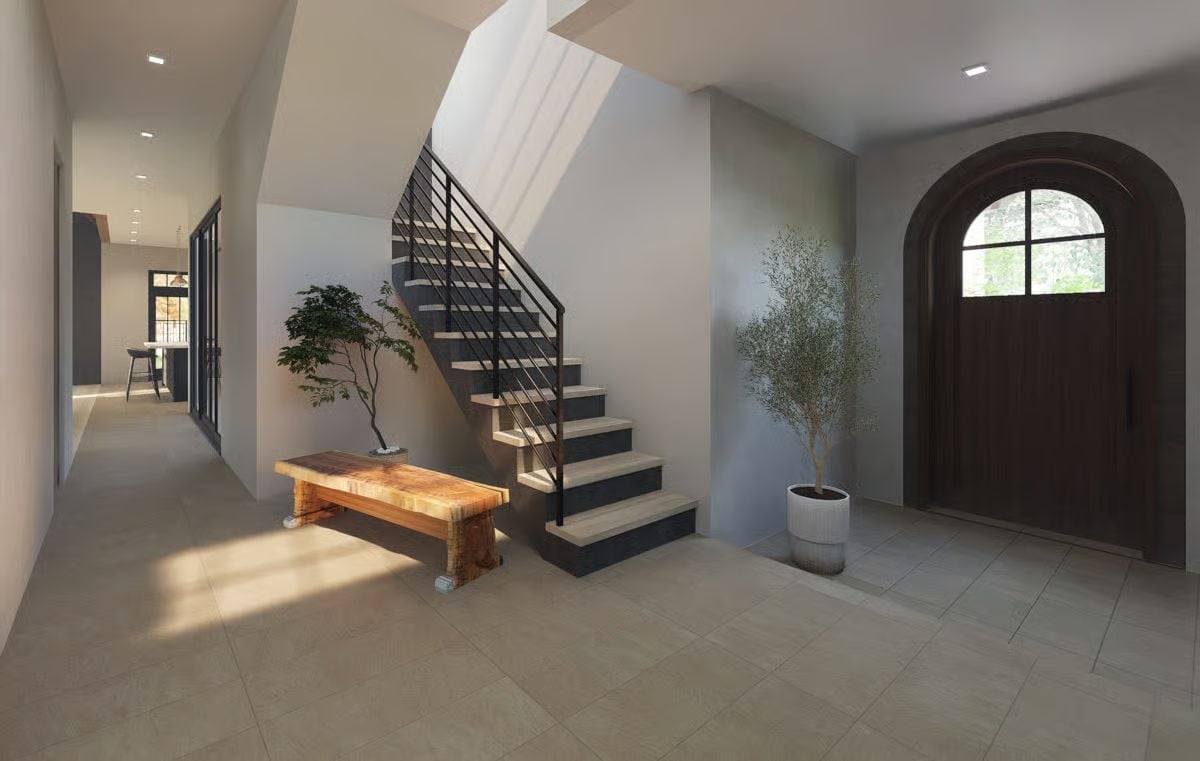
That raw-edge wood bench earns its place beneath the staircase. Black metal railings contrast the light treads overhead, and an olive tree in a white pot keeps the entry from reading as too spare — which, in a foyer this structured, is a real risk.
Quick Fix: Entryways get treated as pass-through spaces more often than they should. A bench near the stairs does real work — somewhere to sit while pulling on shoes without dragging that habit into the living room. Short on square footage near the door? A simple wall-mounted shelf at seat height fills the same role without eating floor space.
Vaulted Ceilings, Dark Walls, and a Kitchen Island That Earns Its Footprint
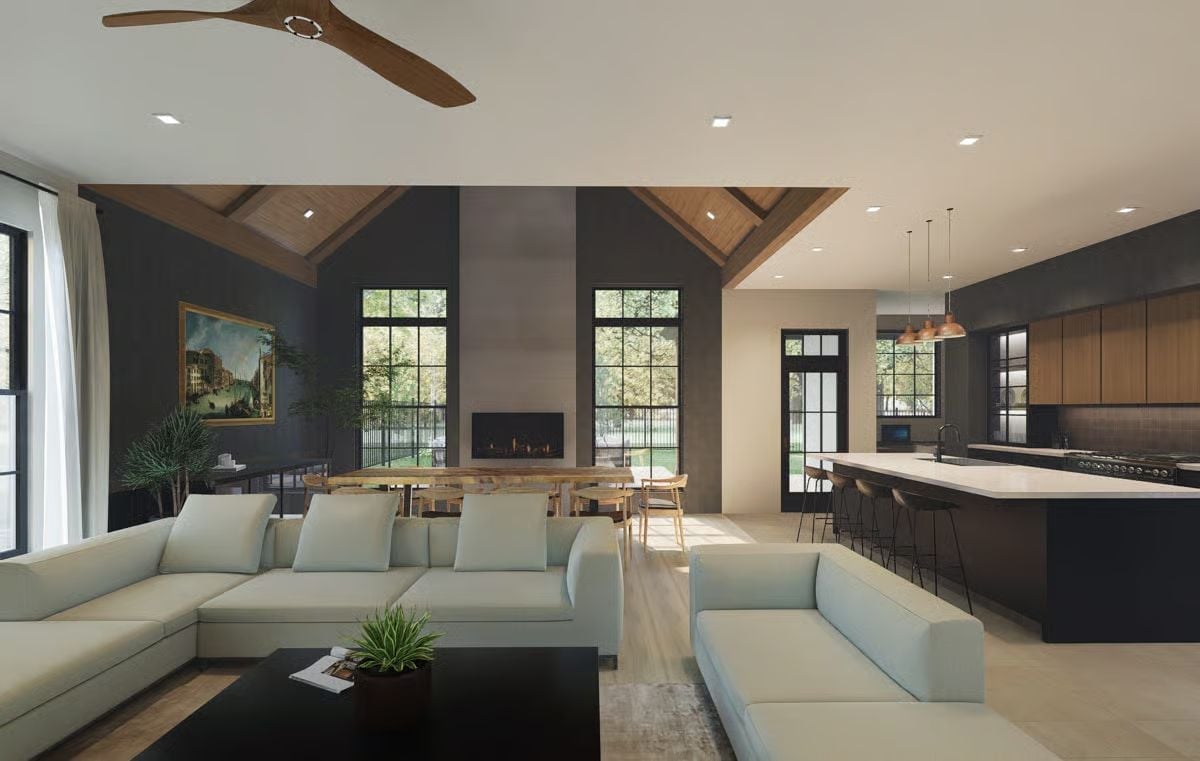
Wood ceiling beams angle up to a peak above the living area, and that’s what keeps the dark charcoal walls from feeling like they’re closing in. Copper pendant lights pull warm tones from the wood cabinetry. The oversized island with its white countertop handles prep and seating at once — a smart call in a house where multiple people are likely to be cooking at the same time whether or not anyone planned for it.
Material Matters: Exposed wood beams carry visual weight that plain drywall ceilings simply can’t. Pair them with dark walls and the contrast stops reading as rustic, pushing the space toward modern farmhouse without the shiplap. The natural wood grain handles the tonal balancing act, so the rest of the palette doesn’t have to work as hard.
Copper Pendants, a Live-Edge Table, and Two Rooms That Know Their Roles
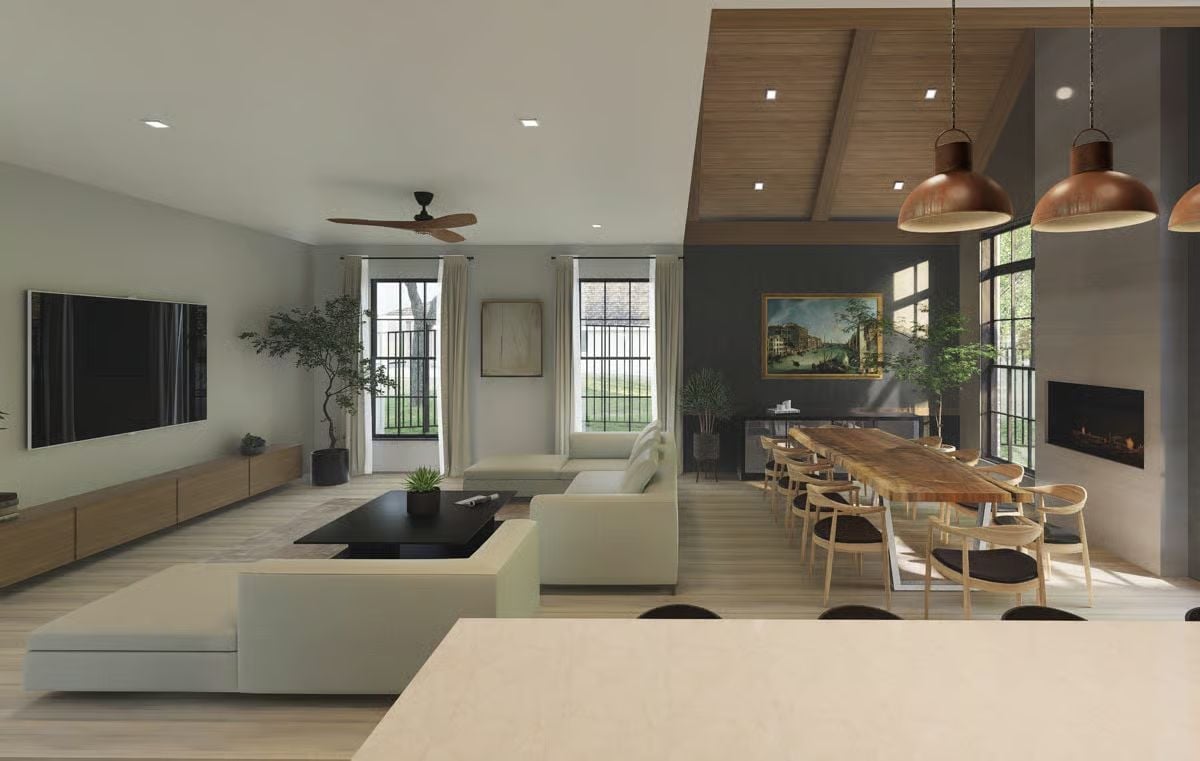
Split between a lighter living area and a darker dining space, the copper pendants pull focus right where the long live-edge table seats a crowd.
- Pendant lighting over a dining table draws the eye down and anchors the seating zone without needing a partition wall.
- Live-edge tables hold their visual weight in larger rooms because the irregular slab edge reads as deliberate rather than accidental.
- A dark accent wall in the dining area creates enough distinction from the adjoining living room that the open plan doesn’t feel like one undifferentiated blob.
Moving deeper into the suite, the sleeping area takes over with noticeably more breathing room.
Warm Neutrals, a Walk-In Beyond the Wall, and a TV Console That Stays Grounded
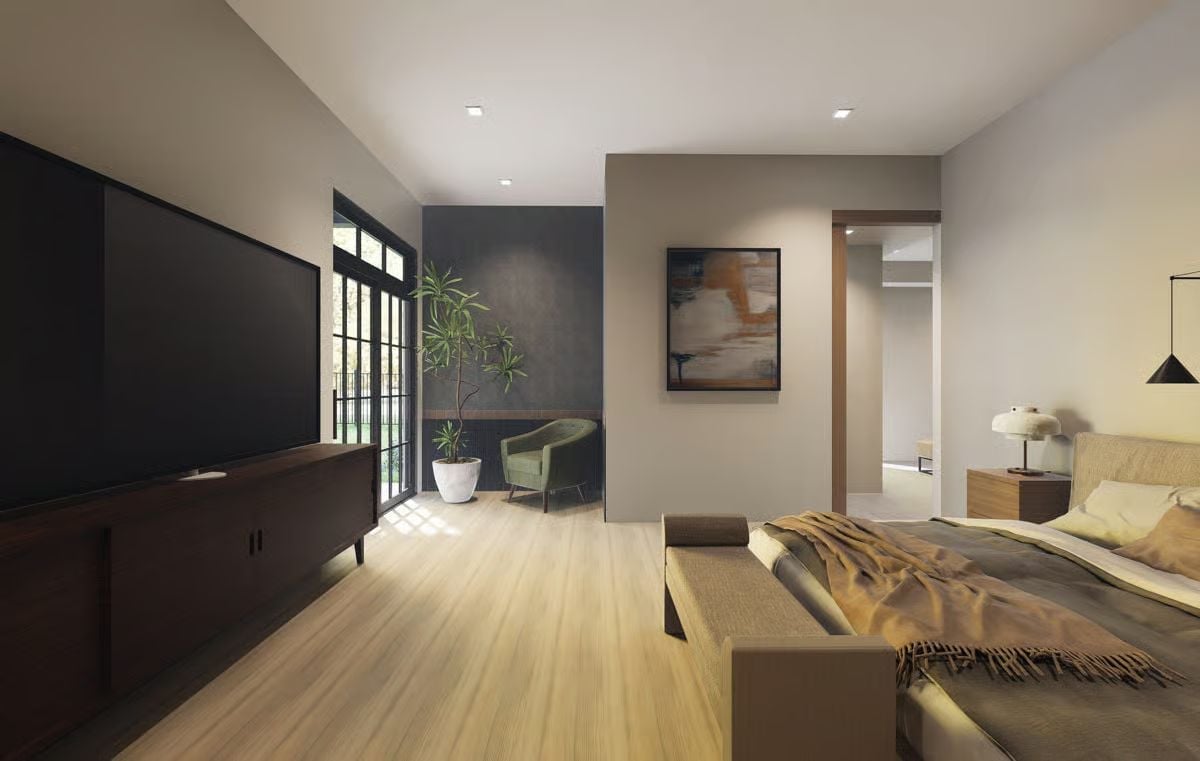
Light hardwood floors and a taupe accent wall frame the bed, while the doorway cutout on the far side reveals a walk-in closet tucked behind — the kind of detail that only shows up once you’re actually in the room.
Floating Walnut Vanity, Vessel Sinks, and a Green Accent Wall That Anchors the Room
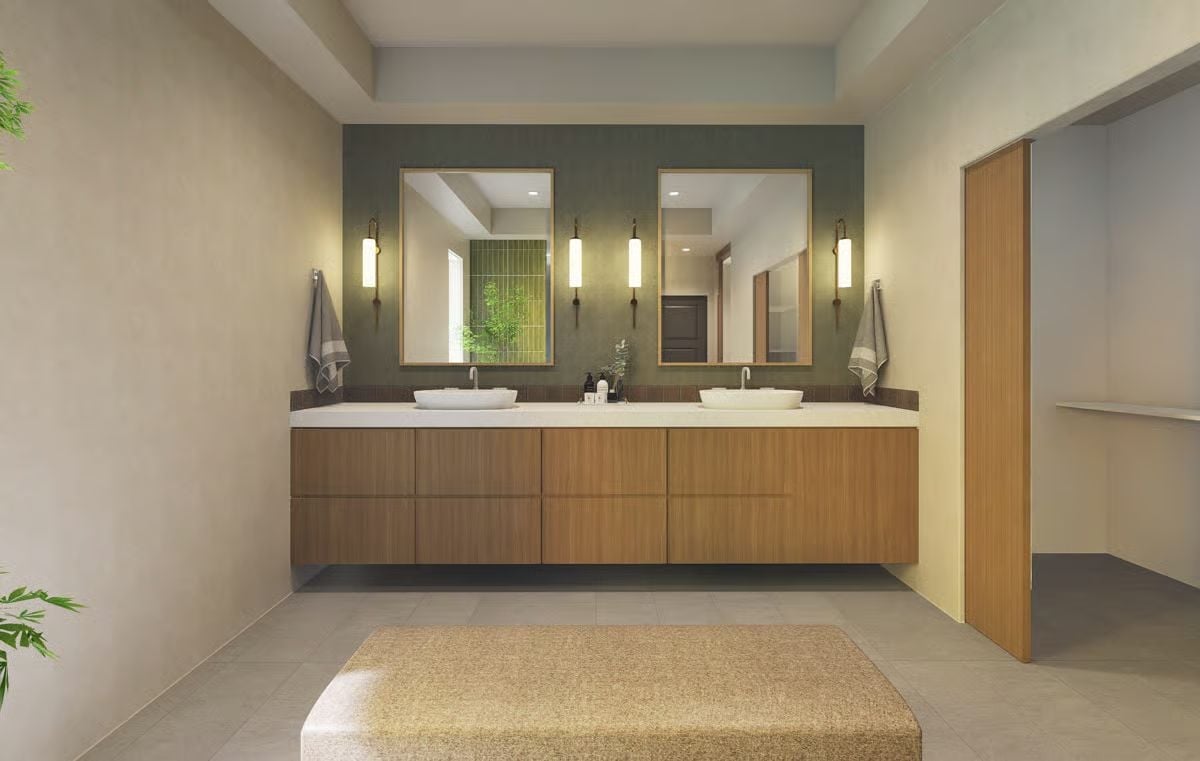
Sage green on the back wall keeps the double vanity from reading as purely functional. Vessel sinks sit high on a white countertop, wall sconces flank each mirror for warm light without overhead glare, and six drawers below offer real storage. A woven bench at the foot grounds the whole space without adding visual noise.
Editor’s Note: Vessel sinks look clean but sit several inches higher than undermount options, so counter height matters more than it does in a standard vanity setup. Confirm the rough-in height before cabinetry is built — getting it wrong means awkward posture every single morning, which is a miserable way to start the day.
Loft Living Room With a Leather Sofa and Nowhere to Hide the TV
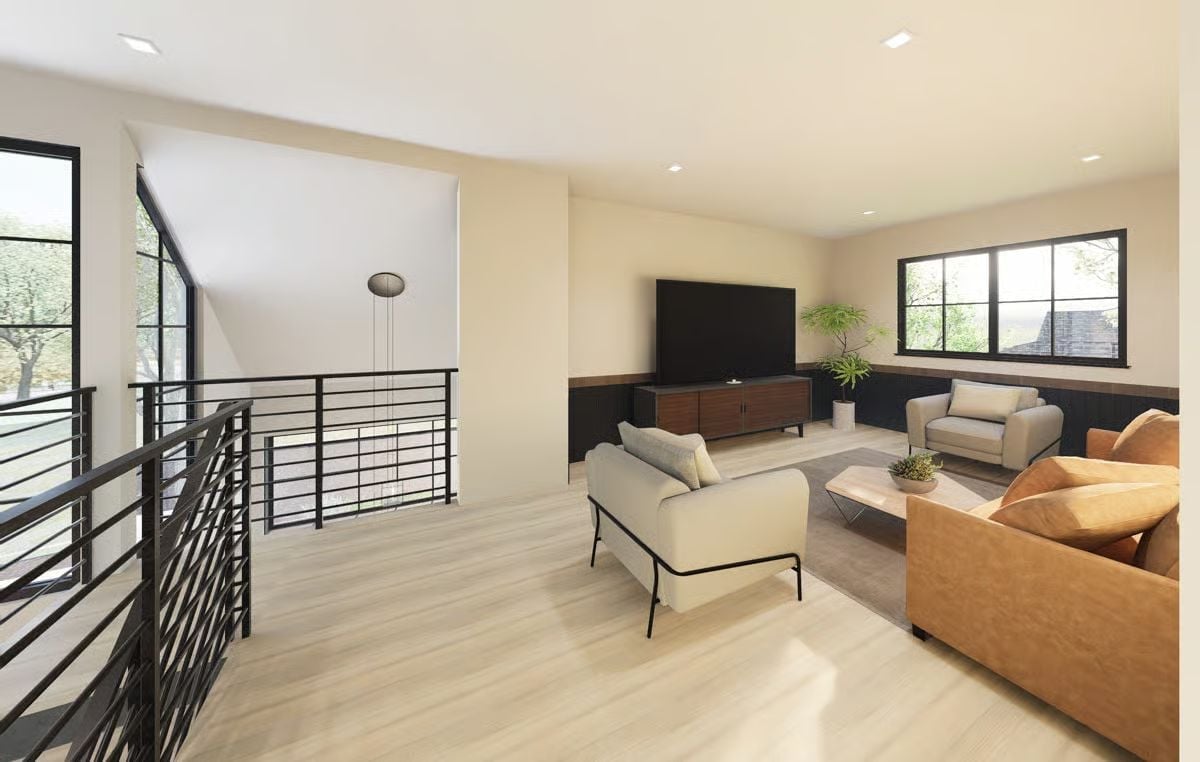
Black steel railings frame the open loft edge and keep sightlines clear to the entertainment wall below. The tan leather sofa and cream chair don’t match, and they don’t need to — mismatched seating in a bonus room reads as collected rather than careless. Recessed lighting handles the rest.
Fun Fact: Loft-style bonus rooms became a go-to move for builders looking to add usable square footage without expanding a home’s footprint. Sitting above the main floor, they naturally pick up ambient light from stairwell windows and lower-level openings, which can cut down on how much artificial lighting you actually need during daylight hours.
Pin It
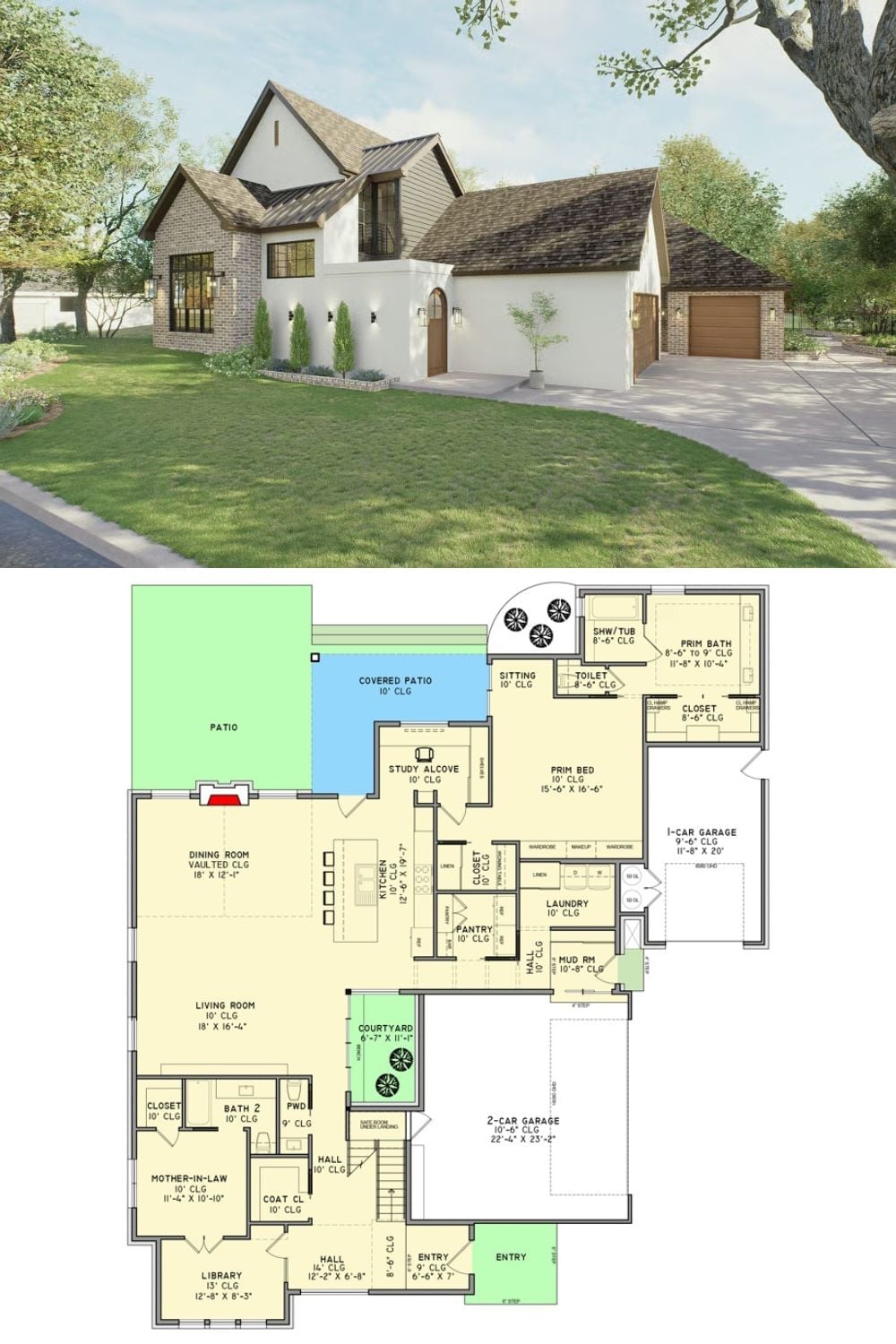
The exterior rendering shows modern European cottage styling with brick, stucco, and a two-car garage tucked to the side. The floor plan below lays out a single-story arrangement with a primary suite, mother-in-law bedroom, library, study alcove, covered patio, courtyard, and a separate mud room entry — more moving parts than it looks like from the street.