
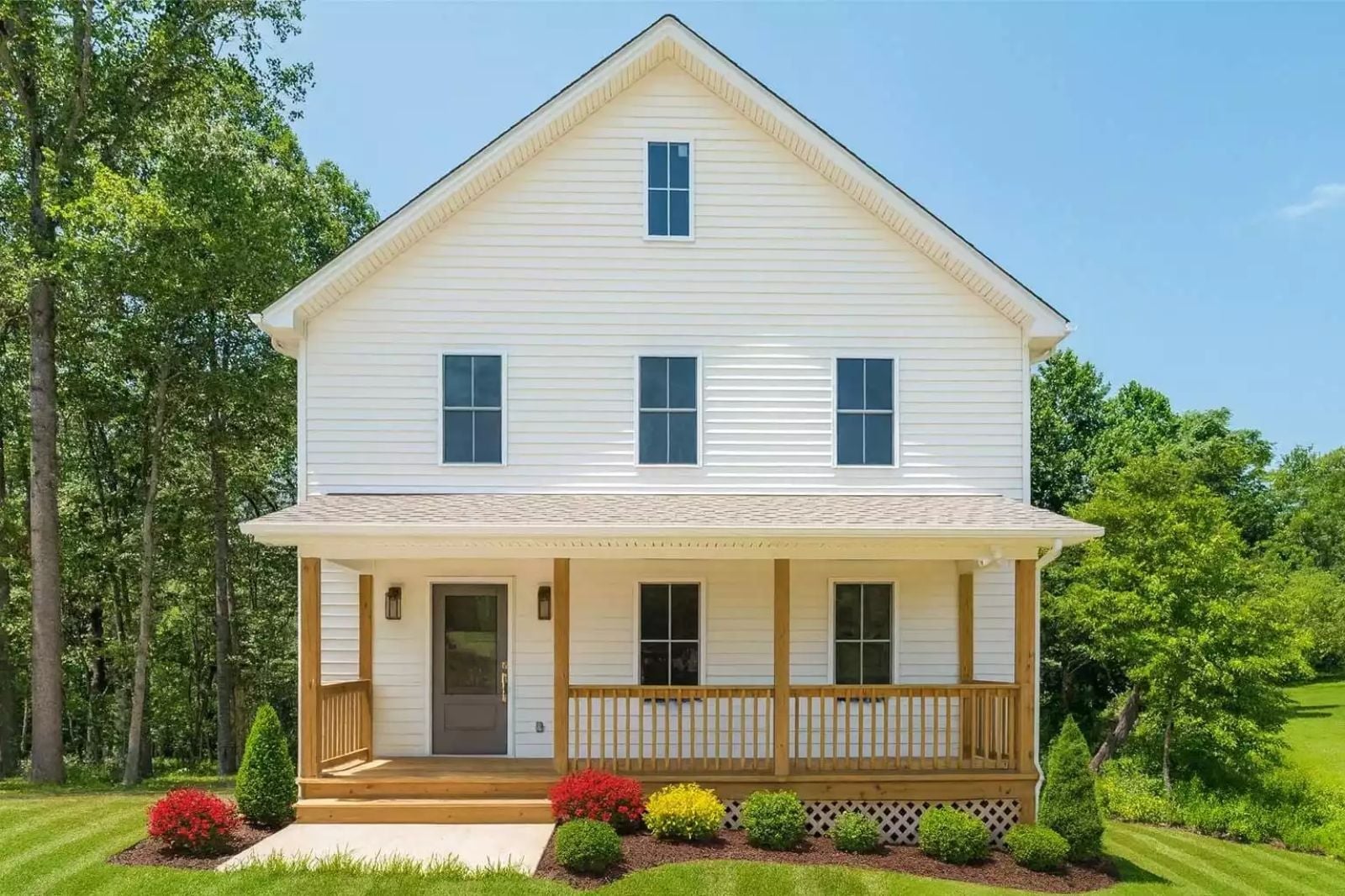
Homes with a front porch move faster on traditional streets, and anyone who’s sold one knows why — buyers decide how they feel about a house before they reach the door, somewhere around the point where they’re picturing morning coffee going warm while a neighbor walks a dog. The Belhaven Rise is built around that instinct: a full covered porch, honest two-story proportions, and a floor plan with enough room to make Friday evenings feel genuinely unhurried.
Specifications
- Sq. Ft.: 1,555
- Bedrooms: 3
- Bathrooms: 2.5
Floor Plan
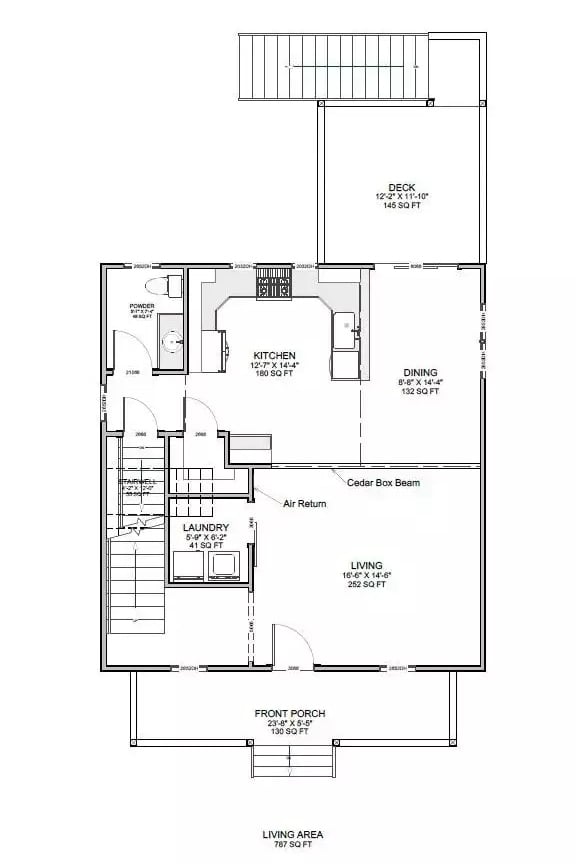
Main floor carries kitchen, dining, living, laundry, powder room, covered front porch, and rear deck — everything accounted for, nothing wasted.
Floor Plan
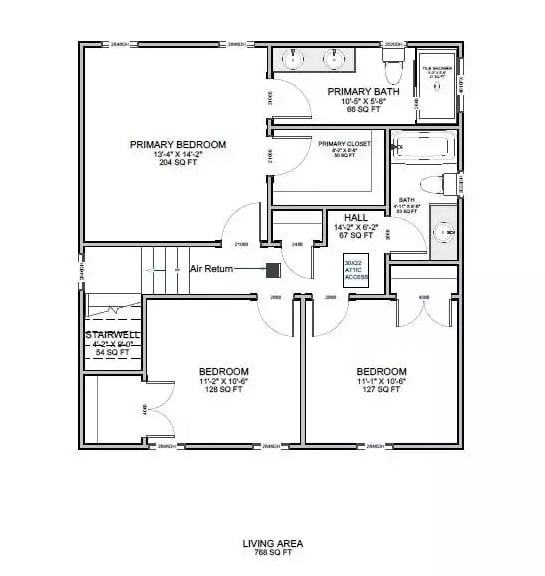
The primary suite claims the top-left corner of the upper floor, with its own bath and walk-in closet tucked behind it. A central hall runs down to two secondary bedrooms, the shared hall bath sitting between them where it should. Attic access and an air return are worked into the same corridor so neither eats into any room’s square footage. Total upper-level living area is 768 square feet.
Floor Plan
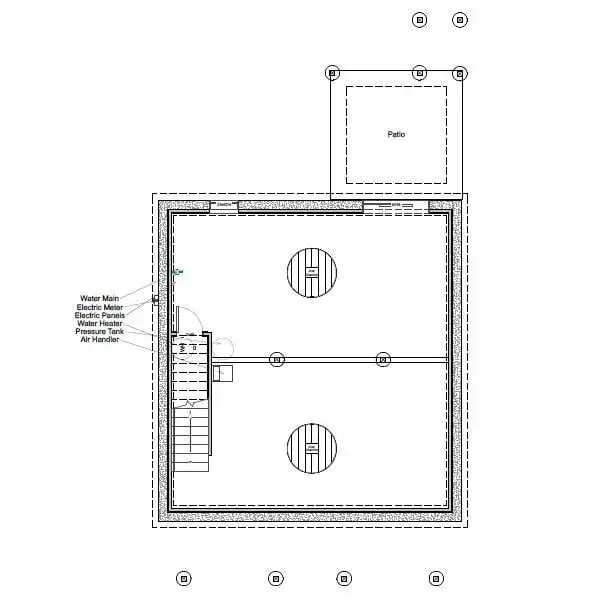
The foundation level opens into two large bays with a staircase, utility systems including electric panels and air handler grouped at one end, and a patio attachment at the rear corner.
Editor’s Note: Clustering the utility systems in one corner of the lower level keeps mechanical access simple and leaves the rest of the space genuinely usable. It’s the kind of decision that doesn’t show up in listing photos but matters on the day the HVAC needs service.
Fresh-Cut Lumber and a Long Climb Up to the Back Door
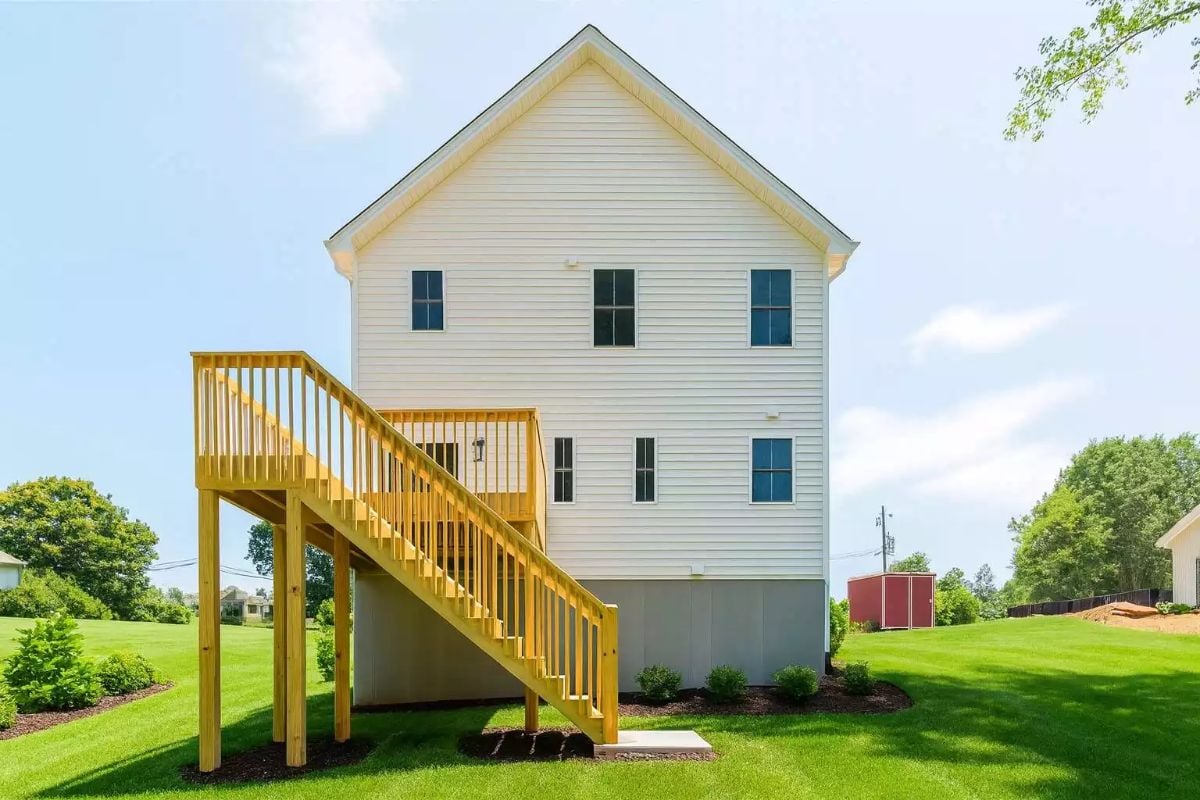
Pressure-treated pine railings still carry their natural yellow tone — new construction, clearly, on a house sitting notably high off grade.
The Psychology Behind This: A long exterior staircase does something to visitors before they’ve even knocked. The climb builds anticipation — entering feels like an arrival rather than just a step through a door. Neighbors tend to pause at the bottom and call up rather than walking straight in, which turns out to be a feature.
Gold Chandelier, White Cabinets, and Light Wood That Goes All the Way Back
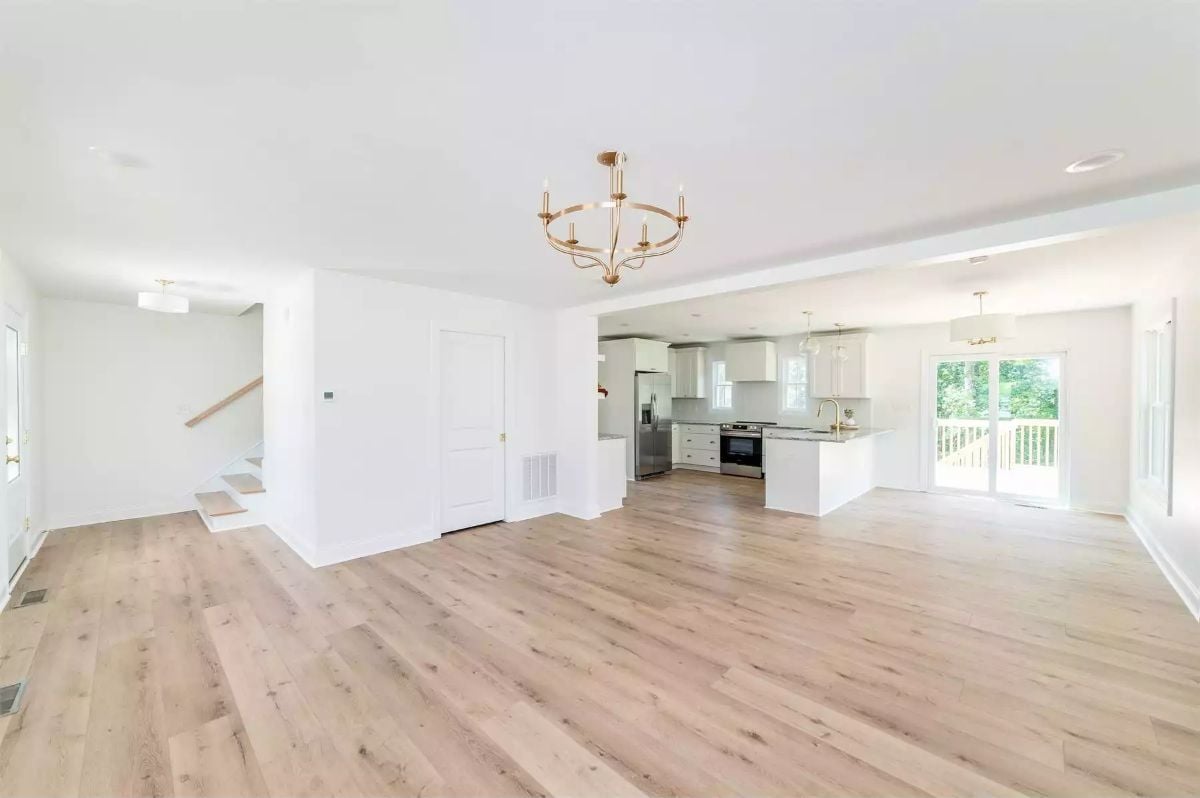
Light oak floors run uninterrupted from the living area into the kitchen, pulling the eye straight toward the sliding glass door and the deck beyond. A brass candle-style chandelier anchors the dining zone. The kitchen itself — stainless appliances, shaker cabinets, peninsula with seating — keeps things hardworking without trying too hard.
Ask Yourself: Open-plan living photographs well, but sound travels across unbroken hardwood floors in ways the listing photos don’t capture. If someone’s on a work call while dinner is being made, or a kid is doing homework while a game plays in the background, rug placement stops being a style question and starts being a sanity one.
Granite Counters, Brass Hardware, and a Refrigerator That Actually Fits
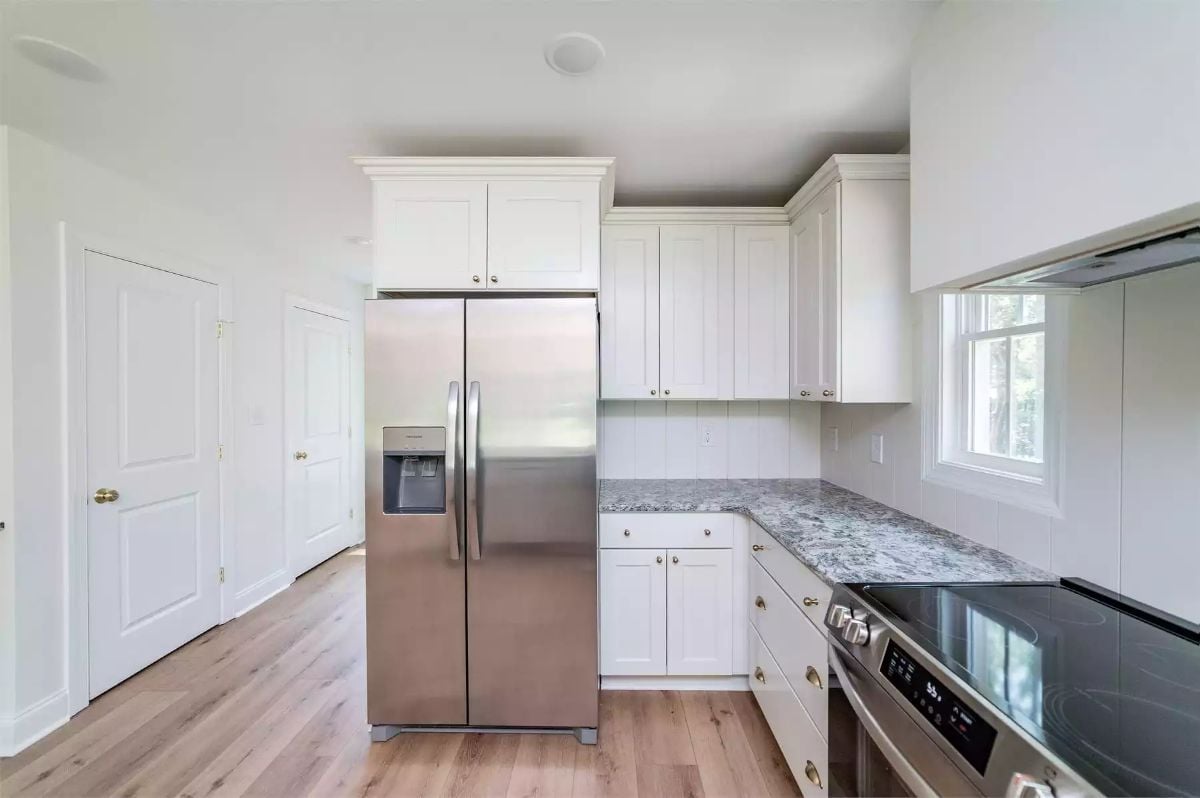
White shaker cabinets run floor to ceiling around the refrigerator, making it read as built-in rather than dropped in as an afterthought. Brass hardware keeps the whole run from going too cold. Gray-veined granite carries across the lower cabinets, and the light wood floor pulls enough warmth back into a palette that could’ve easily gone clinical.
Cabinet-Surround Refrigerator Enclosures
Boxing a refrigerator in with floor-to-ceiling cabinetry isn’t purely cosmetic. It eliminates the awkward visual gap standard appliance placement leaves and adds real usable storage above, where most kitchens just waste the space. One practical check before buying: if the upper cabinet doors swing outward, confirm clearance against the fridge’s door swing — French doors and wide single doors can make that corner surprisingly tight.
Gold Ceiling Fan, Walk-In Closet, and a Bathroom You Can See From the Doorway
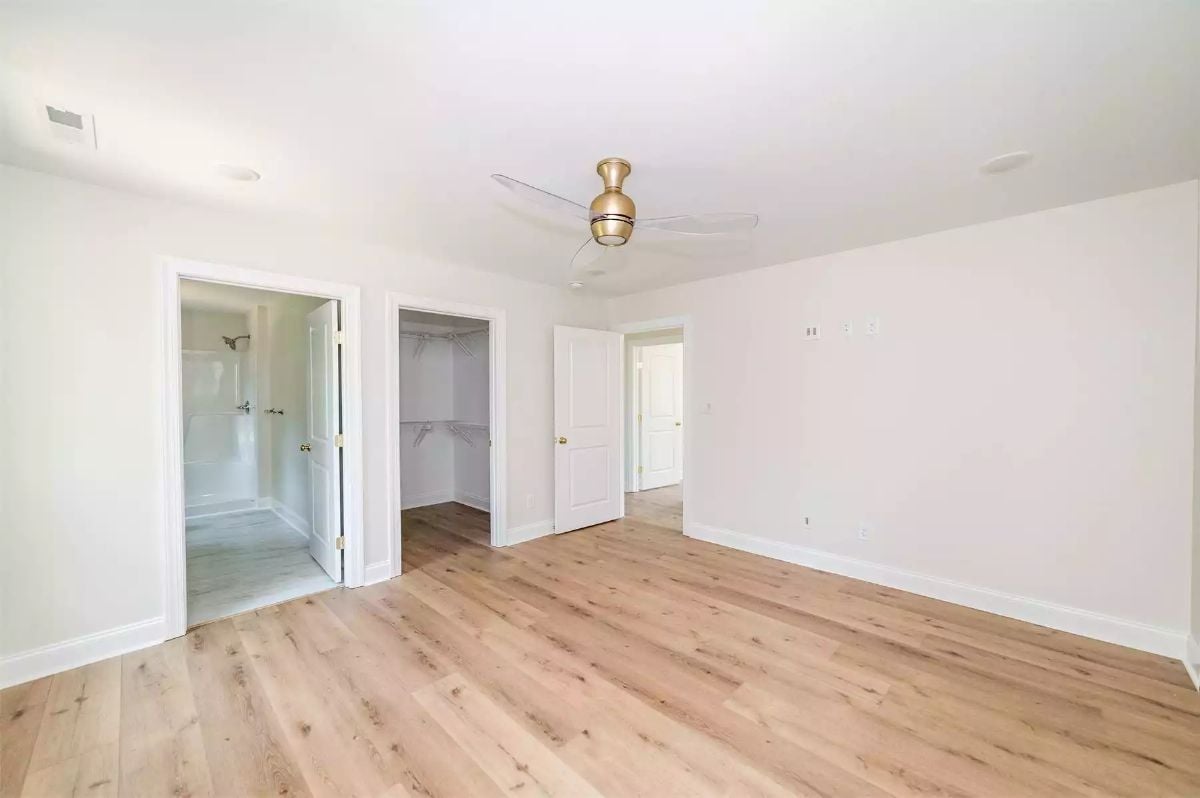
Three doors off one wall tells you exactly what kind of room this is.
Primary suite: walk-in closet on one side, en-suite bath with a tub-shower combo on the other, hallway exit at the end. The gold fan motor keeps the hardware consistent with the rest of the house, which is the kind of detail that reads as intentional rather than coincidental.
Brushed Nickel Wall Sconces and Granite That Does Most of the Talking
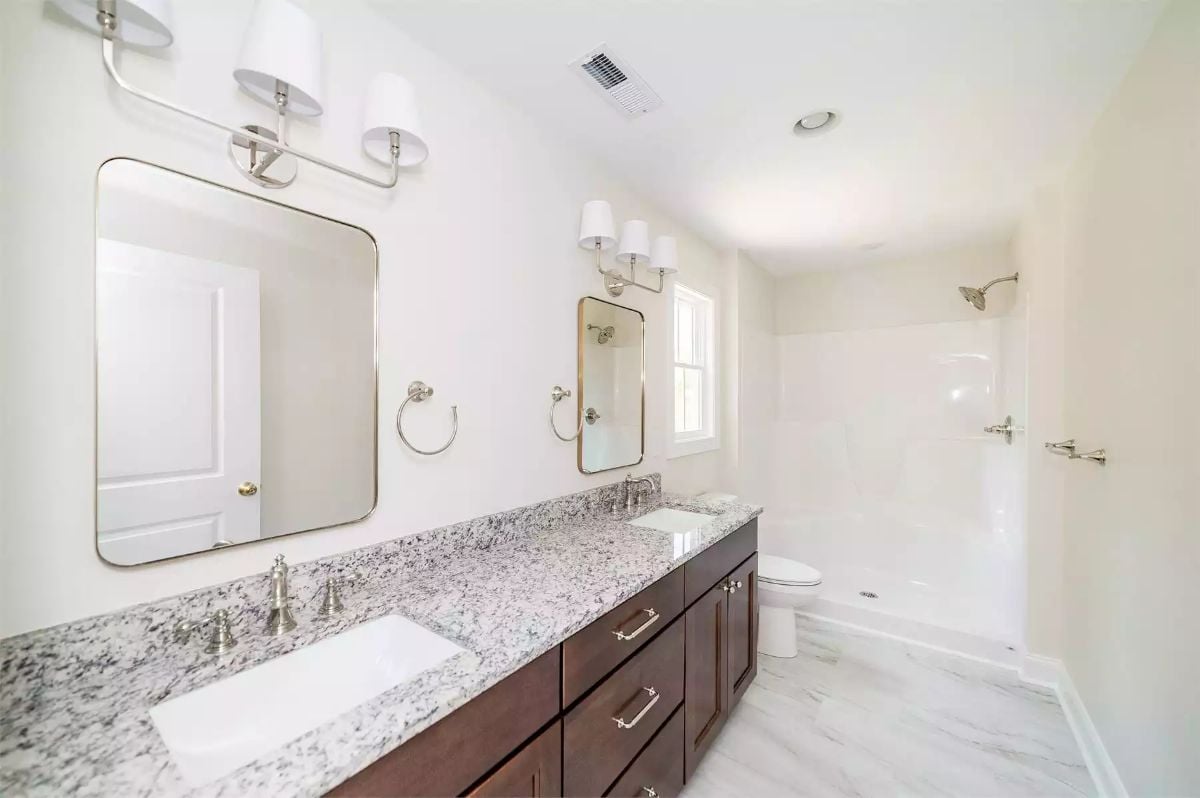
Gray-veined granite runs the full length of the double vanity, set against dark espresso cabinetry that grounds it. Brushed nickel carries through the sconces, towel rings, and faucets — cohesive without feeling like someone bought everything from the same display rack.
Budget Tip: Undermount sinks cost more upfront than drop-in styles, but the tradeoff is real — no rim sitting at the counter edge collecting water and grime over time. If you’re already putting granite on the vanity, pairing it with undermount protects that countertop edge for the long run. Builders will sometimes bundle the upgrade into the vanity package for less than you’d pay sourcing it separately.
Bare Deck, Big Trees, and Nowhere to Be But Outside
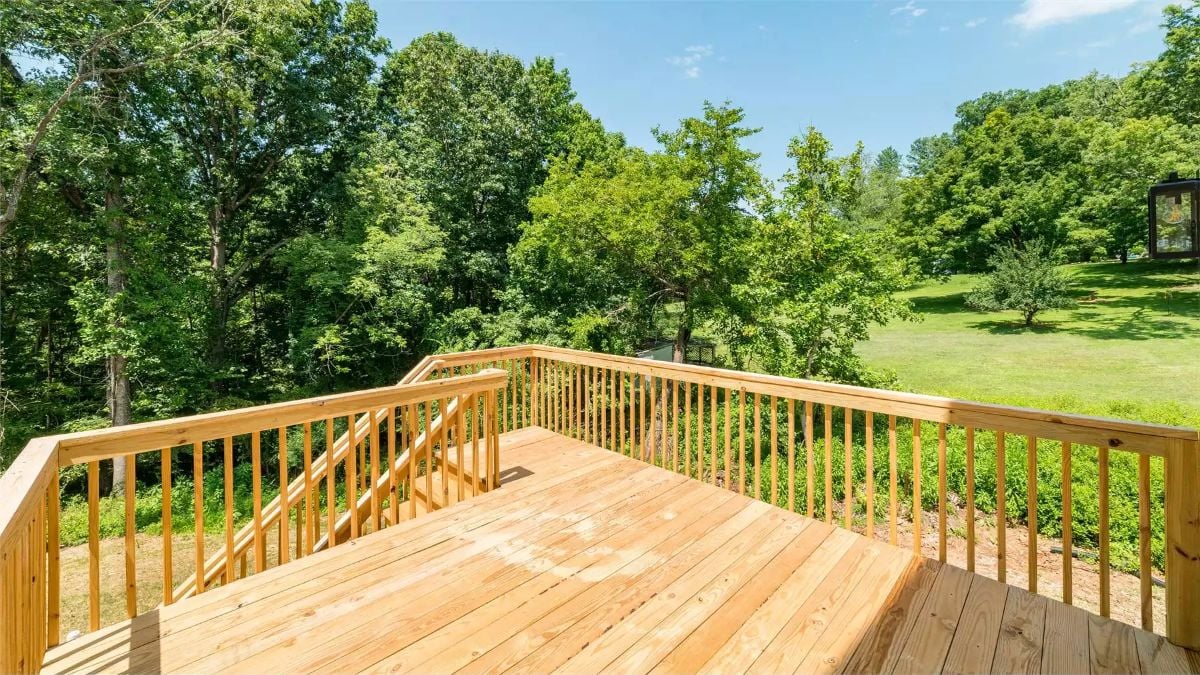
Fresh pine decking, no furniture yet, three sides wrapped in a full canopy of summer green. It’ll look completely different in about six months once someone drags a couple of chairs out here.
Common Mistake: New wood decks need time to dry out before sealing — usually six to twelve months after installation — but skipping that sealer entirely is one of the most reliable ways to watch a deck go gray and start cracking ahead of schedule. Pressure-treated lumber resists rot, not weathering. A water-repellent sealer handles the part the treatment doesn’t.
Pin It
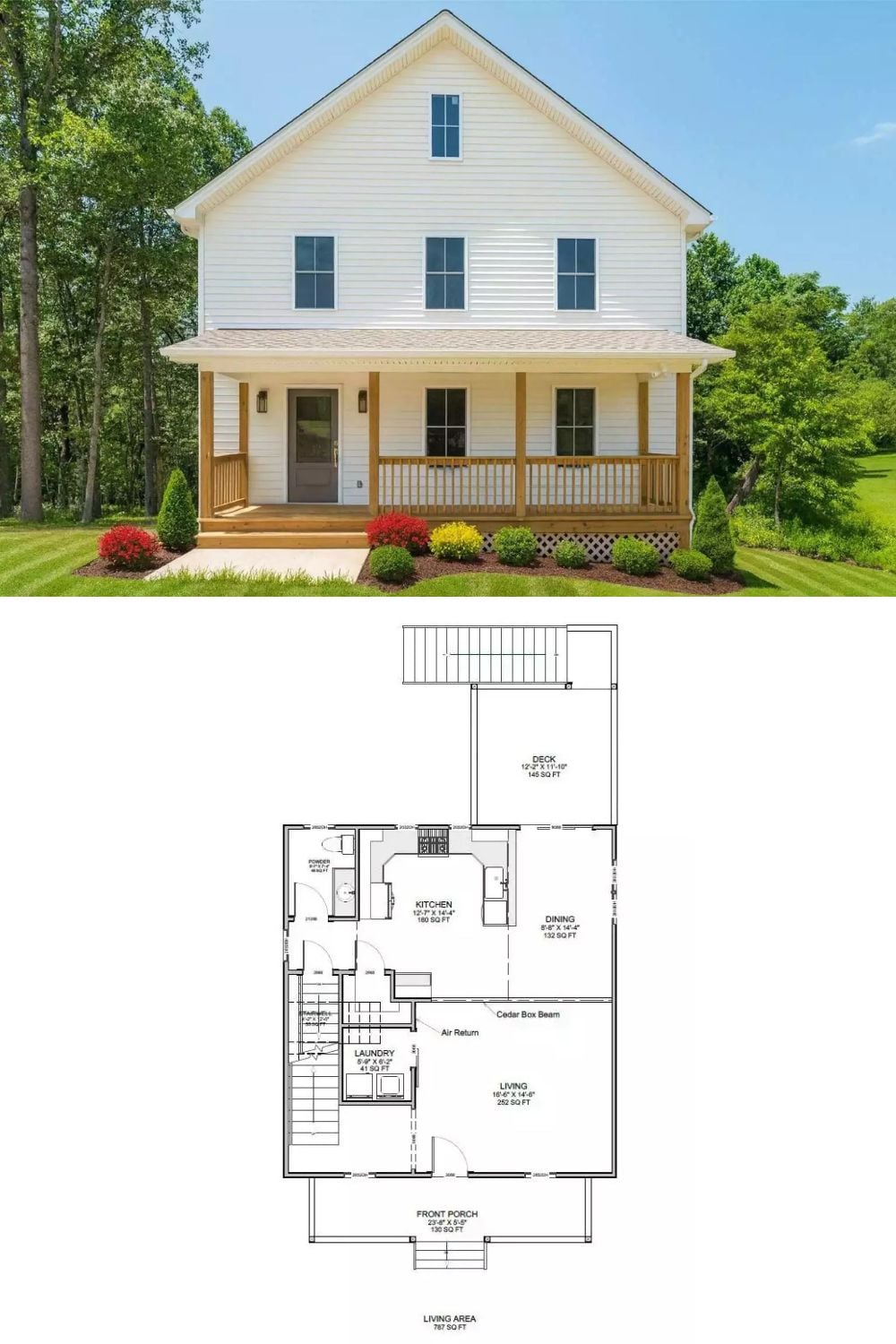
Exterior shot shows a two-story white farmhouse with a full-width covered front porch and wood railings. The floor plan below lays out the first floor’s open kitchen, dining, and living arrangement along with a rear deck of 145 square feet.