🔥 Would you like to save this?
A bedroom wall works best when its biggest elements stop competing for attention. The bed brings mass, softness, and horizontal weight. The window brings light, proportion, and whatever happens to be outside it. Put those two on separate walls and you can end up designing around the architecture instead of with it. Put them together well, and the whole room suddenly has a center of gravity.
In order to come up with the very specific design ideas, we create most designs with the assistance of state-of-the-art AI interior design software. Also, assume links that take you off the site are affiliate links such as links to Amazon. this means we may earn a commission if you buy something.
That’s what these 37 bedrooms get right. Some drop the bed low enough to let a picture window float above it. Others use drapery, millwork, paneling, clerestories, asymmetry, or a deliberately overlapping headboard to make the window part of the composition rather than something to dodge. A few let the view do almost all the decorating. The best ones prove the point without trying very hard: when the proportions line up, a bed under the window doesn’t look like a compromise. It looks like the wall was waiting for it.
37. Center the Bed Under the Picture Window and Let Symmetry Do the Work
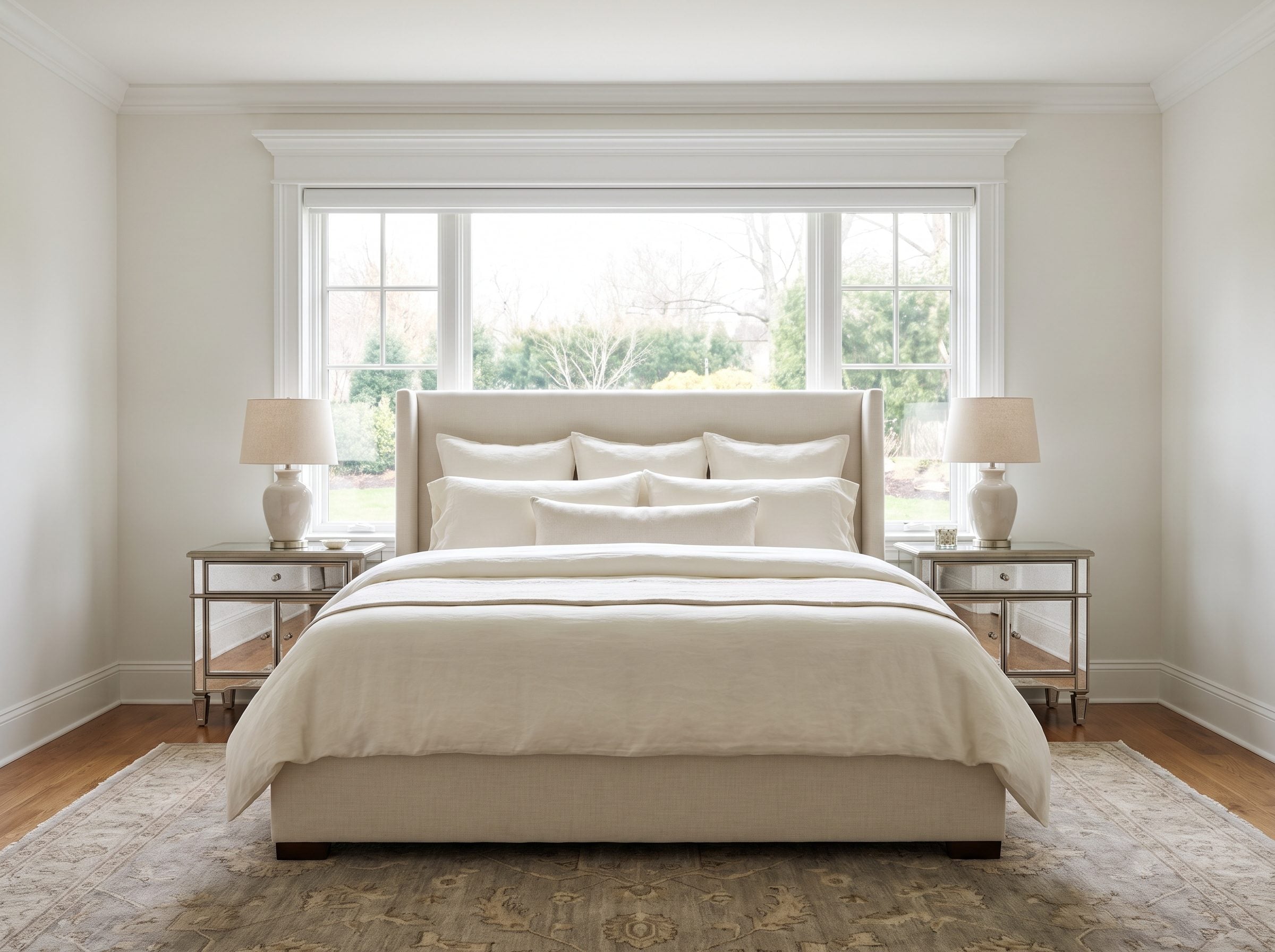
Start with the version that makes the whole controversy look strangely overworked. One broad window, one low bed, two nightstands, everything centered. The glass doesn’t disrupt the symmetry. It creates it.
Traditional feng shui generally prefers solid support behind the head of the bed, while the practical case against window placement has long included cold glass, drafts, light, and privacy. Those are considerations, not automatic design failures. In a well-insulated modern room, the architectural question is much simpler: does the arrangement work?
Here it clearly does. A low oatmeal upholstered headboard leaves most of the glass exposed. Matching nightstands square up either side, and curtains mounted high and pulled wide turn the window into a frame instead of something the bed happens to be blocking.
The test is visual, not ceremonial. If the bed feels centered, the glass stays useful, and you can control light and privacy, the room has already answered the question.
36. The Full Curtain Wall Makes the Window Part of the Architecture
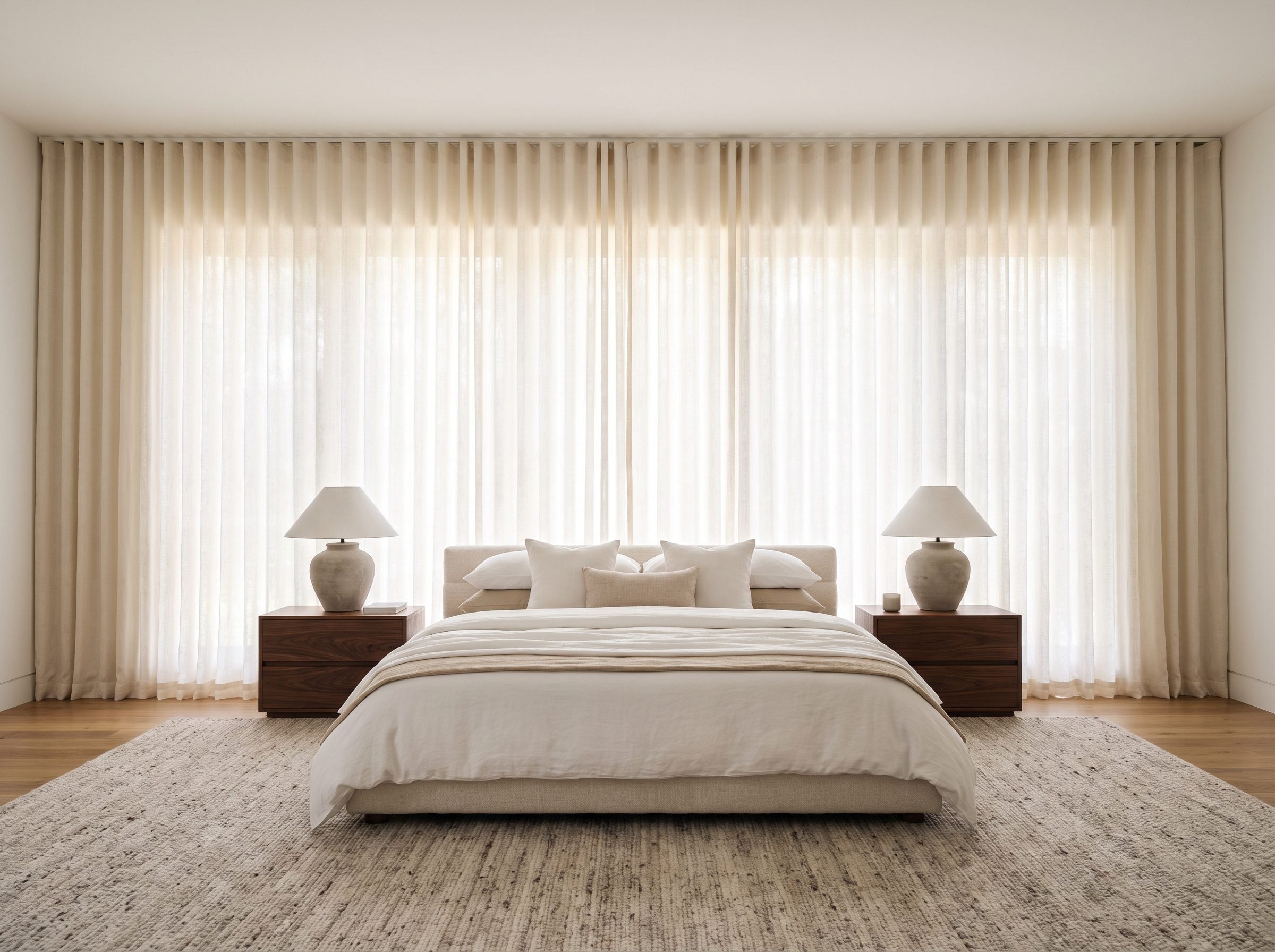
You don’t have to work around the window at all. You can swallow the whole wall in fabric.
Run a ceiling-mounted track from one side of the room to the other and suddenly the window is no longer a lonely rectangle the furniture has to negotiate. Open the panels and the glass appears behind the headboard. Close them and the wall becomes one uninterrupted plane of fabric.
A double track gives the idea real range: sheers for filtered daylight, blackout panels when sleep wins. Keep the bed low, the bedding pale, and the bedside furniture restrained. The window stops looking like an obstacle because the composition is bigger than the window.
Stop designing around the rectangle of glass. Design the entire wall.
35. A Narrow Bedroom Lets the Geometry Make the Decision
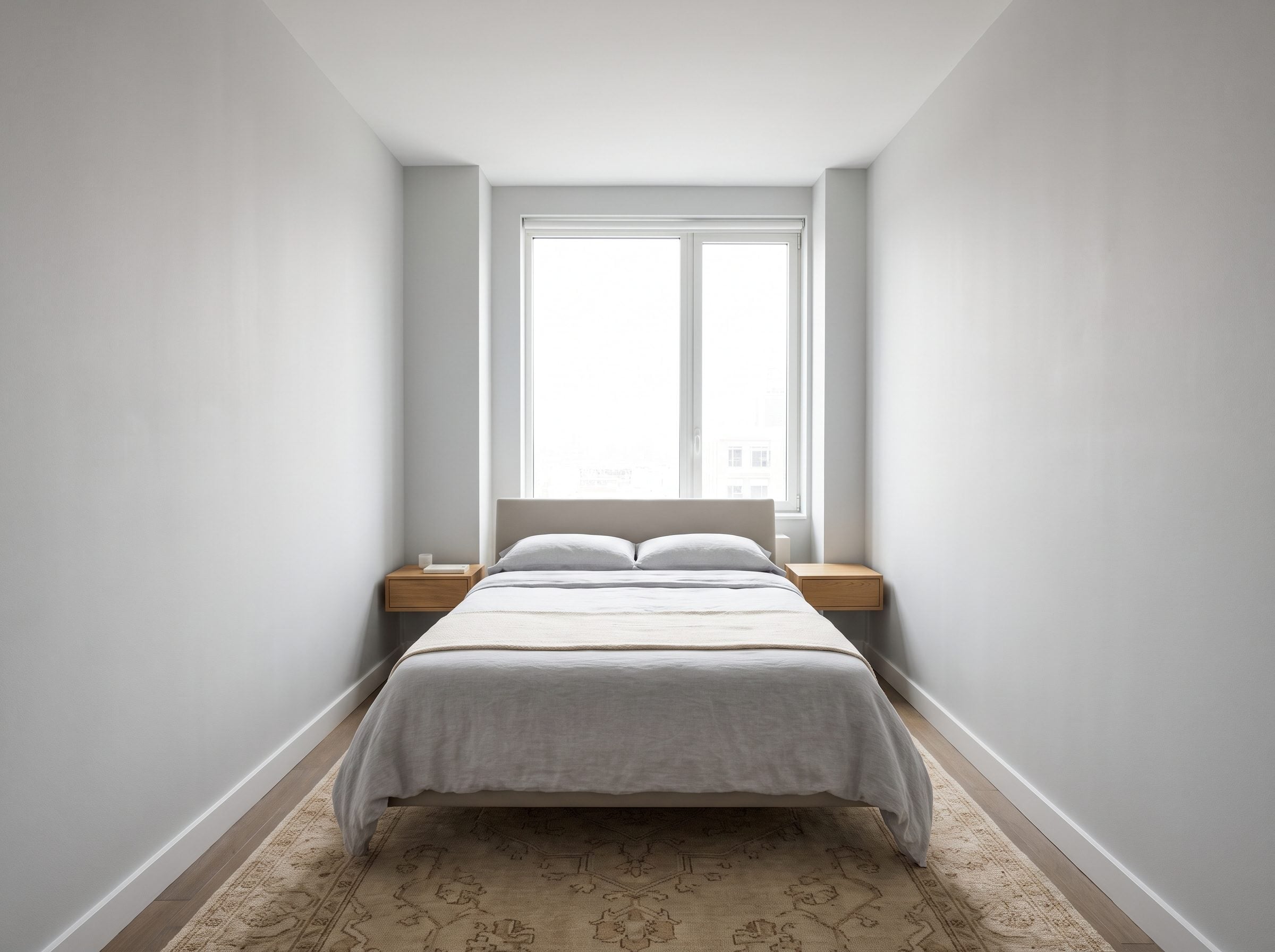
Some bedrooms don’t need a decorating theory. They need a tape measure.
A queen mattress is 60 inches wide. In a nine-foot-wide room, centering it across the short end leaves about 24 inches on either side before trim or other obstructions. Rotate that same bed against one long wall and the circulation can become a crooked little obstacle course of dresser corners, door swings, and one side of the mattress nobody can reach without climbing.
Putting the bed beneath the end window restores the room’s logic. Two walking lanes appear. The long walls become useful for a dresser, shelves, hooks, or storage. The bed finally looks as though it belongs to the architecture instead of having been squeezed into whatever drywall remained.
Keep the headboard under the sill, mount slim brass wall sconces, and run a long neutral runner rug through the room. For a tighter footprint, the same logic anchors a cottage bedroom renovation beautifully. Geometry has no interest in decorating taboos.
34. A Traditional Bedroom Makes the Arrangement Look Like It Has Always Belonged There
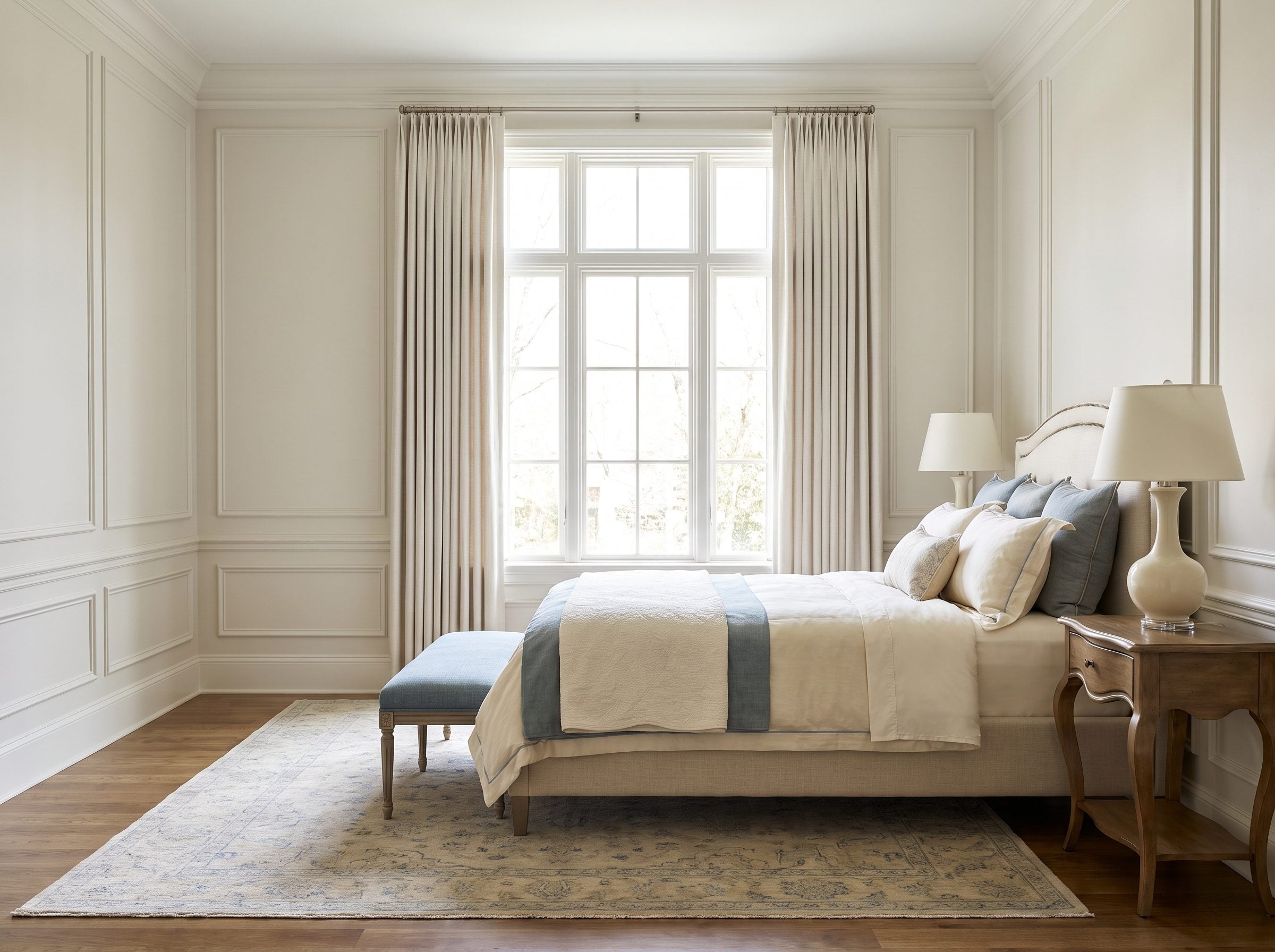
Nothing about a bed beneath a window is inherently modern. Historic rooms routinely had to reconcile large pieces of furniture with daylight, fireplaces, doors, thick walls, and whatever geometry the building handed them.
That makes the traditional version especially satisfying. The headboard stays below most of the glass. Divided panes rise above it. Drapery provides softness and controls glare without pretending the window isn’t there.
Layer ivory and muted blue bedding, flank the bed with matched nightstands and lamps, then slide an antique-inspired rug underneath. Crown molding and an upholstered bench finish the thought.
The same daylight-first instinct turns up in a soft navy powder room or a plain cottage bedroom renovation. Good furniture and good light have been negotiating with each other for centuries.
33. Give a City View the Headboard Position and Stop Pretending Drywall Is More Valuable
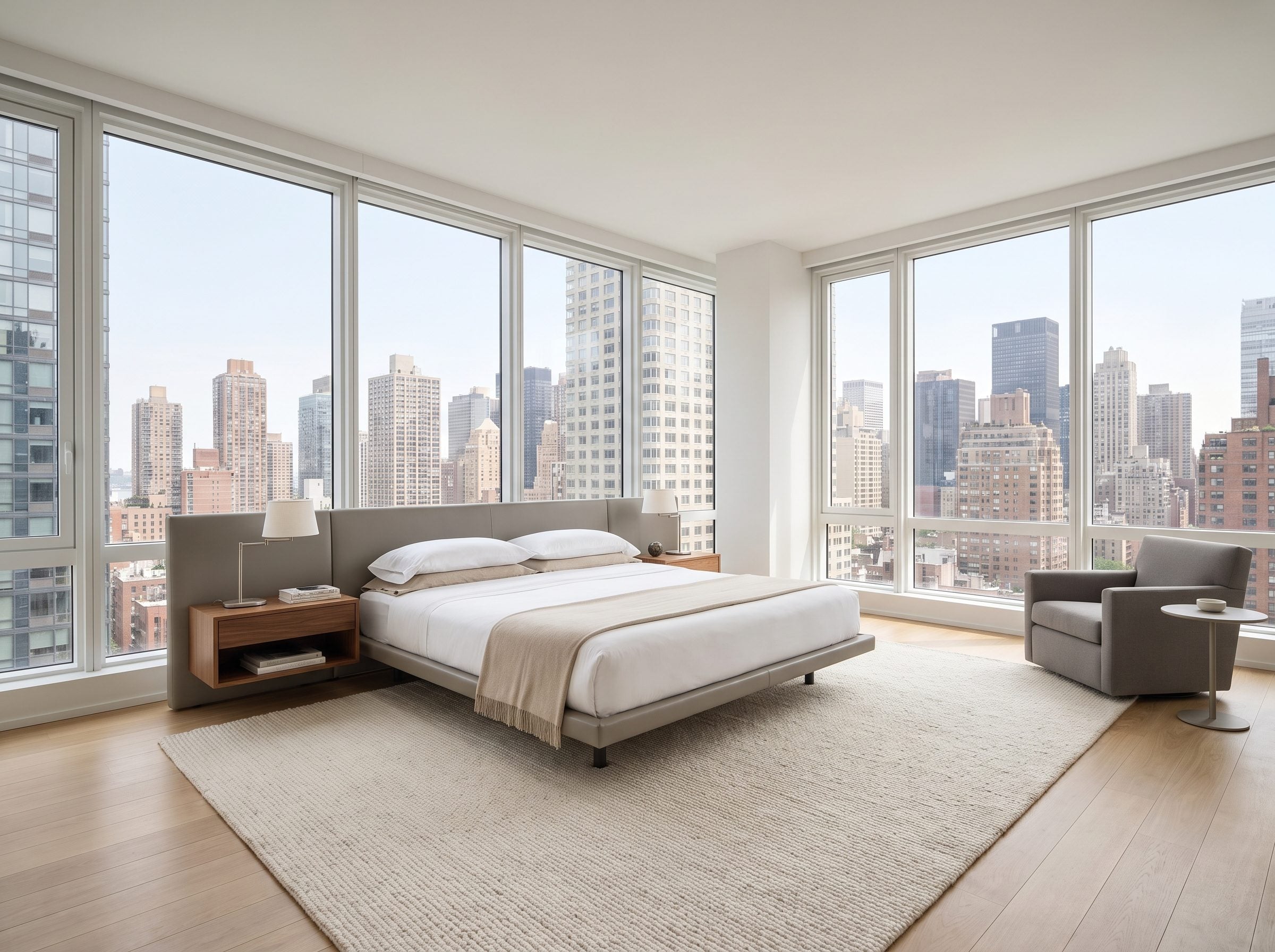
If the window overlooks a skyline, preserving a blank wall starts to feel like an odd priority.
The trick is proportion. Drop the bed, keep the headboard low, and let the view rise above it. Instead of trying to hang art behind the bed, the city does the job itself — considerably better than whatever framed print was waiting in the cart.
Warm ivory bedding keeps attention moving toward the glass. Dark bedside furniture holds the low horizontal line, while floor-to-ceiling curtains stack at the outer edges like theater curtains waiting for the skyline to come on.
One sculptural lounge chair in the corner is enough. A room with that backdrop does not need to keep proving itself.
32. A Roman Shade Solves the Curtain Fight Without Sacrificing the Window
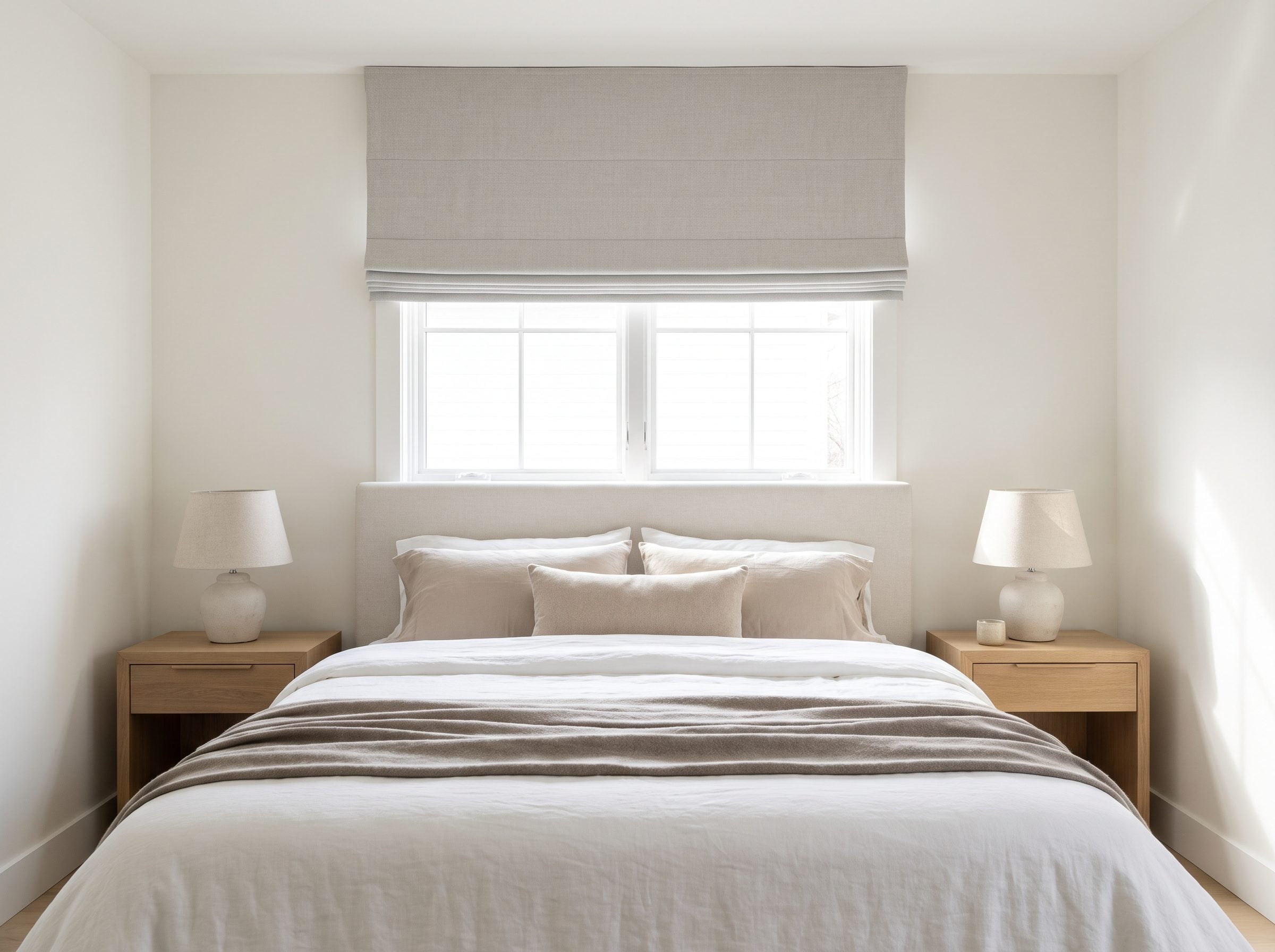
A surprising number of complaints about beds under windows are really complaints about what happens when eight feet of curtain gets trapped behind a headboard.
So take the curtain away.
A woven Roman shade stays inside or close to the window frame and stacks into compact folds when raised. Nothing puddles behind the bed. Nothing tangles with a nightstand. The window treatment occupies the window instead of annexing half the wall.
Raise it high enough for morning light to spill onto creamy bedding and the glass becomes a framed landscape. Add subtle applied paneling around the opening and the window and bed start reading as one architectural composition.
A camel upholstered headboard beneath a partly raised shade may be the least dramatic solution in the gallery. That’s exactly why it works.
31. An Off-Center Window Doesn’t Need Fixing — It Needs a Counterweight
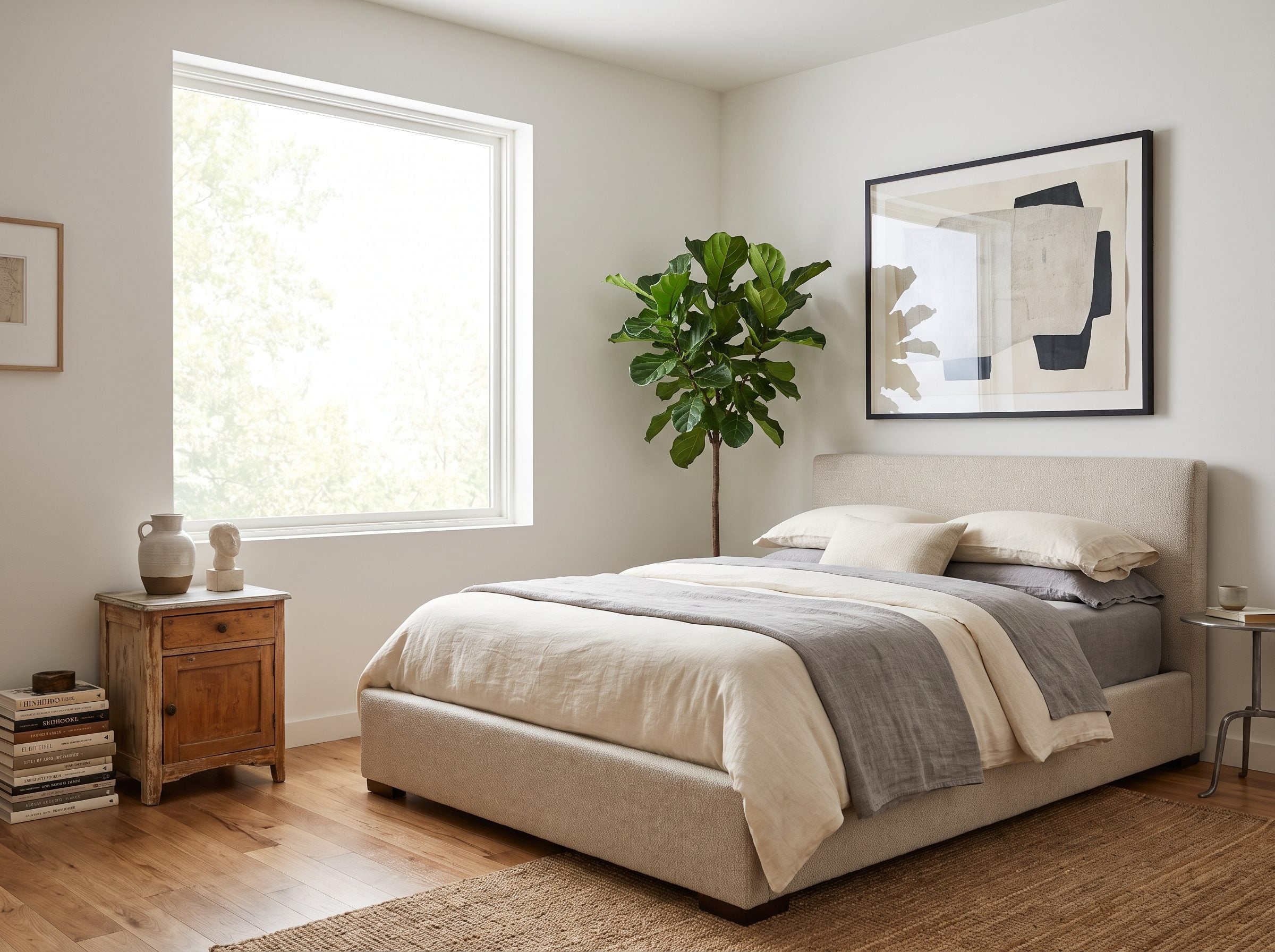
Perfect symmetry is easy when the architecture cooperates. Older houses frequently have other plans.
An off-center window can still take a bed if the rest of the wall carries enough visual weight to answer it. A tall floor lamp on the open side, a column of art, a bookcase, or a wider chest can counter the bright rectangle of glass without pretending the room is mirrored.
Skip the matching-nightstand reflex. Put a slim oak table on the tight side and something heavier on the open side. Extend the curtain rod 8 to 12 inches past the trim and the apparent width of the window grows with it.
Good rooms don’t need perfect symmetry. They need equilibrium.
Pair the arrangement with a neutral upholstered bed, oatmeal walls, and a large wool rug. The offset stops looking like something you failed to correct and starts looking like the reason the room is interesting.
30. Floor-to-Ceiling Glass Makes the View the Only Art the Room Needs
Frank Lloyd Wright spent much of his career trying to weaken the boundary between a building and its landscape. Fallingwater is the famous proof: long horizontal planes, terraces, corner glazing, and rooms arranged so the outside never feels very far away.
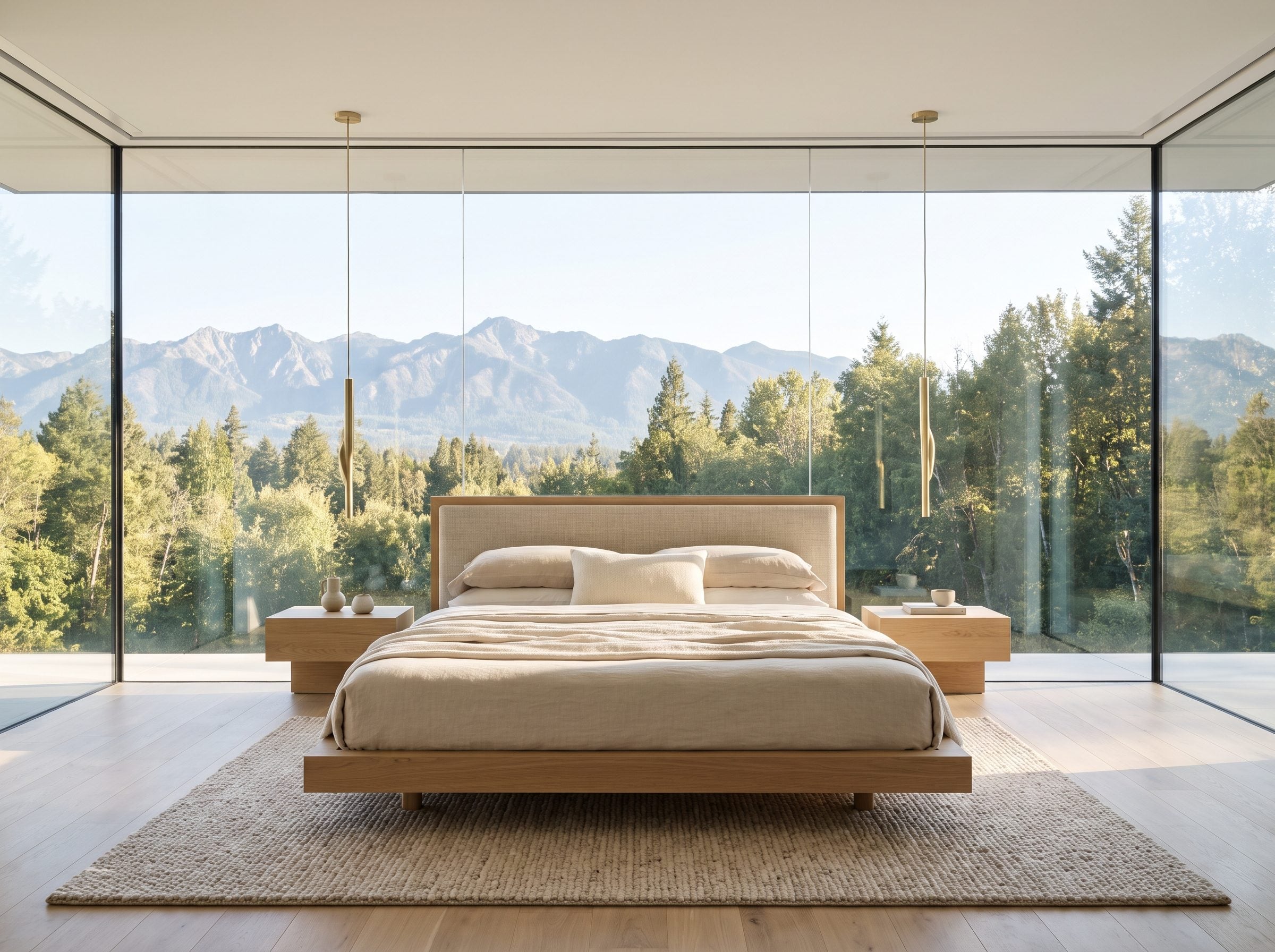
A bedroom with floor-to-ceiling glass can borrow the idea without borrowing the house. Drop the sleeping plane low enough and the window becomes the dominant surface. The bed is no longer furniture parked in front of a view. It becomes the foreground of the view.
White-oak floors, an oak platform bed, quiet linen bedding, and floating nightstands keep the lower half of the room visually light. Add one sculptural pendant and one large wool rug, then stop.
Leave a little breathing room between bed and glass so the placement reads intentional and remains practical for cleaning and window treatments. The room is a frame. Don’t crowd the picture.
29. Put the Bed Under the Window and Buy Back a Whole Wall for Storage
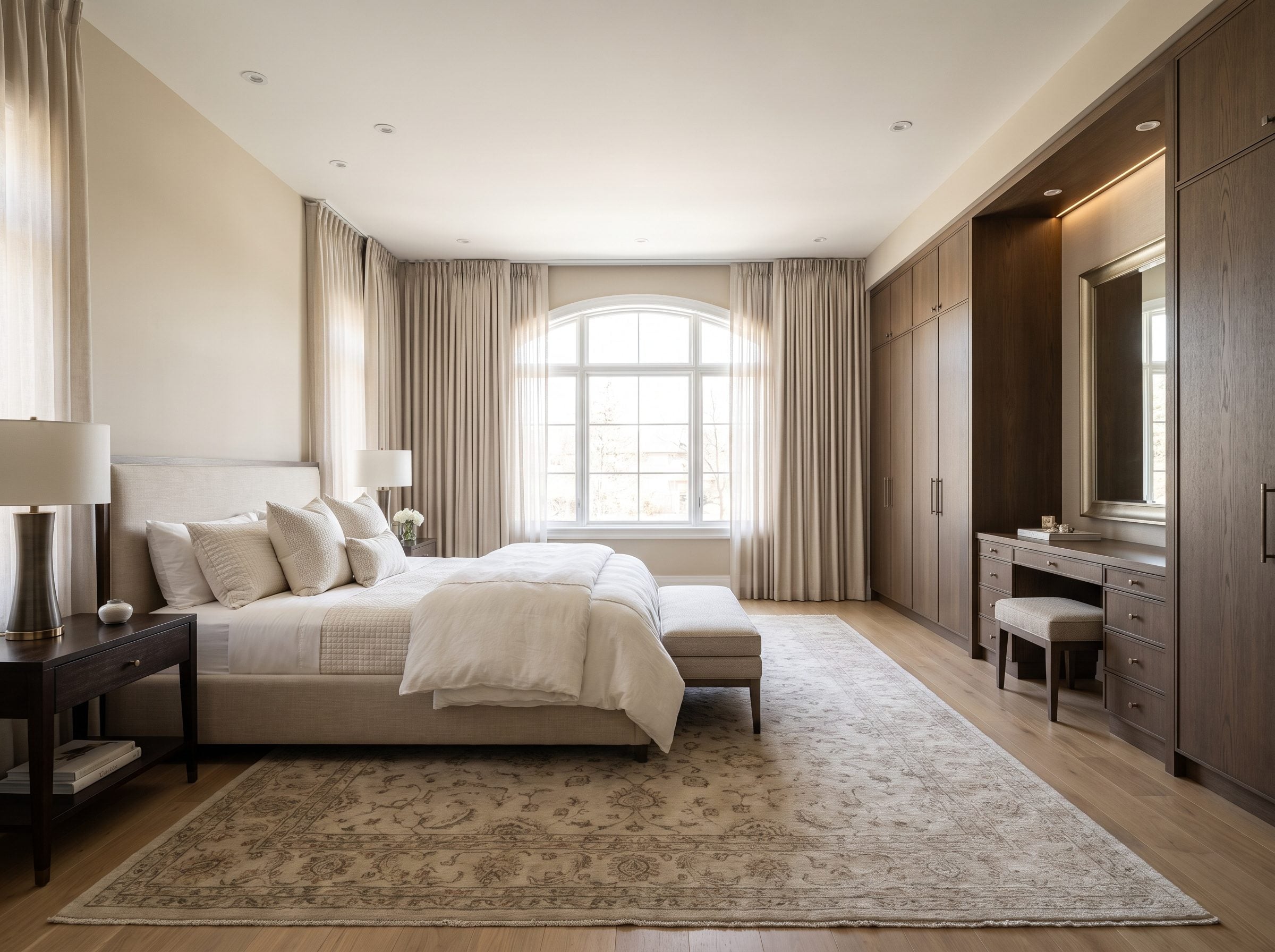
A king bed does not merely occupy floor space. It consumes a wall.
Put it against the longest uninterrupted wall and that wall is effectively gone. Slide the same bed beneath the window and suddenly the long wall can take wardrobes, a dresser, even a small vanity. Nothing about the bedroom became larger. The furniture simply stopped using the most valuable surface for the least useful job.
The custom-suite version makes the trade obvious: low linen tailored headboard beneath the glass, walnut dresser across the room, and a full storage run on the liberated wall.
You didn’t sacrifice the good wall. You finally stopped wasting it.
28. The High Window Solves Light and Privacy Before the Bed Even Arrives
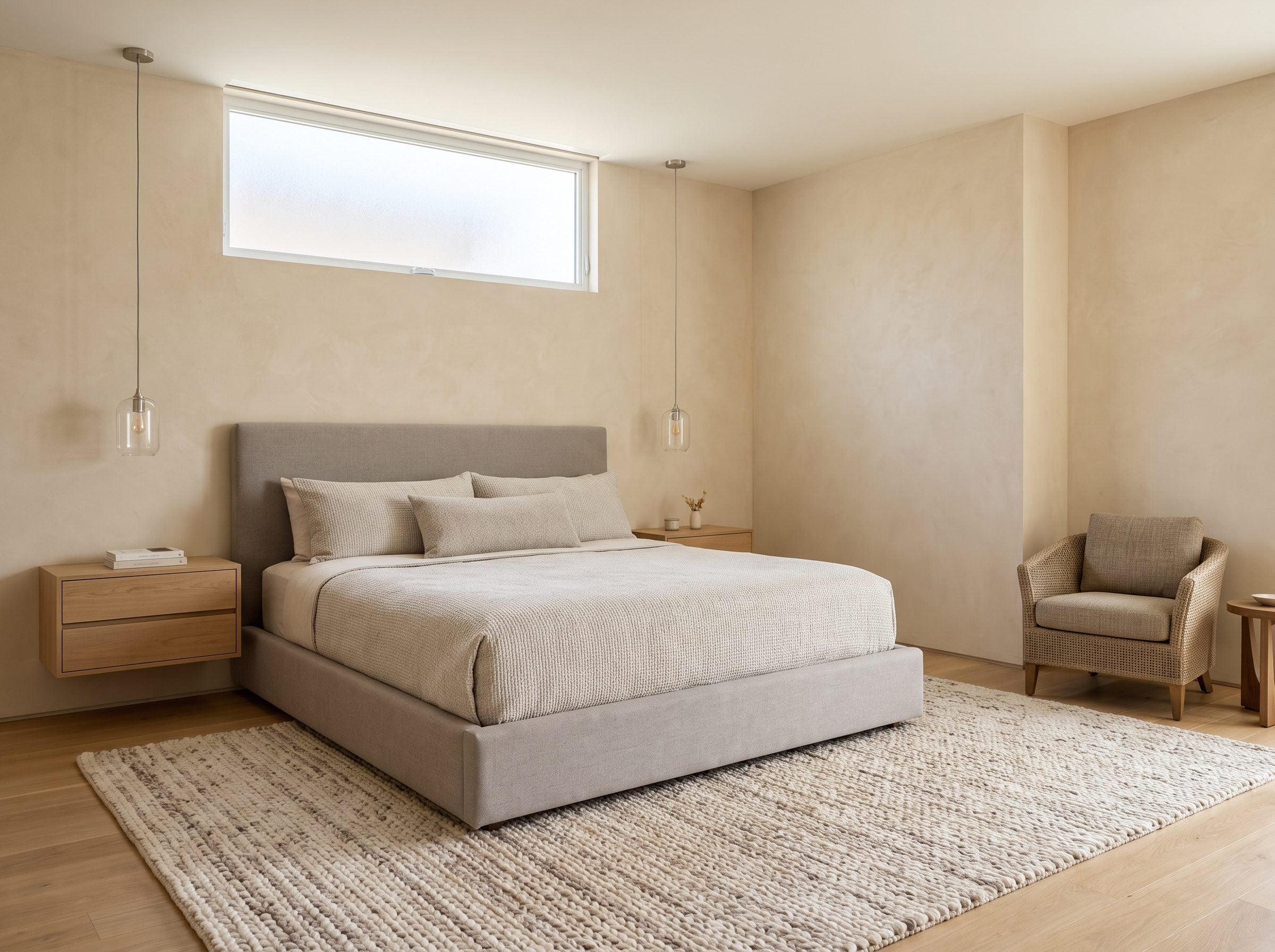
Some windows sit above your head on purpose. Those are practically asking for a bed underneath.
A clerestory window rides high on the wall, bringing daylight above eye level while preserving privacy lower down. Set the sill comfortably above a medium-height headboard and the light-versus-privacy argument disappears before it starts.
The basic architectural idea is ancient. High-level openings brought daylight into Egyptian temples and later became important elements of Roman basilicas and Gothic churches. Different buildings, different meanings, same useful trick: get the light in from above.
Modern bedrooms get the domestic version. Morning brightness comes over the bed while the street sees considerably less of the room.
Float two white oak bedside cabinets under the edges and drop minimalist pendants over them. The wall under the glass was never dead space. It was waiting for the bed.
27. A Cottage Window Turns Into the Headboard You Didn’t Have to Buy
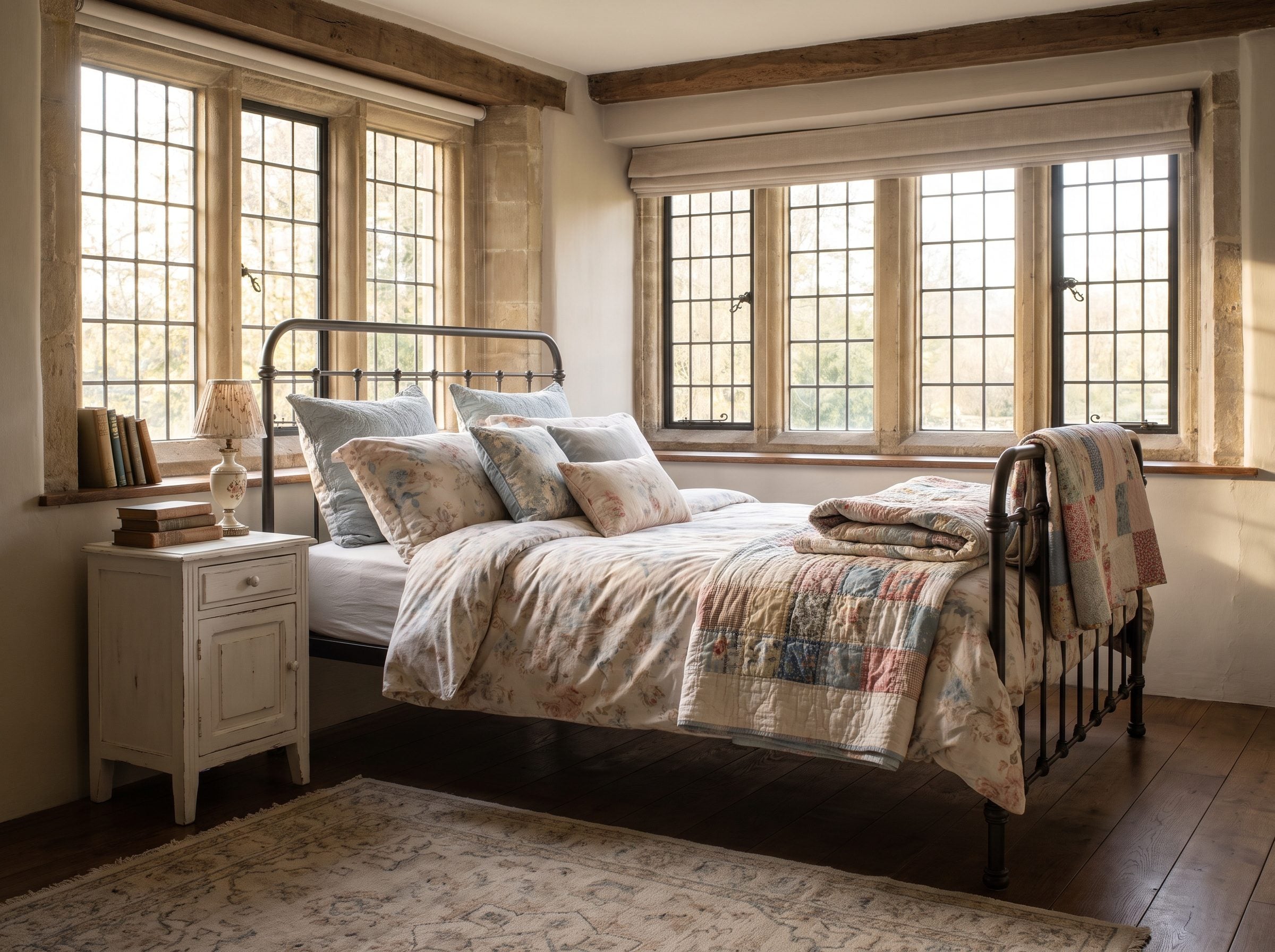
Small cottages have always been good at forcing furniture and architecture to make peace. There simply isn’t enough room for every object to demand its own wall.
Put a low bed beneath a multi-pane window and the grid above it does the decorative work of a much taller headboard. Garden outside, linen below, mullions in between. Nothing feels missing.
A modest upholstered headboard should stop below the sill so the panes remain visible. Then layer linen bedding, one checked accent, a woven jute rug, small brass reading lamps, and painted nightstands.
Pull the linen curtains aside and let the panes stay visible. A good cottage bedroom renovation rarely improves by hiding the thing giving the room its character.
26. Let the Headboard Overlap the Window and Commit to It
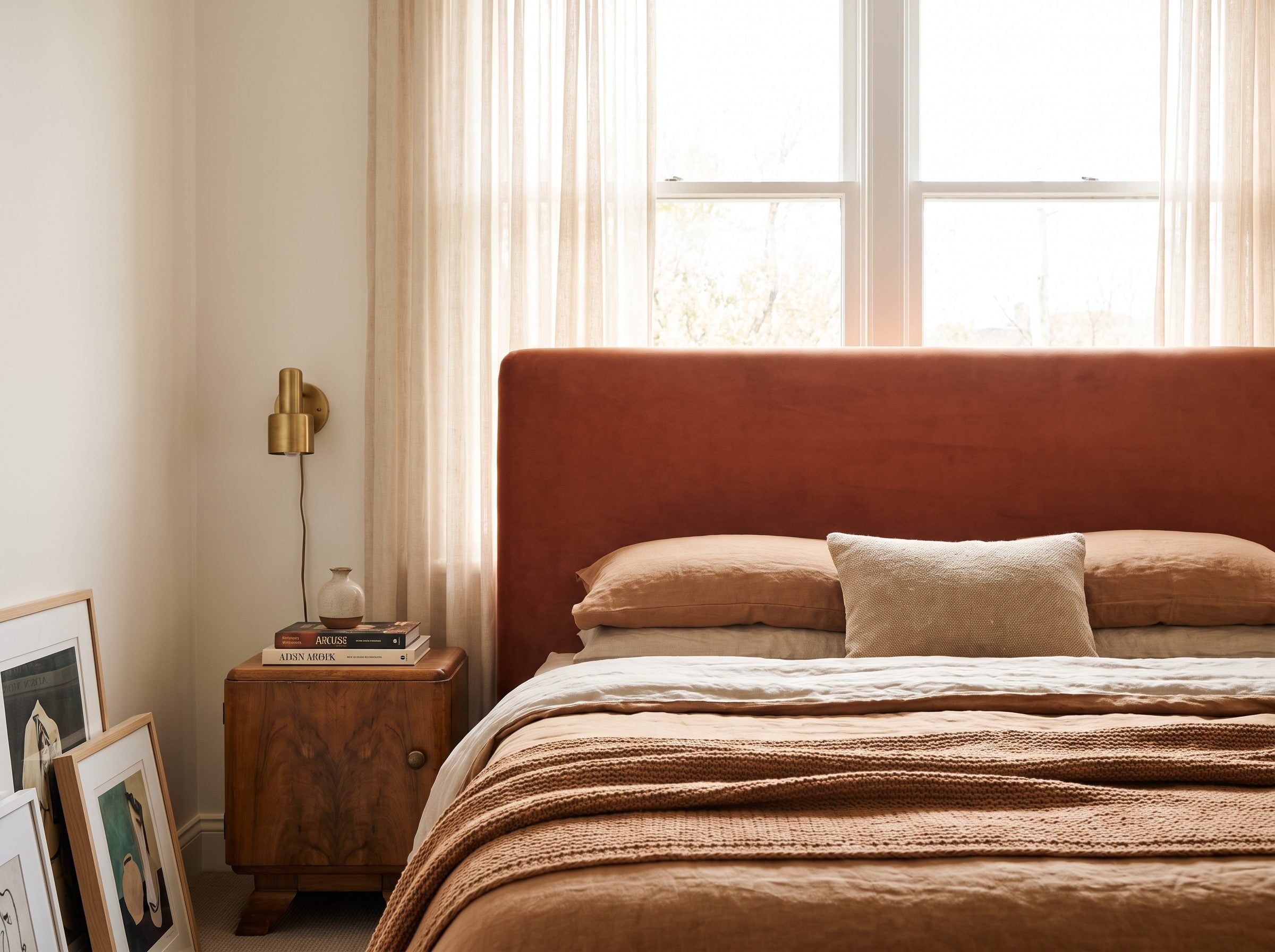
This is the move that makes cautious decorators twitch: let the headboard cover part of the window.
Not half of it. Not enough to strangle the daylight. Just the bottom section your pillows were never going to enjoy anyway.
The alternative is often worse — bed shoved off-axis, headboard marooned beside the frame, entire room distorted to preserve a strip of glass nobody can see from the mattress.
Overlap with conviction instead. Keep most of the window open above, draw the curtains wide beyond the trim, and let a warm taupe headboard form a deliberate base beneath the glass.
Layer ivory bedding around the warm taupe upholstered headboard and keep the furniture beside it visually calm. The room doesn’t apologize, so neither does the window.
25. A Forest View Makes the Blank-Wall Alternative Look Particularly Silly
🔥 Would you like to save this?
In 1984, environmental psychologist Roger Ulrich published a study comparing recovery records for surgical patients whose hospital windows faced either trees or a brick wall. The patients with the natural view had shorter postoperative stays and, on average, required less potent pain medication.
It became an influential piece of evidence in the growing argument that what people can see from a room matters.
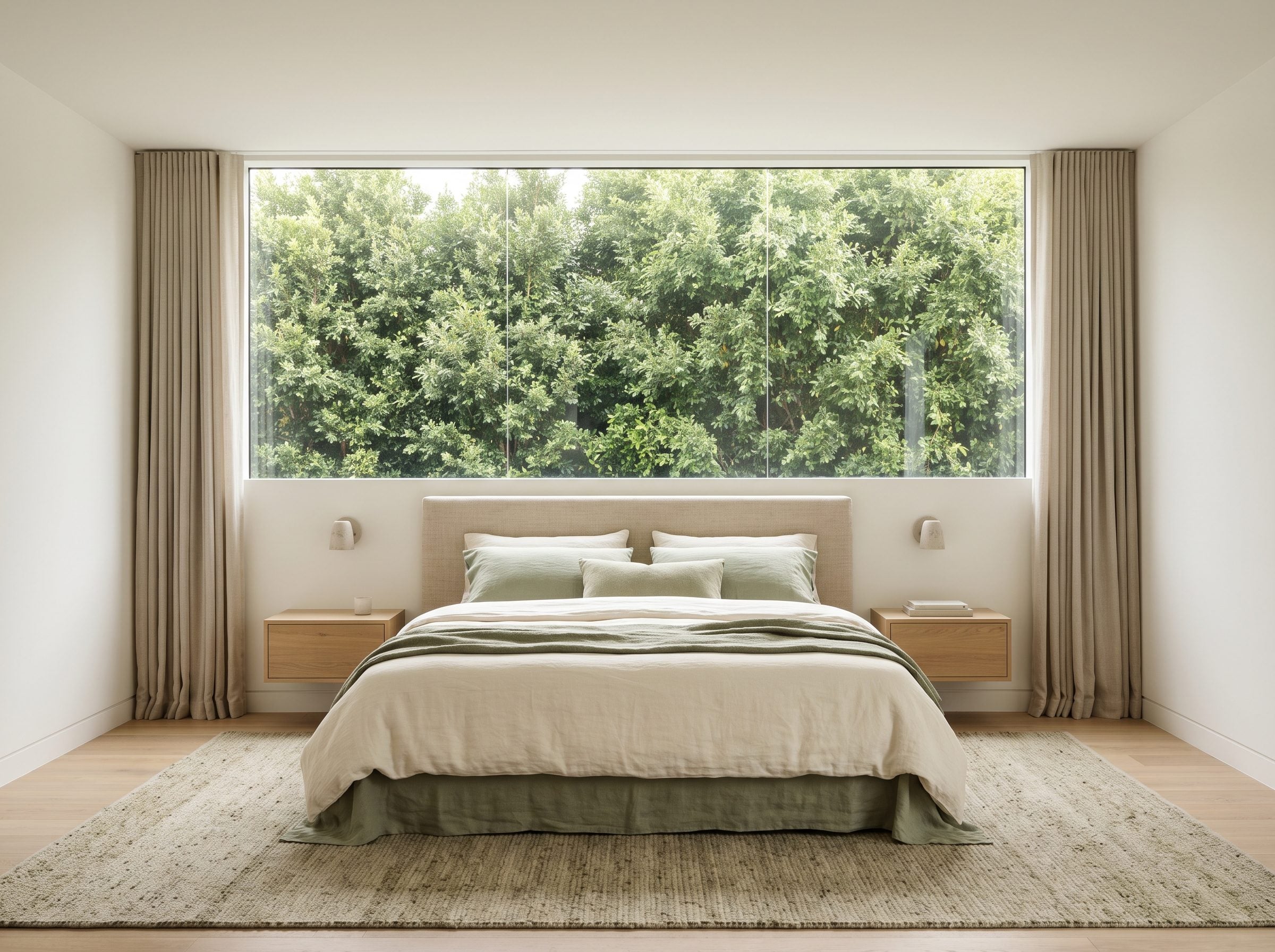
A bedroom is not a hospital room and a forest view is not medicine, but the design lesson is still hard to miss. If one wall offers moving branches, changing light, weather, and depth, why automatically aim the bed at drywall instead?
This room keeps a low natural-linen headboard beneath the sill and lets green fill the upper half of the composition. Warm white walls, light oak, cream-and-moss bedding, and a thick wool rug know better than to compete.
The window isn’t a problem to solve here. It’s the reason to choose the wall.
24. Custom Millwork Makes the Placement Look Expensive Because It Looks Planned
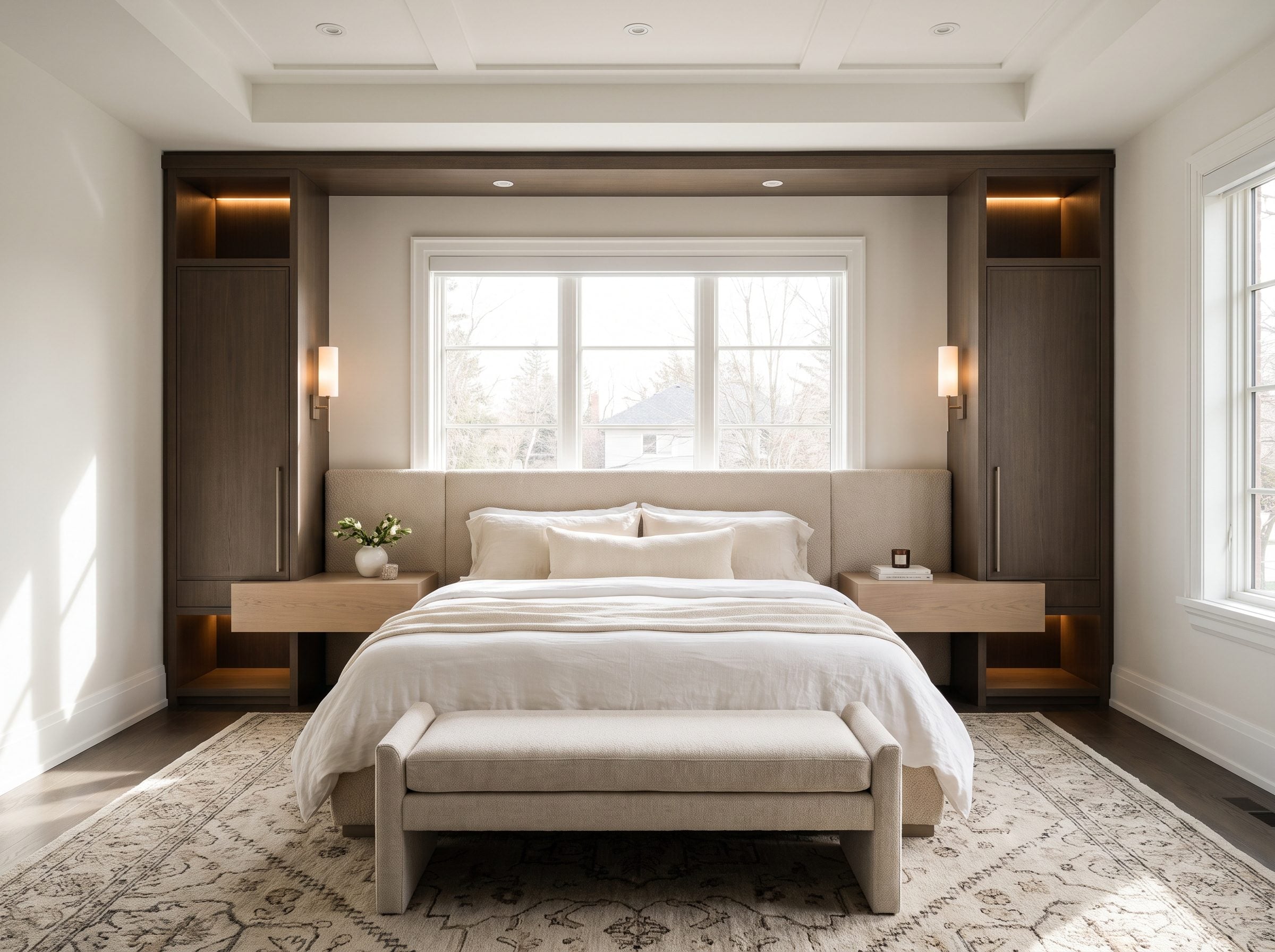
A bed under a window can look improvised when the wall around it is doing absolutely nothing. Add millwork and that reading changes in about three seconds.
Slim storage towers stand on both sides. Floating white-oak ledges replace bulky nightstands. Sconces hit the same height. The window lands dead center. Suddenly nobody thinks the bed ended up there because every other wall was taken. The wall looks commissioned around it.
Bespoke millwork can get expensive quickly, especially in hardwood, but the idea does not require a custom-cabinet budget. Two white oak floating nightstands and matched brass wall sconces can create much of the same visual discipline.
A cottage bedroom renovation proves the principle scales down just fine. Proportion carries more of the effect than the invoice does.
23. Drop the Mattress and the Wide Window Stops Being an Argument
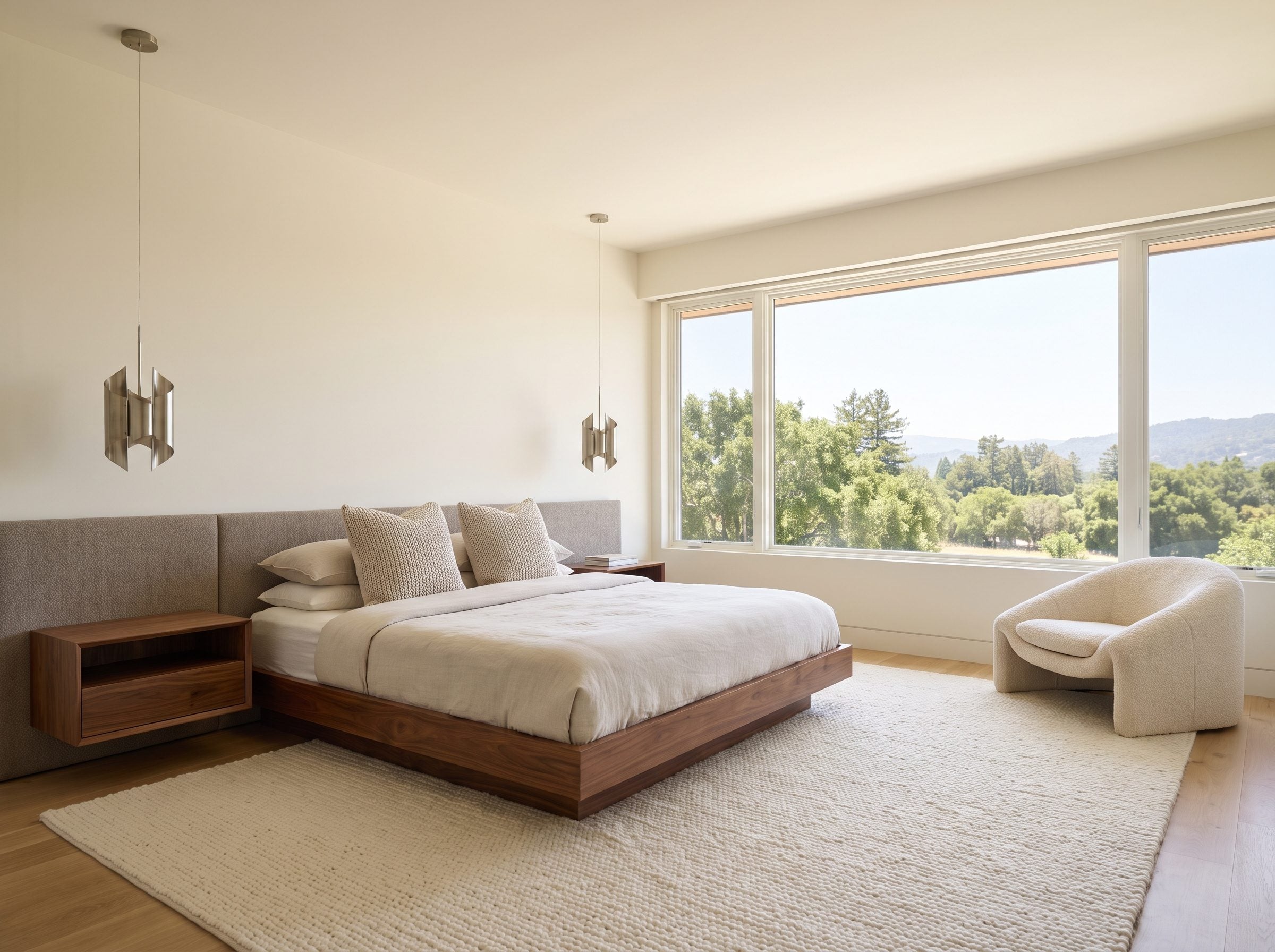
The whole bed-under-window problem changes when the bed itself gets shorter.
Bedroom sill heights vary considerably, but low platform frames give you far more room to stay beneath the glass than a tall traditional bed does. A Japandi-style frame may sit only a few inches above the floor, leaving the window visually dominant even after the mattress and pillows arrive.
Low furniture also changes the perceived proportions of the room. More wall remains visible above the bed, so the ceiling feels farther away and the window feels larger.
Run a walnut platform bed under a broad horizontal window. Keep the headboard slim. Replace table lamps with architectural pendant lights and let the panorama do the decorating.
22. Put the Bed Under the Water View Because That’s What the View Is For

If the house came with a lake, inlet, ocean, or river outside the window, the hierarchy gets easier.
The view is the feature. Everything else should behave accordingly.
A low oatmeal upholstered bed stays beneath the sill. Creamy bedding and slim bedside pieces keep the lower half quiet. Warm oak floors and a textured wool rug give the interior enough warmth to hold its own without trying to compete with the horizon.
Even the bench at the foot earns its keep here. Sit down. Look at the water. A shocking amount of bedroom furniture cannot claim that much usefulness.
21. Architectural Trim Makes the Bed and Window Speak the Same Language
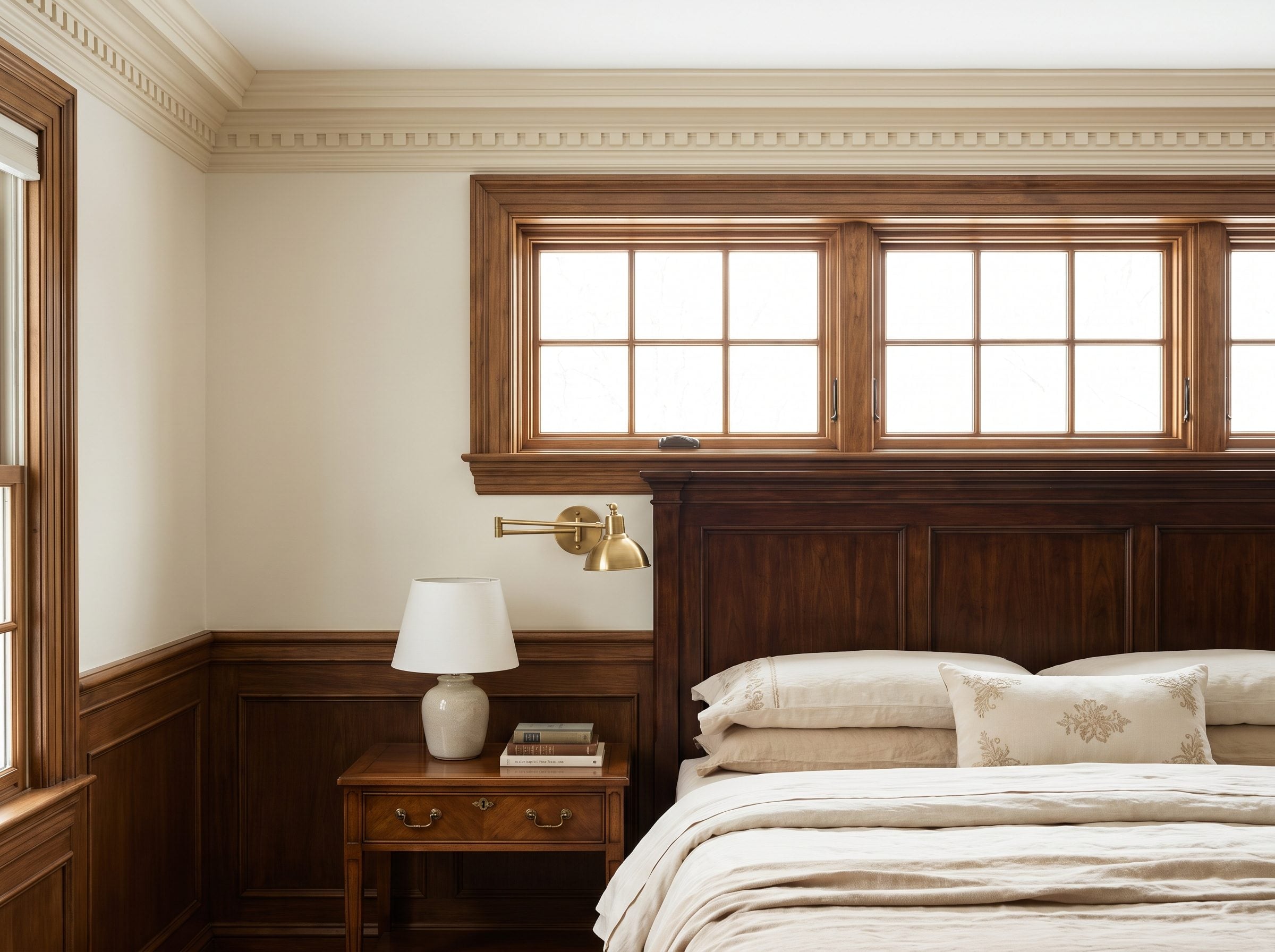
If the bed looks as though it was dropped beneath the window by movers at 4:55 on a Friday, the wall may not need a new layout. It may need architecture.
Run applied panel molding around the window and continue the geometry through the bed zone. The headboard now sits inside a framed bay rather than beneath an unrelated hole in the wall.
Georgian and Federal interiors made extensive use of paneling, rails, trim, and symmetrical wall elevations. Borrowing that language gives the modern bed-window relationship a much older sense of order.
Keep the headboard low enough to respect the sash. A cream upholstered headboard, creamy bedding, and brass sconces mounted within the panel rhythm finish the frame.
The softer version works just as well in a cottage bedroom renovation.
20. Yes, Even a Four-Poster Can Go Under the Window
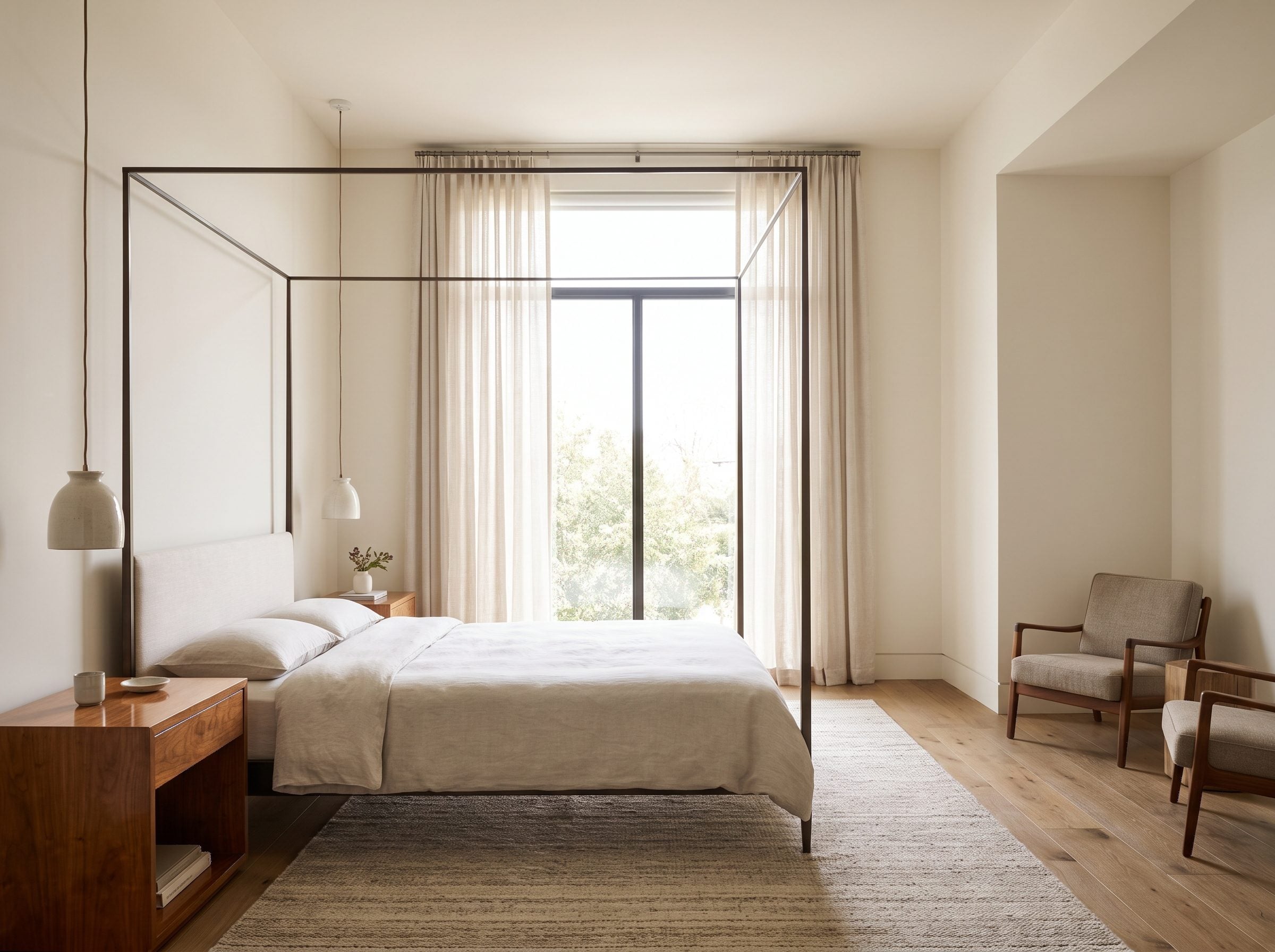
A low platform bed under glass is easy to accept. A canopy feels like the stress test.
That is precisely why this one works.
Modern canopy posts can be surprisingly thin, so the structure reads as a few strong lines drawn over the daylight rather than a wall of furniture blocking it. Keep the top open, leave off heavy fabric, and use a headboard low enough to preserve the window.
The posts don’t block the view. They frame it.
Layer the bed with washed linen, keep the bedside furniture low, and run the rug wide enough to catch the front posts.
Against a window, that frame stops feeling fussy and starts behaving like a lens.
19. Turn the Windowsill Into Part of the Headboard Design
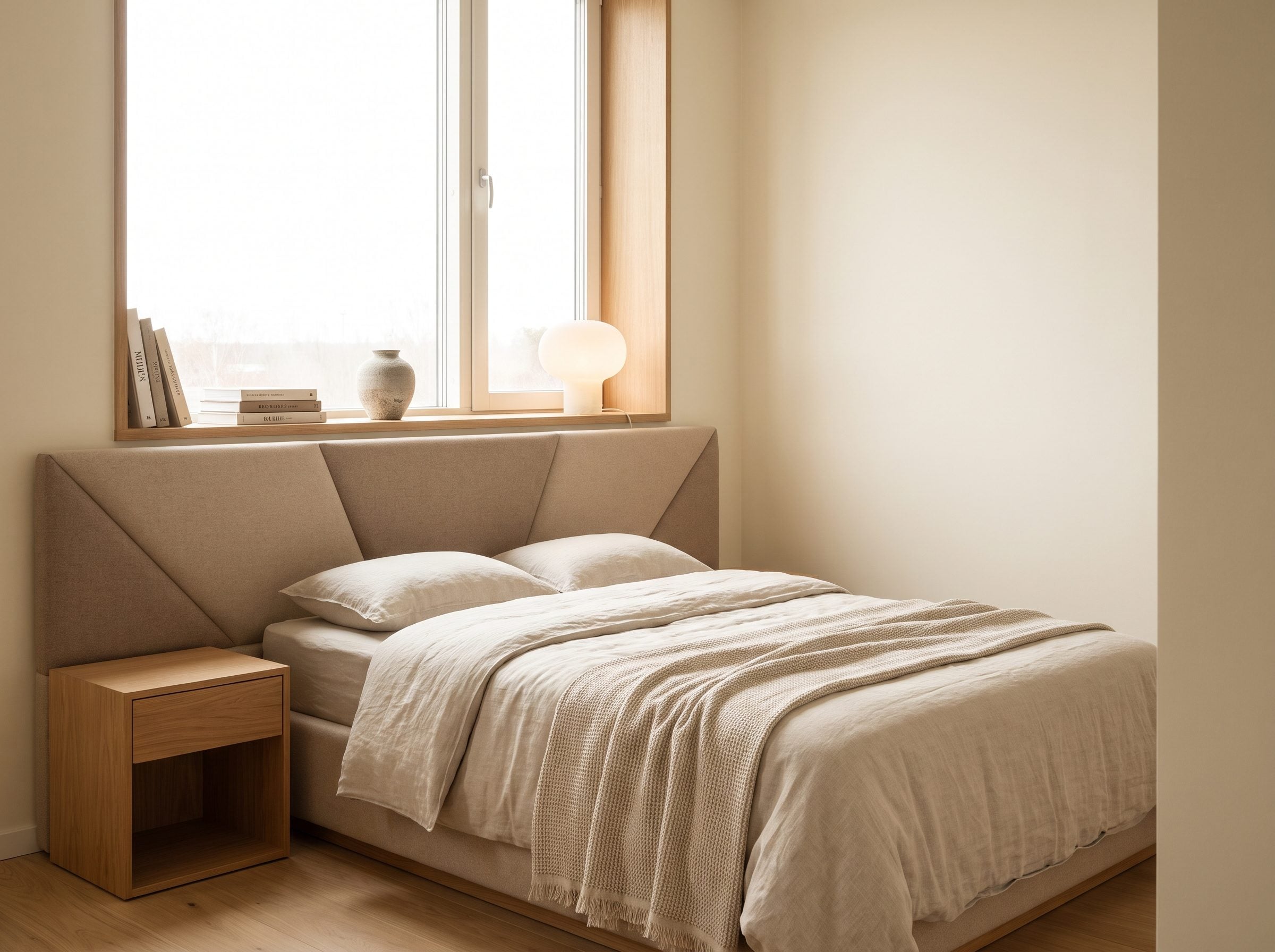
A low headboard can turn an awkward sill into useful real estate.
When the sill lands just above the upholstery, it becomes a ready-made ledge. Not a dumping ground. A ledge.
Two or three objects are plenty: ceramic vessel, two books, one trailing plant. The real design move is the series of horizontal lines — mattress, headboard, sill, mullion — stepping upward in parallel.
Skip a tall headboard here. It would block the shelf you’re trying to use and turn a clean composition into a wrestling match.
Warm oak, ivory linen, softly textured plaster, and a low oak bench echo the sill one more time. The window isn’t interrupting the wall. It is organizing it.
18. A Dark Bedroom Turns the Window Into a Lit Painting
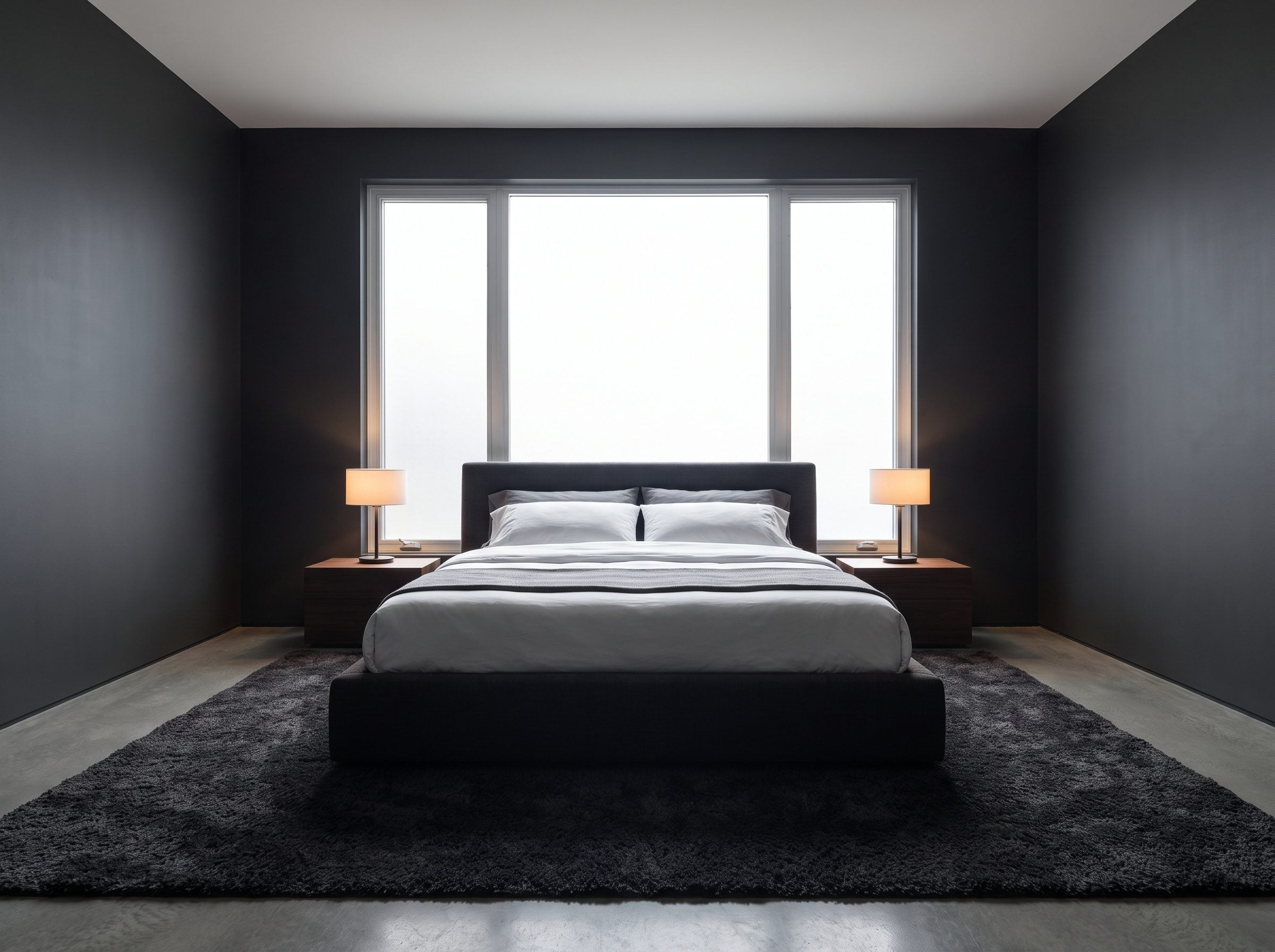
Paint the room charcoal or chocolate and the window changes jobs. Against all that depth, the bright rectangle starts glowing like something you mounted on the wall.
Put the bed underneath and you have a focal point without buying art, wallpaper, or one enormous upholstered headboard.
A low bed lets the light stay dominant. Ivory linen bedding throws another pale plane into the composition, while darker bedside pieces recede comfortably into the walls.
Dark walls don’t need to hide the window. They make it louder.
The same principle makes a navy powder room sing when one bright fixture or pale surface gets all the attention.
17. Twin Windows Turn the Bed Into the Center of a Three-Part Composition
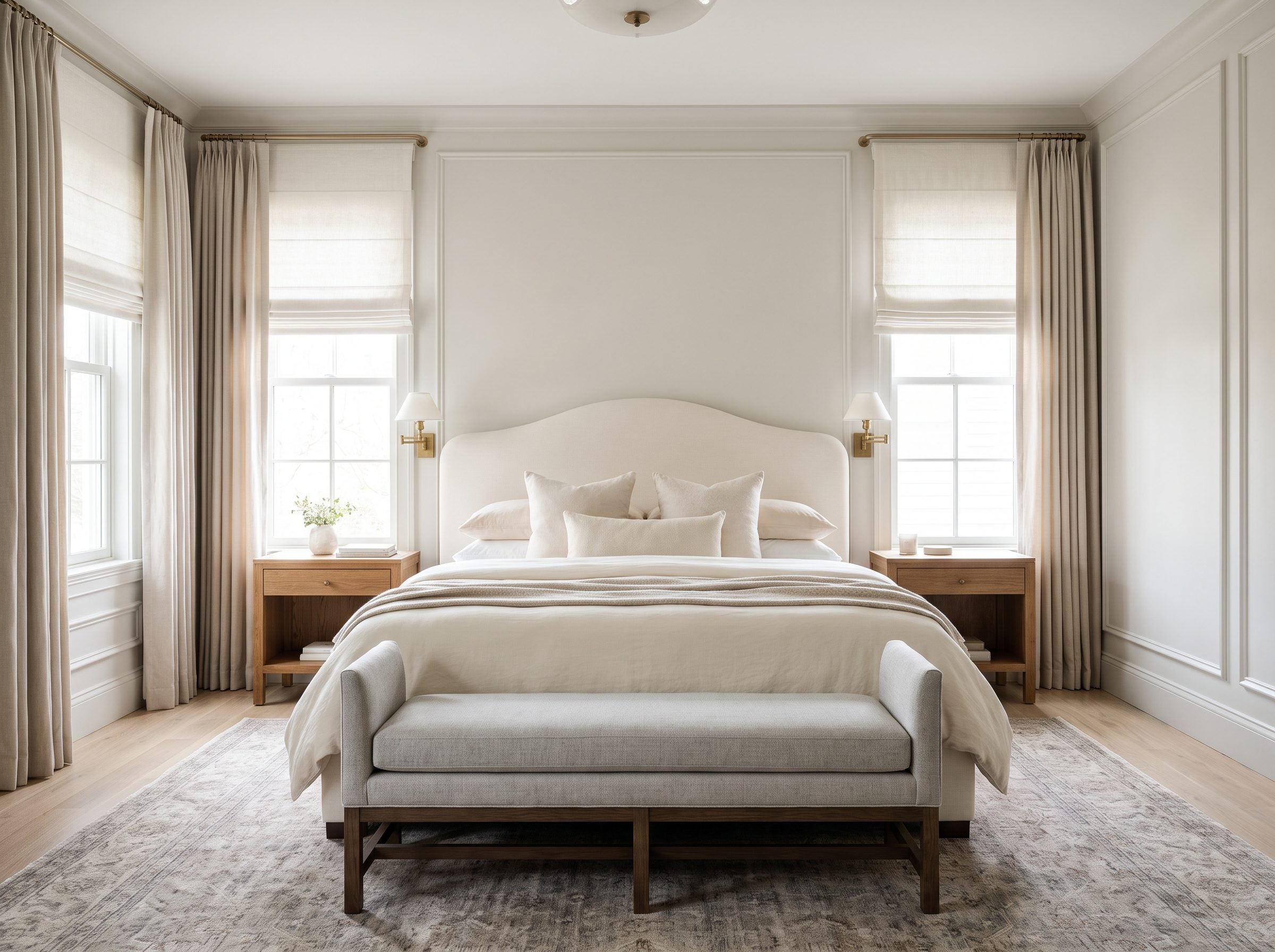
Two windows change everything. Now the headboard doesn’t sit in front of the architecture; it locks the two openings together.
Give the bed enough visual weight to hold the center. A curved upholstered headboard works beautifully against two tall rectangles of glass. Then repeat just enough: similar nightstands, matched sconces, identical shades, curtain panels dropping to the same point.
Symmetry is easy for the eye to process, which is one reason highly balanced rooms often feel settled almost immediately. No neuroscience lecture required. You can see the effect from the doorway.
Skip puddled drapes for tailored panels on a brass curtain rod, add a cream upholstered bench, and let the architecture look suspiciously expensive.
16. Ditch the Headboard Entirely and Give the Window the Whole Wall
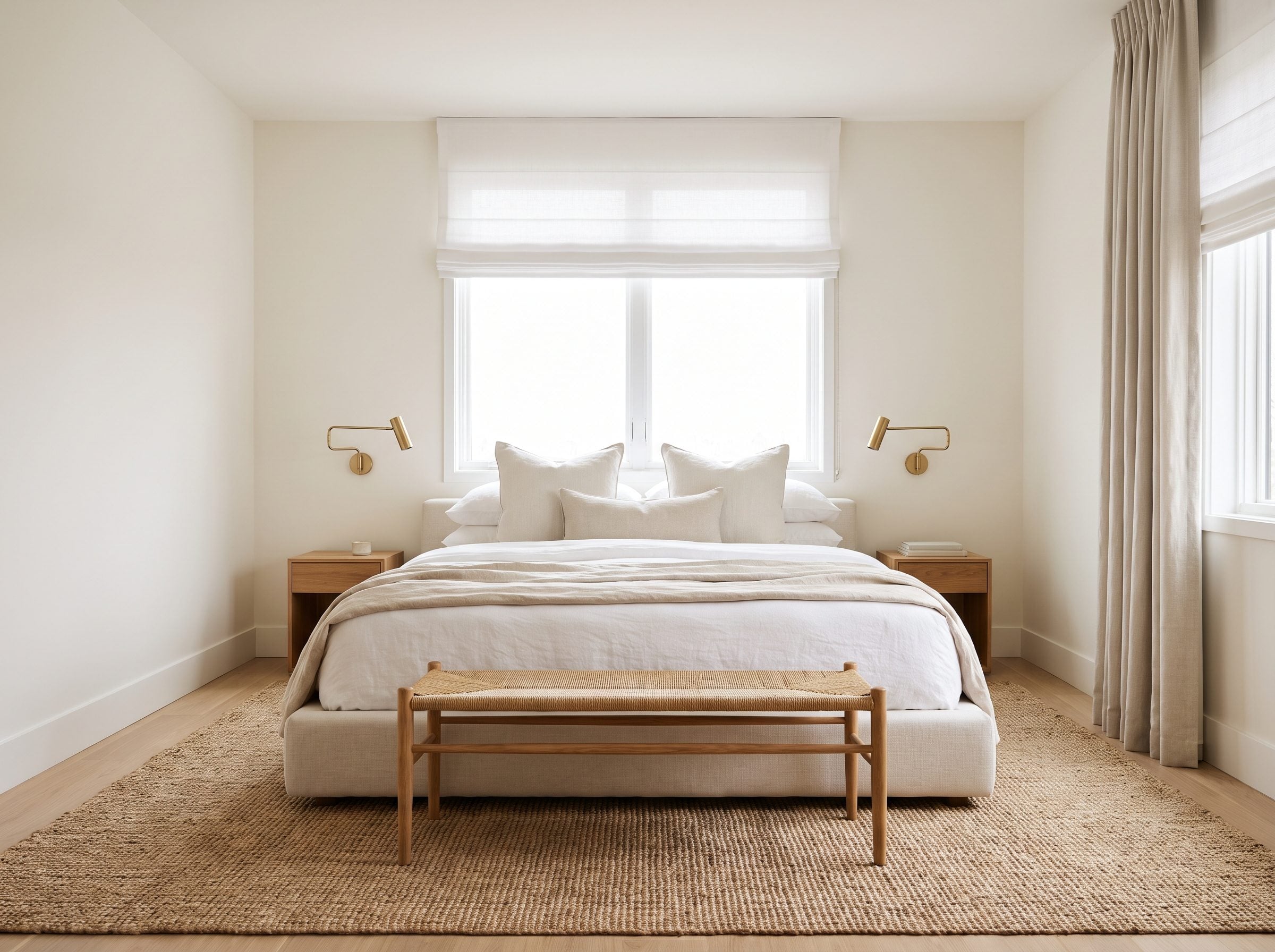
Sometimes the simplest way to stop the headboard from fighting the window is to remove the headboard.
Sit the mattress on a low frame and suddenly the glass runs cleanly above the pillows. The window gets its full outline back. The room feels lighter because there is literally less furniture climbing the wall.
Morning daylight also matters to the body’s circadian timing, particularly when people receive bright light after waking. A window near the bed can make that daylight easier to encounter, though window placement is hardly a substitute for good sleep habits or appropriate light exposure.
Visually, the solution is even simpler. Heap the white and flax linens high enough to soften the mattress edge, mount reading lights to the wall, and use tailored Roman shades for privacy.
Nobody asks where the headboard went. They ask why the room suddenly has so much light.
15. An Attic Bedroom Has No Patience for Rules Written for Rectangular Rooms
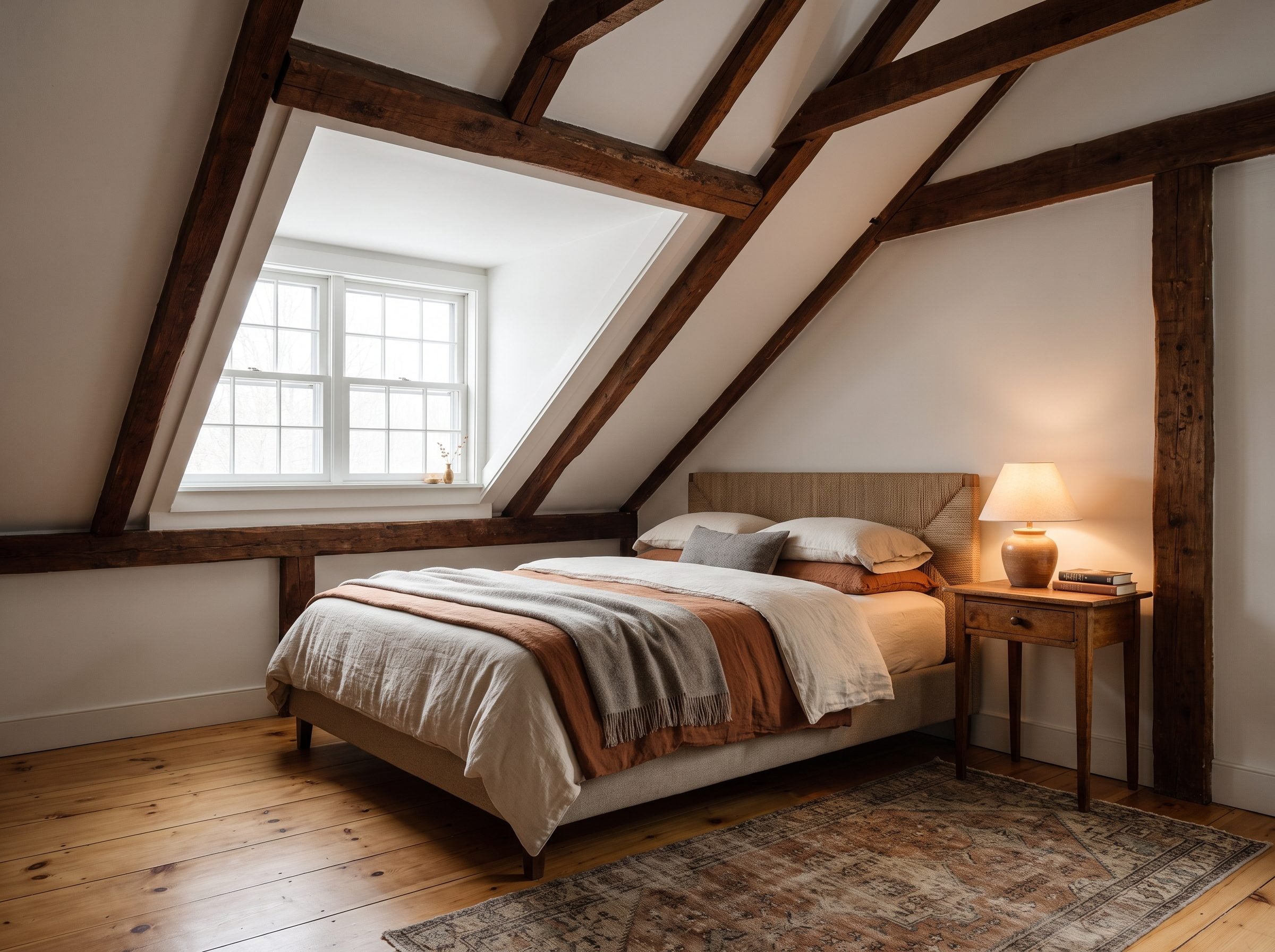
In many finished attics, the geometry starts negotiating before you bring in a single piece of furniture.
Side walls can dive under the roof slope. Knee walls are too short for tall pieces. The gable end may be the one place where a headboard can stand comfortably — and naturally, that’s often where the window lives.
Put the bed there.
A low upholstered headboard preserves the glass and buys back visual headroom. Custom-height nightstands can tuck into the changing ceiling line, while slim brass wall sconces save surface space.
Warm oak, neutral bedding, a generous rug, and low built-in storage along the knee walls finish the job. The same tucked-under-the-eaves charm runs through a good cottage bedroom renovation.
14. A Very Wide Window Needs Furniture Under It or the Wall Looks Half-Finished
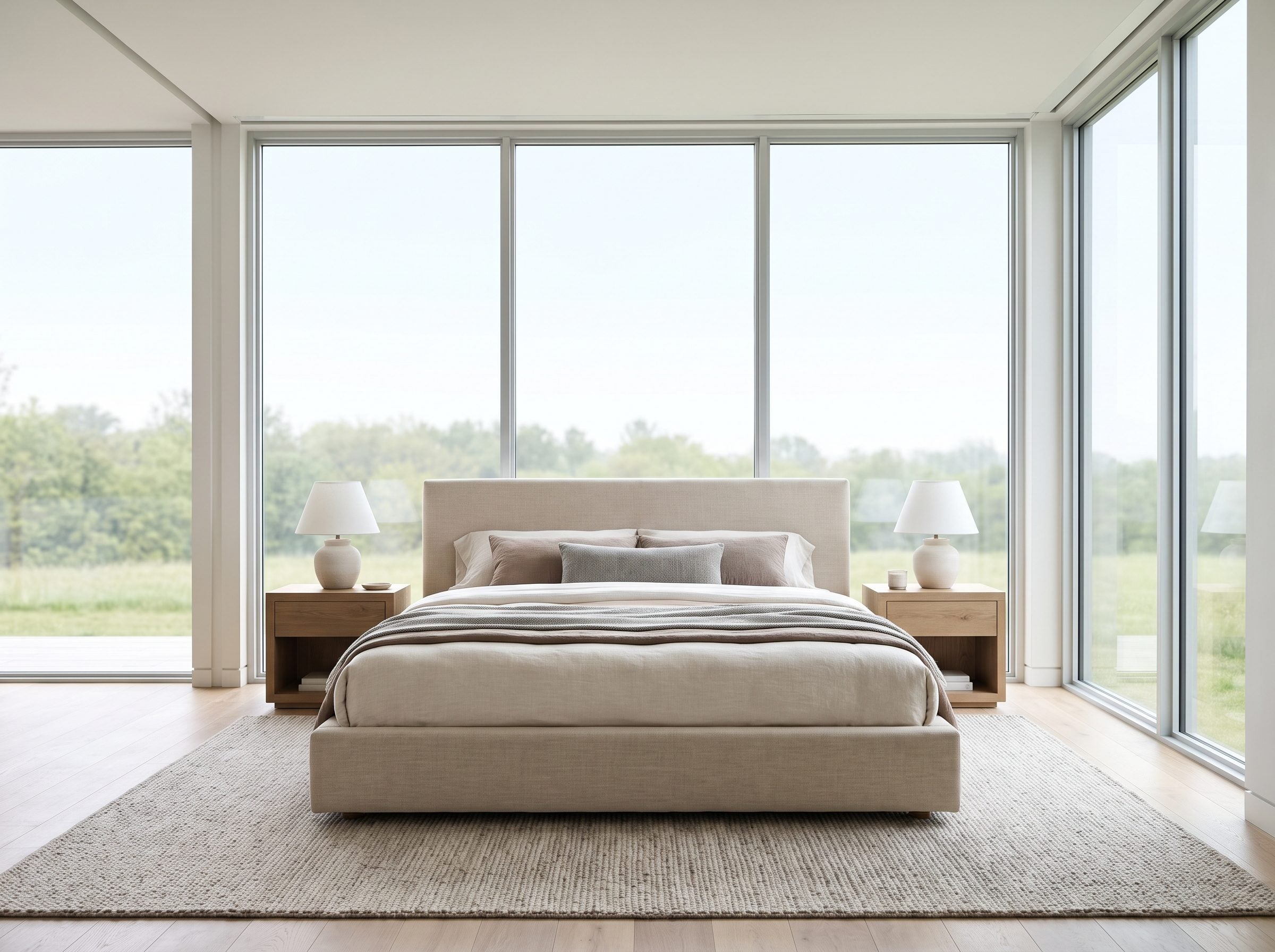
A ten-foot span of glass floating above an empty stretch of floor can look stranger than a bed underneath it ever will.
Wide windows already establish a strong horizontal line. Long, low furniture answers that line rather than competing with it.
Center the king beneath the glass and keep everything under the sill visually restrained: low upholstered platform bed, streamlined nightstands, one bench or lounge chair off to the side.
The curtains stack at the outer edges so the full width remains legible. Furniture grounds the glass without chopping it into pieces.
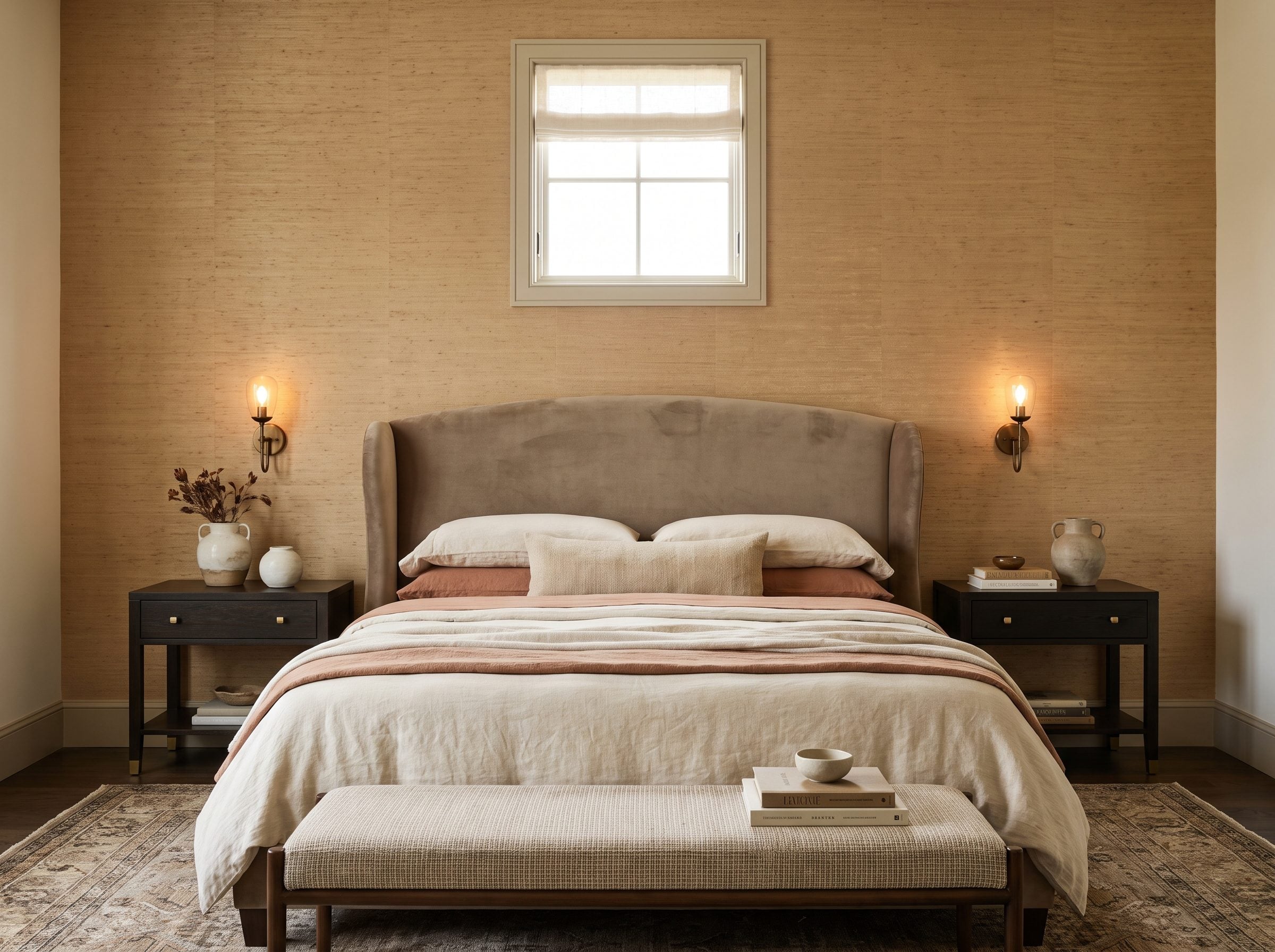
13. That Tiny High Window Everyone Ignores Can Become the Best Detail in the Room
🔥 Would you like to save this?
A small square window high on the wall often gets treated like an architectural typo. Too high to look through comfortably, too small to dominate the room, and somehow always occupying the wall the bed wants.
That is precisely why putting the bed below it works.
A curved cream upholstered headboard stops several inches below the sill and turns the little opening into something closer to framed art. Two brass wall sconces handle reading light lower down, freeing the window from having to do anything except look interesting.
Soft clay plaster, cream and rust bedding, and a patterned rug finish the shift. Suddenly the odd little opening looks like the one detail somebody planned first.
The same earthy palette carries beautifully into this rust bedroom inspiration.
12. A Deep Upholstered Bed Gives All That Glass Something Soft to Push Against
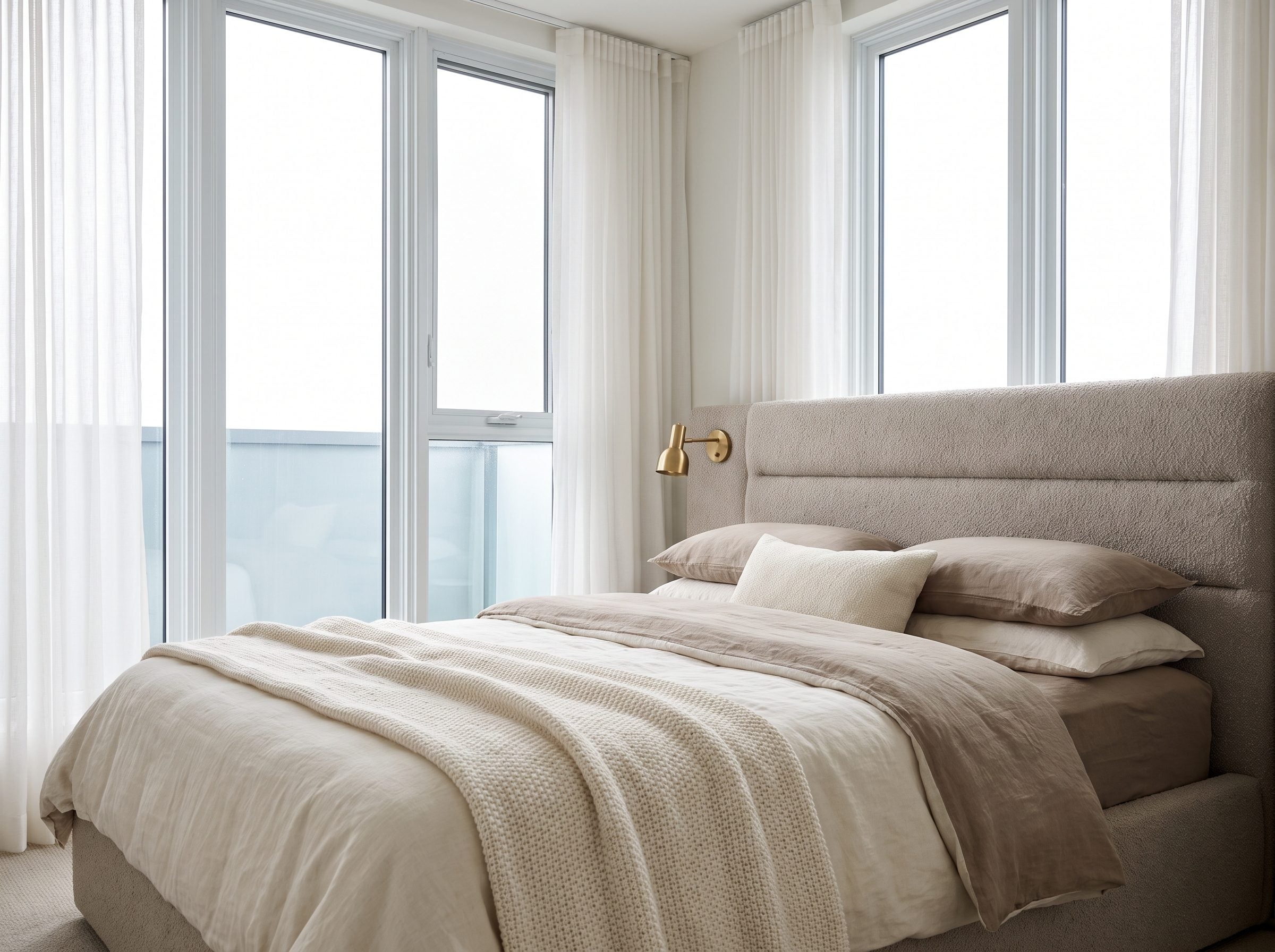
Glass is hard, shiny, cool, and rectangular. Upholstery can answer every one of those qualities without changing the layout at all.
Keep the headboard low — just enough soft material above the mattress to ground the bed without climbing into the glass. Then lean into texture: wool bouclé, brushed linen, thick bedding, rounded forms, a wool shag rug underfoot.
An oatmeal linen upholstered bed does more for a window-heavy wall than another hard object ever could.
Skip heavy drapes if privacy allows. Linen or cotton voile keeps the daylight diffuse without erasing the glass. A warmer earthy bedroom palette makes the hard-soft contrast even stronger.
11. The Mid-Century Bed Was Practically Born for a Window Wall
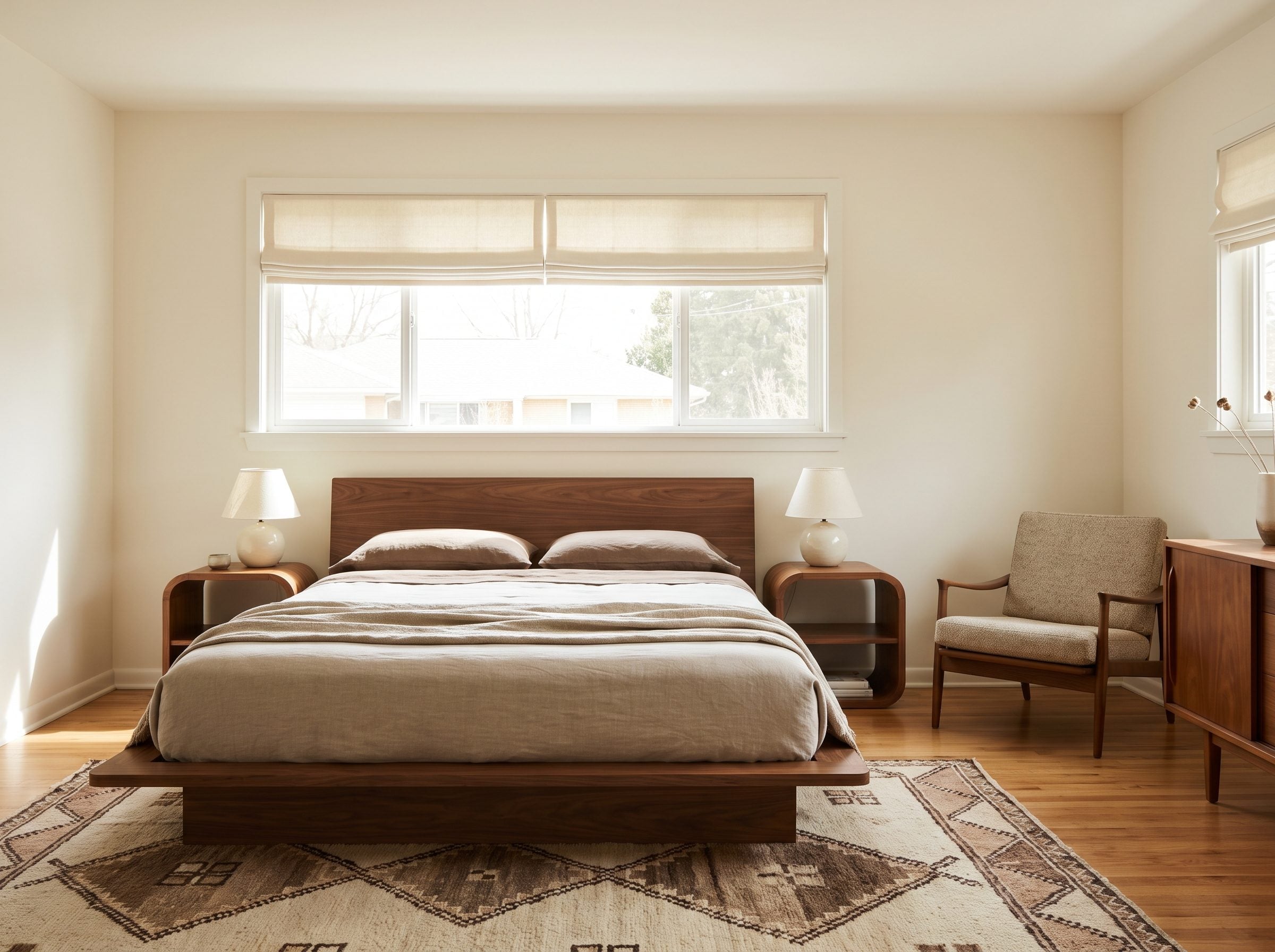
Mid-century furniture spent a lot of time getting out of architecture’s way.
George Nelson’s Thin Edge bed, introduced by Herman Miller in the 1950s, is a textbook example: low platform, slim profile, restrained headboard, very little visual bulk. Put that kind of bed beneath a window and the glass remains the taller, brighter element.
A tall upholstered wall of a headboard would compete. Walnut quietly ducks underneath.
One period lounge chair does enough era work for the whole room. Add brass globe lamps, low nightstands, and a vintage wool rug. Stop before the room turns into a museum gift shop.
If walnut and white feel too cool, the same low-slung logic works inside a warmer earthy bedroom palette.
10. A Glass Corner Breaks the Window Rule Twice and Somehow Improves the Room
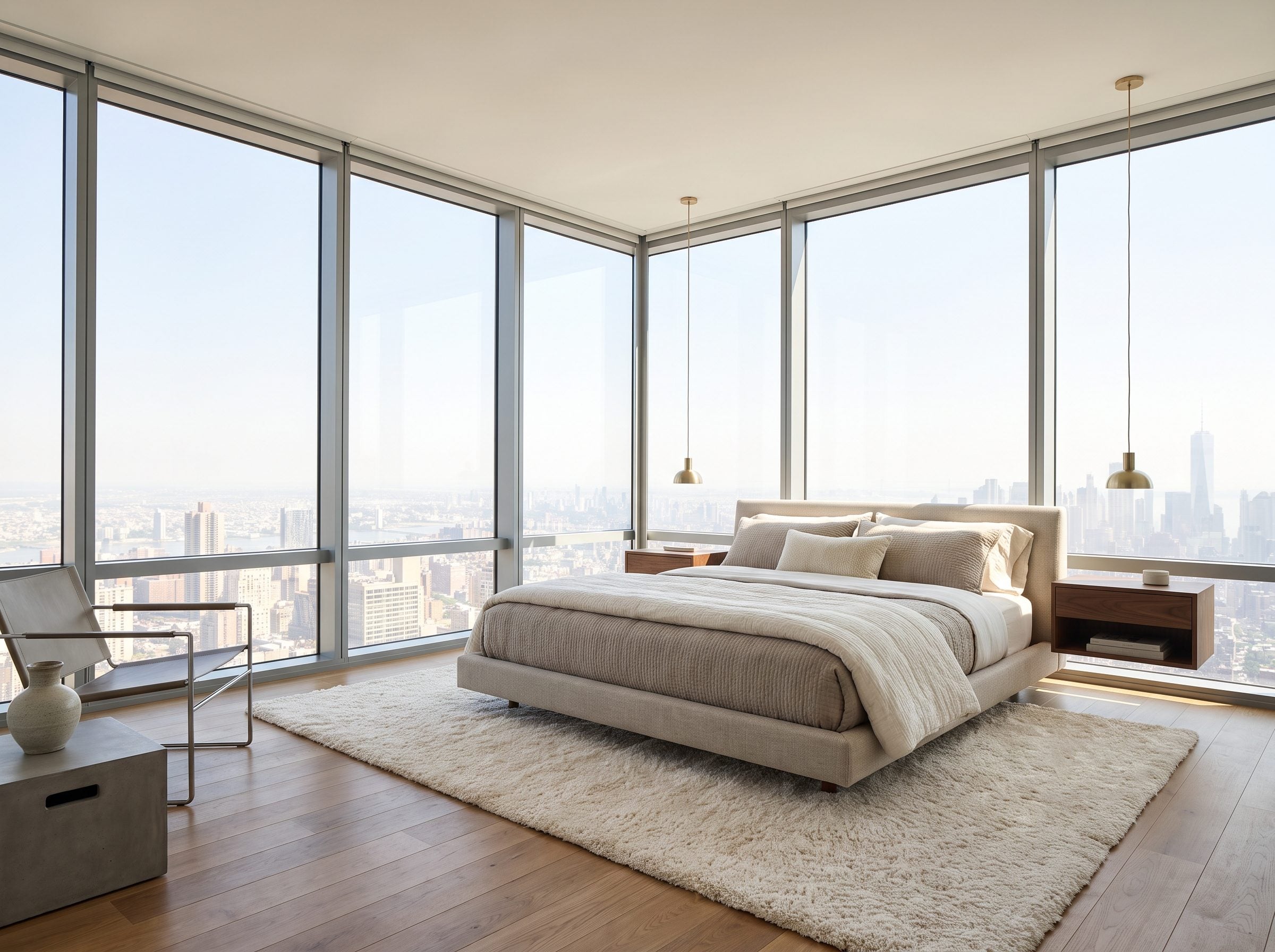
One window behind the bed is supposedly dangerous territory. Two walls of glass should therefore cause a decorating emergency.
Instead, you get light from two directions and a horizon that bends around the room.
Corner glazing became much easier once modern structural systems freed exterior walls from doing all the heavy lifting. Modernist architects used that freedom aggressively, sometimes meeting glass at the corner with almost nothing interrupting the view.
Nest a low upholstered bed into that condition and the bedroom feels less enclosed without sacrificing a clear center of gravity. Floating walnut nightstands keep the lower edges clean.
After dark, two walls of glass can feel exposed. Sheer linen drawn across the return gives you the wrap without the fishbowl. A cottage bedroom setup may be stylistically different, but it understands the usefulness of soft fabric around a bed just as well.
9. Build a Shelf Across the Wall and the Window Suddenly Has a Landing Strip
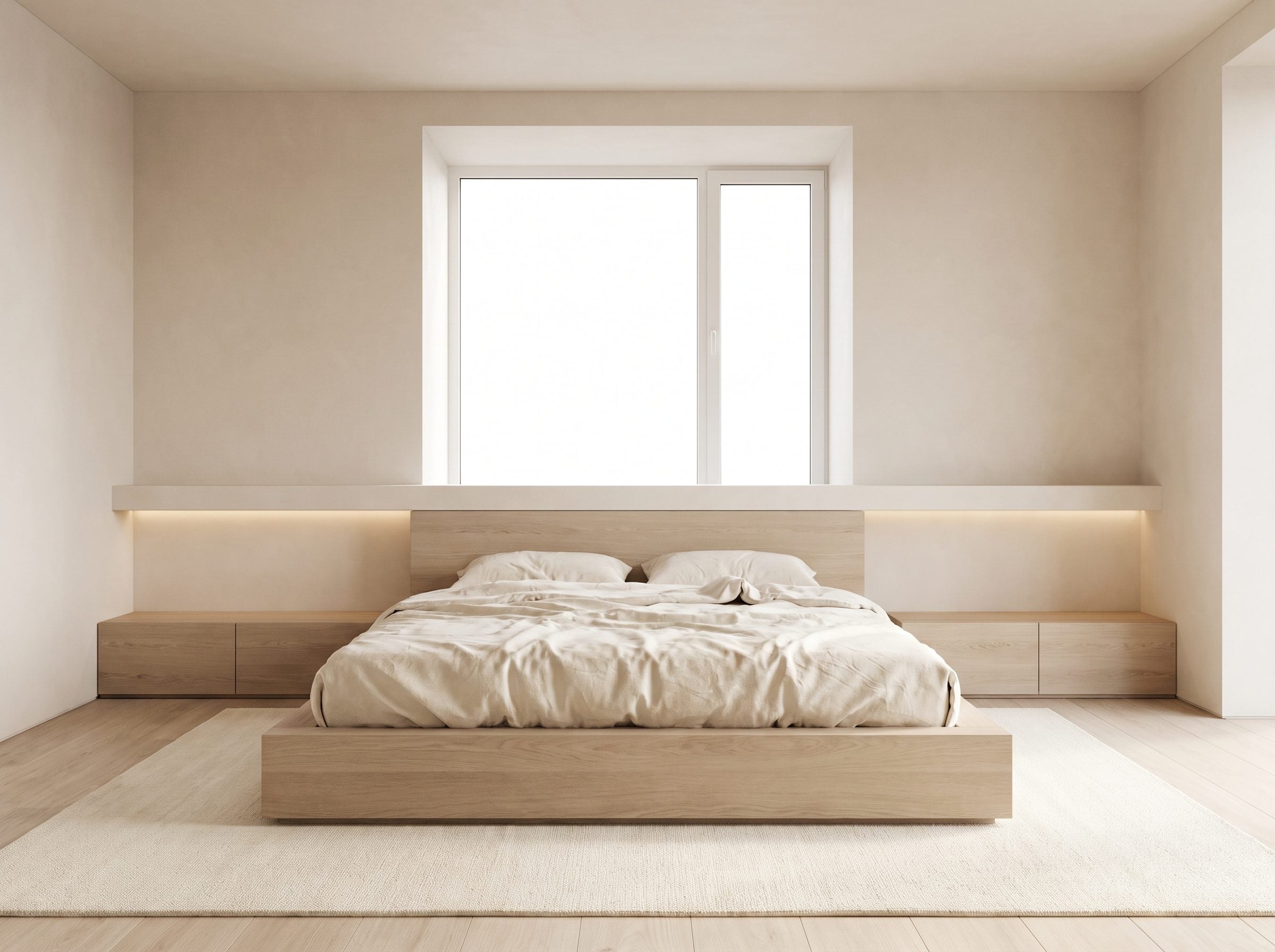
This solution requires more carpentry than shopping, which may be why nobody tries to sell it to you in a catalog.
When the window sits in a recess, run a white-oak ledge across the wall a few inches above the headboard. Now the bed doesn’t terminate abruptly against glass. It slides beneath an architectural shelf.
Thick masonry walls once created deep window reveals naturally. Modern stud walls often don’t. Adding a ledge gives some of that depth back.
The shelf can also extend into bedside surfaces, giving books, a water glass, or a small lamp somewhere to live without adding legs to the floor.
Leave most of the ledge empty. Two ceramics and perhaps one trailing plant. The fastest way to bury good millwork is to cover every inch of it with tiny objects.
8. Scandinavian Restraint Lets the Window Win Without Making a Production of It
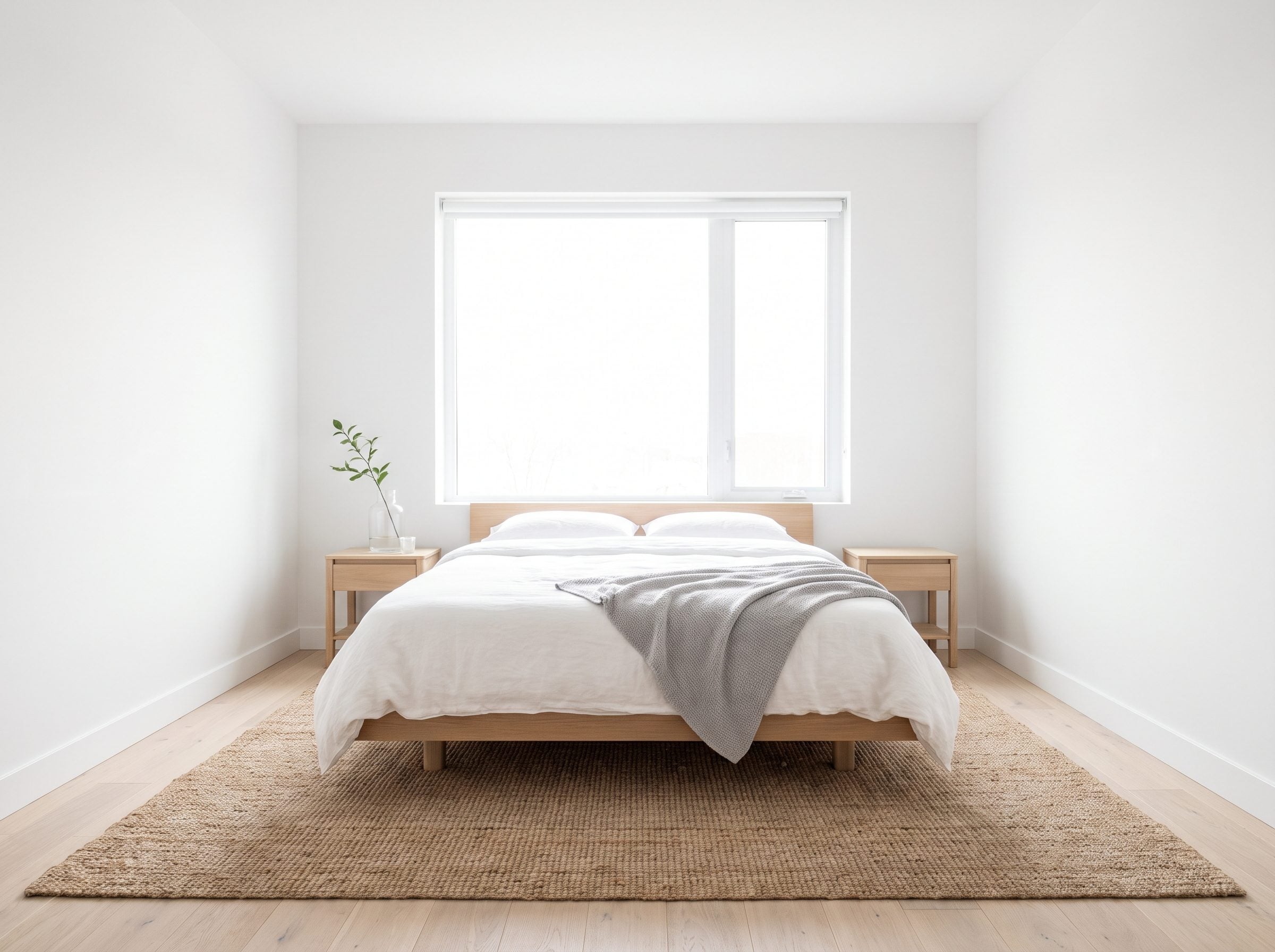
At northern latitudes, winter daylight is limited enough that wasting it feels particularly perverse. Scandinavian interiors have long made a virtue of pale surfaces, restrained window treatments, and furniture that doesn’t hog the available light.
The bedroom version is almost suspiciously simple: low slatted oak frame, headboard barely above the mattress, warm-white walls, one clean window overhead.
No heavy valance. No eight-foot curtain puddle. A flush white roller shade disappears when raised and handles privacy when lowered.
Keep the palette quiet with soft linen bedding, pale oak nightstands, a wool rug, and one oak bench. Wall sconces leave the bedside surfaces alone.
A good cottage bedroom renovation often arrives at the same conclusion with more pattern and fewer straight lines.
7. Move the Bed Six Inches Off Center and Let the Room Get Interesting
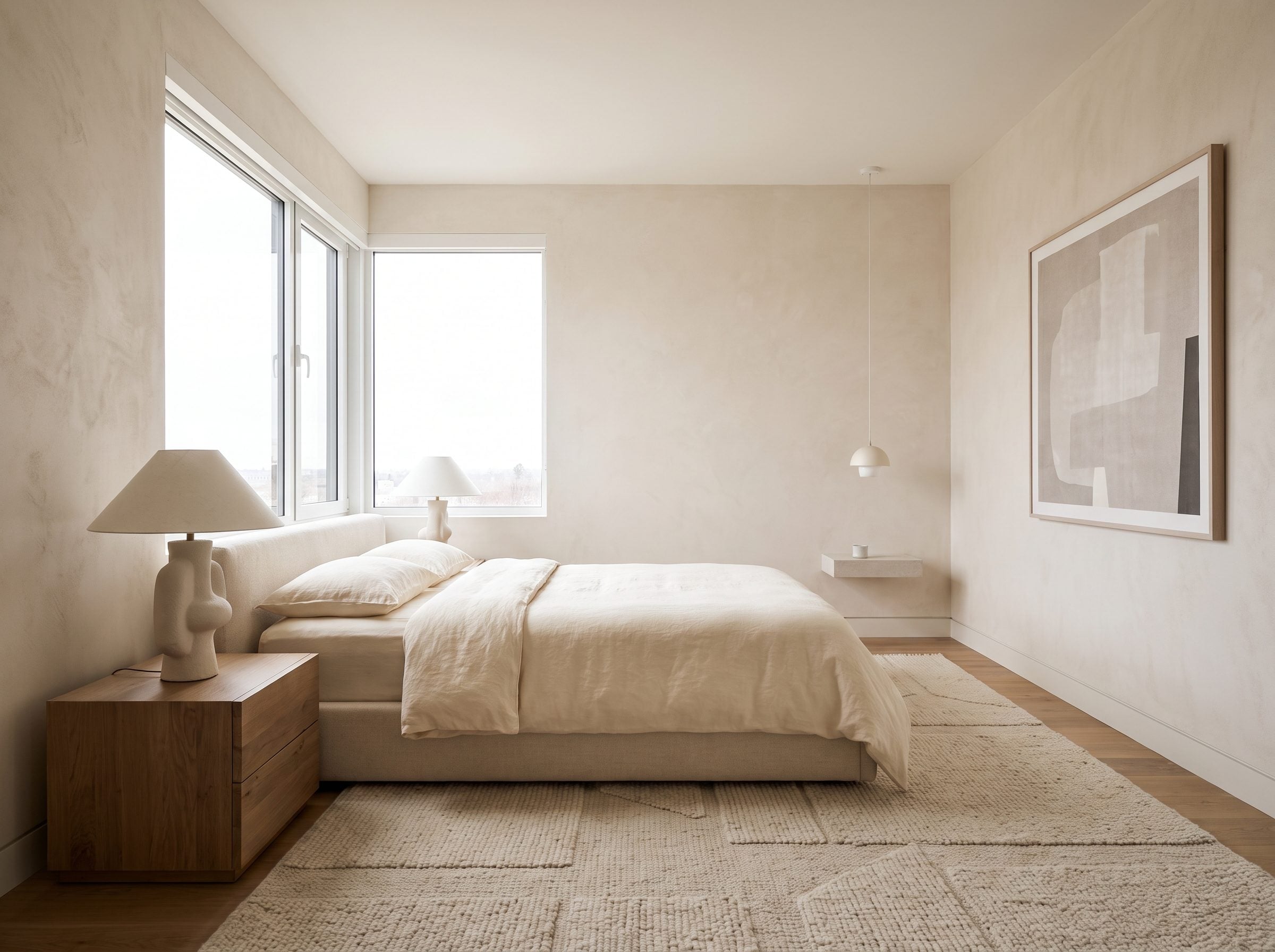
This is not the same problem as an off-center window. Here the architecture could be perfectly centered. The room simply chooses not to obey it.
Slide the bed six inches off the window axis and the wall acquires tension. One side gets a substantial nightstand and sculptural ceramic lamp. The other gets a lighter oak floating shelf with a pendant dropping overhead.
Japanese aesthetics have long valued controlled asymmetry — often discussed through the idea of fukinsei — not as randomness, but as deliberate irregularity. The important word there is deliberate.
Add a warm ivory linen duvet, low headboard, textured plaster, and one restrained piece of art to counter the glass.
Perfect symmetry settles immediately. A little imbalance gives the eye somewhere to go next.
6. An Awkward Primary Bedroom Finally Uses the Wall the Floor Plan Gave It
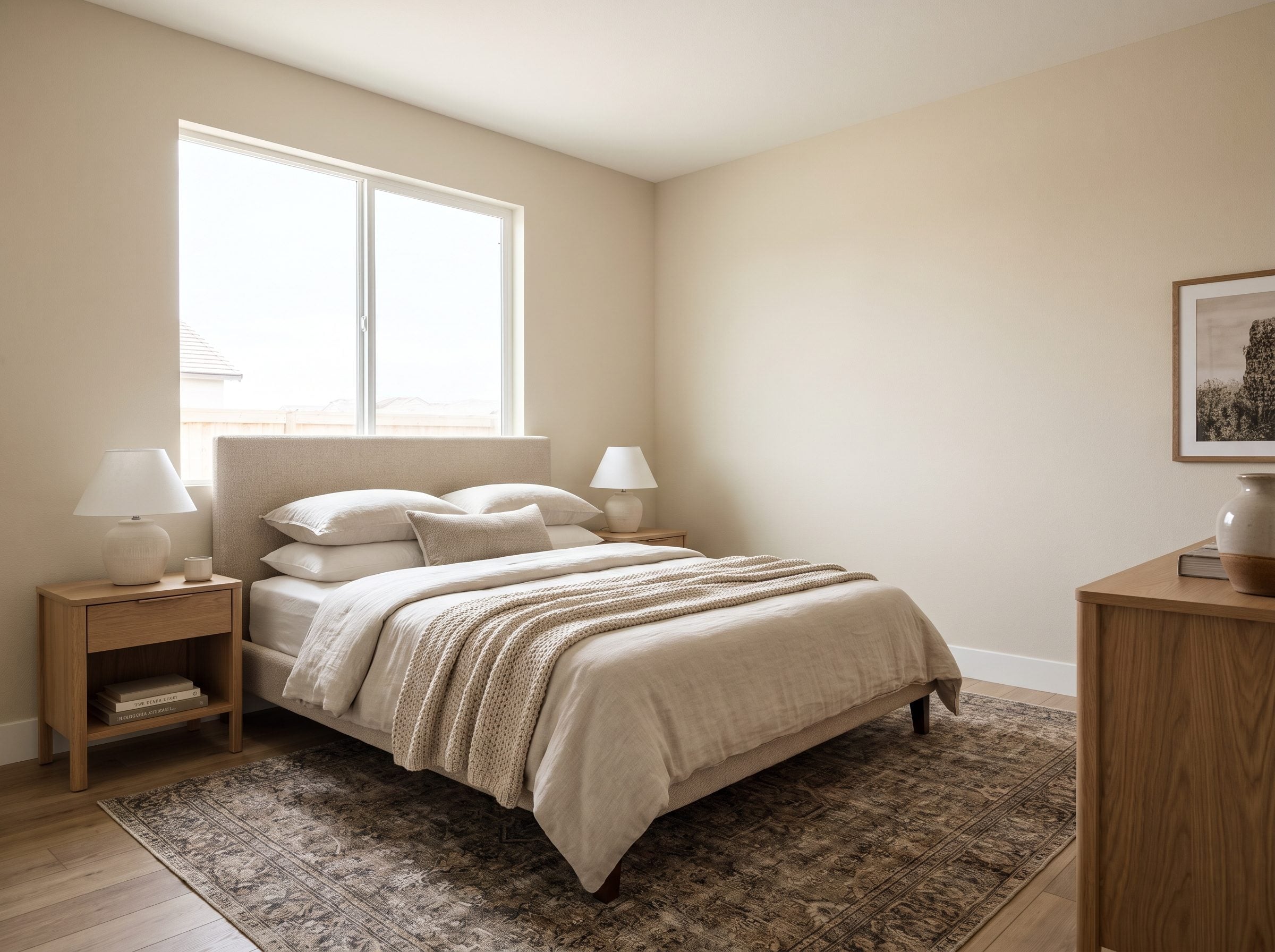
Count the usable walls in a typical primary bedroom. Closet doors take one bite. Bathroom entry takes another. Hallway door swing removes another chunk. Suddenly the “wrong” window wall is the longest uninterrupted stretch you have.
That’s not bad luck. That’s the answer.
A king bed needs significant width once nightstands enter the equation. Centering it under the glass can free doors, improve circulation, and restore the symmetry the more conventionally placed bed was destroying.
Published designer interiors use this arrangement often enough that it hardly qualifies as a workaround. The placement itself isn’t amateur. The details decide that.
Balance the room with matching nightstands, a dresser opposite, an upholstered chair in the remaining corner, and curtains hung wide enough to leave the glass visible. The room stops apologizing for its bones.
5. A Compact Bedroom Gives the Solid Wall to the Wardrobe Instead
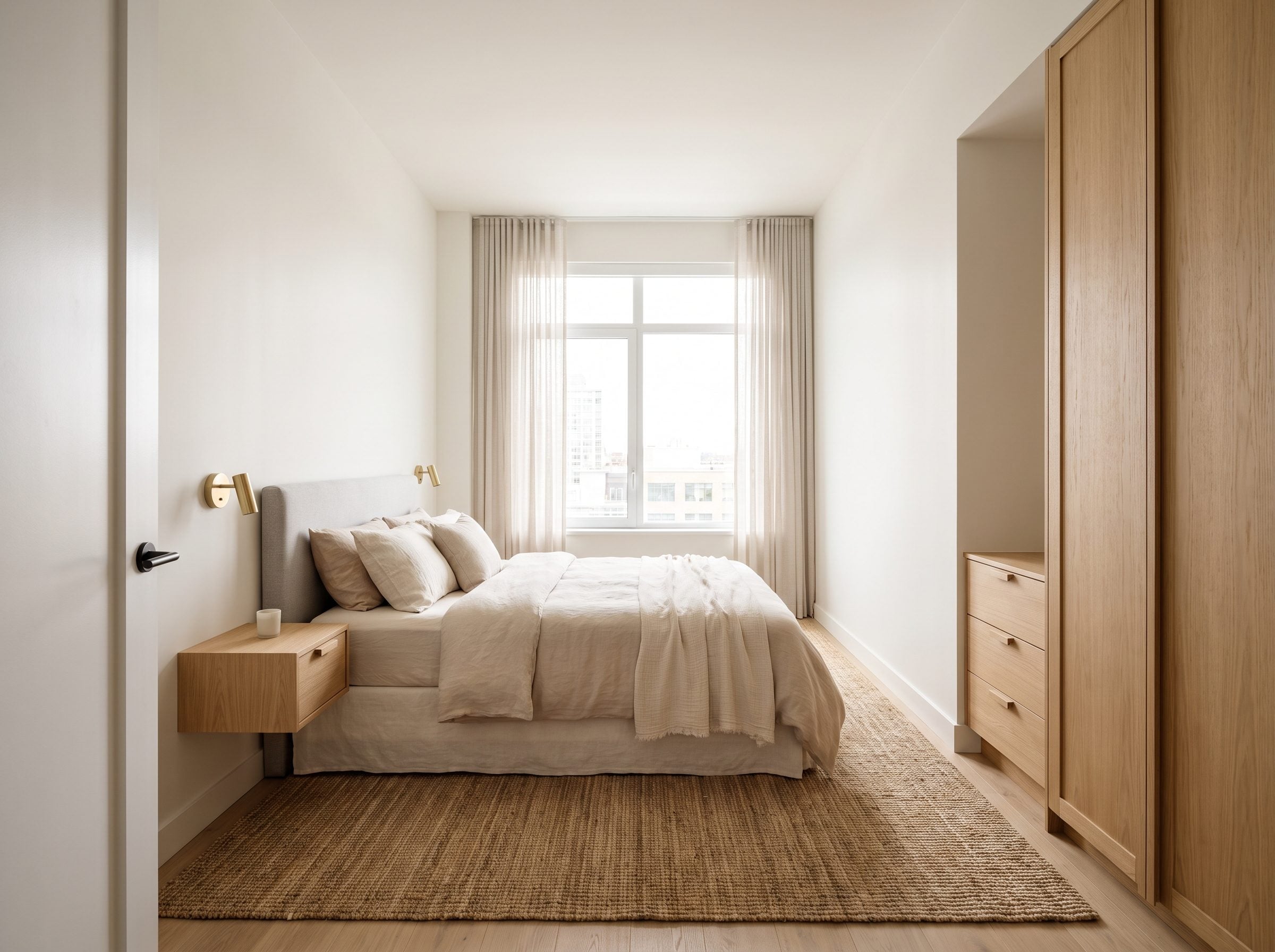
The earlier storage-wall example showed what happens in a large primary suite. This is the same logic under pressure.
In an 11-by-12-foot bedroom, a queen mattress takes 60 by 80 inches no matter how cleverly you talk to it. Put the headboard on the solid wall and that may eliminate the only place a full-height wardrobe can stand.
Move the bed beneath the window and the blank wall can finally earn its keep: closed storage from floor to ceiling, perhaps a narrow dresser beside it, all without asking the room to become larger than it is.
Keep the upholstered headboard below the sill, replace table lamps with brass wall sconces, float narrow nightstands, and ground the bed with a neutral wool rug.
In a small room, square footage is only half the story. Usable wall is currency too.
4. Wrap the Window in Cabinetry and Turn the Whole Wall Into an Alcove
🔥 Would you like to save this?
Built-in beds have a much longer history than the freestanding upholstered headboard. Box beds, alcove beds, and enclosed sleeping niches all used architecture itself to create protection, storage, privacy, or warmth.
Thomas Jefferson’s bed alcove at Monticello is a famous variation on the idea: the bed fitted into the architecture between rooms rather than standing as an isolated object in the middle of a wall.
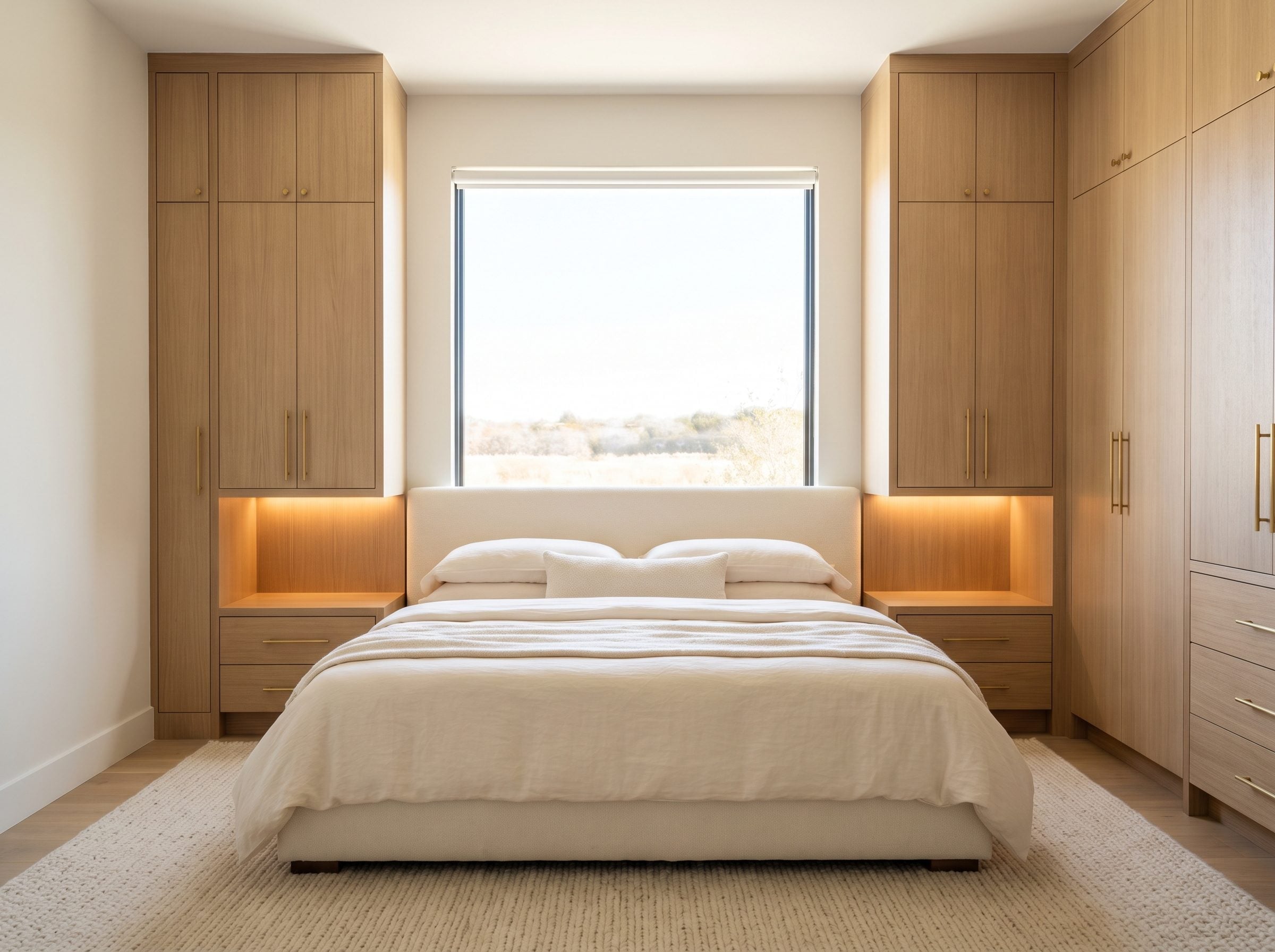
This modern version keeps the enclosure but gives the light back. White-oak wardrobes rise on both sides of a central window. The bed drops below it. Niches and integrated lighting eliminate bedside clutter.
Symmetry prevents the storage from feeling oppressive. Match the wardrobe runs, align the niches, use flush doors, and let a low upholstered headboard occupy the calm center.
The connection to cottage bedroom projects is easy to see: when space is precious, walls should do more than stand there.
3. Use Hotel Drapery to Make a Modest Window Look Deliberately Oversized
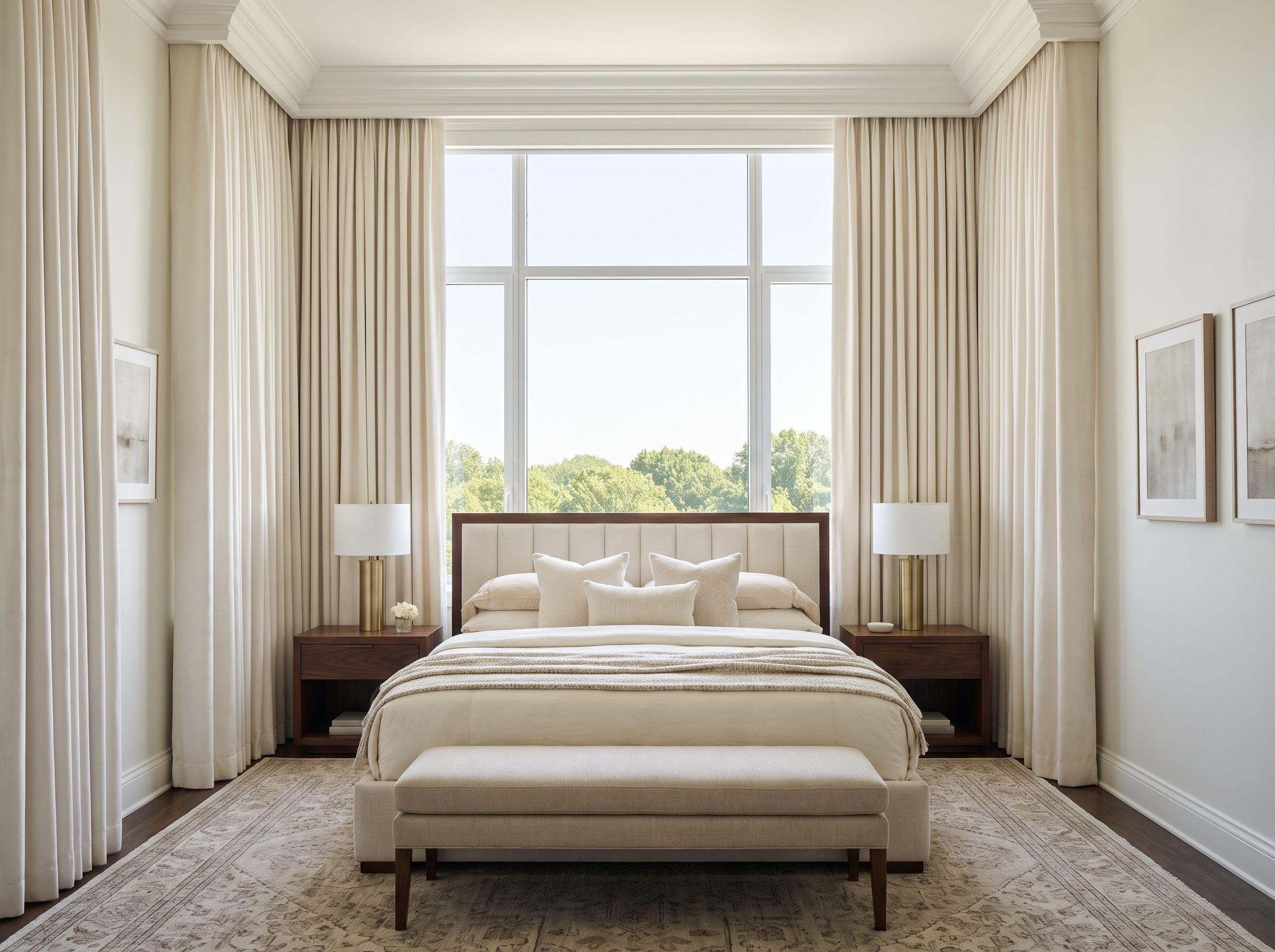
The first curtain-wall room turned an entire elevation into fabric. This version is sneakier. The goal is not to hide the window. It is to make the window look bigger than it is.
Mount the rod or track near the ceiling and extend it well past the actual frame. Let the curtain panels stack outside the glass. Your eye reads the tall fabric edges first and quietly assumes the opening between them is much grander than its measurements say.
Fabric is cheaper than moving a window, so the curtains get to lie.
A low channel-tufted headboard keeps the center clear. Layer cream bedding and restrained bedside furniture, then use enough fabric that the panels retain generous folds when closed rather than hanging like two exhausted towels.
The first curtain trick hides the wall. This one exaggerates the window.
2. A Blackout Shade Handles the Only Complaint That Arrives Before Sunrise
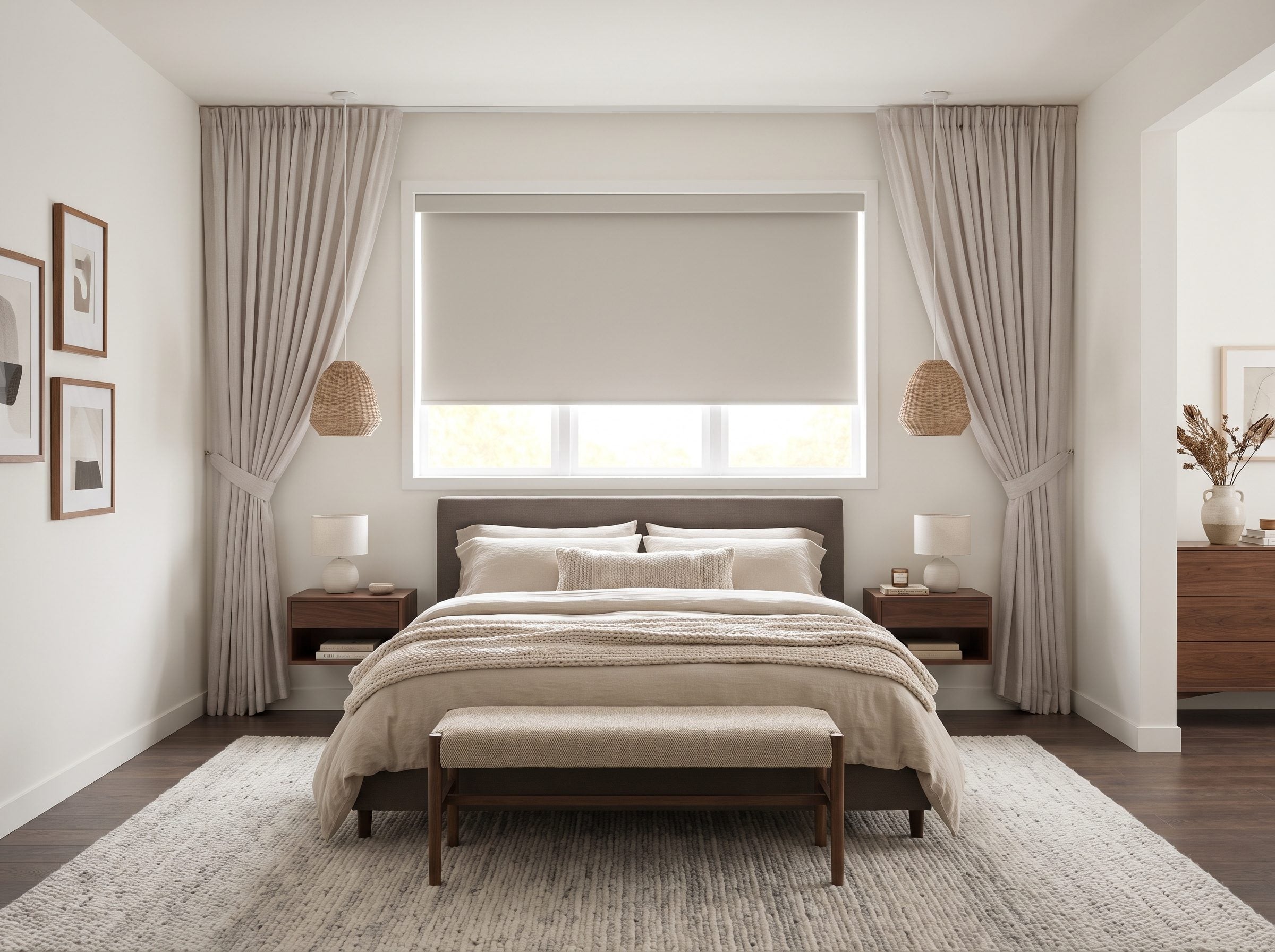
Putting a bed under a window is much less charming at 5:47 a.m. when the sun decides the room is finished sleeping.
Fortunately, light control has become much easier than the old decorating rule suggests.
A recessed blackout roller in a cassette can tuck neatly into the frame and drop close to the sill. Quality blackout material can block the great majority of direct light through the fabric, although small gaps at the sides may remain depending on the installation. Options from retailers such as Factory Direct Blinds come in a wide range of sizes and specifications.
Let the roller handle darkness. Let the curtains handle looking good.
Recess the functional shade where possible, then hang soft linen panels outside it for texture. Two jobs. Two different materials. No reason to make one piece of fabric solve everything.
Add motorization if you want the shade to rise and fall on a schedule. The window over the bed stops demanding attention and simply handles itself.
1. When the Bed Finds the One Wall That Makes the Whole Room Click
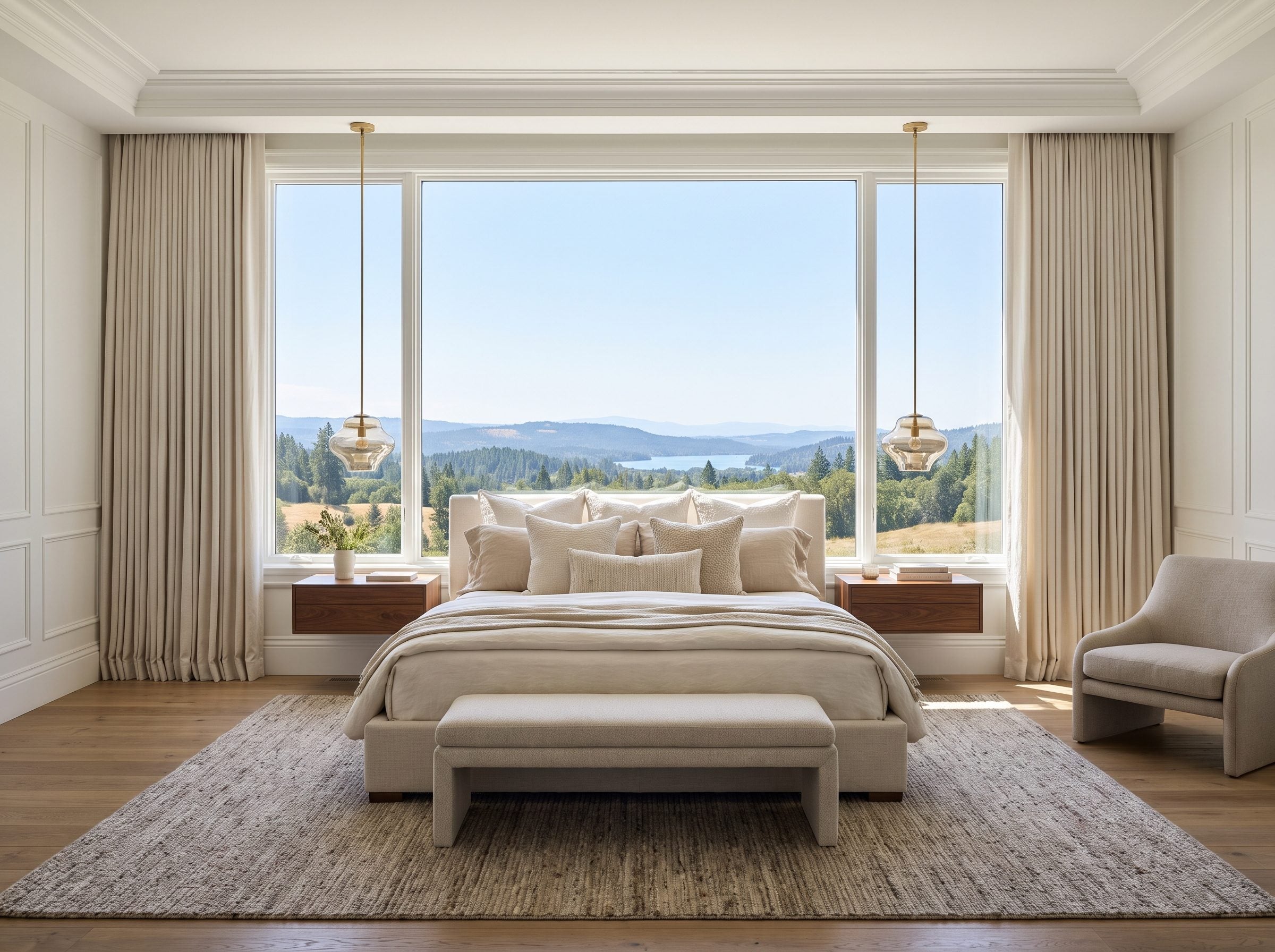
Stand in the doorway and try to improve this room by obeying the rule.
The low king sits dead center beneath a broad window opening onto trees. The headboard stops below the sill, so the view survives. Matching nightstands steady the composition. The bed remains the first thing your eye finds, but the window gives it somewhere worth looking.
Now walk the other walls. One belongs to the closet. Another carries a lounge chair and floor lamp. The last is clean plaster. Move the bed to any of them and you don’t solve a problem. You create one — while the best light in the room ends up behind a chair.
The bed didn’t cover the window. It gave the window a reason to be there.
The drapery stacks beyond the glass so the opening stays broad. Walnut nightstands stay clear because brass pendants drop from above. An oversized wool rug runs past the bench and keeps the furniture from floating.
Want more warmth? An earthy bedroom palette can swap the neutrals for clay and terracotta without changing a thing about the layout.
Thirty-seven rooms later, the useful rule turns out to be much simpler than the famous one: don’t automatically put the bed under the window. Don’t automatically keep it away, either. Measure the room, control the light, preserve what deserves preserving, and put the bed where the architecture finally makes sense.