
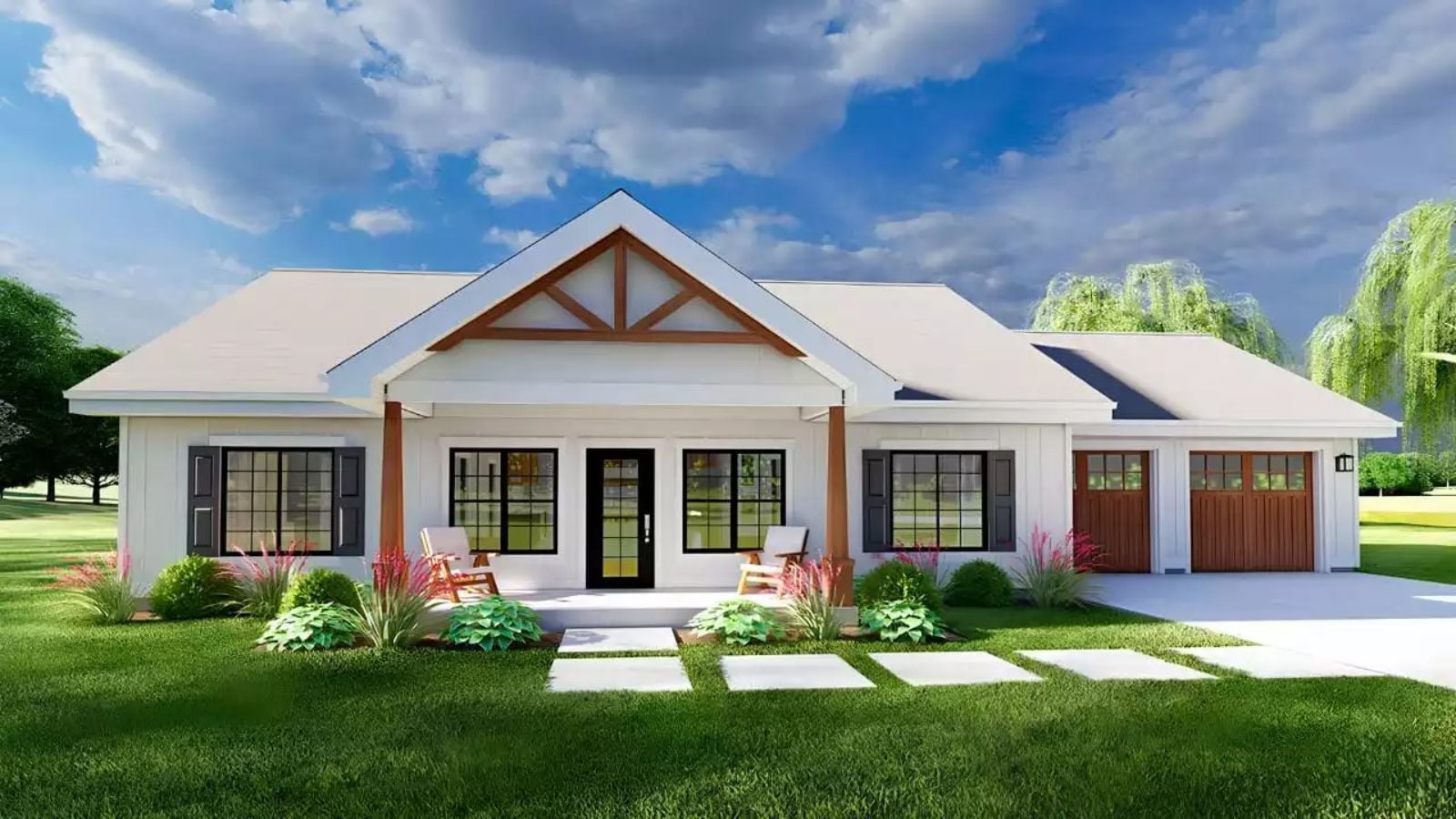
Front porches are back, and buyers asking for them are less interested in curb appeal than in having somewhere to sit with coffee before the neighborhood stirs. The Beckford is built around that idea: a front porch for slow mornings, a back porch for winding down, an open living core that keeps the house breathing, and a cottage footprint that stays manageable without feeling like a compromise.
Specifications
- Sq. Ft.: 1,496
- Bedrooms: 3
- Bathrooms: 2
Floor Plan – Main Floor
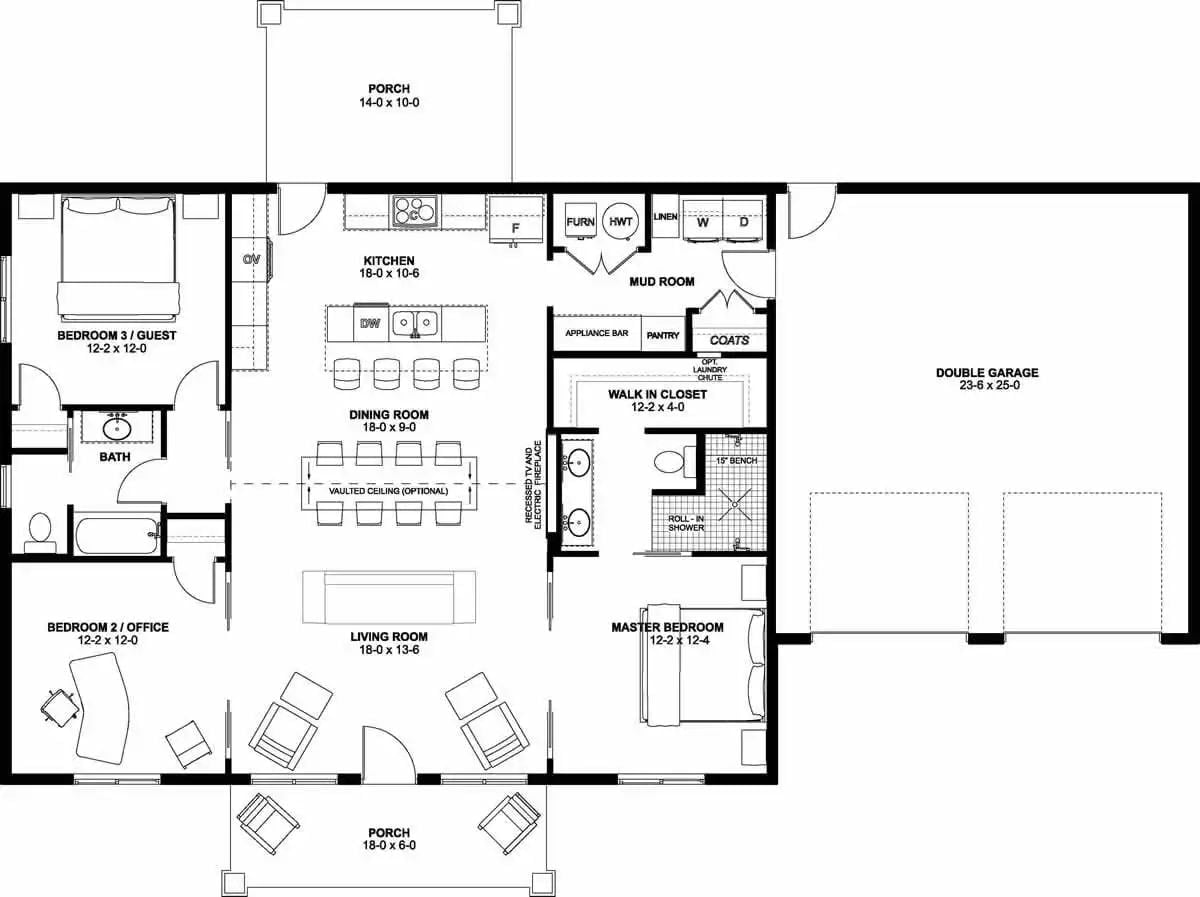
Everything runs on a single level: three bedrooms, an open kitchen and dining area, and a central living room that keeps the whole plan from feeling segmented. The master suite gets a roll-in shower and a walk-in closet. Dual porches front and back do most of the heavy lifting for livability.
Floor Plan – Alternate Bath Layout
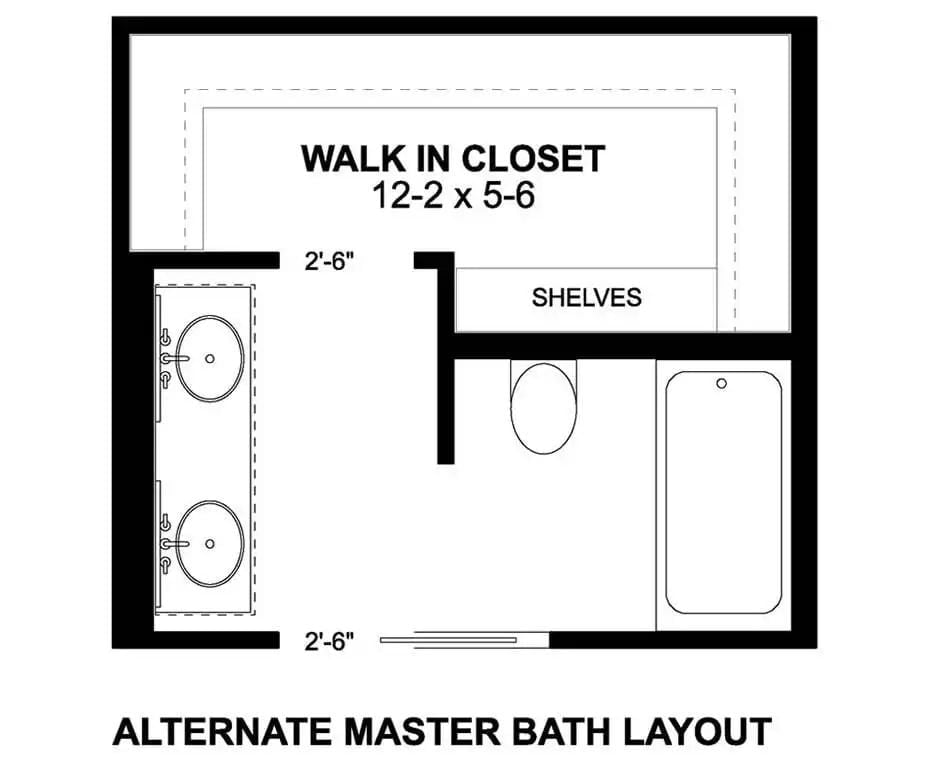
The alternate master bath layout places a double-sink vanity along the left wall, with the toilet and soaking tub sharing the right side and shelves tucked in beside the tub. A walk-in closet measuring 12-2 x 5-6 connects directly to the bath through two doorways spaced 2-6 apart.
Warm Light and Black-Frame Windows That Actually Earn Their Keep
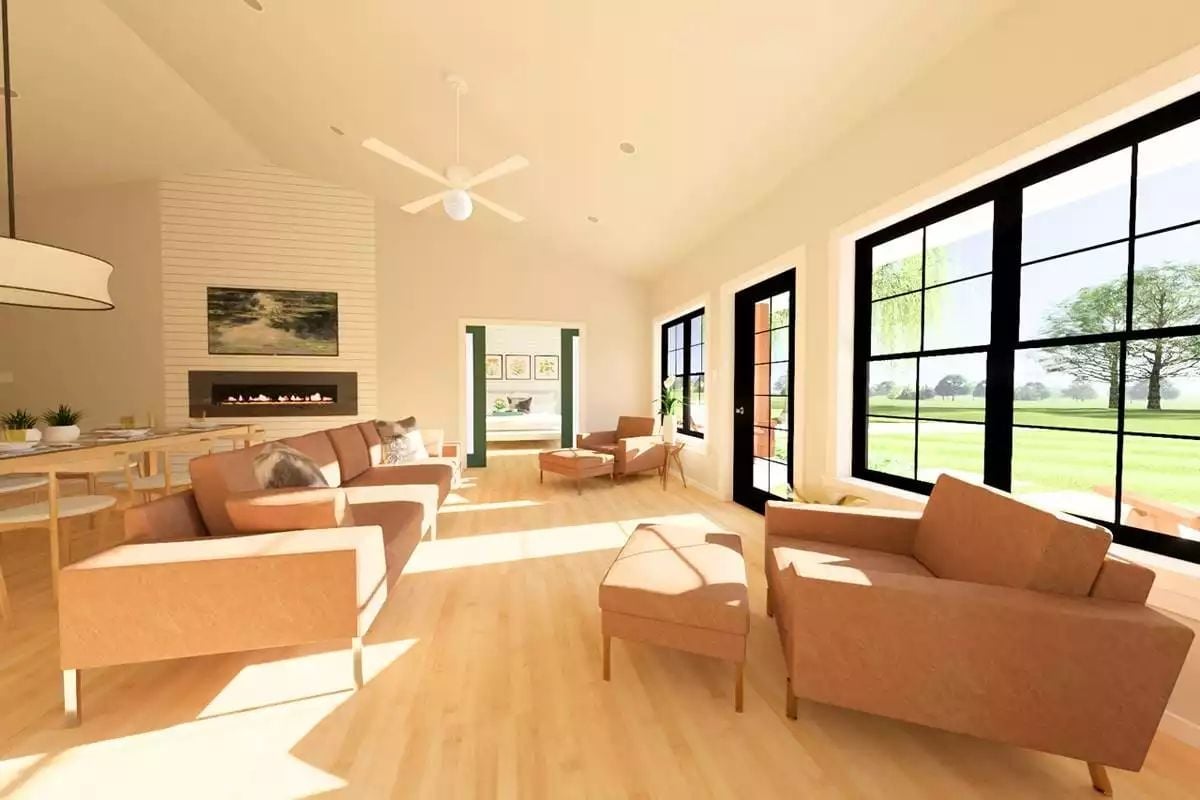
Sunlight cuts hard across the light hardwood floors, casting shadows that shift all day. A muted terracotta sectional anchors the room without crowding it, and the black window frames against white walls give the space enough contrast to keep it from reading as flat. That linear fireplace handles the rest of the wall.
Marble, Green Cabinetry, and a Fireplace That Pulls the Whole Room Together
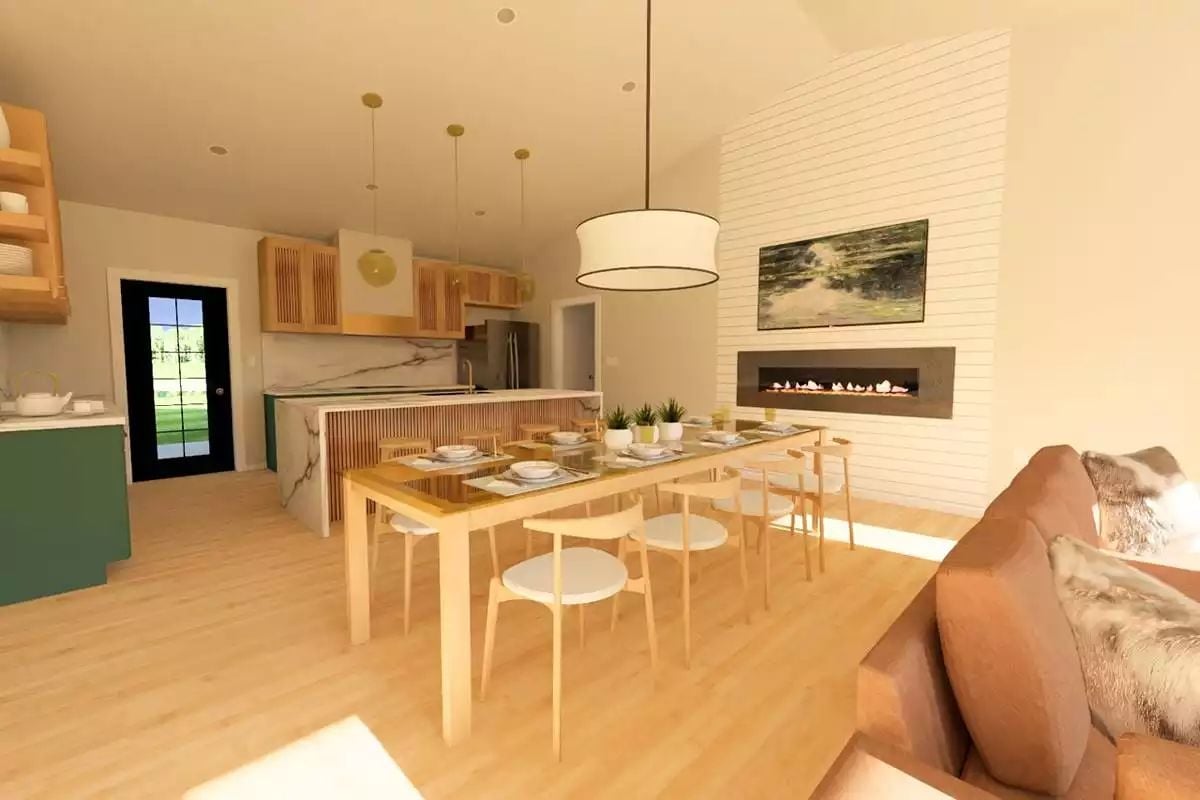
Light wood floors run through the open kitchen and dining area, tying together two distinct cabinet finishes: sage green lowers near the door and natural wood uppers at the range wall. The island has fluted wood paneling on its face with what looks like a marble or stone slab on top. Pale dining chairs keep the table from feeling heavy.
The Fireplace Wall Does More Than Hold a Flame
That horizontal linear fireplace sits low on a shiplap wall, which keeps the eye moving upward toward the painting rather than stopping at the firebox. A deliberate proportion choice. Pairing a wide, shallow flame with vertical paneling creates contrast without the two elements fighting each other.
Fluted Wood, Marble Waterfall Edge, and Green Cabinets That Hold Their Own
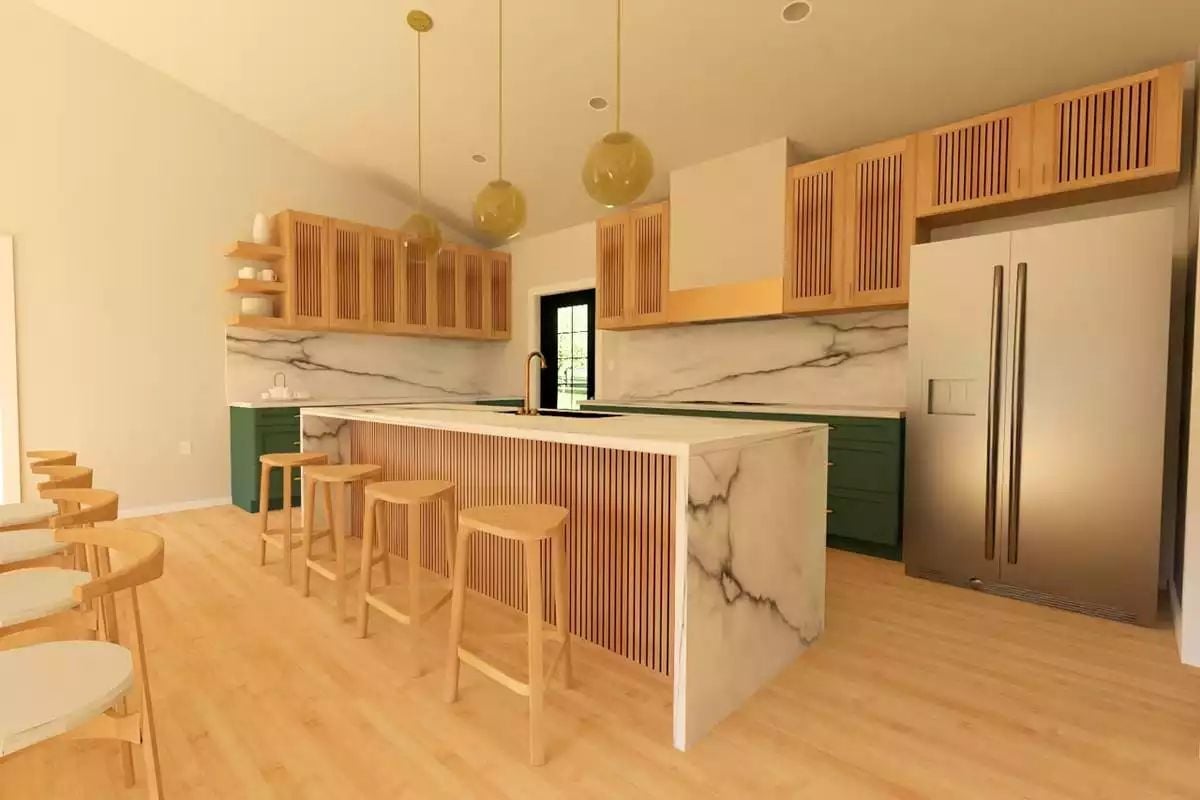
Slatted wood panels wrap the island base while a marble waterfall edge anchors the end. Forest green lowers push back against the warm oak uppers without the two finishes competing. Globe pendants in amber glass keep the whole space from reading too cool — which, given all the stone and painted wood, is a real risk.
Pro Tip: Dark lower cabinets paired with lighter uppers draw the eye upward and make ceilings feel taller without touching a single structural element. If green feels like a big commitment, start with just the lowers. Adding more color later is straightforward; walking it back once the whole kitchen is painted is considerably less fun.
Shiplap, Natural Wood, and Botanical Prints That Belong Together
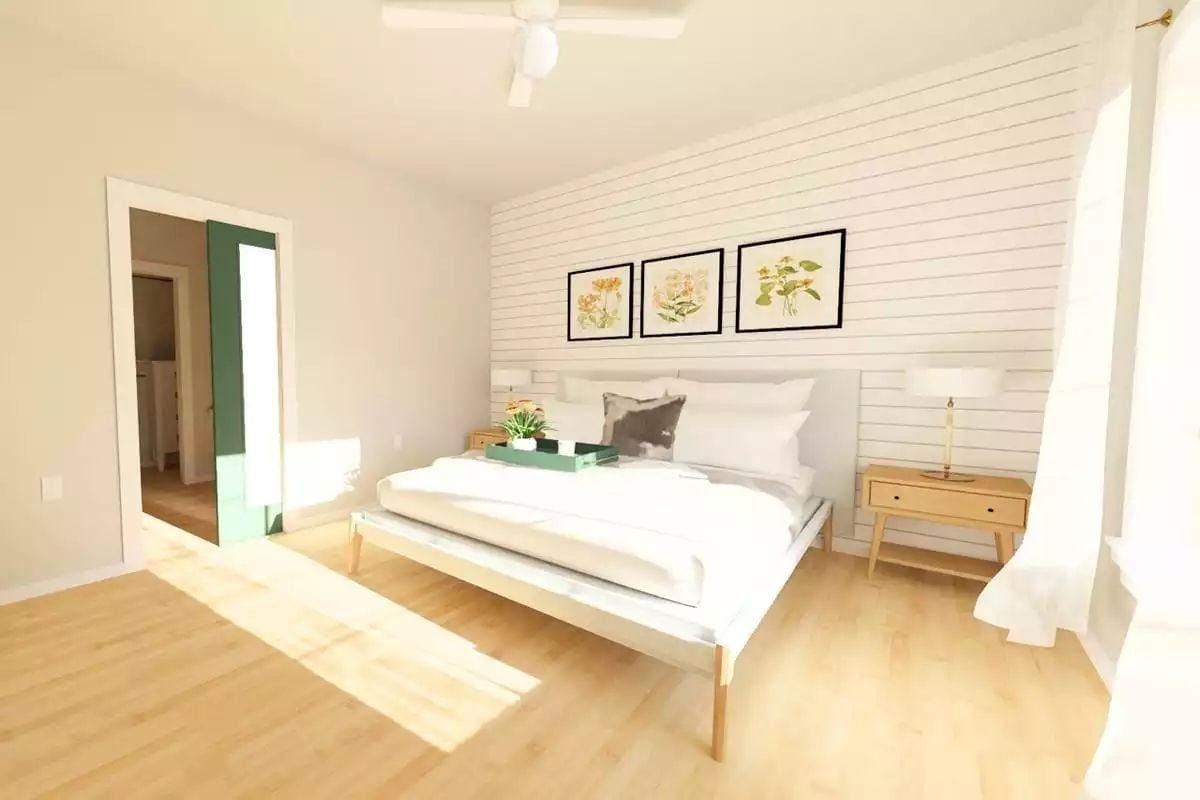
White shiplap anchors the wall behind the bed, grounded by light wood floors and matching nightstands. Three botanical prints are doing quiet work here — without them the room tips toward sterile.
Material Matters: Shiplap has come back strong, and not just because of the farmhouse moment. It’s one of the more forgiving DIY accent wall options available: it hides minor wall imperfections and skips the intensive prep work that smooth plaster finishes demand. Painting it the same white as the surrounding walls, as done here, keeps the texture readable without breaking up the room.
Gold Frames, Floral Wallpaper, and a Vanity That Sets the Tone
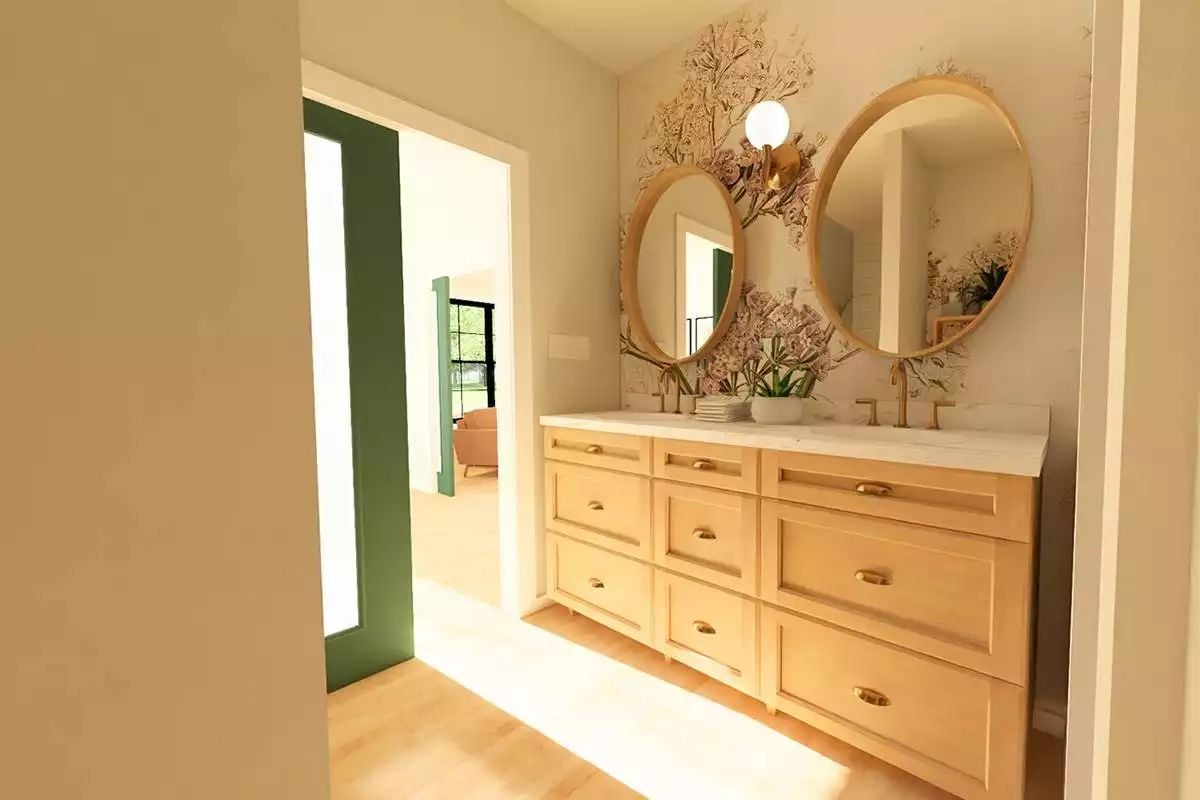
Oval mirrors with wood frames are doing a lot of work here.
Paired over a double-sink vanity with brass hardware, they echo the botanical wallpaper behind them without fighting it for attention. Cup-pull drawer pulls are the kind of small detail that reads as a decision rather than a default. Wood-tone floors keep everything grounded.
Gold Hardware, Glass Cabinets, and a Barcelona Chair That Belongs Here
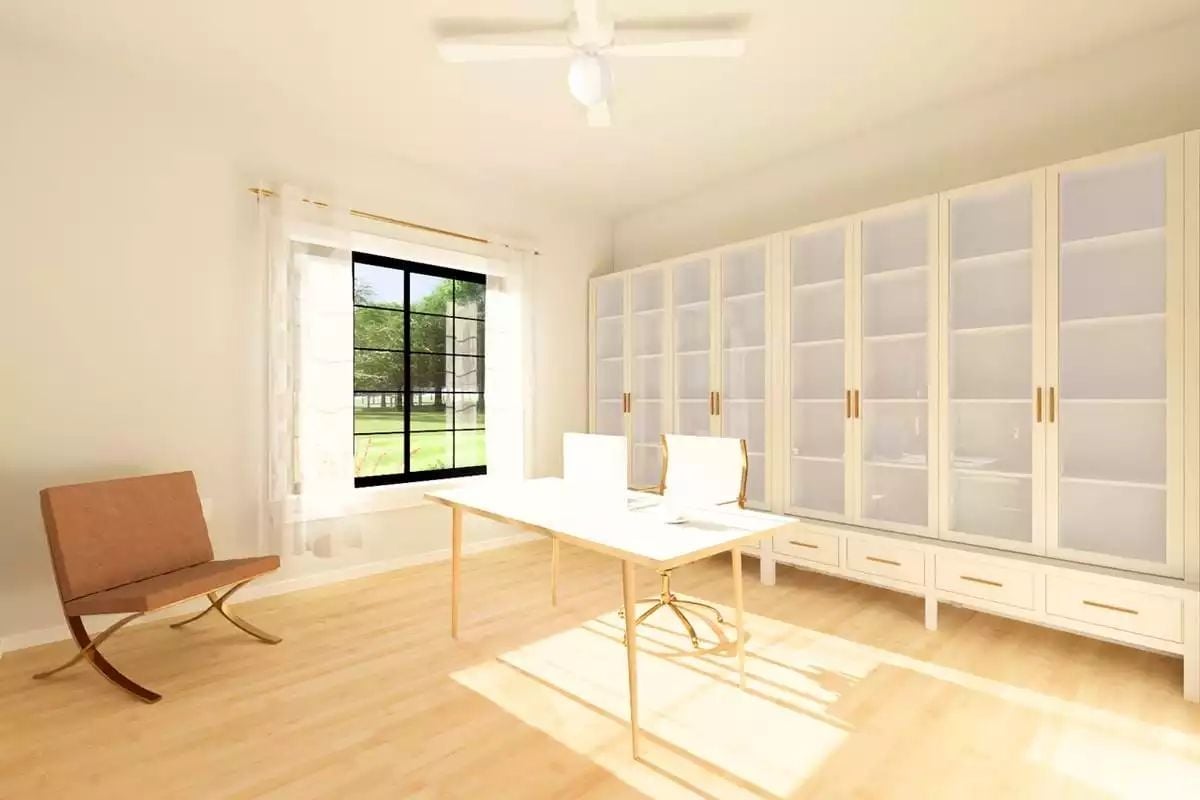
Built-in glass-front cabinets run the full length of one wall, with gold pulls and lower drawers handling the bulk of storage. The desk frame matches that same warm metal finish, and natural wood floors pull the warmth down to ground level. The brown leather Barcelona chair earns its corner.
Fun Fact: Barcelona chairs were designed by Ludwig Mies van der Rohe in 1929 for the German Pavilion at the Barcelona International Exposition. They were meant to seat royalty, and the proportions still read that way in a room with clean lines and plenty of floor space.
Sage Cabinets, Patterned Tile, and Open Shelving That Actually Earn Their Space
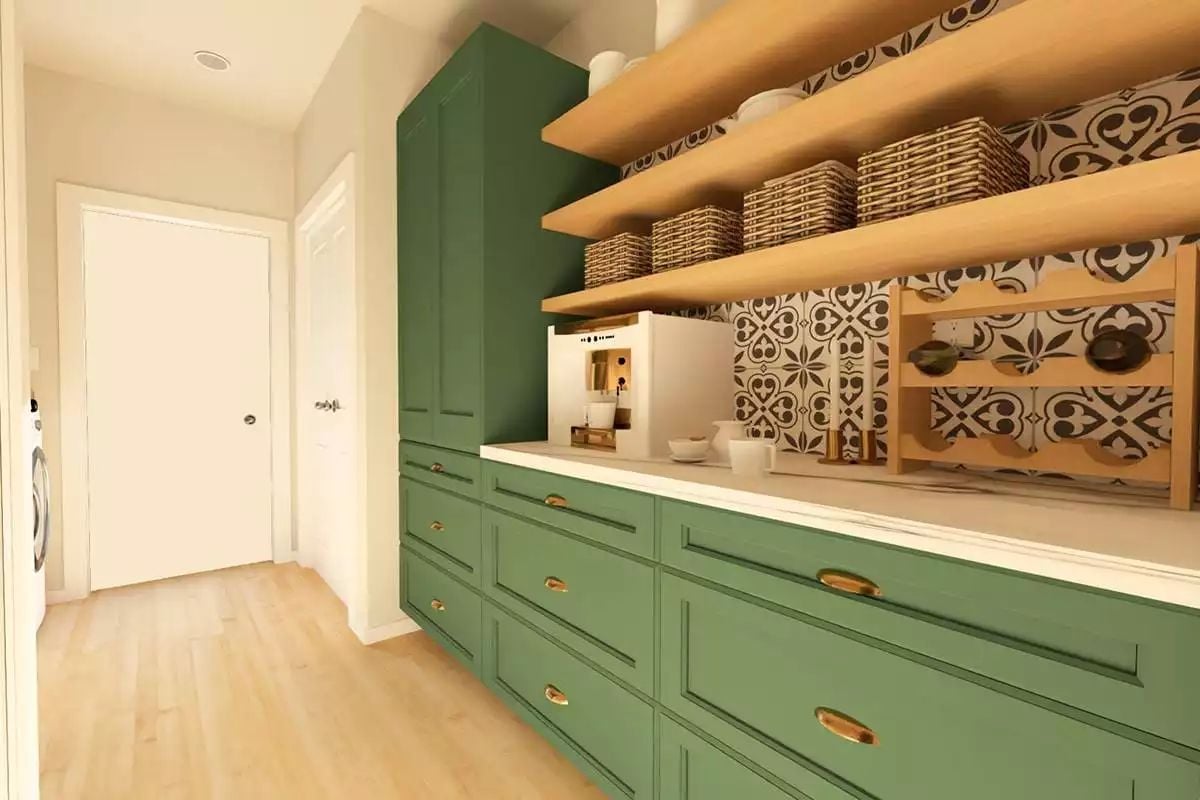
Sage green cabinetry with brass cup pulls sets the tone, but the patterned encaustic-style backsplash is what holds your eye. Open wood shelves keep everyday items within reach without hiding them behind doors, and a compact coffee station at counter height means the morning routine has a proper home rather than getting improvised across the counter every day.
Trend Alert: Open shelving in pantries has grown in popularity partly because it forces better organization. When everything is visible, clutter becomes obvious fast, so homeowners tend to restock and tidy more consistently than they would with closed cabinets. It’s a small psychological nudge that keeps the space functioning better over time.
Pin It
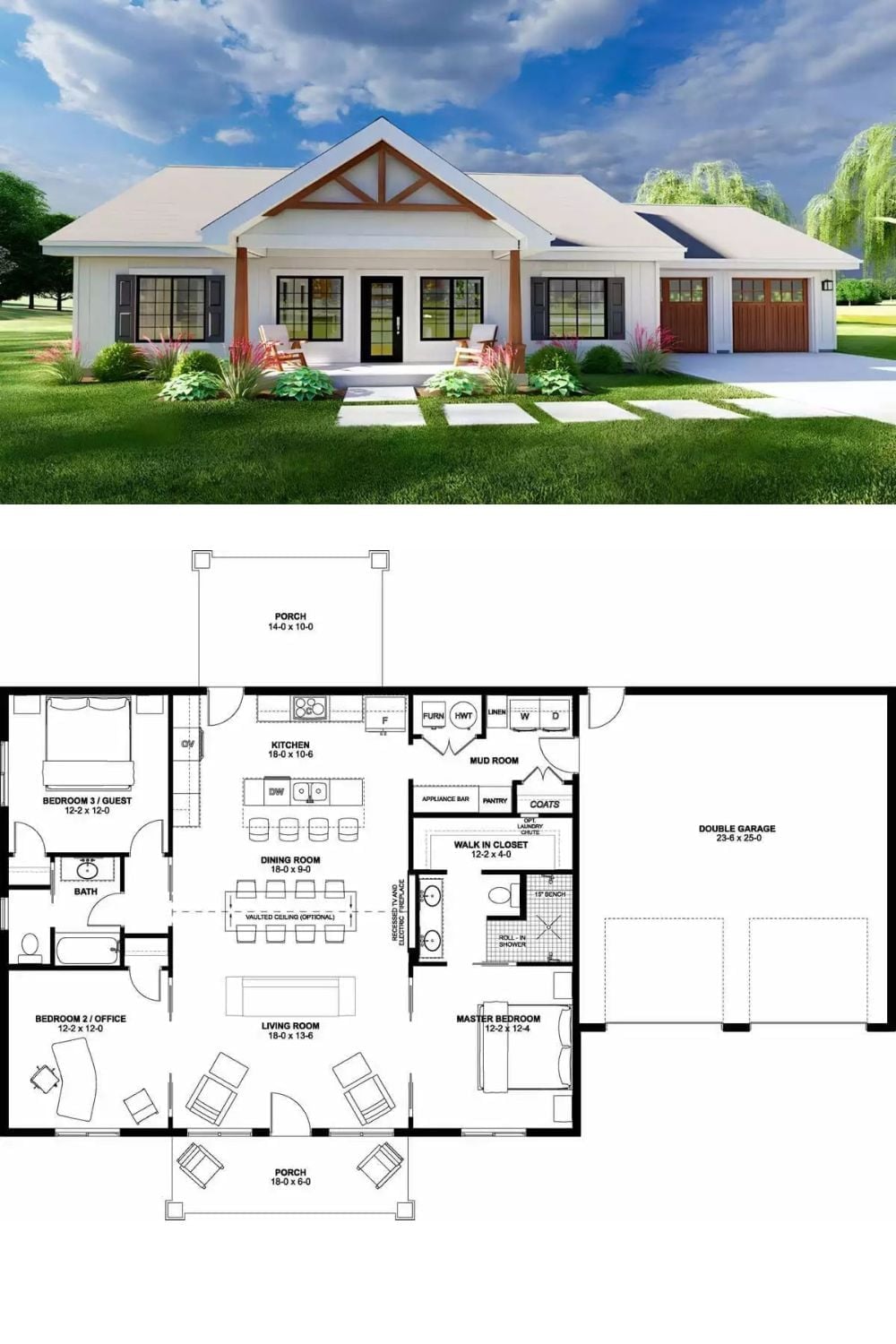
Exterior rendering of a modern farmhouse with a covered front porch paired with a single-story floor plan showing three bedrooms, dual porches, and an attached double garage.