🔥 Would you like to save this?
Stand at your vanity for ten seconds and you are reading a confession you didn’t know you wrote. The order of the bottles. The one drawer you never open in front of guests. The water ring that lands in the exact same spot every single morning because your body goes through the same choreography before your brain wakes up.
Here’s the strange part. None of it is random. Psychologists who study habit, control, and self-image say the small decisions you make at the sink before 8 a.m. leak more about how you handle stress, decisions, and even relationships than almost any other room in the house.
In order to come up with the very specific design ideas, we create most designs with the assistance of state-of-the-art AI interior design software. Also, assume links that take you off the site are affiliate links such as links to Amazon. this means we may earn a commission if you buy something.
We looked at these quiet tells, from the front row of products to the state of your grout. Some are flattering. A few sting. Keep reading, because at least one of these is about to describe your morning with unsettling accuracy.
What the Front Row of Products Reveals About Who Runs Your Mornings
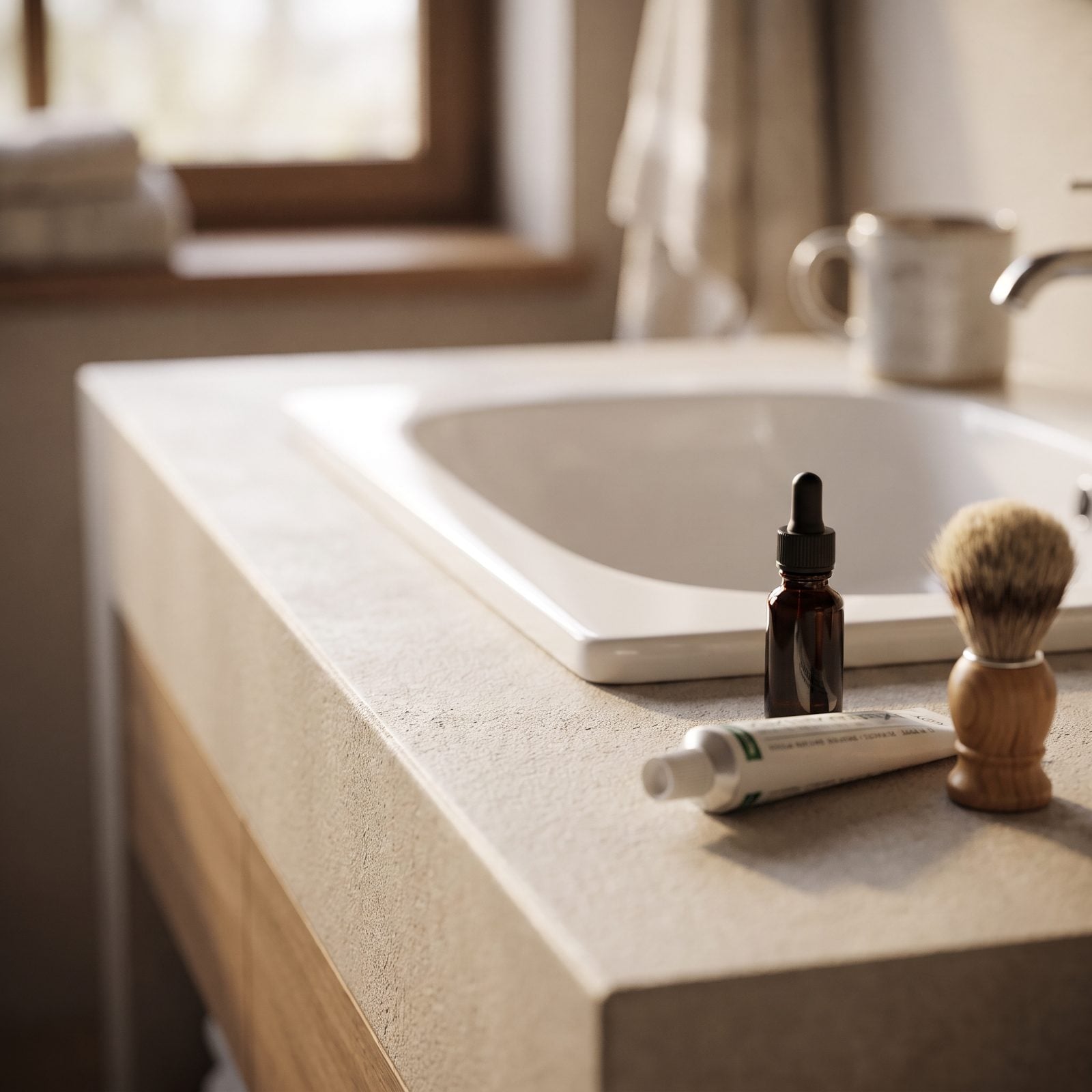
Look at the two inches of counter closest to the sink. That’s the front row, and nothing lands there by accident. The items you reach for without looking, the ones worn smooth by daily contact, map the real shape of your morning better than any to-do list could.
Here’s the quiet science underneath it. When a behavior repeats in the same spot day after day, your brain stops deciding and starts running a script. Wendy Wood’s research found roughly 43 percent of daily behaviors are performed out of habit (Source), cued by stable features of the environment rather than conscious choice. The front row is that stable environment made physical. Toothbrush, one serum, a hair tie. Those objects are the cues. The sink is the trigger.
So who runs your mornings? Not quite you. The arrangement does. You set it up once, half-asleep, and it’s been quietly directing traffic ever since.
The Storage Choice That Quietly Separates Planners From Improvisers
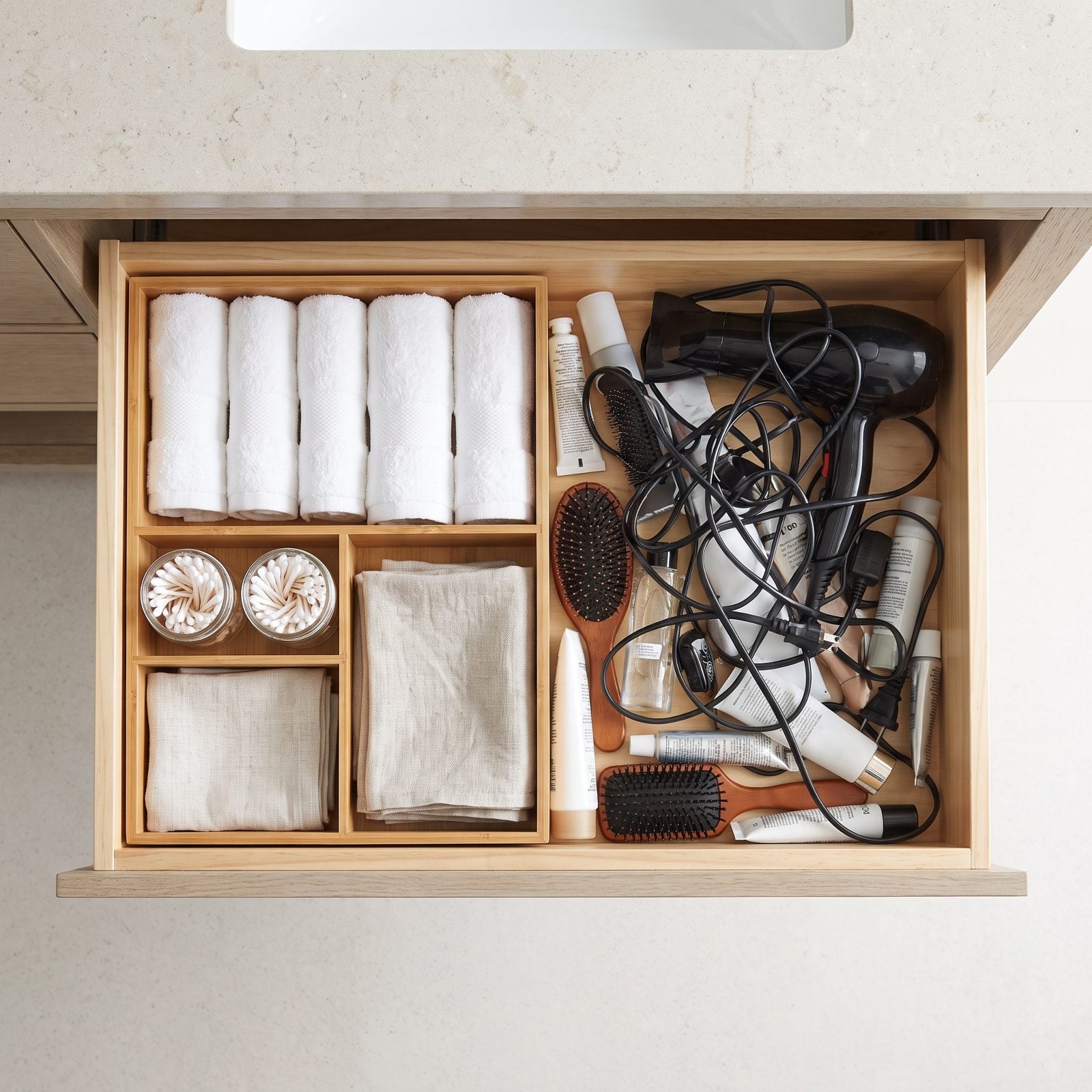
Open the vanity drawer. Or don’t, because you already know what’s in there. That knowing is the whole tell.
Planners build systems before they need them. Clear acrylic organizers, labeled sections, cotton swabs standing upright in their own little jar. Everything has an address. Improvisers work the opposite way. One deep drawer, everything in it, and a hand that dives in and finds the thing by feel. Neither is better. They’re just different relationships with the morning.
What’s interesting is how much the storage choice protects you. Wendy Wood’s work on habit formation describes how reducing friction makes a behavior more reliable than motivation ever could (Source). A divided drawer removes the tiny daily hunt. For a planner, that saved friction is the point. For an improviser, the hunt itself is part of waking up, a small ritual of rummaging that signals the day has started. If you’ve thought about buying drawer dividers for a cool craft room or a bathroom, you already know which camp you’re in.
Why an Empty Countertop Says More Than a Crowded One Ever Could
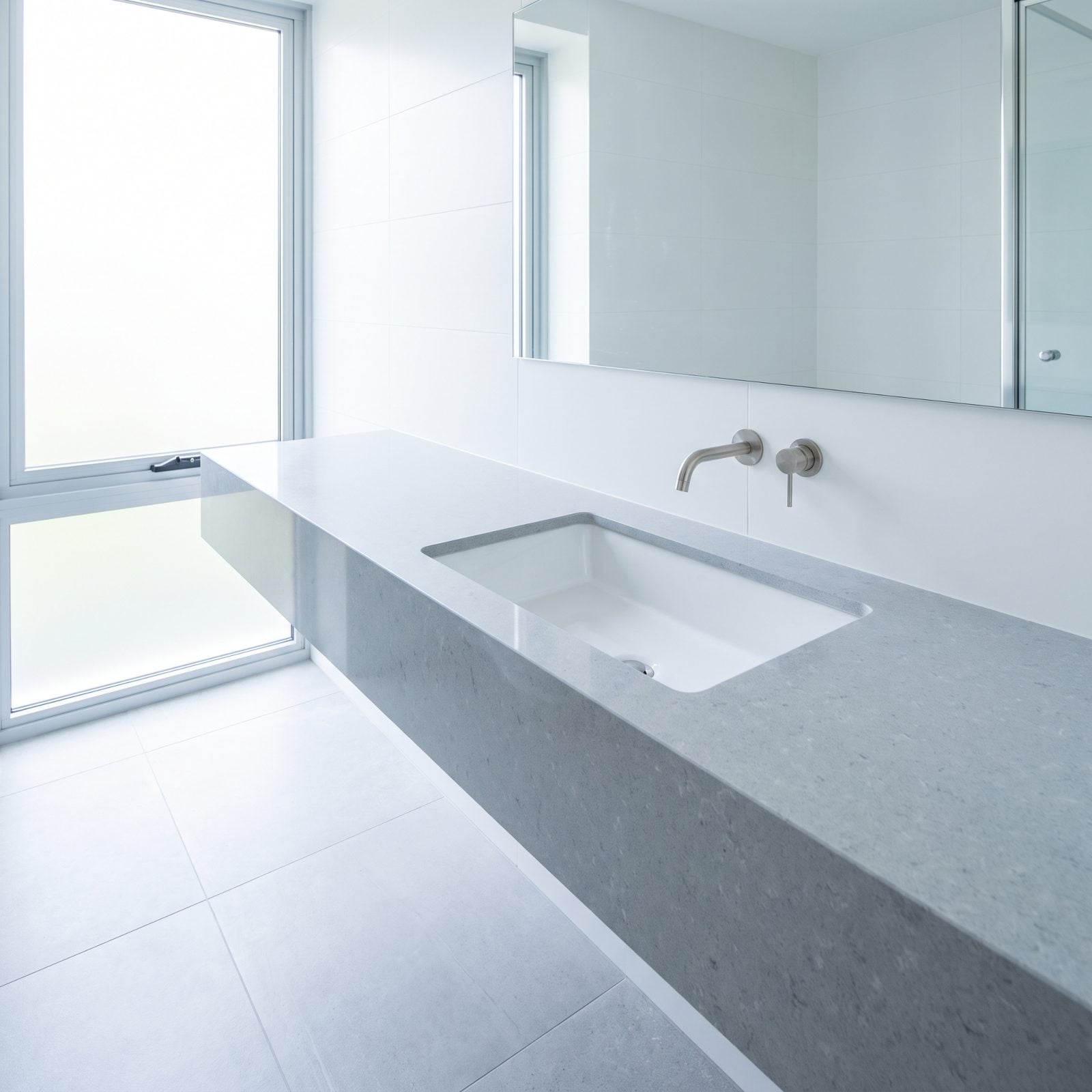
A bare counter looks like discipline. Sometimes it’s something closer to self-defense.
The famous UCLA Center on Everyday Lives of Families study measured diurnal cortisol in dozens of two-income households and found a link between how mothers described their cluttered spaces and their stress-hormone patterns (Source). The more a woman talked about her home in terms of unfinished work and too much stuff, the flatter her cortisol curve ran, a pattern tied to chronic stress. Men in the same homes, oddly, weren’t affected the same way.
So the person who clears the counter to the last square inch isn’t just tidy. There’s a decent chance they’re managing something the bare surface can’t show you. A crowded counter holds the evidence of a full life. An empty one holds the effort it took to make the room stop pulling at their attention every single morning.
We’ll admit we used to read empty counters as cold. We were wrong about that. Sometimes blank is just quiet, hard-won.
The One Grooming Tool That Signals You’ve Given Up on Rushing
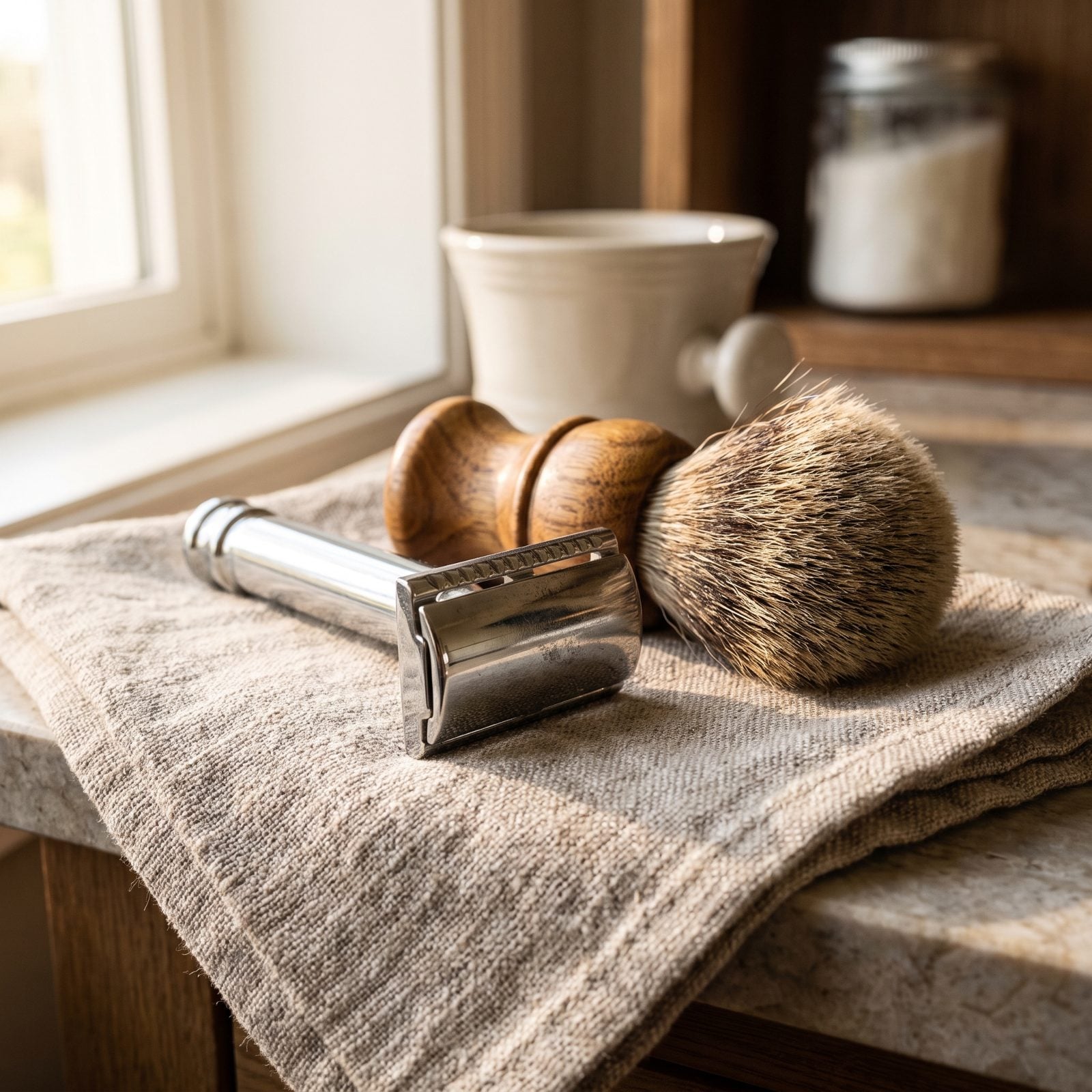
A rotating round brush with a long handle. A safety razor with real weight to it. A pumice stone on a hook. Any of these shows up and the message is the same: somewhere along the way, you stopped treating the morning like a fire to put out.
Fast tools do one thing quickly. Slow tools require presence. You cannot use a double-edge safety razor in a hurry, and anyone who’s tried once, nicked themselves, and gone back to the five-blade cartridge knows exactly what I mean. Keeping the slow tool means you’ve built time into the morning for it to exist. That’s a choice about the whole day, made with one object.
It also reflects how habits anchor to place. Wood, Quinn, and Kashy’s 2002 paper on habits in everyday life describes how repeated actions in stable contexts become cued by the environment itself (Source). The slow tool sitting in its spot is a standing invitation to slow down, every morning, whether you accept it or not.
How Double Sinks Rewire the Way Two People Share a Day
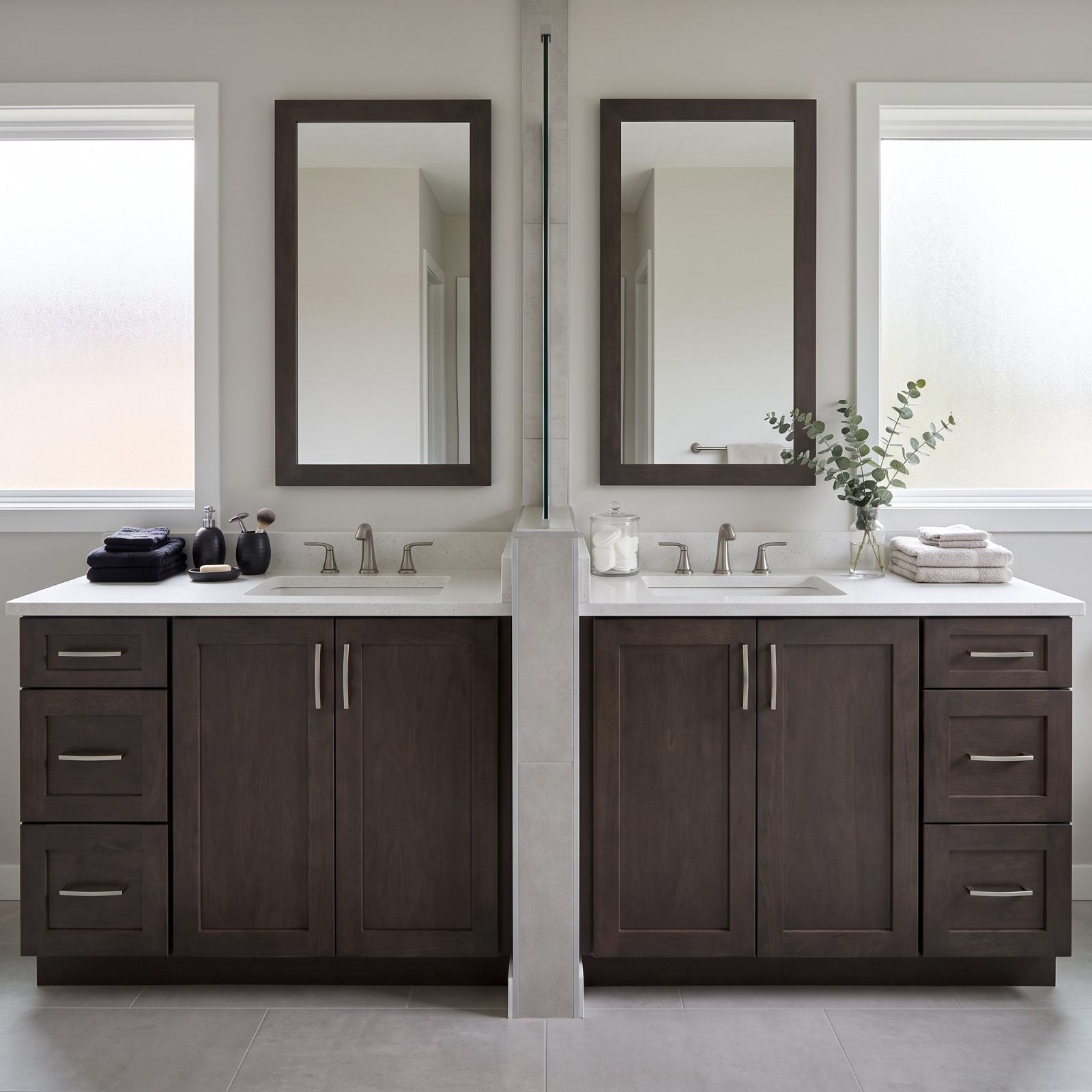
Two sinks don’t just add a basin. They draw a border.
Watch what happens the day a couple moves from one sink to two. The negotiation ends. No more waiting, no more one person’s dopp kit pushed to the far edge to make room. Each side becomes its own small country with its own customs, and you can read the entire relationship in the contrast between them.
One side: three products, squared to the edge. The other: eleven, and a water glass. The split tells you who runs a tight morning and who floats through one, often in the same bed by the same alarm.
The deeper mechanism is territory. When each person has a fixed, stable spot, the morning routine locks into place faster, because behaviors performed in a stable context, same place and same cues, get automated by the brain rather than decided fresh each day (Source). Two sinks give two people two stable contexts under one roof. That’s why the double vanity so often outlasts the argument about who left the cap off the toothpaste.
The Water-Ring Patterns That Map Your Exact Morning Choreography
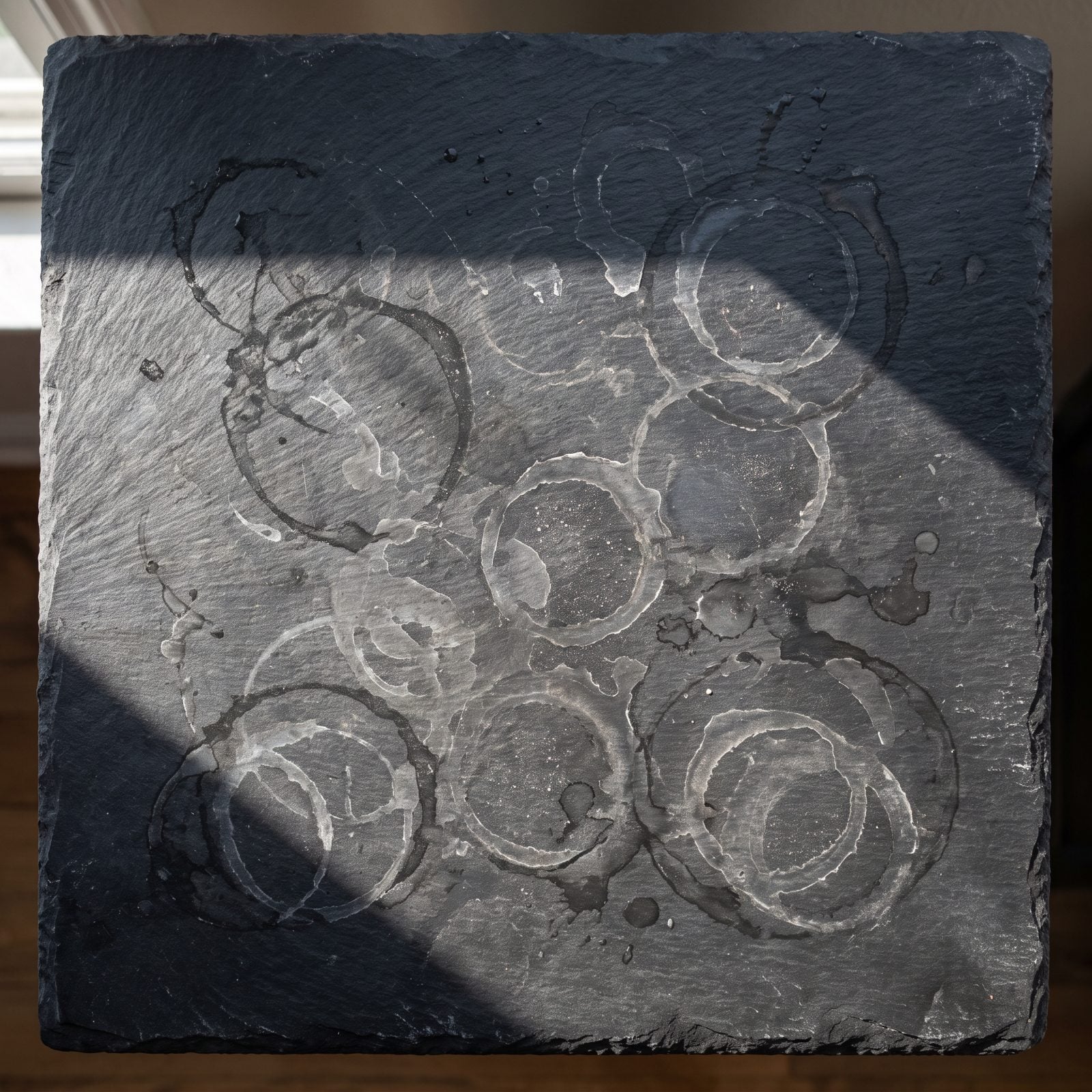
Forensics for your own bathroom. The faint rings and splash marks on the counter are a record of where your hands actually go, not where you think they go.
A ring of droplets to the left of the faucet means you set the glass down there, every day, in the same spot, without once deciding to. A dry patch on the right means that half of the counter is dead space your routine never visits. The water tells the truth your memory smooths over.
This is a physical trace of what researchers call context-dependent behavior. When behaviors repeat in a consistent context, the link between that context and the action strengthens, increasing the automaticity of the behavior (Source). The rings are that link, printed on stone. You’re not choosing where to set the cup. The spot chose itself a thousand mornings ago, and now your hand just goes.
Wipe the counter and watch the same pattern return within a week. That’s not laziness. That’s the most reliable part of you, showing its work.
What a Lineup of Nearly-Identical Products Says About Your Brain
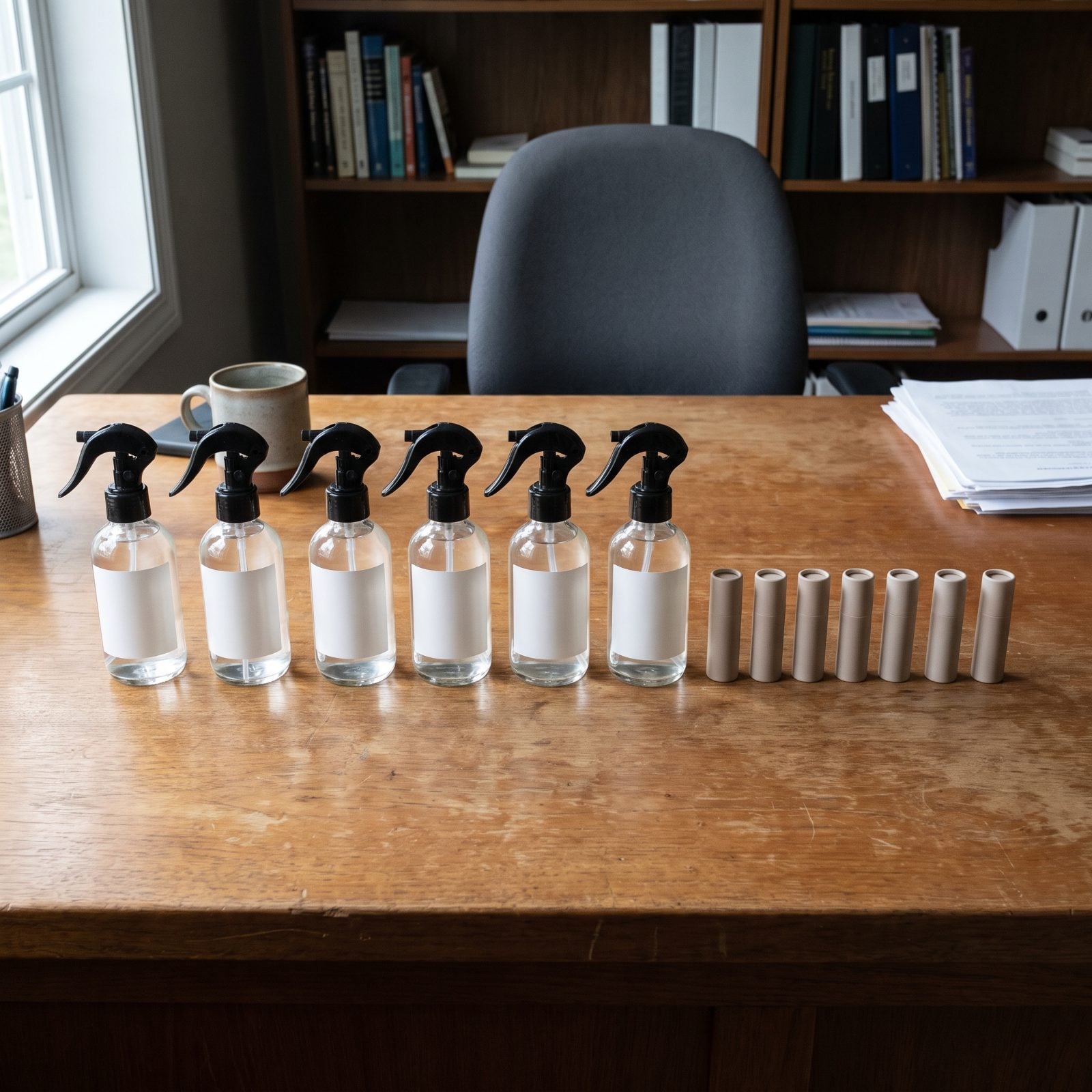
Three cleansers that do almost the same thing. Four nearly matching neutral lipsticks. A row of white bottles you can only tell apart by picking each one up. It looks like indecision. It’s often the opposite.
A lineup of near-duplicates is usually a brain protecting itself from choice. Every small decision drains a shared tank of mental energy, which is why Stanford’s Jonathan Levav defines decision fatigue as the deteriorating quality of decisions made after a long session of decision-making (Source). Steve Jobs wore the same black turtleneck daily for exactly this reason: one fewer trivial call before the real ones started.
The vanity version is subtler. By keeping options that barely differ, you’ve made the choice functionally irrelevant. Grab any one, it’s fine, move on. The near-identical lineup isn’t a person who can’t decide. It’s a person who decided once, in bulk, so they’d never have to spend a single morning’s willpower on it again.
The Mirror Lighting That Tells You Whether Mornings Feel Safe or Stressful
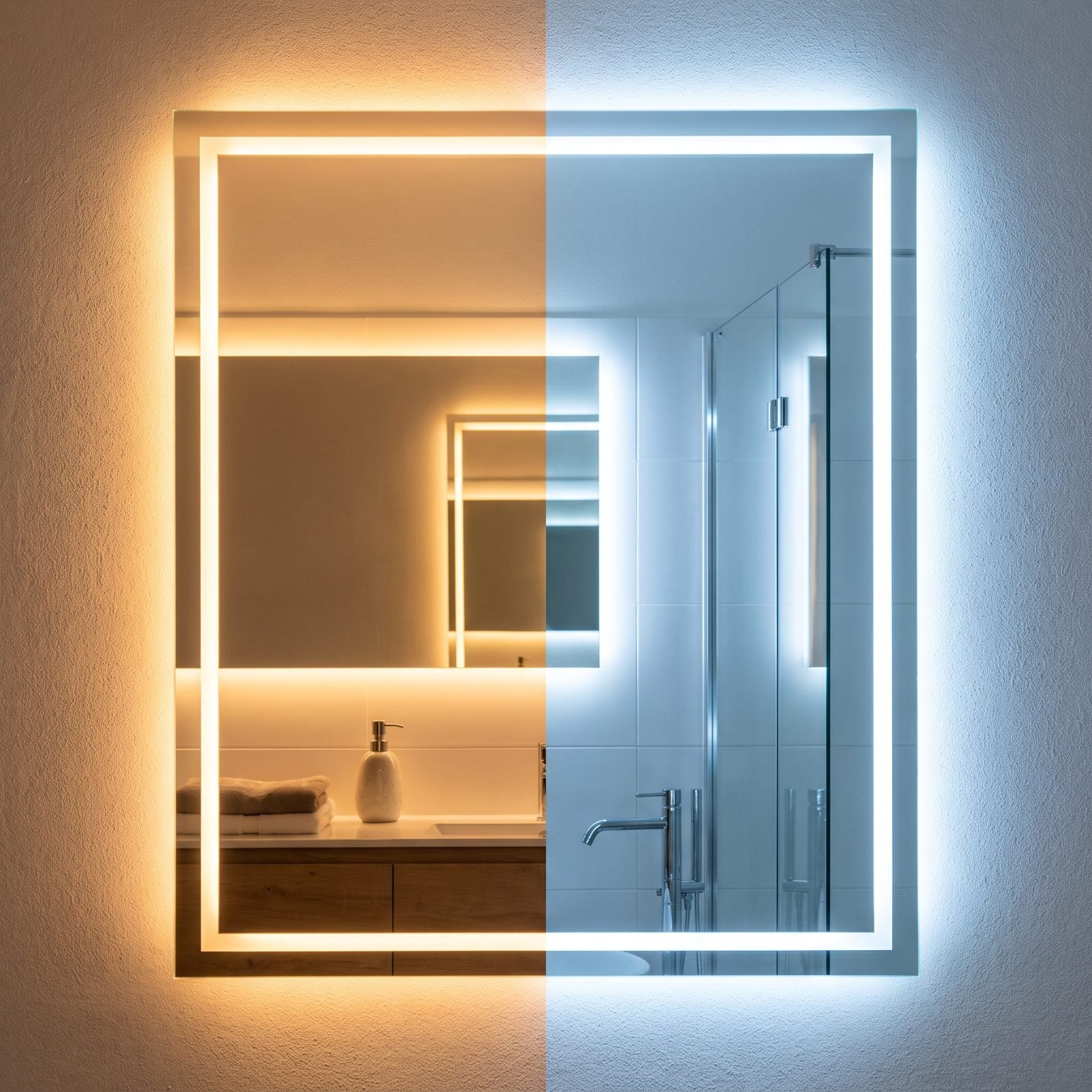
Stand at your mirror and notice the color of the light on your face. Blue-white and crisp, or warm and golden. That single choice shapes the emotional weather of every morning before you’ve said a word.
Research backs up what your gut already feels. A study on warm and cool white light in colored environments found that higher color temperatures (cool light) generally decreased positive mood compared with warmer light at equal brightness (Source). And in a separate experiment, people viewing faces under 2700K warm light rated the same ambiguous expressions as less fearful than under cool 6500K light (Source). Read that again. The warmer bulb literally made faces look less threatening, including, presumably, your own in the mirror at 6 a.m.
Harsh cool light sharpens every flaw and puts your nervous system slightly on guard. Warm light softens the reflection and the mood with it. If your mornings feel like an inspection, check the bulb before you blame yourself. You can see the warmer-light effect at work in a cottage bathroom, where soft sconces do a lot of quiet emotional work.
Why the Bottom Drawer Holds the Truth About Your Self-Image
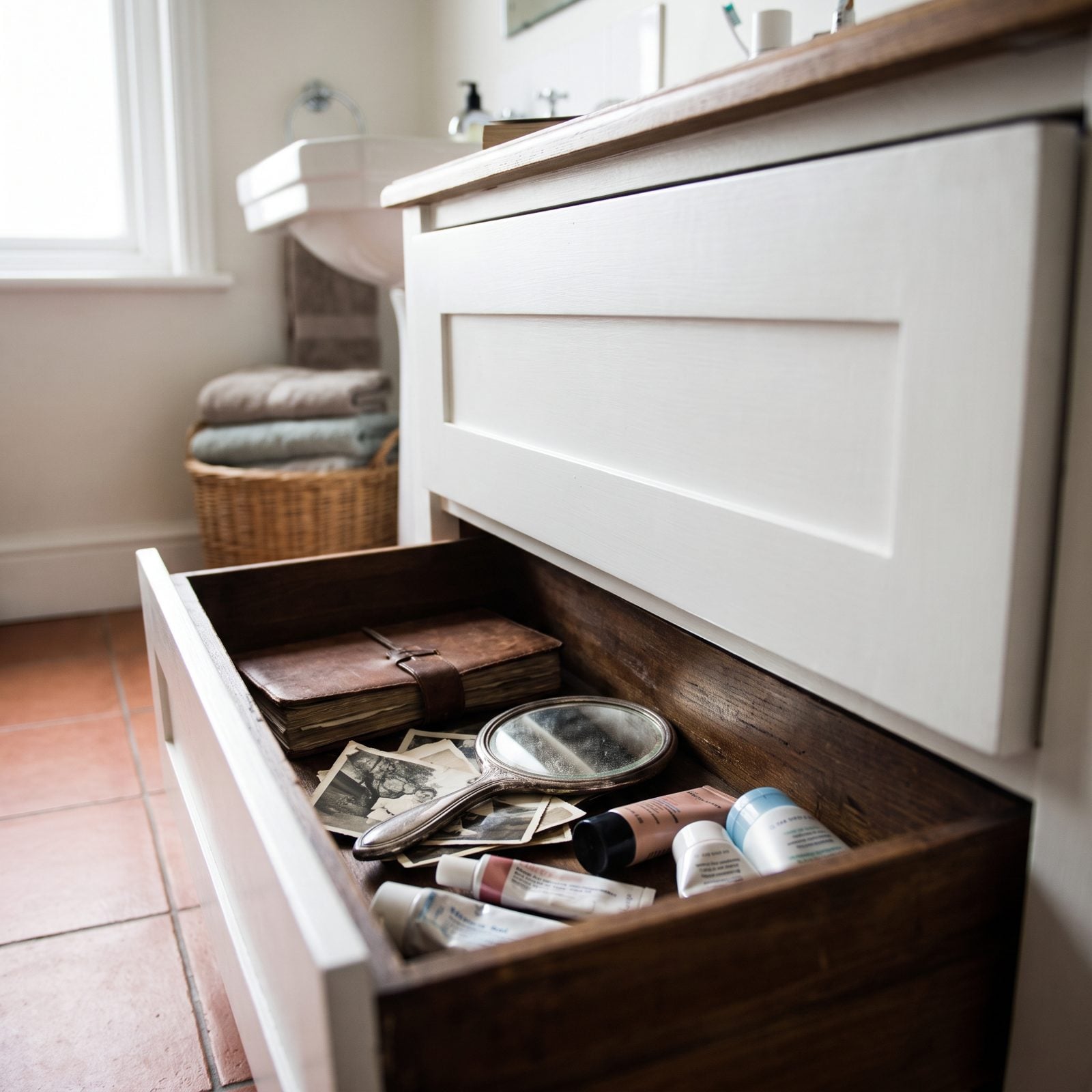
Open the top drawer of any vanity and you get the performance. The daily stuff, the things you’d be fine with a guest seeing. The bottom drawer is where the honesty lives. The half-used serums, the gadget you swore would change your skin, the three nearly-dead mascaras you can’t throw out. We stash what we can’t resolve, and what we stash says more than what we display.
There’s real science under this. According to a 2016 study in the Journal of Environmental Psychology (Source), the possessions we hold onto are bound up with a need to identify ourselves with our physical space, and an overabundance of them quietly erodes well-being. The bathroom amplifies it. As one Motherly piece on the psychology of clutter (Source) points out, a crammed bathroom can surface body-image tension, because it’s the one room where you face a mirror with nothing to hide behind.
We’ve all kept a dead highlighter far too long. We know exactly why. It was expensive.
The Reason Matching Towels Hit Your Nervous System Differently
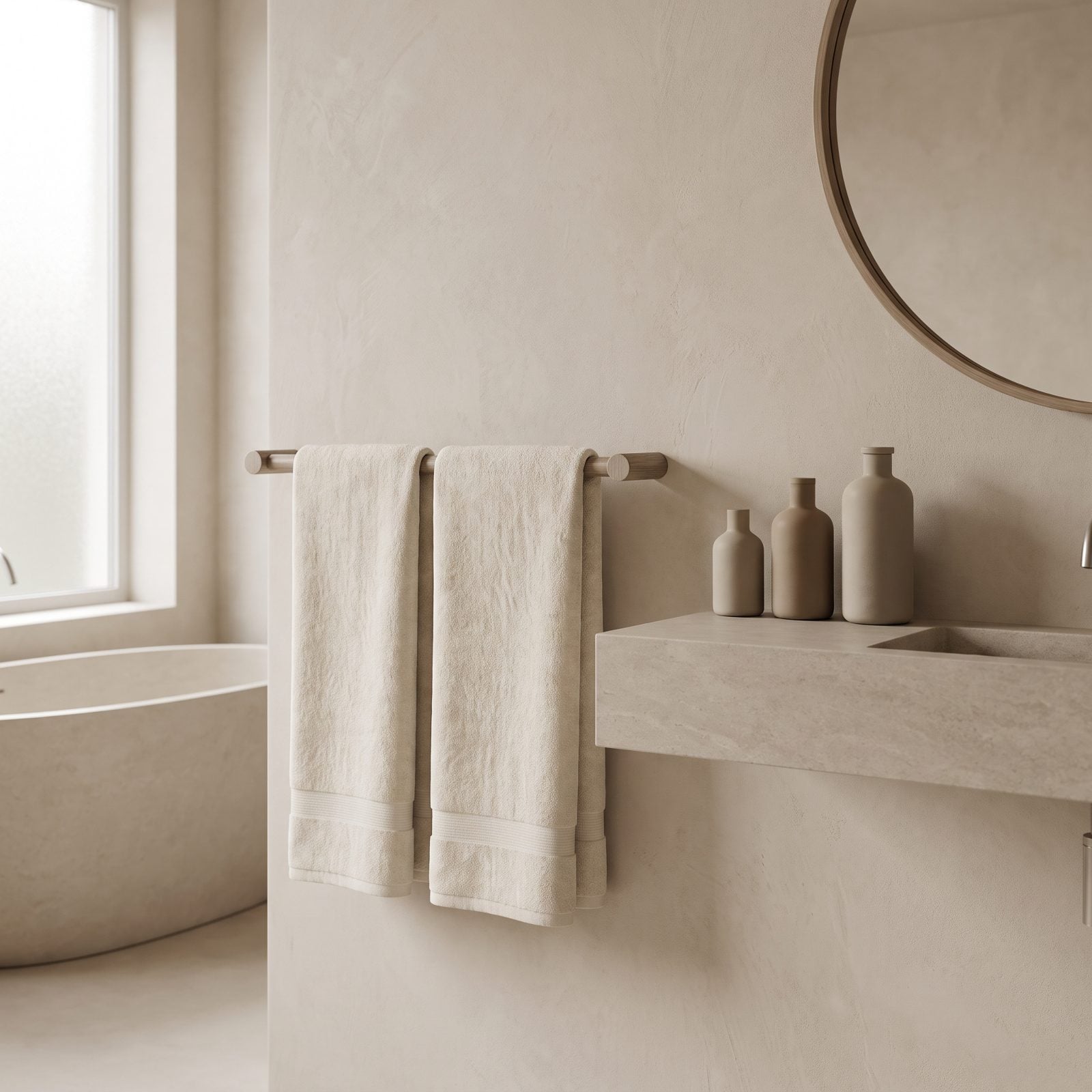
Two identical towels folded on a rail. A set of three bottles lined up by height. Your shoulders drop half an inch and you don’t know why. That reaction isn’t taste. It’s wiring.
Your brain gives symmetry a shortcut. A 2012 study in PLOS ONE (Source) found that a pull toward symmetry runs through the general population as part of our cognitive and neural architecture, not just in people who obsess over order. And the attraction can operate below conscious awareness. A 2024 paper in Symmetry showed that even when people say they don’t prefer a symmetrical version, their implicit responses still lean toward it.
So a matched towel set is doing quiet work. It tells your visual system there’s nothing to decode here, nothing out of place, no threat. You read it as calm before you’ve formed a thought about it.
It also explains the weird irritation when one towel is navy and the other is almost-navy. Your brain flagged it and refused to let it go.
What a Single Toothbrush in a Cup Signals Without a Word
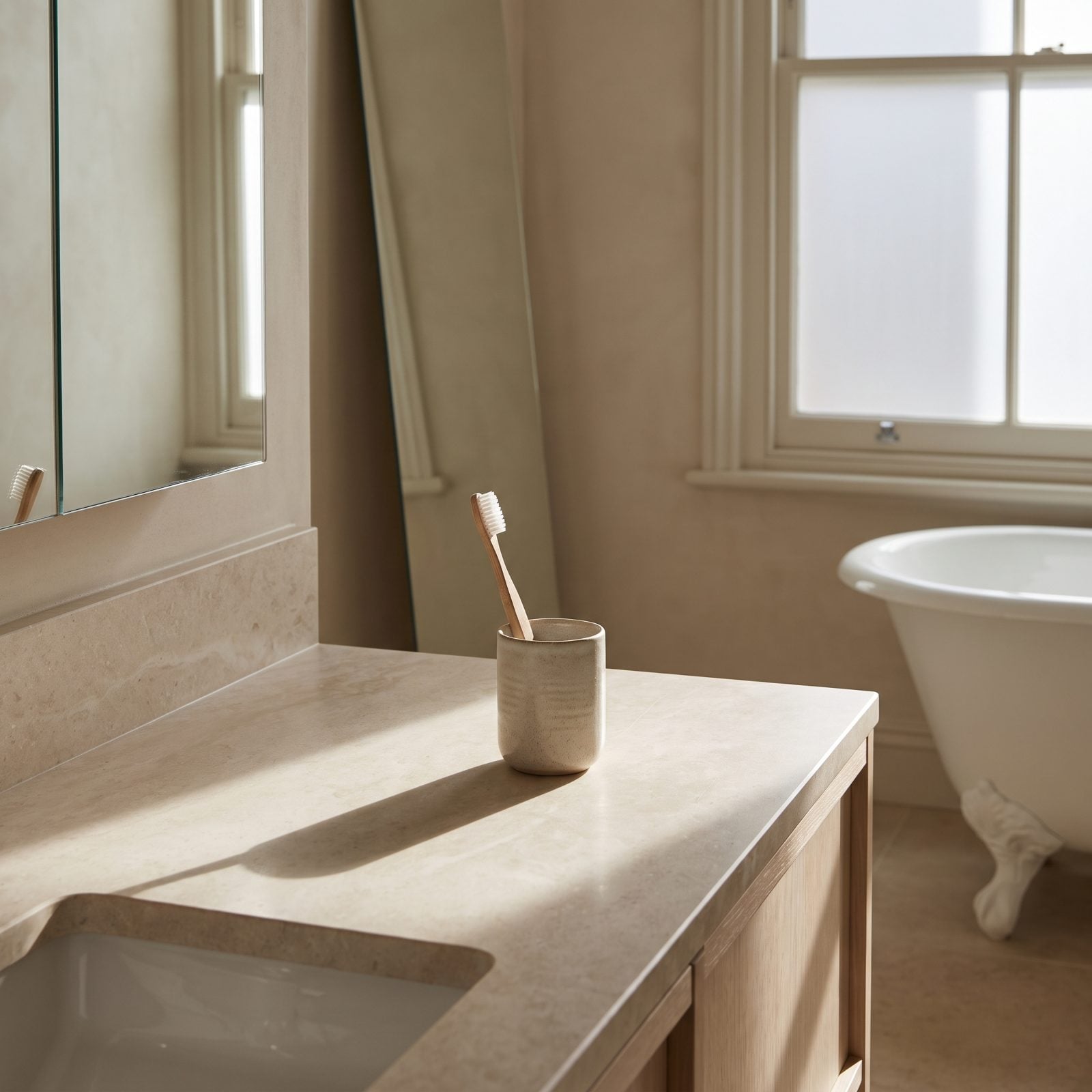
One toothbrush in a ceramic cup says more than any gallery wall ever could. It’s a complete sentence. It tells you who sleeps here, how many share the sink, whether mornings are solo and unhurried or a relay race of elbows and running water.
Strangers read these cues fast and read them well. In Samuel Gosling’s “A Room With a Cue” study in the Journal of Personality and Social Psychology (Source), observers formed accurate impressions of occupants from physical traces alone, with no instructions and no chance to meet the person. The bathroom is dense with what researchers call behavioral residue, the unintentional marks our routines leave behind.
A single brush reads as order and quiet. Four brushes crammed in a glass reads as a household in motion, kids and schedules and somebody always late. Neither is better. But both are legible, and you’ve been reading them your whole life without knowing you were doing it.
The Hidden Meaning of a Vanity You Never Quite Finish Cleaning
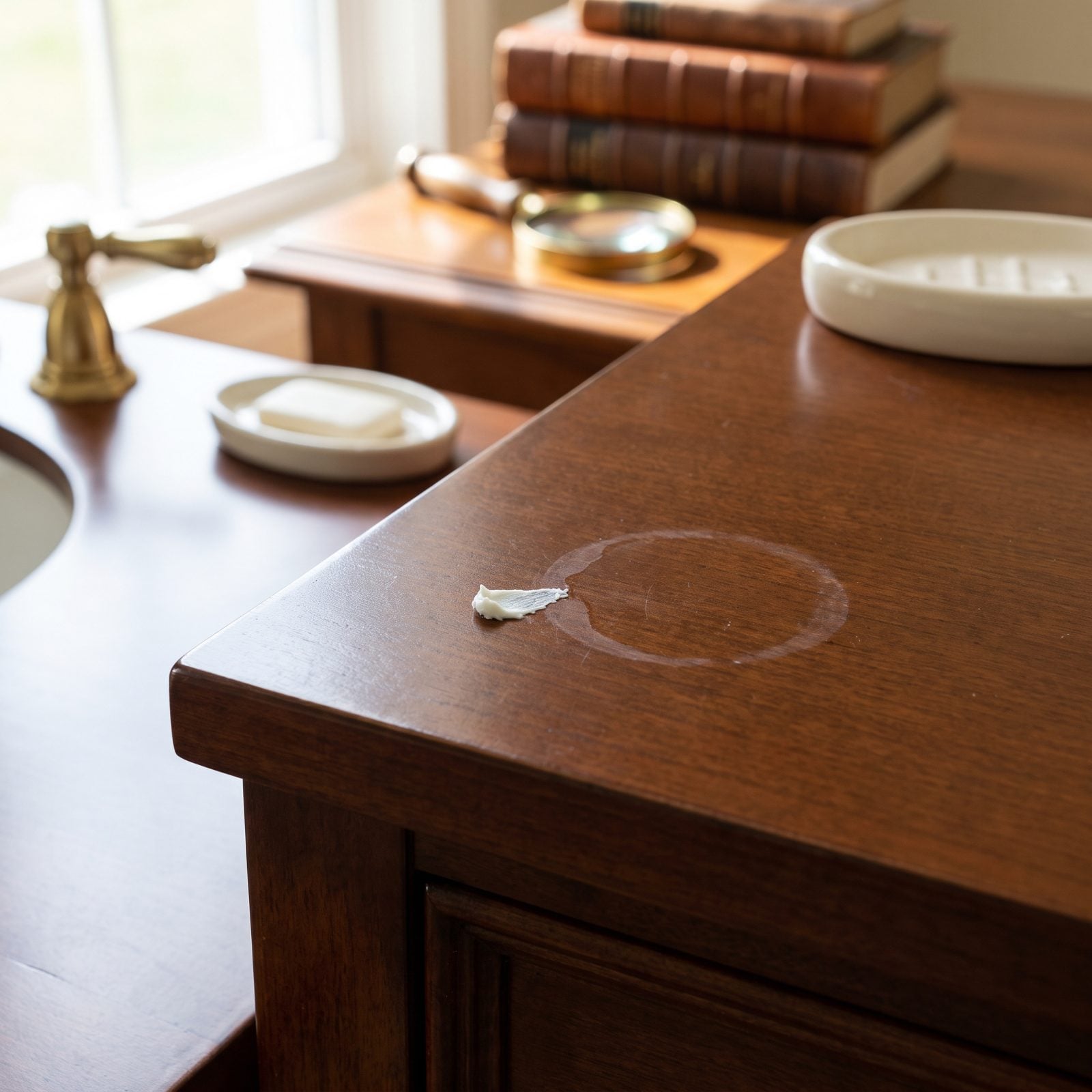
You wipe the counter. You rinse the sink. And there’s always that one corner with the dried toothpaste fleck and the ring from a bottle you keep meaning to move. The vanity that’s almost clean but never done. That gap between effort and finish isn’t laziness. It’s a tell.
Visible unfinished tasks sit on the nervous system like an open tab. The landmark UCLA Center on Everyday Lives of Families research, published in Personality and Social Psychology Bulletin (Source), found that women who described their homes with words like “cluttered” and “unfinished” showed daily cortisol patterns linked to chronic stress, while people who described their spaces as restful showed the opposite. The word “unfinished” did real damage. A half-clean vanity is a small unfinished thing you walk past a dozen times a day.
Here’s the cruel part. The more you notice it, the more it costs you, because noticing is the whole mechanism.
Why Open Shelving Attracts a Very Specific Kind of Person
🔥 Would you like to save this?
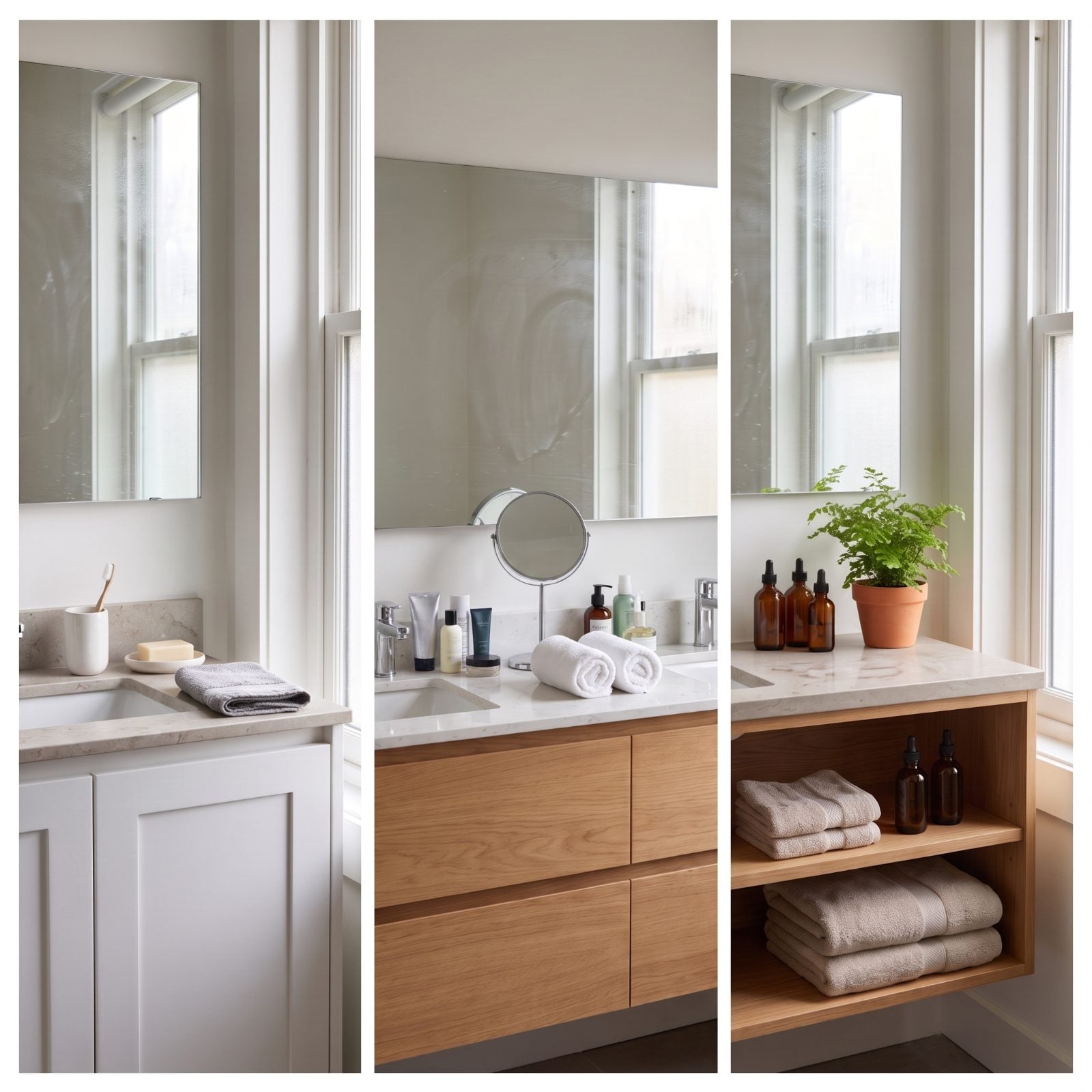
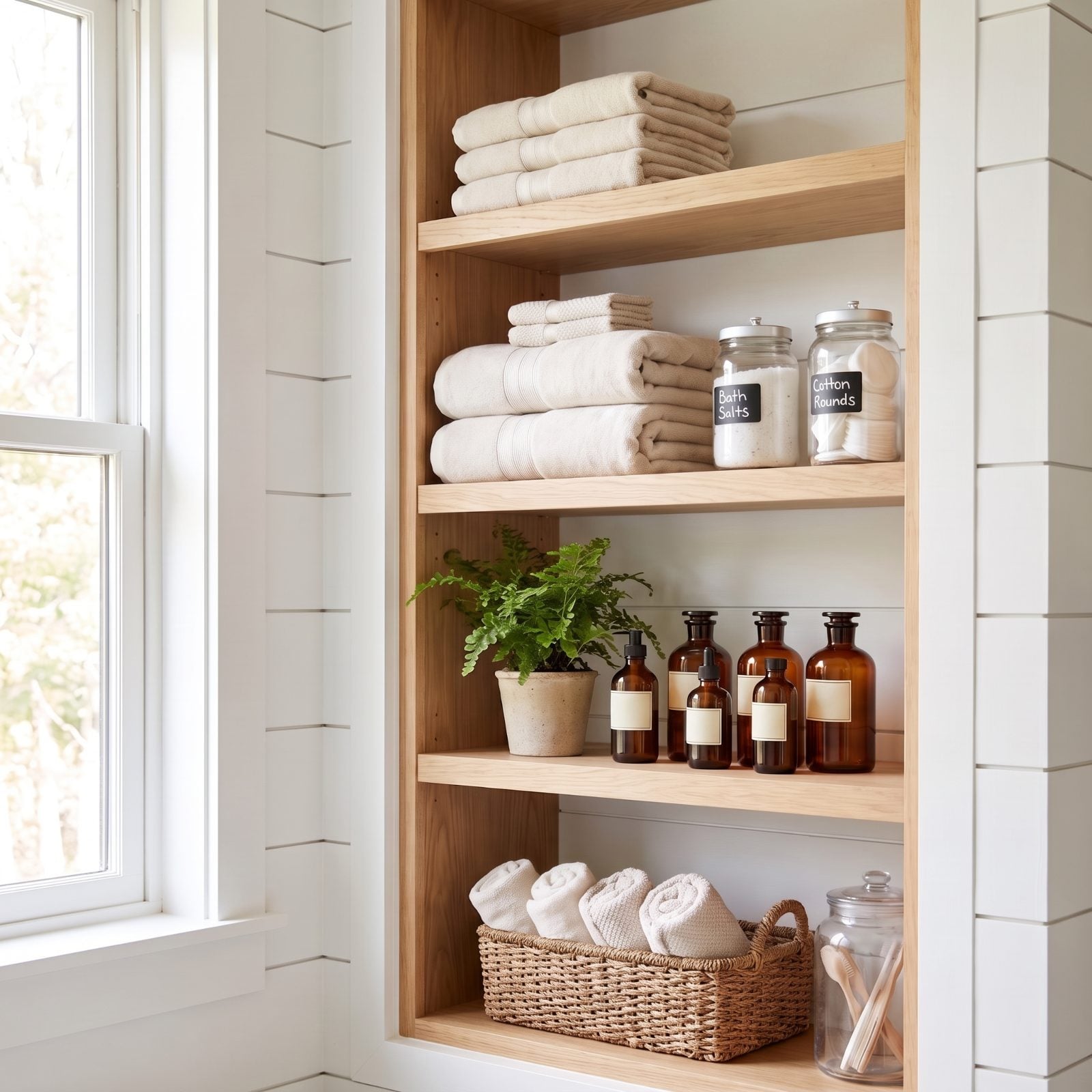
Closed cabinets hide. Open shelving confesses. The decision to put your bottles, your folded towels, your little woven basket out where everyone can see takes a particular kind of wiring, and the research has a name for it.
Gosling’s work found that observers judged Openness to Experience most accurately of all the Big Five traits (Source) from a person’s space, and people high in Openness tend to put distinctive, varied, on-display objects out rather than tucked away. Open shelving is that instinct made into carpentry. You’re not storing things. You’re curating a tiny exhibit of yourself and inviting the room to look.
It fits the same energy that drives a cool craft room where supplies live in glass jars instead of bins. Display over concealment. The person who loves open shelves usually has strong feelings about amber apothecary bottles and a brass bathroom tray, and zero interest in hiding either.
The Product Clustering Habit That Betrays How You Handle Decisions
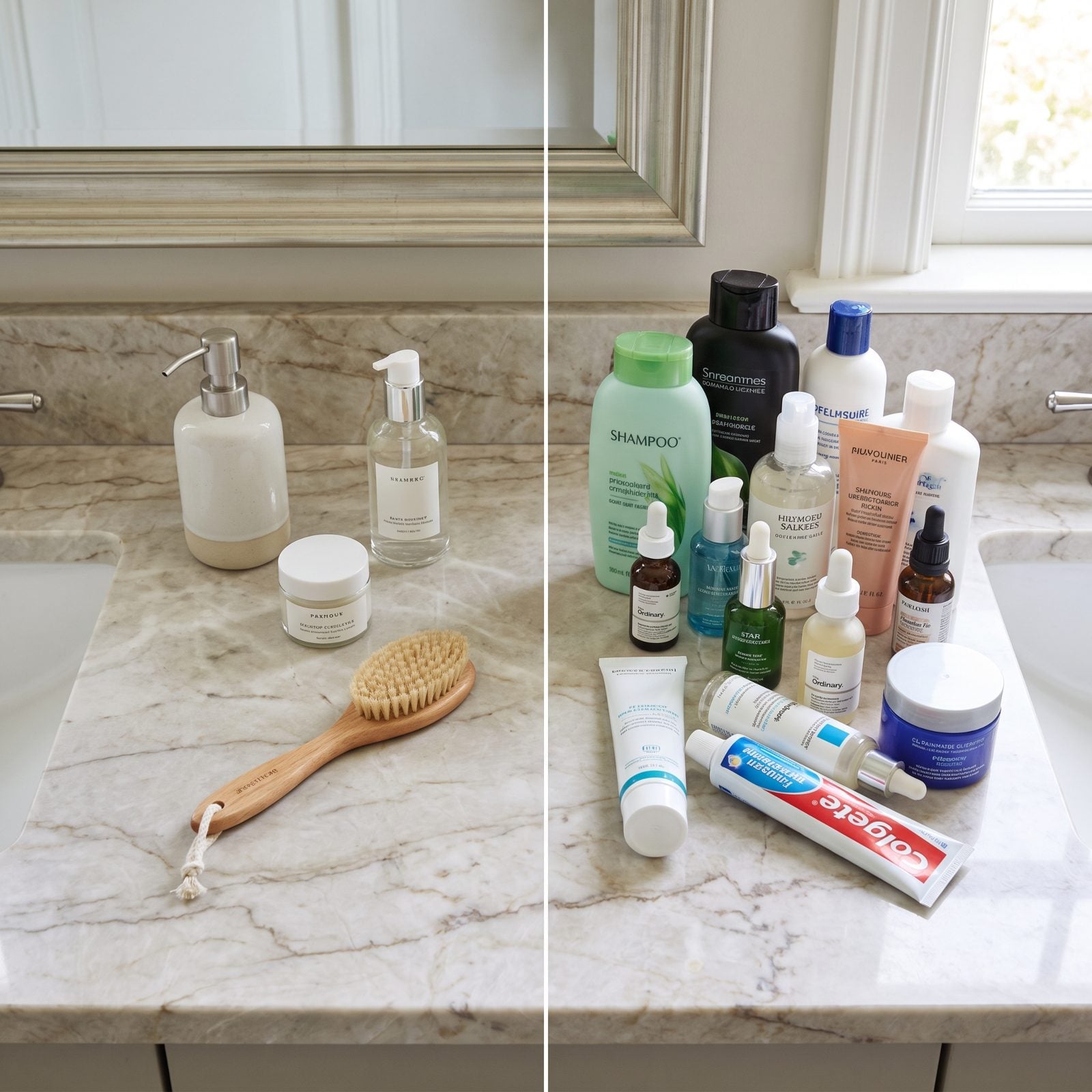
Look at how the bottles sit. Some people keep three products total, one of each, no debate. Others keep eleven serums, five cleansers, two of everything, because last time they ran out and panicked. The size of that cluster is a map of how you make choices.
More options isn’t freedom. It’s a tax. The classic Vohs and Baumeister research, “Making Choices Impairs Subsequent Self-Control” in the Journal of Personality and Social Psychology (Source), showed that making a run of choices drains the same mental resource you use for self-control, leaving people measurably more depleted afterward. A vanity with forty products means forty micro-decisions before you’ve had coffee. The person who keeps it to five figured out, consciously or not, that fewer choices at 6am is a gift to the person they’ll be at 6pm.
Plenty of us own four face washes and use one. The other three are insurance against a decision we’ve already made. That’s the whole trap in miniature.
What the Condition of Your Grout Reveals About Your Sense of Control
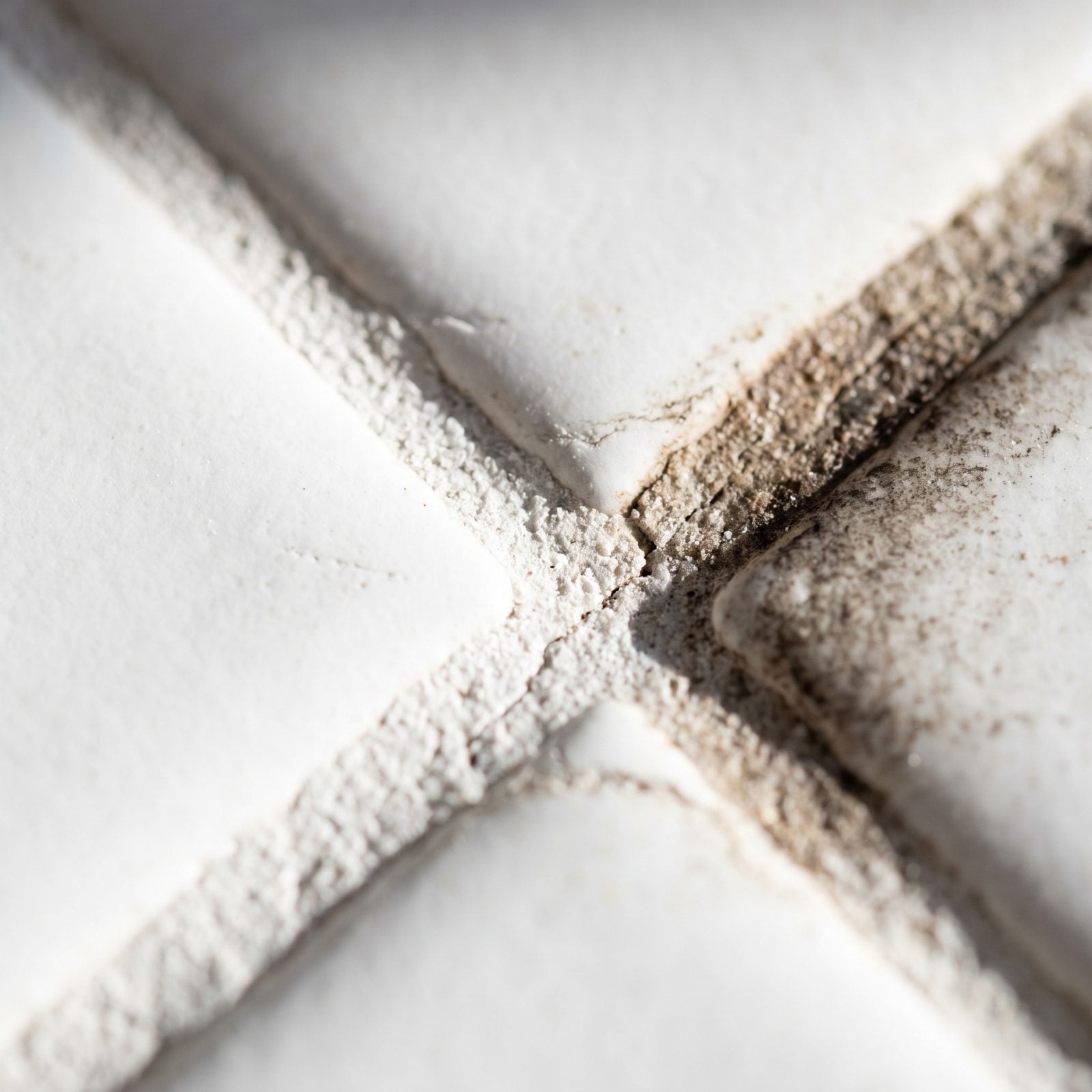
Nobody notices grout until it goes. Then it’s all you see. The darkening line between the tiles, the corner where the caulk pulled away, the faint grey-brown bloom in a damp seam. Grout is the one surface a vanity can’t fake, and how you relate to it tracks closely with how much control you feel over your own life.
The thread running through the APA’s conversation with clutter researcher Joseph Ferrari (Source) is that disordered environments feed lower psychological well-being and more negative feelings about the self. Grout is that dynamic at the smallest scale. You can’t tidy it away in five minutes. It needs sustained, unglamorous attention, which makes it a quiet referendum on whether you feel on top of things or underwater.
Clean grout isn’t about being house-proud. It’s the visible proof that you’ve been winning the small daily battle lately. Neglected grout usually means the battle got loud somewhere else.
The Chair or Stool That Changes What Mornings Mean to You
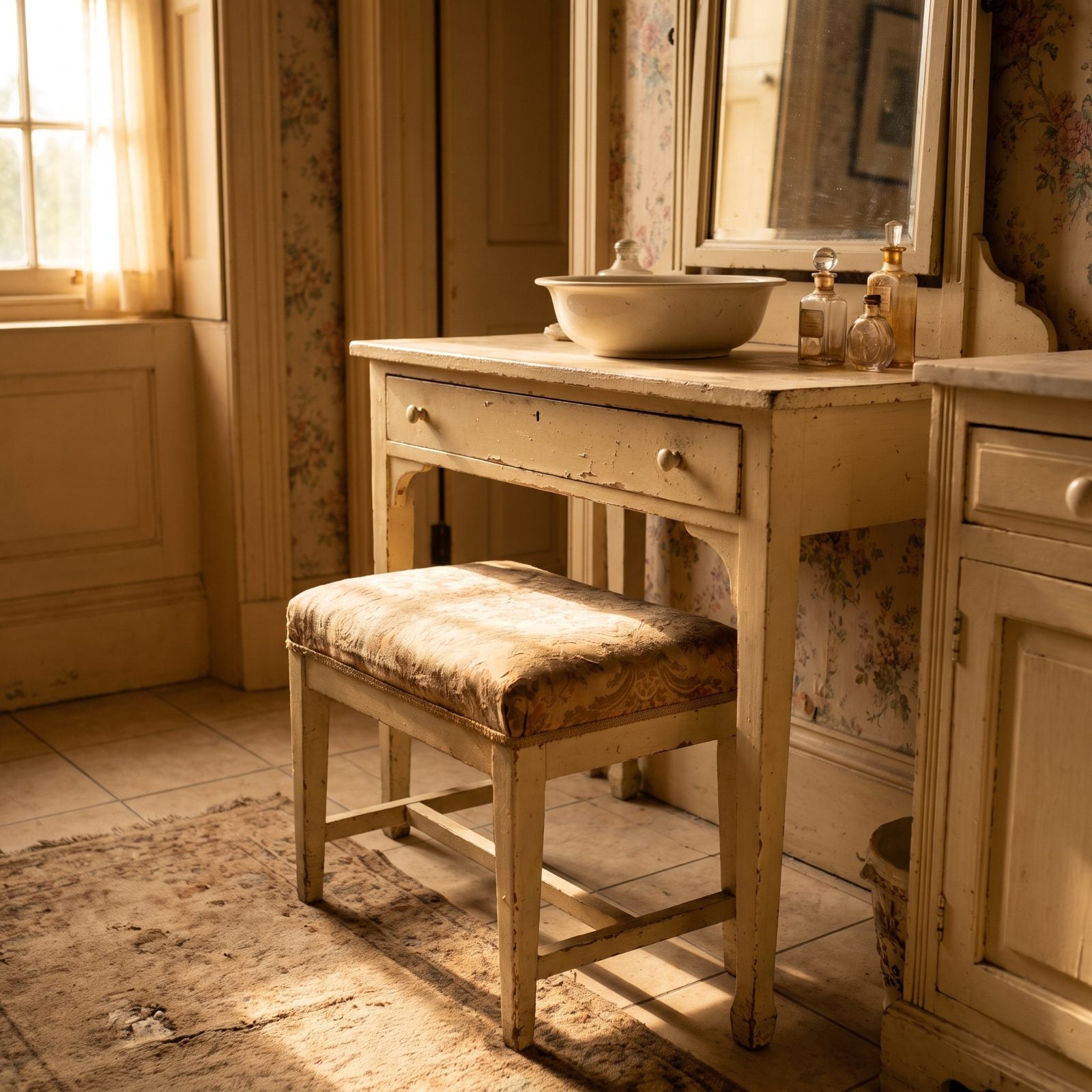
A stool at the vanity changes the math of a morning. Standing means getting through it. Sitting means staying with it. The simple act of pulling up a upholstered vanity stool turns a chore into something closer to a ritual, and your brain treats those two things completely differently.
The reason sitting feels like relief runs through decision science. The research on decision fatigue from Vohs and colleagues found that a long run of choices wears down self-control and physical endurance alike. A standing routine is a sprint of back-to-back decisions. A seated one slows the pace, gives each step a little room, and stops the morning from feeling like a line of tasks you’re clearing before the real day starts.
You’ve seen the difference in two bathrooms. One has a hook for a towel and nothing to sit on. The other has a rattan vanity stool that’s seen years of use. The second one treats the morning as something worth sitting down for.
The Bottom Line
Here’s the truth your vanity has been whispering all along: it doesn’t record who you want to be, it records who you actually are when no one is grading you. Every cluster, every water ring, every half-finished cleaning job is an honest log of the choices you make on autopilot, the ones that reveal your real relationship with control, with time, and with yourself. Tomorrow morning, look at your vanity the way a stranger would, and ask what it’s quietly telling you to change.