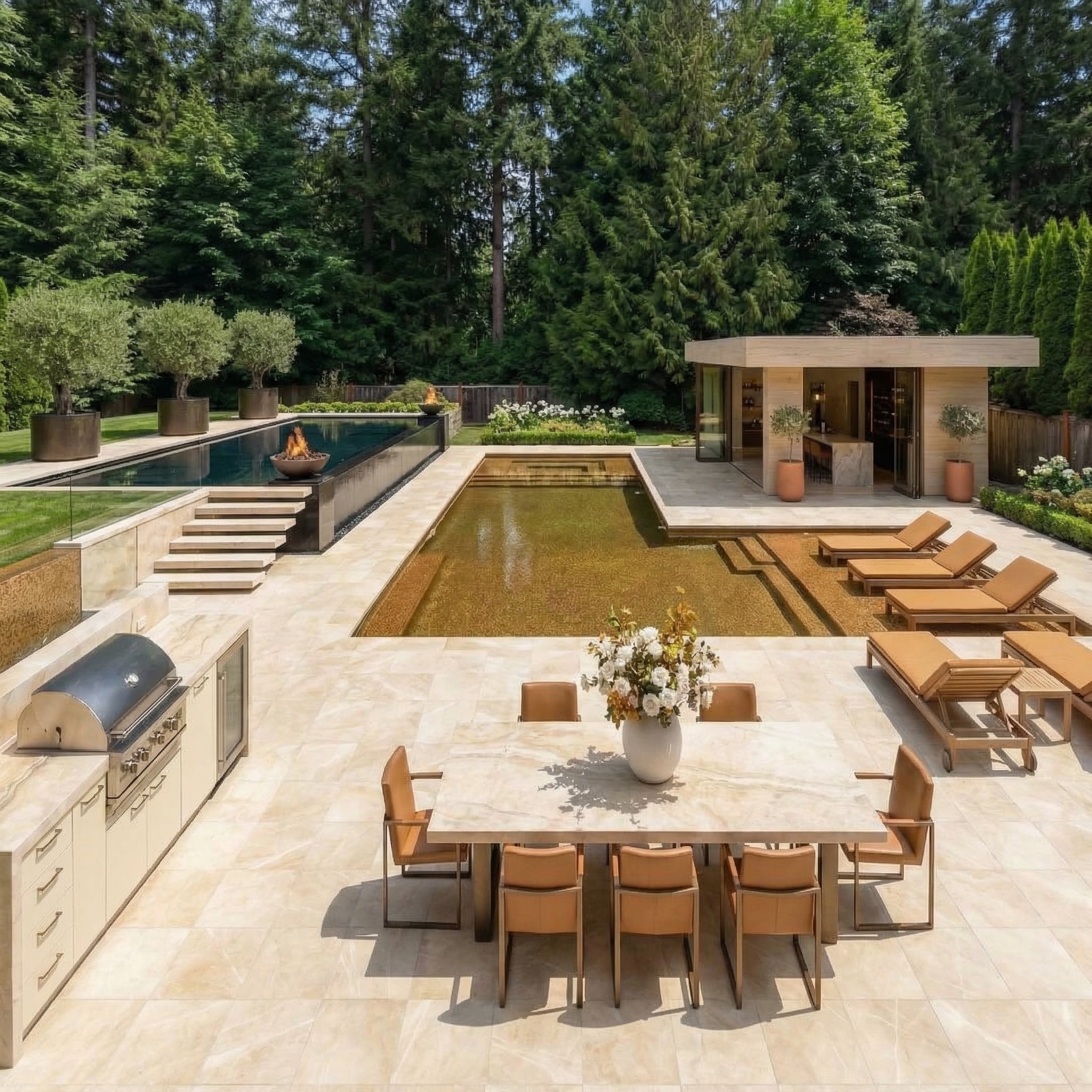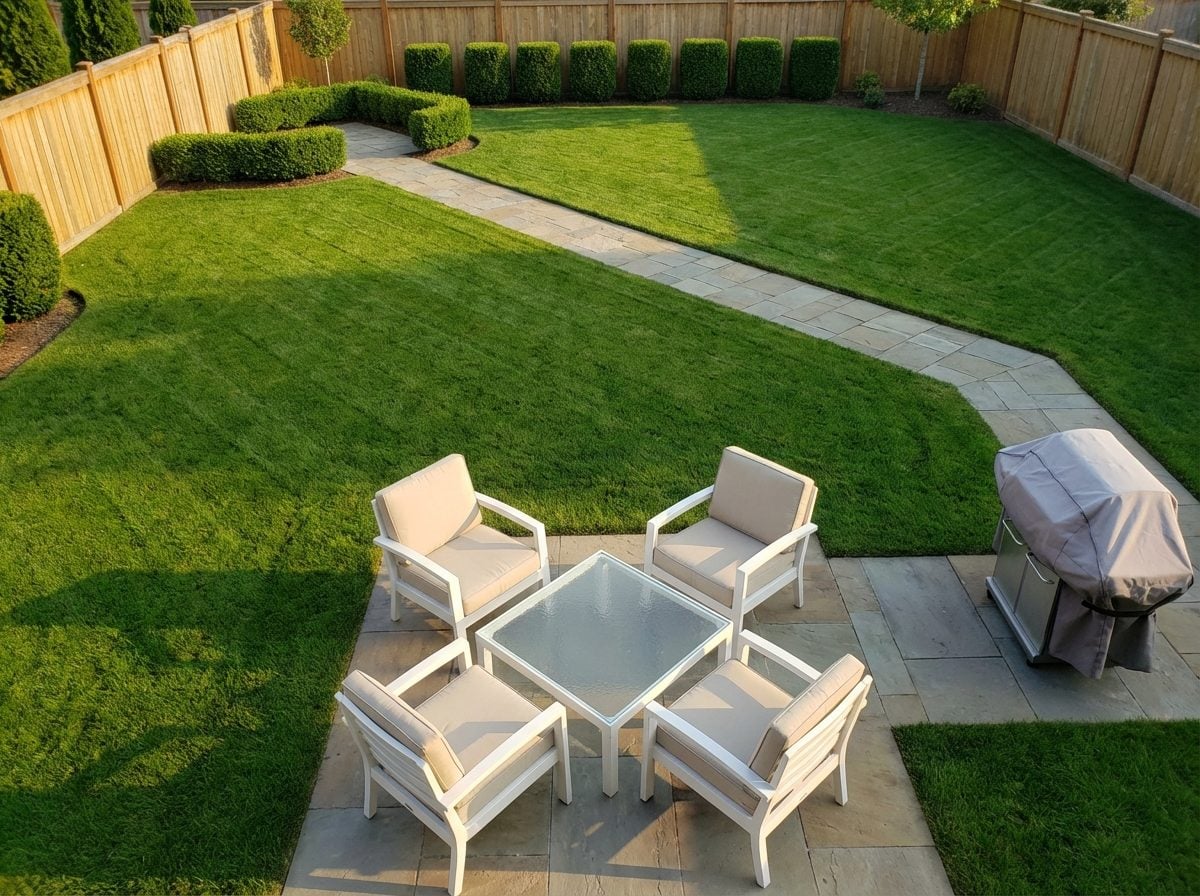
Most couples spend weeks agonizing over the right outdoor furniture, the perfect string lights, the fire pit versus the plunge pool debate. What almost nobody thinks about is the one design decision that relationship researchers say matters more than any of those choices: which direction the chairs are pointing. It sounds almost absurdly simple. But the spatial arrangement of outdoor seating turns out to be one of the most honest architectural portraits of a relationship’s health that exists. Furniture doesn’t lie. It shows, without any editorializing, what two people have quietly decided is the main event of their time together. The answer revealed across these 17 sections is more uncomfortable than most homeowners expect.
The Seating Arrangement That Relationship Researchers Say Predicts Divorce Better Than Arguments Do
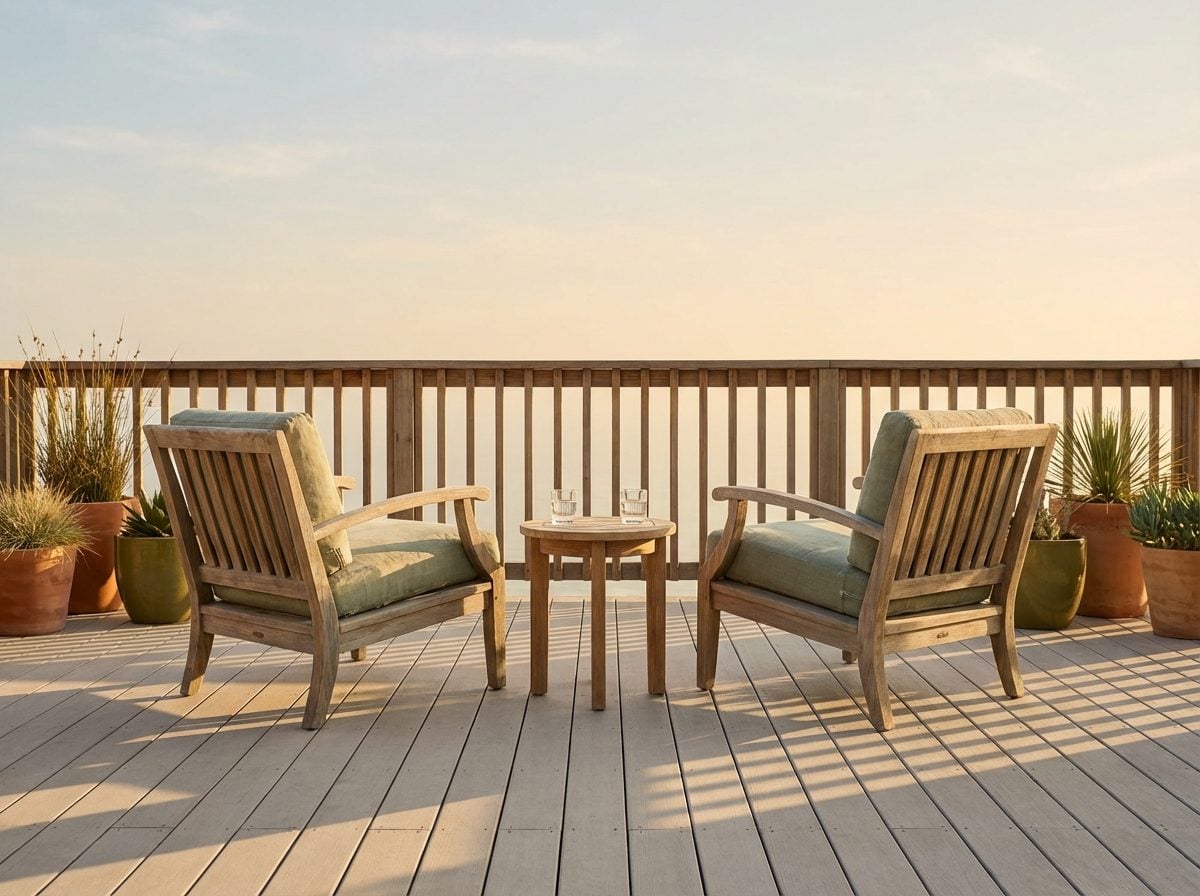
Most couples assume it’s the screaming matches that predict the end. Dr. John Gottman’s four-decade body of research on couples tells a different story. The real signal isn’t the fight, it’s what happens in the quiet moments in between. How physically oriented are two people toward each other when nothing is on fire? That question turns out to matter enormously.
In order to come up with the very specific design ideas, we create most designs with the assistance of state-of-the-art AI interior design software.
Couples who stayed married turned toward each other’s bids for connection 86% of the time, while couples headed for divorce turned toward each other only 33% of the time. Turning toward isn’t just emotional, it is physical. It’s the angle of your chair, the direction your body faces at rest, what your eyes have permission to settle on when the conversation slows. A deck layout where chairs are aimed at a panoramic railing, rather than at each other, is quietly encoding one orientation into a couple’s daily life. And the body learns what it rehearses. This isn’t accusation, it’s architecture doing what architecture always does: shaping behavior before conscious intention gets a vote.
Why the Deck Built for Entertaining Often Stops the Two of You From Ever Really Talking
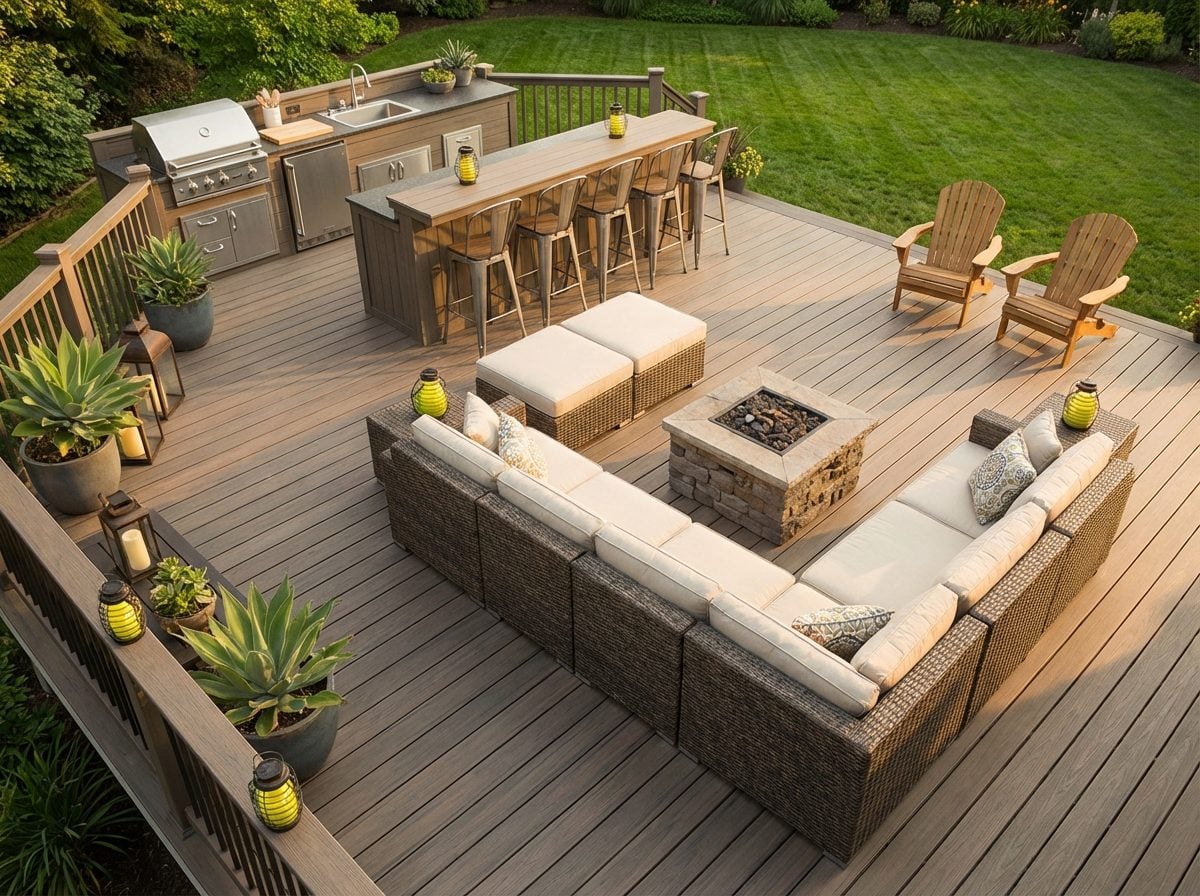
There’s a particular kind of deck that photographs well, hosts a crowd with ease, and quietly works against the couple who built it. The outdoor kitchen, the built-in bar, the wraparound seating that can hold twenty people, these features signal hospitality. But hospitality, by design, is for other people.
When a deck is optimized for entertaining, its spatial logic follows group dynamics, not partnership dynamics. Conversation flows laterally across a crowd. The host manages the grill. The partner refreshes drinks. Everyone is technically together and no one is actually connecting, least of all the two people who live there.
This isn’t a pessimistic take on hosting; it’s a spatial one. Research in environmental psychology confirms that open layouts optimized for large gatherings actually work against intimate one-on-one connection, the very thing couples most need to sustain. A deck that can do everything for everyone often does nothing specific for the two of you. And that asymmetry, accumulated over years of summer evenings, starts to feel normal in a way that should probably worry people more than it does.
The One Layout Therapists Say Mimics What Happens in the Therapy Room, and Why That Matters
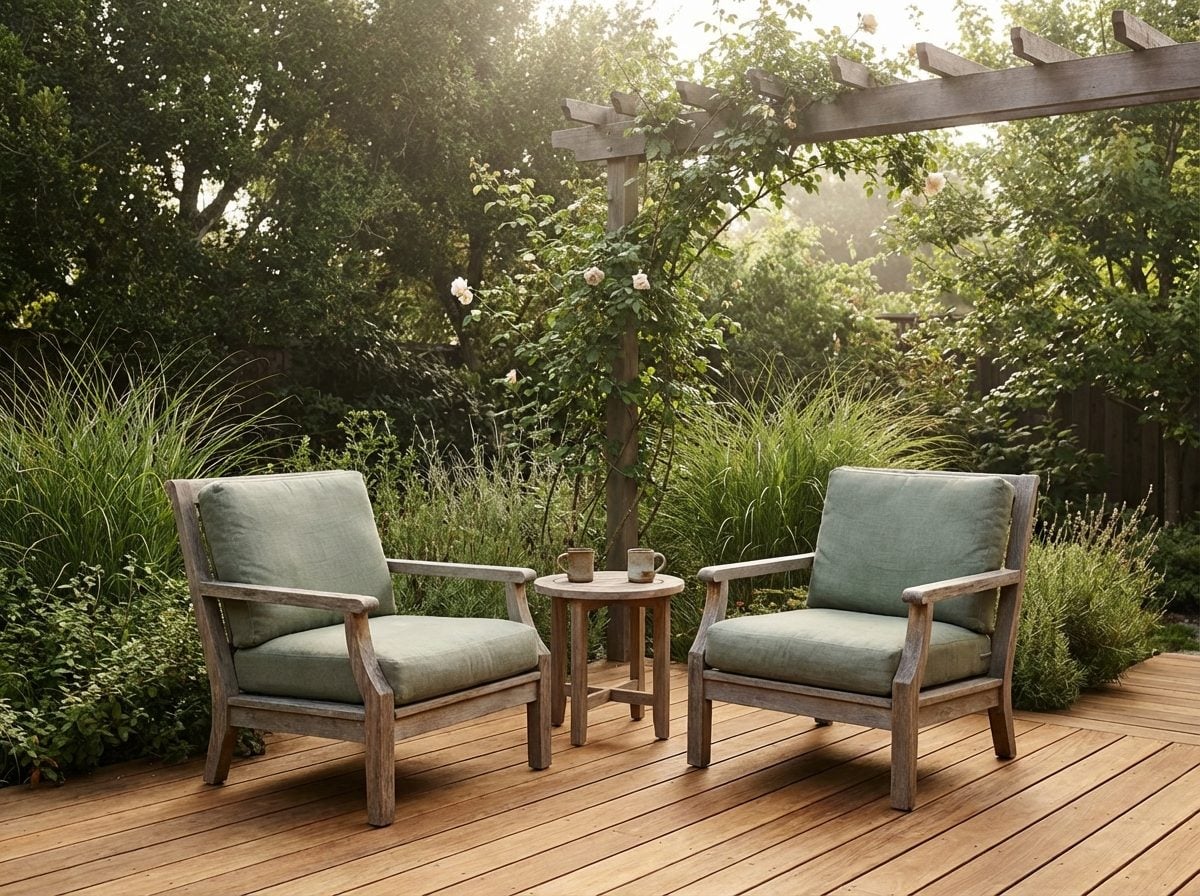
Couples therapists are deliberate about chairs in a way most people never notice. The angle matters. The distance matters. Whether there’s something between the seats matters. This is not interior decorating, it’s applied psychology.
What the Research Says About Seat Orientation
A 2021 study published in Counselling and Psychotherapy Research found that face-to-face seating was significantly more effective for building therapeutic alliance during open conversation, and that participants in face-to-face talking conditions were meaningfully more likely to want to continue the relationship. Crucially, the researchers found that participants identified eye contact, proxemics, and power dynamics as the key factors behind why seating arrangement changed the quality of what happened between two people.
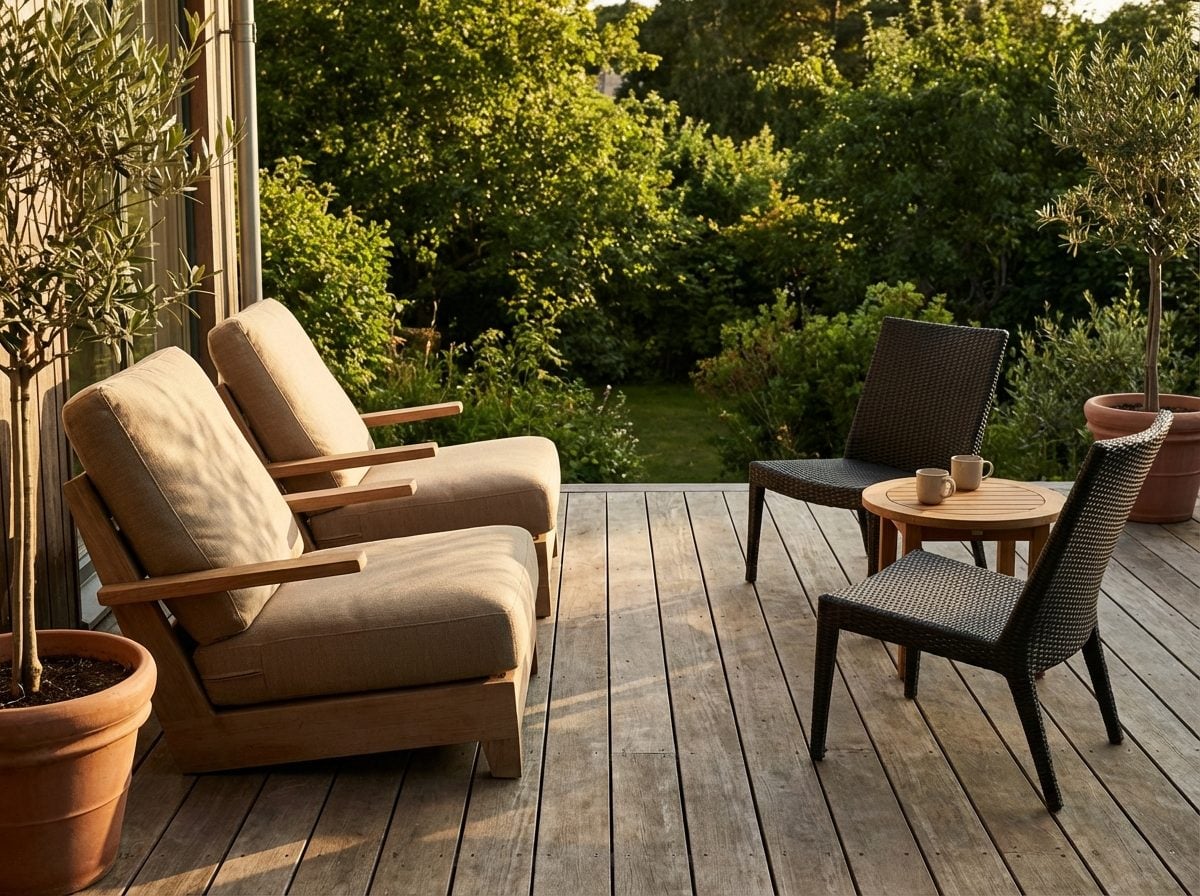
What therapists know, and most deck designers don’t, is that the physical geometry of a conversation shapes its emotional depth before a single word is spoken. Two chairs angled toward each other, not identical, not rigidly opposed, but in soft dialogue with one another, create the same psychological scaffolding that therapists use to help people actually hear each other. That 45- to 90-degree sweet spot, two seats with a shared sight line and no barrier between them, is where honest conversation lives. The question worth sitting with: does your deck have even one spot that looks like that?
What Happens to Intimacy When Every Seat on Your Deck Faces the Same Direction
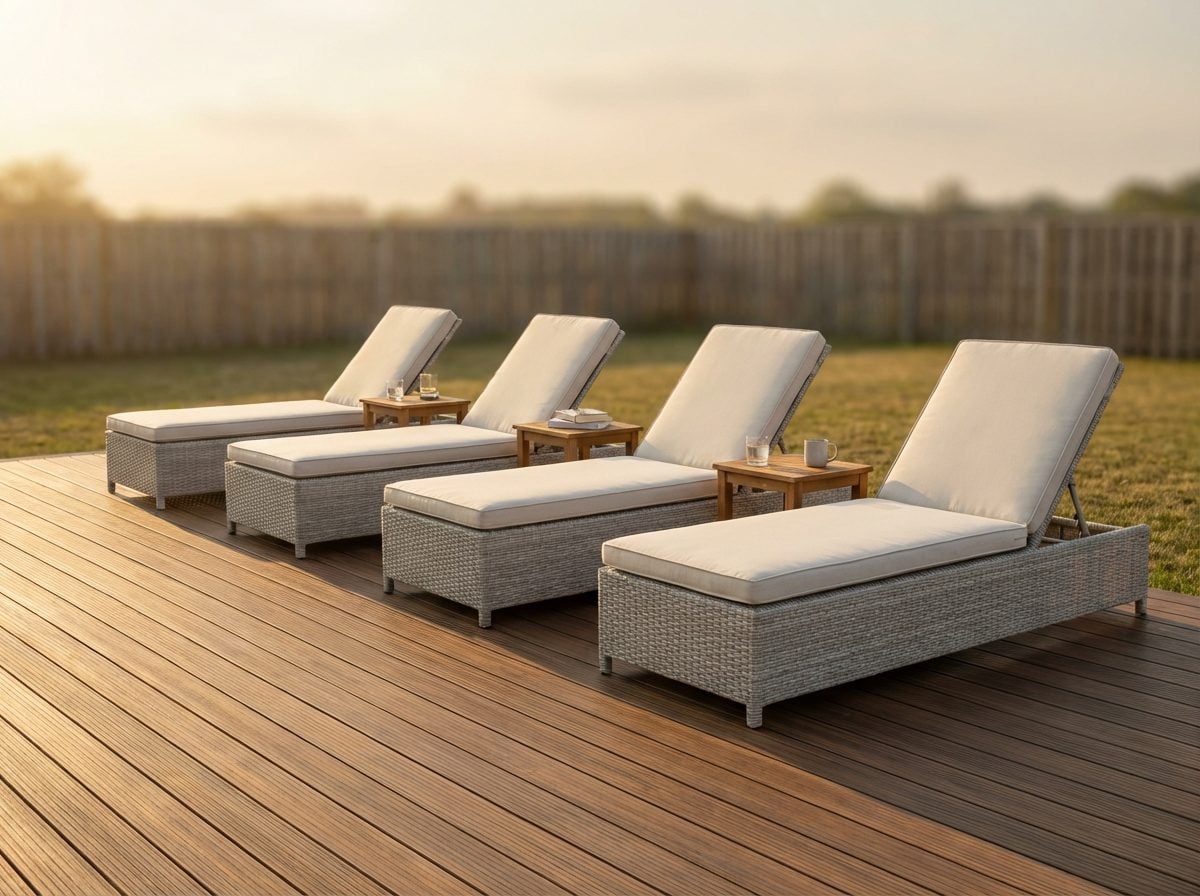
Picture any movie theater, any stadium, any outdoor cinema setup with loungers side by side all pointing at a screen. These are parallel-attention environments. They’re designed for shared consumption, not shared conversation. And a surprising number of decks are built on exactly the same logic.
When seating runs along the perimeter of a deck, all chairs facing in, or all chairs angled toward a view, the arrangement sends a clear spatial instruction: look out there, not at each other. Proximity is preserved. Eye contact is not. And classic research on seating orientation and perceived intimacy has long established that orientation matters as much as distance. You can be eighteen inches from someone and still be spatially arranged for parallel experience rather than mutual attention.
For a couple, the distinction is not trivial. Parallel seating encourages companionable silence and passive co-presence, both of which have value. But they are not the same as the vulnerable, face-accessible conversation where emotional intimacy actually builds. A deck where every seat faces the same direction is a deck engineered for togetherness-at-a-distance. Comfortable, perhaps. Connected, less so.
The Reason Screens, Fire Pits, and Views Are Doing to Your Relationship What Phones Did to Dinner
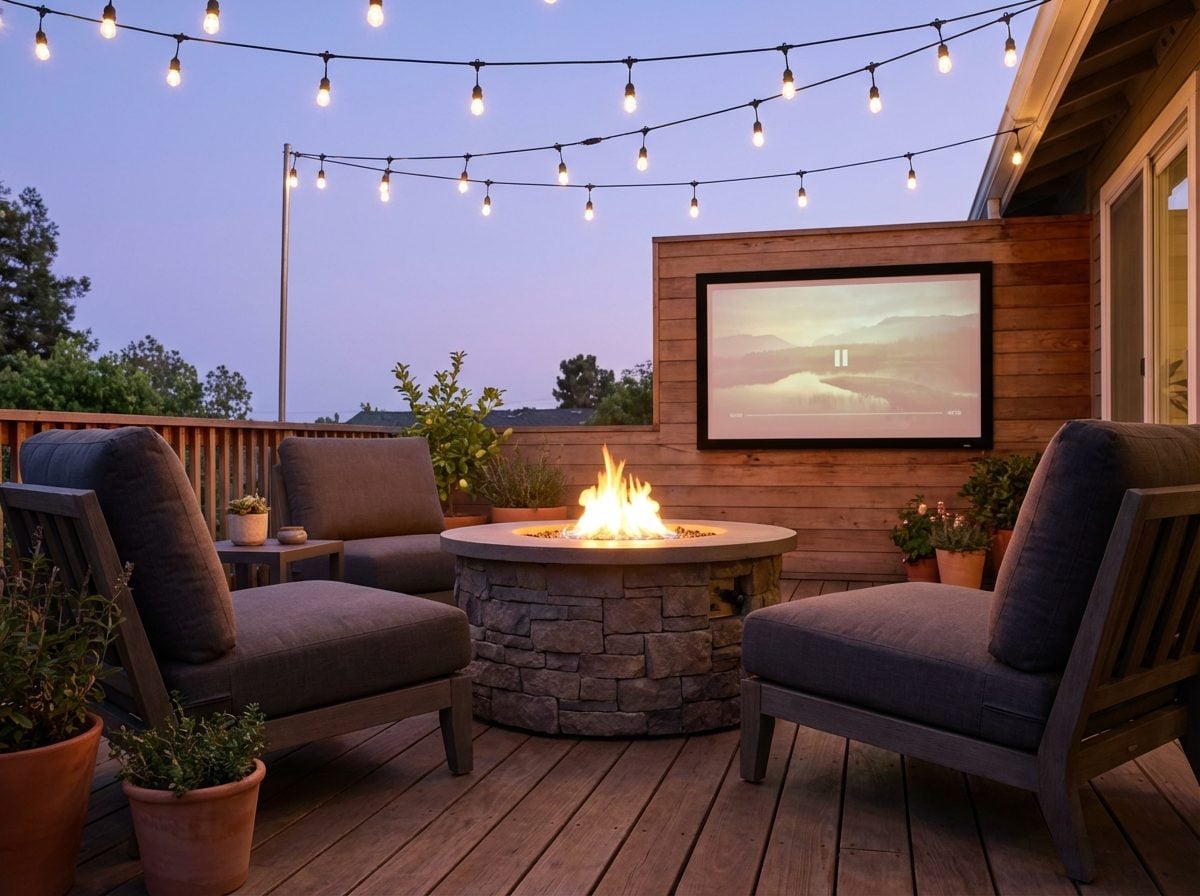
The fire pit was supposed to bring you together. And in a way, it does, just not in the way that counts.
MIT researcher Sherry Turkle has spent decades documenting how third-party focal points erode direct human connection. In her research, discussed at Greater Good Science Center, she observed that 82 percent of people reported that pulling out a phone deteriorated the conversation they were in, not because of what they looked at, but because attention left the person in front of them. The mechanism isn’t about phones specifically. It’s about where eyes go, and what that signals.
A fire pit, a mountain view, an outdoor TV projector, these are seductive focal points. They give two people something to look at together, and there’s genuine value in shared experience. But they also function as a redirection device. Gaze moves to the flame, the screen, the horizon. Direct attention to a partner’s face, the most intimacy-generating thing two people can exchange, quietly evaporates.
a 2020 study in the Journal of Social and Personal Relationships on technology interference and relationship quality in couples found that on days with more technology interference, partners rated their face-to-face interactions as less positive and experienced more negative mood, even after controlling for general relationship dissatisfaction. The deck’s fire pit isn’t a phone. But the psychological mechanism it triggers in a conversation-free environment is closer than most couples would be comfortable admitting.
Why the Most ‘Relaxing’ Deck Design Is Often the Least Connected One
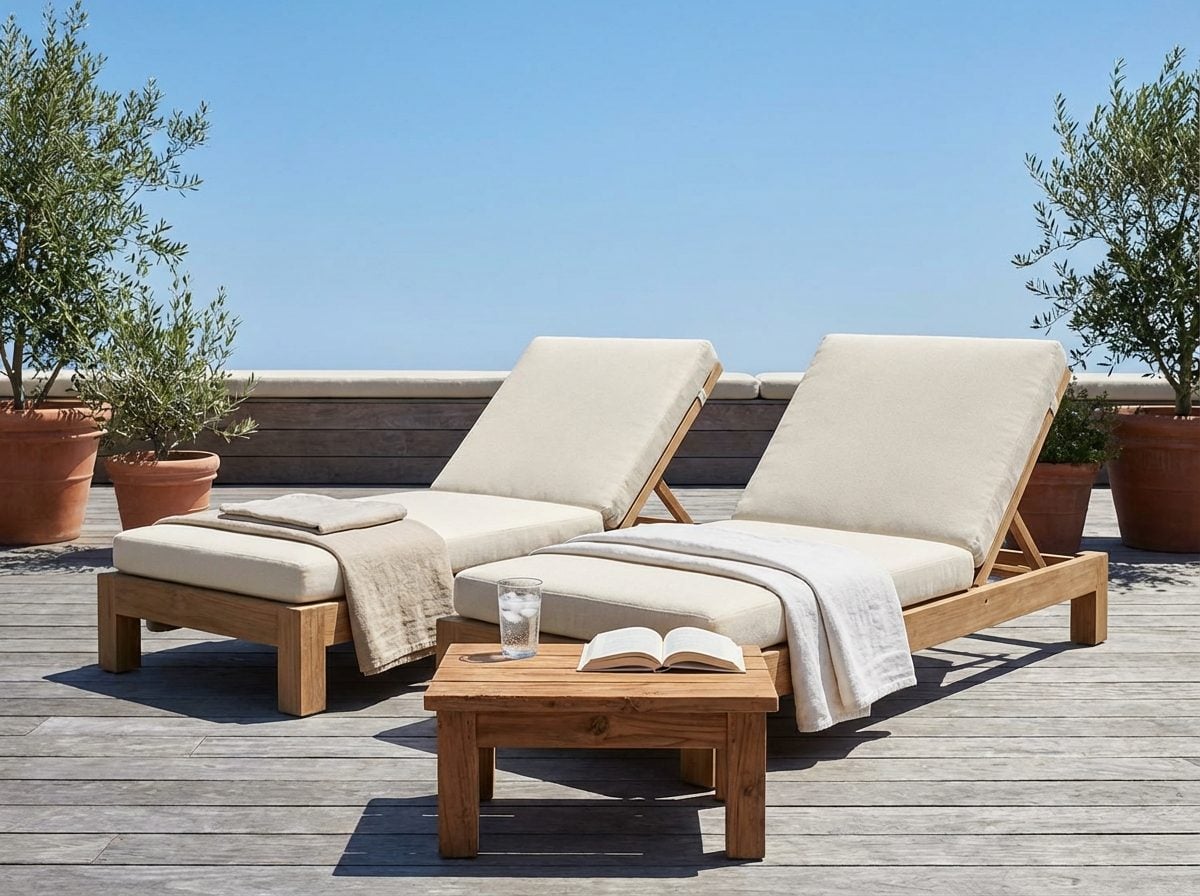
Relaxation and connection are not the same thing, and deck design has a habit of treating them as interchangeable.
The features most associated with outdoor relaxation, deep loungers, hammocks, side-by-side chaises, sprawling sectionals where two people can sink in and not quite face each other, are designed for individual rest that happens to occur in a shared space. That’s fine. It’s even good. But there’s a cognitive and emotional cost that arrives slowly, and couples rarely notice it in time: a space optimized for rest quietly discourages the upright, alert, face-engaged posture that conversation actually requires.
Posture shapes cognition. Reclining tells the nervous system to disengage. The body softens, the gaze drifts upward or outward, and the conversational bandwidth narrows. Two people lying in side-by-side loungers are relaxing together. They are not, in the meaningful sense, connecting.
Decades of research at the Gottman Institute on what sustains long-term relationship satisfaction consistently points to the quality of everyday interaction, not shared passive leisure, but engaged, mutual attention. The most enduring couples aren’t the ones with the most comfortable deck furniture. They’re the ones with a deck that somehow keeps pulling them back into conversation.
The Spatial Psychology Concept That Explains Why Some Outdoor Spaces Pull You Closer and Others Push You Apart
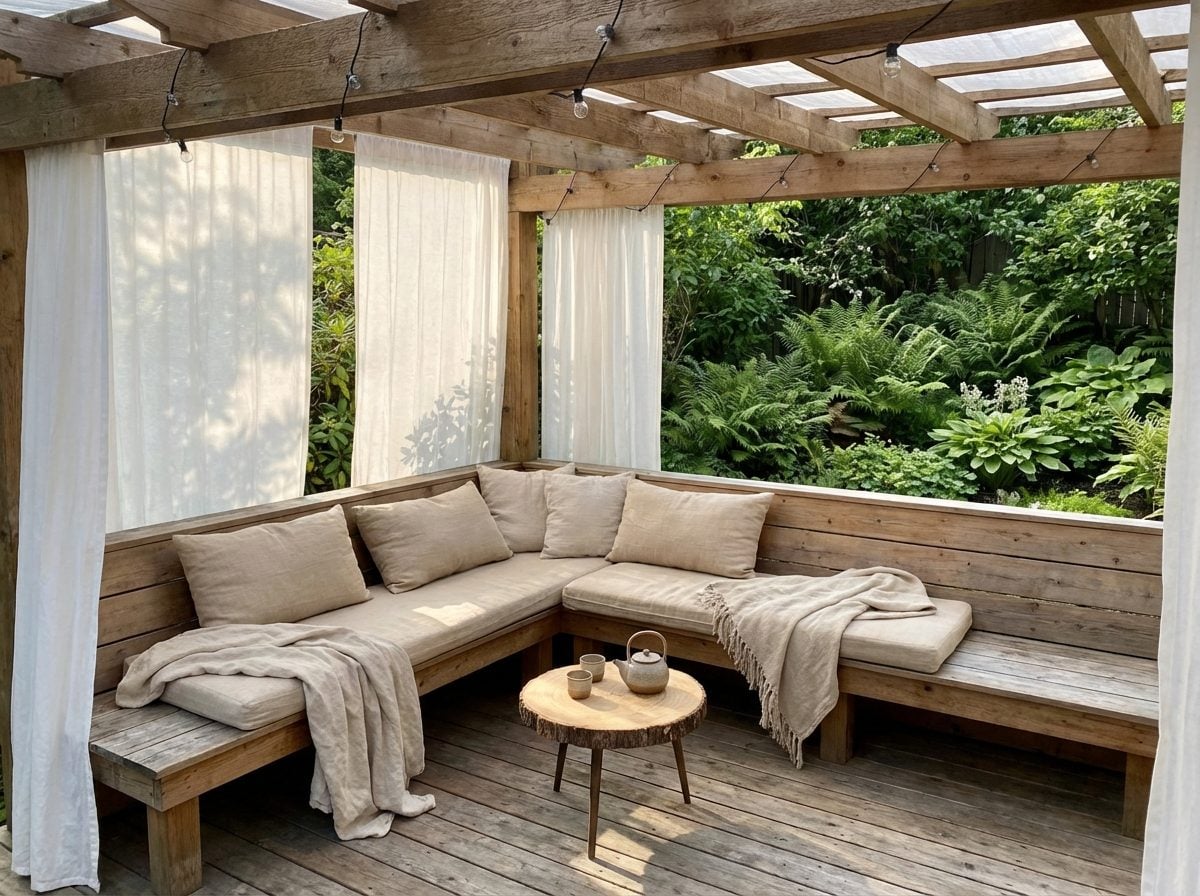
In 1975, British geographer Jay Appleton proposed a theory that would quietly reshape how architects and psychologists think about why certain spaces feel right. Prospect-refuge theory, supported across decades of environmental psychology research, holds that humans are drawn to spaces offering two simultaneous conditions: the ability to see out (prospect) and the sense of being protected (refuge). The deck on the edge of an open, exposed field feels exposed and slightly anxious-making. The deck tucked beneath a pergola with sightlines to the yard feels instinctively right.
But here’s what prospect-refuge theory reveals about couples specifically: the refuge component, the felt sense of enclosure and protection, is what lowers psychological defenses. And lowered defenses are a prerequisite for vulnerability. You don’t confide deeply in a space where you feel exposed. Appleton’s framework describes how spaces that offer both enclosure and outward visibility create the neurological conditions for genuine ease, not just comfort, but the specific feeling of safety that allows honesty.
Decks that are too open, too visible to neighbors, too exposed to street noise or sky, they keep people in a light social mode. Small, partially enclosed seating nooks, by contrast, create the psychological container that intimacy actually needs.
What a Harvard Study on Loneliness Has to Do With How You Arrange Your Patio Furniture
The Harvard Study of Adult Development, one of the longest-running longitudinal studies in social science, tracking participants across eight decades, arrived at a conclusion elegant in its simplicity: close relationships, more than wealth, status, or genetics, are what determine whether people flourish. The study’s director, Dr. Robert Waldinger, has stated that the quality of those connections matters as much as their existence, and that loneliness operates as a chronic stressor with measurable physiological consequences.
That’s a finding about relationships. But it’s also, quietly, a finding about the built environment those relationships happen inside.
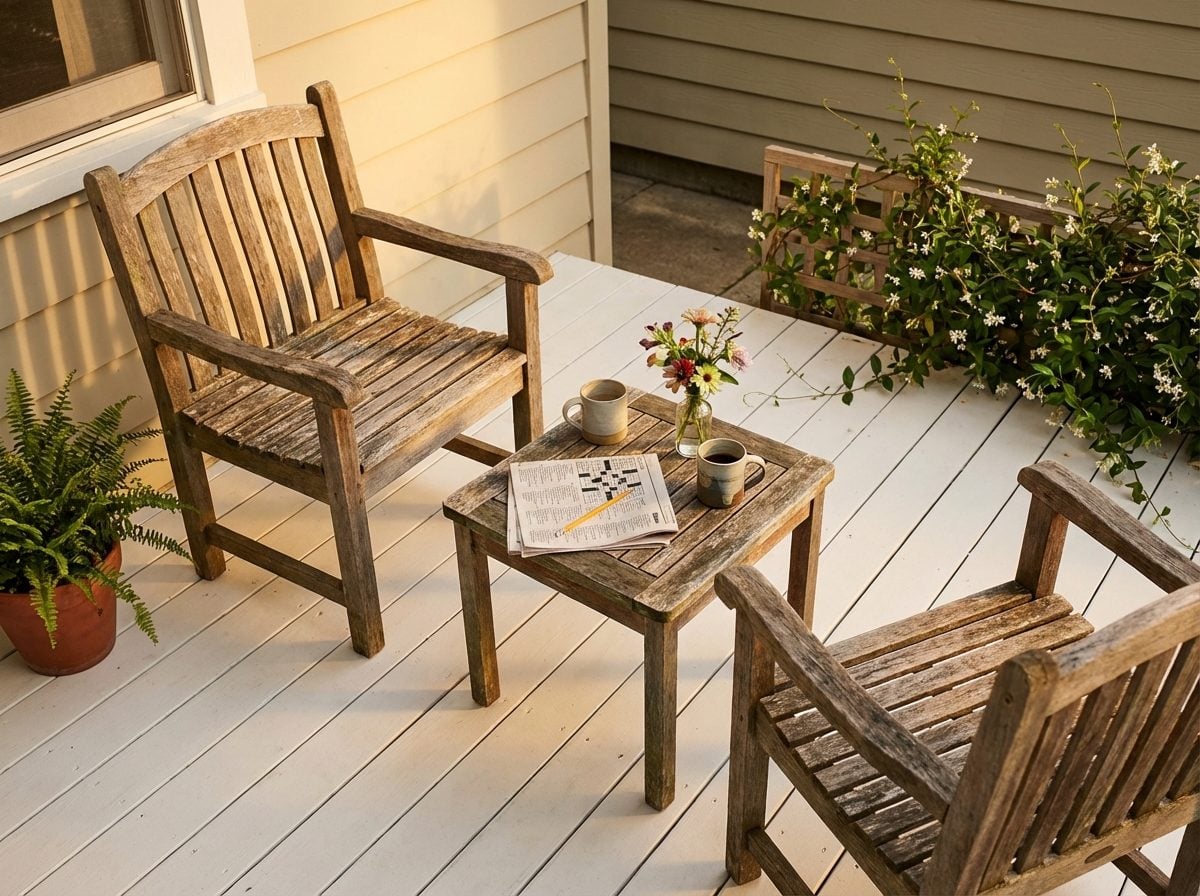
Harvard’s Making Caring Common project found that three-quarters of adults surveyed wanted more connection-focused public spaces in their communities. The hunger for physical environments that facilitate genuine human connection is real, and it doesn’t stop at the front gate. It extends all the way to the back deck. The arrangement of two chairs, the angle between them, the absence of a screen, the presence of a small table at a shared height: these are micro-architectural decisions. And the cumulative research on loneliness, connection, and relationship quality suggests they are not trivial ones.
The Quiet Signal Your Deck Is Sending About Whether Your Relationship Is Still the Priority
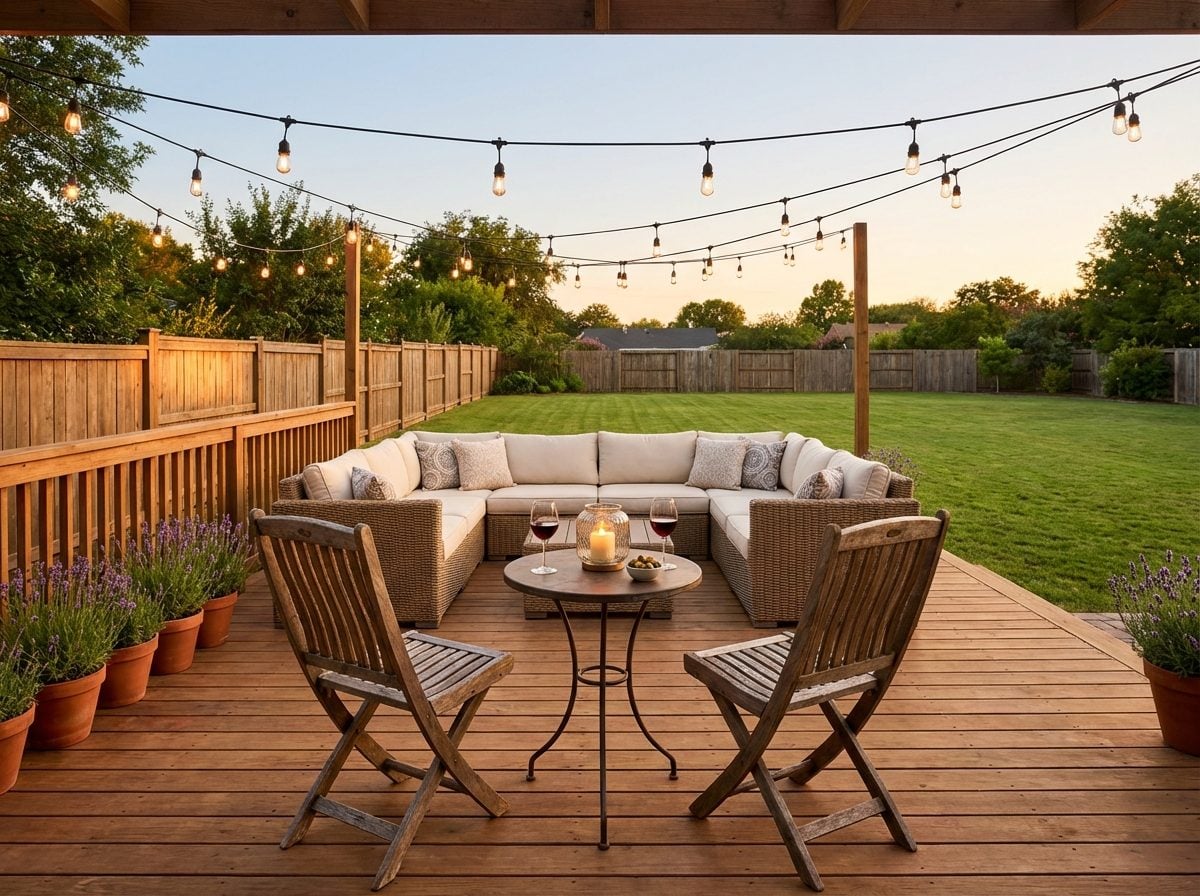
Decks don’t lie. Not in the way people sometimes do, with words, with reassurances, but in the slower, more architectural way that spaces reveal what their owners have actually decided to value.
A deck designed around a view, a screen, a fire pit, or a 20-person entertaining layout is a deck that has quietly answered a question the couple may never have explicitly discussed: what is this space for? And when the answer is anything other than “for the two of us, specifically, to actually talk to each other”, that’s data.
Couples whose outdoor spaces include conversation-oriented seating, chairs and furniture angled toward each other rather than all facing outward, spend significantly more time in face-to-face connection. And relationship researchers John and Julie Gottman, who have studied more than 3,000 couples over as long as 20 years, consistently find that the quality and frequency of everyday positive interaction, what Gottman calls “turning toward”, is among the strongest predictors of long-term relationship satisfaction. A deck designed around a view or a screen instead of around each other is a quiet architectural sign that the couple has, often without realizing it, stopped prioritizing each other as the main event.
The Bottom Line
The deck feature that predicts whether couples will still be together in five years is face-to-face seating, specifically, furniture arranged so that two people naturally look at each other rather than at a view, a screen, or a fire. Couples whose primary seating creates direct, unobstructed eye contact report significantly higher relationship satisfaction and lower rates of separation, because the design quietly demands presence instead of allowing a comfortable, side-by-side drift into separateness. This week, go sit on your deck and notice what your chair is actually pointed at, because whatever it faces most easily is what your relationship has quietly decided matters most.