
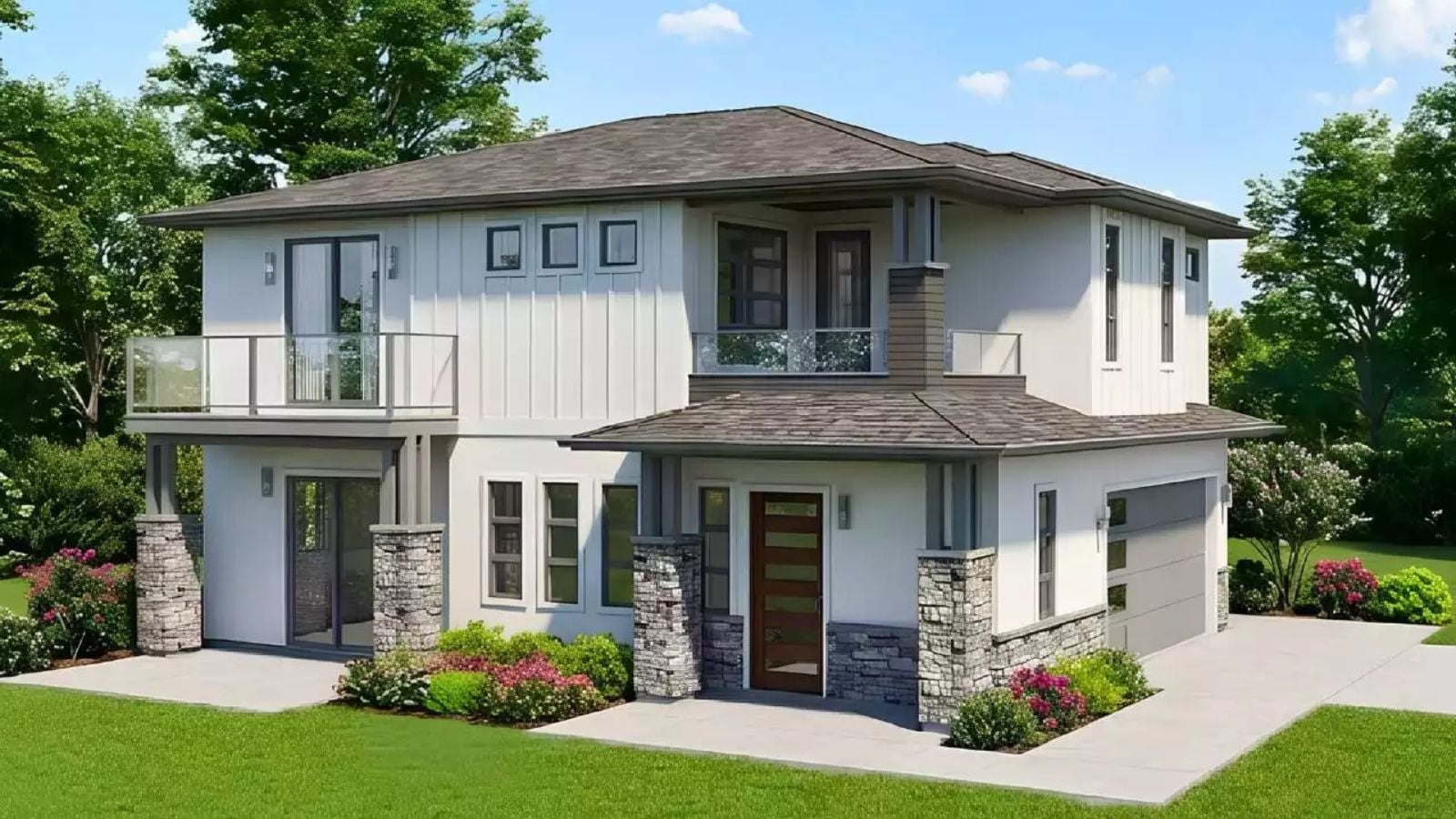
Buying the lot first is the smarter move, but it puts all the pressure on finding a plan that actually fits what you already own. The Auraria answers that with a balcony-level sundeck worth the square footage, a main floor that breathes, and a two-story layout that keeps Saturday morning coffee separate from the noise of the week.
Specifications
- Sq. Ft.: 1,775
- Bedrooms: 3
- Bathrooms: 3.5
Floor Plan – Main Floor
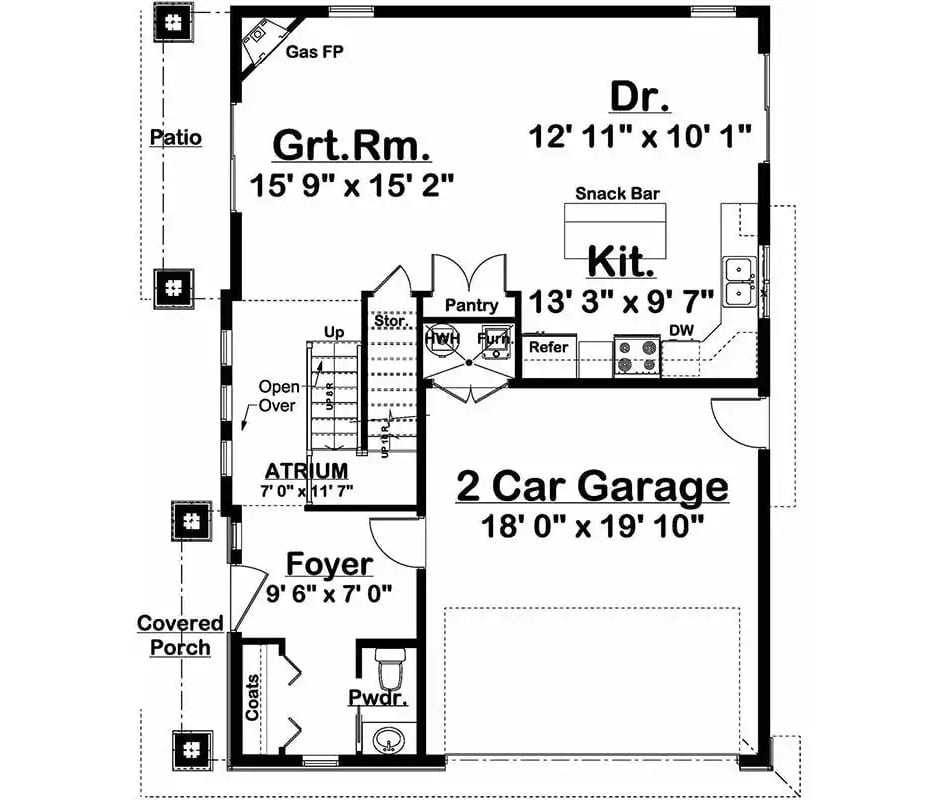
Great room and dining room occupy the front of the main floor, with the kitchen pushed back behind them. A central utility core bundles the pantry, furnace, and water heater in one place. The atrium staircase connects vertically through both floors, and the foyer feeds directly into a two-car garage without forcing you through the living room to get there.
Floor Plan – Second Floor
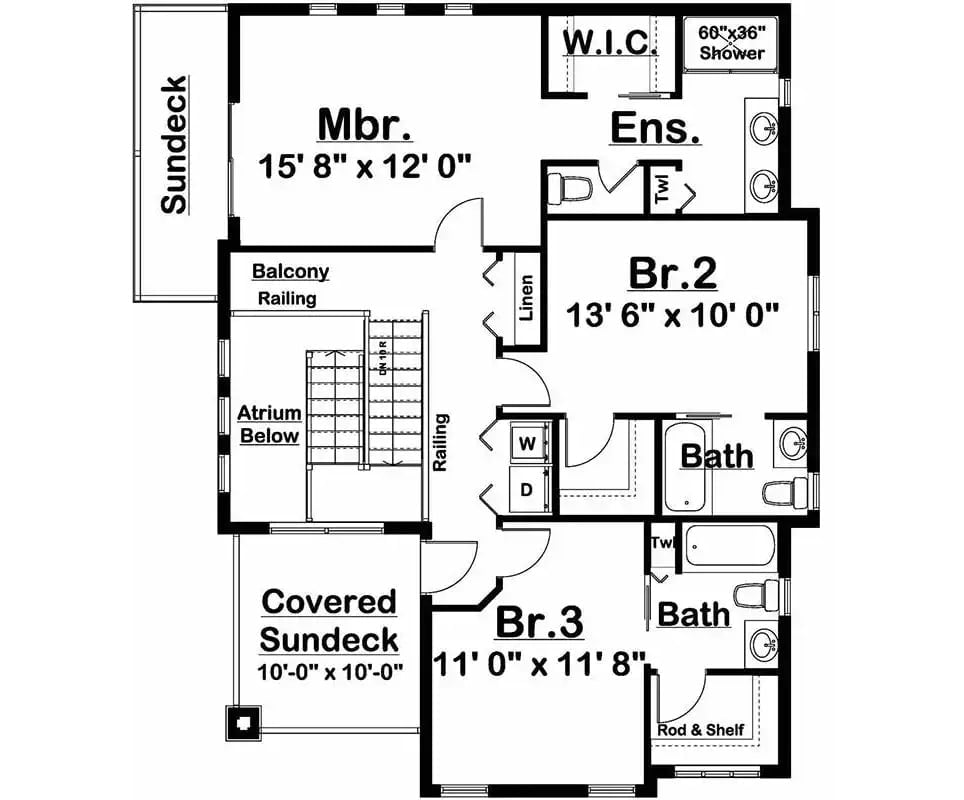
Three bedrooms, two full baths, and an ensuite with a walk-in closet and 60×36 shower fill the upper floor. Laundry sits centrally between the bedrooms — actually a useful placement, not an afterthought. Two sundecks anchor opposite ends of the floor, and the open atrium staircase keeps the level from feeling closed off.
Brass Lamp, Patterned Tile, and a Staircase That Earns Its Keep
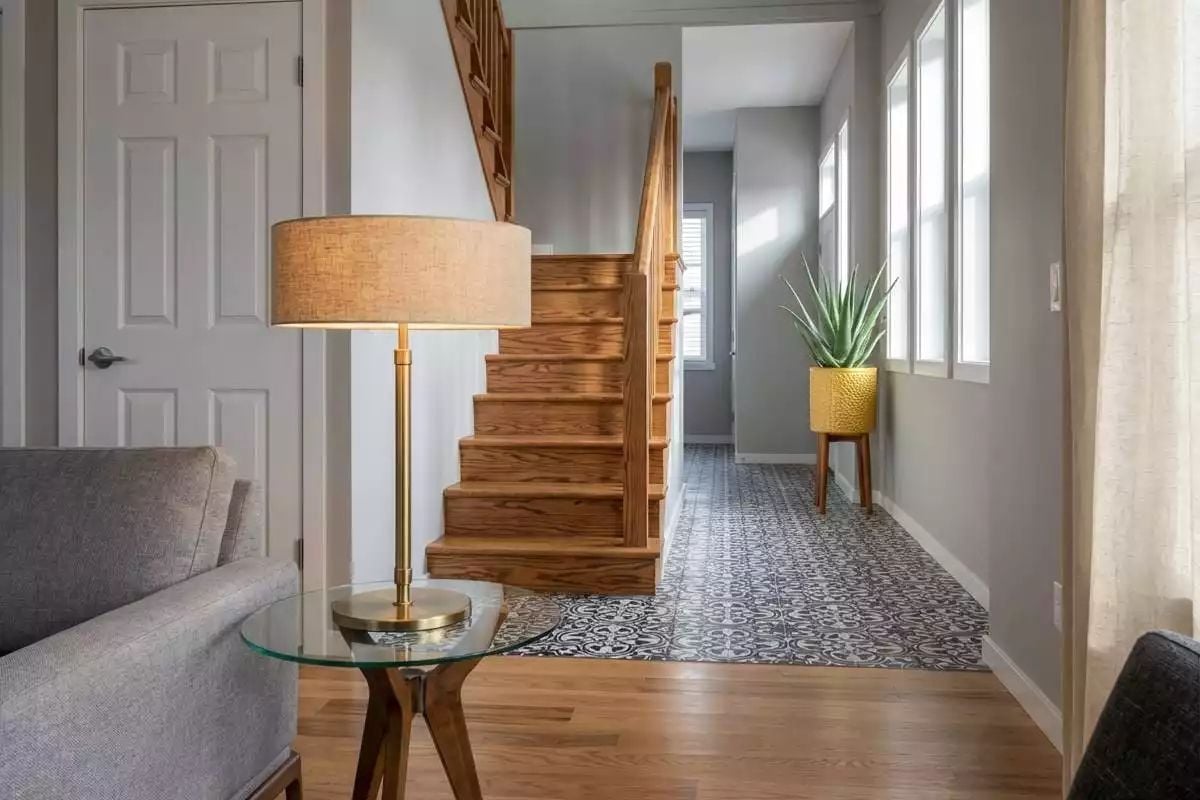
Oak stair treads do a lot to soften the gray walls, and patterned cement tile at the foyer threshold signals the transition without being loud about it. A gold planter with aloe pulls it together. None of it is trying too hard.
Marble Island, Warm Cabinets, and Pendant Lights That Pull It Together
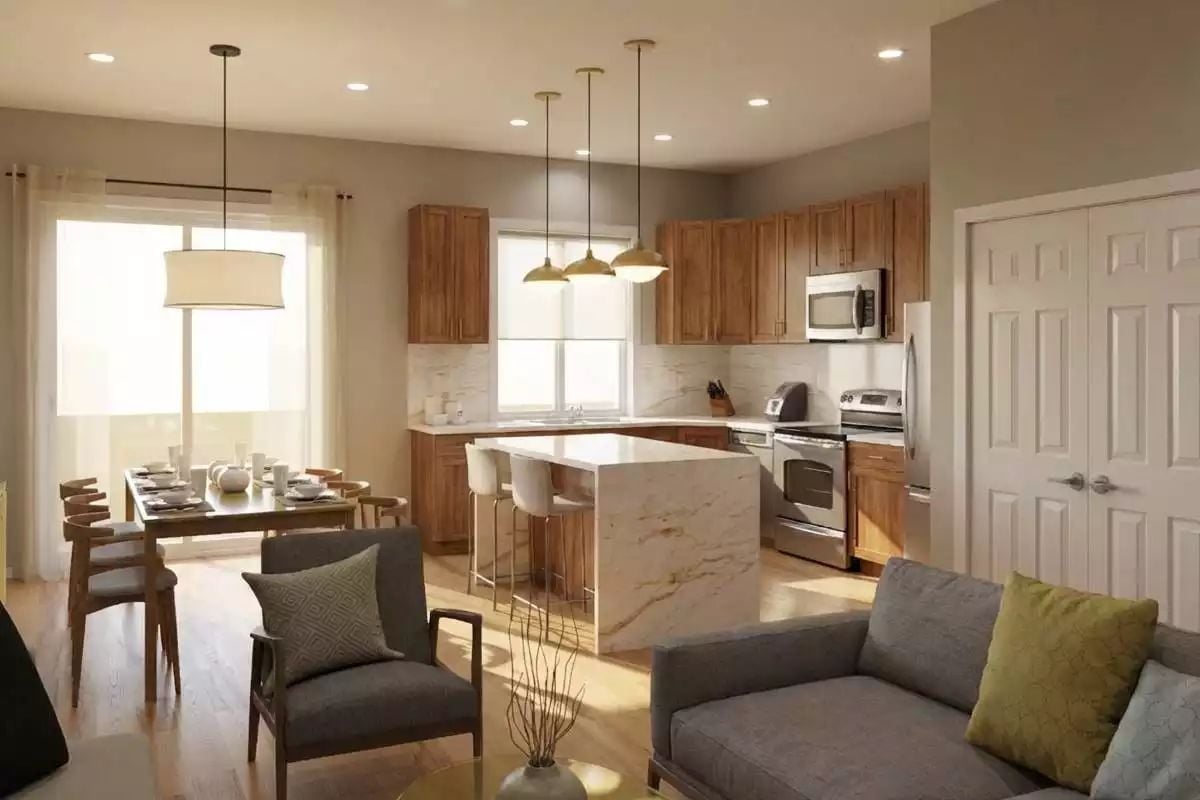
Gold pendants anchor the kitchen island, which sits over light hardwood and pairs with honey-toned cabinetry that keeps the space from going cold. Bar-height stools face the marble countertop. Beyond the island, a long dining table catches window light from what looks like a balcony door — a good problem to have.
Bar-height stools face the marble countertop.
Marble Island, Pendant Glow, and a Dining Table Set Like Someone’s Actually Coming Over
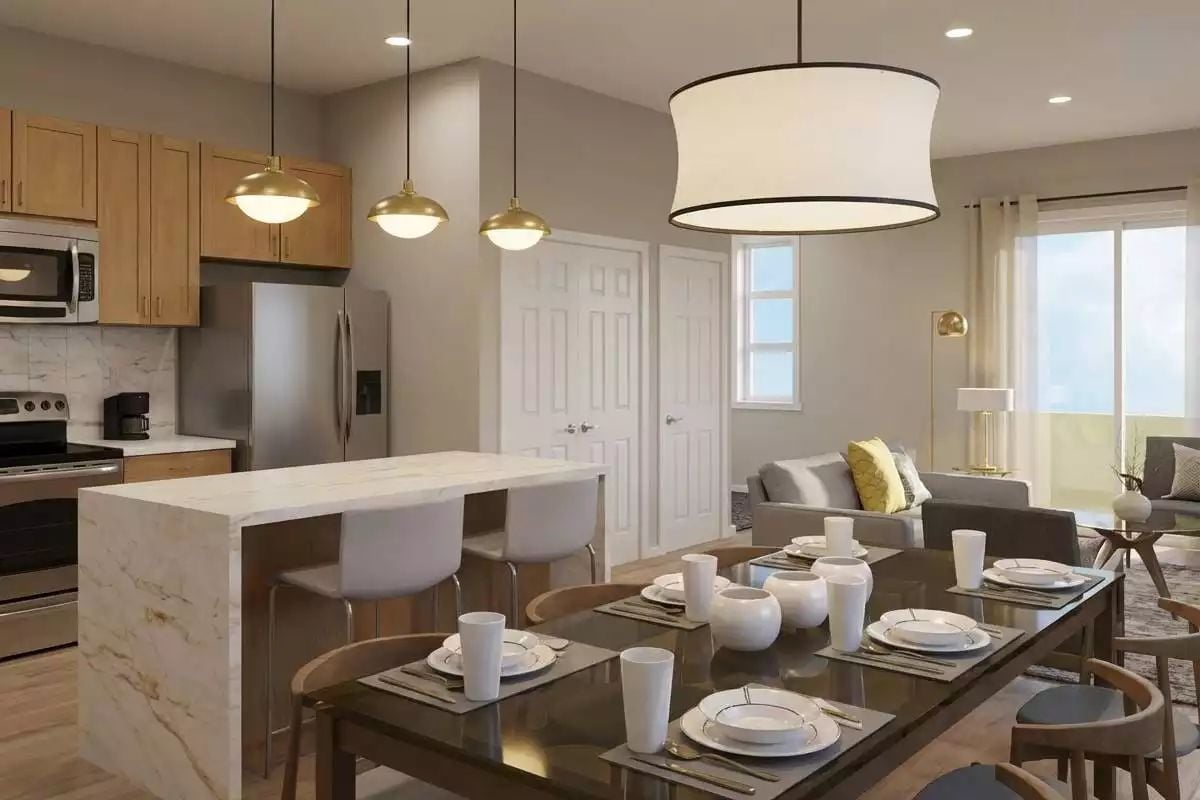
Three brass pendants hang over the island while a dark glass dining table holds a full place setting for six. Quartz countertops with warm veining connect the two zones without either one crowding the other out.
Ask Yourself: Before you buy a kitchen island, check whether you actually have room to walk around it. This one works because the dining table pulls away rather than crowding the same zone. Measure both before you commit.
Pendant Cluster, Glass Rail, and Ferns That Actually Belong Here
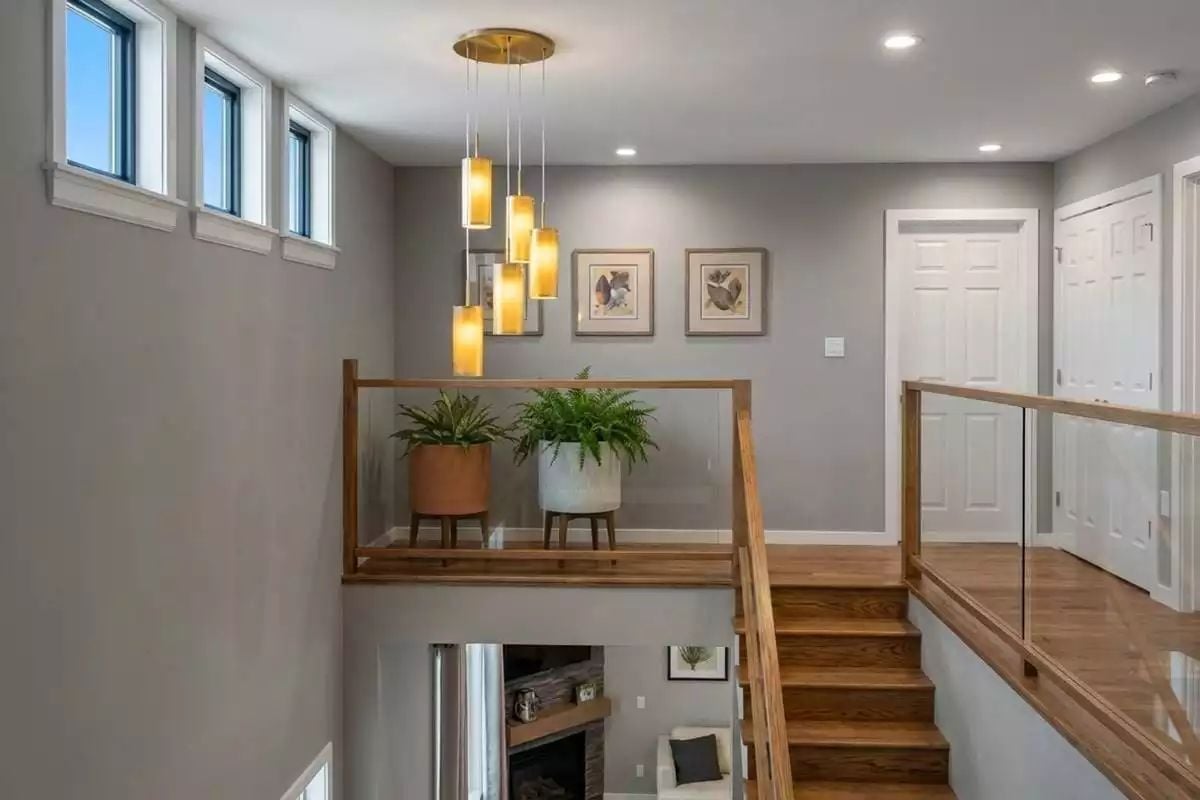
Cascading amber pendants anchor the upper landing without competing with the wood-and-glass railing below. Two ferns in mid-century planters occupy the corner nook, and natural wood stair treads carry warmth up through both floors. It’s a vertical sequence that actually reads as designed rather than assembled.
Editor’s Note: Clerestory windows along the stairwell wall are doing real work here — pulling in daylight without giving up wall space for art or furniture. On a lot with a tricky orientation, narrow high windows on a north-facing wall keep the interior bright without direct glare. Bring this up with your architect before framing begins, not after.
Soft Gray Walls, Botanical Prints, and a Balcony That Earns the View
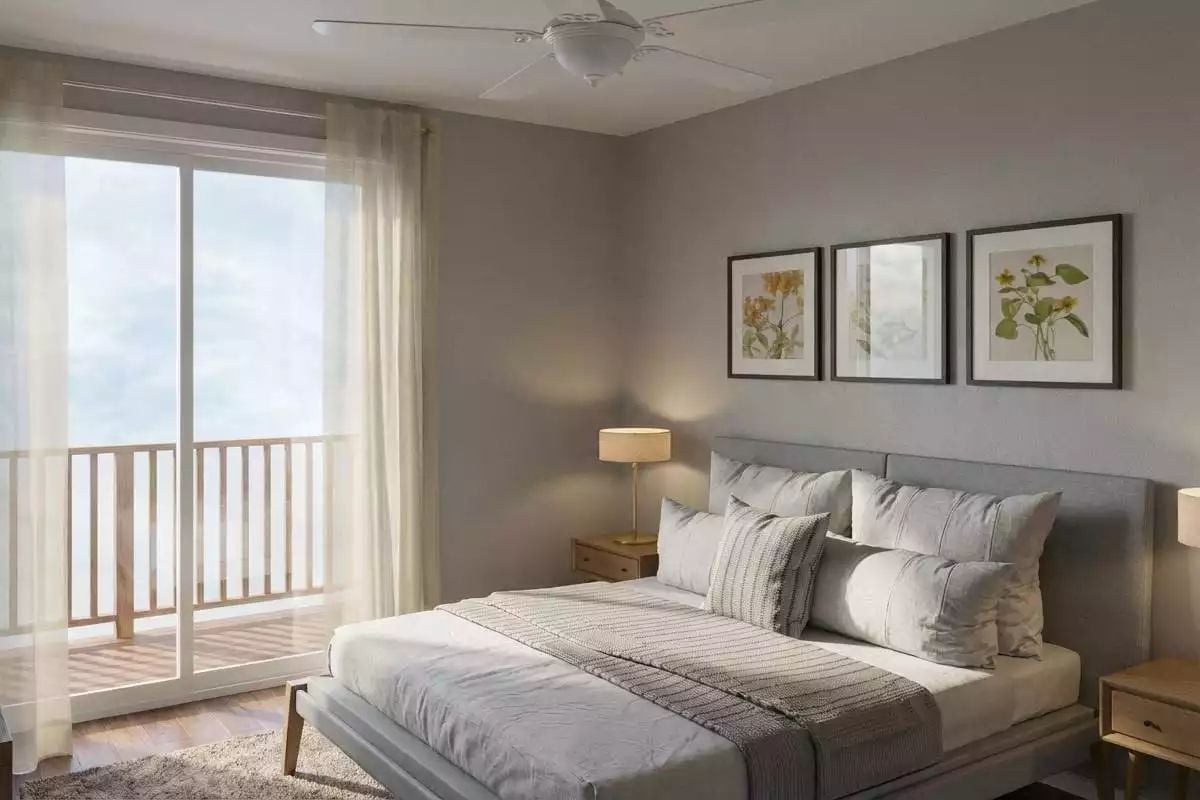
Sheer curtains diffuse the light coming off the water while framed botanical prints ground the headboard wall with something specific. Not decorative in a generic sense. Specific.
History Corner: Ceiling fans became a standard bedroom fixture in the late 19th century, originally marketed as a luxury cooling alternative to open windows in warmer climates. Early models ran off water turbines connected to a building’s plumbing — electricity hadn’t made them practical yet. By the 1920s, electric motors brought the price down far enough for middle-class homes, and the paddle fan silhouette we still use today was essentially set from that point forward.
Pull that same brass finish into the bathroom, and here’s what it looks like at full commitment.
Brushed Brass Hardware, Marble Countertops, and Pendant Lights Hung Low Enough to Matter
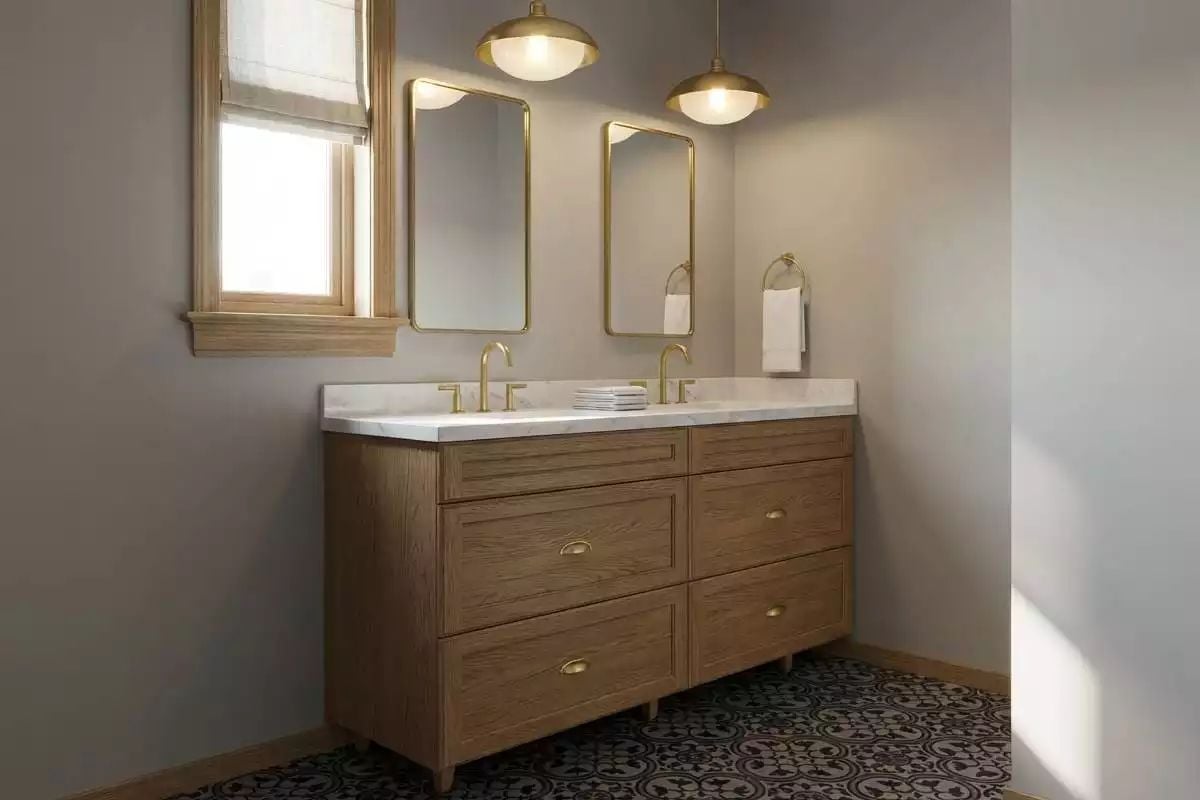
Pendants hung close to counter height keep the light personal rather than washing the whole room from above. Brass faucets and cup pulls repeat across both sinks, and patterned cement floor tile grounds everything against all that warm wood. Two mirrors, two sinks, enough drawer space to actually split storage evenly — which is the whole point of a shared bath.
Board-and-Batten White, Black Railing, and a Gravel Yard That Skips the Lawn Entirely
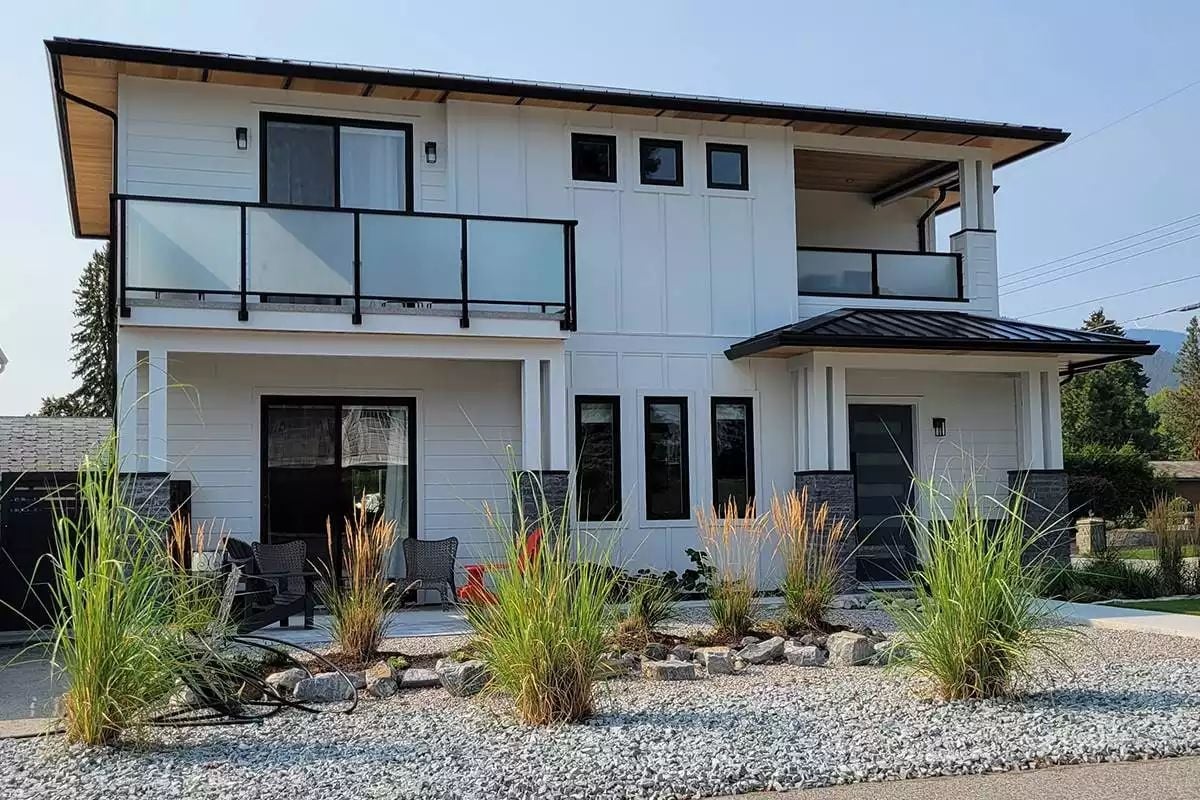
Ornamental grasses replace turf here, planted in clusters with rock edging and gravel fill across the front yard. Low maintenance by design, not by accident.
Why Glass Panel Railings Work on This Balcony
Glass panel railings on the upper balcony keep the sightlines open without visually splitting the facade in half, which a solid or wood rail would absolutely do. The black metal framing ties directly to the window frames below, so the whole front elevation holds together as one thing rather than a collection of separate decisions.
Pin It
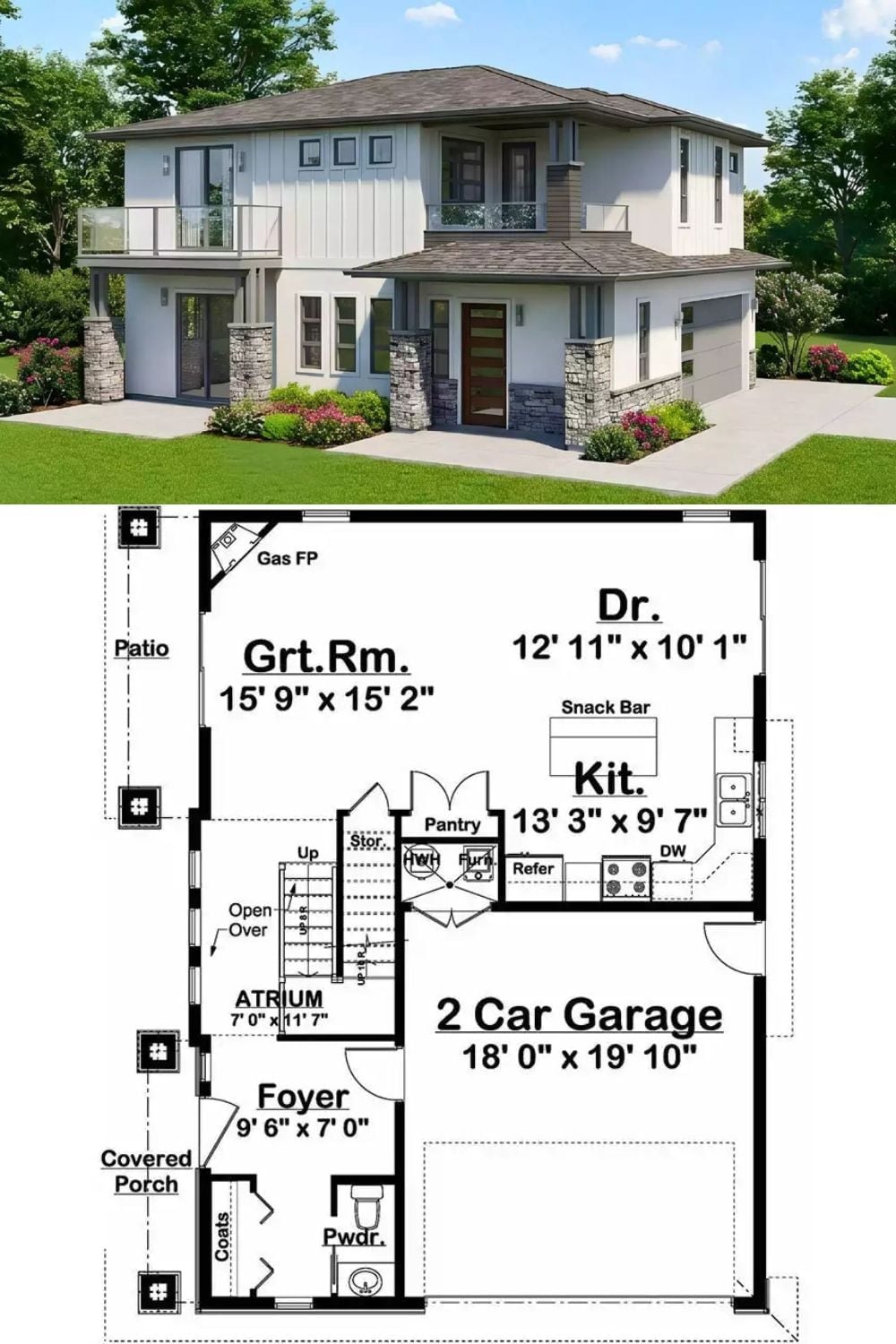
The exterior rendering shows a two-story modern prairie-style home with stone columns, board-and-batten siding, and upper balconies at both ends. Below it, the first-floor plan lays out a great room, dining room, kitchen with snack bar, atrium, foyer, powder room, and two-car garage.
Pro Tip: Atrium spaces on the main floor are rare in standard production plans, but they earn their footprint by borrowing light for the stairwell and giving you a visual anchor between the garage entry and the living areas. On a north-facing lot, that placement matters more than most buyers realize until they’re already living in the house.