
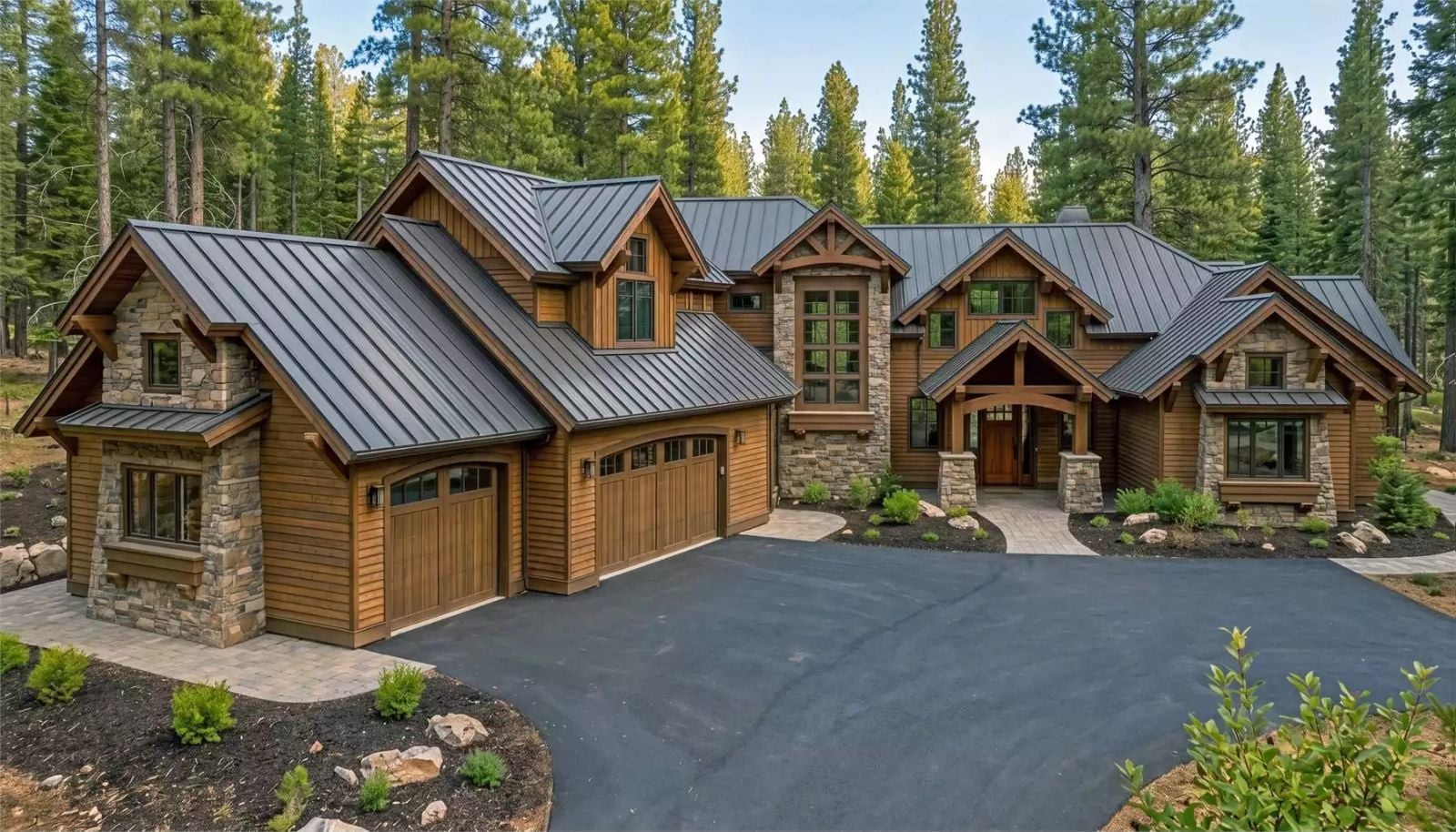
Mountain houses built for “families” usually mean a great room nobody sits in and a loft that collects luggage — the Asher Hills is the answer to all of that, with an open great room that actually pulls people in, a bonus room the kids can claim on Friday night while the adults hold the kitchen, and a table that needs every leaf pulled out by November. At 4,466 square feet across two floors, it’s designed so noise travels freely, the kitchen keeps cooks close to the conversation, and dinner has room to run past nine.
Specifications
- Sq. Ft.: 4,466
- Bedrooms: 5
- Bathrooms: 5.5
Floor Plan
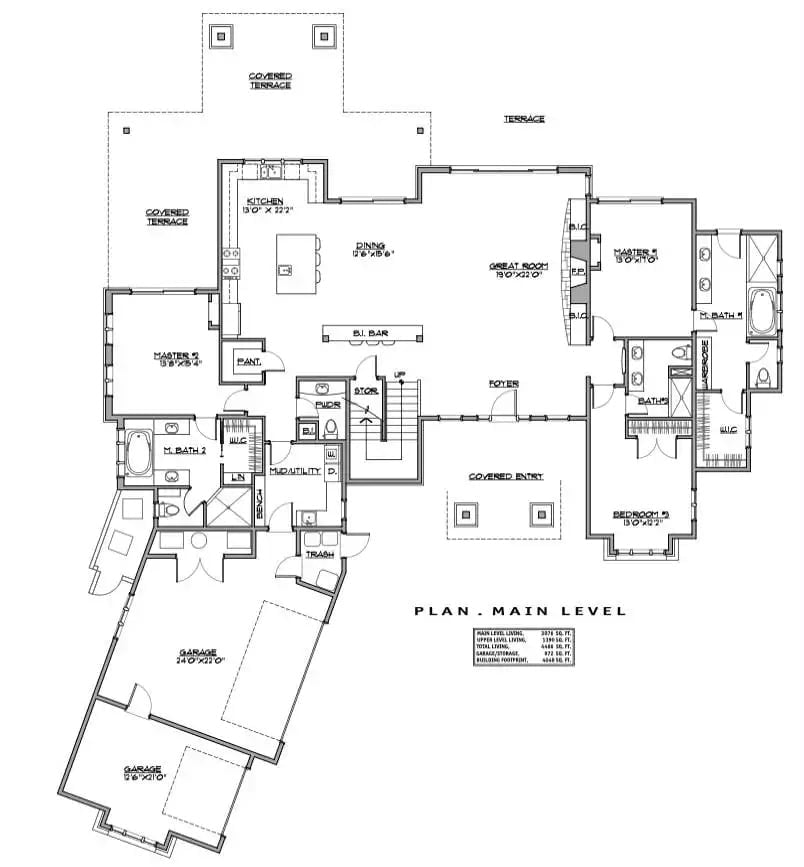
The main level places two master suites on opposite wings, keeping them well away from each other — useful if the house is ever shared between generations or guests. A central great room opens directly to the dining area and kitchen, covered terraces wrap three sides, and a foyer stair connects the whole thing to the floor above.
Floor Plan
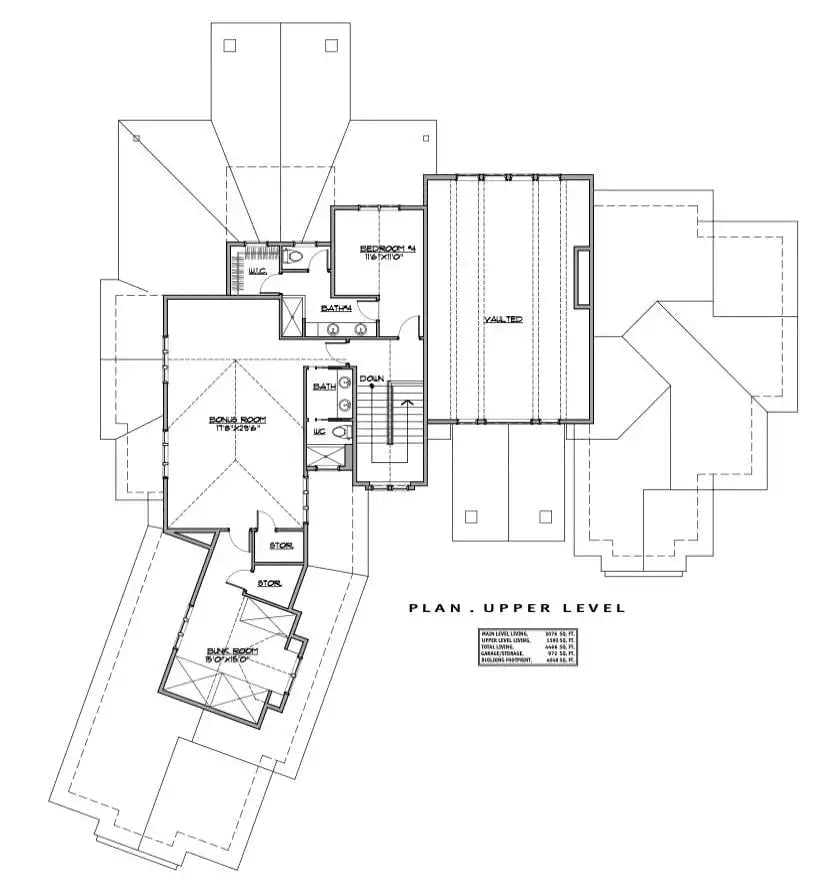
Upstairs, Bedroom 4, a bonus room, and a bunk room sit tucked off a dedicated storage corridor — sleep and play separated by more than just a door. Two full bathrooms serve the floor, with a W.C. near the stair landing for quick access. The vaulted open section bridges the upper hall down to the main level, keeping the connection between floors without sacrificing the sense of retreat that makes an upper floor worth having.
Stone, Glass, and a Fire Pit That Earns Its Place on the Patio
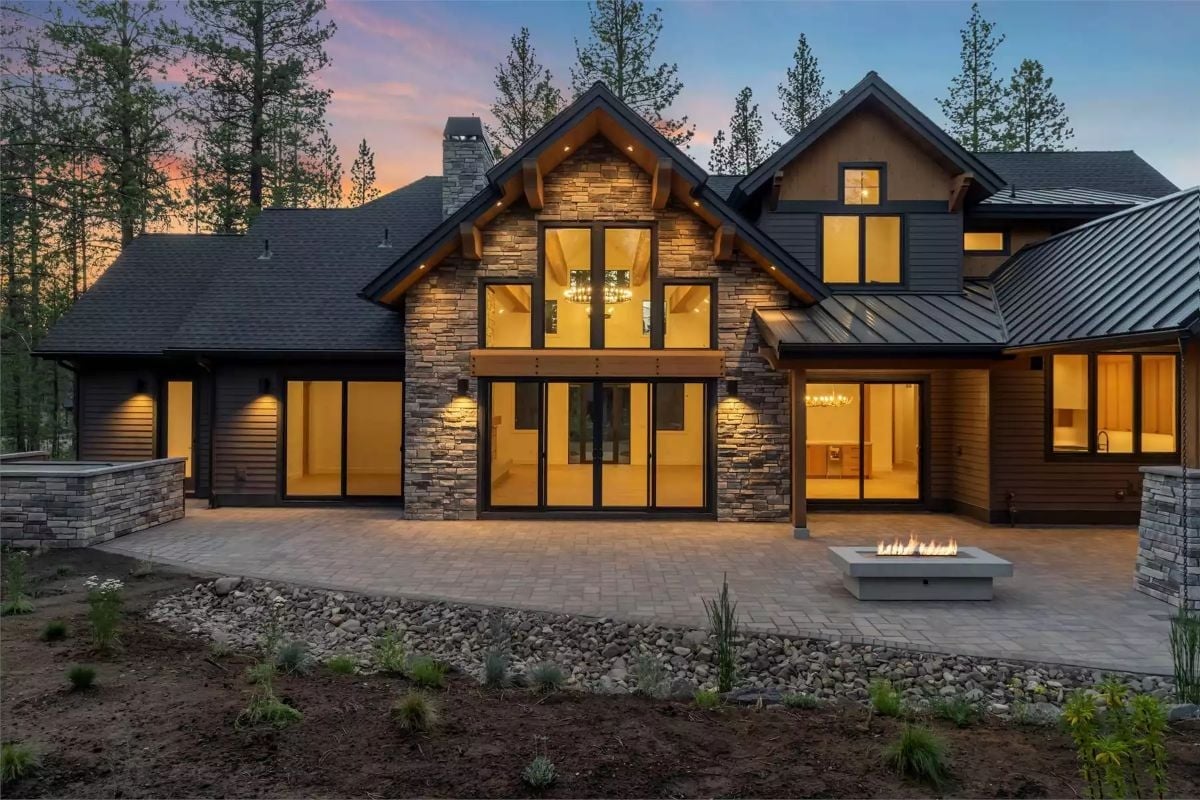
Stacked stone wraps the gabled center section while dark-framed sliding glass panels run nearly floor to ceiling, letting the warm interior light spill across the paver patio at dusk. A rectangular gas fire pit anchors the outdoor space without making a fuss about it. Through the upper glazing you can just make out the chandelier inside, and tall pines close in from every side — which, honestly, is most of what you’re paying for out here.
By The Numbers: Stacked stone paired with dark metal roofing and wood bracket details is a signature of mountain transitional architecture, common across Pacific Northwest and Rocky Mountain builds. The dual-pitch roofline — asphalt shingles on one wing, standing seam metal on the other — reflects a multi-section design approach that shows up regularly in custom homes north of 4,000 square feet.
Vaulted Ceilings, Exposed Beams, and a Stone Fireplace That Commands the Room
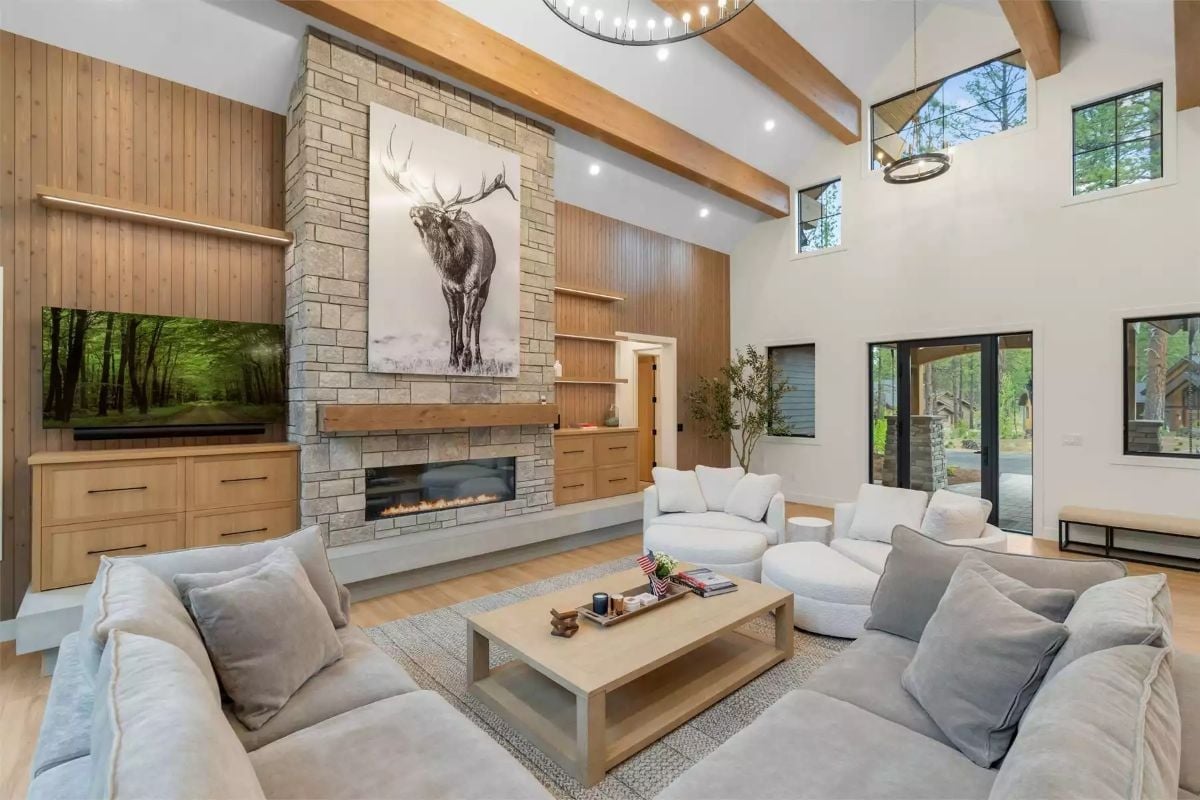
Exposed wood beams run the full length of the vaulted ceiling — at this scale, without them, the room would feel like a hotel atrium. The stone chimney rises floor to ceiling with a large elk photograph mounted directly on the surround, which pulls your eye upward without adding any height to the wall. Warm oak built-ins flank both sides, and a sectional keeps the seating casual rather than formal. Clerestory windows above push natural light deep into the room.
Why It Works: Mounting art directly onto a stone fireplace surround draws the eye upward and doubles the perceived height of the wall without a single inch of additional construction. It’s a compositional move that lands especially well in rooms with ceilings tall enough to carry oversized prints. The oak cabinetry built into both flanking walls does the quieter job of keeping the stone from reading as isolated or cold.
Antler Chandelier, Big Table, and Doors That Open to the Trees
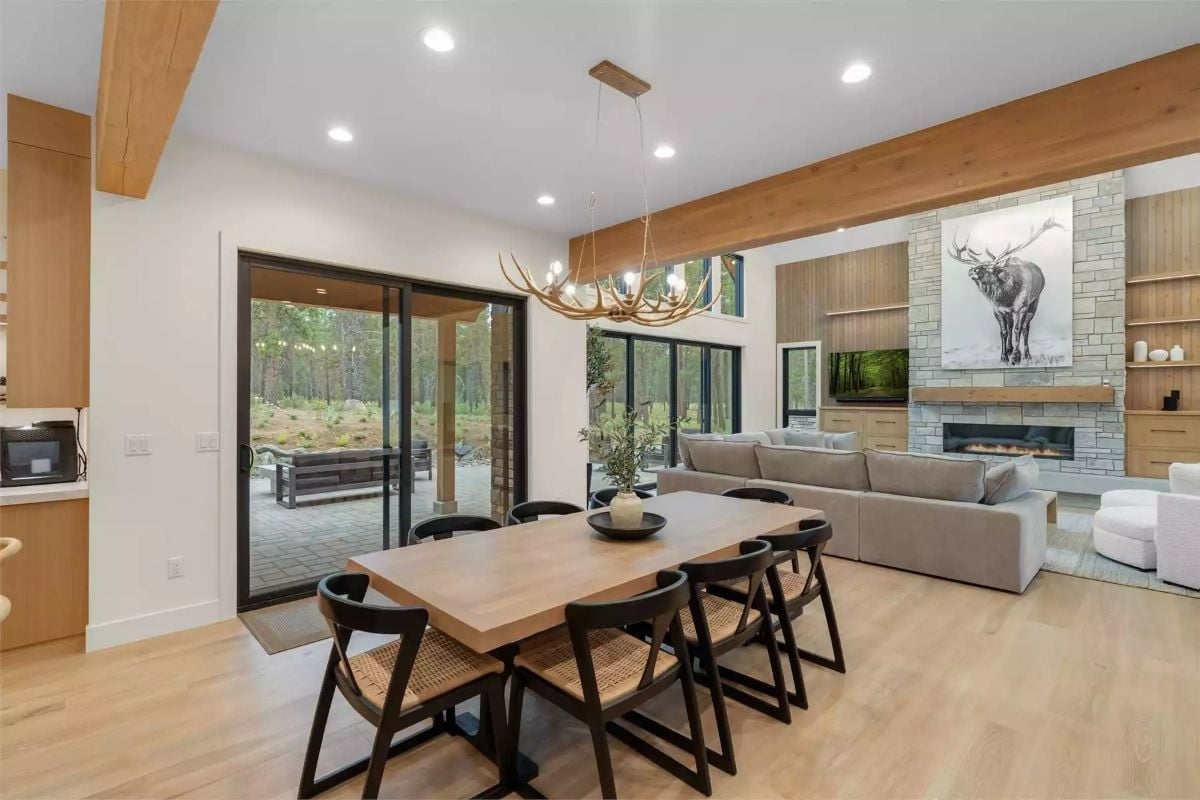
Woven rattan seat backs on the dark dining chairs add texture without competing with the light maple table beneath them. The antler chandelier earns its place — it’s the right scale, and it doesn’t try too hard. Sliding glass doors pull the forest directly into the sightline, and the open connection between dining and living means conversation doesn’t stop when people migrate after the meal.
Trend Alert: Antler chandeliers have moved well beyond rustic lodge territory and are showing up in modern mountain homes where clean lines and natural materials share the same space. Paired with light wood and white walls, they read as sculptural rather than themed — less hunting cabin, more considered interior.
Dome Pendants, Fluted Island, and Wishbone Chairs That Pull the Whole Room Together
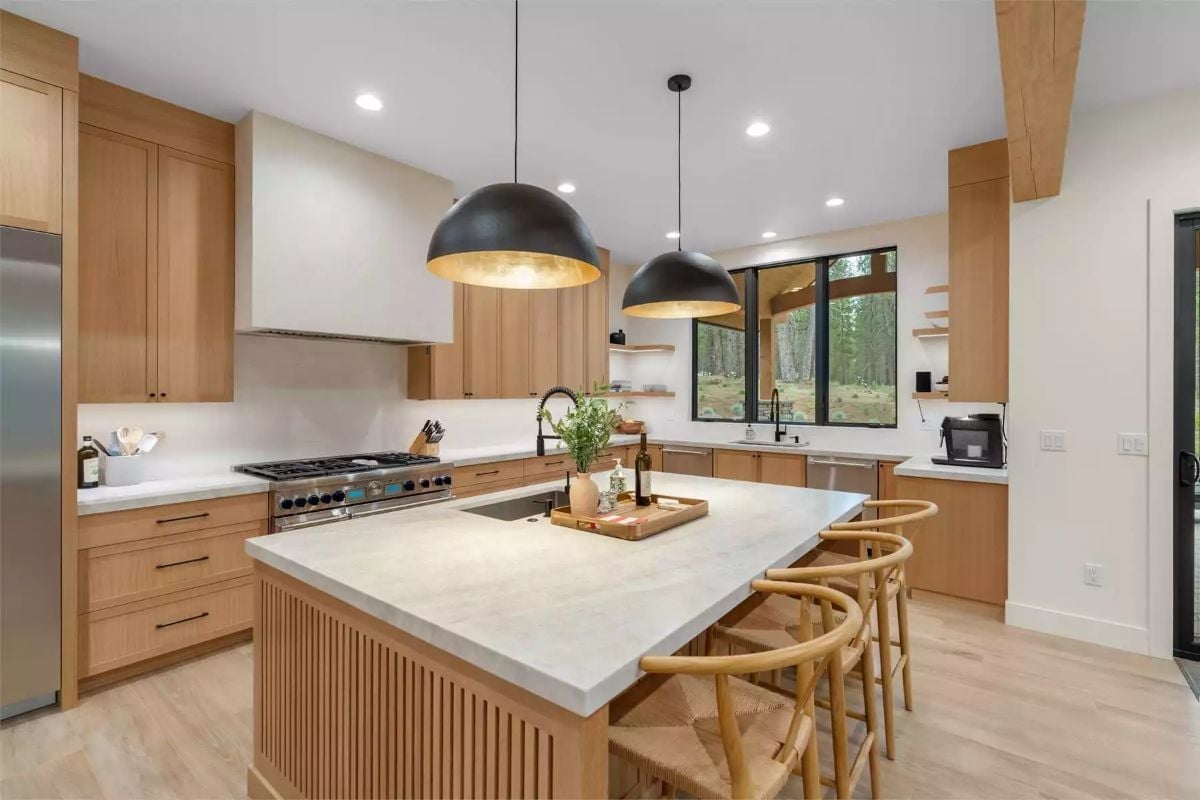
Warm oak cabinetry, a marble island, and black dome pendants with gold interiors anchor a kitchen built for real cooking — not staged cooking, actual cooking.
Why the Fluted Island Base Works So Hard Here
Fluted millwork on an island base adds visual texture without introducing a new material or color, which matters in a kitchen that already has a lot going on. It breaks up what would otherwise be a flat, boxy mass sitting in the middle of the room. The thick stone top above the vertical grooves gives the island a furniture quality that flat-panel bases rarely pull off, no matter how nice the hardware is.
Oversized Sectional, Vaulted Ceiling, and a Bonus Room Built for Movie Nights
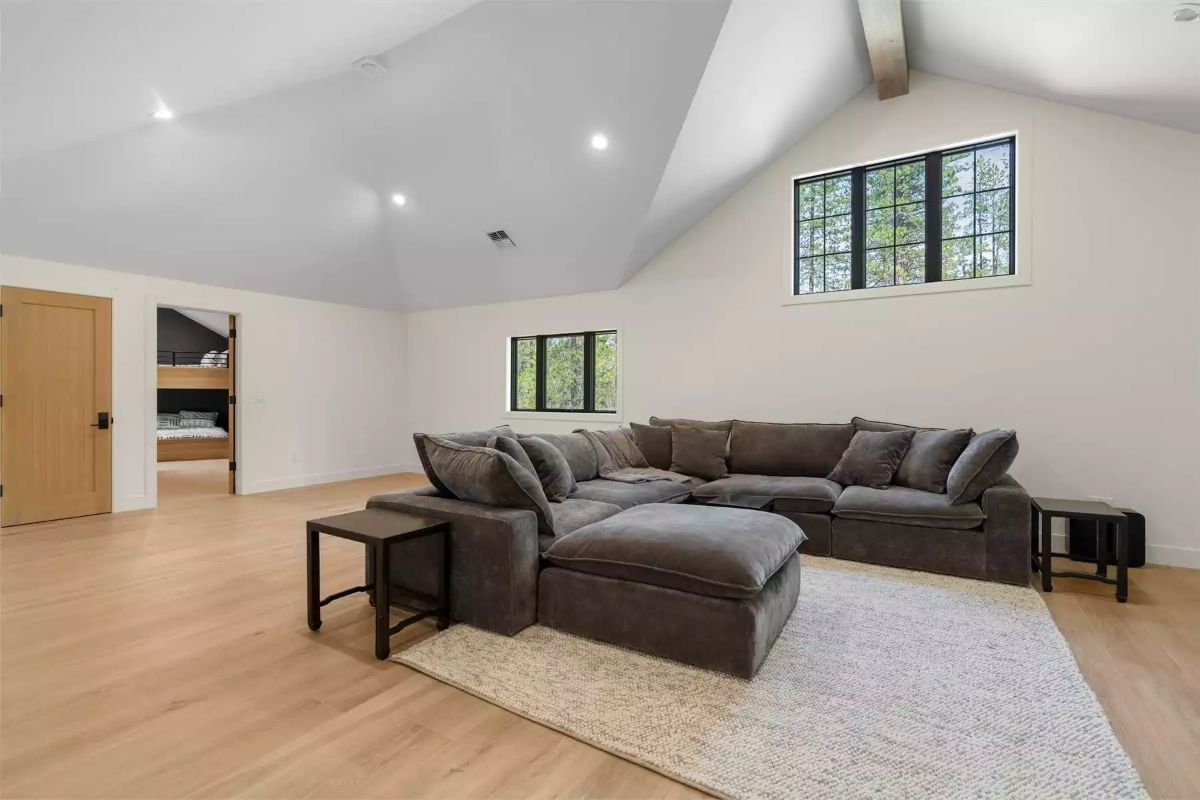
A charcoal velvet sectional with a matching ottoman fills the room without overwhelming it, partly because the vaulted ceiling gives the furniture somewhere to breathe. Light hardwood floors keep things from feeling heavy. Through the open door you can see directly into the bunk room — which is exactly the kind of layout parents appreciate and kids immediately claim as their own territory.
- Oversized sectional seating reads best in rooms with high ceilings, where the furniture scale doesn’t swallow the space whole.
- Light wood flooring reflects natural light more efficiently than darker stains, which matters when windows sit high on the wall rather than at eye level.
- Low, open-frame side tables prevent visual clutter around a large sectional without giving up actual surface space.
Stone Tower, Wood Mantel, and Sliding Glass That Frames the Forest
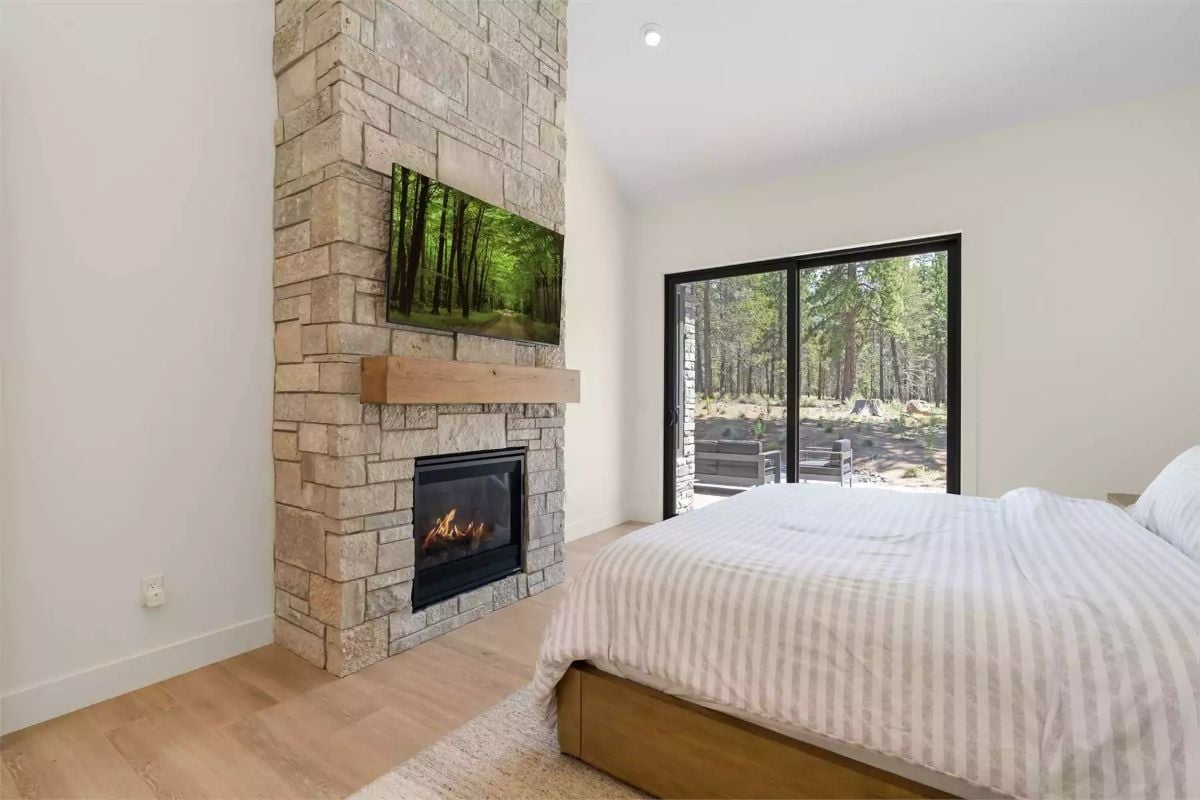
The fireplace surround climbs nearly to the ceiling, anchored partway up by a raw wood mantel that gives your eye somewhere to rest before the stone keeps going. Light oak flooring and white bedding work against any heaviness the stone might introduce — and sliding glass on the far wall pulls the trees in close enough that the room never feels closed off.
Style Math: Gas fireplace inserts built into stone surrounds like this one run cleaner than wood-burning alternatives and don’t require a traditional chimney flue, which opens up more design flexibility for tall feature walls. Setting the wood mantel at a lower height creates a visual resting point before the eye travels up the stone — a layering move that reads as deliberate rather than accidental.
Pendant Lights, Frosted Glass, and Under-Cabinet Glow That Does the Heavy Lifting
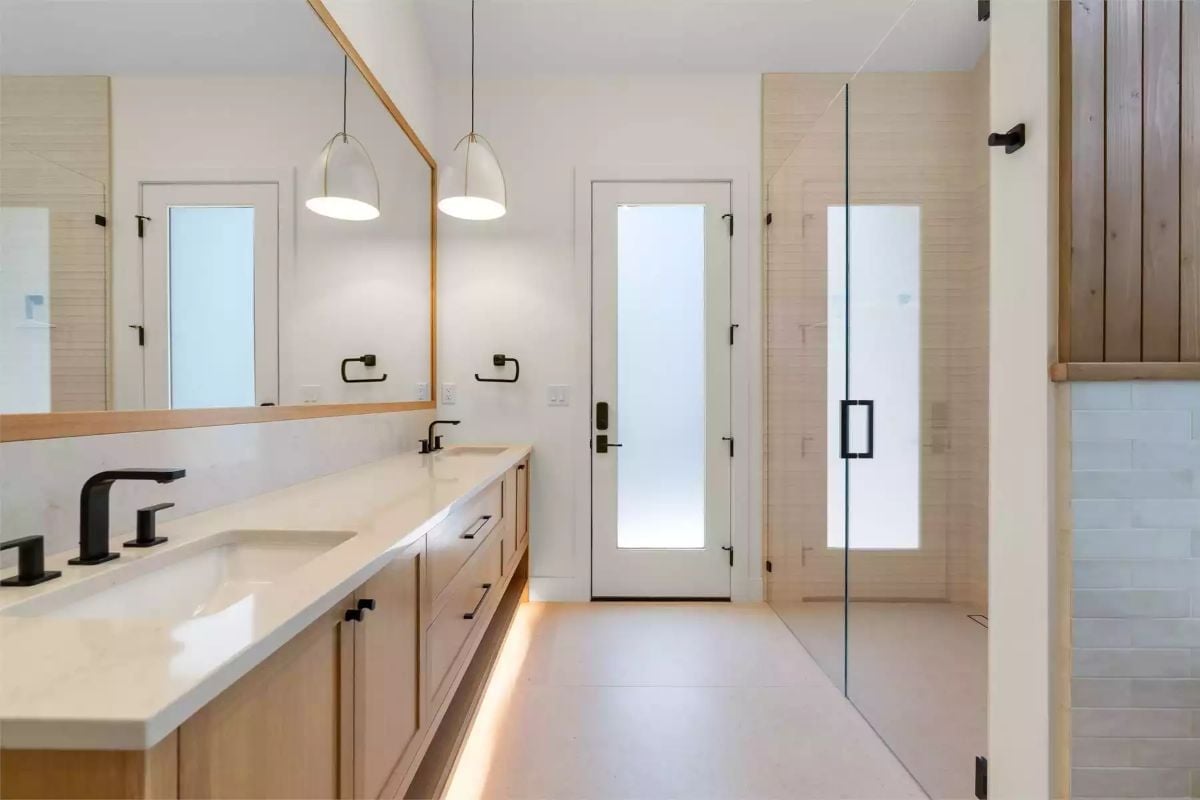
Two pendant lights hang low over the double vanity, which sits on a floating wood cabinet with LED underlighting that spills onto the tile floor below. Black matte fixtures tie the faucets to the door hardware across the room — a small detail that makes the whole space feel finished rather than assembled. The frosted glass panel on that door keeps light moving between rooms without giving up privacy.
Designer’s Secret: Under-cabinet lighting isn’t just decorative. It bounces light off the floor and softens the harsh contrast between a bright vanity mirror and the rest of the room, making the space feel larger without adding a single fixture. Cheap to do relative to almost any other bathroom upgrade, and the payoff is immediately visible.
Pin It
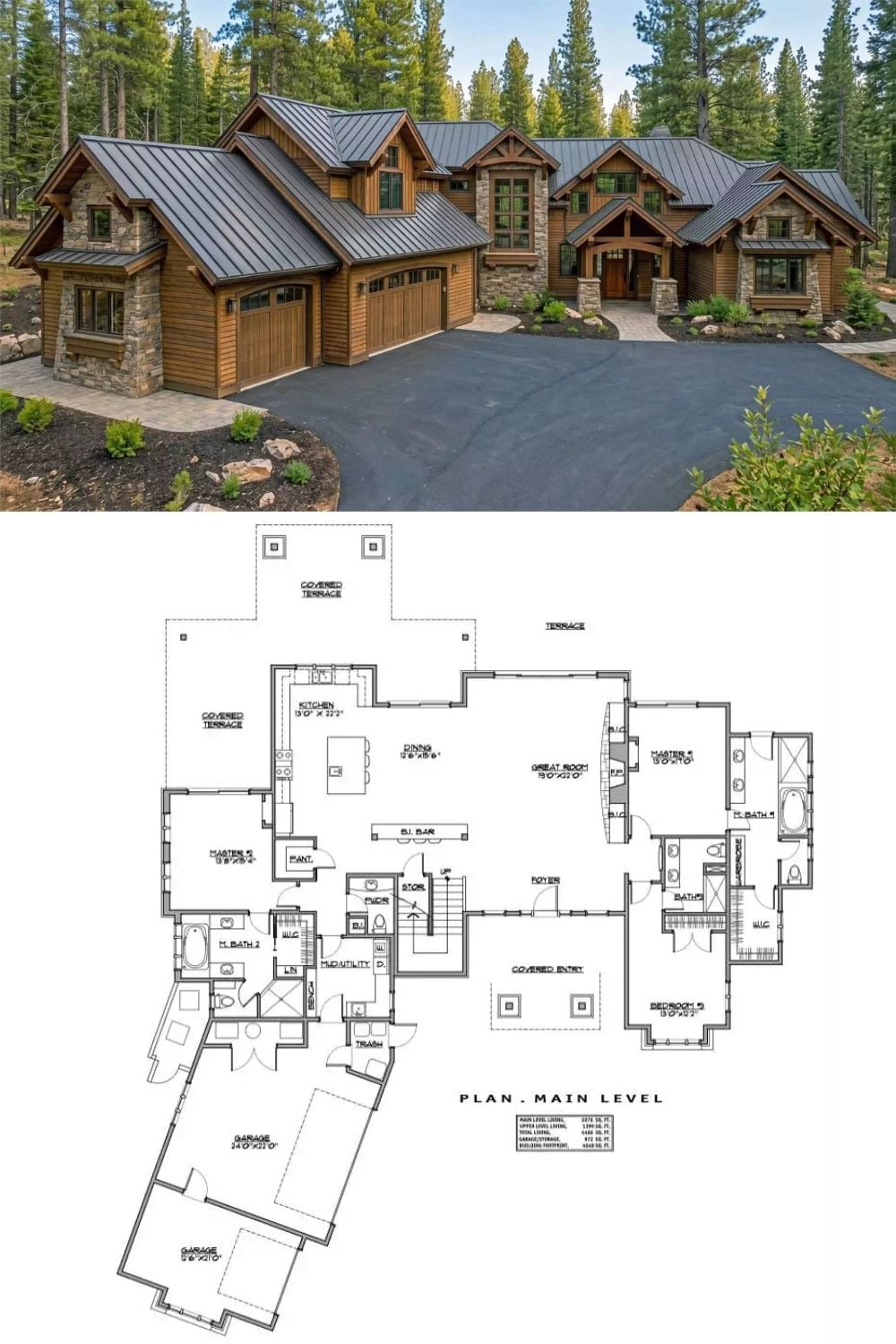
The top photo shows the exterior — wood siding, stone columns, dark metal roof, tall pines pressing in on all sides. Below it, the main level floor plan lays out the full picture: two master suites, a great room, a kitchen with a pantry and bi-bar, covered terraces, and a three-car garage.