

Saturday afternoon in March, and the kids have claimed the loft while the adults are still at the table finishing lunch. The Adelaide is built around exactly that overlap — an open main-floor living area where conversation carries, a primary suite that quietly separates itself from the action, a farmhouse kitchen deep enough for two people cooking at once, and a loft that gives the younger crowd their own place to disappear without anyone actually disappearing.
Specifications
- Sq. Ft.: 2,719
- Bedrooms: 4
- Bathrooms: 3.5
Floor Plan – Main Floor
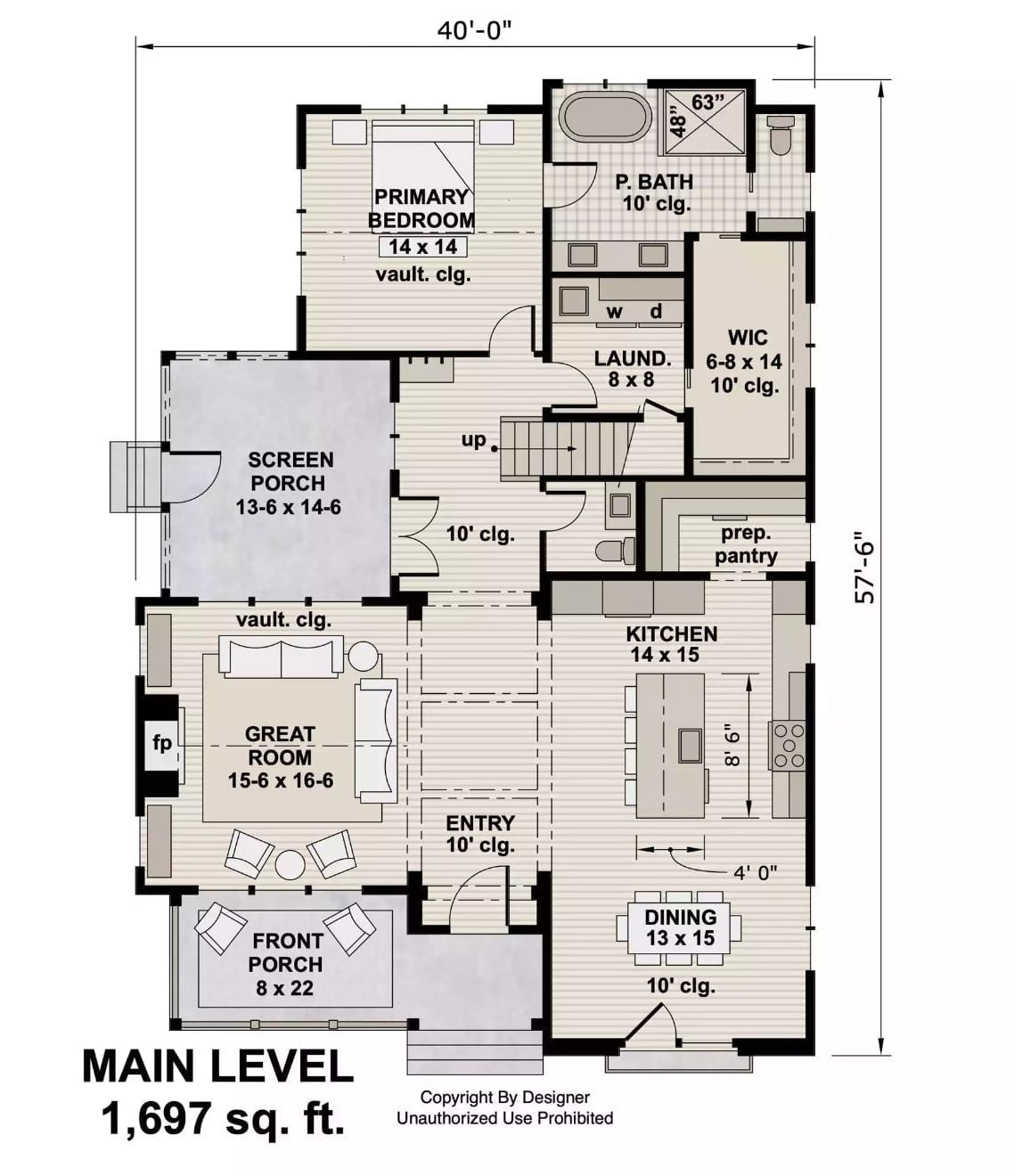
The main level clusters the primary bedroom, ensuite bath, walk-in closet, and laundry into one connected zone at the back corner, away from traffic. A staircase signals the upper-level bedrooms. Out front, the great room, kitchen, and dining area run together in an open sweep, with a screened porch off the back and a front porch on the opposite side pulling outdoor living in both directions.
Floor Plan – Second Floor
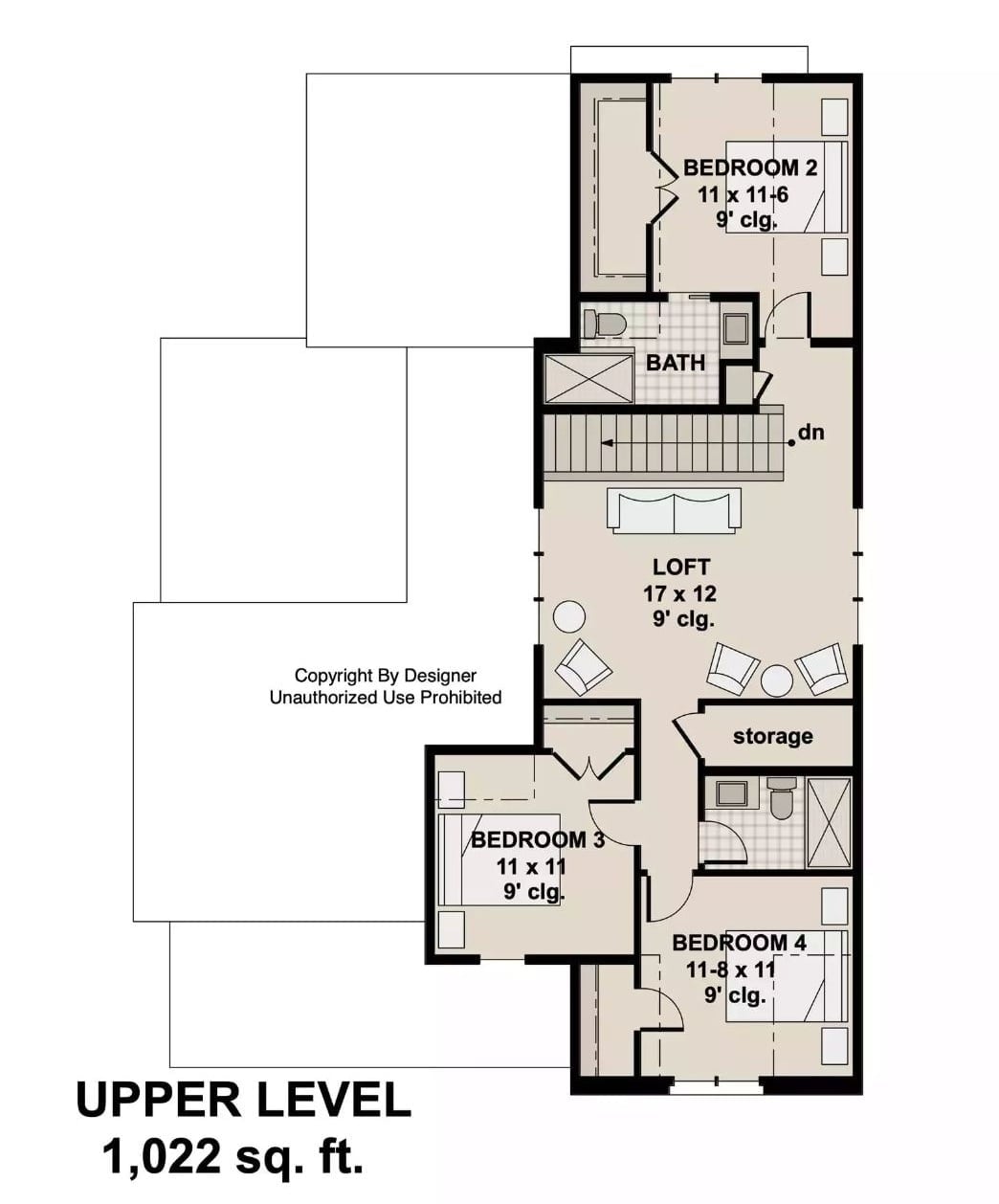
Upstairs: three bedrooms, a loft, storage, and one shared bath. The staircase lands directly into the loft, so bedroom access stays organized around a central hub rather than a long corridor nobody asked for.
Material Matters: Ceiling height does more for a secondary bedroom than square footage does. All three upper rooms carry 9-foot ceilings, which keeps even an 11×11 footprint from feeling like a closet with a bed in it. That consistency across the floor matters — nobody wants to be the kid who got the short ceiling.
Screened Porch with Edison Pendants Pulls the Whole Backyard Into Focus
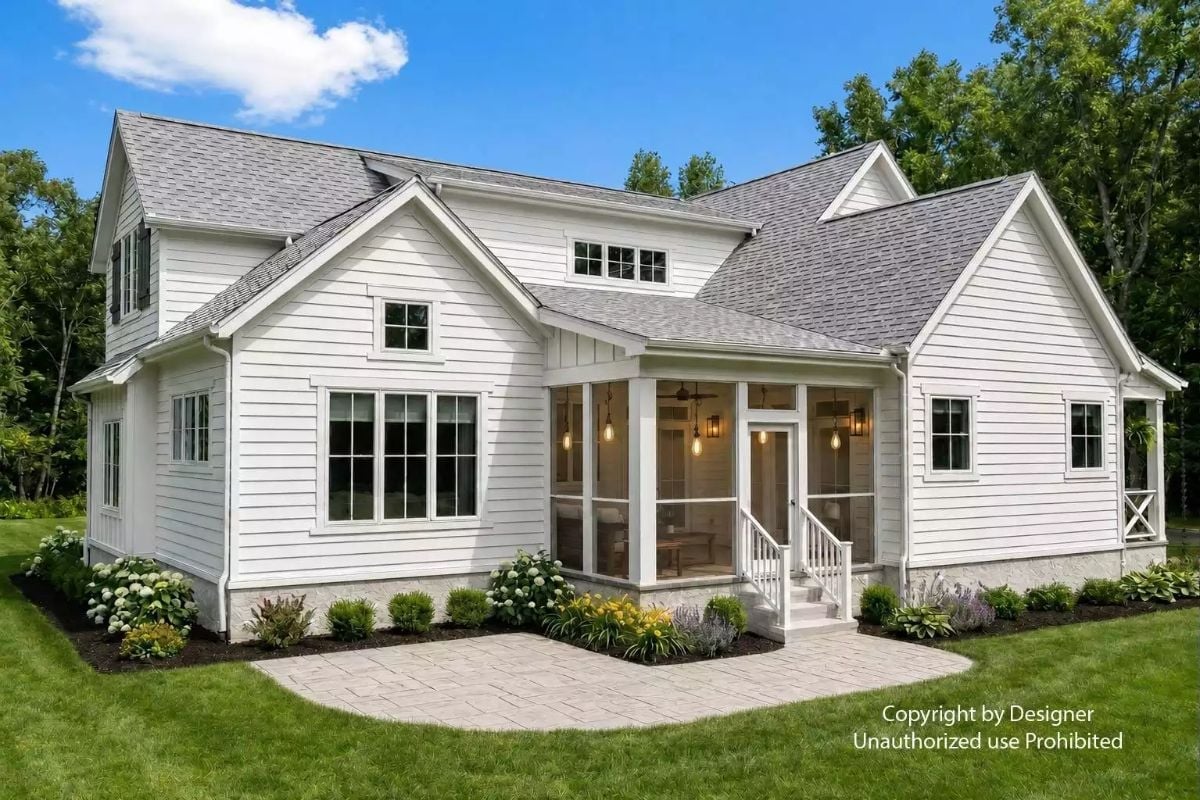
Bare Edison bulbs hang at varying heights inside the screened porch, giving the space a relaxed, after-dinner feel even in full daylight. White horizontal siding wraps the exterior cleanly, the stone foundation keeps things grounded, and hydrangeas anchor the bed line below the windows. That paver patio out front practically begs for a bistro set.
Worth Knowing: Screened porches add livable square footage without the cost of a full addition, and they’re one of the few outdoor improvements that hold genuine appeal for buyers in humid or bug-prone climates. The ceiling fan visible here isn’t decorative — on a warm evening it’s the difference between actually sitting outside and just intending to.
Dark Island Base Against White Cabinetry Is a Contrast Worth Copying
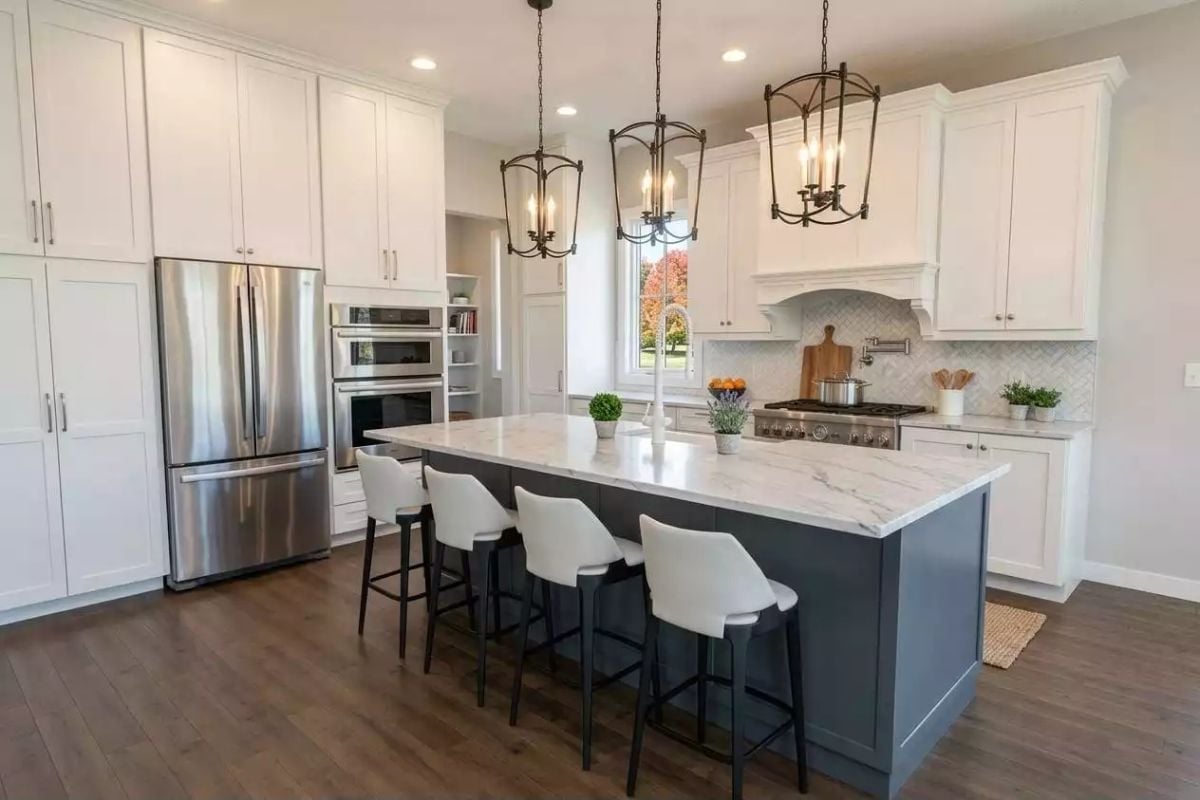
A slate-blue island base paired with marble-veined countertops and white bar stools gives the kitchen a grounded focal point without overworking it. Three lantern pendants overhead seal the composition. Simple, but it lands.
History Corner: Contrasting island bases picked up in American kitchens during the early 2000s, borrowing from furniture-style cabinetry that had been standard in European homes for decades. Before that shift, matching every cabinet to a single finish was considered the mark of a well-resolved kitchen. The herringbone tile backsplash visible here has a longer history — the pattern traces back to ancient Roman road construction, where the interlocking geometry distributed load across the surface.
Moving into the dining room, the palette stays restrained while the furniture does most of the talking.
Candle-Style Chandelier Over Dark Wood Sets a Tone Without Trying Too Hard
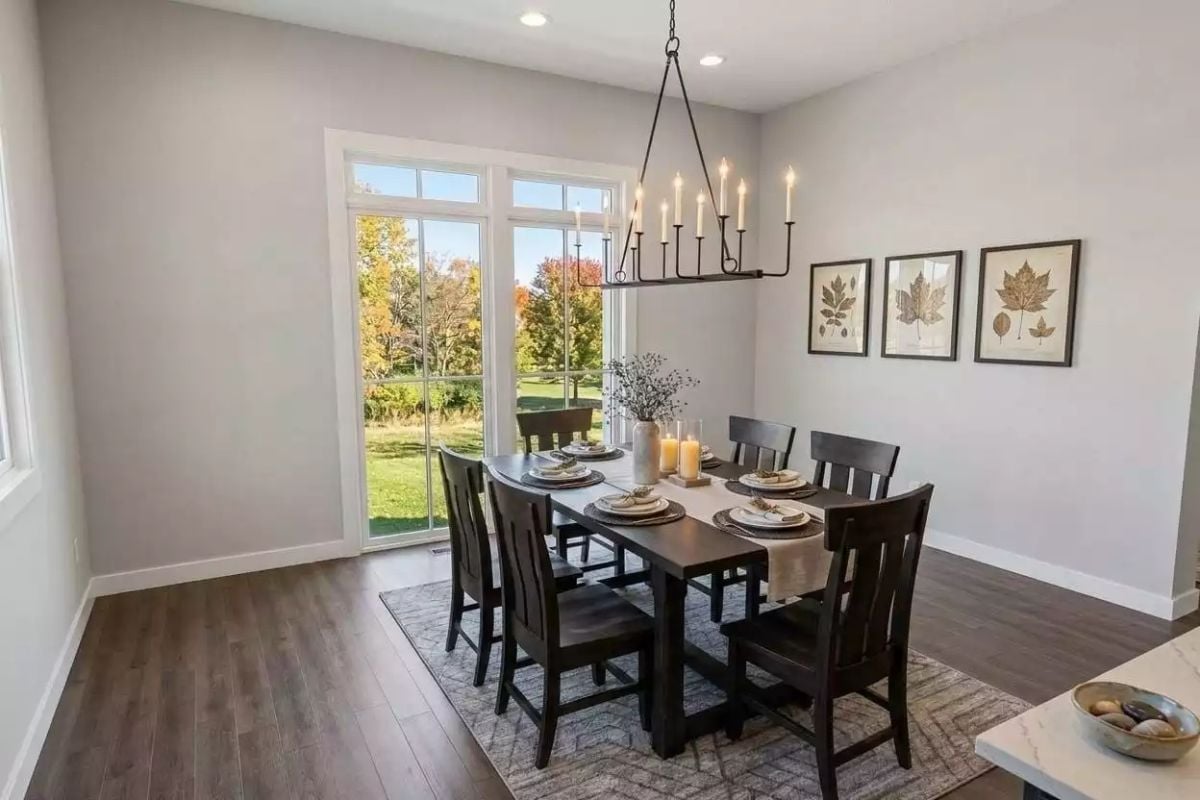
An iron rectangular chandelier fitted with unlit tapers anchors the room from above. Dark espresso chairs against light gray walls hold the contrast at a low simmer rather than a shout, and the leaf prints on the wall keep the whole thing from tipping too formal.
Stone Fireplace Reaching Cathedral Height Earns Every Inch of Wall It Takes
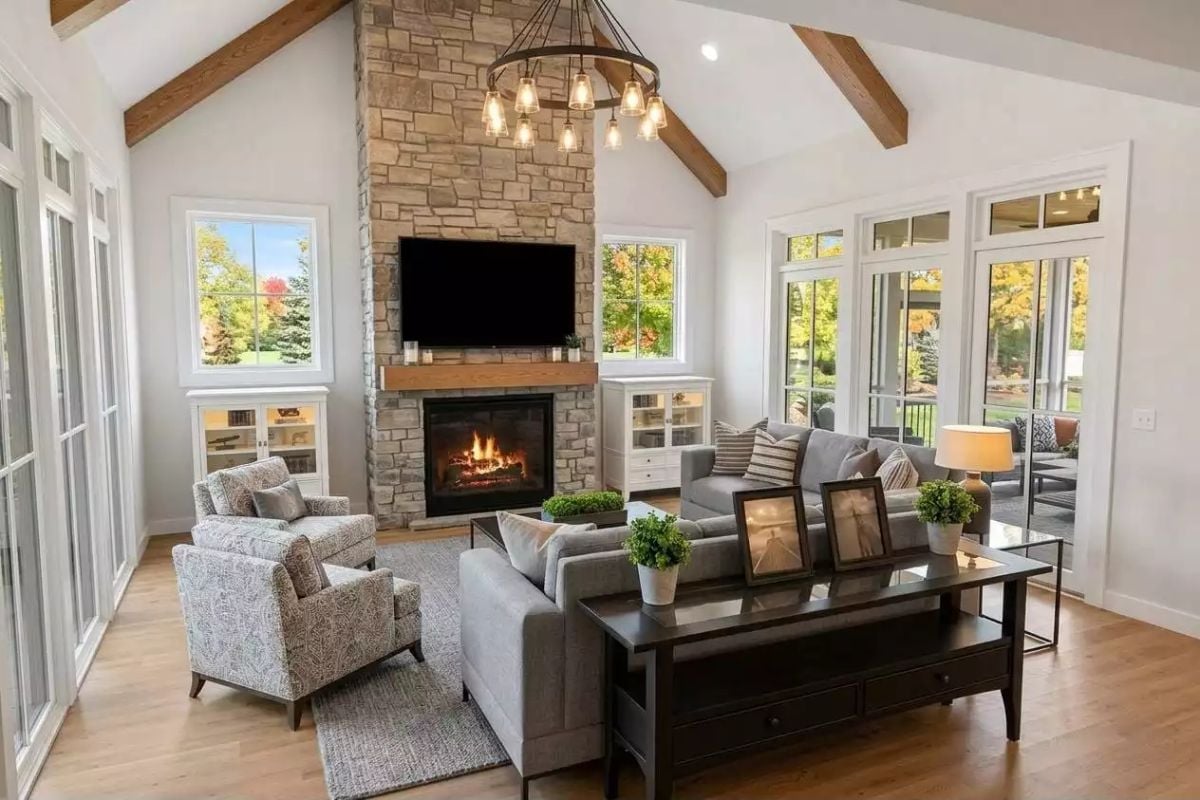
Exposed wood beams and a floor-to-ceiling stone surround do most of the visual work, so the gray upholstered seating doesn’t have to. The dark coffee table anchors the arrangement without closing it off. Natural light comes in from three sides, which matters more than most people expect in a room this tall.
Pro Tip: Vaulted great rooms with stone fireplaces work best when the surrounding furniture stays low-profile. Tall, bulky sofas compete with the vertical drama instead of letting it read. Keep seat backs under 36 inches, and the architecture handles the rest on its own.
Vaulted Primary Bedroom Where the Autumn View Does Most of the Work
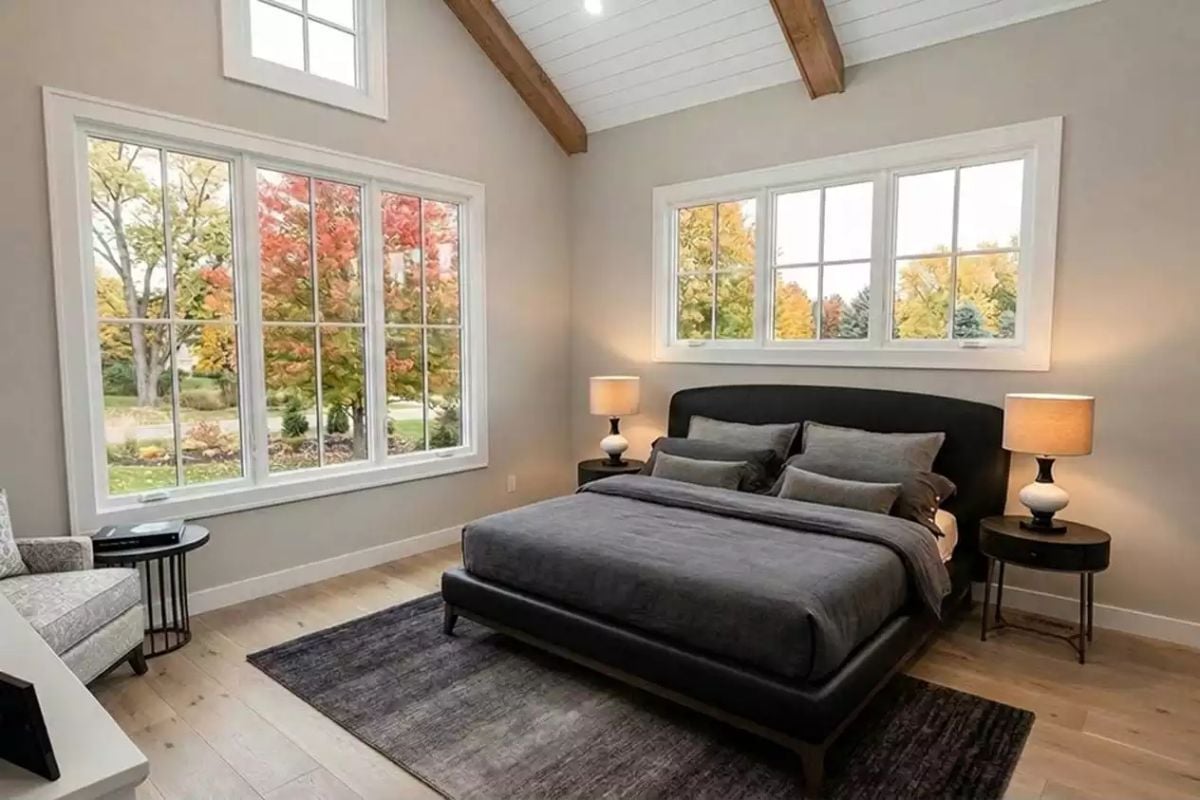
A black upholstered bed anchors the room while exposed wood ceiling beams pull warmth into the space against white shiplap above. The view through the windows does the decorating from there.
Ask Yourself: Main-floor primary suites show up more in family homes than they used to, and it’s not purely an aging-in-place consideration. Having a private retreat on the same level as the kitchen and living areas simplifies daily routines in ways that are hard to quantify until you’ve actually lived it. Worth asking whether you’d genuinely enjoy climbing those stairs every single night for the next decade.
Marble Shower Walls and a Freestanding Tub That Don’t Fight Each Other
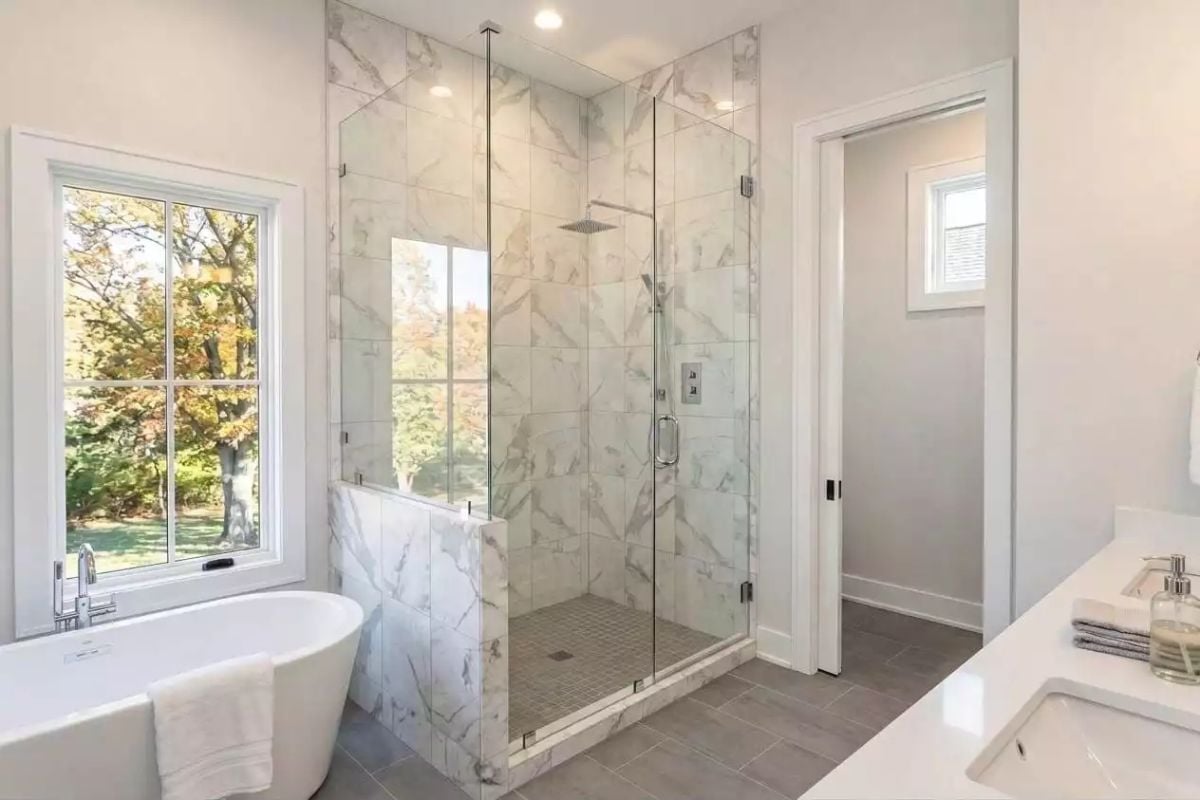
Large-format Calacatta tiles run floor to ceiling inside the glass enclosure, and the freestanding soaking tub picks up the same white without competing for attention. Chrome fixtures throughout keep the palette from fracturing into separate decisions.
- Frameless glass doors visually expand a shower without adding square footage
- Matching tile on the half-wall between tub and shower ties the two zones together
- A recessed rain head flush with the ceiling reads cleaner than an exposed wall-mount arm
Screened Sunroom Furniture Scaled to Match the View Outside

Wood-framed seating with cream cushions and dusty blue pillows faces floor-to-ceiling windows framing fall foliage. The furniture doesn’t overreach — it steps back and lets the view be the room.
Pin It
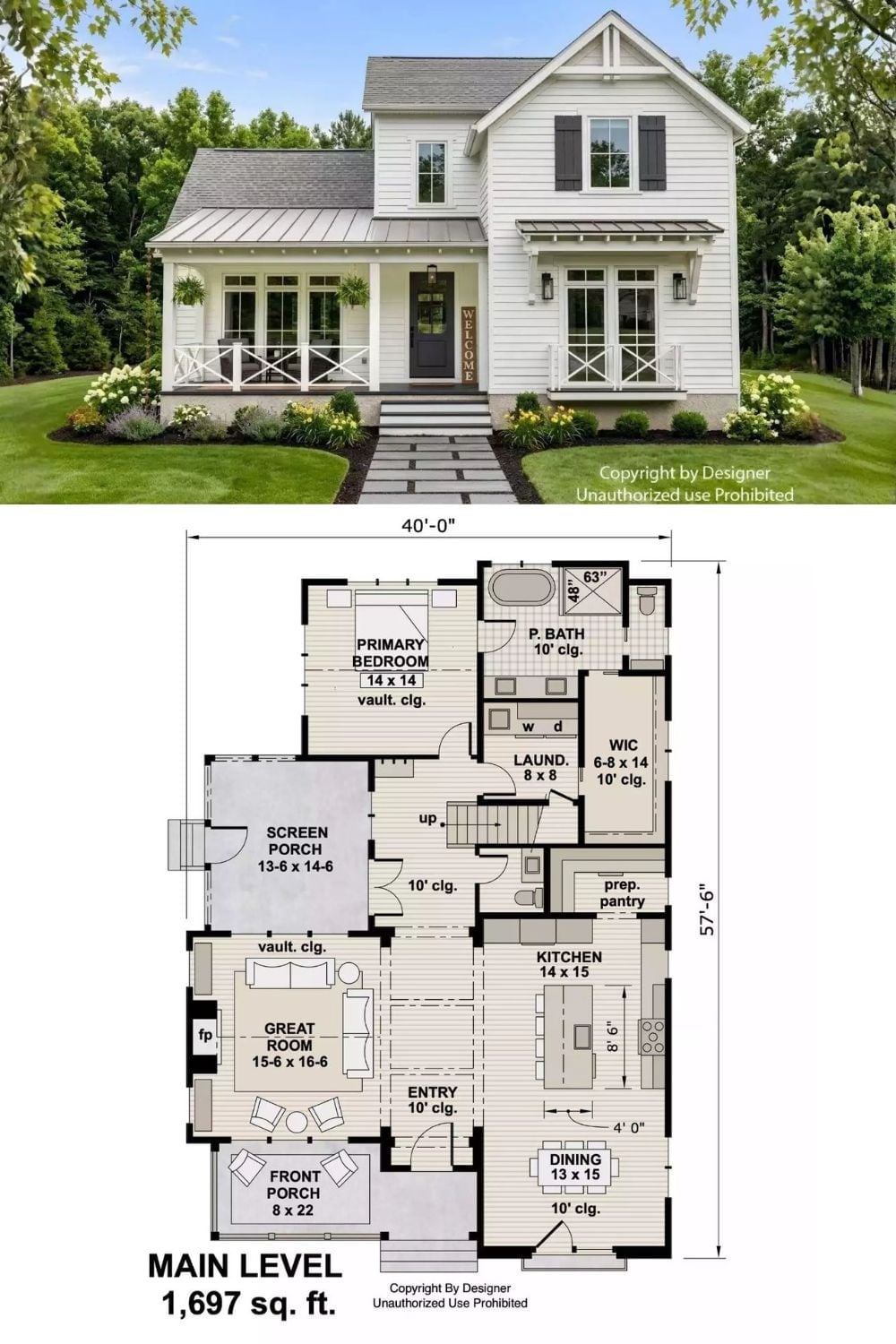
A white farmhouse exterior with wraparound porch details sits above the main-level floor plan, showing 1,697 square feet organized around a main-floor primary suite, open kitchen and dining, a screened porch, and a staircase leading to the upper bedrooms.