
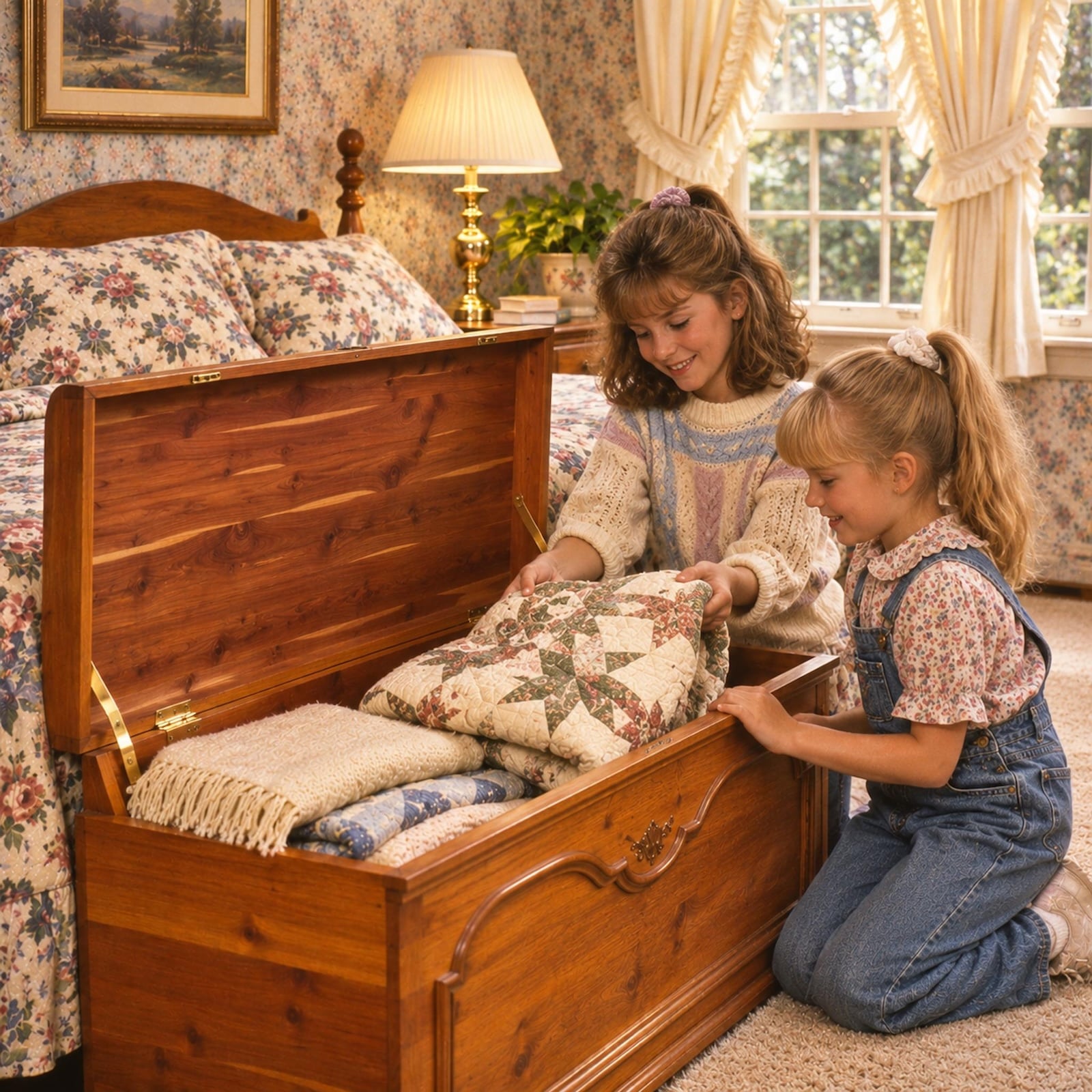
The 1980s bedroom could make a king-sized bed look like a small upholstered island in a sea of fabric. Comforters ballooned. Curtains wore ruffles on top of ruffles. Wallpaper climbed every wall, and the furniture arrived in matching sets large enough to furnish a respectable hotel. Even the lamps seemed determined to make everything look warmer, softer, and considerably more expensive than it was.
Restraint wasn’t always invited to the decorating meeting. A dresser could accommodate a jewelry box, six framed photographs, three perfume bottles, a clock radio, and a telephone with a cord capable of reaching halfway across the room. A bed might require the removal of eight decorative pillows before anyone could actually sleep in it. The windows? Those sometimes needed more fabric than the bed.
In order to come up with the very specific design ideas, we create most designs with the assistance of state-of-the-art AI interior design software. Also, assume links that take you off the site are affiliate links such as links to Amazon. this means we may earn a commission if you buy something.
Some of these choices deserve another look. Others deserve a sympathetic smile and a firm refusal to bring back the waterbed. Yet beneath the floral excess, brass fittings, and improbable quantities of gathered cotton was a persuasive idea: the bedroom ought to feel like the most comfortable room in the house. Not the sleekest. Not the emptiest. The one where the carpet felt good under bare feet, the lamps made the evening linger, and every extra layer seemed to have a perfectly reasonable excuse for being there.
34. The Floral Comforter That Made the Bed Look Impossible to Leave
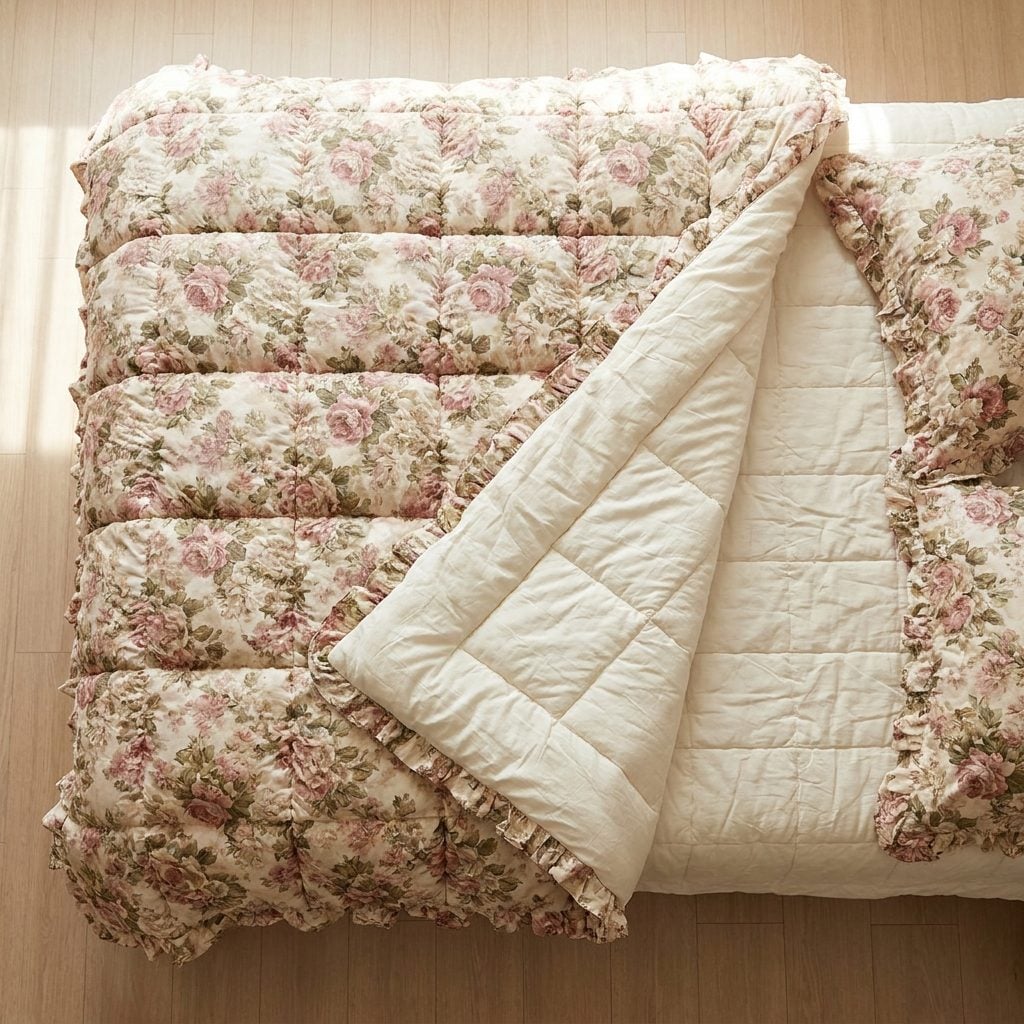
The floral comforter wasn’t content to cover a mattress. It practically swallowed the bed. Puffy quilting, generous overhangs, and sprawling arrangements of roses and cornflowers turned an ordinary sleeping surface into something resembling an upholstered landscape.
Much of the appeal came from loft. Thick filling gave the comforter a rounded, billowing shape, while the quilting held everything in place. Rose, cream, dusty blue, and sage often appeared together, with enough pattern to make a plain wooden bed frame seem almost incidental. The bed looked inviting before anyone disturbed a single fold.
33. The Mirrored Closet Doors That Made a Small Bedroom Look Twice as Ambitious
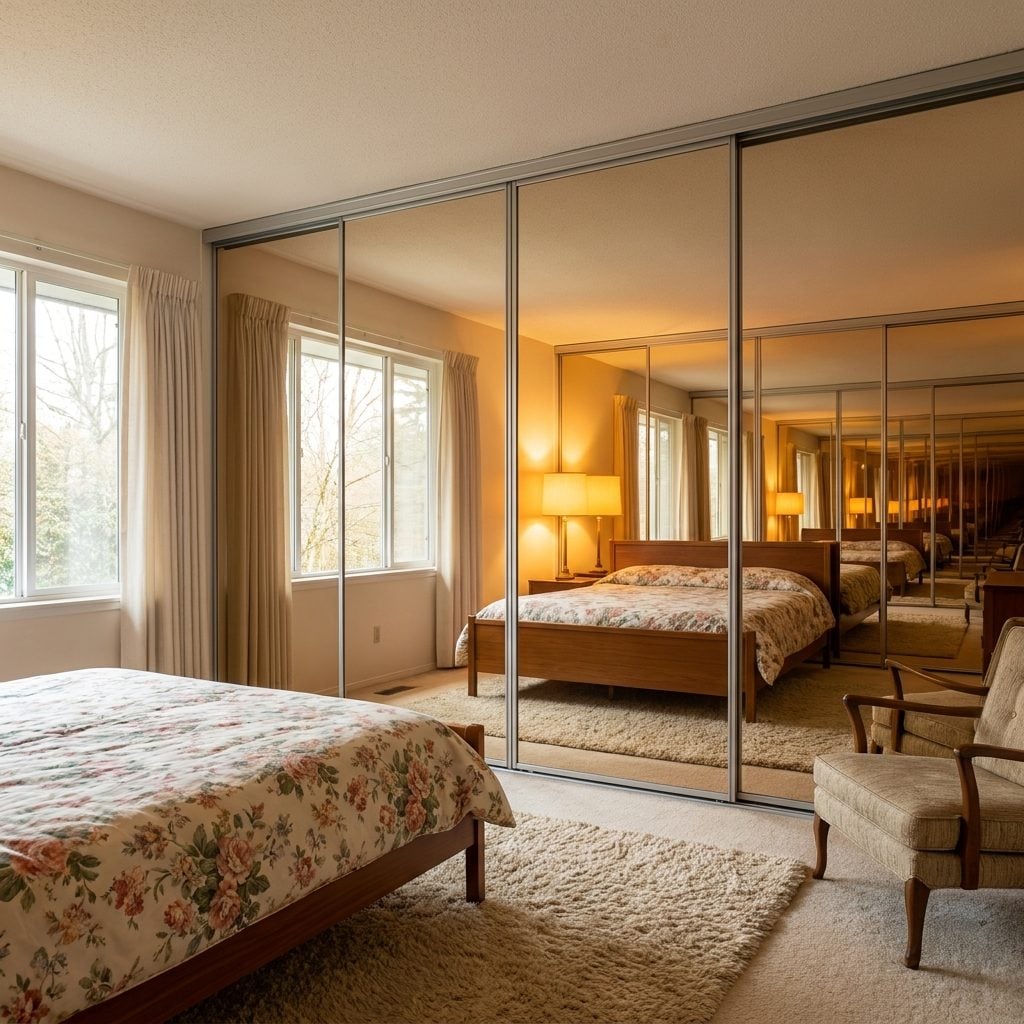
A wall of sliding mirrors could make a modest bedroom appear to have acquired another room without the inconvenience of building one. The bed, lamps, curtains, and furniture all appeared again in the reflection, extending the apparent depth of the space.
Aluminum tracks and broad mirrored panels were hardly subtle, though subtlety wasn’t the assignment. The doors concealed the closet, provided a full-length dressing mirror, and reflected whatever daylight or lamplight reached them. Their greatest trick was visual rather than architectural: the room remained exactly the same size while looking considerably less convinced of its limitations.
32. The Waterbed With a Headboard That Could Have Run a Small Office
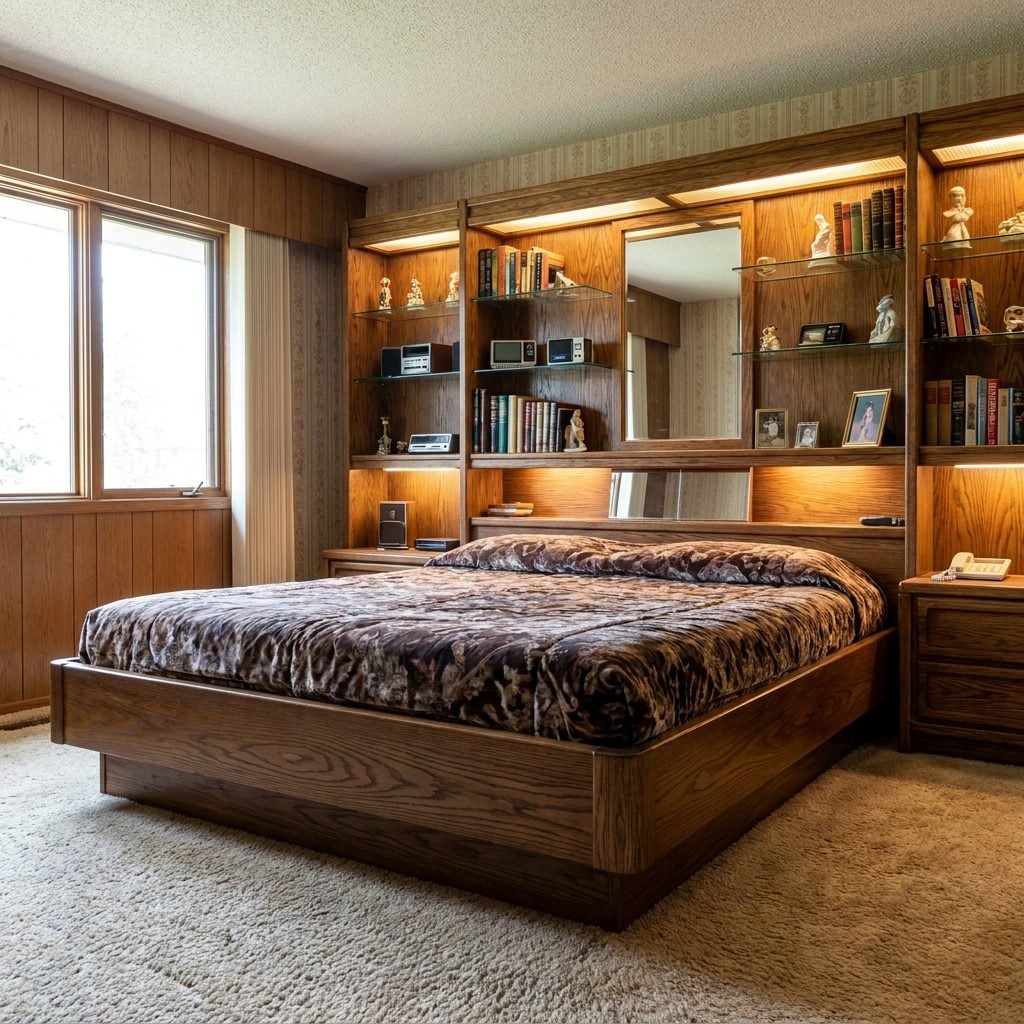
The waterbed was an extraordinary proposition: replace the mattress with a giant bladder of water, surround it with substantial wooden furniture, and call the result luxury. The headboard frequently looked capable of supporting a neighborhood library. Shelves, cubbies, reading lights, and storage compartments rose above the pillows in a magnificent display of bedroom engineering.
Heated models offered adjustable warmth, while the water-filled mattress created a distinctive floating sensation. Movement was another matter. Traditional free-flow waterbeds could produce considerable wave action, and changing or draining the mattress was hardly effortless. Yet for a period, that enormous wooden frame and its improbable cargo represented the cutting edge of domestic comfort.
31. The Crocheted Afghan That Refused to Match Anything and Improved Everything
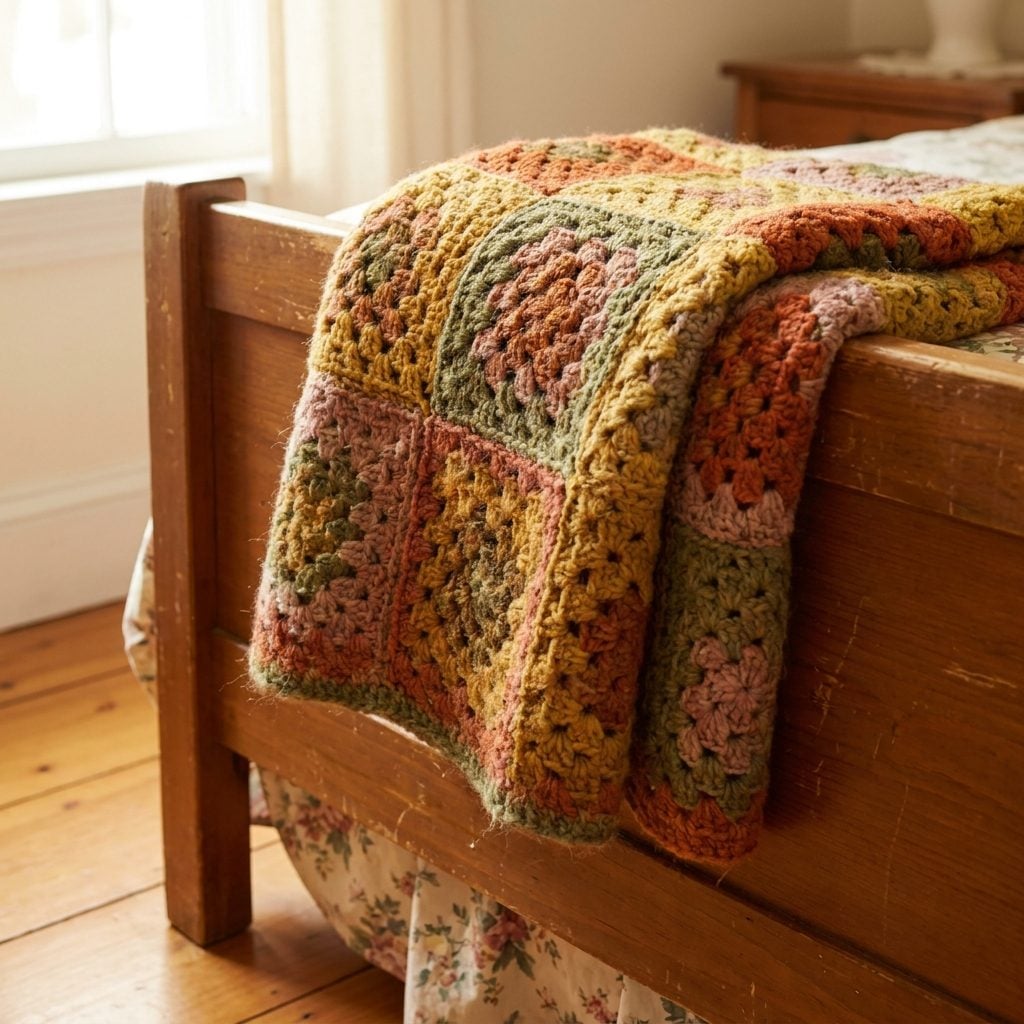
Rust beside teal, mustard beside cream, a little burgundy thrown in because apparently there was room. The crocheted afghan operated under a color policy considerably more relaxed than the rest of the bedroom. Where the comforter and curtains coordinated, the afghan introduced a cheerful argument.
Its appeal was tactile as much as visual. Raised stitches, openwork patterns, and the irregular texture of crocheted yarn contrasted with smooth sheets and quilted bedding. Folded across the foot of the bed, it added warmth without pretending to belong to a matching set. Sometimes the most interesting object in a carefully decorated room is the one that ignores the decorating plan.
What Our Readers Say
- When our readers disliked a bedroom, the top reason was “not my style” at 29%, but “too cold” came next at 19%, ahead of “too busy” at 14%.
- In our reader polls, people who wanted their home to feel cosy and moody chose wood window frames 34% of the time, compared with 10% of everyone else.
From Home Stratosphere reader polls and votes.
30. The Three-Panel Vanity Mirror That Turned Getting Ready Into an Occasion
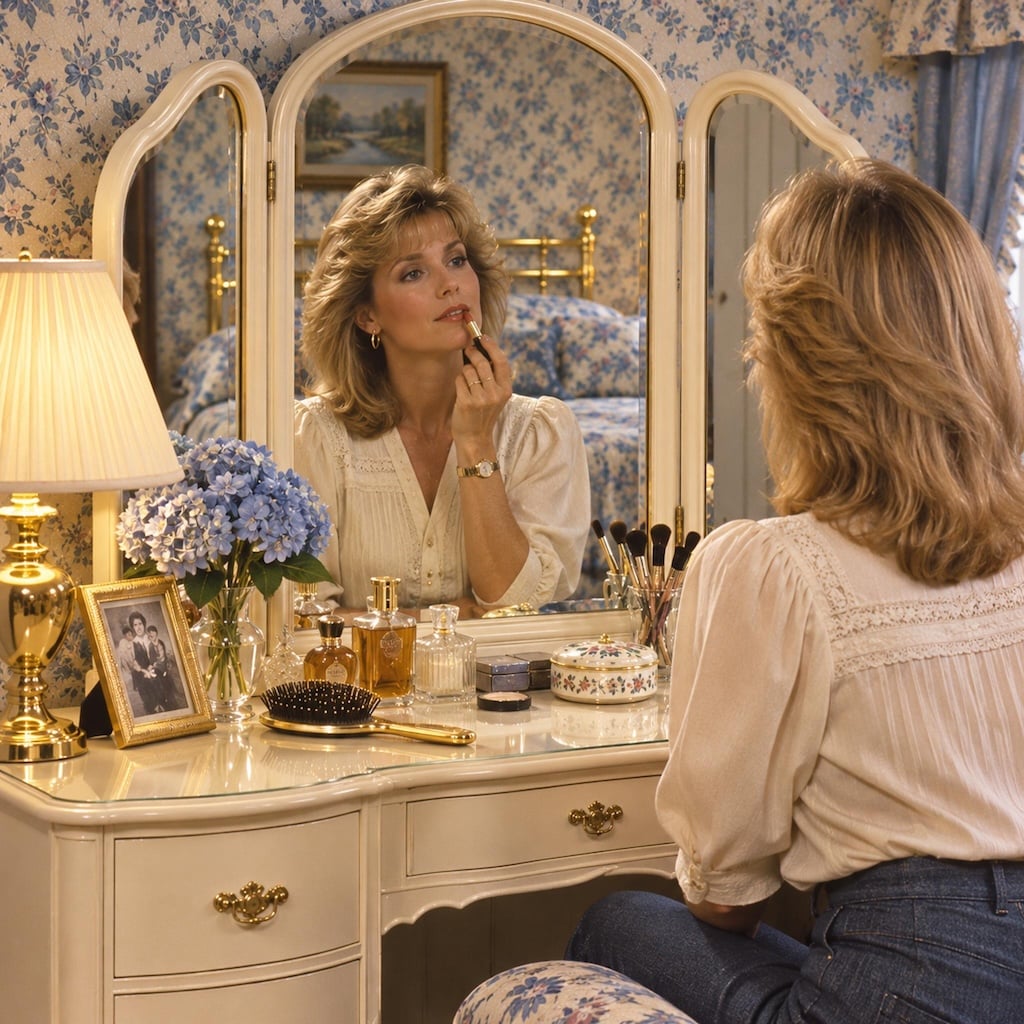
A three-panel vanity mirror could make the simple business of applying lipstick feel like preparation for a Hollywood close-up. The center mirror handled the face-to-face inspection, while hinged side panels offered additional angles. No twisting around with a hand mirror required. The furniture had already considered the problem.
Ivory-painted wood, curved drawer fronts, brass handles, and a padded stool gave the dressing table its own decorative identity. Perfume bottles, makeup brushes, and a hairbrush occupied the surface beneath the mirrors. Unlike the larger dresser-and-mirror combination, this was furniture designed for sitting down and taking one’s time. The triple reflection supplied the drama; the little drawers handled the practicalities.
29. The Brass Bed That Turned Lamplight Into a Golden Performance
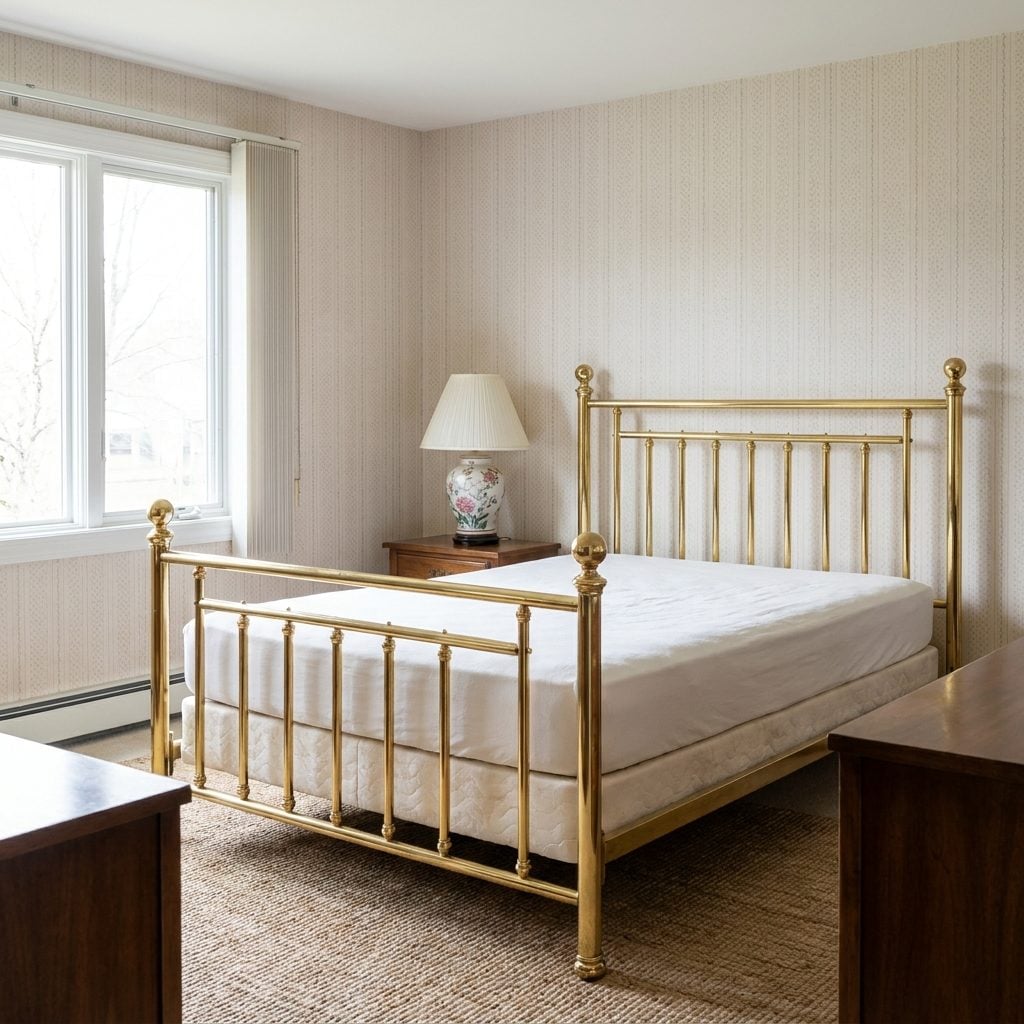
A polished brass bed had no interest in disappearing beneath the comforter. Rounded posts, gleaming finials, and curved rails announced themselves from across the room. Even when the bedding was extravagantly patterned, that golden framework managed to hold its own.
The metal caught highlights from nearby lamps, giving the posts and rails a warm reflective shimmer. Against pale wallpaper or a floral bedspread, the brass supplied a harder, brighter counterpoint to all that fabric. Romantic without being delicate, grand without requiring an actual grand bedroom, it was furniture with a theatrical streak.
28. The Clock Radio That Glowed Red Through the Entire Decade
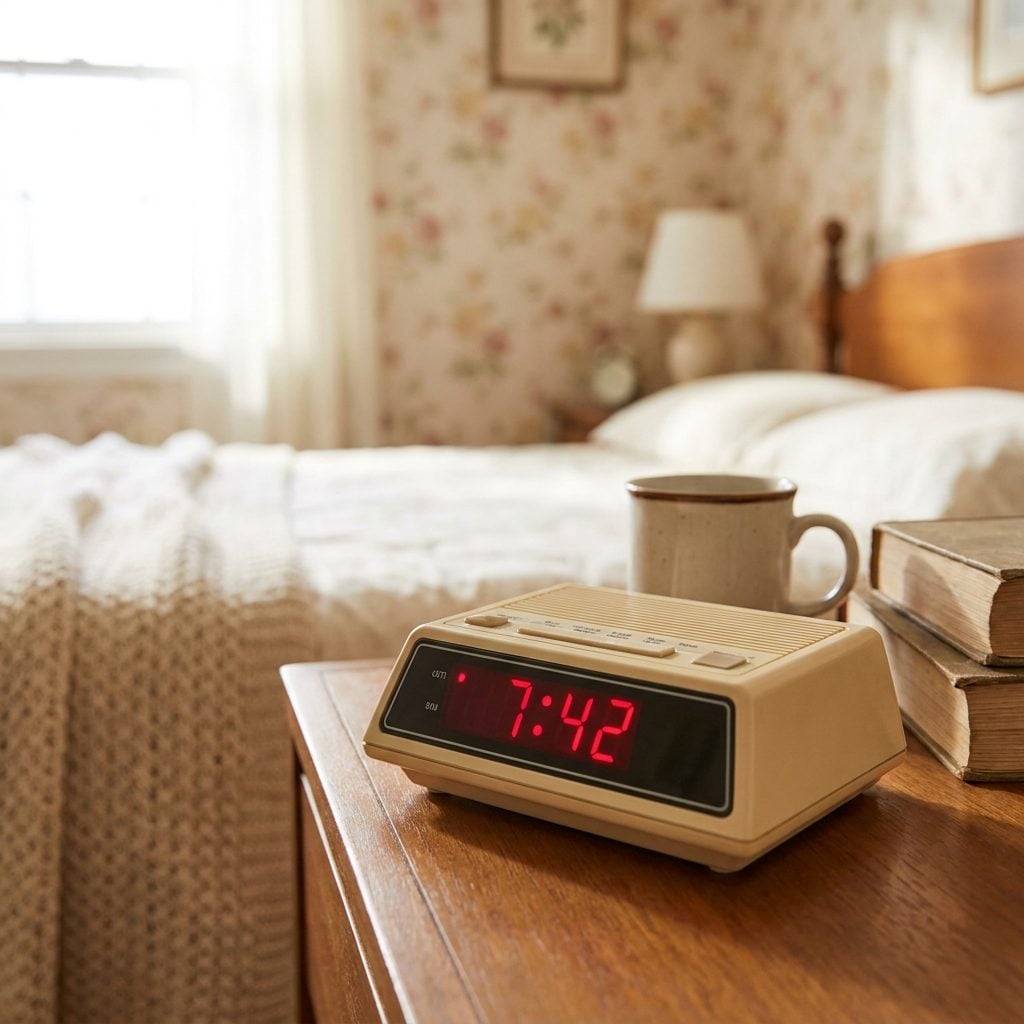
Those red numbers had a remarkable ability to dominate a dark bedroom. The clock radio might have been a chunky wedge of brown plastic with a tuning dial and an oversized snooze button, but after the lights went out, the illuminated display became the most conspicuous object in the room.
The combination of alarm clock and radio made practical sense. One appliance handled the morning wake-up and the occasional late-night broadcast, while the glowing numerals allowed the time to be checked without switching on a lamp. The snooze button was generally large enough to find with an imprecise hand. A modest technological achievement, perhaps, but one with enormous daily influence.
27. The Wallpaper Border That Gave the Ceiling a Decorative Finish Line
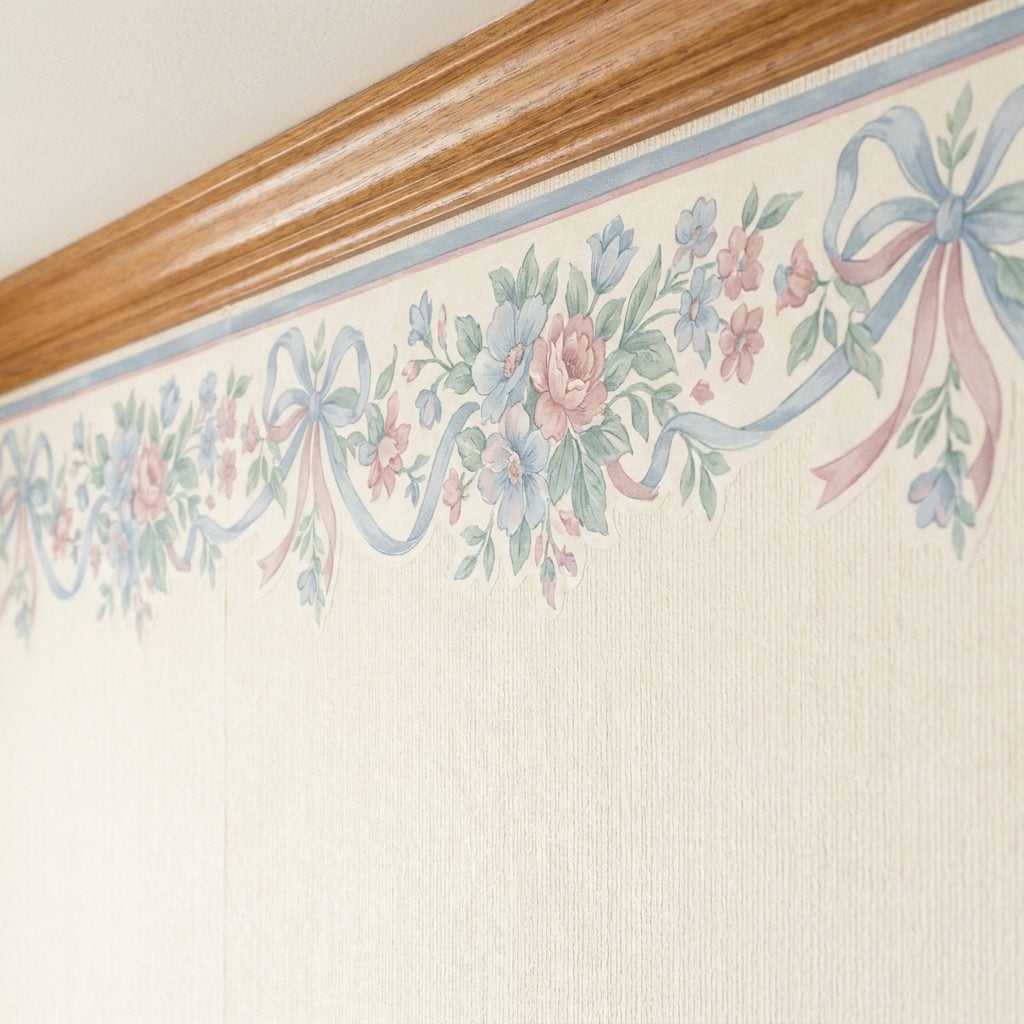
Apparently, a painted wall couldn’t simply end at the ceiling. It needed a ribbon of flowers, burgundy scrollwork, or some other decorative announcement that the wall was officially complete. Wallpaper borders supplied that finishing touch with admirable enthusiasm.
The most successful examples borrowed colors from the bedding or curtains, tying separate parts of the room together without covering every wall in pattern. A cream wall could acquire a burgundy floral border, while a matching accent in the comforter made the choice appear intentional. The effect was decorative punctuation, sometimes elegant, occasionally excessive, and unmistakably of its time.
26. The Padded Headboard That Understood the Pleasure of Reading in Bed
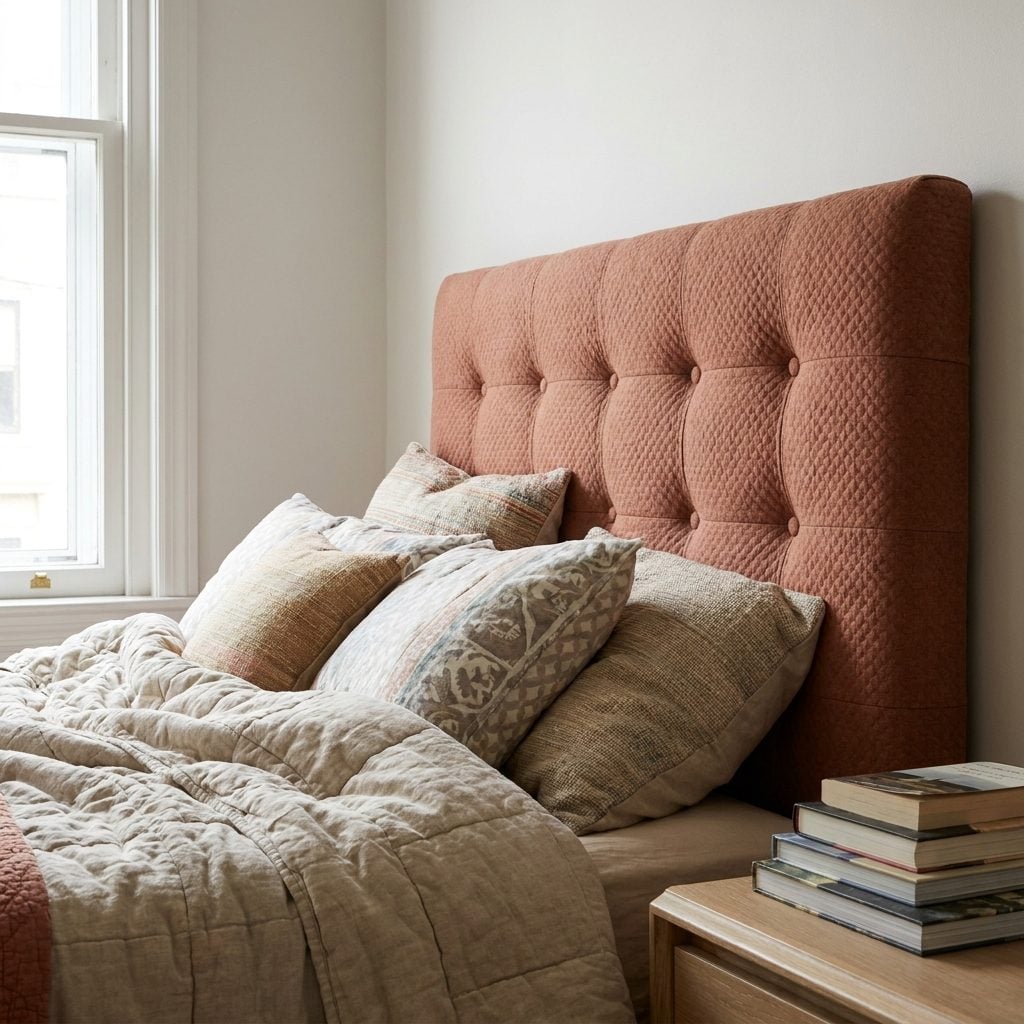
A carved wooden headboard might have looked impressive, though it offered approximately the same comfort as leaning against a dining table. The padded version took a more sympathetic approach. Upholstery, cushioning, and sometimes button tufting transformed the space behind the pillows into a proper backrest.
The softness also changed the room’s appearance. Fabric broke up the hard outline of the bed frame, introducing another upholstered surface into a space already devoted to comfort. A headboard that looked inviting and proved useful was a rare decorating decision with very little downside.
25. The Perfume Bottles and Trinket Dishes That Turned a Dresser Into a Display
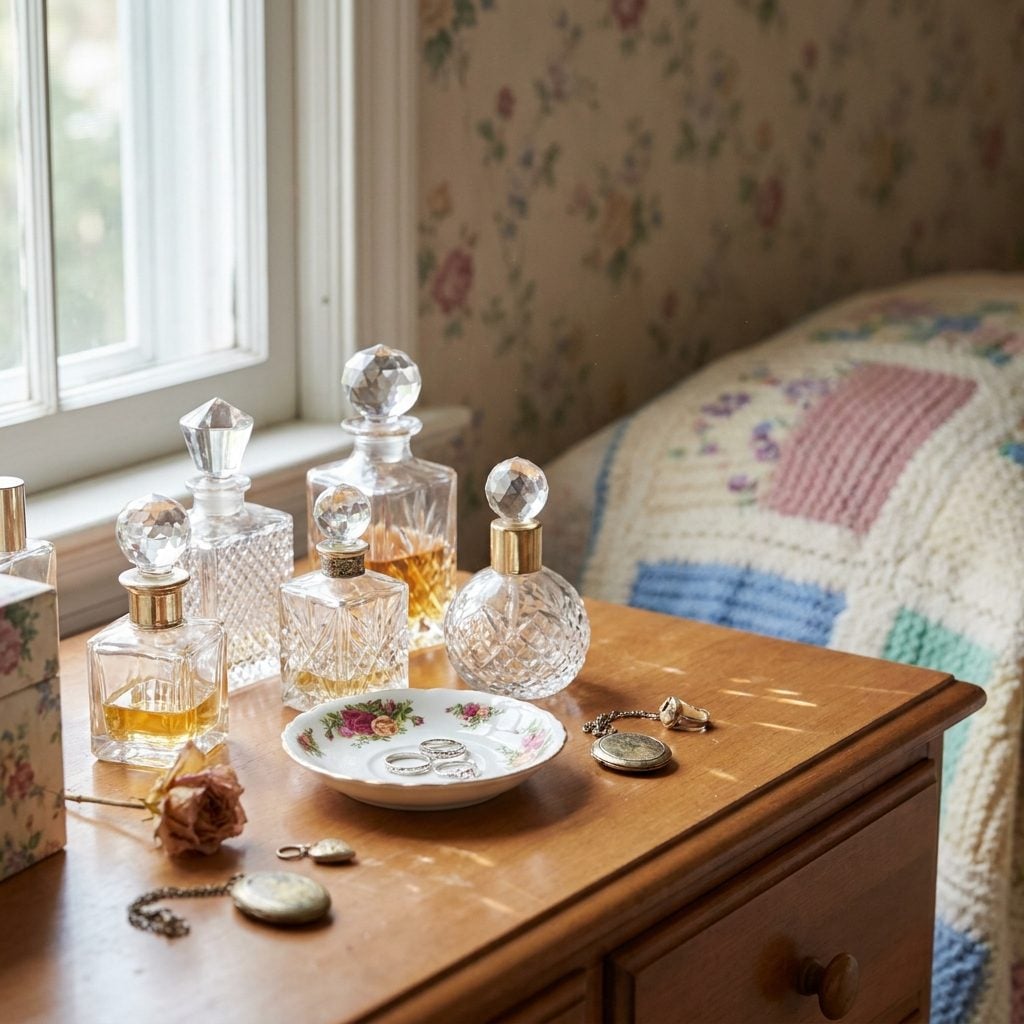
Glass perfume bottles, ceramic dishes, little decorative boxes, and assorted keepsakes occupied the dresser with the confidence of permanent residents. Some objects were useful, others sentimental, and a few seemed to have survived entirely because they were too pretty to discard.
The arrangement had a character that matching furniture couldn’t supply. Glass caught the light, small metallic pieces introduced sparkle, and objects of different heights broke up the broad horizontal surface. Unlike a showroom display, the assortment could change over time. The dresser became a place where decoration and everyday use met, not always neatly, but usually interestingly.
24. The Wall-to-Wall Carpet That Made Bare Feet Forget About Winter
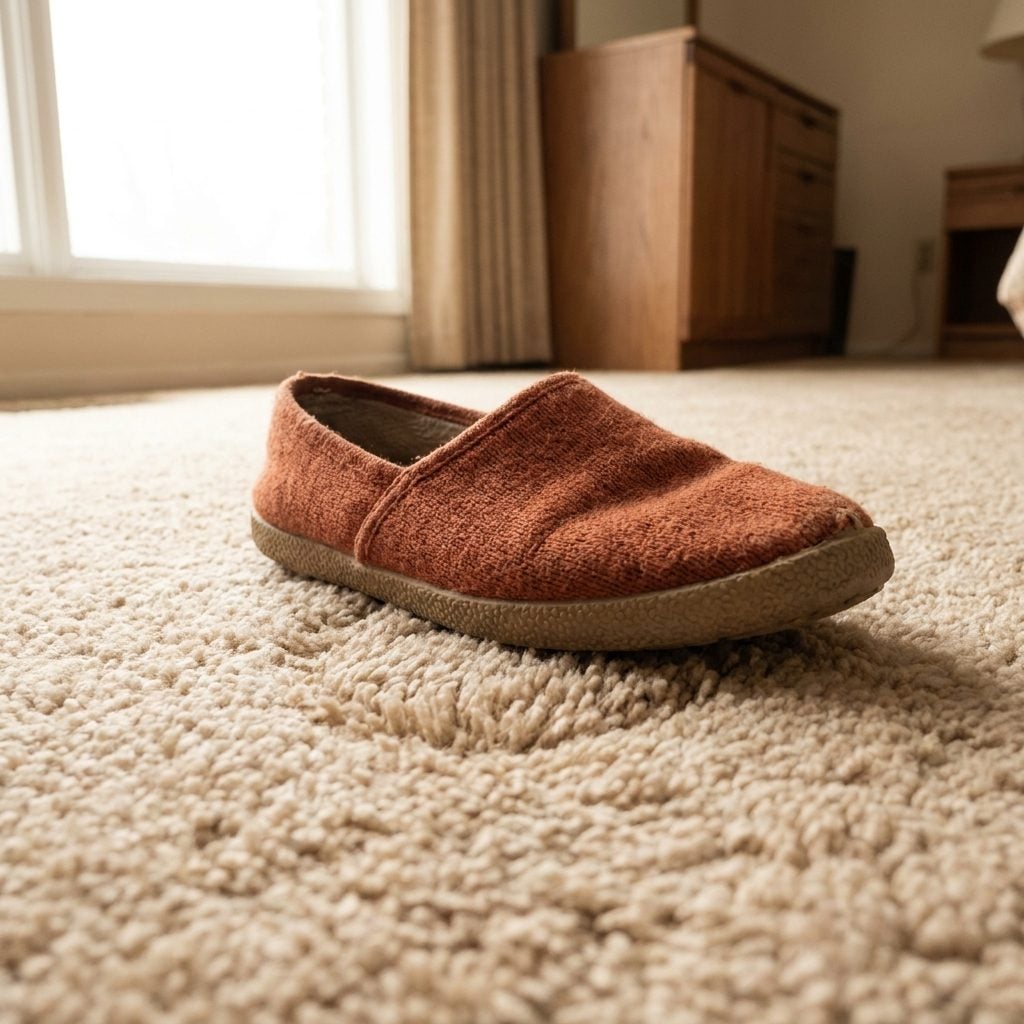
Before hard flooring became the default aspiration of seemingly every renovation, bedroom carpet was allowed to be unapologetically comfortable. It extended beneath the bed, around the dresser, and into the closet, creating one continuous soft surface.
Carpet reduced the sharp sound of footsteps and made the floor warmer to the touch than tile or exposed hardwood. Medium-pile varieties offered cushioning without the shaggy excess associated with earlier decades. Furniture legs left their impressions in the fibers, and moving a heavy dresser could reveal an unexpectedly pristine rectangle of the original color.
The modern alternative doesn’t have to involve carpeting every inch. A large wool rug can provide some of the same softness and acoustic benefits, particularly in a Scandinavian-inspired bedroom where the surrounding furnishings remain restrained.
23. The Matching Pillow Shams That Made an Ordinary Bed Look Properly Dressed
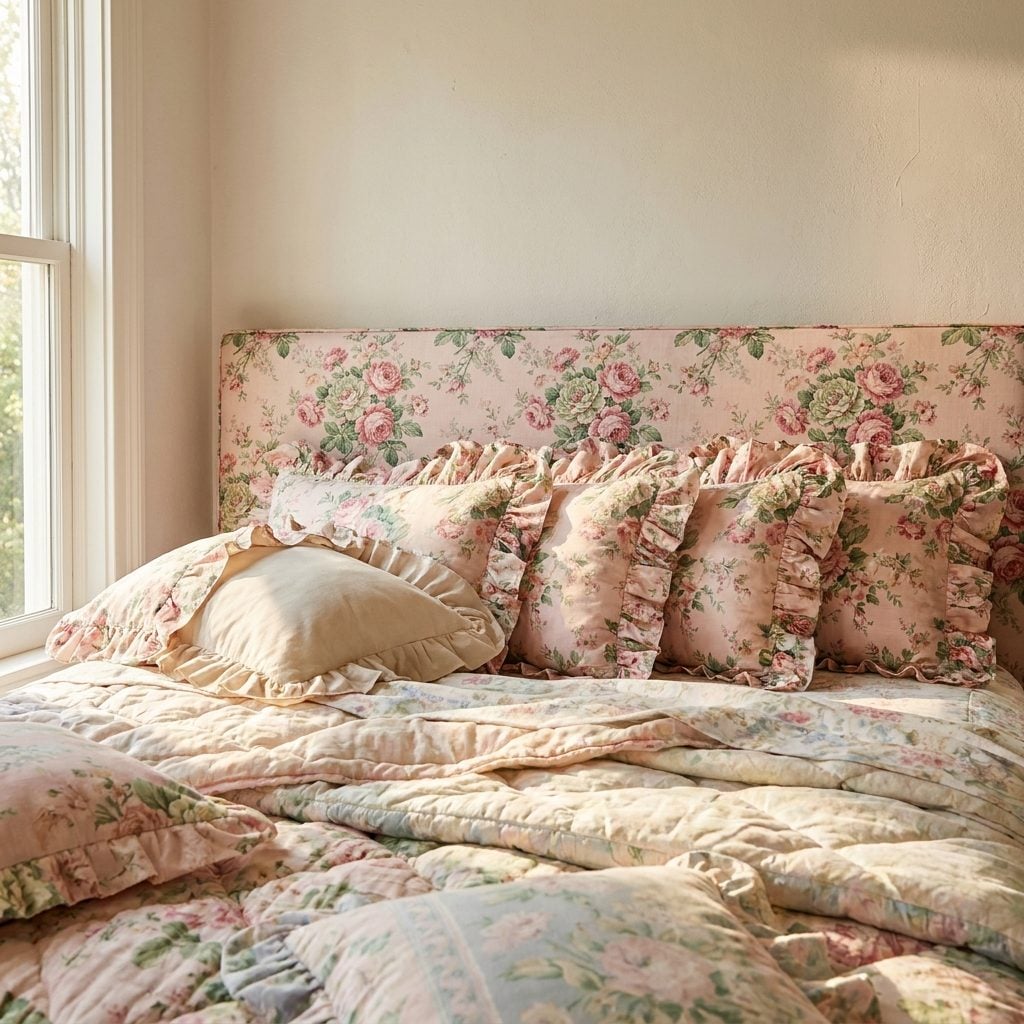
The pillow sham was a curious invention: a decorative covering for a pillow that might never be used for sleeping. Usually matching the comforter, sometimes complete with piping or ruffled edges, it made the head of the bed look fuller and more deliberate.
Unlike the smaller decorative cushions scattered across the bed, shams typically formed the substantial back row, concealing ordinary sleeping pillows or creating a structured backdrop. Their coordinated fabric extended the comforter’s pattern upward, making the bedding read as one complete arrangement. Practical necessity? Hardly. Effective presentation? Absolutely.
22. The Bedroom Television That Made Going to Bed an Entire Evening’s Entertainment
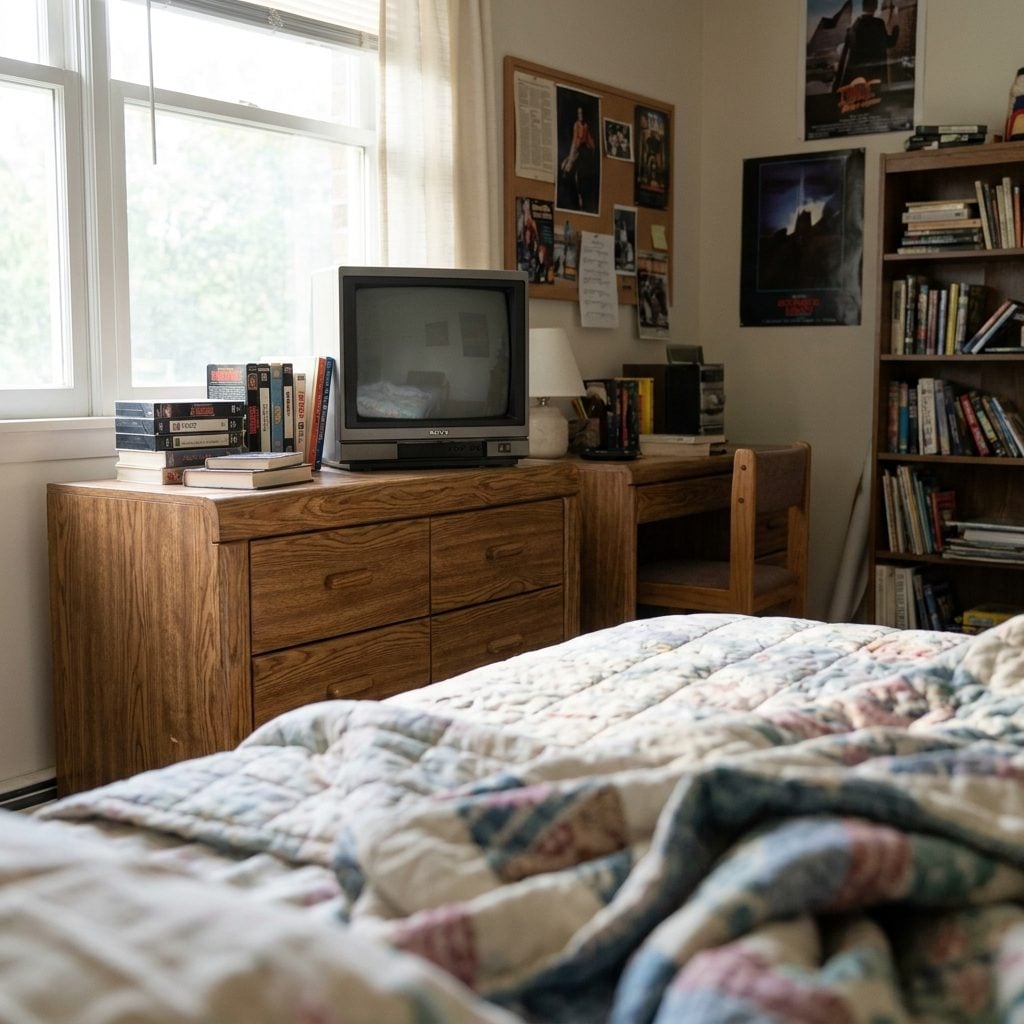
A television in the bedroom represented a considerable expansion of the room’s responsibilities. Sleeping was no longer enough. The bedroom could now accommodate the evening news, a late movie, or whatever happened to be showing on the available channels.
The sets were bulky by modern standards, with deep cabinets and comparatively small screens. A dresser or dedicated stand had to accommodate the substantial picture tube. Some televisions offered remote controls; others required a trip across the room to change channels or adjust the volume. The screen’s blue-white glow introduced a distinctly modern interruption into all those soft fabrics and warm lamps.
21. The Floral Wallpaper That Made Four Walls Feel Like One Enormous Bouquet
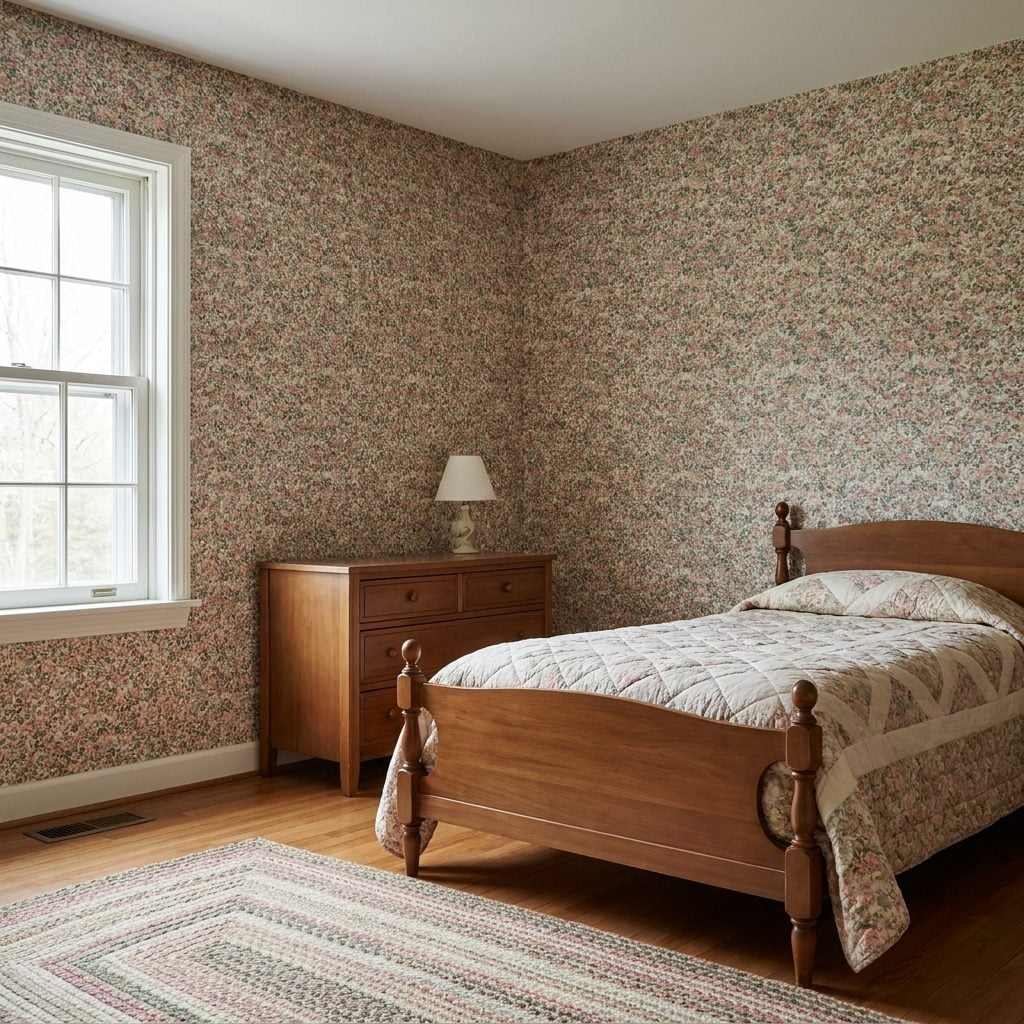
Flowers on the bed were apparently insufficient. The walls needed them too. Small-scale floral wallpaper covered entire bedrooms in dusty blue blossoms, muted green leaves, and delicate repeating vines, turning plain drywall into a continuous decorative surface.
The pattern could make a room feel richly furnished even when the furniture itself was simple. The trick was controlling the competition. Cream bedding, restrained curtains, and solid-colored upholstery allowed the wallpaper to dominate without turning the room into a botanical argument. Coordinating every available textile with the walls, on the other hand, demanded considerable confidence.
20. The Stereo or Boombox That Gave the Bedroom Its Own Soundtrack
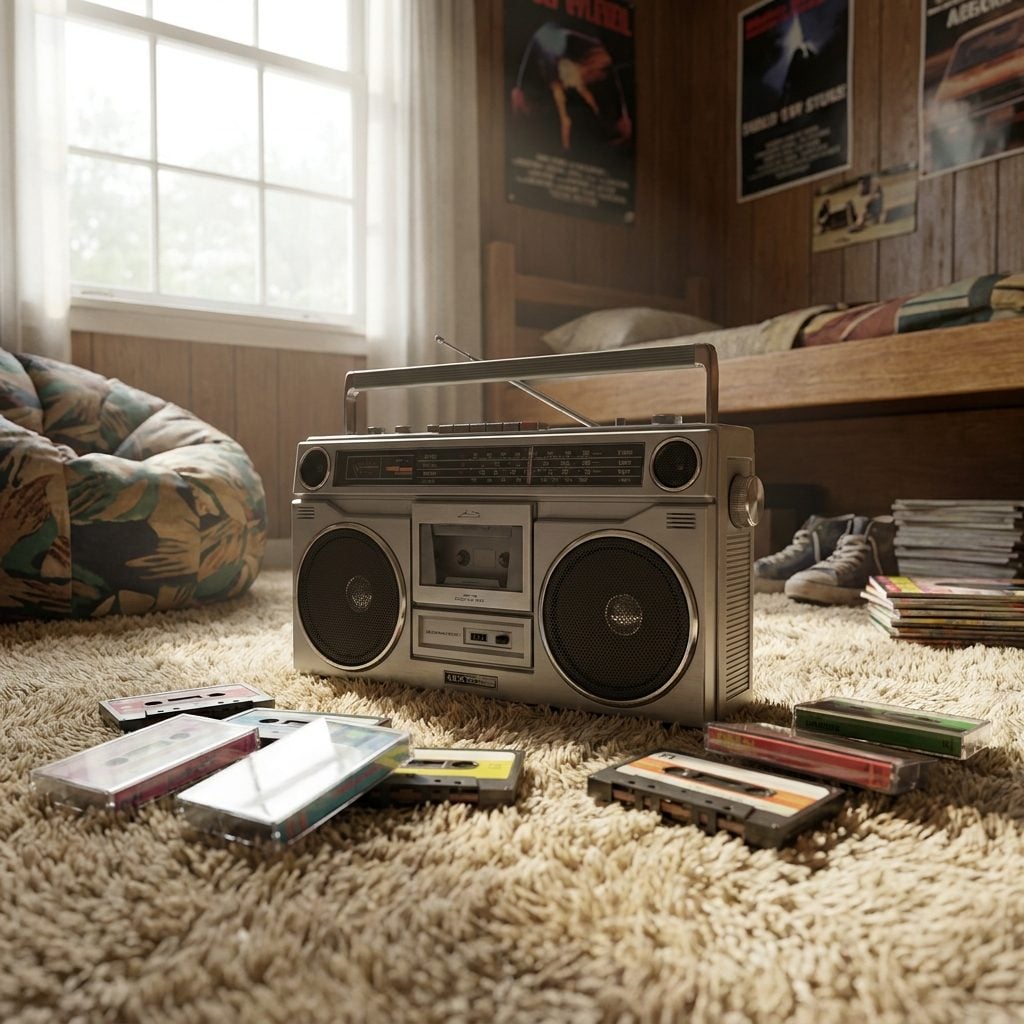
The bedroom stereo had considerably more personality than the average piece of furniture. Buttons, cassette decks, speaker grilles, tuning displays, and sometimes an impressive collection of flashing lights made it a miniature entertainment system with aspirations far beyond its dimensions.
A boombox could move from the shelf to the floor or travel elsewhere in the house. Larger component stereos demanded a more permanent position, with separate speakers and shelves of records or cassettes nearby. Either way, music changed the character of the room without requiring a new comforter or a different shade of wallpaper. A bedroom could have its own soundtrack, which was a powerful form of decoration.
19. The Dusty Rose, Peach, Mauve and Powder-Blue Palette That Turned Down the Volume
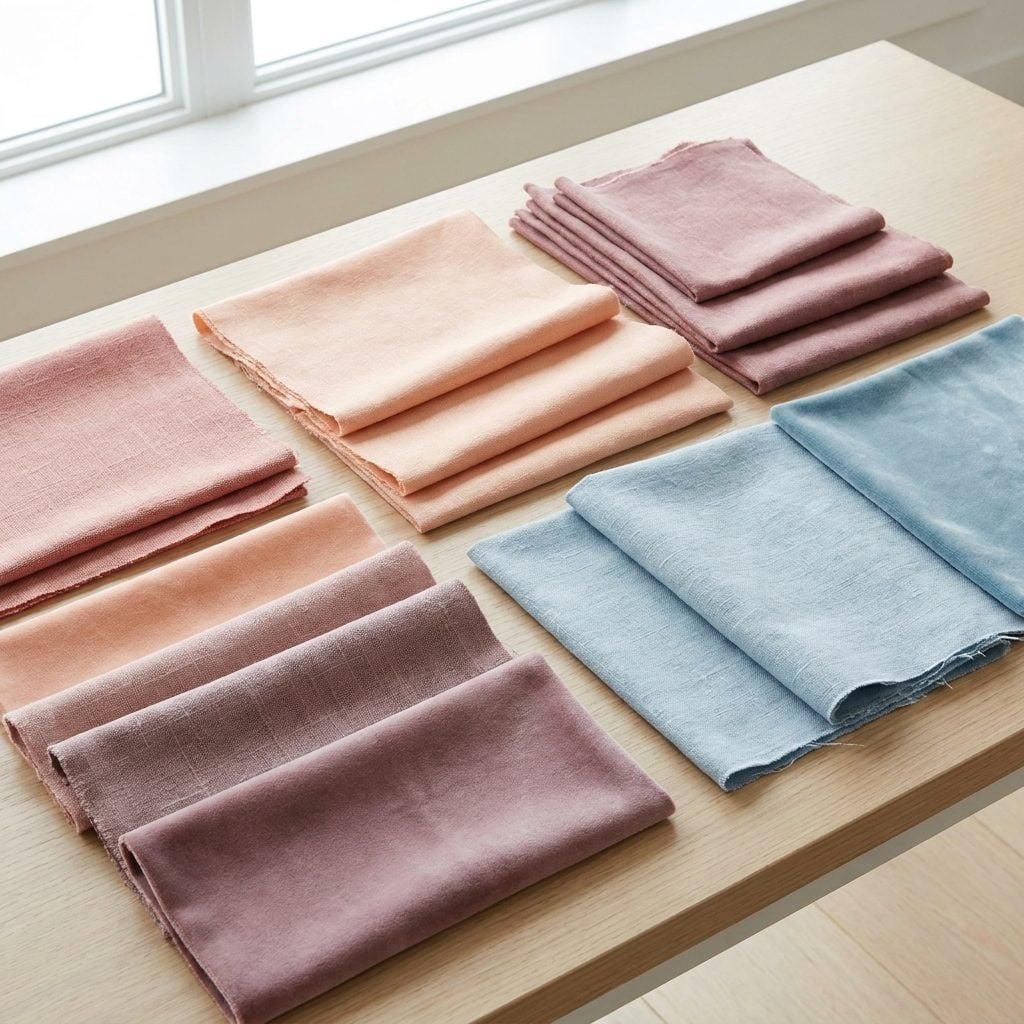
Mauve has endured decades of ridicule for a color that was largely minding its own business. Alongside dusty rose, peach, and powder blue, it helped define a softer side of 1980s decorating, one far removed from the decade’s neon reputation.
These muted colors worked particularly well when distributed across different materials. A powder-blue comforter, gray-mauve carpet, and peach accessories could create variation without sharp contrasts. Trouble arrived when every surface adopted the same shade. Mauve walls, mauve carpet, mauve curtains, and mauve bedding left a room looking as though it had been dipped in a single enormous paint bucket.
Not everyone has warmed back up to the blue side of that palette: across all rooms, images with blue accents got fewer hearts from our readers than the other images in the same articles.
18. The Ruffled Priscilla Curtains That Dressed a Window for a Royal Occasion
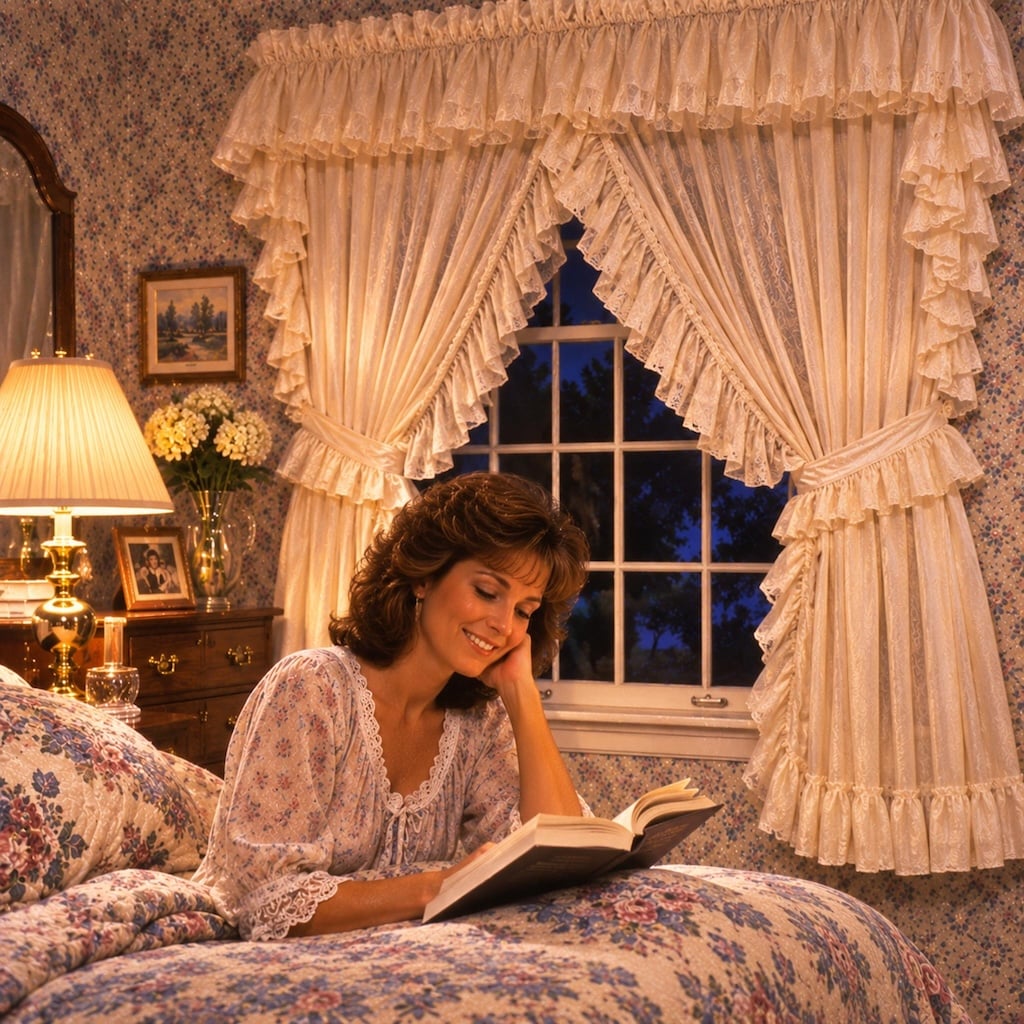
Ordinary curtains hung beside a window. Priscilla curtains appeared to be preparing it for a wedding. Gathered panels crossed toward the center, cascades of ruffles traced the edges, and tiebacks pulled the fabric into extravagant folds. Even the top of the window received a generous helping of lace and gathered trim. A perfectly functional window had acquired the wardrobe of a minor aristocrat.
The arrangement was particularly dramatic after dark. Against a deep blue night sky, the ivory fabric caught the warm light from a brass bedside lamp, turning every ruffle into another softly illuminated edge. The crossed panels framed the glass while the gathered sides created a thick, decorative border. Practical simplicity had clearly left the building, though the resulting sense of enclosure was difficult to deny.
17. The Corded Bedroom Phone That Could Stretch Almost to the Closet
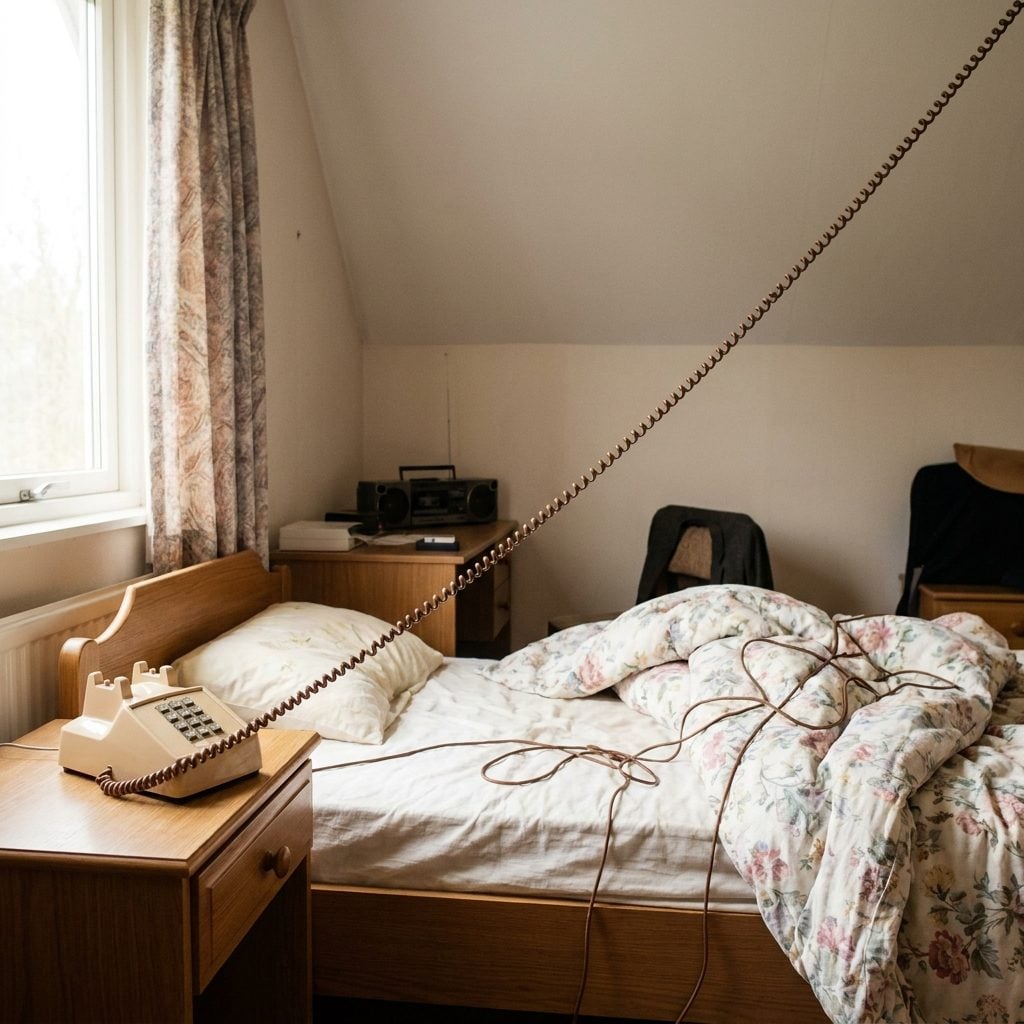
The telephone cord was an engineering marvel until it wasn’t. Stretch it far enough and the coils lengthened into a tangled rope that never quite recovered its original shape. A phone positioned on a bedside table could reach across the bed, around a chair, or toward the bedroom door, depending on the determination of the person holding the receiver.
A bedroom extension offered privacy and convenience, although calls still shared the household telephone line unless a separate line had been installed. The handset itself became another fixture of the nightstand, competing with the lamp, clock radio, and paperback collection for the last available inches of space.
16. The Sheer Curtains That Made Morning Sunlight Behave Itself
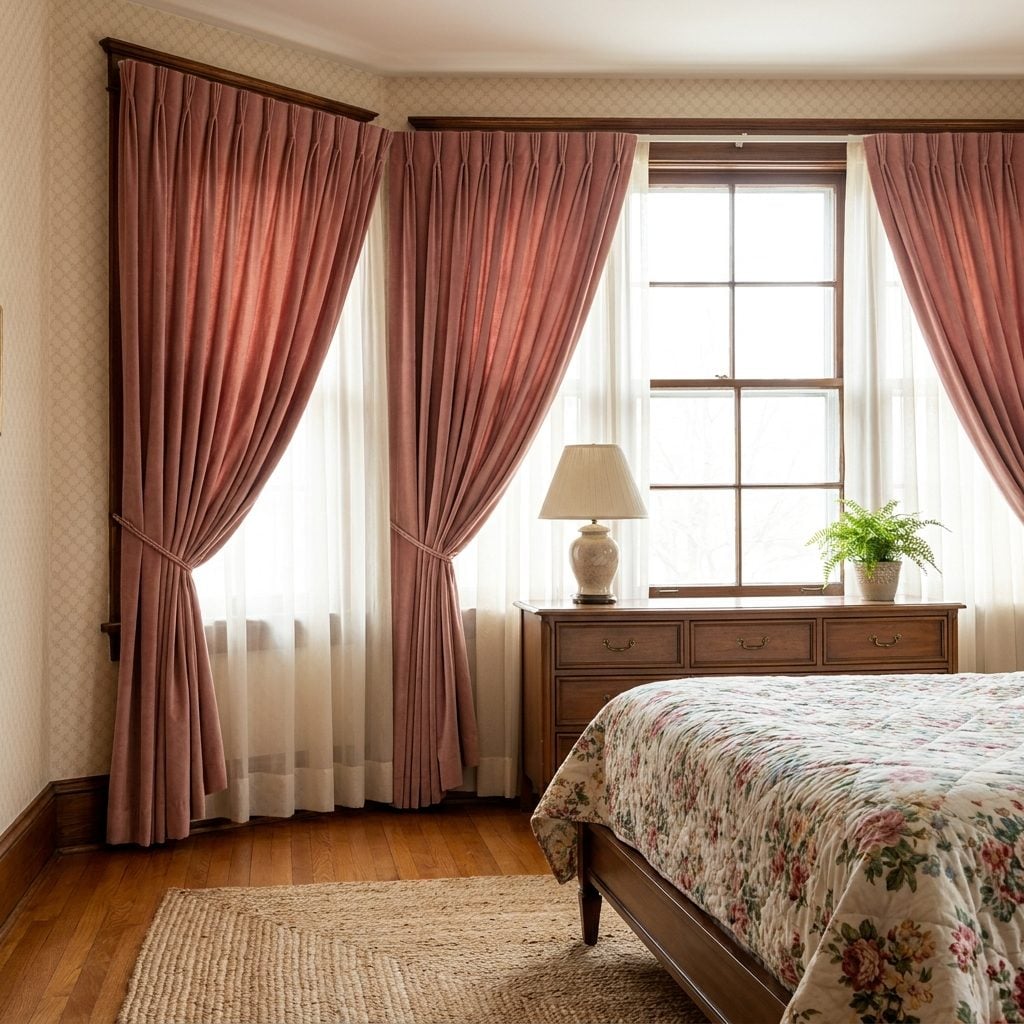
The sheer curtain occupied the middle ground between an uncovered window and a fully closed drape. Thin white or ivory fabric softened incoming daylight while providing a degree of daytime screening. Heavier curtains could be pulled aside without leaving the entire window exposed.
The layered arrangement also added depth around the glass. Translucent fabric caught the light, while the heavier drapes supplied weight and color at the sides. The result was a window that could change character throughout the day: airy in the morning, enclosed in the evening, and considerably more elaborate than a single roller shade.
15. The Dresser With a Mirror Big Enough to Have Its Own Zip Code
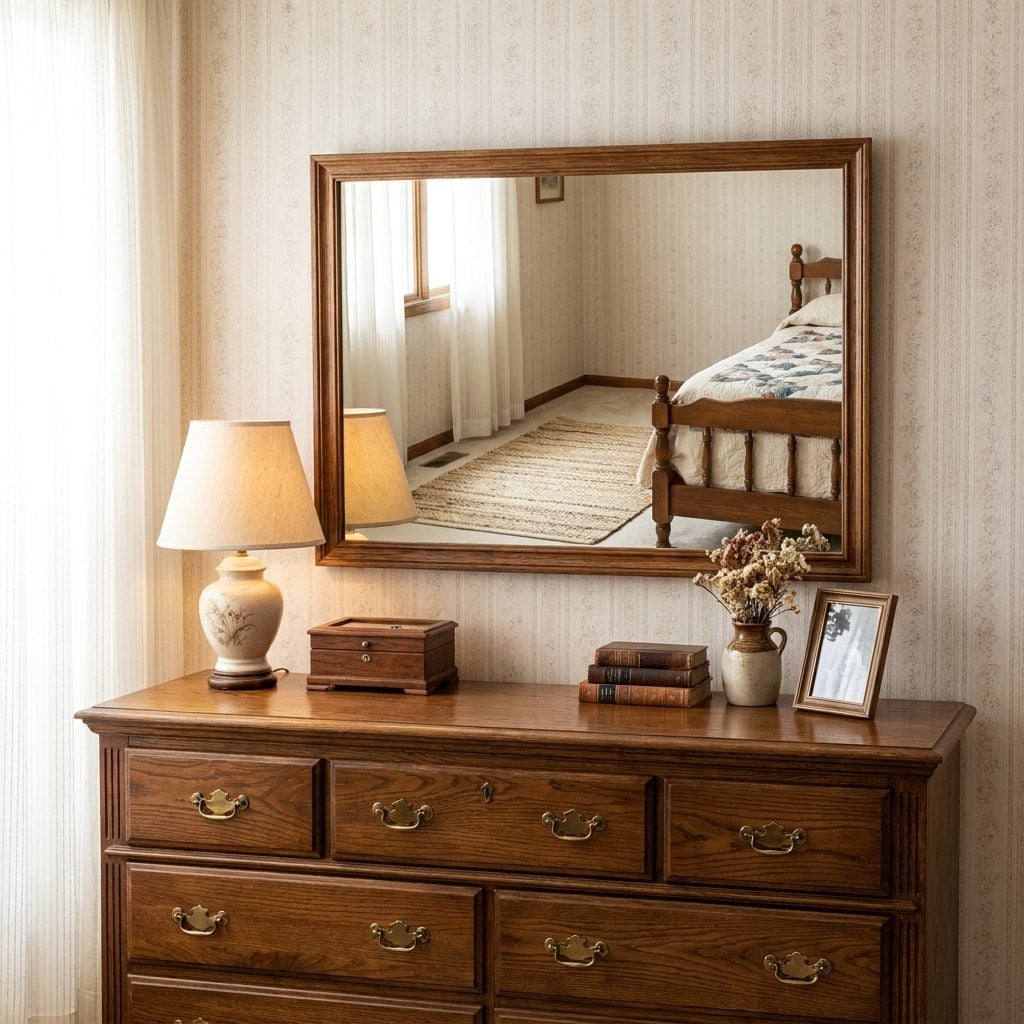
The dresser was substantial. The mirror above it was frequently even more ambitious. Wide wooden frames, generous reflective surfaces, and matching drawer pulls made the combination a dominant piece of bedroom furniture, sometimes rivaling the bed for visual attention.
Its usefulness was difficult to dispute. Drawers handled clothing, the mirror served as a dressing station, and the broad top provided room for the small necessities that accumulated in a bedroom. The mirror also reflected portions of the room, adding depth to a corner otherwise occupied by a solid block of furniture.
The scale of these dresser-and-mirror combinations made them difficult to ignore. In smaller bedrooms, a single oversized piece could establish the room’s character without leaving much space for anything else. The mirror supplied a little visual relief, even when the furniture beneath it occupied a considerable stretch of wall.
14. The Quilt or Patchwork Bedspread That Brought a Little History to the Mattress
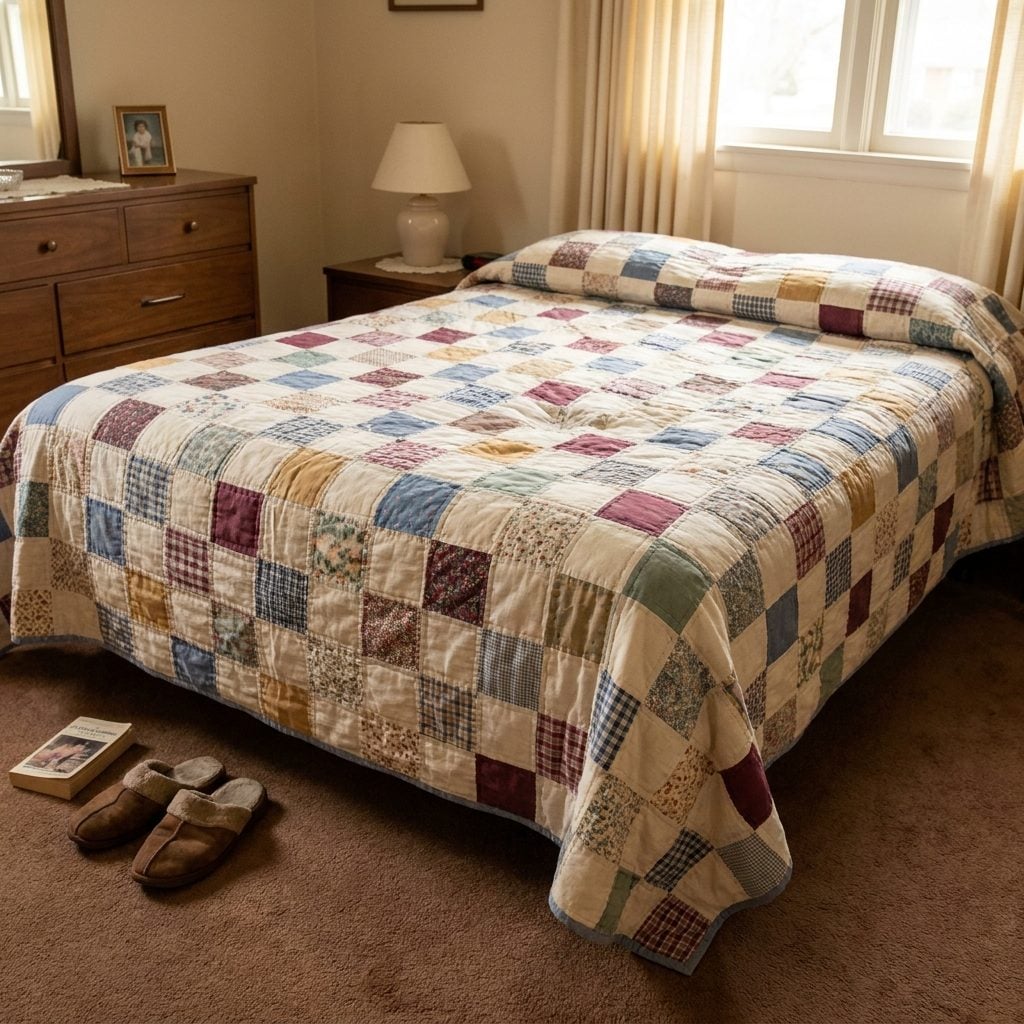
Where a matching comforter offered coordinated abundance, a patchwork quilt delivered variety on a smaller scale. Squares, triangles, diamonds, and irregular arrangements of fabric formed patterns that rewarded a closer look. Burgundy could sit beside faded blue, floral cotton beside a plain cream square, with stitching providing the common thread.
Handmade quilts could carry family histories through their materials and workmanship, although commercially produced versions also brought the patchwork look into bedrooms. Either way, the stitched geometry added visual detail without requiring the enormous volume of an overstuffed comforter. The bed became a patchwork of color rather than one uninterrupted expanse of print.
13. The Fabric Lampshades That Saved Bedrooms From the Interrogation-Room Look
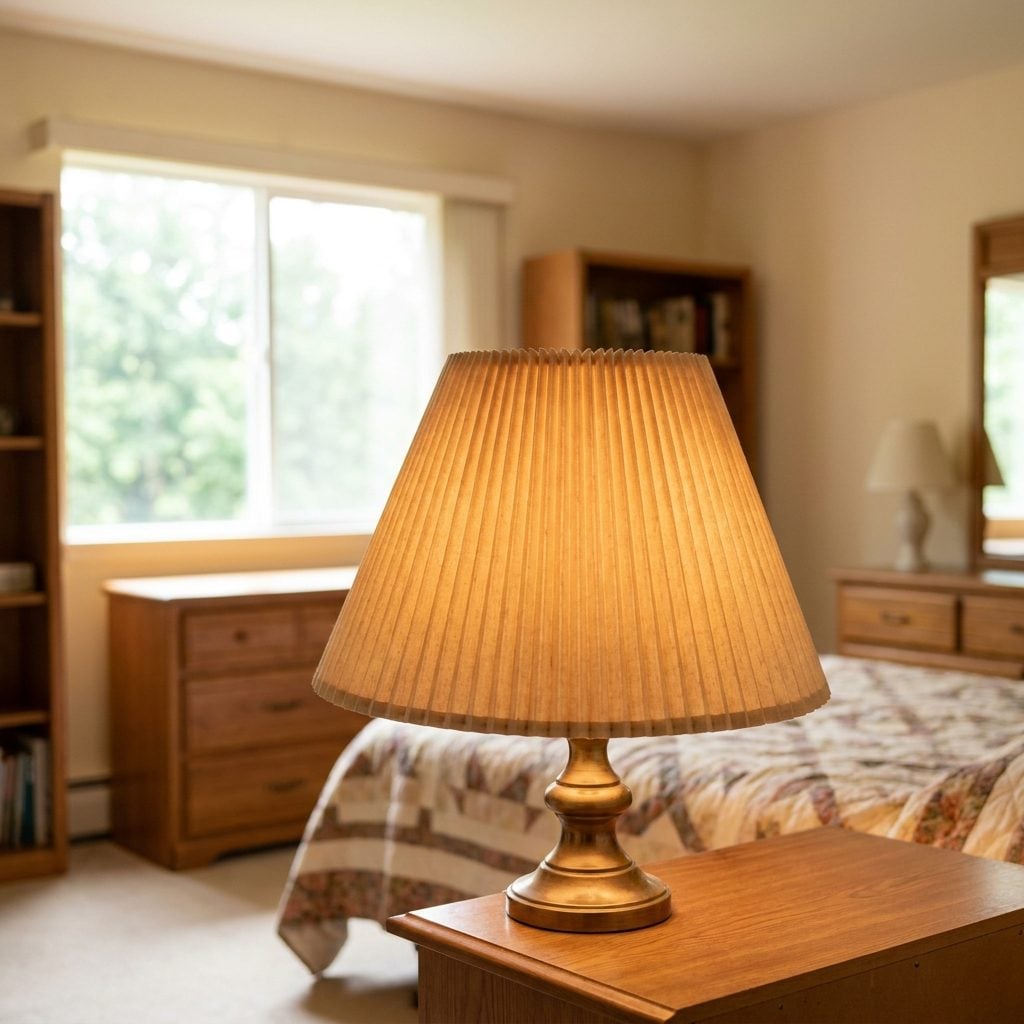
The pleated fabric lampshade was an unsung hero of bedroom lighting. Cream, ivory, dusty pink, and occasionally a small floral print covered the frame, concealing the bulb behind a softly textured surface. Even a fairly ordinary lamp acquired a more decorative presence once dressed in fabric.
The shade helped diffuse light and reduce direct glare, although the precise effect depended on its material, opacity, and shape. Pleats added texture when the lamp was switched off, while the illuminated fabric created a gentle glow when switched on. Compared with a bare bulb, the result was considerably more civilized. The bedroom could retain its dignity after dark.
12. The Matching Bedroom Set That Left Absolutely Nothing to Chance
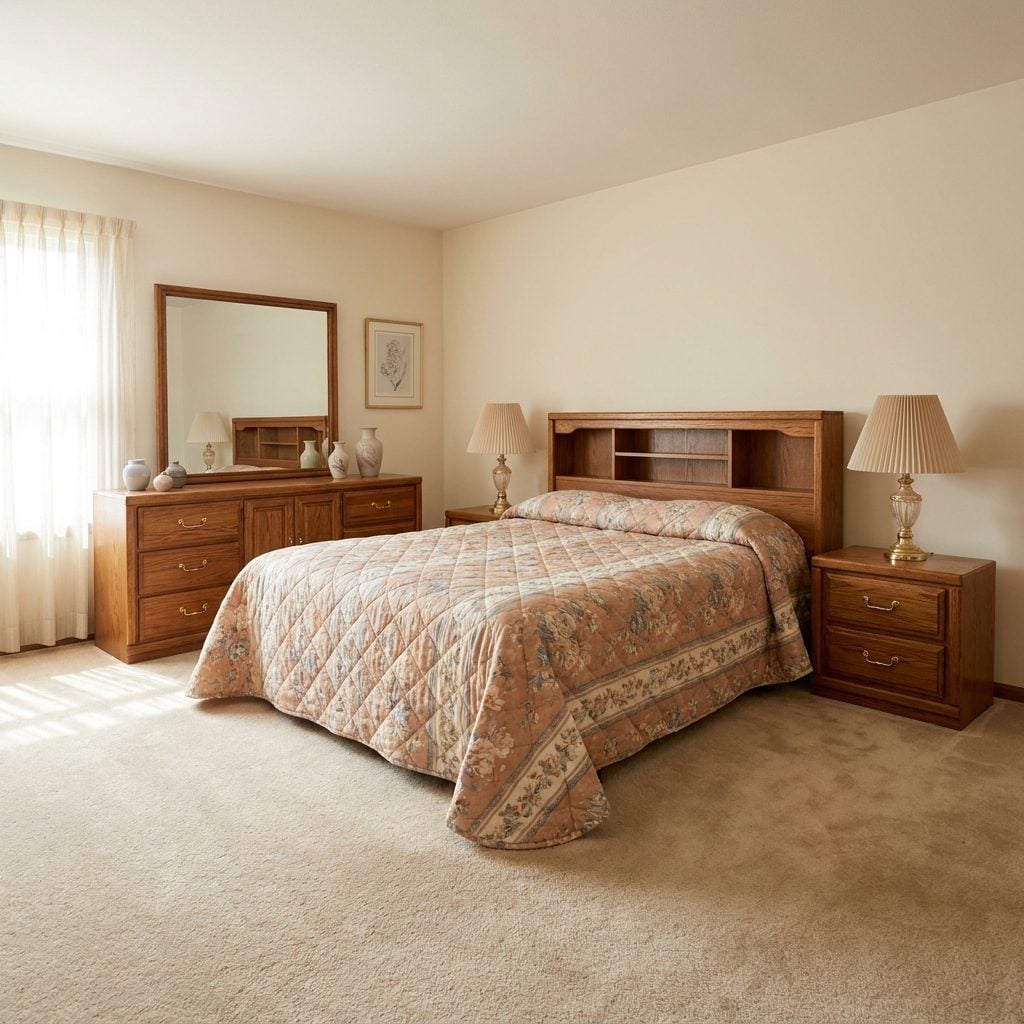
The matching bedroom suite was a declaration of order. Headboard, dresser, chest of drawers, and nightstands arrived speaking the same design language, often in light oak or darker stained wood with identical hardware. There would be no debate about whether the dresser complemented the bed. They had already reached an agreement at the factory.
The coordinated approach created a strong sense of visual continuity, especially in rooms with patterned bedding and wallpaper. Repeated wood tones and furniture details gave the eye something consistent to follow. The drawback was equally obvious: too much matching could make a room resemble a furniture showroom. Yet when the textiles and personal accessories supplied enough variation, the result could feel reassuringly complete.
Contemporary bedrooms can borrow the principle without purchasing an entire suite. Repeating a wood finish or hardware detail across selected pieces creates a connection while allowing more variety. The trick is giving the furnishings enough in common to look related without making every piece an identical sibling.
11. The Jewelry Box That Took Up Permanent Residence on the Dresser
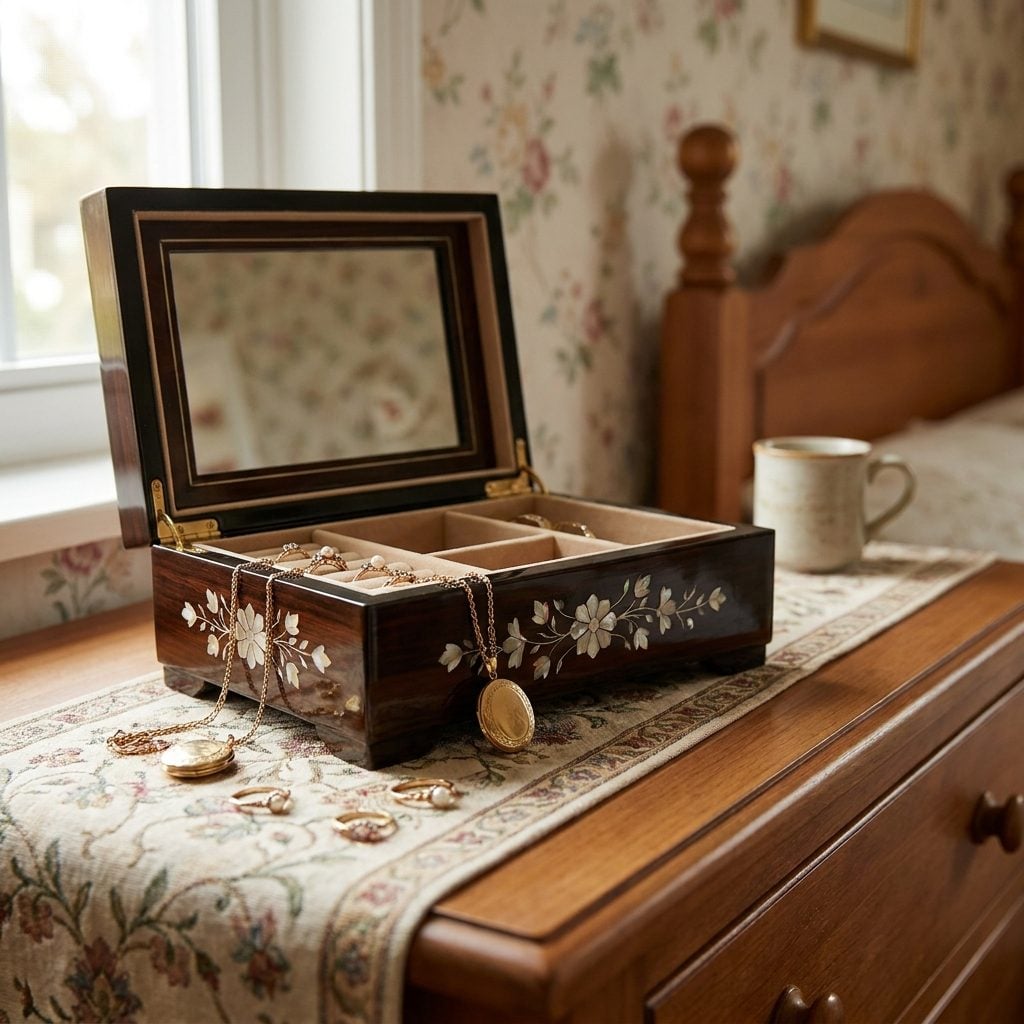
A jewelry box was part storage, part miniature piece of furniture. Hinged lids, velvet-lined compartments, tiny drawers, and sometimes a built-in mirror made even a modest example seem surprisingly elaborate. The better ones offered a designated place for rings, necklaces, earrings, and the occasional object that defied categorization.
Displayed on the dresser, the box introduced another material and scale among the larger furnishings. Wood, lacquer, fabric lining, or decorative metalwork could provide a welcome contrast to the broad expanse of the dresser top. Unlike a decorative ornament, it had a daily purpose, making its permanent position easy to justify.
10. The Canopy Bed That Built a Little Room Inside the Bedroom
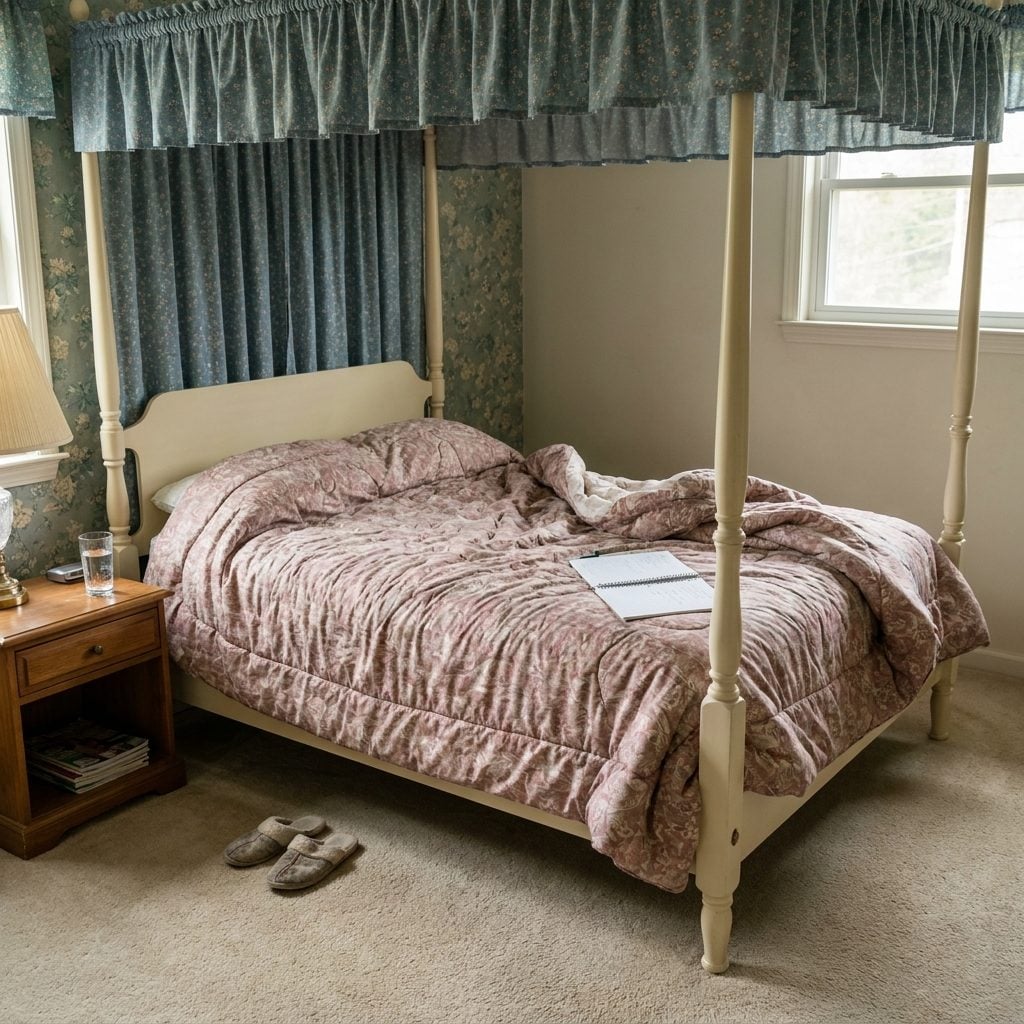
Four posts and a little fabric could turn an ordinary bed into a remarkably theatrical piece of furniture. Canopy beds borrowed their silhouette from much older designs, but 1980s versions often favored painted wood, gathered valances, and soft floral fabrics rather than heavy historical drapery.
The overhead frame gave the bed a distinct architectural outline, creating the impression of a separate space within the room. Even a simple strip of fabric across the top could make the sleeping area feel more enclosed. Full curtains offered an additional layer of privacy and decoration, although they also increased the amount of fabric requiring maintenance. The canopy was less a necessity than a very persuasive argument for making bedtime an occasion.
9. The Coordinated Curtains That Matched the Comforter Down to the Last Flower
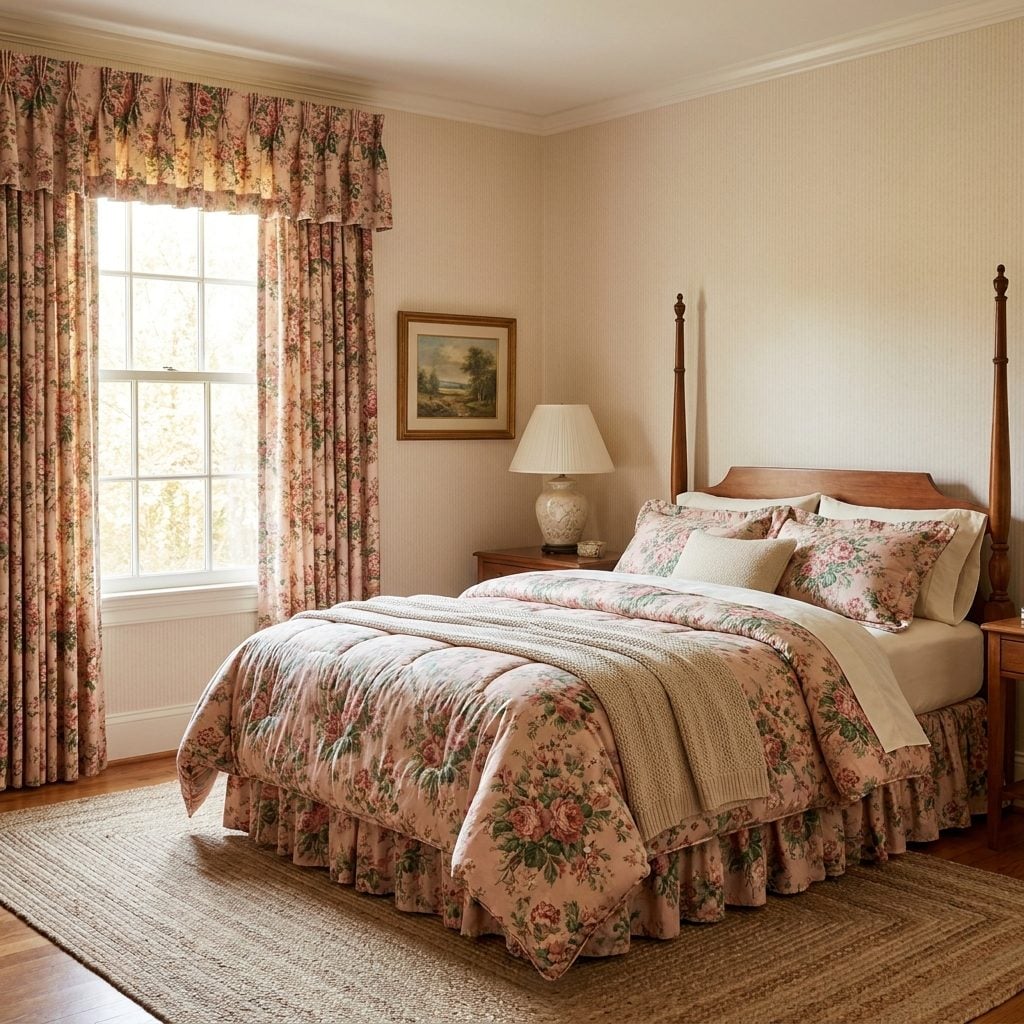
Matching the curtains to the comforter was not considered excessive. It was considered finishing the job. The same floral print could travel from the bed to the window, occasionally stopping at a pillow or upholstered chair along the way. Fabric manufacturers and bedding collections made the coordination relatively straightforward.
The repetition linked two of the room’s largest visual surfaces. Rather than competing for attention, bed and window appeared to belong to one decorative scheme. The approach worked best when surrounding walls and furniture provided some relief. Without that breathing room, the flowers could stage a complete takeover.
8. The Books and Magazines That Never Quite Made It Back to the Shelf
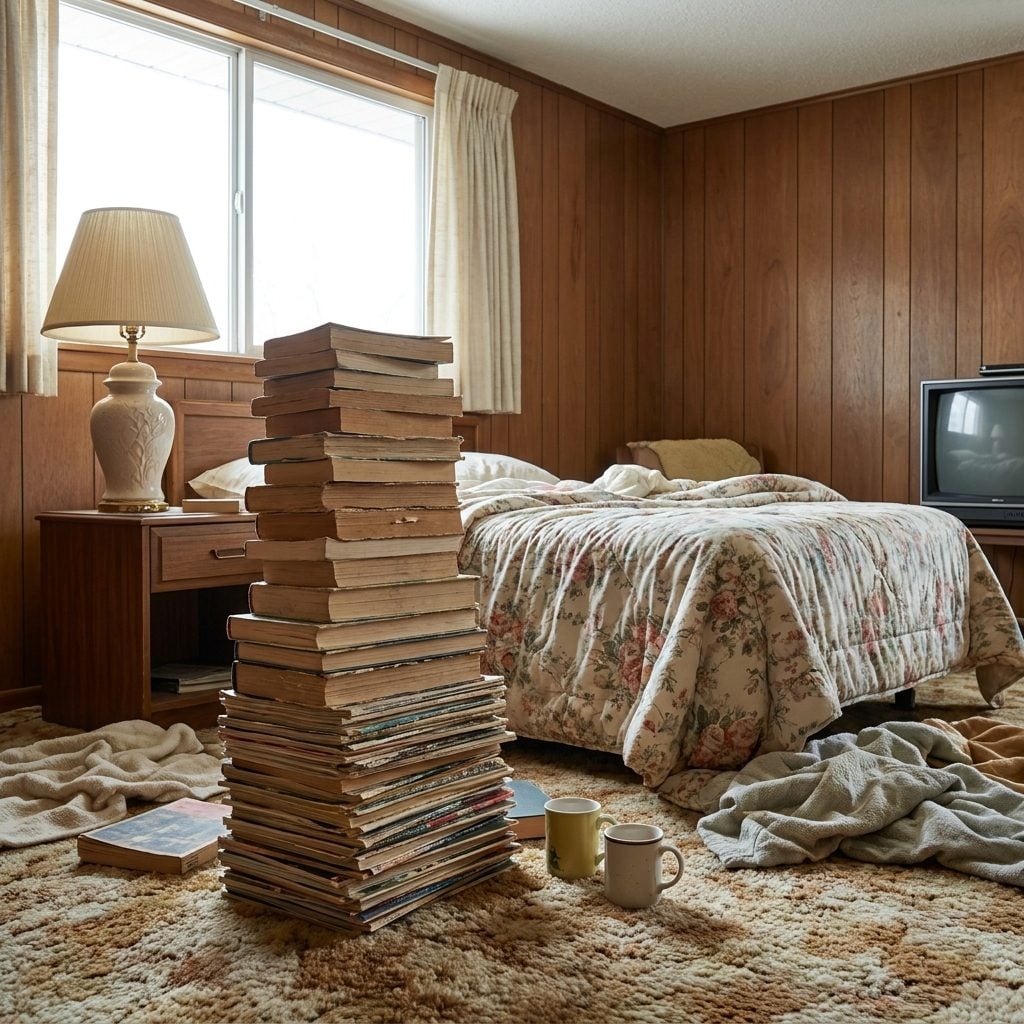
The bedside book stack was a precarious piece of informal architecture. Paperbacks, magazines, and the occasional hardcover formed uneven towers beside the lamp, each addition making the arrangement slightly less convincing as a stable structure.
Unlike the coordinated bedding, these stacks changed constantly. Glossy magazine covers introduced color, worn paperback spines supplied texture, and an open book gave the nightstand a practical purpose beyond supporting a clock. Reading material also made the bedroom a place for quiet entertainment long before phones and tablets became permanent bedside companions. The occasional collapse was simply part of the arrangement’s charm.
7. The Soft Fabric Valance That Put a Fancy Hat on Every Window
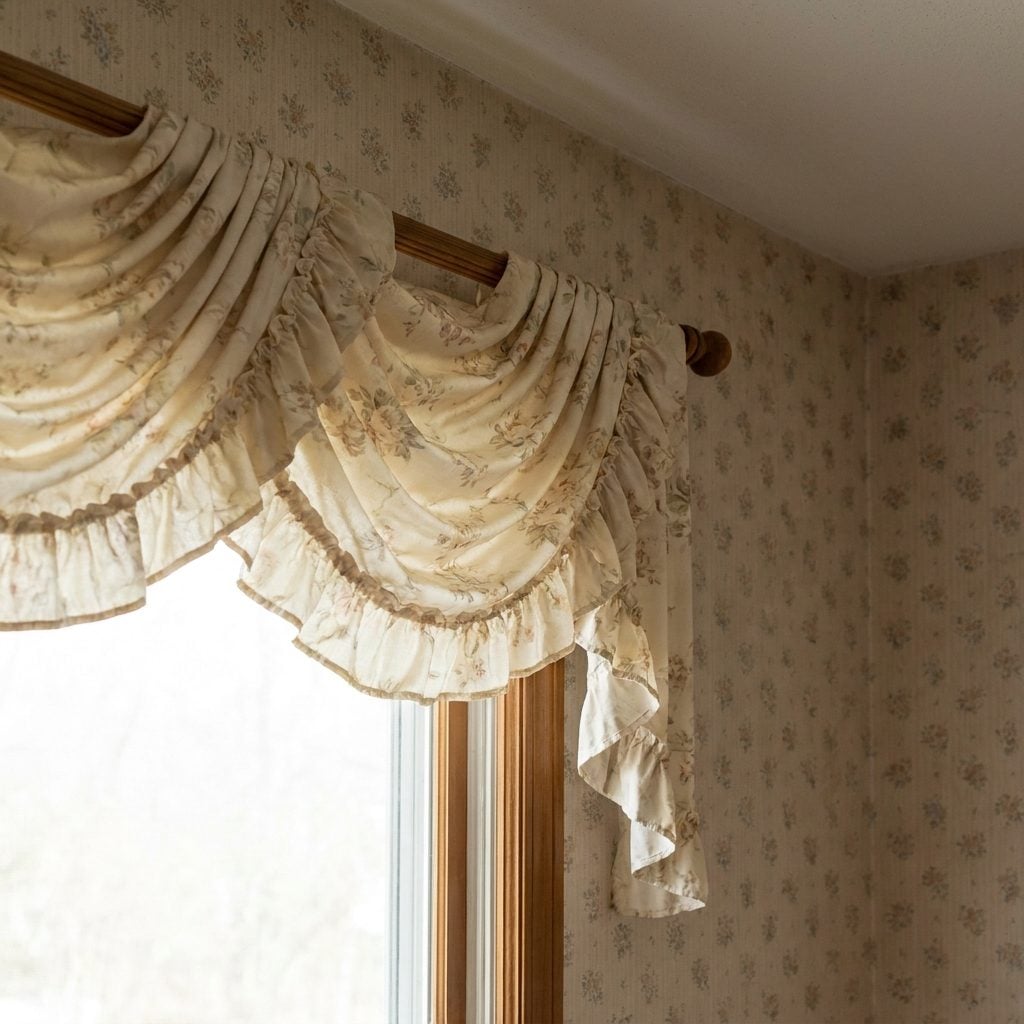
The valance occupied a narrow strip above the window and behaved as though it were the most important fabric in the room. Gathered, pleated, scalloped, or arranged into a soft swag, it concealed curtain hardware while adding another decorative flourish.
Some versions matched the drapes; others borrowed a color from the bedding or wallpaper. Their greatest contribution was to soften the hard horizontal line at the top of the window. Their greatest excess was the tendency to multiply folds until a perfectly ordinary window appeared to be wearing formal evening attire.
6. The Matching Wooden Nightstands That Brought Order to Both Sides of the Bed
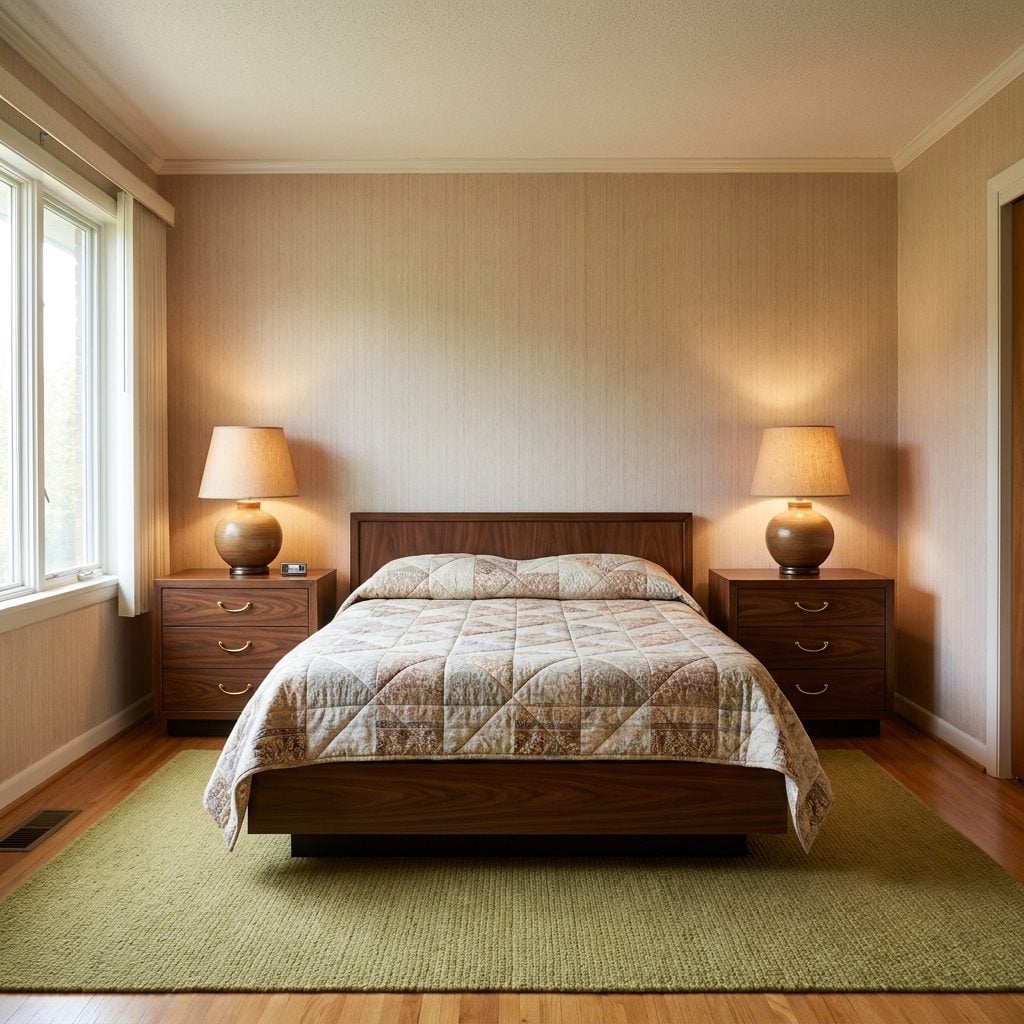
Two identical nightstands gave the bed a reassuring sense of balance. Matching wood finishes, drawer pulls, and proportions created symmetry, while the space between them became the natural center of the room. Even a heavily patterned comforter looked more orderly when framed by a matched pair.
The practical advantage was equally substantial. Each side could accommodate a lamp, reading material, a clock, or a glass of water, with drawers keeping smaller necessities out of sight. Unlike the larger matching bedroom suite, the nightstands performed their own specific task: giving the sleeping area a balanced outline and putting everyday essentials within reach.
5. The Decorative Pillow Mountain That Had to Be Dismantled Every Night
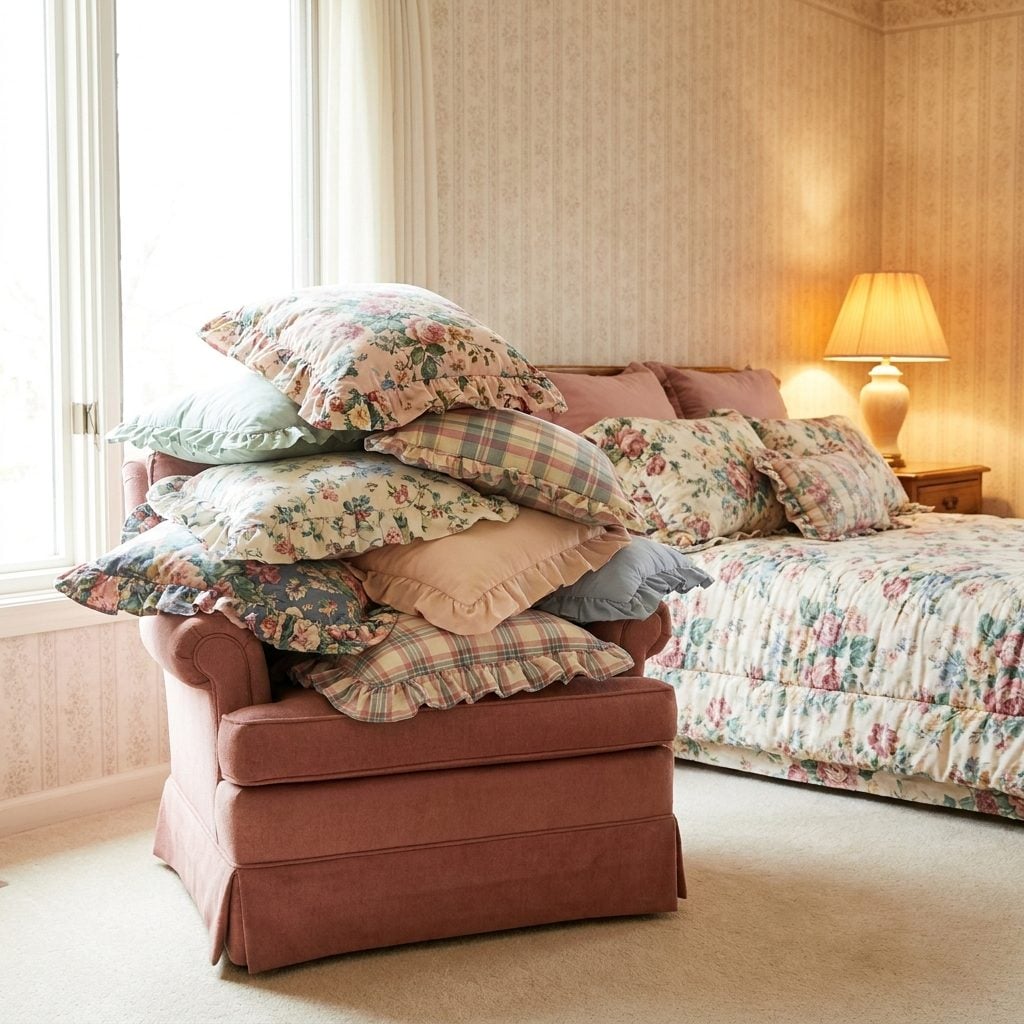
A bed could have enough decorative pillows to require a separate piece of furniture for overnight storage.
Two sleeping pillows were apparently an admission of defeat. A properly dressed bed needed additional cushions in graduated sizes, contrasting shapes, coordinating fabrics, and occasionally a bolster that looked suspiciously like a piece of upholstered plumbing.
Unlike the matching shams that established a backdrop, these smaller pillows supplied variety. Velvet beside cotton, florals beside stripes, piping beside ruffles: the combinations gave the bed dimension and a sense of abundance. They also introduced an unavoidable nightly chore. Every cushion that made the bed look more inviting had to find somewhere else to spend the night.
4. The Cedar Hope Chest That Could Swallow a Winter’s Worth of Blankets
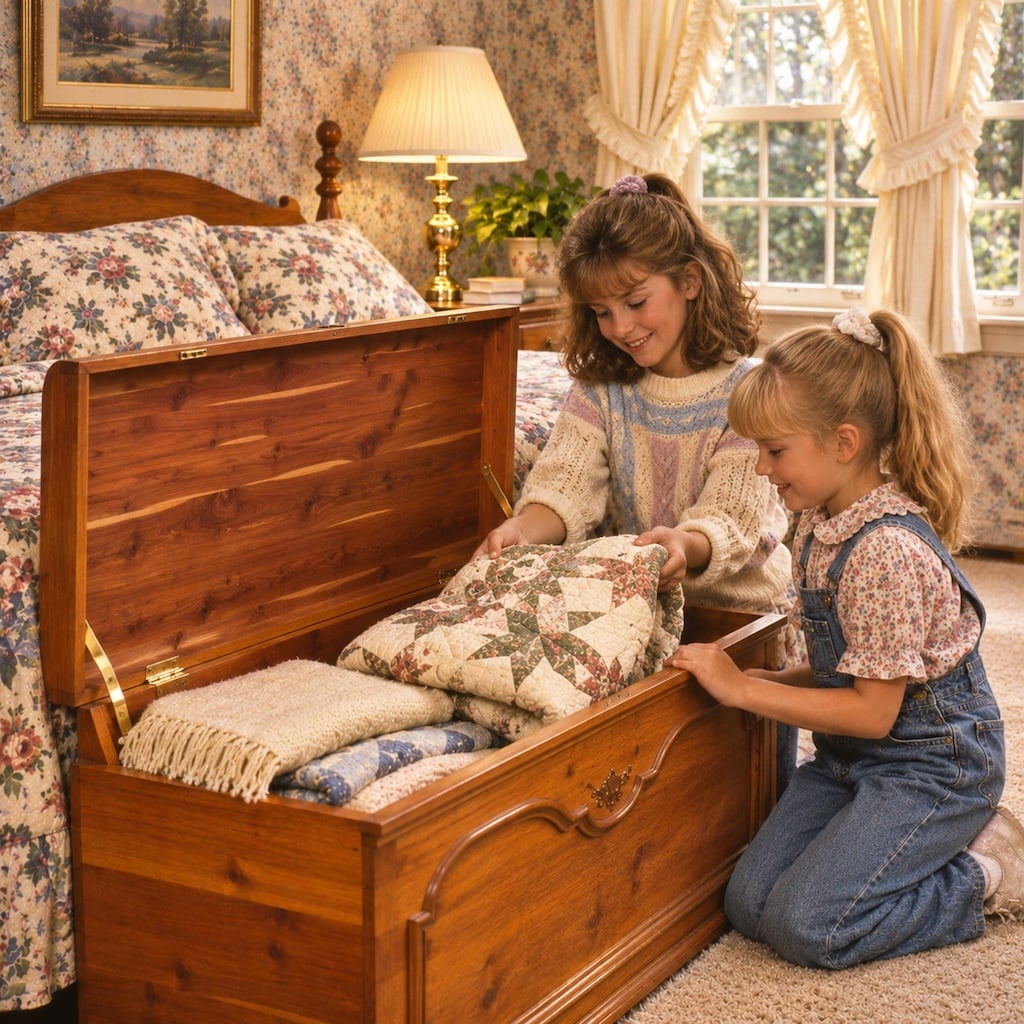
The cedar hope chest was a handsome piece of furniture with a remarkable appetite. Quilts, spare blankets, embroidered linens, and the occasional keepsake disappeared beneath its heavy wooden lid. Positioned at the foot of the bed, it served as storage, decoration, and an invitation to investigate what might be tucked beneath the top quilt.
Aromatic cedar was valued for its distinctive scent and its traditional association with protecting stored textiles from certain fabric pests. The chest’s carved front and warm wood grain made it attractive enough to remain on display, while the interior kept bulky bedding out of sight. The old-fashioned name came from the custom of collecting household linens and other possessions in anticipation of marriage, though the furniture was useful regardless of anyone’s matrimonial plans.
3. The Framed Family Photos That Took Over Every Available Surface
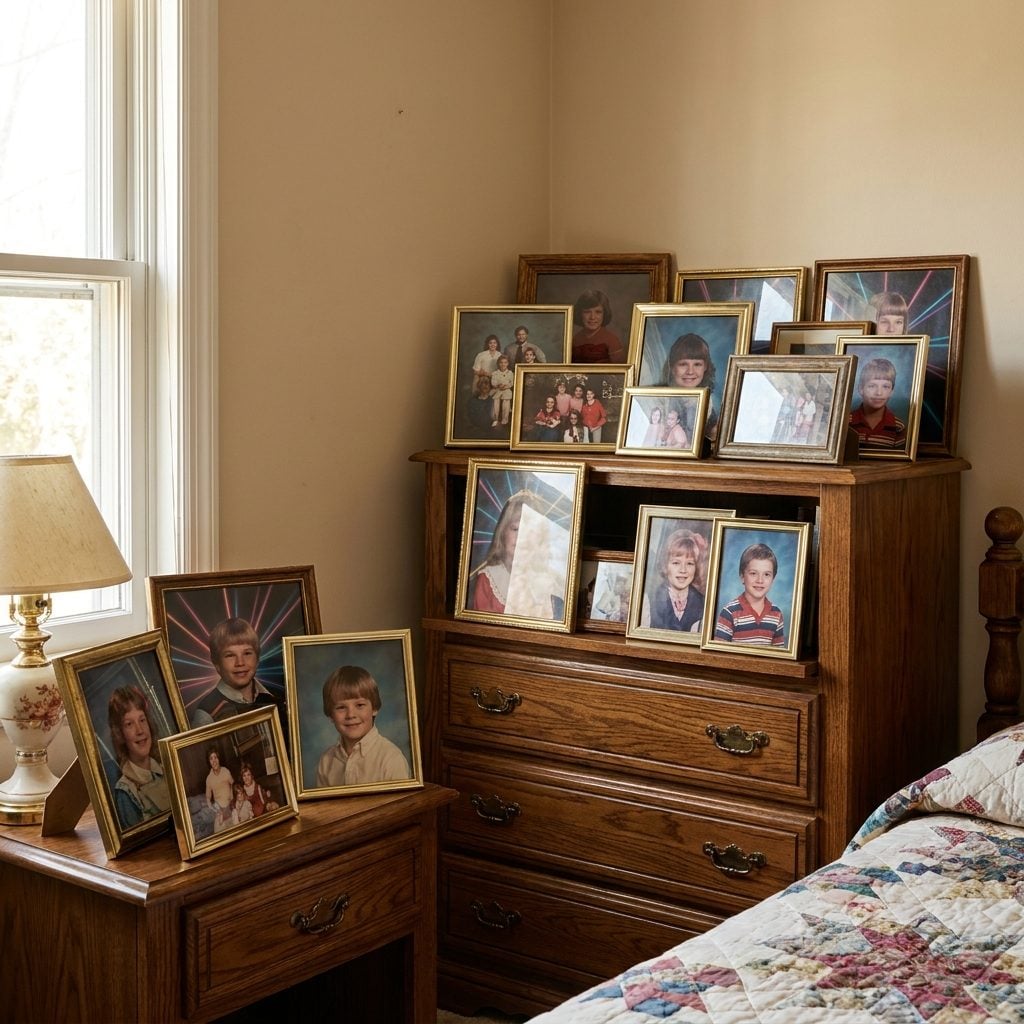
Before digital photo frames and phone galleries, displaying photographs required actual real estate. Dressers and nightstands accommodated school portraits, wedding pictures, family snapshots, and formal studio photographs in an assortment of wooden, brass, and silver-tone frames.
The visual effect was more interesting than a perfectly matched collection of accessories. Different frame sizes created an irregular skyline, while the photographs introduced faces, colors, and moments unrelated to the room’s decorating scheme. A photograph could remain in the same position for years, gradually becoming as familiar a part of the furniture as the lamp beside it.
2. The Bedside Reading Lamps That Made the Rest of the Room Disappear
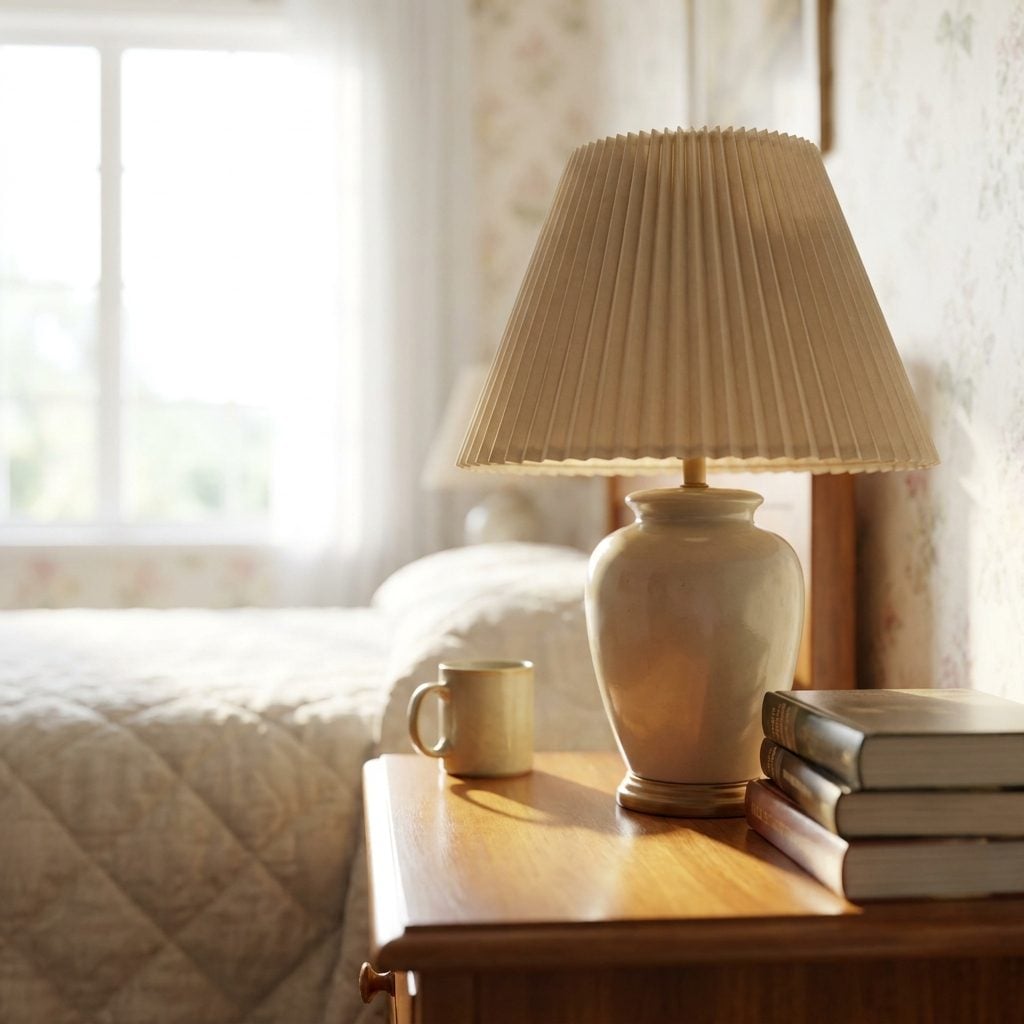
The bedside lamp had a talent for making a large room feel smaller in the best possible way. A warm pool of light illuminated the pillow, the open book, and perhaps the edge of the nightstand, while the dresser and distant walls receded into shadow.
Incandescent bulbs commonly used in these lamps produced a warm-looking light, especially when combined with cream-colored shades. Positioned beside the bed, the lamps offered localized illumination without flooding the entire room. The contrast between the bright reading area and the darker surroundings created a distinctly intimate atmosphere, one that overhead lighting rarely reproduced as effectively.
1. The Dust Ruffle That Hid the Bed Frame Beneath a Small Avalanche of Fabric
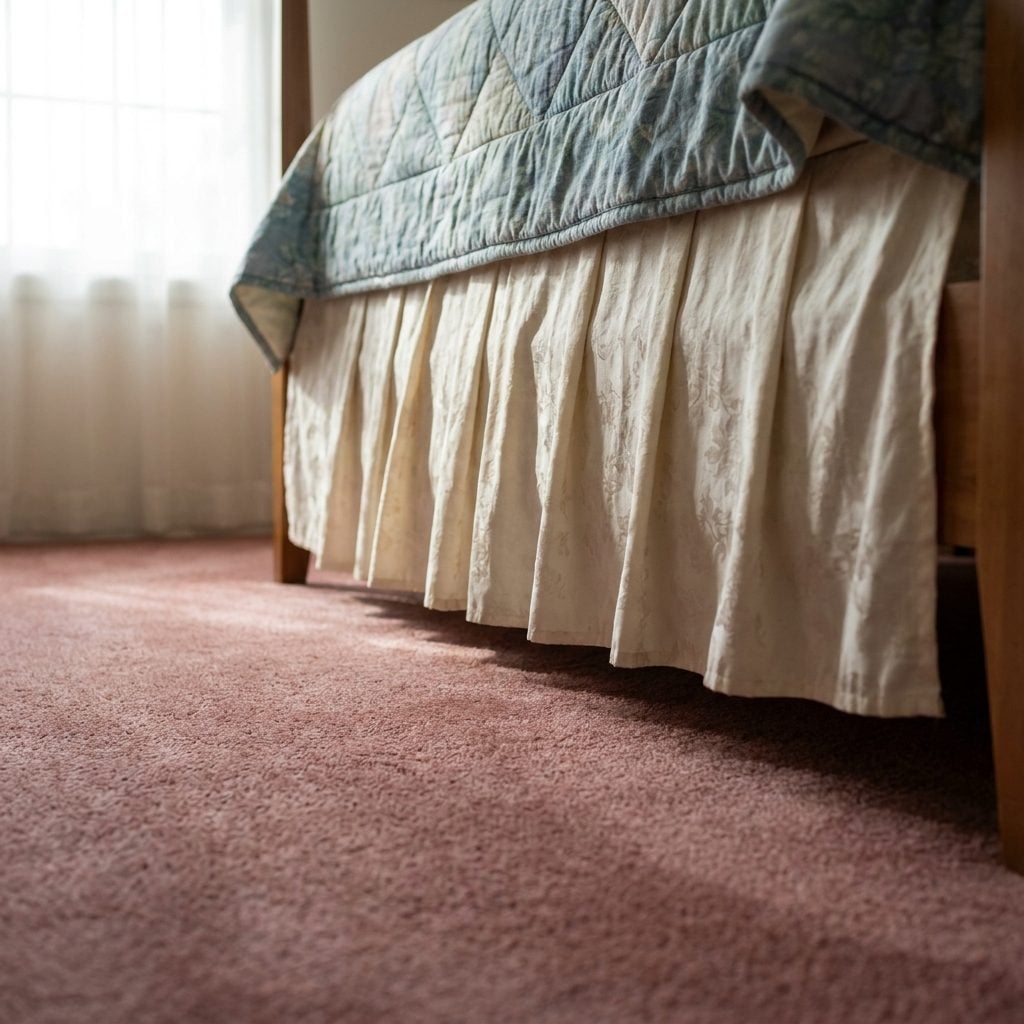
There was one final frontier in the campaign to upholster the entire bedroom: the space beneath the mattress. A metal bed frame, exposed legs, and the dark gap under the box spring were apparently too industrial for polite company. The dust ruffle arrived to conceal the evidence.
Gathered fabric dropped from the edge of the bed toward the carpet, softening the outline and giving the whole arrangement a fuller, more continuous shape. Some ruffles matched the comforter; others used a quieter solid color to avoid competing with the pattern above. Either way, the hard structure disappeared behind another generous layer of textile.