🔥 Would you like to save this?
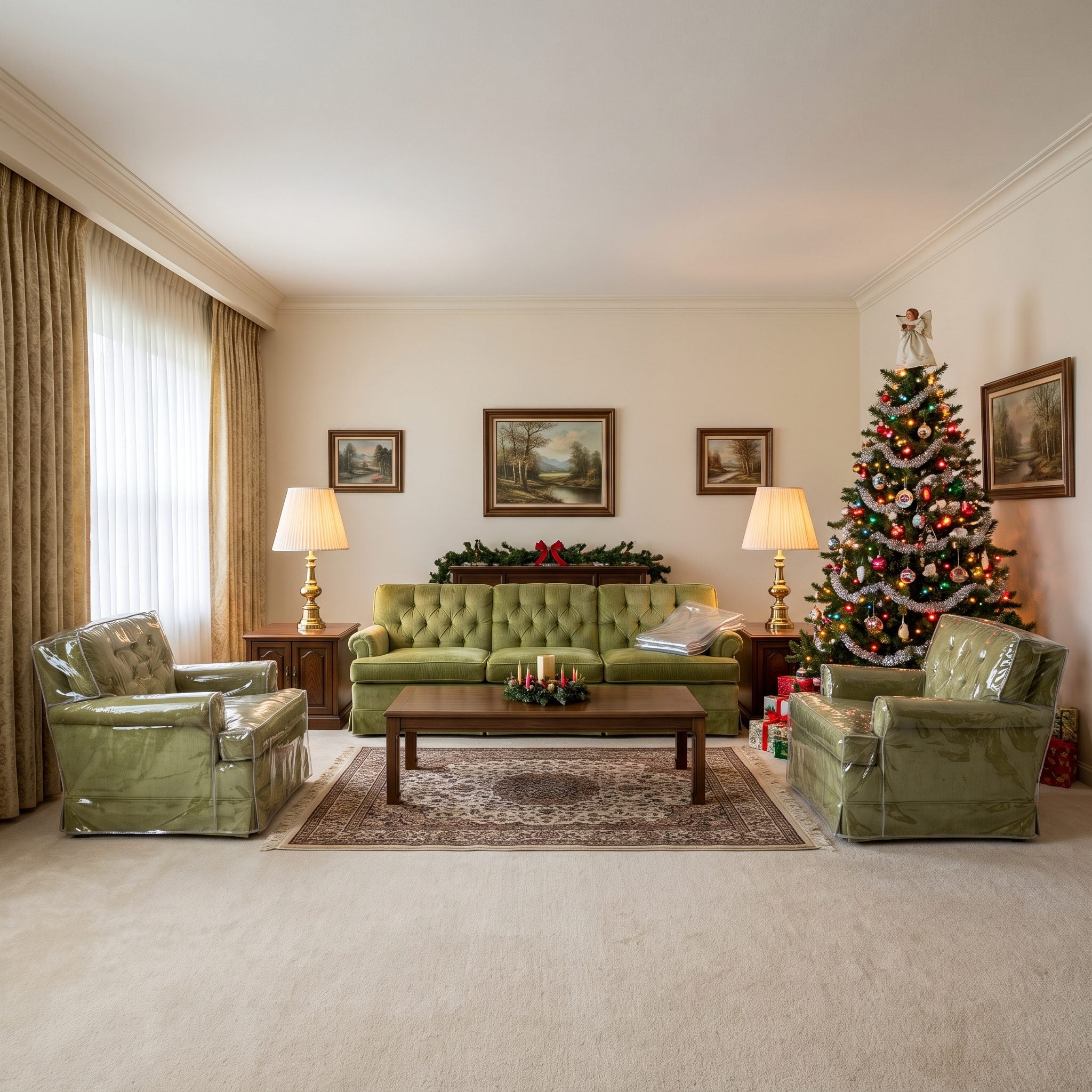
Some 1970s formal living rooms seemed designed less for living than for preservation. Brocade disappeared beneath clear vinyl. Gold-toned drapes guarded the windows. Beige spread from wall to wall, while the good sofa waited under plastic for the sort of occasion important enough to justify actually touching it.
Christmas was when all that formality finally made sense. The room could handle a tree, polished brass, velvet ribbon and every bit of ceremony December could throw at it. The problem was the other eleven months. Once the decorations disappeared, all that preciousness was left sitting in a room that had forgotten how to relax.
In order to come up with the very specific design ideas, we create most designs with the assistance of state-of-the-art AI interior design software. Also, assume links that take you off the site are affiliate links such as links to Amazon. this means we may earn a commission if you buy something.
These 31 transformations keep the formal-room ambition and throw out the museum rules. Marble goes monumental. Walnut gets darker. Aubergine lacquer climbs onto the ceiling. Travertine, tadelakt, mohair, oak, onyx and even raw concrete take turns proving that sophistication does not require a sofa wrapped like leftovers. Some rooms still dress magnificently for Christmas. The difference is that they have something to say in February, too.
31. The Walnut Room That Finally Feels Like Somebody Lives Here
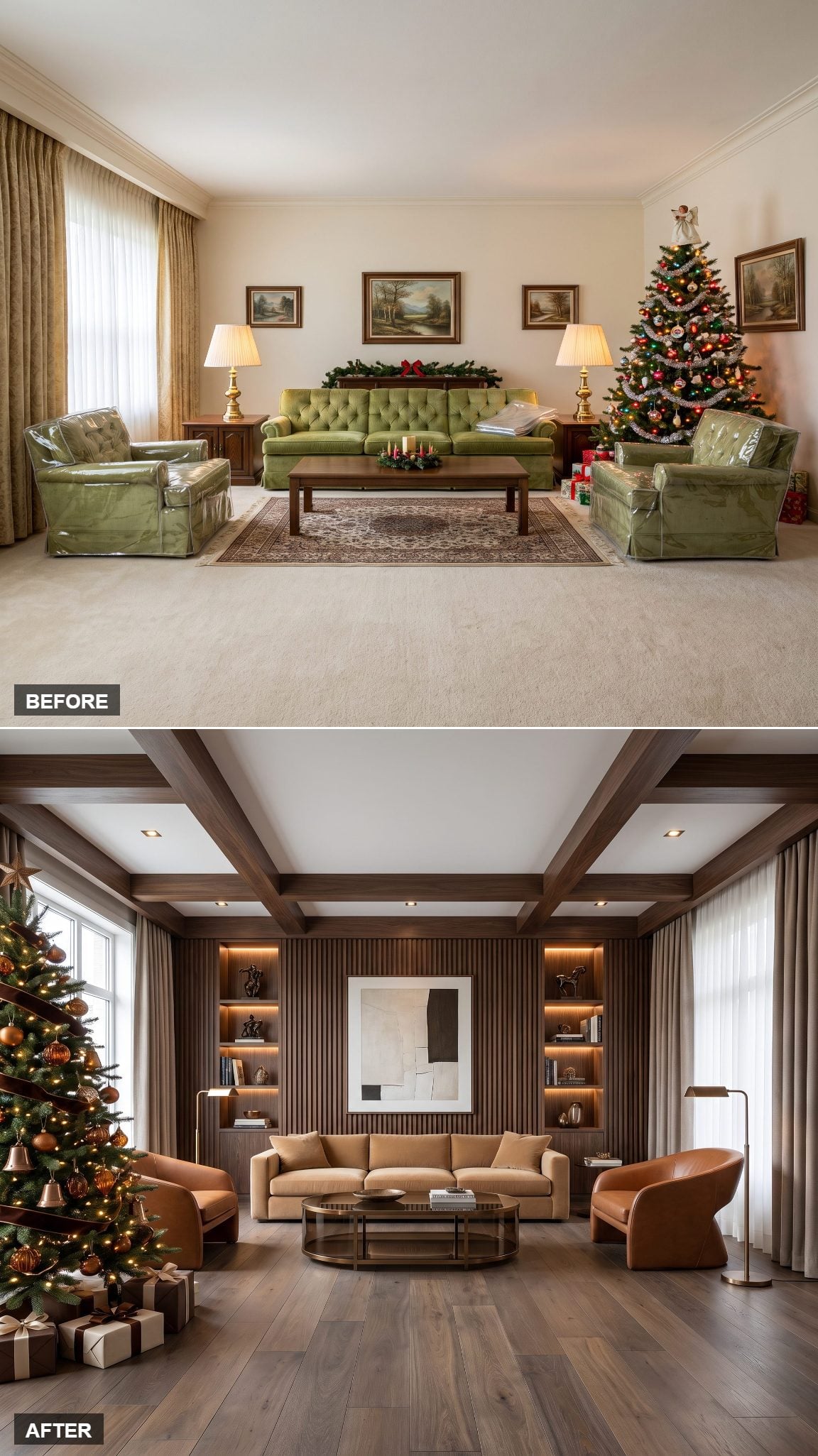
Dark wasn’t the problem in the original room. Flat beige walls, yellow light and furniture with too much visual weight were. Together they made formality feel more institutional than luxurious.
Full-height walnut paneling changes the temperature immediately. Vertical grain stretches the walls, a matte finish keeps the wood sophisticated rather than glossy, and a deep chocolate leather chair introduces just enough contrast. Brass picture lights wash the panels instead of flooding the room. Same box, but now the darkness has a purpose.
30. Modern Moroccan Couture in Hand-Finished Tadelakt
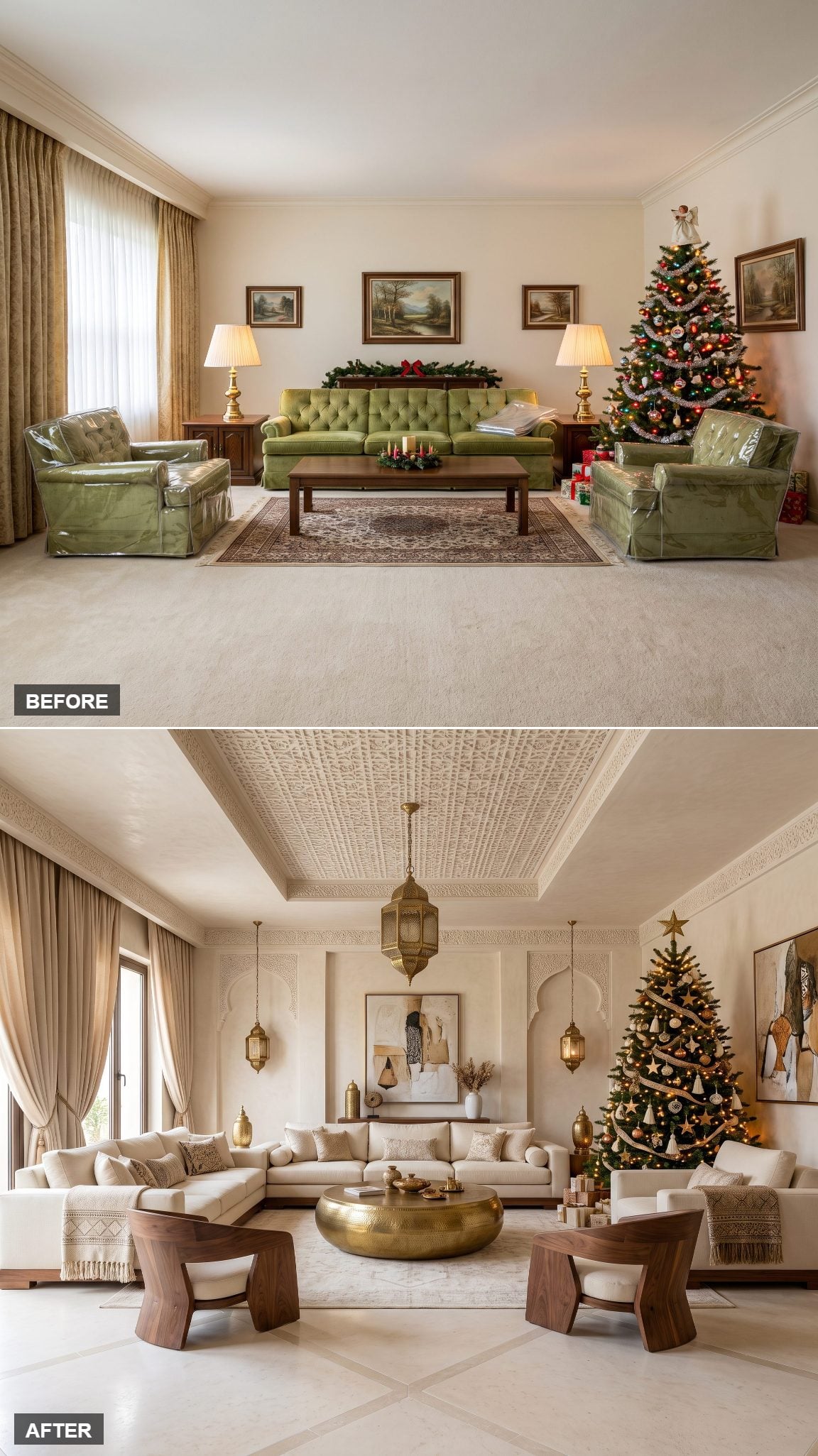
Creamy tadelakt gives the walls a softly polished surface that catches light without turning glossy. Pale limestone underfoot keeps the palette restrained, while carved arches replace the old room’s relentless collection of rectangles.
This is Moroccan influence without turning the room into a souvenir shop. Warm brass lanterns, ivory upholstery and controlled touches of rust let the craftsmanship lead. The luxury sits in plaster, stone and proportion rather than an explosion of pattern.
29. A Manhattan Penthouse Squeezed Into a Suburban Shell
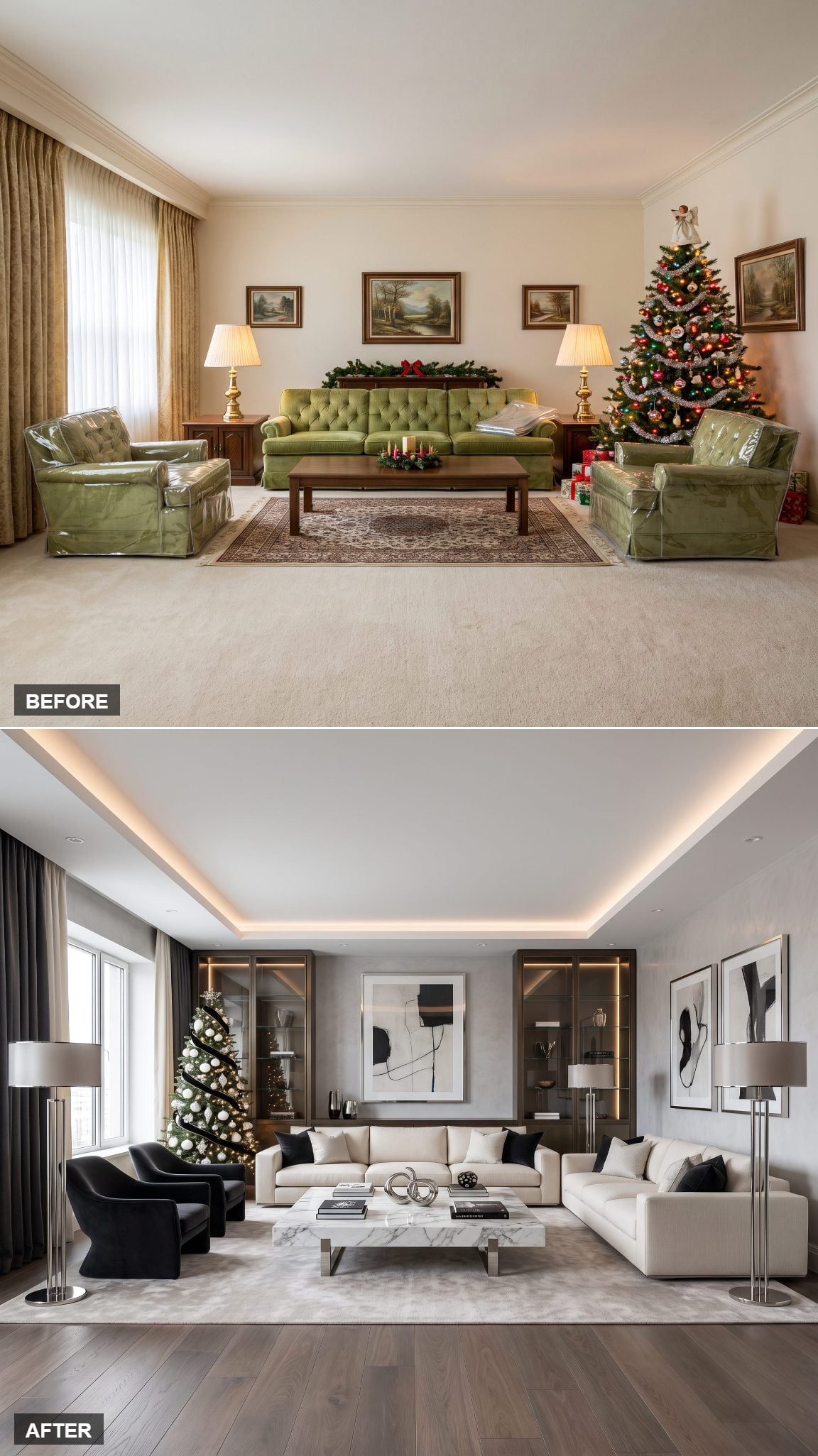
Smoked oak flooring, pale gray Venetian plaster and the tailored discipline of a downtown apartment forty floors up give the old suburban shell a completely different posture. Everything is squared off, low and deliberate.
A gray velvet sofa, a marble coffee table and a restrained stack of art books are enough. The plastic-era room treated every surface as something to protect. This one makes the same square footage look ready to be used.
28. Emerald Jewel-Box Glamour
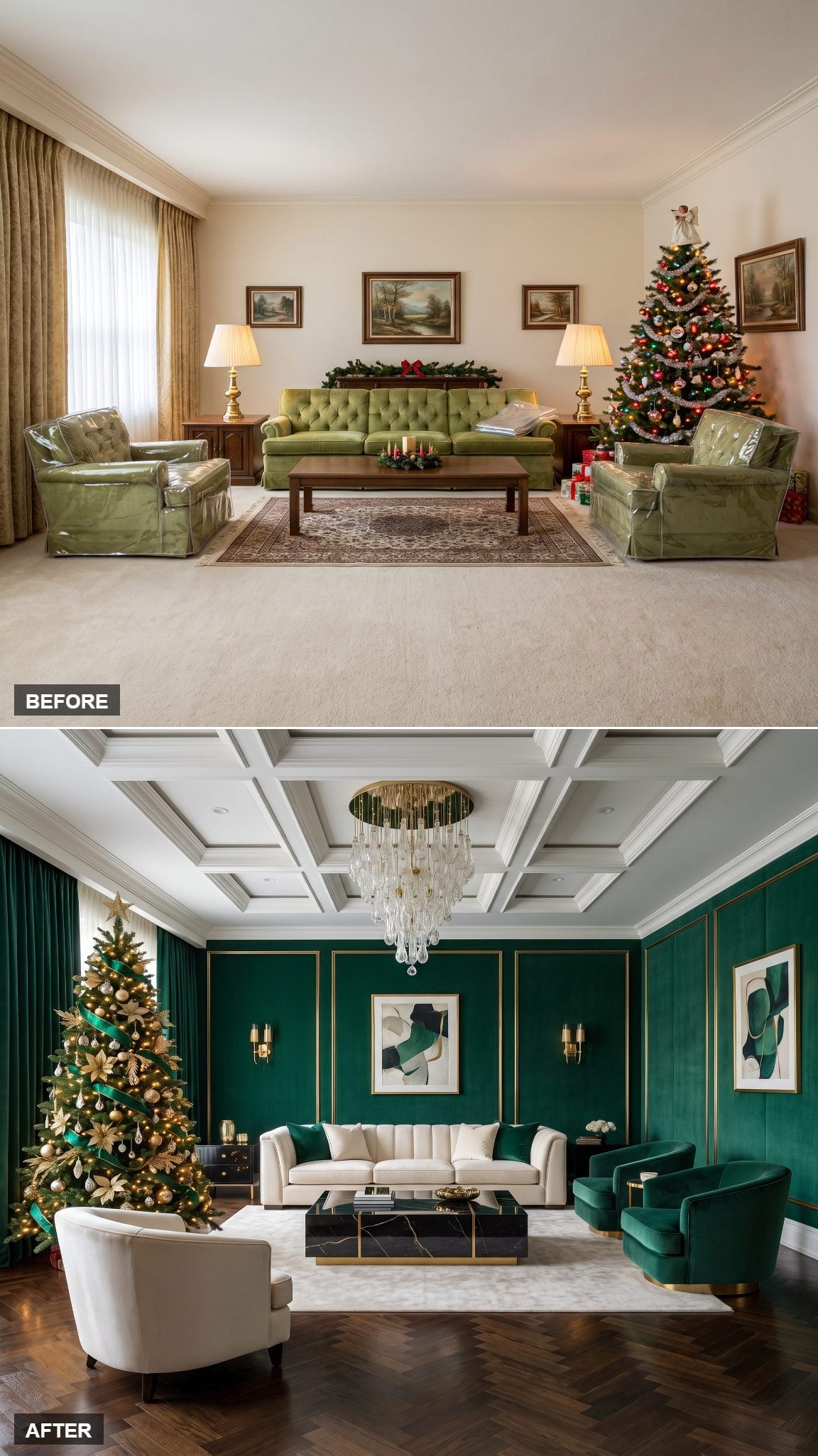
Emerald mohair on the walls is not interested in compromise. Slim antique-brass moldings catch the light at the edges, turning the room into something halfway between a salon and the inside of a very expensive jewelry box.
High-gloss dark oak parquet holds all that green down. A tufted emerald velvet sofa, brass cocktail table and crystal on the bar cart push the room further without introducing another major color. Come Christmas, it hardly needs help.
27. Japandi Calm With a Slatted Oak Ceiling
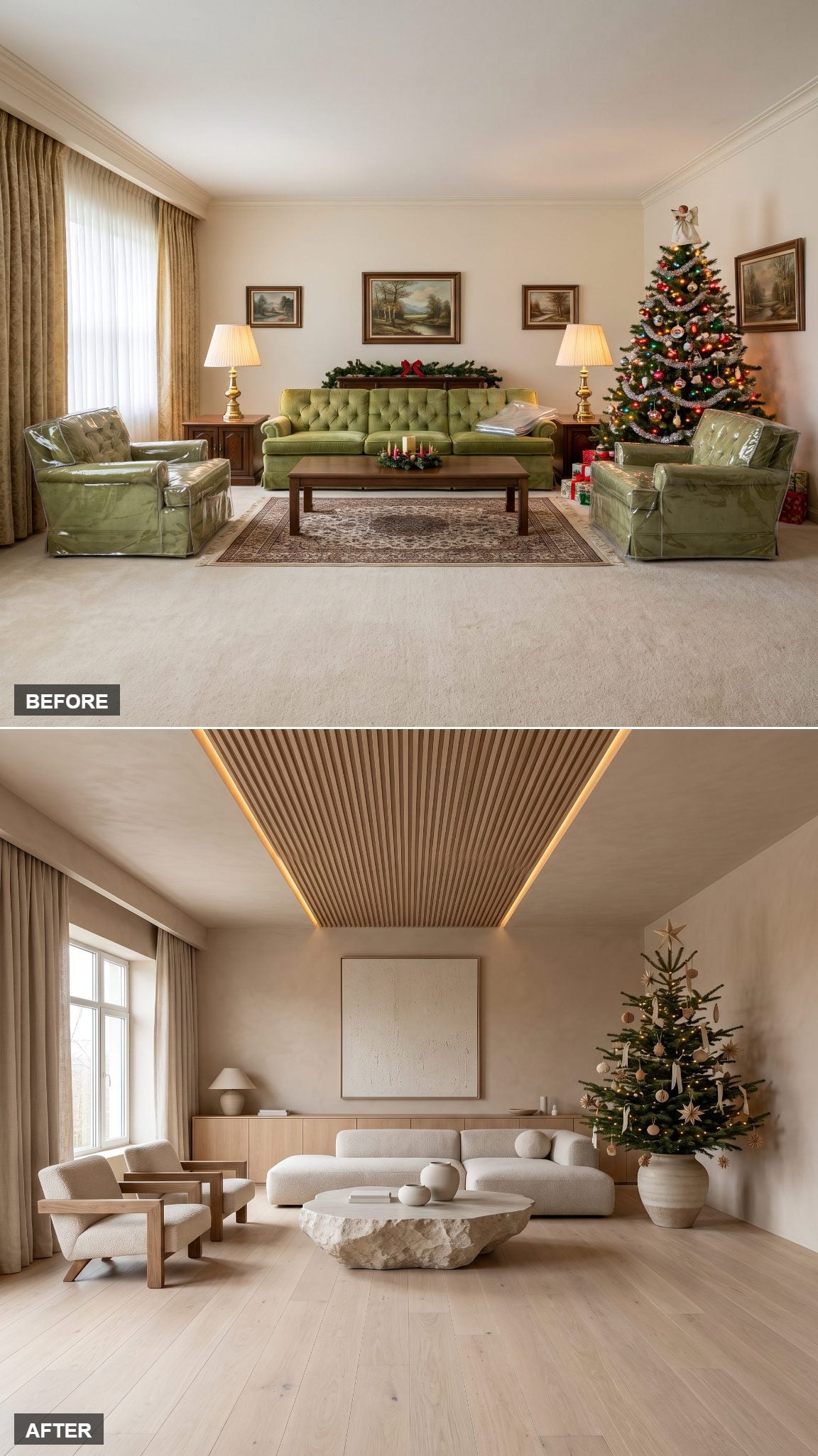
After all that emerald, this room practically exhales. Warm clay plaster meets pale white-oak flooring, while a slatted white-oak ceiling throws thin linear shadows overhead and gives the architecture something the original room badly lacked: rhythm.
Everything stays low. Linen sofa, floor cushion, one ceramic vessel with bare winter branches. The old room’s formality came from protecting objects; this version gets there through editing, proportion and material restraint.
26. From Plastic-Covered Museum to Cream-and-Red Christmas Salon
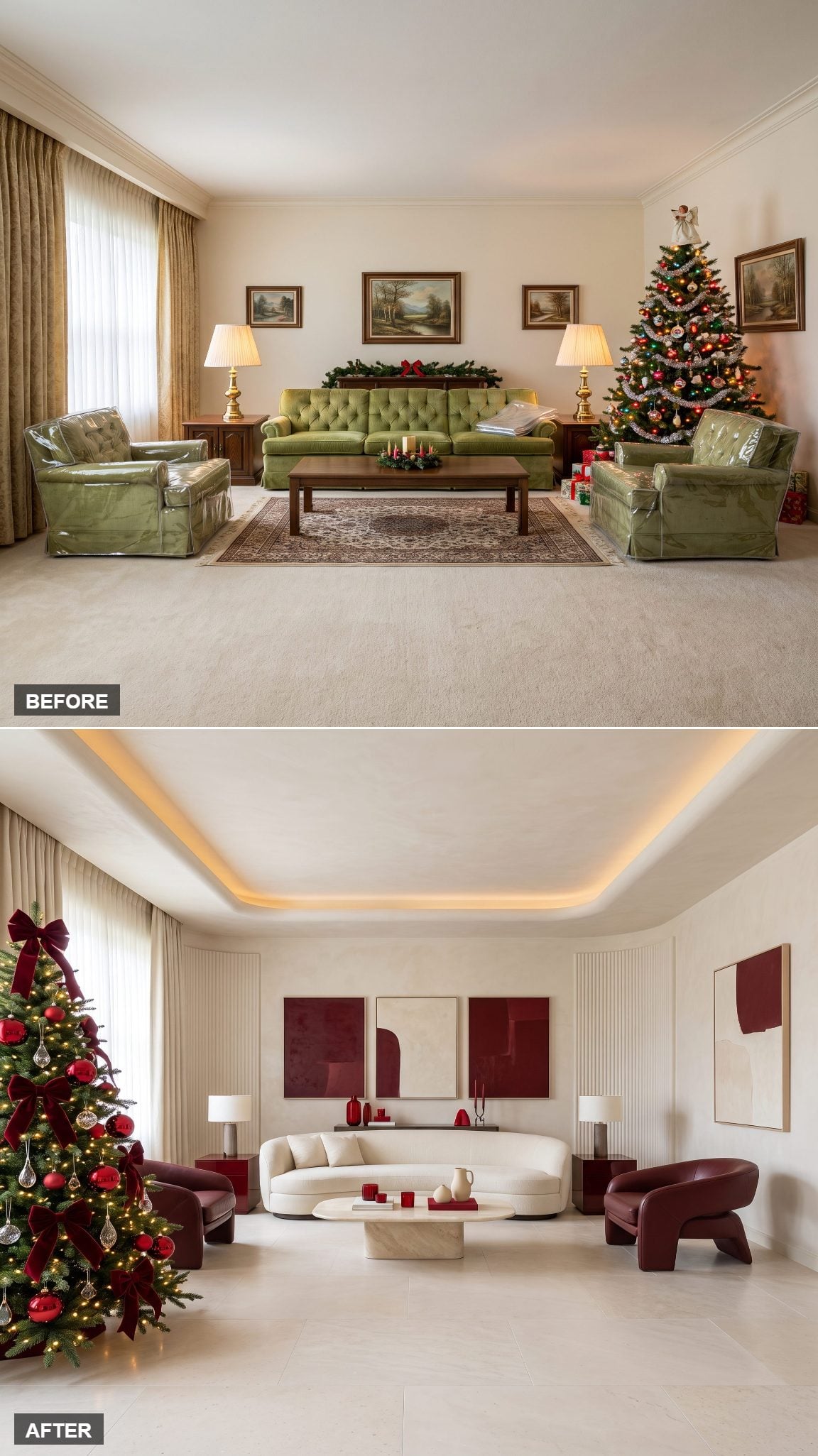
The old room looked preserved rather than inviting. Plastic slipcovers, formal upholstery and a cautious palette turned furniture into something closer to an exhibit than a place to settle in.
Pale limestone floors and creamy Venetian plaster reset the background. Then one red velvet sofa supplies nearly all the drama, with a brass floor lamp adding warmth without competing. Christmas still belongs here. It simply no longer has exclusive custody of the room.
25. Soft Brutalism That’s Warm to the Touch
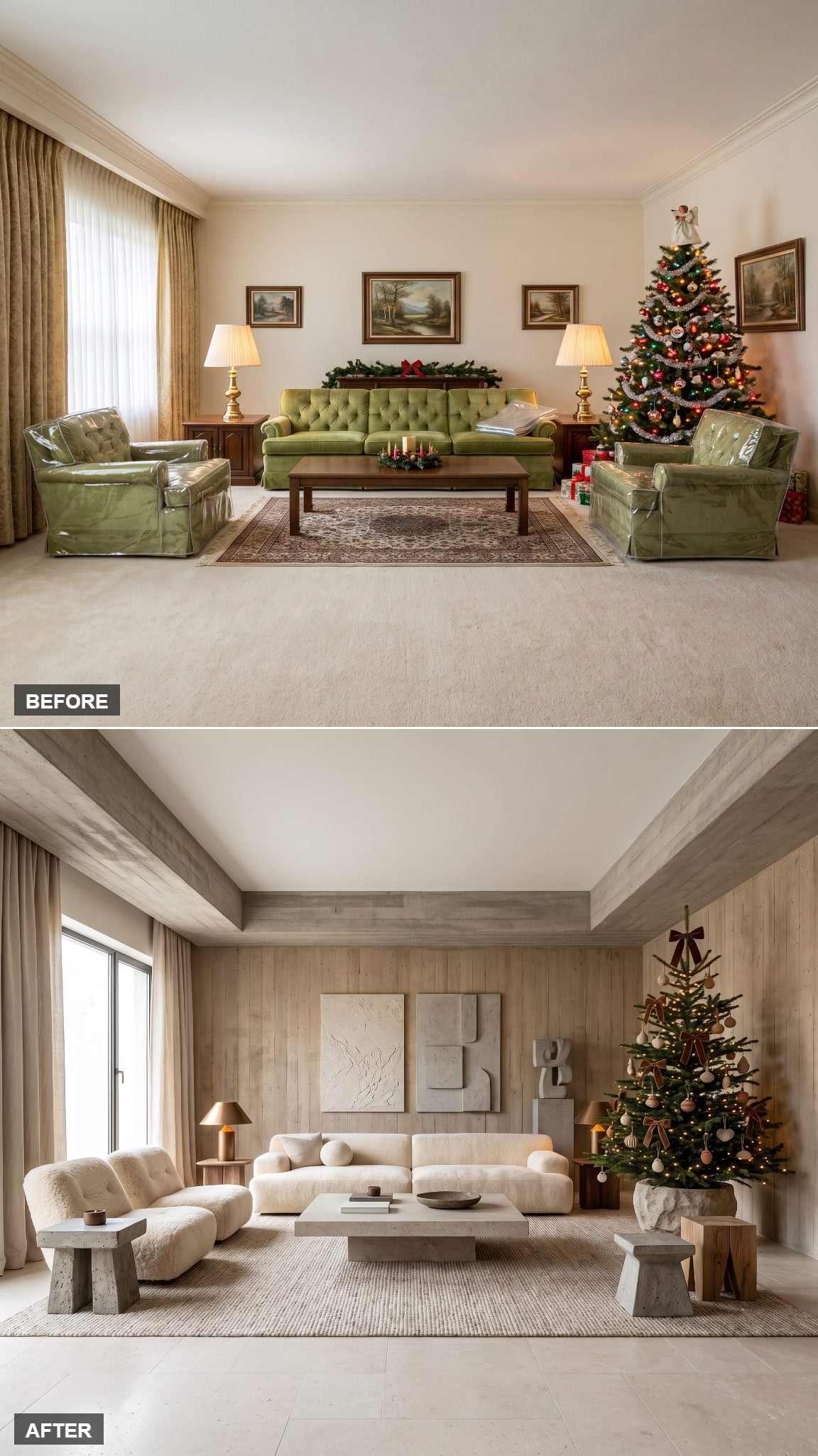
Board-formed concrete walls keep the imprint of timber grain in their surface. Honed limestone spreads across the floor. Monumental plaster forms rise from the architecture with almost no decorative fuss.
The surprise is how little of it feels cold. Warm neutral tones, low light, a shearling stool and a travertine table take the parking-garage cliché out of raw concrete. The result is heavy, quiet and sculptural without becoming severe.
24. Parisian Salon Energy Without the Airfare
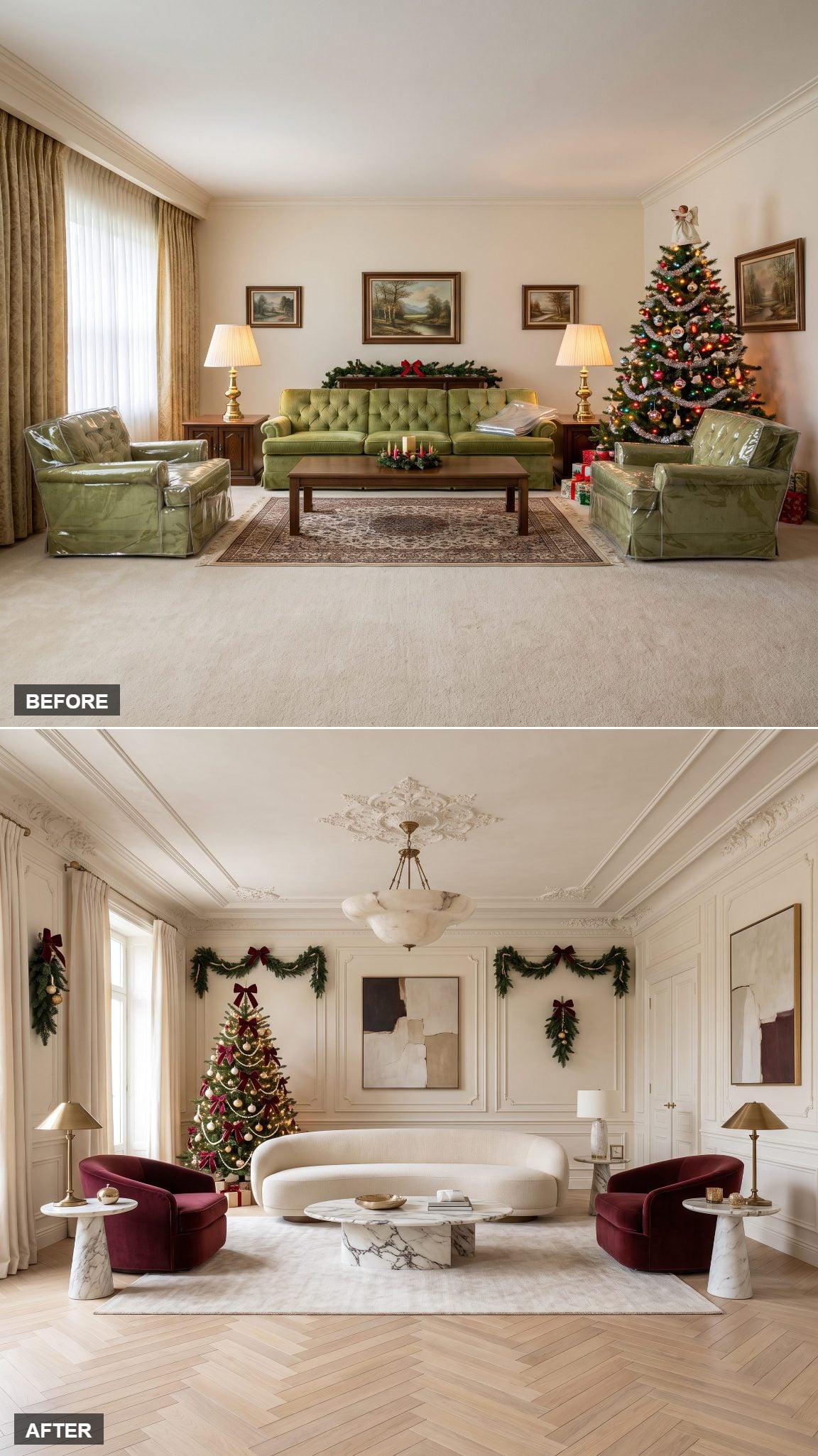
Slim applied moldings do most of the architectural work. Painted the same soft greige as the walls, they create shadow, proportion and rhythm without requiring a second color to announce themselves.
A tufted gray velvet sofa, marble mantel and oversized gilt mirror bring the formality back, but the composition stays loose enough to avoid period-room stiffness. White amaryllis add a seasonal note without forcing the entire room into Christmas mode.
23. Green Stone, Warm Oak, and a Room That Finally Breathes
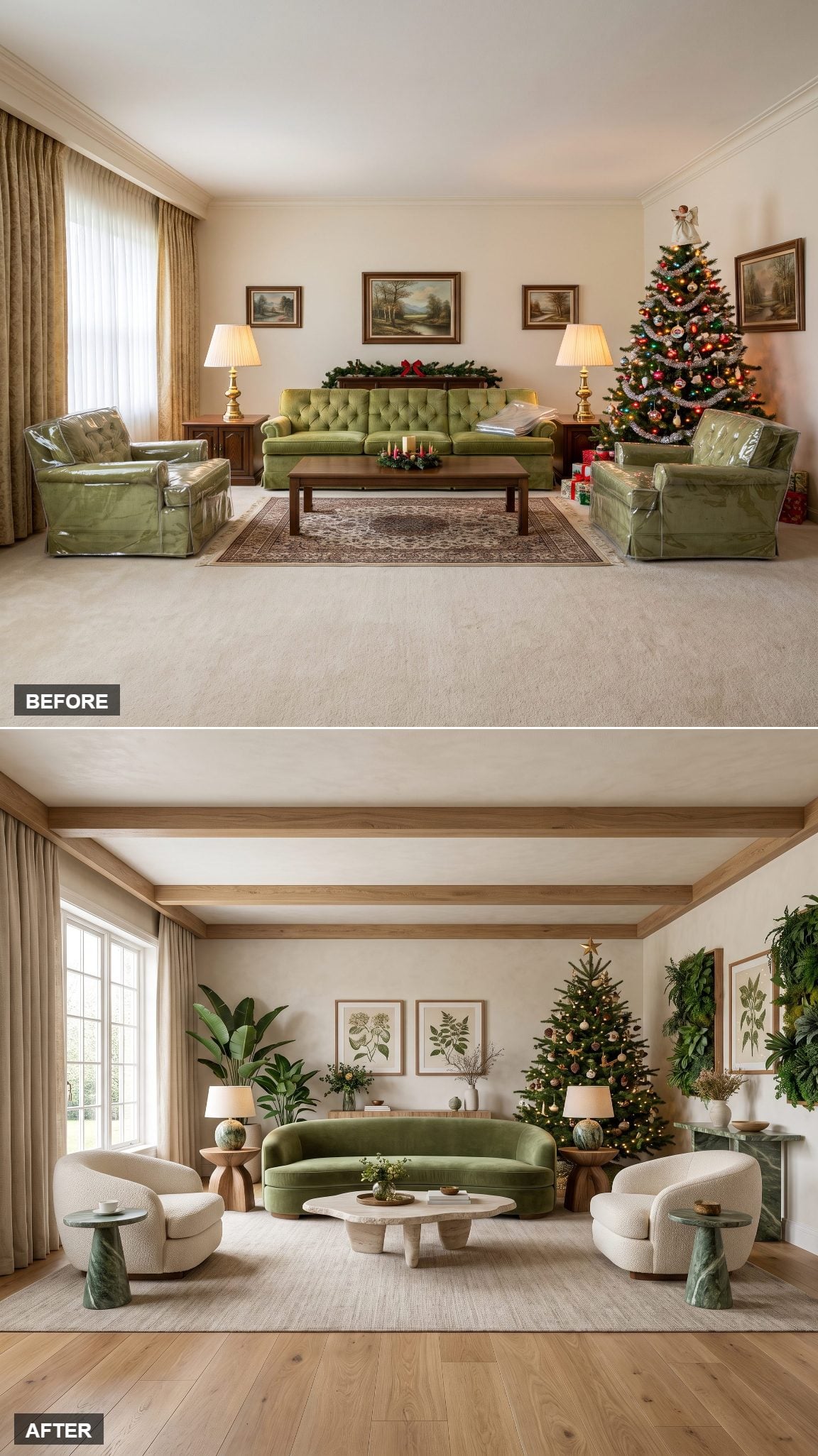
Same shell. Completely different lungs.
Green-veined stone cuts through the neutral surfaces while warm oak keeps the palette grounded. Fiddle-leaf figs, trailing pothos and a fern bring in actual irregularity—the useful kind—against all those controlled architectural lines.
An oak lounge chair and rumpled linen throw make the reading corner look usable rather than staged. The result borrows the leafy ease of a tropical living room without turning tropical into a theme.
22. Art Deco Revival, Christmas Edition
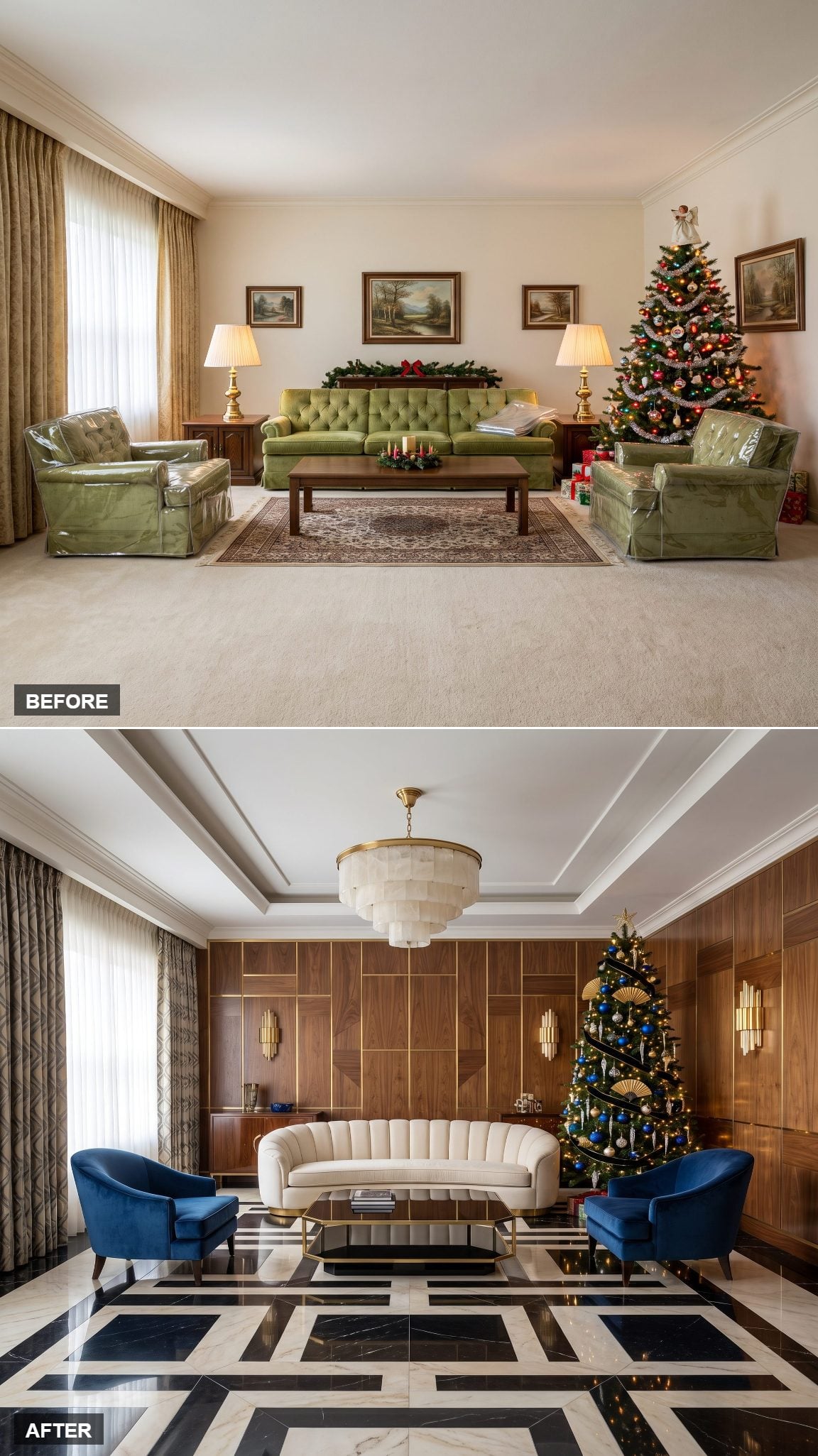
Geometry replaces the old room’s decorative fuss. Walnut-and-brass wall panels step across the room in a crisp Deco pattern, polished enough to catch Christmas light without needing tinsel to do the job.
A curved bronze-velvet sofa, fluted bar cabinet and fan-motif mirror keep the period reference unmistakable. Fluted-glass sconces provide the gilded glow. A garland and a few candles are almost incidental; the room already understands theater.
21. Quiet Luxury in Cashmere and Pale Oak
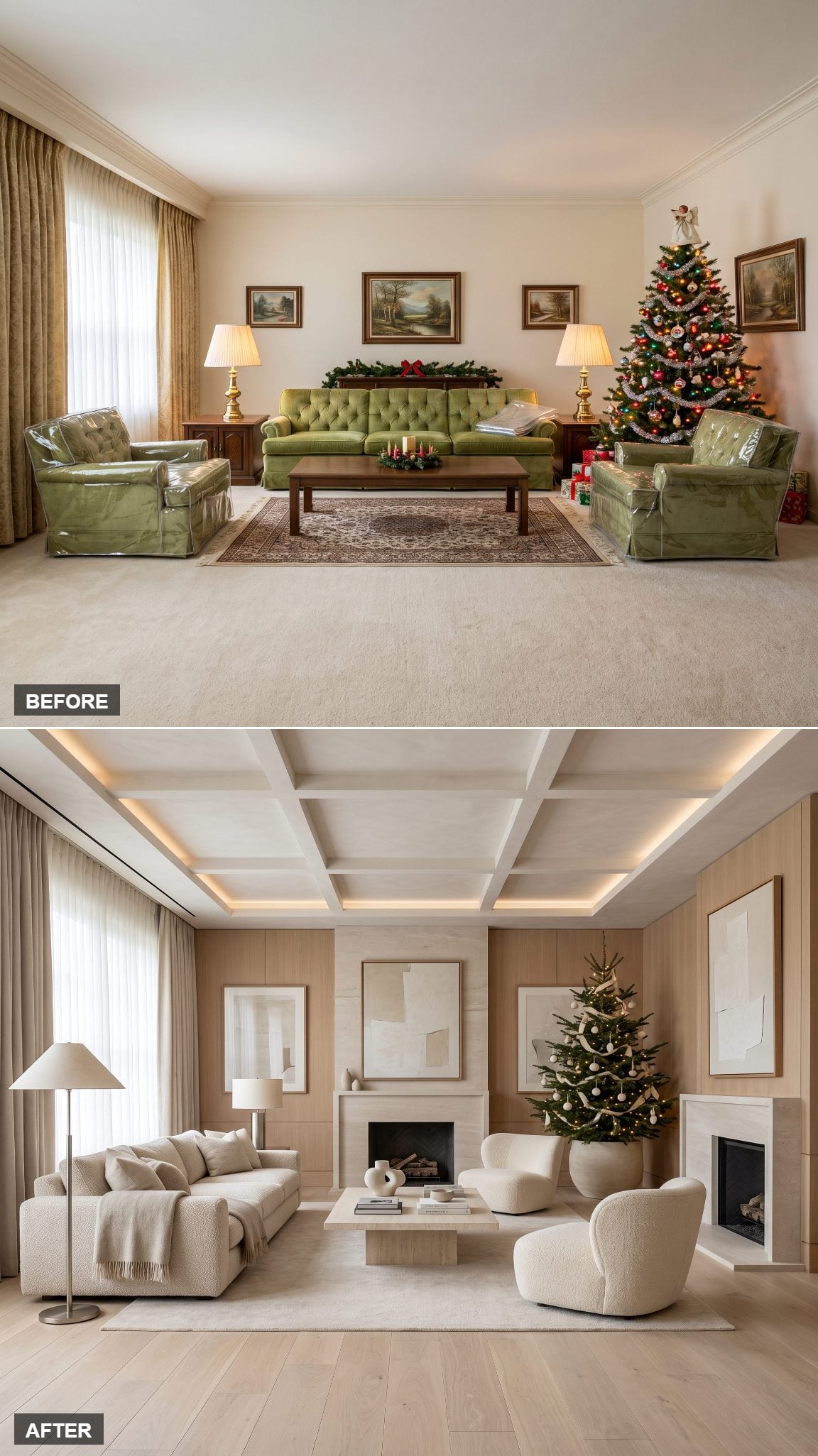
This one whispers, but it isn’t empty. Almost everything sits inside the same narrow tonal range, forcing small differences in texture and finish to carry the composition.
Cashmere-toned hand-troweled plaster, pale oak, honed limestone and an oatmeal bouclé sofa each catch light differently. Brushed nickel replaces brighter brass. No pattern has to rescue the room because the materials are doing enough on their own.
20. The Aubergine Jewel Box That Actually Earns Christmas
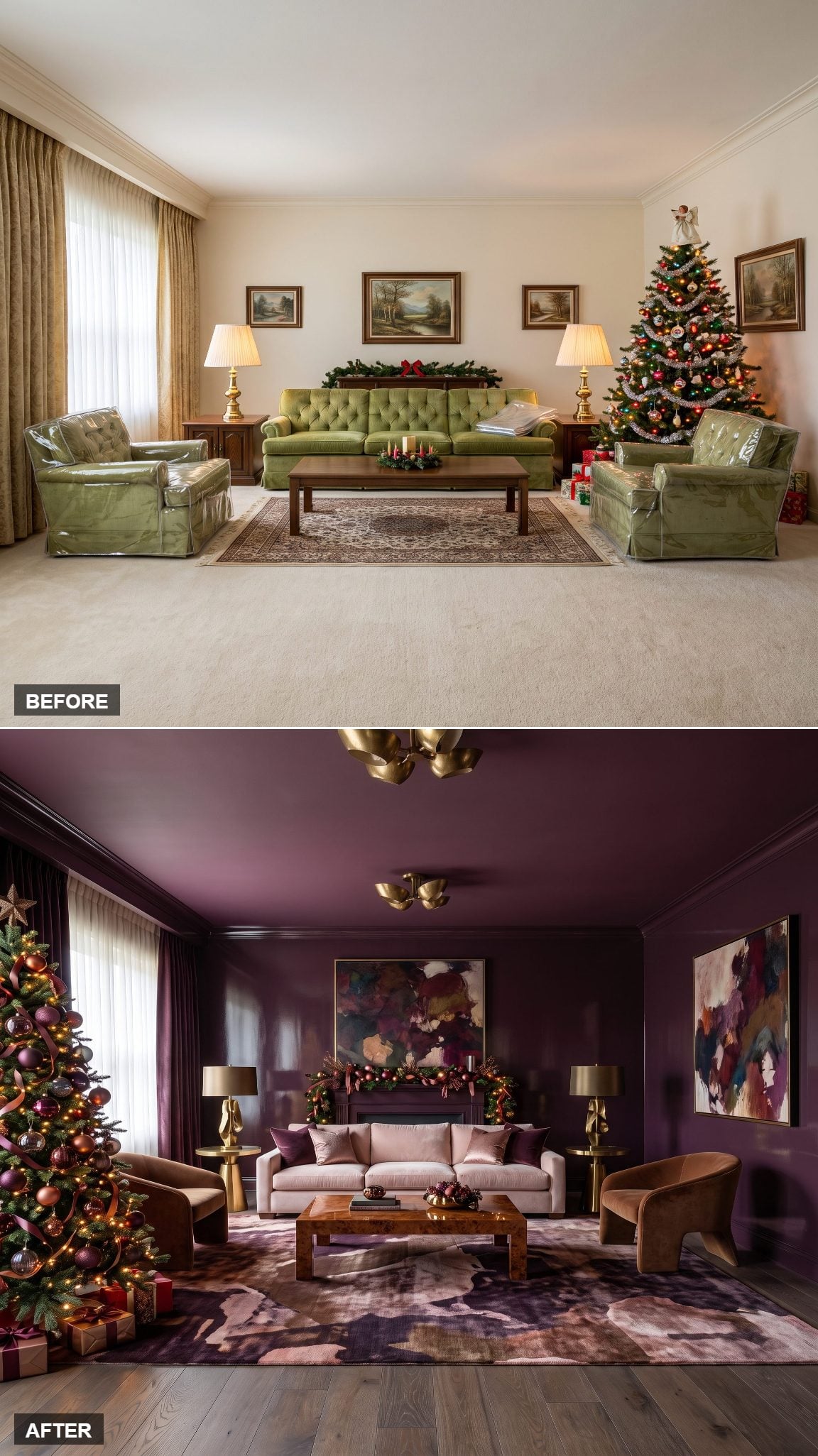
Deep aubergine lacquer wraps the walls and throws light back with the polish of a piano lid. The ceiling carries the same color, eliminating the usual pale cap and turning the entire room into one saturated envelope.
High-gloss burl wood runs warm against the purple, with smoked oak underfoot and brass supplying narrow flashes of brightness. One restrained eucalyptus wreath is enough to turn the whole production toward Christmas without introducing a single red bauble.
19. California Light Moves Into the Formal Room
🔥 Would you like to save this?
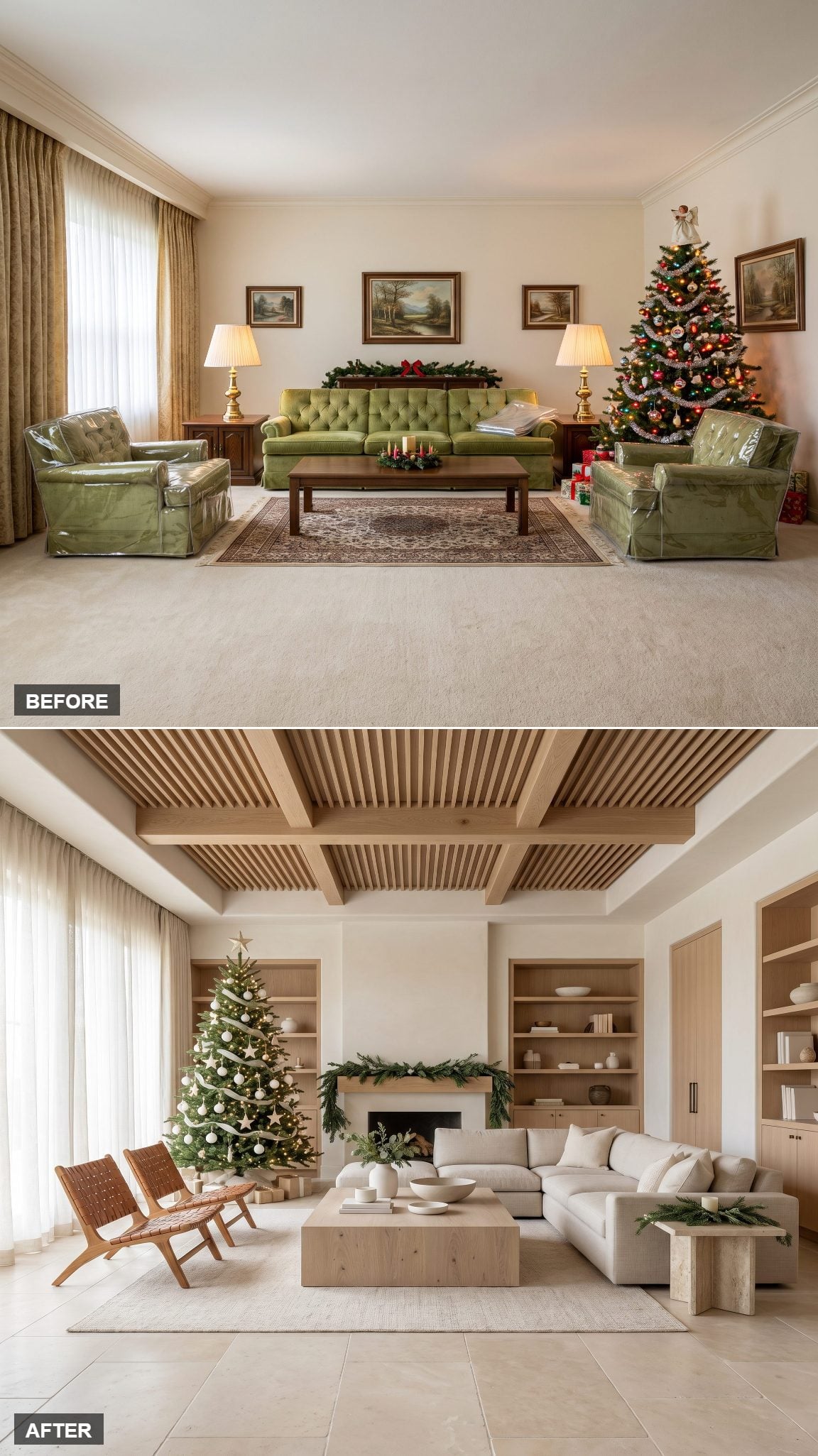
At last, daylight gets the starring role.
Creamy limestone floors, warm-white plaster and pale oak built-ins bounce afternoon light instead of swallowing it. Woven natural fibers soften the edges, while a natural fiber rug and linen sofa keep the room loose and breathable.
The formal shell hasn’t disappeared. It has simply stopped treating formality as a synonym for heaviness.
18. Blackened Steel and Stone for the Ones Who Hate Frills
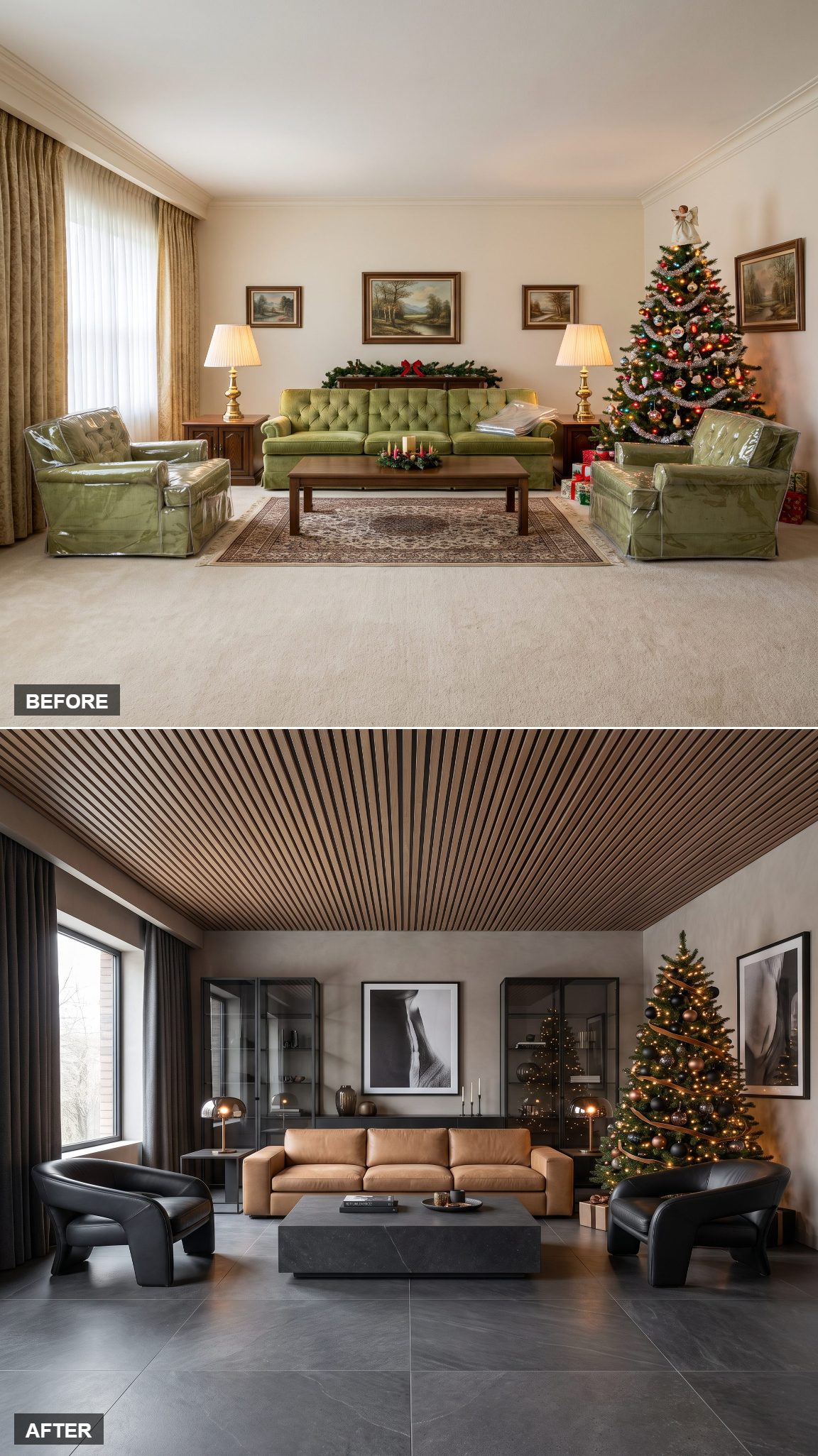
Charcoal stone flooring, warm-gray plaster and blackened-steel framed built-ins turn the room’s old fear of darkness completely inside out. Call it the anti-Christmas Christmas room.
Large slabs establish weight while thin steel lines keep that weight from becoming clumsy. One low leather chair and a wide brass tray are enough to interrupt the charcoal. Dark isn’t being corrected here. Dark is the design.
17. Nordic Winter Luxe, All Bleached Oak and Chalk
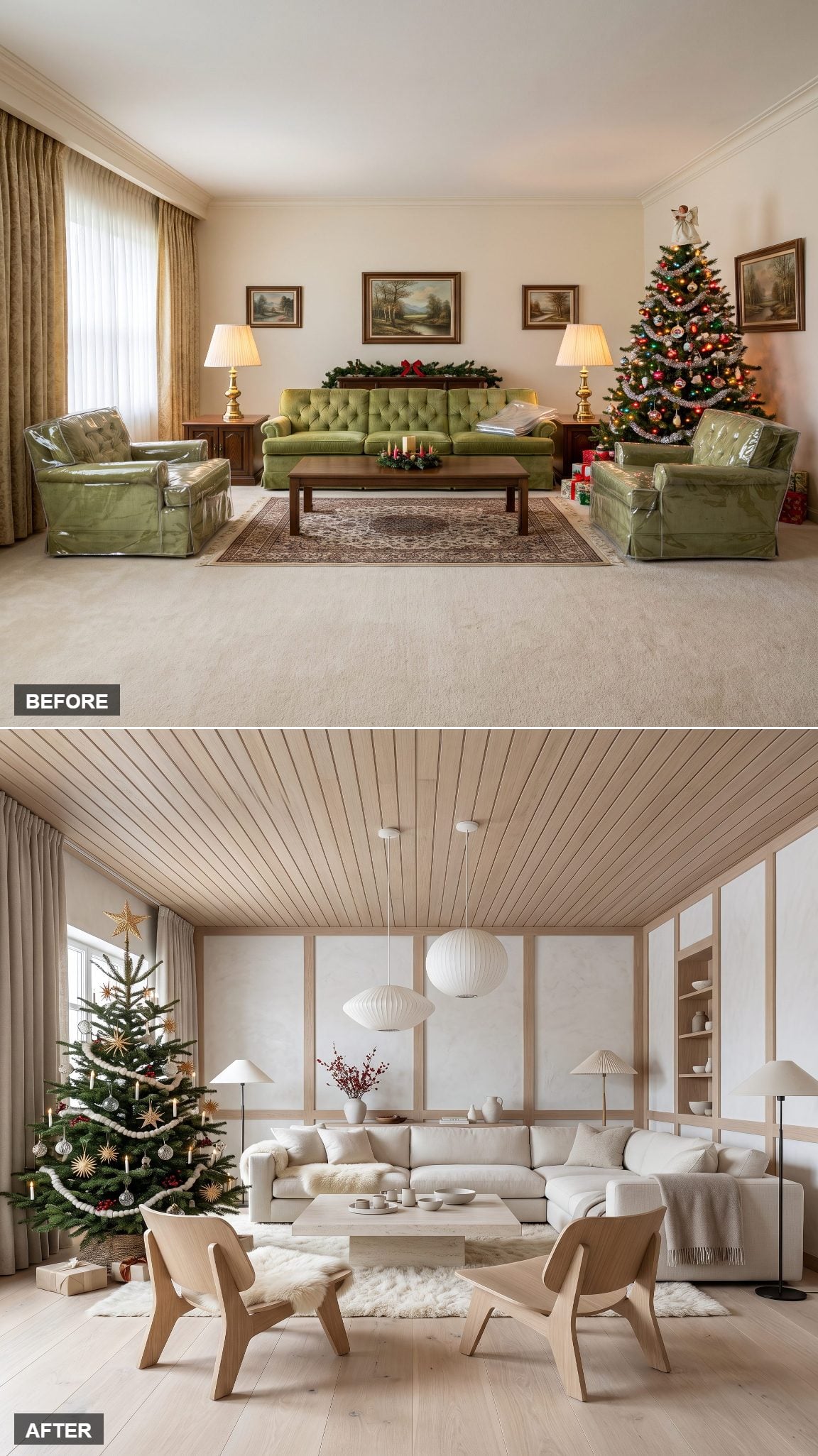
Bleached oak underfoot, chalk-white textured walls and pale-oak paneling turn thin winter daylight into part of the palette. A light timber ceiling keeps the architecture from ending abruptly at the top of the walls.
Minimal doesn’t have to mean meager. Sheepskin over a spindle chair, books on a low table and one white ceramic bowl give the pale room enough tactile weight to feel generous. Winter already looks at home here without a single ornament.
16. The Fearless Maximalist Christmas Salon
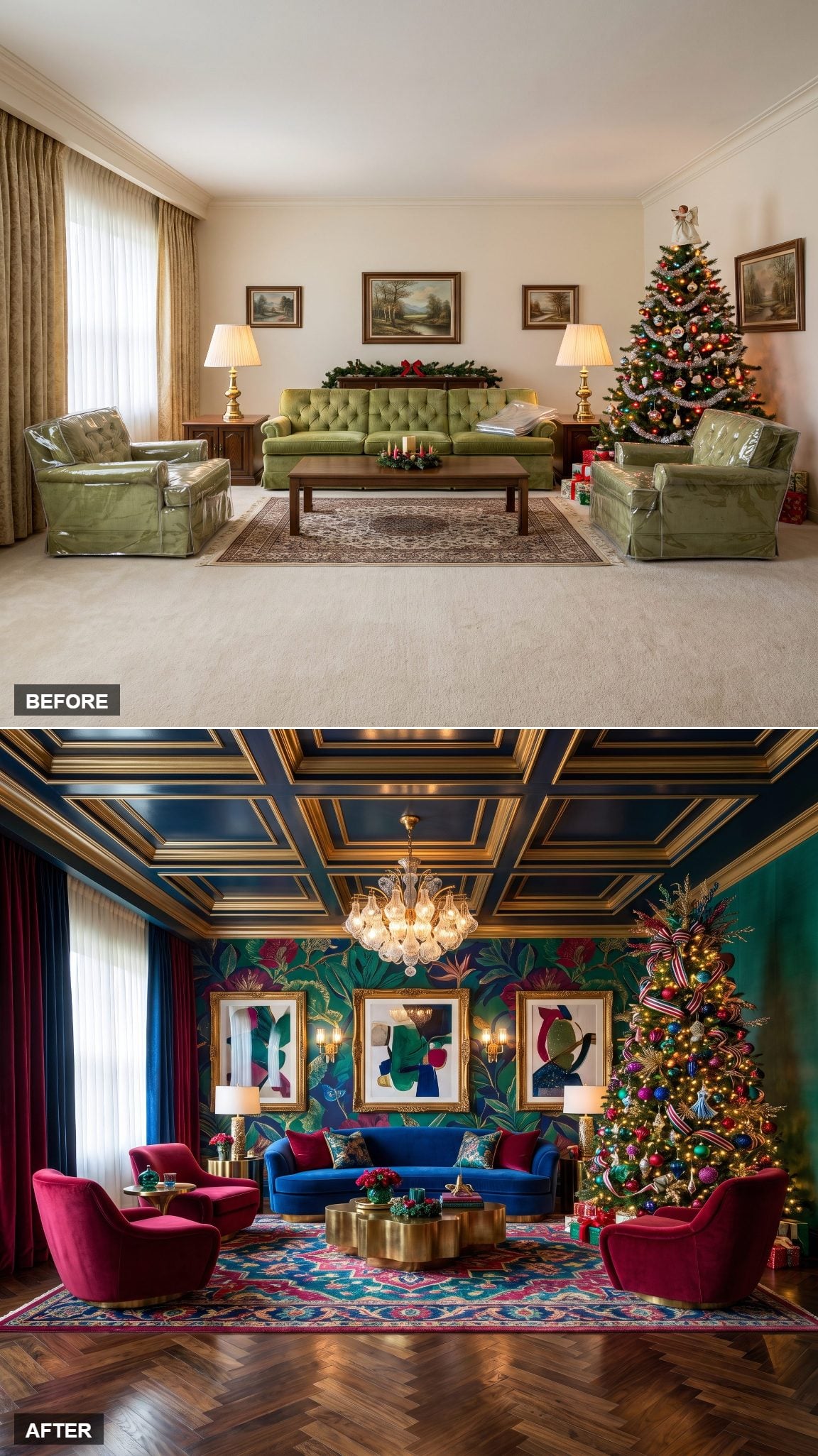
Large-scale botanical silk wallcovering climbs every wall in inky green and gold. After the Nordic restraint, this feels like somebody turned the volume knob until it snapped off.
Glossy trim, velvet upholstery, layered rugs and brass keep piling on, but the palette holds the chaos together. A fat garland along the mantel doesn’t introduce a new language; it joins the one already shouting beautifully. The room shares the loose, layered spirit of a bohemian bonus room, only with considerably better shoes.
15. From Plastic-Wrapped Brocade to Warm Travertine Salon
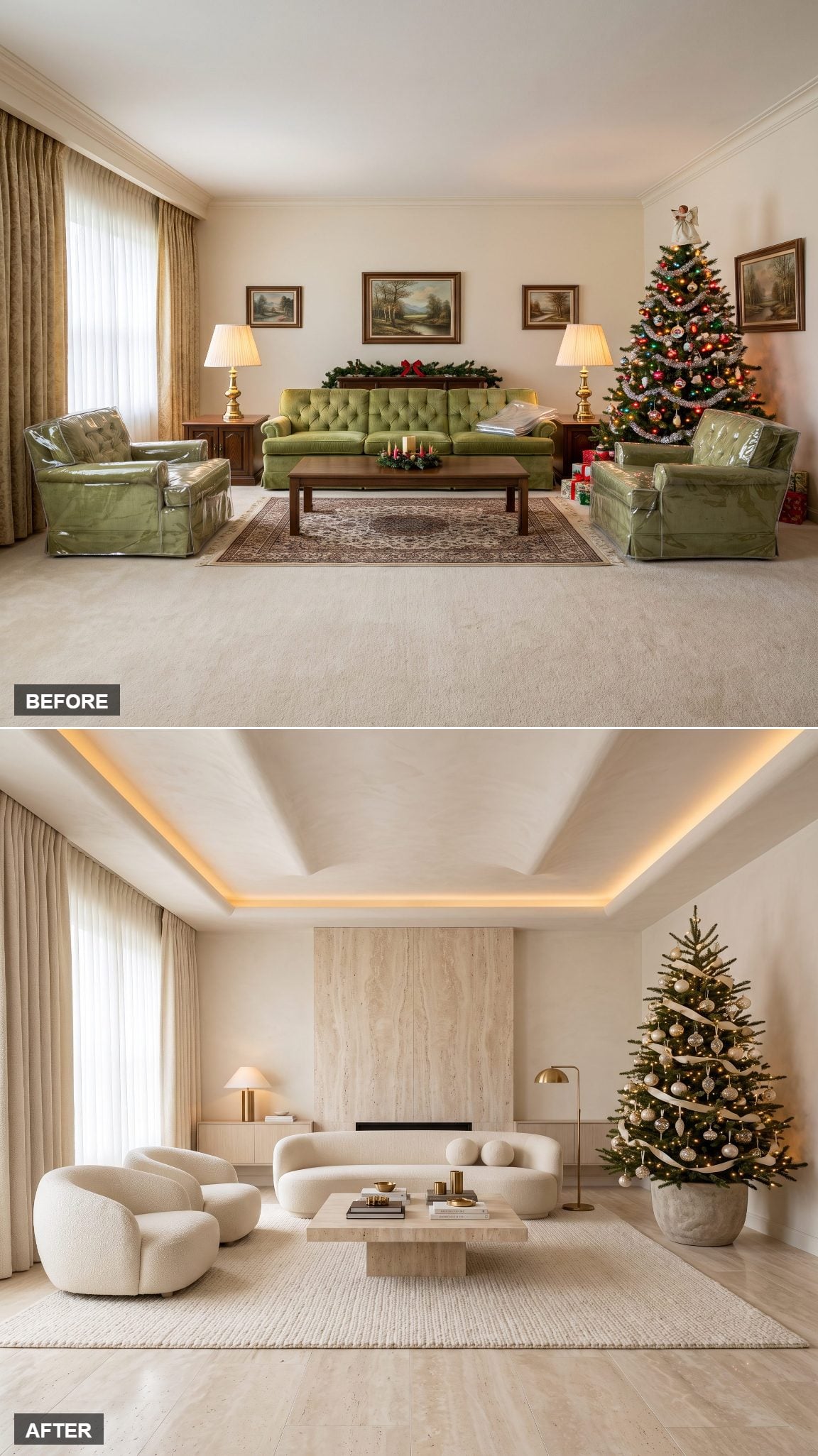
The gold drapes had to go first. They were doing all the aging in the room by themselves.
Warm travertine now climbs the feature wall in broad honed slabs, catching winter light instead of fighting it. A low camel bouclé sofa replaces the brocade bulk, while a slim brass arc floor lamp traces one clean curve through all that stone.
14. Chrome, Smoked Glass, and Onyx That Glows From Within
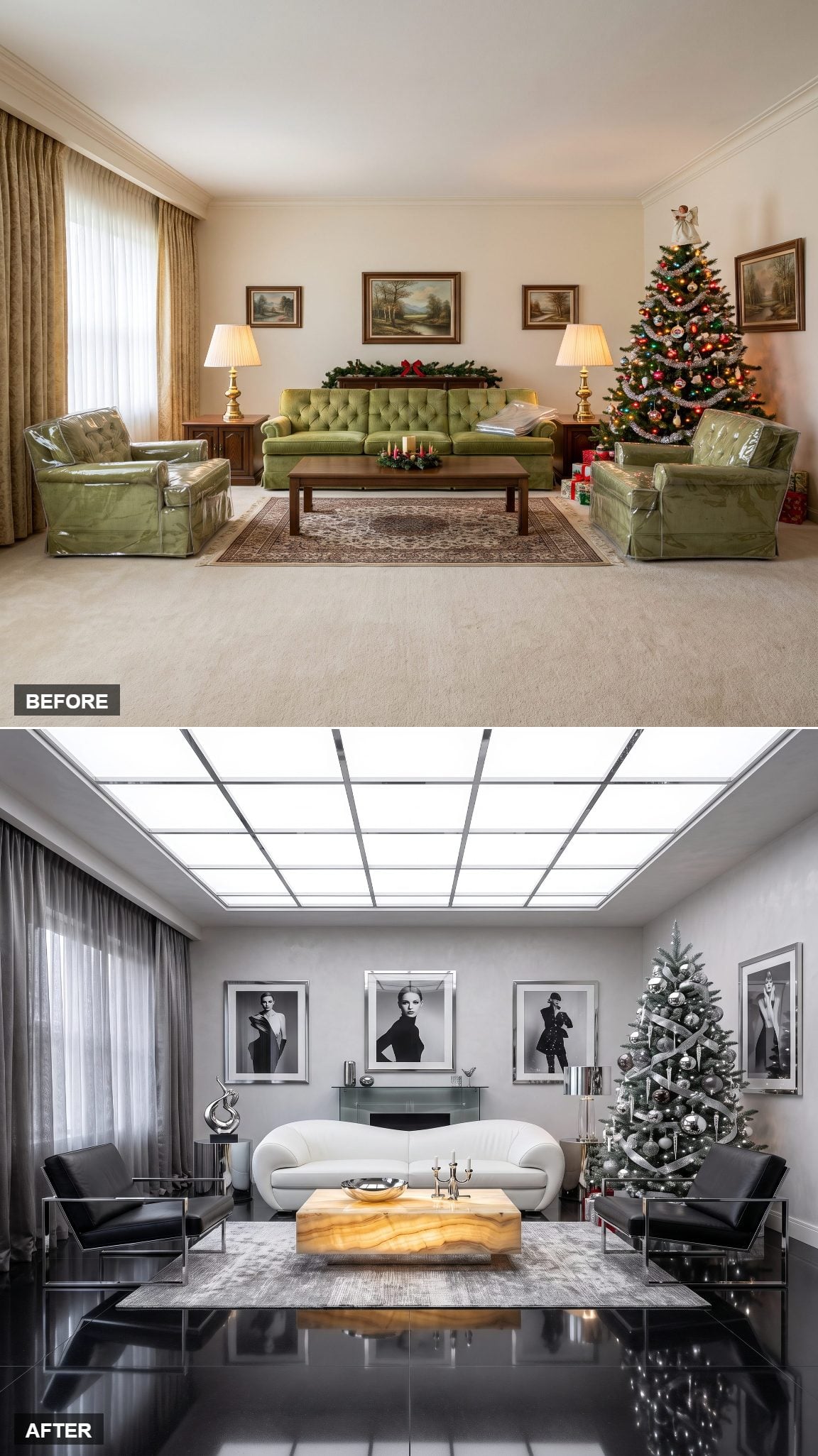
Polished chrome, smoky glass and translucent onyx take the room somewhere the old beige shell could never have predicted. Pale gray plaster is the restraint mechanism, giving all those reflective surfaces somewhere quiet to land.
A high-gloss lacquer surface, a chrome floor lamp and one sculptural object on the console are enough. The appeal comes from the collision of reflection and translucency: chrome throws light back, smoked glass darkens it, and onyx seems to hold it inside the stone.
13. Modern English Manor, Layered and Lived-In
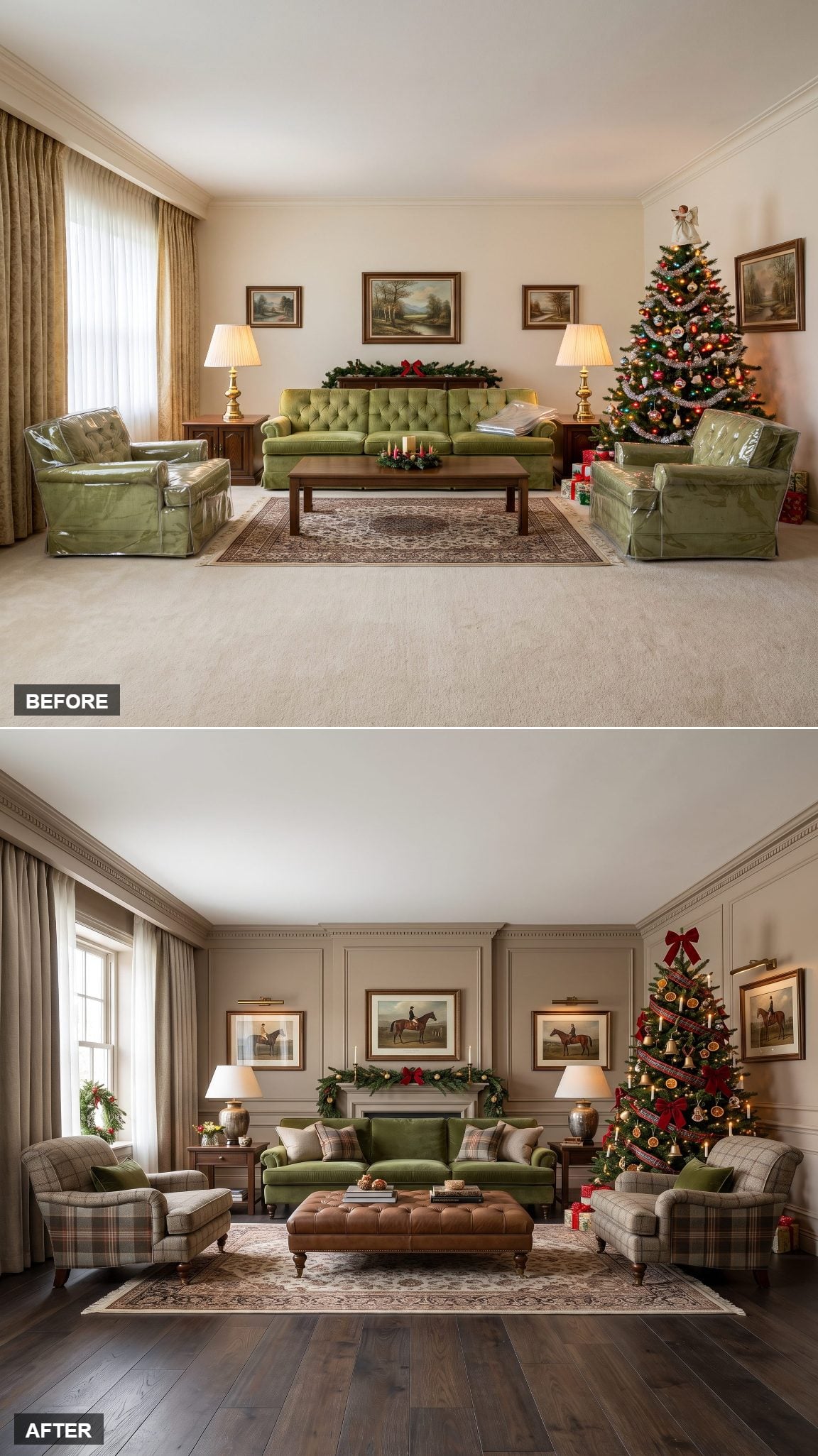
Warm mushroom paneling wraps the walls while dark smoked-oak floors give the room a deep base. Detailed cornices restore the formality the original room was reaching for, but without the plastic-wrap anxiety.
A soft-green wool sofa, leather club chair, worn kilim, stacked books and linen-shaded lamp keep the architecture from becoming ceremonial. The effect suggests a room assembled over time rather than one delivered fully accessorized on Tuesday afternoon.
12. From Plastic-Wrapped Museum to Ivory Sculpture Gallery
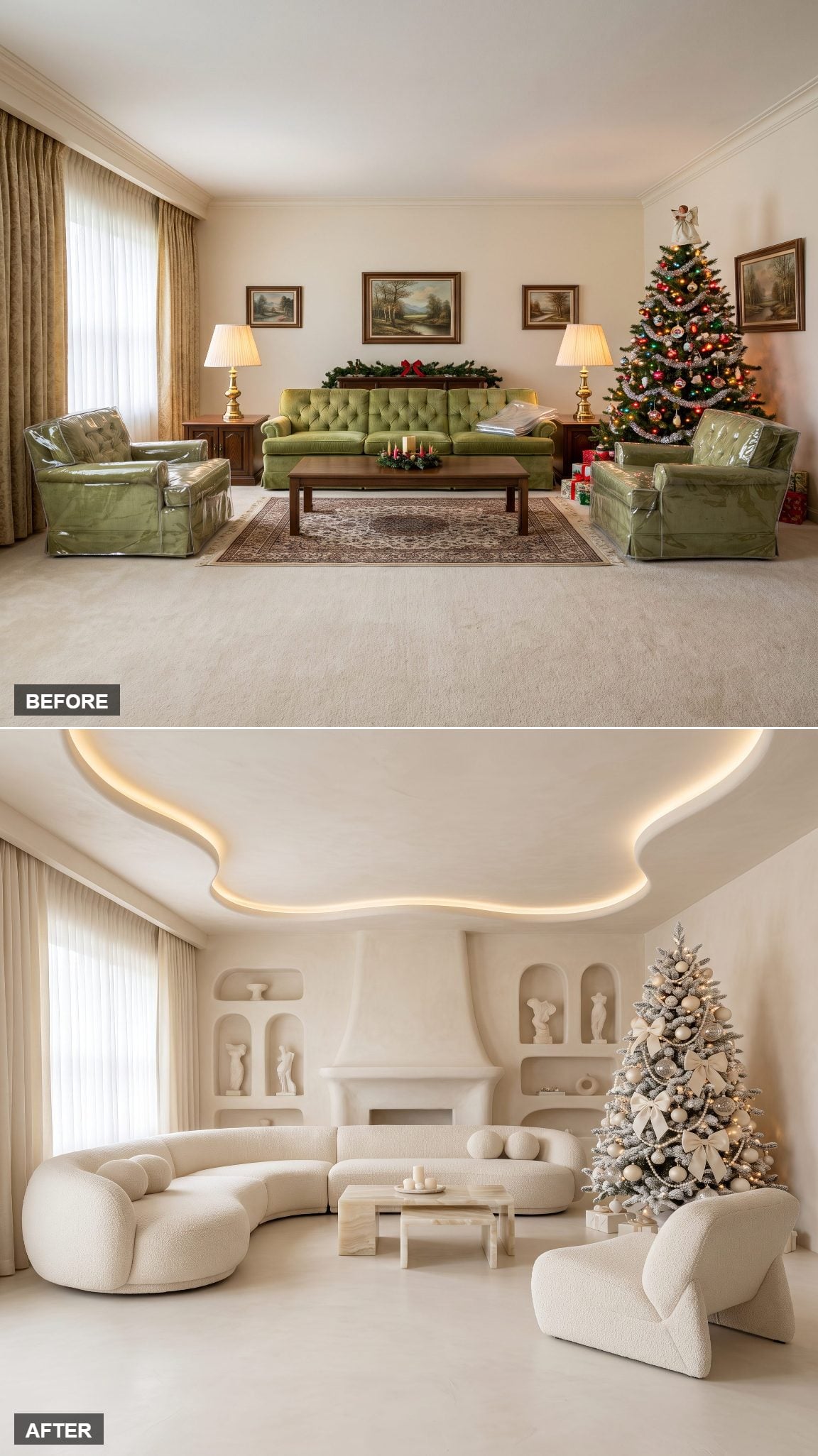
The old room tried to look expensive by protecting everything. This one makes the surfaces themselves the attraction.
Creamy microcement flooring flows into ivory limewash walls, while sculpted plaster forms emerge from the architecture instead of hanging on top of it. A bouclé chair, stone side table and single olive branch barely disturb the monochrome.
11. Forest Green Lacquer and Calacatta That Steals the Room
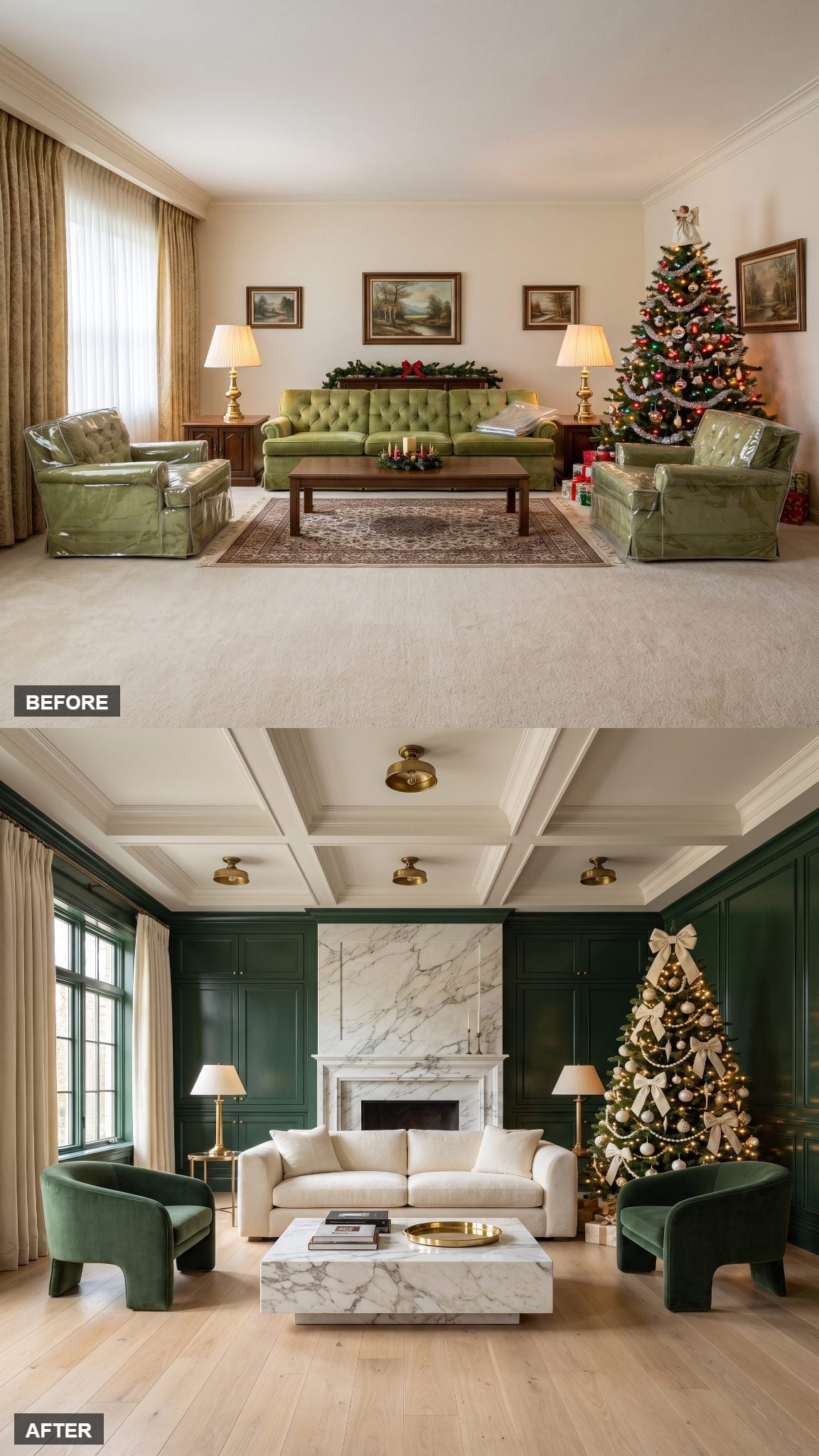
Green and marble can either cooperate or spend the entire room competing. Here, the Calacatta gets to be the loud one. Forest-green lacquer stays glossy and disciplined around it while the marble veining breaks loose across the central feature.
Pale oak flooring is the necessary release valve. Without that lighter plane underneath, all the saturated cabinetry and veined stone could become oppressively heavy.
10. Desert Modern Luxe in Sand, Rust, and Warm Stone
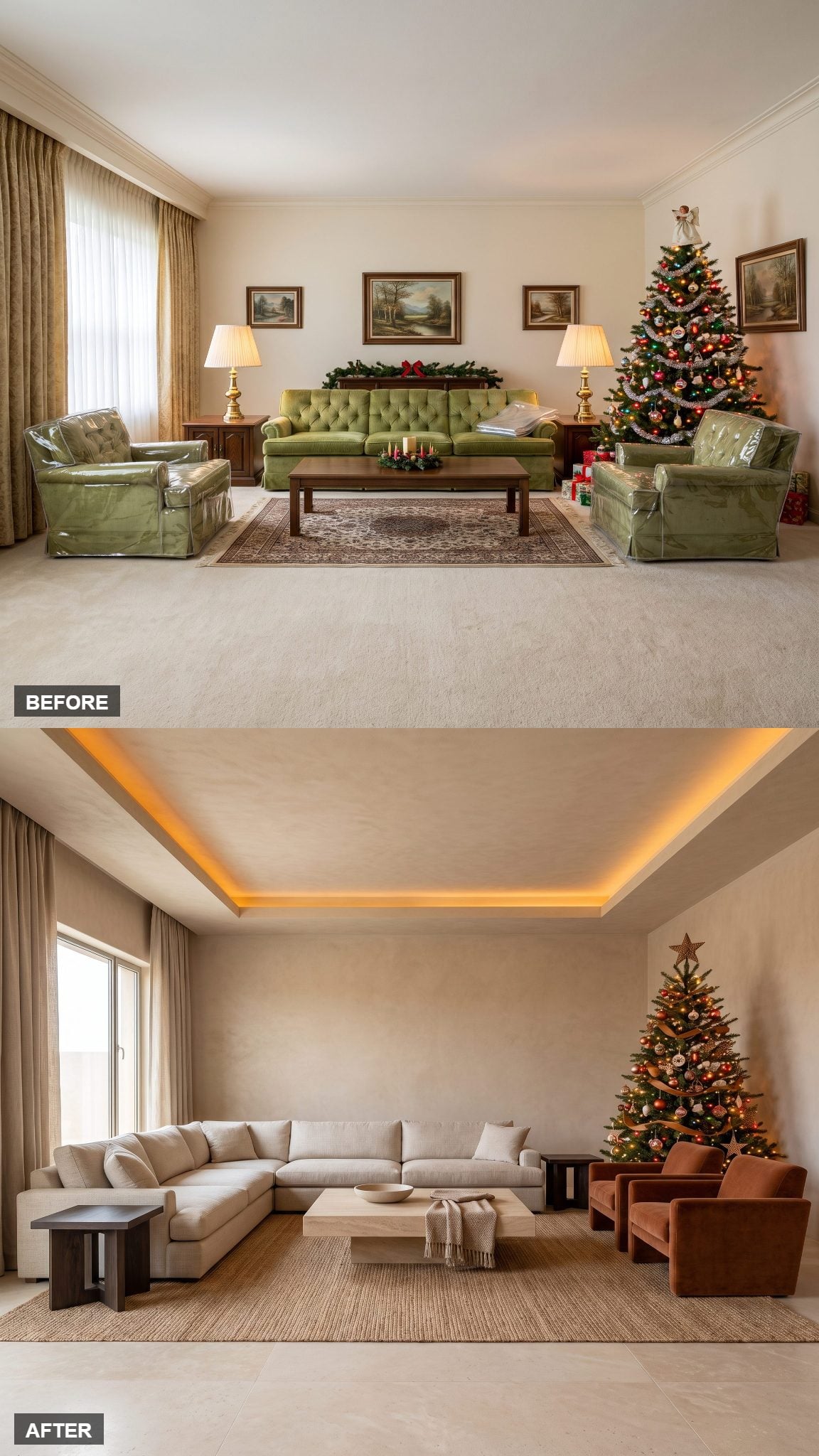
Notice what disappeared before noticing what arrived. No frills, no shine, no decorative fuss. Hand-troweled microcement walls, limestone flooring and deep-pile rust mohair chairs let texture carry a palette built almost entirely from sand, oatmeal and oxidized orange.
A stepped ceiling with concealed lighting rescues the forgotten overhead plane and washes those dry colors with soft light. Christmas here? Almost apologetic. Copper, dried stems and caramel ribbon are plenty.
9. Hollywood Regency, Rebuilt Without the Cheese
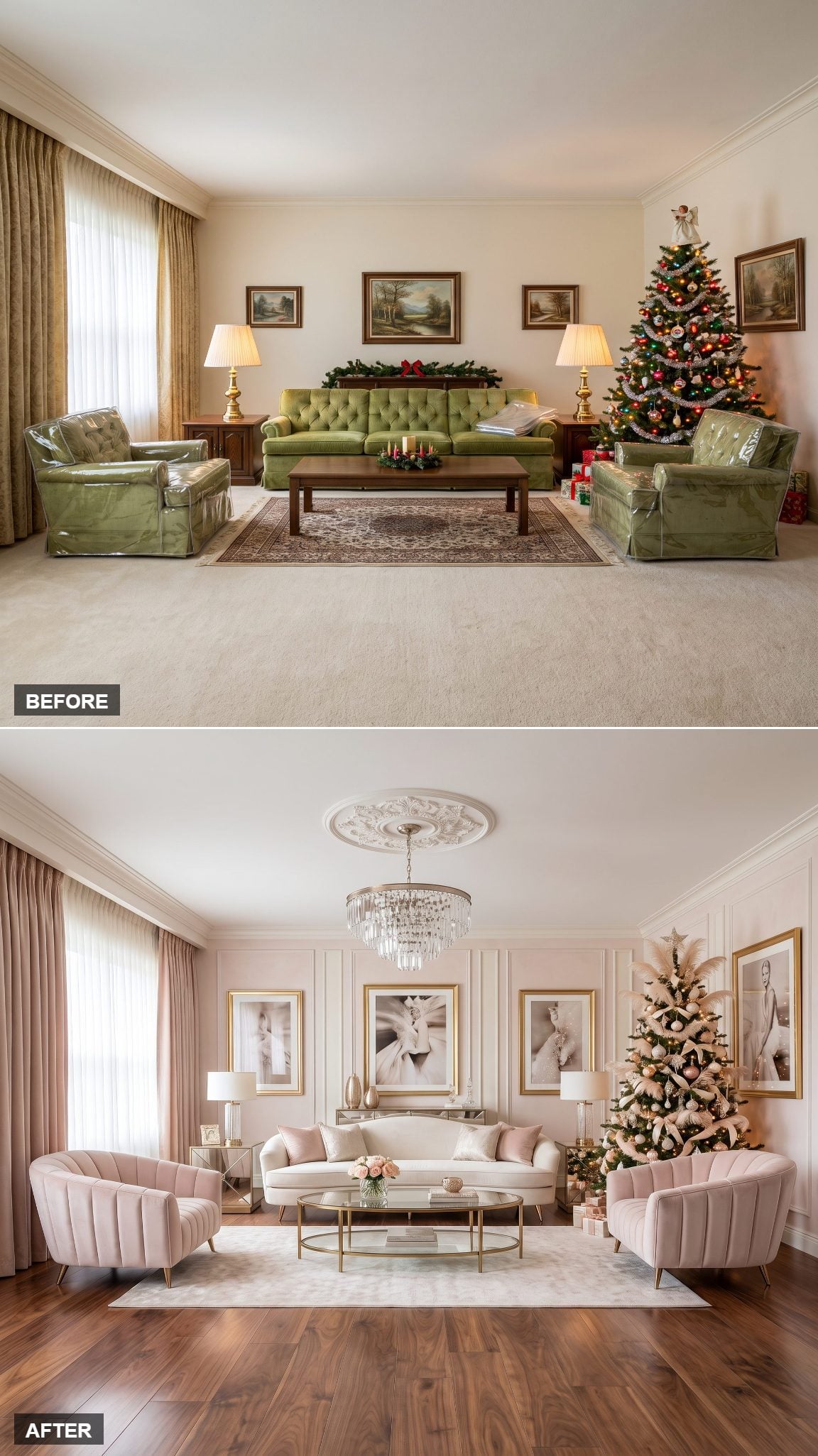
Pale blush plaster and fluted ivory panels bring back glamour without requiring the room to dress like a movie set. Glossy walnut flooring underneath is what saves all that softness from floating away.
The ceiling gets an ornate treatment stripped of excess fuss. A velvet chaise, marble-topped console and carefully rationed brass finish the composition. Regency still gets its jewelry. It just doesn’t wear the entire box at once.
8. The Midnight-Blue Lacquer Salon You Won’t Stop Staring At
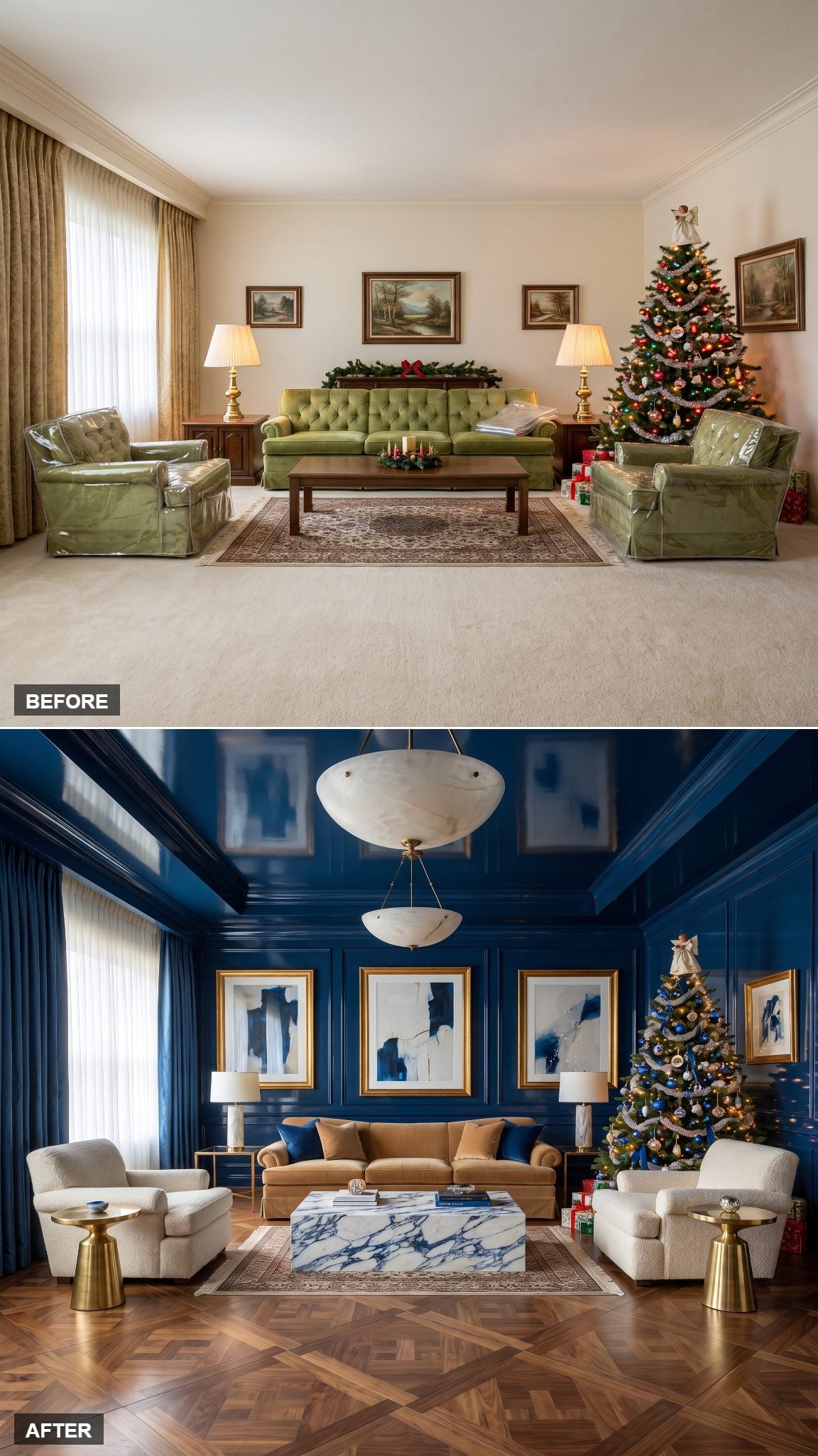
High-gloss midnight-blue paneling drops almost to black in shadow and flashes unmistakably blue wherever light reaches it. Warm walnut parquet prevents the room from becoming icy, while the tray ceiling repeats the wall color overhead.
Brass and cream look almost illuminated against that depth. A brass floor lamp and cream velvet sofa are enough to make the contrast sing. A smaller version of the same saturated strategy can create the drama of a blue powder room; here it gets the full salon treatment.
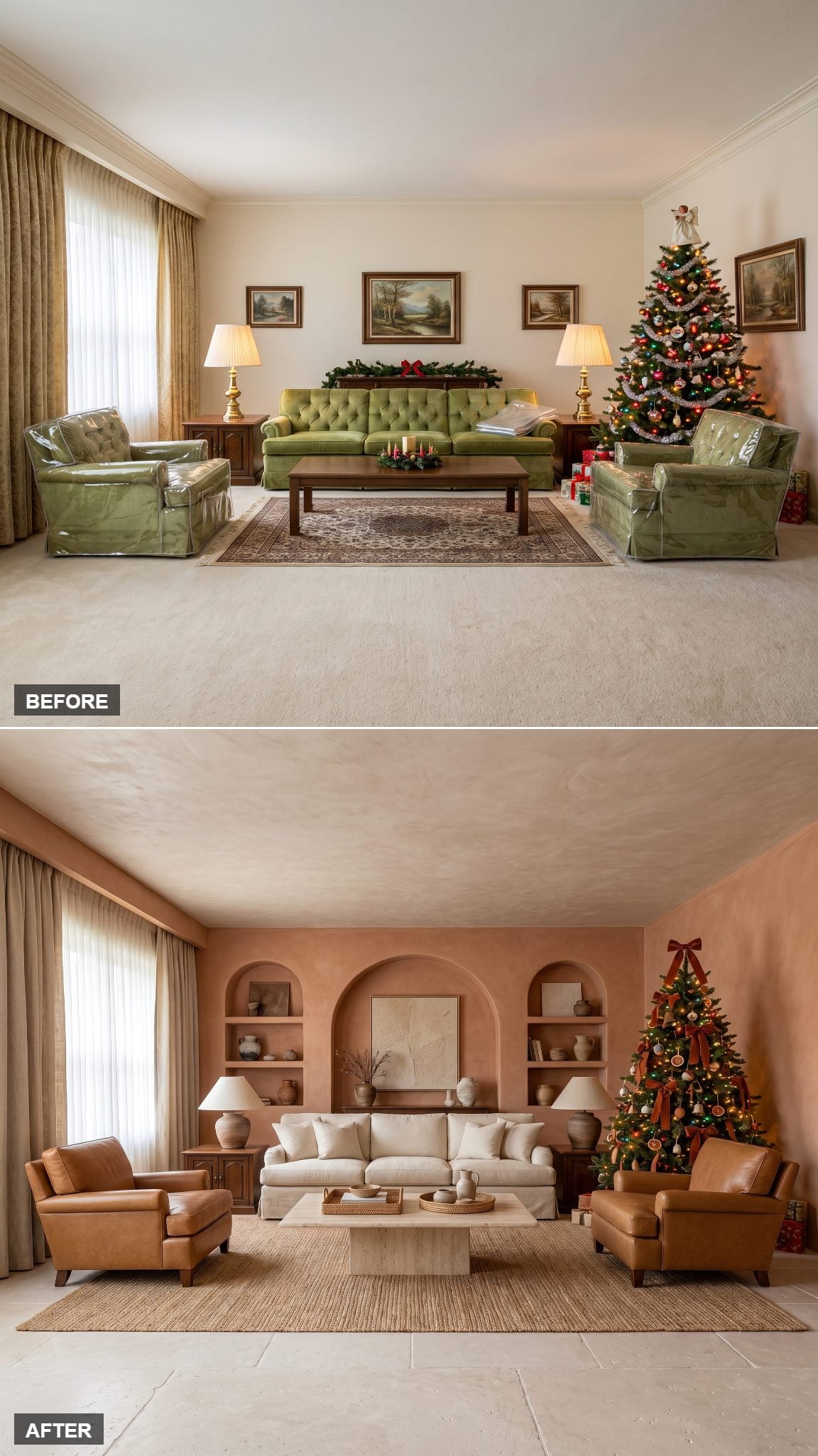
7. Terracotta Plaster and Arched Niches Straight Off the Mediterranean
🔥 Would you like to save this?
Warm terracotta plaster wraps the walls while pale limestone cools the floor underneath. An arched niche interrupts the flat wall with actual depth, holding one clay vessel above a linen sofa, woven throw and tall olive branch.
The palette carries the sun-baked ease of Mediterranean interiors without turning the room into geographical cosplay. Arches, mineral finishes and earthen color do enough.
6. Soft Futurist Salon in Curves and Alabaster Glow
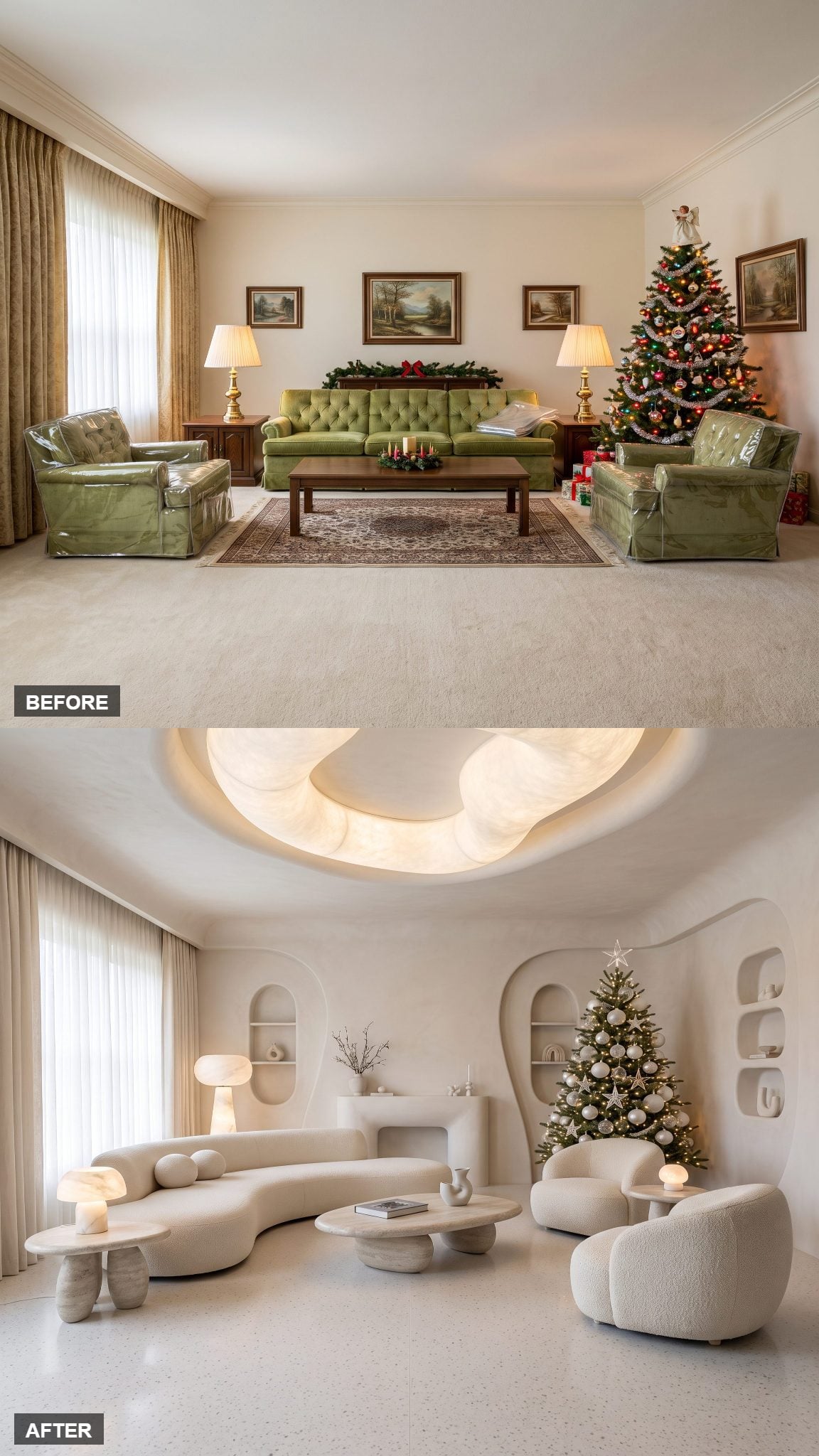
The before room’s hard geometry has almost disappeared. Curved plaster overlays soften corners, niches round off, and pale terrazzo moves underneath with very little visual interruption.
A serpentine cream sofa and bouclé chairs repeat the architecture instead of fighting it. Alabaster lighting glows rather than glares, giving the futuristic idea warmth instead of spaceship sterility.
5. The Milan Marble Statement Wall
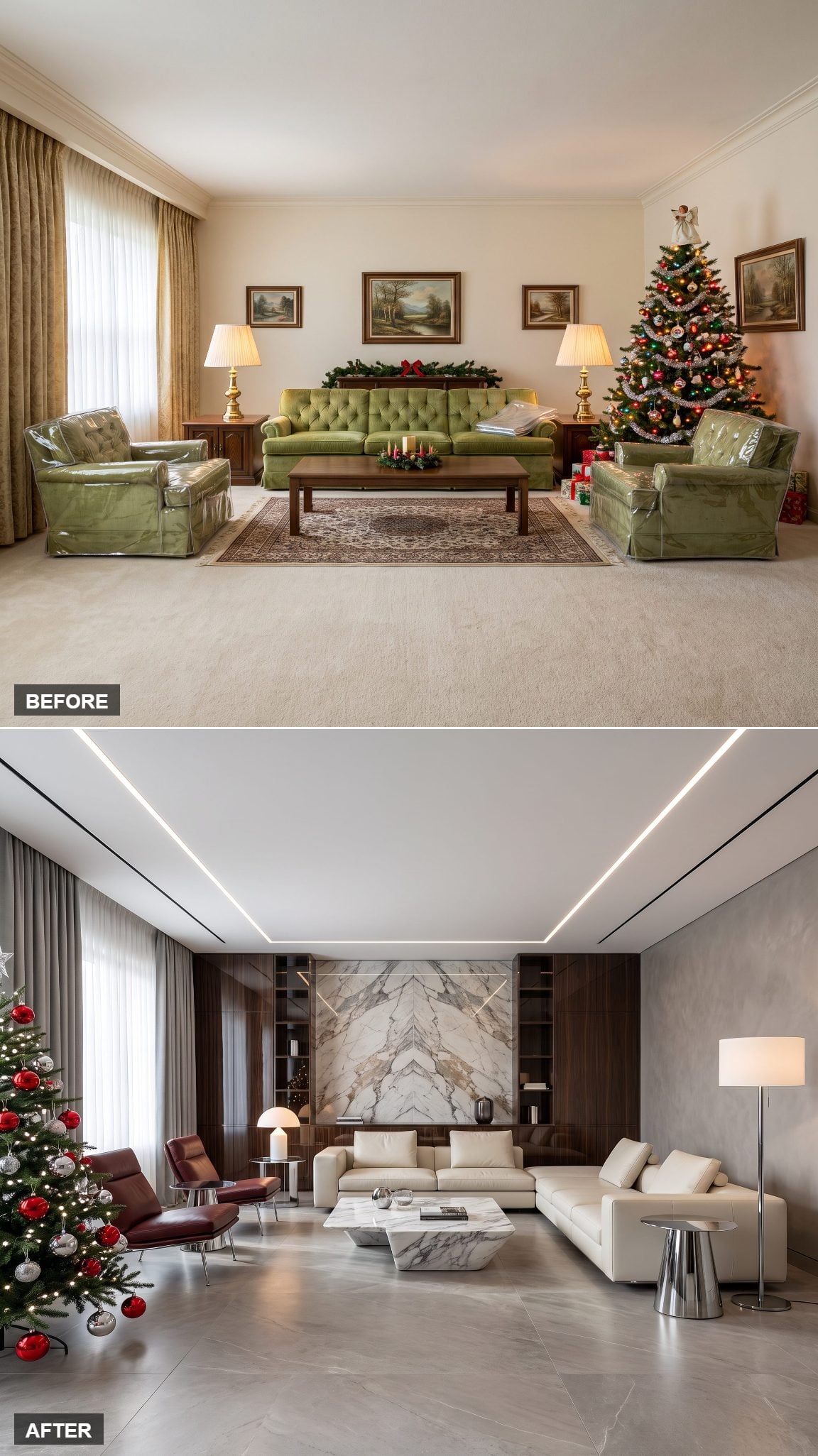
Book-matched Breccia Capraia marble covers the feature wall, with adjacent slabs arranged so the veining mirrors across the center like an enormous stone Rorschach test. That’s nearly the whole room right there.
Glossy dark timber cabinetry, warm gray Venetian plaster and a low taupe sofa know better than to compete. One sculptural floor lamp is enough. When the stone is already performing at this volume, decorating around it becomes an exercise in knowing when to stop.
4. Ralph-Lauren-Inspired Equestrian Luxe in Tobacco and Tartan
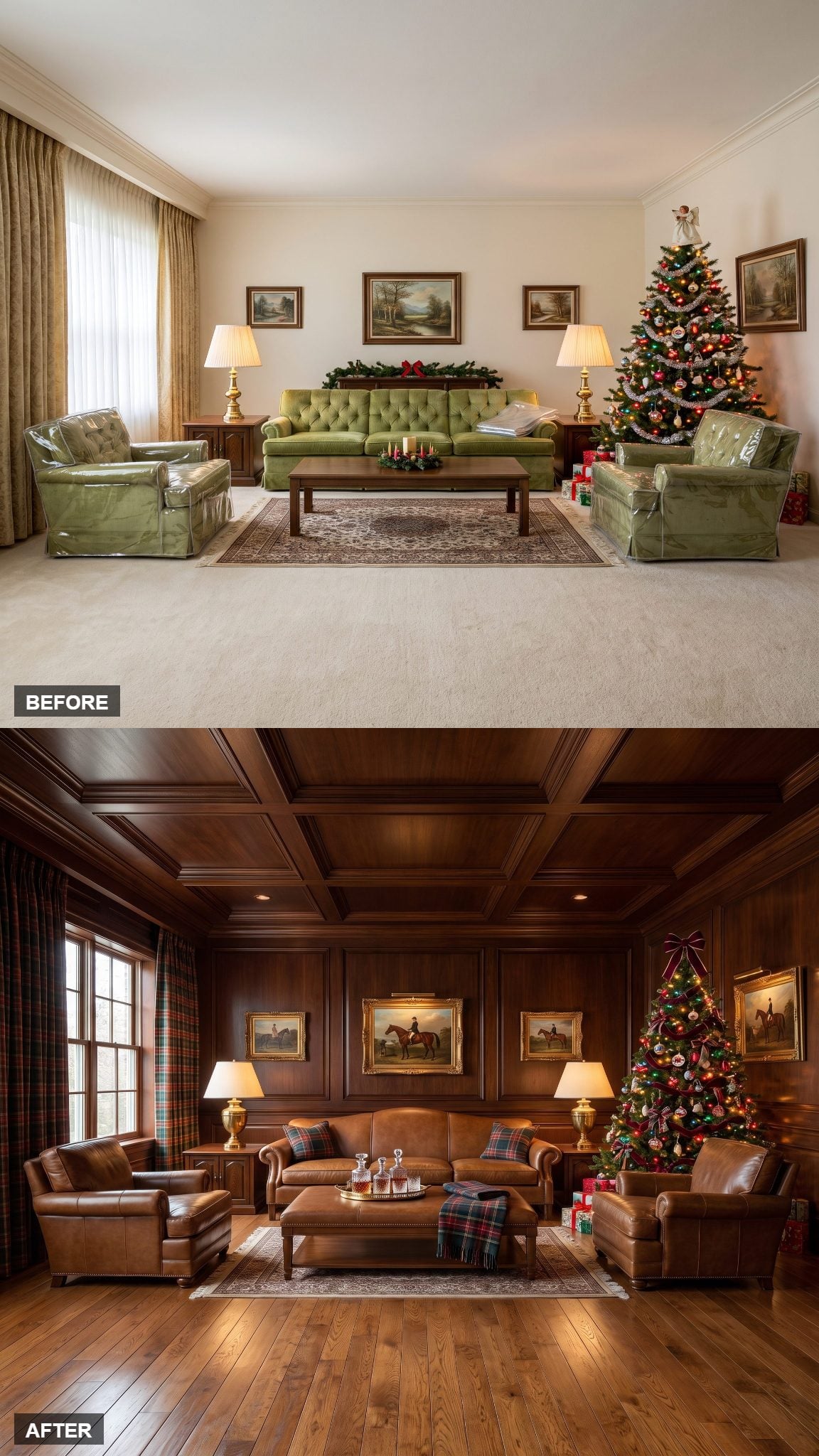
Visually, this lands somewhere between a library and a saddle room—in the best possible way. Mahogany paneling, tobacco leather and softly patinated brass establish the depth before pattern even enters the conversation.
Then tartan does its work. One tartan wool throw and plaid draperies pull the room toward Christmas without a novelty ornament in sight. Tailored rather than rustic, editorial rather than hunting-lodge gift shop. The distinction matters.
3. French Château Reinterpreted, Without the Musty Part
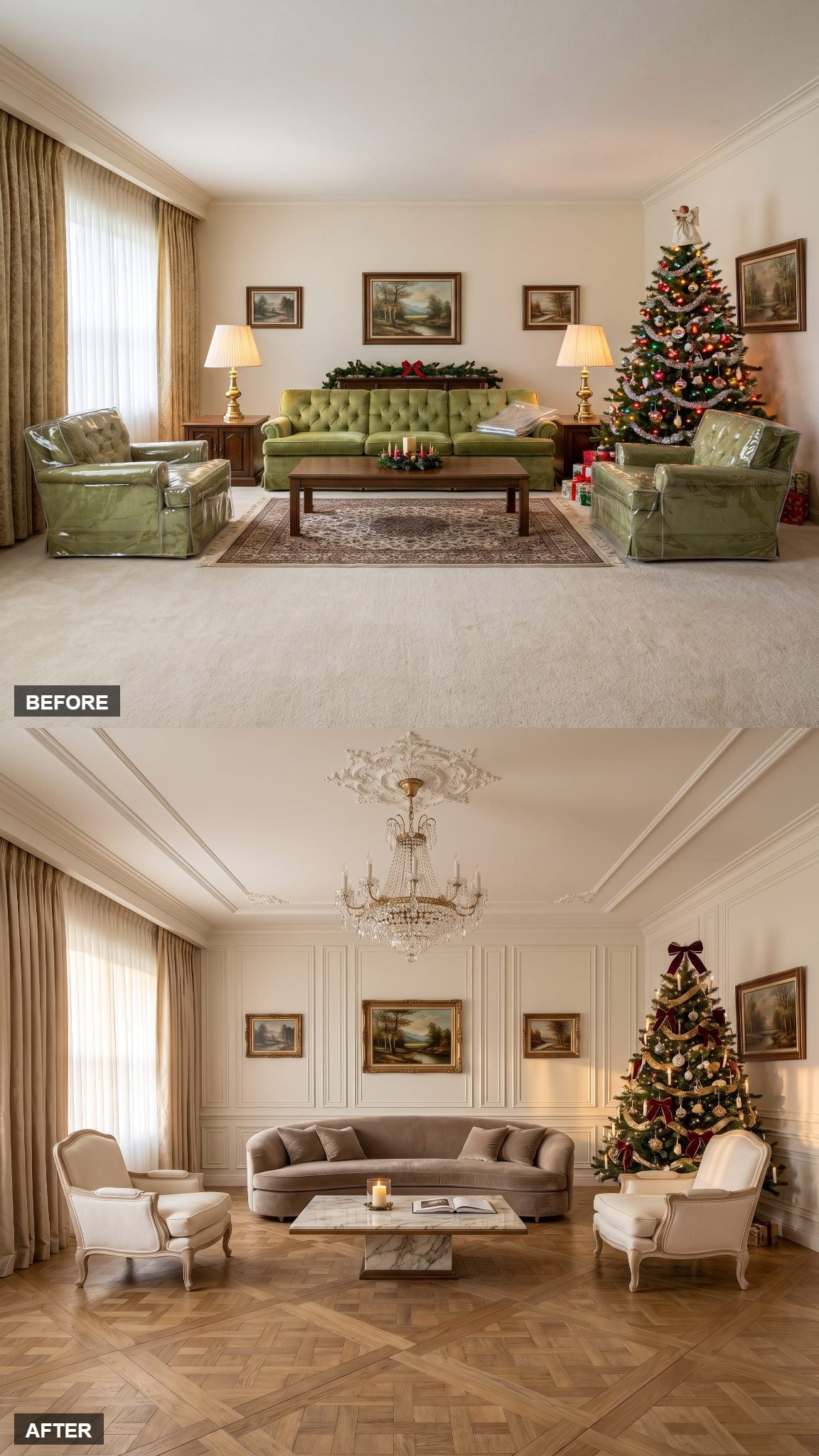
The original room had plenty of formality and almost no architectural conviction. Flat walls, shiny brass and an ignored ceiling left the furniture trying to manufacture grandeur by itself.
Versailles-style parquet changes that immediately, establishing historical grammar underfoot before a curved mushroom velvet sofa makes clear that this isn’t a period reconstruction. Warm-white paneling and a crystal chandelier finish the argument. Old grammar, new sentence.
2. Organic Modern With Nothing but Natural Texture
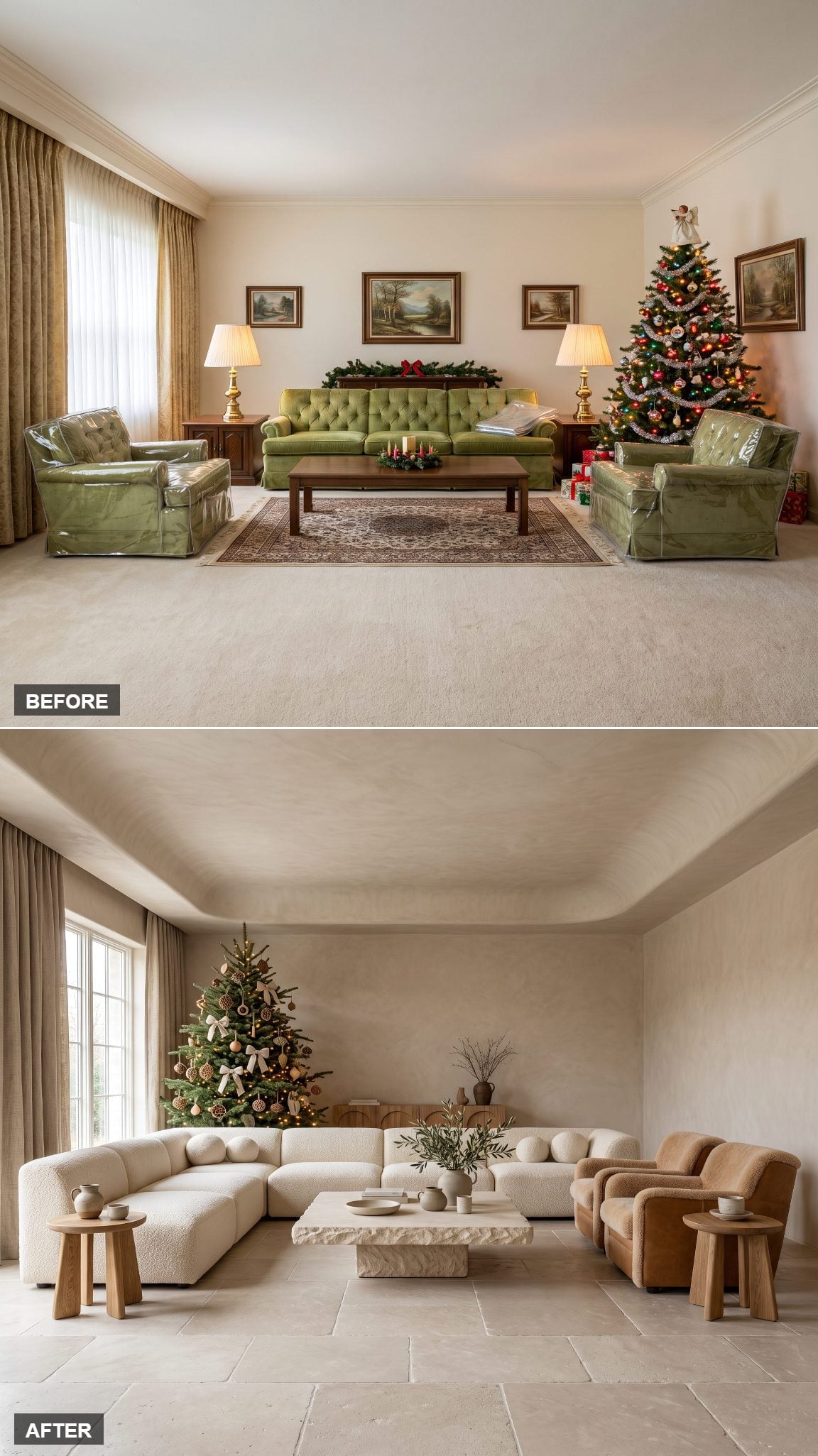
This is the tactile one. Hand-applied beige microcement softens the walls without pattern, while large-format limestone gives the floor just enough natural variation to avoid looking blank.
A chunky travertine coffee table, curved sand-colored sofa and raw-edged wood bench keep almost every major form low and rounded. The room doesn’t depend on one fashionable color or decorative motif to make its case. Stone, plaster, timber and upholstery provide the variation.
1. The Grand Contemporary Christmas Finale in Marble, Walnut, and Champagne Silk
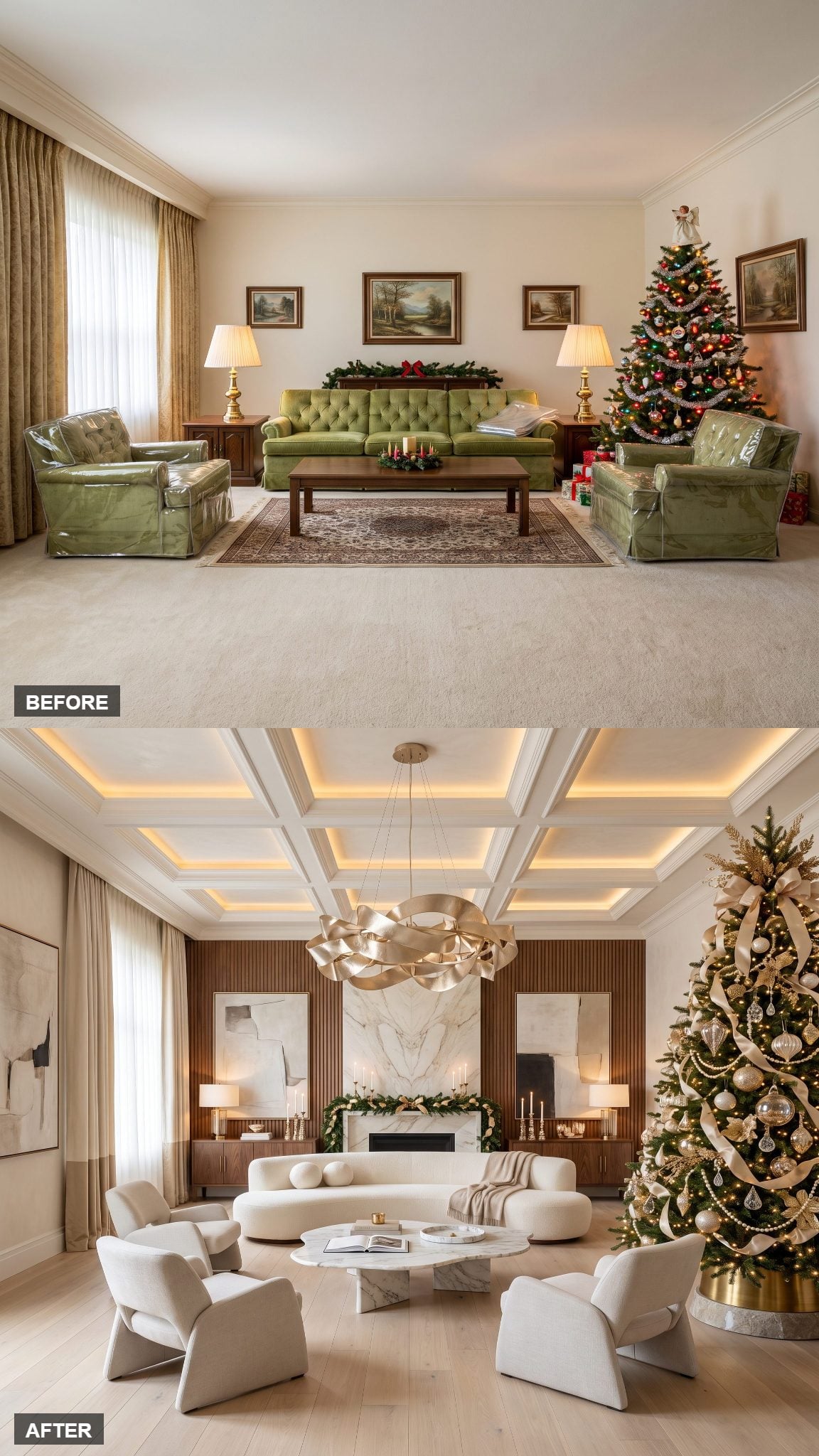
Save the biggest swing for last. Marble, walnut, champagne metal and silk take every ounce of ceremony the original room was chasing and give it architecture strong enough to carry the weight.
The crescent ivory mohair sofa floats away from the walls, breaking the old perimeter arrangement and turning the center of the room into an actual conversation space. Book-matched marble commands one wall. Ribbed walnut warms another. Champagne-toned metal slips between them rather than shouting over either one.
Then the tree arrives: glass ornaments, crystal droplets, cascading silk ribbon and enough pinprick light to make all those polished surfaces flicker. This is the formal 1970s living room’s Christmas ambition without the plastic, the beige caution or the eleven-month waiting period. December still gets the room at its most spectacular. January no longer has to give it back.