🔥 Would you like to save this?
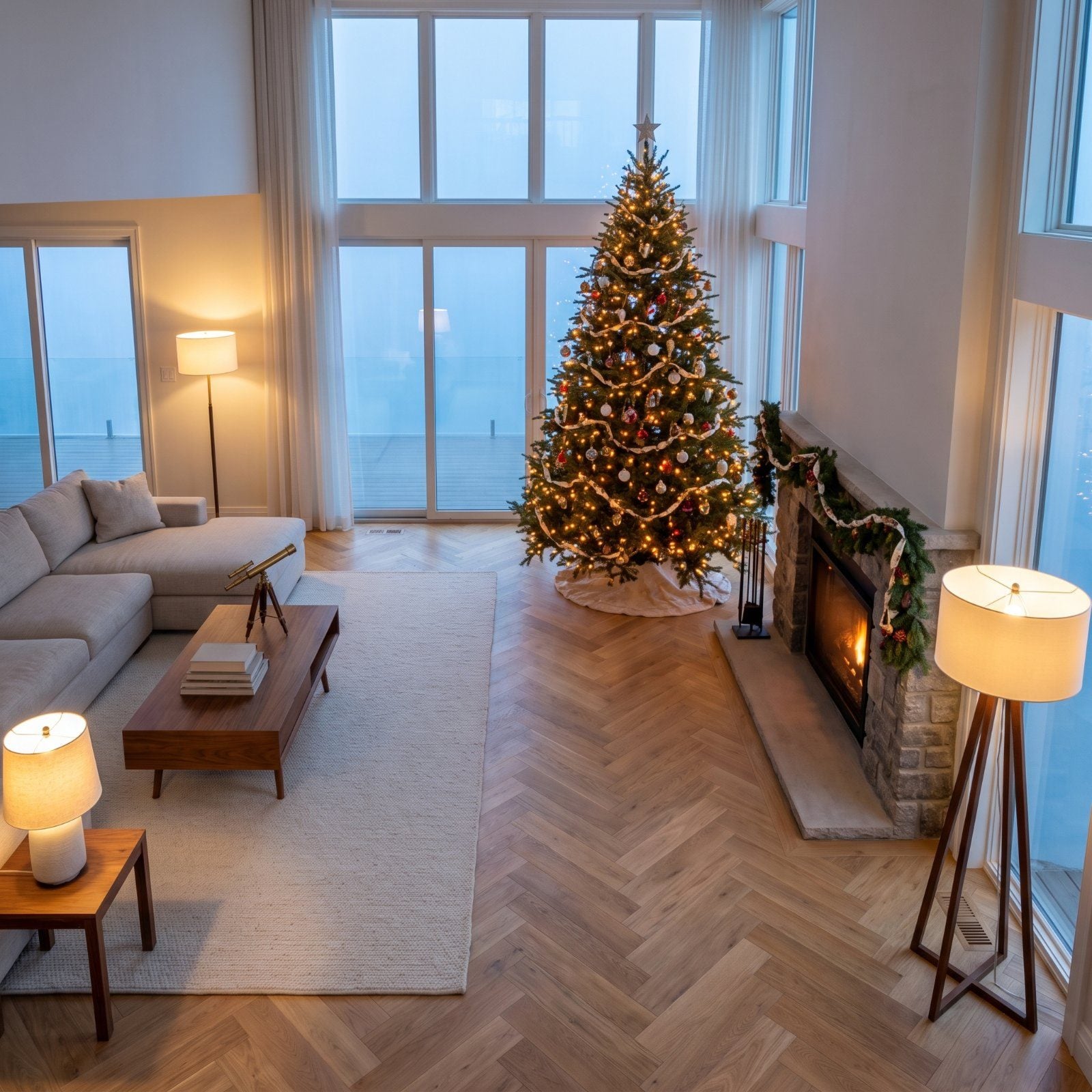
The corner is a cop-out. It’s where the tree goes when nobody thought about it, wedged between a wall and a side table like an apology. This is the biggest decoration you’ll own all year, so why hide it in the one spot nobody looks at? We pulled living-room layouts where the tree earns its square footage — window frames, divider lines, sightlines straight from the front door. Here’s where it should actually go.
33. Centered in the Main Picture Window
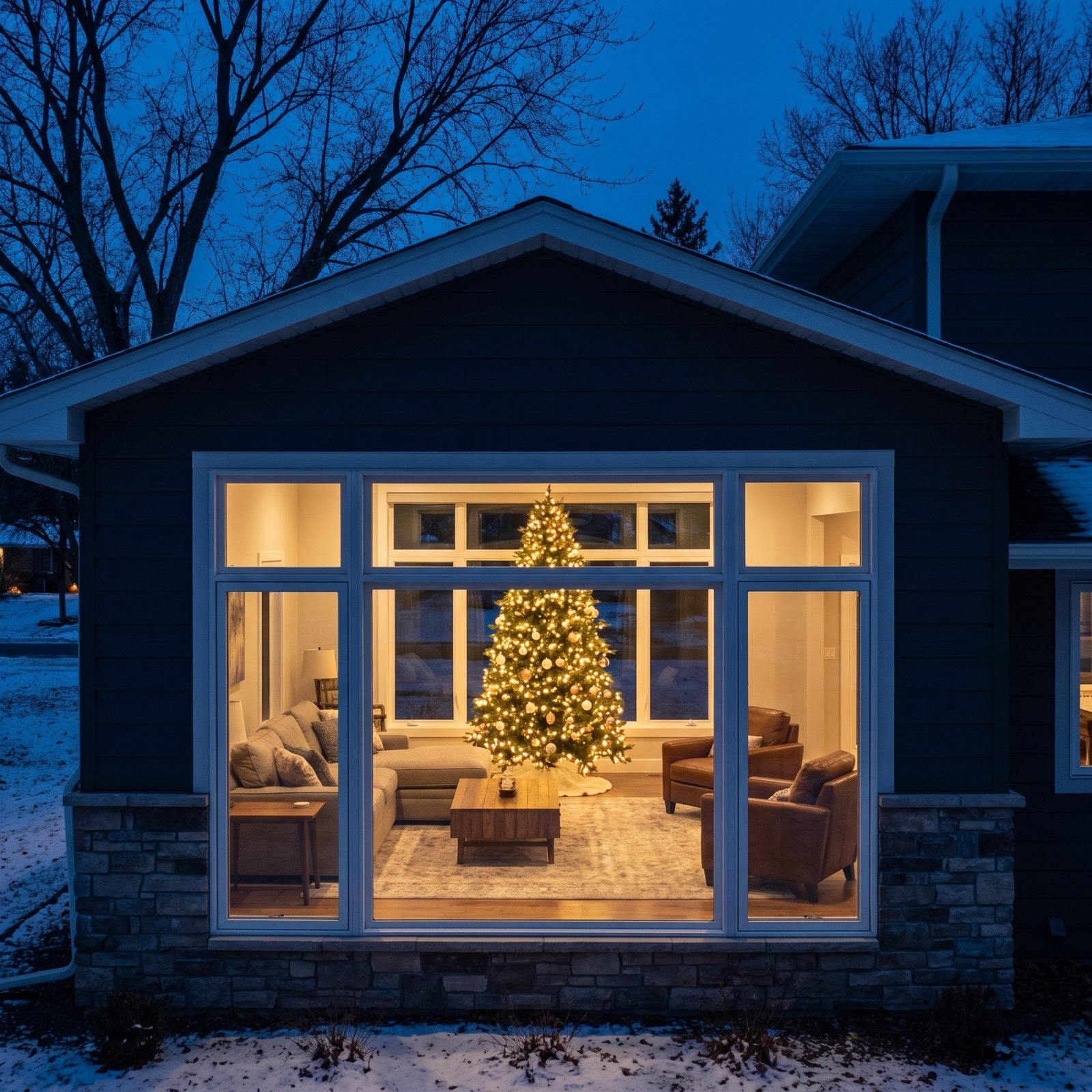
Put the tree in the picture window and you get two gifts at once. Inside, it anchors the room. Outside, it’s a lantern the whole street sees after dark.
In order to come up with the very specific design ideas, we create most designs with the assistance of state-of-the-art AI interior design software. Also, assume links that take you off the site are affiliate links such as links to Amazon. this means we may earn a commission if you buy something.
The trick is symmetry: center the trunk so the window splits evenly on either side. Pull the cream linen drapes back and let the glass frame it like a painting, then face your gray linen sofa straight at it so the whole seating group reads the tree as the headline.
32. Between the Living and Dining Areas as a Divider
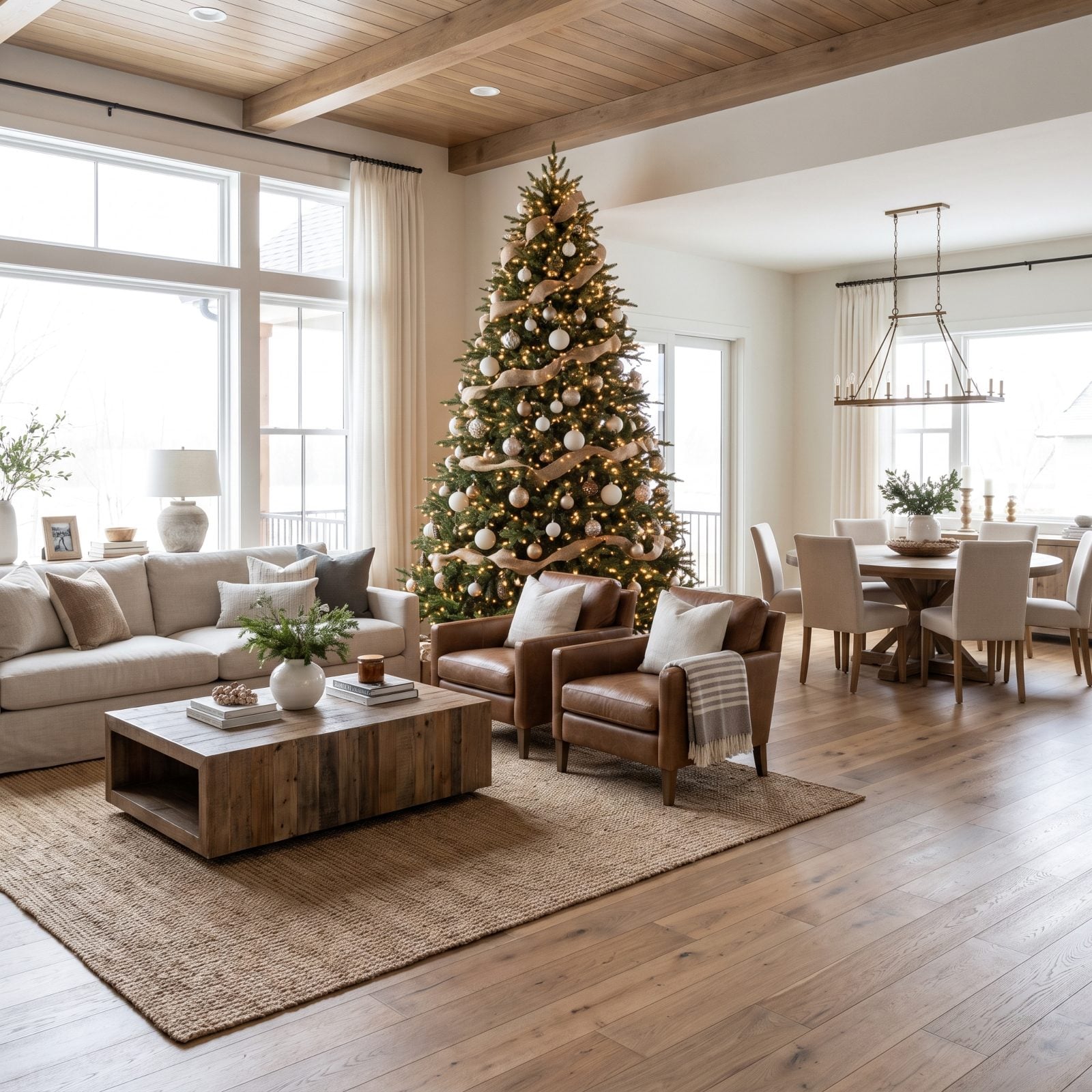
In an open-plan room you’re always fighting to say where one zone ends and the next begins. The tree can do that job for a month.
Stand it on the dividing line between lounge and dining and it reads from both sides, no dead back. Keep it slimmer than usual so traffic flows past, and style it in the round. It’s the same logic behind a good terracotta dining room where one object quietly carries the whole threshold.
31. Behind the Sofa in an Open-Plan Room
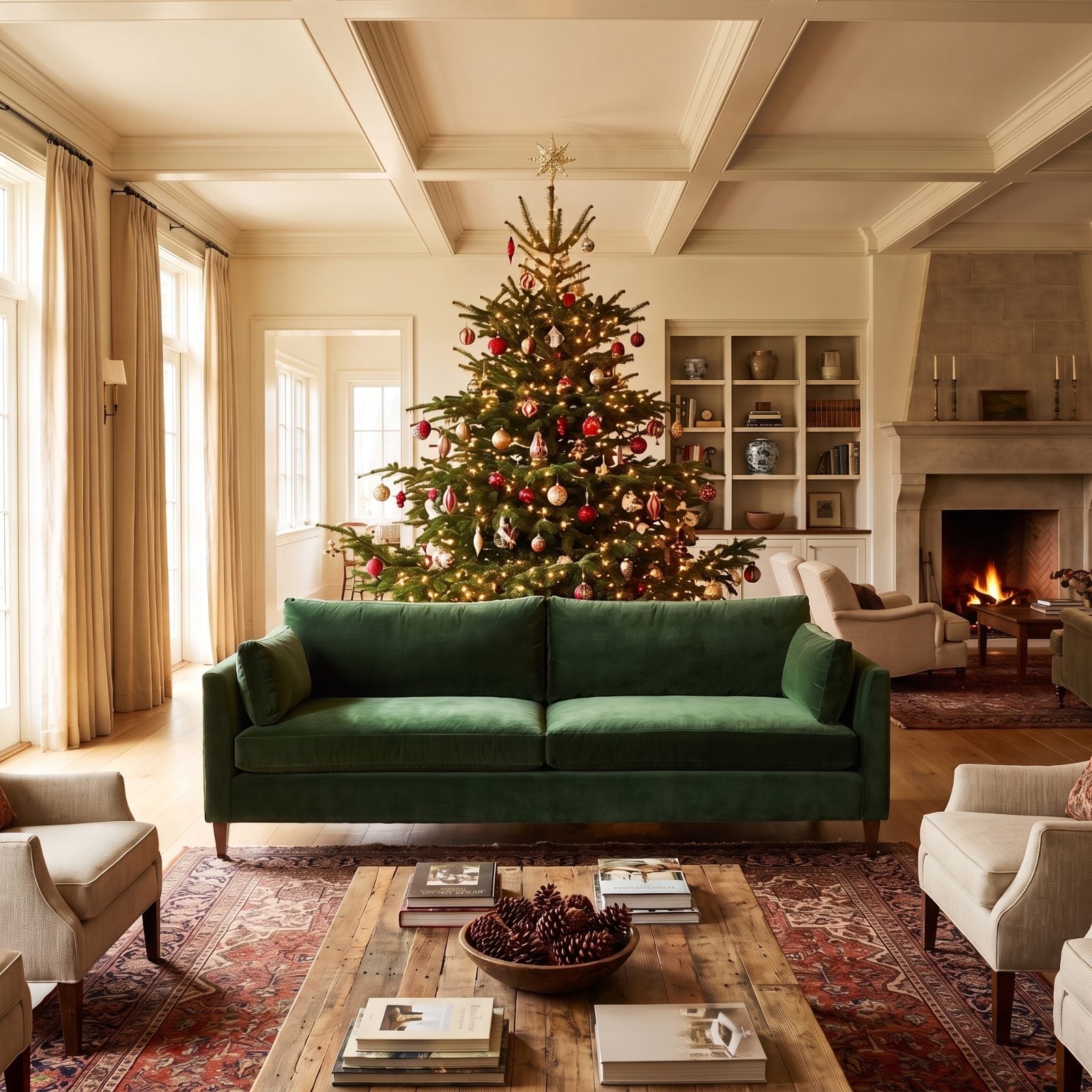
A floating sofa already splits an open room. Park the tree directly behind it and the backrest becomes a plinth.
The lit branches rise above the sofa line and hand the seating group a glowing backdrop instead of a blank wall behind everyone’s heads. Run a slim console along the sofa back to catch the skirt and a few wrapped boxes. A green velvet sofa is ideal here, since the dark upholstery makes the lights pop.
30. Directly Opposite the Living-Room Entrance
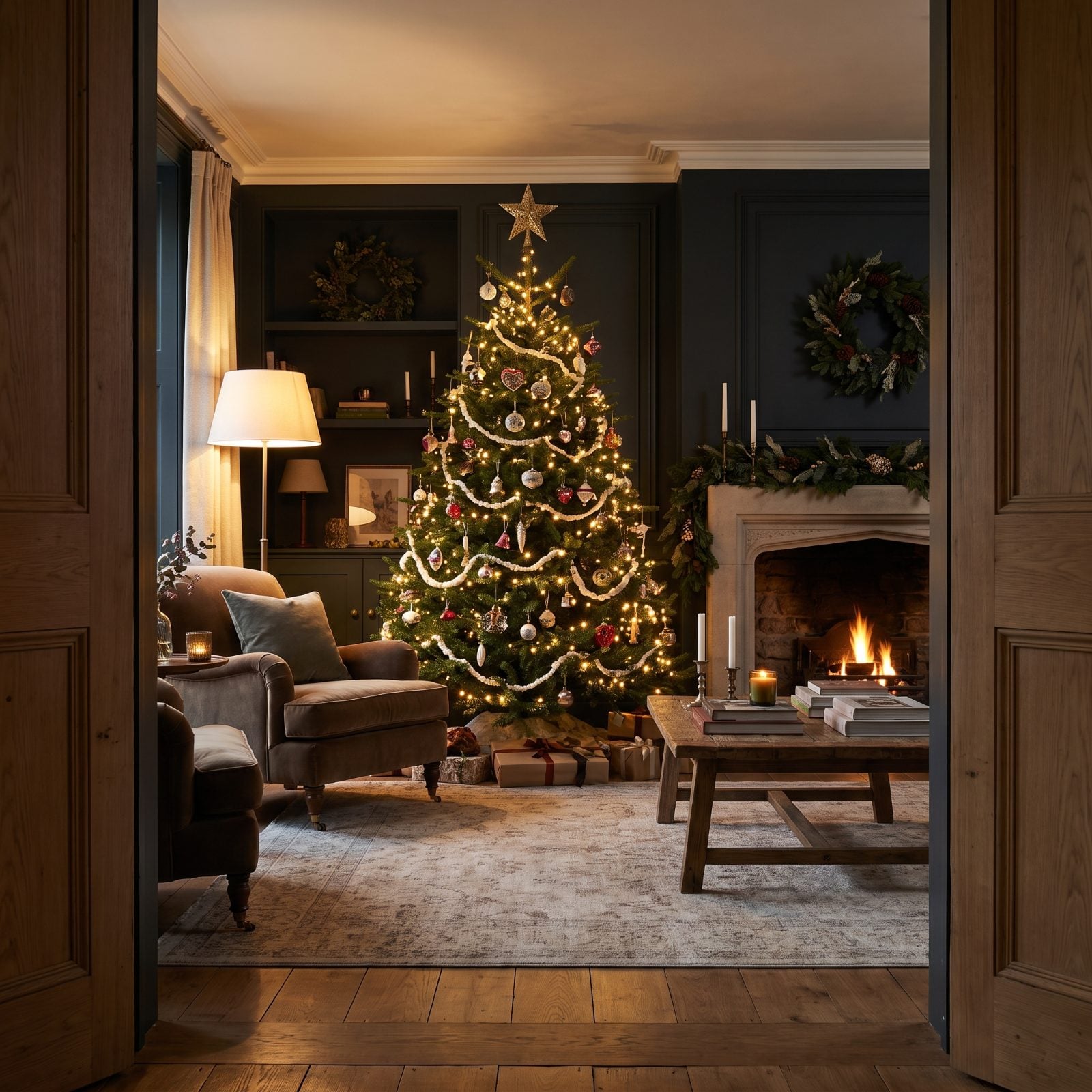
Stand in your doorway. Whatever your eye lands on first is your room’s headline, so make it the tree.
Place it dead center on the wall facing the entrance and every arrival gets the full glowing view with no craning, no searching. A symmetrical seating layout — two sofas squared off across a marble coffee table — pulls the axis straight to the tree.
29. Inside a Wide Bay Window
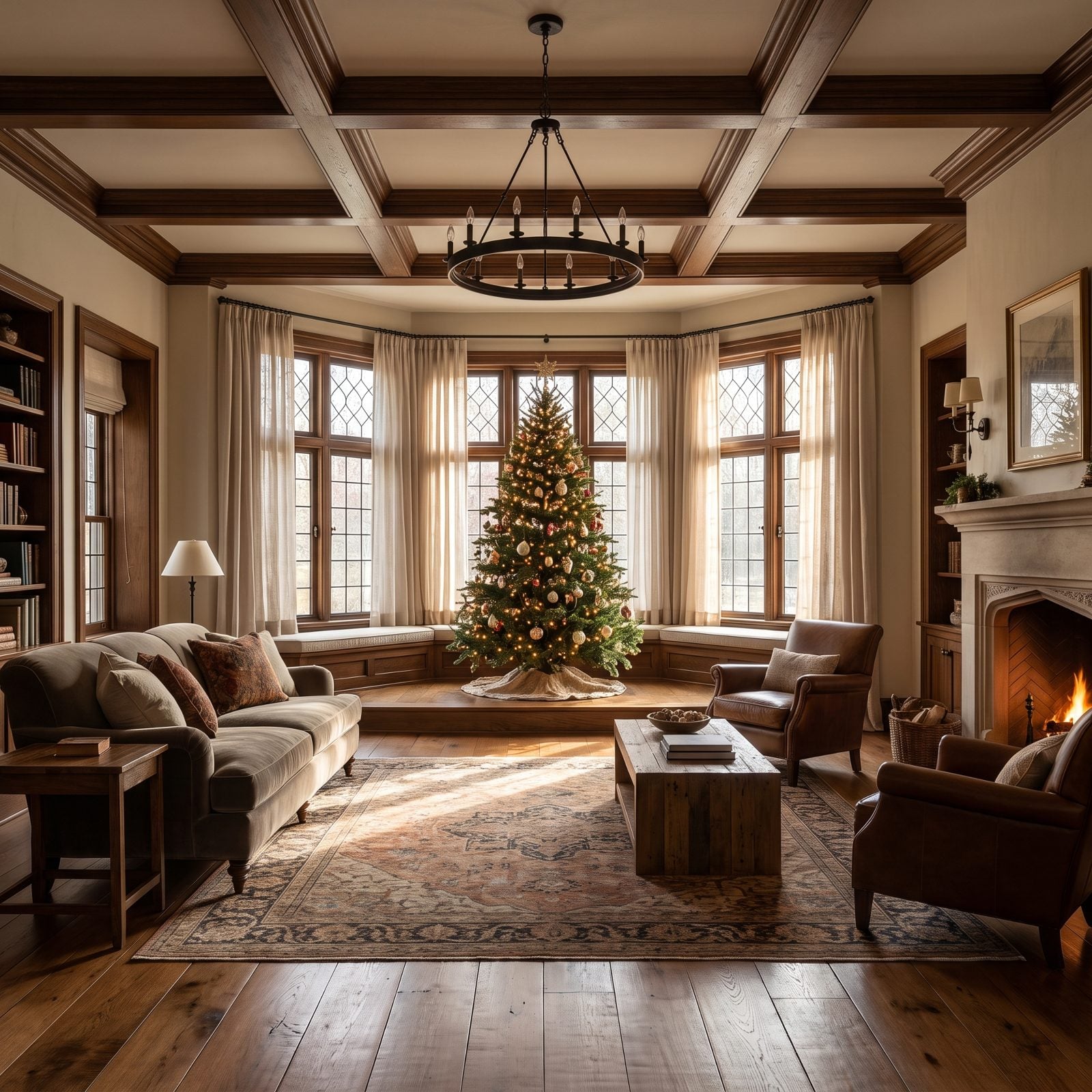
A bay window is a stage that was built before you moved in, and most people waste it on a sad potted fern.
Set the tree into the center of the bay and three panes of glass wrap it on all sides. Add window-seat cushions below and the whole bay becomes a holiday scene you can sit inside. Toss a couple of burnt orange throw pillows on the seat to warm it up.
28. Centered Between Matching Built-In Bookcases
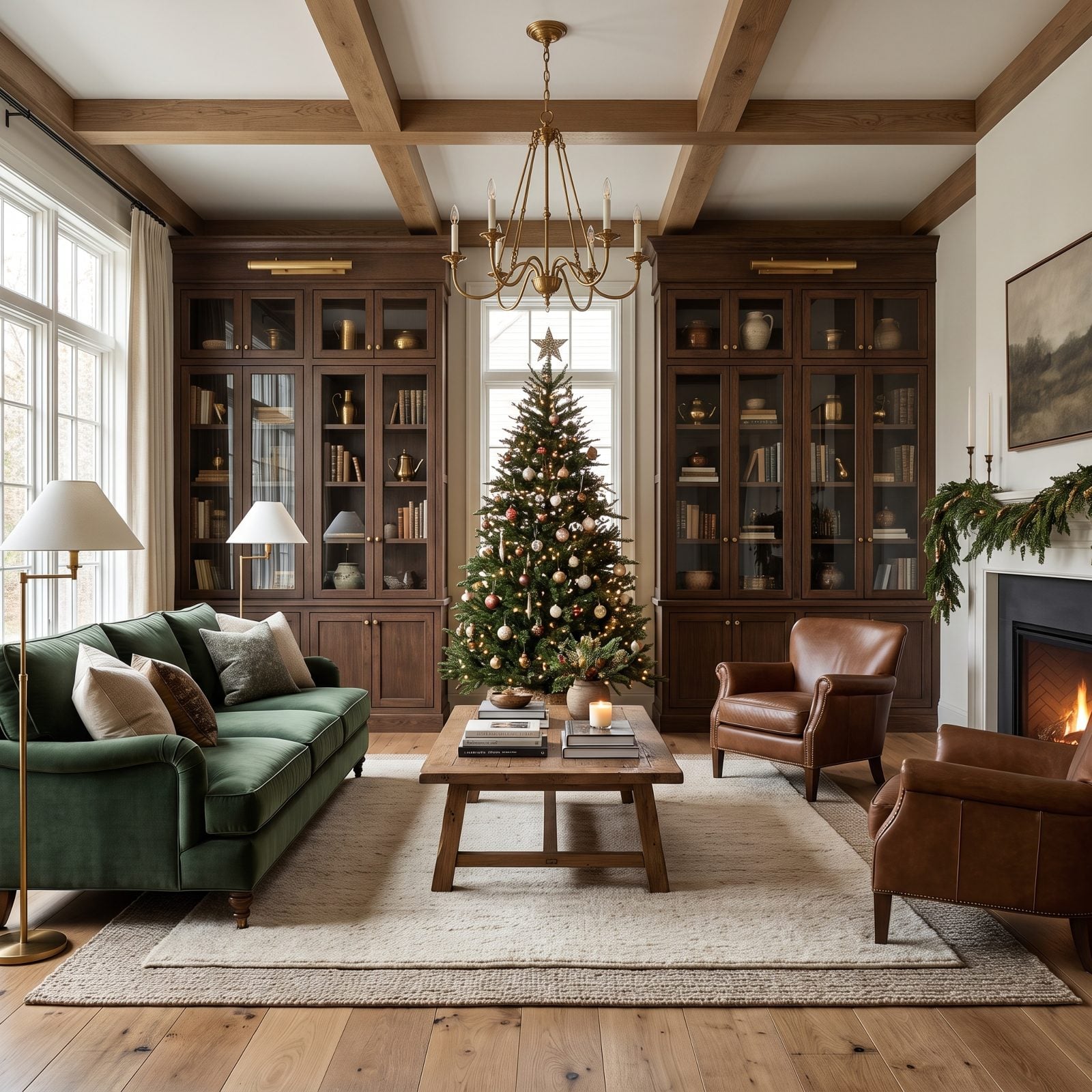
Matching built-ins are already begging for a centerpiece. Give them one.
Slot the tree into the gap between two bookcases and the shelves become its frame, symmetrical on both flanks, with deep green cabinetry behind the branches making the lights read warmer. A tan leather sofa facing the wall seals it. If you’ve ever walked through a good eclectic bonus room, you already know how much mileage a wall of shelves gives a single hero object.
27. In the Space Normally Occupied by an Accent Chair
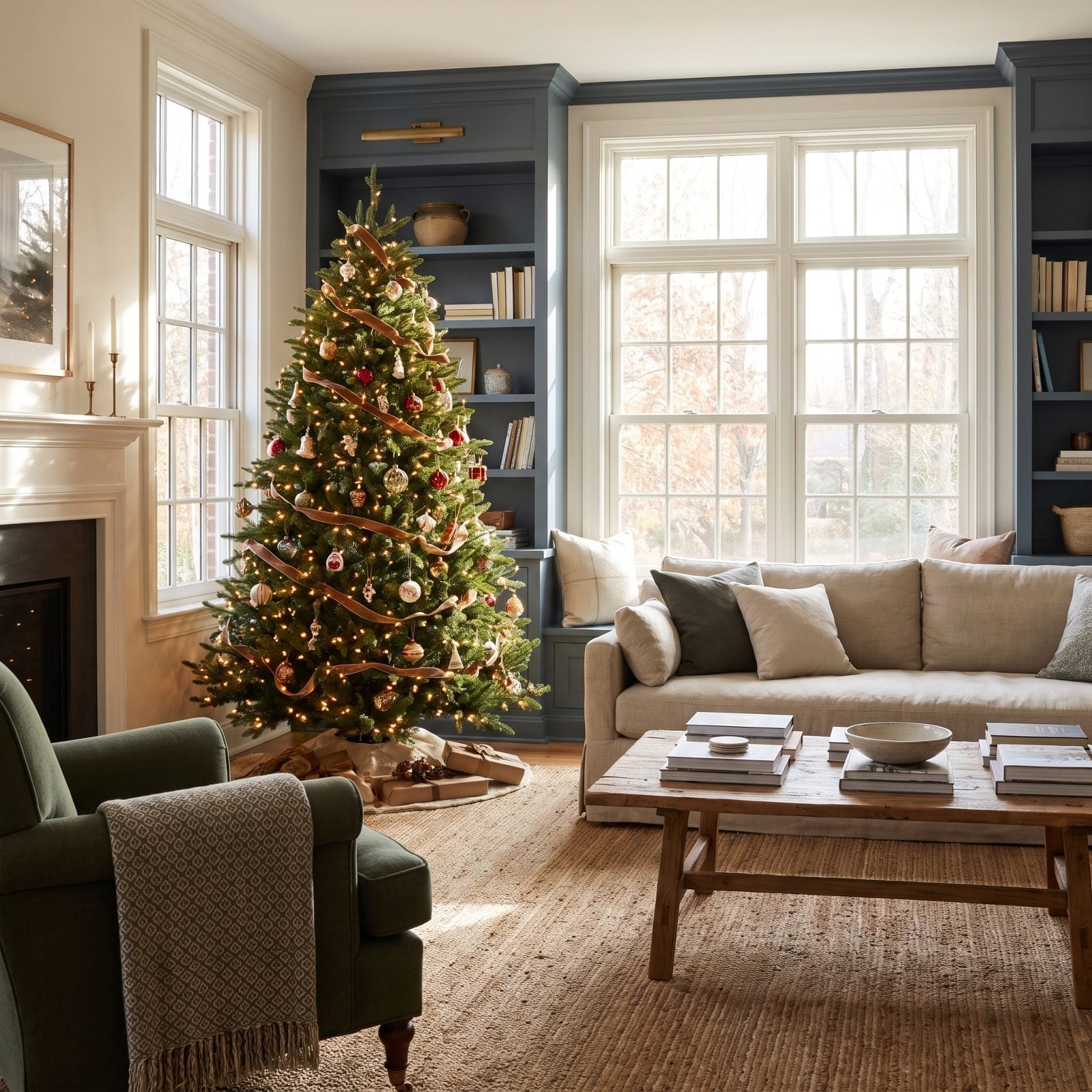
Here’s the swap nobody thinks of. An accent chair takes up roughly the same footprint as a modest tree, so move the chair to a bedroom for December and let the tree finish your conversation circle.
Angled into the fourth side of a seating group, it becomes a participant instead of a bystander. Use a six-footer so the proportions match the chair it replaced.
26. Centered on a Blank Wall as Seasonal Art
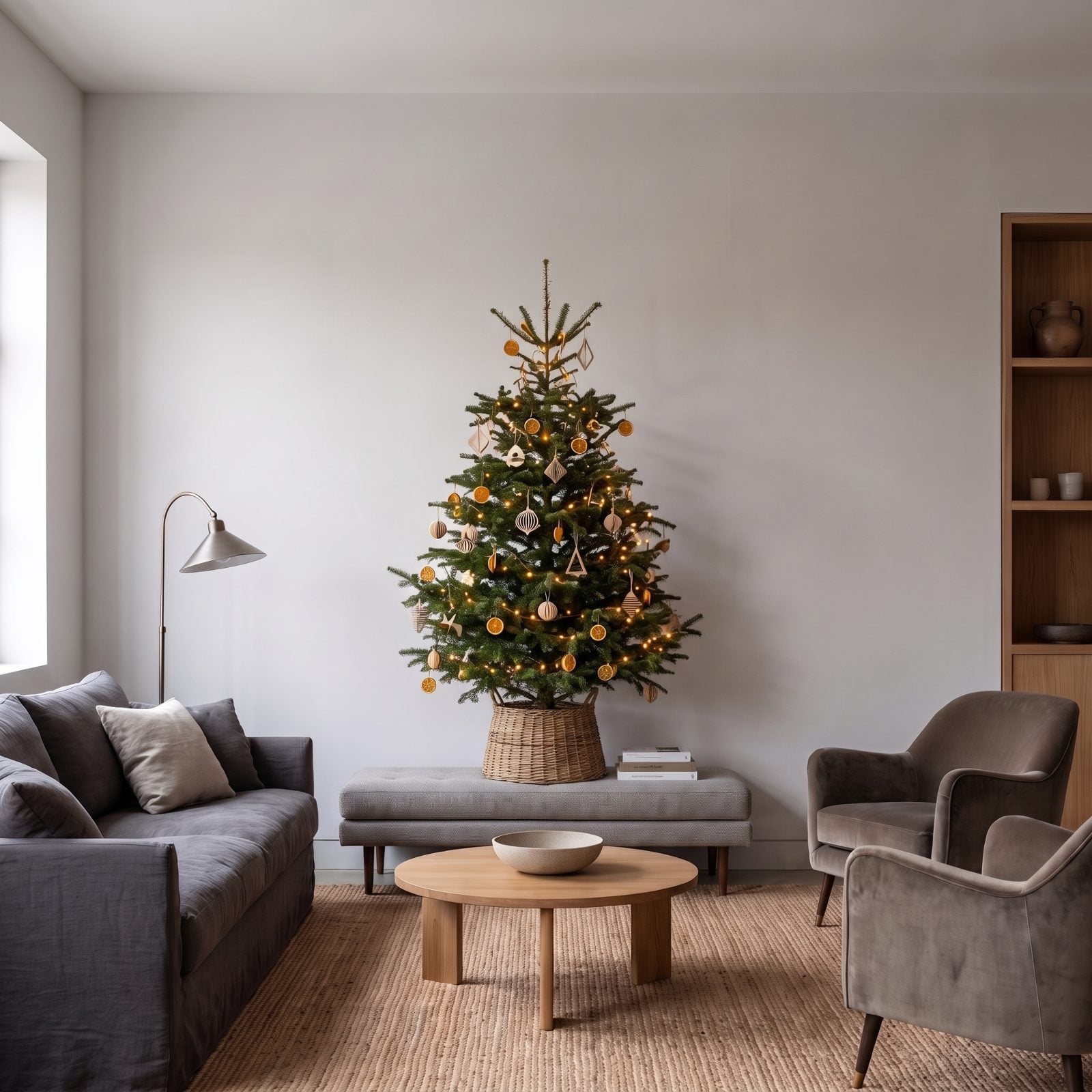
Got a wall that’s been blank since you moved in? The one you keep meaning to hang something on? The tree is your something.
Choose a half or slim-profile tree so it sits flush, center it on the wall, and add picture lights above like you would over a canvas. A low upholstered bench at the base grounds it, and suddenly the dead wall is the best thing in the room.
25. In an Underused Reading Nook
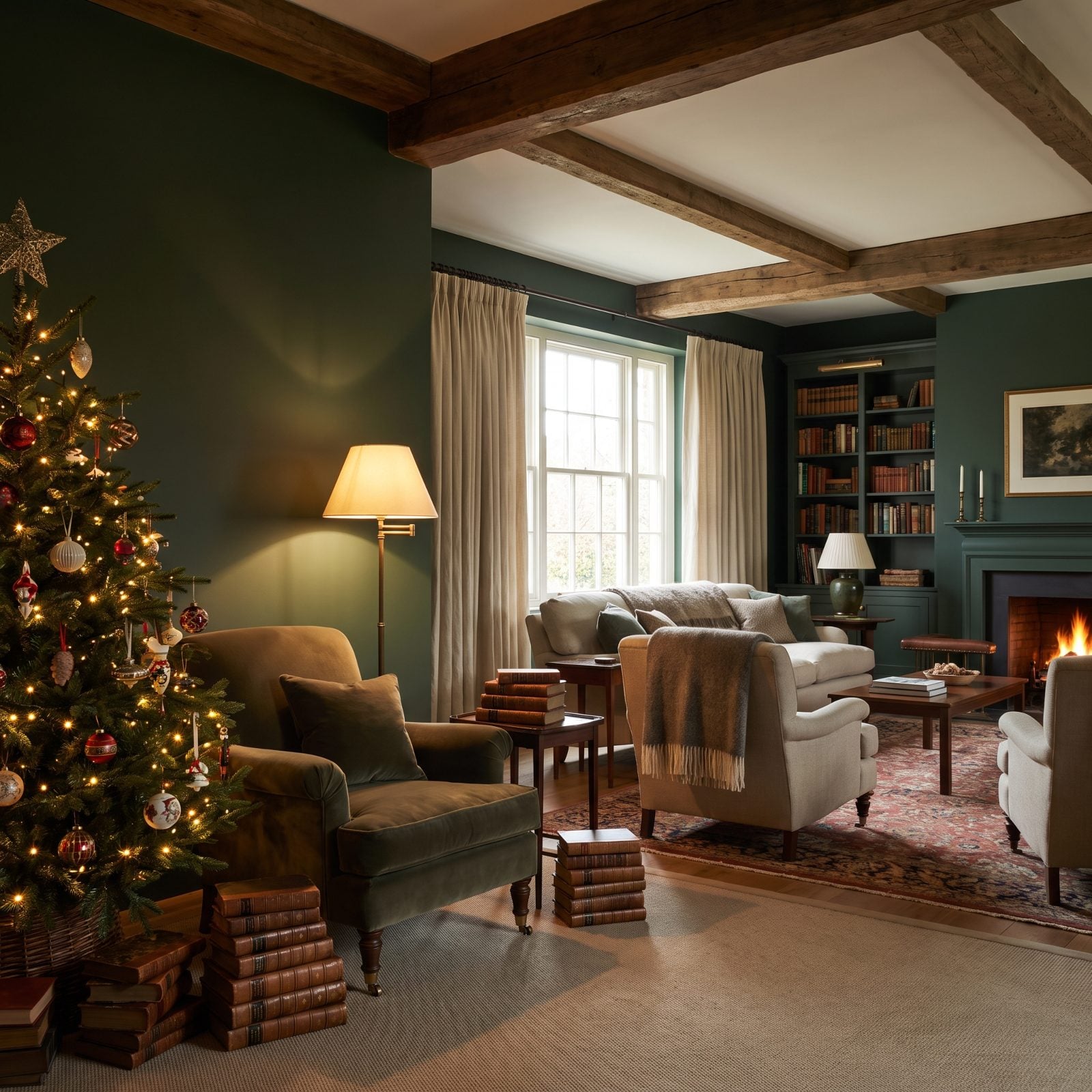
The reading nook that gets used twice a year can finally earn its keep in December.
Tuck the tree in beside the chair so the lights pool over your lap while you read. Keep the armchair and brass reading lamp in place so the nook still works, and a six-foot tree fits the scale without crowding.
24. Where a Console Table Usually Stands
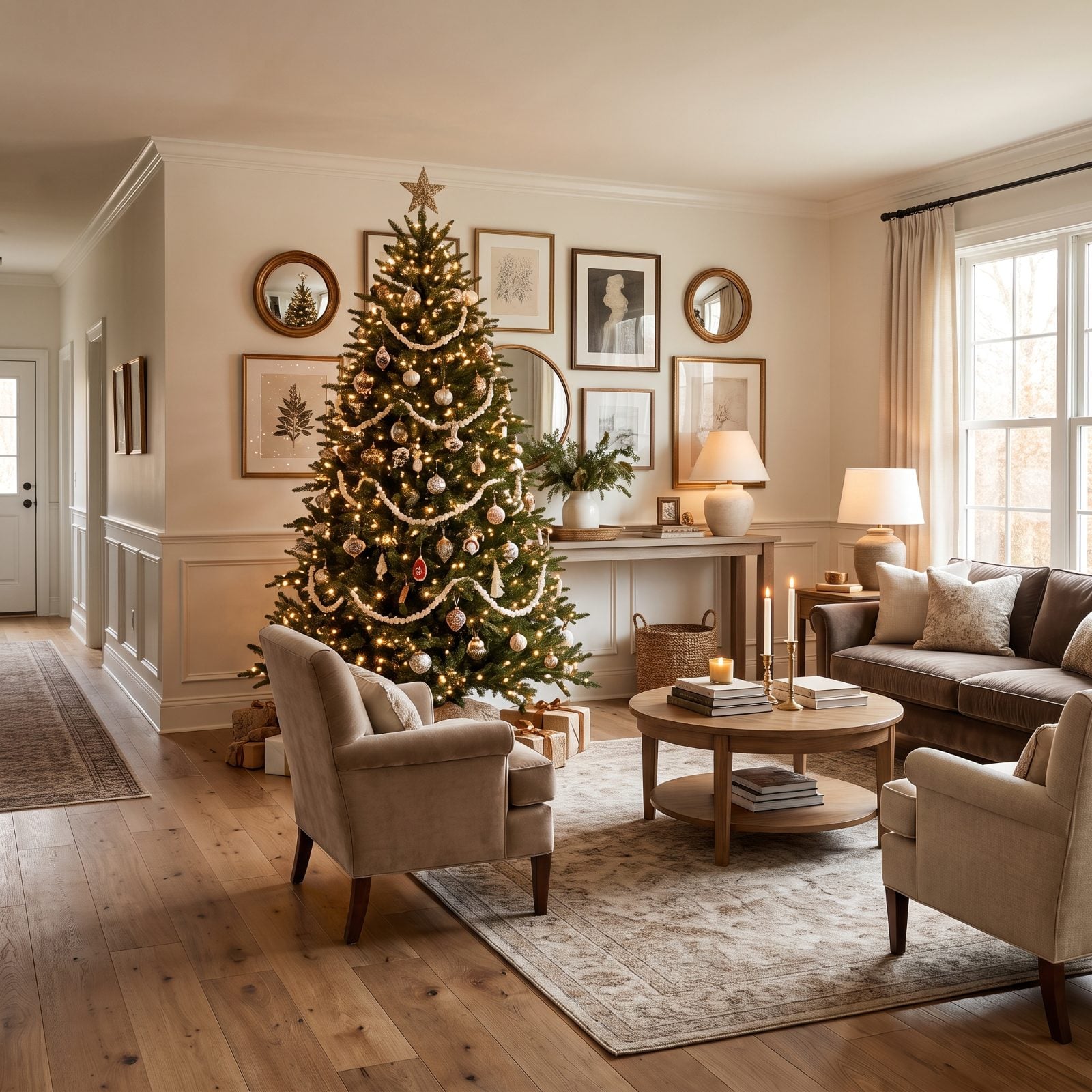
The console wall is the most underrated real estate in the room. Long, narrow, usually tucked against a hallway or behind a sofa — exactly the footprint a slim tree wants.
Swap the console for a pencil-profile tree, flank it with the two gold framed mirrors that were already there, and the reflections double every light. A pair of brass wall sconces on either side holds the symmetry.
We’ll admit we sneered at slim trees for years, convinced they looked stingy. They don’t. On a console wall they look like you meant it — which is the whole case against the corner. Try it before you default back to the easy spot.
23. Centered in Front of Closed French Doors
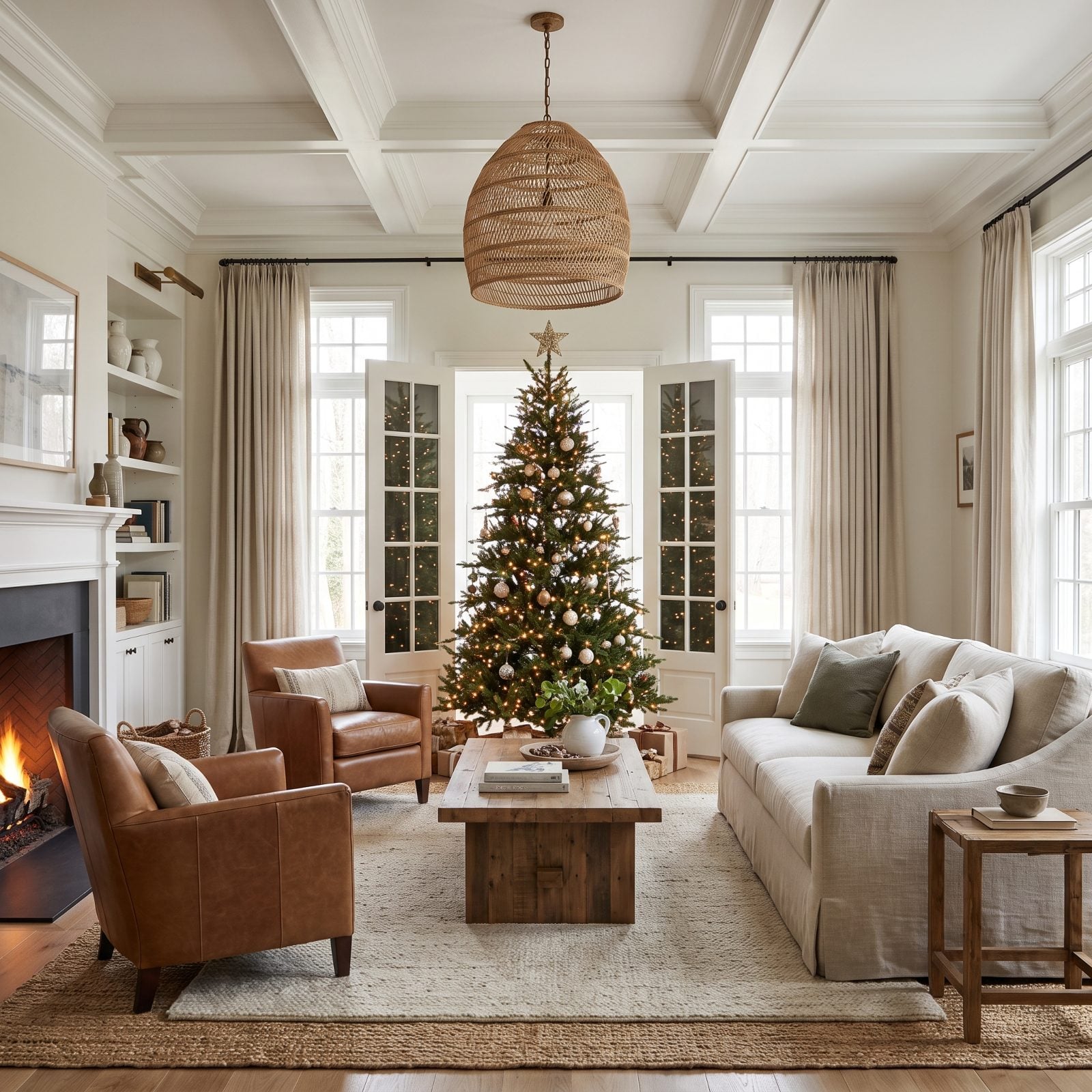
French doors are a ready-made frame, and a tree planted dead center turns that frame into a stage. At night the divided-light glass glows behind the branches, doubling the sparkle without a single extra string of lights.
Notice the clearance. There’s room on both sides so the doors still read as doors, which keeps the whole thing from feeling blocked. The camel linen sofa and rust leather armchairs face it head on, so every seat gets the view.
22. Framed Between Two Front-Facing Windows
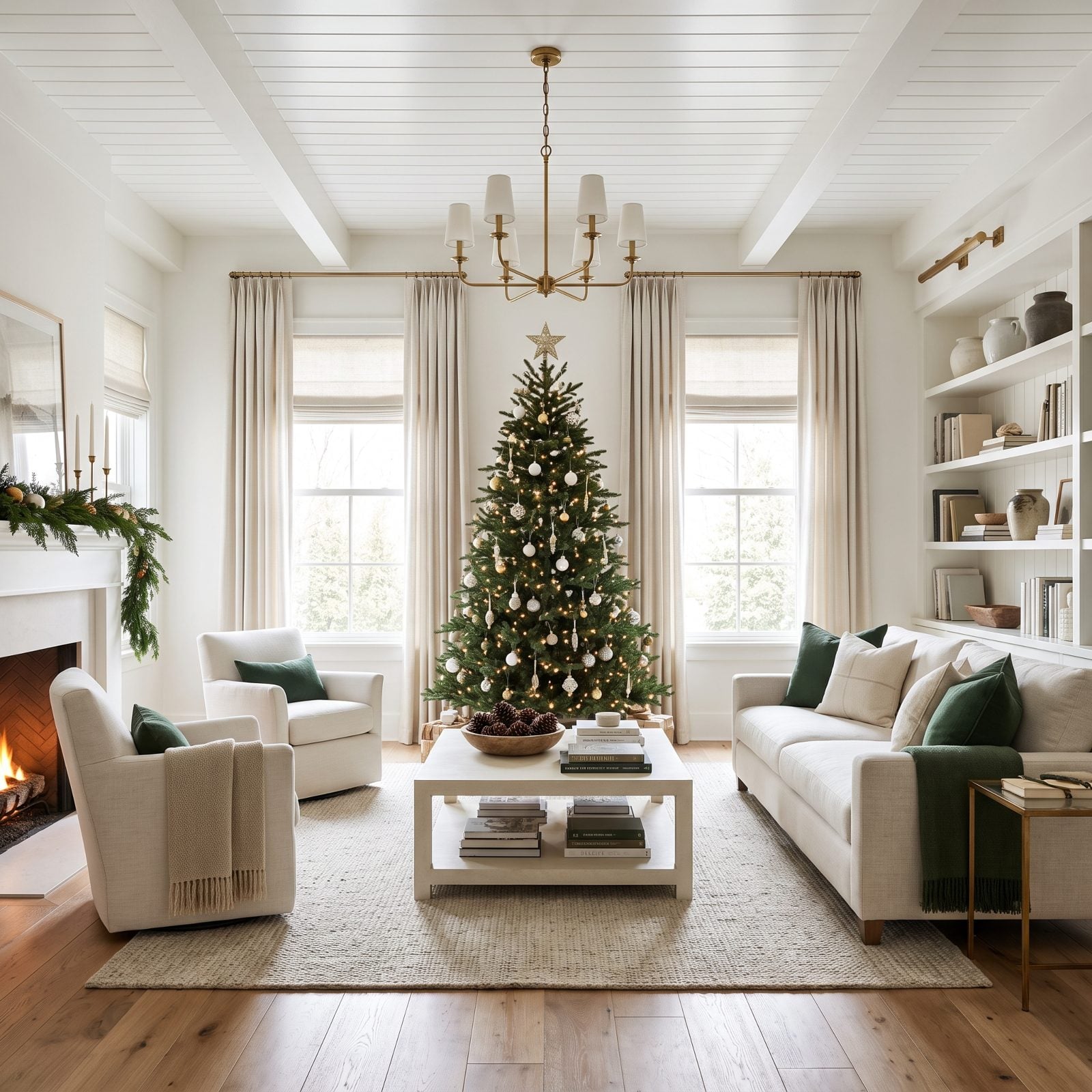
The gap between two front windows is prime real estate most people waste. Drop the tree there and you light the room from inside while giving the street a show.
At dusk the red velvet ribbon and warm bulbs catch in both panes, so one tree reads like three.
21. Anchoring the Far End of a Long, Narrow Room
🔥 Would you like to save this?
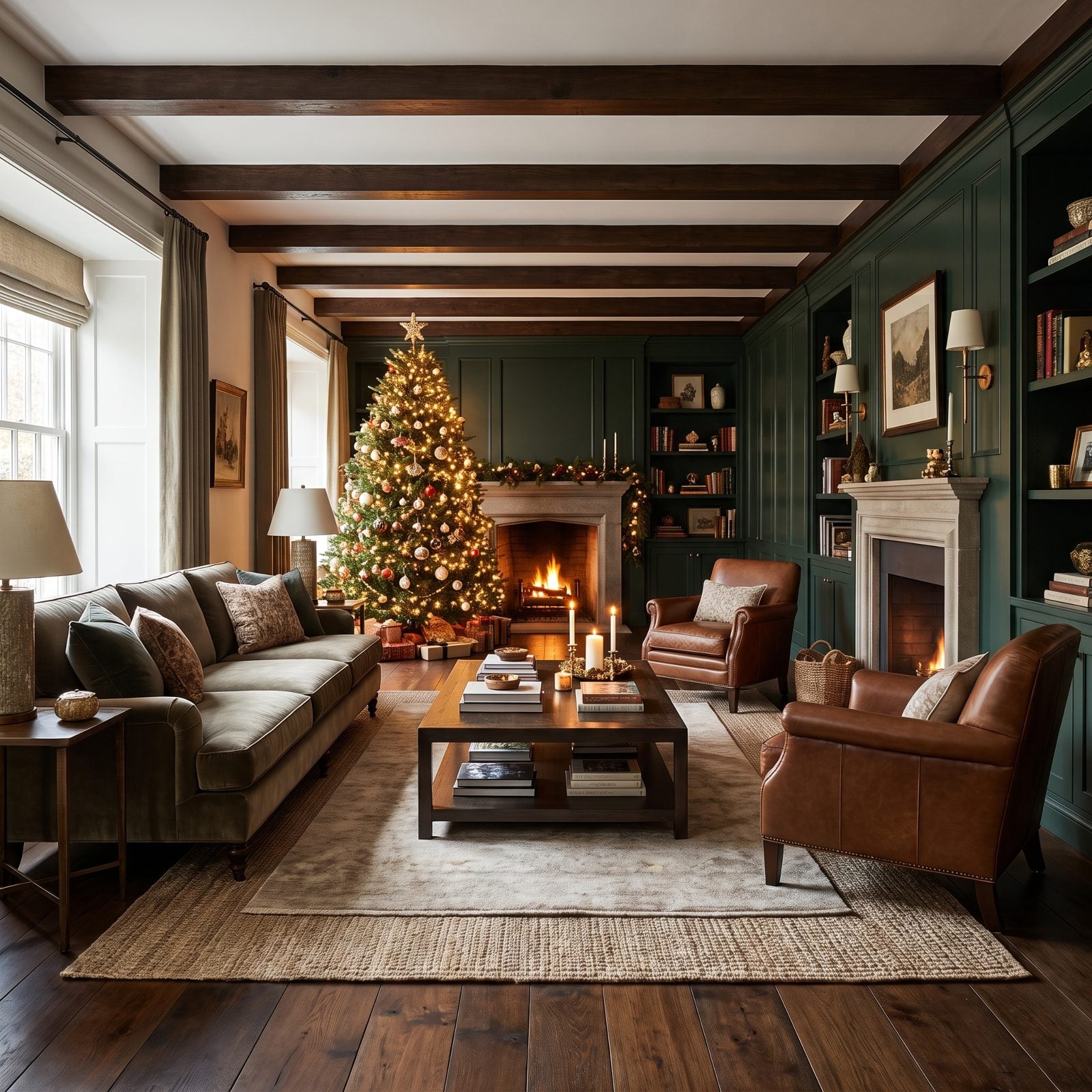
Long narrow rooms have one secret weapon: the short end wall. Put the tree there and the whole length of the room points at it.
Every sightline runs down the central walkway and lands on the glow, which finally gives a bowling-alley floor plan a destination. The sectional hugs one wall, the leather club chairs face in, and nobody squeezes past branches to get through.
20. Filling the Open End of an L-Shaped Sectional
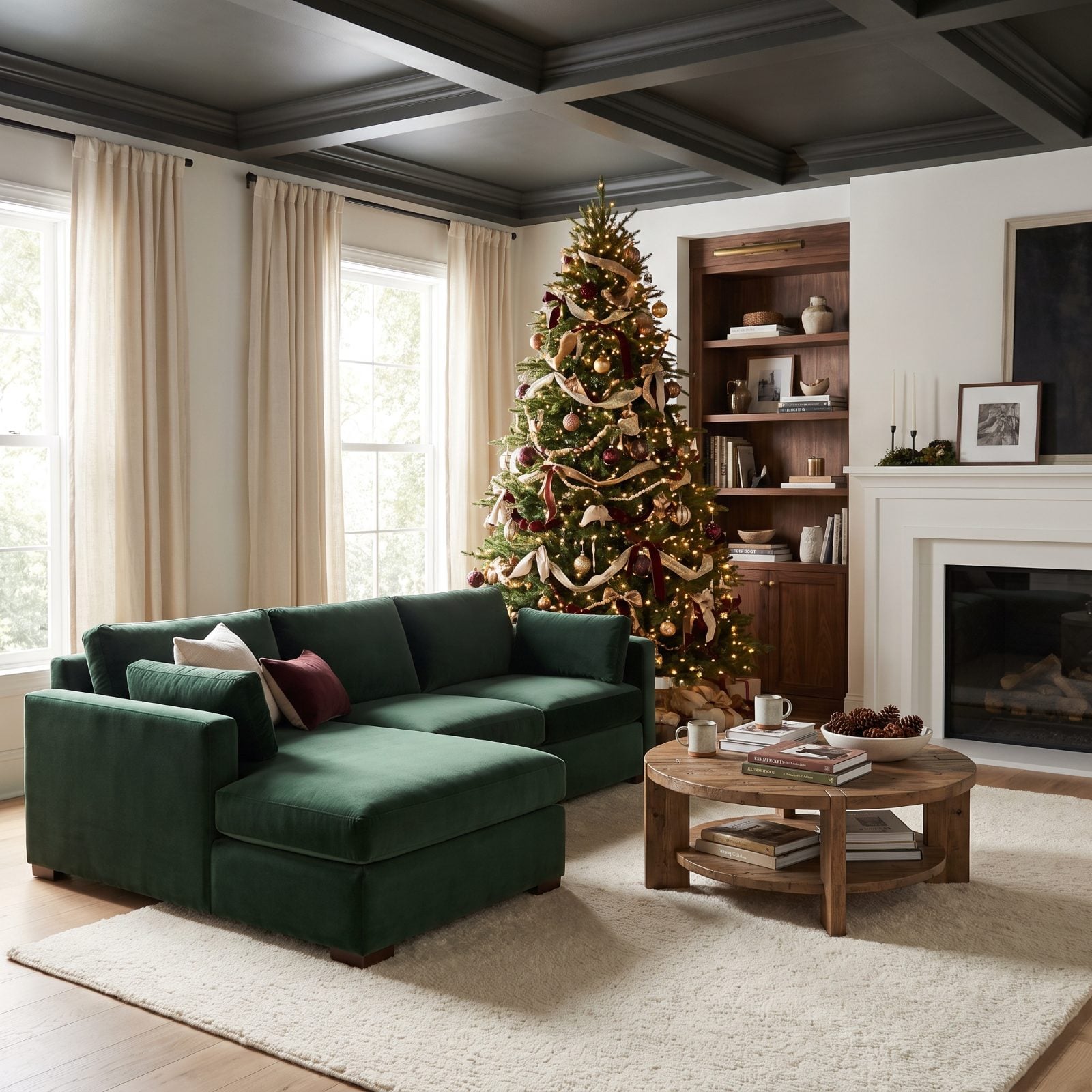
An L-shaped sectional makes a natural pocket at its open end, and that pocket is begging for a tree. Set it there and both runs of the sofa angle toward it like they planned the whole thing.
The brass arc floor lamp leans over the far seat so the reading light and the tree glow share one corner. No awkward gap left over, which is usually that spot’s fate.
19. Standing In for the Coffee Table in a Formal, Traffic-Free Room
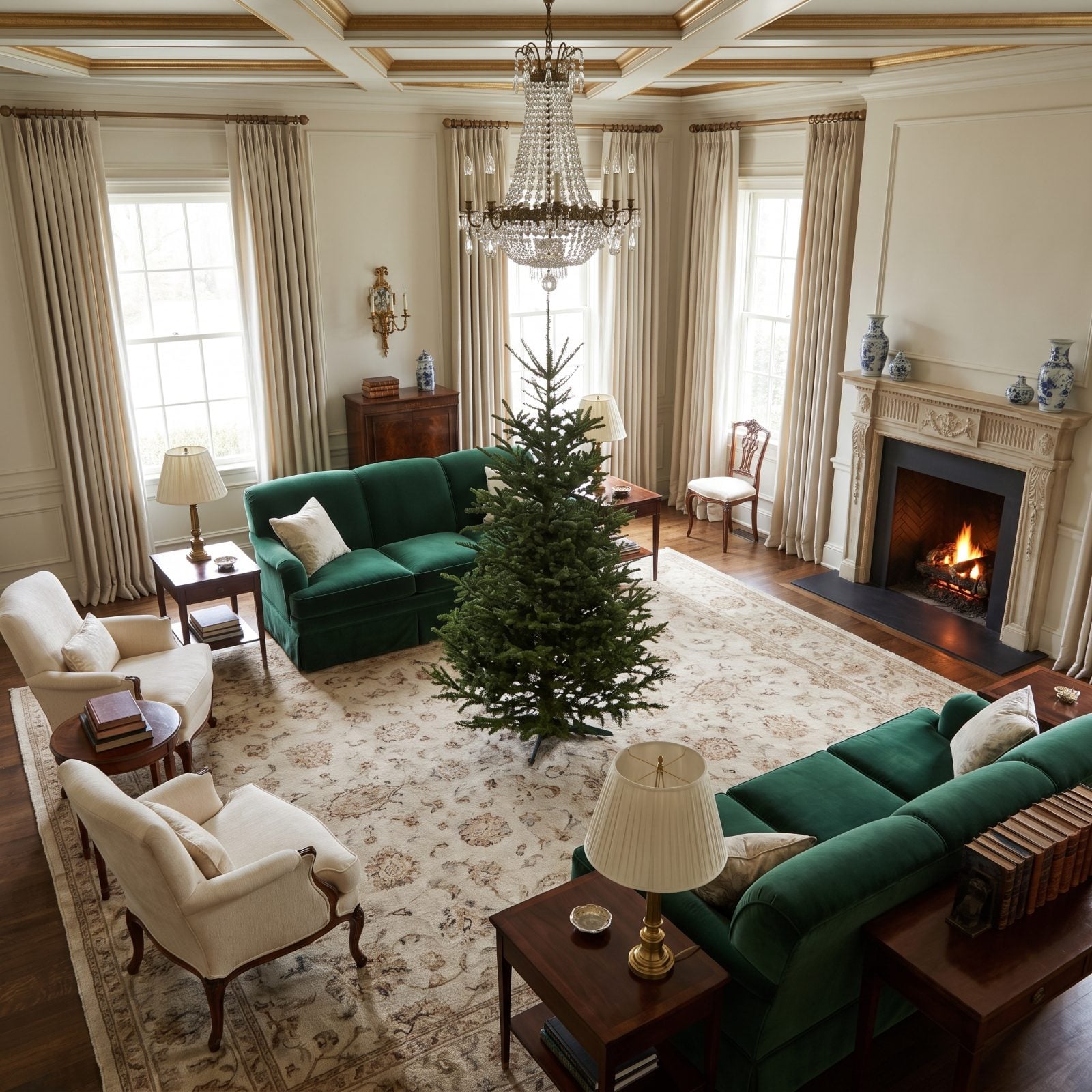
Here’s a swap for the room nobody actually walks through: pull the coffee table and set a slim tree in the dead center of the facing sofas.
Since no one’s cutting across to reach the kitchen, the lost tabletop costs you nothing, and a narrow-profile tree keeps the sightline between sofas open. Once stiff and formal, the room turns into the warmest seat in the house.
18. Pulled Up Beside the Fireplace Instead of Across From It
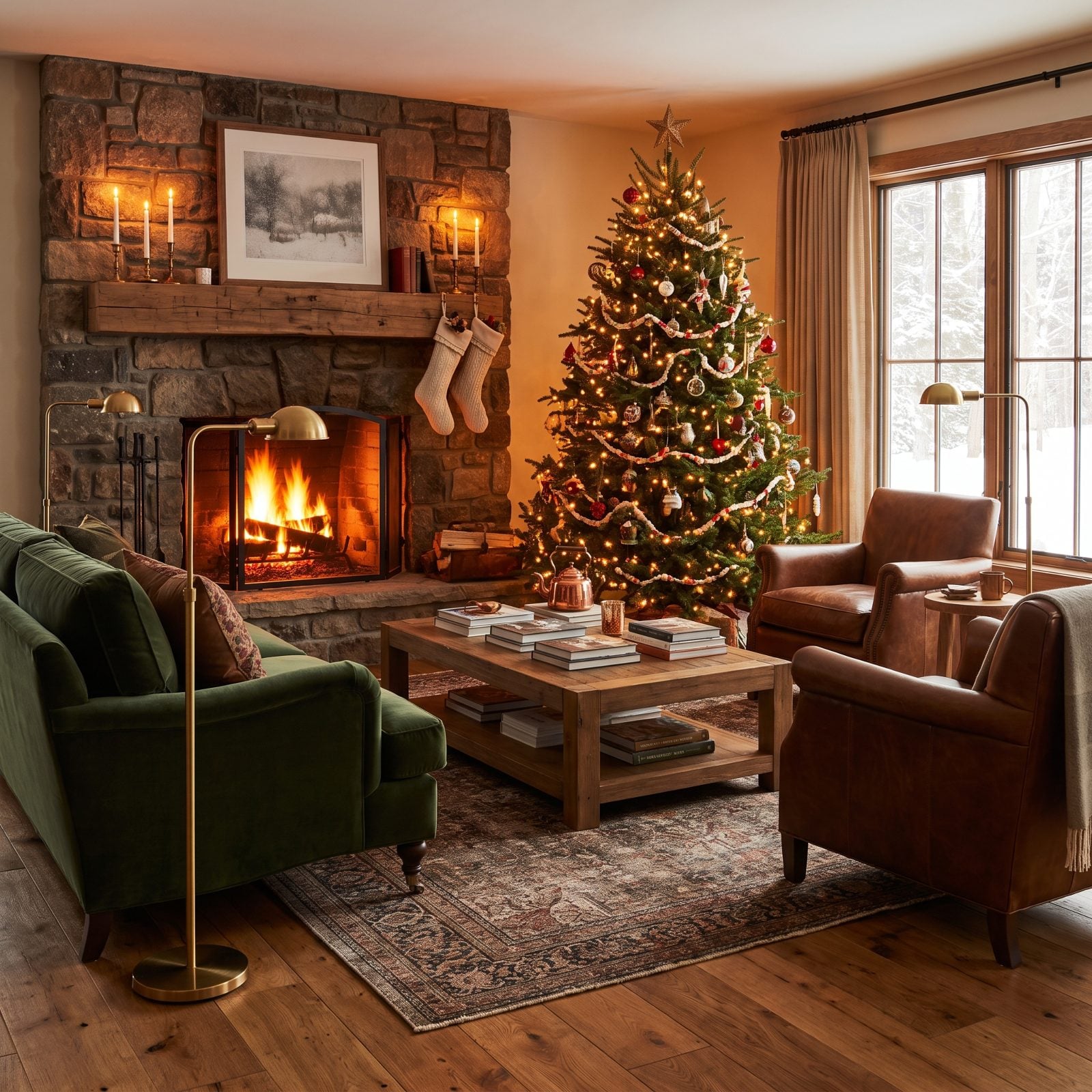
Most people park the tree across the room from the fire, then make everyone choose which way to face. Put it right beside the hearth instead. Now the two glow as one wall.
Keep a safe gap from the firebox and let the plaid ribbon garland on the mantel talk to the ornaments. The green velvet armchairs angle toward both at once.
17. Positioned Beside the Television Without Blocking the Screen
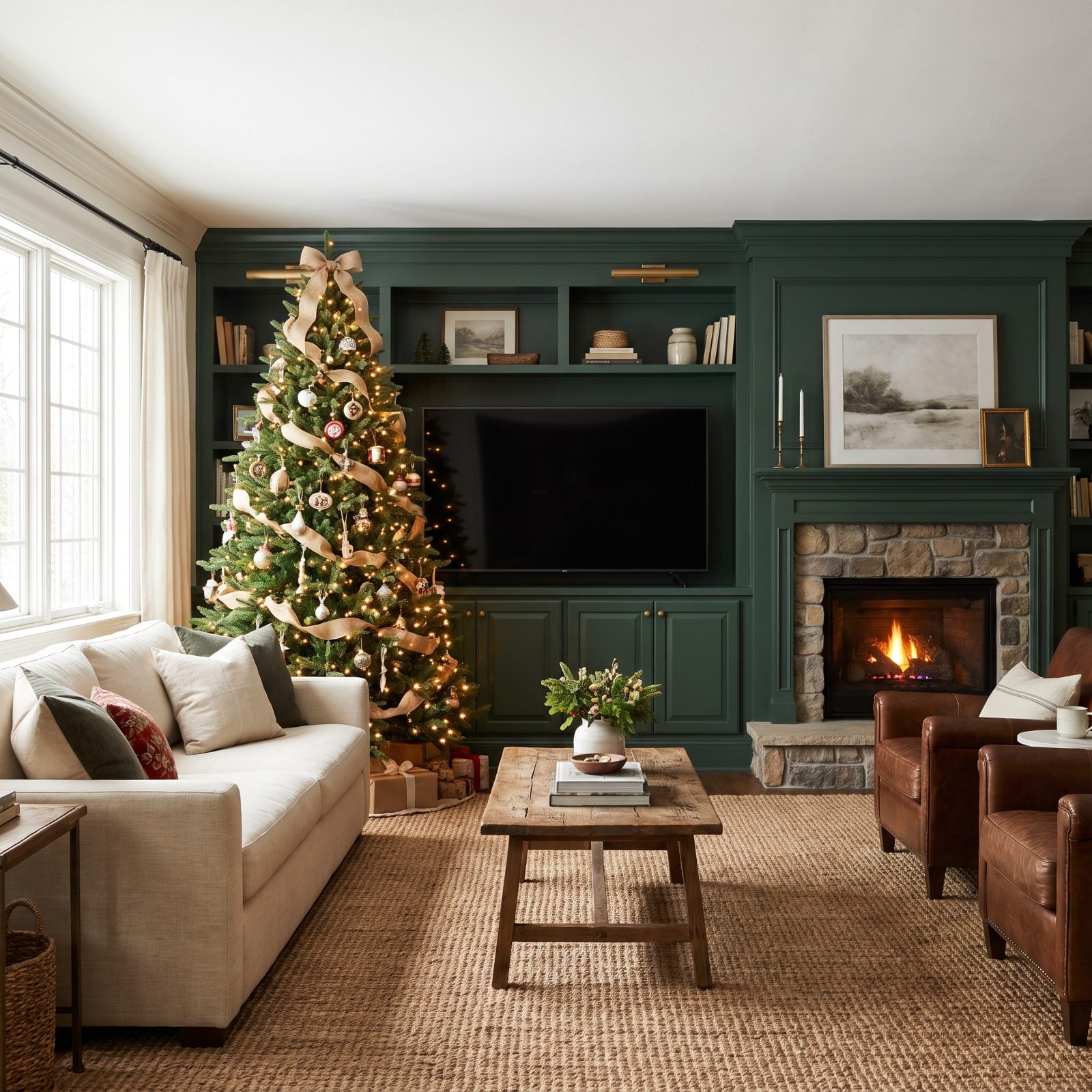
The December standoff: tree or TV. Set the tree beside the screen, offset far enough that it never crosses your line of sight, and you keep both.
Glance left and there’s the glow. Glance straight and the screen’s clean. The grey bouclé swivel chairs let you turn toward whichever one you want.
16. Beside the Piano as a Music-Corner Display
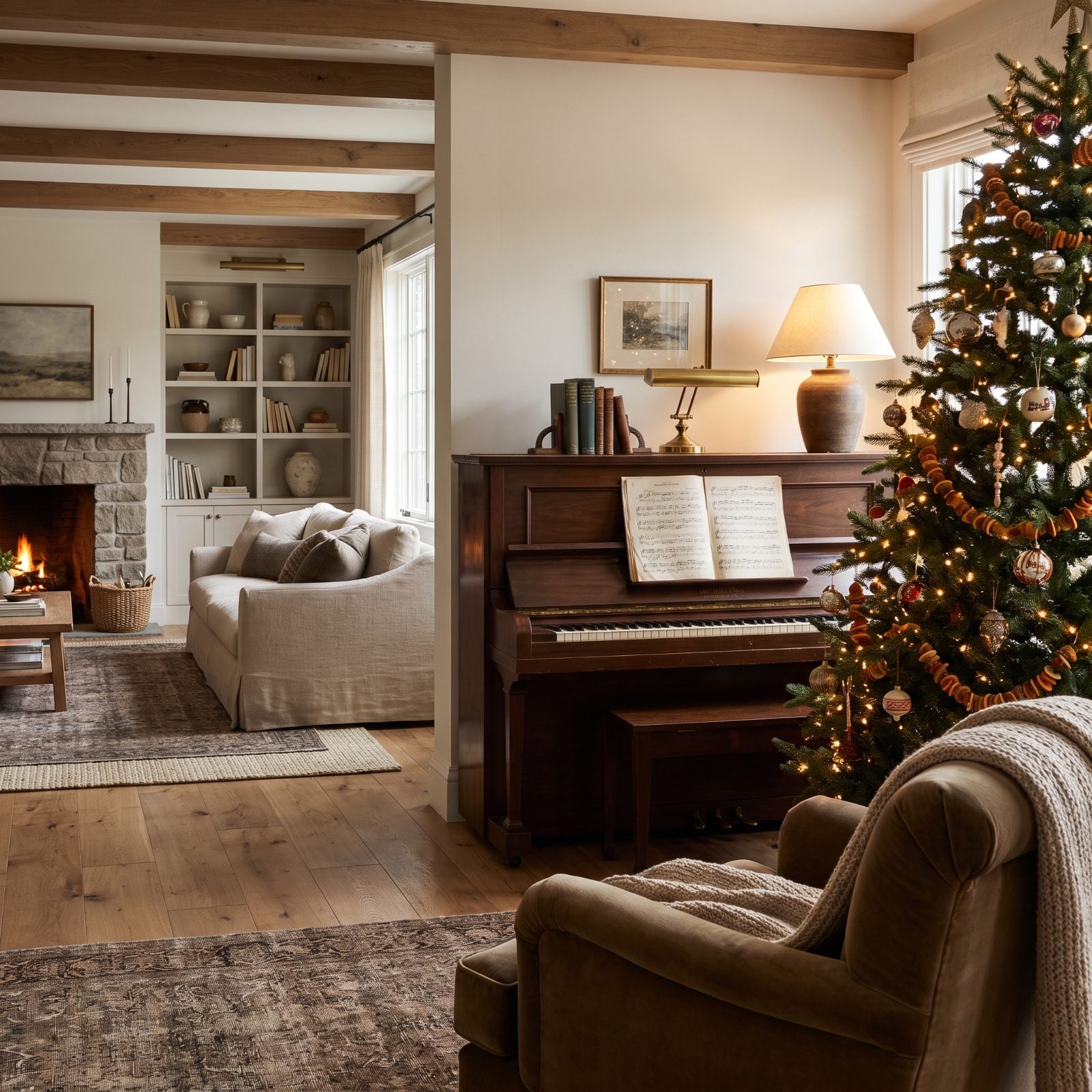
A piano already commands a corner. Stand the tree right next to it and you get a music vignette that feels composed rather than crowded.
Run a thin garland along the piano top so the two read as one display, and tuck the forest green reading chair in beside both. The teal wall gives the gold ornaments something to push against.
Two tall objects grouped read as architecture. Two tall objects scattered read as clutter.
15. Nestled Alongside a Floor-to-Ceiling Bookcase
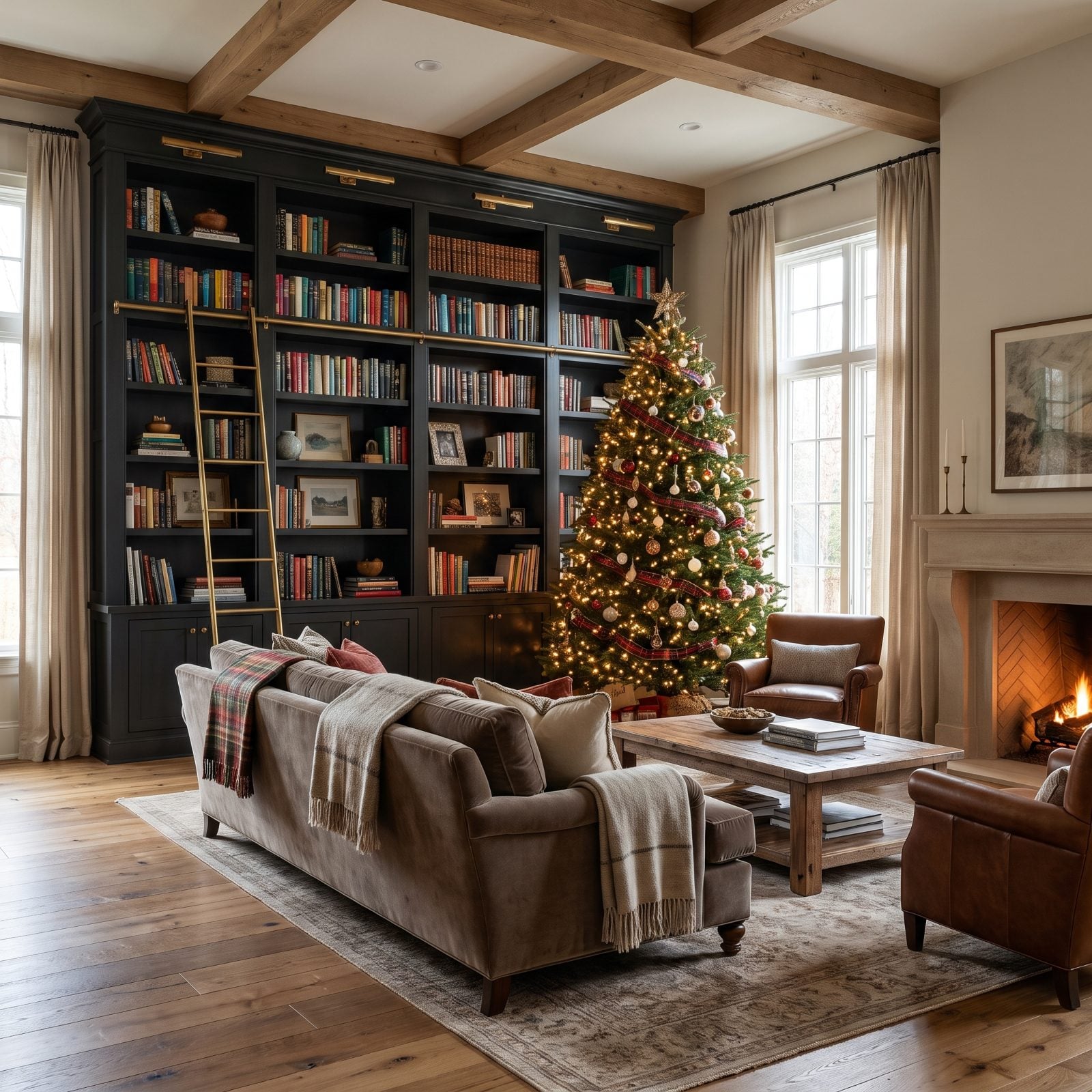
Bare wall behind a tree looks thin. A packed bookcase gives the branches a backdrop of spines and color that photographs beautifully and costs nothing extra.
Tuck the tree against one end of the built-in so the shelves still function and the ladder still slides. The cognac leather sofa faces the whole wall, and your library and your tree become a single rich composition. Got an eclectic bonus room with shelving? The trick works even better there.
14. Sited Near the Dining Table as a Shared Holiday Focal Point
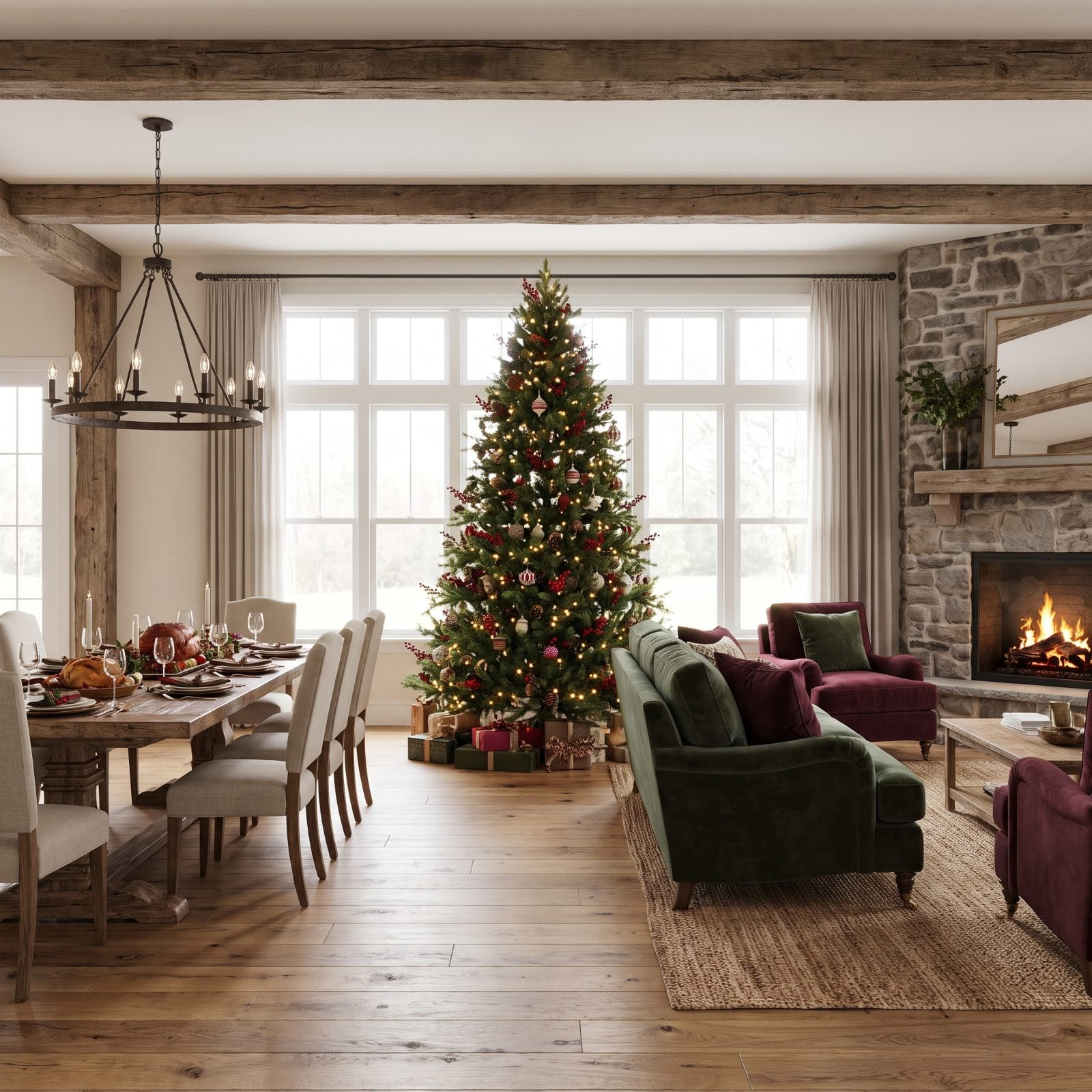
In an open plan, the tree doesn’t have to belong to just one room. Set it near the line where dining meets living and both zones get a focal point for the price of one.
Dinner candles and tree lights throw the same warm cast. The sage green sofa and the rattan pendant light both orient toward it, so a holiday meal and an after-dinner sprawl happen in the same glow. Just keep the path to the table clear — nobody wants a chair brushing a branch every time they sit down.
13. Inside a Glass-Walled Garden Room Connected to the Lounge
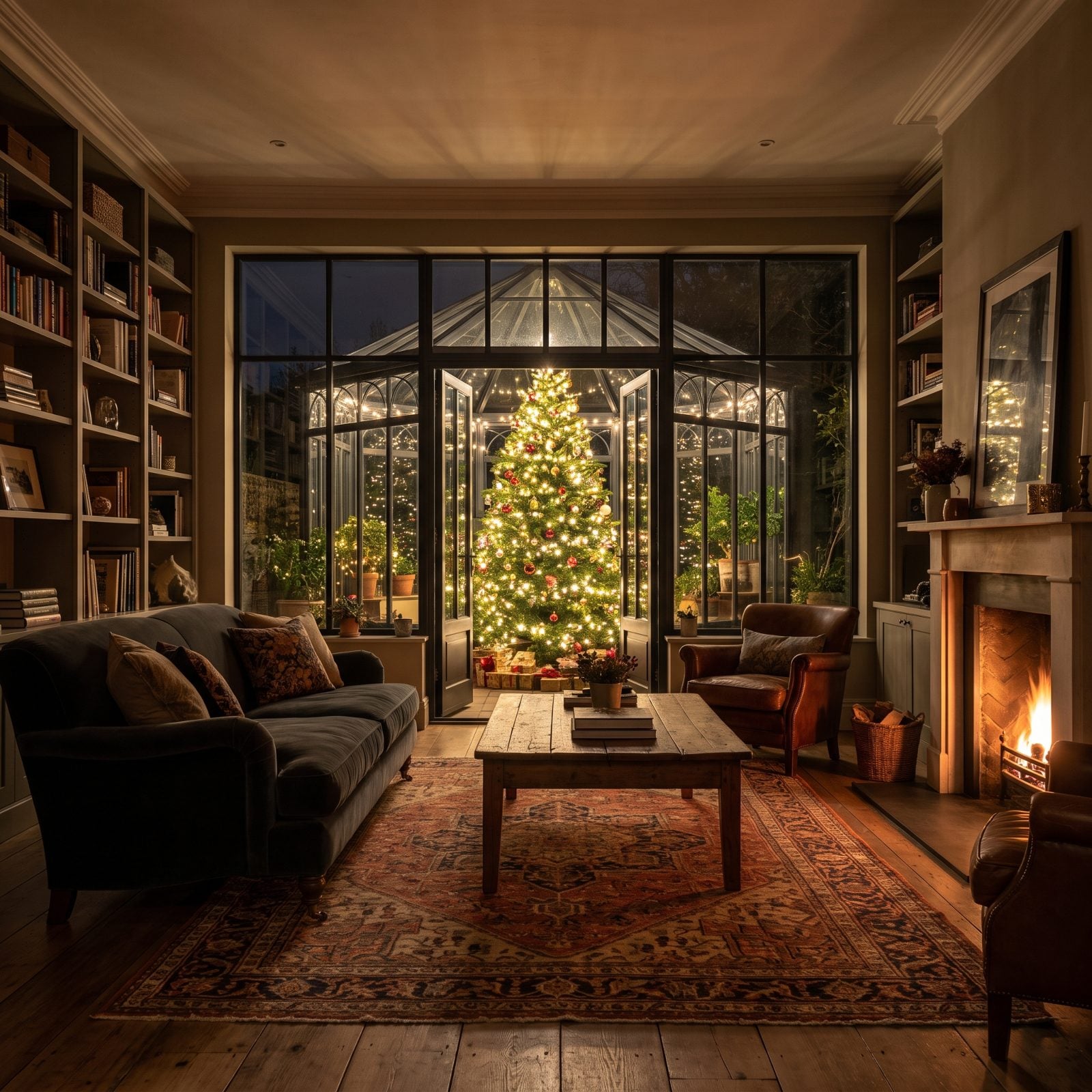
Put the tree behind glass and it stops being furniture you walk around. It becomes a view. A garden room off the lounge gives you a dedicated stage, and that steel-framed partition frames the fir like a picture you hung on purpose.
The sightline does the work here. Sit on the cream linen sofa and the tree lands dead center through the glass, backlit by snowfall, with nothing blocking the path between rooms — so it reads as a destination rather than something to dodge.
12. In a Wide Cased Opening Between Rooms
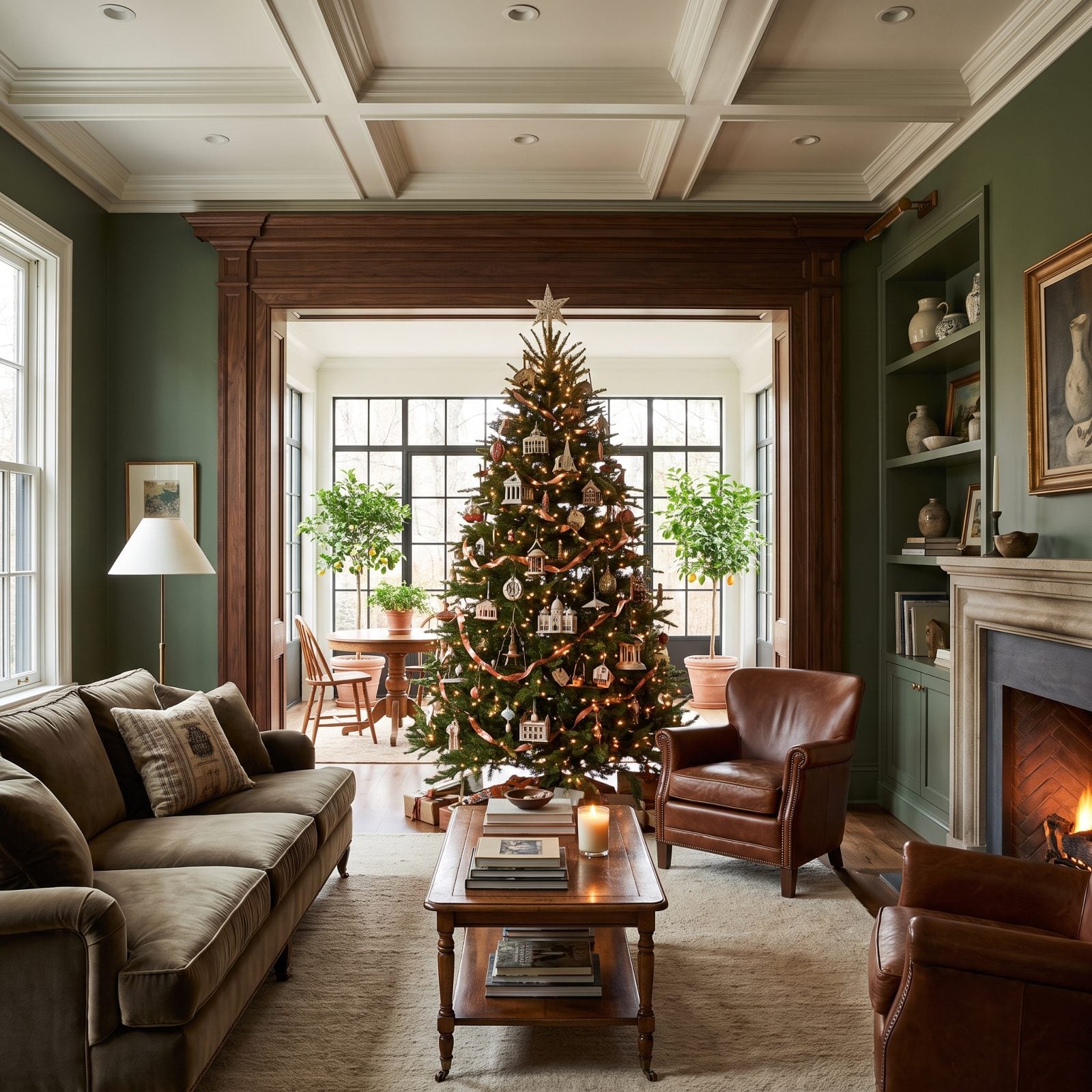
A wide cased opening is the most underused tree spot in the house. Stand the fir right in the threshold and it anchors two rooms at once, visible from the sofa and the dining table with equal weight.
Clearance is the catch. Leave enough room on each side for people to squeeze through and the tree reads as a centerpiece rather than a roadblock. Here the navy velvet sofa faces straight into the opening, so the fir becomes the thing your eye lands on the second you sit down.
11. At the Base of an Open-Riser Staircase
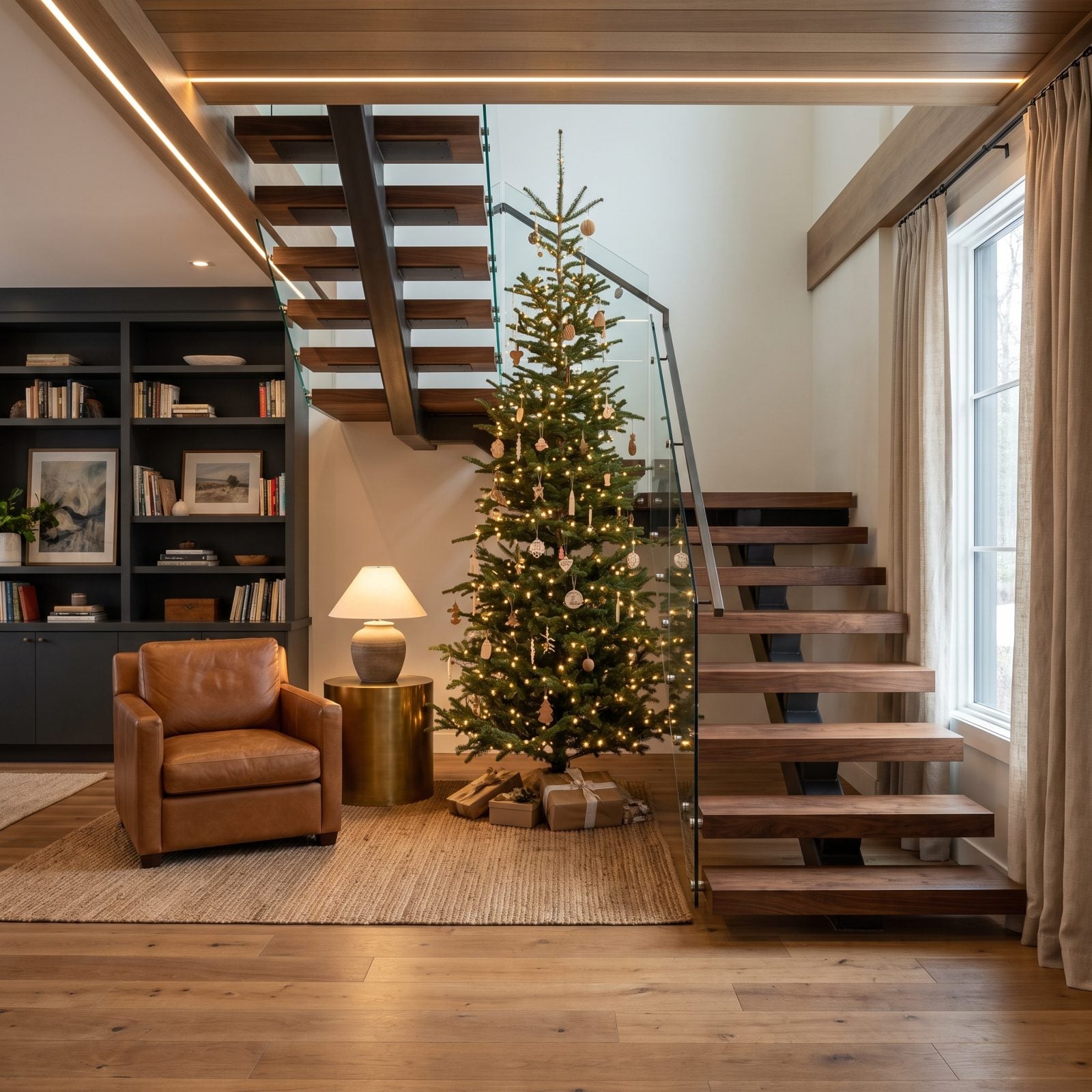
Open-riser stairs beg for a tall, slim tree at their base. The vertical lines of the treads and the fir rhyme with each other, and the double-height space above gives a 7-foot tree somewhere to breathe.
Skip the dense, fat tree here — it’ll fight the stairs. A slim Fraser keeps the climb readable and the oak treads visible, while the sectional faces the whole composition so your eye travels up the steps and straight into the lit branches.
10. On the Landing Overlooking the Living Room
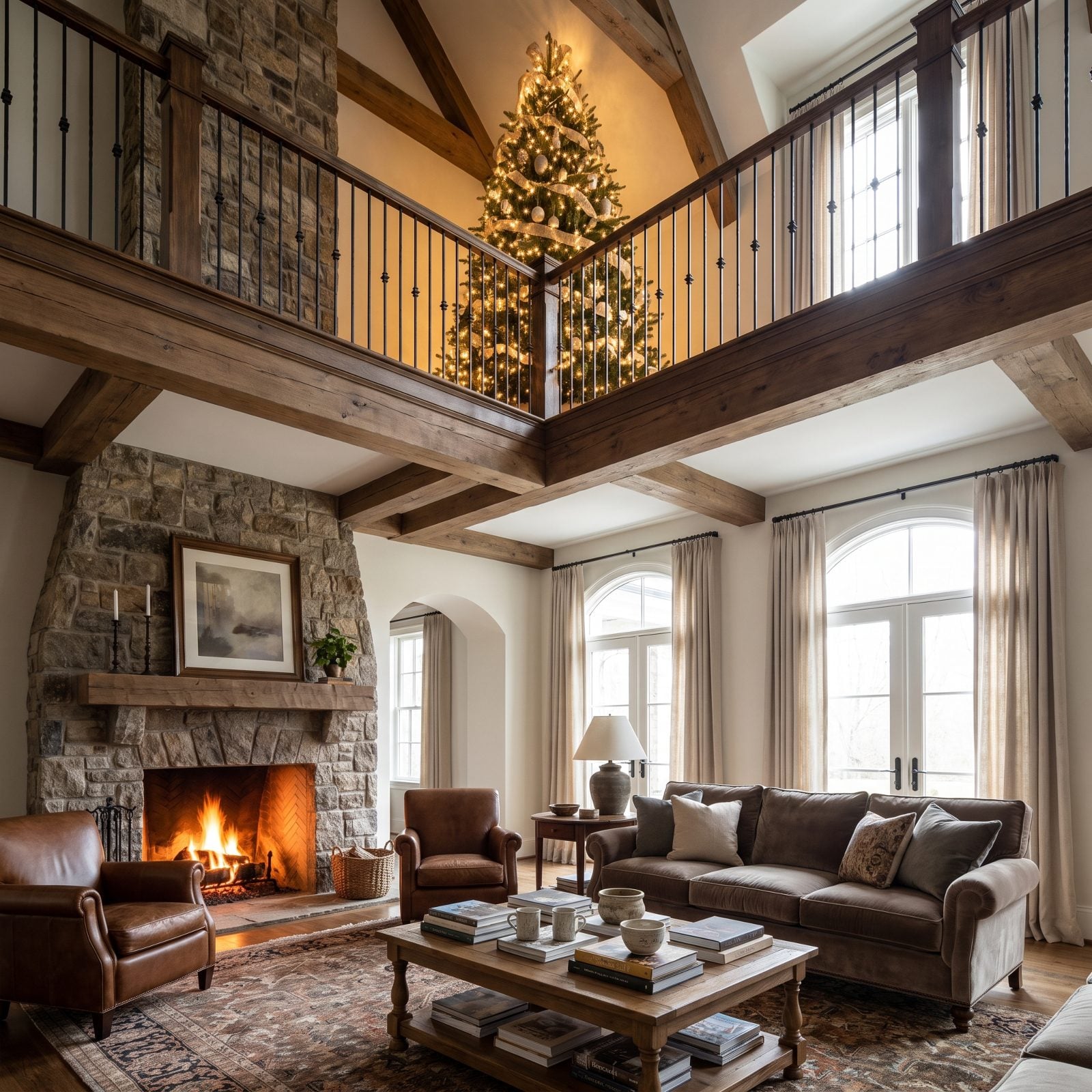
Most people forget the landing exists. Put the tree up there and it floats above the living room like a lit lantern, glowing down over the railing from a height no corner could offer.
This only works if the sightline is honest. The sofa below has to actually see the tree, so set it back from the railing, centered, where the lights catch the stone fireplace underneath. The upper level hands the tree real drama without stealing a single square foot of floor from the seating group.
9. Centered Beneath a Clerestory Window
🔥 Would you like to save this?
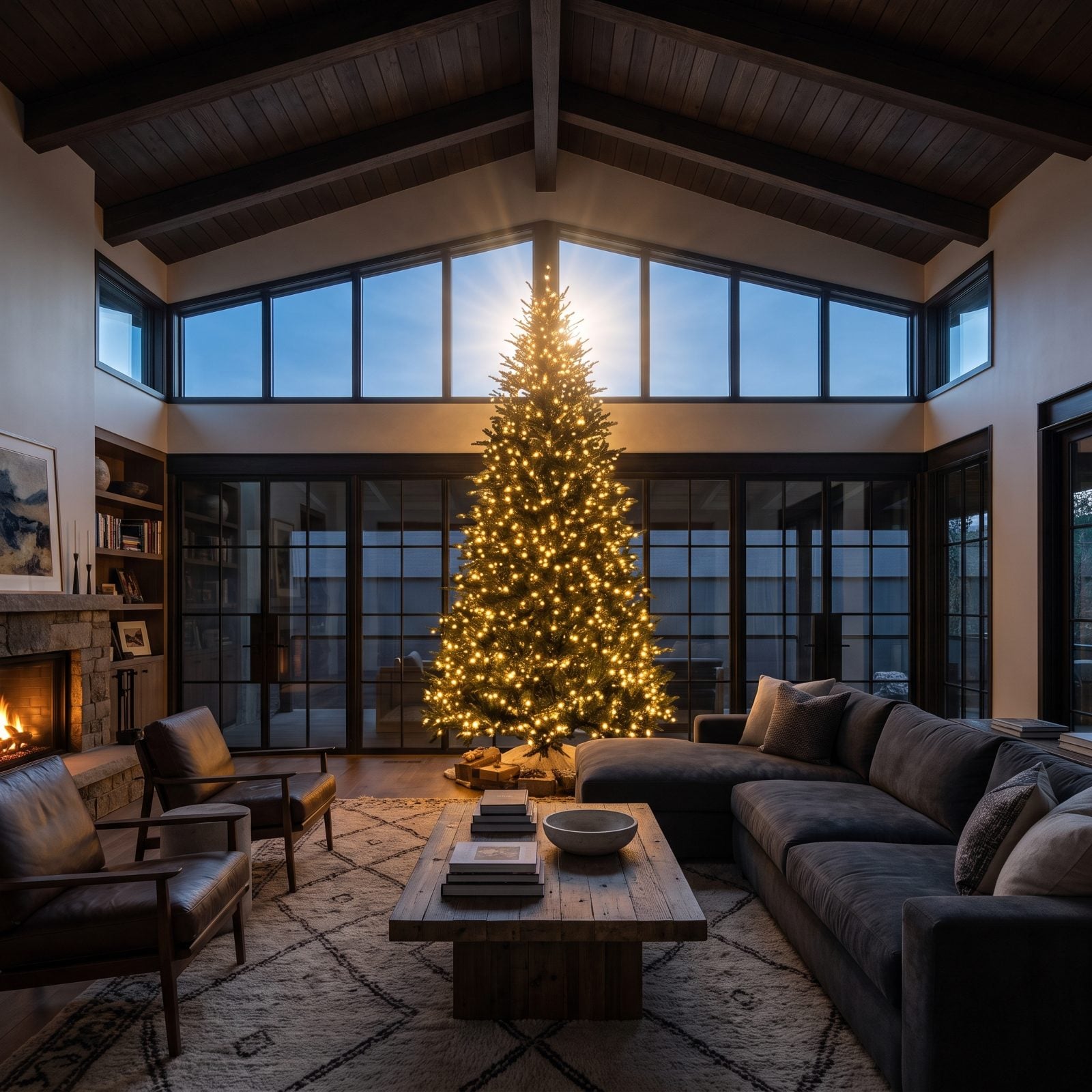
A clerestory window hands the tree a built-in halo. Center the fir under that high band of glass and the last of the daylight rims the top branches while the room lamps take over below.
Symmetry is the whole game. The window runs horizontal, the tree runs vertical, and planting it dead center under the band fuses the two into one composition that the tan leather sofa stares straight at.
8. Under the Peak of a Vaulted Ceiling
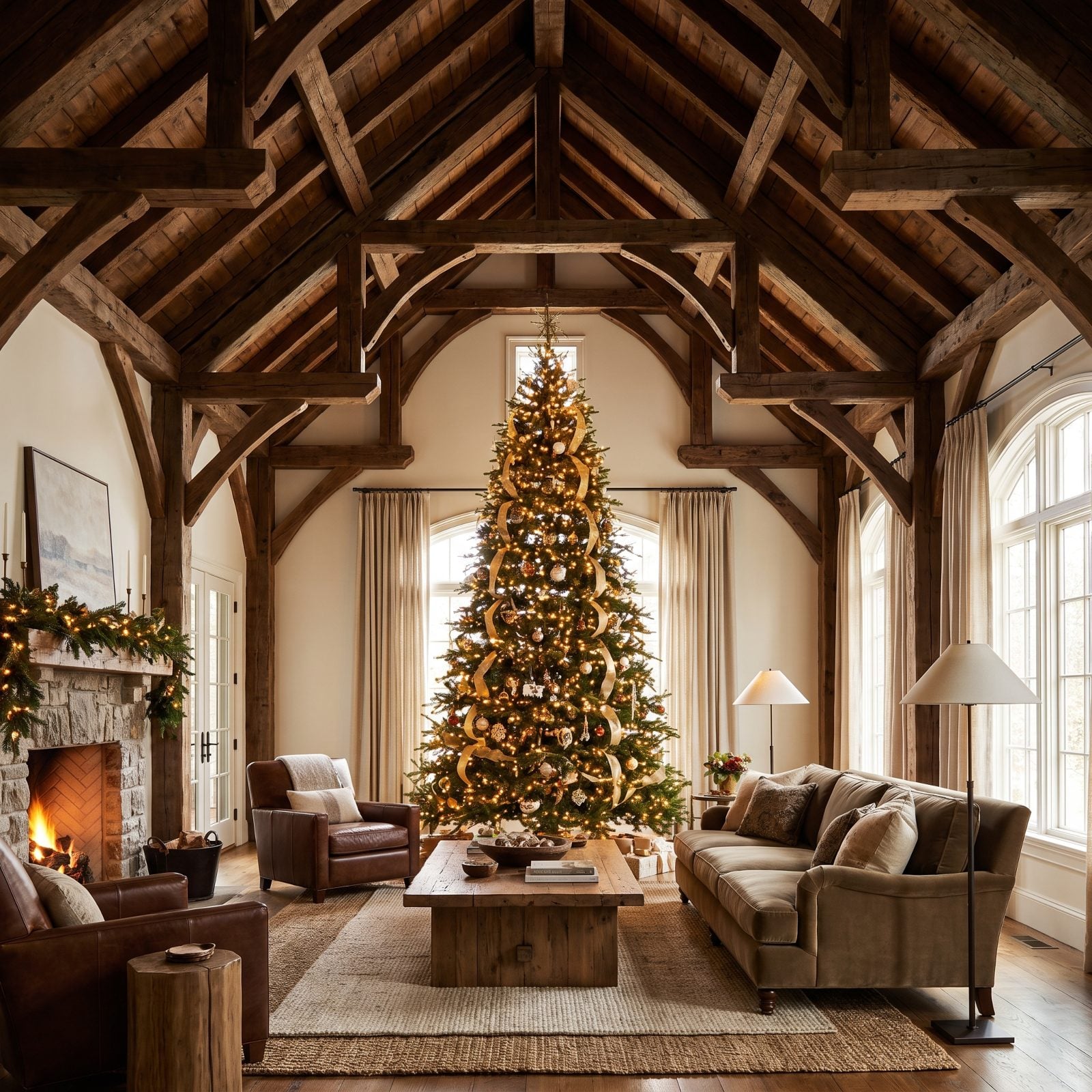
This is where you finally use the 8-foot tree. A vaulted ceiling swallows a short one whole, leaving a dead zone of air up top. Stand a tall fir under the peak and that emptiness vanishes.
Height has to answer height. Put the tree anywhere but the apex and the proportions bicker. Dead center under the peak, the fir reaches toward the trusses and the room suddenly feels built around one object. The slipcovered sofa and rattan chairs ring it loosely, keeping the path open underneath the iron chandelier.
7. Centered Under a Ceiling Beam
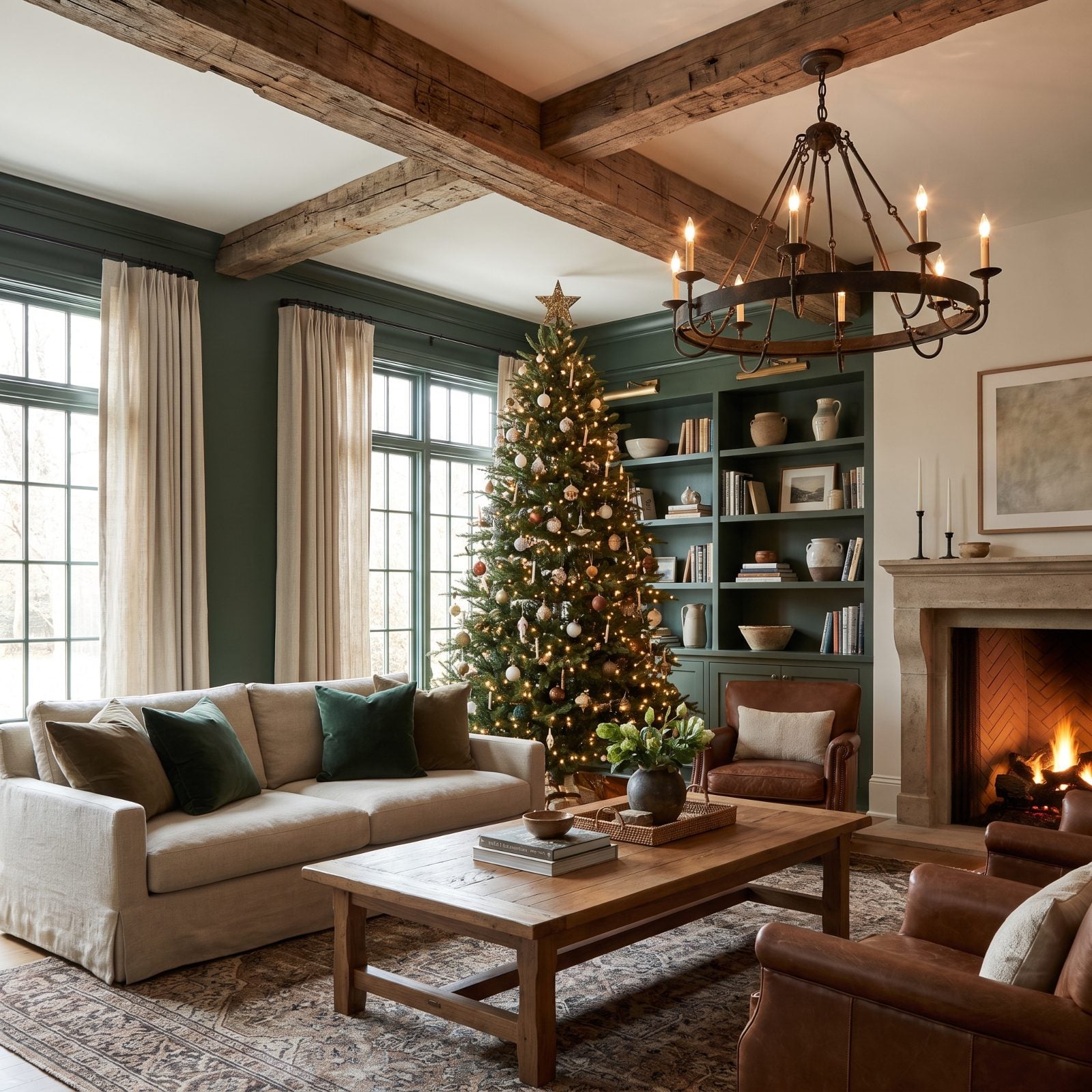
A single ceiling beam is a line, and lines want something to center on. Drop the tree directly under it and the beam points right down the trunk, turning dumb structure into an invisible pedestal.
The forest-green velvet sofa and copper ornaments pick up the beam’s warm stain, so the top of the room reads as one connected idea instead of a beam over here and a tree parked over there.
6. Aligned With a Central Pendant Light
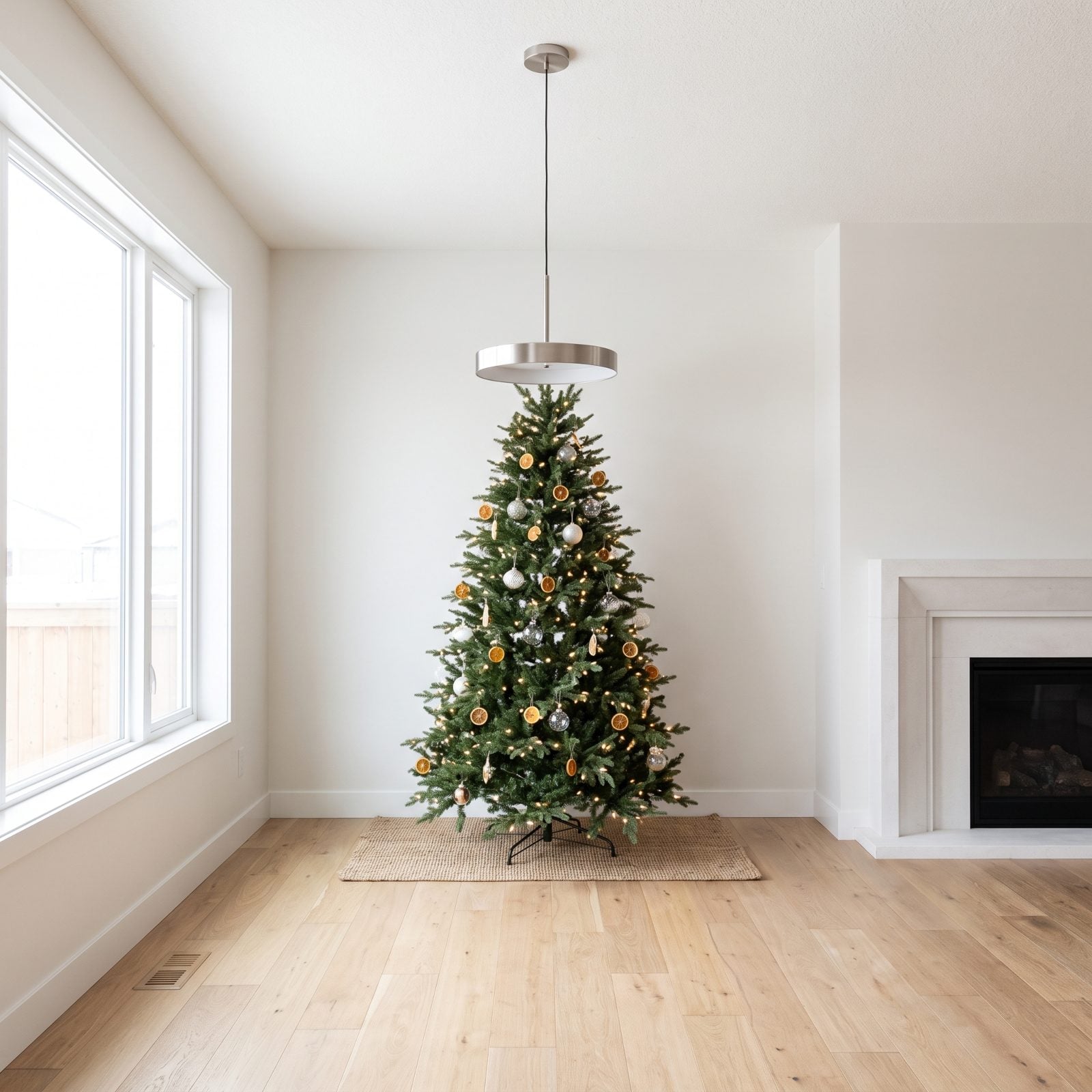
You already hung a light in the center of the room. The ceiling told you where the tree goes.
Line the fir up under the pendant and the two share a single vertical spine straight down the middle of the space — a brushed-nickel drum up top, lit branches below, both centered on the same axis against the back wall. It’s the kind of alignment nobody can name but everybody feels the moment they walk in.
5. In Front of a Mirrored Wall
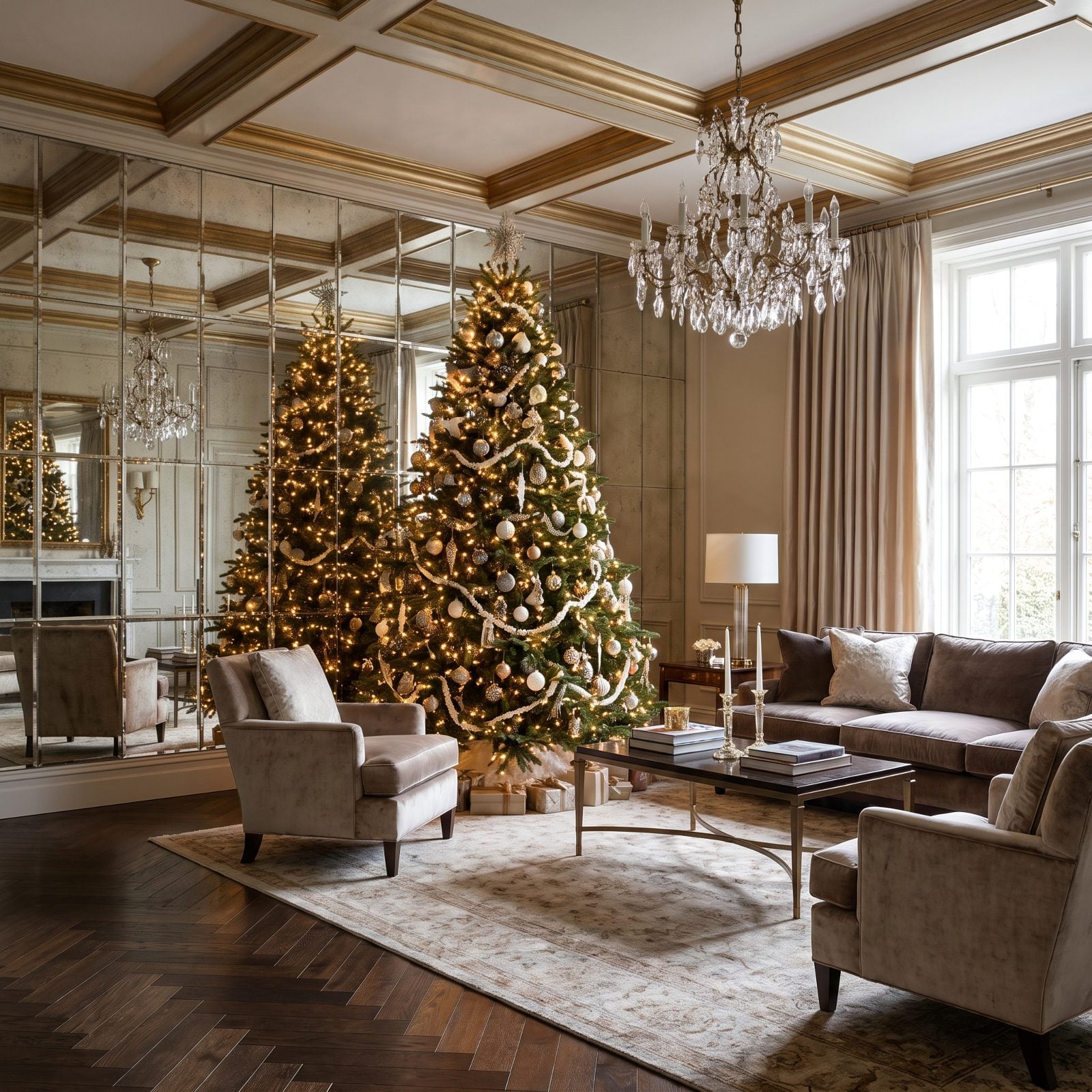
Stand a tree in front of a mirrored wall and you get two trees and twice the light for the price of one. The glass doubles every bulb, so a modest string of warm whites reads as a wall of shimmer.
Give it room. The tree needs a clear foot or two between its branches and the glass, both for safety and so the reflection reads as a second room instead of a smudge. The charcoal velvet sofa faces the whole illusion head on.
4. Beside a Window Seat With Presents Below
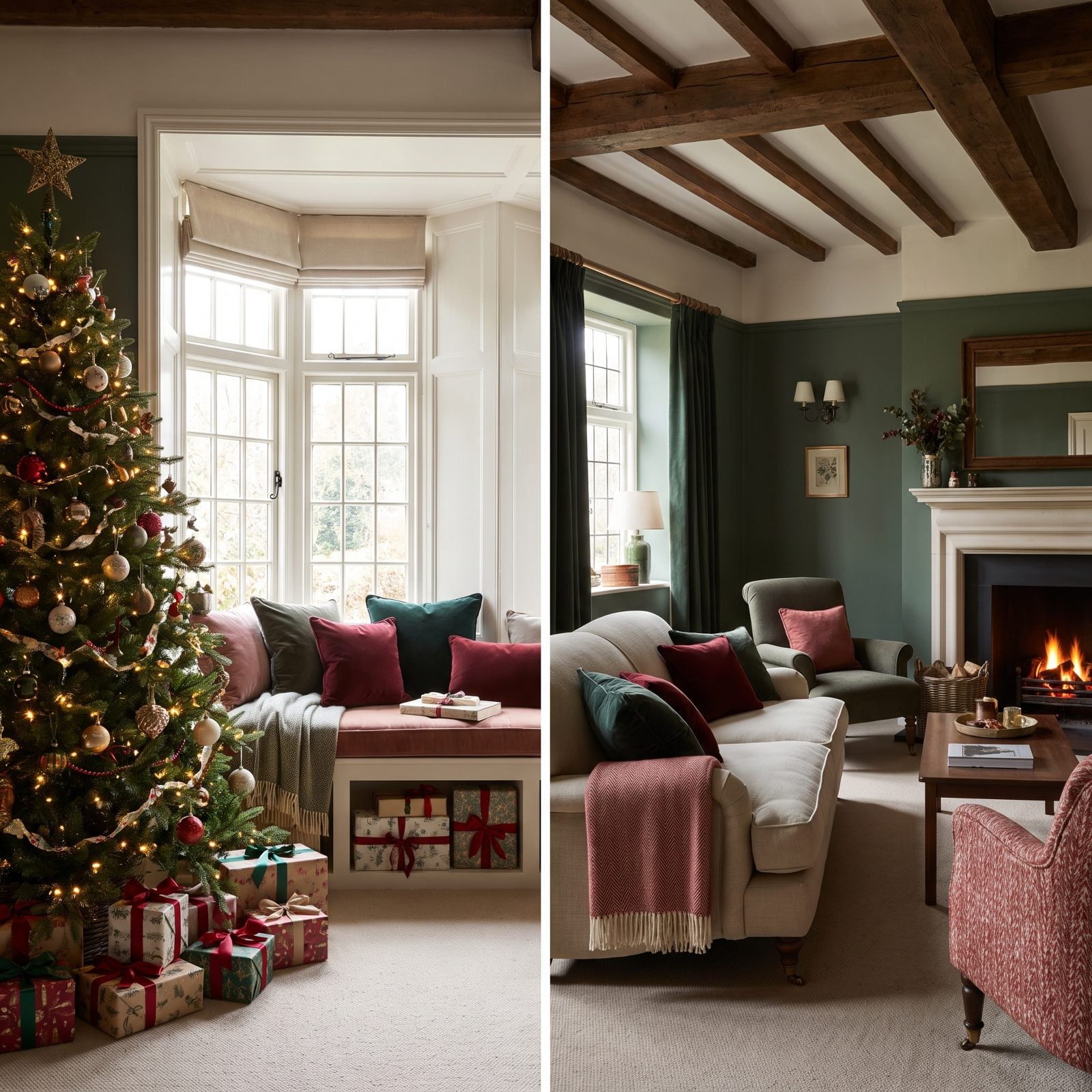
A window seat gives the tree a built-in neighbor, and the presents finally get somewhere to go besides a heap on the rug. Tuck the fir beside the seat and the gifts spill from the floor up onto the cushion, so the whole corner of the bay window becomes one layered scene.
Keep the seat usable. The tree sits next to it, not on top of it, so you can still curl up there with the plaid ribbon and warm lights an arm’s length away. The oatmeal sofa and red-checked wingback close the circle, and the whole thing feels like a cottage that knows exactly what December is for.
3. Slotted Into a Recessed Alcove
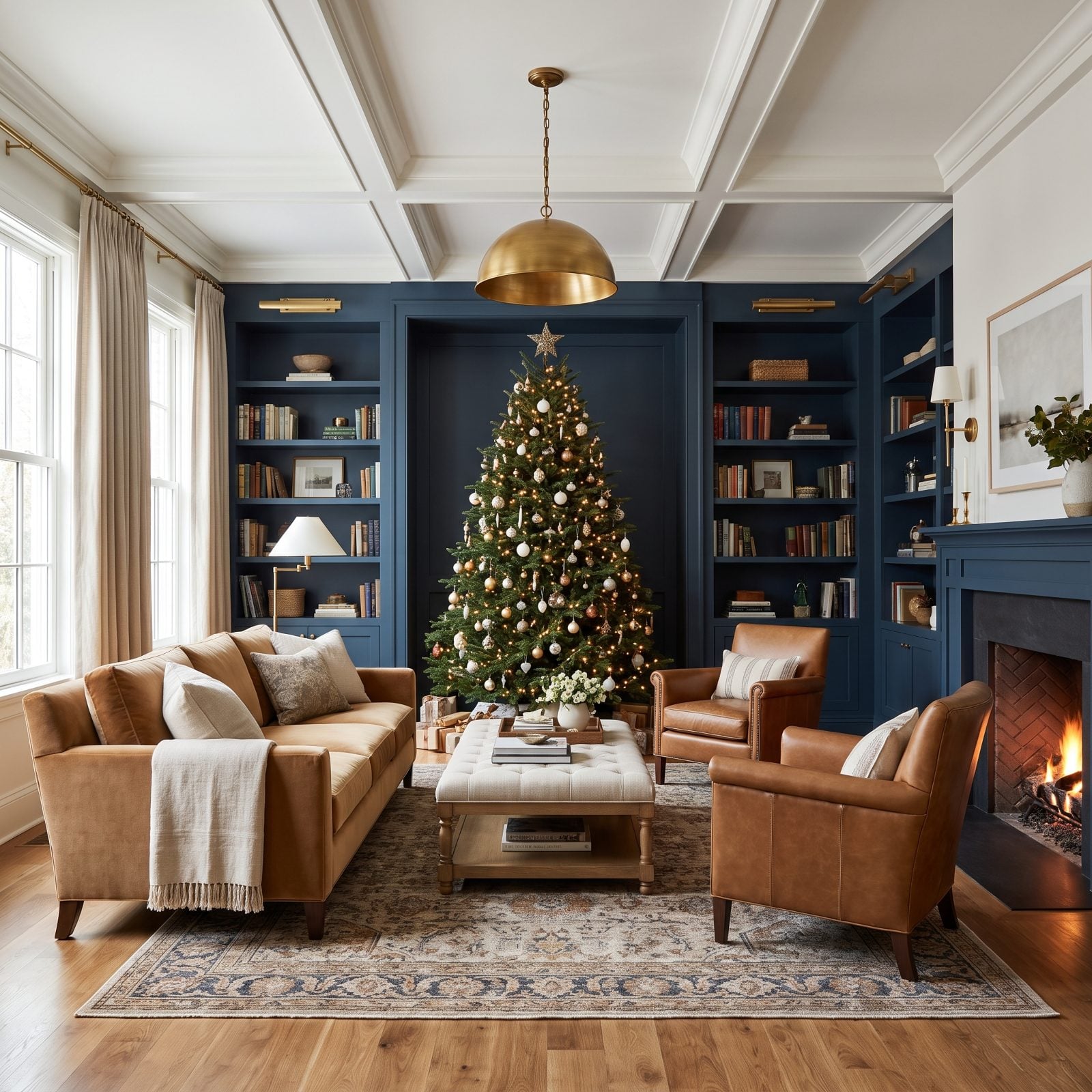
A recessed alcove does the framing for you. Set a tree in that negative space and the wall becomes the ornament stand, so the tree reads as intentional rather than parked in a corner. Here it sits dead-center on the room’s main axis, which means the first thing you see walking in is the tree — not the back of a sofa.
The flanking walnut built-in bookshelves hold it in place, and the camel linen sofa points right at it. No wasted sightline.
2. Standing in the Mouth of an Unused Fireplace
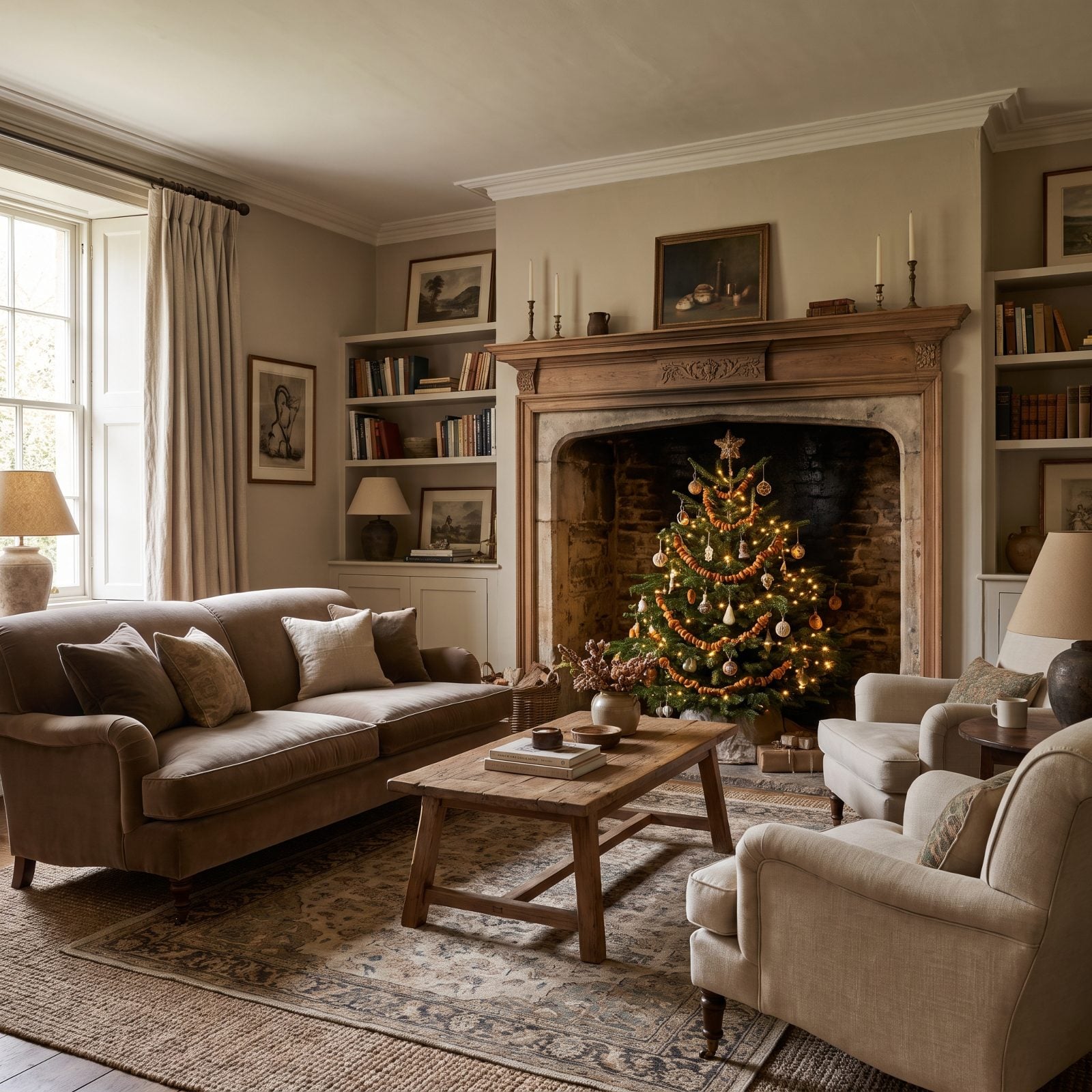
An unused fireplace is already a focal point begging for a job. Stand the tree in the opening and you borrow all that built-in gravity for free. The mantel, the chimney breast, the hearth — every bit of it frames the tree before you’ve hung a single ornament.
You’ll want a slim tree so it slots into the opening without spilling out, and a sealed flue so you’re not tucking a tree inside a working chimney. The forest green velvet sofa and rattan chairs pull into a tight U, turning the chimney breast into the room’s one obvious destination. Need more mantel direction? This plays beautifully against a eclectic bonus room palette.
1. Perched at the Edge of a Sunken Conversation Pit
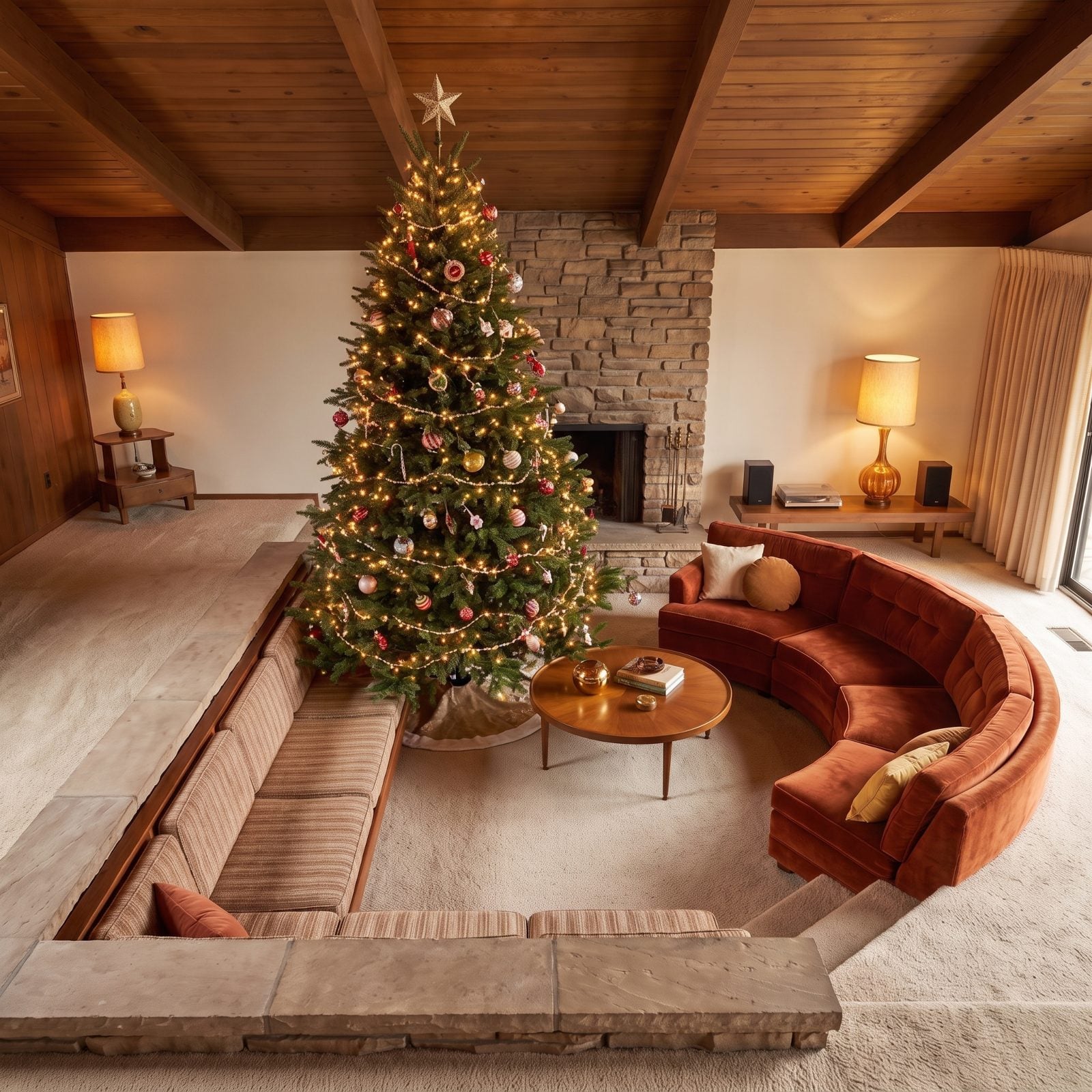
Put the tree at the lip of a sunken pit and you pocket a height trick. Everyone seated down in the pit looks slightly up at it, which makes even a modest fir feel grand. And because the pit is already the social heart of the room, the tree lands right where the action is instead of banished to some corner.
Tuck it into the back corner of the pit, right against the edge. That way it reads from the entry and from inside the pit both, and it stays well clear of the steps. The rust velvet sectional and red and gold ornaments pull from the same warm family, so the fir looks like a resident rather than a guest who wandered in.