🔥 Would you like to save this?
There was a time when a patio needed almost nothing to qualify. Pour the concrete. Drag out a couple of aluminum chairs. Add a kettle grill, an umbrella with orange stripes, maybe a citronella candle smoking beside the potato salad, and summer had officially opened for business. Comfort was negotiable. Shade was approximate. Privacy meant hoping the neighbors had gone inside.
These 31 transformations show what happened when the backyard stopped being leftover space and started getting the same attention as the rooms inside. Concrete turns architectural. Folding chairs become furniture worth looking at. One lonely porch bulb gives way to layers of light. The cooler gets a refrigerator. The grill acquires counters, storage, and eventually an entire kitchen. Some changes are luxurious, some are remarkably simple, and a few prove that 1975 had more charm than anyone should be too eager to sand away.
In order to come up with the very specific design ideas, we create most designs with the assistance of state-of-the-art AI interior design software. Also, assume links that take you off the site are affiliate links such as links to Amazon. this means we may earn a commission if you buy something.
If you’re planning a renovation, check today’s home equity rates before setting your budget.
31. The Plain Concrete Slab Becomes an Outdoor Floor
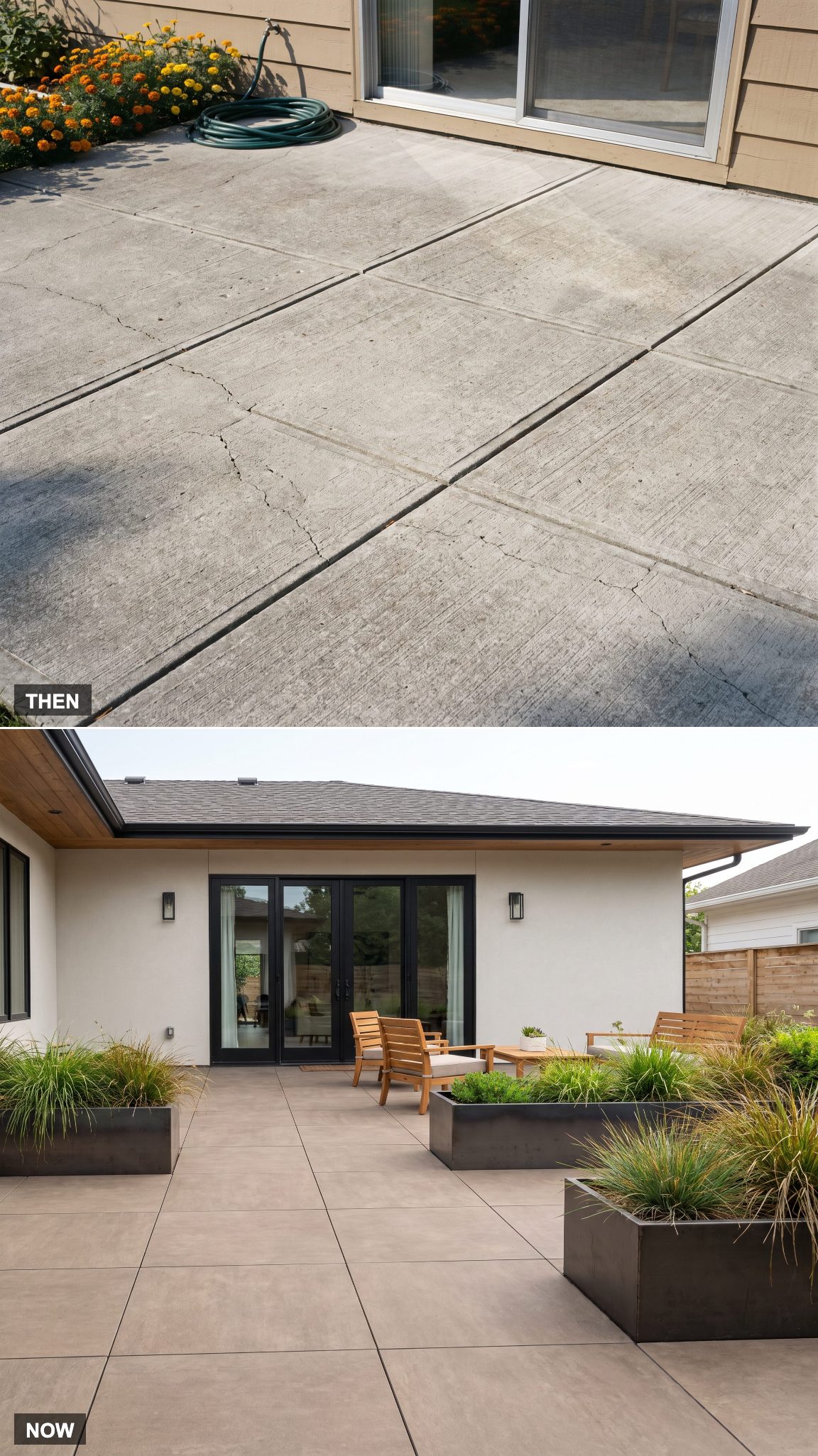
The 1975 slab was honest about what it was: a place to park a grill and a chair. Broom-finished gray, scored with control joints intended to manage cracking, then left to collect stains, weeds, and the occasional crack wherever concrete eventually decided to put one.
Now the ground itself gets treated as a design decision. Large-format porcelain in warm taupe, tight joints, matte surfaces, and edges that visually belong to the architecture rather than merely stopping at it. It reads as an outdoor floor instead of the unfinished bottom of something. Want the same quieter effect without changing everything else? A grey patio in large-format paving gets much of the way there.
30. Pebbled Aggregate Gives Up the Fight for Smooth Architectural Concrete
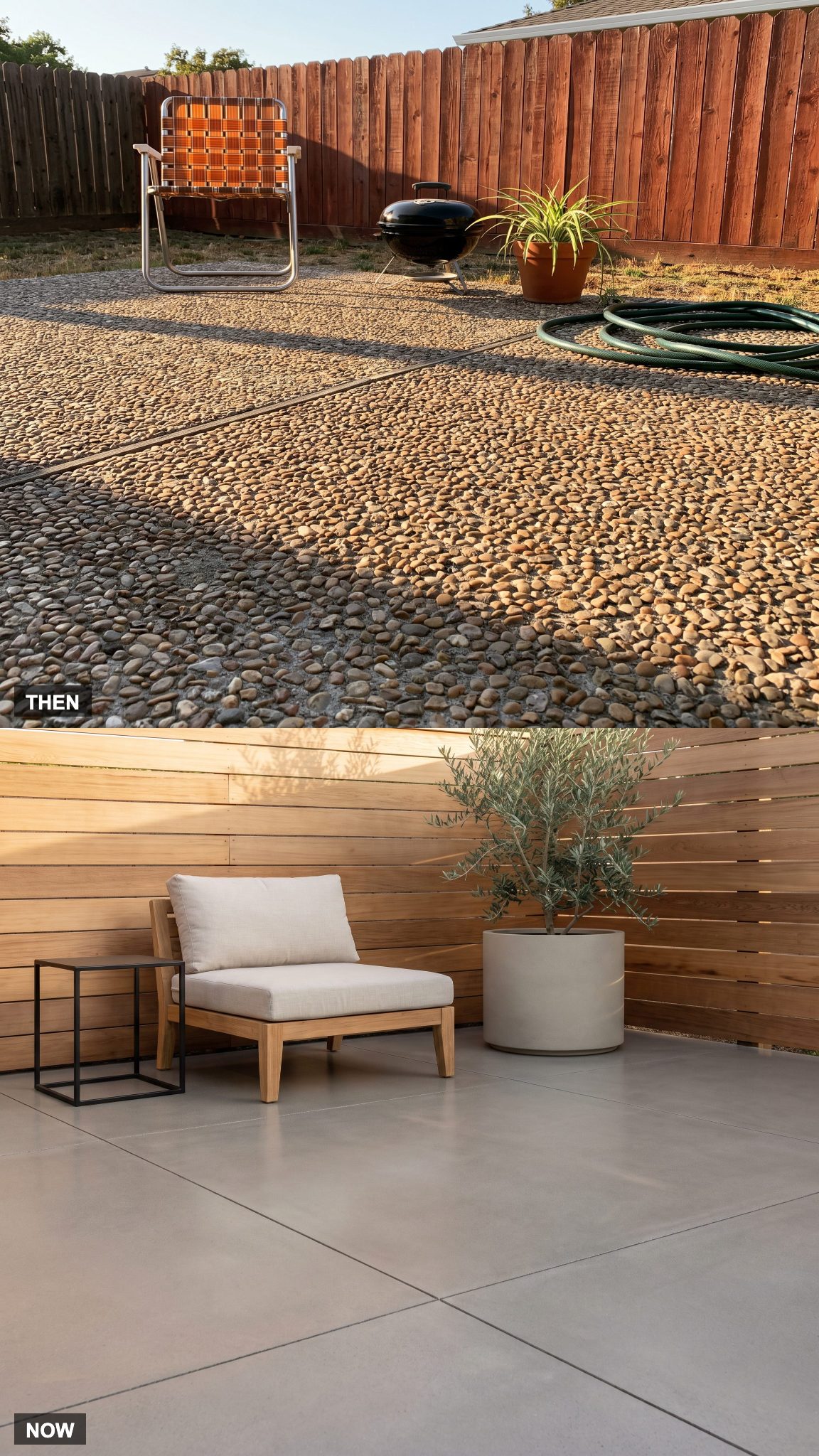
Exposed aggregate was the patio that fought back. All those little river pebbles gave the surface texture and hid dirt beautifully, but bare feet knew exactly where every stone was.
Smooth architectural concrete reverses the emphasis. Troweled or honed surfaces, warmer gray tones, and deliberate saw-cut lines turn the material into something quieter and more graphic. The texture is still there when needed for traction, but visually the floor stops shouting before the furniture even arrives.
29. Red Brick Underfoot Gives Way to Oversized Stone Slabs
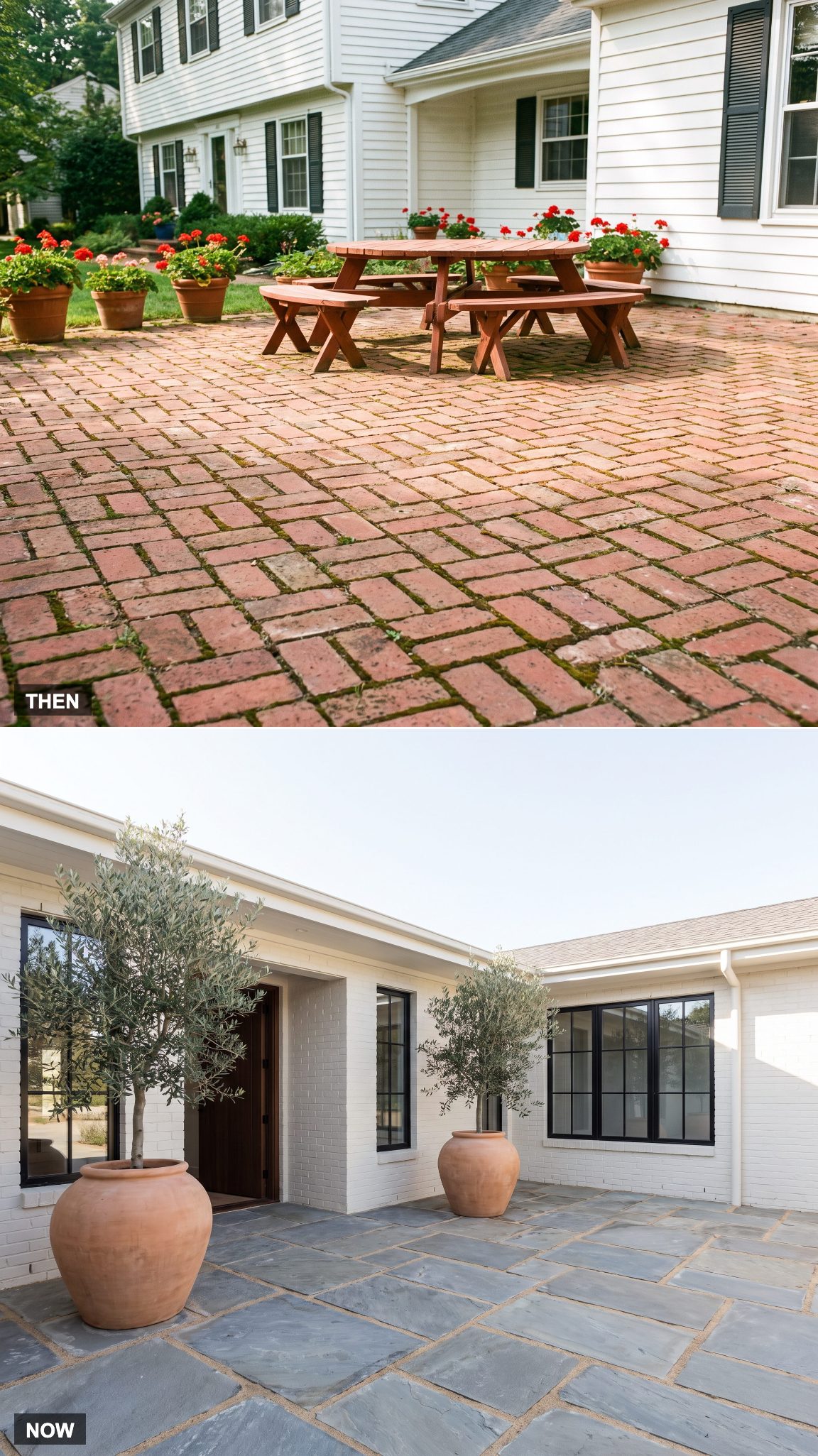
Red brick had charm and a body count. Mortar cracked. Frost could lift individual units into little ankle negotiations. Moss loved the shady corners. Still, brick brought warmth and aged like something with a past worth telling.
The contemporary shift is largely about scale. Oversized natural-stone slabs, bluestone or limestone, wider joints, fewer interruptions. Bigger units can make a patio feel calmer because the surface is divided into fewer visual pieces. An oversized patio design built around large-format stone can make even a compact yard feel more composed.
28. Clacking Aluminum Furniture Turns Into a Deep-Seating Lounge
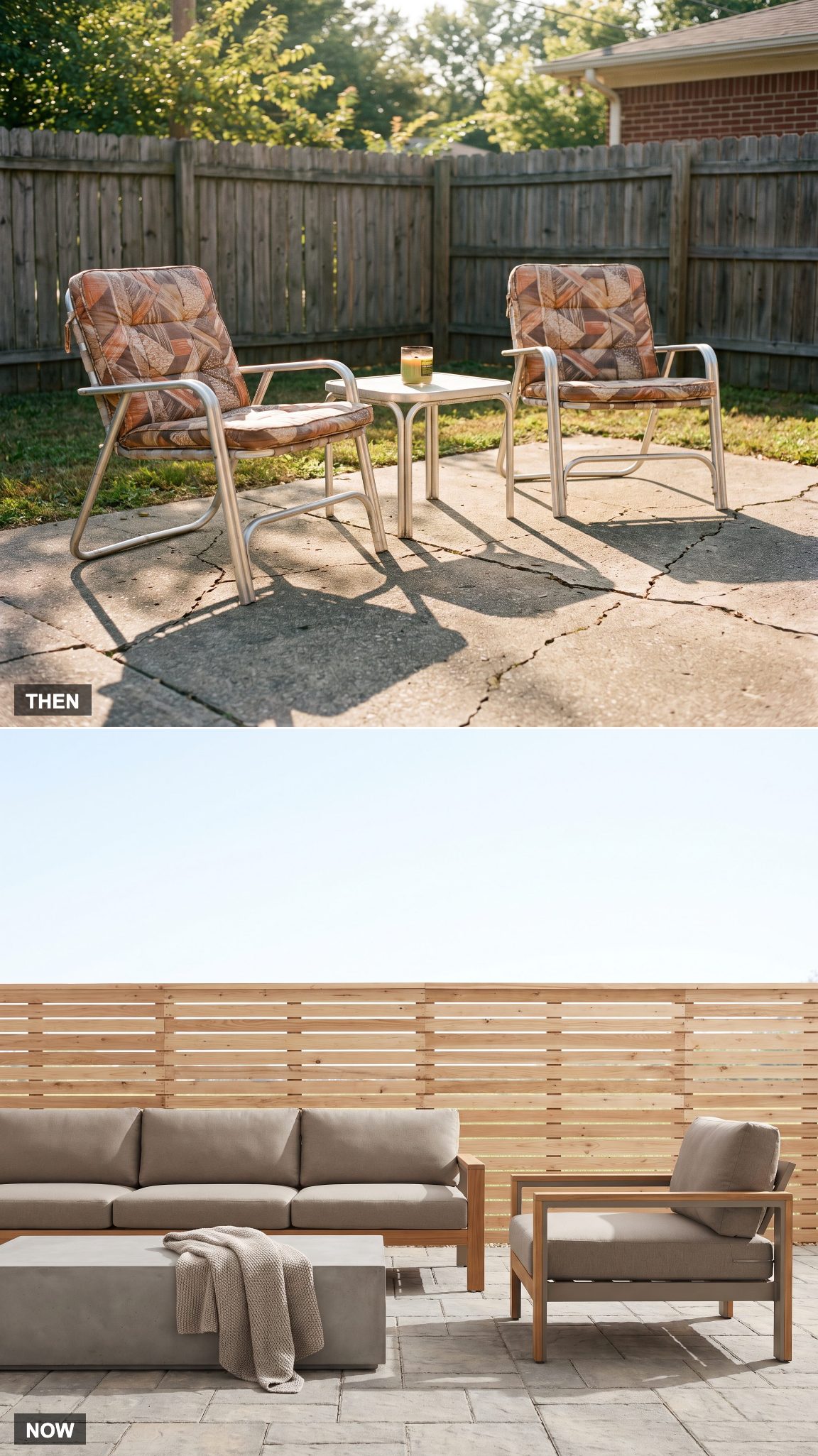
The old aluminum set weighed next to nothing, which sounded ideal until a gust sent an empty chair skating across the slab. Thin cushions compressed fast, frames clacked together when anybody shifted, and sitting outside still felt distinctly like sitting outside.
Deep-seating furniture changed the assignment. Thick cushions, lower profiles, teak and powder-coated frames built to stay outdoors, and proportions borrowed straight from the living room. A greige outdoor sofa anchored by a concrete coffee table can establish the whole modern patio vocabulary in two pieces.
27. Vinyl-Strap Chairs Become Woven Performance Seating
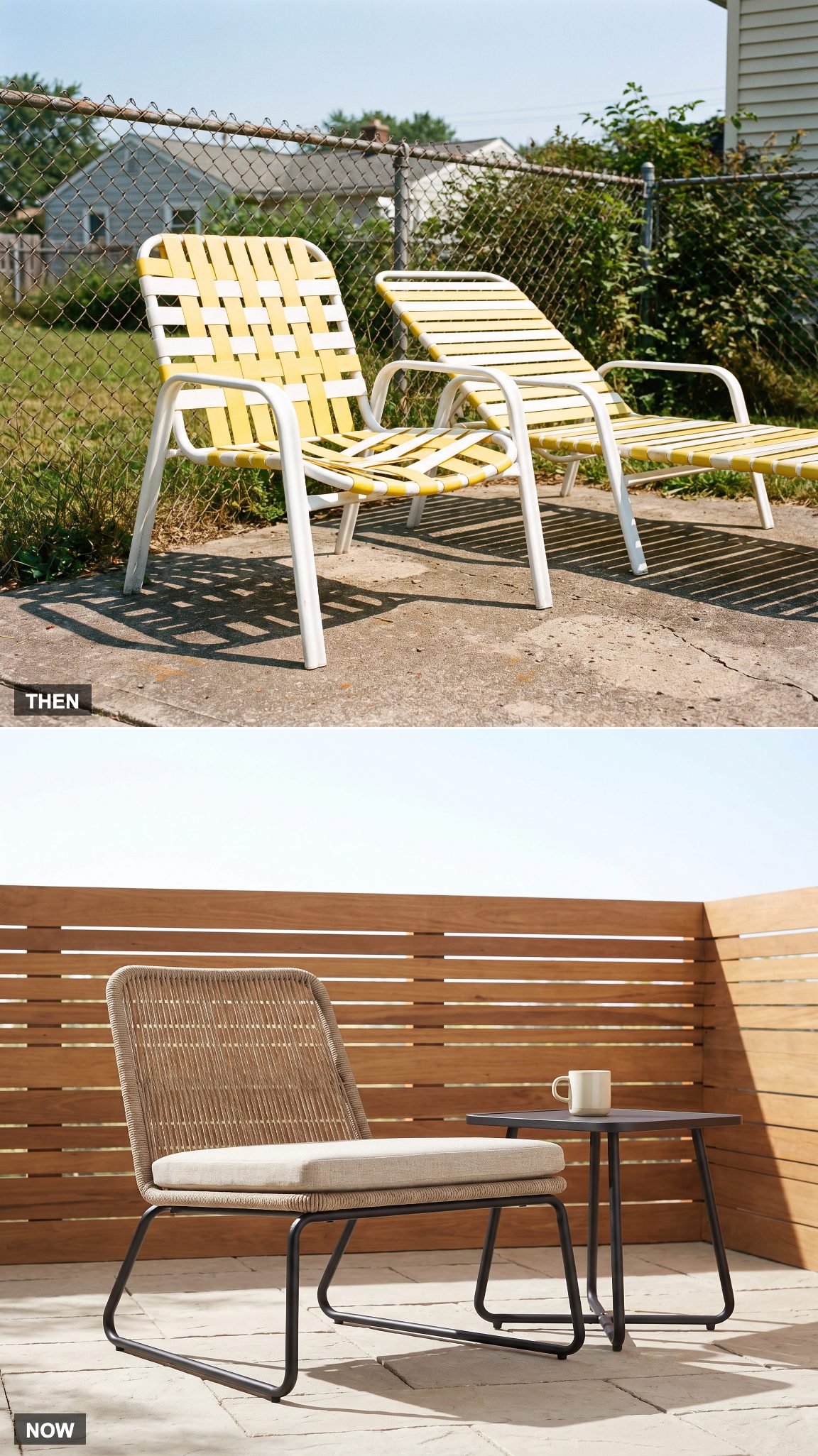
Vinyl straps had one job and eventually surrendered to gravity. The wide plastic bands stretched, sagged, heated up in direct sun, and left a temporary waffle pattern on any bare leg that stayed too long.
Contemporary woven chairs keep the airy silhouette while changing the materials. Performance rope and outdoor cord wrap around powder-coated frames, adding texture without the shiny plastic finish. A woven rope chair in ecru keeps some of the visual lightness of the original without looking like pool furniture from the municipal rec center.
26. Folding Webbed Lawn Chairs Become the Seats You Notice First
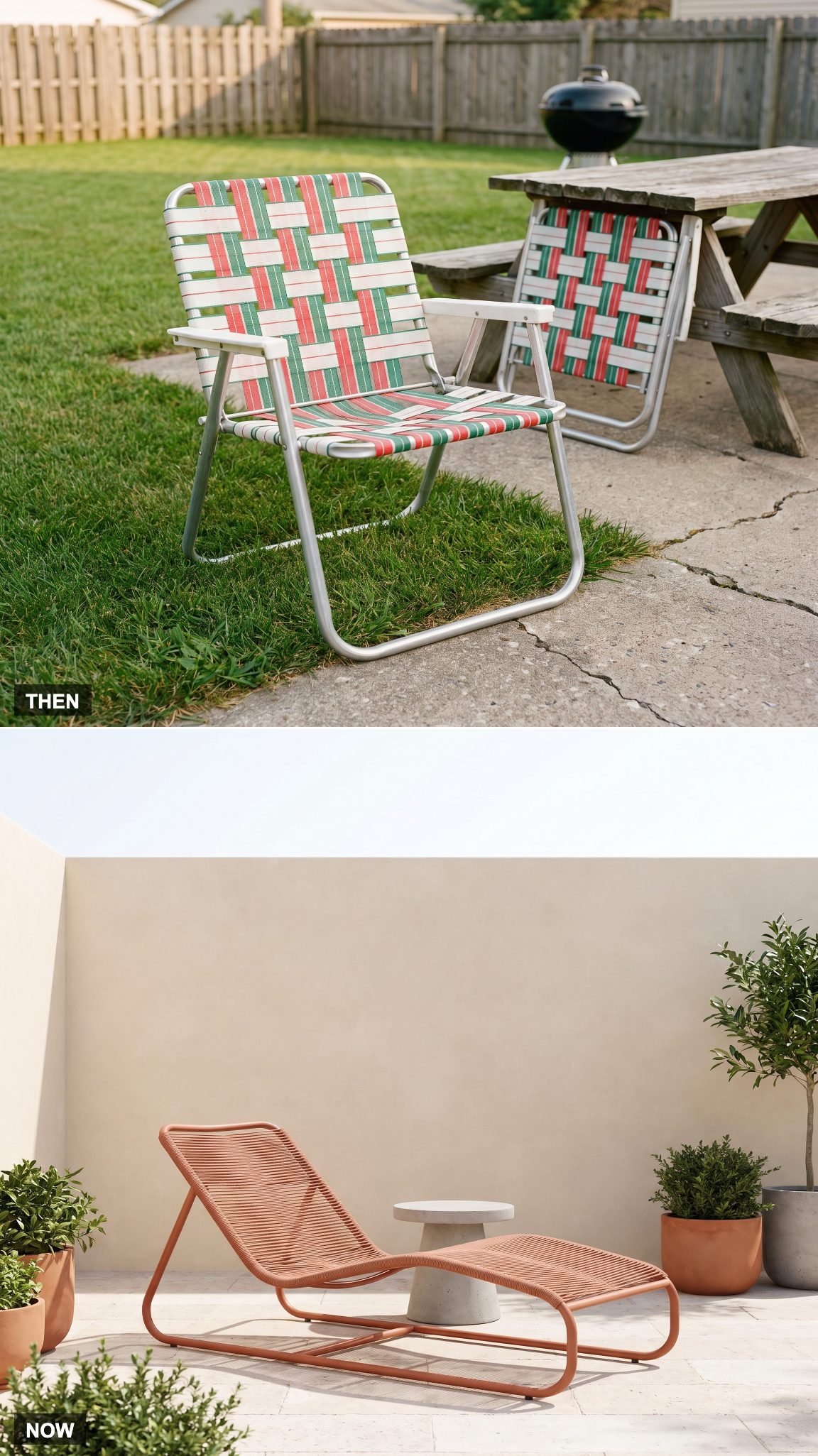
The folding webbed chair was one of the great workhorses of the era: backyard, parade curb, campground, tailgate. Aluminum tubing, striped webbing, hinge waiting for a finger. It folded flat, weighed almost nothing, and spent half its life leaning behind a garage door.
Now an outdoor accent chair can be the object that starts the whole scheme. Curved powder-coated frames, terracotta and ochre upholstery, generous shapes that look chosen rather than merely stored outside. One sculptural seat can pull an eclectic patio design together the way a strong armchair changes a living room.
25. The Glass-Top Table Trades Fingerprints for Teak, Metal, and Stone
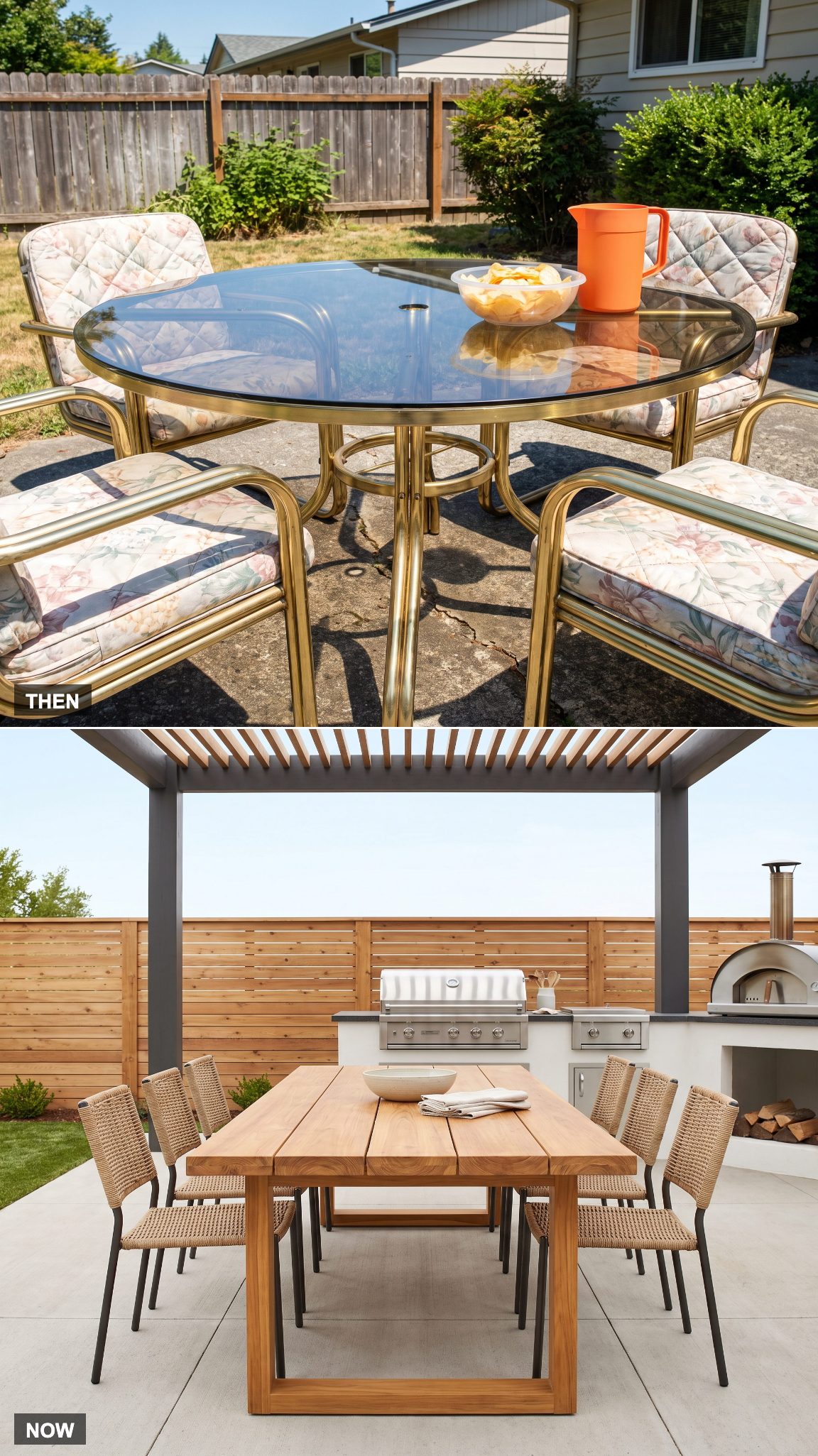
Smoked glass looked sophisticated right up until somebody touched it. Fingerprints appeared instantly. Dust showed up five minutes later. Wind found every loose fitting in the frame and turned the whole table into a percussion instrument.
Solid materials give the patio table more visual weight: teak that can weather to silver, powder-coated metal, honed stone, concrete. A teak dining table reads less like specialized patio equipment and more like actual furniture that simply happens to live outside.
24. The Matching Patio Suite Breaks Apart and Gets Interesting
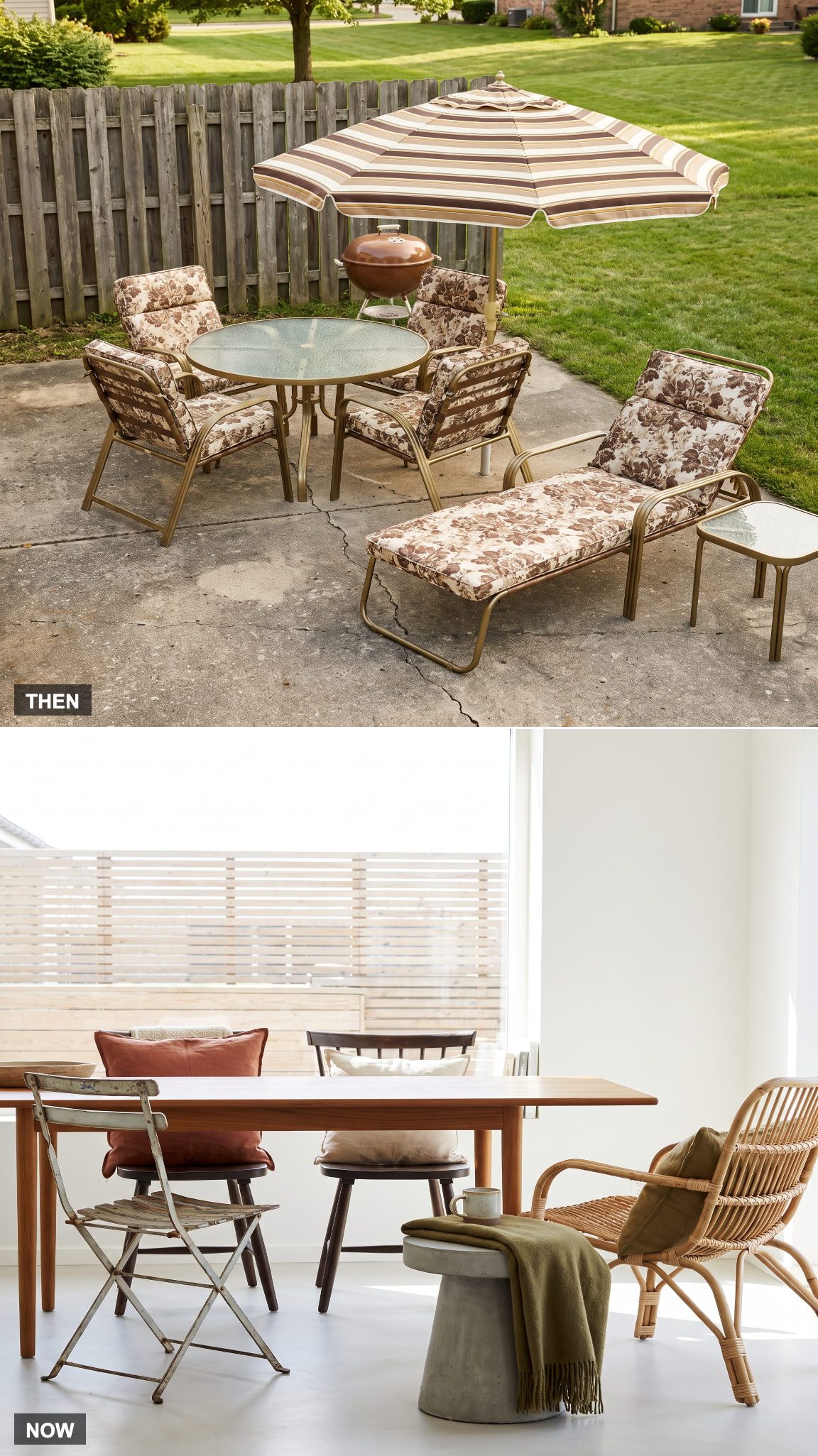
Matching used to be the whole point. Table, chairs, chaise, umbrella, cushions, all speaking exactly the same design language and occasionally wearing the same floral print. Coordination was visible from the kitchen window.
The current look is more willing to mix. A teak table beside chairs that are not quite identical, a vintage-style bistro seat, a concrete stool wandering between jobs. Repeated colors or materials hold the arrangement together without making everything look as though it arrived in one carton.
23. Floral Vinyl Cushions Finally Meet Outdoor Textiles That Behave Like Fabric
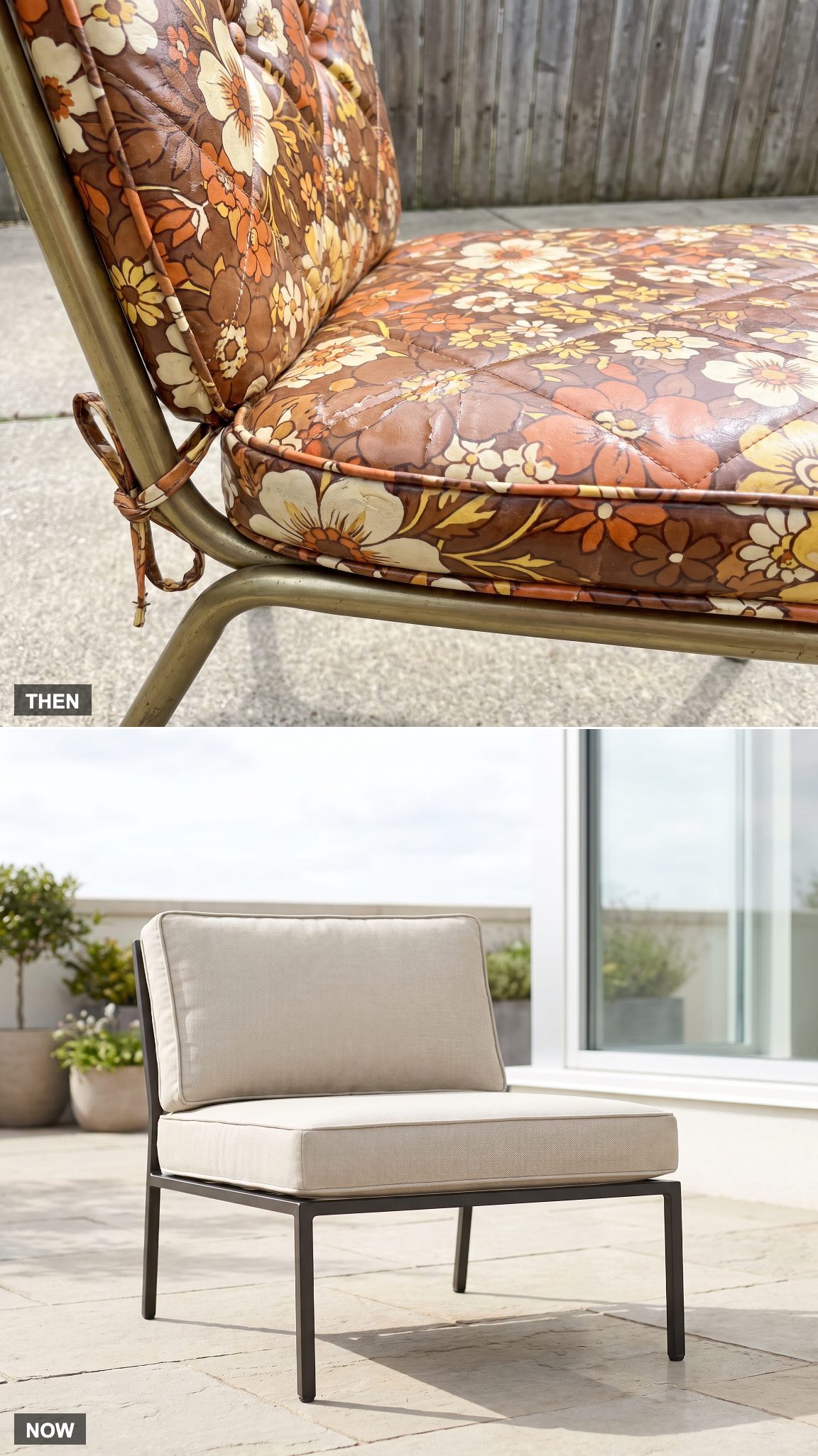
Floral vinyl cushions were a sensory event. Cool and clammy in the morning, hot in full sun, and capable of producing that unmistakable peeling sound when somebody stood up in shorts. The print at least had the courtesy to hide a stain.
Modern outdoor upholstery attacks those problems from several directions: solution-dyed fabrics for better fade resistance, outdoor weaves with a more textile-like hand, and cushion constructions designed to shed water and dry more efficiently. A performance cushion in a quiet neutral can modernize an older frame without sending the entire chair to the curb.
22. The Striped Market Umbrella Steps Aside for the Cantilever Giant
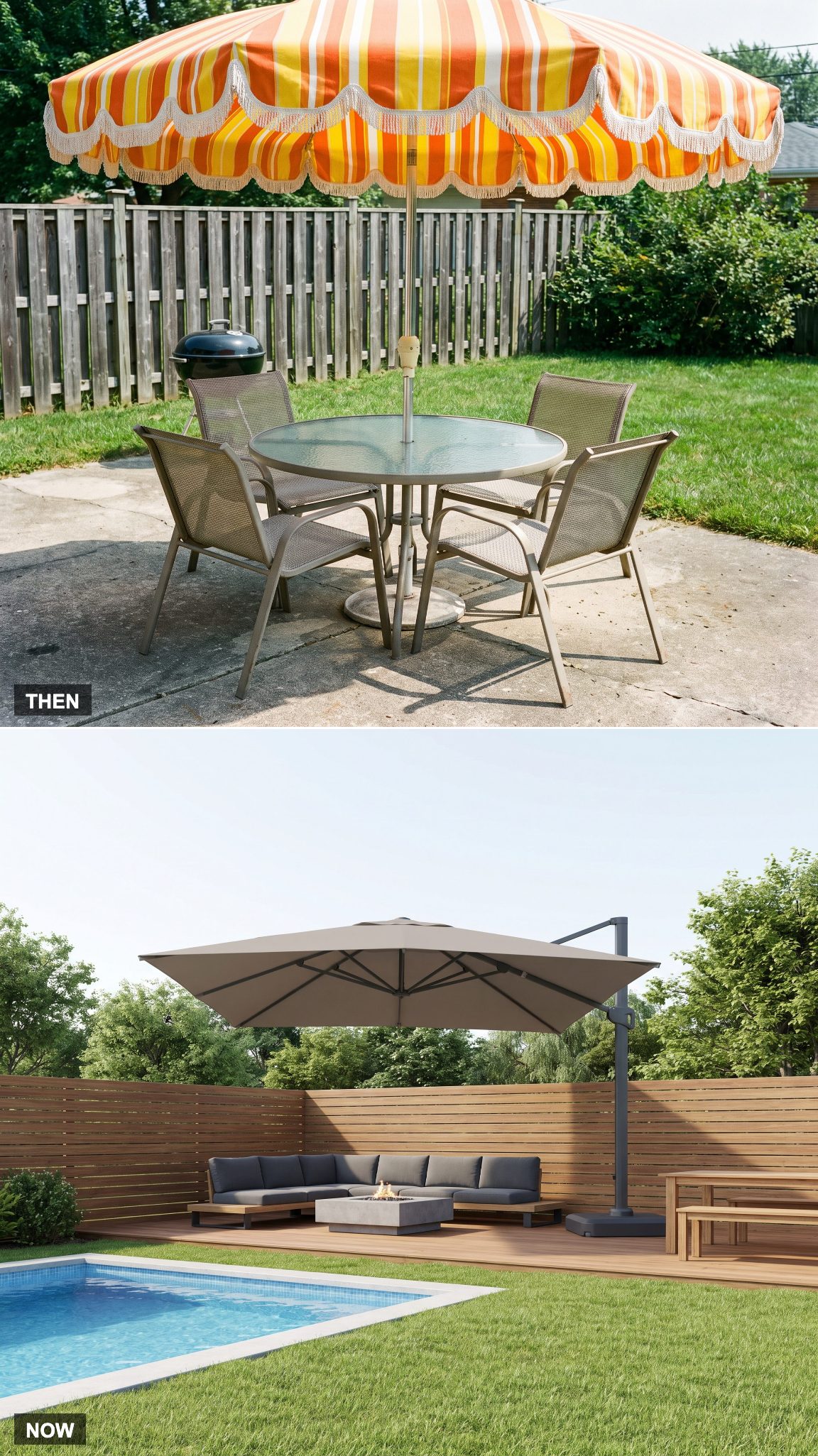
The striped market umbrella was pure summer optimism. Orange and yellow scallops, maybe a little fringe, a crank that developed opinions halfway up. The center pole occupied exactly the spot somebody eventually wanted for a knee, platter, or chair.
Cantilever umbrellas move the support off to the side so the canopy can float over a larger seating group. Solid taupe over an anthracite base is deliberately quiet, particularly in a beige patio ideas scheme where the shade structure is supposed to disappear into the composition rather than become the composition.
21. The Rattling Metal Awning Becomes Part of the Architecture
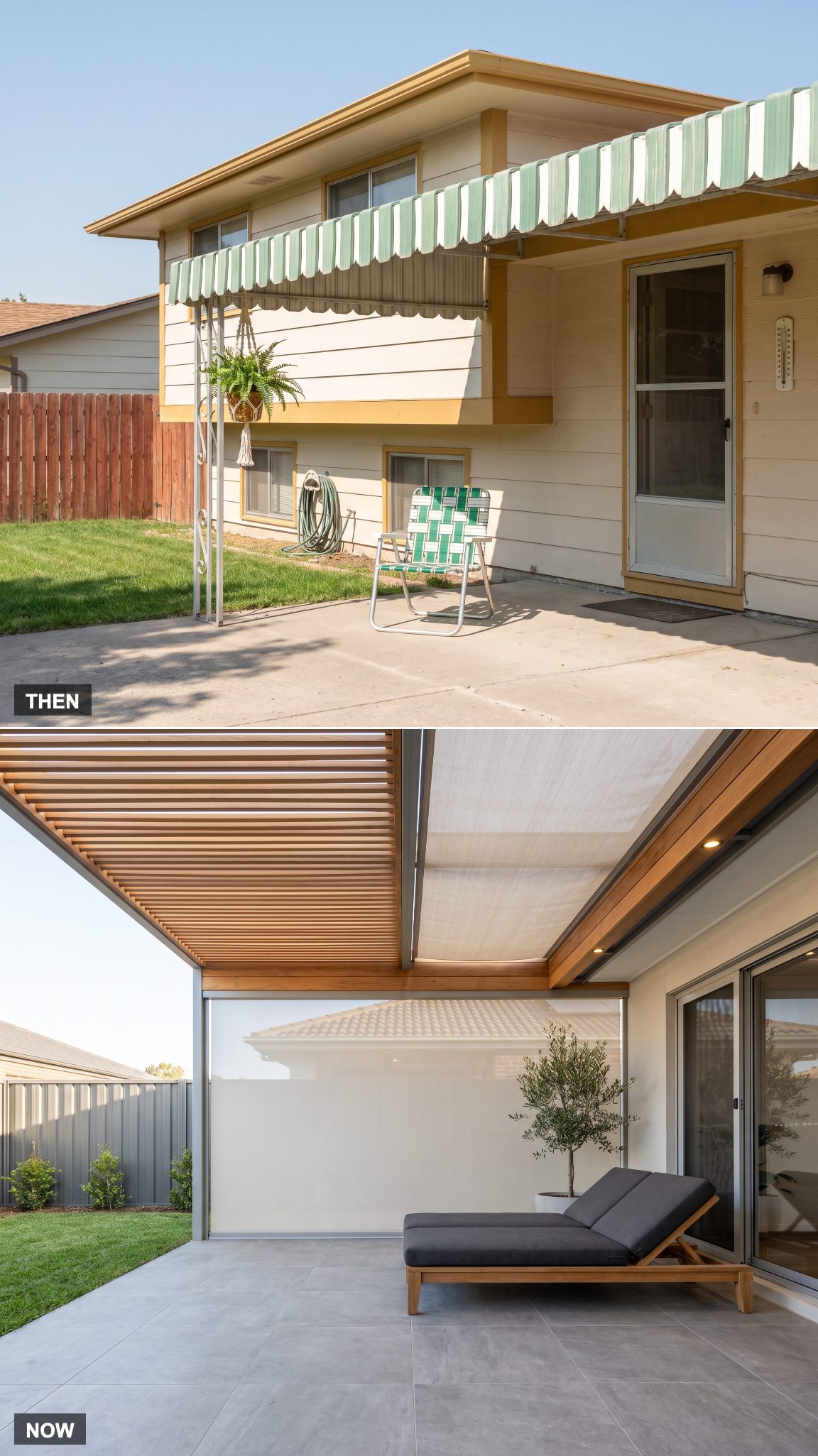
Corrugated metal awnings were wonderfully direct. Bolt one to the house, put shade underneath, listen to rain announce itself with military enthusiasm. Stripes and scalloped edges occasionally made the whole thing look as though a beach concession stand had attached itself to the siding.
A pergola or architectural shade structure makes the overhead element part of the composition. Cedar slats can filter sunlight, retractable fabric can handle the harsher hours, and the posts align with the patio instead of looking like an accessory screwed on later. The shade still works. It simply has better manners.
20. The Kettle Grill Stops Running the Whole Show
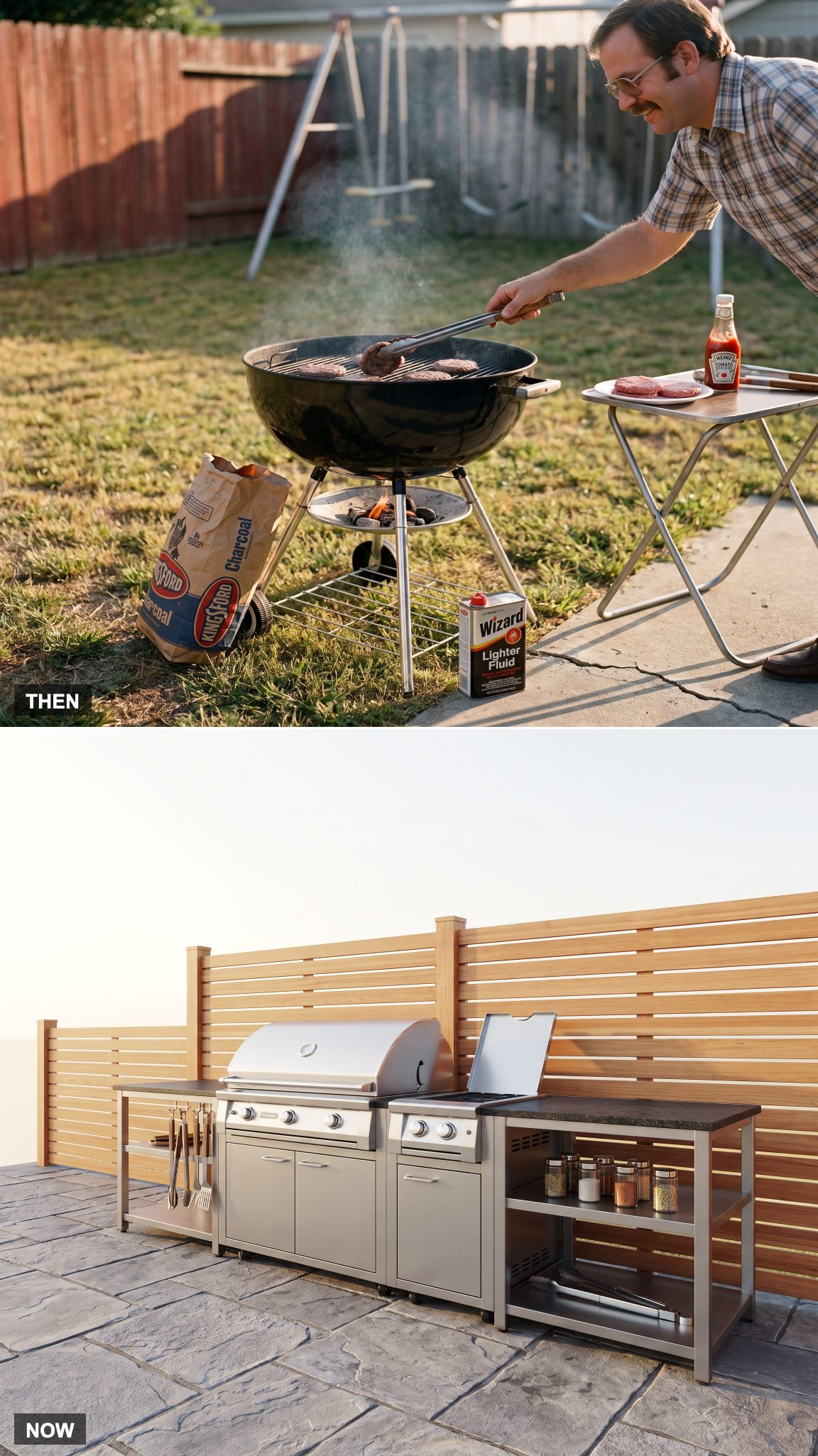
The kettle grill was gloriously uncomplicated. Charcoal went in, lighter fluid sometimes followed, and dinner depended on somebody deciding when a bed of glowing coals had crossed the mysterious line from inferno to usable heat.
The transformation here is less about replacing charcoal than giving cooking a place to happen. A grill beside a prep counter, a burner for the pot that used to balance on the kitchen stove, drawers for tools, enough landing space that a platter no longer ends up on a lawn chair. The grill has not disappeared. It has acquired supporting cast.
19. The Plastic Cooler Moves Under the Counter
🔥 Would you like to save this?
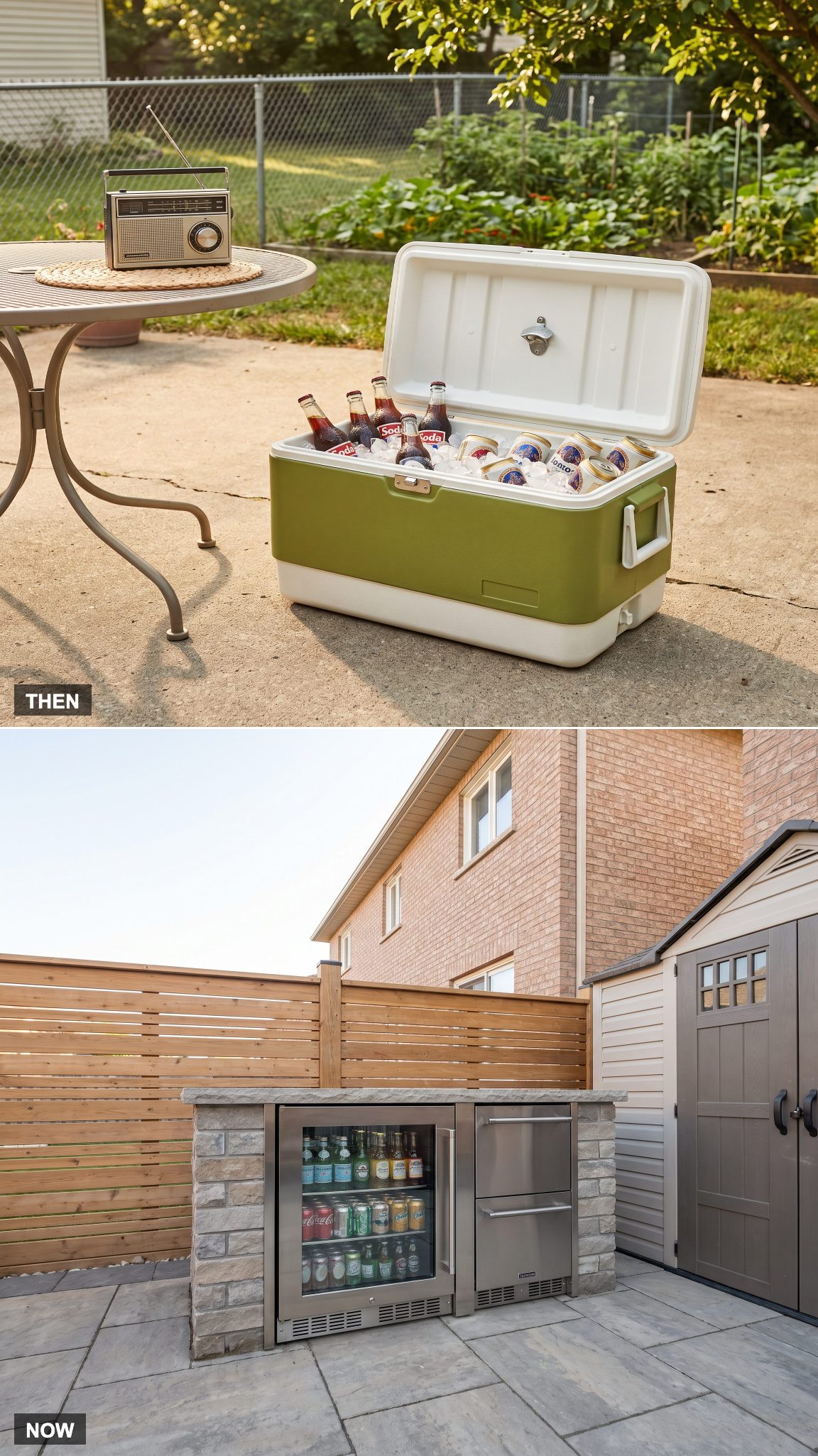
You knew the soundtrack: half-melted ice sloshing against plastic, one can scraping up from the bottom, the lid slammed shut before all the cold escaped. The cooler was bar, refrigerator, extra seat, and occasional footrest.
Now the cold drinks can disappear under a stone counter in an outdoor-rated beverage refrigerator, with storage and ice nearby. Nobody has to excavate through freezing water to find the last can. Some progress deserves no nostalgia at all.
18. The Picnic Table Becomes a Dining Room Without Walls
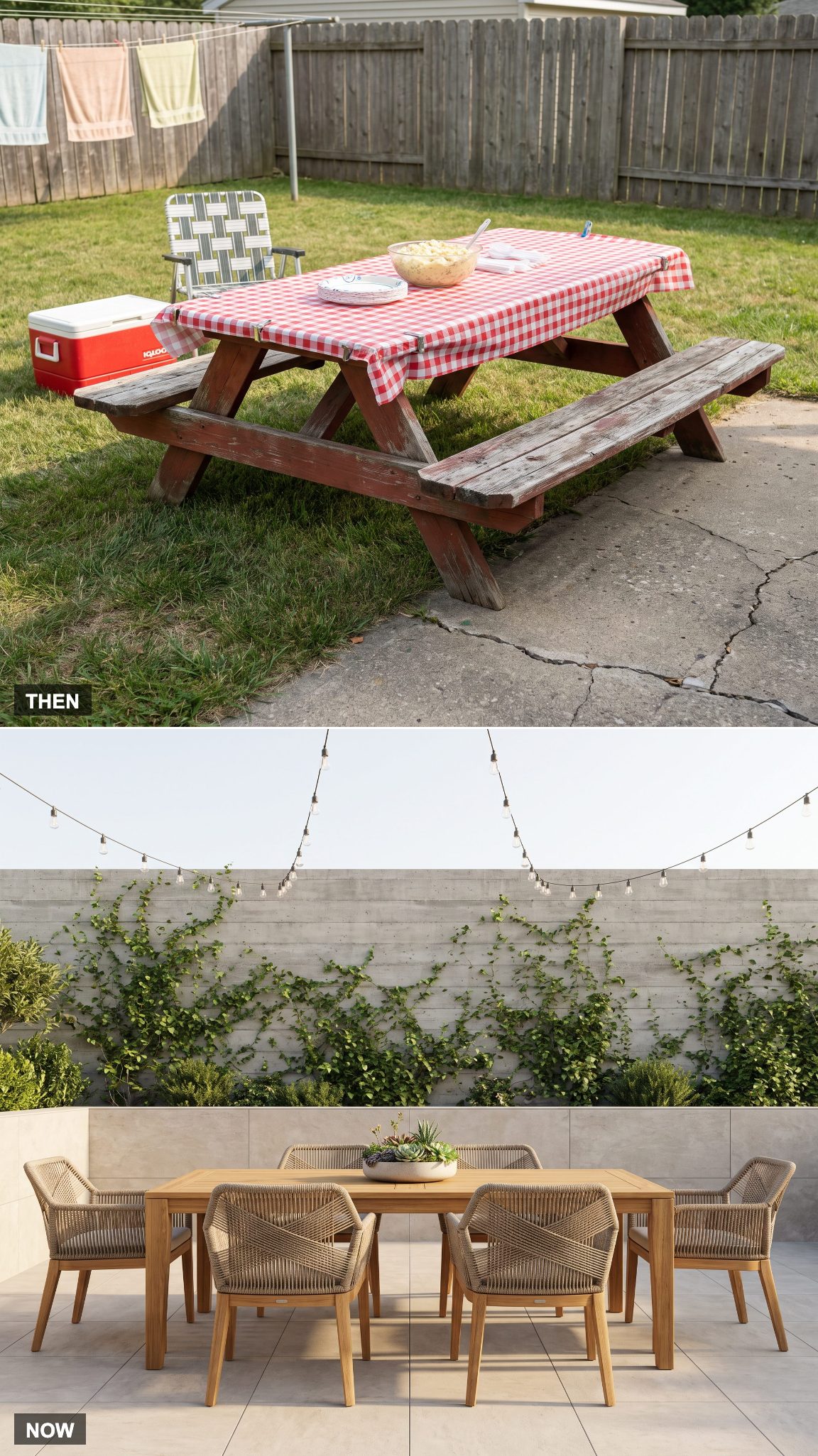
The picnic table was democracy in furniture form. Everybody squeezed onto the same benches, elbows negotiated territory, and getting out required at least two other people to participate. Splinters were merely part of the seating specification.
A dedicated dining zone gives the meal actual real estate: a table, comfortable chairs, enough circulation around them, and a defined terrace that quietly announces where eating happens. Fold it into an eclectic patio design and the dining area feels intentional without needing to match everything around it.
17. The Portable Gas Grill Gets a Permanent Address
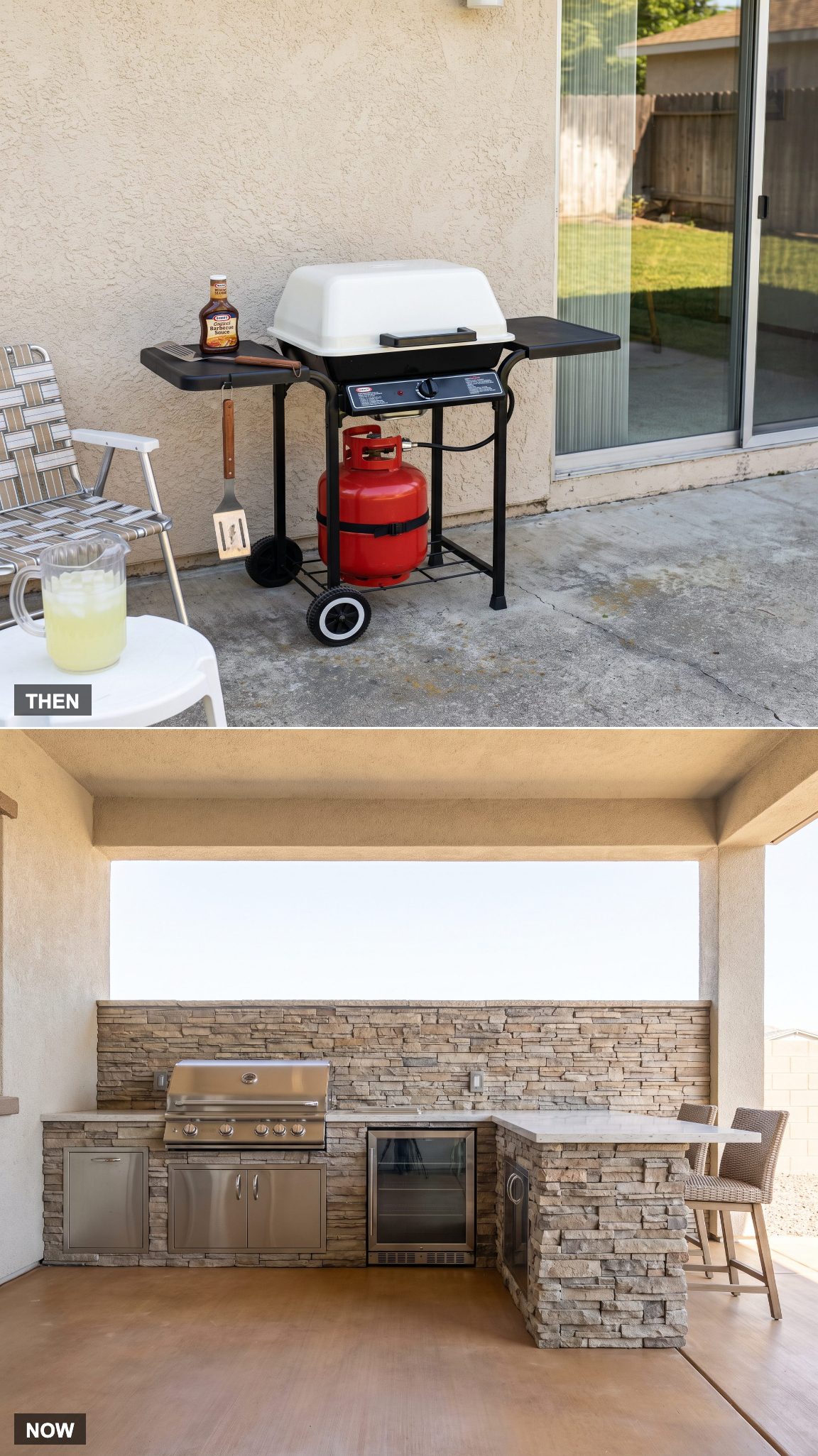
A portable gas grill represented convenience: turn the knob, skip the charcoal ritual, cook dinner, wheel the whole contraption back toward the garage when the weekend was over.
The built-in version does not go anywhere. Grill, counters, storage, sink, refrigeration, all pulled into a stone or masonry island and treated like permanent architecture. An oversized patio design can absorb that kitchen without making the cooking equipment feel parked at the edge of the party.
16. One Patio Table Stops Doing the Work of an Entire Backyard
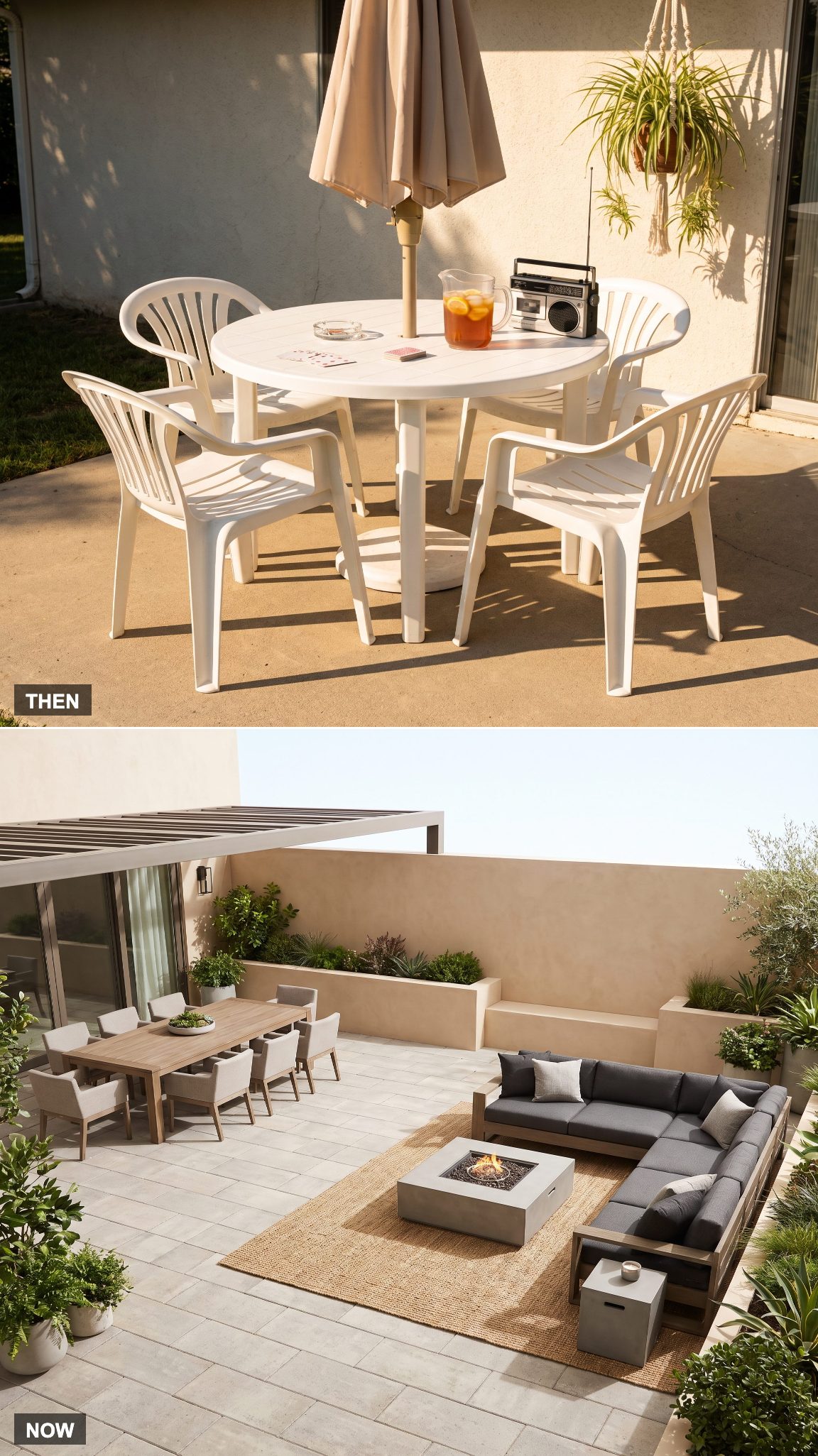
One table used to carry the entire job description: dinner, cards, drinks, newspapers, birthday cake, maybe homework, all under the same umbrella somebody cranked open only after the sun had already won.
Modern patios are more willing to split the work. Dining on one side. Lounge chairs or a sofa somewhere else. A fire feature taking over another corner. The yard starts functioning more like a collection of rooms, except nobody had to build another wall.
15. The Outdoor Rug Draws a Room Where There Was Only Concrete
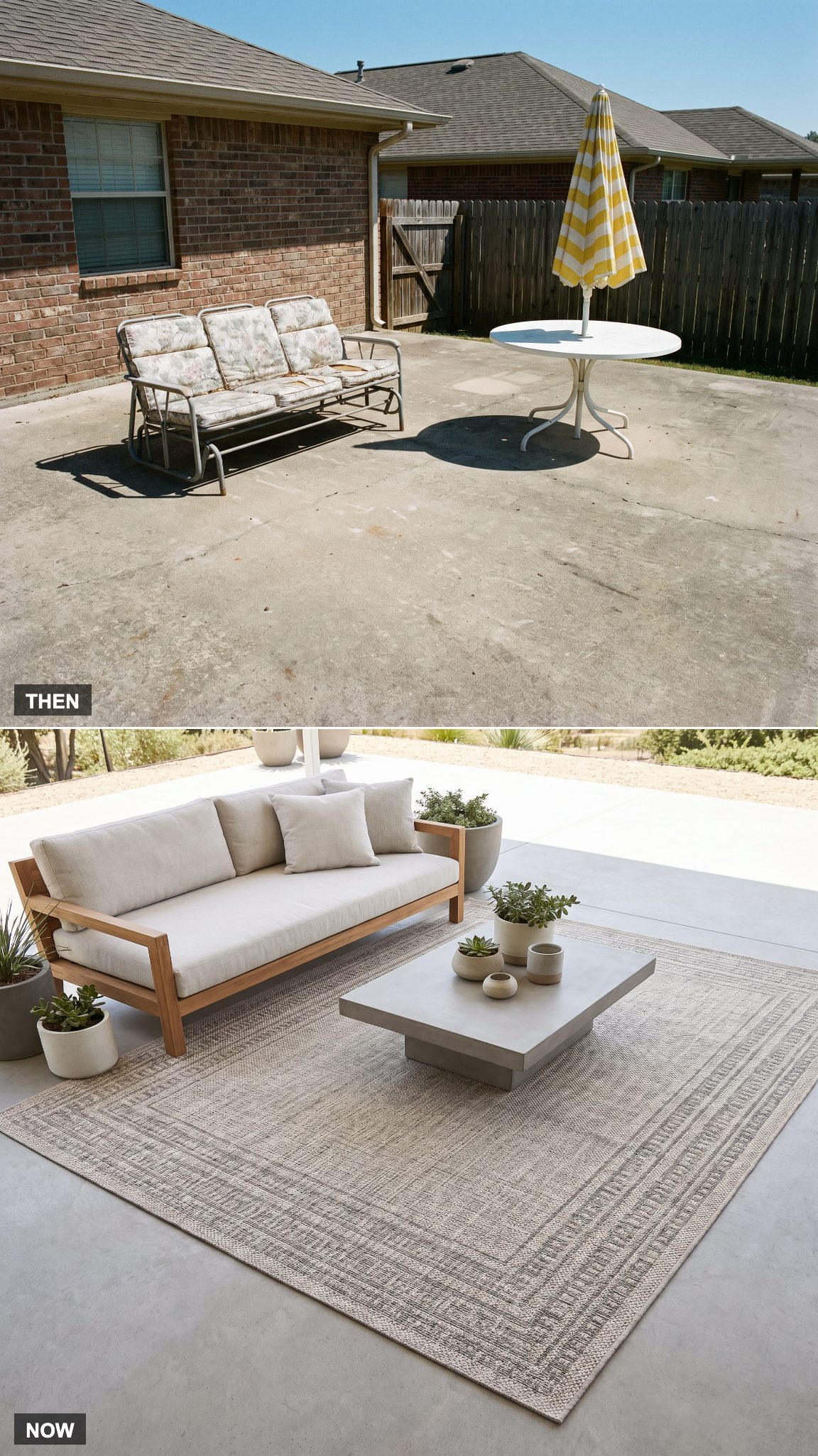
Bare concrete once did all the visual work beneath outdoor furniture, which meant chairs could look as though they had simply landed wherever somebody dropped them.
A flat-weave outdoor rug pulls separate pieces into one visible group. It creates a boundary, introduces pattern or warmth, and tells the eye exactly where the lounge starts. On a grey patio, that layer can be the difference between deliberately restrained and simply gray.
14. The Lone Porch Light Learns to Share the Job
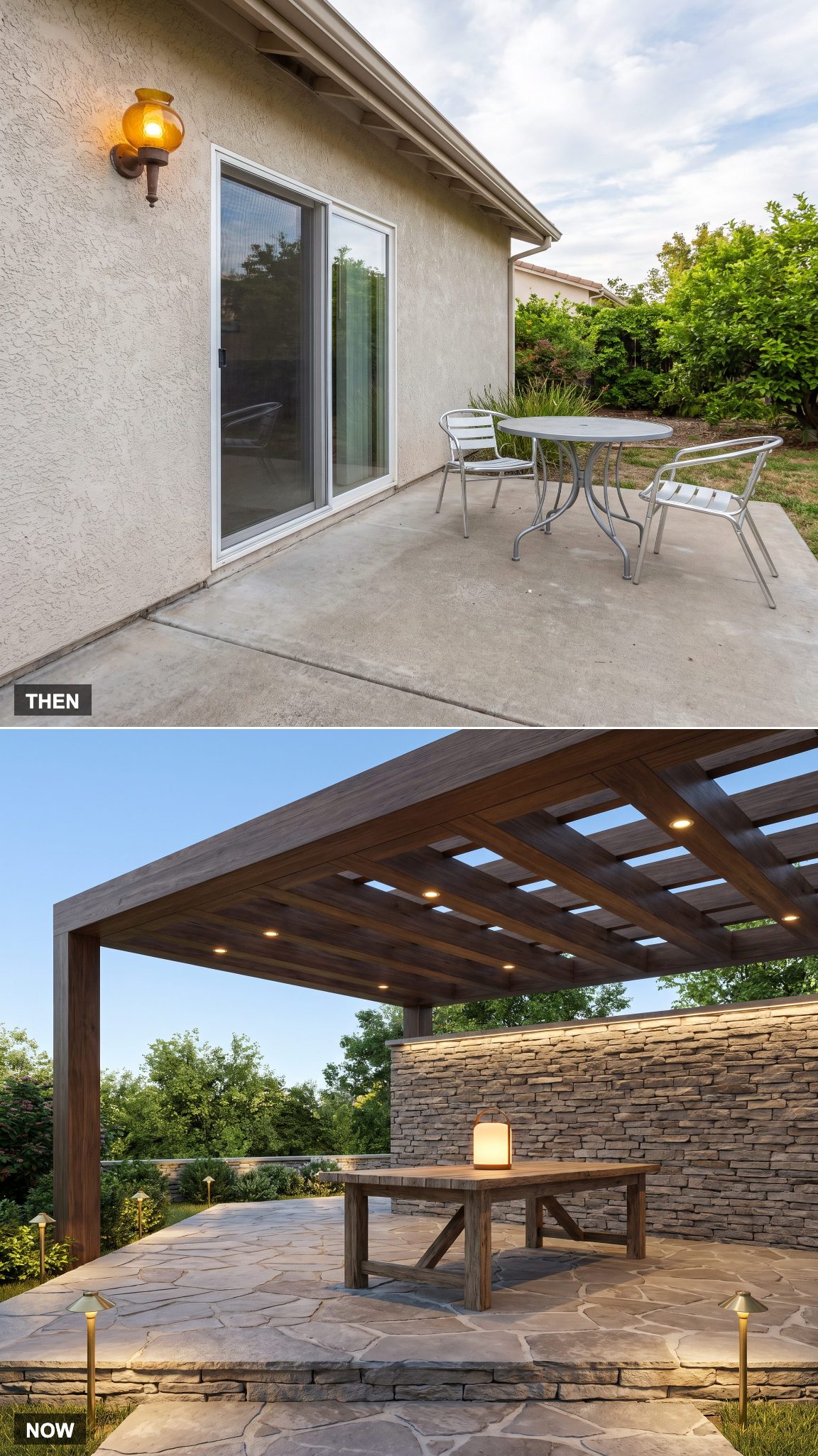
One bulb beside the door did its best against an entire dark yard. It illuminated a cone, flattened everything inside it, and surrendered the corners to darkness. Anyone sitting beyond the table might as well have been dining by moonlight.
Layered lighting divides the assignment among several smaller sources: downlights overhead, low path lights, a lantern on the table, a wash across stone or planting. Instead of blasting the patio from one direction, the light gives edges, paths, and seating areas their own presence after dark.
13. The Bug Zapper Loses Its Starring Role
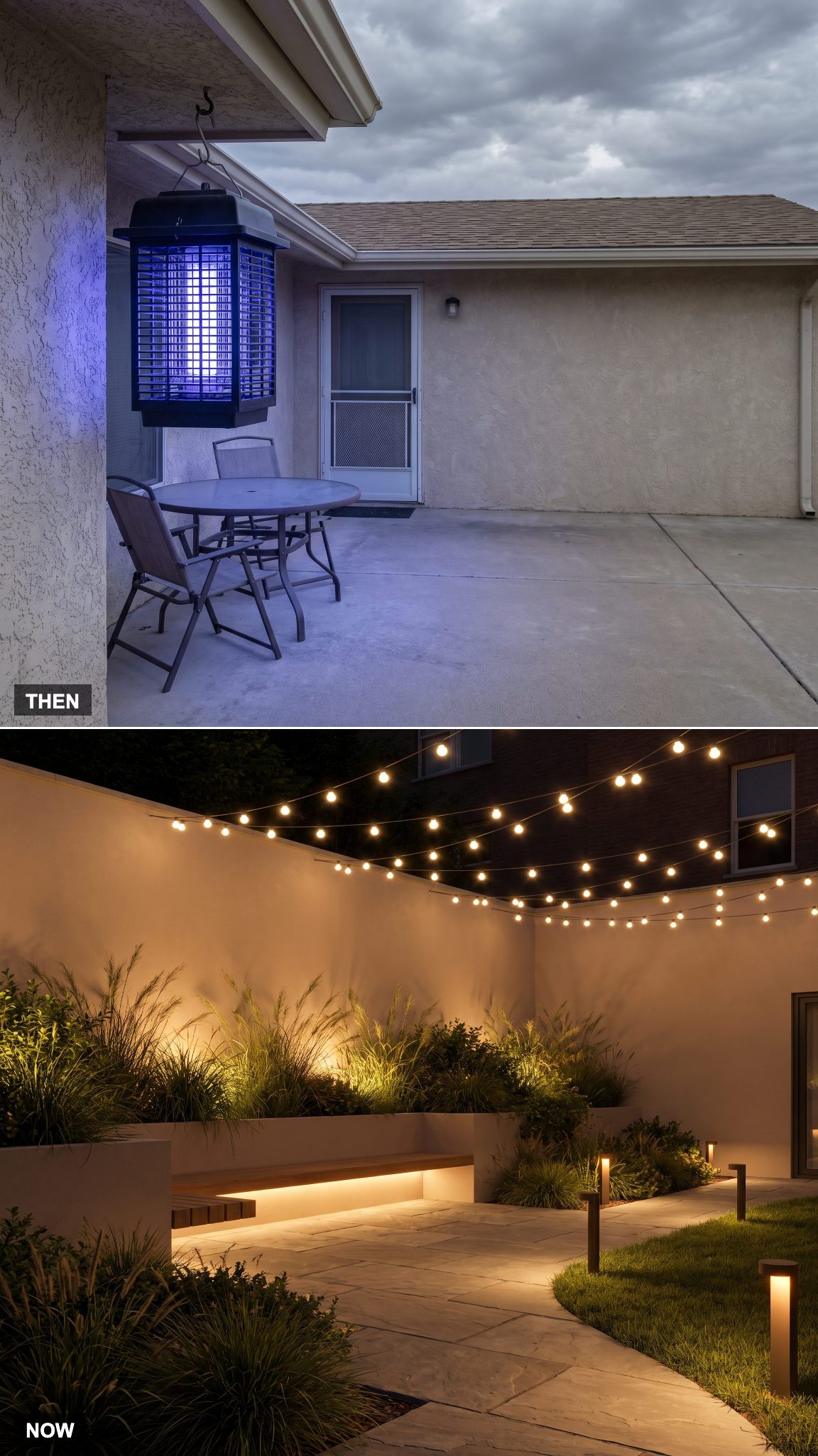
The blue bug zapper was part pest-control device, part backyard special effect. It glowed an otherworldly violet and punctuated conversation with an electrical crack whenever an insect met its end.
The modern lighting scheme has no need for the spectacle. Warm uplights hide in planting beds, low fixtures trace a path, and benches can glow from underneath without turning the yard blue. The patio finally looks illuminated rather than electrified.
12. Citronella Gives Way to a Smarter Mosquito Strategy
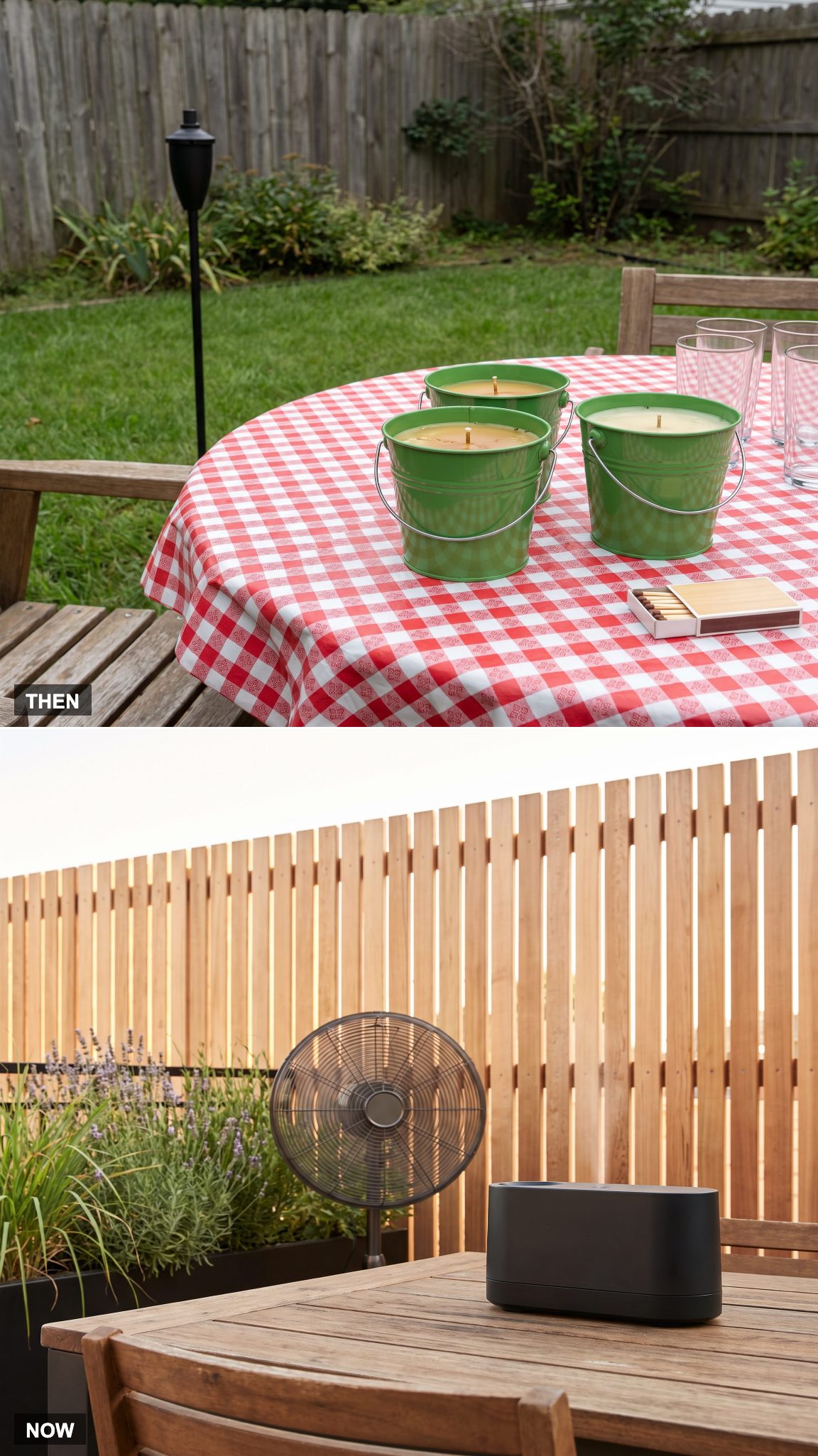
Citronella candles were as much ritual as defense. Green buckets appeared on the table, smoke drifted across the food, and mosquitoes frequently behaved as though nobody had informed them about the plan.
A more practical strategy combines methods that address the actual problem: moving air across the seating zone, removing standing water nearby, and using an appropriate repellent or outdoor device when needed. Decorative plants can still earn their place, but lavender and lemongrass sitting in a border should not be expected to create an invisible mosquito force field.
11. Ten Terra-Cotta Pots Consolidate Into Three Architectural Ones
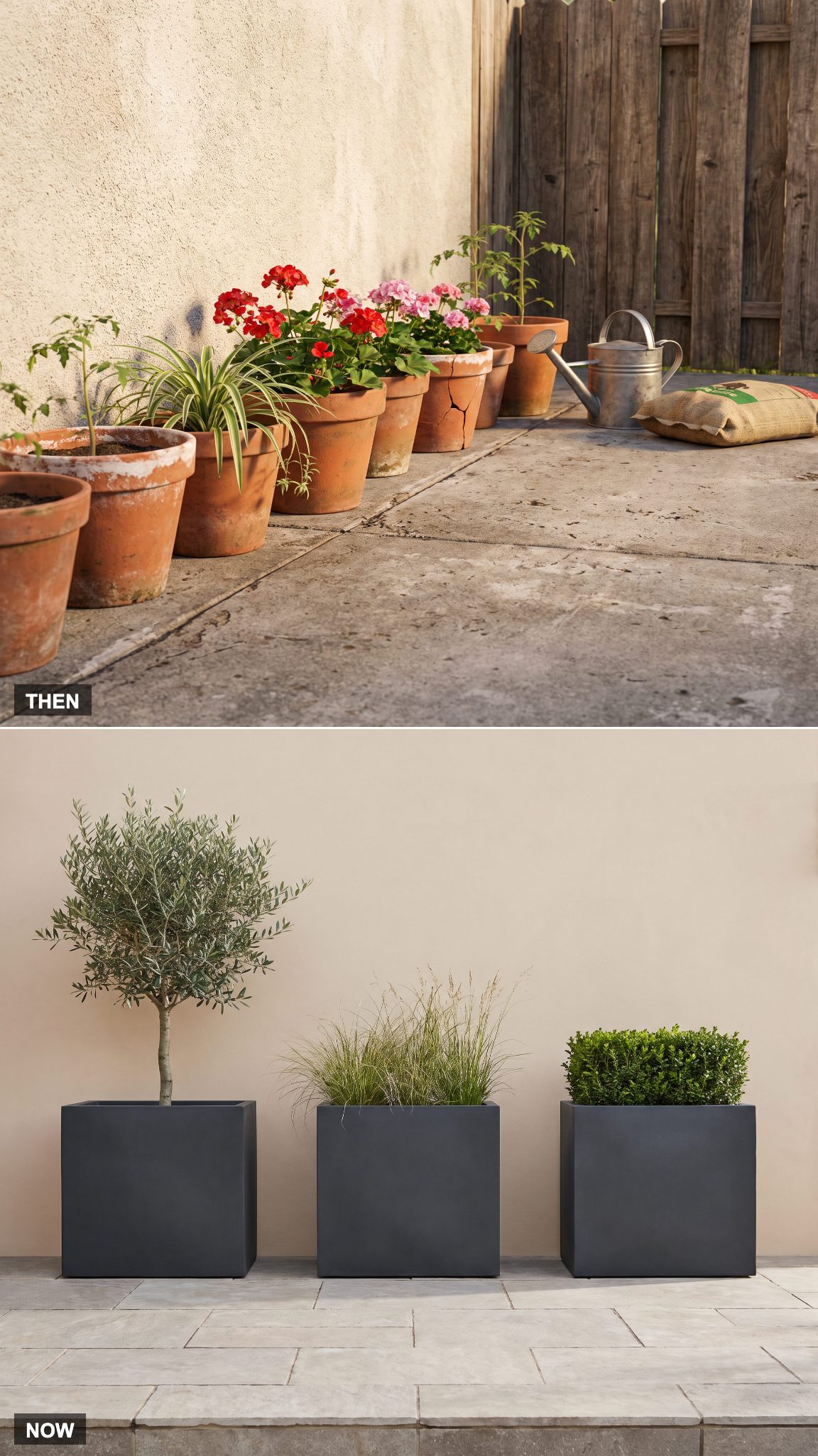
The terra-cotta row had undeniable charm: geraniums leaning toward the light, pots in five sizes, one cracked from winter, another pressed into emergency service because nobody could resist one more plant.
Contemporary patios often consolidate the same amount of visual energy into fewer, larger containers. Tall charcoal planters, an olive tree, grasses moving in the wind. Scale does more of the work, especially against a grey patio where planting can read almost like sculpture.
10. Hanging Baskets Move Onto the Wall
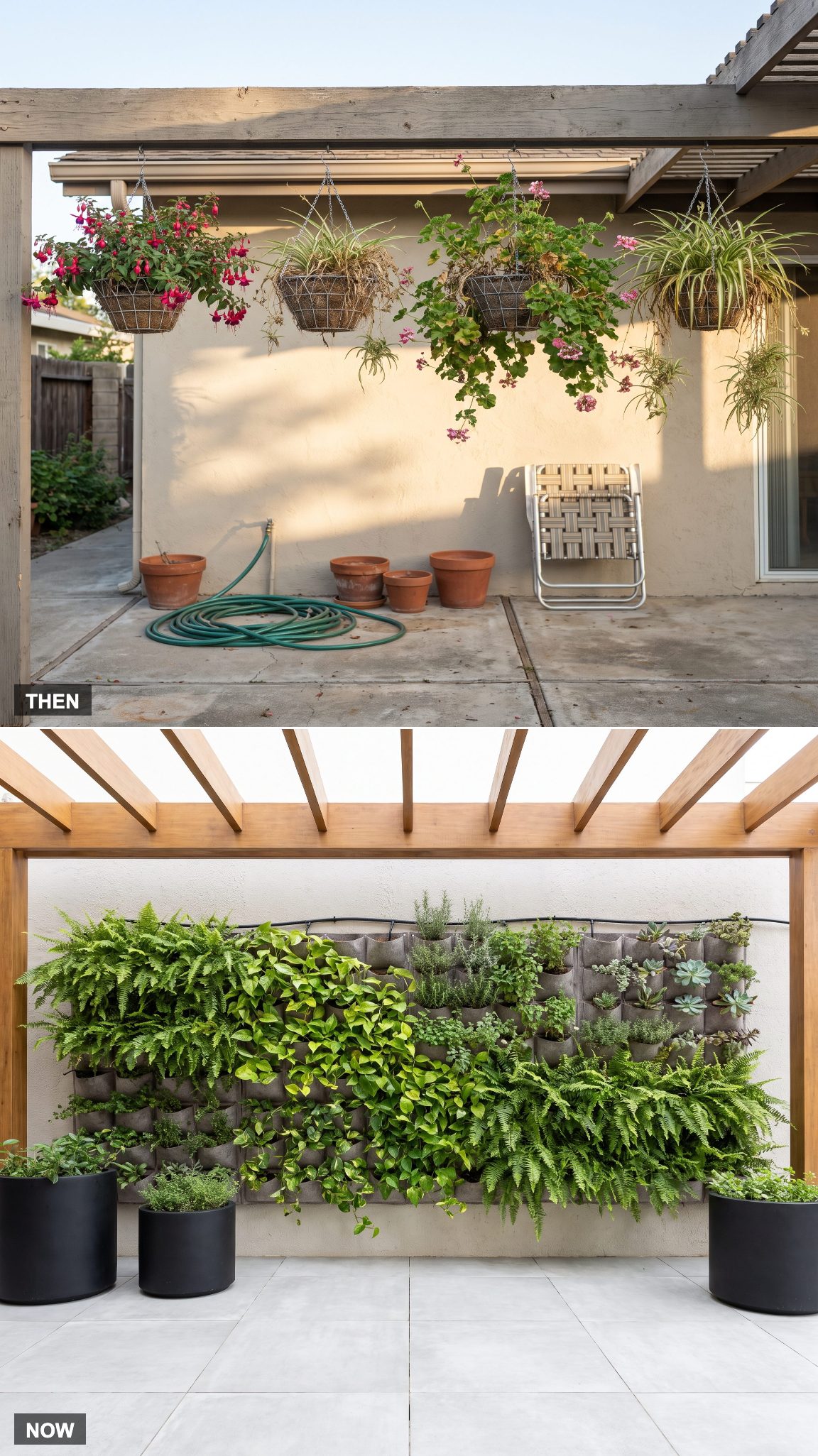
Wire baskets on chains brought flowers up to eye level, until August heat, missed watering, or one badly chosen exposure turned the display into a collection of crispy reminders.
Vertical gardens take the same desire for elevated greenery and spread it across an entire plane. Modular pockets, wall-mounted planters, trellises, and drip irrigation can turn a blank wall into growing space. They are not maintenance-free, but they use vertical real estate far more aggressively than a few baskets dangling from a beam.
9. Foundation Shrubs Loosen Up and Start Moving
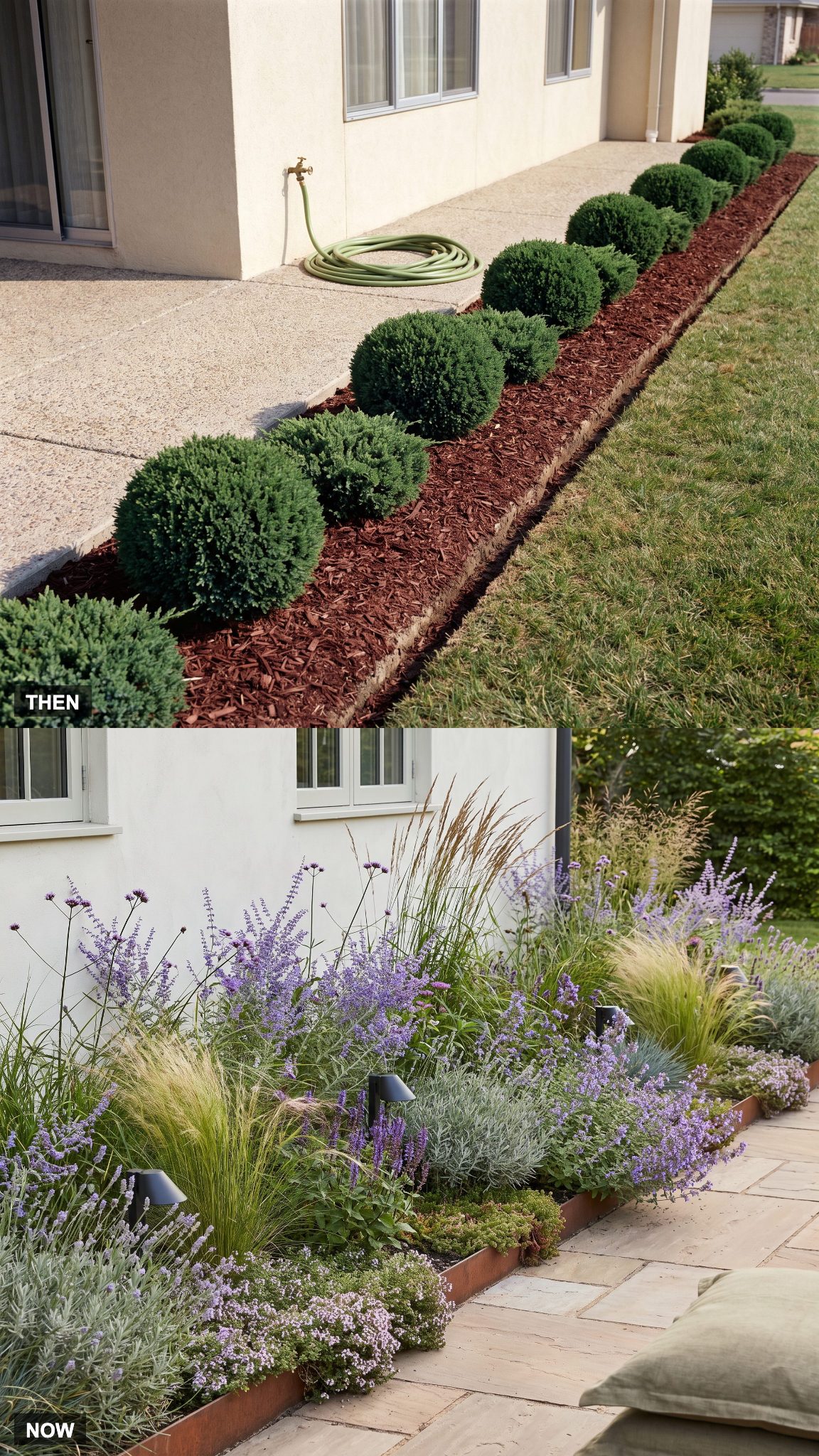
A familiar suburban approach relied on evergreen shrubs arranged in disciplined rows along the house and patio edge. Clipped forms and repeated spacing made maintenance legible from across the yard.
Naturalistic planting loosens that geometry. Grasses move. Perennials occupy several heights. Plants overlap rather than keeping respectful distance from one another. The edge between paving and garden becomes softer, which is part of what helps a mediterranean patio feel settled rather than newly installed.
8. The Lawn No Longer Slams Straight Into the Patio
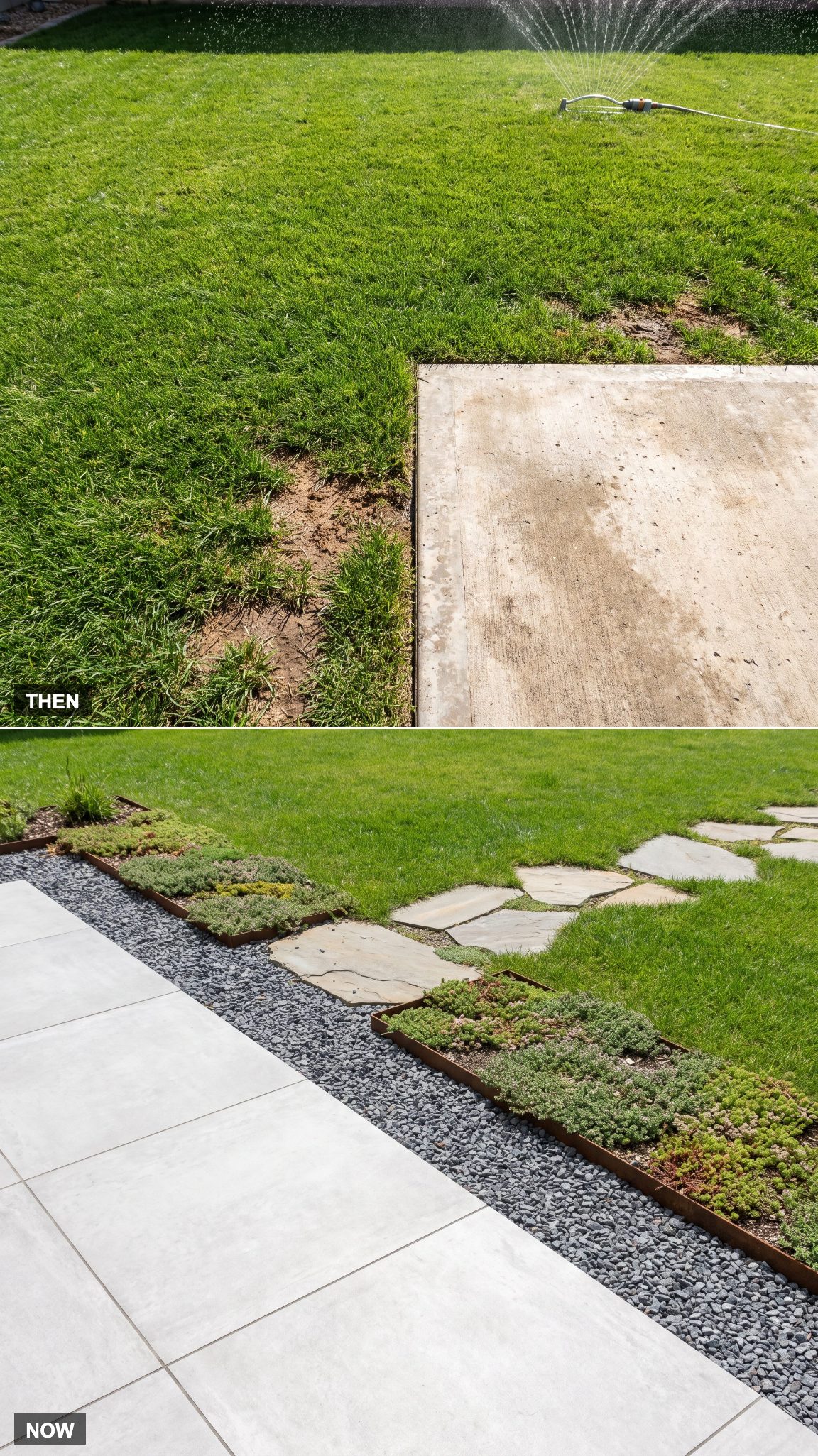
Grass met concrete and that was often the entire transition. One hard seam, a mower wheel riding the edge, the occasional brown strip proving exactly where lawn ended and patio began.
Now that seam can become part of the design. Gravel bands, steel edging, low ground cover, stepping stones, or a planted strip slow the transition from hardscape to garden. The boundary stops looking accidental and starts behaving like a threshold.
7. Diamond Lattice Gets Replaced by Privacy That Actually Works
🔥 Would you like to save this?
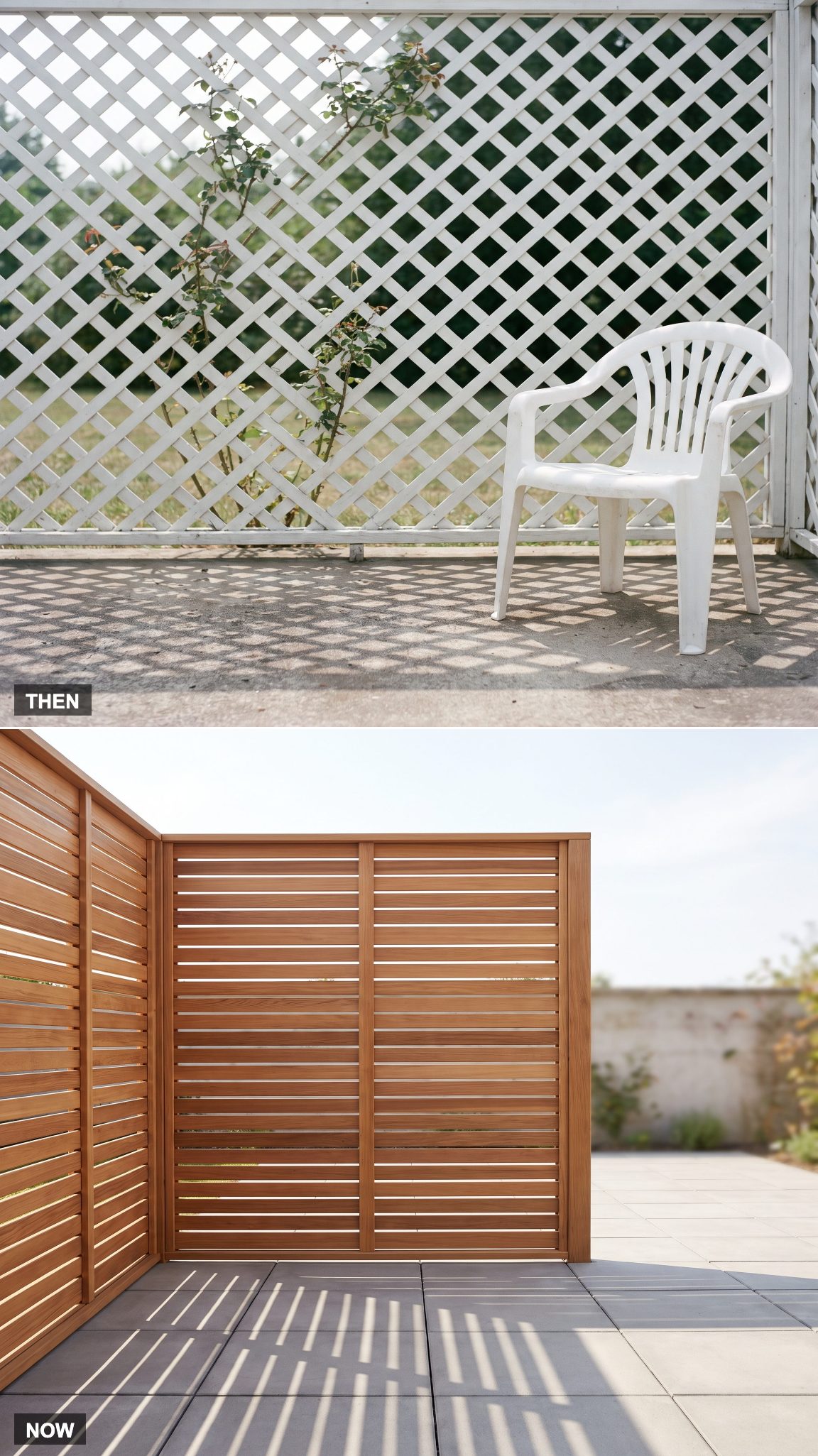
White diamond lattice suggested privacy more enthusiastically than it delivered it. Mostly it provided a framework for climbing roses and a patterned view of whatever the neighbors were doing on the other side.
Slatted screens take sightlines more seriously. Cedar or composite boards can be spaced to preserve airflow while blocking the most direct views at seated height. The result looks like intentional carpentry instead of a garden-center panel waiting for a vine to solve the problem.
The lattice hid a rose. The slat screen hides you. Big upgrade in priorities.
6. The Fully Exposed Patio Learns How to Disappear From the Neighbors
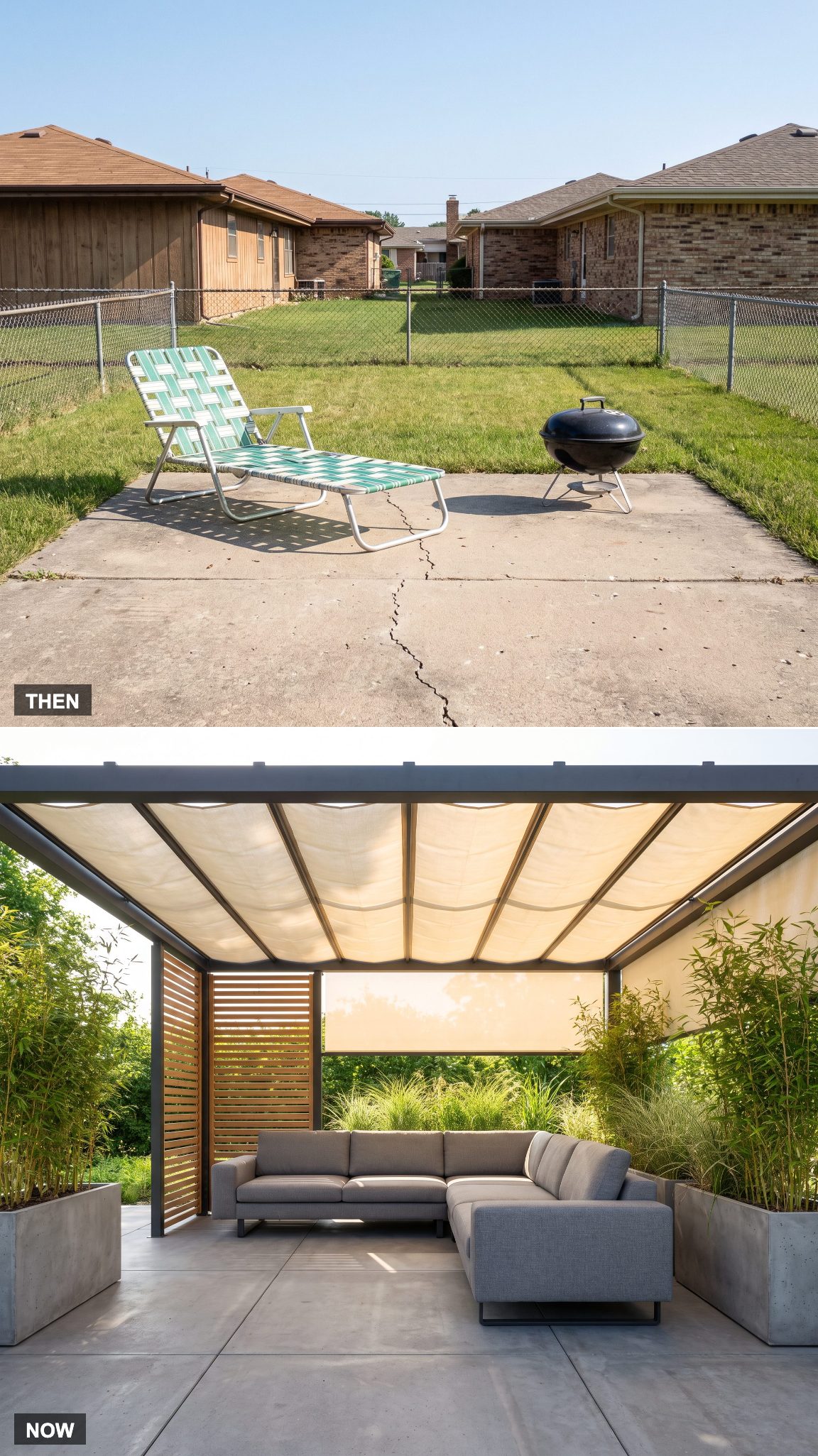
Plenty of older suburban patios simply accepted the view across the property line. Low fencing, sparse planting, neighboring windows within conversational distance. The backyard was private mainly in the legal sense.
Contemporary designs are more likely to plan privacy from the beginning. Pergolas control overhead exposure, tall planters close vulnerable edges, and strategically placed screens interrupt sightlines without turning the whole patio into a bunker. Privacy becomes part of the architecture rather than an emergency shrub bought three years later.
5. The Portable Radio Disappears Into the Landscape
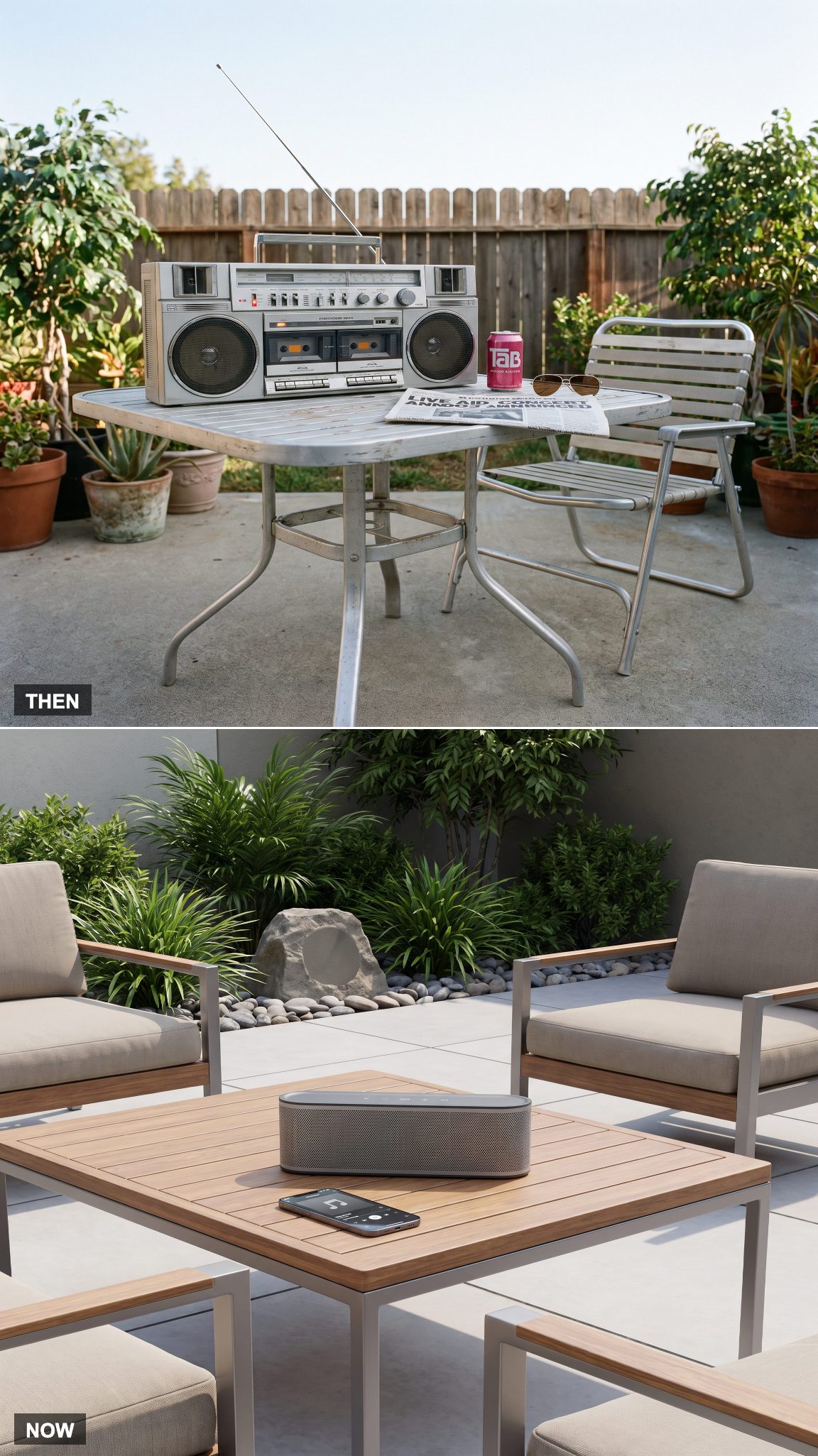
The portable radio was the sound system. D-cell batteries, telescoping antenna, tuning dial, and enough plastic hardware to make carrying it outside part of the entertainment. By the mid-1970s, portable radio-cassette players were also beginning to put recorded music and broadcast radio into the same box.
Modern audio can nearly vanish. Weather-resistant speakers tuck under eaves or into planting beds, wires disappear, and a phone controls what once required knobs, antenna angles, and whatever station happened to come in clearly. The music stays. The equipment stops insisting on a seat at the table.
4. The Kiddie Pool Stops Looking Like It Was Dropped From the Sky
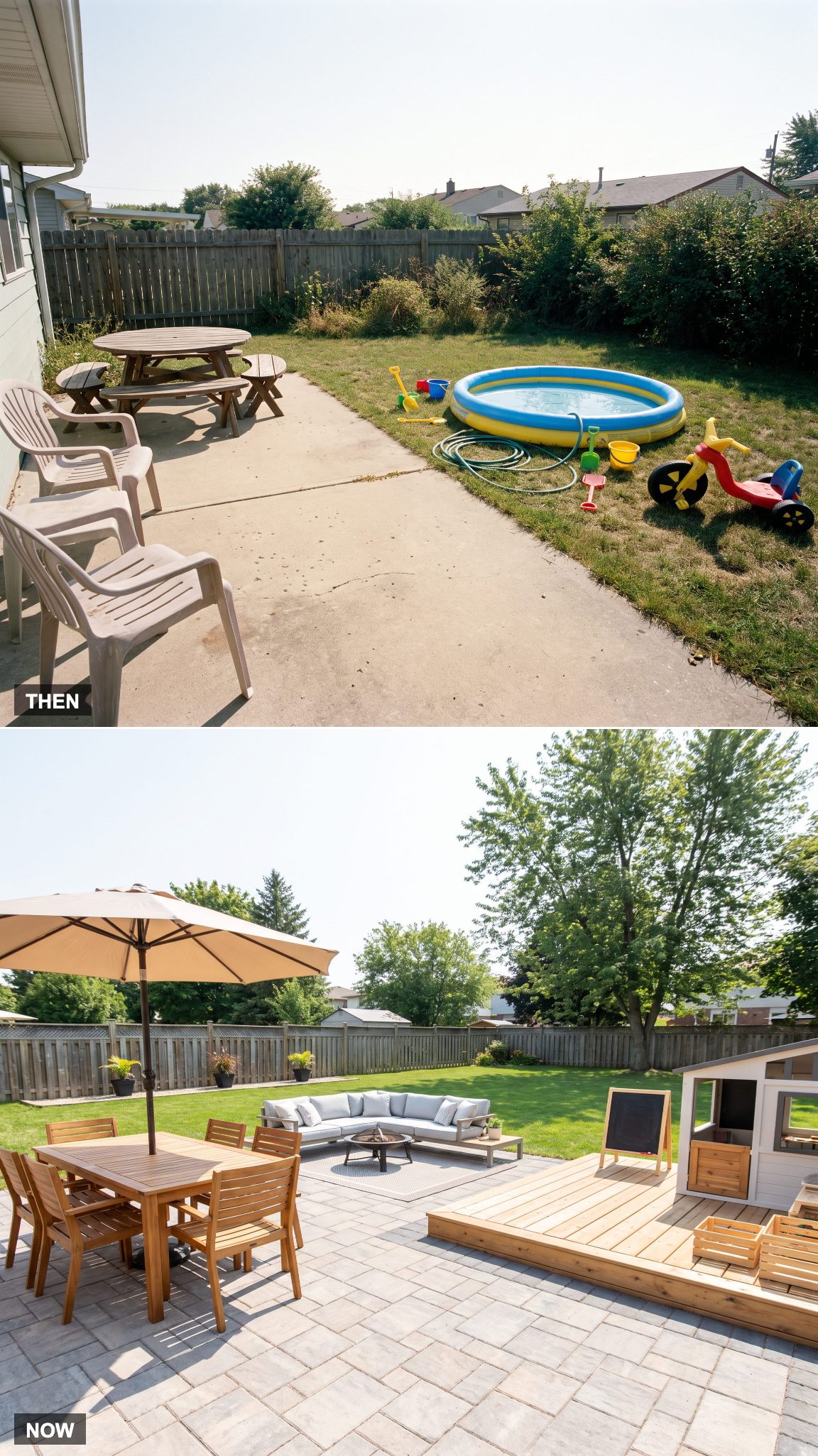
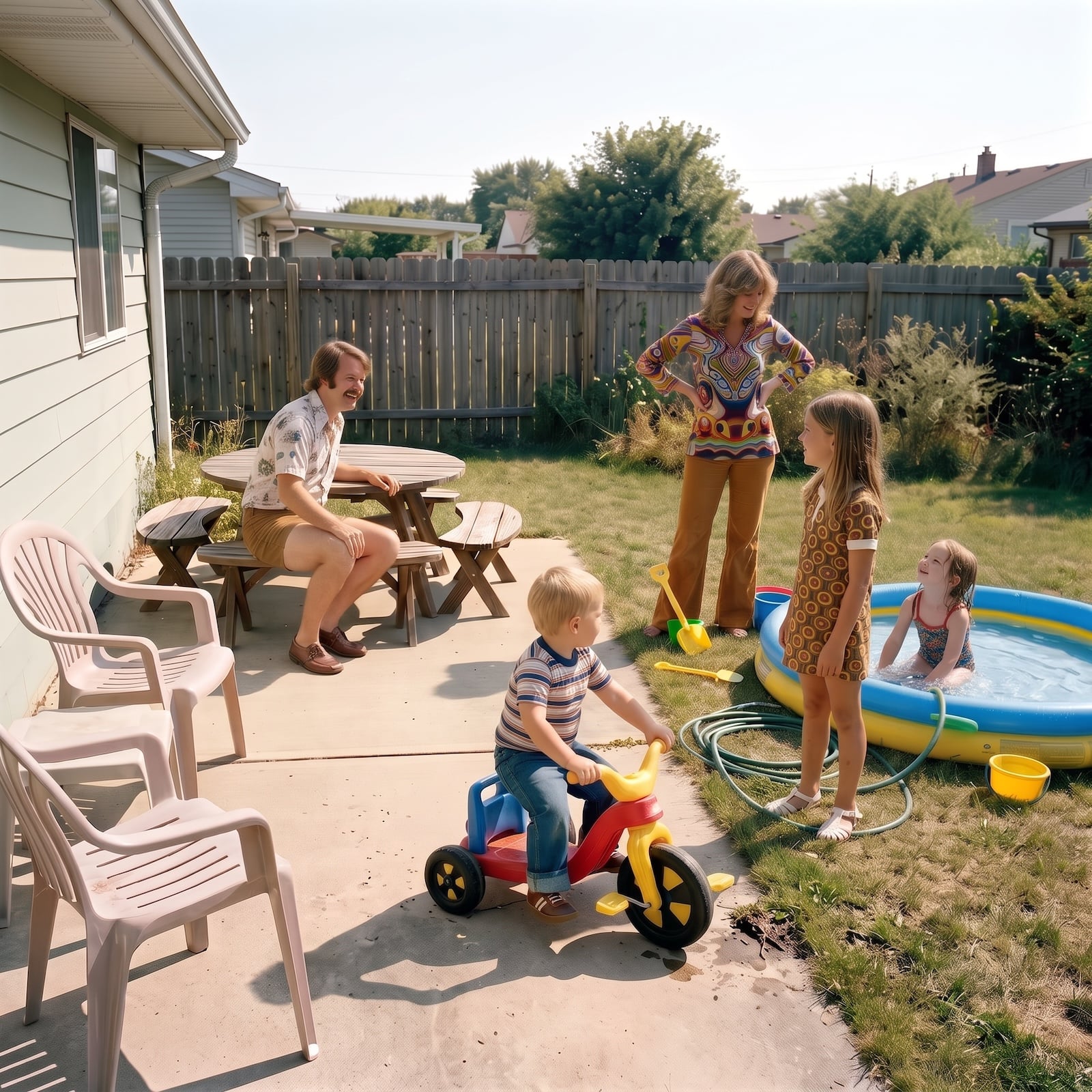
A blue kiddie pool on the grass, a Big Wheel tipped sideways, hose stretched across the patio, toys migrating wherever gravity and children took them. The family backyard was flexible because it had no choice.
That same flexibility can now be designed in. Dining gets one zone, lounging another, and play can occupy a defined piece of the yard without pretending children have suddenly become decorative. The chaos still happens. It simply has somewhere to go when dinner starts.
3. The Wobbly Fire Bowl Turns Into the Center of the Conversation
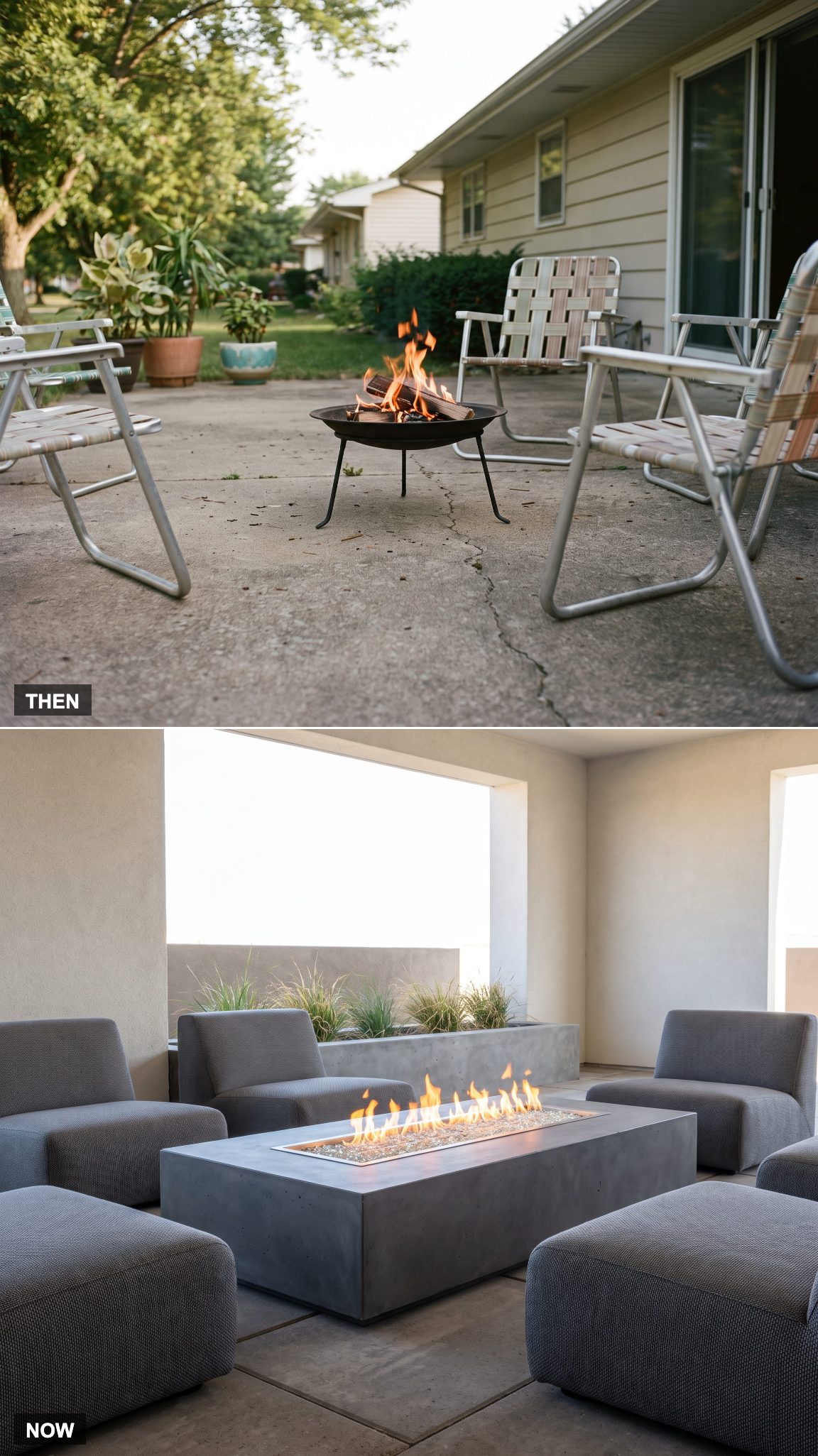
The portable brazier was essentially a bowl on legs with ambitions. Sparks escaped, smoke chose a victim, and chairs migrated around it all evening according to whichever direction the breeze had changed.
A built-in fire pit or gas fire table turns the flame into part of the furniture plan. Seating can be arranged around a fixed focal point, the fire stays where expected, and a gas version trades smoke and sparks for a cleaner line of flame at the turn of a control.
2. The Patio Stops Accepting Whatever Furniture Survived the Weather
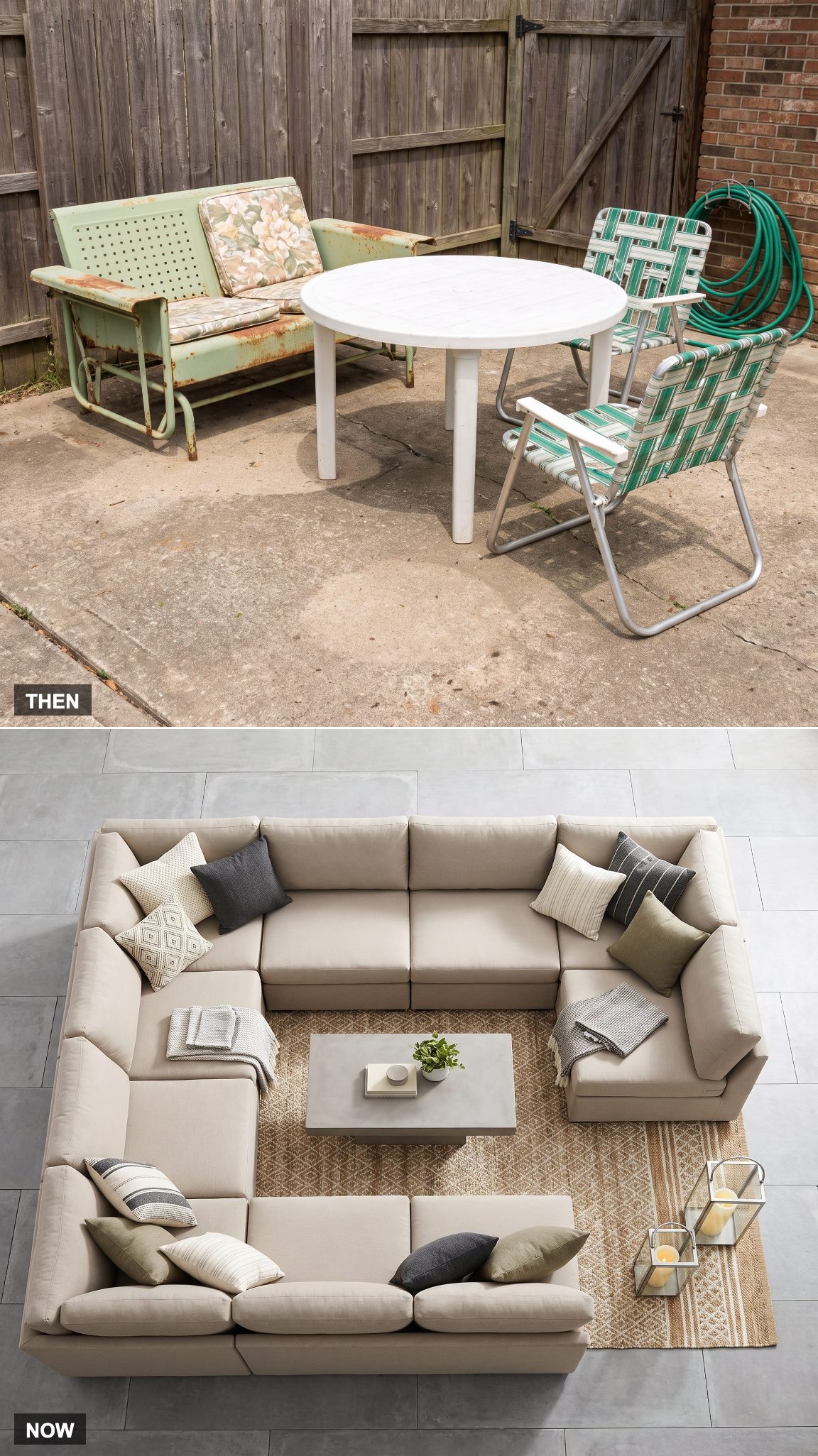
Outdoor furnishing once had a ruthless selection process: whatever did not rust through, split, fade beyond recognition, or blow into the neighbor’s yard got another season. That could leave a glider beside a resin table beside one folding chair hanging on by frayed webbing and optimism.
Better outdoor fabrics and finishes mean the patio can now be composed rather than merely endured. A sectional, coffee table, rug, cushions, lanterns, side tables, all selected as parts of one room. A cream patio design makes the point particularly clearly because pale upholstery outdoors once sounded like a dare.
1. The Seasonal Hangout Finally Becomes the Whole Outdoor Room
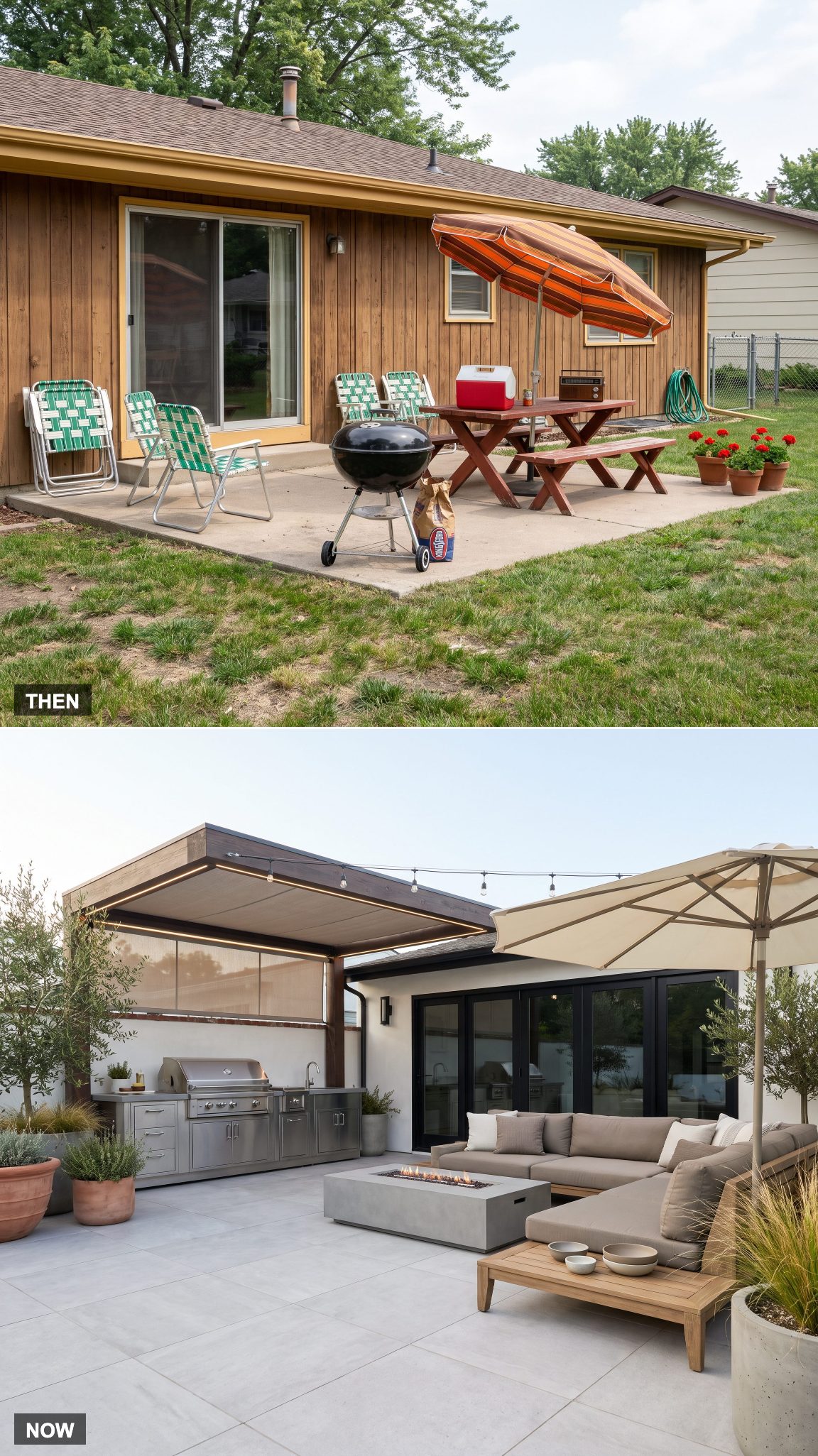
This is where the previous 30 transformations finally pile into one frame. The old formula was simple: slab, table, webbed chairs, grill, umbrella, good weather. When the season ended, much of the patio effectively clocked out with it.
The contemporary version starts stacking advantages. Porcelain or stone underfoot. Weather-resistant seating. Overhead cover. Layered lighting. A fixed cooking zone. Fire for cooler evenings. Planting and screens shaping the edges. Wide doors connecting everything back to the kitchen. The exact usable season still depends on climate, but the ambition has changed completely.
The real transformation is not any single product. It is intent. The patio stopped being the place the house ended and became another place the household actually plans to use. That is how you get from a concrete rectangle with furniture on top to the layered confidence of an oversized patio design.