🔥 Would you like to save this?
The staircase went down past the family photos, and the air changed halfway. Cooler. A little musty in the good way. Then your socks hit the shag and you were somewhere else entirely, somewhere the grown-up rules got softer.
The basement was where the real living happened. Spills were fine, volume was fine, and nobody ever vacuumed under the couch. The features below got mocked for years as dated embarrassments, and now a lot of us would trade a kitchen island to stand in one again.
In order to come up with the very specific design ideas, we create most designs with the assistance of state-of-the-art AI interior design software. Also, assume links that take you off the site are affiliate links such as links to Amazon. this means we may earn a commission if you buy something.
32. Wall-to-Wall Wood Paneling That Made the Basement Feel Like a Den
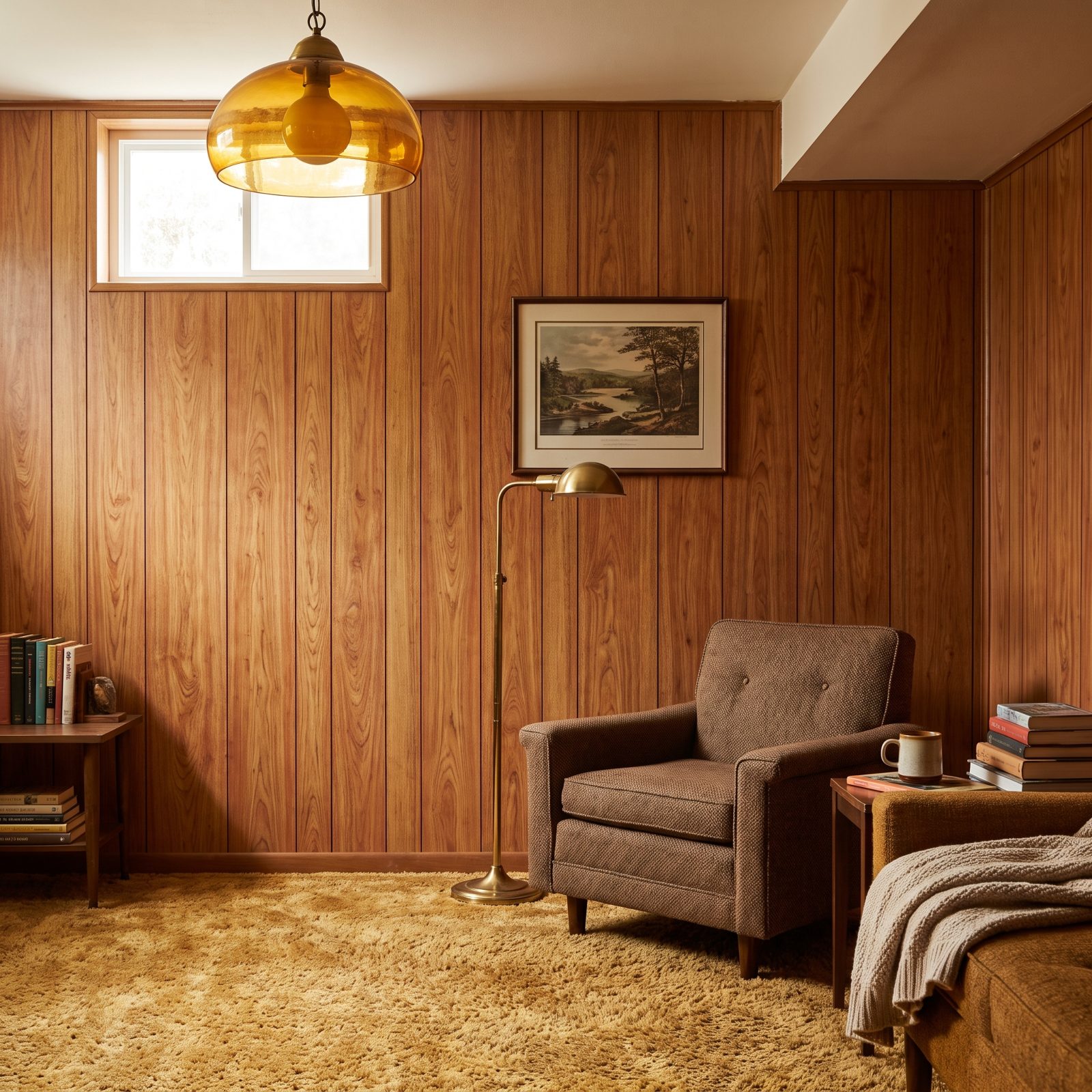
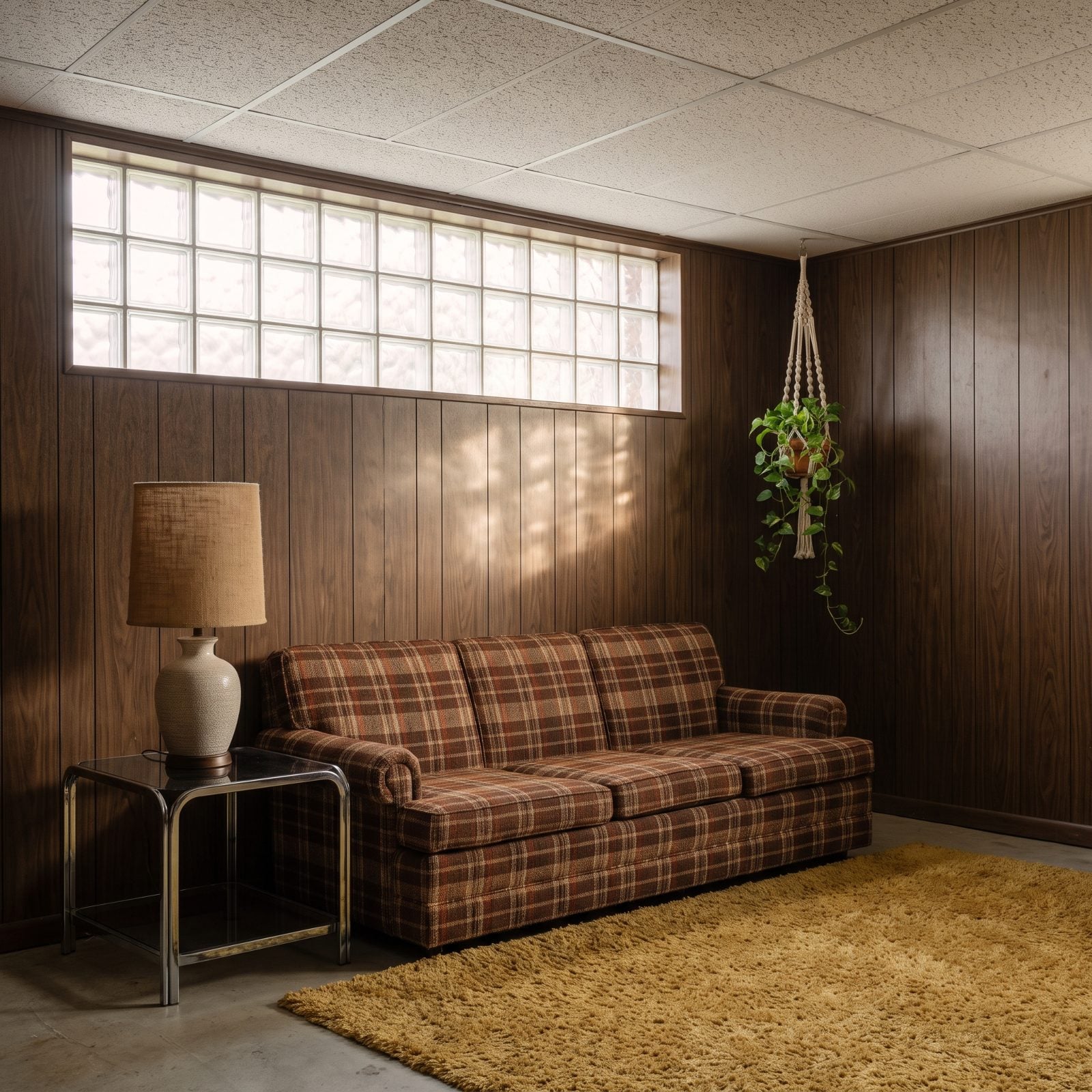
You knew it by sound before sight. Knock on it and you got that hollow thunk, because most of it was a thin printed sheet glued over studs, not real planks. The grain pattern repeated every few feet if you looked closely, and nobody ever looked closely.
What it did was warm the whole room up instantly. Concrete block walls read cold and institutional. Wrap them in honey-toned wood and suddenly you had a hideout, a place that felt finished — paneling gave a basement permission to be a real room.
31. Deep Shag Carpeting in Harvest Gold or Avocado Green
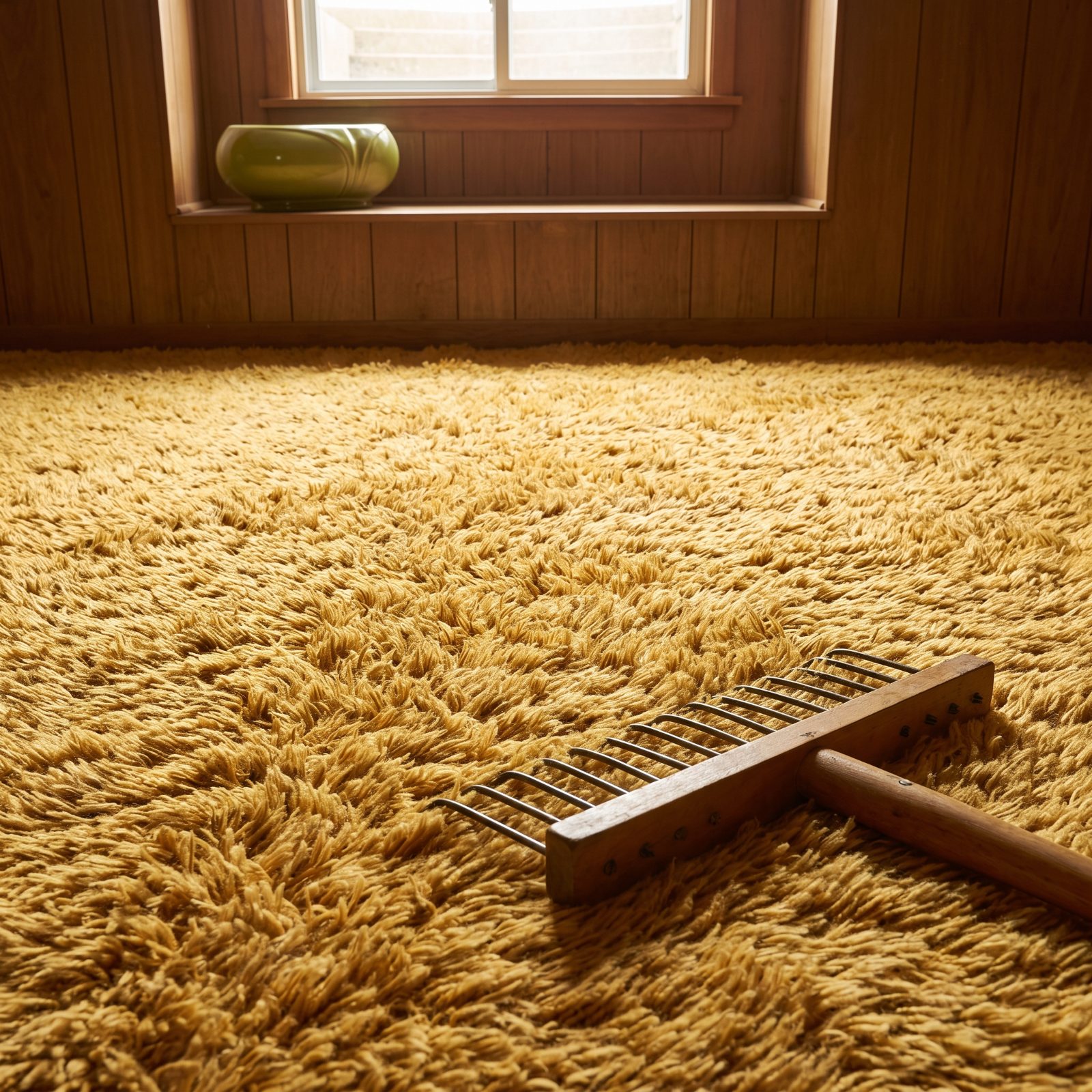
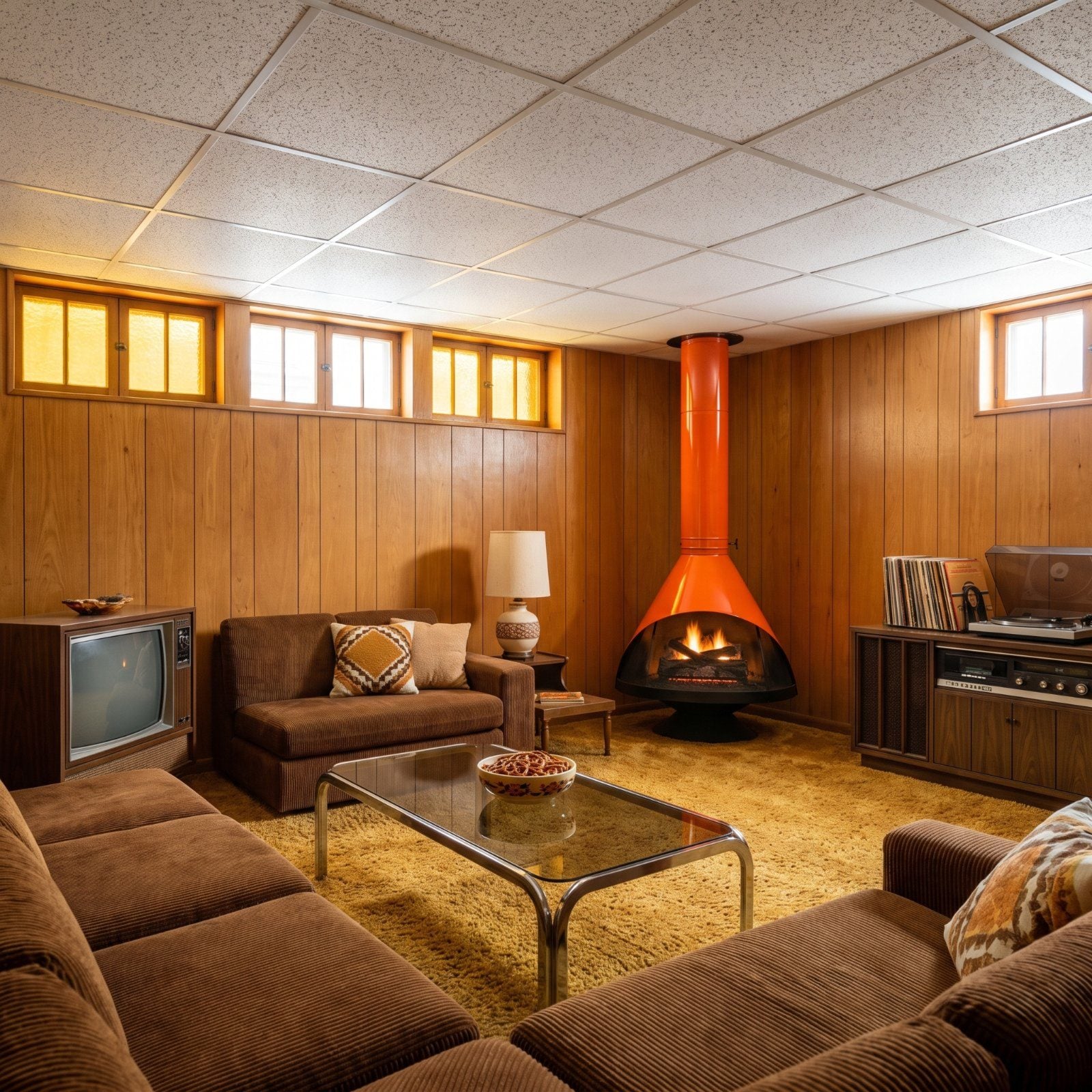
Barefoot was the whole point. That pile ran long enough to lose a quarter in, long enough that you raked it instead of vacuuming it, long enough to sit right down on the floor without a second thought because the floor was practically furniture.
Gold or avocado, always. The color showed up in catalog after catalog and somehow landed in half the basements in the country. It muffled everything too, which is why the basement always felt a few decibels calmer than upstairs.
30. Square Acoustic Ceiling Tiles in a Neat Suspended Grid
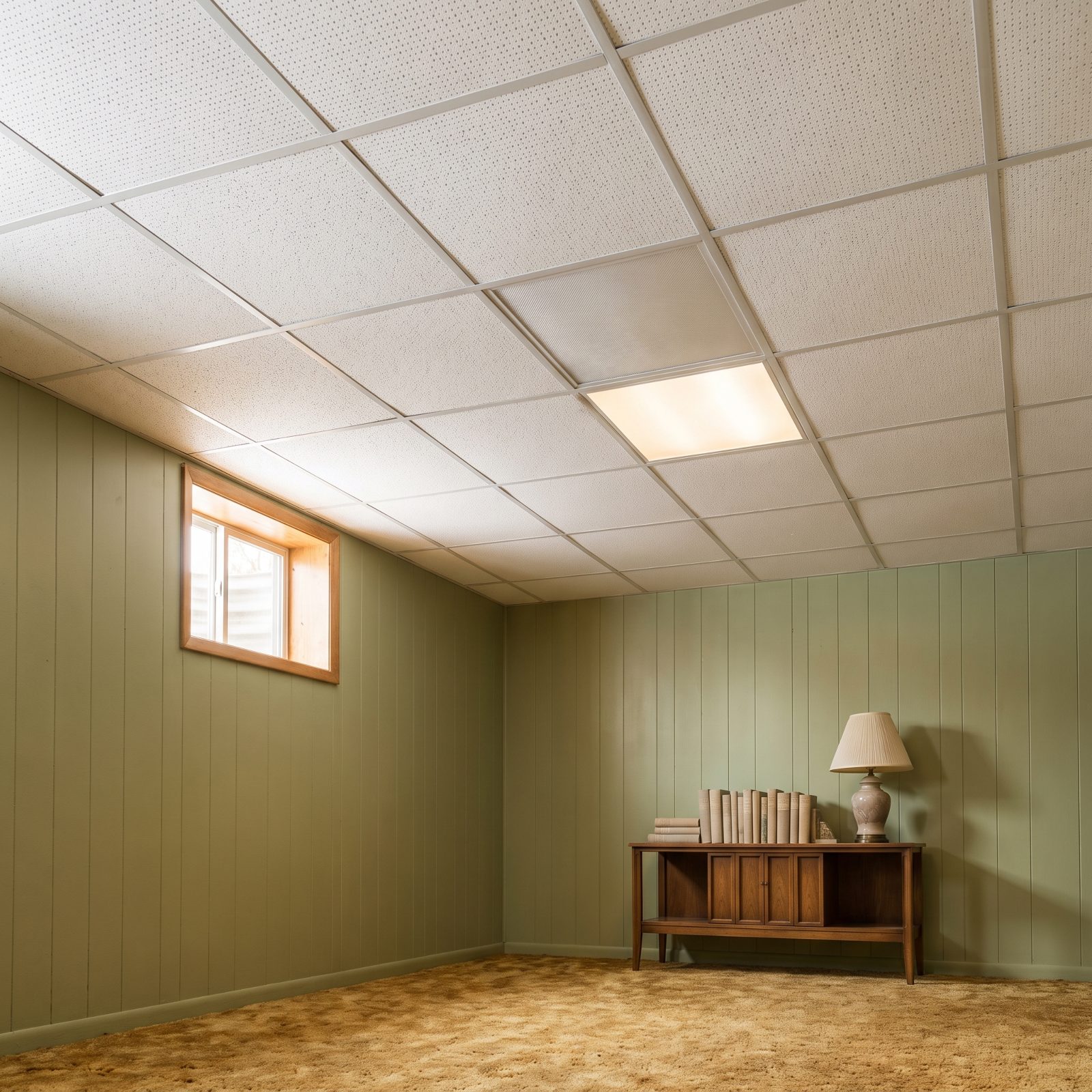
The grid was weirdly satisfying. Those lightweight tiles dropped into a metal frame hung just below the ductwork, hiding every pipe and wire in one clean move. Pop one out and you could reach the plumbing, which is exactly why handy types loved it.
The pinhole texture caught your eye during long card games when you were supposed to be paying attention. It soaked up sound, too, so the whole basement took on that hushed, contained feeling — a real ceiling in a room that started life as a foundation.
29. The Faux-Brick Fireplace Wall That Anchored the Rec Room
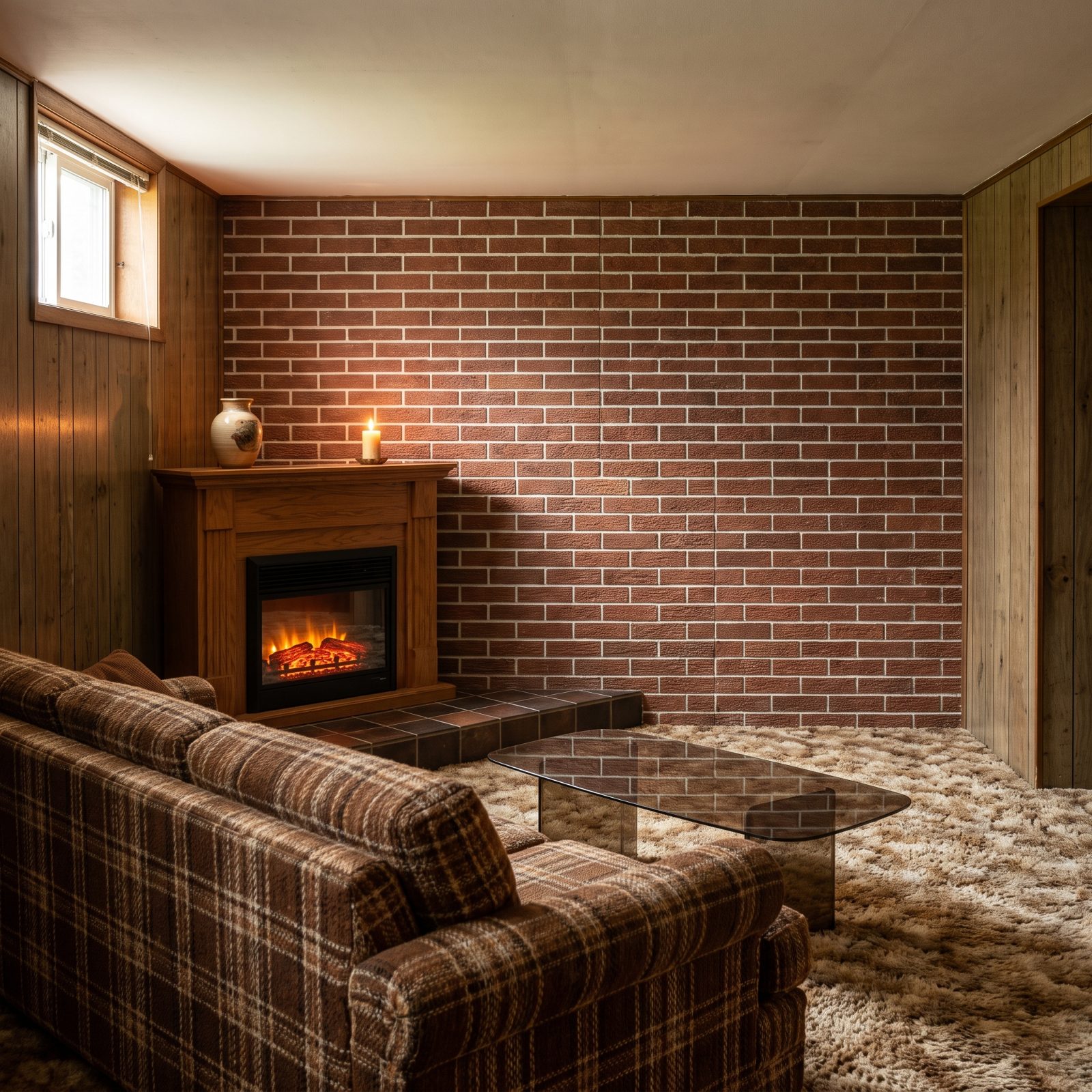
Up close you could tell. The bricks were too uniform, the mortar lines a touch too perfect, the whole panel a little too light when you tapped it. Simulated brick came in four-by-eight sheets and went up with construction adhesive.
None of that mattered once the room filled up. That wall gave the basement a focal point and a reason for the couch to face one direction. It said gather here — birthday parties, poker nights, the TV aimed right at it. Every rec room needs something to point at, and this was ours.
28. A Freestanding Cone Fireplace in Bright Orange
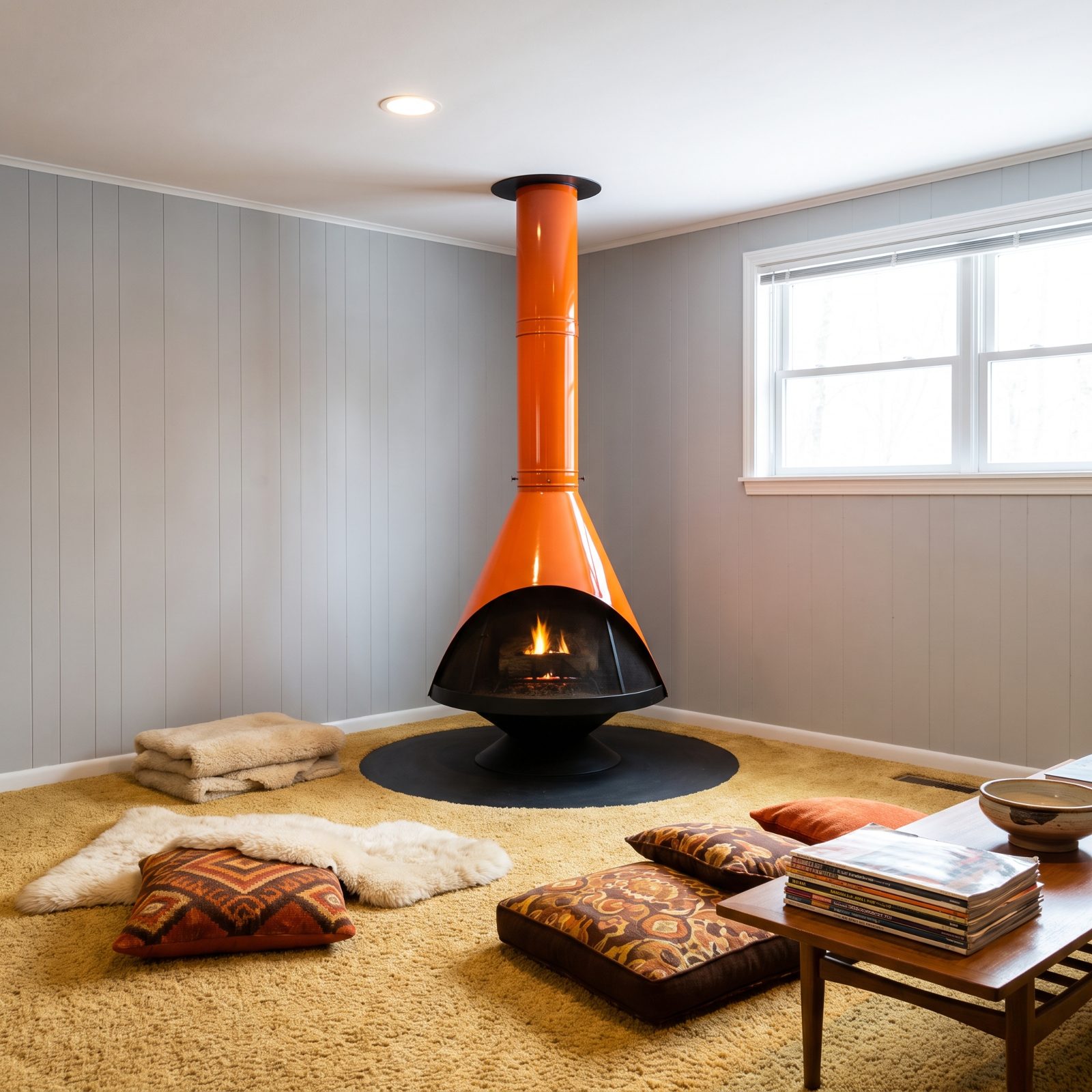
Nothing said the future quite like a fireplace shaped like a spinning top.
The cone hung from the ceiling or sat on a round pad, enameled in that unmistakable orange, and it threw real heat into a room that was always a little cool. Kids claimed the floor cushions right in front of it. Marshmallows happened. You could warm your hands on a piece of sculpture, and it made a concrete basement feel a little like a ski lodge.
27. The Enormous L-Shaped Sectional Everyone Could Fit On
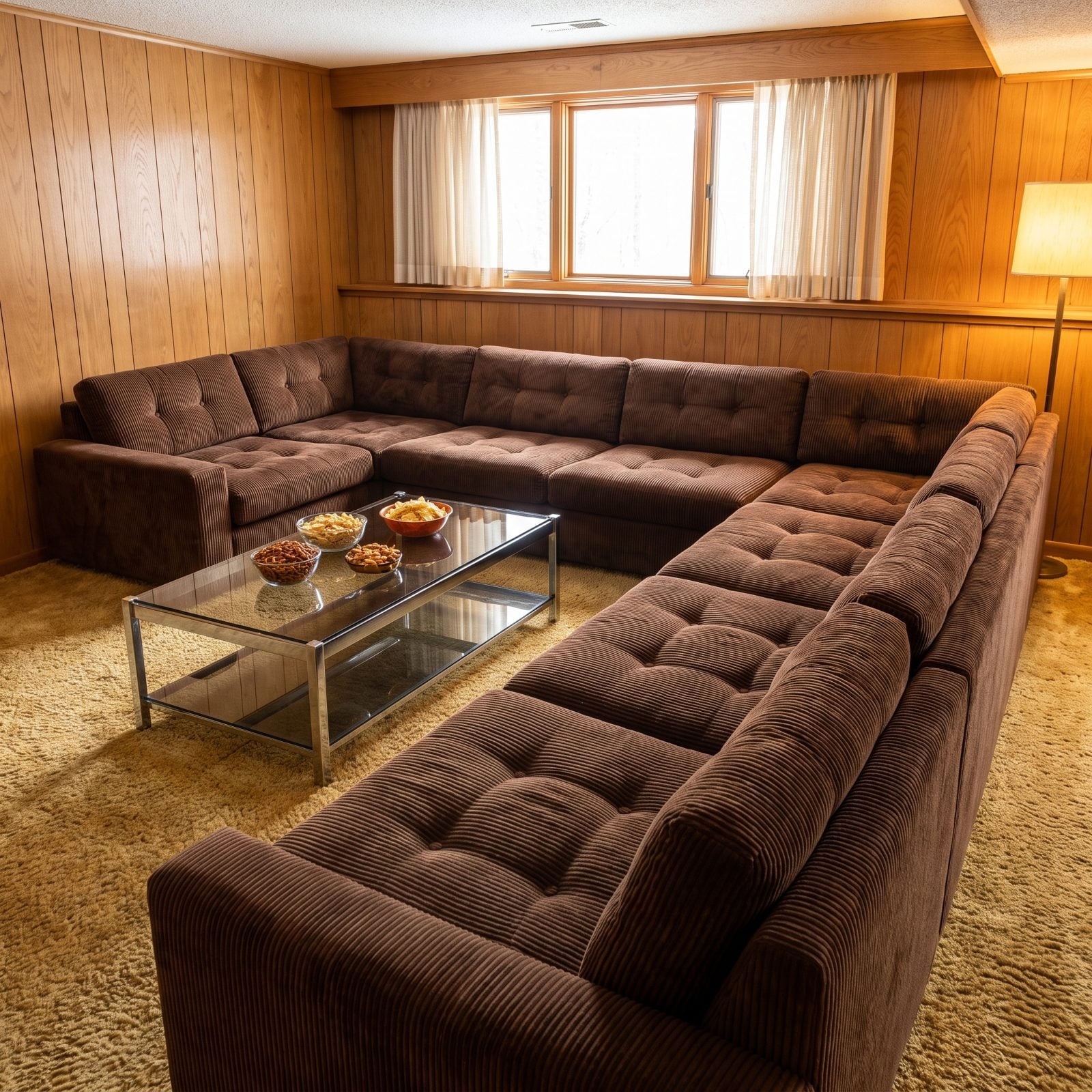
It took three people and a lot of grunting to get it down the stairs, and once it landed it never moved again. The L-shaped sectional ate an entire corner, usually in brown corduroy or a nubby plaid, with cushions deep enough to swallow a remote for a week.
The magic was capacity. Everybody fit — the whole family for a movie, the whole team after the game, cousins stacked three deep on the long side. A regular sofa seats some people. This thing seated the whole situation, and the modern sectional owes it everything.
26. Slouchy Vinyl Beanbag Chairs for the Kids
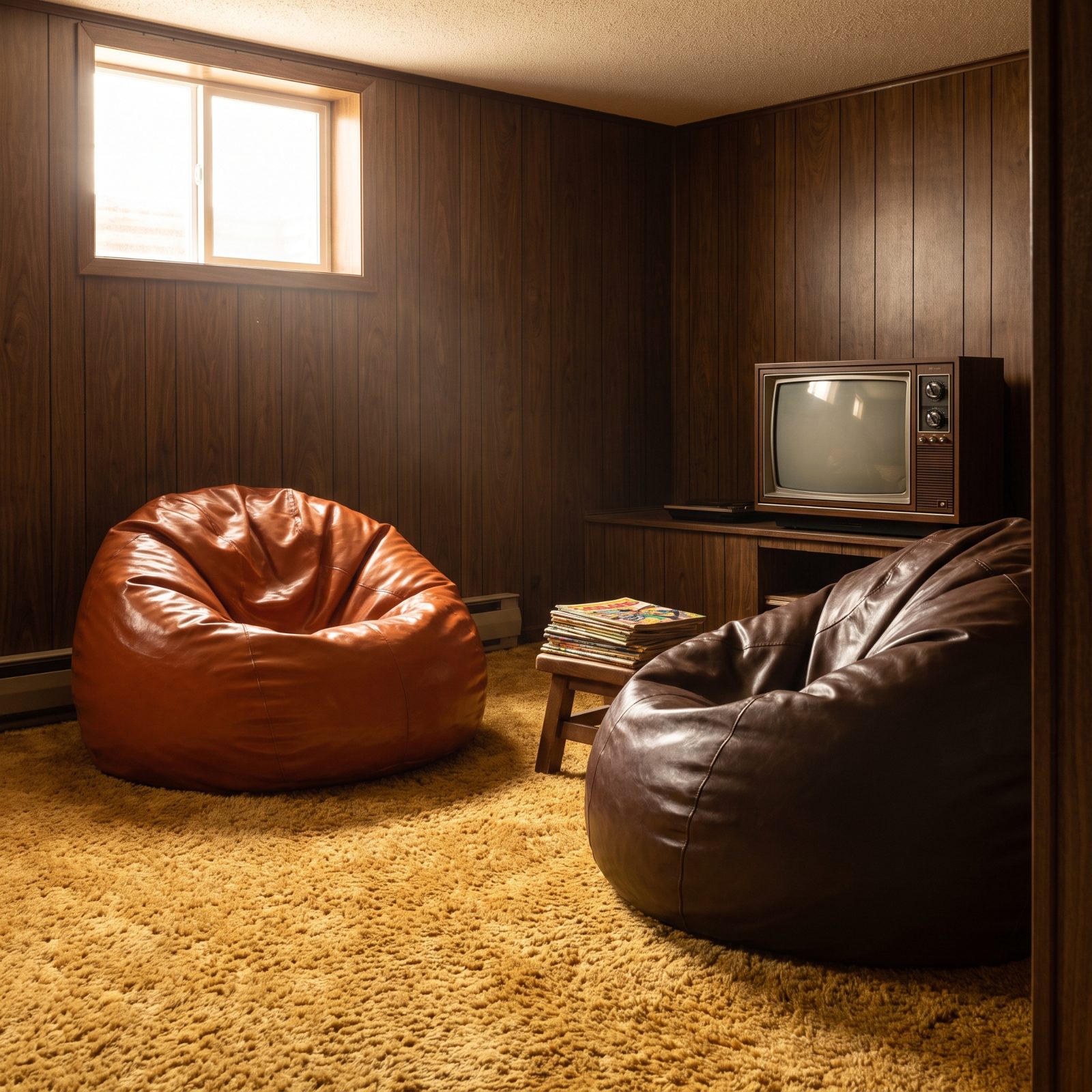
The sound is what comes back first — that slow crunchy shift of the little pellets as you dropped in and the chair molded around you. Shiny vinyl, a zipper on the bottom you were absolutely not supposed to open, a faint plastic smell that got stronger on warm days.
These were the kids’ seats. Parked in front of the TV, dragged across the shag, stacked into forts. A little impractical, prone to the occasional pellet leak, and loved anyway.
25. The Combination Stereo Console Disguised as Furniture
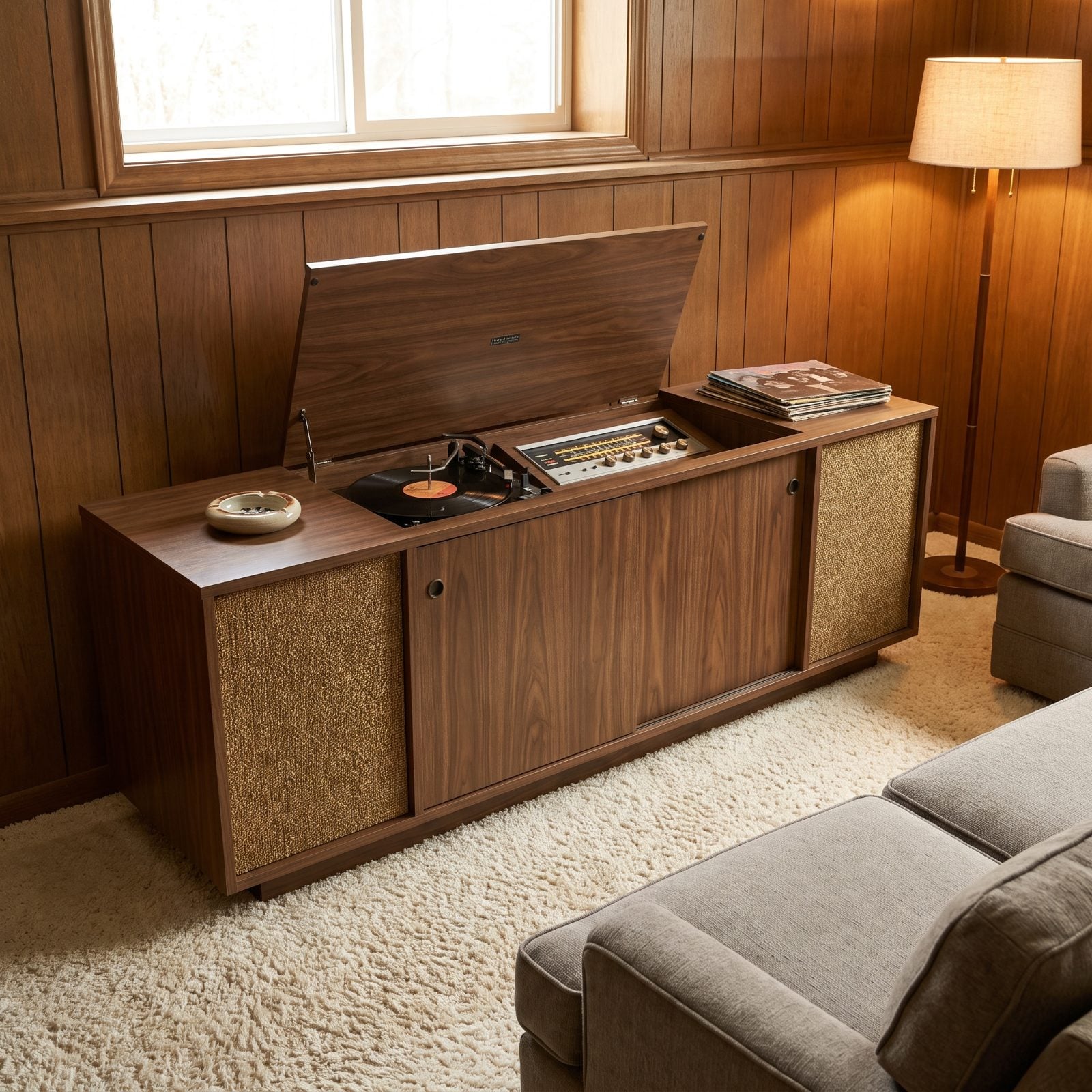
It looked like a sideboard — long, low, walnut-finished, the kind of thing you’d set a lamp and a bowl of wax fruit on top of. Then you lifted the lid and there was the turntable, the radio dial and the whole works tucked inside, speakers hidden behind fabric grilles at either end.
That was the clever part. The electronics pretended to be a piece of furniture so the room stayed a living room. You set the needle down, left the lid propped open, and the music came from somewhere polite and invisible. We spend a fortune now hiding our speakers. They had it figured out in 1972.
24. A Dedicated Rack Filled With Vinyl Records
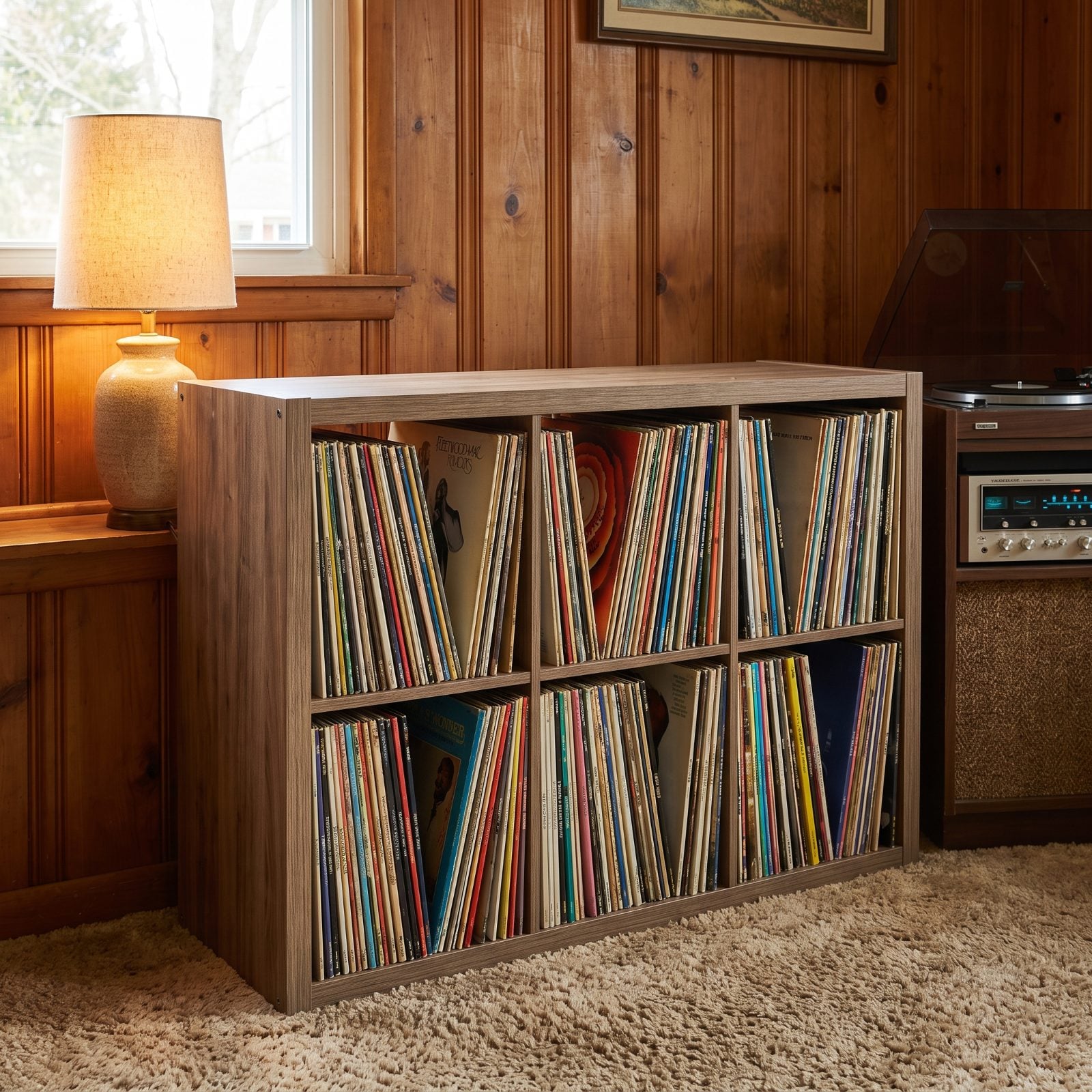
Flipping through it was half the fun.
The rack sat beside the stereo, a low cube or a wire frame, crammed so tight you had to wrestle a sleeve out with two fingers. The covers were twelve inches of art you actually studied — gatefolds you opened like a book, liner notes you read lying on the shag.
Picking an album was a whole ritual. Flip, flip, pull, examine the sleeve, decide. No shuffle button. No algorithm. You chose, and then you committed to a full side.
23. The Wood-Grain Console Television in the Corner
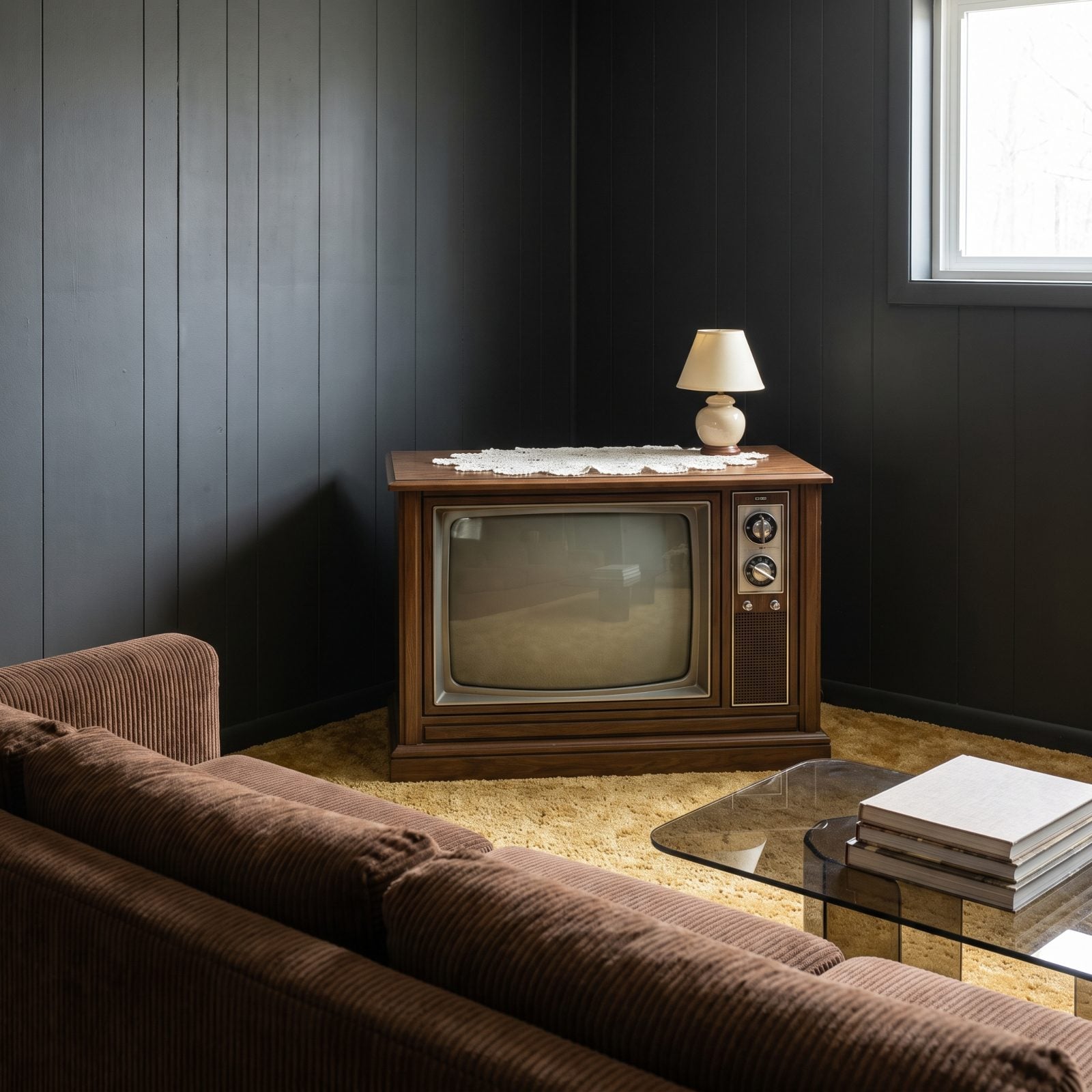
It wasn’t a television so much as a dresser that happened to have a screen. The console sat right on the floor, picture tube set into a wood cabinet with a speaker grille underneath and a row of chunky dials you turned by hand. Changing the channel meant getting up.
It took a second to warm up after you clicked it on, the picture blooming out from a white dot in the center. The whole family faced it from the sectional. Everything else in the room pointed toward that warm glow.
22. The Full-Size Pool Table Beneath a Hanging Billiard Lamp
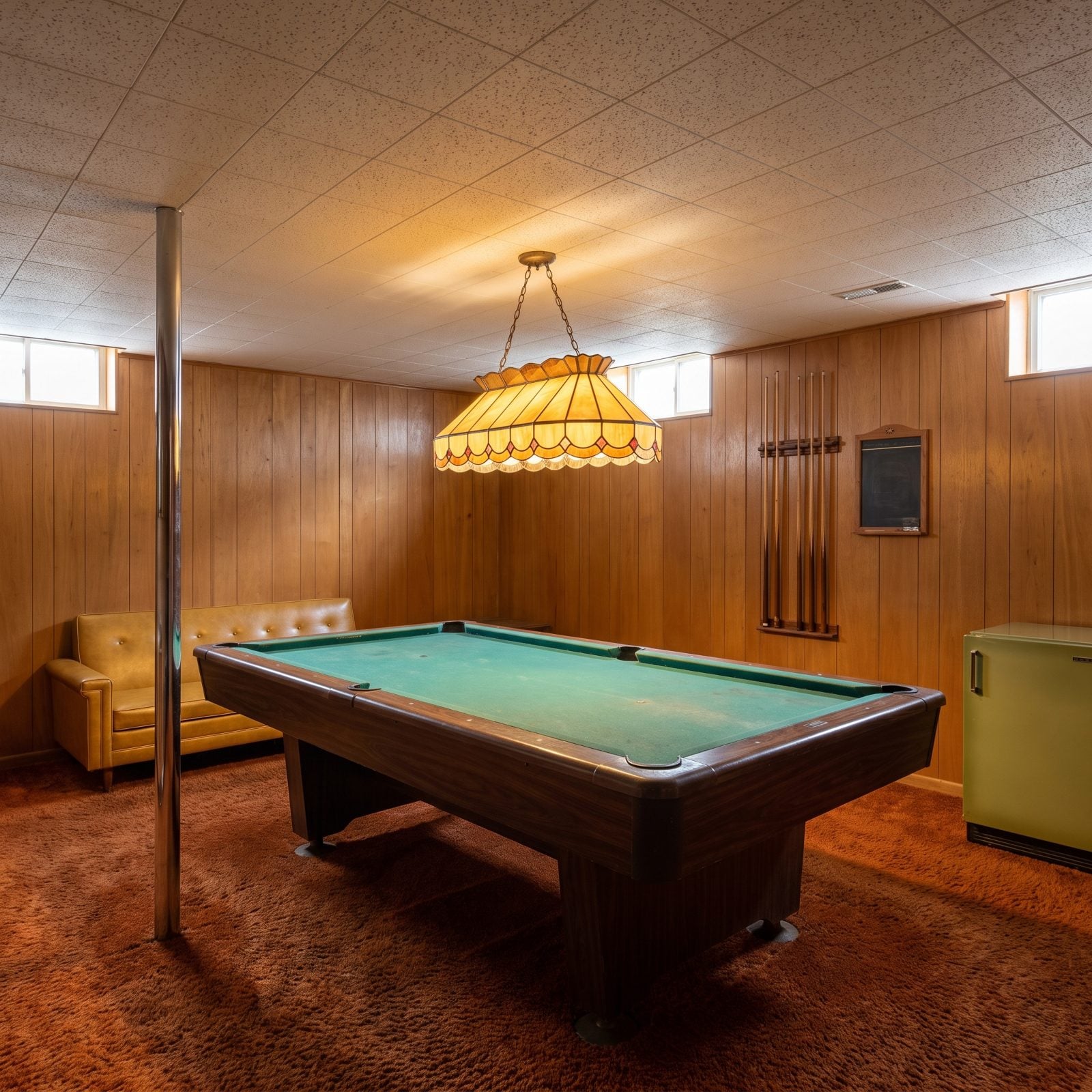
That low billiard lamp did everything. It cut the room in half, the felt lit up bright while everything above dropped into shadow, so the game became the only thing in the world. You learned to duck under it without thinking.
Nobody in the family could actually play, and it never mattered. The table was where you went after dinner, where the uncles argued over whether a ball counted, where someone always sank the eight too early and had to buy the next round of root beer.
21. The Foosball Table That Rattled Through the Whole House
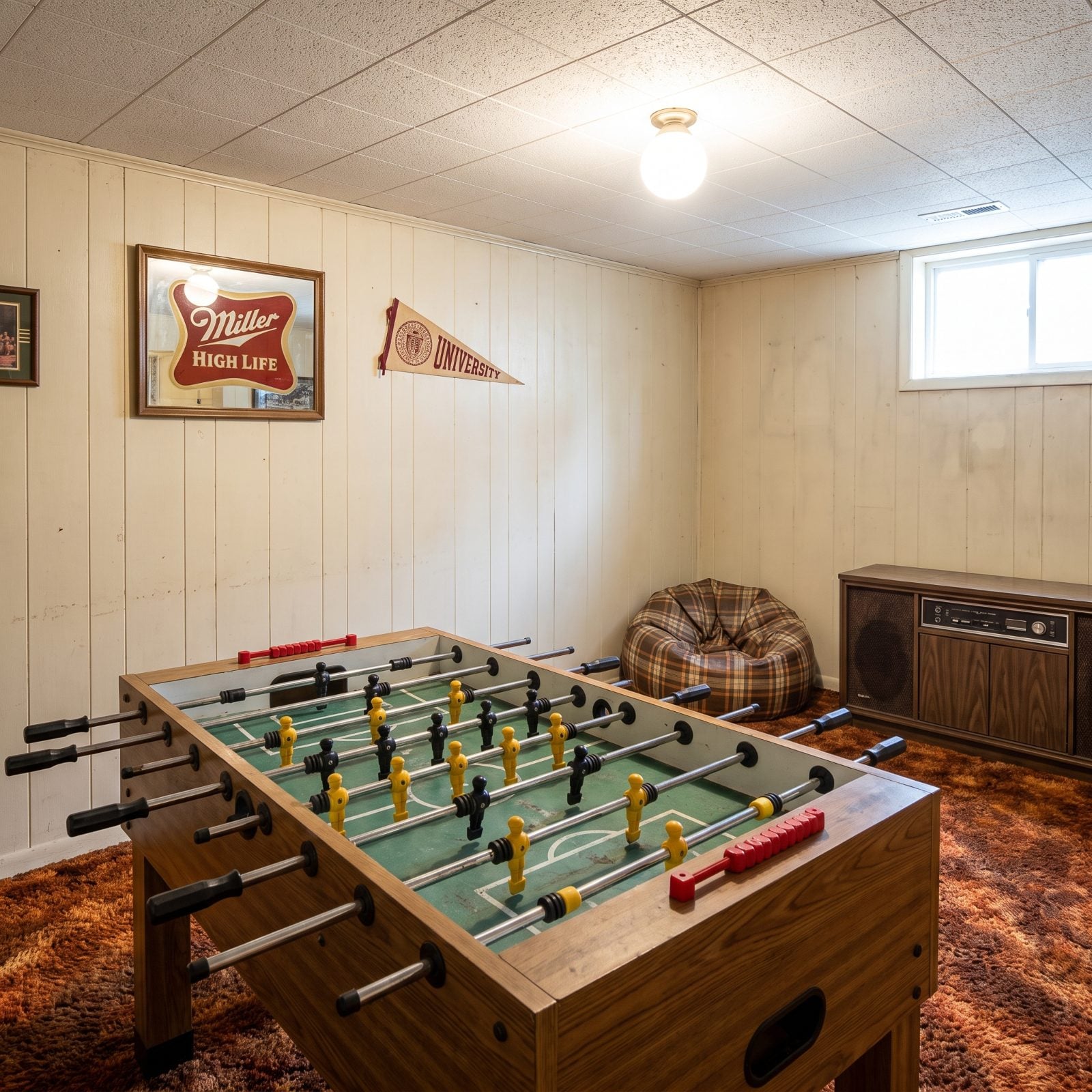
You could hear a foosball game from two floors up. That specific rattle and clack of the little cork ball ricocheting off plastic men, the slap of a rod slammed all the way to the end stop, then the thunk of the ball dropping into the goal tray — it traveled through the floor joists like a drum.
Scoring was done by hand, usually with little sliding beads on a wire track that nobody trusted. And there was always one spin move somebody declared illegal with total authority, as if a rulebook existed. It did not.
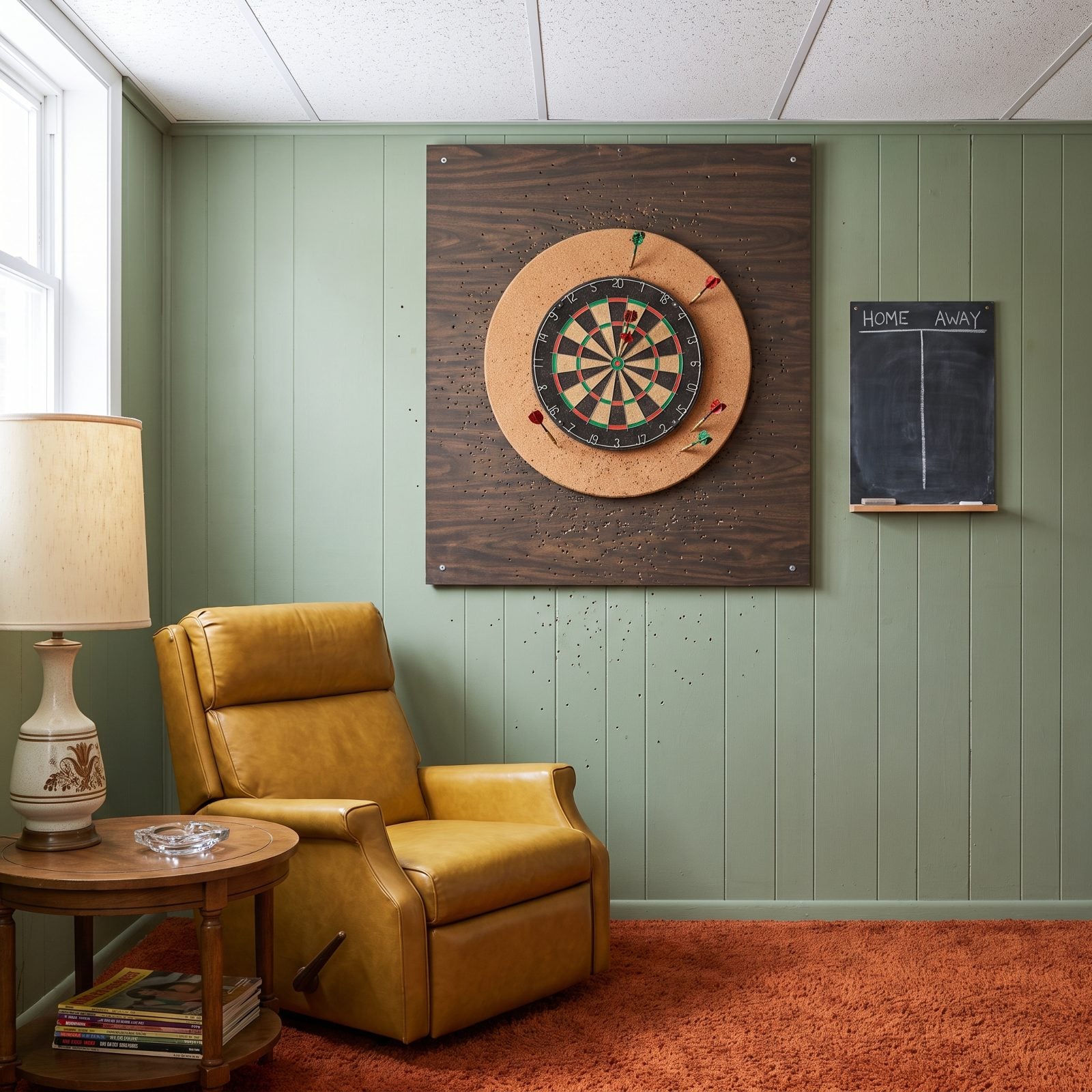
20. The Cork Dartboard Mounted on a Paneled Backboard
🔥 Would you like to save this?
The backboard took more abuse than the board itself. Every missed throw left another little crater in the paneling around it, a scatter pattern of family incompetence building up over years. Dad kept saying he’d move the whole thing. He never did.
Scores went on a tiny chalk slate with a nub of chalk tied on a string. Cricket, 301, whatever. The rules shifted depending on who was winning.
19. A Folding Card Table Ready for Poker Night
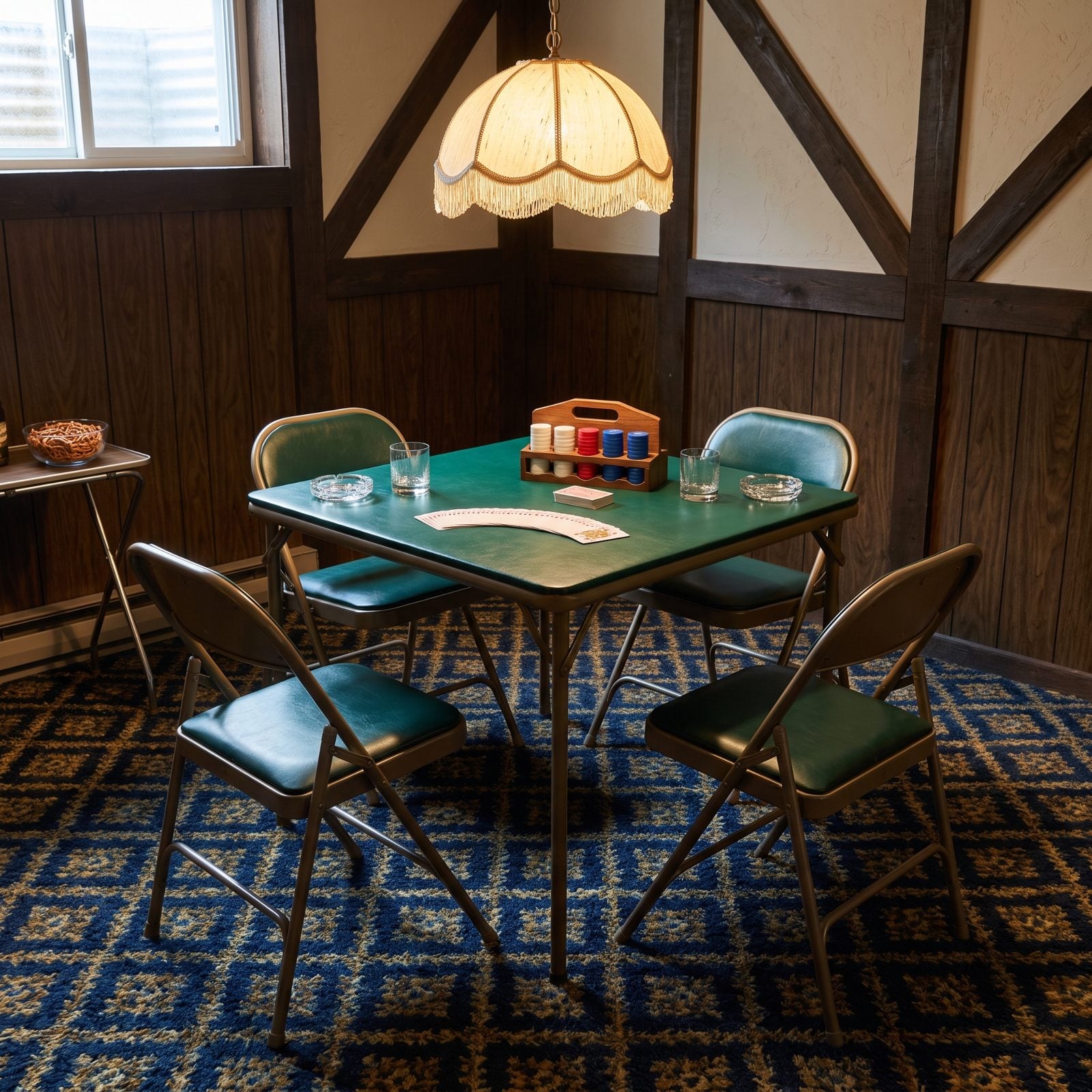
It lived folded flat behind the furnace or in the closet under the stairs, and the moment it came out everyone knew the night had a plan. That padded green vinyl top with the slight give to it, the wobble in one leg that never got fixed, the satisfying snap of the legs locking open.
Poker chips lived in a caddy that smelled faintly of plastic and smoke. Nobody played for real money. A quarter was a big bet, and losing it felt enormous.
18. The Cupboard Packed With Board Games and Puzzles
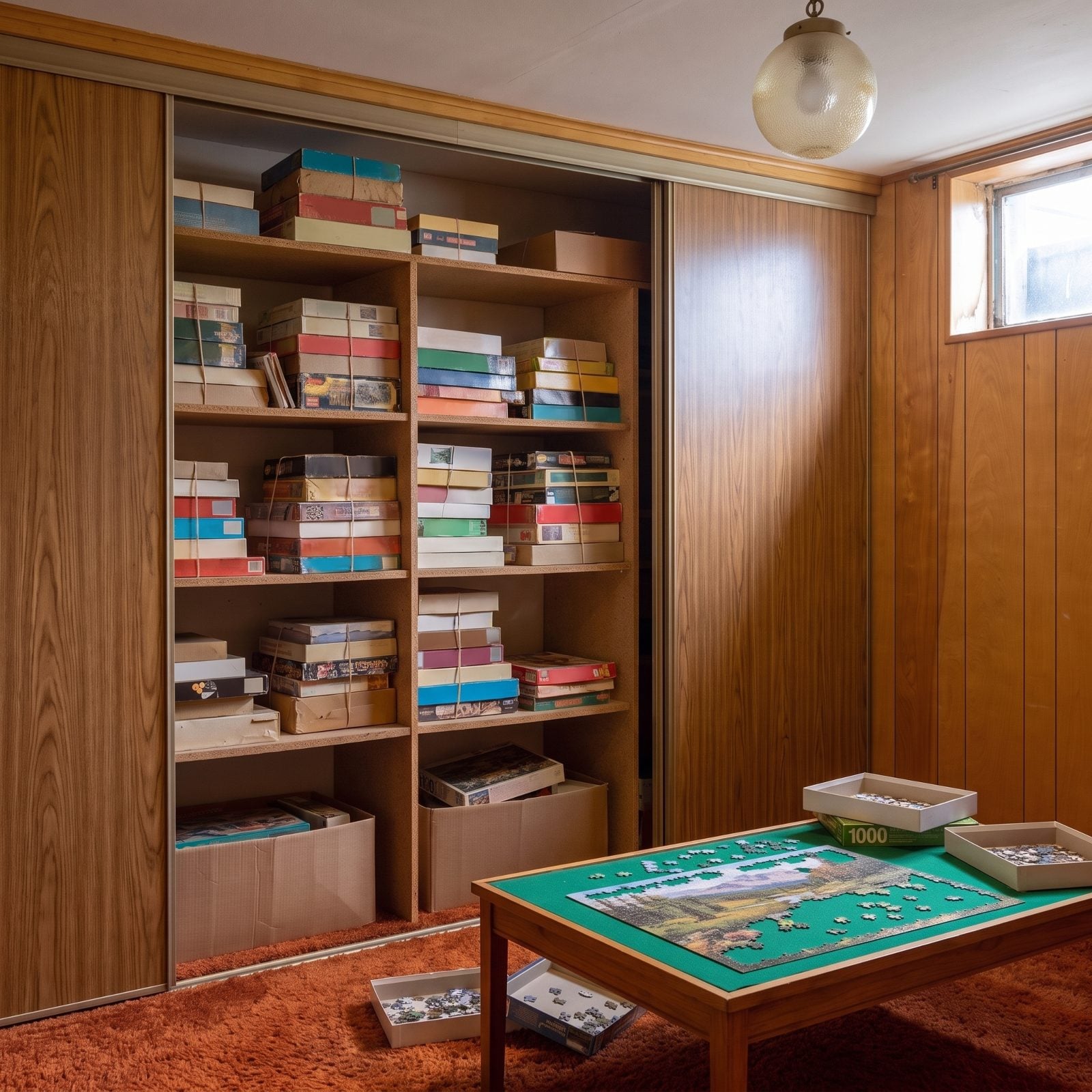
Every box was stacked in tidy piles, many tied together with string. Half the games were missing a piece, which everyone just accepted — a button or a penny stood in for the lost token without comment. The puzzles always had one piece gone for good, and you discovered it at the very end.
Rainy Saturdays lived and died in that cupboard. You’d pull a box, lose interest, pull another, and somehow the afternoon vanished. That slow boredom is the thing people miss most and name least.
17. Built-In Benches With Lift-Up Storage Under the Seats
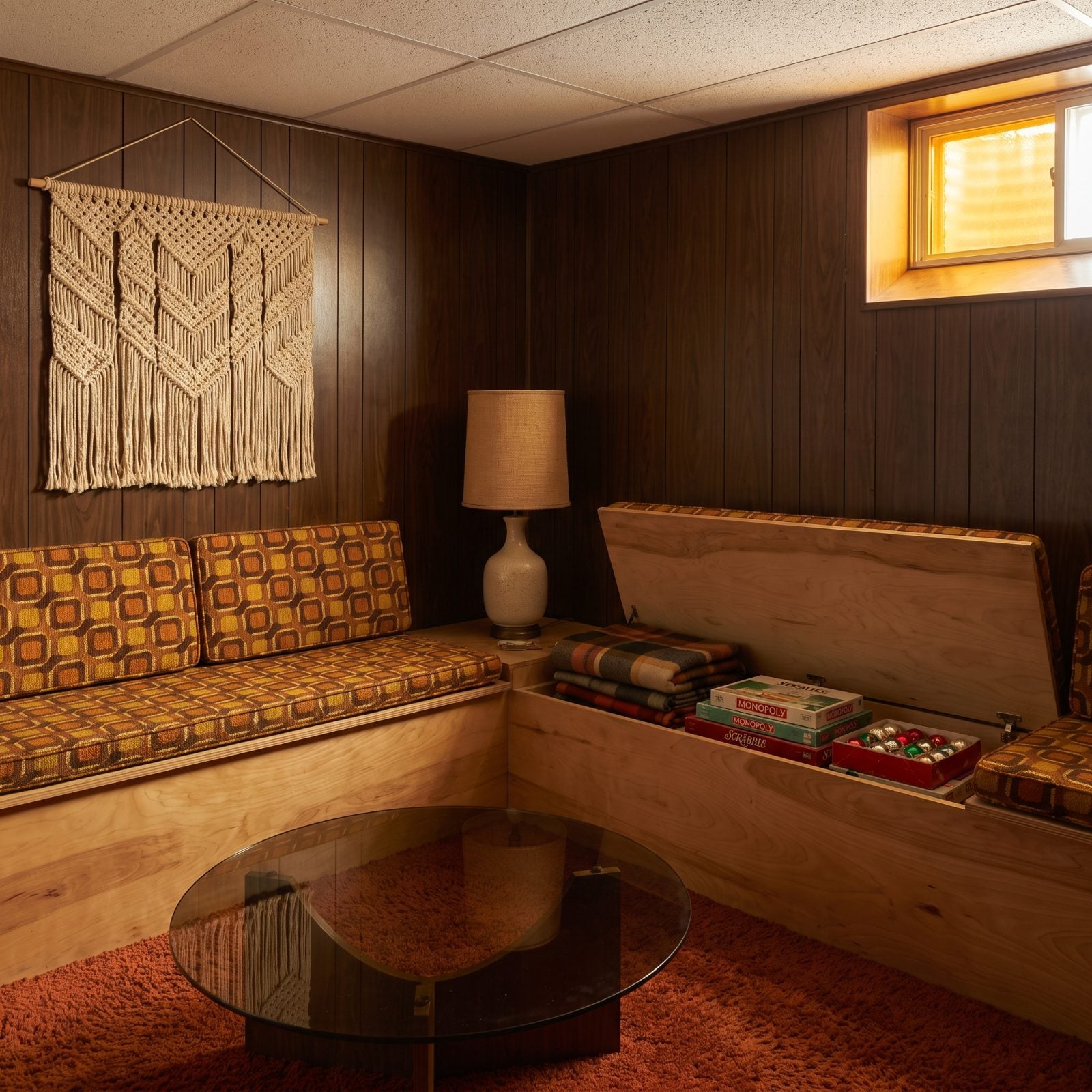
Clever and completely practical. The seat cushions sat on hinged plywood lids, and underneath went everything: the extra quilts, the Christmas stuff, the games that didn’t fit the cupboard, whatever nobody wanted upstairs.
The lids were heavy and liable to drop on your fingers, so you learned to hold them with one hand while you dug. A dual-purpose built-in like this is what cramped square footage calls for, and it’s worth stealing for a modern muted bedroom design or a reading nook today.
16. Knotty-Pine Cabinets for Games, Glassware and Party Supplies
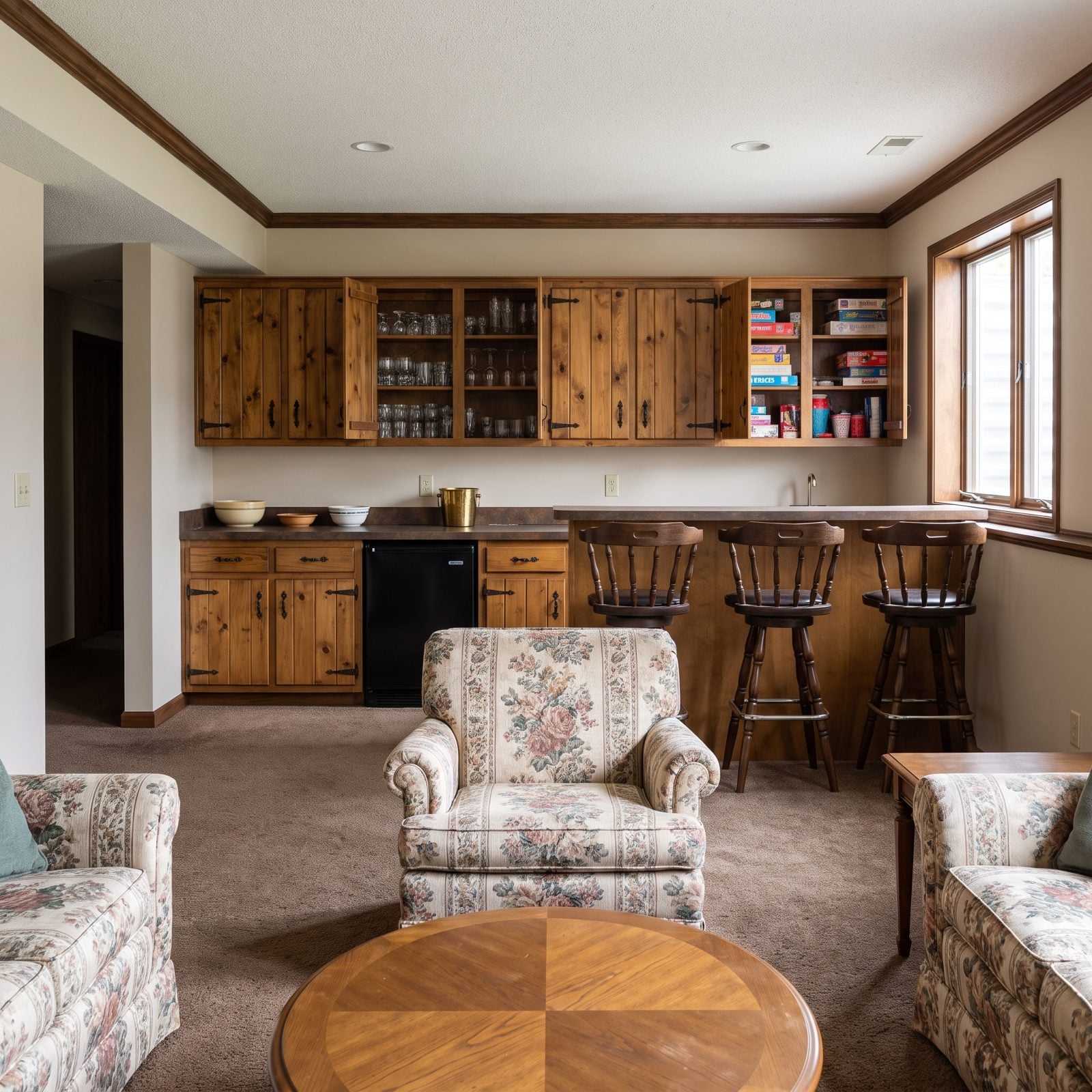
That orange-amber varnish on knotty pine was everywhere down there, the knots dark and swirling like little eyes watching the party. The cabinets held a strange inventory: the good highball glasses, a deck of cards, the fondue forks, a bag of balloons left over from someone’s birthday three years back.
Wrought-iron pulls, a slight sticky resistance on the hinges, and that specific smell of varnish and old crackers. Open one and the whole party history of the house spilled out at once.
15. An Accordion Divider That Turned One Room Into Two
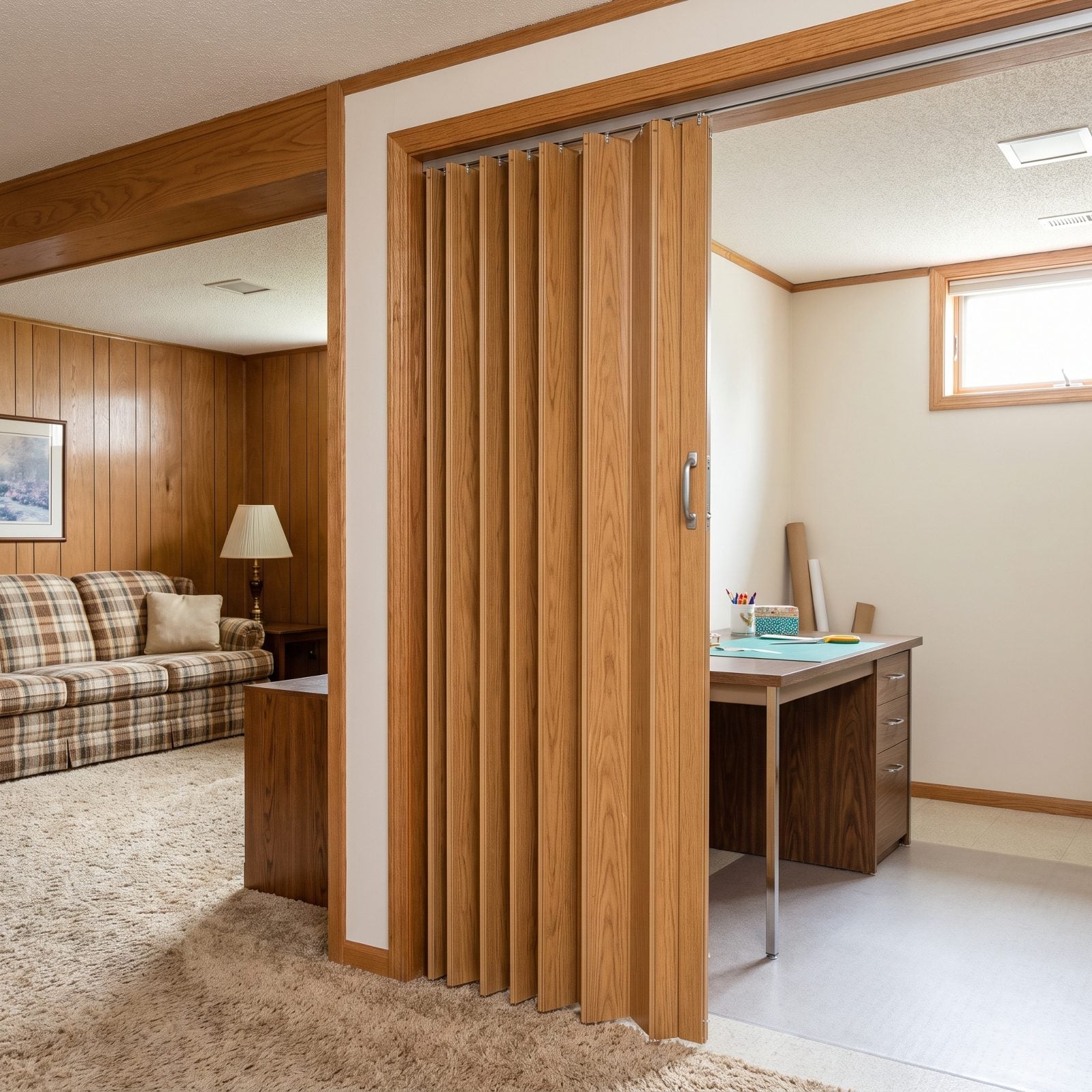
It ran on a ceiling track and folded like a giant plastic concertina, that faux wood-grain vinyl clacking shut fold by fold. Pull it across and suddenly one basement became two rooms: TV on this side, laundry or homework on the other.
It didn’t block sound at all. You heard everything through it, which made the whole gesture a bit of polite fiction everyone agreed to honor.
14. Carpeted Basement Steps With a Metal Edge Strip
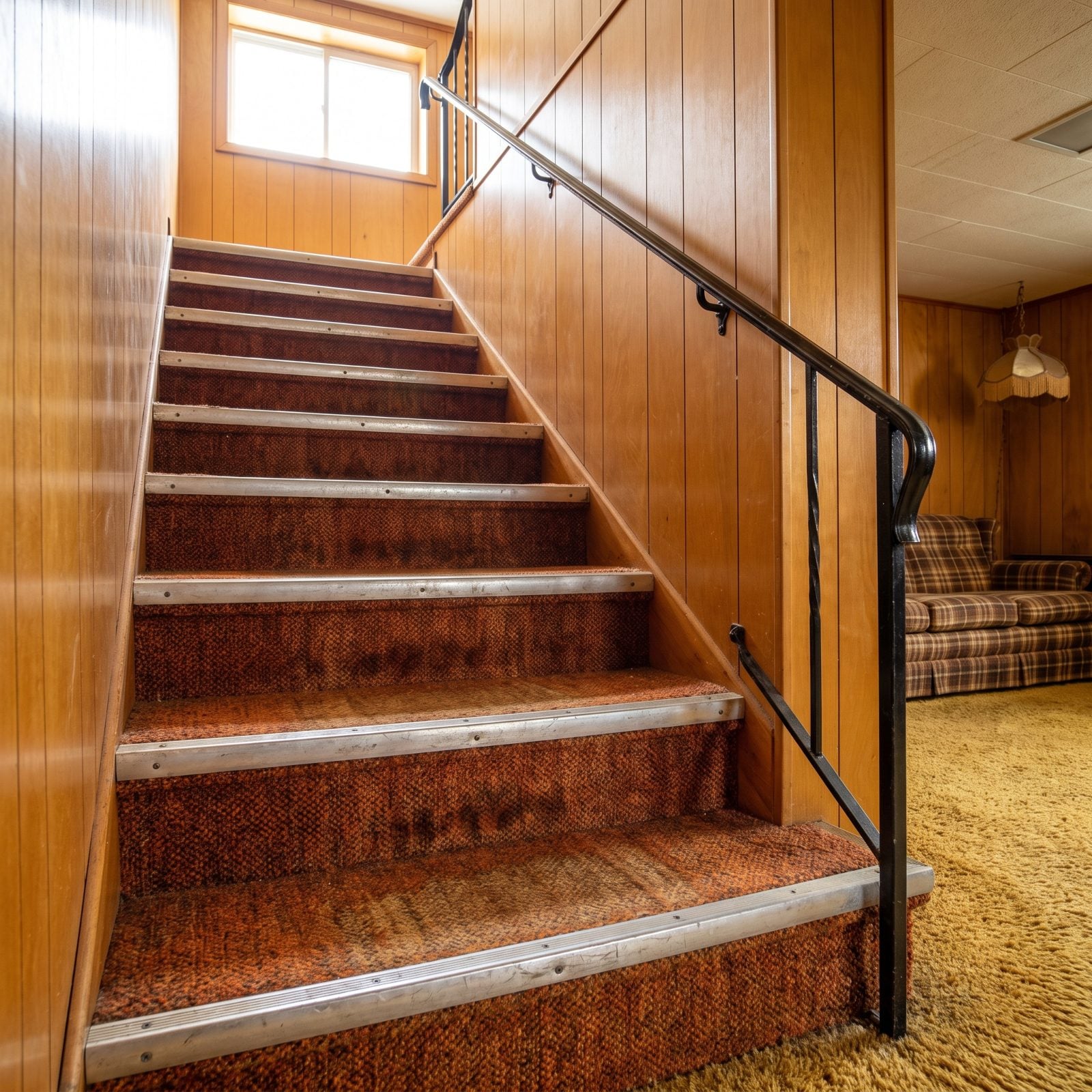
Those metal edge strips caught the light and your socks in equal measure. The carpet wrapped each tread, worn thin and shiny down the middle where every foot in the family had landed for a decade. You could identify a person by the sound of them coming down.
The aluminum nosing was there to stop the carpet edge from fraying, and it worked, mostly. The screws backed out over time and snagged the occasional heel — small price. The whole descent felt like crossing a border, the rec room on the far side of it.
13. A Plug-In Swag Lamp Suspended From a Ceiling Hook
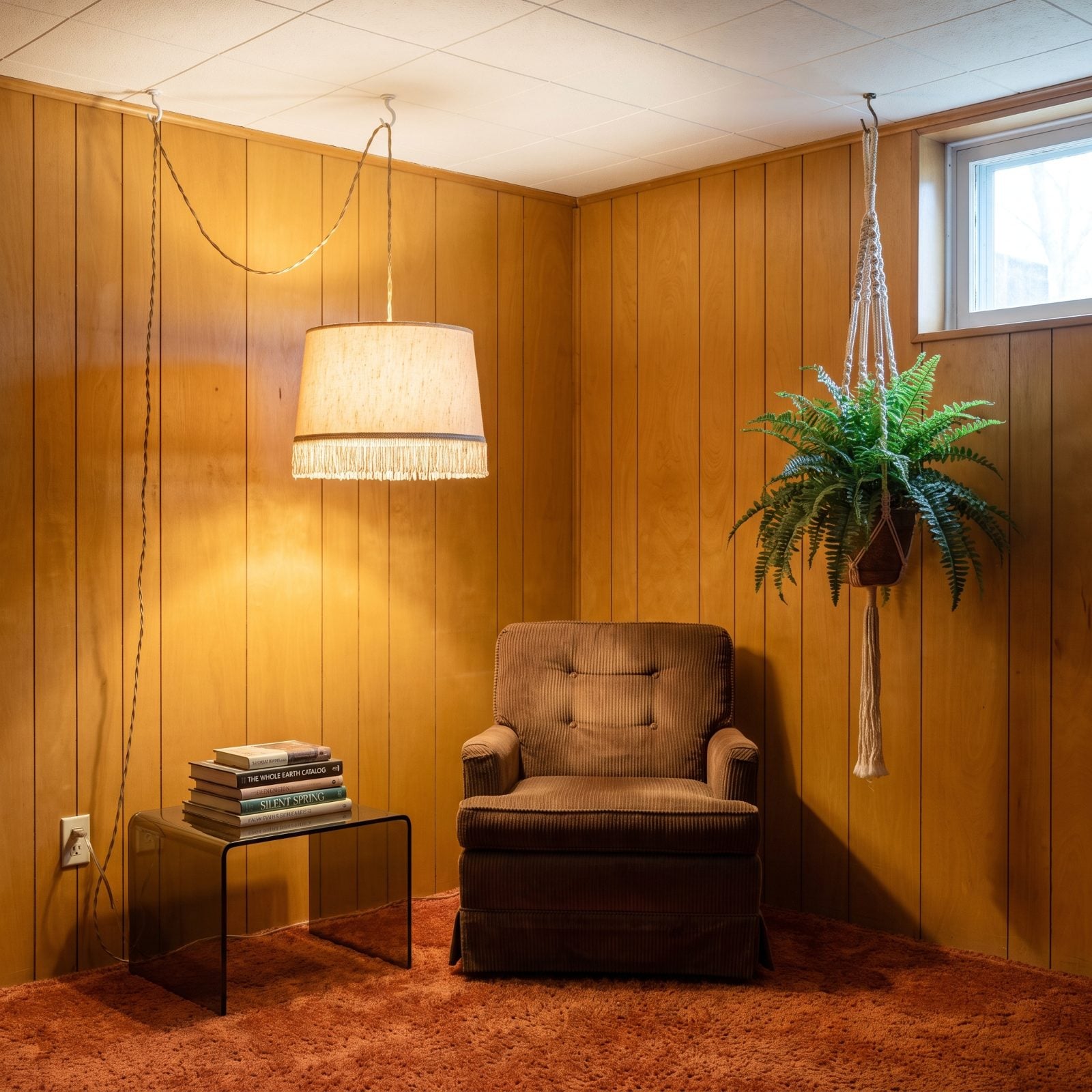
No electrician required. You screwed a hook into the ceiling, hung the lamp, and draped the cord in a lazy swag across to the nearest outlet. That diagonal line of cord overhead was the whole look — half accident, half design.
The shade might be a white globe, a fringed drum, or a spiky starburst, and the light it threw was low and golden and forgiving. Something about that pool of warm light in the corner made the basement feel like the safest room in the house. That’s the feeling people are really after when they chase the seventies.
The swag lamp wasn’t about the fixture. It was about having one warm corner that belonged entirely to you.
12. A Deep Porcelain Utility Sink for Every Messy Household Job
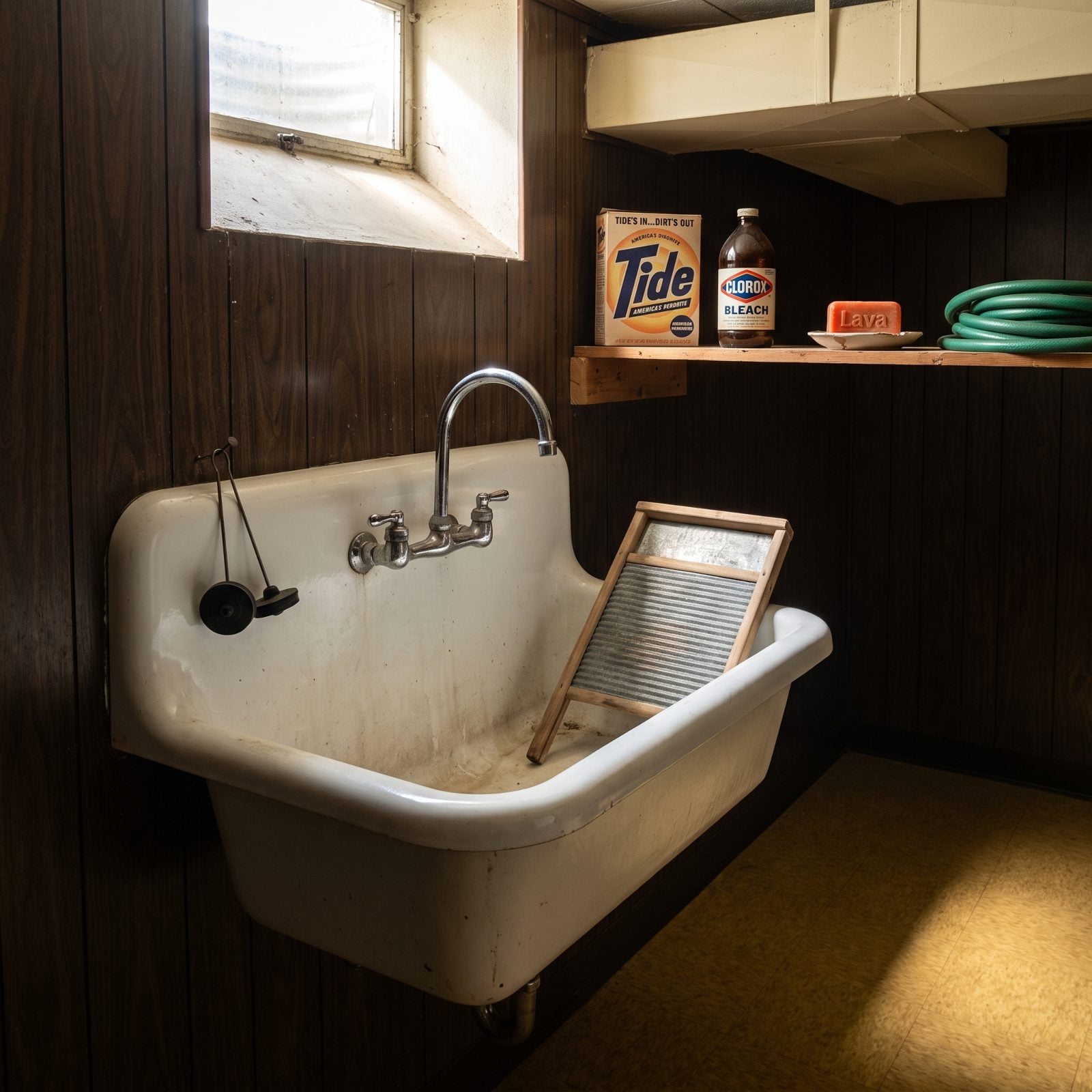
Nobody loved this sink. That was sort of the beauty of it. The deep porcelain utility sink lived down in the unfinished half of the basement, taking the jobs the kitchen refused — muddy boots, paintbrushes gummed with latex, the dog after he found something dead in the yard. It was cast iron under a thick coat of enamel, which meant it weighed roughly as much as a small car and would outlast the house around it. You could fill it, soak a week’s worth of filthy work clothes, and walk away without a second thought. Drop a wrench in a modern composite sink and you’ve got a chip to explain. Drop one in here and the sink barely noticed. The faucet usually came as a chrome gooseneck high enough to slide a bucket under, and there were almost always two rubber stoppers dangling off a nail nearby, because somebody kept losing one. Honestly, it was the hardest-working fixture in the house, and it never once asked for a renovation.
11. The Chest Freezer Stocked With Bulk Meat and Frozen Treats
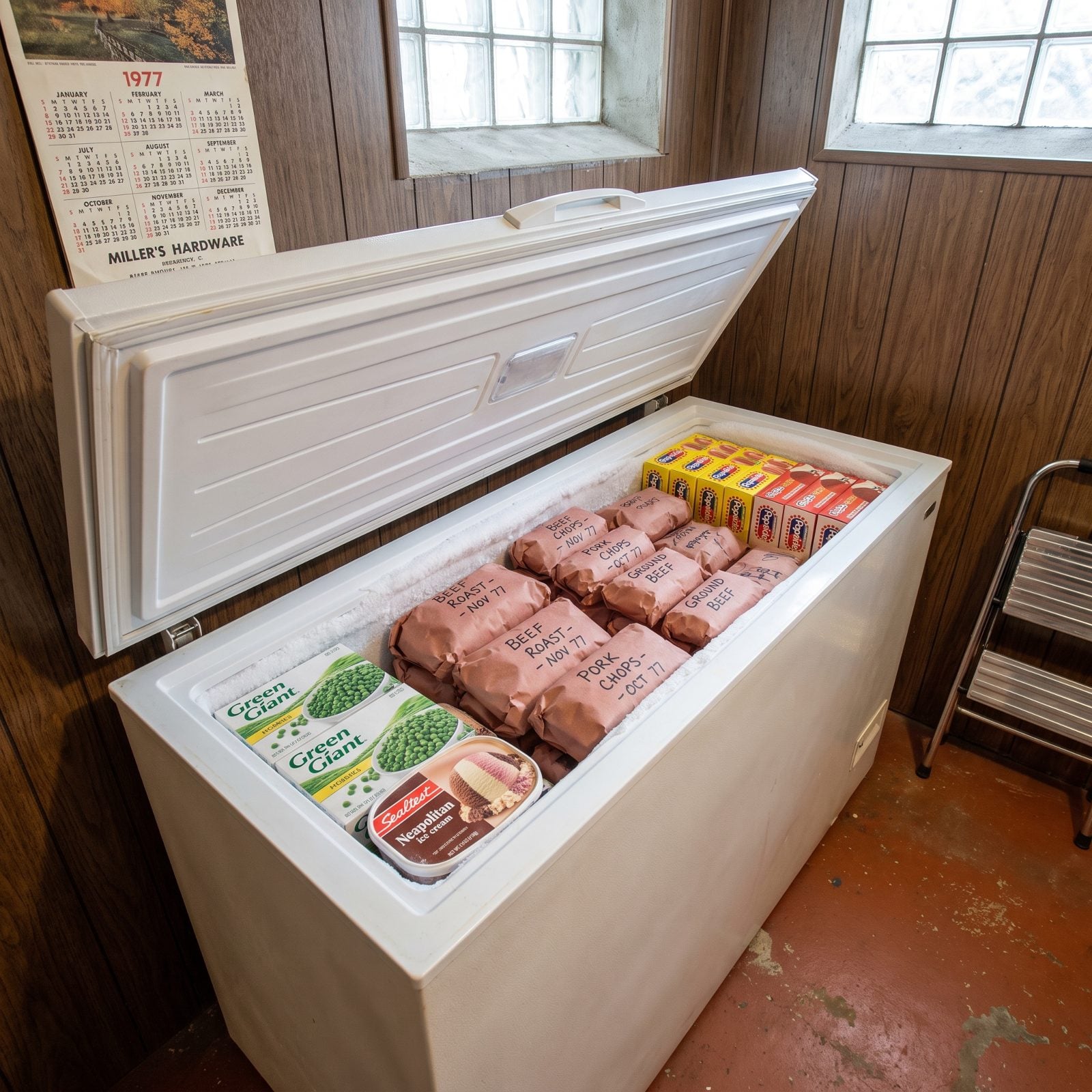
Every basement had the chest freezer, and every chest freezer held a small fortune in meat. Families bought half a cow from a local farmer, had it cut and wrapped in butcher paper, and labeled each bundle in grease pencil — ROAST, GROUND, SHORT RIBS — so you’d know what you were pulling out when the frost had half-glued everything together. Buried under all that protein was the real reason the kids volunteered to go downstairs: the ice cream, the Popsicles, the frozen treats waiting at the bottom like treasure. The appliance ran constantly, humming away in the corner against the faux-wood paneling, and it kept a family fed through a winter without anybody thinking twice about it. There was a whole economy of thrift packed into that cold white box. You bought in bulk because it was cheaper, and because you could, and because the garden’s August tomatoes had to go somewhere. And every so often the lid got propped open and somebody would stand there, cold air rolling up over their arms, trying to decide what was for dinner.
10. Open Shelves Lined With Home-Canned Jars and Pantry Overflow
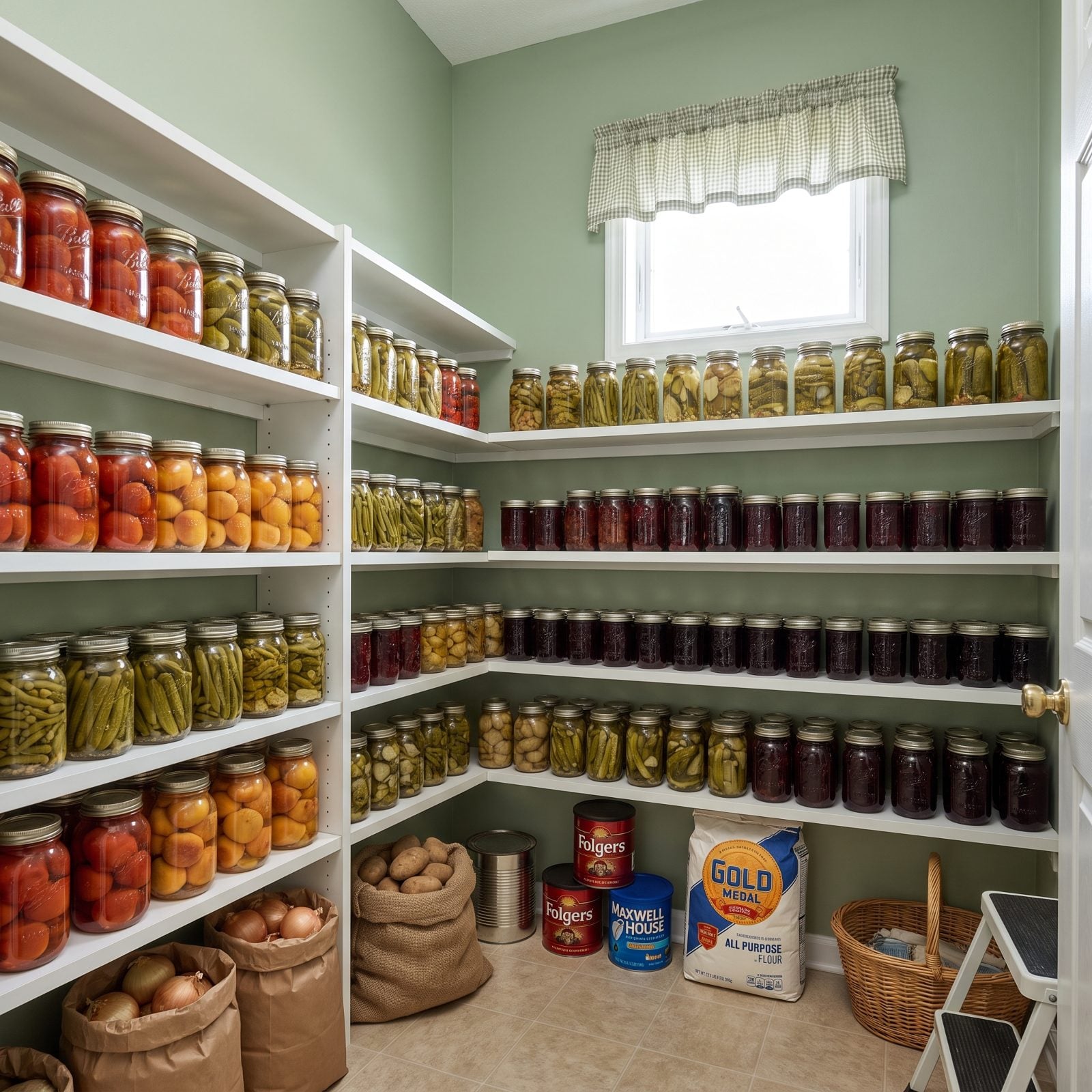
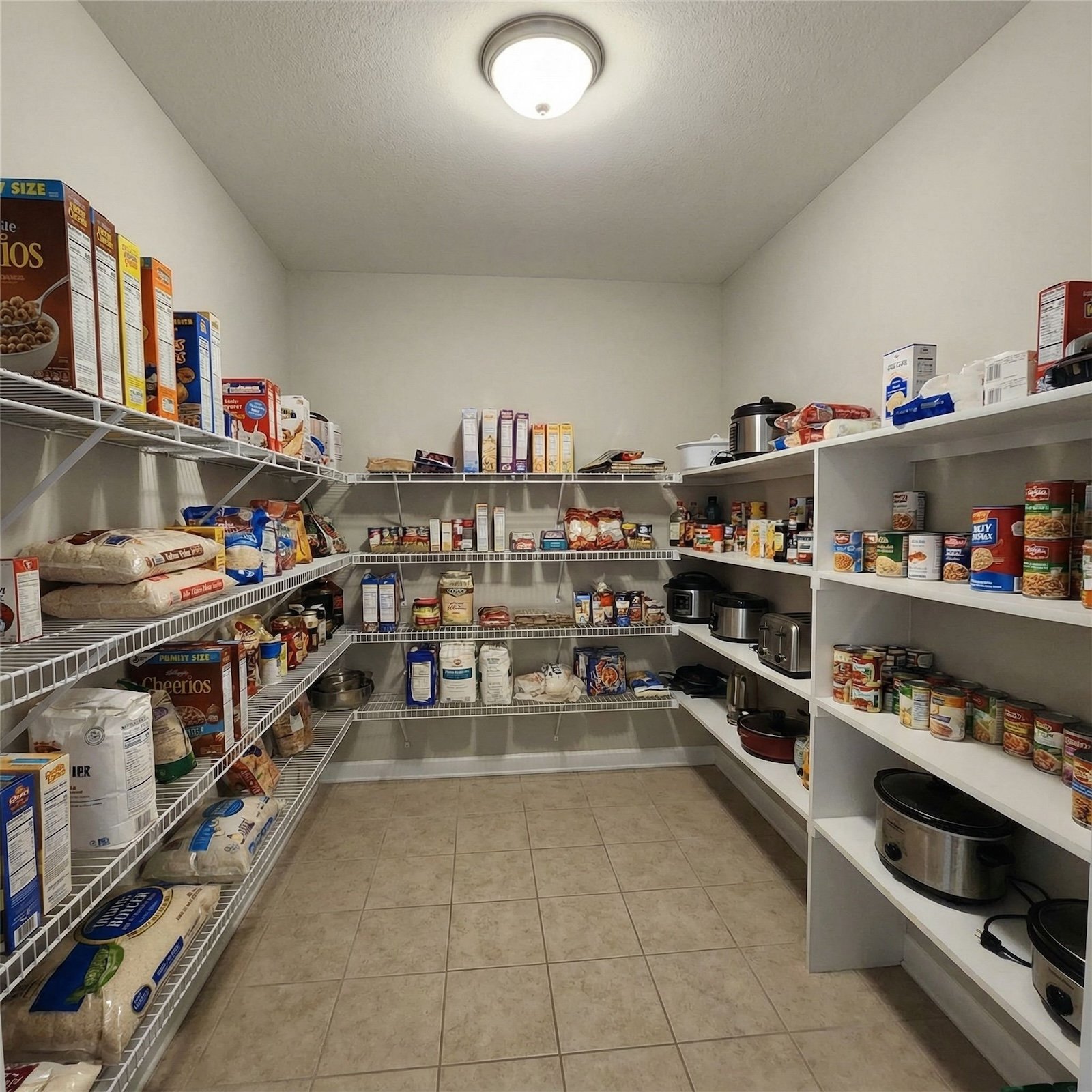
When the afternoon sun hit those shelves just right, the jars lit up like a cathedral window — ruby tomatoes, golden peaches, dark jam the color of garnet. This was the payoff for a brutal August spent over a boiling canner in a kitchen hot enough to melt you. By October the white painted shelving groaned under rows of Mason jars, each one sealed, each one embossed with that familiar Ball lettering, each one a small insurance policy against winter. Down on the floor beneath the shelves sat the overflow nobody bothered to pretty up: sacks of onions and potatoes, cans of coffee, a bag of flour big enough to bake through spring. Preserving food this way wasn’t a hobby or a lifestyle brand back then. It was just what you did with a garden that produced more than you could eat. You grew it, you canned it, and you ate it in February when the grocery store wanted a small ransom for a sad winter tomato. And there was pride in it, the quiet kind — a full shelf meant you’d done the work and your family would eat well, no matter what the weather pulled.
9. The Tiny Basement Half Bath in a Fearless Period Color
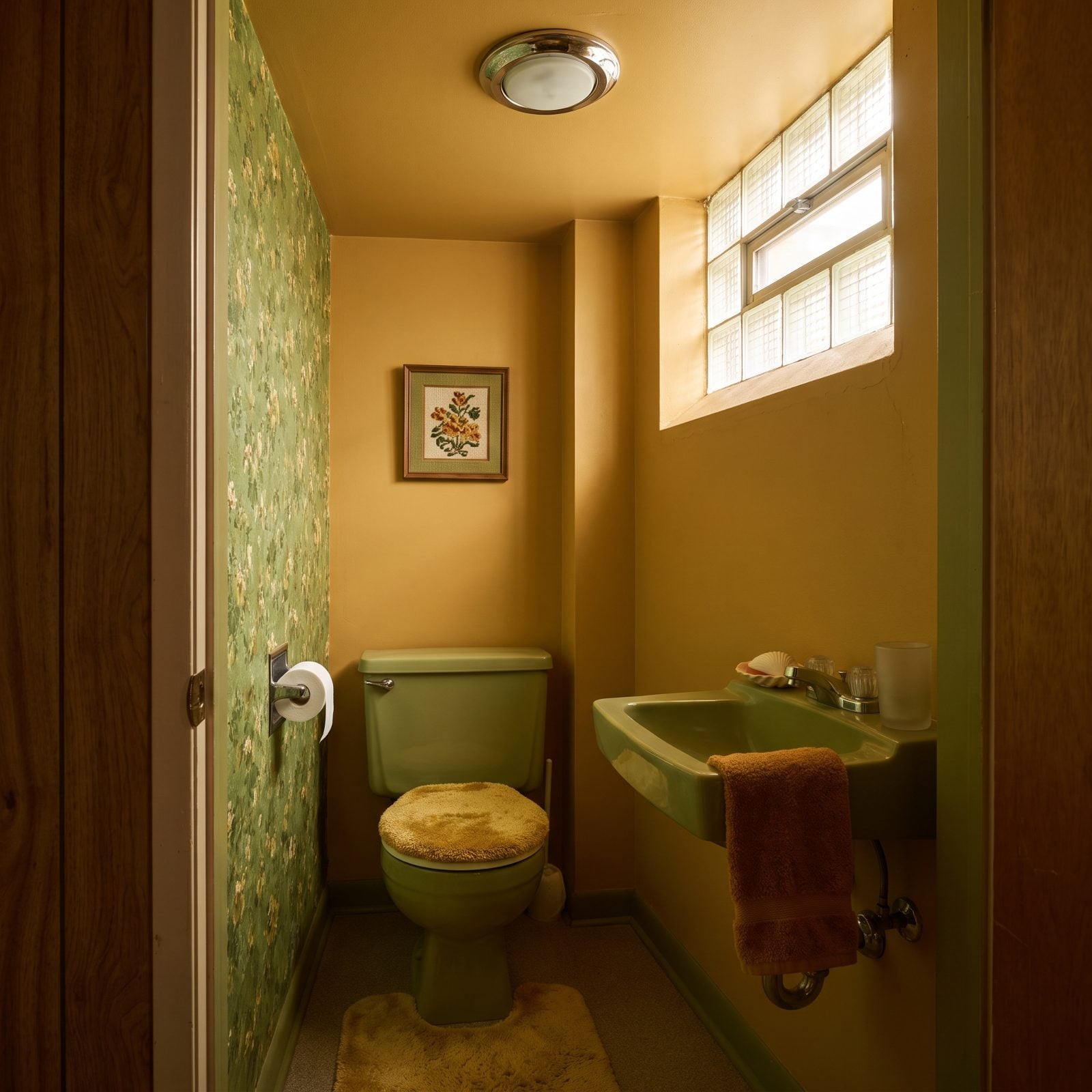
Picture a half bath the size of a phone booth, drenched top to bottom in avocado green, and absolutely unbothered about it. The toilet was green. The little wall-hung sink was green. One wall wore a green floral wallpaper while the rest glowed goldenrod, and somehow the whole thing worked — not because it was tasteful but because it committed. People today would agonize over whether a bold color reads too dated. The 1970s homeowner just picked avocado and moved on with their day. A shag cover on the toilet lid, a matching shaggy mat on the floor, a burnt-orange hand towel draped over the edge of the sink. Done. There’s a confidence in that choice I genuinely miss. Everything now trends toward greige and safe and resale-friendly, and a room like this reminds you that color used to be fun before it became a committee decision.
8. Glass-Block Windows That Let In Light Without Sacrificing Privacy
🔥 Would you like to save this?
Glass block solved a problem basements have always had: you want daylight, but you don’t want the neighbor’s dog staring in at you through a window that sits at ankle height on their side of the yard. Those thick, frosted squares let the afternoon sun through and smeared it into a soft pearly wash across the paneling, no sightline in either direction. Nobody could see in. You still got the light. The blocks were practically indestructible too, which mattered in a space that doubled as a rec room and took a lot of abuse from kids and ping-pong balls alike. There’s a reason glass block keeps coming back around in design magazines. It diffuses light in a way a plain pane never will, throwing that gentle grid of highlights across the room by late afternoon. Sit under it with a paperback and the whole corner felt quiet and sealed off, a little cocoon under the sidewalk.
7. Short Café Curtains Hung Across the Window Wells
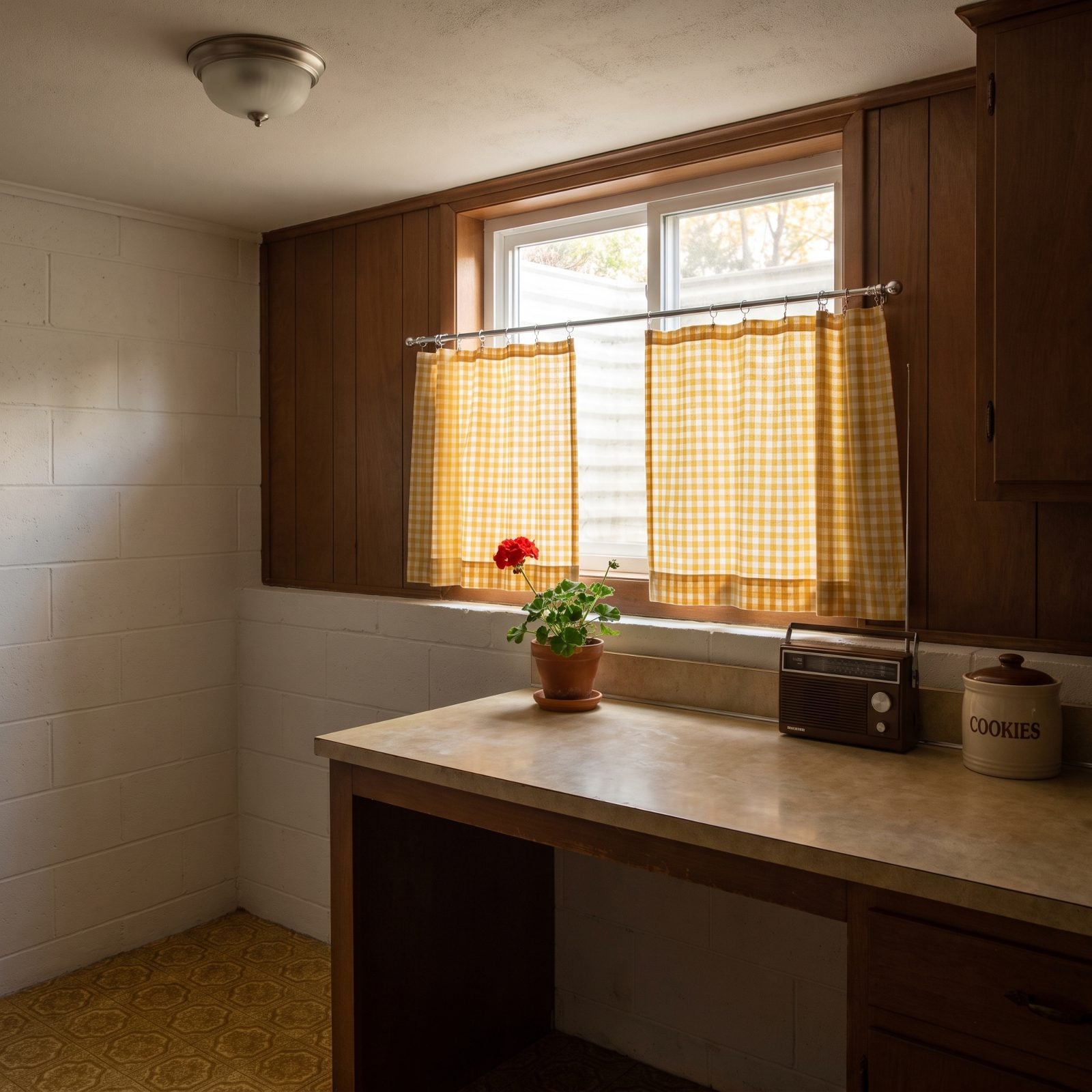
A basement window well isn’t much to look at. It’s a concrete pit outside a small, high window, usually full of leaves and the occasional startled frog. So what did the 1970s homeowner do? Hung up a little gingham café curtain and called it charming. And you know what — it worked. Those short curtains covered just the bottom half of the recessed window on a thin spring-tension rod, letting the sun pour over the top while hiding the gravel and spiderwebs below. Yellow-and-white check was the go-to, filtering the light into a warm, soft, slightly checkered glow that fell across the workbench and the potted geranium somebody insisted on keeping down there. It cost almost nothing. A couple yards of fabric, a dollar rod, an afternoon. That was the homespun instinct of the era: you didn’t gut the room, you just softened its rough edges with something cheerful and made do.
6. Long Fluorescent Fixtures That Lit the Entire Rec Room at Once
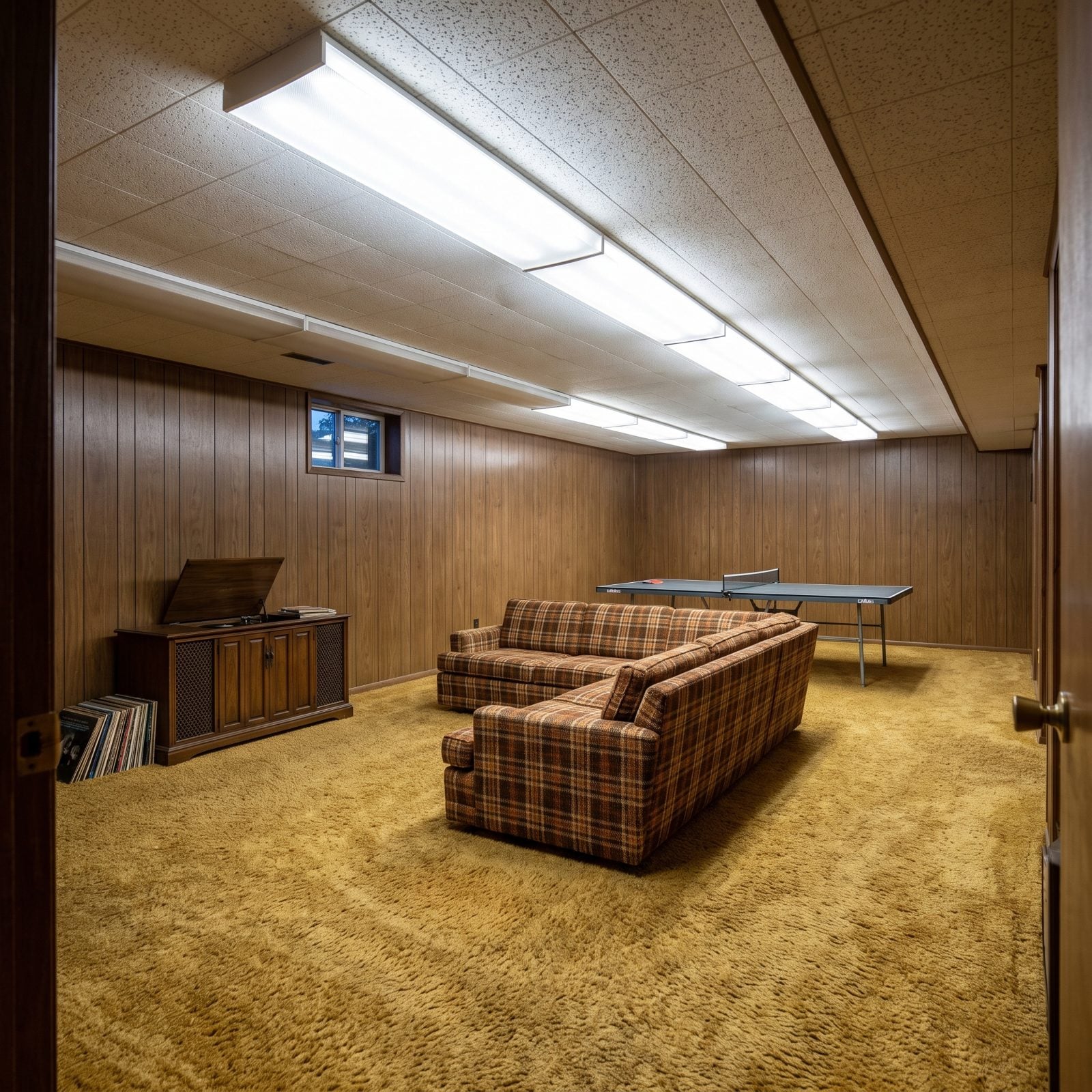
Long fluorescent tubes ran the length of the ceiling and flooded the rec room with flat, even, slightly clinical white light. No mood lighting, no cozy pools of warm glow — just a cool wash that reached every corner and killed every shadow. And honestly, for the room’s job, it was perfect. This was where the kids played ping-pong, spread homework across the shag, flipped records, and burned off a long winter. You needed to actually see the ball coming over the net, and these fixtures made sure you did. They were cheap to run, bright as a gymnasium, and the faint buzz overhead became a permanent part of the soundtrack down there — that low electric hum you stopped hearing after the first ten minutes. People remember the plaid sectional and the console stereo with fondness and the fluorescent lighting with a wince. But it lit a whole family’s winter nights without complaint, and the room wouldn’t have worked without it.
5. Embossed Metallic Wallpaper Around the Bar Alcove
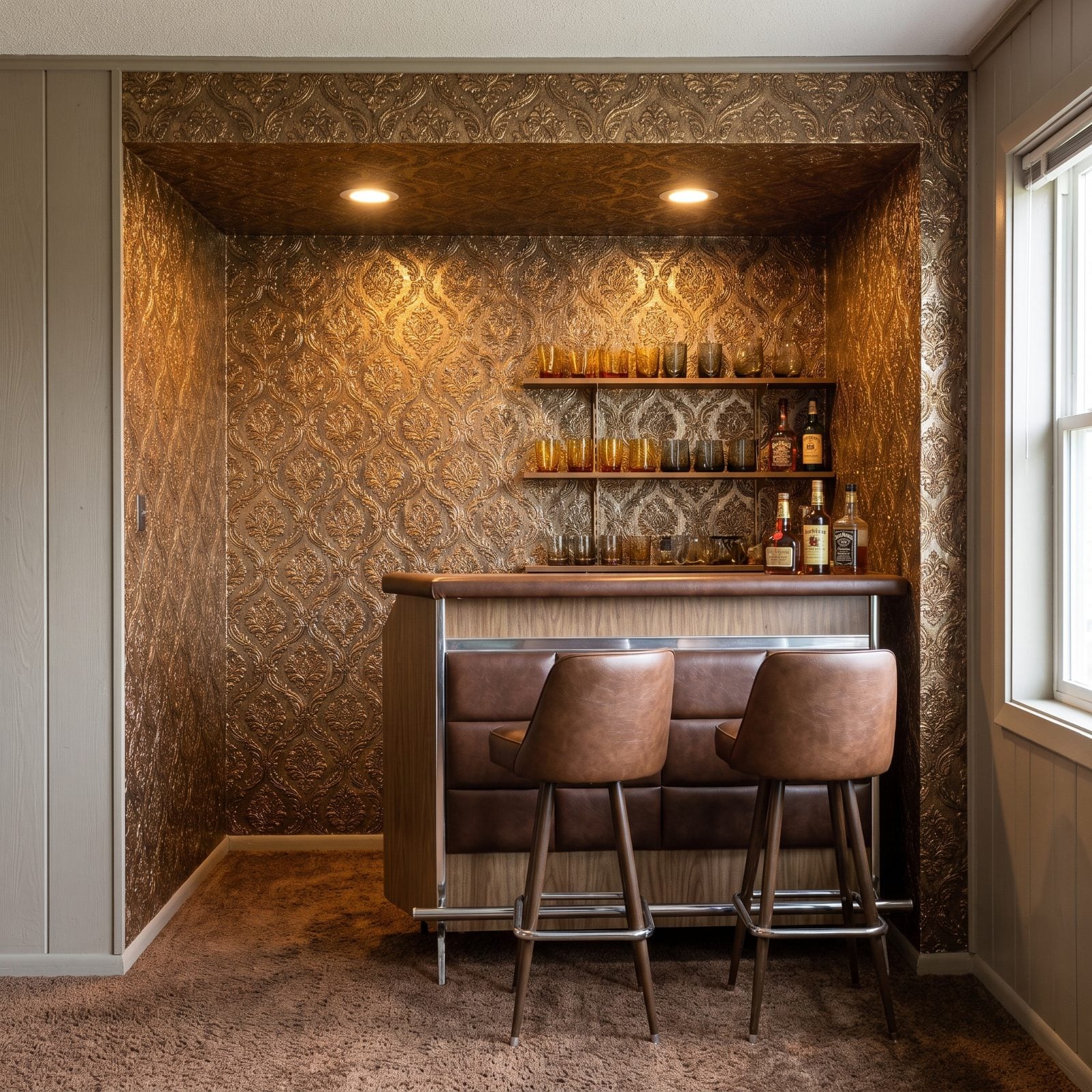
The home bar was the grown-ups’ corner, and they dressed it up accordingly. Embossed metallic wallpaper wrapped the alcove in a raised foil damask — bronze and gold, with a pattern you could feel under your fingertips. Under the warm downlights the whole wall glinted and shifted, the raised texture catching light along every curve of the design. It was unapologetically glamorous in a way the rest of the practical, hardworking basement never tried to be. The bar itself had the brown vinyl padding, the chrome footrail, the low stools, the smoked-glass tumblers waiting on the shelf. But the wallpaper did the heavy lifting. It told you the second you rounded the corner that this spot was for cocktails and company, not laundry and storage. Foil paper like this took a careful hand to hang — it creased if you looked at it wrong, and it showed every seam. So someone cared enough to get it right, and the glint behind the bartender proved it every Friday night.
4. A Wall of Smoked Mirror Tiles Behind the Bar
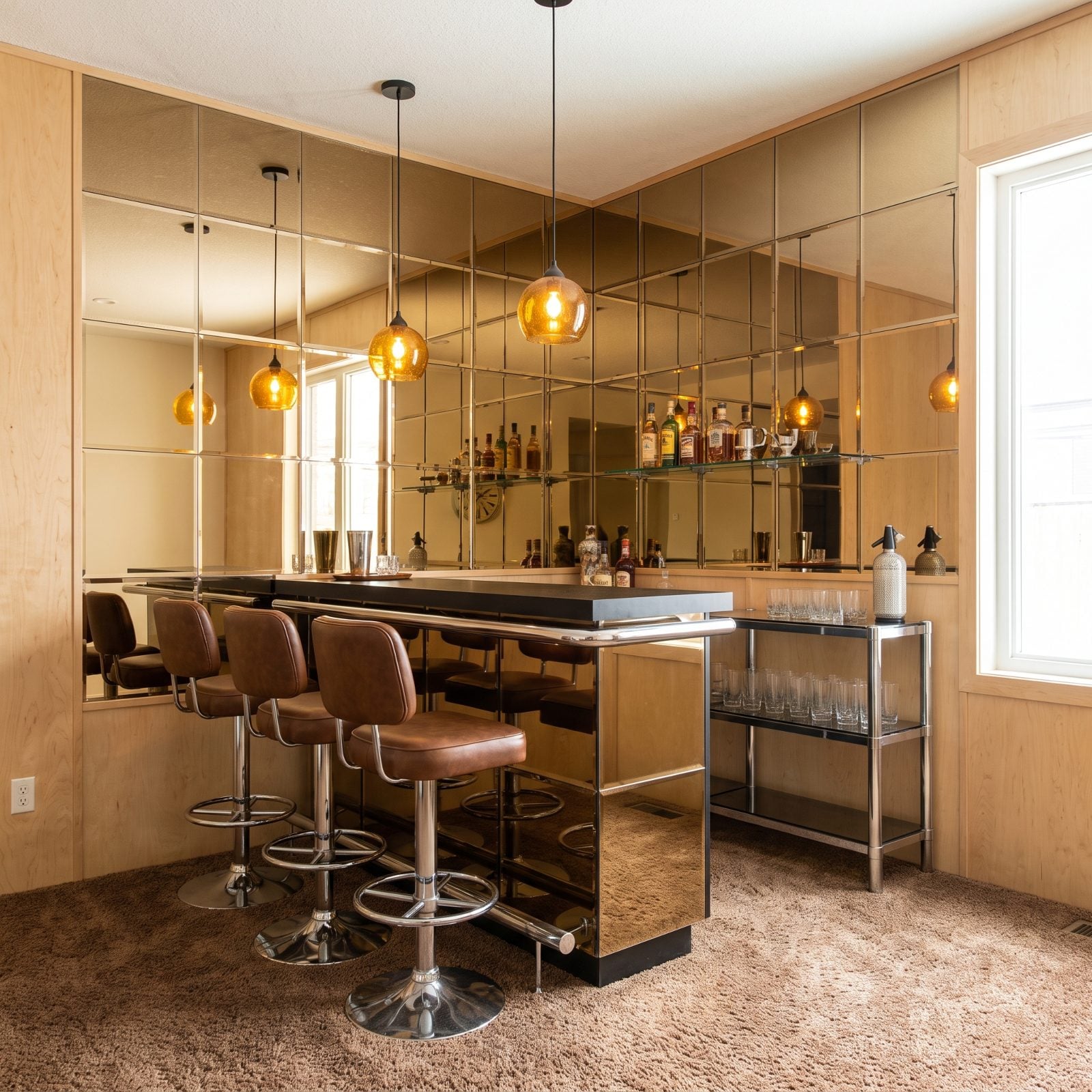
Behind the bar, somebody had tiled the whole wall in smoked mirror — twelve-inch squares of bronze-tinted glass with faint seams running between them. These weren’t clear mirrors. They gave back a dim, flattering, smoky version of the room, softening every reflection into something that looked like a lounge from an old film. The effect was sneaky and smart. In a cramped low-ceilinged basement, that mirror wall doubled the space and doubled the glow of the pendant lights and the bottles on the glass shelf. Suddenly a tight corner felt deeper, warmer, more like somewhere you’d linger over a second drink. Sit at the bar and catch yourself reflected softly in bronze, lowball in hand, and the ordinary basement fell away. Smoked glass was everywhere in the decade — coffee tables, cabinet doors, this. It never showed fingerprints the way clear glass did, which anyone who kept a bar well understood.
3. Amber Glass Pendant Lights Hanging Over the Bar
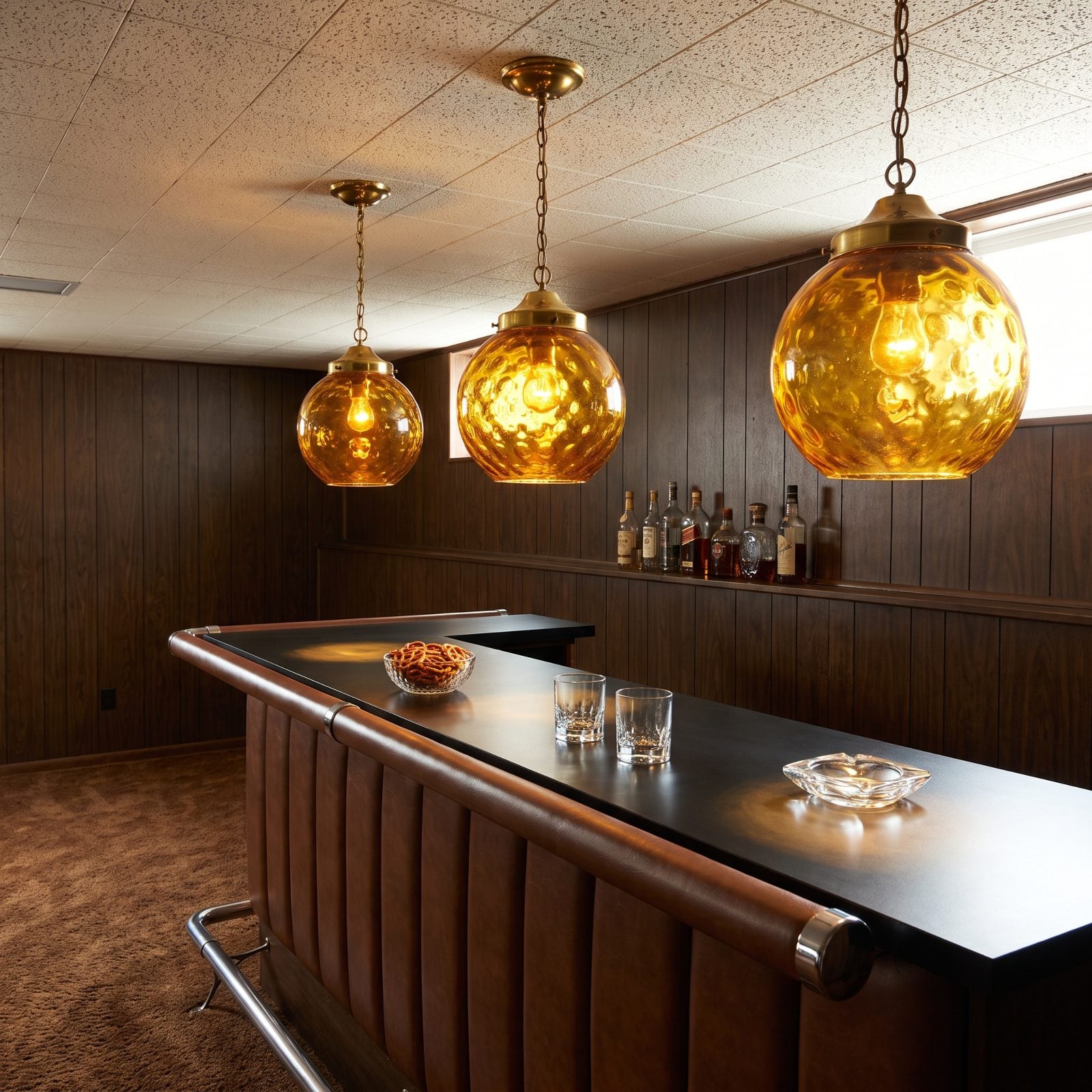
Three thick amber globes on brass chains, hanging low over the bar, glowing a deep honey color that turned the whole corner gold. This was the lighting that defined the end of the evening. Amber glass pendants threw warm pools of light onto the black laminate counter — on the bowl of pretzels, the lowball glasses, the ashtray that was standard issue back then — and let the corners of the room fade into a soft, cozy shadow. The ribbed, dimpled glass broke the light into something textured and mellow, nothing like the flat fluorescent glare out in the rec room. One warmed you up. The other kept score at ping-pong. Lean on the bar with a drink and the amber glow lit your face from below, and the basement stopped feeling like a basement at all. It felt like the warmest room in the house, which, late on a Friday with everyone gathered around, it probably was.
2. Padded Bar Stools With Chrome Bases and Vinyl Seats
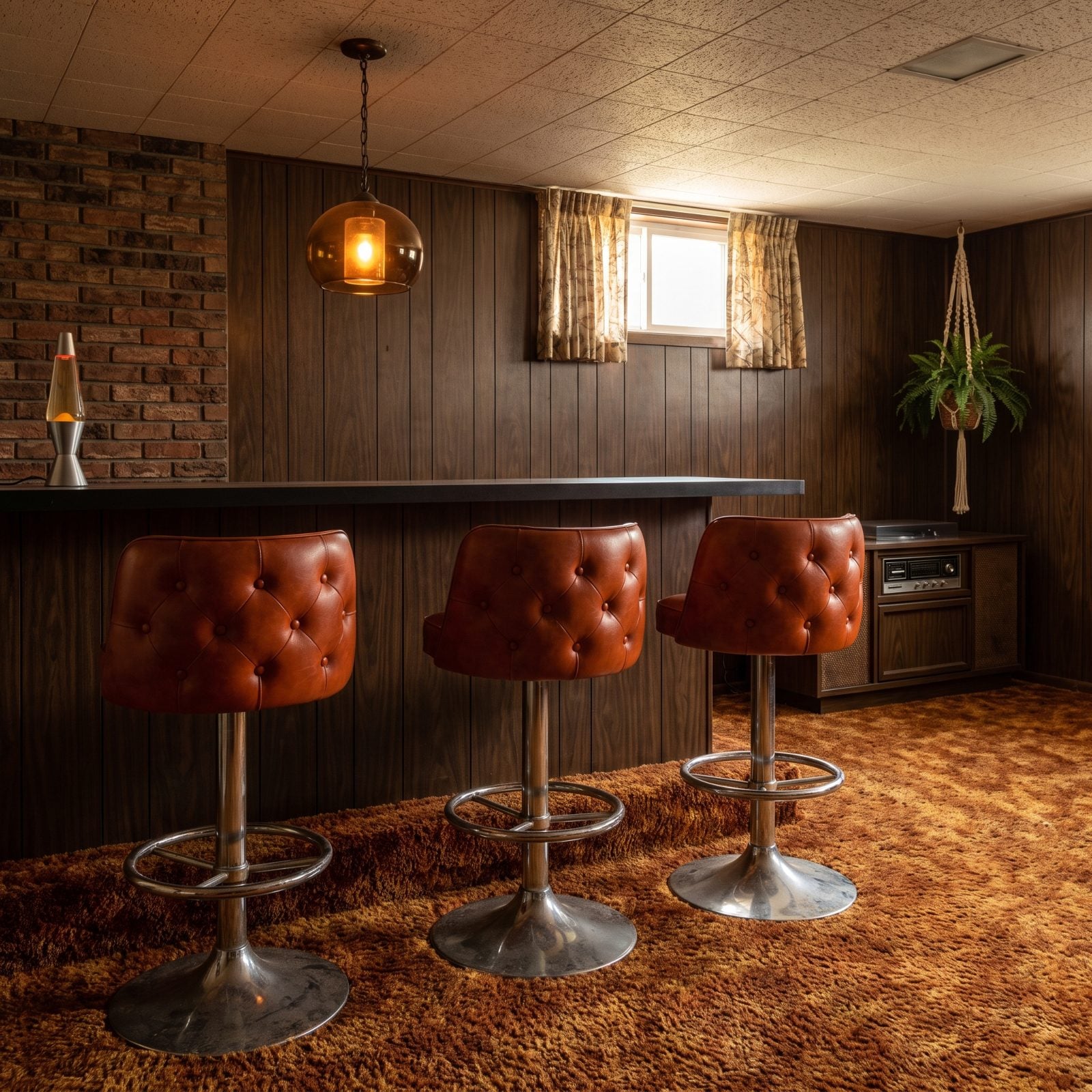
You remember the spin. Climb up, plant a foot on the chrome ring, give the seat a quarter-turn just because you could. Those stools squeaked on their swivels, and the vinyl made that specific sound against the back of your legs when you wore shorts. Half the fun of the basement bar was simply occupying one of them.
Seats came in burnt orange, oxblood, and sometimes a brown so dark it read black until the light hit it. Tufted tops. Chrome pedestals. A footring that collected scuff marks like a diary. Built for adults to perch on with a drink and for kids to treat as the world’s best, slightly dangerous toy.
1. The Built-In Wet Bar Used for Every Family Party
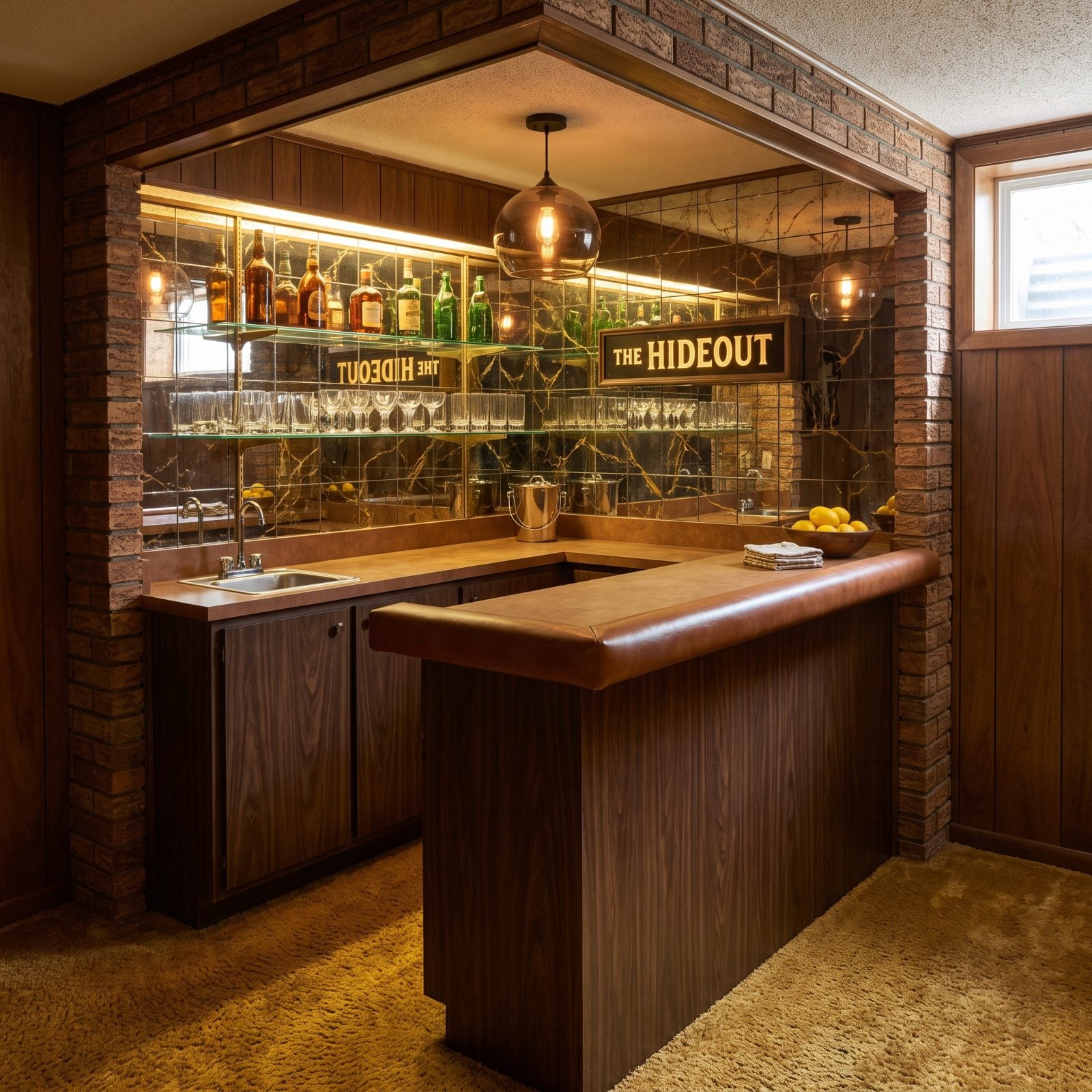
Every family celebration ended up down here. The built-in wet bar was the heart of the finished basement, and if your house had one, it meant something — a real sink, a mini fridge tucked under the counter, glass shelves backlit so the bottles glowed like a tiny neon city.
The giveaway? That padded vinyl rail running along the front edge, cognac-colored, soft under your forearms while you waited on a Shirley Temple with three cherries. And the mirror-tile backsplash with its gold veining made the whole setup look twice as stocked as it actually was.
What made it stick had nothing to do with design. This was where the adults gathered, where the good glasses came out, where somebody always told the same story one more time. The traditional foyer design upstairs was for show. The bar downstairs was where the night actually happened.
Nobody renovated the basement bar out of the house without a little guilt. It held too many birthdays.