🔥 Would you like to save this?
The back door sticks. You’ve known it sticks for four years. And every single time, your hip finds that exact spot, gives it a shove, and the door swings open like nothing’s wrong. You’ve stopped even noticing you do it.
That little shove is a confession. Houses collect our avoidance the same way marriages do: the problem we’ve decided to live around, the room we’ve written off, the one good corner we point to when anyone asks how things are going. The psychology that keeps a person in a stalled relationship (sunk costs, hedonic adaptation, denial dressed up as acceptance) is the same wiring that keeps you repainting a hallway instead of fixing what’s actually wrong. Below are the household behaviors that give it all away. You’ll recognize at least three.
In order to come up with the very specific design ideas, we create most designs with the assistance of state-of-the-art AI interior design software. Also, assume links that take you off the site are affiliate links such as links to Amazon. this means we may earn a commission if you buy something.
16. You Jiggle the Back Door Instead of Replacing It
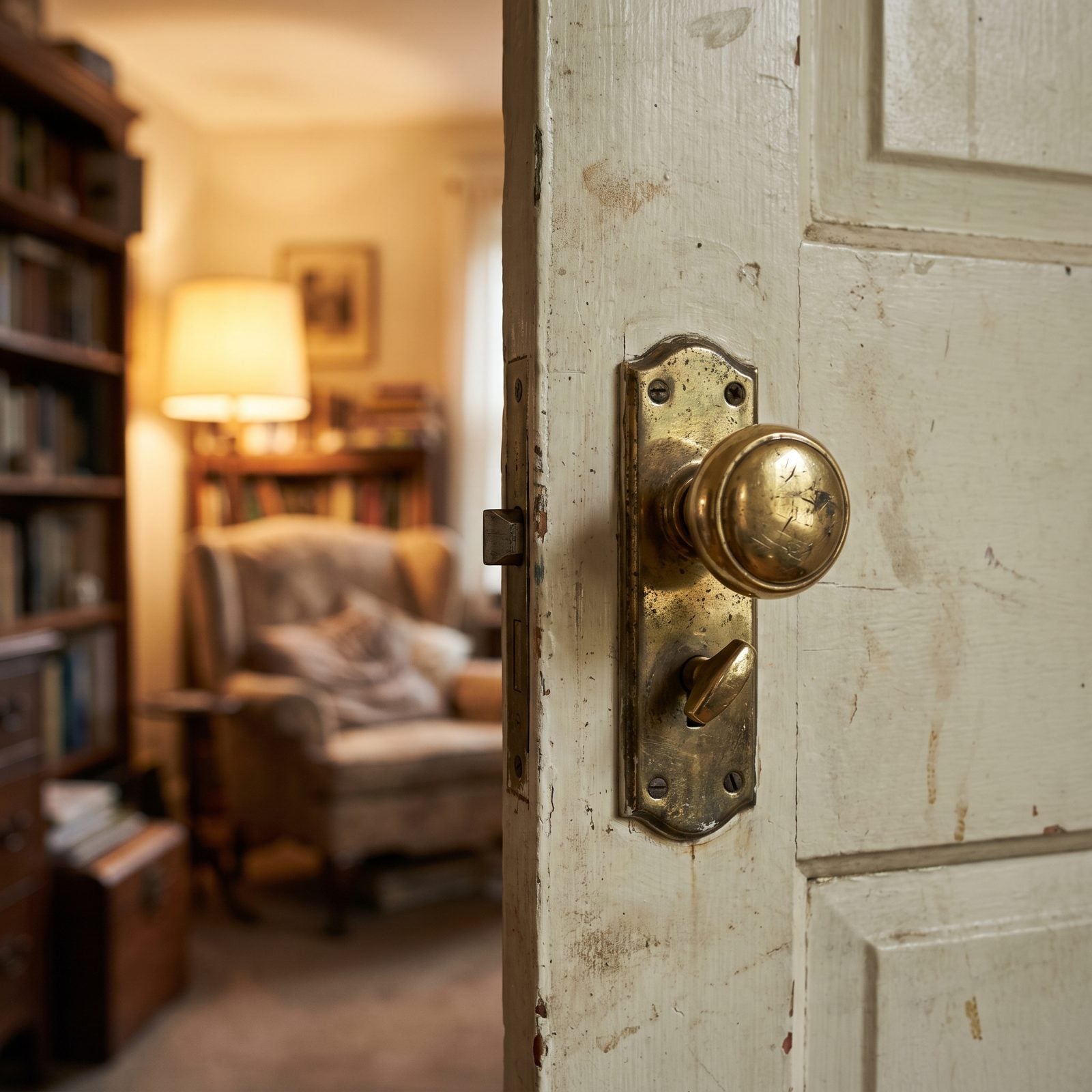
The door doesn’t close right, and it hasn’t for years, so you learned the move: lift the handle, lean a shoulder, nudge the bottom corner, and it latches. You could do it blindfolded. A stranger would stand there baffled.
This is the oldest trick in the unhappy playbook. The problem never gets fixed because you’ve gotten so good at working around it that the workaround feels like a solution. Psychologists call this accommodation. The fault stops registering as a fault once your body absorbs the cost. You’re not tolerating the broken door. You’ve merged with it.
The tell isn’t the door. It’s that you no longer see it as broken.
15. You Call the Drafty Bedroom Full of Character

Character is the word we use when we’ve decided not to fix something.
The bedroom loses ten degrees overnight. The windows rattle, and there’s a rolled towel on the sill doing a job the window should be doing. But you’ve reframed the whole thing: it’s drafty because it’s old, and old is charming, and charming is why you fell for the place.
Reframing a flaw as a virtue is how we protect a decision we’ve already committed to. The drafty room becomes “so full of character” the same way a difficult person becomes “passionate.” Both statements are true. Both are also a polite refusal to call the cold what it is.
Want to test whether it’s charm or avoidance? Ask what it would cost to fix. If the honest answer is “not much, I just never do,” you have your answer.
14. You Repaint the Hallway Hoping the Floor Plan Feels Better

Third color this year. The swatches are still taped up, little rectangles of greige and sage auditioning for a part none of them can play, because the problem was never the paint. The hallway is too narrow and three doors open into each other, and no amount of sage den design is going to move a wall.
This is displacement, plain and simple. When the real issue feels too big or too expensive to touch, you pour your energy into a fixable adjacent thing and call it progress. In a stalled relationship it’s a new haircut, a kitchen remodel, a weekend away. In a house it’s paint. You get to feel like you’re working on it without going anywhere near the thing that’s actually wrong.
13. You Blame Yourself for a Kitchen That Never Functions
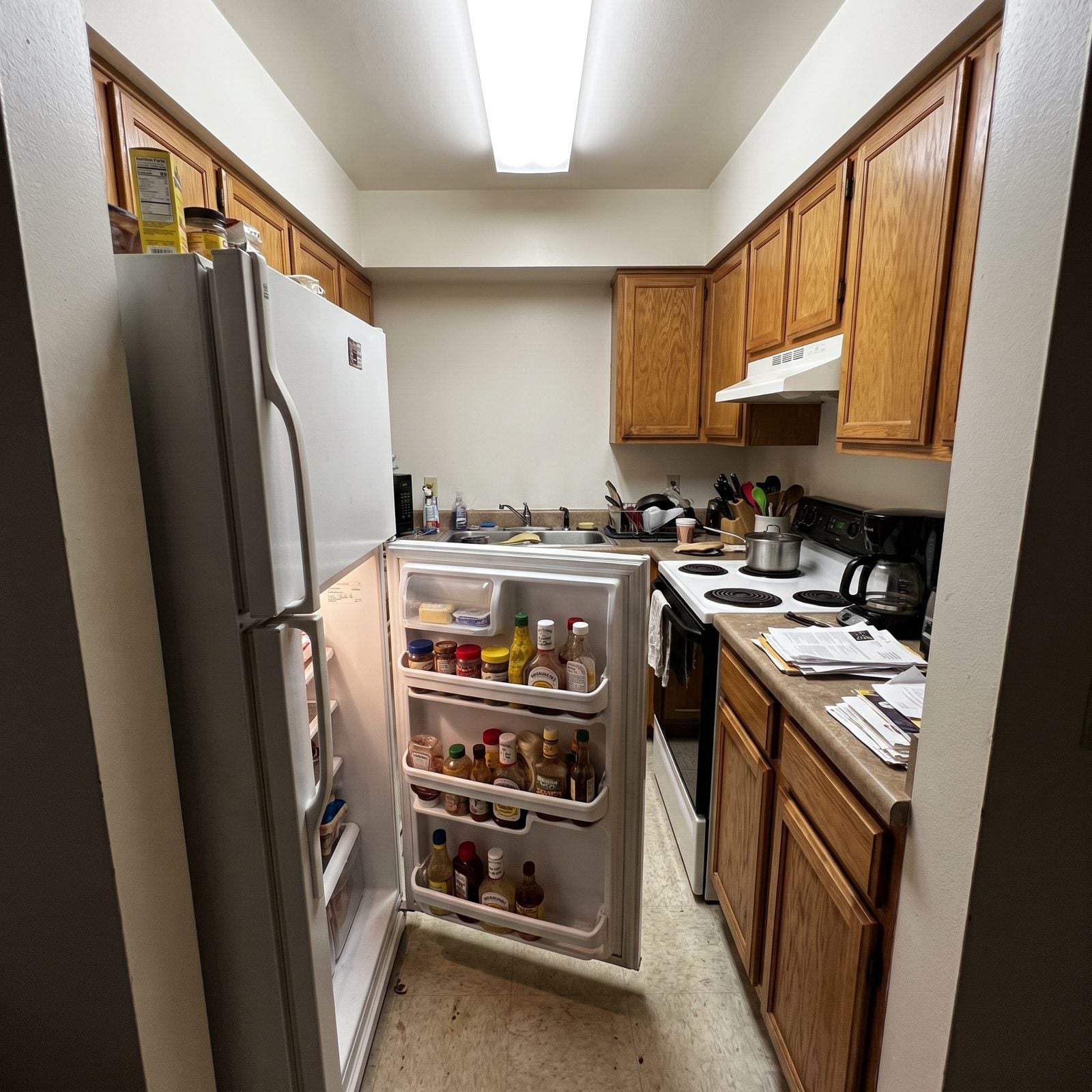
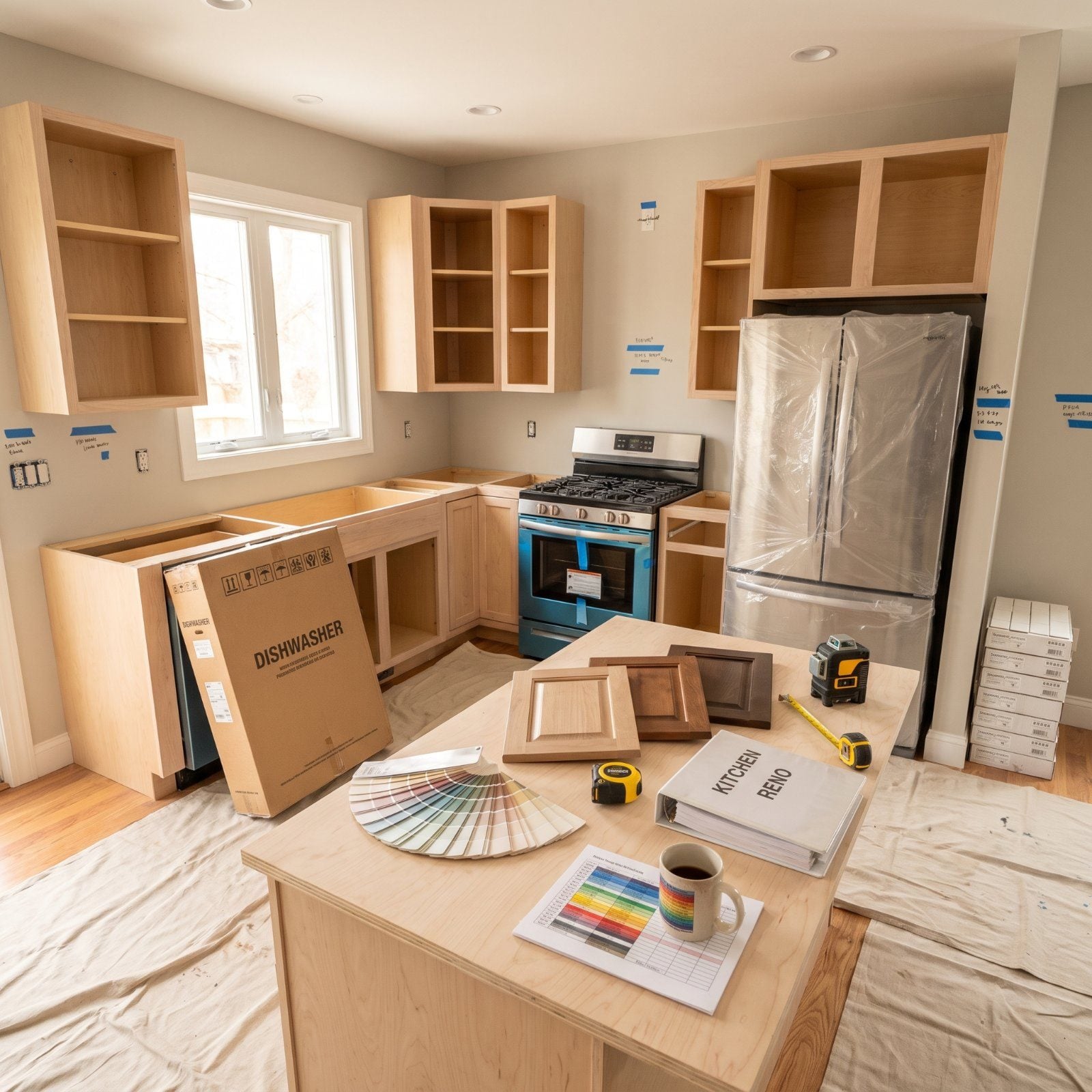
You bang your elbow on the same cabinet every day. The fridge door blocks the only path to the stove, and there’s nowhere to set a hot pan down. And somehow, after years of this, you’ve concluded that you’re the problem. You’re clumsy. You bought the wrong groceries. You should’ve planned dinner better.
No. The kitchen is badly designed. The work triangle is broken, the dishwasher door hits a cabinet, and the stove sits in a dead corner with no landing space. This is a layout failure, not a user failure.
But self-blame is seductive because it keeps the relationship intact. If it’s your fault, the kitchen (or the marriage) can stay exactly as it is, and you just need to try harder. Absolving the broken thing is how we dodge the terrifying conclusion that the thing itself is the problem.
12. You Keep the Basement Door Shut to Avoid Starting Something

Out here, everything looks finished: a stone hearth with no fire lit, books stacked on the coffee table, a cream sofa under a wool throw. But behind that charcoal door is a project. A half-finished one, probably. Boxes you meant to sort, a damp smell you’ve chosen not to investigate, a to-do list that would eat an entire weekend and start three arguments about priorities and money. So the door stays shut. Out of sight, out of the conversation.
Avoidance isn’t laziness. It’s a cost-benefit calculation your gut runs without telling you. Opening that door means confronting the full scope, and the full scope feels like more than you have the energy to carry. In a marriage, that closed door is the subject nobody raises at dinner. Same move. Same relief. Same slow accumulation of everything you’re pretending isn’t piling up.
The quiet cost is that unopened doors don’t stay neutral. The mold spreads. The resentment compounds. Shut is never the same as solved.
11. You Know Which Floorboards Complain and Tiptoe Around Them
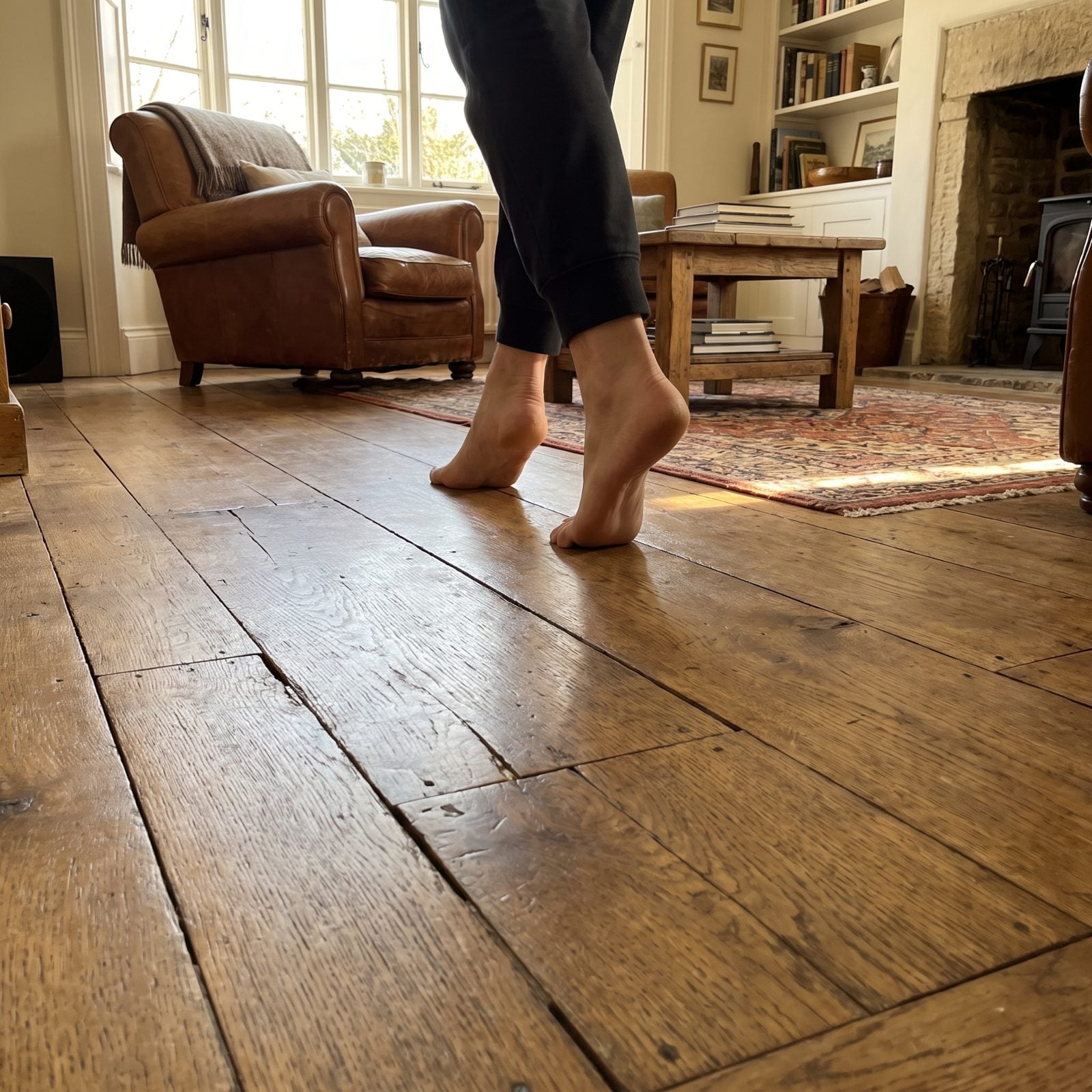
There’s a map in your feet that no one else has.
Fourth board from the door groans, and the one by the bathroom cracks like a rifle at 6 a.m., so you’ve memorized the safe route, a little dance you do without thinking, placing your weight exactly where the floor stays silent. You tiptoe through your own home so you don’t set it off.
Walking on eggshells has a literal architectural cousin, and this is it. The behavior is identical: you’ve learned the triggers, mapped the sensitive spots, and adjusted your whole movement to avoid a reaction you’ve decided you can’t afford to provoke. Nobody fixes the boards. You just get quieter.
The sad part is how skilled you become at it. Competence at avoidance always looks like peace from the outside.
10. You Stop Inviting Friends Because the Living Room Embarrasses You
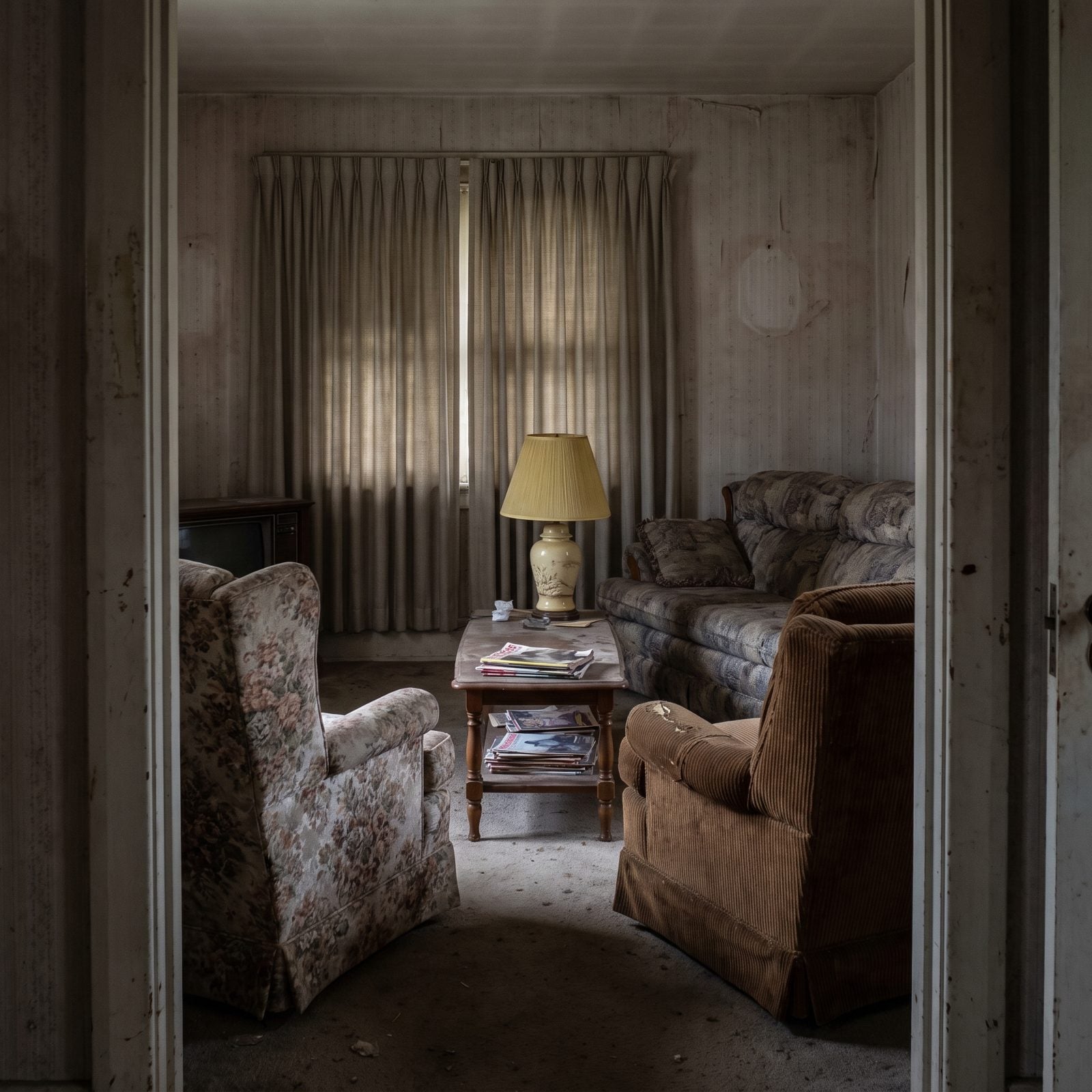
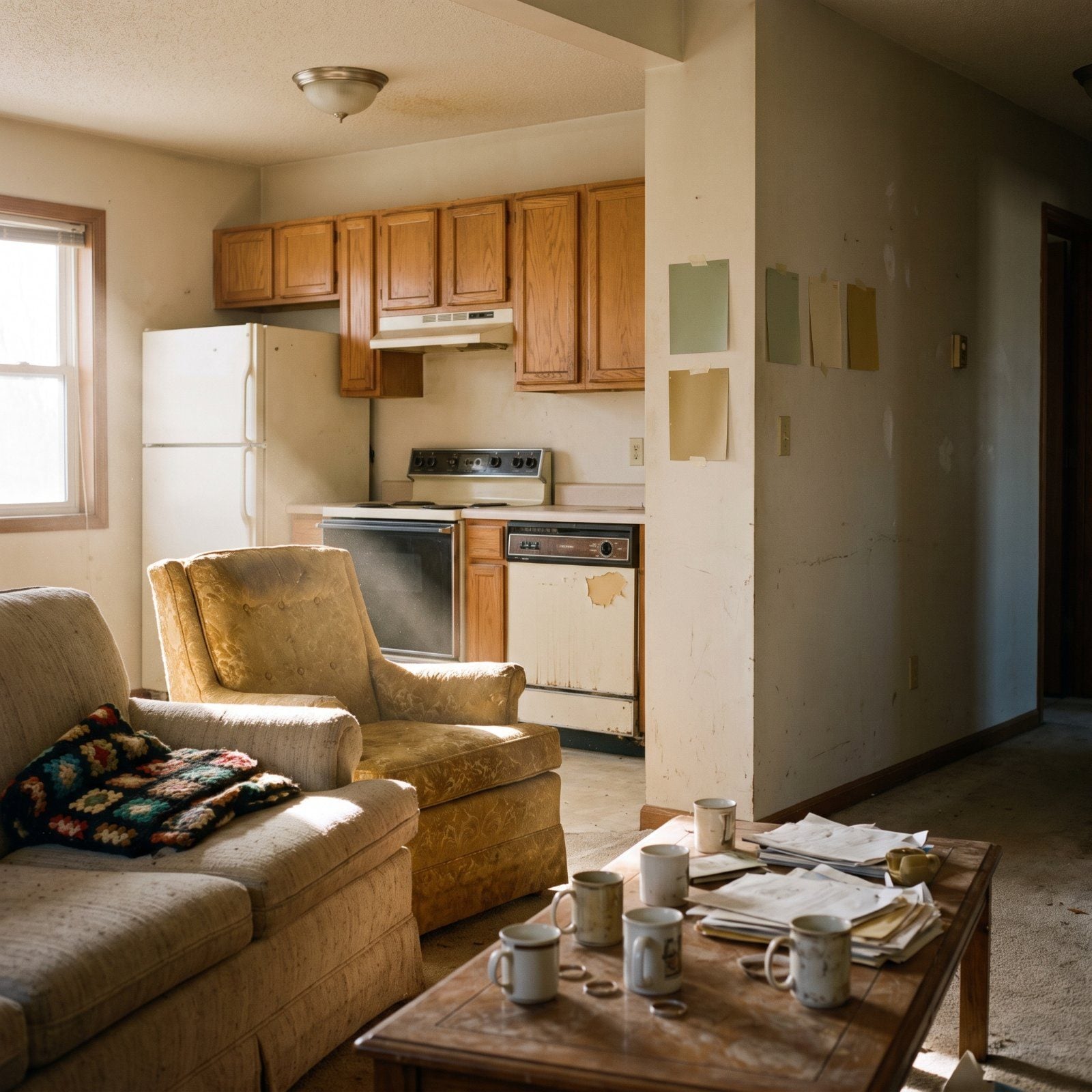
You used to host. Now you meet people at restaurants, suggest the coffee place, anything but here, because the compact den makeover you keep planning never happens, and the wallpaper is stained and peeling, the corduroy armchair’s arm is torn open, there’s grit scattered across the carpet, and the curtains are twenty years old, and you’d rather not watch a guest’s eyes do the quick inventory.
Social withdrawal because of shame is one of the loudest tells there is. When a space (or a relationship) embarrasses you, you shrink your life to keep witnesses out. Fewer visitors, fewer reminders of the gap between what you have and what you’d hoped to have by now.
A faded grey-blue patterned sofa and a dusty set of plain beige pleated curtains aren’t expensive to replace, and even peeling wallpaper and a ripped armchair can be patched. What’s expensive is admitting you’ve been hiding. The living room isn’t really the problem. The isolation it caused is.
9. You Replay the First Walkthrough During Every Bad Winter

Every February, when the heating bill lands and the windows weep condensation, your mind drifts back to that first walkthrough. The sun was out. The agent was charming. The light hit the floors just right and you stood in the empty living room and felt something. You bought the feeling, not the house.
Nostalgia is a notorious liar. It edits out the cold and keeps the golden hour. Replaying the best day to justify the hard ones is how people stay somewhere long after it stopped working, clinging to the memory of how good it felt at the start instead of looking at how it actually functions now.
8. One Sunny Breakfast Nook Makes You Forgive Six Dark Rooms

There’s one corner of this house that works. The breakfast nook catches the morning sun, and for twenty minutes a day it’s everything you ever wanted, warm and golden and perfect. And on the strength of those twenty minutes, you forgive six rooms that get almost no light at all.
This is the halo effect doing overtime. One outsized positive trait colors your entire judgment, so the good corner becomes the whole house in your mind. People do this with partners constantly, letting one charming quality excuse a dozen daily frustrations. One great laugh, six real problems.
The nook is genuinely lovely. A potted herb on a sunny sill and a round wooden table can carry a surprising amount of goodwill. The question worth asking: are you living in the whole house, or just defending it from that one perfect spot?
7. You Live in One Room and Abandon the Rest

It happens by inches. First you stop using the formal dining room, then the second living room, then one day you realize your entire life fits inside a single chair, a side table buried under a lamp and three remotes and a phone charger, and the rest of the house has become storage for rooms you no longer visit.
This is emotional withdrawal rendered in square footage. When a larger space stops feeling good, you retreat to the one small zone where you still feel okay and let everything else go dark. Same instinct that has couples spending evenings in separate rooms of a house they share. You’re both still here. You’re just no longer occupying it together.
The whole house is yours. You’ve just decided, without ever deciding, to stop living in most of it.
6. You Stop Calling Contractors Because Nothing Ever Changes
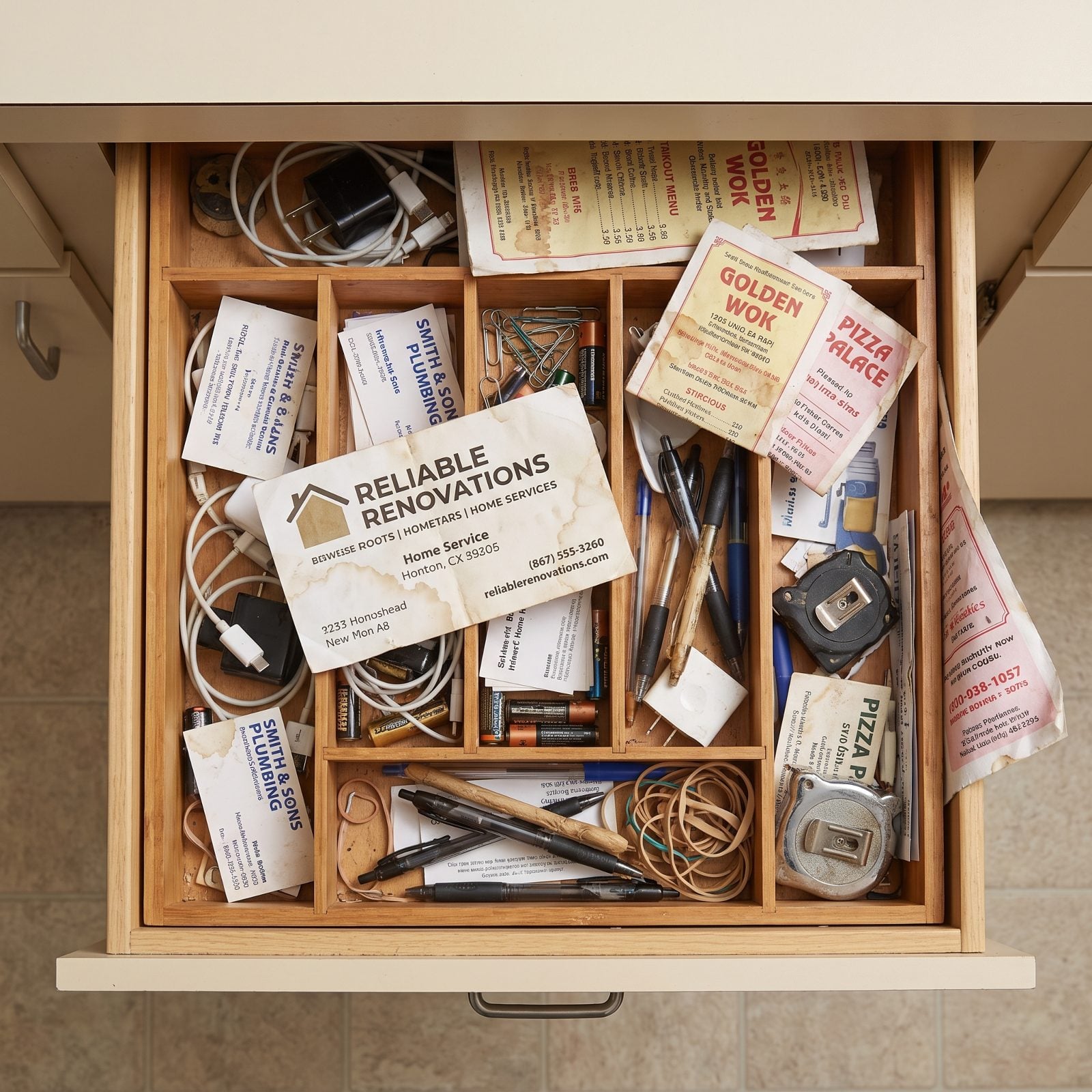
You’ve got a drawer. Everyone does. It’s the one with a pile of contractor cards and a few stained, faded takeout menus you can barely read anymore, some of those cards belonging to businesses that folded years ago. At some point you stopped dialing — not because the house got fixed, but because every call ended the same way, with a quote, a maybe, a long silence, and the drip under the sink still dripping.
This is avoidance dressed up as practicality. You tell yourself you’re waiting for the right time, the right price, the right spring weekend. What’s actually happening is learned helplessness. When effort stops producing change, the brain stops spending the effort, and psychologists have a tidy term for it. It shows up in marriages the same way it shows up in a half-finished mudroom. You quit raising the thing because raising it never moved it.
The rust den design you bookmarked two years ago is still a browser tab, not a room.
5. You Keep a Mental Tally of Every Dollar It Swallowed
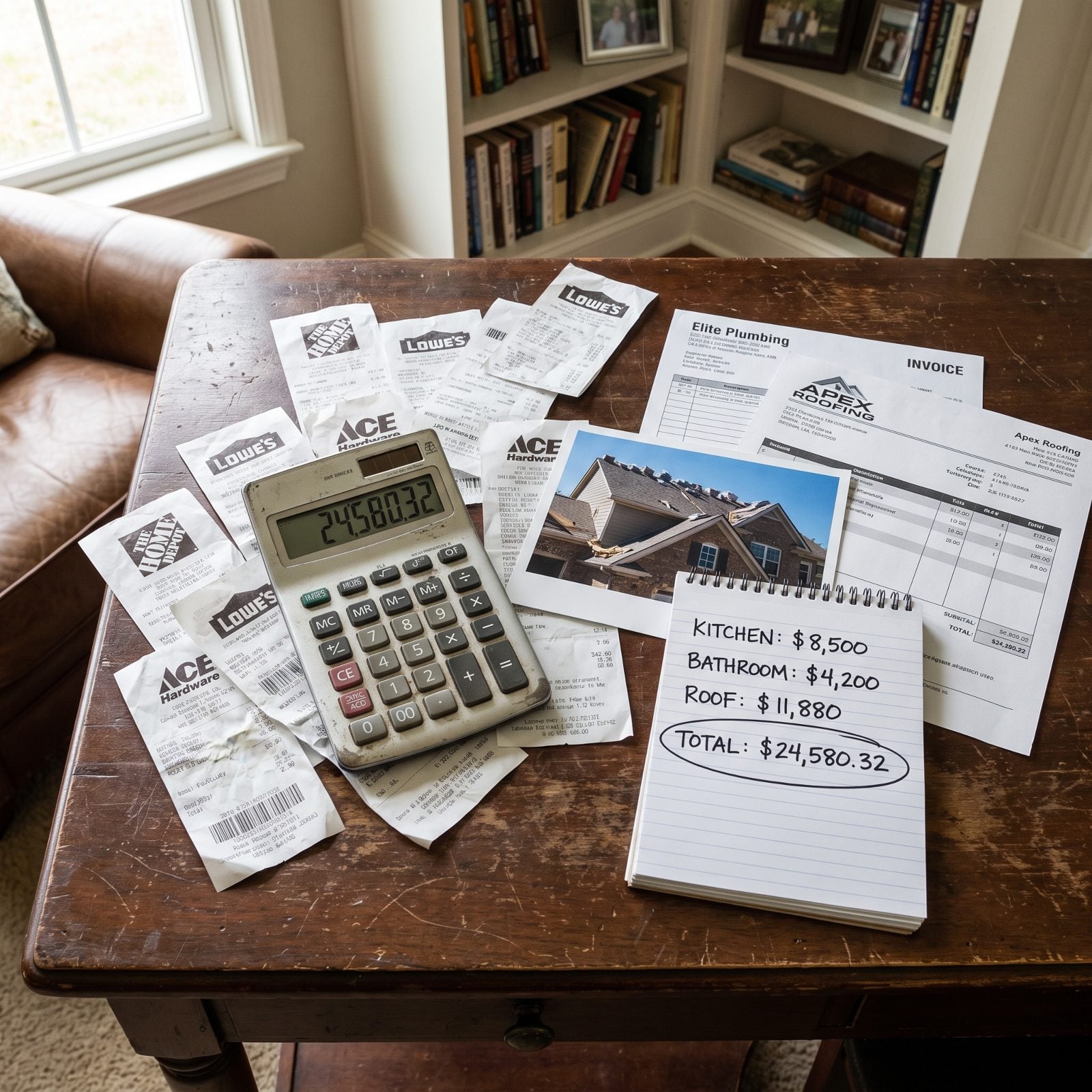
Ask what the roof cost and you won’t get a number. You’ll get a saga: the roof, then the flashing, then the gutters nobody warned you about, then the soffit, which you didn’t even know was a word until it rotted.
You carry the running total like a grudge — every dollar logged, remembered, resented. This is loss aversion doing what it always does, because a dollar lost stings roughly twice as hard as a dollar gained feels good. So the money that left the house looms larger than the warm, dry rooms it bought. People run the same ledger in relationships, tracking who gave more, who sacrificed, who’s owed. The tally feels like clarity. It’s usually just pain with a spreadsheet.
Here’s the uncomfortable part. The tally fixes nothing. It just makes you flinch the next time the house needs something, which guarantees you’ll wait too long and pay more. We’ve done this. The flinching cost us more than the roof did.
4. You Browse New Listings Whenever the Plumbing Acts Up

🔥 Would you like to save this?
The faucet starts acting up and within minutes you’re on Zillow. Not to buy. Just to look. You scroll kitchens you’ll never cook in and tap through a big mirror in a bathroom that belongs to somebody else’s life.
This is the grass-is-greener loop, and it fires hardest at the exact moment your own place frustrates you. The brain pairs the irritation with a reward — the clean, staged, problem-free fantasy of the listing. No listing shows you its leaky plumbing. You’re comparing your house’s worst Tuesday to a stranger’s best photo shoot.
Married people do the identical thing, idly imagining the easier version somewhere out there whenever the current version annoys them. The browsing feels like planning. Really it’s a pressure valve. You let off a little steam, close the tab, and the faucet is still dripping.
3. You Threaten to Move After Every Big Repair Bill
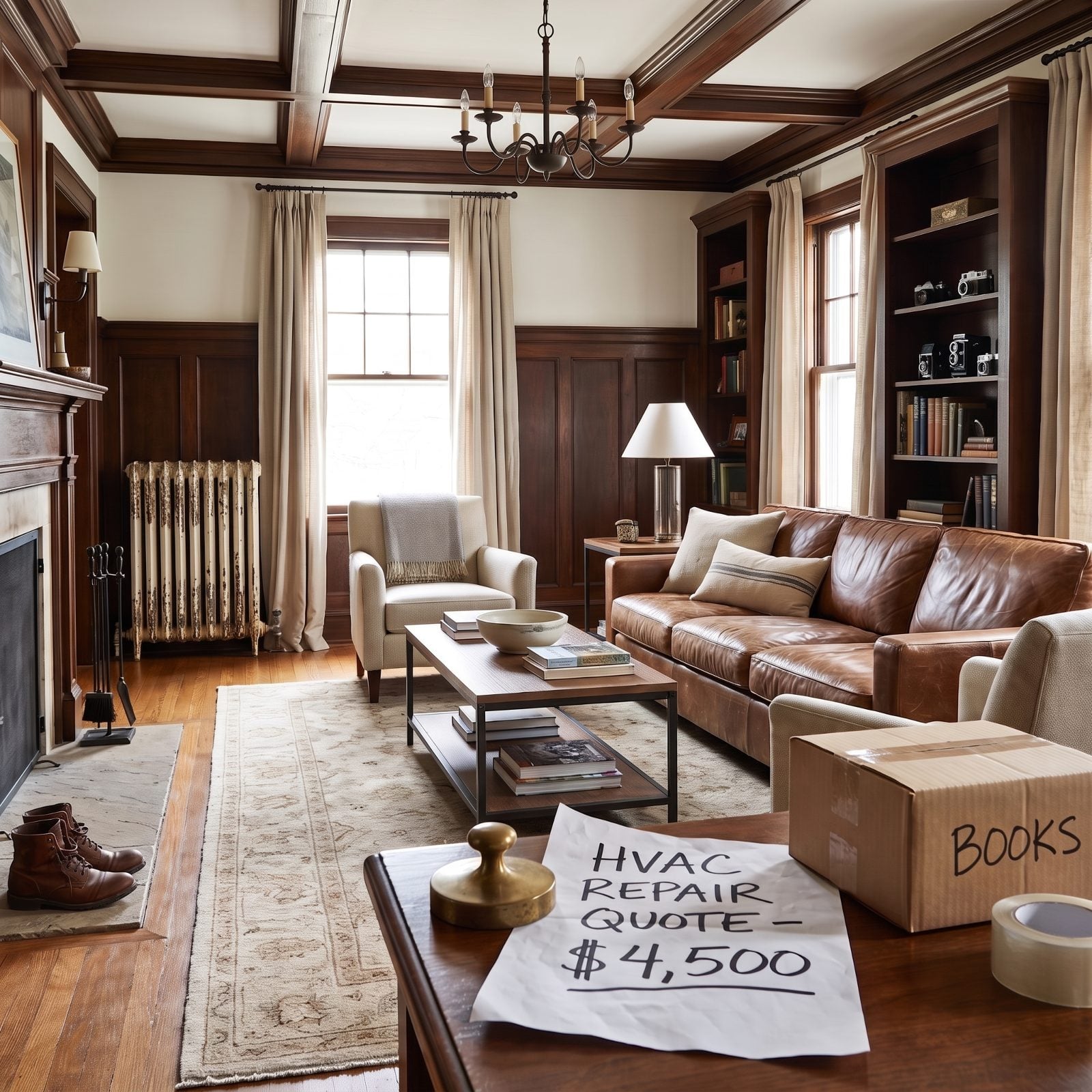
The furnace dies in January, the quote lands, and right there in the cold living room, beside the old radiator by the window, you announce to no one that you’re done, you’re selling, you’re out.
You won’t. You never do. The threat is the whole appeal.
This is emotional venting mistaken for a decision. Saying “I’m leaving” discharges the anger without requiring you to actually do anything, which is why it feels so good and changes so little. Couples toss the same empty ultimatum in a bad argument — the word “divorce” used as release, not plan. The threat lets you feel powerful in a moment where the furnace just proved you aren’t.
Then the new unit kicks on, the house warms up, and by February the threat has evaporated along with your rage. You’re staying. You were always staying. The declaration just needed somewhere to go.
2. The Mortgage Keeps You in a House You Resent
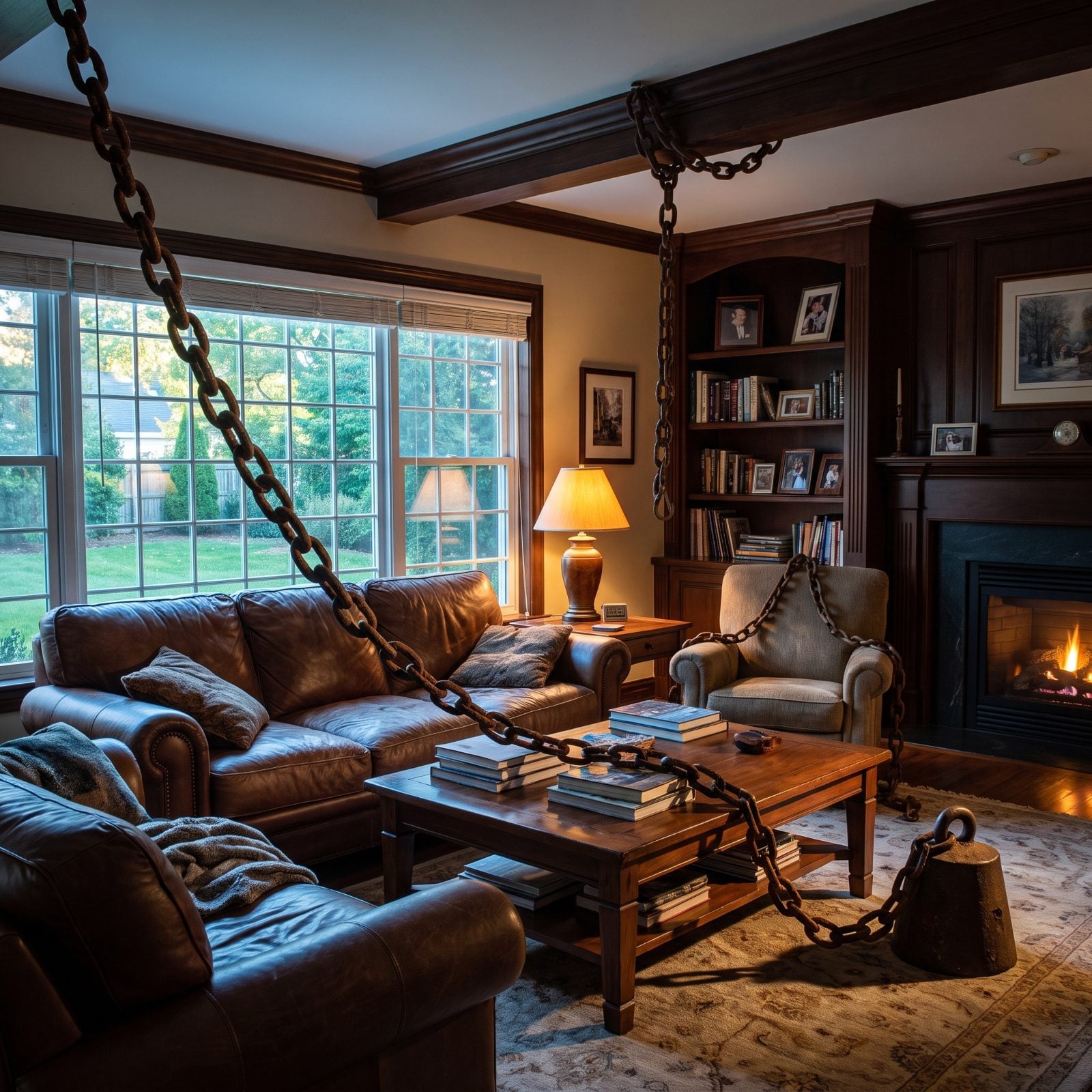
You could leave. On paper. Then you remember the rate you locked in, the equity you’d forfeit to realtor fees, the closing costs, the moving truck — and the whole thing goes quiet again. The math keeps you here.
That’s sunk cost wearing a mortgage statement. You’ve poured years and payments into this place, so walking away feels like throwing all of it in the trash, even though the money already spent is gone no matter what you do next. Economists will tell you a sunk cost should never drive a forward decision. Humans ignore economists constantly. We stay in houses, jobs, and relationships because of what we’ve already put in, not because of what’s still ahead.
The resentment is the tell. You don’t resent a house you freely chose. You resent one you feel chained to. A warm sage den design can soften the rooms, but it won’t touch the real knot — the sense that the numbers decided for you.
1. You Stay for the School District, Not the House
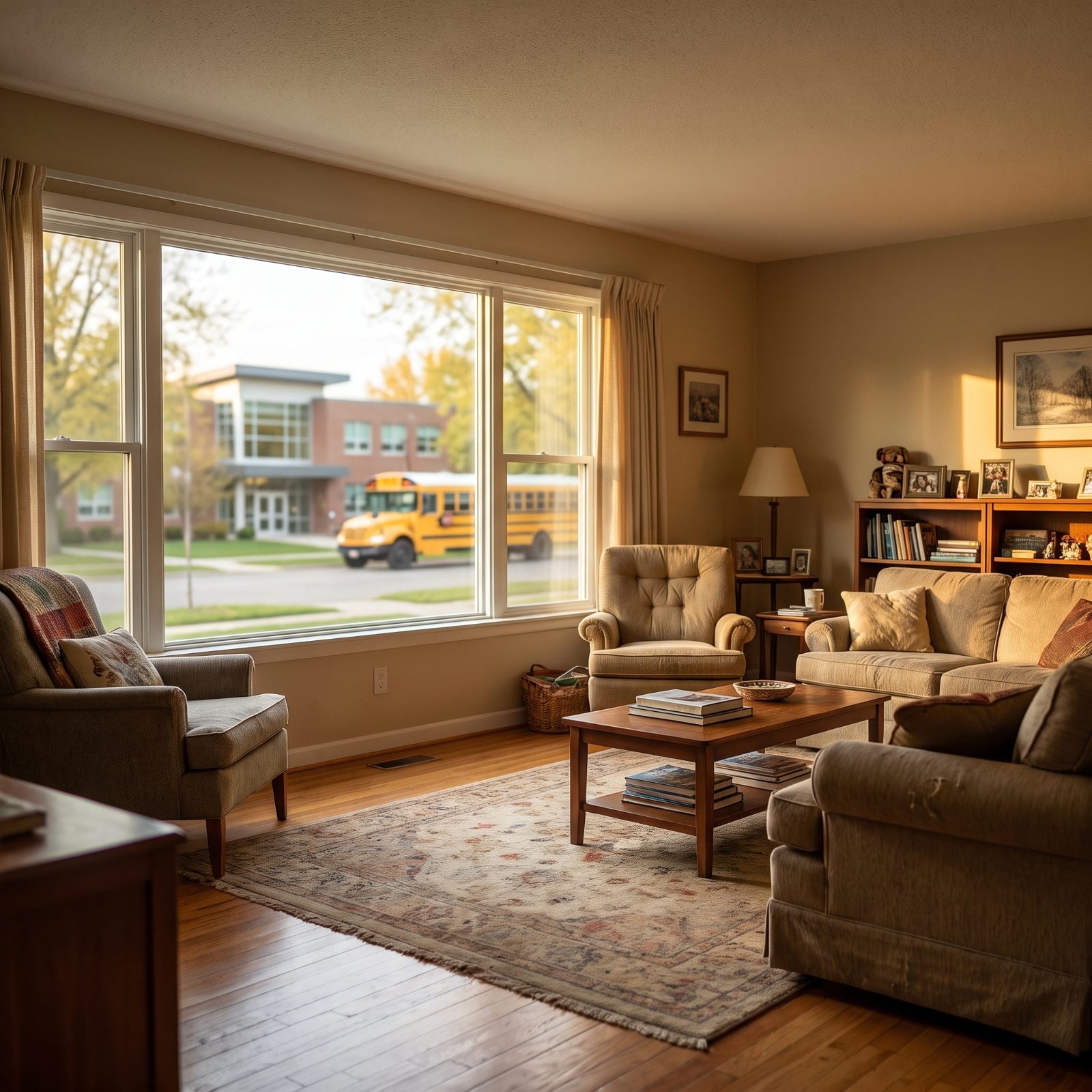
Ask why you’re still in the house with the cramped kitchen and the driveway that floods, and the answer has nothing to do with the house. It’s the elementary school three blocks away. The ratings. The teachers. The thing you won’t gamble with.
You’ve reframed a compromise as a mission, and honestly, it works. Identity and purpose do the heavy lifting here. The house stops being about your comfort and starts being about your role as a provider, which is a far more durable reason to tolerate a leaky bay window. People hold together all kinds of imperfect arrangements this way, staying put “for the kids” and meaning it completely.
Nothing wrong with that. A chosen sacrifice sits easier than a forced one, and framing the stay as a gift to someone you love beats framing it as a trap. A brighter compact den makeover won’t lengthen the commute or improve the test scores, but it can make the years you’ve committed to feel less like waiting and more like living.
The kids graduate eventually. Then you’ll find out whether you stayed for the district or whether the district was just the reason you gave.